
Article

Age-Dependent Clinical Patterns of Primary Epstein–Barr Virus Infection in Children: Insights for Diagnostic Accuracy
1
Departments of Pediatrics, Dr. Sami Ulus Children’s Health and Diseases Training and Research Hospital, 06080 Ankara, Türkiye
2
Departments of Pediatric Infectious Disease, Dr. Sami Ulus Children’s Health and Diseases Training and Research Hospital, 06080 Ankara, Türkiye
*
Author to whom correspondence should be addressed.
Pathogens 2026, 15(5), 554; https://doi.org/10.3390/pathogens15050554
Submission received: 8 April 2026 / Revised: 10 May 2026 / Accepted: 12 May 2026 / Published: 20 May 2026

Abstract

Primary Epstein–Barr virus (EBV) infection in children exhibits substantial clinical heterogeneity, often complicating early diagnosis and leading to unnecessary antibiotic use. This retrospective study evaluated 695 children (0–18 years) diagnosed with primary EBV infection at a tertiary pediatric center between 2010 and 2015, defined by positive viral capsid antigen (VCA) IgM and negative Epstein–Barr nuclear antigen (EBNA) IgG. Clinical, laboratory, and ultrasonographic findings were compared according to age group (≤4 vs. >4 years) and clinical setting (inpatient vs. outpatient). The median age was 3.75 years (IQR: 2–6.25), and more than half of the patients were ≤4 years. Younger children more frequently presented with nonspecific respiratory and gastrointestinal symptoms, whereas older children more commonly exhibited the classic infectious mononucleosis (IM) phenotype, including sore throat, dysphagia, lymphadenopathy, and hepatosplenomegaly (p < 0.001). Antibiotics were prescribed in 64.2% of patients, while 21.7% required hospitalization. Multivariable logistic regression analyses demonstrated that age was not an independent predictor of hospitalization, classic IM phenotype, or antibiotic use. Instead, specific clinical and laboratory findings—such as lymphopenia, lymphadenopathy, vomiting, thrombocytosis, and tonsillar hypertrophy—emerged as the key determinants of clinical outcomes. To enhance diagnostic discrimination, receiver operating characteristic (ROC) analysis of ANC/ALC and AST/ALT ratios was performed, and a composite risk score (0–2) was derived. Although both markers showed modest discriminative ability (AUC 0.607 and 0.575), their high negative predictive values (>90%) suggest potential utility as rule-out tools. The composite score demonstrated a stepwise increase in the probability of classic IM presentation across age groups. In conclusion, primary EBV infection demonstrates a clear age-related clinical spectrum; however, clinical and laboratory features rather than age alone drive key outcomes. These findings highlight the need for age-specific diagnostic strategies and improved antimicrobial stewardship, while the proposed risk score provides a foundation for future validation studies.

1. Introduction

Epstein–Barr virus (EBV) is a double-stranded DNA virus belonging to the Herpesviridae family and represents one of the most common viral pathogens in childhood. The clinical spectrum of EBV infection ranges from asymptomatic cases to life-threatening complications. This variability in clinical presentation is largely attributed to the host immune response, particularly lymphocytic infiltration and cytokine release following viral transmission [1,2,3]. The intensity of the immune response depends on the host’s age, immune status, environmental hygiene, and socioeconomic conditions [4]. From an epidemiological perspective, primary EBV infection in developing countries typically occurs during early childhood and is most often asymptomatic or presents with mild symptoms [5]. In contrast, in developed countries, the infection tends to occur at older ages and commonly manifests in adolescents and young adults as infectious mononucleosis (IM), characterized by fever, lymphadenopathy, and tonsillopharyngitis, accompanied by lymphocytosis and atypical lymphocytes in peripheral blood [6,7,8]. Children aged four years and younger are reported to be more susceptible to EBV infection [9], and the clinical presentation tends to be atypical in younger children but manifests with the classic mononucleosis features in older ones [10].
Comprehensive characterization of the clinical and laboratory features of EBV infection in children is essential for accurate diagnosis and optimal management. Nevertheless, data on age-specific variations in disease course and outcomes are scarce, with most available studies focusing primarily on hospitalized cases [9,10,11,12,13]. These gaps emphasize the need for comprehensive investigations of primary EBV infections in pediatric outpatients and for studies that better reflect real-world clinical practice. The aim of this study was to evaluate the demographic, clinical, laboratory, and prognostic characteristics of children diagnosed with primary Epstein–Barr virus (EBV) infection, with a particular focus on age-related clinical variations and differences between hospitalized and outpatient cases. In addition to these primary objectives, we also aimed to identify independent predictors of key clinical outcomes and to evaluate the diagnostic utility of selected laboratory markers for the classic IM phenotype.

2. Materials and Methods

2.1. Study Population

This study included patients aged 0–18 years who presented to Dr. Sami Ulus Maternity and Children’s Training and Research Hospital between January 2010 and December 2015 and were diagnosed with primary Epstein–Barr virus (EBV) infection. Medical records were retrospectively reviewed using the hospital’s electronic database. Primary EBV infection was defined serologically as positivity for EBV viral capsid antigen (VCA) IgM and Epstein–Barr nuclear antigen (EBNA) IgG negativity [2]. Patients whose medical records were unavailable or who tested positive for EBNA IgG were excluded. Participants were categorized into two age groups (≤4 years and >4 years), and comparisons were also made between outpatients and hospitalized patients. The study was conducted in accordance with the Declaration of Helsinki and approved by the Institutional Review Board of Dr. Sami Ulus Maternity and Children’s Training and Research Hospital (Approval No: 73799008-1464).

2.2. Demographic and Clinical Characteristics

Patients’ presenting symptoms—including fever, sore throat, cervical swelling, dysphagia, rhinorrhea, cough, poor appetite, vomiting, diarrhea, rash, and eyelid edema—along with physical examination findings such as tonsillar hypertrophy, fever, lymphadenopathy, tonsillitis, rash, periorbital edema, hepatomegaly, and splenomegaly were recorded. Patients presenting with the classic IM triad—fever, pharyngeal swelling, and sore throat—were analyzed separately [6]. Symptoms, presence of the IM triad, and physical findings were compared between age groups and between inpatients and outpatients.

2.3. Laboratory and Imaging Evaluation

At admission, laboratory data—including complete blood count [Hemoglobin (Hgb), white blood cell (WBC), platelet count (PLT), absolute neutrophil count (ANC), absolute lymphocyte count (ALC)], liver transaminases [aspartate aminotransferase (AST) and alanine aminotransferase (ALT)], erythrocyte sedimentation rate (ESR), C-reactive protein (CRP), and the presence of Downey cells on peripheral smear—were recorded and analyzed by age group and follow-up type. Throat culture results were evaluated when available. Rapid Streptococcus A antigen testing was not routinely performed during the study period; therefore, corresponding data were not systematically available. EBV serology (VCA IgM, EBNA IgG) was tested by ELISA using a Triturus analyzer (Grifols, Barcelona, Spain) and Vircell® kits (Vircell, Granada, Spain) according to the manufacturers’ instructions. In patients with cervical lymphadenopathy detected by ultrasonography, the location of the lymph nodes was documented, and abdominal ultrasonography was performed to assess hepatomegaly and/or splenomegaly. Findings were compared across age groups and between inpatient and outpatient cohorts. Data on hospitalization, antibiotic use, length of hospital stay, and recovery time were also collected. Clinical recovery was defined as the resolution of symptoms—such as fever, sore throat, and fatigue—along with normalization of hepatosplenomegaly and lymphadenopathy on physical examination [14].

2.4. Statistical Analysis

All statistical analyses were performed using IBM SPSS Statistics for Windows, version 22.0 (IBM Corp., Armonk, NY, USA). The normality of continuous variables was assessed using the Kolmogorov–Smirnov test in conjunction with visual inspection of histograms. Normally distributed variables were expressed as mean ± standard deviation (SD), whereas non-normally distributed variables were presented as median with interquartile range (IQR; 25th–75th percentile). Categorical variables were summarized as frequencies and percentages. Associations between categorical variables were evaluated using the chi-square test or Fisher’s exact test, as appropriate. Yates’ continuity correction was applied for 2 × 2 contingency tables when necessary. Comparisons of continuous variables between two groups were performed using Student’s t-test or Mann–Whitney U test, depending on data distribution.
To identify independent predictors of key clinical outcomes, three multivariable binary logistic regression models were constructed with hospitalization status, classic infectious mononucleosis (IM) phenotype, and antibiotic use as dependent variables. Independent variables included age group, presenting symptoms, physical examination findings, and selected laboratory parameters (WBC, CRP, ANC/ALC ratio, AST/ALT ratio, and group A ß-hemolytic Streptococcus [GABHS] positivity). Model fit was evaluated using the likelihood ratio chi-square test and McFadden’s pseudo-R2. Multicollinearity was assessed prior to model construction. Results are reported as odds ratios (ORs) with 95% confidence intervals (CIs).
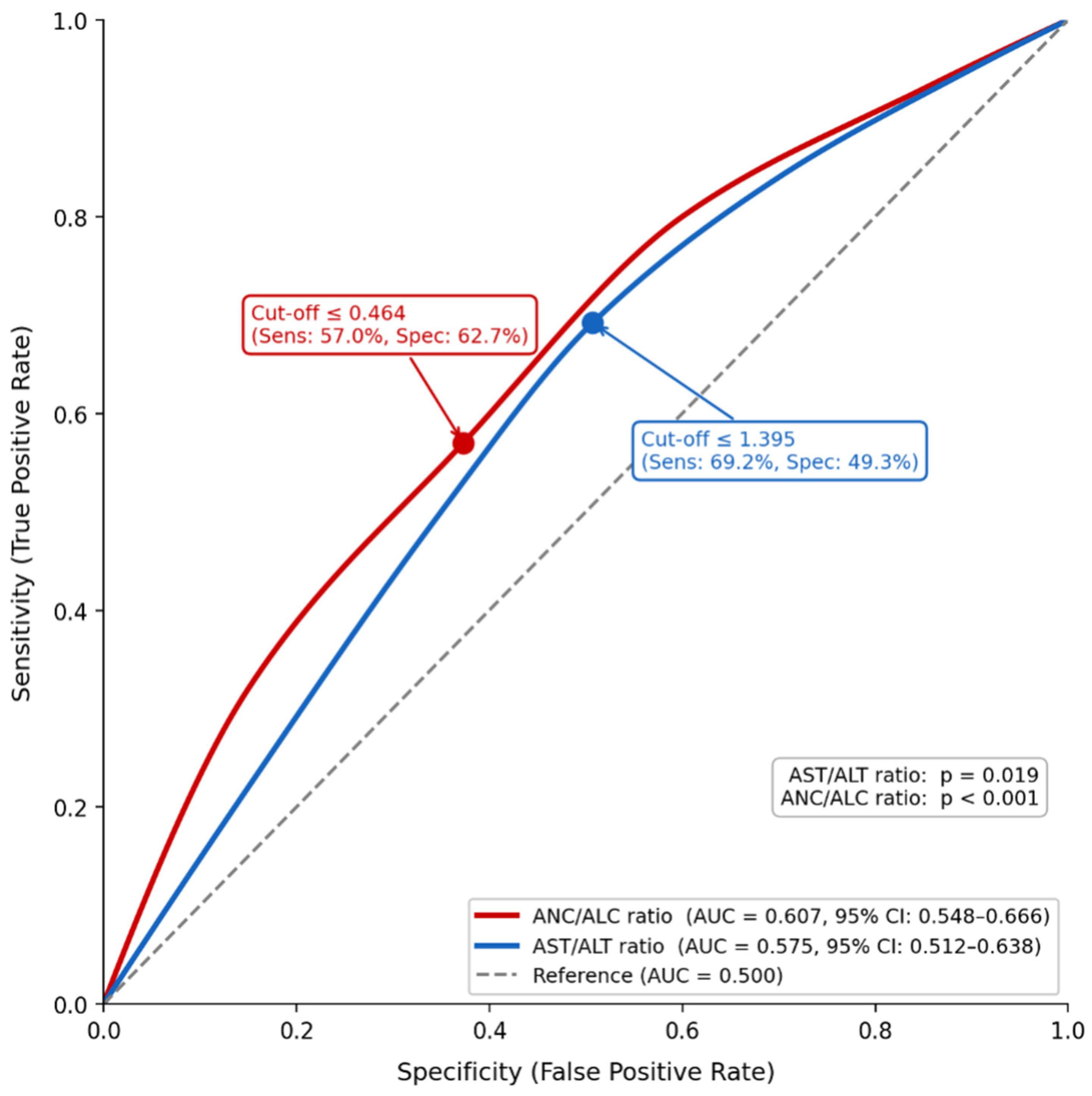
The diagnostic performance of ANC/ALC and AST/ALT ratios in identifying the classic IM phenotype was evaluated using receiver operating characteristic (ROC) curve analysis. Optimal cut-off values were determined using the Youden index, and corresponding sensitivity, specificity, positive predictive value (PPV), and negative predictive value (NPV) were calculated. A composite risk score (range 0–2) was derived by assigning one point for each ratio at or below. The association between the composite score and the classic IM phenotype was assessed using multivariable logistic regression adjusted for age group. Estimated marginal probabilities were calculated across combinations of risk score categories and age groups. Discriminative performance was expressed as the area under the curve (AUC) with 95% confidence intervals. p-value < 0.05 was considered statistically significant.

3. Results

3.1. Demographic Data

During the study period, a total of 852 patients were identified as EBV VCA IgM-positive. Of these, 128 patients with EBNA IgG positivity and 29 patients with unavailable records were excluded, leaving 695 eligible participants, 401 of whom (57.7%) were male. The median age was 3.75 years (IQR: 2–6.25 years). Among them, 372 (53.5%) were aged ≤4 years, 323 (46.5%) were >4 years, and 44 (6%) were adolescents (>10 years). Although more cases were observed in October and November, the overall monthly distribution did not differ significantly (p = 0.444), suggesting no clear seasonal pattern.

3.2. Clinical Presentation and Age-Based Differences in Symptoms

Analysis of presenting complaints showed that the most frequent symptoms were fever (60.6%, n = 421), sore throat (48.3%, n = 336), and cervical swelling (38.1%, n = 265) (Table 1). IM triad was identified in 93 patients (13.3%) and was significantly more common in children older than four years (p < 0.001). When symptoms were compared by age group, rash (p < 0.001), diarrhea (p < 0.001), cough (p < 0.001), and rhinorrhea (p = 0.002) were more frequent among children aged ≤4 years, whereas sore throat (p < 0.001), dysphagia (p = 0.002), and poor appetite (p = 0.022) were more common in those >4 years (Table 1).

3.3. Physical Examination Findings

On physical examination, the most common findings were tonsillar hypertrophy (66%, n = 459), lymphadenopathy (52.4%, n = 364), and tonsillitis (38.8%, n = 270) (Table 1). Among patients with lymphadenopathy, 59.3% had submandibular, 40.4% had cervical, and 0.3% had supraclavicular node involvement. Comparison of physical findings by age group showed that rash was more frequent in children aged ≤4 years (p < 0.001), whereas lymphadenopathy (p < 0.001) and hepatosplenomegaly (p = 0.002) were more common in those >4 years. Rash occurred following antibiotic use in 100 patients (51.2%), and antibiotic-associated rash was significantly more frequent among children aged ≤4 years (p < 0.001) (Table 1).

3.4. Laboratory and Imaging Findings

Complete blood count results were available for 675 patients (97.1%). When compared by age, children aged ≤4 years had a lower median hemoglobin level (p < 0.001) but higher median white blood cell, platelet, and absolute lymphocyte counts (p = 0.014, < 0.001, and < 0.001, respectively) (Table 2). Peripheral smear was performed in 309 patients (45.7%), and Downey cells were observed in 131 (39.9%). The frequency of Downey cells did not differ between age groups (p = 0.543) (Table 1). Serum AST and ALT levels were available for 568 patients (81.7%). Median ALT levels were significantly higher in patients older than four years (p < 0.001), while median AST levels did not differ significantly (p = 0.63). No statistically significant differences were found between age groups in median ESR or CRP levels (p = 0.71 and 0.059, respectively) (Table 2).
The ANC/ALC ratio was significantly higher in children older than 48 months compared with younger children (median 0.64 vs. 0.52, p < 0.001), whereas no significant difference was observed in the AST/ALT ratio between age groups. When compared by hospitalization status, the ANC/ALC ratio showed a non-significant trend toward higher values in hospitalized patients (median 0.69 vs. 0.54, p = 0.178); the AST/ALT ratio did not differ significantly between groups. The distribution of ANC/ALC ratios across age groups and hospitalization status is illustrated in Figure 1a,b.
Cervical ultrasonography was performed in 271 patients, all of whom had lymphadenopathy; submandibular in 243 (89.7%), cervical in 139 (54%), submental in 2 (0.7%), and supraclavicular in 1 (0.4%). Abdominal ultrasonography was performed in 274 patients, revealing organomegaly in 145 (52.9%), while findings were normal in 129 (47.1%). The frequency of submandibular and cervical lymphadenopathy did not differ significantly between age groups (p = 0.49 and 0.29, respectively); however, organomegaly and splenomegaly were significantly more common among children older than four years (p = 0.018 and < 0.001, respectively) (Table 1).

3.5. Multivariable Logistic Regression Analyses

To identify independent predictors of key clinical outcomes, three separate multivariable binary logistic regression models were constructed. We performed three separate multivariable binary logistic regression models to examine independent predictors of: (1) hospitalization, (2) classic infectious mononucleosis (IM) phenotype, and (3) antibiotic use. Detailed regression outputs are provided in Supplementary Tables S1–S3.

3.5.1. Hospitalization Model

The model was statistically significant (χ2 = 36.2, df = 23, p = 0.039). Among 23 independent variables entered, three were independently associated with hospitalization: lymphopenia (OR = 3.42, 95% CI: 1.28–9.17, p = 0.015), lymphadenopathy (OR = 1.60, 95% CI: 1.01–2.52, p = 0.043), and vomiting (OR = 1.80, 95% CI: 1.01–3.21, p = 0.048). Age group (≤4 vs. >4 years) was not independently associated with hospitalization after adjusting for these variables (OR = 0.90, 95% CI: 0.58–1.41, p = 0.651).

3.5.2. Classic IM Phenotype Model

This model demonstrated excellent fit (χ2 = 167, df = 25, p < 0.001; McFadden R2 = 0.371). Independent predictors of the classic IM phenotype included lymphadenopathy (OR = 69.89, 95% CI: 8.95–545.97, p < 0.001), thrombocytosis (OR = 5.55, 95% CI: 2.02–15.26, p < 0.001), ear pain (OR = 6.36, 95% CI: 1.18–34.34, p = 0.032), risk score category 2 vs. 0 (OR = 5.50, 95% CI: 1.95–15.57, p = 0.001), risk score category 1 vs. 0 (OR = 4.38, 95% CI: 1.74–11.03, p = 0.002), and tonsillar hypertrophy (OR = 3.09, 95% CI: 1.29–7.39, p = 0.011). Age group did not reach independent significance in this model (OR = 1.43, 95% CI: 0.74–2.76, p = 0.293), suggesting that the age-related difference in classic IM presentation is largely mediated by these clinical and laboratory features.

3.5.3. Antibiotic Use Model

The model was significant (χ2 = 70.1, df = 30, p < 0.001). Only two variables were independently associated with antibiotic use: rhinorrhea, which was inversely associated (OR = 0.64, 95% CI: 0.41–0.99, p = 0.045), and CRP level, which showed a marginal positive association (OR = 1.001, 95% CI: 1.000–1.001, p = 0.048). Age group, lymphadenopathy, tonsillitis, and other clinical features did not independently predict antibiotic use.

3.6. Diagnostic Performance of ANC/ALC and AST/ALT Ratios and Derivation of a Composite Risk Score

ROC curve analysis demonstrated modest but statistically significant discriminative ability for both the ANC/ALC ratio (AUC = 0.607, 95% CI: 0.548–0.666, p < 0.001) and the AST/ALT ratio (AUC = 0.575, 95% CI: 0.512–0.638, p = 0.019) in identifying the classic IM phenotype (Figure 2). The optimal cut-off values were ≤0.464 for ANC/ALC and ≤1.395 for AST/ALT, with negative predictive values exceeding 90% for both markers (Figure 2).
Based on these thresholds, a composite risk score (range 0–2) was derived. In multivariable logistic regression adjusted for age group, the model was statistically significant (χ2 = 23.3, df = 3, p < 0.001). Compared with a score of 0, a score of 1 was associated with increased odds of classic IM presentation (OR = 1.99, 95% CI: 1.01–3.94, p = 0.047), and a score of 2 with substantially higher odds (OR = 3.47, 95% CI: 1.73–6.96, p < 0.001). Age >48 months also remained an independent predictor (OR = 1.94, 95% CI: 1.17–3.23, p = 0.011).
Estimated marginal probabilities increased progressively with higher risk scores and older age (Table 3), ranging from 5.4% to 16.4% in children ≤48 months and from 9.9% to 27.6% in those >48 months.

3.7. Treatment and Follow-Up

Of the total patients, 544 (78.3%) were managed on an outpatient basis, while 151 (21.7%) required hospitalization. The median age of hospitalized patients was 3.8 years (IQR: 1.9–6.6 years). There was no significant difference in hospitalization rates between age groups (p = 0.923) (Table 1). Among hospitalized patients, fever, rhinorrhea, and vomiting were significantly more frequent (p = 0.003, 0.031, and 0.005, respectively), and physical examination more often revealed tonsillar hypertrophy, tonsillitis, lymphadenopathy, and organomegaly (p = 0.01, <0.001, 0.017, and 0.003, respectively) (Table 4). Additionally, hospitalized patients had significantly higher WBC, ANC, ESR, and CRP levels compared with outpatients (p = 0.001, 0.002, 0.001, and 0.001, respectively) (Table 5).
The median duration of hospital stay was 5 days (IQR: 4–7), with no significant age-related difference (p = 0.43). Empirical antibiotic therapy was initiated in 446 patients (64.2%), with no significant association between antibiotic use and age group (p = 0.137). Throat cultures were obtained from 268 patients (38.6%), and GABHS was isolated in 20 cases (7.5%), for which appropriate antibiotics were administered. Post-infection follow-up was completed in 440 patients (66.3%) in the outpatient setting. The median time to clinical recovery was 13 days (IQR: 10–16), with no significant difference between age groups (p = 0.28).

4. Discussion

This study provides a comprehensive real-world characterization of primary EBV infection in a large pediatric cohort, including both inpatient and outpatient cases, a distinction that remains relatively underrepresented in the existing literature. Our findings demonstrate a clear age-dependent clinical spectrum: children aged ≤4 years are more commonly presenting with nonspecific respiratory and gastrointestinal symptoms, whereas older children are more frequently exhibiting the classic infectious mononucleosis phenotype. Importantly, multivariable analyses revealed that age itself was not an independent predictor of hospitalization, classic IM phenotype, or antibiotic use after adjustment for clinical and laboratory variables. Instead, specific findings—including lymphopenia, lymphadenopathy, vomiting, thrombocytosis, and tonsillar hypertrophy—emerged as the principal determinants of key clinical outcomes. In addition, a composite risk score derived from ANC/ALC and AST/ALT ratios demonstrated high negative predictive value, supporting its potential utility as a simple bedside rule-out tool for the classic IM phenotype. Collectively, these findings provide clinically relevant insight into the diagnostic heterogeneity of pediatric EBV infection and highlight the importance of integrating clinical and laboratory parameters into age-specific diagnostic and antimicrobial stewardship strategies.
EBV seroprevalence and the age at primary infection vary considerably by geographic region and socioeconomic conditions, occurring earlier in developing countries and later in industrialized settings [8,15,16,17]. Consistent with previous reports from our country, more than half of our patients were aged ≤4 years and approximately 90% were under 10 years old [11,18].
The clinical presentation of primary EBV infection is closely age-dependent. Nonspecific symptoms predominate in young children, while 30–45% of adolescents and young adults develop the classic IM syndrome of fever, tonsillopharyngitis, and lymphadenopathy [19,20,21,22]. Consistent with these reports, rash, diarrhea, and respiratory symptoms were more frequent in younger children in our cohort, whereas sore throat, dysphagia, and lymphadenopathy predominated in older age groups, with hepatosplenomegaly also observed more frequently in children older than four years. These patterns support the well-described age-related clinical transition of primary EBV infection. Importantly, however, multivariable logistic regression analyses revealed that age group was not an independent predictor of hospitalization, classic IM phenotype, or antibiotic use after adjustment for clinical and laboratory variables. Instead, specific findings—lymphopenia, lymphadenopathy, and vomiting for hospitalization, and lymphadenopathy, thrombocytosis, and tonsillar hypertrophy for the classic IM phenotype—emerged as the primary independent determinants of these outcomes. To further strengthen diagnostic discrimination, a composite risk score was derived from ROC-optimized cut-off values for ANC/ALC and AST/ALT ratios. Both markers demonstrated modest but statistically significant discriminative ability (AUC 0.607 and 0.575, respectively); however, given the low prevalence of the classic IM phenotype in our cohort, the composite score is best interpreted as a rule-out rather than a rule-in tool, a role supported by negative predictive values exceeding 90%. The score showed a stepwise increase in the probability of classic IM presentation across age groups and risk categories, providing a simple framework for clinical risk stratification pending external validation [12,13].
Rash occurs in approximately 15–34% of children with primary EBV infection and is more frequent in younger age groups [23]. In our cohort, rash frequency was consistent with prior reports and was significantly more common in children aged ≤4 years. Antibiotic-associated rash was observed in 51% of those who received antibiotics; however, the occurrence of rash in younger children without antibiotic exposure suggests that this association may partly reflect age-related differences in immune response rather than a purely drug-induced phenomenon. Lymphocytosis and atypical lymphocytes on peripheral smear are additional characteristic features of primary EBV infection, with atypical lymphocytosis reported more frequently in older children and elevated WBC, ALC, and neutropenia more common in younger children [17,23].
Although mild to moderate transient elevations in transaminase levels are frequently observed during primary EBV infection, clinically significant hepatitis and liver failure are uncommon. Hepatic involvement is a well-recognized feature of primary EBV infection, encompassing both biochemical abnormalities and structural changes detectable on ultrasonography [24,25]. Elevated transaminase levels were common in our cohort, consistent with the high prevalence of EBV-associated subclinical hepatitis in pediatric populations [23,25]. Hepatomegaly and splenomegaly were also frequently identified, underscoring the role of imaging in evaluation [25]. In line with prior studies, ALT elevation was more pronounced in older children, likely reflecting age-related differences in immune response [4,5]. From a clinical perspective, most enzyme elevations were mild and self-limiting; even marked ALT elevations may persist for weeks without indicating severe liver disease or requiring antiviral therapy [24,26]. These findings support routine liver function testing and follow-up monitoring, particularly in hospitalized patients and those with hepatomegaly [26].
The higher frequency of organomegaly on abdominal ultrasonography in older children further supports the age-related clinical transition of primary EBV infection [10]. Although a systematic review suggested that routine liver function testing and abdominal ultrasonography may not be necessary in all immunocompetent patients [25], the high prevalence of transaminase elevation and hepatosplenomegaly in our cohort—particularly in older children—supports their inclusion in the diagnostic workup. Younger children additionally demonstrated higher WBC, ALC, and platelet counts, whereas older children showed significantly higher hemoglobin and ALT levels, likely reflecting age-related differences in immune response. GABHS co-infection, which occurs in approximately 5% of primary EBV cases [12,13], and the recognition of viral tonsillopharyngitis through complete blood count findings and peripheral smear evaluation are important considerations for reducing unnecessary antibiotic use [26].
In our study, despite the high rate of antibiotic use, the proportion of patients who underwent throat culture was low, and a peripheral smear was not performed in most cases. During the study period, rapid streptococcal antigen testing was not routinely available, and throat cultures were performed in a limited number of patients. In addition, the small number of GABHS-positive cases precluded a reliable statistical analysis to distinguish bacterial co-infection from primary EBV infection. Therefore, our findings regarding antibiotic use should be interpreted with caution in the absence of systematic microbiological confirmation. Taken together, these findings highlight an important gap in diagnostic practice. To reduce unnecessary antibiotic use, we recommend the routine implementation of peripheral smear evaluation for atypical lymphocytes, rapid streptococcal antigen testing, and throat culture as part of a standardized diagnostic approach. Adoption of this integrated strategy would not only improve diagnostic accuracy but also promote rational antibiotic use and contribute to efforts to limit antimicrobial resistance.
Although primary EBV infection is generally self-limiting, complications may occur in a minority of cases. Most existing studies are limited to hospitalized patients [9,10,12,13], which may lead to underestimation of the true clinical variability and disease burden, particularly in young outpatient children. By including both inpatient and outpatient cases, our study addresses this gap and provides a more representative characterization of primary EBV infection across the pediatric age spectrum. Hospitalized patients more frequently presented with fever, rhinorrhea, and vomiting, and showed higher rates of tonsillar hypertrophy, tonsillitis, lymphadenopathy, and organomegaly on physical examination, alongside significantly elevated WBC, ANC, CRP, and ESR levels—consistent with a more pronounced systemic inflammatory response. Although recovery time appeared longer in outpatients, this should not be interpreted as a true difference in disease course, as it is likely attributable to measurement bias and heterogeneity in follow-up practices.
This study has several important strengths. It includes one of the largest single-center pediatric cohorts of primary EBV infection reported to date, encompassing 695 patients across a broad age spectrum and including both inpatient and outpatient cases, thereby providing a more representative characterization of the clinical spectrum of pediatric EBV infection. Beyond descriptive analyses, multivariable logistic regression models were used to identify independent predictors of hospitalization, classic IM phenotype, and antibiotic use, offering clinically actionable insights. In addition, a composite risk score derived from ROC-optimized ANC/ALC and AST/ALT ratios demonstrated high negative predictive values, supporting its potential utility as a simple bedside rule-out tool. Several limitations should nonetheless be acknowledged. The retrospective design restricted the availability of detailed data on symptom onset, clinical progression, and the temporal relationships between EBV diagnosis, GABHS detection, and antibiotic initiation. Patients were not assessed under a standardized protocol, and limited microbiological data reduced the ability to reliably differentiate bacterial co-infection from primary EBV infection. The study period (2010–2015) may affect contemporary generalizability in light of evolving EBV epidemiology, although the observed clinical patterns and diagnostic challenges remain relevant. Further age stratification was not performed due to limited subgroup sizes, which may reduce statistical power. The composite risk score was internally derived and tested within the same dataset, limiting generalizability and necessitating external validation before clinical application. Data on disease severity and complications were not systematically recorded and may be underrepresented in predominantly outpatient cohorts. Finally, the absence of long-term follow-up data precluded a comprehensive assessment of prognosis. Future prospective multicenter studies with longitudinal follow-up are therefore warranted to clarify the clinical course and long-term outcomes of pediatric EBV infection.

5. Conclusions

This large retrospective study provides a comprehensive real-world characterization of primary EBV infection in children across age groups and clinical settings. Our findings demonstrate a clear age-related clinical spectrum, with younger children presenting with atypical features and older children more frequently exhibiting the classic infectious mononucleosis phenotype. However, multivariable analyses indicate that clinical and laboratory findings—rather than age alone—are the primary determinants of key outcomes. A simple composite risk score based on ANC/ALC and AST/ALT ratios showed modest discriminative ability but may aid in clinical risk stratification, particularly as a rule-out tool. In addition, the high rate of empirical antibiotic use highlights the need for improved diagnostic strategies and antimicrobial stewardship.
These findings support the development of age-specific diagnostic approaches and underscore the need for prospective multicenter studies to validate these tools and further define clinical outcomes in pediatric EBV infection.

Supplementary Materials

The following supporting information can be downloaded at: https://www.mdpi.com/article/10.3390/pathogens15050554/s1. Table S1: Multivariable logistic regression analysis for predictors of hospitalization; Table S2: Multivariable logistic regression analysis for predictors of the classic infectious mononucleosis phenotype; Table S3: Multivariable logistic regression analysis for predictors of antibiotic use.

Author Contributions

Conceptualization, D.T.-D., A.K. and G.T.; methodology, G.T. and D.T.-D.; formal analysis, D.T.-D., A.K. and G.T.; data curation, D.T.-D.; writing—original draft preparation, D.T.-D.; writing—review and editing, D.T.-D., A.K. and G.T. All authors have read and agreed to the published version of the manuscript.

Funding

This research received no external funding.

Institutional Review Board Statement

The study was conducted in accordance with the Declaration of Helsinki and approved by the Institutional Review Board of Dr. Sami Ulus Maternity and Children’s Training and Research Hospital (Approval No: 73799008-1464, 10 February 2016).

Informed Consent Statement

Patient consent was waived due to the retrospective nature of the study and the use of anonymized data, in accordance with the approval of the Institutional Review Board of Dr. Sami Ulus Maternity and Children’s Training and Research Hospital.

Data Availability Statement

The datasets generated and/or analyzed during the current study are not publicly available but are available from the corresponding author on reasonable request.

Acknowledgments

The authors would like to honor the memory of Gönül Tanır, who made valuable contributions to the conception and design of this study. She passed away prior to the submission of this manuscript. Her scientific insight and dedication were instrumental to this work, and she is deeply missed.

Conflicts of Interest

The authors declare no conflicts of interest.

Abbreviations

ALCAbsolute lymphocyte count
ALTAlanine aminotransferase
ANCAbsolute neutrophil count
ASTAspartate aminotransferase
AUCArea under the curve
CIConfidence interval
CRPC-reactive protein
EBNAEpstein–Barr nuclear antigen
EBVEpstein–Barr virus;
ESRErythrocyte sedimentation rate
GABHSGroup A ß-Hemolitic Streptococ
HgbHemoglobin
IMInfectious mononucleosis
IQRInterquartile range
NPVNegative predictive value
OROdds ratio
PLTPlatelet count
PPVPositive predictive value
ROCReceiver operating characteristic
SDStandard deviation
VCAViral capsid antigen
WBCWhite blood cell

References

  1. Ye, Z.; Chen, L.; Zhong, H.; Cao, L.; Fu, P.; Xu, J. Epidemiology and clinical characteristics of Epstein-Barr virus infection among children in Shanghai, China, 2017–2022. Front. Cell. Infect. Microbiol. 2023, 13, 1139068. [Google Scholar] [CrossRef]
  2. Shi, T.; Huang, L.; Chen, Z.; Tian, J. Characteristics of primary Epstein-Barr virus infection disease spectrum and its reactivation in children, in Suzhou, China. J. Med. Virol. 2021, 93, 5048–5057. [Google Scholar] [CrossRef] [PubMed]
  3. Yang, Y.; Gao, F. Clinical characteristics of primary and reactivated Epstein-Barr virus infection in children. J. Med. Virol. 2020, 92, 3709–3716. [Google Scholar] [CrossRef]
  4. Dunmire, S.K.; Verghese, P.S.; Balfour, H.H., Jr. Primary Epstein-Barr virus infection. J. Clin. Virol. 2018, 102, 84–92. [Google Scholar] [CrossRef] [PubMed]
  5. Balfour, H.H., Jr.; Verghese, P. Primary Epstein-Barr virus infection: Impact of age at acquisition, coinfection, and viral load. J. Infect. Dis. 2013, 207, 1787–1789. [Google Scholar] [CrossRef]
  6. Hu, H.; Deng, H.; Bi, J.; Xu, Y.; Li, S.; Xie, Y.; Sun, X.; Wang, D.; Li, X.; Ouyang, W.; et al. Clinical characteristics and effectiveness of antiviral agents in hospitalized children with infectious mononucleosis in China: A multicenter retrospective study. Pediatr. Investig. 2021, 5, 188–194. [Google Scholar] [CrossRef]
  7. Naughton, P.; Healy, M.; Enright, F.; Lucey, B. Infectious Mononucleosis: Diagnosis and clinical interpretation. Br. J. Biomed. Sci. 2021, 78, 107–116. [Google Scholar] [CrossRef]
  8. Dowd, J.B.; Palermo, T.; Brite, J.; McDade, T.W.; Aiello, A. Seroprevalence of Epstein-Barr virus infection in U.S. children ages 6–19, 2003–2010. PLoS ONE 2013, 8, e64921. [Google Scholar] [CrossRef]
  9. Devkota, K.; He, M.; Liu, M.Y.; Li, Y.; Zhang, Y.W. Increasing Epstein-Barr virus infection in Chinese children: A single institutional based retrospective study. F1000Research 2018, 7, 1211. [Google Scholar] [CrossRef]
  10. Wu, Y.; Ma, S.; Zhang, L.; Zu, D.; Gu, F.; Ding, X.; Zhang, L. Clinical manifestations and laboratory results of 61 children with infectious mononucleosis. J. Int. Med. Res. 2020, 48, 300060520924550. [Google Scholar] [CrossRef] [PubMed]
  11. Caglar, I.; Topal, S.; Cokboz, M.; Duzgol, M.; Kara, A.; Bayram, S.N.; Apa, H.; Devrim, I. Clinical features and laboratory findings in children hospitalized with acute Epstein-Barr virus infection: A crosssectional study in a tertiary care hospital. Turk. J. Pediatr. 2019, 61, 368–373. [Google Scholar] [CrossRef]
  12. Prtorić, L.; Šokota, A.; Karabatić Knezović, S.; Tešović, G.; Zidovec-Lepej, S. Clinical Features and Laboratory Findings of Hospitalized Children with Infectious Mononucleosis Caused by Epstein-Barr Virus from Croatia. Pathogens 2025, 14, 374. [Google Scholar] [CrossRef] [PubMed]
  13. Tian, S.; Zheng, J.; Zhou, Z.; Yang, Q.; Sun, B.; Li, Y.; Lin, Z.; Long, Y.; Guan, S.; Wang, S.; et al. Retrospective Review of Children Hospitalized for Epstein-Barr Virus-Related Infectious Mononucleosis. Pathogens 2025, 14, 702. [Google Scholar] [CrossRef]
  14. Topp, S.K.; Rosenfeldt, V.; Vestergaard, H.; Christiansen, C.B.; Von Linstow, M.L. Clinical characteristics and laboratory findings in Danish children hospitalized with primary Epstein-Barr virus infection. Infect. Dis. 2015, 47, 908–914. [Google Scholar] [CrossRef] [PubMed]
  15. Takeuchi, K.; Tanaka-Taya, K.; Kazuyama, Y.; Ito, Y.M.; Hashimoto, S.; Fukayama, M.; Mori, S. Prevalence of Epstein-Barr virus in Japan: Trends and future prediction. Pathol. Int. 2006, 56, 112–116. [Google Scholar] [CrossRef]
  16. Kanegane, H.; Kanegane, C.; Yachie, A.; Miyawaki, T.; Tosato, G. Infectious mononucleosis as a disease of early childhood in Japan caused by primary Epstein-Barr virus infection. Acta Paediatr. Jpn. 1997, 39, 166–171. [Google Scholar] [CrossRef]
  17. Gonzalez Saldana, N.; Monroy Colin, V.A.; Pina Ruiz, G.; Juarez Olguin, H. Clinical and laboratory characteristics of infectious mononucleosis by Epstein-Barr virus in Mexican children. BMC Res. Notes 2012, 5, 361. [Google Scholar] [CrossRef]
  18. Cengiz, A.B.; Cultu-Kantaroglu, O.; Secmeer, G.; Ceyhan, M.; Kara, A.; Gurgey, A. Infectious mononucleosis in Turkish children. Turk. J. Pediatr. 2010, 52, 245–254. [Google Scholar]
  19. Chang, R.S.; Dan, R.; Chan, R.C. Epstein-Barr virus infections among university students in a tropical country. J. Am. Coll. Health 1988, 37, 115–118. [Google Scholar] [CrossRef]
  20. Kılıç, A.; Yıldız, İ.; Beka, H.; Ağaçfidan, A.; Ünüvar, A.; Yanar, Ö.; Ünüvar, E.; Oğuz, F. Different clinical presentation of infectious mononucleosis in children: A retrospective analysis of 369 cases. Turk. Arch. Pediatr. 2012, 47, 189–192. [Google Scholar]
  21. Grotto, I.; Mimouni, D.; Huerta, M.; Mimouni, M.; Cohen, D.; Robin, G.; Pitlik, S.; Green, M.S. Clinical and laboratory presentation of EBV positive infectious mononucleosis in young adults. Epidemiol. Infect. 2003, 131, 683–689. [Google Scholar] [CrossRef] [PubMed]
  22. Chan, C.W.; Chiang, A.K.; Chan, K.H.; Lau, A.S. Epstein-Barr virus-associated infectious mononucleosis in Chinese children. Pediatr. Infect. Dis. J. 2003, 22, 974–978. [Google Scholar] [CrossRef]
  23. Sumaya, C.V.; Ench, Y. Epstein-Barr virus infectious mononucleosis in children. I. Clinical and general laboratory findings. Pediatrics 1985, 75, 1003–1010. [Google Scholar] [CrossRef] [PubMed]
  24. Kofteridis, D.P.; Koulentaki, M.; Valachis, A.; Christofaki, M.; Mazokopakis, E.; Papazoglou, G.; Samonis, G. Epstein Barr virus hepatitis. Eur. J. Intern. Med. 2011, 22, 73–76. [Google Scholar] [CrossRef]
  25. Tan, E.T.; Wilkinson, D.; Edafe, O. The utility of liver function tests and abdominal ultrasound in infectious mononucleosis- A systematic review. Clin. Otolaryngol. 2022, 47, 611–619. [Google Scholar] [CrossRef]
  26. Sylvester, J.E.; Buchanan, B.K.; Silva, T.W. Infectious Mononucleosis: Rapid Evidence Review. Am. Fam. Physician 2023, 107, 71–78. [Google Scholar] [PubMed]
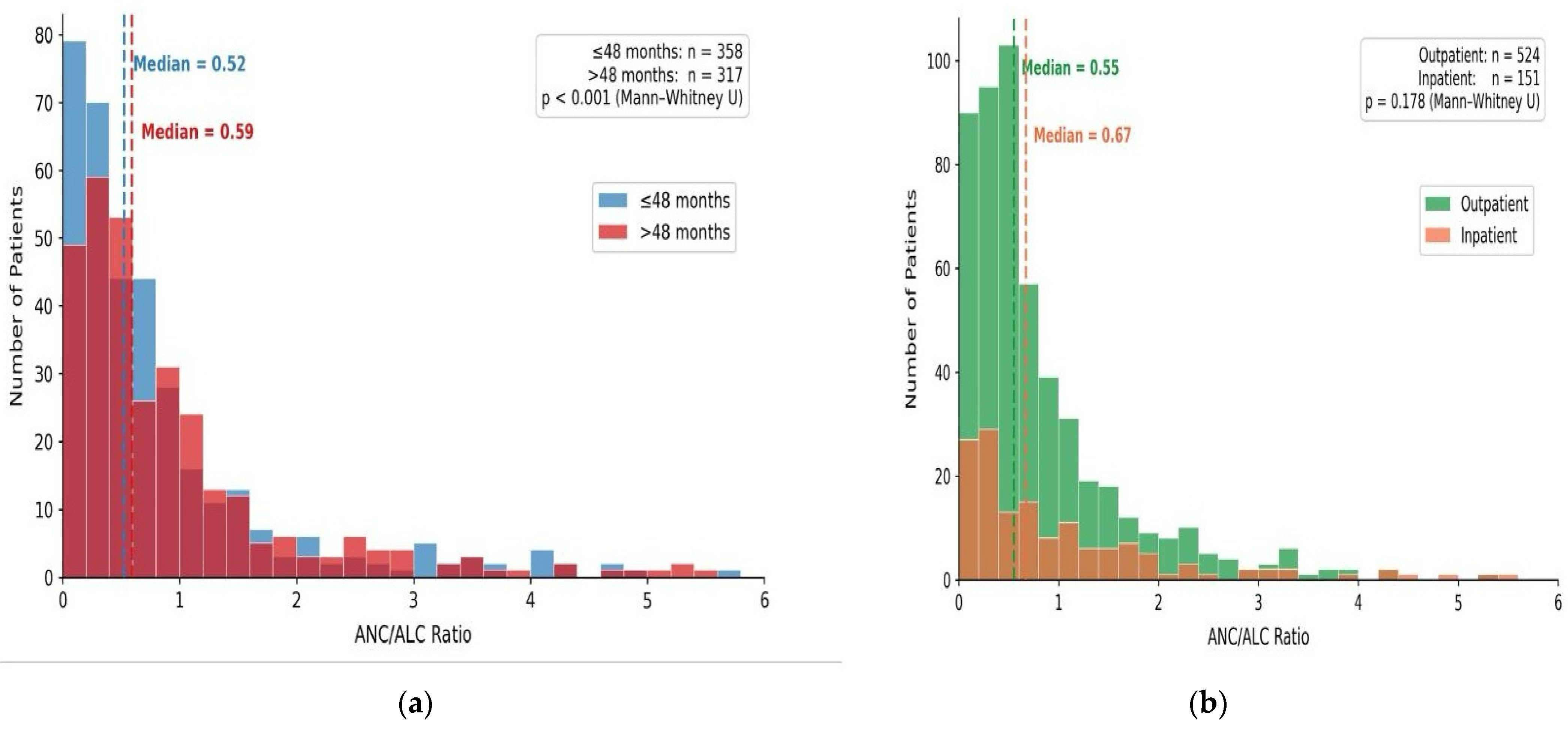
Figure 1. (a) Distribution of ANC/ALC ratio by age group. (b) Distribution of ANC/ALC ratio by hospitalization status. Abbreviations: ANC, absolute neutrophil count; ALC, absolute lymphocyte count.
Pathogens 15 00554 g001
Figure 2. Receiver operating characteristic (ROC) curves for AST/ALT and ANC/ALC ratios in predicting the classic infectious mononucleosis phenotype. The classic infectious mononucleosis phenotype was defined as the concurrent presence of fever, pharyngitis, and lymphadenopathy. Abbreviations: AUC = area under the curve; CI = confidence interval; AST = aspartate aminotransferase; ALT = alanine aminotransferase; ANC = absolute neutrophil count; ALC = absolute lymphocyte count.
Pathogens 15 00554 g002
Table 1. Comparison of clinical, laboratory, imaging, and treatment characteristics according to age groups.
Total≤4 Years>4 Years
n (%)n (%)p *
Presenting symptoms695372323
Fever421 (60.6)231 (62.1)190 (58.8)0.406
Sore throat336 (48.3)142 (38.2)194 (60.1)<0.001
Cervical swelling265 (38.1)126 (33.9)139 (43)0.111
Rhinorrhea217 (31.7)135 (36.3)82 (25.4)0.002
Cough192 (27.8)126 (33.9)67 (20.7)<0.001
Rash186 (26.8)124 (33.3)62 (19.2)<0.001
Loss of appetite134 (19.3)60 (16.1)74 (22.9)0.022
Dysphagia105 (15.1)41 (11)64 (19.8)<0.001
Vomiting85 (12.7)51 (13.7)37 (11.5)0.388
Diarrhea55 (7.9)44 (11.8)11 (3.4)<0.001
Eyelid edema54 (7.8)31 (8.3)23 (7.1)0.566
IM triad **93 (13.3)36 (9.7)57 (17.6)<0.001
Physical examination findings695372 (53.5)323 (46.5)
Tonsillar hypertrophy459 (66)241 (64.8)218 (67.5)0.319
Lymphadenopathy364 (52.4)139 (37.4)225 (69.7)<0.001
Tonsillitis270 (38.8)133 (35.8)137 (42.4)0.063
Rash195 (28.1)132 (35.5)63 (19.5)<0.001
Fever172 (24.7)103 (27.7)69 (21.4)0.06
Postnasal drip85 (12.2) 47 (12.6)38 (11.8)0.748
Periorbital edema56 (8.1)26 (7)30 (9.3)0.748
Hepatomegaly54 (7.8)33 (8.9)21 (6.5)0.253
Hepatosplenomegaly47 (6.8)15 (4)32 (9.9)0.002
Splenomegaly34 (4.9)15 (4)19 (5.9)0.253
Findings on peripheral blood smear309162147
Downey cells131 (39.9)67 (41.4)64 (43.5)0.543
Ultrasonographic findings
Cervical ultrasonography271133138
Cervical lymphadenopathy123 (45.4)56 (42.1)67 (48.6)0.287
Abdominal ultrasonography274138137
Hepatomegaly84 (30.7)37 (26.8)47 (34.3)0.117
Splenomegaly127 (46.4)50 (36.2)77 (56.2)<0.001
Organomegaly145 (52.9)63 (45.7)82 (59.9)0.018
Treatment
Antibiotic therapy446 (64.2)230 (61.7)216 (67.1)0.137
Antibiotic-associated rash100 (22.4)67 (29.1)33 (15.3)<0.001
Follow-up695363332
Inpatient151 (21.7)81 (22.3)70 (21.1)0.923
Outpatient544 (78.3)282 (77.7)262 (78.9)
* Chi-square test (χ2), ** IM (Infectious mononucleosis) triad: fever, sore throat, cervical swelling. Statistically significant results are indicated in bold.
Table 2. Comparison of laboratory parameters and clinical follow-up according to age groups.
All Patients (n = 695)≤4 Years (n = 372)>4 Years (n = 323)
Patients Tested
n (%)
Median (IQR)Patients Tested
(%)
Median (IQR)Patients Tested
(%)
Median
(IQR)
Test Statisticp *
Laboratory findings
Hgb (g/dL)675 (97.1)12
(11.3–12.8)
358 (96.2)11.6
(11–12.3)
317 (98.1)12.5
(11.9–13.1)
82.75<0.001
WBC (×103/µL)675 (97.1)11.9
(8.7–15.7)
358 (96.2)12.4
(9.1–16.1)
317 (98.1)11.3
(8.4–15.1)
50.520.014
PLT (×103/µL)675 (97.1)267
(201–344)
358 (96.2)285.5
(207–360)
317 (98.1)248
(193.5–320)
47.17<0.001
ANC (×103/µL)675 (97.1)3.37
(2.3–5.1)
358 (96.2)3.3
(2.3–5.1)
317 (98.1)3.5
(2.3–5.1)
58.970.38
ALC (×103/µL)675 (97.1)5.7
(3.64–8.2)
358 (96.2)6.2
(4.3–8.9)
317 (98.1)5.1
(3.1–7.7)
45.27<0.001
AST (U/L)568 (81.7)45
(31–75)
291 (78.2)44
(32–68)
277 (85.8)47
(28.5–88)
41.240.63
ALT (U/L)568 (81.7)33
(18–93)
291 (78.2)27
(17–65)
277 (85.8)44
(20–116.5)
47.6<0.001
ESR (mm/h)443 (63.7)22
(14–40)
229 (61.6)23
(14–41.5)
214 (66.3)22
(12–40)
23.90.71
CRP (mg/dL)565 (81.3)9
(3.6–22)
301 (80.9)8
(3.4–20.5)
264 (81.8)10.5
(4.6–25)
43.370.059
Time to recovery (days)440 (63.6)13
(10–16)
237 (63.7)12
(10–16)
203 (62.8)13
(10–17)
25.50.28
Hospital stay (days)151 (21.7)5
(4–7)
81 (21.8)5
(4–7)
70 (21.7)5
(4–7)
3.40.43
Abbreviations: Hgb, hemoglobin; WBC, white blood cell; PLT, platelet count; ANC, absolute neutrophil count; ALC, absolute lymphocyte count; AST, aspartate aminotransferase; ALT, alanine aminotransferase; ESR, erythrocyte sedimentation rate; CRP, C-reactive protein. * Mann–Whitney U test. Data are presented as median (interquartile range, 25th–75th percentile). Statistically significant results are indicated in bold.
Table 3. Estimated marginal probabilities of classic infectious mononucleosis presentation by composite risk score and age group.
Risk Score≤48 Months Probability≤48 Months 95% CI>48 Months Probability>48 Months 95% CI
0—Both ratios above cut-off5.4%3.0–9.5%9.9%5.6–17.0%
1—One ratio at/below cut-off10.1%6.4–15.7%18.0%12.7–24.8%
2—Both ratios at/below cut-off16.4%10.5–24.8%27.6%19.8–37.1%
Note. Probabilities were estimated from a multivariable logistic regression model incorporating the composite risk score and age group (χ2 = 23.3, df = 3, p < 0.001). The composite risk score ranges from 0 (lowest risk: both ANC/ALC and AST/ALT ratios above cut-off) to 2 (highest risk: both ratios at or below cut-off), based on ROC-derived cut-off values: ANC/ALC ratio ≤ 0.464 and AST/ALT ratio ≤ 1.395. Values represent the predicted probability of classic infectious mononucleosis presentation with 95% confidence interval. Abbreviations: ANC—absolute neutrophil count; ALC—absolute lymphocyte count; AST—aspartate aminotransferase; ALT—alanine aminotransferase.
Table 4. Comparison of clinical findings according to hospitalization status.
TotalOutpatientInpatient
n (%)n (%)n (%)p *
Presenting symptoms695544151
Fever 421 (60.6)314 (57.5)107 (70.9)0.003
Sore throat336 (48.3)262 (48.2)74 (49)0.854
Cervical swelling265 (38.1)204 (37.5)61 (40.4)0.52
Rhinorrhea217 (31.7)159 (29.2)58 (38.4)0.031
Cough192 (27.8)147 (27)45 (29.8)0.499
Rash186 (26.8)149 (27.4)37 (24.5)0.478
Loss of appetite 134 (19.3)97 (17.8)37 (24.5)0.066
Dysphagia105 (15.1)81 (14.9)24 (15.9)0.86
Vomiting85 (12.7)56 (10.3)29 (19.2)0.005
Diarrhea55 (7.9)45 (8.3)10 (6.6)0.621
Eyelid edema54 (7.8)41 (7.5)13 (8.6)0.792
IM triad **93 (13.3)69 (12.7)24 (15.9)0.373
Physical examination findings695544151
Tonsillar hypertrophy459 (66)364 (63.6)113 (74.8)0.01
Lymphadenopathy364 (52.4)272 (50)92 (60.9)0.017
Tonsillitis270 (38.8)191 (35.1)79 (52.3)<0.001
Rash195 (28.1)153 (28.1)42 (27.8)0.94
Fever172 (24.7)130 (23.9)42 (27.8)0.324
Postnasal drip85 (12.2)68 812.5)17 (11.3)0.786
Periorbital edema56 (8.1)46 (8.5)10 (6.6)0.573
Hepatomegaly54 (7.8)37 (6.8)17 (11.3)0.101
Hepatosplenomegaly47 (6.8)32 (5.9)15 (9.9)0.116
Splenomegaly34 (4.9)24 (4.4)10 (6.6)0.368
Organomegaly135 (19.4)93 (17.1)42 (27.8)0.003
* Chi-square test (χ2), ** IM triad: fever, sore throat, cervical swelling. Abbreviations: IM—infectious mononucleosis. Statistically significant results are indicated in bold.
Table 5. Comparison of laboratory findings and recovery times according to hospitalization status.
Outpatient (n = 544)Inpatient (n = 151)
Patients Tested. n (%)Median (IQR)Patients Tested. n (%)Median (IQR)Test Statisticp *
Laboratory findings
Hgb (g/dL)524 (96.3)12.1 (11.4–12.8)151 (100)12 (11.1–13)37.620.357
WBC (×103/µL)524 (96.3)11.5 (8.6–15.3)151 (100)13.4 (9.7–18.1)46.490.001
Platelet count (×103/µL)524 (96.3)270 (205–344)151 (100)242 (185–338)35.460.052
ANC (×103/µL)524 (96.3)3.3 (2.3–4.9)151 (100)3.8 (2.7–6.3)46.020.002
ALC (×103/µL)524 (96.3)5.6 (3.6–8.0)151 (100)6.1 (3.6–9.2)41.80.288
AST (U/L)420 (77.2)43 (31–74)148 (98)48.5 (33.3–84.8)33.810.112
ALT (U/L)419 (77)32 (18–88)148 (98)35.5 (17.5–101.8)32.250.468
ESR (mm/saat)315 (57.9)21 (12–38)128 (84.8)28 (17–45)24.30.001
CRP (mg/dL)417 (76.7)8 (3.4–19.7)148 (98)12 (6–31)36.750.001
Time to recovery (days)313 (57.5)14 (10–17)127 (84.1)11 (9–14)15.39<0.001
Abbreviations: Hgb, hemoglobin; WBC, white blood cell; PLT, platelet count; ANC, absolute neutrophil count; ALC, absolute lymphocyte count; AST, aspartate aminotransferase; ALT, alanine aminotransferase; ESR, erythrocyte sedimentation rate; CRP, C-reactive protein. * Mann–Whitney U test. Data are presented as median (interquartile range, 25th–75th percentile). Statistically significant results are indicated in bold.
Disclaimer/Publisher’s Note: The statements, opinions and data contained in all publications are solely those of the individual author(s) and contributor(s) and not of MDPI and/or the editor(s). MDPI and/or the editor(s) disclaim responsibility for any injury to people or property resulting from any ideas, methods, instructions or products referred to in the content.