Biopolymer-Based Formulations of Beauveria bassiana for Biological Control of the Cabbage Whitefly (Aleyrodes proletella)

 ,
,  , , and
Abstract
1. Introduction
2. Materials and Methods
2.1. Materials
2.2. Preparation of Polymer Solutions and Biohybrid Suspensions
2.3. Characterization
2.4. Fungal Growth Assay
2.5. Experimental Design and Treatment Structure
2.6. Bioassay Conditions
2.7. Mortality Assessment and Corrected Efficacy
2.8. Statistical Analysis
3. Results
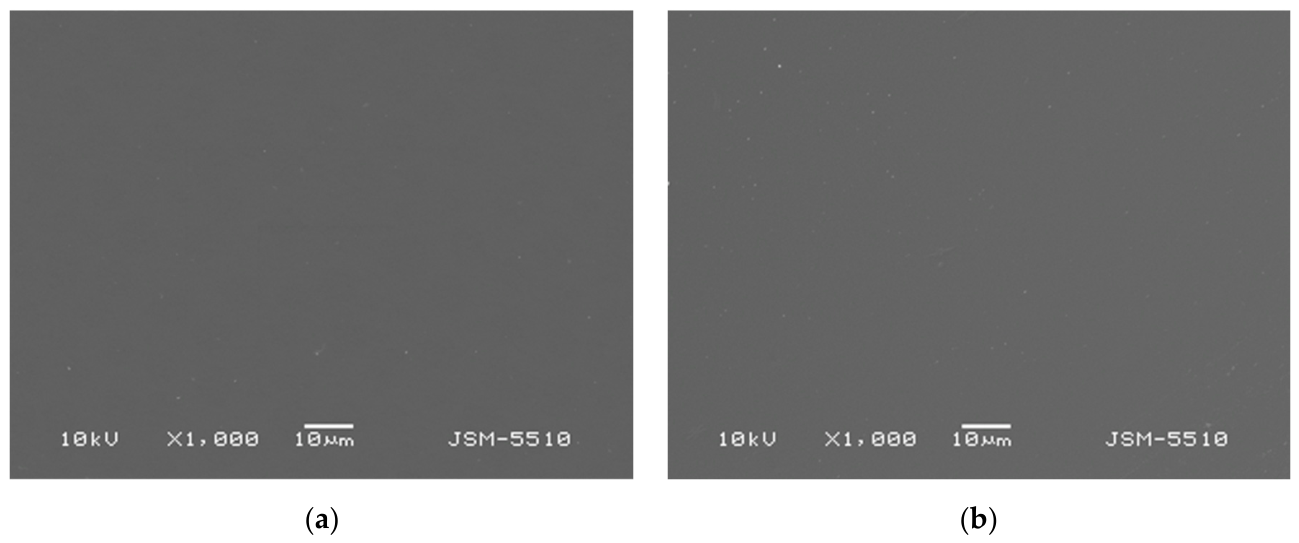
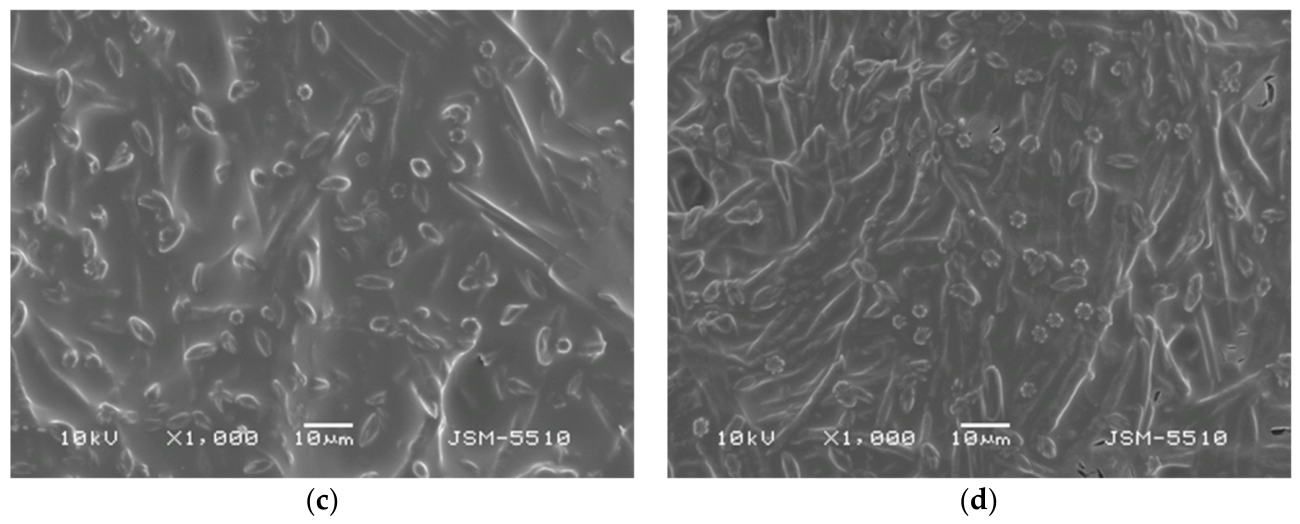
3.1. Rheological Properties and SEM Characterization
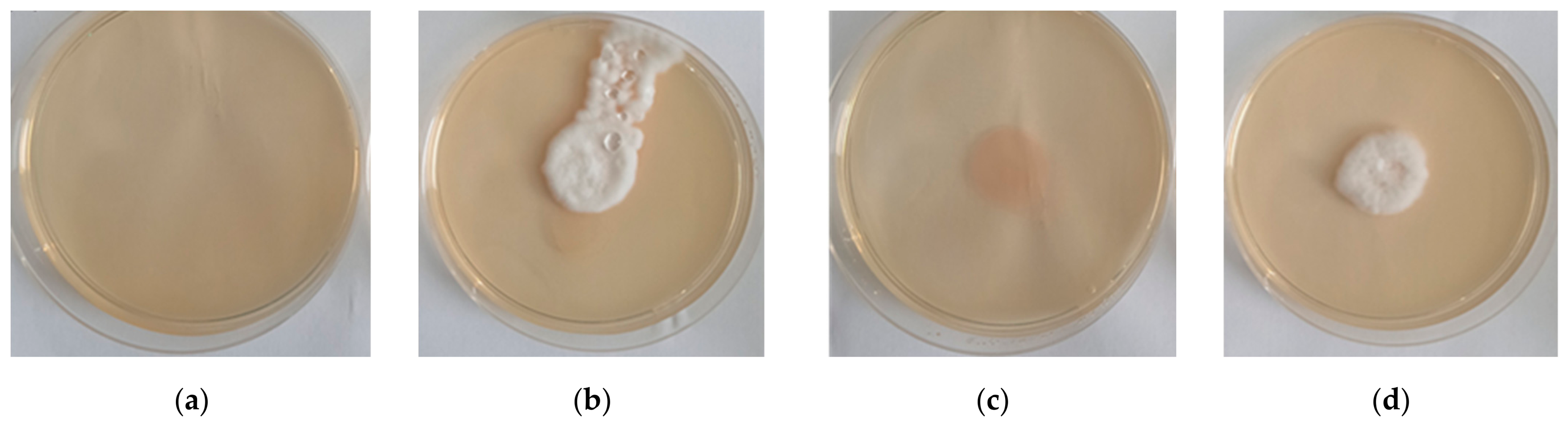
3.2. Fungal Viability After Polymer Incorporation
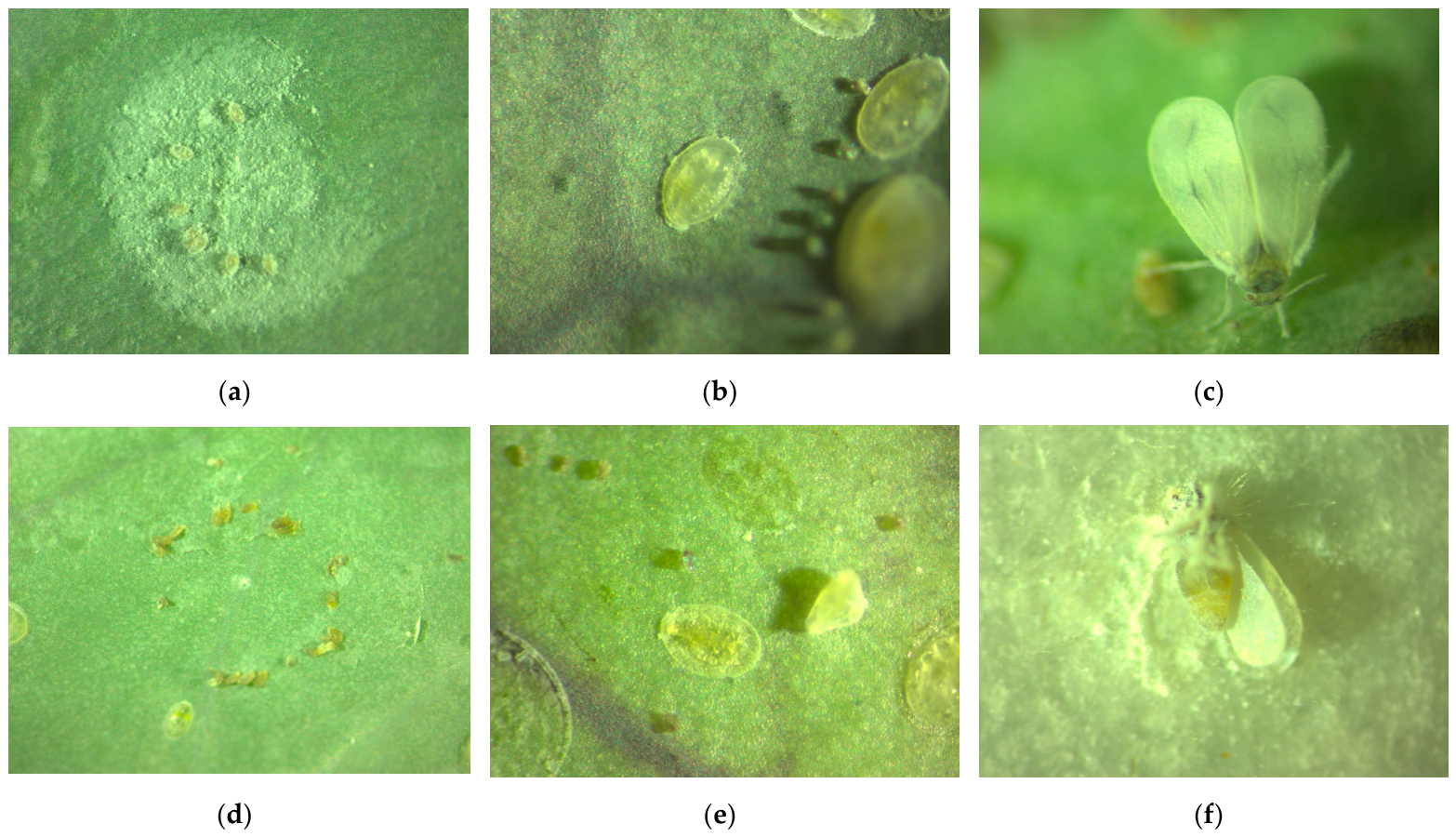
3.3. Microscopic Assessment of Aleyrodes proletella
3.4. Stage-Specific Population Dynamics and Corrected Efficacy Against Aleyrodes proletella
4. Discussion
5. Conclusions
Supplementary Materials
Author Contributions
Funding
Institutional Review Board Statement
Informed Consent Statement
Data Availability Statement
Acknowledgments
Conflicts of Interest
Abbreviations
| COS | Chitooligosaccharide |
| HEC | 2-Hydroxyethyl cellulose |
References
- Byrne, D.N.; Bellows, T.S., Jr. Whitefly biology. Annu. Rev. Entomol. 1991, 36, 431–457. [Google Scholar] [CrossRef]
- Abubakar, M.; Koul, B.; Chandrashekar, K.; Raut, A.; Yadav, D. Whitefly (Bemisia tabaci) Management (WFM) Strategies for Sustainable Agriculture: A Review. Agriculture 2022, 12, 1317. [Google Scholar] [CrossRef]
- Oliveira, M.R.V.; Henneberry, T.J.; Anderson, P. History, current status, and collaborative research projects for Bemisia tabaci. Crop Prot. 2001, 20, 709–723. [Google Scholar] [CrossRef]
- Navas-Castillo, J.; Fiallo-Olivé, E.; Sánchez-Campos, S. Emerging virus diseases transmitted by whiteflies. Annu. Rev. Phytopathol. 2011, 49, 219–248. [Google Scholar] [CrossRef]
- Hondelmann, P.; Paul, C.; Schreiner, M.; Meyhöfer, R. Importance of antixenosis and antibiosis resistance to the cabbage whitefly (Aleyrodes proletella) in Brussels sprout cultivars. Insects 2020, 11, 56. [Google Scholar] [CrossRef] [PubMed]
- Horowitz, A.R.; Ghanim, M.; Roditakis, E.; Nauen, R.; Ishaaya, I. Insecticide resistance and its management in Bemisia tabaci. J. Pest Sci. 2020, 93, 893–910. [Google Scholar] [CrossRef]
- Biondi, A.; Desneux, N.; Siscaro, G.; Zappalà, L. Using organic-certified rather than synthetic pesticides may not be safer for biological control agents: Selectivity and side effects of 14 pesticides on the predator Orius laevigatus. Chemosphere 2012, 87, 803–812. [Google Scholar] [CrossRef]
- de Faria, M.R.; Wraight, S.P. Mycoinsecticides and mycoacaricides: A comprehensive list with worldwide coverage and international classification of formulation types. Biol. Control 2007, 43, 237–256. [Google Scholar] [CrossRef]
- Mantzoukas, S.; Kitsiou, F.; Natsiopoulos, D.; Eliopoulos, P.A. Entomopathogenic Fungi: Interactions and Applications. Encyclopedia 2022, 2, 646–656. [Google Scholar] [CrossRef]
- Zimmermann, G. Review on safety of the entomopathogenic fungus Beauveria bassiana and Beauveria brongniartii. Biocontrol Sci. Technol. 2007, 17, 553–596. [Google Scholar] [CrossRef]
- Mollah, M.M.I.; Kim, Y. Virulent secondary metabolites of entomopathogenic bacteria genera, Xenorhabdus and Photorhabdus, inhibit phospholipase A2 to suppress host insect immunity. BMC Microbiol. 2020, 20, 359. [Google Scholar] [CrossRef]
- Kaiser, D.; Bacher, S.; Mène-Saffrané, L.; Grabenweger, G. Efficiency of natural substances to protect Beauveria bassiana conidia from UV radiation. Pest Manag. Sci. 2019, 75, 556–563. [Google Scholar] [CrossRef]
- Lin, F.; Mao, Y.; Zhao, F.; Idris, A.L.; Liu, Q.; Zou, S.; Guan, X.; Huang, T. Toward sustainable green adjuvants for microbial pesticides: Recent advances and future perspectives. Microorganisms 2023, 11, 364. [Google Scholar] [CrossRef]
- Holka, M.; Kowalska, J. The potential of adjuvants used with microbiological control of insect pests with emphasis on organic farming. Agriculture 2023, 13, 1659. [Google Scholar] [CrossRef]
- Pirzada, T.; de Farias, B.V.; Mathew, R.; Guenther, R.H.; Byrd, M.V.; Sit, T.L.; Pal, L.; Opperman, C.H.; Khan, S.A. Recent advances in biodegradable matrices for active ingredient release in crop protection: Towards attaining sustainability in agriculture. Curr. Opin. Colloid Interface Sci. 2020, 48, 121–136. [Google Scholar] [CrossRef]
- Rabea, E.I.; Badawy, M.E.T.; Stevens, C.V.; Smagghe, G.; Steurbaut, W. Chitosan as antimicrobial agent: Applications and mode of action. Biomacromolecules 2003, 4, 1457–1465. [Google Scholar] [CrossRef]
- Friuli, M.; Pellegrino, R.; Lamanna, L.; Nitti, P.; Madaghiele, M.; Demitri, C. Materials engineering to help pest control: A narrative overview of biopolymer-based entomopathogenic fungi formulations. J. Fungi 2023, 9, 918. [Google Scholar] [CrossRef] [PubMed]
- Obireddy, S.R.; Lai, W.F. Preparation and characterization of 2-hydroxyethyl starch microparticles for co-delivery of multiple bioactive agents. Drug Deliv. 2021, 28, 1562–1568. [Google Scholar] [CrossRef]
- Pugliese, N.; Camarda, A.; Miglianti, M.; Friuli, M.; Demitri, C.; Siddique, I.; Santos, M.A.B.; Rhimi, W.; Circella, E.; Cafarchia, C.; et al. Hydroxyethyl cellulose-based hydrogel as a novel delivery system for Eucalyptus globulus essential oil and Beauveria bassiana conidia for the control of the poultry red mite Dermanyssus gallinae. BMC Vet. Res. 2025, 21, 473. [Google Scholar] [CrossRef]
- Tsekova, P.; Petkova, M.; Spasova, M.; Stoilova, O. Electrospun biocarriers with immobilized yeasts for eco-friendly biocontrol of Fusarium graminearum. Agronomy 2025, 15, 1541. [Google Scholar] [CrossRef]
- Boukouvala, M.C.; Kavallieratos, N.G. Effect of six insecticides on egg hatching and larval mortality of Trogoderma granarium Everts (Coleoptera: Dermestidae). Insects 2020, 11, 263. [Google Scholar] [CrossRef]
- Saberi-Riseh, R.; Moradi-Pour, M.; Mohammadinejad, R.; Thakur, V.K. Biopolymers for biological control of plant pathogens: Advances in microencapsulation of beneficial microorganisms. Polymers 2021, 13, 1938. [Google Scholar] [CrossRef] [PubMed]
- Maruyama, C.R.; Guilger, M.; Pascoli, M.; Bileshy-José, N.; Abhilash, P.C.; Fraceto, L.F.; de Lima, R. Nanoparticles based on chitosan as carriers for the combined herbicides imazapic and imazapyr. Sci. Rep. 2016, 6, 19768. [Google Scholar] [CrossRef]
- Bernardo, C.; Pereira-Junior, R.; Luz, C.; Mascarin, G.; Fernandes, E. Differential susceptibility of blastospores and aerial conidia of entomopathogenic fungi to heat and UV-B stresses. Fungal Biol. 2020, 124, 714–722. [Google Scholar] [CrossRef]
- Zhang, Z.; Yang, N.; Yu, J.; Jin, S.; Shen, G.; Chen, H.; Yuzhen, N.; Xiang, D.; Qian, K. Research progress of a pesticide polymer-controlled release system based on polysaccharides. Polymers 2023, 15, 2810. [Google Scholar] [CrossRef]
- Wang, J.; Wang, M.; Li, G.B.; Zhang, B.H.; Lü, H.; Luo, L.; Kong, X.P. Evaluation of a spinosad controlled-release formulation based on chitosan carrier: Insecticidal activity against Plutella xylostella (L.) and dissipation behavior in soil. ACS Omega 2021, 6, 30762–30768. [Google Scholar] [CrossRef] [PubMed]
- Kamouni, A.; Idali, N.; Brik, A.; Qayouh, H.; Dihazi, A.; Vinceković, M.; Youcef, H.; Meziane, A.; Lahcini, M. Encapsulation of Beauveria bassiana conidia in carboxymethylcellulose beads: Advancing UV protection and thermal resilience in bioinsecticide applications. Int. J. Biol. Macromol. 2025, 330, 148225. [Google Scholar] [CrossRef] [PubMed]
- Karaoğlan, B.; Alkassab, A.T.; Borges, S.; Fisher, T.; Link-Vrabie, C.; McVey, E.; Ortego, L.; Nuti, M. Microbial pesticides: Challenges and future perspectives for non-target organism testing. Environ. Sci. Eur. 2024, 36, 205. [Google Scholar] [CrossRef]




| Treatment | Day | Alive Eggs | Dead Eggs | Hatched Nymphs | Egg Mortality (%) |
|---|---|---|---|---|---|
| Control (water) | 0 | 47.3 ± 2.5 | 0.0 ± 0.0 | 0.0 ± 0.0 | 0.0 ± 0.0 |
| 1 | 47.3 ± 2.5 | 0.0 ± 0.0 | 0.0 ± 0.0 | 0.0 ± 0.0 | |
| 3 | 32.3 ± 3.1 | 0.0 ± 0.0 | 15.0 ± 0.0 | 0.0 ± 0.0 | |
| Beauveria bassiana | 0 | 33.7 ± 3.0 | 0.0 ± 0.0 | 0.0 ± 0.0 | 0.0 ± 0.0 |
| 1 | 27.0 ± 2.6 | 6.3 ± 1.2 | 0.3 ± 1.1 | 19.0 ± 1.3 | |
| 3 | 0.0 ± 0.0 | 33.3 ± 2.5 | 0.3 ± 1.4 | 100.0 ± 0.0 | |
| COS solution | 0 | 7.0 ± 2.0 | 0.0 ± 0.0 | 0.0 ± 0.0 | 0.0 ± 0.0 |
| 1 | 6.3 ± 1.5 | 0.0 ± 0.0 | 10.7 ± 2.5 | 0.0 ± 0.0 | |
| 3 | 1.0 ± 0.6 | 4.7 ± 1.2 | 11.3 ± 2.5 | 82.4 ± 1.4 | |
| HEC solution | 0 | 10.3 ± 1.8 | 0.0 ± 0.0 | 0.0 ± 0.0 | 0.0 ± 0.0 |
| 1 | 9.7 ± 1.5 | 0.0 ± 0.0 | 5.6 ± 2.3 | 0.0 ± 0.0 | |
| 3 | 4.0 ± 1.0 | 4.0 ± 1.0 | 7.3 ± 2.1 | 50.0 ± 1.2 | |
| COS/B. bassiana | 0 | 31.3 ± 2.5 | 0.0 ± 0.0 | 0.0 ± 0.0 | 0.0 ± 0.0 |
| 1 | 29.7 ± 2.0 | 0.0 ± 0.0 | 1.7 ± 1.5 | 0.0 ± 0.0 | |
| 3 | 0.0 ± 0.0 | 24.3 ± 2.2 | 7.0 ± 2.3 | 100.0 ± 0.0 | |
| HEC/B. bassiana | 0 | 38.3 ± 2.8 | 0.0 ± 0.0 | 0.0 ± 0.0 | 0.0 ± 0.0 |
| 1 | 36.3 ± 2.5 | 0.0 ± 0.0 | 2.0 ± 1.7 | 0.0 ± 0.0 | |
| 3 | 0.7 ± 0.6 | 36.3 ± 2.8 | 1.3 ± 1.9 | 98.2 ± 2.3 | |
| Naturalis® | 0 | 39.0 ± 3.0 | 0.0 ± 0.0 | 0.0 ± 0.0 | 0.0 ± 0.0 |
| 1 | 37.7 ± 2.7 | 1.3 ± 0.5 | 3.0 ± 1.9 | 3.4 ± 1.0 | |
| 3 | 15.7 ± 2.2 | 20.0 ± 2.5 | 2.3 ± 2.2 | 56.1 ± 2.1 |
| Treatment | Day | Alive Nymphs | Dead Nymphs | Nymph Mortality (%) |
|---|---|---|---|---|
| Control (water) | 0 | 32.7 ± 2.1 | 0.0 ± 0.0 | 0.0 ± 0.0 |
| 1 | 32.7 ± 2.1 | 0.0 ± 0.0 | 0.0 ± 0.0 | |
| 3 | 32.7 ± 2.3 | 0.0 ± 0.0 | 0.0 ± 0.0 | |
| Beauveria bassiana | 0 | 13.7 ± 1.5 | 0.0 ± 0.0 | 0.0 ± 0.0 |
| 1 | 10.7 ± 1.3 | 3.0 ± 0.8 | 22.0 ± 2.0 | |
| 3 | 3.3 ± 0.7 | 10.3 ± 1.2 | 75.7 ± 2.5 | |
| COS solution | 0 | 34.7 ± 2.4 | 0.0 ± 0.0 | 0.0 ± 0.0 |
| 1 | 34.7 ± 2.2 | 0.0 ± 0.0 | 0.0 ± 0.0 | |
| 3 | 17.7 ± 1.8 | 17.0 ± 1.9 | 49.0 ± 2.3 | |
| HEC solution | 0 | 39.7 ± 2.6 | 0.0 ± 0.0 | 0.0 ± 0.0 |
| 1 | 38.7 ± 2.4 | 1.0 ± 0.5 | 2.5 ± 0.9 | |
| 3 | 21.3 ± 1.7 | 18.3 ± 2.1 | 46.2 ± 2.4 | |
| COS/B. bassiana | 0 | 38.0 ± 2.0 | 0.0 ± 0.0 | 0.0 ± 0.0 |
| 1 | 34.3 ± 2.0 | 3.7 ± 0.9 | 9.7 ± 1.5 | |
| 3 | 5.7 ± 1.1 | 32.3 ± 2.5 | 85.1 ± 2.8 | |
| HEC/B. bassiana | 0 | 35.7 ± 2.2 | 0.0 ± 0.0 | 0.0 ± 0.0 |
| 1 | 34.7 ± 2.1 | 1.0 ± 0.5 | 2.8 ± 1.0 | |
| 3 | 11.3 ± 1.4 | 24.3 ± 2.2 | 68.2 ± 2.6 | |
| Naturalis® | 0 | 13.0 ± 1.6 | 0.0 ± 0.0 | 0.0 ± 0.0 |
| 1 | 6.7 ± 1.1 | 6.3 ± 1.0 | 48.7 ± 2.4 | |
| 3 | 2.3 ± 0.6 | 10.7 ± 1.3 | 82.1 ± 2.7 |
Disclaimer/Publisher’s Note: The statements, opinions and data contained in all publications are solely those of the individual author(s) and contributor(s) and not of MDPI and/or the editor(s). MDPI and/or the editor(s) disclaim responsibility for any injury to people or property resulting from any ideas, methods, instructions or products referred to in the content. |
© 2026 by the authors. Licensee MDPI, Basel, Switzerland. This article is an open access article distributed under the terms and conditions of the Creative Commons Attribution (CC BY) license.
Share and Cite
Spasova, M.; Chervenkova, E.; Stoeva, A.; Petkova, M.; Stoilova, O. Biopolymer-Based Formulations of Beauveria bassiana for Biological Control of the Cabbage Whitefly (Aleyrodes proletella). Pathogens 2026, 15, 524. https://doi.org/10.3390/pathogens15050524
Spasova M, Chervenkova E, Stoeva A, Petkova M, Stoilova O. Biopolymer-Based Formulations of Beauveria bassiana for Biological Control of the Cabbage Whitefly (Aleyrodes proletella). Pathogens. 2026; 15(5):524. https://doi.org/10.3390/pathogens15050524
Chicago/Turabian StyleSpasova, Mariya, Emiliya Chervenkova, Atanaska Stoeva, Mariana Petkova, and Olya Stoilova. 2026. "Biopolymer-Based Formulations of Beauveria bassiana for Biological Control of the Cabbage Whitefly (Aleyrodes proletella)" Pathogens 15, no. 5: 524. https://doi.org/10.3390/pathogens15050524
APA StyleSpasova, M., Chervenkova, E., Stoeva, A., Petkova, M., & Stoilova, O. (2026). Biopolymer-Based Formulations of Beauveria bassiana for Biological Control of the Cabbage Whitefly (Aleyrodes proletella). Pathogens, 15(5), 524. https://doi.org/10.3390/pathogens15050524