Article

Antifungal Effects of Citrus maxima Cultivar Tubtim-Siam Peel Extract Against Malassezia pachydermatis Isolated from Dogs


by
Watcharapong Mitsuwan
1,2,3,
Juthatip Jeenkeawpieam
1,2,
Ratchadaporn Boripun
1,2,
Noppharat Tanthanathipchai
1,
Ozioma Forstinus Nwabor
4 and
Phirabhat Saengsawang
5,*
1
Akkhraratchakumari Veterinary College, Walailak University, Nakhon Si Thammarat 80160, Thailand
2
One Health Research Center, Walailak University, Nakhon Si Thammarat 80160, Thailand
3
Center of Excellence in Innovation of Essential Oil and Bioactive Compounds, Walailak University, Nakhon Si Thammarat 80160, Thailand
4
Department of Public Health, Maxwell School of Citizenship and Public Affairs, Syracuse University, Syracuse, NY 13244, USA
5
Department of Microbiology and Immunology, Faculty of Veterinary Medicine, Kasetsart University, Bangkok 10900, Thailand
*
Author to whom correspondence should be addressed.
Pathogens 2026, 15(5), 479; https://doi.org/10.3390/pathogens15050479
Submission received: 10 April 2026 / Revised: 25 April 2026 / Accepted: 28 April 2026 / Published: 29 April 2026
(This article belongs to the Special Issue Fighting Pathogens with Natural Antimicrobials)

Abstract

Otitis externa in dogs is primarily caused by Malassezia pachydermatis. Treatment involves antifungal and antiseptic agents; however, resistance among causative organisms has been noted. Pomelo (Citrus maxima) is a source of bioactive compounds with antimicrobial activity. Its extract mainly includes essential oils, which are mostly applied for alternative treatment for M. pachydermatis. The study aimed to investigate the anti-M. pachydermatis effects of pomelo peel extracts and their potential use in topical solutions for canine infections. M. pachydermatis was isolated from dogs and confirmed with Matrix-Assisted Laser Desorption/Ionization Time-of-Flight Mass Spectrometry (MALDI-TOF/MS). Antifungal susceptibility of M. pachydermatis to itraconazole was evaluated. Phytochemicals of essential oil and crude extract from C. maxima peel were determined using Gas Chromatograph–Mass Spectrometry (GC-MS/MS). In addition, the antifungal activity of the extracts was assessed using an agar plate dilution assay. The essential oil was formulated into a prototypic topical solution, and its effects on M. pachydermatis were observed in vitro. The prevalence of M. pachydermatis was 42%, with 53% having yeast on both ear sides. The minimum inhibitory concentrations (MIC) of itraconazole, essential oil, and crude extract to M. pachydermatis were 0.03–0.25 µg/mL, 1.0% v/v, and >200 mg/mL, respectively. The prominent phytochemicals in peel extracts were meranzin hydrate and D-limonene, identified in the crude extract and essential oil, respectively. Moreover, a topical solution containing essential oils inhibited M. pachydermatis growth and showed destructive effects on the yeast cell wall at higher concentrations. The essential oil exhibits antifungal activity against M. pachydermatis, primarily due to the high concentration of D-limonene. The growth was inhibited completely at MIC, observed over a 5-day period. Furthermore, the prototypic topical solution demonstrated an anti-M. pachydermatis effect. These findings suggest potential veterinary applications for pomelo peel extract, though further studies are necessary to assess stability, mechanism of action, and industrial suitability.

1. Introduction

Otitis externa in dogs and cats is an ear disease mainly caused by Malassezia yeasts [1]. Malassezia yeasts can cause dermatitis inside the ear canal and ear pinna areas. Common clinical signs of dogs with otitis externa typically present as erythema of the external ear canal, often accompanied by seborrheic ear discharge [2]. Otitis externa is more commonly associated with Malassezia than other yeasts and bacteria [3]. Treatment strategies for Malassezia dermatitis include both topical and systemic therapies, primarily involving antiseptic and antifungal applications [4,5]. In addition, treatment failure with antifungal drugs used for Malassezia dermatitis therapies, such as clotrimazole, miconazole, ketoconazole, and itraconazole, has been reported [6,7,8]. Antifungal resistance in Malassezia yeasts has also been reported in vitro [9,10].
Malassezia pachydermatis is an opportunistic yeast that primarily infects the skin of animals, especially dogs and cats [4]. Otitis externa and dermatitis are the main skin infections caused by M. pachydermatis globally [11]. Azole antifungal drugs, such as itraconazole, are typically used to treat M. pachydermatis infections [6]. The mechanism of the azole group is ergosterol biosynthesis inhibition via the impairment of sterol-14α-demethylase [12]. In addition, M. pachydermatis has increasingly been reported as an azole-resistant yeast [6,7]. An alternative treatment is a way to improve antifungal resistance in M. pachydermatis strains. Medicinal plants and their extracts represent alternative treatments that play an increasingly important role in the medical and veterinary fields [13,14]. Remarkably, the use of medicinal plants and extracts helps reduce antifungal drug use and the development of antifungal drug resistance.
Pomelos (Citrus maxima) are globally cultivated and valued for their nutritional and medicinal benefits, attributed to their abundant phytochemical composition [15]. C. maxima cultivar Tubtim-Siam is a pomelo specifically grown in southern Thailand, particularly in Pak Phanang district, Nakhon Si Thammarat province. This cultivar variation of pomelo has ruby-colored pulp, and this part is used for consumption. Nevertheless, its peel is typically discarded as waste. Most compounds in pomelo peels present health-related effects, including antimicrobial activity, anti-inflammation, anti-cancer, and antioxidant properties [16,17,18]. Main antimicrobial compounds in pomelo peels include monoterpenes, sesquiterpenes, alcohols, aldehydes, esters, oxides, and nootkatone [18]. However, the application of pomelo peel essential oil extracts has primarily been focused on humans, and with limited application in veterinary medicine. The objectives of this study were to determine the anti-M. pachydermatis activity of C. maxima cultivar Tubtim-Siam peel extracts and to evaluate essential oil-containing prototypic topical solutions against M. pachydermatis isolated from dogs.

2. Materials and Methods

2.1. Ethical Approval

Animal handling and laboratory protocols in this study were approved by the Walailak University Institutional Biosafety Committee (WU-IBC) and the Walailak University Institutional Animal Care and Use Committee (WU-IACUC) under the approval IDs of WU-IBC-67-062 and WU-ACUC-67079, respectively.

2.2. Isolation of M. pachydermatis from the Ear Canal of Dogs

A sterile cotton swab was used for sample collection from the ear canal of 50 dogs. The sample size was calculated using a previously described formula [19]. Briefly, a previous Malassezia species prevalence in dogs [20], 80% sensitivity, 80% specificity, 25% desired precision, and 95% confidence interval were used for calculation settings. The swab was inoculated on HiCrome™ Malassezia agar (HiMedia®, HiMedia Laboratories, Mumbai, India) and then incubated at 37 °C for 48–72 h. Colonies exhibiting mauve to purple were selected to subculture on Sabouraud dextrose agar (HiMedia®, HiMedia Laboratories, Mumbai, India) supplemented with 0.05% chloramphenicol (Bio Basic, Bio Basic Inc., Markham, ON, Canada) and 0.05% cycloheximide (Bio Basic, Bio Basic Inc., Markham, ON, Canada). Colonies on Sabouraud dextrose agar supplemented with 0.05% chloramphenicol and 0.05% cycloheximide were screened for yeast cell morphology using methylene blue staining and then observed under a light microscope. In addition, MALDI-TOF MS was performed following a previously described method [21]. Suspected M. pachydermatis colonies were further identified using a Matrix-Assisted Laser Desorption/Ionization Time-of-Flight Mass Spectrometry (MALDI-TOF MS) (MALDI Biotyper®, Bruker Daltonik GmbH, Bremen, Germany) at the Office of Scientific Instruments and Testing, Prince of Songkla University, Thailand. Briefly, a 3-day-old M. pachydermatis suspected single colony was cultured on Sabouraud dextrose agar. The colony was recultivated overnight, and the culture was then used for protein extraction following Bruker’s standard protocol for protein extraction. The MALDI-TOF MS spectral profile of each sample was compared to the spectra library (MSP). The samples that revealed a score value ≥ 2.00 were identified as the corresponding microorganism, as previously described in bacterial and yeast species-level identification studies [22,23,24]. Confirmed M. pachydermatis colonies were kept in Sabouraud dextrose broth supplemented with 30% glycerol and stored at −80 °C until used.

2.3. Antifungal Susceptibility Test of Itraconazole

A total of 43 confirmed M. pachydermatis isolates were cultivated on Sabouraud dextrose agar and subsequently subcultured in Müller-Hinton broth (HiMedia®, HiMedia Laboratories, Mumbai, India) supplemented with 2% glucose (Loba Chemie™, Loba Chemie Ltd., Mumbai, India). The inoculum was adjusted to 2.4 McFarland (3 × 10⁶ CFU/mL) using a densitometer (DEN-1, SIA Biosan, Riga, Latvia). The adjusted inoculum was then diluted into a concentration of 3 × 10³ CFU/mL. The diluted inoculum was tested with itraconazole ranging from 0.01 to 16 µg/mL using broth microdilution in a 96-well plate. The tested medium and 1% DMSO were used as a growth control, while yeast-free medium served as a negative control. The plate was incubated at 32 °C for 48 h. Then, 0.03% resazurin was added to each well (Glentham® Life Sciences, Corsham, UK) and incubated at 32 °C for 24 h. The minimum inhibitory concentration (MIC) was defined as the lowest itraconazole concentration that completely inhibited the growth of M. pachydermatis. In addition, a total of 5 µL of inoculum of each well was dropped on Sabouraud dextrose agar and incubated at 32 °C for 72 h. The lowest concentration presenting no growth on Sabouraud dextrose agar was defined as the minimum lethal concentration (MLC). Moreover, the determination of MIC and MLC was performed in triplication.

2.4. Extraction and Phytochemical Determination of Essential Oil and Crude Extract from C. maxima Cultivar Tubtim-Siam Peel

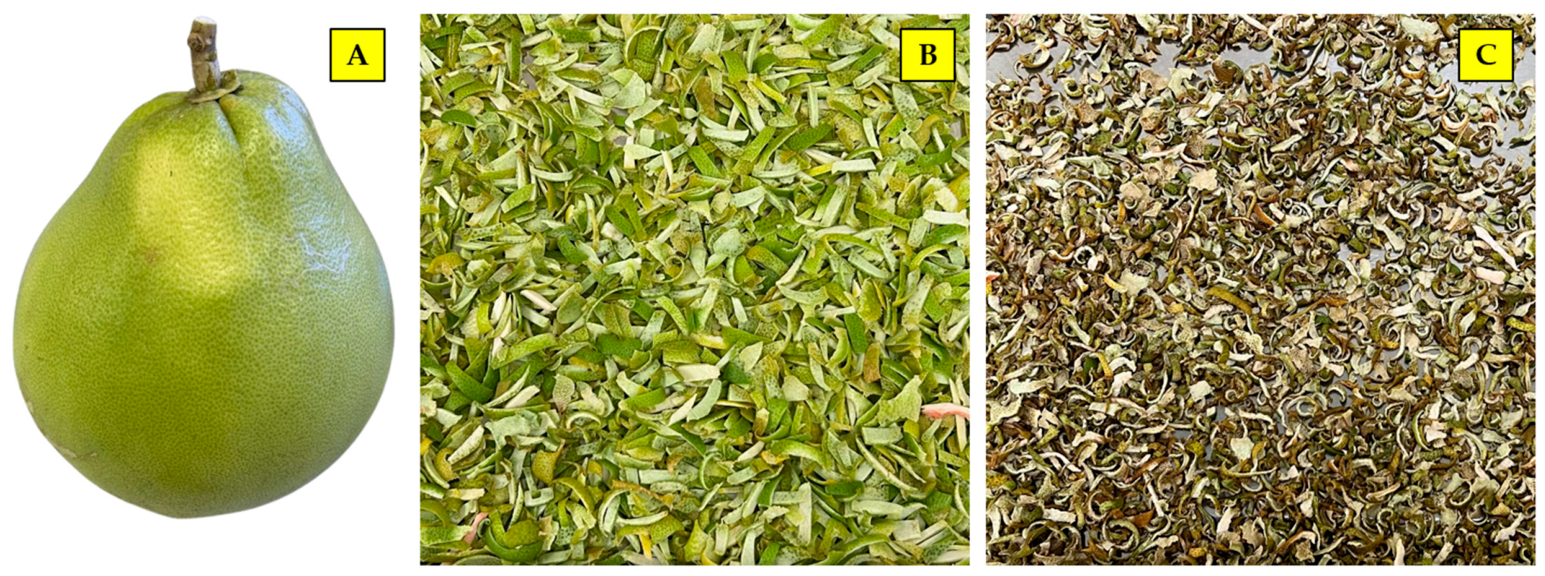
Whole mature pomelos were pretreated with tap water, 2% sodium bicarbonate, and distilled water to remove debris and agricultural chemicals from their peel. Fresh green peels (flavedo) were used for essential oil extraction and ethanolic extraction. The dried peel ethanolic extraction procedure was performed following a previous study [22]. Whole C. maxima cultivar Tubtim-Siam fruit is presented in Figure 1A. For ethanolic extraction, flavedo was dried at 40 °C and ground into powder. The powder was soaked in 95% ethanol for 7 days. The extracted solution was filtered and evaporated using a rotary evaporator at 40 °C under 140 mbar. In addition, the extraction for essential oil was performed following a previously described method with modifications [25]. Briefly, a total of 2000 g of the flavedo was separated and subjected to volatile oil extraction using an essential oil determination apparatus at 60 °C for 12 h. The condensed essential oil was collected and stored at −20 °C until further use. Fresh pomelo peel and dried pomelo peel are presented in Figure 1B and Figure 1C, respectively. The phytochemical composition of both the crude extract and essential oil was determined using Gas Chromatography–Mass Spectrometry/Mass Spectrometry (GC-MS/MS) at the Office of Scientific Instruments and Testing, Prince of Songkla University, Thailand.

2.5. Determination of Minimum Inhibitory Concentration and Minimum Lethal Concentration of Ethanolic Extract and Essential Oil of Pomelo Peel

MIC and MLC values of the ethanol extract and essential oil from pomelo peel were determined by an agar dilution assay. The agar dilution method was selected for this study because it is better suited for hydrophobic compounds, particularly essential oils. The initial attempt using a modified broth microdilution assay failed due to poor dispersion. Despite the addition of Tween 80 as an emulsifier, the essential oil separated and led to unreliable results. The agar dilution method, adapted from established protocols, allows more uniform distribution and improves contact between the microorganism and the compound [26,27,28]. The agar dilution protocol for essential oil was performed following previous studies with some modifications [27,28]. A total of 15 M. pachydermatis isolates with an itraconazole MIC of 0.25 µg/mL (the maximum MIC and MLC values of tested itraconazole for 43 M. pachydermatis isolated from dogs) from individual dogs were included for testing with both ethanolic extract and essential oil of pomelo peel. Briefly, the tested concentration of crude extract ranged from 3.125 to 200 mg/mL and was prepared in molten Sabouraud dextrose agar supplemented with 1% Tween 80. In addition, the essential oil was prepared in the same medium with a range of final concentrations of 0–4% v/v essential oil. The solidified medium with different concentrations of extract and essential oil was tested with M. pachydermatis using the drop plate technique. The tested inoculum was adjusted to a final concentration of 3 × 10⁶ CFU/mL (2.4 McFarland), and a total of 5 µL of inoculum (1.5 × 10⁴ CFU/drop) was dropped onto each concentration of crude extract and essential oil. The plates were then incubated at 32 °C for 5 days, and the presence of yeast colonies was observed daily. Moreover, the experiments were performed in triplicate.

2.6. Effect of Pomelo Peel Essential Oil Containing Prototypic Topical Solution on M. pachydermatis

The essential oil was used to prepare a prototypic topical solution. Different essential oil concentrations were prepared for each group. The control group contained the base components of the prototypic topical solutions, including 202.5 µL of glycerol, 202.5 µL of propylene glycol, 25 µL of ethanol (with a final ethanol concentration of 5% v/v across all treatments), 45 µL of phosphate-buffered saline (pH 7.4; with the PBS volume adjusted depending on the treatment), and 25 µL of essential oil at the specified concentration for each treatment (25% of stock essential oil for treatment 1, 50% of stock essential oil for treatment 2, and 100% of stock essential oil for treatment 3). Moreover, treatment groups included treatment 1 (final essential oil concentration: 12.5%), treatment 2 (final essential oil concentration: 25%), and treatment 3 (final essential oil concentration: 50%). Each treatment was tested on a 2-day-old M. pachydermatis colony on Sabouraud dextrose agar by dropping 5 µL of the solution daily directly onto the colony for 3 days. The direct testing of yeast colonies was performed in triplicate. The treated colony was picked up and placed on a sterile 1 × 1 cm2 glass slide containing sterile phosphate-buffered saline (pH 7.4). After air drying, the slide was fixed in 2.5% glutaraldehyde for 1 h. The fixed slide was dehydrated in a series of ethanol (20–100%). The dehydrated sample was dried using a critical point dryer (CPD; K850 Critical Point Dryer, Quorum Technologies, Ashford, Kent, UK) and then coated with gold using a gold sputter coater (Cressington Sputter Coater 108 Auto, Cressington Scientific Instruments Inc., Watford, UK). The prepared sample was observed for cell structure using a scanning electron microscope (SEM; MERLIN® Compact, SEM-Zeiss, Munich, Germany).

2.7. Statistical Analysis

Experiment data were recorded in a spreadsheet program using Microsoft Excel. Descriptive statistics, including percentages, means, and standard deviations, were performed using the R programming language version 4.5.2. (https://www.r-project.org, accessed on 1 December 2025).

3. Results

3.1. Prevalence of M. pachydermatis and Antimicrobial Susceptibility of M. pachydermatis to Itraconazole

A total of 53 isolates (90.57%) were suspected to be M. pachydermatis. The prevalence of M. pachydermatis in dogs was 42% (95% CI = 28.19–56.79%). In addition, 45 isolates (84.91%; 95% CI = 72.41–93.25%) of suspected M. pachydermatis isolates were identified with a mean match score of 2.15 ± 0.17. The proportion of M. pachydermatis habituating in the ear side was 47.62% (95% CI = 25.71–70.22%) for bilateral ears and 53.38% (95% CI = 29.78–74.29%) for unilateral ears. The isolates were then tested for susceptibility to itraconazole. The MIC of itraconazole against 3-day-old M. pachydermatis ranged from 0.03–0.25 µg/mL. The mean MIC of itraconazole against the tested 3-day-old M. pachydermatis was 0.15 ± 0.09 µg/mL. Moreover, the MLC of itraconazole ranged from 0.03–0.25 µg/mL. The MIC50 and MLC50 of itraconazole were 0.125 µg/mL and 0.25 µg/mL, respectively, while the MIC90 and MLC90 were both 0.25 µg/mL. The mean MLC of itraconazole was 0.17 ± 0.10 µg/mL.

3.2. Phytochemicals of Crude Extract and Essential Oil of C. maxima Cultivar Tubtim-Siam Peel

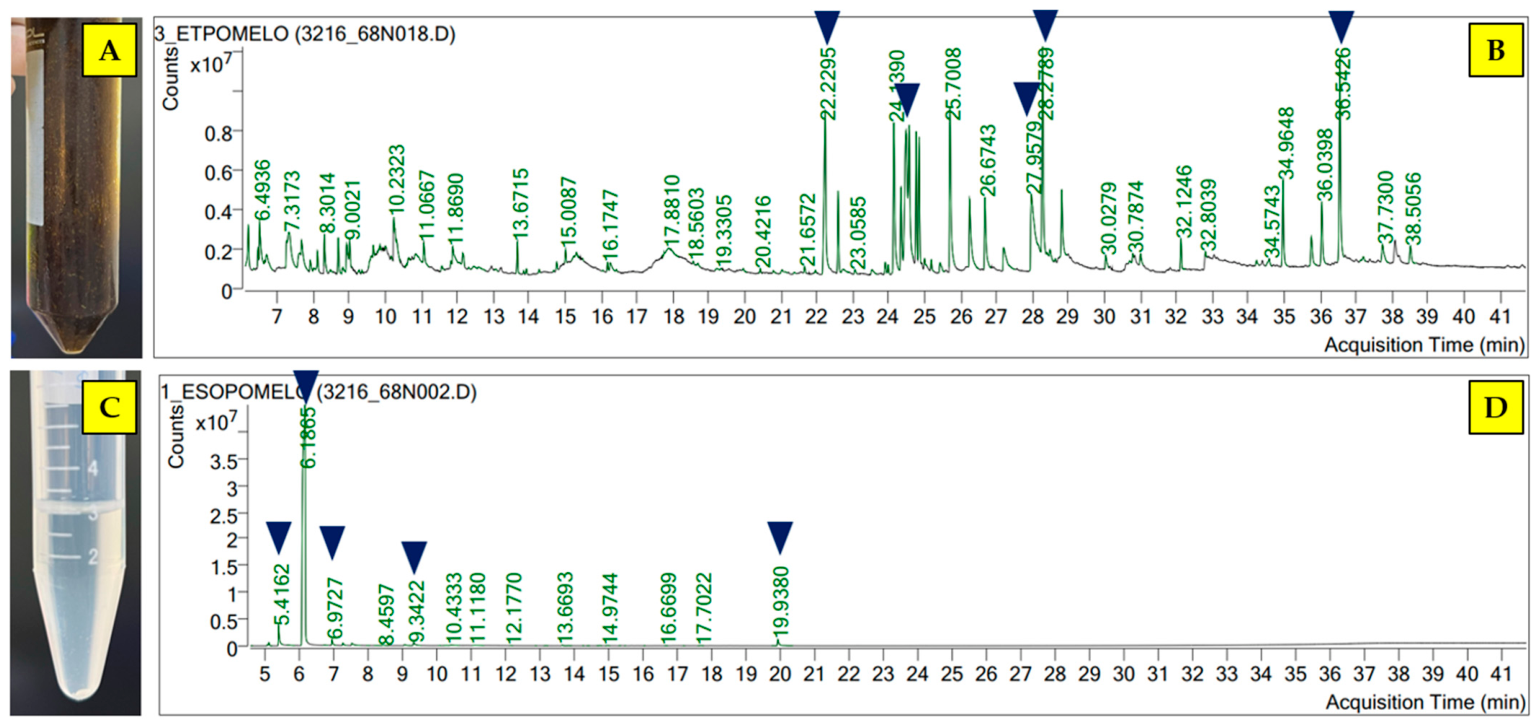
Phytochemicals in the extract and the essential oil were identified using GC-MS. The ethanolic peel extract appeared a dark green, oily, viscous extract, while the essential oil presented a clear, viscous solution. GC-MS spectra of the crude extract and the essential oil assessed by GC-MS are presented in Figure 2. The crude extract primarily consisted of coumarins and fatty acids. Meranzin hydrate (6.46%) was the main compound identified in ethanolic peel extract. Furthermore, the main phytochemicals in the peel essential oil were terpenes, particularly D-limonene, which was the predominant component (79.75%). The proportion of identified phytochemicals in the essential oils and crude extracts is presented in Table 1 and Table 2, respectively.

3.3. Antimicrobial Activity of Crude Extract and Essential Oil of C. maxima Cultivar Tubtim-Siam Peel Against M. pachydermatis

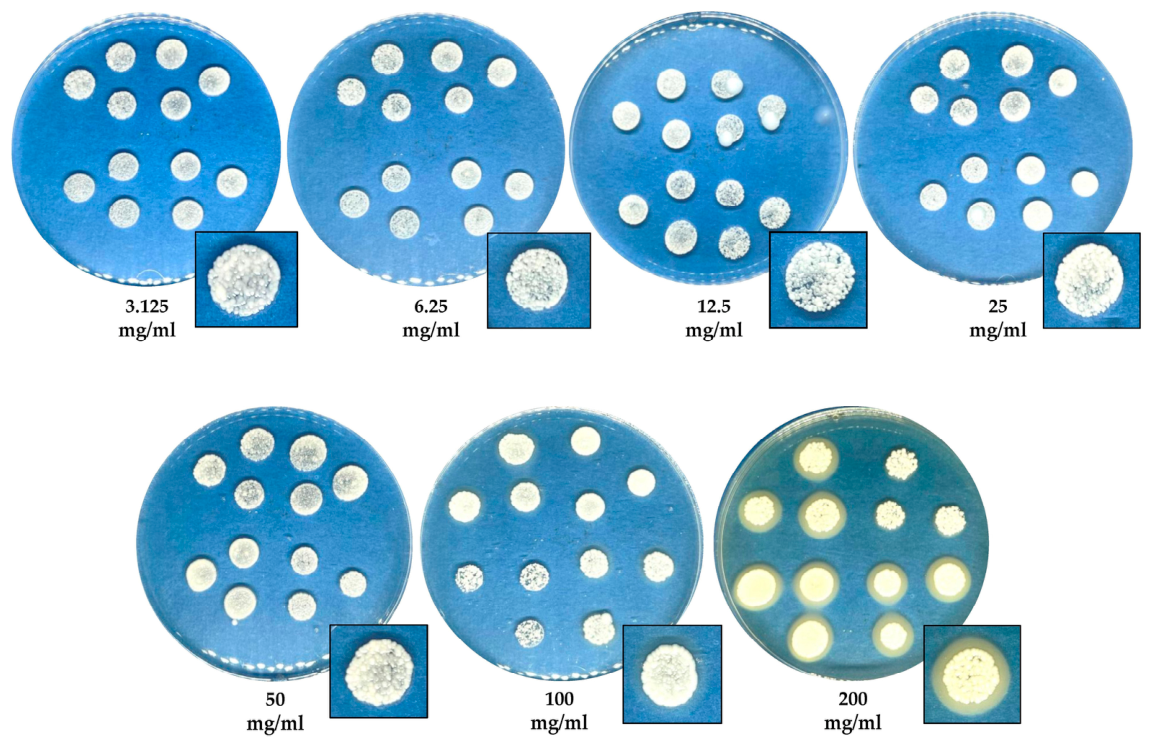
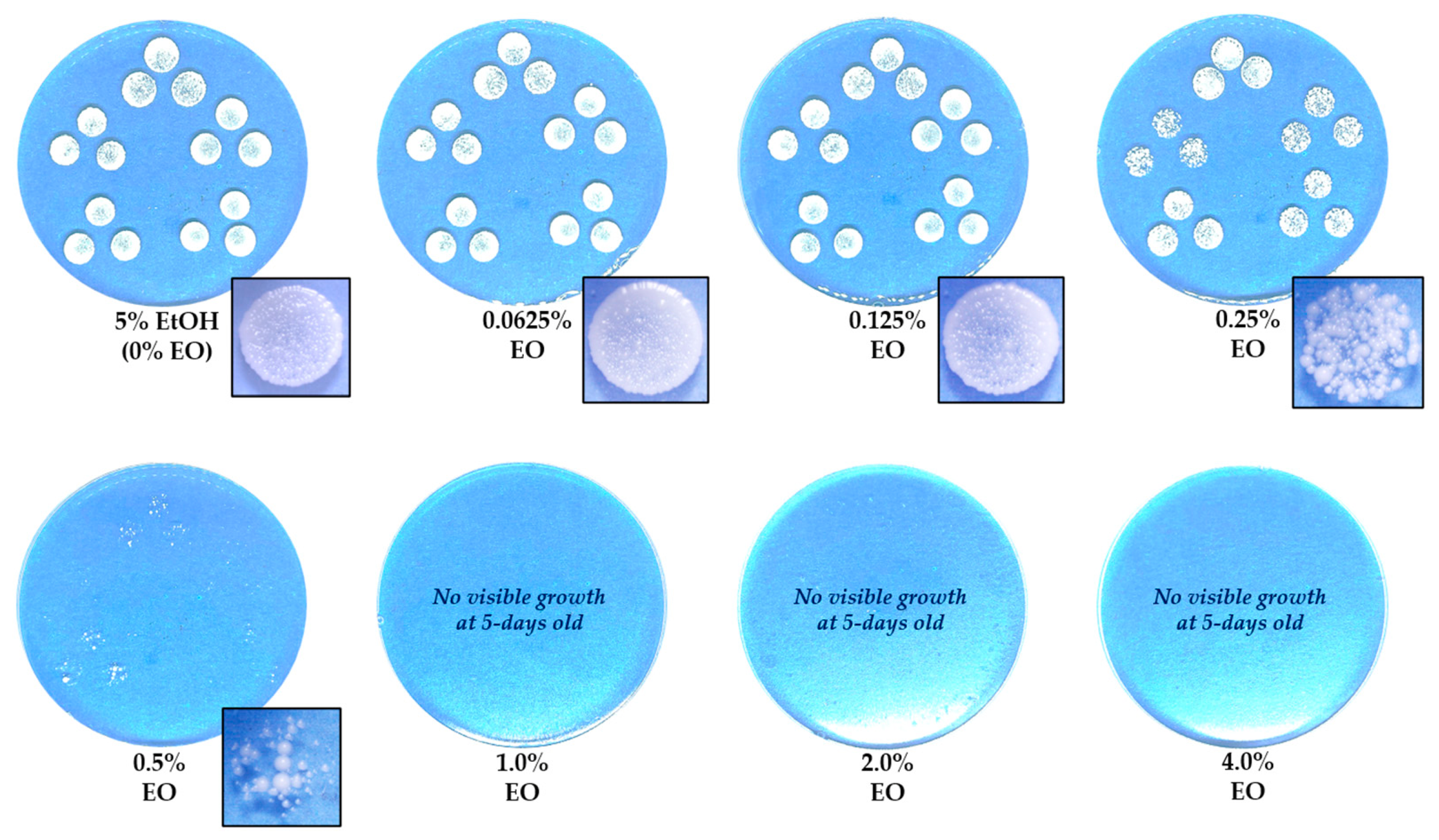
The MIC and MLC values of the crude extract and essential oil of C. maxima cultivar Tubtim-Siam peel against M. pachydermatis were determined using an agar dilution assay. The results showed that the MIC for the crude extract exceeded 200 mg/mL; therefore, the MIC50 and MIC90 could not be determined. Figure 3 presents M. pachydermatis growth on agar containing crude pomelo peel extract in different concentrations. At higher crude concentrations (100–200 mg/mL), colonies altered the surrounding agar, presumably due to stress induced by high crude extract concentrations; however, even at 200 mg/mL, the crude extract exhibited no effect on growth inhibition. The MIC of essential oil ranged from 0.5–1.0% v/v. The concentration of 0.5% v/v essential oil inhibited the visible growth of M. pachydermatis after 3 days of incubation. In the 5-day experiment, a 1.0% v/v concentration of essential oil completely inhibited growth of M. pachydermatis, with no subsequent colony growth observed until the 7-day period of the experiment. In addition, the mean MIC of the essential oil was 0.89 ± 0.21% v/v. The MIC50 and MIC90 of essential oil were 1.0% v/v. The effect of essential oil on M. pachydermatis assessed using the agar plate dilution method is presented in Figure 4.

3.4. Effect of Prototypical Topical Essential Oil Solution on M. pachydermatis

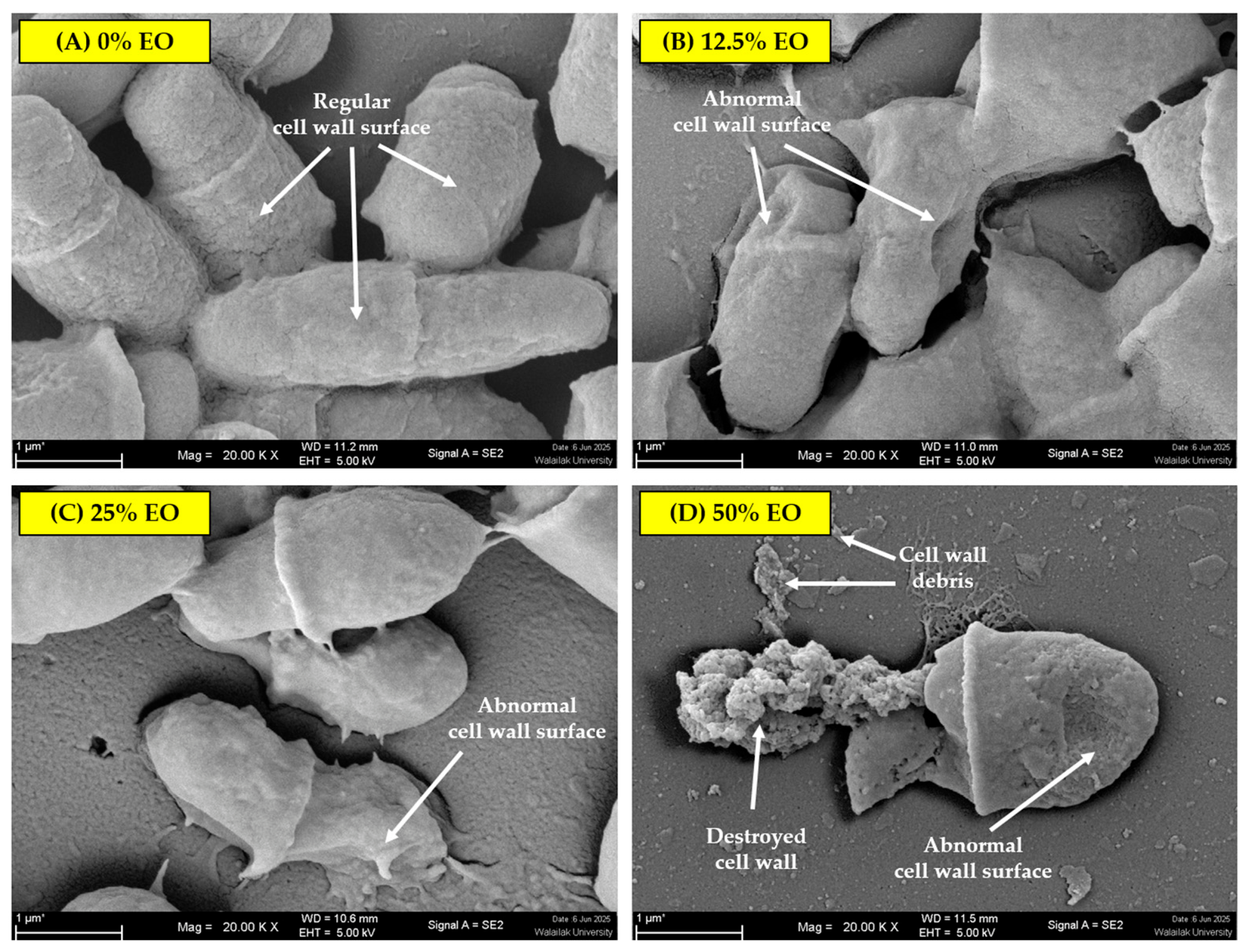
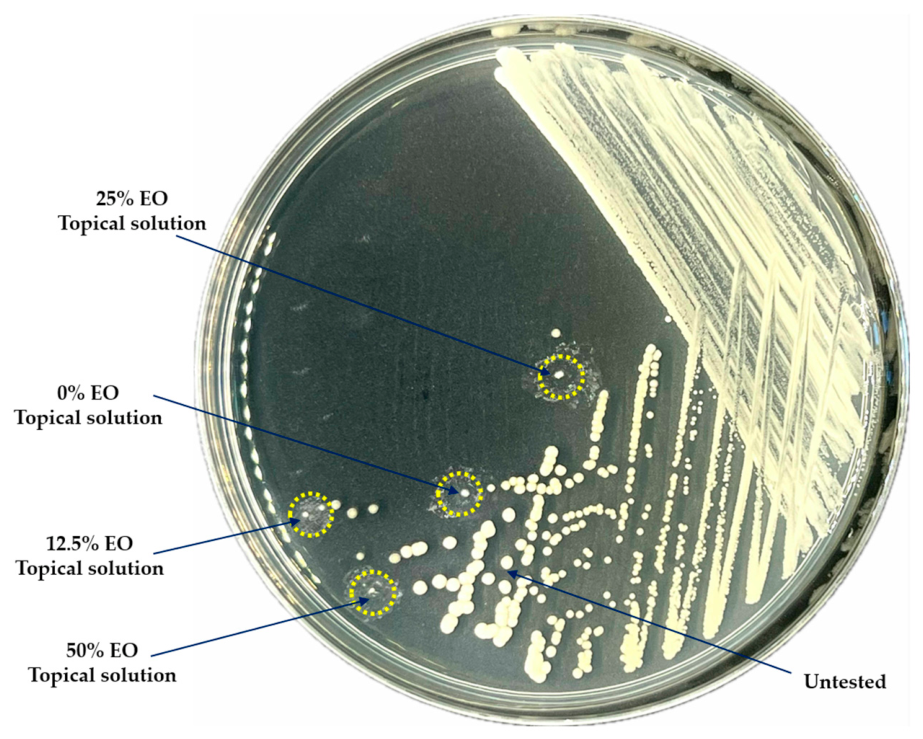
Based on the antimicrobial activity of the essential oil, a prototypic topical solution was assessed against the pathogen. Then, M. pachydermatis was tested with different formulations of essential oil ear drops. The gross appearance of the treated colonies compared with untreated controls revealed that the colonies that were treated with higher essential oil concentrations showed disrupted colony structure at the end of the experiment. The treated colonies were smaller than the untreated colonies. Figure 5 shows a representative M. pachydermatis isolate. The morphology of the pathogen treated with the solution was observed for external cellular morphology under a scanning electron microscope. As shown in Figure 6, normal yeast cells with oval to rod-shaped morphology were detected in the control group. After treatment, the cell wall structure of M. pachydermatis differed from untreated control cells (0% v/v essential oil-containing prototypic topical solution). Moreover, the cell structure of M. pachydermatis was clearly disrupted by the 50% v/v essential oil treatment, compared with the control. In addition, shriveled cells were observed in the treatment groups. The appearance of M. pachydermatis cells in the different prototypic topical solution treatments is presented in Figure 6.

4. Discussion

Otitis externa in dogs is primarily caused by M. pachydermatis and is a widespread clinical concern [29]. The pathogen can cause zoonotic infections, particularly in immunocompromised humans [30]. Furthermore, infections caused by M. pachydermatis are difficult to treat due to its pathogenesis. Citrus fruits, including pomelo, are rich in bioactive compounds with antimicrobial activity [31]. This study found that different pomelo peel extraction methods produced distinct inhibitory effects against M. pachydermatis. In the ethanolic extract, coumarins were the predominant compounds identified. Meranzin hydrate was the predominant compound found in ethanolic extract. This phytochemical has also been identified in other plants, such as the flowers of Magydaris tomentosa, and exhibits antimicrobial activity at high concentrations, particularly against bacteria (Enterococcus faecalis, Staphylococcus epidermidis, Staphylococcus aureus, Enterobacter aerogenes, Enterobacter cloacae, Escherichia coli, Klebsiella pneumoniae, Proteus vulgaris, and Salmonella Typhi; MIC ≤ 128 µg/mL) [32]. Meranzin hydrate has also been reported in the peel of C. maxima [33]. Therefore, meranzin hydrate may be the primary phytochemical responsible for inducing stress in M. pachydermatis colonies in this study. However, the mechanism of action of meranzin hydrate remains unclear.
Pomelo peel essential oil exhibited inhibitory activity against M. pachydermatis at low effective concentrations. Limonene contains two active forms, including D-limonene and L-limonene [34], with D-limonene being the predominant biologically active form [35]. In this study, D-limonene was identified as the major phytochemical in the extracted oil. D-limonene is a monocyclic monoterpene commonly found in citrus fruits such as lemons, oranges, grapefruits [36], and pomelos. Approximately 80% of citrus peel essential oil consists of D-limonene [37], which is consistent with our findings. Furthermore, D-limonene was reported as an alternative phytochemical used for antimicrobial applications [38,39]. Previous studies have reported that D-limonene presented a broad antimicrobial spectrum, including antibacterial and antifungal activities [40], and can inhibit yeast growth in Malassezia and Candida [25,41,42]. Previous mechanistic studies in Saccharomyces cerevisiae suggest that D-limonene primarily affects ergosterol and β-1,3-glucan in the yeast cell wall [43,44]. In addition, D-limonene has been shown to interfere with ATP synthesis in Candida and Malassezia yeasts [45,46,47], and to inhibit the growth of Candida tropicalis by increasing membrane permeability, disrupting cell membrane integrity, and causing intracellular leakage [46]. Beyond antimicrobial activity, D-limonene has been reported to exhibit anti-inflammatory effects [48,49], which may enhance the therapeutic potential of essential oil–based topical formulations. However, these effects should be further validated using canine skin cell lines. In addition, D-limonene has been associated with skin-rejuvenating properties through oxidative stress reduction, modulation of inflammatory biomarkers, and angiogenesis [50,51].
A prototype topical solution containing C. maxima cultivar Tubtim-Siam peel essential oil exhibited inhibitory activity against M. pachydermatis, as confirmed by cell disruption observed using scanning electron microscopy. In this study, glycerol and propylene glycol were incorporated into the formulation to increase viscosity, thereby enhancing contact time between the bioactive compound and M. pachydermatis. However, this formulation represents a preliminary prototype requiring further optimization to improve its efficacy. Consistent with previous studies, D-limonene has been shown to affect cell membranes and cell walls, as demonstrated using scanning electron microscope and transmission electron microscopy [40]. Changes in cell wall thickness in both bacterial and fungal cells have been reported following D-limonene treatment [40]. The change of cell wall thickness of the cells of both bacteria and fungi was observed after D-limonene treatment [40]. Due to its hydrophobic and lipophilic properties, D-limonene alters membrane permeability, leading to leakage of intracellular contents and ultimately cell lysis [40,46,52,53]. D-limonene was the primary bioactive compound in the formulation and is classified as Generally Recognized as Safe (GRAS) by the U.S. Food and Drug Administration. It has also been widely used in cosmetic applications [40,54]. However, due to its high volatility [40], the inclusion of stabilizing agents to reduce evaporation is recommended. Various nanotechnologies, including nano-delivery systems, nano-emulsions, nano-gels, and nano-encapsulation, have been applied to improve stability and efficacy in agricultural and medical applications [40,55,56]. The stability of D-limonene remains a challenge for large-scale applications due to its hydrophobicity, susceptibility to oxidative degradation, and volatility under various conditions [57,58]. Therefore, D-limonene stability control needs to be performed, such as using polymer encapsulation technology [38]. This study experimented with the effect of essential oil and D-limonene in vivo on M. pachydermatis isolated from dogs; nevertheless, further studies on lab animals should be established for safety, clinical finding approval, and side effect determinations. The limitation of this study was the lack of in vivo testing on animal models and in vitro testing on skin cell lines. Due to several skin allergy reports of D-limonene [59,60], skin allergy testing for D-limonene-containing topical solutions should be further investigated. Furthermore, stability of the formulation should be carried out.

5. Conclusions

Essential oil of Tubtim-Siam pomelo peel (C. maxima cultivar Tubtim-Siam) contained antifungal activity against M. pachydermatis. The essential oil contained a high concentration of the bioactive phytochemical D-limonene that inhibits M. pachydermatis growth in vitro. The MIC of pomelo peel essential oil was 1% v/v, which inhibited growth over the 5-day experimental period. The anti-M. pachydermatis effect of the prototypical topical essential oil solution presented predominantly at 12.5% v/v. Furthermore, a 50% concentration of the essential oil in the formulation completely destroyed the yeast cells completely. The essential oil formulation affected the cell wall structure of the tested yeasts. Overall, the findings demonstrated that pomelo peel essential oil could be applied for veterinary applications, particularly as a topical agent. Further studies are needed to evaluate stability, mechanism of action, and suitability for industrial-scale applications.

6. Patents

This research received petty patent number 2503003645 regarding the “Formulation and preparation process of Citrus maxima cultivar Tubtim-Siam peel essential oil extract containing ear drop solutions.”

Author Contributions

Conceptualization, W.M., J.J. and P.S.; methodology, W.M., J.J., R.B., N.T. and P.S.; formal analysis, P.S.; investigation, W.M., J.J., R.B., N.T. and P.S.; resources, W.M. and P.S.; data curation, P.S.; writing—original draft preparation, W.M., O.F.N. and P.S.; writing—review and editing, W.M., O.F.N. and P.S.; visualization, P.S.; supervision, P.S.; project administration, P.S.; funding acquisition, P.S. All authors have read and agreed to the published version of the manuscript.

Funding

This research was funded by the Plant Genetic Conservation Project under the royal initiative of Her Royal Highness Princess Maha Chakri Sirindhorn (RSPG-WU-29).

Institutional Review Board Statement

The protocols for animal handling and laboratory protocols that were carried out in this study were approved by the Walailak University Institutional Biosafety Committee (WU-IBC) and the Walailak University Institutional Animal Care and Use Committee (WU-IACUC) with the approval IDs of WU-IBC-67-062, approved on 31 October, 2024 and WU-ACUC-67079, approved on 30 November, 2024, respectively.

Informed Consent Statement

The dogs that were included for ear swabbing were ownerless animals cared for by the university hospital (shelters under the operation of the university hospital). Thus, the consent form was not used for permission before non-invasive sample collection.

Data Availability Statement

The original contributions presented in this study are included in the article. Further inquiries can be directed to the corresponding author.

Acknowledgments

The authors thank Walailak University and Kasetsart University for laboratory support. Moreover, we thank the Plant Genetic Conservation Project under the royal initiative of Her Royal Highness Princess Maha Chakri Sirindhorn under contract number RSPG-WU-29 for financial support.

Conflicts of Interest

The authors declare that there are no conflicts of interest that could have influenced this work.

References

  1. Hobi, S.; Bęczkowski, P.M.; Mueller, R.; Tse, M.; Barrs, V.R. Malassezia Dermatitis in Dogs and Cats. Vet. J. 2024, 304, 106084. [Google Scholar] [CrossRef]
  2. Bond, R. Superficial Veterinary Mycoses. Clin. Dermatol. 2010, 28, 226–236. [Google Scholar] [CrossRef] [PubMed]
  3. Forster, S.L.; Real, T.; Doucette, K.P.; King, S.B. A Randomized Placebo-Controlled Trial of the Efficacy and Safety of a Terbinafine, Florfenicol and Betamethasone Topical Ear Formulation in Dogs for the Treatment of Bacterial and/or Fungal Otitis Externa. BMC Vet. Res. 2018, 14, 262. [Google Scholar] [CrossRef]
  4. Guillot, J.; Bond, R. Malassezia Yeasts in Veterinary Dermatology: An Updated Overview. Front. Cell. Infect. Microbiol. 2020, 10, 79. [Google Scholar] [CrossRef]
  5. Hobi, S.; Cafarchia, C.; Romano, V.; Barrs, V.R. Malassezia: Zoonotic Implications, Parallels and Differences in Colonization and Disease in Humans and Animals. J. Fungi 2022, 8, 708. [Google Scholar] [CrossRef]
  6. Angileri, M.; Pasquetti, M.; De Lucia, M.; Peano, A. Azole Resistance of Malassezia pachydermatis Causing Treatment Failure in a Dog. Med. Mycol. Case Rep. 2019, 23, 58–61. [Google Scholar] [CrossRef] [PubMed]
  7. Kano, R.; Yokoi, S.; Kariya, N.; Oshimo, K.; Kamata, H. Multi-Azole-Resistant Strain of Malassezia pachydermatis Isolated from a Canine Malassezia Dermatitis. Med. Mycol. 2019, 57, 346–350. [Google Scholar] [CrossRef]
  8. Kano, R.; Aramaki, C.; Murayama, N.; Mori, Y.; Yamagishi, K.; Yokoi, S.; Kamata, H. High Multi-Azole-Resistant Malassezia pachydermatis Clinical Isolates from Canine Malassezia Dermatitis. Med. Mycol. 2020, 58, 197–200. [Google Scholar] [CrossRef] [PubMed]
  9. Cafarchia, C.; Figueredo, L.A.; Favuzzi, V.; Surico, M.R.; Colao, V.; Iatta, R.; Montagna, M.T.; Otranto, D. Assessment of the Antifungal Susceptibility of Malassezia pachydermatis in Various Media Using a CLSI Protocol. Vet. Microbiol. 2012, 159, 536–540. [Google Scholar] [CrossRef]
  10. Nijima, M.; Kano, R.; Nagata, M.; Hasegawa, A.; Kamata, H. An Azole-Resistant Isolate of Malassezia pachydermatis. Vet. Microbiol. 2011, 149, 288–290. [Google Scholar] [CrossRef]
  11. Nojo, H.; Murayama, N.; Ishijima, S.A.; Kano, R. In Vitro Susceptibility Testing of Essential Oils and Their Main Components against Antifungal-Resistant Malassezia pachydermatis. J. Vet. Med. Sci. 2025, 87, 135–137. [Google Scholar] [CrossRef]
  12. Vanden Bossche, H.; Engelen, M.; Rochette, F. Antifungal Agents of Use in Animal Health-Chemical, Biochemical and Pharmacological Aspects. J. Vet. Pharmacol. Ther. 2003, 26, 5–29. [Google Scholar] [CrossRef]
  13. Skoufos, I.; Bonos, E.; Anastasiou, I.; Tsinas, A.; Tzora, A. Chapter 18–Effects of Phytobiotics in Healthy or Disease Challenged Animals. In Feed Additives; Florou-Paneri, P., Christaki, E., Giannenas, I.B.T.-F.A., Eds.; Academic Press: Cambridge, MA, USA, 2020; pp. 311–337. ISBN 978-0-12-814700-9. [Google Scholar]
  14. Sen, T.; Samanta, S.K. Medicinal Plants, Human Health and Biodiversity: A Broad Review. In Biotechnological Applications of Biodiversity; Mukherjee, J., Ed.; Springer: Berlin/Heidelberg, Germany, 2015; pp. 59–110. ISBN 978-3-662-45097-0. [Google Scholar]
  15. Van Hung, P.; Yen Nhi, N.H.; Ting, L.Y.; Lan Phi, N.T. Chemical Composition and Biological Activities of Extracts from Pomelo Peel By-Products under Enzyme and Ultrasound-Assisted Extractions. J. Chem. 2020, 2020, 1043251. [Google Scholar] [CrossRef]
  16. Oboh, G.; Ademosun, A.O. Characterization of the Antioxidant Properties of Phenolic Extracts from Some Citrus Peels. J. Food Sci. Technol. 2012, 49, 729–736. [Google Scholar] [CrossRef] [PubMed]
  17. Wang, H.; Xu, Y.S.; Wang, M.L.; Cheng, C.; Bian, R.; Yuan, H.; Wang, Y.; Guo, T.; Zhu, L.L.; Zhou, H. Protective Effect of Naringin against the LPS-Induced Apoptosis of PC12 Cells: Implications for the Treatment of Neurodegenerative Disorders. Int. J. Mol. Med. 2017, 39, 819–830. [Google Scholar] [CrossRef]
  18. Xiao, L.; Ye, F.; Zhou, Y.; Zhao, G. Utilization of Pomelo Peels to Manufacture Value-Added Products: A Review. Food Chem. 2021, 351, 129247. [Google Scholar] [CrossRef] [PubMed]
  19. Humphry, R.W.; Cameron, A.; Gunn, G.J. A Practical Approach to Calculate Sample Size for Herd Prevalence Surveys. Prev. Vet. Med. 2004, 65, 173–188. [Google Scholar] [CrossRef]
  20. Cafarchia, C.; Gallo, S.; Capelli, G.; Otranto, D. Occurrence and Population Size of Malassezia spp. in the External Ear Canal of Dogs and Cats Both Healthy and with Otitis. Mycopathologia 2005, 160, 143–149. [Google Scholar] [CrossRef] [PubMed]
  21. Mitsuwan, W.; Boripun, R.; Saengsawang, P.; Intongead, S.; Boonplu, S.; Chanpakdee, R.; Morita, Y.; Boonmar, S.; Rojanakun, N.; Suksriroj, N.; et al. Multidrug Resistance, Biofilm-Forming Ability, and Molecular Characterization of Vibrio species Isolated from Foods in Thailand. Antibiotics 2025, 14, 235. [Google Scholar] [CrossRef]
  22. Saengsawang, P.; Jakkawanpitak, C.; Makkliang, F.; Ratchasong, K.; Pruksakorn, C.; Wintachai, P.; Boonmar, S.; Nwabor, O.F.; Mitsuwan, W. Effects of Piper betle Leaf Extract-Coated Suture Material on Clinical Strains of Staphylococcus aureus and Staphylococcus pseudintermedius Isolated from Skin-Infected Dogs. Animals 2026, 16, 543. [Google Scholar] [CrossRef]
  23. Vlek, A.; Kolecka, A.; Khayhan, K.; Theelen, B.; Groenewald, M.; Boel, E.; Boekhout, T. Interlaboratory Comparison of Sample Preparation Methods, Database Expansions, and Cutoff Values for Identification of Yeasts by Matrix-Assisted Laser De-sorption Ionization-Time of Flight Mass Spectrometry Using a Yeast Test Panel. J. Clin. Microbiol. 2014, 52, 3023–3029. [Google Scholar] [CrossRef] [PubMed]
  24. Seng, P.; Drancourt, M.; Gouriet, F.; La Scola, B.; Fournier, P.-E.; Rolain, J.M.; Raoult, D. Ongoing Revolution in Bacteriology: Routine Identification of Bacteria by Matrix-Assisted Laser Desorption Ionization Time-of-Flight Mass Spectrometry. Clin. Infect. Dis. 2009, 49, 543–551. [Google Scholar] [CrossRef]
  25. Chen, G.-W.; Lin, Y.-H.; Lin, C.-H.; Jen, H.-C. Antibacterial Activity of Emulsified Pomelo (Citrus grandis Osbeck) Peel Oil and Water-Soluble Chitosan on Staphylococcus aureus and Escherichia coli. Molecules 2018, 23, 840. [Google Scholar] [CrossRef]
  26. Wiegand, I.; Hilpert, K.; Hancock, R.E.W. Agar and Broth Dilution Methods to Determine the Minimal Inhibitory Concentration (MIC) of Antimicrobial Substances. Nat. Protoc. 2008, 3, 163–175. [Google Scholar] [CrossRef] [PubMed]
  27. Hulankova, R. Methods for Determination of Antimicrobial Activity of Essential Oils In Vitro-A Review. Plants 2024, 13, 2784. [Google Scholar] [CrossRef]
  28. Chen, S.; Li, Z.; Chitrakar, B.; Gu, Z.; Ban, X.; Hong, Y.; Cheng, L.; Li, C. Minimum Inhibitory Concentration (MIC) of Essential Oils Against Microorganisms: Methods, Function, Accuracy Factors and Application. Food Rev. Int. 2024, 40, 3445–3470. [Google Scholar] [CrossRef]
  29. Girão, M.D.; Prado, M.R.; Brilhante, R.S.N.; Cordeiro, R.A.; Monteiro, A.J.; Sidrim, J.J.C.; Rocha, M.F.G. Malassezia pachydermatis Isolated from Normal and Diseased External Ear Canals in Dogs: A Comparative Analysis. Vet. J. 2006, 172, 544–548. [Google Scholar] [CrossRef]
  30. Morris, D.O. Malassezia pachydermatis Carriage in Dog Owners. Emerg. Infect. Dis. 2005, 11, 83–88. [Google Scholar] [CrossRef] [PubMed]
  31. Garg, R.; Anjum, A.; Garg, R.; Eddy, N.O.; Watandost, H. Citrus Fruits as Sources of Bioactive Compounds for Multifaceted Applications. Discov. Food 2026, 6, 152. [Google Scholar] [CrossRef]
  32. Rossell, A.; Bellone, G.; Formisano, C.; Basile, A.; Cicala, C.; Alfieri, A.; Mascolo, N.; Bruno, M. Antibacterial and Anticoagulant Activities of Coumarins Isolated from the Flowers of Magydaris tomentosa. Planta Med. 2007, 73, 116–120. [Google Scholar] [CrossRef]
  33. Teng, W.-Y.; Chen, C.-C.; Chung, R.-S. HPLC Comparison of Supercritical Fluid Extraction and Solvent Extraction of Coumarins from the Peel of Citrus maxima Fruit. Phytochem. Anal. 2005, 16, 459–462. [Google Scholar] [CrossRef]
  34. Ewais, O.; Abdel-Tawab, H.; El-Fayoumi, H.; Aboelhadid, S.M.; Al-Quraishy, S.; Falkowski, P.; Abdel-Baki, A.-A.S. Antioxidant Properties of D-limonene and Its Nanoemulsion Form Enhance Its Anticoccidial Efficiency in Experimentally Infected Broilers with Eimeria tenella: An in Vitro and in Vivo Study. Vet. Res. Commun. 2024, 48, 3711–3725. [Google Scholar] [CrossRef] [PubMed]
  35. Erasto, P.; Viljoen, A.M. Limonene–A Review: Biosynthetic, Ecological and Pharmacological Relevance. Nat. Prod. Commun. 2008, 3, 1193–1202. [Google Scholar] [CrossRef]
  36. Rakoczy, K.; Szymańska, N.; Stecko, J.; Kisiel, M.; Maruszak, M.; Niedziela, M.; Kulbacka, J. Applications of Limonene in Neoplasms and Non-Neoplastic Diseases. Int. J. Mol. Sci. 2025, 26, 6359. [Google Scholar] [CrossRef]
  37. Chen, B.; Liu, C.; Shang, L.; Guo, H.; Qin, J.; Ge, L.; Jing, C.J.; Feng, C.; Hayashi, K. Electric-Field Enhancement of Molecularly Imprinted Sol–Gel-Coated Au Nano-Urchin Sensors for Vapor Detection of Plant Biomarkers. J. Mater. Chem. C 2020, 8, 262–269. [Google Scholar] [CrossRef]
  38. Akhavan-Mahdavi, S.; Sadeghi, R.; Faridi Esfanjani, A.; Hedayati, S.; Shaddel, R.; Dima, C.; Malekjani, N.; Boostani, S.; Jafari, S.M. Nanodelivery Systems for D-limonene; Techniques and Applications. Food Chem. 2022, 384, 132479. [Google Scholar] [CrossRef]
  39. da Silva, E.G.; Bandeira Junior, G.; Cargnelutti, J.F.; Santos, R.C.; Gündel, A.; Baldisserotto, B. In Vitro Antimicrobial and Antibiofilm Activity of S-(-)-Limonene and R-(+)-Limonene against Fish Bacteria. Fishes 2021, 6, 32. [Google Scholar] [CrossRef]
  40. Lin, H.; Li, Z.; Sun, Y.; Zhang, Y.; Wang, S.; Zhang, Q.; Cai, T.; Xiang, W.; Zeng, C.; Tang, J. D-Limonene: Promising and Sustainable Natural Bioactive Compound. Appl. Sci. 2024, 14, 4605. [Google Scholar] [CrossRef]
  41. Zhang, X.; Huang, Y.; Niu, Y.; Liu, Z.; Chen, M.; An, Y.; Zhang, L. The Preparation of the Essential Oil from Pomelo (Citrus Maxima ‘Shatian Yu’) Peel Using Microwave-Assisted Distillation by Pectinase Soaking and Its Anti-Fungal Activity. Separations 2022, 9, 161. [Google Scholar] [CrossRef]
  42. Ibrahim, F.M.; Abdelsalam, E.; Mohammed, R.S.; Ashour, W.E.; Vilas-Boas, A.A.; Pintado, M.; El Habbasha, E.S. Polyphenol-Rich Extracts and Essential Oil from Egyptian Grapefruit Peel as Potential Antioxidant, Antimicrobial, and Anti-Inflammatory Food Additives. Appl. Sci. 2024, 14, 2776. [Google Scholar] [CrossRef]
  43. Liu, J.; Zhu, Y.; Du, G.; Zhou, J.; Chen, J. Exogenous Ergosterol Protects Saccharomyces cerevisiae from D-limonene Stress. J. Appl. Microbiol. 2013, 114, 482–491. [Google Scholar] [CrossRef]
  44. Brennan, T.C.R.; Krömer, J.O.; Nielsen, L.K. Physiological and Transcriptional Responses of Saccharomyces cerevisiae to D-limonene Show Changes to the Cell Wall but Not to the Plasma Membrane. Appl. Environ. Microbiol. 2013, 79, 3590–3600. [Google Scholar] [CrossRef]
  45. Leite-Andrade, M.C.; de Araújo Neto, L.N.; Buonafina-Paz, M.D.; de Assis Graciano dos Santos, F.; da Silva Alves, A.I.; de Castro, M.C.; Mori, E.; de Lacerda, B.C.; Araújo, I.M.; Coutinho, H.D.; et al. Antifungal Effect and Inhibition of the Virulence Mechanism of D-limonene against Candida parapsilosis. Molecules 2022, 27, 8884. [Google Scholar] [CrossRef] [PubMed]
  46. Yu, H.; Lin, Z.-X.; Xiang, W.-L.; Huang, M.; Tang, J.; Lu, Y.; Zhao, Q.-H.; Zhang, Q.; Rao, Y.; Liu, L. Antifungal Activity and Mechanism of D-limonene against Foodborne Opportunistic Pathogen Candida tropicalis. LWT 2022, 159, 113144. [Google Scholar] [CrossRef]
  47. Lee, J.-H.; Lee, J.-S. Cytyotoxicity and Anti-Malassezia Activity of Limonene. Korean J. Microbiol. Biotechnol. 2011, 39, 387–389. [Google Scholar]
  48. Piccinelli, A.C.; Morato, P.N.; Dos Santos Barbosa, M.; Croda, J.; Sampson, J.; Kong, X.; Konkiewitz, E.C.; Ziff, E.B.; Amaya-Farfan, J.; Kassuya, C.A.L. Limonene Reduces Hyperalgesia Induced by Gp120 and Cytokines by Modulation of IL-1 β and Protein Expression in Spinal Cord of Mice. Life Sci. 2017, 174, 28–34. [Google Scholar] [CrossRef]
  49. Kaimoto, T.; Hatakeyama, Y.; Takahashi, K.; Imagawa, T.; Tominaga, M.; Ohta, T. Involvement of Transient Receptor Potential A1 Channel in Algesic and Analgesic Actions of the Organic Compound Limonene. Eur. J. Pain 2016, 20, 1155–1165. [Google Scholar] [CrossRef] [PubMed]
  50. AlBairmani, R.J.H.; Shihab, E.M.; Ridha-Salman, H.; Kadhim, H.M.; Mohammed, R.M.; Shahooth, S.S.; Abdalah, M.E.; Hameed, Z.E.; Hajwal, S.K.; Albasri, O.W.; et al. D-Limonene Attenuates D-Galactose-Induced Skin Aging Mouse Model. J. Mol. Histol. 2025, 56, 364. [Google Scholar] [CrossRef]
  51. Razazi, A.; Kakanezhadi, A.; Raisi, A.; Pedram, B.; Dezfoulian, O.; Davoodi, F. D-Limonene Inhibits Peritoneal Adhesion Formation in Rats via Anti-Inflammatory, Anti-Angiogenic, and Antioxidative Effects. Inflammopharmacology 2024, 32, 1077–1089. [Google Scholar] [CrossRef]
  52. Melkina, O.E.; Plyuta, V.A.; Khmel, I.A.; Zavilgelsky, G.B. The Mode of Action of Cyclic Monoterpenes (−)-Limoneneand (+)-α-Pinene on Bacterial Cells. Biomolecules 2021, 11, 806. [Google Scholar] [CrossRef]
  53. Park, K.-M.; Lee, S.J.; Yu, H.; Park, J.-Y.; Jung, H.-S.; Kim, K.; Lee, C.J.; Chang, P.-S. Hydrophilic and Lipophilic Characteristics of Non-Fatty Acid Moieties: Significant Factors Affecting Antibacterial Activity of Lauric Acid Esters. Food Sci. Biotechnol. 2018, 27, 401–409. [Google Scholar] [CrossRef] [PubMed]
  54. Vieira, A.J.; Beserra, F.P.; Souza, M.C.; Totti, B.M.; Rozza, A.L. Limonene: Aroma of Innovation in Health and Disease. Chem. Biol. Interact. 2018, 283, 97–106. [Google Scholar] [CrossRef]
  55. Sohan, M.S.; Elshamy, S.; Lara-Valderrama, G.; Changwatchai, T.; Khadizatul, K.; Kobayashi, I.; Nakajima, M.; Neves, M.A. Encapsulation of D-limonene into O/W Nanoemulsions for Enhanced Stability. Polymers 2023, 15, 471. [Google Scholar] [CrossRef] [PubMed]
  56. Türkoğlu, G.C.; Sarıışık, A.M.; Erkan, G.; Yıkılmaz, M.S.; Kontart, O. Micro- and Nano-Encapsulation of Limonene and Permethrin for Mosquito Repellent Finishing of Cotton Textiles. Iran. Polym. J. 2020, 29, 321–329. [Google Scholar] [CrossRef]
  57. Bei, W.; Zhou, Y.; Xing, X.; Zahi, M.R.; Li, Y.; Yuan, Q.; Liang, H. Organogel-Nanoemulsion Containing Nisin and D-limonene and Its Antimicrobial Activity. Front. Microbiol. 2015, 6, 1010. [Google Scholar] [CrossRef]
  58. Castel, V.; Rubiolo, A.C.; Carrara, C.R. Powdered D-limonene Microcapsules Obtained by Spray Drying Using Native and Thermal-Treated Brea Gum as Wall Materials. Powder Technol. 2023, 417, 118263. [Google Scholar] [CrossRef]
  59. Matura, M.; Goossens, A.; Bordalo, O.; Garcia-Bravo, B.; Magnusson, K.; Wrangsjö, K.; Karlberg, A.-T. Oxidized Citrus Oil (R-Limonene): A Frequent Skin Sensitizer in Europe. J. Am. Acad. Dermatol. 2002, 47, 709–714. [Google Scholar] [CrossRef]
  60. Kim, Y.W.; Kim, M.J.; Chung, B.Y.; Bang, D.Y.; Lim, S.K.; Choi, S.M.; Lim, D.S.; Cho, M.C.; Yoon, K.; Kim, H.S.; et al. Safety Evaluation and Risk Assessment of D-limonene. J. Toxicol. Environ. Health B Crit. Rev. 2013, 16, 17–38. [Google Scholar] [CrossRef]
Figure 1. Whole fruit (A), fresh flavedo (B), and dried flavedo (C) of C. maxima cultivar Tubtim-Siam.
Pathogens 15 00479 g001
Figure 2. Gross appearance of the extracts and their GC-MS spectra of each extract using GC-MS of C. maxima cultivar Tubtim-Siam peel extract [(A) gross appearance of the crude extract; (B) GC-MS spectrum of the crude extract; (C) gross appearance of the essential oil; (D) GC-MS spectrum of the essential oil]. Dark blue arrows indicate the five most abundant phytochemicals in each extract.
Pathogens 15 00479 g002
Figure 3. Agar plate dilution assay for C. maxima cultivar Tubtim-Siam peel crude extract (3.125–200 mg/mL) against M. pachydermatis growth (a blue background was used for the photograph; assay performed in triplicate).
Pathogens 15 00479 g003
Figure 4. Agar plate dilution assay for C. maxima cultivar Tubtim-Siam peel essential oil (0–4% v/v) against M. pachydermatis growth (a blue background was used for the photograph; assay performed in triplicate).
Pathogens 15 00479 g004
Figure 5. Colony characteristic of M. pachydermatis treated with prototypic topical solutions containing different concentrations of C. maxima cultivar Tubtim-Siam peel essential oil (yellow circles indicate treated colonies; each blue arrow points to a treated colony; assay performed in triplicate).
Pathogens 15 00479 g005
Figure 6. Cell surface morphology of M. pachydermatis treated with prototypic topical solutions containing different concentrations of C. maxima cultivar Tubtim-Siam peel essential oil, observed under a scanning electron microscope at 20,000× magnitudes [(A) 0% v/v essential oil; (B) 12.5% v/v; (C) 25% v/v; (D) 50% v/v; observations for each concentration were performed in duplicate].
Pathogens 15 00479 g006
Table 1. Phytochemical composition of the essential oil from C. maxima cultivar Tubtim-Siam peel.
Chemical Name of Essential Oil ExtractChemical
Formula
Relative Amount (%)Classification
D-limoneneC10H1679.75monoterpenes
β-PineneC10H163.52monoterpenes
trans-Linalool oxideC10H18O21.36oxolanes
NootkatoneC15H22O1.26sesquiterpenes
L-α-TerpineolC10H18O0.82monoterpenes
4-CarvomenthenolC10H18O0.27terpenes
NeralC10H16O0.23monoterpenes
Anhydrolinalool oxideC10H16O0.18oxolanes
CitralC10H16O0.16monoterpenes
α-PhellandreneC10H160.14monoterpenes
8-HydroxyageraphoroneC15H24O20.10sesquiterpenes
Others (<0.1% each)-12.20-
Table 2. Phytochemical composition of the crude extracts from C. maxima cultivar Tubtim-Siam peel.
Chemical Name of Crude Ethanolic ExtractChemical
Formula
Relative Amount (%)Classification
Meranzin hydrateC15H18O56.46coumarins
cis-Linoleic acidC18H32O26.12fatty acid
Yuehgesin CC17H22O55.8coumarins
Palmitic acidC16H32O25.75fatty acid
γ-SitosterolC29H50O5.30steroids
IsoaurapteneC15H16O44.21coumarins
ArborescinC15H20O34.18sesquiterpenes
α-Linolenic acidC18H30O23.97fatty acid
AuraptenolC15H16O42.55coumarins
Linalool oxideC10H18O22.53monoterpenes
Ethyl α-linolenateC20H34O22.42fatty acid
Ethyl linoleateC20H36O22.42fatty acid
Hexadecanoic acidC19H38O42.40fatty acid
Cinnamic acidC12H14O42.08cinnamates
DL-α-tocopherolC29H50O21.99tocopherols
4-(1-amino-ethyl)-phenolC8H11NO1.91phenols
1-(2,6-Dimethyl-4-propoxyphenyl)-2-
methyl-1-propanone
C15H22O21.85NA
Stigmasterol acetateC29H48O1.66steroids
Ethyl hexadecanoateC18H36O21.56fatty acid
PhenolC6H6O1.48phenols
DihydroalatamideC16H17NO21.43benzamides
β-Methyl-D-glucosideC7H14O61.31glycoside
Ethyl 2,3-epoxybutyrateC6H10O31.25NA
Others (<1% each)-29.37-
Disclaimer/Publisher’s Note: The statements, opinions and data contained in all publications are solely those of the individual author(s) and contributor(s) and not of MDPI and/or the editor(s). MDPI and/or the editor(s) disclaim responsibility for any injury to people or property resulting from any ideas, methods, instructions or products referred to in the content.