




Next Issue
Volume 14, December
Previous Issue
Volume 14, October


Pathogens, Volume 14, Issue 11 (November 2025) – 117 articles
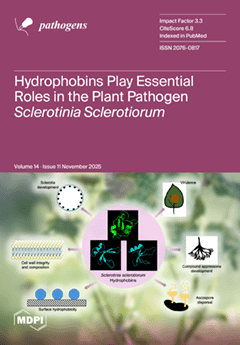
Cover Story (view full-size image): Sclerotinia sclerotiorum is a notorious soilborne fungal pathogen that causes white mold in diverse crops worldwide. Hydrophobins (HPs) are small, secreted proteins unique to filamentous fungi with critical structural and functional roles. In S. sclerotiorum, three HPs are identified and functionally characterized, playing distinct but crucial roles in its biology. All HPs are essential for sclerotia development, surface hydrophobicity, maintenance of cell wall integrity, as well as for biophysical process of ascospore dispersal, while class II HPs (SsHP2 and SsHP3) are specifically required for compound appressoria development and full virulence. These findings uncover the distinct contributions of HPs to fungal biology and highlight class II HPs as promising targets for novel white mold disease management strategies. View this paper
  • Issues are regarded as officially published after their release is announced to the table of contents alert mailing list.
  • You may sign up for e-mail alerts to receive table of contents of newly released issues.
  • PDF is the official format for papers published in both, html and pdf forms. To view the papers in pdf format, click on the "PDF Full-text" link, and use the free Adobe Reader to open them.
Order results
Result details
Section
Select all
Export citation of selected articles as:
19 pages, 2216 KB  
Article
Pathogenicity and Genomic Characterization of Vibrio parahaemolyticus VSP1: A Pathogen Linked to Enteritis Outbreak in Shrimp (Penaeus vannamei)
by Jing Wang, Fengguang Shen, Meng Tian, Fanqi Zeng, Lei Huang, Jiayun Yao, Can Zong, Jiong Chen, Demin Zhang and Haipeng Guo
Pathogens 2025, 14(11), 1188; https://doi.org/10.3390/pathogens14111188 - 20 Nov 2025
Viewed by 525
Abstract
Enteritis is a common and recurrent disease in shrimp aquaculture, causing significant economic losses and management challenges. However, its specific causative pathogen remains unclear. Here, a pathogen strain, Vibrio parahaemolyticus VSP1, was directly isolated from shrimp with enteritis, and its pathogenicity and genomic [...] Read more.
Enteritis is a common and recurrent disease in shrimp aquaculture, causing significant economic losses and management challenges. However, its specific causative pathogen remains unclear. Here, a pathogen strain, Vibrio parahaemolyticus VSP1, was directly isolated from shrimp with enteritis, and its pathogenicity and genomic characteristics were analyzed. Diseased shrimp exhibited lethargy, empty gut, hepatopancreatic atrophy, and severe intestinal damage. The gut bacterial community of diseased shrimp differed significantly from healthy shrimp (PERMANOVA, p < 0.05), with a 129% increase in Vibrio relative abundance. Nine Vibrio operational taxonomic units (OTUs) were enriched in diseased shrimp, and the dominant OTU1 shared 100% 16S rRNA identity with VSP1. VSP1 grew rapidly, utilized diverse carbon sources, and induced enteritis symptoms in over 90% of challenged shrimp. Genome analysis revealed 98.34% average nucleotide identity with V. parahaemolyticus ATCC 17802 and identified 156 putative virulence-related genes, mainly related to adherence, motility, and secretion systems. Unlike the strain ATCC 17802, VSP1 lacks thermostable direct hemolysin (TDH) and type III secretion system 2 (T3SS2), but contains alternative virulence factors such as Yersinia-like type IV pili and lipooligosaccharides, suggesting a distinct virulence strategy. This study identifies the pathogen responsible for shrimp enteritis and provides a foundation for targeted control strategies in aquaculture. Full article
(This article belongs to the Section Bacterial Pathogens)
Show Figures

Figure 1

27 pages, 4822 KB  
Article
Resistance Landscape and Clonal Dynamics of ESKAPE Pathogens in Bloodstream Infections: A Multicenter Study from Mexico
by María Dolores Alcántar-Curiel, Rayo Morfín-Otero, Ma Dolores Jarillo-Quijada, José Luis Fernández-Vázquez, Catalina Gayosso-Vázquez, María Luisa Hernández-Medel, Manuelita Zavala-Pineda, Miguel Ángel Morales-Gil, Mónica Osorio-Guzmán, María Angelina Quevedo-Ramos, Luis Fernando Pérez-González, Andrés Flores-Santos, Sergio Esparza-Ahumada, Rodrigo Escobedo-Sánchez, Roberto Rosales-Reyes, José Eduardo Toledano-Tableros, Silvia Giono-Cerezo, José Ignacio Santos-Preciado and Eduardo Rodríguez-Noriega
Pathogens 2025, 14(11), 1187; https://doi.org/10.3390/pathogens14111187 - 19 Nov 2025
Viewed by 555
Abstract
Antimicrobial resistance in healthcare-associated infections represents one of the greatest threats to global health. The COVID-19 pandemic disrupted infection control and antimicrobial stewardship, potentially affecting the prevalence of pathogens and the development of resistance. This study aimed to investigate the prevalence, antimicrobial resistance, [...] Read more.
Antimicrobial resistance in healthcare-associated infections represents one of the greatest threats to global health. The COVID-19 pandemic disrupted infection control and antimicrobial stewardship, potentially affecting the prevalence of pathogens and the development of resistance. This study aimed to investigate the prevalence, antimicrobial resistance, and clonal dissemination of ESKAPE pathogens isolated from bloodstream infections during the second year of the COVID-19 pandemic in four tertiary-care hospitals in Mexico. A total of 926 isolates were analyzed: Staphylococcus aureus (22.4%), Klebsiella pneumoniae (22%), Acinetobacter baumannii (21.5%), Pseudomonas aeruginosa (12.5%), Enterobacter cloacae (9.4%), Enterococcus faecalis (8.4%), and Enterococcus faecium (3.8%). High rates of multidrug resistance were observed in A. baumannii (70.9% XDR) and K. pneumoniae (71% XDR plus MDR with 79% ESBL). P. aeruginosa and E. cloacae showed the highest susceptibility rates (53% and 48%, respectively) to all antimicrobials. The main β-lactamases involved in resistance were blaSHV, blaCTX-M, and blaTEM in K. pneumoniae, while the predominant carbapenemases were blaOXA-24, blaOXA-23 in A. baumannii, blaNDM in K. pneumoniae, and blaVIM in P. aeruginosa. Among Gram-positives, methicillin-resistant S. aureus accounted for 33.8% of isolates, and vancomycin resistance was higher in E. faecium (28%) than in E. faecalis (1.3%). Pulsed-field gel electrophoresis revealed endemic circulation of A. baumannii clones (Pulsotypes 1AC, 2AM), persistent for over a decade, and interhospital dissemination of S. aureus and K. pneumoniae clones. These findings underscore the epidemiological relevance of MDR ESKAPE pathogens during the COVID-19 pandemic and highlight the urgent need to optimize empirical therapy and maintain continuous genomic surveillance to enhance infection control in Mexican hospitals. Full article
Show Figures

Figure 1

11 pages, 218 KB  
Article
Evaluation of Human Brucellosis Patients with Post-Treatment Standard Tube Agglutination Test Titers
by Aysun Benli and Ayşe Nur Ceylan
Pathogens 2025, 14(11), 1186; https://doi.org/10.3390/pathogens14111186 - 19 Nov 2025
Viewed by 367
Abstract
Introduction: This study was designed to determine the differences between brucellosis patients whose standard tube agglutination test (SAT) titers decreased or not after successful treatment. Methods: This retrospective study included patients with a course of antibiotic therapy at least 6 weeks for acute [...] Read more.
Introduction: This study was designed to determine the differences between brucellosis patients whose standard tube agglutination test (SAT) titers decreased or not after successful treatment. Methods: This retrospective study included patients with a course of antibiotic therapy at least 6 weeks for acute brucellosis or 12 weeks for osteoarticular involvement, and whose post-treatment clinical findings improved. Results: The mean age of the 276 patients was 45.2 years, and 50.7% were female. The SAT titer decreased in 166 patients (60%). No significant differences were found in terms of demographical and epidemiological characteristics between the groups. Patients with decreased SAT titers exhibited an elevated pre-treatment erythrocyte sedimentation rate (ESR) and the lymphocytosis was more prevalent. In the non-decreased SAT group, liver enzymes such as aspartate aminotransferase (AST) and alanine aminotransferase (ALT) values after treatment were higher. The initial SAT titer of 1/160 and the pre-treatment rates of anaemia and thrombocytopenia were significantly higher in patients whose SAT titers became negative. Among patients whose SAT titers remained positive, the initial SAT titer was more frequently ≥1/320, and the post-treatment AST value was higher. Conclusions: This study showed that a serological response can be obtained with a high ESR and lymphocytosis prior to treatment. It should be noted that SAT negativity cannot be observed immediately in patients with pre-treatment SAT titers ≥ 1/320. The healthcare providers are advised to consider the complete clinical picture without relying solely on serological results. Full article
(This article belongs to the Special Issue Emerging Vector-Borne and Zoonotic Diseases—2nd Edition)
18 pages, 1336 KB  
Systematic Review
Systemic Soluble and Cellular Immune Response in Acute Rheumatic Fever and Rheumatic Heart Disease: A Systematic Review of Human Studies
by Ana Luiza da Silva Resende, Eula Graciele Amorim Neves, Brenda Martins Cavalcante and Walderez Ornelas Dutra
Pathogens 2025, 14(11), 1185; https://doi.org/10.3390/pathogens14111185 - 19 Nov 2025
Viewed by 506
Abstract
Rheumatic heart disease (RHD) remains a major cause of preventable morbidity in low- and middle-income countries. As the most serious sequel of acute rheumatic fever (ARF) caused by Streptococcus pyogenes, RHD arises from molecular mimicry that drives autoimmune damage of cardiac valves. [...] Read more.
Rheumatic heart disease (RHD) remains a major cause of preventable morbidity in low- and middle-income countries. As the most serious sequel of acute rheumatic fever (ARF) caused by Streptococcus pyogenes, RHD arises from molecular mimicry that drives autoimmune damage of cardiac valves. We systematically reviewed human studies (1977–2025) following PRISMA to clarify systemic immune signatures associated with valvular pathology. Searches of PubMed, LILACS, ScienceDirect, and Web of Science found 29 studies: 22 RHD and 7 ARF. In ARF, elevations in IL-6, IL-8, IL-17F, GM-CSF, TNF-a, and CXCL10 occurred alongside increased activity of CD4+ Th1 and MAIT cells. In RHD, a consistent inflammatory–fibrotic profile emerged with raised IL-17, IFN-γ, TNF-a, TGF-β1, Tenascin-C, and prothymosin alpha (ProTα) in blood and valve tissue. CD4+ and CD8+ T cells were implicated in valve injury; ProTα correlated with cytotoxic activity of circulating CD8+ T cells. Several mediators (IL-6, TNF-a, IL-8, CXCL10, CCL2, CCL19) were identified in RHD studies as being associated with inflammation, cell recruitment, and clinical severity. Systemic dysregulation mirrored local valve inflammation, suggesting circulating molecules may index ongoing cardiac damage. These findings underscore a central role for T cells and pro-inflammatory cytokines in RHD and highlight candidate prognostic markers and therapeutic targets to inform translational studies and trials. Full article
(This article belongs to the Section Immunological Responses and Immune Defense Mechanisms)
Show Figures

Figure 1

2 pages, 142 KB  
Retraction
RETRACTED: Bilyy et al. Rapid Generation of Coronaviral Immunity Using Recombinant Peptide Modified Nanodiamonds. Pathogens 2021, 10, 861
by Rostyslav Bilyy, Quentin Pagneux, Nathan François, Galyna Bila, Roman Grytsko, Yuri Lebedin, Alexandre Barras, Jean Dubuisson, Sandrine Belouzard, Karin Séron, Rabah Boukherroub and Sabine Szunerits
Pathogens 2025, 14(11), 1184; https://doi.org/10.3390/pathogens14111184 - 19 Nov 2025
Viewed by 351
Abstract
The Journal retracts the article “Rapid Generation of Coronaviral Immunity Using Recombinant Peptide Modified Nanodiamonds” [...] Full article
11 pages, 1647 KB  
Article
Description of a Virulent Systemic Feline Calicivirus Infection in a Kitten with Footpads Oedema and Fatal Pneumonia
by Martina Magliocca, Luciana Mandrioli, Mara Battilani, Barbara Bacci, Giulia Ballotta, Maral Anjomanibenisi, Lorenza Urbani, Liliana Martella, Veronica Facile, Raffaele Scarpellini, Irene Ascenzi, Laura Gallina and Andrea Balboni
Pathogens 2025, 14(11), 1183; https://doi.org/10.3390/pathogens14111183 - 19 Nov 2025
Viewed by 538
Abstract
Feline calicivirus (FCV) is widespread in multi-cat environments and typically causes acute upper respiratory tract disease (URTD). FCV also causes outbreaks of virulent systemic disease (VSD), mainly in adults, with multiple organ involvement. In this study, an FCV-VSD infection was described in a [...] Read more.
Feline calicivirus (FCV) is widespread in multi-cat environments and typically causes acute upper respiratory tract disease (URTD). FCV also causes outbreaks of virulent systemic disease (VSD), mainly in adults, with multiple organ involvement. In this study, an FCV-VSD infection was described in a less-one-month-old Maine Coon kitten originating from a cattery where an outbreak of FCV-URTD had previously been reported. After spontaneous death, post-mortem examination as well as histopathological, immunohistochemical, bacteriological and virological investigations were carried out. Pathological findings were consistent with severe pneumonia and cutaneous oedema of the footpads. No concomitant bacterial infection was detected. FCV RNA was detected in several organs and the highest amount of viral RNA was observed in the lung sample, in which the presence of the FCV antigen was confirmed by immunohistochemistry. With the same immunohistochemical technique, the IBA-1 antibody detected sparse alveolar macrophages, the main viral target cell and pulmonary replication site. The nucleotide sequences of the viral ORF2 gene amplified from all positive tissues were identical with each other and phylogeny confirms that highly virulent FCV strains are not distinguishable from FCV-URTD phenotypes. Our findings reinforce the hypothesis that VSD outbreaks can occur even in small populations, due to the high genetic variability of FCV. Full article
(This article belongs to the Special Issue Diagnostics of Emerging and Re-Emerging Pathogens)
Show Figures

Figure 1

16 pages, 1092 KB  
Article
Comparative Genomics of Two Newly Sequenced Rodent-Derived and One Previously Reported Tick-Derived Borrelia garinii Strains from South Korea Reveals Plasmid Variation and Virulence Gene Diversity
by Hyungsuk Kang, Yeon-Joo Choi, Ji-Young Park, Kwangjun Lee and Won-Jong Jang
Pathogens 2025, 14(11), 1182; https://doi.org/10.3390/pathogens14111182 - 18 Nov 2025
Viewed by 410
Abstract
Borrelia garinii is a spirochete associated with Lyme borreliosis and is widely distributed across Eurasia. Although its genomic features have been well characterized in Europe, genomic data from East Asian isolates remain limited. Two B. garinii strains, HN13 and HN18, were isolated from [...] Read more.
Borrelia garinii is a spirochete associated with Lyme borreliosis and is widely distributed across Eurasia. Although its genomic features have been well characterized in Europe, genomic data from East Asian isolates remain limited. Two B. garinii strains, HN13 and HN18, were isolated from a wild rodent (Apodemus agrarius) in South Korea and subjected to whole-genome sequencing and comparative genomic analysis. Their genomic features were compared with those of a tick-derived Korean strain 935 and additional global reference genomes. Phylogenetic analyses revealed that B. garinii strain HN18 clustered closely with French strains CIP103362 and 20047, whereas B. garinii strain HN13 showed high chromosomal similarity to the Korean strain 935. Both rodent-derived strains harbored plasmids carrying virulence-associated genes, including vlsE and vls silent cassettes, which were absent in B. garinii strain 935. This study provides new genomic insights into B. garinii circulating in East Asia and reveals host-associated plasmid variation linked to virulent potential. This study also suggests possible trans-Eurasian gene flow and underscores the need for continued genomic surveillance to better understand the evolution and epidemiology of Borrelia species. Full article
Show Figures

Figure 1

21 pages, 12771 KB  
Article
Bovine Clinical E. coli Mastitis in Italian Dairy Herds Is Not Associated with a Specific Pathotype
by Giulia Laterza, Gabriele Meroni, Alessio Soggiu, Piera Anna Martino, Valerio Massimo Sora, Francesca Zaghen, Luigi Bonizzi, Luciana Colombo and Alfonso Zecconi
Pathogens 2025, 14(11), 1181; https://doi.org/10.3390/pathogens14111181 - 18 Nov 2025
Viewed by 316
Abstract
Background: Escherichia coli is a cause of severe clinical bovine mastitis; however, it is not yet fully understood what makes mastitis-associated bacteria different from commensal strains at the genetic level. The goal of this study was to compare the genomic features, sequence types, [...] Read more.
Background: Escherichia coli is a cause of severe clinical bovine mastitis; however, it is not yet fully understood what makes mastitis-associated bacteria different from commensal strains at the genetic level. The goal of this study was to compare the genomic features, sequence types, virulence, and antibiotic resistance profiles of E. coli isolated from healthy cows and cows with clinical mastitis in Northern Italy. Methods: Between 2023 and 2024, 46 E. coli isolates, 23 from healthy animals and 23 from mastitis cases were recovered. Standard phenotypic approaches and Oxford Nanopore sequencing were used to investigate the genomic landscape of the strains. Results: Phylogroups A and B1 were the most common in both groups. MLST showed several types, with ST10 (19.6%), ST58 (13.0%), and ST69 (8.7%) being the most common. There was no lineage that was uniquely able to describe the isolates as Mammary Pathogenic Escherichia coli (MPEC); indeed, the ST distribution and phylogeny were the same in both groups. A total of 47.8% of isolates had antimicrobial resistance determinants, with β-lactamases (21.7%) and tetA (15.2%) being the most common. No significant differences in resistance rates were observed between mastitis and healthy isolates. Pangenome investigation found a large pool of accessory genes, but no genomic signature that distinguished mastitis from commensal isolates across the MPEC. Conclusions: Bovine E. coli isolated from milk of both healthy and mastitic cows share sequence types, resistance rates, and accessory genome content, supporting the absence of a unique MPEC pathotype and highlighting the ecological versatility of these bacteria. Full article
(This article belongs to the Section Bacterial Pathogens)
Show Figures

Figure 1

21 pages, 2009 KB  
Article
Molecular Survey of Hemopathogens in Dogs, Including Blood Donors, from Central-Western Brazil
by João Vitor dos Santos Alves da Silva, Lorena Freitas das Neves, Maria Eduarda Bolzan, Liliane Maria do Rosario Batista, Francisco Anilton Alves Araujo, Rosangela Zacarias Machado and Marcos Rogério André
Pathogens 2025, 14(11), 1180; https://doi.org/10.3390/pathogens14111180 - 18 Nov 2025
Viewed by 412
Abstract
Blood transfusions are indispensable in Veterinary Medicine, providing therapeutic support in cases of hematological disorders. Several pathogens can cause disease and/or exacerbate the condition of immunocompromised dogs or those requiring a transfusion. This study aimed to investigate the molecular occurrence of hemopathogens ( [...] Read more.
Blood transfusions are indispensable in Veterinary Medicine, providing therapeutic support in cases of hematological disorders. Several pathogens can cause disease and/or exacerbate the condition of immunocompromised dogs or those requiring a transfusion. This study aimed to investigate the molecular occurrence of hemopathogens (Bartonella spp., Ehrlichia spp., Anaplasma spp., piroplasmids, and hemoplasmas) in blood donor and patient dogs using samples from a clinical veterinary laboratory in Brazil. One hundred blood samples were collected from each group. All dogs tested negative for Bartonella spp. in all performed assays. Among the 100 dogs from the clinical veterinary laboratory, 15% (95% CI: 9.3–23.3) tested positive for Ehrlichia spp., 6% (95% CI: 2.8–12.5) for Anaplasma spp., 3% (95% CI: 1.0–8.5) for Babesia spp., and 2% (95% CI: 0.6–7.0) for hemoplasmas. Blood donor dogs tested positive for hemoplasmas (5%) (95% CI: 2.2–11.2). Additional conventional and real-time PCR assays followed by sequencing confirmed the presence of Ehrlichia canis, Anaplasma platys, Babesia vogeli, ‘Candidatus Mycoplasma haematoparvum’, and Mycoplasma haemocanis. The molecular detection of E. canis, A. platys, ‘Ca. M. haematoparvum’, and M. haemocanis in dogs from midwestern Brazil reinforces the relevance of molecular tools in diagnosing hemopathogens. This is the first molecular detection of hemoplasmas in canine blood donors from Brazil. This finding indicates their silent circulation and highlights the importance of molecular screening to prevent the worsening of clinical conditions and the risk of turning recipients into new sources of infection. Full article
(This article belongs to the Special Issue Emerging and Neglected Zoonotic Pathogens in Companion Animals)
Show Figures

Figure 1

9 pages, 1038 KB  
Opinion
Proposing Bromo-Epi-Androsterone for Host-Directed Therapy Against Tuberculosis
by Coad Thomas Dow and Liam Obaid
Pathogens 2025, 14(11), 1179; https://doi.org/10.3390/pathogens14111179 - 18 Nov 2025
Viewed by 359
Abstract
Bromoepiandrosterone (BEA), a synthetic analog of the adrenal steroid DHEA, holds promise as a host-directed therapy for both active and latent tuberculosis (TB). Unlike DHEA, BEA lacks hormonal side effects yet retains potent immunomodulatory activity. It promotes a Th1-skewed immune response by enhancing [...] Read more.
Bromoepiandrosterone (BEA), a synthetic analog of the adrenal steroid DHEA, holds promise as a host-directed therapy for both active and latent tuberculosis (TB). Unlike DHEA, BEA lacks hormonal side effects yet retains potent immunomodulatory activity. It promotes a Th1-skewed immune response by enhancing interferon-γ (IFN-γ) and tumor necrosis factor-α (TNF-α), critical cytokines for macrophage activation and intracellular control of Mycobacterium tuberculosis (Mtb), while suppressing Th2 cytokines such as IL-4. BEA also inhibits 11β-hydroxysteroid dehydrogenase-1, lowering intracellular cortisol levels and reversing the local immunosuppression commonly seen in TB. These features enable BEA to restore immune competency in TB-infected tissues. In murine TB models, BEA halted bacterial growth, reduced pulmonary inflammation, and synergized with standard anti-TB drugs to enhance bacterial clearance. Additionally, DHEA and its analogues have demonstrated direct antimycobacterial activity, likely by interfering with Mtb mycolic acid synthesis, a property BEA is believed to share. For latent TB, BEA’s ability to sustain Th1-mediated immunity and counteract immune suppression could help maintain latency and prevent reactivation, especially in immunocompromised individuals. By boosting immune surveillance and potentially contributing to bacillary clearance, BEA offers a unique adjunctive approach that complements existing TB treatments without contributing to drug resistance. Its dual function, an immune modulator and antimicrobial agent, supports its use across the TB disease spectrum. These properties position BEA as a novel candidate for host-directed therapy aimed at improving outcomes in both drug-sensitive and drug-resistant TB, as well as therapies aimed at enhancing long-term containment of latent infection. Full article
(This article belongs to the Special Issue Mycobacterial Infection: Pathogenesis and Drug Development)
Show Figures

Figure 1

19 pages, 1319 KB  
Article
Integrated Analysis of Salmonella Infantis in Chicken Meat: Epidemiological Surveillance, Antibiotic Resistance, and Potential Bioactive Control Agents
by Yasin Tekin, Hatice Yazgan, Tulin Guven Gokmen, Nuri Gungor and Nur Sima Uprak
Pathogens 2025, 14(11), 1178; https://doi.org/10.3390/pathogens14111178 - 18 Nov 2025
Viewed by 480
Abstract
Salmonella species isolated from chicken meat pose an increasing threat to public health. According to ECDC data, salmonellosis cases have shown a significant upward trend in many European countries between 2019 and 2023, almost reaching pre-pandemic levels. EFSA reported 77,486 confirmed human cases [...] Read more.
Salmonella species isolated from chicken meat pose an increasing threat to public health. According to ECDC data, salmonellosis cases have shown a significant upward trend in many European countries between 2019 and 2023, almost reaching pre-pandemic levels. EFSA reported 77,486 confirmed human cases in the EU in 2023. This corresponds to a notification rate of 18 cases per 100,000 people, compared to 15.4 cases per 100,000 in 2022. This study evaluated the prevalence of Salmonella spp., antimicrobial resistance (AMR) profiles, and the effectiveness of natural biological preservatives in raw chicken meat obtained from retail outlets in Southeast Turkey. Among 100 samples analyzed according to ISO 6579-1:2017, suspicious colonies were detected after selective enrichment in XLD and n = 3 isolates were confirmed to be Salmonella enterica subsp. enterica serovar Infantis by real-time PCR. Disk diffusion tests performed in accordance with EUCAST showed that all isolates were resistant to beta-lactam, tetracycline, trimethoprim, sulfonomid and aminoglycoside groups. All isolates were classified as multidrug-resistant. PCR detected blaTEM-1 (all isolates), aphA1-IAB (all isolates), aadA1 (two isolates), and sul1 (all isolates), while tetA/tetB genes were not detected. Among the natural compounds tested, carvacrol showed the strongest antimicrobial activity (MIC 1.56 µL/mL; MBC 3.125–6.25 µL/mL; inhibition zones 32–35 mm). Eugenol showed moderate effects with higher MIC/MBC values (3.125–6.25 µL/mL/12.25 µL/mL), while α-terpineol was effective only at higher concentrations. These findings are consistent with the global increase in Salmonella Infantis and AMR, supporting carvacrol followed by eugenol and α-terpineol as promising natural alternatives for controlling MDR Salmonella spp. in food safety applications. Full article
(This article belongs to the Section Bacterial Pathogens)
Show Figures

Figure 1

14 pages, 440 KB  
Article
Epidemiologic Characteristics Determining the Choice of Direct-Acting Antiviral Therapy in HCV Patients: An Italian Real-World Evidence Study
by Nicola Pugliese, Fabio Conti, Valerio Rosato, Paolo Gallo, Stefano Gitto, Marco Riglietta, Francesca Frigerio, Valentina Perrone, Chiara Veronesi, Maria Cappuccilli, Luca Degli Esposti, Alessandra Mangia and Loreta A. Kondili
Pathogens 2025, 14(11), 1177; https://doi.org/10.3390/pathogens14111177 - 18 Nov 2025
Viewed by 384
Abstract
Pangenotypic direct-acting antivirals (pDAAs) have transformed hepatitis C virus (HCV) treatment. In Italy, sofosbuvir/velpatasvir (SOF/VEL) and glecaprevir/pibrentasvir (GLE/PIB) are available. While both show similar efficacy, differences in patient profiles and potential drug–drug interactions (DDIs) may influence treatment choice. This study examined factors affecting [...] Read more.
Pangenotypic direct-acting antivirals (pDAAs) have transformed hepatitis C virus (HCV) treatment. In Italy, sofosbuvir/velpatasvir (SOF/VEL) and glecaprevir/pibrentasvir (GLE/PIB) are available. While both show similar efficacy, differences in patient profiles and potential drug–drug interactions (DDIs) may influence treatment choice. This study examined factors affecting pDAA selection and potential prescribing gaps. Using administrative databases (2018–2023) covering 3.7 million citizens, HCV patients were divided into SOF/VEL and GLE/PIB cohorts and compared by demographic, clinical, and therapeutic data. Among 5565 patients, 2837 (51%) received SOF/VEL and 2728 (49%) received GLE/PIB. SOF/VEL patients were older (60.8 vs. 57.6 years, p < 0.001) and had more comorbidities: diabetes (24% vs. 17%), mental disorders (22% vs. 14%), cancer (14% vs. 9%), and cardiovascular disease (31% vs. 22%). Hospitalization rates were higher (19% vs. 13%), as were exemption codes for chronic hepatitis (58% vs. 50%) and hypertension (32% vs. 23%). Polypharmacy was more common with SOF/VEL; 25% used ≥10 non-pDAA drugs (vs. 17%), and mean medications per patient were higher (6.3 ± 5.6 vs. 4.9 ± 5.2). SOF/VEL was often used for older, frailer patients, likely due to a more favourable DDI profile. These prescribing trends highlight the importance of tailoring pDAA choice to patient comorbidity profiles, ensuring appropriate and individualized HCV treatment. Full article
(This article belongs to the Section Epidemiology of Infectious Diseases)
Show Figures

Figure 1

47 pages, 10263 KB  
Article
Effectiveness of Chitosan and Its Nanoparticles Against ampC- and ESBL-Producing Pan-Drug-Resistant Proteus mirabilis in Egyptian Livestock
by Ibtisam Faeq Hasona, Amal Awad, Gamal Younis and Wafaa Farouk Mohamed
Pathogens 2025, 14(11), 1176; https://doi.org/10.3390/pathogens14111176 - 18 Nov 2025
Viewed by 545
Abstract
Proteus mirabilis (P. mirabilis) serves as a multi-host–pathogen regarded as an alarming foodborne infectious disease, causing illnesses of variable severity in both livestock and human beings. The present study aimed to estimate the prevalence, antibiotic susceptibility profiles, and associated antimicrobial resistance [...] Read more.
Proteus mirabilis (P. mirabilis) serves as a multi-host–pathogen regarded as an alarming foodborne infectious disease, causing illnesses of variable severity in both livestock and human beings. The present study aimed to estimate the prevalence, antibiotic susceptibility profiles, and associated antimicrobial resistance genes (ARGs) of P. mirabilis isolates obtained from diseased broiler chickens and native Egyptian buffaloes in Kafr El-Sheikh and Dakahlia governorates, Egypt. In addition, this study investigated the antibacterial activity of chitosan (CS) and chitosan nanoparticles (CSNPs), including the estimation of the minimum inhibitory concentration (MIC) and minimum bactericidal concentration (MBC) of CS at concentrations of 1% and 2%, as well as CSNPs. Furthermore, the sub-MIC values were utilized to assess the inhibitory effects of CS and CSNPs on swarming motility. P. mirabilis was detected in 68% (34/50) of broiler chickens and 40.74% (11/27) of buffaloes. Interestingly, all P. mirabilis isolates were tested against 21 antimicrobial drugs and showed high resistance against either critical, highly important, or important antimicrobial drugs. For chicken-originated P. mirabilis, 50% (17/34) of isolates were revealed to be extensively drug-resistant (XDR) and 50% (17/34) of isolates were revealed to be pan-drug-resistant (PDR). Meanwhile, 9.09% (1/11) of buffalo-originated P. mirabilis isolates were revealed to be XDR and 90.91% (10/11) of the isolates were revealed to be PDR. Among P. mirabilis isolates from broiler chickens, the prevalence of resistance genes was as follows: int1 (97.06%), dfrA1 (100%), sul2 (97.06%), catA1 (44.12%), aadA1 (97.06%), tet(M) (81.82%), ermB (23.53%), msrA (0%), qnrA (47.06%), qnrS (0%), gyrA (0%), mcr-1 (11.76%), blaTEM (97.06%), blaCTX-M (26.47%), blaOXA-10 (2.94%), blaCMY-2 (41.18%), and blaSHV (0%). The corresponding detection rates in buffalo-derived isolates were 100%, 100%, 90.91%, 63.64%, 100%, 70.59%, 18.18%, 0%, 9.09%, 0%, 0%, 18.18%, 81.82%, 18.18%, 18.18%, 63.64%, and 0%, respectively. Carbapenemase genes were found in none of the isolates from either species. CSNPs demonstrated superior antibacterial and anti-virulence activity against resistant P. mirabilis. CSNPs exhibited significantly lower MIC (0.067–0.081 mg/mL) and MBC (0.167–0.177 mg/mL) values compared with conventional CS formulations (MIC: 3.25–4.5 mg/mL; MBC: 6.67–9.08 mg/mL) in both broiler and buffalo isolates. In inhibition zone assays, the CSNPs + ciprofloxacin (CIP) combination showed the highest efficacy with a 50–58% increase in the inhibition area. Both CSNPs and CS 2% substantially reduced swarming motility by 45–52%, with CSNPs showing the strongest inhibitory effect. These outcomes highlight how P. mirabilis carries and disseminates antibiotic resistance, presenting serious threats to health policy and livestock. Also, CS or CSNPs, either alone or enhanced with CIP, are effective in vitro against resistant P. mirabilis, which promotes the treatment of Proteus infections to guarantee a bactericidal impact. Full article
(This article belongs to the Special Issue Current Progress on Bacterial Antimicrobial Resistance)
Show Figures

Figure 1

10 pages, 384 KB  
Article
Seroprevalence of Toxoplasma gondii, Neospora caninum and Encephalitozoon cuniculi in Red Foxes (Vulpes vulpes) from Italy
by Leonardo Brustenga, Stefano Scarcelli, Giulia Rigamonti, Iolanda Moretta, Manuela Diaferia, Giulia Morganti, Nicoletta D’Avino, Marco Gobbi, Alice Ranucci, Giovanni Sgroi, Fabrizio Passamonti and Fabrizia Veronesi
Pathogens 2025, 14(11), 1175; https://doi.org/10.3390/pathogens14111175 - 18 Nov 2025
Viewed by 313
Abstract
The ecological role and overlap with urban environments make wild carnivores useful epidemiological sentinels for several pathogens. The present study aimed to investigate the seroprevalence of Toxoplasma gondii, Neospora caninum and Encephalitozoon cuniculi in red foxes (Vulpes vulpes) from Central [...] Read more.
The ecological role and overlap with urban environments make wild carnivores useful epidemiological sentinels for several pathogens. The present study aimed to investigate the seroprevalence of Toxoplasma gondii, Neospora caninum and Encephalitozoon cuniculi in red foxes (Vulpes vulpes) from Central and Southern Italy. Sera from 120 foxes were analyzed using IFAT with a 1:20 cut-off value. Overall, seropositivity was highest for T. gondii (68.5%), followed by E. cuniculi (15.0%) and N. caninum (3.3%). Multivariable logistic regression models with stepwise selection identified age class and location as significant predictor factors for T. gondii exposure, with adults and red foxes from Southern Italy showing higher levels of prevalence. No significant associations with epidemiological risk factors were detected for E. cuniculi or N. caninum. Co-infections were detected in 15% of red foxes with a statistically significant positive association between T. gondii and E. cuniculi. These findings highlight that red foxes, being scavengers, are particularly exposed to food-borne pathogens, especially to T. gondii, and prove once again that they are reliable epidemiological sentinels for parasites that circulate at the wild–domestic interface. Full article
(This article belongs to the Special Issue Pets, Wildlife and Parasites—2nd Edition)
Show Figures

Graphical abstract

13 pages, 241 KB  
Article
Infectious Etiologies and Antimicrobial Management of Acute Chest Syndrome in Adult Sickle Cell Disease Patients: Pathogen Identification Patterns and Clinical Outcomes from a Five-Year Retrospective Study in Eastern Saudi Arabia
by Ali Alsaeed, Reda Aleid, Omar Amin, Amjad Alansari, Hadi Aleid and Mohammed Aleid
Pathogens 2025, 14(11), 1174; https://doi.org/10.3390/pathogens14111174 - 18 Nov 2025
Viewed by 416
Abstract
Acute chest syndrome (ACS) is a life-threatening complication of sickle cell disease (SCD) with complex infectious and non-infectious etiologies. Bacterial pathogens, including Streptococcus pneumoniae, Haemophilus influenzae, and atypical organisms such as Mycoplasma pneumoniae, play crucial roles in ACS pathogenesis, particularly in immunocompromised SCD [...] Read more.
Acute chest syndrome (ACS) is a life-threatening complication of sickle cell disease (SCD) with complex infectious and non-infectious etiologies. Bacterial pathogens, including Streptococcus pneumoniae, Haemophilus influenzae, and atypical organisms such as Mycoplasma pneumoniae, play crucial roles in ACS pathogenesis, particularly in immunocompromised SCD patients with functional asplenia. Despite the importance of infectious triggers, regional data on pathogen identification rates and antimicrobial management strategies in ACS remain limited, especially from high-prevalence SCD regions. This study aimed to investigate the infectious etiologies, pathogen identification patterns, and antimicrobial management outcomes of ACS in adult SCD patients in Eastern Saudi Arabia. A five-year retrospective analysis was conducted on patients aged ≥14 years with SCD who were admitted with ACS to Dammam Medical Complex between 2018 and 2022. Comprehensive microbiological evaluation included blood cultures, sputum cultures, and atypical pathogen testing (Mycoplasma pneumoniae, Chlamydia pneumoniae). Data on antimicrobial regimens, pathogen identification rates, vaccination status against encapsulated bacteria, and clinical outcomes were systematically analyzed. Empirical antibiotic strategies and their effectiveness in this immunocompromised population were evaluated. A total of 60 adult SCD patients experiencing 80 episodes of ACS were included. Despite comprehensive microbiological workup, specific infectious pathogens were identified in only 8 (10.0%) episodes, highlighting the complex multifactorial etiology of ACS. Blood cultures yielded pathogens in 5 (6.3%) cases, sputum cultures in 4 (5.0%) cases, and Mycoplasma pneumoniae was identified in 3 (3.8%) episodes. All patients received empirical broad-spectrum antimicrobial therapy, with ceftriaxone and azithromycin combination being the most frequent regimen (76 cases, 95.0%), providing coverage for both typical and atypical bacterial pathogens. Antibiotic escalation was required in 16 (20.0%) episodes. Vaccination rates against Streptococcus pneumoniae were suboptimal at 30 (50.0%), representing a significant risk factor for invasive bacterial infections in this functionally asplenic population. The intensive care unit (ICU) admission rate was 15 (18.8%), and in-hospital mortality was 3 (3.8%), with infectious complications contributing to severe outcomes. In this cohort of SCD patients, ACS demonstrated low rates of specific pathogen identification despite systematic microbiological investigation, supporting the multifactorial infectious and non-infectious etiology of this syndrome. The predominant use of broad-spectrum antimicrobial therapy targeting both typical and atypical bacterial pathogens proved effective in this immunocompromised population. However, suboptimal vaccination rates against encapsulated bacteria represent a critical gap in infection prevention strategies. These findings emphasize the importance of empirical antimicrobial coverage for suspected bacterial pathogens in ACS management and highlight the urgent need for enhanced vaccination programs to prevent infectious complications in functionally asplenic SCD patients. Full article
16 pages, 24006 KB  
Article
Disentangling the Causal Role of Gut Microbiota in Bacterial Liver Abscess: A Mendelian Randomization Study with Clinical Validation
by Jingrun Han, Han Yu, Haocheng Xue, Yifan Lu, Shuang Li, Qingkai Zhang, Jianjun Liu and Dong Shang
Pathogens 2025, 14(11), 1173; https://doi.org/10.3390/pathogens14111173 - 18 Nov 2025
Viewed by 385
Abstract
Bacterial liver abscess (BLA), accounting for approximately 80% of all liver abscesses, is a severe suppurative infection of the liver. Although gut microbiota dysbiosis has been implicated in BLA pathogenesis, causal evidence remains limited. Here, we integrate Mendelian randomization (MR) and clinical cohort [...] Read more.
Bacterial liver abscess (BLA), accounting for approximately 80% of all liver abscesses, is a severe suppurative infection of the liver. Although gut microbiota dysbiosis has been implicated in BLA pathogenesis, causal evidence remains limited. Here, we integrate Mendelian randomization (MR) and clinical cohort studies to systematically evaluate the causal role of gut microbiota in BLA. Using summary-level genetic data from MiBioGen, GWAS Catalog, and the Pan-UK Biobank, we identified several causal microbial taxa: Coprococcus, Veillonellaceae (including Dialister), and Klebsiella were positively associated with BLA risk, whereas Bacteroides and Bifidobacterium appeared protective. Clinical validation confirmed significant enrichment of Veillonella, Dialister, and Streptococcus in the gut and oral microbiota of BLA patients, contrasting with the predominance of Bacteroides and Bifidobacterium in healthy controls. Klebsiella was the most abundant genus in abscess pus, and gut microbial metabolic profiling revealed marked upregulation of glycolytic pathways in BLA patients. These results indicate that gut dysbiosis exacerbates BLA development through microenvironmental disruption and metabolic reprogramming. Our findings provide mechanistic insights into BLA etiology and suggest microbiota-targeted interventions as promising strategies for prevention and treatment. Full article
Show Figures

Figure 1

26 pages, 8342 KB  
Article
Tracing the Zoonotic Origins of a Rare Human G5P[6] Rotavirus in Brazil
by Lais Sampaio de Azevedo, Vanessa Cristina Martins Silva, Yasmin França, Raquel Guiducci and Adriana Luchs
Pathogens 2025, 14(11), 1172; https://doi.org/10.3390/pathogens14111172 - 17 Nov 2025
Viewed by 395
Abstract
The porcine origin rotavirus A (RVA) G5 genotype is notable for its unique and sustained human circulation in Brazil, primarily as G5P[8] during the 1980s–2000s. This study aimed to characterize and investigate the full genome of a rare G5P[6] strain detected in 2013 [...] Read more.
The porcine origin rotavirus A (RVA) G5 genotype is notable for its unique and sustained human circulation in Brazil, primarily as G5P[8] during the 1980s–2000s. This study aimed to characterize and investigate the full genome of a rare G5P[6] strain detected in 2013 (RVA/Human-wt/BRA/IAL-R406/2013/G5P[6]) to elucidate its evolutionary origin throughout RT-PCR, sequencing, and phylogenetic analysis. Whole-genome assessment revealed an atypical G5-P[6]-I1-R1-C1-M1-A8-N1-T7-E1-H1 constellation. The IAL-R406 VP7 (classified in Lineage I) was closely related to G5 strains that have circulated in both humans and pigs in Brazil for nearly three decades, showing no evidence of recent variant introduction. The VP4 P[6] (assigned as Lineage I) was genetically similar to Paraguayan and Argentinian G4P[6] porcine-like strains, indicating a regional swine reservoir and zoonotic RVA spillover in South America. The remaining nine segments support the animal–human reassortant origin of IAL-R406, showing broad similarity to porcine-like human and porcine strains described worldwide, with additional relationships to bovine (Republic of Korea, USA), feline-like human (Brazil), equine (UK), simian (Caribbean), wild boar/fox (Croatia), and classical human (Japan, USA) strains. In particular, the NSP1-A8 and NSP3-T7 genotypes, extremely rare in humans yet widespread in animals, especially swine, strongly indicate interspecies reassortment, likely resulting from porcine-to-human transmission. Together, these findings reinforce swine as a persistent reservoir for zoonotic RVA infections and highlight the importance of a One Health approach integrating human and animal surveillance to better understand RVA cross-species transmission and evolution. Full article
(This article belongs to the Section Viral Pathogens)
Show Figures

Figure 1

16 pages, 2671 KB  
Article
Bactericidal Activity of Pradofloxacin and Other Antimicrobials Against Swine Respiratory Bacterial Pathogens
by Joseph M. Blondeau and Shantelle D. Fitch
Pathogens 2025, 14(11), 1171; https://doi.org/10.3390/pathogens14111171 - 17 Nov 2025
Viewed by 238
Abstract
Swine respiratory disease (SRD) is a complex interaction whereby viral infection predisposes the host to secondary bacterial pulmonary invasion, which may be fatal. Antimicrobial agents remain an important therapy and serve to reduce morbidity and mortality in treated animals. Pradofloxacin is the newest [...] Read more.
Swine respiratory disease (SRD) is a complex interaction whereby viral infection predisposes the host to secondary bacterial pulmonary invasion, which may be fatal. Antimicrobial agents remain an important therapy and serve to reduce morbidity and mortality in treated animals. Pradofloxacin is the newest of the veterinary antibiotics to be approved to treat SRD. It is a dual-targeting fluoroquinolone with in vitro and clinical activity against Gram-negative and -positive bacteria, along with atypical agents including anaerobes. In this study, we compared the killing of Actinobacillus pleuropneumoniae, Pasteurella multocida, and Streptococcus suis by pradofloxacin and comparator antibiotics in a 3 h kill assay, using four clinically relevant drug concentrations. Pradofloxacin was bactericidal against the three pathogens, with kill rates ranging from 94.4 to 99.9% (A. pleuropneumoniae) following 15–20 min of exposure to the maximum serum and maximum tissue drug concentration. For P. multocida, the kill rates were 68.7–96.9% following 5–30 min of drug exposure at the maximum serum drug concentration, and 91.7% following 5 min of drug exposure at the maximum tissue drug concentration. For S. suis, pradofloxacin killed 92.4–99.4% and 71.6–97.1% of cells following 60–180 min of drug exposure at the maximum serum and maximum tissue drug concentration, respectively. Pradofloxacin appears to be an important addition to the drugs currently available for treating SRD. Full article
Show Figures

Figure 1

15 pages, 1291 KB  
Article
High Seroprevalence of Toxoplasma gondii and Neospora caninum Infections Among Goats in Mexico Is Associated with Climatic, Environmental, and Risk Factors
by Abel Villa-Mancera, Eunice Vargas-Tizatl, José Manuel Robles-Robles, Fernando Utrera-Quintana, Jaime Olivares-Pérez, Agustín Olmedo-Juárez, Alejandro Córdova-Izquierdo, Roberto González-Garduño, José Luis Ponce-Covarrubias, Nallely Rivero-Perez, Felipe Patricio-Martínez and Huitziméngari Campos-García
Pathogens 2025, 14(11), 1170; https://doi.org/10.3390/pathogens14111170 - 16 Nov 2025
Viewed by 490
Abstract
Toxoplasma gondii and Neospora caninum are intracellular protozoan parasites that cause reproductive failure and production losses in ruminants. Considering the limited information on the epidemiology of these infections in goats in different climate regions, this study aimed to estimate the seroprevalence and potential [...] Read more.
Toxoplasma gondii and Neospora caninum are intracellular protozoan parasites that cause reproductive failure and production losses in ruminants. Considering the limited information on the epidemiology of these infections in goats in different climate regions, this study aimed to estimate the seroprevalence and potential risk factors associated with parasitic infections in Mexico. Blood samples were collected from 627 goats in dry and temperate climates in two different states. The levels of T. gondii and N. caninum IgG antibodies were determined using commercially available ELISA kits. The prevalence of T. gondii in the dry and temperate climate, dry climate alone, and temperate climate alone were 52.0%, 57.1%, and 48%, respectively. The prevalence of N. caninum in the dry and temperate climate, dry climate alone, and temperate climate alone were 15.5%, 19.0%, and 12.7%, respectively. Using animal characteristics and farm management information obtained from a questionnaire and remotely sensed climate data, bivariate logistic regression analysis was performed to identify risk factors associated with parasite infections. Significant differences in the seroprevalence of T. gondii in goats were observed between sexes in the temperate climate. The history of abortion was the most significant risk factor for T. gondii in the dry climate. Factors such as goat age and history of abortion were significantly associated with high seropositivity of N. caninum in the dry climate. Sex and the presence of cats were identified as significant factors for T. gondii in regions with a dry and temperate climate. Abortion and climate regions were common risk factors for these infections in the dry and temperate climate regions. The results indicate that regionally adapted monitoring and control programmes may be developed to reduce the prevalence of these two parasites and reduce production losses in the livestock industry. Full article
(This article belongs to the Special Issue Advances in Animal Parasitic Diseases)
Show Figures

Figure 1

10 pages, 832 KB  
Article
Distribution of Rotavirus alphagastroenteritidis Strains in Blantyre, Malawi, During and After the COVID-19 Pandemic
by End Chinyama, Chimwemwe Mhango, Rothwell Taia, Landilani Gauti, Jonathan Mandolo, Flywell Kawonga, Ernest Matambo, Prisca Matambo, Innocent Chibwe, Richard Wachepa, Nigel A. Cunliffe, Chisomo L. Msefula and Khuzwayo C. Jere
Pathogens 2025, 14(11), 1169; https://doi.org/10.3390/pathogens14111169 - 16 Nov 2025
Viewed by 614
Abstract
Rotavirus alphagastroenteritidis remains the leading cause of severe gastroenteritis in children under five years, despite widespread vaccine use. The COVID-19 pandemic disrupted healthcare and vaccination delivery, while non-pharmacological interventions may have influenced R. alphagastroenteritidis transmission. We conducted hospital-based surveillance of R. alphagastroenteritidis gastroenteritis [...] Read more.
Rotavirus alphagastroenteritidis remains the leading cause of severe gastroenteritis in children under five years, despite widespread vaccine use. The COVID-19 pandemic disrupted healthcare and vaccination delivery, while non-pharmacological interventions may have influenced R. alphagastroenteritidis transmission. We conducted hospital-based surveillance of R. alphagastroenteritidis gastroenteritis at Queen Elizabeth Central Hospital (QECH) in Blantyre, Malawi, from October 2019 to October 2024. Children under five presenting with acute gastroenteritis were enrolled; 99.1% of vaccine-eligible participants had received at least one R. alphagastroenteritidis vaccine dose. Stool samples were tested for R. alphagastroenteritidis by enzyme immunoassay (EIA) and genotyped using RT-PCR. Among 1135 enrolled children, 29.1% (330/1135) were R. alphagastroenteritidis-positive. Cases occurred year-round except for December 2020–January 2021, when no R. alphagastroenteritidis infections were detected, and February–March 2023, when no samples were collected. The prevalence varied significantly by age group between children greater than 23 months of age to the rest of the age groups (<6 months, 6–11 months, and 12–22 months) (p = 0.0046). The most common R. alphagastroenteritidis G-genotypes were G3 (38.7%), G2 (25.4%), and G12 (17.2%), with G2 emerging as the predominant strain from June 2023. G3P[8] was the most frequent G–P combination (25%). Its overall prevalence did not change during the pandemic; however, genotype distribution shifted compared to pre-COVID-19 patterns. Sustained surveillance and genomic analyses are essential to monitor evolving strain dynamics and inform vaccine policy. Full article
Show Figures

Figure 1

14 pages, 2429 KB  
Article
Testing a Sustainable Strategy Against Poultry Helminth Stages Developing in the Soil
by Jorge Alexander León, Gustavo Pérez-Anzúrez, Inês Abreu Ramos, Carlos Emiliano Magos Amado, David Boso Dafonte, João Lozano, José Ángel Hernández Malagón, Cristiana Cazapal-Monteiro, Rodrigo Bonilla, Jaime Sanchís, Adolfo Paz-Silva, Rita Sánchez-Andrade, Luís Manuel Madeira de Carvalho and María Sol Arias
Pathogens 2025, 14(11), 1168; https://doi.org/10.3390/pathogens14111168 - 15 Nov 2025
Viewed by 340
Abstract
Free-ranging hens are at risk of infection by parasites characterized by certain stages that develop in the soil until attaining the infective phase. To analyze the usefulness of a biological control strategy of helminths affecting pasturing hens, fecal samples containing eggs of the [...] Read more.
Free-ranging hens are at risk of infection by parasites characterized by certain stages that develop in the soil until attaining the infective phase. To analyze the usefulness of a biological control strategy of helminths affecting pasturing hens, fecal samples containing eggs of the helminths Ascaridia galli and Capillaria spp. were collected and then homogenized with an electric mixer. A total of 64 small areas were established by placing wooden frames (15 × 40 × 30 cm) on the ground and then adding approximately 100 g of a fecal mixture (per area). Four batches of 16 areas were considered: G1, sprayed with 2 × 10⁶ spores of the parasitophagous fungus Mucor circinelloides (day 0) at 0.5 L/m2 (=600 mL/area); G2, sprayed with spores twice (every two weeks); G3, sprayed four times (every week); and Control, sprayed weekly with water. After a four-week period, the egg viability reduced for ascarids and capillarids (26% and 27%, respectively) in the control group; 64% and 79% in G1; 71% and 82% in G2; and 79% and 80% in G3. It was concluded that spraying with fungal spores provides a very useful tool for preventing infection by helminths on free-range poultry. Full article
(This article belongs to the Special Issue Parasitic Helminths and Control Strategies)
Show Figures

Figure 1

8 pages, 613 KB  
Communication
Wild Mammals as Sentinels for West Nile Virus Circulation: Evidence from Serbia
by Ljubiša Veljović, Milan Paunović, Dimitrije Glišić, Sofija Šolaja, Zorana Zurovac Sapundžić, Jelena Maletić, Bojan Milovanović and Vesna Milićević
Pathogens 2025, 14(11), 1167; https://doi.org/10.3390/pathogens14111167 - 15 Nov 2025
Viewed by 303
Abstract
West Nile fever is a mosquito-borne zoonotic disease caused by West Nile virus (WNV), maintained in an enzootic cycle between avian hosts and Culex mosquitoes. While birds are the principal reservoirs, WNV also infects a wide range of mammals, including humans, horses, and [...] Read more.
West Nile fever is a mosquito-borne zoonotic disease caused by West Nile virus (WNV), maintained in an enzootic cycle between avian hosts and Culex mosquitoes. While birds are the principal reservoirs, WNV also infects a wide range of mammals, including humans, horses, and wildlife species. In this study, we assessed WNV seroprevalence in wild ungulates, wild boars, golden jackals, and the invasive rodent nutria in Serbia. A total of 522 serum samples from wild animals were tested. Antibodies against WNV were detected across all tested species, with seroprevalence rates of 37% in wild boars, 11.9% in nutrias, 32.4% in golden jackals, 50.6% in red deer, and 9.1% in roe deer. Detection of antibodies in both adults and juveniles provides evidence of recent transmission during the study period. These findings confirm widespread circulation of WNV in Serbian wildlife and suggest that wild ungulates, carnivores, and invasive rodents may serve as useful sentinel species for monitoring WNV prevalence and geographic spread in natural ecosystems. Full article
(This article belongs to the Special Issue Epidemiology of Infectious Diseases in Wild Animals)
Show Figures

Figure 1

16 pages, 3648 KB  
Article
Invariant and Diverse NKT Cells Regulate Bacterial Clearance and Pathology in Chlamydial Genital Tract Infection in Mice
by Kazunari Ishii, Toshinori Soejima, Yoshiki Ohnishi, Ryo Ozuru, Ryota Itoh, Bin Chou, Michinobu Yoshimura, Akinori Shimizu, Yusuke Kurihara, Atsuhiko Sakamoto and Kenji Hiromatsu
Pathogens 2025, 14(11), 1166; https://doi.org/10.3390/pathogens14111166 - 15 Nov 2025
Viewed by 305
Abstract
Chlamydia trachomatis infection causes pelvic inflammatory disease and infertility, but how host immune factors control pathogen clearance or pathology is not fully understood. Using a mouse model of genital tract infection with Chlamydia muridarum, we examined the role of CD1d-restricted Natural killer [...] Read more.
Chlamydia trachomatis infection causes pelvic inflammatory disease and infertility, but how host immune factors control pathogen clearance or pathology is not fully understood. Using a mouse model of genital tract infection with Chlamydia muridarum, we examined the role of CD1d-restricted Natural killer T (NKT) cells. Invariant NKT cell-deficient mice (Jα18−/−) showed prolonged vaginal shedding of infectious elementary bodies (EBs), delayed clearance, and decreased early cytokine production compared to wild-type (WT) controls. Conversely, CD1d−/− mice, which lack both invariant and diverse NKT cells, did not show significant differences in vaginal shedding compared to WT mice. Surprisingly, both NKT-deficient mice (Jα18−/− and CD1d−/−) produced higher levels of inflammatory cytokines in the oviduct at day 35 post-infection (p.i.) and experienced more frequent upper genital tract pathology (hydrosalpinx) at day 80 p.i. However, no infectious EBs were recovered from the oviducts or uterine horns of NKT-deficient mice after day 35 p.i. Cortisone acetate reactivated infectious shedding in chronically infected NKT-deficient mice at day 100 p.i. These findings highlight distinct roles for NKT cell subsets: invariant NKT cells promote early clearance via rapid cytokine production, while the broader NKT population helps limit tissue damage. Targeting NKT pathways could help prevent chronic infection and infertility. Full article
(This article belongs to the Section Bacterial Pathogens)
Show Figures

Figure 1

17 pages, 1455 KB  
Article
A Nine-Year Review of Acinetobacter baumannii Infections Frequency and Antimicrobial Resistance in a Single-Center Study in Salerno, Italy
by Enrica Serretiello, Mariagrazia De Prisco, Giuseppe Di Siervi, Ilaria Cosimato, Federica Dell’Annunziata, Emanuela Santoro, Emilia Anna Vozzella, Giovanni Boccia, Veronica Folliero and Gianluigi Franci
Pathogens 2025, 14(11), 1165; https://doi.org/10.3390/pathogens14111165 - 14 Nov 2025
Viewed by 627
Abstract
Acinetobacter baumanni (A. baumannii) is a well-known pathogen associated with antimicrobial-resistant infections. It is a major cause of nosocomial infections and is frequently associated with polymicrobial and antibiotic-resistant infections. This study investigates the frequency of A. baumannii infections, its antimicrobial resistance [...] Read more.
Acinetobacter baumanni (A. baumannii) is a well-known pathogen associated with antimicrobial-resistant infections. It is a major cause of nosocomial infections and is frequently associated with polymicrobial and antibiotic-resistant infections. This study investigates the frequency of A. baumannii infections, its antimicrobial resistance profile and the main co-pathogens isolated in respiratory samples at the San Giovanni di Dio e Ruggi d’Aragona Hospital in 2015–2019 (pre-COVID-19 pandemic) and 2020–2023 (during/post-COVID-19 pandemic). Bacterial identification and antibiotic susceptibility testing were performed using the VITEK® 2 system (2015–2019), while identification was carried out with MALDI-TOF MS starting from 2020. A total of 1679 strains were isolated between 2015 and 2019, and 1186 between 2020 and 2023, with significantly higher frequencies in males 61–80 and females 71–80. A. baumannii was isolated predominantly from respiratory specimens, derived predominantly in intensive care units (ICUs). The antimicrobial resistance rates of A. baumannii were above 90% for gentamicin, trimethoprim/sulfamethoxazole, imipenem and ciprofloxacin, while colistin resistance was less than 1% (0.95%) in pre-pandemic and alarmingly increased during/post pandemic period (6.1%). A. baumannii was most frequently associated with Klebsiella pneumoniae, Staphylococcus aureus and Pseudomonas aeruginosa in respiratory tract infections. A. baumannii represents a serious global health threat due to its extensive antimicrobial resistance, highlighting the need for continuous surveillance, detailed strain characterization, and development of new antimicrobial agents. Full article
(This article belongs to the Collection New Insights into Bacterial Pathogenesis)
Show Figures

Figure 1

29 pages, 7467 KB  
Article
Homology Modeling of Type-P5 ATPases from the Malaria Parasite: Insight into Their Functions and Evolution, and Implications About the Effect and Role of Intrinsically Disordered Protein Structure
by Mark F. Wiser
Pathogens 2025, 14(11), 1164; https://doi.org/10.3390/pathogens14111164 - 14 Nov 2025
Viewed by 367
Abstract
Type-P5 ATPases are the least characterized among the P-type ATPases and this is especially true in the case of the malaria parasite. In this study, Spf1, a subtype-P5A ATPase of yeast, and ATP13A2, a subtype-P5B ATPase of humans, were used as templates to [...] Read more.
Type-P5 ATPases are the least characterized among the P-type ATPases and this is especially true in the case of the malaria parasite. In this study, Spf1, a subtype-P5A ATPase of yeast, and ATP13A2, a subtype-P5B ATPase of humans, were used as templates to extensively characterize the sequences and structural features of haemosporidian type-P5 ATPases. Malaria parasites have both subtype-P5A and subtype-P5B ATPase genes and the structural features of the proteins recapitulate the known structures of subtype-P5A and subtype-P5B ATPases. Detailed structural analysis detected an additional α-helix in the P-domain of subtype-P5A ATPases, which is not found in subtype-P5B ATPases. This feature may be an additional signature to distinguish subtype-P5A and subtype-P5B ATPases, in addition to the previously described differences in the membrane loops of the N-terminal domain, the arm in the P-domain of subtype-P5A, and substrate differences. A notable difference in the type-P5 ATPases from the malaria parasite, as compared to the templates, is the insertion of multiple variable and low-complexity regions that form intrinsically disorganized loops. These loops may form a shroud-like structure that protects the core ATPase structure and/or participates in low-affinity interprotein interactions. Homology modeling did not provide definitive answers about the substrate specificity of the haemosporidian type-P5 ATPases. However, the haemosporidian subtype-P5A ATPase is likely an ER transmembrane dislocase as are the other subtype-P5A ATPases. In contrast, the subtype-P5B ATPases of the malaria parasite are not likely to be polyamine transporters in lysosomes, as have been described in fungi and metazoans. This suggests that subtype-P5B ATPases have undergone lineage-specific divergence in regard to their function(s). Full article
(This article belongs to the Section Parasitic Pathogens)
Show Figures

Figure 1

16 pages, 294 KB  
Review
Can Oncogenic Animal Viruses Pose a Threat to Humans?
by Anna Szczerba-Turek
Pathogens 2025, 14(11), 1163; https://doi.org/10.3390/pathogens14111163 - 14 Nov 2025
Viewed by 344
Abstract
Oncogenic viruses are well-established contributors to cancer development in both humans and animals. While many animal oncogenic viruses exhibit strong host specificity, concerns remain about their potential to cross species barriers and impact human health. This article examines the classification and molecular mechanisms [...] Read more.
Oncogenic viruses are well-established contributors to cancer development in both humans and animals. While many animal oncogenic viruses exhibit strong host specificity, concerns remain about their potential to cross species barriers and impact human health. This article examines the classification and molecular mechanisms of oncogenic viruses, including retroviruses, papillomaviruses, herpesviruses, and hepadnaviruses, in animals. It explores historical cases of cross-species transmission, such as the contamination of early polio vaccines with simian virus 40 (SV40), which resulted from the use of rhesus monkey kidney cells and insufficient screening for latent simian viruses, and the hypothesised association between bovine leukaemia virus (BLV) and human breast cancer. To provide a broader comparative perspective, the discussion also includes examples of viruses with a lower economic impact, illustrating that zoonotic and oncogenic potential is not limited to commercially significant species. Biological barriers—including receptor specificity and immune defences—generally limit transmission; however, frequent human–animal interactions, consumption of contaminated food, and viral mutations may increase zoonotic risk. Advances in molecular diagnostics, such as polymerase chain reaction (PCR), next-generation sequencing (NGS), and serological testing, play a critical role in identifying emerging threats. Prevention strategies, including veterinary vaccination programs, biosafety protocols, and the One Health approach integrating human and veterinary medicine, are essential for mitigating risks. While current evidence indicates that oncogenic animal viruses do not significantly contribute to human cancers, ongoing surveillance and research remain crucial to detect emerging threats. Understanding viral oncogenesis in animals continues to provide valuable insights into cancer prevention and therapy in humans. Full article
17 pages, 1266 KB  
Article
Malassezia pachydermatis Acquires Resistance to Polyenes in the Laboratory Model
by Urszula Czyżewska, Sandra Chmielewska, Marek Bartoszewicz and Adam Tylicki
Pathogens 2025, 14(11), 1162; https://doi.org/10.3390/pathogens14111162 - 14 Nov 2025
Viewed by 530
Abstract
This study presents a model investigation into the development of tolerance to polyene antifungal drugs (nystatin and natamycin) in strains of Malassezia pachydermatis. This species, commonly associated with external ear canal infections in dogs, has emerged as increasingly significant in the broader [...] Read more.
This study presents a model investigation into the development of tolerance to polyene antifungal drugs (nystatin and natamycin) in strains of Malassezia pachydermatis. This species, commonly associated with external ear canal infections in dogs, has emerged as increasingly significant in the broader context of growing fungal resistance to treatment. In the experiment, 10 strains of M. pachydermatis were passaged over a period of 105 weeks on media containing sublethal concentrations of nystatin and natamycin. Minimal inhibitory (MIC) and minimal fungicidal concentration (MFC) values were regularly assessed to monitor tolerance development. The results revealed a varied response among the strains: Some were eliminated during the process, while others showed a gradual increase in MIC values, up to fivefold in the case of nystatin. In several strains, acquired resistance remained stable even after passaging in drug-free conditions, whereas others reverted to their original susceptibility. The model demonstrated that resistance does not emerge immediately; significant changes appeared only after 30–45 passages. The authors propose this model as a valuable tool for tracking sequential changes that lead to resistance development. Such an approach may support targeted therapy development and help identify strains predisposed to drug adaptation. These findings hold promise for assessing therapeutic risk in immunosuppressed patients and for building resistance datasets that can support artificial intelligence algorithms in predicting fungal resistance mechanisms. Full article
(This article belongs to the Section Fungal Pathogens)
Show Figures

Figure 1

15 pages, 319 KB  
Review
Aeromonas Infections in Humans—Antibiotic Resistance and Treatment Options
by Noelia Calvo Sánchez, Laura Sancha Domínguez, Ana Cotos Suárez and Juan Luis Muñoz Bellido
Pathogens 2025, 14(11), 1161; https://doi.org/10.3390/pathogens14111161 - 14 Nov 2025
Viewed by 781
Abstract
The genus Aeromonas is widely distributed in aquatic environments, where it is a frequent fish pathogen. It has also been described in association with human infections, with most cases caused by A. caviae, A. veronii biovar sobria, and A. hydrophila. [...] Read more.
The genus Aeromonas is widely distributed in aquatic environments, where it is a frequent fish pathogen. It has also been described in association with human infections, with most cases caused by A. caviae, A. veronii biovar sobria, and A. hydrophila. More recently, A. dhakensis has emerged as an increasingly important human pathogen. Transmission occurs primarily through ingestion or contacts with aquatic sources, or by consuming contaminated food, particularly from aquatic origins. Growing resistance in Aeromonas has been reported for penicillins (including their combinations with classical β-lactamase inhibitors), cephalosporins, and carbapenems. Among the β-lactam antibiotics, only fourth-generation cephalosporins remain almost uniformly active. Furthermore, the co-occurrence of resistance genes for third-generation cephalosporins and carbapenems within the same isolates is increasing. Recently, the presence of mobile genes conferring colistin resistance has also been documented, with resistance rates sometimes exceeding 30%. This evolution of colistin resistance is likely linked to its use in aquaculture, and together with the rise in β-lactam resistance, may be transforming Aeromonas into a significant reservoir of resistance genes that could potentially be transferred to species more commonly associated with human infections, such as the Enterobacterales. Full article
2 pages, 279 KB  
Correction
Correction: Papadakis et al. Beyond Microbiological Analysis: The Essential Role of Risk Assessment in Travel-Associated Legionnaires’ Disease Outbreak Investigations. Pathogens 2025, 14, 1059
by Antonios Papadakis, Eleftherios Koufakis, Vasileios Nakoulas, Leonidas Kourentis, Theodore Manouras, Areti Kokkinomagoula, Artemis Ntoula, Maria Malliarou, Kyriazis Gerakoudis, Katerina Tsilipounidaki, Dimosthenis Chochlakis and Anna Psaroulaki
Pathogens 2025, 14(11), 1160; https://doi.org/10.3390/pathogens14111160 - 14 Nov 2025
Viewed by 191
Abstract
There was an error in the original publication [...] Full article
Show Figures

Figure 1

10 pages, 1102 KB  
Article
Long-Term Trends in Human Parainfluenza Virus Types 1, 2, and 3 Infection in Korea (2007–2024)
by Yu Jeong Kim, Jeong Su Han, Jae-Sik Jeon, Sung Hun Jang, Qianwen Wang and Jae Kyung Kim
Pathogens 2025, 14(11), 1159; https://doi.org/10.3390/pathogens14111159 - 14 Nov 2025
Viewed by 491
Abstract
This study investigated the long-term trends in human parainfluenza virus (HPIV) types 1, 2, and 3 in Korea by year, age group, and season. A total of 23,284 nasopharyngeal swabs collected from patients with respiratory symptoms at a tertiary hospital in Korea between [...] Read more.
This study investigated the long-term trends in human parainfluenza virus (HPIV) types 1, 2, and 3 in Korea by year, age group, and season. A total of 23,284 nasopharyngeal swabs collected from patients with respiratory symptoms at a tertiary hospital in Korea between 2007 and 2024 were tested for HPIV using real-time reverse-transcription polymerase chain reaction. Of the 23,284 specimens tested, 481 were positive for HPIV-1, 164 for HPIV-2, and 1102 for HPIV-3. HPIV-3 showed the highest incidence between 2010 and 2016, a decline after 2018, a sharp decline during the 2020 COVID-19 pandemic, and a resurgence in 2021. HPIV-1 and HPIV-2 incidence fluctuated between 2007 and 2019, followed by a sharp decline in 2020. HPIV-3 activity peaked in spring and summer, whereas HPIV-1 and HPIV-2 peaked in autumn. For all three types, infection rates were generally highest among children aged 1–12 years, followed by those in infants, but infection rates varied significantly by type, year, season, and age group. These findings emphasize targeted pediatric prevention, predictive modeling of seasonal peaks, and continued molecular surveillance to clarify the genetic and antigenic diversity of HPIV types after the pandemic, supporting the Sustainable Development Goals (SDG 3 for Good Health and Well-Being). Full article
Show Figures

Figure 1

Previous Issue
Next Issue
Back to TopTop
