Article

Research on the Impact of Transition Space on the Optimization of Thermal Environment in Community Elderly Indoor Activity Spaces

1
School of Architecture & Art Design, HeBei University of Technology, Tianjin 300400, China
2
The Bartlett School of Sustainable Construction, University College London (UCL), 1–19 Torrington Place, London WC1E 7HB, UK
*
Author to whom correspondence should be addressed.
Buildings 2026, 16(9), 1779; https://doi.org/10.3390/buildings16091779
Submission received: 6 March 2026 / Revised: 24 April 2026 / Accepted: 25 April 2026 / Published: 29 April 2026

Abstract

With growing health awareness and an increasing preference for indoor exercise among the elderly, the demand for community indoor activity spaces is rising in the northern regions of China with cold winters and hot summers. While previous community studies have primarily focused on residential buildings, limited attention has been given to indoor activity spaces for the elderly. Moreover, field measurements expose critical thermal deficiencies in these spaces, where indoor temperatures remain substandard in both winter and summer, particularly falling substantially below the WHO health-based threshold (≥18 °C) in winter. Recognizing that transitional spaces are effective for improving indoor thermal conditions, this study explored their potential to enhance the indoor thermal environment, leading to targeted retrofitting schemes. The results showed that although additional transitional spaces effectively enhance the thermal performance, the strategies for winter and summer often conflict. Specifically, enclosed transitional spaces are effective for winter insulation but are prone to overheating in summer, whereas semi-outdoor configurations on the south and west facades are beneficial for summer heat prevention. Based on these findings, optimal retrofitting schemes were identified: for Site A, the existing interior corridor is transformed into a semi-outdoor transitional space; for Site B, an Adaptive Façade system is proposed for the south façade. Furthermore, despite the passive benefits, auxiliary HVAC systems remain necessary to maintain temperatures strictly within the comfort range during extreme weather. This study provides a scientific basis for research on transition spaces and offers a reference for retrofitting buildings in similar climatic regions.

1. Introduction

The global trend of population ageing is intensifying [1], drawing increasing societal attention to the comfort and health of the elderly. By the end of 2024, the elderly population aged 60 and above in China reached approximately 301 million, accounting for 22.0% of the total population [2]. These demographic changes present significant socio-economic and healthcare challenges [3,4]. Consequently, the concept of “Ageing in place” has been widely recognized and promoted by international organizations and most nations [5,6,7], which means that the older people are able to remain in their homes and communities while maintaining their autonomy and social support connections [8]. In recent years, China has continuously advanced community construction to enable the elderly to access healthcare, nursing, and social services within their local communities [9]. Concurrently, the growing awareness of the benefits of physical exercise and social interaction among the elderly has led to a surging demand for community leisure facilities [10]. In China, most communities provide indoor activity spaces. Typically located within community public buildings or existing as standalone facilities [11,12], these spaces support ageing in place by providing older adults with safe, accessible, and socially engaging environments that promote physical activity and reduce social isolation [13]. In China’s cold regions, where the outdoor climate is severe in both winter and summer, indoor activity spaces provide a stable indoor environment. Consequently, they have become the primary choice for the elderly to engage in daily physical exercises and leisure activities [14,15].
Within the domain of Indoor Environmental Quality (IEQ)—which refers to the overall indoor conditions that affect occupant health and well-being [16]—the thermal environment has become a critical factor affecting the overall health of the elderly [17,18,19]. However, as urbanization progresses, issues regarding comfort and energy consumption in older community predominantly occupied by the elderly are becoming increasingly prominent [20,21,22]. Buildings in older communities often lacked consideration for the local climate and elderly characteristics during their initial design [23], resulting in indoor activity spaces failing to adequately meet the demands of the elderly [24]. In the context of China’s shift towards stock-oriented urban development, retrofitting these older community buildings to enhance indoor thermal comfort is of great significance for elderly well-being.
In recent years, numerous retrofitting studies have emerged, aiming to enhance the performance of existing buildings. Takashi et al. [25] evaluated the performance of double-glazed windows in building retrofits, revealing that the installation of the additional inner windows improved the thermal environment. Tang et al. [26] investigated the retrofitting of residential building envelopes in old communities, assessing the impact of building-integrated photovoltaic (PV) and radiative cooling (RC) on the indoor thermal environment and energy consumption. Studies have also focused on passive wall systems. Sun et al. [27] explored the impact of green façade retrofitting on building thermal performance and building energy consumption under hot summer conditions. Omrany et al. [22] presented an extensive review of different passive wall systems and explored their potentials towards improving the internal thermal performance and reducing the energy consumption of buildings. Additionally, Yin [28], Ganobjak [29], Jia [30] and Ling [31] explored the performance of advanced materials in building envelopes, including phase change materials (PCM), aerogel glass brick, vacuum insulation panels (VIP). Previous research on building retrofitting has predominantly focused on optimizing building envelope performance and improving HVAC systems. However, few studies have investigated the potential of modifying the architectural spatial configuration.
Notably, adding transitional spaces to existing buildings is an equally effective strategy for improving indoor thermal performance. Chun [32] indicated that transition spaces function as buffers to mitigate thermal shock and reduce energy loss. Transition space includes lots of spatial forms according to its relative location in buildings and the level of enclosure [33]. Several studies have investigated the impact of enclosed and semi-open spaces on the indoor thermal environment. Ghasaban et al. [34] evaluated the impact of semi-open spaces on office buildings, revealing that incorporating transition spaces into buildings significantly improves the indoor thermal environment. Soflaei et al. [35] found that optimized courtyard designs for the Hot Desert climate (BWh) can improve indoor thermal comfort by 42.3%. Additionally, Diz-Mellado et al. [36] investigated the influence of outdoor courtyard geometry on indoor energy consumption, revealing that the most favorable geometry (with the highest Aspect Ratio) achieved significant percentage savings in cooling demand. Li et al. [37] conducted a parametric optimization of the Courtyard Adjustable Ventilated Roof (CsAVR), revealing that enclosed courtyards covered with CsAVR significantly increase indoor comfort hours during the summer. In summary, previous research on incorporating transition spaces has rarely focused on community public buildings, particularly the indoor spaces where the elderly engage in daily activities. Moreover, existing studies tend to examine only a single spatial form, and a systematic evaluation of the impact of different spatial forms and configurations on the indoor thermal environment remains lacking.
Therefore, this study focuses on retrofitting indoor elderly activity spaces in Tianjin communities. Integrating winter and summer field measurements with numerical simulations, this research validates the thermal performance improvements achieved by additional transition spaces. The study aims to identify site-specific optimization strategies and systematically evaluate the effectiveness of various transitional space forms. The findings provide valuable design guidelines for thermal environment optimization of existing buildings in cold regions of China and similar climates worldwide.

2. Methodology

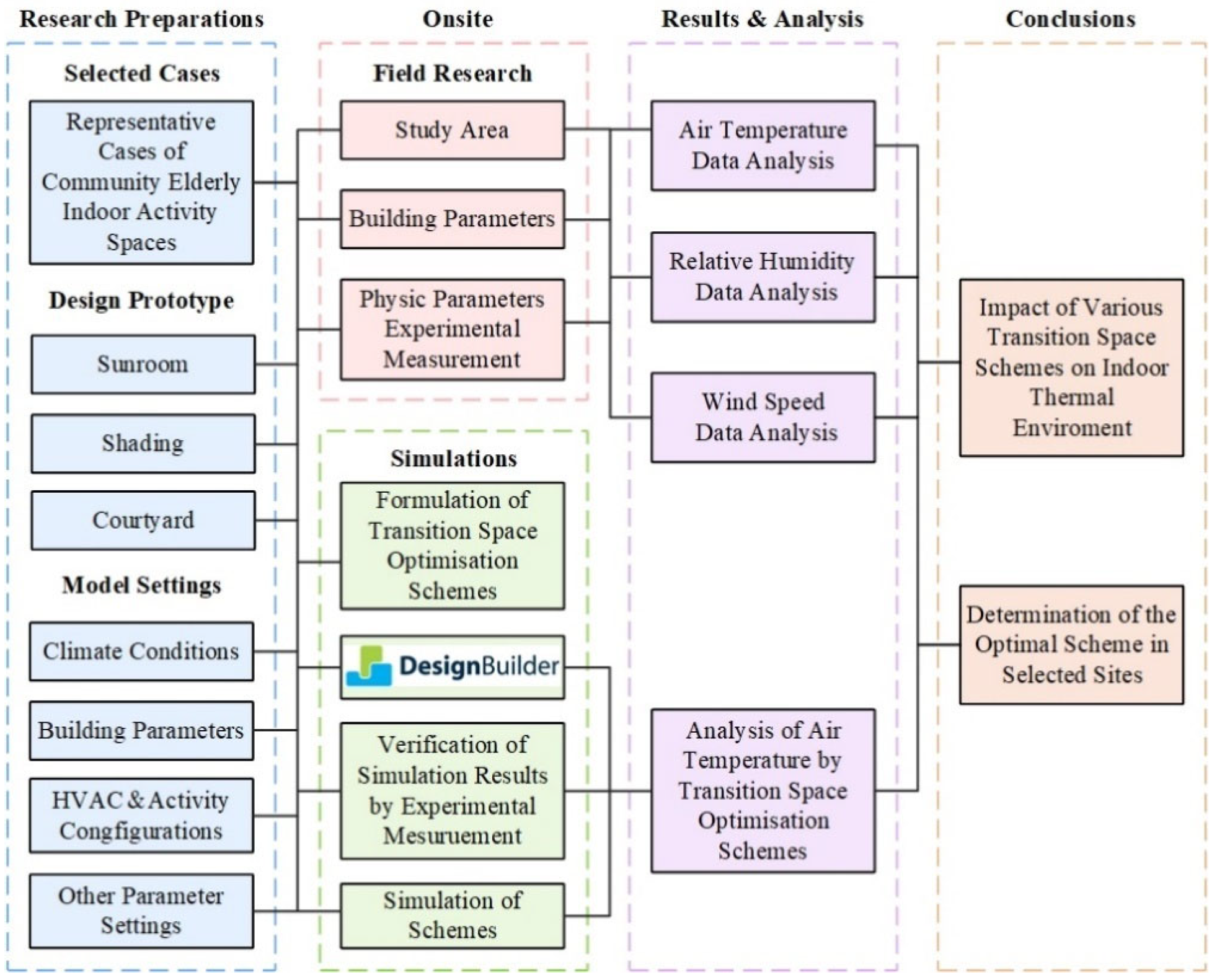
The research framework is conducted in three main phases, as illustrated in Figure 1:
  • Two representative community elderly indoor activity spaces in Tianjin were selected as case studies. Field surveys were conducted to investigate the operational status during both winter and summer. Simultaneously, field measurements of the indoor thermal environment were performed.
  • Models were constructed based on field survey data using DesignBuilder (version 7.0) to simulate the thermal environment. Based on the architectural forms and previous retrofitting case studies, a series of transitional space retrofitting schemes were formulated. Hourly thermal simulations were then conducted for each scheme to evaluate the impact of different transitional space configurations on the indoor thermal environment.
  • Based on a comparative analysis of the simulation results, evaluated the retrofitting performance of various transitional space forms and identified the optimal schemes for the selected sites. Subsequently, indoor thermal comfort before and after retrofitting was compared, and further explored the energy-saving potential of the optimal schemes.

2.1. Study Area

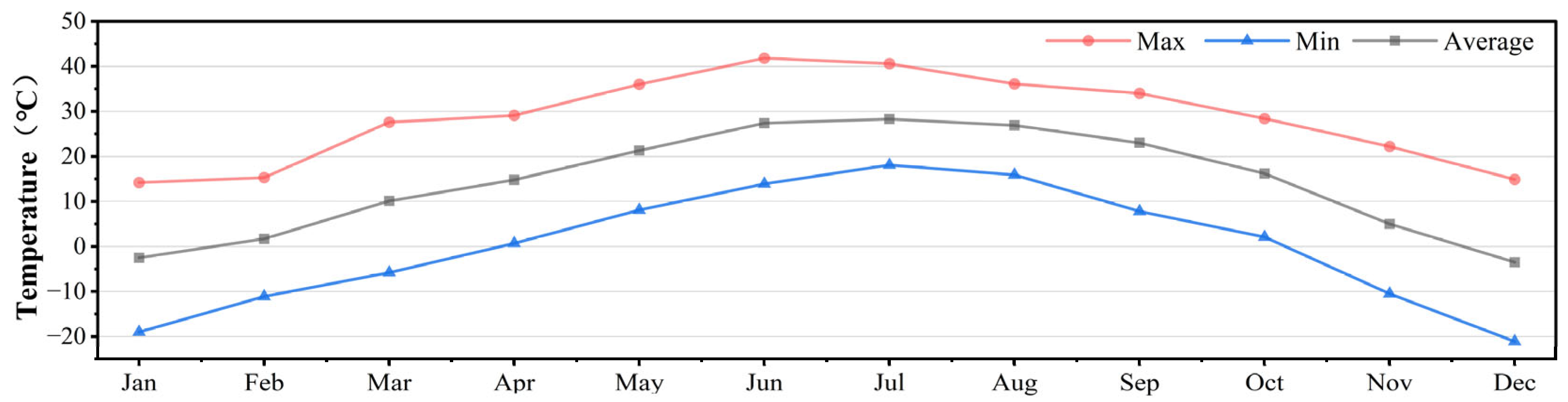
Tianjin is situated between latitudes 38°34′–40°15′ N and longitudes 116°43′–118°4′ E, bordered by the Bohai Sea to the east. According to the Thermal Design Zoning of Civil Buildings in China, it falls within the Cold Zone. The city is characterized by four distinct seasons. Winters are dominated by Siberian cold air, resulting in low temperatures, while summers are controlled by monsoon currents and warm–humid airflows, featuring high temperatures and abundant rainfall. Spring and autumn serve as transitional seasons with moderate precipitation and gradual temperature fluctuations. The annual mean temperature of Tianjin is 14.1 °C. The mean temperature of the coldest month in winter is −3.5 °C, with an extreme minimum reaching −21.1 °C. Conversely, the mean temperature of the hottest month in summer is 28.3 °C, with a maximum temperature of up to 41.8 °C (Figure 2).

2.2. Physical Measurements

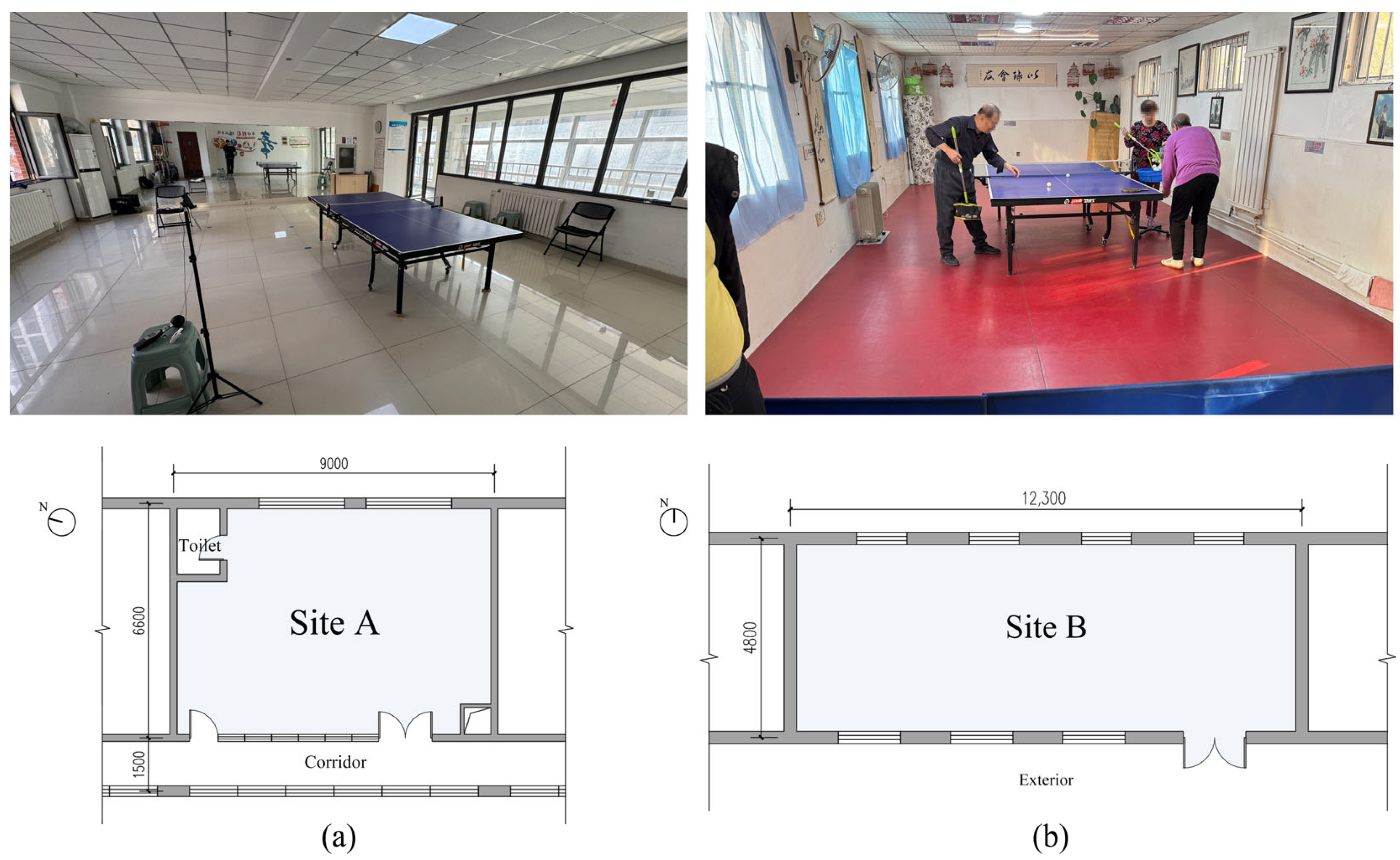
Field investigations indicated that community elderly indoor activity spaces in Tianjin are predominantly low-rise structures (1–2 levels), functioning either as standalone facilities or integrated within community service centers. Accordingly, two representative sites were selected for this study. The floor plans and dimensions of the activity spaces within these sites are illustrated in Figure 3.
Site A is situated within a two-level building (Figure 3a). The ground floor accommodates commercial functions, while the community service center occupies the 2F, including the elderly activity space, administrative offices, community canteen, and children’s playroom. This activity space serves as a multi-functional space, catering to activities such as table tennis, dancing, Yoga, Tai Chi, aerobic exercises (morning sessions). The schedule of these activities is managed by community managers. Regarding thermal control, although radiators are installed, they remain non-operational during the winter period. In summer, air conditioning (AC) is used for cooling.
Site B is a single-level structure located within a residential community, primarily functioning as a venue for table tennis, aerobic exercises, and Tai Chi (Figure 3b). The adjoining rooms on the east and west sides serve as private storage for residents and a community storage space, respectively. Similarly to Site A, the central heating system was non-operational during the winter period. However, a portable electric heater, provided by the elderly users, is placed adjacent to the table tennis table. Additionally, to accommodate the tea-drinking habits of the elderly, an electric kettle is available indoors. AC is used for cooling during summer.
Field measurements were conducted on 9–24 January 2025 and 26 July–8 August 2025 to monitor the indoor thermal environment during winter and summer periods. Table 1 details the specifications and parameters of the testing instruments used in this study.

2.3. Simulation Setup

2.3.1. Case Study Overview

DesignBuilder v7.0 (EnergyPlus engine v9.4) was employed in this study. This software is capable of comprehensively simulating building energy consumption, thermal environments, and indoor comfort under various climatic conditions, its accuracy has been extensively validated in previous research. The development of the building envelope model and the implementation of the energy simulation in EnergyPlus followed a well-established and consolidated workflow commonly adopted in building simulation studies. Based on field mapping data, the geometric models of the two sites were reconstructed within DesignBuilder. Key parameters, including building envelope properties and occupancy profiles, were configured to align with actual conditions to ensure simulation accuracy. The simulation results were benchmarked against field measurements to validate the model’s reliability, after which simulations were performed for various transitional space retrofitting schemes.

2.3.2. Model Configuration

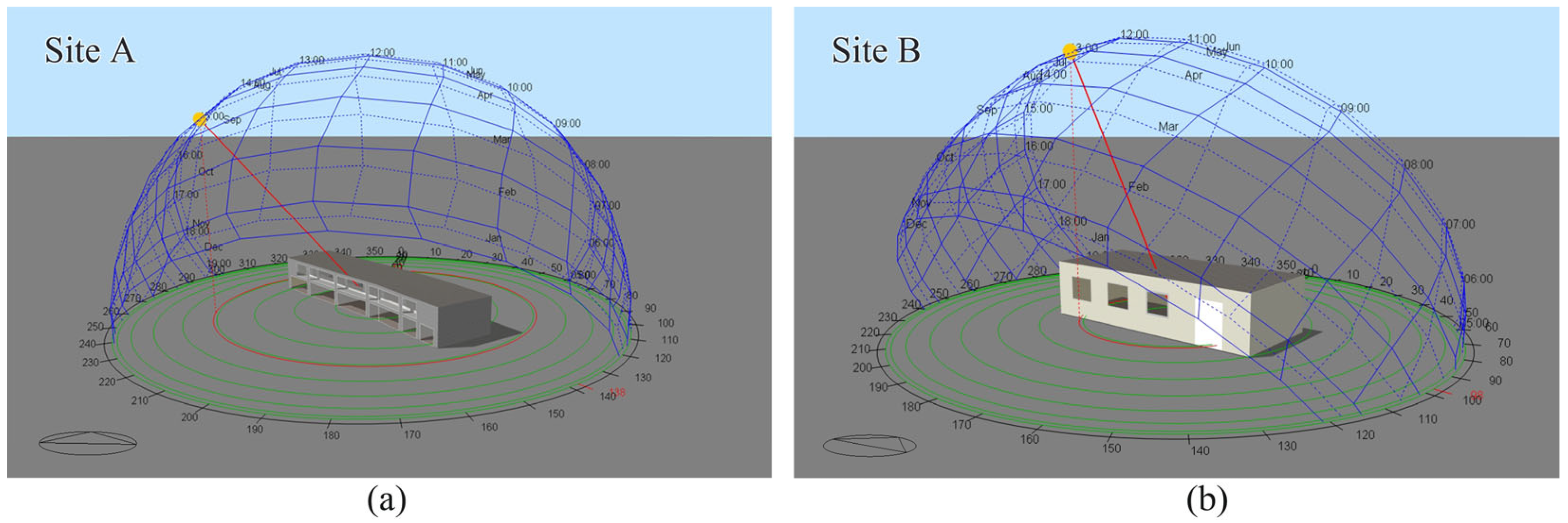
Based on the field mapping results, the simulation models for both sites were reconstructed within the software, as illustrated in Figure 4.

2.3.3. Setting of Building Parameters

Based on the reconstructed models, the building envelope parameters (Construction template) were configured in accordance with the field survey results (Table 2). In the model options, Natural Ventilation and Infiltration were set to the “Calculated” mode, meaning they would be calculated based on opening and crack sizes, buoyancy, and wind pressures. To investigate the impact of transition spaces with different configurations on the actual thermal environment of the indoor activity space, both the cooling and heating options in the HVAC template were kept off. For meteorological data, the Typical Meteorological Year (TMY) weather file for Tianjin in EPW format (sourced from the EnergyPlus database) was adopted.
Site A features a reinforced concrete frame structure. The external walls consist of concrete block infill insulated with EPS (Expanded Polystyrene) boards, while internal partitions are constructed of concrete blocks. The windows and doors use thermally broken aluminum frames. During the winter measurement period, both the radiators and air conditioning systems remained non-operational; however, AC was activated for cooling during summer. Site B is characterized by a brick–concrete structure with solid clay brick external walls. The windows are composed of uPVC frames fitted with single glazing. While the fixed radiators and AC systems were not in use during the winter measurements, a portable electric heater was employed by the occupants. In summer, the AC was activated for cooling.

3. Results and Discussion

3.1. Analysis of Experimental Measurement

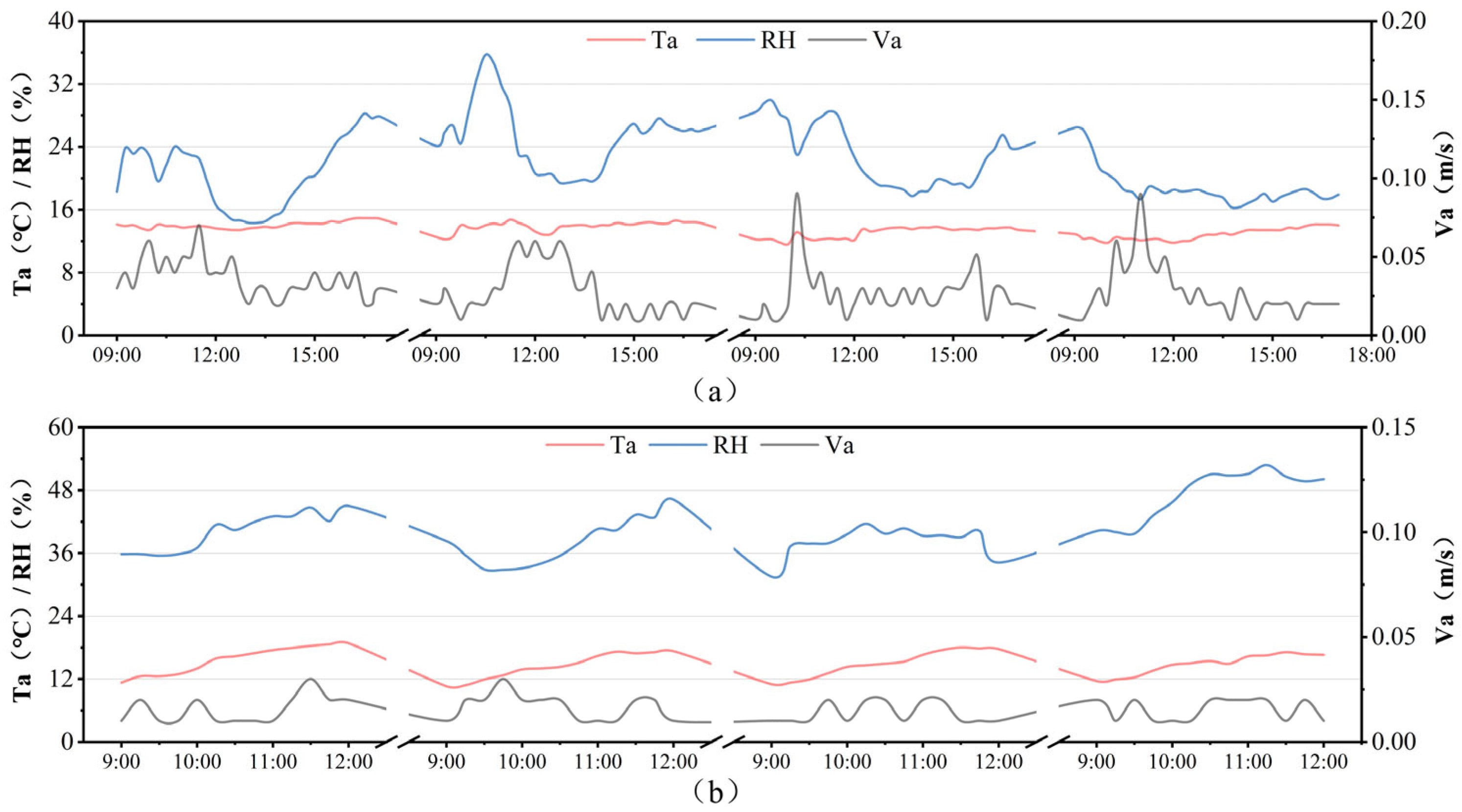
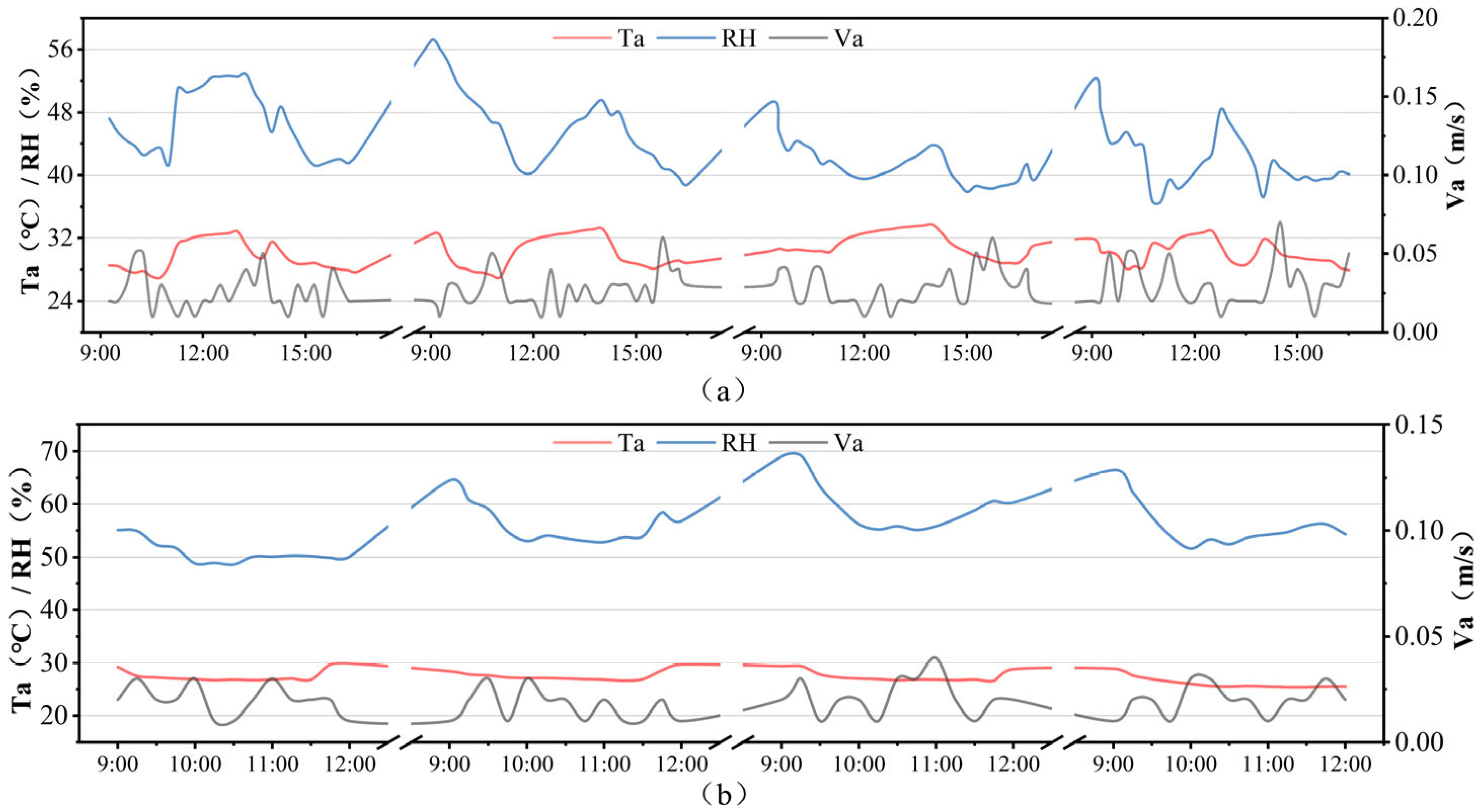
Due to access restrictions imposed by the community management, field measurements were confined to the daytime operating hours of the facilities. During the winter survey period, the local climate was characterized by low temperatures and significant day-night temperature differences. The measured winter data for both sites are presented in Figure 5.
The elderly activity space in Site A is located on the second floor, connected to other functional rooms by an internal corridor serving as a transitional space. The indoor area remained unheated during winter. Field measurements indicate that the overall indoor Ta in Site A was lower than in Site B. During operating hours (09:00–17:30), the Ta exhibited small fluctuation amplitudes, demonstrating a certain degree of thermal stability. Due to the relatively higher occupant capacity in Site A, the operation of doors and windows depended on the diverse habits of the elderly users. Consequently, the indoor RH and Va showed noticeable fluctuations across different time periods.
In contrast, Site B relied on a portable electric heater for heating. Typically, the heater was activated upon the arrival of the first user. Although the initial indoor Ta was low, a gradual upward trend was observed during the morning, attributed to the combined effects of rising outdoor temperatures and the heat output from the device. As Site B operates exclusively in the mornings, the Ta dropped rapidly after the occupants departed and the heater was switched off. Regarding humidity, the use of an electric kettle released steam, maintaining RH levels between 35% and 50%, which was generally higher than in Site A. Furthermore, since the entrance of Site B is directly exposed to the cold outdoor environment, the door remained predominantly closed except for brief entries and exits. As a result, the indoor air velocity in Site B was relatively lower than that in Site A.
In summer, AC was used for cooling in both Site A and Site B, with setpoint temperatures adjusted by the occupants according to their personal preferences. Field surveys revealed that the preferred setpoint temperature range for the elderly in both sites was 26–27 °C. The measured summer thermal environmental results are presented in Figure 6.
In Site A, the AC was activated by the elderly users upon their arrival and switched off when the facility was vacated. Consequently, field measurements indicate significant fluctuations in indoor Ta throughout the day. Around 11:00, the occupants typically departed for shopping or to prepare lunch (AC off). Following this, the indoor Ta rose rapidly to approximately 31–32 °C. Upon the occupants’ return around 14:00, the AC was reactivated, causing the Ta to decrease and stabilize at approximately 28 °C until the facility closed at 17:30. Windows and doors remained closed for most of the measurement period to avoid excessive indoor heat gain, even though daytime outdoor temperatures often rose above 30 °C.
Site B followed the same AC usage pattern as Site A. However, as Site B operates exclusively in the mornings and remained continuously occupied during these hours, the AC remained active throughout the entire measurement period until closing. When the elderly users arrived at Site B at approximately 09:00, the initial indoor Ta was relatively high. Following the activation of the cooling system, the Ta exhibited a downward trend, eventually stabilizing at 26–27 °C. Due to the high outdoor temperatures in summer, the entrance door of Site B remained predominantly closed (consistent with the winter condition), resulting in generally low indoor air velocities.
According to the Indoor Air Quality Standard (GB/T 18883-2022) [38], the recommended indoor temperature ranges are 16–24 °C for winter and 22–28 °C for summer. Generally, the average Ta for both sites across both seasons failed to fall within these recommended ranges. Specifically, winter temperatures showed a substantial deviation from the standard values. In summer, temperatures slightly exceeded the upper limit, remaining elevated throughout the majority of operating hours. Regarding humidity, the standard suggests an RH range of 30–60% for winter and 40–80% for summer. Field measurements indicate that, except for Site A in winter (which was slightly below the lower limit), all other RH values fell within the complied ranges. Furthermore, the maximum Va in both sites remained below 0.1 m/s, fully complying with the standard requirements. Consequently, the retrofitting of the indoor thermal environment for both sites should prioritize the improvement of indoor Ta.

3.2. Development of Optimization Strategies

In current community retrofitting projects, the focus is predominantly on enhancing the performance of residential buildings, while limited attention has been paid to community public facilities. Consequently, this study draws upon previous case studies regarding small-scale low-rise buildings, considering both local architectural forms and the specific needs of elderly users.
According to Liu’s [39] research on low-rise residential buildings, the addition of sunrooms is conducive to improving the indoor thermal environment in winter. Therefore, in the formulation of the enclosed transitional space scenarios, the morphological and spatial characteristics of sunrooms were referenced and translated into a series of optimization schemes. Conversely, regarding the semi-outdoor transitional space scenarios, previous studies on semi-outdoor spaces (such as courtyards and outdoor greenery) have predominantly focused on their impact on outdoor microclimates, with limited discussion on their interaction with indoor environments. Therefore, this study primarily referenced research by Avcı [40] and Amini [41] on shading devices, translating their findings into a series of semi-outdoor transitional space configurations.
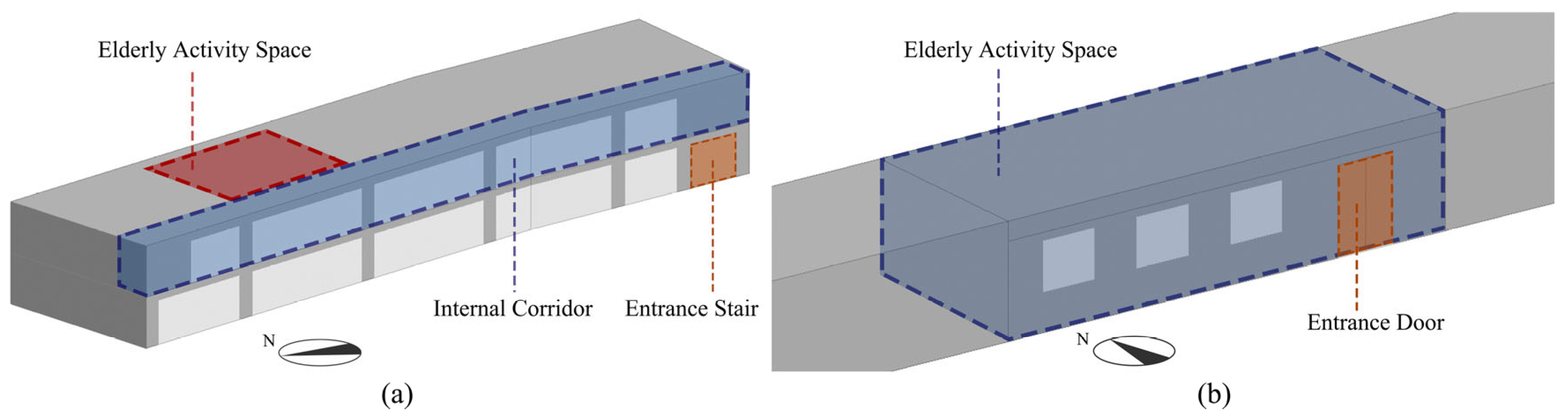
Site A features an East–West oriented configuration. The entrance to the community service center is situated at the stairwell on the south side of the ground floor, while the elderly activity room is located on the north side of the 2F, as illustrated in Figure 7a. Regarding the west façade retrofitting: Originally, the west side featured an internal corridor functioning as a transitional space. To quantify the impact of this internal corridor on the indoor thermal environment, Optimization Schemes 1–4 involved the removal of the original internal corridor. Specifically, Schemes 2–4 were built upon the corridor-free baseline (Scheme 1) by incorporating external structural components to create semi-outdoor transitional spaces. In contrast, Schemes 5–7 were based on the original building structure (retaining the corridor) with additional transitional spaces attached. Among them, Schemes 5 and 6 introduced enclosed spaces, while Scheme 7 featured a semi-outdoor transitional space. Regarding the east façade retrofitting: Optimization Schemes 1–4 involved the addition of enclosed spaces. Schemes 1–3 shared identical volumetric dimensions but differed in their window configuration strategies: east-facing windows, skylights, and a combination of both, respectively. Scheme 4 involved adding an enclosed space exclusively adjacent to the elderly activity room. Furthermore, Schemes 12–14 employed semi-outdoor transitional spaces: Scheme 12 featured eaves projecting from the wall surface; Scheme 13 adopted a horizontal shading form; and Scheme 14 represented a hybrid combination of the former two.
Site B is characterized by a single-floor rectangular volume (box-shaped), featuring windows on both the north and south façades and a single entrance located on the south side. Compared to Site A, the overall building volume of Site B is relatively smaller, as shown in Figure 7b. Regarding the south façade retrofitting: Optimization Schemes 1–3 involved adding enclosed transitional spaces to the south side. To investigate the impact of direct sunlight on the indoor environment, these three schemes shared identical spatial dimensions but employed different window configurations: south-facing windows, skylights, and a combination of both, respectively. Schemes 4 and 5 introduced smaller enclosed spaces specifically attached to the entrance door and the window positions, respectively. Furthermore, Scheme 6 added a horizontal eave projecting perpendicular to the wall surface. Scheme 7 enclosed the southern outdoor space to create a small outdoor courtyard, retaining an opening for access. Scheme 8 built upon Scheme 7 by adding a roof eave, creating a nearly enclosed southern space while still maintaining the access opening. Regarding the north façade retrofitting: Schemes 9–11 corresponded to Schemes 1–3. However, since there is no entrance on the original north façade, the glazing area of the newly added enclosed spaces was slightly larger than that of the south-facing counterparts. Similarly, Schemes 12 and 13 corresponded to Schemes 7 and 8, respectively.
The finalized transitional retrofitting schemes for both sites are summarized in Table 3.

3.3. Simulation of Indoor Thermal Environment

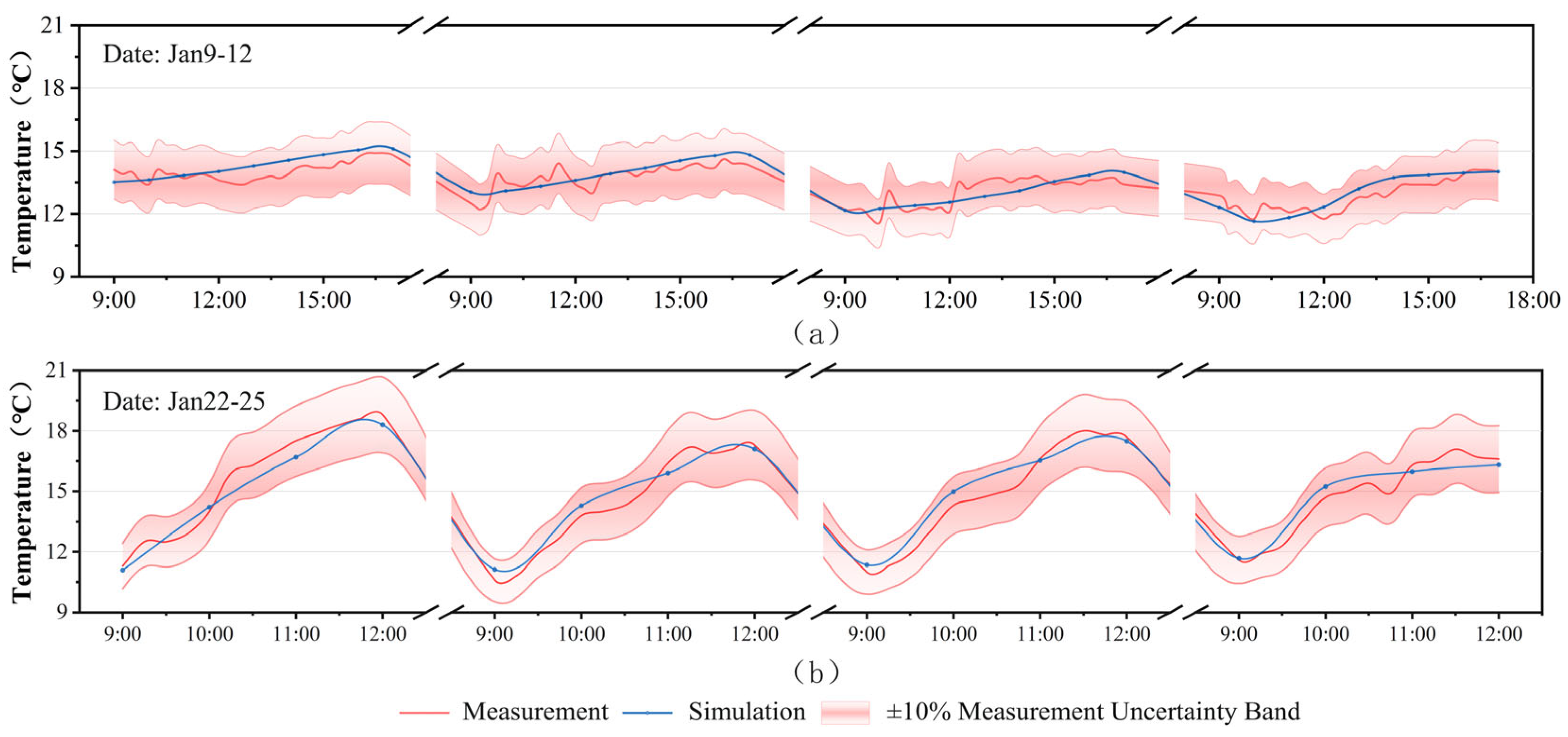
To ensure the reliability of the subsequent research, the Origin forms (baseline models) of both sites were simulated using DesignBuilder, and the results were validated against the field measurement data. Both sites use air conditioning in summer, while the simulation software assumes constant setpoint control, causing the simulation values failed to capture the intermittent operation of the air conditioners (as shown in Figure 6a) or the actual temperature fluctuations. Therefore, the validation was performed for the winter period. This may lead to discrepancies between the actual thermal environment and the simulation results. As the boundary conditions are consistent across the different forms, the relative performance trends are expected to remain unchanged.
Therefore, the indoor temperatures for both the Origin forms and the various transitional space retrofitting schemes were simulated under free-running conditions (without HVAC operation). The simulation period was defined as a seven-day duration encompassing the field measurement dates, to facilitate a comparative analysis of the results.

3.3.1. Reliability of Indoor Thermal Environment Simulation

According to ASHRAE, when the NMBE is within ±10% and the CV(RMSE) is within 30% for hourly simulations, the error tolerance range between simulated and measured data can be considered reliable. The relevant calculation formulas are as follows:
N M B E = i = 1 n ( y i y ^ i ) n × 100
C V ( R M S E ) = i = 1 n ( y i y ^ i ) 2 n y ¯ × 100
To verify the accuracy of the simulation, comparative validation analyses were conducted for each site. The measured winter indoor temperatures were overlaid with the simulated temperatures (Figure 8), and the surrounding light red band indicates an uncertainty band of ±10% to account for potential measurement variability and provide a visual reference for the agreement between measurements and simulations. Meanwhile, the NMBE and CV(RMSE) values for each site were calculated according to the above formulas, and the results are summarized in Table 4.
Based on the calculation results, the errors between the simulated Ta and the measured Ta at each site fall within the acceptable range, indicating that the simulation model can effectively reflect the actual thermal environment characteristics and can be used for further research and analysis.

3.3.2. Site A

Under free-running conditions (without HVAC), full-day (24 h) simulations were conducted for Site A, covering both the Original Form and various optimization schemes during winter and summer. The results were subsequently overlaid based on façade orientation for comparative analysis.
  • Winter
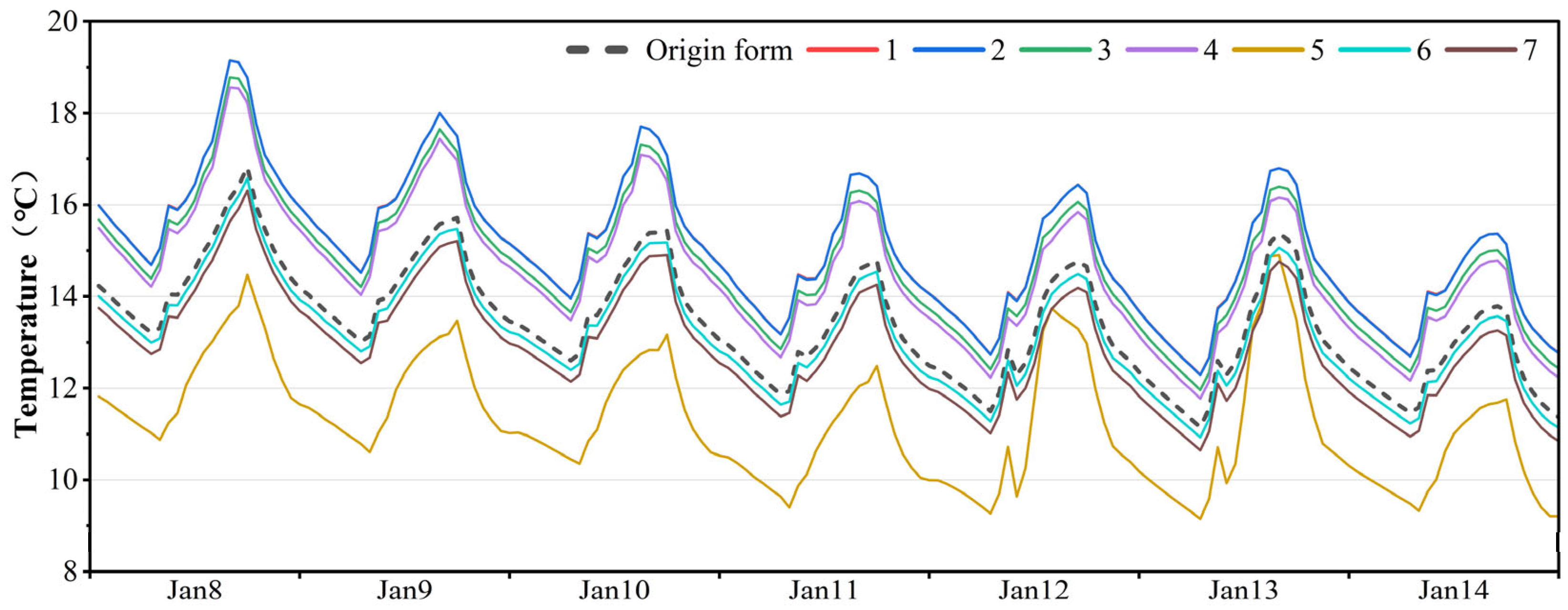
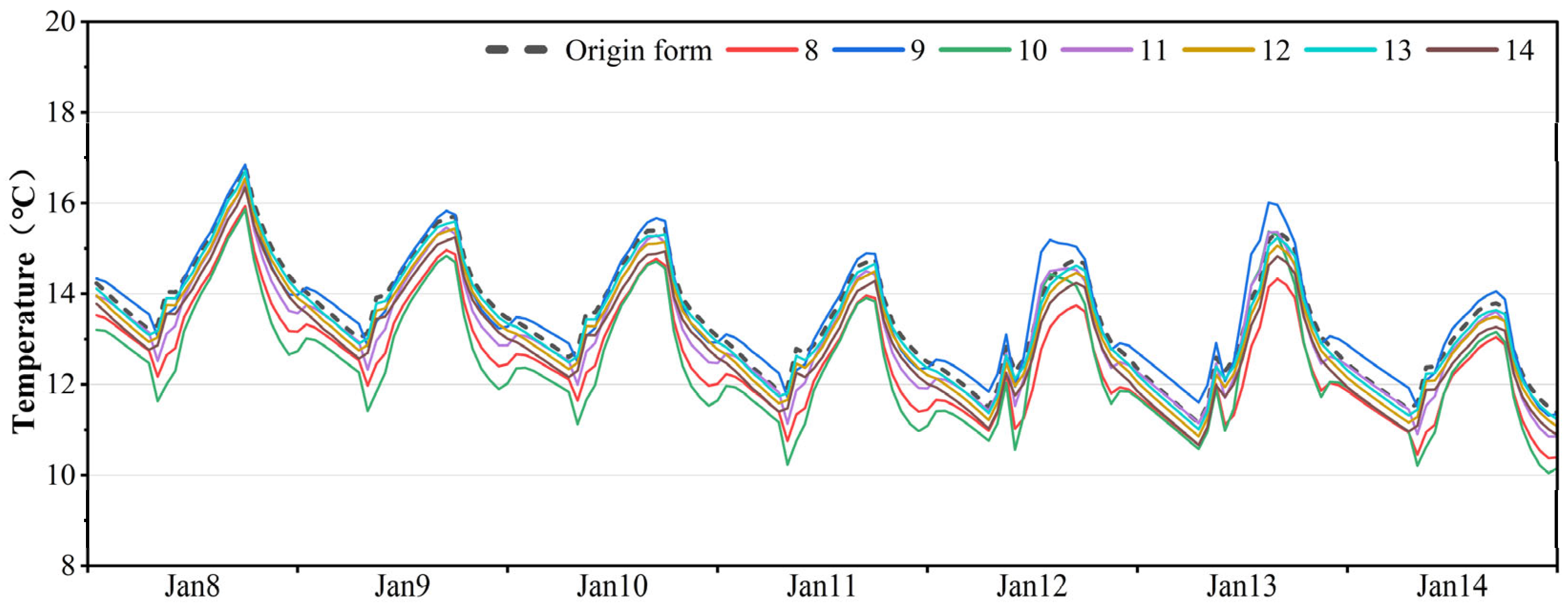
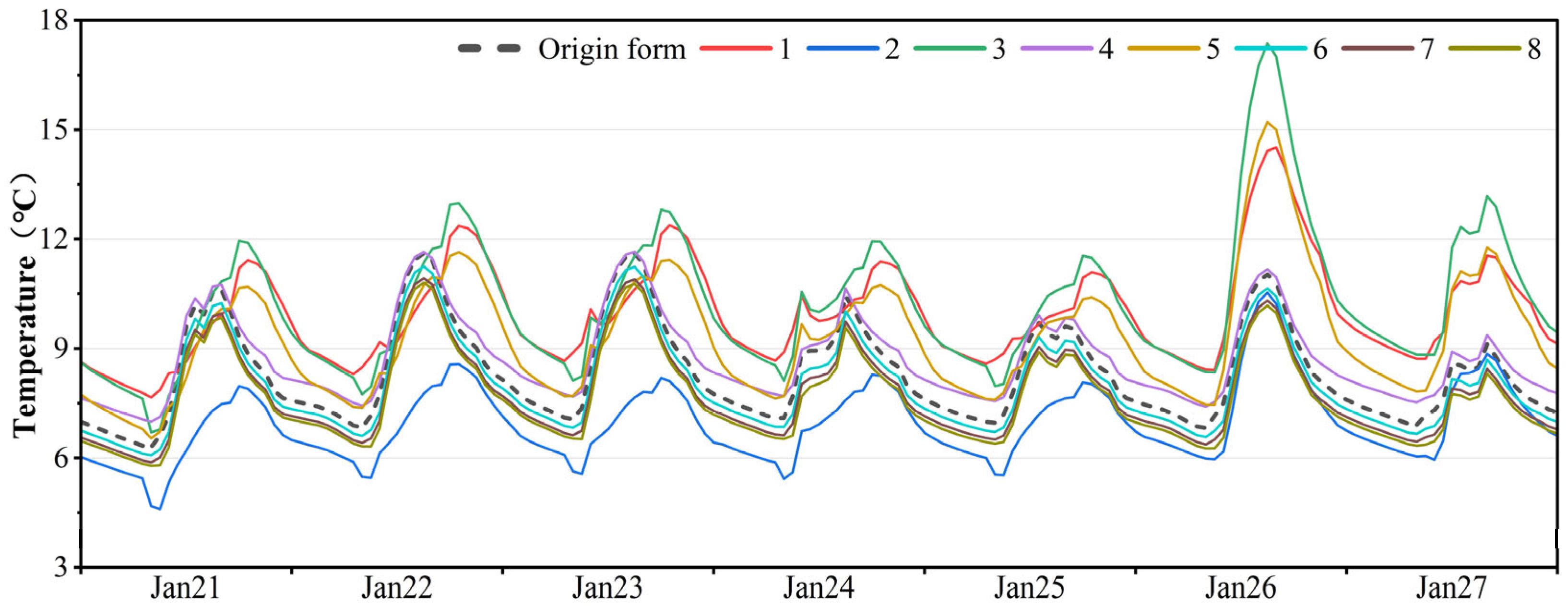
The winter indoor temperatures of Site A were simulated under free-running conditions. Figure 9 and Figure 10 illustrate the indoor air temperature results for the West façade (Schemes 1–7) and East façade (Schemes 8–14), respectively.
In Schemes 1–4, the existing 2F corridor was removed. Originally, this corridor connected to the entrance stairwell, creating a large volume with poor thermal retention. With its removal, solar radiation could penetrate deeper into the interior, particularly given the prolonged western exposure and low solar altitude angle in winter. Consequently, the indoor Ta in these schemes were higher than in the Origin Form. Although Schemes 2–4 added semi-outdoor transitional spaces based on Scheme 1, their impact on Ta was negligible compared to Scheme 1.
Conversely, Scheme 5 added an external enclosed space to the original building structure. This configuration obstructed solar radiation, hindering heat storage and resulting in lower Ta than the Origin form. Scheme 6 introduced an enclosed space at the southern entrance (matching the stairwell’s width); however, due to the significant distance from the elderly activity space, it had almost no effect on the indoor thermal environment.
Scheme 7 added a semi-outdoor transitional space on the west side. This structure blocked a portion of direct sunlight. Combined with the thermal buffer effect of the internal corridor, the overall impact was minimal, with simulation results showing Ta slightly lower than the Origin form.
Schemes 8–10 feature enclosed spaces of identical volume but differ in their window configurations: Scheme 8 uses East-facing windows, Scheme 9 uses skylights, and Scheme 10 combines both. Since the East façade of Site A receives a short duration of direct sunlight, the total solar heat gain is limited. Consequently, for Schemes 8 and 10, the large glazed areas compromised thermal retention given the brief period of solar gain, resulting in the lowest indoor Ta among the East-facing scenarios. Scheme 9, which exclusively features skylights, exhibited Ta slightly higher than the Origin Form on days with high solar irradiance (12–14 January) due to greater penetration of direct sunlight. However, on days with lower solar intensity (8–11 January), Ta matched the baseline only during sunlit hours, while remaining slightly lower during the rest of the day.
Scheme 11 reduced the enclosed volume compared to Scheme 10, matching the width of the activity room. Despite incorporating both skylights and East-facing windows, its overall Ta profile remained lower than the Origin form, driven similarly by limited solar exposure and heat loss through the glazing.
Finally, Schemes 12–14 comprise semi-outdoor spaces formed by external components. Simulation results indicate these had a minimal impact on indoor Ta, maintaining levels slightly lower than the Origin form. Functionally, these schemes primarily act as shading devices, which further corroborates the finding that the potential for solar heat gain on the East façade of Site A is extremely limited.
In summary, for the West façade of Site A, removing the original internal corridor proved effective in raising indoor Ta. This is because the original corridor, connected to the entrance stairwell, created a large volume that partially obstructed solar radiation from penetrating the interior. However, the addition of further enclosed spaces beyond the original corridor resulted in a further reduction in indoor Ta. Conversely, on the East façade, most optimization schemes failed to improve the thermal environment. The only exception was Scheme 10, which achieved a marginal Ta increase on days with high solar irradiance by admitting more sunlight through skylights. Consequently, from the perspective of improving the winter indoor thermal environment, retrofitting the West façade of Site A presents greater potential than the East façade.
  • Summer
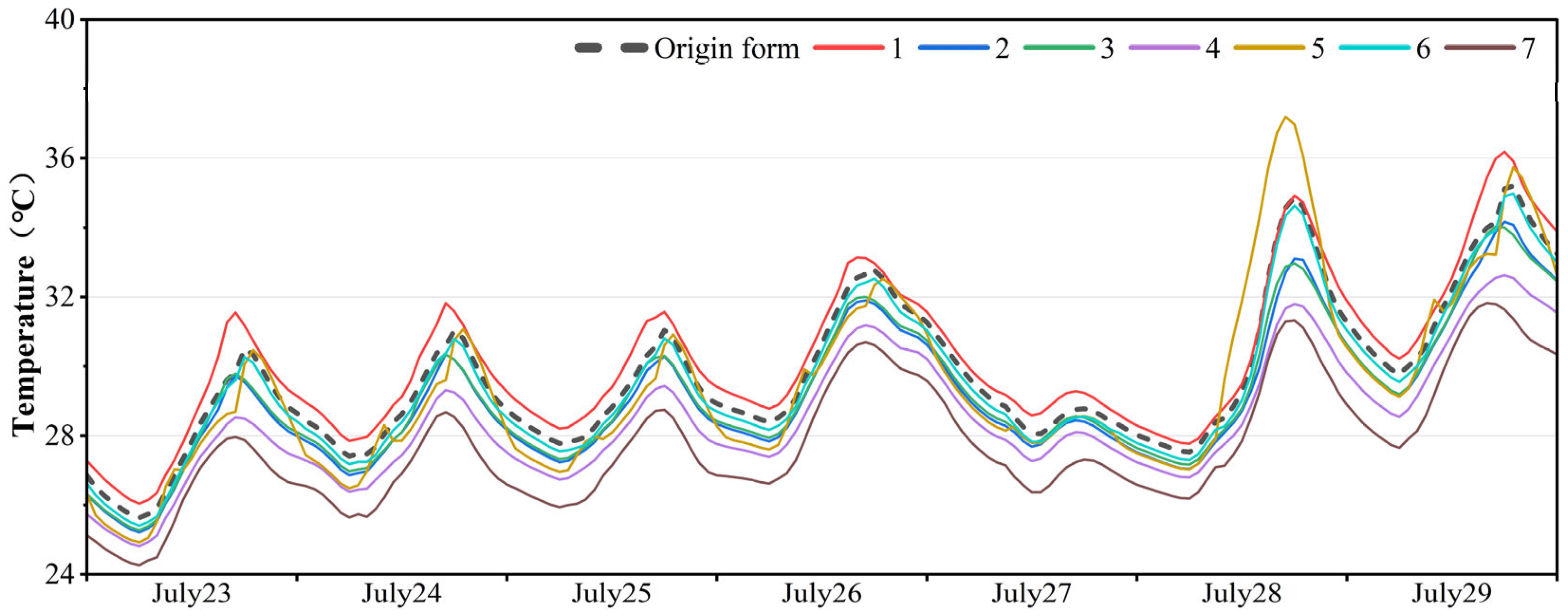
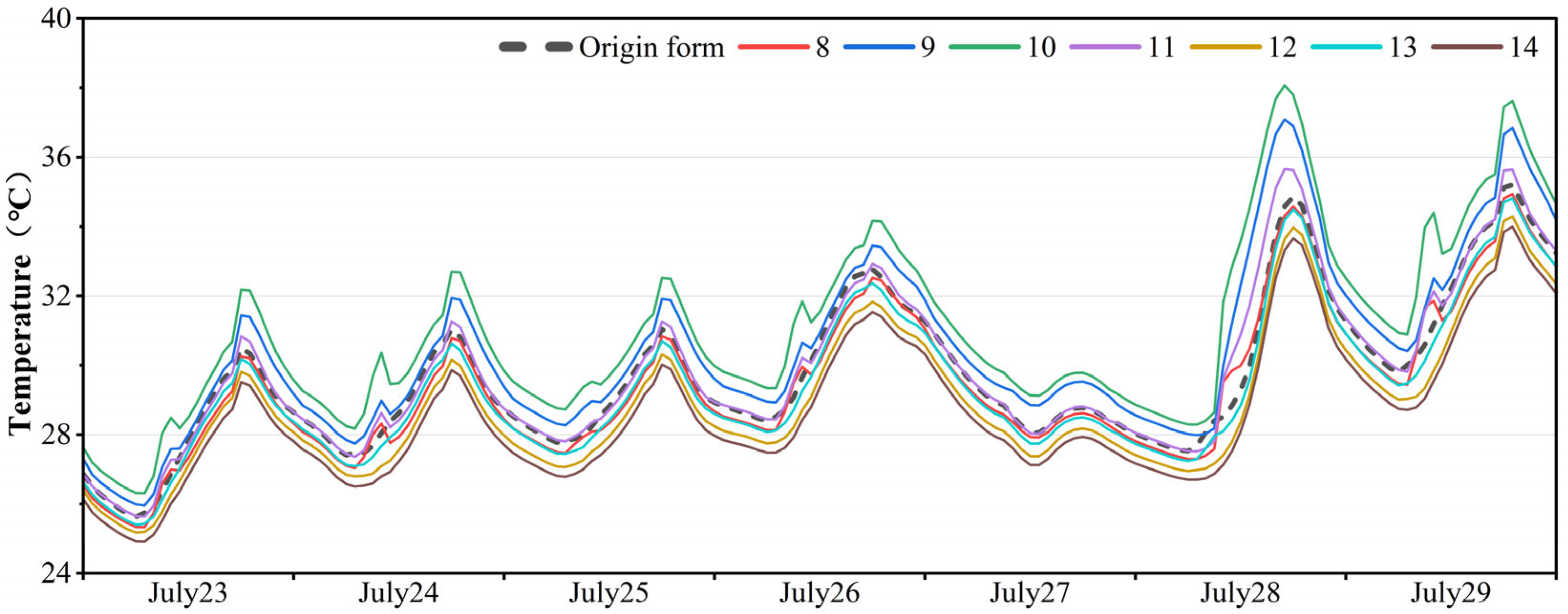
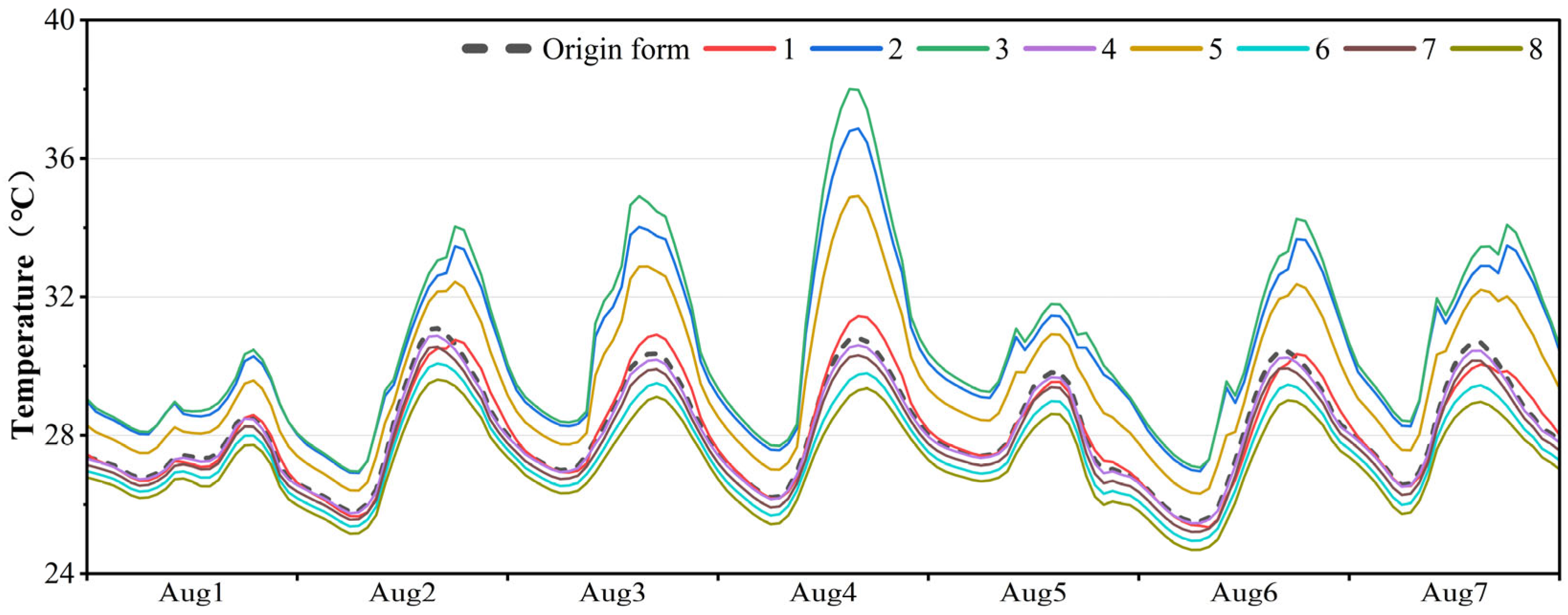
The summer indoor temperatures of Site A were simulated under free-running conditions. Figure 11 and Figure 12 illustrate the indoor temperature results for the West façade (Schemes 1–7) and East façade.
Schemes 1–4 involved the removal of the original internal corridor. In Scheme 1, the elderly activity room was directly exposed to the outdoor environment. Lacking the internal corridor to mitigate solar radiation, Scheme 1 exhibited the highest Ta among the West façade proposals, reaching approximately 0.6 °C above the Origin form. Schemes 2–4 incorporated semi-outdoor transitional spaces based on Scheme 1. These spaces effectively intercepted solar radiation, with Scheme 4 proving the most effective, reducing the Ta by about 0.9 °C compared to the Origin form.
Scheme 5 added an enclosed space to the 2F. Although this structure acted as a buffer against direct radiation, its large glazing area and skylights admitted significant solar heat. Consequently, on days with high solar irradiance, indoor Ta exceeded the Origin form, while on other days, they averaged approximately 0.4 °C lower.
Scheme 6 introduced a smaller enclosed space at the entrance stairwell. Due to its distance from the main activity area, its thermal impact was negligible, resulting in a Ta trend that closely followed the Origin form.
Finally, Scheme 7 retained the original internal corridor and added an external semi-outdoor transitional space. Given Site A’s prolonged exposure to western sunlight, the external components provided significant shading. Combined with the buffer of the corridor, Scheme 7 achieved the most significant cooling effect, lowering the average Ta by approximately 1.5 °C relative to the Origin form.
Schemes 8–10 feature enclosed spaces. In summer, characterized by higher solar altitude and longer daylight hours, the impact on East-facing windows is generally limited. However, Schemes 9 and 10, which incorporate skylights, experienced significantly increased solar heat gain. Specifically, on days with high solar intensity (28–29 July), indoor Ta rose markedly by 2–3 °C. On other days, Ta were approximately 1–1.5 °C higher than the Origin form. Scheme 8, lacking a skylight, showed little deviation from the Origin Form, as the minor heat gain from the large façade window was balanced by the space’s thermal buffering effect.
Scheme 11 features a reduced enclosed volume with a width matching the elderly activity room. Consequently, both its skylight and façade window areas are much smaller than those in Scheme 10. On sunny days, the heating effect from the skylight was noticeable, raising the Ta by 0.5–1 °C, while on other days, the increase was negligible (approx. 0.1 °C) compared to the Origin form.
Schemes 12–14 utilize semi-outdoor transitional spaces formed by external components, all of which provided a cooling effect. Schemes 12 and 14 were the most effective, reducing the Ta by about 0.9 °C relative to the Origin form, while Scheme 13 showed a minor reduction with limited impact. Due to the high solar altitude in summer, the vertical shading provided by Schemes 12 and 14 was able to effectively block a greater amount of solar radiation.
In summary, the West façade of Site A is subject to prolonged solar exposure during summer, with daily peak Ta occurring between 17:00 and 18:00. Consequently, heat prevention on the West façade is critical. Semi-outdoor transitional space schemes proved effective in significantly blocking western solar radiation. Among them, Scheme 7 achieved the best cooling performance by combining the shading effect of the semi-outdoor space with the thermal buffering of the internal corridor. Conversely, due to limited solar exposure on the East façade, the cooling effects of the various schemes were generally insignificant. Nevertheless, semi-outdoor transitional spaces remain a viable option; for instance, Scheme 14 was still able to provide a modest cooling benefit.
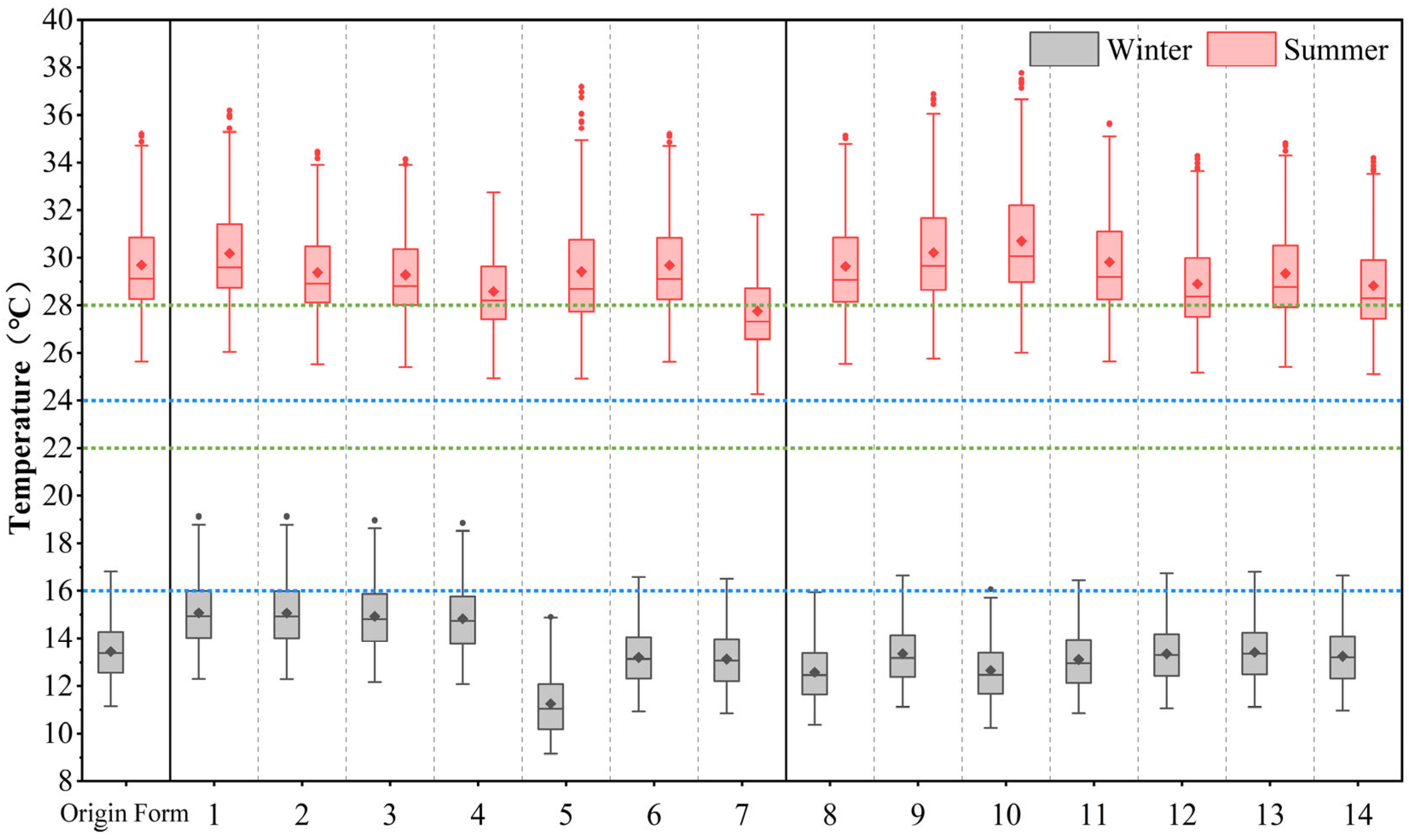
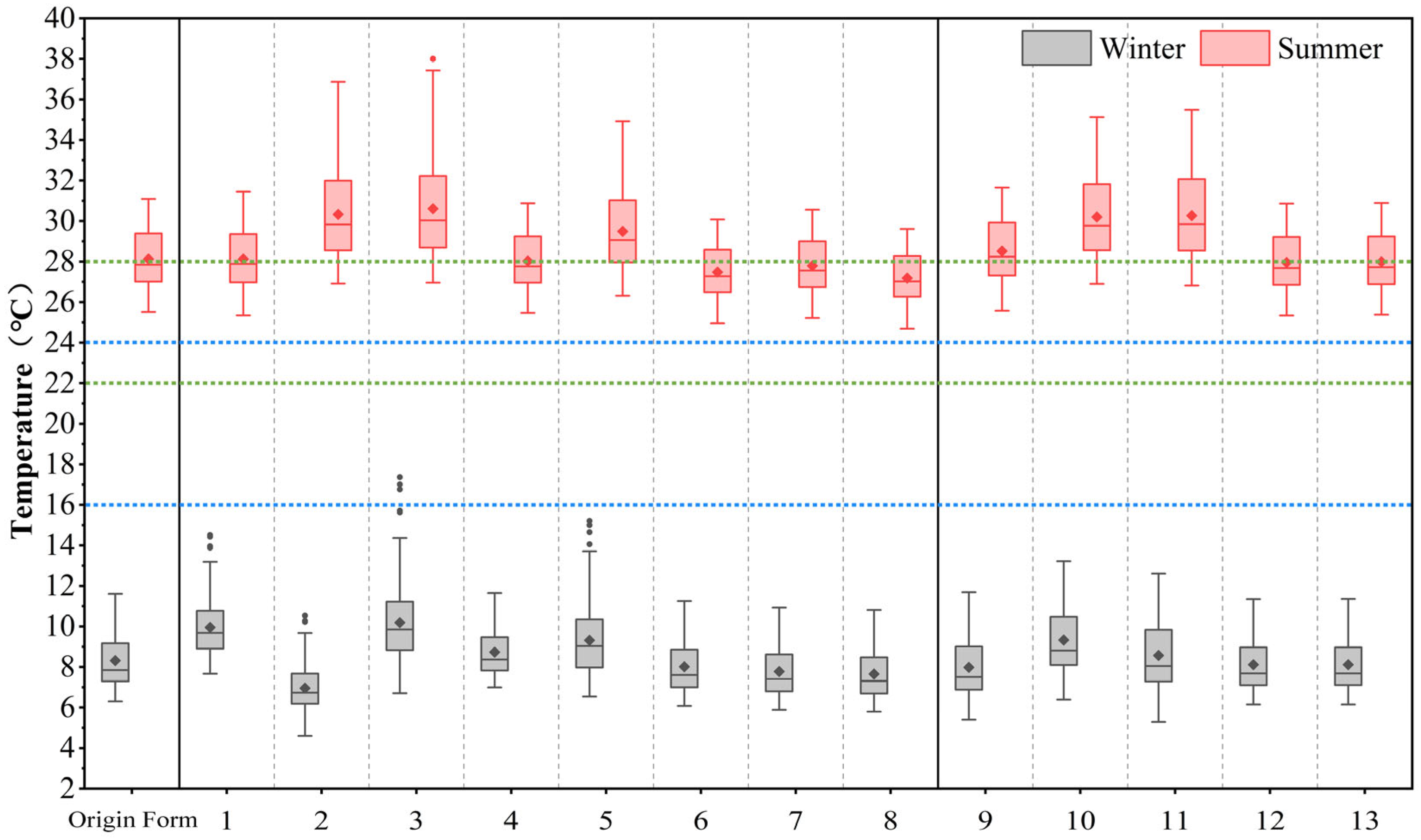
Figure 13 presents the boxplots of the simulated indoor Ta for Site A in both winter and summer. Given Site A’s East–West orientation, the East façade receives a shorter duration of direct sunlight during the day in both seasons; consequently, indoor Ta are primarily influenced by western solar exposure. The original second-floor internal corridor, which spans the entire plan and connects various functional rooms, acts as a thermal buffer, effectively mitigating direct solar radiation from the west. In contrast, the East side lacks any transitional space. Regarding the West façade: From the perspective of improving winter indoor Ta, Scheme 1 performed best; however, it also significantly increased Ta in summer, which is unfavorable for summer heat prevention. Conversely, Scheme 7 achieved the best cooling effect in summer but was unfavorable for winter heat preservation. Schemes 2 and 4, however, offer an optimal trade-off: they provided effective warming in winter while successfully blocking significant solar radiation to lower Ta in summer. Therefore, Schemes 2 and 4 should be prioritized. Regarding the East façade: Since available solar radiation is limited in winter, Schemes 8–14 showed negligible effects on raising winter Ta. Consequently, the retrofitting schemes for the East façade should focus more on summer heat prevention, for which Scheme 14 demonstrated the most effective performance.

3.3.3. Site B

Under free-running conditions (without HVAC), full-day (24 h) simulations were conducted for Site B, covering both the Original Form and various optimization schemes during winter and summer. The results were subsequently overlaid based on façade orientation for comparative analysis.
  • Winter
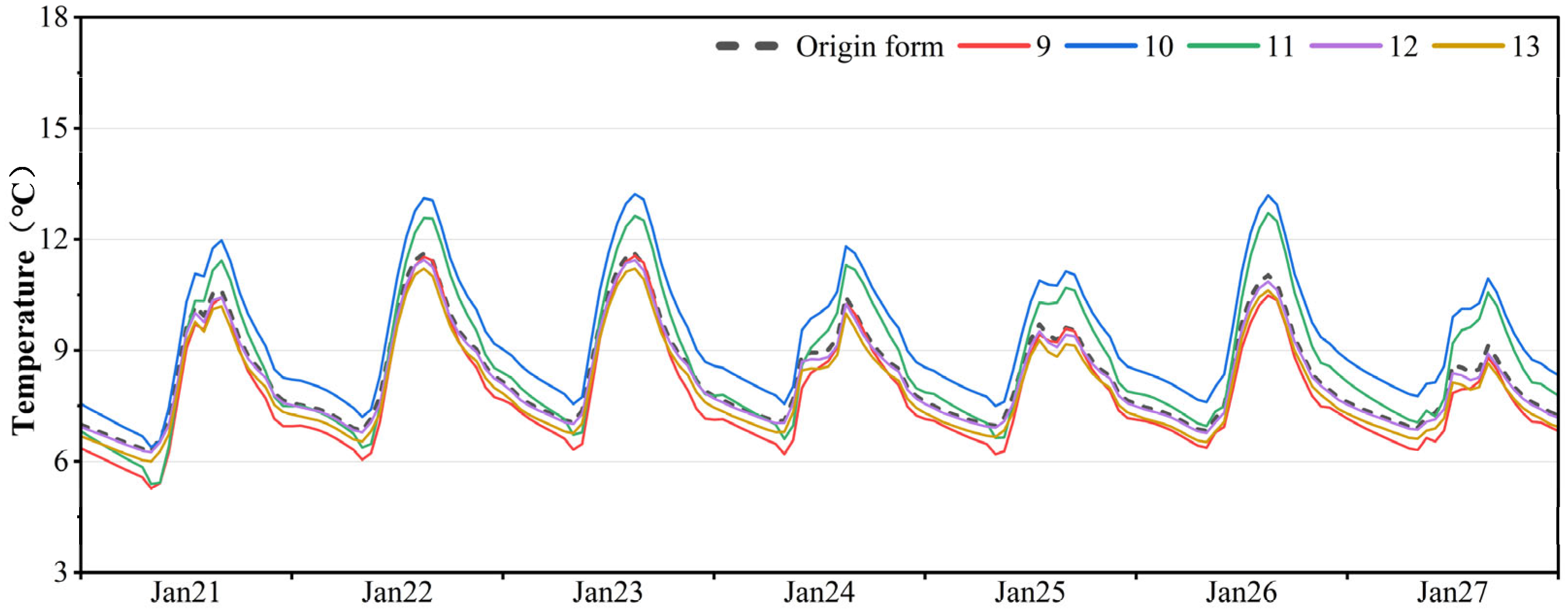
The winter indoor temperatures of Site B were simulated under free-running conditions. Figure 14 and Figure 15 illustrate the indoor temperature results for the South façade (Schemes 1–8) and North façade (Schemes 9–13), respectively.
Schemes 1–3 incorporate an enclosed space on the South side, differentiated by their window configurations: South-facing windows, skylights, and a combination of both. Simulation results indicate that Scheme 1, with its South-facing windows, effectively captures solar radiation, resulting in a Ta profile generally higher than the Origin form (with a daily average approximately 2 °C higher). Scheme 3, which features both roof and South-facing glazing, maximizes solar heat gain, thereby achieving the highest overall Ta profile. In contrast, due to the low solar altitude in January, the solar radiation received through skylights is relatively limited. Scheme 2, which relies solely on a skylight, performs poorly for two reasons: it prevents direct sunlight from reaching the original South façade, and the enclosed space lacks a sufficient heat source, causing it to warm up slowly even as outdoor temperatures rise. Consequently, on days with strong solar irradiance, its Ta was slightly lower than the Origin form, while on other days, it was significantly lower.
Schemes 4 and 5 introduce enclosed spaces at the entrance and window positions, respectively. Scheme 4 serve as an entrance vestibule with a skylight; it reduces heat loss at the entrance and admits some solar radiation, raising the overall Ta by about 1 °C. Scheme 5 attaches an enclosed space to the existing window area with both South-facing and roof glazing. This allows significant solar penetration, increasing the Ta by approximately 1.5 °C—slightly lower than Scheme 1.
Finally, Schemes 6–8 utilize external architectural components to create semi-outdoor spaces. Since these structures block a portion of the solar radiation, their Ta profiles remain slightly lower than the Origin form.
Schemes 9–11 correspond to the South-facing Schemes 1–3 but introduce enclosed spaces on the North side. Since the North façade receives almost no direct sunlight, Scheme 9 (with North-facing windows) performed poorly. Although the enclosed space provided some thermal buffering, the low thermal resistance and large area of the glazing resulted in heat loss, leading to an average indoor Ta slightly lower than the Origin form. In contrast, Schemes 10 and 11 both feature skylights that allow for the penetration of some solar radiation; consequently, their Ta profiles were higher than the Origin form. Notably, Scheme 10 (which lacks North-facing façade windows) minimized heat loss through the envelope, resulting in higher indoor Ta compared to Scheme 11.
Schemes 12 and 13 added external semi-outdoor components to the North side. Due to the absence of direct sunlight on this façade, their impact on indoor Ta was negligible.
In summary, given the low solar altitude in winter, South-facing façade windows are more effective at admitting solar radiation than skylights. Adding a sunspace (enclosed transitional space) to the South side of Site B significantly improved the indoor thermal environment, with Scheme 3—combining skylights and façade windows—achieving the optimal warming effect. Conversely, South-facing semi-outdoor spaces proved unfavorable for winter heat preservation. For the North façade, which lacks direct lateral solar exposure, enclosed spaces equipped with skylights can capture additional overhead sunlight. Among these strategies, Scheme 10 was the most effective, whereas North-facing semi-outdoor transitional spaces had minimal impact on indoor Ta.
  • Summer
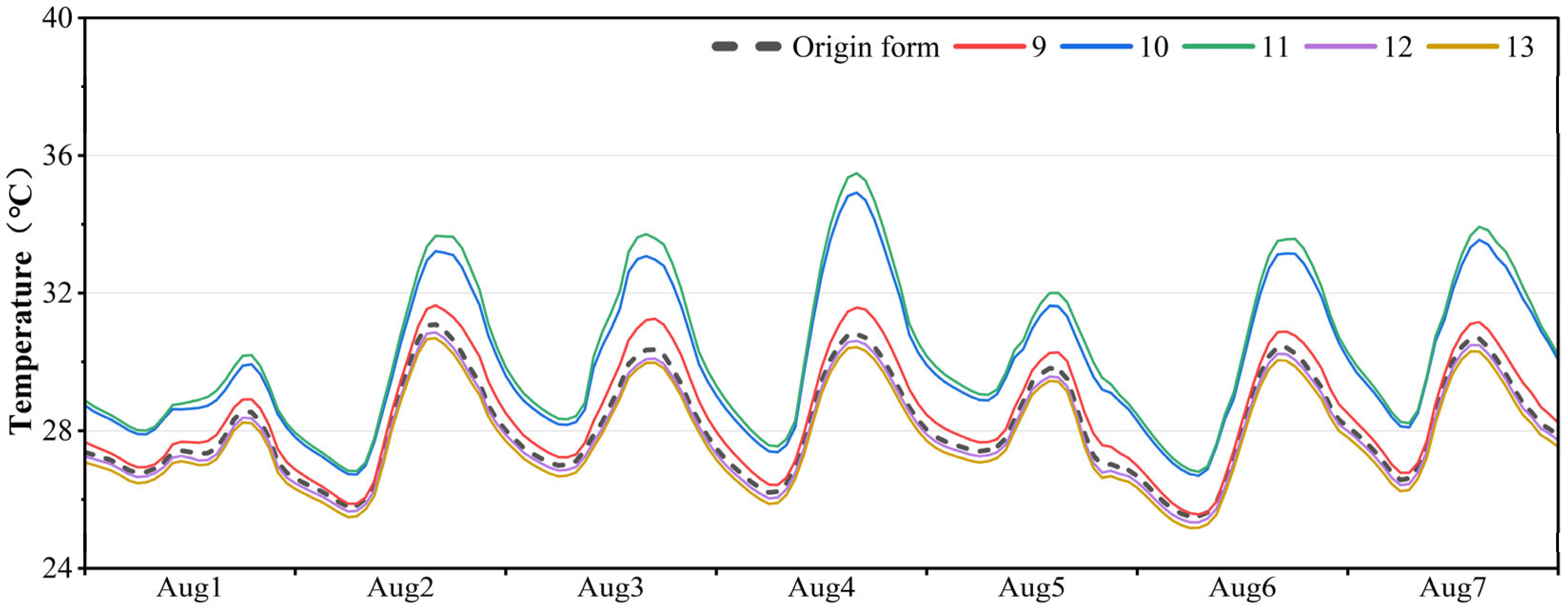
The summer indoor temperatures of Site B were simulated under free-running conditions. Figure 16 and Figure 17 illustrate the indoor temperature results for the South façade (Schemes 1–8) and North façade (Schemes 9–13), respectively.
Schemes 1–3 feature enclosed spaces of identical volume. Among them, Schemes 2 and 3 exerted the most significant impact on indoor Ta, raising peak values by approximately 3–4 °C above the Origin form. This is attributed to the high solar altitude in summer, which allows schemes with skylights to capture maximum solar radiation, thereby causing significant overheating. In contrast, Scheme 1, lacking a skylight, exhibited a Ta profile similar to the Origin form due to the thermal buffering effect of the added space, although Ta was slightly higher on days with strong solar irradiance (3–4 August).
Schemes 4 and 5 are also enclosed strategies but involve smaller volumes than Schemes 1–3. Scheme 4, despite having a skylight, showed little deviation from the Origin form because the skylight area is small and the entrance door is made of opaque material, preventing solar penetration from the South. Conversely, Scheme 5 features a larger skylight area and significant South-facing glazing. Consequently, it was subject to substantial solar heat gain, resulting in a Ta profile slightly lower than Schemes 2 and 3 but averaging approximately 1.2 °C higher than the Origin form.
Schemes 6–8 consist of external architectural components, all of which contributed to a general reduction in indoor Ta. Given the high solar altitude, Scheme 6 provided slightly better cooling performance than Scheme 7. Scheme 8, characterized by the highest degree of enclosure, blocked the majority of solar radiation, achieving the most effective cooling with an average Ta reduction of approximately 1 °C.
Schemes 9–11 similarly introduce enclosed spaces. Due to the inclusion of skylights, Schemes 10 and 11 exhibited indoor Ta profiles significantly higher than Scheme 9. While the enclosed space in Scheme 9 provided a certain thermal buffering effect, its large glazing area facilitated heat transfer from the high outdoor ambient temperatures. Consequently, the average Ta remained approximately 0.4 °C higher than the Origin form.
Regarding Schemes 12 and 13, since the North façade receives no direct sunlight, the external components served no effective shading function. Therefore, their impact on indoor Ta was negligible, with results showing temperatures slightly lower than the Origin form.
Overall, for the South façade of Site B, enclosed transitional spaces consistently increased indoor temperatures in both winter and summer. However, this warming effect has opposing implications for thermal comfort across the seasons: it is beneficial for winter heating but detrimental to summer cooling. Consequently, enclosed strategies are more suitable for winter heat preservation, whereas semi-outdoor transitional spaces are preferable for summer heat prevention. Regarding the North façade optimization for Site B, enclosed spaces equipped with skylights are unfavorable for summer heat prevention due to excessive solar gain. Meanwhile, the impact of North-facing semi-outdoor transitional spaces on indoor Ta proved to be negligible.
Figure 18 presents the boxplots of the simulated indoor Ta for Site B in both winter and summer. Enclosed space schemes demonstrated a consistent ability to elevate indoor Ta regardless of the season. Specifically, the South façade captures substantial solar radiation, whereas the North façade receives radiation solely through skylights; consequently, the warming effect is more pronounced in the South-facing enclosed schemes. However, this temperature increase is unfavorable for occupant thermal comfort during summer; therefore, enclosed schemes are more suitable for winter heat preservation. In contrast, semi-outdoor transitional spaces, characterized by a lower degree of enclosure, primarily function to provide shading and wind protection, making them more suitable for summer heat prevention. However, since the original external walls of the building remain directly exposed to the outdoor air, the impact of semi-outdoor spaces on indoor Ta—in both winter and summer—is less significant than that of enclosed spaces.
In thermal environments, humidity and air velocity are equally critical in affecting thermal comfort. During the measurement period, it was found that indoor RH and Va were significantly influenced by occupants’ adaptive thermal behaviors. For instance, in winter, window-opening behavior increased Va while reducing RH, whereas keeping windows closed led to higher RH and lower Va. Such behaviors are highly variable and occupant-dependent. In actual building operation, older adults tend to adjust window openings according to their personal preferences, making it difficult for simulations to predict indoor RH and Va. Enclosed transitional spaces can reduce direct air exchange between indoor and outdoor environments, thereby mitigating the impact of outdoor air with extremely high or low RH on indoor humidity and air velocity during cold and heat waves.

3.4. Determination of Optimized Schemes

Based on field measurements and the recommended temperature ranges in the Standard GB/T 18883-2022 [38], the average indoor Ta of Site A under free-running conditions falls about 2.7 °C below the winter minimum (16 °C) and exceeds the summer maximum (28 °C) by about 1.6 °C.
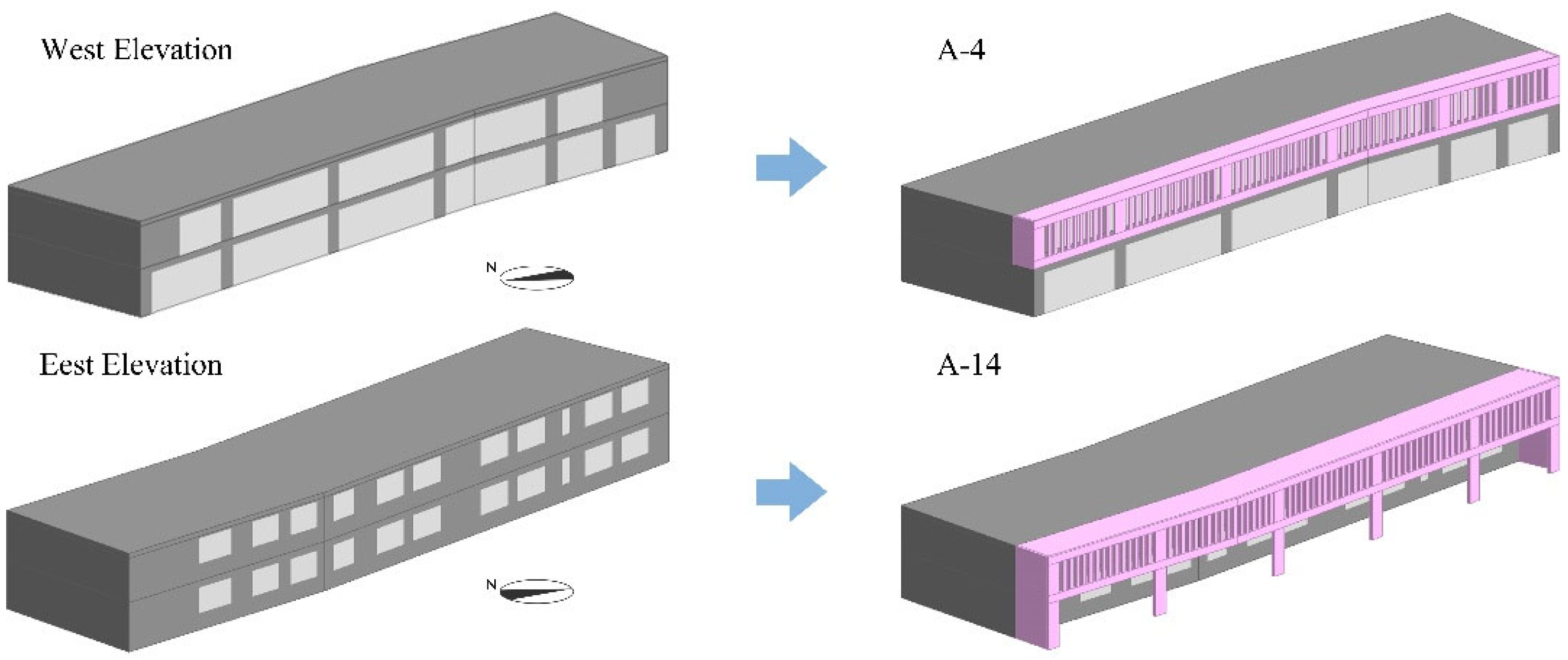
According to the simulation results in Section 3.3, Scheme A-4 increases the average indoor Ta by approximately 1.4 °C in winter and reduces it by about 1.1 °C in summer. Comprehensively, Scheme A-4 exhibits the optimal thermal performance for the West façade during both cold waves and heat waves. Regarding the East façade, due to limited solar radiation reception, the winter warming effects of all schemes are marginal; therefore, the primary consideration shifts to summer heat prevention. Scheme A-14 demonstrates effective Ta reduction during heat waves while causing no significant cooling penalty in winter. In summary, the most suitable retrofitting strategies for the West and East façades of Site A are Scheme A-4 and Scheme A-14, respectively, as illustrated in Figure 19.
Combined with field measurements and the recommended temperature ranges in the Standard GB/T 18883-2022 [38], the average indoor temperature of Site B under free-running conditions falls significantly below the winter minimum standard (by approximately 7.6 °C). The summer average exceeds the maximum standard (28 °C) only slightly (by 0.2 °C); however, indoor Ta remain high during operating hours (9:00–12:30).
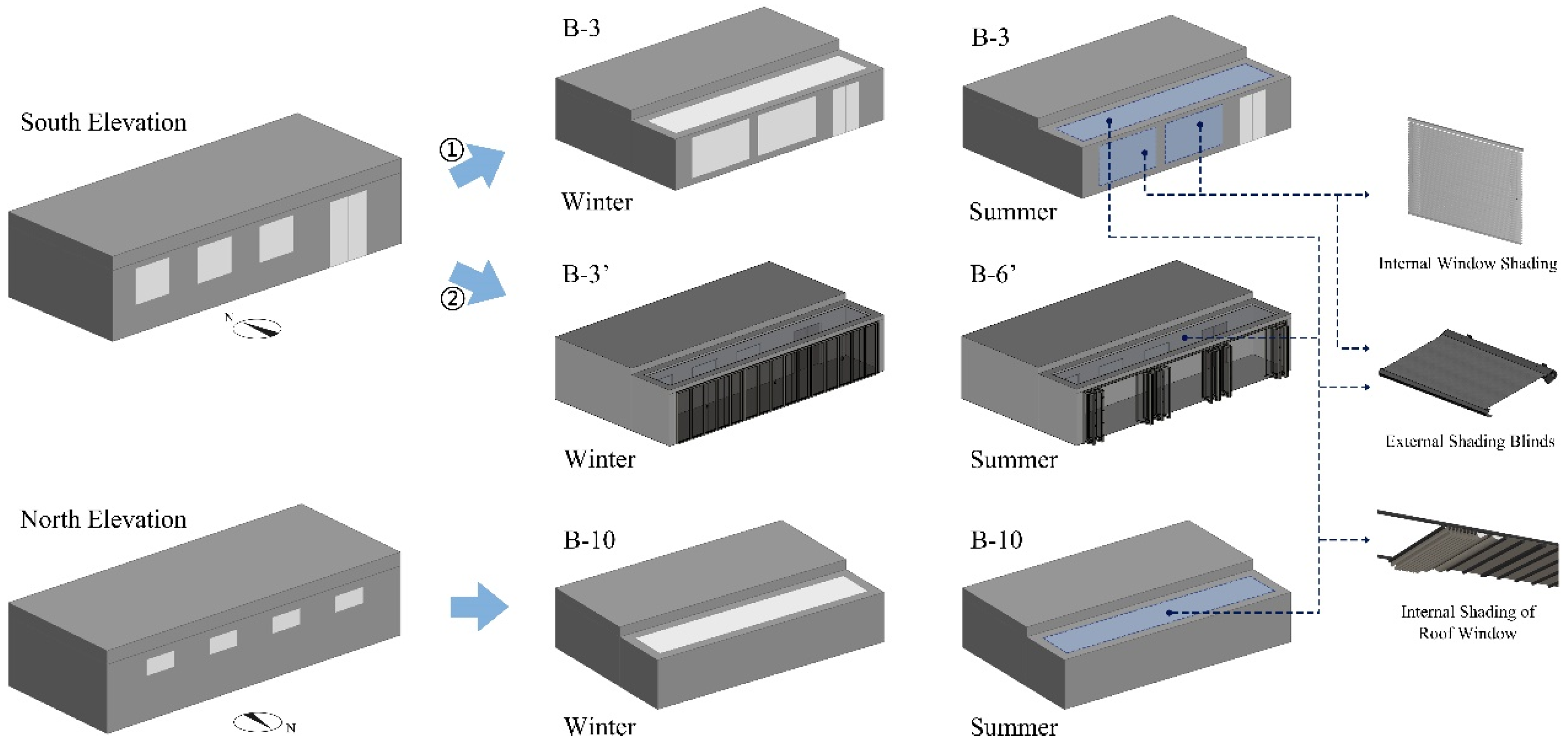
According to the simulation results in Section 3.3, Scheme B-3 can increase the average indoor Ta by approximately 1.8 °C during cold waves; however, it also leads to a corresponding increase of 2.5 °C during heat waves, which is unfavorable for summer heat prevention. For the South façade retrofitting of Site B, two strategies are proposed: (1) Adopting Scheme B-3 with the addition of shading devices to cover the glazing of the transitional space during summer, as shown in Figure 20. (2) Developing an adaptive façades [42] based on Scheme B-3. This involves configuring a sunspace (similar to Scheme B-3) during the cold season and transforming it into a semi-outdoor transitional space (approximating the effect of Scheme B-6) by moving the southern components during hot weather. This approach, illustrated as Schemes B-3’ and B-6’ in Figure 20, also incorporates additional shading.
Regarding the North façade, since it receives almost no direct lateral sunlight, the skylight in Scheme B-10 captures available solar radiation. Consequently, Scheme B-10 provides the most significant winter heating effect (increasing the average Ta by approx. 1 °C). However, it shares the same drawback as Scheme B-3: it substantially increases temperatures in summer, negatively affecting thermal comfort. In conclusion, since the cooling potential of North façade schemes is limited in summer, the retrofitting strategy should focus on winter heat preservation. Therefore, Scheme B-10 should be prioritized. Given that its heating effect derives primarily from the skylight, skylight shading must be implemented in summer to prevent overheating.

3.5. Comparative Analysis of Optimization Effectiveness

Based on the retrofit schemes developed for each site, this section compares the thermal comfort improvements before and after the retrofit and investigates the energy-saving potential. Since the sites are public buildings with zero nighttime occupancy, the statistical analysis of thermal comfort excludes unoccupied hours. Reporting period in the simulation output settings was configured to Type II-Occupied periods.

3.5.1. Indoor Thermal Comfort

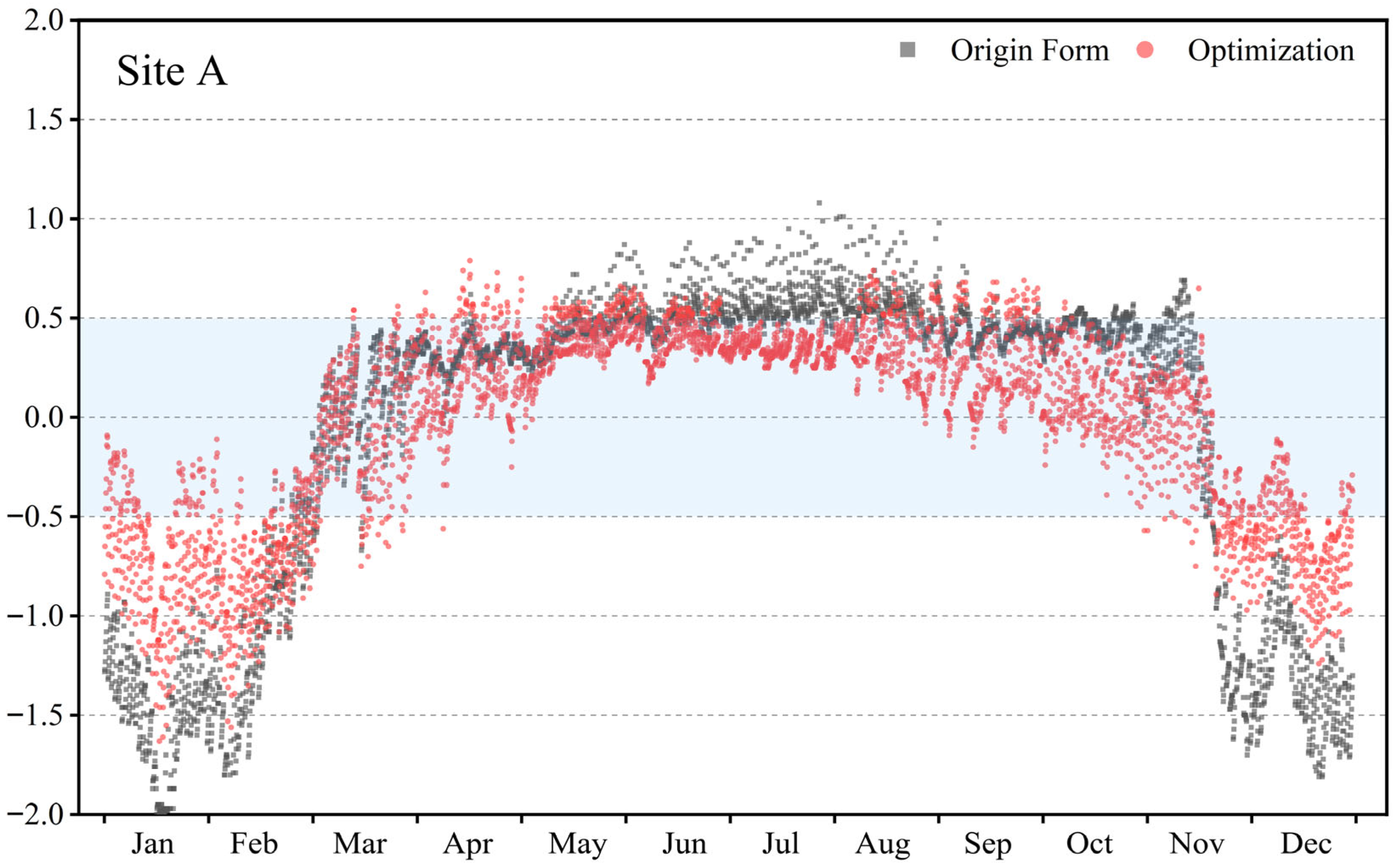
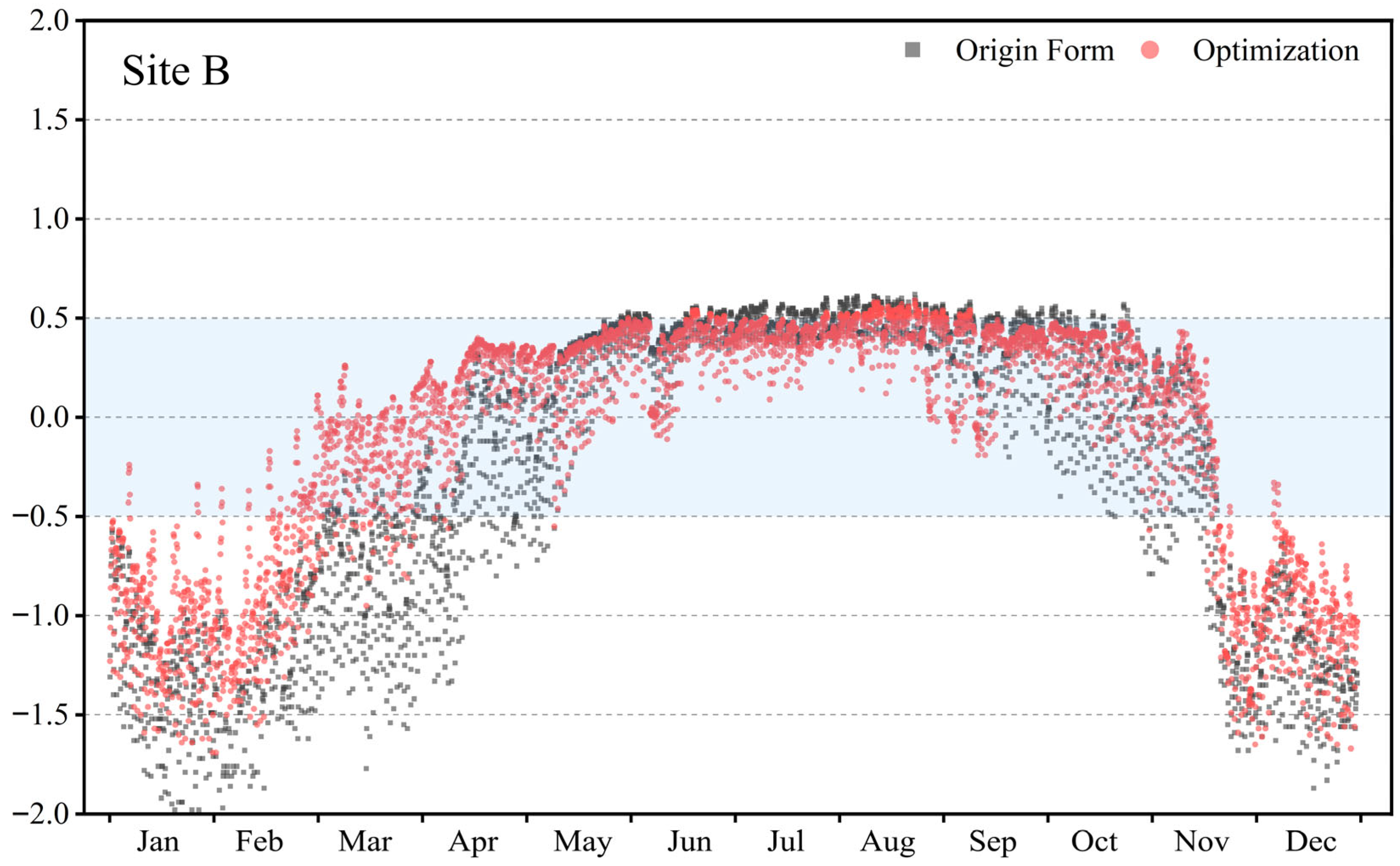
The comparison of thermal comfort optimization effectiveness involves the statistical analysis of the annual Predicted Mean Vote (PMV) and discomfort hours. During the field measurement period, neither site was equipped with central heating in winter, while both used air conditioning for cooling in summer. To ensure an accurate comparison with the thermal comfort during the field measurement period, the simulation’s HVAC template is set to Autosize, with heating disabled and cooling enabled at a 26 °C setpoint. This configuration aims to satisfy essential summer cooling demands while minimizing unnecessary cooling energy consumption. The distribution of PMV results for the two sites are shown in Figure 21, where the shaded band represents the zone of PMV between ±0.5.
For Site A (Figure 21), the PMV values during most of the winter period fell below −0.5, with a substantial number of samples even below −1 (slightly cool), which is consistent with its low indoor Ta due to the absence of central heating. In summer, despite the presence of air conditioning, a large number of PMV samples still exceeded +0.5. This is mainly attributed to west-facing solar exposure, particularly in the afternoon, when excessively high indoor Tmrt caused multiple PMV samples to exceed +0.5, though generally remaining below +1 (slightly warm). Overall, the summer PMV condition of Site A was slightly better than its winter condition. After retrofitting, the PMV distribution showed an overall shift toward 0 (neutral), with a clear upward trend was observed in winter and a slight reduction was achieved in summer. Although the retrofit scheme blocked more direct solar radiation in summer, the radiant effect could not be fully eliminated, resulting in a relatively limited improvement in summer.
For Site B (Figure 22), the winter PMV distribution was similar to Site A, with PMV values below −0.5 during most of the winter period and a substantial number of samples even below −1 (slightly cool). In summer, despite the presence of cooling equipment, Site B was not subject to the significant west-facing solar exposure observed in Site A, consequently, its maximum PMV value reached only +0.62 (Table 5), indicating a lower degree of overheating than Site A. Overall, the primary issue with the original PMV results of Site B remained the low PMV values in winter. The retrofitting scheme raised indoor temperature to some extent and reduced direct air exchange between indoor and outdoor spaces. As a result, the overall PMV distribution showed a clear upward trend in winter, while a slight decreasing trend was also observed in summer.
According to the ASHRAE standard, Hdisc represents a discomfort hour, where Hdisc = 1 if |PMV| − 0.5 > 0, and 0 otherwise. The results of Hdisc for each site are summarized in Table 6.
In Site A, winter PMV values were low and summer overheating was prominent. After optimization, total discomfort hours were reduced by 668 h (Table 6). In Site B, the main issue was low indoor temperature in winter. After optimization, discomfort hours were reduced by 592 h (Table 6). Overall, the retrofitting schemes achieved a certain degree of thermal comfort improvement.

3.5.2. Energy-Saving Potential

To verify the energy-saving potential resulting from the thermal environment optimization at each site, the HVAC systems were kept operational during the evaluation of annual heating and cooling energy consumption. The cooling setpoint remained 26 °C, while the heating setpoint was set to 22 °C. These settings comply with the comfort recommendations of ASHRAE 55 [43] and aim to simulate the building’s energy performance under standard operating conditions. To ensure that the calculated energy consumption accurately reflects the internal energy demand of the building, the HVAC template was configured to Autosize.
For Site A (Table 7), the energy consumption required to maintain the heating and cooling setpoint temperatures was the highest among two sites, with the cooling demand being particularly prominent. The total annual cooling energy consumption reached 3749.2 kWh. This is attributed to the substantial solar radiation received on the west side of Site A in summer, especially during the afternoon. The retrofitting scheme simultaneously increased winter heat gain and reduced summer overheating, resulting in a 22.2% reduction in heating energy consumption and a 17.2% reduction in cooling energy consumption.
For Site B (Table 7), the heating energy consumption reached 51.6 kWh/m2, and simulation results indicated a relatively higher demand for heating. This finding aligns with the previous simulation results, which showed extremely low indoor Ta under free-running conditions in winter. In contrast, the cooling energy consumption of Site B was not high. After retrofitting, heating and cooling energy consumption were reduced by 25.3% and 20.7%, respectively.

3.6. Comparison with Previous Study

The above analysis aligns with the findings of previous studies in cold regions, and further complements the impact mechanisms of adding transitional spaces on facades with different orientations on the indoor environment. Research on traditional dwellings in mid-mountainside-type village [39] and cave dwellings (Yaodong buildings) in Cold Zone [44], demonstrated that the addition of south-façade sunspaces is an effective strategy for improving the indoor thermal environment in winter. Amini et al. (2021) [41] reported that glazing facilitates maximum solar heat gain in winter, while shading devices can effectively mitigate indoor overheating in summer.
While previous studies have advanced passive and climate-responsive designs, some were limited to evaluating indoor performance during a single season (either winter or summer). Moreover, these studies were also restricted to transitional spaces with a single orientation and single spatial configurations. This study assesses the indoor environment across both winter and summer seasons and proposes optimized retrofit schemes. This approach further validates the impact of various transitional space configurations and orientations on the indoor thermal environment. The consistency and reliability of the results provide valuable reference data for the future passive retrofitting of existing buildings.

4. Conclusions

This study conducted field measurements on representative community elderly indoor activity spaces in Tianjin. Simulation models were established, and numerical simulations of corresponding optimization schemes were performed using DesignBuilder. The study analyzed the influence of different forms of transitional spaces on indoor Ta to propose reasonable improvement strategies for the thermal comfort of elderly exercise spaces. Based on the comparative analysis of the simulation results, the effectiveness of adding transitional spaces was evaluated, and the optimal strategies suitable for the selected sites were identified. The main findings can be summarized as follows:
  • The study investigated the effects of adding transitional spaces and identified suitable schemes for the selected sites. For Site A: The eastern transitional space provided negligible improvement in winter; thus, a semi-outdoor form is recommended solely for summer cooling. On the west façade, removing the original internal corridor improves thermal performance, and adding a semi-outdoor transitional space further enhances summer cooling. For Site B: The southern enclosed transitional space significantly improved winter Ta but led to overheating in summer. Therefore, shading measures or an AF system are recommended, allowing the space to operate dynamically: serving as an enclosed sunroom in winter and transforming into a shaded, semi-outdoor zone in summer.
  • The optimization effectiveness of the retrofit schemes was compared and verified. After optimization, the annual PMV distribution for each site exhibited a trend of approaching PMV = 0 (neutral). Statistical analysis of annual discomfort hours (Hdisc) showed that after optimization, Site A and Site B experienced a reduction of 668 and 592 discomfort hours, respectively. Furthermore, verification of energy-saving potential revealed that for Site A, the energy consumption of heating and cooling equipment can be reduced by 17.7% and 15.4%, respectively; for Site B, the reductions are 25.3% and 20.7%, respectively.
  • China cold regions experience distinct seasons. Although adding transitional spaces effectively improves the indoor thermal environment, reliance on HVAC systems remains necessary to maintain temperatures strictly within the comfort range during severe cold waves and heat waves. Therefore, passive design strategies must address conflicting seasonal demands: winter strategies should prioritize maximizing solar gain and minimizing cold air infiltration, whereas summer strategies should focus on shading and insulating against external heat.
  • Measurements reveal that the indoor thermal environment in community elderly activity rooms is inadequate. During the measurement period, average indoor Ta were 13.8 °C in winter and 29.3 °C in summer, both falling outside the Chinese Indoor Air Quality Standard (16–24 °C for winter, 22–28 °C for summer). Such overcooling or overheating significantly impairs the overall health of the elderly. While previous studies in China’s cold regions focused predominantly on improving winter indoor thermal environments, summer heat prevention was partially overlooked. In retrofitting existing buildings in cold regions, while prioritizing winter thermal performance is crucial, summer heat prevention cannot be neglected.
In the current context of urban renewal in Chinese cities, employing a hybrid approach of field measurements and numerical simulations offers valuable insights into the role of transitional spaces in building retrofitting, which contributes to sustainable urban development and mitigates the impact of population aging.
This study has some limitations. First, although field measurements were conducted during winter and summer periods, the analysis and optimization rely primarily on software simulations. Consequently, the results are subject to the assumptions and simplifications inherent in the simulation models, and potential discrepancies between simulated and actual building performance cannot be fully eliminated. Second, the thermal analysis for the summer condition should give more consideration to the operative temperature, as it combines the effects of Ta and Tmrt, which is particularly relevant for transitional spaces with significant solar radiation and shading variations.
Future work should extend the investigation to transitional spaces across diverse climatic zones, beyond the current case study in Chinese cold climate zone. And this could be further complemented by post-occupancy evaluation (POE) in retrofitted buildings, long-term on-site monitoring of thermal comfort, and the integration of subjective thermal comfort surveys with elderly users. Such an integrated approach would enable a more comprehensive performance evaluation and provide valuable reference data for architectural design and building retrofitting in different contexts.

Author Contributions

Conceptualization, G.H.; methodology, G.H., X.Z. and P.S.; software, X.Z.; validation, P.S.; formal analysis, X.Z.; investigation, G.H. and X.Z.; resources, G.H.; data curation, X.Z. and P.S.; writing—original draft, G.H. and X.Z.; writing—review & editing, G.H. and S.W.; visualization, G.H.; supervision, P.S. and S.W.; project administration, P.S. and S.W. All authors have read and agreed to the published version of the manuscript.

Funding

This work was supported by the National Natural Science Foundation of China [52578015].

Data Availability Statement

The data presented in this study are available on request from the corresponding author.

Conflicts of Interest

The authors declare no conflicts of interest.

Abbreviations

The following abbreviations are used in this manuscript:
CV (RMSE)Coefficient of variation of the root-mean-square error
HVACHeating, ventilation and air conditioning
NMBENormalized Mean Bias Error
RHRelative humidity
TaAir temperature
VaAir velocity

References

  1. United Nations. World Population Ageing 2017 Report; United Nations: New York, NY, USA, 2017.
  2. National Bureau of Statistics of China. Statistical Communiqué of the People’s Republic of China on the 2024 National Economic and Social Development; National Bureau of Statistics of China: Beijing, China, 2025.
  3. Chen, X.; Giles, J.; Yao, Y.; Yip, W.; Meng, Q.; Berkman, L.; Chen, H.; Chen, X.; Feng, J.; Feng, Z.; et al. The path to healthy ageing in China: A Peking University–Lancet Commission. Lancet 2022, 400, 1967–2006. [Google Scholar] [CrossRef]
  4. Chen, J.; Wang, Y.; Wen, J.; Fang, F.; Song, M. The influences of aging population and economic growth on Chinese rural poverty. J. Rural. Stud. 2016, 47, 665–676. [Google Scholar] [CrossRef]
  5. van Hoof, J.; Schellen, L.; Soebarto, V.; Wong, J.K.W.; Kazak, J.K. Ten questions concerning thermal comfort and ageing. Build. Environ. 2017, 120, 123–133. [Google Scholar] [CrossRef]
  6. Pani-Harreman, K.E.; Bours, G.J.J.W.; Zander, I.; Kempen, G.I.J.M.; van Duren, J.M.A. Definitions, key themes and aspects of ‘ageing in place’: A scoping review. Ageing Soc. 2021, 41, 2026–2059. [Google Scholar] [CrossRef]
  7. Grazuleviciute-Vileniske, I.; Seduikyte, L.; Teixeira-Gomes, A.; Mendes, A.; Borodinecs, A.; Buzinskaite, D. Aging, Living Environment, and Sustainability: What Should be Taken into Account? Sustainability 2020, 12, 1853. [Google Scholar] [CrossRef]
  8. Gibson, K.; Kingston, A.; McLellan, E.; Robinson, L.; Brittain, K. “Successful” ageing in later older age: A sociology of class and ageing in place. Soc. Sci. Med. 2024, 358, 117258. [Google Scholar] [CrossRef]
  9. Chen, M.; Bolt, G.; Yu, L.; Hooimeijer, P. The impact of the residential environment on Chinese older people’s aging-in-place intentions: A mediation and moderation analysis. Habitat Int. 2023, 140, 102908. [Google Scholar] [CrossRef]
  10. Saçıkara, Z.; Cingil, D. The effect of multiple nursing interventions on physical activity and health promotion in the elderly: A randomized controlled trial. Geriatr. Nurs. 2024, 59, 150–158. [Google Scholar] [CrossRef]
  11. Xu, Z.; Li, X. Multi-Scale Network Analysis of Community-Based Senior Centers: Exploring the Intersection of Spatial Embeddedness and Accessibility in Nanjing, China. Buildings 2024, 14, 3922. [Google Scholar] [CrossRef]
  12. Zhao, X.; Park, E.-s.; Zhao, J.; Kim, J.; Lee, S.-Y.; Lee, H. Evaluation of Differences in the Motivations of Elderly People to Use Senior Citizen Centers in Yeongdo-gu, Busan, Based on Old-Age Service Systems. Appl. Sci. 2025, 15, 3292. [Google Scholar] [CrossRef]
  13. Wang, Z.; Zhen, M.; Shao, Y.; Li, L.; Xiao, M. Indoor thermal comfort comparison between healthy and older adults with chronic diseases in community senior centers. Case Stud. Therm. Eng. 2025, 73, 106636. [Google Scholar] [CrossRef]
  14. Powell, J.; Willis, P.; Cameron, A.; Vickery, A.; Johnson, E.K.; Beach, B.; Smith, R.C. The role of built environments and use of communal spaces in helping facilitate social connections of older people living in housing with care schemes. Qual. Ageing Older Adults 2024, 25, 220–231. [Google Scholar] [CrossRef]
  15. Sattari, Z.; Weitkamp, G.; Meijering, L. What happens behind doors? Exploring everyday indoor activities when ageing in place. J. Aging Stud. 2023, 64, 101109. [Google Scholar] [CrossRef]
  16. Zhao, Y.; Li, D. Multi-domain indoor environmental quality in buildings: A review of their interaction and combined effects on occupant satisfaction. Build. Environ. 2023, 228, 109844. [Google Scholar] [CrossRef]
  17. Zhou, S.; Li, B.; Du, C.; Liu, H.; Wu, Y.; Hodder, S.; Chen, M.; Kosonen, R.; Ming, R.; Ouyang, L.; et al. Opportunities and challenges of using thermal comfort models for building design and operation for the elderly: A literature review. Renew. Sustain. Energy Rev. 2023, 183, 113504. [Google Scholar] [CrossRef]
  18. Chen, M.; Farahani, A.V.; Kilpeläinen, S.; Kosonen, R.; Younes, J.; Ghaddar, N.; Ghali, K.; Melikov, A.K. Thermal comfort chamber study of Nordic elderly people with local cooling devices in warm conditions. Build. Environ. 2023, 235, 110213. [Google Scholar] [CrossRef]
  19. Zhan, H.; Yu, J.; Yu, R. Assessment of older adults’ acceptance of IEQ in nursing homes using both subjective and objective methods. Build. Environ. 2021, 203, 108063. [Google Scholar] [CrossRef]
  20. Casquero-Modrego, N.; Goñi-Modrego, M. Energy retrofit of an existing affordable building envelope in Spain, case study. Sustain. Cities Soc. 2019, 44, 395–405. [Google Scholar] [CrossRef]
  21. Serrano-Jiménez, A.; Barrios-Padura, Á.; Molina-Huelva, M. Sustainable building renovation for an ageing population: Decision support system through an integral assessment method of architectural interventions. Sustain. Cities Soc. 2018, 39, 144–154. [Google Scholar] [CrossRef]
  22. Omrany, H.; Ghaffarianhoseini, A.; Ghaffarianhoseini, A.; Raahemifar, K.; Tookey, J. Application of passive wall systems for improving the energy efficiency in buildings: A comprehensive review. Renew. Sustain. Energy Rev. 2016, 62, 1252–1269. [Google Scholar] [CrossRef]
  23. Dong, Y.; Li, F.; Cao, J.; Dong, W. What neighborhood factors are critical to resident satisfaction with old neighborhoods? An integration of ground theory and impact asymmetry analysis. Cities 2023, 141, 104460. [Google Scholar] [CrossRef]
  24. Yin, P.; Ji, Y.; Xie, J.; Liu, J.; Hou, Q.; Zhao, S. Research on residential thermal environment differences in relation to transition and heating periods in Beijing. Build. Environ. 2021, 197, 107851. [Google Scholar] [CrossRef]
  25. Takashi, M.; Shuichi, H.; Daisuke, O.; Masahiko, T.; Jun, S. Improvement of thermal environment and reduction of energy consumption for cooling and heating by retrofitting windows. Front. Archit. Res. 2013, 2, 1–10. [Google Scholar] [CrossRef]
  26. Tang, H.; Chai, X.; Jing, W.; Li, Y.; Li, C. Assessment of photovoltaic power generation and radiative cooling potentials in old residential districts: A case study of Shenzhen. Energy Build. 2024, 319, 114493. [Google Scholar] [CrossRef]
  27. Sun, Q.; Utaberta, N.; Kiet, A.L.K.; Xu, Y.; Han, X. Effects of green façade retrofitting on thermal performance and energy efficiency of existing buildings in northern China: An experimental study. Energy Build. 2025, 335, 115550. [Google Scholar] [CrossRef]
  28. Yin, H.; Norouziasas, A.; Hamdy, M. PCM as an energy flexibility asset: How design and operation can be optimized for heating in residential buildings? Energy Build. 2024, 322, 114721. [Google Scholar] [CrossRef]
  29. Ganobjak, M.; Malfait, W.J.; Just, J.; Käppeli, M.; Mancebo, F.; Brunner, S.; Wernery, J. Get the light & keep the warmth—A highly insulating, translucent aerogel glass brick for building envelopes. J. Build. Eng. 2023, 64, 105600. [Google Scholar] [CrossRef]
  30. Jia, H.; Feng, X.; Cui, B.; Liu, Z. Design and thermal insulation simulation of nano-SiO2 foam concrete and vacuum insulation panel system for building exterior wall insulation. Energy 2025, 330, 136833. [Google Scholar] [CrossRef]
  31. Ling, Z.; Zhang, Y.; Fang, X.; Zhang, Z. Structure effect of the envelope coupled with heat reflective coating and phase change material in lowering indoor temperature. J. Energy Storage 2021, 41, 102963. [Google Scholar] [CrossRef]
  32. Chun, C.; Kwok, A.; Tamura, A. Thermal comfort in transitional spaces—Basic concepts: Literature review and trial measurement. Build. Environ. 2004, 39, 1187–1192. [Google Scholar] [CrossRef]
  33. Hou, G.; Zhai, X.; Kuai, Y.; Shu, P.; Zhang, P.; Wei, S. A systematic review on studies of thermal comfort in building transitional space. J. Build. Eng. 2024, 89, 109280. [Google Scholar] [CrossRef]
  34. Ghasaban, M.; Yeganeh, M. A designerly approach to a novel method for combining closed and semi-open spaces in a mid-rise office building envelope to improve energy efficiency and thermal comfort. Energy Build. 2024, 322, 114619. [Google Scholar] [CrossRef]
  35. Soflaei, F.; Shokouhian, M.; Tabadkani, A.; Moslehi, H.; Berardi, U. A simulation-based model for courtyard housing design based on adaptive thermal comfort. J. Build. Eng. 2020, 31, 101335. [Google Scholar] [CrossRef]
  36. Diz-Mellado, E.; Ruiz-Pardo, Á.; Rivera-Gómez, C.; Sanchez de la Flor, F.J.; Galán-Marín, C. Unravelling the impact of courtyard geometry on cooling energy consumption in buildings. Build. Environ. 2023, 237, 110349. [Google Scholar] [CrossRef]
  37. Li, M.; Jin, Y.; Guo, J. Dynamic characteristics and adaptive design methods of enclosed courtyard: A case study of a single-story courtyard dwelling in China. Build. Environ. 2022, 223, 109445. [Google Scholar] [CrossRef]
  38. GB/T 18883-2022; Standards for Indoor Air Quality. Standardization Administration of the People’s Republic of China: Beijing, China, 2022.
  39. Liu, W.; Liang, B.; Lai, Q.; Liang, Y. Research on appropriate technology for optimizing indoor thermal environment of traditional folk houses in Liangshan mountains. Energy Build. 2025, 346, 116212. [Google Scholar] [CrossRef]
  40. Avcı, P.; Ekici, B.; Kazanasmaz, Z.T. A review on adaptive and non-adaptive shading devices for sustainable buildings. J. Build. Eng. 2025, 100, 111701. [Google Scholar] [CrossRef]
  41. Amini, R.; Ghaffarianhoseini, A.; Ghaffarianhoseini, A.; Berardi, U. Numerical investigation of indoor thermal comfort and air quality for a multi-purpose hall with various shading and glazing ratios. Therm. Sci. Eng. Prog. 2021, 22, 100812. [Google Scholar] [CrossRef]
  42. Özlük, R.; Aydın, F.; Yıldız, Y. Artificial intelligence algorithms, simulation tools and software for optimization of adaptive facades: A systematic literature review. J. Build. Eng. 2025, 106, 112566. [Google Scholar] [CrossRef]
  43. ANSI/ASHRAE Standard 55-2020; Thermal Environmental Conditions for Human Occupancy. ASHRAE: Peachtree Corners, GA, USA, 2020.
  44. Wang, Z.; Fan, Z.; Liu, J. Thermal environment optimisations of cave dwellings for the elderly in heating season among cold regions of China. Build. Environ. 2023, 244, 110656. [Google Scholar] [CrossRef]
Figure 1. Research methodology framework.
Buildings 16 01779 g001
Figure 2. Annual temperature profile of Tianjin in 2023.
Buildings 16 01779 g002
Figure 3. Floor plans and dimensions of the two activity spaces. (a) Site A; (b) Site B.
Buildings 16 01779 g003
Figure 4. Building models in DesignBuilder. (a) Site A; (b) Site B.
Buildings 16 01779 g004
Figure 5. Measured indoor thermal environmental parameters of Site A and Site B during the winter period. (a) Site A; (b) Site B.
Buildings 16 01779 g005
Figure 6. Measured indoor thermal environmental parameters of Site A and Site B during the summer period. (a) Site A; (b) Site B.
Buildings 16 01779 g006
Figure 7. Architectural spatial configurations of Site A and Site B. (a) Site A; (b) Site B.
Buildings 16 01779 g007
Figure 8. Comparison between measured and simulated indoor Ta for: (a) Site A and (b) Site B.
Buildings 16 01779 g008
Figure 9. Winter simulation results for optimization schemes on the West façade (Schemes 1–7) at Site A.
Buildings 16 01779 g009
Figure 10. Winter simulation results for optimization schemes on the East façade (Schemes 8–14) at Site A.
Buildings 16 01779 g010
Figure 11. Summer simulation results for optimization schemes on the West façade (Schemes 1–7) at Site A.
Buildings 16 01779 g011
Figure 12. Summer simulation results for optimization schemes on the East façade (Schemes 8–14) at Site A.
Buildings 16 01779 g012
Figure 13. Distribution of indoor Ta for Site A in winter and summer under free-running conditions. Schemes 1–7 and Schemes 8–14 correspond to the retrofitting schemes for the West and East façades, respectively. The mean and median values are indicated by the “◆” symbol and the horizontal line within the box, respectively. Dashed lines indicate the thermal comfort ranges (Winter: 16–24 °C; Summer: 22–28 °C) according to GB/T 18883-2022.
Buildings 16 01779 g013
Figure 14. Winter simulation results for optimization schemes on the South façade (Schemes 1–8) at Site B.
Buildings 16 01779 g014
Figure 15. Winter simulation results for optimization schemes on the North façade (Schemes 9–13) at Site B.
Buildings 16 01779 g015
Figure 16. Summer simulation results for optimization schemes on the South façade (Schemes 1–8) at Site B.
Buildings 16 01779 g016
Figure 17. Summer simulation results for optimization schemes on the North façade (Schemes 9–13) at Site B.
Buildings 16 01779 g017
Figure 18. Distribution of indoor Ta for Site B in winter and summer under free-running conditions. Schemes 1–8 and Schemes 9–13 correspond to the retrofitting schemes for the South and North façades, respectively. The mean and median values are indicated by the “◆” symbol and the horizontal line within the box, respectively. Dashed lines indicate the thermal comfort ranges (Winter: 16–24 °C; Summer: 22–28 °C) according to GB/T 18883-2022.
Buildings 16 01779 g018
Figure 19. Optimal retrofit scheme for Site A.
Buildings 16 01779 g019
Figure 20. Optimal retrofit scheme for Site B.
Buildings 16 01779 g020
Figure 21. Annual PMV distribution of Site A.
Buildings 16 01779 g021
Figure 22. Annual PMV distribution of Site B.
Buildings 16 01779 g022
Table 1. Instruments of experimental measurement.
Physical ParameterInstrument ModelMeasuring RangeInstrument Accuracy
Air temperature TR-74Ui-H
(T&D Corporation, Matsue, Japan)
−30–80 °C±0.3 °C
Relative humidityTR-74Ui-H10–95%±2.5%RH
Air VelocityTesto 425
(Testo SE & Co. KGaA, Lenzkirch, Germany)
0.0–10.0 m/s±(0.01 m/s + 5% rdg)
Table 2. Settings of building envelope.
Construction LayersU-Value (W/m2·K)
Site AExternal wall15 mm cement mortar + 200 mm concrete block + 50 mm EPS insulation + 15 mm cement mortar0.54
Internal wall100 mm concrete block with 10 mm cement mortar and 5 mm gypsum plaster on both sides.1.33
Roof150 mm reinforced concrete slab + 15 mm cement mortar + 30 mm EPS insulation + 20 mm cement mortar +SBS waterproofing membrane 1.03
External Windowdouble glazing + thermally broken aluminum frame1.96
Internal Windowdouble glazing + thermally broken aluminum frame1.96
Site BExternal wall10 mm cement mortar + 20 mm EPS insulation + 240 mm solid clay brick + 10 mm cement mortar + 10 mm gypsum plaster0.96
Roof120 mm hollow core concrete slab + 20 mm cement mortar + corrugated steel sheet2.43
External WindowSingle glazing + uPVC frame3.83
Table 3. Optimization schemes for the façades of Site A and Site B.
Origin FormOptimization Schemes of Retrofitting
Site A-West façade
Buildings 16 01779 i001
A-1
Buildings 16 01779 i002
A-2
Buildings 16 01779 i003
A-3
Buildings 16 01779 i004
A-4
Buildings 16 01779 i005
A-5
Buildings 16 01779 i006
A-6
Buildings 16 01779 i007
A-7
Buildings 16 01779 i008
Site A-East façade
Buildings 16 01779 i009
A-8
Buildings 16 01779 i010
A-9
Buildings 16 01779 i011
A-10
Buildings 16 01779 i012
A-11
Buildings 16 01779 i013
A-12
Buildings 16 01779 i014
A-13
Buildings 16 01779 i015
A-14
Buildings 16 01779 i016
Site B-South façade
Buildings 16 01779 i017
B-1
Buildings 16 01779 i018
B-2
Buildings 16 01779 i019
B-3
Buildings 16 01779 i020
B-4
Buildings 16 01779 i021
B-5
Buildings 16 01779 i022
B-6
Buildings 16 01779 i023
B-7
Buildings 16 01779 i024
B-8
Buildings 16 01779 i025
Site B-North façade
Buildings 16 01779 i026
B-9
Buildings 16 01779 i027
B-10
Buildings 16 01779 i028
B-11
Buildings 16 01779 i029
B-12
Buildings 16 01779 i030
B-13
Buildings 16 01779 i031
Table 4. Calculation results of NMBE and CVRMSE for each site.
Site ASite B
NMBE4.19%3.93%
CV(RMSE)9.89%8.32%
Table 5. Summary of PMV results.
MaxMinMean
Site AOrigin Form1.08−2−0.05
Optimization0.79−1.5−0.01
Site BOrigin Form0.62−1.98−0.29
Optimization0.59−1.62−0.09
Table 6. Summary of Hdisc results.
Origin FormOptimizationChange
Site A17261058−38.7%
Site B18281236−32.4%
Table 7. Summary of Energy-saving potential.
Annual ConsumptionOrigin Form
(kWh)
Optimization
(kWh)
Change
Site AHeating2223.71729.3−22.2%
Cooling3749.23102.7−17.2%
Site BHeating3066.82291.5−25.3%
Cooling1302.21032.5−20.7%
Disclaimer/Publisher’s Note: The statements, opinions and data contained in all publications are solely those of the individual author(s) and contributor(s) and not of MDPI and/or the editor(s). MDPI and/or the editor(s) disclaim responsibility for any injury to people or property resulting from any ideas, methods, instructions or products referred to in the content.