Mix Proportion Design and Performance Regulation of 3D-Printing Phosphogypsum-Based Geopolymer Paste

Abstract
1. Introduction
2. Materials
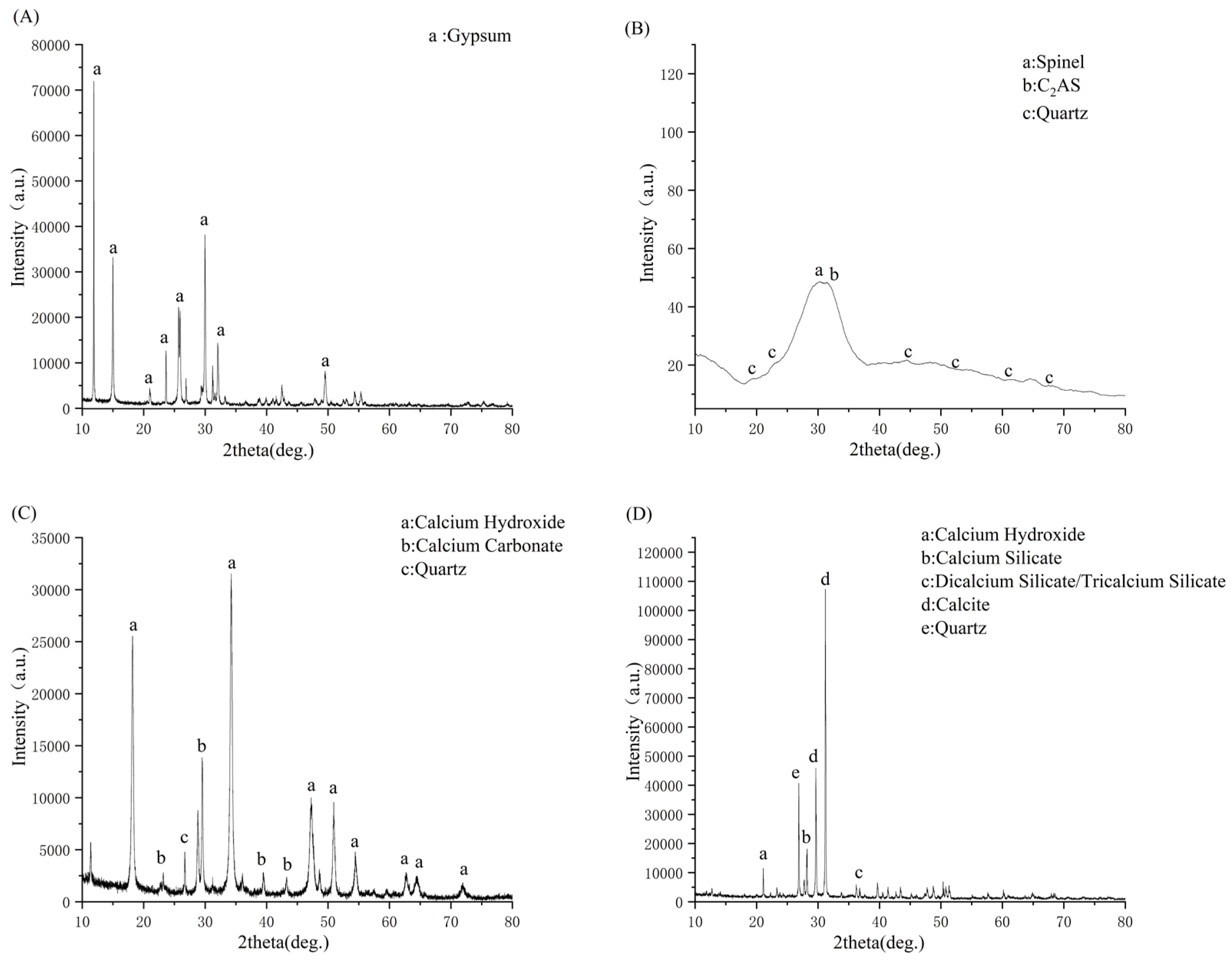
3. Optimal Ratio Design of Phosphogypsum-Based Geopolymer Response Surface Methodology
3.1. Experimental Methods
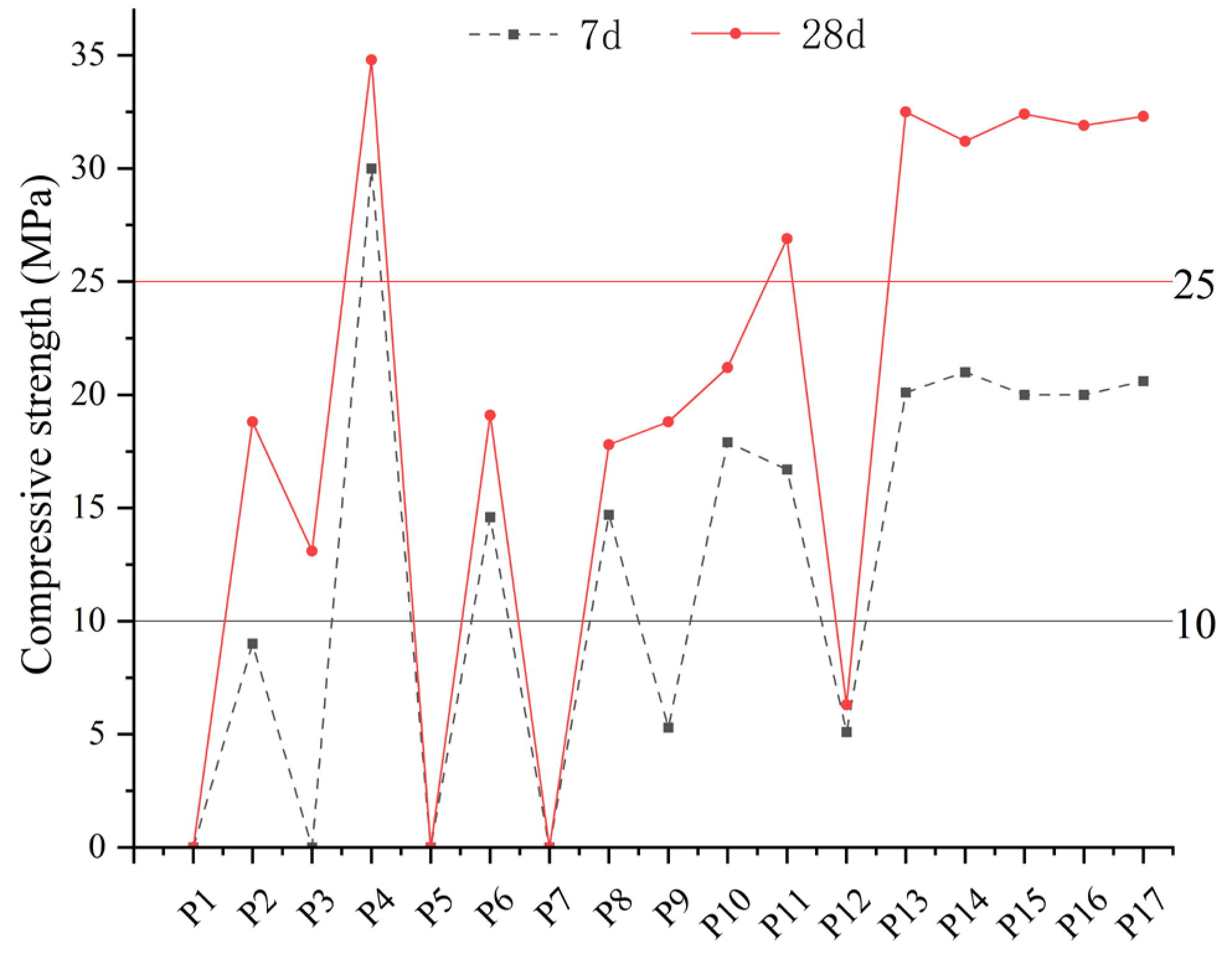
3.2. Compressive Strength
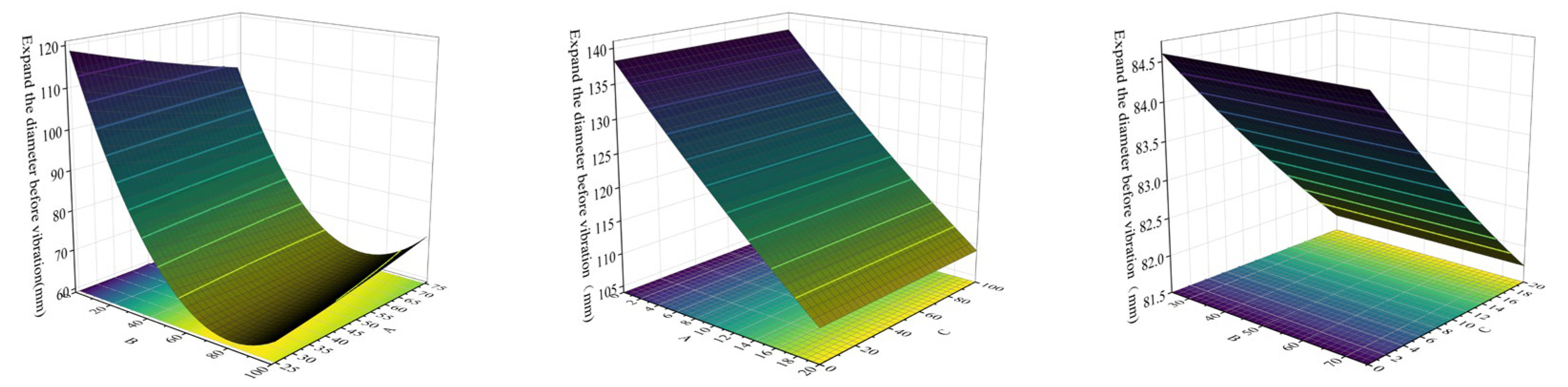
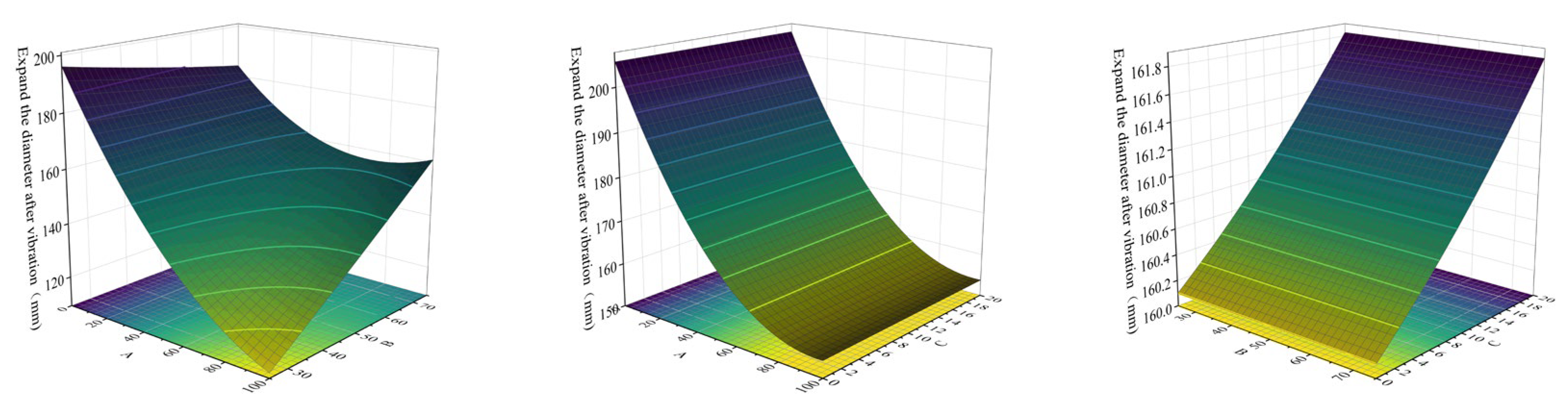
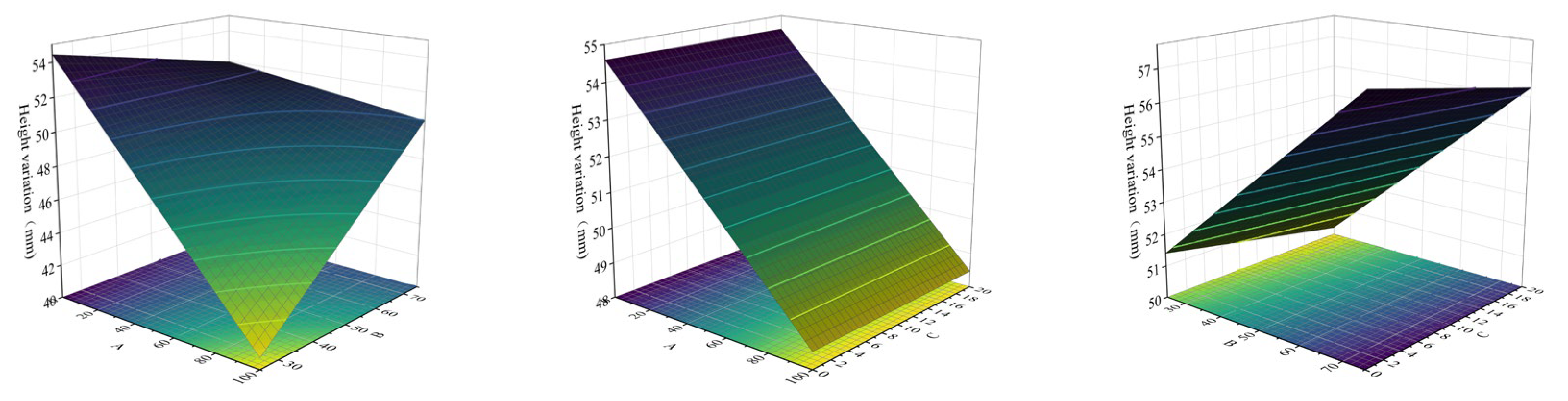
3.3. Analysis Based on the Response Surface Method of Liquidity
4. Analysis of Printability of Phosphogypsum-Based Geopolymer
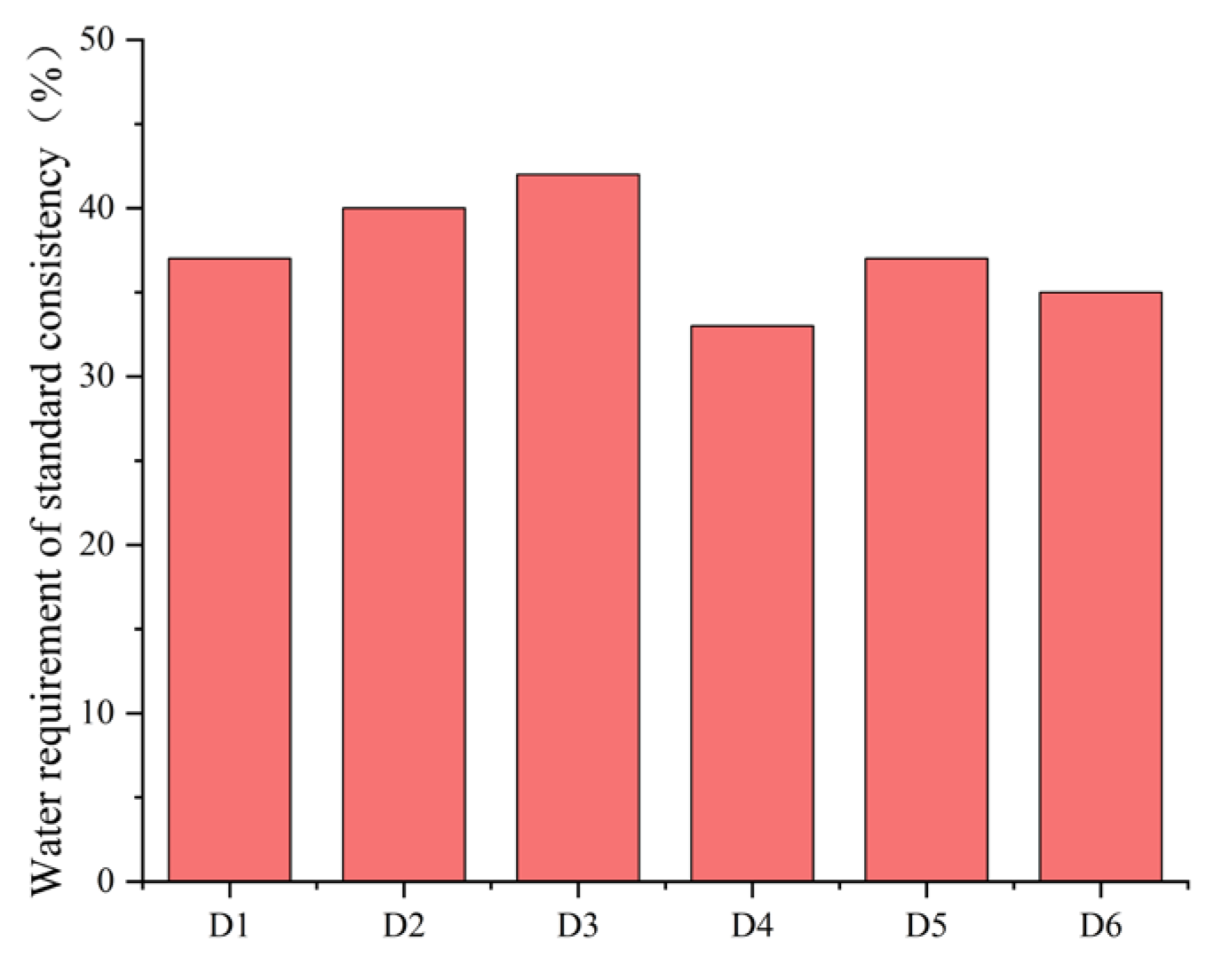
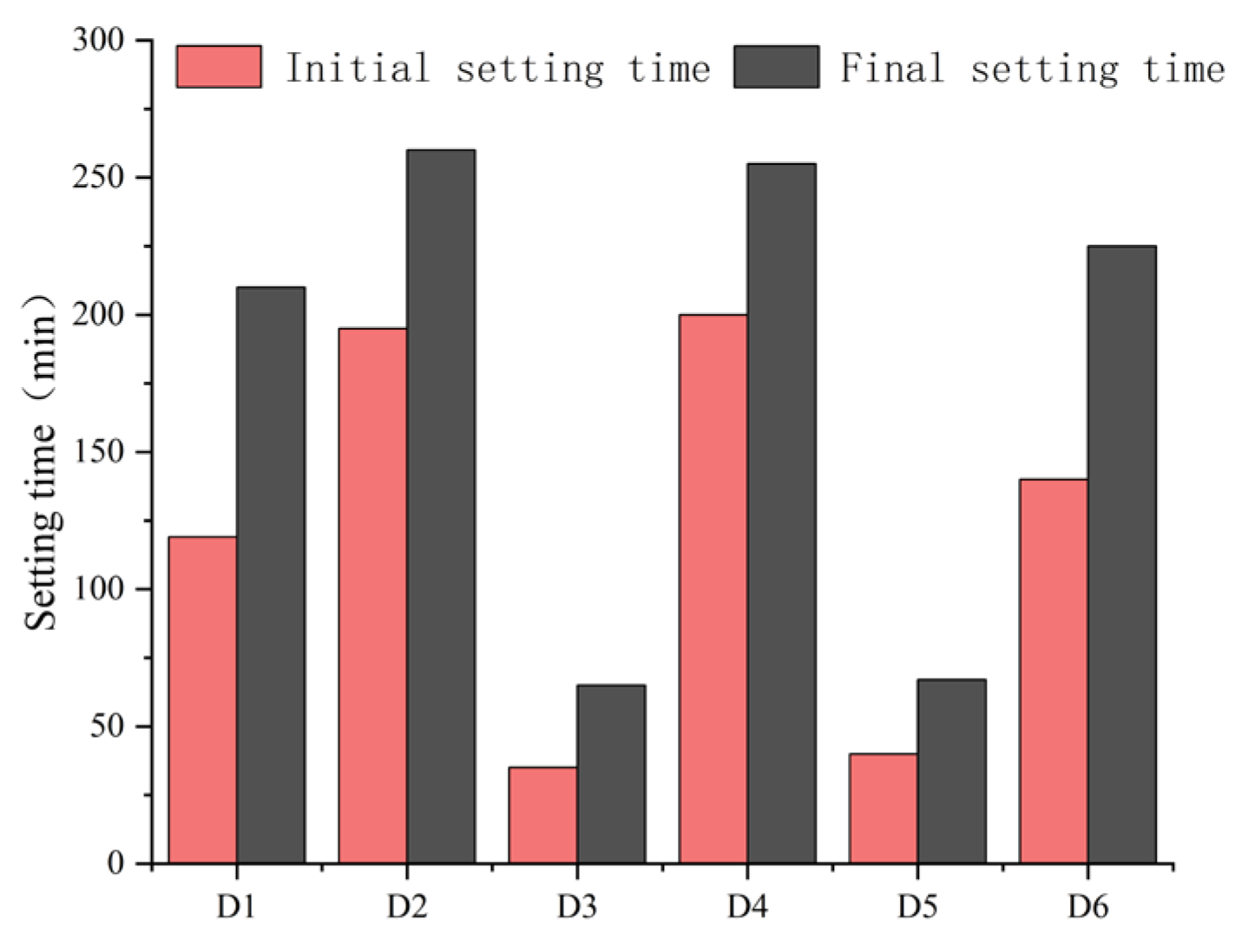
4.1. Performance Analysis of Fresh Slurry
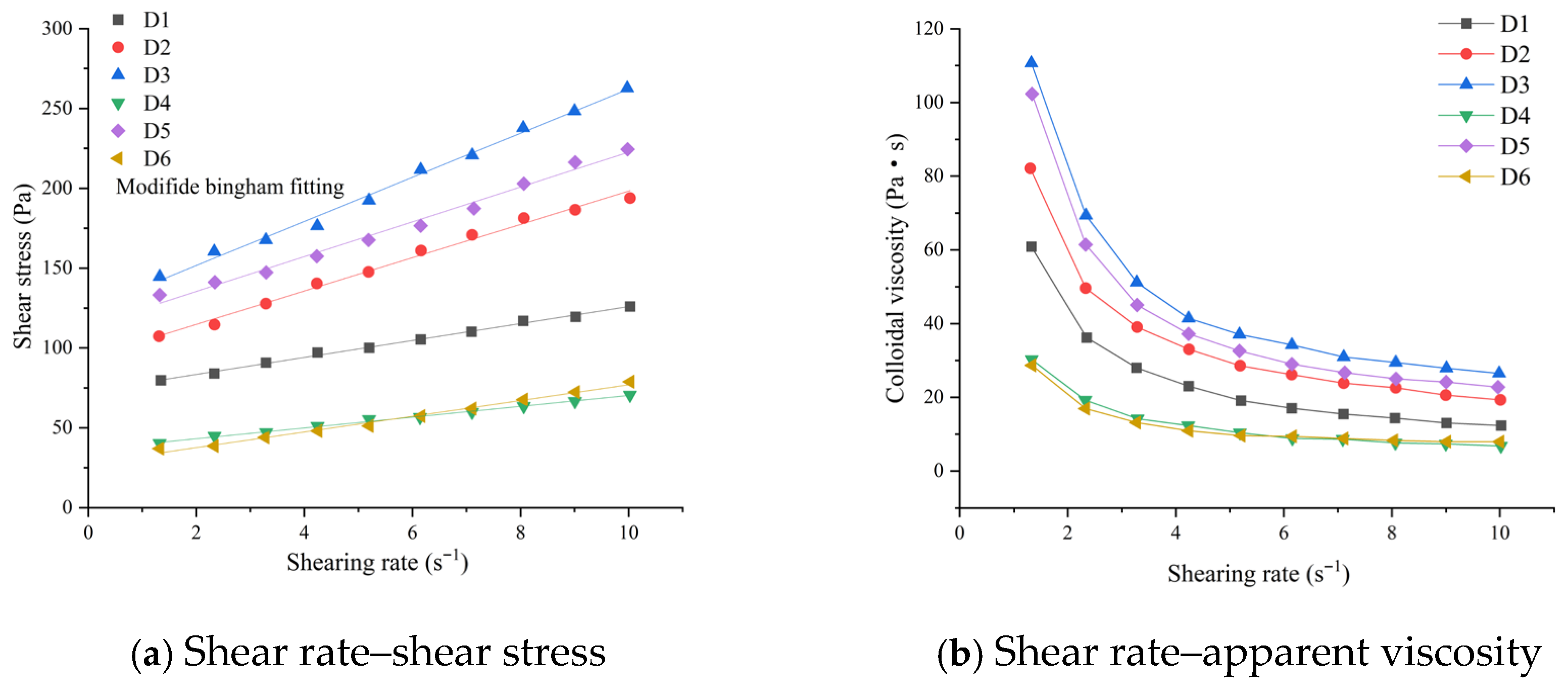
4.2. Analysis of the Rheological Properties of Fresh Paste
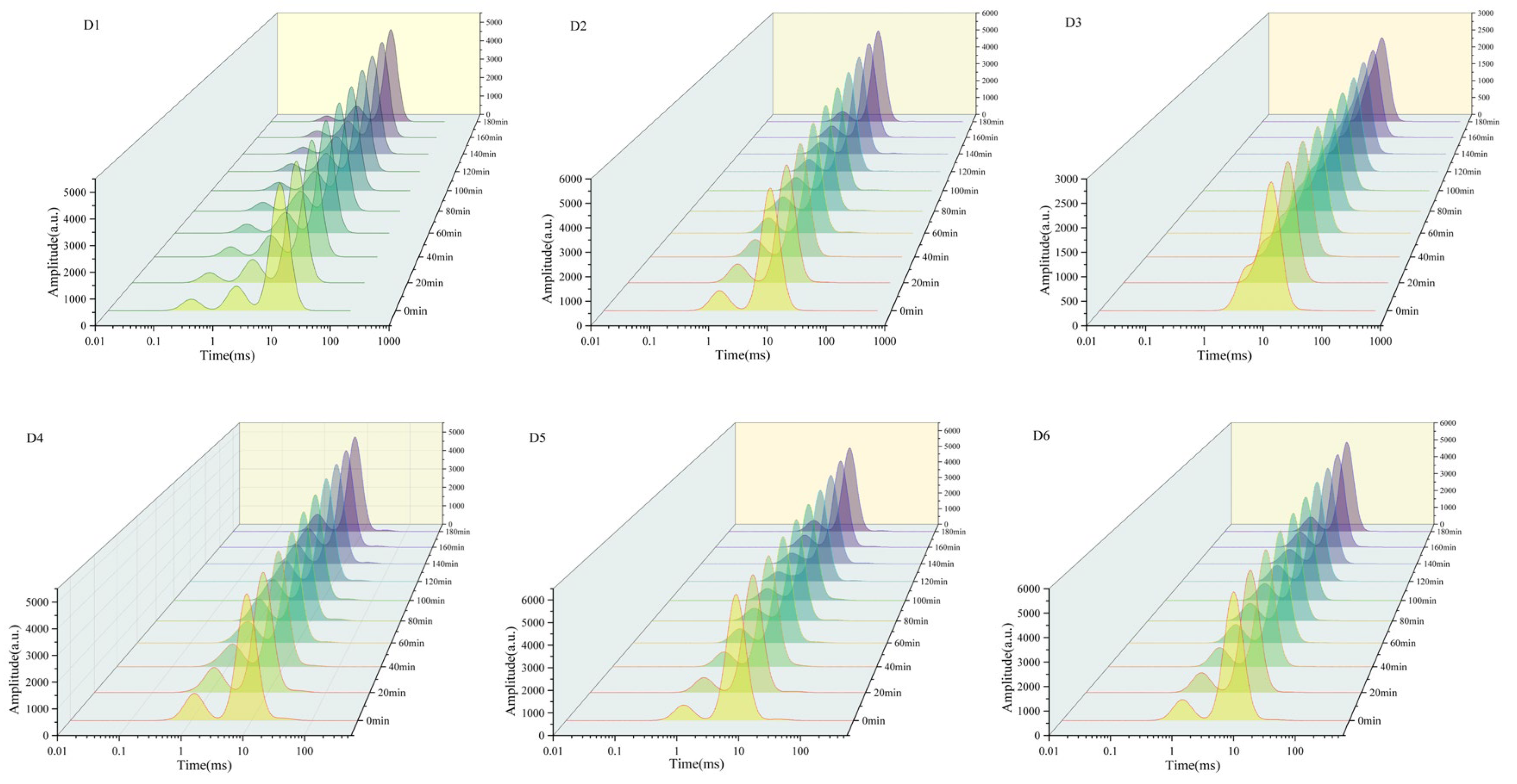
4.3. Analysis of Moisture Migration in Paste Based on Low-Field Nuclear Magnetic Resonance
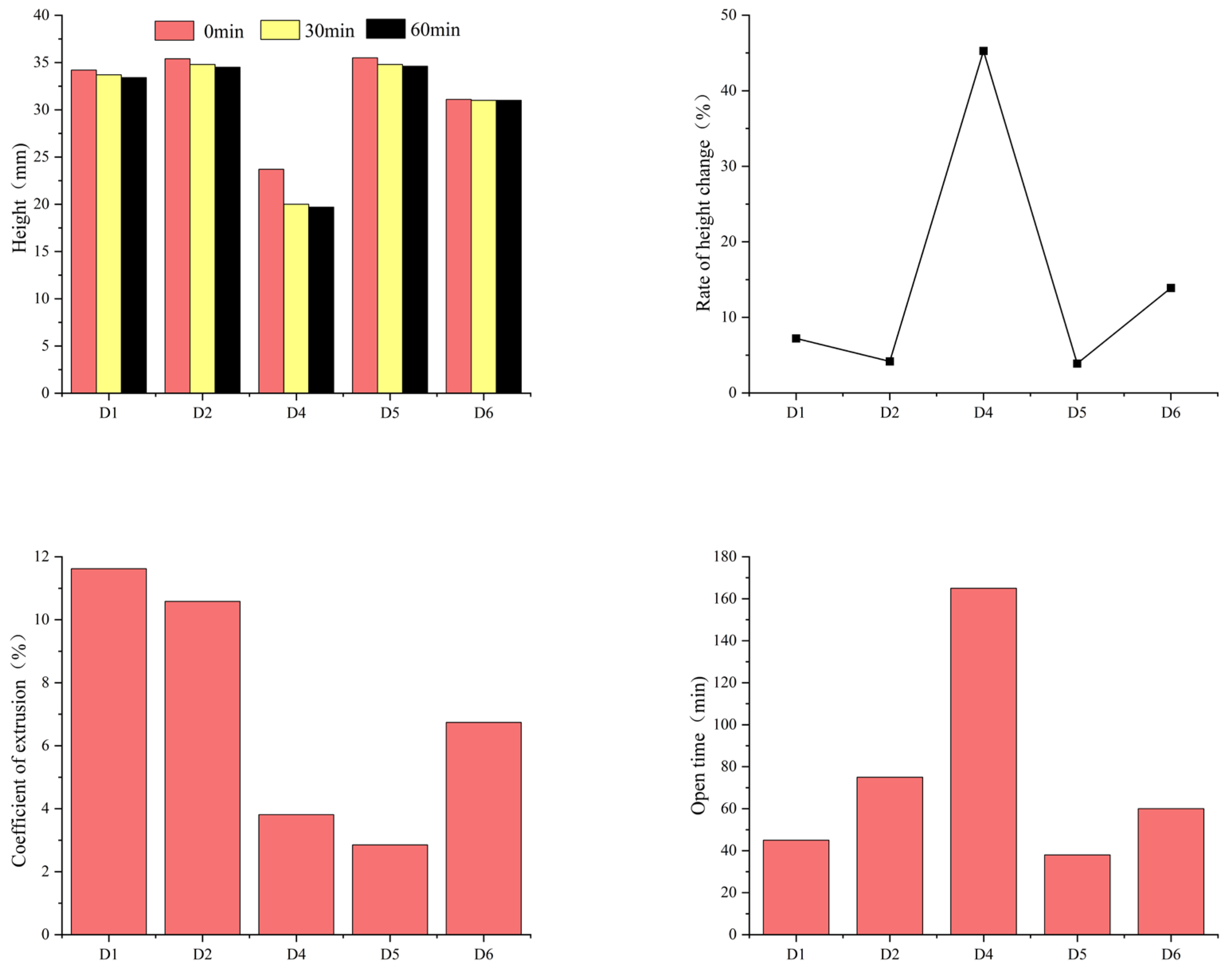
4.4. Analysis of Printability
5. Conclusions
- (1)
- Phosphogypsum (PG), compounded with calcium carbide slag, recycled powder, and ground granulated blast-furnace slag, fabricates geopolymer with 28-day compressive strength exceeding 25 MPa, thus demonstrating feasibility for application as 3D printing materials.
- (2)
- Phosphogypsum (PG) engages in synergistic reactions with calcium carbide slag and ground granulated blast-furnace slag to form ettringite, thereby optimizing the internal microstructure of the geopolymer. Excessive PG addition, however, depletes substantial free water within the slurry, inducing elevated shear stress and viscosity, as well as diminished slurry fluidity.
- (3)
- A moderate dosage of PG enhances the later-stage structural stability of the slurry and promotes the printability of 3D printing systems. Excessive PG addition, in contrast, shortens the slurry open time, thus impeding slurry extrusion and molding. The optimal PG dosage for 3D printing material preparation falls approximately at 10%.
- (4)
- Based on a comprehensive analysis of printability and the performance of printed specimens, the optimal mix proportion of the phosphogypsum-based geopolymer 3D printing paste was determined as follows: CS: 22.5%; GGBS: 45%; RCP: 22.5%; PG: 10%; W/b: 0.4.
Author Contributions
Funding
Data Availability Statement
Conflicts of Interest
Abbreviations
| PG | Phosphogypsum |
| GGBS | Ground Granulated Blast-Furnace Slag |
| CS | Calcium Carbide Slag |
| RCP | Regenerated Micro-Powder |
References
- Khan, M.S.; Sanchez, F.; Zhou, H. 3D printing of concrete: Beyond horizons. Cem. Concr. Res. 2020, 133, 106070. [Google Scholar] [CrossRef]
- Lim, J.H.; Weng, Y.; Pham, Q.-C. 3D printing of curved concrete surfaces using Adaptable Membrane Formwork. Constr. Build. Mater. 2020, 232, 117075. [Google Scholar] [CrossRef]
- Asprone, D.; Menna, C.; Bos, F.P. Rethinking reinforcement for digital fabrication with concrete. Cem. Concr. Res. 2018, 112, 111–121. [Google Scholar] [CrossRef]
- De Schutter, G.; Lesage, K.; Mechtcherine, V. Vision of 3D printing with concrete—Technical, economic and environmental potentials. Cem. Concr. Res. 2018, 112, 25–36. [Google Scholar] [CrossRef]
- Wangler, T.; Lloret, E.; Reiter, L. Digital Concrete: Opportunities and Challenges. RILEM Tech. Lett. 2016, 1, 67–75. [Google Scholar] [CrossRef]
- Panda, B.; Tan, M.J. Experimental study on mix proportion and fresh properties of fly ash-based geopolymer for 3D concrete printing. Ceram. Int. 2018, 44, 10258–10265. [Google Scholar] [CrossRef]
- Rehman, A.U.; Lee, S.; Kim, J. Use of municipal solid waste incineration ash in 3D printable concrete. Process. Saf. Environ. Prot. 2020, 142, 219–228. [Google Scholar] [CrossRef]
- Hou, S.; Xiao, J.; Duan, Z. Fresh properties of 3D printed mortar with recycled powder. Constr. Build. Mater. 2021, 309, 125186. [Google Scholar] [CrossRef]
- Chen, Y.; Figueiredo, S.C.; Li, Z. Improving printability of limestone-calcined clay-based cementitious materials by using viscosity-modifying admixture. Cem. Concr. Res. 2020, 132, 106040. [Google Scholar] [CrossRef]
- Agrawal, R.; Bhagia, S.; Satlewal, A. Urban mining from biomass, brine, sewage sludge, phosphogypsum and e-waste for reducing the environmental pollution: Current status of availability, potential, and technologies with a focus on LCA and TEA. Environ. Res. 2023, 224, 115523. [Google Scholar] [CrossRef]
- Pratap, B.; Mondal, S.; Rao, B.H. NaOH molarity influence on mechanical and durability properties of geopolymer concrete made with fly ash and phosphogypsum. Structures 2023, 56, 105035. [Google Scholar] [CrossRef]
- Djayaprabha, H.S.; Nguyen, H.A. Utilizing phosphogypsum waste to improve the mechanical and durability performances of cement-free structural mortar containing ground granulated blast furnace slag and calcium oxide. J. Build. Eng. 2023, 72, 106557. [Google Scholar] [CrossRef]
- Geraldo, R.H.; Costa, A.R.D.; Kanai, J. Calcination parameters on phosphogypsum waste recycling. Constr. Build. Mater. 2020, 256, 119406. [Google Scholar] [CrossRef]
- Singh, M. Treating waste phosphogypsum for cement and plaster manufacture. Cem. Concr. Res. 2002, 32, 1033–1038. [Google Scholar] [CrossRef]
- Singh, M. Gypsum & Gypsum Products: Their Science & Technology; CRC Press: Boca Raton, FL, USA, 2022. [Google Scholar]
- Horpibulsuk, S.; Phetchuay, C.; Chinkulkijniwat, A. Soil Stabilization by Calcium Carbide Residue and Fly Ash. J. Mater. Civ. Eng. 2012, 24, 184–193. [Google Scholar] [CrossRef]
- Bilondi, M.P.; Toufigh, M.M.; Toufigh, V. Using calcium carbide residue as an alkaline activator for glass powder-clay geopolymer. Constr. Build. Mater. 2018, 183, 417–428. [Google Scholar] [CrossRef]
- Phummiphan, I.; Horpibulsuk, S.; Phoo-ngernkham, T. Marginal Lateritic Soil Stabilized with Calcium Carbide Residue and Fly Ash Geopolymers as a Sustainable Pavement Base Material. J. Mater. Civ. Eng. 2016, 29, 04016195. [Google Scholar] [CrossRef]
- Phetchuay, C.; Horpibulsuk, S.; Suksiripattanapong, C. Calcium carbide residue: Alkaline activator for clay-fly ash geopolymer. Constr. Build. Mater. 2014, 69, 285–294. [Google Scholar] [CrossRef]
- Liang, G.; Liu, T.; Li, H.; Wu, K. Shrinkage mitigation, strength enhancement and microstructure improvement of alkali-activated slag/fly ash binders by ultrafine waste concrete powder. Compos. Part B-Eng. 2022, 231, 109570. [Google Scholar] [CrossRef]
- Wang, X.; Yan, Y.; Tong, X.; Gong, Y. Investigation of mineral admixtures on mechanical properties of alkali-activated recycled concrete powders cement. Buildings 2022, 12, 1234. [Google Scholar] [CrossRef]
- Huo, W.; Zhu, Z.; Chen, W.; Zhang, J.; Kang, Z.; Pu, S. Effect of synthesis parameters on the development of unconfined compressive strength of recycled waste concrete powder-based geopolymers. Constr. Build. Mater. 2021, 292, 123264. [Google Scholar] [CrossRef]
- Sinka, M.; Vaičiukynienė, D.; Nizevičienė, D.; Sapata, A.; Fornés, I.V.; Vaitkevičius, V.; Šerelis, E. Research on utilisation of by-product phosphogypsum through extrusion-based 3D printing. Materials 2024, 17, 5570. [Google Scholar] [CrossRef]
- Tarhan, Y.; Atalay, B. Phosphogypsum and Borogypsum as Additives for Sustainable and High-Performance 3D-Printable Concrete. Polymers 2025, 17, 2530. [Google Scholar] [CrossRef] [PubMed]
- Liu, C.; Yue, S.; Zhou, C.; Sun, H.; Deng, S.; Gao, F.; Tan, Y. Anisotropic mechanical properties of extrusion-based 3D printed layered concrete. J. Mater. Sci. 2021, 56, 16851–16864. [Google Scholar] [CrossRef]
- Li, Y.; Zhang, L. Explore the application of waste gypsum in intelligent construction. In Proceedings of the 10th International Conference on Civil Engineering and Urban Planning (CEUP 2024), Tehran, Iran, 2 December 2024; pp. 123–130. [Google Scholar]
- Kruger, J.; Zeranka, S.; van Zijl, G. 3D concrete printing: A lower bound analytical model for buildability performance quantification. Autom. Constr. 2019, 106, 102904. [Google Scholar] [CrossRef]
- Panda, B.; Unluer, C.; Tan, M.J. Extrusion and rheology characterization of geopolymer nanocomposites used in 3D printing. Compos. Part B-Eng. 2019, 176, 107290. [Google Scholar] [CrossRef]
- Alghamdi, H.; Nair, S.A.O.; Neithalath, N. Insights into material design, extrusion rheology, and properties of 3D-printable alkali-activated fly ash-based binders. Mater. Des. 2019, 167, 107634. [Google Scholar] [CrossRef]
- Bezerra, M.A.; Santelli, R.E.; Oliveira, E.P. Response surface methodology (RSM) as a tool for optimization in analytical chemistry. Talanta 2008, 76, 965–977. [Google Scholar] [CrossRef]
- GB/T 17671-2021; Method of Testing Cement Mortar Strength (ISO Method). China Standard Press: Beijing, China, 2021.
- GB/T 8077-2023; Methods of Testing Uniformity of Concrete Admixtures. China Standard Press: Beijing, China, 2023.
- Zhou, S.M.; Tan, C.Q.; Gao, Y. One-part alkali activated slag using Ca(OH)2 and Na2CO3 instead of NaOH as activator: More excellent compressive strength and microstructure. Mater. Res. Express 2021, 8, 085501. [Google Scholar] [CrossRef]
- Zuo, Y.B.; Ye, G. Lattice Boltzmann simulation of the dissolution of slag in alkaline solution using real-shape particles. Cem. Concr. Res. 2021, 140, 106313. [Google Scholar] [CrossRef]
- Xiao, J.; Ma, Z.; Sui, T.; Akbarnezhad, A.; Duan, Z. Mechanical properties of concrete mixed with recycled powder produced from construction and demolition waste. J. Clean. Prod. 2018, 188, 720–731. [Google Scholar] [CrossRef]
- He, Z.; Shen, A.; Wu, H.; Wang, W.; Wang, L.; Yao, C. Research progress on recycled clay brick waste as an alternative to cement for sustainable construction materials. Constr. Build. Mater. 2021, 274, 122113. [Google Scholar] [CrossRef]
- GB/T 1346-2024; Methods for Testing Normal Consistency, Setting Time and Soundness Of Cement. China Standard Press: Beijing, China, 2024.
- Zhang, Y.L.; Liu, X.M.; Xu, Y.T. Synergic effects of electrolytic manganese residue-red mud-carbide slag on the road base strength and durability properties. Constr. Build. Mater. 2019, 220, 364–374. [Google Scholar] [CrossRef]
- Majdoubi, H.; Makhlouf, R.; Haddaji, Y. Valorization of phosphogypsum waste through acid geopolymer technology: Synthesis, characterization, and environmental assessment. Constr. Build. Mater. 2023, 371, 130710. [Google Scholar] [CrossRef]
- Chofore, A.T.; Mitikie, B.B.; Haile, A.T. Experimental Investigation on Bond, Microstructure and Durability of Expired Hardened Cement Blended with Ground Granulated Blast Furnace Slag as Partial Replacement of Cement in High-Strength Concrete. Int. J. Concr. Struct. Mater. 2022, 16, 70. [Google Scholar] [CrossRef]







| SiO2 | Al2O3 | Fe2O3 | CaO | MgO | TiO2 | Na2O | K2O | P2O5 | SO3 | Loss | |
|---|---|---|---|---|---|---|---|---|---|---|---|
| PG | 5.54 | 0.88 | 0.82 | 37.24 | 0.13 | 0.09 | 0.07 | 0.14 | 1.69 | 52.33 | 0.07 |
| GGBS | 29.83 | 12.38 | 0.47 | 46.39 | 6.25 | 0.93 | 0.37 | 0.60 | - | 1.86 | 0.92 |
| CS | 3.23 | 1.08 | 0.24 | 67.9 | 0.12 | 0.32 | 0.13 | 1.1 | - | - | 25.88 |
| RCP | 30.6 | 9.2 | 4.2 | 49.5 | 1.7 | 0.8 | - | - | - | 1.4 | 2.6 |
| Group | PG (%) | GGBS (%) | CS (%) | RCP (%) | W/b |
|---|---|---|---|---|---|
| P1 | 10 | 22.5 | 0 | 67.5 | 0.4 |
| P2 | 10 | 22.5 | 67.5 | 0 | 0.4 |
| P3 | 10 | 67.5 | 0 | 22.5 | 0.4 |
| P4 | 10 | 67.5 | 22.5 | 0 | 0.4 |
| P5 | 0 | 50 | 0 | 50 | 0.4 |
| P6 | 0 | 50 | 50 | 0 | 0.4 |
| P7 | 20 | 40 | 0 | 40 | 0.4 |
| P8 | 20 | 40 | 40 | 0 | 0.4 |
| P9 | 0 | 25 | 37.5 | 37.5 | 0.4 |
| P10 | 0 | 75 | 12.5 | 12.5 | 0.4 |
| P11 | 20 | 20 | 30 | 30 | 0.4 |
| P12 | 20 | 60 | 10 | 10 | 0.4 |
| P13 | 10 | 45 | 22.5 | 22.5 | 0.4 |
| P14 | 10 | 45 | 22.5 | 22.5 | 0.4 |
| P15 | 10 | 45 | 22.5 | 22.5 | 0.4 |
| P16 | 10 | 45 | 22.5 | 22.5 | 0.4 |
| P17 | 10 | 45 | 22.5 | 22.5 | 0.4 |
| Group | PG (%) | GGBS (%) | CS (%) | RCP (%) | W/b |
|---|---|---|---|---|---|
| D1 | 10 | 67.5 | 22.5 | 0 | 0.4 |
| D2 | 0 | 50 | 50 | 0 | 0.4 |
| D3 | 20 | 40 | 40 | 0 | 0.4 |
| D4 | 0 | 75 | 12.5 | 12.5 | 0.4 |
| D5 | 20 | 20 | 30 | 30 | 0.4 |
| D6 | 10 | 45 | 22.5 | 22.5 | 0.4 |
Disclaimer/Publisher’s Note: The statements, opinions and data contained in all publications are solely those of the individual author(s) and contributor(s) and not of MDPI and/or the editor(s). MDPI and/or the editor(s) disclaim responsibility for any injury to people or property resulting from any ideas, methods, instructions or products referred to in the content. |
© 2026 by the authors. Licensee MDPI, Basel, Switzerland. This article is an open access article distributed under the terms and conditions of the Creative Commons Attribution (CC BY) license.
Share and Cite
Zhu, P.; Tan, H.; Ma, J.; Yin, J.; Zhang, B.; Tong, Y. Mix Proportion Design and Performance Regulation of 3D-Printing Phosphogypsum-Based Geopolymer Paste. Buildings 2026, 16, 1387. https://doi.org/10.3390/buildings16071387
Zhu P, Tan H, Ma J, Yin J, Zhang B, Tong Y. Mix Proportion Design and Performance Regulation of 3D-Printing Phosphogypsum-Based Geopolymer Paste. Buildings. 2026; 16(7):1387. https://doi.org/10.3390/buildings16071387
Chicago/Turabian StyleZhu, Pengjia, Hailong Tan, Juntao Ma, Jianguang Yin, Binbin Zhang, and Yuping Tong. 2026. "Mix Proportion Design and Performance Regulation of 3D-Printing Phosphogypsum-Based Geopolymer Paste" Buildings 16, no. 7: 1387. https://doi.org/10.3390/buildings16071387
APA StyleZhu, P., Tan, H., Ma, J., Yin, J., Zhang, B., & Tong, Y. (2026). Mix Proportion Design and Performance Regulation of 3D-Printing Phosphogypsum-Based Geopolymer Paste. Buildings, 16(7), 1387. https://doi.org/10.3390/buildings16071387