1. Introduction
The digitisation of cultural heritage environments evolved significantly over the past two decades, propelled by advances in laser scanning, photogrammetry, and Building Information Modelling (BIM). Yet, Heritage BIM (HBIM) remains constrained by the intensive manual labour required for data processing, object classification, and geometry generation. Despite maturing scanning technologies, the translation of unstructured point clouds into semantically rich BIM environments remains a resource-intensive, non-standardised process [
1,
2]. The integration of Artificial Intelligence (AI), particularly Machine Learning (ML) and Deep Learning (DL) methods, offers the potential to automate this process, improving accuracy, efficiency, and repeatability [
3,
4,
5,
6,
7].
The UK cultural heritage sector operates within stringent regulatory frameworks such as the BS EN ISO 19650 series, NBS Uniclass, and RICS NRM, which emphasise data consistency and information management. However, these frameworks were never designed for computational workflows, creating friction between heritage compliance and AI-driven automation. While similar tensions are evident internationally, this study addresses them specifically within the UK context, particularly in relation to Uniclass-based classification and AI-driven segmentation. To reconcile these domains, this study formulates an AI Implementation Roadmap for automated HBIM, providing a structured, ISO-aligned methodology that operationalises AI across data acquisition, semantic classification, geometry extraction, and information integration.
The roadmap originates from a multi-stage research programme employing DSR methodology, integrating theoretical modelling, empirical experimentation, and industry validation. Earlier phases, published separately, evaluated classification taxonomies, segmentation algorithms, and data dependencies. This paper synthesises those findings to produce a unified, practitioner-oriented framework and a formalised AI-enabled HBIM Execution Plan. It advances the hypothesis that AI integration in HBIM must be contextually adaptive, motivation-driven, and standards-compliant to achieve meaningful automation without eroding cultural authenticity.
2. Literature Review
The emergence of Heritage Building Information Modelling (HBIM) as a digital paradigm has profoundly reshaped approaches to conservation, documentation, and management of cultural assets. Since its inception in the late 2000s, HBIM has sought to extend the logic of Building Information Modelling, originally developed for contemporary construction, into the heritage domain, where irregular geometries, incomplete archival data, and material degradation challenge conventional parametric modelling [
1,
8]. Early HBIM initiatives primarily focused on reconstructing architectural heritage using semi-manual processes of laser scanning and geometric redrawing within Revit or ArchiCAD environments. Although these approaches demonstrated the feasibility of digital documentation, they also exposed a persistent dependency on human interpretation, which remains a central bottleneck in HBIM production today [
9,
10,
11,
12,
13]. Consequently, the field’s evolution is shaped by an enduring tension between technological advancement and methodological sustainability: how to produce semantically rich, geometrically accurate digital twins without disproportionate human effort or cost.
The last decade witnessed significant diversification in data acquisition and digital survey technologies, from high-resolution Terrestrial Laser Scanning (TLS) and mobile SLAM devices to aerial photogrammetry and LiDAR-equipped UAVs [
14,
15,
16]. These innovations dramatically improved the speed and precision of spatial data capture, yet they have not eliminated the labour-intensive stages of segmentation, classification, and model translation. Scholars increasingly recognised that data abundance alone does not guarantee efficiency; rather, the challenge lies in structuring and interpreting the data meaningfully [
17]. Within this context, AI presents a critical opportunity to automate aspects of HBIM production by learning from patterns in complex datasets. However, as emphasised by [
12], heritage assets’ intrinsic irregularity, contextual diversity, and semantic richness complicate direct application of AI models developed for uniform building typologies. The sector therefore requires bespoke frameworks capable of integrating AI’s computational potential while retaining the interpretive sensitivity central to conservation ethics.
Parallel developments in AI and machine learning for built environment modelling have been substantial, though predominantly oriented toward design automation and construction management rather than cultural heritage. Studies in architectural informatics [
18,
19] leveraged machine learning for progress monitoring, safety analysis, and material optimisation, whereas deep learning enabled advanced image recognition, spatial segmentation, and generative design [
20]. In the heritage domain, early AI applications were exploratory, such as automated feature extraction from photogrammetric imagery or damage detection in masonry facades [
21]. More recently, point-based deep learning models, including PointNet++ and Point Transformer architectures, demonstrated capability for semantic segmentation of 3D heritage data, offering promising accuracy at scale [
22]. Yet, as [
23] notes, these implementations remain largely experimental, isolated from formal HBIM processes, and rarely aligned with UK or international information standards. The literature thus underscores a critical research gap: the absence of a unified, standardised, and context-sensitive implementation roadmap for integrating AI into HBIM workflows.
A related strand of scholarship concerns interoperability and data standardisation, issues that have long defined the success of BIM adoption in the wider construction sector [
24]. For HBIM, interoperability assumes heightened importance due to the multiplicity of data sources ranging from point clouds and photographs to historical archives and textual documentation. Current classification systems such as NBS Uniclass 2015 and RICS NRM offer regulatory consistency across UK construction projects, but they were never designed for computational parsing by AI systems. Their hierarchical and often ambiguous category structures hinder the automatic mapping of heritage elements into machine-readable classes, introducing semantic noise that undermines training accuracy and generalisation [
25]. Alternative ontological models such as CIDOC CRM and IFC provide richer semantic representation but lack practical integration with mainstream modelling platforms. Consequently, researchers argued for the development of interoperability layers, translational mechanisms that map human-oriented classification schemas onto AI-compatible label sets [
17,
26,
27]. The present study builds directly upon this discourse, proposing a hybrid solution that preserves regulatory compliance while enabling computational tractability, thus aligning heritage semantics with algorithmic logic.
The literature on information management and standardisation further frames the role of ISO frameworks as a stabilising structure for digital heritage workflows. The ISO 19650 series, originally conceived for general BIM applications, codifies the collaborative management of information across project lifecycles [
28]. While its procedural depth offers valuable rigour, its adaptation to HBIM remains underdeveloped [
29]. The introduction of the AI-enabled HBIM Execution Plan in this research responds directly to that gap, extending ISO 19650 principles into AI-assisted heritage modelling. Comparable initiatives, such as the Historic England BIM for Heritage guide [
30], offer methodological scaffolding but stop short of prescribing computational processes or AI integration. The current literature therefore reveals a disjunction between standards-based governance and data-driven innovation, suggesting that future HBIM research must bridge managerial compliance with algorithmic adaptability.
Scholars also explored the broader epistemological implications of AI adoption in heritage. Tiribelli (et al., 2024) [
31] warns that excessive automation risks eroding the interpretive agency of heritage professionals, potentially displacing human expertise in favour of algorithmic abstraction. Conversely, Croce (et al., 2023) [
7] argue that AI can enhance rather than replace expert interpretation by automating repetitive tasks and enabling professionals to focus on higher-order analytical decisions. The emerging consensus suggests that successful AI integration requires a “human in the loop” paradigm, wherein experts maintain oversight and validation at key workflow junctures [
32]. This perspective directly informs the AI Implementation Roadmap proposed in this paper, which embeds validation checkpoints at every decision node to balance automation efficiency with epistemic integrity. In doing so, it aligns with contemporary movements in digital humanities advocating for “augmented intelligence” over full automation.
Finally, a growing amount of strategic and implementation-oriented research emphasises the need for structured AI adoption frameworks across digital industries. In manufacturing and smart infrastructure sectors, AI roadmaps are commonly used to guide technological maturity, resource allocation, and policy readiness [
33]. Within the built environment, however, comprehensive AI roadmaps remain rare, fragmented across isolated tool developments or pilot studies. HBIM, situated at the intersection of heritage conservation and digital innovation, presents unique institutional and technical constraints that demand a tailored approach. As digital transformation accelerates under national initiatives such as the UK’s Construction Playbook [
34], the absence of a cohesive AI framework risks perpetuating inefficiencies and widening the digital divide between research innovation and practice. This study thus positions itself within a critical juncture in HBIM scholarship, where the potential for computational intelligence must be reconciled with heritage-specific ethical, semantic, and procedural frameworks to achieve sustainable, standards-aligned automation.
3. Methodology
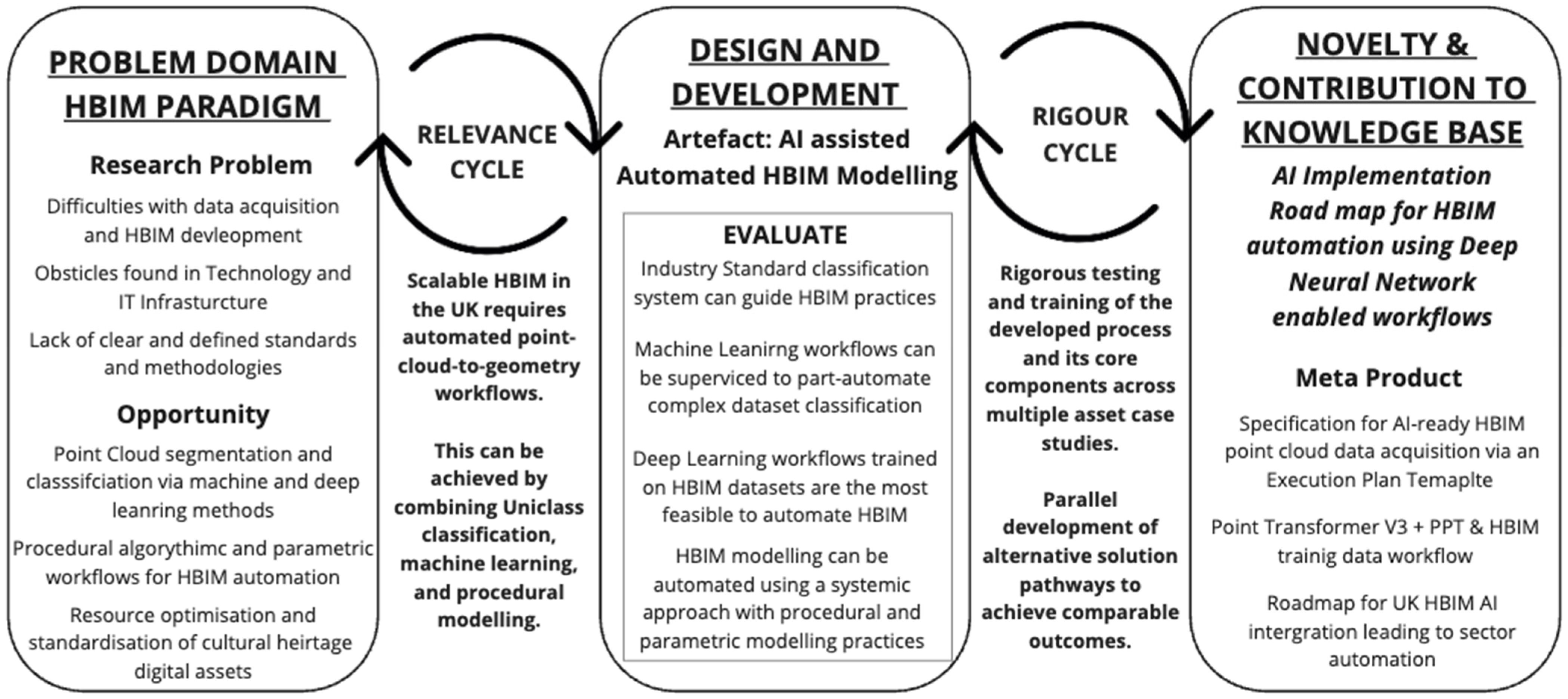
The methodology adopted for this research was carefully structured to examine how Artificial Intelligence (AI) can be systematically and ethically integrated into Heritage Building Information Modelling (HBIM) workflows. Given HBIM’s inherently interdisciplinary nature, bridging the precision of digital surveying, the interpretive depth of heritage conservation, and the computational logic of machine learning, this study required a methodological framework capable of addressing both empirical complexity and contextual meaning. To achieve this, the research is grounded on the Design Science Research (DSR) approach (
Figure 1) that combines exploratory and experimental elements.
Its stance anchors the study’s concern with uncovering both the physical and causal structures embedded in heritage data, such as material geometry, structural form, and spatial relationships, while recognising that their interpretation is conditioned by cultural and institutional contexts [
35,
36]. The DSR also enables methodological pluralism and iterative refinement: quantitative analyses of point-cloud data and AI model performance are interwoven with qualitative insights from heritage professionals to ensure contextual validity [
37,
38].
This dual orientation ensures that the research produces not only a technically robust AI implementation roadmap but also one that remains sensitive to the ethical, historical, and operational realities of heritage conservation.
AI Implementation Roadmap Development with DSR
The translation of experimental findings into a structured, operationally viable roadmap required the formulation of a robust analytical framework capable of representing the complex interdependencies between technical, semantic, and computational factors governing AI integration within HBIM. To achieve this, a cross-impact analytical model was developed, combining systems thinking [
39] with decision-mapping techniques adapted from Design Science Research [
40,
41].
Drawing upon the DSR logic (
Figure 1), the research functioned as a bridge between experimentation and artefact design, transforming discrete empirical observations into generalisable decision rules. Rather than treating AI automation as a linear technological pipeline, the DSR approach conceptualised it as a dynamic, interdependent system comprising multiple interacting domains, each influencing the feasibility and quality of HBIM outcomes. The framework therefore modelled the AI–HBIM integration process as an ecosystem of dependencies that could be empirically tested, evaluated, and adjusted through iterative feedback loops [
42]. This systemic understanding was critical to ensure that the resulting roadmap was not merely descriptive but diagnostic, offering practitioners clear insight into how specific methodological or technical choices shape downstream performance, accuracy, and interoperability.
The analytical AI implementation roadmap focused on three primary dimensions that emerged from the experimental findings and literature synthesis: classification and interoperability, data quality and acquisition strategy, and computational feasibility. Each dimension represented a distinct layer of decision-making within HBIM workflows, but their interactions were explicitly modelled to capture the compound effects of cross-domain dependencies.
This dimension analysed how the selection of taxonomic systems, such as NBS Uniclass, CIDOC Conceptual Reference Model (CRM), or project-specific ontologies, influences AI performance, semantic integrity, and information exchange. The analysis recognised that while Uniclass provides a hierarchical classification aligned with UK information management standards, it is not natively optimised for computational workflows, often leading to ambiguous labels or excessive granularity that hinders machine learning [
24,
25]. Conversely, CIDOC CRM offers rich semantic expressivity for cultural heritage, yet its conceptual complexity poses challenges for automation. Therefore, the AI implementation roadmap introduced interoperability mapping as a mediating layer, enabling taxonomies to be computationally reconciled without compromising regulatory compliance. Decision matrices developed within this domain demonstrated that optimal AI performance arises when classification hierarchies are simplified and standardised prior to training, reducing class imbalance and enhancing label clarity.
The second analytical dimension evaluated the relationship between data acquisition variables such as point density, occlusion rate, and completeness and AI segmentation accuracy. Experimental results and supporting literature indicated that inconsistent capture at critical junctions (e.g., wall-floor interfaces, vault transitions) reduced classification precision by up to 20%, confirming similar findings in digital heritage and computer vision research [
43]. To mitigate these issues, the analytical AI implementation roadmap embedded a goal-driven acquisition principle, aligning scanning protocols with project objectives and classification logic from the outset. For example, restoration-oriented projects prioritising geometric fidelity require dense, high-resolution terrestrial laser scans, whereas retrofit-focused interventions may tolerate sparser data complemented by SLAM-based capture. Decision matrices within this domain quantified trade-offs between data completeness and computational efficiency, enabling project teams to forecast the downstream impact of acquisition decisions on AI segmentation reliability.
The third analytical dimension examined the relationship between computational resources and model scalability, focusing on variables such as GPU memory utilisation, processing time, and dataset dimensionality. Performance profiling across different hardware configurations revealed that deep learning models like Point Transformer V3 exhibit non-linear scaling behaviour: segmentation accuracy improves with data richness but at exponentially increasing computational cost. In contrast, Random Forest classifiers achieve near-optimal performance on moderately sized, voxelised datasets with significantly lower resource demands [
15,
44]. These findings were translated into computational decision matrices, guiding practitioners in selecting AI pathways that balance precision with feasibility according to available resources. This ensures the roadmap remains implementable across diverse organisational contexts, from academic research units with access to high-performance computing clusters to heritage consultancies operating on commercial-grade workstations.
This systemic integration of interdependent decision nodes ensured that the AI implementation roadmap evolved not as a prescriptive checklist but as an adaptive framework, capable of accommodating the heterogeneity of heritage assets, data environments and computational infrastructures [
45].
4. AI Experiments for Point Cloud Segmentation and HBIM
This section presents a comprehensive suite of AI-driven experiments designed to evaluate the feasibility, performance, and interoperability of emerging computational methods across the full Scan-to-HBIM pipeline. Together, these experiments interrogate classification systems, geometric algorithms, machine-learning and deep-learning segmentation strategies, and automated HBIM workflows, generating the empirical foundations that lead directly to the proposed AI implementation roadmap.
4.1. Experiments on Classification and Interoperability
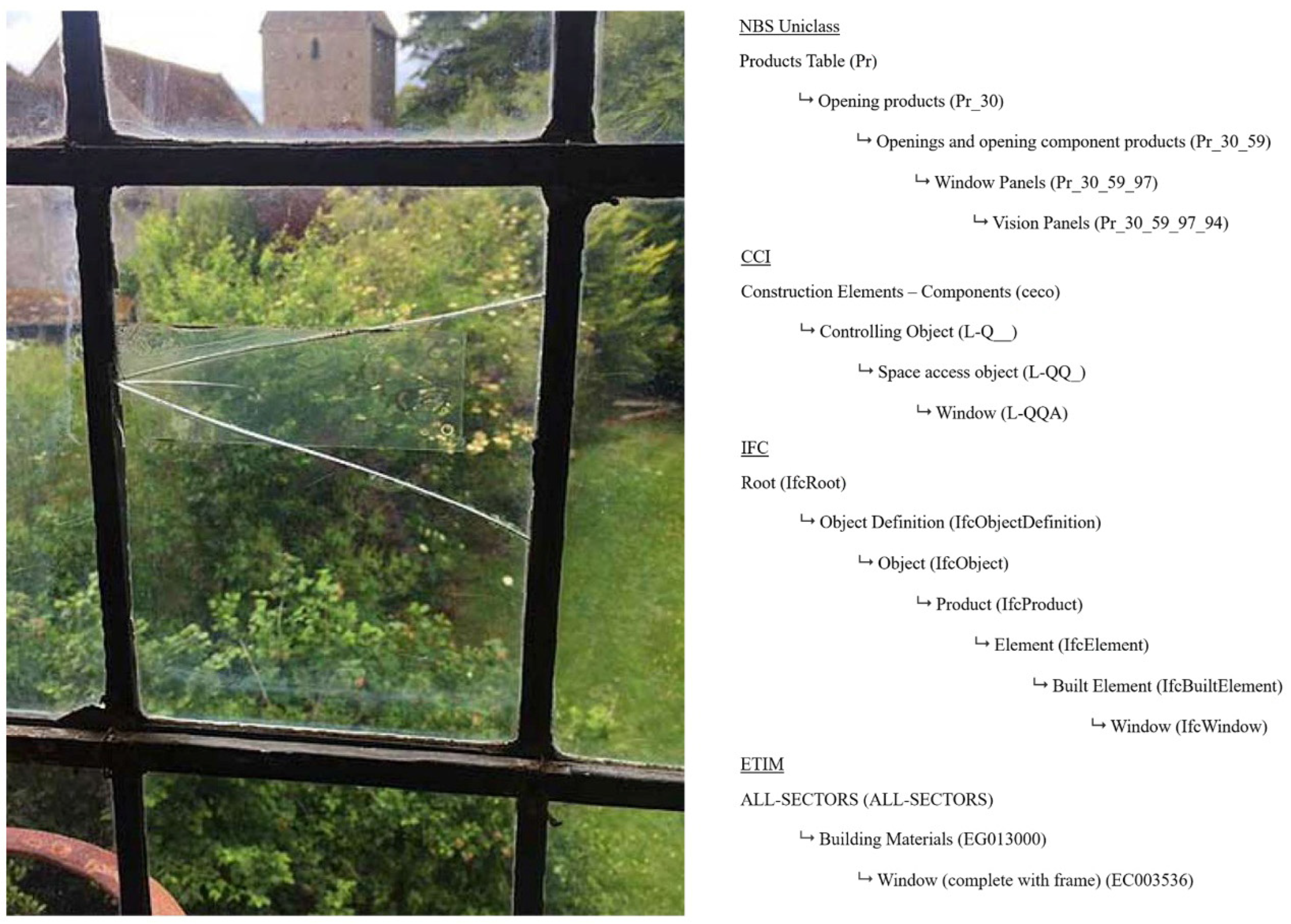
The experiments examined how existing classification systems and interoperability mechanisms perform when applied to a heritage HBIM workflow. They were conducted by first evaluating the semantic suitability, granularity, and structural coherence of Uniclass, IFC, ETIM, and CCI through scenario-based testing and observational analysis of a heritage case study as illustrated in
Figure 2. This was followed by implementing a semi-automated interoperability workflow in Autodesk Revit, using Dynamo, Excel, and dedicated plugins to synchronise multiple classification codes and assess their persistence during IFC export.
The results showed that NBS Uniclass provided the most detailed and contextually appropriate categorisation, achieving the highest accuracy and coverage, although some gaps remained for complex heritage elements. The interoperability workflow confirmed that Revit could retain custom multi-classification data across platforms when mappings were correctly configured and that automation significantly reduced manual input and minimised errors. Collectively, the experiments demonstrated that while traditional taxonomies struggle to fully encapsulate heritage complexity, an AI-aligned and semi-automated approach can substantially improve semantic reliability and cross-platform consistency within HBIM.
4.2. Experiments on Geometric Algorithms
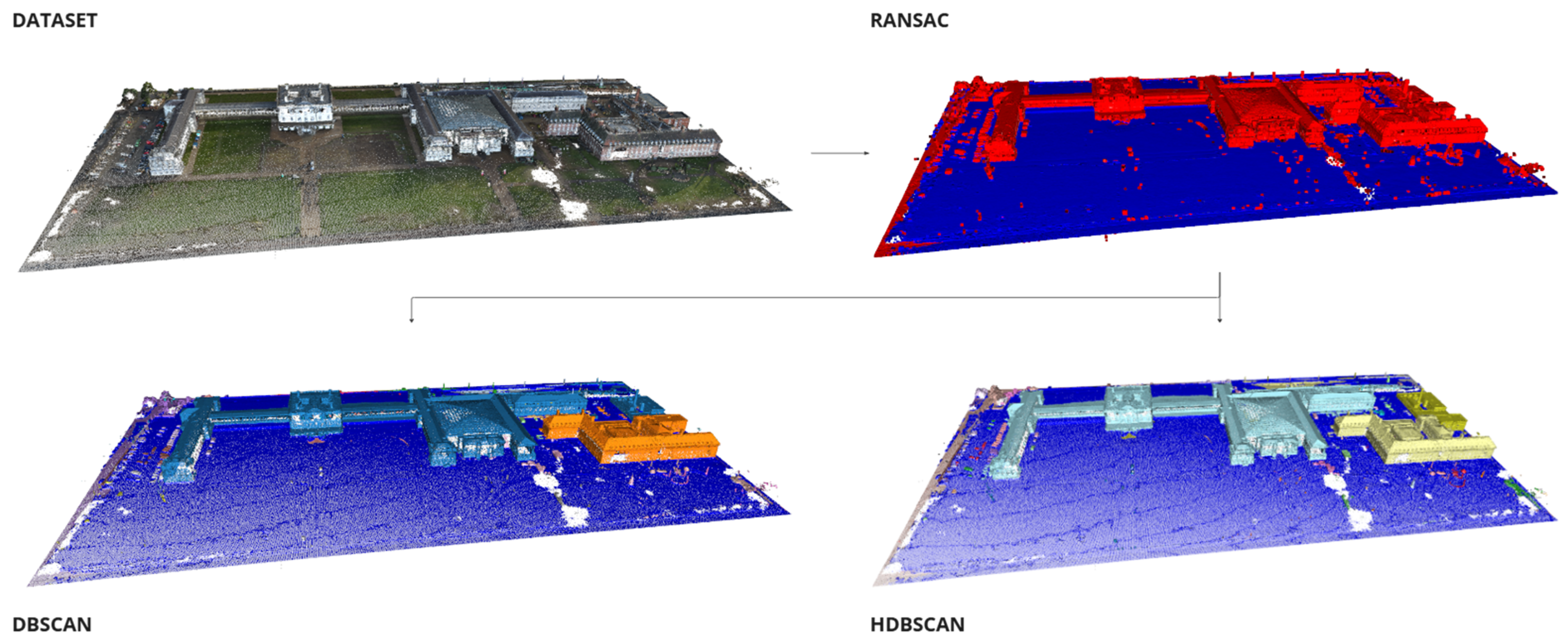
The experiment evaluated a suite of established point cloud classification algorithms, RANSAC, DBSCAN, HDBSCAN, and K-Nearest Neighbours, to determine their capacity to segment architectural features within a heritage HBIM dataset. Conducted in two phases, the workflow involved subsampling and preparing a gallery-room point cloud using CloudCompare V2.12.4, followed by implementing clustering and plane-detection routines in Python 3.11.2. Parameter tuning and qualitative assessment were used to judge each algorithm’s ability to isolate key geometric components relevant to HBIM segmentation.
As shown in
Figure 3, the results showed that RANSAC reliably extracted dominant planar features such as the floor, while DBSCAN successfully identified discrete architectural objects but required highly sensitive parameter control. HDBSCAN offered greater flexibility yet struggled with the predefinition of cluster counts in geometrically complex interior datasets, and KNN proved unsuitable for dense point clouds.
Overall, the experiment demonstrated that while these geometry-based methods are insufficient for full semantic segmentation, they hold value as preparatory tools for noise reduction, coarse partitioning, and early-stage element extraction, providing a foundation for subsequent machine-learning workflows and more semantically enriched HBIM processes.
4.3. Experiments on Random Forest
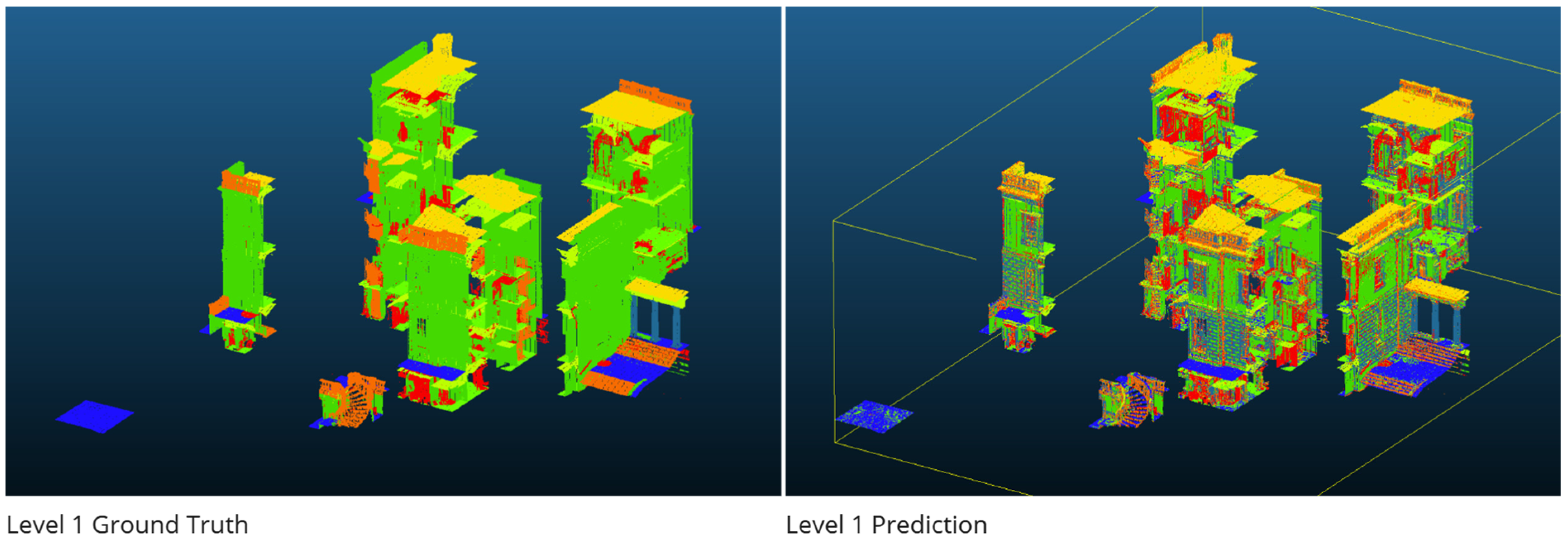
These experiments implemented and refined a hierarchical Random Forest pipeline to classify a large LiDAR-derived heritage building point cloud using Uniclass-based labels. The initial experiment integrated Uniclass Element/Function tiers (L1–L3) with multi-resolution subsampling (50 mm, 20 mm, 5 mm), 17 geometric and RGB features, SMOTE/ENN resampling, and octree-based spatial cross-validation, using ground-truth routing to evaluate classifier performance at each level. The subsequent experiment reused the same computational framework but introduced a revised taxonomy that regrouped classes at L1 and L2 according to geometric similarity, deferring complex or fine-grained distinctions to deeper levels of the hierarchy.
The original Uniclass-driven hierarchy achieved strong performance for some major structural and opening classes at higher resolutions (L2–L3) but delivered low macro performance at L1 (overall accuracy ≈ 32%) and suffered from severe class imbalance, semantic overlap at coarse resolution, and out-of-memory errors for very large training subsets. The refined taxonomy, as illustrated in
Figure 4, improved L1 accuracy to 47.5% and enhanced separability for geometrically coherent categories such as external ground, roofs, and selected opening types, with clearer gains propagating to L2 and L3.
Nonetheless, persistent difficulties with minority classes, within-class heterogeneity (especially for walls), and the constraints of single-scale geometric features indicated that further advances would require multi-scale feature integration, more flexible hierarchical designs, out-of-core learning strategies, and potentially deep learning architectures better aligned with the geometric and semantic complexity of HBIM datasets.
4.4. Experiments on Computer Vision Techniques
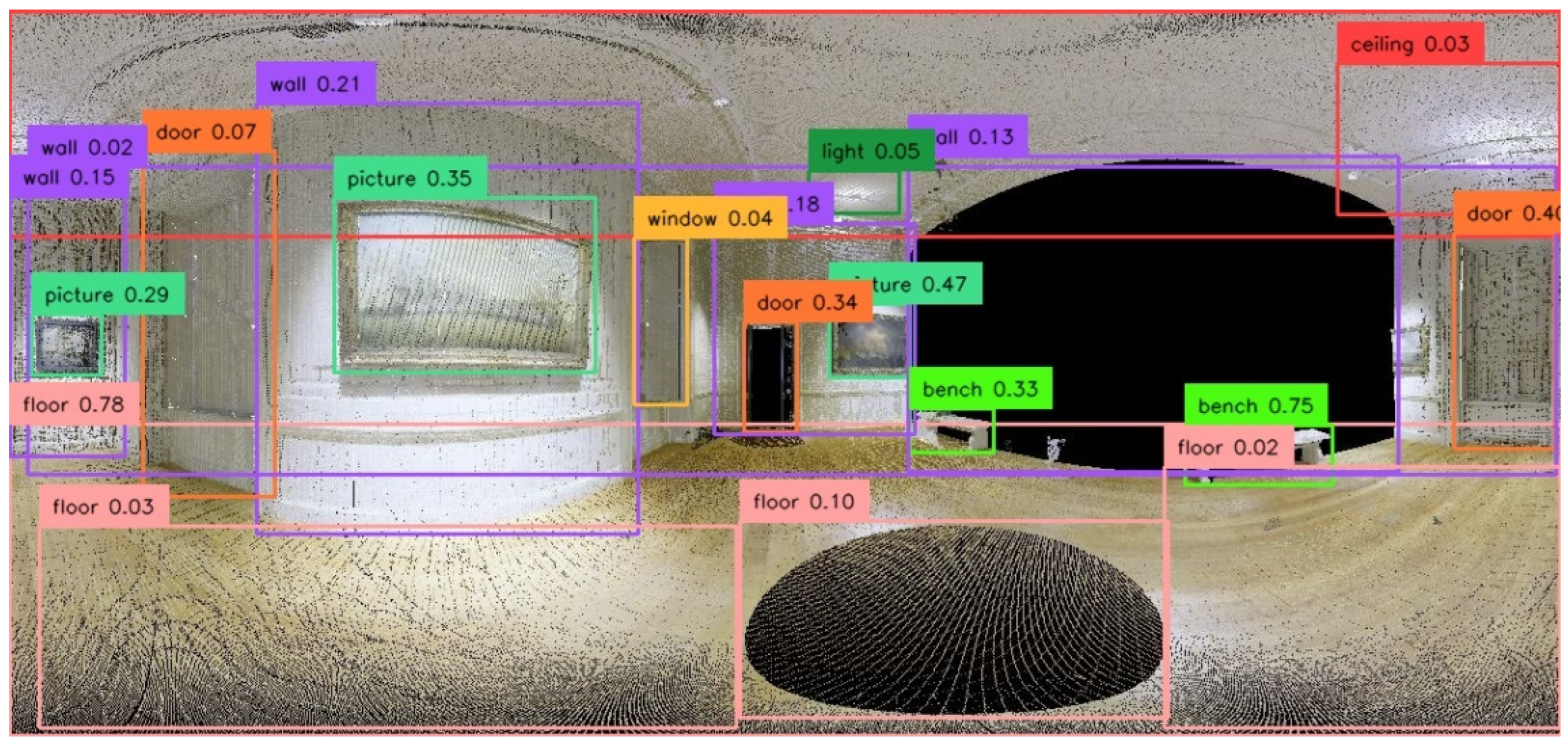
This experiment investigated whether contemporary computer vision and image-based deep learning methods can be used to segment and classify HBIM datasets by exploiting 360° panoramic imagery as an intermediate representation. Using a four-stage workflow, Meta’s Segment Anything Model was applied to real and synthetic panoramic images for instance segmentation, followed by 2D–3D back-projection of masks onto the point cloud, integration of the two processes into a single pipeline, and semantic labelling with YOLO World using an open-vocabulary detection framework.
Figure 5 shows the YOLO results on panoramic images for point cloud segmentation.
The results demonstrated that SAM could segment omnidirectional images with minimal code adaptation and that reprojection enables effective identification of key elements such as paintings, benches, and primary surfaces within the 3D point cloud. However, as per
Figure 5 panoramic distortion, reflective surfaces, occlusions, and point-density artefacts led to edge inaccuracies, label leakage (“painting through”), confusion between doors and windows, and systematic misclassification or omission of small fixtures such as light fittings. Overall, the study shows that fused 2D–3D computer vision pipelines are a viable route towards automated HBIM classification, but that substantial gains will depend on models and training datasets explicitly tailored to panoramic imagery, improved depth-aware back-projection, and the integration of heritage-specific semantic ontologies.
4.5. Experiments on Point Transformer Deep Learning Methods
This experiment deployed Point Transformer v3 (PTv3), augmented with Low-Rank Adaptation (LoRA) and Point Prompt Training (PPT), to determine whether a modern transformer-based architecture could resolve the core limitations identified in earlier Random Forest and computer-vision–based workflows. Using a consolidated 13-class taxonomy, synthetic HBIM point clouds generated from Revit meshes, spatially balanced fold allocations, and a rigorous four-phase evaluation (intra-site, inter-site, LiDAR transfer, and multi-site generalisation), the research examined accuracy, mIoU, class-specific behaviour, cross-domain stability, and architectural scalability.
The findings clearly demonstrate that PTv3 is substantially more capable than classical methods when sufficient contextual information is available. Intra-site experiments consistently produced high IoU values for classes with distinctive geometric properties, namely walls, roofs, ceilings, stairs, columns, railings, and landscaped surfaces, and the network exhibited strong internal feature formation without reliance on hand-engineered descriptors. As the diversity of training sites increased, the model’s performance on unseen domains improved markedly: the transition from two-site to four- and five-site training sets yielded pronounced gains for geometrically salient classes such as doors, windows, railings and rainwater pipes, validating the hypothesis that architectural diversity cultivates more generalisable latent representations. The integration of LoRA and PPT was particularly beneficial, enabling efficient fine-tuning of the pre-trained PTv3 backbone and mitigating negative transfer across heterogeneous synthetic and real datasets.
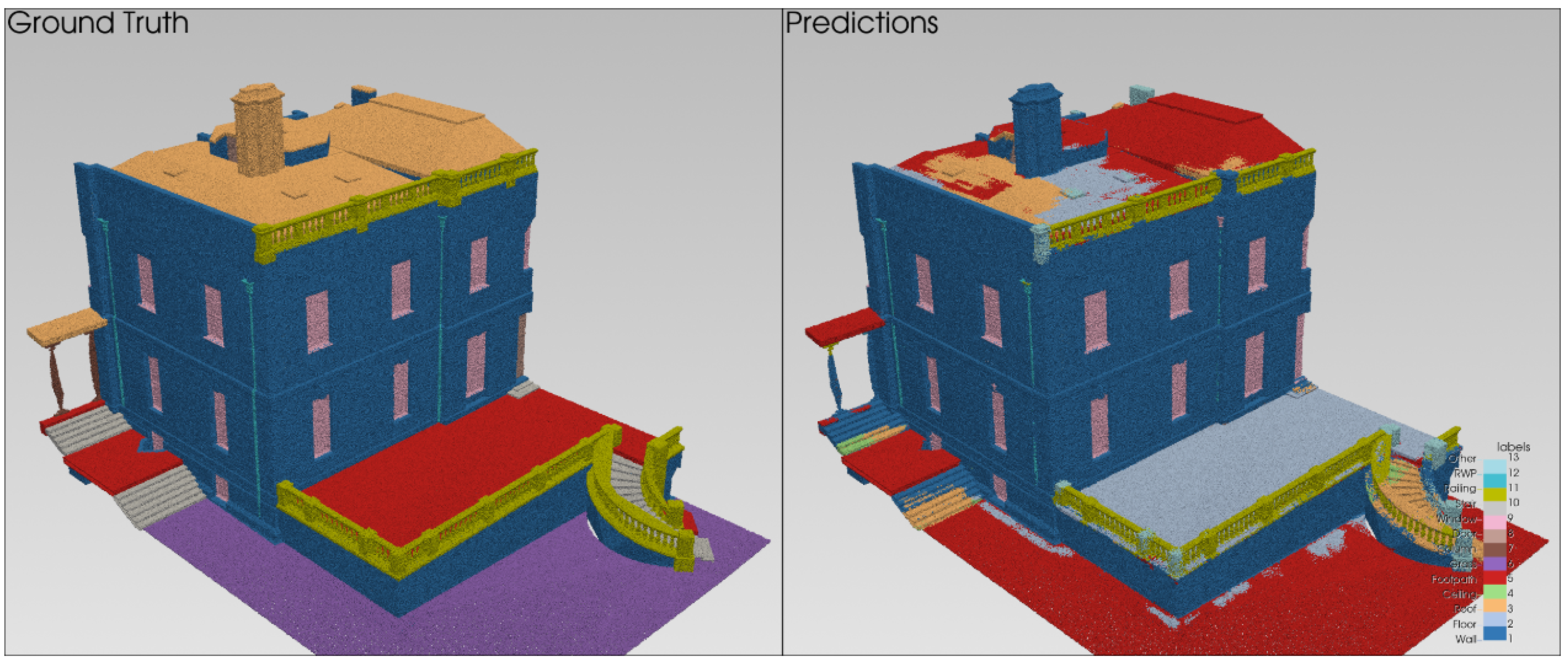
However, as illustrated in
Figure 6, the study also uncovered critical constraints. The model struggled persistently with planar “flat” categories, such as floors, ceilings, roofs, and footpaths, whose geometric signatures remain highly overlapping in both synthetic and LiDAR domains. The large, semantically diffuse “other” category absorbed a wide range of objects and contributed to misclassification cascades, especially during cross-site and LiDAR evaluations. Synthetic HBIM data, while abundant and perfectly labelled, proved insufficiently realistic: the absence of texture variation, colour fidelity, and real-world noise limited transferability to LiDAR scenes, where partial coverage, sampling density irregularities, and occlusion substantially degraded performance. Moreover, the model sometimes relied excessively on contextual adjacency learned from synthetic scenes, leading to systematic errors when those contextual cues were absent or rearranged in real-world scans.
While recent advances in generative AI offer potential mechanisms for increasing visual realism in synthetic datasets, this research deliberately refrains from advocating generative augmentation as a primary solution. In heritage HBIM contexts, uncontrolled generative synthesis risks introducing semantically implausible geometry, artificial textures, or statistically misleading noise patterns that may obscure, rather than enhance, the learning of authentic architectural regularities. Given the conservation-driven emphasis on material truthfulness, interpretive accountability, and traceable data provenance, the study positions future work toward improving capture fidelity, multi-site diversity, and controlled domain adaptation strategies, rather than pursuing generative realism that could compromise model generalisation.
Key factors identified include the decisive influence of domain diversity on generalisation; the structural limitations of planar classes under geometry-only feature regimes; the necessity of richer colour and material cues; the need to subdivide or reconfigure the “other” class; and the importance of domain-adaptive mechanisms when bridging synthetic–real gaps. These findings collectively emphasise that while PTv3 constitutes a major advance offering superior accuracy, scalable processing, and multi-scale attention, it alone cannot overcome dataset-level and taxonomy-level constraints. Effective HBIM automation will require the integration of more realistic synthetic datasets, enhanced texturing pipelines, refined label ontologies, and deeper domain adaptation strategies that account for the complex, multi-modal nature of heritage point clouds.
4.6. Experiments on HBIM Parametric Modelling
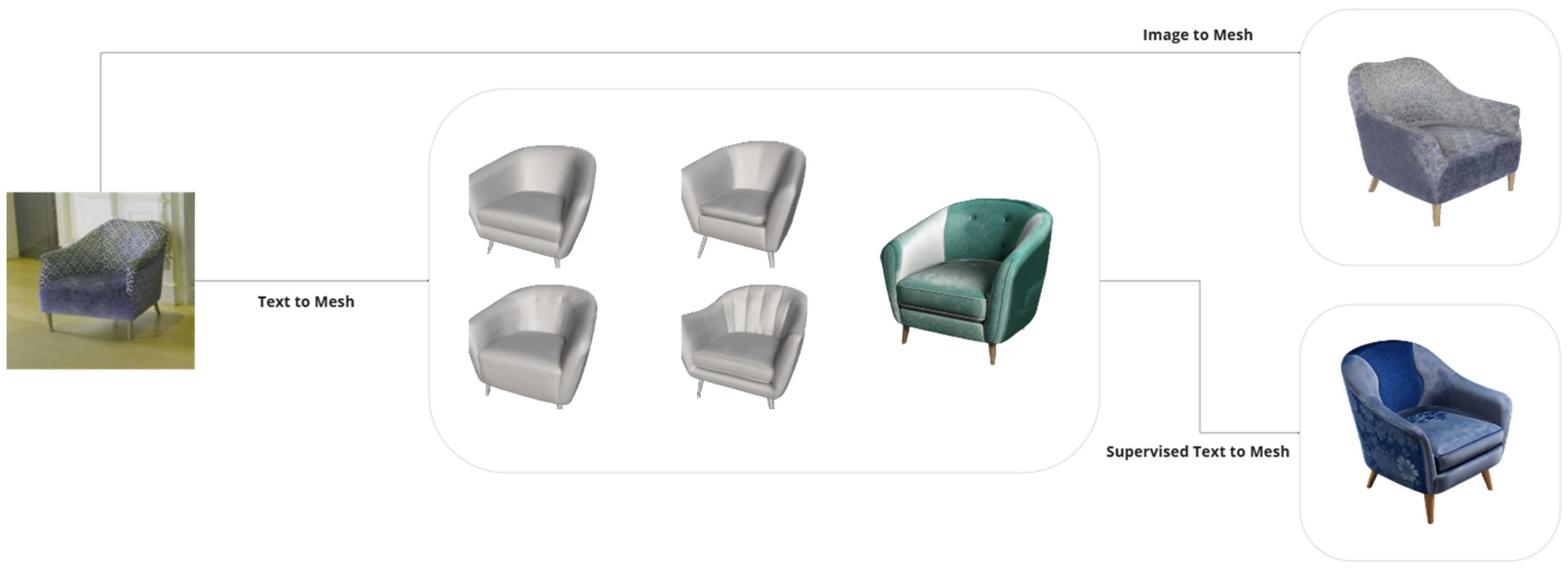
These experiments investigated whether semantically segmented point clouds can drive end-to-end automation of HBIM geometry generation, combining Autodesk Revit 2023.1, Dynamo v2.16.2, bespoke Python nodes and, for complex assets, commercial generative 3D AI platforms. Procedural algorithms were developed for core architectural elements (walls, floors, ceilings, hosted openings, and furniture) using RANSAC and DBSCAN-based clustering, custom perimeter extraction, and parametric family instantiation, while a second strand evaluated point-cloud meshing and AI-driven object synthesis (Meshy.ai, Sloyd.ai, Geometry.Charmed.ai, Geometry.Charmed.ai) for irregular artefacts.
The findings show that AI-classified point clouds can reliably support the fully automated generation workflow shown in
Figure 7 of regular HBIM elements, with accurate wall geometry and thicknesses, robust placement of doors, windows and furniture, and only minimal user inputs required. However, perimeter extraction for floors and ceilings proved sensitive to point density, irregular layouts and occlusions, raising questions of scalability to whole-building datasets.
For complex, non-parametric heritage objects, Dynamo- and CloudCompare-based meshing pipelines were fragile and scan-quality dependent, whereas generative AI services, guided by multimodal LLM-derived prompts, produced visually coherent proxy geometries that integrate into Revit via DirectShape, offering clear value for interpretive and storytelling uses despite limited metric fidelity.
Key limiting factors include scan completeness, Dynamo’s weak mesh support, lack of BIM-native parametrisation and textures for AI meshes, and the need for consistent Revit family standards; conversely, the work highlights domain-specific training data, automated level and family selection, taxonomy refinement, and tighter AI–BIM interoperability as critical levers for advancing truly automated Scan-to-HBIM workflows.
4.7. Key Learnings and Leading to AI Implementation Roadmap
The consolidated findings across all experiments converge on several pivotal insights that directly inform the development of an AI implementation roadmap for HBIM. First, the work demonstrated that traditional classification systems such as Uniclass, while essential for regulatory and archival alignment, are poorly suited to machine-learning workflows due to their hierarchical ambiguity and semantic overlap. This necessitated the creation of an interoperability layer mapping regulated taxonomies to AI-ready label sets, ensuring both computational tractability and long-term compliance.
Second, the experiments revealed a strong interdependency between data acquisition and classification performance. Point density, completeness at architectural junctions, and the scanning method (TLS, SLAM, photogrammetry) exert significant influence on the success of segmentation and geometry extraction. These findings emphasise that acquisition strategies must be planned in direct relation to intended classification logic and modelling outputs, rather than treated as a neutral precursor stage.
Third, dataset dimensionality and algorithm suitability emerged as strategic determinants of performance. While Random Forest classifiers performed well under voxelised subsampling, deep-learning models such as Point Transformer V3 with Point Prompt Training delivered markedly stronger results on larger, more complex datasets, provided that computational resources and data consistency were carefully managed. This highlighted the need for proactive balancing of segmentation fidelity, hardware constraints, and dataset scale in heritage contexts.
Fourth, the research reaffirmed the critical value of high-quality training datasets. Despite advances in transfer learning, supervised annotation remains a bottleneck, especially for heritage data requiring expert interpretation. Investment in curated synthetic, semi-synthetic, and open-source datasets is therefore foundational to any scalable AI deployment in HBIM.
Fifth, algorithmic geometry extraction proved most effective when embedded within procedural environments such as Dynamo, where clustering algorithms like RANSAC and DBSCAN could be integrated into controlled parametric logic rather than applied in isolation. This hybrid approach strengthened stability, interpretability, and repeatability across variable heritage conditions.
Finally, the limitations of commercial mesh generation (particularly when confronted with incomplete or occluded heritage scans) demonstrated that high-fidelity AI workflows must blend procedural, algorithmic, and generative components. Hybrid strategies compensate for gaps in data quality while maintaining the precision and contextual awareness demanded in HBIM. Together, these insights form the conceptual backbone of the AI implementation roadmap, establishing a structured, multi-layered approach in which classification standards, acquisition strategies, dataset management, algorithm selection, and hybrid geometry-generation workflows are orchestrated as an integrated system. This roadmap positions AI not as a single disruptive tool but as a coordinated framework capable of progressively transforming Scan-to-HBIM processes into intelligent, interoperable, and scalable heritage workflows.
5. Proposition of AI Implementation Roadmap
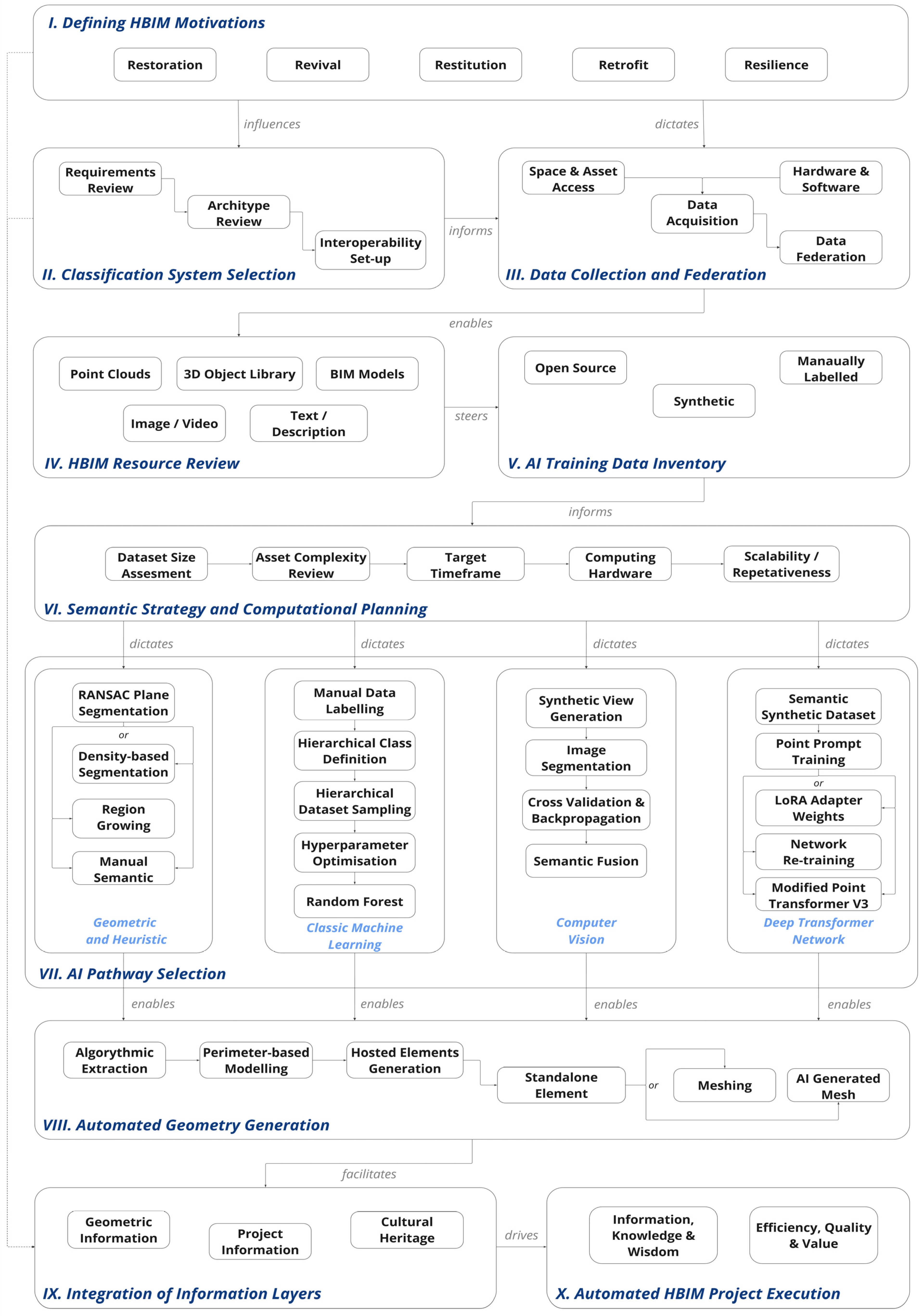
The roadmap operates as a sequence of interlinked decision points, each representing a critical juncture in the HBIM workflow where both computational reasoning and professional judgement converge. Rather than proposing a fully automated pipeline, the model positions every decision node as a human-in-the-loop touchpoint. As illustrated in
Figure 8, the roadmap’s structure consists of seven core stages, each informed by empirical evidence and validated through scenario testing and industry consultation.
At each stage, heritage professionals are required to undertake validation, interpret results, and adjust system parameters in response to project-specific conditions. This hybrid model acknowledges the critical realist foundation of the research, recognising that the built environment possesses both measurable material properties and socially mediated meanings, which must be reconciled through professional interpretation.
The first stage, Defining HBIM Motivations, establishes the philosophical and operational foundation for all subsequent processes. Drawing on the fivefold motivation model developed in this study—revival, restoration, restitution, retrofit, and resilience—this stage ensures that the HBIM strategy aligns with the cultural and functional objectives of the heritage asset. Each motivation carries specific informational and technical requirements. For instance, a restoration-oriented project demands high geometric precision and detailed material recording to preserve historical authenticity, whereas a retrofit project prioritises systems coordination, spatial efficiency, and the integration of modern building services. The explicit articulation of motivation informs every subsequent decision, guiding classification strategy, acquisition planning, and AI method selection. This alignment of technical workflow with conservation intent ensures that AI deployment enhances, rather than overshadows, the interpretive dimension of heritage work.
The second stage, Classification System Selection, addresses the challenge of semantic structure and data interoperability. While classification systems such as NBS Uniclass form the backbone of UK information management practice, their direct application to heritage datasets is often problematic. These systems can exhibit excessive granularity, inconsistent hierarchical logic, and limited adaptability for machine-readable workflows. The roadmap therefore introduces a preparatory stage of critical evaluation and optimisation. Practitioners are advised to review their chosen taxonomy, remove irrelevant or redundant categories, and simplify hierarchies to minimise misclassification risk. In projects where multiple classification systems are employed, such as CIDOC CRM for cultural metadata and Uniclass for structural components, an interoperability mapping layer is established to maintain consistency across AI models. This ensures that semantic structures remain coherent, enabling AI algorithms to interpret, classify, and label heritage elements with both computational accuracy and contextual validity.
The third stage, Data Collection and Federation, focuses on the high-impact task of data acquisition, recognising that the quality and completeness of spatial data directly influence all downstream automation. Inadequate scanning coverage, variable point density, or misaligned datasets can introduce cascading errors that compromise segmentation and geometry generation. The roadmap advocates for a proactive, goal-driven acquisition strategy tailored to the project’s motivation and classification framework. This involves defining scanning objectives, ensuring comprehensive access to key architectural spaces, and meticulously documenting hardware specifications, sensor calibration, and environmental conditions. Where hybrid capture methods such as terrestrial laser scanning and SLAM are combined, robust federation strategies are required to harmonise datasets of differing density and coordinate precision. The empirical findings from this study demonstrated that when these measures are followed, model precision can be improved by up to twenty percent, substantiating the importance of acquisition planning as a critical determinant of AI performance.
The fourth and fifth stages, Resource Review and Training Data Inventory, expand the scope of HBIM preparation beyond point clouds to include auxiliary digital and archival resources. Heritage projects frequently accumulate diverse forms of information, orthophotographs, previous models, conservation reports, and textual documentation that can significantly enhance AI learning accuracy and semantic richness. This stage involves creating a structured data inventory that catalogues available resources and assesses their potential contribution to machine learning. The inventory also informs dataset synthesis, annotation strategy, and labelling priorities for supervised learning models. By documenting both the availability and limitations of existing data, this step ensures that algorithmic training processes remain transparent and traceable, contributing to the overall reproducibility and accountability of the workflow.
The sixth stage, Semantic Strategy and Computational Planning, addresses the alignment of AI methodology with project constraints. Before deploying any algorithmic process, project teams are encouraged to assess their available computational resources, dataset scale, and intended level of model detail. Experimental results from this study confirmed that large-scale, high-resolution datasets impose significant computational demands, especially when involving billions of data points. This stage therefore provides an opportunity to match the AI model type to available resources. Teams may choose lightweight machine learning methods such as Random Forest when dealing with small to moderate datasets or opt for advanced deep learning models such as Point Transformer V3 when processing complex geometries. The decision process is informed by performance benchmarking, hardware auditing, and temporal constraints, ensuring that the selected AI strategy remains both efficient and achievable within practical project parameters.
The seventh stage, AI Pathway Selection, translates the analytical insights from the experimental phase into four validated workflow pathways. The first involves geometric and heuristic methods, suitable for projects with limited datasets or simple geometries, where clustering algorithms generate preliminary segmentation for expert refinement. The second involves classical machine learning approaches that use structured features and sub-sampling, providing an interpretable and computationally efficient pathway for typologically consistent heritage datasets. The third applies computer vision methods, using two-dimensional image segmentation to propagate semantic labels onto three-dimensional data when full volumetric datasets are noisy or incomplete. The fourth pathway introduces deep transformer networks such as Point Transformer V3 with Point Prompt Training, capable of handling large, complex, and heterogeneous architectural forms with high contextual sensitivity. These pathways provide scalability and flexibility, allowing practitioners to adapt AI models to the conditions and goals defined at earlier stages of the roadmap.
The eighth stage, Automated Geometry Generation, represents the synthesis of prior stages, where AI-derived segmentation outputs inform the generation of structured HBIM geometry. Experimental results showed that the automated generation of primary architectural elements, particularly walls, produced the most reliable results due to their structural regularity and hosting roles. Floors, ceilings, and perimeter elements were subsequently modelled to support spatial coordination, while secondary components such as windows, doors, and fixtures were incorporated using classification-informed placement or AI-assisted mesh-to-BIM conversion techniques. The roadmap emphasises the iterative nature of this stage, recommending that geometric outputs undergo continuous validation by domain experts to maintain heritage authenticity and avoid overfitting AI interpretations to incomplete or ambiguous data.
The final stage prior to successful and automated HBIM execution, the Integration of Information Layers, merges geometric outputs within a fully structured HBIM environment, creating a holistic model that unites physical, operational, and cultural dimensions. The model integrates three interrelated information layers: geometric information, representing measurable spatial and dimensional data; project-specific information, capturing material, chronological, and structural details; and cultural-historical information, encompassing interpretive narratives, intangible heritage, and archival context. This tri-layered integration ensures that the resulting HBIM model is not only a geometrically accurate digital twin but also a meaningful cultural artefact, preserving the tangible and intangible values that define historic architecture. By linking quantitative data with qualitative heritage interpretation, the roadmap advances the idea of HBIM as a dynamic knowledge system rather than a static digital record.
6. Scenario Testing and Validation
A fundamental methodological innovation underpinning this research is the introduction of motivation-based scenario testing, a structured approach for evaluating the adaptability and semantic coherence of the proposed AI implementation roadmap across diverse heritage contexts. Recognising that heritage projects are inherently purpose-driven, this framework responds to the ontological pluralism and epistemic diversity that define conservation practice [
46,
47,
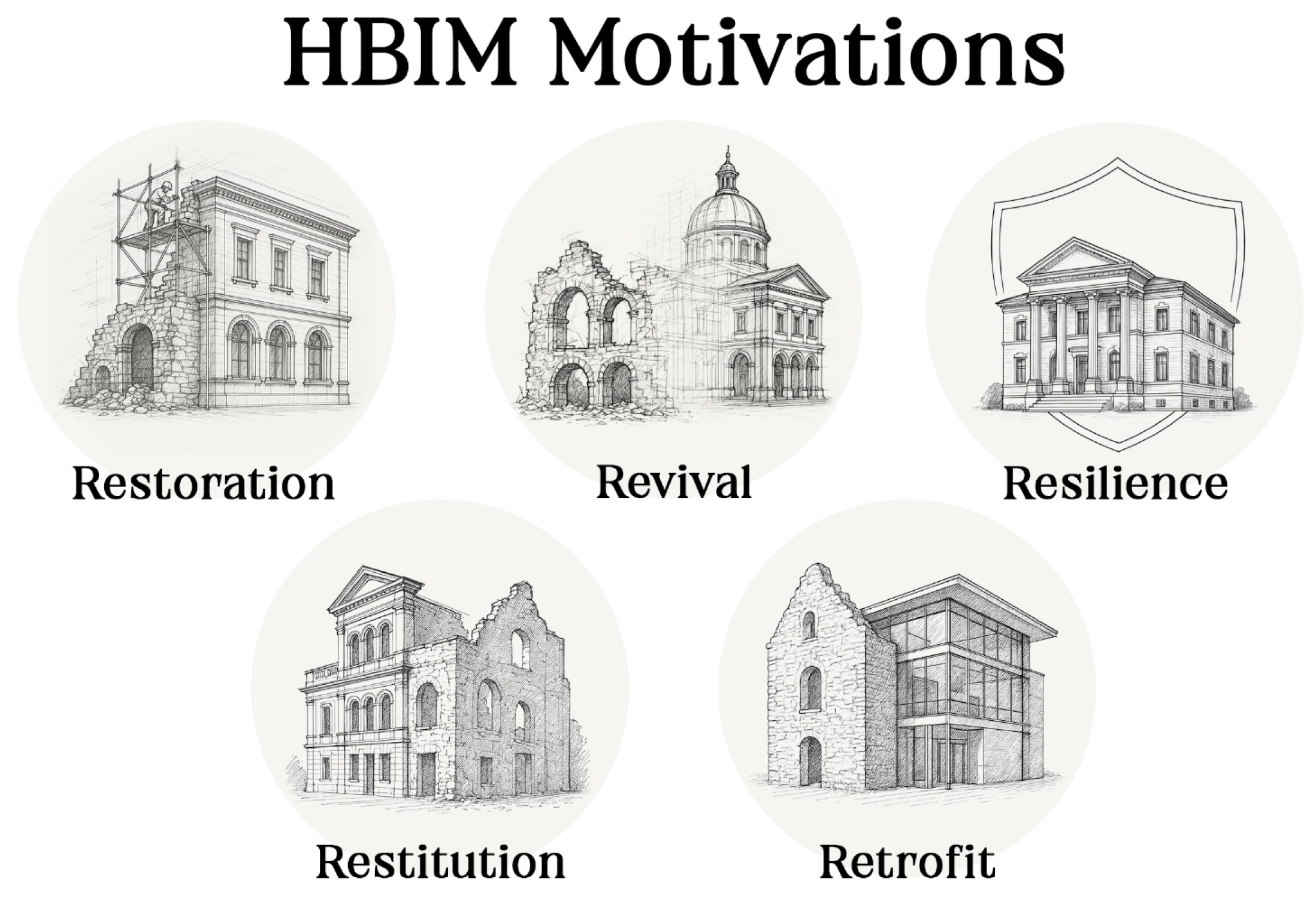
48]. Unlike conventional BIM applications that typically pursue uniform technical outcomes, HBIM processes are shaped by distinct cultural, historical, and operational imperatives. Accordingly, the research developed a conceptual typology of Five HBIM Motivations as shown in
Figure 9—revival, restoration, restitution, retrofit, and resilience—as analytical lenses through which to test the roadmap’s versatility and validity.
Each HBIM motivation represents a distinctive conservation rationale, shaping the data requirements, algorithmic strategy, and modelling priorities embedded within the AI implementation roadmap.
Revival refers to the act of bringing a building or architectural style back from ruin or neglect, often involving the adaptive reuse or reinterpretation of historic structures whose significance has diminished over time. Within the digital domain, revival projects typically combine archaeological reconstruction and stylistic regeneration, using HBIM as a means of digitally reactivating lost narratives and re-establishing continuity with the past [
49].
Restoration, in contrast, is concerned with repairing damage and recovering the authentic appearance of a building as it historically existed. This process seeks to reveal the original material and form through evidence-based analysis, guided by conservation charters such as the Venice Charter [
50] and grounded in the principle of minimal intervention.
Restitution denotes the return of heritage assets, elements, or values to their rightful or original state or context, whether physically, ethically, or symbolically. In architectural terms, it involves the reversal of unsympathetic alterations and the reinstatement of displaced or misappropriated elements to reassert the integrity of the original work [
47].
Retrofit focuses on adaptive reuse and functional adaptation, integrating contemporary systems or environmental upgrades within heritage buildings to enhance safety, energy efficiency, or comfort while maintaining their historical and cultural integrity [
51,
52].
Resilience encapsulates forward-looking strategies designed to protect heritage assets against environmental degradation, natural hazards, and future uncertainties. It emphasises proactive reinforcement, risk mitigation, and sustainable management, ensuring that historic buildings remain structurally stable and culturally viable under evolving climatic and urban pressures [
53].
To operationalise this theoretical model, five hypothetical yet methodologically rigorous project scenarios were designed, each embodying one of the identified motivations. Scenario development was guided by principles of theoretical replication, ensuring that variations in project scale, data availability, and stakeholder structure could expose the roadmap’s capacity to adapt to differing contextual conditions. Each scenario integrated empirically grounded variables derived from the experimental phase, such as point-cloud density, classification schema selection, and computational capacity, and combined them with realistic constraints characteristic of UK heritage practice, including restricted site access, limited budgets, and incomplete archival documentation.
Expert Validation and Industry Feedback
To ensure the professional credibility, strategic relevance, and practical adoption of the AI implementation roadmap, a structured phase of expert validation was undertaken. This evaluation stage aligned with the evaluation cycle of the Design Science Research (DSR) paradigm [
54], wherein the designed artefact is assessed within its intended domain of use to confirm fitness for purpose. Validation was conducted through semi-structured interviews with a targeted panel of five senior industry experts representing a cross-section of the UK’s digital heritage ecosystem, encompassing public institutions, government heritage agencies, digital consultancies, education providers, and software development firms. Participant selection was based on professional experience, organisational role, and familiarity with BIM or HBIM workflows, ensuring both diversity and domain expertise (
Table 1).
Each interview lasted approximately one hour and followed a thematic structure encompassing five focus areas:
The perceived efficiency and reliability of the proposed AI segmentation and classification methods.
The contextual validity and operational value of the Five HBIM Motivations framework.
The usability and scalability of the proposed classification and interoperability strategy.
The practicality of the AI-enabled HBIM Execution Plan as a project-level implementation tool; and
The originality and contribution of the research to heritage information management practices.
Interview data were transcribed and analysed thematically following [
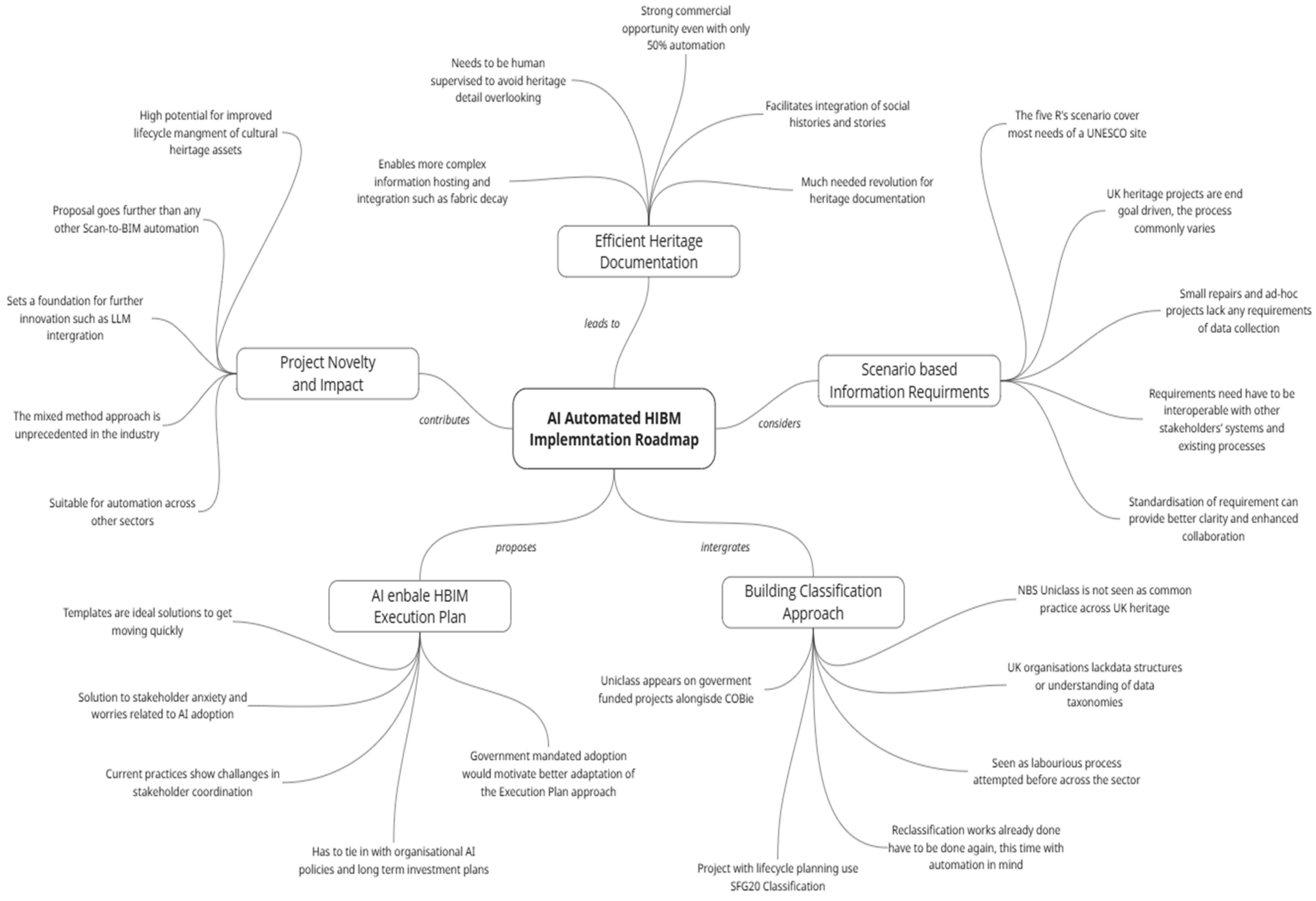
55]’s reflexive approach, which emphasises iterative reading, pattern identification, and interpretive synthesis. Codes were generated inductively to capture both recurrent themes and divergent perspectives, ensuring that analysis remained grounded in participants’ lived professional experiences. The findings are compiled and holistically represented as a concept map as shown in
Figure 10. It revealed a broad consensus endorsing the roadmap’s conceptual integrity and methodological clarity. Experts praised its balance between innovative automation and pragmatic realism, noting that the staged structure mirrors established BIM governance frameworks while extending them to accommodate AI-specific workflows. This alignment with ISO 19650-2 principles of information management and collaborative planning was viewed as a critical enabler for institutional adoption, positioning the roadmap as a bridge between emerging AI technologies and standardised project delivery processes.
Despite this overall endorsement, participants identified several implementation challenges. Chief among these were concerns over cultural resistance to automation within heritage organisations and disparities in computational capacity among smaller consultancies and public bodies, issues consistent with broader digital transformation research in the built environment [
56]. These insights informed the refinement of the roadmap to include recommendations for phased adoption, whereby institutions could progressively implement AI workflows beginning with low-complexity, high-reward tasks (e.g., automated wall segmentation) before advancing toward full deep-learning integration. Several participants also highlighted the roadmap’s potential to standardise heritage information workflows nationally, suggesting that formal endorsement by Historic England or a similar authority could catalyse widespread uptake.
7. Results
The findings of this research culminated in the development of a comprehensive AI implementation roadmap for automated HBIM, representing the synthesis of experimental data, analytical reasoning, and expert validation. The roadmap offers a structured and repeatable strategy for embedding artificial intelligence within heritage-based Building Information Modelling processes. It consolidates technical experimentation with interpretive evaluation, providing a pragmatic yet theoretically grounded framework for guiding the automation of heritage documentation and modelling workflows. Through iterative refinement, the roadmap evolved into a decision-support model that is adaptable to the complex, context-dependent realities of cultural heritage projects. It functions simultaneously as a methodological template, a management tool, and an evaluative structure for integrating AI in ways that remain faithful to conservation ethics, national standards, and institutional workflows.
Overall, the AI implementation roadmap for automated HBIM constitutes a repeatable, scalable, and contextually grounded framework that unites experimental science with professional practice. Its adaptability allows it to respond to diverse heritage conditions, data environments, and computational constraints. By grounding AI adoption in transparent workflows and semantically coherent logic, the roadmap bridges the persistent gap between technological automation and conservation authenticity. The results confirm that artificial intelligence, when guided by structured human oversight and informed by heritage theory, can augment rather than replace professional expertise. Through this balanced synthesis, the roadmap provides a viable model for the ethical, efficient, and sustainable integration of AI into HBIM practice, supporting both the preservation of historic fabric and the continued evolution of digital heritage methodologies.
7.1. AI-Enabled HBIM Execution Plan
To complement the theoretical and experimental contributions of this research, a practical deliverable has been formulated in the form of an AI-enabled HBIM Execution Plan, conceived not merely as project documentation but as a translational mechanism that bridges AI engineers, digital delivery teams, and heritage professionals within a shared information management framework. This plan aims to facilitate seamless implementation of the proposed roadmap into real-world projects within the UK cultural heritage sector. Despite the focused scope and specificity of this research, AI applications in HBIM currently remain in the early adopter stage, mirroring the initial emergence and gradual acceptance observed historically with BIM practices within the broader construction industry. Drawing insights from an historical review of BIM implementation, national and international standards adoption, and empirical observations derived from this research project, an execution plan specifically adapted to AI-driven HBIM processes has been developed.
ISO 19650-2:2018 explicitly defines the concept, contents, and collaborative procedures related to a BIM Execution Plan (BEP). Clause 3.1.3.1 defines the plan itself, Clause 5.3.2 specifies required contents, and Clause 5.4.1 outlines collaboration protocols when introducing additional project stakeholders (BSI, 2018). Guided by these requirements, an in-depth analysis was conducted to distil the primary objectives and essential components prescribed by this standard. Fundamentally, ISO 19650-2 emphasises stakeholder engagement, project strategy definition, collaboration workflows, clear delineation of responsibilities, delivery methods, information exchange protocols, and IT infrastructure assessments. Reflecting these foundational principles, the following guidance is proposed for AI-enabled HBIM projects within the UK:
7.1.1. Definition
AI-Enabled HBIM Execution Plan: A documented plan detailing the methodologies and procedures by which data acquisition and information management processes, including AI-driven workflows, will be executed by the delivery team throughout the project lifecycle.
7.1.2. Content Guidance
The delivery team’s AI-enabled HBIM Execution Plan should be developed during the tendering stage, actively involving all critical stakeholders. In establishing this plan, the prospective lead appointed party shall explicitly consider:
- (a)
Proposed individuals responsible for executing data acquisition, AI engineering, historical conservation, and information management tasks, inclusive of professional qualifications and experience.
- (b)
The delivery team’s strategic approach to information management, comprising:
Alignment of project information requirements with defined HBIM motivations.
Objectives and targets for collaborative information production.
An overview of organisational structures and commercial relationships within the delivery team.
Composition of task teams, explicitly reflecting roles influenced by or responsible for AI development and management.
- (c)
A clearly defined data collection and surveying strategy, encompassing:
Spatial definitions outlining the precise scope of the project.
Clarifications regarding site access permissions.
Dataset specifications, anticipated sizes, and computational resource requirements.
An outline of the strategy for federation and integration of diverse survey datasets.
- (d)
A high-level responsibility matrix clearly delineating responsibilities allocated to each element within the AI and information models, including associated key deliverables.
- (e)
Proposed amendments or additions to project-specific information production methods, detailing approaches to effectively manage:
Identification and capture of HBIM project motivations.
Selection or development of appropriate building classification systems.
Capture and validation of existing asset information.
Comprehensive review and assessment of existing HBIM resources.
Acquisition, curation, or development of training datasets for machine learning applications.
Procedures for the generation, review, approval, and validation of project information.
Methods for information hosting, processing, and management.
Information security and distribution protocols.
Intellectual property rights management.
Information delivery mechanisms to the appointing party.
- (f)
Proposed amendments or additions to the project-specific information standards, detailing procedures for:
Efficient exchange of information between internal task teams.
External distribution of information to third-party stakeholders.
Information delivery to the appointing party.
- (g)
A comprehensive schedule identifying all software applications, hardware requirements, AI model specifications, and IT infrastructure elements that the delivery team intends to employ throughout project execution.
7.1.3. Collaborative Process
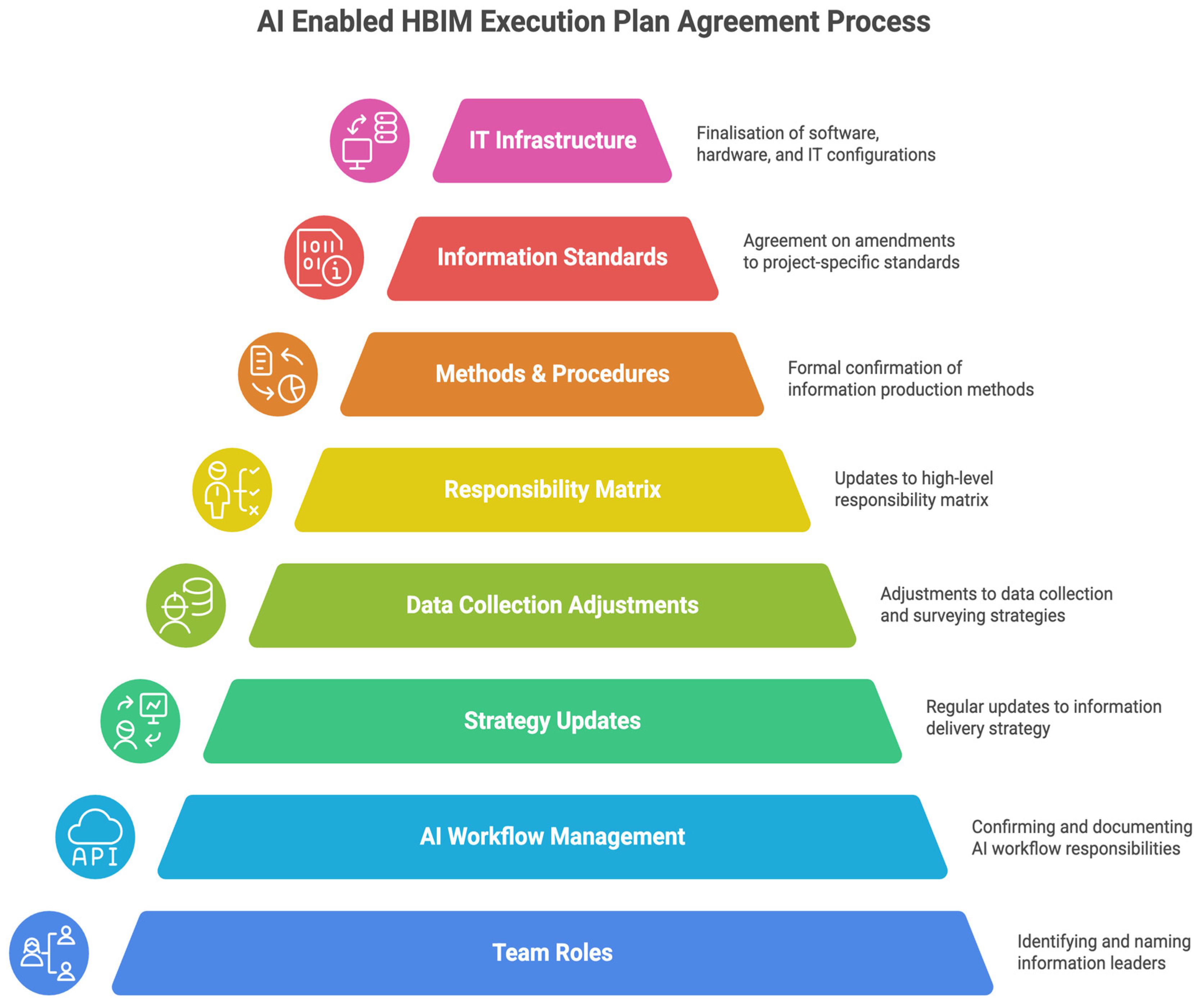
To ensure effective implementation and stakeholder alignment, the lead appointed party must confirm and document the AI-enabled HBIM Execution Plan in agreement with all appointed parties and relevant stakeholders. This confirmation process involves the following points as outlined in
Figure 11:
- (a)
Identifying and formally naming individuals within the delivery team responsible for overarching information management activities.
- (b)
Confirming and formally documenting the identities of personnel specifically responsible for developing, managing, and executing AI-related workflows.
- (c)
Regular updates to the information delivery strategy, reflecting stakeholder input and evolving project requirements.
- (d)
Adjustments to data collection and surveying strategies as necessary, responding dynamically to project scope and methodological refinements.
- (e)
Updates to the high-level responsibility matrix, ensuring continuous clarity in role allocation and deliverable ownership.
- (f)
Formal confirmation and documentation of agreed-upon methods and procedures governing information production.
- (g)
Agreement with the appointing party on any amendments to established project-specific information standards, maintaining clarity and transparency throughout the project lifecycle.
- (h)
Finalisation and formal acceptance of the schedule of software applications, hardware components, and IT infrastructure configurations to be utilised by the delivery team.
By establishing such clearly defined guidance, this execution plan supports structured, robust, and repeatable implementation of the AI-driven HBIM automation roadmap. Adoption of this approach at the national level as an official addendum to ISO 19,650 would significantly accelerate industry-standardisation processes and broaden sector-wide adoption. Regardless of the openness or proprietary nature of the developed point cloud classification and geometry generation methodologies, the inherent benefits of this execution plan remain clear. Effective implementation would substantially mitigate current bottlenecks associated with HBIM processes, empowering businesses and the wider industry to produce HBIM outputs more rapidly, cost-effectively, and to higher degrees of accuracy. Consequently, stakeholders would have additional capacity for semantic information management, enabling greater operational efficiency and the ability to concurrently manage a larger volume of heritage conservation projects.
8. Discussion
This research set out to develop a comprehensive roadmap for integrating artificial intelligence within Heritage Building Information Modelling, addressing long-standing inefficiencies in digital heritage workflows. The findings demonstrate that successful automation in HBIM depends not on a single algorithmic breakthrough but on a systemic orchestration of interdependent factors: classification and interoperability, data acquisition strategy, and computational feasibility. Together, these domains form the structural logic of the AI implementation roadmap, transforming the fragmented experimentation characteristic of earlier HBIM studies into a unified, repeatable methodology.
While the roadmap draws upon established methodological domains, including Design Science Research, ISO 19,650 information governance, and contemporary machine-learning architectures, its contribution lies in the structured integration of these elements into a motivation-driven, decision-sequenced organisational framework tailored specifically to heritage HBIM. Rather than introducing a novel algorithm, the research formalises the interdependencies between regulatory classification systems, acquisition strategies, and computational model selection within a single operational logic. This synthesis transforms disparate technical methods into a coordinated governance structure capable of guiding institutional AI adoption in heritage contexts, thereby extending beyond methodological aggregation toward strategic standardisation.
The analysis confirms that the most significant determinant of AI performance in heritage modelling lies in the management of classification systems. Current taxonomies such as NBS Uniclass and CIDOC CRM were not originally designed for machine learning, often producing ambiguity or redundant categories that degrade model performance. By introducing a lightweight interoperability mapping layer between human-readable classifications and computational label sets, this research offers a solution that preserves compliance with UK standards while improving algorithmic interpretability and reliability. This finding responds directly to the interoperability challenges, advancing the discourse from critique toward actionable standardisation.
A second core contribution is the recognition of data acquisition as a strategic decision-making process rather than a technical precondition. Experimental testing demonstrated that incomplete or misaligned point cloud data at critical junctions could reduce segmentation accuracy by up to twenty percent, a result consistent with broader computer vision literature. The roadmap therefore reframes data capture as a goal-driven activity embedded within project motivation and classification strategy. This aligns with the study’s critical realist ontology: heritage buildings exist as objective physical entities, yet their digital representations are partial reconstructions shaped by cultural, institutional, and methodological choices. High-quality data, contextualised through professional interpretation, remains essential to reconcile physical accuracy with historical meaning.
Computational feasibility represents the third determinant of AI integration. Comparative performance testing showed that classical machine learning methods such as Random Forests achieved strong results on moderate datasets with limited computational demand, while deep learning architectures such as Point Transformer V3 provided superior contextual understanding at significantly higher cost. The roadmap translates these findings into a set of proportional decision thresholds, allowing project teams to select appropriate AI pathways according to resource availability. This pragmatic logic enables inclusivity across the sector, from large institutions with access to advanced infrastructure to smaller consultancies with limited capacity. Expert interviews reinforced this need for proportionality and confirmed that phased adoption, starting with low-complexity, high-reward automation tasks, is both achievable and desirable.
A distinctive theoretical advancement of this study lies in the introduction of the Five HBIM Motivations—revival, restoration, restitution, retrofit, and resilience—as a motivational structure connecting conservation logic with computational workflow. By embedding heritage intent at the earliest decision stage, the roadmap ensures that automation serves cultural and ethical objectives rather than subsuming them. Scenario testing demonstrated that this approach enhances both technical coherence and semantic relevance: restoration projects benefited from conservative data capture and high geometric fidelity; retrofit and resilience cases favoured scalable deep learning approaches, while revival and restitution projects drew strength from interpretive reconstruction workflows. This motivational alignment bridges the gap between computational logic and conservation philosophy, a gap long recognised but rarely operationalised in HBIM research.
Validation through expert consultation confirmed the roadmap’s conceptual and practical integrity. Participants endorsed its capacity to balance automation efficiency with human oversight and its compatibility with ISO 19,650 principles of information management. The emphasis on human-in-the-loop validation aligns with ethical AI practices, ensuring transparency and accountability in decision-making. However, experts also identified implementation barriers, including limited access to high-performance computing, uneven digital maturity across heritage institutions, and cultural scepticism toward automation. These constraints are addressed not through universal technical escalation, but through proportional AI pathway selection, phased automation aligned with HBIM motivations, and the explicit positioning of the AI-enabled HBIM Execution Plan as a human-in-the-loop governance instrument that maintains professional oversight while incrementally introducing computational workflows. Overall, this reinforces the roadmap’s emphasis on phased adoption and training, highlighting the need for policy-driven support and national capacity-building.
Despite its contributions, the research is subject to several limitations. The experimental scope focused on selected AI architectures, primarily Random Forests, computer vision and transformer-based models, and further comparative testing across additional deep learning frameworks could refine these benchmarks. The case datasets, while representative of UK practice, do not encompass the full range of material or typological diversity found in global heritage contexts. Moreover, the expert validation phase, though methodologically rigorous, involved a limited number of participants. However, this is consistent with qualitative research practices, and the seniority, disciplinary diversity, and institutional roles of the selected experts were intentionally used to ensure that validation reflected strategic, operational, and technological perspectives across the digital heritage ecosystem. Future replication with a larger and more diverse participant base would provide deeper insights into institutional readiness and sectoral adoption dynamics. Finally, while the roadmap is validated conceptually and procedurally, its performance over multiple project lifecycles remains to be empirically measured through longitudinal deployment.
9. Conclusions
This study presented an AI implementation roadmap for automated HBIM, providing a structured, evidence-based framework for integrating artificial intelligence into heritage documentation and modelling. Its originality resides not in the invention of new computational techniques, but in the formalisation of a structured, standards-aligned organisational architecture that operationalises AI within the governance constraints of cultural heritage practice. Developed through Design Science Research and grounded in critical realism and pragmatism, the roadmap connects data acquisition, classification, algorithm selection, and geometry generation within an iterative, standards-aligned decision process. It defines automation not as a replacement for expertise but as a means of augmenting human judgement, ensuring that cultural authenticity and interpretive integrity remain central to digital heritage practice.
The research demonstrates that effective automation in HBIM relies on three interdependent factors: classification and interoperability, data acquisition quality, and computational feasibility. The roadmap addresses these through a lightweight interoperability mapping layer, goal-driven data capture strategies, and proportional AI pathway selection, allowing teams to adapt methods to both technical and organisational capacity. Embedding the Five HBIM Motivations that project intent guides every technical decision, transforming automation from a generic process into a purpose-driven workflow aligned with conservation ethics.
The roadmap’s alignment with ISO 19,650 principles and its companion AI-enabled HBIM Execution Plan bridge the gap between experimental innovation and institutional practice. Together, they offer a replicable and scalable approach that heritage organisations can adopt immediately within existing regulatory frameworks. By introducing validation checkpoints at every decision node, the framework operationalises the “human-in-the-loop” model, maintaining accountability, transparency, and quality control in AI-assisted workflows.
While the roadmap offers significant advancements, the study recognises several limitations. The experimental dataset represents a subset of UK heritage typologies, and future work should expand testing across diverse materials and contexts. The comparative analysis of AI architectures focused on Random Forest and transformer-based models; subsequent research could explore additional deep learning families and hybrid approaches. Broader stakeholder engagement, including craft specialists, curators, and regional authorities, would also enrich understanding of cultural and institutional readiness for AI adoption.
Future research should build upon these foundations by developing shared open-access training datasets, formalising interoperability mappings between heritage ontologies and classification standards, and conducting longitudinal studies that evaluate long-term benefits in cost, accuracy, and conservation outcomes. Ethical governance also warrants deeper exploration, particularly regarding data provenance, bias mitigation, and the documentation of expert input within AI-driven processes.
In summary, this research establishes a robust and adaptable pathway for embedding artificial intelligence in Heritage Building Information Modelling. By aligning computational efficiency with cultural responsibility, the roadmap ensures that automation strengthens rather than diminishes professional expertise. It provides both a methodological foundation and a practical toolset for advancing HBIM toward a future where digital precision and heritage authenticity coexist within a unified, ethically grounded framework.