Abstract
In regions with hot summers and cold winters, elderly care buildings face the dual challenges of high energy consumption and stringent thermal comfort requirements. Using Nanchang as a case study, this research presents an optimization approach that integrates phase change material (PCM) walls with the window-to-wall ratio (WWR). PCM wall performance was tested experimentally, and EnergyPlus simulations were conducted to assess building energy use for WWR values ranging from 0.25 to 0.50, with and without PCM. The phase change material (PCM) used in this study is paraffin (an organic phase change material), which has a melting point of 26 °C and can store and release heat during temperature fluctuations. The experimental results show that PCM walls effectively reduce heat transfer, lowering the surface temperatures of external, central, and internal walls by 3.9 °C, 3.8 °C, and 3.7 °C, respectively, compared to walls without PCM. The simulation results predict that the PCM wall can reduce air conditioning energy consumption by 8.2% in summer and total annual energy consumption by 14.2%. The impact of WWR is orientation-dependent: east and west façades experience significant cooling penalties as WWR increases and should be maintained at or below 0.30; the south façade achieves optimal performance at a WWR of 0.40, with the lowest total energy load (111.2 kW·h·m-2); and the north façade performs best at the lower bound (WWR = 0.25). Under the combined strategy (south wall with PCM and WWR = 0.40), annual total energy consumption is reduced by 9.8% compared to the baseline (no PCM), with indoor temperatures maintained between 18 and 26 °C. This range is selected based on international thermal comfort standards (e.g., ASHRAE) and comfort research specifically targeting the elderly population, ensuring comfort for elderly occupants. These findings offer valuable guidance for energy-efficient design in similar climates and demonstrate that the synergy between PCM and WWR can reduce energy consumption while maintaining thermal comfort.
1. Introduction
Buildings account for a substantial share of global energy use [1]. In China’s hot-summer–cold-winter (HSCW) zone, long, humid winters and hot summers keep heating and cooling demand high. Rapid population aging elevates thermal-comfort requirements in elderly care facilities and raises energy use [2]. Improving the efficiency of these buildings supports the dual-carbon targets (optimizing both the building’s energy efficiency and indoor thermal comfort) and sustainable development [3]. Envelope optimization—wall composition and window-to-wall ratio (WWR)—is a direct lever to cut demand while maintaining comfort [4]. Phase-change materials (PCM) with high latent-heat storage have therefore become a focus for envelope research. During phase transition, PCMs absorb and release heat, stabilizing internal temperatures and reducing HVAC loads. Previous studies have shown that PCM layers, such as those with a phase-change temperature of 30 °C and approximately 30 mm thickness, can reduce wall temperature variations and cooling demand in HSCW climates [5]. Additionally, PCM walls have been confirmed to reduce both cooling and heating loads. The WWR significantly affects thermal loads, with its impact varying based on orientation. Optimizing WWR is a crucial step in reducing total energy consumption.
Phase change materials (PCMs) demonstrate significant potential in building energy conservation. Incorporating PCM into opaque envelopes helps reduce both cooling and heating loads while improving the indoor thermal environment [6]. In high-rise buildings, combining PCM with efficient air-conditioning systems leads to improved energy performance, and integrating PCM into ventilation systems enhances solar-assisted airflow [7]. In hot-summer, cold-winter (HSCW) climates, Yang et al. observed a trend where the effect of window-to-wall ratio (WWR) first decreases and then increases as WWR grows, with the south façade being able to accommodate slightly larger WWR due to winter solar gains. In contrast, east and west façades experience steep cooling penalties as WWR increases due to the strong oblique sun exposure [8]. Additionally, window U-value and shading influence these outcomes; low-U, high-performance glazing combined with effective shading can mitigate the penalties associated with larger windows [9]. Therefore, WWR should be optimized for each façade orientation to balance energy use, daylighting, and thermal comfort [10].
External insulation offers a modest advantage over internal insulation, yet construction quality and detailing often limit savings to under 5% [11]. Low-U glazing, added thermal storage in walls and windows, and optimized WWR deliver larger reductions [12]. Data-driven methods have probed parameter impacts and energy–comfort trade-offs, including BP neural networks and multi-objective genetic algorithms [13]. Evidence tailored to elderly care buildings remains limited. Older occupants are thermally sensitive and spend long periods indoors, so generic measures transfer poorly [14]. Systematic studies that couple PCM walls with WWR for simultaneous energy and comfort objectives are scarce; most work isolates single factors, lacks experimental support, and overlooks the specific comfort needs of older adults. This study targets a typical elderly care facility in Nanchang and proposes a coordinated PCM-and-WWR strategy, focusing on their coupled regulation mechanism to reduce energy while improving indoor comfort. Experiments and simulations map optimal combinations and move beyond single-parameter optimization, offering evidence for green design and retrofit in HSCW regions.
Key gaps remain: (1) most studies optimize PCM or WWR in isolation and rarely test their synergy in elderly care settings; (2) empirical evidence for HSCW elderly care buildings is limited, and climate- and use-specific strategies are lacking; (3) many analyses rely on modeling with little measurement and seldom integrate elderly thermal-comfort requirements into the optimization.
This study focuses on a typical elderly care building in Nanchang and explores the combined effects of phase change material (PCM) walls and window-to-wall ratio (WWR) as design variables to optimize energy consumption while ensuring thermal comfort. Through a combination of experimental tests and energy simulations, the study identifies optimal design strategies for PCM and WWR integration in elderly care facilities.
2. Materials and Methods
2.1. Simulation Model
2.1.1. Workflow
To quantify the impact of PCM walls on energy use in elderly care buildings, we built an EnergyPlus model whose workflow covers model construction, parameterization, and results analysis [15]. Geometry and construction data for a typical elderly care facility in Nanchang were imported to generate the idf file, and the Nanchang hourly typical meteorological year (.epw) provided outdoor boundary conditions [16]. The model resolved envelope heat transfer by conduction, interior/exterior convection, and solar gains; the wall assembly was toggled with and without a PCM layer to form comparison cases, and hourly cooling and heating loads were computed to isolate the role of PCM in reducing summer cooling demand and moderating the thermal environment [17].
2.1.2. Physical Model
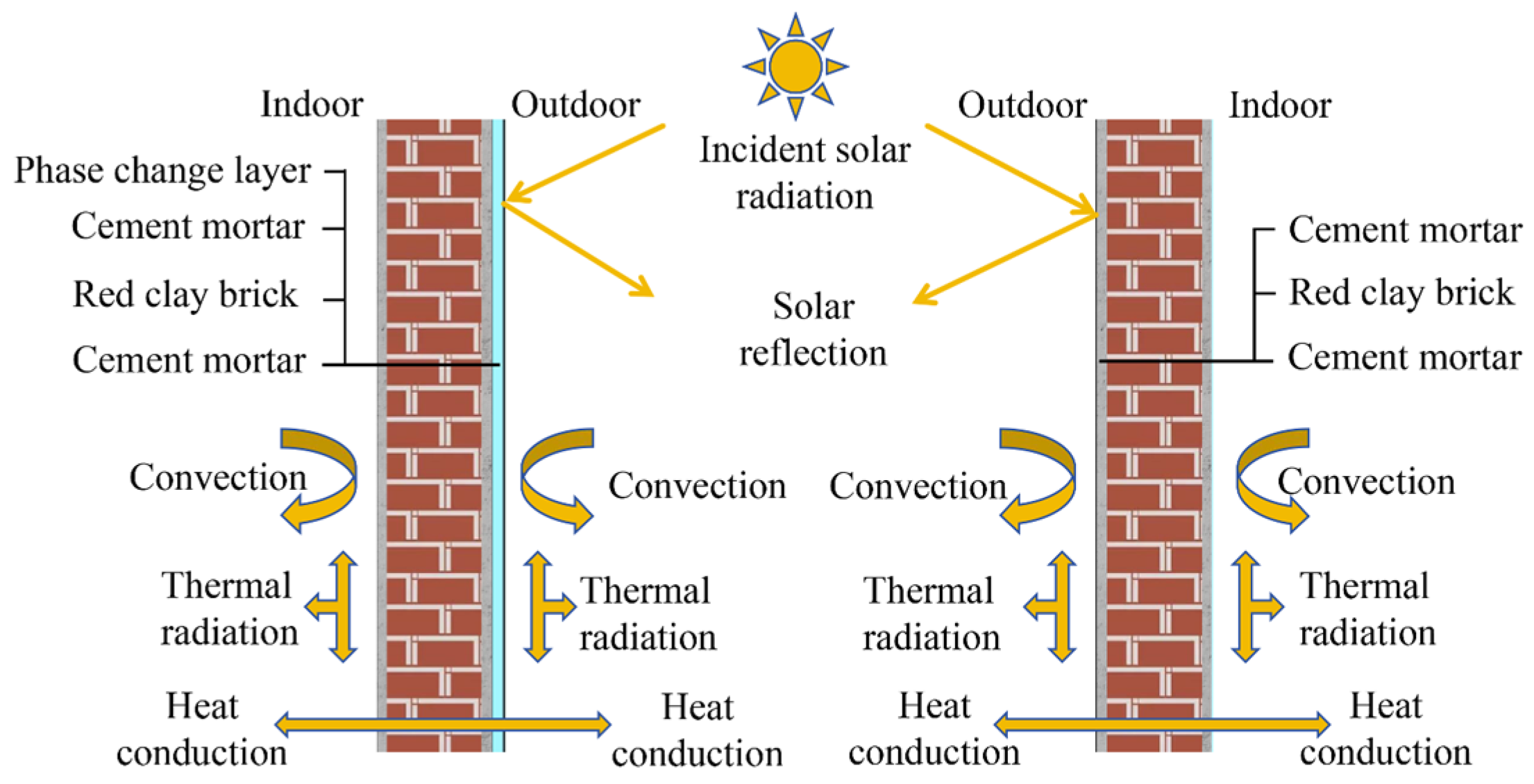
The reference exterior wall consists of a sandwich assembly with a 240 mm red clay brick layer between two 20 mm cement-mortar layers. For the PCM wall, a 20 mm PCM layer was mounted on the outer face of the south-facing wall, followed by cement mortar, brick, and cement mortar (Figure 1, left). The reference wall omits the PCM layer and consists only of cement mortar and brick layers (Figure 1, right). Thermophysical properties of all layers are listed in Table 1.
Figure 1.
Wall assemblies: PCM wall (left) and reference wall (right).
Table 1.
Thermophysical properties of wall materials.
2.1.3. Governing Equations and Assumptions
EnergyPlus solves building thermal processes with discretized heat-balance formulations. We used the EnergyPlus heat-balance model: conservation of energy is written for the zone air, the interior and exterior wall surfaces, and the whole-building balance, with multilayer wall conduction computed to close the thermal balance. The principal governing relations are given below [18]:
- Heat balance equation for indoor air:
- 2
- Heat balance equation for the exterior wall surface:
- 3
- Heat balance equation for the interior wall surface:
After establishing the above heat balance equations, the heat transfer processes within each layer of the wall must be further described [18]. Given the complexity of actual building heat transfer, the following assumptions were made for tractable modeling:
- Heat transfer is simplified to a one-dimensional, unsteady conduction process.
- Layers are assumed to be perfectly bonded, with interfacial contact resistance neglected.
- Both the PCM phase-change layer and other material layers are treated as thermally homogeneous and isotropic.
- In numerical analysis, the thermal properties of PCM are temperature-independent except during the phase-change process.
- No additional internal heat sources are present indoors.
- Only temperature-driven heat transfer is considered; effects of moisture variation and rain penetration are neglected.
Based on these assumptions, heat transfer in the envelope is conduction-controlled. The energy equation for the PCM layer is as follows:
where ρpcm is the density of PCM [kg/m3]; cp(T) is the specific heat capacity of PCM [J/(kg·K)]; λpcm is the thermal conductivity of PCM [W/(m·K)].
The heat transfer equation for other material layers is as follows:
The above governing equations are solved in EnergyPlus (Version 9.6) using internal algorithms such as the Conduction Transfer Function (CTF) method.
2.2. Experimental Setup
2.2.1. Construction of Experimental Platform
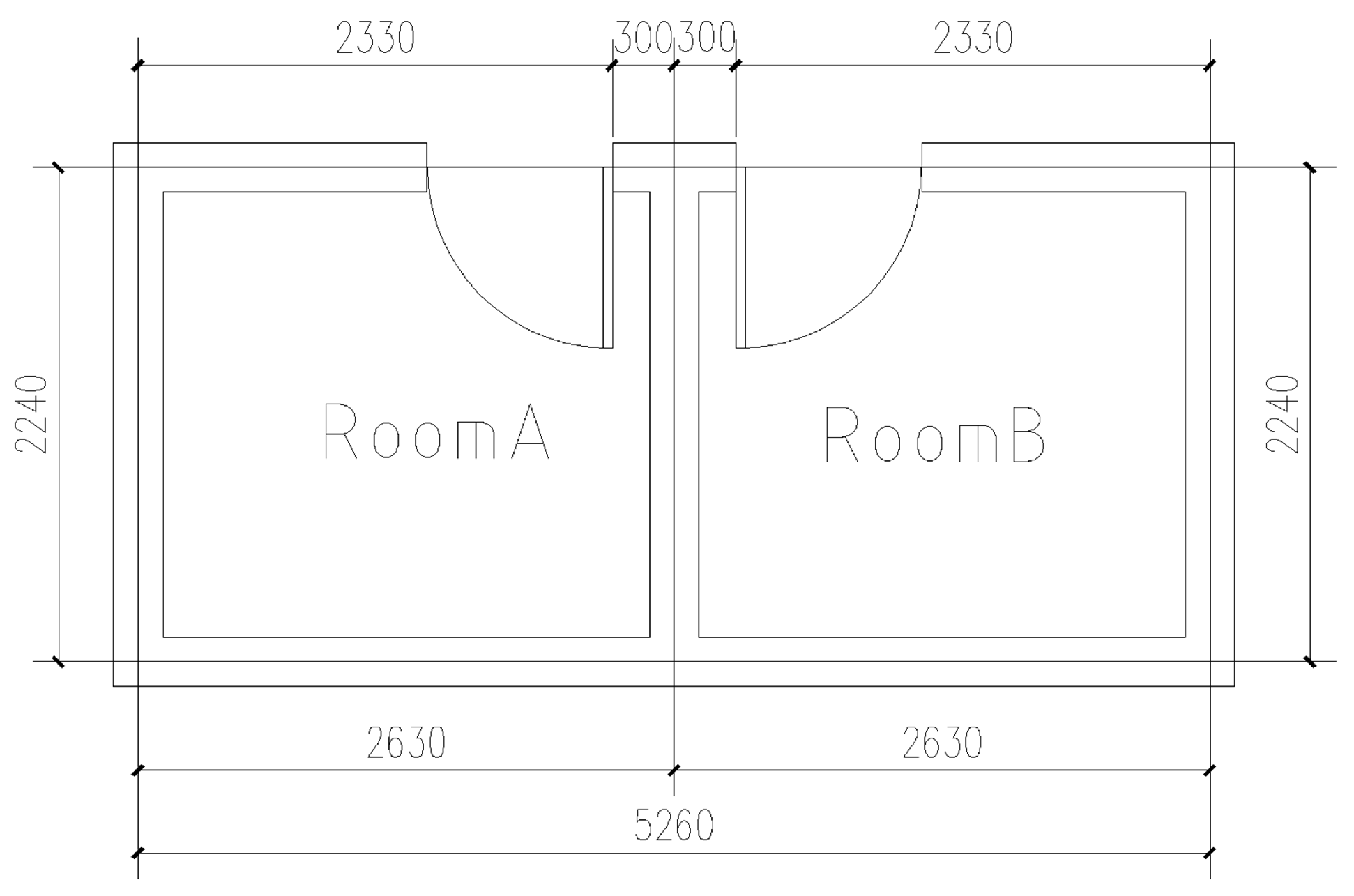
To validate the model and obtain the actual energy-saving effect of the PCM wall, a comparative experimental platform was built on the rooftop laboratory of the School of Engineering Construction at Nanchang University. Two test rooms identical in size and construction—denoted Room A and Room B—were prepared, each with a floor area of 5.89 m2 (2.63 m × 2.24 m) and a story height of 2.4 m. The floor plan is shown in Figure 2. Both rooms face south; their envelope constructions are the same: from exterior to interior, the wall is 20 mm cement mortar + 240 mm brick + 20 mm cement mortar; the roof is a 0.2 mm steel sandwich panel + 75 mm EPS insulation board + 0.2 mm steel sandwich panel; each north wall has a 0.9 m × 2.0 m aluminum door for access.
Figure 2.
Floor plan of the experimental rooms.
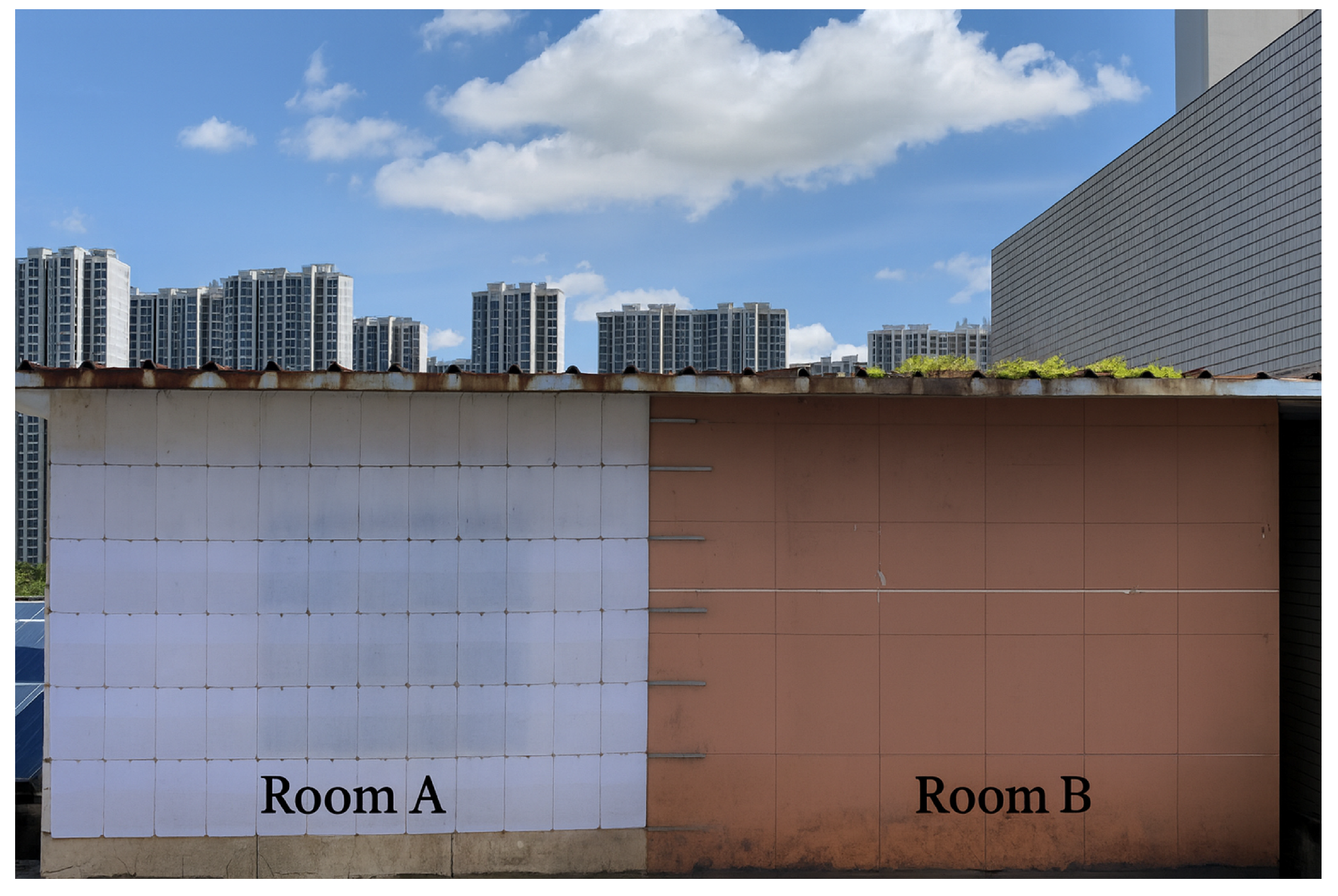
For the comparison, the south exterior wall of Room A (experimental group) was equipped with an additional PCM layer, while Room B remained a conventional brick wall (control group) [19]. The PCM used in this study is a paraffin-based (Sichuan Aishipai New Material Technology Co., Ltd., Chengdu, China) organic material with a melting point of 26 °C, a density of 900 kg/m3, a specific heat capacity of 2464 J/kg·K in the solid state, a specific heat capacity of 2950 J/kg·K in the liquid state, a thermal conductivity of 0.28 W/m·K in the solid state, and a thermal conductivity of 0.14 W/m·K in the liquid state. The values were taken from the manufacturer’s technical data sheet and previous experimental characterizations reported in refs. [5,6,20]. In the simulations, these properties were treated as constant over the phase-change interval. It should be noted that the present study did not perform differential scanning calorimetry (DSC) or cyclic stability tests on the PCM. Therefore, the phase-change behavior and long-term stability are represented by fixed parameters rather than directly measured curves, and the PCM properties are effectively treated as assumptions within the validated range of the literature. The paraffin is encapsulated in a flat container and installed on the outer wall of the southern facade of the experimental group. The selection of this phase change material is based on its excellent heat storage and release properties in climates characterized by hot summers and cold winters; it can effectively absorb and release heat during temperature fluctuations, thereby achieving the stabilization of indoor temperatures. (Figure 3 shows the installation) [21]. Thermophysical properties of the main materials in the PCM layer are listed in Table 2. With this arrangement, when the south-wall exterior surface temperature rises above 26 °C, the PCM begins to melt and absorb heat, slowing the wall’s temperature rise; when the temperature falls through 26 °C, the PCM solidifies and releases heat, providing delay and smoothing of heat transfer [19]. In this study, the indoor temperature range is set to 18–26 °C, which is selected primarily based on ASHRAE standards and relevant research on the thermal comfort of the elderly. This temperature range is widely recognized as a suitable thermal comfort range for the elderly, as it helps improve the comfort of their living environment while meeting energy efficiency requirements.
Figure 3.
Installation of the PCM layer on the south wall. (Room A: Experimental room with PCM layer installed on the south-facing wall; Room B: Control room with no PCM layer on the south-facing wall).
Table 2.
Properties of the PCM layer and other envelope components (Data sourced from the author’s survey).
2.2.2. Experimental Conditions
The comparative experiment was conducted in Nanchang from 3 July to 10 July 2025; the weather was clear and stable with no rainfall, representing typical summer conditions. During the experiment, both rooms had no occupancy, and all HVAC systems were kept off to ensure that only ambient factors affected wall heat transfer and indoor temperature. No heat-generating equipment was placed inside either room, eliminating internal heat sources. To evaluate the PCM wall’s ability to regulate envelope temperature, we monitored for one week under non-air-conditioned conditions and compared wall temperature variations between the two rooms to quantify the PCM effect.
2.2.3. Sensor Deployment
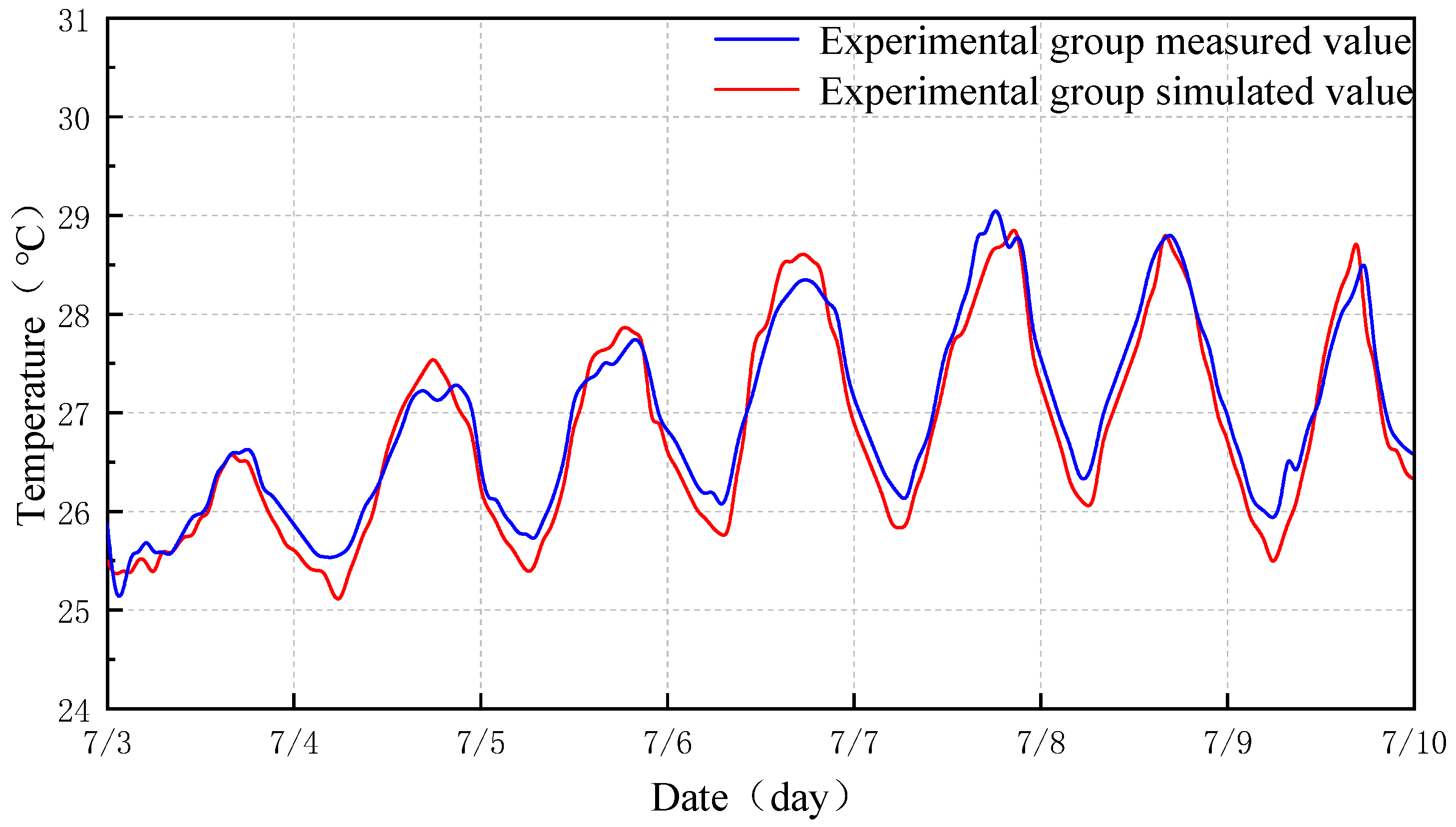
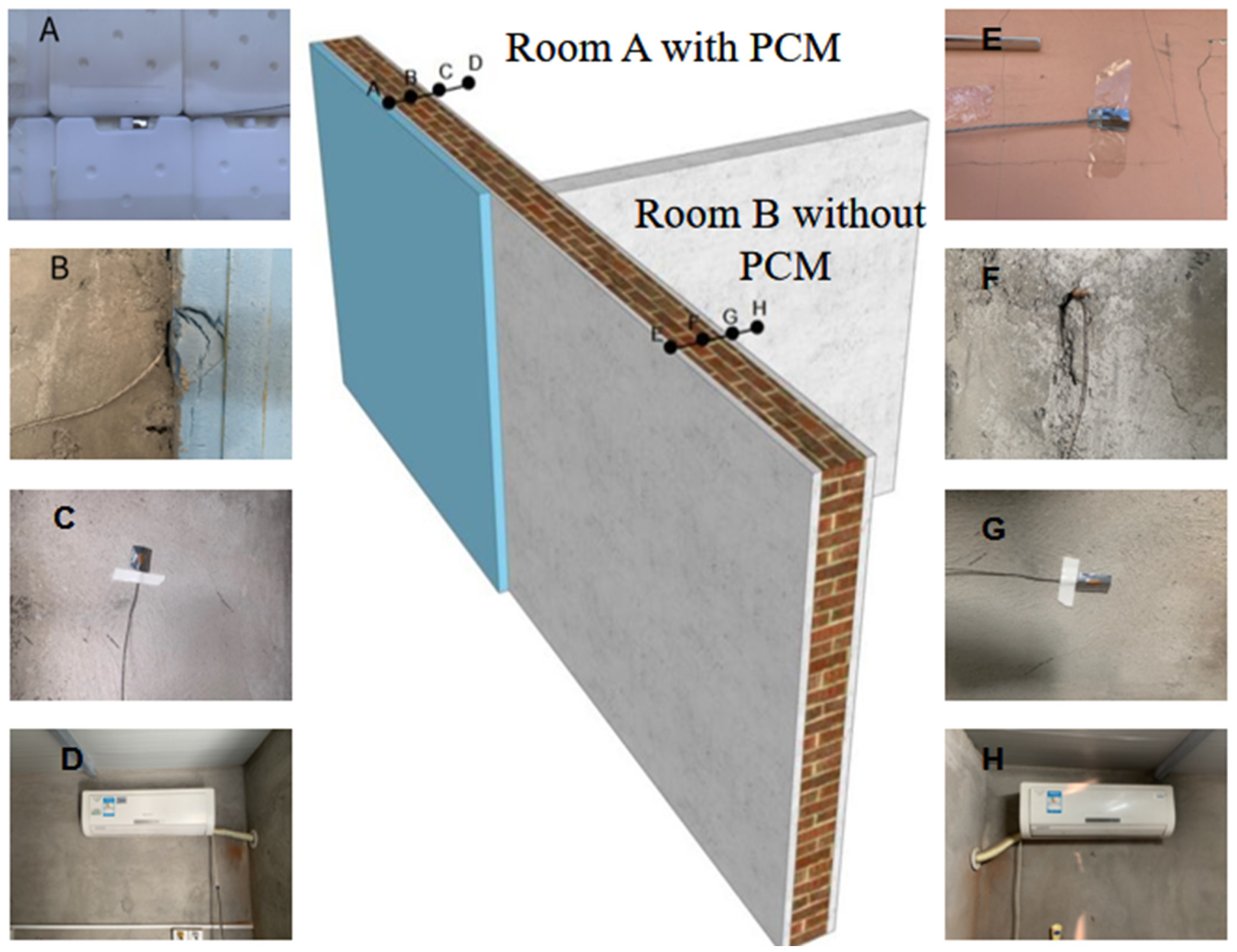
To obtain the temperature distribution across wall layers, temperature measurement points were installed at representative locations on the exterior envelope of the experimental room (Room A). One Pt-100 sensor was embedded at each of three positions on the south PCM wall—outer surface, brick mid-plane, and inner surface—to record temperature variations at different layers (Figure 4). All sensors were connected to the data logger with a 4 min sampling interval and monitored continuously from 3 July to 10 July. To suppress short-term sensor fluctuations, the raw series was smoothed by a moving-average filter; each on-the-hour value was computed from a 31-point window centered on that hour (±15 samples). The smoothed series was then used for comparison with simulation results.
Figure 4.
Sensor locations on the PCM wall. (A) Exterior surface of the south wall of Room A; (B) Mid-plane of the south wall of Room A; (C) Interior surface of the south wall of Room A; (D) Air conditioner location; (E) Exterior surface of the south wall of Room B; (F) Mid-plane of the south wall of Room B; (G) Interior surface of the south wall of Room B; (H) Air conditioner location.
2.2.4. Uncertainty Analysis of Measurements
The Pt-100 temperature sensors have a nominal accuracy of ±0.1 °C after calibration, and the data logger resolution is 0.1 °C. Considering sensor accuracy, calibration residuals, and wiring effects, the combined standard uncertainty of the wall-temperature measurements was estimated using the root-sum-of-squares method as approximately ±0.2–0.3 °C. This level of uncertainty is much smaller than the observed mean temperature differences between the PCM and reference walls (≈3–4 °C), indicating that the reported performance improvements are robust with respect to measurement errors.
2.2.5. Experimental Results Analysis
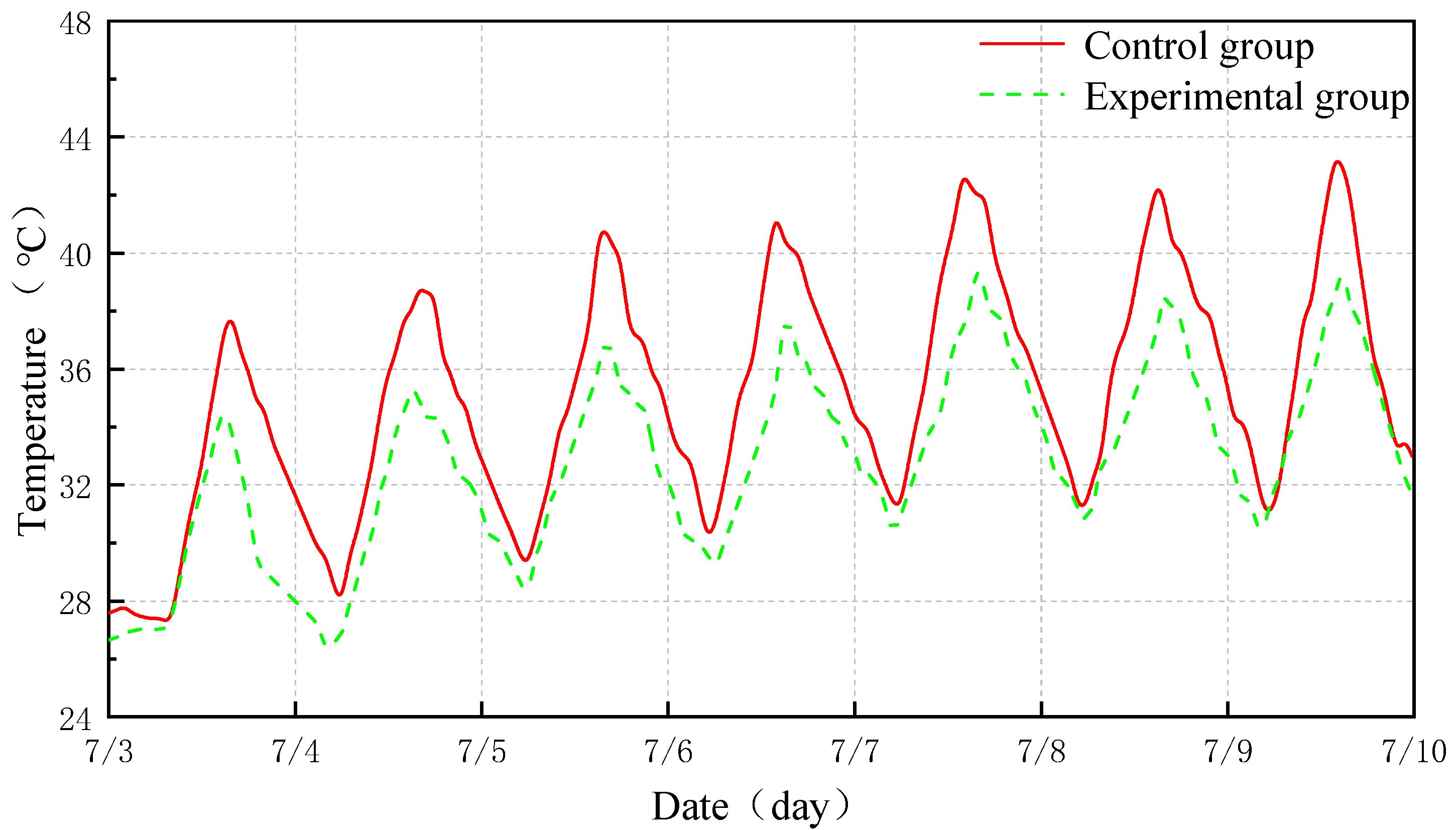
Figure 5 shows the diurnal evolution of exterior wall surface temperature for Room A (PCM) and Room B (control). Under solar exposure, the PCM wall remained markedly cooler, with the gap most pronounced in the afternoon; on 5 July at 15:00 the conventional wall peaked at 36.8 °C while the PCM wall reached 32.0 °C. Period-average surface temperatures were 35.8 °C and 31.9 °C, a reduction of 3.9 °C, indicating that latent heat absorption suppressed exterior warming and slowed heat transmission indoors. The reported temperature reductions (e.g., 3.9 °C at the exterior surface) represent period-average values over the 7-day monitoring interval. The day-to-day standard deviation of the PCM–reference temperature difference was within ±0.4 °C, indicating relatively stable performance across the clear-sky summer days.
Figure 5.
Outer surface wall temperatures.
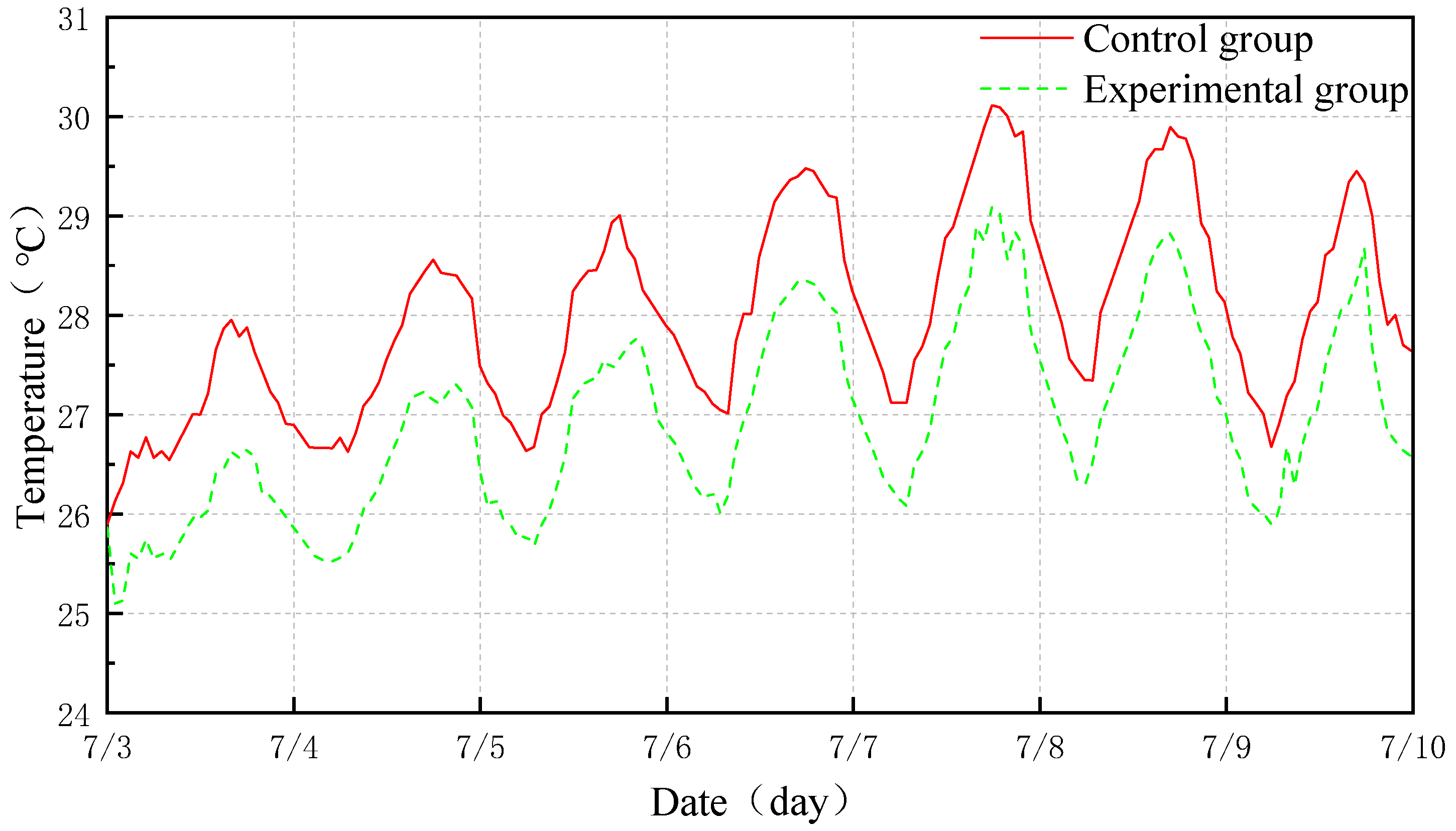
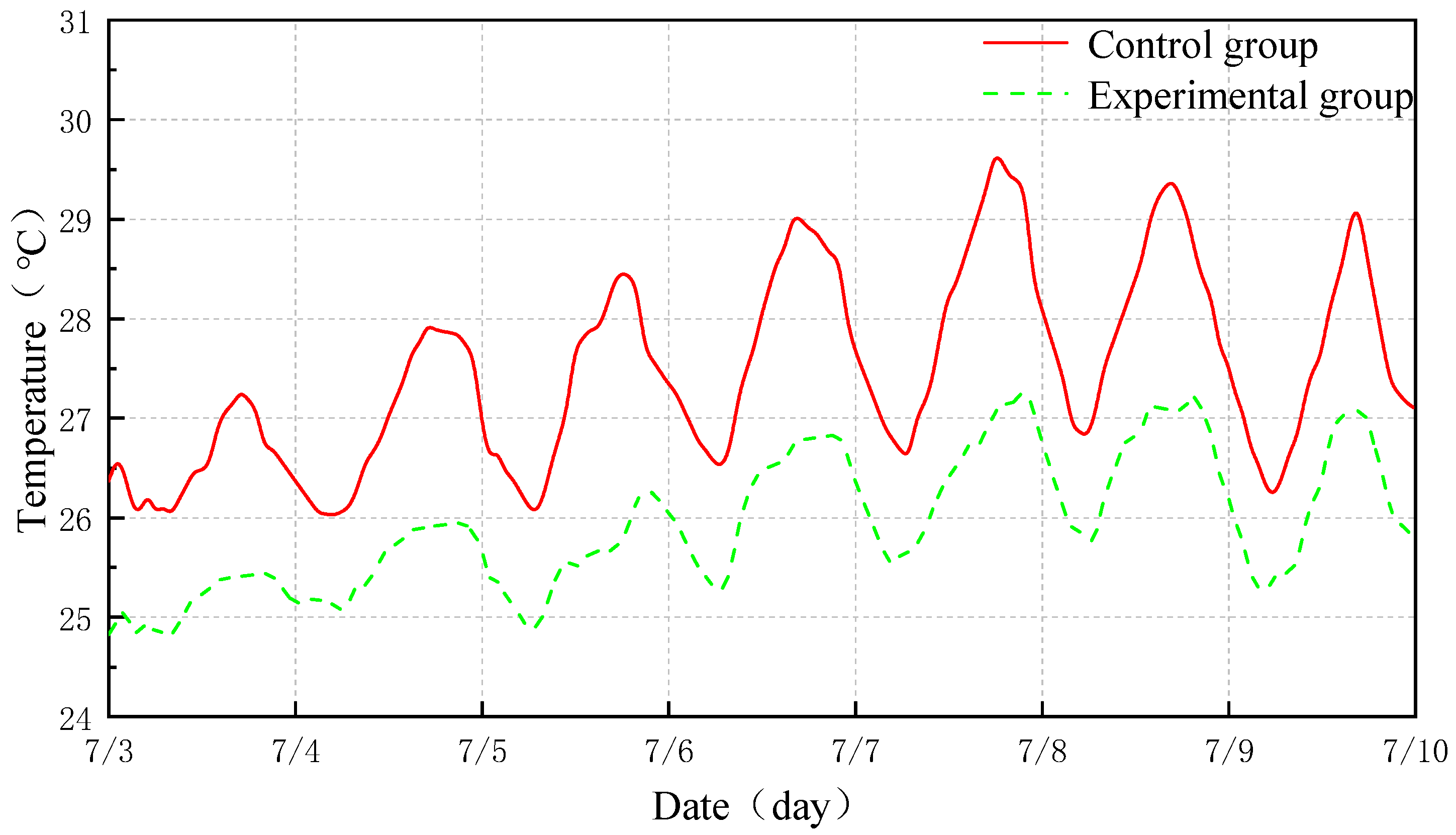
Figure 6 and Figure 7 compare the wall mid-plane and inner-surface temperatures. The PCM mid-plane stabilized at 28–30 °C during daytime, clearly below the control at 32–34 °C, and converged overnight as stored heat was released; period means were 28.6 °C versus 32.4 °C. For the inner surface, the PCM room’s daytime mean was 25.5 °C versus 29.2 °C for the control. Overall, the PCM wall lowered the envelope temperature level and attenuated outdoor heat ingress, underpinning cooling-load reduction.
Figure 6.
Centerline wall temperatures.
Figure 7.
Inner surface wall temperatures.
2.3. Model Validation
2.3.1. Simulation Model Setup (For Model Validation)
To verify the accuracy of the PCM wall heat-transfer model, a numerical comparison was performed using measured meteorological and temperature data. Weather inputs for 3–10 July were supplied to EnergyPlus (Version 9.6), and a two-room experimental model was simulated at hourly resolution. Indoor convection coefficients followed the built-in TARP algorithm; wall conduction was solved with the Conduction Transfer Function method. The model ran free-floating with no internal gains and no HVAC to match the experimental conditions; the ground boundary temperature was fixed at the measured mean soil temperature of 23.7 °C. Simulated outer-surface, mid-plane, and inner-surface wall temperatures for Rooms A and B were compared with measurements for validation.
The validation period covers 3–10 July, representing typical clear summer conditions in Nanchang. No additional validation was conducted for winter or extreme weather events; hence, the confidence in the model’s year-round performance is necessarily limited.
Building on this validation, an extended model was created to assess the PCM wall’s impact on summer cooling load. A two-room geometry approximating the test rooms (5.26 m × 2.24 m × 2.4 m) was developed in SketchUp with OpenStudio: Room A used a south PCM wall, and Room B a conventional wall. Envelope parameters follow Table 2 and Table 3. The simulation period covered 1 June–31 August, using Nanchang typical meteorological year data augmented with measured features. Cooling employed the Ideal Loads Air System (COP = 1) with the zone temperature maintained at 26 °C and no internal heat gains considered. Hourly cooling loads for the two rooms were compared to evaluate the PCM wall’s energy-saving potential in a hot-summer, cold-winter climate.
Table 3.
Envelope structure of the building model.
2.3.2. Accuracy Metrics
To quantify the temperature prediction accuracy, root-mean-square error (RMSE) and relative root-mean-square error (rRMSE) were used. The formulas are as follows:
where Test,i is the simulated temperature at time step i, Tobs,i is the measured temperature, is the mean of the measured temperatures, and n is the number of samples. When needed, the metrics are reported separately for the outer surface, wall mid-plane, and inner surface.
RMSE is the square root of the mean of squared deviations between simulations and measurements; a smaller value indicates lower model error. However, RMSE reflects only absolute deviation and does not convey relative accuracy [20]. Therefore, rRMSE is used in parallel and is now widely adopted for statistical evaluation of predictive accuracy [22]. In general, rRMSE < 5% indicates excellent accuracy; 5% < rRMSE < 10% is acceptable, and rRMSE > 10% suggests the model requires further refinement [22]. If accuracy is insufficient, adjust model parameters or assumptions and re-simulate until errors fall within acceptable limits.
2.3.3. Validation Accuracy
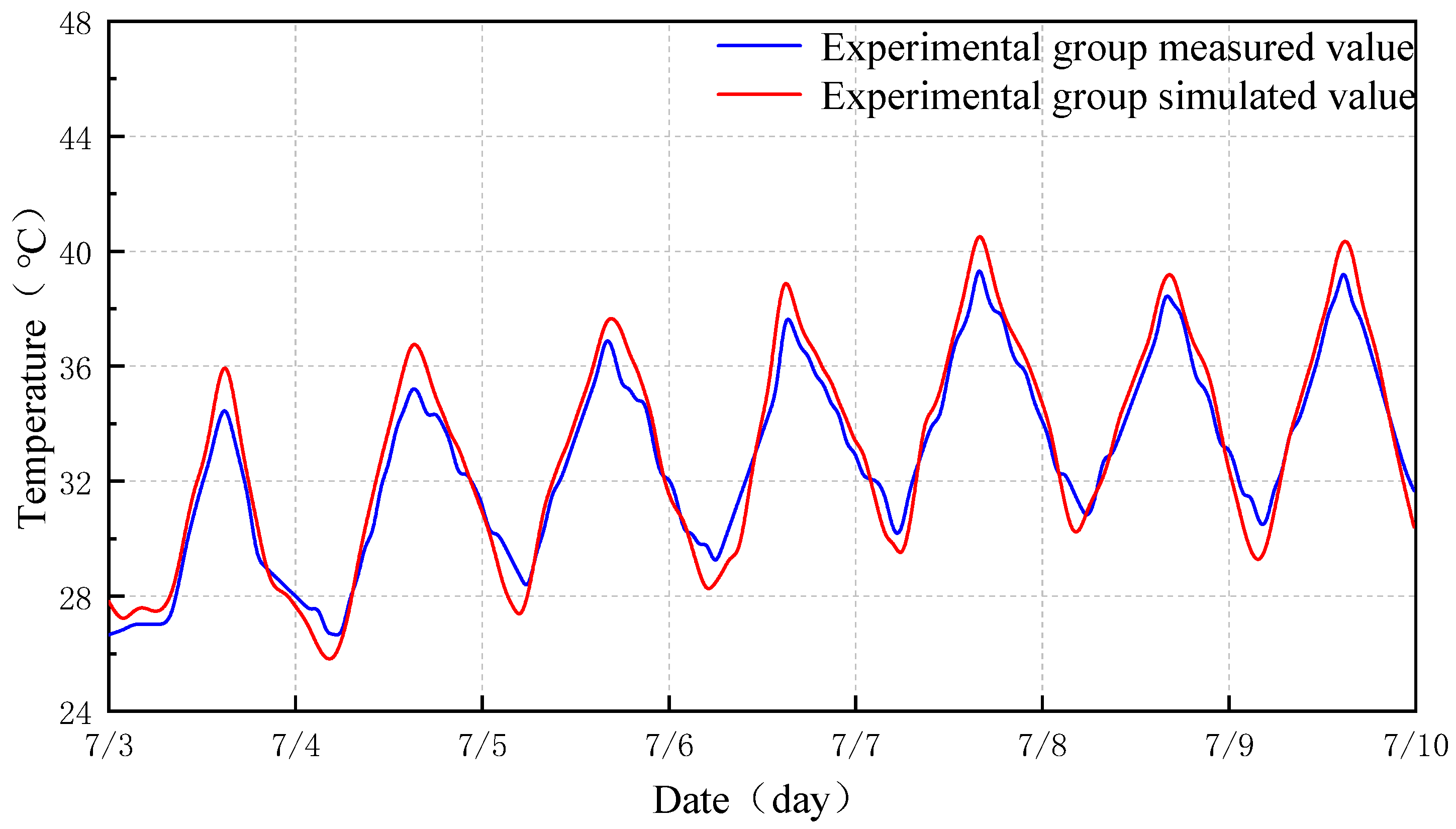
After the comparative experiment, measured temperatures were compared with EnergyPlus simulations to assess model accuracy. For the experimental room’s exterior wall surface (Figure 8), simulated and measured curves showed consistent diurnal warming–cooling behavior; most instantaneous differences lay between −2.5 °C and +1.8 °C. The statistics were RMSE = 1.05 °C and rRMSE = 3.1%, meeting the accuracy target.
Figure 8.
Experimental group wall: external surface temperature (measured vs. simulated).
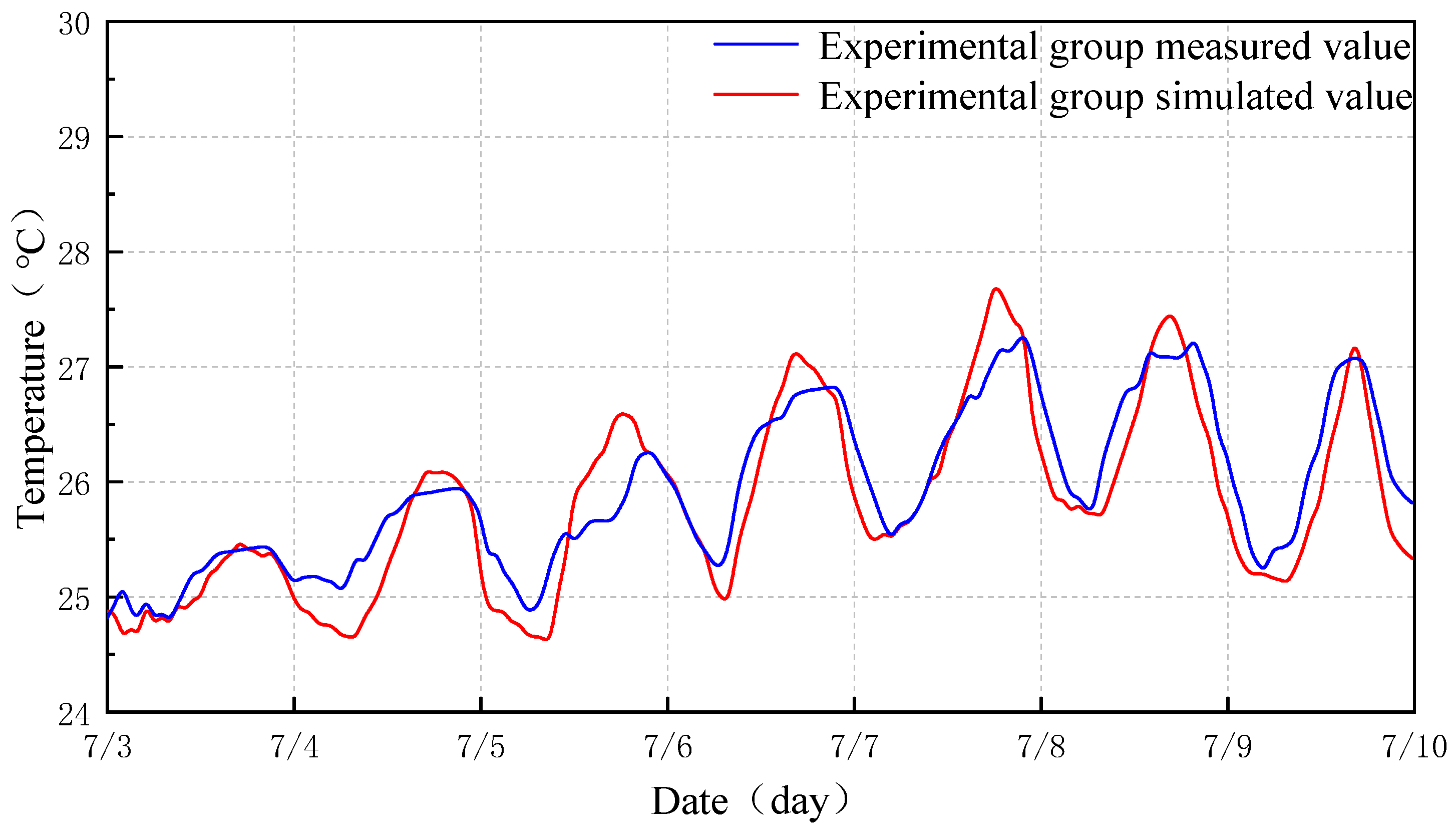
Figure 9 and Figure 10 compare mid-plane and inner-surface temperatures, with smaller discrepancies. The wall mid-plane exhibited a maximum deviation within ±0.6 °C, RMSE = 0.24 °C, rRMSE = 0.7%. The inner surface showed errors from −0.6 °C to +1.1 °C, RMSE = 0.42 °C, rRMSE = 1.2%. The RMSE and rRMSE values are of the same order as, or slightly above, the estimated measurement uncertainty, which supports the reliability of the validated EnergyPlus model. These results indicate that the PCM wall conduction model and the EnergyPlus solution approach reproduce temperatures at all layers with good accuracy and consistency, providing a reliable basis for subsequent energy-use simulations.
Figure 9.
Experimental group wall: center temperature (measured vs. simulated).
Figure 10.
Experimental group wall: internal surface temperature (measured vs. simulated).
Nevertheless, the PCM algorithm in EnergyPlus has been previously verified and validated against independent experimental data in the literature [23]. In this study, the model reproduces the measured wall temperatures with rRMSE values below 5%, which provides a reasonable basis for extending the simulations to full-year energy-use analysis.
3. Analysis of Annual Energy Consumption
3.1. Outdoor Climate
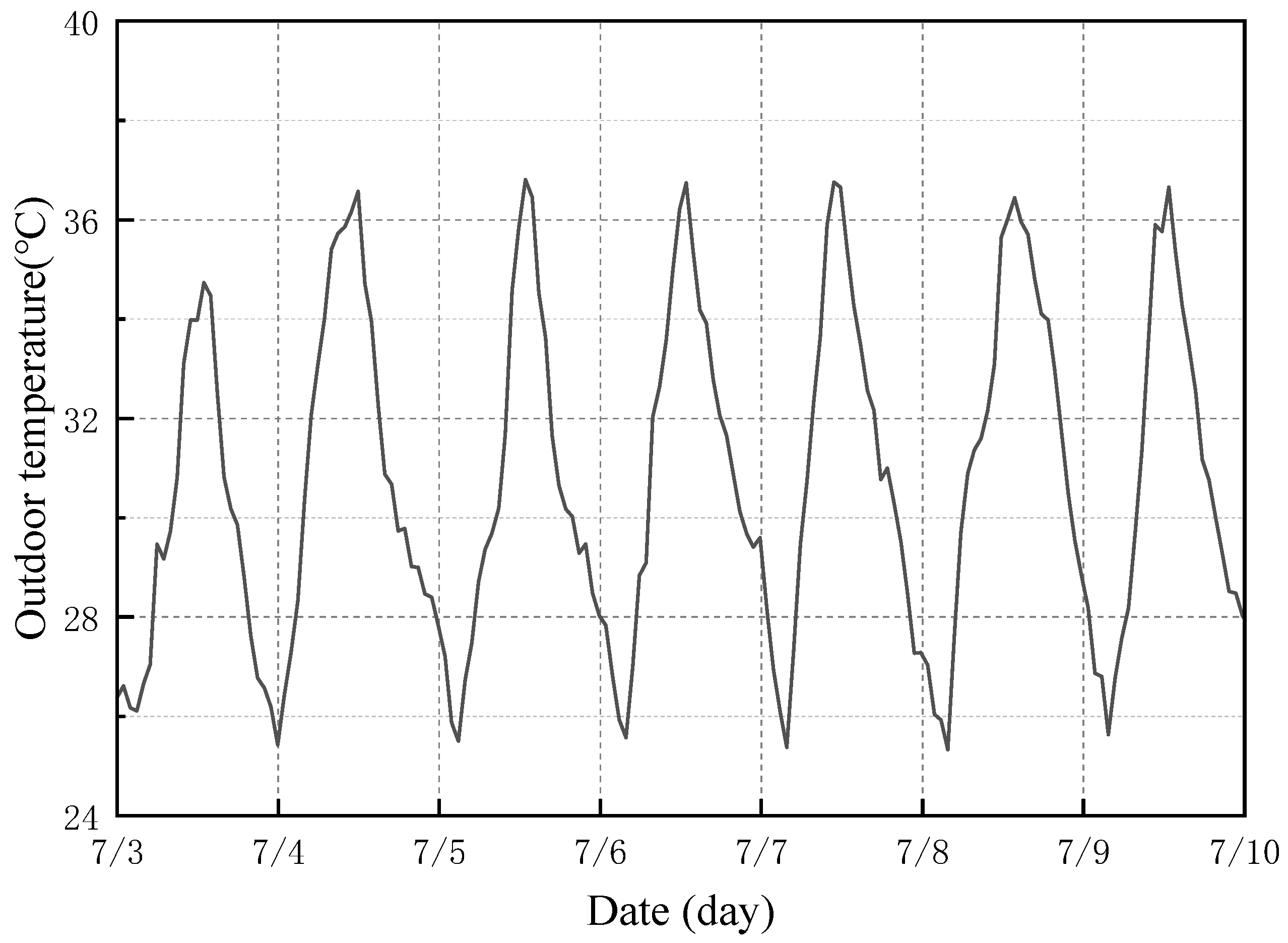
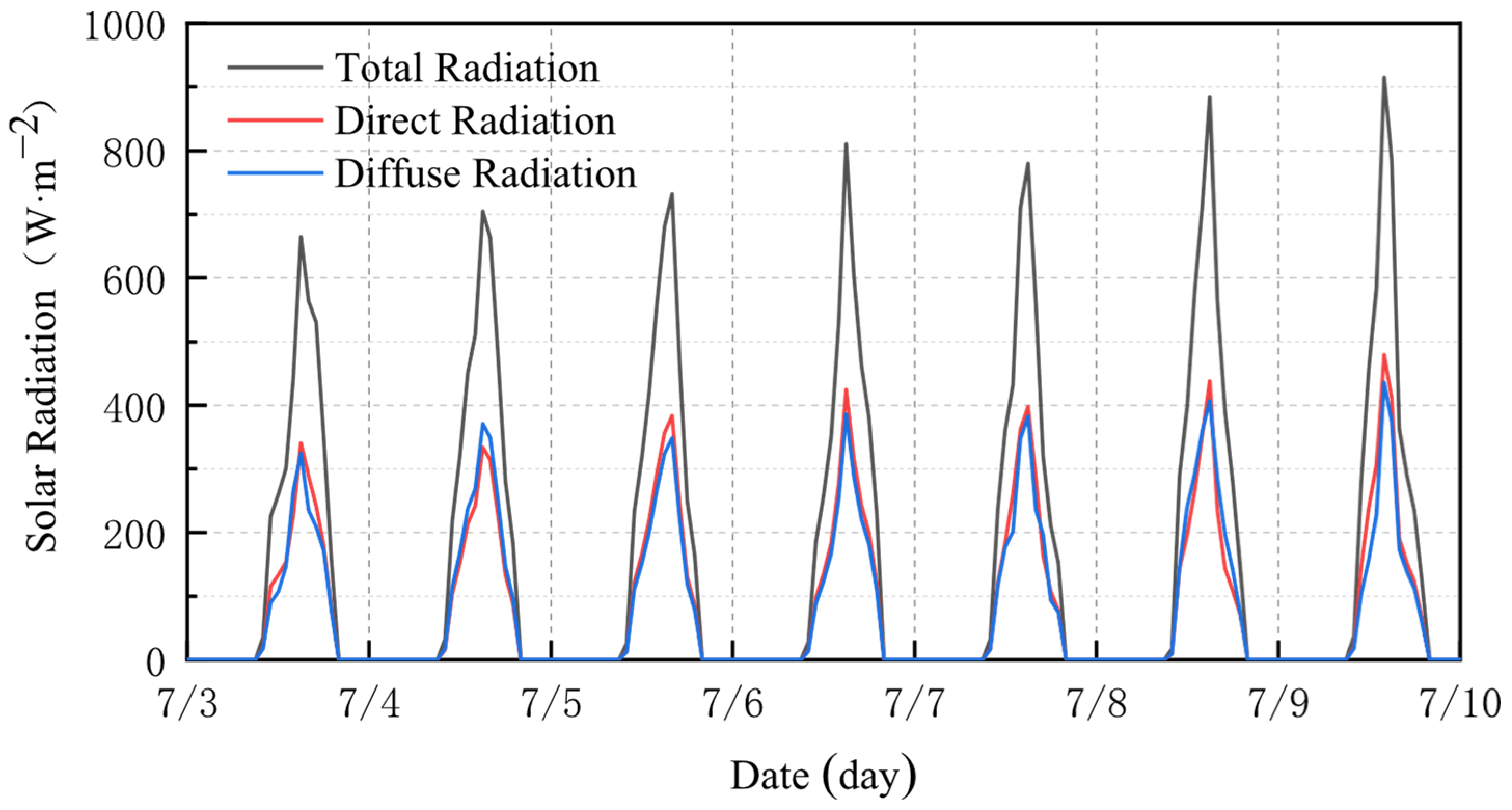
Two meteorological datasets were used: an annual set for simulation and an hourly measured set for the experimental period. The annual simulations used the EnergyPlus Typical Meteorological Year (TMY) for Nanchang, which captures hot–humid summers and cold–humid winters [24]. For validation (3–10 July 2025), hourly air temperature, global irradiance, direct beam, and diffuse radiation were taken from on-site measurements [25]. Figure 11 shows daily maxima near 37.5 °C and nighttime minima around 25 °C, characteristic of clear hot summer conditions. Figure 12 shows global irradiance rising rapidly after 09:00, with midday peaks above 800 W·m−2 and dominance of direct over diffuse radiation. These data provided realistic boundary conditions and improved the model’s ability to reproduce the building’s thermal response.
Figure 11.
Outdoor temperature during 3–10 July 2025.
Figure 12.
Total outdoor solar radiation during 3–10 July 2025.
3.2. Case Building
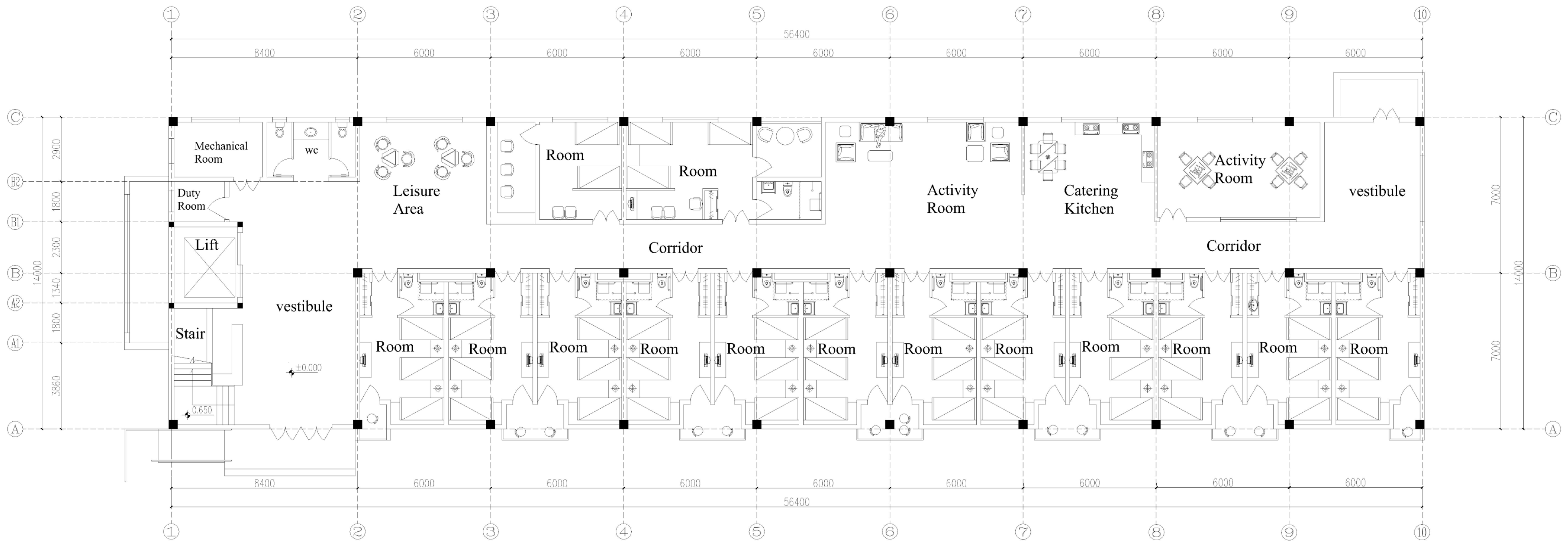
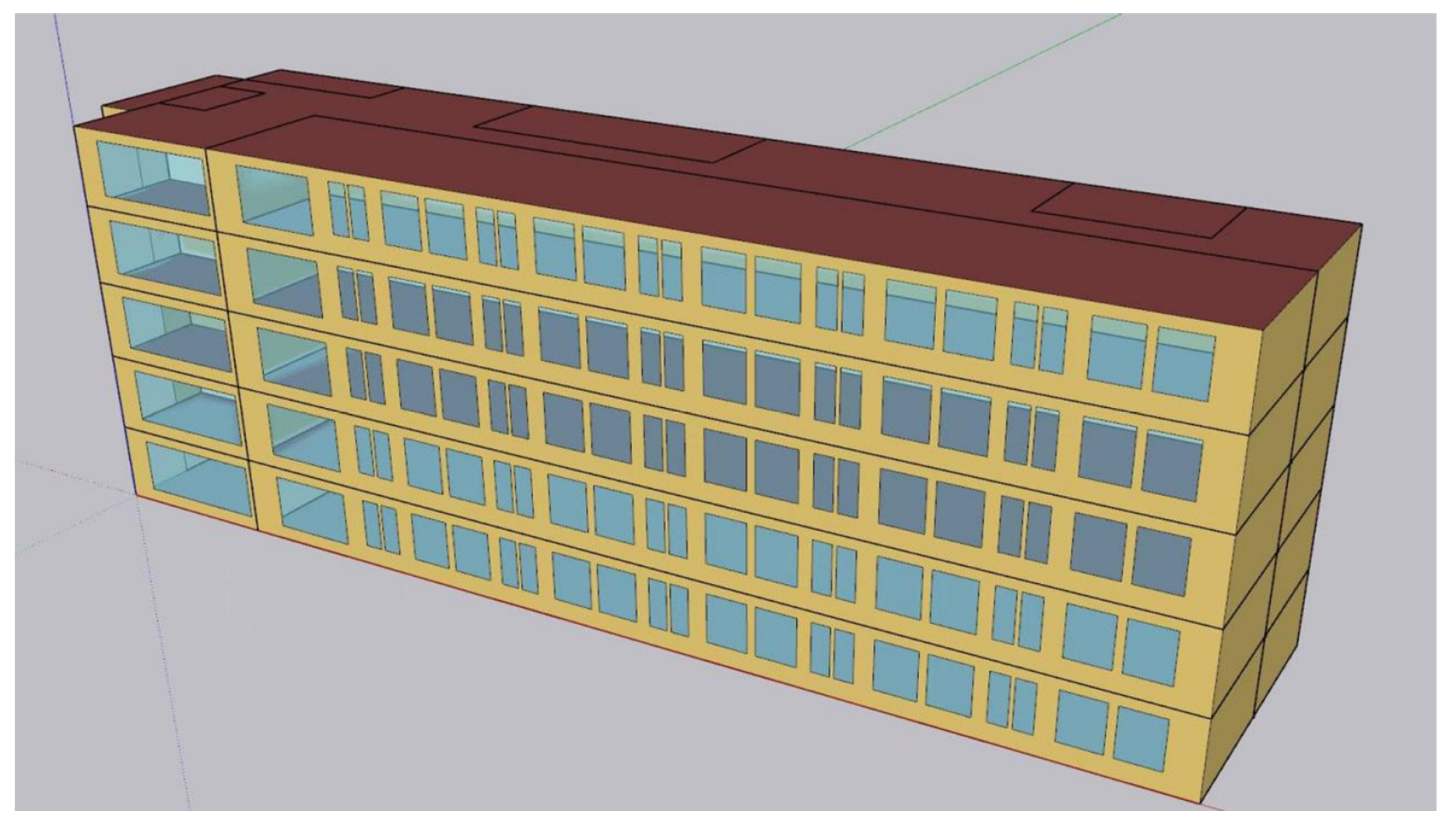
An elderly care facility in Nanchang was selected as the simulation case. The building faces south and has five stories; the gross floor area is approximately 4025.8 m2, of which 2331.72 m2 is air-conditioned, and the story height is 2.9 m. The first-floor plan is shown in Figure 13, and the 3D geometry was reconstructed in SketchUp from CAD drawings (Figure 14). The principal envelope components include the roof, exterior walls, floor slabs, interior partitions, and external windows. Materials and thermal parameters are listed in Table 4. Exterior walls adopt two configurations—a reference assembly and a PCM assembly (Table 5). Windows are double low-E insulating glazing units with U = 1.5 W·m−2·K−1 and SHGC = 0.35, providing good thermal performance. Window-to-wall ratios follow the limits for the HSCW zone in the Design Standard for Energy Efficiency of Public Buildings (GB 50189-2015): east/west ≤ 0.40, south ≤ 0.50, north ≤ 0.40 [26]. The baseline model sets south WWR = 0.50 and east, west, and north WWR = 0.40 [12]. For annual energy simulations, indoor gains were occupants 115 W per person, lighting power density 9 W·m−2, equipment 5 W·m−2 [27]. Cooling and heating loads were obtained using the EnergyPlus Ideal Loads Air System with EER = 1 [28]. Summer operation was 15 June–31 August with a 26 °C setpoint; winter was 1 December–February 28 with an 18 °C setpoint; shoulder seasons free-float without HVAC [29]. These parameters follow relevant energy-efficiency standards and published recommendations to ensure reasonable and representative boundary conditions.
Figure 13.
Ground-floor plan of the elderly care facility.
Figure 14.
Building energy model (BEM) of the elderly care facility.
Table 4.
Envelope thermophysical properties.
Table 5.
Wall assemblies for reference and PCM cases.
3.3. Impact of the Pcm Wall on Energy Use in Elderly Care Buildings
Building on the validated model, annual simulations were performed for a representative elderly care facility in Nanchang to compare cooling and heating loads with and without a PCM wall. In the PCM case, all south exterior walls incorporated a PCM layer with a melting temperature of 26 °C, consistent with the experiment, the non-PCM case used conventional walls throughout. Hourly cooling and heating loads were computed for the full year, and summer cooling energy (15 June–31 August) and annual total energy were extracted for comparison [30].
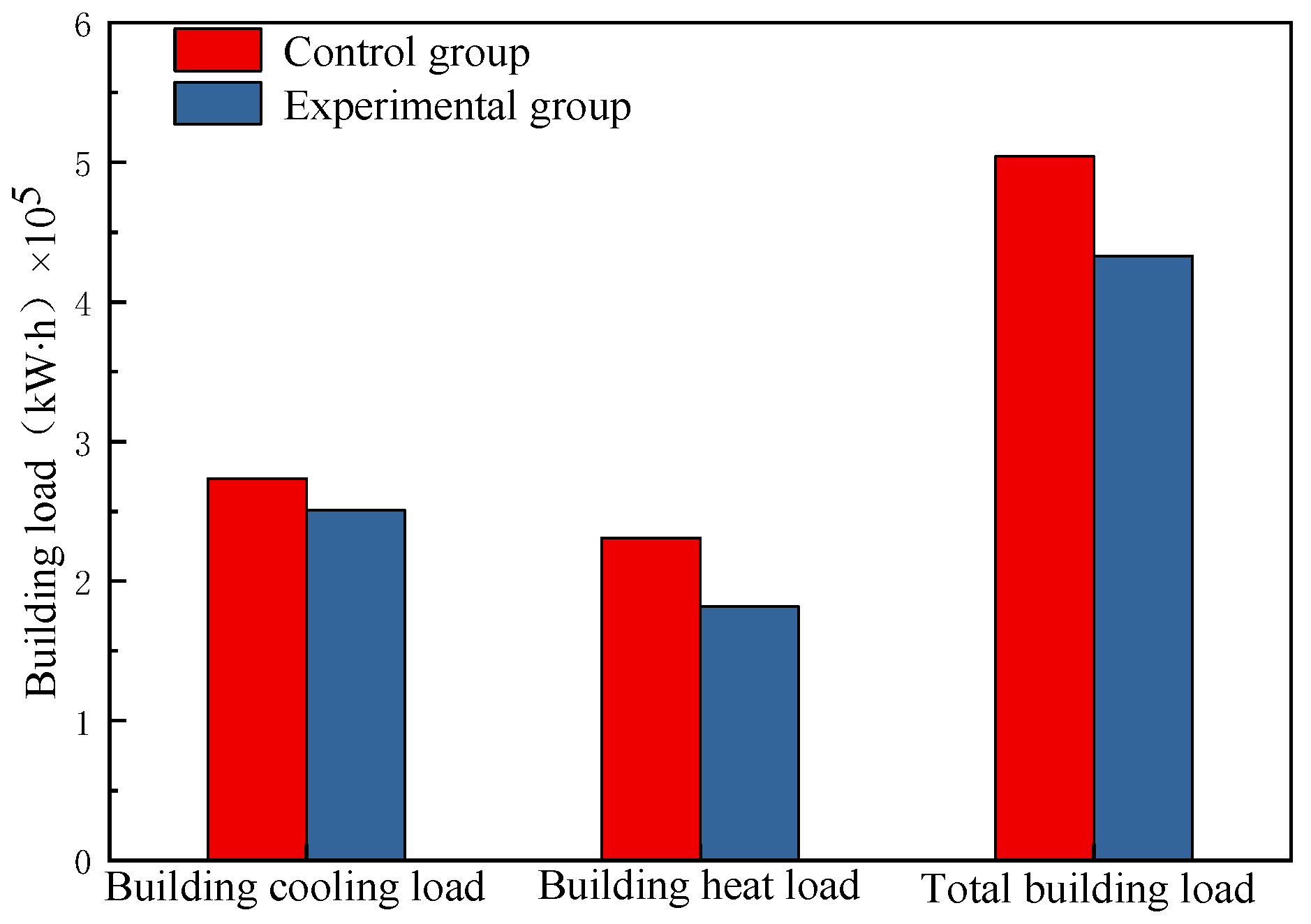
The selected PCM has a relatively high phase-change temperature and therefore activates primarily when wall temperatures rise; the reduction in summer cooling load is notable, the effect on winter heating is minor [23]. Accordingly, the focus is on summer performance. Figure 15 contrasts annual HVAC loads for the two cases (summer cooling: 15 June–31 August, winter heating: 1 December–28 February; other periods free-float). In summer, cooling energy decreased from 273,488.89 kW·h (no PCM) to 251,111.11 kW·h (with PCM), an 8.2% reduction. For the annual total, HVAC energy decreased from 504,377.78 kW·h to 432,777.78 kW·h, a 14.2% drop.
Figure 15.
Annual building load situation.
These results indicate substantial energy-saving potential of PCM walls in HSCW elderly care buildings, especially during the summer cooling season. The mechanism is latent heat storage: the PCM absorbs excess daytime heat and releases it at night, damping envelope temperature swings and lowering HVAC load [23].
3.4. Synergistic Effects of the Pcm Wall and Window-to-Wall Ratio
3.4.1. Simulation Setup
Building on the verified energy benefit of the PCM wall, the window-to-wall ratio (WWR) was introduced to analyze coupled effects. Rooms on the four orientations (east, south, west, north) were tested by varying their own WWRs, and trends in cooling load, heating load, and annual total load were evaluated with and without the PCM wall [11].
Because room uses and baseline WWRs differ by orientation (e.g., larger on south, smaller on north), absolute loads are not comparable across orientations; the analysis focuses on within-orientation relative changes across WWR levels [31].
Settings: in the baseline, south WWR = 0.50 and east/west/north WWR = 0.40, meeting the GB 50189-2015 limits for the HSCW climate zone [32]. Each orientation’s WWR was then set to 0.25, 0.30, 0.35, 0.40, 0.45, and 0.50, and annual cooling, heating, and total loads were simulated for both cases (with PCM vs. without PCM). The WWR range follows the daylighting minima in JGJ 450-2018 for elderly care facilities (window-to-floor ≥ 1:6 for living rooms; ≥1:5 for public activity rooms) together with the energy-code upper limits, ensuring practical feasibility; 0.25 approximates the daylighting lower bound, and 0.50 the design upper bound [33].
3.4.2. Simulation Results and Analysis
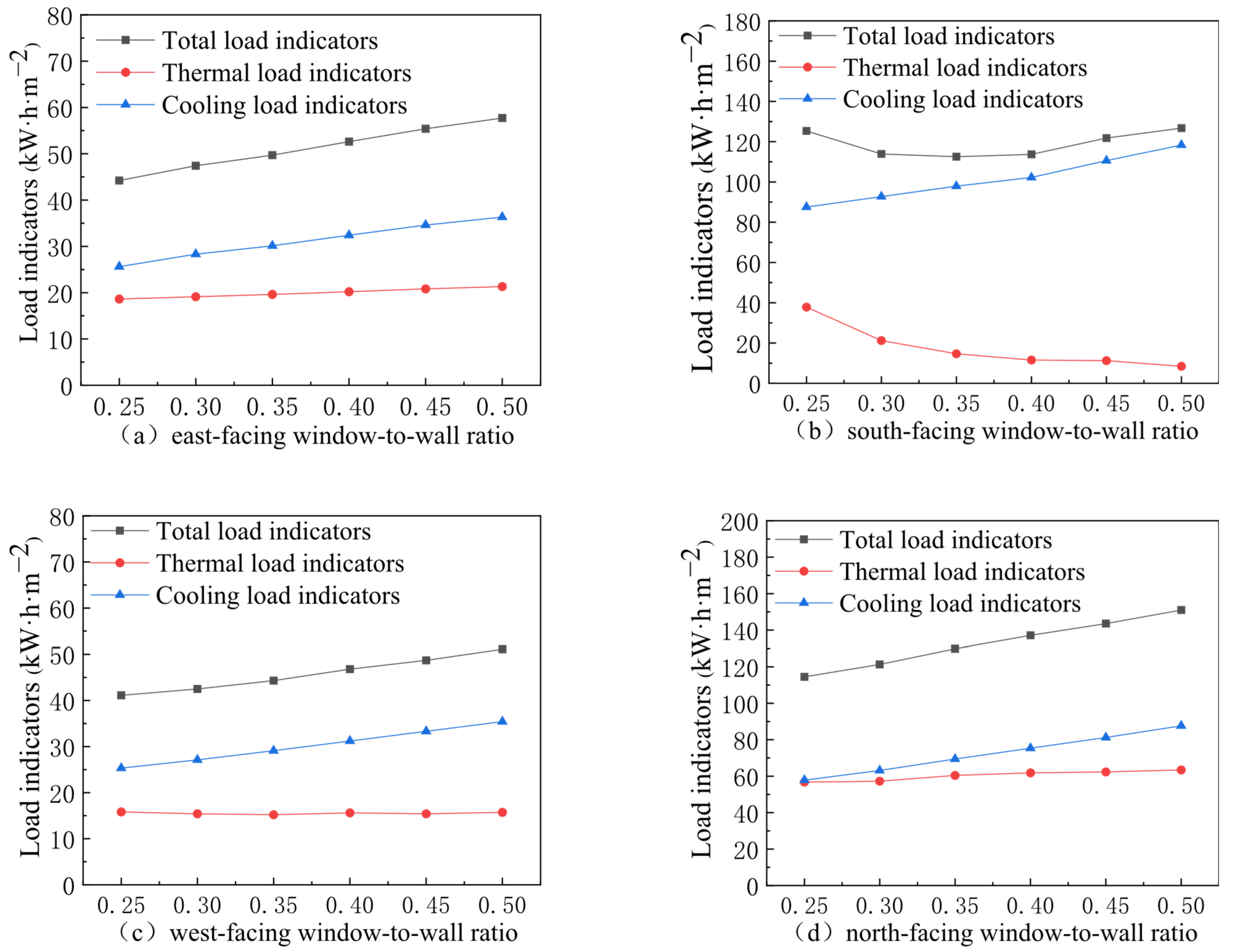
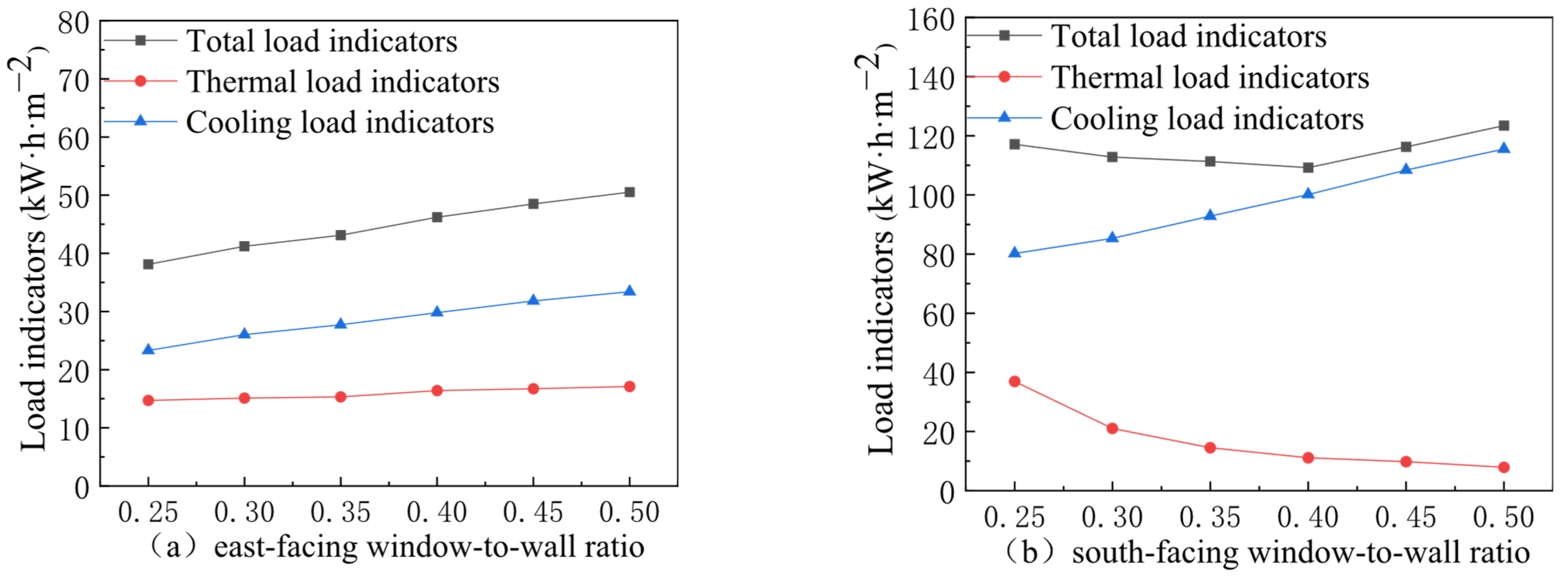
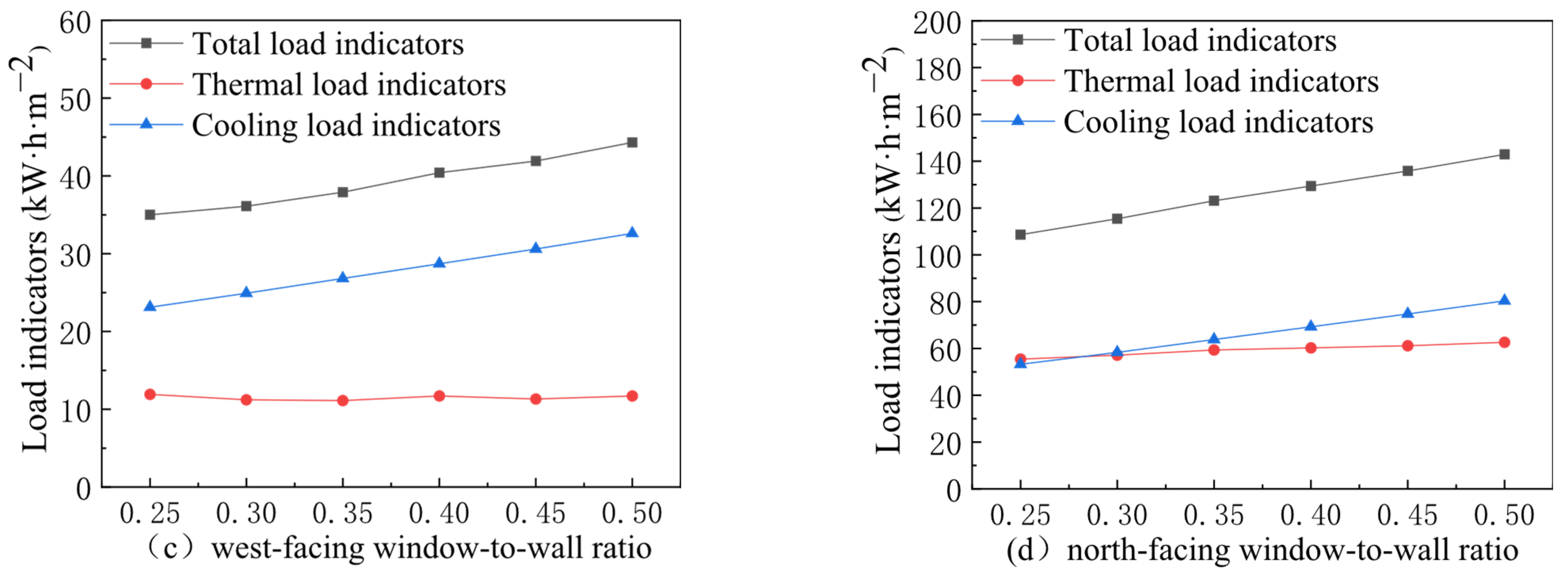
Table 6, Table 7 and Table 8 summarize annual cooling, heating, and total load densities for each orientation across WWR levels with and without PCM; Figure 16 and Figure 17 plot total load versus WWR. The response to WWR is orientation-specific, and the PCM wall expands the feasible WWR range for some façades.
Table 6.
Annual cumulative total load index.
Table 7.
Annual cumulative cooling load index.
Table 8.
Annual cumulative heat load index.
Figure 16.
Building energy consumption and load performance as a function of window-to-wall ratio without PCM walls.

Figure 17.
Building energy consumption and load performance as a function of window-to-wall ratio with PCM walls.
- East/West. Cooling and total loads increase markedly with WWR; heating changes little. In the no-PCM case, raising WWR from 0.25 to 0.50 increases total load density from 44.2 to 57.7 kW·h·m−2 in the east (30%) and from 41.1 to 51.1 kW·h·m−2 in the west. Strong oblique solar gains drive summer cooling up, while additional winter gains remain limited, producing a double penalty. Recommended WWR ≤ 0.30 to suppress summer energy growth.
- South. Cooling rises and heating falls as WWR increases; the total load curve is convex with a minimum. The optimum is WWR = 0.35 without PCM and WWR = 0.40 with PCM, where the minimum total load reaches 111.2 kW·h·m−2. PCM absorbs excess summer gains and offsets the cooling penalty of larger glazing, widening the acceptable WWR range. Recommended WWR = 0.35–0.40 to balance winter daylight and summer efficiency.
- North. No direct solar incidence; increasing WWR mainly elevates winter heat loss and adds modest summer cooling. Total load grows approximately linearly with WWR (e.g., 114.5 to 151.0 kW·h·m−2 without PCM). PCM lowers absolute levels but does not alter the upward trend. Recommended WWR = 0.25 to satisfy basic daylight with limited penalties.
Synthesis. WWR strongly influences energy use by orientation. PCM raises the south façade’s optimal WWR and mainly damps load growth on the east, west, and north façades. A coordinated strategy achieves directional savings in elderly care buildings in HSCW climates: east/west favors small windows (WWR ≈ 0.30 or lower), the south increases to ≈0.40 with a PCM wall for thermal moderation, and the north remains ≈ 0.25. Under this co-optimization, annual total energy-use density can reach ≈ 111.2 kW·h·m−2, exceeding the benefit of single-parameter tuning; larger glazing improves daylight, and PCM offsets part of the added cooling load to balance energy use and comfort [12].
Therefore, the combination of PCM walls and a south WWR of 0.40 yields the lowest annual energy use while maintaining acceptable indoor temperatures.
The WWR analysis in this study was conducted solely on the basis of cooling, heating, and total energy loads. Daylight performance and visual comfort metrics (e.g., daylight autonomy, glare indices) were not evaluated numerically. Therefore, the recommended WWR ranges should be interpreted primarily as energy-oriented guidance. In practical design, these values need to be cross-checked against daylighting and glare criteria using dedicated lighting simulations and visual comfort assessments [4,11,31]. Integrating such metrics in future work would allow a more holistic definition of optimal WWRs for elderly care facilities.
4. Discussion
4.1. Synergistic Energy and Comfort Performance of PCM Walls and WWR
In hot-summer, cold-winter climates, envelope optimization in elderly care buildings must balance energy control and thermal comfort for older occupants. The proposed synergistic strategy—phase change material (PCM) walls combined with window-to-wall ratio (WWR) tuning—proved effective in the Nanchang case: the PCM wall stabilized indoor conditions and improved comfort; coupling with WWR delivered system-level gains in whole-building performance [34]. Alwetaishi, M.; Benjeddou, O. reported strong orientation dependence of WWR impacts, supporting direction-specific optimization [35]. Hao, W.; Sohn, D.-W. identified an optimal WWR that balances energy and daylight in office buildings [36]. This study extends those trends to elderly care facilities and shows that introducing PCM can shift the optimal WWR, indicating both novelty and applicability. In particular, the optimal south WWR range of 0.35–0.40 identified here for an elderly care building with PCM walls falls within the ranges suggested in previous work, while the introduction of PCM shifts the minimum-energy point toward slightly larger south glazing relative to non-PCM envelopes.
4.2. Implications for Nighttime Heat Release, Orientation and Practical Applicability
A well-known characteristic of PCM envelopes is that they absorb heat during the day and release it at night. While the present study focuses on the net effect on cooling and annual energy use, the nighttime heat release may have implications for indoor thermal comfort and natural night-cooling strategies. Under the free-floating experimental conditions, the PCM room tended to exhibit slightly higher inner-surface temperatures during the night than the reference room, which can be beneficial for elderly occupants who are sensitive to cold discomfort but may partially reduce the potential of natural night ventilation to cool down the building. In the controlled cooling simulations with a 26 °C setpoint, the impact of nighttime heat release on indoor operative temperature is limited because the system maintains the setpoint. A more detailed comfort-oriented analysis, including scenarios with night ventilation and varying PCM melting temperatures, should be conducted in future work to fully assess these trade-offs.
In the experimental setup, the PCM layer was applied only to the south-facing wall, and the measured data therefore validate the PCM model primarily under south façade solar exposure. The orientation-wise analysis at the building scale (east, south, west, and north façades) is based solely on EnergyPlus simulations. As a result, the PCM effects on east, west, and north façades under different solar conditions are not experimentally verified in this study. Nevertheless, the simulations rely on a PCM model that has been validated against measurements for the south façade and on well-established solar-radiation and heat-balance formulations [18,23]. Future work should extend the experimental campaign to additional façade orientations to further confirm the orientation-dependent PCM performance.
The present study focuses on the technical performance of PCM walls and WWR optimization in terms of thermal loads and energy use. A detailed economic assessment, including initial investment, operating costs, and payback period for PCM integration and high-performance windows, was not conducted. In practice, PCM panels and advanced glazing entail additional material and installation costs compared with conventional constructions, and their economic viability depends on local energy prices, construction costs, and maintenance requirements. Furthermore, the long-term durability of PCM systems (e.g., potential issues related to leakage, moisture ingress, and performance degradation) can influence life-cycle costs. Future work should therefore complement the technical analysis with a life-cycle cost comparison and payback analysis to clarify the economic significance and practical applicability of the proposed solution in elderly care buildings.
4.3. Limitations and Directions for Future Research
Limitations remain. The analysis focuses on one building in a single climate zone and does not cover other cities, building types, or combinations with additional passive measures. In addition, the WWR analysis in this study was conducted solely on the basis of cooling, heating, and total energy loads; daylight performance and visual comfort metrics (e.g., daylight autonomy and glare indices) were not evaluated numerically, so the recommended WWR ranges should be interpreted primarily as energy-oriented guidance. The PCM phase-change behavior (melting/freezing curves, latent heat variation, and cyclic stability) was not directly measured by DSC in this study. Instead, fixed PCM properties were adopted from the manufacturer’s data sheet and relevant literature [5,6,20]. While these values fall within the typical range for paraffin-based PCMs used in building envelopes, the lack of project-specific DSC and cycling tests introduces additional uncertainty regarding the exact phase-transition interval and long-term performance.
Another limitation is that the comparative experiment between the PCM and reference walls was conducted only once over a single summer week without repeated trials. Although the weather conditions were stable and the day-to-day variability was small, no formal statistical tests (e.g., confidence intervals or hypothesis testing) were performed, so the statistical significance of the temperature differences should be interpreted with caution. In addition, error bars or uncertainty bands are not explicitly shown in the figures, which is another limitation of the present work. The validation period also covers only 3–10 July under clear-summer conditions, without tests for winter or extreme weather events; therefore, the confidence in the model’s year-round performance is necessarily limited.
Future work should expand variables by testing different PCM types and melting points, integrating shading and natural ventilation, and evaluating long-term performance, economics, and constructability, as well as including repeated experiments, explicit graphical representation of measurement uncertainty, more comprehensive daylight and glare analysis, and more extensive statistical analysis and multi-season validation to support broader deployment. Overall, experiments and simulations jointly substantiate the energy-efficiency potential of PCM + WWR co-optimization in elderly care buildings in HSCW climates. The approach maintains comfort while reducing energy use, offers practical engineering feasibility, and provides a transferable strategy for retrofit and new construction in similar regions.
5. Conclusions
This study addresses the balance between energy use and thermal comfort in elderly care buildings in hot-summer, cold-winter climates. Using a Nanchang facility as the case and combining experiment, simulation, and coupled analysis, a synergistic strategy is proposed that integrates a phase change material (PCM) wall with window-to-wall ratio (WWR) optimization. The conclusions are:
- PCM wall—marked energy benefit. Experiments show that the surface temperature of the southern facade exterior wall using the PCM wall is 3.9 °C lower than that of the wall without PCM. Experimental data indicate that PCM effectively inhibits the conduction of external heat and reduces the temperature of the wall. Simulation results show that the PCM wall can effectively reduce building energy consumption: air conditioning energy consumption in summer is reduced by 8.2%, and total annual energy consumption is reduced by 14.2%. When the window-to-wall ratio (WWR) of the southern facade is optimized to 0.40, the total annual energy consumption is reduced by 9.8%, while the indoor temperature is always maintained between 18 and 26 °C, which meets the thermal comfort requirements of the elderly.
- WWR—orientation dependence. East/west loads rise sharply as WWR increases; recommended WWR ≤ 0.30. The south façade exhibits an optimum range—≈0.35 without PCM and ≈0.40 with PCM—reflecting a trade-off between summer cooling and winter gains. The north façade shows near-linear load growth with WWR; recommended WWR = 0.25. Optimization should be orientation specific.
- Synergy—balanced energy and comfort. With PCM on the south façade and WWR = 0.40, annual total energy-use density reaches 111.2 kW·h·m−2 (a reduction of 9.8%), and indoor temperature remains 18–26 °C. For east- and west-facing rooms with a relatively high WWR, compared with non-PCM cases under the same WWR, PCM can reduce the cooling load by up to 15.3%, offsetting part of the daylighting-related increase. The strategy fits the “high comfort, low energy” requirement of elderly care buildings.
This study takes Nanchang City as an example to verify the energy-saving effects of phase change material (PCM) walls and window-to-wall ratio (WWR) optimization in the climate zone with hot summers and cold winters. Although effective design strategies are proposed, the results may be affected by specific climatic conditions. Therefore, future research should further explore the applicability of PCM and WWR strategies under different climates and extreme weather conditions. In addition, although an in-depth analysis of the economic feasibility of PCM integration is not conducted, considering material costs, installation requirements, and its durability (such as moisture damage or deterioration), future research should evaluate the impact of these factors on the long-term stability and cost-effectiveness of PCM.
Author Contributions
Conceptualization, W.C.; methodology, W.C. and L.N.; investigation, B.X.; data curation, B.X.; writing—original draft preparation, B.X.; writing—review and editing, B.X.; visualization, B.X.; supervision, L.N.; project administration, W.C. and L.N. All authors have read and agreed to the published version of the manuscript.
Funding
This research received no external funding.
Data Availability Statement
The data presented in this study are available on request from the corresponding author.
Conflicts of Interest
The authors declare no conflicts of interest.
References
- Urge-Vorsatz, D.; Cabeza, L.F.; Serrano, S.; Barreneche, C.; Petrichenko, K. Heating and cooling energy trends and drivers in buildings. Renew. Sustain. Energy Rev. 2015, 41, 85–98. [Google Scholar] [CrossRef]
- Zhou, S.; Li, B.; Du, C.; Liu, H.; Wu, Y.; Hodder, S.; Chen, M.; Kosonen, R.; Ming, R.; Ouyang, L.; et al. Opportunities and challenges of using thermal comfort models for building design and operation for the elderly: A literature review. Renew. Sustain. Energy Rev. 2023, 183, 113504. [Google Scholar] [CrossRef]
- Chen, X.; Xu, Z.; Qiu, Y.; Jiang, L.; Li, Y. China’s newest design of apartment buildings with modernized façade: A comparative evaluation of its energy performance in five major climate zones. Sustain. Cities Soc. 2024, 117, 105954. [Google Scholar] [CrossRef]
- Wu, H.; Zhang, T. Multi-objective optimization of energy, visual, and thermal performance for building envelopes in China’s hot summer and cold winter climate zone. J. Build. Eng. 2022, 59, 105034. [Google Scholar] [CrossRef]
- Hu, H.; Zhang, Y.; Li, Q.; Zhao, J. Analysis of the applicability of a phase-change energy storage wall for public buildings in hot summer and cold winter climate zones. Heat Transf. Eng. 2025, 46, 1774–1787. [Google Scholar] [CrossRef]
- Jin, X.; Medina, M.A.; Zhang, X. On the importance of the location of PCMs in building walls for enhanced thermal performance. Appl. Energy 2013, 106, 72–78. [Google Scholar] [CrossRef]
- Kumar, G.; De, S.; Thakur, B. Wall and air conditioner combination for the best energy and economic performance: Methodology demonstration for high-rise residential buildings. Energy Convers. Manag. 2024, 300, 117909. [Google Scholar] [CrossRef]
- Yang, Q.; Liu, M.; Shu, C.; Fang, Y. Impact analysis of window-wall ratio on heating and cooling energy consumption of residential buildings in hot summer and cold winter zone in China. J. Eng. 2015, 2015, 538254. [Google Scholar] [CrossRef]
- Lin, Y.; Yang, W. Application of multi-objective genetic algorithm-based simulation for cost-effective building energy efficiency design and thermal comfort improvement. Front. Energy Res. 2018, 6, 25. [Google Scholar] [CrossRef]
- Kolaitis, D.I.; Malliotakis, E.; Kontogeorgos, D.A.; Mandilaras, I.; Katsourinis, D.I.; Founti, M.A. Comparative assessment of internal and external thermal insulation systems for energy efficient retrofitting of residential buildings. Energy Build. 2013, 64, 123–131. [Google Scholar] [CrossRef]
- Sayadi, S.; Hayati, A.; Salmanzadeh, M. Optimization of Window-to-Wall Ratio for Buildings Located in Different Climates: An IDA-Indoor Climate and Energy Simulation Study. Energies 2021, 14, 1974. [Google Scholar] [CrossRef]
- Cheng, R.; Zhang, N.; Zhang, W.; Sun, Y.; Yin, B.; Gao, W. Impact of Thermal Mass, Window Performance, and Window–Wall Ratio on Indoor Thermal Dynamics in Public Buildings. Buildings 2025, 15, 1757. [Google Scholar] [CrossRef]
- Xu, B.; Yuan, X. A novel method of BP neural network-based green building design—The case of hotel buildings in hot summer and cold winter region of China. Sustainability 2022, 14, 2444. [Google Scholar] [CrossRef]
- Shrestha, S.; Rijal, H.B. Energy saving by adaptive thermal comfort and occupant behaviours in dwellings based on literature review. J. Build. Eng. 2025, 113, 113657. [Google Scholar] [CrossRef]
- Zheng, X.; Liang, Y.; Yang, H.; Zeng, Y.; Cui, H. Collaborative optimized design of glazing parameters and PCM utilization for energy-efficient Glass Curtain Wall buildings. Buildings 2024, 14, 256. [Google Scholar] [CrossRef]
- Xie, J.; Miao, X.; Dewancker, B.J.; Xu, T.; Zhao, X.; Shi, C.; Wei, X. Comprehensive assessment of building energy consumption in hot summer and cold winter areas based on carbon tax considerations. Front. Energy Res. 2023, 11, 1250540. [Google Scholar] [CrossRef]
- Ke, W.; Ji, J.; Zhang, C.; Xie, H.; Tang, Y.; Wang, C. Effects of the PCM layer position on the comprehensive performance of a built-middle PV-Trombe wall system for building application in the heating season. Energy 2022, 250, 126562. [Google Scholar] [CrossRef]
- Tabares-Velasco, P.C.; Christensen, C.; Bianchi, M. Validation Methodology to Allow Simulated Peak Reduction and Energy Performance Analysis of Residential Building Envelope with Phase Change Materials (No. NREL/CP-5500-54015); National Renewable Energy Lab. (NREL): Golden, CO, USA, 2012.
- Li, W.; Rahim, M.; Wu, D.; El Ganaoui, M.; Bennacer, R. Experimental study of dynamic PCM integration in building walls for enhanced thermal performance in summer conditions. Renew. Energy 2024, 237, 121891. [Google Scholar] [CrossRef]
- Chai, T.; Draxler, R.R. Root mean square error (RMSE) or mean absolute error (MAE)? Arguments against avoiding RMSE in the literature. Geosci. Model Dev. 2014, 7, 1247–1250. [Google Scholar] [CrossRef]
- Wang, Z.; Qiao, Y.; Liu, Y.; Bao, J.; Gao, Q.; Chen, J.; Yao, H.; Yang, L. Thermal storage performance of building envelopes for nearly-zero energy buildings during cooling season in Western China: An experimental study. Build. Environ. 2021, 194, 107709. [Google Scholar] [CrossRef]
- ASHRAE Guideline. Measurement of Energy, Demand, and Water Savings; ASHRAE: Peachtree Corners, GA, USA, 2014. [Google Scholar]
- Tabares-Velasco, P.C.; Christensen, C.; Bianchi, M. Verification and validation of EnergyPlus phase change material model for opaque wall assemblies. Build. Environ. 2012, 54, 186–196. [Google Scholar] [CrossRef]
- Fan, X. A method for the generation of typical meteorological year data using ensemble empirical mode decomposition for different climates of China and performance comparison analysis. Energy 2022, 240, 122822. [Google Scholar] [CrossRef]
- Baylis, C.; Cruickshank, C.A. Experimental Validation of an EnergyPlus Model with Building Integrated Phase Change Material. In Proceedings of the eSim 2024: 13th Conference of IBPSA-Canada, Edmonton, AB, Canada, 5–7 June 2024. [Google Scholar]
- Liu, Q.; Ren, J. Research on technology clusters and the energy efficiency of energy-saving retrofits of existing office buildings in different climatic regions. Energy Sustain. Soc. 2018, 8, 24. [Google Scholar] [CrossRef]
- American Society of Heating, Refrigerating, Air-Conditioning Engineers; Illuminating Engineering Society of North America. Energy Standard for Buildings Except Low-Rise Residential Buildings; ASHRAE: Peachtree Corners, GA, USA, 2000; Volume 90. [Google Scholar]
- Bamdad, K.; Mohammadzadeh, N.; Cholette, M.; Perera, S. Model Predictive Control for Energy Optimization of HVAC Systems Using EnergyPlus and ACO Algorithm. Buildings 2023, 13, 3084. [Google Scholar] [CrossRef]
- Ministry of Ecology. 2020 Press Conference Records of Ministry of Ecology and Environment, the People’s Republic of China; Springer Nature: Berlin/Heidelberg, Germany, 2022. [Google Scholar]
- Chan, Y.; Hoke, T.; Meredith, K.; Chen, X. Annual simulation of phase change materials for enhanced energy efficiency and thermal performance of buildings in Southern California. Energies 2025, 18, 847. [Google Scholar] [CrossRef]
- Ma, R.; Ma, R.; Long, E. Analysis of the rule of window-to-wall ratio on energy demand of residential buildings in different locations in China. Heliyon 2023, 9, e12803. [Google Scholar] [CrossRef]
- GB 50189-2015; General Administration of Quality Supervision, Inspection and Quarantine (AQSIQ). Design Standard for Energy Efficiency of Public Buildings. China Architecture & Building Press: Beijing, China, 2015. (In Chinese)
- JGJ 450-2018; Standard for Design of Elderly Care Facilities. China Architecture & Building Press: Beijing, China, 2018. (In Chinese)
- Baetens, R.; Jelle, B.P.; Gustavsen, A. Phase change materials for building applications: A state-of-the-art review. Energy Build. 2010, 42, 1361–1368. [Google Scholar] [CrossRef]
- Alwetaishi, M.; Benjeddou, O. Impact of Window to Wall Ratio on Energy Loads in Hot Regions: A Study of Building Energy Performance. Energies 2021, 14, 1080. [Google Scholar] [CrossRef]
- Hao, W.; Sohn, D.-W. Research on thermal comfort and energy efficiency in office buildings with high window-to-wall ratios: A case study in Qingdao. Int. J. Low-Carbon Technol. 2024, 19, 2309–2327. [Google Scholar] [CrossRef]
Disclaimer/Publisher’s Note: The statements, opinions and data contained in all publications are solely those of the individual author(s) and contributor(s) and not of MDPI and/or the editor(s). MDPI and/or the editor(s) disclaim responsibility for any injury to people or property resulting from any ideas, methods, instructions or products referred to in the content. |
© 2026 by the authors. Licensee MDPI, Basel, Switzerland. This article is an open access article distributed under the terms and conditions of the Creative Commons Attribution (CC BY) license.