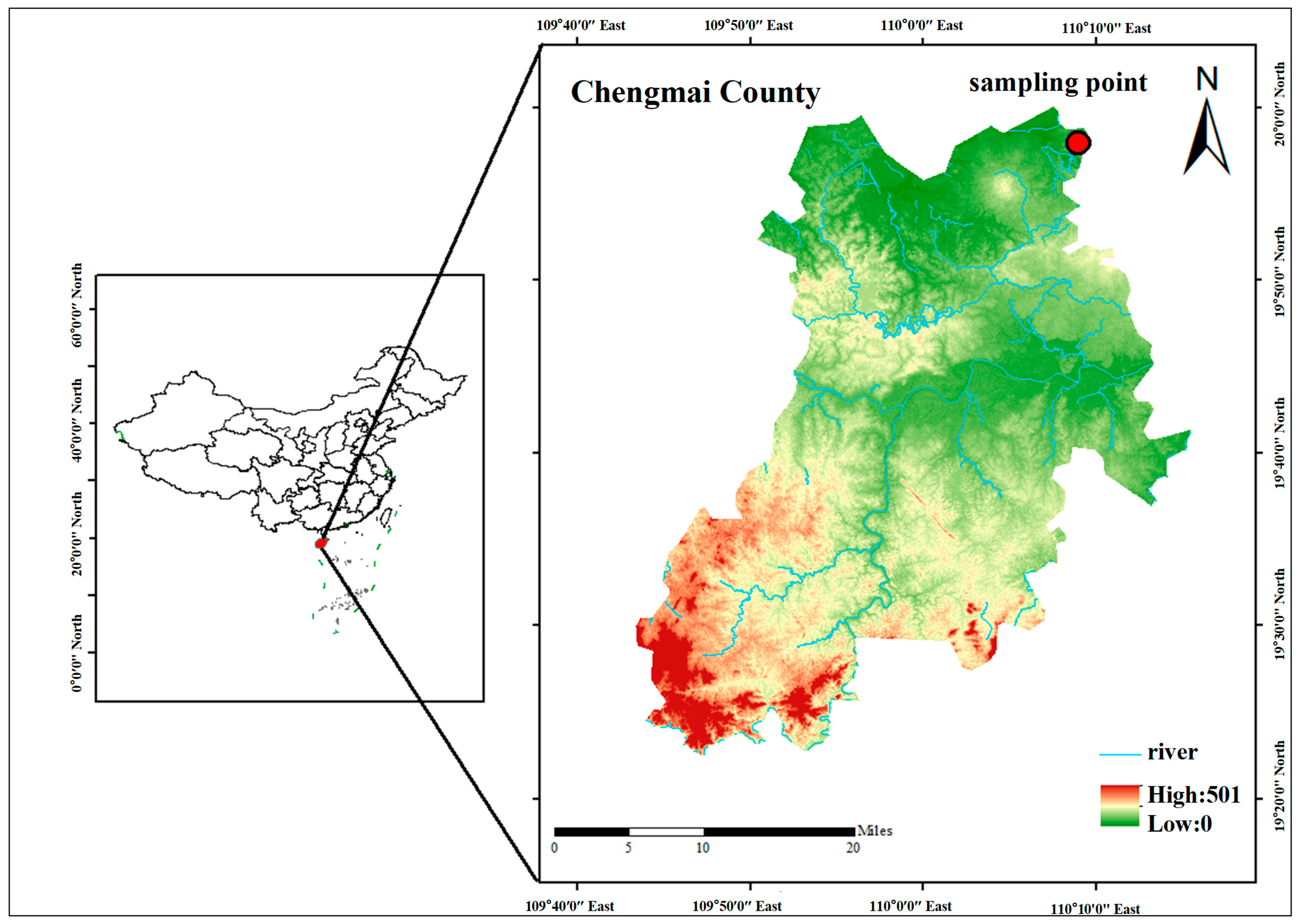
1. Introduction
Land subsidence refers to a continuous or non-uniform geological process in which regional ground elevation decreases as near-surface soils undergo slow, cumulative compressive deformation under the combined influences of natural factors and human activities [
1,
2,
3]. This issue is one of the common yet potentially hazardous geological problems encountered during urban development, and related studies have indicated that land subsidence often triggers cascading risks such as building cracking, damage to underground pipelines, and reduced drainage capacity [
4]. It poses a significant threat to urban development and public safety. Abnormal subsidence is widely observed in alluvial–proluvial plains, coastal soft-soil areas, and rapidly urbanizing regions with intense engineering construction [
5]. In China, the annual losses caused by land subsidence exceed tens of billions of RMB. Therefore, systematically revealing the spatiotemporal evolution of land subsidence and its influencing factors is an urgent research priority [
6].
In recent years, with the accelerated pace of urbanization in China, land subsidence in coastal cities has become increasingly prominent [
7]. Haikou, located in northern Hainan Province and adjacent to the Qiongzhou Strait, is the central city of the Hainan Free Trade Port and one of China’s major port cities. The “Haicheng–Wending” integrated metropolitan-area plan is expected to add approximately 120 million m
2 of new building floor area in the Haikou–Laocheng area over the next decade. The geological setting of the area is complex: within the urban extent, Quaternary unconsolidated deposits are widely distributed and are dominated by highly compressible strata such as soft soils and peaty soils [
8,
9]; moreover, lightweight volcanic ash soils are also present, exhibiting typical characteristics of low strength, low unit weight, high liquid limit, low degree of saturation, high water content, high void ratio, and high compressibility [
10]. Groundwater occurrence conditions are diverse and are sensitive to external variations [
11,
12]. Existing regional studies based on time-series InSAR have shown that subsidence in Haikou’s coastal new district exhibits pronounced spatial heterogeneity and is coupled with the distribution of soft soils and engineering construction activities. The Haikou–Laocheng area concentrates a large number of residential buildings, transportation facilities, and municipal infrastructures, and is characterized by a high degree of surface hardening and intense human activities. Against the backdrop of continued urban development and ongoing underground-space exploitation, the potential risk of land subsidence in this area has gradually become evident [
13]. However, owing to the loss of traditional leveling data and discontinuities in historical records, systematic research on the overall spatiotemporal evolution of land subsidence and its influencing factors in the Laocheng area remains lacking.
Although traditional geohazard monitoring approaches, such as leveling surveys and GPS, are available, these techniques cannot provide large-area and long-term observations of land subsidence [
14]. To overcome these limitations, Interferometric Synthetic Aperture Radar (InSAR) has rapidly developed, enabling the acquisition of ground-deformation information under all-weather and wide-coverage conditions and providing a new technical approach for regional-scale surface deformation monitoring [
15]. In particular, time-series InSAR overcomes the limitations of conventional differential InSAR, which is susceptible to temporal decorrelation and atmospheric delays; with centimeter- to even millimeter-level monitoring accuracy, its application to urban subsidence monitoring has been continuously expanded, and it has been successfully implemented in numerous infrastructure monitoring projects [
16,
17,
18]. Among time-series InSAR approaches, Permanent Scatterer InSAR (PS-InSAR) and Small Baseline Subset InSAR (SBAS-InSAR) are currently the two most widely used and mature techniques [
19]. PS-InSAR identifies scatterers that remain stably coherent over long time series, thereby suppressing noise effects and enabling high-precision deformation estimation based on long-term stable scatterers, and is particularly suitable for densely built urban areas [
20]. SBAS-InSAR constructs interferometric pairs to maintain coherence while improving the continuity of spatial coverage, making it suitable for surface deformation fields in non-urban areas [
21]. Each of the two methods has its own strengths; integrating the concepts of both techniques can achieve a better balance between accuracy and spatial coverage, enabling complementary characterization of land-subsidence features and improving the reliability and completeness of the monitoring results [
22].
At present, land-subsidence studies based on time-series InSAR have achieved abundant results in urban subsidence, mining-area subsidence monitoring, surface deformation and subsidence monitoring along metro lines, as well as volcanic activity and earthquake monitoring [
23]. Recent coastal-city applications have further demonstrated the value of SBAS/PS-InSAR for detecting subsidence associated with reclamation, soft soils, hydrological variability, and urban construction in Zhuhai, Nansha, and the Hangjiahu Plain [
24,
25,
26]. The main research topics include analyses of the spatiotemporal evolution of subsidence, the impacts of engineering activities, the influences of geological factors, and discussions of subsidence-driving mechanisms [
27]. At the same time, recent risk-oriented work emphasizes that InSAR-derived subsidence maps should be linked with infrastructure exposure and urban management rather than being limited to deformation mapping alone [
28]. Recent studies on the seismic fragility and seismic resilience of segmental shield tunnel linings in liquefiable and soft-soil deposits have further demonstrated that unfavorable soil profiles, soil–structure interaction, and ground-deformation conditions can significantly affect the vulnerability and post-event functionality of underground structures [
29,
30]. These findings further indicate that regional surface-deformation monitoring in soft-soil coastal areas can provide useful background information for engineering risk screening of underground transportation and utility systems. In addition, tropical coastal cities differ markedly from inland cities in both geological and climatic conditions, and atmospheric delays are more pronounced in hot and humid environments. Rainfall infiltration, runoff generation, and soft-soil moisture response also differ substantially, leading to different subsidence response mechanisms that warrant further in-depth investigation. In addition, how to cross-validate the accuracy of subsidence monitoring results using different methods under conditions with limited ground-based observations remains an issue that urgently needs to be addressed in current research [
31].
Therefore, compared with previous coastal-city InSAR studies, the main research gap addressed here is the lack of a site-specific synthesis for tropical coastal soft-soil and volcanic-ash-soil areas where ground observations are limited. This study strengthens the state-of-the-art by combining dual-method InSAR validation with rainfall, land use, elevation, and stratigraphic interpretation, and by explicitly linking the results to urban-planning and engineering-management needs.
Based on the above background, this study takes the Haikou–Laocheng area as the research object and applies two time-series techniques, SBAS-InSAR and PS-InSAR, to perform interferometric processing and inversion on 42 Sentinel-1 SAR scenes acquired from April 2023 to April 2025, thereby obtaining the subsidence-rate map and spatiotemporal time series of multi-temporal cumulative deformation in the study area. In the absence of in situ leveling measurements, the inversion results derived from the two time-series methods are assessed in terms of inter-method consistency through cross-comparisons of representative subsidence points and linear regression analysis. Meanwhile, monthly mean rainfall data, land-use types, topographic elevation, and geological-structural information are integrated to analyze the mechanisms by which natural factors and human activities influence land subsidence. This study aims to reveal the spatiotemporal evolution of land subsidence and its influencing factors in the Haikou–Laocheng area, providing scientific references for geohazard prevention and control and for urban development planning in coastal cities. The novelty of this work lies in the integration of PS-InSAR/SBAS-InSAR cross-validation and multi-source influencing-factor analysis for a data-scarce tropical coastal area, which helps bridge deformation mapping, mechanism interpretation, and planning-oriented application.
3. Methods
3.1. SBAS-InSAR Technique
SBAS-InSAR is an interferometric synthetic aperture radar technique based on small-baseline subset selection. It retrieves surface deformation over the study area by constructing a network of interferograms with short temporal and spatial baselines. By exploiting redundant observations among multi-temporal acquisitions, this technique improves the stability and reliability of the deformation estimates.
A total of
N + 1 SAR images covering the study area are acquired, and temporal and spatial baseline thresholds are specified to group the SAR images that satisfy these thresholds. One image is selected as the master, and the remaining slave images are co-registered with the master and processed to generate differential interferograms, yielding
M interferometric pairs that meet the baseline thresholds; the relationship among their numbers satisfies Equation (1).
Assuming the
k-th interferometric pair is formed, its unwrapped phase can be expressed as Equation (2).
where
d(
t) represents the cumulative deformation at different epochs, and
εk denotes the residual error term.
By constructing a system of observation equations composed of multiple interferometric pairs, it can be written in a matrix form as shown in Equation (3).
where
x denotes the deformation time series to be estimated,
b is the observation vector of unwrapped interferometric phases, and
A is the temporal design (incidence) matrix.
Because the matrix may be rank-deficient, singular value decomposition (SVD) is commonly used in practice to obtain the minimum-norm solution, thereby deriving the mean subsidence rate and the time-series subsidence over the observation period.
Since only ascending-orbit Sentinel-1 data were available, the interferometric measurements were first obtained in the radar line-of-sight (LOS) direction. To express the deformation as an approximate vertical component, the LOS displacement was projected using dv = dLOS/cos(θ), where d_v is the vertical-projected displacement, dLOS is the LOS displacement, and θ is the incidence angle (39° in this study). This conversion assumes that the horizontal displacement component is negligible compared with vertical settlement. Therefore, all deformation values reported in the following sections should be interpreted as vertical-projected estimates rather than full three-dimensional ground motion.
3.2. SBAS-InSAR Monitoring Workflow
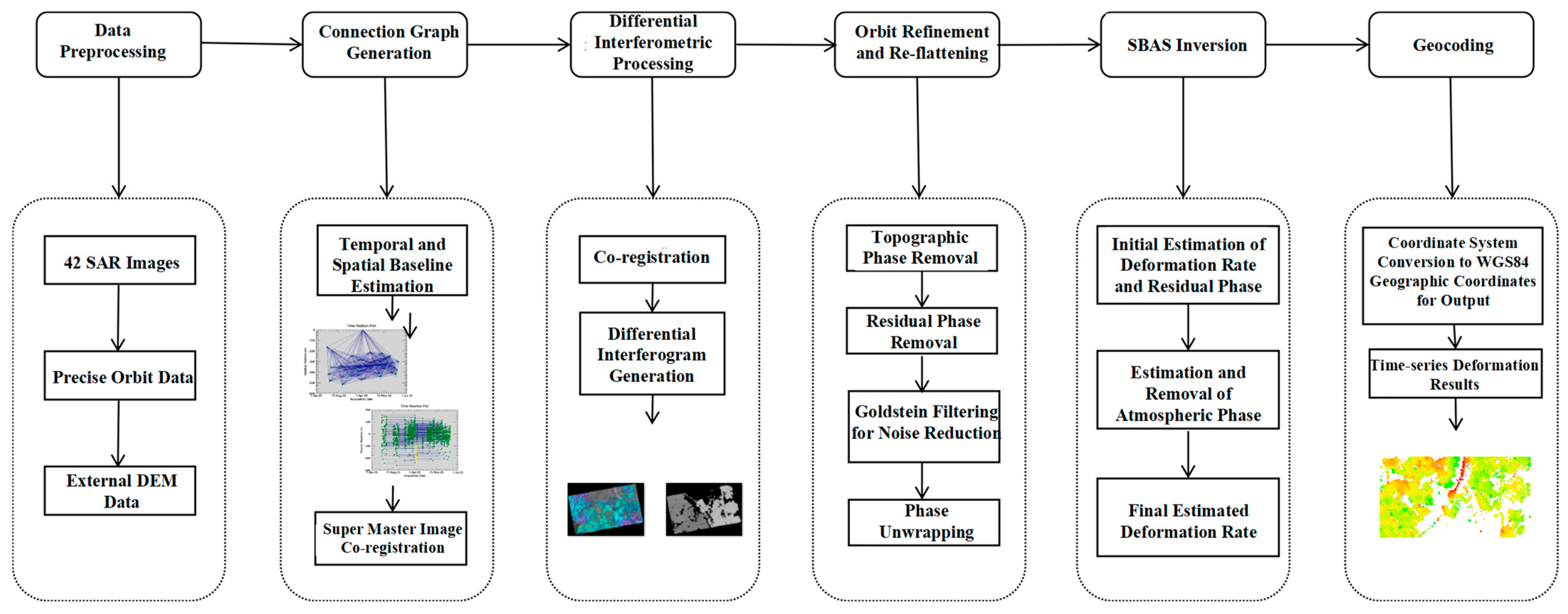
In this study, 42 ascending-orbit Sentinel-1A images covering the entire study area, acquired from April 2023 to April 2025, were processed using the SBAS-InSAR technique; the technical workflow is illustrated in
Figure 2.
The SBAS-InSAR processing comprises the following four steps:
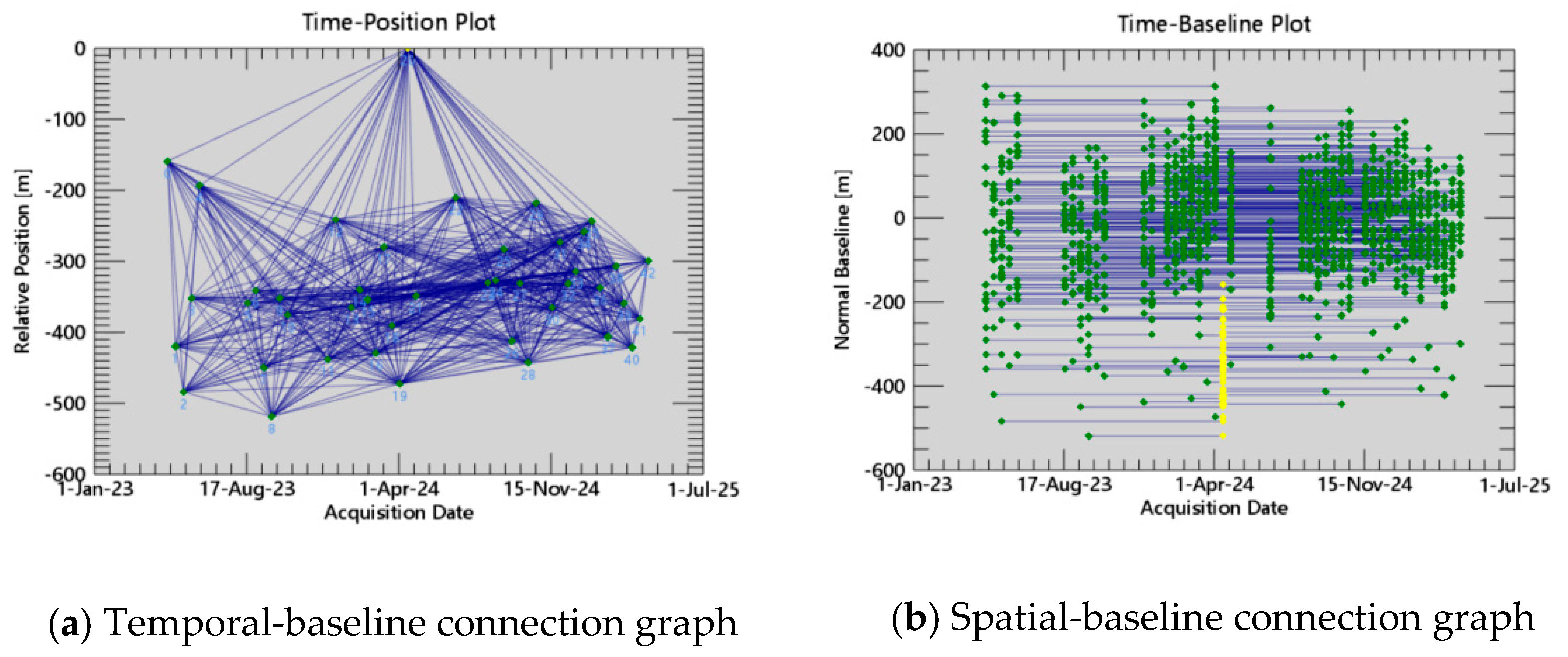
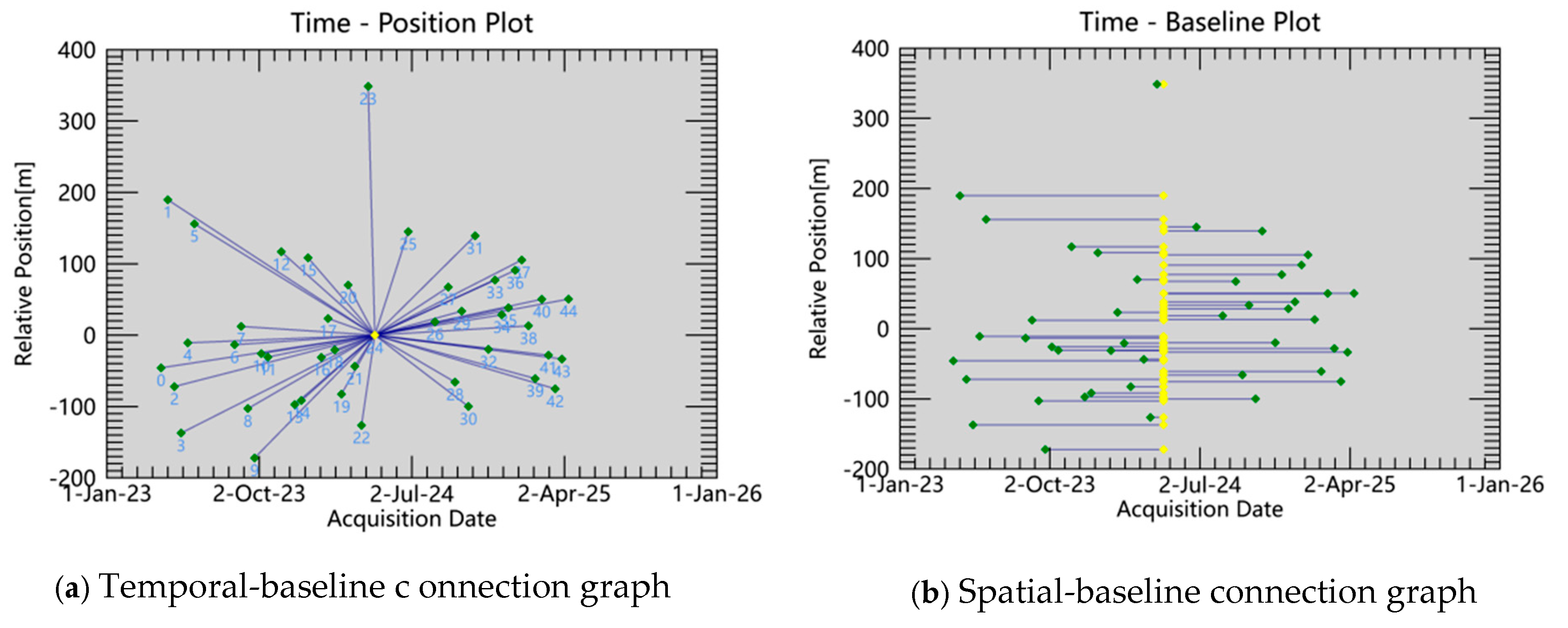
(1) Network generation: For the 42 selected SAR images, the maximum temporal baseline threshold was set to 365 days, and the spatial baseline threshold was set to 2% of the critical baseline, corresponding to an approximate perpendicular-baseline threshold of about 100 m for the Sentinel-1 C-band configuration used in this study. A “super master” image dated 1 April 2024 was generated and co-registered with the remaining 41 slave images. The spatial- and temporal-baseline connection graphs are shown in
Figure 3a and
Figure 3b, respectively.
(2) Interferometric processing: Differential interferometric processing was performed for all interferometric pairs to generate interferograms. The processing steps include co-registration of SLC pairs, interferogram generation, removal of flat-earth and topographic phases, filtering of differential interferograms, coherence estimation, and phase unwrapping. During interferometric processing, noise can affect phase unwrapping, leading to discontinuities in the phase data. In this study, the Goldstein filtering method was applied for denoising to enhance the quality and contrast of interferometric fringes, yielding filtered interferograms. A coherence threshold of 0.35 was used during phase unwrapping and subsequent inversion, and pixels with coherence lower than this threshold were masked out to reduce the influence of low-quality interferometric observations.
(3) SBAS inversion: In the first inversion, a linear deformation model was used to estimate the deformation rate and residual topographic phase, followed by refinement and phase optimization. In the second inversion, based on the deformation rate obtained from the first inversion, re-flattening and time-series inversion were performed. Atmospheric phase components were estimated and mitigated using the standard SARscape SBAS time-series processing strategy, in which atmospheric residuals are separated from deformation signals according to their spatially correlated and temporally weakly correlated characteristics. After atmospheric-phase estimation and removal, the final SBAS time-series deformation results were obtained.
(4) Geocoding: The results of the second inversion were geocoded, and the SAR-derived products were exported in the WGS84 geographic coordinate system, thereby obtaining the deformation-rate results.
3.3. PS-InSAR Technique
Owing to the lack of contemporaneous in situ leveling data for comparison and validation, PS-InSAR was applied to monitor subsidence in the same study area from April 2023 to April 2025, thereby providing an inter-method consistency check for the SBAS-InSAR results.
PS-InSAR identifies permanent scatterers (PS points) with high coherence on the ground, enabling precise monitoring of subtle surface deformation and ultimately retrieving a high-precision time series of ground deformation. The N + 1 SAR images are first sorted chronologically, after which one image is selected as the master and differential interferometric processing is performed with the remaining slave images to generate differential interferograms.
For the
x-th pixel in the
i-th acquisition, the interferometric phase can be expressed as Equation (4).
where
is the deformation phase,
is the atmospheric-delay phase,
is the orbital-error phase,
is the phase induced by DEM residuals, and
is the noise phase.
3.4. PS-InSAR Monitoring Workflow
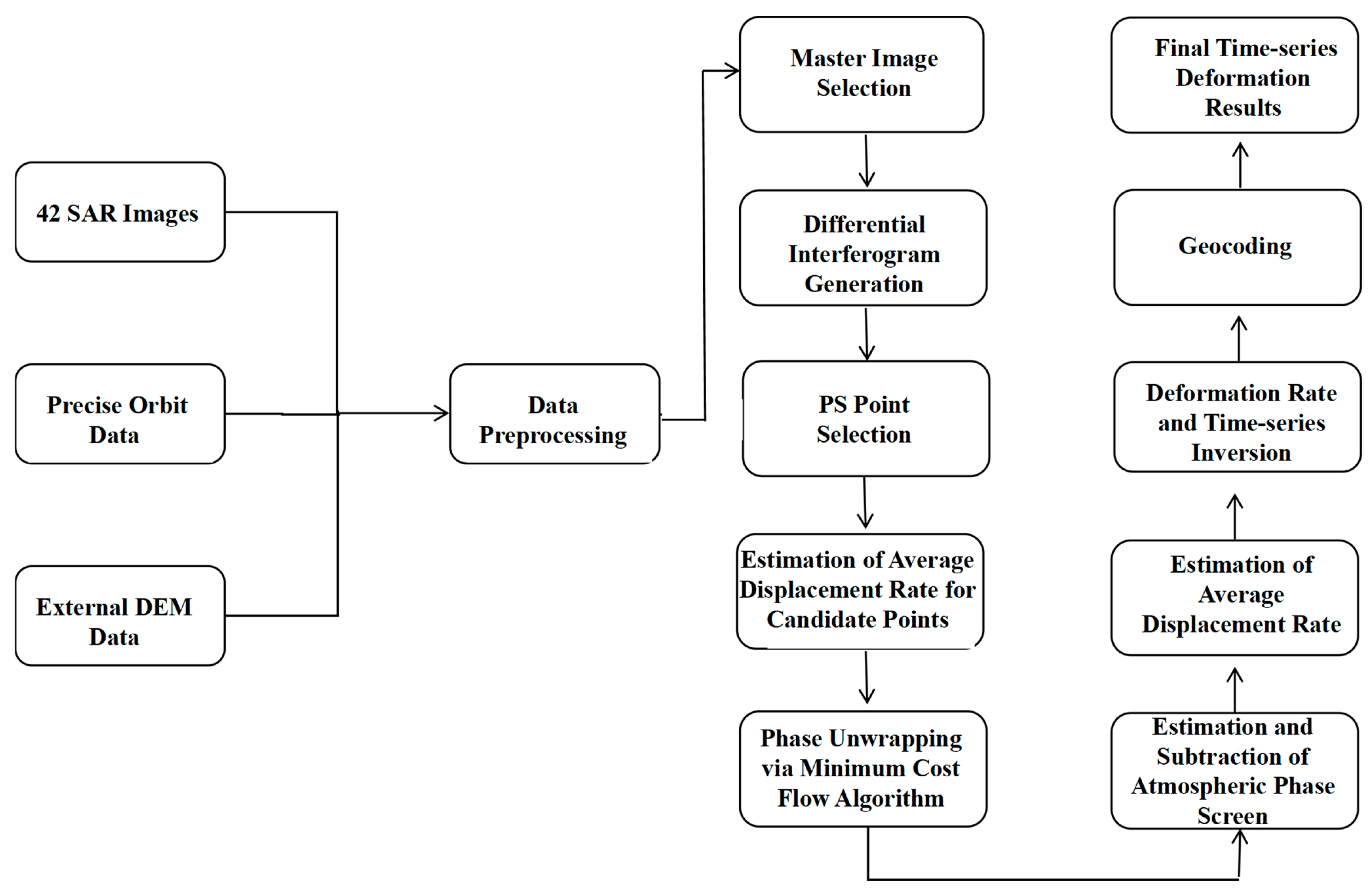
Based on Sentinel-1 imagery that fully covers the study area, PS-InSAR was used to monitor land subsidence and derive subsidence rates; the technical workflow is shown in
Figure 4.
PS-InSAR processing comprises the following four steps:
(1) Network generation: The acquisition on 2 July 2024, which exhibited the highest correlation, was selected as the master image, and the remaining 41 acquisitions were used as slave images to form interferometric pairs with the master for differential interferometric processing. The spatial- and temporal-baseline connection graphs are shown in
Figure 5a and
Figure 5b, respectively.
(2) PS interferometric processing: Each interferometric pair was co-registered and processed to generate interferograms, with the topographic phase and flat-earth effects removed; phase unwrapping was then performed using the minimum-cost flow algorithm.
(3) PS selection and time-series analysis: PS points were selected using the coherence-coefficient method and the amplitude dispersion index method. The deformation rate of each PS point was estimated using least-squares and related time-series inversion algorithms. Atmospheric-delay phase components, orbital-error residuals, and nonlinear deformation components were separated using the standard SARscape PS-InSAR spatiotemporal filtering strategy. In this procedure, atmospheric residuals are treated as spatially correlated but temporally weakly correlated signals, whereas deformation signals are assumed to show stronger temporal continuity. This processing reduces atmospheric-delay effects and improves the reliability of the final PS deformation time series.
(4) Geocoding: The SAR-derived inversion results were exported in the WGS84 geographic coordinate system to obtain accurate time-series deformation.
4. Land Subsidence Monitoring Results
4.1. Spatiotemporal Distribution Characteristics
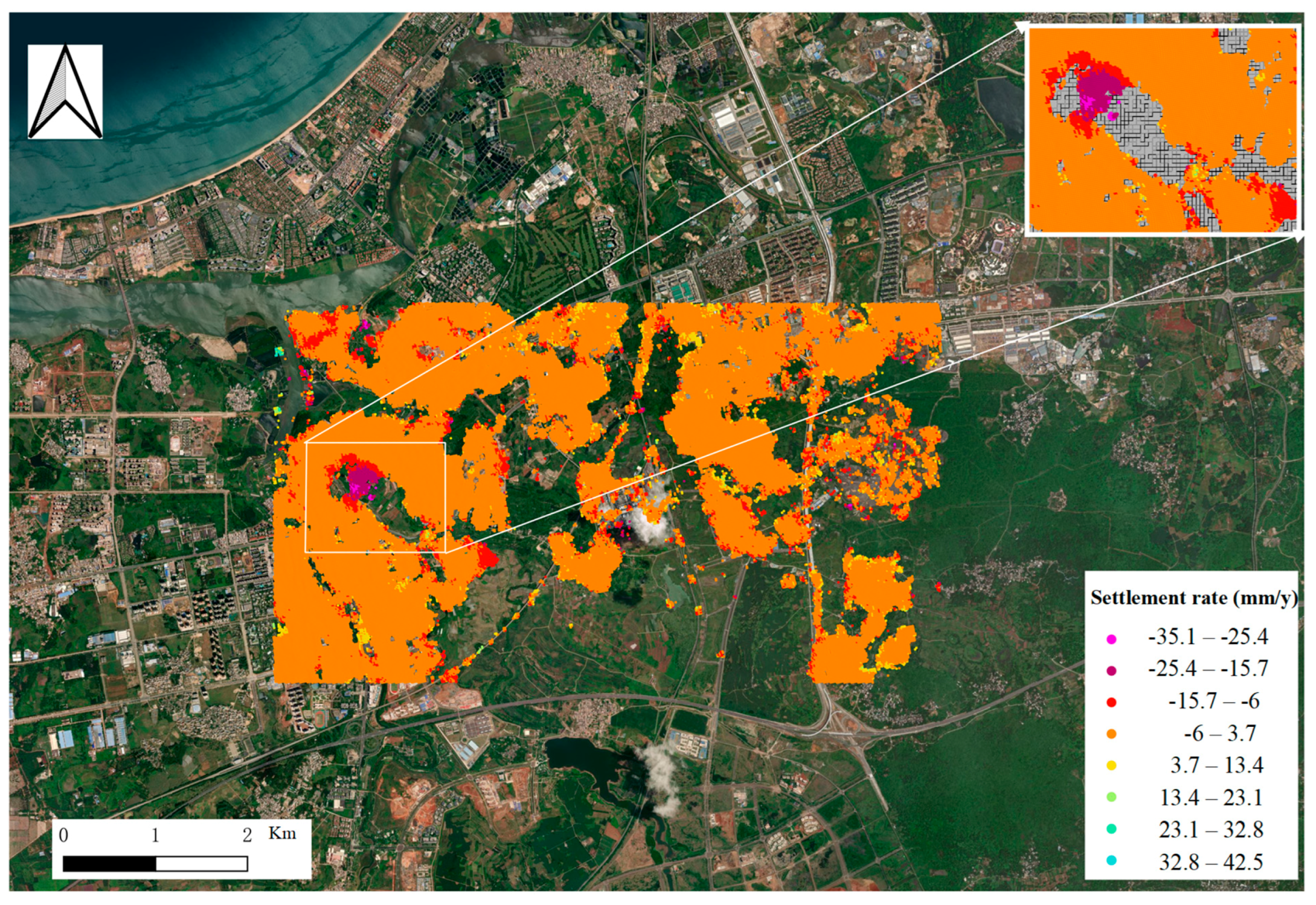
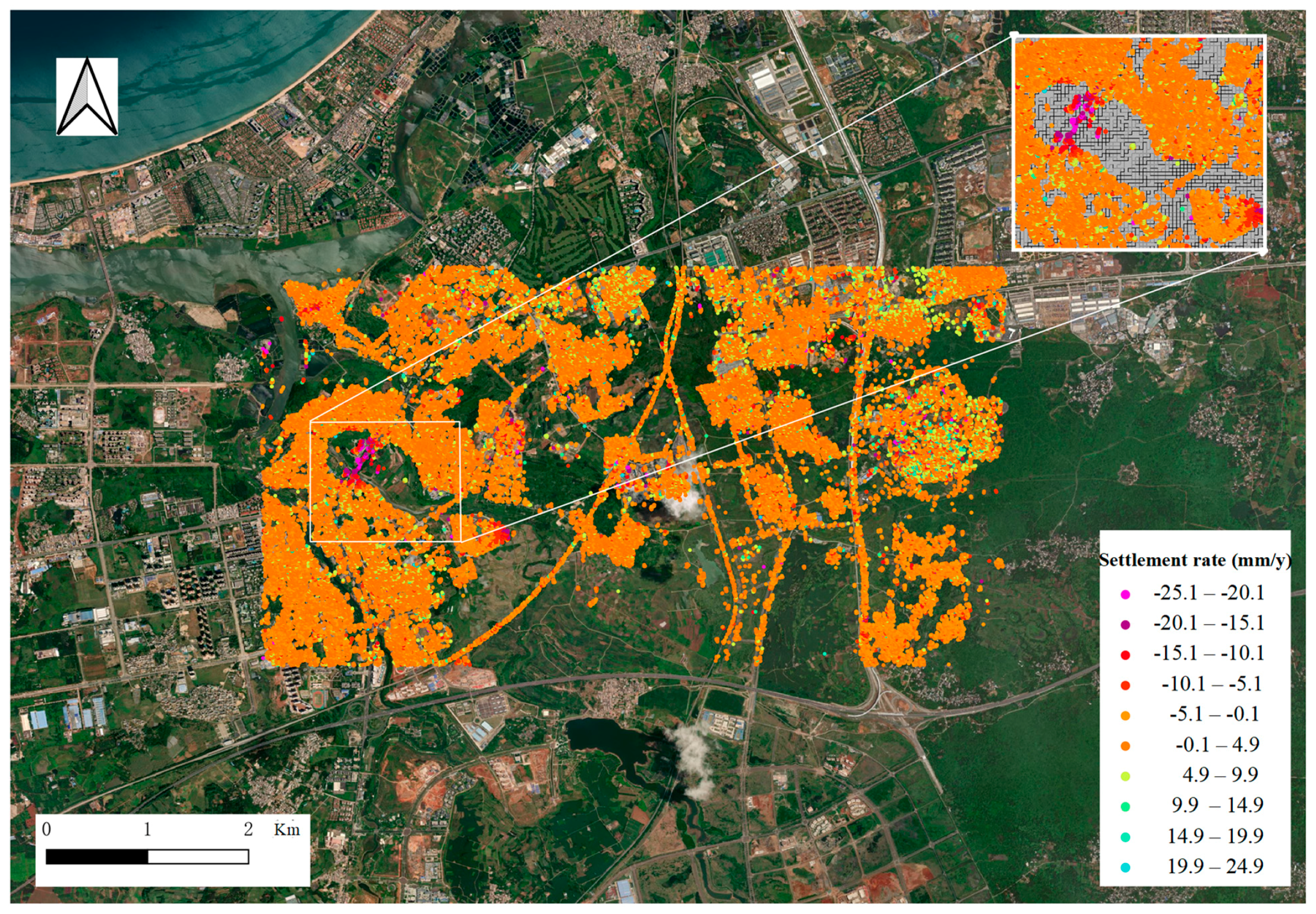
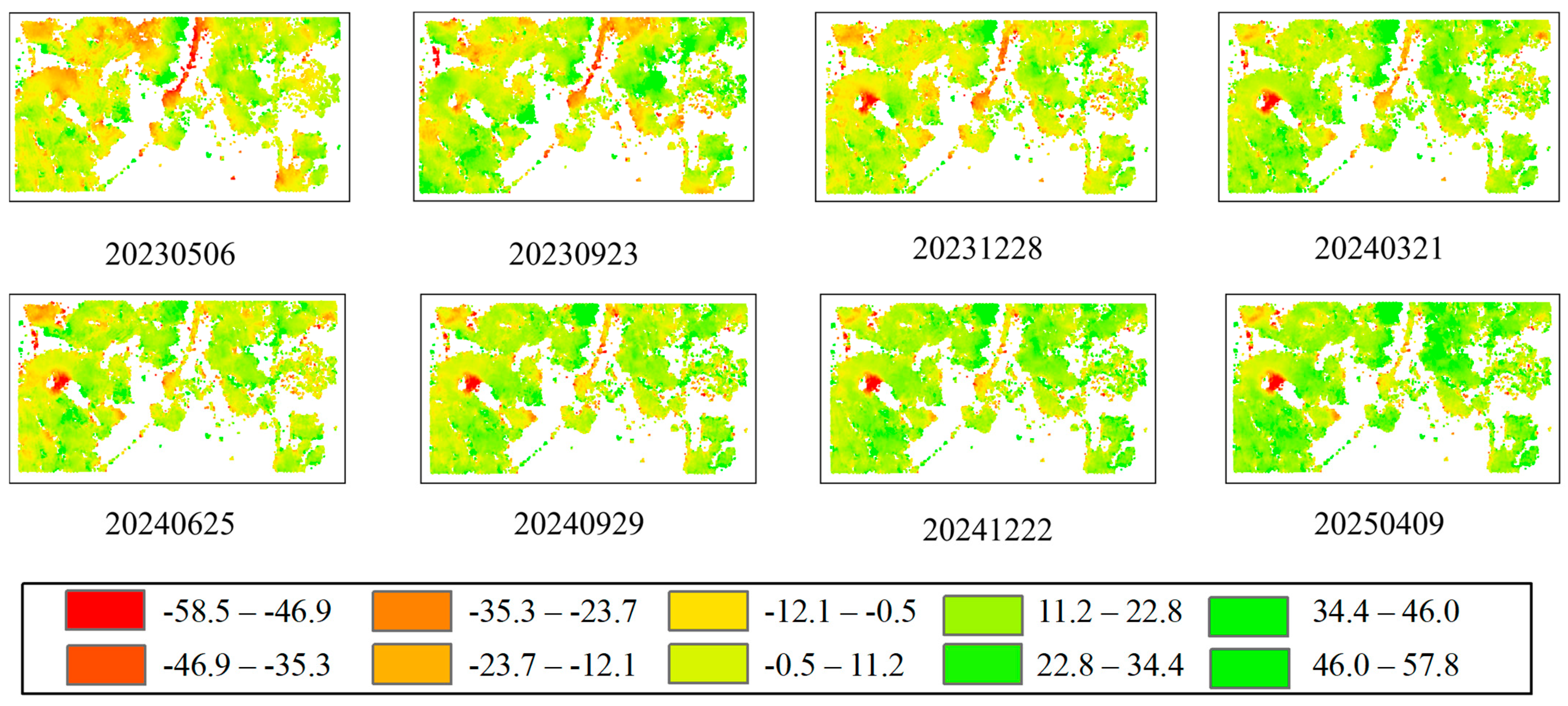
In this study, SBAS-InSAR in combination with PS-InSAR was employed to derive the land-subsidence rate map and multi-temporal deformation time series for the Haikou–Laocheng area following the monitoring workflows described above (
Figure 6,
Figure 7 and
Figure 8). A comparison of the two methods indicates that, during the monitoring period from April 2023 to April 2025, the overall spatial pattern and temporal tendency are broadly comparable, although the local peak values differ between the two methods. Overall, the study area is dominated by slight subsidence. Specifically, the SBAS-InSAR results exhibit continuous areal coverage, with vertical-projected subsidence rates mainly concentrated between −6 and 3.7 mm/y. Both methods also detect a small number of uplift points (with a maximum uplift rate of 42.5 mm/y from SBAS-InSAR and 24.9 mm/y from PS-InSAR), yielding an overall pattern of “generally stable subsidence with localized anomalies.” Compared with SBAS-InSAR, the PS-InSAR results further show a bead-like distribution along transportation corridors in some local areas (southeastern part of the study area) and a stronger local discreteness of subsiding points. Both techniques identify a pronounced subsidence bowl in the southwestern part of the study area, where the core exhibits relatively high vertical-projected subsidence rates of −35.1 mm/y and −25.1 mm/y, as estimated by SBAS-InSAR and PS-InSAR, respectively. Severe subsidence attenuates outward in a banded pattern, and locally clustered high-subsidence zones occur in the northeastern sector; in general, high-subsidence areas are mainly distributed near transportation routes and built-up areas.
The difference between the SBAS-InSAR peak rate (−35.1 mm/y) and the PS-InSAR peak rate (−25.1 mm/y) in the subsidence-bowl core is not interpreted as a contradiction between the two methods. The core of the bowl contains mixed land-cover conditions and locally rapid deformation, where distributed scatterers and permanent scatterers do not sample exactly the same ground objects. SBAS-InSAR provides more continuous areal coverage and may capture deformation over low-coherence or non-built-up surfaces after spatial averaging, whereas PS-InSAR is restricted to stable point scatterers, mainly buildings, roads, and other persistent targets. In addition, the strongest deformation zone may include decorrelation, unwrapping uncertainty, and residual atmospheric effects, which can amplify local peak-value differences.
Based on the multi-temporal cumulative subsidence maps from 26 May 2023 to 9 April 2025, the monitoring results show a relatively stable spatial pattern with short-term phased variations within the 24-month observation window. The southwestern part of the study area constitutes the subsidence center, surrounded by a transitional zone; the spatial pattern of subsidence remains largely stable, with strong spatial heterogeneity. Temporally, deformation accumulated unevenly during the monitoring period: a subsidence center formed on 9 May 2023; by 12 September 2023, the increment of subsidence slowed while the high-subsidence zone continued to deepen, followed by a renewed intensification and outward expansion over the subsequent five months. From 21 March 2024 to 25 June 2024, color levels in parts of the study area decreased and the subsidence intensification weakened; overall changes were less pronounced than in the previous stage, although the high-value zone remained persistent. This behavior may vary under external influences such as seasonal rainfall, human activities, and construction schedules. In the final stage, subsidence hotspots remained stable and continued to accumulate gradually, with further outward expansion, a persistent high-value zone, and a pattern that tended to become consolidated.
4.2. Time-Series Analysis of Subsidence Characteristics in High-Subsidence Zones
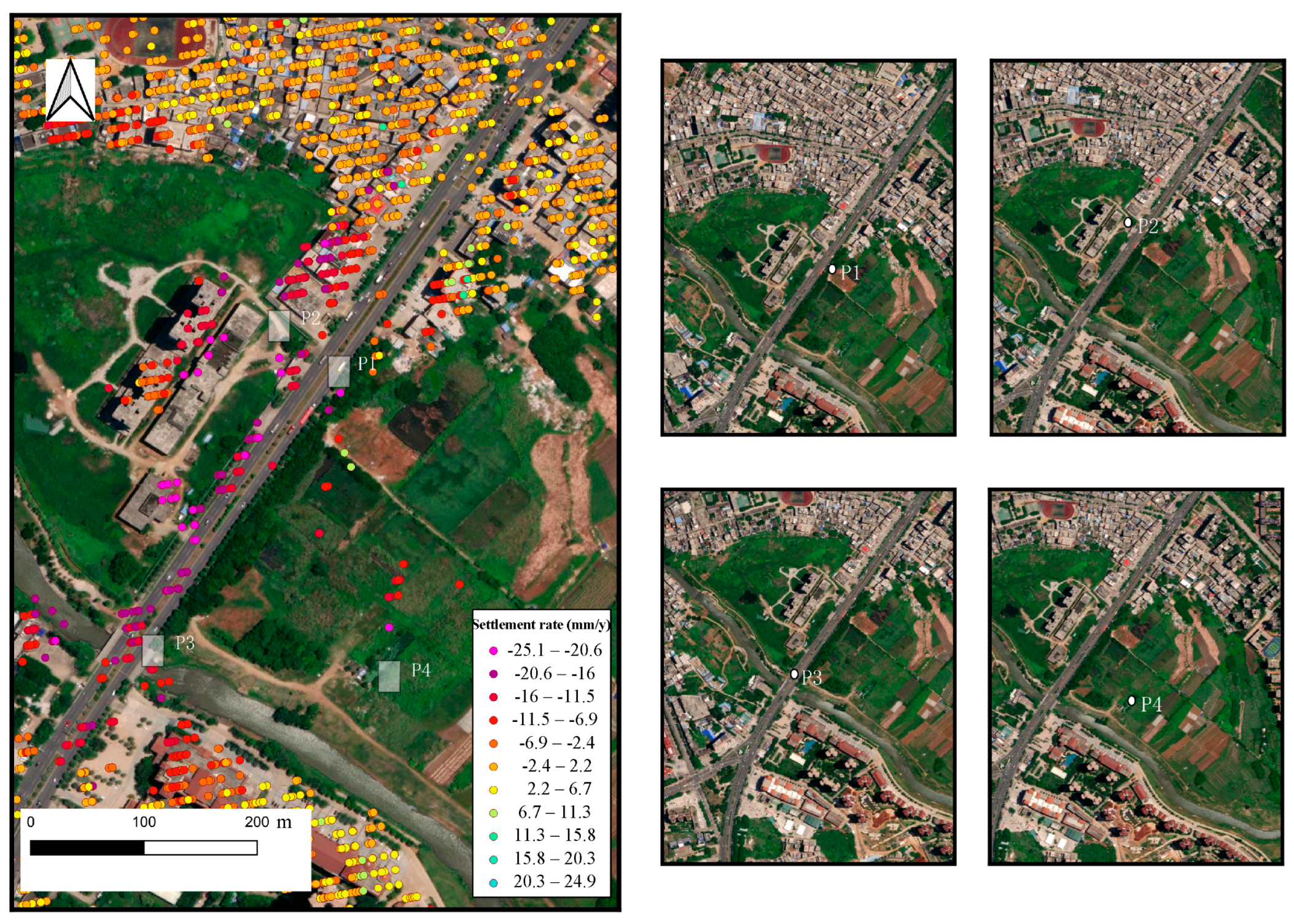
Based on the high-subsidence zone indicated by the subsidence-rate map, SBAS-InSAR and PS-InSAR were further applied to analyze the subsidence characteristics of this area in detail. Four representative points (P1–P4) were selected for time-series subsidence analysis (their locations are shown in
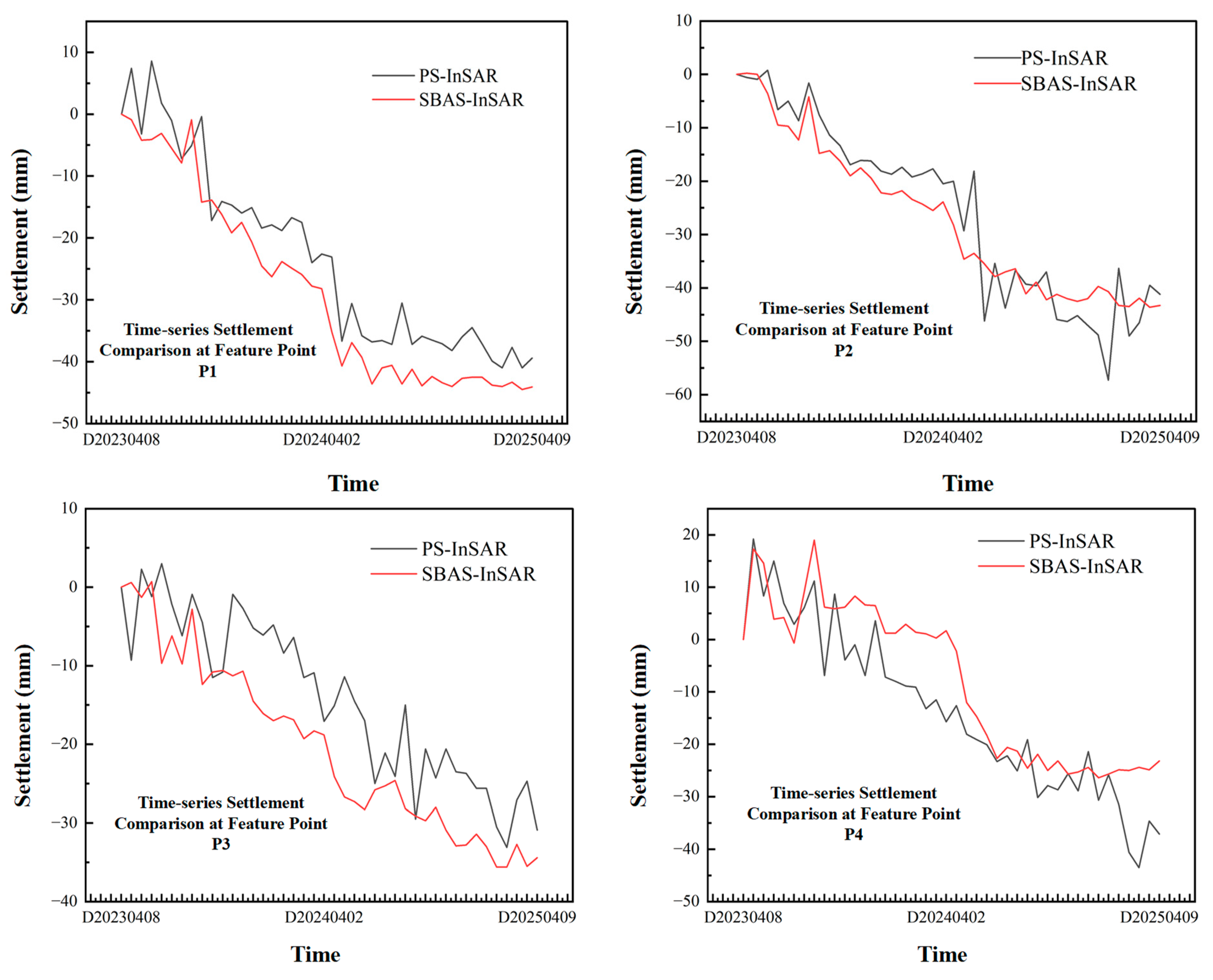
Figure 9). Surface deformation data from April 2023 to April 2025 were extracted, and the comparative curves of cumulative subsidence at these points derived from the two methods are presented in
Figure 10.
From the overall time-series subsidence characteristics, the severe-subsidence zone exhibits a pattern of “slow in the early stage–development in the middle stage–acceleration in the late stage.” At the point scale, the subsidence processes at P1–P4 all show an overall downward trend, with an evident intensification from late 2023 to early 2024, during which the cumulative subsidence reaches approximately −45 to −35 mm. Among the four points, P1 and P2 display larger subsidence magnitudes and more consistent temporal trends. Subsidence at P3 is relatively slow, yet it still shows accelerated settlement in the later period, indicating insufficient overall ground stability in this area. Point P4 exhibits the most complex evolution, characterized by stepwise acceleration and pronounced fluctuations in the later period; as indicated by the map, this point is located in farmland and may be affected by seasonal moisture changes, agricultural activity, and other human disturbances. The two methods show good consistency in subsidence trends and both effectively capture the long-term subsidence characteristics of the study area. The SBAS-InSAR results are relatively stable and smooth, which is advantageous for emphasizing the overall subsidence trend, whereas PS-InSAR is more sensitive to local or short-term fluctuations and to areas with more complex surface conditions. Considering the overall subsidence pattern of the study area, all four points were selected within high-subsidence zones, and the subsidence centers show clear spatial clustering, mostly located in built-up urban areas and along transportation corridors. Overall, the subsidence pattern exhibits pronounced spatial heterogeneity, and severe subsidence areas may be related to human activities and urban construction.
4.3. Inter-Method Consistency Assessment
Due to the lack of historical leveling data in the study area, and to evaluate the consistency of the subsidence patterns and current conditions, this study conducted cross-validation of the derived subsidence results using both PS-InSAR and SBAS-InSAR. By comparatively analyzing the subsidence amounts at the representative subsidence points described above, the inter-method consistency between the two results was quantitatively assessed.
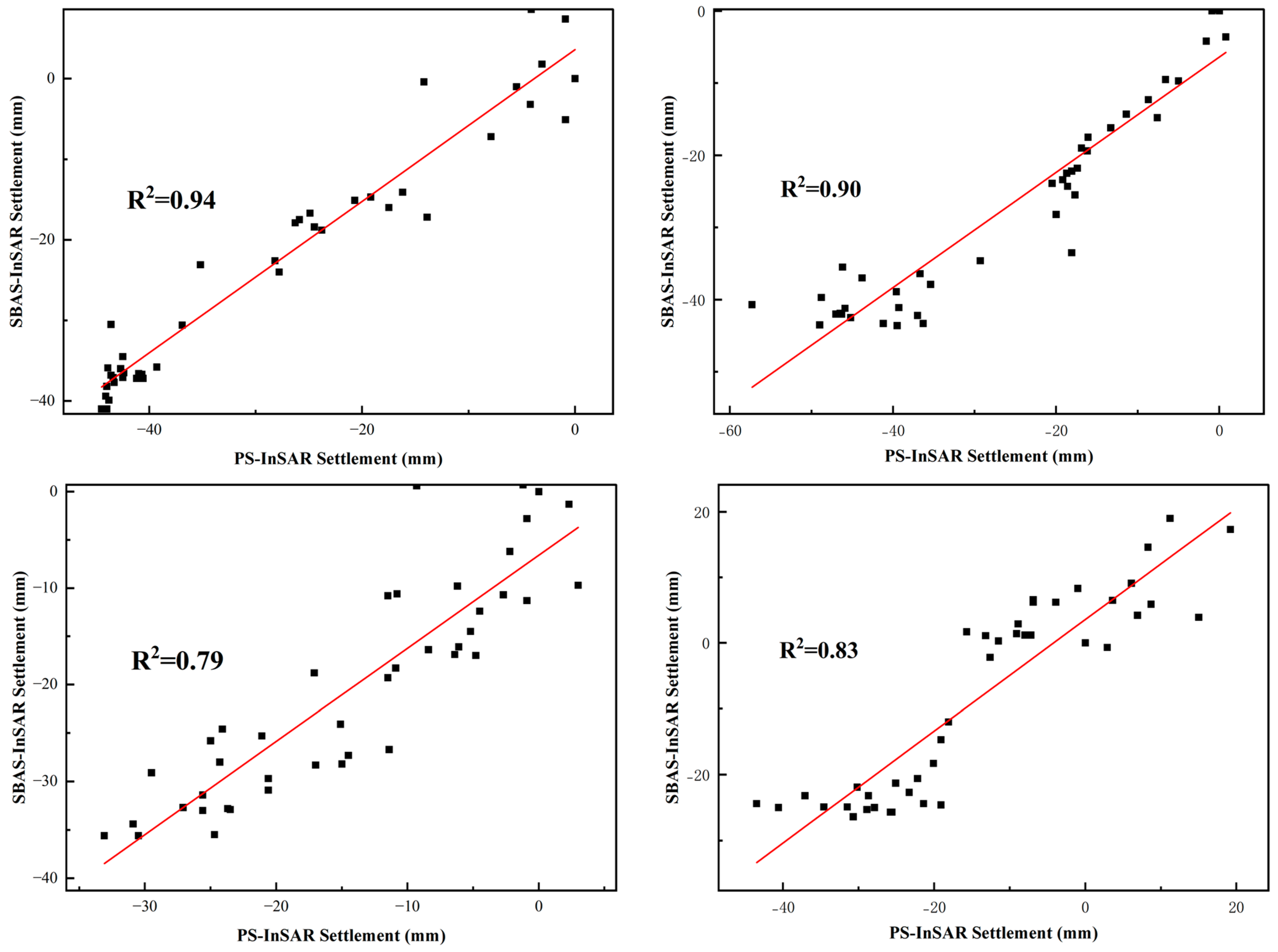
Four representative points (P1–P4) within the severe-subsidence zone were selected. The cumulative subsidence values retrieved by the two methods were extracted and subjected to linear regression analysis (
Figure 11). The results show good correlations for all four points, with coefficients of determination (R
2) of 0.94, 0.90, 0.79, and 0.83, respectively. Overall, the R
2 values are relatively high, indicating that the subsidence amounts derived from the two methods maintain a stable linear relationship across different stages within the high-subsidence zone, and that the inversion results are highly consistent.
The cross-validation between PS-InSAR and SBAS-InSAR demonstrates the consistency of the time-series subsidence monitoring results in the study area and supports the relative consistency of the observed deformation trends. In the absence of in situ measurements, cross-validation using multiple time-series methods serves as a useful consistency-checking approach.
4.4. Analysis of Factors Influencing Subsidence
4.4.1. Influence of Rainfall
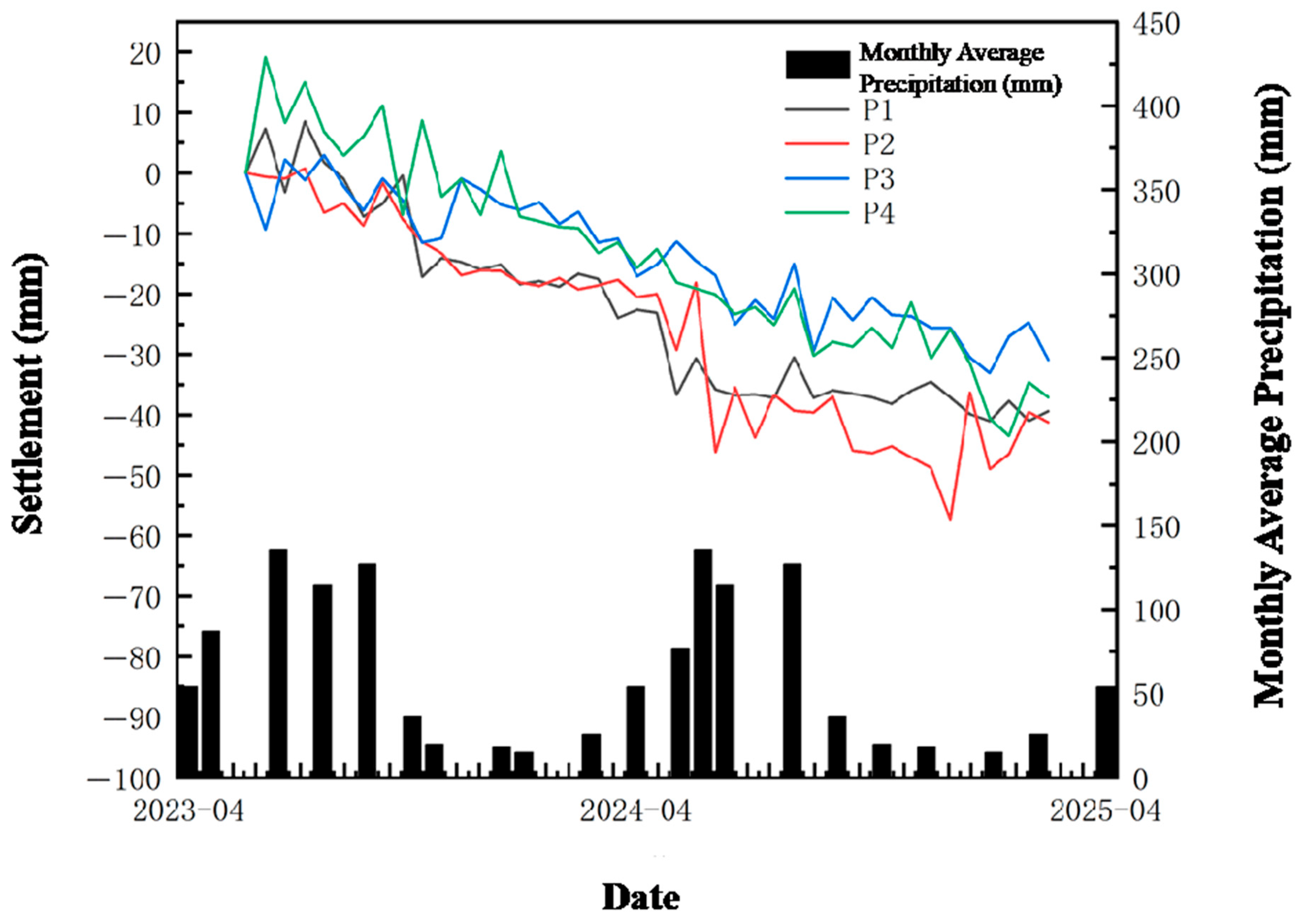
To analyze the impact of rainfall factors on the subsidence evolution in the study area, a comparative analysis was conducted between the time-series subsidence results of four characteristic points and the monthly average precipitation during the same period, as shown in
Figure 12. The figure reveals that there is a non-synchronous response relationship between surface subsidence changes and precipitation variations. Some subsidence peaks occur in a period following a surge in rainfall, exhibiting a significant lag rather than an immediate effect.
Precipitation can alter near-surface moisture conditions, pore-water pressure, surface runoff, and infiltration conditions, and the response of compressible soils is usually not instantaneous. The Haikou–Laocheng area has a tropical monsoon climate, and precipitation is seasonally concentrated in summer. During periods of intense rainfall, the increase in near-surface water content and pore-water pressure may temporarily reduce effective stress and slow the consolidation rate of soft-soil layers. Therefore, changes in the deformation curves may appear after rainfall peaks as episodic slowdowns or short-term fluctuations.
After rainfall weakens or ceases, the temporary buffering effect may gradually diminish, and consolidation deformation can continue to accumulate under engineering loading and the inherent compressibility of the weak strata. Thus, rainfall is not regarded as an independent direct driving factor of subsidence in this study; rather, it is interpreted as a seasonal environmental factor that may modulate the short-term fluctuation of subsidence. This qualitative interpretation avoids overestimating the rainfall effect and should be further tested in future studies using longer time series and quantitative lag-correlation methods.
4.4.2. Land-Use Types
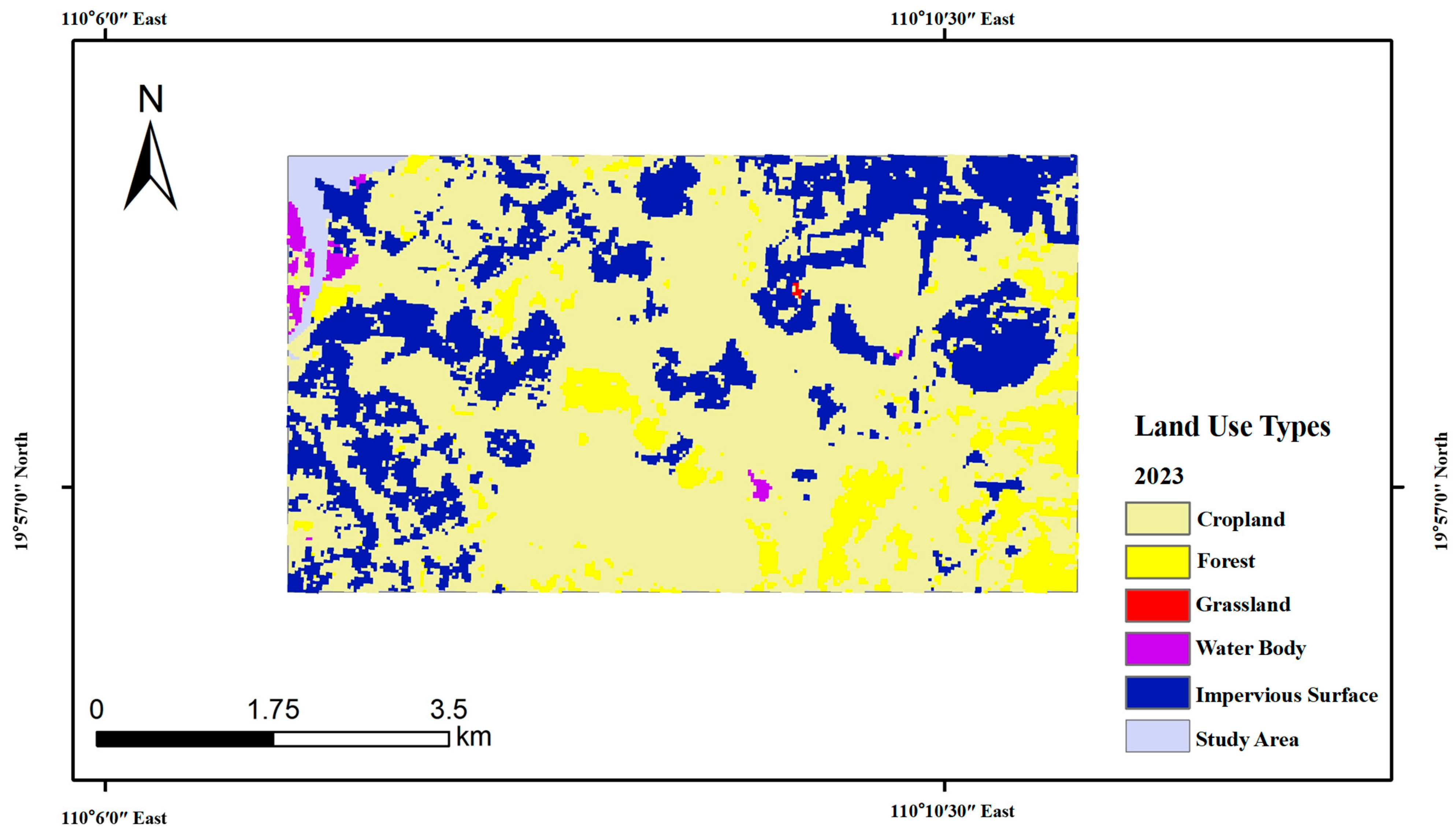
Previous studies have demonstrated that land-use type can influence land subsidence to a certain extent. As shown by the land-use map of the study area (
Figure 13), the dominant land-use types are farmland and impervious surfaces. Impervious surfaces mainly consist of roads and hardened ground associated with buildings and are generally distributed in built-up urban areas, whereas farmland is typically located in suburban zones or low-lying plains. According to the time-series InSAR results, high-subsidence zones are mainly concentrated on impervious surfaces and in parts of the farmland areas. This suggests a spatial correspondence between pronounced subsidence and areas with relatively intensive land use.
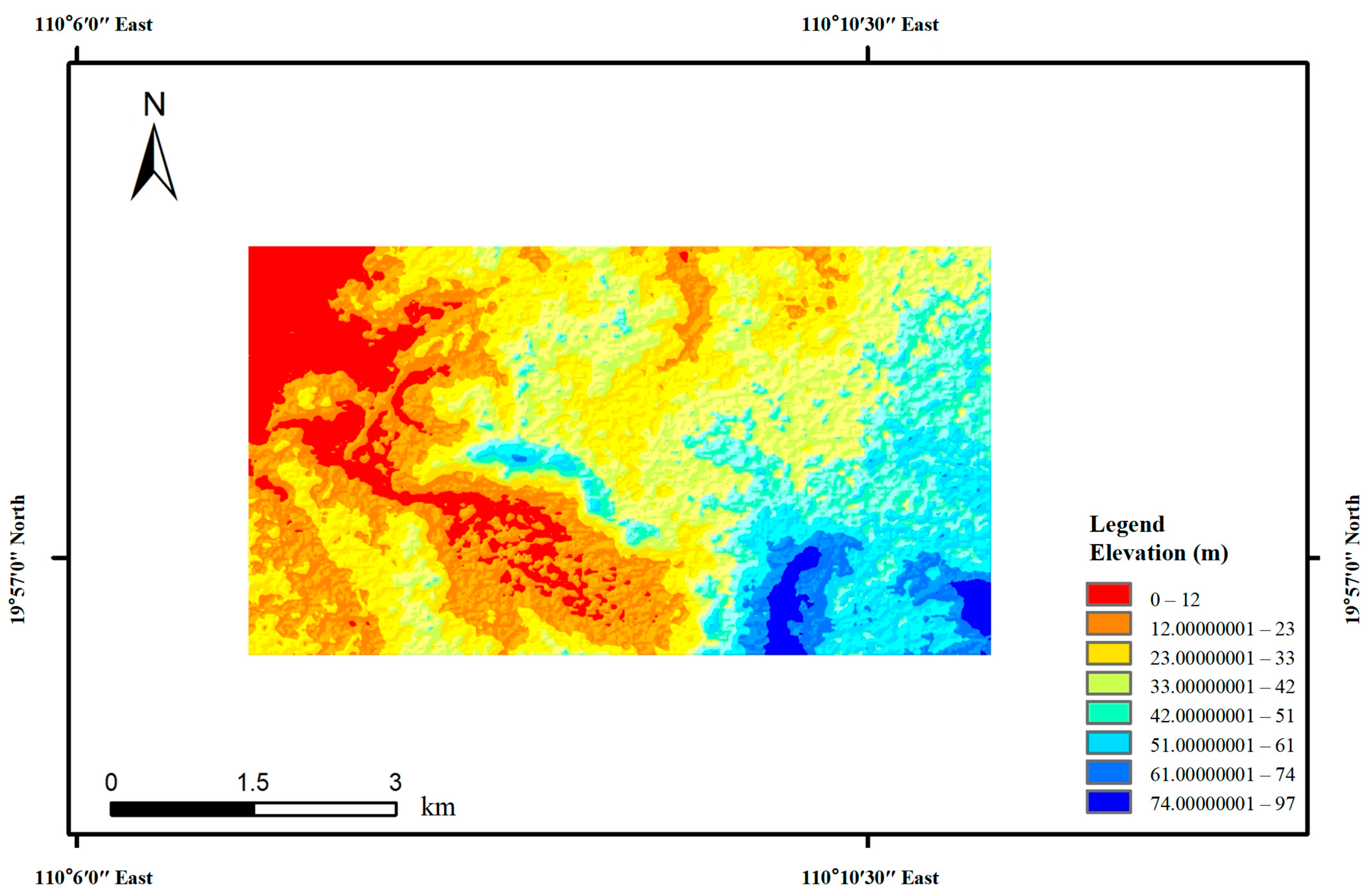
Using the elevation map of the study area as auxiliary information (
Figure 14), the topographic context of subsidence was examined. The elevation conditions indicate that the overall topography of the study area gradually decreases from northwest to southeast, and the high-subsidence zones are located in relatively low-elevation areas. Low-lying terrain is generally more likely to coincide with thick compressible deposits and unfavorable drainage conditions, making the ground more susceptible to compressive deformation under long-term loading and rainfall influences. In contrast, higher-elevation areas generally have better foundation conditions and exhibit more stable subsidence.
By integrating land-use and elevation data, the overlay results show that high-subsidence zones are mainly distributed in low-elevation areas with intensive human activities, such as impervious surfaces and farmland. The formation of abnormal subsidence in these areas is mainly associated with surface hardening, concentrated engineering loads, traffic loads, and modified surface runoff/infiltration conditions, which can jointly enhance the consolidation of compressible soft-soil layers. Overall, land-use distribution and elevation jointly regulate surface loading, drainage conditions, and soil compressibility, thereby controlling the spatial pattern of land subsidence in the study area and indicating that land subsidence is driven by the combined effects of natural factors and human activities.
4.4.3. Geological Factors
The high-subsidence zone in the Haikou–Laocheng area is underlain by a typical thick, weak foundation system. The shallow layer consists of unconsolidated deposits such as plain fill, clay, and silty clay, characterized by a low compression modulus and a high void ratio; this loose structure provides limited bearing capacity and compressive resistance. Under the combined loading from urban construction and traffic, the shallow soils are prone to immediate compression and secondary consolidation deformation, providing initial deformation conditions for abnormal subsidence. More critical controlling factors occur in the middle-shallow to middle-deep strata, where multiple highly compressible weak interlayers are present. In particular, peaty clay and lightweight volcanic ash soils exhibit extremely high void ratios, low compression moduli, high plasticity indices, and high water contents, resulting in extremely unstable structures. The continuous distribution and considerable thickness of these layers make the area susceptible not only to short-term settlement but also to long-term, cumulative subsidence. Detailed geological information is provided in
Table 2.
In addition, the stratigraphic structure in this area is characterized by an alternating superposition of “soft soil–sand layer/weathered rock layer.” Although the deeper silty sand, gravelly sand, and weathered tuffaceous rocks are relatively incompressible, their greater burial depth means that the compressive deformation of the overlying soft soils cannot be effectively constrained or alleviated by the stable deep layers. As a result, deformation becomes concentrated and accumulates within the overlying weak strata, forming a pronounced subsidence center. Therefore, the formation of high-subsidence zones is primarily controlled by shallow soft soils with high void ratios, high water contents, and low compression moduli. Soft layers such as peaty clay and lightweight volcanic ash soils act as the principal deforming strata, amplifying surface deformation induced by external loading and hydrological conditions, and ultimately leading to the development of high-subsidence zones.
4.5. Implications for Urban Planning, Limitations, and Future Work
The deformation pattern identified in this study has direct implications for spatial planning and engineering management in the Haikou–Laocheng area. The southwestern subsidence bowl and locally clustered high-subsidence zones should be treated as priority areas for detailed geotechnical investigation, foundation improvement, drainage optimization, and continuous deformation monitoring. For future urban expansion, high-intensity loading and deep underground-space development should be carefully evaluated in areas where impervious surfaces, low elevation, and thick compressible strata overlap.
Several limitations should also be acknowledged. First, because only ascending-orbit Sentinel-1 images were used, the InSAR observations were originally LOS measurements and were converted to vertical-projected deformation under the assumption of negligible horizontal motion. The results therefore do not represent a full decomposition of east–west and vertical motion, and residual horizontal displacement may introduce uncertainty. Second, the monitoring period covers April 2023 to April 2025, which is suitable for recent deformation assessment but remains insufficient for characterizing multi-decadal consolidation trends. Third, because synchronous leveling, GNSS, and in situ geotechnical/hydrological observations were unavailable, the PS-InSAR/SBAS-InSAR comparison mainly verifies relative consistency rather than absolute accuracy. Fourth, the interpretation of rainfall, land use, elevation, and stratigraphic controls is based on spatial and temporal association; a fully coupled hydro-mechanical model is still needed to quantify causal contributions.
Future research should combine multi-track SAR data, ground-based leveling or GNSS, hydrological monitoring, construction-load information, and borehole records to improve the separation of vertical and horizontal deformation and to calibrate the InSAR-derived time series. It would also be valuable to establish a long-term monitoring database and develop quantitative subsidence-susceptibility or risk-zoning models that can be directly used in land-use planning, foundation design, and post-construction maintenance.
5. Conclusions
This study focuses on the Haikou–Laocheng area and, based on 42 Sentinel-1 SAR scenes acquired from April 2023 to April 2025 together with precise orbit data, comprehensively monitored land subsidence using PS-InSAR and SBAS-InSAR. The spatiotemporal distribution characteristics of vertical-projected subsidence rates and deformations were obtained, and the influences of precipitation, land-use type, elevation, and geological factors on the subsidence process were discussed, leading to the following conclusions:
(1) Overall, the study area is dominated by slight subsidence, with vertical-projected subsidence rates mainly ranging from −6 to 3.7 mm/y, and a small number of uplift signals occurring locally. The SBAS-InSAR and PS-InSAR results show high consistency in both spatial distribution and temporal evolution, with peak vertical-projected subsidence rates in the core zone reaching −35.1 mm/y and −25.1 mm/y, respectively, thereby supporting the reliability of the results. Spatially, subsidence attenuates outward in a banded pattern, forming an overall deformation pattern of “generally stable subsidence with localized anomalies.” This finding also indicates that dual time-series InSAR cross-validation is a practical reliability-checking strategy for coastal urban areas where leveling or GNSS records are incomplete.
(2) The multi-temporal cumulative subsidence results indicate that the subsidence center is stably located in the southwestern part of the study area, with a pronounced peripheral transition zone and strong spatial heterogeneity. For the high-subsidence zone, four representative points (P1–P4) were selected to analyze the time-series characteristics. Cumulative subsidence at all four points continuously increased, with greater acceleration at P1 and P2 and better consistency in their temporal trends. Subsidence intensified markedly from late 2023 to early 2024, with cumulative subsidence of approximately −45 to −35 mm; this accelerated subsidence is closely related to urban construction and human activities. Therefore, the southwestern subsidence bowl, transportation corridors, and built-up areas should be prioritized for refined monitoring and engineering-risk assessment.
(3) Land subsidence in the Haikou–Laocheng area is closely related to precipitation, land-use type, and geological factors. The rainfall effect is mainly manifested as non-synchronous, stage-wise fluctuations during the subsidence evolution process. Areas with concentrated impervious surfaces and relatively low elevations are more prone to developing subsidence centers. Geological analysis indicates that thick soft-soil layers with high void ratios and low compression moduli—such as peaty clay and lightweight volcanic ash soils—are the primary controlling factors for subsidence and represent promising targets for ground improvement. For urban planning, these findings support the integration of subsidence-sensitivity zoning, foundation treatment, rainfall monitoring, and regular InSAR-based deformation surveillance into future development strategies. Future studies should further incorporate ground measurements and coupled hydro-mechanical modeling to quantify the contribution of each controlling factor.