Article

Integrated Evidence of Winter Childhood Exposure to CO2 in Housing and Classrooms in Santiago de Chile

by
Javiera Moltedo-Medina
1,
Maureen Trebilcock-Kelly
1,
Carlos Rubio-Bellido
2 and
Alexis Pérez-Fargallo
3,*
1
Department of Architectural Theory and Design, Faculty of Architecture, Construction and Design, University of Bío-Bío, Concepción 4030000, Chile
2
Department of Building Construction II, University of Seville, 41004 Seville, Spain
3
Escuela de Arquitectura, Facultad de Arquitectura, Arte y Diseño, Universidad San Sebastián, Concepción 4030000, Chile
*
Author to whom correspondence should be addressed.
Buildings 2026, 16(10), 1943; https://doi.org/10.3390/buildings16101943
Submission received: 10 March 2026 / Revised: 28 April 2026 / Accepted: 6 May 2026 / Published: 14 May 2026
(This article belongs to the Special Issue Built Environment and Thermal Comfort)

Abstract

During the winter, school-age children spend much of their time in two indoor environments, homes and classrooms, where ventilation is often restricted to conserve heat, favoring the accumulation of carbon dioxide (CO2). This study evaluated CO2 exposure in both environments in Santiago de Chile to characterize real conditions and their daily combinations. Continuous CO2 monitoring was conducted using sensors in four dwellings with school-age children and four classrooms from different schools during August 2024. Hourly profiles, time over the operating threshold of 1250 ppm, and equivalent hours of exposure, standardized to a daily reference time, were analyzed. In classrooms, levels above the threshold were observed episodically. They were more concentrated during school hours, with marked differences between establishments, ranging from recurrent exposure to high levels to no exposure above the established level. In the bedrooms, the increases were concentrated during the night and early morning hours, consistent with reduced effective ventilation during prolonged stays. Overall, the bedroom-classroom combined exposure showed high variability across cases; together, it allows identifying priority scenarios and the orientation of winter ventilation strategies without neglecting thermal comfort. These results support the incorporation of winter ventilation operational criteria into schools and homes as input for implementing indoor environmental quality policies and standards in urban contexts.

1. Introduction

Indoor Air Quality (IAQ) is recognized today as a key determinant of health, particularly among infants, given their physiological susceptibility and the significant time they spend in enclosed environments. Within this framework, international organizations have systematized evidence on indoor pollutants and their effects, consolidating the need to address IAQ as a structural component of public health and the built environment [1]. At the same time, recent reviews have reinforced the association between cumulative indoor environmental exposure and adverse child health outcomes, particularly during the cold months, when time spent indoors and the likelihood of insufficient ventilation increase [2,3].
In urban contexts, the problem is exacerbated in winter because natural ventilation is usually restricted for thermal and comfort reasons, which favors the accumulation of pollutants and the deterioration of the indoor environment. IAQ technical guides have emphasized that this phenomenon is not solely due to the lack of window openings, but rather to a combination of climate, use practices, occupancy density, and building performance, which tend to converge to air exchange rates below those recommended [4]. In this scenario, carbon dioxide (CO2) is widely used as an operational indicator of ventilation and the fraction of rebreathed air, due to its link to occupancy and the dilution of human emissions in indoor areas [5]. In addition, multidisciplinary reviews have shown associations between ventilation rates, CO2 concentrations, and health and performance outcomes in occupied buildings, including institutional and work environments, reinforcing its usefulness as an operational indicator of ventilation performance [6,7,8]. The usefulness of CO2 extends beyond its role as a ventilation proxy to its potential effects on cognitive performance and decision-making, thereby increasing its relevance in educational settings [9]. For evaluation purposes, regulatory and design criteria provide thresholds and indicators for interpreting ventilation performance in buildings, although their development and application also entail methodological and practical challenges [10,11,12].
The COVID-19 pandemic reinforced the consensus on the importance of ventilation in reducing the risk of airborne transmission of respiratory pathogens. Influential works explicitly raised the need to assume that aerial transmission is the dominant mode indoors and to adjust ventilation and environmental control strategies accordingly [13,14]. Along the same lines, guidelines have been proposed to limit indoor airborne transmission, where CO2 reappears as a practical signal for managing risk in occupied premises [15]. Previous reviews have also consistently documented the role of ventilation in the airborne transmission of infectious agents in the built environment, underscoring the need to consider air renewal as a central control strategy in occupied indoor spaces [16,17]. This conceptual shift consolidated a message for schools and homes: when ventilation is low, exposure to rebreathed air increases, and with it, conditions conducive to respiratory events intensify in the winter season [18].
In educational establishments, the accumulated evidence shows that classrooms with natural ventilation often experience sustained high CO2 levels during the school day. A recent systematic review concludes that, in naturally ventilated schools, CO2 concentrations tend to exceed reference values for a significant fraction of the time during use, and that this is related to the ventilation method, occupancy levels, and daily classroom management [19]. In Chile, studies have documented that seasonal behavior and environmental variables strongly modulate CO2 levels, accentuating exposure in winter [20]. Based on this diagnosis, specific improvement actions have been proposed, ranging from ventilation routines and period-based control to physical interventions and management strategies, while balancing environmental health and thermal comfort remains a challenge [21]. However, effective implementation depends on human and organizational factors. During the pandemic, it was observed that occupants’ control over ventilation is inconsistent and conditions the actual results, even when there is an intention to ventilate [22].
A relevant gap in this field is that children’s exposure is typically studied in distinct environments (e.g., the dwelling or the school). However, their daily experience combines both, and exposure load is distributed across the day as a continuum. This gap is particularly important in winter, when they spend prolonged periods in bedrooms, and classrooms experience high occupancy density at specific times. However, in Chile, recent progress towards formal ventilation requirements for residential and non-residential buildings (NCh 3309 and NCh 3308) creates both an opportunity and a requirement: to obtain empirical evidence of actual ventilation and exposure conditions in standard premises [23,24]. In the context of the Metropolitan Region, urban environmental problems are also part of the scenario, with official diagnoses underscoring relevant environmental pressures and their links to health [25], as well as local evidence on variations in atmospheric pollution and urban dynamics in Santiago [26]. This research evaluates infant exposure to CO2 in two highly relevant indoor microenvironments, namely bedrooms and classrooms, during the winter period in Santiago. Using continuous measurements from four dwellings and four educational establishments, the actual ventilation conditions are characterized; the fraction of the day during which reference concentrations associated with insufficient ventilation are exceeded is determined; and the hourly profiles, the time above threshold, and the indirect rebreathed air estimation are analyzed. The integration of both environments using a combined daily exposure indicator, constitutes a methodological and applied contribution, as it allows operationalizing a bedroom-classroom outline to describe joint exposure scenarios, addressing a recurring gap in the literature, where both spaces tend to be analyzed separately, and to provide empirical evidence in real winter conditions to support the interpretation of ventilation performance in spaces occupied by children, and to contribute to the discussion of future ventilation criteria in residential and school contexts in Chile.
The article is organized as follows. Section 2 presents the materials and methods, including the study design, monitored environments, data collection strategy, and analytical approach. Section 3 presents the results for the bedrooms, classrooms, and integrated exposure scenarios. Section 4 discusses the main findings, compares them with previous studies, and outlines their implications for evaluating ventilation in spaces occupied by children. Finally, Section 5 presents the main conclusions, the study’s limitations, and its practical implications.

2. Materials and Methods

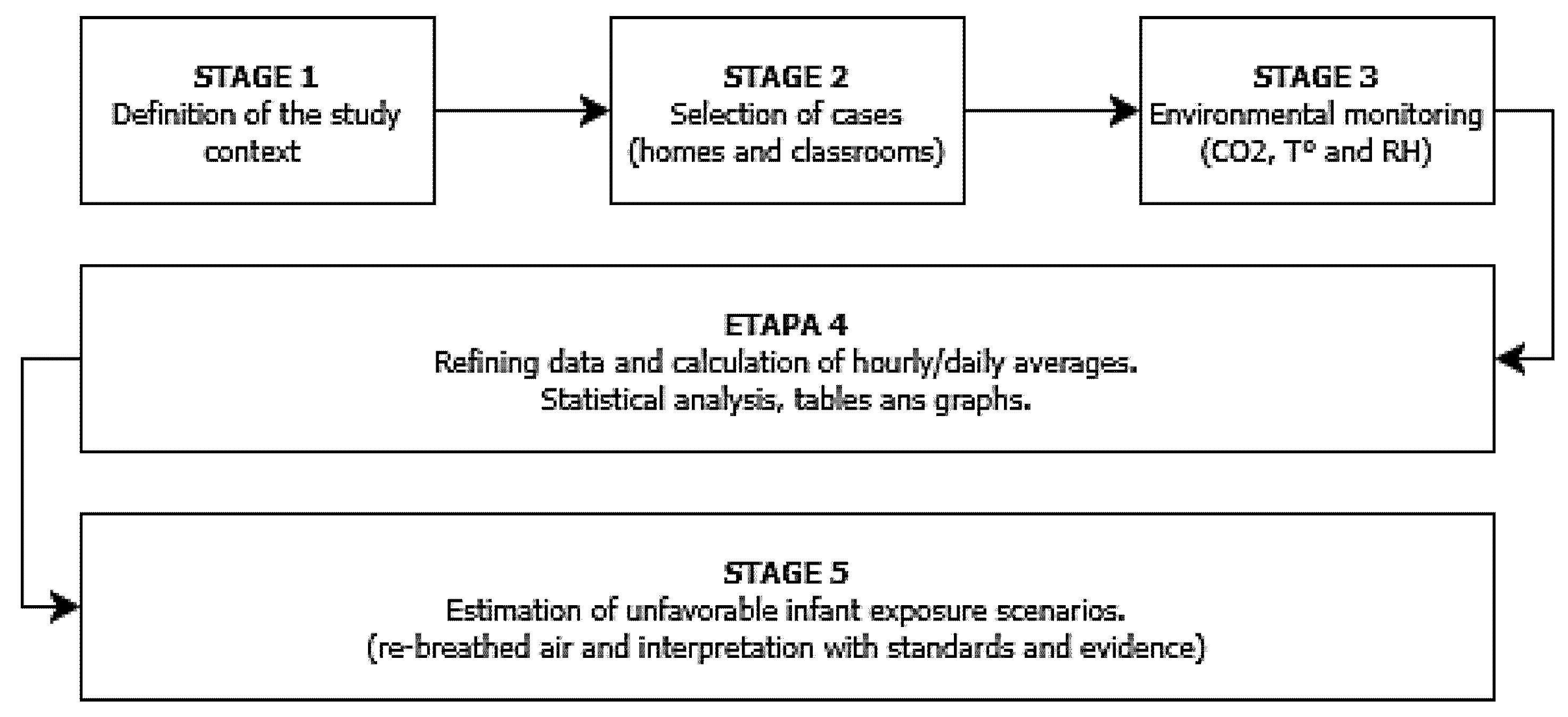
The research methodology was organized in five stages (Figure 1). In stage 1, the study’s context and scope were determined. In stage 2, the case studies were selected, and the rooms to be monitored and the comparison logic were defined. In stage 3, winter monitoring of CO2, air temperature, and relative humidity was conducted in the designated spaces. In stage 4, the records were refined and processed, with hourly and daily averages calculated, statistical analysis performed, and tables and graphs prepared. Finally, in stage 5, unfavorable exposure scenarios in the child population were estimated, and the results were interpreted against regulatory criteria and evidence.

2.1. Selection of Cases and Study Variables

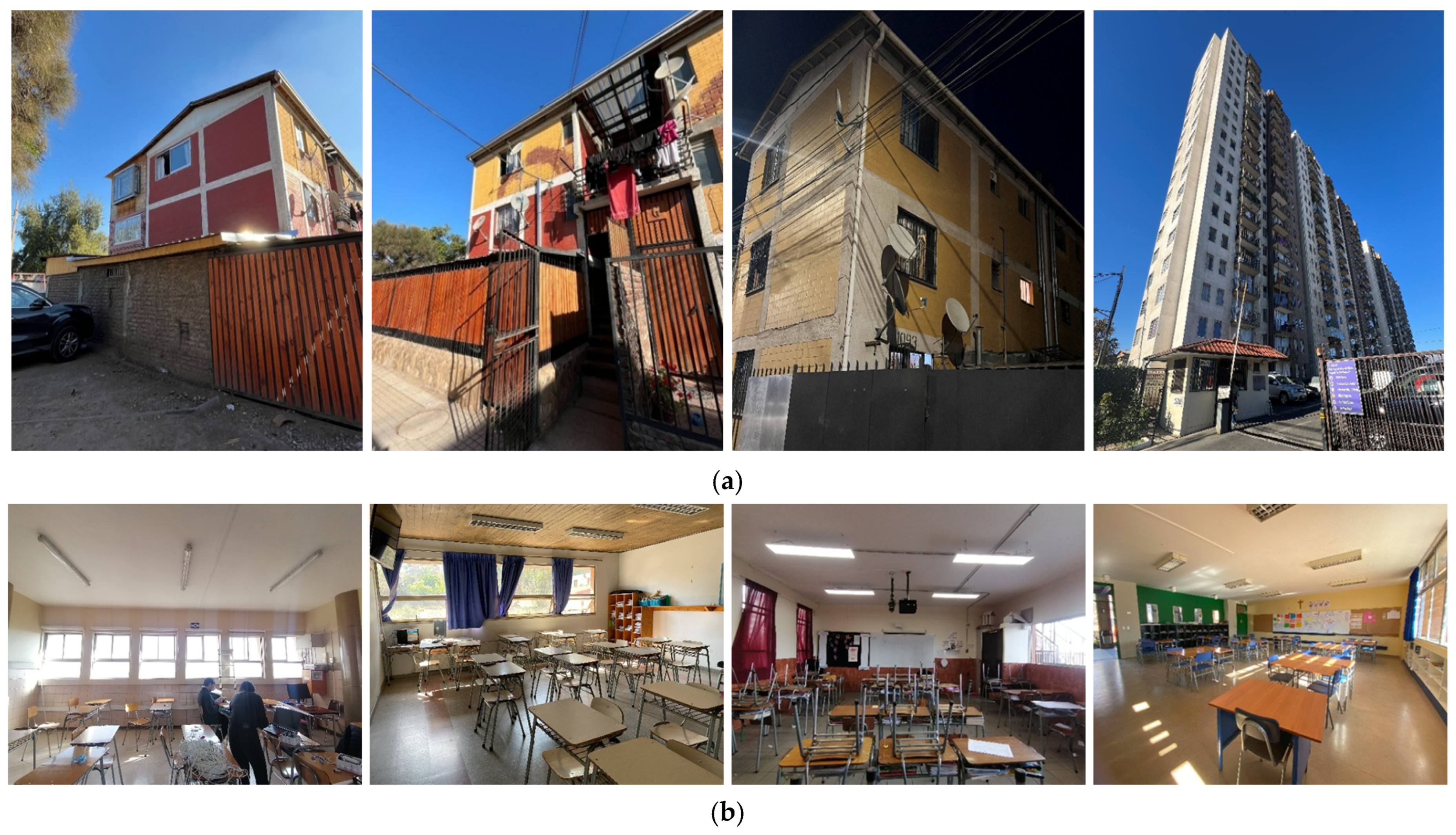
This quantitative research was carried out in six communes of Santiago de Chile, focusing on two indoor microenvironments where school-age children spend a substantial portion of their day: homes and school classrooms (Figure 2). Four homes with school-age children and four educational establishments were included, selected based on participant availability and logistical feasibility, to cover diverse urban scenarios. In each establishment, a classroom was selected based on educational level and student count, with cases distributed across different communes in the Metropolitan Area. The selection did not seek to form a homogeneous or strictly comparable sample across homes and schools, but to capture contrasting exposure scenarios in both environments. Because the study was designed as an environmental assessment focused on monitored premises rather than on individual participant follow-up, demographic information such as age and gender was not consistently collected for all children associated with the monitored cases. In school classrooms, no individual surveys were administered, and no personal information was gathered from students. In homes, the analysis focused on the monitored bedroom environment and caregiver-reported information, rather than on a demographic characterization intended for intergroup comparison.
In this study, the dependent variable was CO2 concentration (ppm), used as an indirect indicator of ventilation and, by extension, indoor air quality. As explanatory variables, contextual factors and those of the premises were considered to interpret intraday and inter-case variability and indoor hygrothermal conditions, alongside geometric characteristics, space occupancy, and natural ventilation parameters. Air temperature and relative humidity were analyzed as contextual hygrothermal variables to support the interpretation of ventilation-related CO2 patterns. The study did not conduct a formal thermal comfort assessment in accordance with comfort standards because not all required environmental and personal variables were monitored.

2.1.1. Environmental Measurements

The measurements were obtained by recording carbon dioxide (CO2, ppm), air temperature (°C), and relative humidity (%) at 5 min intervals in both microenvironments. Netatmo Weather Station sensors were used in the homes [27], with an outdoor module, an indoor module, and an additional module in the bedroom to characterize the nighttime microenvironment. The bedroom sensor was placed 1.2 m above the floor, away from heat sources, direct solar radiation, and air currents. Ubibot AQS1 (Air Quality Sensor) sensors were used in school classrooms [28], installed in secure boxes with slits, located approximately 2.0 m above the floor, and away from windows, doors, and direct heat sources. An outdoor sensor was also incorporated in each location as an environmental reference. Two sensor types were used because the study integrated monitored data from two different indoor microenvironments, homes and school classrooms, each associated with a specific monitoring context and equipment availability. Both devices were used to record the same environmental variables, CO2, air temperature, and relative humidity, at the same 5 min intervals, allowing consistent analytical treatment across cases. However, no direct co-location or cross-calibration procedure was conducted between the two sensor types under a shared controlled setting; therefore, a study-specific inter-sensor bias could not be empirically quantified. For this reason, the analysis emphasized temporal patterns and aggregated exposure indicators within each monitored microenvironment rather than point-by-point comparisons between devices. Monitoring was conducted for 30 consecutive days during August 2024. Table 1 summarizes the characteristics of the equipment used.

2.1.2. Characterization of the Premises

The methodology used for data collection was cross-sectional, based on records from eight cases in Santiago de Chile during the winter period. The days were representative of winter. The air temperature and relative humidity values are typical values for that period. The monitored premises considered bedrooms ranging from 6.82 to 13.08 m2 (volumes 16.37–31.39 m3) with 1 occupant, and classrooms of 40.28 to 85.15 m2 (volumes 110.77 –259.73 m3) with 24–41 students; see Table 2. In the classrooms, the occupancy density ranged from 1.20 to 2.36 m2/student (equivalent to 3.62–7.21 m3/student), placing it in the lower range relative to design criteria reported in Chilean sectoral documentation and international guides for standard classrooms. All cases were in urban areas; the identification codes correspond to the communes EB: El Bosque, SB: San Bernardo, LR: La Reina, SM: San Miguel, SC: Santiago Centro, and VI: Vitacura. According to the habitability requirements, the classrooms and bedrooms had natural ventilation through operable windows, with an operable area and cross-ventilation.
In Table 2, cross ventilation was treated as a binary descriptive variable indicating the potential for natural airflow across the monitored space. It was coded as “Yes” when the room had at least two operable openings enabling an air path through the space, and as “No” when ventilation was effectively single-sided. This classification refers to the room’s ventilation potential and does not imply continuous or effective window opening during occupancy. For exposure characterization, the daily stay at the establishment was approximated at 8 h, including two short breaks and a lunch break, while in the homes, a nocturnal indoor stay of 10 h was assumed.

2.1.3. Operational Thresholds and Exposure Metrics

The IAQ was evaluated using operational thresholds in accordance which performance based on the ΔCO2 (indoor–outdoor) [10]. For the analysis, three reference values were adopted according to the standard: 800 ppm as an indicator of adequate ventilation (category II), 1000 ppm as a reference for reduced ventilation, and 1250 ppm as the primary threshold for identifying prolonged episodes of insufficient ventilation (category III). In school classrooms, although the standard does not define absolute CO2 thresholds, 1250 ppm was also used as an operational reference and evidence from educational premises [11].
Exposure was quantified as the percentage of monitoring time during which CO2 > 1250 ppm, using an indicator fraction applied to each recorded time series.

2.1.4. Housing-Classroom Composite Exposure Scenarios

A simplified indoor permanence outline was defined, assuming 10 h of permanence in the bedroom (nighttime and early morning hours) and 8 h in the classroom (school day), yielding a total of 18 h/day of relevant exposure. This estimate is based on usual sleep routines and a full school day in urban schools.
The combined exposure was expressed as the percentage of the reference indoor time in which CO2 > 1250 ppm, weighting each environment by its residence time:
%   E x p o s u r e   > 1250   p p m = 10 × % b e d r o o m   t i m e > 1250   p p m + 8 × % c l a s s r o o m   t i m e > 1250   p p m 18
The percentages of time at over 1250 ppm estimated per premises were converted to equivalent hours at each level and then integrated into a combined exposure for comparative purposes across scenarios.
This reference time was used for analytical purposes only and does not represent the entire day, as it excludes other time slots and microenvironments that were not evaluated.

2.1.5. Indirect Estimation of Rebreathed Air and Severity Classification

The rebreathed air model was used as an indirect approach to estimate the fraction of indoor air that had previously been exhaled by occupants, based on the enrichment of indoor CO2 relative to outdoor background levels. In this study, the re-breathed air fraction was estimated from the monitored CO2 time series using the relationship between indoor CO2 concentration, outdoor reference CO2 concentration, and a reference value for exhaled CO2 reported in the literature for building occupants [29]. This indicator was applied to support the interpretation of shared-air exposure conditions under winter occupancy patterns, rather than as a direct clinical or infection-risk estimate.
Because the scientific literature and international regulations do not establish absolute health thresholds based on the proportion of time spent at high CO2 concentrations, severity was assessed using a gradient approach, classifying scenarios according to the temporal dominance of CO2 > 1250 ppm. Table 3 presents the classification of exposure levels by percentage of time [30].

2.1.6. Statistical Analysis

Before the comparative analysis, the CO2, air temperature, and relative humidity time series were processed to obtain two temporal indicators for each premises: hourly averages and daily averages. In addition, insufficient ventilation was assessed using time-over-threshold, defined as the proportion of monitoring time during which CO2 > 1250 ppm for each recorded time series. To estimate children’s daily indoor exposure, the percentage of time above the threshold in each microenvironment was converted to equivalent exposure hours, which were then integrated into a combined bedroom-classroom indicator, using an 18 h indoor reference period.
Given the exploratory nature of the study, the limited number of monitored cases, and the dependence structure of high-frequency records, the analysis was based primarily on descriptive and comparative aggregated indicators rather than predictive modeling. Comparisons between homes and classrooms focused on the magnitude and persistence of exceedance episodes in relation to occupancy density, volume per occupant, and natural ventilation characteristics. Data processing was performed in Microsoft Excel, and graphical visualizations were created in RStudio (v4.5.1).

3. Results

3.1. Outdoor Conditions

The outdoor measurements indicated winter behavior characteristic of Santiago, with high variability in relative humidity and moderate daily variability in temperature. The outdoor temperature ranged from 9 °C to 18 °C, with increases in the middle and towards the end of the month, while the relative humidity fluctuated markedly between 40% and 75%.

3.2. Indoor Hygrothermal Conditions

Moderate-low indoor temperatures were recorded in the bedrooms, with averages between 14 and 16 °C, and medium-high relative humidity, with values between 60% and 75%, highlighting cases with high RH (70–75% RH). Beyond the averages, marked intraday variability was observed, with maximum temperatures ranging from 16.8 to 23.3 °C and minimum temperatures from 8.2 to 13.3 °C. In relative humidity, the highs ranged from 67.3 to 82.0% and the lows from 42.0 to 61.7%. This pattern is consistent with a cold indoor environment and episodes of high humidity; conditions usually associated with heat-conservation strategies that can contribute to CO2 accumulation during periods of increased permanence in the bedroom.
In the classrooms, the environment was relatively temperate compared to the bedrooms, with average temperatures ranging from 18.3 to 20.1 °C. The average relative humidity was between 37.4% and 42.6% in medium ranges. However, there is also intraday variability, with maximum temperatures of 23.4–26.8 °C and minimum temperatures of 12.0–14.8 °C, and in RH, a maximum of 60.9–68.7% and a minimum of 10.6–19.5%. In interpretive terms, lower temperatures may be associated with more restrictive ventilation decisions, while more temperate indoor conditions may facilitate window opening with a lower perceived thermal penalty. These observations are interpreted here as contextual support for ventilation behavior rather than as a formal thermal comfort assessment.

3.3. CO2 Concentration

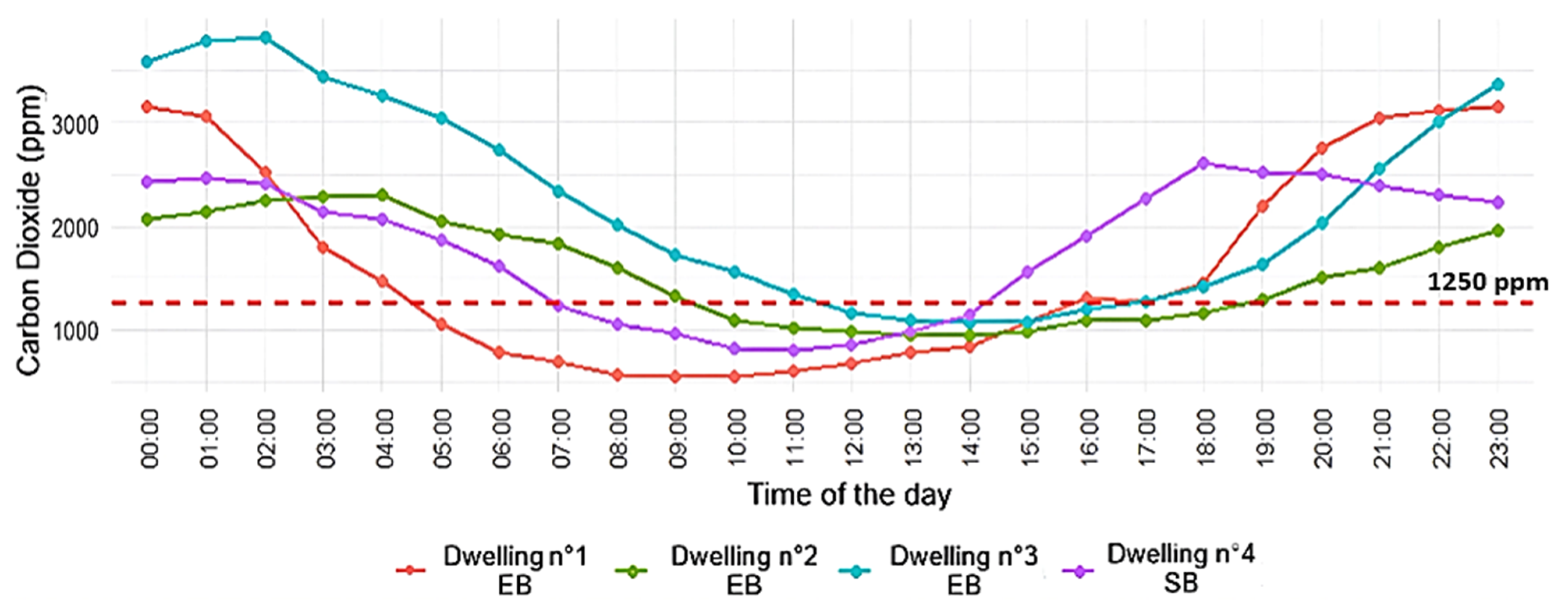
The average hourly CO2 profile in the bedrooms is shown in Figure 3. The figure shows a recurring pattern across the four dwellings, with high concentrations at night and early morning, progressive decreases during the morning, and a new increase towards the evening, confirming that the bedroom constitutes the microenvironment with the highest sustained exposure to CO2 above the reference threshold.
During the morning, the most unfavorable conditions are recorded: dwellings N°1 EB and N°3 EB reach around 3000 ppm, while dwellings N°2 EB and N°4 SB are typically between 2000 and 2300 ppm, consistent with prolonged accumulation associated with overnight stays. From the beginning of the day, dwellings N°1 EB, N°2 EB, and N°3 EB show decreases that lead to levels close to the reference threshold during the middle of the day; however, dwelling N°4 SB maintains high concentrations during much of the daytime period, close to 2000 ppm between 11 am and 3 pm, suggesting a pattern of different bedroom use or limited ventilation during daytime hours.
In cumulative terms, the total daily hours with CO2 > 1250 ppm were 8.87 h (dwelling N°1 EB; 49.3%), 10.26 h (dwelling N°2 EB; 57.0%), 12.64 h (dwelling N°3 EB; 70.2%), 8.60 h (dwelling N°4 SB; 47.8%), confirming that the threshold is exceeded approximately between half and more than two thirds of the total time, reflecting persistent and non-episodic accumulation.
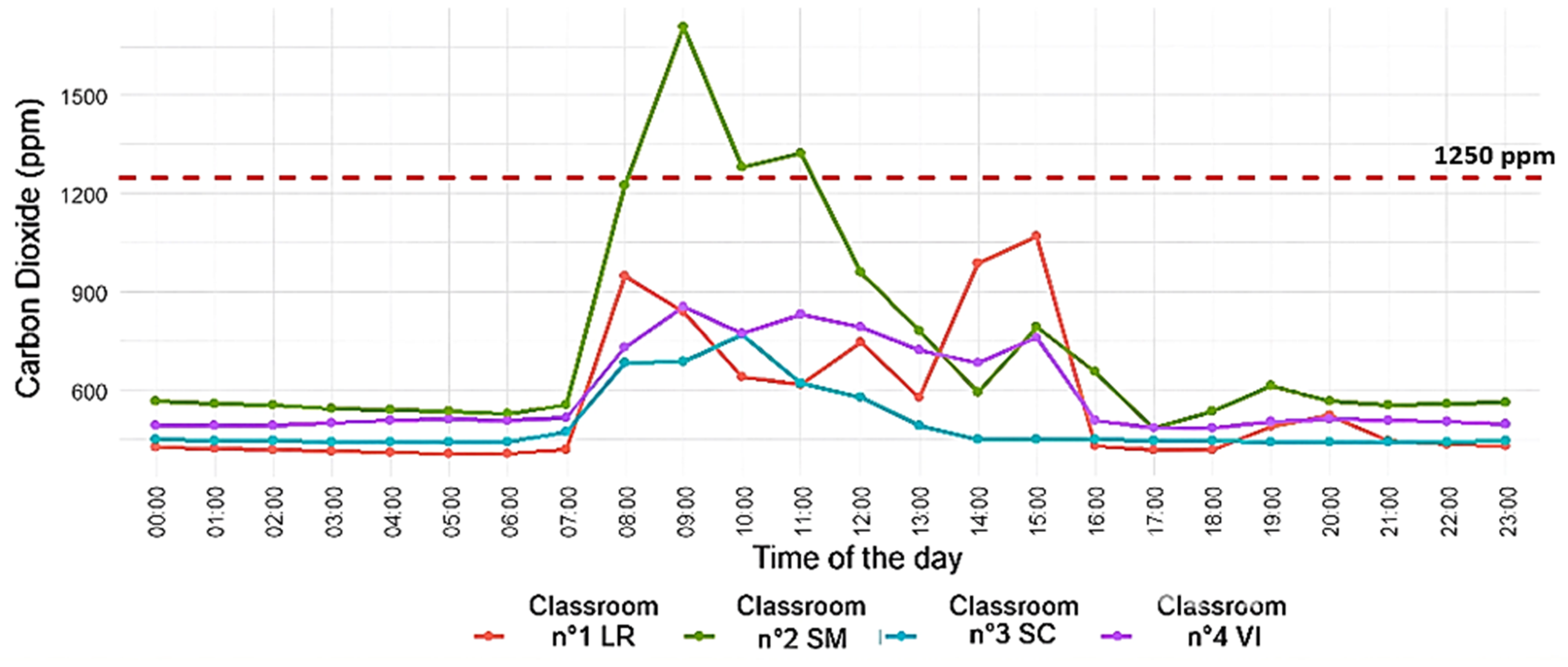
In classrooms, behavior differs from that in the residential sphere. Figure 4 shows that during the night and early morning, concentrations remain stable and low, reflecting the absence of occupation and background levels close to outdoor conditions.
From the beginning of the school day (08:00 h), a rapid and pronounced increase is observed, peaking during the lesson block. Classroom No. 2 SM exceeds the reference threshold, while Classroom No. 1 LR approaches it; in contrast, Classrooms No. 3 SC and No. 4 VI show more moderate increases, suggesting differences in effective ventilation and/or classroom-use dynamics between establishments. The passing of the threshold has an episodic nature concentrated in school hours, the total hours with CO2 > 1250 ppm were 1.12 h (classroom N°1 LR; 6.2%), 0.94 h (classroom N°2 SM; 5.2%), 1.53 h (classroom N°3 SC; 8.5%), 0 h (classroom N°4 VI; 0.0%), evidencing from a recurrent exposure to complete absence of excesses according to establishment, with a maximum proportion that does not exceed 8.7% of the analyzed period.

3.4. Bedroom-Classroom Daily Combined Behavior

To integrate both environments, 16 daily exposure scenarios were developed, combining bedroom (night) and classroom (school day), using a reference time of 18 h for comparison. In Table 4, the total equivalent exposure at >1250 ppm ranges from 8.60 to 14.17 h per typical day. The dominant combination comes from the bedroom, where the equivalent night hours range from 8.60 to 12.64 h, while the contribution from the classroom ranges from 0.00 to 1.53 h.
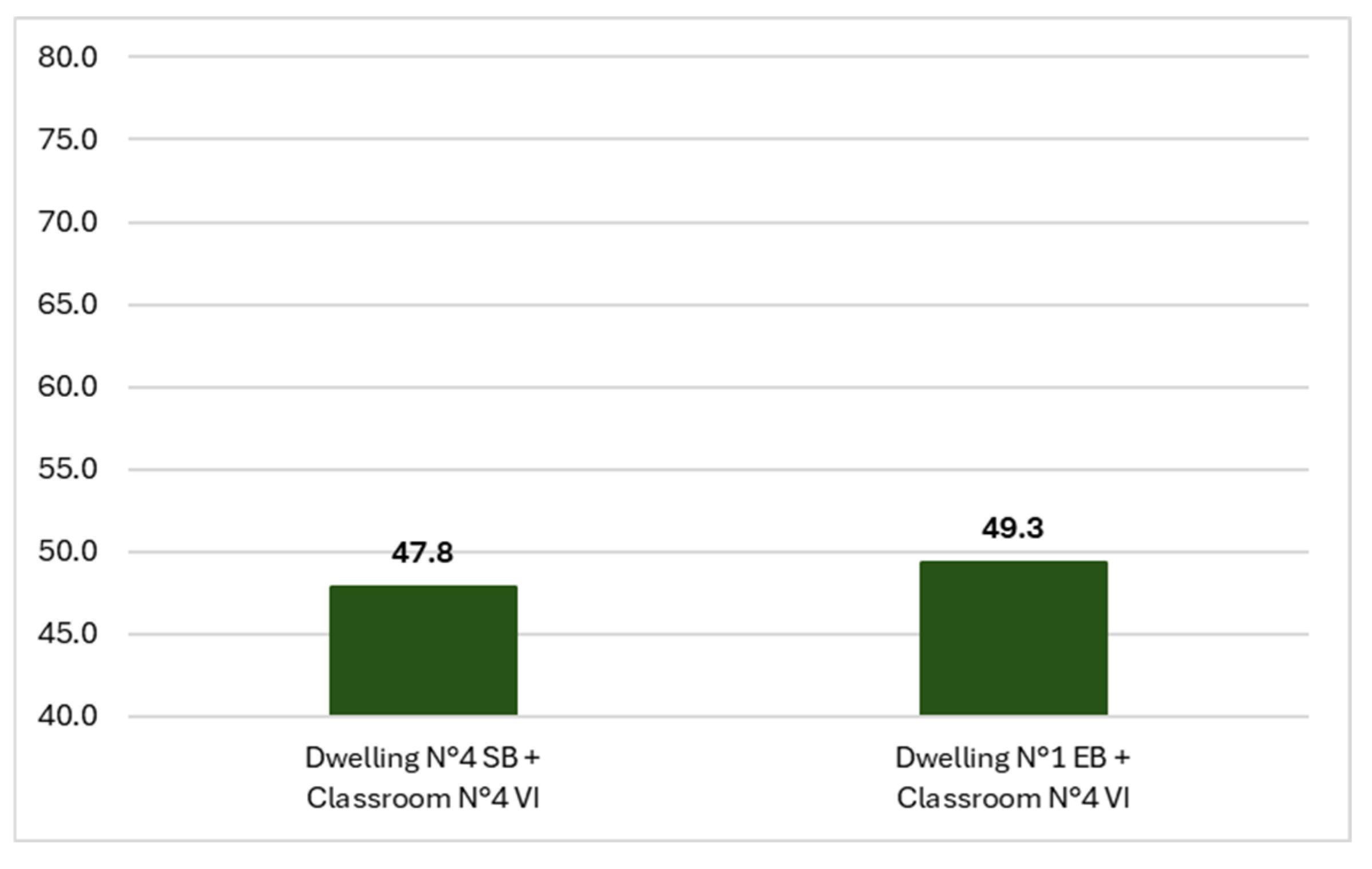
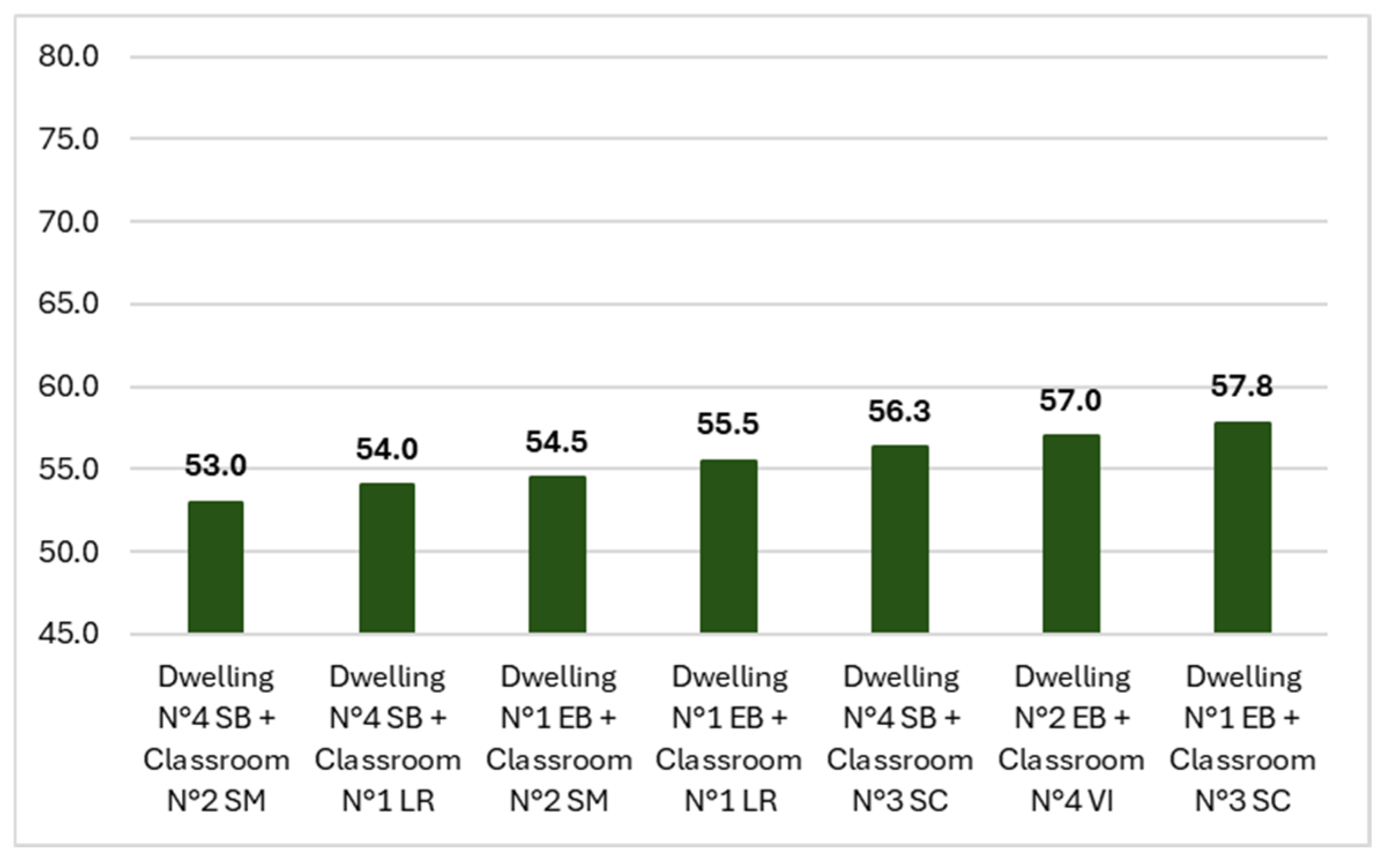
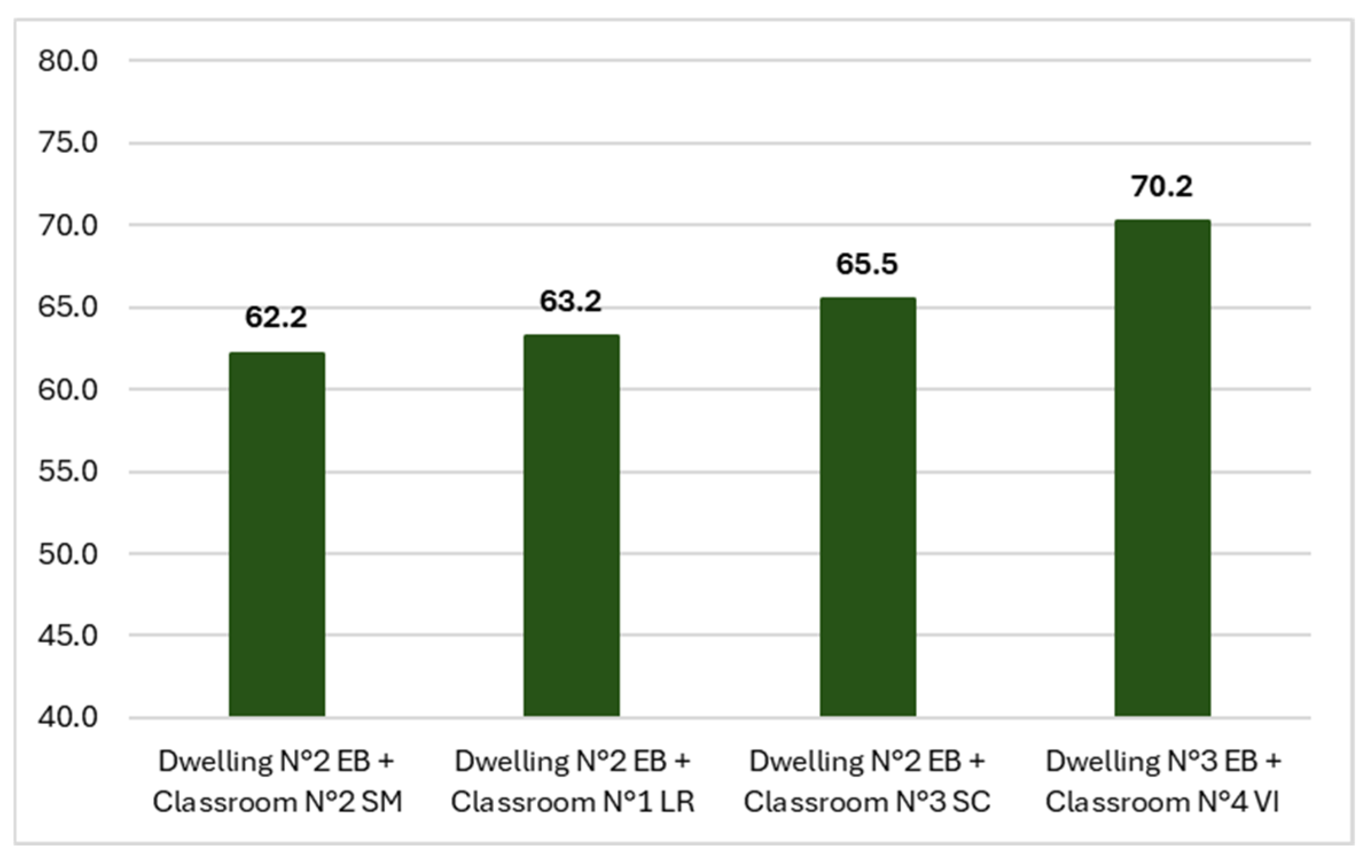
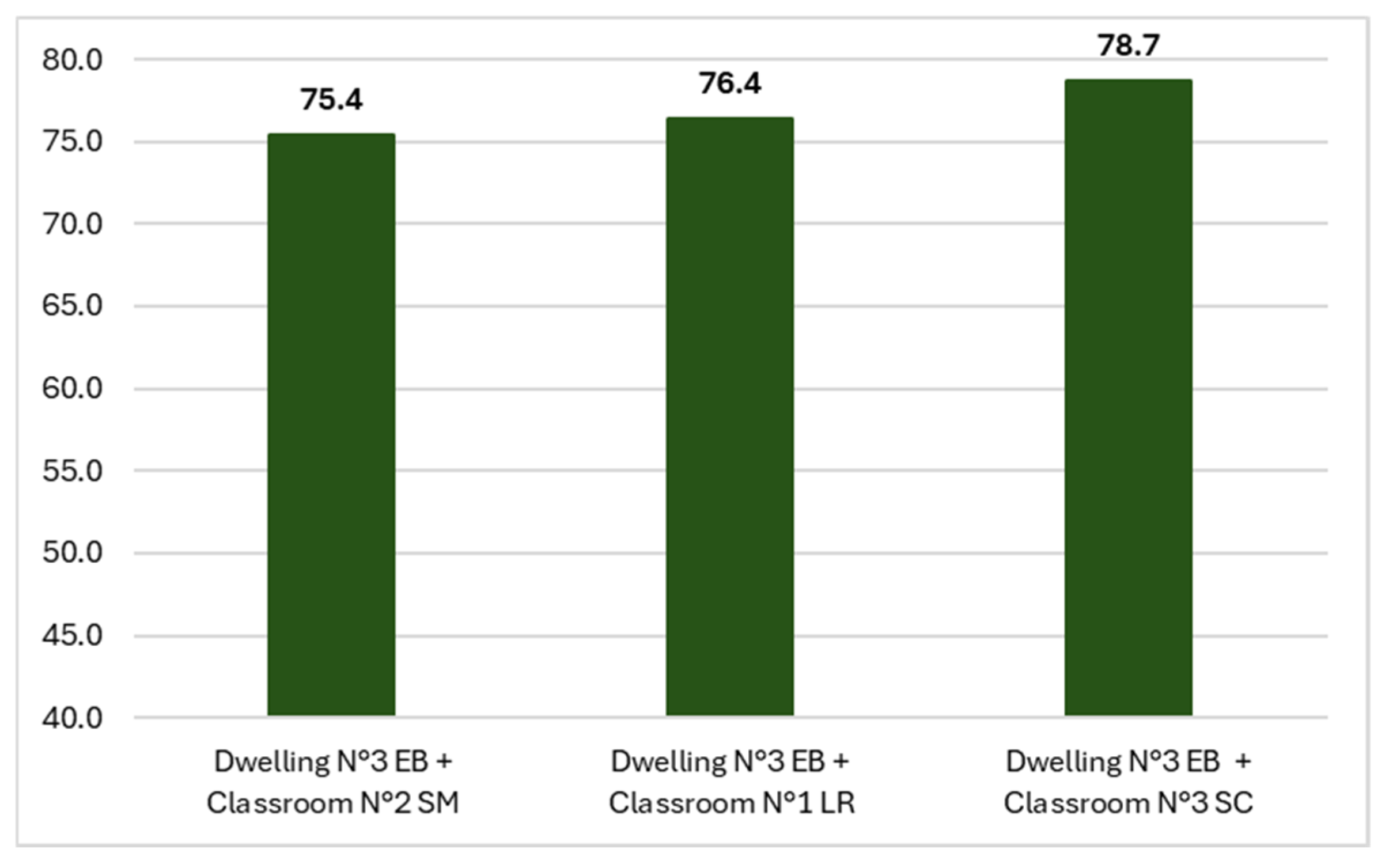
Based on the percentage of the day with CO2 > 1250 ppm, the 16 scenarios were classified into four levels (Table 3): limited (<50%), frequent (50–60%), high (60–75%), and very high (>75%). Figure 5 shows that two scenarios were in limited exposure, Figure 6 shows seven scenarios in frequent exposure, and in the Figure 7 four in high exposure, while Figure 8 rest were in very high exposure, with the maximum values concentrated in this group. In comparative terms, the total exposure varied between 47.8% and 78.7% of the reference time; the most unfavorable scenario was for dwelling N°3 EB–classroom N°3 SC, with a composite exposure of 70.2–78.7% of the time, while the most favorable scenario was associated with dwelling N°4 SB–classroom N°4 VI, remaining below 50%, consistent with a limited exposure. In all cases, the composite exposure was primarily determined by the bedroom as the basal component, while the classroom served as a secondary modulator within a limited range.

4. Discussion

4.1. Main Findings

The results confirm that in winter, CO2 concentrations in children’s microenvironments respond to patterns of occupation and available ventilation. In classrooms, exceedance of the operational threshold appears as limited events during school hours, with rapid increases after the start of classes and subsequent decreases, consistent with high generation by occupancy and insufficient or intermittent air renewal. This behavior has been consistently reported in schools, where elevated CO2 levels usually reflect ventilation rates per person below recommended levels [31,32]. Previous studies have associated these conditions with adverse effects on symptoms and attendance [33,34] and with reduced cognitive and academic performance [35,36,37]. In this sense, the variability observed between establishments suggests that, even within the same climatic and seasonal context, ventilation practices, occupancy density, and the daily operation of doors and windows determine markedly different exposure conditions.
In dwellings, nocturnal and early-morning CO2 accumulation in bedrooms is consistent with prolonged occupancy under reduced effective ventilation, especially during cold months when window opening is commonly restricted for thermal reasons. This also helps explain why high CO2 concentrations were found even in bedrooms classified as having cross-ventilation potential. In this study, cross-ventilation refers to the presence of openings that allow a potential air path through the room, but it does not imply that such openings remained in effective use during the monitored period. Therefore, under winter nighttime conditions, prolonged stay, small room volume, and limited effective air renewal may still lead to sustained CO2 accumulation despite the presence of cross-ventilation potential. The available evidence indicates that, in bedrooms, the CO2 can be high during sleep and that improvements in nighttime ventilation are associated with better perceived air quality and changes in sleep and performance indicators the next day [38,39,40,41]. Therefore, the central contribution of this work not only describes time profiles but also integrates the bedroom and the classroom into a daily combined exposure, thereby capturing real CO2 combinations that would be invisible if each microenvironment were analyzed separately. This approach is consistent with recent developments that use CO2 metrics as an operational indicator of ventilation and with their use to approximate the rebreathed air fraction and the relative risk of airborne transmission in enclosed spaces [42,43].
From an applied perspective, the results support measures of ventilation management sensitive to the thermal context, in classrooms, programmed ventilation in class transitions, and support of CO2 monitors as operational feedback; in dwellings, low-thermal impact nighttime strategies, such as brief ventilation before rest and upon awakening, can reduce accumulations without disproportionate penalties in heating [24,44,45]. Both environments must interpret CO2 as a ventilation proxy for occupancy load, not as an exhaustive indicator of indoor air quality.

4.2. Limitations of the Study

A limitation of this study is the lack of operational and behavioral information that would enable more accurate attribution of the observed differences between cases. This information would allow for a better understanding of occupants’ interactions with thermal comfort and their actual control over ventilation, especially in winter, when ventilation competes with heat conservation. In this sense, the systematic implementation of simple window-opening records or sensors, together with complementary measurements to estimate ventilation rates (ACH or L/s·person), would strengthen the causal interpretation and comparability between premises.
Another limitation is that demographic information, such as age and gender, was not systematically available for all children associated with the monitored environments. Therefore, the analysis was not designed to explore demographic differences in exposure, but rather to characterize environmental conditions in relevant indoor microenvironments occupied by school-age children.
A further methodological limitation is that two different sensor types were used across the monitored microenvironments. Although both devices measured the same variables at the same temporal resolution, and their technical specifications are reported, no direct intercomparison under shared conditions was conducted. Therefore, a possible inter-sensor bias cannot be completely ruled out, particularly near operational thresholds, and should be addressed in future studies through co-location or cross-calibration procedures.

4.3. Future Lines of Research

In future research, it is recommended to expand the number of dwellings and educational establishments and extend monitoring across different periods of the year, to capture seasonal variations and evaluate the stability of the observed patterns. In addition, incorporating outdoor CO2 and estimating ventilation rates, either directly by measurement or by inference from CO2 dynamics, would allow linking excesses to ventilatory performance, thereby quantifying and improving the comparability of cases.
Similarly, it is a priority to collect standardized operational data to explain heterogeneity between classrooms and dwellings and to evaluate ventilation strategies in winter. Finally, it would be valuable to evaluate realistic interventions in schools and homes, quantifying their impact on CO2 levels and on indicators of well-being and performance, in line with previous evidence on ventilation and school results, as well as on nocturnal ventilation and sleep.

5. Conclusions

In winter, children’s exposure to CO2 in Santiago showed contrasting patterns across environments: the bedroom exhibited prolonged accumulations during the night and early morning hours, while in the classroom, exceedances of the operational threshold were concentrated in episodes limited to the school schedule and varied across establishments. This difference is not only temporary but also functional: the bedroom serves as a baseline component of exposure due to the continuous presence and restricted ventilation associated with thermal comfort, while the classroom provides increases linked to occupancy density and operational ventilation decisions during classes.
The bedroom-classroom integration, using an indoor reference time of 18 h and equivalent hours over threshold, transformed the time series into a comparable metric of daily loads, revealing wide variability across scenarios. In all cases, the combined exposure was mostly determined by the residential environment, and the classroom operated as a modulator within a narrower range, reinforcing the observation that evaluating a single room can underestimate or overestimate the impact of insufficient ventilation in daily routines. This approach provides an operational basis for prioritizing cases, especially when the objective is to identify housing and school combinations that concentrate the largest fraction of the indoor day above the threshold.
From an applied perspective, the results support control strategies focused on the management of time and the moment of ventilation, in classrooms, planned ventilation in transitions, and use of CO2 as a feedback to avoid accumulations during lesson blocks; in housing, low-operational cost night actions (short ventilation before rest and waking up) to reduce sustained accumulation without disproportionately compromising thermal comfort. Overall, the evidence reinforces the need to incorporate winter ventilation operational criteria into homes and schools as inputs for implementing indoor environmental quality standards in urban contexts.

Author Contributions

Conceptualization, J.M.-M., M.T.-K. and A.P.-F.; methodology, J.M.-M., M.T.-K. and A.P.-F.; software, J.M.-M.; validation, J.M.-M., M.T.-K., C.R.-B. and A.P.-F.; formal analysis, J.M.-M.; investigation, J.M.-M., M.T.-K. and A.P.-F.; resources, M.T.-K. and A.P.-F.; data curation, J.M.-M., M.T.-K. and A.P.-F.; writing—original draft preparation, J.M.-M.; writing—review and editing, J.M.-M., M.T.-K., C.R.-B. and A.P.-F.; visualization, J.M.-M.; supervision, M.T.-K., C.R.-B. and A.P.-F.; project administration, M.T.-K. and A.P.-F.; funding acquisition, M.T.-K. and A.P.-F. All authors have read and agreed to the published version of the manuscript.

Funding

This research was funded by ANID Fondecyt Regular 1230922 “Satisfaction or resignation? A new environmental thermal well-being indicator to define energy efficiency measures and to improve the ergonomics and environmental healthiness of homes,” and ANID Fondecyt Regular 1241581 “Escuelas que respiran: estrategias de ventilación natural para el confort térmico y la calidad del aire en aulas escolares”.

Data Availability Statement

The data presented in this study are available on reasonable request from the corresponding author.

Acknowledgments

The authors acknowledge the financial support provided by the University of Bío-Bío for the lead author’s research stay at the Escuela Superior de Ingeniería de Edificación, University of Seville, during 2026, which strengthened this research. The authors acknowledge the support of the Group on Environmental Comfort and Energy Poverty UBB and ANID CEDEUS CIN250009.

Conflicts of Interest

The authors declare no conflicts of interest.

References

  1. World Health Organization. WHO Guidelines for Indoor Air Quality: Selected Pollutants; World Health Organization: Geneva, Switzerland, 2010; ISBN 9789289002134. Available online: https://www.who.int/publications/i/item/9789289002134 (accessed on 5 May 2026).
  2. Nardocci, A.C.; Nogueira, T.; de Almeida Piai, K.; Cavendish, T.A.; Kumar, P. Indoor environment exposure and children’s health. Curr. Opin. Environ. Sci. Health 2023, 32, 100449. [Google Scholar] [CrossRef]
  3. Aithal, S.S.; Sachdeva, I.; Kurmi, O.P. Air quality and respiratory health in children. Breathe 2023, 19, 230040. [Google Scholar] [CrossRef]
  4. Fundación de la Energía de la Comunidad de Madrid (FENERCOM). Guía de Calidad del Aire Interior; FENERCOM: Madrid, Spain, 2016; Available online: https://www.fenercom.com/wp-content/uploads/2016/11/Guia-de-Calidad-del-Aire-Interior-fenercom-2016.pdf (accessed on 5 May 2026).
  5. Persily, A. Indoor Carbon Dioxide Concentrations in Ventilation and Indoor Air Quality Standards. In Proceedings of the 36th Air Infiltration and Ventilation Centre Conference, Madrid, Spain, 23–24 September 2015; Available online: https://tsapps.nist.gov/publication/get_pdf.cfm?pub_id=919027 (accessed on 5 May 2026).
  6. Sundell, J.; Levin, H.; Nazaroff, W.W.; Cain, W.S.; Fisk, W.J.; Grimsrud, D.T.; Gyntelberg, F.; Li, Y.; Persily, A.K.; Pickering, A.C.; et al. Ventilation rates and health: Multidisciplinary review of the scientific literature. Indoor Air 2011, 21, 191–204. [Google Scholar] [CrossRef]
  7. Seppänen, O.A.; Fisk, W.J.; Mendell, M.J. Association of ventilation rates and CO2 concentrations with health and other responses in commercial and institutional buildings. Indoor Air 1999, 9, 226–252. [Google Scholar] [CrossRef]
  8. Seppänen, O.; Fisk, W.J.; Lei, Q.H. Ventilation and performance in office work. Indoor Air 2006, 16, 28–36. [Google Scholar] [CrossRef] [PubMed]
  9. Satish, U.; Mendell, M.J.; Shekhar, K.; Hotchi, T.; Sullivan, D.; Streufert, S.; Fisk, W.J. Is CO2 an Indoor Pollutant? Direct Effects of Low-to-Moderate CO2 Concentrations on Human Decision-Making Performance. Environ. Health Perspect. 2012, 120, 1671–1677. [Google Scholar] [CrossRef]
  10. UNE-EN 16798-1; Eficiencia Energética de los Edificios. Ventilación de los Edificios. Parte 1: Parámetros del Ambiente Interior a Considerar Para el Diseño y la Evaluación de la Eficiencia Energética de Edificios, Incluyendo la Calidad del Aire Interior, Condiciones Térmicas, Iluminación y Ruido. Módulo 1-6. Asociación Española de Normalización: Madrid, Spain, 2020.
  11. ANSI/ASHRAE Standard 62.1-2019; Ventilation for Acceptable Indoor Air Quality. ASHRAE: Peachtree Corners, GA, USA, 2019.
  12. Persily, A. Challenges in developing ventilation and indoor air quality standards: The story of ASHRAE Standard 62. Build. Environ. 2015, 91, 61–69. [Google Scholar] [CrossRef]
  13. Morawska, L.; Cao, J. Airborne transmission of SARS-CoV-2: The world should face the reality. Environ. Int. 2020, 139, 105730. [Google Scholar] [CrossRef]
  14. Morawska, L.; Allen, J.; Bahnfleth, W.; Bluyssen, P.; Yao, M. A paradigm shift to combat indoor respiratory infection. Science 2021, 372, 689–691. [Google Scholar] [CrossRef]
  15. Bazant, M.Z.; Bush, J.W.M. A guideline to limit indoor airborne transmission of COVID-19. Proc. Natl. Acad. Sci. USA 2021, 118, e2018995118. [Google Scholar] [CrossRef] [PubMed]
  16. Li, Y.; Leung, G.M.; Tang, J.W.; Yang, X.; Chao, C.Y.H.; Lin, J.Z.; Lu, J.W.; Nielsen, P.V.; Niu, J.; Qian, H.; et al. Role of ventilation in airborne transmission of infectious agents in the built environment: A multidisciplinary systematic review. Indoor Air 2007, 17, 2–18. [Google Scholar] [CrossRef]
  17. Prather, K.A.; Wang, C.C.; Schooley, R.T. Reducing transmission of SARS-CoV-2. Science 2020, 368, 1422–1424. [Google Scholar] [CrossRef]
  18. Allen, J.G.; Ibrahim, A.M. Indoor Air Changes and Potential Implications for SARS-CoV-2 Transmission. JAMA 2021, 325, 2112–2113. [Google Scholar] [CrossRef]
  19. Honan, D.; Gallagher, J.; Garvey, J.; Littlewood, J. Indoor Air Quality in Naturally Ventilated Primary Schools: A Systematic Review of the Assessment & Impacts of CO2 Levels. Buildings 2024, 14, 12. [Google Scholar] [CrossRef]
  20. Díaz, M.; Cools, M.; Trebilcock, M.; Piderit-Moreno, B.; Attia, S. Effects of climatic conditions, season and environmental factors on CO2 concentrations in naturally ventilated primary schools in Chile. Sustainability 2021, 13, 4139. [Google Scholar] [CrossRef]
  21. Settimo, G.; Indinnimeo, L.; Inglessis, M.; de Felice, M.; Morlino, R.; di Coste, A.; Carriera, F.; di Fiore, C.; Avino, P. CO2 Levels in Classrooms: What Actions to Take to Improve the Quality of Environments and Spaces. Sustainability 2024, 16, 8619. [Google Scholar] [CrossRef]
  22. Snow, S.; Danam, R.; Leardini, P.; Glencross, M.; Beeson, B.; Ottenhaus, L.-M.; Boden, M. Human factors affecting ventilation in Australian classrooms during the COVID-19 pandemic: Toward insourcing occupants’ proficiency in ventilation management. Front. Comput. Sci. 2022, 4, 888688. [Google Scholar] [CrossRef]
  23. NCh3308:2024; Ventilación—Calidad Aceptable de Aire Interior—Requisitos. Instituto Nacional de Normalización (INN): Santiago, Chile, 2024. Available online: https://www.inn.cl/nch33082024 (accessed on 5 May 2026).
  24. NCh 3309:2024; Calidad del Aire Interior—Requisitos de Ventilación Para Edificaciones Residenciales de Baja Altura. Instituto Nacional de Normalización (INN): Santiago, Chile, 2024.
  25. Ministerio del Medio Ambiente (MMA). Informe del Estado del Medio Ambiente 2022; Ministerio del Medio Ambiente: Santiago, Chile, 2022. Available online: https://sinia.mma.gob.cl (accessed on 5 May 2026).
  26. Toro, A.R.; Catalán, F.; Urdanivia, F.R.; Rojas, J.P.; Manzano, C.A.; Seguel, R.; Gallardo, L.; Osses, M.; Pantoja, N.; Leiva-Guzmán, M.A. Air pollution and COVID-19 lockdown in a large South American city: Santiago Metropolitan Area, Chile. Urban Clim. 2021, 36, 100803. [Google Scholar] [CrossRef]
  27. Netatmo. Smart Weather Station. Available online: https://www.netatmo.com/en-eu/smart-weather-station (accessed on 5 May 2026).
  28. UbiBot. UbiBot AQS1 Specifications (Air Quality Sensor Details). Available online: https://www.ubibot.com/ubibot-aqs1-specifications/ (accessed on 5 May 2026).
  29. Persily, A.; de Jonge, L. Carbon dioxide generation rates for building occupants. Indoor Air 2017, 27, 868–879. [Google Scholar] [CrossRef]
  30. Lomas, K.J.; Giridharan, R. Thermal comfort standards measured internal temperatures and thermal resilience to climate change of free-running buildings: A case-study of hospital wards. Build. Environ. 2012, 55, 57–72. [Google Scholar] [CrossRef]
  31. Fisk, W.J. The ventilation problem in schools: Literature review. Indoor Air 2017, 27, 1039–1051. [Google Scholar] [CrossRef]
  32. Sadrizadeh, S.; Yao, R.; Yuan, F.; Awbi, H.; Bahnfleth, W.; Bi, Y.; Cao, G.; Croitoru, C.; de Dear, R.; Haghighat, F.; et al. Indoor air quality and health in schools: A critical review for developing the roadmap for the future school environment. J. Build. Eng. 2022, 57, 104908. [Google Scholar] [CrossRef]
  33. Shendell, D.G.; Prill, R.; Fisk, W.J.; Apte, M.G.; Blake, D.; Faulkner, D. Associations between classroom CO2 concentrations and student attendance in Washington and Idaho. Indoor Air 2004, 14, 333–341. [Google Scholar] [CrossRef] [PubMed]
  34. Mendell, M.J.; Eliseeva, E.A.; Davies, M.M.; Spears, M.; Lobscheid, A.; Fisk, W.J.; Apte, M.G. Association of classroom ventilation with reduced illness absence: A prospective study in California elementary schools. Indoor Air 2013, 23, 515–528. [Google Scholar] [CrossRef]
  35. Bakó-Biró, Z.; Clements-Croome, D.J.; Kochhar, N.; Awbi, H.B.; Williams, M.J. Ventilation rates in schools and pupils’ performance. Build. Environ. 2012, 48, 215–223. [Google Scholar] [CrossRef]
  36. Wargocki, P.; Wyon, D.P. Providing better thermal and air quality conditions in school classrooms would be cost-effective. Build. Environ. 2013, 59, 581–589. [Google Scholar] [CrossRef]
  37. Haverinen-Shaughnessy, U.; Shaughnessy, R.J. Effects of classroom ventilation rate and temperature on students’ test scores. PLoS ONE 2015, 10, e0136165. [Google Scholar] [CrossRef]
  38. Canha, N.; Lage, J.; Candeias, S.; Alves, C.; Almeida, S.M. Indoor air quality during sleep under different ventilation patterns. Atmos. Pollut. Res. 2017, 8, 1132–1142. [Google Scholar] [CrossRef]
  39. Kang, M.; Yan, Y.; Chao, G.; Guo, H.; Liu, W.; Fan, J.; Wargocki, P.; Lan, L. Ventilation causing an average CO2 concentration of 1,000 ppm has negative impacts on sleep: A field-lab study on healthy youth. Build. Environ. 2023, 249, 111118. [Google Scholar] [CrossRef]
  40. Fisk, W.J. How home ventilation rates affect health: A literature review. Indoor Air 2018, 28, 473–487. [Google Scholar] [CrossRef]
  41. Bekö, G.; Lund, T.; Nors, F.; Toftum, J.; Clausen, G. Ventilation rates in the bedrooms of 500 Danish children. Build. Environ. 2010, 45, 2289–2295. [Google Scholar] [CrossRef]
  42. Peng, Z.; Jimenez, J.L. Exhaled CO2 as a COVID-19 infection risk proxy for different indoor environments and activities. Environ. Sci. Technol. Lett. 2021, 8, 392–397. [Google Scholar] [CrossRef] [PubMed]
  43. Persily, A. Development and application of an indoor carbon dioxide metric. Indoor Air 2022, 32, e13059. [Google Scholar] [CrossRef] [PubMed]
  44. Wargocki, P.; Wyon, D.P. The effects of outdoor air supply rate and supply air filter condition in classrooms on the performance of schoolwork by children (1257-RP). HVAC&R Res. 2007, 13, 165–191. [Google Scholar] [CrossRef]
  45. Strøm-Tejsen, P.; Zukowska-Tejsen, D.; Wargocki, P.; Wyon, D.P. The effects of bedroom air quality on sleep and next-day performance. Indoor Air 2016, 26, 679–686. [Google Scholar] [CrossRef]
Figure 1. Methodological outline of the study.
Buildings 16 01943 g001
Figure 2. Photographic record of the case studies: (a) facade of the monitored dwellings; (b) monitored school classrooms.
Buildings 16 01943 g002
Figure 3. Hourly average from 30 days CO2 behavior in the bedroom by dwelling.
Buildings 16 01943 g003
Figure 4. Hourly average from 30 days CO2 behavior in the different classrooms.
Buildings 16 01943 g004
Figure 5. Grouping of combined exposure scenarios by severity category: limited exposure (<50%).
Buildings 16 01943 g005
Figure 6. Grouping of combined exposure scenarios by severity category: frequent exposure (50–60%).
Buildings 16 01943 g006
Figure 7. Grouping of combined exposure scenarios by severity category: high exposure (60–75%).
Buildings 16 01943 g007
Figure 8. Grouping of combined exposure scenarios by severity category: very high exposure (>75%).
Buildings 16 01943 g008
Table 1. Summary of the parameters, measurement intervals, and characteristics of the equipment.
CO2 (ppm)Air Temperature (°C)Relative Humidity (%)
Netatmo Weather StationMeasuring range0 to 5000 ppm−40 °C to 65 °C0 to 100%
Accuracy±50 ppm±0.3 °C±0.3 RH
Ubibot AQS1Measuring range0 to 10,000 ppm−20 °C to 60 °C10% to 90%
Accuracy±30 ppm±0.3 °C±0.3 RH
Table 2. Characterization of monitored premises.
IDUse. Sur. (m2)Vol.
(m3)

Occupants
Occupancy Density (m2/Person)Vol. per
Occupant
(m3/Person)
Operable
Wind. (m2)
Cross Ventilation
Bed. N°1 EB7.7318.5517.7318.552.00Yes
Bed. N°2 EB13.0831.39113.0831.391.00No
Bed. N°3 EB9.5923.0219.5923.021.00Yes
Bed. N°4 SB6.8216.3716.8216.373.00No
Class. N°1 LR40.28110.77241.684.612.98Yes
Class. N°2 SM49.19148.51411.203.624.28Yes
Class. N°3 SC58.73178.31381.544.692.63Yes
Class. N°4 VI85.15259.73362.367.214.12Yes
ID: identifier of the premises; Use. sur. (m2): useful surface area; Vol (m3): estimated interior volume; N° occupants: number of occupants; Occupancy density (m2/person): Vol. per occupant (m3/person): vol./N° occupants; Operable wind.: total operable area of windows; Cross ventilation: presence of cross ventilation (yes/no); Bed: Bedroom; Class: Classroom.
Table 3. Exposure levels above 1250 ppm.
Limited ExposureFrequent ExposureHigh ExposureVery High Exposure
<50%50–60%60–75%>75%
Shorter duration exposures, associated with a lower likelihood of adverse effects.Dominant condition of the day, severity indicator in indoor environmental assessment.Majority fraction of the period, greater operational concern.Persistent exposure condition, close to continuity; critical environmental performance scenarios.
Table 4. Bedroom-classroom combination: combined daily exposure estimation.
DwellingClassroomEq Hours. Bedroom >1250 ppmEq Hours. Classroom >1250 ppmEq Hours. Totals
Bedroom N°1 EBClassroom N°1 LR8.871.129.99
Bedroom N°1 EBClassroom N°2 SM8.870.949.81
Bedroom N°1 EBClassroom N°3 SC8.871.5310.40
Bedroom N°1 EBClassroom N°4 VI8.870.008.87
Bedroom N°2 EBClassroom N°1 LR10.261.1211.38
Bedroom N°2 EBClassroom N°2 SM10.260.9411.20
Bedroom N°2 EBClassroom N°3 SC10.261.5311.79
Bedroom N°2 EBClassroom N°4 VI10.260.0010.26
Bedroom N°3 EBClassroom N°1 LR12.641.1213.75
Bedroom N°3 EBClassroom N°2 SM12.640.9413.57
Bedroom N°3 EBClassroom N°3 SC12.641.5314.17
Bedroom N°3 EBClassroom N°4 VI12.640.0012.64
Bedroom N°4 SBClassroom N°1 LR8.601.129.72
Bedroom N°4 SBClassroom N°2 SM8.600.949.54
Bedroom N°4 SBClassroom N°3 SC8.601.5310.13
Bedroom N°4 SBClassroom N°4 VI8.600.008.60
Disclaimer/Publisher’s Note: The statements, opinions and data contained in all publications are solely those of the individual author(s) and contributor(s) and not of MDPI and/or the editor(s). MDPI and/or the editor(s) disclaim responsibility for any injury to people or property resulting from any ideas, methods, instructions or products referred to in the content.