5.1. Findings on the Pedigree Characteristics of Traditional Dwellings in the Liaoning Coastal Area
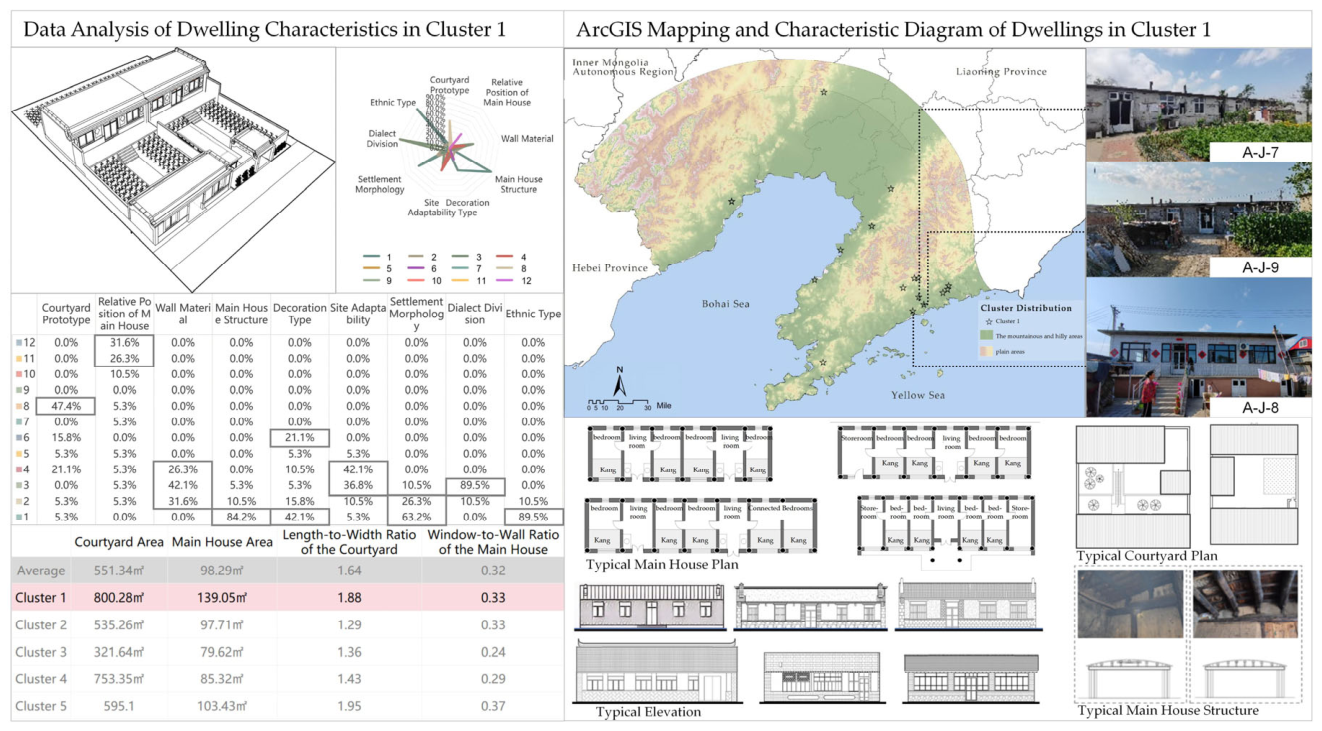
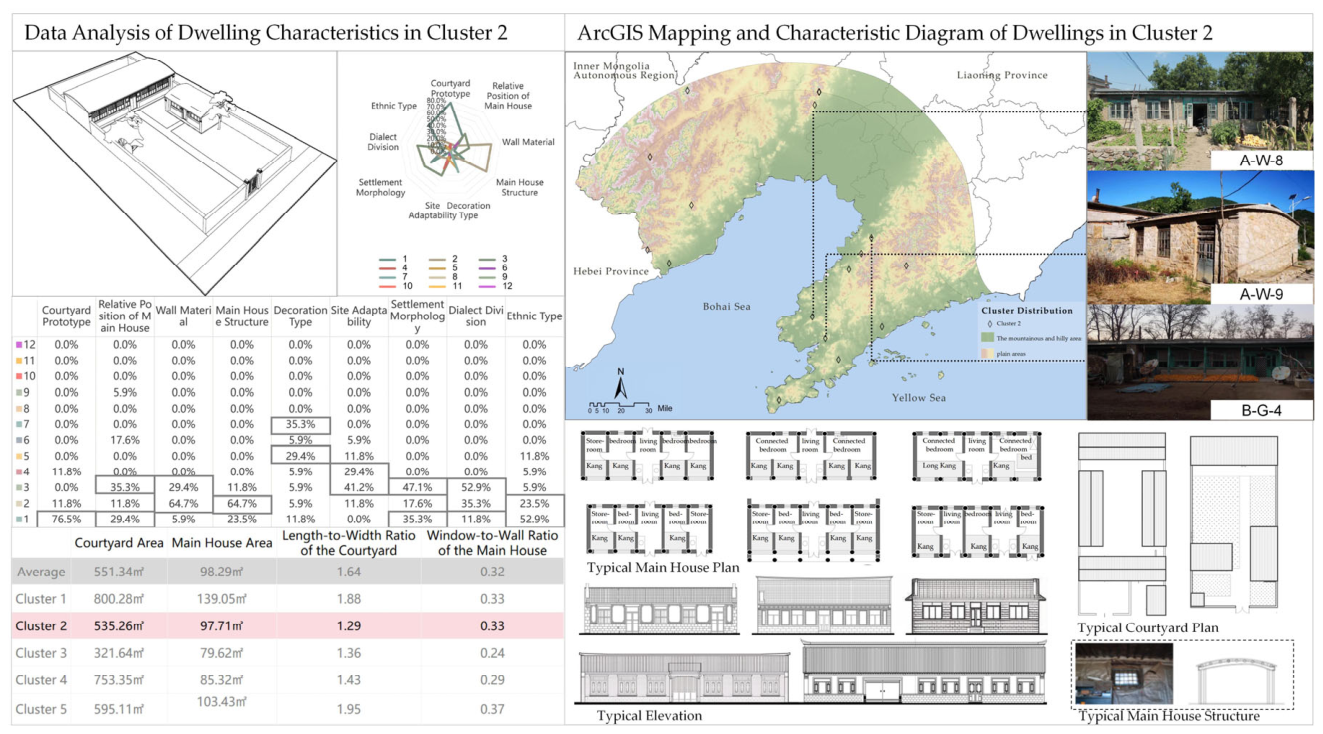
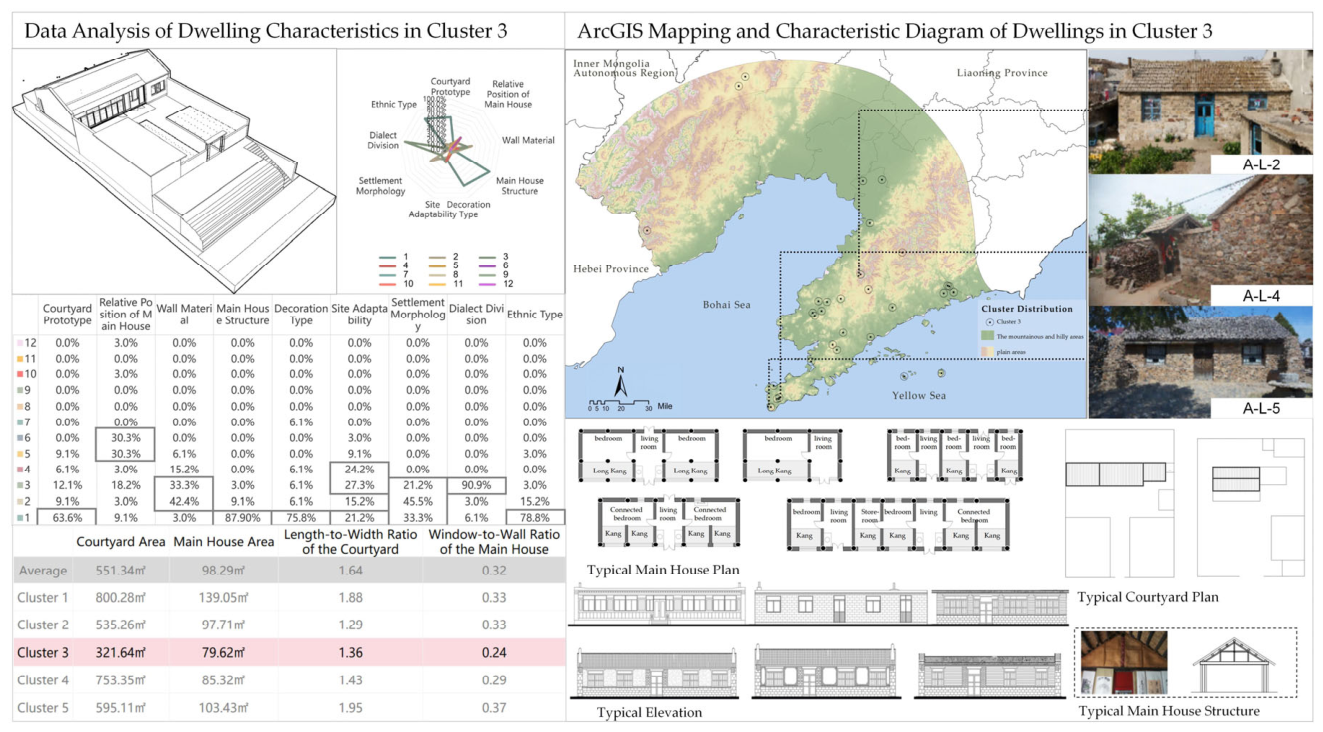
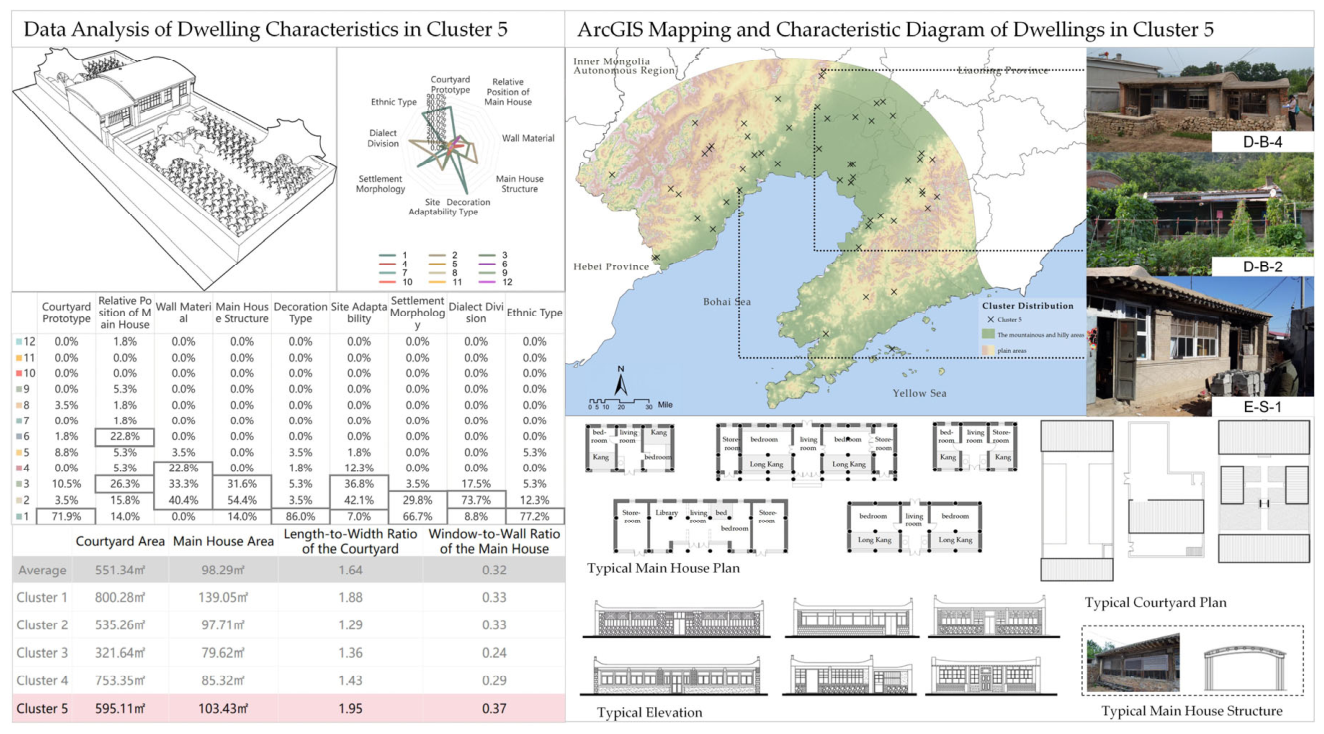
Based on systematic clustering analysis, this study classified 160 traditional dwelling samples in the Liaoning coastal area into five dwelling types with significantly differentiating characteristics: Coastal Quadrangle Courtyard Type, Coastal Flat-Roofed Middle Courtyard Type, Coastal Gabled-Roof Small Courtyard Type, Mountainous Gabled-Roof Small Courtyard Type, and Plain Flat-Roofed Long Courtyard Type.
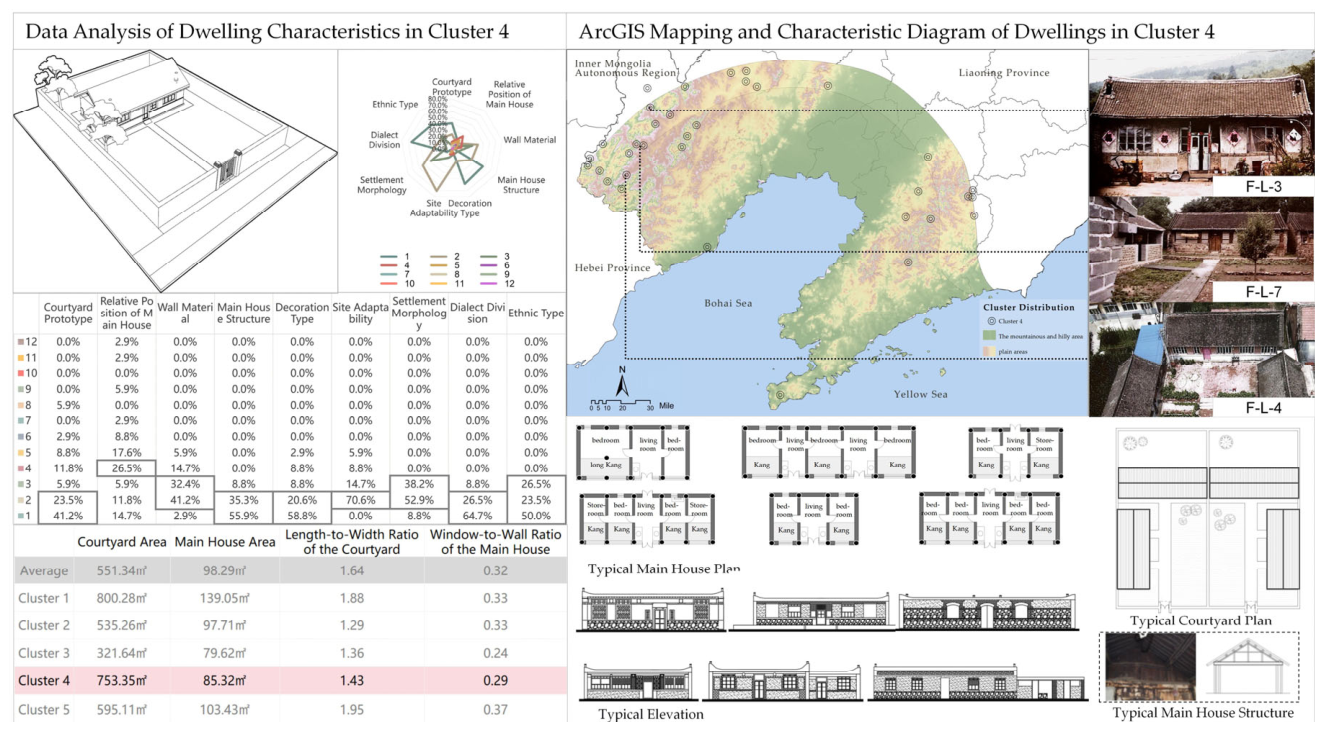
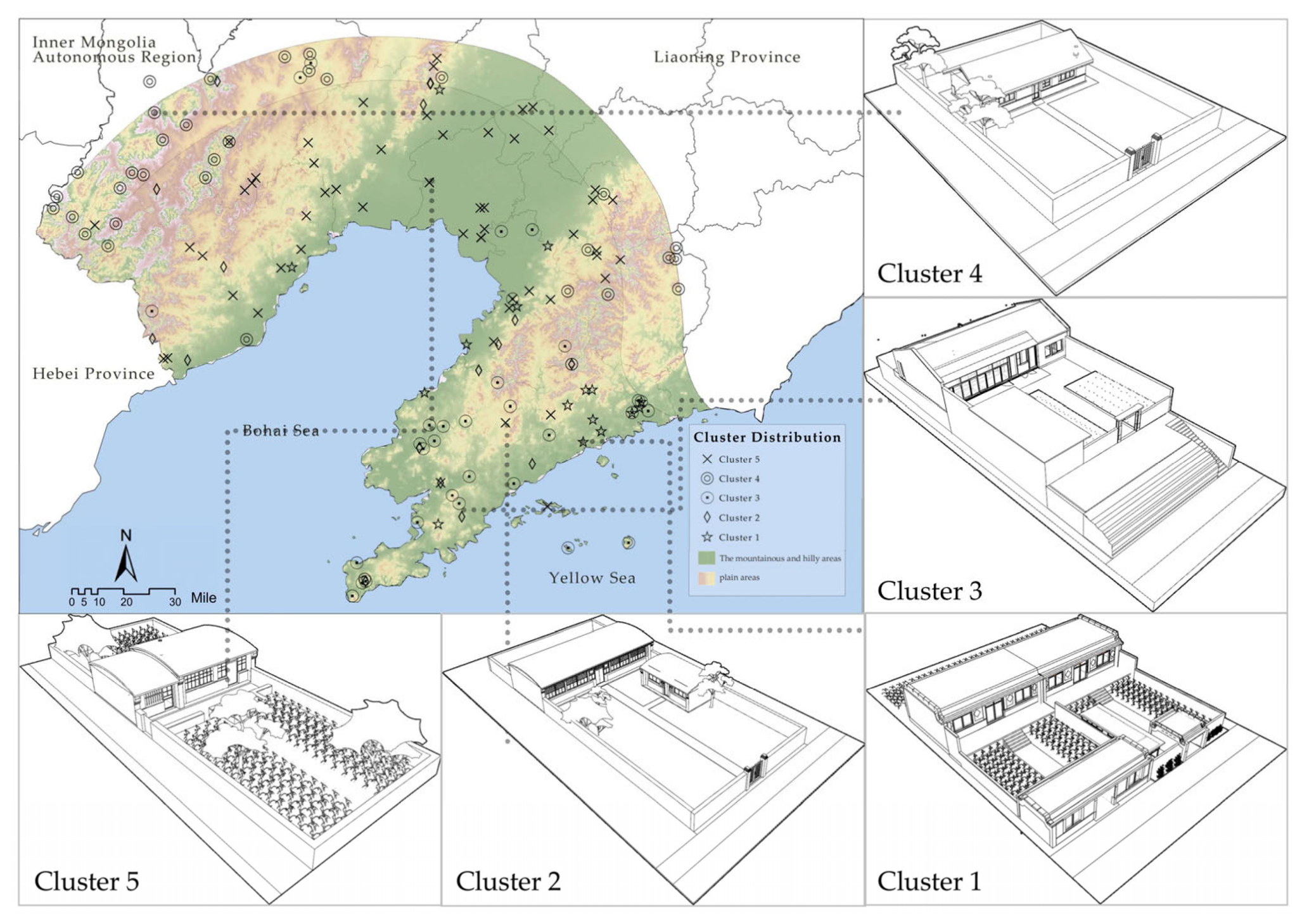
Among these, the Coastal Quadrangle Courtyard Type is concentrated in the coastal areas of Zhuanghe and surrounding Qingdui Ancient Town, exhibiting hyper-scale characteristics with highly enclosed quadrangle courtyards and brick-stone walls as typical forms. Residents are predominantly Mongolian and Manchu, with its formation closely related to its historical role as a commercial hub. The Coastal Flat-Roofed Middle Courtyard Type is scattered in foothill areas adjacent to water bodies on the Liaodong Peninsula, featuring moderate scale with main hall-type courtyards and highly distinctive flat-roofed (tunding) construction as core characteristics, reflecting climatic adaptation to strong winds and abundant rainfall in the Bohai Bay region. The Coastal Gabled-Roof Small Courtyard Type is concentrated in mountainous areas of the Liaodong Peninsula including Yingkou and Dalian, exhibiting significantly compact spatial scale characterized by three-bay main halls, gabled roofs, and simple “large crossed rafter” timber frames. This type serves as direct material evidence of Jiaodong populations migrating northward by sea and bringing their native construction techniques to Liaodong. The Mountainous Gabled-Roof Small Courtyard Type is mainly distributed in the Chaoyang mountainous area and Anshan mountainous area, predominantly featuring main hall-type courtyards, partially equipped with east wing rooms and without inverted houses, representing a localized translation of Beijing quadrangle courtyard forms within mountainous environments. The Plain Flat-Roofed Long Courtyard Type is concentrated in the western Liaoning plains including Panjin, Jinzhou, and Huludao, featuring markedly rectangular courtyards characterized by flat-roofed structures and spatial layouts emphasizing lighting, reflecting the integration of North China courtyard traditions brought by “Chuang Guandong” migrants during the Qing Dynasty with local needs. These findings systematically reveal the construction wisdom of “adapting to local conditions and governing according to customs” embodied in traditional dwellings of the Liaoning coastal area.
5.2. An Integrated Explanatory Framework for Formation Mechanisms
The previous section identified five dwelling pedigrees through systematic clustering. This section further asks: How did these morphological differences come about? How do cultural and geographical factors interact to shape the spatial differentiation pattern of traditional dwellings in the Liaoning coastal area? To address these questions, this study constructs a “cultural–geographical” integrated analytical framework, introduces the GeoDetector for factor detection and interaction detection, and verifies the transmission and variation hypotheses through spatial overlay analysis of migration routes and dwelling type distributions.
5.2.1. Construction of the Cultural–Geographical Integrated Analytical Framework
Based on the results of the principal component analysis, this study extracted the core factors influencing dwelling morphology and grouped them into two major systems: the cultural dimension and the geographical dimension.
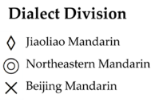
The cultural dimension includes: (1) Migration routes (using dialect divisions as proxy variables: the Jiaoliao Mandarin area corresponds to the maritime migration route from Jiaodong; the Beijing Mandarin area corresponds to the overland migration route from Jiaozhou and the metropolitan region; the Northeastern Mandarin area corresponds to the multi-source migration routes via land and sea into the interior regions of northern Liaoning, Jilin, Heilongjiang, etc.); (2) Ethnic composition (Han, Manchu, Mongolian, etc.); (3) Dissemination of official metropolitan architectural forms (using distance from Ming and Qing post roads as a proxy variable, reflecting the spillover of northern official architectural culture. Basic geographic information data are primarily sourced from
https://www.ditushu.com/book/1131 (accessed on 27 September 2025).
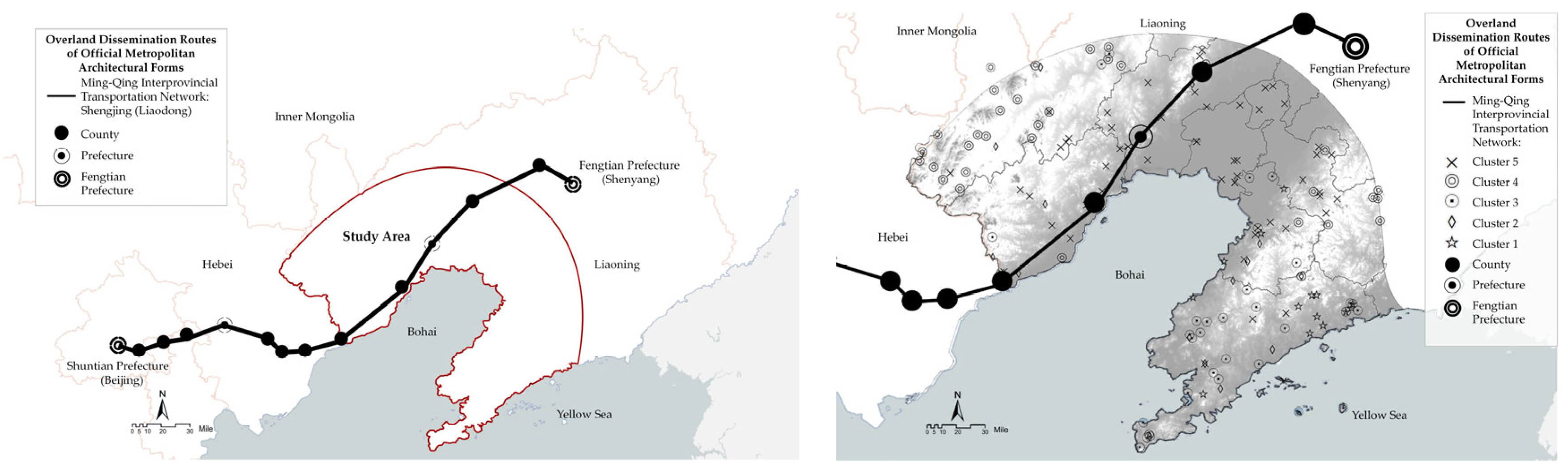
Ming and Qing post roads refer to the official postal and transportation road systems established during the Ming and Qing dynasties, used for transmitting official documents, transporting supplies, receiving officials, and military mobilization. These post roads were equipped with facilities such as relay stations (for rest and changing horses) and courier depots (for transmitting documents), forming a transportation network that covered the entire country. In Northeast China, the post road system centered on Shengjing (Shenyang), extending west through the Western Liaoning Corridor to Shanhaiguan and Beijing, east to Jilin and Heilongjiang, and south to seaports such as Lüshun.
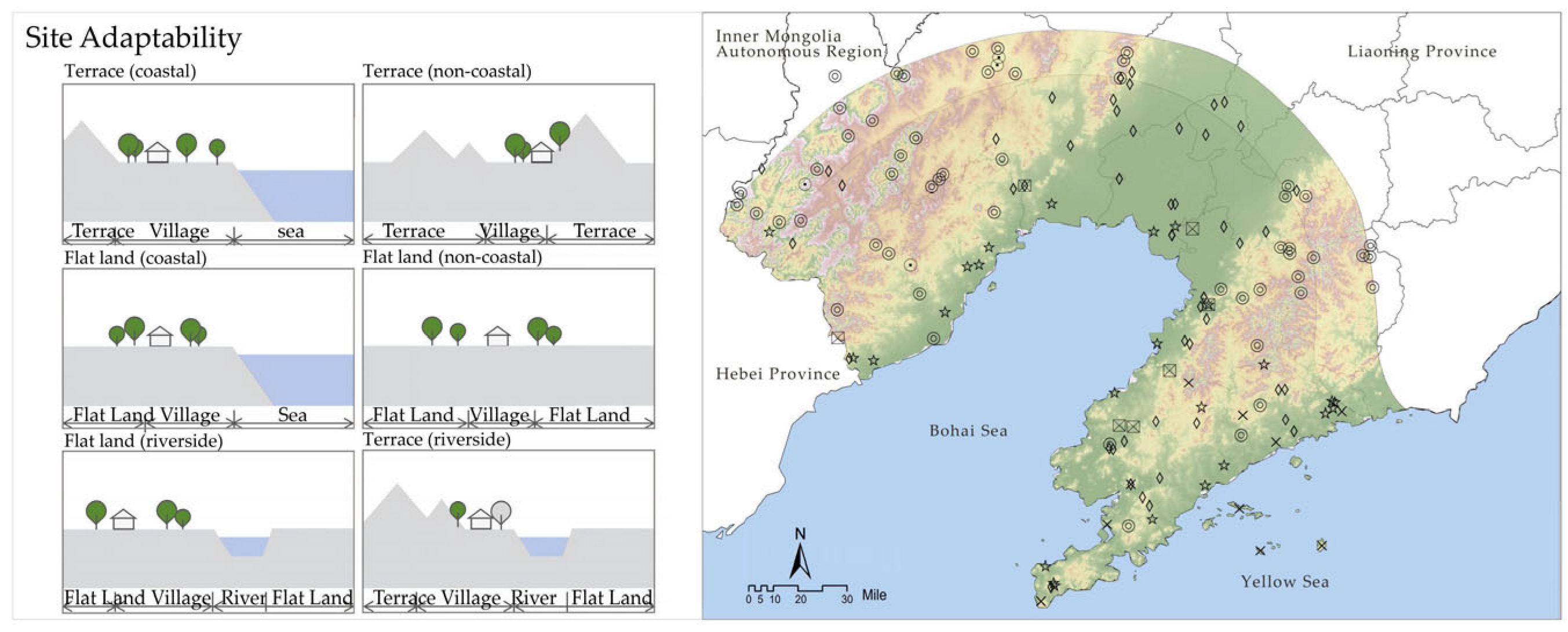
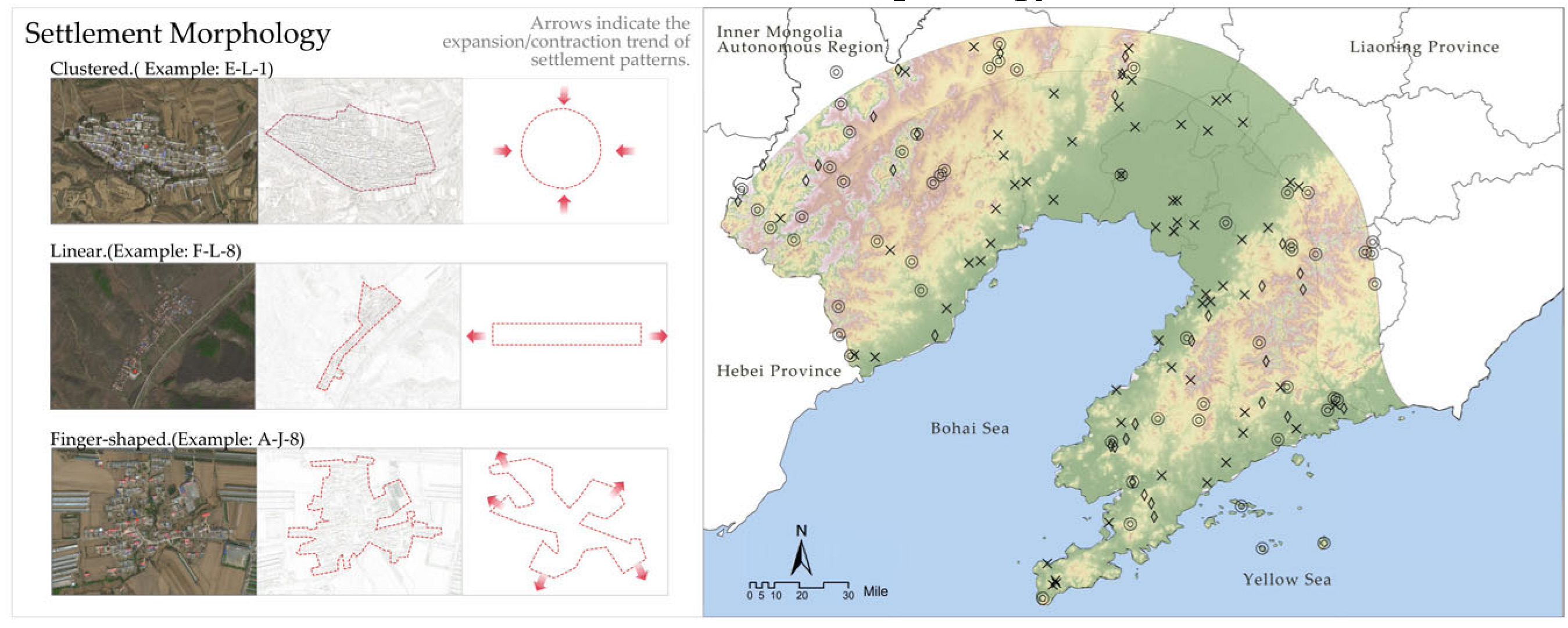
The geographical dimension includes: (1) Topographic conditions (elevation, slope); (2) Climatic conditions (annual average wind speed); (3) Distance from the coastline.
We constructed a multiple regression model and a GeoDetector analytical framework using the above factors as independent variables and the type assignments of the five dwelling pedigrees as the dependent variable, aiming to quantify the individual contributions and interaction effects of each factor.
5.2.2. Quantitative Analysis of Factor Contribution Rates Using the GeoDetector
The GeoDetector was employed to quantitatively measure the explanatory power of cultural and geographical factors. The core principle of this method is: if a factor significantly influences dwelling type differentiation, its spatial distribution should be significantly consistent with the spatial distribution of dwelling types. The factor detection power (q-value) ranges from 0 to 1, with larger values indicating stronger explanatory power of the factor for dwelling type differentiation.
The factor detection results show that, in the ranking of individual factor explanatory power (
Table 6), dialect division (q = 0.327) and elevation (q = 0.293) rank the highest, indicating that migration culture and geographical environment are the core driving forces shaping the dwelling pedigrees in the Liaoning coastal area. These are followed by distance from Ming and Qing post roads (q = 0.241), slope (q = 0.187), annual average wind speed (q = 0.203), distance from coastline (q = 0.156), and ethnic type (q = 0.112) (
Table 6).All factors passed the significance test, indicating that dwelling morphological differentiation is the result of the combined action of multiple factors. Notably, dialect division has the highest q-value, confirming that historical population movements such as Jiaodong immigration and metropolitan immigration have had a significant impact on dwelling morphology.
Interaction detection further reveals the synergistic effects among factors (
Table 7). The interaction types in the GeoDetector can be classified as nonlinear enhancement, two-factor enhancement, and so on.
The interaction detection results show that the interaction q-value for any two factors is greater than the individual q-values of the factors, indicating a nonlinear enhancement or bivariate enhancement relationship among the factors. Cultural factors and geographical factors do not act independently but jointly shape the spatial differentiation pattern of dwelling morphology through coupling effects. Among them, the interaction q-value of “Dialect Division ∩ Elevation” reaches 0.472, significantly higher than their individual q-values (0.327 and 0.293), exhibiting a nonlinear enhancement relationship, and has the strongest explanatory power among all factor combinations. This indicates that the coupling effect of migration culture and topographical conditions is a key factor influencing the differentiation of dwelling pedigrees in the Liaoning coastal area.
This statistical result is mutually corroborated by spatial analysis evidence. The spatial distribution characteristics presented earlier (
Section 3.2) show that the distribution of dwelling types in the Jiaoliao Mandarin area exhibits a significant topographic gradient—the gentle coastal zones are predominantly characterized by the Coastal Quadrangle Courtyard Type, the foothill areas adjacent to water by the Coastal Flat-Roofed Middle Courtyard Type, and the mountainous interior by the Coastal Gabled-Roof Small Courtyard Type. Combining the interaction results of the GeoDetector with this spatial distribution pattern allows for further inference: during the transmission of Jiaodong migration culture to the Liaodong Peninsula, its interaction with different topographical conditions contributed to the type differentiation of the coastal series of dwellings. Similarly, the interaction q-value of “Dialect Division ∩ Annual Average Wind Speed” reaches 0.438, exhibiting nonlinear enhancement. Combined with the concentrated distribution of flat-roofed (tunding) technology in the coastal high wind speed zone, it can be inferred that the synergistic effect of migration culture and climatic conditions reinforced the continuity of flat-roofed technology.
Other factor combinations also exhibit synergistic enhancement effects: the interaction q-value of “Distance from Post Road ∩ Elevation” is 0.396, exhibiting bivariate enhancement. Combined with the distribution characteristics where the Plain Flat-Roofed Long Courtyard Type is predominant in plain areas near post roads and the Mountainous Gabled-Roof Small Courtyard Type is predominant in mountainous areas far from post roads, this reflects that during the transmission of metropolitan official culture along the post roads, topographical conditions played a moderating role in the localized variation in official architectural forms. The interaction q-value of “Dialect Division ∩ Ethnic Type” is 0.351, exhibiting nonlinear enhancement. Combined with the differences in decorative features exhibited by the Coastal Quadrangle Courtyard Type and the Mountainous Gabled-Roof Small Courtyard Type within the Manchu-Mongolian settlement areas, this indicates an interaction between migration culture and ethnic settlement (
Table 8).
5.2.3. Spatial Comparative Verification of Migration Transmission Paths
To verify the specific paths of cultural transmission and their impact on dwelling morphology, this study conducted a spatial overlay analysis of the spatial distribution of the five dwelling pedigrees with historical migration routes and the Ming and Qing post road network.
- (1)
Verification of the Jiaodong Migration Transmission Path
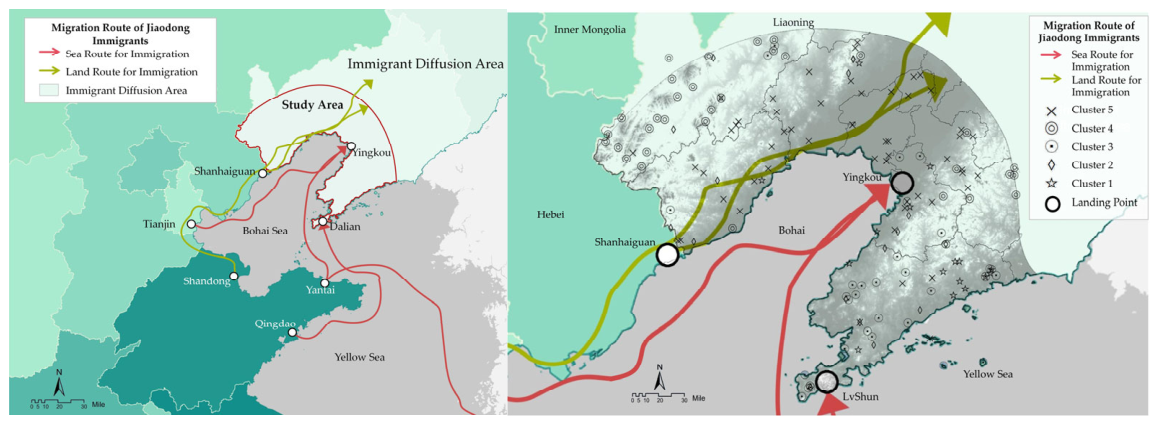
Historically, there were two main pathways for population migration and cultural transmission in the Liaoning coastal area: Jiaodong migrants crossed the sea to land on the Liaodong Peninsula, while migrants from the metropolitan region and North China entered the Northeast interior overland along the Western Liaoning Corridor. Some Jiaodong migrants, after landing, may have continued northward overland, while some metropolitan migrants may have also taken sea routes (e.g., via Tianjin Port) and then transferred to coastal shipping to reach the shores of the Liaodong Bay. These two pathways intersected and interacted spatially in the Liaoning coastal area, jointly shaping the region’s population and cultural landscape. To verify the influence of these two transmission paths on dwelling morphology, this study conducted a spatial overlay analysis of the spatial distribution of the five dwelling pedigrees with historical migration routes(
Figure 10), and quantitatively tested the gradient changes in morphological characteristics along the transmission paths.
Historical records indicate that during the “Chuang Guandong” migration in the Qing Dynasty, migrants from the Jiaodong region primarily reached the Liaodong Peninsula by sea, with major landing points including coastal ports such as Lüshun, Jinzhou, and Fuzhou. Spatial overlay analysis shows that the distribution area of the Coastal Flat-Roofed Middle Courtyard Type (Pulandian and Wafangdian coastal areas) is generally consistent with the distribution of secondary landing points for Jiaodong migrants, with an average distance of 15.7 km from the landing points. The distribution area of the Coastal Gabled-Roof Small Courtyard Type (the mountainous areas of Lüshun and Jinzhou) is located in the hinterland behind the landing points, with an average distance of 22.4 km from the landing points, exhibiting a “landing–diffusion” gradient characteristic. Along the “landing point–hinterland” path, dwelling morphology shows a regular pattern of evolution: courtyard scale decreases, the proportion of flat roofs decreases, and the proportion of gabled roofs increases. This gradient change verifies the transmission mechanism of “landing–diffusion–localization” of Jiaodong architectural culture.
- (2)
Verification of the Overland Transmission Path of Official Metropolitan Architectural Forms
Historical records indicate that during the Ming and Qing dynasties, Beijing’s official architectural culture spread northeastward along the post road system, with the main corridor being the Western Liaoning Corridor (roughly along the present-day Beijing–Harbin Railway). Spatial overlay analysis shows that the distribution area of the Plain Flat-Roofed Long Courtyard Type (Panjin, Jinzhou, and Huludao) is highly consistent with the post road network of the Western Liaoning Corridor(
Figure 11), with an average distance from the Ming and Qing post roads that is relatively small. The distribution area of the Mountainous Gabled-Roof Small Courtyard Type (the mountainous areas of Chaoyang and Anshan) lies in the extended zone of post road branches. Constrained by topographical and economic conditions, these dwellings omitted inverted houses and simplified courtyard layouts, resulting in a wall-gate layout without an inverted house. The distance from the post road is negatively correlated with the degree of preservation of official architectural elements such as wall-gate layouts and central axis symmetry. Along the “post road–hinterland” path, official architectural forms exhibit a trend of “simplification–localization,” reflecting the adaptive variation in official culture during its transmission process.
- (3)
Formation Mechanism of the Cultural Convergence Zone
In the convergence zone between the Western Liaoning Corridor and the Liaodong Peninsula (the Jinzhou–Panjin–Yingkou line), the maritime transmission path of Jiaodong migration and the overland transmission path of metropolitan migration intersect, forming the distribution area of the Coastal Flat-Roofed Middle Courtyard Type. The dialect in this area is Northeastern Mandarin, and the dwelling morphology combines Jiaodong flat-roofed (tunding) construction with metropolitan courtyard layouts, representing a product of the interaction between the two major cultural transmission systems.
5.2.4. Integrated Explanation of the Formation Mechanism
Synthesizing the above analyses, this study proposes an integrated explanatory model for the formation of the traditional dwelling pedigrees in the Liaoning coastal area.
- (1)
Core Driving Mechanism: Cultural–Geographical Coupling
The GeoDetector results indicate that the dominant mechanism for dwelling pedigree differentiation is the coupling of cultural and geographical factors, rather than the independent influence of a single factor. The interaction q-value of Dialect Division ∩ Elevation reached 0.472, significantly higher than the explanatory power of either factor alone, indicating that the matching relationship between migration culture and topographical conditions is the core mechanism shaping the dwelling pedigrees. Specifically, this is manifested as follows: Jiaodong migrants landing on gentle coastal areas formed the Coastal Quadrangle Courtyard Type; entering foothill areas adjacent to water, they shaped the Coastal Flat-Roofed Middle Courtyard Type; diffusing into the mountainous interior, they evolved into the Coastal Gabled-Roof Small Courtyard Type. Metropolitan migrants entering the Western Liaoning Plain along the post roads formed the Plain Flat-Roofed Long Courtyard Type; extending to the mountainous areas along post road branches, they transformed into the Mountainous Gabled-Roof Small Courtyard Type.
- (2)
Spatial Gradient Mechanism: Dual Diffusion Paths
Dwelling morphology exhibits two major spatial gradient differentiation patterns: Maritime gradient (from the coastline inland), where courtyard scale decreases, the proportion of flat roofs first increases and then decreases, and the proportion of gabled roofs increases, reflecting the spatial attenuation effect of “landing–diffusion–localization” of migration culture. Overland gradient (from post roads to hinterland), where the degree of preservation of official architectural elements decreases, and courtyard forms evolve from complete quadrangle courtyards to simplified courtyard forms, reflecting the adaptive variation in “transmission–simplification–localization” of official culture.
- (3)
Climate Adaptation Mechanism: Rational Logic of Technological Choice
Annual average wind speed is the strongest negative predictor of window-to-wall ratio (β = −0.324) and the strongest positive predictor of flat-roofed (tunding) choice (OR = 2.28), indicating that the combination of flat roofs and low window-to-wall ratios is a rational technological response to strong winds in the Bohai Bay. The positive influence of elevation on gabled roofs (β = 0.294) reflects the shaping effect of mountainous drainage needs on roof form.
- (4)
Ethnic Integration Mechanism: Layered Deposition of Multiculturalism
Although the explanatory power of the ethnic factor alone is relatively weak (q = 0.112), its interaction with dialect divisions and topography is significant. The distribution areas of Manchu and Mongolian populations spatially overlap with the Coastal Quadrangle Courtyard Type and the Mountainous Gabled-Roof Small Courtyard Type. Their residential cultures have left imprints in material selection (e.g., preference for stone) and decorative details, constituting a phenomenon of “cultural layering” within the dwelling pedigrees.
It is important to clarify that the “causal relationship” revealed in this study is essentially a statistical causal inference based on observational data, rather than a strict causal relationship under experimental control. The interaction detection method employed in this study can effectively identify the independent contributions and synergistic effects of factors, but it cannot completely exclude endogeneity issues such as omitted variables or reverse causality. Therefore, the mechanisms revealed in this paper should be understood as strong correlations with causal directionality, rather than absolute causal determinism. Future research could further introduce methods such as instrumental variables and natural experiments to deepen the identification of causal mechanisms.
5.3. Methodological Validation and Application: A Reference for Other Multicultural Regions
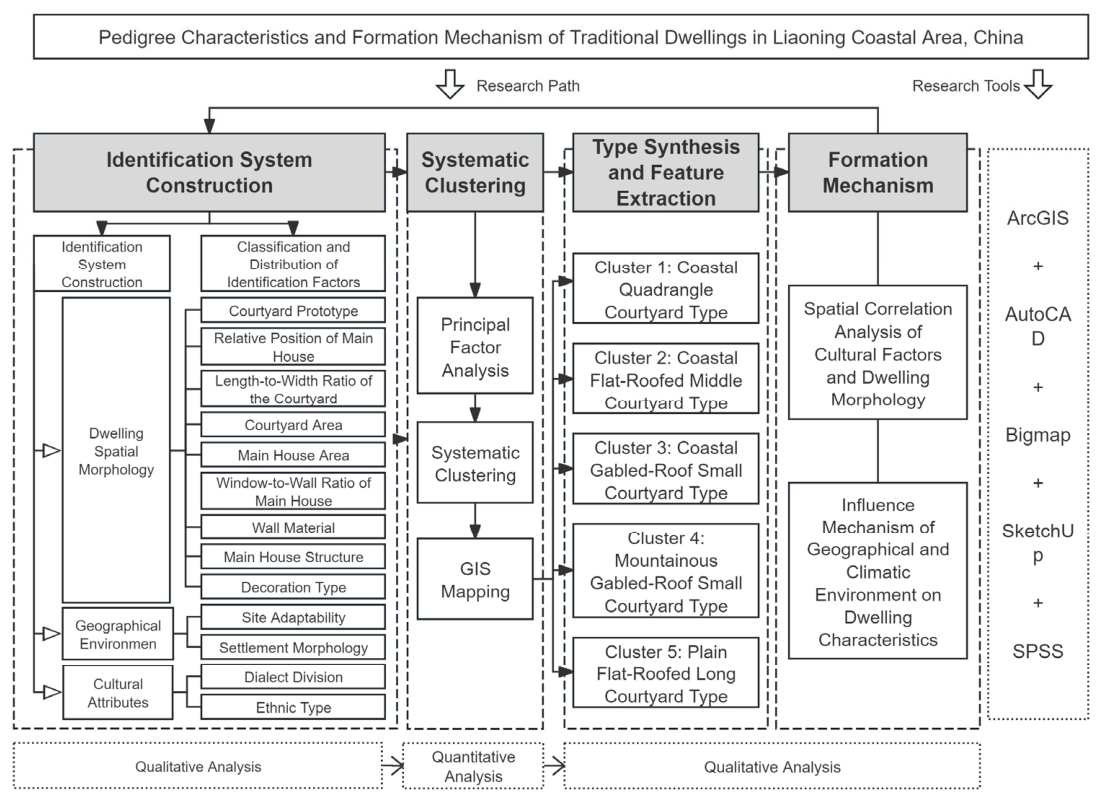
At the methodological level, this study is not merely a regional application of the typology of traditional dwellings in the Liaoning coastal area, but also a validation and advancement of the research paradigm for vernacular architecture in multicultural geographical convergence zones. The study adopts a technical workflow consisting of “indicator system construction-data collection and processing-principal component analysis-systematic clustering-synthesis of type characteristics-GeoDetector-based mechanism analysis.” Based on 160 typical dwelling samples, this approach achieves a deep integration of qualitative and quantitative methods.
Through principal component analysis and systematic clustering, the study identifies five dwelling pedigrees and their characteristics in a data-driven manner, effectively avoiding the subjective bias that may arise from over-reliance on qualitative descriptions in traditional research. Cultural factors (dialect divisions, ethnic composition, dissemination routes of official architecture) and geographical factors (topography, climate, distance from the coastline) are incorporated into a unified analytical framework. Using the GeoDetector, the contribution rates and interactions of these factors are quantitatively measured, providing statistical validation for the mechanism of “cultural–geographical coupling.” This methodological system moves beyond the qualitative dichotomy of “environmental determinism” versus “cultural determinism” in cultural geography, offering a reproducible analytical path for similar multicultural convergence zones.
In terms of application value, the three-dimensional pedigree framework of “morphological type—spatial pattern—cultural origin” established in this study, along with the operational procedure of “data-driven classification-spatial visualization-coupling mechanism testing,” can be extended to other areas of the Circum-Bohai Sea region, the land–sea interface of Northeast Asia, and even regions worldwide that exhibit similar characteristics of cultural superimposition and geographical gradients. Researchers in different contexts may flexibly adapt the methodological framework of this study by adjusting the indicator system and proxy variables according to local migration history, ethnic composition, and environmental conditions. In doing so, this study helps advance vernacular architecture research from case-specific descriptions toward regional comparison and mechanistic explanation.
5.4. Limitations and Future Prospects
This study has conducted a preliminary exploration of the formation mechanism of traditional dwellings in the Liaoning coastal area from the perspective of cultural geography. Based on the above findings, the following limitations must be acknowledged:
First, the cumulative variance contribution rate of the principal component analysis was 57.847%, meaning that approximately 42% of the original information was not explained by the first five principal components during dimensionality reduction. This is partly attributable to the inherent complexity of human geography data: nonlinear relationships between dwelling morphological characteristics and geographical/cultural factors may exist, which linear dimensionality reduction methods cannot fully capture. Additionally, although the current indicator system encompasses 13 indicators across three dimensions, some indicators have a coarse granularity (e.g., decoration type is classified into only six categories), limiting the ability to distinguish subtle differences. This loss of information may result in insufficient sensitivity of the clustering results to some micro-level features, but the identification of core pedigree types remains highly credible.
Second, the sample size is limited (160 sites), and the data sources are primarily based on traditional village listings, which may affect the representativeness and generalizability of the research findings. The distribution of traditional village resources within the study area is inherently uneven, and areas with more rapid urbanization have fewer surviving traditional dwellings, leading to a sample distribution that does not fully and uniformly cover all geographical units.
Third, the research framework is mainly based on cultural geographical factors, without systematically incorporating the influence of multiple factors such as economy and society, resulting in an incomplete explanation of the formation mechanisms of dwelling morphology. For example, the shaping effects of socio-economic factors such as the fishing and salt economy, trade networks, and land systems on dwelling morphology were not sufficiently quantified in this study.
Fourth, the selected cultural–geographical factors (such as dialect and ethnicity) remain relatively macroscopic and could not be further decomposed into quantifiable and operational sub-variables, limiting the depth and precision of the analysis. For instance, dialect division, used as a proxy variable for migration routes, cannot distinguish the specific origins of different counties or families within the same dialect area.
Fifth, this study does not report internal clustering quality indices (e.g., silhouette coefficient, within-group/between-group variance). The validation of the clustering results is primarily based on the structure of the dendrogram, spatial coherence, and cross-comparison with external data such as historical documents, dialect divisions, and ethnic distributions. This constitutes an interpretive and spatial validation rather than a formal assessment based on internal metrics. This limitation should be addressed in future research.
In response to the above limitations, future research can be advanced from the following aspects: First, expand the sample scope and data sources to enhance the diversity and typicality of research objects, particularly by strengthening the rescue investigation and documentation of endangered dwellings undergoing urbanization. Second, construct a more refined quantitative indicator system by further decomposing some descriptive indicators into more discriminative sub-variables; simultaneously, explore the introduction of nonlinear dimensionality reduction methods (such as t-SNE, kernel principal component analysis) to complement traditional principal component analysis and enhance the ability to capture complex nonlinear relationships. Importantly, the potential future use of nonlinear methods does not negate the validity of the current results, which are robust for the main typological differentiation; such methods would only help to explore highly specific or localized variations. Third, attempt to incorporate multiple factors such as economy and society to build a multi-level, multi-factor comprehensive analytical framework, deepening the systematic understanding of the formation mechanisms of dwelling morphology. Finally, integrating the concept of sustainable development, explore specific pathways for the active conservation and adaptive renewal of traditional dwellings, providing more operational theoretical support and practical guidance for the preservation and inheritance of regional architectural heritage.