1. Introduction
Adaptive reuse remains a topic of debate among design professionals to date, despite the significant number of papers published over the past two decades. Adaptive reuse is the repurposing of heritage buildings as part of broader urban regeneration and sustainability strategies [
1]. Thus, the debate about adaptive purpose has raised new challenges in the broader architectural discourse since the 1970s [
2]. Also, the reuse of existing public and cultural buildings through design strategies for spatial and functional transformation underscores the importance of a holistic, multidimensional approach to industrial adaptive reuse. This approach balances heritage preservation with the evolving needs of urban life in the 21st century [
3].
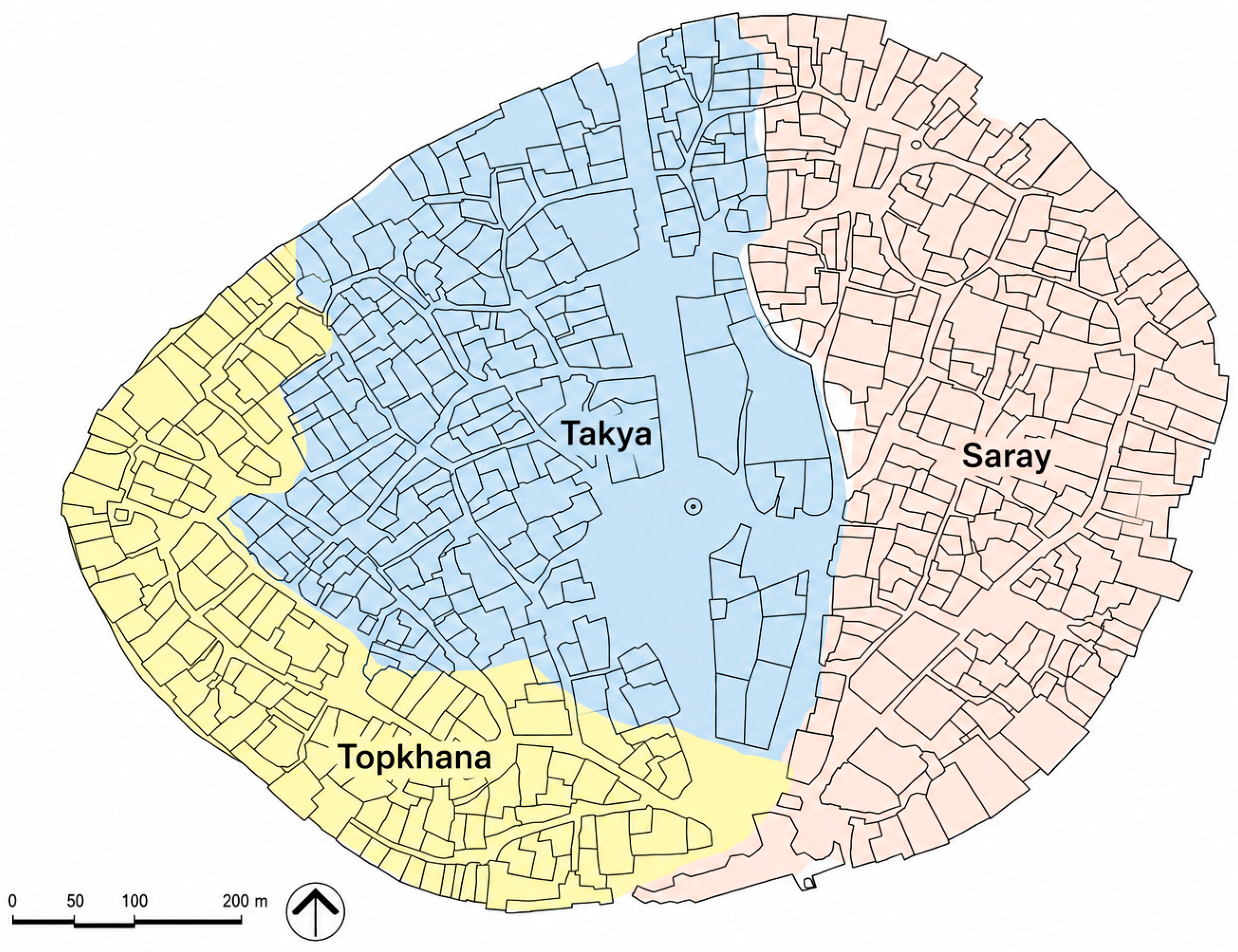
Erbil Citadel is a fortified settlement atop a large, oval-shaped hill, built by successive generations of people who have lived and rebuilt in the exact location in the Kurdistan Region, Erbil Governorate. The Citadel has a pattern that dates to the end of the Ottoman Empire in Erbil. Written and pictorial historical records indicate that people have long inhabited the site [
4]. The Citadel is a protected site under the legislation of Iraq and the Kurdistan Region. The High Commission for Erbil Citadel Revitalization (HCECR) oversees its revitalization efforts. It is working with UNESCO and other agencies in a strategic partnership to protect and restore the Citadel through programs that improve its physical condition [
5].
The Erbil Citadel Management Plan, which is now responsible for all actions related to the site’s future development and preservation, was made possible by HCECR’s activities. The buffer lands of the Citadel are not HCECR’s responsibility; they are the responsibility of Erbil Municipality. UNESCO and other international organizations have supported Erbil Municipality in developing the urban design guidelines for the Buffer Zone of Erbil Citadel [
4,
5]. See
Figure 1.
The selected houses in the Citadel, with varying courtyard sizes, represent a sample of the Citadel’s urban historical pattern and were chosen for their architectural significance and historical importance for adaptive reuse projects. Through a systematic investigation of these case studies using metrics and sustainability indices, the research reveals both the standard typological features of the courtyard house and the dynamic variations in its shaping that affect the houses’ adaptability to various adaptive scenarios, which are the Main Contextual Pattern Elements. The houses contribute to the Citadel’s continued function as a “living” heritage site and an inhabited place. All houses are variations of the conventional courtyard type, with some possibly containing features found in more luxurious houses, while the “Main Gate” is on the southeast and northern sides, indicating it as the main entrance to the Citadel [
6,
7].
The Pathways/Alleyways network of pathways intersects throughout the area, traversing various blocks and providing external access to residences. The layout of the Citadel is an organic pattern, with a hierarchy of irregular blocks and meandering streets. Meanwhile, the open spaces, green spaces around “Open Space”, are individual, likely as courtyards, communal spaces, or small parks [
6,
7].
2. Adaptive Reuse and Spatial Mutation Concept
Physical accessibility is one of the key challenges in the adaptive reuse of historic buildings, because new uses often require spatial and technical modifications that were not part of the original architectural configuration. Plevoets and Van Cleempoel [
8] frame adaptive reuse as an emerging discipline concerned with the transformation of built heritage through a careful balance between conservation and contemporary functionality. Their discussion shows that reuse is not simply a matter of inserting a new activity into an existing structure, but rather a process of evaluating how spatial layouts, circulation patterns, access points, interior organization, and building services can be adapted while preserving heritage values. This perspective is particularly relevant to historic domestic buildings, where changes to accessibility and functional performance must be managed without weakening the authenticity, spatial character, or cultural significance of the original fabric. Accordingly, adaptive reuse requires a compatibility-based approach in which physical upgrades and functional transformations are assessed in relation to both present-day needs and long-term heritage preservation [
8], where the mutation function alters the functions of an urban or architectural space. Residential architecture, particularly individual housing, has undergone significant changes in typology, style, and spatial organization through the mutations and transformations in dwelling typology, particularly in the replacement of traditional buildings during colonial times [
9].
Reuse intervention projects are influenced by various factors, including the object’s pre-existing morphology. Thus, starting from the hypothesis that a building whose original function has mutated can no longer be characterized by its original function but rather by its permanence, the aim is to show that the adaptive reuse of a pre-existing building reveals morphological potential that can inform diverse cognitive approaches and transformation scenarios. Each building is analyzed for its original morphology and for the deformation resulting from reuse and re-functionalization. This is done through graphic analysis and critical reinterpretation to compare the state before and after adaptive reuse [
10].
Traditional adaptive reuse classification views “before” and “after” as distinct entities. The concept of “potential” unifies the building’s evolutionary traits through its extensive (dimensions, position, distribution, organization) and intensive (adaptability, connectedness, usability, intensity of use) aspects. This classification is limited to the spatial organizations discussed in the text to outline a possible generalization based on spatial–organizational similarities and to construct a comparable functional activity in space [
10]. In this study, spatial mutation refers to the degree of internal spatial change required for a heritage courtyard house to support a new function. It involves shifts in circulation patterns, privacy levels, access hierarchies, and the allocation and use of rooms [
10].
Since the building is no longer in use, this research is part of a larger, more articulated study that investigates a prospective adaptive design trend based on form rather than its original function. Adaptive reuse, on the other hand, is a broader conservation approach that introduces a new use to an existing building while preserving its heritage significance. In this context, mutation is not treated as an alternative to adaptive reuse, but rather as a way of assessing the intensity of intervention within the reuse process.
Previous studies describe mutation only as a generative process of design, but they do not sufficiently explain how the cause impacts architectural changes. This is the core argument of how this study considers mutation, one that is both intentional and evaluated rather than random. From a design-and-build heritage perspective, mutation can be understood as a series of spatial, formal, or functional modifications that produce emergent configurations through gradual transformation. However, this study aims to express how specific mutations shape emergent forms such as geometric shifts, dimensional reconfigurations, or boundary adjustments, and how these mutations are cognitively perceived, interpreted, and chosen by designers. Finally, the conceptual backbone of the argument is somewhat undermined by a lack of sharp demarcation between superficial amendment and significant mutational transformation. In addition, it is suggested that cognitive mechanisms are used to detect the emergence of mutations.
Considering recent research, there appears to be a growing trend toward employing frameworks that effectively integrate spatial knowledge, heritage considerations, and multiple criteria in decision-making. It has been proven that space syntax can uncover the vitality structure, accessibility pattern, and spatial hierarchy in historic districts, indicating the advantages of using a configurational approach in heritage planning and intervention assessment [
11]. Similarly, the decision-making process regarding historic buildings must often compete with benefits, including cultural, social, environmental, and economic dimensions, thereby reinforcing the need for more transparent and balanced evaluative processes in conservation practice, underscoring the need for a more holistic and comprehensive evaluation process in conservation practice [
12]. At the same time, several decision-making frameworks have been developed to support the adaptive reuse of earthen heritage complexes, assisting in making informed choices about appropriate interventions regarding sustainability and heritage value retention [
13]. Similar frameworks related to Mediterranean earthen houses also evaluate not only sustainability but also heritage preservation and adaptability [
14].
3. Identified Courtyard House Types Using a Pattern-Based Framework
This section interprets courtyard house typologies through a pattern-based relational framework; it uses patterns as recurring spatial principles explaining access, privacy, transition, shared use, and courtyard centrality. Drawing on Alexander, Ishikawa, and Silverstein’s (1977) [
15] pattern language tradition, it emphasizes how typologies express relational conditions key to adaptive reuse, such as threshold sequences, privacy hierarchies, shared spaces, and the balance between open and enclosed areas.
There is a valuable theoretical basis for understanding architecture as a system of recurring spatial relationships, rather than as a set of disparate forms. In the work, the word “pattern” does not merely refer to a particular aspect of the design, but rather to a recurring solution to a spatial problem, derived from the experience of daily life, social interaction, movement, privacy, the relationship of space to open space, and so on. The work itself highlights the importance of good environments as being derived from the interrelated set of patterns working together at all scales, from the way settlements are arranged to the way rooms, thresholds, courtyards, transitions, and other spaces are arranged. Such a perspective on the nature of architecture itself becomes particularly relevant when undertaking architectural analysis, as it shifts the focus from the more superficial aspects of geometry or style towards the more fundamental relational aspects of space. In this way, the quality of the space itself is understood as a function of its ability to facilitate transition, comfort, social interaction, and a sense of belonging, making the work highly relevant to the interpretation of both traditional and contemporary spaces [
15].
The pattern language is organized as a network, where no pattern exists independently. However, it is connected to other patterns, ranging from the settlement and neighborhood to the entrance, courtyard, rooms, and details, to form a whole. This mode of thinking changes the way one interprets architecture from the way it looks to the way it works, focusing on the logic of space, which is movement, transition, privacy, shared living, and the relationship between inside and outside. It is, therefore, important to understand Alexander and his colleagues’ patterns and work because they reveal the way quality is created in architecture from the common relations that promote human well-being, involvement, and sense of belonging, and thus can be used as a reading tool for the interpretation of the built environment, both old and new [
15].
To interpret the spatial logic of the identified courtyard house typologies, Christopher and his colleagues’ pattern language was used not as a rigid classification system, but as a relational framework for interpretation. In this study, patterns are treated as spatial principles that shape access, privacy, transition, enclosure, and shared use, rather than as fixed labels mechanically applied to house forms. The selected patterns were chosen because they directly reflect the recurring organizational features of courtyard houses, particularly threshold sequencing, intimacy gradient, courtyard centrality, hierarchy of open space, and the role of shared intermediate domains. Accordingly, the analysis does not ask whether a typology simply “fits” a pattern but instead examines how each typology expresses specific relational conditions that may be maintained, altered, or disrupted through adaptive reuse (see
Table 1).
Table 1 shows that the identified typologies are not strict categories of form but are instead recurring spatial configurations that shape which relational patterns become prominent. Some types emphasize threshold depth and privacy gradation, while others depend more strongly on courtyard centrality, shared spatial focus, or layered open space hierarchy. This distinction is important for adaptive reuse because compatibility cannot be determined only by geometric form or room count. Rather, it depends on whether the proposed new function can operate without undermining the relational structure through which the house originally organized access, enclosure, and social interaction.
The Pattern language-derived patterns selected for this study were chosen because they reflect the spatial relationships most central to courtyard house organization and to the potential for adaptive reuse. Entrance transition (Pattern 112) was included because movement into courtyard houses is rarely immediate and is usually shaped by a sequence of layered thresholds that control social exposure. Intimacy gradient (Pattern 127) was selected because these houses commonly arrange space in ascending order of privacy, from the entrance toward the inner rooms. Courtyards Which Live, or courtyard centrality (Pattern 115), was used because the courtyard is not simply an empty space, but the environmental, social, and organizational core of the house. Hierarchy of open space (Pattern 114) was included to capture the layered progression from exterior space to semi-open areas and finally to enclosed domains. Common areas at the heart (Pattern 129) was selected because many courtyard houses shared domestic activities around the central open space. Indoor–outdoor connection (Pattern 163) was also relevant, since the relationship between enclosed rooms and the courtyard strongly influences movement, visibility, and environmental performance. These patterns provide a relational vocabulary for assessing whether adaptive reuse scenarios remain compatible with the houses [
15].
4. Typological Interpretation Through Pattern Language Through Adaptive Reuse Principles
In adaptive reuse terms, these patterns shape adaptability by showing whether a proposed new function can operate in alignment with the house’s existing relational structure. Reuse scenarios that maintain threshold hierarchy, privacy gradients, and the central role of the courtyard are considered more spatially compatible and less intrusive. Uses that retain threshold depth, privacy gradation, courtyard centrality, and the arrangement of common and secluded spaces are considered more spatially compatible and less invasive. By contrast, reuse scenarios that compress privacy hierarchy, disrupt courtyard-based circulation, or remove the sequence linking open, semi-open, and enclosed domains are seen as involving a higher degree of spatial mutation. The assessment, therefore, considers not only physical alteration but also whether key relational patterns are maintained, transformed, or disrupted.
These patterns were chosen because they directly reflect the core spatial logic of courtyard houses, especially threshold sequencing, privacy hierarchy, the centrality of shared space, and the layered transitions between open and enclosed domains. The preservation priority during reuse should therefore extend beyond material form to relational continuity, particularly where entrance transition, intimacy gradient, courtyard centrality, and common space organization constitute the house’s core living structure.
Typology as a field aims to explain how buildings are sorted and grouped into types. It emphasizes the formal and spatial features of buildings, while recognizing that cultural and historical factors significantly influence their definitions. In this context, typology is described as the “classification of models.” The typological study of housing, when expanded, can generate insights, interpretations, and discussions about the lessons it offers regarding the process and the house environment. By using the concepts of “type,” patterns, and “settings,” new perspectives can be developed around the pattern (provided). Understanding the relationship between a house and its components can deepen the understanding of its evolutionary process [
16].
A comprehensive investigation of the Citadel was conducted through interviews and discussions with members of the Citadel’s engineering team and with UNESCO staff who were actively participating in ongoing conservation work. The courtyard houses are separated by an area that features a courtyard with this residential layout, which developed within those alleyways, shaping its overall form. In contemporary cities, however, streets and residential patterns are shaped more by surrounding alleys, building regulations, and a 60% ground coverage rule. Maintaining 40% open space has profoundly and decisively impacted the urban fabric, influencing housing more than the overall urban form [
17].
The twenty-four houses selected for this study were those considered most representative of architectural integrity, authenticity, and historical value. These are interesting items for a survey, especially for studying houses, traditional types, and decisions about adaptive reuse. The quantitative assessments of spatial performance and the interpretation of heritage houses can be enriched by a pattern language framework, a design pattern concept that highlights recurring spatial relationships that support human use and social interaction. Instead of focusing solely on form, this perspective emphasizes enduring configurational principles, such as transitions between public and private spaces, courtyard-centered layouts, and connections between individual rooms and shared open areas. In adaptive reuse, these patterns are particularly valuable because they help distinguish between superficial functional changes and deeper spatial continuity.
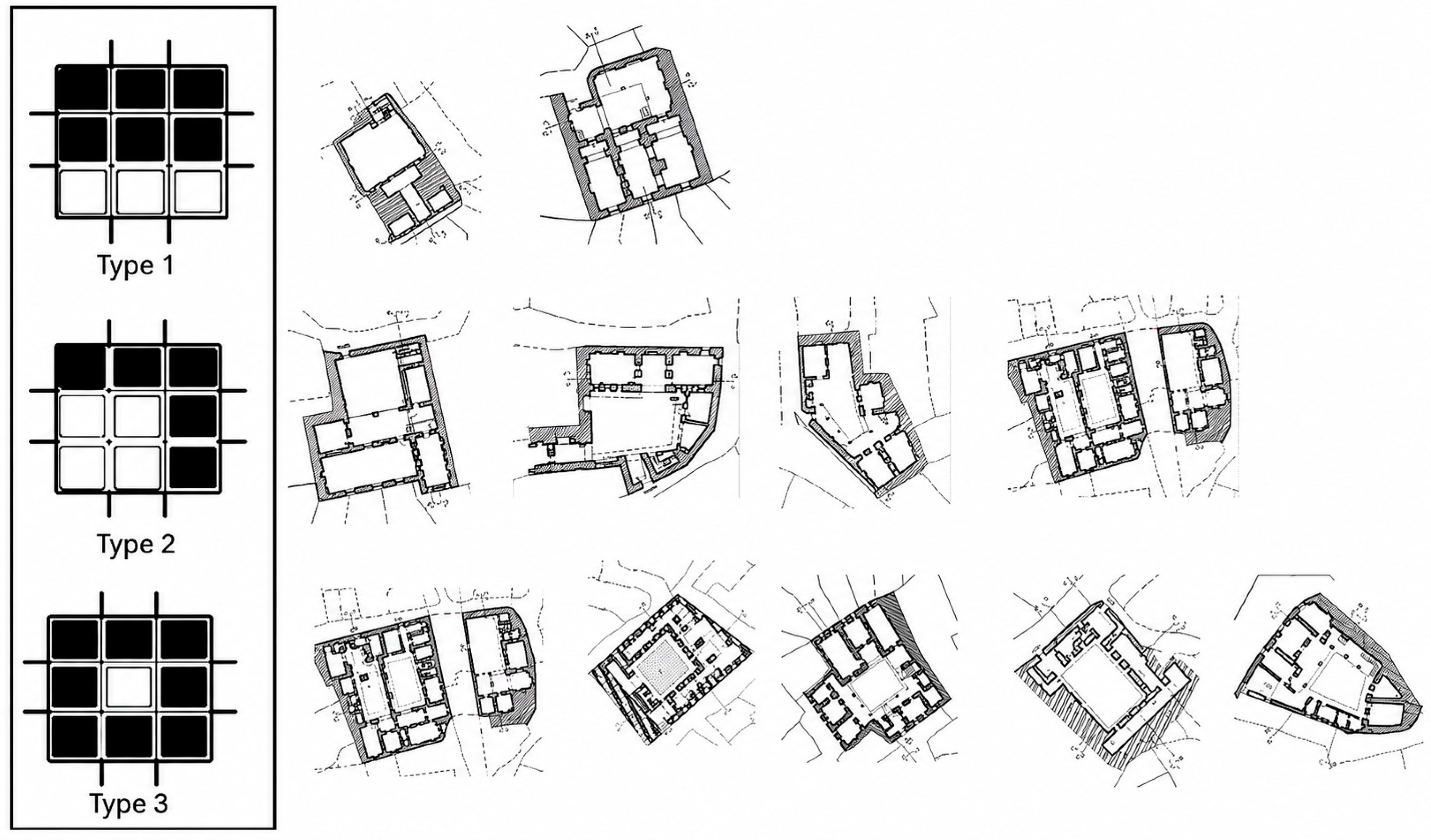
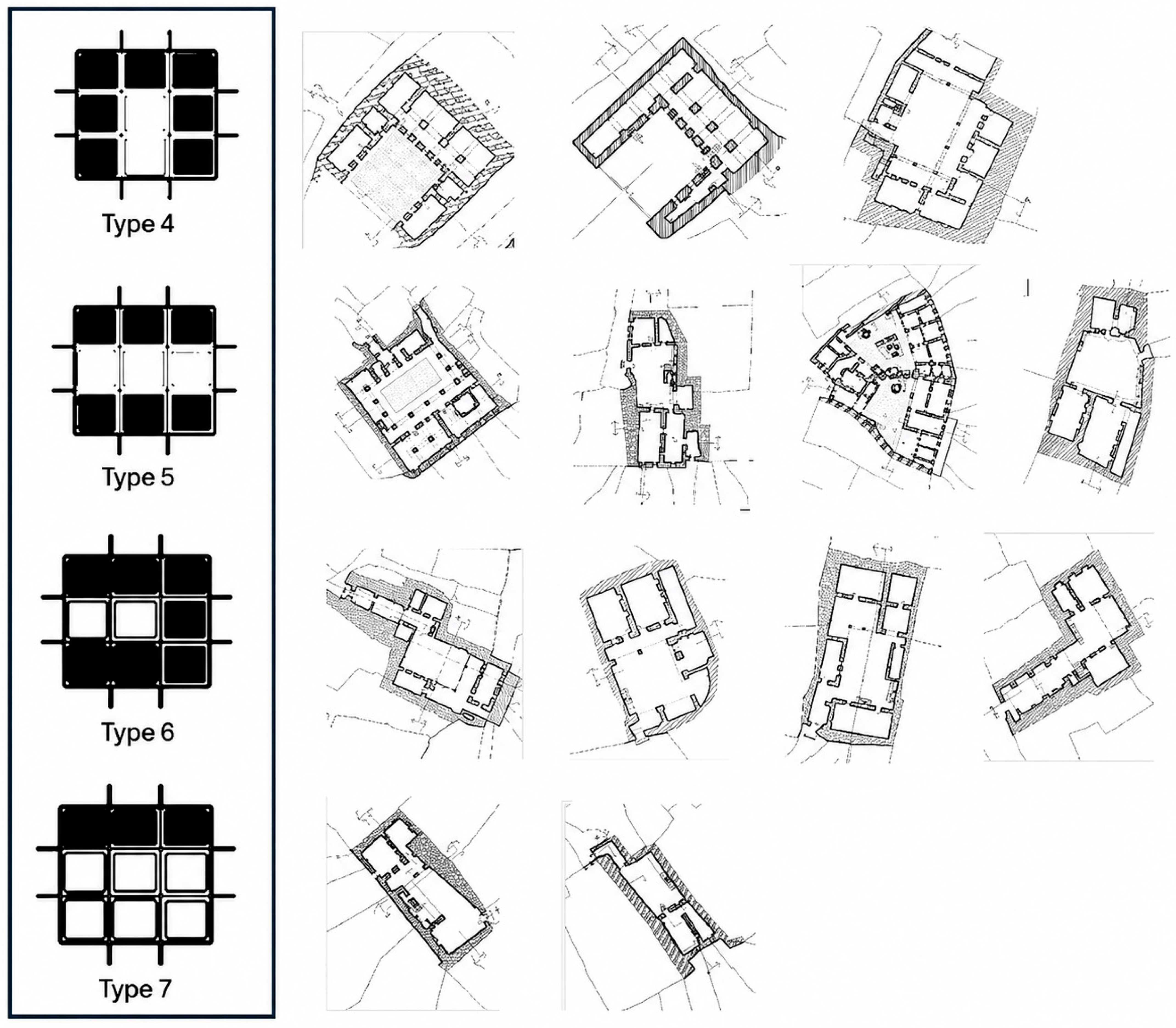
The seven identified typologies of courtyard houses could be seen as reflecting pattern language-derived spatial patterns rather than geometric ones. Specifically, types 3 and 7 could be seen as reflecting the courtyard as a center and common space because they are located at the center and structure the surrounding built space. On the other hand, types 1, 2, and 4 could be seen as more closely reflecting the entrance transition and intimacy gradient because their displaced and axial positions suggest direction and depth in space. Finally, types 5 and 6 suggest a more complex hierarchy of open, semi-open, and closed spaces in which the courtyard remains significant but is part of a more articulated internal space order. These typologies are more than mere classifications and suggest fundamental spatial relationships that may be invariant in adaptive reuse, even when functional arrangements change.
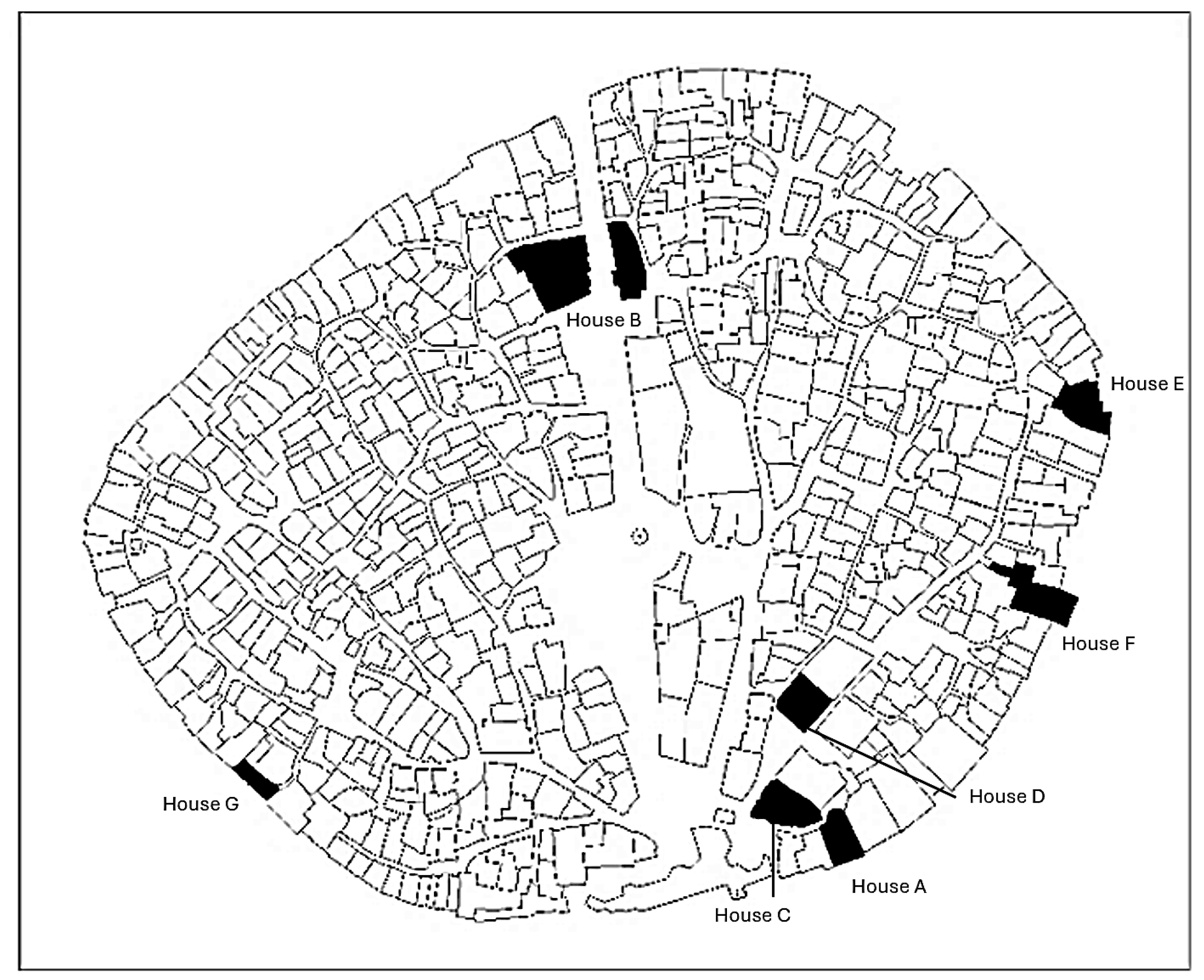
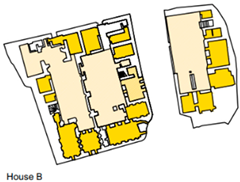
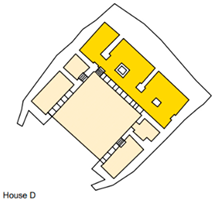
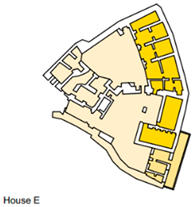
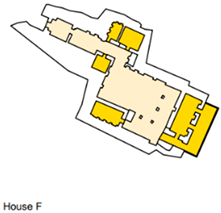
For simplicity, the houses labeled (A–G) represent several distinct typological groups within the Citadel. The arrangement of the houses is based on their spatial layout, courtyard position, circulation patterns, vertical organization, and entrance systems.
For example, house A presents a symmetrical, one-courtyard distribution, with circulation arranged linearly and multi-level development. On the other hand, house B has an asymmetrical layout with several adjoining courtyards, which restricts its range of movement. House C is minor, featuring circular circulation and vertical dwellings. Other houses (D, F, and G) follow the more standard trapezoidal, symmetrical, single-courtyard, linear, single-level pattern. House E breaks this tradition in its asymmetrical style, several courtyards, and confined circulation. Altogether, these seven cases demonstrate the variety of domestic forms that inform the social and urban substance of Erbil Citadel. Their choice provides a statistically sound basis for investigating functional performance and adaptability, thereby linking architectural taxonomy to the sustainable potential of adaptive reuse.
To provide a basis for typological classification, the plans of houses A–G were compared with seven schematic models of the most common spatial configurations of courtyard houses identified in the sample (types 1–7). These schematic models do not intend to replicate the houses’ plans but rather to summarize their spatial structure in relation to the courtyard’s position, centrality, the spatial layout of the surrounding built spaces, and the relationship between access and the house’s spatial layout. Each house has been classified according to the schematic model that best matches its spatial structure. Therefore, it is important to understand typological classification as a tendency rather than a rigid one, since some houses also reveal hybrid characteristics. The types are as follows:
Type 1: courtyard/open zone at one edge;
Type 2: courtyard/open zone laterally positioned;
Type 3: courtyard as central core;
Type 4: courtyard aligned in a more axial/linear manner;
Type 5: bilateral or split arrangement;
Type 6: more compact enclosed court/clustered organization;
Type 7: larger continuous zone occupying one side or half.
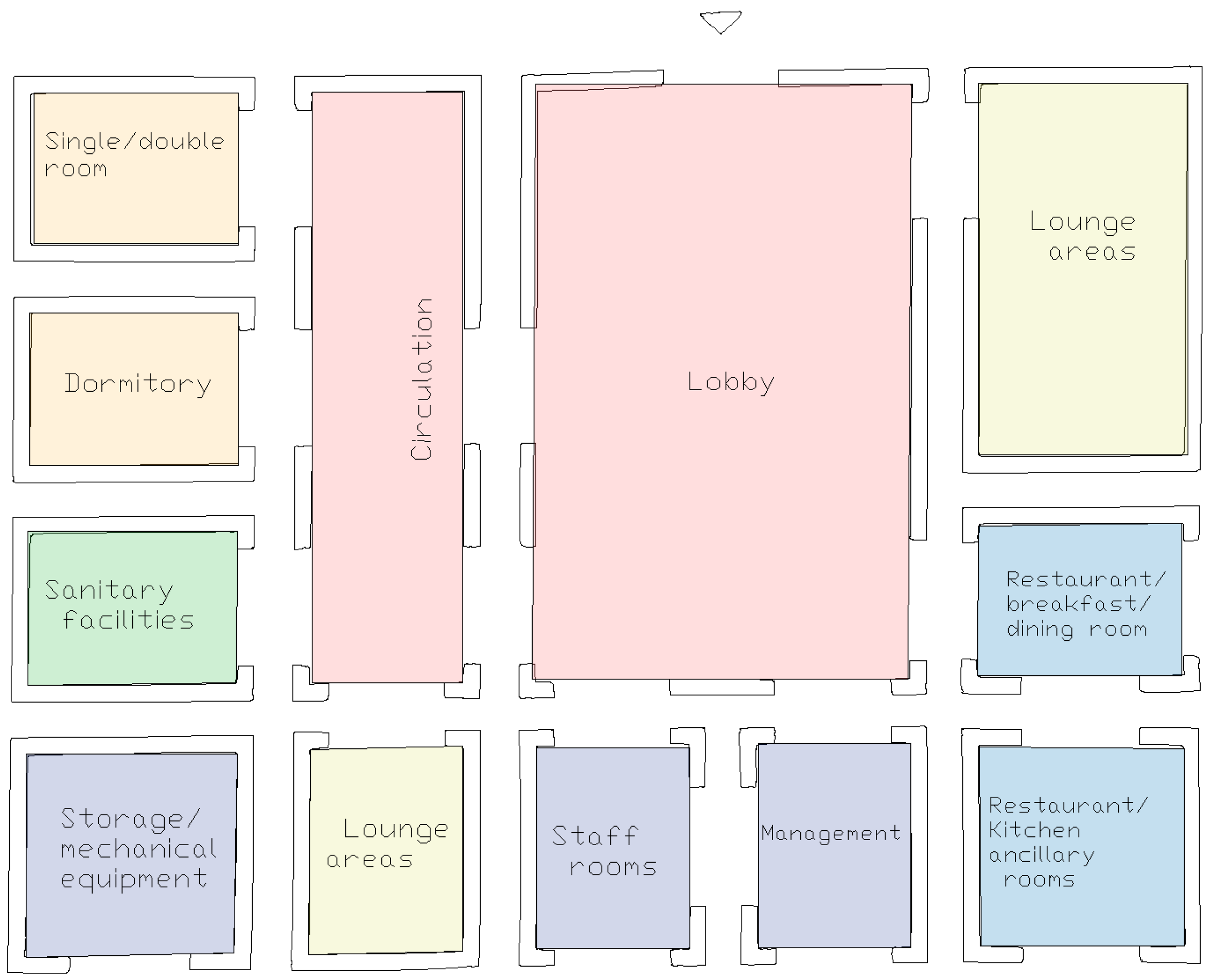
In the current study, the spatial arrangement of these selected houses was divided into three main groups (public spaces, private spaces, and circulation spaces). This categorization was made to enable comparison across cases while preserving the identities of the actual house names. Public spaces were defined as guest and visitor areas, such as courtyards and reception rooms; private spaces included bedrooms, service areas, and family-use sections of the building; circulation was the network of links between public and private zones, such as staircases, corridors, and passages.
Revitalizing these places for diverse reasons beyond their original use requires varying levels of engagement and distinct forms of contact, making them an excellent tool for evaluation. Consequently, the importance of the new role in adaptive reuse is indisputable. The original layout and the new function must be compatible to achieve the optimal reuse of the historic building [
18].
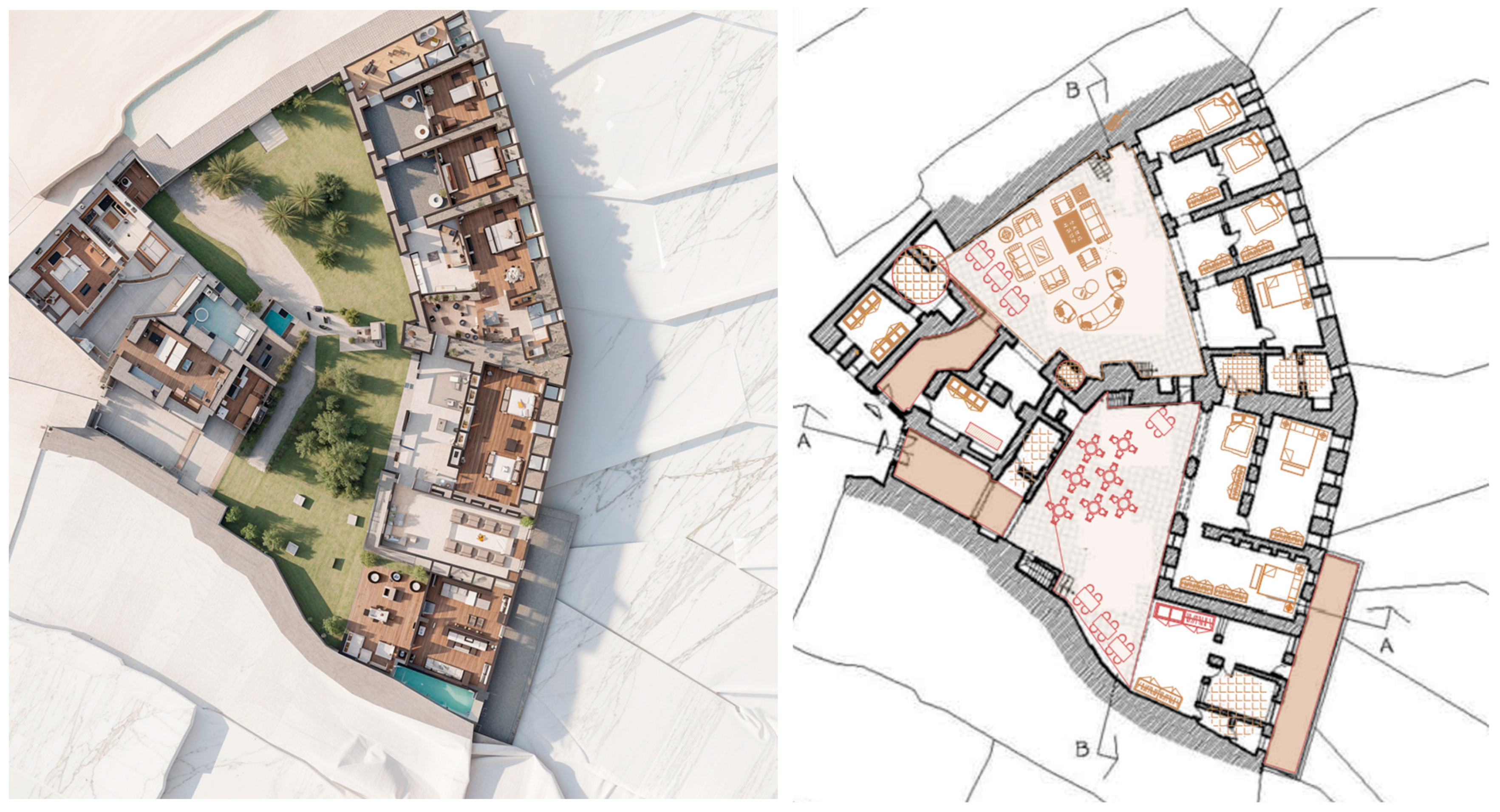
Houses (A–G) are also assessed using the house assessment criteria and graphically projected. In some houses, public living spaces are in a central area with easy access, while, in others, private spaces take precedence, blocking direct entry. The transition zones are illustrated as tissues that connect these two zones, varying in dimension and shape across houses. This approach also improves the perception of spatial configuration, making zones that can be repurposed more easily identifiable; see (
Figure 2 and
Figure 3) (
Table 2).
5. Research Problem, Methodology, and Limitations
Adaptive reuse remains a debated topic in architecture and design scholarship. Despite extensive academic focus over the past twenty years, the literature shows a lack of conceptual cohesion and limited meaningful dialog among studies. Reusing heritage buildings is crucial for their sustainability, as evidenced by evaluations of environmental, social, and economic factors. Also, it shows that the sustainability of heritage buildings depends on the adequate validation of building-related adaptive reuse factors that align with community values and needs [
19].
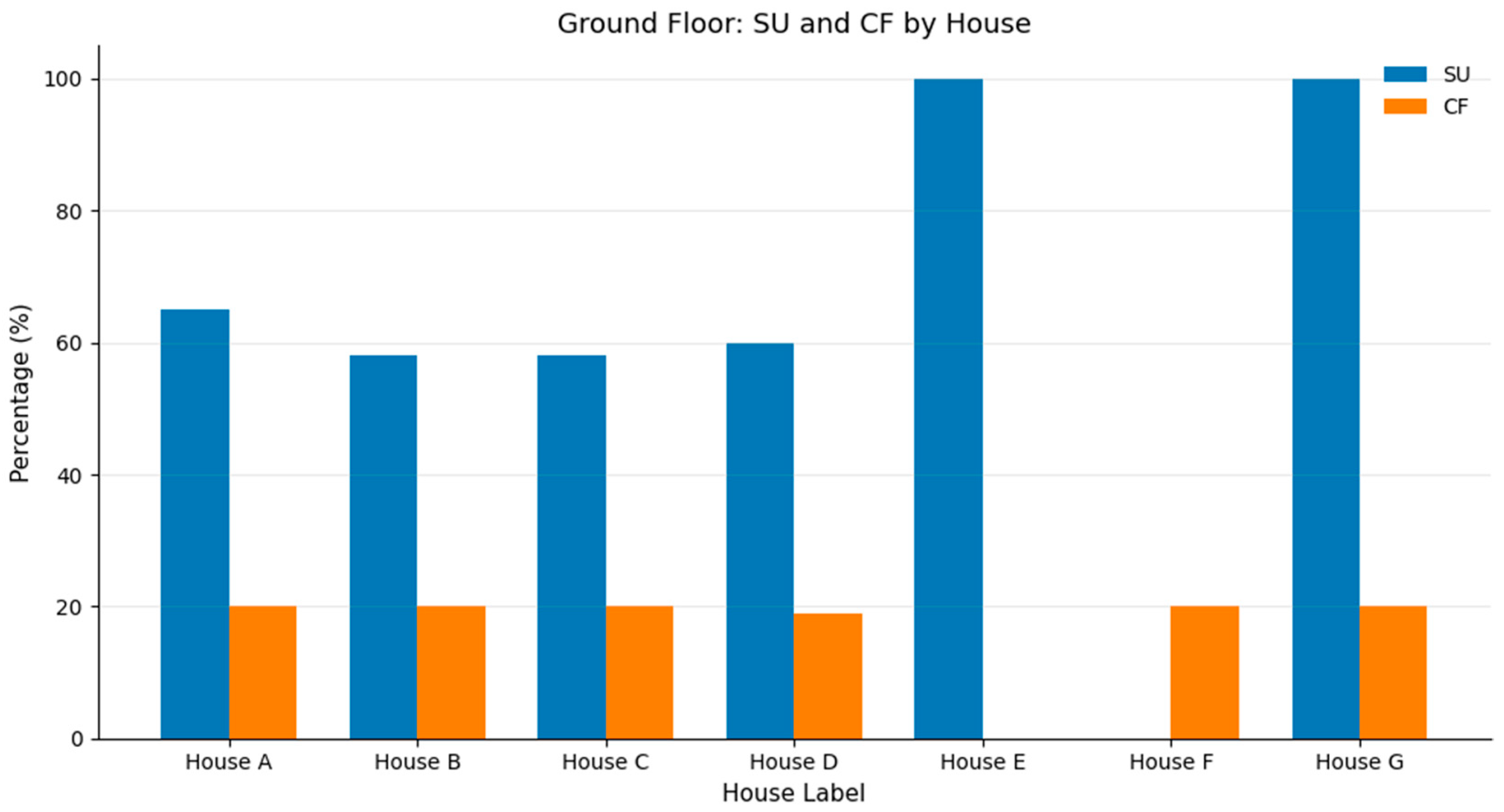
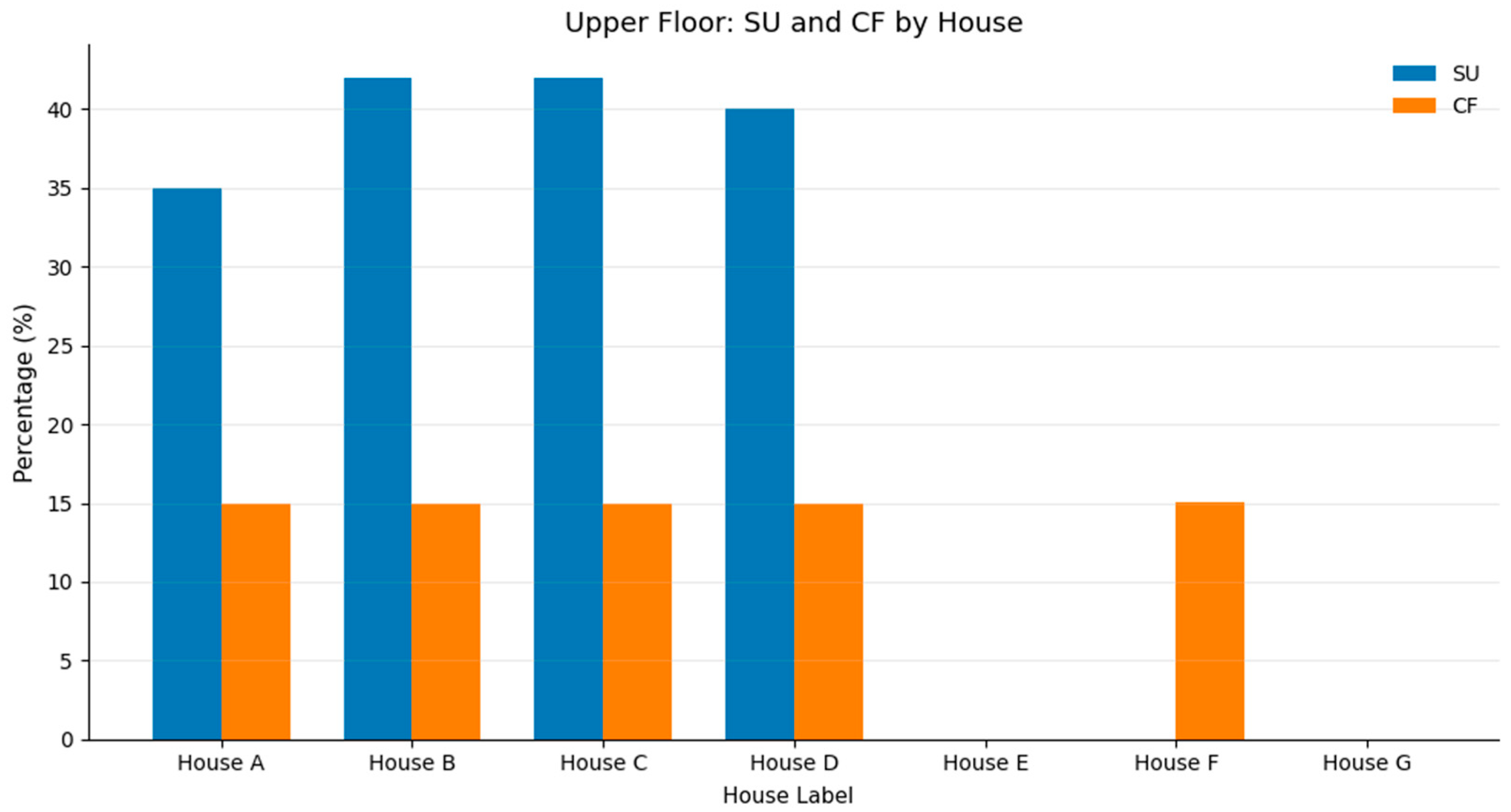
The research methodology combines space syntax analysis to assess spatial configuration and accessibility, space utilization (SU) to evaluate the ratio of private to public spaces, and the circulation factor (CF) to measure spatial circulation efficiency. Additionally, matching statistical strategies, such as the Euclidean distance method and the Pearson correlation coefficient, are used to analyze typical spatial configurations alongside projected adaptive functions. These tools can be applied to various architectural designs and configurations. This integrated approach ensures that the analysis is both objective and practical, transforming theoretical concepts into measurable results.
The typology–pattern analysis was conducted as an interpretive relational reading rather than a one-to-one coding exercise. Each house type was examined to assess how its spatial organization expresses key principles derived from Alexander and his colleagues: transition, privacy, centrality, common use, and open space hierarchy. These principles were then used to assess whether proposed reuse scenarios would preserve, transform, or disrupt the inherited spatial logic.
Since the study involves only seven cases, the correlation analysis is purely exploratory and descriptive, not intended to support strong inferential or generalizable statistical conclusions. At the same time, the seven selected case studies of courtyard houses in the Erbil Citadel mark a key phase in the preservation of Iraq’s architectural identity. They showcase a variety of spatial arrangements that span different time periods. These houses are notable for their original physical layouts, cultural identities, and material characteristics, making them ideal for comparative analysis.
The analysis focused on the Erbil Citadel at both the urban and house levels. It evaluated seven houses of historical importance and one of architectural significance, divided into “public”, “private,” and “circulation” zones, with estimated percentages. As another form of interpretation, the identified spatial qualities, using space syntax and functional analysis, were cross-interpreted in relation to design patterns to understand their continuities in configurational relationships during reuse. In addition to quantitative spatial evaluation, certain design patterns identified by Christopher, Ishikawa, and Silverstein were used to interpret the analyzed houses and understand which basic spatial relationships are invariant across configuration reuse.
These houses were analyzed architecturally, focusing on space utilization, circulation factors, and spatial evaluations of integration, connectivity, and intelligibility, using DepthmapX 0.8 software. Additionally, 10 new uses (P1–P10) were proposed based on standard function resources categorized by zone. Quantitative analysis employed Euclidean distance to compare the current house layout zone and proposed use zones, supporting decisions on suitability based on spatial logic and physical fit. At the same time, the mutation has been tested for each house through Pearson correlations between spatial and functional factors and informed potential mutations, with negative or mismatched correlations indicating the need for design changes.
Space syntax serves as a diagnostic and decision-support tool within the adaptive reuse framework rather than as a self-sufficient evaluation model. Its purpose is to reveal the inherited configurational logic of each house, particularly the degree of spatial centrality, accessibility, segregation, and legibility, and to assess whether these properties are compatible with the spatial demands of proposed new uses. Accordingly, syntax analysis does not determine reuse suitability on its own but contributes one analytical layer for identifying reuse scenarios that may require less spatial intervention.
The selection of the seven houses was intended to create a more specific sample for analysis, not an exhaustive one. This is because these seven houses demonstrate different types of spatial variability, preservation status, and courtyard house structures within the residential context of the Citadel of Erbil. The aim was not to be statistically representative in any way, but rather to test the validity of the analytical approach used across these cases. While the sample size is small and insufficient to draw general statistical conclusions, it is adequate for testing the validity of the proposed approach. Since the study includes these cases, the correlation analysis is used only in an exploratory, descriptive sense, and its role in the argument is supportive rather than confirmatory.
6. Architecture and Functional Analysis for the Houses
The analysis is performed on a selected set of houses that constitute a representative sample of the residential sector in Erbil Citadel, the Kurdistan Region, Iraq—identified for their architectural, historical, and spatial diversity. The analysis also relates to the methodological approach of measurable examples of case study outcomes and applies an analytical approach that uses space utilization and circulation factors.
This categorization highlights the variety of architectural forms developed within the sample, ranging from simple and highly readable building types (houses D, E, and G) to more complex, multi-courtyard, and enclosed types (houses B and F). This variation has different features for flexibility; compact, symmetrical houses are easier to reconfigure for new uses. At the same time, the asymmetrically organized multi-courtyard house may require greater delicate intervention (and readjustment) but also offers larger opportunities for programmatic diversity in the typological analysis of seven case studies (house A–G). On the other hand, house B has an asymmetrical plan, comprising several patios and a narrow circulation area; it is a restricted-access typology with two doors and no grade changes.
This indicates that openness to entry is relatively higher, and the organizational structure is more decentralized. House C is a straightforward and intelligible plan centered on a single courtyard. House D is a single-floor house with a courtyard, linear circulation, and a single door. House E is in a state of decrepitude; it is a one-story building with two entrances that make it more complicated but still easy to access. It is also asymmetrical, has many courtyards, and lacks sufficient light in the circulation spaces. At the same time, the house (F + G) features a single courtyard, with linear circulation on the ground floor and an identical entrance. Overall, the configuration classification indicates dynamic spatial diversity across all houses; see (
Table 3).
The basic purpose of space management is to make the best use of space, furniture, and equipment today and in the future. Space allocation entails determining programs and priorities and allocating limited resources. Three ideas are essential for managing space in physical buildings: tracking space, determining how much space is being used, and predicting future space needs. When measuring utilization, it examines how often and how many people are in a location to assess how well it is being used [
20,
21].
In the built environment, “Space Performance and Utilization” refers to how space is used to meet user needs, maintain operational efficiency, and adapt as needed. Universal quality factors such as accessibility, safety, and comfort ensure efficient use of various types of spaces in public settings [
22].
This is referred to as “Area Utilization,” “Usage Rate,” or “Utilization index/rate.”
SU or AU = Space Utilization or Area Utilization Index
Low utilization (e.g., below 50%) may indicate overcapacity and opportunities for downsizing or repurposing. High utilization (e.g., consistently above 85%) may indicate the need for additional space, scheduling optimization, or flexible work strategies [
23].
Despite this, the approach to the circulation area is often underestimated; circulation is a vital aspect of a space program. Suppose the area dedicated to circulation is overestimated. Primary circulation refers to the principal path connecting the building core and shared spaces, such as elevators and exit staircases [
24].
The circulation factor is the ratio of the overall circulation area to the usable floor area (USF), expressed as a percentage.
Space performance is computed using transformability indices based on usability, fragmentation, and modifiability, which drive reuse strategies that counteract decay while promoting sustainable reconfiguration within constraints [
24]. The circulation factor is the ratio of the total circulation area to the usable floor area (USF), expressed as a percentage. It represents the proportion of a building’s usable area devoted to movement spaces, such as corridors, lobbies, and stairs [
24].
The circulation factor (CF) is the ratio of the total circulation area to the usable floor area (USF) expressed as a percentage. Typical CF values range from 25% to 35% for office facilities and are higher in laboratories and hospitals due to service and safety requirements [
24].
Ilgın links the CF to the net/gross floor area ratio in supertall buildings, finding that supertall structures experience lower efficiency due to core thickening [
25]. CF is related to accessibility aspects in urban public spaces [
26]. The best results were for looped volumes. High occupancy in the houses of Kabul was associated with low space efficiency (<70%), and it was observed that the circulation design in Kabul houses resulted in inefficient spatial functionality [
27,
28]; see (
Table 4),
Figure 4 and
Figure 5.
To achieve architectural performance, the use of space is maximized by increasing functional areas and reducing unoccupied spaces, with circulation design being a key factor. The General Services Administration applies circulation multipliers to find efficient floor plans [
24]. Karaçor and Ögçe simulated the performance of urban space with respect to access and openness. At the same time, visibility and integration were examined together with a joint measure of navigational efficiency for within-hospital travel, and Harry et al. found that behavioral and simulation-based interventions improve spatial performance in compact housing [
28,
29].
7. Spatial Analysis Metrics
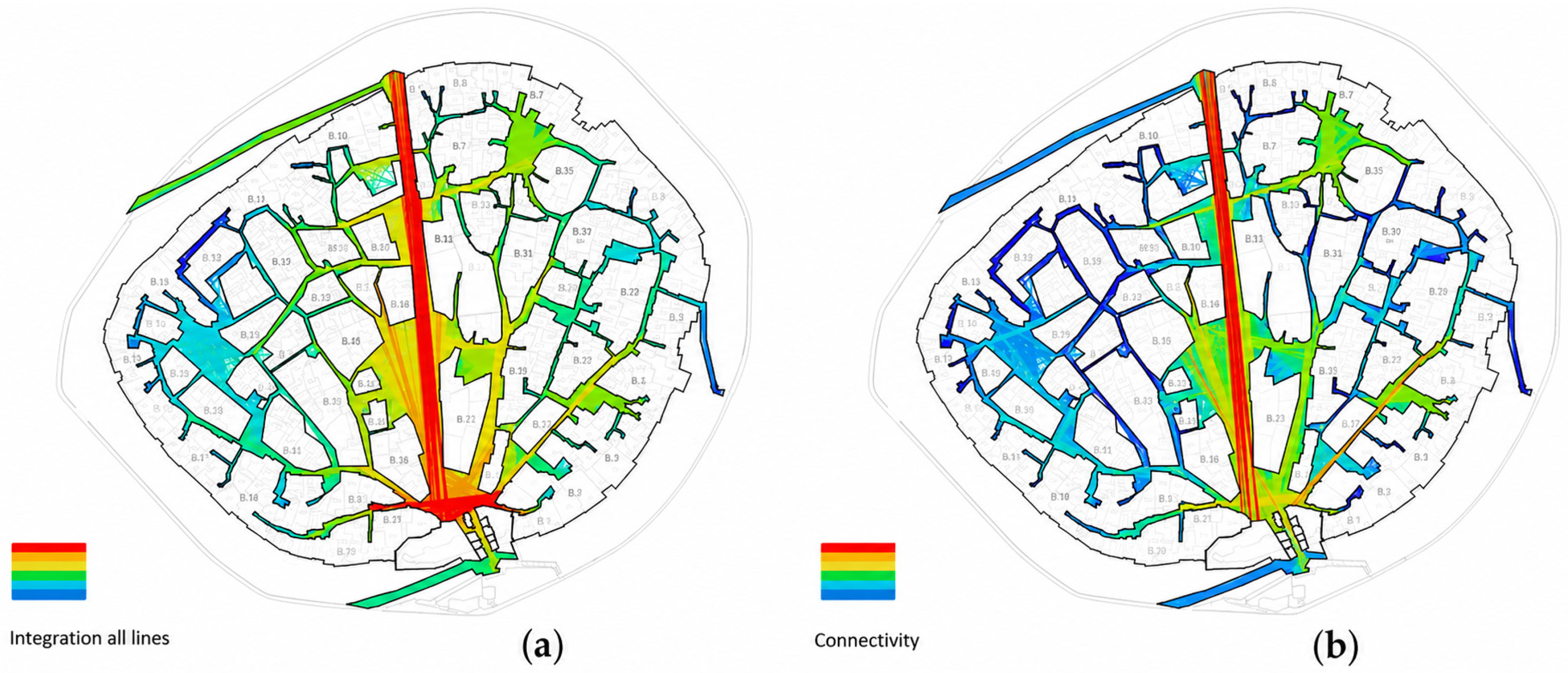
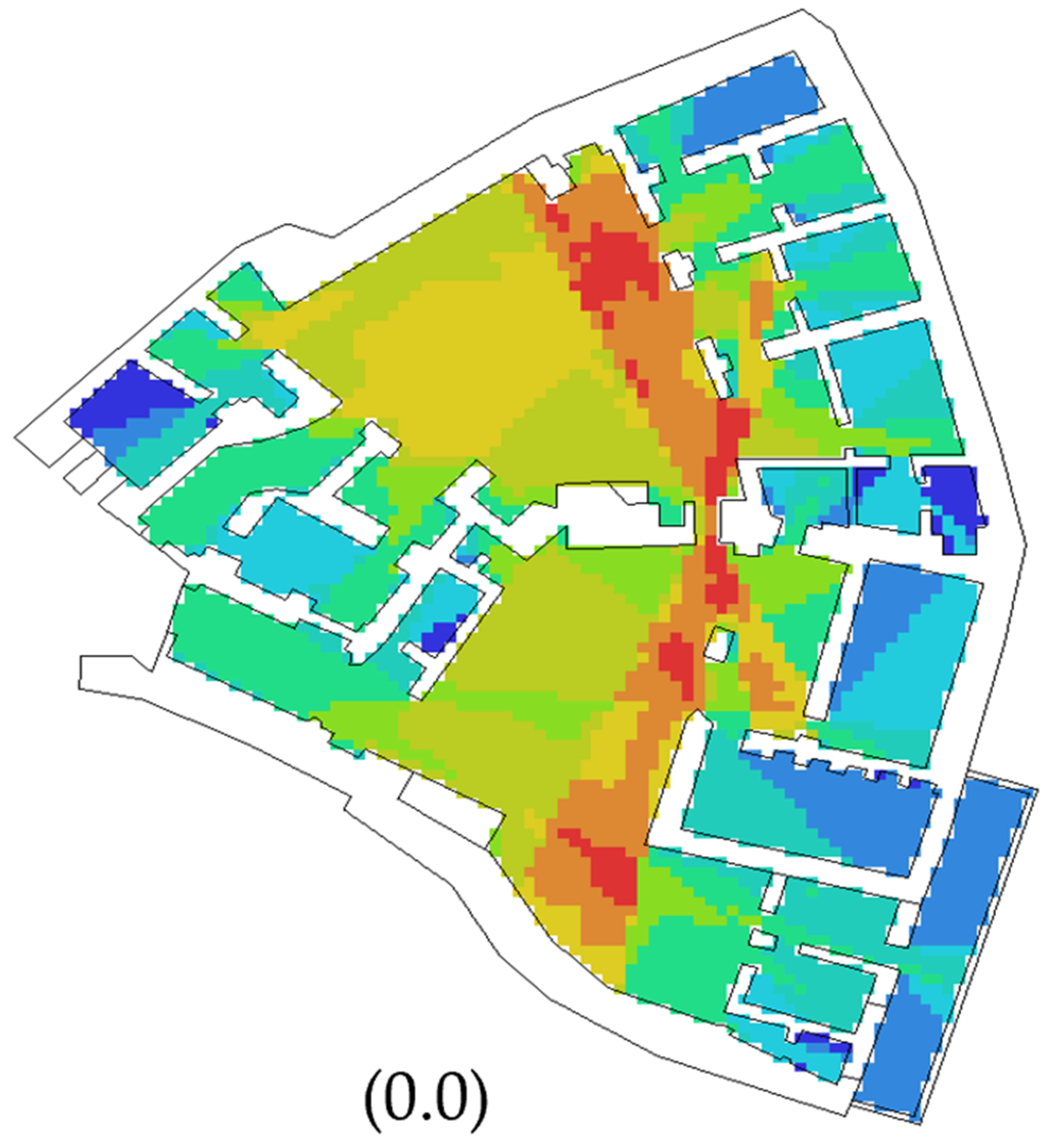
Erbil Citadel features an integrated core comprising 10% of the highest-integration axial lines. This core is identified as a dominant, fully connected linear hub that begins at the southern principal gate and extends to the northern gate, passing through the Citadel’s center. The integration core is aligned along the diameter of the Citadel, without clear indications of the spokes and rim sections typically associated with a deformed wheel. Low-integration axial lines are distributed on both sides of the integration core.
The core consists of a series of axial lines, with the longest line being the most integrated. This primary line intersects a group of secondary axial lines that penetrate the spatial system only slightly. These secondary lines are the bridge between the core of integration and more peripheral areas of lower integration, culminating in the most isolated axial lines observed within dead-end alleyways along the Citadel’s boundary. Furthermore, the linear core comprises three regions with high-integration intersections: one above the southern main gate, another at the Citadel’s center, and one at an intermediate point between the Citadel’s center and the northern gate [
30]. See (
Figure 6).
7.1. Visual Graph Analysis (VGA) for Each House
To analyze the spatial layout, we applied VGA to the house. The DepthmapX 0.8 software generates a graph showing metrics across different spaces, enabling overlays and a clearer understanding of their relationships.
- -
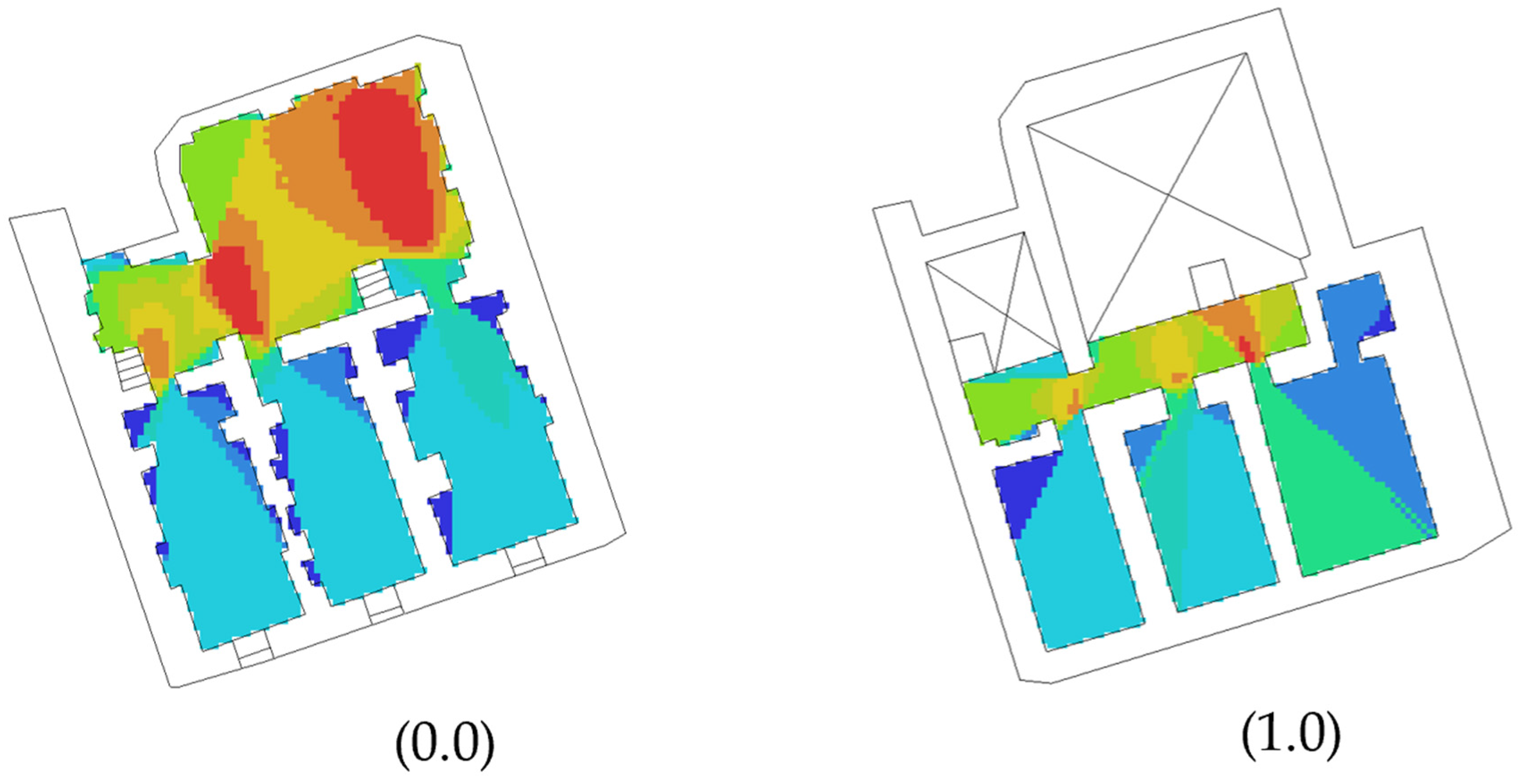
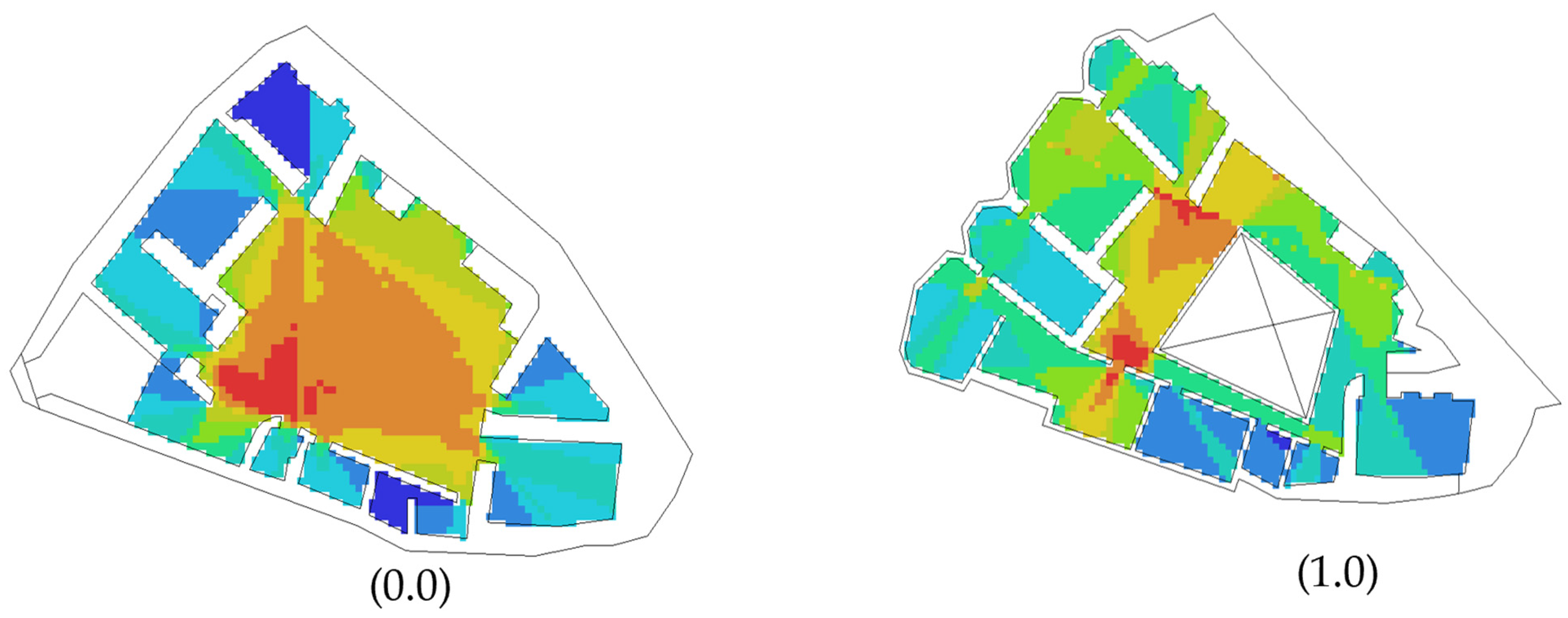
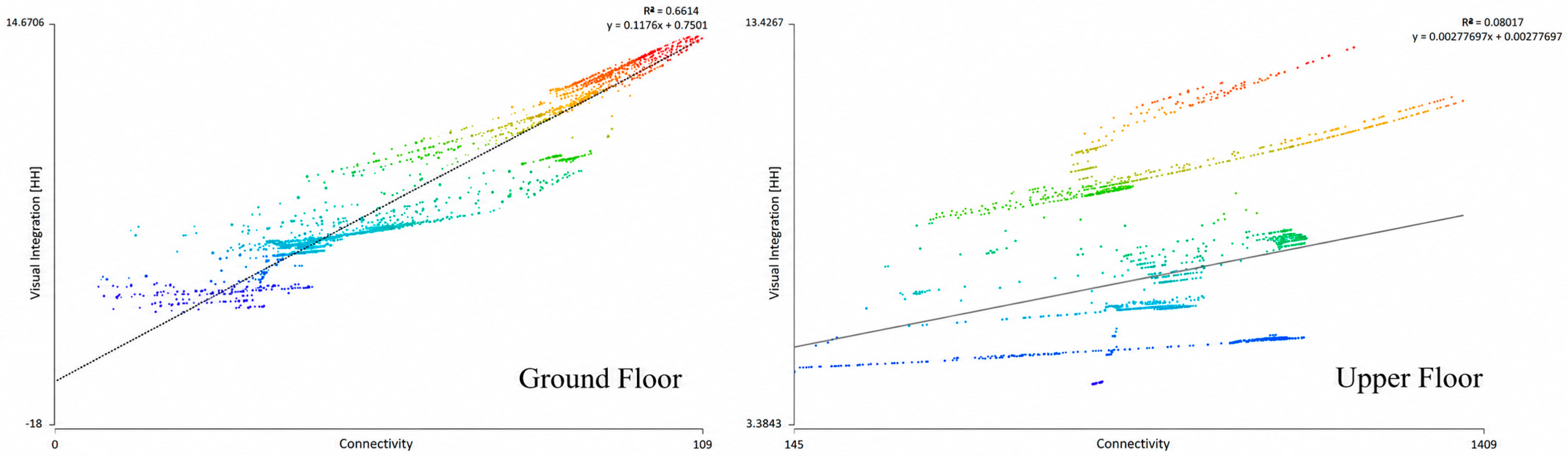
House A: The analysis showed that the integration [HH] for the ground floor had a minimum value of 4.42273, an average of 8335, and a maximum integrated space value of 18.1325. It indicates that the central court is well placed, easily accessible, and highly visible. For the upper floor, the highest visual HH is 13.05, with an average of 7.67 and a minimum of 3.13. Regarding connectivity, the attribute summary showed a range of 104 to 1976 for the ground floor, with an average of 1040.62, reflecting the space’s visibility. For the upper floor, connectivity ranges from 145 to 1409, with an average of 875.10, showing a combination of visibility and movement zones suitable for both socializing and private areas (
Table 5) (
Figure 7).
- -
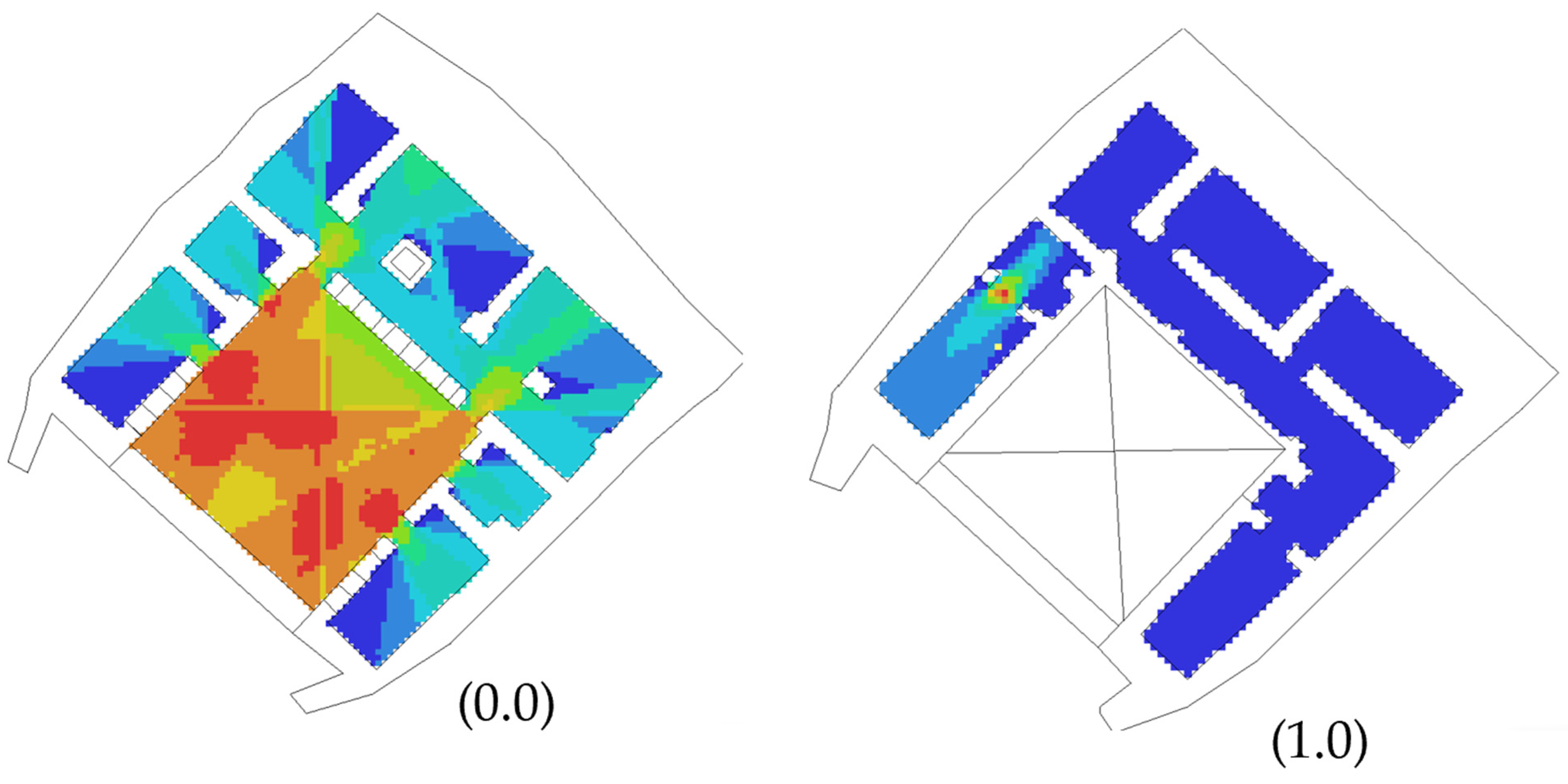
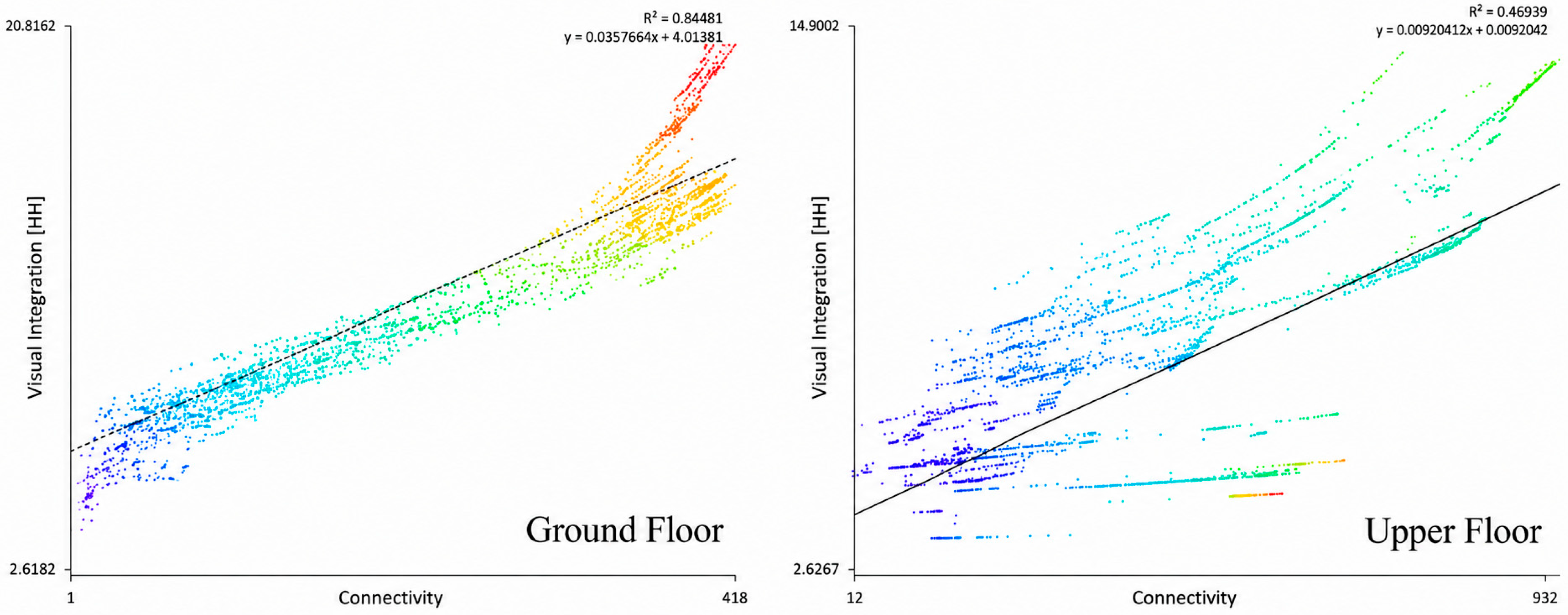
House B: The regions highlighted in blue are white areas within that are separated, exhibiting low visual integration (mean = 2.5; average = 12; max = 22.0). Meanwhile, connectivity values range from 3 to 908, with colors indicating high-value areas (yellow to red) and low-value areas (blue and isolated spots). On the ground floor, the mean integration is 6.96, with a range of 2.62 to 14.9. The most connected spaces have an average of approximately 427 connections, ranging from 12 to 932, demonstrating significant variability in both local visibility and global integration (
Table 6) (
Figure 8).
- -
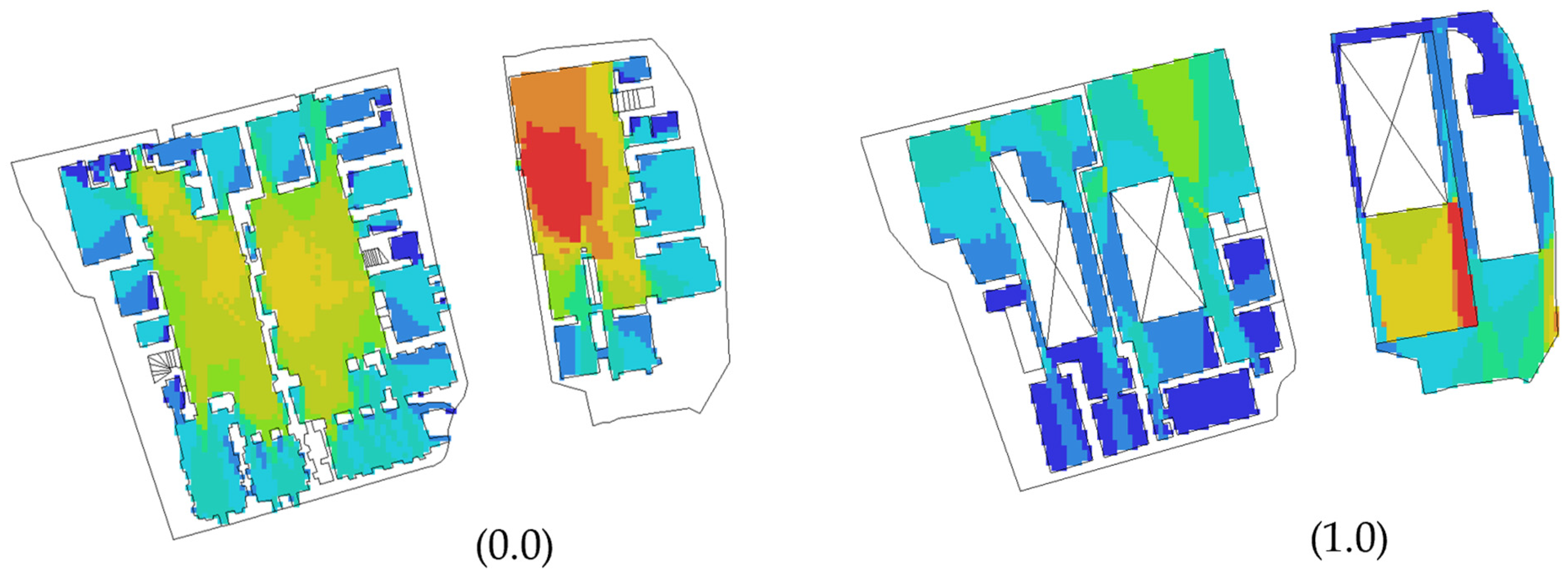
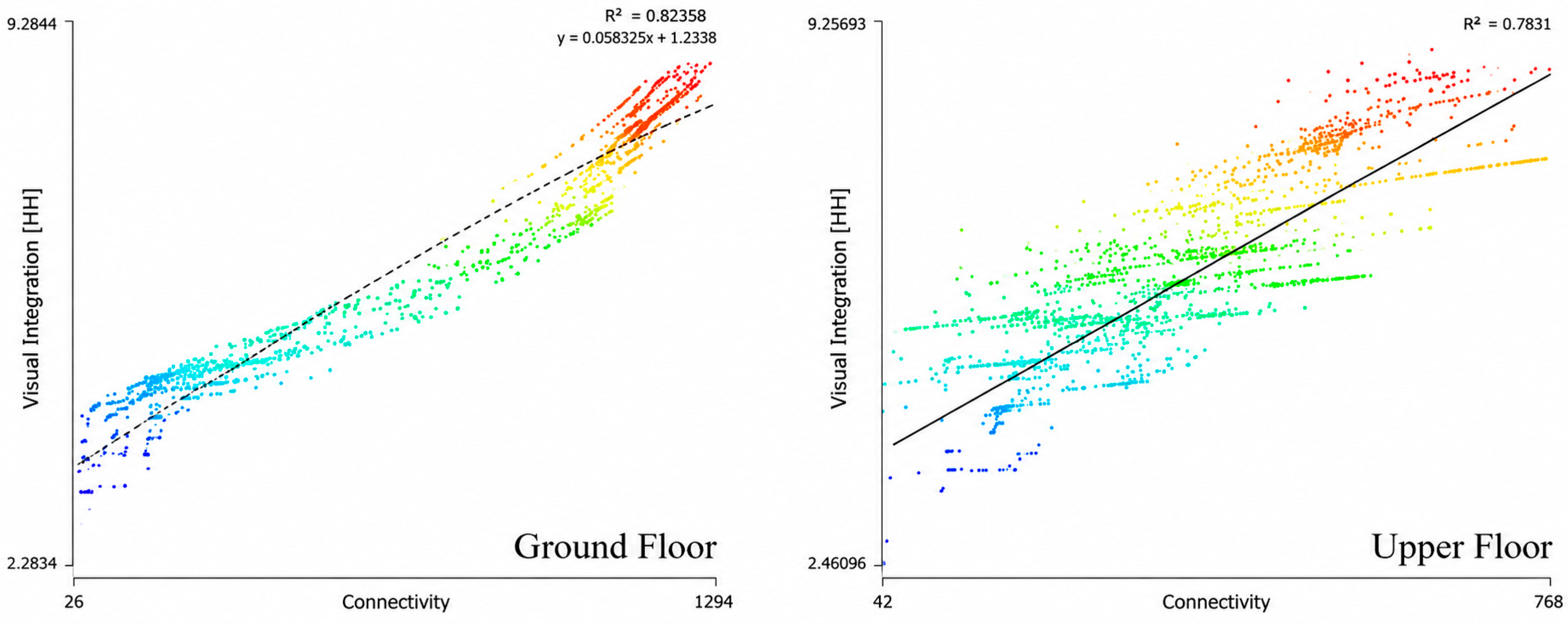
House C: The DepthmapX reveals a sharp triangular pattern that may resemble the floor plan. The visual integration HH had a mean of 12.98 and a min/max of 2.92/21.80, respectively. Connectivity values range from 36 to 1724, with an average of 979.3, representing directly visible points. The values vary from 2.46 to about 5.6, with a maximum of 9.25, indicating a high-visibility focal point. The attribute summary table shows connectivity values from 42 to 768, with a mean of 366.6, indicating a broad range of local visibility (
Table 7) (
Figure 9).
- -
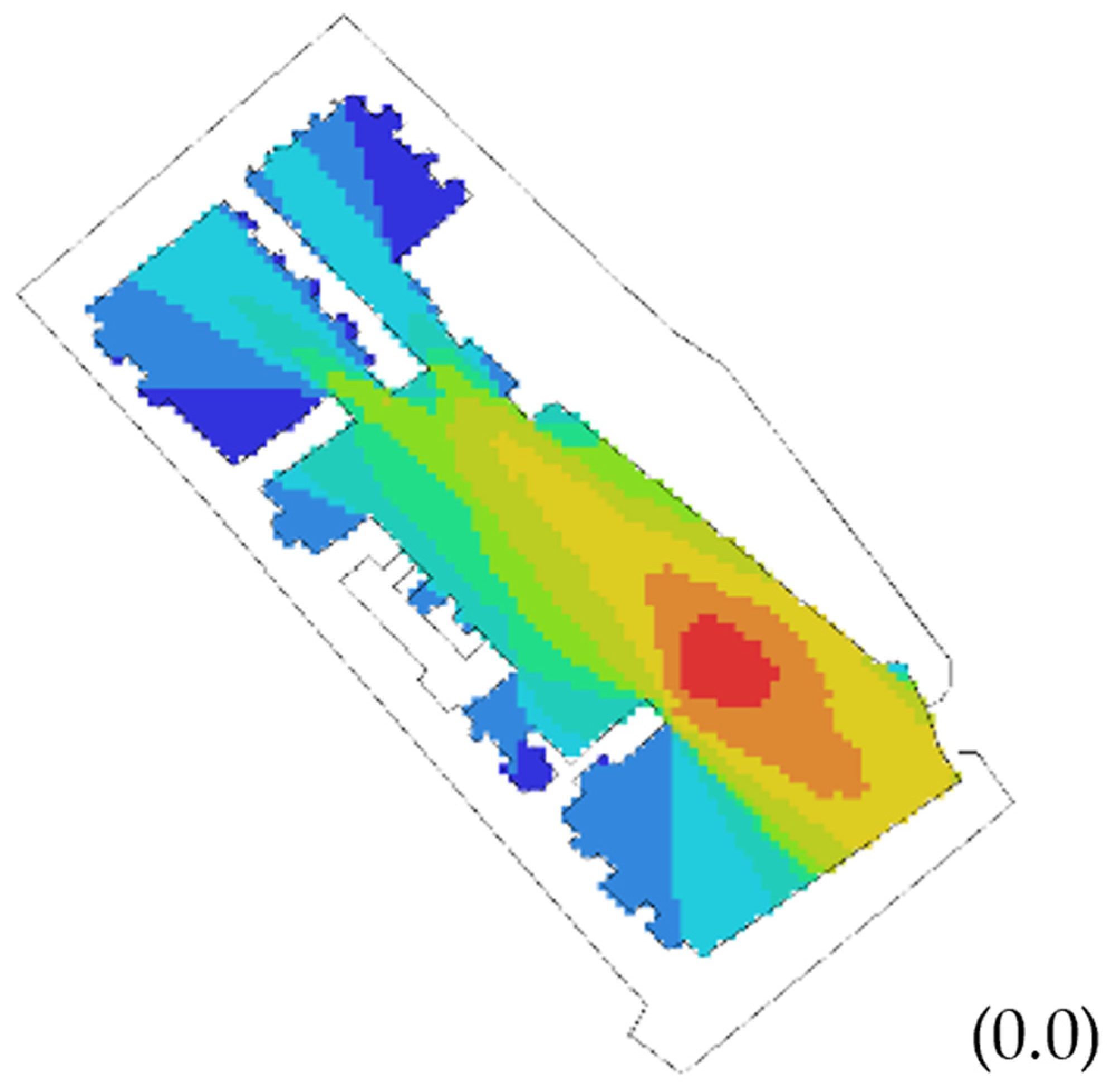
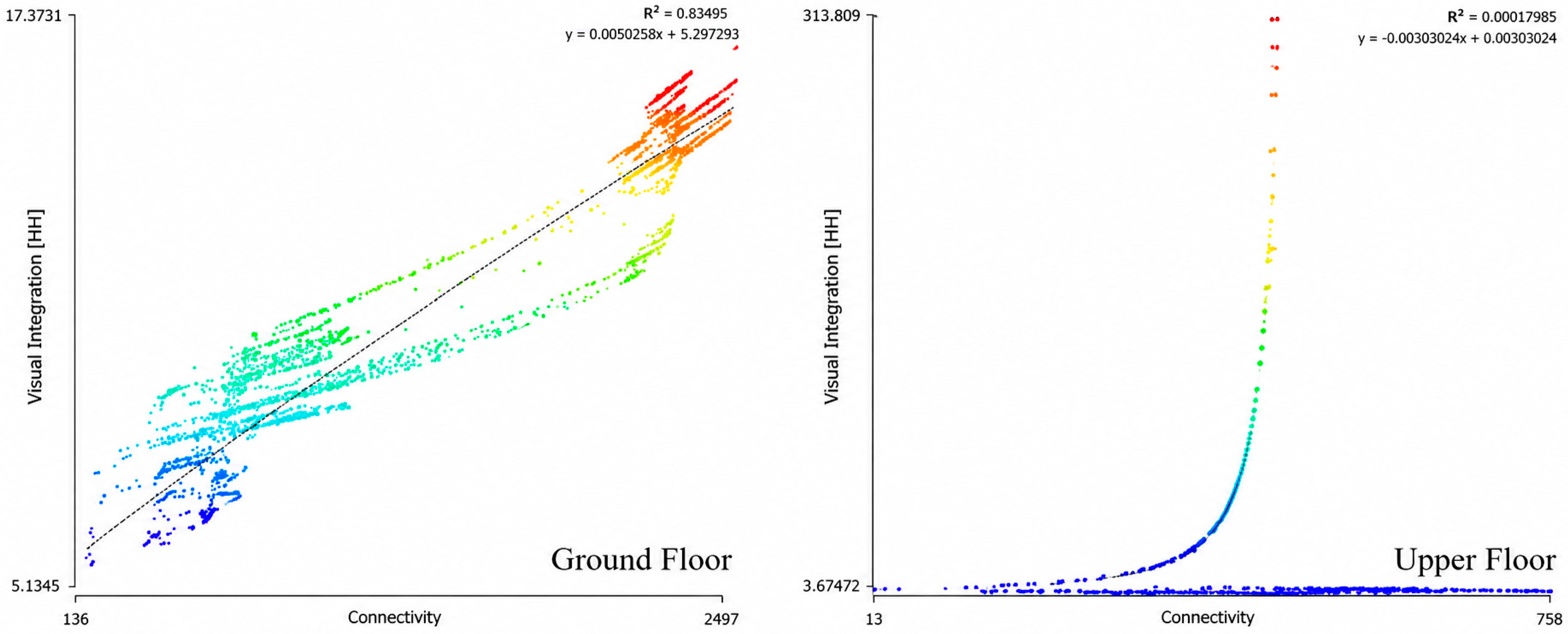
House D: The illustration shows a visibility graph analysis for this house. Ground floor values above 5 and below 17 are highlighted in yellow and red, indicating a central hub with the highest visual integration [HH] of 5.15, an average of 11, and a max of 17.57, indicating strong visibility and accessibility. Other spaces are less integrated and seem isolated. Connectivity ranges from 136 to 2497, averaging 1346.69, representing directly visible points, depicted from blue to red, with a high visual integration [HH] of 3.67 (min), 16 (average), and 313.8 (max). The “Attribute Summary” shows a connectivity from 13 to 357, with a mean of 359.7, indicating local visibility with accessible connection centers (
Table 8) (
Figure 10).
- -
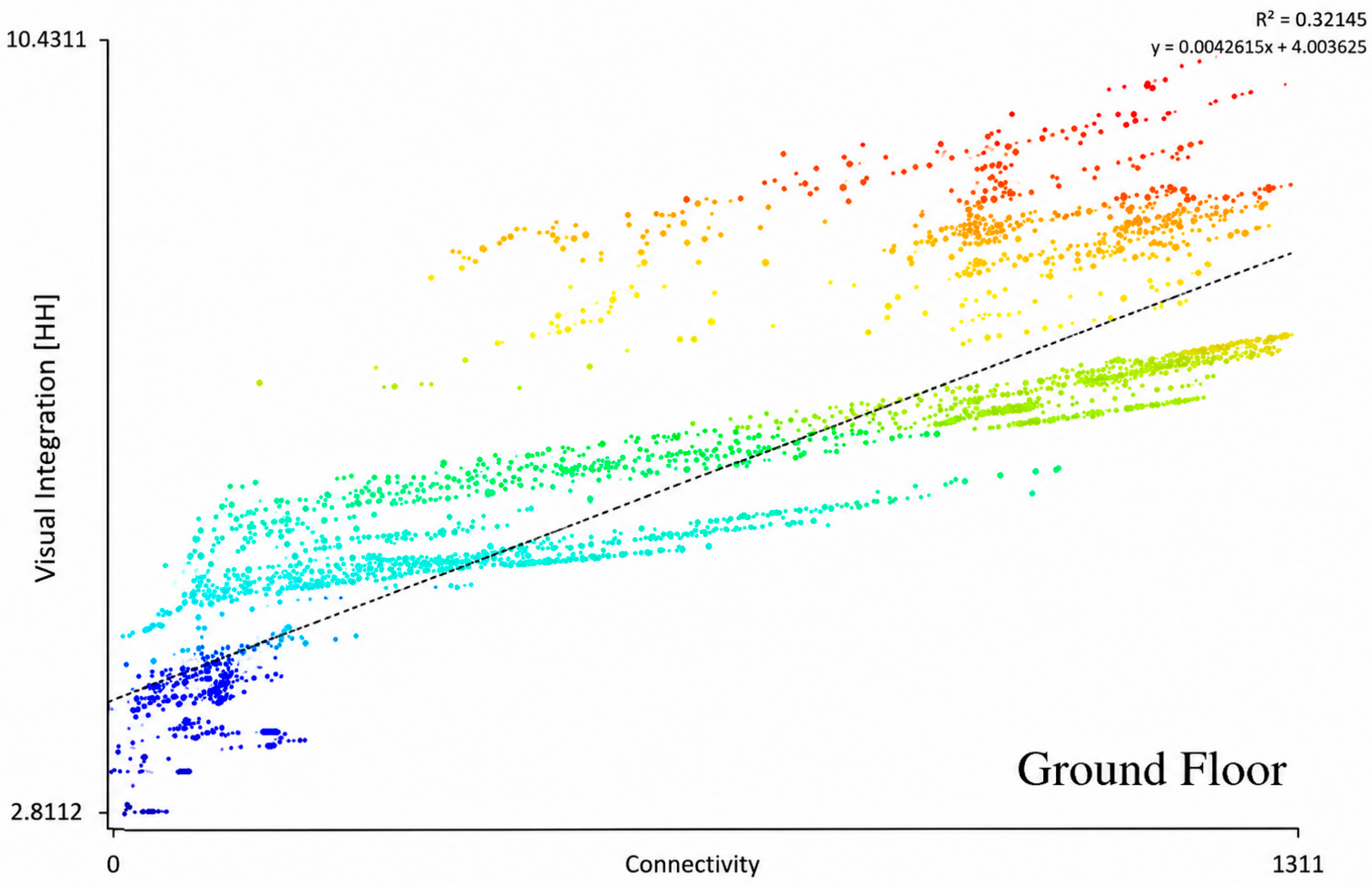
House E: This house has been analyzed using a visibility graph analysis (VGA). It displays a quite irregular, fan-shaped layout that represents the building’s ground floor plan, ranging from low (blue) at 2.8 to high (red) at 10.4 for visual integration [HH]. Yellow indicates the average = 6.08, with a central area that is highly visible and accessible, surrounded by transition areas at the outer edges, mostly blue, indicating lower integration. The attribute table shows connectivity values ranging from 9 to 1313, with an average of 643.93, representing the number of spaces directly visible from each point in the house layout (
Table 9) (
Figure 11).
- -
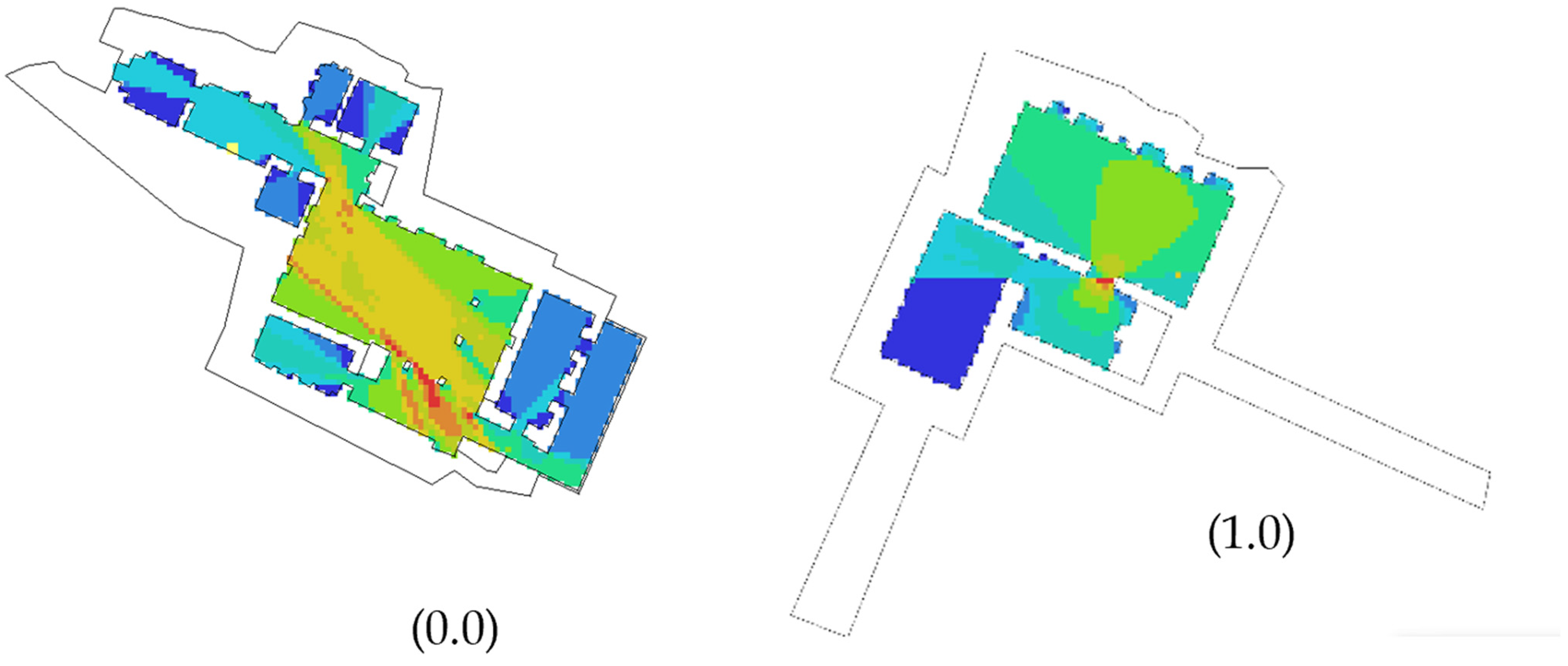
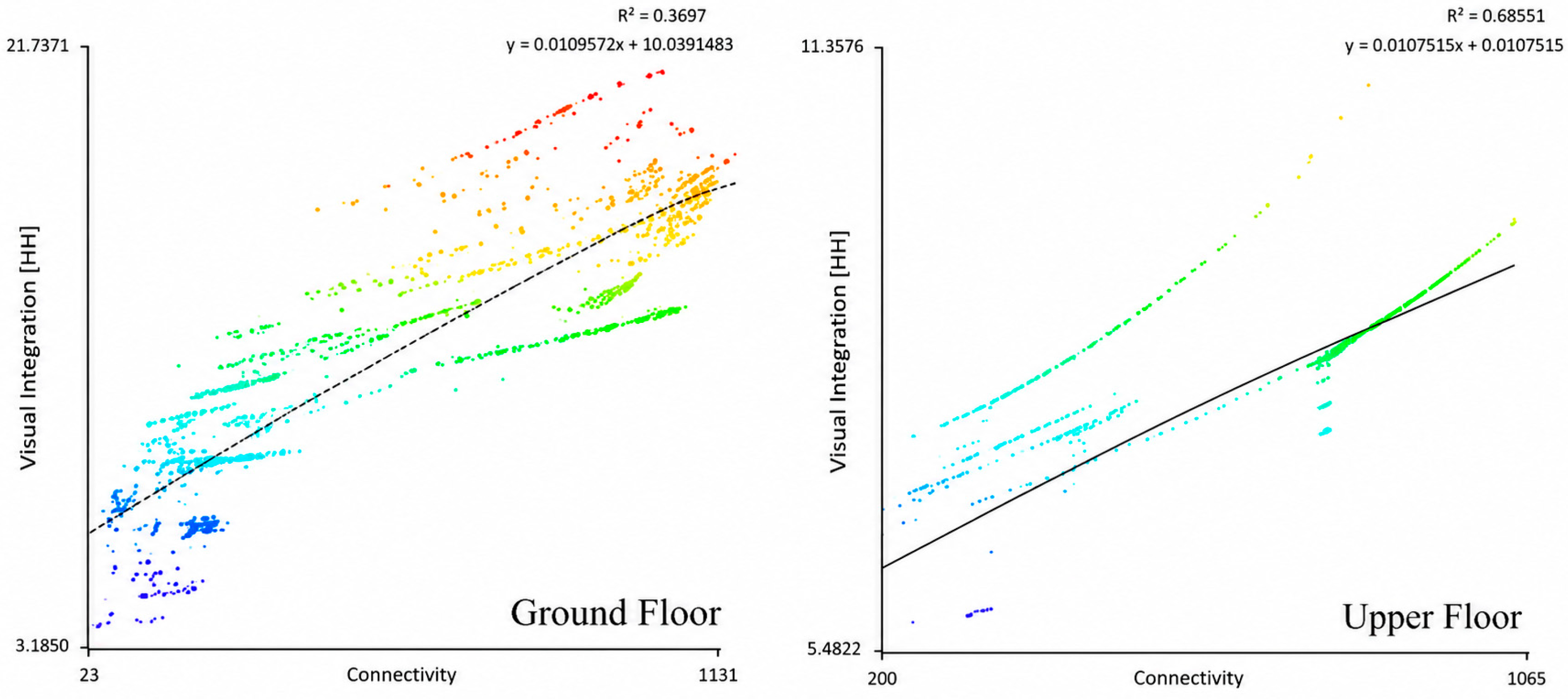
House F: The visibility graph analysis shows an irregular, elongated ground floor plan of a segregated area with blue spaces with a visual integration value equal to 3.18 (blue) to 13.35 (red), with a central yellow-to-green area with an average of 7.6, which suggests a highly visible, accessible potential hub. The transition lists connectivity from 22 to 1120 (average: 590.864), indicating the number of visible points; larger values in the center suggest wider local viewsheds. The VGA for the upper floor ranged from 5.48 to 21.73, indicating a high-visibility, accessible area. Additionally, the connectivity, measured by the number of directly visible points, is roughly proportional to the central area, ranging from 200 to 1065, with an average of 710.5 (
Table 10) (
Figure 12).
- -
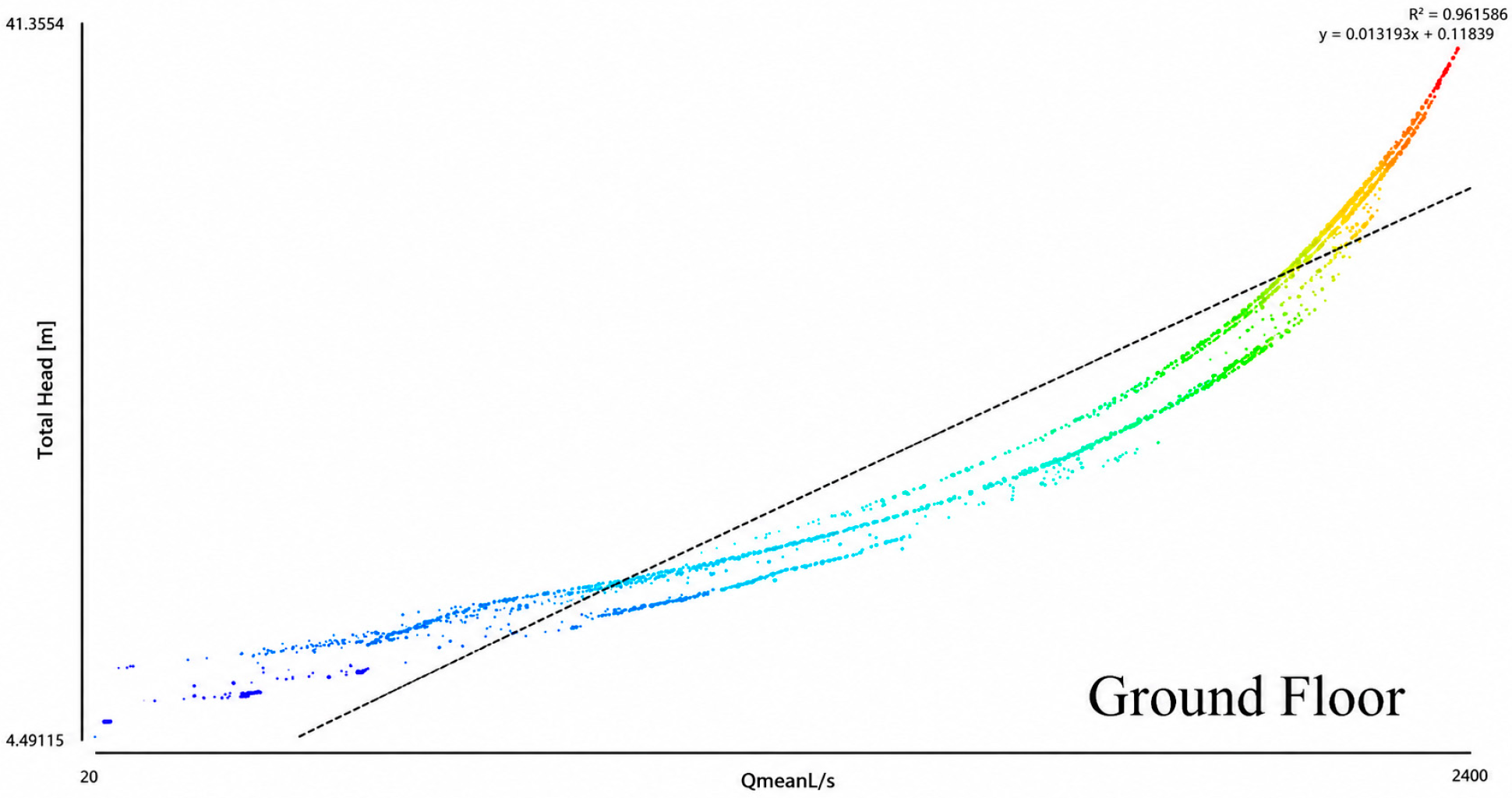
House G: The visual graph analysis (VGA) generated by Depthmap X 0.8shows an irregular, elongated spatial layout that could represent a ground floor plan. The heatmap uses a scale from low to high values, with high visual integration [HH] scores reaching 4.49, a maximum of 41.38, and an average of 21. It also reveals the highest values spreading outward from the center, indicating a hub in the most visible area and lower, more isolated areas in the other rooms along the edge of the floor plan. At the same time, the attribute summary indicates that connectivity on the same floor ranges from 20 to 2586, with an average of 1680. Higher connectivity values in the central area reflect broader local visibility (
Table 11) (
Figure 13).
7.2. Intelligibility in Space Syntax
Hillier observes that “
the property of ‘intelligibility’ in a deformed grid means the degree to which what we can see from the spaces that make up the system—that is, how many other spaces they are connected to -A system is intelligible if well-connected spaces are poorly integrated, so that what we can see of their connections misleads us about the status of those spaces in the system”. Hillier (1996) [
31]. Therefore, intelligibility is an important metric in space syntax theory; it must be examined for all the houses from A to G to assess their permeability performance, as shown in
Appendix A (
Figure A1,
Figure A2,
Figure A3,
Figure A4,
Figure A5,
Figure A6 and
Figure A7).
The intelligibility metric has been measured for each house from A to G.
- -
House A: The ground level of house A has excellent permeability and a hierarchical visual relationship to the central space, indicating a clear layout typical of an introverted courtyard, with R2 = 0.936476. The upper floor of house A is spatially and visually separated from the outdoors; the visual separation is such that each space is distinct, with minimal crossover between zones. This would be expected for a “private” floor (probably bedrooms or family areas), which, in turn, can access only limited landings via stairs, enclosed by walls and a roof. R2 = 0.080177 shows an extremely weak correlation.
- -
House B: House B shows clear spatial separation between floors, with a strong correlation downstairs (R2 = 0.9146) and weaker correlation upstairs (R2 = 0.4694), indicating contrasting visual integration. For the upper floor, a regression line is indicated (R2 = 0.4694), suggesting a moderate-to-weak relationship between connectivity and integration. The greater scatter and lower slope foreshadow a more divided visual structure on the upper than on the ground floor. This is a kind of private internal space in which individual rooms or defined areas are not visible from one another and have only small, local connections.
- -
House C: The scatter plots reveal distinct ground and upper floors, showing how accessibility influences perception. The basement has a very strong correlation (R2 = 0.9638). Conversely, on the upper floor, there is also a strong connection between connectivity and integration, as indicated by the regression equation (R2 = 0.7832). Although the correlation remains primarily one to one, the plotted points are more widely dispersed and less closely clustered, indicating greater spatial separation and a loss of visual cohesion. The many small clusters, rather than a single consistent gradient, suggest a direct visual connection only locally, as observed in more private or closed spaces.
- -
House D: The plots indicate divergence between floors. The ground floor shows a strong correlation (R2 = 0.9349), whereas the upper floor’s correlation is weak; the regression line is straightforward, with minimal correlation (R2 = 0.00018), indicating little linear relationship between connectivity and integration. The plot shows a clear vertical spread, with a few highly integrated nodes suddenly increasing in size, while most other nodes remain sparse at the lower end. This suggests a fragmented, compartmentalized visual layout where connections between most rooms are absent, and each room seems isolated by closed doors, small openings, or limited sightlines.
- -
House E: The scatter plot shows a moderate relationship (R2 = 0.7524) between connectivity and visual integration, suggesting a less tight link than in open houses, with a readable core but less at edges.
- -
House F: The plots reveal separation between floors. The ground level shows a high correlation (R2 = 0.8671), where the upper floor shows a moderate correlation (R2 = 0.6855). Although the connectivity–integration relationship remains positive, the wider distribution of dots suggests lower overall legibility. Although some zones may have circulation or spaces visually connected to other rooms to preserve visual consistency, others are isolated and unrelated.
- -
House G: The scatter plot shows a strong correlation (R
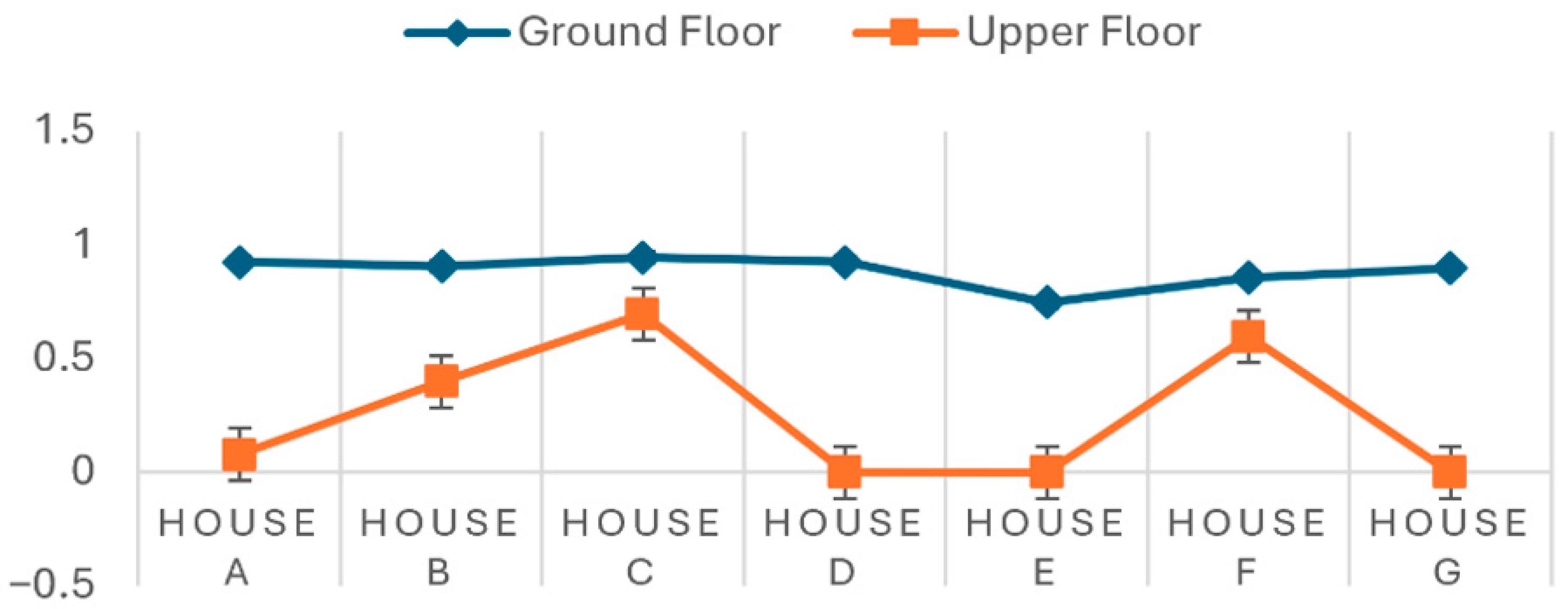
2 = 0.9016), indicating proportional increases in visual integration with connectivity. The plot is slightly non-linear, suggesting a nuanced relationship. Overall, the houses demonstrate consistent spatial intelligibility. Ground floors show a strong negative association between connectivity and visual integration (R
2 = 0.75–0.96), whereas upper floors show weaker links. See (
Figure 14) (
Table 12).
8. The Proposed Use
Functional analysis was conducted by examining the suggested function for each case and house. The mathematical analysis assigns a unique P option (P1–P10) to each house, labeled A–G, based on the percentages of public, private, and circulation areas. The idea is to find the best match for each house using Euclidean distance, ensuring each house receives a distinct P option while minimizing the total distance. See (
Table 13). The study indicates that the new spatial and functional design might complement the old structure.
The analysis assigns a unique P option (P1 to P10) to each of the seven houses, labeled A through G, based on their proportions of public, private, and circulation spaces. To accurately match each house with the closest one and ensure all have distinct P options, the total of all distances is calculated. Initially, the focus is on houses, starting with the basic spatial embodiment. Beyond human needs, modern society has transformed these spaces into a complex interaction of various influences, from the most contrasting requirements to individual quality standards [
32,
33].
We establish these new purposes (such as museums, offices, or restaurants) to assess standard dimensions, individual space requirements, ceiling heights, and room relationships. We ensure that space utilization and circulation patterns are efficient, are easy to understand, are aligned with the intended use, and help reduce crowding. Refer to
Appendix B (
Figure A8,
Figure A9,
Figure A10,
Figure A11,
Figure A12,
Figure A13,
Figure A14,
Figure A15,
Figure A16 and
Figure A17) and (
Table 14).
Based on the functional analysis and the zoning categories of public, private, and circulation, the distribution percentages for each suggested use are shown in (
Table 15).
9. Statistical Measurements
9.1. Euclidean Distance
Euclidean distance is commonly used to measure the distance between pairs of physical objects and is crucial in a wide range of applications, from engineering and physics to modern machine learning. Its classic use is to measure the distance between two interacting objects. In this context, Euclidean distance is applied to n-dimensional space, where the distance between two points equals the square root of the sum of the squared differences across all dimensions. When used in a k-dimensional coordinate system, a point is represented as a vector (x_1, x_2, …, x_n). The Euclidean distance between point P_1 and point P_2 is described as follows [
34]:
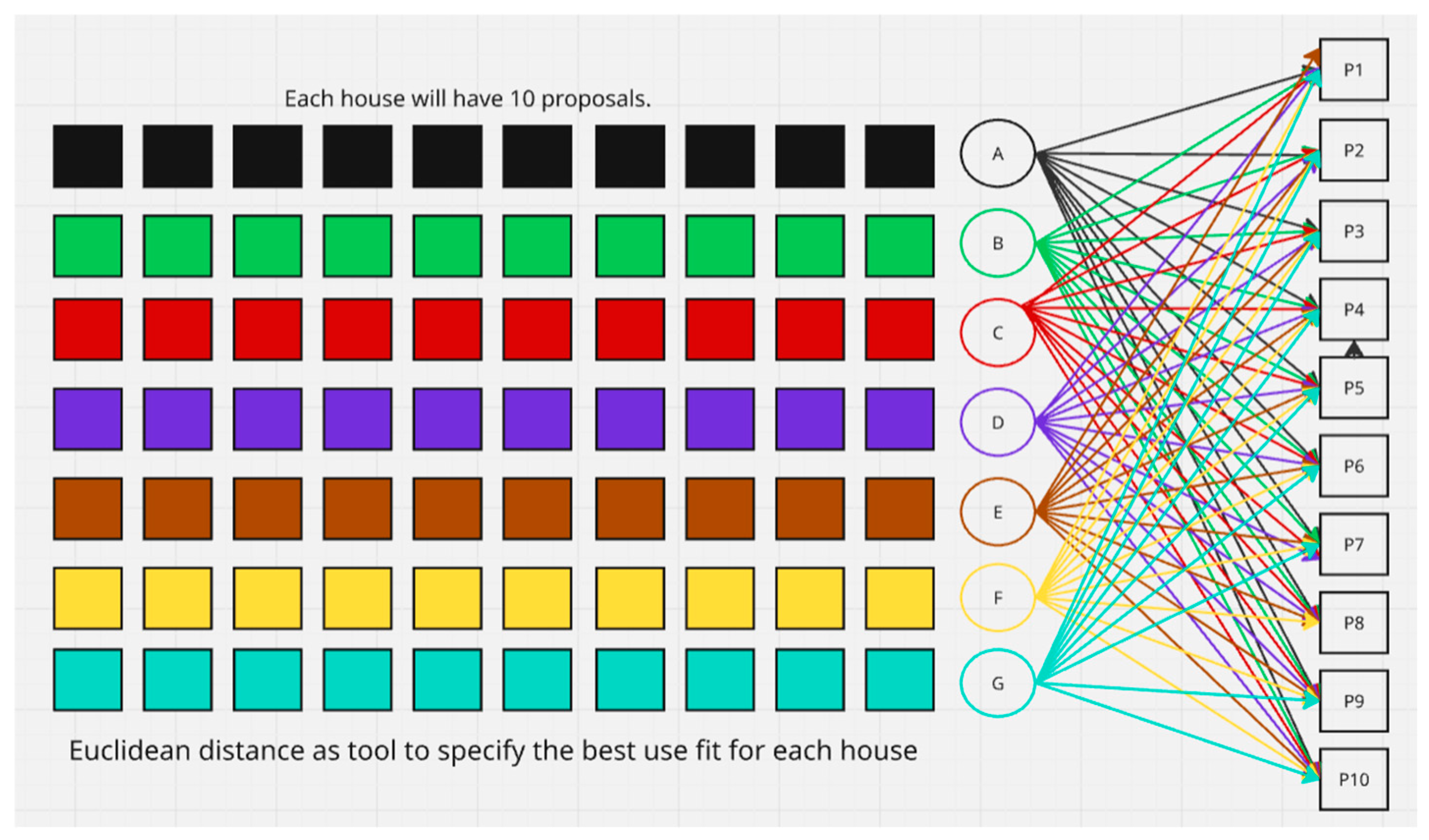
The mathematical analysis assigns a unique P option (P1-P10) to each of the ten houses, labeled A–G, based on their public, private, and circulation area percentages.
The goal is to find the best match for each house using Euclidean distance, ensuring each house receives a distinct P option, and minimizing the total distance, as shown in (
Figure 15).
To ensure methodological consistency, the raw area values of public, private, and circulation spaces in each house were converted into percentages of the total analyzed house area. This normalization step was necessary because the proposed reuse profiles were defined in proportional terms rather than absolute floor areas. After normalization, each house was represented as a percentage-based spatial vector and compared with the corresponding proposed use vectors using Euclidean distance. In this way, the analysis measured similarity in internal spatial composition rather than differences in overall building size, allowing the functional matching process to reflect proportional compatibility more accurately.
This normalization was necessary to make the house data directly comparable with the proposed functional profiles, which were already defined as proportional distributions. Euclidean distance was subsequently computed between these percentage-based vectors to assess how closely each house’s existing spatial configuration matched the requirements of each proposed reuse scenario. As a result, the distance values represent proportional spatial compatibility rather than differences in absolute size.
To make the houses directly comparable with the percentage-based proposed use profiles, the raw public, private, and circulation areas were normalized as percentages of each house’s total analyzed area. Thus, for house A, 102.45, 124.68, and 44.05 (total 271.18) became 37.77%, 45.95%, and 16.24%; for house B, 298.05, 332.72, and 102.50 (total 733.27) became 40.66%, 45.39%, and 13.98%; for house C, 128.95, 165.42, and 48.81 (total 343.18) became 37.54%, 48.17%, and 14.22%; for house D, 119.74, 157.22, and 47.85 (total 324.81) became 36.86%, 48.40%, and 14.73%; for house E, 112.26, 224.52, and 112.26 (total 449.04) became 25.00%, 50.00%, and 25.00%; for house F, 97.37, 125.20, and 55.64 (total 278.21) became 35.03%, 45.05%, and 20.02%; and, for house G, 82.48, 49.49, and 32.99 (total 164.97) became 50.00%, 30.00%, and 20.00%. These normalized values were then used as the basis for the Euclidean distance calculation.
The normalized percentages were calculated by dividing each spatial category (public, private, and circulation) by the total analyzed area of the corresponding house and multiplying by 100. These percentage values were used in the Euclidean distance analysis to enable direct comparison with the percentage-based proposed use profiles. See (
Table 16) and (
Table 17).
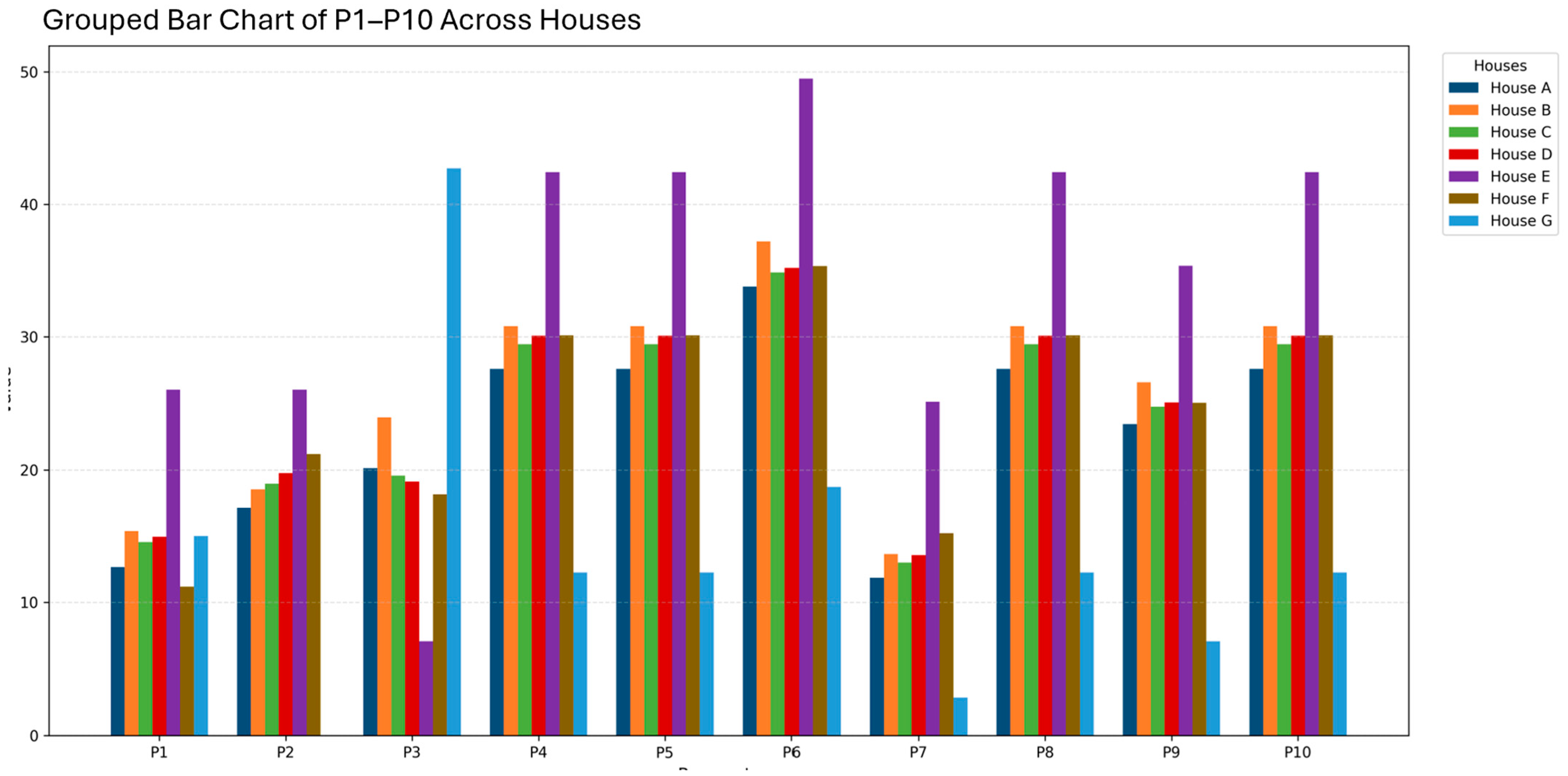
The Euclidean distance results were recalculated using percentage-based distributions of public, private, and circulation spaces for both the existing houses and the proposed reuse profiles to ensure a like-for-like comparison. This revision resolves the earlier inconsistency between absolute house areas and percentage-based program targets, thereby producing a more methodologically valid measure of functional compatibility. The revised results show clearer, more interpretable matching patterns: houses A, B, C, and D align most closely with P7; house E aligns with P3; house F aligns with P1; and house G aligns with P2. The latter produces a distance of 0.00, indicating an exact proportional match. Importantly, the recalculated values no longer privilege or penalize houses merely because of their overall size; instead, they reflect the degree to which their internal spatial composition corresponds to the target functional structure. In this sense, the Euclidean distance analysis should be understood as a measure of proportional spatial compatibility rather than absolute magnitude, making it more appropriate for evaluating the potential for adaptive reuse in terms of the balance among public, private, and circulation domains.
Overall, P1, P3, and P7 emerge as the most spatially efficient and suitable options for adaptive reuse, guiding future qualitative decisions. The following is the best option for each house, according to the Euclidean distance results. The absolute areas of public, private, and circulation spaces in each case study house were standardized as percentages of the total house area. See (
Table 18 and
Table 19) and (
Figure 16).
9.2. Pearson Correlation
The traditional computational correlation coefficient procedure was developed by Bravais in 1846 and partly explained by Pearson in 1896. This method can capture the relationship between two items. However, the direction or sign of the value is determined only as far as the data points on columns are concerned [
35]. The population correlation coefficient usually is
Represented with the Greek letter rho (P), its sample estimator goes from plus one to minus one (r = ±1) [
35].
It ranges from
r = +1r = +1r = +1: perfect positive correlation;
r = 0r = 0r = 0: no correlation;
r = −1r = −1r = −1: perfect negative correlation.
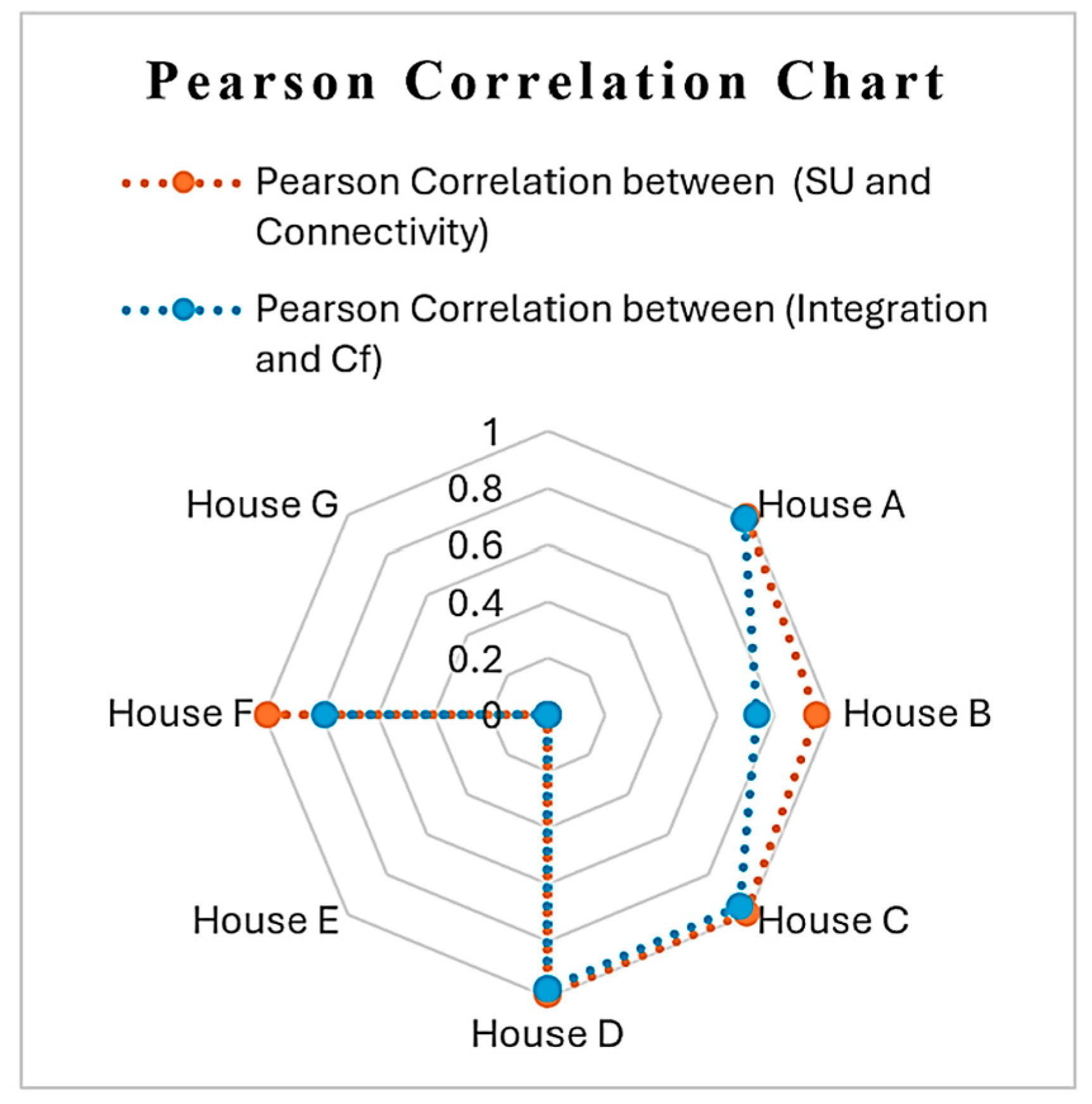
Pearson correlation coefficients can be either linear or non-linear. This study specifically aims to examine the Pearson correlation coefficient in correlation analysis, the connectivity as a space syntax metric, the “SU” for space utilization and visual integration, and the circulation factor “CF” of each house [
35].
Each house is compared and inspected for “mutations” in its spatial distribution, resulting from contemporary adaptive reuse needs that have deviated from the original architectural logic. In this work, spatial mutations were measured by examining statistical dependencies among relevant syntactic and functional performance variables. Connectivity was correlated with SU, and visual integration was correlated with CF using Pearson’s correlation analysis (
Table 20).
A positive association between connectivity and SU indicates that spaces with higher local permeability are better articulated. At the same time, the relationship between visual integration and CF reflects how global visibility structures circulation flow. Taken together, these correlations pinpoint areas where spatial configurations remain consistent with adaptive reuse functions and where more substantial interventions (such as rearranging or modifying connections) may be required to improve functional performance; see (
Table 21 and
Table 22) and (
Figure 17).
10. Results and Discussion
The Euclidean distance results offer a relative measure of how well each proposed reuse profile matches the normalized spatial structure of each house. In this analysis, the minimum distance for each case indicates the most suitable proposed function on a proportional basis. Houses A, B, C, and D were nearest P7, which was closely linked to house F in house P1, while house E was best correlated with the house near P3. House G was most aligned with P2. The perfect match between house G and P2 is perhaps most remarkable because it seems to indicate an alignment between the compositional proportions of available space.
Overall, the Euclidean distance results provide a more defensible basis for functional matching because they compare houses and proposed functions on the same proportional scale. This is important in the context of adaptive reuse, where compatibility depends less on total size alone than on how spatial domains are internally distributed. By recalculating distance values based on percentage-based public, private, and circulation structures, the analysis avoids bias toward larger houses and instead highlights cases whose configurational composition most closely aligns with the target reuse profile.
On the other hand, a moderate correlation between the space utilization index and connectivity was observed on both floors: r = 0.45 for the ground floor and r = 0.38 on the first floor. Therefore, the house’s spatial layout aligns with its overall functional performance. However, the correlation on the ground floor was slightly stronger, indicating that more cohesive spaces, such as the entrance and courtyard, perform better in terms of utilization. As a result, these spaces are better suited for reuse projects focused on public engagement. For such projects, additional openings or innovative circulation patterns could enhance the correlation and overall efficiency.
A similar pattern is seen in the relationship between the circulation efficiency ratio and visual integration. A moderate positive correlation (r = 0.50 for the ground floor and r ≈ 0.45 for the first floor) suggests that greater accessible visibility across the plan is associated with improved circulation efficiency. Architecturally, circulation and visually integrated spaces align where the primary corridors are clearly visible. The ground floor’s opening and courtyard support the stronger correlations observed there and function as social hubs, whereas the upper floor shows slightly weaker correlations, implying greater exploration. The ground floor circulation network shows moderate efficiency and visual coherence, with a coefficient of 0.52.
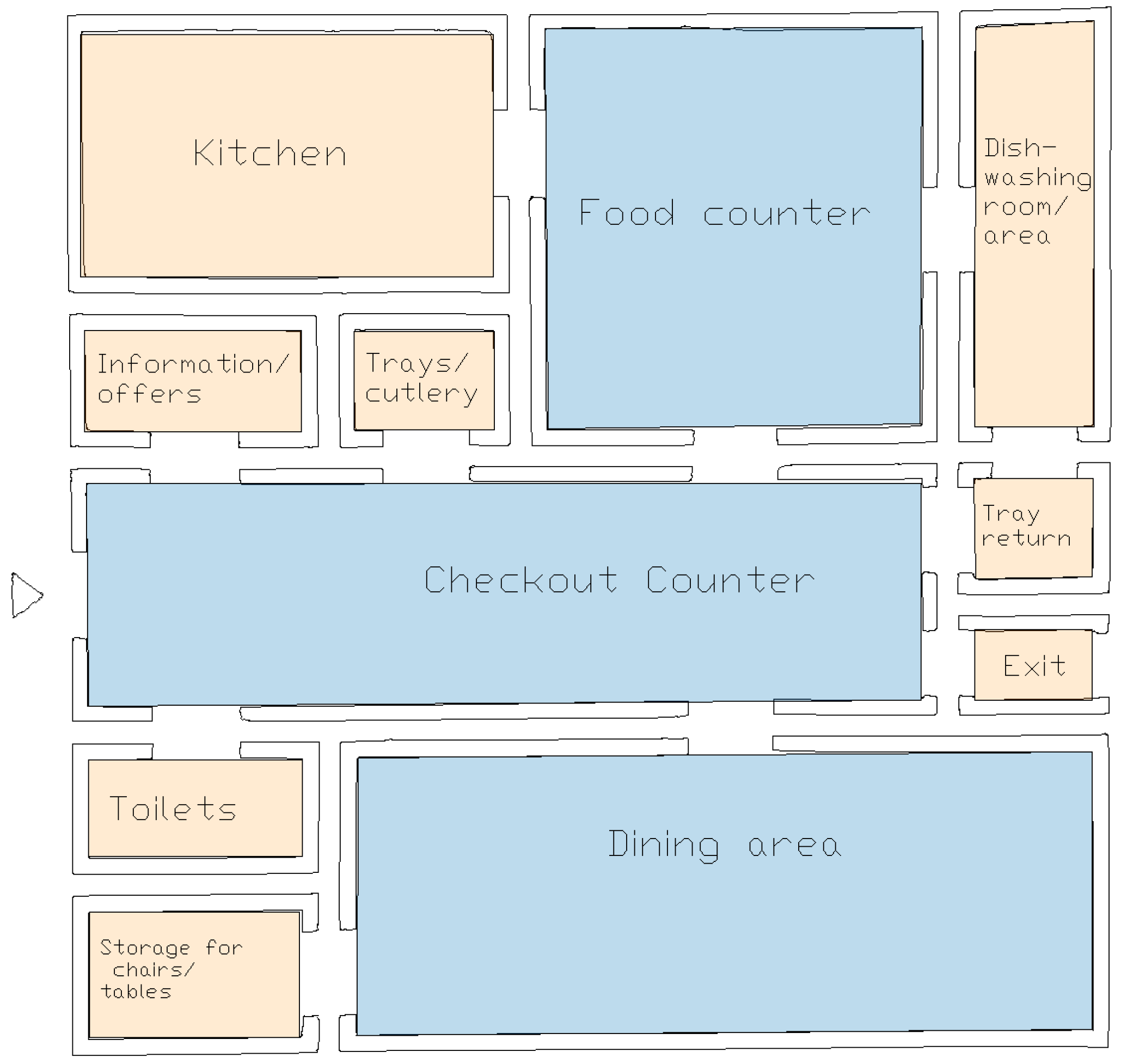
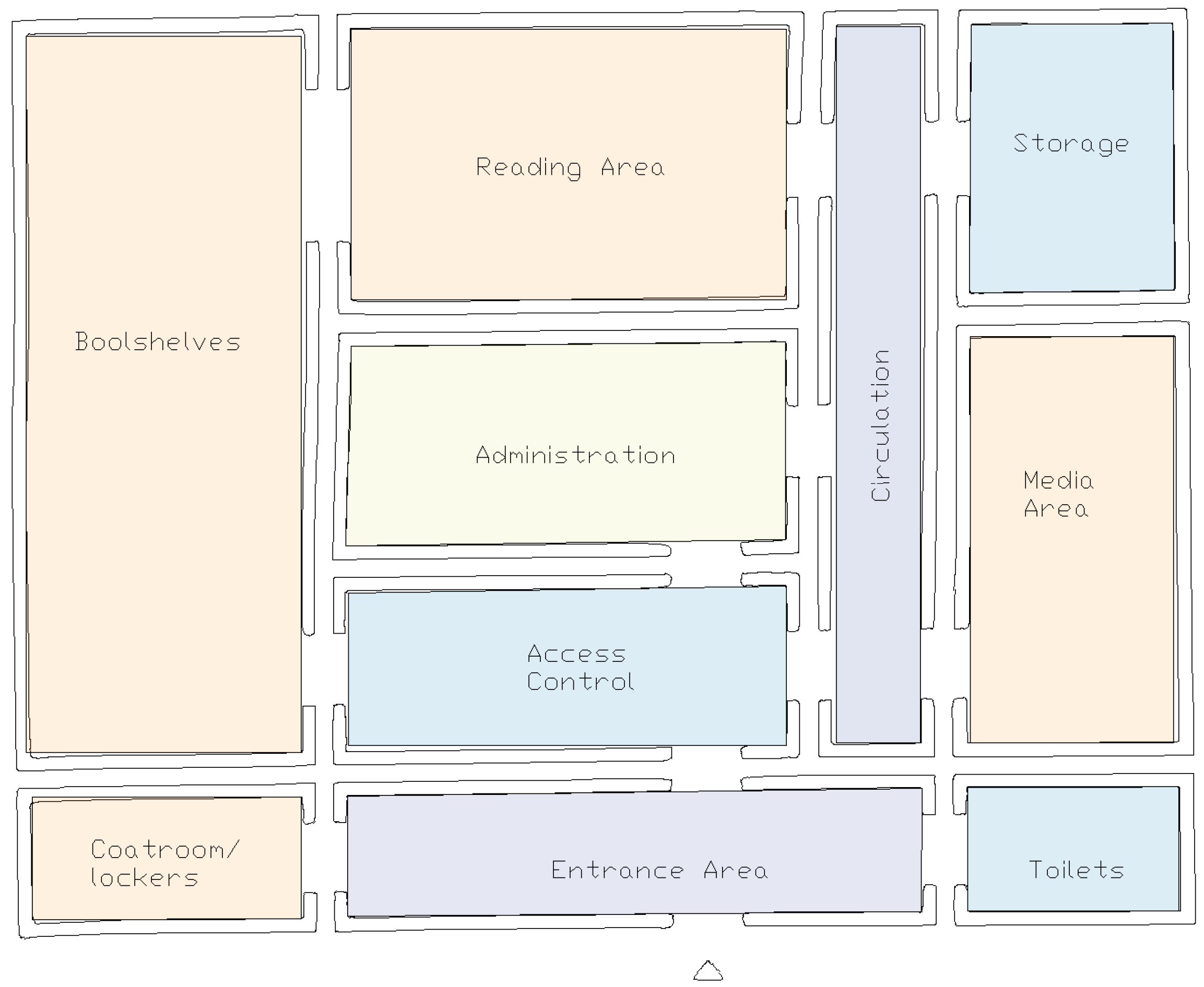
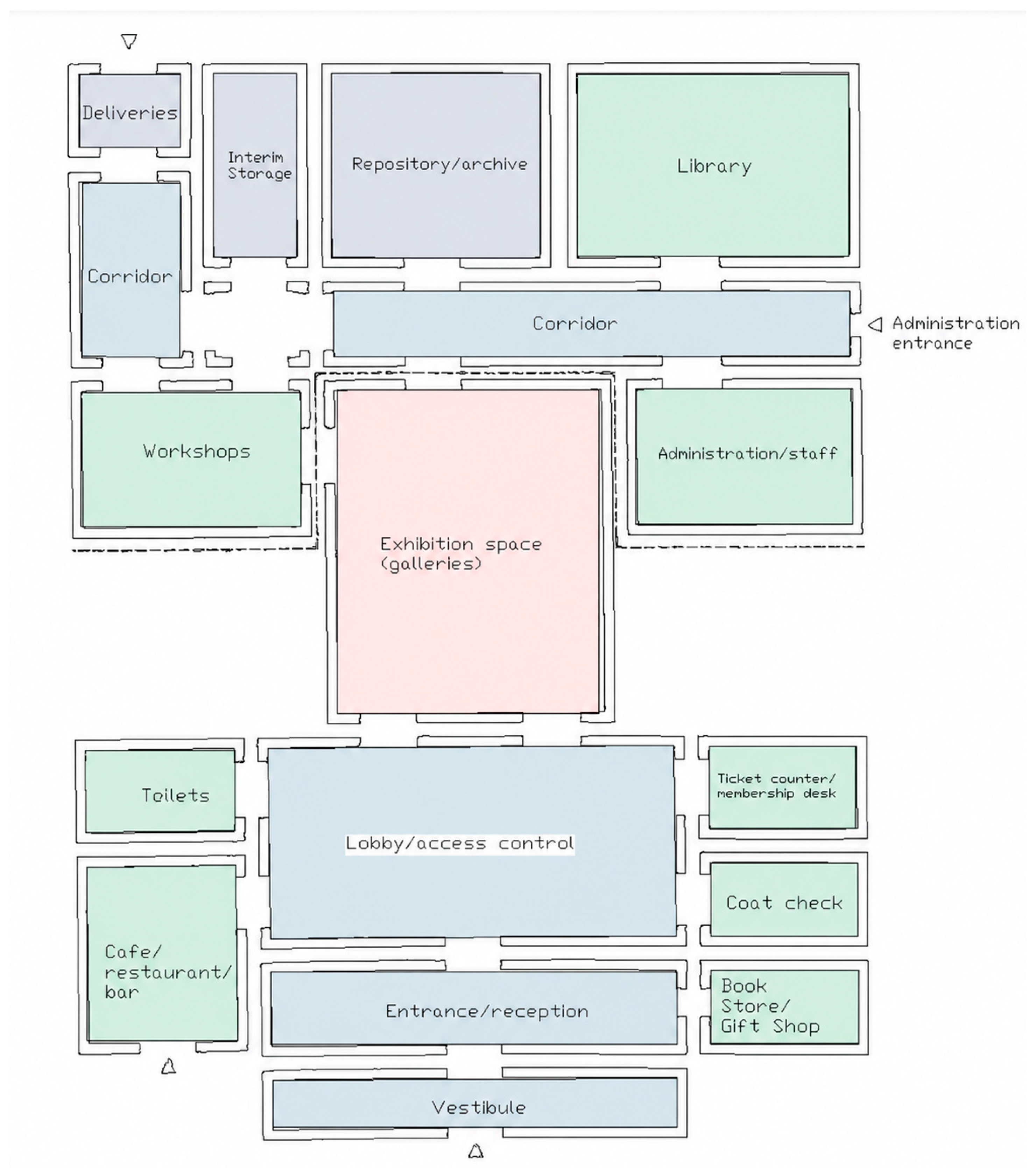
Meanwhile, a single space is often divided into multiple areas, a common feature of traditional houses designed for privacy and climate control. For the first floor, the coefficient is high at 0.79, indicating fewer but more visually interconnected spaces. As shown in
Table 20, this level would also feature a transparent, openly visible circulation network, making the plan smaller and easier to navigate. Although less functional, the first floor remains spatially readable. This pattern suggests a beneficial interaction between the floors from an architectural perspective. The ground floor could be used for more public functions that require accessibility and can be reached via stairs. In both relationships examined, the values demonstrate a moderate positive correlation: r = 0.4537 for the SU–connectivity relation on the ground floor, and r = 0.3637 for the first floor. Similarly, in old houses, the ground floor tends to contain more public and semi-public spaces; spaces such as entrance halls and courtyards are visually and functionally interconnected, with activities divided by accessibility. Conversely, the spatial system demonstrates a much stronger correlation; this suggests that the ground floor offered greater accessibility and multi-functionality, while the first floor was more suited for legibility and visual continuity. In summary, although the study uses quantitative spatial measures and comparative statistical techniques, the sample size of seven houses should be understood as an exploratory rather than statistically representative sample of the entire housing stock of Erbil Citadel, as shown in (
Table 23).
The study avoids using universal baseline values for historic residential architecture, as these benchmarks depend heavily on typology, cultural context, and scale. Instead, it interprets the chosen syntax metrics comparatively across the examined houses and in relation to the spatial needs of proposed adaptive reuse functions. A pattern language-based reading showed that the typologies differ not only in form but also in the relational logic through which they organize privacy, access, and shared space. This is important for adaptive reuse because a new function may fit dimensionally while still conflicting with the inherited threshold sequence, courtyard centrality, or intimacy gradient. Accordingly, reuse suitability should be judged not only by physical accommodation, but by the extent to which key relational patterns are preserved, transformed, or disrupted.
The typological identification of houses (A–G) was reinforced by relating the recognized courtyard arrangements to patterns in a pattern language. This provided an extra layer of interpretation for the analysis of the plans, helping to understand how the principles of entrance transition, intimacy gradient, a shared center, and indoor/outdoor are articulated within the buildings. Rather than using Alexander’s patterns as historical templates, they have been adopted as a conceptual device to understand the social logic of each house typology. The study suggests that the Erbil Citadel houses are not only morphologically unique but are articulated by several relational principles that are significant to their adaptability for future use.
The limited number of case studies does not undermine this research because its goal is not to provide a statistically complete census of courtyard houses but to demonstrate the effectiveness of an integrated adaptive reuse framework. Essentially, the study serves as a proof of concept, illustrating how configurational analysis, proportional spatial comparison, and relational interpretation can be combined to support reuse decisions in delicate heritage contexts. The small sample size constrains the statistical inference. Therefore, the correlation analysis should be viewed as exploratory, mainly highlighting potential trends for future research with larger datasets.
Although focused on courtyard houses, its value lies in testing a coherent methodological approach for evaluating adaptive reuse rather than in statistical completeness. The findings demonstrate how configurational analysis, space utilization, and quantitative comparison can work together to assess the suitability of reuse in fragile heritage settings. By emphasizing the spatial logic inherited by the house rather than functions alone, the study provides a more systematic basis for identifying reuse scenarios that require minimal intervention. Therefore, the framework is relevant not only to academic research but also to heritage management and planning practices.
Beyond the immediate case study context, the proposed framework may be useful to government-led heritage management plans by offering a structured basis for prioritizing reuse. In practical terms, it can help identify which historic houses are more spatially compatible with certain categories of new use, which buildings are likely to accommodate adaptation with lower intervention, and which cases may involve greater configurational disruption. Such a framework could therefore assist public authorities in balancing conservation priorities, feasibility of reuse, and resource allocation, particularly in large historic fabrics where building-by-building decisions must be made systematically. It is not intended to replace policy, regulation, or stakeholder negotiation, but to strengthen them through more transparent spatial evidence.
11. Conclusions
The examination of Erbil Citadel houses (A–G) using space syntax methods, which measure connectivity and visual integration, typically reveals circulation patterns that inform possibilities for new use. The central courtyard is consistently the most integrated part of the house. This naturally makes it a focal point for new functions, suitable for collective or public uses such as receptions, exhibition spaces, cafés, or shared office hubs. Traditional layouts feature well-defined boundaries between public and private areas. The research aimed to provide both a theoretical and practical foundation for conservation and adaptive reuse, describing the extent and compatibility of the houses with any proposed new use. At the same time, the traditional layouts preserve clear distinctions between public and private domains, indicating that any proposed reuse should respond carefully to the inherited privacy hierarchy and circulation logic. In this study, pattern-based interpretation was not used as a prescriptive design source, but as an analytical framework for understanding the relational structure of the houses and the degree to which that structure may support or resist new uses. The findings therefore show that these houses possess not only formal architectural value, but also socially meaningful spatial organization, both of which are essential for evaluating adaptive reuse potential.
Although the study is based on a limited purposive sample of seven cases, this does not diminish its methodological value, because the objective was not to produce a statistically exhaustive census of all courtyard houses in the Citadel. Instead, the research should be understood as a proof of concept demonstrating how configurational analysis, proportional spatial comparison, and pattern-based interpretation can be integrated into a tested framework for reuse assessment. For this reason, the correlation results are interpreted only as exploratory observations rather than as statistically generalizable evidence. The main contribution of the study lies in establishing a transferable analytical approach for evaluating historic residential buildings in terms of configurational compatibility, proportional spatial structure, and likely degrees of intervention. Future research with larger datasets could further validate and refine this framework, strengthening its comparative basis and expanding its usefulness for heritage management, conservation planning, and adaptive reuse decision-making in similar historic contexts (
Figure 18).



















 Public area
  Private area