Article

Investigation on the Impact Resistance of Bridge Piers with a Reinforced Concrete Composite Structure Against Debris Flow


1
China Railway Research Institute Group Co., Ltd., Chengdu 610031, China
2
Northwest Research Institute Co., Ltd. of China Railway Engineering Corporation, Lanzhou 730000, China
3
School of Civil Engineering and Architecture, Southwest University of Science and Technology, Mianyang 621010, China
*
Author to whom correspondence should be addressed.
Buildings 2025, 15(23), 4351; https://doi.org/10.3390/buildings15234351 (registering DOI)
Submission received: 31 October 2025 / Revised: 19 November 2025 / Accepted: 24 November 2025 / Published: 1 December 2025
(This article belongs to the Section Building Structures)

Abstract

Round-ended bridge piers are specifically utilized for high-speed railways in mountainous areas. However, the protective measures for such piers under debris flow remain limited, especially regarding the various components in the debris flow. This study introduces a reinforced concrete (RC) composite structure to improve the debris flow impact resistance of round-ended piers and investigates the impact from three different components of debris flow, including the bulk impact of slurry, collisions of large boulders, and abrasion of rock fragments. The results indicate the following: (1) The RC composite structure effectively mitigated the macroscopic damage from all types of debris flows. This structure significantly decreased gravel accumulation in the front of the pier body and reduced the size of scouring pits. These effects are superior to those of steel casing protection. (2) The RC composite structure significantly reduced the pier top displacement and pier body bending moments and optimized the pressure distribution on the pier body. The peak pressure reduction reached 95.7%, 88.4%, and 97.7% under three different debris flows. These effects were more pronounced than those under steel casing protection, for which the corresponding reductions were 18.2%, 70.9%, and 69.7%. (3) The RC composite structure effectively absorbed impact-induced vibrations and weakened shock effects on the upstream face, exhibiting superior capabilities compared with those of steel casing. The RC composite structure showed particularly outstanding performance in gravel-dominated debris flows. Ultimately, the RC composite structure could be an effective technique for enhancing the resistance of round-ended bridge piers against debris flows.

1. Introduction

Debris flows predominantly occur in mountainous regions characterized by complex topography, often causing significant damage to local infrastructure [1,2]. As a mountainous country, approximately 20% of China’s transportation network is in mountainous regions. Bridges serve as critical nodes in these areas and are especially vulnerable to debris flows [3,4]. Round-ended piers are commonly utilized in high-speed railways. The superior flow and streamlined profiles of such piers offer excellent diversion capabilities during debris flows [4], which are theoretically advantageous in response to debris flow events [4,5]. For example, based on the Bingham model, Wang et al. indicated that the runups of debris flow on the upstream side of round-ended piers decreased by around 10% compared with the runups on square/rectangular piers, while the drag coefficients decreased by 39% and 59% in viscous and dilute debris flows, respectively. Compared with round piers, the round-ended pier still decreased the peak subforce of dilute debris flow by an additional 27% [4]. However, experimental studies on the impact resistance of round-ended piers under debris flow remain limited, especially regarding multiple impact scenarios.
Debris flow is a unique multiphase fluid characterized by a high concentration of solid particles, ranging in size from meter-scale boulders to fine sediment [6,7]. As a result, the impact of debris flow on bridge piers involves three primary mechanisms, including the bulk impact force exerted by slurry, the collisional force induced by large boulders, and abrasive wear caused by small rock fragments [2,8,9,10]. Previous investigations have shown that the bulk impact of slurry primarily contributes to structural loading and can directly lead to pier damage. Large boulders, due to their substantial kinetic energy, are often responsible for sudden damage to or the catastrophic failure of bridge piers, while the abrasive action of small rock fragments may result in progressive degradation of the pier surface over time [8,11,12,13]. The indoor model test is a key methodology for investigating the debris flow’s impact on a bridge pier structure [10,14]. This technique can effectively replicate the impact process of debris flow by calibrating the similarity ratio between the bridge pier and the debris flow model [10]. Through flume-based simulation methods, debris flow materials are prepared and released to simulate debris flow movement and its impact on the bridge pier [8,15]. However, existing research generally considers the difference between viscous and dilute flow [10,12]; the individual impact of each component in the debris flow on the bridge pier is rarely simulated or experimentally reproduced.
Multiple protective measures have been implemented to enhance the resistance of round-ended piers against the overall impact of debris flow. For example, Brighenti et al. [16] developed cable-like retention barriers to mitigate the hazard of debris flow on bridge piers. These structures significantly reduce the restraining forces and dissipate the energy of the impact forces on pier bodies. Yan et al. [15] proposed a closed-cell aluminum foam-filled composite structure (AFCS) to enhance the resistance of a bridge pier under debris flow and indicated that the two-layer AFCS exhibited optimal comprehensive energy absorption performance, which reduced the peak impact force of debris flow by 84.9% compared with that of unprotected piers. Ye et al. [17] reported that the application of fiber-reinforced polymer (GFRP) significantly increased the strength and ductility of simulated pier specimens. Compared with the unprotected specimens, GFRP exhibited increases in load capacities by 26.7% and stiffnesses by 28.9% and decreased the residual displacements by 20.9%. However, the effectiveness of these protective systems in withstanding the impacts of large boulders and resisting abrasive forces during debris flow events remains insufficiently understood and requires further investigation. Moreover, most existing protective designs are intended for traditional bridge piers, such as those with round and square shapes [2,10,18], leaving a significant gap in specialized protective solutions for round-ended piers exposed to debris flow hazards. Therefore, it is critical to develop new protection technologies specifically designed for round-ended bridge piers to better meet practical engineering requirements.
In this study, a self-designed reinforced concrete (RC) composite protective structure is introduced to enhance the resistance of round-ended bridge piers against debris flows. Laboratory model tests were conducted using three different debris flow material compositions to simulate the bulk impact of the slurry, the collision force of large boulders, and the abrasive wear of small rock fragments in the debris flow. The effectiveness of the proposed RC composite structure was evaluated through macroscopic experimental observations, pressure distribution characteristics, and internal force analysis of the pier body. The objective of this study is to (1) investigate the protective effect of the RC composite structure on round-ended bridge piers under debris flows, (2) analyze the mechanisms underlying the protective effects of RC composite structures on bridge piers, and (3) provide an effective technique for improving the resistance of round-ended bridge piers against debris flows.

2. Simulated Model Tests

2.1. Model Box

The model test was conducted at the Western Environmental Geotechnical and Site Remediation Engineering Laboratory in Gansu Province. Debris flow was simulated using a model box, as illustrated in Figure 1. The experimental system features a gravity wall, a transparent model tank, a material mixing drum, a slope structure, a structural arrangement zone, and a waste collection pool. The gravity wall is located at the upstream end of the transparent model tank, measuring 1.2 m in length, 2.4 m in width, and 3 m in height. The transparent model tank is securely fixed to both the ground and the side of the gravity wall via a steel frame, with dimensions of 6.25 m in length, 1 m in width, and 2.4 m in height. The slope structure is positioned in the mid-front section of the tank and was geometrically scaled based on actual field engineering topography using a backtracking algorithm. The structural arrangement zone is situated in the rear section of the model tank, while the waste collection pool is located at the downstream end. The capacity of the material maxing drum is 0.1 m3.

2.2. Simulate Debris Flows

The ‘8.17’ Dalei Gully debris flow in Jiumian express, Sichuan, China, was selected as the prototype for this study. The fundamental characteristics of this debris flow are summarized in Table 1.
The velocity scaling of simulated debris flow is based on the Froude similarity criterion, as follows:
    V m = V c k
where Vm is the required flow velocity index for the debris flow impact simulation test, Vc is the debris flow velocity, and k is the scaling factor of the pier.
Based on Equation (1), the required flow velocity index for the impact simulation test is 1.297 m/s. Next, dimensional analysis is employed to derive the similarity criterion. Initially, all physical quantities are listed and expressed in a general functional form, as follows:
f ( P , W , l , I , σ , E ) = 0
where f is the mid-span deflection (cm), P is the impact force (kPa), W is the cross-sectional width (cm3), l is the side length (cm), I is the moment of inertia of the cross-section (cm4), σ is the stress (kPa), and E is the elastic modulus of the material (kPa).
Subsequently, expanding Equation (2) into a power series and dividing the terms by the general functional relationship of debris flow impact on the bridge pier yields the Π-function, as follows:
Π = P α 1 W α 2 l α 3 f α 4 σ α 5 E α 6
where α1, α2, α3, α4, α5, and α6 are the exponents of the physical quantities.
Using the impact force P and bridge pier length l as fundamental dimensions, the dimensional matrix of Equation (3) is established as
P W l f I σ E l 0 3 1 1 4 2 2 P 1 0 0 0 0 1 1
Based on the principle of dimensional homogeneity, a system of linear equations for the exponents is derived as
3 α 2 + α 3 + α 4 + 4 α 5 2 α 6 2 α 7 = 0 α 1 + α 6 + α 7 = 0
Taking α1 and α3 as basic unknowns, Equation (5) is simplified as
α 1 = α 6 + α 7 α 3 = 3 α 2 α 4 4 α 5 + 2 α 6 + 2 α 7
Thus, the Π-function can be expressed as
= W l 3 α 2 f l α 4 I l 4 α 5 σ l 2 P α 6 E l 2 P α 7   = π 1 α 2 π 2 α 4 π 3 α 5 π 4 α 6 π 5 α 7
where π 1 = W l 3 , π 2 = f l , π 3 = I l 4 , π 4 = σ l 2 P , and π 5 = E l 2 P .
The similarity criteria π1∼π5 are derived using dimensional analysis. According to the Third Similarity Theorem, the experimental model must satisfy the following similarity conditions with the prototype as
S W S L 3 = 1 , S f S L = 1 , S I S L 4 = 1 , S σ S L 2 S P = 1 , S E S L 2 S P = 1
where SW, Sf, SI, Sσ, SE, SP, and SL are the similarity ratios for width, deflection, moment of inertia, stress, elastic modulus, impact force, and length, respectively.
The simulated model’s similarity constants based on Equation (8) are presented in Table 2.
The solid particles in the debris flow at Dalei Gully are predominantly composed of biotite granite boulders, with a particle size ranging from 8 cm to 130 cm. Based on the similarity constants, the simulated debris flows were categorized into three types to investigate the differential impacts of solid particles on bridge piers. Debris Flow 1 (DF1) includes all rock size fractions and was designed to assess the bulk impact of the slurry; Debris Flow 2 (DF2) consists exclusively of large rocks, focusing on the collision force of large boulders; Debris Flow 3 (DF3) consists solely of small rocks and was primarily intended to study the abrasive effects caused by small rocks fragments. The mixture mapping of the prototype and debris flow is presented in Table 3, and the detailed mixture compositions of 0.1 m3 simulated debris flows are exhibited in Table 4.
The formation–transport zone of the Dalei gully debris flow is characterized by a typical V-shaped valley. To accurately replicate this geomorphological feature in the transparent model tank, we first constructed a base layer 850 mm in depth, consisting of a 625 mm pile foundation layer to ensure structural stability and a 225 mm boundary effect mitigation layer to reduce the influence of the tank bottom on pile force distribution. The desired flow velocity was set to 1.297 m/s, corresponding to a slope angle of θ = 25.14°. A distinct V-shaped channel profile was established along the slope, with side slopes formed using a compacted soil layer.
To satisfy the scaling criteria for the buried soil layer, the cohesion (c) and friction angle (ϕ) were determined in accordance with similitude principles. According to geotechnical physical modeling theory, the ϕ value remains constant under geometric scaling, while c is scaled proportionally with the model dimensions. The prototype bridge piers were embedded in a gravel layer characterized by c = 5 kPa and ϕ = 33°. Based on existing research [6,12], the following mixture ratio was adopted: coarse sand (0.5–2 mm)–fine sand (0.1–0.5 mm)–silt (<0.1 mm)–crushed stone (2–4 mm)–water = 35:35:20:10:5. The resulting model parameters for the simulated gravel layer are c = 0.132 kPa and ϕ = 32.56°, both of which satisfy the experimental requirements.

2.3. Round-Ended Bridge Pier Model

The prototype selected was Pier No.25 bridge on the Dalei Gully Bridge, with a height of 12 m, a transverse width of 6 m, and a longitudinal width of 2 m. To meet the requirement of a 1:1 elastic modulus similarity ratio, the pier model was constructed using C35 grade concrete. The mix incorporated P.O 52.5 ordinary Portland cement with a water–cement ratio of 0.45. The fine and coarse aggregates were composed of quartz sand (particle size of 0.1~0.5 mm) and crushed stone (maximum size < 3 mm), respectively. The reinforcement ratio of the round-ended pier was set at 0.92%, in compliance with relevant design standards.
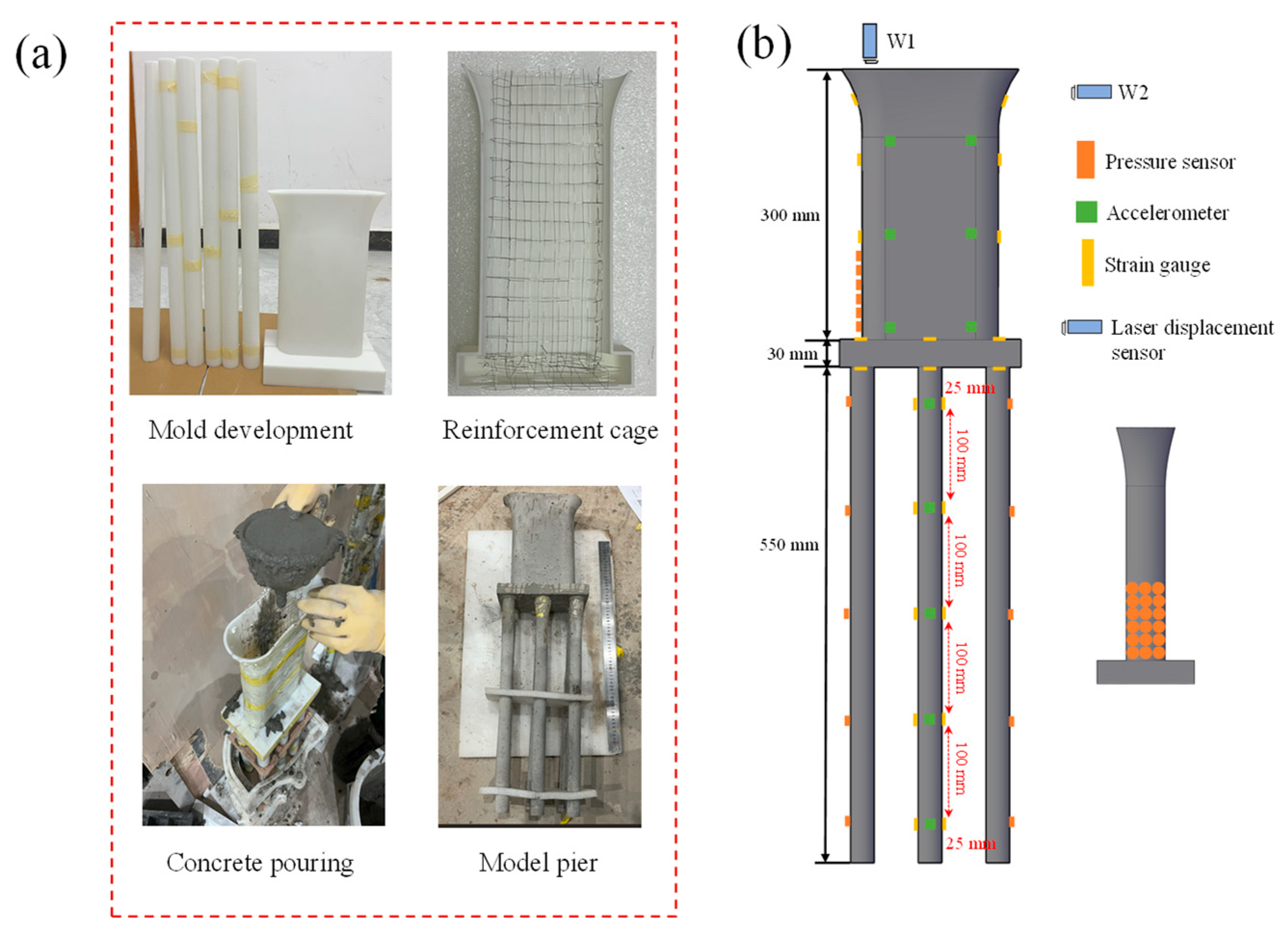
The pier models were fabricated at a 1:40 scale. Digital models were developed using three-dimensional modeling software, and molds were subsequently produced via 3D printing. To facilitate demolding, the inner surfaces of the molds were uniformly coated with a release agent and allowed to dry completely before casting. A reinforcement cage was then placed inside the mold, followed by concrete pouring. After 28 days of curing, the molds were removed. The detailed fabrication process is illustrated in Figure 2a.
The experimental data were collected using a DH5921B dynamic data acquisition system (Donghua Testing Co., Ltd., Beijing, China) with a sampling frequency of 200 Hz. The impact pressure sensors were applied to monitor pressure variations of the simulated bridge pier. These sensors were symmetrically installed on the upstream surface of the pier body and on the upstream and downstream pier columns. The measurement range of pressure sensors was 0~50 kPa, with an overload capacity of up to 120%. Triaxial capacitive accelerometers were used to capture the acceleration responses of the bridge pier. These sensors were to mounted at the center of the pier body’s side surfaces and on the middle pile column. The measurement axis of the accelerometers was oriented along the X-direction, with a sensitivity of 192.53 mV/g and an operational frequency range of 0~900 Hz. The dynamic resistance strain gauges were vertically installed along the central axis of the pier body’s upstream and downstream surface and on the connected beam and middle pile column. Two laser displacement sensors were securely mounted on the top of the pier via a steel frame to measure vertical and lateral displacements during the experiments. The detailed sensor layout is illustrated in Figure 2b.

2.4. Reinforced Concrete (RC) Composite Protective Structure Model

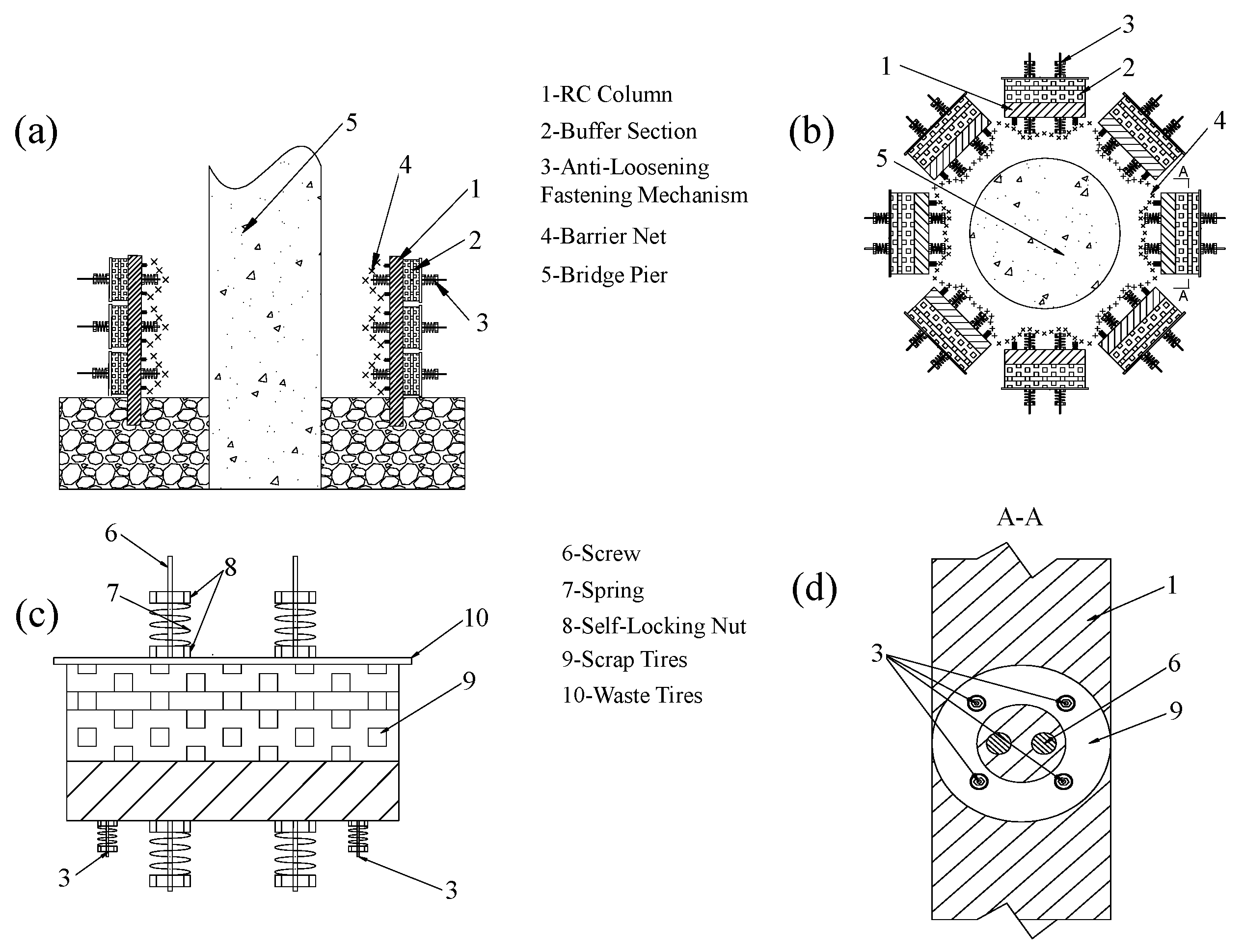
A self-designed composite structure (Patent No. ZL202422242280.9) was developed to protect the round-ended bridge pier against debris flow impacts. This system consists of recycled tires, RC components, screw rods, springs, and protective nets. As illustrated in Figure 3, RC columns are symmetrically arranged around the circumference of the bridge pier. On the outer face of each RC column, multiple buffer units are installed. Each buffer unit consists of flexible recycled tires mounted on the external surface of the RC column, a protective wooden board on the outside of the recycled tires, and a protective mesh anchored to the inner side of the RC column. These buffer units are securely fastened to the RC columns using anti-loosening fastening mechanisms, thereby forming a continuous 360° protective envelope around the pier.
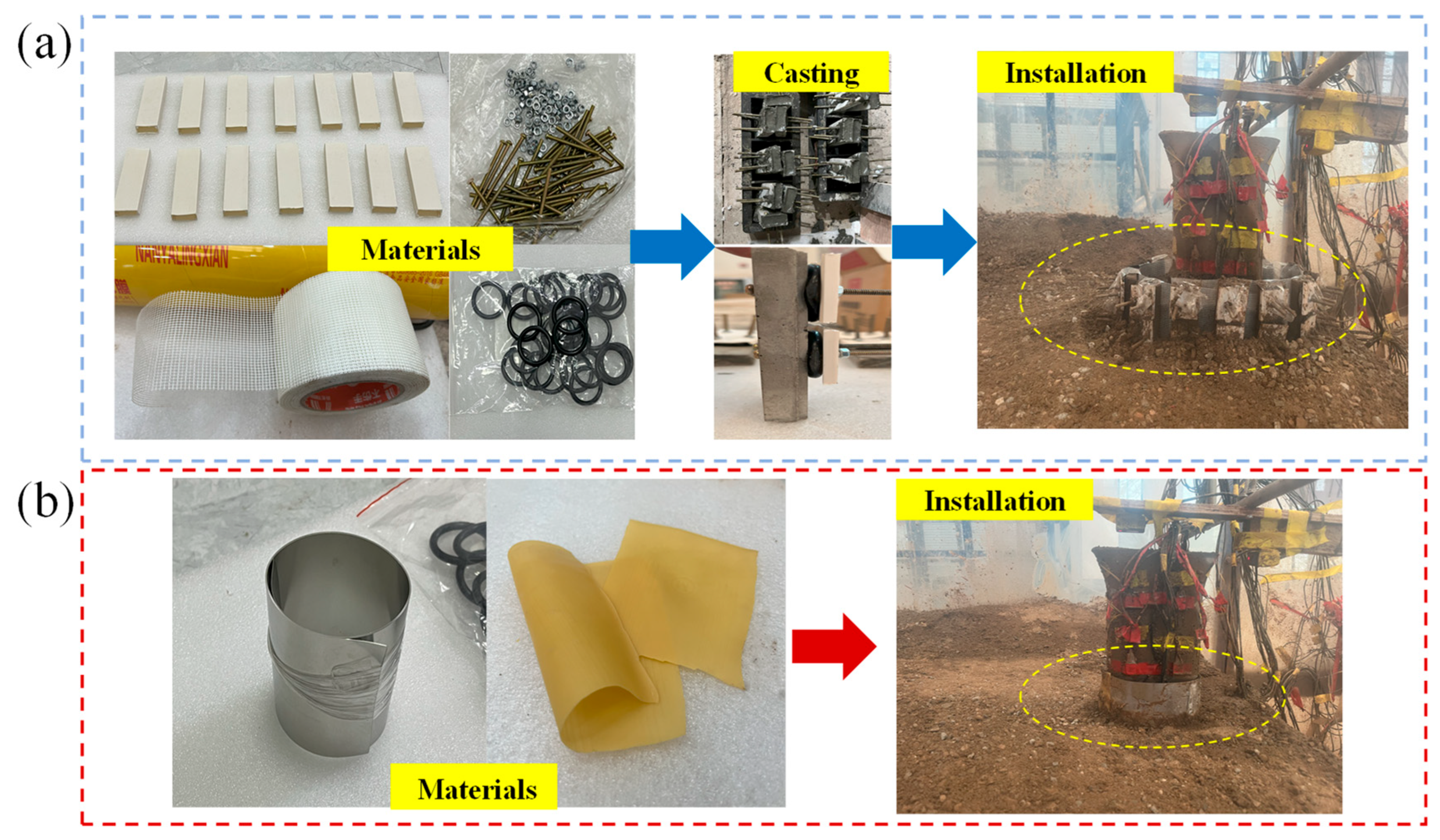
The geometric similarity ratio of the model’s protective structure matches that of the bridge pier. Accordingly, elastic rubber rings with an outer diameter of 40 mm and a wire diameter of 5 mm were employed to simulate the recycled tires, thin plastic sheets were used to represent the wooden boards, and a fine-grid fabric was selected to simulate the flexible protective mesh. Moreover, a steel casing protection structure was incorporated into the experimental design to enable a comparative assessment of debris flow resistance performance relative to the proposed RC structure. In accordance with the engineering configuration steel casing with a 2~4 cm super-elastic protective layer, a 16 mm-thick steel casing was selected as the reference porotype and simulated using a 0.4 mm-thick iron foil based on a geometric scale ratio of 1:40. Figure 4 illustrates the fabrication process of both the RC composite structure and the steel casing protection model.

3. Results and Discussion

3.1. Macroscopic Damage

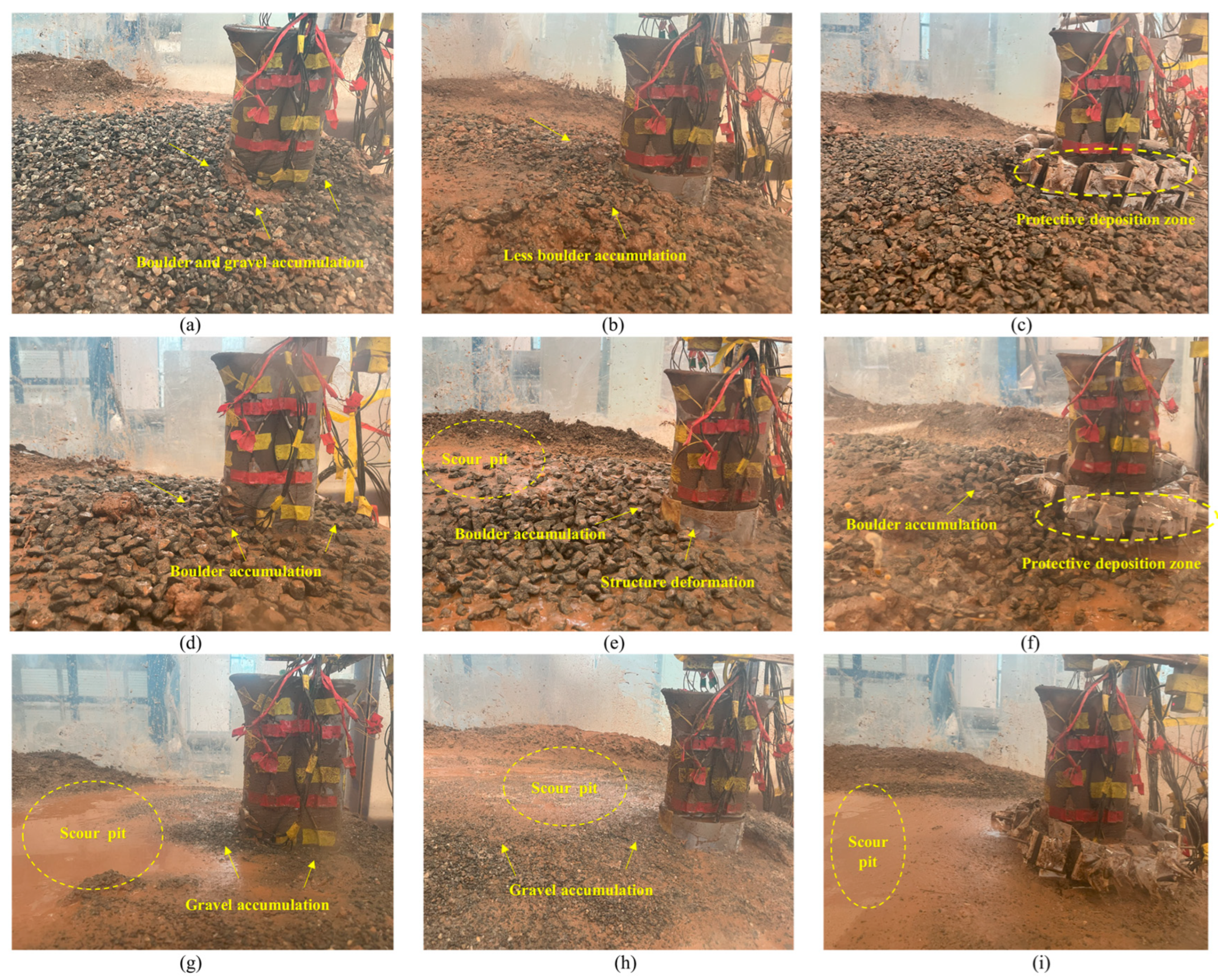
Figure 5 illustrates the macroscopic damage characteristics of round-ended bridge piers under different protective strategies subjected to various debris flow conditions. In DF1, which simulated the bulk impact of slurry, a significant accumulation of boulders is observed on the upstream surface of the pier body, particularly under an unprotected status. This phenomenon is primarily attributed to the large frontal contact area of the round-ended pier, which allows it to be fully exposed to and enveloped by coarse debris such as large rocks and gravel, thereby experiencing sustained direct loading from the debris flow [19]. The use of steel casing mitigated some of the direct impacts, resulting in a reduced accumulation of large rocks and gravel at the front of the upstream surface, consequently lowering the bulk impact force on the pier structure. In contrast, the RC composite structure effectively deflected large rocks, promoting their deposition away from the pier. Additionally, the incorporated buffer layers established a protective deposition zone at the upstream surface of the pier, significantly reducing the impact force of the debris flow.
In DF2, which simulated the impact force of large boulders in debris flow, the macroscopic damage behavior was highly similar to that observed in DF1, albeit more pronounced in extent. On the unprotected bridge pier, a significant greater quantity of gravel accumulated at the upstream surface of the pier body compared with that at DF1. The steel casing effectively redistributed the large rocks, resulting in reduced rock accumulation in front of the pier. However, the steel casing structure exhibited deformation, and several small scour pits formed in the vicinity of the pier base. Conversely, the RC composite structure successfully intercepted large boulders during DF2. The protective deposition zone effectively mitigated direct impacts from large rocks on the pier body, with no significant scour pits observed after debris flow.
In DF3, which simulated the abrasive effect of small rock fragments in debris flow, a significant accumulation of gravel was observed at the upstream surface of the unprotected pier, leading to the formation of extensive scour pits surrounding the deposited gravel. These observations suggest that the majority of gravel bypassed the pier laterally, resulting in sustained abrasion along the impact surfaces throughout the duration of the flow impact. When protected by steel casing, the pier exhibited reduced gravel deposition around its perimeter, and the dimensions of the scour pits were markedly smaller compared with those around the unprotected pier. This result indicates that the steel casing absorbed a portion of the abrasive forces exerted by the debris flow, thereby mitigating graver-induced wear on the pier surface relative to that of the unprotected condition [20,21]. The RC composite structure exhibited an effective ability to divert gravel flow, with minimal deposition observed in front of the pier and scour pits located at a considerable distance from the pier foundation. Furthermore, the flexible protective netting effectively intercepted direct impacts and abrasive actions from moving gravel, substantially reducing surface wear on the upstream face of the pier.
These results demonstrate the superior performance of the RC composite structure in mitigating the macroscopic damage caused by debris flows. This enhanced performance is primarily attributed to the structural innovation of the RC composite structure. The indirect contact design and incorporation of a buffer layer can effectively mitigate the impact force of debris flows. During debris flow events, the outer layer effectively redistributes the impact forces of the debris flow. Subsequently, multiple flexible buffer units act as independent movable panels to dissipate uneven impact loads. Furthermore, the protruding screw rods integrated into the buffer unit of the RC columns provide resistance against large boulder impacts. The modular design of both the RC columns and buffer units serves to reduce direct impact forces and prevent abrasion damage from debris flows. Notably, the buffer units were constructed using recycled tires and wooden planks, which is the material innovation of the structure. Recycled tires were proven to be effective energy absorption materials under impact force [22] and are also cost-effective and easily accessible. For instance, the cost of steel plate protection is as high as 1000 to 2000 yuan per square meter, while recycled tires cost less than 1/10 of that value and are readily available. This easily repairable configuration ensures sustained protective functionality, even following partial damage.

3.2. Pier Top Displacement

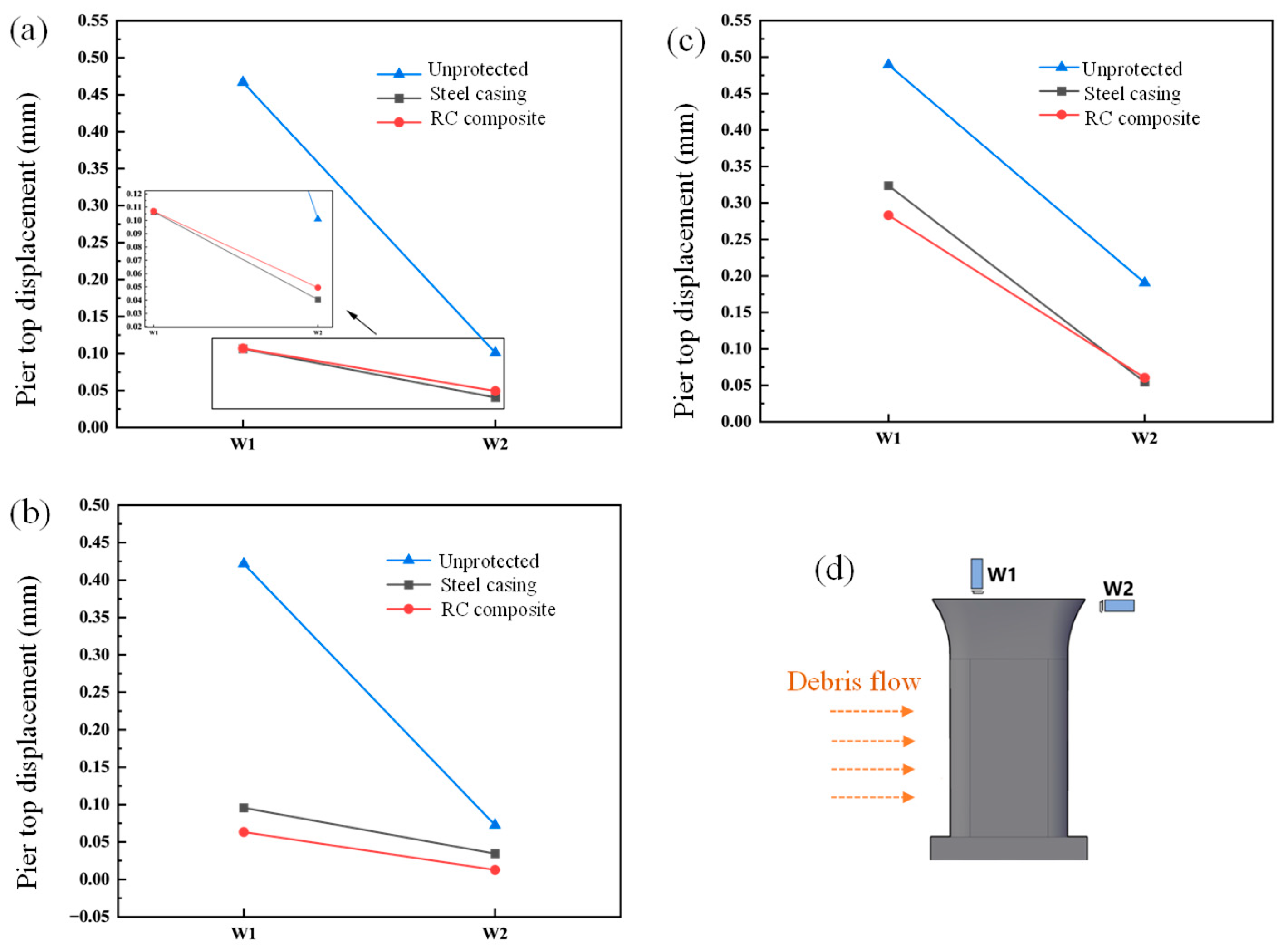
The displacement of a bridge pier is typically sensitive at the top area [13]. As illustrated in Figure 6, the debris flow exerts a significant influence on variations in pier top displacement, with the maximum displacement occurring under unprotective conditions. Moreover, vertical displacement exceeds lateral displacement in magnitude. Specifically, the simulated DF2 led greater vertical and lateral displacement than that found in DF1 and DF3. This discrepancy may be attributed to the larger flow-facing area of round-ended piers, which increased the number of large boulders colliding with the pier and consequently enhanced the impact energy.
The implement of steel casing significantly reduced both vertical and lateral displacement. In DF1 and DF3, the reductions in vertical displacement compared with the displacement of the unprotected pier were 76.6% and 76.2%, respectively, and were more pronounced compared with the reductions in lateral displacement (51.2% and 52.1%). However, in DF2, the decrease in lateral displacement (75.3) was more obvious than that in vertical displacement (31.2%). Installation of the RC composite structure resulted in a greater reduction in both vertical and lateral displacement, especially in DF2 and DF3. In comparison with the unprotected pier body, the vertical and lateral displacement was reduced by 43.8% and 77.4% in DF2 and by 86.9% and 78.9% in DF3, respectively. In summary, steel casing protection effectively reduced vertical and lateral displacement, while the RC composite structure provided additional improvements in structural performance.

3.3. Bending Moment

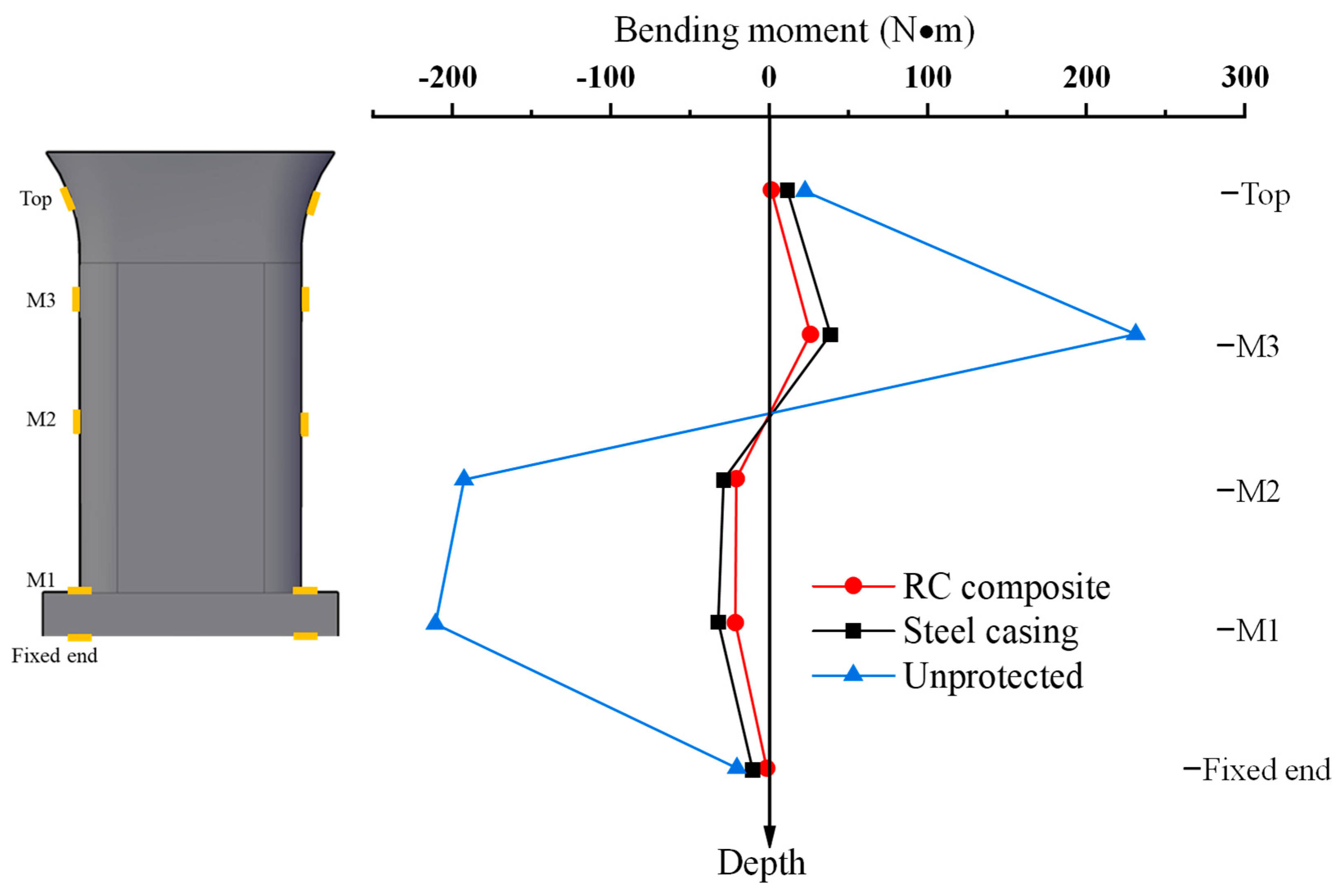
The strain values obtained from multiple measurement points on the pier shaft during peak impact pressure exhibited significant variations in bending moment distribution. As illustrated in Figure 7, in DF2, the bottom and top regions of the pier experienced substantially higher bending moments compared with those of the middle section. The elevated stress concentration near the base impact zone contributed to this phenomenon. The bending moment distribution shows inverse trends along the pier height, suggesting a potential redirection of structural loads toward the upper section. The unprotected piers experienced the highest peak moments, reflecting pronounced localized stress concentrations. Both the steel casing and RC composite protection effectively redistributed internal loads.
The round-ended pier has demonstrated superior moment-bearing capacity than circular piers [4]. However, the increased frontal impact area of such piers enhances energy absorption during debris flow events, leading to higher bending moments and an elevated risk of localized structural deformation. The RC composite structure provided optimal protection that yielded the most pronounced moment reduction, highlighting this structure’s effectiveness in mitigating the impact resistance of the round-ended bridge pier under debris flows.

3.4. Dynamic Pressure Distribution

3.4.1. Peak Impact Pressure

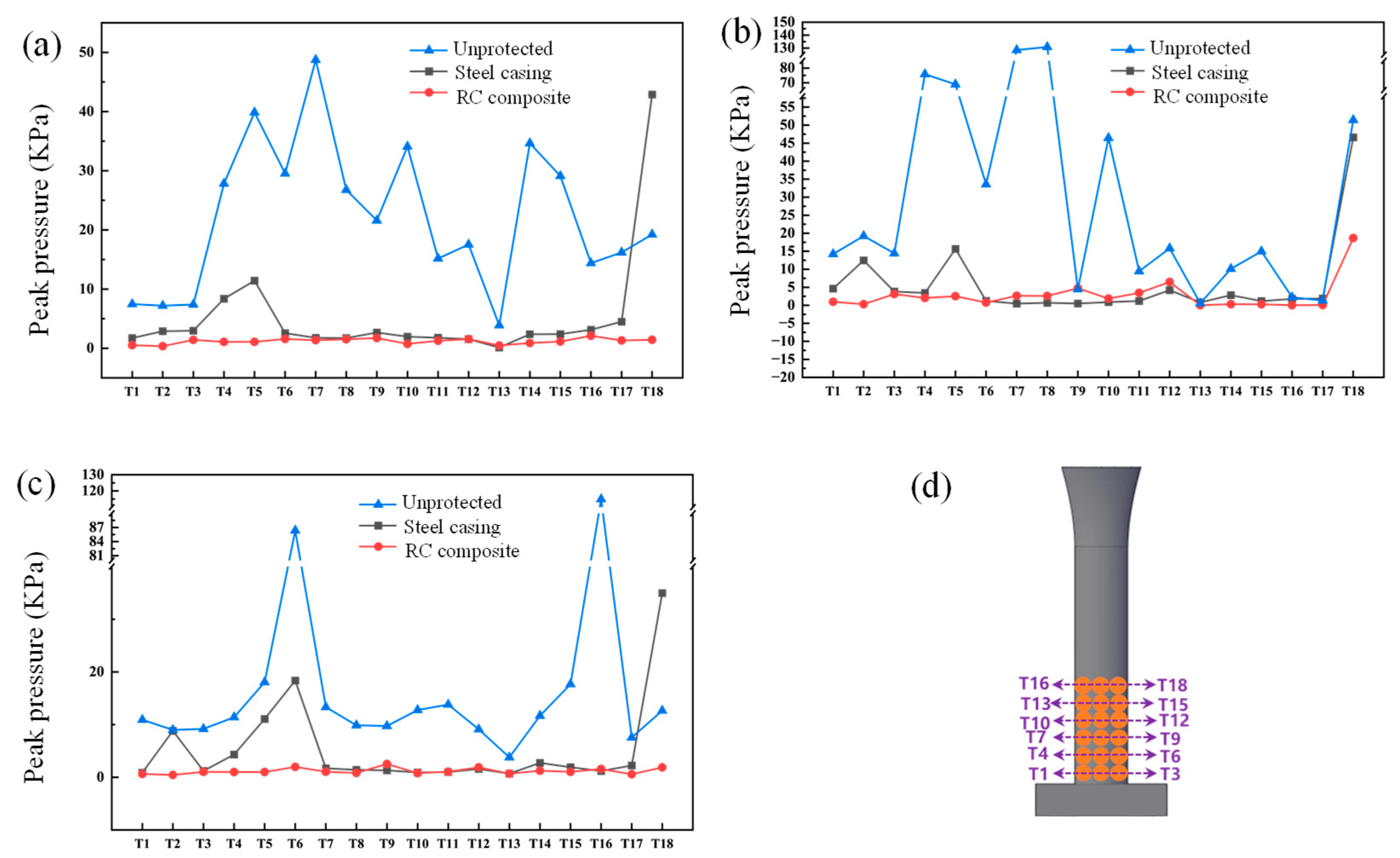
Figure 8 illustrates the pressure distribution on pier bodies under different debris flow scenarios and varying protective strategies. Under unprotected conditions, peak pressures exhibited significant fluctuations. In DF1, these values were particularly high at measurement points T5, T7, T10, and T14, demonstrating that the bulk impact of debris flow was concentrated on the front surface of the pier body. However, in DF2, the trend of peak pressure fluctuation was similar to that observed in DF1 but with higher magnitudes. The most pronounced peak values occurred at measurement points T4, T5, T7, and T8, suggesting that large boulders within the debris flow predominantly concentrated in the lower to middle sections of the pier, thereby increasing the risk of direct collisions with the bridge piers. Conversely, in DF3, the pressure fluctuation pattern differed significantly from the patterns in DF1 and DF2, with the maximum pressure recorded at point T16, located on the upper section of the pier body.
With the protection of steel casing, the pressure trend remained consistent across different types of debris flow. The amplitude of pressure fluctuations decreased, although high peak values at measurement points T5 and T18 persisted. This result indicates that the steel casing can partially mitigate the impact force of debris flow transmitted from debris flow to the pier structure. However, the distribution of these forces remained uneven, and the protective effectiveness diminished at the upper section of the pier. In contrast, with the protection of the RC composite structure, pressure fluctuations on the pier body were significantly minimized, and peak pressures were substantially reduced, particularly at the upstream surface. These beneficial effects were consistently observed across all debris flow scenarios, demonstrating the superior performance of the RC composite structure in diverting and attenuating the impact forces of debris flows.

3.4.2. Pressure Distribution

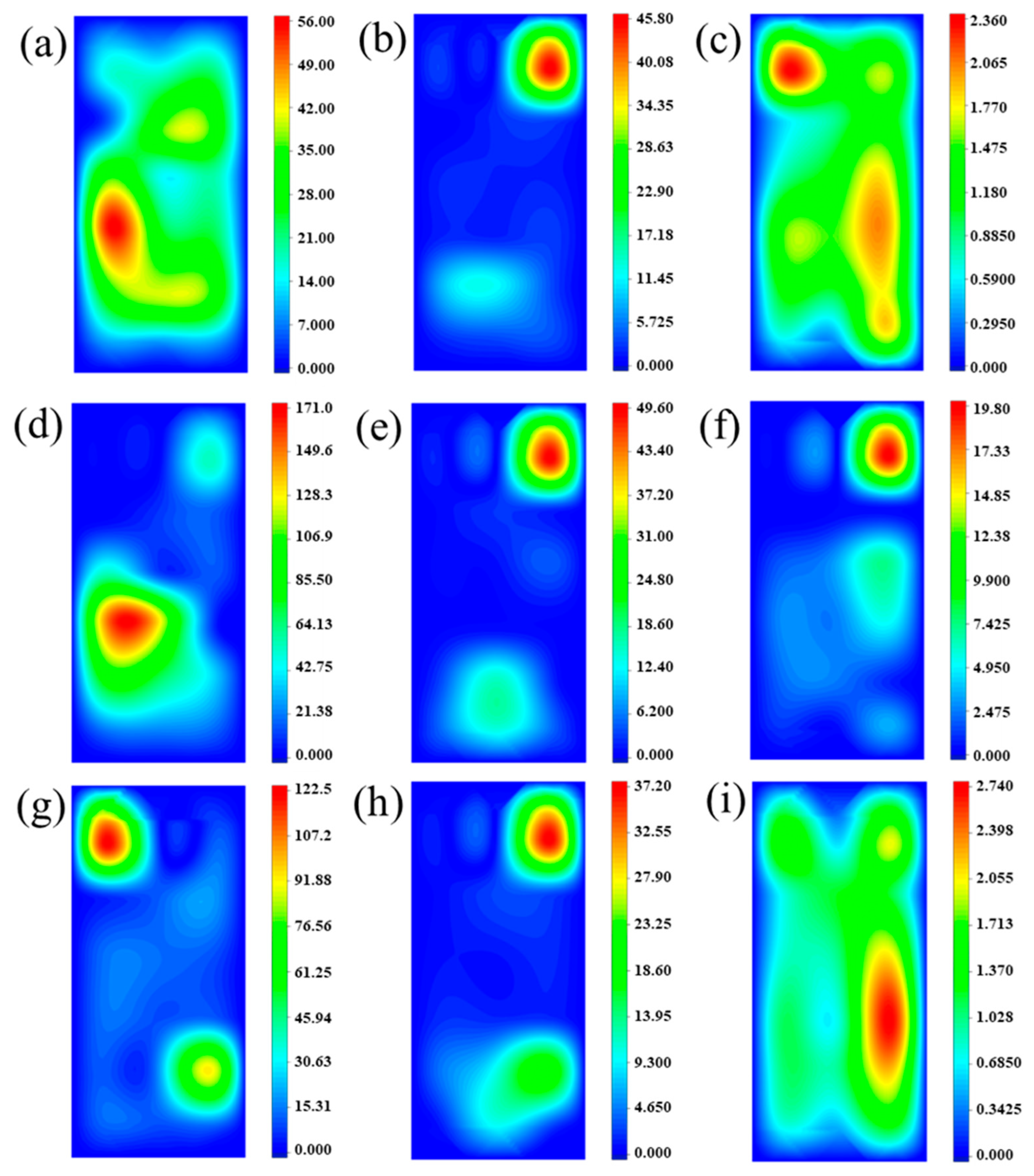
The peak impact pressure at the measurement points of the pier body were extracted, then the distribution of impact pressure on the upstream face was plotted using Kriging interpolation methods, the results of which are illustrated in Figure 9. A color scale was used to qualitatively indicate the magnitude of the debris flow impact force on the upstream face. During the DF1 impact on the unprotected pier, the pressure across the entire upstream face remained consistently high. This result indicates that the round-ended pier, due to its larger impacted surface area, withstands greater impact forces, resulting in more extensive potential damage. The peak value reached 56.0 kPa at the middle-low section of the upstream face, suggesting that boulders within DF1 generated intense localized impact forces upon collision. Under DF2, the debris flow exerted significantly higher gradients on the pier, with a peak pressure of 171.0 kPa. The location of the peak pressure was similar to that observed during DF1, indicating that large boulders in the debris flow were primarily responsible for the maximum impact. Due to their substantial mass and limited mobility, these boulders concentrated the peak force at the middle–lower section of the pier body, substantially elevating the risk of structural failure. Conversely, in DF3, the impact force was predominantly concentrated at the upper portion of the pier. Notably, the peak value reached 122.5 kPa, which is significantly higher compared with that in DF1, indicating that enhanced gravel mobility can lead to considerable damage to the pier structure.
Implementing steel casing significantly decreased the peak pressure values, particularly in DF2 and DF3, which experienced reductions of 70.9% and 69.7% compared with those in the unprotected condition. However, the effectiveness of steel casing under DF1 loading was relatively limited, with a peak pressure reduction of only 18.2%. Moreover, the peak pressure values were similar across different debris flow types and consistently located at the upper section of the pier body. This phenomenon may be attributed to the fixed structure configuration of the steel casing, resulting in reduced capacity at the edge sections to transfer forces to adjacent steel segments. Consequently, the steel casing exhibited a uniform response to various debris flow components, leading to comparable pressure distributions on the pier body regardless of the debris flow type. In contrast, the RC composite structure demonstrates superior performance in enhancing debris flow resistance, particularly in DF1 and DF3, achieving peak pressure reductions of 95.7% and 97.7%, respectively, relative to the unprotected condition. Moreover, the pressure distribution was more uniform under the RC composite structure compared with that under both the unprotected condition and with steel casing protection, particularly in DF1 and DF3. Although the effectiveness of the RC composite structure was relatively lower in DF2, with the peak pressure occurring at the upper section of the pier body, the peak pressure still decreased by 88.4% compared with that of the unprotected bridge pier, significantly greater reduction than that achieved with the steel casing. This phenomenon can be primarily attributed to the RC columns blocking the solid mass within the debris flow, thereby reducing peak pressure. However, some boulders rebounded and collided with others along the flow path, particularly large boulders, elevating trajectories that directly impacted the pier. Consequently, although the protective effect of the RC composite structure was relatively low in DF2, it remained superior to that of the fixed steel casing. Overall, the RC composite protection system demonstrates enhanced performance through two synergistic mechanisms. First, at the structural level, the RC columns divert gravel flow within the debris flow mass, while the flexible protective netting physically intercepts direct gravel impacts. These designs can effectively divert the direct impact of debris flow. Additionally, at the energy level, the rubber material and internal cushioning structure of the recycled tires offer excellent energy absorption performance, resulting in less energy being transitioned to the pier structure and mitigating the impact force of the debris flow [23].

3.5. Energy Distribution

3.5.1. Instantaneous Frequency Spectra

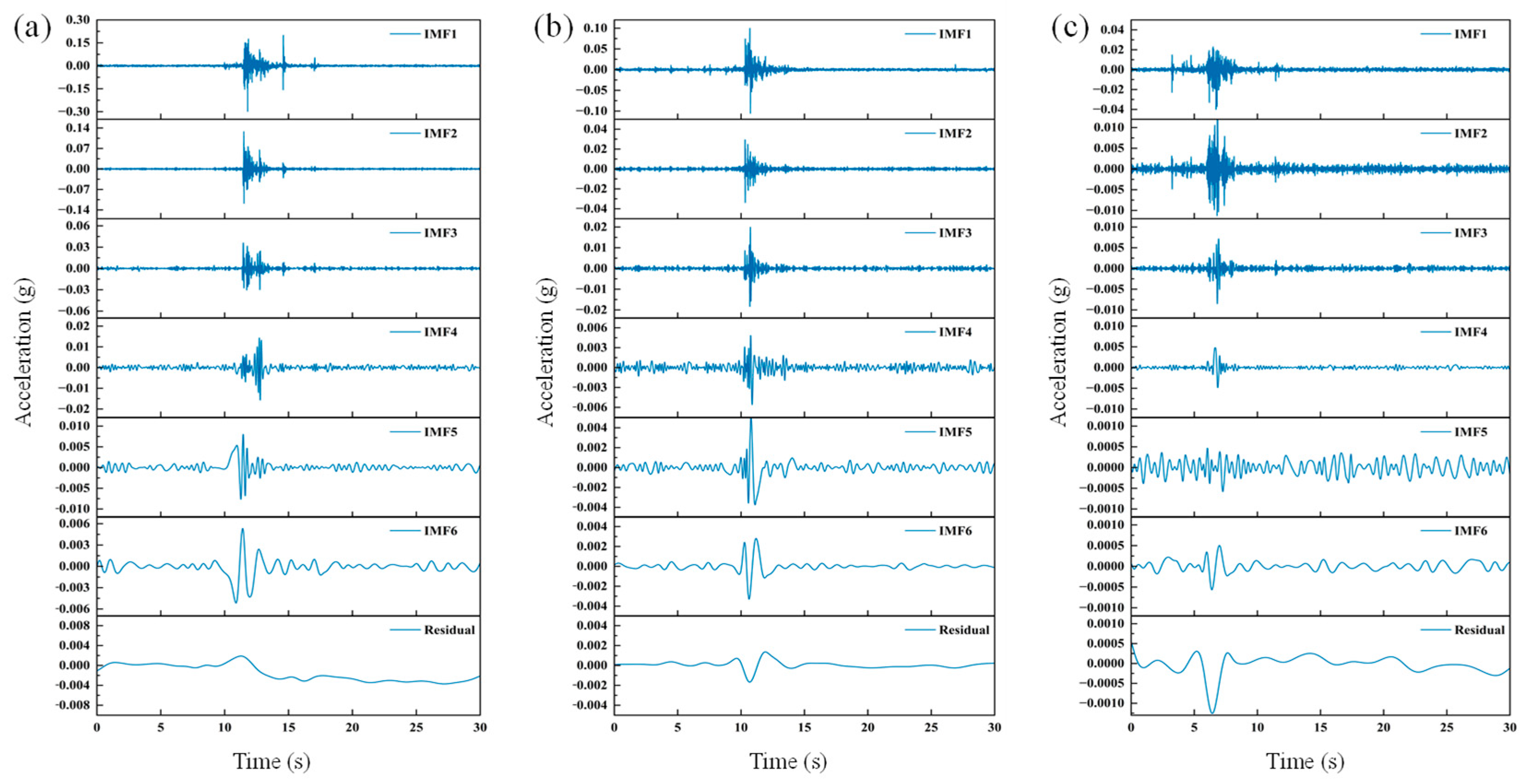
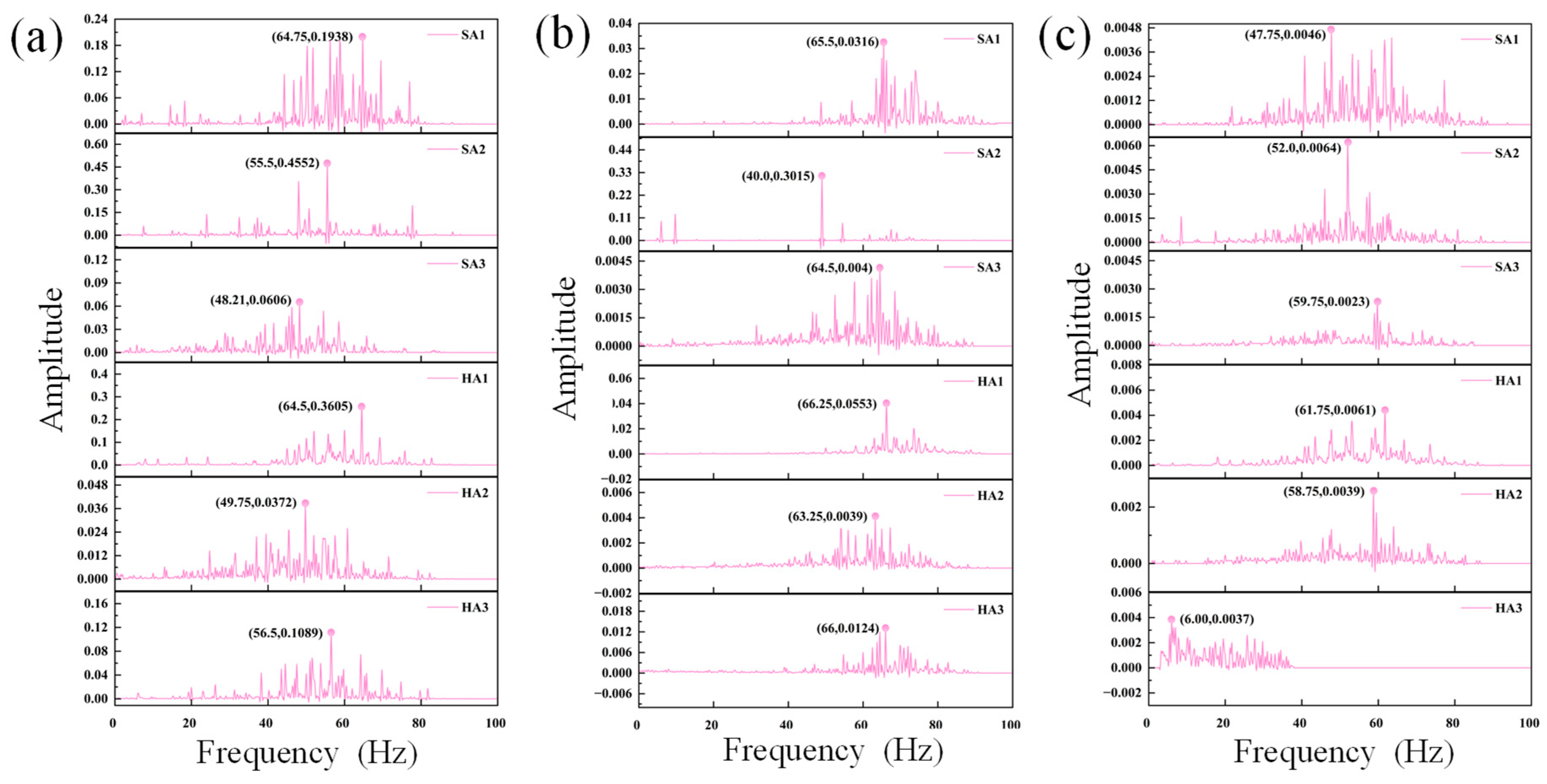
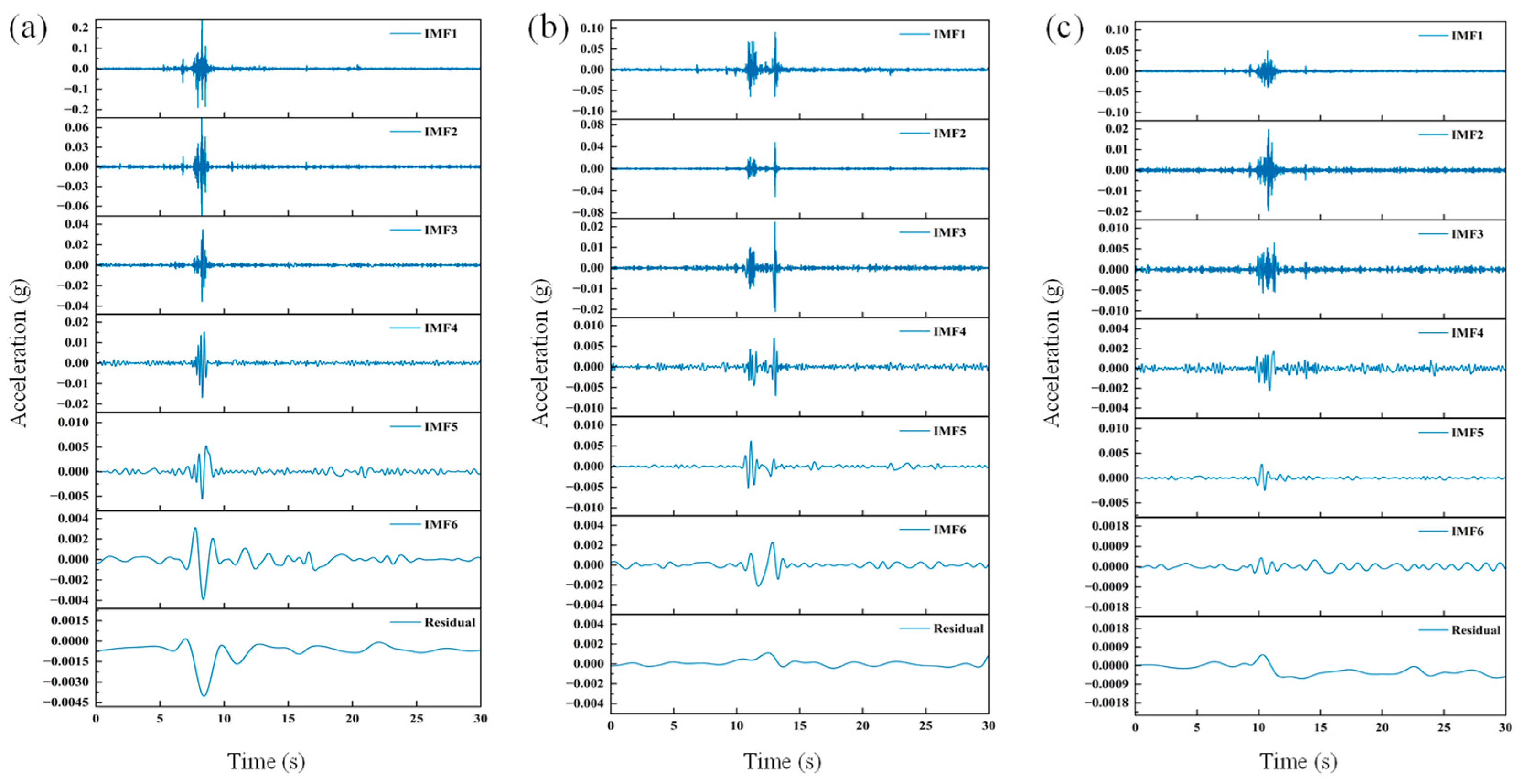
To further investigate the energy distribution on the pier structure under simulated debris flows, the acceleration signals were collected and processed to Fast Fourier Transform (FFT). After removing the noise, the FFT algorithm was applied to convert the time–domain signal into the frequency domain. The results are illustrated in Figure 10, Figure 11 and Figure 12. The instantaneous frequency spectra from measurement point SA1 on the upstream face were analyzed as an example to compare the various effects of protective strategies on energy distribution along the round-ended pier body. The high-frequency components represented by IMF1 to IMF3 demonstrate the pier’s rapid dynamic response, whereas the low-frequency components of IMF4 to IMF6 display the pier’s global response under debris flows [2]. As illustrated in Figure 10, the high-frequency components of the unprotected bridge pier exhibit significant frequency fluctuations, particularly at 10 and 15 s. Although the round-ended pier design provides certain impact force distribution capabilities, its single-column configuration still generates substantial local high-frequency responses upon impact [4]. The frequency range primarily concentrated between 20 and 80 Hz reflects the instantaneous vibrations induced by debris flow impact. Over time, these vibrations accumulated at the front-lower section with persistent effects, revealing significant stress influence on the pier’s upstream face. These results indicate that the debris flow led to significant impacts and collisions on the pier structure, potentially reducing the stiffness of the pier body.
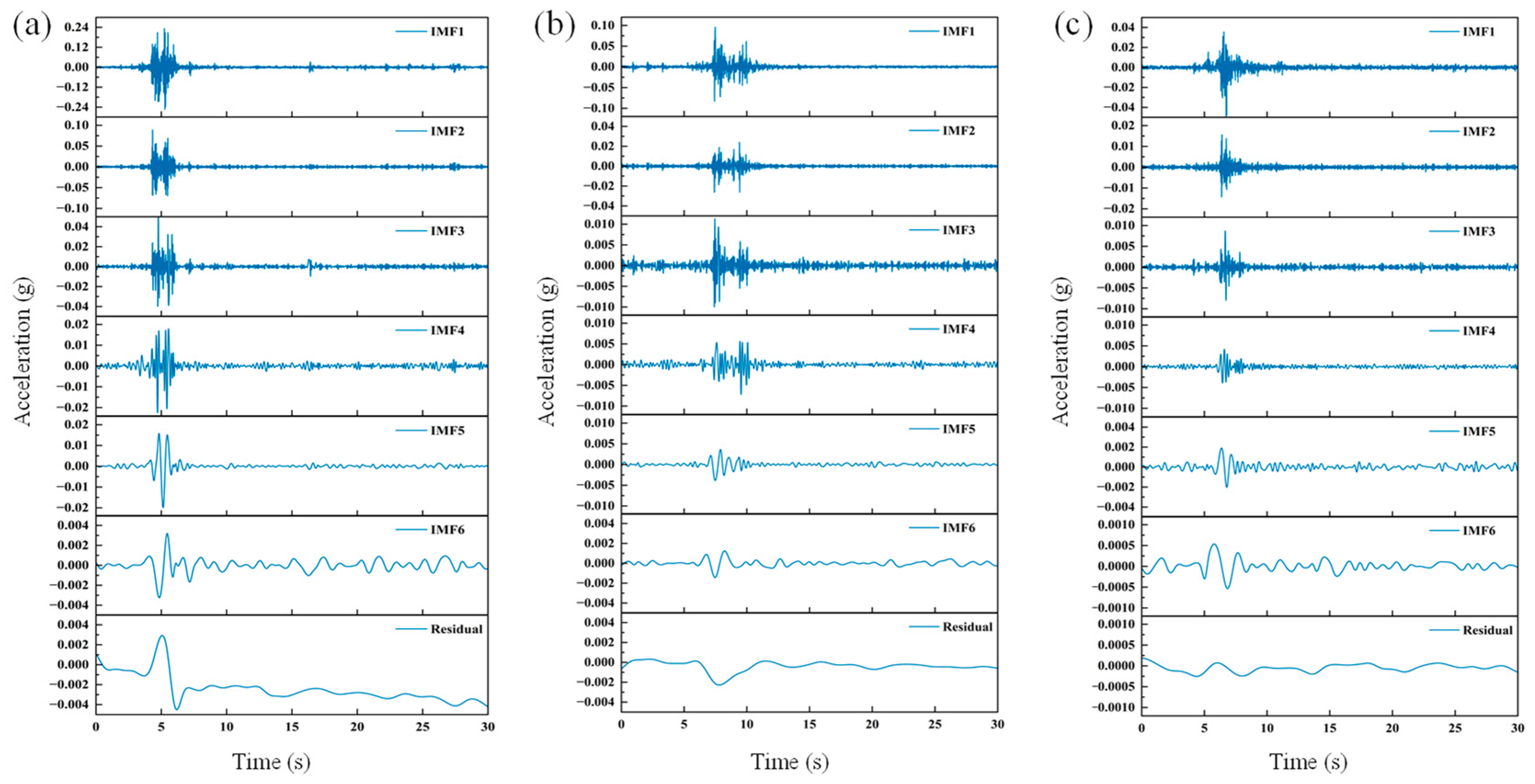
Compared with DF1, DF2 produced a greater amplitude in high-frequency vibrations (Figure 11), demonstrating that large boulders create stronger direct impacts on the structure, resulting in more intense local high-frequency vibrations. Although the front-lower section experienced substantial impacts, the low-frequency components (IMF4–IMF6) displayed relatively stable fluctuations, suggesting that the debris flow impact waves distribute their influence evenly after propagation, a characteristic attributable to the round-ended pier’s superior structural integrity [12]. The residual component shows relatively small vibration amplitudes, indicating rapid post-impact vibration attenuation. Compared with those under DF1, the DF2 impacts produced more stable residual vibrations, primarily because boulder impacts generated vibrations with shorter durations. Conversely, DF3 exhibited distinct frequency characteristics (Figure 12), presenting weaker high-frequency responses. In the low-frequency response range (IMF4–IMF6), the frequency fluctuations were relatively stable, indicating a more uniform distribution of overall energy and a smoother response compared with that under debris flows containing large boulders. The frequency fluctuations were more significant in high-frequency responses (IMF1–IMF3), but the frequency range was limited compared with the ranges in DF1 and DF2.
The protection of the steel casing reduced both the high-frequency vibrations and low-frequency resonance. The residual signal contained fewer high-frequency components during vibration attenuation, demonstrating faster stabilization of the pier structure. In DF1 and DF2, the steel casing protection significantly decreased the concentration of high-frequency energy within both the 20–80 Hz and 10–20 Hz frequency bands, indicating the steel casing’s effectiveness in isolating high-frequency energy and reducing strong vibrations from impact wave propagation. The RC composite structure effectively absorbed impact-induced vibrations and weakened shock effects on the upstream face, exhibiting superior capabilities to steel casing. Compared with the steel casing, the RC composite structure achieved lower concentrations of high-frequency energy and smoother variations in low-frequency components in all types of debris flow. Notably, frequency fluctuations between 5 and 10 s significantly diminished, indicating enhanced energy absorption and localized vibration suppression. Furthermore, the residual signal shows greater stability and reduced residual vibrations throughout the pier structure. These results indicate that the RC composite structure offers significant improvements in local high-frequency vibration control for both impact wave transmission reduction and high-frequency response mitigation.

3.5.2. Marginal Spectrum Analysis

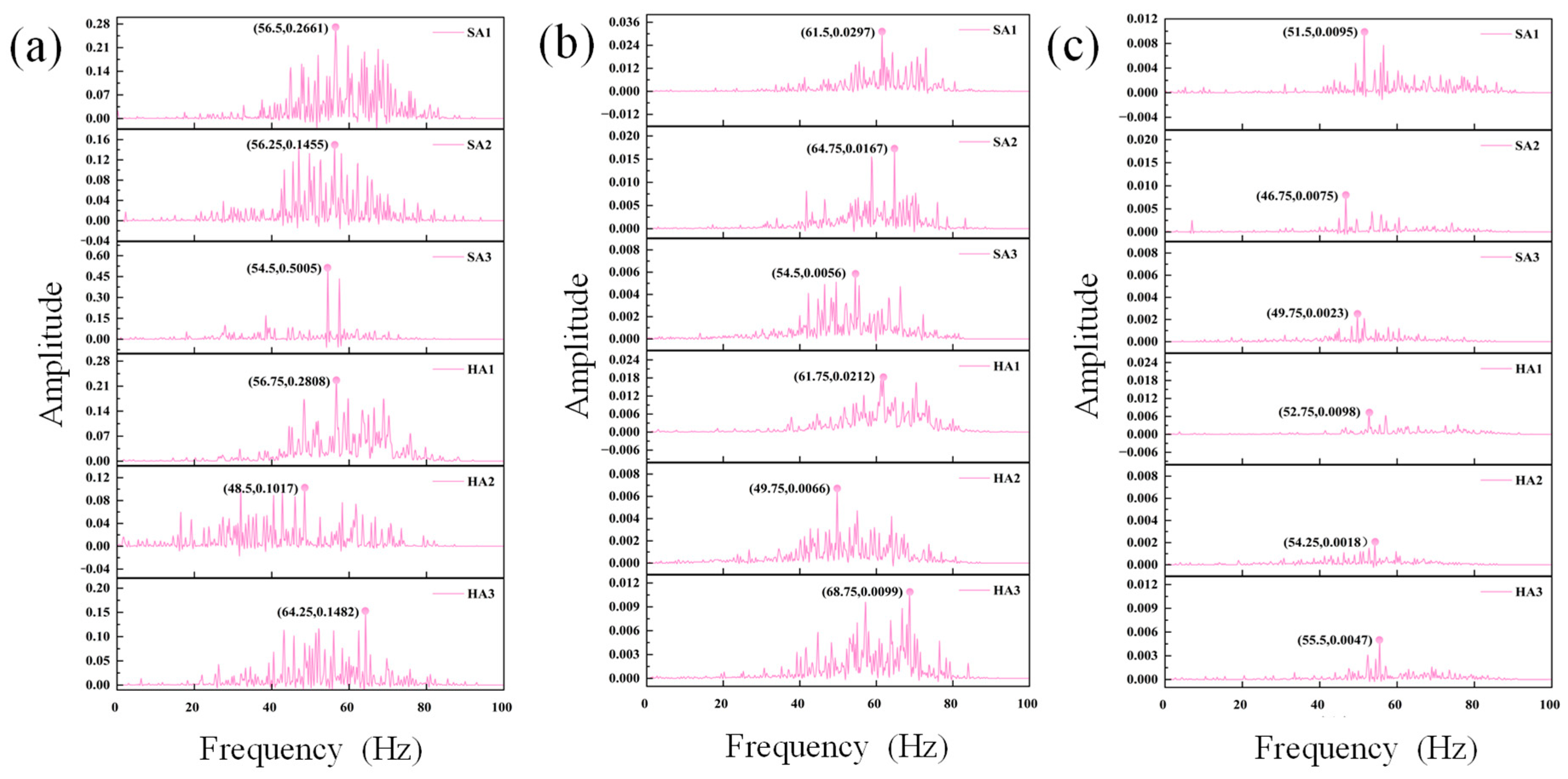
A marginal spectrum analysis was conducted based on variations in the frequency component amplitudes and energy distribution of the round-ended pier. The marginal spectra of all measurement points were utilized to analyze response differences under debris flow impacts and further assess the influence of various protective measures on the pier’s damage resistance. The marginal spectrum serves as a global analysis tool for energy distribution in the frequency domain, representing the integrated energy within each frequency band [24]. Changes in the marginal spectra under different protective measures reflect their effectiveness in altering the dynamic response of the pier.
As shown in Figure 13, in DF1, the measurement point SA1 of the unprotected round-ended pier exhibits a significant concentration of high-frequency energy, particularly within the 20–80 Hz range. Pronounced energy peaks in this band indicate intense debris flow impacts on the upstream face, resulting in strong local high-frequency vibrations. High-frequency responses diminish in the rear regions (measurement points HA1–HA3), although residual local vibrations remain detectable, especially at HA1 and HA2, where enhanced low-frequency responses reveal substantial vibrations in the pier’s rear sections.
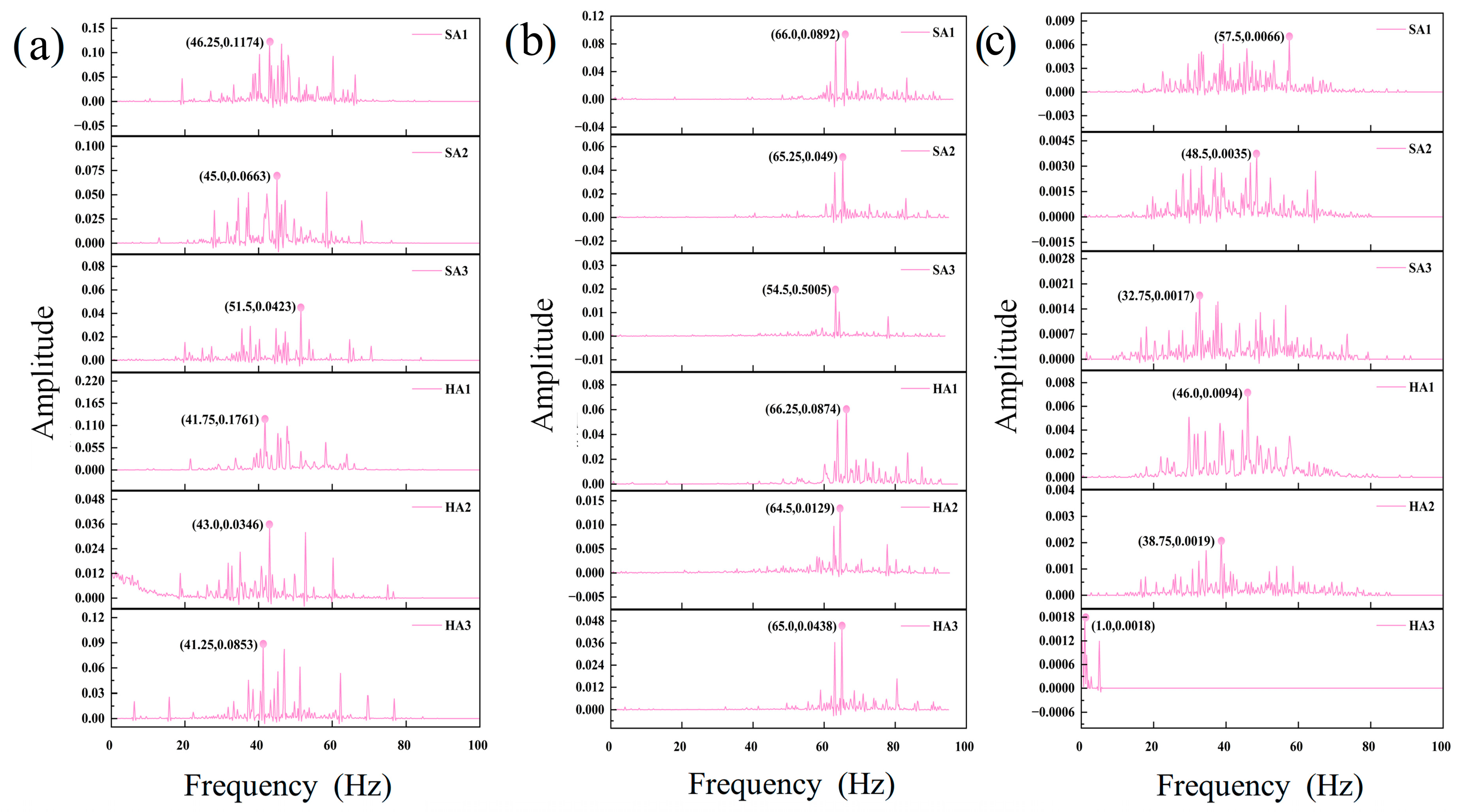
In DF2 (Figure 14), the high-frequency components caused by large boulders significantly increased high-frequency vibration amplitudes. The marginal spectrum of the unprotected pier reveals substantial high-frequency amplitudes accompanied by large fluctuations, reflecting intense localized impacts and vigorous frequency responses across the pier surface.
In DF3 (Figure 15), the frequency response at measurement point SA1 of the unprotected pier displays distinct high-frequency peaks, indicating the development of localized high-frequency vibration zones. Although gravel impacts were more uniformly distributed than those from large boulders, their high impact density still generated significant local vibrations. The frequency responses observed at points HA2 to HA3 demonstrate a notable vibrational transmission to the rear sections of the pier due to debris flow propagation. Compared with DF1 and DF2, DF3 presents more stable high-frequency energy responses with reduced amplitude fluctuations, suggesting a more uniform distribution and dissipation of impact forces.
Under steel casing protection, high-frequency vibration amplitudes were effectively reduced. Compared with the unprotected condition, the steel casing significantly reduced both energy concentration and frequency fluctuations at point SA1, demonstrating the steel’s capacity to buffer debris flow impact waves and suppress high-frequency vibration propagation. The steel casing not only mitigated localized high-frequency vibrations but also effectively dampened low-frequency resonance, as indicated by the stable low-frequency responses observed at points HA1 and HA2 (Figure 13). In DF2, the frequency spectrum demonstrates markedly reduced frequency concentrations and lower high-frequency energy levels, confirming the casing’s effectiveness in limiting local vibration transmission and improving the pier’s overall resistance to dynamic impacts (Figure 14). In DF3, steel casing protection yielded significant reduction in high-frequency responses across all measurement points compared with the results under the unprotected conditions. The steel casing effectively absorbed impact energy from gravel particles, attenuated high-frequency vibration amplitudes, and substantially diminished energy concentrations within the 20–80 Hz range, highlighting this casing’s enhanced capability in resisting damage caused by gravel erosion (Figure 15).
With the RC composite structure, the high-energy concentration at point SA1 was further reduced compared with that with the steel casing, accompanied by significantly diminished frequency fluctuations, particularly in the low-frequency range, indicating more stable responses. Here, the marginal spectrum amplitudes achieved their lowest values, exhibiting virtually no significant fluctuations within the 20–80 Hz frequency range. Overall, the RC system demonstrates superior performance in attenuating high-frequency vibrations, stabilizing low-frequency responses, and isolating vibration transmission, thereby providing enhanced protective effectiveness relative to the steel casing. This conclusion is evidenced by the composite’s stronger suppression of high-frequency energy under debris flows. Specifically, RC composite protection optimized the marginal spectrum in DF3, demonstrating greater effectiveness in mitigating impact wave propagation and suppressing high-frequency responses compared with the results with steel casing, showing particularly outstanding performance in gravel-dominated debris flows.
Notably, this study systematically investigated the protective effectiveness of the proposed RC composite structure against debris flow impacts on a round-ended bridge pier and compared its performance with that of steel casting. The results reveal the resistance enhancement offered by the RC composite structure under different types of debris flow impacts. However, there are also some limitations. This study is a scaled-down experiment and was specifically applied to a round-ended bridge pier. Future research should further explore the protective efficacy of the RC composite structure for other types of bridge piers, such as circular piers, square piers, and octagonal piers. Future work will also involve full-scale model experiments. The primary focus should be on verifying the structure’s ability to divert debris flow, confirming its energy absorption efficiency under field conditions, and optimizing the structural design to enhance its resistance to debris flow impacts.

4. Conclusions

This study investigated the debris flow impact resistance of a reinforced concrete (RC) composite structure on round-ended piers and compared it to that of traditional steel casing protection. Various impacts from three different components in debris flow were simulated, including the bulk impact of slurry (DF1), collision of large boulders (DF2), and abrasion of rock fragments (DF3). Some valuable conclusions can be drawn, as follows:
(1)
All types of debris flows lead to an accumulation of gravel and the formation of scouring pits on the upstream surfaces of round-ended piers. The steel casing mitigated some of direct impacts from debris flows, reducing the accumulation of large rocks and gravel and smaller sized scouring pits. In contrast, the RC composite structure exhibited more pronounced effects and effectively deflected large rocks, promoting their deposition away from the pier. The incorporated buffer layers established a protective deposition zone on the upstream surface of the pier, significantly reducing the sizes of scouring pits.
(2)
The RC composite structure significantly reduced the pier top displacement and pier body bending moments and optimized pressure distribution on the pier body. Compared with the unprotected round-ended bridge pier, the steel casting decreased the lateral pier top displacements by 51.2%, 75.3%, and 52.1% and vertical displacements by 76.6%, 31.2%, and 76.2% in DF1, DF2, and DF3, respectively. The RC composite structure decreased the lateral displacement by 75.5%, 77.4%, and 78.9% and vertical displacement by 74.2%, 43.8%, and 86.9% in DF1, DF2, and DF3, respectively. Moreover, the steel casting reduced the bending moment on M1 and M3, respectively, by 76.2% and 78.55% in DF2, with reductions of 85.7% and 86.3% in the RC composite structure. The steel casting reduced peak pressure by 18.2%, 70.9%, and 69.7% under DF1, DF2, and DF3, respectively. These reductions increased to 95.7%, 88.4%, and 97.7% when using the RC composite structure.
(3)
The RC composite structure effectively absorbed impact-induced vibrations and weakened shock effects on the upstream face, exhibiting superior capabilities compared with steel casing. Specifically, the RC composite protection optimized the marginal spectrum in DF3, demonstrating greater effectiveness in mitigating impact wave propagation and suppressing high-frequency responses compared with steel casing, showing particularly outstanding performance in gravel-dominated debris flows.

Author Contributions

Conceptualization, H.W. and B.Z.; methodology, Y.W., Y.L. (Yongqiang Li) and Y.L. (Yongchao Li); formal analysis, Y.W. and Y.L. (Yongqiang Li); investigation, Y.W., Y.L. (Yongqiang Li) and Y.L. (Yongchao Li); resources, H.W.; data curation, Y.W., Y.L. (Yongqiang Li), Y.L. (Yongchao Li) and J.L.; writing—original draft preparation, Y.L. (Yongchao Li) and J.L.; writing—review and editing, J.L. and B.Z.; visualization, Y.W., Y.L. (Yongqiang Li), H.W. and Y.L. (Yongchao Li); supervision, H.W. and B.Z.; funding acquisition, Y.W., Y.L. (Yongqiang Li) and H.W. All authors have read and agreed to the published version of the manuscript.

Funding

This research was financially supported by the Science and Technology Research and Development Plan of China Railway Co., Ltd. (2022-Major Project-07), Gansu Province Technological Innovation Guidance Program—Special Project for Capacity Building of Enterprise R&D Institutions (23CXJA0011), National Railway Administration Project (KF2025-077).

Data Availability Statement

The raw data supporting the conclusions of this article will be made available by the authors on request.

Acknowledgments

We would like to express our gratitude to everyone who has contributed to this research, including those who have made contributions in aspects such as data collection and manuscript review.

Conflicts of Interest

Authors Yinsheng Wang, Yongqiang Li and Honggang Wu were employed by China Railway Research Institute Group Co., Ltd. Authors Yinsheng Wang, Yongqiang Li, and Honggang Wu were employed by Northwest Research Institute Co., Ltd. of China Railway Engineering Corporation. The remaining authors declare that this research was conducted in the absence of any commercial or financial relationships that could be construed as potential conflicts of interest.

References

  1. Friedl, C.; Scheidl, C.; Wernhart, S.; Proske, D. Assessing Granular Debris-Flow Impact Forces on Bridge Superstructures. J. Bridge Eng. 2024, 29, 12. [Google Scholar] [CrossRef]
  2. Yao, C.R.; Xu, C.; Zhou, X.; Liu, Q.C.; Qiang, B. Study on the Destruction Process of Piers by Debris Flow Impact Using SPH-FEM Adaptive Coupling Method. KSCE J. Civ. Eng. 2024, 28, 3162–3175. [Google Scholar] [CrossRef]
  3. Baggio, T.; Martini, M.; Bettella, F.; D’Agostino, V. Debris flow and debris flood hazard assessment in mountain catchments. Catena 2024, 245, 108338. [Google Scholar] [CrossRef]
  4. Wang, Y.B.; Liu, X.F.; Yao, C.R.; Li, Y.D. Debris-Flow Impact on Piers with Different Cross-Sectional Shapes. J. Hydraul. Eng. 2020, 146, 13. [Google Scholar] [CrossRef]
  5. Wang, Z.H.; Zhou, H.; Li, Y.Z.; Wang, Z.L. Numerical Simulation of Debris Flow Impact on Pier With Different Cross-Sectional Shapes Based on Coupled CFD-DEM. Int. J. Numer. Anal. Met. 2025, 49, 2025–2046. [Google Scholar] [CrossRef]
  6. Coussot, P.; Laigle, D.; Arattano, M.; Deganutti, A.; Marchi, L. Direct Determination of Rheological Characteristics of Debris Flow. J. Hydraul. Eng. 1998, 124, 865–868. [Google Scholar] [CrossRef]
  7. Iverson, R.M.; Logan, M.; LaHusen, R.G.; Berti, M. The perfect debris flow? Aggregated results from 28 large-scale experiments. J. Geophys. Res. Earth Surf. 2010, 115, 29. [Google Scholar] [CrossRef]
  8. Cui, P.; Zeng, C.; Lei, Y. Experimental analysis on the impact force of viscous debris flow. Earth Surf. Process. Landf. 2015, 40, 1644–1655. [Google Scholar] [CrossRef]
  9. Jin, Z.; Wei, F.; Wu, Y.; Qu, K.; Luo, X.; Ren, X.Y. Simulations of debris flow impacting on bridge pier based on coupled CFD-DEM method. Ocean Eng. 2023, 279, 12. [Google Scholar] [CrossRef]
  10. Wang, D.P.; Chen, Z.; He, S.M.; Liu, Y.; Tang, H. Measuring and estimating the impact pressure of debris flows on bridge piers based on large-scale laboratory experiments. Landslides 2018, 15, 1331–1345. [Google Scholar] [CrossRef]
  11. Majtan, E.; Cunningham, L.S.; Rogers, B.D. Experimental and Numerical Investigation of Floating Large Woody Debris Impact on a Masonry Arch Bridge. J. Mar. Sci. Eng. 2022, 10, 21. [Google Scholar] [CrossRef]
  12. Tang, H.; Xia, C.Y.; Wang, K.P.; Jiang, J.H.; Xia, H. Reliability-based vulnerability analysis of bridge pier subjected to debris flow impact. Struct. Infrastruct. Eng. 2024, 20, 1–12. [Google Scholar] [CrossRef]
  13. Zhong, H.Q.; Yu, Z.X.; Zhang, C.; Lyu, L.; Zhao, L. Dynamic mechanical responses of reinforced concrete pier to debris avalanche impact based on the DEM-FEM coupled method. Int. J. Impact Eng. 2022, 167, 19. [Google Scholar] [CrossRef]
  14. Friedl, C.; Scheidl, C.; Wernhart, S.; Proske, D. Laboratory experiments to analyse the influence of bridge profiles on debris-flow impact forces. E3S Web Conf. 2023, 415, 02006. [Google Scholar] [CrossRef]
  15. Yan, S.X.; He, S.M.; Wang, D.P.; Wu, Y. Design and optimisation of a protective device for bridge piers against debris flow impact. Bull. Eng. Geol. Environ. 2020, 79, 3321–3335. [Google Scholar] [CrossRef]
  16. Brighenti, R.; Segalini, A.; Ferrero, A.M. Debris flow hazard mitigation: A simplified analytical model for the design of flexible barriers. Comput. Geotech. 2013, 54, 1–15. [Google Scholar] [CrossRef]
  17. Ye, H.H.; Zhou, H.Y.; Peng, H.H.; Ye, J.H.; Bu, Z.Y. Experimental Study on Improving the Strength and Ductility of Prefabricated Concrete Bridge Piers Using GFRP Tube Confinement. Buildings 2025, 15, 32. [Google Scholar] [CrossRef]
  18. Cheng, M.L. Numerical Analysis of the Dynamic Response of Concrete Bridge Piers under the Impact of Rock Debris Flow. Buildings 2024, 14, 20. [Google Scholar] [CrossRef]
  19. Szydłowski, M. Numerical Simulation of Open Channel Flow between Bridge Piers. Environ. Eng. Sci. 2011, 15, 271–282. [Google Scholar]
  20. Al-Khafaji, M.S.; Abdulameer, L.; Al-Awadi, A.T.; Al Maimuri, N.M.L.; Al-Dujaili, A.N. Investigating the scour at piers of successive bridges with debris accumulation. J. Infrastruct. Preserv. Resil. 2025, 6, 23. [Google Scholar] [CrossRef]
  21. Liu, W.; He, S.M. Simulation of two-phase debris flow scouring bridge pier. J. Mt. Sci. 2017, 14, 2168–2181. [Google Scholar] [CrossRef]
  22. Li, L.; Cheng, B.; Xiao, H.; Li, W.; Huan, S. Dynamic mechanical performance of geogrid–waste tyre reinforced railway ballast under cyclic loading. Constr. Build. Mater. 2024, 411, 134470. [Google Scholar] [CrossRef]
  23. Ning, S.; Zhou, Y. Crashworthiness of composite sandwich structures with tailored Poisson’s ratios under bird strike. Int. J. Nonlin. Mech. 2026, 181, 105273. [Google Scholar] [CrossRef]
  24. Zhu, B.; Ren, L.; Feng, K.; Wu, H.; Li, J.; Shao, J. Investigation of the dynamic response of h-type anti-slide pile based on shaking table test. Soil. Dyn. Earthq. Eng. 2024, 182, 108736. [Google Scholar] [CrossRef]
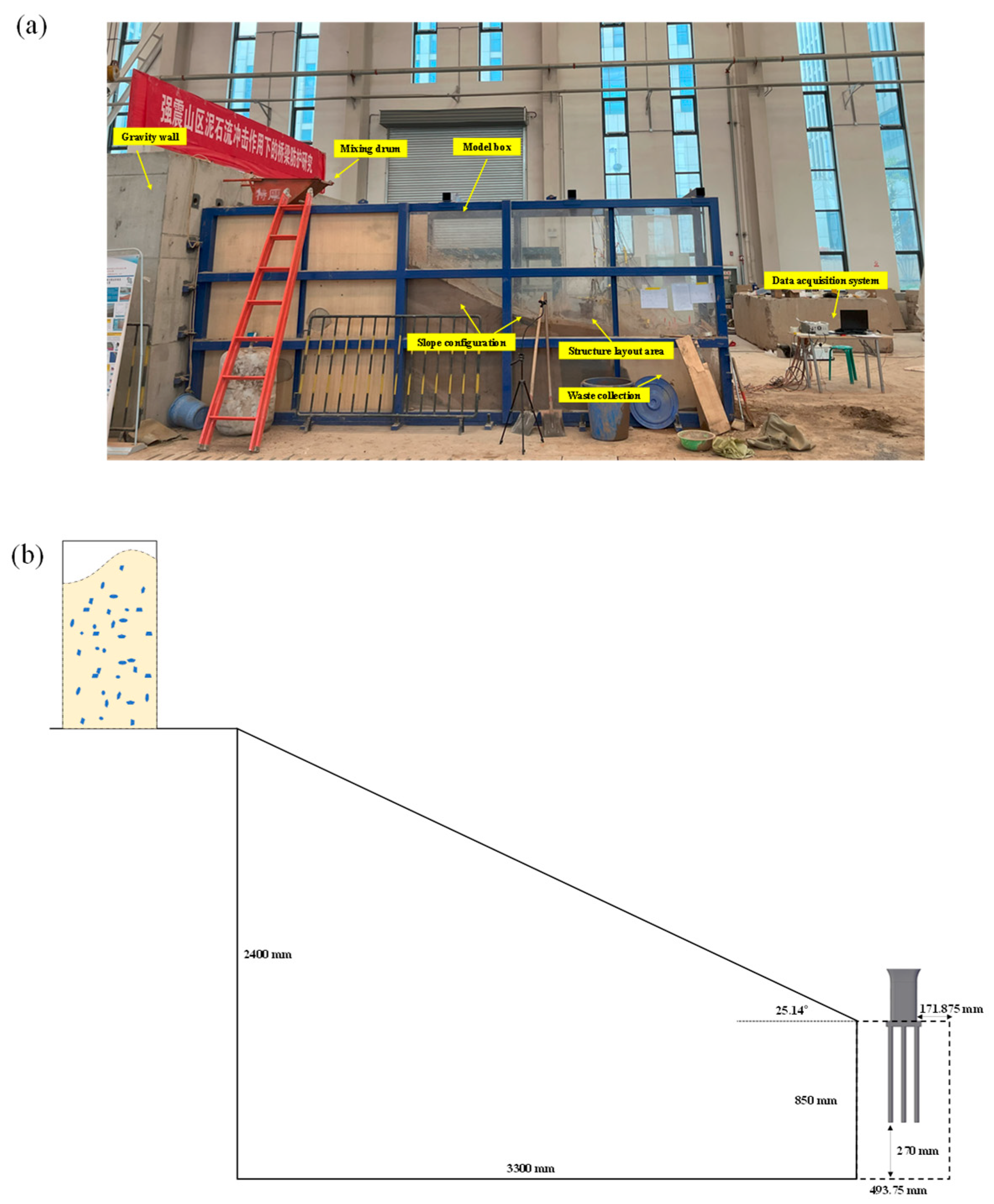
Figure 1. Model box for simulating debris flow. (a) Photo of model box; (b) Schematic graph of model.
Buildings 15 04351 g001
Figure 2. Round-end bridge pier model. (a) Fabrication process; (b) sensor layout.
Buildings 15 04351 g002
Figure 3. Schematic diagram of the reinforced concrete (RC) composite structure. (a) Front cross-sectional view; (b) top view; (c) connection diagram between buffer section and reinforced concrete column; (d) front sectional view of buffer section.
Buildings 15 04351 g003
Figure 4. Construction of the protective structure. (a) Reinforced concrete (RC) composite structure; (b) steel casing structure.
Buildings 15 04351 g004
Figure 5. Macroscopic damage of the round-ended bridge pier model with various protective strategies under different debris flows. (a,d,g) Unprotected bridge pier model under DF1 to DF3; (b,e,h) bridge pier model with steel casing under DF1 to DF3; (c,fi) bridge pier model with the RC composite structure under DF1 to DF3.
Buildings 15 04351 g005
Figure 6. Pier top displacement of the round-ended bridge pier with various protective strategies under different debris flows. (a) Unprotected bridge pier model; (b) bridge pier model with steel casing structure; (c) bridge pier model with RC composite structure; (d) location of measurement points on the bridge pier model.
Buildings 15 04351 g006
Figure 7. Bending moment of the round-ended bridge pier with various protective strategies under DF2.
Buildings 15 04351 g007
Figure 8. Peak pressure of the round-ended bridge pier with various protective strategies under different debris flows. (a) Unprotected bridge pier model; (b) bridge pier model with steel casing structure; (c) bridge pier model with RC composite structure; (d) location of measurement points on the bridge pier model.
Buildings 15 04351 g008
Figure 9. Pressure distribution of the round-ended bridge pier model with various protective strategies under different debris flows. (a,d,g) Unprotected bridge pier model under DF1 to DF3; (b,e,h) bridge pier model with steel casing under DF1 to DF3; (c,fi) bridge pier model with the RC composite structure under DF1 to DF3.
Buildings 15 04351 g009
Figure 10. Instantaneous frequency spectra of the round-ended bridge pier at measurement point SA1 under DF1. (a) Unprotected bridge pier model; (b) bridge pier model with steel casing; (c) bridge pier model with RC composite structure.
Buildings 15 04351 g010
Figure 11. Instantaneous frequency spectra of round-ended bridge pier at measurement point SA1 under DF2. (a) Unprotected bridge pier model; (b) bridge pier model with steel casing; (c) bridge pier model with RC composite structure.
Buildings 15 04351 g011
Figure 12. Instantaneous frequency spectra of round-ended bridge pier at measurement point SA1 under DF3. (a) Unprotected bridge pier model; (b) bridge pier model with steel casing; (c) bridge pier model with RC composite structure.
Buildings 15 04351 g012
Figure 13. Marginal spectrum of round-ended bridge pier with various protective strategies under DF1. (a) Unprotected bridge pier model; (b) bridge pier model with steel casing; (c) bridge pier model with RC composite structure.
Buildings 15 04351 g013
Figure 14. Marginal spectrum of round-ended bridge pier with various protective strategies under DF2. (a) Unprotected bridge pier model; (b) bridge pier model with steel casing; (c) bridge pier model with RC composite structure.
Buildings 15 04351 g014
Figure 15. Marginal spectrum of round-ended bridge pier with various protective strategies under DF3. (a) Unprotected bridge pier model; (b) bridge pier model with steel casing; (c) bridge pier model with RC composite structure.
Buildings 15 04351 g015
Table 1. Basic characteristics of Dalei Gully debris flow.
DFD ρ/(kg/m3)UWS
γH/(kN/m3)
RC
1/n
SCC
φ
ADD
Hc/(m)
HG
Ic/(m)
MBD
dmax/(m)
MGD dmin/(m)
17.032.515.80.87102941.30.03–0.1
Note: DFD, debris flow density; UWS, unit weight of solid material; RC, roughness coefficient; SCC, sediment correction coefficient; ADD, average debris depth; HG, hydraulic gradient; MBD, maximum boulder diameter; MGD, minimum gravel diameter.
Table 2. Similarity constants of simulated model.
Physical QuantitySimilarity RelationScale Factor
Geometry (L)SL1:40
Elastic modulus (E)SE1:1
Stress (σ)Sσ1:1
Section modulus (W)SW = SL31:64,000
Moment of inertia (I)SI = SL41:2,560,000
Mid-span deflection (f)Sf = SL1:40
Impact force (P)SP = SL21:1600
Table 3. Mixture mapping of the prototype and model debris flow.
Density
(kg/m3)
Rock Particle Size (mm)Mass Ratios (Rock–Sand–Water)
LargeMediumSmall
Prototype 1703600–1300200–60080–2005:4:1
Similarity constant1:11:401:401:401:1
DF1170315–32.55–152–55:4:1
DF2170315–32.5--5:4:1
DF31703--2–55:4:1
Table 4. Mixture composition of 0.1 m3 model debris flow.
GroupMixed Rock
(2–5:15:32.5 mm)
(3:6:1)
Large Rock
(15–32.5 mm)
Small Rock
(2–5 mm)
SandClayWater
DF150.71--40.5710.1468.87
DF2-50.71-40.5710.1468.87
DF3--50.7140.5710.1468.87
Disclaimer/Publisher’s Note: The statements, opinions and data contained in all publications are solely those of the individual author(s) and contributor(s) and not of MDPI and/or the editor(s). MDPI and/or the editor(s) disclaim responsibility for any injury to people or property resulting from any ideas, methods, instructions or products referred to in the content.