1. Introduction
Prefabricated buildings, owing to advantages such as standardized components, shortened construction periods, and low carbon emissions, have been widely adopted in engineering practice [
1]. Precast concrete cladding panels (PCCPs) constitute a crucial component of prefabricated structures. They refer to non-load-bearing envelope walls made of concrete panels prefabricated in factories, transported to construction sites, and subsequently suspended or fixed onto the exterior of the main structural frame via connectors. As the external envelope elements of prefabricated buildings, the performance of the connection joints in PCCPs directly determines the overall structural safety and seismic performance [
2]. Current Chinese codes [
3] categorize cladding panels into line-supported and point-supported systems based on the support configuration of their connection joints. The point-supported system achieves integrated behavior between the cladding panel and the main frame structure through a number of discrete connection joints (typically employing a four-point support configuration). This system offers significant engineering value: the controllable deformation within the joint zone effectively accommodates differential movement between the main structure and the external envelope; moreover, the load transfer path of the connection joints is explicit, exerting minimal influence on the internal force distribution within the main structure [
4].
Traditional point-supported joints predominantly employ angle steel connection configurations [
5]. This construction method requires the installation of four sets of embedded parts in both the main structure and the cladding panel, presenting challenges such as high precision requirements for embedded part positioning and low construction tolerance. To address these issues, Cao et al. [
6] and Ding et al. [
7] optimized the number of embedded parts in the main structure from four sets to two sets through functionally integrated design, thereby reducing the construction complexity. Song [
8] proposed a novel top-supported connection joint. This configuration positions the cladding panel’s center of gravity below the support points, mitigating the risk of out-of-plane overturning during construction. Concurrently, it incorporates adjustable bolts to accommodate construction elevation errors, enhancing the installation adaptability.
Furthermore, with the increasing application of energy dissipation and seismic isolation technologies in building earthquake resistance, researchers [
9,
10] have begun exploring the integration of energy dissipation devices within connection joints. The core concept involves utilizing the relative displacement between the cladding panel and the main structure during seismic events to activate energy dissipation elements, thereby dissipating the seismic energy and achieving the objective of controlling damage to the main structure. Representative research findings include the following. Liao et al. [
11] proposed a U-shaped steel bending energy dissipation joint. This joint utilizes the translational deformation of the cladding panel to induce bending deformation in the U-shaped steel for energy dissipation. Quasi-static cyclic loading tests confirmed the stable hysteretic behavior of this joint. Zhong et al. [
12] investigated the seismic performance of cladding-panel-equipped frame structures incorporating U-shaped steel plate dampers. Their results demonstrated that installing U-shaped steel plate dampers significantly enhances the overall structure’s energy dissipation capacity and deformation performance. He et al. [
13] developed a friction-energy-dissipative joint using angle steel connectors. Comparative studies revealed that such joints could reduce the structural displacement responses by approximately 30% compared to traditional flexible connections.
As mentioned previously, existing research has demonstrated the effectiveness of energy-dissipative joints in enhancing the seismic performance of cladding-panel-equipped frame systems. However, current solutions commonly suffer from complex configurations, insufficient stiffness, and excessive embedded components. Given these issues, this research proposes a novel integrated load-bearing and displacement-limiting friction energy dissipation joint. Featuring a simplified design, this integrated bearing-restricting approach reduces the number of embedded components in the main structure to just two sets. Additionally, it utilizes high-strength bolts to apply a preload, dissipating seismic energy through controlled frictional sliding. To validate the effectiveness of this joint in improving the seismic performance of the main structure, this paper establishes a refined finite element model on the ABAQUS platform. The structural damage evolution mechanisms, load-bearing characteristics, and energy dissipation mechanisms are systematically investigated through simulated quasi-static cyclic loading tests. The seismic response of the structure is also studied via nonlinear time-history analysis. Finally, a formula for calculating the horizontal load-bearing capacity, accounting for the frictional slip effect of the joint, is developed.
2. Working Principle of Novel Connection Joints
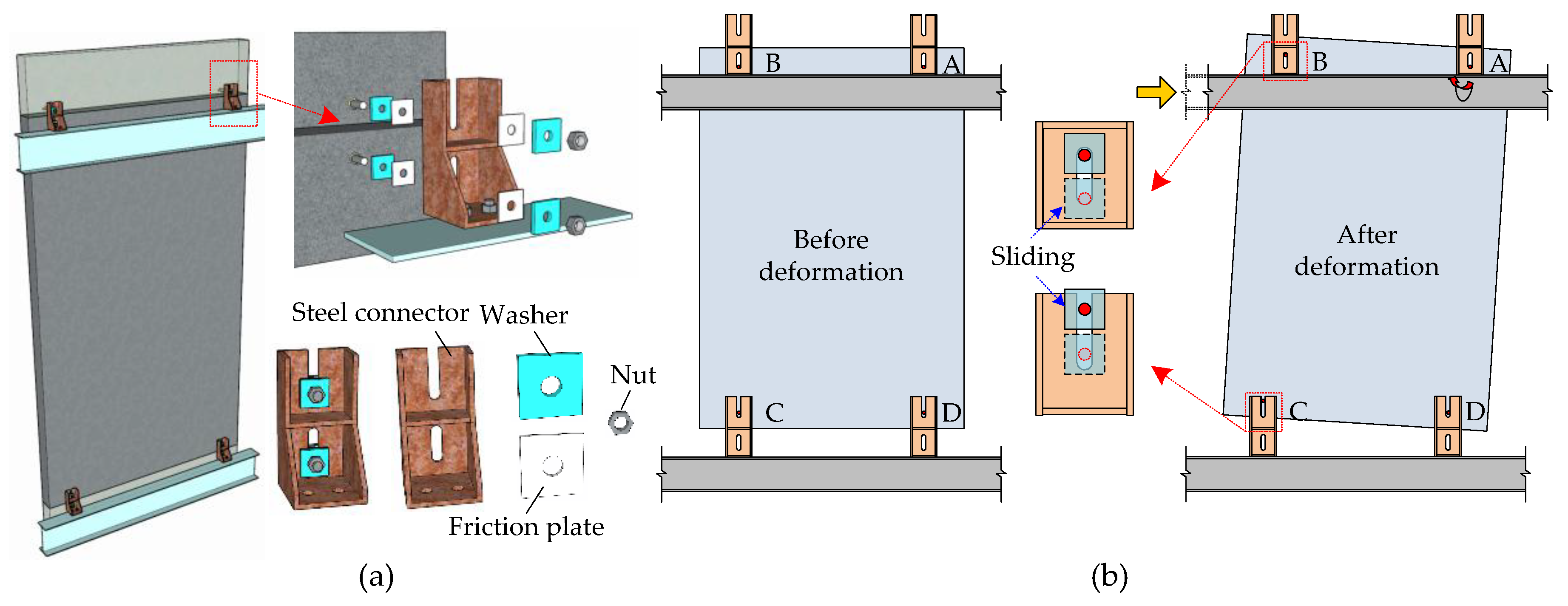
Figure 1a illustrates the schematic configuration of the novel friction-energy-dissipating connection joint proposed in this study. The new joint consists of a steel connector, friction plates, washers, and high-strength bolts. The steel connector is fabricated by welding multiple steel plates and is bolted to the top flange of the steel beam. Its back plate features two vertically oriented slotted holes designed to connect to the upper and lower cladding panels, respectively.
The cladding panel employs a point-supported design, with high-strength bolts pre-embedded at its four corners. During installation, the upper bolts of the panel form a sliding pair with the lower slotted holes of the steel connector, while the lower bolts form a sliding pair with the upper slotted holes of the connector. Within this load-transfer mechanism, the self-weight of the cladding panel is transmitted via the upper bolt group to the connector and ultimately to the steel beam. The lower joint primarily provides out-of-plane restraint; its bolts maintain a specified clearance with the walls of the slotted holes.
When the frame structure experiences lateral displacement due to seismic excitation, the cladding panel undergoes in-plane rotation about the pivot point of the upper unilateral load-bearing bolt (e.g., point A in
Figure 1b). This motion mode induces vertical relative displacement of the opposing upper and lower anchor bolts within their respective slotted holes. The magnitude of this displacement exhibits a linear relationship with the structural inter-story drift.
To effectively utilize this motion energy, the friction plates and steel washers are arranged in series on the bolts at both sides of the connector’s back plate. Applying torque to the nuts establishes a controllable interfacial preload. The steel washers promote a more uniform distribution of this interfacial preload, thereby mitigating the localized stress concentrations. Under seismic excitation, the bolts drive the friction plates to undergo sliding movement within the slotted holes. This sliding friction continuously dissipates the seismic energy, consequently enhancing the seismic performance of the main structure.
3. Finite Element Model
3.1. Model Design
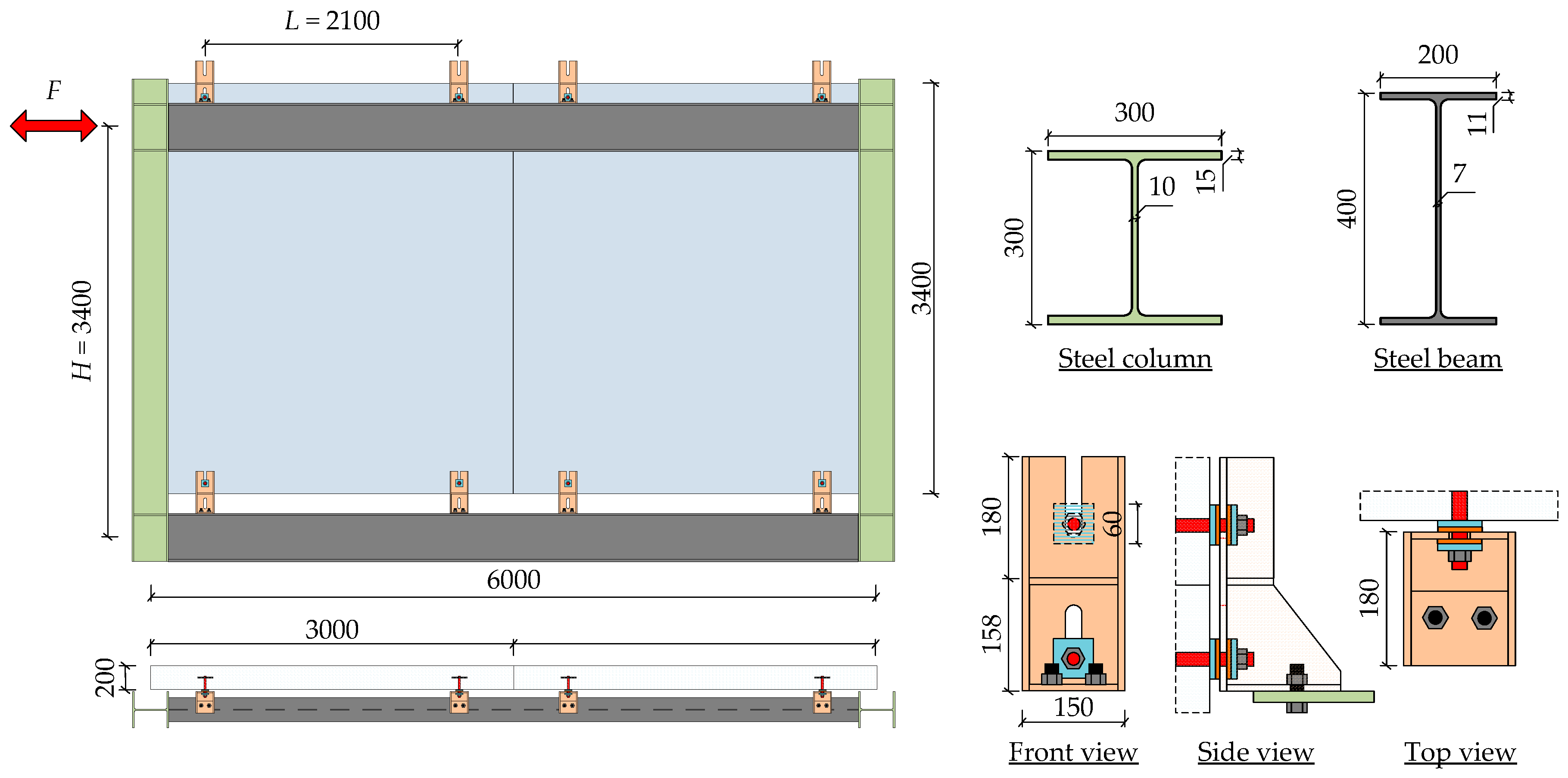
To evaluate the seismic performance of the steel frame structures with novel friction-damped precast cladding panels, this study designed a single-story, single-bay frame model with cladding panels, as shown geometrically in
Figure 2. The frame columns and frame beams utilize H-section steel with the designations HW300 × 300 × 10 × 15 and HN400 × 200 × 7 × 11, respectively. The distance between the frame columns is 6000 mm, and the distance between the frame beams is 3400 mm. The steel grades for the beams and columns are Q235 and Q345, respectively. The frame is equipped with two precast reinforced concrete cladding panels, each with geometric dimensions of 3000 mm (width) × 3400 mm (height) × 200 mm (thickness). The steel connector has a height of 338 mm and a width of 150 mm. The washers and friction plates have a width of 60 mm and thicknesses of 10 mm and 5 mm, respectively. The friction plates utilize red copper, as recommended by Shi et al. [
14]. Relevant studies confirm that red copper plates exhibit stable tribological properties with a friction coefficient of approximately 0.19.
The relationship between the vertical deformation of the bolts (Δ
v) and the inter-story drift ratio (
θ) of the frame is given by the following equation:
where
L represents the horizontal distance between the connection joints. Similarly, the horizontal deformation of the bolts Δ
h is approximately
Lθ2. To prevent bolt contact with the hole walls, the slotted hole dimensions must ensure adequate deformation space for bolt movement.
3.2. Model Development
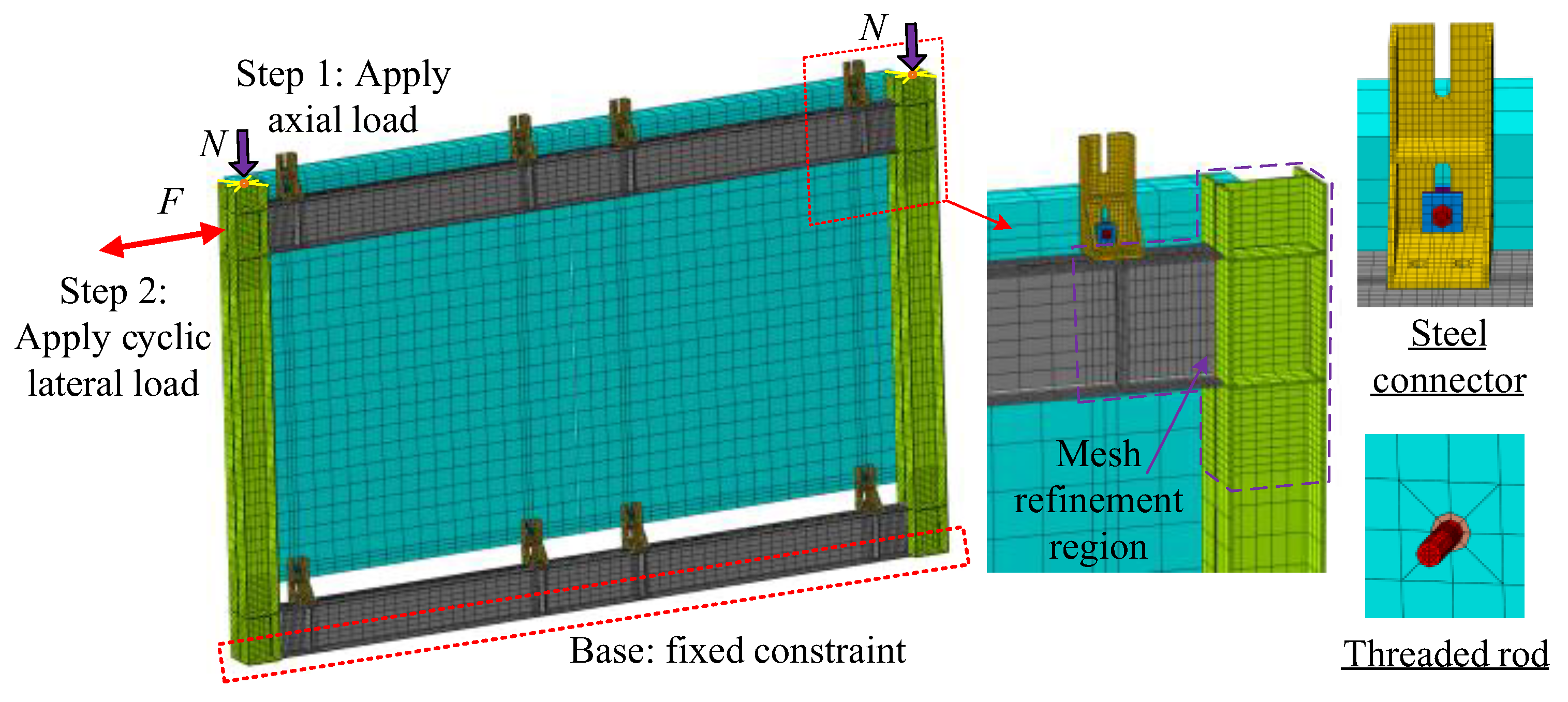
Figure 3 illustrates the refined finite element model established on the ABAQUS platform, wherein the reinforcement within the cladding panels was modeled using truss elements (T3D2), while all the other components, including the steel frame (beams, columns), concrete panels, and connection joints were simulated with solid elements (C3D8R). Given that beam–column joints are generally welded and bolts are anchored in concrete panels, “Tie” constraints appropriately simulate these interfaces. For computational convergence and efficiency, the steel connector-to-beam flange connection is also modeled with “Tie” constraints, although actual designs may reinforce this region with additional bolts or welds. The reinforcement concrete panel interactions employ “Embedded” constraints assuming perfect bonding. The surface-to-surface contact between friction plates and backing plates adopts “Hard Contact” in the normal direction and a Coulomb friction model (
μ = 0.19) in the tangential direction. The bolt preload is applied via the “Bolt Load” function. It should be noted that in actual engineering applications, the bolt preload may degrade over time. This effect was not considered in the simulations. The bottom flange underside of the frame base beam and the column bases are subjected to fixed constraints. The finite element model did not consider the initial geometric and material imperfections since their influence was negligible [
15]. In potential damage concentration zones, specifically at beam ends and column ends, locally refined meshes are implemented [
16]. The mesh sensitivity analysis demonstrated that a grid size of approximately 1/8
d to 1/10
d (where
d is the flange width) achieves an optimal balance between computational accuracy and efficiency. Loading is implemented in two sequential stages. First, an axial load is applied, with an axial load ratio set at 0.2 (a value commonly encountered in practical engineering projects). Second, a displacement-controlled lateral cyclic load is applied horizontally. Based on the preliminary analysis, the bare frame structure yields at an inter-story drift ratio
θ = 1/125. Therefore, the loading sequence is designed in increments of 0.5 times this drift ratio: specifically,
θ = 1/250, 1/125, 1/83, 1/63, 1/50, and 1/42, with three cycles applied at each loading level.
3.3. Material Model
The plastic damage model was employed to simulate the mechanical behavior of the concrete in the cladding panels, which utilized concrete grade C40 with an axial compressive strength of 31.2 MPa. The mathematical expression for the uniaxial compressive stress–strain relationship of the concrete adopted the model proposed by Razvi et al. [
17]. The Chaboche model within ABAQUS was utilized to simulate the behavior of steel under cyclic loading, requiring the definition of parameters
Ck and
γk, where
Ck/
γk represents the maximum change value of the back stress and
γk signifies the rate of change of the back stress with increasing plastic strain. Typically, setting
k = 3 suffices to describe the stress–strain hysteretic curve of steel. Based on the calibration by Shi et al. [
18], the values of
Ck and
γk for the steels Q235B and Q345B are presented in
Table 1.
The ductile damage model within ABAQUS was employed to simulate the fracture behavior of steel, wherein an element is considered to fracture when its accumulated equivalent plastic strain reaches a predefined fracture strain value, and fractured elements are subsequently removed from the finite element model. This study adopted the simplified formula proposed by Yu et al. [
19] to calculate the fracture strain (
εf) under varying stress triaxiality (
ω, defined as the ratio of hydrostatic stress to von Mises stress), expressed as follows:
where
G1 and
G2 represent the fracture strains under pure shear (
ω = 0) and pure tension (
ω = 1/3) conditions, respectively;
A0 and
Af denote the cross-sectional areas of the material sample before fracture and at the fracture surface after fracture; and
m is the exponent of the power function that provides the optimal fit to the uniaxial stress–strain relationship of the steel.
The model employed high-strength bolts with a strength grade of 10.9, possessing a nominal yield strength (
fyb) of 900 MPa. The bolt preload (
Pb) was calculated according to the following formula:
where
Ab represents the cross-sectional area of the bolt.
3.4. Model Validation
To validate the effectiveness of the finite element model, this study selected two existing representative tests: the mechanical behavior test of friction dampers conducted by Shi et al. [
14] and the quasi-static loading test of H-shaped steel beams performed by Hao et al. [
20]. These tests were chosen because they can approximately reflect the potential deformation and damage behavior of the proposed cladding-panel-equipped frames with friction-energy-dissipating joints under horizontal seismic loading, which constitutes the primary research focus of this study.
3.4.1. Friction Damper
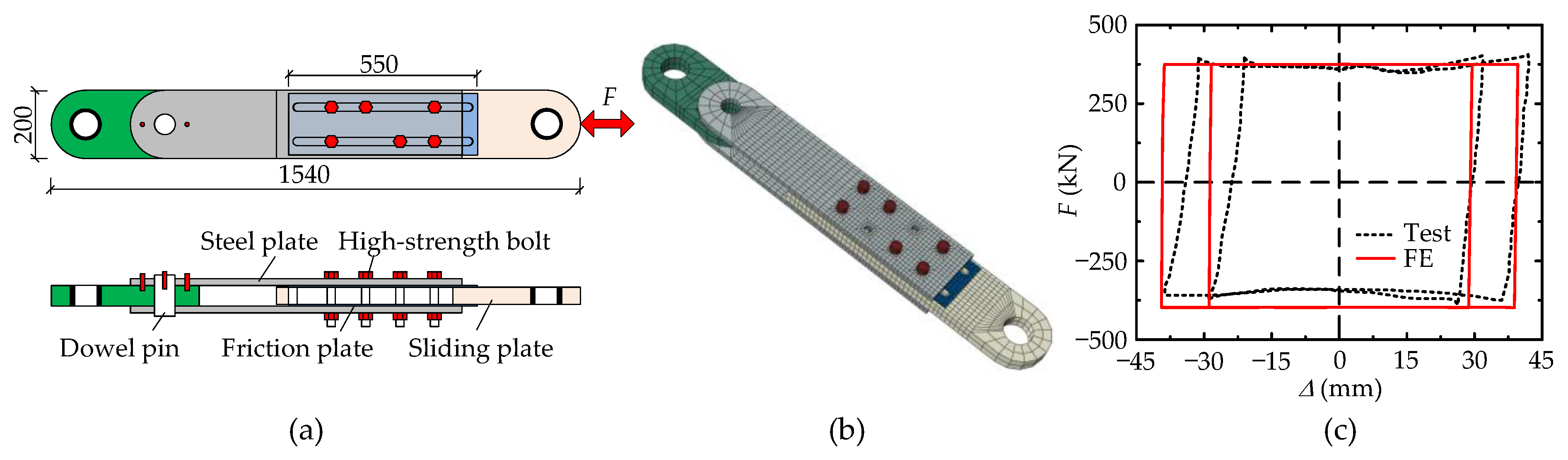
Figure 4a illustrates the configuration and dimensions of the friction damper designed by Shi et al. [
14], comprising upper and lower steel clamping plates, red copper friction plates (friction coefficient
μ = 0.19), and high-strength bolts, with preloading applied via bolt tension. A refined finite element model (
Figure 4b) was established based on the geometric parameters of the test specimen and measured material properties. Comparative results between the simulated and experimental hysteretic loops are presented in
Figure 4c, demonstrating close agreement, with deviations of 3.2% in the bearing capacity and 10.3% in the energy dissipation, thereby confirming the model’s accurate reproduction of the frictional sliding behavior between the steel plates and the friction plates.
3.4.2. H-Shaped Steel Beam
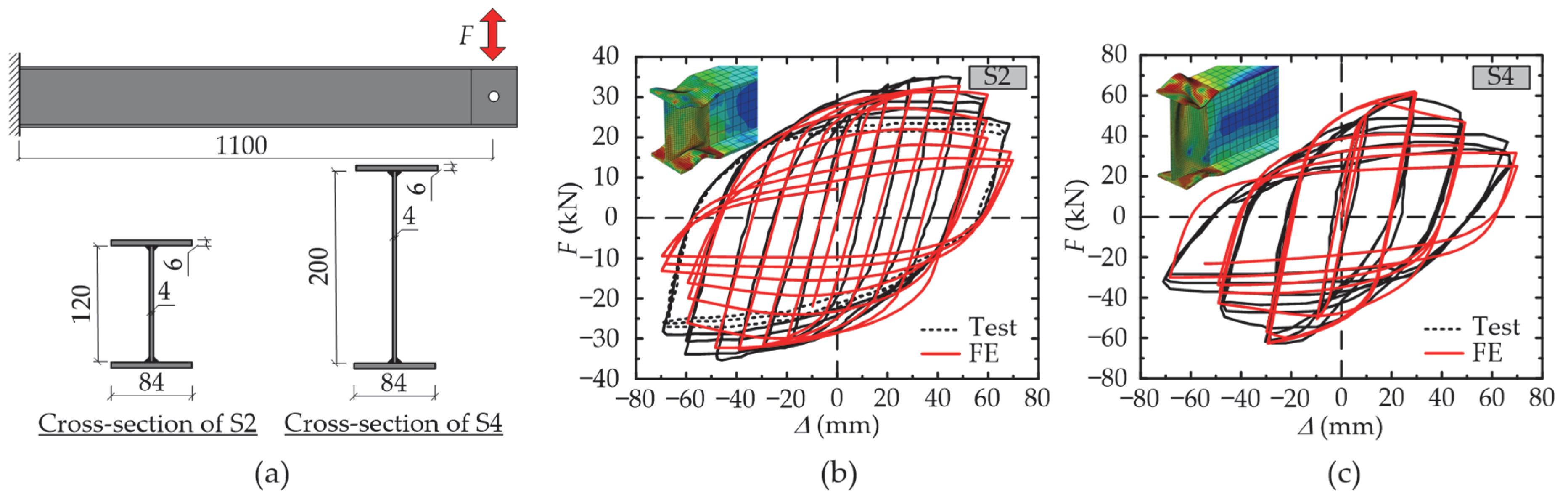
Figure 5a depicts the two welded H-section steel beams employed in the experimental study by Hao et al. [
20], with measured yield strengths of 359 MPa for the flanges and 263 MPa for the web. The test simulated seismic performance through fixed-end constraints and displacement-controlled loading at the loading point. A finite element model was developed using the experimentally determined material properties. Comparative results of the lateral force (F) versus drift ratio (q) hysteretic loops obtained from the finite element analysis and tests are presented in
Figure 5b,c, demonstrating close agreement. This validates the model’s capability to accurately simulate the local buckling evolution, load-carrying capacity, and post-peak degradation behavior of H-section steel members under lateral cyclic loading.
4. Performance Analysis Under Quasi-Static Cyclic Loading
This section presents quasi-static cyclic loading simulations based on three structural configurations: a bare steel frame and two cladding-panel-equipped frames. The latter two configurations employ connection joints with M14- and M20-diameter bolts, respectively, where the preload level of the latter is approximately twice that of the former, thereby enabling investigation of the influence of differential joint frictional forces on structural performance.
4.1. Damage Evolution Process
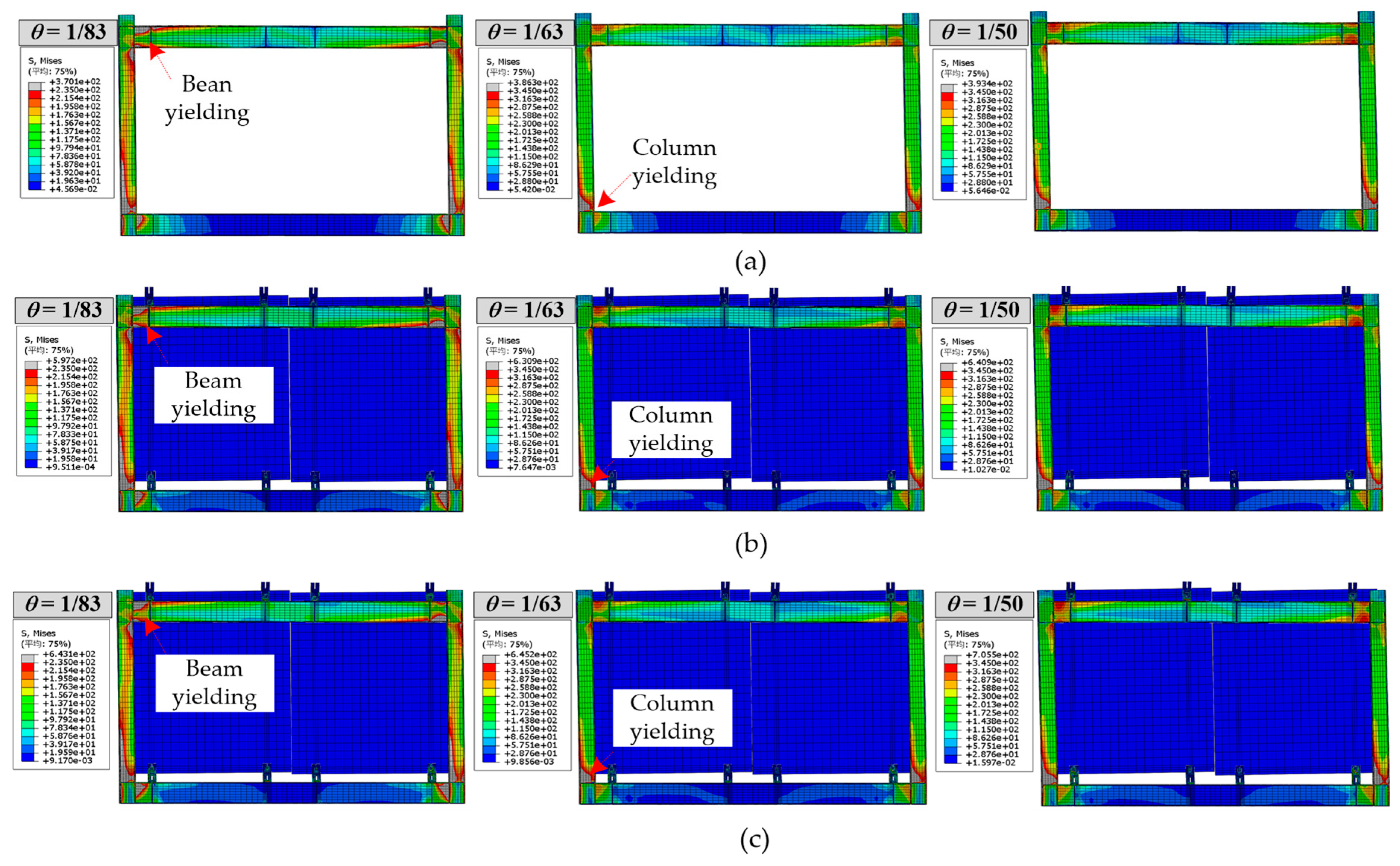
Figure 6 illustrates the von Mises stress distribution of the three structural configurations under characteristic drift ratios. The analytical results indicate that yielding initiated in the steel beams at
θ = 1/83 and progressed to the steel columns at
θ = 1/63 in all three frames.
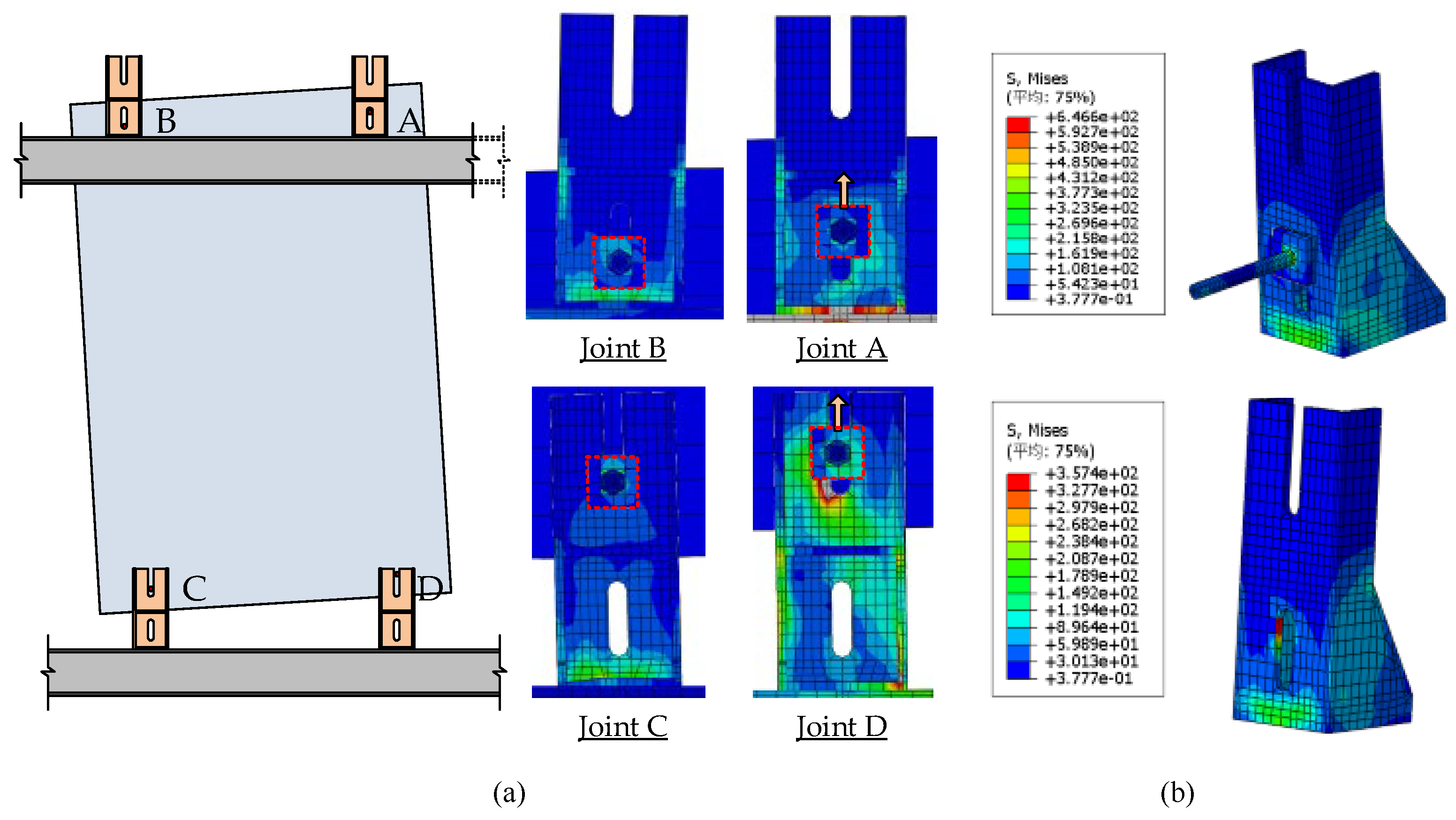
Figure 7 illustrates the deformation and stress distribution of the joint at a 1/50 drift ratio. The observed joint behavior aligns with the design intent: rotation occurs about the upper joint (Point B in
Figure 7a), while the bolts at the opposite joints (Points A and D) undergo vertical slippage along the slotted holes. Notably, the bolts remain elastic, with a maximum stress of approximately 646 MPa, which is below their yield strength of 900 MPa. During bolt slippage, minor contact between the bolts and the slotted hole walls may cause localized stress concentration and could also constrain slippage, thereby compromising the energy dissipation capacity. Thus, the width of the slotted holes should be sufficiently increased to prevent such contact.
4.2. Hysteresis Loops
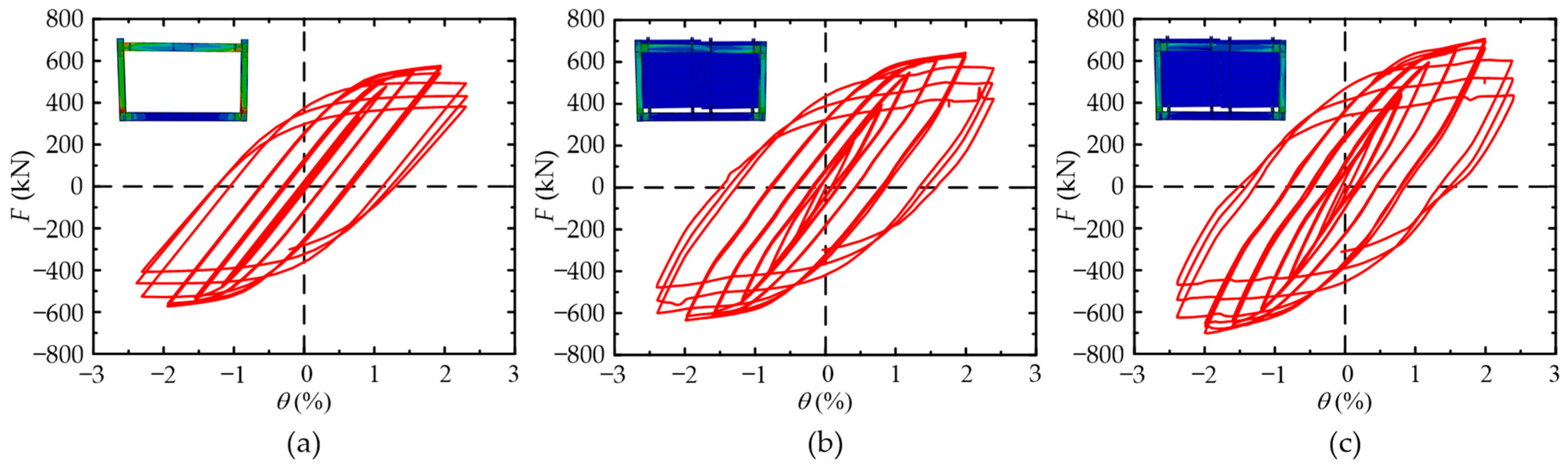
Figure 8 presents the hysteretic curves depicting the lateral force (
F) versus drift ratio (
θ) at the loading point. Comparative analysis reveals that while both the bare frame specimen and the cladding-panel-equipped frame specimens exhibit spindle-shaped hysteretic loops, distinctive behavioral divergence is observed before
θ = 1/83: the bare frame remains elastic with negligible energy dissipation characteristics in its hysteresis loops, whereas the panel-equipped frame demonstrates progressive hysteretic development from the initial loading stage due to immediate activation of frictional energy dissipation at the connection joints.
4.3. Load-Carrying Capacity and Stiffness
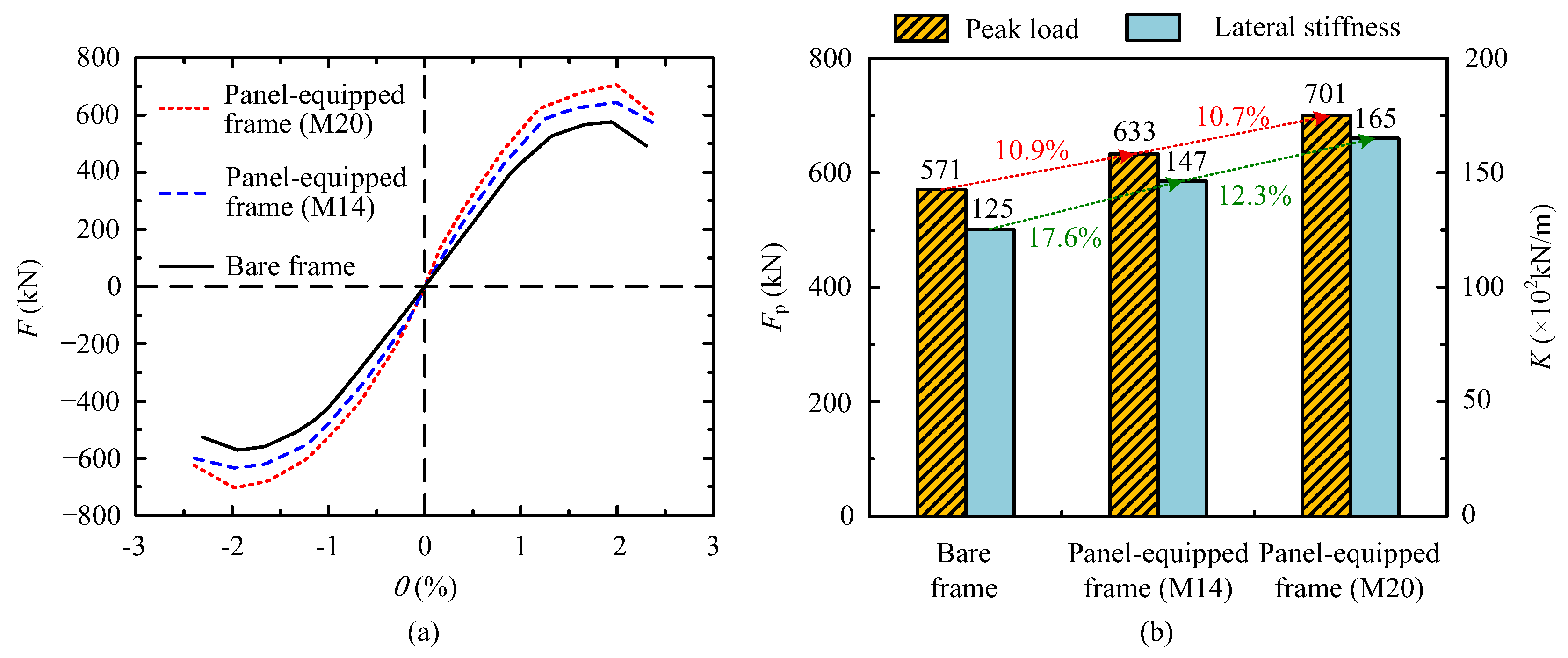
Figure 9a presents the lateral force (
F) versus drift ratio (
θ) envelope curves, while
Figure 9b comparatively illustrates their peak loads and stiffness characteristics (represented by secant stiffness at
θ = 1/125). The analytical results demonstrate that a frame equipped with friction-energy-dissipating cladding panel joints exhibits significantly superior load-carrying capacity and stiffness relative to a bare frame. Quantitatively, the panel-equipped frame with M14 and M20 bolts achieved 10.9% and 22.8% higher load-carrying capacities, respectively, compared to the bare frame. The stiffness enhancements reached 17.6% and 32.0% for the respective configurations, with the enhancement magnitudes exhibiting positive correlation with the bolt preload levels.
4.4. Energy Dissipation Capacity
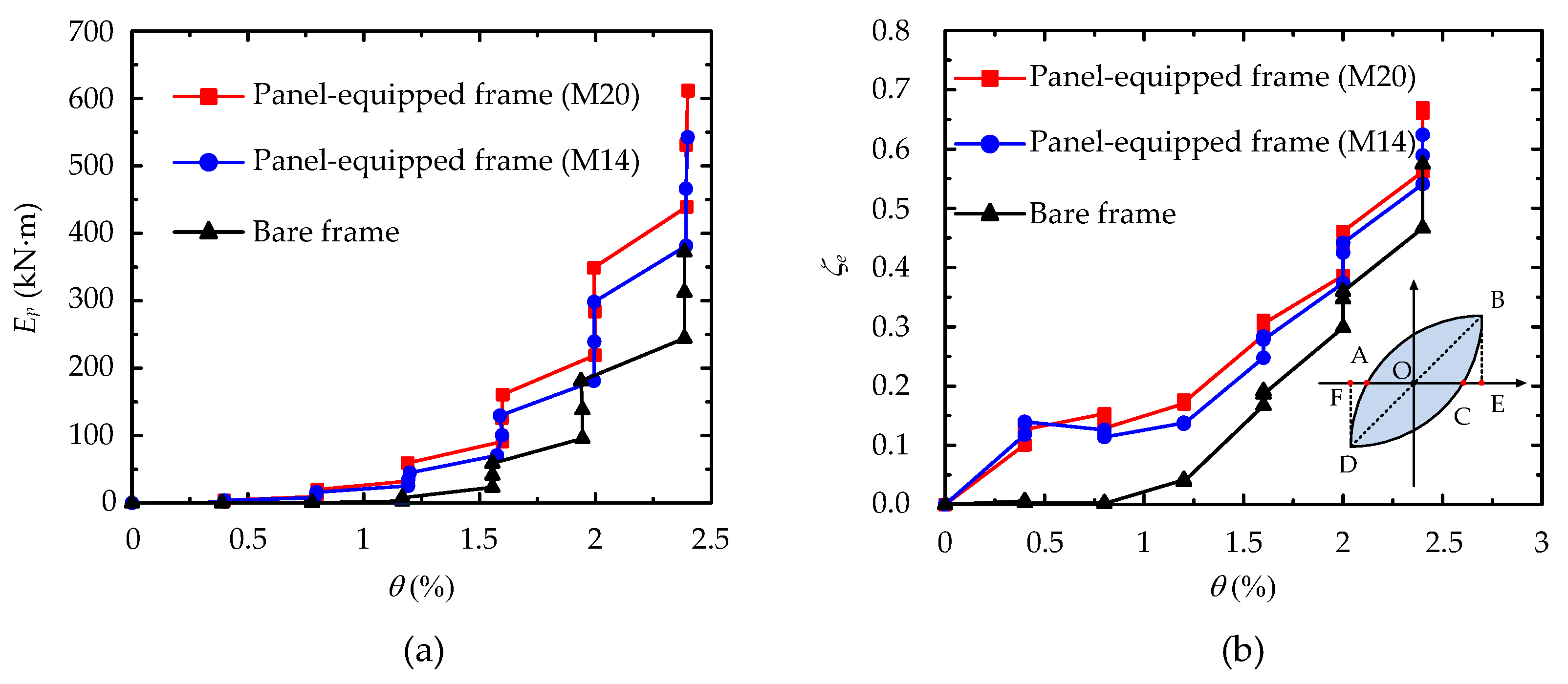
Figure 10a compares the cumulative energy dissipation across specimens, while
Figure 10b illustrates the evolution of the equivalent viscous damping coefficients (
ζe) throughout loading, where ze is calculated as follows:
where
S(ABCD) denotes the area enclosed by the hysteretic loop in
Figure 10b, and
S(OBE) and
S(ODF) represent the areas of triangles OBE and ODF, respectively. The key analytical findings reveal that the bare frame exhibited negligible energy dissipation before steel beam yielding initiated at
θ = 1/83, with ze approaching zero, whereas the cladding panel-equipped frame demonstrated sustained cumulative energy growth starting from
θ = 1/250 due to immediate activation of frictional energy dissipation at the joints, achieving an initial
ζe ≈ 0.15, confirming the significant energy dissipation contribution of the joints at early loading stages. Moreover, panel integration substantially enhanced the energy dissipation capacity. Compared to the bare frame, the final cumulative energy dissipation increased by 45.6% and 64.2% for the panel-equipped frames with M14 and M20 bolts, respectively, demonstrating a positive correlation with the preload levels.
5. Elastoplastic Time-History Analysis
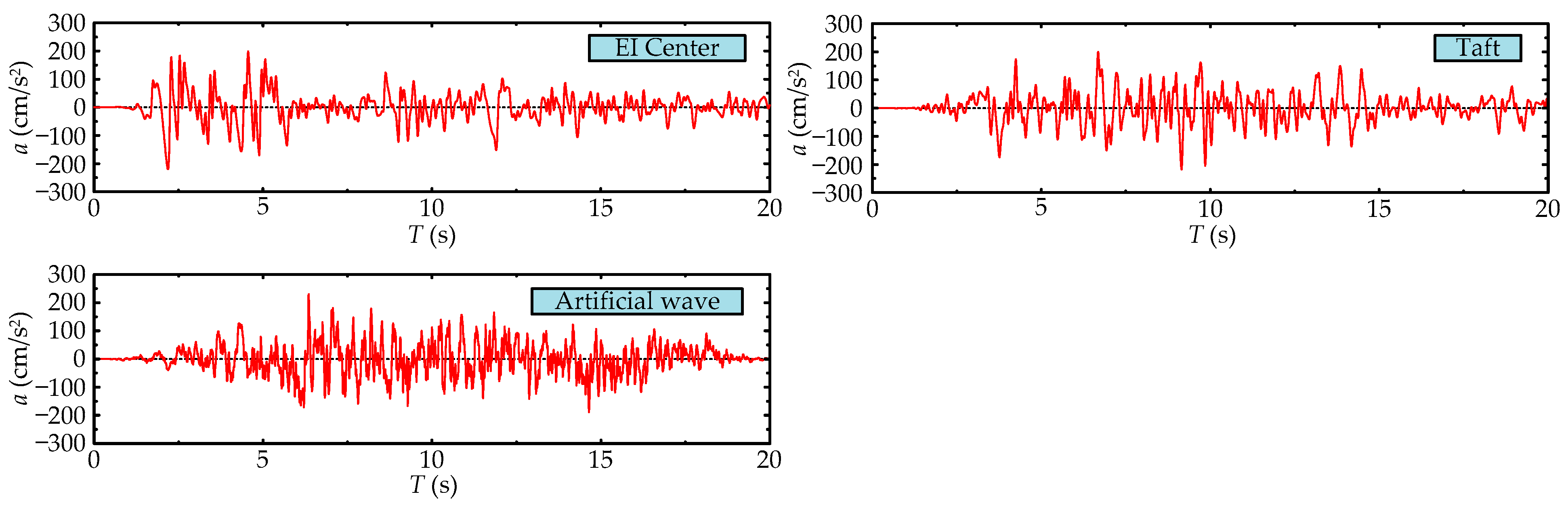
This section further investigates the influence of cladding panels on the seismic response of steel frames through nonlinear time-history analysis. In accordance with the Chinese Code GB 50011 [
21], one artificial accelerogram and two natural ground motion records were selected as input excitations. The natural records comprised the following: the NS component of the 1940 Imperial Valley earthquake recorded at El Centro Station (Station 117), representing intermediate-period ground motion, and the EW component of the 1952 Kern County earthquake recorded at Taft Lincoln School Tunnel (Station 1106), characterized by relatively higher-frequency content. The peak ground acceleration (PGA) of all the input motions was scaled to 220 cm/s
2 to represent the rare earthquake intensity level for a seismic fortification intensity seven region.
Figure 11 displays the acceleration time histories of the three seismic waves, with the effective duration truncated to the first 20 s for computational efficiency.
5.1. Inter-Story Drift Response
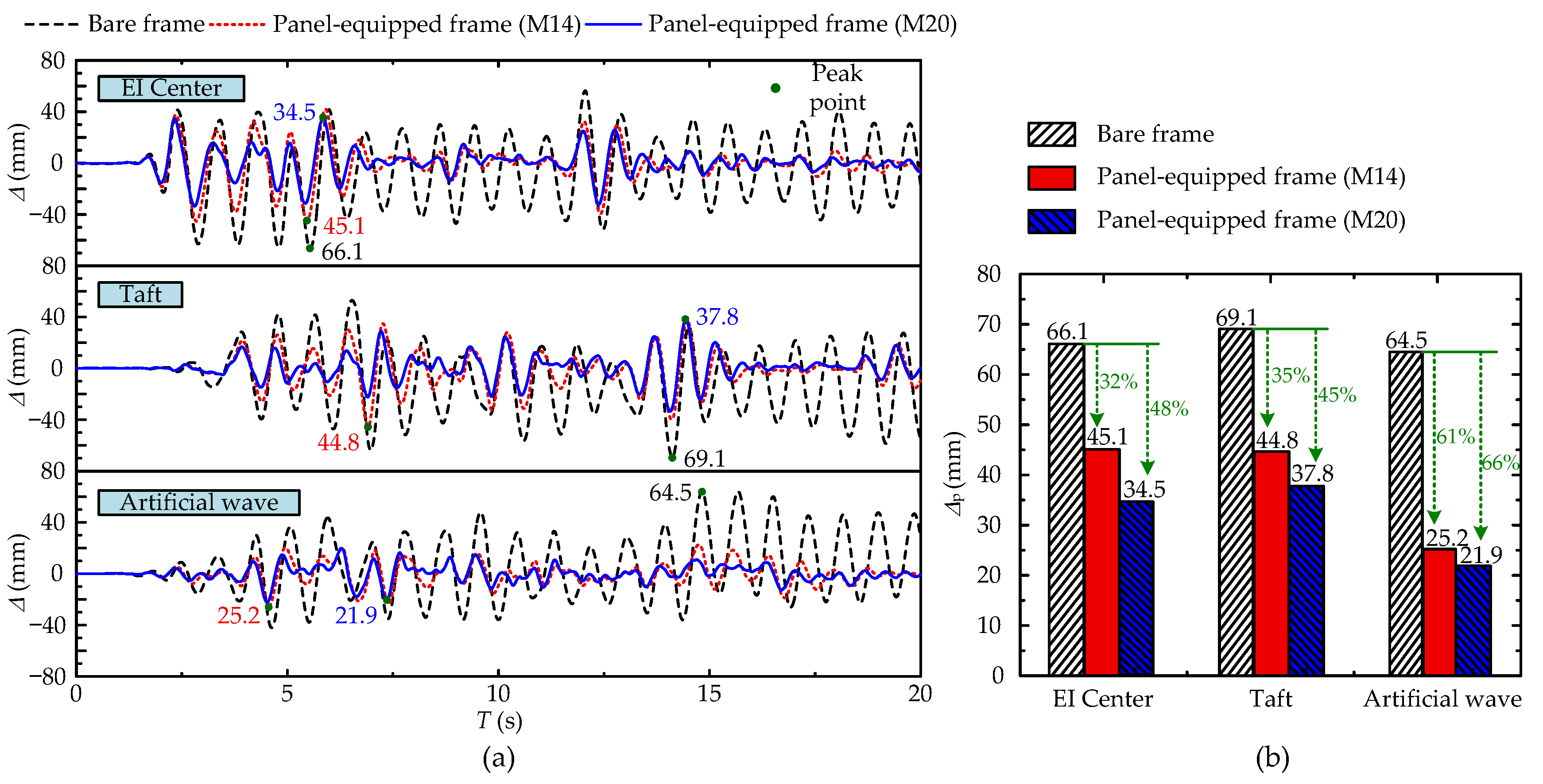
Figure 12a compares the roof displacement time histories of various frame structures under three seismic excitations, revealing significantly reduced displacement responses in the cladding-panel-equipped frames with energy-dissipating joints.
Figure 12b presents the maximum inter-story drift comparisons across the three frames. Under El Centro excitation, the bare frame exhibited 66.1 mm maximum drift (
θ = 1/52), while the panel-equipped frame with M14 and M20 bolts achieved 45.1 mm (
θ = 1/75) and 34.5 mm (
θ = 1/98), corresponding to 32% and 48% reductions, respectively. Similar trends were observed under Taft and artificial wave excitations. Collectively, the panel-equipped frames with M14/M20 bolts demonstrated average maximum drift reductions of 42.7% and 53% versus the bare frame, confirming that energy-dissipating cladding panels effectively control seismic displacement responses, with the efficacy enhancing with increasing friction levels.
5.2. Frame Damage Distribution
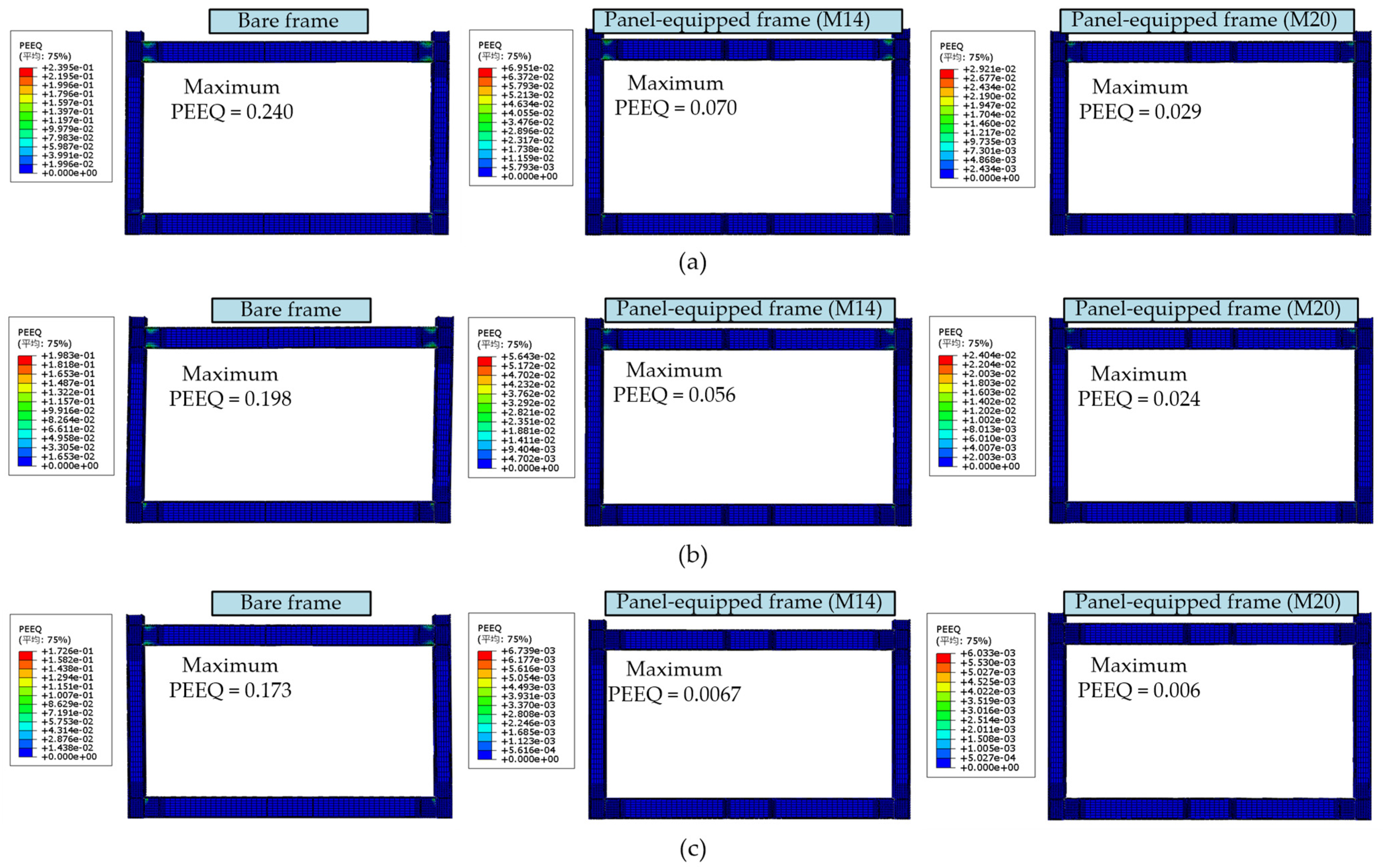
Figure 13 displays the equivalent plastic strain (PEEQ) contour plots of the main frame structures under three seismic excitations, where the PEEQ quantifies the accumulated plastic strain throughout the deformation history and serves as a critical indicator of the plastic damage severity. When the PEEQ value exceeds the fracture strain
εf calculated by Equation (2), the material stress begins to enter the descending branch, indicating that initial fracture occurs in the material. As shown in
Figure 13, the maximum equivalent plastic strain in the frame structure is typically concentrated in the flanges at the beam ends. Since the flanges primarily experience uniaxial tension with a stress triaxiality of approximately 0.33, the initial fracture strain (
εf) for normal-strength steel under this condition is about 0.6. Specifically, the bare frame exhibited maximum PEEQ values of 0.24 (El Centro), 0.198 (Taft), and 0.173 (artificial wave), while the M14 panel-equipped frame system registered 0.07 (29.2% of bare frame), 0.056 (28.3%), and 0.0067 (3.9%), and the M20 system further reduced the maximum PEEQ to 12.1%, 12.1%, and 3.4% of the bare frame values, respectively, thus conclusively demonstrating that energy-dissipating cladding panels effectively mitigate plastic damage accumulation in primary structural members through seismic energy dissipation, with enhanced friction levels (M20) yielding superior protection.
6. Influence of Joint Friction on Lateral Load-Carrying Capacity
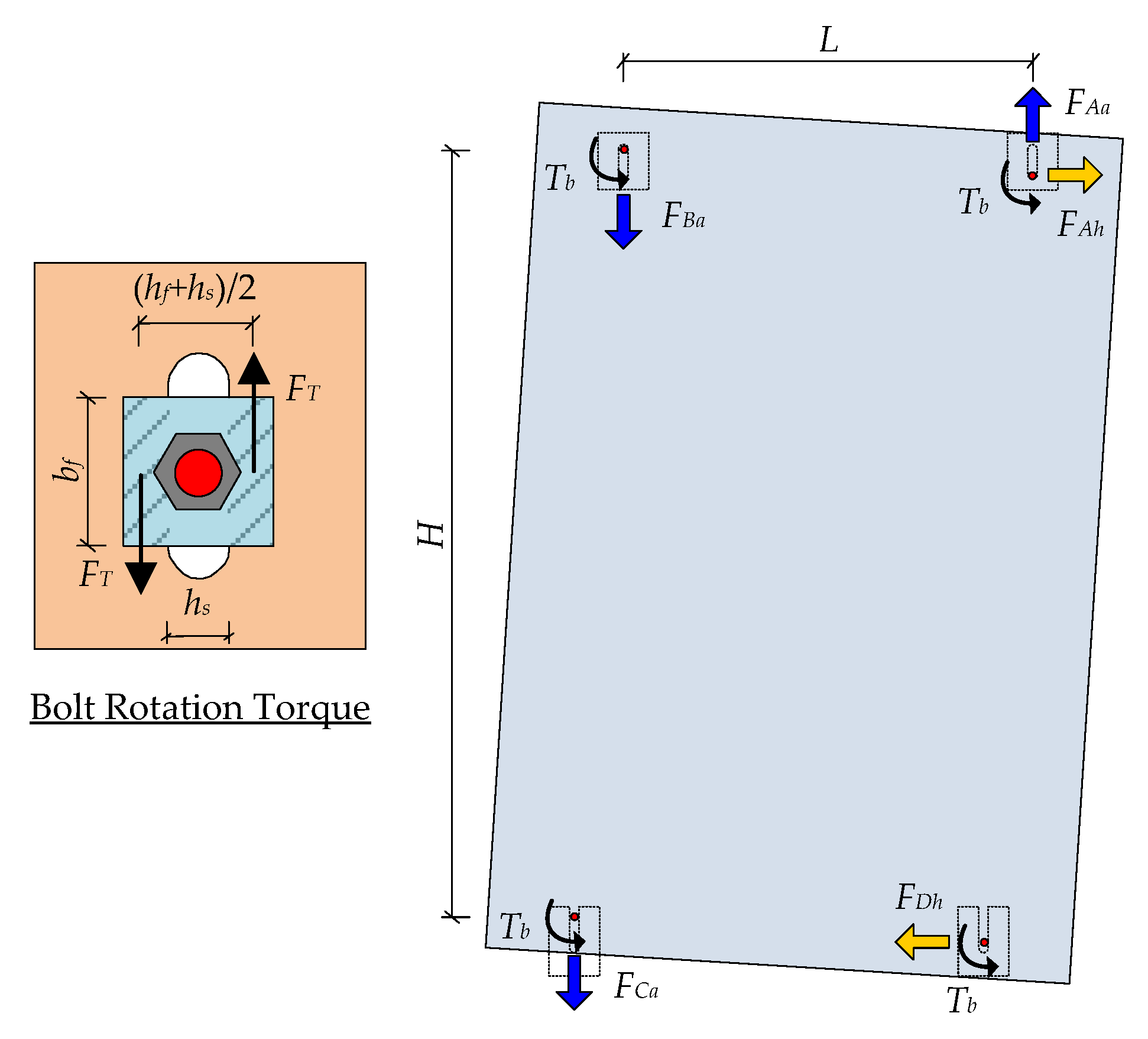
Building upon the analytical finding that joint friction enhances the lateral load-carrying capacity of frame structures, this section quantifies this effect through mechanical modeling. As illustrated in
Figure 14, when inter-story drift occurs, the cladding panel undergoes rigid-body rotation about the upper unilateral pivot (Point A), generating horizontal reactions
FAh and
FDh at opposing nodes A and D, vertical frictional reactions
FBa and
FCa at nodes B and C due to vertical sliding, and frictional torque
Tb from the bolt rotation. Establishing moment equilibrium about Point A yields:
where
H and
L denote the vertical and horizontal joint spacings,
nv = 2 represents the number of friction interfaces,
μf = 0.19 is the friction coefficient,
Pb is the bolt preload, and
Tb is the bolt rotation torque, which can be simplified as follows:
with
FT ≈
μfPb/2 being the friction force per contact side,
bf being the friction plate width, and
hs being the slotted hole width. Substituting Equations (8) and (9) into Equation (7) derives the additional horizontal resistance
Fsw per panel:
Theoretical calculations yield Fsw = 60 kN (M14) and 120 kN (M20), while finite element simulations give 62 kN and 130 kN, respectively. The slight theoretical underestimation (≈5% mean deviation) validates the model’s reliability for engineering applications.
7. Conclusions
This study investigates the seismic performance of a steel frame equipped with friction-energy-dissipating cladding panels, revealing key mechanical responses and performance enhancement mechanisms. The principal conclusions are summarized as follows:
Under lateral load action, cladding panels with friction-energy-dissipating joints undergo in-plane rotation about the upper unilateral load-bearing bolt (pivot point), inducing vertical sliding displacements of the opposing bolts within slotted holes. These displacements exhibit a linear relationship with the inter-story drift ratio, enabling effective seismic energy dissipation through controlled frictional sliding.
The friction joints significantly enhance seismic performance. Compared to the bare frame, the panel-equipped frame systems with M14 and M20 high-strength bolts exhibit 10.9% and 22.8% higher peak load-carrying capacity, and 17.6% and 32.0% greater lateral stiffness, respectively. The enhancement magnitude correlates positively with the bolt preload levels.
Friction energy dissipation activates immediately upon loading initiation, substantially improving the cumulative energy dissipation capacity. The total energy dissipation increases by 45.6% (M14) and 64.2% (M20) relative to the bare frame, accompanied by increased equivalent viscous damping ratios.
Nonlinear time-history analysis demonstrates average maximum inter-story drift reductions of 42.7% (M14) and 53.0% (M20) versus the bare frame. Additionally, energy-dissipating panels effectively mitigate the damage severity in primary structural members, with the efficacy proportional to the joint friction forces.
The derived design formula for additional horizontal resistance due to the joint friction, established through mechanical equilibrium principles, achieves high accuracy with approximately 5% deviation from the finite element results, confirming its applicability in practical engineering design. Considering that the energy dissipation of the novel friction joint proposed in this study relies on inter-story deformation of the frame, this type of cladding panel is well-suited for low-to-mid-rise frame structures dominated by inter-story shear deformation under a seismic load.
In this study, the effectiveness of the proposed energy-dissipative joint-equipped cladding panels in enhancing the seismic performance of frame structures was primarily investigated through finite element simulations. Future experimental studies will be conducted to account for more complex real-world factors. Furthermore, considering the stochastic nature of seismic excitations, additional time-history analyses involving broader suites of ground motions will be performed.
Author Contributions
Conceptualization, X.-L.C., X.G. and L.X.; methodology, L.X.; software, J.-W.Z. and L.X.; validation, X.-L.C. and L.-Q.Z.; formal analysis, L.X.; investigation, X.G. and X.-L.C.; resources, L.X.; data curation, J.-W.Z.; writing—original draft preparation, X.-L.C. and L.X.; writing—review and editing, L.-Q.Z.; project administration, L.X. All authors have read and agreed to the published version of the manuscript.
Funding
This research was funded by the National Science Fund of China (Grant No. 51578152), the Natural Science Foundation of Fujian Province (Grant No. 2023J05190), and the Science and Technology Foundation of State Grid Fujian Economic Research Institute (Grant No. SGFJJY00BDJS2400080). The support is gratefully acknowledged.
Data Availability Statement
The data presented in this study is available on request from the corresponding author.
Conflicts of Interest
The authors declare no conflicts of interest.
References
- Wang, J.; Zhao, J.D.; Hu, Z.Y. Review and thinking on development of building industrialization in China. Chin. Civil. Eng. J. 2016, 49, 1–8. (In Chinese) [Google Scholar]
- Shi, J.H.; Zhao, X.F.; Zhang, F.; Jiang, H.; Wang, J.Q. Study on cyclic testing of a full-scale steel frame with translation-type precast concrete exterior cladding panels. J. Southeast Univ. (Nat. Sci. Ed.) 2023, 53, 803–811. (In Chinese) [Google Scholar]
- JGJ/T458-2018; Technical Standard for Application of Precast Concrete Façade Panels. China Architecture & Building Press: Beijing, China, 2018. (In Chinese)
- Xiao, M.; Wang, Z.; Zhang, L.Z.; Xu, X.T.; Liu, J.F. Research on the connection between precast concrete point-supporting facade panel and structure. Build. Struct. 2019, 49, 9–13. (In Chinese) [Google Scholar]
- Wu, J.H.; Lu, J.S.; Xu, Z.D.; Zheng, Z.P. Upper load-bearing joint design method of the precast concrete cladding panels. Build. Struct. 2014, 44, 47–51. (In Chinese) [Google Scholar]
- Cao, S.; Shu, G.P.; Lin, K.H.; Fan, S.G.; Gao, H. Design method and strength analysis of a new out-hang connection of assembled steel structure cladding panels. Build. Struct. 2017, 47, 46–52. (In Chinese) [Google Scholar]
- Ding, K.W.; Yang, T.; Liu, Y.L. Experimental study on seismic behavior of a new cross-shaped connection node between external ALC cladding panels and steel frame. Build. Struct. 2024, 54, 90–97. (In Chinese) [Google Scholar]
- Song, X.S. Research on the design of prefabricated concrete external cladding panels for a certain project. Fujian Archit. Constr. 2024, 4, 54–60. (In Chinese) [Google Scholar]
- Belleri, A.; Brunesi, E.; Nascimbene, R.; Pagani, M.; Riva, P. Seismic Performance of Precast Industrial Facilities Following Major Earthquakes in the Italian Territory. J. Perform. Constr. Facil. 2014, 29, 04014135. [Google Scholar] [CrossRef]
- Bournas, D.A.; Negro, P.; Taucer, F.F. Performance of industrial buildings during the Emilia earthquakes in Northern Italy and recommendations for their strengthening. Bull. Earthq. Eng. 2014, 12, 2383–2404. [Google Scholar] [CrossRef]
- Liao, Z.; Liang, S.T.; Zhu, X.J.; Qian, L.Y.; Tian, P.F.; Tao, J.X. Research on mechanical behavior of a semi-rigid energy dissipation connection node of precast cladding panel. Build. Struct. 2024, 54, 126–137. (In Chinese) [Google Scholar]
- Chong, X.; Song, L.; Chen, C.L.; Wang, Z.Y.; Jiang, Q.; Feng, Y.L.; He, Y.Z. Research on the seismic behavior of façade panel of prefabricated concrete shear wall with damper. Ind. Constr. 2020, 50, 40–46. (In Chinese) [Google Scholar]
- He, L.; Chong, X.; Sha, H.L.; Gao, J.; Feng, H.; Zhao, P.; Li, Z.P. Study on seismic performance of reinforced concrete frame structure with UHPC cladding panels using different connection system. J. Seismol. Res. 2024, 47, 94–104. (In Chinese) [Google Scholar]
- Shi, W.L.; Yan, M.T.; Chen, R. The mechanical properties comparison of three kinds of friction dampers with different friction materials. Struct. Eng. 2021, 37, 121–128. (In Chinese) [Google Scholar]
- Meng, B.; You, K.; Yang, B.; Kong, D.; Wen, J. Anti-progressive collapse performance and design method of novel T-stub connections. Eng. Struct. 2024, 319, 118880. [Google Scholar] [CrossRef]
- Meng, B.; Li, H.; Liew, J.Y.R.; Li, S.; Kong, D.Y. Enhancing the collapse resistance of a composite subassembly with fully welded joints using sliding inner cores. J. Struct. Eng. 2024, 150, 04024085. [Google Scholar] [CrossRef]
- Razvi, S.; Saatcioglu, M. Confinement model for high strength concrete. J. Struct. Eng. 1999, 125, 281–289. [Google Scholar] [CrossRef]
- Shi, Y.J.; Wang, M.; Wang, Y.Q. Experimental study of structural steel constitutive relationship under cyclic loading. J. Build. Mater. 2012, 15, 293–300. (In Chinese) [Google Scholar]
- Yu, H.L.; Jeong, D.Y. Application of a stress triaxiality dependent fracture criterion in the finite element analysis of unnotched Charpy specimens. Theor. Appl. Fract. Mech. 2010, 54, 54–62. [Google Scholar] [CrossRef]
- Hao, J.P.; Chen, S.F. Experimental study of local buckling and low cyclic fatigue of steel structure under cyclic load. J. Civ. Eng. 1996, 6, 40–52. (In Chinese) [Google Scholar]
- GB 50011-2010; Code for Seismic Design of Buildings. China Architecture & Building Press: Beijing, China, 2016. (In Chinese)
| Disclaimer/Publisher’s Note: The statements, opinions and data contained in all publications are solely those of the individual author(s) and contributor(s) and not of MDPI and/or the editor(s). MDPI and/or the editor(s) disclaim responsibility for any injury to people or property resulting from any ideas, methods, instructions or products referred to in the content. |
© 2025 by the authors. Licensee MDPI, Basel, Switzerland. This article is an open access article distributed under the terms and conditions of the Creative Commons Attribution (CC BY) license (https://creativecommons.org/licenses/by/4.0/).