Development and Characterization of CoCrMo/xCu Composites Fabricated by Powder Metallurgy

 , , , , and
Abstract
1. Introduction
2. Materials and Methods
3. Results and Discussion
3.1. Sintering Analysis
3.2. Microstructural Characterization
3.3. Microhardness Analysis
3.4. Electrochemical Analysis
4. Conclusions
- •
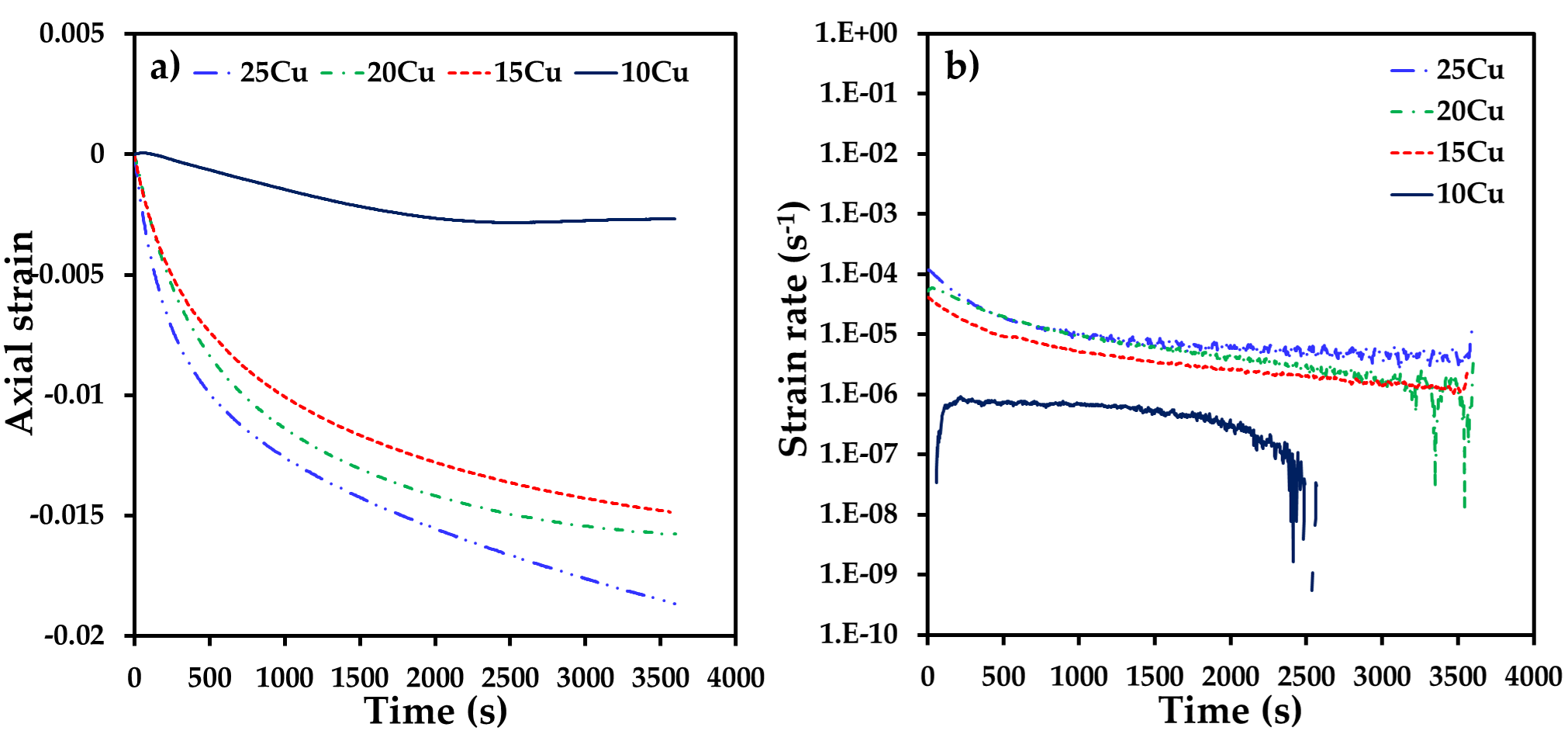
- Densification is driven by filling the pores of the Cu liquid with a partial dissolution of CoCrMo particles.
- •
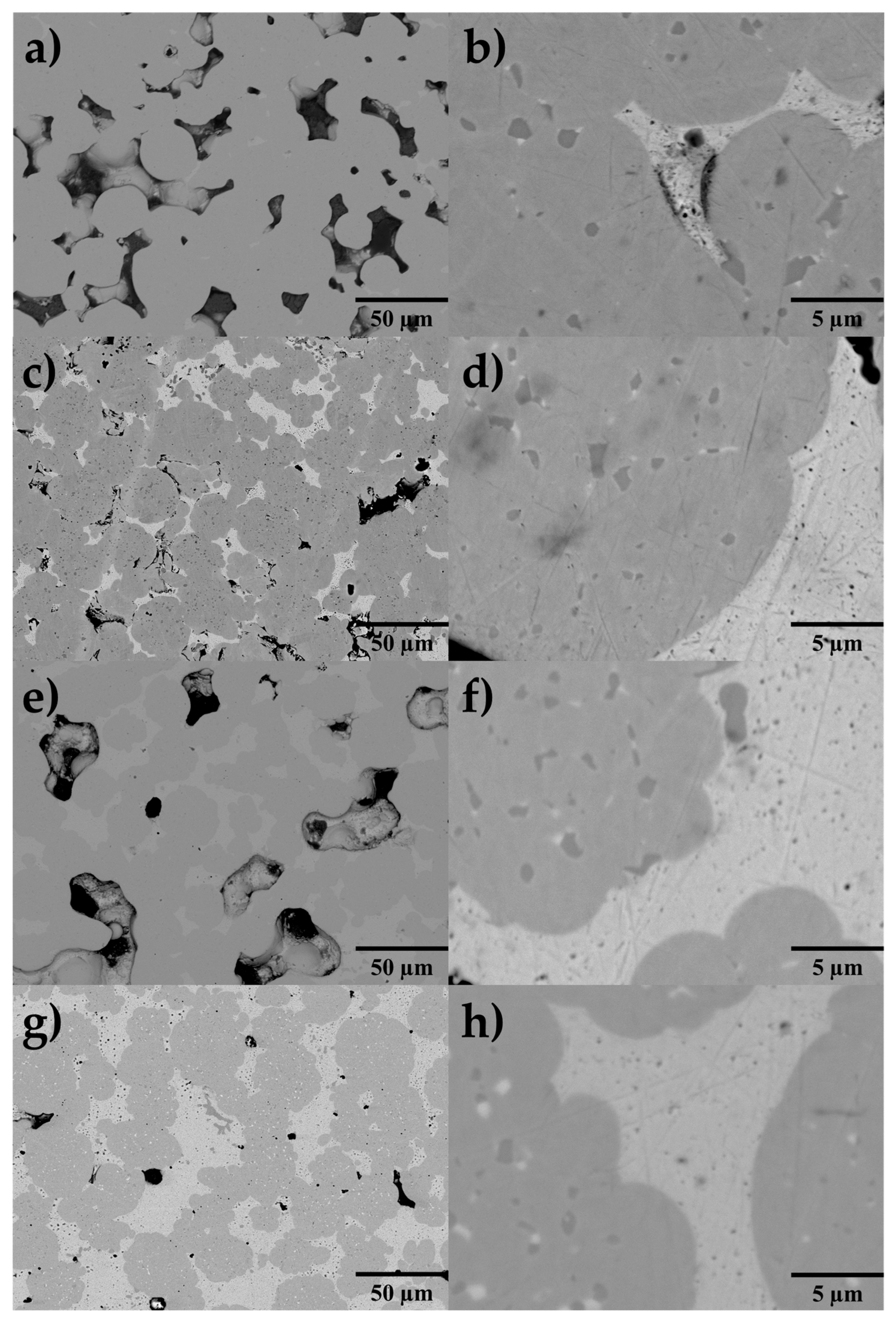
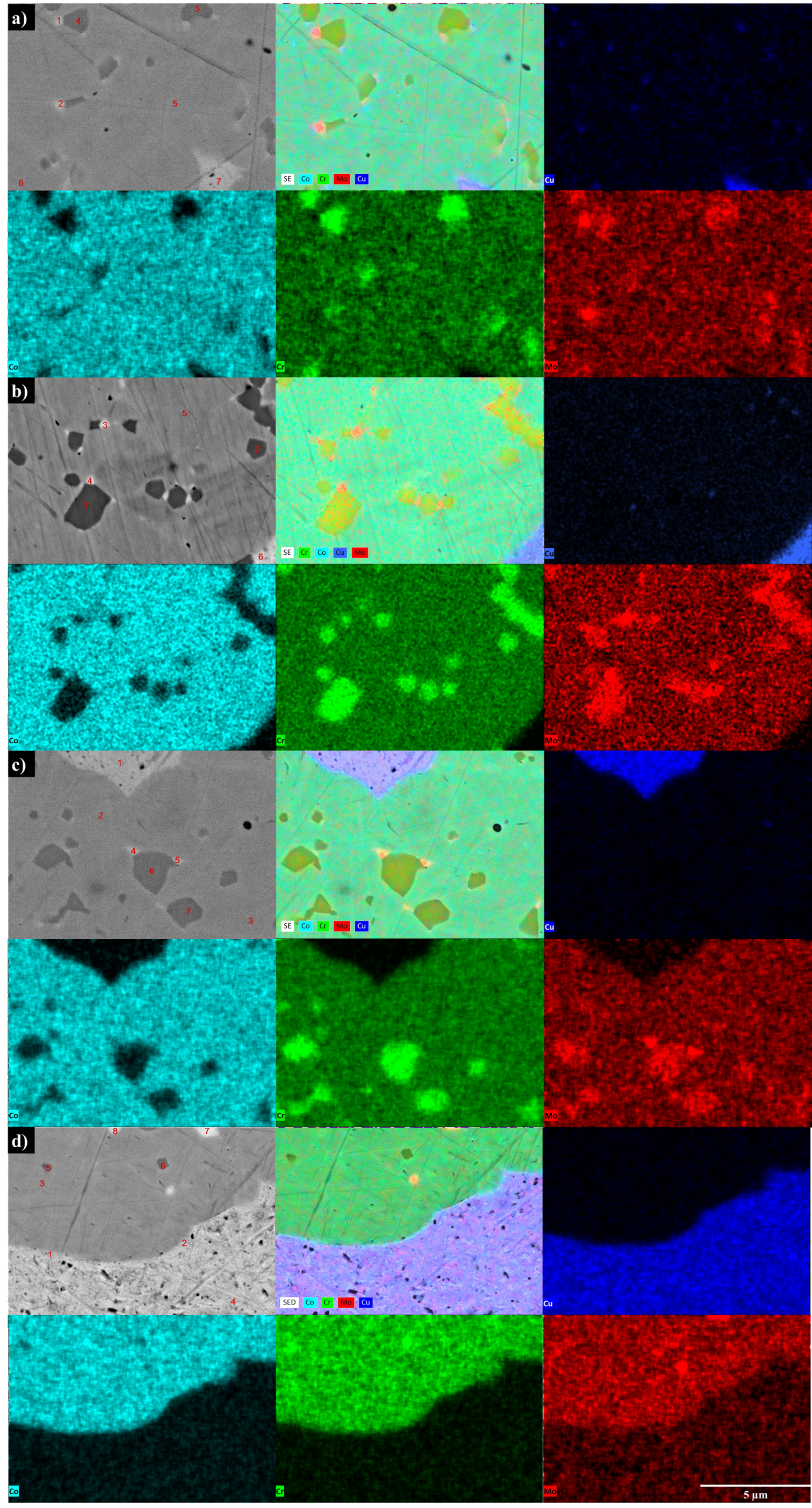
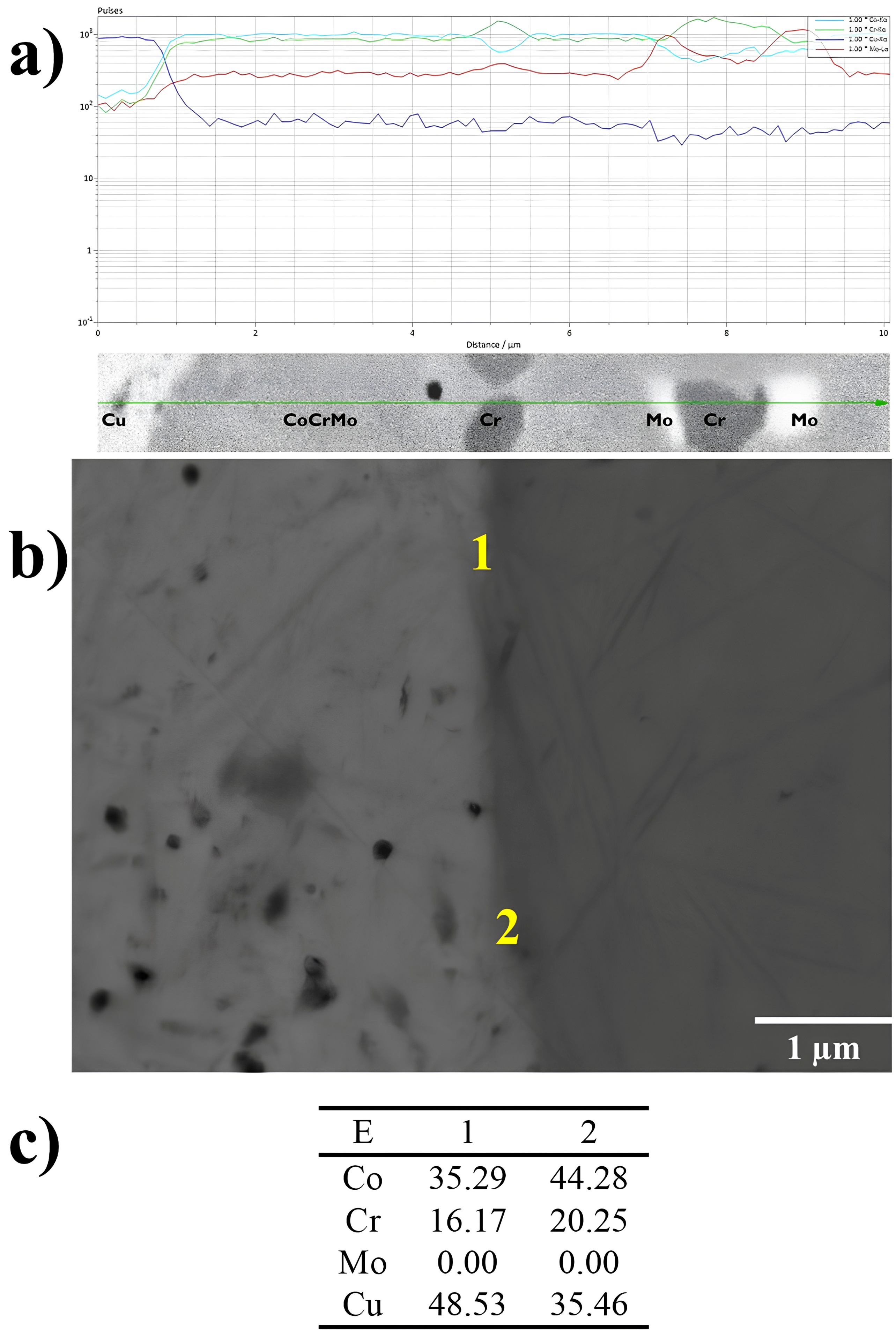
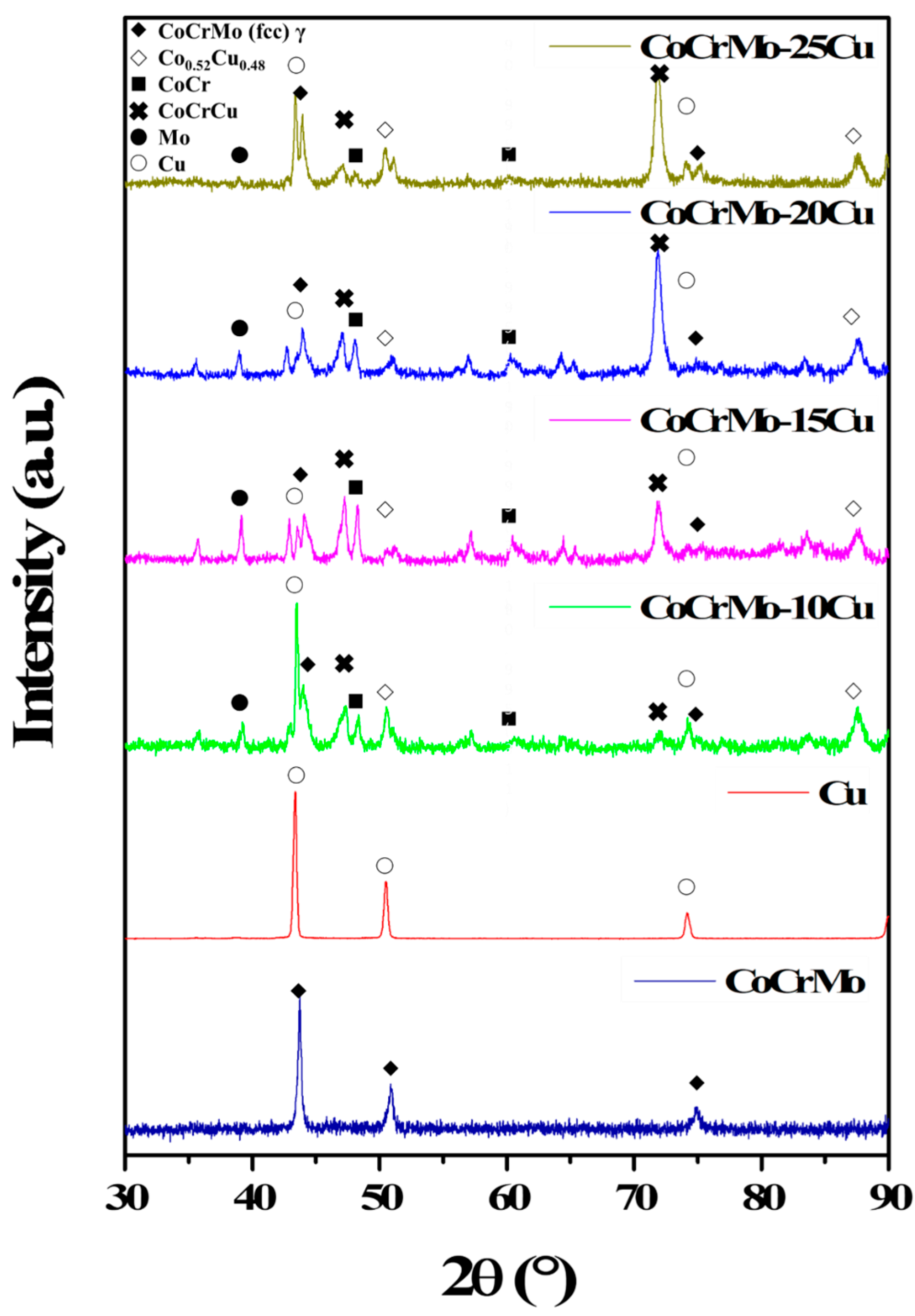
- The microstructure is formed by the CoCrMo particles, Cu, and the formation of Co-Cr and Co-Mo intermetallics due to the dissolution of cobalt at the interface with the Cu liquid.
- •
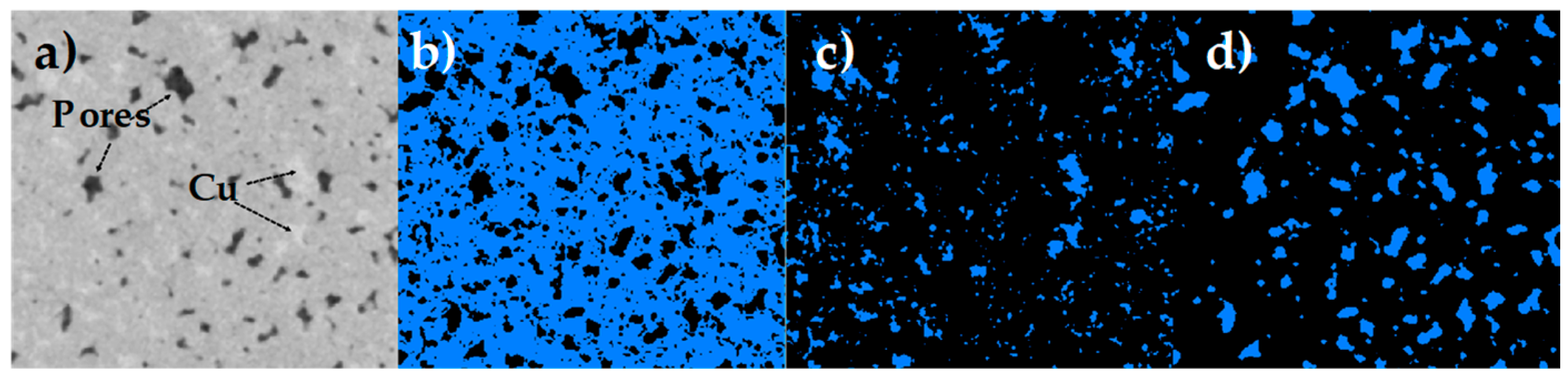
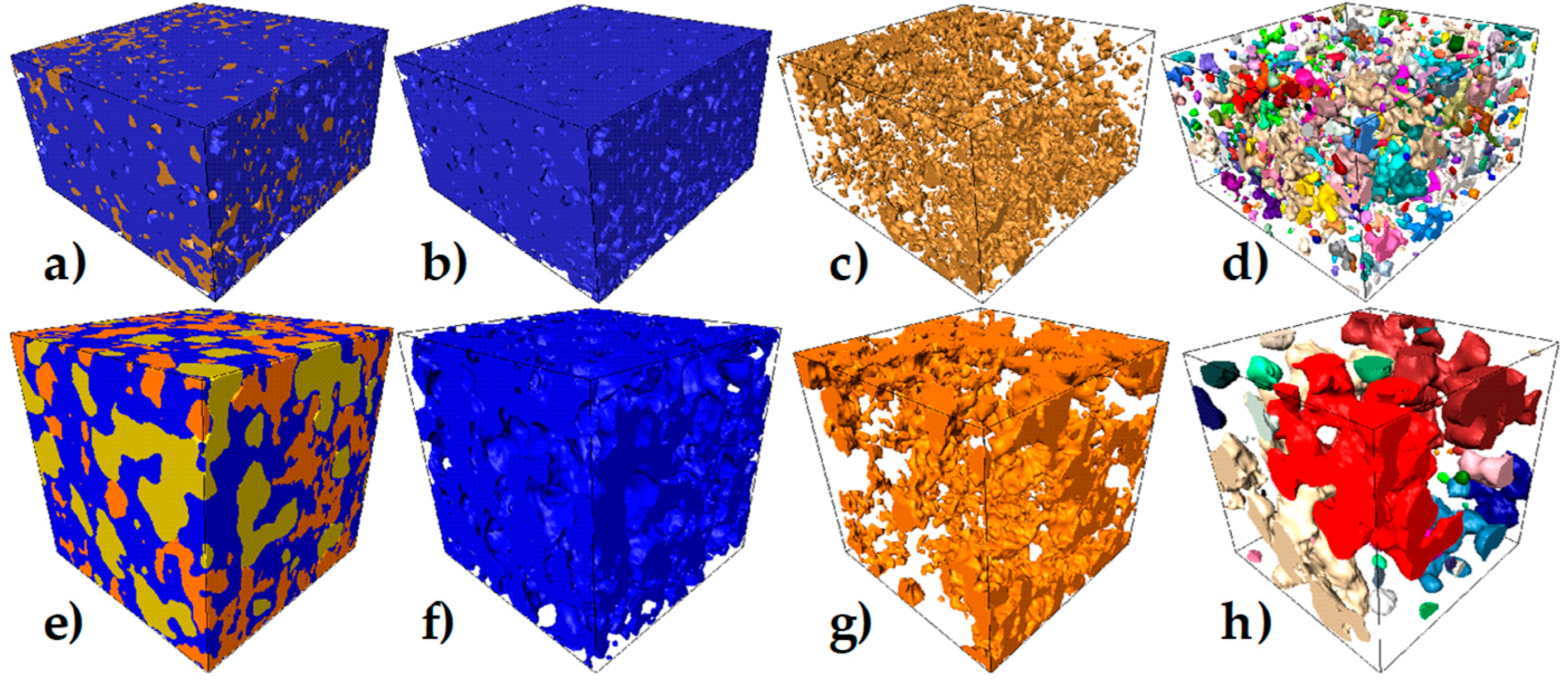
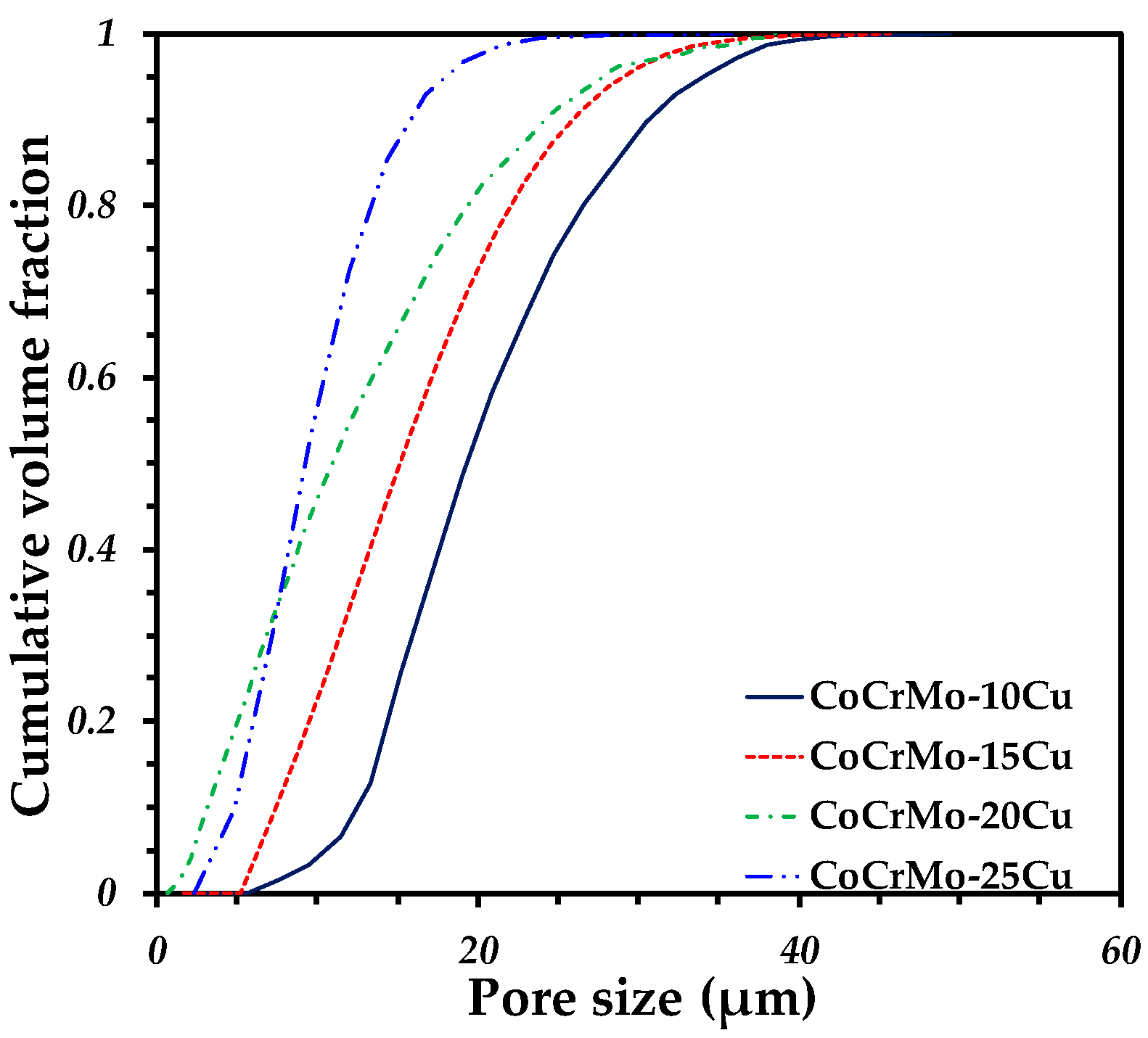
- Reduction in pore size diameters as the densification increases was demonstrated by the 3D analysis, which can be designed to control the final porosity for different applications.
- •
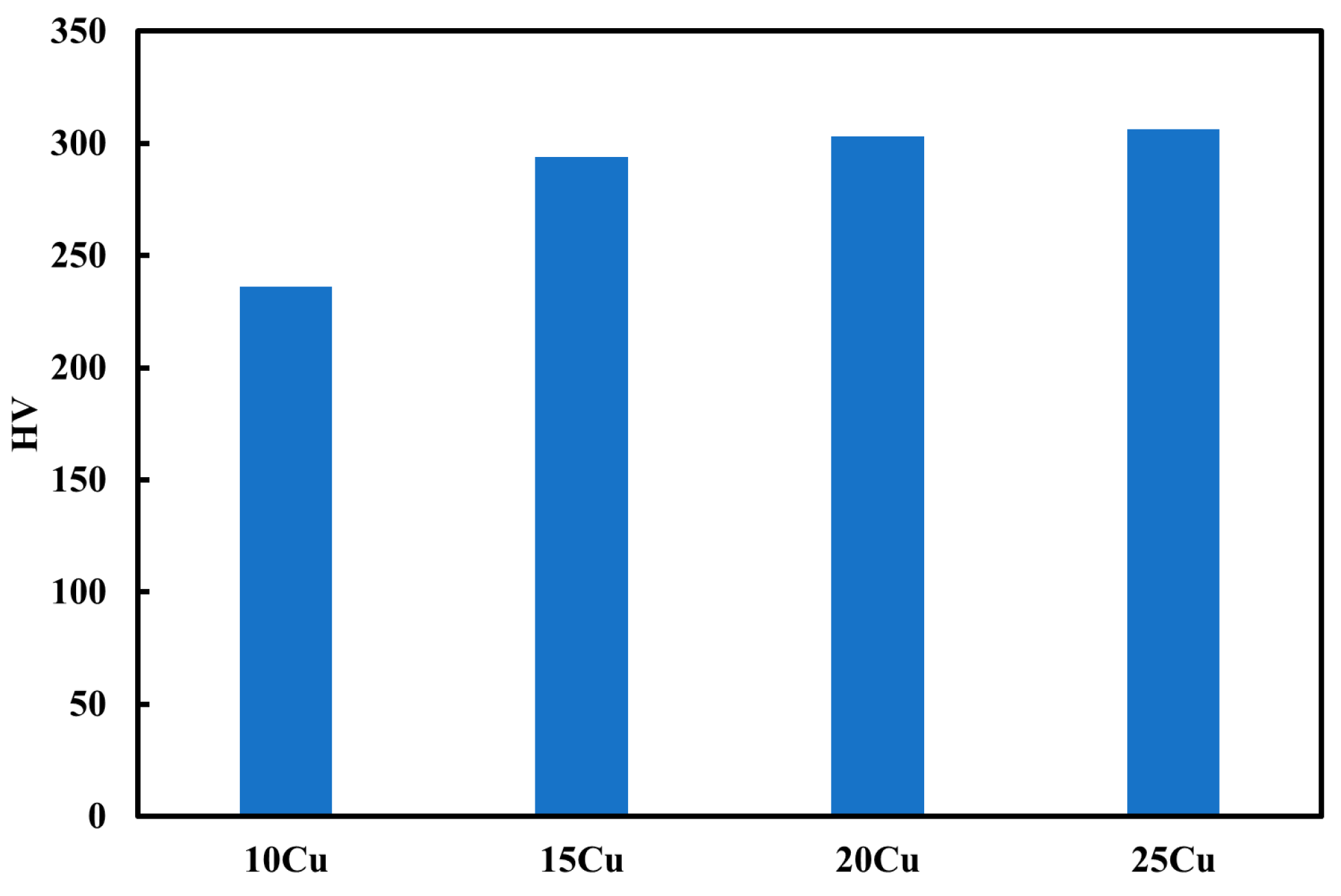
- The highest hardness values were achieved in the composites with 20% and 25% Cu, similar to CoCrMo alloys sintered at higher temperatures, which is due to the densifications reached by larger quantities of Cu liquid and the formation of the intermetallics.
- •
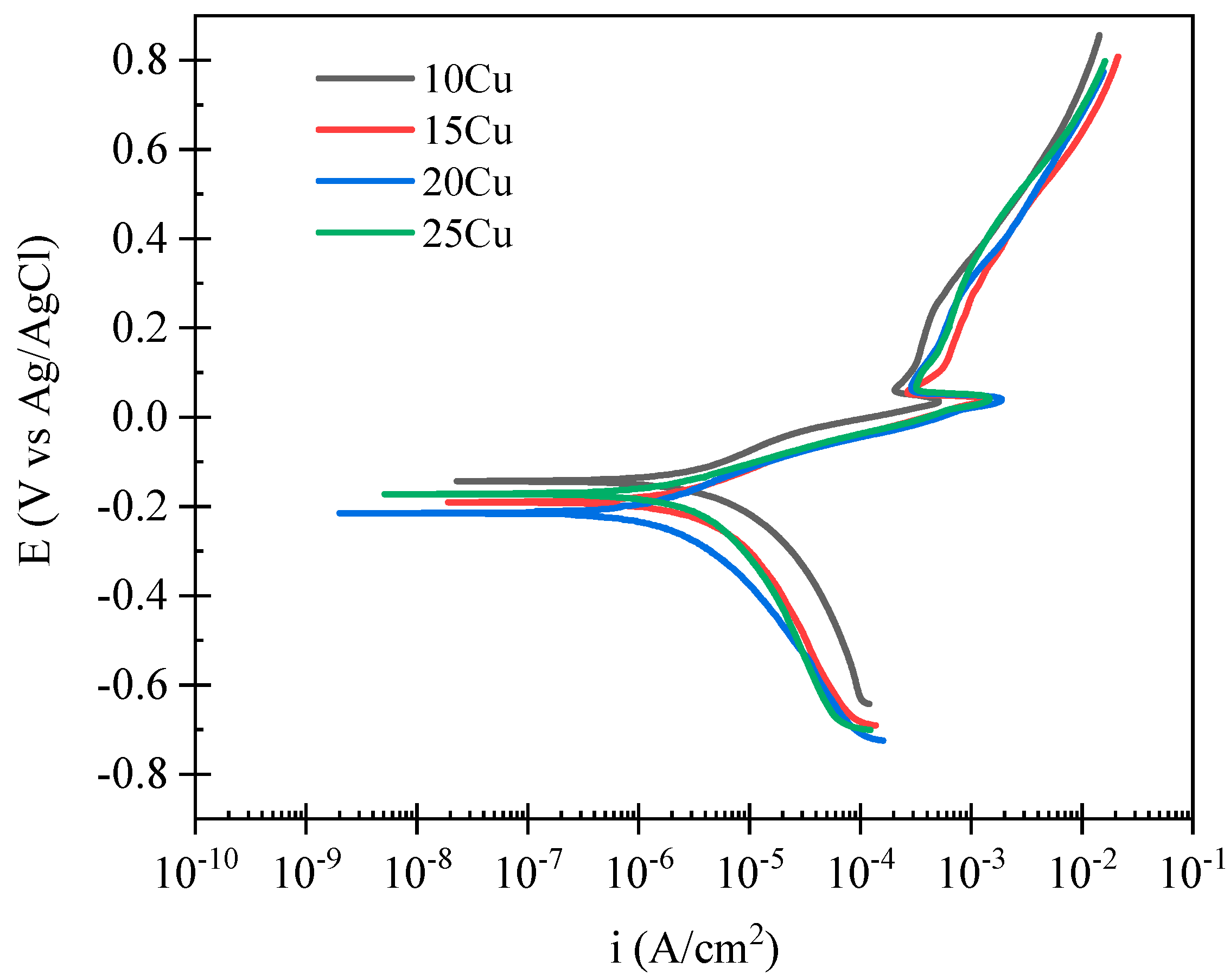
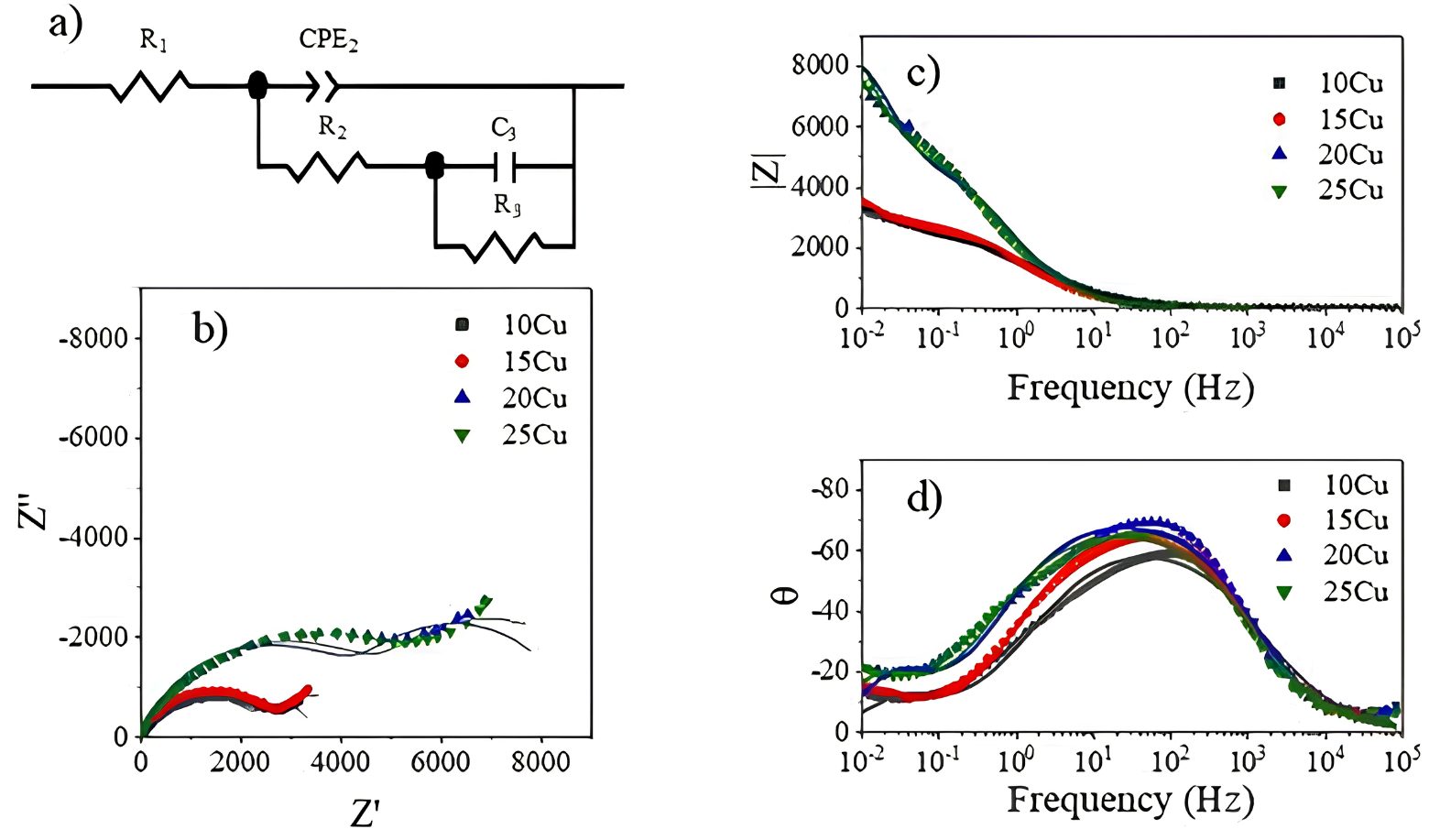
- Additionally, EIS tests indicate that higher copper concentrations result in greater polarization resistance, making CoCrMo/25Cu the sample with the highest polarization resistance.
Author Contributions
Funding
Data Availability Statement
Acknowledgments
Conflicts of Interest
Abbreviations
| Cu | Copper |
| PM | Powder metallurgy |
| MMCs | Metal matrix composites |
| Ti | Titanium |
| SEM | Scanning electron microscopy |
| XRD | X-ray diffraction |
| FE-SEM | Field-emission scanning electron microscope |
| EIS | Electrochemical impedance spectroscopy |
| HV | Vickers microhardness |
| FCC | Face-centered cubic |
| Cr | Chromium |
| Mo | Molybdenum |
| HEAs | High entropy alloys |
| i0 | Current density |
| E0 | Equilibrium potential |
References
- Abdullah, A.R.; Dandang, N.A.N.; Khalil, N.Z.; Harun, W.S.W. Effect of sintering temperature on physical properties & hardness of CoCrMo alloys fabricated by metal injection moulding process. IOP Conf. Ser. Mater. Sci. Eng. 2017, 257, 012010. [Google Scholar] [CrossRef]
- de Freitas, B.X.; Nunes, C.A.; dos Santos, C. Sintering behaviour of Co-28%Cr-6%Mo compacted blocks for dental prosthesis. J. Mater. Res. Technol. 2019, 8, 2052–2062. [Google Scholar] [CrossRef]
- Abdull Hamid, M.H.; Mohamed Fadzil, F.S.; Selamat, M.A.; Ahmad, M.A. Sintering Effects on the Microstructure and Mechanical Properties of CoCrMo Alloy. Adv. Mat. Res. 2016, 1133, 259–263. [Google Scholar] [CrossRef]
- Yagoob, J.A.; Abbass, M.K. Characterization of Cobalt Based CoCrMo Alloy Fabricated by Powder Metallurgy Route. In Proceedings of the 2018 2nd International Conference for Engineering, Technology and Sciences of Al-Kitab (ICETS); IEEE: New York, NY, USA, 2018; pp. 1–5. [Google Scholar] [CrossRef]
- Peaubuapuan, C.; Tunthawiroon, P.; Kanlayasiri, K.; Yuangyai, C. Effect of Si on Microstructure and Corrosion Behavior of CoCrMo Alloys. IOP Conf. Ser. Mater. Sci. Eng. 2018, 361, 012004. [Google Scholar] [CrossRef]
- Shi, Z.; Yu, Y.; Wang, Y.; Zhang, D.; Dai, L.; Wang, M. Effect of nickel content on the processing and microstructure evolution of Co–Cr–Mo–Ni alloys. Mater. Sci. Eng. A 2019, 759, 195–202. [Google Scholar] [CrossRef]
- Jamal Al-Deen, H.H.J.; Alhusseini, Z.A.K. Influence of zirconia addition on corrosion behavior of biomedical COCrMo Alloys(F75). AIP Conf. Proc. 2023, 2830, 030039. [Google Scholar] [CrossRef]
- Peter, I.; Rosso, M. Study of Ti-Enriched CoCrMo Alloy for Dental Application. IEEE Access 2015, 3, 73–80. [Google Scholar] [CrossRef]
- Cui, G.; Liu, Y.; Li, S.; Liu, H.; Gao, G.; Kou, Z. Nano-TiO2 reinforced CoCr matrix wear resistant composites and high-temperature tribological behaviors under unlubricated condition. Sci. Rep. 2020, 10, 6816. [Google Scholar] [CrossRef]
- Zhang, L.; Liu, W.; Cao, Y.; Sun, H.; Xie, Q.; Lai, J.; Bai, P. Effect of Co-Coated Al2O3 Composite Powders on LPBF-Manufactured CoCrMo Alloy. Metals 2023, 13, 310. [Google Scholar] [CrossRef]
- Bandyopadhyay, A.; Shivaram, A.; Isik, M.; Avila, J.D.; Dernell, W.S.; Bose, S. Additively manufactured calcium phosphate reinforced CoCrMo alloy: Bio-tribological and biocompatibility evaluation for load-bearing implants. Addit. Manuf. 2019, 28, 312–324. [Google Scholar] [CrossRef] [PubMed]
- Onderka, F.; Volodarskaja, A.; Kadlec, J.; Dobrocký, D.; Klanica, O. Electrochemical Deposition of Hydroxyapatite Coatings on CoCrMo Alloy. ECS Trans. 2014, 63, 277–289. [Google Scholar] [CrossRef]
- Wang, P.; Yuan, Y.; Xu, K.; Zhong, H.; Yang, Y.; Jin, S.; Yang, K.; Qi, X. Biological applications of copper-containing materials. Bioact. Mater. 2021, 6, 916–927. [Google Scholar] [CrossRef]
- Wang, R.; Qin, G.; Zhang, E. Effect of Cu on Martensite Transformation of CoCrMo alloy for biomedical application. J. Mater. Sci. Technol. 2020, 52, 127–135. [Google Scholar] [CrossRef]
- Shen, Q.; Qi, Y.; Kong, Y.; Bao, H.; Wang, Y.; Dong, A.; Wu, H.; Xu, Y. Advances in Copper-Based Biomaterials With Antibacterial and Osteogenic Properties for Bone Tissue Engineering. Front. Bioeng. Biotechnol. 2022, 9, 795425. [Google Scholar] [CrossRef]
- Wu, S.; Wang, Q.; Li, Y.; Liu, B.; Miao, Y. Recent Advances in the Biomedical Applications of Copper Nanomaterial-Mediated Cuproptosis. Adv. Nanobiomed. Res. 2024, 4, 2400018. [Google Scholar] [CrossRef]
- Wei, Q.; Pan, Y.; Zhang, Z.; Yan, S.; Li, Z. Copper-based nanomaterials for biomedical applications. Chem. Eng. J. 2024, 483, 149040. [Google Scholar] [CrossRef]
- Chen, X.; Bao, R.; Yi, J.; Fang, D.; Tao, J.; Li, F. Enhancing mechanical properties of pure copper-based materials with CrxOy nanoparticles and CNT hybrid reinforcement. J. Mater. Sci. 2021, 56, 3062–3077. [Google Scholar] [CrossRef]
- de Oro Calderon, R.; Gierl-Mayer, C.; Danninger, H. Fundamentals of Sintering: Liquid Phase Sintering. In Encyclopedia of Materials: Metals and Alloys; Elsevier: Amsterdam, The Netherlands, 2022; pp. 481–492. [Google Scholar] [CrossRef]
- Huang, C.; Yuan, N.; He, X.; Wang, C. Ceramsite made from drinking water treatment residue for water treatment: A critical review in association with typical ceramsite making. J. Environ. Manag. 2023, 328, 117000. [Google Scholar] [CrossRef]
- Korda, A.A.; Munawaroh, S.; Basuki, E.A. The Antimicrobial Activity and Characterization of the Cast Titanium Copper Alloys with Variations of Copper Content. IOP Conf. Ser. Mater. Sci. Eng. 2019, 547, 012002. [Google Scholar] [CrossRef]
- Zhuang, Y.; Ren, L.; Zhang, S.; Wei, X.; Yang, K.; Dai, K. Antibacterial effect of a copper-containing titanium alloy against implant-associated infection induced by methicillin-resistant Staphylococcus aureus. Acta Biomater. 2021, 119, 472–484. [Google Scholar] [CrossRef]
- Ma, Z.; Ren, L.; Liu, R.; Yang, K.; Zhang, Y.; Liao, Z.; Liu, W.; Qi, M.; Misra, R.D.K. Effect of Heat Treatment on Cu Distribution, Antibacterial Performance and Cytotoxicity of Ti–6Al–4V–5Cu Alloy. J. Mater. Sci. Technol. 2015, 31, 723–732. [Google Scholar] [CrossRef]
- Yamanaka, K.; Mori, M.; Yoshida, K.; Onuki, Y.; Sato, S.; Chiba, A. Surface evolution and corrosion behaviour of Cu-doped carbide-reinforced martensitic steels in a sulfuric acid solution. npj Mater. Degrad. 2021, 5, 43. [Google Scholar] [CrossRef]
- Wang, S.; Yang, C.; Shen, M.; Yang, K. Effect of aging on antibacterial performance of Cu-bearing martensitic stainless steel. Mater. Technol. 2014, 29, 257–261. [Google Scholar] [CrossRef]
- Chai, H.; Guo, L.; Wang, X.; Fu, Y.; Guan, J.; Tan, L.; Ren, L.; Yang, K. Antibacterial effect of 317L stainless steel contained copper in prevention of implant-related infection in vitro and in vivo. J. Mater. Sci. Mater. Med. 2011, 22, 2525–2535. [Google Scholar] [CrossRef]
- Xi, T.; Shahzad, M.B.; Xu, D.; Sun, Z.; Zhao, J.; Yang, C.; Qi, M.; Yang, K. Effect of copper addition on mechanical properties, corrosion resistance and antibacterial property of 316L stainless steel. Mater. Sci. Eng. C 2017, 71, 1079–1085. [Google Scholar] [CrossRef]
- Li, W.; Wang, X.; Liu, C.; Qin, G.; Zhang, E. Effect of heat treatment on the bio-corrosion properties and wear resistance of antibacterial Co-29Cr-6Mo-xCu alloys. J. Mater. Sci. Mater. Med. 2019, 30, 112. [Google Scholar] [CrossRef]
- Uzun, M.; Çetin, M.S. Investigation of characteristics of Cu based, Co-CrC reinforced composites produced by powder metallurgy method. Adv. Powder Technol. 2021, 32, 1992–2003. [Google Scholar] [CrossRef]
- Elder, S.P.; Munitz, A.; Abbaschian, G.J. Metastable Liquid Immiscibility in Fe-Cu and Co-Cu Alloys. Mater. Sci. Forum 1991, 50, 137–150. [Google Scholar] [CrossRef]
- Liu, Y.; Tandon, R.; German, R.M. Modeling of Supersolidus Liquid Phase Sintering: I. Capillary Force. Metall. Mater. Trans. A 1995, 26, 2415–2422. [Google Scholar] [CrossRef]
- Liu, Y.; Tandon, R.; German, R.M. Modeling of Supersolidus Liquid Phase Sintering: II. Densification. Metall. Mater. Trans. A 1995, 26, 2423–2430. [Google Scholar] [CrossRef]
- Cao, C.D.; Görler, G.P.; Herlach, D.M.; Wei, B. Liquid–Liquid Phase Separation in Undercooled Co–Cu Alloys. Mater. Sci. Eng. A 2002, 325, 503–510. [Google Scholar] [CrossRef]
- Munitz, A.; Elder-Randall, S.P.; Abbaschian, R. Supercooling Effects in Cu-10 Wt Pct Co Alloys Solidified at Different Cooling Rates. Metall. Trans. A 1992, 23, 1817–1827. [Google Scholar] [CrossRef]
- Munitz, A.; Abbaschian, R. Microstructure of Cu-Co Alloys Solidified at Various Supercoolings. Metall. Mater. Trans. A 1996, 27, 4049–4059. [Google Scholar] [CrossRef]
- Egry, I.; Ratke, L.; Kolbe, M.; Chatain, D.; Curiotto, S.; Battezzati, L.; Johnson, E.; Pryds, N. Interfacial properties of immiscible Co–Cu alloys. J. Mater. Sci. 2010, 45, 1979–1985. [Google Scholar] [CrossRef]
- Ahmad, T. Ascorbic acid assisted synthesis, characterization and catalytic application of copper nanoparticles. Mater. Sci. Eng. Int. J. 2018, 2, 90–94. [Google Scholar] [CrossRef]
- Welles, T.S.; Ahn, J. Driving electrochemical corrosion of implanted CoCrMo metal via oscillatory electric fields without mechanical wear. Sci. Rep. 2021, 11, 22366. [Google Scholar] [CrossRef]
- Majerič, D.; Lazić, V.; Majerič, P.; Marković, A.; Rudolf, R. Investigation of CoCr Dental Alloy: Example from a Casting Workflow Standpoint. Crystals 2021, 11, 849. [Google Scholar] [CrossRef]
- Zhao, H.; Xie, J.; Mao, A.; Wang, A.; Chen, Y.; Liang, T.; Ma, D. Effects of Heating Mode and Temperature on the Microstructures, Electrical and Optical Properties of Molybdenum Thin Films. Materials 2018, 11, 1634. [Google Scholar] [CrossRef]
- Jia, X.; Lin, Z.; Yang, T.C.-J.; Puthen-Veettil, B.; Wu, L.; Conibeer, G.; Perez-Wurfl, I. Post-Sputtering Heat Treatments of Molybdenum on Silicon Wafer. Appl. Sci. 2018, 8, 1692. [Google Scholar] [CrossRef]
- Liu, X.J.; Jiang, Z.P.; Wang, C.P.; Ishida, K. Experimental determination and thermodynamic calculation of the phase equilibria in the Cu–Cr–Nb and Cu–Cr–Co systems. J. Alloys Compd. 2009, 478, 287–296. [Google Scholar] [CrossRef]
- Derimow, N.; Abbaschian, R. Solidification Microstructures and Calculated Mixing Enthalpies in CoCrCu Containing Alloys. Mater. Today Commun. 2018, 15, 1–10. [Google Scholar] [CrossRef]
- He, W.; Zeng, C.; Yang, W.; Chen, W.; Ai, Y. Impact of different Cr contents on microstructural evolution and mechanical behaviour of CoCrxCuFeMnNiV high-entropy alloys. J. Mater. Res. Technol. 2022, 21, 4577–4590. [Google Scholar] [CrossRef]
- Young, I.T. Image Analysis and Mathematical Morphology, by J. Serra. Academic Press, London, 1982, Xviii + 610 p. $90.00. Cytometry 1983, 4, 184–185. [Google Scholar] [CrossRef]
- Olmos, L.; Takahashi, T.; Bouvard, D.; Martin, C.L.; Salvo, L.; Bellet, D.; Di Michiel, M. Analysing the Sintering of Heterogeneous Powder Structures by in Situ Microtomography. Philos. Mag. 2009, 89, 2949–2965. [Google Scholar] [CrossRef][Green Version]
- Braem, A.; Chaudhari, A.; Vivan Cardoso, M.; Schrooten, J.; Duyck, J.; Vleugels, J. Peri- and Intra-Implant Bone Response to Microporous Ti Coatings with Surface Modification. Acta Biomater. 2014, 10, 986–995. [Google Scholar] [CrossRef]
- Garcia-Carrillo, A.M.; Lemus-Ruiz, J.; Olmos, L. Sintering Analysis of CoCrMo Powders by in-Situ Dilatometry. Mater. Res. 2024, 27, e20240286. [Google Scholar] [CrossRef]
- Celles, C.A.S.; dos Reis, A.C. Effect of Copper Incorporated into Titanium (Cp-Ti) and Its Alloys (Ti-6Al-4V) and Its Promising Antibacterial Effect: A Systematic Review. Dent. Rev. 2025, 5, 100156. [Google Scholar] [CrossRef]
- Yang, S.; Pan, J.; Zhang, H.; Ling, H. Effect of Ag and Cu Additions on Antibacterial Performance of Fe-Based Amorphous Alloys. BioMetals 2026, 39, 259–267. [Google Scholar] [CrossRef]
- Acciari, H.A.; Guastaldi, A.C.; Brett, C.M.A. Corrosion of the component phases presents in high copper dental amalgams. Application of electrochemical impedance spectroscopy and electrochemical noise analysis. Corros. Sci. 2005, 47, 635–647. [Google Scholar] [CrossRef]
- Benzarti, Z.; Arrousse, N.; Serra, R.; Cruz, S.; Bastos, A.; Tedim, J.; Salgueiro, R.; Cavaleiro, A.; Carvalho, S. Copper corrosion mechanisms, influencing factors, and mitigation strategies for water circuits of heat exchangers: Critical review and current advances. Corros. Rev. 2025, 43, 429–455. [Google Scholar] [CrossRef]
- Alves, A.C.; Wenger, F.; Ponthiaux, P.; Celis, J.-P.; Pinto, A.M.; Rocha, L.A.; Fernandes, J.C.S. Corrosion mechanisms in titanium oxide-based films produced by anodic treatment. Electrochim. Acta 2017, 234, 16–27. [Google Scholar] [CrossRef]
- Cassar, M.B.; Karl, A.; Buhagiar, J. EIS of carburised CoCrMo: Evolution of parameters characterising the metal-electrolyte interface. Surf. Coat. Technol. 2016, 292, 90–98. [Google Scholar] [CrossRef]
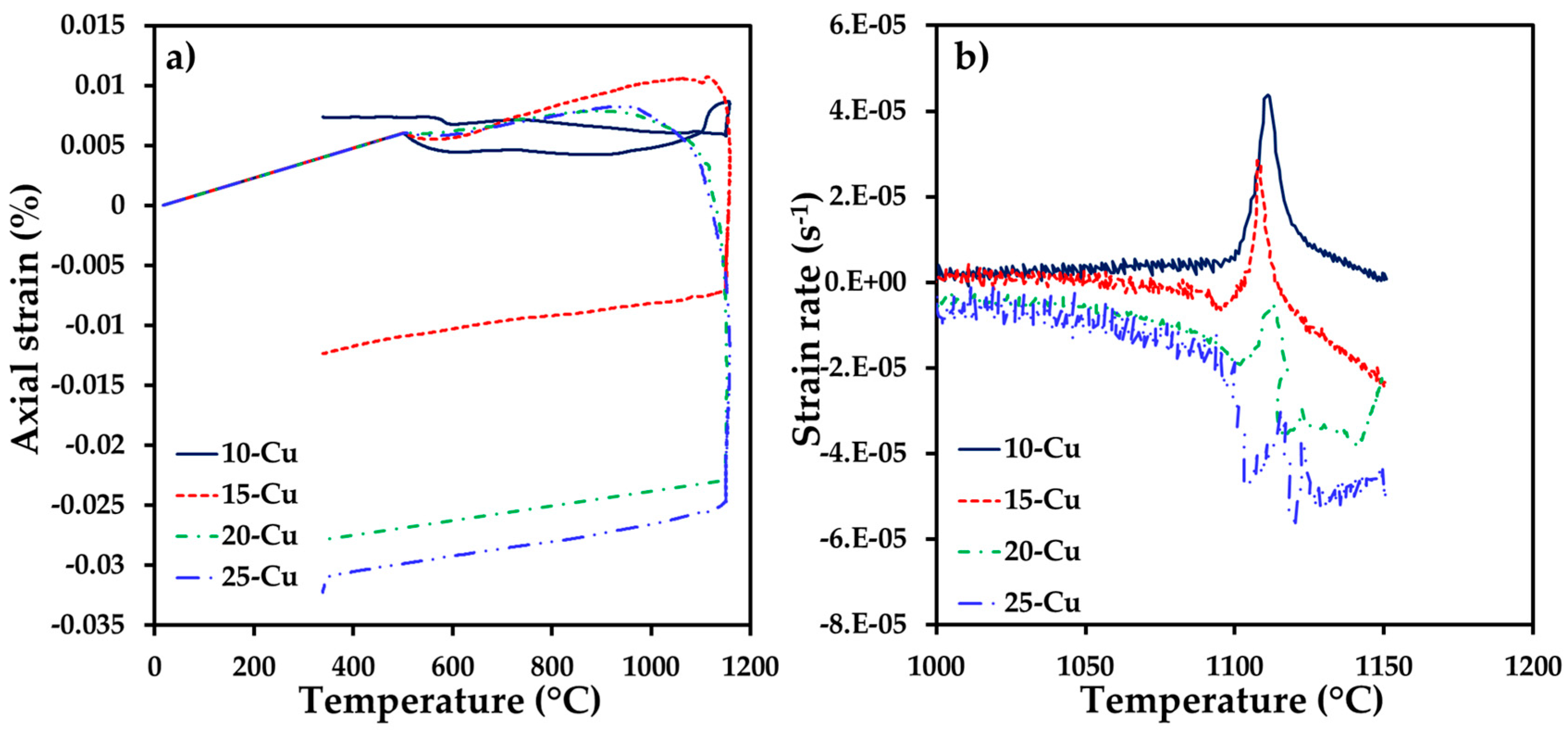





| Sample | Dg | Ds | (Ds − Dg)/Dg | Pore Volume Fraction |
|---|---|---|---|---|
| CoCrMo-10Cu | 0.8091 | 0.8113 | 0.0026 | 0.1886 |
| CoCrMo-15Cu | 0.8299 | 0.8574 | 0.0330 | 0.1425 |
| CoCrMo-20Cu | 0.8652 | 0.9186 | 0.0617 | 0.0813 |
| CoCrMo-25Cu | 0.8763 | 0.9560 | 0.0908 | 0.0439 |
| Test | Element | 1 | 2 | 3 | 4 | 5 | 6 | 7 | 8 |
|---|---|---|---|---|---|---|---|---|---|
| 10Cu | Co | 48.16 | 48.55 | 22.48 | 25.22 | 59.79 | 59.62 | 6.19 | - |
| Cr | 29.25 | 30.06 | 63.73 | 57.78 | 31.22 | 32.17 | 2.54 | - | |
| Mo | 11.54 | 0.00 | 0.00 | 5.56 | 0.00 | 0.00 | 0.00 | - | |
| Cu | 10.69 | 18.02 | 13.39 | 11.44 | 8.66 | 7.87 | 91.25 | - | |
| 15Cu | Co | 14.53 | 23.62 | 44.06 | 44.35 | 60.82 | 4.92 | - | - |
| Cr | 68.75 | 59.76 | 31.35 | 30.74 | 27.88 | 1.74 | - | - | |
| Mo | 6.28 | 5.74 | 13.85 | 13.33 | 3.19 | 0.00 | - | - | |
| Cu | 10.45 | 10.89 | 10.35 | 11.25 | 8.08 | 93.32 | - | - | |
| 20Cu | Co | 5.24 | 61.68 | 58.34 | 44.49 | 54.85 | 15.66 | 18.11 | - |
| Cr | 1.39 | 29.44 | 32.91 | 28.02 | 33.26 | 71.79 | 69.75 | - | |
| Mo | 0.00 | 0.00 | 0.00 | 10.68 | 0.00 | 0.00 | 0.00 | - | |
| Cu | 93.36 | 8.60 | 8.44 | 16.56 | 8.26 | 12.08 | 11.71 | - | |
| 25Cu | Co | 7.15 | 9.93 | 66.94 | 3.16 | 57.94 | 60.44 | 64.60 | 61.29 |
| Cr | 2.44 | 2.28 | 29.35 | 0.00 | 34.26 | 33.75 | 29.58 | 32.51 | |
| Mo | 0.00 | 1.08 | 3.71 | 0.00 | 4.29 | 3.15 | 5.76 | 3.73 | |
| Cu | 90.41 | 86.71 | 0.00 | 96.84 | 3.50 | 2.64 | 0.00 | 2.46 |
| Test | ba (mV) | bc (mV) | i0 (A/cm2) | E0 (V vs. Ag/AgCl) | Corrosion Rate (mm/y) |
|---|---|---|---|---|---|
| 10Cu | 76.46 | 88.28 | 1.558 × 10⁻⁶ | −0.1408 | 0.0157 |
| 15Cu | 65.26 | 82.56 | 1.019 × 10⁻⁶ | −0.1888 | 0.0103 |
| 20Cu | 89.06 | 146.1 | 9.269 × 10⁻⁷ | −0.2069 | 0.0095 |
| 25Cu | 69.14 | 112.7 | 1.077 × 10⁻⁶ | −0.1706 | 0.0111 |
| Test | χ2 | R1 (Ω∙cm2) | Q2 (S∙sα∙cm−2) | α2 | R2 (Ω∙cm2) | C3 (F∙cm−2) | R3 (Ω∙cm2) |
|---|---|---|---|---|---|---|---|
| 10Cu | 0.0075274 | 15.63 | 8.04 × 10⁻⁵ | 0.72987 | 2436 | 0.0058873 | 1017 |
| 15Cu | 0.004035 | 10.68 | 8.55 × 10⁻⁵ | 0.78425 | 2670 | 0.0089154 | 1543 |
| 20Cu | 0.011255 | 10.57 | 7.46 × 10⁻⁵ | 0.80253 | 4633 | 0.0019472 | 3960 |
| 25Cu | 0.006667 | 12.73 | 8.63 × 10⁻⁵ | 0.77116 | 5188 | 0.0029731 | 4153 |
Disclaimer/Publisher’s Note: The statements, opinions and data contained in all publications are solely those of the individual author(s) and contributor(s) and not of MDPI and/or the editor(s). MDPI and/or the editor(s) disclaim responsibility for any injury to people or property resulting from any ideas, methods, instructions or products referred to in the content. |
© 2026 by the authors. Licensee MDPI, Basel, Switzerland. This article is an open access article distributed under the terms and conditions of the Creative Commons Attribution (CC BY) license.
Share and Cite
Olmos, L.; Garcia-Carrillo, A.M.; Lemus-Ruiz, J.; Jiménez, O.; Arteaga, D.; Villalobos-Brito, J.C.; Velasco-Plascencia, M. Development and Characterization of CoCrMo/xCu Composites Fabricated by Powder Metallurgy. Metals 2026, 16, 572. https://doi.org/10.3390/met16060572
Olmos L, Garcia-Carrillo AM, Lemus-Ruiz J, Jiménez O, Arteaga D, Villalobos-Brito JC, Velasco-Plascencia M. Development and Characterization of CoCrMo/xCu Composites Fabricated by Powder Metallurgy. Metals. 2026; 16(6):572. https://doi.org/10.3390/met16060572
Chicago/Turabian StyleOlmos, Luis, Armando Michel Garcia-Carrillo, Jose Lemus-Ruiz, Omar Jiménez, Dante Arteaga, Julio Cesar Villalobos-Brito, and Melina Velasco-Plascencia. 2026. "Development and Characterization of CoCrMo/xCu Composites Fabricated by Powder Metallurgy" Metals 16, no. 6: 572. https://doi.org/10.3390/met16060572
APA StyleOlmos, L., Garcia-Carrillo, A. M., Lemus-Ruiz, J., Jiménez, O., Arteaga, D., Villalobos-Brito, J. C., & Velasco-Plascencia, M. (2026). Development and Characterization of CoCrMo/xCu Composites Fabricated by Powder Metallurgy. Metals, 16(6), 572. https://doi.org/10.3390/met16060572