The Role of High-Temperature-Formed Surface Oxide Film in Corrosion Protection of SAC305 Solder

Abstract
1. Introduction
2. Experimental
2.1. Sample Preparation
2.2. Morphology Characterization
2.3. Composition and Thickness Characterization
2.4. Electrochemical Measurement
3. Results and Discussion
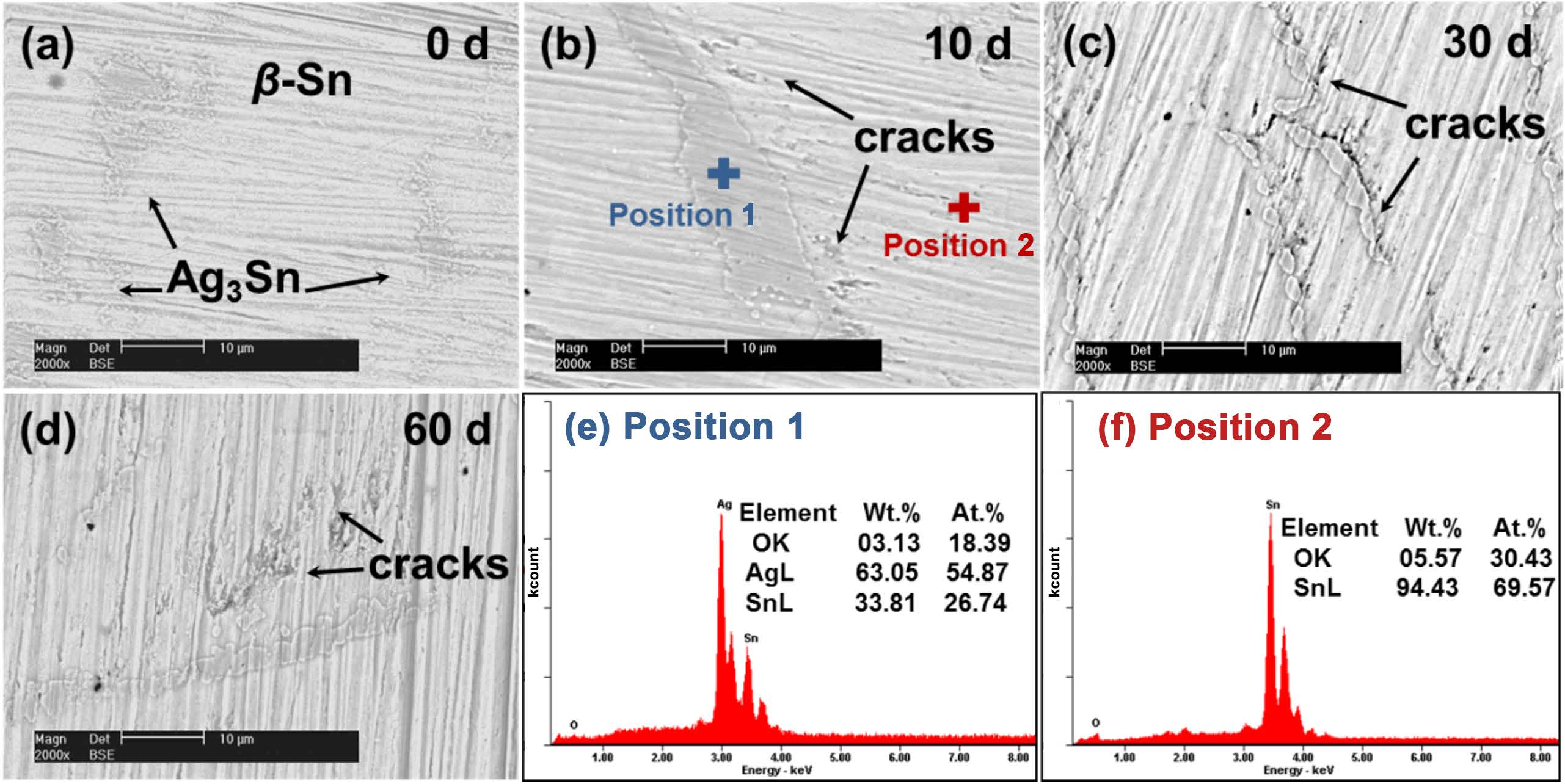
3.1. Surface Morphology and Microstructural Evolution of HTOF
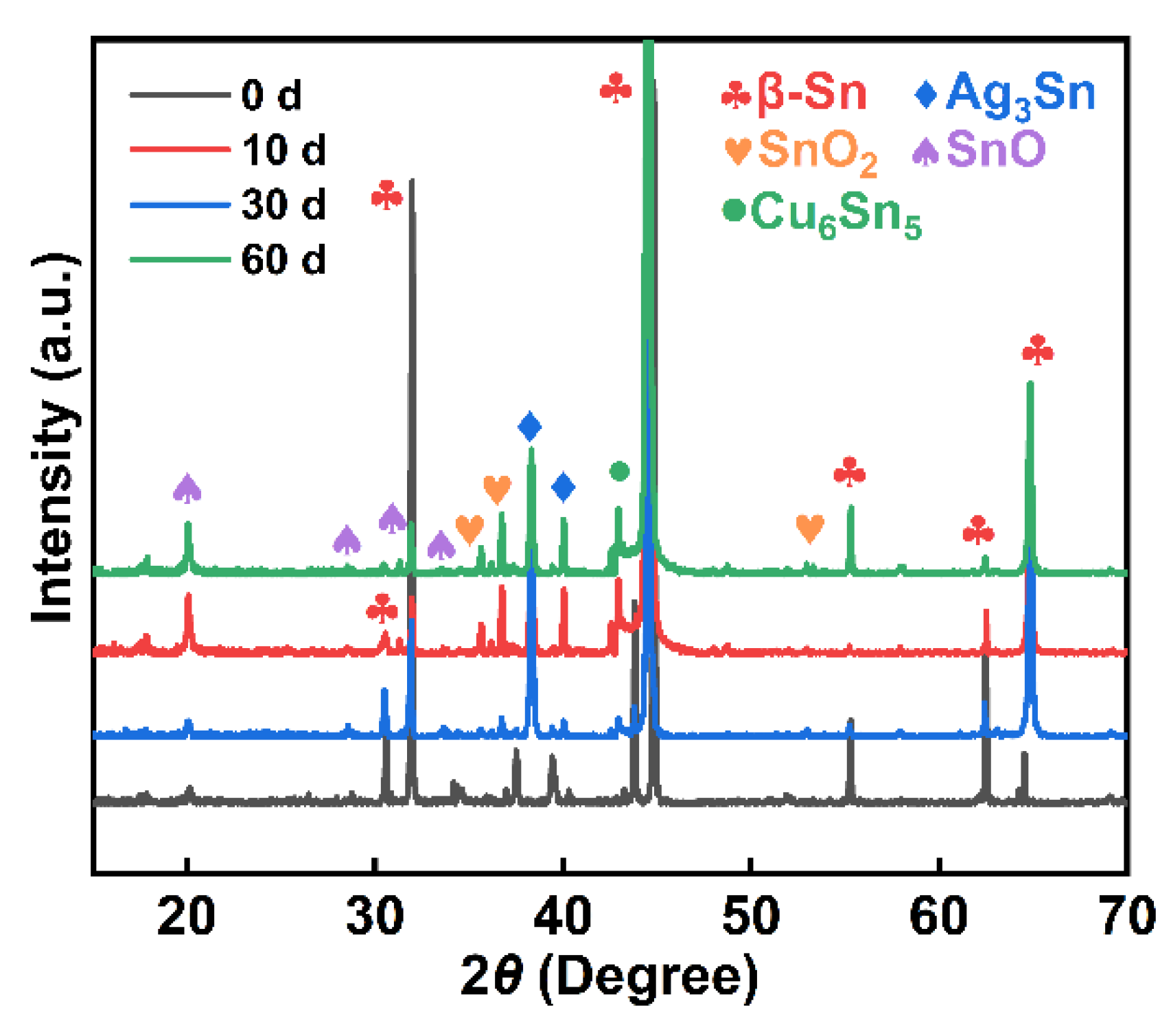
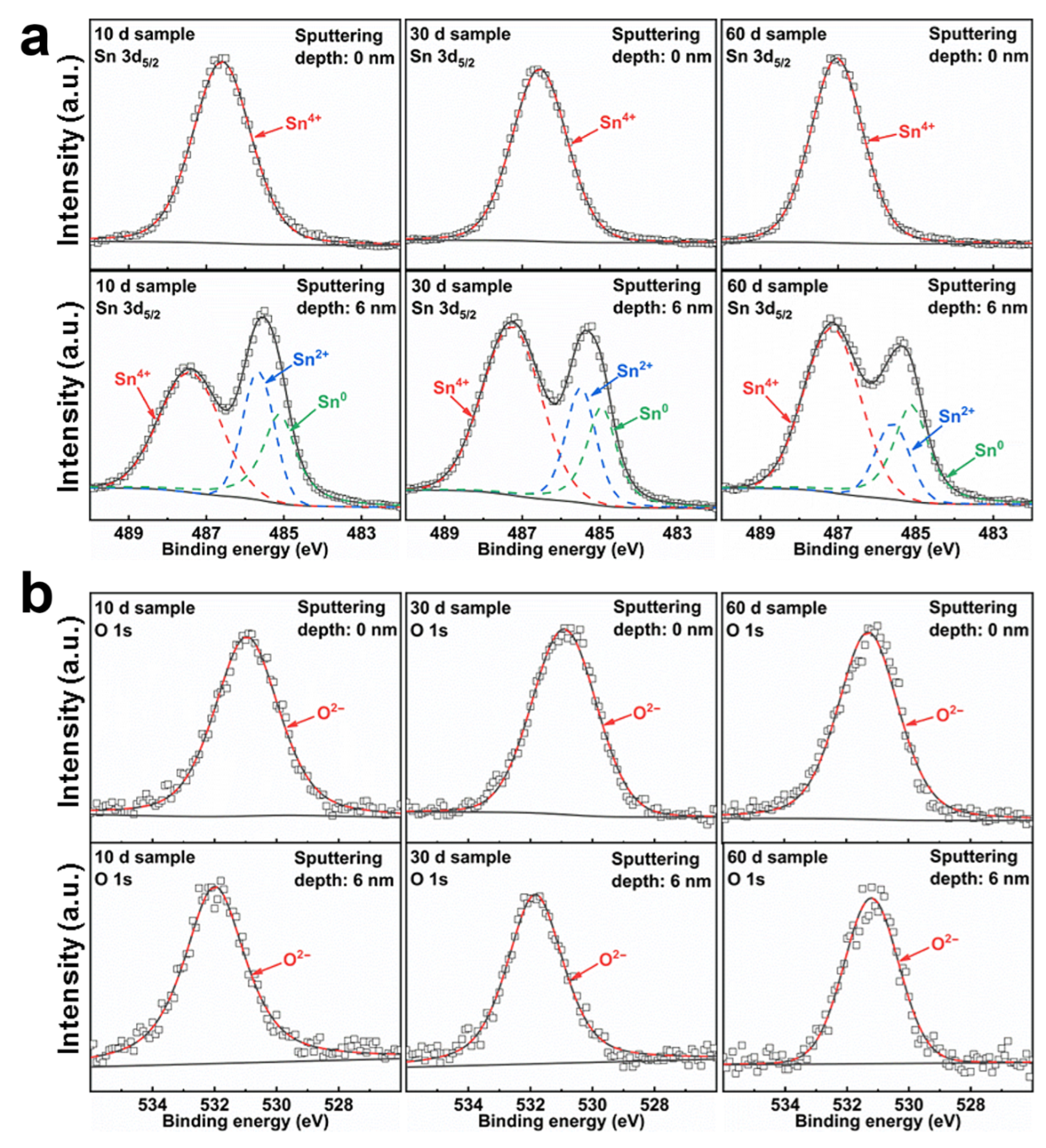
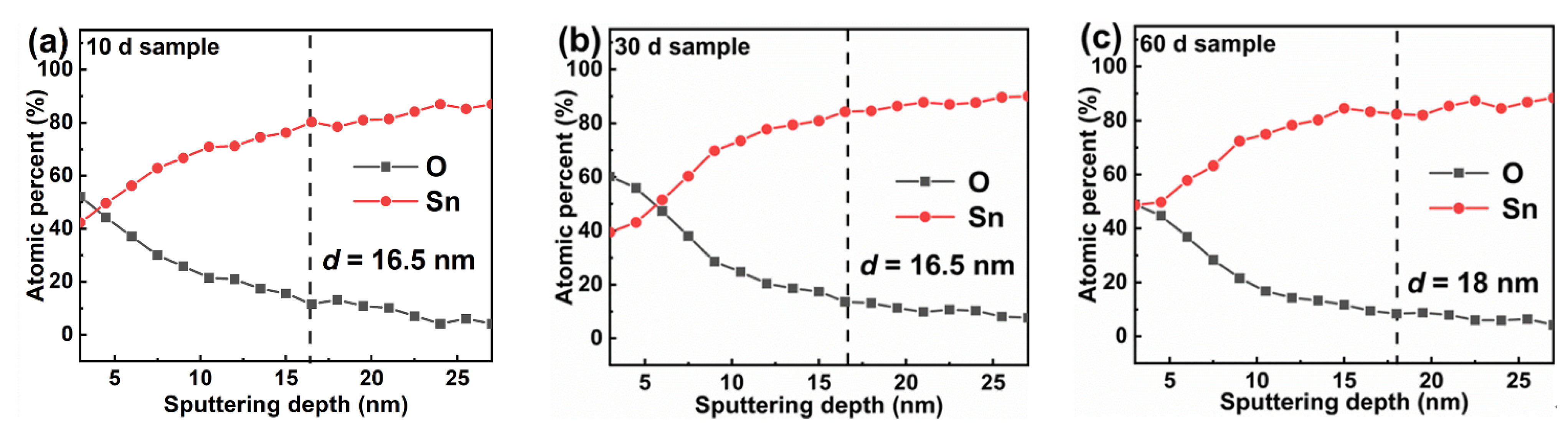
3.2. Composition and Structure of Oxide Film
3.3. Electrochemical Corrosion Behavior of SAC305 Samples After High-Temperature Aging
3.3.1. Corrosion Behavior of SAC305 Samples with HTOF

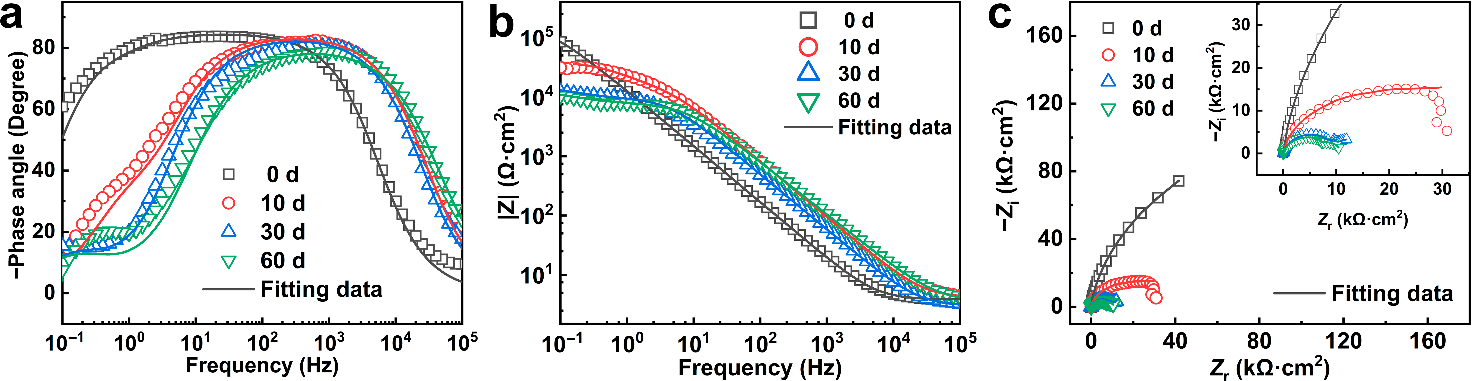
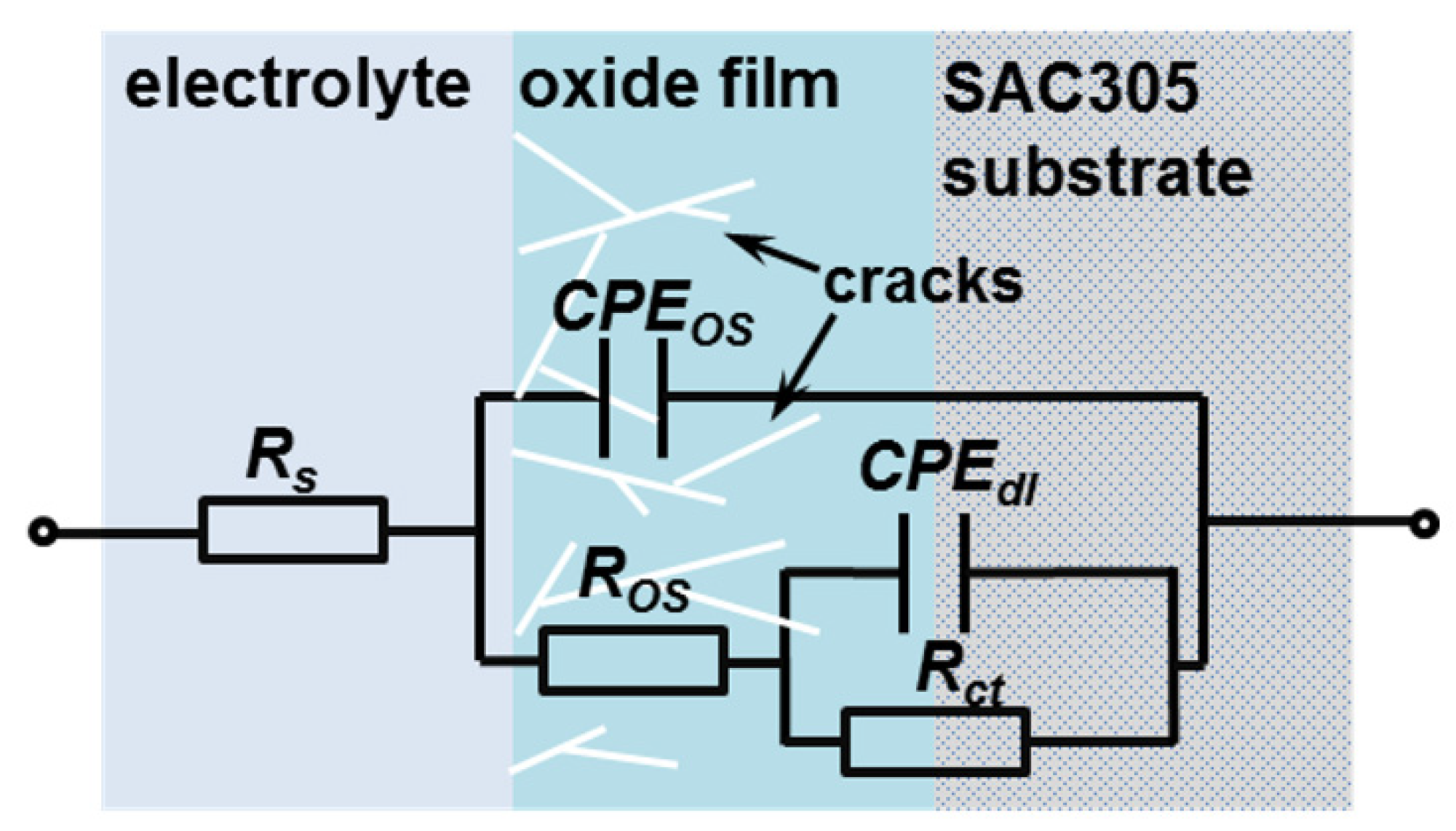
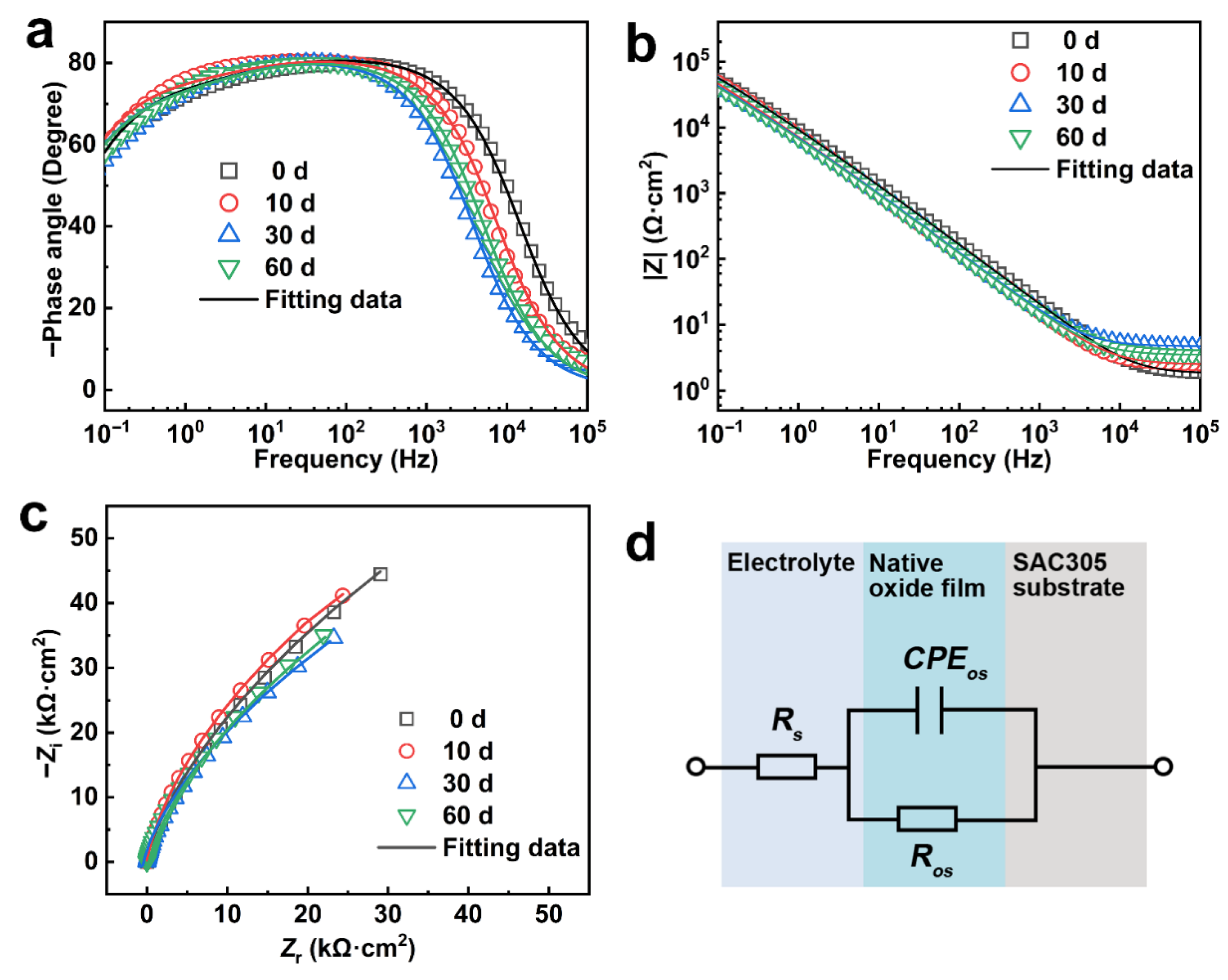
| Aging Time (d) | Rs (Ω·cm2) | Ros × 104 (Ω·cm2) | Qos × 10−5 (F·cm−2·sn−1) | nos | Rct × 104 (Ω·cm2) | Qdl × 10−5 (F·cm−2·sn−1) | ndl | χ2 × 10⁻³ |
|---|---|---|---|---|---|---|---|---|
| 0 | 3.85 | 9.502 | 1.348 | 0.9447 | 5.512 | 0.622 | 0.9963 | 3.04 |
| 10 | 4.12 | 2.009 | 28.93 | 0.9377 | 1.938 | 1.577 | 0.8596 | 6.18 |
| 30 | 2.89 | 0.979 | 48.55 | 0.9338 | 0.567 | 23.31 | 0.8555 | 4.26 |
| 60 | 3.54 | 0.799 | 38.94 | 0.8929 | 0.517 | 25.83 | 0.8155 | 4.76 |
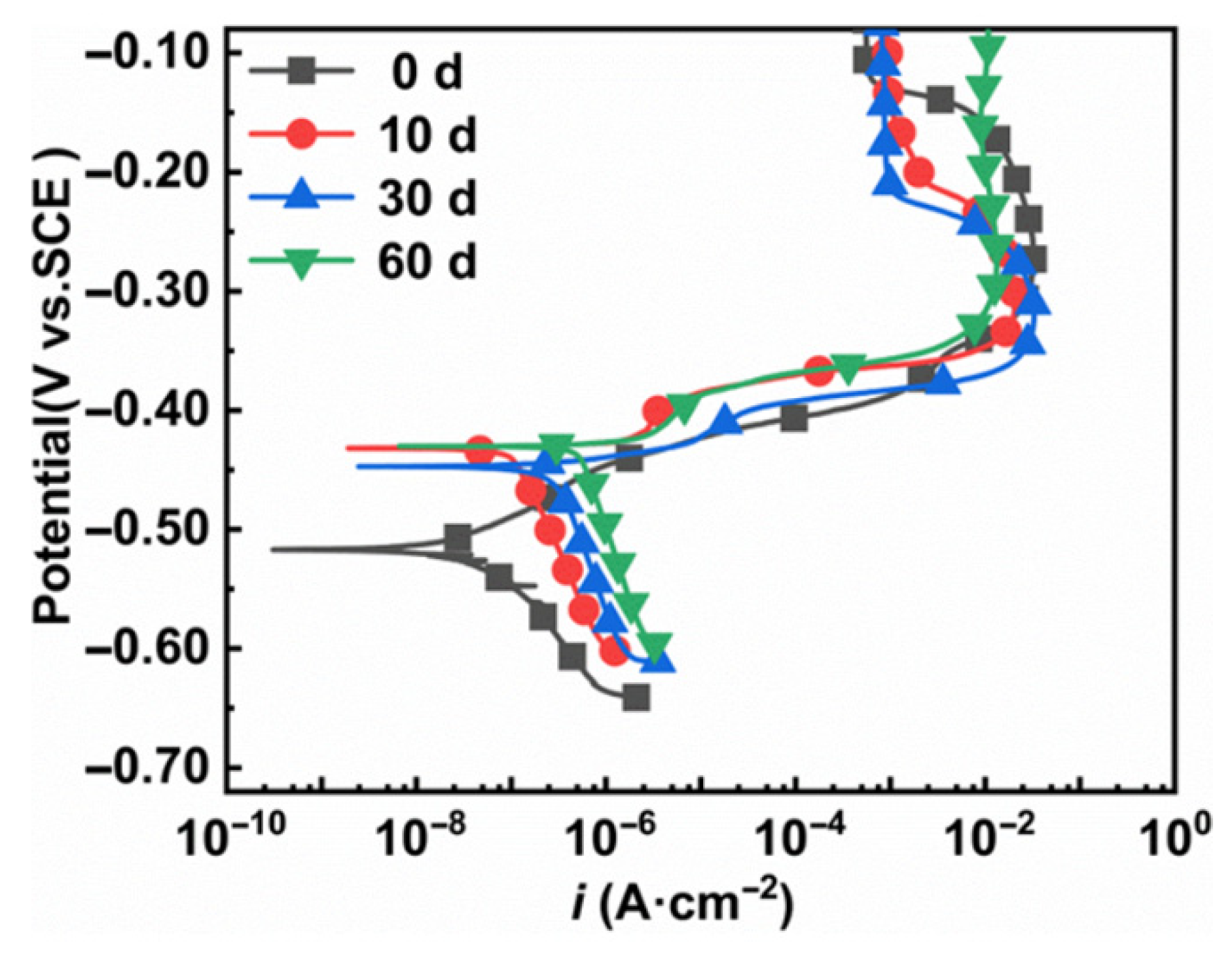
| Aging Time (d) | βa | βc | Ecorr (V vs. SCE) | icorr (×10−8 A·cm−2) | OCP (V vs. SCE) |
|---|---|---|---|---|---|
| 0 d | 0.050 | 0.057 | −0.516 | 3.23 | −0.492 |
| 10 d | 0.026 | 0.23 | −0.432 | 10.05 | −0.453 |
| 30 d | 0.011 | 0.13 | −0.447 | 22.32 | −0.478 |
| 60 d | 0.0172 | 0.16 | −0.430 | 98.40 | −0.449 |
3.3.2. Corrosion Behavior of SAC305 Samples with HTOF
3.4. Properties’ Evolution and Mechanism of HTOF on SAC305
4. Conclusions
- The high temperature oxide film forming on the SAC305 solder surface is composed of SnO2 and SnO. The outer layer is mainly composed of SnO2 and the inner layer is mainly composed of SnO. As a function of thermal aging time, the change of thickness of the film is much tinier, locating in a dynamic stable state.
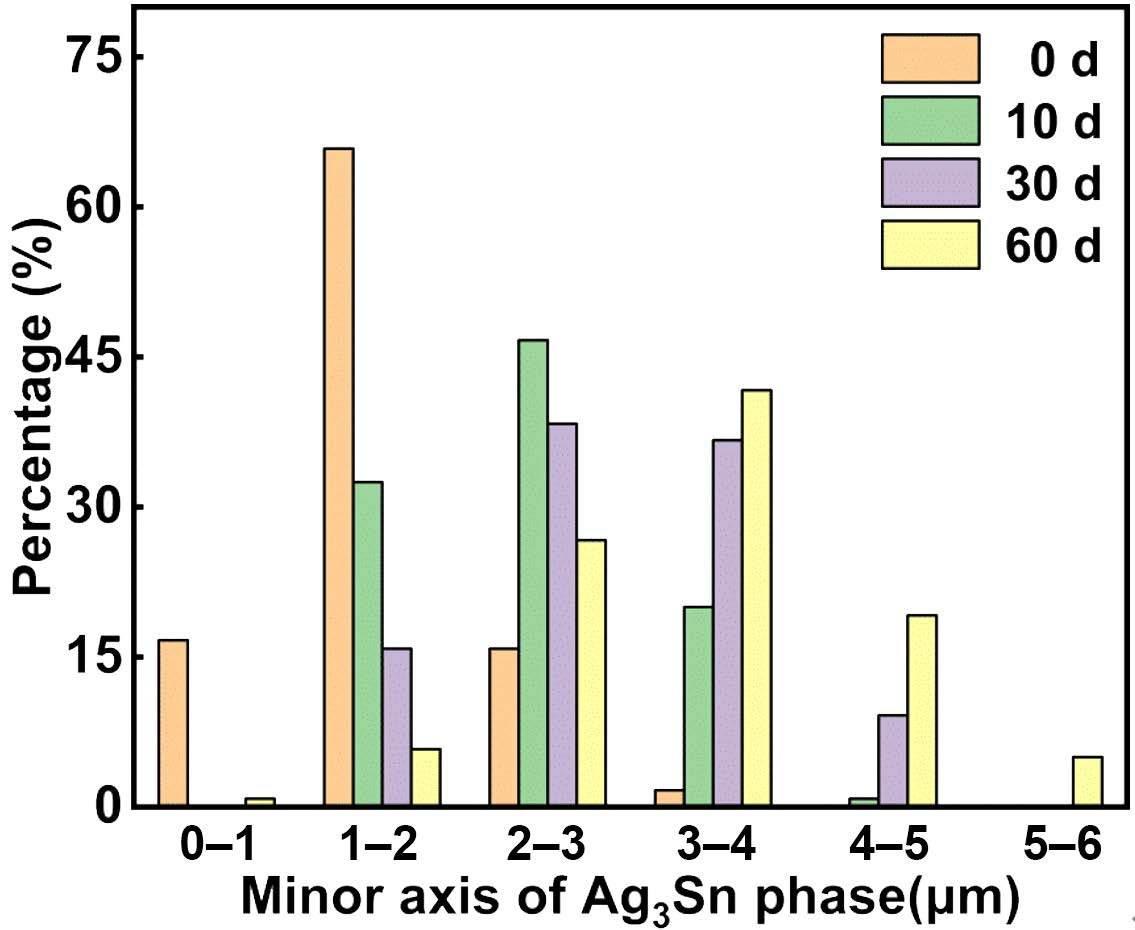
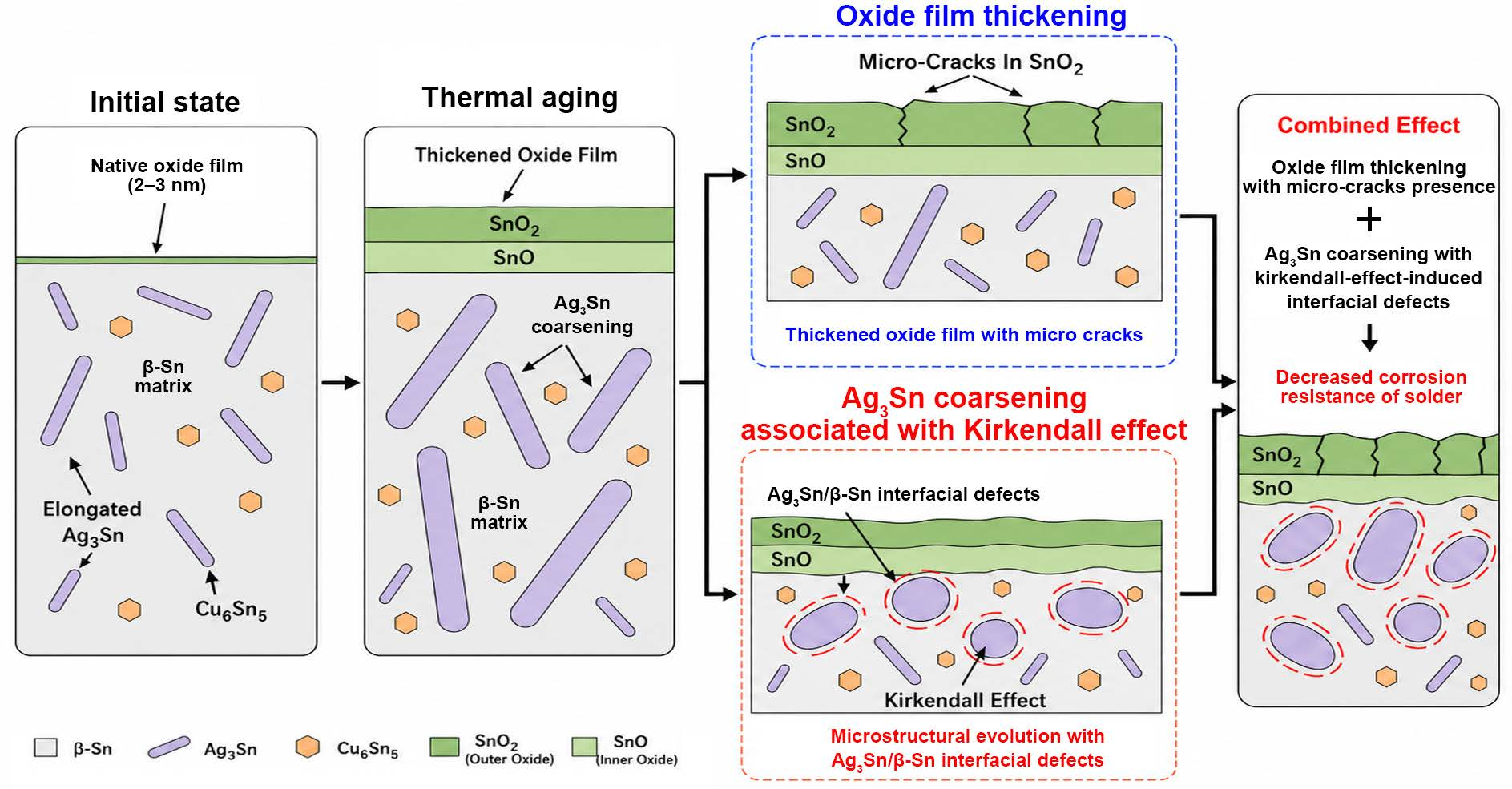
- High temperature provides the relative energy for the diffusion of Sn and Ag atoms, resulting in the emergence of defects at the interface of Ag3Sn/β-Sn and the coarsening of Ag3Sn. Moreover, defects are increasingly damaging with the extension in aging time. And the coarsening of Ag3Sn increases as a function of aging time, which may prompt the development of defects and the galvanic corrosion behavior of the solder substrates.
- The structure of the high-temperature oxide film seriously deteriorates after thermal aging. The corrosion resistance in the NaCl solution of the oxide film forming on SAC305 solder after aging is lower than that without thermal aging, and the corrosion resistance decreases as a function of aging time. The results indicate that the oxide film after aging for a long time is not benefit to the corrosion protective of the SAC305 solder substrate.
Author Contributions
Funding
Data Availability Statement
Conflicts of Interest
References
- Li, M.-L.; Zhang, L.; Jiang, N.; Zhang, L.; Zhong, S.-J. Materials modification of the lead-free solders incorporated with micro/nano-sized particles: A review. Mater. Des. 2021, 197, 109224. [Google Scholar] [CrossRef]
- Wang, J.; Xue, S.; Zhang, P.; Zhai, P.; Tao, Y. The reliability of lead-free solder joint subjected to special environment: A review. J. Mater. Sci. Mater. Electron. 2019, 30, 9065–9086. [Google Scholar] [CrossRef]
- Zhang, P.; Xue, S.; Wang, J. New challenges of miniaturization of electronic devices: Electromigration and thermomigration in lead-free solder joints. Mater. Des. 2020, 192, 108726. [Google Scholar] [CrossRef]
- Dele-Afolabi, T.; Ansari, M.; Hanim, M.A.; Oyekanmi, A.; Ojo-Kupoluyi, O.; Atiqah, A. Recent advances in Sn-based lead-free solder interconnects for microelectronics packaging: Materials and technologies. J. Mater. Res. Technol. 2023, 25, 4231–4263. [Google Scholar] [CrossRef]
- Yamamoto, T.; Tsubone, K.-I. Assembly technology using lead-free solder. Fujitsu Sci. Tech. J. 2007, 43, 50–58. [Google Scholar]
- Gain, A.K.; Zhang, L. Thermal aging effects on microstructure, elastic property and damping characteristic of a eutectic Sn–3.5Ag solder. J. Mater. Sci. Mater. Electron. 2018, 29, 14519–14527. [Google Scholar] [CrossRef]
- Ma, W.; Zhou, T.; Qiao, C.; Wang, H.; Hao, L. Micro-alloyed Ni content induced corrosion resistance evolution of SnAg solder. Mater. Lett. 2025, 405, 139690. [Google Scholar] [CrossRef]
- Qiao, C.; Qiao, S.; Wu, Q.; Chowwanonthapunya, T.; Dai, C.; Shen, Y.; Hao, L. A new understanding on the corrosion failure of Sn-based lead-free solder through the EIS monitoring and interpretation. Corros. Commun. 2025. In press. [Google Scholar] [CrossRef]
- Qiao, C.; Wang, Y.; Jiang, J.; Wu, Q.; Hao, L.; Fu, H.; An, X. Understanding the corrosion protection effect by surface oxide film to underlying Sn solder substrate under thermal exposure condition. Corros. Sci. 2024, 230, 111930. [Google Scholar] [CrossRef]
- Ma, W.; Wang, H.; Qiao, C.; Zhou, T.; Dai, C.; Wang, M.; Hao, L. Understanding the enhanced corrosion resistance of micro-alloyed SnAg solder based on surface native oxide film evolution. Corros. Sci. 2025, 257, 113356. [Google Scholar] [CrossRef]
- Wang, M.; Wang, J.; Feng, H.; Ke, W. Effect of Ag3Sn intermetallic compounds on corrosion of Sn-3.0Ag-0.5Cu solder under high-temperature and high-humidity condition. Corros. Sci. 2012, 63, 20–28. [Google Scholar] [CrossRef]
- Lin, W.; Fang, N.; Lin, B. Effect of Bi on internal oxidation mechanism of Ag-Sn alloy powder. Powder Metall. Technol. 2002, 4, 200–204. [Google Scholar]
- Li, Y.; Sun, M.; Ren, S.; Ling, H.; Hang, T.; Hu, A.-M.; Li, M. The influence of non-uniform copper oxide layer on tin whisker growth and tin whisker growth behavior in SnAg microbumps with small diameter. Mater. Lett. 2020, 258, 126773. [Google Scholar] [CrossRef]
- Wu, Q.; Xu, G.; Huang, R.; Yuan, M.; Wu, C. Oxidation behavior and mechanism of Ag-9.8Sn-1.3Bi-0.4Cu alloy powders in different oxidant. Corros. Sci. 2022, 208, 110667. [Google Scholar] [CrossRef]
- Wu, C.; Yuan, M.; Zhao, C.; Wu, Q.; Huang, R.; Xu, G. Oxidation kinetics characteristics of Ag-5.08Sn-3.14Sb alloy powders in different oxidizing atmosphere. Corros. Sci. 2022, 199, 110167. [Google Scholar] [CrossRef]
- Lin, K.; Ling, H.; Hu, A.; Wu, Y.; Gao, L.; Hang, T.; Li, M. Growth behavior and formation mechanism of porous Cu3Sn in Cu/Sn solder system. Mater. Charact. 2021, 178, 111271. [Google Scholar] [CrossRef]
- Qiao, Y.; Ma, H.; Yu, F.; Zhao, N. Quasi-in-situ observation on diffusion anisotropy dominated asymmetrical growth of Cu-Sn IMCs under temperature gradient. Acta Mater. 2021, 217, 117168. [Google Scholar] [CrossRef]
- Zhang, S.; Zhang, Y.; Wang, H. Effect of oxide thickness of solder powders on the coalescence of SnAgCu lead-free solder pastes. J. Alloys Compd. 2009, 487, 682–686. [Google Scholar] [CrossRef]
- Gao, F.; Rajathurai, K.; Cui, Q.; Zhou, G.; NkengforAcha, I.; Gu, Z. Effect of surface oxide on the melting behavior of lead-free solder nanowires and nanorods. Appl. Surf. Sci. 2012, 258, 7507–7514. [Google Scholar] [CrossRef]
- Luo, X.; Du, W.; Lu, X.; Yamaguchi, T.; Gavin, J.; Ye, L.L.; Liu, J. Investigation of accelerated surface oxidation of Sn-3.5Ag-0.5Cu solder particles by TEM and STEM. In Proceedings of the 2011 International Symposium on Advanced Packaging Materials (APM); IEEE: Piscataway, NJ, USA, 2011; pp. 73–79. [Google Scholar]
- Qiao, C.; Sun, X.; Wang, Y.; Hao, L.; Liu, X.; An, X. High-temperature aging time-induced composition and thickness evolution in the native oxides film on Sn solder substrate. J. Mater. Sci. Mater. Electron. 2021, 32, 24209–24228. [Google Scholar] [CrossRef]
- Qiao, C.; Wu, Q.; Hao, L.; Wang, Y.; Sun, X.; Zou, Q.; An, X. Native oxide film powered corrosion protection of underlying Pb-free Sn solder substrate. Corros. Sci. 2023, 221, 111359. [Google Scholar] [CrossRef]
- Qiao, C.; Sun, X.; Wang, Y.; Hao, L.; An, X. A perspective on effect by Ag addition to corrosion evolution of Pb-free Sn solder. Mater. Lett. 2021, 297, 129935. [Google Scholar] [CrossRef]
- Medgyes, B.; Gharaibeh, A.; Harsányi, G.; Pécz, B.; Felhősi, I. Electrochemical corrosion and electrochemical migration characteristics of SAC-1Bi-xMn solder alloys in NaCl solution. Corros. Sci. 2023, 213, 110965. [Google Scholar] [CrossRef]
- Liao, B.-K.; Zhou, Z.-Y.; Luo, Z.-G.; Wu, D.-Q. Insight into influence of temperature on electrochemical corrosion behavior of SAC305 tin-based solder alloy in NaCl solution. J. Mater. Sci. Mater. Electron. 2023, 34, 2187. [Google Scholar] [CrossRef]
- Wieczorek, A.; Lai, H.; Pious, J.; Fu, F.; Siol, S. Resolving oxidation states and x–site Composition of Sn Perovskites through Auger Parameter Analysis in XPS. Adv. Mater. Interfaces 2022, 10, 2201828. [Google Scholar] [CrossRef]
- Themlin, J.-M.; Chtaïb, M.; Henrard, L.; Lambin, P.; Darville, J.; Gilles, J.-M. Characterization of tin oxides by x-ray-photoemission spectroscopy. Phys. Rev. B 1992, 46, 2460–2466. [Google Scholar] [CrossRef] [PubMed]
- Huang, D.; Nakamura, H.; Küster, K.; Yaresko, A.; Samal, D.; Schröter, N.B.M.; Strocov, V.N.; Starke, U.; Takagi, H. Unusual valence state in the antiperovskites Sr3SnO and Sr3PbO revealed by x-ray photoelectron spectroscopy. Phys. Rev. Mater. 2019, 3, 124203. [Google Scholar] [CrossRef]
- Ullah, S.; Wan, G.; Kouzios, C.; Woodgate, C.; Cattelan, M.; Fox, N. Structure and electronic properties of tin monoxide (SnO) and lithiated SnO terminated diamond (1 0 0) and its comparison with lithium oxide terminated diamond. Appl. Surf. Sci. 2021, 559, 149962. [Google Scholar] [CrossRef]
- Zhao, H.; Sun, X.; Hao, L.; Wang, J.-Q.; Yang, J.-M. Corrosion evolution of high-temperature formed oxide film on pure Sn solder substrate. Trans. Nonferrous Met. Soc. China 2022, 32, 3998–4013. [Google Scholar] [CrossRef]
- Liao, B.; Cen, H.; Chen, Z.; Guo, X. Corrosion behavior of Sn-3.0Ag-0.5Cu alloy under chlorine-containing thin electrolyte layers. Corros. Sci. 2018, 143, 347–361. [Google Scholar] [CrossRef]
- Yi, P.; Dong, C.; Xiao, K.; Li, X. Study on corrosion behavior of β-Sn and intermetallic compounds phases in SAC305 alloy by in-situ EC-AFM and first-principles calculation. Corros. Sci. 2021, 181, 109244. [Google Scholar] [CrossRef]
- Wang, H.; Wang, Y.; Qiao, C.; Fan, S.; Wang, B.; Xue, P.; Dai, C.; Hao, L. Scanning microdroplet electrochemical microscope assisted in-depth EIS investigation on the corrosion of AA7034 friction stir welding joint. Corros. Sci. 2026, 264, 113743. [Google Scholar] [CrossRef]
- Rosalbino, F.; Angelini, E.; Zanicchi, G.; Carlini, R.; Marazza, R. Electrochemical corrosion study of Sn–3Ag–3Cu solder alloy in NaCl solution. Electrochim. Acta 2009, 54, 7231–7235. [Google Scholar] [CrossRef]
- Rosalbino, F.; Angelini, E.; Zanicchi, G.; Marazza, R. Corrosion behaviour assessment of lead-free Sn–Ag–M (M=In, Bi, Cu) solder alloys. Mater. Chem. Phys. 2008, 109, 386–391. [Google Scholar] [CrossRef]
- Kaushik, R.K.; Batra, U.; Sharma, J. Aging induced structural and electrochemical corrosion behaviour of Sn-1.0Ag-0.5Cu and Sn-3.8Ag-0.7Cu solder alloys. J. Alloys Compd. 2018, 745, 446–454. [Google Scholar] [CrossRef]
- Wang, M.; Qiao, C.; Jiang, X.; Hao, L.; Liu, X. Microstructure induced galvanic corrosion evolution of SAC305 solder alloys in simulated marine atmosphere. J. Mater. Sci. Technol. 2020, 51, 40–53. [Google Scholar] [CrossRef]
- Qiao, C.; Wang, M.; Hao, L.; Jiang, X.; Liu, X.; Thee, C.; An, X. In-situ EIS study on the initial corrosion evolution behavior of SAC305 solder alloy covered with NaCl solution. J. Alloys Compd. 2021, 852, 156953. [Google Scholar] [CrossRef]
- Macdonald, D.D. The Point Defect Model for the Passive State. J. Electrochem. Soc. 1992, 139, 3434–3449. [Google Scholar] [CrossRef]


| Species | Chemical State | Eb (eV) | FWHM (eV) |
|---|---|---|---|
| Sn4+ | Sn 3d5/2 | 486.3 ± 0.1 | 1.63 ± 0.32 |
| Sn2+ | Sn 3d5/2 | 485.1 ± 0.2 | 1.35 ± 0.08 |
| Sn0 | Sn 3d5/2 | 484.6 ± 0.2 | 1.13 ± 0. 3 |
| O2− | O 1s | 530.4 ± 0.2 | 2.02 ± 0.52 |
| Aging Time (d) | Rs (Ω·cm2) | Ros × 104 (Ω·cm2) | Qos × 10−5 (F·cm−2·sn−1) | nos | χ2 × 10⁻³ |
|---|---|---|---|---|---|
| 0 | 1.82 | 2.158 | 1.862 | 0.9085 | 1.16 |
| 10 | 2.49 | 2.095 | 1.953 | 0.9056 | 1.27 |
| 30 | 4.69 | 1.953 | 2.012 | 0.9046 | 1.36 |
| 60 | 3.46 | 1.752 | 2.159 | 0.9024 | 0.81 |
Disclaimer/Publisher’s Note: The statements, opinions and data contained in all publications are solely those of the individual author(s) and contributor(s) and not of MDPI and/or the editor(s). MDPI and/or the editor(s) disclaim responsibility for any injury to people or property resulting from any ideas, methods, instructions or products referred to in the content. |
© 2026 by the authors. Licensee MDPI, Basel, Switzerland. This article is an open access article distributed under the terms and conditions of the Creative Commons Attribution (CC BY) license.
Share and Cite
Zhou, T.; Zhu, G.; Guo, C.; Liu, X. The Role of High-Temperature-Formed Surface Oxide Film in Corrosion Protection of SAC305 Solder. Metals 2026, 16, 563. https://doi.org/10.3390/met16060563
Zhou T, Zhu G, Guo C, Liu X. The Role of High-Temperature-Formed Surface Oxide Film in Corrosion Protection of SAC305 Solder. Metals. 2026; 16(6):563. https://doi.org/10.3390/met16060563
Chicago/Turabian StyleZhou, Taoyu, Guanglin Zhu, Cean Guo, and Xiahe Liu. 2026. "The Role of High-Temperature-Formed Surface Oxide Film in Corrosion Protection of SAC305 Solder" Metals 16, no. 6: 563. https://doi.org/10.3390/met16060563
APA StyleZhou, T., Zhu, G., Guo, C., & Liu, X. (2026). The Role of High-Temperature-Formed Surface Oxide Film in Corrosion Protection of SAC305 Solder. Metals, 16(6), 563. https://doi.org/10.3390/met16060563