Article

Protectiveness of Mn-Co Oxide Coating on Type 430 Stainless Steel for an SOFC Interconnect Application Using an Anodic Electrodeposition Technique

High Temperature Corrosion Research Centre, Department of Materials and Production Technology Engineering, Faculty of Engineering, King Mongkut’s University of Technology North Bangkok, 1518, Pracharat 1 Road, Wongsawang, Bangsue, Bangkok 10800, Thailand
*
Author to whom correspondence should be addressed.
Metals 2026, 16(5), 547; https://doi.org/10.3390/met16050547
Submission received: 8 April 2026 / Revised: 4 May 2026 / Accepted: 12 May 2026 / Published: 18 May 2026
(This article belongs to the Special Issue Advances and Challenges in Corrosion of Alloys and Protection Systems)

Abstract

Ferritic stainless steels are widely used as interconnects of solid oxide fuel cells (SOFCs) due to their high temperature stability and thermal expansion similar to that of the electrolyte. To help commercialise SOFCs, commercial-grade ferritic stainless steel with a coating, i.e., Type 430, has been considered a promising material for this application. In this work, we developed a Mn-Co oxide coating via anodic electrodeposition followed by heat treatment processes in Ar and oxygen at 800 °C. The proposed coating helped reduce the formation of Cr-rich oxide at the interface between the coating and substrate relative to a sample coated without annealing in Ar. It also provided a relatively dense coating layer and better withstood the applied load, provoking the first spallation of the coating layer assessed by the scratch test. A diagram used to assess the effects of pore density and size on the coating’s protectiveness is included in the manuscript.

1. Introduction

The solid oxide fuel cell (SOFC) is a promising choice for renewable energy that generates electricity via electrochemical reactions [1]. Despite its advantages, such as low emissions and a high electricity yield of up to 60%, SOFC commercialisation has been retarded by their production costs and limited lifetime [2]. Regarding the lifetime aspect, O2− ions need to be transported through SOFCs to help generate electricity, which requires high operating temperatures [3]. In the last decade, efforts have been made to operate modern SOFCs at temperatures of 800 °C or lower, which can help reduce operation costs and extend the SOFCs’ lifetime by reducing degradation of parts [3]. Metals are considered to be used as an interconnect at an operating temperature of 800 °C [3,4,5,6]. The basic criterion for selecting a metallic alloy is its thermal expansion coefficient, which should adequately match the electrolyte, and the alloy should also have good oxidation resistance at high temperatures [3,7]. Special stainless steels such as Crofer 22 APU have been developed [7,8]. Nonetheless, the costs of these special steels are relatively high, which can limit the commercialisation of SOFCs. Thus, the commercial grades, which have a relatively high Cr content of about 16 wt.% or more, are promising for SOFC interconnect application [3]. In addition, by considering the thermal expansion coefficient of the steel, which should match well with the electrolyte, ferritic stainless steels become a feasible option for use as an SOFC interconnect [3,4,5,6,7,8,9].
However, the use of bare stainless steels may not allow long-term usage because oxide scale can be grown and Cr poisoning can occur, thus reducing the overall efficiency of the cell [3,8,10]. As a result, surface-coating methods are applied to solve and extend the durability of the steel. Many types of coating methods have been used, such as slurry coating [11,12], physical vapour deposition [13], pack cementation [14] and electroplating [15,16]. Electroplating is an excellent method due to its relatively low cost and ability to coat steel that has a complex shape [15,16]. There are a variety of elements that can be used for the coatings [17,18,19,20,21], such as Mn that can help form the protective Mn-containing spinel [18], Ce to refine grains and increase overall strengthening [19] and Co for good conductivity and to build up the spinel (MnCo)3O4 protective coating layer [3,17,18]. In addition, the electrical conductivity of spinel compounds can be improved by designing their constituting elements; for example, it was reviewed that MnCo2O4 has higher conductivity at 800 °C than CrCo2O4 and MnFe2O4 [3]. Recently, Song et al. [20] have developed the Mn-Co spinel coating on a ferritic stainless steel. They discussed the beneficial effects of Mn and Co on elevating the electrical conductivity, which are due to the formation of the mixed Mn3+ and Mn4+ in the oxide, which facilitates the small-polaron hopping and also due to the presence of Co in the oxide, which helps promote the M-O-M orbital overlap, where M is Co or Mn, thus enhancing charge delocalisation [20,21]. Selection of MnCo2O4 as the coating material for SOFC interconnect is therefore promising, and various coating methods have been explored. Among the various types of coating, the Mn-Co oxide coatings have been widely developed to produce the protective MnCo2O4 spinel that can act as a barrier to block the diffusion of Cr, decrease the growth rate of Cr2O3, hinder the Cr volatilisation, and also has the electrical conductivity higher than Cr2O3 [18]. For electroplating that leads to the Mn-Co coating, the electroplated sample is typically placed at the cathodic side, where the reduction reaction takes place, leading to the deposition of metal on the substrate. However, it was reported that, for the case of CeO2 deposition, Ce(III) in the solution was primarily oxidised to Ce(IV) before the reaction between Ce(IV) and hydroxide ion took place, which finally gave the CeO2 deposition on the substrate [22]. By such observation, Wang et al. proposed the possibility that anodic electrodeposition could be applied to directly oxidise the ion to have a higher oxidation state for the oxide coating [22]. In the case of the Mn-Co oxide coating, Wei. et al. [6,23] proved that the anodic electrodeposition could precipitate the Mn-Co-O spinel within the nano-crystalline structure with a smooth surface without cracking [6]. This method was then used in the present study. Nevertheless, the coating without the appropriate subsequent treatment can give a less protective coating layer, especially when the formed coating is relatively porous [24]. In such a case, the extra densification technique should be done. One of the effective densification methods of Mn-Co coating species was reported in the work by Lee et al. [25]. After screen printing of Mn-Co on the specimen, the sintering was applied in a reducing atmosphere (4% H2-N2) in the temperature range of 800–1000 °C. The result showed that this method could help reduce porosity and block the Cr diffusion to the coating layer [25]. Another study on the densification of the coating layer was conducted by Thublaor et al. [26]. They deposited Mn-Co coating by cathodic electrodeposition and subsequently annealed the coated specimens in Ar at 800 °C for 4 h; the result showed that the oxidation rate of the coated sample was reduced due to this densification [26]. However, such annealing was done for the samples coated by cathodic electrodeposition [26], not the anodic ones. Although the densification of the coating layer in an inert atmosphere was done for the coating produced using cathodic electrodeposition, previous studies on anodic electrodeposition [22,23,27,28,29] did not apply the step of annealing in Ar to the coating. In this work, we combined anodic electrodeposition with the annealing process in an inert atmosphere and heat treatment in air to form the Mn-Co oxide coating on a Type 430 stainless steel. Protectiveness of the coating was further assessed for use at the high temperature of 800 °C.

2. Experimental

2.1. Anodic Deposition

The anodic electrodeposition was used to form the Mn-Co protection layer on a Type 430 stainless steel, typically Fe-16Cr-0.24Mn-0.6Si in wt.% [3], by placing a bare sample in the anode side of the electroplating cell. The sample was ground using 240–1200 grit sandpaper and washed ultrasonically in de-ionised (DI) water and later in alcohol. Then the sample was etched in 25% HCl for 5 min, washed for another 5 min in DI water in the ultrasonic machine (Guangdong GT Ultrasonic Co., Ltd, Guangdong, China), and then dried by a hot air blower. A direct current of 10 mA/cm2 was applied for 90 min for the coating. For the solution used, Wei at al. [6] reported that the chemicals added to water to make an electrolyte were 0.2 M of C10H14N2Na2O8·2H2O (Ethylenediaminetetraacetic Acid Disodium salt, EDTA) with CoSO4·7H2O and MnSO4·H2O in a different ratio such as 9:1 or 29:1; thus we prepared the solution based on such suggestion [6] primarily by dissolving 0.2 M EDTA in DI water, and then 0.29 M of CoSO4 and 0.01 M of MnSO4 were added. The solution was stirred for 30 min. The solution pH was adjusted to be in the range of 5–6 using NaOH and H2SO4, and the solution temperature was set at 90 °C during coating [6,23]. After 90 min of applying current, the coated sample was taken out from the electroplating cell, washed with DI water, and dried with an air blower.

2.2. Heat Treatment

The coated sample was further subjected to heat treatment by annealing the sample in an Ar atmosphere at 800 °C for 150 min with the aim of densifying the coating layer. Later, the heat treatment in oxygen was done at the same temperature and time period. During heating and cooling, the sample was exposed to an Ar atmosphere. The heat-treated sample was cooled down in the furnace to room temperature. The sample that was heat-treated only in oxygen at 800 °C for 300 min without annealing in Ar was additionally prepared for comparison.

2.3. Coating Assessment and Characterisation

For the oxidation test, the sample was placed in the horizontal furnace under an Ar atmosphere at room temperature. Then, the furnace was heated with a heating rate of 26 °C/min to 800 °C. At this temperature, the gas fed was changed from Ar to synthetic air, which contained 21% of oxygen and 79% of nitrogen for the isothermal oxidation test. As for the studied oxidation period, Xie et al. [30] studied the oxidation of a Type 430 stainless steel and found that mass gain relates with time parabolically in the range of 200 h including the test at 100 h. A. Bakhshi-Zadeh et al. [31] applied the Mn-Co spinel coating on a Type 430 steel and found the linear relation between the square of mass gain and time in the range of 100 to 400 h. The oxidation study in this work was therefore conducted up to about 100 h, i.e., 96 h or 4 days. After 96 h of isothermal oxidation, the furnace was cooled down in Ar at an average cooling rate of about 5 °C/min to 500 °C, and further slowly cooled down to room temperature. After the test, the sample was taken out of the furnace for weighing and characterisation.
The scratch test was also conducted to determine the adhesion strength of the coating layer of the oxidised coated sample by using the mode of progressive load with the applied load in the range of 1 to 10 N. The indenter type used was a Rockwell diamond R200. During the test, the specimen was fixed, and the scratch probe was moved with a scratch speed of 10 mm/min and a loading rate of 99 N/min. The critical load, including the one that triggered spallation of the coating layer, was recorded during the test.
For characterisation, a scanning electron microscope (SEM) (TESCAN MIRA3, Brno, Czech Republic) was used for cross-sectional imaging and elemental analysis. The X-ray diffractometer (Rigaku, Tokyo, Japan) was used to obtain the X-ray diffraction (XRD) patterns for determining the types of oxides formed.

3. Results and Discussion

3.1. Characterisation

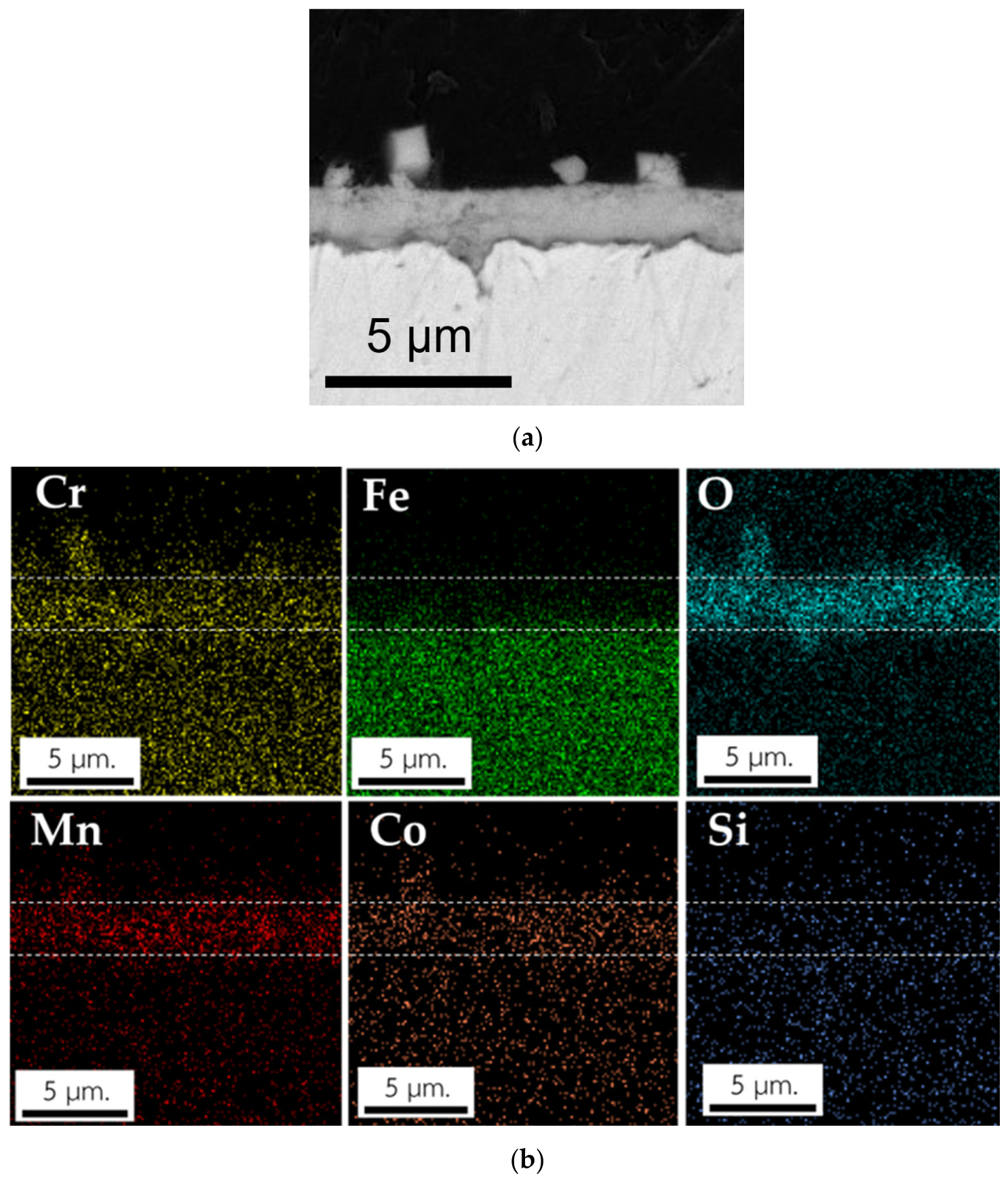
Figure 1a shows a cross-sectional SEM image of the sample after coating and heat treatment in Ar and air, respectively. The coating layer had a thickness of 1.43 µm (s.d. = 0.112 µm) averaged from ten different areas. Figure 1b presents the corresponding EDS mapping results, showing that the coating layer contained Mn, Co, Cr, and O, presented in red, orange, yellow and light blue colours, respectively. Fe presented in green colour was mainly in the substrate, while Si presented in blue was not substantially detected.
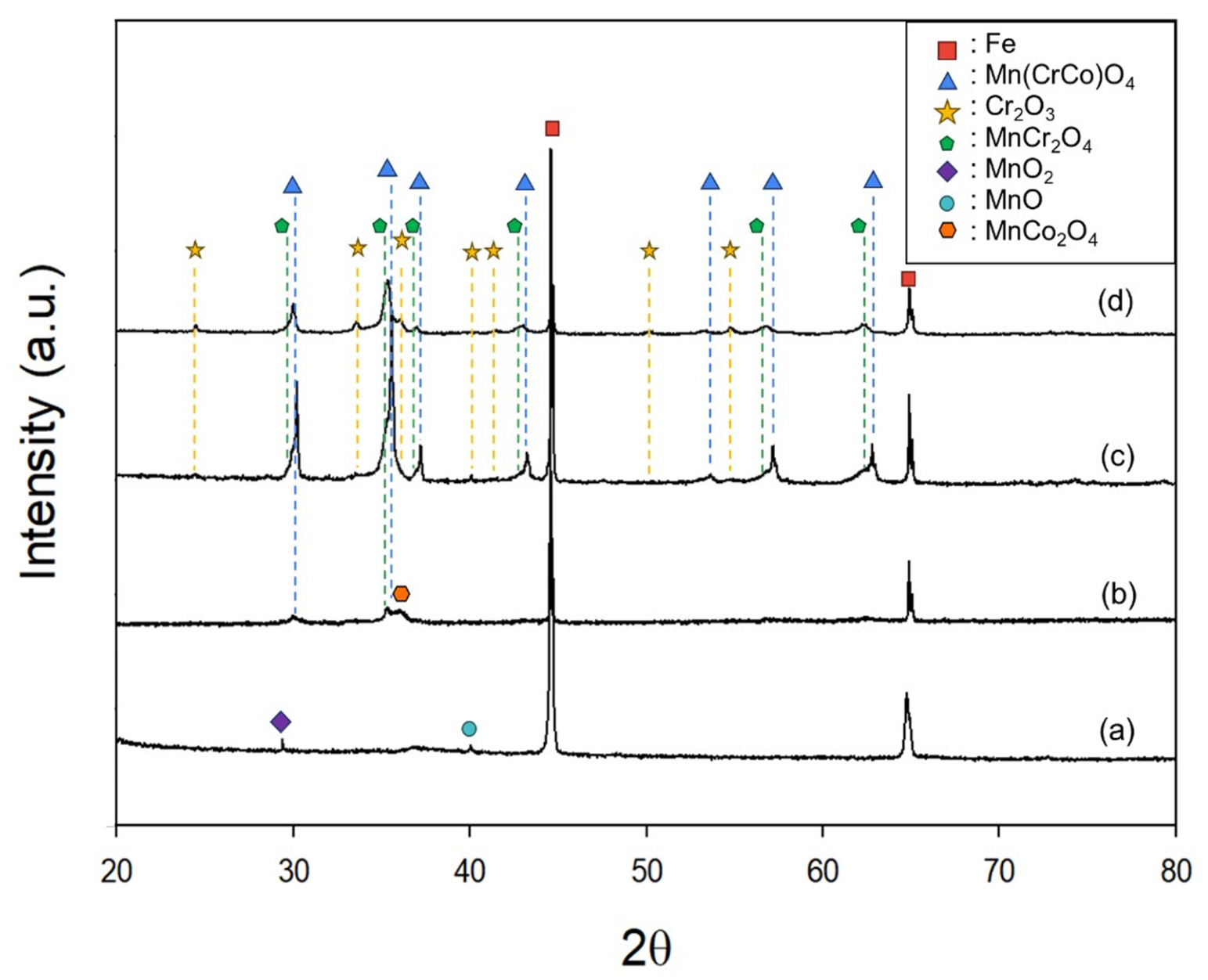
The XRD technique was further applied to the samples after different stages of the coating processes and after the oxidation test, giving the results in Figure 2. For the sample after deposition, the major peaks of the Fe substrate were observed as shown in Figure 2a. The additional peaks observed are close to the reference peaks of MnO2 (2θ of 29.39°) and MnO (2θ of 40.05°). The presence of the oxide of Mn having the oxidation state of Mn4+ was also detected from the XPS for the Mn-Co-O coating layer produced by anodic electrodeposition [23]. When the sample was annealed in Ar, the corresponding XRD pattern depicted in Figure 2b showed that the peaks of manganese oxides previously reported disappeared and the broad peak at the 2θ values in the range of 35.30–36.10° was observed covering the peaks of MnCo2O4 (2θ of 36.10°), MnCr2O4 (2θ of 35.30°) and Mn(CrCo)O4 (2θ of 35.76°). When the sample was further heat-treated in oxygen, the hump formerly observed became narrower and higher, resulting in the peaks around that zone, as shown in Figure 2c. The dominant peaks that contained the elements observed from the EDS results (Mn, Cr, Co and O) correspond to the peaks of Mn(CrCo)O4. The peaks of MnCr2O4 and a small signal of Cr2O3 were also detected. After the oxidation test, the XRD result in Figure 2d showed the more pronounced signals of Cr2O3 and MnCr2O4, which indicated the progress in metal oxidation after the oxidation test.
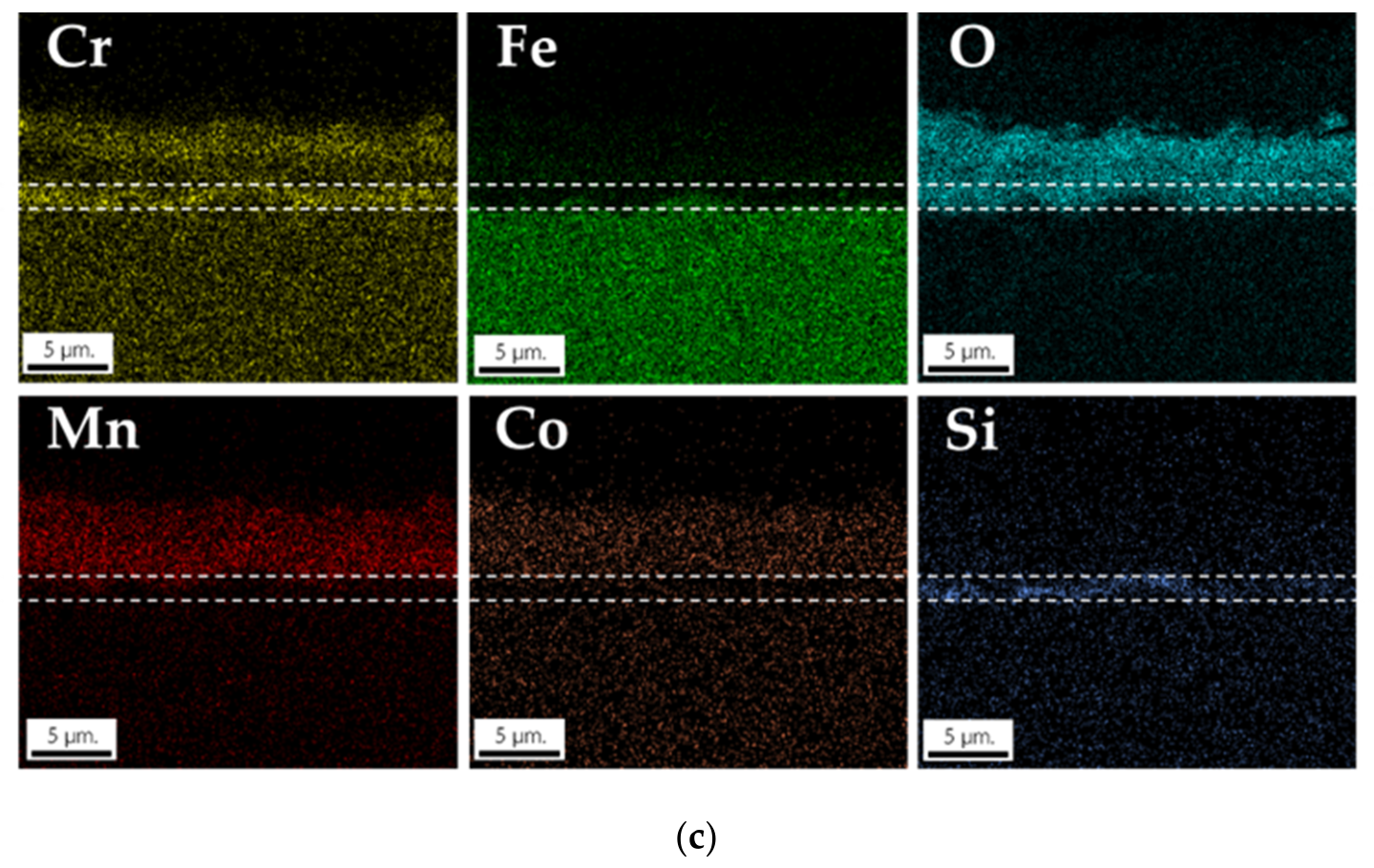
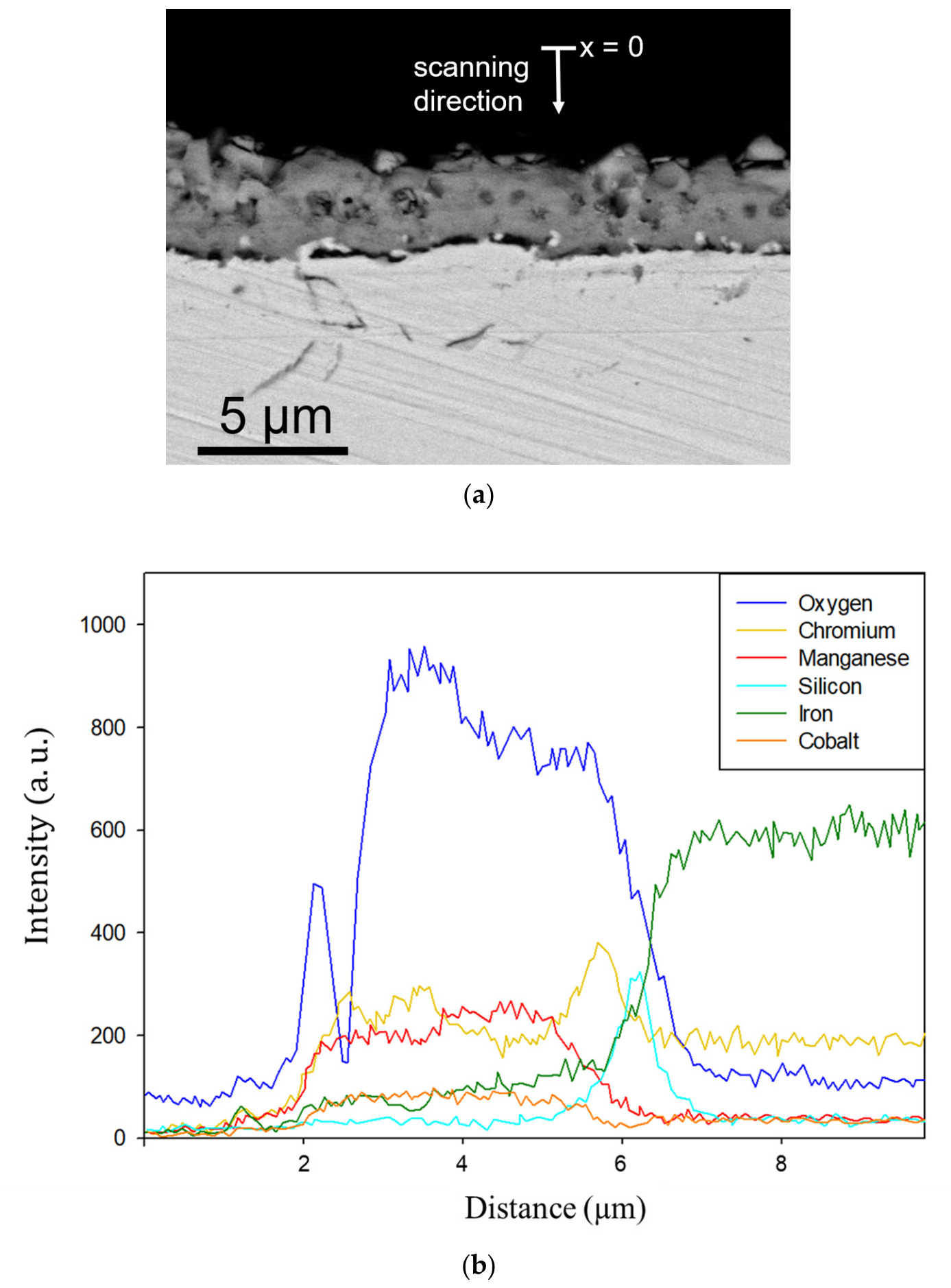
After the oxidation test in synthetic air at 800 °C for 96 h, SEM imaging was applied to observe the cross-section of the sample, as shown in Figure 3a. It can be observed that the coating layer was mainly compact; however, zones that contained porosity and the dark thin layer between the substrate and coating layer were observed. The EDS line scanning and mapping results are shown in Figure 3b and Figure 3c, respectively. It was observed from these two figures that the coating layer mainly contained Mn, Co, Cr, and O. Beneath this layer, there was a sub-layer with high intensities of Cr and O, sitting on a discontinuous layer rich in Si and O. These two layers were bounded by the dashed lines. The XRD pattern of the oxidised sample reported in Figure 2 shows the peak of Cr, which should be from the substrate. The peaks that contained Mn, Cr, Co and O, which were observed from the EDS results, correspond to those of Mn(CrCo)O4. In addition, Cr2O3 peaks were detected in agreement with the layer rich in Cr and O found in the EDS mapping results. The peak of Si-containing oxide was not detected, even though the presence of a layer rich in Si and O was seen in the SEM image. This should be from the relatively small amount of Si-containing oxide formation at the internal interface.

3.2. Thermodynamic Stability and Oxidation Mechanisms of the Formed Oxides

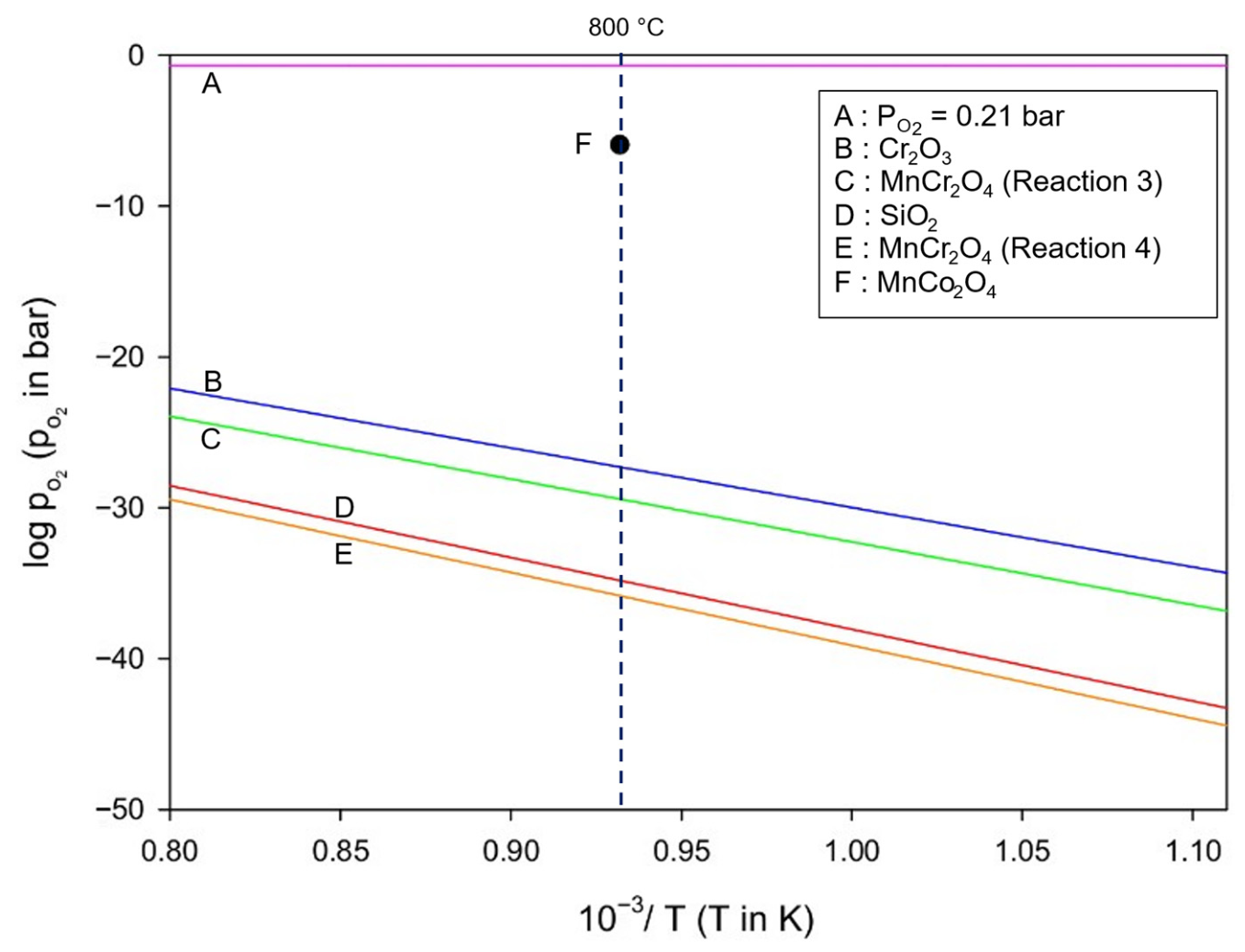
Chemical thermodynamics was used to assess the stability of the formed oxides. In the case of Cr2O3, the metal reacts with the oxygen to form an oxide layer according to Reaction (1). Similarly, silica can be formed by Si and O2 according to Reaction (2). By using thermodynamic data reported by Kubaschewski et al. [32], the standard Gibbs free energy of Reactions (1) and (2) and, thereafter, the equilibrium oxygen partial pressures in those reactions can be obtained as plotted in Figure 4.
2 C r + 3 2 O 2 C r 2 O 3
S i + O 2 S i O 2
As for MnCr2O4 spinel, various types of oxide formation are possible. For the first one, Cr and Mn atoms diffuse from the substrate to react with O2 at the external interface, thus giving MnCr2O4 according to Reaction (3). The second possible reaction corresponds to the situation when Cr2O3 is already formed, and later such chromia and Mn atoms in the coating layer react with O2, giving MnCr2O4 according to Reaction (4). Holcomb et al. [33] reported the standard Gibbs free energy of MnCr2O4 formation from MnO and Cr2O3. From this data and the standard thermodynamic data [32], the standard Gibbs free energy of Reactions (3) and (4) can be determined, thus giving the equilibrium oxygen partial pressures in those reactions as plotted in Figure 4.
M n + 2 C r + 2 O 2 M n C r 2 O 4
M n + C r 2 O 3 + 1 2 O 2 M n C r 2 O 4
For the MnCo2O4 formation, its formation reaction may be written as in Reaction (5). Petric et al. [34] reported the standard Gibbs free energy of MnCo2O4 formation from MnO and Co2O3. Thermodynamic data of MnO and Co2O3 formation from the corresponding elements and oxygen gas are reported by Kubaschewski et al. [32] and Jan K. et al. [35]. With these data, the standard Gibbs free energy of MnCo2O4 formation by Reaction (5) and thereafter the equilibrium oxygen partial pressure in Reaction (5) can be obtained as plotted in Figure 4.
M n + 2 C o + 2 O 2 M n C o 2 O 4
In this work, the test atmosphere is synthetic air with the oxygen partial pressure of 0.21 bar. From the modified Ellingham diagram in Figure 4, we can see that the actual oxygen partial pressure is much higher than the equilibrium ones of oxide formations by Reactions (1)–(5) within the temperature range 600 to 1000 °C. These results indicate that those oxides are thermodynamically stable under the studied atmosphere, consistent with the XRD results reported in Figure 2.
As for the oxidation mechanism of chromia, it was suggested for the compact oxide that the Cr cation can diffuse through the oxide by Cr interstitial and Cr vacancy presented in the oxide [36,37]. If the oxide growth is controlled by the diffusion of defects through the oxide, the oxidation kinetics are parabolic with the parabolic rate constant (kp) consisting of the part due to the cationic interstitial diffusion (kpi) and the other part due to the cationic substitutional diffusion (kpv) according to Equation (6) accompanied by Equations (7)–(9) [36,37].
k p =   k p i +   k p v
k p i = 8 α 2 A     p O 2 , i n t 3 16   p O 2 3 16
k p v = 8 α 2 B     p O 2 3 16   p O 2 , i n t 3 16
α = m A y = 3 2 M O 2 M C r 2 O 3 ρ C r 2 O 3
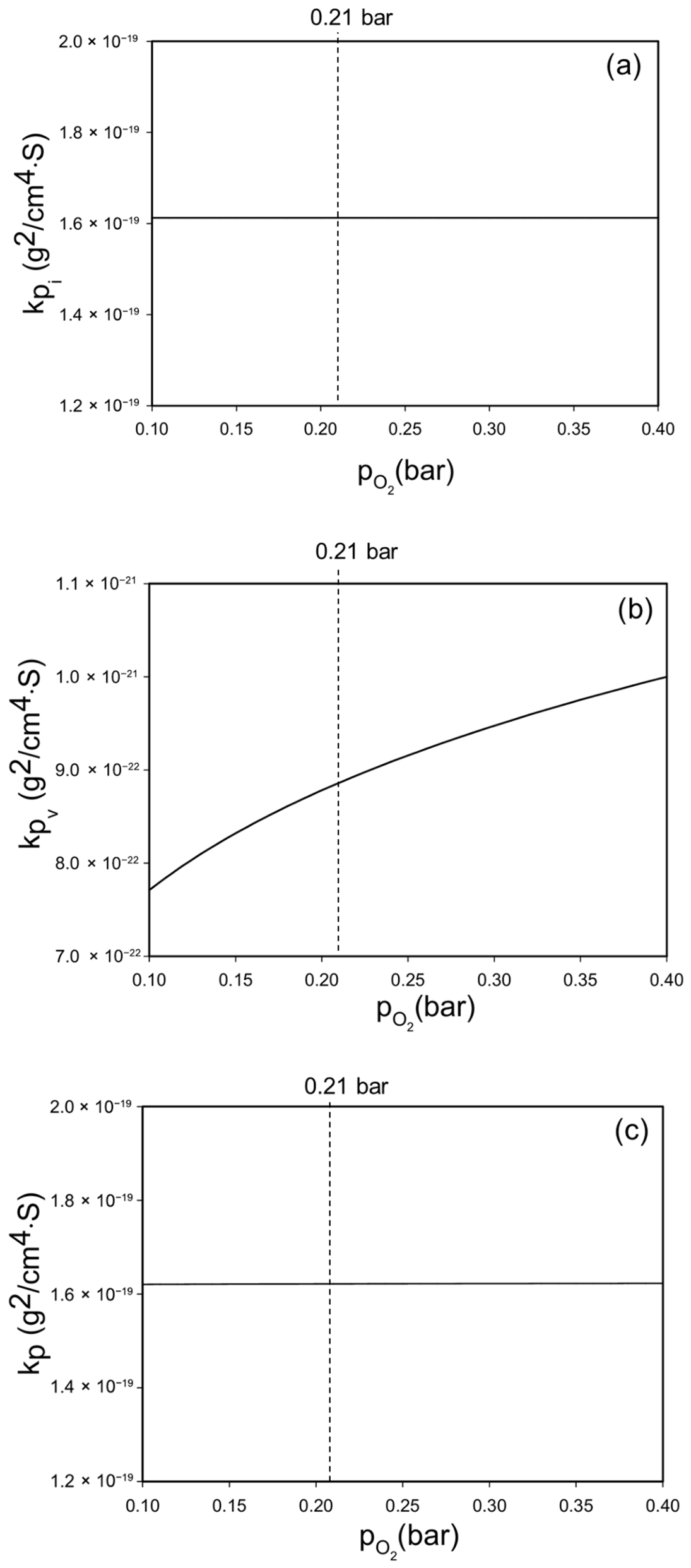
Here, p O 2 , i n t is the oxygen partial pressure at the internal interface between oxide and steel, p O 2 is the actual oxygen partial pressure in the atmosphere, (∆m/A) is the mass gained measured after the test, y stands for the thickness of the oxide layer, MO2 and MCr2O3 are the molar mass of O2 and Cr2O3, ρ C r 2 O 3 is the density of Cr2O3, A = 1.2 × 10⁻⁶ exp (−397,000/RT), and B = 1.5 × 10² exp(−502,000/RT) [36,37]. At the temperature of 800 °C, the kp, kpi and kpv values can be determined as a function of the oxygen partial pressure [37] as shown in Figure 5.
It can be seen from Figure 5 that log kpi values are nearly constant by about −19, while the values of log kpv are in the range of −21 to −22 when oxygen partial pressures are in the range of 0.1 to 0.4 bar. In this work, the oxidation test was conducted in synthetic air with the oxygen partial pressure of 0.21 bar, marked by a dashed line in Figure 5. Diagrams in Figure 5 show that kpi has a significantly higher value than kpv, thus giving the kpi and the total rate constant (kP) values are nearly identical [37]. This analysis indicates that the oxidation mechanism for the growth of Cr2O3 by cationic defects is mainly due to the diffusion of the chromium interstitial defect at 800 °C in synthetic air [36,37].

3.3. Coating Quality Assessment

Discussion in Section 3.2 is for the situation of stainless-steel oxidation without coating. After coating, the protectiveness is improved. In the present work, the coating was heat-treated in Ar at 800 °C for 2.5 h with the aim of coating layer densification, followed by the heat treatment in oxygen at 800 °C for 2.5 h for the formation of the spinel coating layer. To help discuss the protective nature of this coating layer, the other coating with only one step of heat treatment in oxygen at 800 °C for 5 h was comparatively studied and presented. The former and latter samples, subjected to two and one heat treatment steps, respectively, will hereafter be referred to as the two-step and one-step heat-treated electroplated samples.
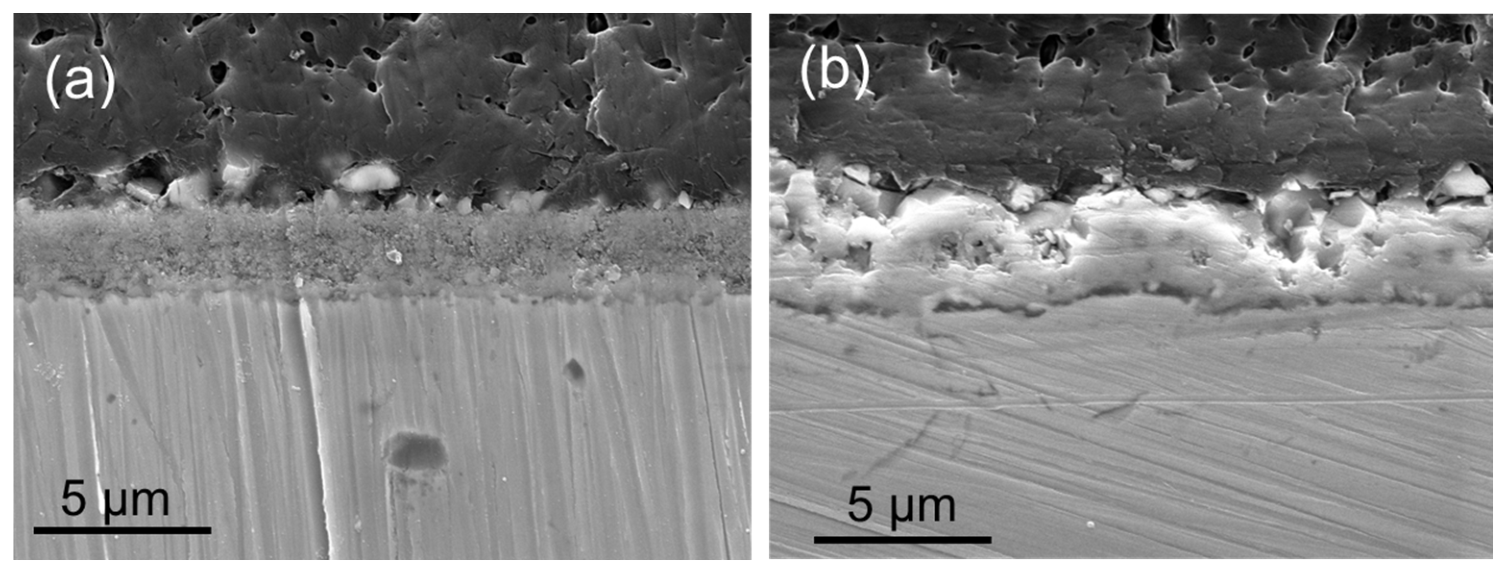
Figure 6 shows cross sections of the one-step and two-step heat-treated electroplated samples after oxidation in synthetic air at 800 °C for 96 h. It is seen that the coating layer produced using the two-step heat treatment was mainly compact, as seen in Figure 6b. Only about 1.3% of the cross-sectional area of the coating layer contained pores that have diameters larger than 0.02 μm. The largest pore had a diameter of 0.129 μm, but it occupied the area in the observed cross-section only by about 0.3%. The coating layer produced using one-step heat treatment, as depicted in Figure 6a, was more porous, with numerous fine pores (maximum size approximately 0.02 μm) observed throughout the coating layer.
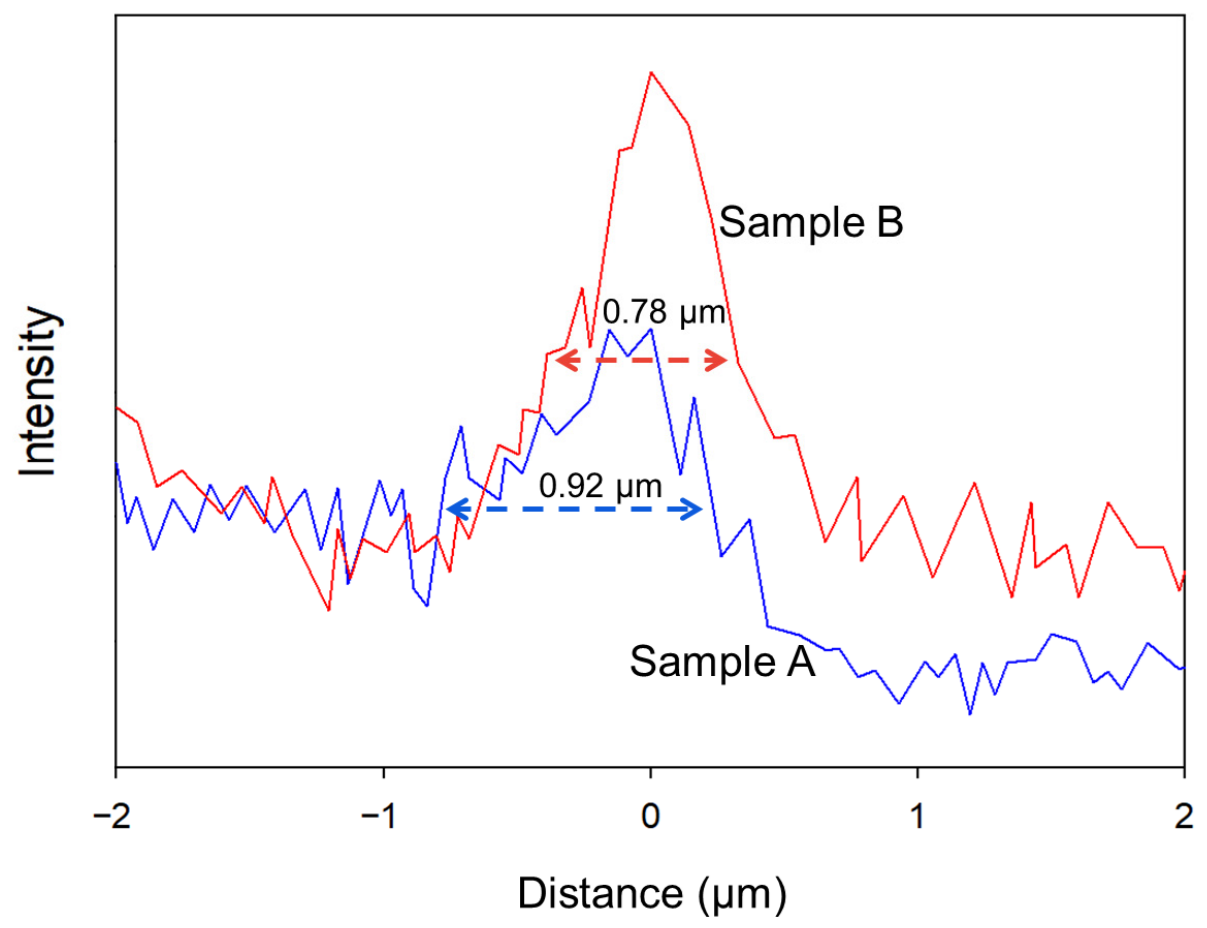
The samples were further analysed by the EDS line scanning technique. Figure 7 shows the Cr intensity of the one-step (Figure 6a) and the two-step (Figure 6b) heat-treated electroplated samples after the oxidation test at the internal interface between the coating layer and the substrate. The full-width-at-half-maximum (FWHM) technique was used to estimate the thickness of the Cr hump in this figure. The obtained values are 0.92 µm (s.d. = 0.12 µm) and 0.78 µm (s.d. = 0.28 µm) for the one-step and two-step heat-treated electroplated samples marked as sample A and sample B, respectively. This result shows that the latter sample should have the lower thermal oxide thickness, which indicates the better protectiveness of that sample. As a matter of discussion with the bare stainless steel, it was reported that oxidation kinetics of a Type 430 stainless steel oxidised in 20% O2 in Ar was parabolic with the rate constant of 2.95 × 10⁻¹³ g2∙cm−4∙s−1 [37]. If the oxide scale is assumed to be chromia, having the density of 5.225 g∙cm−3 [38], the estimated thickness of the oxide scale formed on the bare steel after the oxidation for 96 h is 1.94 μm, which is more than two times the value obtained from the steel coated using the two-step heat treatment (0.78 µm), as presented in Figure 7.
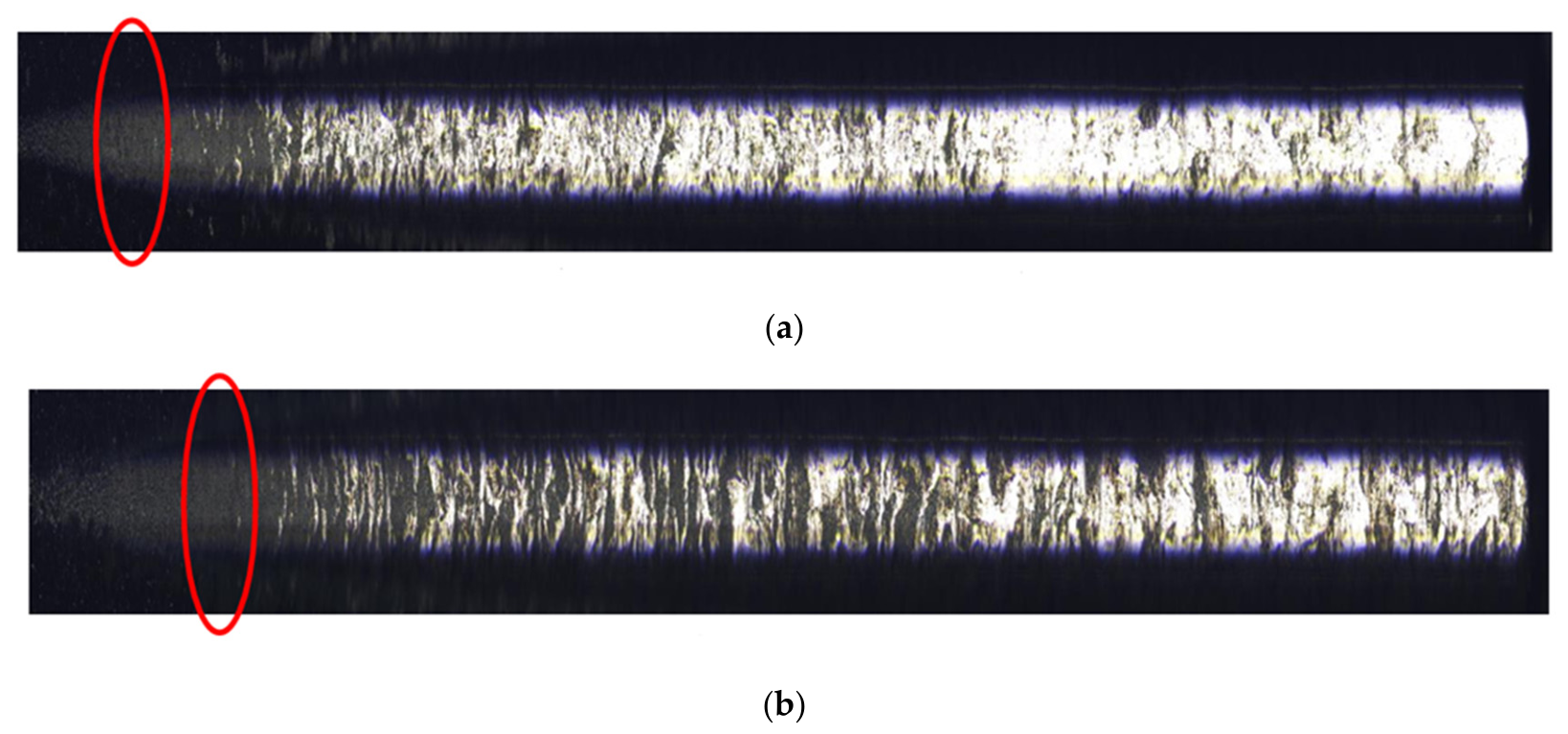
In addition, the scratch test was applied to observe the failure behaviour of the coating layer when the applied load was moved on the surface, with the value increasing with time. The failure observed from the scratch test may be chipping within the coating layer, which relates to the cohesive type of failure [39,40]; however, if the damage is spallation of the coating layer from the substrate, this belongs to the adhesive mode of failure [39]. The critical load measured here is the one that provoked the first spallation, which relates to the adherence of the coating-substrate system. Figure 8a presents the scratch track of the coating layer produced using the one-step heat treatment. The first spallation, which was first observed by an optical microscope, is shown in the marked circle. The critical load that provoked the first spallation was 10.41 N (s.d. = 1.06 N). Similarly, Figure 8b presents the scratch track of the coating layer produced using the two-step heat treatment. The coating layer was spalled for the first time under the applied load of 13.75 N (s.d. = 1.53 N). The results showed that the critical load for the coating layer produced by the two-step heat treatment was higher than that produced by one-step heat treatment. These results indicated that the former sample better resisted the applied load that triggered the first spallation of the coating layer during the test.
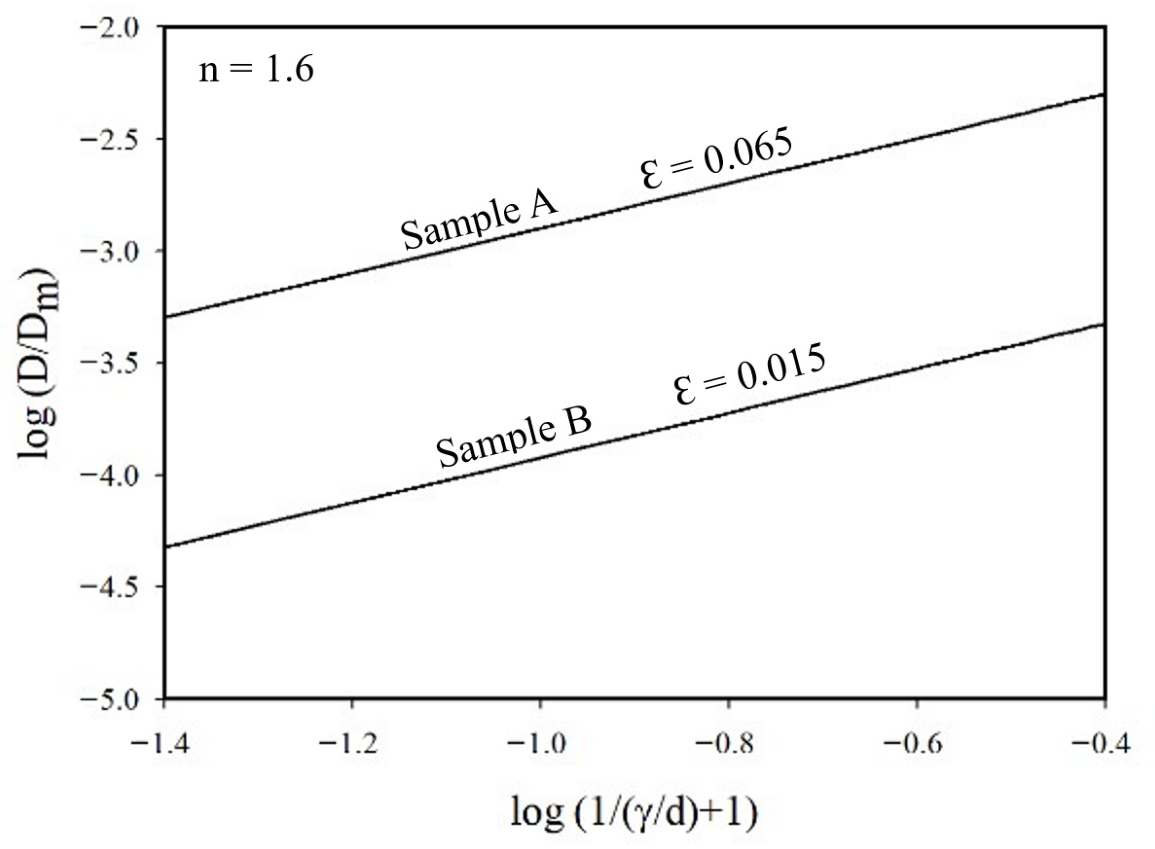
As a matter of discussion, the protectiveness of the coating may be analysed primarily in two limiting cases [11,41]. The first one is the situation when the mean free path of gaseous species is significantly less than the diameter of the pore in the coating layer thus giving the diffusion coefficient in this case determined as Dm, and the other limiting case is the situation when the gaseous mean free path is significantly larger than the diameter of the pore which is simplified to have a cylindrical shape thus giving the gas diffusivity called the Knudsen one (Dk) [11,41]. The situation between the former two limiting cases leads to the determination of the diffusivity (D’) determined by Equation (10) and the Dk obtained by Equation (11), where d is the pore diameter [41]. The situation when the pore shape is irregularly described by the tortuosity (τ) of the pore and the pore density determined by the pore fraction (ε) can be varied, resulting in the estimation of the effective diffusivity (D), which is empirically related to τ and ε, such as by Equation (12), accompanied by Equations (13) and (14). The exponent n in Equation (12) is reported in the range of 1.2–2.0 [11,41,42]. To simplify the analysis here, the average n value of 1.6 was used.
1 D = 1 D m + 1 D k
D k = α d
D D m = 1 γ d + 1 ε n
γ = D m α
α = T M
As adapted from the diagram proposed in literature [11], we can plot a diagram based on Equation (13) as the qualitative framework to evaluate the relationship between the pore density, diameter and the effective diffusivity of the gas through the pore by setting the ordinate to be a logarithm of D/Dm, i.e., that of the effective diffusion coefficient of oxygen that diffuses through the pore with respect to the molecular diffusivity of the oxygen gas and the abscissa to be a logarithm of (1/((γ/d) + 1)), which relates to the fraction of the pore diameter, as shown in Figure 9. Each line in the diagram has a different y-intercept, which relates to the different pore fractions in the coating layer [11]. Oxidation of the one-step and two-step heat-treated coated samples, marked, respectively, as samples A and B, gave two lines as shown in the diagram (Figure 9). It is seen that the line of the latter sample is located below the line of the former sample, indicating the diffusivity of oxygen gas through the coating layer was suppressed for the latter sample. This is because of the lower pore fraction of the two-step heat-treated coated sample, which should be from the beneficial step of heat treatment in Ar to help densify the coating layer.
As for the effect of pore size, since different pore sizes were presented in the coating layer, the qualitative description was applied to help assess this effect on the effective diffusivity of the oxygen gas based on the cross-sectional images of the coating layers. We can see in Figure 6b that the coating layer formed by the two-step heat treatment was mainly compact. As a result, the effective diffusivity in this area was further diminished in addition to the reduced diffusivity because of the lower pore fraction of this sample. Though the large pore size, such as the one having a diameter of 0.129 μm, existed in the coating layer, it occupied only a small area of about 0.3%. Its effect on gas diffusivity should then be slight. This argument was supported by the observation that the chromia formed on the sample produced using the two-step heat treatment was still thinner than the one produced by the one-step heat treatment, as seen in Figure 7.
Moreover, coating can further affect the volatilisation of Cr-containing oxides formed at high temperatures. For chromia exposed to dry air, the chromia can react with oxygen, giving the CrO3 volatile species. It can be calculated using thermodynamic data from Kubaschewski et al. [32] that the partial pressure of this volatile phase is 1.18 × 10⁻¹⁰ bar for the volatilization in dry air at 800 °C. In the atmosphere that contains water vapour, e.g., in O2-3%H2O, chromia can react with oxygen and water, resulting in the CrO2(OH)2 volatile species. By using standard thermodynamic data [32] and additional ones reported by Bauschlicher et al. [43], the partial pressures of CrO2(OH)2 volatile phase are calculated at 7.15 × 10⁻⁸ bar at 800 °C. These results show that volatilisation in dry atmosphere is significantly lower than that in humidified conditions at 800 °C. The reduced diffusivity of oxygen gas due to the coating also led to the reduced amount of oxygen as a reactant for the volatilisation reaction. Thus, the Cr volatilisation in the present work is expected to be slight with respect to the volatilisation in humid air. However, this hypothesis should be proven in further studies. In addition, a thinner Cr-rich oxide at the interface between the coating layer and substrate was one factor that can help reduce the area specific resistance (ASR) since the ASR depends on the electrical resistivity and the thickness of the oxide scale [3]. Nevertheless, the long-term performance of the coating in suppressing oxidation and ASR is critical for practical application [3,17] and merits consideration as future work.

4. Conclusions

The process of anodic electrodeposition with subsequent heat treatment with the aim of forming Mn-Co oxide on a Type 430 stainless steel for SOFC interconnect application was developed. The proposed coating layer was densified compared with the sample prepared using the process without annealing in Ar. Consequently, the oxidation resistance of the sample with the proposed coating was increased as observed from the reduction in thickness of the Cr-rich oxide formed at the interface between the coating layer and substrate when the coated steel was exposed to synthetic air at 800° for 96 h. The theoretical analysis showed that the decrease in pore density in the proposed coating layer can help reduce the effective diffusivity of oxygen through the coating layer. The results from the scratch test additionally showed that the densified sample required a greater force to peel off the coating layer, as evaluated by the scratch test.

Author Contributions

Conceptualization, S.C.; methodology, S.C. and P.W.; validation, J.P. and S.C.; formal analysis, J.P., S.C. and T.N.; investigation, J.P. and P.W.; resources, T.N.; data curation, J.P.; writing—original draft preparation, J.P.; writing—review and editing, S.C. and T.N.; visualisation, J.P.; supervision, S.C.; project administration, S.C.; funding acquisition, T.N. All authors have read and agreed to the published version of the manuscript.

Funding

National Science, Research and Innovation Fund (NSRF), and King Mongkut’s University of Technology North Bangkok (project number KMUTNB-FF-69-A-07).

Data Availability Statement

The raw data supporting the conclusions of this article will be made available by the authors on request.

Acknowledgments

This research budget was allocated by The National Science, Research and Innovation Fund (NSRF), and King Mongkut’s University of Technology North Bangkok (project number KMUTNB-FF-69-A-07).

Conflicts of Interest

The authors declare no conflicts of interest.

References

  1. Huang, L.-W.; Shiue, R.-K.; Liu, C.-K. Microstructural Evolution and Gas-Tight Properties of Yttria-Stabilized Zirconia/Crofer 22H Stainless Steel Brazed Joints with the Ag-Ge-Si Filler for Use in Solid-Oxide Fuel Cells. Metals 2023, 13, 1866. [Google Scholar] [CrossRef]
  2. Tomas, M.; Visibile, A.; Svensson, J.-E.; Froitzheim, J. Novel Coatings for Protecting Solid Oxide Fuel Cell Interconnects against the Dual-Atmosphere Effect. Int. J. Hydrogen Energy 2023, 48, 18405–18419. [Google Scholar] [CrossRef]
  3. Chevalier, S.; Combemale, L.; Popa, I.; Chandra-ambhorn, S.; Chandra-ambhorn, W.; Promdirek, P.; Wongpromrat, P. Chapter 6 Development of SOFC Interconnect Stainless Steels. Solid State Phenom. 2020, 300, 135–156. [Google Scholar] [CrossRef]
  4. Bongiorno, V.; Spotorno, R.; Paravidino, D.; Piccardo, P. On the High-Temperature Oxidation and Area Specific Resistance of New Commercial Ferritic Stainless Steels. Metals 2021, 11, 405. [Google Scholar] [CrossRef]
  5. Liu, C.-K.; Shong, W.-J. Evaluation of Sintered Powder Metallurgy Fe-Cr Alloys as Metallic Interconnects for Solid Oxide Fuel Cell Applications. Metals 2025, 15, 1370. [Google Scholar] [CrossRef]
  6. Wei, W.; Chen, W.; Ivey, D.G. Anodic Electrodeposition of Nanocrystalline Coatings in the Mn−Co−O System. Chem. Mater. 2007, 19, 2816–2822. [Google Scholar] [CrossRef]
  7. Alman, D.; Jablonski, P. Effect of Minor Elements and a Ce Surface Treatment on the Oxidation Behavior of an Fe–22Cr–0.5Mn (Crofer 22 APU) Ferritic Stainless Steel. Int. J. Hydrogen Energy 2007, 32, 3743–3753. [Google Scholar] [CrossRef]
  8. Quadakkers, W.J.; Piron-Abellan, J.; Shemet, V.; Singheiser, L. Metallic interconnectors for solid oxide fuel cells—A review. Mater. High Temp. 2003, 20, 115–127. [Google Scholar]
  9. Wang, B.; Li, K.; Liu, J.; Yang, T.; Zhang, N. Achieving high-temperature corrosion resistance and conductivity of SUS430 by xCr-MnCo dual-structured coating. Corros. Sci. 2023, 220, 111267. [Google Scholar] [CrossRef]
  10. Gao, J.; Si, X.; Wang, X.; Li, C.; Qi, J.; Cao, J. Exploring the effects of Mn content in the Mn-Co spinel coating on its formation and slowing the outward Cr diffusion. Corros. Sci. 2023, 217, 111158. [Google Scholar] [CrossRef]
  11. Chandra-ambhorn, S.; Homjabok, W.; Chandra-ambhorn, W.; Thublaor, T.; Siripongsakul, T. Oxidation and Volatilisation Behaviour of a Type 430 Stainless Steel Coated by Mn-Co Oxide by Slurry Method with Pre-Oxidation for SOFC Interconnect Application. Corros. Sci. 2021, 187, 109506. [Google Scholar] [CrossRef]
  12. Yang, Z.; Xia, G.; Simner, S.P.; Stevenson, J.W. Thermal Growth and Performance of Manganese Cobaltite Spinel Protection Layers on Ferritic Stainless Steel SOFC Interconnects. J. Electrochem. Soc. 2005, 152, A1896–A1901. [Google Scholar] [CrossRef]
  13. Jia, C.; Wang, Y.; Molin, S.; Zhang, Y.; Chen, M.; Han, M. High Temperature Oxidation Behavior of SUS430 SOFC Interconnects with Mn-Co Spinel Coating in Air. J. Alloys Compd. 2019, 787, 1327–1335. [Google Scholar] [CrossRef]
  14. Ebrahimifar, H.; Zandrahimi, M. Oxidation and Electrical Behavior of AISI 430 Coated with Cobalt Spinels for SOFC Interconnect Applications. Surf. Coat. Technol. 2011, 206, 75–81. [Google Scholar] [CrossRef]
  15. Cavichiolo, L.S.; Nørby, T.H.; Hald, J.; Pantleon, K. Long-Term Effects of Soft-Chromising Ni-Electroplated AISI 441 Commodity Steel for SOC Stack Interconnects. Corros. Sci. 2024, 227, 111728. [Google Scholar] [CrossRef]
  16. Golden, T.D.; Wang, A.Q. Anodic electrodeposition of cerium oxide thin films II. Mechanism studies. J. Electrochem. Soc. 2003, 150, C621–C624. [Google Scholar] [CrossRef]
  17. Ignaczak, J.; Bik, M.; Lemieszek, B.; Kamecki, B.; Cempura, G.; Jasiński, P.; Molin, S. Long-Term Stability and Oxidation Behavior of Mn2CuO4, Mn1.9Fe0.1CuO4, Mn1.7Fe0.3CuO4 Coatings on SOFC Interconnects: Summary of a 10,000-h Oxidation Test. J. Power Sources 2026, 674, 239785. [Google Scholar] [CrossRef]
  18. Hassan, M.A.; Mamat, O.B.; Mehdi, M. Review: Influence of Alloy Addition and Spinel Coatings on Cr-Based Metallic Interconnects of Solid Oxide Fuel Cells. Int. J. Hydrogen Energy 2020, 45, 25191–25209. [Google Scholar] [CrossRef]
  19. Zeng, S.; Li, F. Study on the Influence Law of Ce on Microstructure and High-Temperature Oxidation Resistance of Ti-Al-Si Composite Coating. Coatings 2023, 13, 1244. [Google Scholar] [CrossRef]
  20. Song, J.; Li, Y.; Wang, W.; Wang, L. Protective Co–Mn Spinel Coatings Prepared by Composite Electrodeposition for High-Temperature Service of Ferritic Stainless Steel. J. Mater. Eng. Perform. 2026, 35, 15281–15290. [Google Scholar] [CrossRef]
  21. Talic, B.; Hendriksen, P.V.; Wiik, K.; Lein, H.L. Thermal Expansion and Electrical Conductivity of Fe and Cu Doped MnCo2O4 Spinel. Solid State Ion. 2018, 326, 90–99. [Google Scholar] [CrossRef]
  22. Wang, A.Q.; Golden, T.D. Anodic electrodeposition of cerium oxide thin films I. Formation of Crystalline thin film. J. Electrochem. Soc. 2003, 150, C616–C620. [Google Scholar] [CrossRef]
  23. Wei, W.; Chen, W.; Ivey, D.G. Rock Salt−Spinel Structural Transformation in Anodically Electrodeposited Mn−Co−O Nanocrystals. Chem. Mater. 2008, 20, 1941–1947. [Google Scholar] [CrossRef]
  24. Tomas, M.; Asokan, V.; Puranen, J.; Svensson, J.-E.; Froitzheim, J. Efficiencies of Cobalt- and Copper-Based Coatings Applied by Different Deposition Processes for Applications in Intermediate-Temperature Solid Oxide Fuel Cells. Int. J. Hydrogen Energy 2022, 47, 32628–32640. [Google Scholar] [CrossRef]
  25. Lee, S.-I.; Hong, J.; Kim, H.; Son, J.-W.; Lee, J.-H.; Kim, B.-K.; Lee, H.-W.; Yoon, K.J. Highly Dense Mn-Co Spinel Coating for Protection of Metallic Interconnect of Solid Oxide Fuel Cells. J. Electrochem. Soc. 2014, 161, F1389–F1394. [Google Scholar] [CrossRef]
  26. Thublaor, T.; Wiman, P.; Siripongsakul, T.; Chandra-ambhorn, S. Development of Annealed Mn–Co and Mn–Co–Cu Coated AISI 430 Stainless Steels for SOFC Interconnect Application. Oxid. Met. 2021, 96, 93–103. [Google Scholar] [CrossRef]
  27. Wei, W.; Chen, W.; Ivey, D.G. Oxidation resistance and electrical properties of anodically electrodeposited Mn-Co oxide coating for solid oxide fuel cell interconnect application. J. Pow. Sources 2009, 186, 428–432. [Google Scholar] [CrossRef]
  28. Amin, P.; Rezaei, N.; Repo, E.; Sainio, J.; Godini, H.R. Anodic Electrodeposition of MIL-53(Al) Thin Films on Aluminum: Synthesis, Characterization, and Potential for Direct Electric Heating. Microporous Mesoporous Mater. 2026, 400, 113860. [Google Scholar] [CrossRef]
  29. Kenari, Z.K.R.; Daryakenari, A.A.; Montazeri, A.; Ajdari, F.B.; Kasipour, M.M. Scalable anodic electrodeposition of efficient binder-free NiO electrocatalysts for water oxidation. J. Electroanal. Chem. 2026, 1006, 119799. [Google Scholar] [CrossRef]
  30. Xie, H.; Lei, Y.; Tang, G.; Hu, L.; Liu, X.; Huang, A.; Gu, H.; Wang, J.; Gan, L. Oxidation Behaviors of 430 stainless steel under coupling of electrical current and high temperature: Quantitative evaluation for SOFC interconnector. J. Iron Steel Res. 2026, 33, 2. [Google Scholar] [CrossRef]
  31. Bakhshi-Zadeh, A.; Salmani, S.; Faghihi-Sani, M.A.; Abdoli, H.; Jalili, N. Oxidation Behavior and Electrical Properties of De-Siliconized AISI 430 Alloy with Mn1.5Co1.5O4 Coating for Solid Oxide Fuel Cell Interconnect. Oxid. Met. 2020, 93, 401–415. [Google Scholar] [CrossRef]
  32. Kubaschewski, O.; Alcock, C.B.; Spencer, P.J. Materials Thermochemistry, 6th ed.; Pergamon: Oxford, UK, 1993. [Google Scholar]
  33. Holcomb, G.R.; Alman, D.E. The Effect of Manganese Additions on the Reactive Evaporation of Chromium in Ni–Cr Alloys. Scr. Mater. 2006, 54, 1821–1825. [Google Scholar] [CrossRef]
  34. Petric, A.; Ling, H. Electrical Conductivity and Thermal Expansion of Spinels at Elevated Temperatures. J. Am. Ceram. Soc. 2007, 90, 1515–1520. [Google Scholar] [CrossRef]
  35. Kaczmarczyk, J.; Zasada, F.; Janas, J.; Indyka, P.; Piskorz, W.; Kotarba, A.; Sojka, Z. Thermodynamic Stability, Redox Properties, and Reactivity of Mn3O4, Fe3O4, and Co3O4 Model Catalysts for N2O Decomposition: Resolving the Origins of Steady Turnover. ACS Catal. 2016, 6, 1235–1246. [Google Scholar] [CrossRef]
  36. Kurokawa, H.; Kawamura, K.; Maruyama, T. Oxidation Behavior of Fe–16Cr Alloy Interconnect for SOFC under Hydrogen Potential Gradient. Solid State Ion. 2004, 168, 13–21. [Google Scholar] [CrossRef]
  37. Wiman, P.; Thublaor, T.; Rojhirunsakool, T.; Bidabadi, M.H.S.; Yang, Z.-G.; Siripongsakul, T.; Chandra-ambhorn, W.; Chandra-ambhorn, S. Corrosion Behaviour of AISI 430 Stainless Steel in O2-40%H2O at 800 °C. Corros. Sci. 2022, 203, 110323. [Google Scholar] [CrossRef]
  38. Yang, Z.; Weil, S.K.; Paxton, D.M.; Stevenson, J.W. Selection and Evaluation of Heat-Resistant Alloys for SOFC Interconnect Applications. J. Electrochem. Soc. 2003, 150, A1188–A1201. [Google Scholar] [CrossRef]
  39. Sekler, J.; Steinmann, P.A.; Hintermann, H.E. The Scratch Test: Different Critical Load Determination Techniques. Surf. Coat. Technol. 1988, 36, 519–529. [Google Scholar] [CrossRef]
  40. Delgado-Brito, A.M.; Hernández-Ruiz, A.; Castrejón-Sánchez, V.H.; Chaparro-Pérez, K.D.; Cervantes-Tobón, A.; Campos-Silva, I. Effect of Diffusion Annealing and Aging Post-Treatments on Scratch Properties of Boride Layers on CoCrMo Alloy. J. Mater. Eng. Perform. 2025, 34, 12382–12390. [Google Scholar] [CrossRef]
  41. Welty, J.; Rorrer, G.L.; Foster, D.G. Fundamentals of Momentum, Heat, and Mass Transfer, 7th ed.; John Wiley & Sons: Singapore, 2019. [Google Scholar]
  42. Sun, Z.; Tang, X.; Cheng, G. Numerical Simulation for Tortuosity of Porous Media. Microporous Mesoporous Mater. 2013, 173, 37–42. [Google Scholar] [CrossRef]
  43. Bauschlicher, C.W.; Jacobson, N.S.; Myers, D.L.; Opila, E.J. Computational Chemistry Derivation of Cr, Mn, and La Hydroxide and Oxyhydroxide Thermodynamics. J. Phys. Chem. A 2022, 126, 1551–1561. [Google Scholar] [CrossRef] [PubMed]
Figure 1. (a) SEM images and (b) EDS mapping results of the heat-treated electroplated sample where the coated layer was bounded by the dotted lines.
Metals 16 00547 g001
Figure 2. XRD patterns of the samples after (a) electroplating, (b) electroplating followed by heat treatment in Ar, (c) electroplating followed by heat treatment in Ar and O2, and (d) electroplating followed by heat treatment in Ar and O2 and the oxidation test where the dotted lines indicate the 2θ values of standard peaks.
Metals 16 00547 g002
Figure 3. (a) SEM image, (b) line scanning results, and (c) EDS mapping results of the sample after the oxidation test where the formed oxide scales were bounded by the dotted lines.
Metals 16 00547 g003aMetals 16 00547 g003b
Figure 4. Modified Ellingham diagram showing the equilibrium partial pressures in oxide formation reactions at different temperatures.
Metals 16 00547 g004
Figure 5. The diagrams show (a) kpi, (b) kpv and (c) kp values at different oxygen pressures with the dashed line indicating the experimental oxygen partial pressure at 0.21 bar, adapted from the ones presented in Ref. [37].
Metals 16 00547 g005
Figure 6. SEM cross-sectional images of the (a) one-step and (b) two-step heat-treated electroplated samples after the oxidation test in synthetic air at 800 °C for 96 h.
Metals 16 00547 g006
Figure 7. Comparison of Cr rich zone of the one-step (Sample A) and two-step (Sample B) heat-treated electroplated samples after the oxidation test.
Metals 16 00547 g007
Figure 8. Scratch tracks with the total test length of 10 mm showing the first spallation of the coating layers as observed by an optical microscope in the marked red circles of the oxidised specimens coated using the (a) one-step and (b) two-step heat treatment processes.
Metals 16 00547 g008
Figure 9. Relationship between pore characteristics and normalised diffusivity of oxygen gas through the coating layer, adapted from the diagram presented in Ref. [11].
Metals 16 00547 g009
Disclaimer/Publisher’s Note: The statements, opinions and data contained in all publications are solely those of the individual author(s) and contributor(s) and not of MDPI and/or the editor(s). MDPI and/or the editor(s) disclaim responsibility for any injury to people or property resulting from any ideas, methods, instructions or products referred to in the content.