Physics-Informed Neural Network Modelling of Hydrogen Diffusion and Trapping in Microalloyed Steels: A Data-Driven Synthesis Across Multiple Alloy Systems




Abstract
1. Introduction
2. Theoretical Background
2.1. Hydrogen Absorption and Sieverts’ Law
2.2. Fick’s Second Law and Effective Diffusivity
2.3. McNabb–Foster Trapping Model
2.4. Physics-Informed Neural Network Formulation
3. Experimental Data Sources and Database Construction
3.1. Data Sources
3.2. Database Structure
4. Methodology
4.1. PINN Architecture and Training
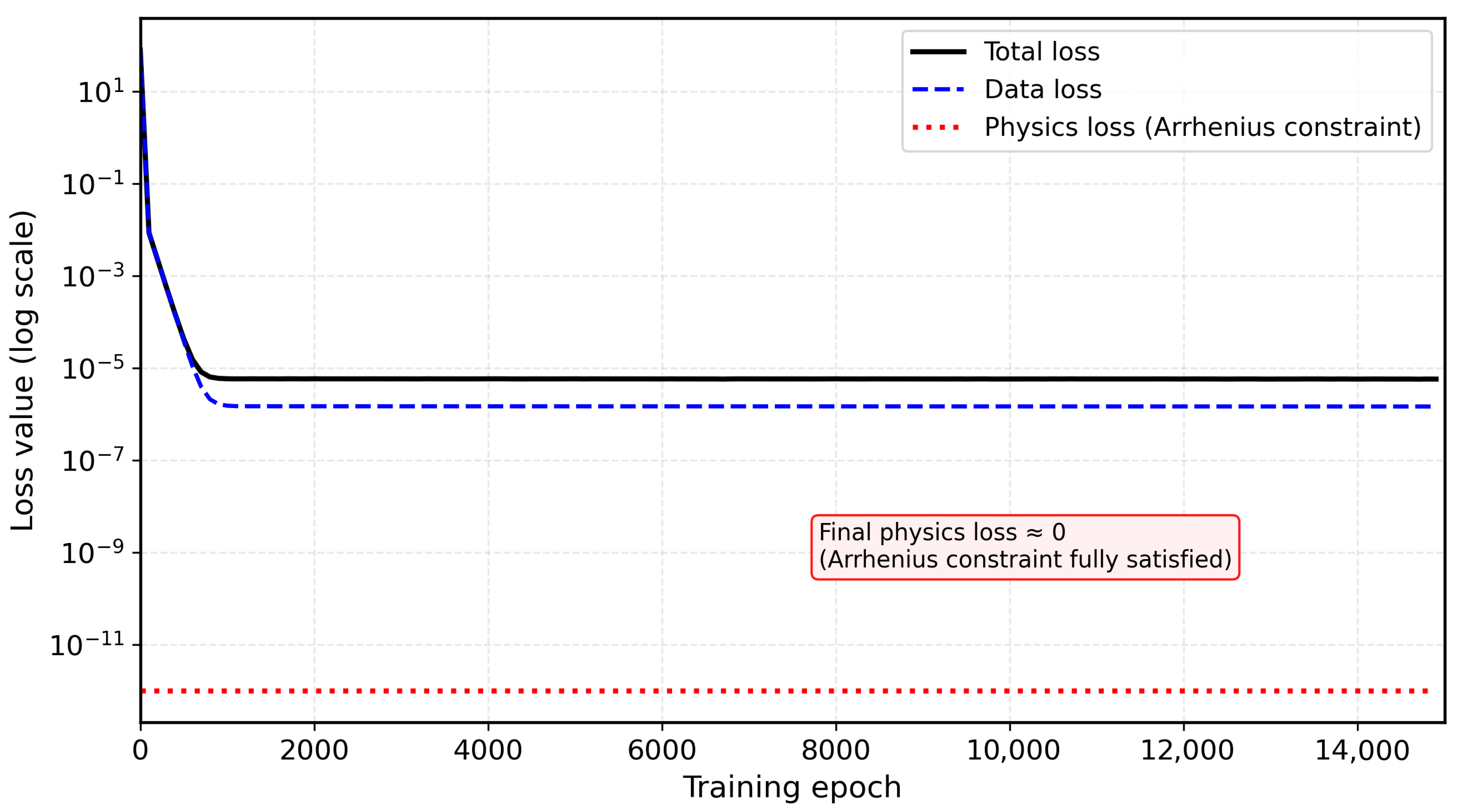
4.2. Physics Loss and Arrhenius Constraint
4.3. McNabb–Foster Trap Parameter Analysis
4.4. Arrhenius Fitting for X65 Steel
5. Results
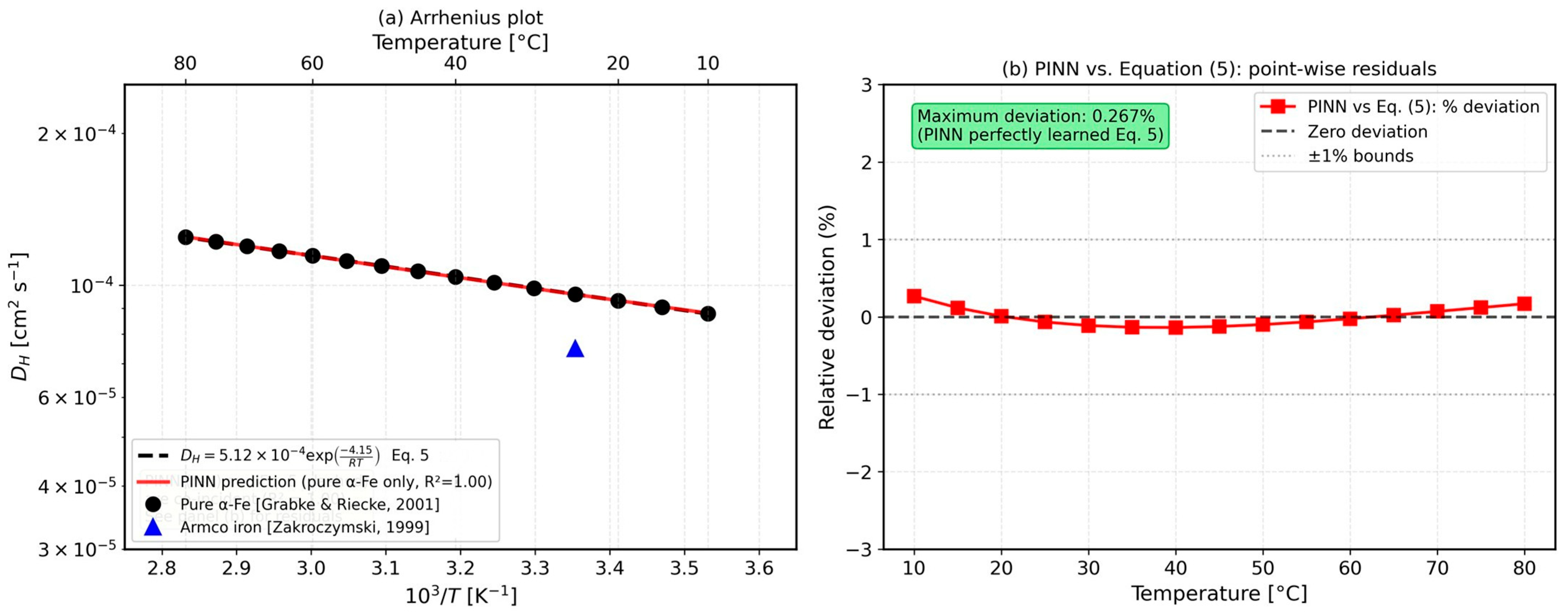
5.1. Pure Iron Diffusivity and PINN Baseline
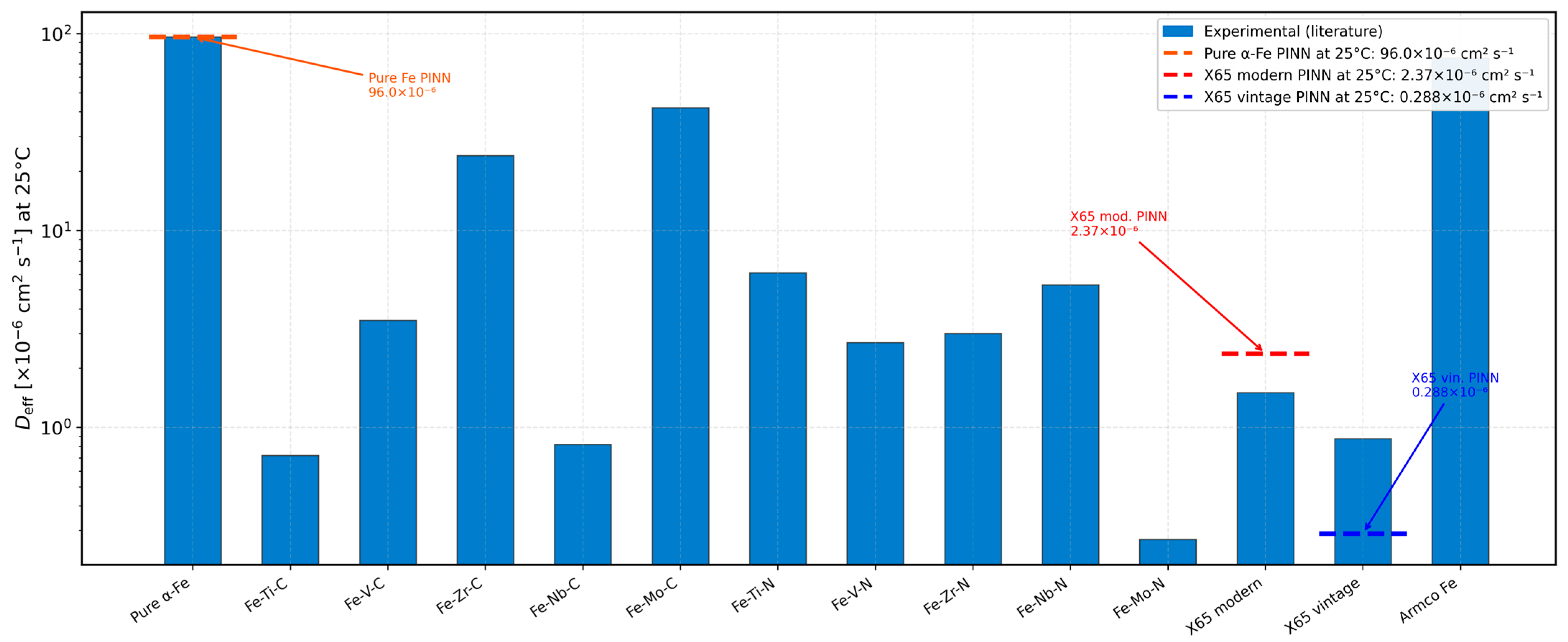
5.2. Effective Diffusivity in Ternary Fe–Me–C, N Alloys
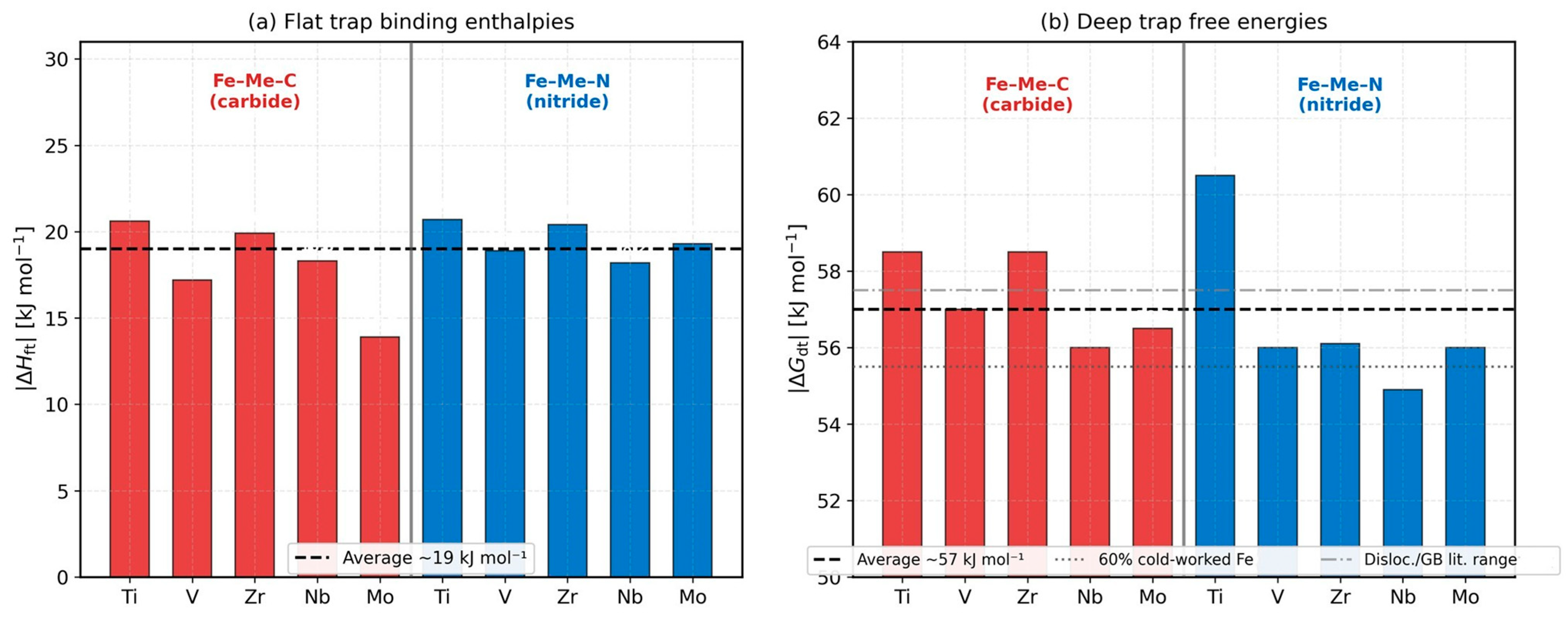
5.3. Correlation Between Effective Diffusivity and Flat Trap Binding Enthalpy
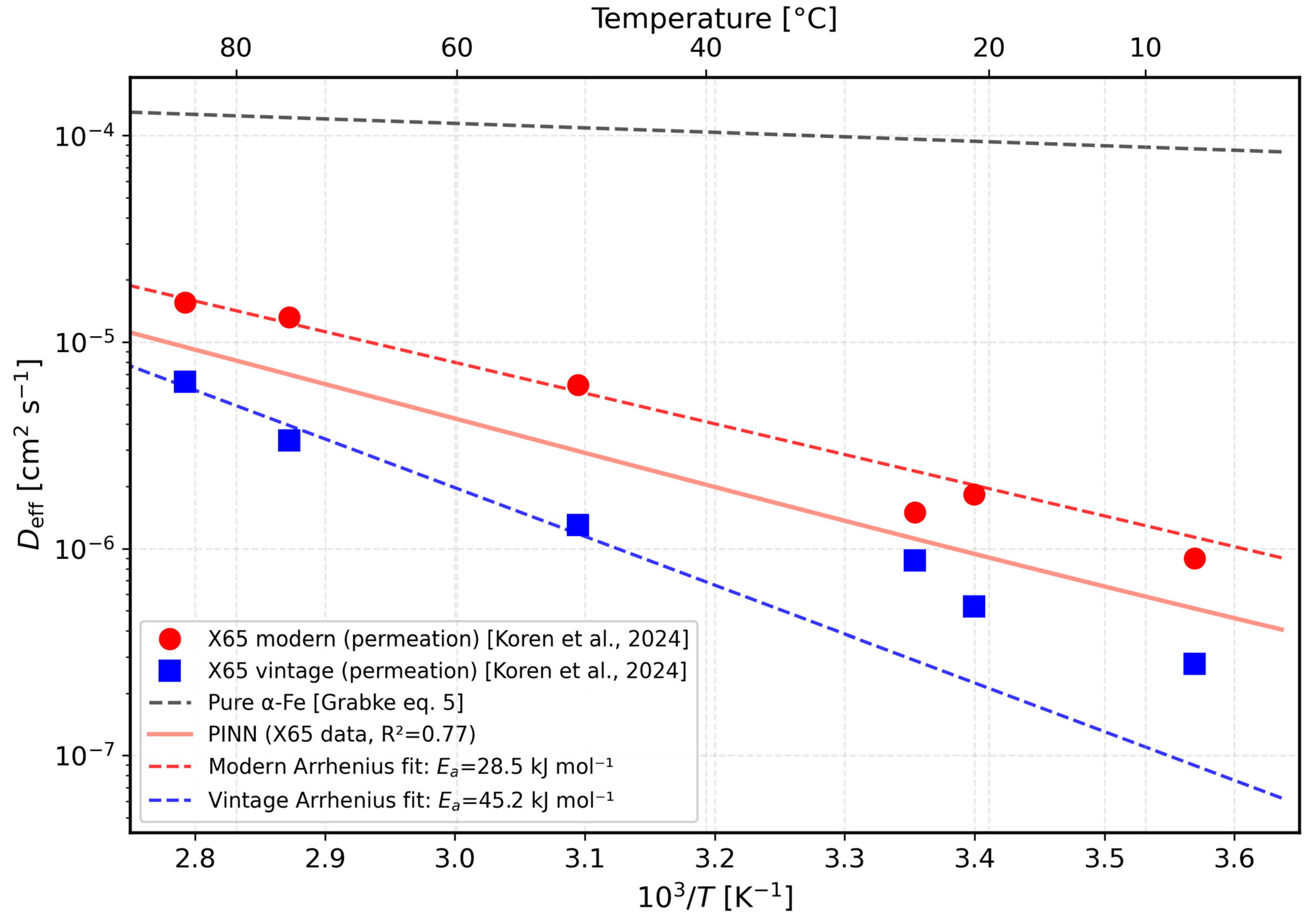
5.4. X65 Pipeline Steel: Modern vs. Vintage Microstructure
5.5. Flat Trap Density and Effective Diffusivity in Pipeline Steels
5.6. PINN Architecture and Training Convergence
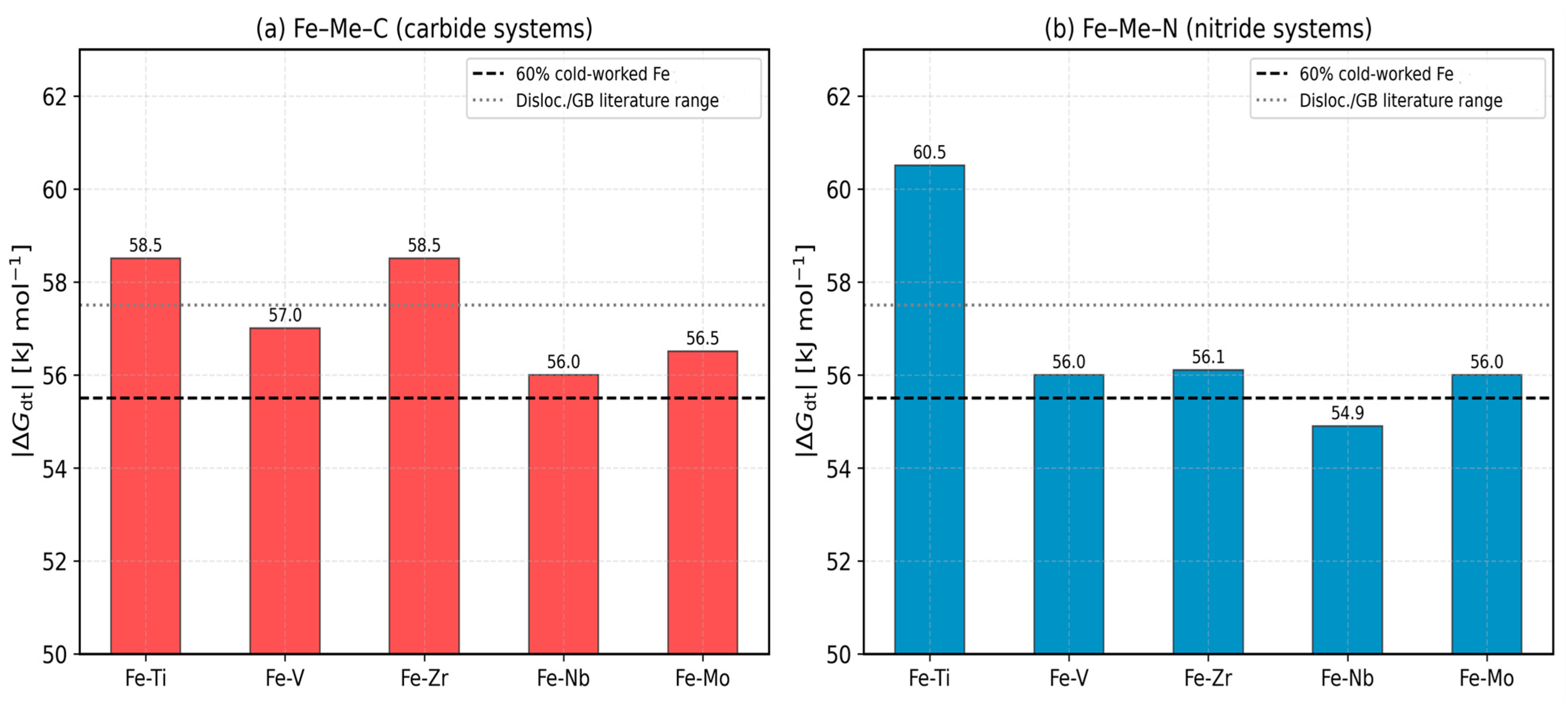
5.7. Deep Trap Free Energies
5.8. PINN Parity Plot
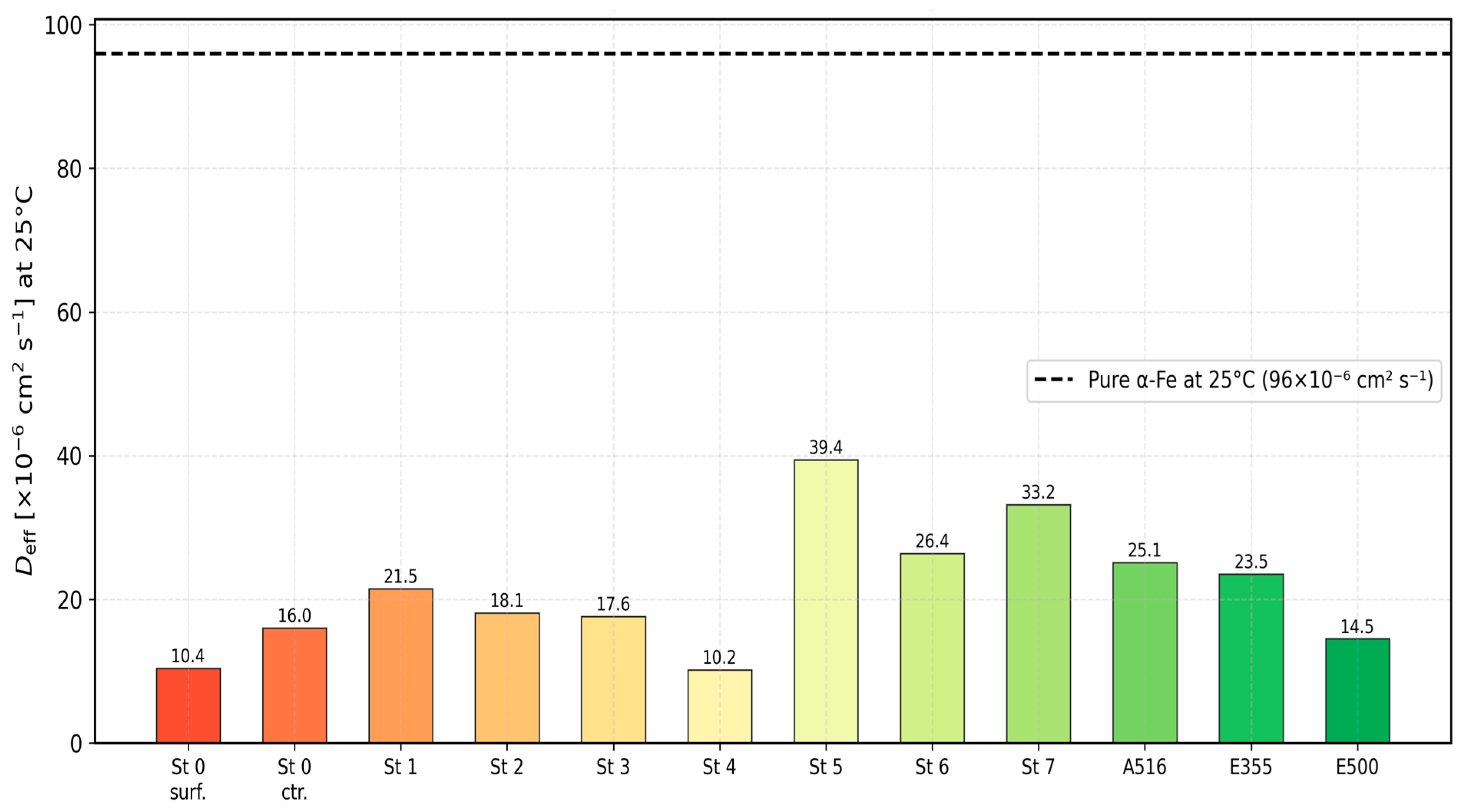
5.9. Effective Diffusivity Across Commercial Pipeline Steels
5.10. Hydrogen Permeation Coefficient
5.11. Trap Parameter Systematics
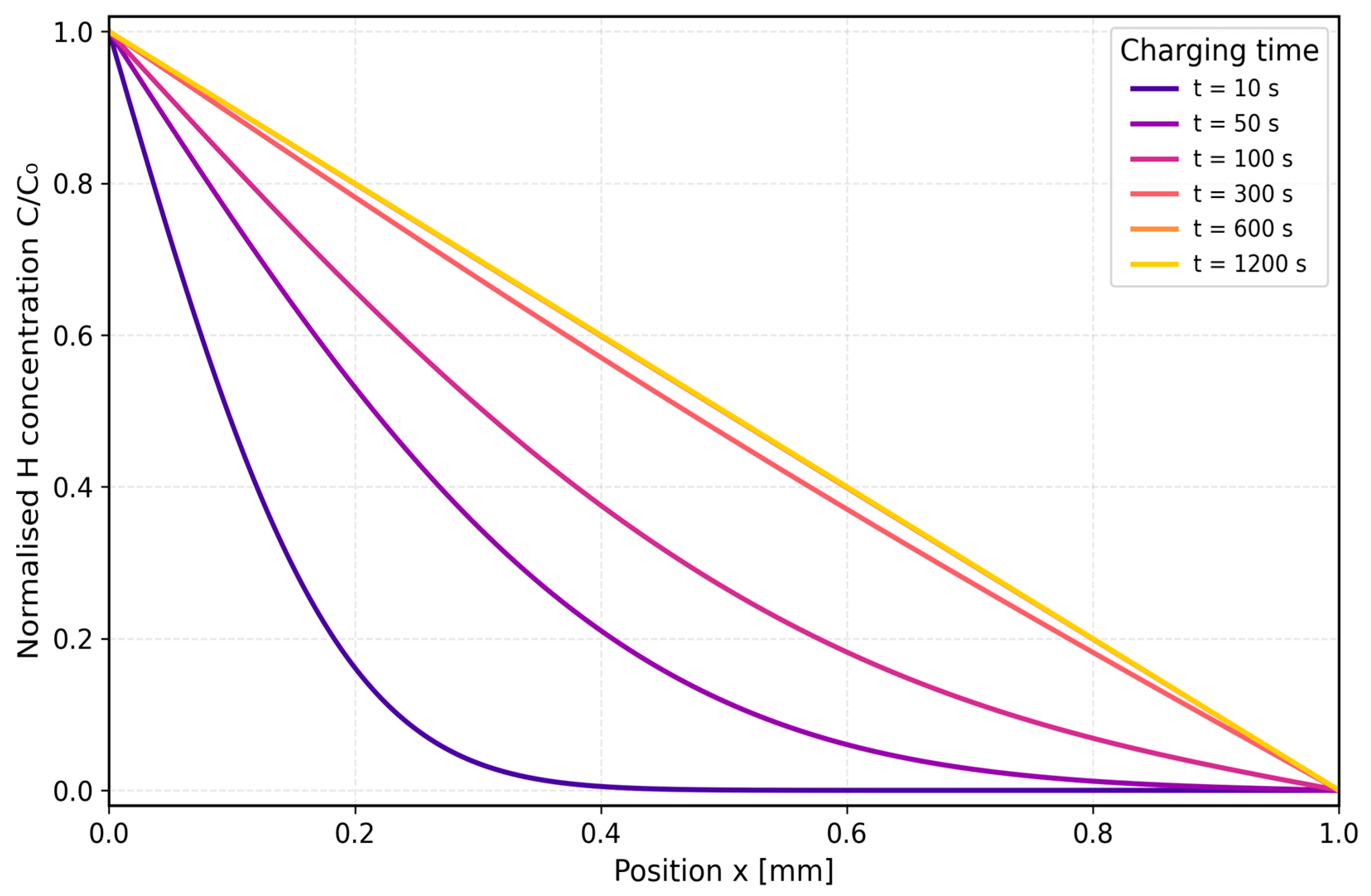
5.12. PINN-Informed Hydrogen Diffusion Profiles
5.13. PINN Prediction vs. Experimental: Scope and Limitation
6. Discussion
6.1. PINN Scope, Limitations, and R2 Interpretation
6.2. Physical Interpretation of Trapping Data
6.3. X65 Activation Energies and Microstructural Implications
6.4. Implications for Hydrogen-Economy Infrastructure
6.5. Future Model Extensions
7. Conclusions
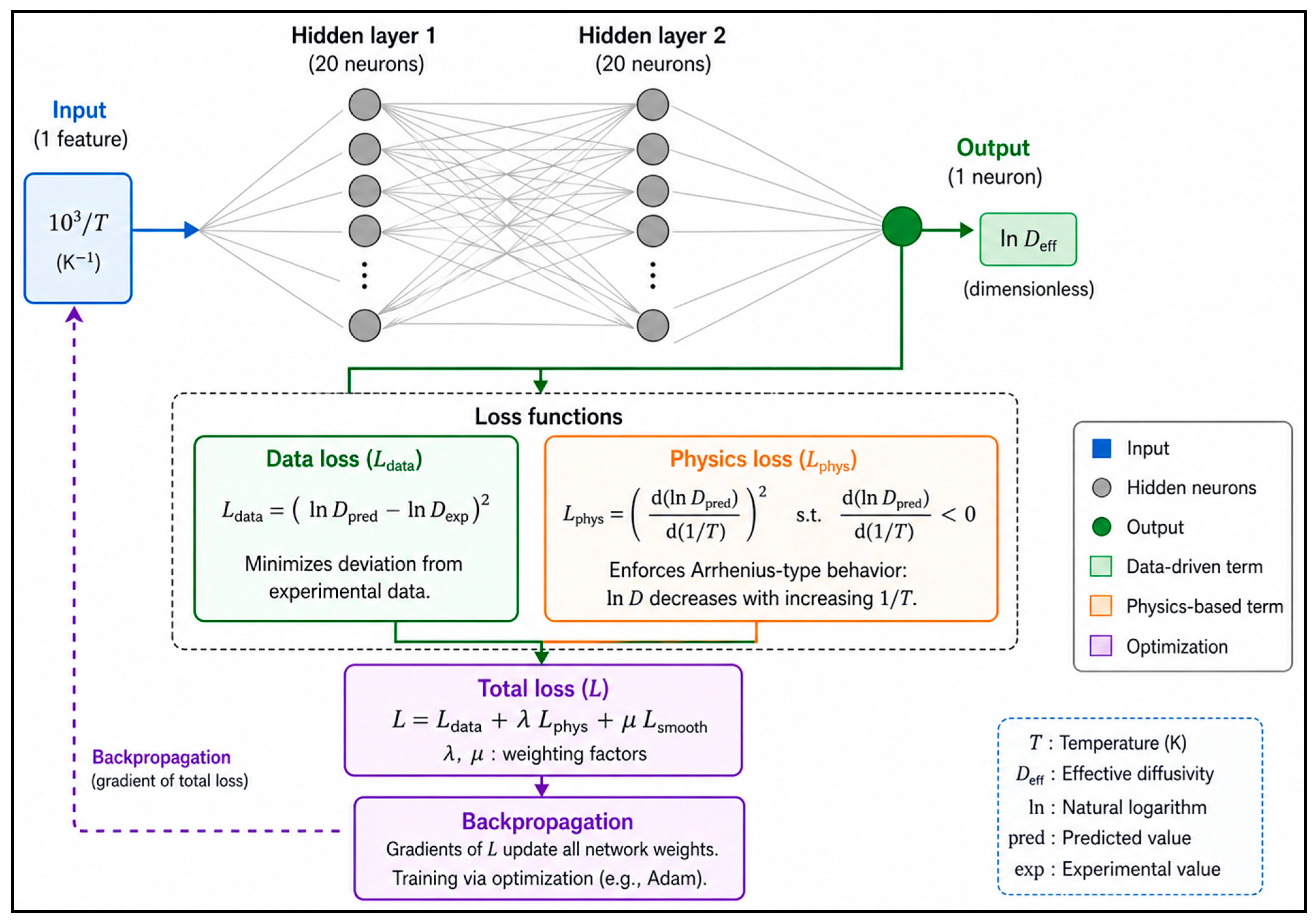
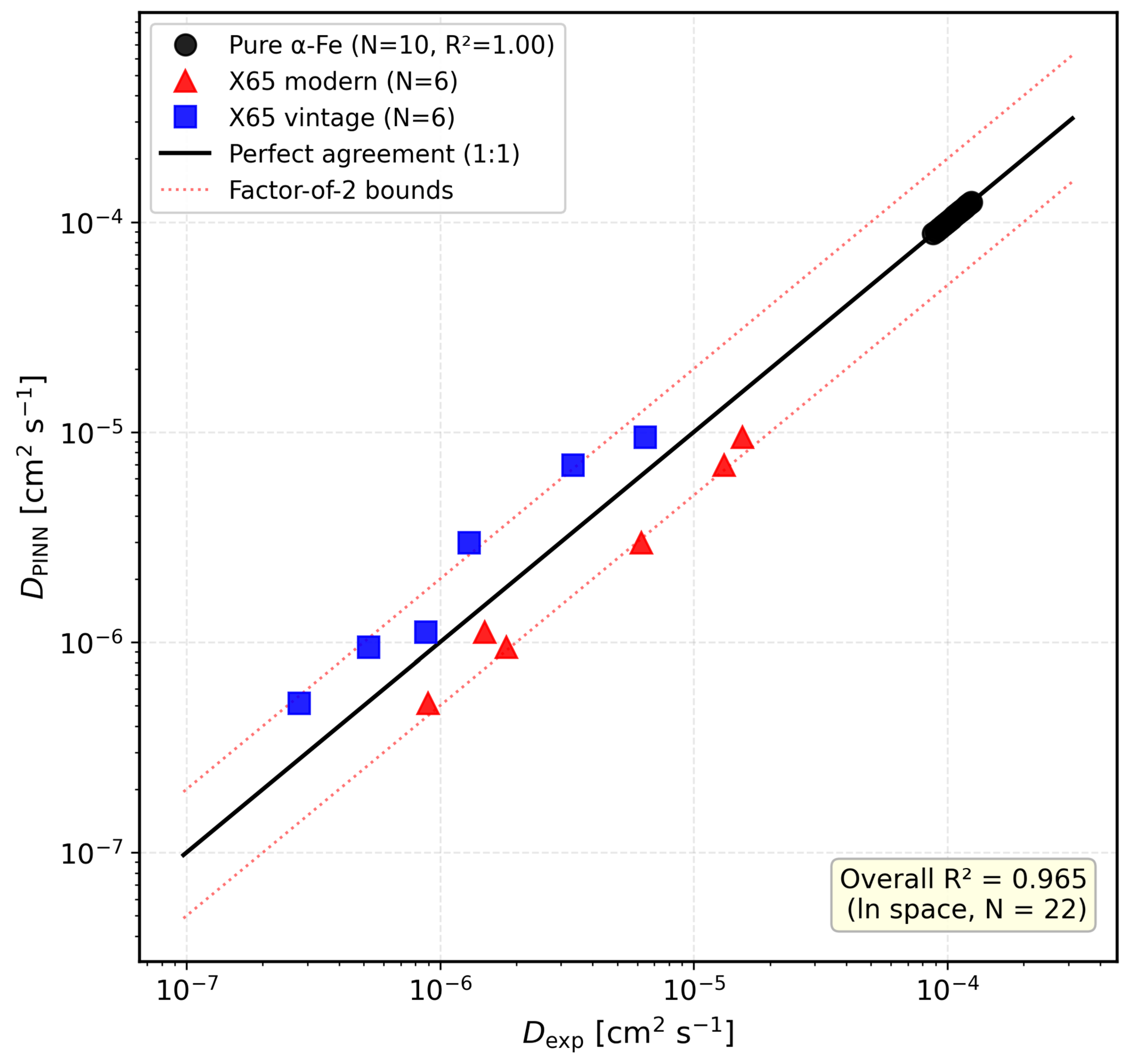
- A PINN framework embedding the Arrhenius temperature constraint and Fick’s second law successfully reproduced the temperature dependence of hydrogen diffusivity across pure α-Fe and API X65 pipeline steels (modern and vintage), recovering an activation energy of ~4.2 kJ mol−1, which is consistent with the value reported in the literature for pure iron. The overall training R2 = 0.965 demonstrates good agreement across all material groups.
- Arrhenius fitting of the electrochemical permeation data for X65 steel yielded activation energies of 28.5 and 45.2 kJ mol−1 (modern and vintage, respectively), both substantially higher than those for pure iron, indicating extensive trapping in both microstructures and stronger trapping characteristics in the vintage plate.
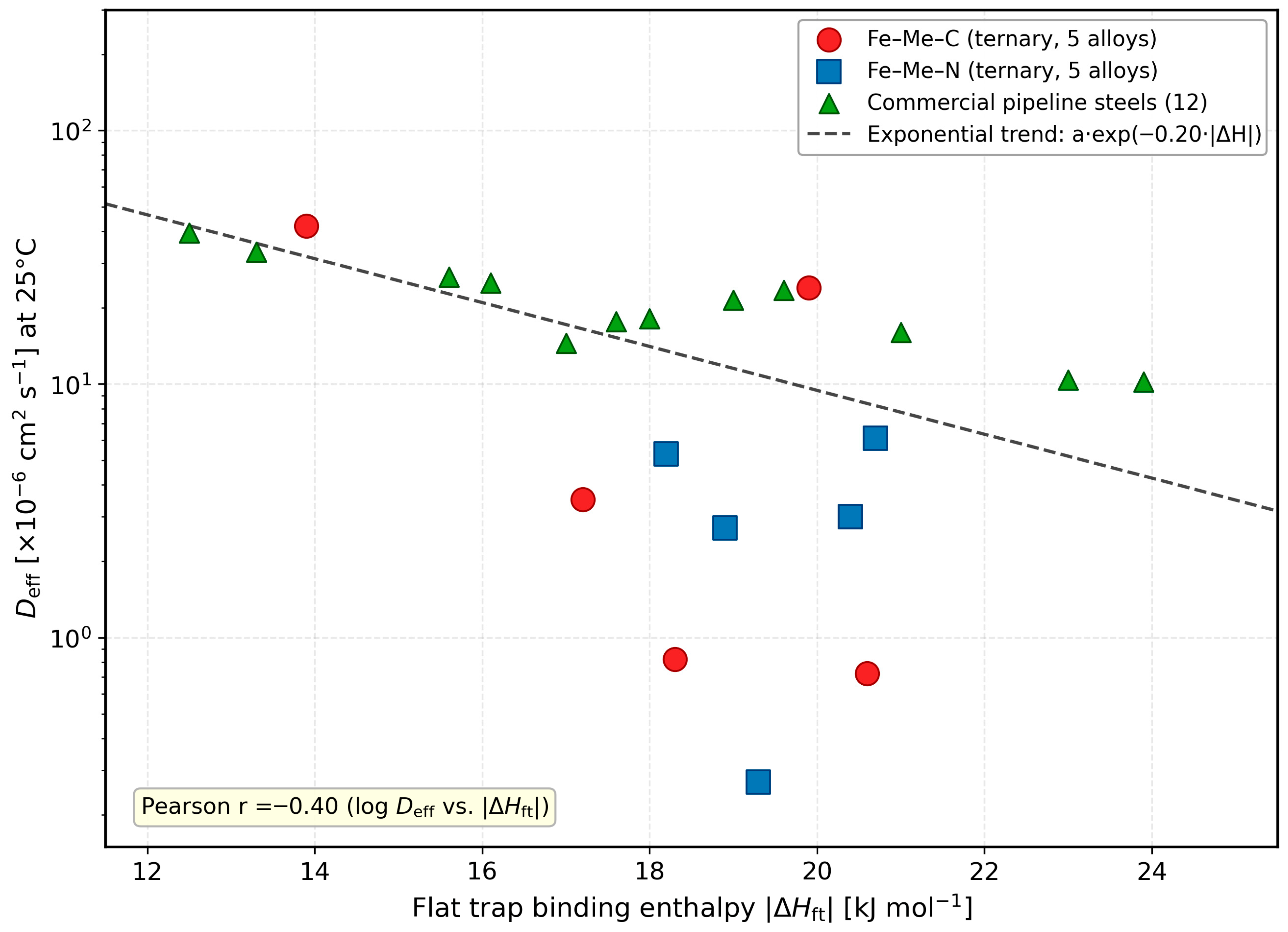
- The McNabb–Foster analysis of ten ternary Fe–Me–C,N alloys revealed flat trap binding enthalpies of 19 ± 2 kJ mol−1 and deep trap-free energies of 57 ± 2 kJ mol−1 for all systems. The uniformity of the deep trap energies confirms that deep trapping is a structural phenomenon (dislocation cores, grain boundaries, and incoherent interfaces) that is independent of the specific carbide or nitride former.
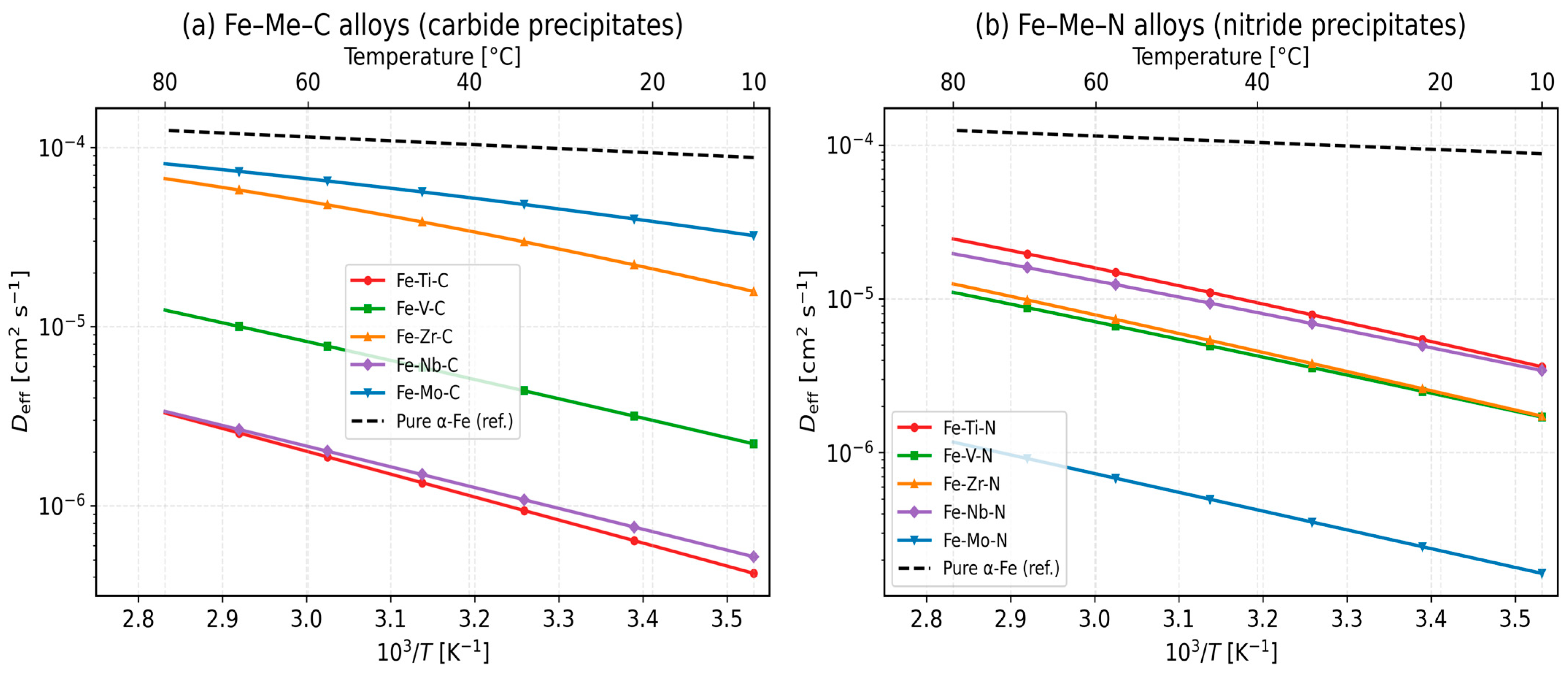
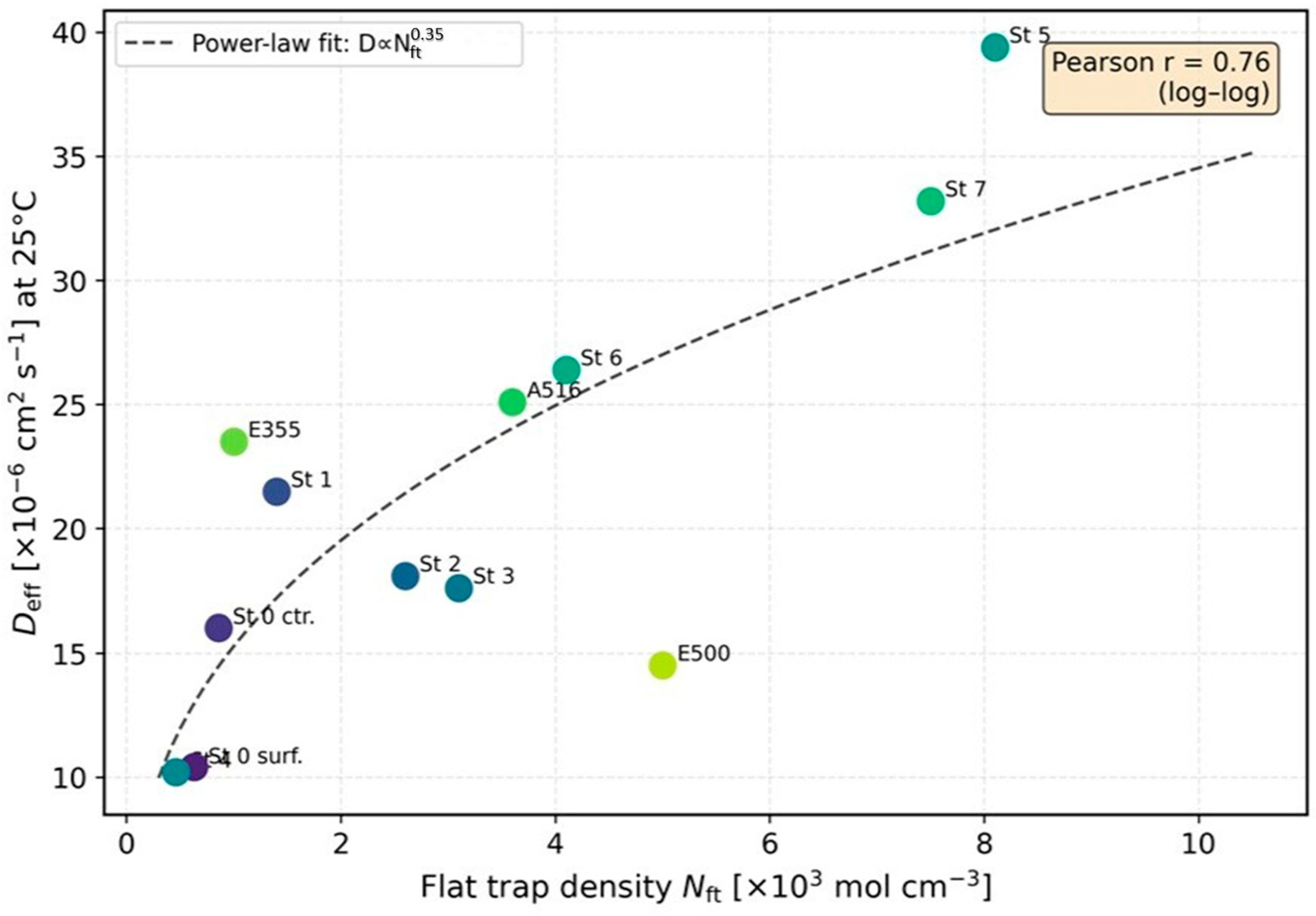
- The effective diffusivities span three orders of magnitude (0.27–96 × 10−6 cm2 s−1) across the alloy systems studied, governed primarily by the flat-trap density Nft rather than the binding enthalpy. Only mobile hydrogen in interstitial sites and flat traps participates in the HISCC; deep-trap hydrogen is mechanistically inactive at ambient temperatures.
- The PINN framework is inherently limited by its single temperature input, which prevents the discrimination of alloy-specific diffusivities at a fixed temperature. A multi-feature extension incorporating compositional and microstructural descriptors is identified as the critical next step toward the data-driven design of hydrogen-tolerant microalloyed steels for next-generation infrastructure applications.
- The fitted Arrhenius parameters (Ea = 28.5 [kJ mol−1], modern; 45.2 [kJ mol−1], vintage) can be directly applied to hydrogen integrity management models for API X65 pipeline infrastructure. The substantially higher Ea in vintage steel implies that hydrogen diffuses more slowly to defect sites but accumulates at higher equilibrium concentrations near inclusions, a distinction with direct implications for inspection intervals and pressure limits in pipelines being repurposed for hydrogen service.
- The future extension of the PINN framework to include alloy composition (element fractions, C/N content), microstructural descriptors (grain size, dislocation density, inclusion density), and stress-state fields (hydrostatic stress, equivalent plastic strain) as input features, enabled by a purpose-built multi-alloy experimental database, would provide a fully predictive design tool for hydrogen-tolerant microalloyed steels across the full hydrogen-economy supply chain.
Supplementary Materials
Author Contributions
Funding
Data Availability Statement
Conflicts of Interest
Nomenclature
| Symbol/Abbreviation | Definition | Unit |
| CH | Hydrogen concentration in interstitial sites | mol cm−3 |
| Cft | Hydrogen concentration in flat traps | mol cm−3 |
| C0 | surface hydrogen concentration at charging face | mol cm−3 |
| DH | intrinsic hydrogen diffusivity in trap-free lattice | cm2 s−1 |
| Deff | effective hydrogen diffusivity | cm2 s−1 |
| D0 | pre-exponential factor | cm2 s−1 |
| Ea | apparent activation energy | kJ mol−1 |
| Kft | flat-trap equilibrium constant | dimensionless |
| KS | Sieverts’ constant | mol cm−3 bar−1/2 |
| L | membrane thickness | cm |
| N | number of data points | — |
| Nft | flat-trap density | mol cm−3 |
| Ndt | deep-trap density | mol cm−3 |
| Nint | interstitial site density | mol cm−3 |
| pH2 | hydrogen partial pressure | bar |
| R | universal gas constant | 8.314 × 10⁻³ kJ mol−1 K−1 |
| T | absolute temperature | K |
| t | time | s |
| x | position in membrane | mm |
| α | trapping parameter = Kft·Nft/Nint | dimensionless |
| ΔHft | standard enthalpy change at flat trap | kJ mol−1 |
| ΔGdt | standard free energy change at deep trap | kJ mol−1 |
| ΔSft | standard entropy change at flat trap | kJ mol−1 K−1 |
| λ | physics loss weight | — |
| μ | smoothness loss weight | — |
| μ (normalization) | mean of training inverse temperatures | — |
| σ (normalization) | standard deviation of training inverse temperatures | — |
| Φ0 | permeation coefficient | mol cm−1 s−1 |
| BCC | Body-centered cubic | |
| CERT | Constant extension rate test | |
| HE | Hydrogen embrittlement | |
| HIC | Hydrogen-induced cracking | |
| HISCC | Hydrogen-induced stress corrosion cracking | |
| PINN | Physics-informed neural network | |
| Q + T | Quenched and Tempered | |
| TM | Thermomechanical treatment | |
| ACC | Accelerated cooling |
References
- Staffell, I.; Scamman, D.; Velazquez Abad, A.; Balcombe, P.; Dodds, P.E.; Ekins, P.; Shah, N.; Ward, K.R. The Role of Hydrogen and Fuel Cells in the Global Energy System. Energy Environ. Sci. 2019, 12, 463–491. [Google Scholar] [CrossRef]
- van Renssen, S. The Hydrogen Solution? Nat. Clim. Change 2020, 10, 799–801. [Google Scholar] [CrossRef]
- Nanninga, N.E.; Levy, Y.S.; Drexler, E.S.; Condon, R.T.; Stevenson, A.E.; Slifka, A.J. Comparison of Hydrogen Embrittlement in Three Pipeline Steels in High Pressure Gaseous Hydrogen Environments. Corros. Sci. 2012, 59, 1–9. [Google Scholar] [CrossRef]
- Briottet, L.; Moro, I.; Lemoine, P. Quantifying the Hydrogen Embrittlement of Pipeline Steels for Safety Considerations. Int. J. Hydrogen Energy 2012, 37, 17616–17623. [Google Scholar] [CrossRef]
- Djukic, M.B.; Bakic, G.M.; Sijacki Zeravcic, V.; Sedmak, A.; Rajicic, B. The Synergistic Action and Interplay of Hydrogen Embrittlement Mechanisms in Steels and Iron: Localized Plasticity and Decohesion. Eng. Fract. Mech. 2019, 216, 106528. [Google Scholar] [CrossRef]
- Dwivedi, S.K.; Vishwakarma, M. Hydrogen Embrittlement in Different Materials: A Review. Int. J. Hydrogen Energy 2018, 43, 21603–21616. [Google Scholar] [CrossRef]
- Yu, L.; Feng, H.; Li, S.; Guo, Z.; Chi, Q. Study on Hydrogen Embrittlement Behavior of X65 Pipeline Steel in Gaseous Hydrogen Environment. Metals 2025, 15, 596. [Google Scholar] [CrossRef]
- Li, Q.; Ghadiani, H.; Jalilvand, V.; Alam, T.; Farhat, Z.; Islam, M.A. Hydrogen Impact: A Review on Diffusibility, Embrittlement Mechanisms, and Characterization. Materials 2024, 17, 965. [Google Scholar] [CrossRef] [PubMed]
- Pressouyre, G.M. A Classification of Hydrogen Traps in Steel. Metall. Trans. A 1979, 10, 1571–1573. [Google Scholar] [CrossRef]
- Pressouyre, G.M.; Bernstein, I.M. An Example of the Effect of Hydrogen Trapping on Hydrogen Embrittlement. Metall. Trans. A 1981, 12, 835–844. [Google Scholar] [CrossRef]
- Turnbull, A. Perspectives on Hydrogen Uptake, Diffusion and Trapping. Int. J. Hydrogen Energy 2015, 40, 16961–16970. [Google Scholar] [CrossRef]
- Mohrbacher, H.; Bacchi, L.; Ischia, G.; Gialanella, S.; Tedesco, M.; D’Aiuto, F.; Valentini, R. Characterization of Nanosized Carbide Precipitates in Multiple Microalloyed Press Hardening Steels. Metals 2023, 13, 894. [Google Scholar] [CrossRef]
- Mcnabb, A. A New Analysis of the Diffusion of Hydrogen in Iron and Ferritic Steels; The American Institute of Mining, Metallurgical and Petroleum Engineers: San Ramon, CA, USA, 1963; Volume 227. [Google Scholar]
- Oriani, R.A. The Diffusion and Trapping of Hydrogen in Steel. Acta Metall. 1970, 18, 147–157. [Google Scholar] [CrossRef]
- Hirth, J.P. Effects of Hydrogen on the Properties of Iron and Steel. Metall. Trans. A 1980, 11, 861–890. [Google Scholar] [CrossRef]
- Grabke, H.J.; Gehrmann, F.; Riecke, E. Hydrogen in Microalloyed Steels. Steel Res. 2001, 72, 225–235. [Google Scholar] [CrossRef]
- Raissi, M.; Perdikaris, P.; Karniadakis, G.E. Physics-Informed Neural Networks: A Deep Learning Framework for Solving Forward and Inverse Problems Involving Nonlinear Partial Differential Equations. J. Comput. Phys. 2019, 378, 686–707. [Google Scholar] [CrossRef]
- Abueidda, D.W.; Koric, S.; Sobh, N.A.; Sehitoglu, H. Deep Learning for Plasticity and Thermo-Viscoplasticity. Int. J. Plast. 2021, 136, 102852. [Google Scholar] [CrossRef]
- Xia, Y.; Wang, H.; Xu, A. DmPINNs: An Integrated Data-Driven and Mechanism-Based Method for Endpoint Carbon Prediction in BOF. Metals 2024, 14, 926. [Google Scholar] [CrossRef]
- Takmili, S.A.; Choi, E.; Ostadrahimi, A.; Baghani, M. Physics-Informed Neural Networks for Thermo-Responsive Hydrogel Swelling: Integrating Constitutive Models with Sparse Experimental Data. Materials 2025, 18, 5401. [Google Scholar] [CrossRef] [PubMed]
- Cuomo, S.; Di Cola, V.S.; Giampaolo, F.; Rozza, G.; Raissi, M.; Piccialli, F. Scientific Machine Learning Through Physics–Informed Neural Networks: Where We Are and What’s Next. J. Sci. Comput. 2022, 92, 88. [Google Scholar] [CrossRef]
- Chen, Z.; Liu, Y.; Sun, H. Physics-Informed Learning of Governing Equations from Scarce Data. Nat. Commun. 2021, 12, 6136. [Google Scholar] [CrossRef]
- Devanathan, M.A.V.; Stachurski, Z. The Adsorption and Diffusion of Electrolytic Hydrogen in Palladium. Proc. R. Soc. Lond. A Math. Phys. Sci. 1962, 270, 90–102. [Google Scholar]
- Koren, E.; Yamabe, J.; Lu, X.; Hagen, C.M.H.; Wang, D.; Johnsen, R. Hydrogen Diffusivity in X65 Pipeline Steel: Desorption and Permeation Studies. Int. J. Hydrogen Energy 2024, 61, 1157–1169. [Google Scholar] [CrossRef]
- Zakroczymski, T. Electrochemical Determination of Hydrogen in Metals. J. Electroanal. Chem. 1999, 475, 82–88. [Google Scholar] [CrossRef]
- Iino, M. Analysis of Irreversible Hydrogen Trapping. Acta Metall. 1982, 30, 377–383. [Google Scholar] [CrossRef]
- Ghadiani, H.; Farhat, Z.; Alam, T.; Islam, M.A. Fracture Toughness Assessment of Pipeline Steels Under Hydrogen Exposure for Blended Gas Applications. Metals 2025, 15, 29. [Google Scholar] [CrossRef]
- Islam, A.; Li, Q.; Storimans, E.; Ton, K.; Alam, T.; Farhat, Z.N. Effect of Microstructure on Hydrogen Permeation and Trapping in Natural Gas Pipeline Steels. npj Mater. Degrad. 2025, 9, 70. [Google Scholar] [CrossRef]
- Norouzi, E.; Miresmaeili, R.; Shahverdi, H.R.; Askari-Paykani, M.; Vergani, L.M. Effect of Hydrogen on the Microstructure and Mechanical Properties of FeCCrNiBxSi Advanced High Strength Steels. Corros. Sci. 2024, 230, 111897. [Google Scholar] [CrossRef]
- Venezuela, J.; Liu, Q.; Zhang, M.; Zhou, Q.; Atrens, A. A Review of Hydrogen Embrittlement of Martensitic Advanced High-Strength Steels. Corros. Rev. 2016, 34, 153–186. [Google Scholar] [CrossRef]
- Shirband, Z.; Shishesaz, M.R.; Ashrafi, A. Investigating the Effect of Heat Treatment on Hydrogen Permeation Behavior of API X-70 Steel. Phase Transit. 2012, 85, 503–511. [Google Scholar] [CrossRef]
- Faucon, L.E.; Boot, T.; Riemslag, T.; Scott, S.P.; Liu, P.; Popovich, V. Hydrogen-Accelerated Fatigue of API X60 Pipeline Steel and Its Weld. Metals 2023, 13, 563. [Google Scholar] [CrossRef]
- Frappart, S.; Feaugas, X.; Creus, J.; Thebault, F.; Delattre, L.; Marchebois, H. Study of the Hydrogen Diffusion and Segregation into Fe–C–Mo Martensitic HSLA Steel Using Electrochemical Permeation Test. J. Phys. Chem. Solids 2010, 71, 1467–1479. [Google Scholar] [CrossRef]
- Sofronis, P.; McMeeking, R.M. Numerical Analysis of Hydrogen Transport near a Blunting Crack Tip. J. Mech. Phys. Solids 1989, 37, 317–350. [Google Scholar] [CrossRef]





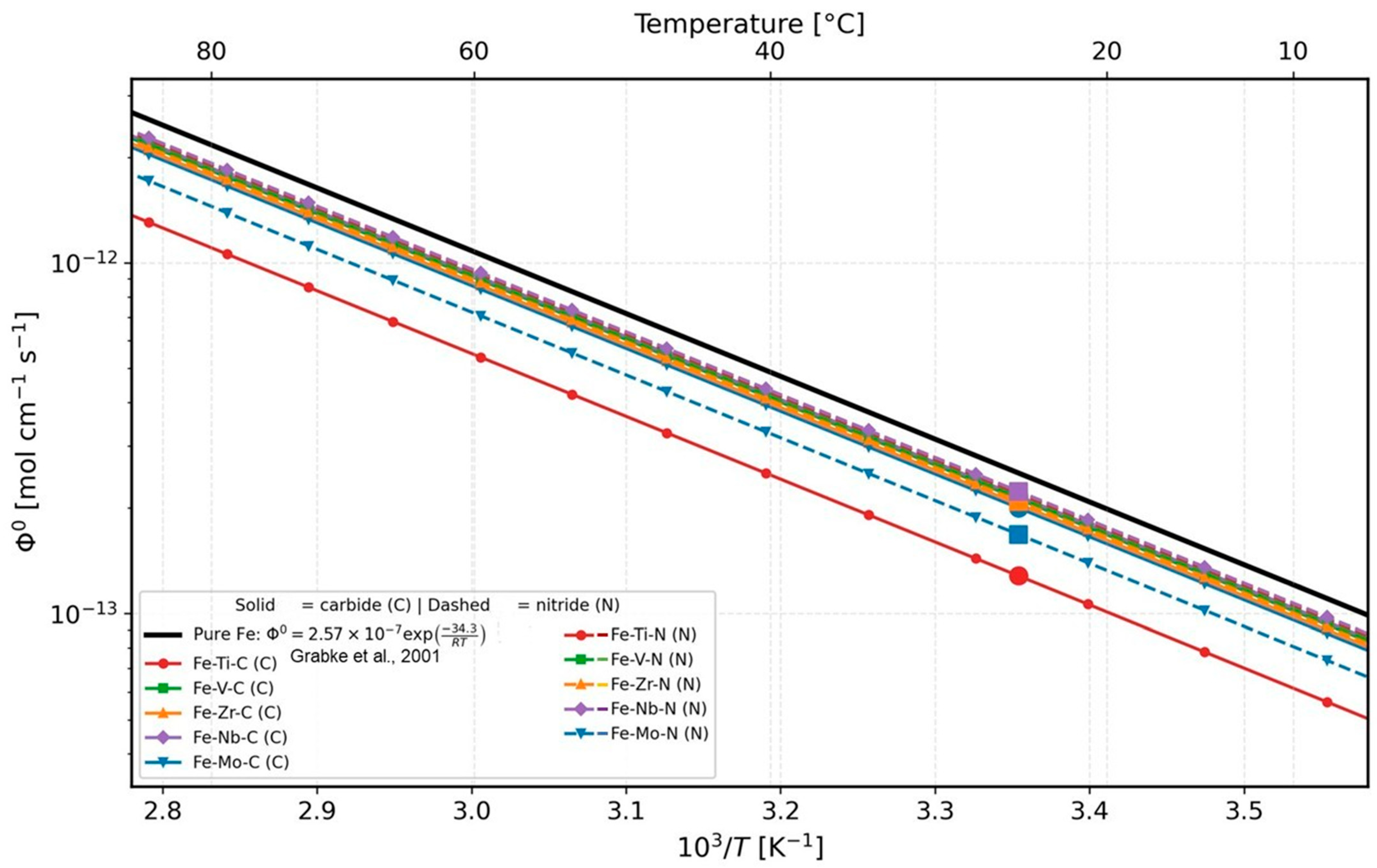



| Alloy (C) | %Me (C) | %C | Alloy (N) | %Me (N) | %N |
|---|---|---|---|---|---|
| Fe-Ti-C | 0.22 | 0.074 | Fe-Ti-N | 0.18 | 0.042 |
| Fe-V-C | 0.19 | 0.081 | Fe-V-N | 0.20 | 0.048 |
| Fe-Zr-C | 0.27 | 0.067 | Fe-Zr-N | 0.63 | 0.081 |
| Fe-Nb-C | 0.35 | 0.066 | Fe-Nb-N | 0.35 | 0.043 |
| Fe-Mo-C | 0.33 | 0.065 | Fe-Mo-N | 0.37 | 0.061 |
| Alloy | Deff [×10−6 cm2 s−1] | CHeff [×10−8 mol cm−3] | Ctotal [(×10−6) mol cm−3] | Nft [(×103) mol cm−3] | |ΔHft| [kJ/mol] | Ndt [×103 mol cm−3] | |ΔGdt| [kJ/mol] |
|---|---|---|---|---|---|---|---|
| Fe-Ti-C | 0.72 | 3.5 | 10 | 28 | 20.6 | 10 | 58.5 |
| Fe-Ti-N | 6.1 | 4.1 | 1.9 | 3.0 | 20.7 | 1.9 | 60.5 |
| Fe-V-C | 3.5 | 7.2 | 1.8 | 22 | 17.2 | 1.8 | 57.0 |
| Fe-V-N | 2.7 | 9.2 | 3.0 | 14 | 18.9 | 3.1 | 56.0 |
| Fe-Zr-C | 24 | 1.1 | 0.4 | 0.83 | 19.9 | 0.4 | 58.5 |
| Fe-Zr-N | 3.0 | 8.5 | 16 | 7.3 | 20.4 | 17 | 56.1 |
| Fe-Nb-C | 0.82 | 30 | 13 | 60 | 18.3 | 13 | 56.0 |
| Fe-Nb-N | 5.3 | 4.7 | 3.5 | 9.2 | 18.2 | 3.7 | 54.9 |
| Fe-Mo-C | 42 | 0.6 | 0.05 | 4.0 | 13.9 | 0.045 | 56.5 |
| Fe-Mo-N | 0.27 | 0.92 | 0.04 | 0.9 | 19.3 | 0.035 | 56.0 |
| Fe (60%def.) | 96 | 26 | — | — | 27.9 | 0.62 | 55.5 |
| Steel | Method | 7 °C | 21 °C | 50 °C | 75–85 °C |
|---|---|---|---|---|---|
| Modern | Permeation | 0.896 | 1.83 | 6.21 | 13.2 |
| Vintage | Permeation | 0.278 | 0.524 | 1.30 | 3.34 |
| Modern | Desorption | — | — | 4.87 | 15.6 |
| Vintage | Desorption | — | — | 2.22 | 6.43 |
| Material | D0 [cm2 s−1] | Ea [kJ mol−1] | R2 | Source |
|---|---|---|---|---|
| Pure α-Fe | 5.12 × 10⁻⁴ | 4.15 | (analytical) | [16] |
| X65 Modern | 2.30 × 10⁻¹ | 28.5 | 0.988 | [24] |
| X65 Vintage | 2.36 × 10⁻¹ | 45.2 | 0.996 | [24] |
| Steel | Processing | Deff [×10−6 cm2 s−1] | CHeff [×10−8 mol cm−3] | Ctotal [×10−8 mol cm−3] | Nft [(×103) mol cm−3] | |ΔHft| [kJ/mol] | |ΔGdt| [kJ/mol] |
|---|---|---|---|---|---|---|---|
| St 0 | TM(γ) surf. | 10.4 | 2.34 | 9.58 | 0.63 | 23.0 | 58.0 |
| St 0 | TM(γ) ctr. | 16.0 | 1.53 | 8.03 | 0.86 | 21.0 | 53.2 |
| St 1 | TM(γ) | 21.5 | 1.17 | 4.22 | 1.4 | 19.0 | 56.0 |
| St 2 | TM(α + γ) | 18.1 | 1.40 | 5.90 | 2.6 | 18.0 | 54.0 |
| St 3 | TM(γ) + ACC | 17.6 | 1.42 | 6.22 | 3.1 | 17.6 | 52.0 |
| St 4 | Q + T | 10.2 | 2.44 | 27.3 | 0.46 | 23.9 | 53.0 |
| St 5 | TM(γ) | 39.4 | 0.63 | 6.54 | 8.1 | 12.5 | 54.3 |
| St 6 | TM(γ) + ACC | 26.4 | 0.94 | 4.76 | 4.1 | 15.6 | 51.5 |
| St 7 | TM(α + γ) + ACC | 33.2 | 0.75 | 6.10 | 7.5 | 13.3 | 53.8 |
| A516 | Normalized | 25.1 | 0.99 | 8.20 | 3.6 | 16.1 | 56.5 |
| E355 | Normalized | 23.5 | 1.01 | 7.32 | 1.0 | 19.6 | 57.3 |
| E500 | Q + T | 14.5 | 1.71 | 48.6 | 5.0 | 17.0 | 53.2 |
Disclaimer/Publisher’s Note: The statements, opinions and data contained in all publications are solely those of the individual author(s) and contributor(s) and not of MDPI and/or the editor(s). MDPI and/or the editor(s) disclaim responsibility for any injury to people or property resulting from any ideas, methods, instructions or products referred to in the content. |
© 2026 by the authors. Licensee MDPI, Basel, Switzerland. This article is an open access article distributed under the terms and conditions of the Creative Commons Attribution (CC BY) license.
Share and Cite
Tiwari, S.; Park, N.; Subba Reddy, N.G. Physics-Informed Neural Network Modelling of Hydrogen Diffusion and Trapping in Microalloyed Steels: A Data-Driven Synthesis Across Multiple Alloy Systems. Metals 2026, 16, 546. https://doi.org/10.3390/met16050546
Tiwari S, Park N, Subba Reddy NG. Physics-Informed Neural Network Modelling of Hydrogen Diffusion and Trapping in Microalloyed Steels: A Data-Driven Synthesis Across Multiple Alloy Systems. Metals. 2026; 16(5):546. https://doi.org/10.3390/met16050546
Chicago/Turabian StyleTiwari, Saurabh, Nokeun Park, and Nagireddy Gari Subba Reddy. 2026. "Physics-Informed Neural Network Modelling of Hydrogen Diffusion and Trapping in Microalloyed Steels: A Data-Driven Synthesis Across Multiple Alloy Systems" Metals 16, no. 5: 546. https://doi.org/10.3390/met16050546
APA StyleTiwari, S., Park, N., & Subba Reddy, N. G. (2026). Physics-Informed Neural Network Modelling of Hydrogen Diffusion and Trapping in Microalloyed Steels: A Data-Driven Synthesis Across Multiple Alloy Systems. Metals, 16(5), 546. https://doi.org/10.3390/met16050546