Article

Particle-Level Engineering of Cu–Al–Ni Shape Memory Alloy Powders via Cryogenic Milling and Electroless Ni Coating

1
Department of Metallurgical and Materials Engineering, Karadeniz Technical University, Trabzon 61080, Türkiye
2
Advanced Engineering Materials Research Group, Karadeniz Technical University, Trabzon 61080, Türkiye
3
Trabzon Teknokent, Korya Marine Technologies, Trabzon 61081, Türkiye
*
Authors to whom correspondence should be addressed.
Metals 2026, 16(5), 529; https://doi.org/10.3390/met16050529
Submission received: 30 March 2026 / Revised: 25 April 2026 / Accepted: 1 May 2026 / Published: 13 May 2026
(This article belongs to the Section Powder Metallurgy)

Abstract

At particle-level engineering, this study mainly focused on the issues of microstructural heterogeneity and the high oxidation susceptibility of Cu-Al-Ni shape memory alloys (SMAs) suitable for high-temperature actuation. Initial powders of Cu (82–83 wt.%) and Al (14–15 wt.%) were first milled mechanically and the Cu-Al particles were modified using an electroless Nickel (Ni) coating process to achieve a controlled Ni enrichment of 4–5 wt.%. The SEM-EDS, XRD, and TGA findings reveal that the cryogenic milling effectively reforms dendritic Cu and spherical Al particles into a refined composite structure. This process resulted in particle size reduction from 40–70 µm to 5–20 µm, and apparent density values increased from 3.45 g·cm−3 to 4.10 g·cm−3. Microstructural investigations showed that the continuous Ni layer, without generating unwanted intermetallic phases, was obtained with the help of an electroless coating process. In addition, it was confirmed that the crystallite size decreased from 52.10 nm to 41.71 nm. Additionally, the oxidation of nickel-coated and cryogenically milled powders occurred at temperatures above 350 °C owing to the formation of a protective surface layer. In other words, these powders exhibited higher thermal stability. Consequently, this dual processing procedure represents a very useful method for changing particle shape and interfacial composition. These combined methods can help to create a powder structure with a composition optimum for the making of high-performance Cu-Al-Ni SMAs.

1. Introduction

Al-Cu-Ni-based shape memory alloys (SMAs) have drawn more interest in advanced engineering because of high change temperatures, solid mechanical performance, and low production cost [1]. These alloys undergo reversible martensitic changes with temperature shifts. A material deformed at lower temperatures returns to its initial form when warmed. At least in theory, this behavior holds under typical conditions [2]. This superior characteristic, along with the nature of their functions, makes SMAs very desirable as smart materials for various engineering systems. The basic property of SMAs is due to their ability to change reversibly from martensite to austenite phases and back [3]. Chemical composition of the alloy and the thermomechanical treatments imposed by definition have a direct impact on the shape memory capability and superelastic characteristics [4]. In the right settings, these materials can even reveal the ability for two-way shape memory effect and superelasticity in addition to the usual one-way shape memory effect [5,6]. Thanks to their multifunctional properties, SMAs are used in a wide variety of technological applications, both as actuators and as functional structural components [7,8,9,10]. Smaller, quieter, stronger actuators are becoming standard in the automotive industry. They last longer than conventional electromechanical parts and decrease weight and noise. Thus, the energy wasted decreases during movement. System design becomes simpler as a result [11,12]. Given that new cars can be equipped with several hundred actuators, the creation of thermally stable and cheap SMA systems is highly industrially focused [2]. Out of all the different types of SMA systems, Cu-Al-Ni alloys stand out as especially promising options for situations where there is a need for high-temperature operation [13,14]. These alloys can operate at temperatures approaching 200 °C due to their relatively high martensitic transformation temperatures [15,16]. Cu-Al-Ni SMAs provide substantially lower prices than NiTi-based ones while keeping pace with their performance in the range of 373–473 K [17,18]. The two main methods to obtain Cu-Al-Ni SMAs are casting and powder metallurgy. These technologies pave the way for the mass manufacture of functional materials [19]. Casting, being a very simple process and capable of mass production, is certainly one of the most popular manufacturing methods. The problem with cast Cu-Al-Ni SMAs is that they usually have a coarse microstructure along with a high degree of internal brittleness. These features limit the mechanical properties of cast Cu-Al-Ni SMAs to the extent that they cannot be effectively used in harsh conditions [20,21]. Heat treatment of the alloys alters the alloy’s structure slightly. Still, cracks and weak deformation in cast alloys are hard to avoid. Powder metallurgy gives better control over the microstructure and composition in Cu-Al-Ni systems [22]. Previous studies have demonstrated that mechanically alloyed Cu–Al–Ni powders can successfully exhibit shape recovery under suitable conditions [23,24]. In addition to conventional mechanical alloying, cryogenic milling has emerged as an effective method for refining metallic powder systems [25]. Milling processes conducted at cryogenic temperatures lead to less occurrences of excessive intermetallic reactions and at the same time, they cause fracture-weighted mechanisms that lessen the particles’ aggregation and improve the powder homogeneity. For instance, in Cu-Al-Ni systems, such cryogenic milling is able to result in a higher level of microstructural refinement and more compositional homogeneity prior to consolidation [26]. Conversely, cryogenic milling might enhance inorganic structural uniformity, even though it is not obvious that it gives a strict and uniform distribution of alloying elements at particle interfaces. Hence, modification of powder surface after cryogenic milling can be an additional way to control powder microstructure at the particle scale as well as interfacial composition in Cu-based SMAs [27,28]. Despite these achievements, CuAlNi SMAs’ broad use is scarce mainly because of several challenges that are inherent to the materials themselves, such as the brittleness of the material, its short ductility, and the instability of the microstructure. For polycrystalline Cu-based SMAs, it is a common observation that grain boundary cracking and fracture at triple junctions take place as a result of the strong elastic anisotropy of the material, which causes incompatibilities in deformation between grains [25,26,29,30]. Therefore, it is very important to enhance the grain boundary toughness and reduce the stress concentration if we want to increase the toughness and structural reliability of these alloys. Powder metallurgy offers a whole range of microstructure design possibilities through the control of powder properties and processing conditions. Besides this, it also allows the use of minor alloying and rapid solidification techniques for grain refinement [27]. Nonetheless, producing CuAlNi SMAs using powder metallurgy is still a big challenge. Controlling the formation of phases through diffusion during sintering, the strong reactiveness of martensitic transformation to composition changes, and the existence of residual porosity are all factors that can have a major impact on densification behavior, phase stability, as well as mechanical properties [30]. In this context, enhancing interparticle bonding and diffusion efficiency during the sintering stage becomes crucial for improving the structural integrity of powder-processed Cu–Al–Ni SMAs. Surface modification of powder particles represents a promising strategy to promote metallurgical bonding and reduce residual porosity [29]. Metallic coatings are widely used as functional surface engineering approaches to modify interfacial characteristics [31]. Among these methods, the electroless nickel coating method is an autocatalytic operation that can provide materials with uniform and homogeneous Ni coating layers without the use of an external electrical current [32,33]. When applied to powder metallurgy systems, a thin Ni coating layer may enhance diffusion across particle interfaces during sintering, thereby improving densification and intergranular cohesion [33]. Such interfacial engineering can also reduce stress localization and mitigate intergranular fracture in Cu-based SMAs [34]. In spite of the benefits of electroless Ni surface modification, its potential for influencing particle-scale composition and interfacial diffusion behavior of Cu-Al-Ni SMA powders has hardly been explored so far. This is especially true for the effect of Ni enrichment at particle interfaces on phase equilibrium, martensitic transformation behavior, and microstructural continuity, all of which remain largely problematic and less understood. Thus, a particle-level engineering approach for Cu-Al-Ni shape memory alloys combining cryogenic milling with electroless Ni surface modification is proposed.
Therefore, this paper focuses on the combined effect of microstructural refinement and interfacial engineering on diffusion efficiency, interparticle bonding, and martensitic transformation behavior. Enhancing the microstructure of powder particles and their interfaces at the same time through this technique leads to the improvement of microstructural quality and functional properties of Cu-Al-Ni shape memory alloys produced by powder metallurgy.

2. Materials and Methods

2.1. Materials

Within this research, commercially available copper (Cu) and aluminum (Al) powders were chosen as the starting materials for the synthesis of the Cu-Al-based alloy. The choice of high-purity elemental powders was one of the conditions to obtain compositional accuracy as well as to limit the generation of unwanted secondary phases during further processing. Cu powders were procured from Nanokar, İstanbul, Türkiye, and served as the material of the matrix phase. The particle size of the Cu powders was within the 10–50 range, and they comprised about 82–83 wt.% of the total powder mixture. The chosen particle size range was deemed adequate both for enabling sufficient interparticle contact during mechanical alloying and for preventing the occurrence of large particle size differences which could cause compositional heterogeneity. Al powders, which were sourced from Nanografi, Ankara, Türkiye, were added to the mixture at a level of approximately 14–15 wt.%. The particle size of the Al powders was ranged between 5 and 45 µm. Morphologically, the Al particles exhibited predominantly spherical to irregular shapes. This morphology, combined with the ductile nature of Al, facilitates plastic deformation and cold welding during milling process, thereby promoting effective mixing with Cu particles.

2.2. Fabrication of Powders

Following the preparation and weighing of the Cu and Al powders according to the designed composition, a high-energy mechanical alloying process was employed to promote solid-state diffusion and obtain a homogeneous Cu-Al precursor alloy. Mechanical alloying was carried out using a planetary ball mill (Retsch PM 100, Haan, Germany) operating at a rotational speed of 400 rpm. The milling process was conducted in tungsten carbide (WC) jars with diameters of 10 mm. A ball-to-powder weight ratio (BPR) of 5:1 was maintained, and 50 g of powder mixture was loaded into the jar for each milling cycle. To check how the method of processing and milling time influenced microstructural changes, conventional mechanical alloying was done for 10 h. In the cryogenic milling process, the particles were filled into a 50 mL milling jar with one 20 mm and two 10 mm stainless steel milling balls. The milling jar was cooled with liquid nitrogen (−196 °C) before and during milling. After the electroless Ni coating process the cryogenic milling process was applied to Ni-coated particles for 30, 60, and 120 min to obtain more homogeneous elemental distribution on the particles. High-energy collisions of balls, powder particles, and jar walls during milling induced ductile Cu and Al particles’ severe plastic deformation again. Repeated fracturing and cold welding brought about the creation of fine composite particles with better elemental distribution. The mechanical strain accumulated during milling improved the Cu/Al interface, thus accelerating solid-state diffusion and hence compositional homogenization. To lessen severe cold welding and adhesion of particles to milling media, 0.5 wt.% ethanol was used as a process control agent (PCA). Addition of ethanol drastically cut down on particle sticking and, through powder dispersion throughout milling, continued to improve alloying efficiency and compositional homogeneity.

2.3. Electroless Ni Coating

In the electroless nickel plating process, mechanically worked Cu-Al powders were coated with nickel through an electroless deposition method for controlled nickel incorporation and improved compositional homogeneity in the Cu-Al-Ni system. This method is different from the traditional mechanical mixing of nickel powders. It allows the deposition of nickel directly onto the surface of Cu-Al particles, which gives composition control at the particle level and helps to lower the segregation of elements during further processing. Before coating, the powders were washed with deionized water and dipped in a 5% HCl solution to get rid of surface oxides and to activate the particles. The electroless coating bath was prepared using nickel sulfate (NiSO4, 25–30 g/L) as the Ni source, hydrazine hydrate (10–20 mL/L) as the reducing agent, and sodium citrate (5–10 g/L) as the complexing agent. The pH value was adjusted to 8–9 with ammonia, and the temperature was maintained at 70–80 °C. The activated Cu-Al powders (5 g) were immersed in the plating solution under continuous stirring (200–300 rpm) for 30–60 min. During deposition, hydrazine hydrate reduced Ni2+ ions to metallic Ni, which nucleated and grew autocatalytically on the particle surfaces, forming a continuous Ni layer. The originality of this method lies in combining mechanical powder processing with surface-engineered Ni incorporation prior to consolidation, aiming to enhance β-phase stabilization and improve transformation consistency in the final Cu-Al-Ni shape memory alloy. After coating and milling, the powders were rinsed and dried at 50–60 °C. The materials’ codes and production details are shown in Table 1.

2.4. Characterization

The morphological characteristics of the synthesized and Ni-coated Cu-Al powders were examined using field emission scanning electron microscopy (FESEM) (Thermo Scientifıc Apreo 2S, Waltham, MA, USA). SEM analyses were conducted to investigate the morphology of the particles, surface topology, and continuity of coatings. Most of our attention was drawn to the evaluation of uniformity and integrity of the electroless Ni layer as these characteristics significantly affect compositional homogeneity in the Cu-Al-Ni shape memory alloy (SMA) system. Energy-Dispersive X-ray Spectroscopy (EDS) was used to analyze elemental composition and element distribution. A Malvern Mastersizer Hydro 2000é particle size analyzer (Malvern, Worcestershire, UK) was utilized to ascertain particle size distribution. Prior to measurement, powders were dispersed in distilled water and ultrasonic agitation was carried out for 5–10 min to reduce agglomeration. Determination of the apparent density of powders was done by a calibrated container of 1.7 cm3 volume. Samples were weighed under static and mechanical agitation, and the calculated apparent density values were acquired by dividing the measured mass by the calibration volume of the container. X-ray diffraction (XRD) was used for phase identification with a diffractometer PANalytical X’Pert3 Pro and Cu K radiation (λ = 1.5418 Å, Almelo, The Netherlands). The diffraction patterns were collected in the 2θ range of 35–85° with a scan rate of 0.01/s. The identified patterns were used to determine phase components, especially the -phase structures characteristic of Cu-Al-Ni SMAs and to check the structural changes caused by Ni addition.
Crystallite size and lattice strain were calculated by employing the Williamson–Hall (W-H) method as per Equation (1) as shown below:
β h k l × cos θ = k × λ D + 4 × ε × sin θ
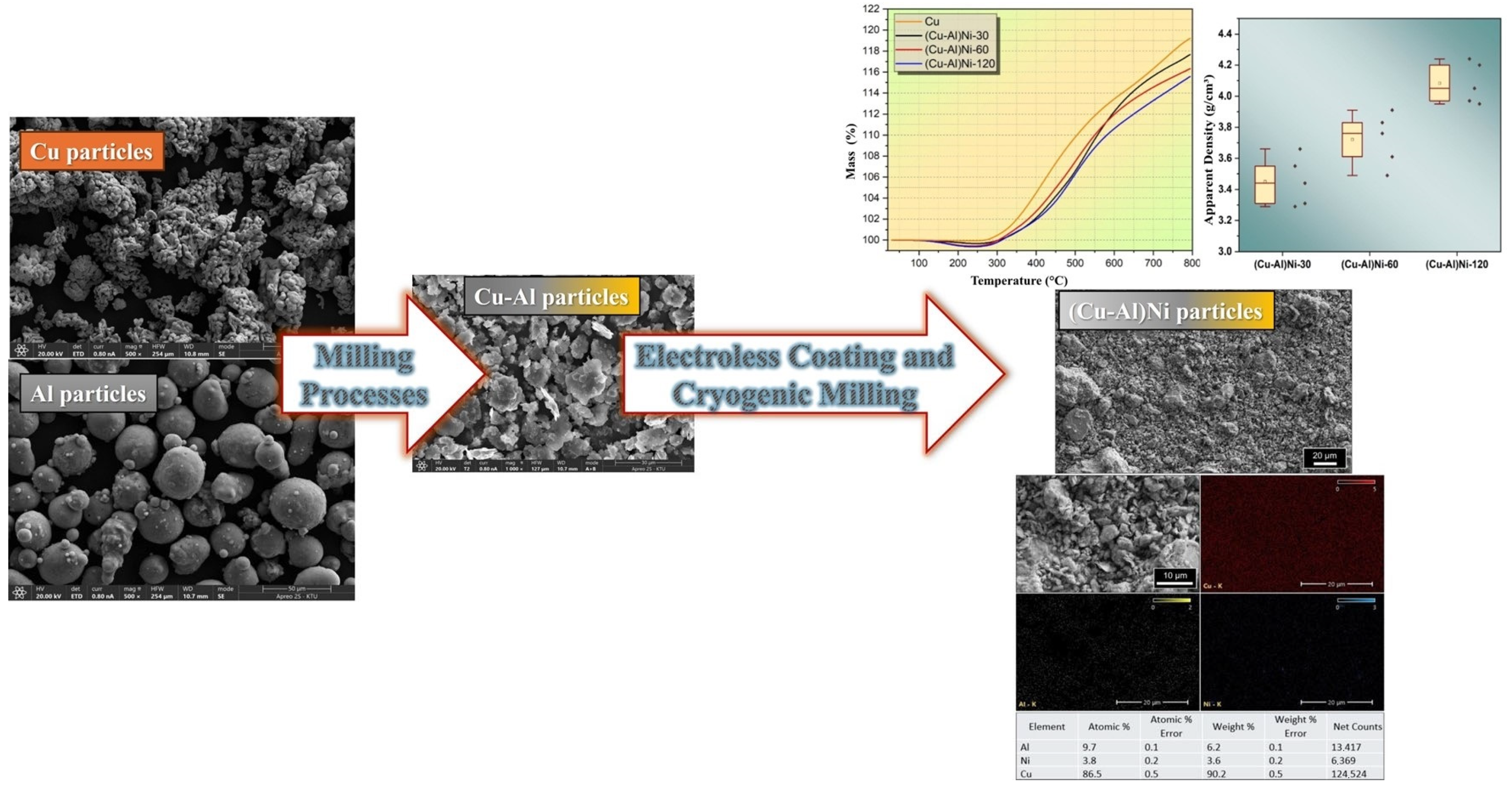
In Equation (1), βhkl stands for the full width at half maximum (FWHM), θ is the Bragg angle, k is the shape factor (0.84), λ is the Cu Kα wavelength, D means the average crystallite size and denotes the lattice strain. Thermal behavior, including potential martensitic phase transformations characteristic of Cu–Al–Ni shape memory alloys, was investigated using thermogravimetric analysis (TGA). TGA measurements were performed under air atmosphere to evaluate mass variation as a function of temperature and to assess oxidation resistance and thermal stability of the Ni-coated Cu–Al–Ni SMA powders by using PerkinElmer TGA4000 (Waltham, MA, USA). The heating rate for TGA was selected as 10 °C/min and the heat range was selected as 30–800 °C. The overall experimental workflow employed in this study is schematically illustrated in Figure 1.

3. Results

3.1. Powder Morphology

3.1.1. Morphological Investigation of Initial Powders

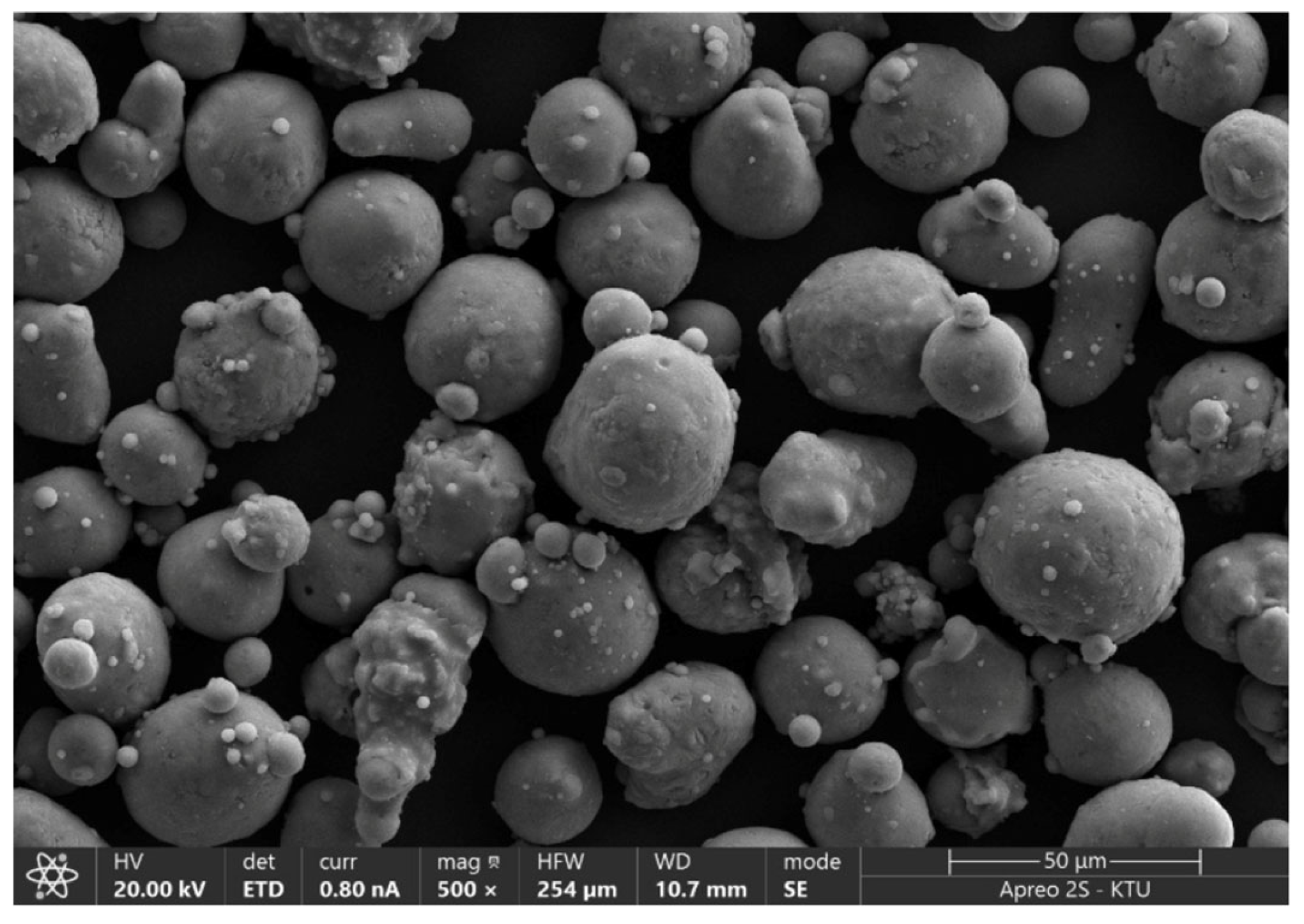
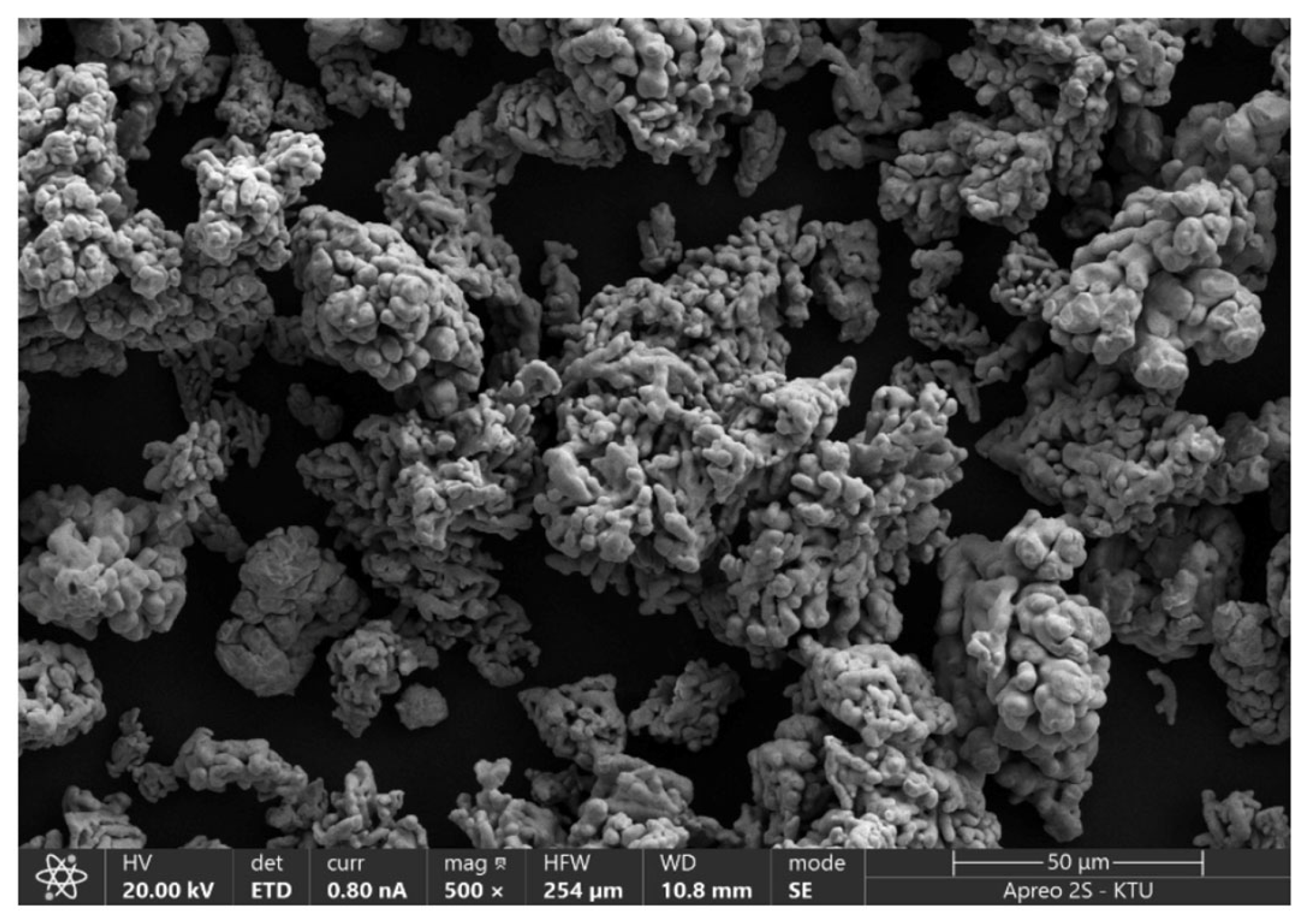
Initial morphology of the as-received powders was investigated by FESEM to set a baseline state before the milling operation. Figure 2 shows that the Cu powders have a classic dendritic morphology composed of branched structures that protrude in a radial pattern from central cores. These particles have very irregular shapes with some pointed protuberances and secondary branches, which create a very complicated surface topography and make the surface quite rough. Thin and curved dendritic tips are characteristic of fast solidification during powder manufacturing. Such particles are expected to have a relatively high surface area as compared to equiaxed particles. In contrast, the Al powders (Figure 3) mainly exhibit a spherical shape with smooth surfaces and sharp outlines which suggest excellent morphological uniformity. The majority of the particles have rounded shapes and only a few of them show small surface irregularities or local protrusions that hardly affect the overall integrity of the particles. Processing the powder shows a uniform spread of particle sizes, probably indicating consistent manufacturing conditions. These spheres form easily and tend to flow smoothly. Now, this helps with how the material settles and moves in equipment. The result is more or less better handled during the industrial steps [35]. The different morphologies of dendritic Cu and spherical Al powders illustrate very clearly the fact that these two powders are quite different in nature. Such a marked difference in the starting materials only makes it more certain that not only will their individual changes during deformation be very much different, their fracture tendencies will also be different, and the way the two powders will interact with each other during the subsequent mechanical alloying and cryogenic milling stages will also be very different. All of these factors will dictate the early-stage evolution of powder morphology and compositional homogeneity [36].

3.1.2. Morphological Evolution of Cu–Al Powders After Milling

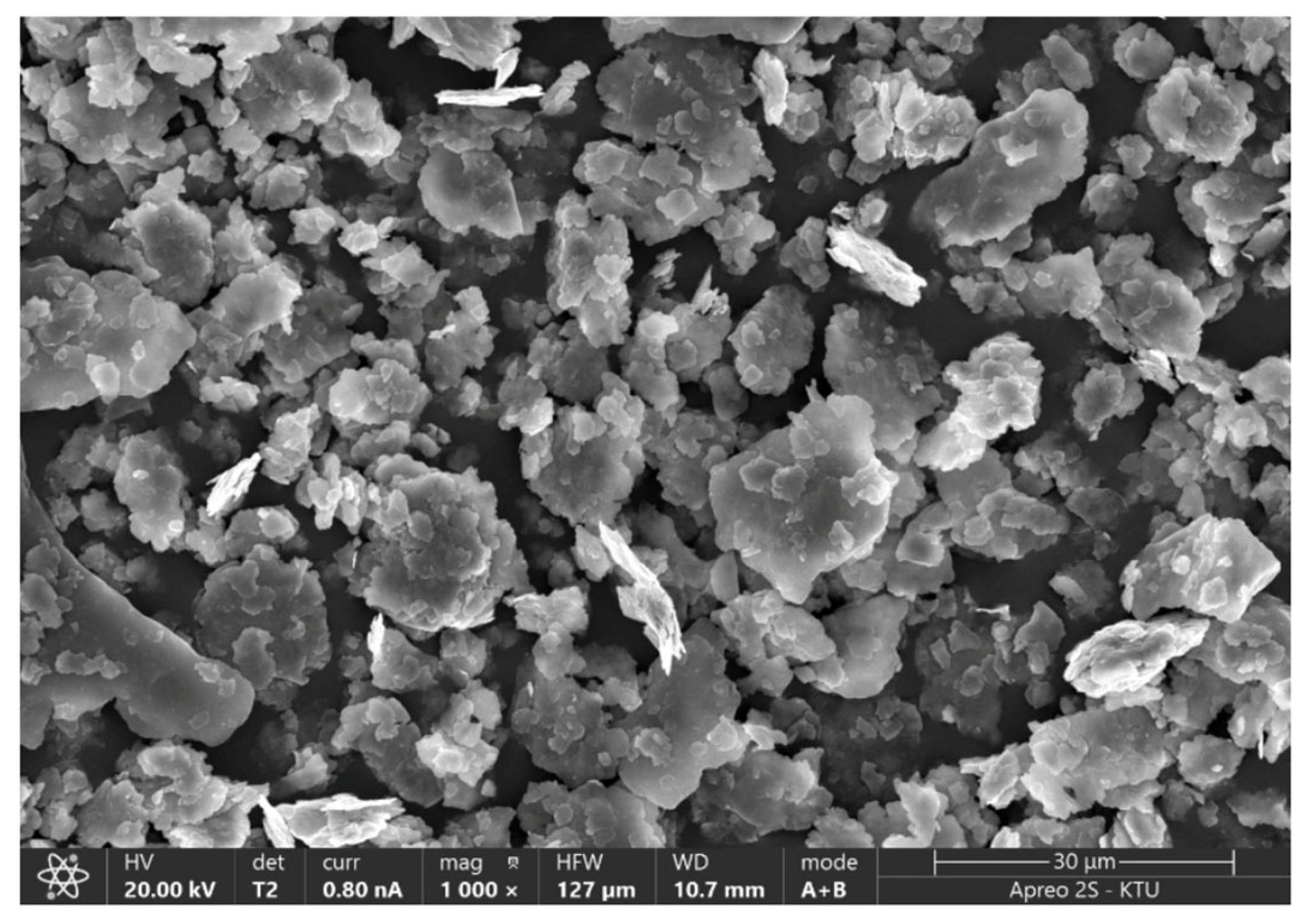
The morphological evolution of Cu-Al powder mixtures after milling are shown in Figure 4. Compared to the initial morphologies of the starting powders, a strong structural change is witnessed after milling, implying that milling process modifies the particle morphology, surface properties, and the way particles interact with each other [37]. After milling, the powders lose their original dendritic (Cu) or spherical (Al) shapes. They become deformed, irregular, and flattened. So, the process is driven by repeated ball-particle impacts. As a result, it can be understood that the deformation is severe and probably dominates the final structure [38]. Milled particles reveal a lamellar and fragmented morphology with pointed edges, fractured areas, and surface layers that have been locally folded, among other features, which are typical traces of very severe mechanical deformation. The surface becomes much rougher, meaning that the continued impact events cause fracturing, cold welding, and refraction of the powder. The powder system is undergoing an active refinement phase as a result of such cyclic deformation mechanisms which are typical of high-energy milling processes [39]. In addition to that, the images show that the particles next to each other in some areas are fused together to a certain extent, suggesting that the edges of the ductile components have locally started to interact by means of cold-welding. Another important visible aspect is the presence of particles having a wide range of sizes and aspect ratios; this is a sign that fracturing and welding are two processes happening at the same time and not one after the other. This dynamic balance basically controls how the powder system changes its structure and leads to a mixed but well-activated surface state. The rise in surface roughness and defect density during milling is very good for the next surface treatment steps, since they offer higher nucleation sites and extra potential for mechanical interlocking of coating layers. This structural state that is highly activated changes the surface into one that is energetically favorable for further processing, and makes more even coating nucleation possible, higher interfacial adhesion, and superior metallurgical bonding. Such a combination of microstructural activations may indeed be one of the main factors controlling coating integrity and overall material performance in the later stages of processing.

3.1.3. Electroless Ni Coating Characteristics and Elemental Distribution

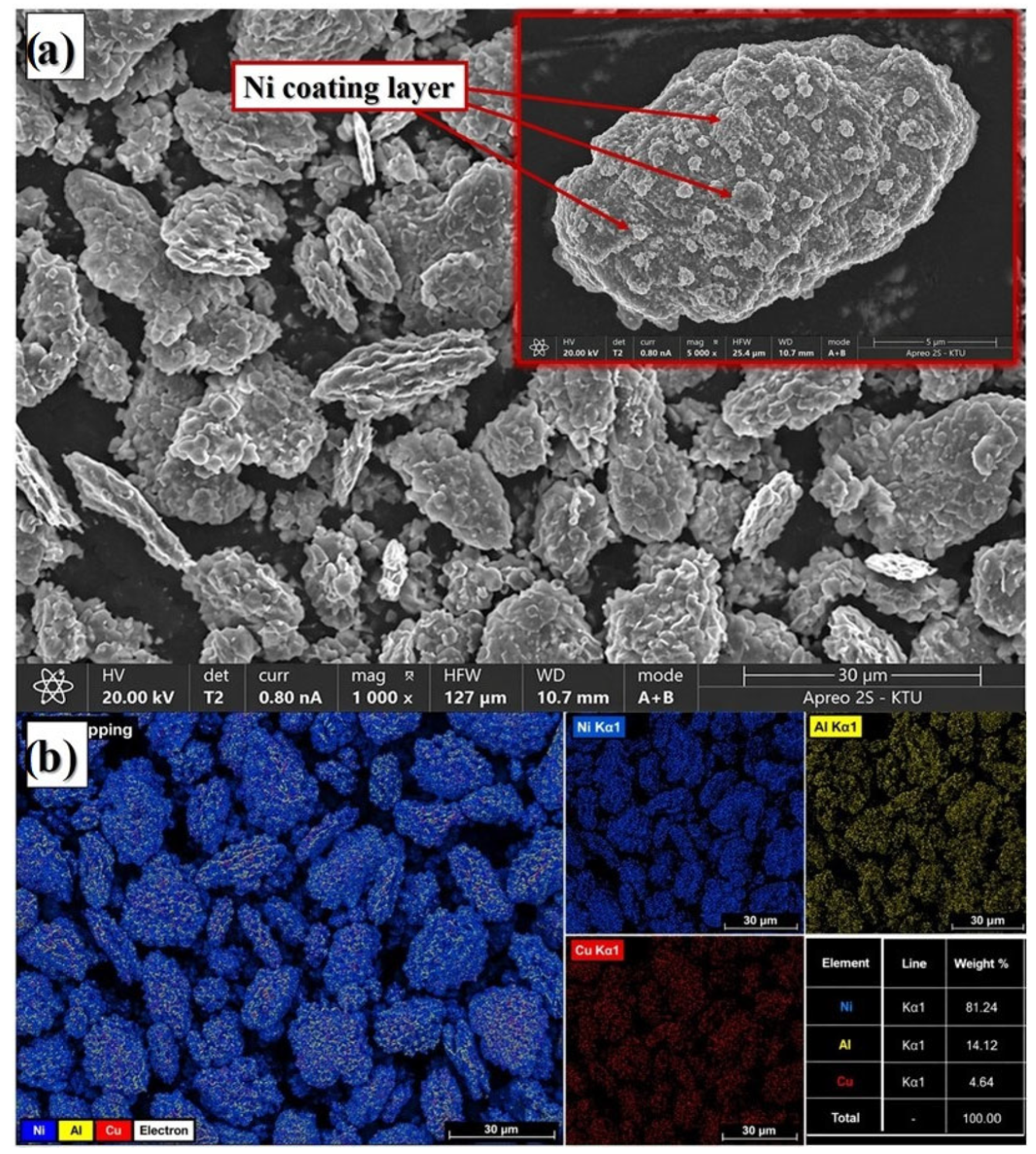
The results of morphological examinations and surface elemental distribution analyses of Cu-Al particles subjected to an electroless Ni coating process following the milling process are presented in Figure 5a,b. As shown in Figure 5a, a homogeneous Ni coating layer was obtained on the surface of the Cu-Al particles treated with the electroless Ni coating process. This coating layer was observed to be homogeneous across the entire surface, representing one of the superior properties provided by the electroless Ni coating process. Additionally, a cauliflower-like coating layer morphology, inherent to the nature of the electroless Ni coating process, was also observed. Furthermore, as shown in Figure 5b, the results of the morphological analysis were confirmed by elemental distribution analysis. In Figure 5b, it is clearly seen that the Ni coating layer is distributed uniformly across the entire surface and wraps around the Cu-Al particles, forming a core–shell structure.
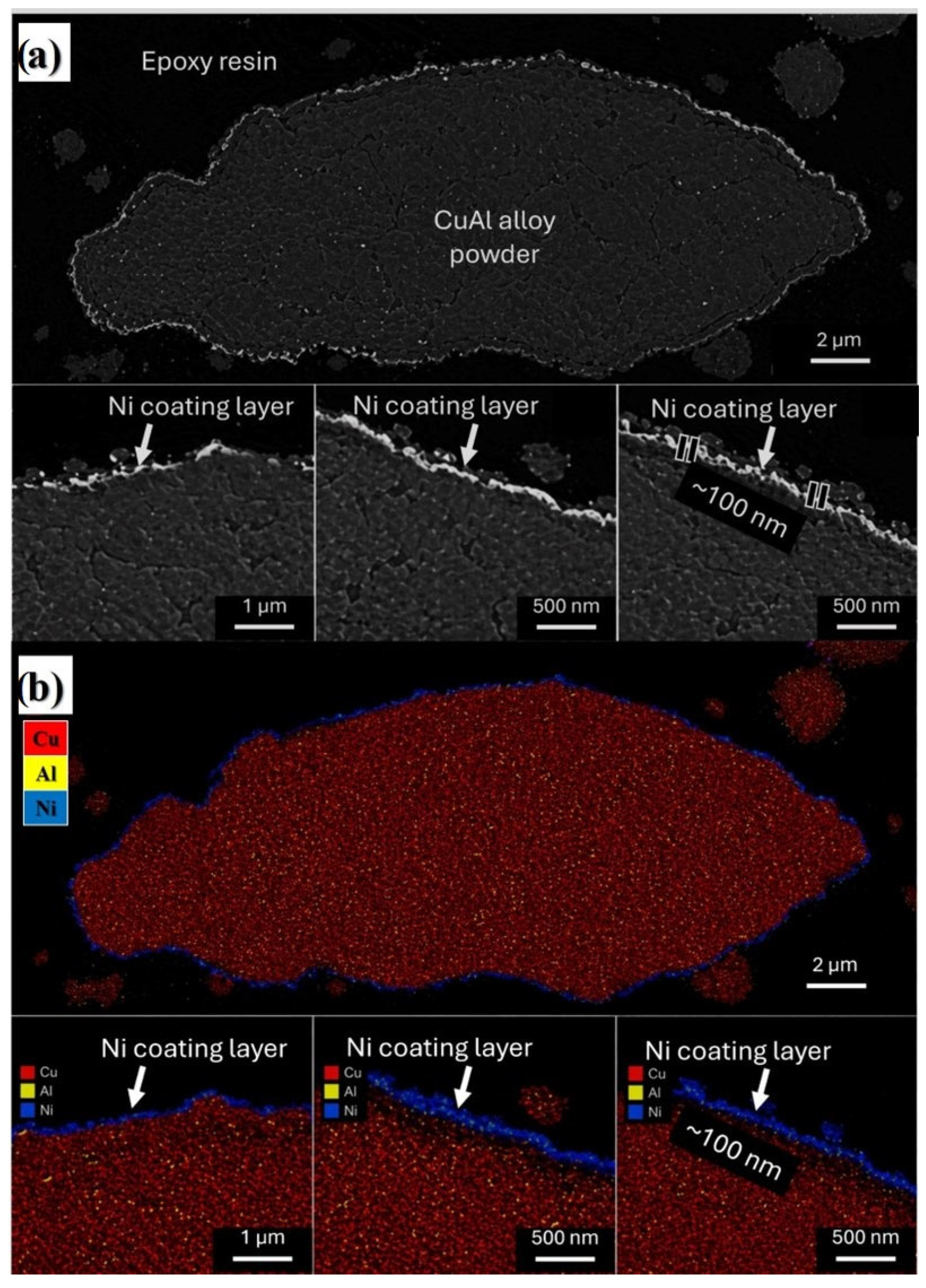
Figure 6a,b shows the results of cross-sectional examinations of Cu-Al powders subjected to an electroless Ni coating process following the milling process. As seen in Figure 6a,b, a homogeneous and continuous Ni coating layer was successfully obtained on the Cu-Al alloy powders produced after the milling process through the electroless coating process. In the rightmost SEM image presented beneath Figure 6a, the parallel marker symbols indicate the thickness measurement region of the Ni coating layer, which was determined to be approximately 100 nm. In addition to the surface elemental analysis (Figure 5b), the cross-sectional examination confirmed the homogeneity of the coating layer. Comprehensive examinations revealed that the coating layer has an approximate nano scale thickness during the Ni-rich phase. The results of the elemental analysis also corroborate this finding. In addition to all this, the surface and cross-sectional images of the Cu-Al alloy powders obtained after the milling process, along with the results of the elemental analysis, demonstrate that the Cu-Al alloy was successfully produced following the milling process and that no elements other than Cu and Al are present.

3.1.4. Cryogenic Milling Process After Electroless Ni Coating

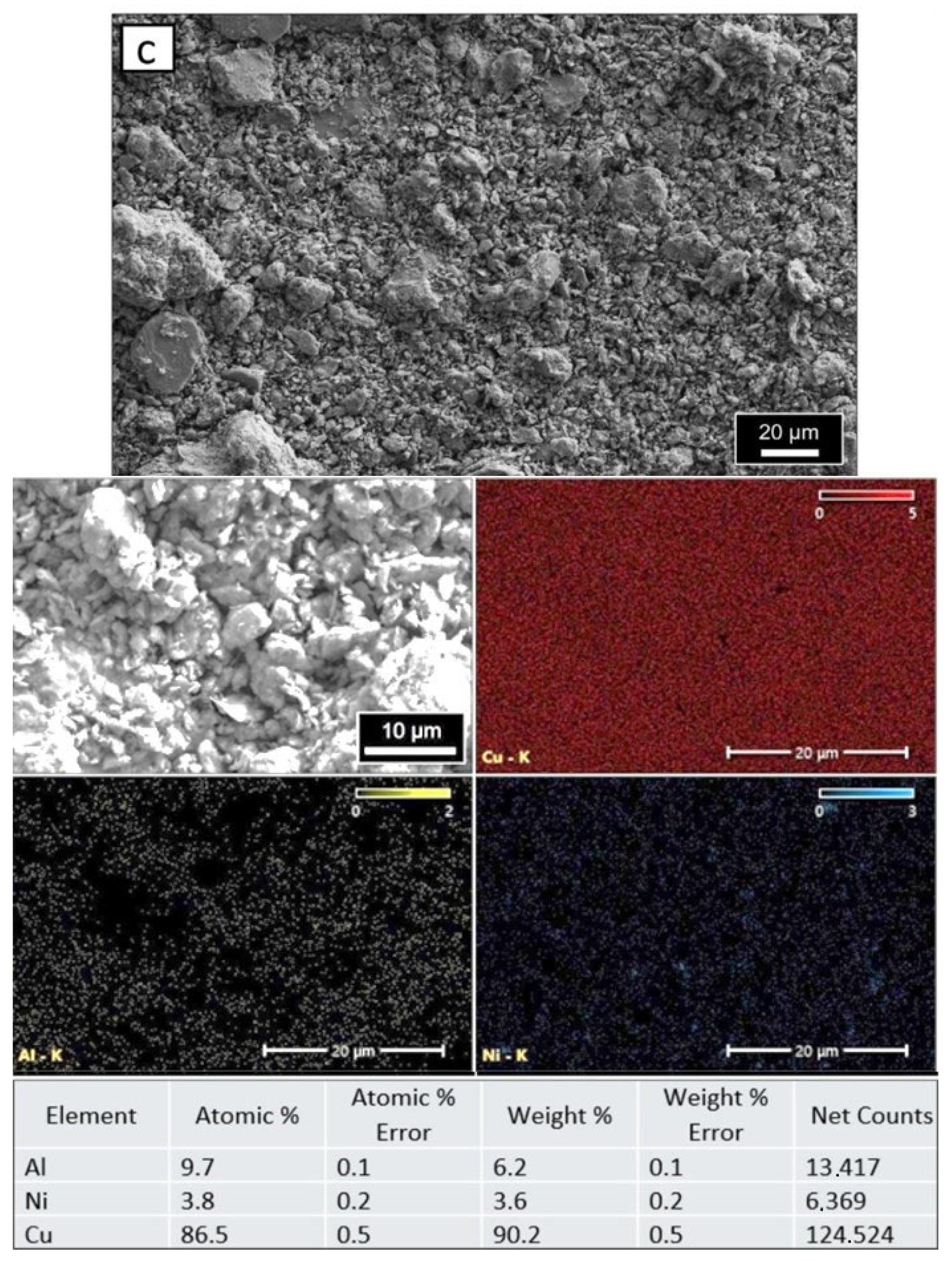
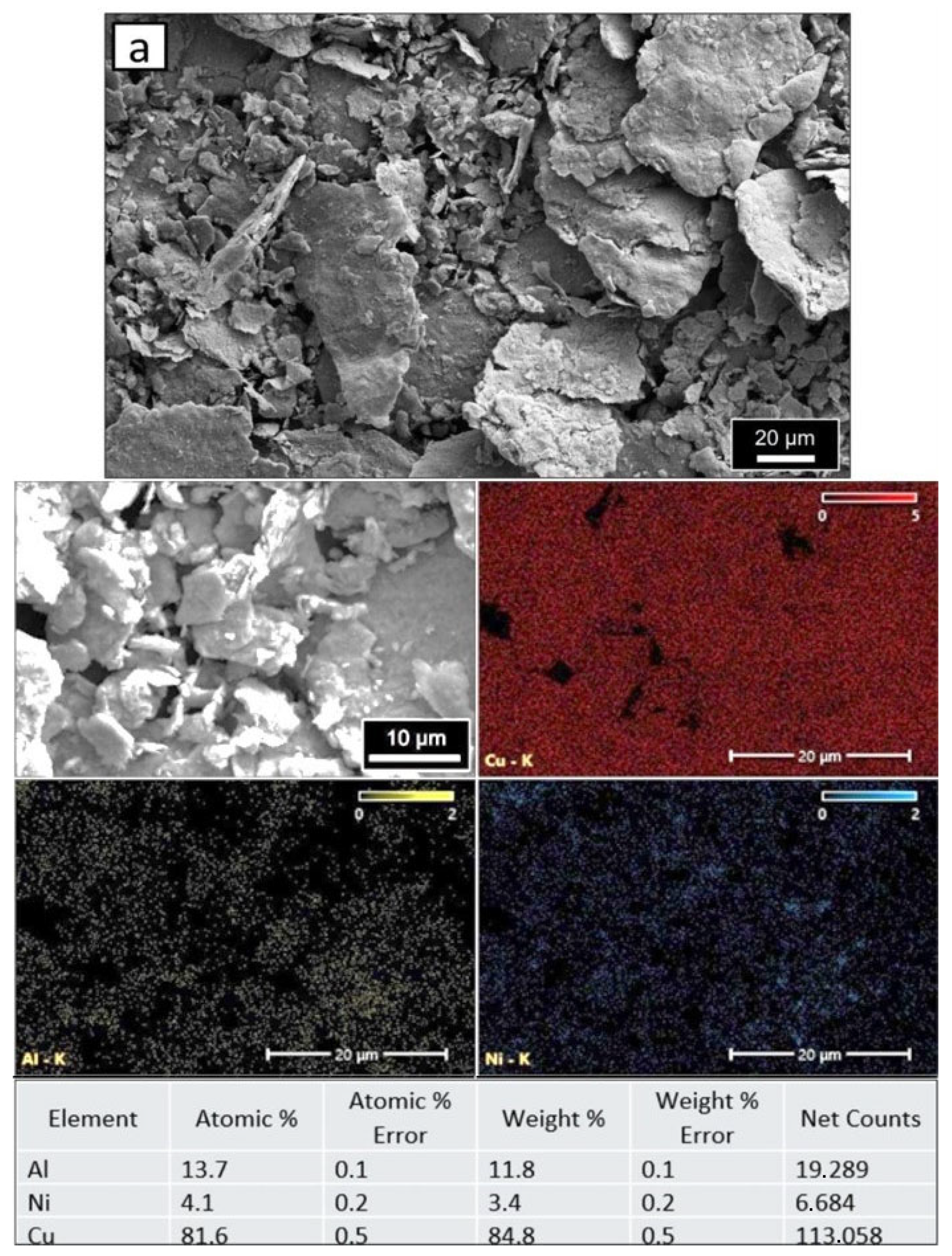
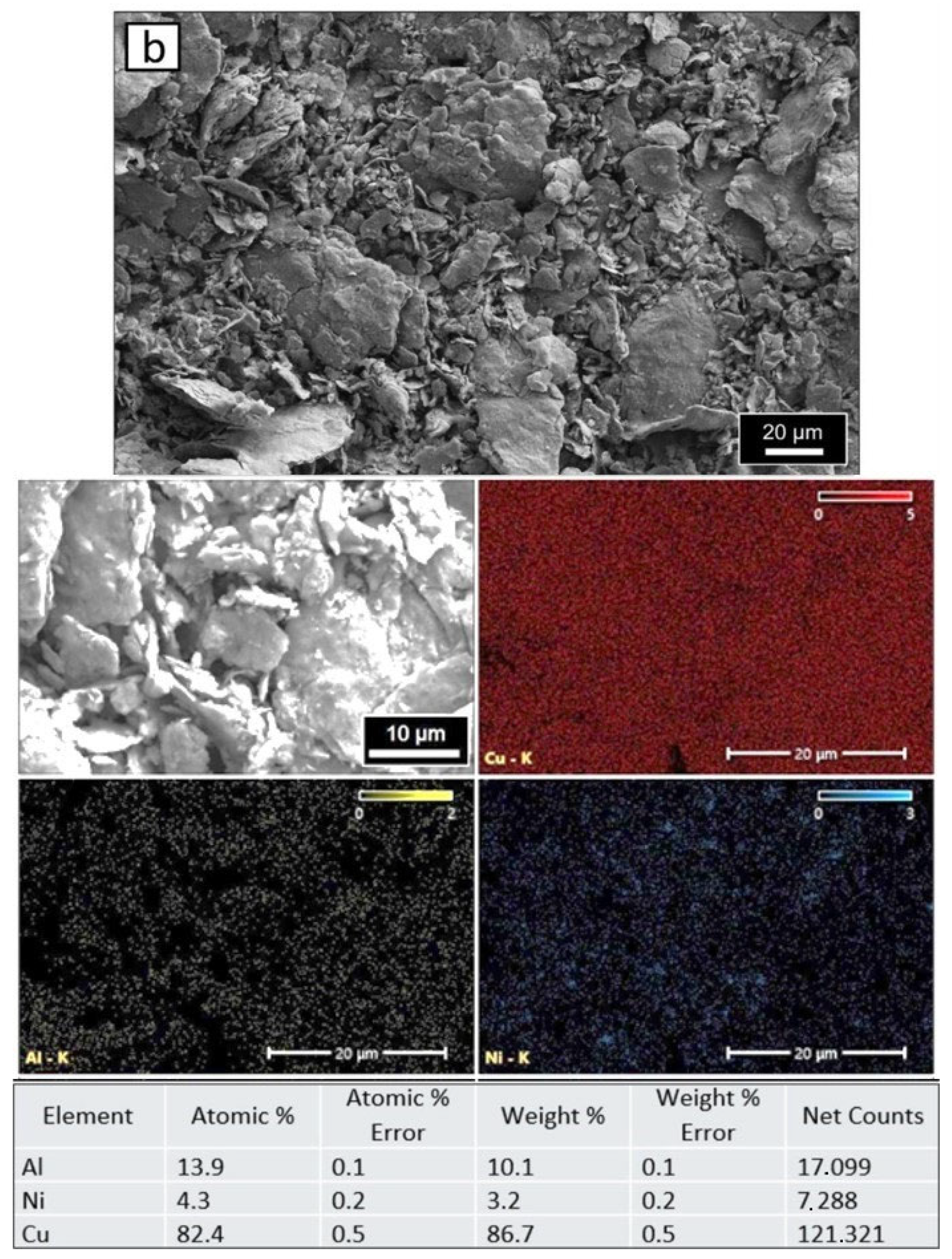
The combined SEM and EDS analyses (Figure 7) as shown were able to evaluate the effectiveness of electroless Ni coating on milled Cu-Al powders by determining coating homogeneity, surface coverage, and compositional uniformity. The representative micrographs illustrate that the Ni layer is a uniform coating along the particle surfaces rather than isolated island-type deposits, which shows that the autocatalytic reduction mechanism is taking place in a uniform manner over the activated powder interfaces [40]. This behavior confirms that the cryogenic milling stage successfully generated high-energy surfaces that promote heterogeneous nucleation of Ni and enhance coating adhesion [41]. In addition, it can be understood that the cryogenic milling process after the electroless coating process helped provide a more homogeneous elemental distribution on the particles. At lower magnifications of the FESEM images, the coated powders still show the fine morphology that was originally produced by milling, which means that the chemical deposition step does not cause secondary agglomeration or morphological coarsening. The particle surfaces in the higher-magnification images are covered with a thin, continuous layer that has a slightly nodular texture that is very typical of electroless coating films. Also, elemental mapping results provide further confirmation of the coating uniformity. Cu was, as a matter of fact, the main element in the particle cores at all times, whereas Al was equally scattered throughout the matrix, which actually proves that past mechanical treatment has made the composition uniform. Conversely, Ni was, for the major part, localized along the particle boundaries and outer surfaces, thus making a shell-like formation confined to the surface. Such interfacial Ni enrichment indicates that the incorporation of Ni took place mostly via the deposition at the surfaces and not through the diffusion in the bulk, which is very much a prerequisite for the controlled interparticle bonding at the time of the later consolidation. Based on a quantitative analysis of EDS spectra, it has been established that the Ni level is actually within the target composition range (about 4–5 at.%). This has consequently confirmed that the thickness of the coating and its compositional control can be reproducibly achieved by the deposition parameters. The absence of localized Ni clustering or compositional gradients reveals that the plating process was stable and well-balanced in terms of mass transfer throughout the entire reaction period. In brief, all these findings signify that cryogenic milling combined with electroless Ni deposition can be a very successful technique for simultaneously controlling the shape of particles, their surface chemistry, and interfacial composition.

3.2. Particle Size Distribution of Powders

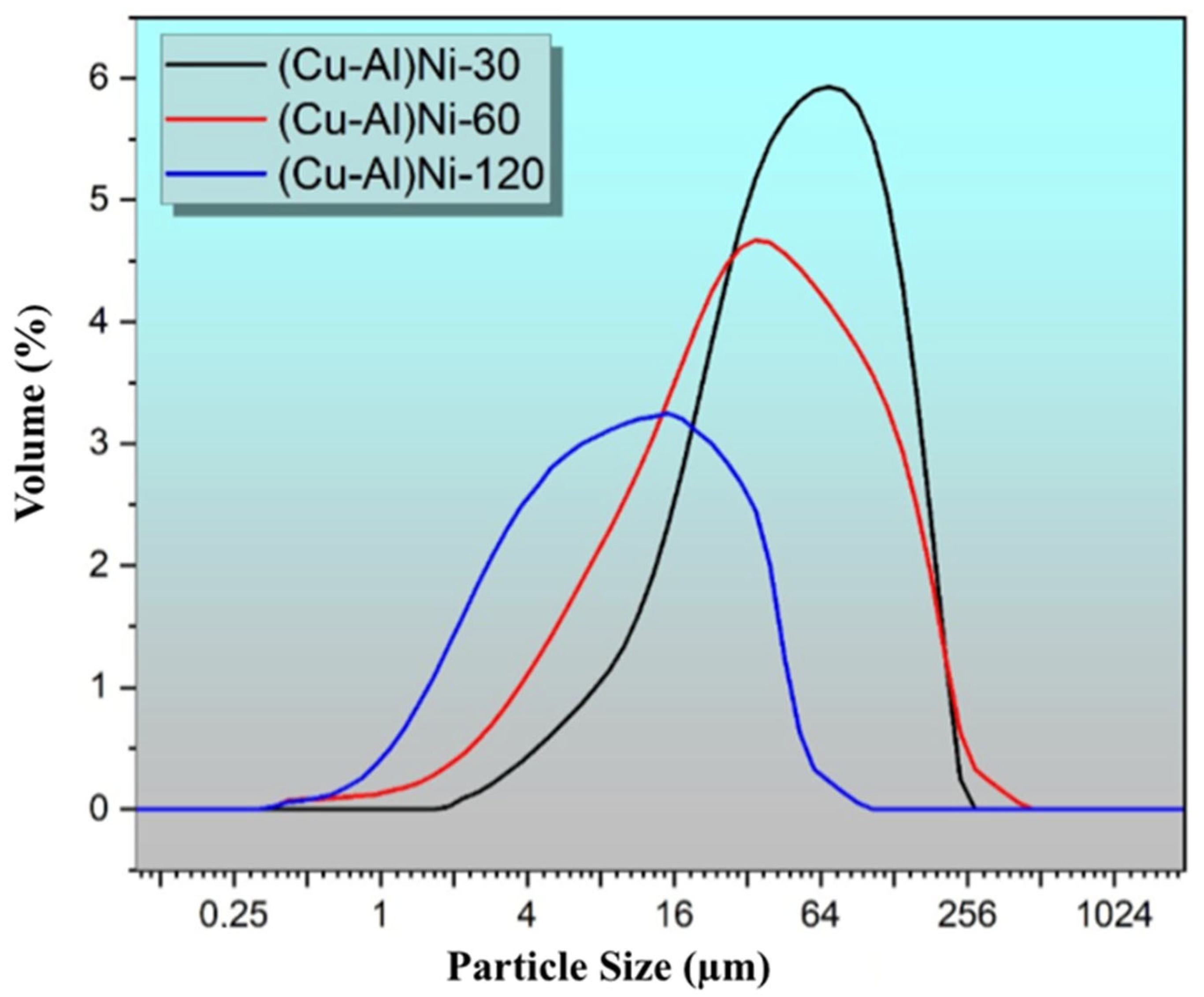
Figure 8 shows the particle size distributions of (Cu-Al)Ni-30, (Cu-Al)Ni-60, and (Cu-Al)Ni-120 coded powders after 30, 60, and 120 min of cryogenic milling post mechanical alloying and electroless Ni coating. The findings clearly indicate that the length of cryogenic milling significantly affects both the particle size and the distribution features [25,42,43]. The (Cu-Al) Ni-30 sample shows a wide distributed, mostly coarse grains, peaking between 40 and 70 µm. A large share of big particles stays, showing plastic deformation and cold welding still occurring in ductile Cu and Al phases, and the fracture remains small. In addition, it can be understood that the grain growth is more dominant than breakage [44]. These findings are in line with SEM images showing flake-like and layered structures. If milling time is increased to 60 min, the particle size distribution of the (Cu-Al)Ni-60 sample shifts towards smaller sizes since the major volume fraction is within the 20–40 m range. The dramatic reduction in the volume fraction of coarse particles suggests that cryogenic conditions are not only responsible for making the material more brittle but also for increasing dislocation density which is very effective in facilitating the competition between fracture and cold welding. Consequently, the particle size distribution becomes more narrow and uniform, which is an indication of the higher milling efficiency and a more refined structure. (Cu-Al)Ni-120 sample behavior is the highlight of this work in terms of refinement. The distribution of the (Cu-Al)Ni-120 sample is almost entirely restricted to the range 5–20 m, and the coarse particles’ volumetric contribution is markedly decreased. Also, the more symmetrical and narrower distribution validates that extensive cryogenic milling significantly enhances particle size homogeneity [45]. These are very closely related to the SEM results which show a move toward granular, fractured, and coaxial morphologies. Fine and uniform powder structure after 120 min is particularly advantageous as it leads to a higher specific surface area and also higher surface energy. These conditions are highly favorable for achieving continuous electroless Ni deposition and improved interfacial quality in subsequent powder-based processing stages.

3.3. Apparent Density

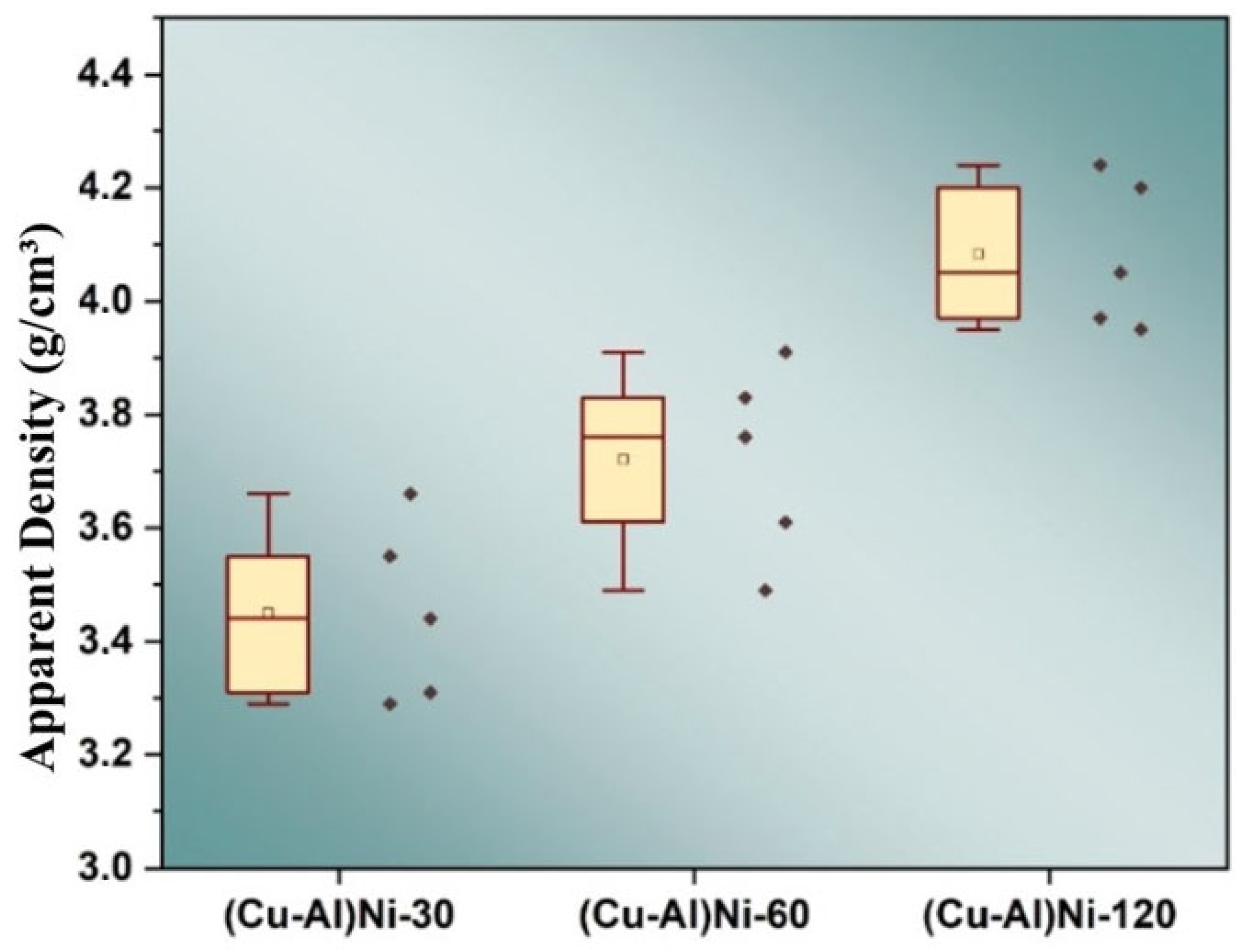
The apparent density of the cryogenically milled (Cu-Al)Ni powders processed for 30, 60, and 120 min were given in Figure 9. The results very clearly indicate that increasing the duration of cryogenic milling significantly improves the packing behavior of powders, consequently producing a systematic increase in apparent density. The (Cu-Al)Ni-30 sample has the lowest apparent density, ranging from approximately 3.3 g·cm−3 to 3.6 g·cm−3, an average of about 3.45 g·cm−3. The (Cu-Al)Ni-60 sample’s apparent density reached about 3.7 g·cm−3 after 60 min of milling, rising from a low value due to flake-like, flattened, and irregular particles formed in short durations. So, these shapes stick together in the powder bed, leaving big empty spaces between them. Particle packing efficiency drops because of the loose structure. Interparticle voids grow larger as milling time increases. Consequently, poor compaction and low density in end products will be the result. The present increase is in line with the results of particle size distribution and SEM analysis which reveal partial breakage of flake-like structures and the creation of more compacted and clustered particle morphologies. The evidence shows that the existence of small and evenly spread particles improves packing and lessens void volume, which leads to a higher apparent density. The (Cu-Al)Ni-120 pellet probably hit the highest apparent density. Values ranged from about 3.95 to 4.25 g·cm−3, more or less centered on 4.1 g·cm−3. Prolonged cryogenic milling promotes the formation of finer, more homogeneous particles with reduced shape anisotropy [46]. This refined morphology was closely packed with minimum interparticle spacing and significantly enhanced packing efficiency, yielding the highest values of apparent density. Collectively, the systematic rise in apparent density with increasing milling duration demonstrates that cryogenic milling not only refines particle morphology but also substantially improves packing efficiency. This combined effect highlights the decisive role of milling-induced structural refinement in tailoring powder architecture, ultimately establishing a more favorable foundation for subsequent processing steps such as compaction and sintering.

3.4. Thermal Analysis

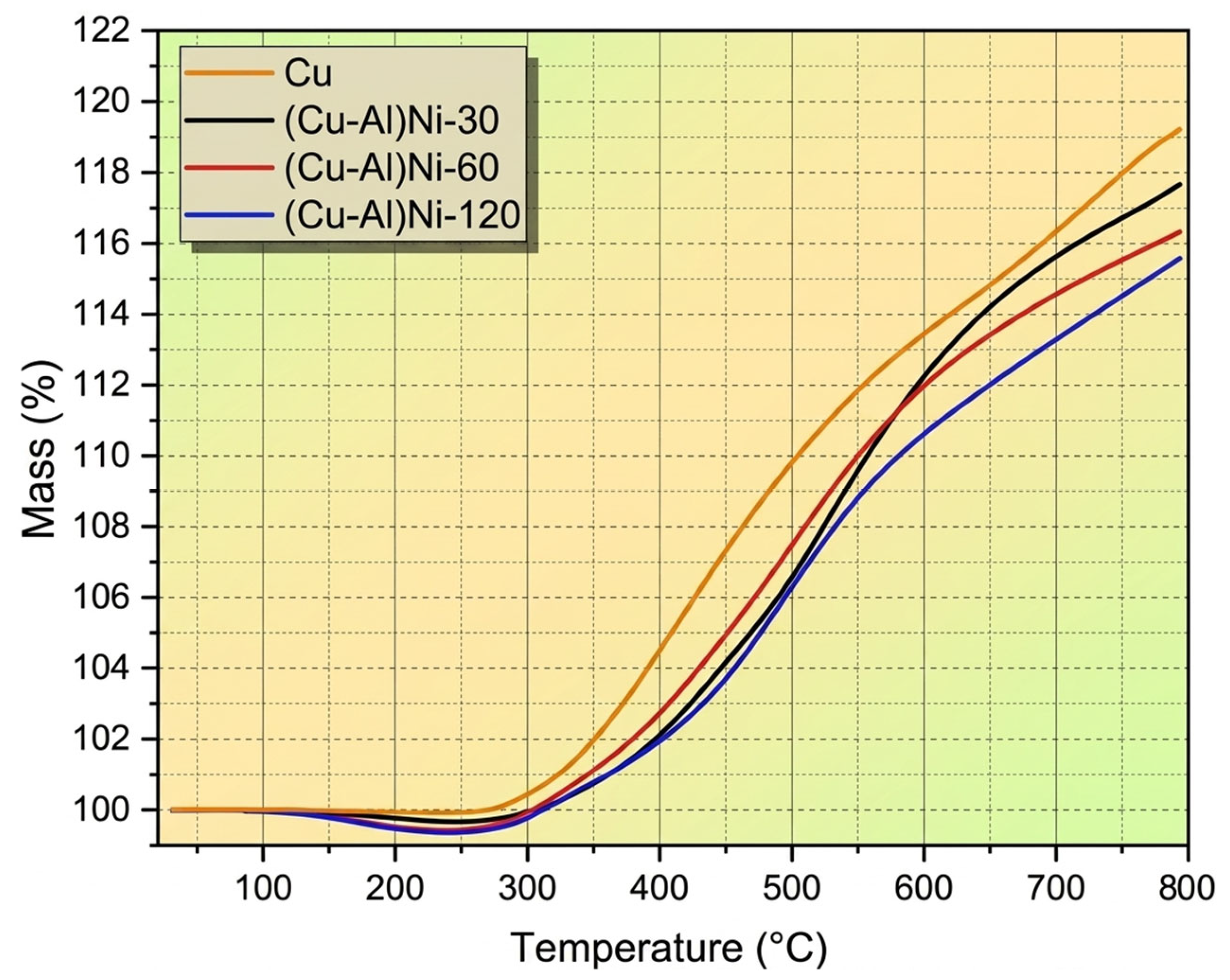
Figure 10 shows the TGA curves of uncoated Cu and Ni-coated (Cu-Al)Ni powders after cryogenic milling for 30, 60 and 120 min. The results clearly indicate that both the time of milling and the presence of Ni coating have a substantial effect on oxidation behavior. Pure Cu powder has a steep mass increase starting at around 300–350 °C, and the rate of oxidation then increases very quickly at higher temperatures. This behavior can be ascribed to the creation of Cu2O at moderate heat levels and CuO at higher heat levels, when the porous feature of the oxide scale allows continuous oxygen diffusion, hence speeding up the oxidation kinetics. On the other hand, all the Ni-coated powders exhibit a delayed oxidation start and a significantly smaller mass increase, which suggests that the Ni layer serves as a very good diffusion barrier limiting oxygen passage to the Cu base material [47]. Among the coated samples, differences that depend on milling time are more pronounced. (Cu-Al)Ni-30 powder shows the largest increase in mass, which correlates well with its coarse, flakey form that not only discourages coating continuity but also results in local exposure of the Cu surfaces. The (Cu-Al)Ni-60 sample shows a slightly different, slower mass-increasing behavior and better oxidation resistance, which results from the particle getting smaller, the surface being activated more evenly, and Ni being deposited in an overall homogeneous way. The (Cu-Al)Ni-120 powder shows the least mass gain in the whole temperature range, which means it has the highest oxidation resistance. Its excellent performance is due mainly to its fine, uniform, and granular particle morphology obtained by extended cryogenic milling, that not only encourages uninterrupted and even Ni coverage but also reduces the oxygen diffusion paths [45]. From these results, we can deduce that prolonged cryogenic milling enhances the coating integrity and retards high-temperature oxidation. The NiO layer develops a dense, stable scale that is even more compact than porous Cu oxides. This results in Ni-coated powders having better resistance to oxidation, especially after long milling times. A dense NiO layer leads to less oxygen penetration as compared to the Cu-based coatings. SEM observations back this up, as they are in correspondence with particle size data and TGA results. With longer milling, the oxide layer becomes more stable.

3.5. XRD Analysis

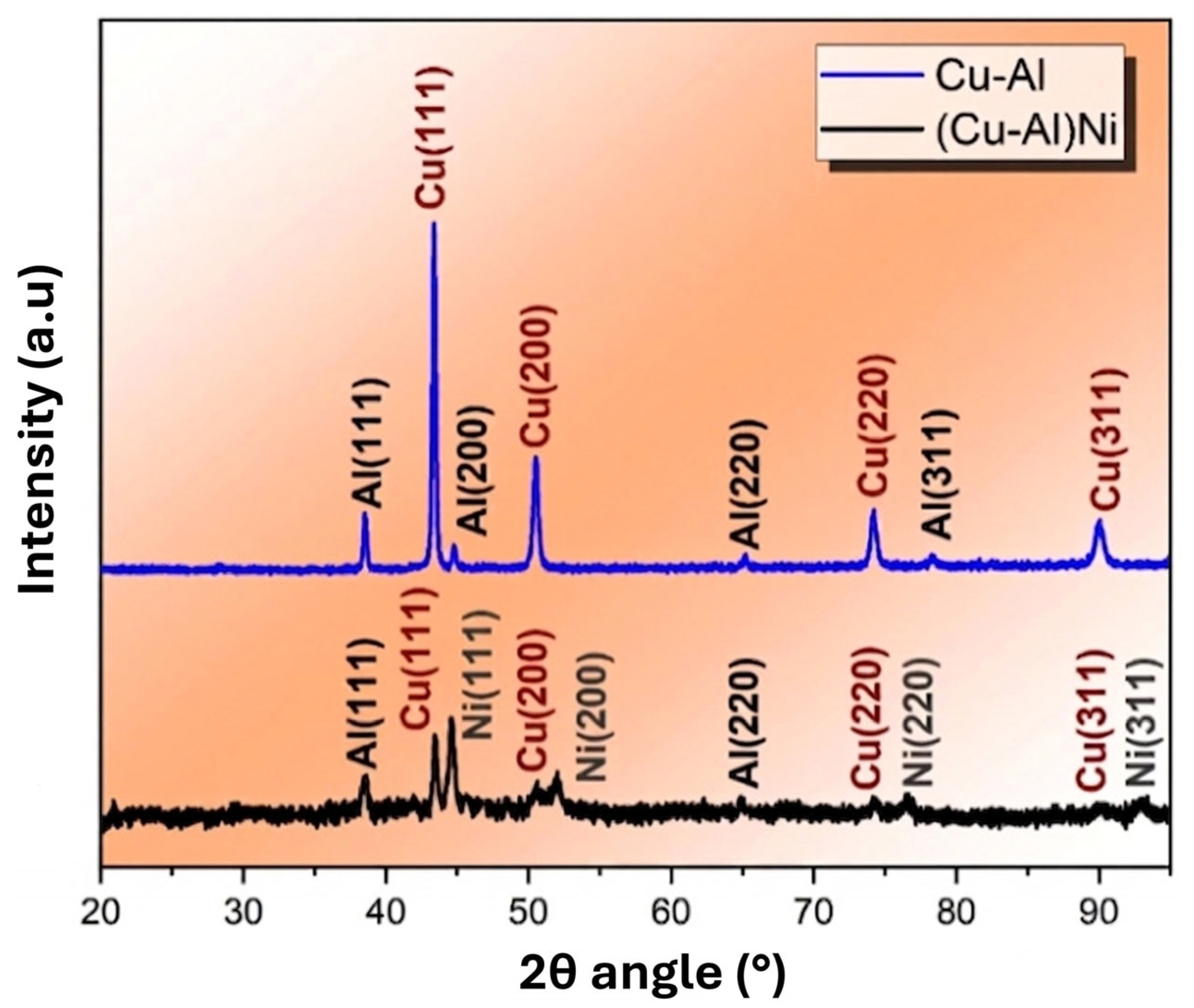
X-ray diffraction patterns of the cryogenically milled (Cu-Al) powders and the electroless-Ni-coated (Cu-Al)Ni-120 sample are shown in Figure 11. The XRD results show FCC Cu and Al as the main phases across all samples. In addition, it can be seen that the Ni reflections showed up after coating. This result confirms that the surface deposition was successfully achieved. The coating layer added Ni to the surface of the particles. Uncoated (Cu-Al) powders showed that characteristic diffraction peaks located at approximately 43.3°, 50.4°, 74.1°, and 89.9° are indexed to the Cu (111), (200), (220), and (311) planes, respectively [48]. Similarly, reflections observed near 38.4°, 44.7°, 65.1°, and 78.2° correspond to the Al (111), (200), (220), and (311) planes [49]. The continuing presence of these distinct peaks indicates that even after harsh mechanical and cryogenic milling, the basic crystal structures of Cu and Al are still intact and there has been no phase change. The diffraction pattern of (Cu-Al)Ni-120 sample shows further peaks around 44.5°, 51.8°, 76.4°, and 92.9° after the Ni was coated using electroless coating method. These peaks are identified with the Ni (111), (200), (220), and (311) crystal planes. Ni appears in a crystalline form on the powder surfaces [50]. The Ni peaks are weak. Cu and Al signals drop slightly. This points to a thin surface layer, not a thick coating. SEM-EDS maps show Ni spread evenly across the surface. The data support that Ni is confined to the top layer only. More specifically, a slight shifting of the peak together with a broadening of it are noticed after coating. These small changes are mainly credited to the fact that the crystal lattice, e.g., the space between the atoms in the crystal lattice, is stretched to a greater extent. Besides that, the high density of dislocations and defects resulting from the repeated cycles of breaking–welding during the cryogenic milling and coating processes also play a role. The crystallite size is calculated from X-ray line broadening of the diffraction peaks, and the result shows a decrease in crystallite size after Ni deposition on Cu-Al powders from 52. 10 nm to 41. 71 nm. So, the broadening of the peaks that have been observed appears to be due to crystallite refinement and are confirmed by SEM particle morphology and particle size distribution data. The absence of detectable Cu–Ni or Al–Ni intermetallic reflections indicates that no bulk alloying reaction occurred under the applied processing conditions and that Ni remains predominantly as a surface coating. This is a critical outcome, as it confirms preservation of the designed core–shell-like architecture in which the Ni layer functions as a protective diffusion barrier [51]. On one other hand, from XRD together with SEM, particle size, and TGA data, it appears that with the increasing time duration of cryomilling, powders of smaller and more uniform sizes with a higher degree of refinement are obtained. These powders can be uniformly coated with Ni, leading to the (Cu-Al)Ni-120 material system that is structurally stable and resistant to oxidation. When the TGA and XRD results are evaluated together, it is clear that there is a consistent relationship between the thermal behavior and the phase structure of the (Cu-Al)Ni powders. The XRD pattern (Figure 9) shows the presence of Ni in addition to Cu and Al peaks, and in particular, the increase in peak broadening as the milling time increases indicates a decrease in crystal size and a more homogeneous distribution of phases. This demonstrates the effectiveness of cryogenic milling. When comparing (Cu-Al)Ni samples milled for 30, 60, and 120 min in the TGA curves (Figure 8), the shift toward a more controlled and relatively lower mass increase in the TGA as the milling time increases can be attributed to the finer and more homogeneous structure observed in the XRD. This indicates a more stable oxidation behavior. Consequently, the microstructural refinement and improved phase distribution identified by XRD show a direct correlation with the temperature-dependent changes in the oxidation reaction observed in the TGA.

4. Conclusions

This study brought into play a particle-level engineering approach for precursor powders of Cu-Al-Ni shape memory alloy by using cryogenic milling combined with electroless Ni surface modification. The main results can be summarized as follows:
(1)
A traditional mechanical milling method was used to turn the original dendritic Cu and spherical Al powders into heavily deformed and broken compound particles. The extreme plastic deformation and fracture-welding processes produced detailed shapes that had a greater number of defects and were more active on the surface. These features are very useful for the next surface modification steps.
(2)
Milling duration played an important role in controlling particle size distribution and powder packing characteristics. Increasing the cryogenic milling time from 30 to 120 min progressively shifted the particle distribution toward finer and more homogeneous sizes (approximately 5–20 µm), resulting in improved powder packing efficiency and a significant increase in apparent density.
(3)
Electroless nickel deposition was a successful method to obtain a conformal and homogeneous metallic coating on the mechanically milled powders. SEM-EDS analyses and cross-sectional investigations showed that the nickel was majorly present on the particle surfaces and interfaces, forming a continuous shell-like distribution, yet the compositional range required for the Cu-Al-Ni shape memory alloy systems was achieved.
(4)
According to thermal analysis results, oxides formed on the surface of Ni-coated and cryogenically milled powders are much less than those on pure Cu powders. The Ni distribution serves as a strong stopgap for the diffusion of oxygen and consequently slows down the oxidation rate, which demonstrates the maximum thermal stability of the powders which have been processed by extended cryogenic milling.
(5)
XRD analysis has shown that the original crystal structures of Cu and Al were retained during the mechanical processing. In addition, XRD results showed that the successful deposition of crystalline Ni was also carried out. The lack of Cu-Ni or Al-Ni intermetallic phases indicates that the Ni is largely a surface-modified layer, which helps to maintain the designed particle architecture and also causes crystallite refinement and lattice strain.
(6)
The cryogenic milling and electroless coating methods probably gives better control together. Additionally, this structure tends to support smoother spread between particles, tighter packing, and less change in microstructure during shaping.

Author Contributions

Conceptualization, O.G. and M.K.; methodology, S.B.A., Y.A., S.Ö.; investigation, Y.A., O.G., S.Ö., S.B.A.; resources, O.G. and M.K.; data curation, S.B.A., T.V., H.Ç.; writing—original draft preparation, O.G. and M.K.; writing—review and editing, T.V. and H.Ç.; visualization, M.K.; supervision, O.G. and M.K.; project administration, O.G. and M.K.; funding acquisition, O.G. All authors have read and agreed to the published version of the manuscript.

Funding

This research was funded by Karadeniz Technical University Scientific Research Projects Coordination Unit (BAP) under grant number FBA-2025-16219. The APC was also funded by Karadeniz Technical University Scientific Research Projects Coordination Unit (BAP) under the same project (FBA-2025-16219).

Data Availability Statement

The original contributions presented in this study are included in the article. Further inquiries can be directed to the corresponding authors.

Conflicts of Interest

Author Serdar Özkaya was employed by the company Trabzon Teknokent. The remaining authors declare that the research was conducted in the absence of any commercial or financial relationships that could be construed as a potential conflict of interest.

Abbreviations

The following abbreviations are used in this manuscript:
SMAShape Memory Alloy
PCAProcess Control Agent
TGAThermogravimetric Analysis
CuCopper
AlAluminum
NiNickel

References

  1. Ben Saoud, F.; Korkmaz, M.E. A Review on Machinability of Shape Memory Alloys Through Traditional and Non-Traditional Machining Processes: A Review. Manuf. Technol. Appl. 2022, 3, 14–32. [Google Scholar] [CrossRef]
  2. López-Ferreño, I.; Gómez-Cortés, J.F.; Breczewski, T.; Ruiz-Larrea, I.; Nó, M.L.; San Juan, J.M. High-Temperature Shape Memory Alloys Based on the Cu-Al-Ni System: Design and Thermomechanical Characterization. J. Mater. Res. Technol. 2020, 9, 9972–9984. [Google Scholar] [CrossRef]
  3. Ebrahimi, M.; Attarilar, S.; Gode, C.; Kandavalli, S.R.; Shamsborhan, M.; Wang, Q. Conceptual Analysis on Severe Plastic Deformation Processes of Shape Memory Alloys: Mechanical Properties and Microstructure Characterization. Metals 2023, 13, 447. [Google Scholar] [CrossRef]
  4. Eggeler, G.; Frenzel, J.; Pons, J. Particles in Shape Memory Alloys Revisited: Effects on Functional and Structural Properties. Shape Mem. Superelasticity 2025, 11, 350–362. [Google Scholar] [CrossRef]
  5. Zou, F.; Ma, S.; Jiang, Y.; Peng, Z. Research Progress on Performance Regulation and Application of Ti-Ni-Based, Fe-Based, and Cu-Based Shape Memory Alloys. Adv. Eng. Res. Possibilities Chall. 2025, 1, 17–24. [Google Scholar] [CrossRef]
  6. Wang, Z.; Chen, J.; Kocich, R.; Tardif, S.; Dolbnya, I.P.; Kunčická, L.; Micha, J.S.; Liogas, K.; Magdysyuk, O.V.; Szurman, I.; et al. Grain Structure Engineering of NiTi Shape Memory Alloys by Intensive Plastic Deformation. ACS Appl. Mater. Interfaces 2022, 14, 31396–31410. [Google Scholar] [CrossRef] [PubMed]
  7. Rodinò, S.; Maletta, C. Design Considerations and Applications of Shape Memory Alloy-Based Actuation in Morphing Structures: A Systematic Review. Prog. Eng. Sci. 2024, 1, 100021. [Google Scholar] [CrossRef]
  8. Wan, Y.; Tang, C.; Jiang, Z.; Wang, F.; Hu, C.; Yang, B. Structural Enhancement and Repair of CFRP T-Joint by the Cross-Embedded SMA Wire. Compos. Commun. 2023, 41, 101634. [Google Scholar] [CrossRef]
  9. Puente-Córdova, J.G.; Rentería-Baltiérrez, F.Y.; Diabb-Zavala, J.M.; Mohamed-Noriega, N.; Bello-Gómez, M.A.; Luna-Martínez, J.F. Thermomechanical Characterization and Modeling of NiTi Shape Memory Alloy Coil Spring. Materials 2023, 16, 3673. [Google Scholar] [CrossRef]
  10. Mills, S.H.; Noebe, R.D.; Dellacorte, C.; Amin-Ahmadi, B.; Stebner, A.P. Development of Nickel-Rich Nickel–Titanium–Hafnium Alloys for Tribological Applications. Shape Mem. Superelasticity 2020, 6, 311–322. [Google Scholar] [CrossRef]
  11. Shreekrishna, S.; Nachimuthu, R.; Nair, V.S. A Review on Shape Memory Alloys and Their Prominence in Automotive Technology. J. Intell. Mater. Syst. Struct. 2023, 34, 499–524. [Google Scholar] [CrossRef]
  12. Costanza, G.; Tata, M.E. Shape Memory Alloys for Aerospace, Recent Developments, and New Applications: A Short Review. Materials 2020, 13, 1856. [Google Scholar] [CrossRef] [PubMed]
  13. Özkul, İ.; Karaduman, O.; Şimşek, T.; Şimşek, T.; Canbay, A.C.; Güler, Ö.; Şan, M.H.; ALMisned, G.; Tekin, H.O. Comprehensive evaluation of thermal, structural, magnetic, and radiation shielding properties of CuAlNi and CuAlNi-X (X = Co, CoFe, CoFeMn, CoFeMnCr) high-temperature shape memory alloys. Appl. Phys. A 2025, 131, 336. [Google Scholar] [CrossRef]
  14. Hossain, M.I.; Rabbi, M.S.; Ali, M.T. Shape Memory Alloys in Modern Engineering: Progress, Problems, and Prospects. RSC Adv. 2025, 15, 33046–33100. [Google Scholar] [CrossRef]
  15. Nespoli, A.; Ninarello, D.; Fanciulli, C. A Review on Shape Memory Alloys with Martensitic Transition at Cryogenic Temperatures. Metals 2023, 13, 1311. [Google Scholar] [CrossRef]
  16. Agrawal, A.; Dube, R.K. Methods of Fabricating Cu-Al-Ni Shape Memory Alloys. J. Alloys Compd. 2018, 750, 235–247. [Google Scholar] [CrossRef]
  17. Tang, R.; Liu, G.; Sun, B.; Dong, Z.; Zhang, X.; Cui, B. New Insights on Improving the Strain Recovery Characteristics of the Cu-Al-Ni High-Temperature Shape Memory Alloy. J. Alloys Compd. 2025, 1010, 177476. [Google Scholar] [CrossRef]
  18. Maalolan, B.; Santosh, S. A Review on CuAlNi Shape Memory Alloys: Production Methods, Applications and Current Trends. Mater. Today Proc. 2026, 123, 77–81. [Google Scholar] [CrossRef]
  19. Sankar, B.; Vinay, C.; Vishnu, J.; Shankar, K.V.; Gokul Krishna, G.P.; Govind, V.; Jayakrishna, A.J. Focused Review on Cu–Ni–Sn Spinodal Alloys: From Casting to Additive Manufacturing. Met. Mater. Int. 2023, 29, 1203–1228. [Google Scholar] [CrossRef]
  20. Mazzer, E.M.; da Silva, M.R.; Gargarella, P. Revisiting Cu-Based Shape Memory Alloys: Recent Developments and New Perspectives. J. Mater. Res. 2022, 37, 162–182. [Google Scholar] [CrossRef]
  21. Yang, L.; Jiang, X.; Sun, H.; Shao, Z.; Fang, Y.; Shu, R. Effects of Alloying, Heat Treatment and Nanoreinforcement on Mechanical Properties and Damping Performances of Cu-Al-Based Alloys: A Review. Nanotechnol. Rev. 2021, 10, 1560–1591. [Google Scholar] [CrossRef]
  22. Vahedi Nemani, A.; Ghaffari, M.; Sabet Bokati, K.; Valizade, N.; Afshari, E.; Nasiri, A. Advancements in Additive Manufacturing for Copper-Based Alloys and Composites: A Comprehensive Review. J. Manuf. Mater. Process. 2024, 8, 54. [Google Scholar] [CrossRef]
  23. Saud, S.N.; Hamzah, E.; Abubakar, T.; Bakhsheshi-Rad, H.R.; Mohammed, M.N. Influence of Tin Additions on the Phase-Transformation Characteristics of Mechanical Alloyed Cu-Al-Ni Shape-Memory Alloy. Metall. Mater. Trans. A 2016, 47, 5242–5255. [Google Scholar] [CrossRef]
  24. Lingam, D.; Ananthanarayanan, R.; Jeevanantham, A.K.; Seenivasagam, D.R. Optimization Methods in Powder Metallurgy for Enhancing the Mechanical Properties: A Systematic Literature Review. Eng. Res. Express 2024, 6, 022504. [Google Scholar] [CrossRef]
  25. Nita, B.; Tampu, R.I.; Tampu, C.; Chirita, B.A.; Herghelegiu, E.; Schnakovszky, C. Review Regarding the Influence of Cryogenic Milling on Materials Used in the Aerospace Industry. J. Manuf. Mater. Process. 2024, 8, 186. [Google Scholar] [CrossRef]
  26. Prakash, A.; Arunav, H.; Vishnu, J.; Mazzer, E.M.; Shankar, K.V. Emergence of Copper-Based Shape Memory Alloys for Robotics Applications: From Past To Present. Met. Mater. Int. 2025. [Google Scholar] [CrossRef]
  27. Zhang, L.; Li, X.; Qu, X.; Qin, M.; Que, Z.; Wei, Z.; Guo, C.; Lu, X.; Dong, Y. Powder Metallurgy Route to Ultrafine-Grained Refractory Metals. Adv. Mater. 2023, 35, 2205807. [Google Scholar] [CrossRef]
  28. Sato, S.; Tobe, H.; Sawada, K.; Tokoku, C.; Nakagawa, T.; Sato, E.; Araki, Y.; Xu, S.; Xu, X.; Omori, T.; et al. Shape Memory Alloys for Cryogenic Actuators. Commun. Eng. 2025, 4, 124. [Google Scholar] [CrossRef]
  29. Asare, S.; Berry-Snowden, A.; Shariff, A.; Owusu-Danquah, J. Surface Modification Strategies for Ni–Ti-Based Thermosensitive Shape Memory Alloys: A Review of Techniques, Trade-Offs, and Performance. Smart Mater. Struct. 2026, 35, 033001. [Google Scholar] [CrossRef]
  30. Siddiqui, M.A.S.; Mia, M.P.; Hossain, M.A.K.; Rabbi, M.S.; Butt, H.; Alam, F. Recent Advances in Crystalline Architecture and Defect Engineering of 3D-Printed Metals for Biomedical Breakthroughs: A Comprehensive Review. Adv. Eng. Mater. 2025, 27, 2500257. [Google Scholar] [CrossRef]
  31. Aljibori, H.S.; Alamiery, A.; Kadhum, A.A.H. Advances in Corrosion Protection Coatings: A Comprehensive Review. Int. J. Corros. Scale Inhib. 2023, 12, 1476–1520. [Google Scholar] [CrossRef]
  32. Rudnik, E. Black Nickel Coatings: From Plating Techniques to Applications. Coatings 2024, 14, 1588. [Google Scholar] [CrossRef]
  33. Wang, C.; Zhai, H.; Lewis, D.; Gong, H.; Liu, X.; Fernando, A. Solvent-Driven Electroless Nickel Coatings on Polymers: Interface Engineering, Microstructure, and Applications. Coatings 2025, 15, 898. [Google Scholar] [CrossRef]
  34. Chen, F.; Tian, Z.; Liu, P.; Han, W.; Yi, X.; Zhan, Q.; Wan, F. Research Advances and Practical Applications of Cu-Al-Mn Shape Memory Alloys. In Copper—History, Properties and Applications [Working Title]; IntechOpen: London, UK, 2026; Volume 19. [Google Scholar]
  35. Yu, S.; Zhao, Y.; Zhao, G.; Liu, Q.; Yao, B.; Liu, H. Review on Preparation Technology and Properties of Spherical Powders. Int. J. Adv. Manuf. Technol. 2024, 132, 1053–1069. [Google Scholar] [CrossRef]
  36. Ge, J.; Shi, H.; Li, Z.; Xu, S.; Zheng, Y.; Jiang, W.; Meng, A.; Zhao, Y.; Li, J.; Wang, G. Mechanical Properties and Deformation Mechanism of Cu–Ni–Al Ternary Alloys with Different Coherent Precipitation Characteristics. J. Mater. Sci. 2026, 61, 9796–9812. [Google Scholar] [CrossRef]
  37. Kushwaha, A.K.; Misra, M.; Menezes, P.L. Mechanical and Tribological Performance of Additively Manufactured Nanocrystalline Aluminum via Cryomilling and Cold Spray. Lubricants 2025, 13, 386. [Google Scholar] [CrossRef]
  38. Çelebi, M.; Çanakçı, A.; Özkaya, S. Effect of Mechanical Milling Time on Powder Characteristic, Microstructure, and Mechanical Properties of AA2024/B4C/GNPs Hybrid Nanocomposites. Powder Technol. 2025, 449, 120439. [Google Scholar] [CrossRef]
  39. Mathaudhu, S.N. Building on Gleiter: The Foundations and Future of Deformation Processing of Nanocrystalline Metals. Metall. Mater. Trans. A Phys. Metall. Mater. Sci. 2020, 51, 6020–6044. [Google Scholar] [CrossRef]
  40. Vilariño, P.; Gómez, E.; Serrà, A. Electroless Deposition for Biomimetic Microstructures: From Fundamental Principles to Practical Applications. Crit. Rev. Solid State Mater. Sci. 2026, 61, 9796–9812. [Google Scholar] [CrossRef]
  41. Qi, Z.; Zhang, H.; Guo, X.; Geng, L. Preparation and Classification of Coatings by High-Energy Ball Milling: A Review. Coatings 2025, 15, 1343. [Google Scholar] [CrossRef]
  42. Tian, J.; Yang, X.; Song, J.; Wei, L.; Tian, Q.; Wang, M.; Wu, S.; Feng, J.; Chen, Z. Research Progress and Future Prospects of High-Entropy Alloys as Microwave-Absorbing Materials: Review. J. Mater. Sci. Mater. Electron. 2025, 36, 92. [Google Scholar] [CrossRef]
  43. Sandoval, S.S.; Silva, N. Review on Generation and Characterization of Copper Particles and Copper Composites Prepared by Mechanical Milling on a Lab-Scale. Int. J. Mol. Sci. 2023, 24, 7933. [Google Scholar] [CrossRef]
  44. Kushwaha, A.K.; John, M.; Misra, M.; Menezes, P.L. Nanocrystalline Materials: Synthesis, Characterization, Properties, and Applications. Crystals 2021, 11, 1317. [Google Scholar] [CrossRef]
  45. Gutierrez-Morales, F.; Lavernia, E.J. Principles and Mechanisms of Cryomilling of Metallic Materials: Insights from Recent Studies. Adv. Eng. Mater. 2025, 27, 2402172. [Google Scholar] [CrossRef]
  46. Joy, J.; Krishnamoorthy, A.; Tanna, A.; Kamathe, V.; Nagar, R.; Srinivasan, S. Recent Developments on the Synthesis of Nanocomposite Materials via Ball Milling Approach for Energy Storage Applications. Appl. Sci. 2022, 12, 9312. [Google Scholar] [CrossRef]
  47. Zhang, M.; Ma, D.; Wang, J.; Dai, S.; Xue, Y.; Zhu, L. Enhancing Interfacial Bonding in Metal Matrix Composites: Challenges, Methods, and Future Prospects. Crit. Rev. Solid State Mater. Sci. 2025, 1–54. [Google Scholar] [CrossRef]
  48. Nikolić, N.D.; Maksimović, V.M.; Avramović, L. Correlation of Morphology and Crystal Structure of Metal Powders Produced by Electrolysis Processes. Metals 2021, 11, 859. [Google Scholar] [CrossRef]
  49. Mărguță, A.; Mazurchevici, S.N.; Nedelcu, D. Coated Polymers-a Review. Int. J. Mod. Manuf. Technol. 2022, 14, 128–144. [Google Scholar] [CrossRef]
  50. Wang, H.; Kou, X.; Zhang, J.; Li, J. Large Scale Synthesis and Characterization of Ni Nanoparticles by Solution Reduction Method. Bull. Mater. Sci. 2008, 31, 97–100. [Google Scholar] [CrossRef]
  51. Mendes, P.C.D.; Song, Y.; Ma, W.; Gani, T.Z.H.; Lim, K.H.; Kawi, S.; Kozlov, S.M. Opportunities in the Design of Metal@oxide Core-Shell Nanoparticles. Adv. Phys. X 2023, 8, 2175623. [Google Scholar] [CrossRef]
Figure 1. Schematic experimental flow of this study.
Metals 16 00529 g001
Figure 2. Morphological investigation of as-received Cu powders showing characteristic dendritic morphology at different magnifications.
Metals 16 00529 g002
Figure 3. Morphological investigation of as-received Al powders illustrating predominantly spherical particle morphology.
Metals 16 00529 g003
Figure 4. Morphological investigations illustrate the morphological evolution of Cu–Al powders after milling process.
Metals 16 00529 g004
Figure 5. Detailed morphological (a) and elemental distribution from the surface (b) investigation of the (CuAl)Ni particles after cryogenic milling.
Metals 16 00529 g005
Figure 6. Cross-sectional investigation of the Ni-coated (CuAl)Ni particles after cryogenic milling process; (a) SEM image and (b) EDS mapping image.
Metals 16 00529 g006
Figure 7. Morphological investigations and EDS analyses of (a) (Cu–Al)Ni-30, (b) (Cu–Al)Ni-60, and (c) (Cu–Al)Ni-120 powders.
Metals 16 00529 g007aMetals 16 00529 g007bMetals 16 00529 g007c
Figure 8. Particle size distribution graph of the produced powders.
Metals 16 00529 g008
Figure 9. Apparent density values of the produced powders in this study.
Metals 16 00529 g009
Figure 10. TGA curves of the samples produced in this study.
Metals 16 00529 g010
Figure 11. XRD patterns of Cu–Al and (Cu–Al) Ni-120 powders.
Metals 16 00529 g011
Table 1. Sample codes and production details.
Sample CodeElectroless Ni CoatingCryogenic Milling Duration
(min)
CuNon-appliedNon-applied
AlNon-appliedNon-applied
(Cu-Al)Ni-30Applied30
(Cu-Al)Ni-60Applied60
(Cu-Al)Ni-120Applied120
Disclaimer/Publisher’s Note: The statements, opinions and data contained in all publications are solely those of the individual author(s) and contributor(s) and not of MDPI and/or the editor(s). MDPI and/or the editor(s) disclaim responsibility for any injury to people or property resulting from any ideas, methods, instructions or products referred to in the content.