Fused Deposition Modeling and Mechanical Properties of Porous Titanium Scaffolds
Abstract
1. Introduction
2. Experimental Section
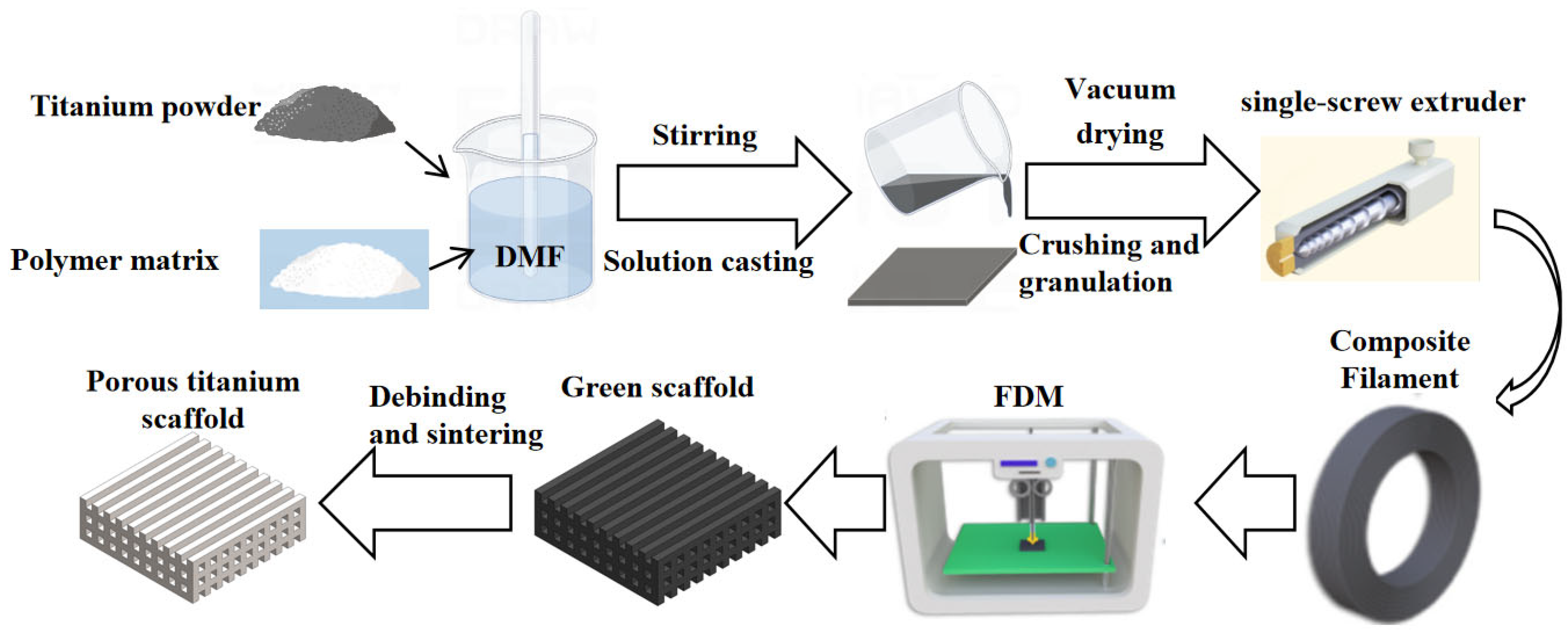
2.1. Preparation Process of Porous Titanium Scaffolds
2.2. Preparation and Characterization of Ti/ABS Filament
2.3. Study on Printing and Forming Process of Porous Titanium Scaffold Green Bodies
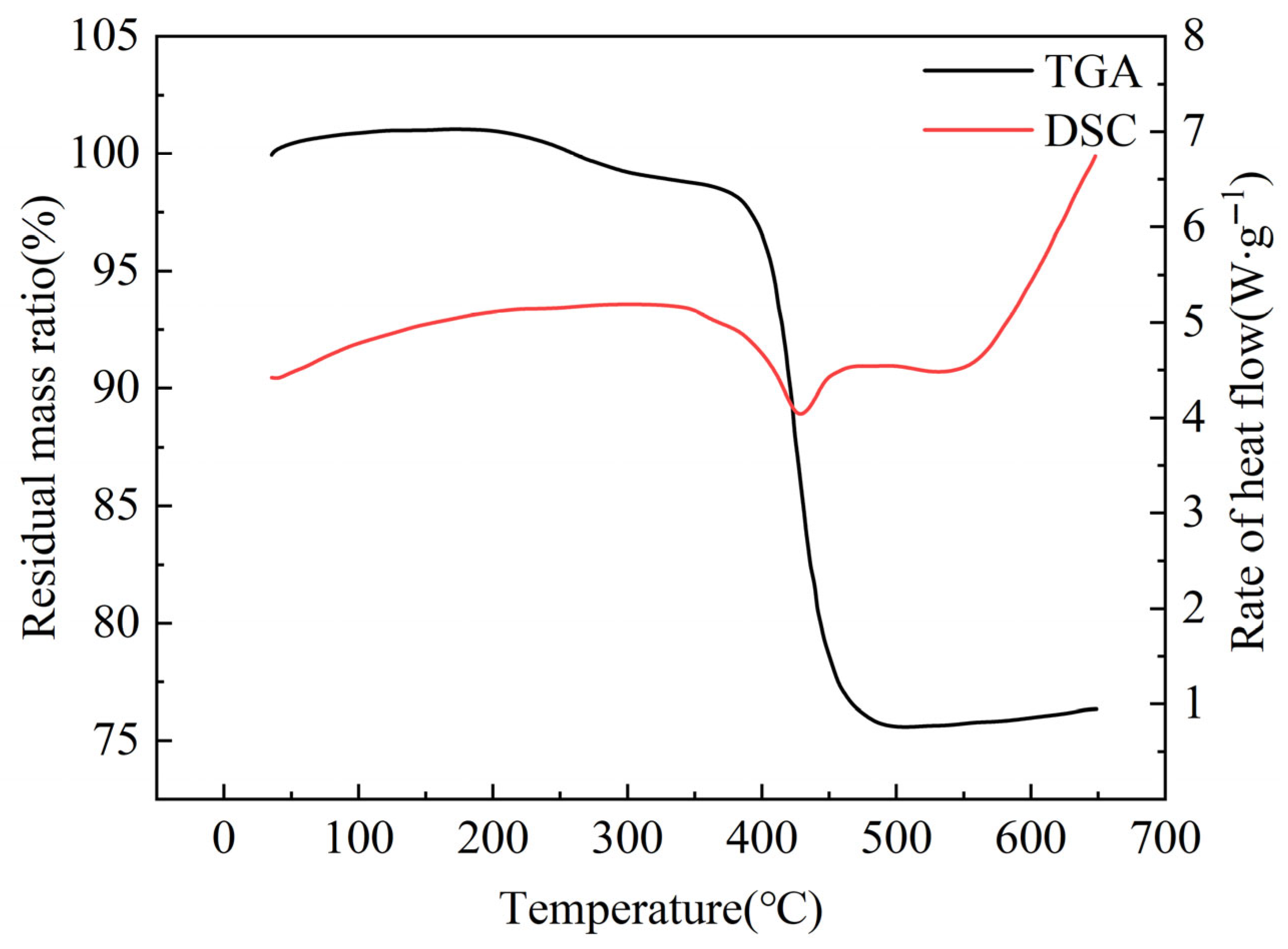
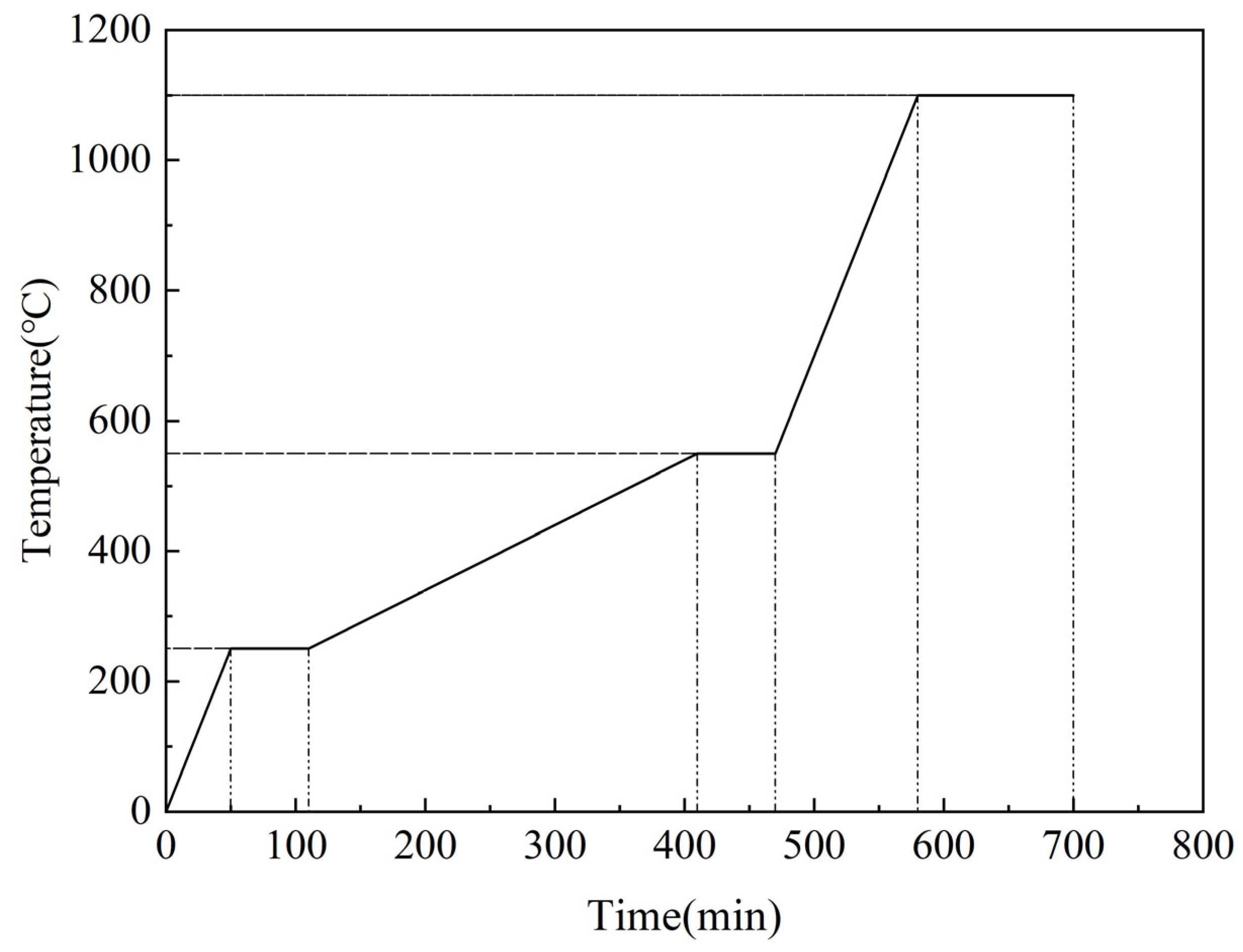
2.4. Study on the Debinding and Sintering Process of Porous Ti Scaffolds
2.5. Characterization of the Porous Ti Scaffolds
3. Results and Discussion
3.1. Study on the Quality of Ti/ABS Filaments
3.2. Study on the Printing Process of Ti/ABS Composite Filaments
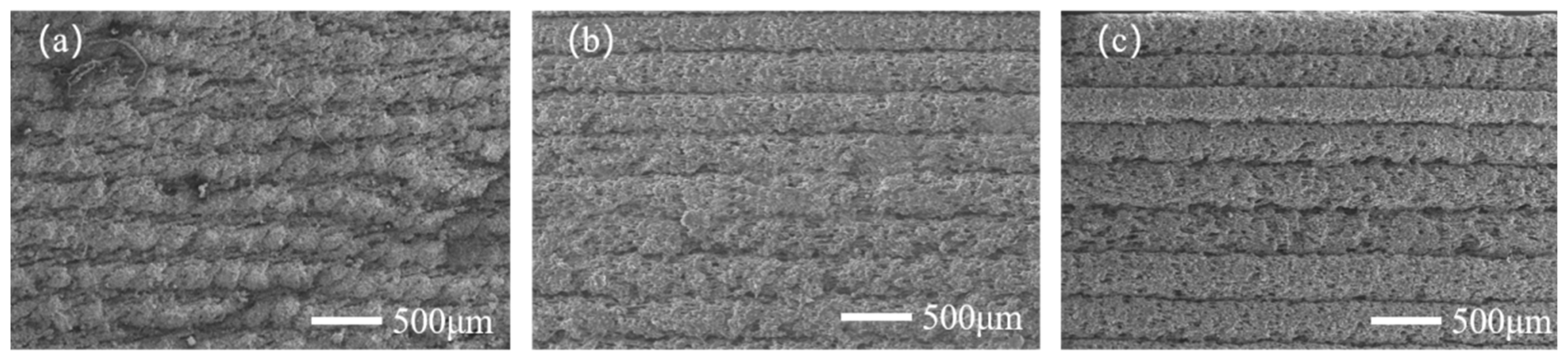
3.2.1. Effect of Process Parameters on the Surface Quality of the Green Bodies
3.2.2. Effect of Process Parameters on the Forming Accuracy of the Green Bodies
- (1)
- Range analysis: A range analysis was performed on the experimental results to determine the relative importance of each factor on the errors and thus obtain the optimal combination of factor levels. The final analysis is shown in Table 3. Here k denotes the sum of the errors corresponding to a given level of a factor divided by the number of observations at that level (i.e., the average error for that level); the range R is the difference between the maximum and minimum k values. In the X and Y directions, the order of influence (from largest to smallest) is B (nozzle temperature) > C (printing speed) > A (layer thickness). The nozzle temperature has the largest range, indicating it plays a decisive role in the dimensional accuracy on the XY plane; a nozzle temperature of 220 °C helps achieve smaller planar dimensional errors. For the Z direction, the order of influence is A (layer thickness) > C (printing speed) > B (nozzle temperature). The range for layer thickness is much larger than for the other factors, showing its effect is significantly greater than that of printing speed and nozzle temperature and making it the most critical parameter for controlling Z-direction accuracy. A layer thickness of 0.2 mm produced the smallest Z-direction dimensional deviation, indicating that a moderate layer thickness promotes uniform material deposition and stable interlayer bonding.
- (2)
- Analysis of variance (ANOVA): To further verify the statistical significance of each factor’s influence, ANOVA was performed on the experimental data at the significance level corresponding to an F critical value = 9. The results are shown in Table 4. In the X direction, the F value for nozzle temperature (B) exceeds the critical value, indicating a statistically significant effect, whereas the effects of layer thickness (A) and printing speed (C) are not significant. In the Y direction, the F values for all factors are below the critical value and do not reach statistical significance. In the Z direction, the F value for layer thickness (A) is well above the critical value, indicating a highly significant effect.
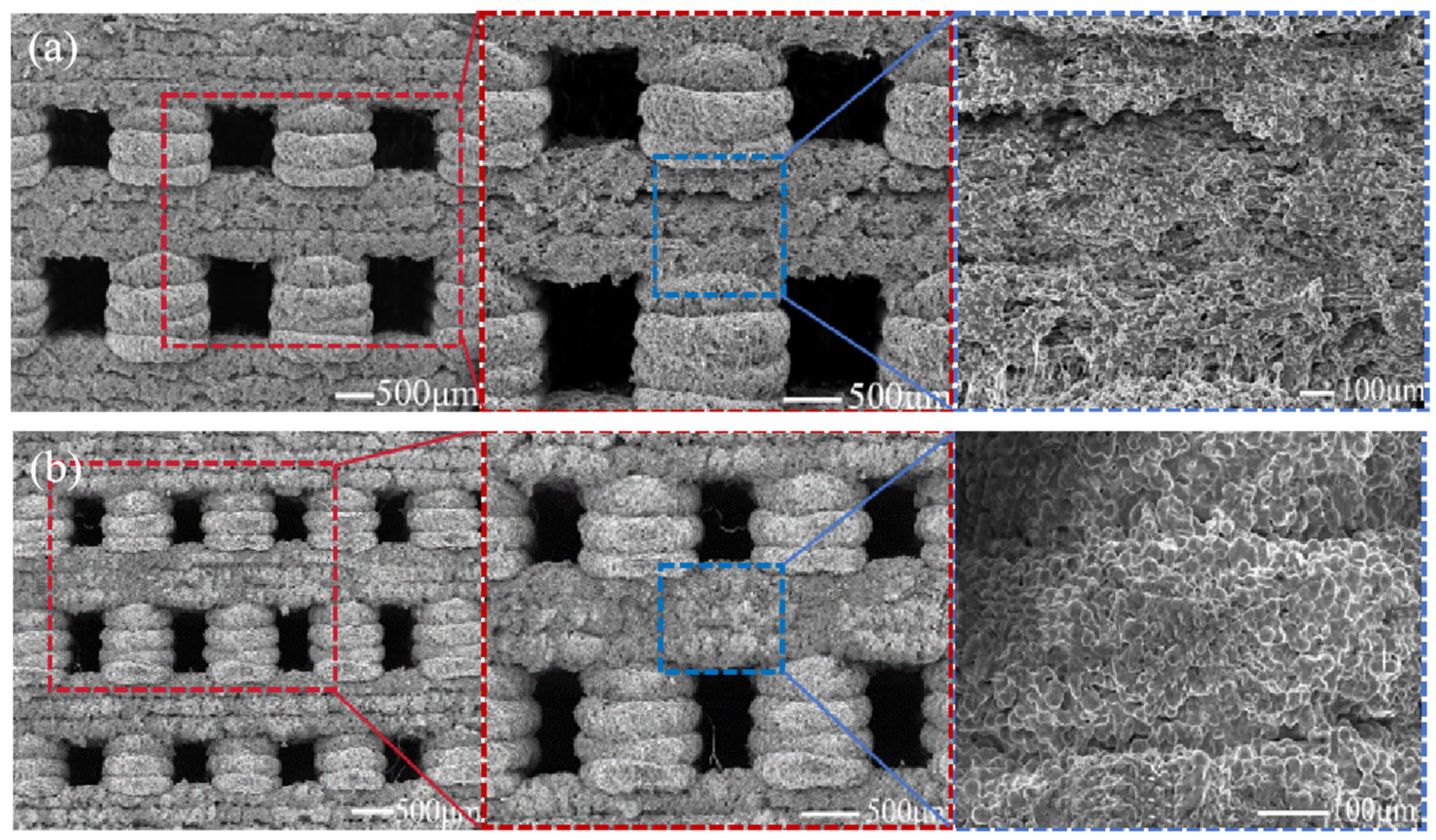
3.3. Macro- and Micro-Morphology and Elemental Analysis of Porous Titanium Scaffolds
3.4. Mechanical Properties of the Porous Titanium Scaffolds
4. Conclusions
- (1)
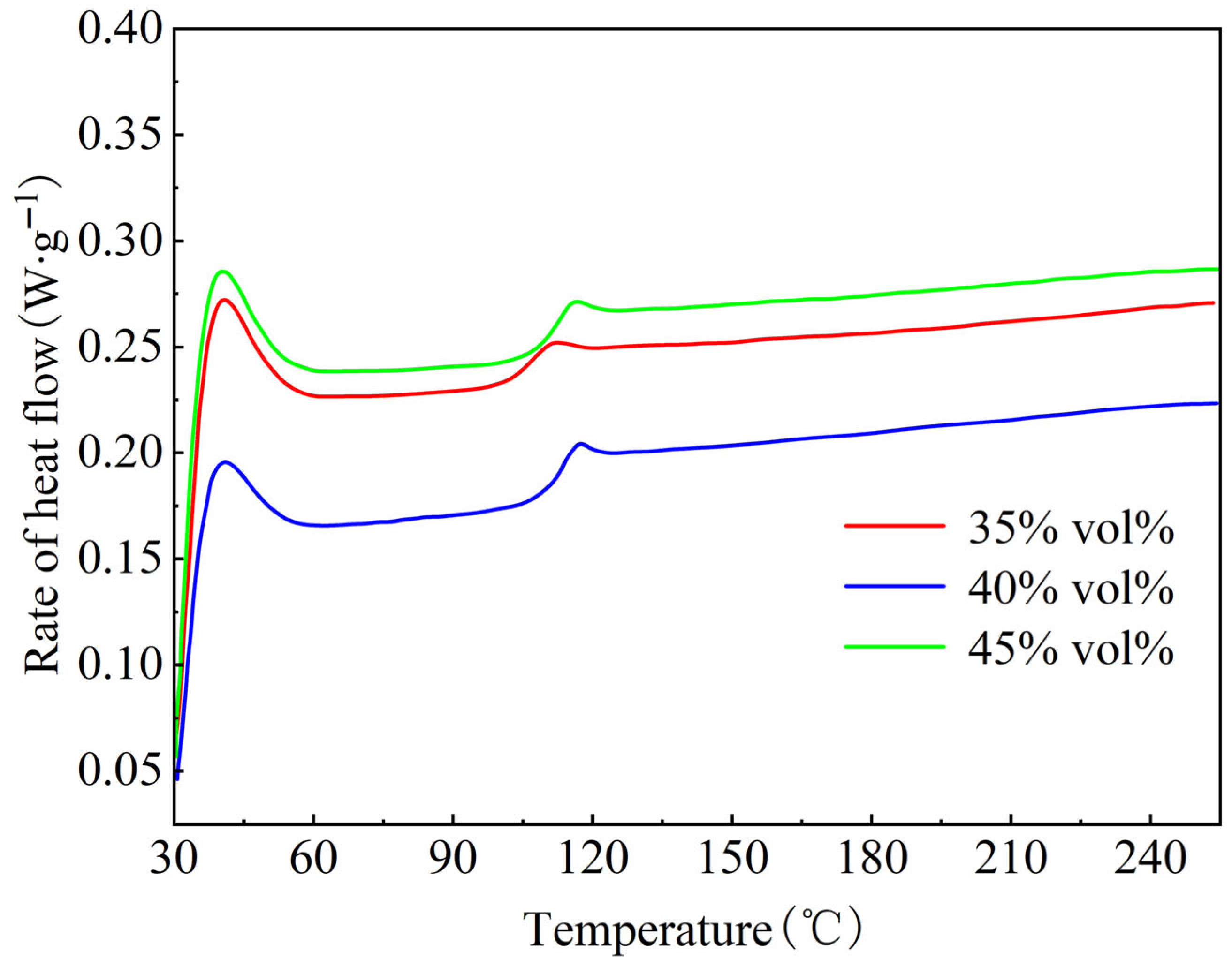
- A 45 vol% Ti/ABS composite filament prepared via solution blending has a uniform diameter and meets FDM processing requirements. SEM of the filament cross-section shows an even distribution of titanium powder in the polymer matrix without agglomeration. Although the composite filament’s melt flow rate (MFR = 1.2 g/10 min) is lower than that of pure ABS, the maleic anhydride grafting agent enhances intermolecular interactions in ABS and effectively compensates for the flowability loss due to the high titanium content. DSC curves further confirm that the addition of titanium powder does not significantly alter the material’s thermal properties, supporting process stability.
- (2)
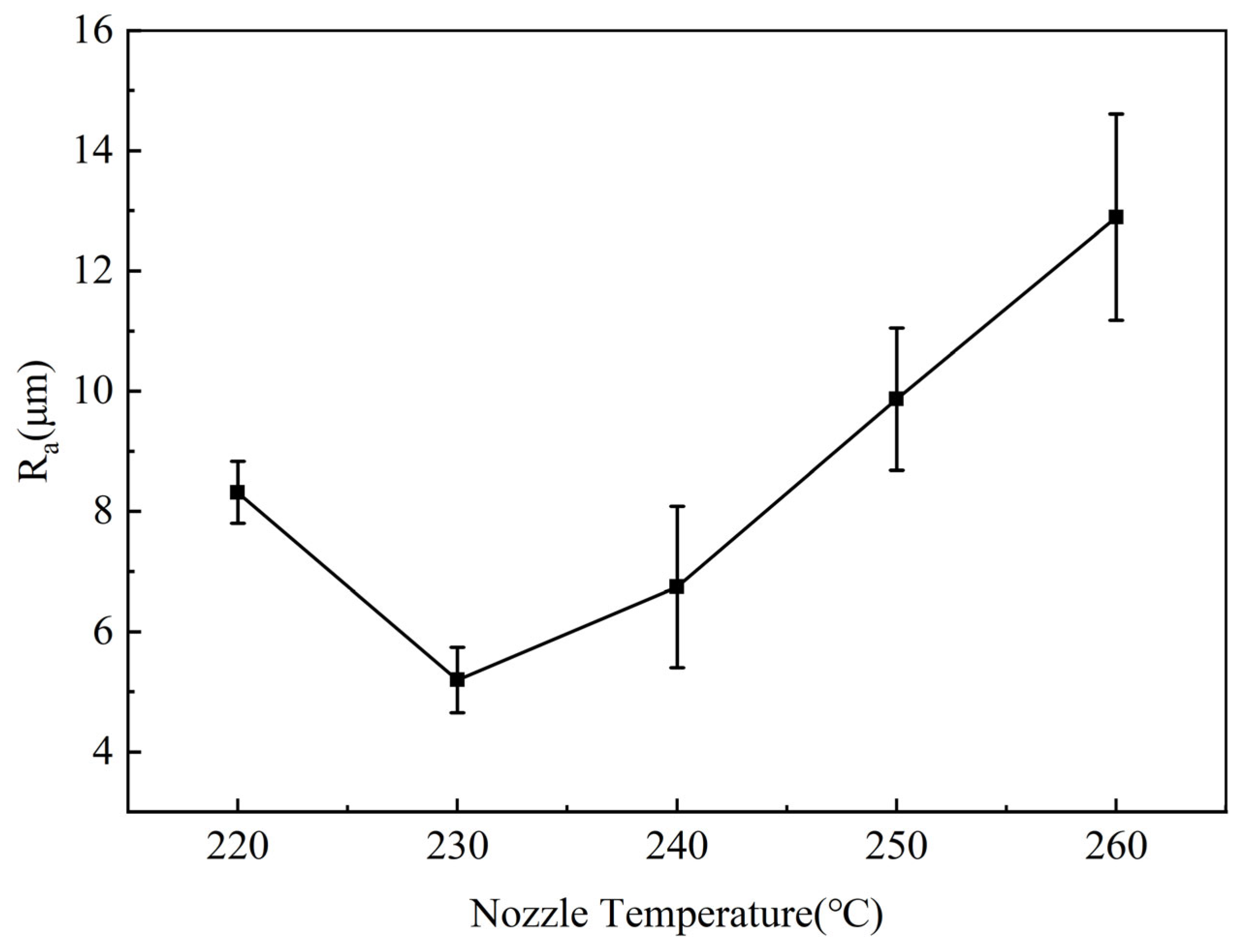
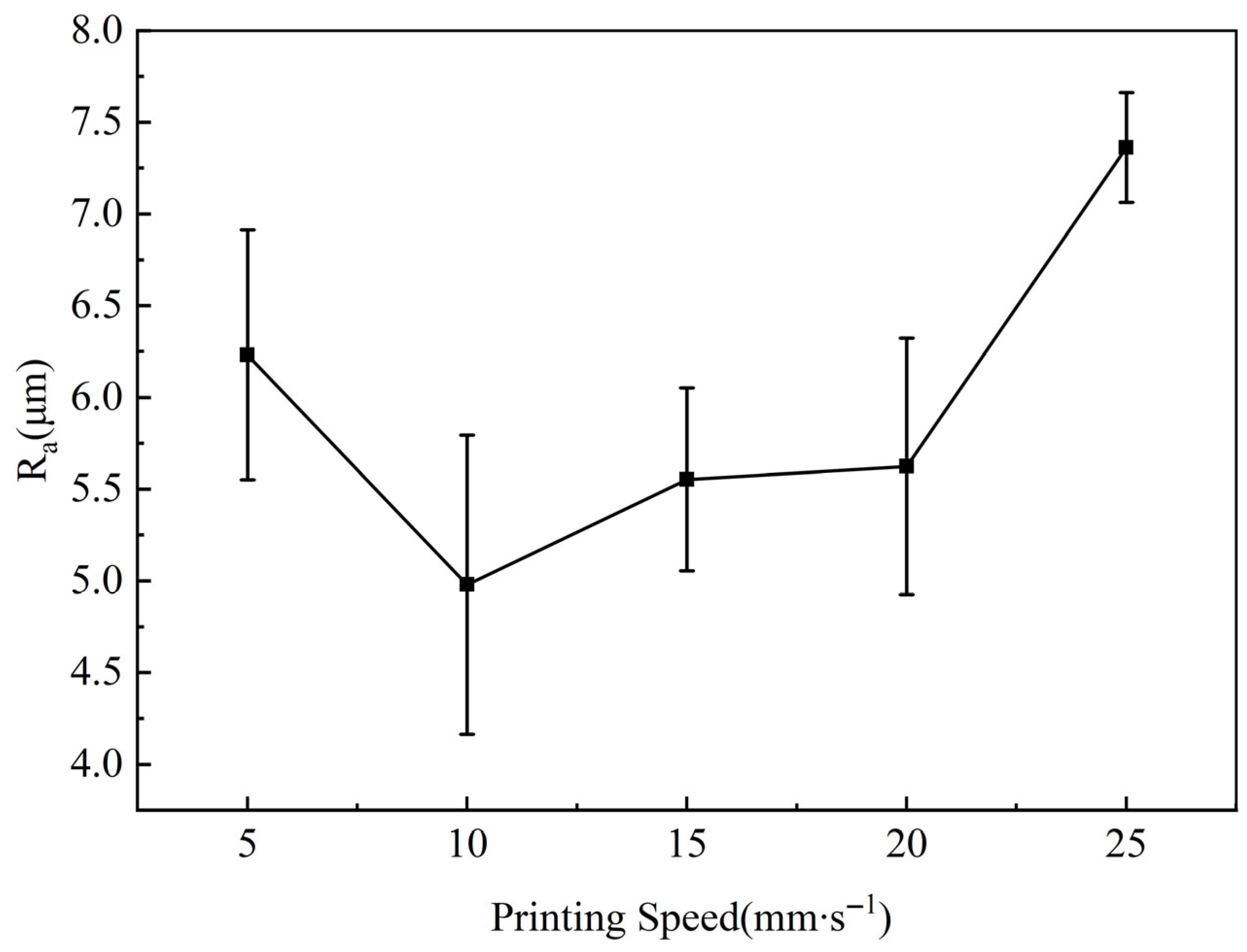
- Nozzle temperature, printing speed, and layer thickness jointly determine the surface quality and forming accuracy of the green bodies. Optimal printing was achieved at a nozzle temperature of 220 °C, a printing speed of 15 mm/s, and a layer thickness of 0.2 mm, where the material melted uniformly, extrusion was stable, interlayer bonding was dense, and surface roughness was minimized. These optimized parameters provide key process assurance for subsequent fabrication of structurally intact porous scaffold green bodies.
- (3)
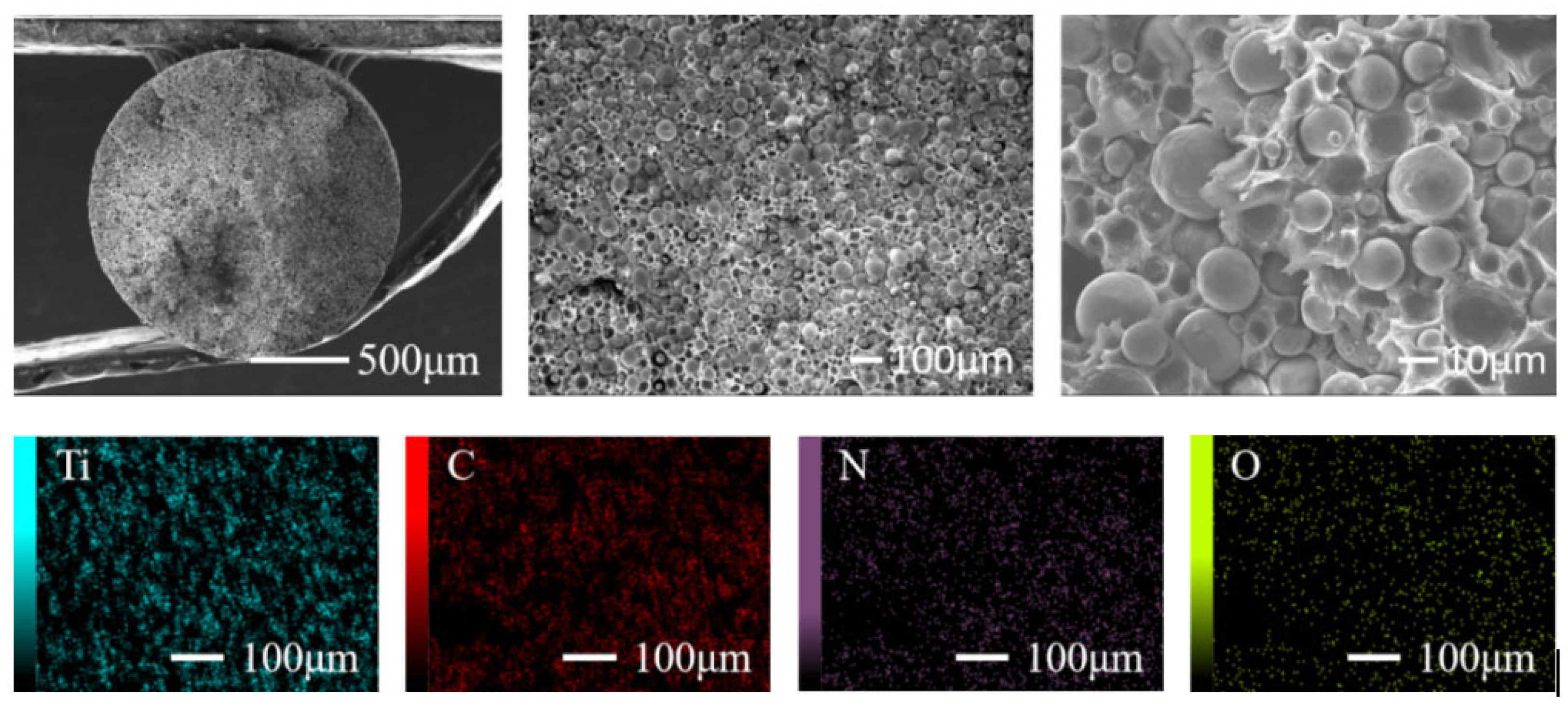
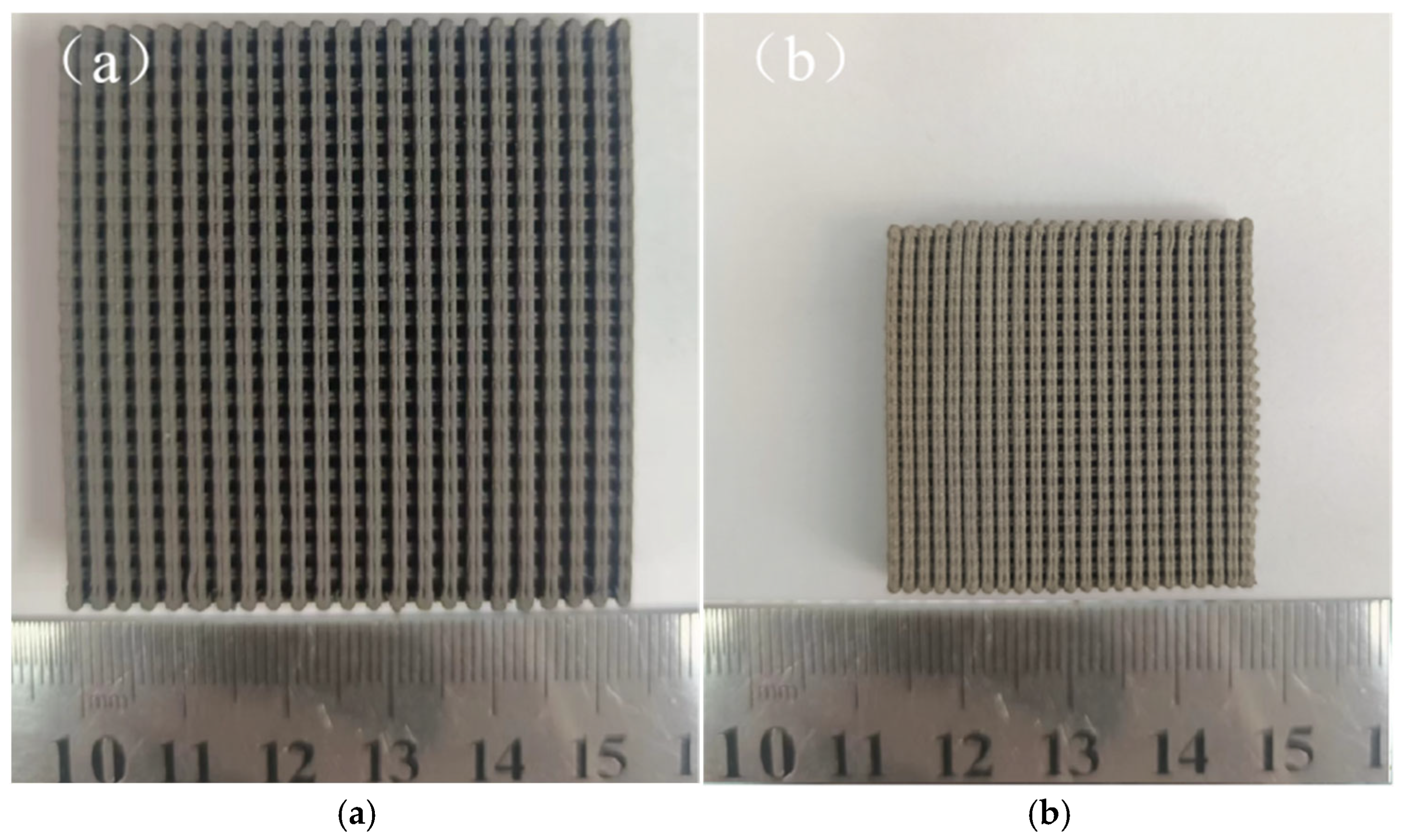
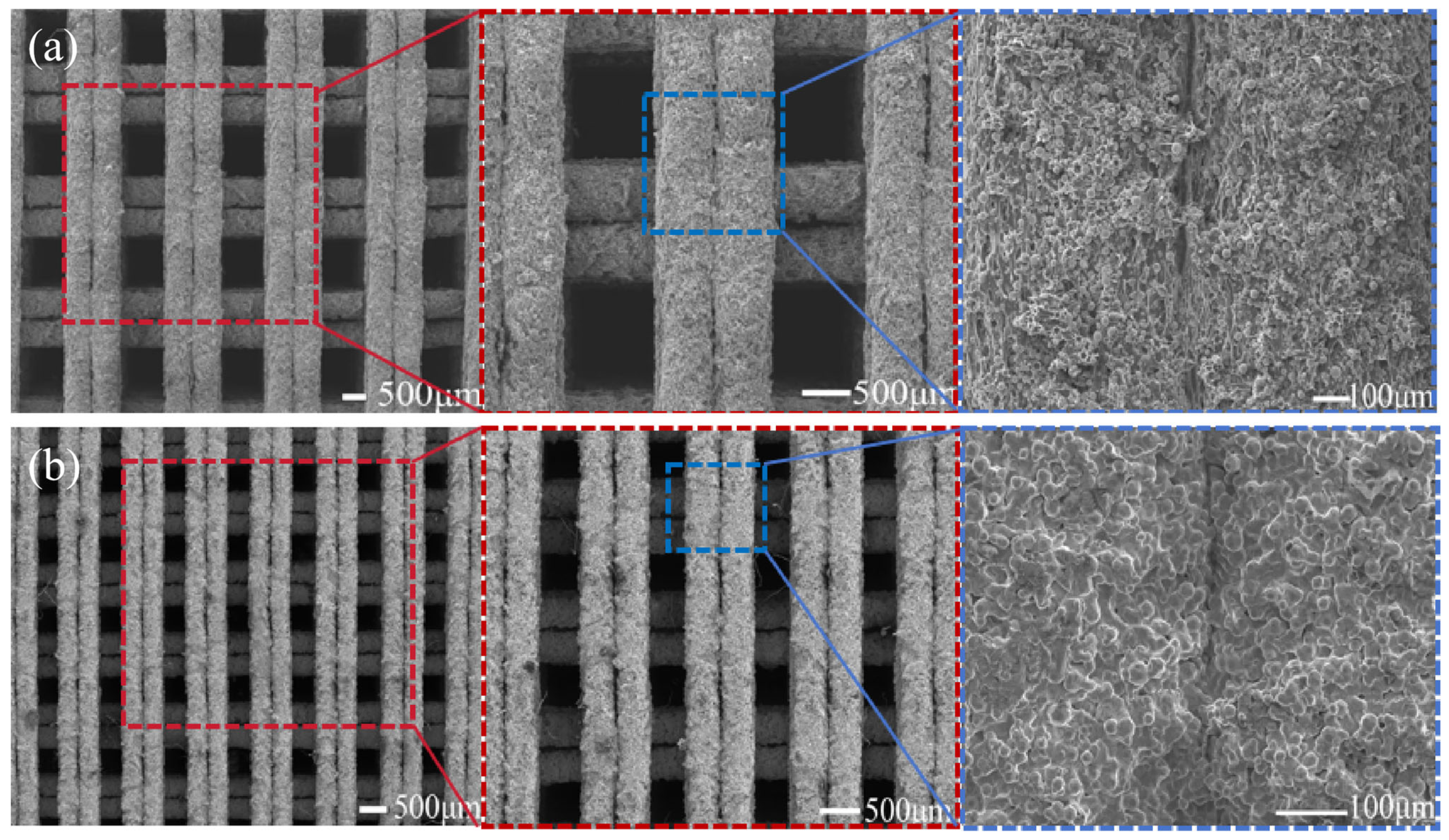
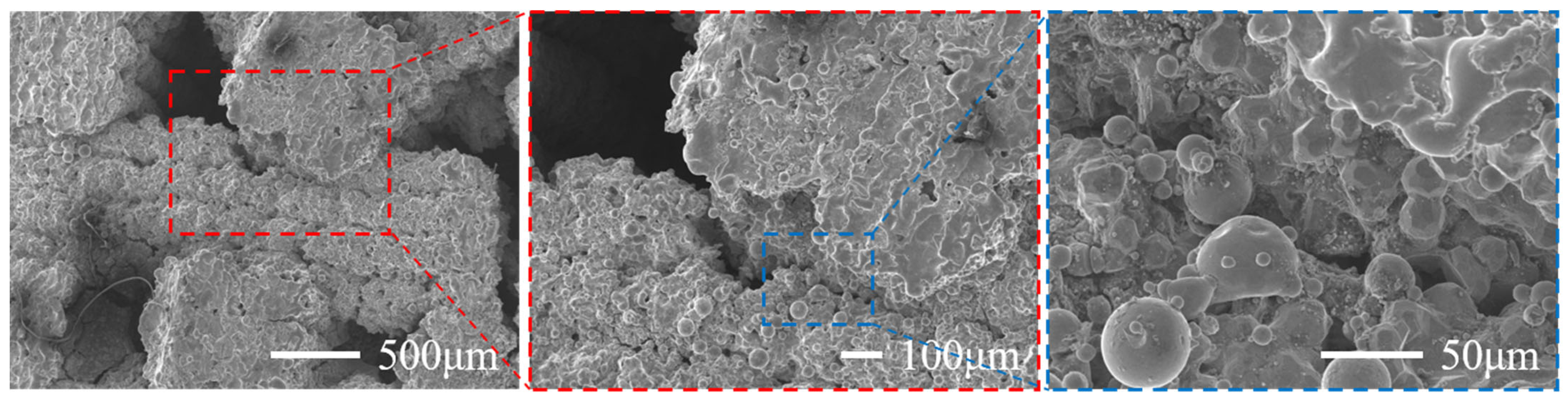
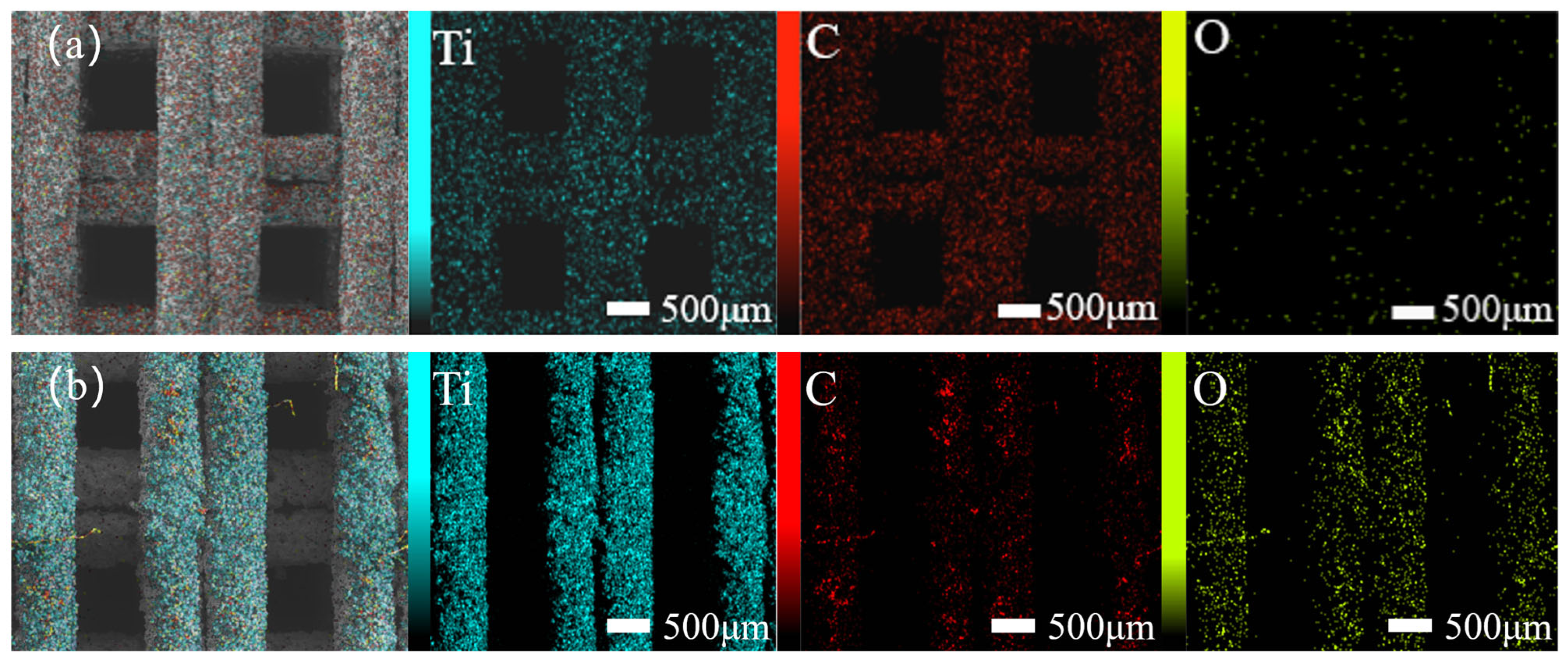
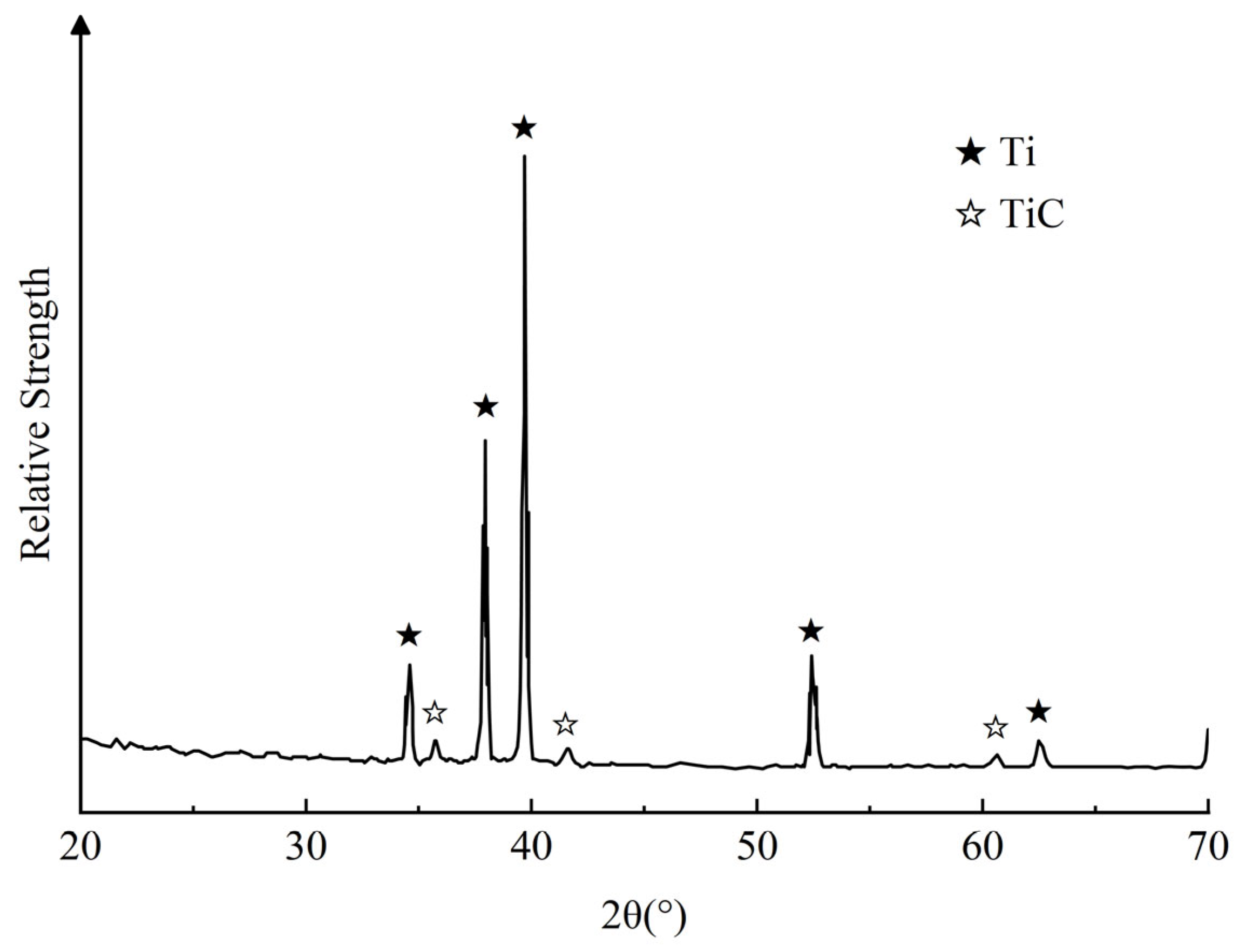
- The debinding–sintering post-treatment successfully converted Ti/ABS composite green bodies into porous scaffolds composed primarily of metallic titanium. A stepwise heating sintering strategy prevented rapid polymer decomposition and structural collapse, preserving the scaffolds’ macroscopic porosity and strut diameter continuity, while forming distinct sintering necks between titanium particles at the microscopic level. EDS analysis shows a titanium mass fraction of 90.11% on the sintered scaffold surface, and XRD phase analysis further confirms titanium as the main phase with a small amount of TiC formed from reactions between residual carbon and titanium. This process enables a reliable conversion from polymer composite green bodies to compositionally controlled, structurally intact pure metal porous scaffolds.
- (4)
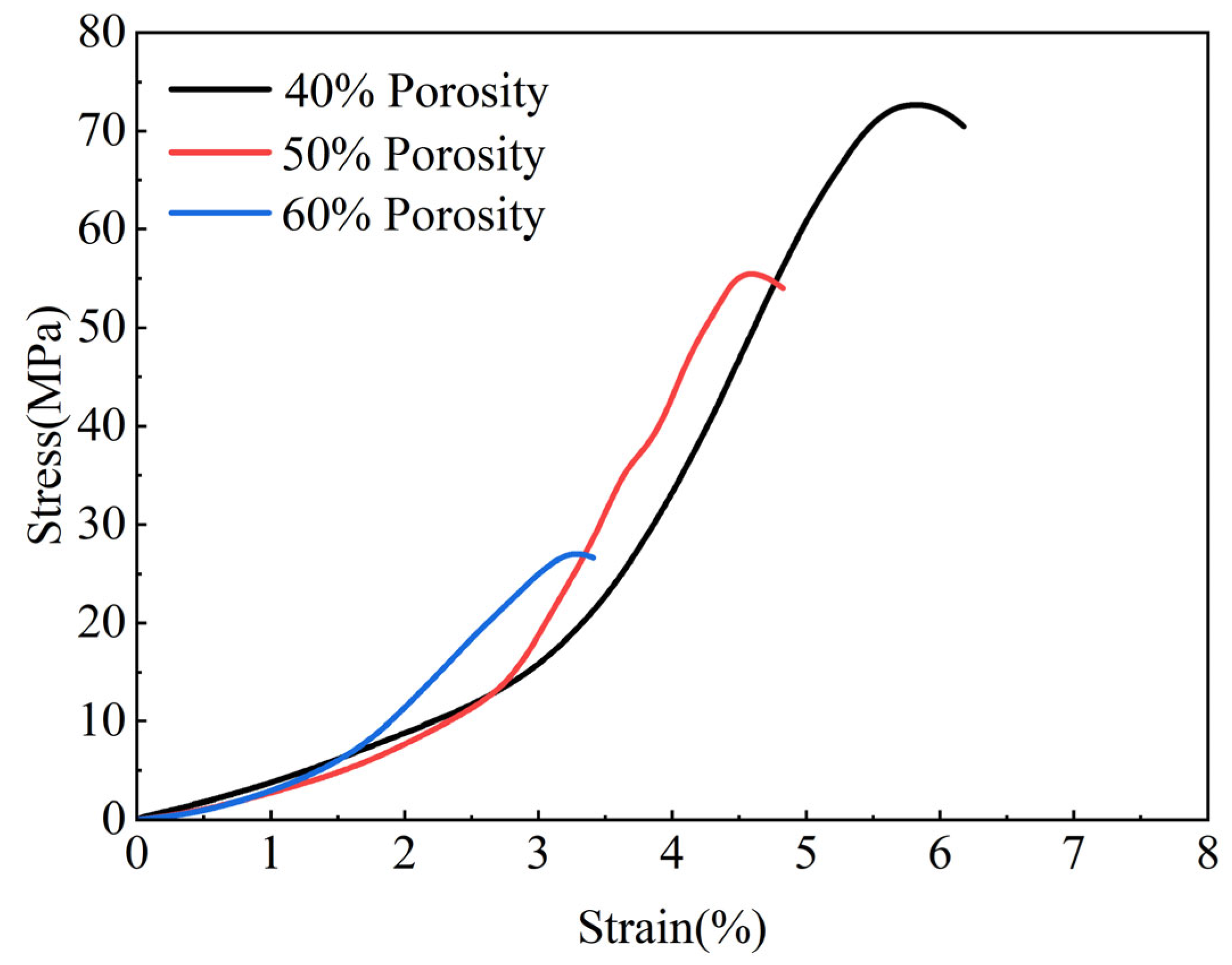
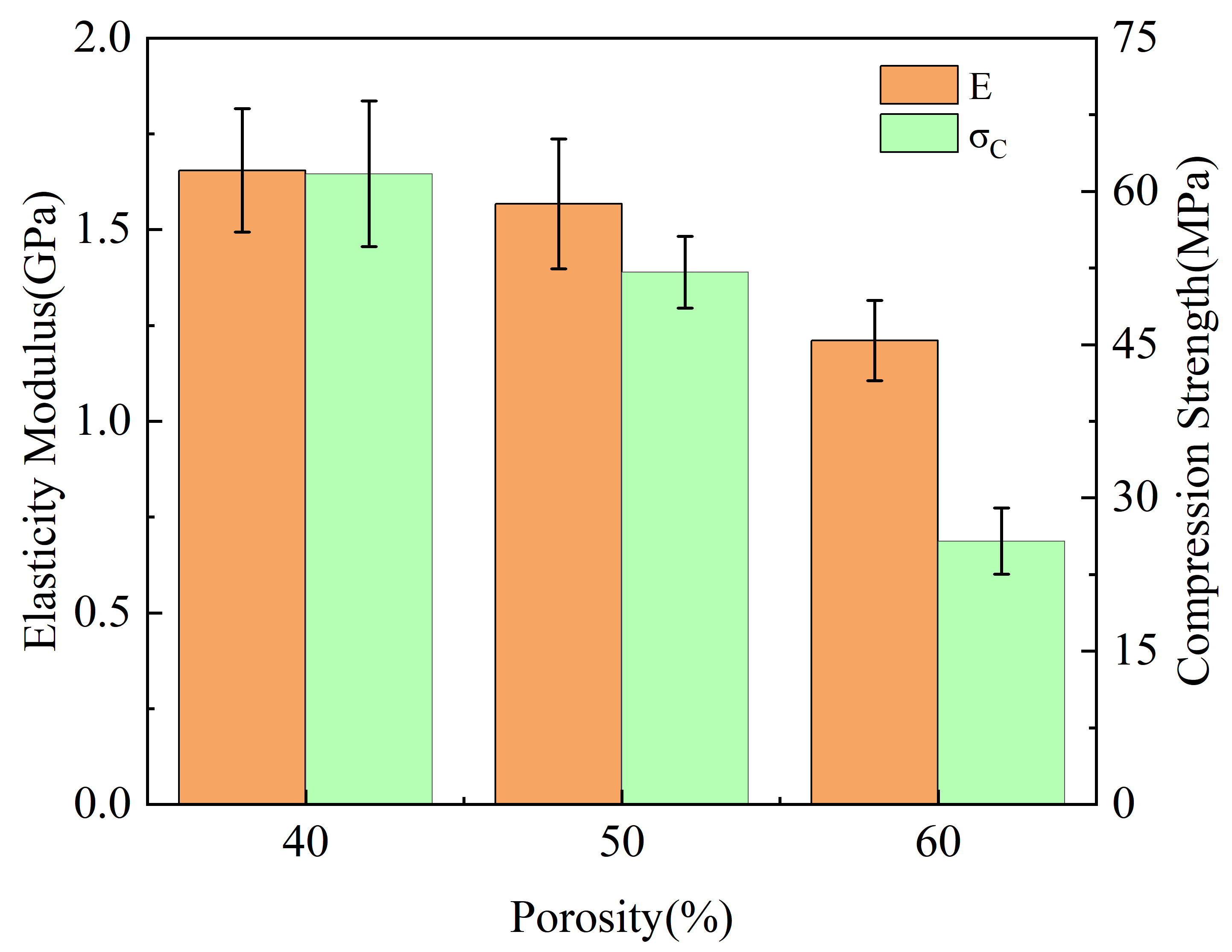
- Compression tests on scaffolds with designed porosities of 40%, 50%, and 60% (corresponding to actual measured porosities of 47.15%, 56.78%, and 65.94%) show that mechanical properties are closely related to porosity: both compressive strength and elastic modulus decrease as porosity increases. The average compressive strengths are 68.3 MPa, 52.1 MPa, and 25.7 MPa, and the average elastic moduli are 1.6 GPa, 1.5 GPa, and 1.2 GPa, respectively. The scaffolds’ elastic moduli (1.2–1.6 GPa) match that of human cancellous bone (0.1–2 GPa), while their compressive strengths (25.7–68.3 MPa) are significantly higher than typical cancellous bone (5–10 MPa) and lie between cancellous and high-strength cortical bone. This “high strength with moderate modulus” combination enables the scaffolds to provide sufficient initial mechanical support while the matched modulus helps alleviate stress shielding, creating a favorable mechanical environment for bone integration.
Author Contributions
Funding
Institutional Review Board Statement
Informed Consent Statement
Data Availability Statement
Conflicts of Interest
References
- Abd-Elaziem, W.; Darwish, M.A.; Hamada, A.; Daoush, W.M. Titanium-Based alloys and composites for orthopedic implants Applications: A comprehensive review. Mater. Des. 2024, 241, 112850. [Google Scholar] [CrossRef]
- Marin, E.; Lanzutti, A. Biomedical Applications of Titanium Alloys: A Comprehensive Review. Materials 2023, 17, 114. [Google Scholar] [CrossRef] [PubMed]
- Caiazzo, F.; Alfieri, V.; Bujazha, B.D. Additive manufacturing of biomorphic scaffolds for bone tissue engineering. Int. J. Adv. Manuf. Technol. 2021, 113, 2909–2923. [Google Scholar] [CrossRef]
- Zhao, G.; Zhang, Q.; Qu, X.; Wu, Y.; Xu, C.; Wang, Y.; Tian, H.; Liu, Y.; Li, Z.; Lu, B. Ti/β-TCP composite porous scaffolds fabricated by direct ink writing. Virtual Phys. Prototyp. 2023, 18, e2192703. [Google Scholar] [CrossRef]
- Assad, H.; Assad, A.; Kumar, A. Recent Developments in 3D Bio-Printing and Its Biomedical Applications. Pharmaceutics 2023, 15, 255. [Google Scholar] [CrossRef]
- Li, J.; Yuan, H.; Chandrakar, A.; Moroni, L.; Habibovic, P. 3D porous Ti6Al4V-beta-tricalcium phosphate scaffolds directly fabricated by additive manufacturing. Acta Biomater. 2021, 126, 496–510. [Google Scholar] [CrossRef]
- Taniguchi, N.; Fujibayashi, S.; Takemoto, M.; Sasaki, K.; Otsuki, B.; Nakamura, T.; Matsushita, T.; Kokubo, T.; Matsuda, S. Effect of pore size on bone ingrowth into porous titanium implants fabricated by additive manufacturing: An in vivo experiment. Mater. Sci. Eng. C Mater. Biol. Appl. 2016, 59, 690–701. [Google Scholar] [CrossRef]
- Li, Y.; Liu, Y.; Chen, H.; Zhang, A.; Zhang, Y.; Zhang, J.; Chen, B.; Han, Q.; Wang, J. From clinic to lab: Advances in porous titanium-based orthopedic implant research. J. Mater. Res. Technol. 2024, 30, 3780–3806. [Google Scholar] [CrossRef]
- Yan, K.; Ngadiman, N.H.A.; Saman, M.Z.M.; Mustafa, N.S. Advancements in selective laser melting (SLM) of titanium alloy scaffolds for bone tissue engineering. Biofabrication 2025, 17, 022016. [Google Scholar] [CrossRef]
- He, S.; Zhu, J.; Jing, Y.; Long, S.; Tang, L.; Cheng, L.; Shi, Z. Effect of 3D-Printed Porous Titanium Alloy Pore Structure on Bone Regeneration: A Review. Coatings 2024, 14, 253. [Google Scholar] [CrossRef]
- Kiselevskiy, M.V.; Anisimova, N.Y.; Kapustin, A.V.; Ryzhkin, A.A.; Kuznetsova, D.N.; Polyakova, V.V.; Enikeev, N.A. Development of Bioactive Scaffolds for Orthopedic Applications by Designing Additively Manufactured Titanium Porous Structures: A Critical Review. Biomimetics 2023, 8, 546. [Google Scholar] [CrossRef] [PubMed]
- Wang, Z.; Tan, Y.; Li, N. Powder metallurgy of titanium alloys: A brief review. J. Alloys Compd. 2023, 965, 171030. [Google Scholar] [CrossRef]
- Pape, F.; Noelke, C.; Kaierle, S.; Haferkamp, H.; Gesing, T. Influence of Foaming Agents on Laser Based Manufacturing of Closed-cell Ti Foam. Procedia Mater. Sci. 2014, 4, 92–97. [Google Scholar] [CrossRef]
- Li, H.; Yu, Q.F.; Zhang, B. Fabrication and Characterization of Bioactive Porous Titanium. Rare Met. Mater. Eng. 2006, 35, 154–157. [Google Scholar]
- Maharubin, S.; Hu, Y.; Sooriyaarachchi, D.; Cong, W.; Tan, G.Z. Laser engineered net shaping of antimicrobial and biocompatible titanium-silver alloys. Mater. Sci. Eng. C Mater. Biol. Appl. 2019, 105, 110059. [Google Scholar] [CrossRef]
- Liu, H.; Wang, H.; Ren, L.; Qiu, D.; Yang, K. Antibacterial copper-bearing titanium alloy prepared by laser powder bed fusion for superior mechanical performance. J. Mater. Sci. Technol. 2023, 132, 100–109. [Google Scholar] [CrossRef]
- Liu, J.; Wang, F.; Lu, D.; Liang, Y.; Lin, J. Fabrication of ultra-thin porous titanium alloys by electron beam selective melting: Porosity and mechanical properties. Addit. Manuf. Lett. 2025, 13, 100268. [Google Scholar] [CrossRef]
- Vidal, E.; Torres, D.; Guillem-Marti, J.; Scionti, G.; Manero, J.M.; Ginebra, M.-P.; Rodriguez, D.; Ruperez, E. Titanium scaffolds by direct ink writing: Fabrication and functionalization to guide osteoblast behavior. Metals 2020, 10, 1156. [Google Scholar] [CrossRef]
- Etesami, S.A.; Fotovvati, B.; Asadi, E. Heat treatment of Ti-6Al-4V alloy manufactured by laser-based powder-bed fusion: Process, microstructures, and mechanical properties correlations. J. Alloys Compd. 2022, 895, 162618. [Google Scholar] [CrossRef]
- Bankapalli, N.K.; Gupta, V.; Saxena, P.; Bajpai, A.; Lahoda, C.; Polte, J. Filament fabrication and subsequent additive manufacturing, debinding, and sintering for extrusion-based metal additive manufacturing and their applications: A review. Compos. Part B 2023, 264, 110915. [Google Scholar] [CrossRef]
- Mogan, J.; Harun, W.; Kadirgama, K.; Ramasamy, D.; Foudzi, F.; Sulong, A.; Tarlochan, F.; Ahmad, F. Fused deposition modelling of polymer composite: A progress. Polymers 2022, 15, 28. [Google Scholar] [CrossRef]
- Raza, A.; Altaf, K.; Ahmad, F.; Hussain, G.; Alkahtani, M.; Hongyu, w. Experimental study and characterisation of 316L stainless steel parts fabricated with metal fused filament fabrication. J. Mater. Res. Technol. 2024, 30, 6686–6698. [Google Scholar] [CrossRef]
- Vetter, J.; Huber, F.; Wachter, S.; Körner, C.; Schmidt, M. Development of a Material Extrusion Additive Manufacturing Process of 1.2083 steel comprising FFF Printing, Solvent and Thermal Debinding and Sintering. Procedia CIRP 2022, 113, 341–346. [Google Scholar] [CrossRef]
- Zhang, Y.H.; Liu, L.H.; Li, M.Q. Application status and prospect of PEEK oral biomaterials. Eng. Plast. Appl. 2024, 52, 179–185. [Google Scholar] [CrossRef]
- Gorana, F.; Modi, Y.K. Multi-objective Optimization for Porosity and Strength of Selective Laser Sintered Porous Scaffolds Useful in Bone Tissue Engineering. Iran. J. Sci. Technol. Trans. Mech. Eng. 2025, 49, 1345–1360. [Google Scholar] [CrossRef]
- Ahmed, S.W.; Hussain, G.; Altaf, K.; Ali, S.; Alkahtani, M.; Abidi, M.H.; Alzabidi, A. On the effects of process parameters and optimization of interlaminate bond strength in 3D printed ABS/CF-PLA composite. Polymers 2020, 12, 2155. [Google Scholar] [CrossRef]
- GB/T 31930-2015; Metallic Materials—Ductility Testing—Compression Test for Porous and Cellular Metals. Standards Press of China: Beijing, China, 2015.
- Lin, M.S.; Zhang, C.T.; Zhao, Y. Morphology and Mechanical Properties of ABS Grafted Maleic Anhydride Compatibilized ABS/PMMA Composites. J. Jilin Inst. Chem. Technol. 2019, 36, 69–73. [Google Scholar]
- Kholil, A.; Syaefuddin, E.A.; Premono, A.; Nugraha, F. The effect of orientation angle and layer thickness on surface roughness of ABS material on FDM. In Proceedings of the Materials Science Forum; Trans Tech Publications Ltd.: Wollerau, Switzerland, 2022; pp. 3–10. [Google Scholar]
- Ouazzani, K.; El Jai, M.; Akhrif, I.; Radouani, M.; El Fahime, B. An experimental study of FDM parameter effects on ABS surface quality: Roughness analysis. Int. J. Adv. Manuf. Technol. 2023, 127, 151–178. [Google Scholar] [CrossRef]
- Arreda, N.; Isksioui, H.; Boutahri, H.; L’kadiba, A.; Elmoussami, H. FDM Process Parameters Impact on Roughness and Dimensional Accuracy of PLA Parts. Eng. Proc. 2025, 112, 6. [Google Scholar]
- Bandyopadhyay, A.; Mitra, I.; Avila, J.D.; Upadhyayula, M.; Bose, S. Porous metal implants: Processing, properties, and challenges. Int. J. Extrem. Manuf. 2023, 5, 032014. [Google Scholar] [CrossRef]
- Zhao, G.; Wu, Y.; Li, B.; Tian, H.; Li, B.; Li, X.; Chen, X.; Zhou, T.; Wang, Y.; Gong, Y. Digital light processing three-dimensional printing with acrylic–titanium composite powders for multiscale porous scaffolds. Int. J. Extrem. Manuf. 2025, 7, 035003. [Google Scholar] [CrossRef]
- Andrzejewska, A. Biomechanical properties of 3D-printed bone models. Biosystems 2019, 176, 52–55. [Google Scholar] [CrossRef] [PubMed]








| Level | A: Layer Height (mm) | B: Nozzle Temperature (°C) | C: Printing Speed (mm/s) |
|---|---|---|---|
| 1 | 0.2 | 220 | 10 |
| 2 | 0.25 | 230 | 15 |
| 3 | 0.3 | 240 | 20 |
| Option | Level | Absolute Error (mm) | Relative Error (%) | ||||||
|---|---|---|---|---|---|---|---|---|---|
| A | B | C | X | Y | Z | X | Y | Z | |
| 1 | 1 | 1 | 1 | 0.06 | 0.14 | 0.12 | 0.4 | 0.7 | 2.4 |
| 2 | 1 | 2 | 2 | 0.17 | 0.13 | 0.14 | 1.13 | 0.65 | 2.8 |
| 3 | 1 | 3 | 3 | 0.18 | 0.17 | 0.17 | 1.2 | 0.85 | 3.4 |
| 4 | 2 | 1 | 2 | 0.11 | 0.09 | 0.22 | 0.73 | 0.45 | 4.4 |
| 5 | 2 | 2 | 3 | 0.23 | 0.27 | 0.1 | 1.53 | 1.35 | 2 |
| 6 | 2 | 3 | 1 | 0.19 | 0.15 | 0.14 | 1.27 | 0.75 | 2.8 |
| 7 | 3 | 1 | 3 | 0.15 | 0.1 | 0.31 | 1 | 0.5 | 6.2 |
| 8 | 3 | 2 | 1 | 0.18 | 0.23 | 0.35 | 1.2 | 1.15 | 7 |
| 9 | 3 | 3 | 2 | 0.14 | 0.21 | 0.33 | 0.93 | 1.05 | 6.6 |
| Parameter | A | B | C | |
|---|---|---|---|---|
| X direction | k1 | 0.137 | 0.106 | 0.143 |
| k2 | 0.177 | 0.193 | 0.140 | |
| k3 | 0.156 | 0.170 | 0.186 | |
| Range R | 0.040 | 0.087 | 0.046 | |
| Sorting | 3 | 1 | 2 | |
| Y direction | k1 | 0.156 | 0.110 | 0.173 |
| k2 | 0.170 | 0.210 | 0.143 | |
| k3 | 0.180 | 0.186 | 0.190 | |
| Range R | 0.100 | 0.100 | 0.046 | |
| Sorting | 3 | 2 | 1 | |
| Z direction | k1 | 0.144 | 0.216 | 0.203 |
| k2 | 0.153 | 0.196 | 0.230 | |
| k3 | 0.330 | 0.213 | 0.194 | |
| Range R | 0.187 | 0.020 | 0.036 | |
| Sorting | 1 | 3 | 2 |
| A | B | C | Error | ||
|---|---|---|---|---|---|
| X direction | Sum of squares (SS) | 0.0024 | 0.0121 | 0.0041 | 0.0011 |
| Degrees of Freedom (DF) | 2 | 2 | 2 | 2 | |
| Mean Square (MS) | 0.0012 | 0.0061 | 0.0021 | 0.0005 | |
| F | 2.24 | 11.26 | 3.83 | ||
| Significance | Not Significant | Significant | Not Significant | ||
| Y direction | Sum of squares (SS) | 0.0008 | 0.0166 | 0.0036 | 0.0096 |
| Degrees of Freedom (DF) | 2 | 2 | 2 | 2 | |
| Mean Square (MS) | 0.0004 | 0.00830 | 0.00180 | 0.0048 | |
| F | 0.09 | 1.83 | 0.40 | ||
| Significance | Not Significant | Not Significant | Not Significant | ||
| Z direction | Sum of squares (SS) | 0.0662 | 0.0007 | 0.0022 | 0.0067 |
| Degrees of Freedom (DF) | 2 | 2 | 2 | 2 | |
| Mean Square (MS) | 0.0331 | 0.0004 | 0.0011 | 0.0033 | |
| F | 9.88 | 0.10 | 0.33 | ||
| Significance | Significant | Not Significant | Not Significant |
Disclaimer/Publisher’s Note: The statements, opinions and data contained in all publications are solely those of the individual author(s) and contributor(s) and not of MDPI and/or the editor(s). MDPI and/or the editor(s) disclaim responsibility for any injury to people or property resulting from any ideas, methods, instructions or products referred to in the content. |
© 2026 by the authors. Licensee MDPI, Basel, Switzerland. This article is an open access article distributed under the terms and conditions of the Creative Commons Attribution (CC BY) license.
Share and Cite
Li, S.; Guo, Z.; Gao, Y.; Guo, J. Fused Deposition Modeling and Mechanical Properties of Porous Titanium Scaffolds. Metals 2026, 16, 518. https://doi.org/10.3390/met16050518
Li S, Guo Z, Gao Y, Guo J. Fused Deposition Modeling and Mechanical Properties of Porous Titanium Scaffolds. Metals. 2026; 16(5):518. https://doi.org/10.3390/met16050518
Chicago/Turabian StyleLi, Suli, Zhijie Guo, Yang Gao, and Jing Guo. 2026. "Fused Deposition Modeling and Mechanical Properties of Porous Titanium Scaffolds" Metals 16, no. 5: 518. https://doi.org/10.3390/met16050518
APA StyleLi, S., Guo, Z., Gao, Y., & Guo, J. (2026). Fused Deposition Modeling and Mechanical Properties of Porous Titanium Scaffolds. Metals, 16(5), 518. https://doi.org/10.3390/met16050518