A Physics-Guided Two-Stage Learning Framework for Constitutive Modeling of TC4 Titanium Alloy: Validation Through Temperature and Strain-Rate Extrapolation


Abstract
1. Introduction
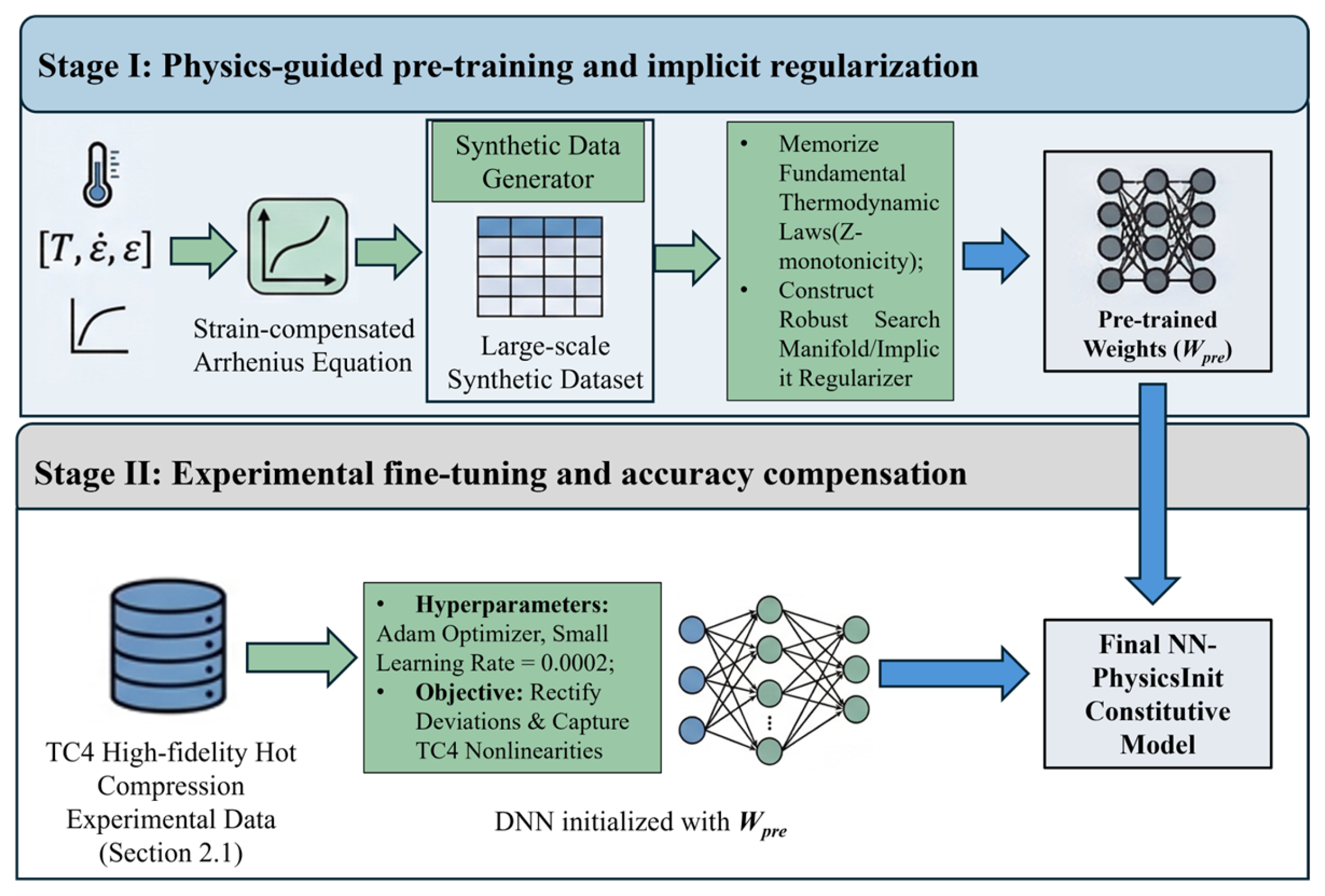
- A novel macroscopic physics-guided learning framework (NN-PhysicsInit) is proposed. Unlike conventional mixed-data models that suffer from gradient clash, this decoupled two-stage strategy utilizes an analytical Arrhenius prior for topological pre-training (acting as an implicit regularizer), followed by empirical fine-tuning to accurately capture material-specific nonlinearities.
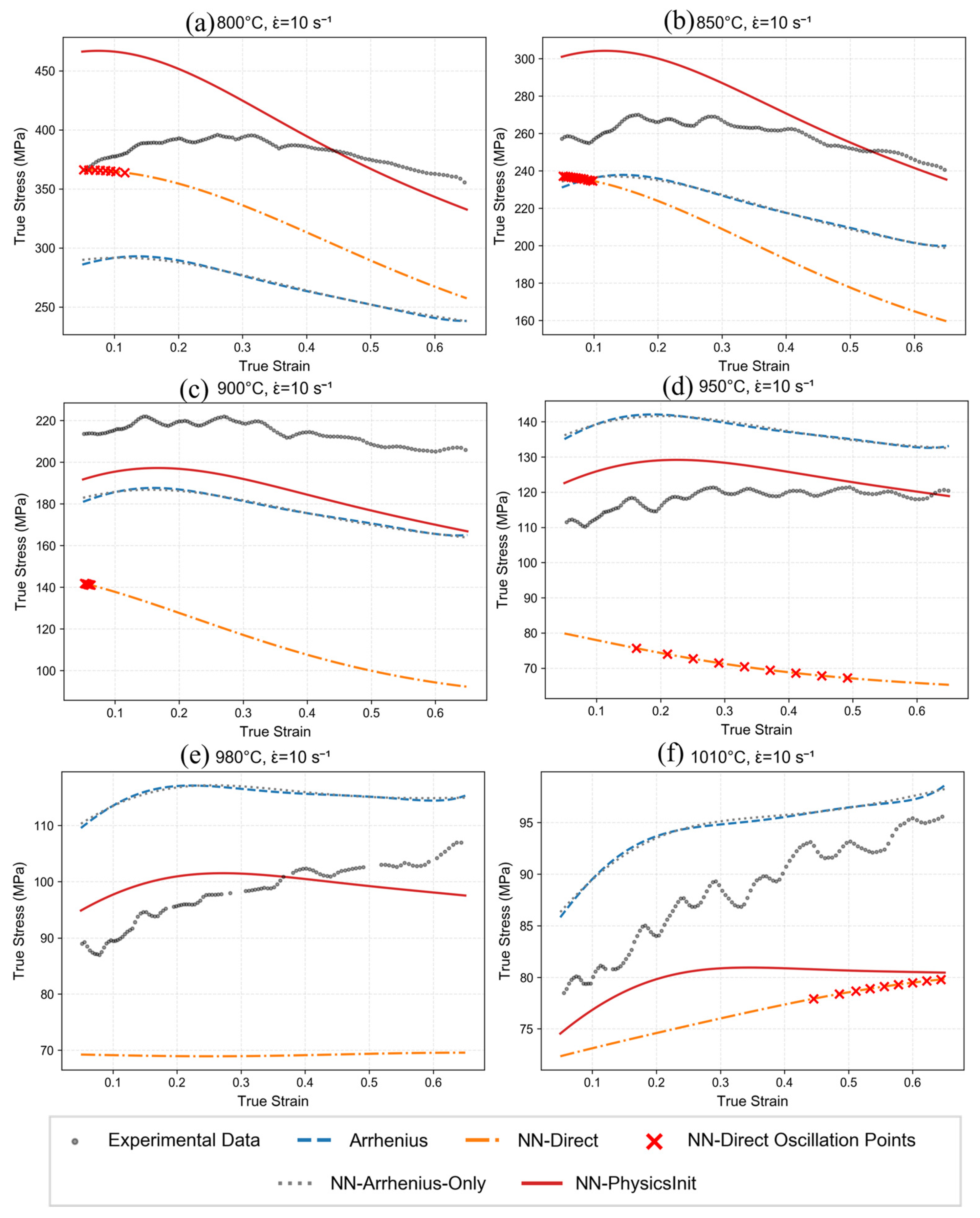
- A rigorous dual-perspective out-of-distribution (OOD) extrapolation scheme is designed. The generalization capability of the framework is systematically challenged across both thermodynamic (extrapolating across the macroscopic β-transus boundary at 1010 °C) and kinetic dimensions (extrapolating to the highly imbalanced 10 s−1 domain).
- The “extrapolation catastrophe” inherent in purely data-driven models is successfully mitigated. The proposed framework effectively filters out inherent high-frequency experimental noise and measurement artifacts. It guarantees physically bounded and trend-consistent predictions under unseen extreme conditions, providing a trustworthy constitutive engine for advanced aerospace digital twins.
2. Materials and Methods
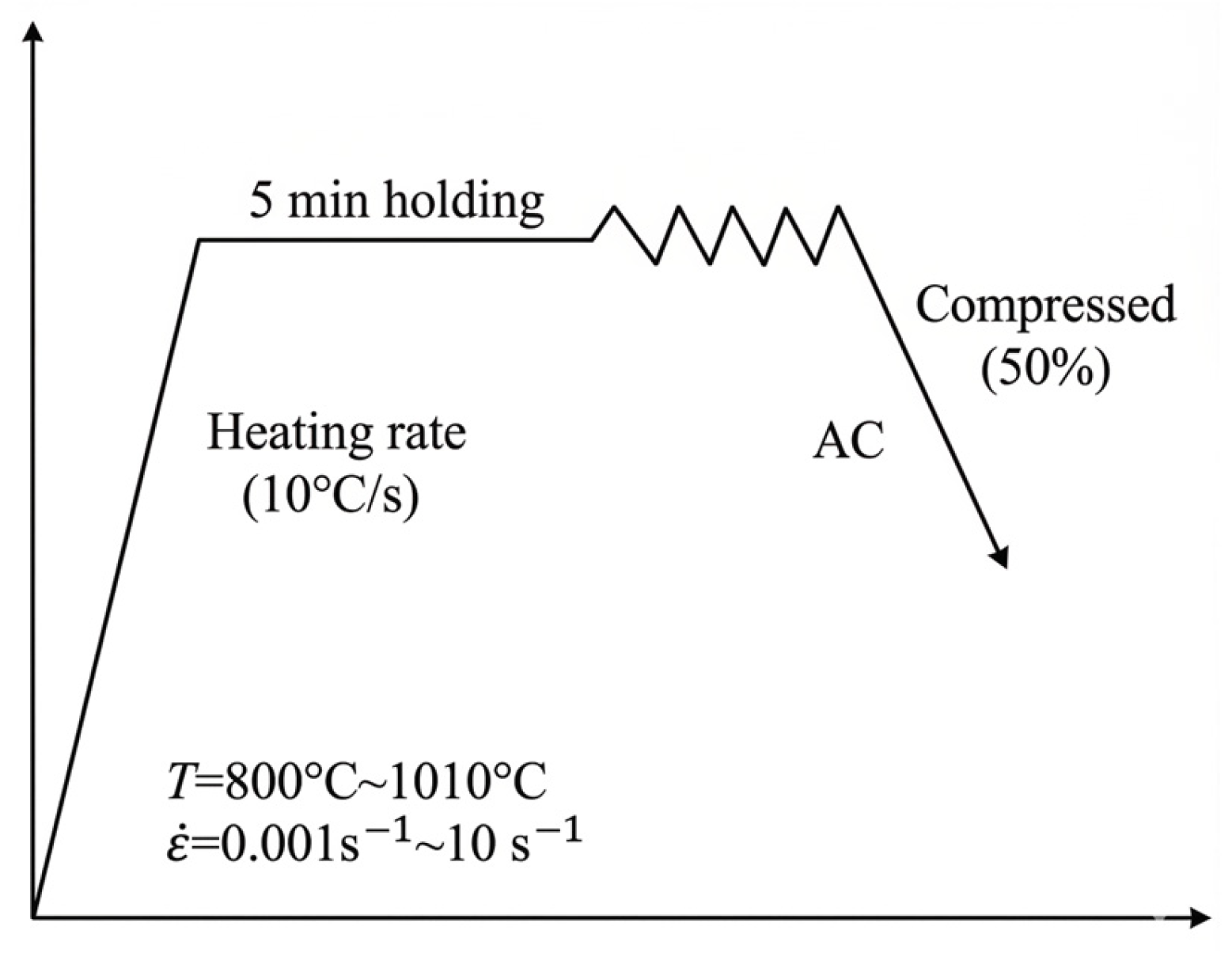
2.1. Experimental Materials and Procedures
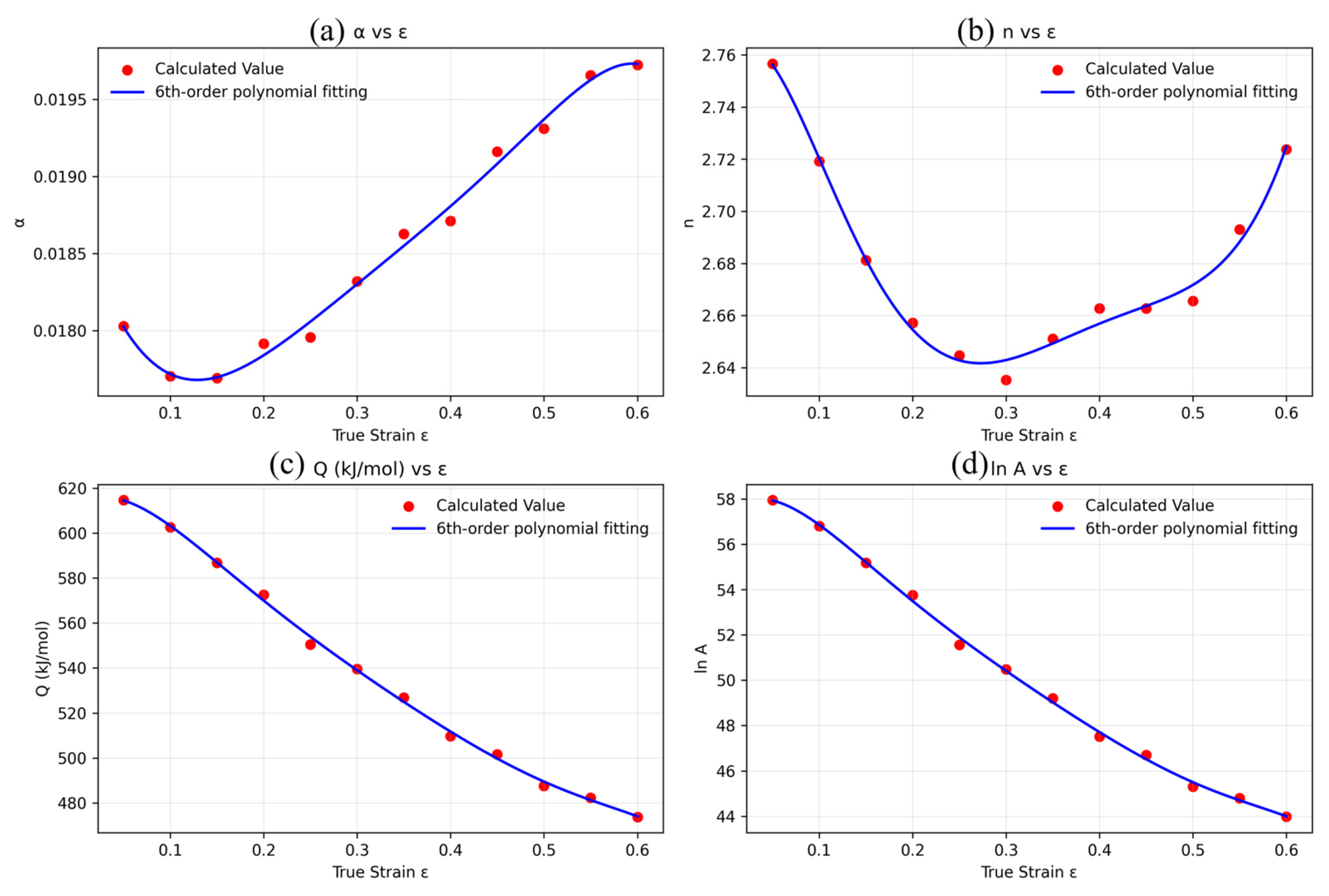
2.2. Establishment of the Analytical Prior Model
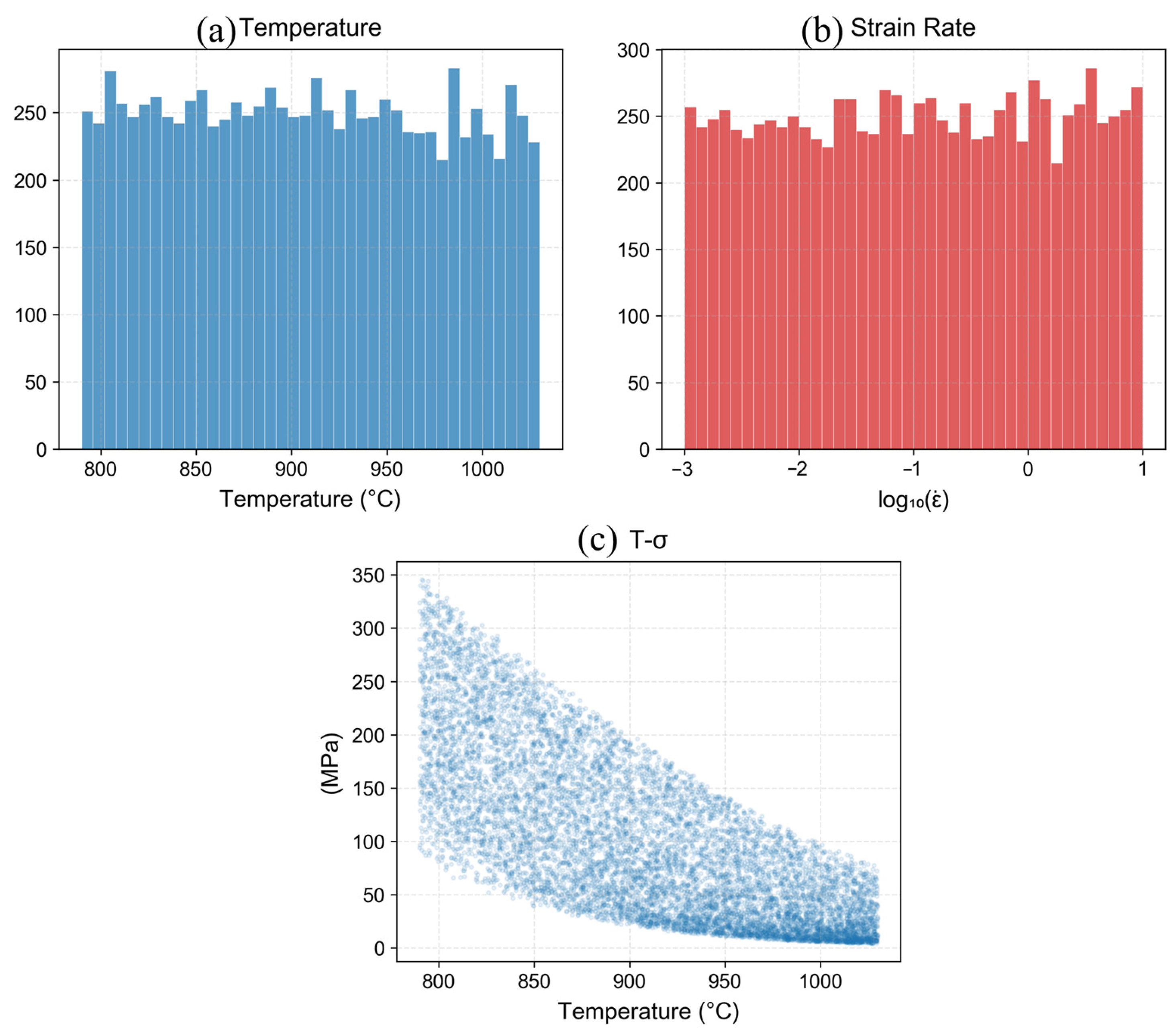
2.3. Physics-Guided Two-Stage Neural Network Framework (NN-PhysicsInit)
2.4. Extrapolation Validation Design and Implementation Details
2.4.1. Dual-Perspective Extrapolation Ablation Design
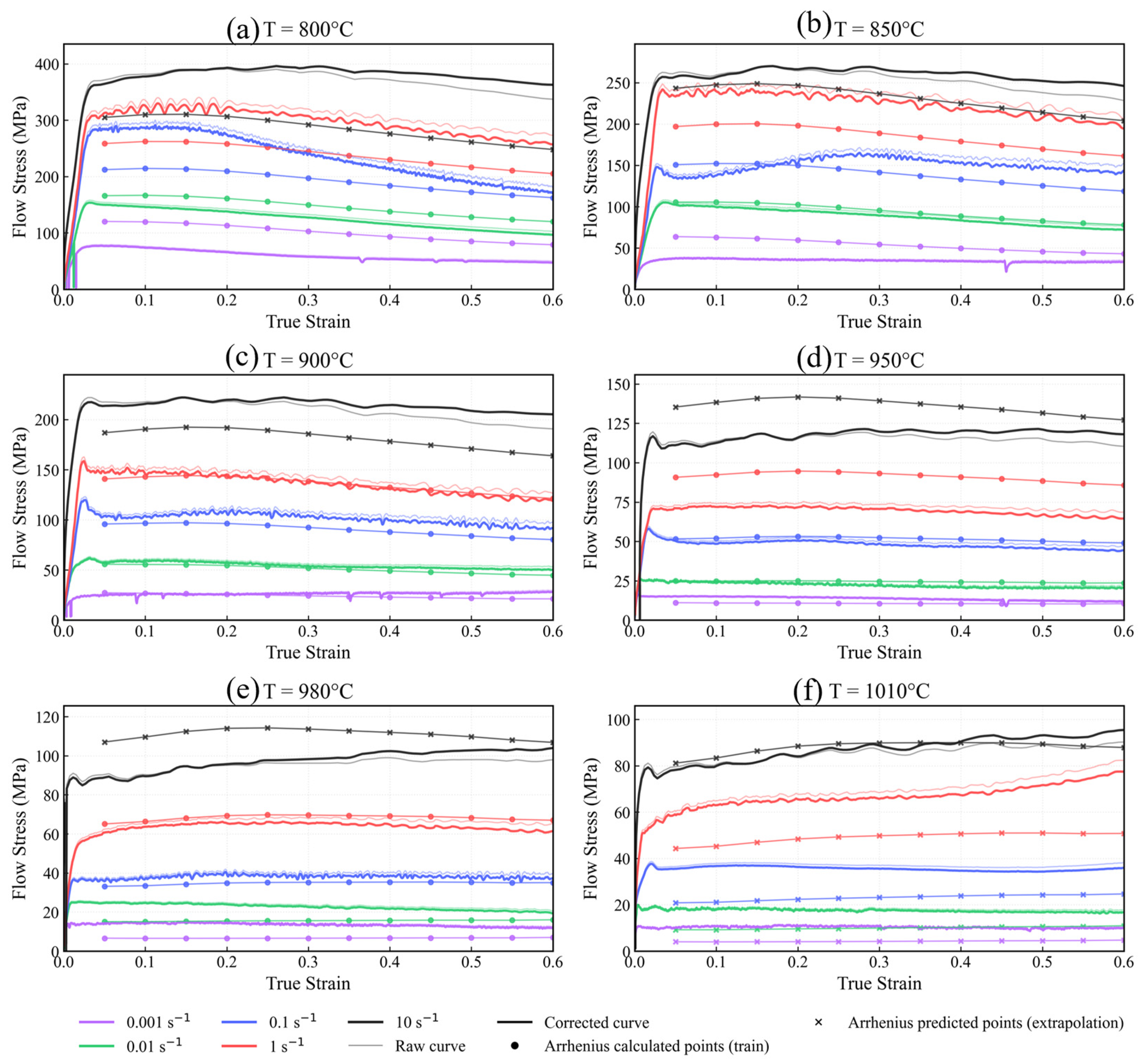
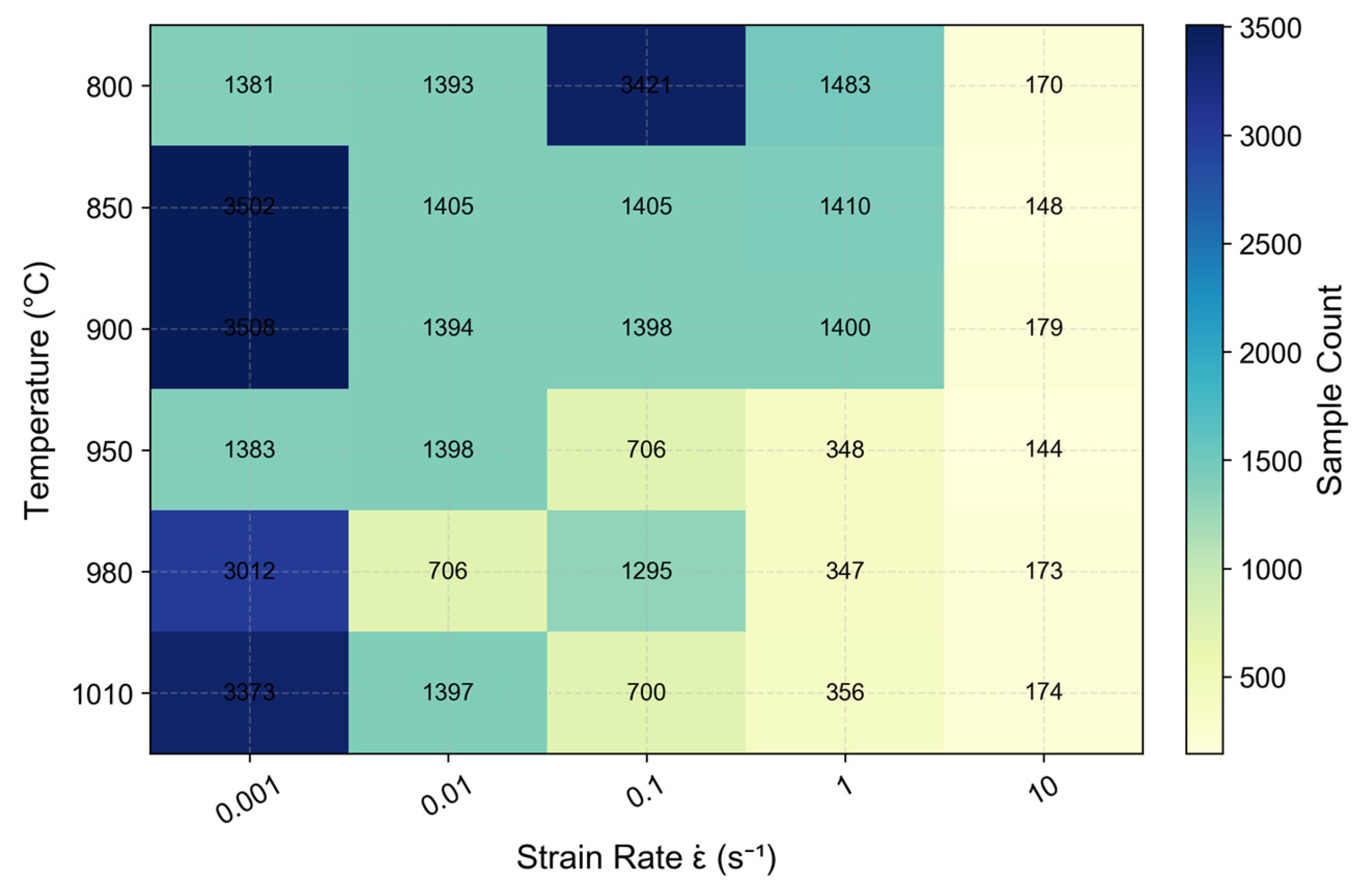
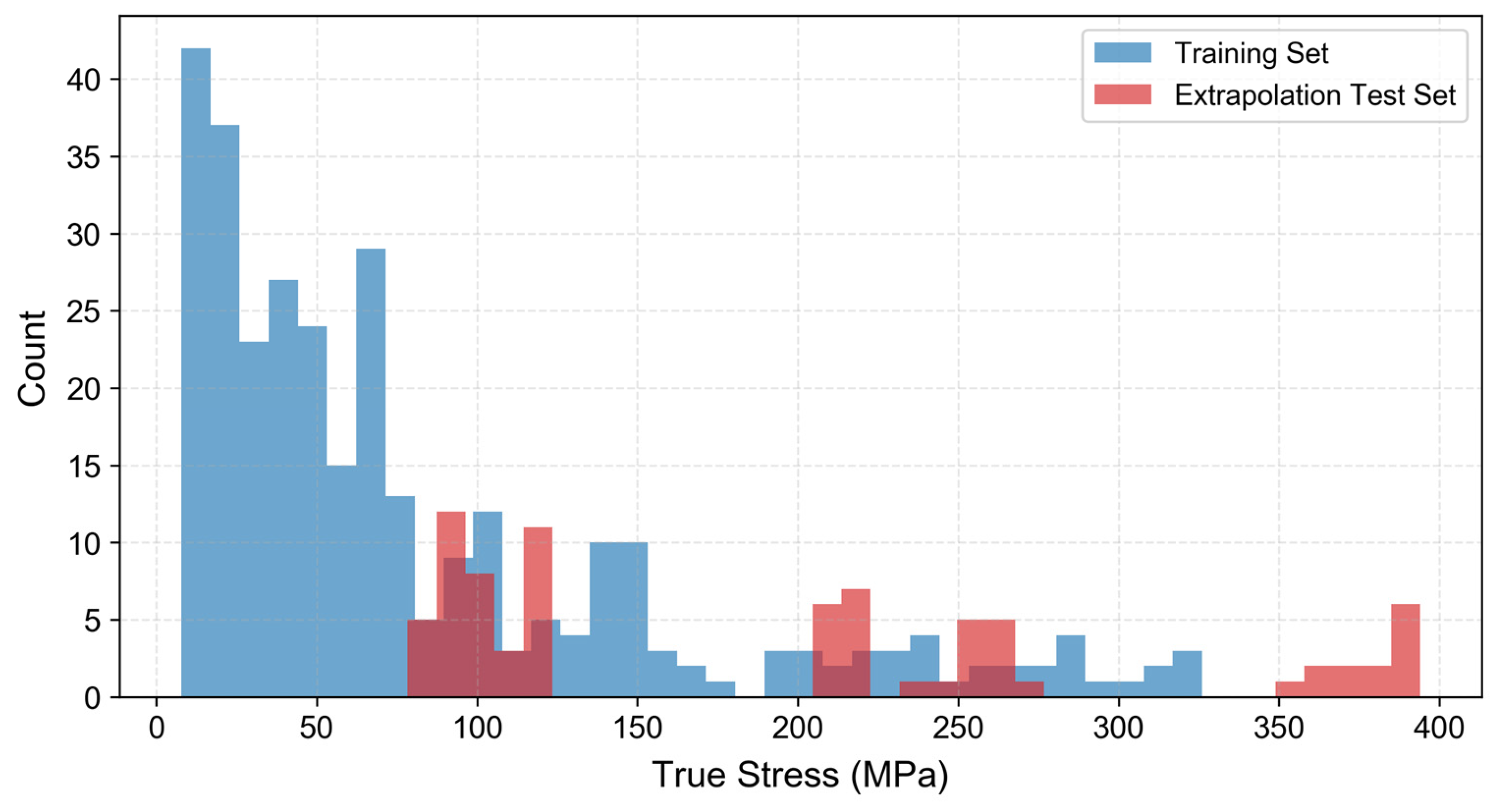
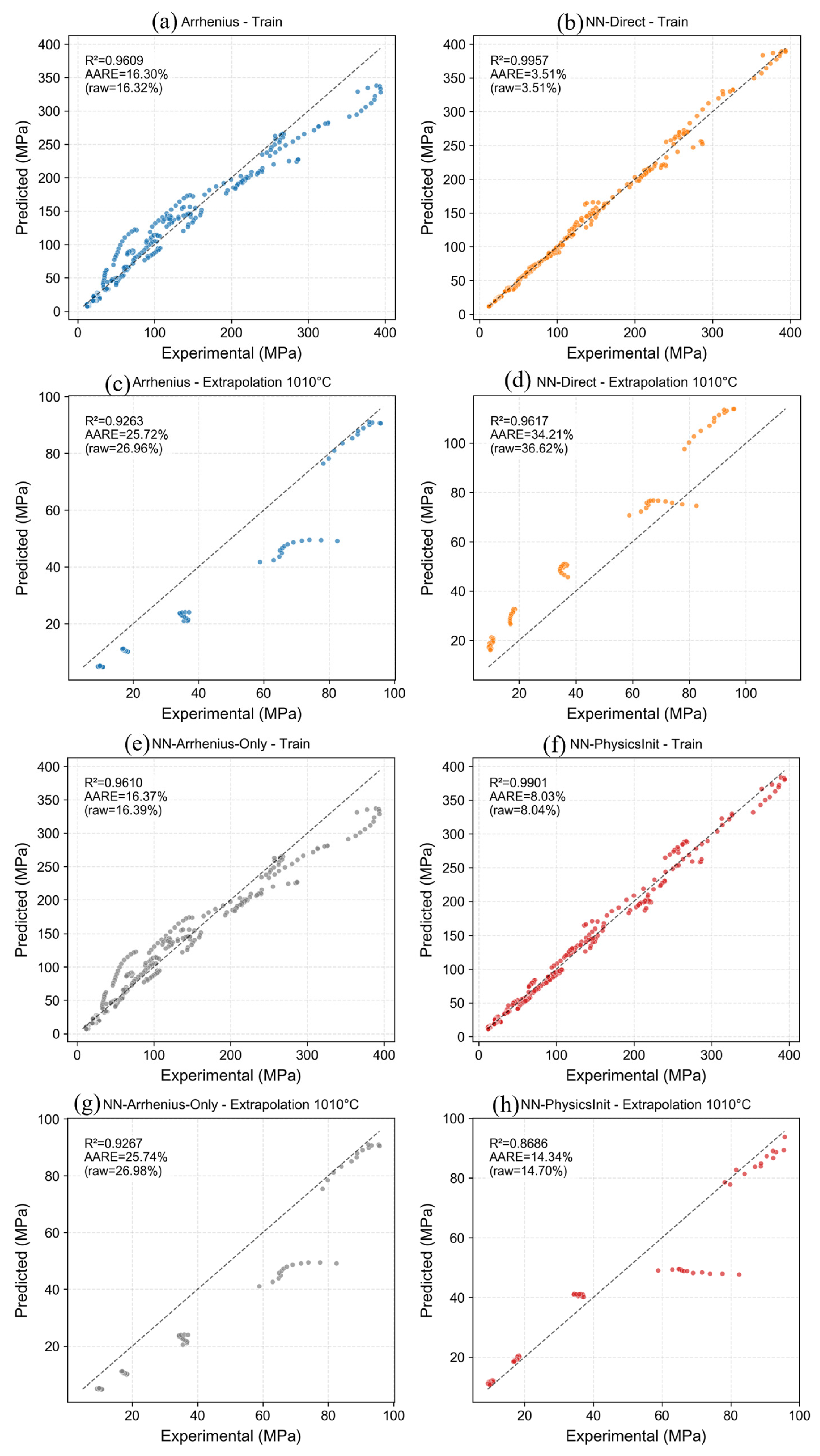
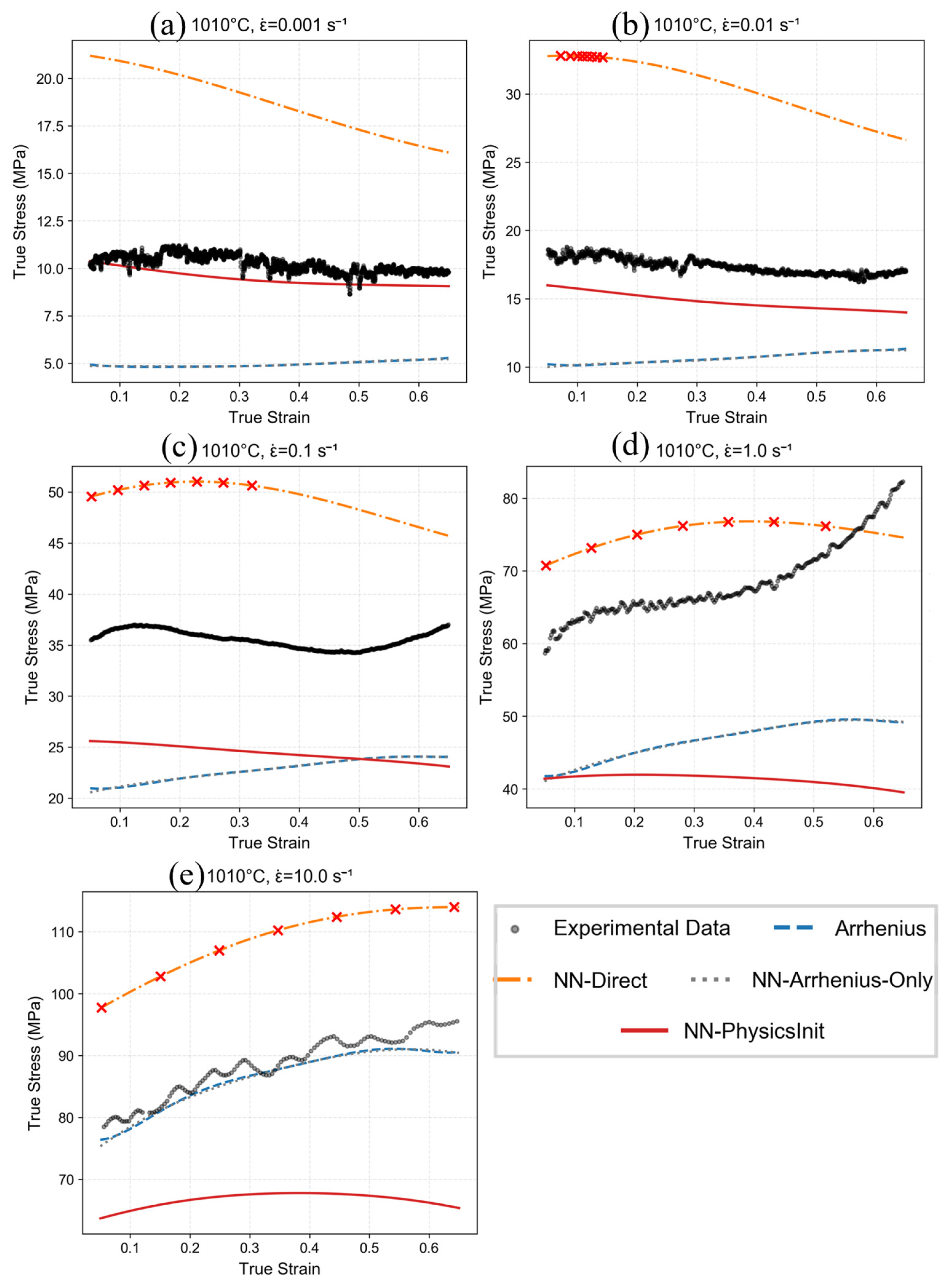
- Temperature extrapolation ablation: Corrected experimental data obtained at 800, 850, 900, 950, and 980 °C were utilized for the training set, while the data at 1010 °C were reserved as a strictly unseen testing set. This strategy is designed to evaluate the model’s thermodynamic stability and extrapolation capability across the critical β-transus phase boundary.
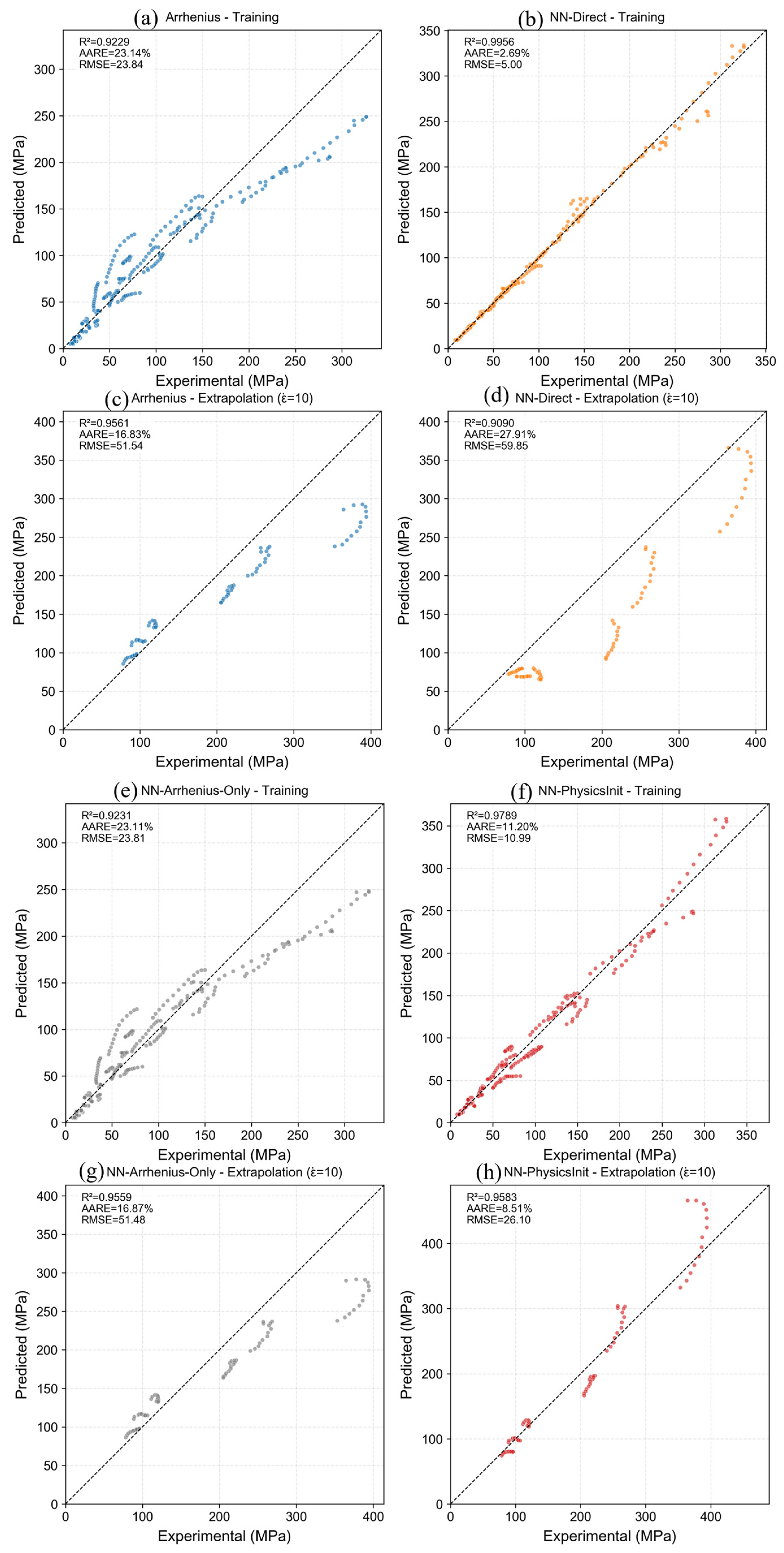
- Strain rate extrapolation ablation: Corrected experimental data at strain rates of 0.001, 0.01, 0.1, and 1.0 s−1 were allocated to the training set, while the data at the extreme strain rate of 10 s−1 were reserved as an unseen test set. This approach evaluates the model’s kinetic robustness in the presence of inherent data imbalance and severe non-linear dynamic softening behaviors.
2.4.2. Neural Network Architecture and Hyperparameters
2.4.3. Statistical Evaluation Metrics
3. Results
3.1. Comparison of Predictive Performance in Training and Extrapolation Domains
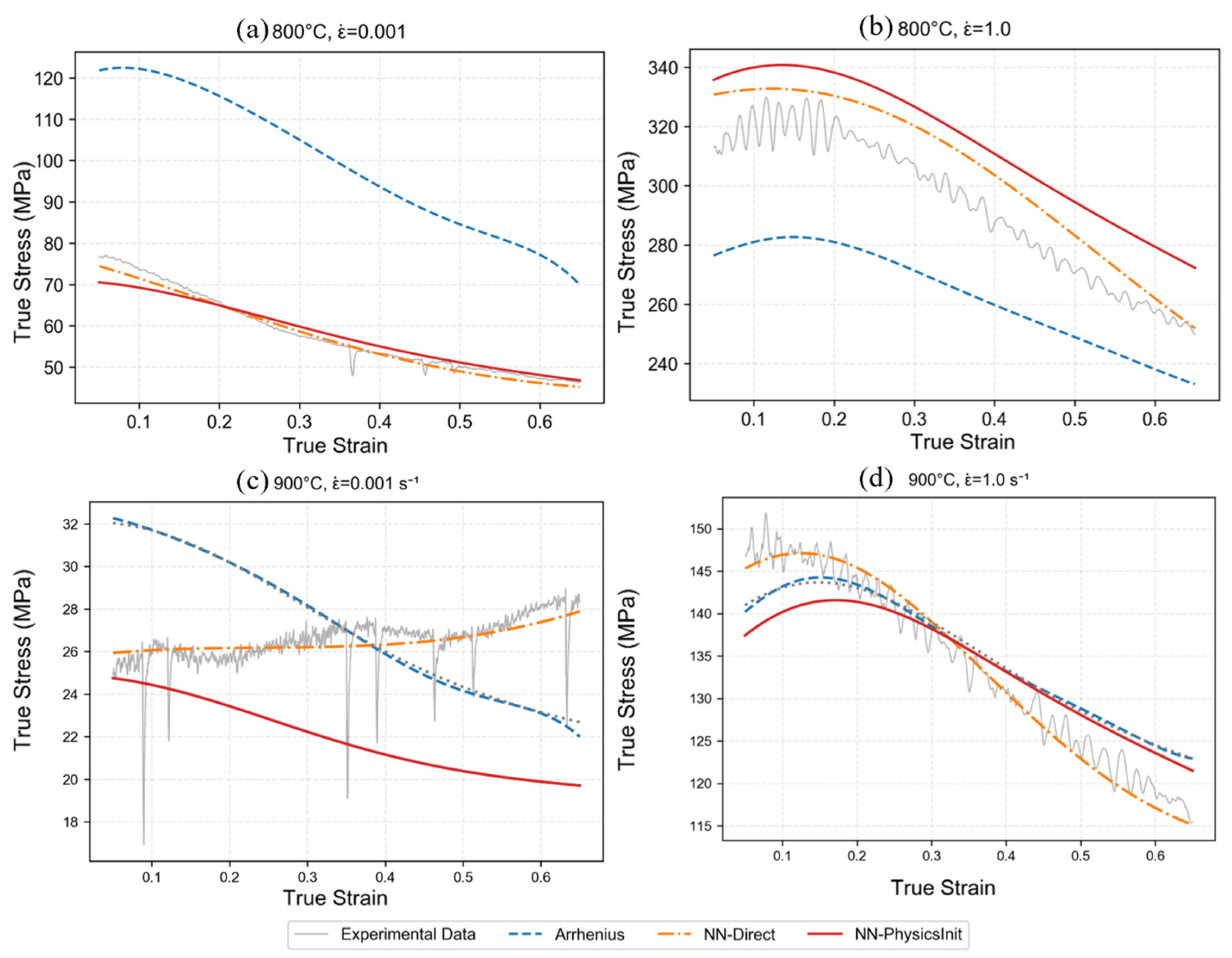
3.2. Comparison of Stress–Strain Curve Fitting in the Training Domain
3.3. Extrapolation Behavior in Unseen Deformation Domains
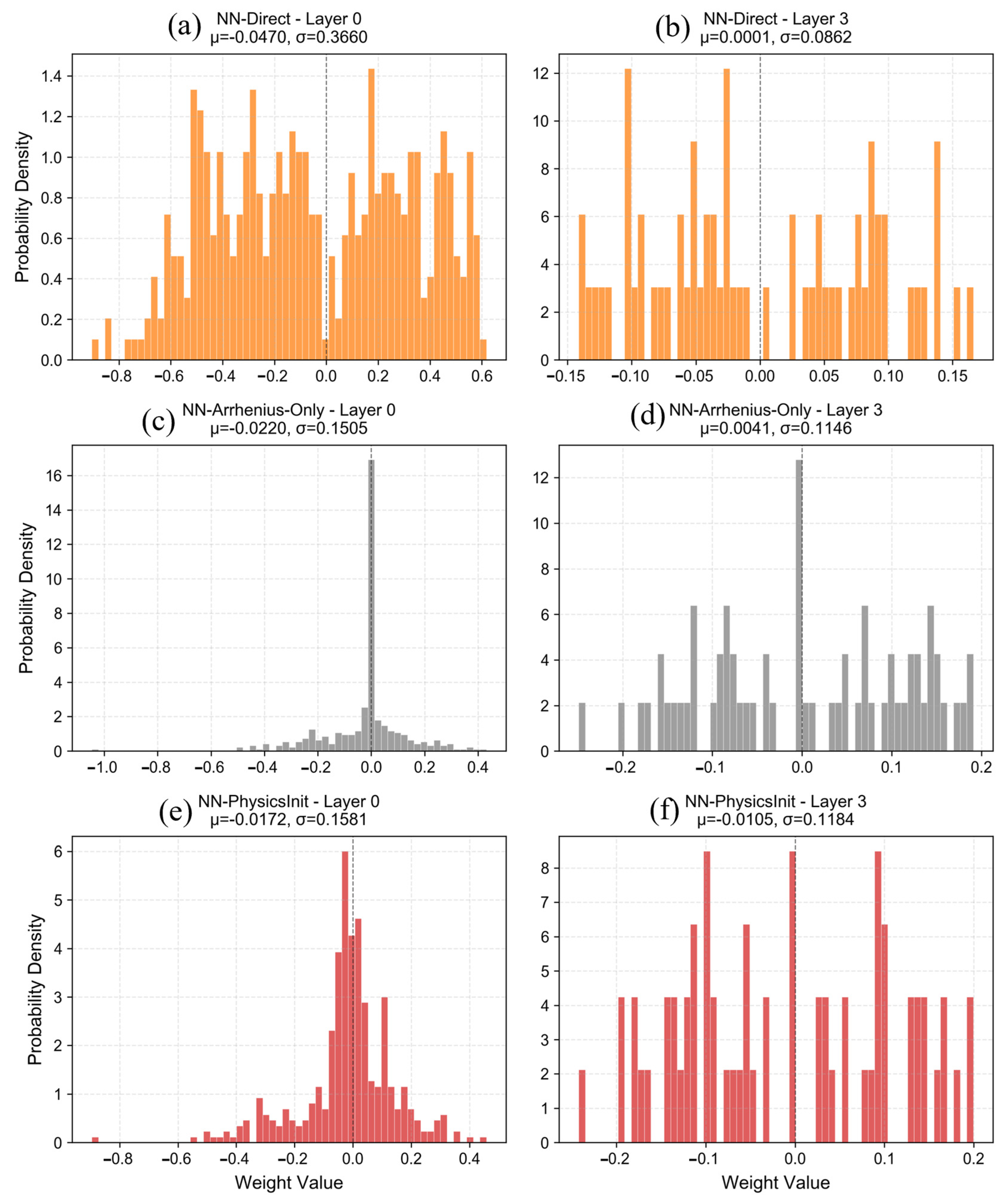
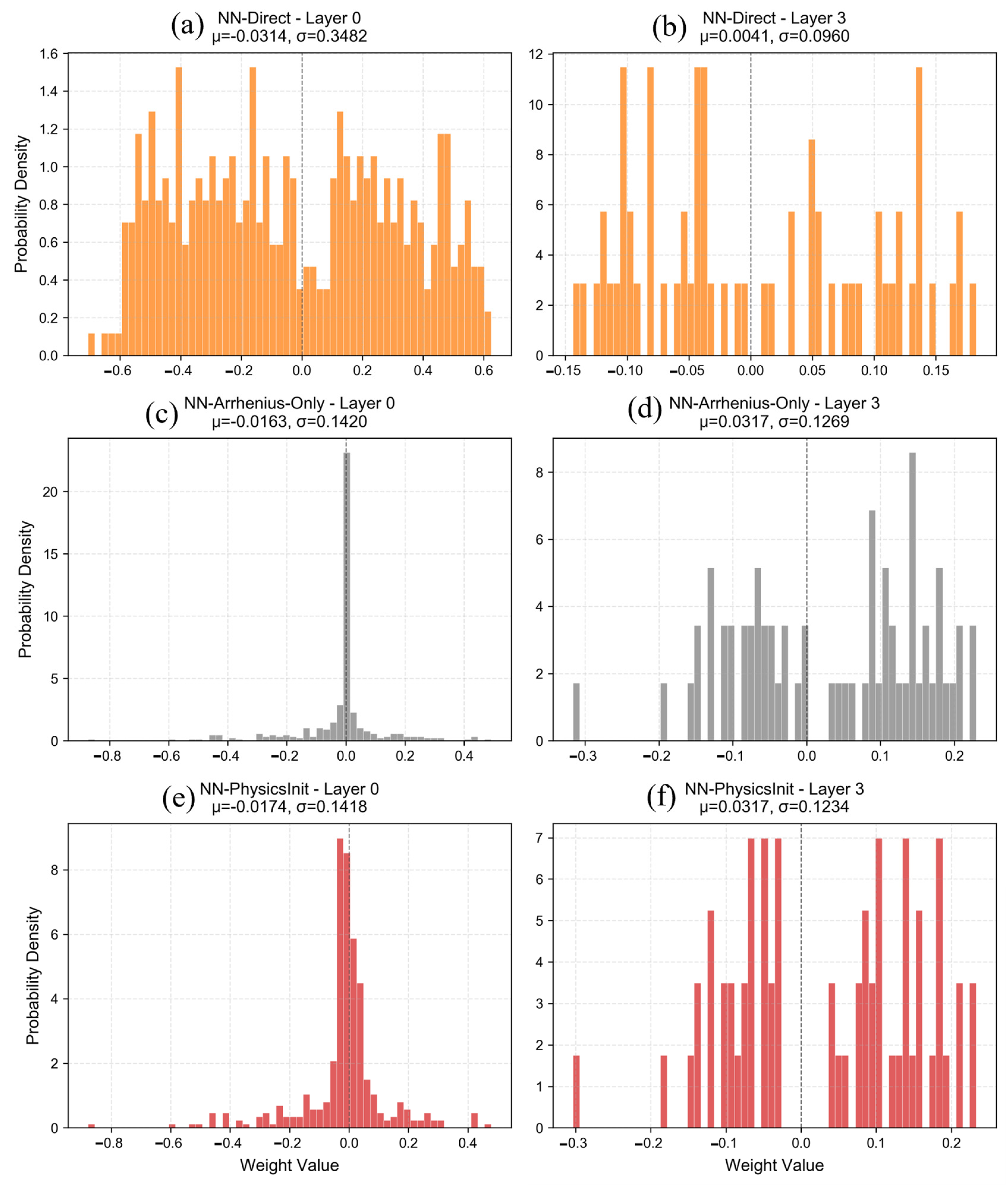
3.4. Analysis of Parameter Distributions and Their Relation to Model Behavior
4. Conclusions
Supplementary Materials
Author Contributions
Funding
Data Availability Statement
Conflicts of Interest
Abbreviations
| DNN | deep neural network |
| NN | Neural Network |
| NN-Arrhenius-Only | Neural network trained exclusively on Arrhenius synthetic data |
| NN-Direct | Purely data-driven neural network |
| NN-PhysicsInit | Physics-informed dual-stage neural network |
| OOD | Out-of-Distribution |
| TC4 | Ti-6Al-4V titanium alloy |
| AARE | Average Absolute Relative Error |
| RMSE | Root Mean Square Error |
References
- Wang, H.; Wang, C.; Li, M.; Ma, R.; Zhao, J. Constitutive equations for describing the hot compressed behavior of TC4–DT titanium alloy. Materials 2020, 13, 3424. [Google Scholar] [CrossRef] [PubMed]
- Warchomicka, F.; Canelo-Yubero, D.; Zehetner, E.; Requena, G.; Stark, A.; Poletti, C. In-situ synchrotron X-ray diffraction of Ti-6Al-4V during thermomechanical treatment in the beta field. Metals 2019, 9, 862. [Google Scholar] [CrossRef]
- Seshacharyulu, T.; Medeiros, S.C.; Frazier, W.G.; Prasad, Y.V.R.K. Microstructural mechanisms during hot working of commercial grade Ti-6Al-4V with equiaxed alpha-beta microstructure. Mater. Sci. Eng. A 2000, 325, 112–125. [Google Scholar] [CrossRef]
- Hu, M.; Dong, L.; Zhang, Z.; Lei, X.; Yang, R.; Sha, Y. Correction of flow curves and constitutive modelling of a Ti-6Al-4V alloy. Metals 2018, 8, 256. [Google Scholar] [CrossRef]
- Cai, J.; Li, F.; Liu, T.; Chen, B.; He, M. Constitutive equations for elevated temperature flow stress of Ti-6Al-4V alloy considering the effect of strain. Mater. Des. 2011, 32, 1144–1151. [Google Scholar] [CrossRef]
- Sellars, C.M.; Mctegart, W.J. On the mechanism of hot deformation. Acta Metall. 1966, 14, 1136–1138. [Google Scholar] [CrossRef]
- Peng, W.; Zeng, W.; Wang, Q.; Yu, W. Comparative study on constitutive relationship of as-cast Ti60 titanium alloy during hot deformation based on Arrhenius-type and artificial neural network models. Mater. Des. 2013, 51, 95–104. [Google Scholar] [CrossRef]
- Liu, Y.; Ning, Y.; Yao, Z.; Fu, M.W. Hot deformation behavior and processing map of a powder metallurgy nickel-based superalloy. J. Alloys Compd. 2014, 587, 183–190. [Google Scholar] [CrossRef]
- Buchmayr, B. A systems engineering analysis of tailored formed metallic hybrids. Prod. Eng. 2021, 15, 211–221. [Google Scholar] [CrossRef]
- Sadeghpour, S.; Abbasi, S.M.; Morakabati, M. Deformation behavior and microstructural evolution of Ti-6Al-4V/TiC composites during hot compression. J. Alloys Compd. 2017, 723, 1017–1025. [Google Scholar]
- Wang, Q.; Wu, T.; Sun, D.L.; Lai, J. Prediction of flow stress in Ti6Al4V alloy with hydrogen at high temperature using artificial neural network. Mater. Sci. Forum 2007, 539, 3696–3701. [Google Scholar] [CrossRef]
- Cheng, C.; Zou, Y. Accelerated discovery of nanostructured high-entropy alloys and multicomponent alloys via high-throughput strategies. Prog. Mater. Sci. 2025, 151, 101429. [Google Scholar] [CrossRef]
- Churyumov, A.Y.; Kazakova, A.A. Prediction of true stress at hot deformation of high manganese steel by artificial neural network modeling. Materials 2023, 16, 1083. [Google Scholar] [CrossRef]
- Bock, F.E.; Aydin, R.C.; Cyron, C.J.; Huber, N.; Kalidindi, S.R.; Klusemann, B. A review of the application of machine learning and data mining approaches in continuum materials mechanics. Front. Mater. 2019, 6, 110. [Google Scholar] [CrossRef]
- Huang, X.; Li, X.; Guan, B.; Zhu, J.; Li, J. Machine learning-based constitutive model for hot deformation behavior of metallic materials. Comput. Mater. Sci. 2022, 207, 111301. [Google Scholar]
- Zhang, C.; Shi, Q.; Wang, Y.; Qiao, J.; Tang, T.; Zhou, J.; Liang, W.; Chen, G. Towards an optimized artificial neural network for predicting flow stress of In718 alloys at high temperatures. Materials 2023, 16, 2663. [Google Scholar] [CrossRef]
- Zhu, Y.; Zeng, W.; Sun, Y.; Feng, F.; Zhou, Y. Artificial neural network approach to predict the flow stress in the isothermal compression of as-cast TC21 titanium alloy. Comput. Mater. Sci. 2011, 50, 1785–1790. [Google Scholar] [CrossRef]
- Raissi, M.; Perdikaris, P.; Karniadakis, G.E. Physics-informed neural networks: A deep learning framework for solving forward and inverse problems involving nonlinear partial differential equations. J. Comput. Phys. 2019, 378, 686–707. [Google Scholar] [CrossRef]
- Karniadakis, G.E.; Kevrekidis, I.G.; Lu, L.; Perdikaris, P.; Wang, S.; Yang, L. Physics-informed machine learning. Nat. Rev. Phys. 2021, 3, 422–440. [Google Scholar] [CrossRef]
- Haghighat, E.; Raissi, M.; Mura, A.; Hector, H.; Zevalkink, L.; Karniadakis, G.E. A physics-informed deep learning framework for inversion and surrogate modeling in solid mechanics. Comput. Methods Appl. Mech. Eng. 2021, 379, 113741. [Google Scholar] [CrossRef]
- Cuomo, S.; Di Cola, V.S.; Giampaolo, F.; Rozza, G.; Raissi, M.; Piccialli, F. Scientific machine learning through physics–informed neural networks: Where we are and what’s next. J. Sci. Comput. 2022, 92, 88. [Google Scholar]
- Linka, K.; Hillgärtner, M.; Abdolazizi, K.P.; Aydin, R.C.; Itskov, M.; Cyron, C.J. Constitutive artificial neural networks: A fast and general approach to predictive data-driven constitutive modeling by deep learning. J. Comput. Phys. 2021, 429, 110010. [Google Scholar] [CrossRef]
- Fuhg, J.N.; Bouklas, N. The mixed deep energy method for resolving concentration features in finite strain hyperelasticity. J. Comput. Phys. 2022, 451, 110839. [Google Scholar] [CrossRef]
- Lin, Y.C.; Li, L.T.; Fu, M.W.; Chen, M.S. Hot deformation behavior and processing map of a Ni-based superalloy. J. Alloys Compd. 2013, 556, 103–110. [Google Scholar]
- Li, H.; Wang, X.; Song, Y.; Li, Y.; Li, X.; Ji, Y. Physical metallurgy guided machine learning to predict hot deformation mechanism of stainless steel. Mater. Today Commun. 2023, 36, 106779. [Google Scholar]
- Aggarwal, C.C. Neural Networks and Deep Learning: A Textbook, 2nd ed.; Springer: Cham, Switzerland, 2018; pp. 245–280. [Google Scholar]
- Frankel, A.; Jones, R.E.; Alleman, C.; Templeton, J.A. Predicting the macroscopic fracture energy of porous metals from highly porous microstructures using machine learning. Comput. Mater. Sci. 2019, 169, 109098. [Google Scholar]
- Jones, R.E.; Templeton, J.A.; Sanders, C.M.; Ostien, J.T. Machine learning models of plastic flow based on representation theory. Comput. Model. Eng. Sci. 2018, 117, 309–342. [Google Scholar] [CrossRef]
- Nguyen, T.; Chen, J.; Liu, W.K. Machine learning-driven paradigm for polymer aging lifetime prediction: Integrating multi-mechanism coupling and cross-scale modeling to avoid extrapolation divergence. Macromolecules 2024, 57, 3456–3470. [Google Scholar]
- Goodfellow, I.; Bengio, Y.; Courville, A. Deep Learning; MIT Press: Cambridge, UK, 2016. [Google Scholar]
- Neyshabur, B.; Tomioka, R.; Srebro, N. In search of the real inductive bias: On the role of implicit regularization in deep learning. In Proceedings of the 3rd International Conference on Learning Representations (ICLR), San Diego, CA, USA, 7–9 May 2015; pp. 1–14. [Google Scholar]
- Bartlett, P.L.; Foster, D.J.; Telgarsky, M.J. Spectrally-normalized margin bounds for neural networks. In Proceedings of the Advances in Neural Information Processing Systems 30 (NIPS 2017), Long Beach, CA, USA, 4–9 December 2017; pp. 6240–6249. [Google Scholar]







| C | Fe | N | H | Al | O | V | Ti |
|---|---|---|---|---|---|---|---|
| 0.04 | 0.24 | 0.013 | 0.015 | 6.36 | 0.20 | 4.37 | Bal. |
| No. | Models Compared | Training Strategy |
|---|---|---|
| 1 | Arrhenius | Traditional analytical model (strain-compensated) |
| 2 | NN-Direct | Neural network trained from scratch using experimental data |
| 3 | NN-Arrhenius-Only | Neural network pre-trained using synthetic Arrhenius data only |
| 4 | NN-PhysicsInit (Ours) | Neural network pre-trained using synthetic data and fine-tuned using experimental data |
| Category | Parameter | Temperature Extrapolation | Strain Rate Extrapolation |
|---|---|---|---|
| Shared Architecture | Topology | 3→128→128→64→1 | 3→128→128→64→1 |
| Input variables | (T/1000, ln(), ε) | (T/1000, ln(), ε) | |
| Activation/Loss | SiLU/MSE | SiLU/MSE | |
| Optimizer | Adam | Adam | |
| Weight decay | 1 × 10⁻⁵ | 1 × 10⁻⁵ | |
| Dataset Splitting | Interpolation Temp. | 800, 850, 900, 950, 980 °C | 800, 850, 900, 950, 980, 1010 °C |
| Extrapolation Temp. | 1010 °C | — | |
| Interpolation Strain Rates | 0.001, 0.01, 0.1, 1.0, 10.0 s−1 | 0.001, 0.01, 0.1, 1.0 s−1 | |
| Extrapolation Strain Rate | — | 10.0 s−1 | |
| Synthetic dataset size | 15,000 | 10,000 | |
| NN-Direct | Epochs/Batch size | 2000/64 | 1500/64 |
| Initial learning rate | 6 × 10⁻⁴ | 1 × 10⁻³ | |
| NN-Arrhenius-Only | Epochs/Batch size | 1200/64 | 800/64 |
| Initial learning rate | 8 × 10⁻⁴ | 1 × 10⁻³ | |
| NN-PhysicsInit: Stage I | Epochs/Batch size | 1200/512 | 800/512 |
| Initial learning rate | 8 × 10⁻⁴ | 1 × 10⁻³ | |
| NN-PhysicsInit: Stage II | Epochs/Batch size | 1000/64 | 600/64 |
| Initial learning rate | 1.5 × 10⁻⁴ | 2 × 10⁻⁴ |
| No. | Models Compared | Data Set | R | R2 | AARE (%) | RMSE (MPa) |
|---|---|---|---|---|---|---|
| 1 | Arrhenius | Training set (800–980 °C) | 0.9803 | 0.9609 | 16.30 | 22.22 |
| Testing set (1010 °C) | 0.9625 | 0.9263 | 25.72 | 13.49 | ||
| 2 | NN-Direct | Training set (800–980 °C) | 0.9978 | 0.9957 | 3.51 | 6.34 |
| Testing set (1010 °C) | 0.9807 | 0.9617 | 34.21 | 14.49 | ||
| 3 | NN-Arrhenius-Only | Training set (800–980 °C) | 0.9803 | 0.9610 | 16.37 | 22.22 |
| Testing set (1010 °C) | 0.9627 | 0.9267 | 25.74 | 13.48 | ||
| 4 | NN-PhysicsInit | Training set (800–980 °C) | 0.9949 | 0.9899 | 7.92 | 9.73 |
| Testing set (1010 °C) | 0.9287 | 0.8625 | 14.34 | 11.12 |
| No. | Models Compared | Data Set | R | R2 | AARE (%) | RMSE (MPa) |
|---|---|---|---|---|---|---|
| 1 | Arrhenius | Training set ≤ 1 S−1 | 0.9607 | 0.9229 | 23.14 | 23.84 |
| Testing set = 10 S−1 | 0.9778 | 0.9561 | 16.83 | 51.54 | ||
| 2 | NN-Direct | Training set ≤ 1 S−1 | 0.9978 | 0.9956 | 2.69 | 5.00 |
| Testing set = 10 S−1 | 0.9534 | 0.9090 | 27.91 | 59.85 | ||
| 3 | NN-Arrhenius-Only | Training set ≤ 1 S−1 | 0.9608 | 0.9231 | 23.11 | 23.81 |
| Testing set = 10 S−1 | 0.9777 | 0.9559 | 16.87 | 51.48 | ||
| 4 | NN-PhysicsInit | Training set ≤ 1 S−1 | 0.9900 | 0.9802 | 10.92 | 10.66 |
| Testing set = 10 S−1 | 0.9787 | 0.9578 | 8.92 | 25.34 |
Disclaimer/Publisher’s Note: The statements, opinions and data contained in all publications are solely those of the individual author(s) and contributor(s) and not of MDPI and/or the editor(s). MDPI and/or the editor(s) disclaim responsibility for any injury to people or property resulting from any ideas, methods, instructions or products referred to in the content. |
© 2026 by the authors. Licensee MDPI, Basel, Switzerland. This article is an open access article distributed under the terms and conditions of the Creative Commons Attribution (CC BY) license.
Share and Cite
Cheng, L.; Shao, C.; Cheng, P. A Physics-Guided Two-Stage Learning Framework for Constitutive Modeling of TC4 Titanium Alloy: Validation Through Temperature and Strain-Rate Extrapolation. Metals 2026, 16, 510. https://doi.org/10.3390/met16050510
Cheng L, Shao C, Cheng P. A Physics-Guided Two-Stage Learning Framework for Constitutive Modeling of TC4 Titanium Alloy: Validation Through Temperature and Strain-Rate Extrapolation. Metals. 2026; 16(5):510. https://doi.org/10.3390/met16050510
Chicago/Turabian StyleCheng, Lu, Chenxi Shao, and Peng Cheng. 2026. "A Physics-Guided Two-Stage Learning Framework for Constitutive Modeling of TC4 Titanium Alloy: Validation Through Temperature and Strain-Rate Extrapolation" Metals 16, no. 5: 510. https://doi.org/10.3390/met16050510
APA StyleCheng, L., Shao, C., & Cheng, P. (2026). A Physics-Guided Two-Stage Learning Framework for Constitutive Modeling of TC4 Titanium Alloy: Validation Through Temperature and Strain-Rate Extrapolation. Metals, 16(5), 510. https://doi.org/10.3390/met16050510