1. Introduction
The production of iron and steel is one of the largest and most resource-intensive areas of the modern metallurgical industry. According to the United States Geological Survey (USGS), the global steel and pig iron production in 2024 reached approximately 3200 million tons (1300 million tons of iron and 1900 million tons of steel) [
1]. In 2022, Kazakhstan produced 2.92 million tons of pig iron and 4.15 million tons of raw steel. According to the USGS, JSC ArcelorMittal Temirtau, one of the country’s major steel producers, had an annual production capacity of 5.7 million tons of pig iron and 3.4 million tons of raw steel [
2]. At the same time, a stable increase in the production of a number of steels is observed worldwide due to various technical needs [
3].
Such production volumes create a high and stable demand for alloying materials. One of the most widely used and important elements for steel alloying is chromium, which, as part of ferrochrome, is used in the production of various steel grades [
4].
The primary use of ferrochrome is in the production of stainless steels, which accounts for approximately 80–85% of total ferrochrome consumption [
5,
6,
7]. This is because ferrochrome is the primary industrial source of chromium, which is added to steel to create a complex of valuable performance properties, primarily corrosion resistance, heat resistance, and scale resistance [
6,
8].
The effectiveness of chromium alloying is determined by its content in the alloy. The chromium concentration has a decisive influence on the formation of a protective oxide film and the metal’s stability in aggressive environments [
9]. In general, the higher the chromium content in the alloy, the more heat-resistant and corrosion-resistant it becomes. Various steels can contain from 12 to 35% of chromium. However, excessively high chromium contents may adversely affect certain mechanical properties of the alloy. Therefore, when producing special and stainless steel grades, not only is the total chromium content important, but also the quality of the introduced ferroalloy, including its carbon content and associated impurities [
6,
9].
The main raw material for the ferrochrome production is chromium ores. Chromium in chrome ores is mainly associated with chromite-type spinels. According to the USGS, 47 million metric tons of chrome ore were mined worldwide in 2024, with total estimated reserves of 1.2 billion metric tons. Kazakhstan is the world leader in chrome ore reserves and one of the leading producers, with production amounting to 6.5 million metric tons in 2024, with 320 million metric tons of reserves in the Republic [
10]. Kazakhstan is also the undisputed world leader in ferrochrome production. According to the USGS, in 2022 Kazakhstan produced 1.2 million metric tons of high-, medium-, and low-carbon ferrochrome at the Aktobe and Aksu ferroalloy plants, both part of Eurasian Resources Group LLP JSC TNK Kazchrome [
2].
Thus, the presence of a developed raw material base and stable demand for chromium-containing alloys determines the relevance of improving technologies for producing ferrochrome, especially its refined grades intended for smelting high-quality steels.
In the steelmaking industry, refined grades of ferrochrome are used to produce stainless and corrosion-resistant steel grades: carbon-free (less than 0.06% C), low-carbon (0.06–0.50% C) and medium-carbon (0.50–4% C).
Modern steel quality requirements necessitate the production of ferrochrome with minimal carbon and impurity content, significantly complicating the technology of chromium recovery from oxide raw materials. There is increasing emphasis on carbon-free and low-carbon technologies to reduce environmental impacts and greenhouse gas emissions associated with production, and the search for alternative reducing agents is becoming increasingly important [
11].
In this regard, processes that reduce carbon content both during alloy production and in subsequent processing stages are particularly important. Stainless steel production using vacuum oxygen and argon-oxygen decarburization is actively being developed in industry. These processes allow for the removal of C and Si during stainless steel production with acceptable Cr losses [
6]. However, the use of such technologies does not eliminate the need to obtain the required quality of the starting chromium-containing material. Consequently, the selection of effective reduction processes and reducing agents remains a pressing issue.
Reduction processes for producing carbon-free and low-carbon ferrochrome require the use of reducing agents with high reactivity toward oxygen. Depending on the desired grade of ferrochrome, different types of reducing agents are used. For low-carbon ferrochrome, the process typically involves silicothermic reduction; aluminothermic methods are used less frequently. This preference is largely due to the lower cost of silicon sources and the ease of introducing silicon into the melt [
11].
Silicon is typically added as a ferrosilicochrome alloy. Aluminum is typically introduced through recycled aluminum scrap. In the absence of local aluminum production or access to recycled aluminum feedstock, silicon remains the only practically viable reducing agent. It can be produced locally in quantities sufficient to support the production of low-carbon ferrochrome grades [
12,
13].
Along with technological factors, energy and environmental aspects of production are becoming increasingly important. The carbothermic process has historically been the primary method and is characterized by high energy consumption (up to 4700 kWh/t) and significant direct carbon emissions (up to 5.5 t CO
2 eq/t FeCr). Metallothermic (silico- and aluminothermic) methods of chromium production do not directly emit CO
2. However, aluminum production is extremely energy-intensive (alumina electrolysis), and aluminothermic methods are only environmentally feasible if inexpensive “green” aluminum or other alternatives are available [
13,
14,
15]. In the context of the current transition to more environmentally friendly technologies, this increases interest in searching for alternative or combined reduction systems.
Due to the limitations of traditional reduction technologies, in recent years, increasing attention has been paid to the development and use of complex silicon- and aluminum-containing reducing agents and alloys that combine several active components. The use of complex reducing agents provides more flexible control over the chemical composition of the metal, helps reduce carbon-containing impurities in the target ferrochrome, and potentially reduces specific energy consumption due to more efficient reduction reactions.
In this regard, the aim of this study was a thermodynamic and kinetic investigation of chromium reduction in systems with a traditional silicon reducing agent and a new complex silicon–aluminum alloy. The scientific novelty of this work lies in the comparative evaluation of the thermodynamic characteristics of the Cr2O3 reduction reactions by silicon and aluminum, as well as in the identification of the characteristics of thermal transformations and changes in apparent activation energy in mixtures of chromium ore with reducing agents, including in the briquetted state.
2. Materials and Methods
This study employed a set of thermodynamic and thermoanalytical methods aimed at assessing the possibility of using complex silicon–aluminum chromium-containing alloys as reducing agents in the production of refined grades of ferrochrome.
The object of the study was chrome ore, the average chemical composition of which is presented in
Table 1. These characteristics were obtained in the certified laboratory of Zh. Abishev Chemical-Metallurgical Institute (Karaganda, Kazakhstan) using various analysis methods, including the MAX- GVM X-ray fluorescence spectrometer (SPA “Spectron”, Saint Petersburg, Russia).
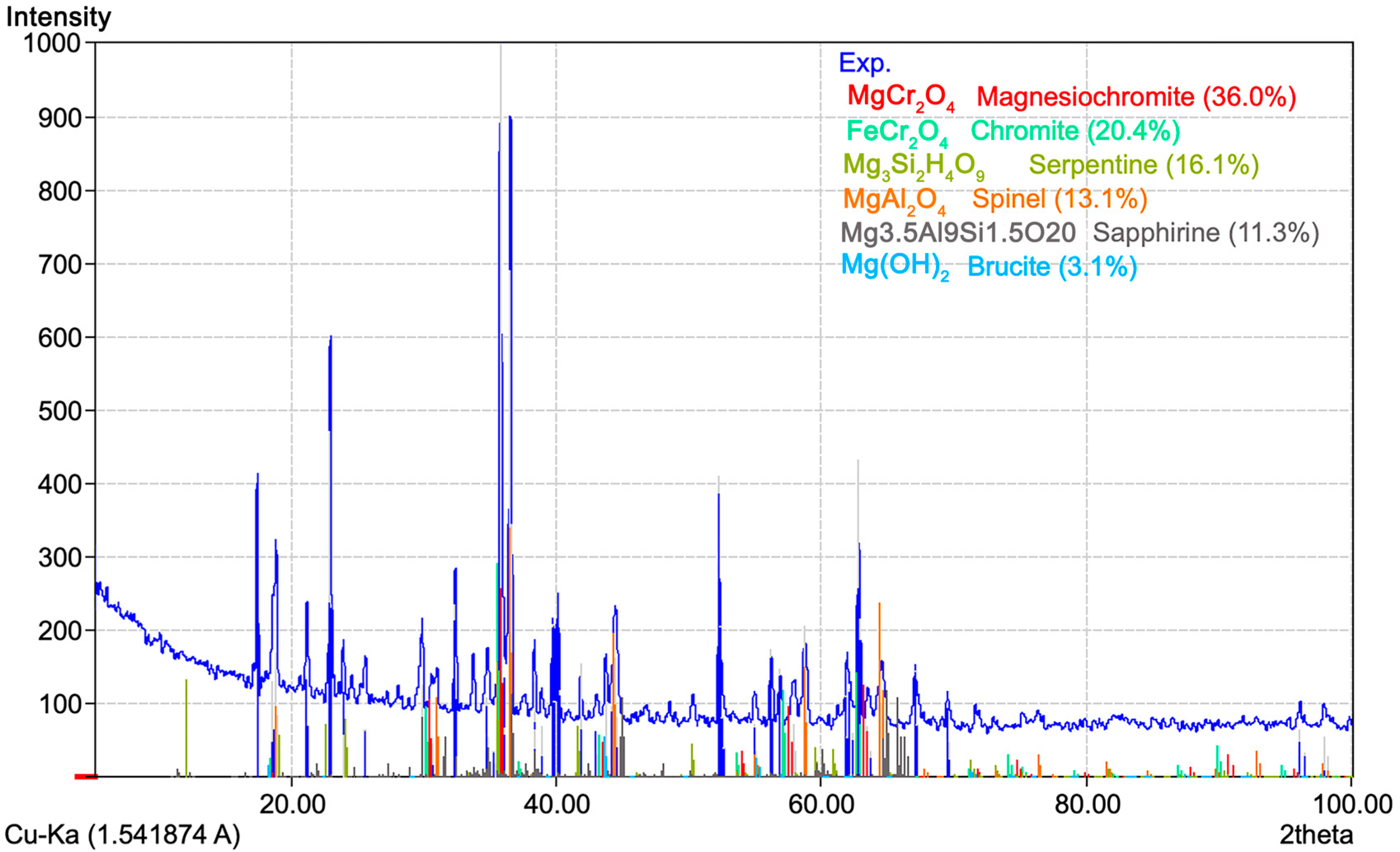
The phase composition of the ore sample was analyzed using an Empyrean X-ray diffractometer (Malvern PANalytical, Almelo, The Netherlands). The phase composition data are presented in
Figure 1 and
Table 2.
The results show that the main phase is represented by magnesiochromite (MgCr2O4) and chromite (FeCr2O4), as well as the rock-forming minerals serpentine (Mg3Si2H4O9), brucite (Mg(OH)2), sapphirine (Mg3.5Al9Si1.5O20), and spinel (MgAl2O4), which is largely concentrated in the ore.
As reducing agents, complex silicon–chromium-containing alloys were examined, including the conventional ferrosilicochromium (FeSiCr) and a new complex aluminosilicochromium alloy (AlSiCr). The composition of the reducing agents is given in
Table 3.
This study involved a thermodynamic evaluation of the reduction reactions of chromium oxide with silicon and aluminum. The overall reactions of silicothermic and aluminothermic reduction were considered as the baseline reactions.
The thermodynamic feasibility of chromium oxide reduction by silicon and aluminum was evaluated using equilibrium thermodynamic calculations performed in HSC Chemistry software (Version 10) over the temperature range of 0–2500 °C. The temperature dependences of standard Gibbs free energy change (ΔG°) were analyzed for both reactions.
The kinetic characteristics of thermal transformations in the chrome ore–reducing agent system were also investigated by differential thermal analysis. For this purpose, four charge mixtures with a particle size of 0–0.15 mm were prepared:
chromium ore;
a mixture of chromium ore and FeSiCr;
a mixture of chromium ore and AlSiCr;
a briquetted mixture of chromium ore and AlSiCr.
Briquetting was applied only to the AlSiCr-containing mixture because this complex alloy contains several active reducing components and a more heterogeneous fine particle structure, for which closer interparticle contact is especially important. In contrast, FeSiCr is a conventional dense alloy reductant commonly used without preliminary briquetting; therefore, the briquetting effect was primarily evaluated for the novel AlSiCr system. Prior to briquetting, the powder mixtures were manually mixed to obtain the most uniform possible distribution of components.
Differential thermal analysis was carried out using a Q-1500D MOM thermogravimetric analyzer (derivatograph) (MOM, Budapest, Hungary) based on the Paulik–Paulik–Erdey system in an oxidizing atmosphere over the temperature range of 20–1150 °C. Oxidizing atmosphere ensured stable baseline operation of the derivatograph and reproducible comparison between samples. The oxidizing atmosphere was used to ensure stable baseline conditions and reproducibility of DTA measurements. It allows observation of initial physicochemical transformations (dehydration, phase transitions) prior to the onset of reduction processes. Calcined aluminum oxide was used as the reference material. The sample holder was an inert aluminosilicate ceramic crucible composed mainly of Al2O3 (99.8%) with SiO2, FeO, and MgO impurities, and suitable for derivatographic measurements up to 1200 °C. During DTA recording, sample mass changes were monitored simultaneously. The derivatographic curves include three simultaneously recorded parameters: temperature (T), mass change (TG), and differential thermal effect (DTA), which together reflect the sequence of physicochemical transformations occurring in the sample during heating.
To interpret the derivatographic curves and determine the kinetic parameters, a non-isothermal kinetics approach based on the analysis of the ascending branch of the thermal effect was used. This approach was proposed and described in detail in the authors’ work [
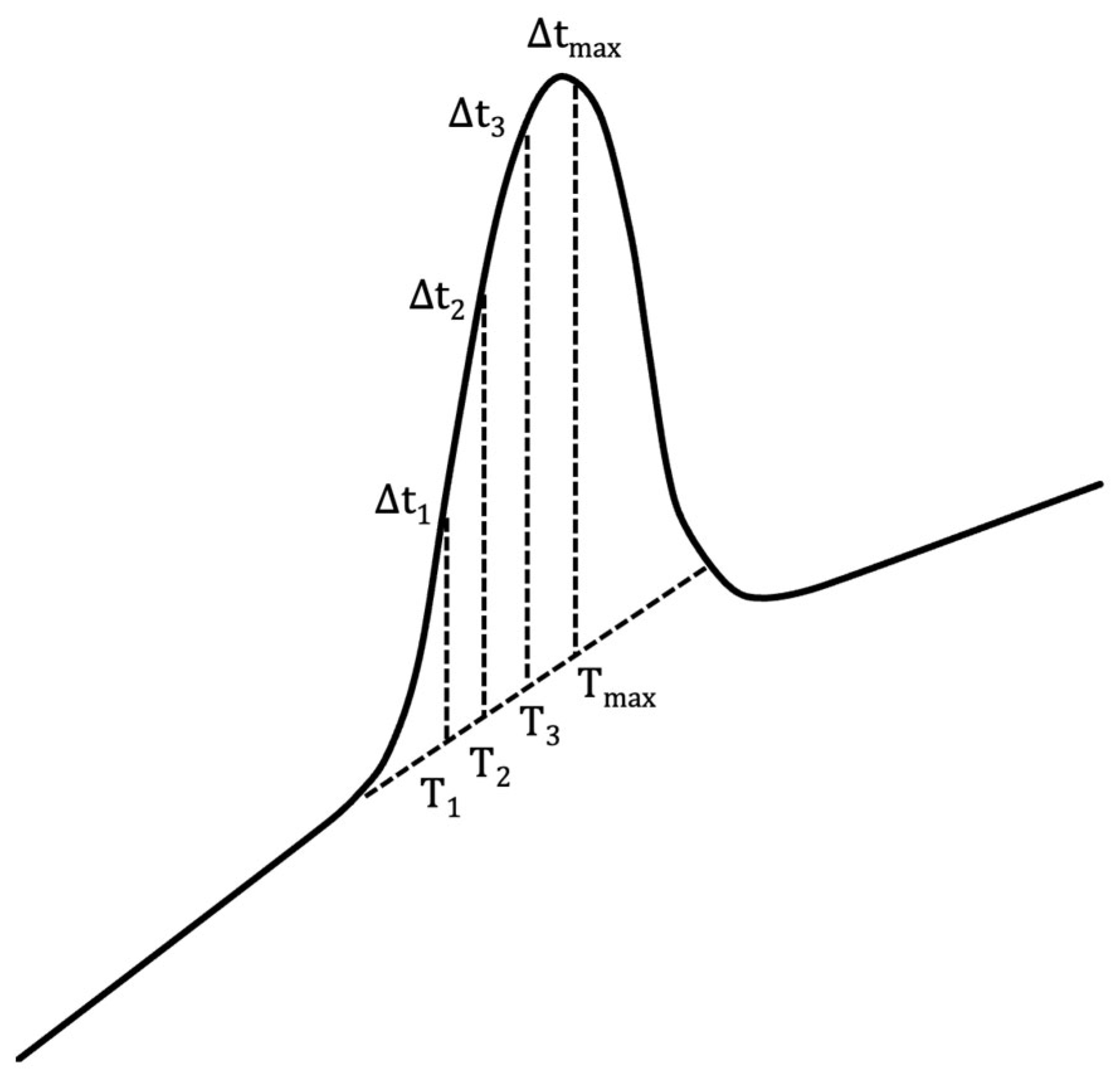
16]. When calculating the kinetic parameters, it was taken into account that in the case of exothermic processes, the peak maximum corresponds to a stage close to the completion of the reaction; therefore, a section not exceeding 50% of the peak height was used for processing. For each thermal effect, the baseline was taken as a straight reference line connecting the sections of the DTA curve immediately before the onset and after the completion of the corresponding peak, as shown schematically in
Figure 2. The parameter Δt was defined as the vertical distance between the experimental DTA curve and this reference line at a selected temperature point on the ascending branch of the peak. This approach minimizes the influence of instrumental drift and was applied in accordance with the method described in [
16].
The kinetic parameters of thermal processes accompanied by the release or absorption of heat were calculated using differential thermal analysis (DTA) curves. The resulting relationships were used to determine the apparent activation energy of the stages of thermal transformation of chrome ore and its interaction with various reducing agents.
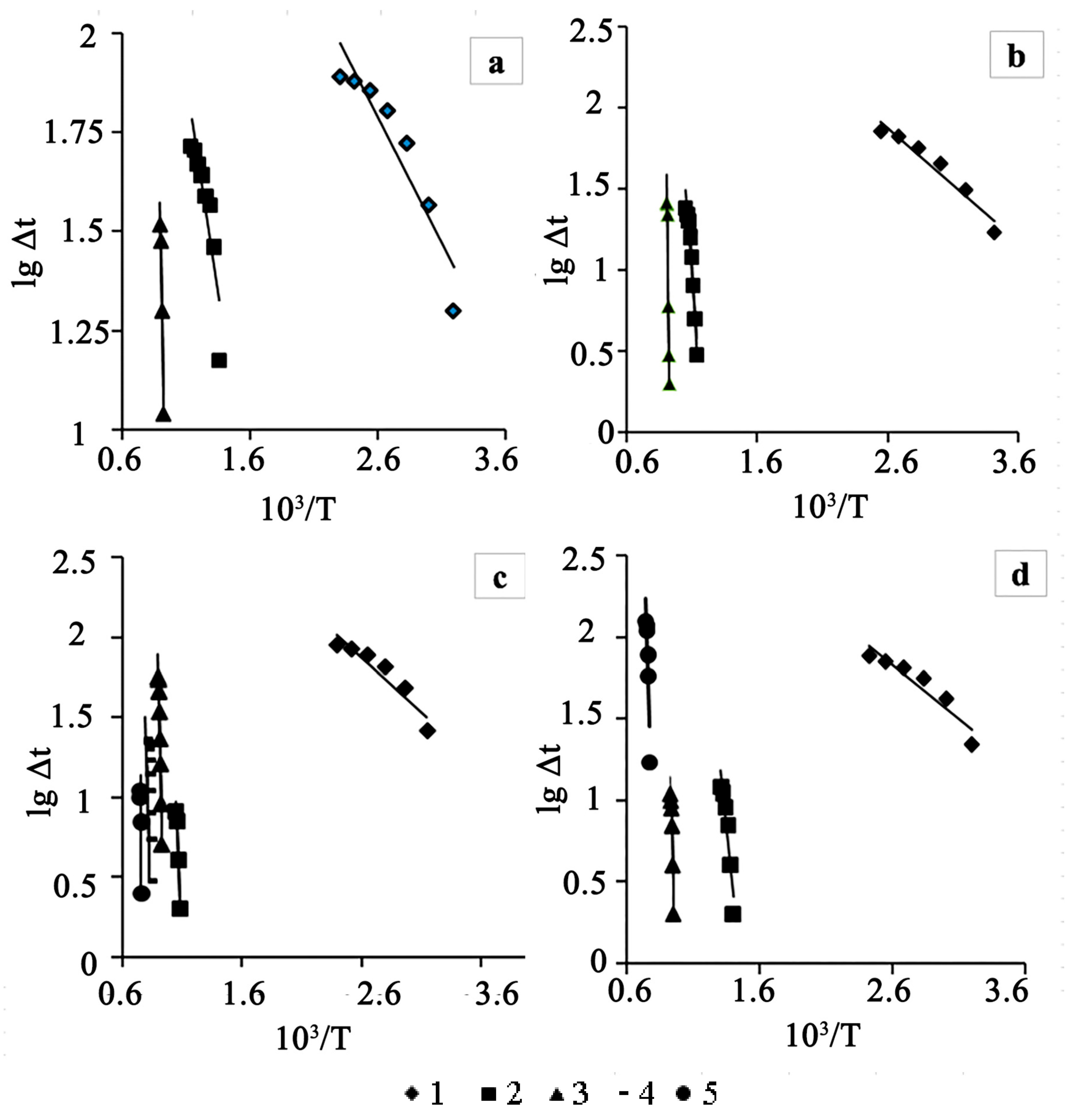
Based on the experimental data, dependences were plotted in the coordinates lgΔt − 1/T, where Δt characterizes the deviation of the DTA curve from the specified direction, and T is the absolute process temperature. The apparent activation energies of individual stages of thermal transformations were calculated from the slope of the linear sections of these dependences. The obtained results were used to comparatively assess the influence of the reducing agent composition and the batch preparation method on the temperature ranges of the processes and the energy parameters of component interactions.
The applied approach provides comparative apparent activation energy estimates from non-isothermal DTA data and was used primarily for relative comparison of the studied systems rather than for rigorous kinetic modeling.
3. Results and Discussion
To thermodynamically evaluate the feasibility of metallothermic chromium reduction, the overall reactions of chromium oxide reduction by silicon and aluminum contained in the complex chromium-containing alloys were examined. Silicothermic reduction is described by reaction (1):
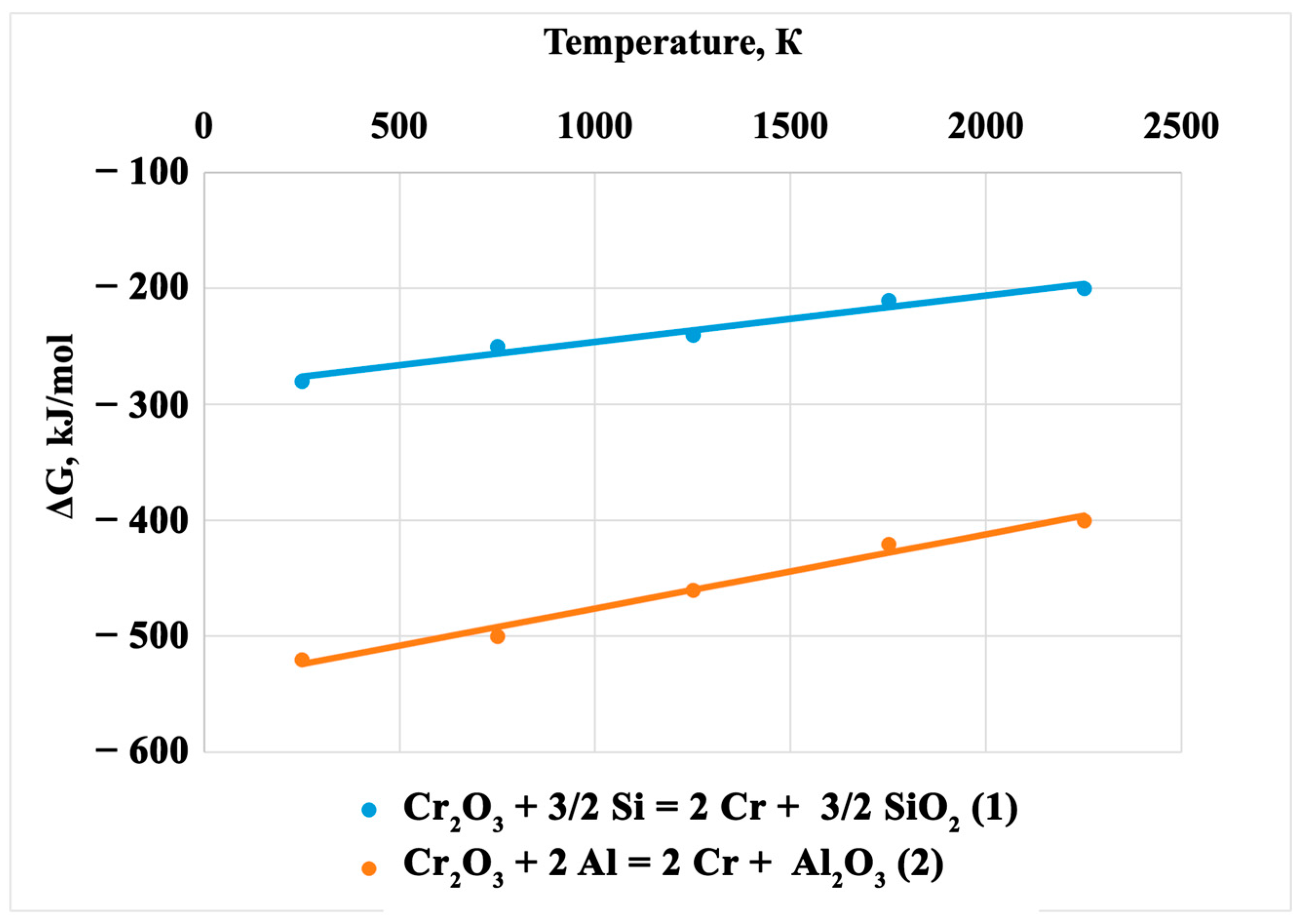
The thermodynamic feasibility of reaction (1) was evaluated using equilibrium calculations performed in HSC Chemistry software in the temperature range of 0–2500 °C. The calculated values of standard Gibbs free energy change (ΔG°) remain negative throughout the whole investigated range, varying from −231.500 kJ at 0 °C to −188.900 kJ at 2500 °C. This confirms that the reduction of chromium oxide by silicon is thermodynamically feasible under high-temperature conditions.
Next, the possibility of aluminothermic reduction of chromium oxide was considered. The overall reaction of the process is described by the following Equation (2):
The thermodynamic feasibility of aluminothermic reduction was evaluated in the same manner using HSC Chemistry software. The calculated ΔG° values for reaction (2) remain significantly more negative than those for silicothermic reduction over the entire temperature range, changing from −530.100 kJ at 0 °C to −389.700 kJ at 2500 °C. These results indicate a stronger affinity of aluminum for oxygen and a higher reducing ability toward chromium oxide.
A comparison of the calculated thermodynamic parameters shows that both reactions are feasible in the studied temperature range. However, the aluminothermic route demonstrates markedly lower Gibbs free energy values than the silicothermic route, indicating its superior thermodynamic efficiency.
It should be emphasized that these reactions represent simplified model systems. Real metallurgical processes involve multicomponent oxide and alloy phases, where the Gibbs energy differs from that of pure substances. Therefore, the present thermodynamic analysis is intended for qualitative comparison of reduction tendencies rather than for precise prediction of equilibrium compositions.
Based on the obtained equations, temperature dependences of the change in the standard Gibbs free energy and equilibrium constant were constructed for the reactions of chromium oxide reduction with silicon and aluminum. The corresponding graphical dependences are presented in
Figure 3.
As shown in
Figure 3, the Gibbs free energy values for both reactions remain negative throughout the studied temperature range. However, the aluminothermic reduction reaction is characterized by considerably lower ΔG° values, indicating a stronger tendency for chromium oxide reduction.
Thus, the results of the thermodynamic analysis show that the reduction of chromium oxide by both silicon and aluminum in the studied temperature range is thermodynamically probable. Moreover, the combined presence of these components in the complex chromium-containing alloy as a reducing agent creates favorable conditions for the reduction processes during the production of refined ferrochrome grades.
However, the thermodynamic probability of the process does not allow for a full assessment of the interactions between the charge components under heating conditions. Therefore, the next stage of the study was to investigate the kinetic characteristics of thermal transformations in the chrome ore-reducing agent system using differential thermal analysis.
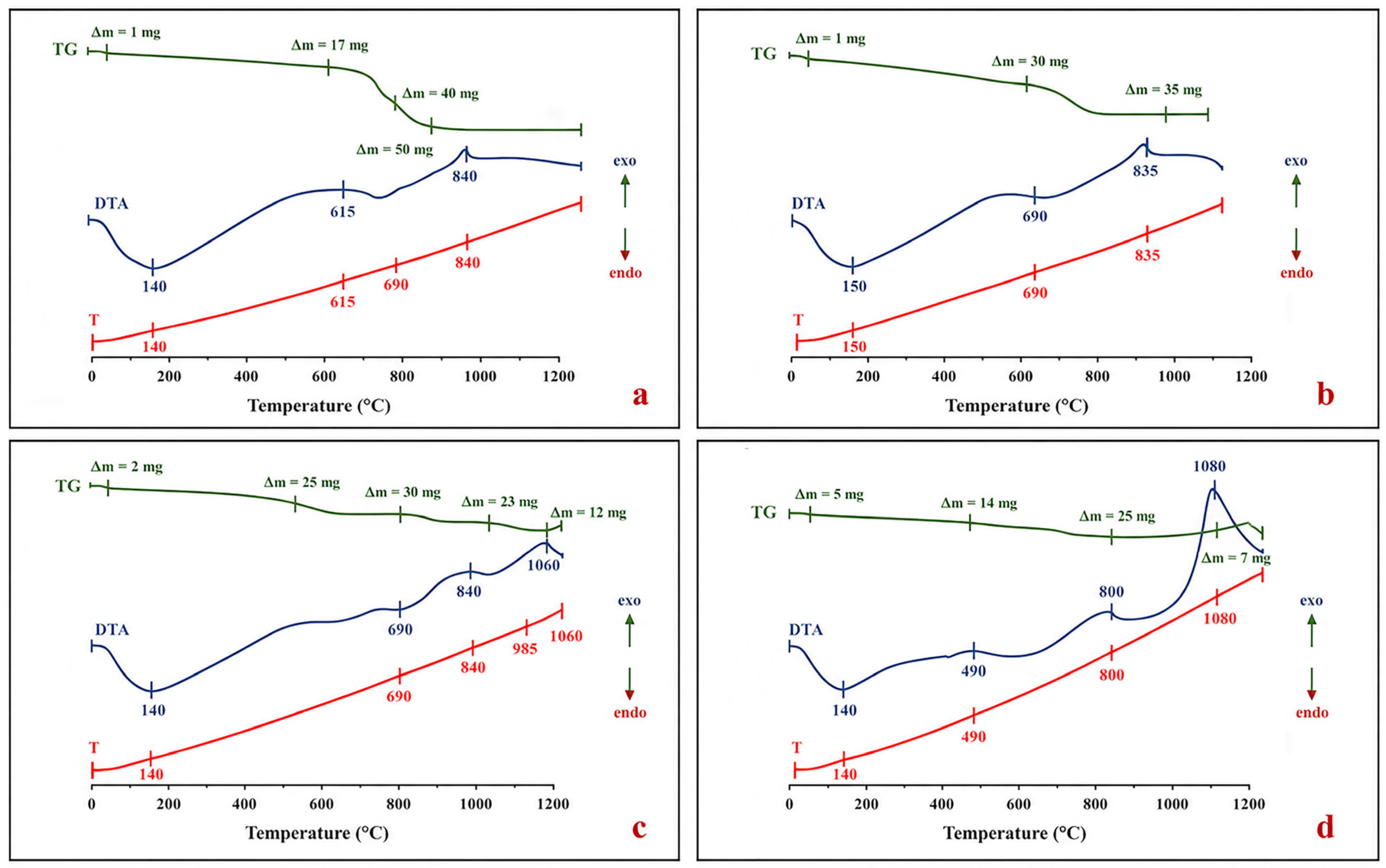
The results of derivatographic studies of the studied samples in the temperature range of 20–1150 °C are presented in the derivatograms in
Figure 4, and the temperature ranges of the observed thermal effects are indicated in
Table 4.
The thermal effects in
Table 4 should be regarded as tentative, since DTA/TG data alone do not provide direct phase identification. The interpretation was based on the phase composition of the original chrome ore and known data on the thermal behavior of serpentine-containing and chromite-containing systems. Serpentine minerals are known to undergo dehydroxylation mainly above 500 °C, with characteristic thermal effects commonly observed in the range of approximately 550–800 °C [
17,
18]. Further heating may promote the formation of olivine/forsterite-type phases [
17]. In chromite-bearing systems, high-temperature treatment can be accompanied by oxidation of Fe
2+ to Fe
3+, redistribution of Fe- and Cr-bearing oxide phases, and structural transformations of the spinel phase [
19]. Therefore, the effects observed at 985–1080 °C were assigned only as possible chromospinel-related transformations.
Analysis of the obtained derivatograms showed that the thermal behavior of the initial chromium ore and charge mixtures is governed by successive dehydration, dehydroxylation, phase reconstruction, and solid-state interaction processes. The low-temperature endothermic effects (140–150 °C) are associated with the removal of physically adsorbed moisture. The intermediate region corresponds mainly to serpentine decomposition and destruction of hydrated silicate phases, accompanied by structural rearrangement of the ore matrix. At higher temperatures (800–1080 °C), exothermic and complex thermal effects are related to olivine formation, spinel restructuring, and intensified interaction between ore components and reducing alloys. The position and intensity of these effects depend on the chemical nature of the reductant and the contact conditions between particles.
For the chromium ore sample (
Figure 4a), the initial endothermic effect at 130–150 °C corresponds to the removal of physically adsorbed moisture and is accompanied by a mass loss of about 1 mg (0.05%). A more pronounced mass loss occurs in the temperature range of 615–690 °C, associated with the dehydroxylation of serpentine minerals, reaching up to 40 mg (1.90%). At higher temperatures (800–900 °C), an exothermic effect is observed, which is attributed to the formation of Fe–Cr oxide solid solutions, accompanied by a mass decrease of approximately 50 mg (2.38%).
For the mixture of chromium ore and FeSiCr (
Figure 4b), the thermal behavior remains generally similar to that of the initial ore. The low-temperature endothermic effect at 140–160 °C corresponds to moisture removal. However, compared to the pure ore, the main thermal effects are shifted toward higher temperatures. This behavior can be explained by the limited reactivity of FeSiCr under solid-state conditions at relatively low temperatures. Silicon contained in FeSiCr requires higher temperatures to become chemically active and to initiate reduction reactions with chromium oxides. In addition, the interaction between the ore and the alloy is controlled by diffusion processes, which are significantly intensified only at elevated temperatures. As a result, the onset of solid-phase interaction is delayed, leading to a shift in the corresponding thermal effects toward higher temperature regions.
Figure 4c shows the derivatogram of the mixture of chromium ore and AlSiCr. The section on the DTA curve from the endothermic effect (140 °C) to the temperatures of the weak exothermic effect of 470–500 °C corresponds to the processes of release of hygroscopic and hydrated moisture, accompanied by a weight loss of 2 mg (0.10%) and 7 mg (0.36%), respectively. The endothermic effect at temperatures of 680–700 °C and the exothermic effect at temperatures of 830–850 °C with a sharp decrease in sample weight by 25 mg (1.29%) and 30 mg (1.56%), respectively, repeat the picture of the previous derivatograms. With a further increase in temperature, a wave of exothermic effects can be detected on the derivatogram: 985 °C, 1000 °C. Presumably, the appearance of these effects is associated with the onset of interaction between the lower oxides of the ore and the reducing agent, as a similar pattern is not reflected in the derivatograms above. These effects are characterized by a smooth increase in weight by 23 mg (1.19%) and 12 mg (0.62%), respectively.
For the briquetted mixture (
Figure 4d), a noticeable shift in thermal effects toward lower temperatures is observed compared to the non-briquetted systems. In particular, the effect associated with serpentine decomposition appears at approximately 490 °C, while the exothermic effect corresponding to olivine formation is observed at around 800 °C instead of 835–840 °C. At temperatures above 940 °C, a pronounced exothermic peak at 1080 °C is recorded, accompanied by an additional mass loss of about 7 mg (0.36%), indicating intensified high-temperature reactions. This behavior indicates enhanced interphase interaction due to reduced diffusion distances and improved physical contact between particles after briquetting. As a result, physicochemical processes in the system proceed at lower temperatures and with higher intensity, confirming the effectiveness of briquetting for systems containing complex AlSiCr reducing agents.
The total mass loss across the studied temperature range varies significantly between samples: approximately 7.04% for chromium ore, 5.38% for the FeSiCr mixture, 5.14% for the AlSiCr mixture, and 4.17% for the briquetted system. This trend confirms that the presence of complex reducing agents and especially briquetting leads to more controlled thermal transformations and reduced overall mass loss, indicating more efficient interaction between charge components.
To quantitatively assess the kinetic characteristics of the identified stages, the temperature ranges of individual thermal effects and the magnitude of the deviation Δt from the baseline were determined from the experimental curves relative to the constructed local baseline. Based on this, graphs of the dependence in lgΔt − 1/T coordinates were constructed, which are presented in
Figure 5.
The apparent activation energies of the corresponding processes were calculated using the slope of the linear sections. The results are presented in
Table 5. It should be noted that the non-linearity of the obtained lgΔt − 1/T plots indicates that the thermal transformations in the studied systems do not follow a single-step mechanism but involve several overlapping physicochemical processes. Therefore, the calculated activation energies should be interpreted as apparent values corresponding to specific temperature intervals rather than true kinetic parameters of a single elementary reaction.
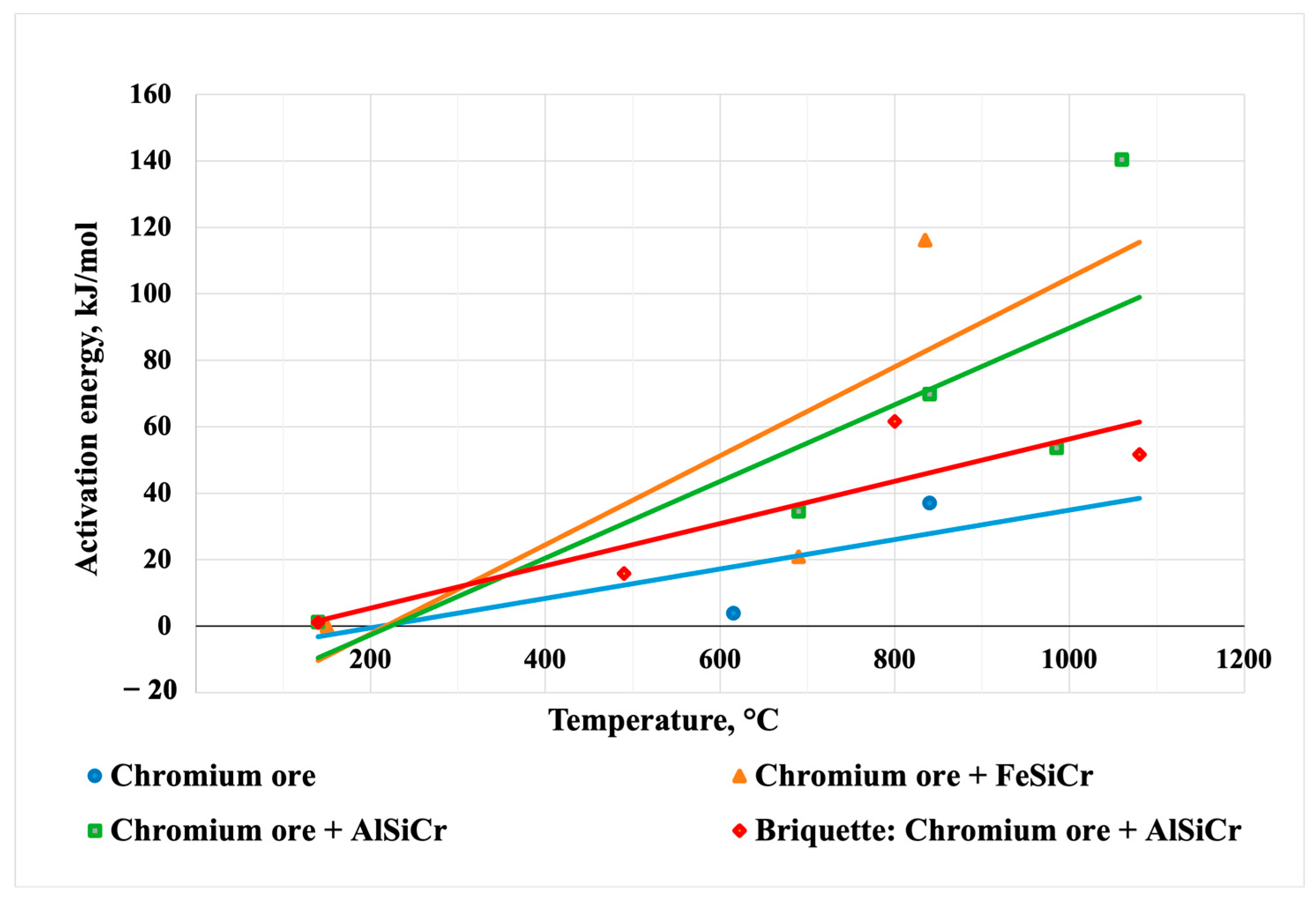
To visually compare the influence of the reducing agent composition and batch preparation method on the energy parameters of thermal transformations,
Figure 6 shows the dependence of the apparent activation energy on temperature for all studied systems. This graph summarizes the results presented in
Table 5 and allows one to trace the change in the energy barriers of individual process stages depending on the interaction conditions of the components.
As can be seen from
Figure 6, the highest apparent activation energy values in the high-temperature region are characteristic of the mixture of chrome ore with FeSiCr. In the range of 800–835 °C, the E
act value for this mixture is 116.218 kJ/mol, which indicates the greatest energetic difficulties in the process. When using AlSiCr in a comparable temperature range of 800–840 °C, the apparent activation energy value decreases to 69.990 kJ/mol. For the briquetted mixture of chrome ore with a silicon–aluminum reducing agent in the range of 770–800 °C, the E
act value is 61.739 kJ/mol, which is the lowest among the high-temperature stages of the studied reducing mixtures. This indicates more favorable kinetic conditions for the interaction of the charge components when using a complex alloy, especially in briquetted form.
Thus, the thermodynamic calculations and thermoanalytical observations show consistent tendencies. While thermodynamic analysis indicates the feasibility of chromium oxide reduction by both silicon and aluminum, the DTA results suggest that AlSiCr-containing systems exhibit earlier and energetically more favorable thermal interaction stages. Additional briquetting of the batch enhances this effect, shifting some of the thermal transformations to lower temperatures and reducing the energy barriers to the process. Taken together, this demonstrates the potential of using AlSiCr alloy in the production of refined ferrochrome grades.





 and
and