Mechanism of Vanadium–Titanium Slag in Regulating the Performance and Hydration of Metallurgical Slag-Based Cementitious Materials



Abstract
1. Introduction
2. Materials and Methods
2.1. Raw Material
2.2. Method
2.2.1. Experimental Ratio Design and Preparation Method
2.2.2. Performance and Characterization Methods
3. Results
3.1. Compressive Strength
3.2. Toxicity Leaching Safety
3.3. Hydration Heat Analysis over 168 h
3.4. Analysis of Hydration Crystalline Phases and Chemical Bond Evolution
3.4.1. Crystalline Phases Analysis
3.4.2. Chemical Bond Analysis
3.4.3. Analysis of Weight Loss of Hydration Products
3.4.4. Chemical Element Orbitals Analysis
3.4.5. Microstructural Analysis
4. Discussion
5. Conclusions
- (1)
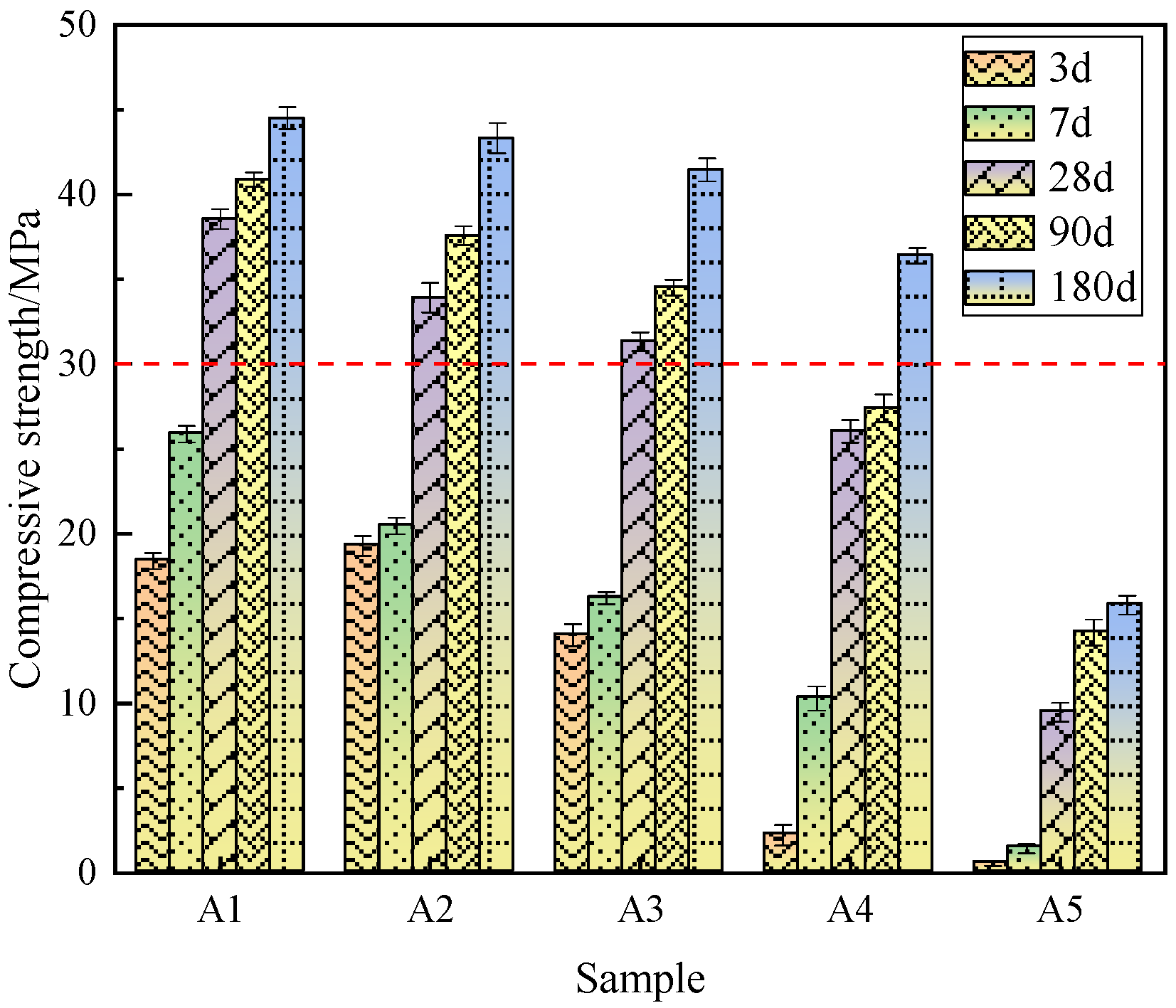
- The VTS content has a significant regulatory effect on the mechanical performance of the system. When VTS replaces 30% of BFS (A3, VTS:BFS:SS:DG = 3:3:3:1), the system exhibits the optimal overall performance, with a 28-day compressive strength of 31.33 MPa, meeting the engineering requirement (>30 MPa). Excessive addition (≥45%) leads to a sharp decrease in strength, attributed to the reduced content of highly reactive BFS, which weakens the foundation for hydration product formation.
- (2)
- The leaching concentrations of heavy metals in all specimens are far below the limits specified in the “Standards for Drinking Water Quality” (GB 5749-2022), indicating good environmental safety.
- (3)
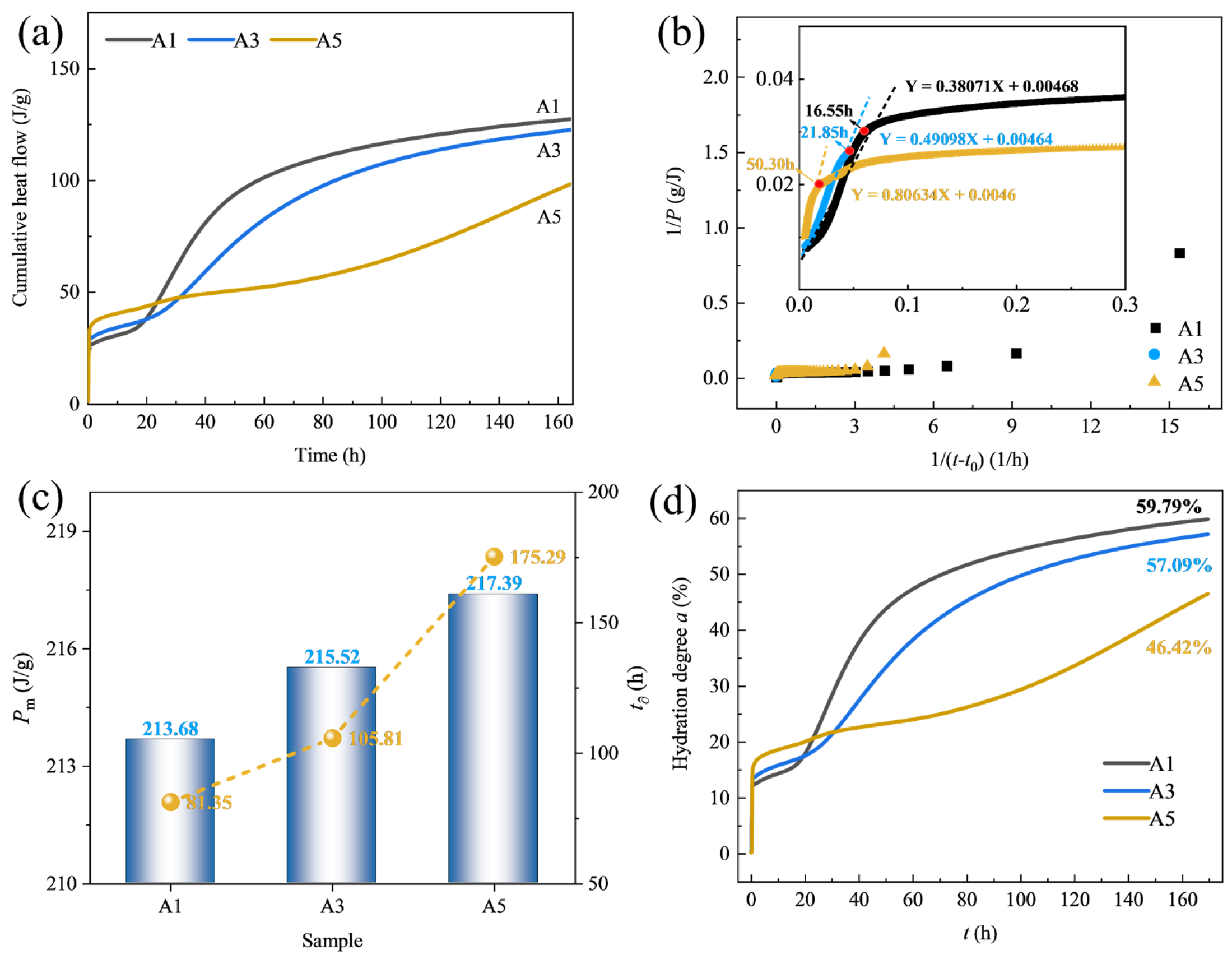
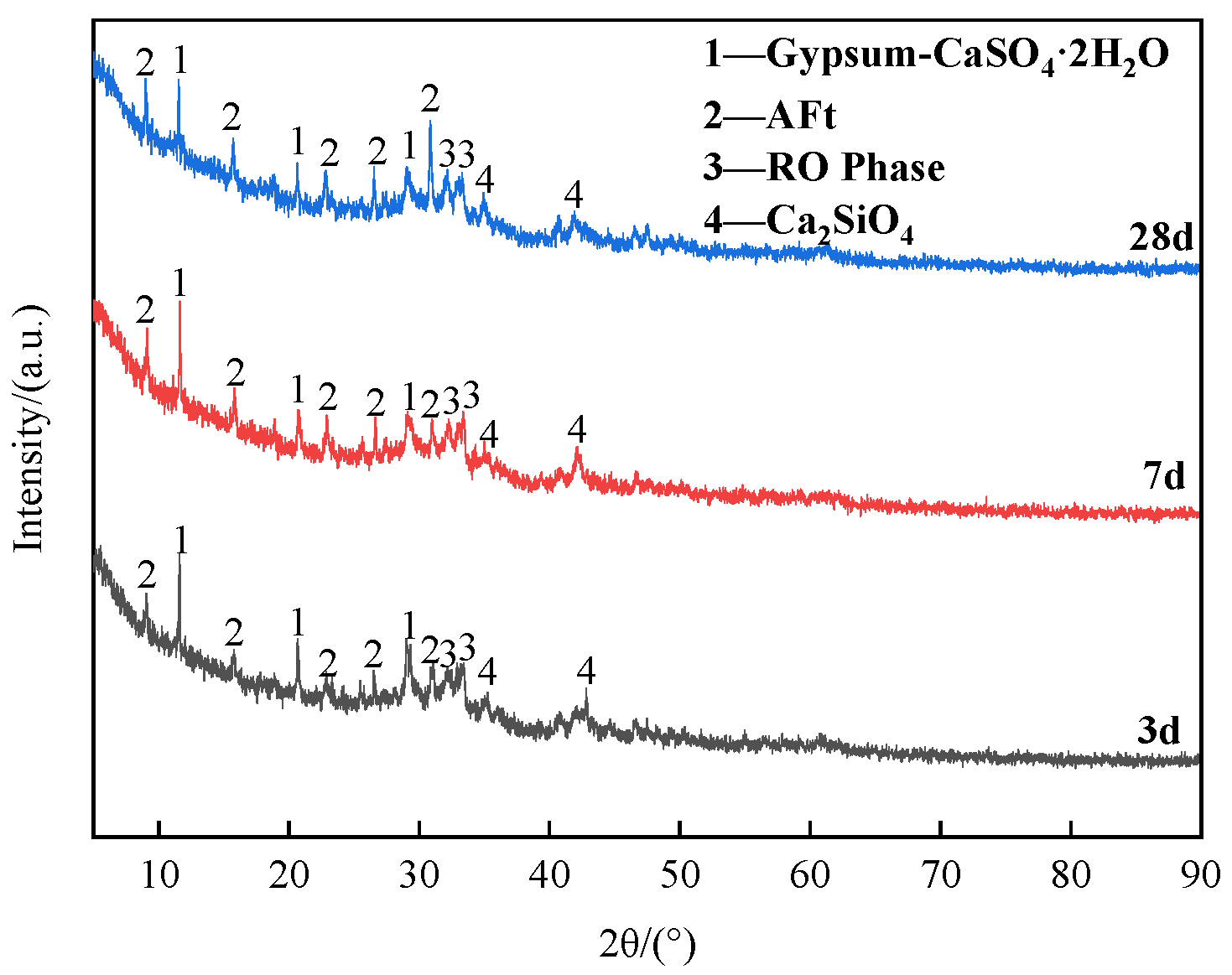
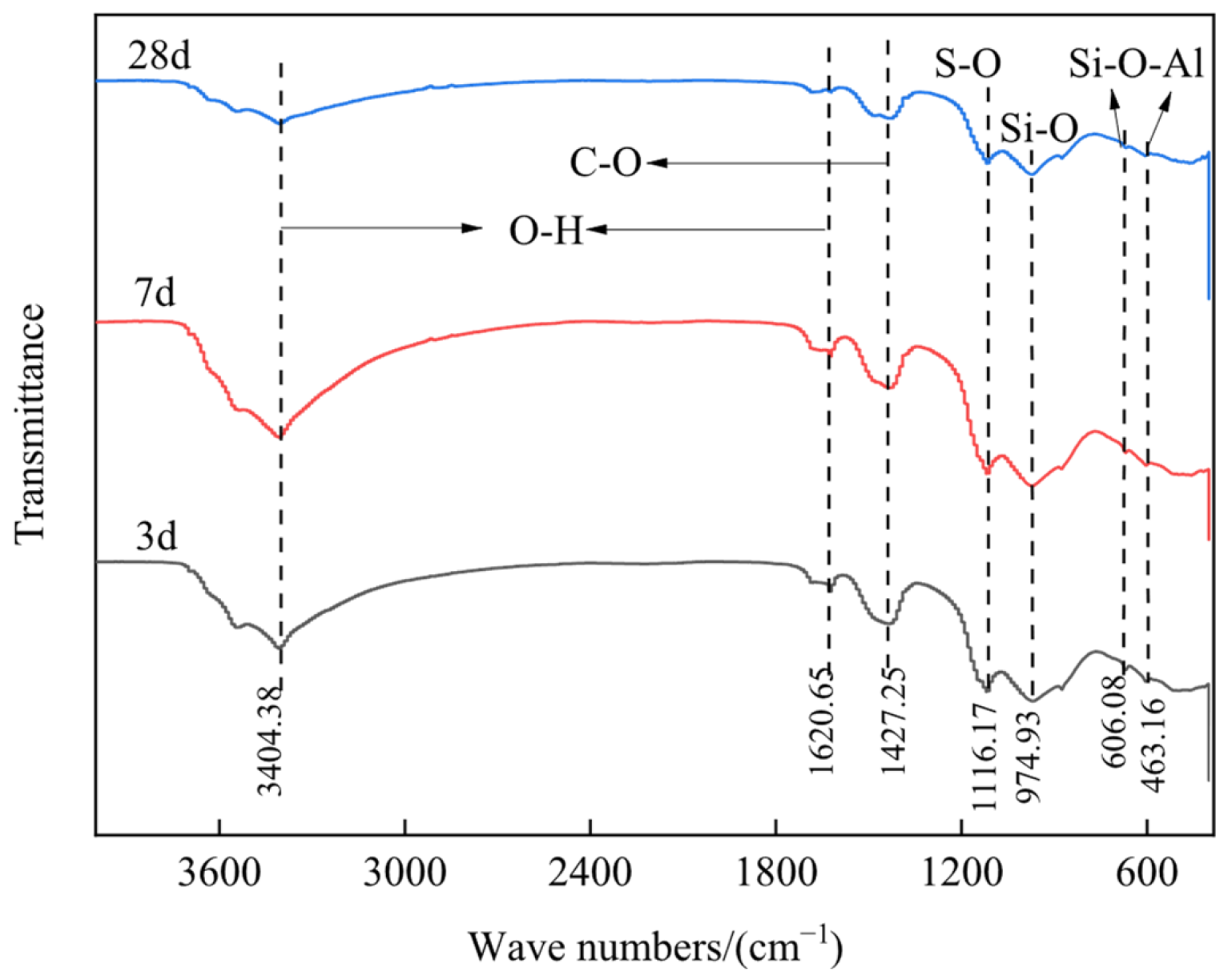
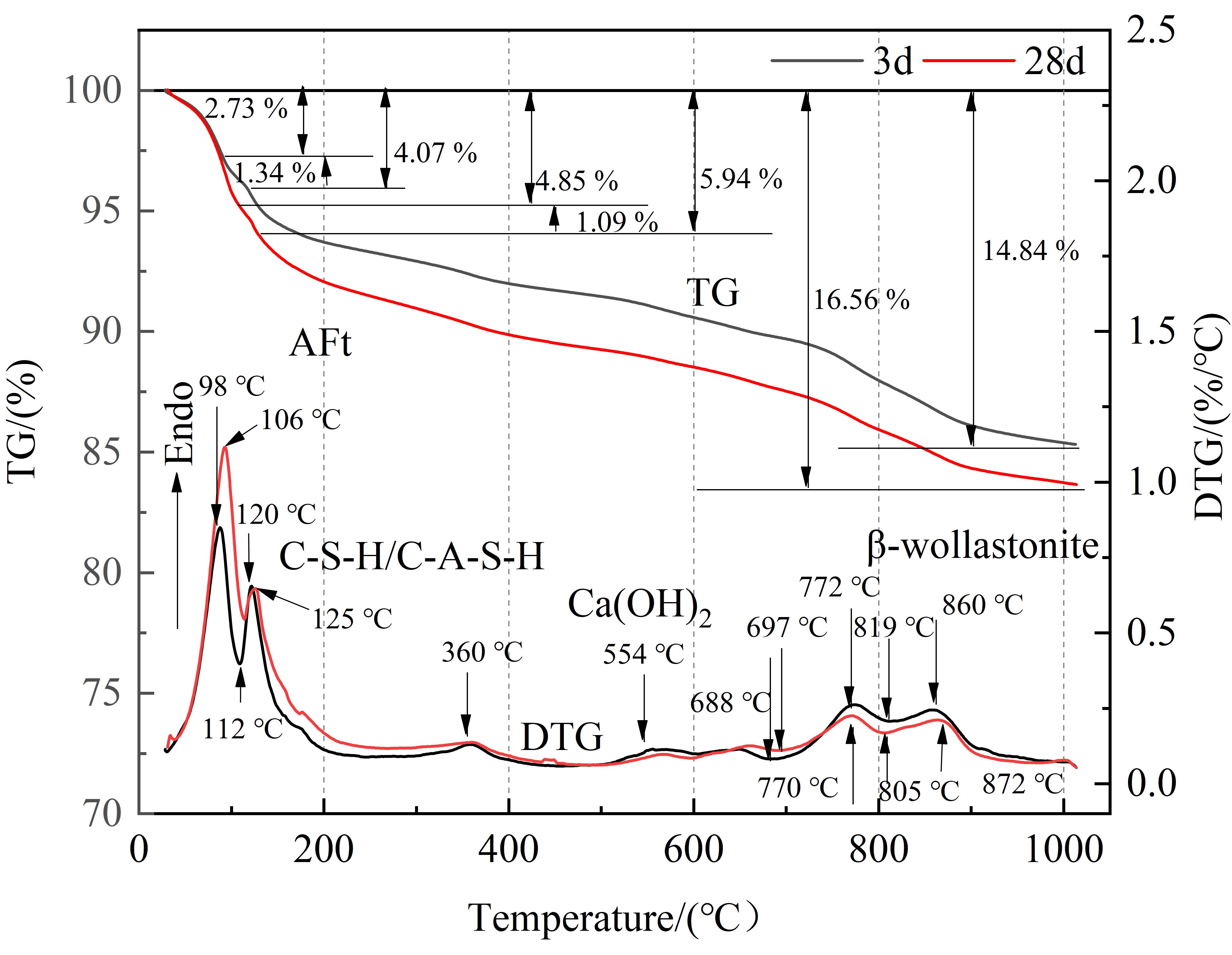
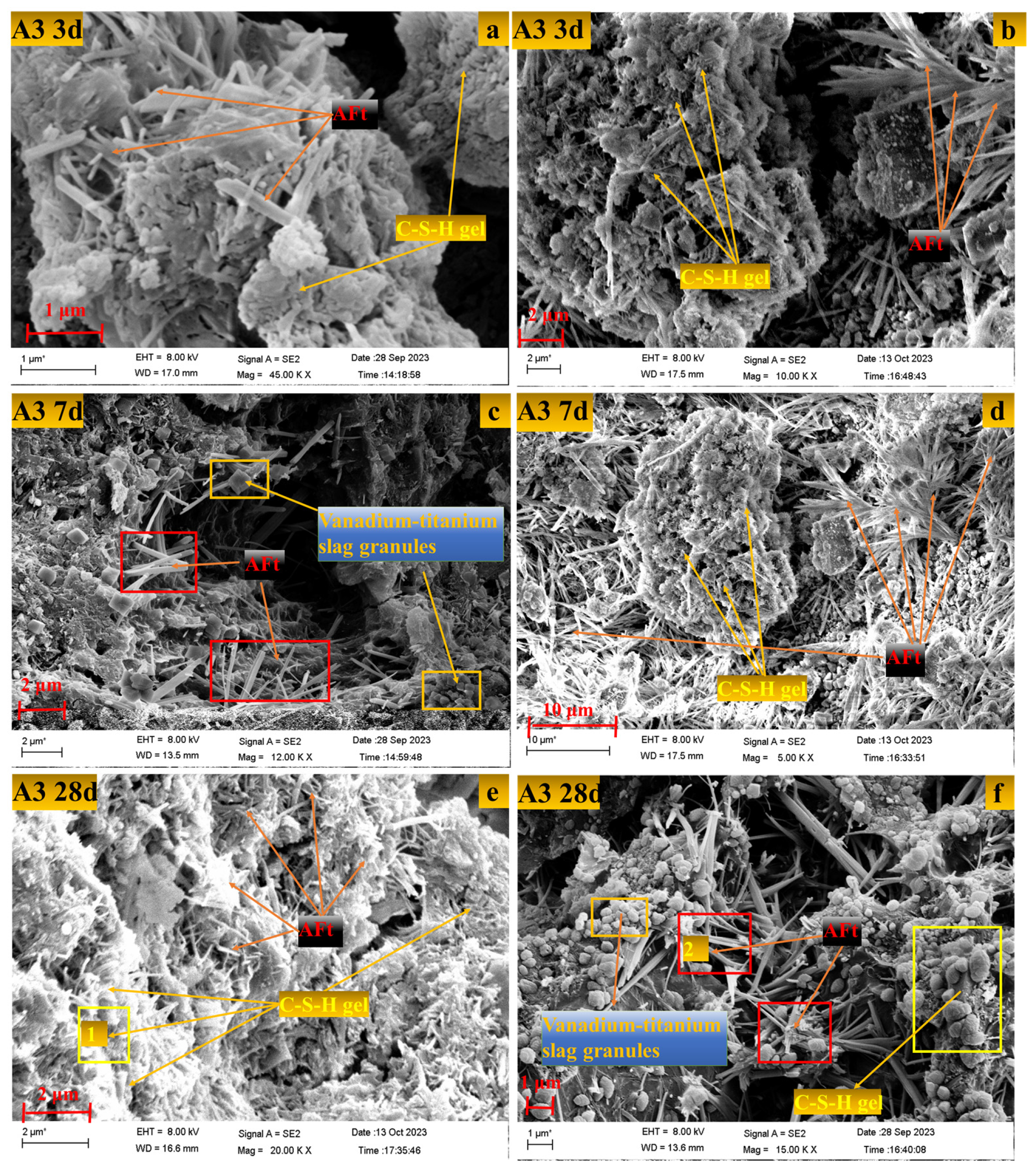
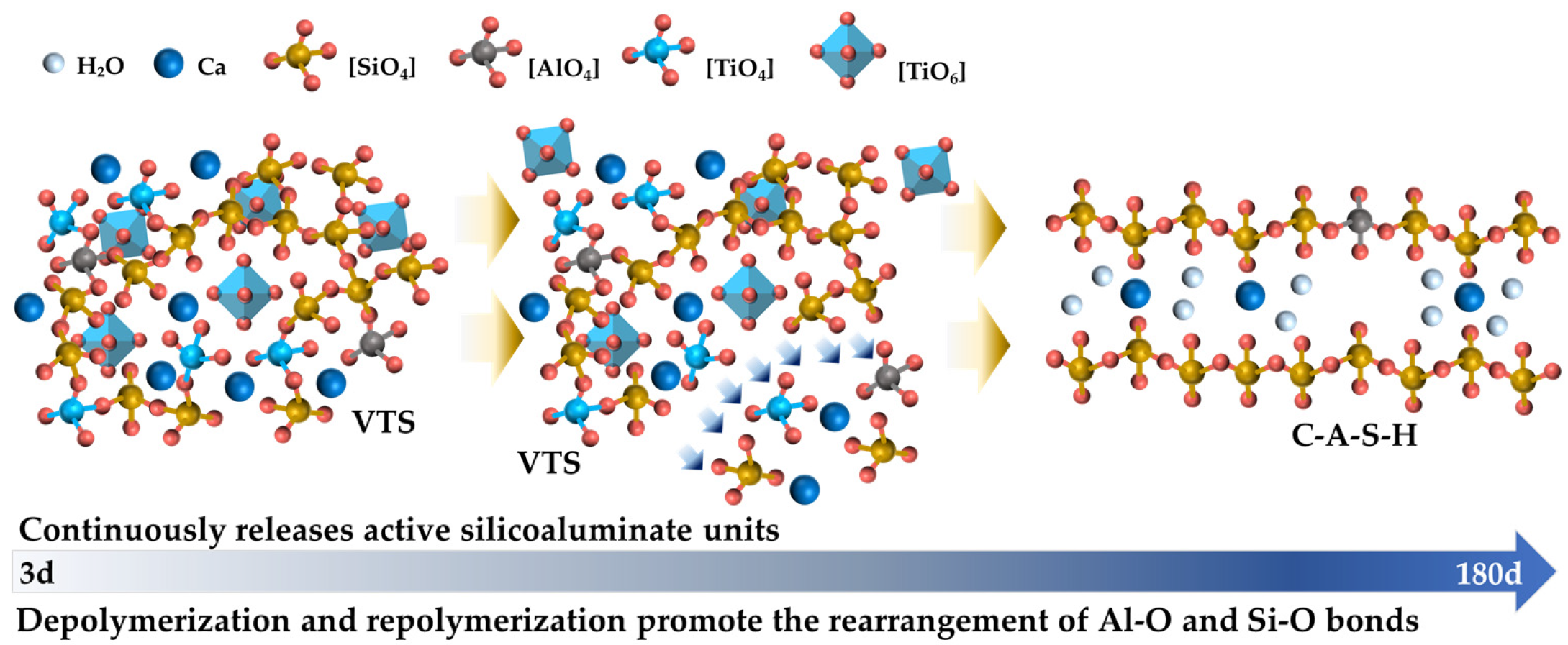
- VTS exhibits a relatively slow hydration rate in the early stage, showing a unique “gradual release” hydration mechanism within the system. Hydration heat analysis indicates that the A3 specimen maintains a relatively high heat release rate in the middle to late stages of hydration (after 72 h), and the cumulative hydration heat is significantly higher than that of the control system without VTS. Furthermore, the intensity of AFt diffraction peaks and the weight loss of C–S–H/AFt continue to increase from 7 to 28 days, indicating that the middle-to-late-stage activity of VTS effectively sustains the hydration reaction. The dissociation and re-polymerization of [SiO4] and [AlO4] units promote the reorganization of Al–O and Si–O bonds.
- (4)
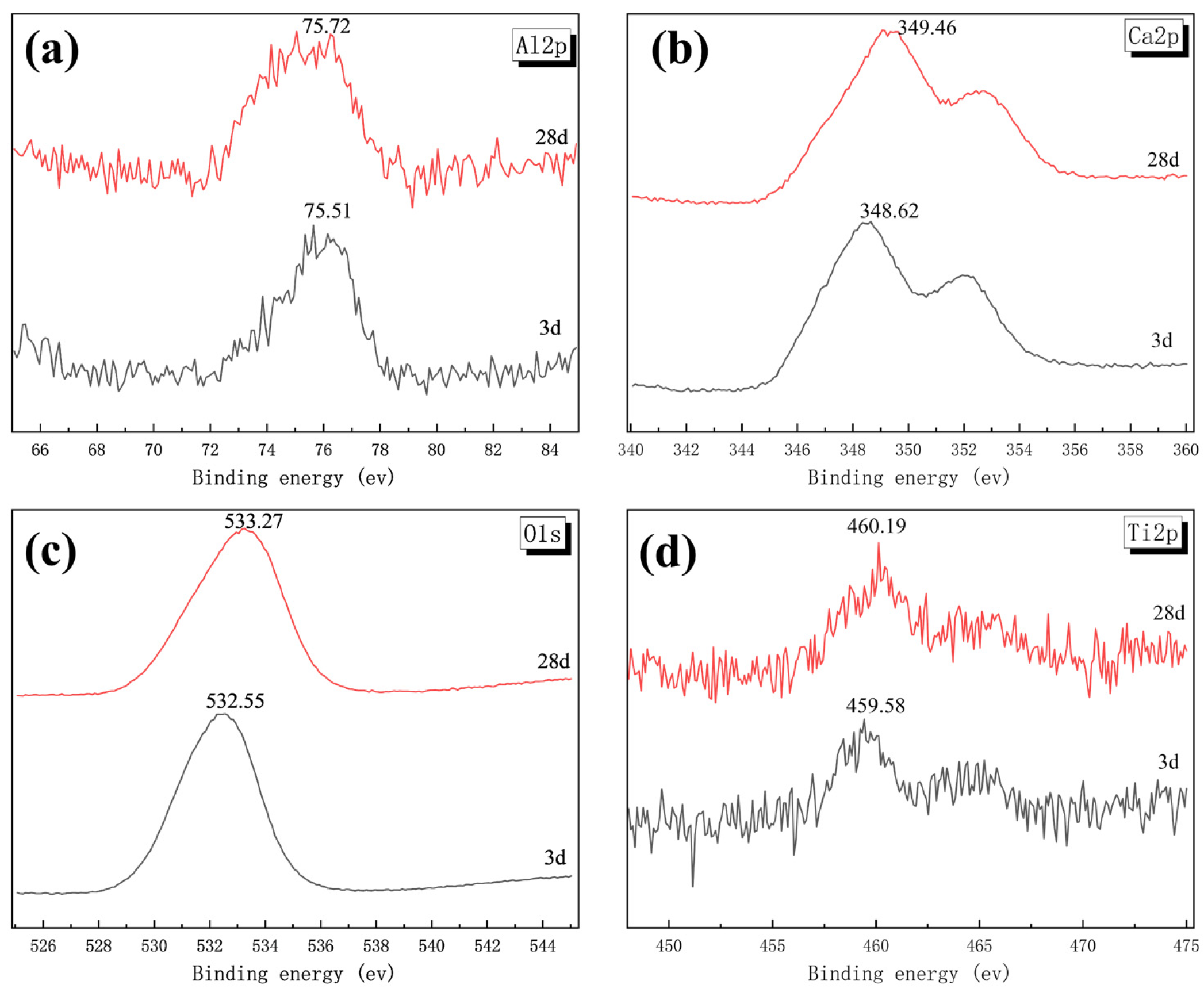
- Under appropriate addition levels, fine VTS particles can not only optimize particle gradation through micro-filling effects but also act as heterogeneous nucleation sites to promote the deposition of hydration products, thereby improving the uniformity and density of the microstructure to some extent. The TiO2 component may participate in the chemical environment evolution of the hydration products. However, excessive VTS content significantly increases the TiO2 proportion, causing some particles to remain inert during hydration, which markedly inhibits the overall hydration reaction rate.
- (5)
- Future studies can further explore the regulatory mechanism of TiO2 on the chemical composition of C–S–H and systematically evaluate the engineering applicability of this system through long-term durability tests.
Author Contributions
Funding
Data Availability Statement
Conflicts of Interest
Abbreviations
| VTS | Vanadium–titanium slag |
| BFS | blast furnace slag |
| SS | Steel slag |
| DG | Desulfurization gypsum |
| XRD | X-ray diffraction |
| FT-IR | Fourier-transform infrared spectroscopy |
| TG–DSC | Thermogravimetric analysis |
| XPS | X-ray photoelectron spectroscopy |
| SEM | Scanning electron microscopy |
References
- Zhang, S.S.; Wang, Z.Y.; Peng, H.; Hu, P.; Rao, J.T.; Zhang, J.L.; Pang, J. Distribution behavior of vanadium and titanium between hot metal and high titanium slag relevant to HIsmelt smelting condition. J. Mater. Res. Technol. 2022, 19, 4517–4524. [Google Scholar] [CrossRef]
- Ma, X.M.; Xu, L.; Cai, J.M.; Zhang, Z.Y.; Sun, Y.Q.; Zhu, W.W.; Pan, J.L. Feasible use of titanium slag in improving properties of low carbon fire-resistive cementitious composites at elevated temperatures. Constr. Build. Mater. 2024, 416, 135272. [Google Scholar] [CrossRef]
- Li, C.H.; Du, P.P.; Zhang, J.S.; Zhao, S.X.; Gao, M.L.; Wang, Q.H.; Tian, T.L.; Li, L.J.; Long, Y. Advances in Integrated Extraction of Valuable Components from Ti-Bearing Slag. Metals 2025, 15, 1080. [Google Scholar] [CrossRef]
- Rui, Y.F.; Li, N.; Tang, R.F.; Zhao, S.X.; Zhang, X.; Zhao, S.W.; Zheng, Y.C.; Huang, T.Y. The influence of vanadium titanium slag and blast furnace slag on the properties of cement-based materials: Fluidity, mechanical properties, and hydration. Constr. Build. Mater. 2025, 504, 144679. [Google Scholar] [CrossRef]
- Hou, X.K.; Wang, D.; Shi, Y.M.; Guo, H.T.; He, Y.Y. Hydraulic Activity and Microstructure Analysis of High-Titanium Slag. Materials 2020, 13, 1239. [Google Scholar] [CrossRef] [PubMed]
- Liu, Z.; Lai, Z.Y.; Luo, X.Z.; Xiao, R.; Liu, M.L.; Deng, Q.B.; Chen, J.W.; Lu, Z.Y.; Lv, S.Z. Effect of titanium slag on the properties of magnesium phosphate cement. Constr. Build. Mater. 2022, 343, 128132. [Google Scholar] [CrossRef]
- Liu, G.; Li, M.; Zhang, S.P.; Zhang, Z.H.; Wu, Y.P. Strengthening effect and mechanism of titanium extraction slag on the mechanical property of calcium aluminate cement. Ceram. Int. 2023, 49, 30326–30334. [Google Scholar] [CrossRef]
- Wang, W.; Li, X.S.; Shen, J.A.; Zhu, H.Z.; Wang, J. Feasibility of high titanium heavy slag used as aggregates for asphalt mixtures. J. Clean. Prod. 2023, 411, 137332. [Google Scholar] [CrossRef]
- Bai, C.Y.; Deng, Y.; Zhou, Q.; Deng, G.; Yang, T.T.; Yang, Y.Y. Effect of different curing methods on the preparation of carbonized high-titanium slag based geopolymers. Constr. Build. Mater. 2022, 342, 128023. [Google Scholar] [CrossRef]
- Li, X.; Jun, L.; Lu, Z.; Hou, L.; Chen, J. Preparation and properties of reactive powder concrete by using titanium slag aggregates. Constr. Build. Mater. 2020, 234, 117342. [Google Scholar] [CrossRef]
- He, K.; Deng, Y.; Cao, Z.Q.; Zhang, X.F. Engineering performance and microscale structure of activated high titanium slag-soil-cement-bentonite (HTS-SCB) slurry backfill. Constr. Build. Mater. 2023, 373, 130776. [Google Scholar] [CrossRef]
- Wei, H.; Chen, A.Y.; Li, C.H.; Zhang, J.M.; Lu, H. Response Surface Optimization of High-Durability Fly Ash–Slag Blended Concrete as an Eco-Friendly Repair Material. Materials 2026, 19, 1058. [Google Scholar] [CrossRef]
- Fathi, M.E.; El-Zoughiby, M.E.; Mortagi, M.; Youssf, O.; Abdulazeez, M.; Tahwia, A.M. Shear Performance of Sustainable Self-Compacting Geopolymer RC Beams: Experimental and Numerical Study. Infrastructures 2026, 11, 84. [Google Scholar] [CrossRef]
- Ma, Z.; Pu, C.; Zhang, G.H.; Wang, B.; Litifu, W.; Liu, C.M.; Li, S.H.; Yin, P. Study on the Influence of Modified Steel Slag Filler on the Rheological Properties and Moisture Stability of Asphalt Mastic. Coatings 2026, 16, 340. [Google Scholar] [CrossRef]
- Zhang, S.Q.; Zhao, T.; Li, K.Q.; Ni, W.; Yang, H.F.; Wu, Z.P.; Li, J.; Li, Y.; Zhang, B.; Wang, J.J.; et al. Effect of blast furnace slag substitution for cement in carbon-reduced and low-cost solidified/stabilized cementitious materials. Green Smart Min. Eng. 2024, 1, 104–117. [Google Scholar] [CrossRef]
- Zhang, S.Q.; Shi, T.Y.; Ni, W.; Li, K.Q.; Gao, W.; Wang, K.; Zhang, Y.Y. The mechanism of hydrating and solidifying green mine fill materials using circulating fluidized bed fly ash-slag-based agent. J. Hazard. Mater. 2021, 415, 125625. [Google Scholar] [CrossRef]
- Xu, Z.Q.; Hu, X.J. Characteristics of Steel Slag and Properties of High-Temperature Reconstructed Steel Slag. Metals 2026, 16, 85. [Google Scholar] [CrossRef]
- Li, Z.H.; Yao, J.; Hua, S.G.; Li, S.Q.; Li, K.X.; Ma, B. An Innovative High-Content Steel Slag Alkali-Sulfate Composite Activated Binder: Hydration Behavior and Application. Materials 2026, 19, 936. [Google Scholar] [CrossRef] [PubMed]
- Zhao, T.; Zhang, S.Q.; Yang, H.F.; Ni, W.; Li, J.; Zhang, G.; Teng, G.X.; Li, X.; Guo, S.; Zhou, Y.C.; et al. Leaching and hydrating mechanisms, economic benefits of backfill materials by using coal fly ash–slag-based binder for environmentally sustainable production. Constr. Build. Mater. 2023, 397, 132360. [Google Scholar] [CrossRef]
- Liu, J.Y.; Zhang, S.Q.; Yang, H.F.; Ni, W.; Guan, D.S.; Xu, X.Y.; Zhan, Y. Influence of Vanadium-Titanium Slag Substitution on Properties and Microstructure of Blast Furnace Slag-Steel Slag-Desulfurization Gypsum Gel System. Gels 2026, 12, 3. [Google Scholar] [CrossRef]
- GB/T 208-2014; Test Method for Density of Cement (Standard). China Standards Press: Beijing, China, 2014.
- Chen, X.Y.; Zhang, S.Q.; Ni, W.; Zhao, T.; Li, Y.Y. Dual role of FGD ash in GBFS-steel slag-FGD gypsum-FGD ash quaternary system: Hydration acceleration and strength enhancement mechanisms. Constr. Build. Mater. 2025, 497, 143948. [Google Scholar] [CrossRef]
- Zhan, Y.; Zhang, S.Q.; Yang, X.; Li, K.Q.; Zhang, B.; Zhao, T.; Li, G.C.; Ye, L.F.; Wu, S.; Ni, W. Research on the Mechanical Properties, Hydration Mechanism and Engineering Applications of Road Base Materials Prepared from Harmless-Treated Barium Slag and Multiple Industrial Solid Wastes. Appl. Sci. 2026, 16, 74. [Google Scholar] [CrossRef]
- GB/T 17671-2021; Test Method of Cement Mortar Strength (ISO Method). China Standard Press: Beijing, China, 2021.
- HJ 557-2010; Solid Waste—Extraction Procedure for Leaching Toxicity—Horizontal Vibration Method. China Environmental Science Press: Beijing, China, 2010.
- GB/T 12959-2008; Test Method for Heat of Hydration of Cement. China Standard Press: Beijing, China, 2008.
- GB 5749-2022; Standards for Drinking Water Quality. Standardization Administration of China: Beijing, China, 2022.
- Li, N.; Farzadnia, N.; Shi, C.U. Microstructural changes in alkali-activated slag mortars induced by accelerated carbonation. Cem. Concr. Res. 2017, 100, 214–226. [Google Scholar] [CrossRef]
- Kapeluszna, E.; Kotwica, Ł.; Różycka, A.; Gołek, Ł. Incorporation of Al in C-A-S-H gels with various Ca/Si and Al/Si ratio: Microstructural and structural characteristics with DTA/TG, XRD, FTIR and TEM analysis. Constr. Build. Mater. 2017, 155, 643–653. [Google Scholar] [CrossRef]
- Zou, Y.X.; Zuo, X.B.; Yin, G.J.; Zhang, H.L.; Ding, F.B. Utilization of industrial wastes on the durability improvement of cementitious materials: A comparative study between FA and GGBFS. Constr. Build. Mater. 2024, 421, 135629. [Google Scholar] [CrossRef]
- El-Didamony, H.; Amer, A.A.; El-Sokkary, T.M.; Abd-El-Aziz, H. Effect of substitution of granulated slag by air-cooled slag on the properties of alkali activated slag. Ceram. Int. 2013, 39, 171–181. [Google Scholar] [CrossRef]
- Khormali, A. Using a New Mixture of Reagents for Effective Inhibition of Corrosion and Salt Precipitation in the Petroleum Industry. J. Chem. Pet. Eng. 2021, 55, 257–276. [Google Scholar]



| Sample | SiO2 | CaO | Al2O3 | Fe2O3 | SO3 | MgO | TiO2 | MnO | K2O | V2O5 | P2O5 |
|---|---|---|---|---|---|---|---|---|---|---|---|
| VTS | 25.3 | 33.7 | 11.4 | 1.6 | 0.9 | 9.2 | 15.8 | 0.7 | 0.3 | ND | 0.1 |
| BFS | 30.1 | 41.6 | 11.5 | 2.6 | 1.3 | 8.6 | 1.7 | 0.3 | 0.6 | ND | 0.2 |
| SS | 14.0 | 42.1 | 3.4 | 19.4 | 0.5 | 9.7 | 2.2 | 3.9 | 0.2 | 0.9 | ND |
| DG | 1.6 | 49.4 | 0.3 | 0.4 | 46.2 | 1.1 | 0.1 | ND | ND | ND | ND |
| Number | Composition of Cementitious Material (wt. %) | Cementitious Materials Mass (g) | Water-to-Binder Ratio | Water | Total Mass (g) | |||
|---|---|---|---|---|---|---|---|---|
| VTS | BFS | SS | DG | |||||
| A1 | 0 | 60 | 30 | 10 | 758 | 0.32 | 242 | 1000 |
| A2 | 15 | 45 | 30 | 10 | 758 | 0.32 | 242 | 1000 |
| A3 | 30 | 30 | 30 | 10 | 758 | 0.32 | 242 | 1000 |
| A4 | 45 | 15 | 30 | 10 | 758 | 0.32 | 242 | 1000 |
| A5 | 60 | 0 | 30 | 10 | 758 | 0.32 | 242 | 1000 |
| Sample | Zn | Pb | As | Ni | Cr | Cd | Hg | Sb | Cu |
|---|---|---|---|---|---|---|---|---|---|
| Concentration (µg/L) | |||||||||
| A1 | 10.54 | 0.03 | 0.04 | ND | ND | ND | ND | ND | ND |
| A2 | 8.12 | ND | 0.01 | ND | 0.16 | ND | ND | ND | ND |
| A3 | 5.61 | ND | ND | ND | ND | ND | ND | ND | 1.19 |
| A4 | 9.32 | 0.06 | 0.02 | ND | 0.53 | ND | ND | ND | ND |
| A5 | 7.87 | 0.01 | ND | ND | ND | ND | 0.01 | ND | 2.65 |
| GB 5749-2022 | 1000 | 10 | 10 | 20 | 50 | 5 | 1 | 5 | 1000 |
| Position | Mass Fraction of Each Component | ||||||
|---|---|---|---|---|---|---|---|
| O | Mg | Al | Si | S | Ca | Ti | |
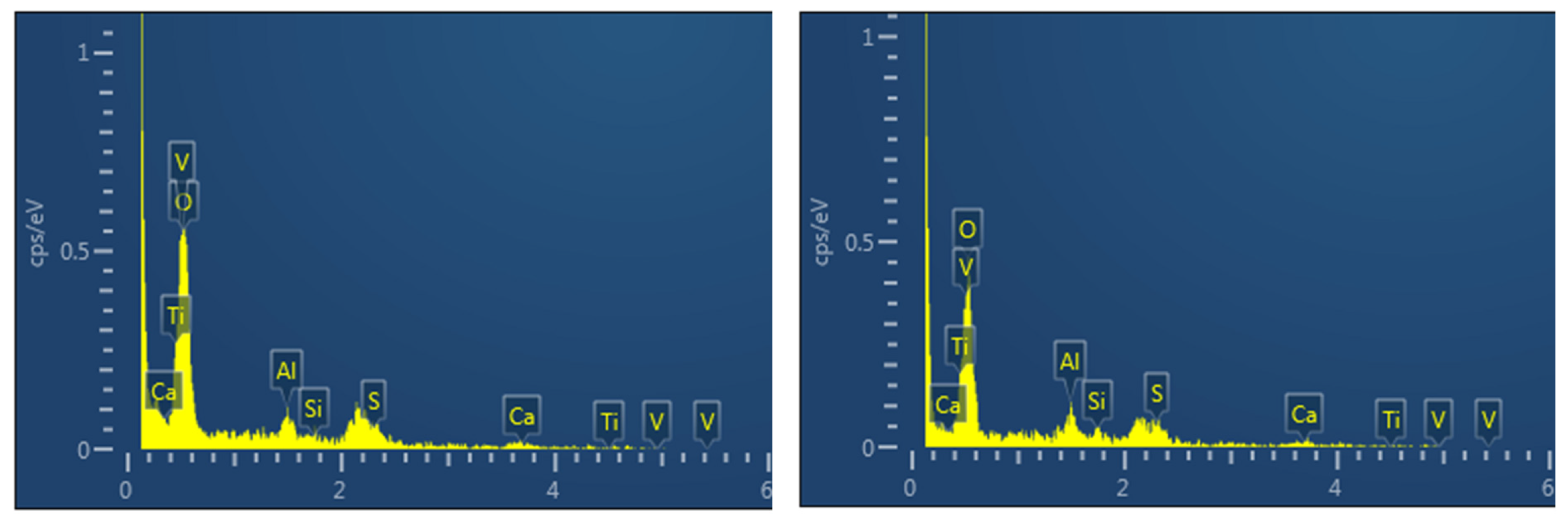
| 1 | 53.15 | 0.00 | 11.06 | 7.15 | 8.56 | 23.53 | 0.00 |
| 2 | 65.37 | 0.00 | 7.49 | 4.34 | 3.91 | 18.89 | 0.00 |
Disclaimer/Publisher’s Note: The statements, opinions and data contained in all publications are solely those of the individual author(s) and contributor(s) and not of MDPI and/or the editor(s). MDPI and/or the editor(s) disclaim responsibility for any injury to people or property resulting from any ideas, methods, instructions or products referred to in the content. |
© 2026 by the authors. Licensee MDPI, Basel, Switzerland. This article is an open access article distributed under the terms and conditions of the Creative Commons Attribution (CC BY) license.
Share and Cite
Su, B.; Zhang, S.; Xu, X.; Zhao, T.; Yang, H.; Liu, J. Mechanism of Vanadium–Titanium Slag in Regulating the Performance and Hydration of Metallurgical Slag-Based Cementitious Materials. Metals 2026, 16, 442. https://doi.org/10.3390/met16040442
Su B, Zhang S, Xu X, Zhao T, Yang H, Liu J. Mechanism of Vanadium–Titanium Slag in Regulating the Performance and Hydration of Metallurgical Slag-Based Cementitious Materials. Metals. 2026; 16(4):442. https://doi.org/10.3390/met16040442
Chicago/Turabian StyleSu, Bo, Siqi Zhang, Xingyang Xu, Tong Zhao, Huifen Yang, and Junyao Liu. 2026. "Mechanism of Vanadium–Titanium Slag in Regulating the Performance and Hydration of Metallurgical Slag-Based Cementitious Materials" Metals 16, no. 4: 442. https://doi.org/10.3390/met16040442
APA StyleSu, B., Zhang, S., Xu, X., Zhao, T., Yang, H., & Liu, J. (2026). Mechanism of Vanadium–Titanium Slag in Regulating the Performance and Hydration of Metallurgical Slag-Based Cementitious Materials. Metals, 16(4), 442. https://doi.org/10.3390/met16040442