Article

Effect of the Annealing Treatment on the Microstructure and Properties of TC4 Titanium Alloy TIG and Laser-Welded Joints

1
Provincial Key Laboratory of Advanced Welding Technology, Jiangsu University of Science and Technology, Zhenjiang 212003, China
2
Shipbuilding and Intelligent Manufacturing College, Jiangsu Maritime Institute, Nanjing 211170, China
3
College of Materials Science and Engineering, Hohai University, Nanjing 210098, China
*
Author to whom correspondence should be addressed.
Metals 2026, 16(4), 424; https://doi.org/10.3390/met16040424
Submission received: 13 March 2026 / Revised: 1 April 2026 / Accepted: 11 April 2026 / Published: 13 April 2026

Abstract

This study compares the microstructural evolution and mechanical properties of TC4 (Ti-6Al-4V) titanium alloy joints welded by Tungsten Inert Gas (TIG) and laser processes, following a post-weld annealing treatment at 650 °C for 2 h. Distinct microstructures were obtained: the TIG-welded joint developed a heterogeneous mixture of short-rod α and lamellar β, while the laser-welded joint formed a more homogeneous equiaxed α structure with uniformly distributed β-phase nanoparticles. Electron backscatter diffraction (EBSD) results confirmed that the annealing treatment significantly weakened the strong welding-induced texture and disrupted the epitaxial growth mode of columnar grains. Mechanical testing demonstrated that annealing improved the strength-toughness balance, but the extent and mechanism differed between the two processes. For the TIG-welded joint, the ultimate tensile strength slightly decreased, while elongation and impact toughness increased by 18% and 10.4%, respectively. In contrast, the laser-welded joint maintained its original strength while achieving greater improvements in ductility and toughness, with elongation and impact toughness increasing by 20% and 15.2%, respectively. This divergence is attributed to insufficient recrystallization and the persistence of residual coarse grains, limiting the TIG joint’s performance. However, in the laser-welded joint, the pinning effect of β-phase nanoparticles and associated grain refinement enhanced ductility without compromising strength.

1. Introduction

Titanium alloys are widely used in aerospace, biomedical, and marine engineering due to their high specific strength, corrosion resistance, and favorable high-temperature performance [1,2,3,4,5,6,7]. As a representative α + β dual-phase titanium alloy, TC4 (Ti-6Al-4V) is among the most extensively applied alloys due to its favorable mechanical properties and good processability [7]. However, the welding thermal cycle of TC4 can cause significant changes in the microstructure, which are often uneven and directly affect the mechanical properties of the joints, thus posing challenges to its widespread application [8,9,10,11,12,13]. Rapid cooling commonly produces coarse β grains and brittle α′ martensite in the weld zone, thereby reducing ductility and increasing residual stress. Conventional welding processes, such as TIG/GMAW, are broadly adopted but are often associated with an excessively wide heat-affected zone, pronounced distortion, low efficiency, and a high susceptibility to defects such as porosity [14]. In comparison, laser welding has received increasing attention for TC4 joining due to its concentrated heat input, high efficiency, limited thermal damage, and low deformation [15,16]. Nevertheless, the extremely high cooling rate in laser welding can readily generate high tensile stresses in the weld, which may degrade joint fatigue performance [17].
Heat treatment is a critical issue in regulating the properties of titanium-alloy joints. Strengthening is generally achieved by regulating microstructure to introduce barriers to dislocation motion. In addition, extensive studies have shown that grain refinement can markedly improve the mechanical properties of titanium alloys [18,19,20,21]. For residual-stress relief, Wang et al. [22] investigated residual-stress distribution in dissimilar TC4/TA17 welds using numerical simulation. They reported that heat treatment reduces the peak residual stress to a level close to the yield strength of TC4 while promoting a more uniform stress distribution. Heat treatment can also modify elemental segregation to improve performance. Su et al. [23] examined the effect of V-element segregation on the mechanical properties of TC4 pulsed laser–arc hybrid welds after heat treatment and found that V segregation increases tensile strength in the x and y directions, respectively, and alleviates material anisotropy. Substantial evidence indicates that heat treatment enhances microstructure and properties of welded joints through phase transformations. For solution-and-aging treatments, Long et al. [24] applied a solution + aging post-weld heat treatment (PWHT) to laser-welded Ti-55531 joints, which promoted precipitation of fine lamellar α′ phase, tensile strength increased, whereas ductility remained essentially unchanged. Zhou et al. [25] conducted a solution + aging treatment on a Ti-4Mo-3V-4Cr-0.5Fe-3.5Al-0.3O alloy and obtained an optimized microstructure with a favorable balance between primary α phase (αp) and secondary α phase (αs), thereby improving tensile strength.
For annealing treatments, Wang et al. [26] annealed narrow-gap laser welds in TC4 at 850 °C for 2 h, where acicular α′ martensite decomposed into lamellar α + β, leading to a balanced combination of strength, ductility, and toughness. Similarly, Li et al. [27] employed three distinct methods to investigate the effects of different heat treatment processes on microstructural evolution, mechanical properties, and corrosion resistance. Furthermore, Shao et al. [28] improved strength while maintaining good ductility by adjusting the aspect ratio and width of α lamellae in a Ti-5.5Al-3Mo alloy; an equivalent circular-arc model was used to predict yield strength with an error controlled within 3%. Kumar et al. [29] annealed Nd-YAG laser-welded Ti-6Al-4V at 980 °C and obtained a fully equiaxed α microstructure; tensile strength increased, whereas elongation decreased slightly.
Consequently, annealing is an effective means of enhancing the performance of welded joints. Notably, 650 °C falls within a suitable temperature window for α′ martensite decomposition and recrystallization in titanium alloys and remains well below the β-transus, thereby avoiding grain coarsening. A holding time of 2 h enables sufficient progress of the α′→α + β transformation while limiting grain growth, which supports the combined effects of microstructural stabilization, stress relaxation, and moderate recrystallization, thereby improving ductility and toughness. On this basis, the present study systematically investigates the effects of annealing at 650 °C for 2 h on microstructure, residual-stress distribution, and mechanical properties of as-welded TC4 joints produced by TIG welding and laser welding.

2. Experimental Materials and Methods

The base material for laser welding and TIG welding was a TC4 titanium alloy plate with dimensions of 100 mm × 100 mm × 3 mm. The chemical composition of TC4 titanium alloy is listed in Table 1. Laser welding was performed using a YLS-6000-S2T fiber laser (IPG Photonics Corporation, Marlborough, MA, USA) integrated with an ABB six-axis welding robot, with laser power, welding speed, and defocusing distance set to 2500 W, 20 mm/s, and +0 mm, respectively. Manual DC TIG welding was conducted with a WSME-500 tungsten inert gas (TIG) arc welding machine, with welding current, voltage, and speed set to 160 A, 14 V, and 120 mm/min, respectively. During welding, 99.99% high-purity argon was supplied to prevent oxidation in the weld region. Post-weld heat treatment was conducted by heating the welded plates to 650 °C, holding for 2 h, and then furnace cooling under argon protection throughout the cycle. The heating and cooling rates were maintained at no more than 200 °C/h.
Metallographic specimens (10 mm × 3 mm × 3 mm) were prepared, with base-metal sectioned parallel to the rolling direction and welded-joint specimens perpendicular to the weld seam. They were ground, polished with 0.05 µm SiO2 suspension, and etched using Kroll’s reagent for metallographic (OM, ZEISS SmartZoom 5, Carl Zeiss Microscopy GmbH, Jena, Germany), XRD (OM, SHIMADZU XRD-6000, Kyoto, Japan), and EBSD analyses. Hardness testing was conducted with a 500 gf load and 15 s holding time, following a two-row (25 points per row) layout with 0.2 mm spacing. The average of two rows was taken (specimen dimensions in Figure 1b), and the shaded areas represent the weld zone (WZ). Tensile testing was performed at 2 mm/min (specimen dimensions in Figure 1a), and impact testing was performed on 3 mm thick specimens (configuration in Figure 1c).

3. Results and Discussion

3.1. Microstructure Analysis

3.1.1. Metallographic Analysis

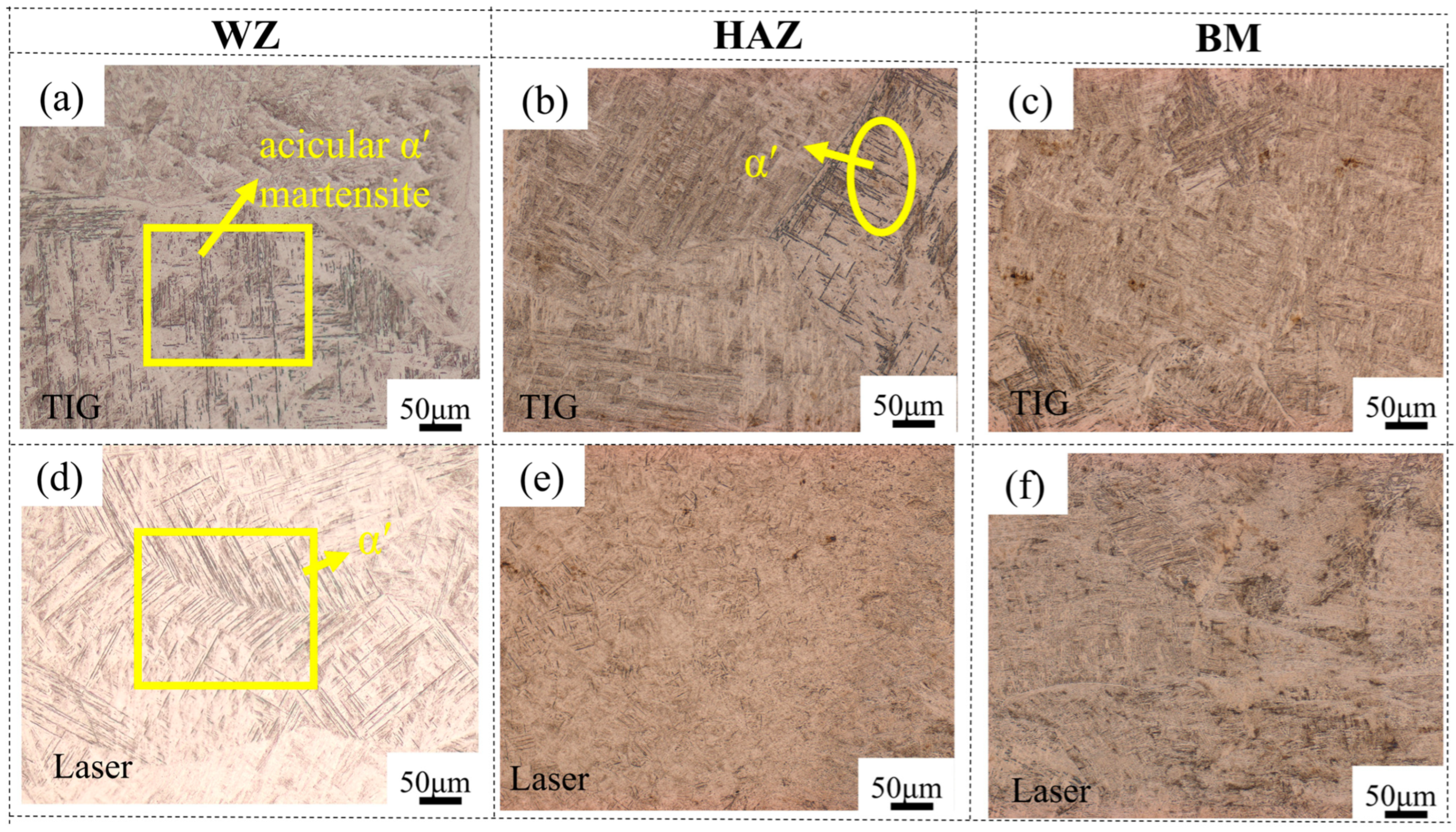
Figure 2 compares the microstructures of TIG-welded and laser-welded TC4 joints after annealing at 650 °C for 2 h. In the TIG-welded joint, the weld zone (WZ) in Figure 2a is characterized by a relatively uniform and coarse acicular α′ martensitic morphology. This coarse structure originates from the high heat input and slower cooling rate inherent to the TIG process. The heat-affected zone (HAZ) is presented in Figure 2b. After annealing, the retained α′ phase decomposes into equiaxed α and β. The base-metal (BM) microstructure, shown in Figure 2c, maintains an α + β two-phase structure with and without annealing. Although annealing leads to coarsening of the α grains, the overall phase constituents remain unchanged.
Figure 2d shows the microstructure of the laser-welded joint in the weld zone. After annealing, acicular α′ martensite becomes more uniformly distributed within the welded region. This results from the combination of the laser welding process and the annealing treatment. The laser process itself, with its low heat input and extremely high cooling rate, produces a very fine initial martensitic structure within fine prior-β grains. During subsequent annealing, this fine initial structure provides an ideal starting condition, allowing for the precipitation of α′ around pre-existing acicular martensite and promoting effective microstructural refinement and homogenization. Because the annealing temperature is below the β-transus and the effective cooling rate is relatively low [30], β grain boundaries remain clearly discernible. The holding period promotes precipitation of α′ around pre-existing acicular α′ martensite, resulting in microstructural refinement. The heat-affected zone is shown in Figure 2e. Prior to annealing, the microstructure consists of acicular α′ martensite together with primary α and β. After annealing, the phase constituents remain the same, whereas acicular α′ martensite becomes finer and more uniformly distributed [31,32]. The base-metal region in Figure 2f also shows no change in overall phase constituents after annealing.
In summary, the metallographic analysis clearly reveals a fundamental difference in the effectiveness of the same annealing treatment on joints made by the two processes. The laser-welded joint develops a finer and more uniform post-annealing microstructure. In contrast, the TIG-welded joint retains a coarser structure due to the persistence of coarse prior-β grains, which the applied annealing parameters could not remediate.

3.1.2. Phase Analysis

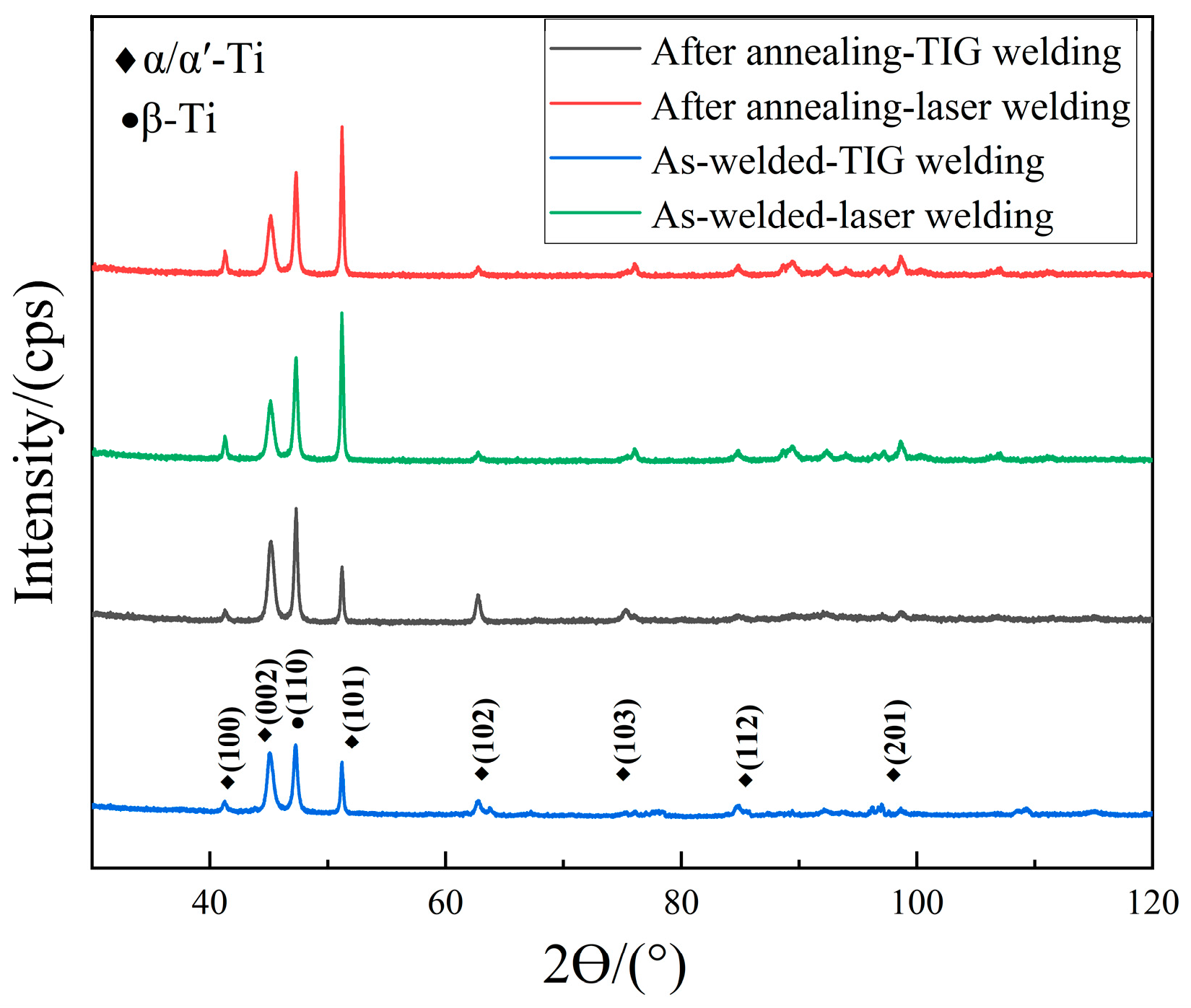
Figure 3 shows that the diffraction peaks of TC4 titanium-alloy welded joints become sharper after annealing. This change is mainly attributed to the decomposition of metastable acicular α′ martensite into α and β phases [33]. Two features are evident in the XRD patterns after annealing. First, characteristic β-phase reflections, such as (110) β, become detectable, confirming the transformation of α′ into an α + β microstructure. Second, the α-phase peaks become sharper, indicating relief of residual stress and improved lattice ordering. In addition, the increased relative intensity ratio (e.g., I (110) β/I (101) α) implies a higher β-phase fraction after annealing, consistent with the α′ to α + β transformation.
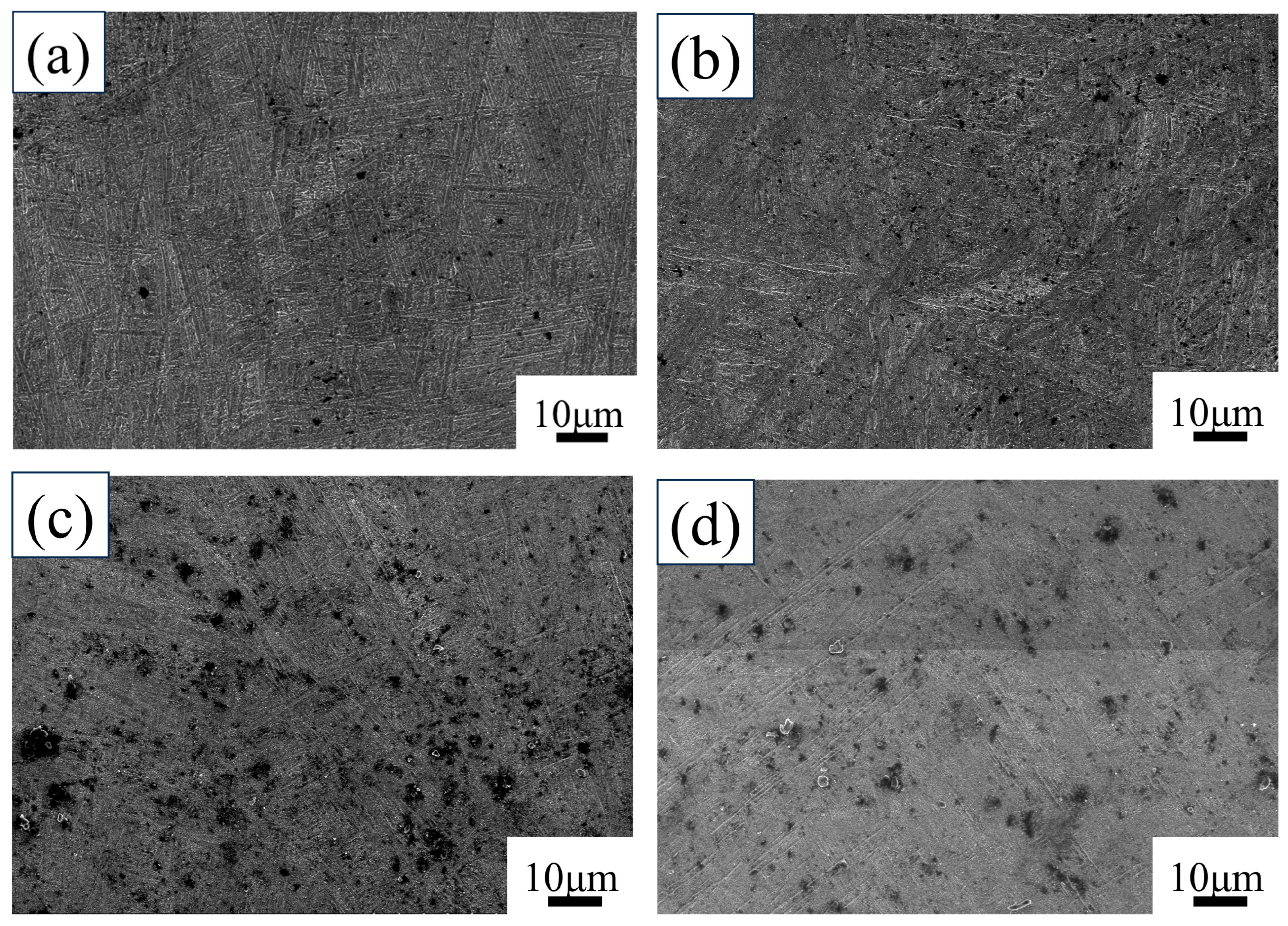
Figure 4 shows the microstructures of TIG-welded and laser-welded TC4 joints after annealing. In the TIG weld zone (WZ), the microstructure is dominated by acicular α′ martensite with a pronounced preferred orientation. After annealing, the martensitic laths coarsen, and α′ partially decomposes into α and β, yielding a microstructure consisting of coarsened acicular α′ together with a small fraction of β. In the TIG heat-affected zone (HAZ), microstructural uniformity increases, and part of the acicular α′ transforms into short-rod and equiaxed morphologies. By contrast, the higher cooling rate associated with laser welding produces finer acicular α′, and the needle-like morphology is largely preserved after annealing. The laser heat-affected zone exhibits a uniform, fine lath-like α′ structure, with substantially less variation than the TIG heat-affected zone. Overall, the laser-welded joint shows a finer and more homogeneous microstructure after annealing, which is mainly attributed to the higher cooling rate and the narrower, more concentrated heat input characteristic of laser welding [16].
This significant difference in microstructure directly indicates that under the same annealing process, laser welding is a better choice. The finer and more uniform structure obtained by laser welding joints stems from the essence of the process. The extremely high cooling rate and concentrated heat input form extremely fine acicular α′ and fine original β grains in the weld state. This high-quality initial microstructure provides an ideal basis for the phase transformation and microstructure homogenization during the subsequent annealing process, enabling the acquisition of a final microstructure with fine grains.
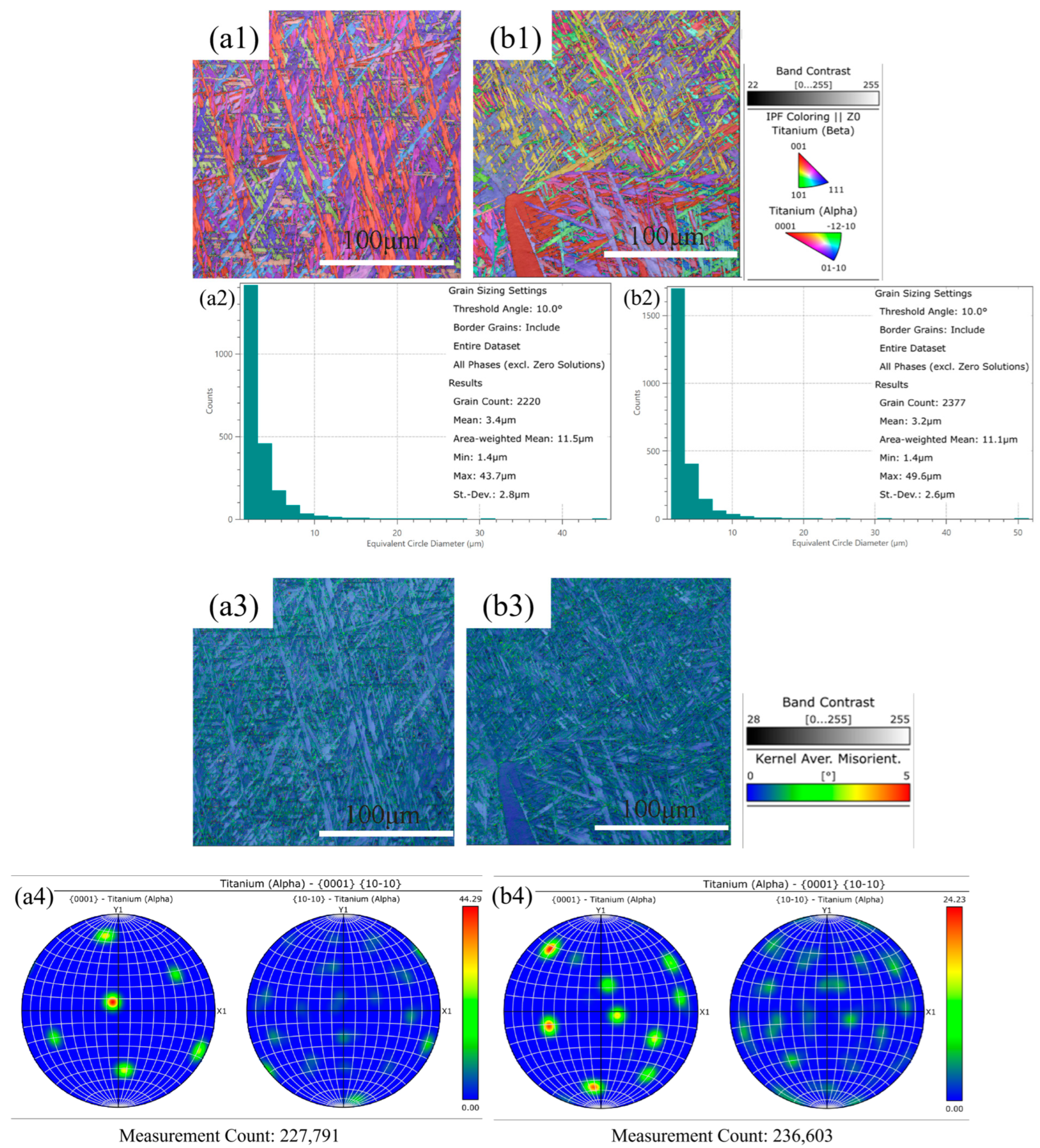
For TIG-welded TC4 joints, EBSD was performed with and without annealing. The inverse pole figure (IPF) map in Figure 5(a1) indicates that the columnar β grains formed by epitaxial growth during welding are no longer observed after annealing, and the overall orientation intensity is reduced. This evolution is associated with α′ decomposition into α + β during annealing, together with recrystallization that diversifies grain orientations [34,35]. The grain-size distribution map in Figure 5(a2) shows a slight increase in grain size accompanied by an increase in total grain number. The kernel average misorientation (KAM) map in Figure 5(a3) exhibits lower KAM values, consistent with reduced dislocation density, as reflected by a decreased fraction of yellow regions and an increased fraction of blue/green regions. The pole figure in Figure 5(a4) shows that β grains still exhibit a tendency for <001> growth; however, the epitaxial-growth structure and texture of the as-welded state are weakened, thereby promoting equiaxed-grain formation [36]. Correspondingly, recrystallization and phase transformation broaden the pole-figure distributions, and the orientation distributions of the {0001} and {10-10} planes become more randomized.
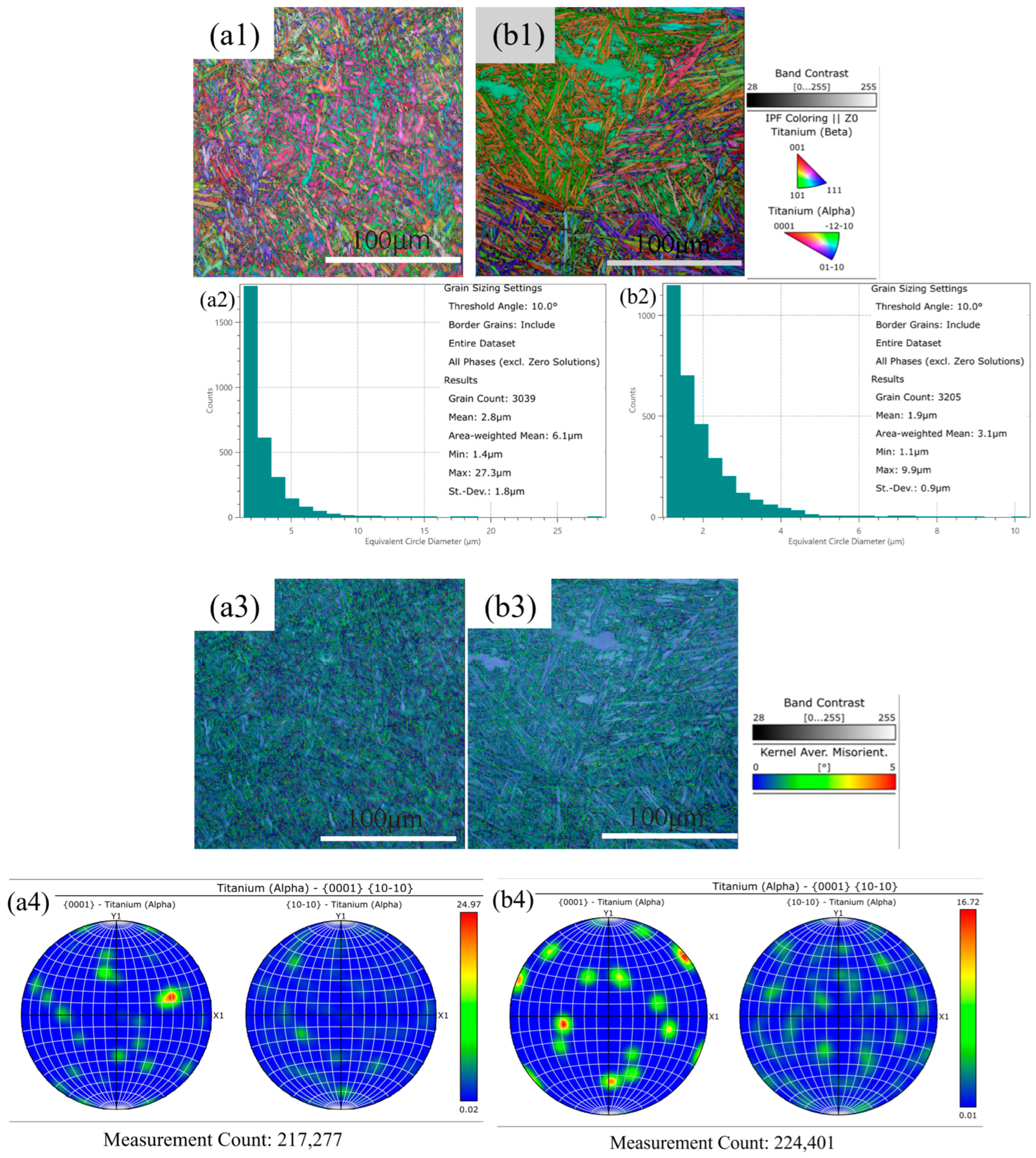
EBSD analysis of laser-welded TC4 joints indicates partial decomposition of α′ into α and β after annealing (refer to Figure 6). Pole figures reveal a transition from a highly concentrated orientation toward equiaxed grains with mixed orientations, although some columnar characteristics remain. The grain number increases from 3039 to 3205, whereas the average equivalent circle diameter decreases slightly. In addition, the maximum grain size decreases markedly, and both the grain-size standard deviation and the mean-area distribution decrease, indicating improved grain-size uniformity and suppression of abnormal grain growth. In the KAM map, the fraction of green regions decreases while the fraction of blue regions increases, suggesting lower local misorientation, residual-stress relaxation, and reduced dislocation density. Pole-figure analysis further shows dispersed high-intensity regions, a weakened basal texture, and a more randomized orientation distribution [37,38]. The {10-10} prismatic pole figure becomes more uniformly distributed, indicating disruption of orientation inheritance from the as-welded state. Recrystallization and phase transformation facilitate equiaxed-grain formation, thereby reducing anisotropy and improving the uniformity of mechanical properties.

3.2. Effect of Annealing on the Mechanical Properties

3.2.1. Effect of Annealing on the Micro-Hardness

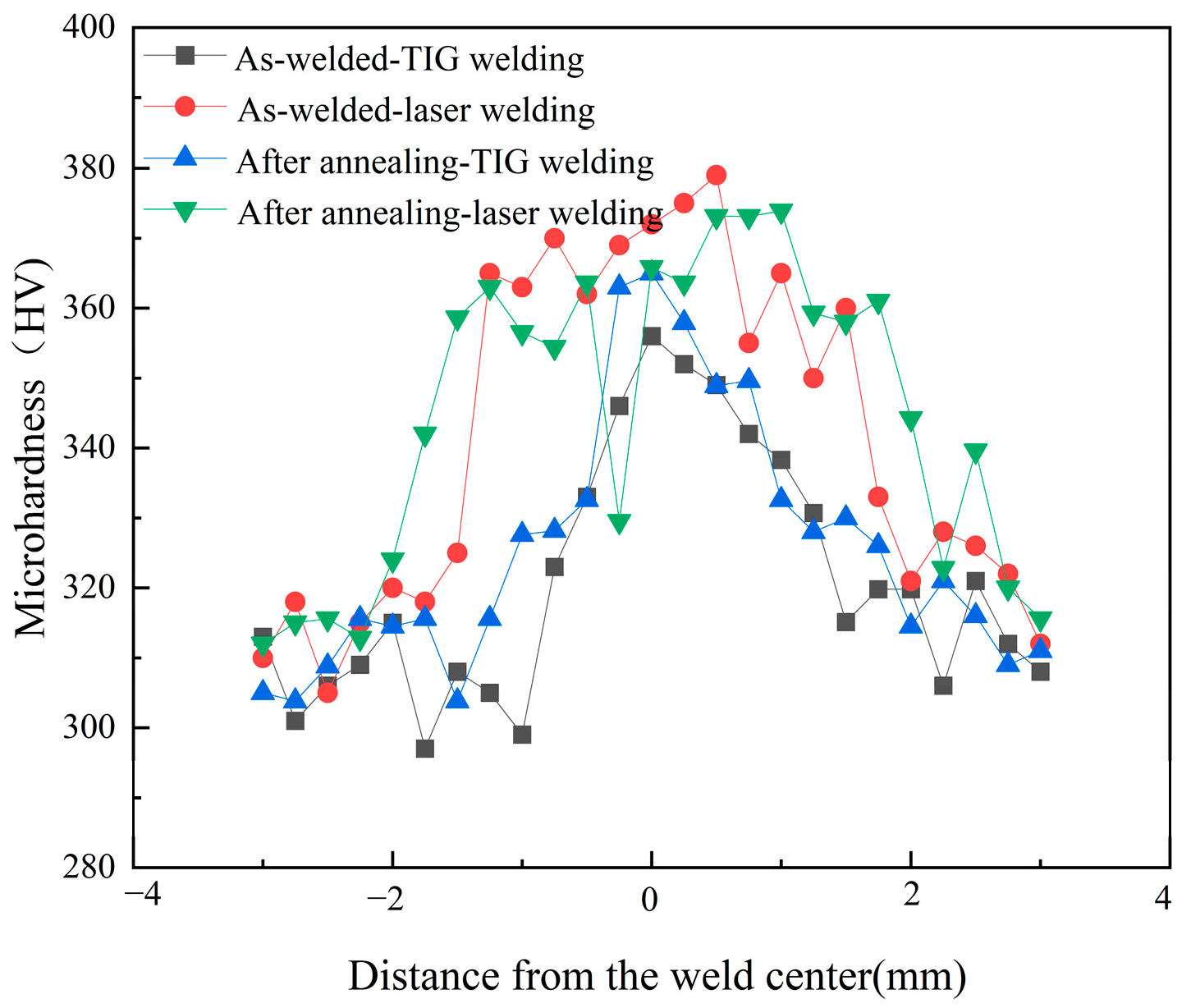
As shown in Figure 7, the hardness of the TIG weld zone shows a marginal increase after annealing, from 350 HV to 360 HV. This increase is attributed to precipitation of fine secondary α and decomposition of metastable α′ martensite into α + β, which improves microstructural uniformity [39]. Conversely, the laser weld zone maintains a significant hardness advantage throughout the process. It exhibits the highest hardness in the as-welded state (380 HV) due to its finer microstructure. After annealing, although the hardness experiences a slight decrease to 370 HV, it remains substantially higher (by ~10 HV) than the annealed TIG weld zone. This reduction is mainly associated with recovery and recrystallization, together with coarsening of α grains, despite a reduced fraction of α′ martensite [40]. Although the α + β distribution becomes more uniform, the diminished grain-refinement effect lowers the overall strengthening contribution. The TIG heat-affected zone exhibits a pronounced hardness increase, which is related to a phase transformation that increases α/β interfacial density and thereby enhances interfacial strengthening. Conversely, the hardness of the laser heat-affected zone decreases slightly, primarily because phase transformation is incomplete and grain refinement is less pronounced. The base metal remains microstructurally stable after annealing, with a hardness of approximately 300 HV.

3.2.2. Effect of Annealing on the Tensile Properties

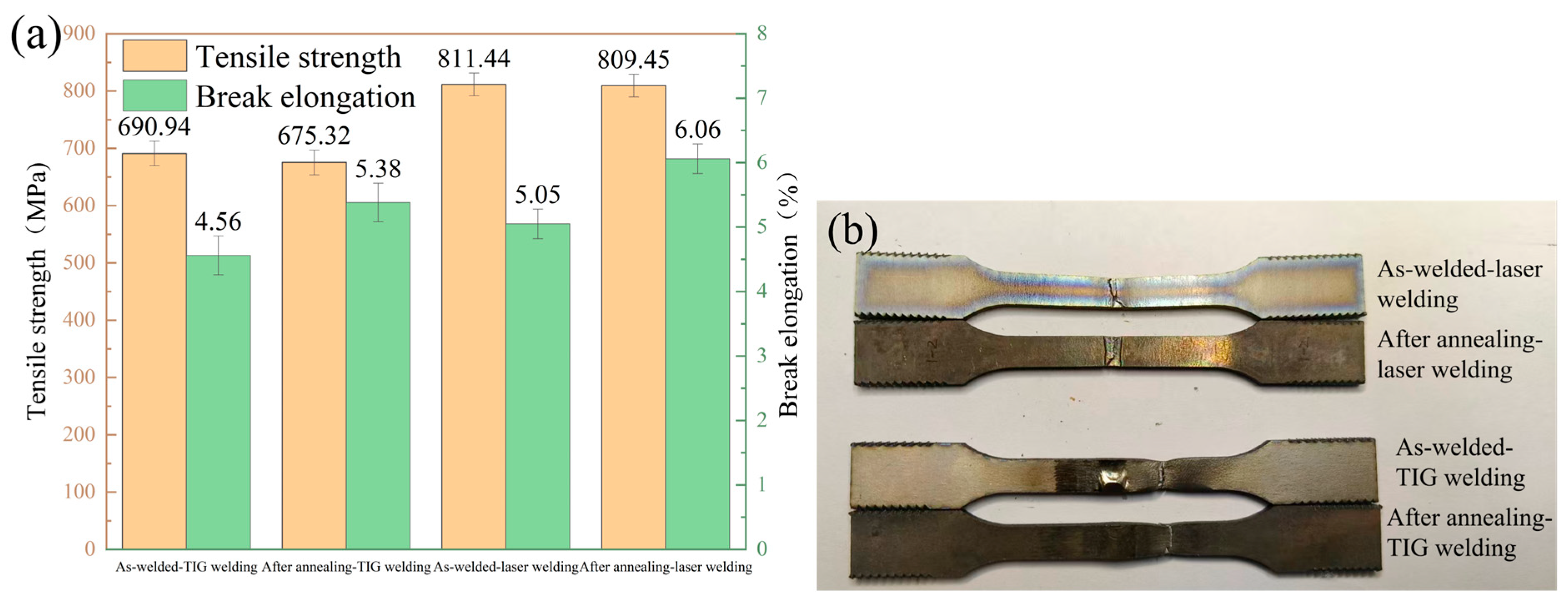
Figure 8a summarizes the tensile properties of TIG-welded and laser-welded TC4 joints. After annealing, the ultimate tensile strength of the TIG-welded joint decreases from 690.94 MPa to 675.32 MPa. This decrease is associated with insufficient refinement of coarse columnar β grains, such that the recovered strength level remains at only 75–80% of the base-metal strength. Retention of coarse grains is closely related to the high heat input and relatively slow cooling inherent to TIG welding, which limits microstructural refinement during subsequent annealing [41].
In striking contrast, the laser-welded joint demonstrates a far superior response to annealing. For the laser-welded joint, the ultimate tensile strength is remarkably maintained at a high level after annealing (811.44 MPa → 809.45 MPa). This exceptional strength retention, coupled with a simultaneous enhancement in ductility, underscores the advantage of the laser welding process. Rapid cooling during laser welding produces a fine basketweave α′ morphology with a dispersed β phase in the as-welded state. After annealing, the pinning effect of β-phase nanoparticles suppresses softening associated with residual-stress relaxation, thereby effectively preserving the joint’s high strength [42,43]. The increased β-phase content contributes to ductility enhancement, indicating that annealing improves microstructural homogeneity and phase distribution, leading to an optimal combination of strength and ductility that the TIG-welded joint cannot achieve.
Figure 8b presents the macroscopic tensile fracture morphologies of four representative specimens. Both TIG-welded joints fracture distinctly in the base metal region, regardless of annealing treatment. This fracture location arises from the higher strength of the weld zone conferred by coarse columnar β grains formed under high heat input and slow cooling conditions inherent to TIG welding. These coarse grains elevate the weld metal strength above that of the base material, causing stress concentration to shift to the softer base metal during tensile testing. However, the limited ductility of TIG joints (elongation of 4.56% and 5.3% for as-welded and annealed conditions, respectively) indicates that the coarse-grained microstructure restricts plastic deformation capacity, preventing the joint from achieving balanced mechanical performance despite its strength advantage.
In contrast, both laser-welded joints fracture in or near the weld zone. The as-welded laser joint exhibits a relatively flat fracture surface with minimal necking, consistent with its moderate elongation of 5.05%. After annealing, the fracture location shifts only marginally toward the base metal direction, and necking remains limited compared to a typical ductile base-metal fracture. This suggests that while annealing improves microstructural homogeneity and ductility (elongation increasing to 6.06%), the strength differential between the optimized weld zone and base metal is insufficient to drive a complete transition to base-metal fracture. Nevertheless, the simultaneous enhancement in strength retention (809.45 MPa) and ductility confirms that laser welding combined with annealing achieves a superior balance of properties unattainable by TIG welding.
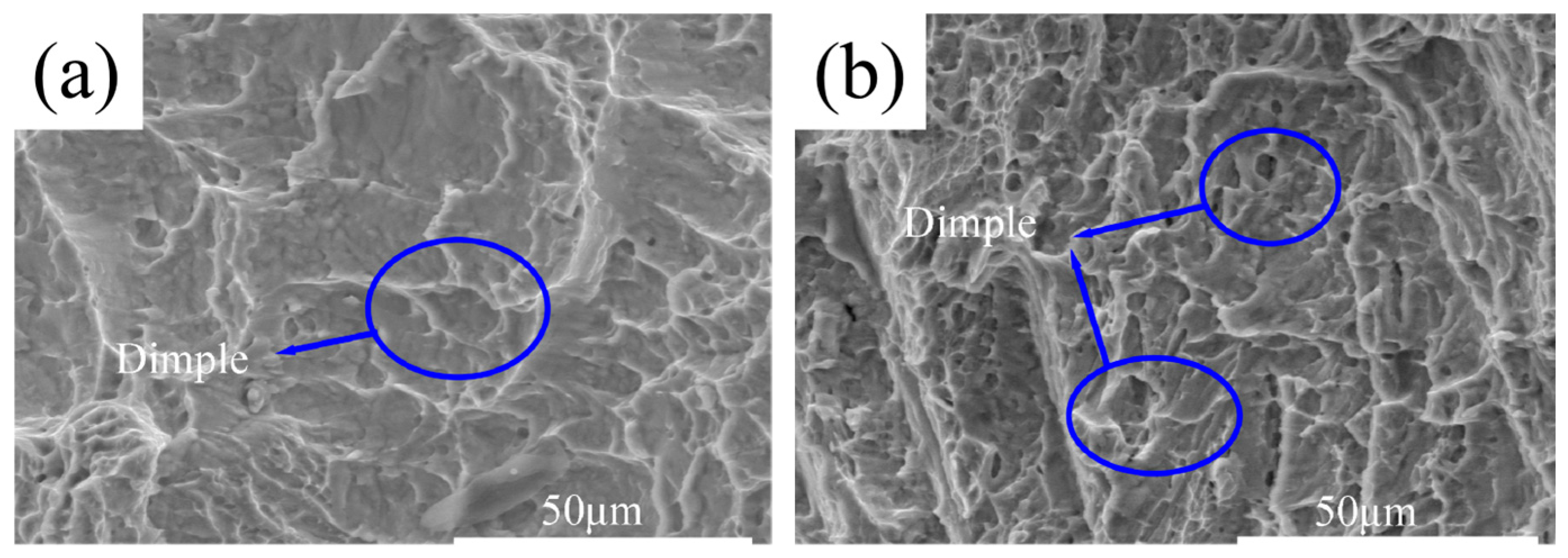
Figure 9 shows the tensile fracture morphologies of TIG-welded joints with and without annealing. In the unannealed condition, the fracture surface exhibits quasi-cleavage features. Cracks are relatively few and shallow and are mainly located in the base-metal region, whereas the weld zone shows higher hardness due to α′ martensite. Within the weld zone, acicular α′ martensite formed during rapid cooling introduces high residual stress and promotes β-phase segregation along grain boundaries, which facilitates crack propagation along brittle paths and produces coarse river-like patterns. After annealing, α′ decomposes into an α + β microstructure, residual stress is relieved, and β distribution becomes more uniform, which improves deformation compatibility [44,45]. As a result, the fracture mode shifts toward ductile fracture, characterized by enhanced plastic deformation and grain-boundary homogenization associated with phase transformation.
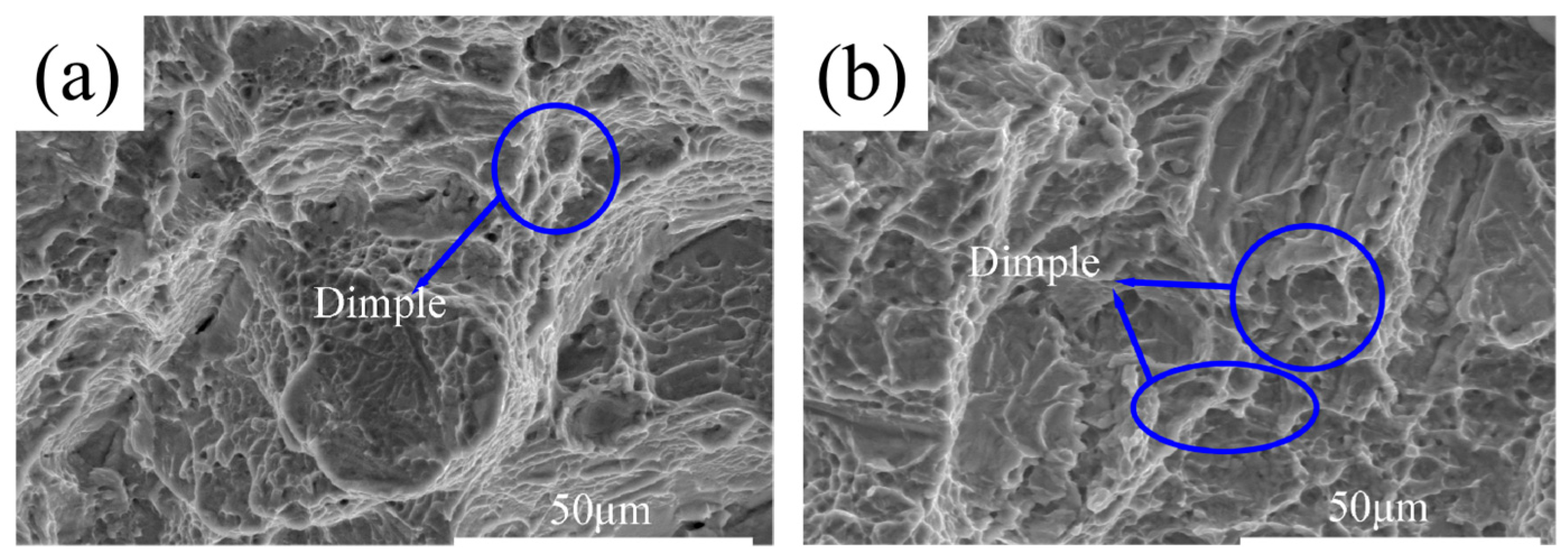
Figure 10 presents the fracture morphologies of laser-welded joints with and without annealing. Prior to annealing, intergranular fracture dominates. The combination of coarse-grain brittleness and high residual stress promotes crack propagation along grain boundaries, producing relatively flat cleavage facets and discontinuous crack paths. After annealing, the fracture surface shows a marked increase in dimple density. The metastable β phase partially transforms to an α + β microstructure, and uniformly distributed α within the β matrix promotes slip accommodation near grain boundaries, thereby suppressing crack propagation. In addition, grain coarsening contributes to residual-stress relaxation. Improved coordinated deformation of the α + β microstructure blunts crack tips and results in deeper dimples [46]. Accordingly, intergranular fracture in the unannealed condition is mainly related to brittleness of coarse β grains and high internal stress in metastable phases, whereas the ductile fracture after annealing is associated with phase-transformation-induced grain-boundary strengthening and enhanced plastic-deformation capability.

3.2.3. Effect of Annealing on the Impact Properties

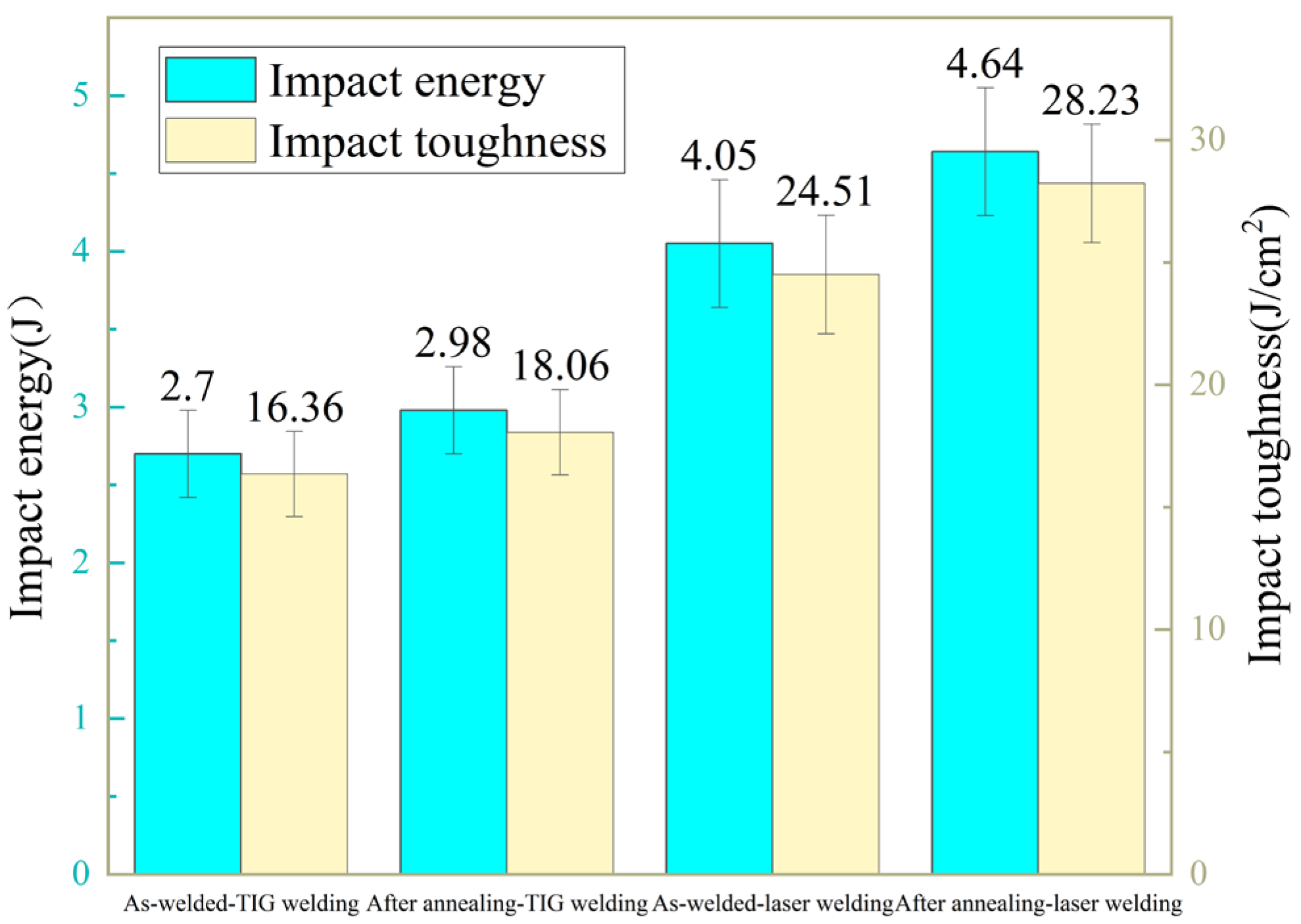
Figure 11 presents the impact test results of TC4 titanium alloy TIG and laser-welded joints with and without annealing. The relatively low impact toughness of TIG-welded joints is mainly associated with the acicular α′ martensitic structure formed in the weld zone under rapid cooling [47]. The high hardness of this microstructure, together with residual stresses, decreases resistance to crack initiation and limits fracture-energy absorption. After annealing, the α′→α + β transformation and residual-stress relaxation improve the deformation capability of the α + β microstructure, which increases impact toughness to 18.06 J/cm2, approximately 10.4% higher than that in the as-welded condition. In laser-welded joints, annealing promotes the transformation of the metastable β phase to an α + β microstructure. A network of secondary α forms and the increased phase-boundary constraint render the crack propagation more tortuous. In parallel, recovery processes and moderate microstructural coarsening facilitate stress relaxation and reduce local stress concentration, although reduced dislocation impediment can weaken strengthening [48]. The combined effects increase impact toughness to 28.23 J/cm2, approximately 15.2% higher than in the as-welded condition. Overall, annealing enhances toughness primarily by improving microstructural uniformity through phase transformation (α′ or β → α + β) and residual-stress reduction. The holding time must be matched with the effective cooling rate: insufficient holding leaves metastable phases, whereas excessive holding promotes grain coarsening; both conditions can degrade material performance.
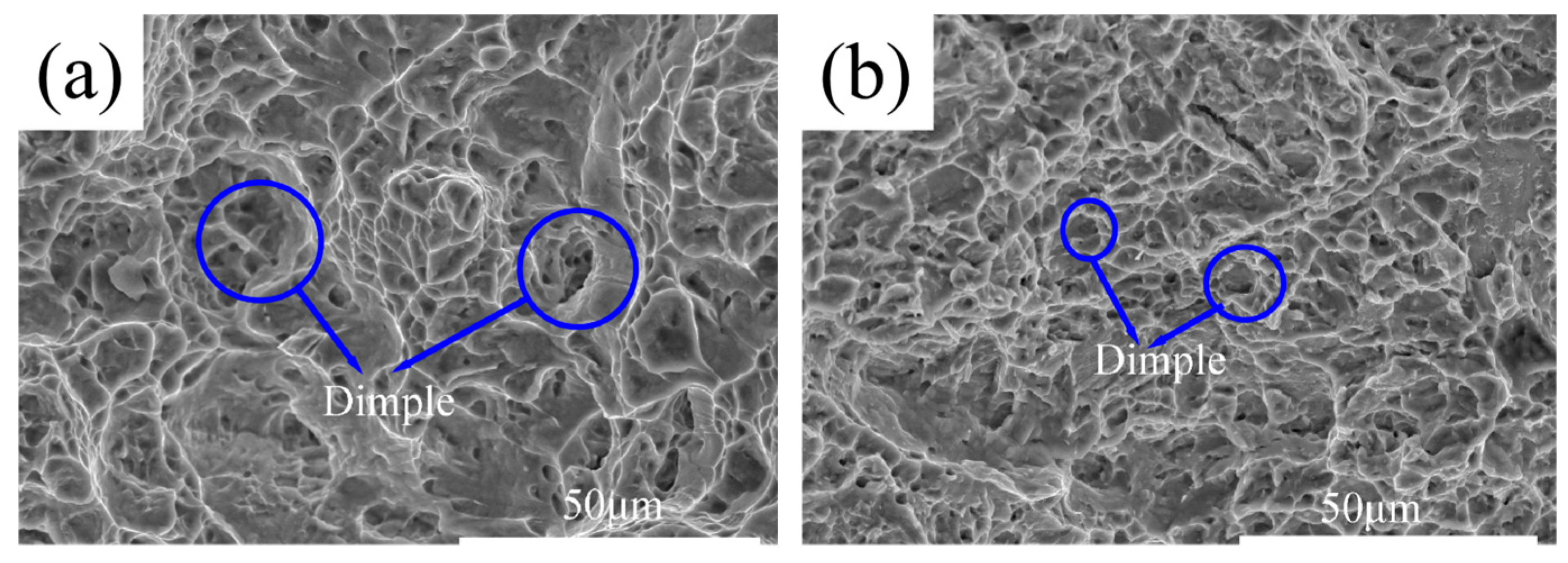
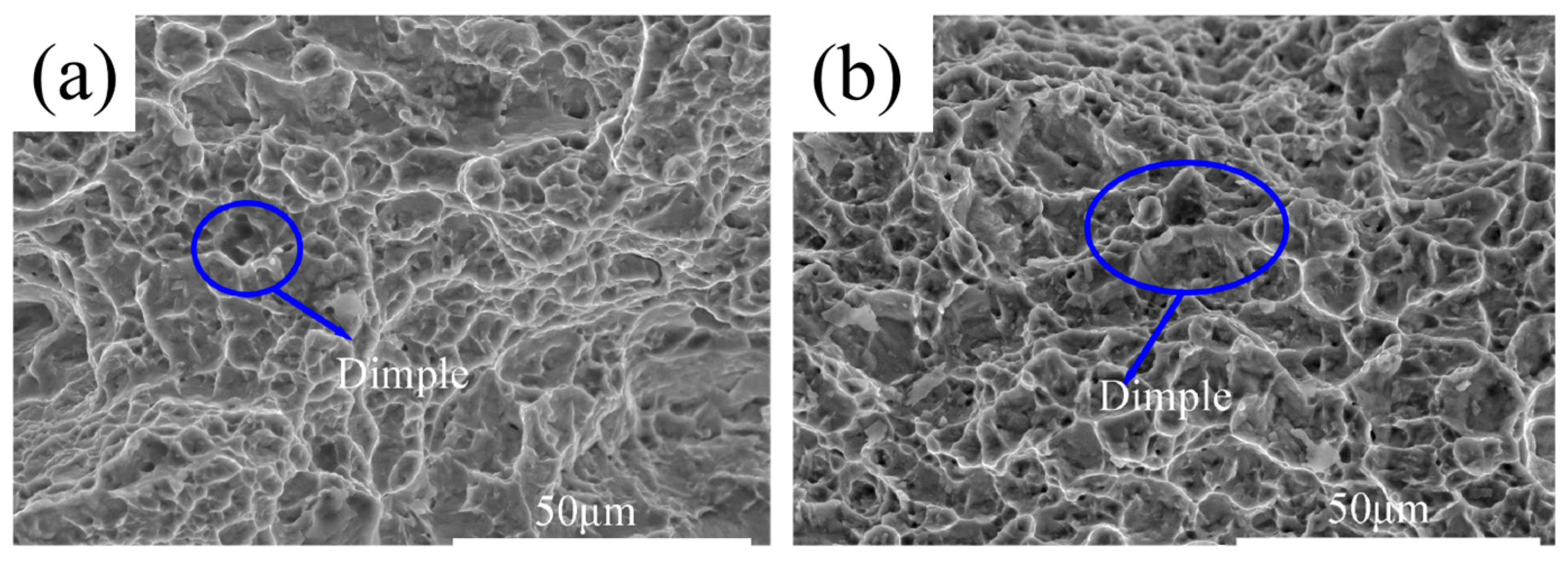
Figure 12 and Figure 13 show the impact fracture topographies of TC4 TIG-welded and laser-welded joints without and with annealing, respectively. The fracture surface of the TIG-welded joint after annealing is smoother than that in the original state. A markedly higher dimple density is observed, together with localized tearing and micro-void coalescence, indicating a ductile fracture mechanism promoted by α′ decomposition and residual-stress relief during annealing at 650 °C for 2 h. Consistent with these features, impact toughness increases to 18.06 J/cm2, corresponding to an improvement of 10.4%. The fracture surface of the laser-welded joint after annealing exhibits a smoother appearance with finer dimples, while quasi-cleavage features occur locally. These observations suggest that annealing improves microstructural uniformity through α′ decomposition and β phase precipitation, whereas residual-stress relaxation and grain-boundary migration can induce localized embrittlement. As a result, impact toughness increases from 24.51 J/cm2 to 28.23 J/cm2.

4. Conclusions

(1)
Annealing accelerates decomposition of metastable α′ martensite via thermally activated diffusion. After annealing, the TIG-welded joint exhibits a heterogeneous microstructure consisting of short-rod α and lamellar β. In contrast, the laser-welded joint develops an equiaxed α microstructure, with β uniformly distributed as nanoparticles, resulting in a more homogeneous and refined structure.
(2)
The EBSD results show that annealing treatment significantly weakened the texture induced by welding, resulting in a decrease in the maximum texture strength and the epitaxial-growth mode of columnar β grains being disrupted in the TIG welding zone, further promoting the randomization of grain orientation in the laser welding zone.
(3)
Annealing improves the strength-toughness balance through microstructural reorganization. Although ultimate tensile strength decreases slightly in the TIG-welded joint, post-fracture elongation increases by 18%. The laser-welded joint maintains nearly unchanged strength, while elongation increases by 20%. The impact toughness increases by 15.2%, which is associated with higher dimple density and a multilevel branched crack-propagation mode, reflecting a more effective synergistic toughening mechanism from its fine-grained α and nano-sized β structure compared to the TIG-welded joint.
(4)
Overall, the laser welding process followed by annealing is demonstrated to be the superior approach for fabricating TC4 titanium alloy joints. It consistently yields a more refined and homogeneous microstructure, which in turn translates to a better balance of mechanical properties, specifically superior strength retention, greater ductility enhancement, and higher impact toughness, compared to the TIG welding process under the same annealing conditions.

Author Contributions

Conceptualization, Y.W., J.L. and Y.Q.; Writing—Original Draft Preparation, Y.W., J.L., Y.X., X.L., D.S. and Y.Q.; Writing—Review and Editing, Y.W., J.L., Y.X., X.L., D.S. and Y.Q. All authors have read and agreed to the published version of the manuscript.

Funding

This research received no external funding.

Data Availability Statement

The original contributions presented in this study are included in the article. Further inquiries can be directed to the corresponding author.

Conflicts of Interest

The authors declare no conflict of interest.

References

  1. Guo, Z.Y.; Xiang, X.X.; Lu, Y.M.; Wang, X.F.; Wang, W.J. Quantitative analysis of piping configuration effects on the hydraulic performance of the CAP1400 reactor coolant pump’s core components via source term and modal decomposition methods. Energy 2026, 347, 140176. [Google Scholar] [CrossRef]
  2. Akhonin, S.; Bilous, V.; Selin, R.; Zhang, Y.; Qin, B.; Wang, H. Narrow gap welding of titanium alloy samples with variable thickness and controlled magnetic field. Weld. World 2025, 69, 2681–2689. [Google Scholar] [CrossRef]
  3. Gu, K.; Zhao, B.; Weng, Z.; Wang, K.; Cai, H.; Wang, J. Microstructure evolution in metastable β titanium alloy subjected to deep cryogenic treatment. Mater. Sci. Eng. A 2018, 723, 157–164. [Google Scholar] [CrossRef]
  4. Wang, B.J.; Xu, D.K.; Xu, T.Q.; Wang, S. Effect of electrochemical hydrogen charging in corrosion medium on microstructural evolution and mechanical behavior of an as-forged Ti–6Al–4V (in wt.%) alloy. J. Iron Steel Res. Int. 2025, 32, 1371–1381. [Google Scholar] [CrossRef]
  5. Wang, P.; Mao, P.; Zhou, L.; Wang, Z.; Wang, F.; Wei, Z.; Liu, X.; Liu, Z. Effect of α phase morphologies on shear localization behavior of TC4 titanium alloy at high strain rate. J. Mater. Sci. 2024, 59, 3984–3999. [Google Scholar] [CrossRef]
  6. Yan, Y.; Liu, P.; Wang, A.; Xie, J.; Bian, X.; Wang, Z. Investigation on the room temperature compressive creep behavior of TC4 titanium alloy joints with vacuum electron beam welding. Solid State Commun. 2024, 391, 115641. [Google Scholar] [CrossRef]
  7. Zhou, H.L.; Li, J.; Zhang, S.G.; Yang, B.; Gui, Y.B.; Li, X.B.; Zhang, H.X.; Zhuo, X.R.; Lu, S.; Qiao, Y.X. Research Progress on the Microstructure, Mechanical Properties, and Corrosion Behavior of TC4 Alloy Fabricated by Selective Laser Melting. Metals 2026, 16, 284. [Google Scholar] [CrossRef]
  8. Cai, Z.; Du, X.; Zhu, J.; Wang, K.; Zhao, X.; Liu, J.; Li, J.; Liu, J.; Wang, J.; Wang, H. Research on Underwater Wet Laser Self-Fusion Welding Process and Analysis of Microstructure and Properties of TC4 Titanium Alloy Weld. Materials 2022, 15, 3380. [Google Scholar] [CrossRef]
  9. Chen, J.; Li, H.; Liu, Y.; Zhao, X.; Cai, Y.; Chen, H.; Chen, Y.; Feng, A.; Wang, H.; Sun, Z. Deformation behavior and microstructure characteristics of the laser-welded Ti-6Al-4V joint under variable amplitude fatigue. Mater. Charact. 2023, 196, 112606. [Google Scholar] [CrossRef]
  10. Kværndrup, F.B.; Kücükyildiz, Ö.C.; Winther, G.; Somers, M.A.J.; Christiansen, T.L. Extreme hardening of titanium with colossal interstitial contents of nitrogen and oxygen. Mater. Sci. Eng. A 2021, 813, 141033. [Google Scholar] [CrossRef]
  11. Xu, H.H.; Fang, X.R.; Liu, X.-L.; Yang, F.Q. Forming mechanism and performance analysis of Ti–6Al–4V alloy under hammer forging and press forging. J. Iron Steel Res. Int. 2025, 32, 3426–3439. [Google Scholar] [CrossRef]
  12. Xu, Y.Z.; Cong, J.H.; Wang, L.; Li, H. Effect of Ultrasonic Impact on the Fatigue Properties of TC4 Titanium-Alloy Laser-Welded Joints. J. Mater. Eng. Perform. 2023, 33, 11365–11375. [Google Scholar]
  13. Yu, W.; Wang, G.; Gao, F.; Cao, J.; Hou, S.; Zhang, Y.; Lv, Y. The microstructure and impact toughness of vacuum electron beam welded joints of a highly alloyed dual phase titanium alloy. Vacuum 2024, 221, 112877. [Google Scholar] [CrossRef]
  14. Liu, H.; Nakata, K.; Yamamoto, N.; Liao, J. Microstructural characteristics and mechanical properties in laser beam welds of Ti6Al4V alloy. J. Mater. Sci. 2011, 47, 1460–1470. [Google Scholar] [CrossRef]
  15. Fan, H.Y.; Yang, S.F. Effects of direct aging on near-alpha Ti–6Al–2Sn–4Zr–2Mo (Ti-6242) titanium alloy fabricated by selective laser melting (SLM). Mater. Sci. Eng. A 2020, 788, 139533. [Google Scholar] [CrossRef]
  16. Shi, J.; Zhou, Y.; Liu, L. Application of Pulsed Laser-TIG Hybrid Heat Source in Root Welding of Thick Plate Titanium Alloys. Appl. Sci. 2017, 7, 527. [Google Scholar] [CrossRef]
  17. Junaid, M.; Khan, F.N.; Bakhsh, N.; Baig, M.N.; Rahman, K. Study of microstructure, mechanical properties and residual stresses in full penetration electron beam welded Ti-5Al-2.5Sn alloy sheet. Mater. Des. 2018, 139, 198–211. [Google Scholar] [CrossRef]
  18. Lee, T.; Kim, J.H.; Semiatin, S.L.; Lee, C.S. Internal-variable analysis of high-temperature deformation behavior of Ti–6Al–4V: A comparative study of the strain-rate-jump and load-relaxation tests. Mater. Sci. Eng. A 2013, 562, 180–189. [Google Scholar] [CrossRef]
  19. Lei, Z.L.; Chen, Y.; Ma, S.C.; Zhou, H.; Liu, J.T.; Wang, X.F. Influence of aging heat treatment on microstructure and tensile properties of laser oscillating welded TB8 titanium alloy joints. Mater. Sci. Eng. A 2020, 797, 140083. [Google Scholar] [CrossRef]
  20. Lu, Y.; Turner, R.; Fang, C.; Wang, F.; Brooks, J.; Cai, B.; Basoalto, H. Micromechanical testing and microstructure analysis of as-welded and post-weld heat-treated Ti-6Al-4V alloy. J. Mater. Sci. 2024, 59, 19960–19976. [Google Scholar] [CrossRef]
  21. Sun, J.Z.; Li, M.Q.; Li, H. Deformation behavior of TC17 titanium alloy with basketweave microstructure during isothermal compression. J. Alloys Compd. 2018, 730, 533–543. [Google Scholar] [CrossRef]
  22. Wang, F.; Sun, Z.; Liu, Z.; Hai, M.; Wu, Y.; Zhang, J.; Luo, R. Performance analysis on welded joints made of TC4/TA17 dissimilar titanium alloys. Ocean Eng. 2024, 294, 116758. [Google Scholar] [CrossRef]
  23. Su, R.; Guo, J.; Li, H.; Chen, H. The effect of V element segregation on the mechanical properties of TC4 titanium alloy welded joint in heat treatment process. J. Mater. Sci. 2024, 59, 18712–18733. [Google Scholar] [CrossRef]
  24. Long, J.; Zhang, L.J.; Ning, J.; Zhang, L.L.; Wang, X.; Li, S.; Na, S.J. Effects of post-weld heat treatment on microstructures and properties of laser welded joints of new high-strength Ti-55531 alloy. J. Manuf. Process. 2021, 64, 1329–1335. [Google Scholar] [CrossRef]
  25. Zhou, Z.; Xiang, Z.; Wang, B.; Li, J.; Chen, J.; Chen, Z. Influence of heat treatment on the mechanical properties, microstructure, and strengthening mechanisms of a novel metastable β titanium alloy. J. Alloys Compd. 2025, 1022, 178726. [Google Scholar] [CrossRef]
  26. Wang, M.; Wu, P.; Xu, K.; Huang, R.; Wang, X.; Fang, N.; Sun, L.; Qin, J.; Ma, Y.; Su, J. Influence of High-Temperature Annealing on Microstructure and Properties of Welded Joints Using Narrow Gap Laser Welding of TC4 Titanium with Welding Wire. J. Mater. Eng. Perform. 2023, 33, 9642–9653. [Google Scholar] [CrossRef]
  27. Li, C.; Du, J.; Wang, L.; Liu, H.; Wang, F.; Chen, J.; Chen, J. Effects of post-weld heat treatment method on microstructure evolution, mechanical and corrosion properties of TC4 alloy by Keyhole TIG welding. Mater. Today Commun. 2025, 46, 112755. [Google Scholar] [CrossRef]
  28. Li, C.L.; Wang, R.S.; Jiang, Y.T.; Xie, H.; Liu, B.; Wang, S.N.; Du, H.; Zhang, Y. Effect of High Temperature on the Corrosion Behavior and Passive Film Composition of 316L Stainless Steel in Concentrated NaOH Solution. J. Electrochem. Soc. 2025, 172, 021501. [Google Scholar] [CrossRef]
  29. Kumar, U.; Chattopadhyaya, S.; Das, A.K.; Seikh, A.H.; Sharma, S.; Dwivedi, S.P.; Nagai, K.; Kumar, A.; Agrawal, A.; Singh, S. Effect of Pulsation in Microstructure and Mechanical Properties of Titanium Alloy-Annealed Welded Joints at Different Temperatures. Photonics 2023, 10, 372. [Google Scholar] [CrossRef]
  30. Wu, Y.; Mao, Y.; Fu, L.; Qin, D.; Xiao, X. Dual laser-beam synchronous self-fusion welding of Ti–6Al–4V titanium alloys T-joints based on prefabricated welding materials. J. Mater. Res. Technol. 2022, 17, 2560–2576. [Google Scholar] [CrossRef]
  31. Kumar, C.; Das, M.; Paul, C.P.; Singh, B. Experimental investigation and metallographic characterization of fiber laser beam welding of Ti-6Al-4V alloy using response surface method. Opt. Lasers Eng. 2017, 95, 52–68. [Google Scholar] [CrossRef]
  32. Quan, L.; Li, X.B.; Xue, P.; Hao, J.J.; Qian, K.; Chen, B.; Li, J.Z.; Liu, K. Influence of heat treatment on microstructure of a new β-solidifying γ-TiAl alloy. J. Iron Steel Res. Int. 2025, 32, 239–248. [Google Scholar] [CrossRef]
  33. Marteleur, M.; Sun, F.; Gloriant, T.; Vermaut, P.; Jacques, P.J.; Prima, F. On the design of new β-metastable titanium alloys with improved work hardening rate thanks to simultaneous TRIP and TWIP effects. Scr. Mater. 2012, 66, 749–752. [Google Scholar] [CrossRef]
  34. Xiang, Y.; Luo, H.; Xiang, W.; Fu, Q.; Yuan, W. Influence of hot deformation process and annealing treatment on the microstructure of TC21 titanium alloy. J. Alloys Compd. 2025, 1022, 179939. [Google Scholar] [CrossRef]
  35. Guo, X.W.; Ren, Z.K.; Wu, H.; Chai, Z.; Zhang, Q.; Wang, T.; Huang, Q.X. Effect of annealing on microstructure and synergistic deformation of 304/TC4 composite plates with corrugated interface. J. Iron Steel Res. Int. 2025, 32, 2434–2451. [Google Scholar] [CrossRef]
  36. Du, Z.; Guo, H.; Liu, J.; Cheng, J.; Zhao, X.; Wang, X.; Liu, F.; Cui, X. Microstructure evolution during aging heat treatment and its effects on tensile properties and dynamic Young’s modulus of a biomedical β titanium alloy. Mater. Sci. Eng. A 2020, 791, 139677. [Google Scholar] [CrossRef]
  37. Zhao, H.; Xin, S.; Zhou, W.; Xu, H.; Wang, X.; Pan, X. The influence of heat processing on the microstructure and properties of a high-strength titanium alloy. Mater. Des. 2025, 257, 114554. [Google Scholar] [CrossRef]
  38. Zhou, H.L.; Gao, R.M.; Zhang, S.G.; Li, C.T.; Yao, X.; Sun, M.Y.; Lu, S.; Qiao, Y.X. Processing map of 17-4PH martensitic stainless steel and microstructural evolution during hot deformation. J. Mater. Res. Technol. 2026, 41, 6124–6133. [Google Scholar] [CrossRef]
  39. Wu, C.; Zhan, M. Microstructural evolution, mechanical properties and fracture toughness of near β titanium alloy during different solution plus aging heat treatments. J. Alloys Compd. 2019, 805, 1144–1160. [Google Scholar] [CrossRef]
  40. Liang, J.; Liu, Z.; Li, X.; Wang, H.; Yin, G. Microstructure and mechanical properties of 1 mm thin plate TC4 titanium alloy joint by ring laser welding. Mater. Res. Express 2024, 11, 096501. [Google Scholar] [CrossRef]
  41. Du, J.; Liu, H.; Wang, F.; Bao, W.; Li, H.; Liu, T. Effects of heat input on microstructure evolution, mechanical and corrosion properties of TC4 alloy by keyhole TIG welding. J. Mater. Res. Technol. 2023, 27, 5266–5277. [Google Scholar] [CrossRef]
  42. Liu, J.; Liu, Z.; Fan, C.; Ou, L.; He, W. Effect of Subcritical Annealing on the Mechanical Anisotropy of Selective Laser Melting-Formed TC4 Alloys. J. Mater. Eng. Perform. 2024, 34, 17653–17667. [Google Scholar] [CrossRef]
  43. Xu, Y.F.; Chen, L.M.; Liu, C.; Zhou, C.; Zhang, S.; Li, J.Z.; Guo, Z.M.; Xiong, H.Q.; Liu, J.; Liu, L.; et al. Effect of ωiso and α precipitation during aging on tensile properties and impact toughness of a metastable β type Ti alloy. J. Iron Steel Res. Int. 2025, 32, 2172–2182. [Google Scholar] [CrossRef]
  44. Seo, S.; Jo, A.R.; Lee, H.W.; Hwang, S.K.; Han, J.; Park, J. Improving fatigue life and toughness in electron beam welded Ti–6Al–4V achieved through beta heat treatment for microstructure uniformity. J. Mater. Res. Technol. 2025, 35, 869–880. [Google Scholar] [CrossRef]
  45. Tong, Y.J.; Liu, Z.G.; Gao, X.H.; Wang, X.N.; Misra, R.D.K. Current research progress in liquid metal embrittlement of galvanized advanced high-strength steels during resistance spot welding. J. Manuf. Process. 2026, 165, 602–624. [Google Scholar] [CrossRef]
  46. Patil, U.S.; Babu, S.M.J.; Thota, M.K.; Avinash, S.; Kulkarni, R.R.; Gangolu, S.; Dasharath, S.M.; Mishra, M.K. Effect of heat treatment process parameters, cooling rate on microstructure morphology, mechanical behaviour and texture evolution of two phase (α+β) Ti-6Al-4V alloy. J. Alloys Compd. 2025, 1035, 181592. [Google Scholar] [CrossRef]
  47. Mashinini, P.M.; Hattingh, D.G. Influence of laser heat input on weld zone width and fatigue performance of Ti-6Al-4V sheet. Mater. Sci. Eng. B 2020, 262, 114699. [Google Scholar] [CrossRef]
  48. Zheng, Z.B.; Liao, X.Y.; Sun, X.; Long, J.; Wang, S.; Qiao, Y.X.; Zheng, K.H. Tailoring reversed austenite and carbide precipitation via tempering to achieve superior impact toughness in high chromium martensitic steels. J. Iron Steel Res. Int. 2026, 33, 137. [Google Scholar] [CrossRef]
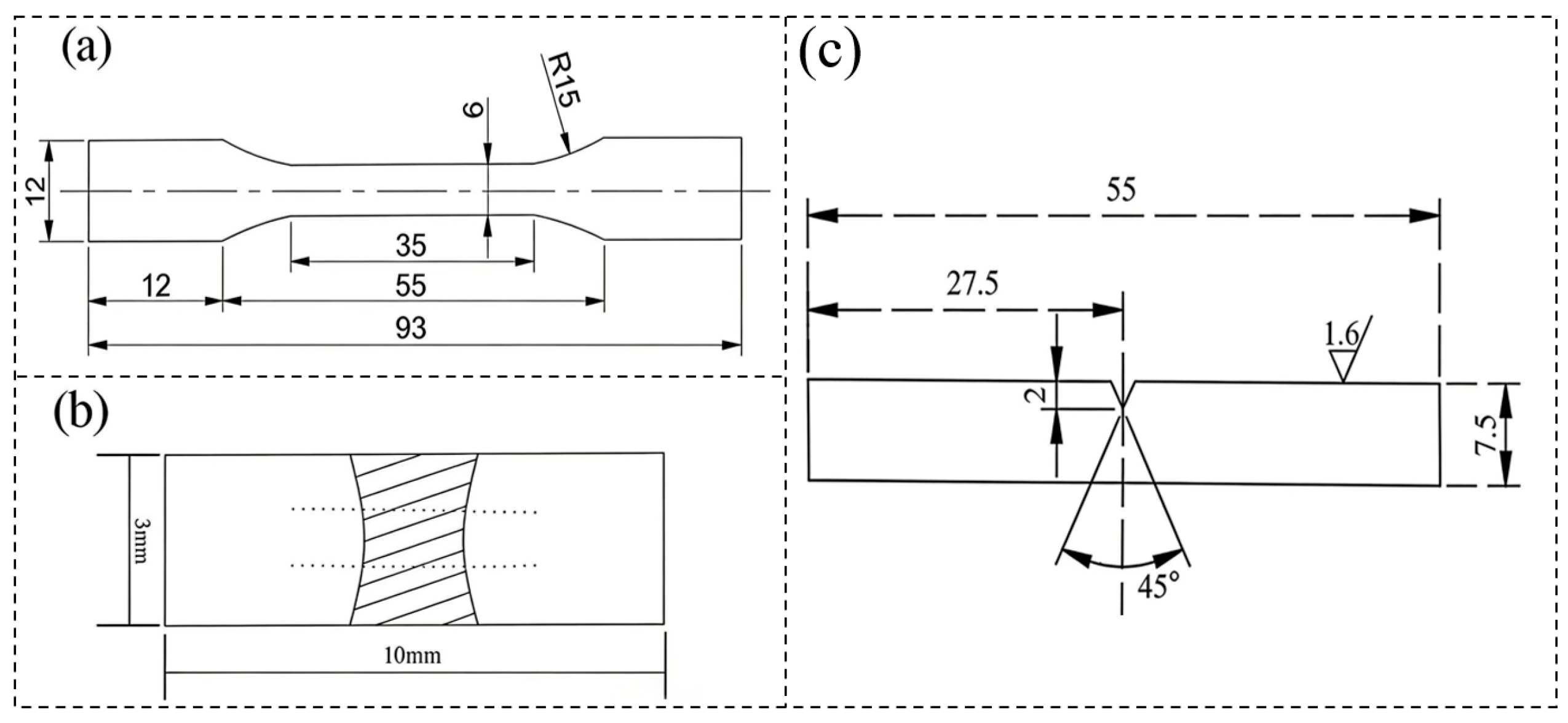
Figure 1. Performance test specimen diagrams. (a) Dimensions of tensile specimens; (b) Locations of hardness testing; (c) Dimensions of impact specimens.
Metals 16 00424 g001
Figure 2. Metallographic microstructure of TIG and laser-welded joints of TC4 titanium alloy after annealing. (a) WZ of TIG joint; (b) HAZ of TIG joint; (c) BM of TIG joint; (d) WZ of laser joint; (e) HAZ of laser joint; (f) BM of laser joint.
Metals 16 00424 g002
Figure 3. XRD patterns of TIG and laser-welded joints of TC4 titanium alloy with annealing.
Metals 16 00424 g003
Figure 4. Microstructures of TIG and laser-welded TC4 titanium alloy joints after annealing. (a) WZ of TIG joint; (b) HAZ of TIG joint; (c) WZ of laser joint; (d) HAZ of laser joint.
Metals 16 00424 g004
Figure 5. EBSD diagram of TC4 titanium alloy TIG-welded joints (a1a4) without annealing vs. (b1b4) with annealing.
Metals 16 00424 g005
Figure 6. EBSD diagram of TC4 titanium alloy laser-welded joint (a1a4) without annealing vs. (b1b4) with annealing.
Metals 16 00424 g006
Figure 7. Microhardness of TC4 TIG and laser-welded joints with and without annealing.
Metals 16 00424 g007
Figure 8. (a) Tensile test results of TC4 TIG and laser-welded joints with and without annealing. (b) The experiment specimens after the tensile test.
Metals 16 00424 g008
Figure 9. Tensile fracture morphology of TIG-welded joints (a) without annealing vs. (b) with annealing.
Metals 16 00424 g009
Figure 10. Tensile fracture morphology of laser-welded joints (a) without annealing vs. (b) with annealing.
Metals 16 00424 g010
Figure 11. Impact test results of TC4 titanium alloy TIG and laser-welded joints with and without annealing.
Metals 16 00424 g011
Figure 12. Impact fracture topography of TC4 TIG-welded joints (a) without annealing vs. (b) with annealing.
Metals 16 00424 g012
Figure 13. Impact fracture morphology of TC4 laser-welded joints (a) without annealing vs. (b) with annealing.
Metals 16 00424 g013
Table 1. Chemical compositions of TC4 titanium alloy.
ElementAlVFeCNHOTi
Content (wt.%)5.9703.9300.0860.0070.0060.0120.150Bal.
Disclaimer/Publisher’s Note: The statements, opinions and data contained in all publications are solely those of the individual author(s) and contributor(s) and not of MDPI and/or the editor(s). MDPI and/or the editor(s) disclaim responsibility for any injury to people or property resulting from any ideas, methods, instructions or products referred to in the content.