The Effect of the Aging Process on the Microstructure and Wear Properties of Cu-Cr-Zr Alloys

 ,
,
Abstract
1. Introduction
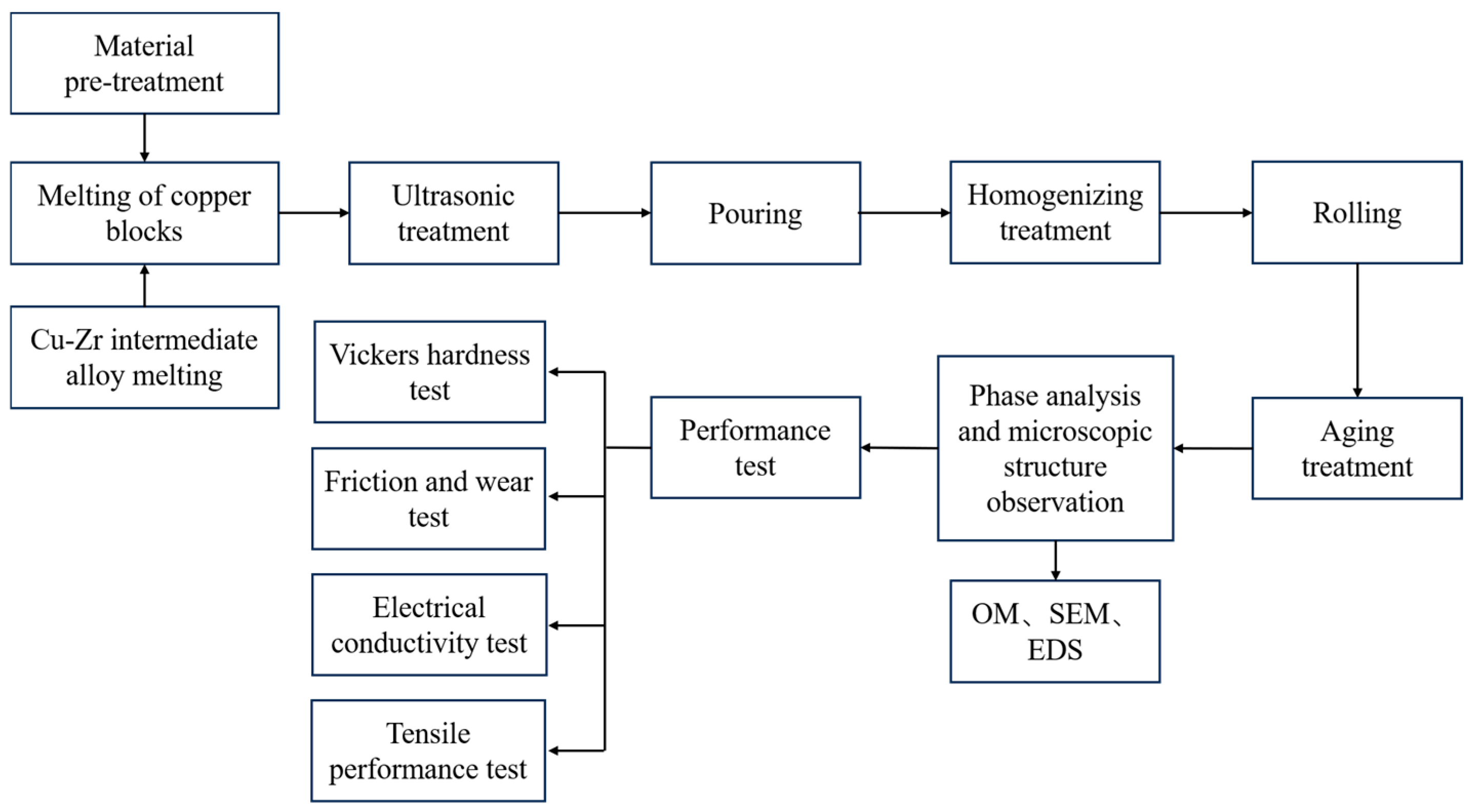
2. Materials and Methods
3. Results and Discussion
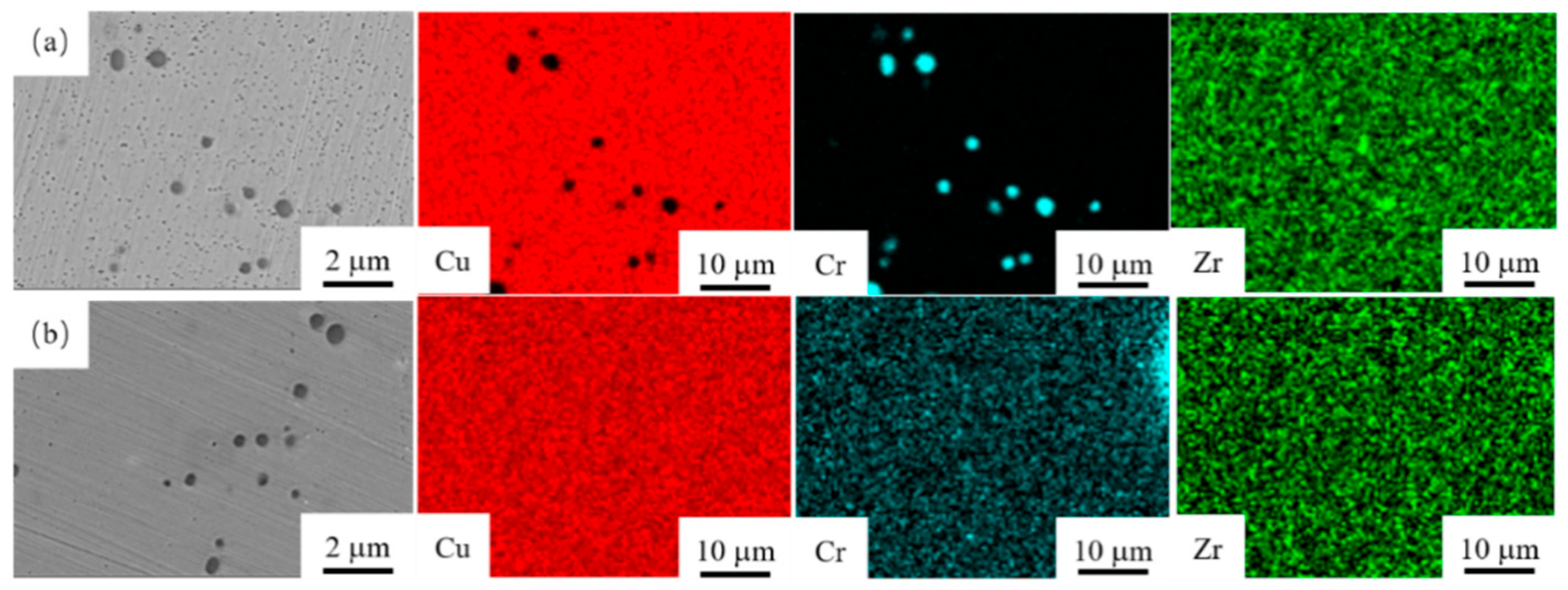
3.1. The Influence of Aging Treatment on the Microstructure of the Cu-Cr-Zr Alloy
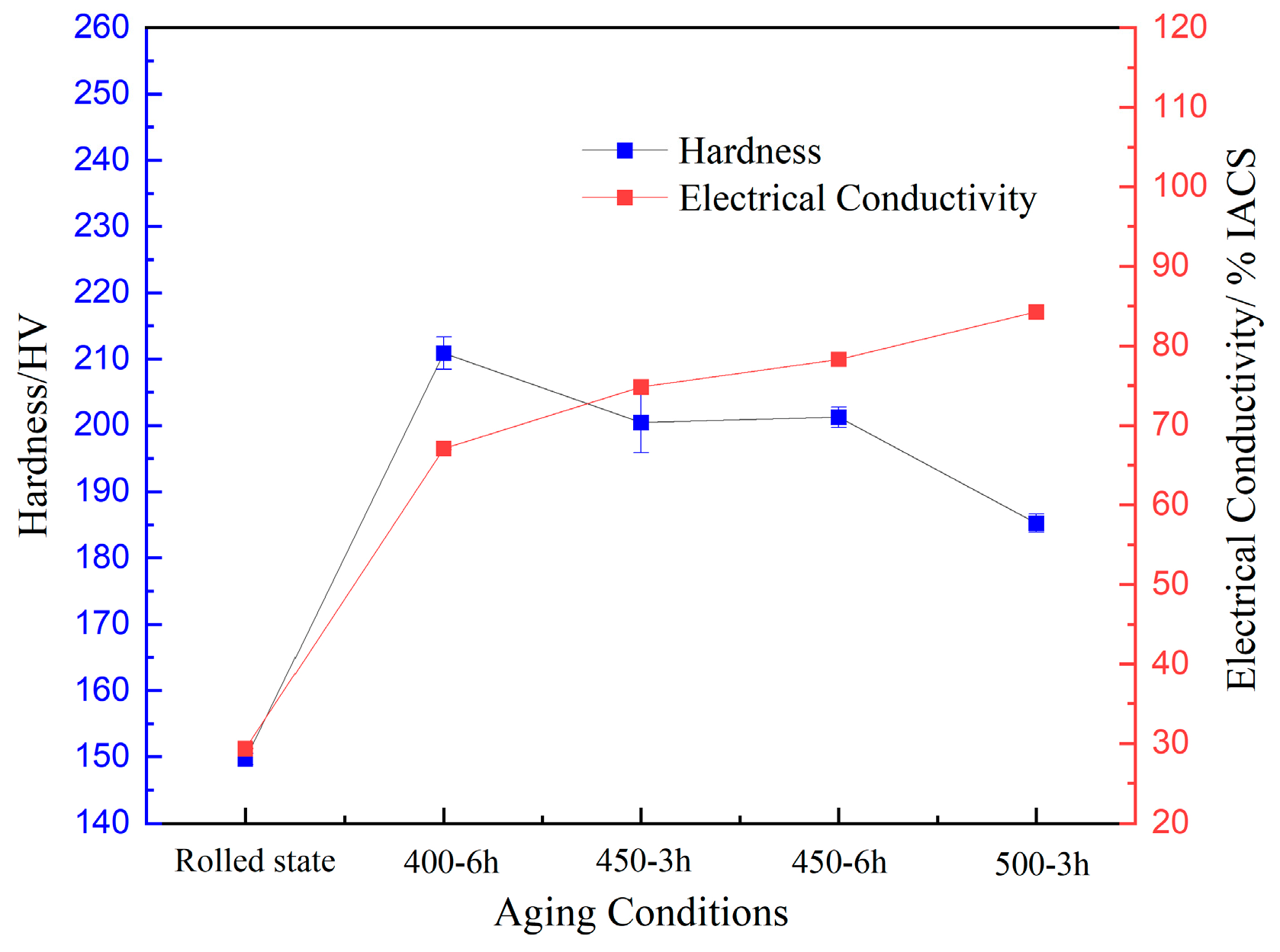
3.2. Analysis of Hardness and Electrical Conductivity Test Results
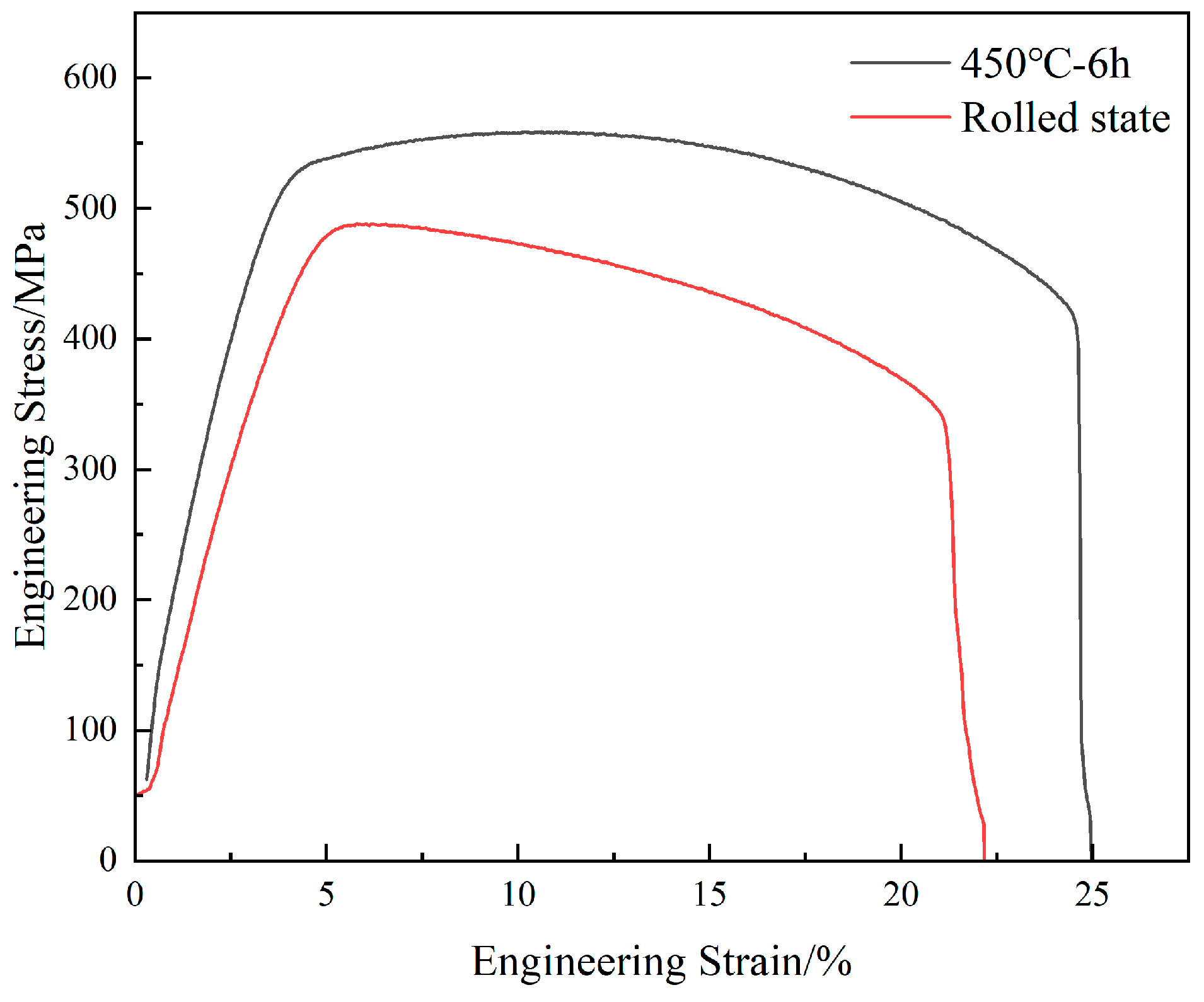
3.3. Analysis of Tensile Test Results
3.4. Coefficient of Friction Analysis
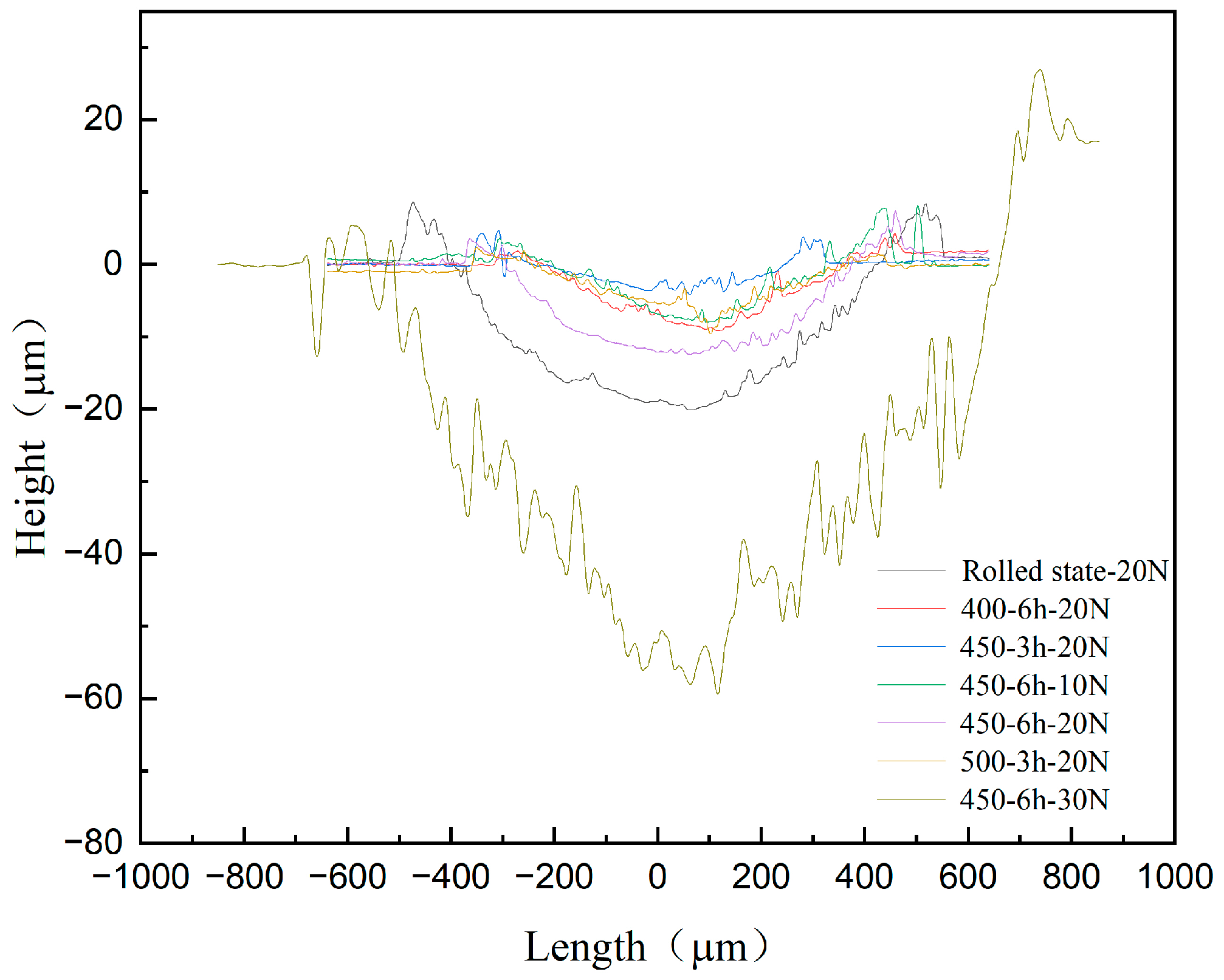
3.5. Two-Dimensional Profile Analysis of the Sample
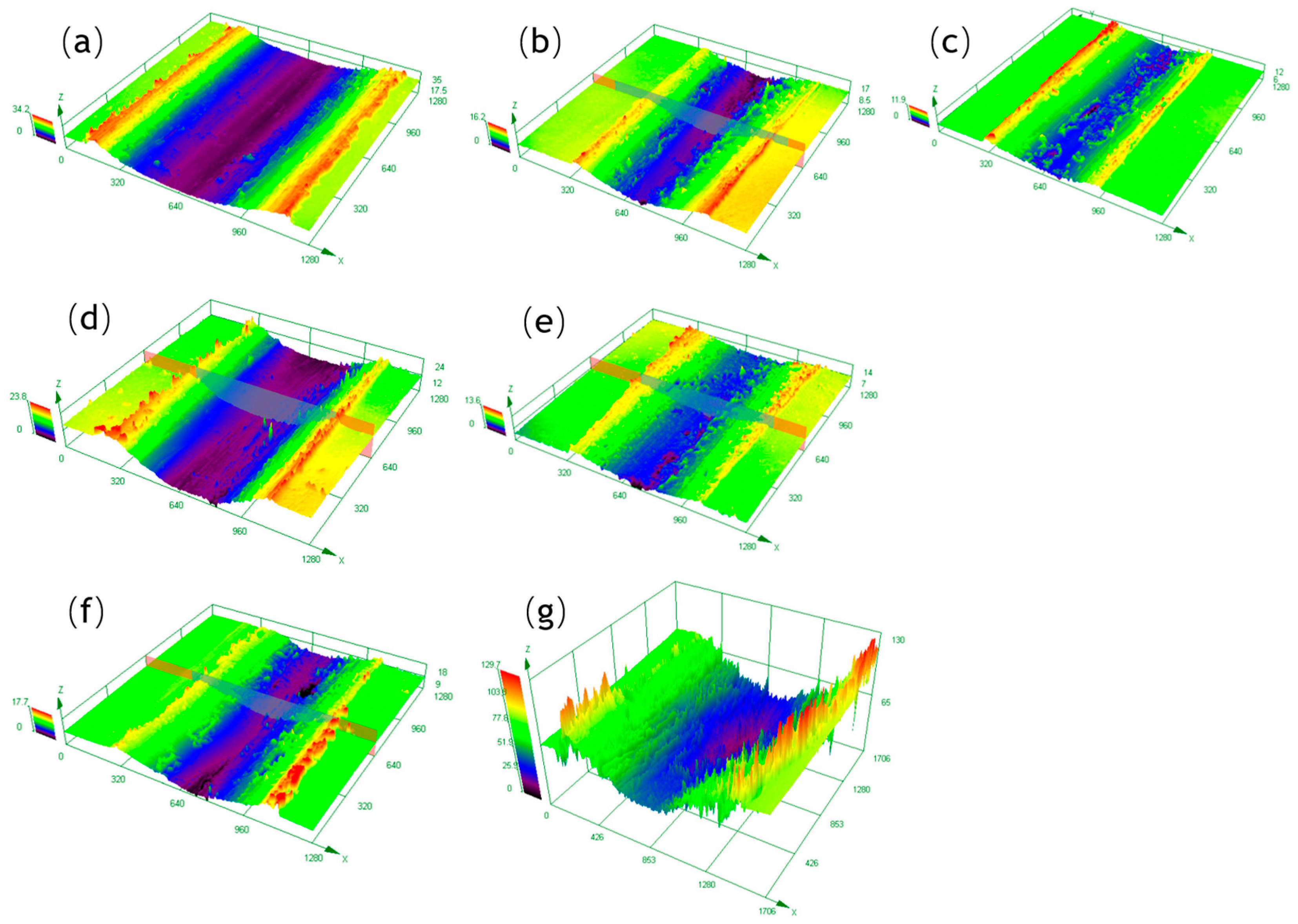
3.6. Three-Dimensional Diagram Analysis of the Sample
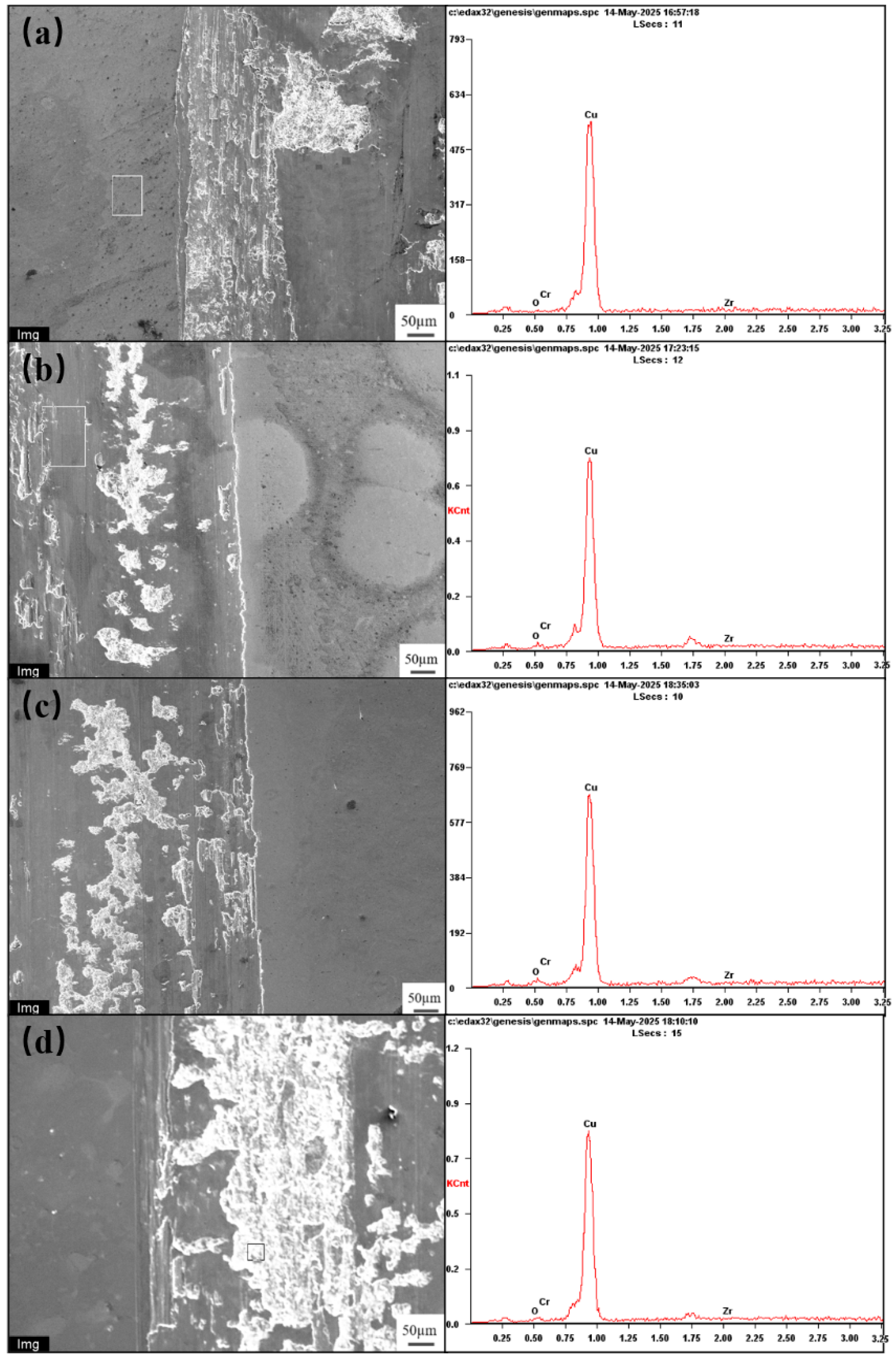
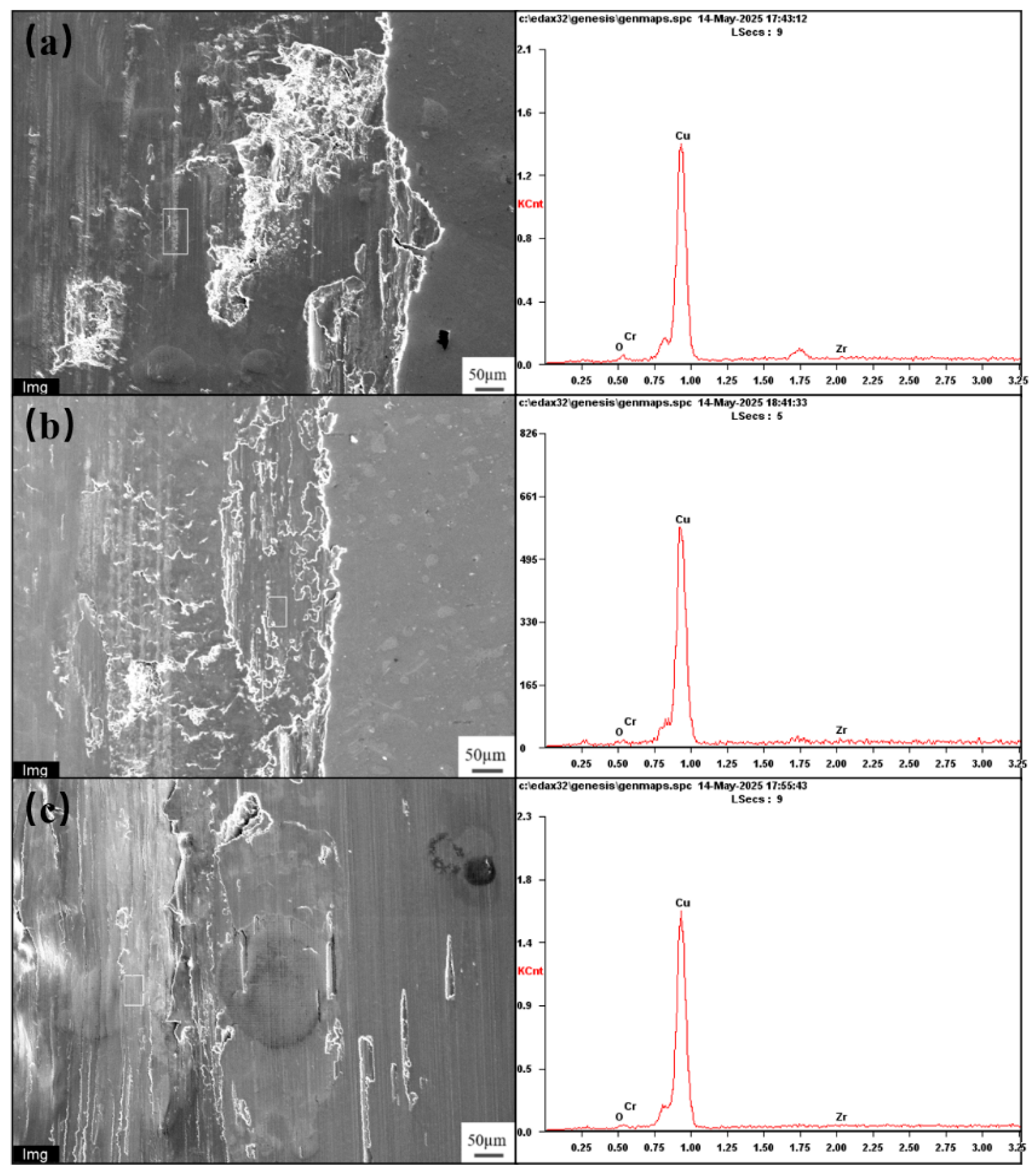
3.7. Analysis of the Composition Content and Surface Morphology of the Worn Alloy After Friction and Wear
4. Conclusions
- (1)
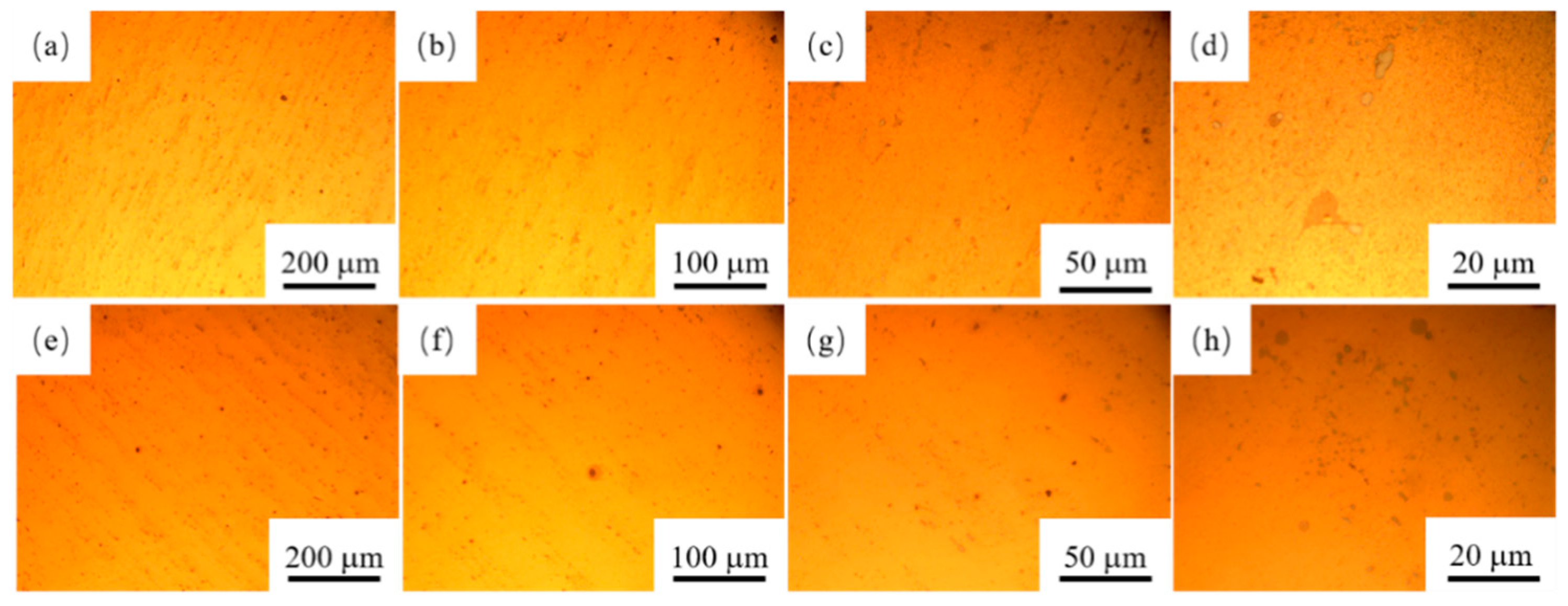
- After rolling, the particles exhibit the characteristic of aligning along the rolling direction. After aging treatment at 450 °C/6 h, the particles in the Cu-Cr-Zr alloy sample are well-distributed without obvious aggregation.
- (2)
- After aging treatment at 450 °C for 6 h, nanoscale Cr precipitates form in the Cu-Cr-Zr alloy. The synergistic strengthening effect of micro-scale Cr particles and Cr precipitates endows the alloy with excellent comprehensive properties. Its hardness is increased by approximately 35% compared with the unaged rolled part, and the electrical conductivity is increased by about 1.68 times. The strength reaches 558.7 MPa, an increase of 14.46% compared with the unaged part; the elongation reaches 24.25%, an increase of 14.82% compared with the unaged part.
- (3)
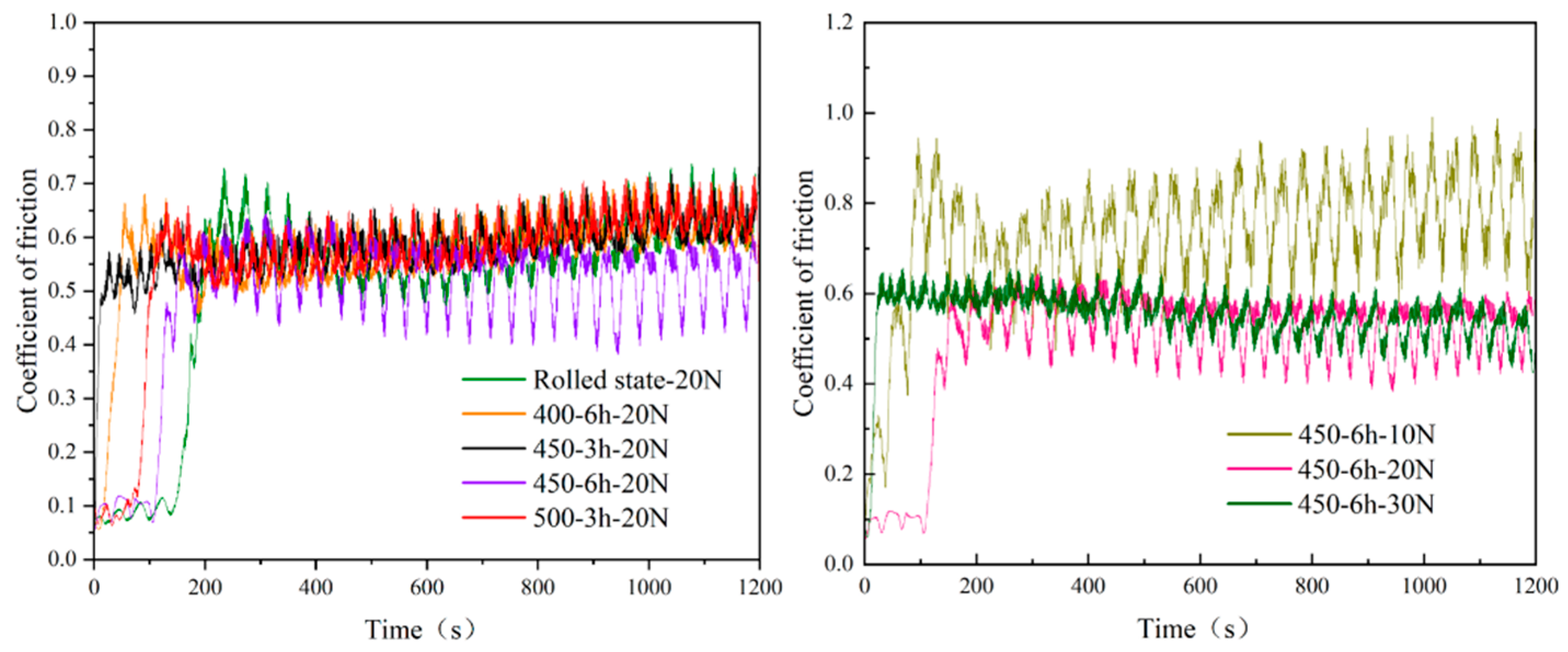
- The friction and wear properties of samples under different aging processes are related to the material’s hardness. Nanoscale Cr precipitates can significantly enhance the hardness of the material. As the material’s hardness increases, the wear mechanism transforms from material transfer to abrasive wear. Furthermore, the primary Cr particles and Cr precipitates will come into contact with oxygen in the air and oxidize to form Cr3O during the wear process. As a lubricant, Cr3O can reduce the material’s wear rate to a certain extent.
Author Contributions
Funding
Institutional Review Board Statement
Informed Consent Statement
Data Availability Statement
Conflicts of Interest
References
- Chen, J.; Wang, J.; Xiao, X.; Wang, H.; Chen, H.; Yang, B. Contribution of Zr to strength and grain refinement in Cu-Cr-Zr alloy. Mater. Sci. Eng. A 2019, 756, 464–473. [Google Scholar] [CrossRef]
- Wang, J.; Chen, J.; Guo, C.; Xiao, X.; Wang, H.; Yang, B. Low cycle fatigue behavior of precipitation-strengthened Cu-Cr-Zr contact wires. Int. J. Fatigue 2020, 137, 105642. [Google Scholar] [CrossRef]
- Li, J.; Dong, H.; Li, B.; Li, W. Microstructure evolution and properties of a Cu–Cr–Zr alloy with high strength and high conductivity. Mater. Sci. Eng. A 2021, 819, 141464–141472. [Google Scholar] [CrossRef]
- Wang, Y.; Fu, R.; Li, Y.; Zhang, L. A high strength and high electrical conductivity Cu-Cr-Zr alloy fabricated by cryogenic friction stir processing and subsequent annealing treatment. Mater. Sci. Eng. A 2019, 755, 166–169. [Google Scholar] [CrossRef]
- Wang, Y.; Liu, M.; Yu, B.; Wu, L.; Xue, P.; Ni, D.; Ma, Z. Enhanced combination of mechanical properties and electrical conductivity of a hard state Cu-Cr-Zr alloy via one-step friction stir processing. J. Mater. Process. Technol. 2021, 288, 116880. [Google Scholar] [CrossRef]
- Wallis, C.; Buchmayr, B. Effect of heat treatments on microstructure and properties of Cu-Cr-Zr produced by laser-powder bed fusion. Mater. Sci. Eng. A 2018, 744, 215–223. [Google Scholar] [CrossRef]
- Shangina, D.V.; Bochvar, N.R.; Morozova, A.L.; Belyakov, A.N.; Kaibyshev, R.O.; Dobatkin, S.V. Effect of chromium and zirconium content on structure, strength and electrical conductivity of Cu-Cr-Zr alloys after high pressure torsion. Mater. Lett. 2017, 199, 46–49. [Google Scholar] [CrossRef]
- Bodyakova, I.A.; Mishnev, V.R.; Kaibyshev, O.R. Microstructure and Properties of Cu–Cr–Zr Alloys After Plastic Deformation and Aging. Met. Sci. Heat Treat. 2024, 66, 343–354. [Google Scholar] [CrossRef]
- Yan, P.; Zu, G.; Zha, J.; Ye, F.; Zhu, W.; Han, Y.; Zou, H.; Zhao, Y.; Li, M.; Ran, X. Effect of Annealing and Aging Treatment on Microstructure and Properties of High Deformation Hot-Rolled Cu-Cr-Zr Alloy. J. Mater. Eng. Perform. 2025, 70, 1409–1416. [Google Scholar] [CrossRef]
- Zhang, Y.; Volinsky, A.A.; Tran, T.H.; Chai, Z.; Liu, P.; Tian, B.; Liu, Y. Aging behavior and precipitates analysis of the Cu–Cr–Zr–Ce alloy. Mater. Sci. Eng. A 2016, 650, 248–253. [Google Scholar] [CrossRef]
- Fu, H.; Xu, S.; Li, W.; Xie, J.; Zhao, H.; Pan, Z. Effect of rolling and aging processes on microstructure and properties of Cu-Cr-Zr alloy. Mater. Sci. Eng. A 2017, 700, 107–115. [Google Scholar] [CrossRef]
- Meng, A.; Nie, J.; Wei, K.; Kang, H.; Liu, Z.; Zhao, Y. Optimization of strength, ductility and electrical conductivity of a Cu–Cr–Zr alloy by cold rolling and aging treatment. Vacuum 2019, 167, 329–335. [Google Scholar] [CrossRef]
- Huang, A.; Wang, Y.; Wang, M.; Song, L.; Li, Y.; Gao, L.; Huang, C.; Zhu, Y. Optimizing the strength, ductility and electrical conductivity of a Cu-Cr-Zr alloy by rotary swaging and aging treatment. Mater. Sci. Eng. A 2019, 746, 211–216. [Google Scholar] [CrossRef]
- Zhang, S.; Li, R.; Kang, H.; Chen, Z.; Wang, W.; Zou, C.; Li, T.; Wang, T. A high strength and high electrical conductivity Cu-Cr-Zr alloy fabricated by cryorolling and intermediate aging treatment. Mater. Sci. Eng. A 2017, 680, 108–114. [Google Scholar] [CrossRef]
- Purcek, G.; Yanar, H.; Shangina, D.V.; Demirtas, M.; Bochvar, N.R.; Dobatkin, S.V. Influence of high pressure torsion-induced grain refinement and subsequent aging on tribological properties of Cu-Cr-Zr alloy. J. Alloys Compd. 2018, 742, 325–333. [Google Scholar] [CrossRef]
- Miao, Y.; Gan, C.; Wang, M.; Lgor, L. The phase structure, hardness, and wear properties of the Cu–Cr–Zr–Nb alloy under different aging states. J. Mater. Res. Technol. 2024, 33, 515–525. [Google Scholar] [CrossRef]
- Meng, X.; Cui, Z.; Huang, L.; Xia, C.; Lei, Q. Effects of loads and speeds on friction and wear properties of Cu–Ti alloys processed by combination aging treatments. J. Mater. Res. Technol. 2023, 26, 948–960. [Google Scholar] [CrossRef]
- Sağlam, I.; Özyürek, D.; Çetinkaya, K. Effect of ageing treatment on wear properties and electrical conductivity of Cu-Cr-Zr alloy. Bull. Mater. Sci. 2011, 34, 1465–1470. [Google Scholar] [CrossRef]
- Ren, J.; Zhang, S.; Shi, S.; Li, J. Enhancing the Dry and Current-Carrying Wear Properties of Cu-Cr-Zr-ZrB2 Composites by Ultrasonic Vibration Treatment. J. Mater. Eng. Perform. 2025, 1–13. [Google Scholar] [CrossRef]
- Miao, Y.; Gan, C.; Jin, W.; Wang, M.; Chen, Y.; Liu, Z.; Zhang, Z. Effect of aging temperature on microstructure and softening property of the Cu-Cr-Zr-Nb alloy. J. Alloys Compd. 2024, 983, 173818–173831. [Google Scholar] [CrossRef]
- Hu, J.; Tian, Y.; Yu, H.; Ling, G.; Li, S.; Jiang, M.; Li, H.; Qin, G. Optimizing strength and electrical conductivity of Cu-Cr-Zr alloy by two-stage aging treatment. Mater. Lett. 2022, 315, 131937. [Google Scholar] [CrossRef]






| Element | Composition (wt.%) | Purity (%) |
|---|---|---|
| Cu | balance | >99.96 |
| Cr | 1 | >99.9 |
| Zr | 0.3 | >99.5 |
| Aging Temperature (°C) | Hardness (HV) |
|---|---|
| Unaged sample | 149.37 |
| 400 °C/6 h | 210.52 |
| 450 °C/3 h | 197.73 |
| 450 °C/6 h | 201.29 |
| 500 °C/3 h | 185.13 |
| Aging Temperature (°C) | Electrical Conductivity (%IACS) |
|---|---|
| Unaged sample | 29.25 |
| 400 °C/6 h | 67.07 |
| 450 °C/3 h | 74.82 |
| 450 °C/6 h | 78.30 |
| 500 °C/3 h | 84.26 |
| Tensile Strength (MPa) | Elongation (%) | |
|---|---|---|
| Unaged sample | 488.1 | 21.12 |
| 450 °C/6h | 558.7 | 24.25 |
Disclaimer/Publisher’s Note: The statements, opinions and data contained in all publications are solely those of the individual author(s) and contributor(s) and not of MDPI and/or the editor(s). MDPI and/or the editor(s) disclaim responsibility for any injury to people or property resulting from any ideas, methods, instructions or products referred to in the content. |
© 2025 by the authors. Licensee MDPI, Basel, Switzerland. This article is an open access article distributed under the terms and conditions of the Creative Commons Attribution (CC BY) license.
Share and Cite
Zhang, H.; Zhang, S.; Li, G.; Zang, G.; Zhang, X.; Li, B.; Wang, Y. The Effect of the Aging Process on the Microstructure and Wear Properties of Cu-Cr-Zr Alloys. Metals 2026, 16, 29. https://doi.org/10.3390/met16010029
Zhang H, Zhang S, Li G, Zang G, Zhang X, Li B, Wang Y. The Effect of the Aging Process on the Microstructure and Wear Properties of Cu-Cr-Zr Alloys. Metals. 2026; 16(1):29. https://doi.org/10.3390/met16010029
Chicago/Turabian StyleZhang, Hongkui, Siruo Zhang, Guanglong Li, Gengliang Zang, Xun Zhang, Bing Li, and Yukun Wang. 2026. "The Effect of the Aging Process on the Microstructure and Wear Properties of Cu-Cr-Zr Alloys" Metals 16, no. 1: 29. https://doi.org/10.3390/met16010029
APA StyleZhang, H., Zhang, S., Li, G., Zang, G., Zhang, X., Li, B., & Wang, Y. (2026). The Effect of the Aging Process on the Microstructure and Wear Properties of Cu-Cr-Zr Alloys. Metals, 16(1), 29. https://doi.org/10.3390/met16010029