1. Introduction
In the 21st century, heritage is understood as the collection of tangible, intangible and natural assets linked to a community’s cultural identity [
1], resulting from social processes that attribute historical, artistic, anthropological or scientific value to them; these assets are transmitted and reinterpreted across generations through dynamic collective practices [
2,
3]. For its part, legacy represents the intangible transmission of knowledge, values, customs and cultural practices from one generation to the next through educational, familial or social mechanisms, which forge the continuity of identity and enable the adaptive evolution of collective memory in changing historical contexts [
4]. Both concepts, which are interrelated, highlight the active construction of cultural heritage as a phenomenon that is not static, but relational and contextual, and essential to the anthropological and sociological understanding of human societies.
The incorporation of immersive technologies in the cultural and heritage fields is one of the most significant phenomena of contemporary digital transformation [
5,
6]. Virtual reality (VR) [
7] has emerged as a tool capable of changing the ways in which society perceives, preserves and transmits its cultural heritage [
8]. Its potential to recreate historical environments, simulate sensory experiences and facilitate interaction with heritage assets redefines the boundaries between the material and the digital, between authenticity and representation [
9]. This change raises a profound debate about how cultural heritage is understood and experienced in an increasingly technologically mediated context [
10].
Interest in applying VR to heritage management and dissemination has grown exponentially over the last decade, driven by the availability of more accessible technologies and the rise of the digital humanities [
11]. Museums, interpretation centers, and archaeological projects are incorporating three-dimensional models [
12], immersive reconstructions and virtual tours that enable new forms of citizen participation [
13]. However, these experiences are part of a complex framework where scientific, educational, tourist and social objectives intersect. Such diversity of purposes generates tensions around the authenticity, conservation and cultural appropriation of digitized heritage assets.
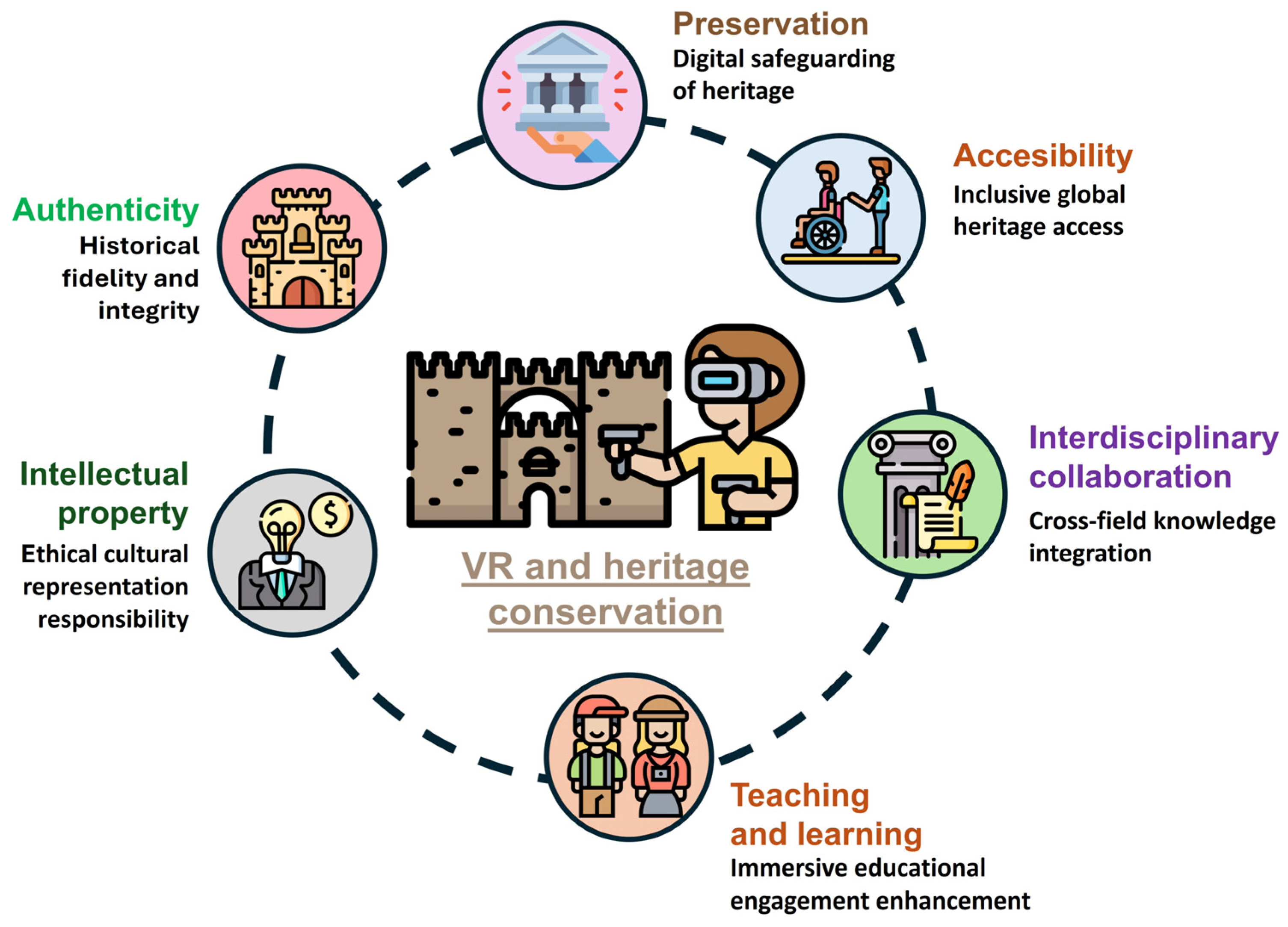
However, incorporating VR technology into heritage preservation poses several technological, social, cultural, and even ethical challenges, among which the following stand out (
Figure 1): (i) preservation: VR offers new possibilities for the digital conservation of cultural assets, allowing for their documentation, reconstruction, and visualization in environments that are safe from physical deterioration [
14]; (ii) authenticity: it raises challenges regarding the authenticity and historical accuracy of virtual representations, questioning the boundaries between recreation and interpretative manipulation [
15]; (iii) accessibility: technology enhances accessibility to heritage by enabling its global and inclusive dissemination to diverse audiences [
16]; (iv) interdisciplinary collaboration: by integrating knowledge from engineering, art, history, archaeology and communication around common goals [
17,
18]; (v) teaching and learning: by creating immersive experiences that strengthen critical and emotional understanding of historical heritage [
19,
20,
21]; and (vi) intellectual property: the responsible representation of heritage through VR technology poses ethical challenges and the risk of trivializing heritage in virtual environments [
22,
23].
From an academic perspective, the study of VR in the field of heritage has given rise to a growing body of literature, characterized by its strong interdisciplinary nature [
17]. Engineers, historians, architects, educators and communication experts come together in collaborative projects that combine technological innovation with cultural sensitivity [
24]. However, this scattered expansion makes it difficult to clearly understand the structure of the field and the orientation of its lines of research. The absence of a systematized vision makes it difficult to identify the dominant trends, the main theoretical references and the emerging themes that shape the current debate.
The underlying problem lies not only in the proliferation of studies but also in the fragmentation of knowledge that this expansion entails. The diversity of approaches and the lack of unified criteria for evaluating the quality or impact of virtual experiences make it difficult to establish methodological consensus [
25]. Furthermore, research tends to focus on technical aspects, leaving ethical, sociocultural and educational issues arising from the use of immersive environments in heritage interpretation in the background [
26]. This imbalance highlights the need for an integrative analysis that allows us to understand how VR transforms not only heritage practices [
27] but also forms of knowledge and cultural appropriation.
In this context, there is a need to scientifically analyze the evolution and status of research on the use of VR in cultural heritage. A rigorous bibliometric review allows us to map the development of knowledge, detect links between disciplines, and determine which methodological and conceptual approaches predominate. Thus, this study aims to systematically address this gap in analysis through a bibliometric exploration of the subject area. The main objective is to examine how scientific production on virtual reality applied to heritage has been configured, what intellectual dynamics sustain it, and what spaces for interdisciplinary dialog have been consolidated. By focusing on the structure, evolution, and issues of the scientific corpus, we seek to provide an empirical basis that contributes to consolidating this research domain within the framework of digital humanities and contemporary cultural preservation.
2. Materials and Methods
To achieve the research objective, a bibliometric review of scientific publications related to VR and heritage has been conducted. The bibliometric review provides a more comprehensive and objective analysis of the cumulative advances in the field over time. As a general work plan (
Figure 2), the bibliometric method includes the following phases: Phase I: article selection; Phase II: bibliometric data collection; Phase III: analysis; Phase IV: visualization; and Phase IV: interpretation.
To select the articles (
Figure 2, Phase I), the following search string was first defined: ‘Virtual Reality’ AND (“Heritage” OR ‘Legacy’). This search string is particularly important because it combines terms that accurately capture the intersection between virtual reality and heritage. By restricting the search to title, abstract and keywords, it is ensured that the documents retrieved address these concepts as central elements of the study, which significantly reduces information noise and increases the relevance of the corpus to be analyzed. Furthermore, the use of quotation marks forces the retrieval of the exact expression ‘virtual reality’, avoiding results in which these terms appear in isolation or in contexts unrelated to immersive technology.
From the point of view of rigor, the inclusion of the Boolean operator AND between ‘virtual reality’ and (“heritage” OR ‘legacy’) ensures that all records combine the technological dimension with the heritage dimension, while the OR operator broadens the sensitivity of the search by considering two possible ways of referring to heritage or legacy. This logical structure balances comprehensiveness and specificity: on the one hand, it minimizes the loss of relevant studies that use slightly different terminology; on the other, it maintains a clear thematic focus, which is essential for a robust and reproducible bibliometric review, especially when analyzing trends, co-authorship networks or thematic clusters in an emerging field.
Subsequently, to carry out this bibliometric research (
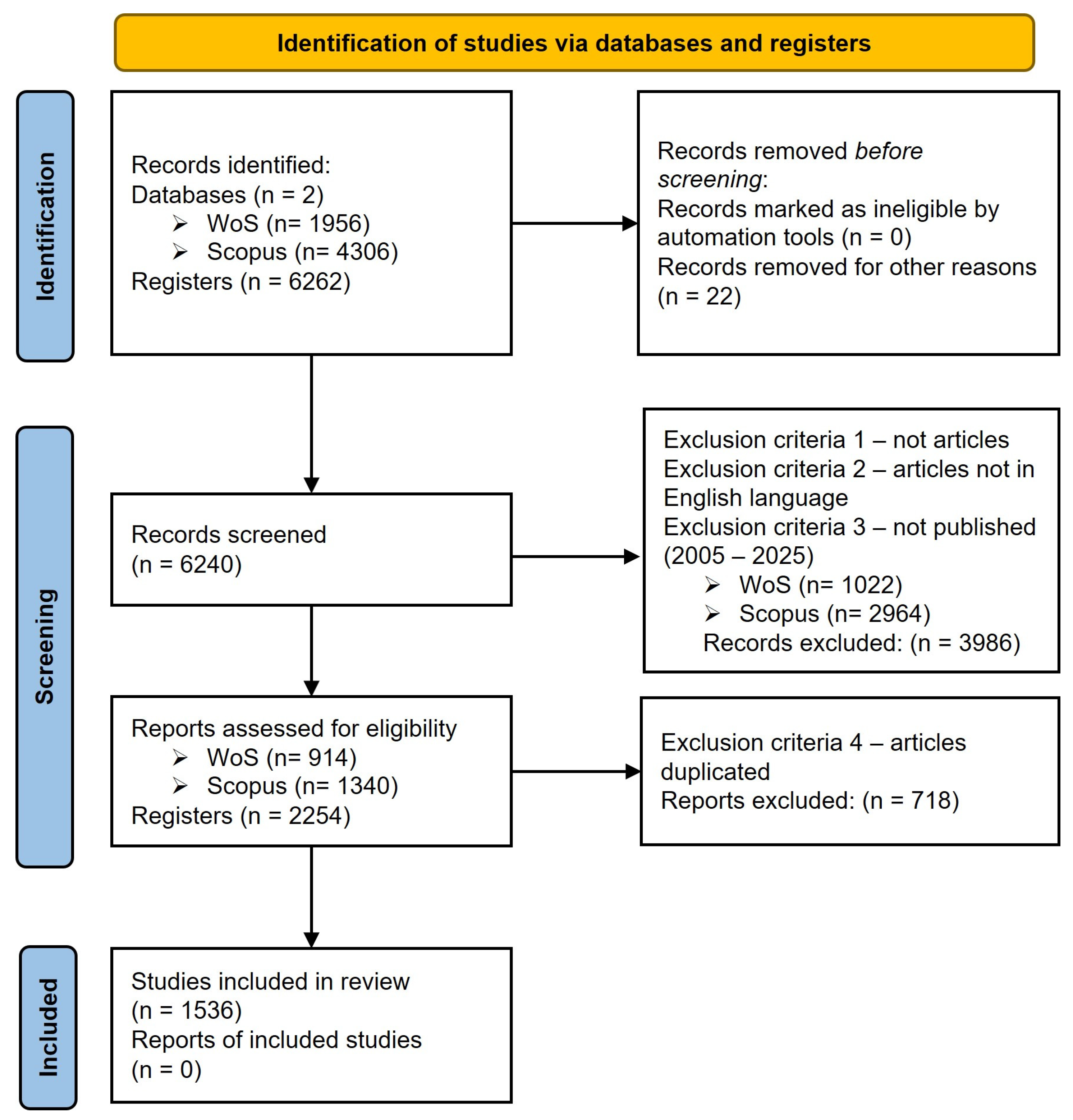
Figure 2, Phase II), the PRISMA 2020 protocol adapted to the quantitative analysis of scientific output (
Figure 3) was used to provide greater scientific rigor to this review [
28,
29]. Once the initial records were identified in the Scopus (
n = 4306) and WoS (
n = 1956) databases, several results were excluded after reading the title and abstract (
n = 22). Several exclusion criteria were applied in the screening phase. First, all documents that are not journal articles (e.g., books, chapters, conference proceedings, reviews, editorials, or letters to the editor) were excluded (exclusion criteria 1), as the analysis was limited to original research or peer-reviewed articles, which guarantees a minimum and consistent standard of scientific quality.
Secondly, all documents not written in English are excluded (exclusion criteria 2), given that the aim of the review is to work with a homogeneous corpus that facilitates international comparison and the standardization of key terms. This language restriction also helps to reduce biases arising from translations and allows for more efficient use of bibliometric tools and databases, whose coverage and metadata are more comprehensive in English. Finally, all works not published between 2005 and 2025 are excluded (Exclusion criterion 3). Applying these criteria, 3986 results are excluded (Scopus n = 2964; WoS n = 1022), since the review focuses on analyzing recent developments in scientific output within that specific period. In addition, during the eligibility phase, all duplicate files (n = 718) were eliminated. This resulted in the final results included in the bibliometric review (n = 1536).
To carry out the analysis of the studies included in this bibliometric research (
Figure 2, Phase III), RStudio software version 2025.05.1 was used, an integrated programming platform widely used for statistical analysis and data visualization. For the specific processing and analysis of bibliographic information, the Bibliometrix package was implemented, a specialized tool in R that allows comprehensive bibliometric analysis, including the calculation of indicators, network analysis, and the generation of thematic and collaboration maps.
Finally, artificial intelligence (AI) has only been used to review and improve the English in a few specific paragraphs of this article. This process was carried out in order to ensure the accuracy and fluency of the text in those paragraphs. However, it is important to note that all graphics, figures, and substantive content in the article are entirely original, created by the authors without the intervention of AI tools. The use of AI was strictly limited to the task of linguistic review, maintaining the integrity and originality of the research and its results.
3. Results
The results obtained in this bibliometric study are shown below (
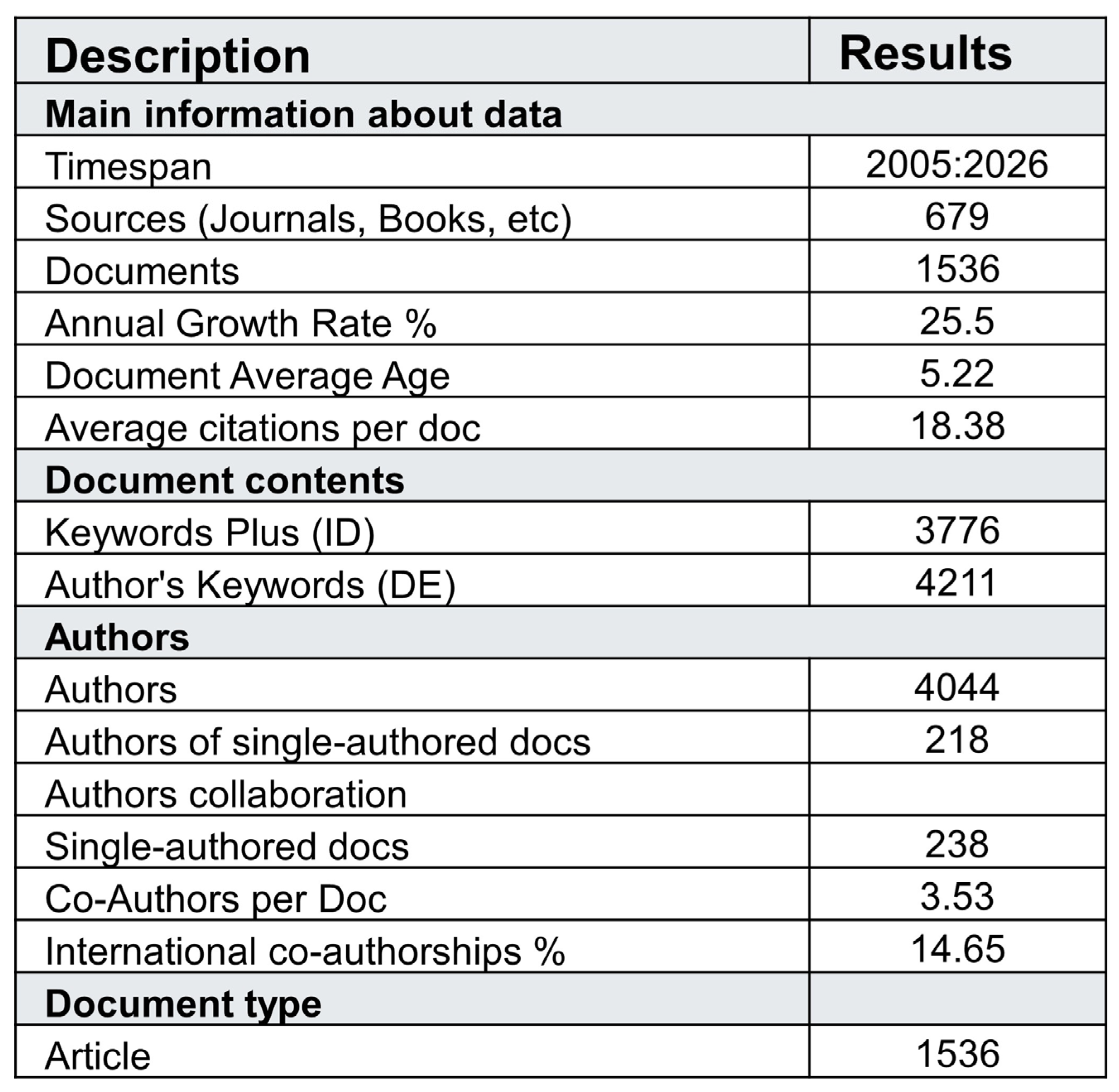
Figure 2, Phase IV). As discussed above, this bibliometric review covers the period from 2005 to 2025, including a total of 1536 scientific articles from 679 different journals (
Figure 4). Although the annual growth rate of publications has stagnated, indicating a stabilization in scientific production in the field, the documents have an average age of 5.22 years and receive an average of 18.38 citations each, reflecting a sustained and significant level of academic influence over time. The large number of keywords—4211 from the author and 3776 from Keywords Plus—suggests a wide thematic diversity and a developing multidisciplinary field.
In terms of collaboration between authors, the analysis shows the participation of 4044 researchers, with a significant proportion of publications with multiple authors, as only 238 documents are by a single author, and 218 authors have published individually. The average number of co-authors per document is 3.53, indicating moderate collaborative work. However, the proportion of international collaborations is relatively low (14.65%), suggesting that most research is conducted within national or regional networks.
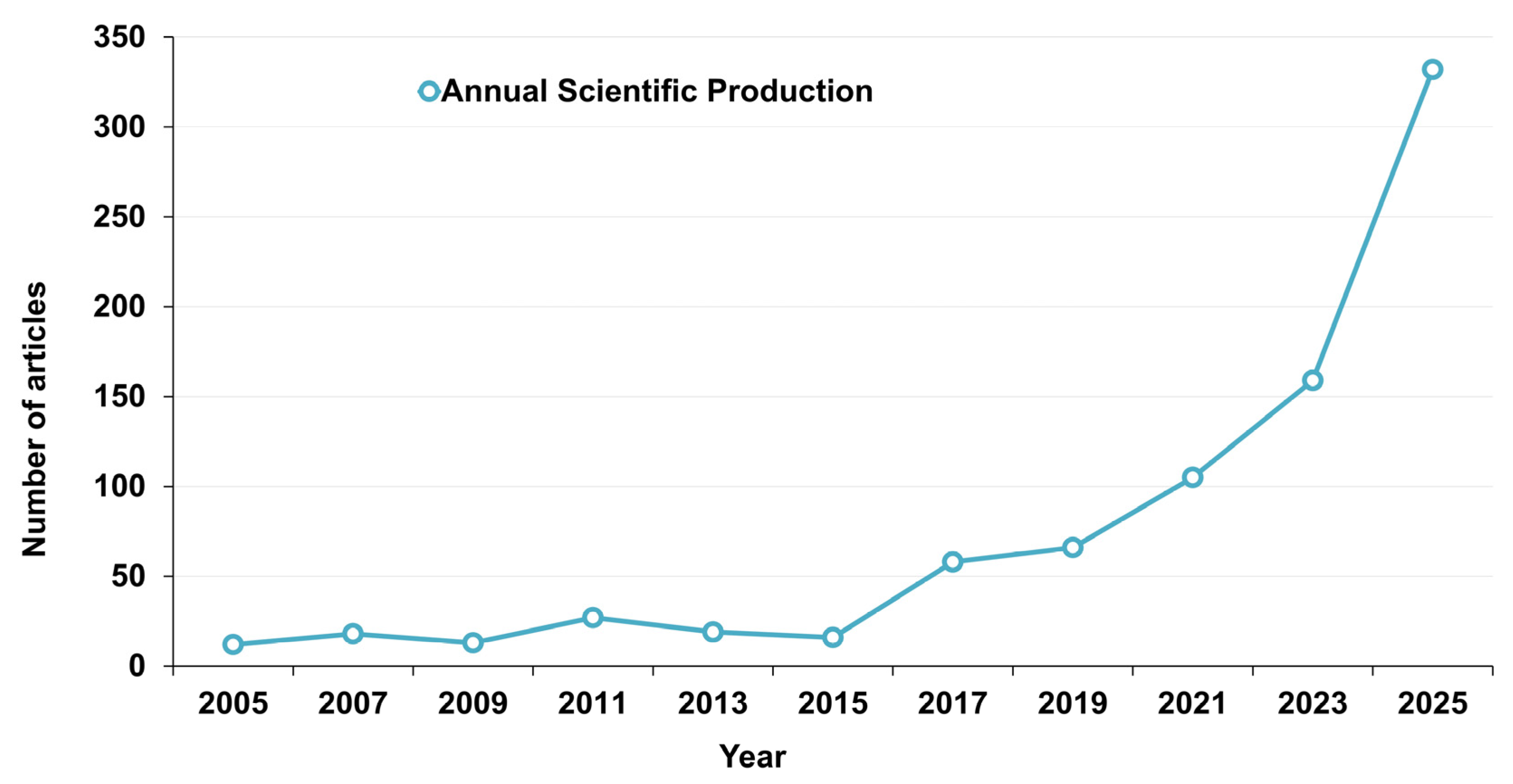
In terms of scientific evolution (
Figure 5), the average annual growth rate for publications is 25.5% in article production between 2005 and 2025, with a particularly sharp increase from 2016 onwards. During the first decade (2005–2015), growth was irregular but moderate, ranging from 12 to 27 publications per year, suggesting an initial stage of academic consolidation. From 2016 onwards, there has been sustained expansion: the number of articles has doubled in a few years, reaching 66 in 2019 and more than 100 in 2020–2021. The most notable increase occurred in the 2022–2025 period, when production rose from 170 to 332 articles, reflecting a phase of maturity and intense research activity, probably driven by global digitalization, scientific internationalization, and the consolidation of academic networks in the area.
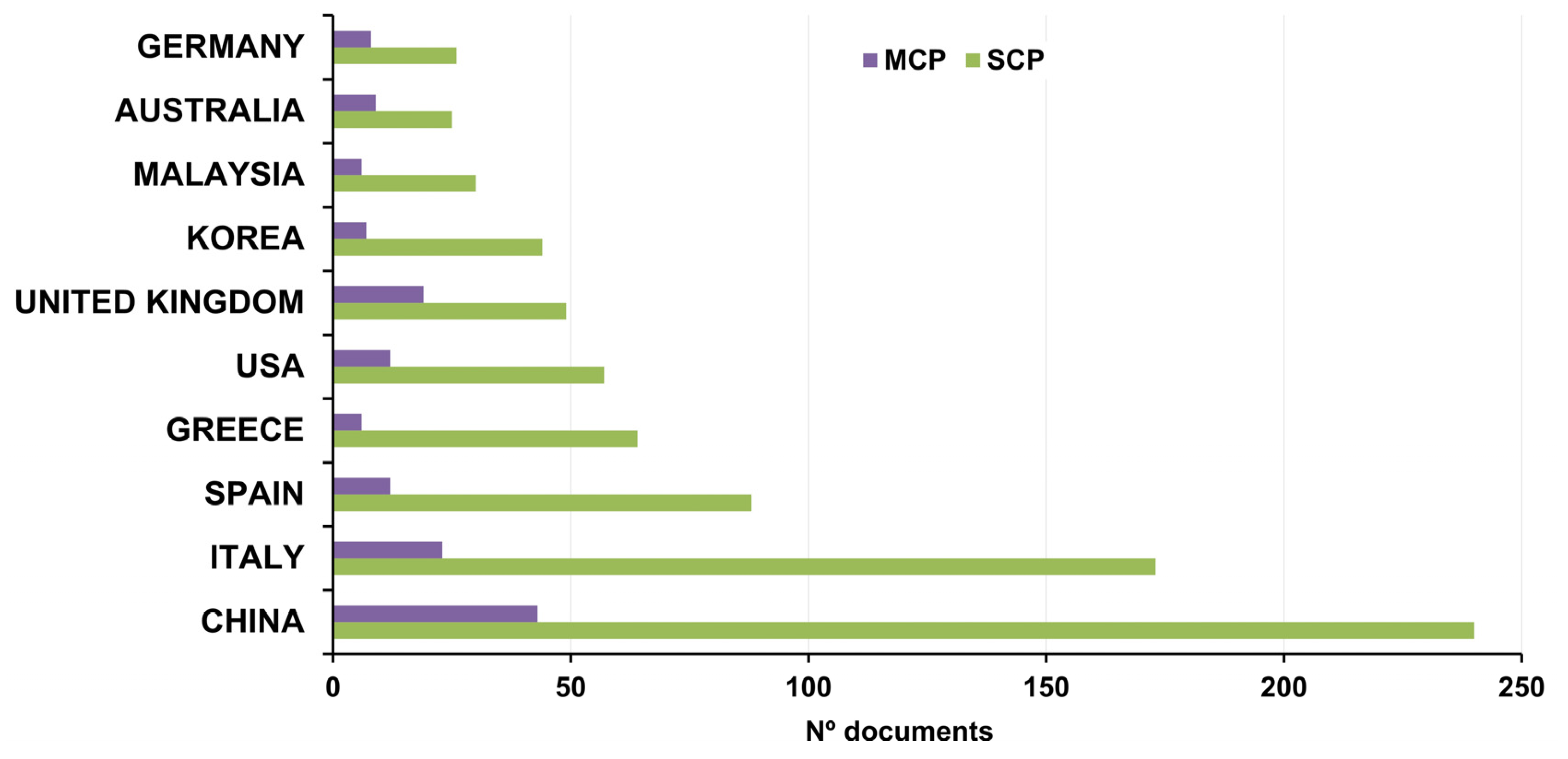
As for the analysis of the number of documents per country (
Figure 6), there is a clear predominance of publications produced within a single country (SCP) over publications with international collaboration (MCP). In all the countries analyzed, SCPs far exceed MCPs, suggesting that most scientific production continues to be developed mainly within national research networks. This pattern reflects that, although international collaboration exists, it still accounts for a smaller proportion compared to research generated by institutions within the same country. In this context, China stands out as the country with the highest volume of publications, particularly in SCP, which demonstrates a strong capacity for internal scientific production and a broad and consolidated research system.
On the other hand, European countries such as Italy, Spain and Greece also show significant scientific output, especially in national publications. At the same time, the United States and the United Kingdom have high levels of output with a relatively higher proportion of international collaboration compared to other countries, reflecting greater integration into global research networks. Finally, countries such as South Korea, Malaysia, Australia and Germany show more moderate scientific output, although they maintain active participation in both national publications and international collaborations, indicating their involvement in global scientific dynamics, albeit with a lower total volume of documents.
The results show significant differences between countries in terms of scientific impact (
Table 1), measured by total citations (TC) and average citations per article. In terms of total citations, Italy ranks first with 5362 citations, indicating high visibility and influence of its scientific output in the field analysis. It is followed by the United Kingdom with 3161 citations and China with 2751. However, although China ranks among the top countries in terms of total citations, its average citations per article (9.7) is considerably lower than that of other countries, suggesting that its high ranking is mainly due to the large volume of publications rather than the average impact of each work.
On the other hand, when analyzing the average number of citations per article, some countries with a lower total volume of citations show a higher relative impact. Canada stands out with an average of 60.4 citations per article, followed by Australia with 58.1, the Netherlands with 50.5 and the United Kingdom with 46.5. These values indicate that, although these countries may have lower output in absolute terms, their publications tend to generate greater academic impact. In contrast, countries such as Spain, the United States, and Germany have more moderate citation averages, reflecting differences in the average impact of their research within the field of study.
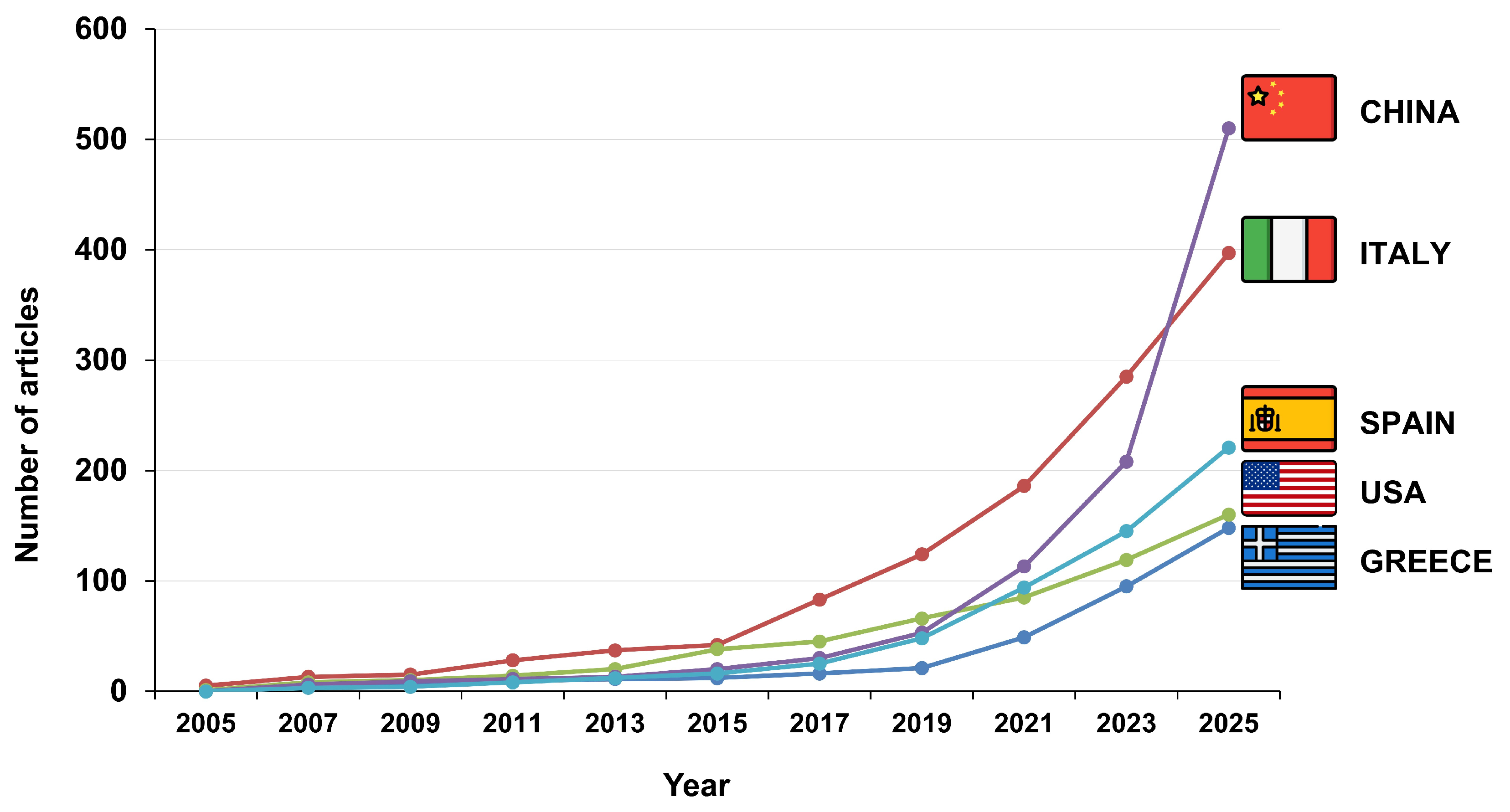
Regarding the evolution of scientific output in the leading countries in the application of VR for heritage protection, the following
Figure 7 shows sustained growth in the scientific production of Greece, Italy, the United States, China, and Spain between 2005 and 2025, although at markedly different rates. Greece begins with only one article in 2005 and gradually increases its output until stabilizing at around 148 publications by 2025. Italy displays a continuous and particularly notable growth, rising from 5 articles in 2005 to nearly 400 in 2025, indicating a strong expansion of its research community in the field of VR and heritage. In the United States, the increase is more moderate but steady, from 1 publication in 2005 to nearly 200 results in 2025, demonstrating consistently high productivity. Spain shows a similar upward trend, although with a smaller volume, moving from almost no production in the early years to stabilizing at around 220 recent publications, which reflects a significant increase in its research capacity. Finally, China exhibits the most rapid evolution: from 0 articles in 2005 to more than 500 by 2020, an indication of the remarkable rise in its investment in R&D and its consolidation as a global scientific power.
As for the most relevant sources in this field, the results obtained (
Table 2) reflect an expanding multidisciplinary scientific field, with a balance between publications on technology, heritage and sustainability. The journal Heritage stands out, with 44 articles, as the most productive medium and possibly the core reference in this field. It is followed by Applied Sciences-Basel and the ACM Journal on Computing and Cultural Heritage, both with a strong presence that shows the intersection between applied science, computer science and heritage studies. Sustainability also plays an important role, suggesting a growing connection between sustainability and cultural heritage management [
30]. Specialized journals such as
Digital Applications in Archaeology and Cultural Heritage,
Journal of Cultural Heritage and
Virtual Archaeology Review demonstrate the consolidation of an academic ecosystem focused on the digitization, documentation and preservation of heritage through advanced technologies.
An analysis of the top 10 institutions with the highest number of publications (
Table 3) reveals a strong concentration of scientific output in European universities and research centers, particularly in Italy and Spain. In first place is Italy’s Consiglio Nazionale delle Ricerche (CNR) with 31 articles, reflecting its central role as one of the country’s leading public research bodies. Other Italian institutions also stand out, such as Marche Polytechnic University, the University of Bologna and the Polytechnic University of Milan, demonstrating the important contribution of the Italian university system to research development in the area analyzed.
On the other hand, several Spanish universities also have a significant presence in scientific production, including the University of Extremadura, the Polytechnic University of Valencia and the University of La Laguna, all with a significant number of articles. Likewise, Asian institutions such as Chiang Mai University and Kyung Hee University reflect the growing participation of research centers on the Asian continent in global scientific production. Finally, the presence of the Centre National de la Recherche Scientifique (CNRS) confirms the role of large research organizations in the generation of knowledge. Taken together, these results suggest that scientific output in the field studied is mainly driven by universities and public research centers with a solid academic infrastructure and active participation in international research networks.
As for the most relevant authors on VR and heritage (
Table 4), the bibliometric results show a group of authors with moderate impact in their field, led by Jung, T. (h index = 8, g index = 9, m index = 0.8, 590 TC in 9 publications since 2017), who stands out for his strong citation performance and efficiency over a relatively short period. He is closely followed by Partarakis, N. (h index = 7, g index = 8; m = 1, 132 TC in 8 publications since 2020), notable for his outstanding recent performance. In contrast, authors such as Carrozzino, M. and Bruno, F., show high total citation counts (594 and 570, respectively) despite an h index of 6 and careers dating back to 2010, suggesting sustained influence but an uneven distribution of citations. Meanwhile, more established scholars such as Li, Y. (20 NP since 2006) tend to prioritize productivity over efficiency (m = 0.33). In general, there is a trend where emerging authors post-2016 surpass their more senior counterparts in m index, suggesting an acceleration of impact due to digital dynamics in academic publications, although the h index does not always reflect a high number of citations.
An analysis of the top 10 most frequent terms (
Table 5) reveals a clear predominance of concepts linked to immersive technologies applied to the field of heritage. First, the term ‘Virtual Reality’ appears much more frequently than the rest (915), which shows that Virtual Reality is the central focus of the research within the set of documents analyzed. In second and third place are ‘cultural heritage’ and ‘augmented reality’, reflecting the close relationship between the preservation and dissemination of cultural heritage and the use of advanced digital technologies such as Augmented Reality [
31]. The presence of these terms indicates that a large part of the studies focusses on the development of immersive experiences for the interpretation, conservation and dissemination of heritage, taking advantage of technological tools that allow historical environments, monuments or cultural spaces to be recreated in an interactive way [
18,
32].
On the other hand, other terms such as photogrammetry, heritage, museums, and user experience highlight complementary areas within this line of research. Photogrammetry is frequently used for the three-dimensional digitization of heritage objects and sites, facilitating their integration into virtual environments [
33]. Likewise, the emergence of terms related to museums and user experience indicates that a significant part of the research focuses on improving public interaction with heritage through digital applications [
34].
Other terms such as photogrammetry, heritage, museums, and user experience highlight complementary areas within this line of research. Photogrammetry is frequently used for the three-dimensional digitization of heritage objects and sites, facilitating their integration into virtual environments. Likewise, the emergence of terms related to museums and user experience indicates that a significant part of the research focuses on improving public interaction with heritage through digital applications. These results suggest that the field of study is oriented towards combining immersive technologies, digital documentation techniques, and user-centered design strategies to improve the accessibility [
7], conservation, and dissemination of cultural heritage in educational, tourist, and museum contexts [
16].
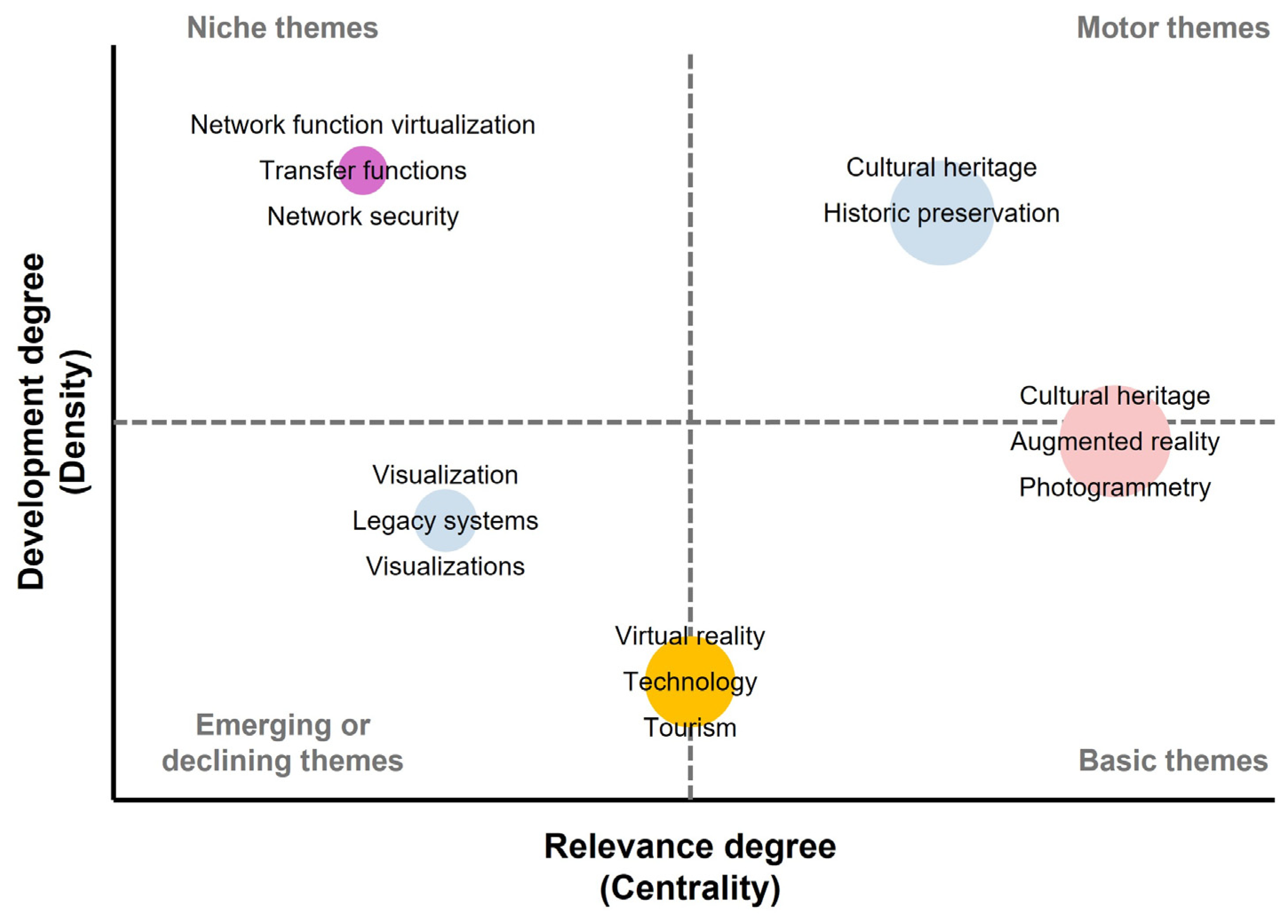
Finally, the thematic map presented (
Figure 8) shows a strategic classification of lines of research according to two key dimensions: degree of development (density) and degree of relevance (centrality). The upper left quadrant shows the so-called niche themes, which include terms such as network function virtualization, transfer functions, and network security. These themes are characterized by being advanced internally but with low connection to the rest of the field, indicating highly cohesive scientific communities but with limited cross-cutting influence.
In contrast, the upper right quadrant brings together the motor themes, where cultural heritage and historic preservation are both advanced and highly relevant areas. These themes act as conceptual drivers of the domain, influencing multiple lines of research and demonstrating strong theoretical and methodological articulation. This positioning suggests that cultural heritage preservation is taking on a central role at the intersection of technology and the humanities, functioning as an integrating core for other emerging subfields. The lower quadrants reveal different dynamics: emerging or declining themes include visualization, legacy systems, and visualizations, which have low density and low relevance. This may reflect areas in transition, in the process of renewal or losing momentum. On the other hand, basic themes—with high relevance but low density—include augmented reality [
35], photogrammetry, and, once again, cultural heritage [
36], suggesting that although these areas are fundamental to the field, they still require greater internal consolidation [
33]. The lower central location of virtual reality, technology, and tourism indicates their role as connecting themes necessary for the overall conceptual structure but still at a limited stage of development.
4. Discussion
In this section the results obtained are interpreted (
Figure 2, Phase V).
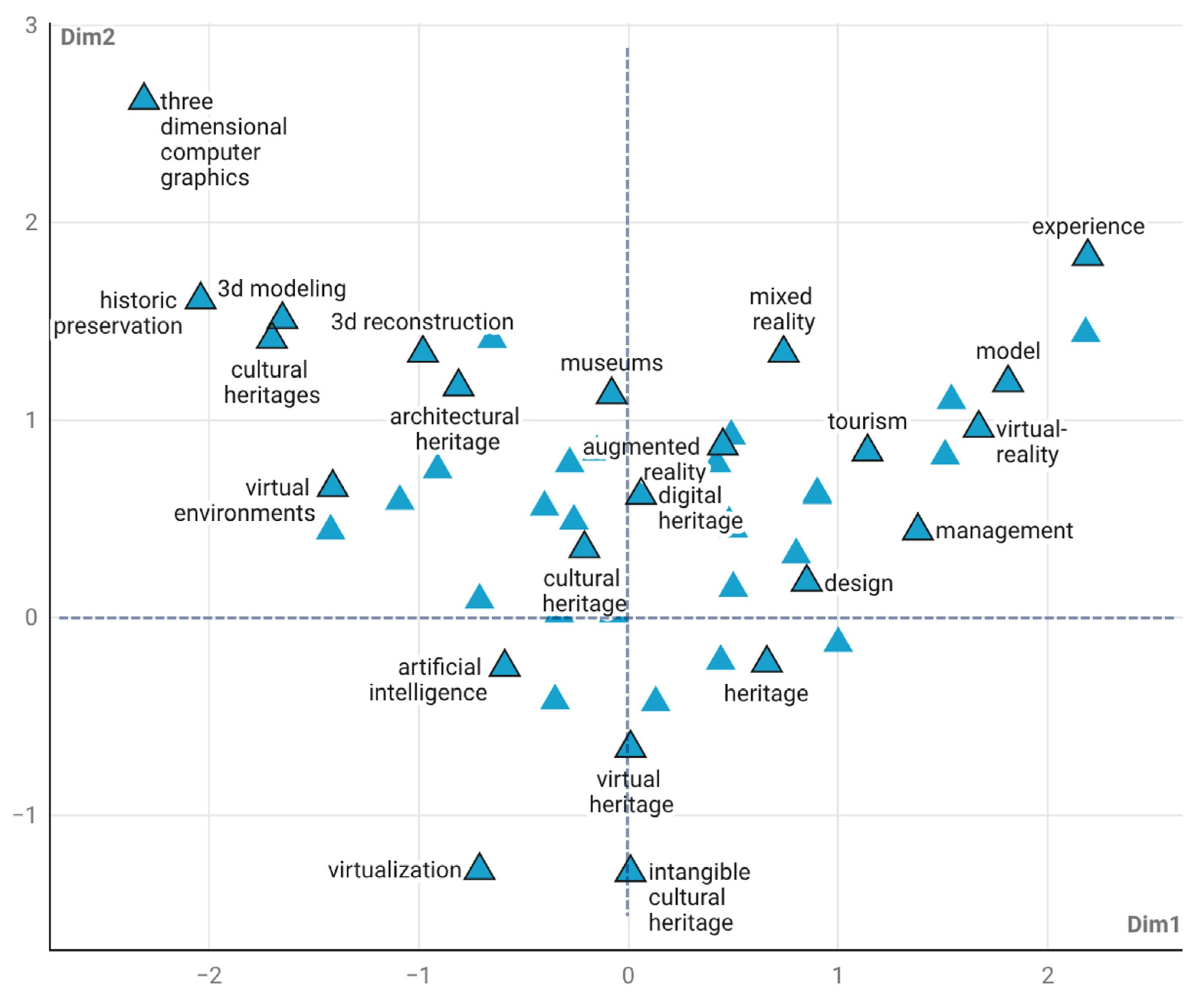
Figure 9 presents a two-dimensional conceptual map that distributes the key terms according to two dimensions (Dim1 and Dim2), reflecting the semantic and thematic relationships between them in the analyzed corpus. This quantitative and spatial distribution reveals the thematic duality of the area: one axis of work focused on documentation and digital modelling technologies (high Dim2, low or negative Dim1) and another dedicated to experience, application, and management through immersive technologies (high Dim1).
The upper left quadrant contains terms associated with digital documentation and modelling of heritage, such as three-dimensional computer graphics (Dim2 ≈ 2.7), 3D modelling (Dim2 ≈ 1.7), 3D reconstruction, cultural heritage and historic preservation [
36,
37], which represent a strong group around digitization and three-dimensional reconstruction technologies. These concepts demonstrate a solid quantitative approach to digital capture and preservation techniques, which are fundamental to heritage conservation [
38]. In addition, related terms such as architectural heritage and virtual environments are located close to this group, underlining their relevance in the recreation and analysis of historical and architectural spaces [
39].
In contrast, the right quadrant of the map contains terms with a high Dim1 score, such as experience (Dim1 ≈ 2.2), virtual reality (Dim1 ≈ 1.9), model and management, along with mixed reality and tourism, which represent applications more oriented towards user interaction, dissemination and cultural management. This area also features bridging concepts such as augmented reality [
31], digital heritage and museums [
34], located in intermediate positions (Dim1 between 0 and 1.5), connecting the technological aspect with the museography and cultural context.
Digital heritage, defined as the body of cultural, scientific, administrative and social resources created in digital format that constitute the collective memory of the contemporary era, is emerging as a key issue [
34,
40]. This digital heritage also encompasses websites, software, audiovisual works, algorithms and social media that reflect our intellectual and cultural activity. On the other hand, cultural heritage constitutes the tangible and intangible expression of a community’s collective identity, transmitted over time because of its history, traditions and ways of life. It includes monuments, artistic works, cultural landscapes and social practices that reflect shared values, beliefs and knowledge [
41].
Finally,
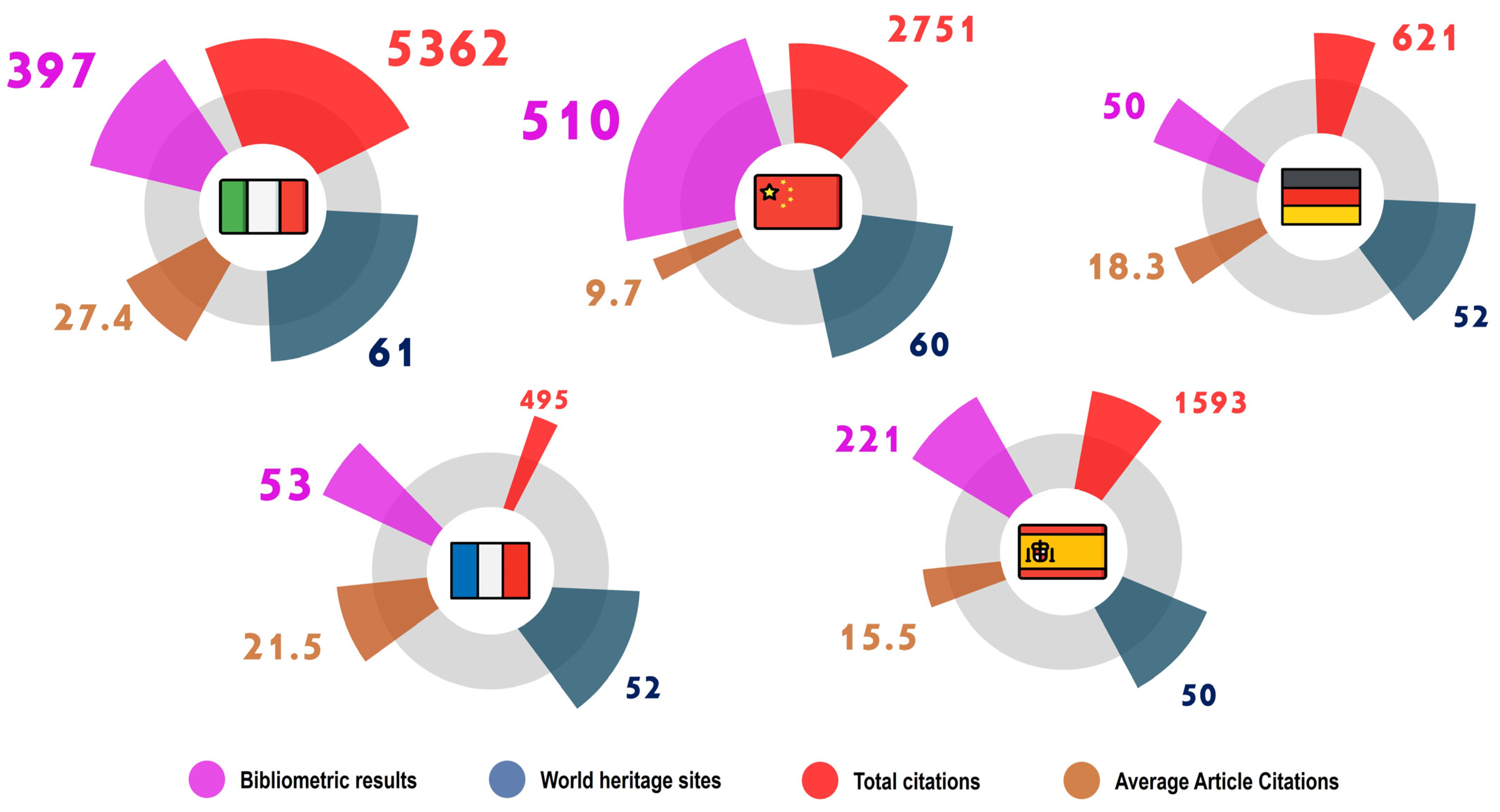
Figure 10 below presents a visual comparison of segmented pie charts showing the main results obtained in this study for the top five countries with the highest number of World Heritage sites [
42]. These countries are Italy, China, Germany, France, and Spain. Each chart integrates four quantitative dimensions: bibliometric results (represented in magenta), World Heritage sites (in blue), total article citations (in red), and average citations per article (in brown).
Italy has the highest number of World Heritage sites (61) and a strong average of citations per article (27.4), while China stands out for its very high total number of citations (2751) and substantial bibliometric output. However, China’s lower average of citations per article (9.7) suggests a more dispersed impact, with influence spread across publications rather than concentrated in individual works. Countries such as Germany and France maintain more balanced figures, with moderate values in all categories, while Spain exhibits a comparatively lower intensity in production and citations, although with a notable number of heritage sites.
As for the limitations of the study, the first limitation of the present study lies in its reliance on bibliometric techniques based solely on term co-occurrences, which may oversimplify the conceptual complexity of the topics analyzed. The position of each concept on the thematic map depends on the frequency and strength of connections within the selected corpus but does not necessarily reflect the theoretical maturity, methodological quality, or interdisciplinary diversity of the works included.
In terms of future lines of research, it would be appropriate to integrate qualitative analyses that complement the bibliometric reading, allowing for exploration of nature, methodologies, and conceptual depth of the identified topics. Likewise, the study could be expanded through the application of longitudinal techniques to observe the temporal evolution of the topics and detect transitions between emerging, basic, and driving areas with greater precision. Other possible future lines of research include the study of intangible cultural heritage and the analysis of the mechanisms through which cultural practices are transmitted and transformed into contemporary contexts characterized by digitalization and social mobility, and the study of the use of virtual reality as a means of preserving and promoting tangible and intangible cultural heritage. These approaches would make it possible to examine how oral traditions, festivals, craft skills and artistic expressions adapt or are reinterpreted in the face of technological, demographic and economic changes.
Finally, a future line of research could focus on conducting an integrated analysis of the role of artificial intelligence and virtual reality in the conservation, representation and management of cultural heritage and legacies worldwide. This approach would seek to expand on the previous bibliometric focus through an empirical study exploring how different institutions, heritage sites and cultural policies apply digital tools to strengthen the preservation and dissemination of heritage, assessing their impact on the visitor experience, the sustainability of management processes and the evolution of international university and cultural strategies.
5. Conclusions
Scientific production in the field of VR and heritage management is heavily concentrated in European universities and public research organizations, with Italy and Spain clearly leading the way in terms of the number of articles and active institutions. The Consiglio Nazionale delle Ricerche (CNR) is a key player, complemented by Italian universities with a long tradition of research, such as Marche Polytechnic University, the University of Bologna and the Polytechnic University of Milan, indicating that the Italian university system is particularly dynamic in this area. At the same time, Spanish universities such as the University of Extremadura, the Polytechnic University of Valencia and the University of La Laguna reinforce the weight of Spanish academia in this domain, while the presence of Asian centers (Chiang Mai University, Kyung Hee University) and the French CNRS highlights the progressive internationalization of the field and the structural role of large public research organizations.
Research on VR and heritage management revolves around the convergence of immersive technologies [
25], advanced digital documentation techniques and design approaches focused on the user experience [
44], with cultural heritage as the main area of application. Terms such as photogrammetry, heritage, museums, and user experience indicate the existence of complementary sub-lines, in which photogrammetry is consolidating its position as a key tool for the three-dimensional digitization of heritage and its integration into virtual environments. Meanwhile, the emphasis on museums and user experience reveals a growing orientation toward enhancing public–heritage interaction through digital applications. This implies a shift from a purely conservationist vision to a more holistic perspective that integrates accessibility, dissemination, and educational and tourist uses, so that preservation is closely linked to cultural mediation and user participation.
Thematic and conceptual analyses show how terms related to cultural heritage and historic preservation emerge as authentic ‘motor themes’, advanced and central, which structure the domain and connect multiple technological and humanistic subfields. In contrast, niche themes (such as network function virtualization, transfer functions and network security) appear to be highly specialized and internally cohesive but with little cross-cutting influence, while emerging or declining themes (legacy systems, visualizations) reflect areas in transition whose future is uncertain. In the basic themes, concepts such as augmented reality, photogrammetry, and cultural heritage show high relevance but low density, indicating that they are fundamental pillars still in the process of internal consolidation [
45]. Furthermore, the intermediate position of virtual reality, technology and tourism underlines their role as connectors between the technological dimension and the applied dimension (tourism, museography and cultural management), although there is still considerable room for development.
Future research focusing on the use of virtual reality for the conservation and dissemination of tangible and intangible cultural heritage opens new horizons for innovation capable of transforming the relationship between the public and our historical legacy. Immersive technology not only enables the reconstruction of lost spaces and experiences but also creates educational and participatory environments in which the user becomes an active protagonist in the exploration of heritage knowledge. The integration of virtual reality into cultural projects involves advancing standards of digitization, accessibility and scientific rigor, combining documentary preservation with the sensory and emotional experience of heritage. This interdisciplinary approach, which brings together engineering, the humanities and cultural management, promises to consolidate new models of conservation and dissemination capable of extending the reach of heritage beyond its physical and temporal limits.
Finally, the structural duality of the field and the asymmetries between leading countries: on the one hand, the conceptual map shows two complementary axes, one focused on documentation and digital modelling (3D modelling, 3D reconstruction, three-dimensional graphics, historical preservation, architectural heritage, virtual environments) and the other focused on experience, management and dissemination through immersive technologies (experience, virtual reality, mixed reality, tourism), connected by bridge concepts such as augmented reality, digital heritage and museums. A comparison of the five countries with the most World Heritage sites (Italy, China, Germany, France and Spain) shows that Italy combines the highest number of sites with a high average number of citations per article, while China stands out for its total volume of citations and production but with a more moderate average impact per publication. Germany and France display more balanced profiles across all dimensions, while Spain shows lower levels of both production and citation impact despite its considerable number of heritage sites, suggesting untapped potential that has yet to be fully realized in bibliometric terms and scientific influence.