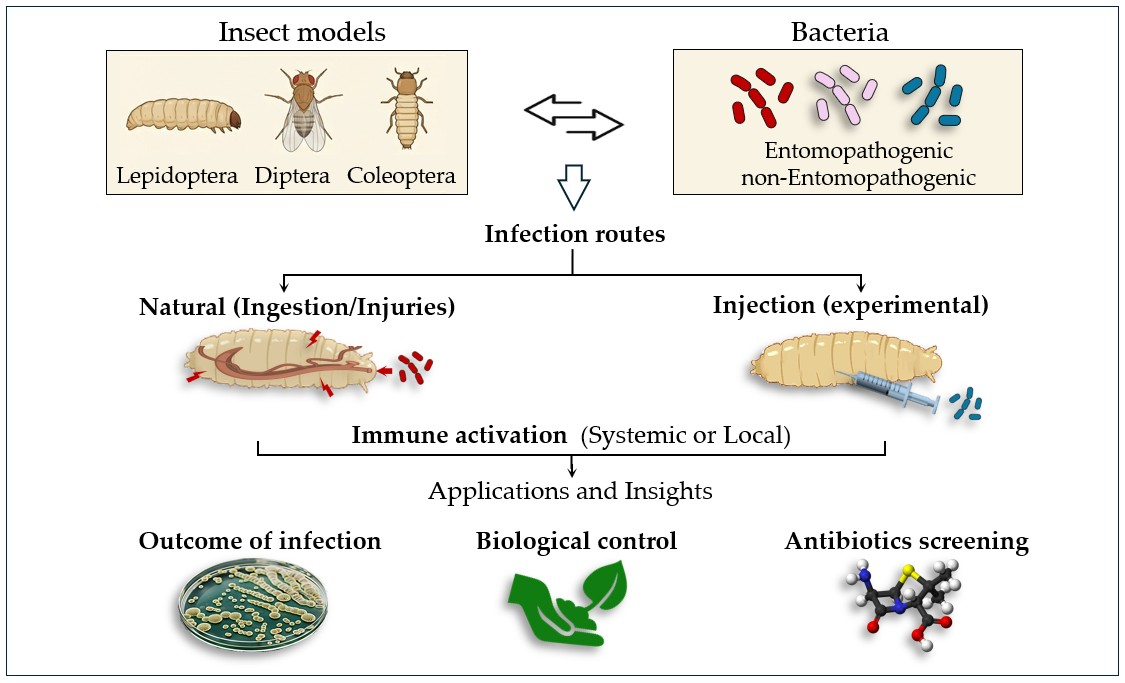
When Small Meets Smaller: Immune Modulation and Virulence Strategies in Insect–Bacteria Interactions

 ,
,  ,
, 
 and
and 
Simple Summary
Abstract
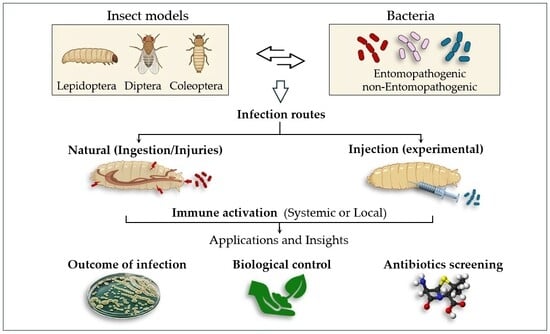
1. Introduction
2. Insect Immunity: A Brief Overview
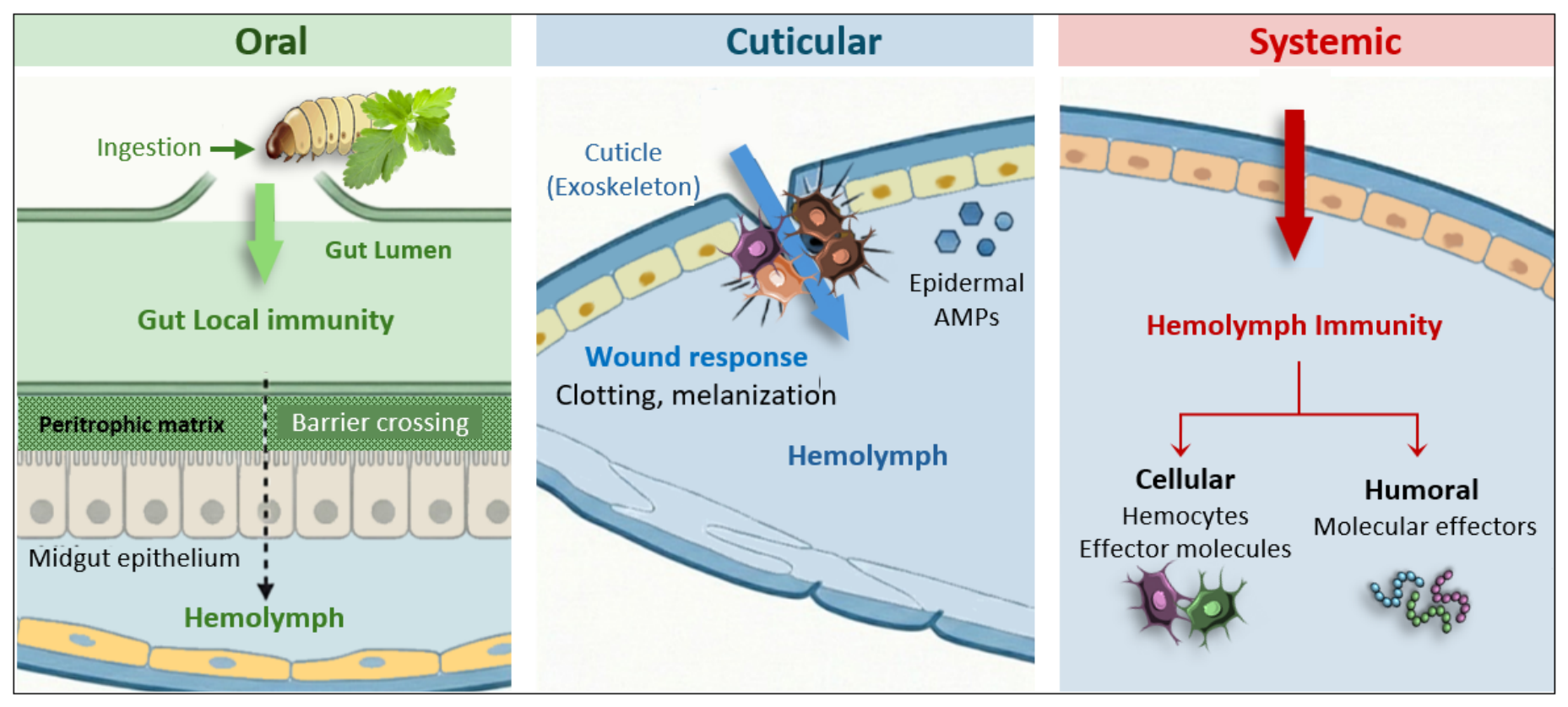
2.1. Routes of Pathogen Entry and Immune Defenses in Insects
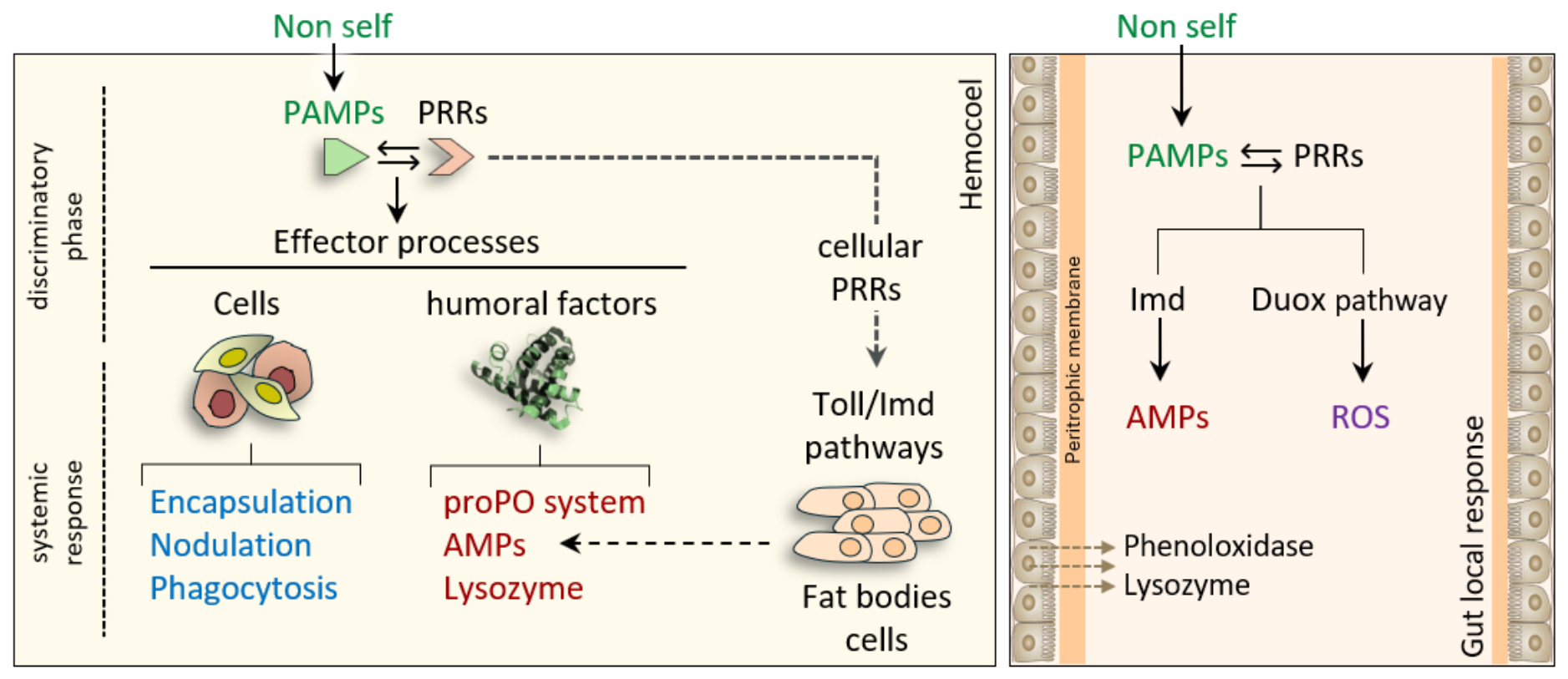
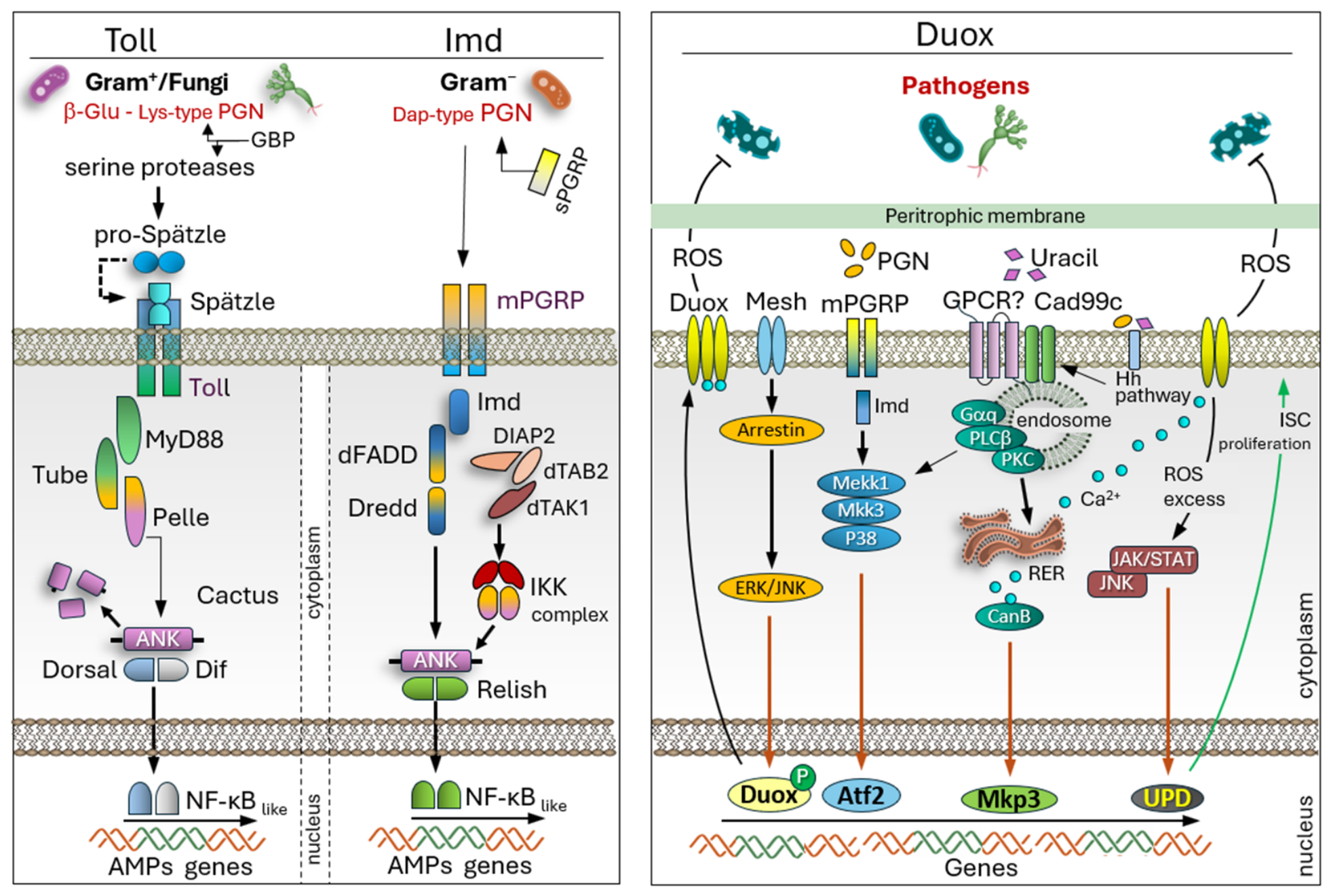
2.2. Key Signaling Pathways
2.3. Molecular and Cellular Effectors
2.4. Immune Priming in Insects
3. Bacterial Strategies to Overcome the Host Immune Responses
3.1. Bacterial Evasion/Depression Strategies

| Bacteria | Compounds | Tx, SM, AMP | Target Structure | Mechanism of Action | Insect Orders | Ref. |
|---|---|---|---|---|---|---|
| Bacillus thuringiensis | Cry toxins Cyt toxins Vip toxins Sip toxins Aerolysin β | Tx | Midgut epithelial receptors | Pores formation Pores formation Apoptosis Cytotoxic | Lepidoptera, Diptera, Coleoptera | [134,135] |
| Lysinibacillus sphaericus | Binary toxin (BinA/BinB) | Tx | Midgut epithelial receptors | Pores formation | Diptera | [136] |
| Paenibacillus larvae | Paenilamicin | SM | Midgut epithelia | Cytotoxic | Hymenoptera | [137] |
| Photorhabdus luminescens | Tc toxins Mcf toxin Pir toxins Pit toxins | Tx | Cytoskeleton Hemocytes Midgut cells Gut cells | Cytoskeleton damage Apoptosis Pore formation Cytotoxic | Lepidoptera, Diptera, Coleoptera | [138] |
| Xenorhabdus spp. | Xenocoumacin Xenematides Xenortides Benzalacetone Rhapidosin | SM | Immune cells Signaling | Antibiotic Immunosuppressive Immunosuppressive PLA2 inhibition Cytotoxic | Many orders | [139] |
| Serratia spp. | Sep complex ShlA hemolysin Serratamolide | Tx Tx SM | Midgut cells Cells membrane Cells membrane | Gut damage Membrane lysis Membrane surfactant | Coleoptera Many orders | [140,141] |
| Pseudomonas spp. | Monalysin FitD Fit-like | Tx | Gut epithelia Hemocytes Hemocytes | Pore formation Immune suppression Cytotoxicity | Diptera Lepidoptera | [142,143,144] |
| Clostridium bifermentans | Mosquito Tx | Tx | Midgut epithelia | Gut cell lysis | Diptera | [145] |
| Yersinia spp. | Yen Tx complex Tc-like Tx | Tx | Cytoskeleton Cytoskeleton | Cell disruption | Lepidoptera | [146,147] |
| Chromobacterium subtsugae | Violacein | SM | Cellular respiration | Oxidative stress | Lepidoptera, Diptera | [148] |
| Burkholderia spp. | Thailandamide Bongkrekic acid | SM | FA synthesis Mitochondria | Metabolic inhibition ADP/ATP transport | Many orders | [149,150] |
| Streptomyces spp. | Avermectins Spinosyns Milbemycins | SM | Nervous system | Cl− channel activation Nervous stimulated Paralysis | Many orders | [151,152,153] |
| Brevibacillus laterosporus | BL Laterosporulin | Tx AMP | Midgut epithelia Cell membranes | Gut damage Membrane damage | Many orders | [154,155] |
3.2. Balancing Virulence and Symbiosis in Insect–Microbe Systems
4. Use of Insect–Bacteria Models to Deepen Their Interactions
4.1. Insect Infection with Gram-Negative Bacteria
4.2. Insect Infection with Gram-Positive Bacteria
5. Conclusions
Supplementary Materials
Author Contributions
Funding
Data Availability Statement
Acknowledgments
Conflicts of Interest
Abbreviations
| PAMPs | Pathogen-associated molecular patterns |
| PRRs | Pattern recognition receptors |
| PGRPs | Peptidoglycan recognition proteins |
| PGN | Peptidoglycan |
| GNBPs | Glucan-binding proteins |
| LBPs | Lipopolysaccharide-binding proteins |
| SBPs | Sugar-binding proteins |
| NF-κB | Nuclear factor kappa-light-chain-enhancer of activated B cells |
| AMPs | Antimicrobial peptides |
| proPO | Prophenoloxidase–Phenoloxidase |
| ROS | Reactive oxygen species |
| RNS | Reactive nitrogen species |
| EPNs | Entomopathogenic nematodes |
| TA | Teichoic Acid |
| CFU | Colony-Forming Unit |
References
- Stork, N.E. How Many Species of Insects and Other Terrestrial Arthropods Are There on Earth? Annu. Rev. Entomol. 2018, 63, 31–45. [Google Scholar] [CrossRef] [PubMed]
- Mastore, M.; Quadroni, S.; Toscano, A.; Mottadelli, N.; Brivio, M.F. Susceptibility to Entomopathogens and Modulation of Basal Immunity in Two Insect Models at Different Temperatures. J. Therm. Biol. 2019, 79, 15–23. [Google Scholar] [CrossRef]
- Garriga, A.; Mastore, M.; Morton, A.; Garcia-del-Pino, F.; Brivio, M.F. Immune Response of Drosophila suzukii Larvae to Infection with the Nematobacterial Complex Steinernema carpocapsae–Xenorhabdus nematophila. Insects 2020, 11, 210. [Google Scholar] [CrossRef]
- Obafemi, O.T.; Ayeleso, A.O.; Adewale, O.B.; Unuofin, J.; Ekundayo, B.E.; Ntwasa, M.; Lebelo, S.L. Animal Models in Biomedical Research: Relevance of Drosophila melanogaster. Heliyon 2024, 11, e41605. [Google Scholar] [CrossRef]
- Ménard, G.; Rouillon, A.; Cattoir, V.; Donnio, P.Y. Galleria mellonella as a Suitable Model of Bacterial Infection: Past, Present and Future. Front. Cell. Infect. Microbiol. 2021, 11, 782733. [Google Scholar] [CrossRef] [PubMed]
- Tsai, C.J.; Loh, J.M.; Proft, T. Galleria mellonella Infection Models for the Study of Bacterial Diseases and for Antimicrobial Drug Testing. Virulence 2016, 7, 214–229. [Google Scholar] [CrossRef]
- Lacey, L.A.; Grzywacz, D.; Shapiro-Ilan, D.I.; Frutos, R.; Brownbridge, M.; Goettel, M.S. Insect Pathogens as Biological Control Agents: Back to the Future. J. Invertebr. Pathol. 2015, 132, 1–41. [Google Scholar] [CrossRef] [PubMed]
- Vilcinskas, A. Evolutionary Plasticity of Insect Immunity. J. Insect Physiol. 2013, 59, 123–129. [Google Scholar] [CrossRef] [PubMed]
- Graber, L.C.; Moreau, C.S. Insect-Microbiome Interactions in a Changing World. Curr. Opin. Insect Sci. 2026, 75, 101495. [Google Scholar] [CrossRef]
- Henry, L.M.; Maiden, M.C.J.; Ferrari, J.; Godfray, H.C.J. Insect Life History and the Evolution of Bacterial Mutualism. Ecol. Lett. 2015, 18, 516–525. [Google Scholar] [CrossRef]
- Li, X.; Ye, Z.; Wu, S.; Lv, Y.; Ren, Y.; Luo, Q.; Yang, H. Insect Gut Microbiota-Research Strategies and Perspectives. Insects 2026, 17, 367. [Google Scholar] [CrossRef]
- Lou, Y.; Wang, G.; Zhang, W.; Xu, L. Adaptation Strategies of Insects to Their Environment by Collecting and Utilizing External Microorganisms. Integr. Zool. 2025, 20, 208–212. [Google Scholar] [CrossRef]
- Boehm, T. Evolution of Vertebrate Immunity. Curr. Biol. 2012, 22, R722–R732. [Google Scholar] [CrossRef]
- Buchmann, K. Evolution of Innate Immunity: Clues from Invertebrates via Fish to Mammals. Front. Immunol. 2014, 5, 459. [Google Scholar] [CrossRef] [PubMed]
- Silva, R.; Ramos, I.B.; Travassos, L.H.; Mendez, A.P.G.; Gomes, F.M. Evolution of Innate Immunity: Lessons from Mammalian Models Shaping Our Current View of Insect Immunity. J. Comp. Physiol. B 2024, 194, 105–119. [Google Scholar] [CrossRef]
- Hultmark, D. Drosophila Immunity: Paths and Patterns. Curr. Opin. Immunol. 2003, 15, 12–19. [Google Scholar] [CrossRef] [PubMed]
- Lemaitre, B.; Hoffmann, J. The Host Defense of Drosophila melanogaster. Annu. Rev. Immunol. 2007, 25, 697–743. [Google Scholar] [CrossRef] [PubMed]
- Chen, R.Y.; Keddie, B.A. The Galleria mellonella-Enteropathogenic Escherichia coli Model System: Characterization of Pathogen Virulence and Insect Immune Responses. J. Insect Sci. 2021, 21, 7. [Google Scholar] [CrossRef]
- Montali, A.; Berini, F.; Brivio, M.F.; Mastore, M.; Saviane, A.; Cappellozza, S.; Marinelli, F.; Tettamanti, G. A Silkworm Infection Model for In Vivo Study of Glycopeptide Antibiotics. Antibiotics 2020, 9, 300. [Google Scholar] [CrossRef]
- Wang, Y.; Tang, J.; Chen, Y.; Chen, S.; Chen, S.; Yu, X.; Wan, C.; Xiang, G.; Chen, Y.; Li, Q. The Ecological-Evolutionary Game of the Insect Gut Microbiome: Environmental Drivers, Host Regulation, and Prospects for Cross-Cutting Applications. Vet. Sci. 2025, 12, 866. [Google Scholar] [CrossRef]
- Eleftherianos, I.; Tafesh-Edwards, G.; Mohamed, A. Pathogen Infection Routes and Host Innate Immunity: Lessons from Insects. Immunol. Lett. 2022, 247, 46–51. [Google Scholar] [CrossRef] [PubMed]
- Scully, L.R.; Bidochka, M.J. Developing Insect Models for the Study of Current and Emerging Human Pathogens. FEMS Microbiol. Lett. 2006, 263, 1–9. [Google Scholar] [CrossRef]
- Martins, N.E.; Faria, V.G.; Teixeira, L.; Magalhães, S.; Sucena, É. Host Adaptation Is Contingent upon the Infection Route Taken by Pathogens. PLoS Pathog. 2013, 9, e1003601. [Google Scholar] [CrossRef]
- Vallet-Gely, I.; Lemaitre, B.; Boccard, F. Bacterial Strategies to Overcome Insect Defences. Nat. Rev. Microbiol. 2008, 6, 302–313. [Google Scholar] [CrossRef]
- Hoffmann, J.A.; Reichhart, J.M.; Hetru, C. Innate Immunity in Higher Insects. Curr. Opin. Immunol. 1996, 8, 8–13. [Google Scholar] [CrossRef] [PubMed]
- Wang, X.; Zhang, Y.; Zhang, R.; Zhang, J. The Diversity of Pattern Recognition Receptors (PRRs) Involved with Insect Defense against Pathogens. Curr. Opin. Insect Sci. 2019, 33, 105–110. [Google Scholar] [CrossRef]
- Yu, S.; Luo, F.; Xu, Y.; Zhang, Y.; Jin, L.H. Drosophila Innate Immunity Involves Multiple Signaling Pathways and Coordinated Communication Between Different Tissues. Front. Immunol. 2022, 13, 905370. [Google Scholar] [CrossRef]
- Belvin, M.P.; Anderson, K.V. A conserved signaling pathway: The Drosophila Toll-Dorsal Pathway. Annu. Rev. Cell Dev. Biol. 1996, 12, 393–416. [Google Scholar] [CrossRef]
- Myllymäki, H.; Valanne, S.; Rämet, M. The Drosophila Imd Signaling Pathway. J. Immunol. 2014, 192, 3455–3462. [Google Scholar] [CrossRef]
- Artis, D. Epithelial-Cell Recognition of Commensal Bacteria and Maintenance of Immune Homeostasis in the Gut. Nat. Rev. Immunol. 2008, 8, 411–420. [Google Scholar] [CrossRef] [PubMed]
- Bae, Y.S.; Choi, M.K.; Lee, W.-J. Dual Oxidase in Mucosal Immunity and Host-Microbe Homeostasis. Trends Immunol. 2010, 31, 278–287. [Google Scholar] [CrossRef]
- Douglas, A.E. Multiorganismal Insects: Diversity and Function of Resident Microorganisms. Annu. Rev. Entomol. 2015, 60, 17–34. [Google Scholar] [CrossRef]
- Bonfini, A.; Liu, X.; Buchon, N. From Pathogens to Microbiota: How Drosophila Intestinal Stem Cells React to Gut Microbes. Dev. Comp. Immunol. 2016, 64, 22–38. [Google Scholar] [CrossRef]
- Kim, S.-H.; Lee, W.-J. Role of DUOX in Gut Inflammation: Lessons from Drosophila Model of Gut-Microbiota Interactions. Front. Cell. Infect. Microbiol. 2014, 3, 116. [Google Scholar] [CrossRef]
- Prakash, A.; Monteith, K.M.; Bonnet, M.; Vale, P.F. Duox and Jak/Stat Signalling Influence Disease Tolerance in Drosophila during Pseudomonas entomophila Infection. Dev. Comp. Immunol. 2023, 147, 104756. [Google Scholar] [CrossRef] [PubMed]
- Zeng, T.; Jaffar, S.; Xu, Y.; Qi, Y. The Intestinal Immune Defense System in Insects. Int. J. Mol. Sci. 2022, 23, 15132. [Google Scholar] [CrossRef]
- Arrese, E.L.; Soulages, J.L. Insect Fat Body: Energy, Metabolism, and Regulation. Annu. Rev. Entomol. 2010, 55, 207–225. [Google Scholar] [CrossRef]
- Li, S.; Wang, J.; Tian, X.; Toufeeq, S.; Huang, W. Immunometabolic Regulation during the Presence of Microorganisms and Parasitoids in Insects. Front. Immunol. 2023, 14, 905467. [Google Scholar] [CrossRef]
- Valanne, S.; Wang, J.-H.; Rämet, M. The Drosophila Toll Signaling Pathway. J. Immunol. 2011, 186, 649–656. [Google Scholar] [CrossRef] [PubMed]
- Dolezal, T.; Krejcova, G.; Bajgar, A.; Nedbalova, P.; Strasser, P. Molecular Regulations of Metabolism during Immune Response in Insects. Insect Biochem. Mol. Biol. 2019, 109, 31–42. [Google Scholar] [CrossRef] [PubMed]
- Salminen, T.S.; Vale, P.F. Drosophila as a Model System to Investigate the Effects of Mitochondrial Variation on Innate Immunity. Front. Immunol. 2020, 11, 521. [Google Scholar] [CrossRef]
- Lai, Y.; Wang, S. Epigenetic Regulation in Insect-Microbe Interactions. Annu. Rev. Entomol. 2025, 70, 293–311. [Google Scholar] [CrossRef] [PubMed]
- Mukherjee, K.; Grizanova, E.; Chertkova, E.; Lehmann, R.; Dubovskiy, I.; Vilcinskas, A. Experimental Evolution of Resistance against Bacillus thuringiensis in the Insect Model Host Galleria mellonella Results in Epigenetic Modifications. Virulence 2017, 8, 1618–1630. [Google Scholar] [CrossRef]
- Asgari, S. MicroRNA Functions in Insects. Insect Biochem. Mol. Biol. 2013, 43, 388–397. [Google Scholar] [CrossRef]
- Satyavathi, V.; Ghosh, R.; Subramanian, S. Long Non-Coding RNAs Regulating Immunity in Insects. Noncoding RNA 2017, 3, 14. [Google Scholar] [CrossRef] [PubMed]
- Droujinine, I.A.; Perrimon, N. Interorgan Communication Pathways in Physiology: Focus on Drosophila. Annu. Rev. Genet. 2016, 50, 539–570. [Google Scholar] [CrossRef] [PubMed]
- Zhou, L.; Meng, G.; Zhu, L.; Ma, L.; Chen, K. Insect Antimicrobial Peptides as Guardians of Immunity and Beyond: A Review. Int. J. Mol. Sci. 2024, 25, 3835. [Google Scholar] [CrossRef]
- Stączek, S.; Cytryńska, M.; Zdybicka-Barabas, A. Unraveling the Role of Antimicrobial Peptides in Insects. Int. J. Mol. Sci. 2023, 24, 5753. [Google Scholar] [CrossRef]
- Brogden, K.A. Antimicrobial Peptides: Pore Formers or Metabolic Inhibitors in Bacteria? Nat. Rev. Microbiol. 2005, 3, 238–250. [Google Scholar] [CrossRef]
- Hultmark, D. Insect Lysozymes. EXS 1996, 75, 87–102. [Google Scholar] [CrossRef]
- Zdybicka-Barabas, A.; Stączek, S.; Kunat-Budzyńska, M.; Cytryńska, M. Innate Immunity in Insects: The Lights and Shadows of Phenoloxidase System Activation. Int. J. Mol. Sci. 2025, 26, 1320. [Google Scholar] [CrossRef]
- Cerenius, L.; Söderhäll, K. The Prophenoloxidase-Activating System in Invertebrates. Immunol. Rev. 2004, 198, 116–126. [Google Scholar] [CrossRef]
- Cerenius, L.; Lee, B.L.; Söderhäll, K. The ProPO-System: Pros and Cons for Its Role in Invertebrate Immunity. Trends Immunol. 2008, 29, 263–271. [Google Scholar] [CrossRef]
- Lavine, M.D.; Strand, M.R. Insect Hemocytes and Their Role in Immunity. Insect Biochem. Mol. Biol. 2002, 32, 1295–1309. [Google Scholar] [CrossRef]
- Strand, M.R. Recent Insights in the Development and Functions of Insect Hemocytes. Curr. Opin. Insect Sci. 2026, 73, 101434. [Google Scholar] [CrossRef] [PubMed]
- Dubovskiy, I.M.; Kryukova, N.A.; Glupov, V.V.; Ratcliffe, N.A. Encapsulation and Nodulation in Insects. ISJ—Invertebr. Surviv. J. 2016, 13, 229–246. [Google Scholar]
- Little, T.J.; Hultmark, D.; Read, A.F. Invertebrate Immunity and the Limits of Mechanistic Immunology. Nat. Immunol. 2005, 6, 651–654. [Google Scholar] [CrossRef] [PubMed]
- Khan, S.A.; Kojour, M.A.M.; Han, Y.S. Recent Trends in Insect Gut Immunity. Front. Immunol. 2023, 14, 1272143. [Google Scholar] [CrossRef] [PubMed]
- Bai, S.; Yao, Z.; Raza, M.F.; Cai, Z.; Zhang, H. Regulatory Mechanisms of Microbial Homeostasis in Insect Gut. Insect Sci. 2021, 28, 286–301. [Google Scholar] [CrossRef]
- Sheehan, G.; Farrell, G.; Kavanagh, K. Immune Priming: The Secret Weapon of the Insect World. Virulence 2020, 11, 238–246. [Google Scholar] [CrossRef]
- Sadd, B.M.; Schmid-Hempel, P. Insect Immunity Shows Specificity in Protection upon Secondary Pathogen Exposure. Curr. Biol. 2006, 16, 1206–1210. [Google Scholar] [CrossRef]
- Eleftherianos, I.; Marokhazi, J.; Millichap, P.J.; Hodgkinson, A.J.; Sriboonlert, A.; ffrench-Constant, R.H.; Reynolds, S.E. Prior Infection of Manduca sexta with Non-Pathogenic Escherichia coli Elicits Immunity to Pathogenic Photorhabdus luminescens: Roles of Immune-Related Proteins Shown by RNA Interference. Insect Biochem. Mol. Biol. 2006, 36, 517–525. [Google Scholar] [CrossRef] [PubMed]
- Hammer, T.J.; Janzen, D.H.; Hallwachs, W.; Jaffe, S.P.; Fierer, N. Caterpillars Lack a Resident Gut Microbiome. Proc. Natl. Acad. Sci. USA 2017, 114, 9641–9646. [Google Scholar] [CrossRef]
- Nobles, S.; Jackson, C.R. Effects of Life Stage, Site, and Species on the Dragonfly Gut Microbiome. Microorganisms 2020, 8, 183. [Google Scholar] [CrossRef] [PubMed]
- Shelomi, M.; Lo, W.-S.; Kimsey, L.S.; Kuo, C.-H. Analysis of the Gut Microbiota of Walking Sticks (Phasmatodea). BMC Res. Notes 2013, 6, 368. [Google Scholar] [CrossRef]
- Hettiarachchi, A.; Tuerlings, T.; Weekers, T.; Marshall, L.; Leclercq, N.; Wood, T.J.; Cejas, D.; Gerard, M.; Vereecken, N.J.; Michez, D.; et al. The Gut Microbial Community of Solitary Bees Is Acquired through Host and Location Filtering. Microb. Ecol. 2025, 88, 114. [Google Scholar] [CrossRef] [PubMed]
- Roth, O.; Sadd, B.M.; Schmid-Hempel, P.; Kurtz, J. Strain-Specific Priming of Resistance in the Red Flour Beetle, Tribolium Castaneum. Proc. Biol. Sci. 2009, 276, 145–151. [Google Scholar] [CrossRef]
- Greenwood, J.M.; Milutinović, B.; Peuß, R.; Behrens, S.; Esser, D.; Rosenstiel, P.; Schulenburg, H.; Kurtz, J. Oral Immune Priming with Bacillus thuringiensis Induces a Shift in the Gene Expression of Tribolium castaneum Larvae. BMC Genom. 2017, 18, 329. [Google Scholar] [CrossRef]
- González-Acosta, S.; Baca-González, V.; Asensio-Calavia, P.; Otazo-Pérez, A.; López, M.R.; Morales-delaNuez, A.; de la Lastra, J.M. Efficient Oral Priming of Tenebrio Molitor Larvae Using Heat-Inactivated Microorganisms. Vaccines 2022, 10, 1296. [Google Scholar] [CrossRef]
- Moret, Y. “Trans-Generational Immune Priming”: Specific Enhancement of the Antimicrobial Immune Response in the Mealworm Beetle, Tenebrio Molitor. Proc. Biol. Sci. 2006, 273, 1399–1405. [Google Scholar] [CrossRef] [PubMed]
- Silva, C.P.; Waterfield, N.R.; Daborn, P.J.; Dean, P.; Chilver, T.; Au, C.P.Y.; Sharma, S.; Potter, U.; Reynolds, S.E.; ffrench-Constant, R.H. Bacterial Infection of a Model Insect: Photorhabdus Luminescens and Manduca Sexta. Cell. Microbiol. 2002, 4, 329–339. [Google Scholar] [CrossRef]
- Akhtar, M.R.; Younas, M.; Xia, X. Pathogenicity of Serratia Marcescens Strains as Biological Control Agent: Implications for Sustainable Pest Management. Insect Sci. 2026, 33, 13–32. [Google Scholar] [CrossRef] [PubMed]
- Ahad, I.I.; Hossain, M.M.; Uddin, M.A.; Bari, M.L.; Hossain, M.S. Therapeutic Effect of Antibiotics Against Escherichia coli O157:H7 in Silk Moth Larvae Animal Model. Curr. Microbiol. 2020, 77, 2172–2180. [Google Scholar] [CrossRef] [PubMed]
- Peleg, A.Y.; Jara, S.; Monga, D.; Eliopoulos, G.M.; Moellering, R.C.; Mylonakis, E. Galleria mellonella as a Model System To Study Acinetobacter baumannii Pathogenesis and Therapeutics. Antimicrob. Agents Chemother. 2009, 53, 2605–2609. [Google Scholar] [CrossRef]
- Tao, Y.; Duma, L.; Rossez, Y. Galleria mellonella as a Good Model to Study Acinetobacter Baumannii Pathogenesis. Pathogens 2021, 10, 1483. [Google Scholar] [CrossRef] [PubMed]
- Insua, J.L.; Llobet, E.; Moranta, D.; Pérez-Gutiérrez, C.; Tomás, A.; Garmendia, J.; Bengoechea, J.A. Modeling Klebsiella Pneumoniae Pathogenesis by Infection of the Wax Moth Galleria mellonella. Infect. Immun. 2013, 81, 3552–3565. [Google Scholar] [CrossRef]
- Quispe-Villegas, G.; Alcántara-Lozano, G.I.; Cuicapuza, D.; Laureano, R.; Ayzanoa, B.; Tsukayama, P.; Tamariz, J. In Vivo Evaluation of Phage Therapy against Klebsiella pneumoniae Using the Galleria mellonella Model and Molecular Characterization of a Novel Drulisvirus Phage Species. Microbiol. Spectr. 2025, 13, e0114524. [Google Scholar] [CrossRef]
- D’Argenio, D.A.; Gallagher, L.A.; Berg, C.A.; Manoil, C. Drosophila as a Model Host for Pseudomonas Aeruginosa Infection. J. Bacteriol. 2001, 183, 1466–1471. [Google Scholar] [CrossRef]
- Chen, J.; Lin, G.; Ma, K.; Li, Z.; Liégeois, S.; Ferrandon, D. A Specific Innate Immune Response Silences the Virulence of Pseudomonas Aeruginosa in a Latent Infection Model in the Drosophila melanogaster Host. PLoS Pathog. 2024, 20, e1012252. [Google Scholar] [CrossRef] [PubMed]
- Horohov, D.W.; Dunn, P.E. Phagocytosis and Nodule Formation by Hemocytes of Manduca sexta Larvae Following Injection of Pseudomonas Aeruginosa. J. Invertebr. Pathol. 1983, 41, 203–213. [Google Scholar] [CrossRef]
- Robert, A.; Talagrand-Reboul, E.; Figueras, M.-J.; Ruimy, R.; Boyer, L.; Lamy, B. Drosophila melanogaster Systemic Infection Model to Study Altered Virulence during Polymicrobial Infection by Aeromonas. Pathogens 2023, 12, 405. [Google Scholar] [CrossRef]
- Giannouli, M.; Palatucci, A.T.; Rubino, V.; Ruggiero, G.; Romano, M.; Triassi, M.; Ricci, V.; Zarrilli, R. Use of Larvae of the Wax Moth Galleria mellonella as an in Vivo Model to Study the Virulence of Helicobacter Pylori. BMC Microbiol. 2014, 14, 228. [Google Scholar] [CrossRef]
- Wang, S.; Yin, Y.; Zai, X.; Gu, Y.; Guo, F.; Shao, F.; Zhang, Y.; Li, Y.; Li, R.; Zhang, J.; et al. A Novel Galleria mellonella Experimental Model for Zoonotic Pathogen Brucella. Virulence 2023, 14, 2268496. [Google Scholar] [CrossRef] [PubMed]
- Mond, M.; Pietri, J.E. Horizontal Transmission of Salmonella Typhimurium among German Cockroaches and Its Possible Mechanisms. Ecol. Evol. 2023, 13, e10070. [Google Scholar] [CrossRef]
- Ismael, B.; Wilson, M.; Miller, D.; Pietri, J.E. Differences in Salmonella Typhimurium Infection and Excretion among Laboratory and Field Strains of the German Cockroach Suggest a Genomic Basis for Vector Competence. Infect. Genet. Evol. 2024, 123, 105624. [Google Scholar] [CrossRef]
- Turner, M.; Van Hulzen, L.; Guse, K.; Agany, D.; Pietri, J.E. The Gut Microbiota Confers Resistance against Salmonella Typhimurium in Cockroaches by Modulating Innate Immunity. iScience 2024, 27, 111293. [Google Scholar] [CrossRef]
- Chua, J.; Nguyenkhoa, E.; Mou, S.; Tobery, S.A.; Friedlander, A.M.; DeShazer, D. Burkholderia Pseudomallei JW270 Is Lethal in the Madagascar Hissing Cockroach Infection Model and Can Be Utilized at Biosafety Level 2 to Identify Putative Virulence Factors. Infect. Immun. 2022, 90, e0015922. [Google Scholar] [CrossRef]
- Basset, A.; Khush, R.S.; Braun, A.; Gardan, L.; Boccard, F.; Hoffmann, J.A.; Lemaitre, B. The Phytopathogenic Bacteria Erwinia carotovora Infects Drosophila and Activates an Immune Response. Proc. Natl. Acad. Sci. USA 2000, 97, 3376–3381. [Google Scholar] [CrossRef]
- Basset, A.; Tzou, P.; Lemaitre, B.; Boccard, F. A Single Gene That Promotes Interaction of a Phytopathogenic Bacterium with Its Insect Vector, Drosophila melanogaster. EMBO Rep. 2003, 4, 205–209. [Google Scholar] [CrossRef] [PubMed]
- Quevillon-Cheruel, S.; Leulliot, N.; Muniz, C.A.; Vincent, M.; Gallay, J.; Argentini, M.; Cornu, D.; Boccard, F.; Lemaître, B.; van Tilbeurgh, H. Evf, a Virulence Factor Produced by the Drosophila Pathogen Erwinia Carotovora, Is an S-Palmitoylated Protein with a New Fold That Binds to Lipid Vesicles. J. Biol. Chem. 2009, 284, 3552–3562. [Google Scholar] [CrossRef] [PubMed][Green Version]
- Grenier, A.-M.; Duport, G.; Pagès, S.; Condemine, G.; Rahbé, Y. The Phytopathogen Dickeya dadantii (Erwinia chrysanthemi 3937) Is a Pathogen of the Pea Aphid. Appl. Environ. Microbiol. 2006, 72, 1956–1965. [Google Scholar] [CrossRef]
- Costechareyre, D.; Balmand, S.; Condemine, G.; Rahbé, Y. Dickeya dadantii, a Plant Pathogenic Bacterium Producing Cyt-Like Entomotoxins, Causes Septicemia in the Pea Aphid Acyrthosiphon pisum. PLoS ONE 2012, 7, e30702. [Google Scholar] [CrossRef] [PubMed]
- Costechareyre, D.; Chich, J.-F.; Strub, J.-M.; Rahbé, Y.; Condemine, G. Transcriptome of Dickeya dadantii Infecting Acyrthosiphon pisum Reveals a Strong Defense against Antimicrobial Peptides. PLoS ONE 2013, 8, e54118. [Google Scholar] [CrossRef]
- Vodovar, N.; Vinals, M.; Liehl, P.; Basset, A.; Degrouard, J.; Spellman, P.; Boccard, F.; Lemaitre, B. Drosophila Host Defense after Oral Infection by an Entomopathogenic Pseudomonas Species. Proc. Natl. Acad. Sci. USA 2005, 102, 11414–11419. [Google Scholar] [CrossRef]
- Liehl, P.; Blight, M.; Vodovar, N.; Boccard, F.; Lemaitre, B. Prevalence of Local Immune Response against Oral Infection in a Drosophila/Pseudomonas Infection Model. PLoS Pathog. 2006, 2, e56. [Google Scholar] [CrossRef] [PubMed]
- Sułek, M.; Kordaczuk, J.; Mak, P.; Śmiałek-Bartyzel, J.; Hułas-Stasiak, M.; Wojda, I. Immune Priming Modulates Galleria mellonella and Pseudomonas entomophila Interaction. Antimicrobial Properties of Kazal Peptide Pr13a. Front. Immunol. 2024, 15, 1358247. [Google Scholar] [CrossRef] [PubMed]
- Park, Y.; Herbert, E.E.; Cowles, C.E.; Cowles, K.N.; Menard, M.L.; Orchard, S.S.; Goodrich-Blair, H. Clonal Variation in Xenorhabdus nematophila Virulence and Suppression of Manduca sexta Immunity. Cell. Microbiol. 2007, 9, 645–656. [Google Scholar] [CrossRef]
- Vlisidou, I.; Eleftherianos, I.; Dorus, S.; Yang, G.; ffrench-Constant, R.H.; Reynolds, S.E.; Waterfield, N.R. The KdpD/KdpE Two-Component System of Photorhabdus asymbiotica Promotes Bacterial Survival within M. sexta Hemocytes. J. Invertebr. Pathol. 2010, 105, 352–362. [Google Scholar] [CrossRef]
- Nehme, N.T.; Liégeois, S.; Kele, B.; Giammarinaro, P.; Pradel, E.; Hoffmann, J.A.; Ewbank, J.J.; Ferrandon, D. A Model of Bacterial Intestinal Infections in Drosophila melanogaster. PLoS Pathog. 2007, 3, e173. [Google Scholar] [CrossRef]
- Li, S.; De Mandal, S.; Xu, X.; Jin, F. The Tripartite Interaction of Host Immunity–Bacillus thuringiensis Infection–Gut Microbiota. Toxins 2020, 12, 514. [Google Scholar] [CrossRef]
- Mastore, M.; Broggio, E.; Banfi, D.; Machado, R.A.R.; Bhat, A.H.; Kallel, S.; Reguzzoni, M.; Quadroni, S.; Brivio, M.F. Evaluation of the Insecticidal Potential of Lysinibacillus fusiformis Against Drosophila suzukii Larvae. Insects 2025, 16, 1090. [Google Scholar] [CrossRef]
- Mukherjee, K.; Altincicek, B.; Hain, T.; Domann, E.; Vilcinskas, A.; Chakraborty, T. Galleria mellonella as a Model System for Studying Listeria Pathogenesis. Appl. Environ. Microbiol. 2010, 76, 310–317. [Google Scholar] [CrossRef]
- Gaspar, F.; Teixeira, N.; Rigottier-Gois, L.; Marujo, P.; Nielsen-LeRoux, C.; Crespo, M.T.B.; Lopes, M.d.F.S.; Serror, P. Virulence of Enterococcus Faecalis Dairy Strains in an Insect Model: The Role of FsrB and GelE. Microbiology 2009, 155, 3564–3571. [Google Scholar] [CrossRef] [PubMed]
- Tabuchi, Y.; Shiratsuchi, A.; Kurokawa, K.; Gong, J.H.; Sekimizu, K.; Lee, B.L.; Nakanishi, Y. Inhibitory Role for d-Alanylation of Wall Teichoic Acid in Activation of Insect Toll Pathway by Peptidoglycan of Staphylococcus aureus. J. Immunol. 2010, 185, 2424–2431. [Google Scholar] [CrossRef] [PubMed]
- Kurokawa, K.; Gong, J.-H.; Ryu, K.-H.; Zheng, L.; Chae, J.-H.; Kim, M.-S.; Lee, B.L. Biochemical Characterization of Evasion from Peptidoglycan Recognition by Staphylococcus aureus D-Alanylated Wall Teichoic Acid in Insect Innate Immunity. Dev. Comp. Immunol. 2011, 35, 835–839. [Google Scholar] [CrossRef]
- Montali, A.; Berini, F.; Saviane, A.; Cappellozza, S.; Marinelli, F.; Tettamanti, G. A Bombyx Mori Infection Model for Screening Antibiotics against Staphylococcus Epidermidis. Insects 2022, 13, 748. [Google Scholar] [CrossRef]
- Alameh, S.; Bartolo, G.; O’Brien, S.; Henderson, E.A.; Gonzalez, L.O.; Hartmann, S.; Klimko, C.P.; Shoe, J.L.; Cote, C.K.; Grill, L.K.; et al. Anthrax Toxin Component, Protective Antigen, Protects Insects from Bacterial Infections. PLoS Pathog. 2020, 16, e1008836. [Google Scholar] [CrossRef] [PubMed]
- Rakic Martinez, M.; Wiedmann, M.; Ferguson, M.; Datta, A.R. Assessment of Listeria Monocytogenes Virulence in the Galleria mellonella Insect Larvae Model. PLoS ONE 2017, 12, e0184557. [Google Scholar] [CrossRef]
- Roth, A.; Reichmann, P.; Hakenbeck, R. The Capsule of Streptococcus pneumoniae contributes to Virulence in the Insect Model Manduca sexta. Microb. Physiol. 2012, 22, 326–334. [Google Scholar] [CrossRef]
- Banfi, D.; Bianchi, T.; Mastore, M.; Brivio, M.F. Optimization of Experimental Infection of the Animal Model Galleria mellonella Linnaeus 1758 (Lepidoptera: Pyralidae) with the Gram-Positive Bacterium Micrococcus luteus. Insects 2024, 15, 618. [Google Scholar] [CrossRef]
- Johnston, P.R.; Crickmore, N. Gut Bacteria Are Not Required for the Insecticidal Activity of Bacillus thuringiensis toward the Tobacco Hornworm, Manduca Sexta. Appl. Environ. Microbiol. 2009, 75, 5094–5099. [Google Scholar] [CrossRef] [PubMed]
- Milutinović, B.; Stolpe, C.; Peuβ, R.; Armitage, S.A.O.; Kurtz, J. The Red Flour Beetle as a Model for Bacterial Oral Infections. PLoS ONE 2013, 8, e64638. [Google Scholar] [CrossRef]
- Malmquist, J.A.; Rogan, M.R.; McGillivray, S.M. Galleria mellonella as an Infection Model for Bacillus anthracis Sterne. Front. Cell. Infect. Microbiol. 2019, 9, 360. [Google Scholar] [CrossRef]
- Vargas, V.; Moreno-García, M.; Duarte-Elguea, E.; Lanz-Mendoza, H. Limited Specificity in the Injury and Infection Priming against Bacteria in Aedes aegypti Mosquitoes. Front. Microbiol. 2016, 7, 975. [Google Scholar] [CrossRef] [PubMed]
- Dorling, J.; Moraes, C.; Rolff, J. Recognition, Survival and Persistence of Staphylococcus Aureus in the Model Host Tenebrio Molitor. Dev. Comp. Immunol. 2015, 48, 284–290. [Google Scholar] [CrossRef]
- Desbois, A.P.; Coote, P.J. Wax Moth Larva (Galleria mellonella): An In Vivo Model for Assessing the Efficacy of Antistaphylococcal Agents. J. Antimicrob. Chemother. 2011, 66, 1785–1790. [Google Scholar] [CrossRef]
- Dionne, M.S.; Ghori, N.; Schneider, D.S. Drosophila melanogaster Is a Genetically Tractable Model Host for Mycobacterium marinum. Infect. Immun. 2003, 71, 3540–3550. [Google Scholar] [CrossRef] [PubMed]
- Oh, C.-T.; Moon, C.; Jeong, M.S.; Kwon, S.-H.; Jang, J. Drosophila melanogaster Model for Mycobacterium abscessus Infection. Microbes Infect. 2013, 15, 788–795. [Google Scholar] [CrossRef]
- Yost, D.G.; Tsourkas, P.; Amy, P.S. Experimental Bacteriophage Treatment of Honeybees (Apis mellifera) Infected with Paenibacillus larvae, the Causative Agent of American Foulbrood Disease. Bacteriophage 2016, 6, e1122698. [Google Scholar] [CrossRef] [PubMed]
- Takamatsu, D.; Sato, M.; Yoshiyama, M. Infection of Melissococcus plutonius; Clonal Complex 12 Strain in European Honeybee Larvae Is Essentially Confined to the Digestive Tract. J. Vet. Med. Sci. 2016, 78, 29–34. [Google Scholar] [CrossRef] [PubMed]
- Broderick, N.A.; Robinson, C.J.; McMahon, M.D.; Holt, J.; Handelsman, J.; Raffa, K.F. Contributions of Gut Bacteria to Bacillus thuringiensis-Induced Mortality Vary across a Range of Lepidoptera. BMC Biol. 2009, 7, 11. [Google Scholar] [CrossRef]
- Valiei, A.; Dickson, A.M.; Aminian-Dehkordi, J.; Mofrad, M.R.K. Bacterial Community Dynamics as a Result of Growth-Yield Trade-off and Multispecies Metabolic Interactions toward Understanding the Gut Biofilm Niche. BMC Microbiol. 2024, 24, 441. [Google Scholar] [CrossRef]
- Bakkeren, E.; Piskovsky, V.; Foster, K.R. Metabolic Ecology of Microbiomes: Nutrient Competition, Host Benefits, and Community Engineering. Cell Host Microbe 2025, 33, 790–807. [Google Scholar] [CrossRef]
- Chattopadhyay, A.; Bhatnagar, N.B.; Bhatnagar, R. Bacterial Insecticidal Toxins. Crit. Rev. Microbiol. 2004, 30, 33–54. [Google Scholar] [CrossRef] [PubMed]
- Tetreau, G. Interaction between Insects, Toxins, and Bacteria: Have We Been Wrong So Far? Toxins 2018, 10, 281. [Google Scholar] [CrossRef]
- Sajnaga, E.; Kazimierczak, W. Evolution and Taxonomy of Nematode-Associated Entomopathogenic Bacteria of the Genera Xenorhabdus and Photorhabdus: An Overview. Symbiosis 2020, 80, 1–13. [Google Scholar] [CrossRef]
- Goodrich-Blair, H.; Clarke, D.J. Mutualism and Pathogenesis in Xenorhabdus and Photorhabdus: Two Roads to the Same Destination. Mol. Microbiol. 2007, 64, 260–268. [Google Scholar] [CrossRef] [PubMed]
- Teoh, M.C.; Furusawa, G.; Veera Singham, G. Multifaceted Interactions between the Pseudomonads and Insects: Mechanisms and Prospects. Arch. Microbiol. 2021, 203, 1891–1915. [Google Scholar] [CrossRef] [PubMed]
- Drew, G.C.; Stevens, E.J.; King, K.C. Microbial Evolution and Transitions along the Parasite-Mutualist Continuum. Nat. Rev. Microbiol. 2021, 19, 623–638. [Google Scholar] [CrossRef]
- Renoz, F.; Arai, H.; Pons, I. The Genus Sodalis as a Resource for Understanding the Multifaceted Evolution of Bacterial Symbiosis in Insects. Symbiosis 2024, 92, 187–208. [Google Scholar] [CrossRef]
- Kaech, H.; Vorburger, C. Horizontal Transmission of the Heritable Protective Endosymbiont Hamiltonella Defensa Depends on Titre and Haplotype. Front. Microbiol. 2021, 11, 628755. [Google Scholar] [CrossRef] [PubMed]
- Degnan, P.H.; Yu, Y.; Sisneros, N.; Wing, R.A.; Moran, N.A. Hamiltonella defensa, Genome Evolution of Protective Bacterial Endosymbiont from Pathogenic Ancestors. Proc. Natl. Acad. Sci. USA 2009, 106, 9063–9068. [Google Scholar] [CrossRef]
- Krüsemer, R.; Carvalho, A.S.P.; Keller, J.; Vogel, H.; Dale, C.; Engl, T.; Kaltenpoth, M. Experimental Sodalis Infection Eliminates Ancient Insect Symbiont. Nat. Commun. 2026, 17, 3153. [Google Scholar] [CrossRef]
- Palma, L.; Muñoz, D.; Berry, C.; Murillo, J.; Caballero, P. Bacillus thuringiensis Toxins: An Overview of Their Biocidal Activity. Toxins 2014, 6, 3296–3325. [Google Scholar] [CrossRef] [PubMed]
- Xu, C.; Chinte, U.; Chen, L.; Yao, Q.; Meng, Y.; Zhou, D.; Bi, L.-J.; Rose, J.; Adang, M.J.; Wang, B.-C.; et al. Crystal Structure of Cry51Aa1: A Potential Novel Insecticidal Aerolysin-Type β-Pore-Forming Toxin from Bacillus thuringiensis. Biochem. Biophys. Res. Commun. 2015, 462, 184–189. [Google Scholar] [CrossRef]
- Berry, C. The Bacterium, Lysinibacillus sphaericus, as an Insect Pathogen. J. Invertebr. Pathol. 2012, 109, 1–10. [Google Scholar] [CrossRef]
- Koller, T.O.; Berger, M.J.; Morici, M.; Paternoga, H.; Bulatov, T.; Di Stasi, A.; Dang, T.; Mainz, A.; Raulf, K.; Crowe-McAuliffe, C.; et al. Paenilamicins Are Context-Specific Translocation Inhibitors of Protein Synthesis. Nat. Chem. Biol. 2024, 20, 1691–1700. [Google Scholar] [CrossRef]
- da Silva, W.J.; Pilz-Júnior, H.L.; Heermann, R.; da Silva, O.S. The Great Potential of Entomopathogenic Bacteria Xenorhabdus and Photorhabdus for Mosquito Control: A Review. Parasites Vectors 2020, 13, 376. [Google Scholar] [CrossRef] [PubMed]
- Abd-Elgawad, M.M.M. Xenorhabdus spp.: An Overview of the Useful Facets of Mutualistic Bacteria of Entomopathogenic Nematodes. Life 2022, 12, 1360. [Google Scholar] [CrossRef]
- Hertle, R.; Schwarz, H. Serratia Marcescens Internalization and Replication in Human Bladder Epithelial Cells. BMC Infect. Dis. 2004, 4, 16. [Google Scholar] [CrossRef]
- Matsuyama, T.; Nakagawa, Y. Bacterial Wetting Agents Working in Colonization of Bacteria on Surface Environments. Colloids Surf. B Biointerfaces 1996, 7, 207–214. [Google Scholar] [CrossRef]
- Opota, O.; Vallet-Gély, I.; Vincentelli, R.; Kellenberger, C.; Iacovache, I.; Gonzalez, M.R.; Roussel, A.; van der Goot, F.-G.; Lemaitre, B. Monalysin, a Novel ß-Pore-Forming Toxin from the Drosophila Pathogen Pseudomonas entomophila, Contributes to Host Intestinal Damage and Lethality. PLoS Pathog. 2011, 7, e1002259. [Google Scholar] [CrossRef]
- Péchy-Tarr, M.; Bruck, D.J.; Maurhofer, M.; Fischer, E.; Vogne, C.; Henkels, M.D.; Donahue, K.M.; Grunder, J.; Loper, J.E.; Keel, C. Molecular Analysis of a Novel Gene Cluster Encoding an Insect Toxin in Plant-associated Strains of Pseudomonas fluorescens. Environ. Microbiol. 2008, 10, 2368–2386. [Google Scholar] [CrossRef]
- Ruffner, B.; Péchy-Tarr, M.; Ryffel, F.; Hoegger, P.; Obrist, C.; Rindlisbacher, A.; Keel, C.; Maurhofer, M. Oral Insecticidal Activity of Plant-associated Pseudomonads. Environ. Microbiol. 2013, 15, 751–763. [Google Scholar] [CrossRef] [PubMed]
- Qureshi, N.; Chawla, S.; Likitvivatanavong, S.; Lee, H.L.; Gill, S.S. The Cry Toxin Operon of Clostridium bifermentans Subsp. malaysia Is Highly Toxic to Aedes Larval Mosquitoes. Appl. Environ. Microbiol. 2014, 80, 5689–5697. [Google Scholar] [CrossRef]
- Hurst, M.R.H.; Jones, S.A.; Binglin, T.; Harper, L.A.; Jackson, T.A.; Glare, T.R. The Main Virulence Determinant of Yersinia Entomophaga MH96 Is a Broad-Host-Range Toxin Complex Active against Insects. J. Bacteriol. 2011, 193, 1966–1980. [Google Scholar] [CrossRef] [PubMed]
- Waterfield, N.; Hares, M.; ffrench-Constant, R.; Wren, B.W.; Hinchliffe, S. The Insect Toxin Complex of Yersinia. Adv. Exp. Med. Biol. 2007, 603, 247–257. [Google Scholar]
- Gnambani, E.J.; Bilgo, E.; Sanou, A.; Dabiré, R.K.; Diabaté, A. Infection of Highly Insecticide-Resistant Malaria Vector Anopheles coluzzii with Entomopathogenic Bacteria Chromobacterium violaceum Reduces Its Survival, Blood Feeding Propensity and Fecundity. Malar. J. 2020, 19, 352. [Google Scholar] [CrossRef] [PubMed]
- Pagani, M.K.; Johnson, T.B.; Doughty, H.B.; McIntyre, K.C.; Kuhar, T.P. Burkholderia Spp.-Based Biopesticide Controls Wireworms (Coleoptera: Elateridae) in Potatoes. J. Econ. Entomol. 2023, 116, 1934–1938. [Google Scholar] [CrossRef]
- Wozniak, C.E.; Lin, Z.; Schmidt, E.W.; Hughes, K.T.; Liou, T.G. Thailandamide, a Fatty Acid Synthesis Antibiotic That Is Coexpressed with a Resistant Target Gene. Antimicrob. Agents Chemother. 2018, 62, e00463-18. [Google Scholar] [CrossRef]
- El-Saber Batiha, G.; Alqahtani, A.; Ilesanmi, O.B.; Saati, A.A.; El-Mleeh, A.; Hetta, H.F.; Magdy Beshbishy, A. Avermectin Derivatives, Pharmacokinetics, Therapeutic and Toxic Dosages, Mechanism of Action, and Their Biological Effects. Pharmaceuticals 2020, 13, 196. [Google Scholar] [CrossRef] [PubMed]
- Sparks, T.C.; Crouse, G.D.; Benko, Z.; Demeter, D.; Giampietro, N.C.; Lambert, W.; Brown, A. V The Spinosyns, Spinosad, Spinetoram, and Synthetic Spinosyn Mimics—Discovery, Exploration, and Evolution of a Natural Product Chemistry and the Impact of Computational Tools. Pest Manag. Sci. 2021, 77, 3637–3649. [Google Scholar] [CrossRef]
- Yang, X.; Du, G.; Li, X.; Xiang, W.; Li, S.; Zhang, Y. Recent Advances of Natural Product Pesticide Milbemycins from Streptomyces. New Plant Prot. 2024, 1, e18. [Google Scholar] [CrossRef]
- Ruiu, L. Brevibacillus laterosporus, a Pathogen of Invertebrates and a Broad-Spectrum Antimicrobial Species. Insects 2013, 4, 476–492. [Google Scholar] [CrossRef]
- Barbieri, G.; Ferrari, C.; Mamberti, S.; Gabrieli, P.; Castelli, M.; Sassera, D.; Ursino, E.; Scoffone, V.C.; Radaelli, G.; Clementi, E.; et al. Identification of a Novel Brevibacillus laterosporus Strain with Insecticidal Activity Against Aedes Albopictus Larvae. Front. Microbiol. 2021, 12, 624014. [Google Scholar] [CrossRef]
- Brivio, M.; Mastore, M. Nematobacterial Complexes and Insect Hosts: Different Weapons for the Same War. Insects 2018, 9, 117. [Google Scholar] [CrossRef]
- Herbert, E.E.; Goodrich-Blair, H. Friend and Foe: The Two Faces of Xenorhabdus nematophila. Nat. Rev. Microbiol. 2007, 5, 634–646. [Google Scholar] [CrossRef]
- Brivio, M.F.; Mastore, M. When Appearance Misleads: The Role of the Entomopathogen Surface in the Relationship with Its Host. Insects 2020, 11, 387. [Google Scholar] [CrossRef]
- Caccia, S.; Di Lelio, I.; La Storia, A.; Marinelli, A.; Varricchio, P.; Franzetti, E.; Banyuls, N.; Tettamanti, G.; Casartelli, M.; Giordana, B.; et al. Midgut Microbiota and Host Immunocompetence Underlie Bacillus thuringiensis Killing Mechanism. Proc. Natl. Acad. Sci. USA 2016, 113, 9486–9491. [Google Scholar] [CrossRef]
- Brivio, M.F.; Toscano, A.; De Pasquale, S.M.; De Lerma Barbaro, A.; Giovannardi, S.; Finzi, G.; Mastore, M. Surface Protein Components from Entomopathogenic Nematodes and Their Symbiotic Bacteria: Effects on Immune Responses of the Greater Wax Moth, Galleria mellonella (Lepidoptera, Pyralidae). Pest. Manag. Sci. 2018, 74, 2089–2099. [Google Scholar] [CrossRef] [PubMed]
- Ahlawat, S.; Sharma, K.K. Lepidopteran Insects: Emerging Model Organisms to Study Infection by Enteropathogens. Folia Microbiol. 2023, 68, 181–196. [Google Scholar] [CrossRef] [PubMed]
- Matsumoto, Y. Facilitating Drug Discovery in Human Disease Models Using Insects. Biol. Pharm. Bull. 2020, 43, 216–220. [Google Scholar] [CrossRef] [PubMed]
- Harnish, J.M.; Link, N.; Yamamoto, S. Drosophila as a Model for Infectious Diseases. Int. J. Mol. Sci. 2021, 22, 2724. [Google Scholar] [CrossRef]
- Kwong, W.K.; Moran, N.A. Gut Microbial Communities of Social Bees. Nat. Rev. Microbiol. 2016, 14, 374–384. [Google Scholar] [CrossRef]
- Khan, K.A.; Al-Ghamdi, A.A.; Ghramh, H.A.; Ansari, M.J.; Ali, H.; Alamri, S.A.; Al- Kahtani, S.N.; Adgaba, N.; Qasim, M.; Hafeez, M. Structural Diversity and Functional Variability of Gut Microbial Communities Associated with Honey Bees. Microb. Pathog. 2020, 138, 103793. [Google Scholar] [CrossRef]
- Kwong, W.K.; Medina, L.A.; Koch, H.; Sing, K.-W.; Soh, E.J.Y.; Ascher, J.S.; Jaffé, R.; Moran, N.A. Dynamic Microbiome Evolution in Social Bees. Sci. Adv. 2017, 3, e1600513. [Google Scholar] [CrossRef]
- Raddi, G.; Barletta, A.B.F.; Efremova, M.; Ramirez, J.L.; Cantera, R.; Teichmann, S.A.; Barillas-Mury, C.; Billker, O. Mosquito Cellular Immunity at Single-Cell Resolution. Science 2020, 369, 1128–1132. [Google Scholar] [CrossRef]
- Buchon, N.; Broderick, N.A.; Lemaitre, B. Gut Homeostasis in a Microbial World: Insights from Drosophila melanogaster. Nat. Rev. Microbiol. 2013, 11, 615–626. [Google Scholar] [CrossRef]
- Broderick, N.A.; Lemaitre, B. Gut-Associated Microbes of Drosophila melanogaster. Gut Microbes 2012, 3, 307–321. [Google Scholar] [CrossRef] [PubMed]
- Pan, X.; Zhou, G.; Wu, J.; Bian, G.; Lu, P.; Raikhel, A.S.; Xi, Z. Wolbachia Induces Reactive Oxygen Species (ROS)-Dependent Activation of the Toll Pathway to Control Dengue Virus in the Mosquito Aedes aegypti. Proc. Natl. Acad. Sci. USA 2012, 109, E23–E31. [Google Scholar] [CrossRef]
- Geoghegan, V.; Stainton, K.; Rainey, S.M.; Ant, T.H.; Dowle, A.A.; Larson, T.; Hester, S.; Charles, P.D.; Thomas, B.; Sinkins, S.P. Perturbed Cholesterol and Vesicular Trafficking Associated with Dengue Blocking in Wolbachia-Infected Aedes aegypti Cells. Nat. Commun. 2017, 8, 526. [Google Scholar] [CrossRef]
- Raymann, K.; Moran, N.A. The Role of the Gut Microbiome in Health and Disease of Adult Honey Bee Workers. Curr. Opin. Insect Sci. 2018, 26, 97–104. [Google Scholar] [CrossRef]
- Engel, P.; Moran, N.A. The Gut Microbiota of Insects–Diversity in Structure and Function. FEMS Microbiol. Rev. 2013, 37, 699–735. [Google Scholar] [CrossRef] [PubMed]
- Kešnerová, L.; Mars, R.A.T.; Ellegaard, K.M.; Troilo, M.; Sauer, U.; Engel, P. Disentangling Metabolic Functions of Bacteria in the Honey Bee Gut. PLoS Biol. 2017, 15, e2003467. [Google Scholar] [CrossRef] [PubMed]
- Brune, A. Symbiotic Digestion of Lignocellulose in Termite Guts. Nat. Rev. Microbiol. 2014, 12, 168–180. [Google Scholar] [CrossRef] [PubMed]
- Poulsen, M.; Hu, H.; Li, C.; Chen, Z.; Xu, L.; Otani, S.; Nygaard, S.; Nobre, T.; Klaubauf, S.; Schindler, P.M.; et al. Complementary Symbiont Contributions to Plant Decomposition in a Fungus-Farming Termite. Proc. Natl. Acad. Sci. USA 2014, 111, 14500–14505. [Google Scholar] [CrossRef]
- Apte-Deshpande, A.; Paingankar, M.; Gokhale, M.D.; Deobagkar, D.N. Serratia Odorifera a Midgut Inhabitant of Aedes aegypti Mosquito Enhances Its Susceptibility to Dengue-2 Virus. PLoS ONE 2012, 7, e40401. [Google Scholar] [CrossRef]
- Guégan, M.; Zouache, K.; Démichel, C.; Minard, G.; Tran Van, V.; Potier, P.; Mavingui, P.; Valiente Moro, C. The Mosquito Holobiont: Fresh Insight into Mosquito-Microbiota Interactions. Microbiome 2018, 6, 49. [Google Scholar] [CrossRef]
- Wang, Z.; Li, S.; Zhang, S.; Zhang, T.; Wu, Y.; Liu, A.; Wang, K.; Ji, X.; Cao, H.; Zhang, Y.; et al. Hosts Manipulate Lifestyle Switch and Pathogenicity Heterogeneity of Opportunistic Pathogens in the Single-Cell Resolution. Elife 2024, 13. [Google Scholar] [CrossRef]
- Stanley, D. Prostaglandins and other eicosanoids in insects: Biological Significance. Annu. Rev. Entomol. 2006, 51, 25–44. [Google Scholar] [CrossRef]
- Lee, W.-J.; Hase, K. Gut Microbiota-Generated Metabolites in Animal Health and Disease. Nat. Chem. Biol. 2014, 10, 416–424. [Google Scholar] [CrossRef]
- Zheng, H.; Perreau, J.; Powell, J.E.; Han, B.; Zhang, Z.; Kwong, W.K.; Tringe, S.G.; Moran, N.A. Division of Labor in Honey Bee Gut Microbiota for Plant Polysaccharide Digestion. Proc. Natl. Acad. Sci. USA 2019, 116, 25909–25916. [Google Scholar] [CrossRef]
- Chotiwan, N.; Andre, B.G.; Sanchez-Vargas, I.; Islam, M.N.; Grabowski, J.M.; Hopf-Jannasch, A.; Gough, E.; Nakayasu, E.; Blair, C.D.; Belisle, J.T.; et al. Dynamic Remodeling of Lipids Coincides with Dengue Virus Replication in the Midgut of Aedes aegypti Mosquitoes. PLoS Pathog. 2018, 14, e1006853. [Google Scholar] [CrossRef]
- Liu, J.; Qian, C.; Cao, X. Post-Translational Modification Control of Innate Immunity. Immunity 2016, 45, 15–30. [Google Scholar] [CrossRef] [PubMed]
- Charles, H.M.; Killian, K.A. Response of the Insect Immune System to Three Different Immune Challenges. J. Insect Physiol. 2015, 81, 97–108. [Google Scholar] [CrossRef]
- Stotz, H.U.; Brotherton, D.; Inal, J. Communication Is Key: Extracellular Vesicles as Mediators of Infection and Defence during Host-Microbe Interactions in Animals and Plants. FEMS Microbiol. Rev. 2022, 46, fuab044. [Google Scholar] [CrossRef]
- Heitmueller, M.; Billion, A.; Dobrindt, U.; Vilcinskas, A.; Mukherjee, K. Epigenetic Mechanisms Regulate Innate Immunity against Uropathogenic and Commensal-Like Escherichia coli in the Surrogate Insect Model Galleria mellonella. Infect. Immun. 2017, 85, e00336-17. [Google Scholar] [CrossRef]
- Mukherjee, K.; Dobrindt, U. Epigenetic Remodeling in Insect Immune Memory. Front. Immunol. 2024, 15, 1397521. [Google Scholar] [CrossRef]
- Sieber, K.R.; Dorman, T.; Newell, N.; Yan, H. (Epi)Genetic Mechanisms Underlying the Evolutionary Success of Eusocial Insects. Insects 2021, 12, 498. [Google Scholar] [CrossRef] [PubMed]
- Schäfer, P.S.L.; Dimitrov, D.; Villablanca, E.J.; Saez-Rodriguez, J. Integrating Single-Cell Multi-Omics and Prior Biological Knowledge for a Functional Characterization of the Immune System. Nat. Immunol. 2024, 25, 405–417. [Google Scholar] [CrossRef] [PubMed]
- Kwon, H.; Mohammed, M.; Franzén, O.; Ankarklev, J.; Smith, R.C. Single-Cell Analysis of Mosquito Hemocytes Identifies Signatures of Immune Cell Subtypes and Cell Differentiation. Elife 2021, 10, e66192. [Google Scholar] [CrossRef] [PubMed]
- Nayyar, N.; Arya, S.K.; Harrison, D.A.; Palli, S.R. Recent Advances and Applications of Single-Cell Sequencing in Insects. Curr. Opin. Insect Sci. 2026, 73, 101455. [Google Scholar] [CrossRef]
- Eleftherianos, I.; Heryanto, C.; Bassal, T.; Zhang, W.; Tettamanti, G.; Mohamed, A. Haemocyte-mediated Immunity in Insects: Cells, Processes and Associated Components in the Fight against Pathogens and Parasites. Immunology 2021, 164, 401–432. [Google Scholar] [CrossRef]
- Merkling, S.H.; Lambrechts, L. Taking Insect Immunity to the Single-Cell Level. Trends Immunol. 2020, 41, 190–199. [Google Scholar] [CrossRef]
- Ivanov, V.A.; Hartman, W.H.; Soheilypour, M. Decoding the Microbiome-Disease Axis with Interpretable Graph Neural Networks. J. Appl. Microbiol. 2026, 137, lxag063. [Google Scholar] [CrossRef]
- Tsalikis, J.; Croitoru, D.O.; Philpott, D.J.; Girardin, S.E. Nutrient Sensing and Metabolic Stress Pathways in Innate Immunity. Cell Microbiol. 2013, 15, 1632–1641. [Google Scholar] [CrossRef]
- Li, Y.; Ma, L.; Wu, D.; Chen, G. Advances in Bulk and Single-Cell Multi-Omics Approaches for Systems Biology and Precision Medicine. Brief Bioinform. 2021, 22, bbab024. [Google Scholar] [CrossRef] [PubMed]
- Li, J.; Wang, Q.-Y. Multi-Omics Insights into Mosquito Insecticide Resistance for Integrated Vector Management. PeerJ 2026, 14, e21083. [Google Scholar] [CrossRef]
- Haider, K.; Abbas, D.; Galian, J.; Ghafar, M.A.; Kabir, K.; Ijaz, M.; Hussain, M.; Khan, K.A.; Ghramh, H.A.; Raza, A. The Multifaceted Roles of Gut Microbiota in Insect Physiology, Metabolism, and Environmental Adaptation: Implications for Pest Management Strategies. World J. Microbiol. Biotechnol. 2025, 41, 75. [Google Scholar] [CrossRef]
- Sousa, P.S.; Silva, I.N.; Moreira, L.M.; Veríssimo, A.; Costa, J. Differences in Virulence Between Legionella pneumophila Isolates From Human and Non-Human Sources Determined in Galleria mellonella Infection Model. Front. Cell. Infect. Microbiol. 2018, 8, 97. [Google Scholar] [CrossRef] [PubMed]


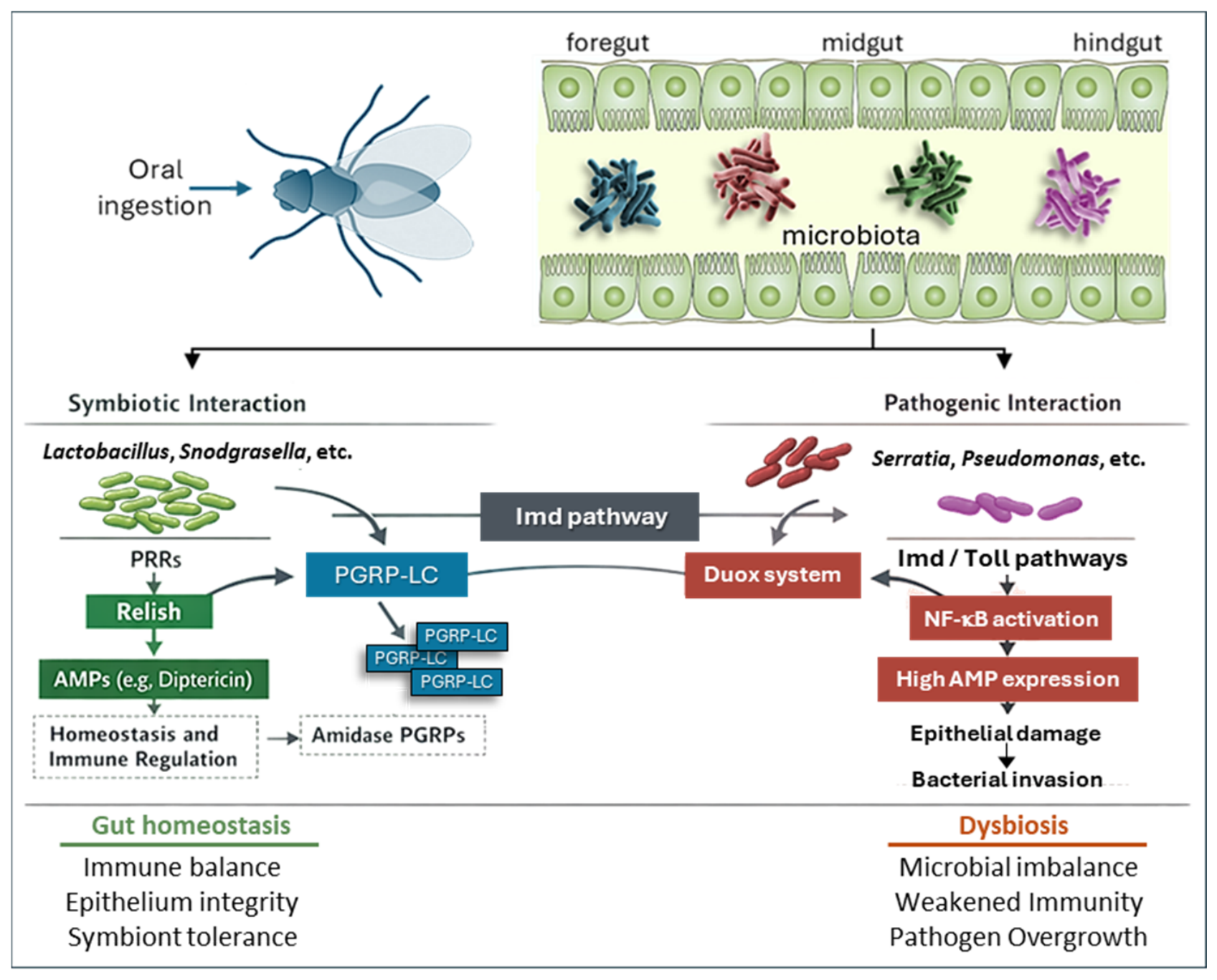

| Bacterial PAMPs | Description | Insect PRRs | Immune Pathway |
|---|---|---|---|
| Peptidoglycan (Lys-type) | Wall component mainly Gram-positive | PGRP-SA, PGRP-SD | Toll pathway |
| Peptidoglycan (DAP-type) | Wall component Gram-negative, some Gram-positive | PGRP-LC, PGRP-LE | Imd pathway |
| Lipopolysaccharide (LPS) | Outer membrane component Gram-negative | PGRP-LC GNBP3 proteins | Indirect recognition via PG fragments |
| Lipoteichoic acid (LTA) | Gram-positive wall | GNBP1 with PGRP-SA | Toll pathway |
| Flagellin | Structural protein of flagella | Some lectins and unidentified PRRs | Not well characterized |
| Bacterial DNA (CpG motifs) | Unmethylated CpG-rich DNA | Intracellular sensors (not well defined) | Not well characterized |
| β-1,3-glucan (fungi, bacteria) | Cell wall polysaccharide | βGRPs proteins | Toll pathways |
Disclaimer/Publisher’s Note: The statements, opinions and data contained in all publications are solely those of the individual author(s) and contributor(s) and not of MDPI and/or the editor(s). MDPI and/or the editor(s) disclaim responsibility for any injury to people or property resulting from any ideas, methods, instructions or products referred to in the content. |
© 2026 by the authors. Licensee MDPI, Basel, Switzerland. This article is an open access article distributed under the terms and conditions of the Creative Commons Attribution (CC BY) license.
Share and Cite
Bianchi, T.; Mastore, M.; Banfi, D.; Loulou, A.; Quadroni, S.; Brivio, M.F. When Small Meets Smaller: Immune Modulation and Virulence Strategies in Insect–Bacteria Interactions. Insects 2026, 17, 515. https://doi.org/10.3390/insects17050515
Bianchi T, Mastore M, Banfi D, Loulou A, Quadroni S, Brivio MF. When Small Meets Smaller: Immune Modulation and Virulence Strategies in Insect–Bacteria Interactions. Insects. 2026; 17(5):515. https://doi.org/10.3390/insects17050515
Chicago/Turabian StyleBianchi, Tommaso, Maristella Mastore, Davide Banfi, Ameni Loulou, Silvia Quadroni, and Maurizio F. Brivio. 2026. "When Small Meets Smaller: Immune Modulation and Virulence Strategies in Insect–Bacteria Interactions" Insects 17, no. 5: 515. https://doi.org/10.3390/insects17050515
APA StyleBianchi, T., Mastore, M., Banfi, D., Loulou, A., Quadroni, S., & Brivio, M. F. (2026). When Small Meets Smaller: Immune Modulation and Virulence Strategies in Insect–Bacteria Interactions. Insects, 17(5), 515. https://doi.org/10.3390/insects17050515