Analysis of Appressorium Formation in Metarhizium anisopliae and Its Impact on the Defense Metabolism of Opisina arenosella Larvae Based on LC-MS
Simple Summary
Abstract
1. Introduction
2. Materials and Methods
2.1. Culturing Media
2.2. Insect Hosts
2.3. Fungal Strain and Spore Suspension Preparation
2.4. Control of Appressorium Formation Rates
2.5. Pathogenicity Assay of Metarhizium anisopliae with Different Adherent Spore Formation Rates Against Opisina arenosella Larvae
2.6. Determination of Cuticular Compounds and Metabolites in Larvae of the Opisina arenosella During the Formation of Conidia of Metarhizium anisopliae
2.6.1. Determination of Spore Adhesion Dynamics and Sampling Timing on Larvae
2.6.2. Determination of Larval Cuticular Compounds and Metabolism
2.7. Data Statistical Analysis
3. Results
3.1. Inhibited Effect of Different Sulforaphane Concentrations on Metarhizium anisopliae Germination Rate
3.2. Pathogenicity of Metarhizium anisopliae with Different Appressorium Formation Rates on Opisina arenosella Larvae
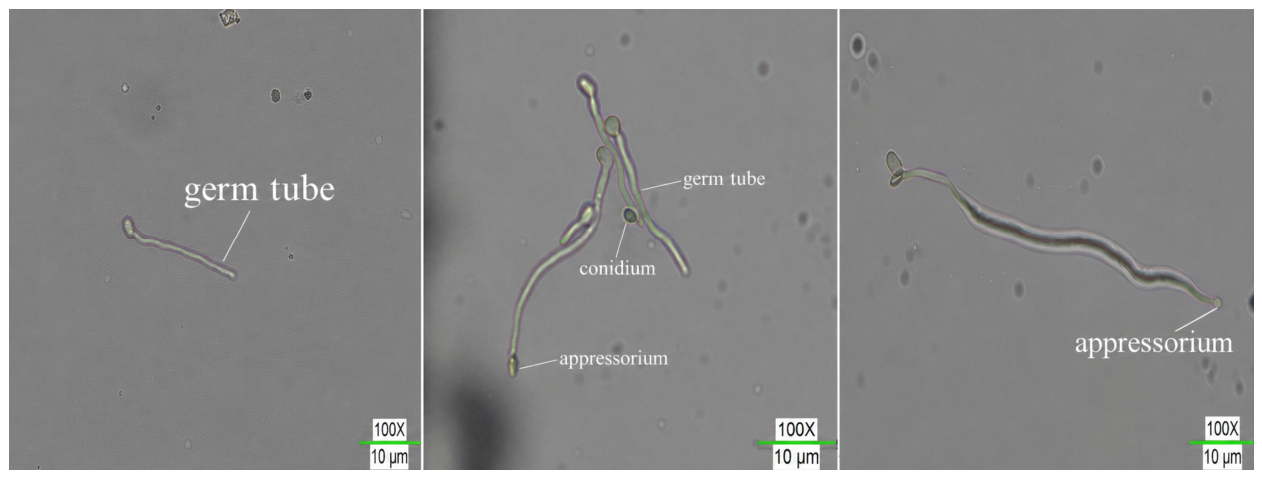
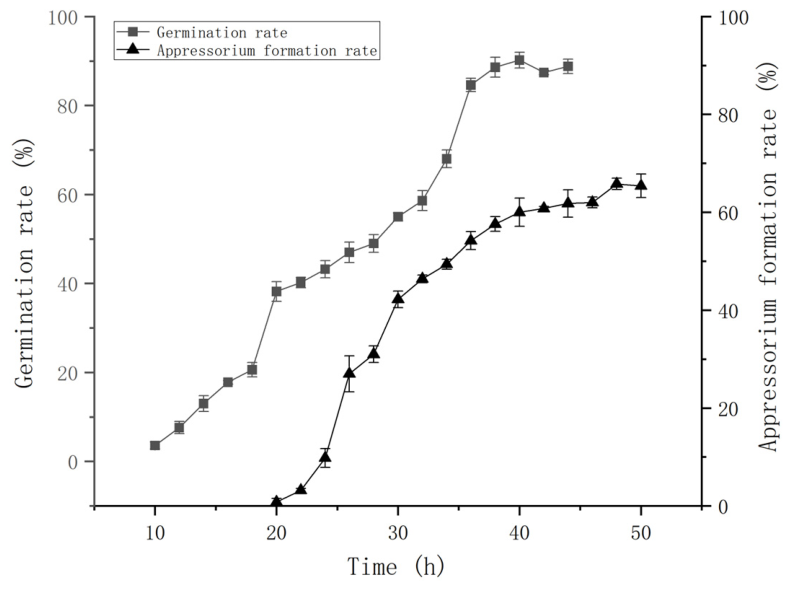
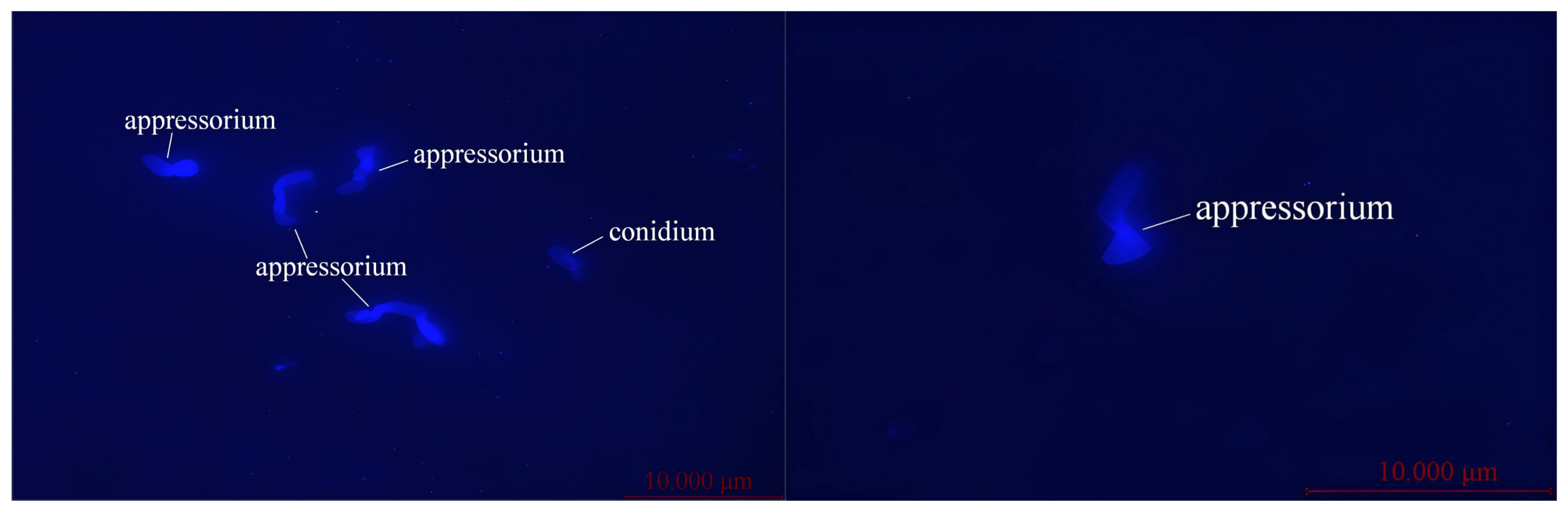
3.3. Dynamic of Appressorium Formation on Insect Bodies and Sampling Time Analysis
3.4. Analysis of the Effects of Appressorium Formation by Metarhizium anisopliae on the Cuticular Metabolites of Opisina arenosella Larvae
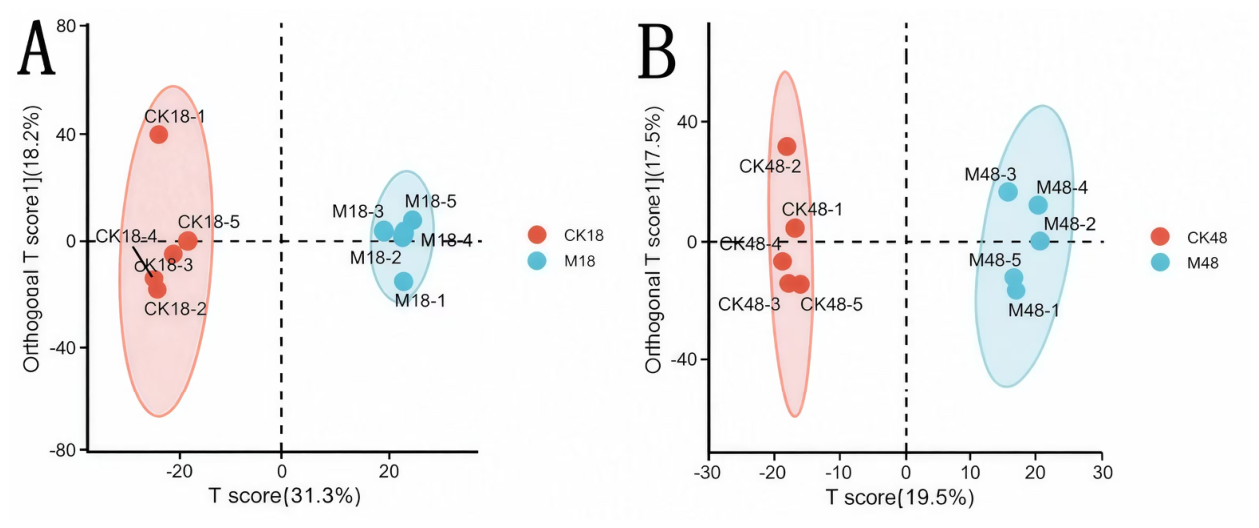
3.4.1. Orthogonal Partial Least Squares Discriminant Analysis (OPLS-DA) Results
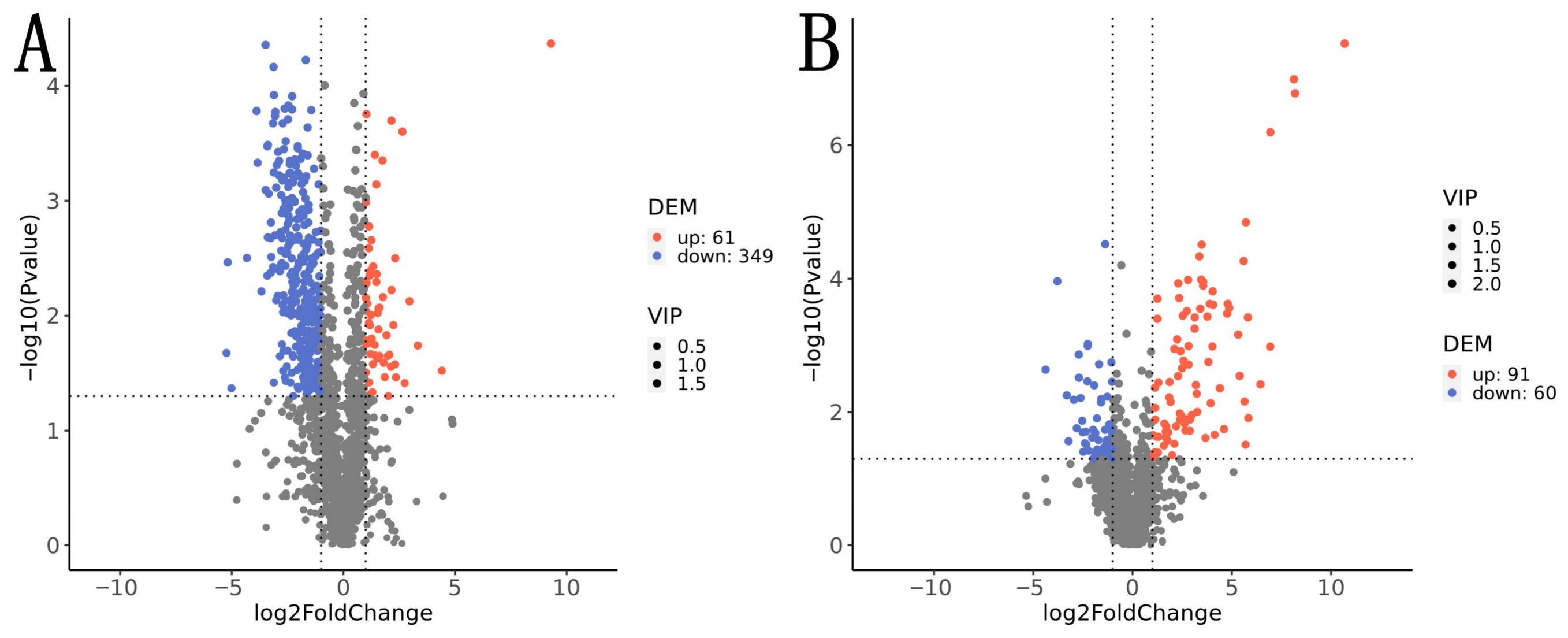
3.4.2. Differential Metabolite Analysis
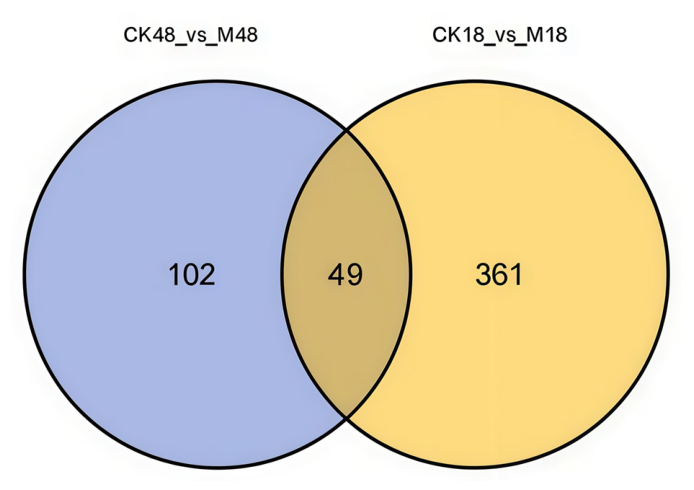
3.4.3. Venn Diagram of Differential Compounds in the Larval Cuticle Before and After Appressorium Formation by Metarhizium anisopliae
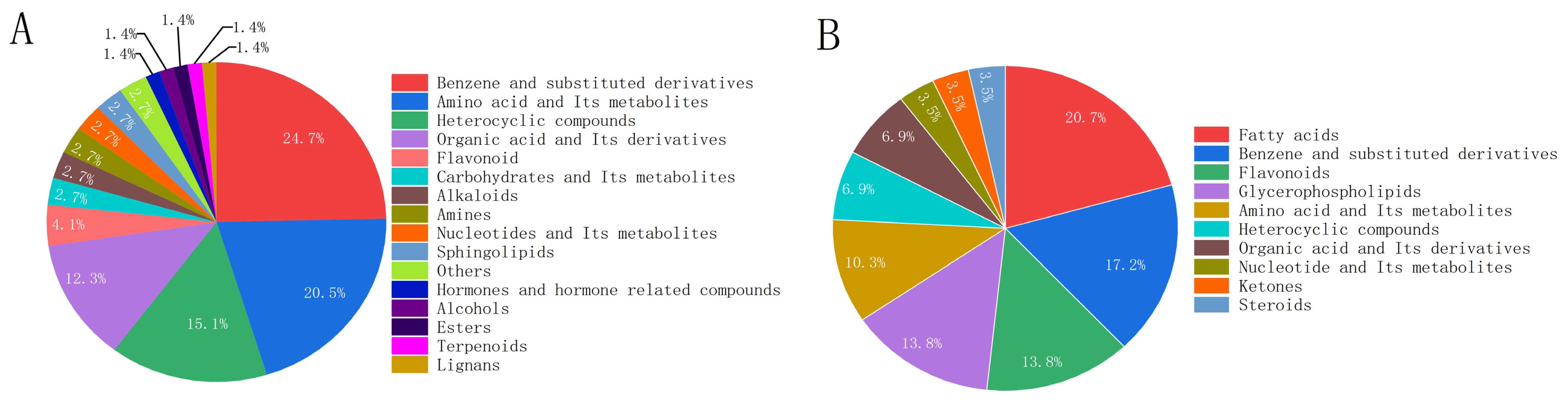
3.4.4. Categories of Differential Cuticular Compounds Unique to Opisina arenosella Larvae After Appressorium Formation
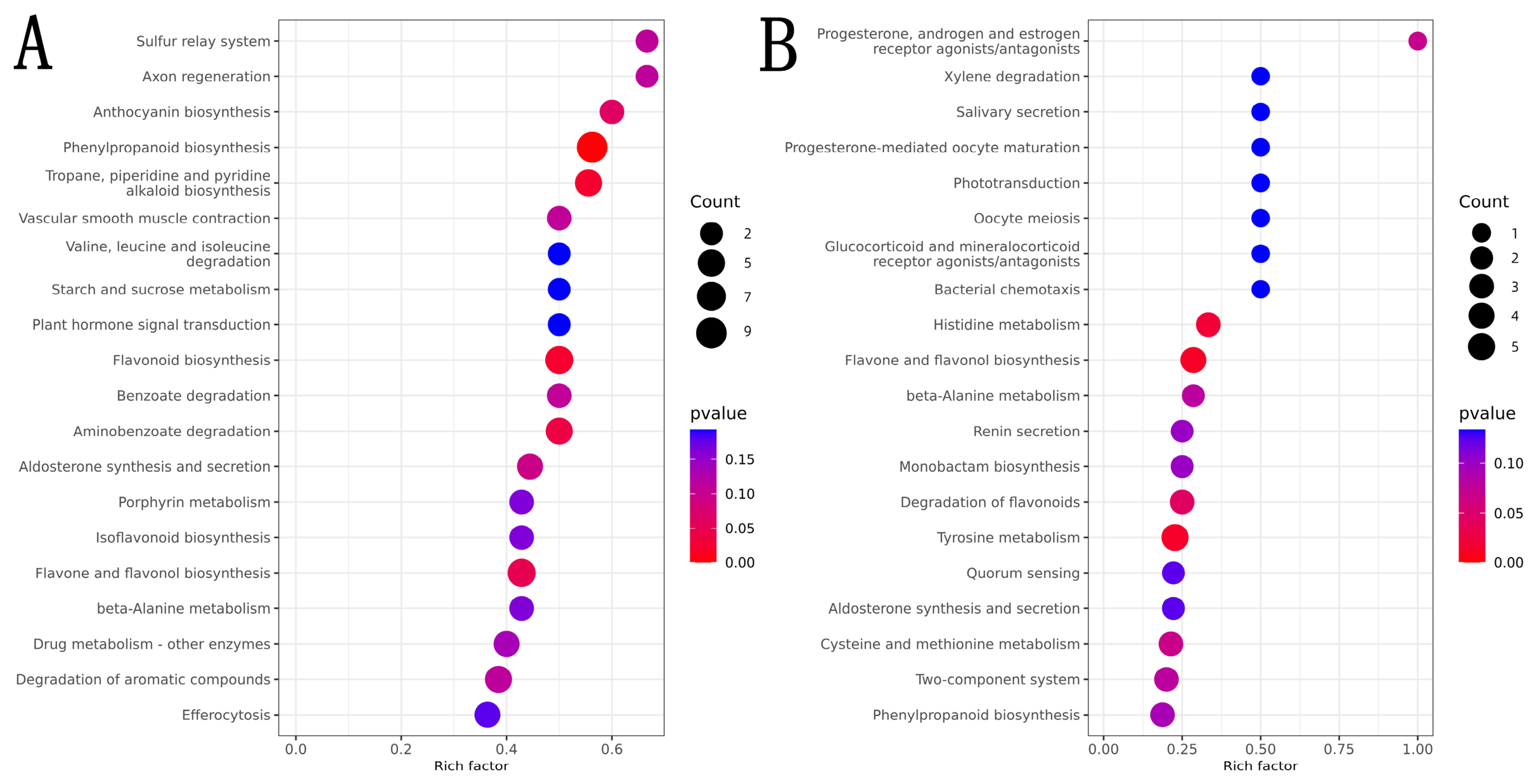
3.4.5. KEGG Enrichment Analysis of Cuticular Compounds in Opisina arenosella Larvae During Metarhizium anisopliae Infection
4. Discussion
- (1)
- Tyrosine metabolism is closely associated with immune defense mechanisms. Previous studies have shown that tyrosine metabolism in Lymantria dispar larvae changed markedly after viral infection, which was linked to the upregulation of genes related to energy metabolism and the nervous system [28]. This suggests that tyrosine metabolism is involved in behavioral regulation in insects following infection.
- (2)
- In the insect immune system, histidine metabolism contributes to antifungal defense through multiple mechanisms. Histidine-derived metabolites (e.g., histamine) act as signaling molecules in immune responses and can activate insect immune defense mechanisms [29]. These metabolites may also function as signals to induce the expression of antifungal peptide genes, thereby enhancing antifungal capacity [30]. In addition, imidazoleacetic acid, a histidine metabolite, exhibits broad-spectrum antimicrobial activity in Lepidopteran insects (e.g., the silkworm). The expression of the key enzyme histidine decarboxylase in its biosynthetic pathway increases by 3–5 fold after hemolymph infection [31]. Studies in Drosophila melanogaster further showed that individuals lacking histidine kinase exhibited a >40% reduction in their ability to clear Gram-negative bacteria [31].
- (3)
- The flavonoid degradation pathway is crucial for insect life activities, as many flavonoids exert insecticidal or antifeedant effects [32]. For example, flavonoids in cotton, such as rutin, quercetin, and isoquercitrin, inhibit the growth and pupation of Helicoverpa armigera. These compounds reduce insect growth and development by altering feeding behavior and decreasing plant consumption [33]. Flavonoids can also inhibit the activity of insect digestive enzymes, thereby impairing food utilization efficiency. For instance, tannin compounds can bind to proteins to form stable cross-linked complexes, which suppress digestive enzyme activity and reduce nutrient absorption in insects [34]. Insects possess metabolic enzymes capable of metabolizing and degrading flavonoids. For example, the flavonoid reductase from the gut bacterium Flavonifractor plautii can initiate the degradation of flavones and flavonols. In addition, certain strains of Lactococcus and Enterococcus exhibit deglycosylation activity toward specific C- and O-glycosides of flavonoids, causing structural modifications that reduce toxicity [35]. Moreover, some insects can enhance flavonoid metabolism and detoxification capacity by upregulating the expression of detoxification enzymes in vivo [36].
- (1)
- Sparfloxacin exhibits certain antifungal activity. Au-aff et al. reported that sparfloxacin could inhibit the growth of Candida albicans and Aspergillus niger [37].
- (2)
- 2,6-Dihydroxybenzoic acid, also known as gentisic acid, is a bioactive compound with multiple biological functions. Its molecular formula is C7H6O4, and its structure contains two phenolic hydroxyl groups and one carboxyl group, which confer pronounced antioxidant properties and potential antimicrobial activity. Although studies on its antifungal effects remain limited, evidence from related analogs is available. For example, Hu et al. reported that 2,5-dihydroxybenzoic acid, one of the active components in quinoa seeds, possesses certain antifungal properties [38].
- (3)
- Sulfadoxine competitively inhibits dihydropteroate synthase, blocking the condensation of p-aminobenzoic acid with pteridine pyrophosphate to form dihydropteroate. This inhibits folate biosynthesis, preventing bacteria and fungi from synthesizing DNA due to folate deficiency, ultimately leading to death [39,40].
5. Conclusions
Supplementary Materials
Author Contributions
Funding
Data Availability Statement
Acknowledgments
Conflicts of Interest
References
- Schrank, A.; Vainstein, M.H. Metarhizium anisopliae enzymes and toxins. Toxicon 2010, 56, 1267–1274. [Google Scholar] [CrossRef]
- Hou, Y.; Xia, Y.F.; Xu, J.; Liu, F.; Lin, X.; Du, S. Identification and Biological Characteristics of a Metarhizium Strain and Its Virulence against Oriental Migratory Locust. Chin. J. Biol. Control 2015, 31, 333–339. [Google Scholar]
- Wang, Y.Y.; Zhang, H.F.; Ni, D.F.; Zhao, P.F.; Hu, S.S.; Tong, Y.H. Pathogenicity of Metarhizium anisopliae to Invasive Insect Opisina arenosella Walker. J. Shandong Agric. Univ. 2023, 54, 663–669. [Google Scholar]
- Armas, C.L.; Uribe, A.A. Beauveria bassiana and Metarhizium anisopliae parasitism of Fall Webworm, Hyphantria cunea Drury larvae. Southwest. Entomol. 2020, 45, 51–56. [Google Scholar] [CrossRef]
- Xu, C.; Tong, Y.H. Athogenicity of Metarhizium anisopliae against Brontispa longissima. J. For. Environ. 2017, 37, 212–217. [Google Scholar]
- Lv, D.D.; Li, Z.Z.; Wang, C.S. Advances in Molecular Pathogenesis and Genetic Engineering of Entomopathogenic Fungi. Microbiology 2008, 3, 443–449. [Google Scholar]
- Li, B.; Song, S.; Wei, X.; Tang, G.; Wang, C. Activation of microlipophagy during early infection of insect hosts by Metarhizium robertsii. Autophagy 2021, 18, 608–623. [Google Scholar] [CrossRef]
- Fan, M.Z.; Huang, B.; Wang, J.L.; Wang, B. Observation of appressorium of several entomogenous fungi by fluorescence microscopy and scanning electron microscopy. Mycosystema 1999, 3, 249–253. [Google Scholar]
- Wang, Y.L.; Liu, Z.; Liu, S.-H.; Wang, X.; Li, X.-Y.; Lu, C.-L.; Li, X.-J.; Huang, B. Sporulation, pathogenicity and transcriptomic analysis of entomopathogenic fungus Metarhizium robertsii growing on the surface of mycosed insect cadavers. J. Plant Prot. 2022, 49, 1241–1251. [Google Scholar]
- Ryder, L.S.; Cruz-Mireles, N.; Molinari, C.; Eisermann, I.; Eseola, A.B.; Talbot, N.J. The appressorium at a glance. J. Cell Sci. 2022, 135, jcs259857. [Google Scholar] [CrossRef] [PubMed]
- Mannino, M.C.; Huarte-Bonnet, C.; Davyt-Colo, B.; Pedrini, N. Is the insect cuticle the only entry gate for fungal infection? Insights into alternative modes of action of entomopathogenic Fungi. J. Fungi 2019, 5, 33. [Google Scholar] [CrossRef]
- Qiu, H.; Wu, Z.W.; Liang, S.Z. Metarhizium anisopliae and Its Mechanism for Killing Insects. Chin. J. Pestic. 2004, 8, 342–345. [Google Scholar]
- Wang, L.; Lu, Y.Y.; Xu, Y.; Zeng, L. Compatibility of Metarhizium spp. with Eight Pesticides Used in the Control of Solenopsis invicta. Chin. J. Biol. Control 2016, 32, 172–179. [Google Scholar]
- Cao, Y.Q.; Zhu, X.X. Conidium Germination and Appressorium Formation of Metarhizium anisopliae on Locust Wing. Chin. J. Appl. Environ. Biol. 2010, 16, 750–752. [Google Scholar]
- Pais, I.S.; Valente, R.S.; Sporniak, M.; Teixeira, L. Drosophila melanogaster establishes a species-specific mutualistic interaction with stable gut-colonizing bacteria. PLoS Biol. 2018, 16, e2005710. [Google Scholar] [CrossRef] [PubMed]
- Yang, X.M.; Zhang, Y.L.; Zhou, J.; Dong, H.; Bai, X.; Liu, W.; Gu, Z. Pathogenicity, infection process, physiological and biochemical effects of Metarhizium rileyi against Spodoptera frugiperda (J.E. Smith) (Lepidoptera: Noctuidae) larvae. Egypt. J. Biol. Pest Control 2024, 34, 19. [Google Scholar] [CrossRef]
- Shao, H.L.; Zhao, X.F.; Wang, J.X. An Insect Epidermal Cell Line and Its Construction Method and Application. CN101182487A, 14 November 2007. [Google Scholar]
- Want, E.J.; Masson, P.; Michopoulos, F.; Wilson, I.D.; Theodoridis, G.; Plumb, R.S.; Shockcor, J.; Loftus, N.; Holmes, E.; Nicholson, J.K. Global metabolic profiling of animal and human tissues via UPLC-MS. Nat. Protoc. 2013, 8, 17–32. [Google Scholar] [CrossRef]
- Emmanuel, D.; Julien, B.; von Reuss, S.; Rasmann, S.; Gaétan, G. Eight key rules for successful data-dependent acquisition in mass spectrometry-based metabolomics. Mass Spectrom. Rev. 2021, 42, 131–143. [Google Scholar] [CrossRef]
- Bendary, M.M.; Ali, M.A.M.; Halim, A.S.A.; Boufahja, F.; Chaudhary, A.A.; Elkelish, A.; Soliman, R.H.M.; Hegazy, W.A.H. Investigating Sulforaphane’s anti-virulence and anti-quorum sensing properties against Pseudomonas aeruginosa. Front. Pharmacol. 2024, 15, 1406653. [Google Scholar] [CrossRef] [PubMed]
- Silva, B.L.R.; Simão, G.; Campos, C.D.L.; Monteiro, C.R.A.V.; Bueno, L.R.; Ortis, G.B.; Mendes, S.J.F.; Moreira, I.V.; Maria-Ferreira, D.; Sousa, E.M.; et al. In Silico and In Vitro Analysis of Sulforaphane Anti-Candida Activity. Antibiotics 2022, 11, 1842. [Google Scholar] [CrossRef] [PubMed]
- Ni, D.F. Preliminary Study on the Chemical Interactions Between Secondary Metabolites during Beauveria Infection and Insect Cuticular Compounds. Master’s Dissertation, Fujian Agriculture and Forestry University, Fuzhou, China, 2024. [Google Scholar]
- Wang, H.C.; You, M.S. Invasion mechanism of Metarhizium anisopliae to insects. Microbiol. China 1999, 1, 71–73. [Google Scholar]
- Duan, Z.B.; Xia, Y.L.; Shang, Y.F. Appressorial Differentiation, Virulence and Their Association with Phosphorylation Site Mutation of MPL1 in the Insect Pathogenic Fungus Metarhizium anisopliae, 24 August 2009; Chinese Academy of Sciences: Beijing, China, 2009. [Google Scholar]
- Meng, Y.M. Characterization of Three Novel MAPK-Containing Regulatory Pathways That Control Cuticle Penetration or Conidiation in Metarhizium robertsii. Ph.D. Thesis, Zhejiang University, Hangzhou, China, 2021. [Google Scholar]
- Meng, S. Mechanisms of MoWhi2 Involved in Appressorium Formation and Mitophagy in Regulation of the Pathogenicity of Magnaporthe oryzae; Huazhong Agricultural University: Wuhan, China, 2022. [Google Scholar]
- He, Y.L.; Li, X.H.; Meng, Q.-J.; Tao, B.; Wang, S.-X.; Jia, H.; Cao, Z.-Y. Mechanism of Tricyclazole Effect on Setosphaeria turcica Pathogenicity. J. Maize Sci. 2015, 23, 149–153. [Google Scholar]
- Wang, Y.J. Study on the Function of Tyrosine Metabolic Pathway in the “Tree Top Disease” of Lymantria dispar; Northwest A&F University: Xianyang, China, 2020. [Google Scholar]
- Singh, D.; Son, S.Y. Perplexing metabolomes in fungal-insect trophic interactions: A Terra Incognita of mycobiocontrol mechanisms. Front. Microbiol. 2016, 7, 1678. [Google Scholar] [CrossRef] [PubMed]
- Zhang, D.D.; Liu, L.; Tang, Y.; Pei, Z.H.; Kong, L.C.; Liu, S.M.; Ma, H.X. Research progress on the mechanism and application of insect antifungal peptides. Prog. Vet. Med. 2017, 38, 74–77. [Google Scholar]
- Gao, Y.; Liu, S.; Jia, Q.; Wu, L.; Yuan, D.; Li, E.Y.; Feng, Q.; Wang, G.; Palli, S.R.; Wang, J.; et al. Juvenile hormone membrane signaling phosphorylates USP and thus potentiates 20-hydroxyecdysone action in Drosophila. Sci. Bull. 2022, 67, 186–197. [Google Scholar] [CrossRef]
- Wang, Y.J.; Zou, C.S.; Wang, R.X.; Lin, L.N. Insecticidal activity analysis of three plant secondary metabolites on Lymantria dispar. J. Beijing For. Univ. 2017, 39, 75–81. [Google Scholar]
- Shi, M.J.; Lu, P.L. The interaction between the insertion of external genes and the defence system of plant itself. Chin. Bull. Entomol. 2010, 47, 841–847. [Google Scholar]
- Wang, Q.; Dong, H.Z. Cotton Secondary Metabolites with Insecticidal Activity. Cotton Sci. 2013, 25, 557–563. [Google Scholar]
- Wang, L.; Chen, M.; Lam, P.-Y.; Dini-Andreote, F.; Dai, L.; Wei, Z. Multifaceted roles of flavonoids mediating plant-microbe interactions. Microbiome 2022, 10, 233. [Google Scholar] [CrossRef] [PubMed]
- Nakagami, S.; Wang, Z.; Han, X.; Tsuda, K. Regulation of bacterial growth and behavior by host plant. Annu. Rev. Phytopathol. 2024, 62, 79–103. [Google Scholar] [CrossRef]
- Kumar, A.; Grewal, A.S.; Singh, V.; Narang, R.; Pandita, D.; Lather, V. Synthesis, antimicrobial activity and QSAR studies of some new sparfloxacin derivatives. Pharm. Chem. J. 2018, 52, 444–454. [Google Scholar] [CrossRef]
- Hu, Y.C.; Zhao, G.; Qin, P.-Y.; Cheng, Y.-F.; Cao, Y.-N.; Zou, L.; Ren, G.-X. Research Progress on Bioactive Components of Quinoa (Chenopodium quinoa Willd). ACTA Agron. Sin. 2018, 44, 1579–1591. [Google Scholar] [CrossRef]
- Guémas, E.; Ménard, S.; Jeanne, N.; Landa, G.; Berry, A.; Brut, M. Deciphering the impact of mutations on PfDHPS active site and sulfadoxine binding: Structural insights from molecular dynamics simulations. Molecules 2025, 30, 4118. [Google Scholar] [CrossRef] [PubMed]
- Liu, W.; Zhang, S.; Xiao, L.; Wan, Y.; He, L.; Wang, K.; Qi, Z.; Li, X. Synthesis and biological activity of novel hydantoin cyclohexyl sulfonamide derivatives as potential antimicrobial agents in agriculture. Pest Manag. Sci. 2021, 78, 1438–1447. [Google Scholar] [CrossRef]



Disclaimer/Publisher’s Note: The statements, opinions and data contained in all publications are solely those of the individual author(s) and contributor(s) and not of MDPI and/or the editor(s). MDPI and/or the editor(s) disclaim responsibility for any injury to people or property resulting from any ideas, methods, instructions or products referred to in the content. |
© 2026 by the authors. Licensee MDPI, Basel, Switzerland. This article is an open access article distributed under the terms and conditions of the Creative Commons Attribution (CC BY) license.
Share and Cite
Xu, Y.; Wu, C.; Zhang, H.; Wang, D.; Cai, H.; Wu, H.; Tong, Y. Analysis of Appressorium Formation in Metarhizium anisopliae and Its Impact on the Defense Metabolism of Opisina arenosella Larvae Based on LC-MS. Insects 2026, 17, 476. https://doi.org/10.3390/insects17050476
Xu Y, Wu C, Zhang H, Wang D, Cai H, Wu H, Tong Y. Analysis of Appressorium Formation in Metarhizium anisopliae and Its Impact on the Defense Metabolism of Opisina arenosella Larvae Based on LC-MS. Insects. 2026; 17(5):476. https://doi.org/10.3390/insects17050476
Chicago/Turabian StyleXu, Yang, Canxia Wu, Haining Zhang, Dongxu Wang, Huaxin Cai, Hui Wu, and Yinghua Tong. 2026. "Analysis of Appressorium Formation in Metarhizium anisopliae and Its Impact on the Defense Metabolism of Opisina arenosella Larvae Based on LC-MS" Insects 17, no. 5: 476. https://doi.org/10.3390/insects17050476
APA StyleXu, Y., Wu, C., Zhang, H., Wang, D., Cai, H., Wu, H., & Tong, Y. (2026). Analysis of Appressorium Formation in Metarhizium anisopliae and Its Impact on the Defense Metabolism of Opisina arenosella Larvae Based on LC-MS. Insects, 17(5), 476. https://doi.org/10.3390/insects17050476