


Simple Summary
Food waste is a major environmental and economic problem, posing public health risks. The black soldier fly (Hermetia illucens) larvae can convert organic waste into valuable products, including protein-rich biomass for animal feed and frass that may be used as fertiliser. However, in the European Union, food waste is not currently permitted as a substrate for insect rearing due to safety and regulatory concerns. This study evaluated whether heterogeneous food waste from local restaurants could effectively support black soldier fly larval growth under industrial conditions. We compared larval performance on food waste with a standard control diet over 14 days, measuring survival rate, average growth rate, feed conversion ratio, and nutritional composition. Larvae reared on food waste showed improved bioconversion efficiency, higher survival and growth rates, and enhanced nutritional profile compared with the control group. Our findings demonstrate that food waste can be an efficient substrate for insect production if the substrates are properly standardised to ensure safety and consistency, supporting more sustainable and circular agrifood systems.
Abstract
Food waste poses significant environmental, economic and public health challenges. The black soldier fly (Hermetia illucens) larvae (BSFL) represent a promising solution for organic waste valorisation, converting substrates into protein-rich biomass for animal feed and organic fertiliser. However, the use of food waste as an insect substrate remains prohibited in the European Union due to regulatory and safety concerns. This study evaluated the suitability of heterogeneous food waste for BSFL rearing under industrial conditions by comparing larval performance on a standard Gainesville diet (control) and a blend derived from local restaurant waste (test). The 14-day bioconversion assay assessed bioconversion rate (BCR), feed conversion ratio (FCR), survival rate, average growth rate, and nutritional composition. Compared with the control, the test group showed significantly improved (p < 0.001) BCR (18.34% vs. 11.02%), FCR (5.48 vs. 9.09 kg/kg), survival (69.29% vs. 51.30%), and growth (8.38 vs. 6.59 mg/day). Larvae reared on food waste also exhibited significantly higher protein (19.70% vs. 16.80%), fat (13.70% vs. 7.20%), ash (6.97% vs. 3.51%), carbohydrates (7.00% vs. 3.60%), and fibre (5.20% vs. 2.90%). Overall, heterogeneous food waste is a suitable substrate for BSFL, supporting agrifood sustainability; however, future research should focus on standardisation of these substrates.
1. Introduction
The global population continues to rise and is projected to increase by 1.4 billion people by 2054, according to the United Nations [1]. This demographic growth intensifies pressure on agrifood systems, demanding higher productivity and greater resource use, while persistent systemic inefficiencies continue to generate substantial losses across the food supply chain [2,3,4,5]. Food waste occurs across the entire supply chain, from production to consumption, and imposes considerable economic, social, and environmental costs [3,5]. In the European Union (EU), more than 59 million tonnes of food are wasted each year, at a cost of 132 billion euros [6,7]. This waste threatens the resilience and sustainability of our agrifood systems, leading to food insecurity: 8.5% of the EU’s population is living in hunger [8]. Beyond these economic implications, inadequate management of organic waste contributes substantially to greenhouse gas emissions and may facilitate environmental contamination and pathogen dissemination, posing potential public health risks [9,10,11,12]. These challenges highlight the urgent need for waste management strategies capable not only of reducing environmental burdens but also of recovering value from organic residues [11,12]. In this context, insect-based bioconversion has emerged as a promising circular economy approach. Insects can efficiently convert organic substrates into valuable biomass rich in protein and lipids, while producing frass that can be used as fertiliser. Compared to conventional livestock systems, insect production generally requires fewer resources and is associated with lower greenhouse gas emissions, reinforcing its potential contribution to more sustainable agrifood systems [13,14,15,16]. From an economic perspective, insect production presents a potential advantage over conventional livestock systems, as it can rely on low-cost or negative-cost substrates such as food waste, thereby reducing feed costs, which are one of the main economic drivers in animal production systems [16].
Among insect species, black soldier fly larvae (BSFL), the larval stage of Hermetia illucens [17], are widely recognised as the most common and effective insect used for bioconversion of organic matter for the production of feed and fertilisers. Food waste substrate for BSF provides a dual economic benefit by lowering waste management expenses associated with collection, transport, and disposal, while simultaneously generating value-added biomass rich in protein and lipids [18]. This biomass can be incorporated into animal feed and contribute to the economic sustainability of insect-based production systems [19]. From an economic perspective, the viability of BSFL-based systems is strongly dependent on process performance and efficiency, particularly when scaling up to industrial conditions. Key performance indicators such as larval growth rate, survival rate, bioconversion efficiency, and feed conversion ratio directly influence productivity, processing time, and biomass yield, which are critical determinants of cost-efficiency in large-scale production systems [20].
Overall, previous studies have shown that BSFL can be reared on a wide range of substrates, including agricultural by-products, animal manure, and food waste, making this insect an ideal candidate for sustainable, circular economy-based agrifood systems [18,19,21]. In particular, the use of food waste as a rearing substrate has received increasing attention in recent years. A substantial number of studies have investigated different types of food waste, including kitchen waste, market waste, restaurant waste, fast food waste, and mixed pre- and post-consumer residues [22,23,24,25,26,27,28,29,30]. In general, these studies show that BSFL are able to efficiently convert heterogeneous food waste into biomass, generally achieving good feed conversion ratios (FCR), high survival rates, and increased protein content under controlled conditions. Cheng et al. [29] showed that BSFL can efficiently process both pre- and post-consumer food waste, particularly when substrate moisture content is around 70–75%, supporting larval growth and process efficiency. Efficient biomass production has also been reported when using mixed kitchen waste, with protein content reaching approximately 32–41% [27]. The use of mixed substrates, such as combinations of kitchen waste with soybean curd residue, has also been shown to improve larval biomass, lipid accumulation, and overall conversion efficiency [28]. Similarly, food waste derived from catering environments, including cafeteria waste with both cooked and uncooked fractions, has been associated with high protein content in larvae [25]. Studies comparing multiple waste streams indicate that BSFL can be successfully reared on a wide range of food waste types, with restaurant waste, including fast food residues, often supporting higher larval growth, protein levels, and efficient nutrient conversion, resulting in larvae with high protein and lipid content [22,23,24]. Similarly, studies using fresh market food waste show that the combination of substrates such as fish waste, slaughtered chicken waste, and vegetable waste can produce larvae with enhanced nutritional value, high protein content, high survival rates, and efficient bioconversion [30]. Other food waste streams have also been tested, including pizza, burgers, and pasta dishes, which have been shown to support high larval weight, increased survival rate, and efficient feed conversion [26]. Taken together, these studies show that BSFL can adapt to a wide range of food waste substrates and consistently produce protein- and lipid-rich biomass, although performance remains highly dependent on substrate composition and variability.
Despite these promising findings, most of the available evidence is derived from laboratory or pilot-scale studies. A limited number of full-scale investigations have been conducted, including one study reporting a long-term system processing up to 15 tonnes of domestic biodegradable waste per day, primarily focusing on the economic feasibility of BSFL-based systems, while also reporting crude protein contents that were generally comparable, but slightly lower than those observed under laboratory-scale conditions [31]. These examples remain scarce and insufficient to comprehensively characterise system performance under diverse, real-world conditions. Consequently, there is still a critical knowledge gap regarding BSFL performance at industrial scale when processing heterogeneous food waste. We hypothesise that heterogeneous food waste collected from real food service environments can support efficient BSFL growth and bioconversion under industrial conditions, achieving performance comparable to or exceeding that obtained with standardised reference diets, such as the Gainesville diet. To test this hypothesis, the present study evaluated the suitability of restaurant-derived food waste as a rearing substrate for BSFL at industrial scale. Key performance indicators, including growth rate, survival rate, bioconversion efficiency, and feed conversion ratio, were assessed, together with the nutritional composition of both substrates and larvae. By focusing on non-standardised, real-world waste streams collected from multiple restaurants, this study provides novel insights into the scalability and operational feasibility of BSFL-based food waste valorisation systems.
2. Materials and Methods
2.1. Insect Rearing
This study was conducted using BSFL provided by EntoGreen (Santarém, Portugal). The larvae had been raised under conditions optimised for their development and were six days old at the beginning of the experiment, corresponding to the second instar stage. Prior to this, they had been fed a growth-promoting diet consisting of wheat bran and water, adjusted to a final moisture content of approximately 75%. All experimental work was conducted at EntoGreen R&D unit’s facilities. Throughout the trial, environmental conditions such as temperature and humidity were monitored to avoid the risk of overheating inside the rearing boxes, which could exceed 47 °C and thereby compromise the survival rate of the larvae.
2.2. Substrates and Experimental Design
In this experiment, two types of rearing substrates were used. The control group was fed the Gainesville diet, a standardised, nutritionally balanced rearing substrate commonly used for BSFL, typically consisting of approximately 67% water, 17% wheat bran, 6.6% maize flour, and 9.9% alfalfa, which ensures consistent larval growth and performance [32]. For the test group, a mixture was prepared using 1847.5 kg of heterogeneous food waste collected from nine restaurants located in Santarém, Portugal. Food waste included vegetables and fruits, cereals, cooked and raw meat, cooked and raw fish, eggs, eggshells, and bakery products. The collection was carried out with the support of the Municipality of Santarém, within the InsectERA mobilizing agenda, which provided dedicated waste containers to enable selective collection. The residues were transported under refrigerated conditions to the rearing facilities, where they were subsequently ground and used for substrate formulation. To ensure an adequate texture, wheat bran was added to the food waste blend at 12.5% (w/w). To ensure consistency and comparability between substrates, NKMix software (version 2.8.72) was used for moisture content adjustment. Moisture content was measured prior to the trial, with the control substrate having 67.23% and the test substrate 65.33%. Both groups were provided with an equal quantity of substrate (13.5 kg per unit). One hundred and fourteen test units and one hundred and forty-four control units were inoculated with substrate, with a higher number of control units included to increase the statistical robustness of the baseline condition. Each unit received 20,000 larvae, which were six days old at the beginning of the experiment, corresponding to the second instar stage. Units were conducted in PVC boxes (60 × 40 × 11 cm) created by EntoGreen. Environmental conditions were monitored throughout the trial, with temperatures ranging from 21.76 to 29.21 °C and relative humidity between 41.99 and 57.11%. The bioconversion process lasted fourteen days and was terminated when the first prepupae began to appear. At the end of the experiment, the larvae were separated from the frass through sieving.
2.3. Evaluation of Larval Growth Rate, Feed Conversion Ratio, and Bioconversion Efficiency
Throughout the bioconversion period, key parameters were recorded every other day. These included the weight of a 25 larvae sample from random positions on the crate (larvae were returned to their original rearing boxes after weighing), the weight of the rearing boxes, and the internal temperature within each box. Representative measurements were randomly taken from a total of 64 boxes: 32 from the control group and 32 from the test group. This sampling strategy was designed to strike a balance between practical feasibility and the generation of statistically significant results. The data collected over the assay were later used to assess critical performance indicators, including average larval growth, bioconversion rate (BCR), and feed conversion ratio (FCR). The bioconversion rate is defined as the amount of protein and lipids that the BSFL can produce from a certain quantity of substrate. The greater the bioconversion rate, the more effectively BSFL transform organic matter into valuable products [19,33]. The BCR formula applied in this study was the following [34,35]:
FCR is defined as the amount of feed (on a dry matter basis) required to produce a unit of BSFL biomass. Lower FCR values indicate higher efficiency [36,37].
The average growth was calculated as follows [38]:
Additionally, the larval survival rate was calculated to assess overall viability throughout the bioconversion period, using the following formula [35]:
2.4. Nutritional Profile of Substrates, Larvae and Meal
Samples of substrates, larvae, and processed meal from both control and test groups were collected to determine their nutritional composition. Substrate samples were obtained on the first day of the assay, prior to larval inoculation, from randomly selected rearing boxes. Larvae were randomly sampled on the final day of the assay after separation from frass, and meal samples were collected after larval processing. For each matrix, six replicates were collected. From these, three were randomly selected for nutritional analysis, and each selected replicate was analysed in triplicate. The analyses were carried out at SGS Multilab (Lisbon, Portugal). The parameters analysed and the methodology employed are stated in Table 1.
Table 1.
Methodology employed on the nutritional profile analysis.
The resulting nutritional composition of the substrates is presented in Table 2.
Table 2.
Nutritional composition of control substrate and test substrate (mean and standard deviation).
2.5. Statistical Analysis
All statistical analyses were performed using IBM SPSS Statistics (version 29.0.2.0, IBM Corp., Armonk, NY, USA). An independent-samples t-test was used to evaluate differences in BCR, FCR, average growth, and temperature between control and test substrates. Statistical significance was set at p < 0.05.
Nutritional parameters of larvae reared on the control substrate were compared with those reared on the test substrate. Data were obtained from three independent replicates per treatment. Differences between groups for each nutritional parameter were assessed using the Mann–Whitney U test. For samples with results below the limit of quantification (LOQ), a value of LOQ/2 was assigned for statistical analysis.
3. Results
3.1. Larval Performance Indicators
A significant difference in BCR was observed between groups (t(38.74) = −30.30, p < 0.001), with higher values recorded in the test group than in the control. The FCR also differed significantly between treatments (t(62) = 37.35, p < 0.001), indicating improved feed efficiency in larvae reared on the test substrate. Similarly, the average growth rate was significantly higher in the test group than in the control (t(53.85) = −6.20, p < 0.001). Furthermore, the survival rate was significantly higher in the test group than in the control (t(52.89) = −9.93, p < 0.001). Mean values and standard deviations for all these variables are summarised in Table 3.
Table 3.
Mean values and standard deviations for BCR, FCR, average growth rate, and survival rate in control and test groups.
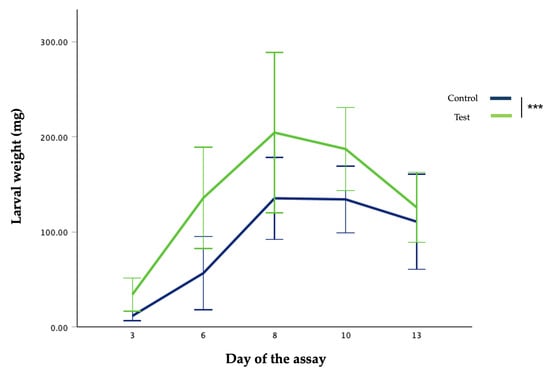
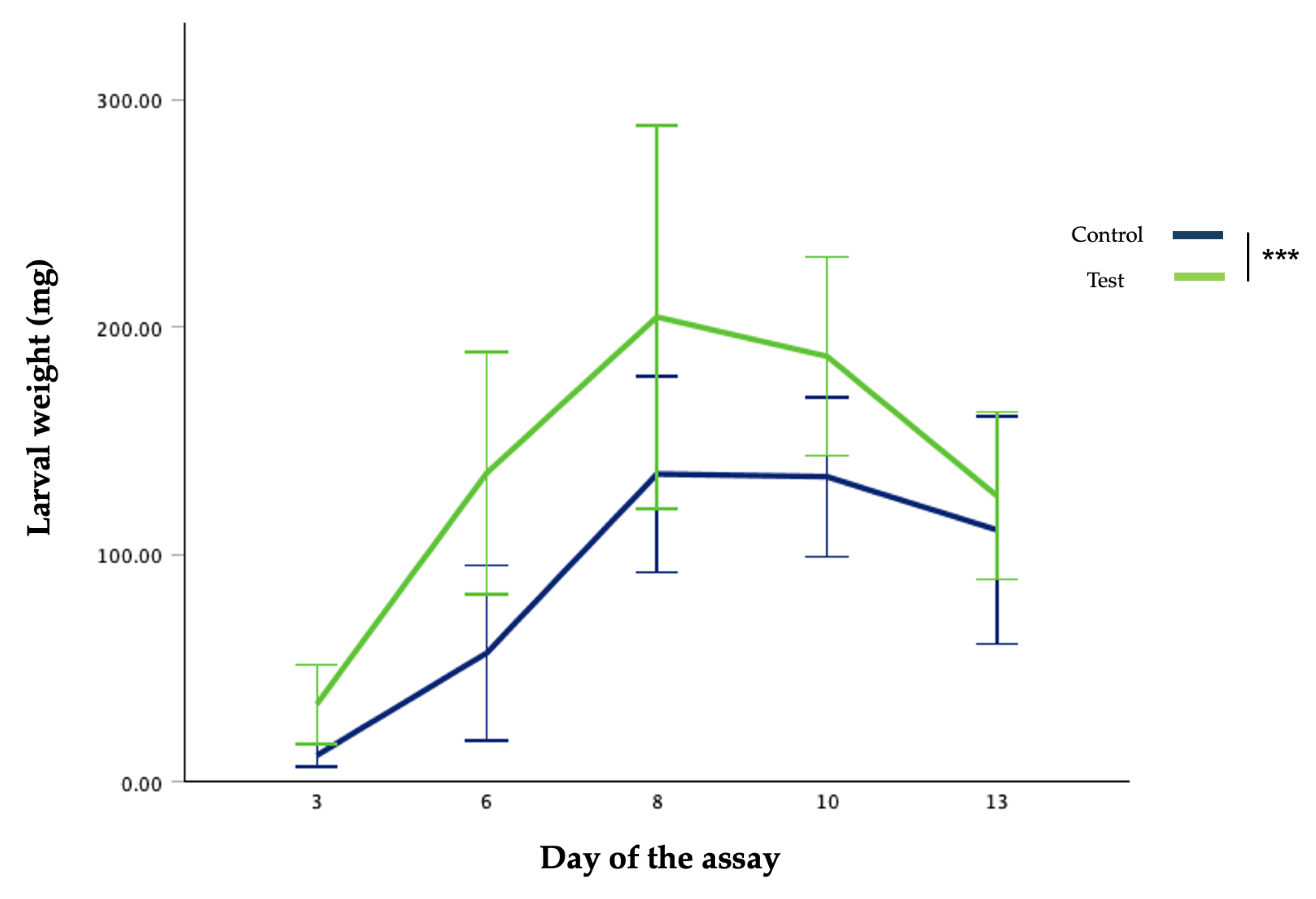
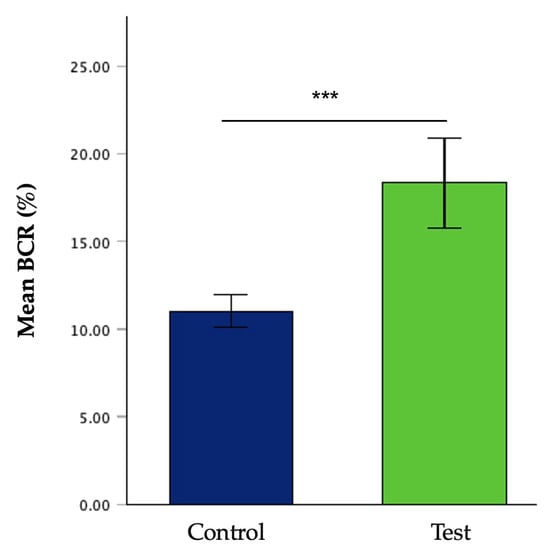
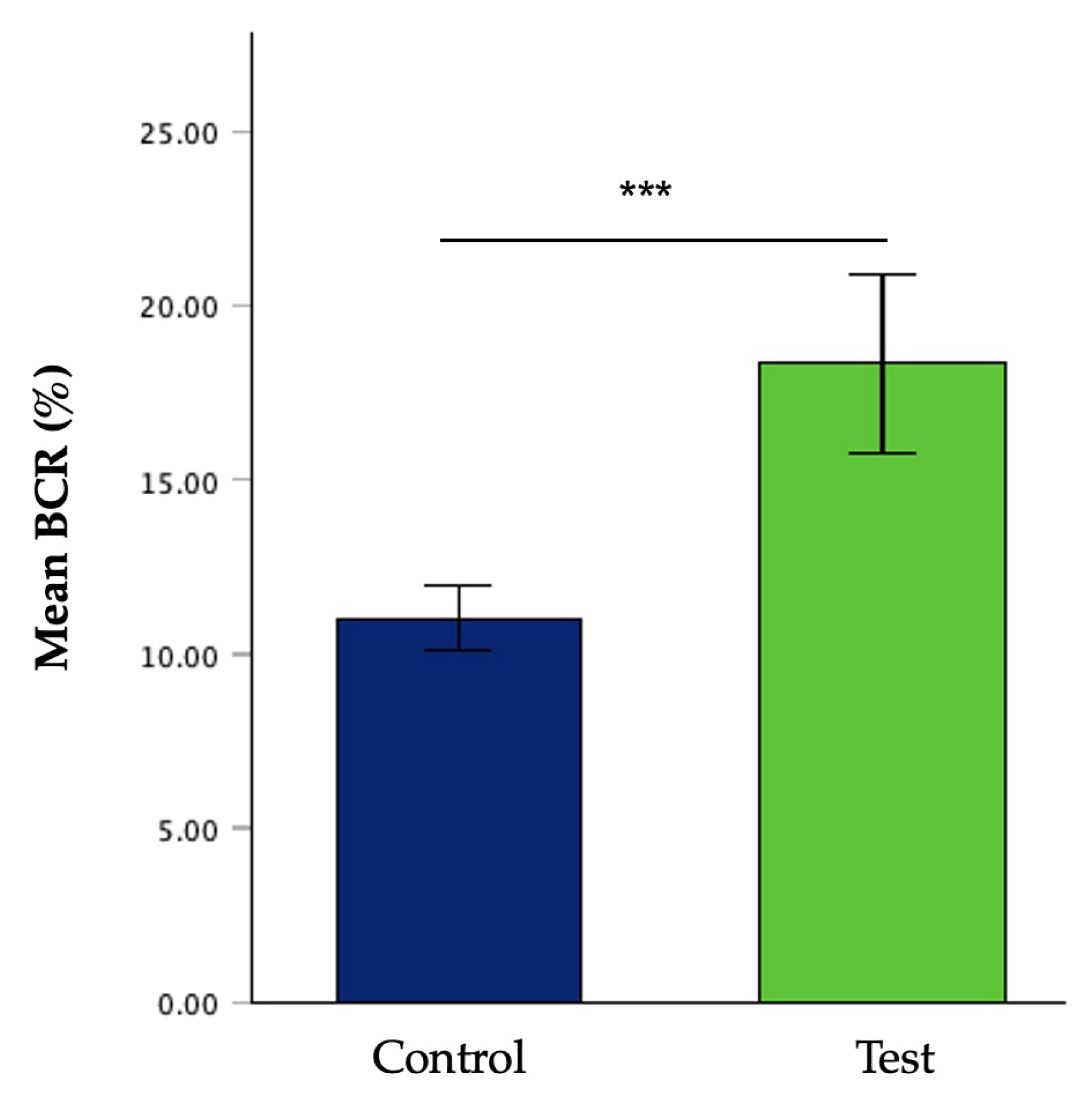
Figure 1 and Figure 2 illustrate the evolution of larvae’s weight per day and bioconversion rate, respectively.
Figure 1.
Larvae’s individual weight per day of the assay. *** = p < 0.001.
Figure 2.
Bioconversion rate mean (%) and standard deviation in both larvae groups. *** = p < 0.001.
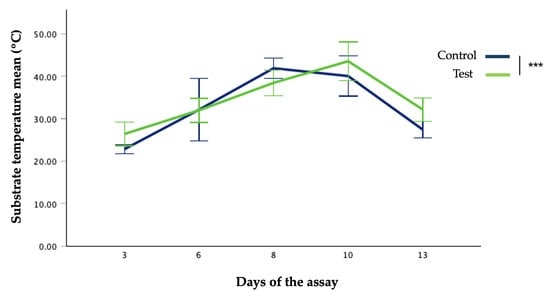
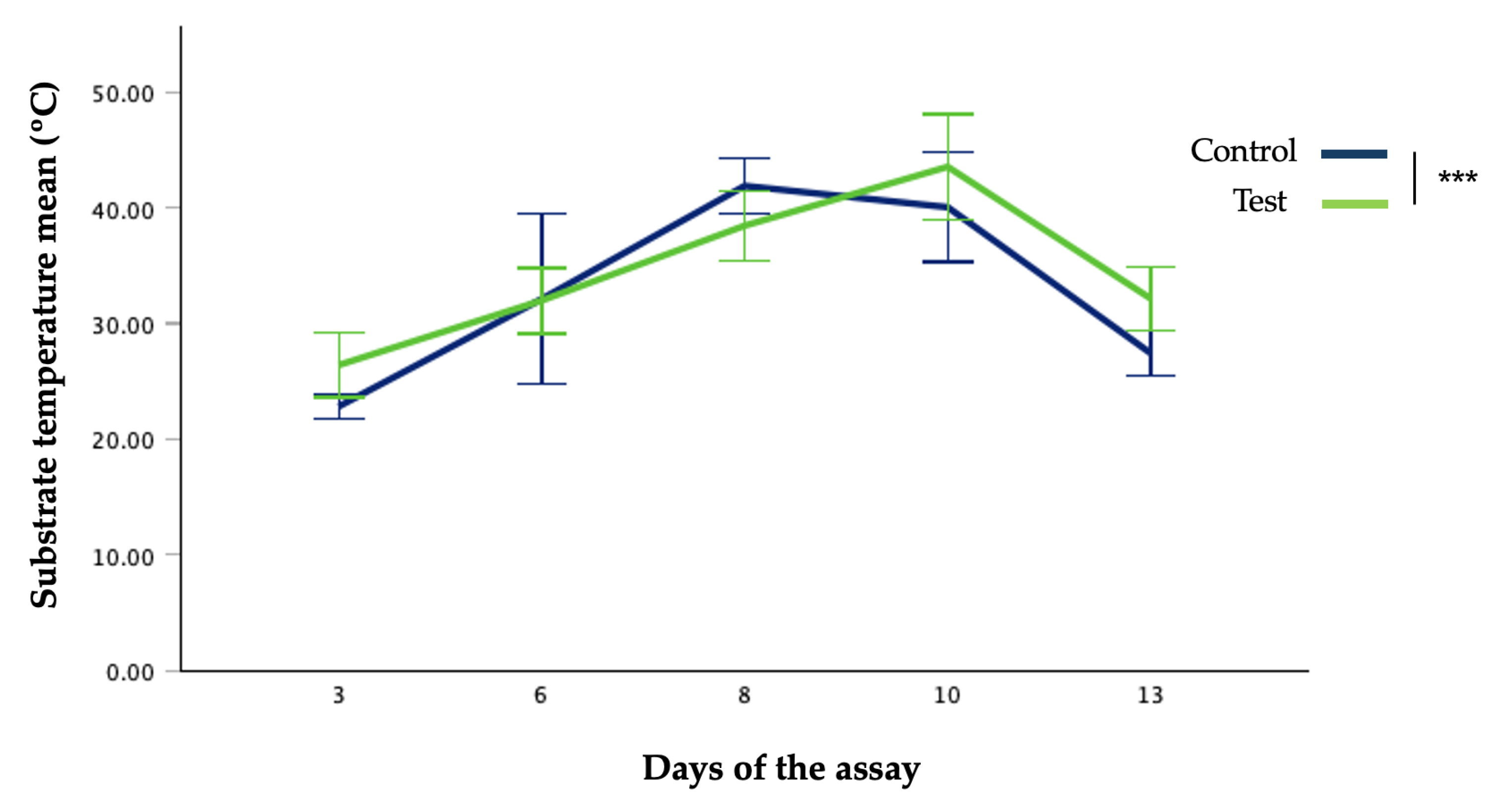
As temperatures above 47 °C within the substrate can lead to suboptimal growth, reduced yields, or even larval mortality, effective temperature management is essential for successful BSFL farming [39,40]. Given that microbial activity and larval metabolism can generate significant heat within the substrate, temperature was continuously monitored to assess potential thermal accumulation inside the rearing boxes. This monitoring ensured that conditions remained within a biologically safe range in light of possible thermal stress. Table 4 illustrates the evolution of substrate temperature in the rearing boxes (mean and standard deviation) and Figure 3 shows the evolution of temperature throughout the assay days. Significant differences in temperature between groups were observed on day 3 (t(40.559) = −13.569, p < 0.001), day 8 (t(59.075) = 10.135, p < 0.001), and day 10 (t(61.906) = −6.033, p < 0.001). In contrast, no significant differences were found on day 6 (t(40.033) = 0.191, p = 0.849) and day 13 (t(31.636) = −0.936, p = 0.356).
Table 4.
Temperature evolution in the rearing boxes during the experimental period for both control and test conditions.
Figure 3.
Temperature of substrates from both groups throughout the days of the assay. *** = p < 0.001.
Temperatures in the rearing units ranged from 21 °C to 45 °C in the control group, and from 23 °C to 47 °C in the test group. Exposure to temperatures approaching or exceeding the critical temperature limit (~47 °C) has been shown to impair larval growth and, in some cases, to cause mortality [39].
3.2. Nutritional Profile
In addition to differences in growth performance, the substrate type also influenced the nutritional composition of the larvae. Larvae reared on the test substrate had significantly higher contents of carbohydrates, protein, fat, ash, monounsaturated fatty acids, sodium, and dietary fibre than those reared on the control substrate (U = 0.00; p < 0.05). In contrast, no significant differences were observed for saturated, polyunsaturated, or trans fatty acids, nor for total sugars. Table 5 presents the median values and corresponding p-values and U-values ((Mann–Whitney-U test) for larvae reared on the control and test substrates.
Table 5.
Nutritional profile median for larvae, p-values and U-values.
4. Discussion
This study aimed to evaluate the suitability of food waste as a substrate for BSFL rearing under industrial conditions, by assessing larval performance (average growth rate, BCR, survival rate and FCR) and its nutritional composition. The test group showed significantly higher growth rates and bioconversion efficiency, along with improved feed conversion ratios, compared with the control. These results suggest that the test conditions enhanced larval development and resource utilisation. These improvements may be attributed to the fact that food waste provides a rich and diverse mix of nutrients, such as proteins, carbohydrates, and fats, that support rapid larval growth and high survival rates [30,39,41], a pattern also observed in this study. However, the intrinsic heterogeneity of food waste represents an important source of experimental variability. Although the substrate used in this study was mechanically processed prior to use, resulting in a homogenised mixture with a particle size of approximately 5–10 mm, the variability in its original composition remains a relevant factor. Previous research has demonstrated that substrate particle size is a key factor influencing BSFL performance, with sizes ranging from 4 to 10 mm enhancing waste reduction (up to 35%) and larval biomass production (up to 38%) compared to finer substrates (<2 mm), while also promoting more efficient carbon and nitrogen bioconversion [42].
Fluctuations in nutrient composition within these substrates may condition larval performance and chemical profiles, which can limit standardisation and comparability across studies. Despite this variability within substrates, BSFL are highly adaptable and polyphagous, meaning they can efficiently digest a wide range of organic materials, aided by their robust digestive system and beneficial gut microbiota, which help break down complex food waste and enhance nutrient absorption [41,42,43]. Similar trends in FCR were reported by Franco et al. (2025), who used meat and fish-based former foodstuffs as a substrate for BSFL rearing [26]. Taufek et al. (2023) also observed comparable results in both growth rate and FCR when rearing BSFL on food waste collected from a fresh market [30], while X. Li et al. (2022) achieved similar bioconversion rates using a mixture of soybean curd and kitchen waste as a substrate [28]. In addition to enhanced growth performance, the nutritional composition of the larvae was also influenced by the substrate type. Larvae reared on the test substrate showed significantly higher levels of protein, fat, ash, and carbohydrates, reflecting the richer nutrient profile of the food waste used. Comparable outcomes have been reported in previous studies, where nutrient-dense substrates led to improved larval macronutrient composition [24,26,28,30]. These findings indicate that substrate composition directly shapes the biochemical profile of BSFL, which is crucial for optimising their use in feed and food applications.
It is important to note that many previous studies have relied on more uniform or single-source substrates. In contrast, the present study used a heterogeneous mixture combining multiple food waste streams collected from restaurants, encompassing a wide range of organic materials as described in Section 2. Importantly, the scale and heterogeneity of the substrate used in this study strengthen the external validity of the findings. Unlike most previous research, which has largely relied on controlled laboratory conditions and standardised or homogeneous substrates [26,28,29,30,43,44], the present work evaluated BSFL performance using a heterogeneous mixture of food waste collected from nine commercial restaurants and processed at industrial scale with about two tonnes of input material. The consistent larval performance observed, despite substrate variability, demonstrates that efficient bioconversion can be achieved under realistic operational conditions, thereby supporting the practical feasibility and scalability of BSFL-based waste valorisation systems. These findings are in line with previous full-scale evidence reported in the literature [31], reinforcing the feasibility of BSFL-based systems under industrial conditions. However, in contrast to that study, which applied a microbial additive followed by a fermentation process to optimise the substrate, the present work specifically focused on untreated restaurant-derived food waste, without any additives or pre-processing steps, while still yielding comparable protein and fat content in the produced larvae. This distinction is particularly relevant, as it allows the assessment of BSFL performance under conditions that more closely reflect real-world waste streams, where such optimisation strategies are not always feasible. Interestingly, although overall larval performance improved under treatment conditions, temperatures in the rearing units occasionally approached the upper thermal threshold for BSFL (~47 °C), which is known to impair larval survival and growth. This thermal increase likely reflects enhanced metabolic heat production driven by larval feeding and microbial substrate degradation, combined with high larval density and aggregation, which restrict heat dissipation and promote localised thermal hotspots [45]. From an industrial standpoint, these findings highlight the need for careful control of larval density, substrate load, and aeration to prevent thermal “runaway” events, in which self-amplifying heat production compromises system stability, productivity, and welfare outcomes. Continuous temperature monitoring and adaptive process management are therefore crucial for safe and scalable BSFL production.
Overall, our results support the viability of using food waste at an industrial scale as a substrate, in insect farming, offering a sustainable alternative for organic waste valorisation. However, important challenges remain. The inherent variability of food waste complicates substrate standardisation, which may require further optimisation to ensure large-scale implementation. Finally, concerns about microbial and chemical safety, including the potential presence of pathogenic microorganisms and the accumulation of undesirable chemical contaminants, may pose risks to animal and human health, particularly since food waste may be inherently contaminated, and therefore, require further investigation.
Author Contributions
Conceptualization, J.O., C.L., R.A., A.T. and D.M.; methodology, J.O., C.L., C.S.e.S., L.G.G., M.A.M., R.F. and D.M.; formal analysis, J.O., R.A., A.T. and D.M.; writing—original draft preparation, J.O., R.A., A.T. and D.M.; writing—review and editing, J.O., C.L., R.F., C.S.e.S., M.A.M., L.G.G., A.T., R.A. and D.M.; supervision, R.A., A.T. and D.M.; funding acquisition, R.A. and D.M. All authors have read and agreed to the published version of the manuscript.
Funding
Joana Oliveira is funded by Fundação para a Ciência e Tecnologia (FCT) through a PhD studentship (grant number 2022.13540.BDANA; https://doi.org/10.54499/2022.13540.BDANA). This study was also funded by “InsectERA” (Project No. C644917393-00000032) within the WPs InBioremediation and One Health, funded by Next Generation EU European Fund and the Portuguese Recovery and Resilience Plan (PRR), under the scope of the incentive line “Agendas for Business Innovation” through the funding scheme C5—Capitalization and Business Innovation, and CiiEM Research Grant “Flywaste”, through FCT (Fundação para a Ciência e Tecnologia, I.P.), through project reference UID/4585/2025 (https://doi.org/10.54499/UID/04585/2025).
Data Availability Statement
Data is available upon request.
Acknowledgments
The authors would like to acknowledge the Municipality of Santarém for its availability, collaboration and support in the food waste collection. The authors used Illustrae (2026), an AI-based tool, to assist in generating the graphical abstract. All content was reviewed and validated by the authors.
Conflicts of Interest
Authors Carolina Ligeiro, Clarice Silva e Souza, Maria Ana Machado, Rafaela Fantatto and Daniel Murta were employed by the company Ingredient Odissey SA—Entogreen. The remaining authors declare that the research was conducted in the absence of any commercial or financial relationships that could be construed as a potential conflict of interest.
Abbreviations
The following abbreviations are used in this manuscript:
| BCR | Bioconversion rate |
| BSFL | Black soldier fly larvae |
| FCR | Feed conversion ratio |
| LOQ | Limit of quantification |
| USD | United States Dollar |
References
- United Nations. World Population Prospects 2024: Summary of Results; Stylus Publishing, LLC: Sterling, VA, USA, 2024. [Google Scholar]
- Rodríguez-Espinosa, T.; Papamichael, I.; Voukkali, I.; Gimeno, A.P.; Candel, M.B.A.; Navarro-Pedreño, J.; Zorpas, A.A.; Lucas, I.G. Nitrogen Management in Farming Systems under the Use of Agricultural Wastes and Circular Economy. Sci. Total Environ. 2023, 876, 162666. [Google Scholar] [CrossRef] [Scilit] [PubMed]
- Voss, M.; Valle, C.; Calcio Gaudino, E.; Tabasso, S.; Forte, C.; Cravotto, G. Unlocking the Potential of Agrifood Waste for Sustainable Innovation in Agriculture. Recycling 2024, 9, 25. [Google Scholar] [CrossRef] [Scilit]
- Rai, A.; Kundu, K. Agro-Industrial Waste Management Employing Benefits of Artificial Intelligence. Environ. Sci. Pollut. Res. 2024, 31, 33148–33154. [Google Scholar] [CrossRef] [Scilit] [PubMed]
- Kour, R.; Singh, S.; Sharma, H.B.; Naik, T.S.S.K.; Shehata, N.; Pavithra, N.; Ali, W.; Kapoor, D.; Dhanjal, D.S.; Singh, J.; et al. Persistence and Remote Sensing of Agri-Food Wastes in the Environment: Current State and Perspectives. Chemosphere 2023, 317, 137822. [Google Scholar] [CrossRef] [Scilit]
- European Commission. Commission Staff Working Document; Assessment Report; Analysys Mason Limited: London, UK, 2023. [Google Scholar]
- Eurostat Food Waste and Food Waste Prevention-Estimates. Available online: https://ec.europa.eu/eurostat/statistics-explained/index.php?title=Food_waste_and_food_waste_prevention_-_estimates (accessed on 20 April 2025).
- Eurostat Inability to Afford a Meal with Meat, Chicken, Fish (or Vegetarian Equivalent) Every Second Day. Available online: https://ec.europa.eu/eurostat/databrowser/view/ilc_mdes03/default/table?lang=en (accessed on 18 June 2025).
- Zhang, L.; Wang, B.; Li, K.; Su, Y.; Wu, D.; Zhan, M.; Xie, B. The Dynamics and Assembly Patterns of Airborne Pathogen Communities in the Municipal Food Waste Treatment System and Its Risk Implications. Environ. Int. 2024, 194, 109143. [Google Scholar] [CrossRef] [Scilit]
- McCarthy, J.; Frias, J.; Hynds, P.; Bolton, D. Waste-Pathogen Combinations from Land-Spreading for a Farm-to-Fork QMRA of Public Health in Ireland. Eur. J. Public Health 2023, 33, ckad160.1017. [Google Scholar] [CrossRef] [Scilit]
- Rudziak, P.; Batung, E.; Luginaah, I. The Effects of Gases from Food Waste on Human Health: A Systematic Review. PLoS ONE 2024, 19, e0300801. [Google Scholar] [CrossRef] [Scilit]
- Wani, N.R.; Rather, R.A.; Farooq, A.; Padder, S.A.; Baba, T.R.; Sharma, S.; Mubarak, N.M.; Khan, A.H.; Singh, P.; Ara, S. New Insights in Food Security and Environmental Sustainability through Waste Food Management. Environ. Sci. Pollut. Res. 2024, 31, 17835–17857. [Google Scholar] [CrossRef] [Scilit]
- Siddiqui, S.A.; Osei-Owusu, J.; Yunusa, B.M.; Rahayu, T.; Fernando, I.; Shah, M.A.; Centoducati, G. Prospects of Edible Insects as Sustainable Protein for Food and Feed—A Review. J. Insects Food Feed 2023, 10, 191–217. [Google Scholar] [CrossRef] [Scilit]
- Belhadj Slimen, I.; Yerou, H.; Ben Larbi, M.; M’Hamdi, N.; Najar, T. Insects as an Alternative Protein Source for Poultry Nutrition: A Review. Front. Vet. Sci. 2023, 10, 1200031. [Google Scholar] [CrossRef] [Scilit]
- Gasco, L.; Renna, M.; Oddon, S.B.; Far, A.R.; El Deen, S.N.; Veldkamp, T. Insect Meals in a Circular Economy and Applications in Monogastric Diets. Anim. Front. 2023, 13, 81–90. [Google Scholar] [CrossRef] [Scilit]
- Iannielli, F.; Dolce, A.; De Stefano, F.; Fernandez-Bayo, J.D.; Scieuzo, C.; Falabella, P. Transformative Potential of Insect Bioconversion and Its Role in Circular Economy. J. Environ. Manag. 2025, 396, 128091. [Google Scholar] [CrossRef] [Scilit]
- Linnaeus, C. Systema Naturae per Regna Tria Naturae: Secundum Classes, Ordines, Genera, Species, cum Characteribus, Differentiis, Synonymis, Locis, 10th ed.; Laurentii Salvii: Stockholm, Sweden, 1758. [Google Scholar]
- Siddiqui, S.A.; Harahap, I.A.; Osei-Owusu, J.; Saikia, T.; Wu, Y.S.; Fernando, I.; Perestrelo, R.; Câmara, J.S. Bioconversion of Organic Waste by Insects—A Comprehensive Review. Process Saf. Environ. Prot. 2024, 187, 1–25. [Google Scholar] [CrossRef] [Scilit]
- Siddiqui, S.A.; Ristow, B.; Rahayu, T.; Putra, N.S.; Yuwono, N.W.; Nisa, K.; Mategeko, B.; Smetana, S.; Saki, M.; Nawaz, A.; et al. Black Soldier Fly Larvae (BSFL) and Their Affinity for Organic Waste Processing. Waste Manag. 2022, 140, 1–13. [Google Scholar] [CrossRef] [Scilit] [PubMed]
- Broeze, J.; Tromp, S.; Vernooij, D.M.; Groot, J.J. Enhancing Circularity in Agri-Food Systems with Black Soldier Fly Larvae: A Value Chain Perspective for Low and Middle Income Countries; Wageningen Food & Biobased Research: Wageningen, The Netherlands, 2024. [Google Scholar]
- Ligeiro, C.; Souza, C.S.E.; Fantatto, R.; Murta, D. Olive Pomace and Melon Bio-Byproducts from the Agribusiness: A Promising Combination for the Sustainable Production of Animal Protein from BSF Larvae. Insects 2025, 16, 889. [Google Scholar] [CrossRef] [Scilit] [PubMed]
- Naser El Deen, S.; van Rozen, K.; Elissen, H.; van Wikselaar, P.; Fodor, I.; van der Weide, R.; Hoek-van den Hil, E.F.; Rezaei Far, A.; Veldkamp, T. Bioconversion of Different Waste Streams of Animal and Vegetal Origin and Manure by Black Soldier Fly Larvae Hermetia illucens L. (Diptera: Stratiomyidae). Insects 2023, 14, 204. [Google Scholar] [CrossRef] [Scilit]
- Su, H.; Zhang, B.; Yang, R.; Shi, J.; He, S.; Dai, S.; Wu, D.; Zhao, Z. The Valorization of Food Waste into High-Value Biomass and Organic Fertilizers Through Bioconversion Using Black Soldier Fly Larvae (Hermetia illucens). Recycling 2026, 11, 8. [Google Scholar] [CrossRef] [Scilit]
- Chapagaee, P.; Thapa, S.; Shrestha, S.; Puri, B.; Ghimire, A.; Bist, D.R.; Khatri, L.; Kunwar, A. Valorisation of Organic Wastes through Black Soldier Fly (Hermetia illucens) Larvae: Impacts on Growth, Nutritional Composition, and Bioconversion Efficiency. Waste Manag. Bull. 2026, 4, 100278. [Google Scholar] [CrossRef] [Scilit]
- Jalil, N.A.; Ahmad, I.K.; Basri, N.E.A. Efficacy of Using Black Soldier Fly (Hermetia illucens) Larvae in Food Waste Treatment. In 7th International Conference On Environment 2021 (ICENV2021); AIP Publishing LLC: Melville, NY, USA, 2023; p. 030015. [Google Scholar]
- Franco, A.; Pucciarelli, V.; Hosseini, S.A.; Schmitt, E.; Bovera, F.; Scieuzo, C.; Falabella, P. Bioconversion of Meat and Fish-Based Former Foodstuffs by Black Soldier Fly Larvae: A Sustainable Pathway for Reducing Food Waste, Enhancing Nutrient Recovery, with a Circular Economy Approach. Insects 2025, 16, 508. [Google Scholar] [CrossRef] [Scilit]
- Sibonje, J.; Riungu, J.; James, K. Bioconversion of Faecal and Kitchen Waste Using Black Soldier Fly Larvae (Hermetia illucens): Mass balance process. Afr. J. Sci. Technol. Soc. Sci. 2024, 2, 19–29. [Google Scholar] [CrossRef] [Scilit]
- Li, X.; Zhou, Z.; Zhang, J.; Zhou, S.; Xiong, Q. Conversion of Mixtures of Soybean Curd Residue and Kitchen Waste by Black Soldier Fly Larvae (Hermetia illucens L.). Insects 2022, 13, 23. [Google Scholar] [CrossRef] [Scilit]
- Cheng, J.Y.K.; Chiu, S.L.H.; Lo, I.M.C. Effects of Moisture Content of Food Waste on Residue Separation, Larval Growth and Larval Survival in Black Soldier Fly Bioconversion. Waste Manag. 2017, 67, 315–323. [Google Scholar] [CrossRef] [Scilit]
- Taufek, N.M.; Mohamad Zulkifli, N.F.N.; Ahmad Nazri, H. Upcycling of Food Waste Generated from the Fresh Market by Utilising Black Soldier Fly Larvae: Influence on Growth, Bioconversion, and Nutritional Composition. J. Environ. Manag. 2023, 349, 119467. [Google Scholar] [CrossRef] [Scilit] [PubMed]
- Yang-Jie, D.; Xiang, F.-M.; Tao, X.-H.; Jiang, C.-L.; Zhang, T.-Z.; Zhang, Z.-J. A Full-Scale Black Soldier Fly Larvae (Hermetia Illucens) Bioconversion System for Domestic Biodegradable Wastes to Resource. Waste Manag. Res. J. A Sustain. Circ. Econ. 2023, 41, 143–154. [Google Scholar] [CrossRef] [Scilit] [PubMed]
- Coudron, C. Compound Diets Formulation and Hermetia illucens Larvae Performance. Available online: https://orgprints.org/id/eprint/44436/1/D1_1%201_2%20Report%20on%20Compound%20diets%20formulation%20and%20Hermetia%20illucens%20larvae%20performance.pdf (accessed on 27 February 2026).
- Siddiqui, S.A.; Süfer, Ö.; Çalışkan Koç, G.; Lutuf, H.; Rahayu, T.; Castro-Muñoz, R.; Fernando, I. Enhancing the Bioconversion Rate and End Products of Black Soldier Fly (BSF) Treatment—A Comprehensive Review. Environ. Dev. Sustain. 2024, 27, 9673–9741. [Google Scholar] [CrossRef] [Scilit]
- El-byari, Y.; Amraoui, M.B. Enhancement of Bioconversion of Vegetable Biowaste by Black Soldier Fly Larvae: Influence of Mechanical and Thermomechanical Pretreatments. Sci. Afr. 2025, 27, e02626. [Google Scholar] [CrossRef] [Scilit]
- Chen, L.; Xu, M.; Shang, R.; Xin, Y.; Wang, G.; Li, Y.; Wang, Z.; Wang, X.; Sun, H.; Li, L. Evaluating Different Supplements on the Growth Performance and Bioconversion Efficiency of Kitchen Waste by Black Soldier Fly Larvae. Insects 2024, 16, 22. [Google Scholar] [CrossRef] [Scilit]
- Shao, M.; Zhao, X.; Rehman, K.U.; Cai, M.; Zheng, L.; Huang, F.; Zhang, J. Synergistic Bioconversion of Organic Waste by Black Soldier Fly (Hermetia illucens) Larvae and Thermophilic Cellulose-Degrading Bacteria. Front. Microbiol. 2023, 14, 1288227. [Google Scholar] [CrossRef] [Scilit]
- Deguara, A.; Deguara, S.; Buhagiar, J.A. A Multitrophic Culture System for the Production of Black Soldier Fly Larvae (Hermetia illucens). Discov. Food 2024, 4, 56. [Google Scholar] [CrossRef] [Scilit]
- Renna, M.; Gasco, L.; Livorsi, L.; Mele, M.; Conte, G.; Meneguz, M.; Lussiana, C. Growth Performance, Proximate Composition and Fatty Acid Profile of Black Soldier Fly Larvae Reared on Two Grape Pomace Varieties. Animal 2024, 18, 101240. [Google Scholar] [CrossRef] [Scilit]
- Li, C.; Addeo, N.F.; Rusch, T.W.; Tarone, A.M.; Tomberlin, J.K. Black Soldier Fly (Diptera: Stratiomyidae) Larval Heat Generation and Management. Insect Sci. 2023, 30, 964–974. [Google Scholar] [CrossRef] [Scilit]
- Chia, S.Y.; Tanga, C.M.; Khamis, F.M.; Mohamed, S.A.; Salifu, D.; Sevgan, S.; Fiaboe, K.K.M.; Niassy, S.; van Loon, J.J.A.; Dicke, M.; et al. Threshold Temperatures and Thermal Requirements of Black Soldier Fly Hermetia Illucens: Implications for Mass Production. PLoS ONE 2018, 13, e0206097. [Google Scholar] [CrossRef] [Scilit]
- Gautam, B.; Tiwari, S.; Pokhrel, M.R.; Tomberlin, J.K.; Khanal, P. Expanding Black Soldier Fly (BSF; Hermetia illucens; Diptera: Stratiomyidae) in the Developing World: Use of BSF Larvae as a Biological Tool to Recycle Various Organic Biowastes for Alternative Protein Production in Nepal. Biotechnol. Rep. 2025, 45, e00879. [Google Scholar] [CrossRef] [Scilit]
- Wang, Y.; Quan, J.; Cheng, X.; Li, C.; Yuan, Z. Relationship of Black Soldier Fly Larvae (BSFL) Gut Microbiota and Bioconversion Efficiency with Properties of Substrates. Waste Manag. 2024, 180, 106–114. [Google Scholar] [CrossRef] [Scilit]
- Ganesan, A.R.; Mohan, K.; Kandasamy, S.; Surendran, R.P.; Kumar, R.; Rajan, D.K.; Rajarajeswaran, J. Food Waste-Derived Black Soldier Fly (Hermetia illucens) Larval Resource Recovery: A Circular Bioeconomy Approach. Process Saf. Environ. Prot. 2024, 184, 170–189. [Google Scholar] [CrossRef] [Scilit]
- Diener, S.; Zurbrügg, C.; Tockner, K. Conversion of Organic Material by Black Soldier Fly Larvae: Establishing Optimal Feeding Rates. Waste Manag. Res. J. A Sustain. Circ. Econ. 2009, 27, 603–610. [Google Scholar] [CrossRef] [Scilit]
- Klammsteiner, T.; Heussler, C.D.; Insam, H.; Schlick-Steiner, B.C.; Steiner, F.M. Larval Density Drives Thermogenesis and Affects Microbiota and Substrate Properties in Black Soldier Fly Trials. iScience 2025, 28, 112794. [Google Scholar] [CrossRef] [Scilit]

Disclaimer/Publisher’s Note: The statements, opinions and data contained in all publications are solely those of the individual author(s) and contributor(s) and not of MDPI and/or the editor(s). MDPI and/or the editor(s) disclaim responsibility for any injury to people or property resulting from any ideas, methods, instructions or products referred to in the content. |
© 2026 by the authors. Licensee MDPI, Basel, Switzerland. This article is an open access article distributed under the terms and conditions of the Creative Commons Attribution (CC BY) license.