Article

Statistical and Neural Network-Based Prediction of Surface Roughness and Tool Wear in AISI 1040 Steel Machining Using SiO2 Nanoparticle-Infused Pongamia pinnata Lubricant and Coolant

1
Manipal Institute of Technology, Manipal Academy of Higher Education, Manipal 576104, India
2
Department of Robotics and Artificial Intelligence, Manglore Institute of Technology and Engineering, Moodabidre 574225, India
*
Authors to whom correspondence should be addressed.
Lubricants 2026, 14(6), 223; https://doi.org/10.3390/lubricants14060223
Submission received: 16 March 2026 / Revised: 18 April 2026 / Accepted: 16 May 2026 / Published: 30 May 2026

Abstract

AISI 1040 steel is extensively used in structural and automotive applications, where surface integrity plays a significant role in service performance and coating adhesion. Furthermore, the selected cutting fluids are expected to effectively reduce surface roughness and tool wear by improving lubrication at the tool and workpiece interface. This study investigates the influence of SiO2 nanoparticle-assisted Pongamia pinnata oil on surface roughness and tool wear during the machining of AISI 1040 steel using an uncoated tungsten carbide tool by varying nanoparticle concentration (Vol.%), cutting speed (m/min), depth of cut (mm), and feed rate (mm/rev). The incorporation of 0.5 (Vol.%) SiO2 nanoparticles significantly enhances machining performance by improving surface finish and reducing tool wear. Further, a minimum surface roughness value of 1.95 microns and tool wear value of 0.047 mm were achieved at a cutting speed of 101 m/min, feed rate of 0.11 mm/rev, depth of cut of 0.25 mm and 0.5 (Vol.%) SiO2 nanoparticle concentration. ANOVA results indicate that nanoparticle concentration is the most dominant parameter affecting both surface roughness and tool wear, contributing 85.35% to the variation in surface roughness and 82.2% to the total variation in tool wear. Cutting speed is the second most influential factor, accounting for 11.63% of surface roughness variation and 11.07% of tool wear variation, while feed rate and depth of cut exhibit minimal influence in both cases. A second-order RSM model was developed to predict surface roughness and tool wear, showing excellent agreement with experimental results. The model predicted surface roughness with an average error below 2.43%, while the second-order model for tool wear exhibited an average prediction error of 4.95%, confirming its statistical significance and predictive reliability. Desirability Function Method (DFM) analysis yielded a desirability value of 1.000, confirming the optimal combination of machining parameters at 0.5354 (Vol.%) nanoparticle concentration, a cutting speed of 45 m/min, a depth of cut of 0.50 mm, and a feed rate of 0.1298 mm/rev. Overall, this study demonstrates that 0.5 (Vol.%) SiO2 nanoparticle-incorporated Pongamia pinnata oil is an effective and sustainable cutting fluid, significantly improving surface integrity and machining performance of AISI 1040 steel during machining. Under these settings, the predicted tool wear was 0.0614 mm, accompanied by a high composite desirability value of 0.92786, indicating excellent overall performance. Moreover, the close agreement between experimental, response surface model and BP-ANN-predicted tool wear and surface roughness confirms that the ANN model reliably and robustly captures the complex, nonlinear effects of machining parameters with minimal systematic error.

1. Introduction

AISI 1040 steel is widely employed as an industrial structural material in automotive, aerospace, marine, and distillation structures owing to its favorable mechanical and physical properties, including high strength, toughness, durability, weldability, and dimensional stability. However, during machining operations, severe heat generation and cutting forces at the tool workpiece interface often lead to deterioration of surface quality, making surface roughness a critical concern in precision manufacturing. The application of cutting fluids has long been recognized as an effective method for controlling friction and temperature during machining, thereby improving surface finish. Nevertheless, conventional flood lubrication practices pose serious environmental, health, and economic challenges due to excessive fluid consumption and pollutant emissions [1,2]. In response to these concerns, minimal quantity lubrication has emerged as a sustainable alternative that significantly reduces lubricant usage while maintaining effective lubrication at the cutting zone. Studies have demonstrated that MQL improves surface finish by reducing friction at the tool–chip and tool–workpiece interfaces, resulting in smoother machined surfaces compared to dry and flood cooling conditions. The effectiveness of MQL is strongly influenced by lubrication parameters such as flow rate, pressure, nozzle orientation, and delivery position, which govern the penetration of lubricant into the cutting zone and directly affect surface roughness [3,4,5]. The quality of machined components is primarily assessed by the surface finish, as it directly influences dimensional accuracy, functional performance, and service life. In modern manufacturing, achieving superior surface quality while maintaining high productivity and economic efficiency remains a significant challenge. High cutting speeds, feed rates, and depths of cut, which are commonly adopted to enhance material removal rate, generate excessive heat at the tool–workpiece interface. This elevated temperature adversely affects surface integrity, leading to increased surface roughness and reduced dimensional precision. Consequently, controlling the temperature at the machining zone is essential for attaining improved surface finish and overall machining economy [5,6,7]. Conventional petroleum-based cutting fluids have traditionally been used to mitigate heat generation and improve surface quality. However, their use is associated with serious environmental, health, and safety concerns due to the emission of toxic vapors, skin irritation, and disposal-related issues. These drawbacks have driven research toward environmentally benign alternatives, particularly vegetable oil-based lubricants. Vegetable oils have attracted considerable attention owing to their superior lubricity, attributed to long-chain triglyceride fatty acids and polar molecular structures that promote strong adhesion to tool and workpiece surfaces. Their higher flash and fire points, biodegradability, and availability make them promising substitutes for mineral oils, especially in applications where surface finish is critical. Machining operations are characterized by intense friction and plastic deformation at the cutting zone, resulting in significant heat generation that directly influences surface roughness. To address this, metalworking fluids have been employed to provide cooling and lubrication; however, their excessive use contributes substantially to manufacturing costs and environmental burden. As a result, there has been a growing emphasis on reducing lubricant consumption without compromising surface quality. Minimum quantity lubrication has emerged as an effective and sustainable approach, wherein a very small quantity of lubricant is supplied precisely to the cutting zone in the form of mist or droplets [7,8,9]. More recently, the incorporation of nanoparticles into vegetable oil-based lubricants has gained considerable attention due to their superior tribological performance. Nanoparticle-enhanced MQL has been shown to significantly reduce surface roughness through mechanisms such as rolling, mending, and tribo-film formation at the interface, leading to improved surface integrity. Among various nanofluids, SiO2-based lubricants have demonstrated notable improvements in surface finish due to their chemical stability, spherical morphology, and effective dispersion in base oils. These enhancements are particularly pronounced at optimal nanoparticle concentrations, beyond which agglomeration may adversely affect surface quality [10,11]. Despite the growing body of research on MQL and nanofluid-assisted machining, limited studies have focused on a comprehensive evaluation of surface roughness and surface morphology during the machining of AISI 1040 steel under MQL conditions using multiple lubricants. Furthermore, the combined assessment of surface roughness optimization and microstructural surface characteristics remains insufficiently explored. Therefore, the present study aims to address this gap by systematically investigating surface roughness behavior and machined surface morphology during machining of AISI 1040 steel under MQL application using different lubricants, supported by statistical optimization and microscopic analysis [11,12,13]. Recent advancements have further enhanced MQL performance through the incorporation of solid lubricants and nanoparticles into base oils. Solid lubricants with lamellar structures are capable of sustaining lubrication over a wide temperature range, thereby effectively controlling machining zone temperature and improving surface finish. Nanoparticle-enhanced vegetable oils have shown remarkable potential in reducing surface roughness due to mechanisms such as rolling action, mending of surface asperities, and the formation of protective tribo-films at the interface. The synergistic effect of vegetable oil lubricity and nanoparticle-assisted lubrication has been reported to produce smoother surfaces compared to conventional cutting fluids and pure oils. Despite extensive studies on MQL and nanofluid-assisted machining, limited attention has been given to a systematic evaluation of surface roughness behavior during the machining of AISI 1040 steel using nano-enhanced vegetable oil lubricants. Moreover, the combined influence of nanoparticle characteristics and machining parameters on surface finish under MQL conditions remains insufficiently explored. Therefore, the present work focuses on experimentally investigating the effect of nano-crystalline graphite-sunflower oil lubricant applied under MQL conditions on surface roughness during the machining of AISI 1040 steel, aiming to identify optimal lubrication and machining conditions for improved surface integrity [14,15,16,17]. Plant-based oils like castor, soybean, rapeseed, and palm serve as the primary foundation for biological lubricants. These natural alternatives deliver excellent lubrication while remaining non-toxic and fully renewable. Because they are rich in specific fatty acids and triglycerides, they naturally perform well in lubrication formulas. However, manufacturers usually need to modify them chemically or physically to improve how well they withstand heat and oxidation. The demand for these sustainable industrial fluids is currently surging. This shift is largely driven by stricter environmental laws and rapid industrial growth, particularly throughout the Asia–Pacific region. Furthermore, researchers are now boosting these biological fluids with nanoparticle additives. These modern mixtures align perfectly with the goals of green chemistry and a circular economy, showing real promise to eventually replace traditional petroleum products across the farming, manufacturing, and automotive industries [12,16,17,18]. AISI 1040 steel is a medium-carbon steel extensively employed in shafts, gears, automotive components, and structural applications due to its balanced combination of strength, toughness, and machinability. However, its relatively higher carbon content and hardness compared to low-carbon steels lead to increased cutting forces and elevated temperatures during machining, which significantly influence tool wear characteristics. During machining of AISI 1040 steel, tool wear is predominantly governed by abrasive and adhesive wear mechanisms, driven by strong tool workpiece interaction and sustained thermal loading at the cutting zone [12,18]. The presence of hard carbide phases and continuous chip formation accelerates tool wear, particularly at higher cutting speeds and feed rates. Inadequate heat dissipation further intensifies diffusion wear and edge chipping, resulting in rapid tool degradation. Therefore, effective control of machining parameters and cutting conditions are essential to minimize tool wear while ensuring dimensional accuracy and surface quality. Optimizing cutting speed, feed rate, and depth of cut, along with appropriate tool material selection, plays a significant role in extending tool life and reducing energy consumption during the machining of AISI 1040 steel [19,20]. The current research investigates the surface roughness of AISI 1040 steel and tool wear of uncoated tungsten carbide tools during machining with Pongamia pinnata oil infused with SiO2 as cutting fluid and varying cutting speed, feed rate and depth of cut. The integrated use of Taguchi’s design of experiments, ANOVA, Response Surface Methodology, and ANN provides a significant approach for both process optimization and accurate prediction.


2. Methodology

This research paper relates to an investigation of surface roughness and tool wear during machining of AISI 1040 steel using Pongamia pinnata vegetable oil-infused SiO2 nanoparticle-infused cutting fluid. The surface roughness and tool wear were systematically evaluated by examining the influence of nanoparticle concentration (Vol.%), cutting speed, feed rates and depths of cut. Analytical-grade SiO2 nanoparticles with an average particle size of 50 nm were employed in the present study. These nanomaterials were sourced from SRL Chemicals, India. A comprehensive summary of their physicochemical properties is provided in Table 1.
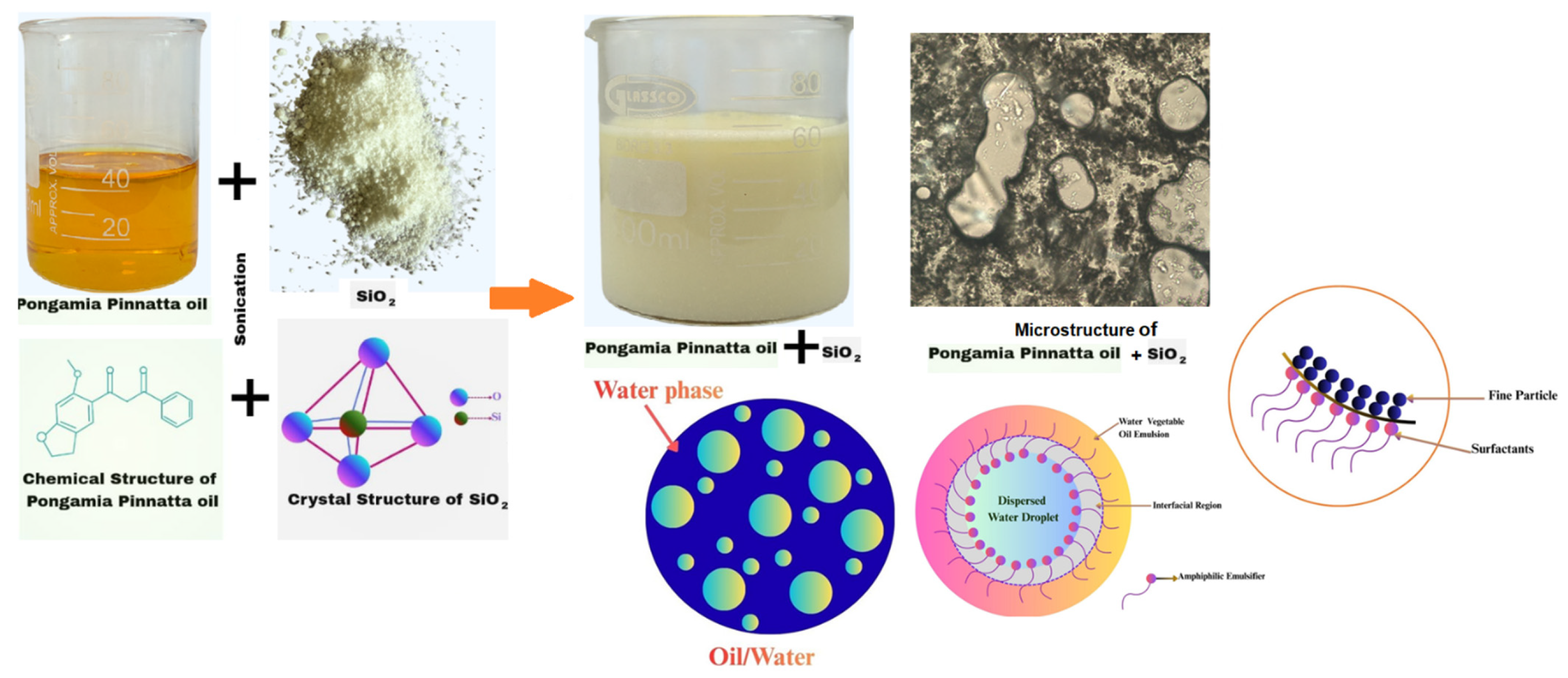
Pongamia pinnata oil utilized for the experimental work was procured from Ganesh Oil Mills, Udupi, India. Pongamia pinnata oil exhibits a relatively low melting point of approximately 15 °C, ensuring good fluidity at room and machining temperatures, which is advantageous for effective lubricant delivery under MQL conditions. The low moisture content (0.115%) of Pongamia pinnata oil minimizes the risk of corrosion and microbial degradation, thereby enhancing its storage stability and suitability as a base fluid for machining applications. With an iodine value of about 87 cg I2/g, Pongamia pinnata oil demonstrates moderate unsaturation, contributing to a balanced combination of oxidative stability and lubricity during high-temperature cutting operations. The presence of phospholipids (0.78%) and a relatively high unsaponifiable matter content (2.6%) enhances boundary lubrication characteristics by promoting the formation of protective tribo-films at the tool and chip interface. Pongamia pinnata oil contains appreciable levels of natural antioxidants, including tocopherols (69–182 mg/kg) and phytosterols (2500 mg/kg), which improve oxidative resistance and thermal stability under prolonged machining conditions. Despite its moderate phenolic content (51.2 mg/kg), the oil exhibits favorable tribological behavior due to its combined fatty acid composition and bioactive minor constituents. The fatty acid profile of Pongamia pinnata oil, comprising approximately 25% saturated, 18% monounsaturated, and 2% polyunsaturated fatty acids, contributes to improved load-carrying capacity and reduced friction during metal cutting. A high smoke point of around 251 °C indicates excellent thermal endurance, making Pongamia pinnata oil suitable for high-speed machining operations where elevated interface temperatures are encountered. The density of Pongamia pinnata oil (0.924 kg/m3 at 25 °C) supports stable atomization and consistent lubricant flow during MQL-assisted machining. Figure 1 represents the flowchart for processing of Pongamia pinnata oil with SiO2.
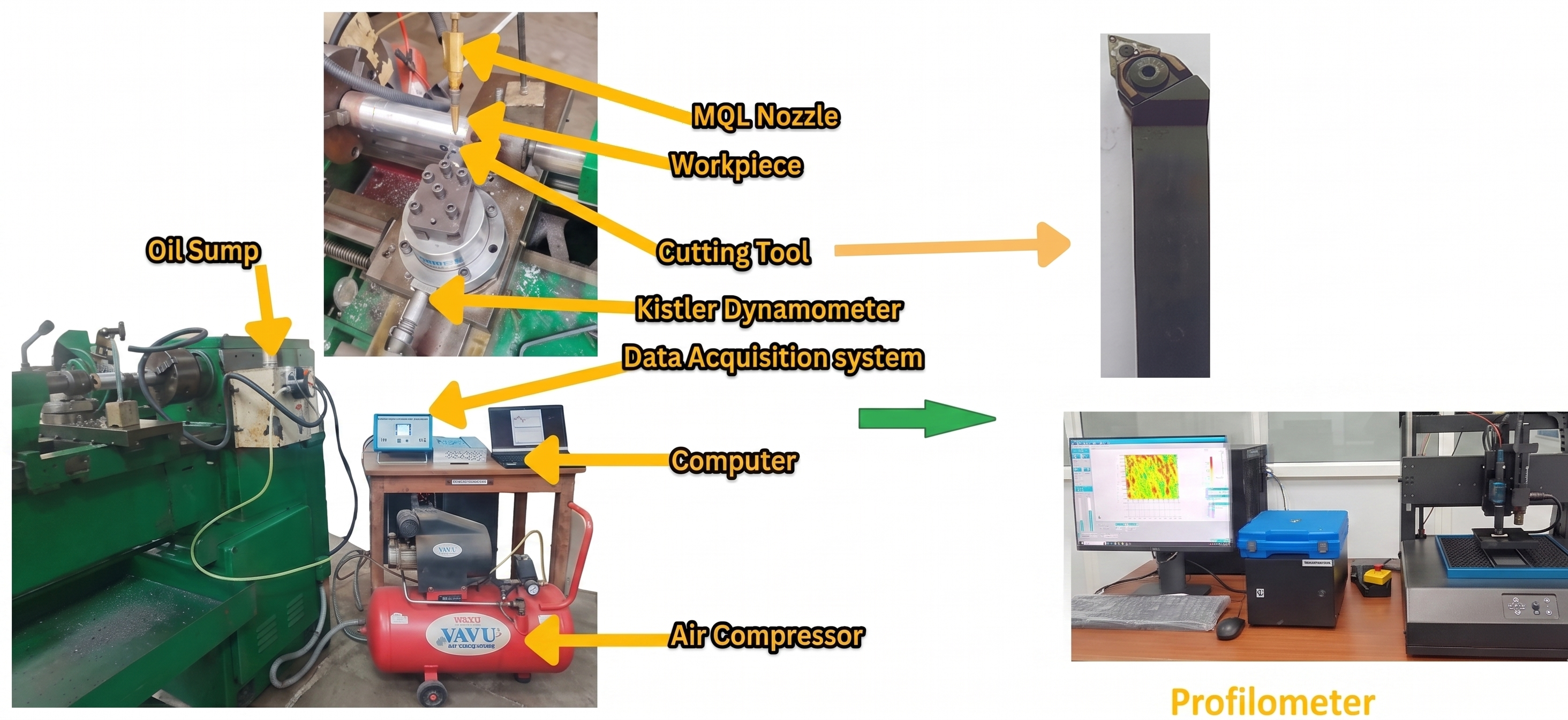
The machining trials were performed on a PSGA141 center lathe having a power capacity of 2.2 kW, using an uncoated Tungsten carbide cutting tool (ISO designation: CNMG 120408, featuring a 0.8 mm nose radius). The selected nose radius appropriately accommodates the chosen depths of cut (0.25–0.75 mm) to ensure stable cutting mechanics and chip formation. During machining, Pongamia pinnata oil infused with SiO2 nanoparticles was utilized as the cutting fluid. The cutting fluid was delivered directly to the tool and chip interaction zone under controlled conditions, with a constant flow rate of 10 mL/min, a supply pressure of 5 bar, and a nozzle stand-off distance maintained at 5 mm. The work material used for the experiments was AISI 1040 steel, procured from Dhanalakshmi Steel Distributors, in the form of cylindrical rods measuring 30 mm in diameter and 200 mm in length. The surface roughness of the machined AISI 1040 steel was evaluated using Talysurf Surtronic 3+ surface roughness measuring equipment and a KEYENCE VR-6000 three-dimensional profilometer. Surface roughness measurements were taken at ten different locations on each machined surface, and the mean value was considered for subsequent analysis. Tool wear of the uncoated Tungsten carbide tool was measured by using a Trinocular inverted microscope (Mitutoyo TM-500, Mitutoyo American Corporation, Marlborough, MA, USA). To examine the influence of machining parameters on machining quality, Taguchi’s design of experiments (Table 2) was adopted by varying cutting speed, feed rate, and depth of cut. An L27 orthogonal array was formulated using Minitab software (Version 15) to systematically plan the experiments. The experimental results were statistically analyzed to determine the most influential process parameters and to estimate the percentage contribution of each input factor to the selected quality characteristics. The signal-to-noise (S/N) ratio for the “smaller-the-better” quality characteristic, utilized to evaluate both surface roughness and tool wear, was calculated by first determining the mean of the squared experimental responses. Furthermore, RSM and BP-ANN were utilized for both optimization and predictive model development. The application of RSM and BP-ANN enables effective evaluation of the interactive effects among the selected process parameters, thereby supporting practical process optimization. Figure 2 represents the experimental setup for machining of AISI 1040 steel.
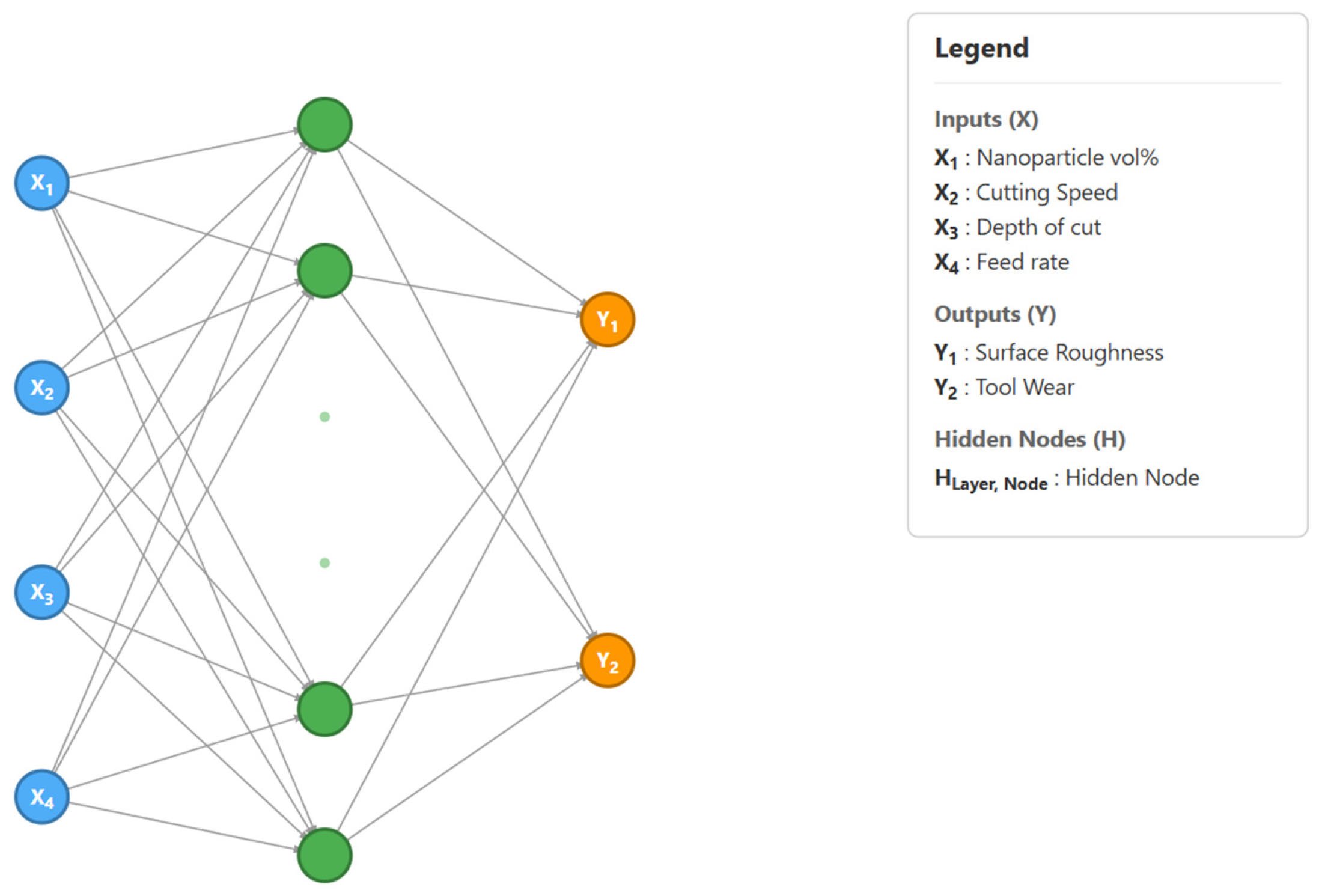
The foundational experimental dataset comprised 27 controlled machining trials conducted on a PSGA141 center lathe, documenting surface roughness and tool wear responses to systematic variations in four primary process parameters: nanoparticle concentration (0–1.0 Vol.%), cutting speed (45–101 m/min), depth of cut (0.25–0.75 mm), and feed rate (0.11–0.25 mm/rev). To address the statistical limitations of a modest experimental sample size and enhance model generalization capacity, data augmentation was implemented using Gaussian Process Regression (GPR) with a radial basis function (RBF) kernel. This non-parametric Bayesian approach was selected to preserve the distributional properties and interdependencies of the original experimental features while generating synthetic samples that remain physically realizable within the parametric space. The augmentation procedure followed a strict protocol: (1) GPR hyperparameters (length scales and amplitude) were optimized via marginal likelihood maximization using the experimental data subset, (2) 100 synthetic samples were generated at unobserved points within the input domain, stratified to maintain uniform coverage across the cutting parameter ranges, and (3) validation was performed by comparing the statistical moments (mean, variance, and rank correlation) of augmented features against experimental baselines, confirming fidelity with deviation < 2% for all variables. The final augmented dataset consisted of 127 samples (27 experimental + 100 synthetic), with feature-target relationships validated through correlation analysis. Data were subsequently normalized to zero mean and unit variance using min-max scaling to ensure numerical stability during network training. Figure 3 provides the Artificial Neural Network Model for both surface roughness and tool wear.
A fully connected multilayer perceptron (BPANN) with a three-layer architecture (6-50-2) was designed to perform simultaneous multi-output regression of surface roughness and tool wear. The input layer contained six neurons corresponding to the four normalized cutting parameters plus two derived feature engineering variables (cutting speed × feed rate interaction and normalized tool age proxy). The hidden layer comprised 50 rectified linear unit (ReLU) activation neurons, selected empirically based on prior sensitivity analysis demonstrating that this node count balances model capacity against overfitting risk for the augmented dataset size; preliminary architecture screening (10–150 hidden neurons) confirmed that configurations below 40 nodes exhibited underfitting while those exceeding 80 neurons demonstrated validation degradation attributable to increased parameter redundancy. The output layer contained two linear-activation neurons representing the mean predicted values for surface roughness (μm) and tool wear (mm), respectively. Linear activation in the output layer was maintained because both target variables are continuous and unbounded, allowing the network to predict across the full observed range (1.95–5.87 μm for surface roughness; 0.047–0.208 mm for tool wear) without saturation. All neurons except the output layer were subjected to dropout regularization with a rate of 0.2 during training to further mitigate overfitting on the finite augmented dataset. Model generalization was assessed using a held-out test set (15%; n = 19 samples from the augmented dataset) that remained completely isolated from all training and hyperparameter selection procedures. Performance metrics were computed independently for surface roughness and tool wear predictions to enable multi-output performance characterization. The primary metrics included the root mean square error (RMSE) (Equations (1) and (2)), coefficient of determination (R2) (Equation (3)), mean absolute error (MAE), and mean absolute percentage error (MAPE).
For surface roughness,
RMSE was calculated as
R M S E S R = 1 n i = 1 n     ( S R p r e d , i S R e x p , i ) 2
For tool wear,
R M S E T W = 1 n i = 1 n     ( T W p r e d , i T W e x p , i ) 2
The   R 2   statistic   was   computed   as   R 2 = 1 S S r e s S S t o t
where
S S r e s =   ( y i y ^ i ) 2
  S S t o t =   ( y i y ) 2
Cross-validation using 5-fold stratification was performed strictly on the 85% training subset of the augmented dataset to provide confidence intervals on model performance and detect potential overfitting, ensuring the 15% held-out test set remained completely isolated. Residual analysis was conducted to verify that prediction errors were normally distributed with near-zero mean and homogeneous variance, confirming model adequacy. A comparative baseline model (multiple linear regression on the same augmented dataset) was trained to establish a performance threshold and justify the necessity of nonlinear network modeling.

3. Results and Discussion

AISI 1040 steel serves as a fundamental structural component across numerous sectors, including the automotive, marine, and construction industries. Due to its widespread application, understanding its exact behavior during the machining process is highly important. This section details an experimental study examining the performance of this steel when machined using Pongamia pinnata oil blended with various volume percentages of silica nanoparticles. The experiments were structured utilizing a Taguchi L27 orthogonal array to evaluate how the varying fluid composition and other operational parameters influence the overall cutting process. The primary focus of this analysis was to carefully measure the resulting surface roughness of the workpiece and the physical degradation experienced by the uncoated tungsten carbide cutting tool. All the recorded measurements for surface roughness in microns and tool wear in millimeters are provided in Table 3.

3.1. Surface Roughness

AISI 1040 steel is extensively used as a structural material in a wide range of industrial applications. To enhance its surface-related functional performance, components fabricated from AISI 1040 steel are often subjected to surface coatings, where surface roughness plays a decisive role in governing the adhesion strength between the coating and the substrate. In the present study, an improved surface finish during the machining of AISI 1040 steel was achieved using Pongamia pinnata oil blended with 0.5 (Vol.%) SiO2 nanoparticles as the cutting fluid. Optimal machining performance was observed at a cutting speed of 101 m/min, a depth of cut of 0.25 mm, and a feed rate of 0.11 mm/rev.
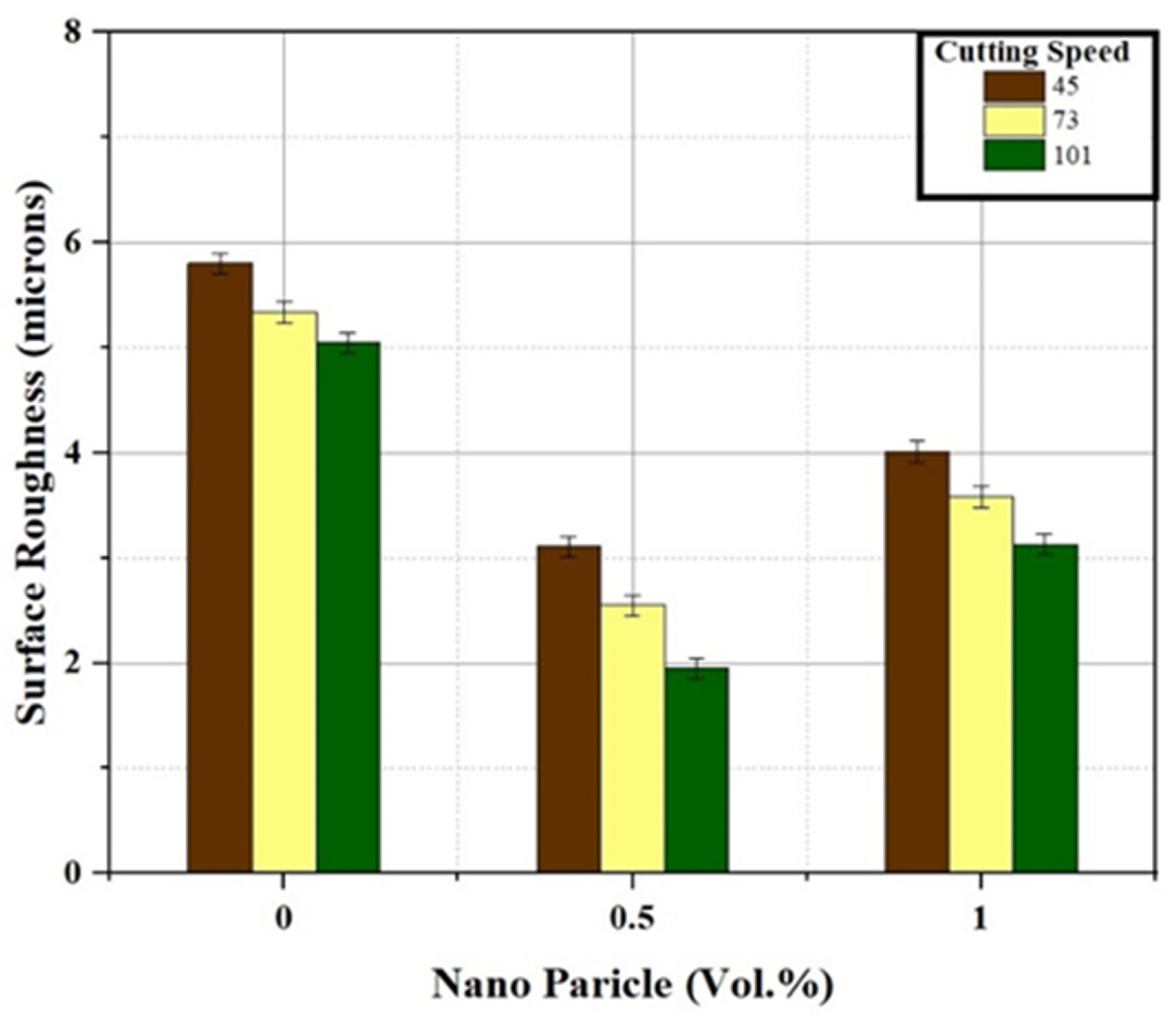
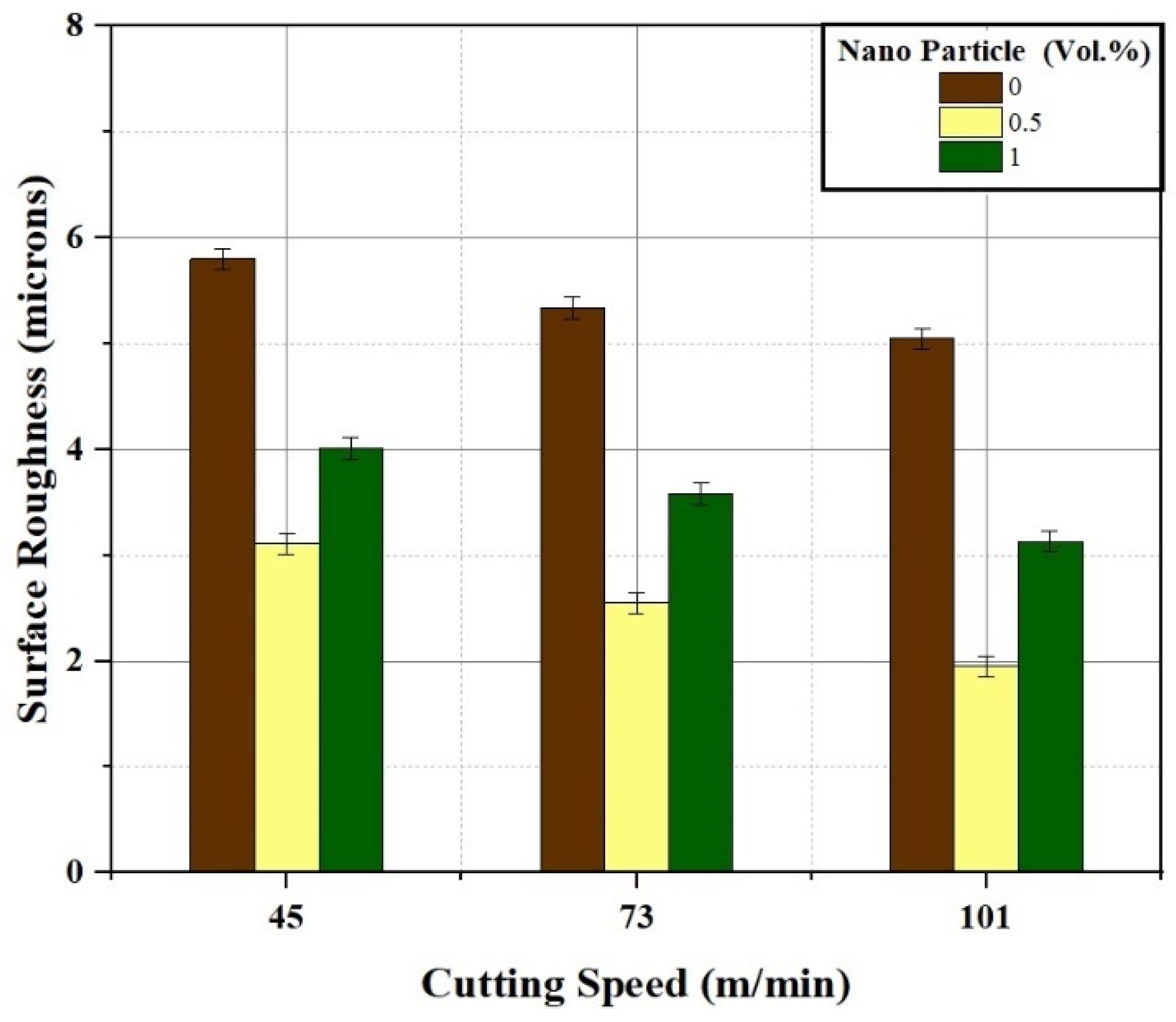
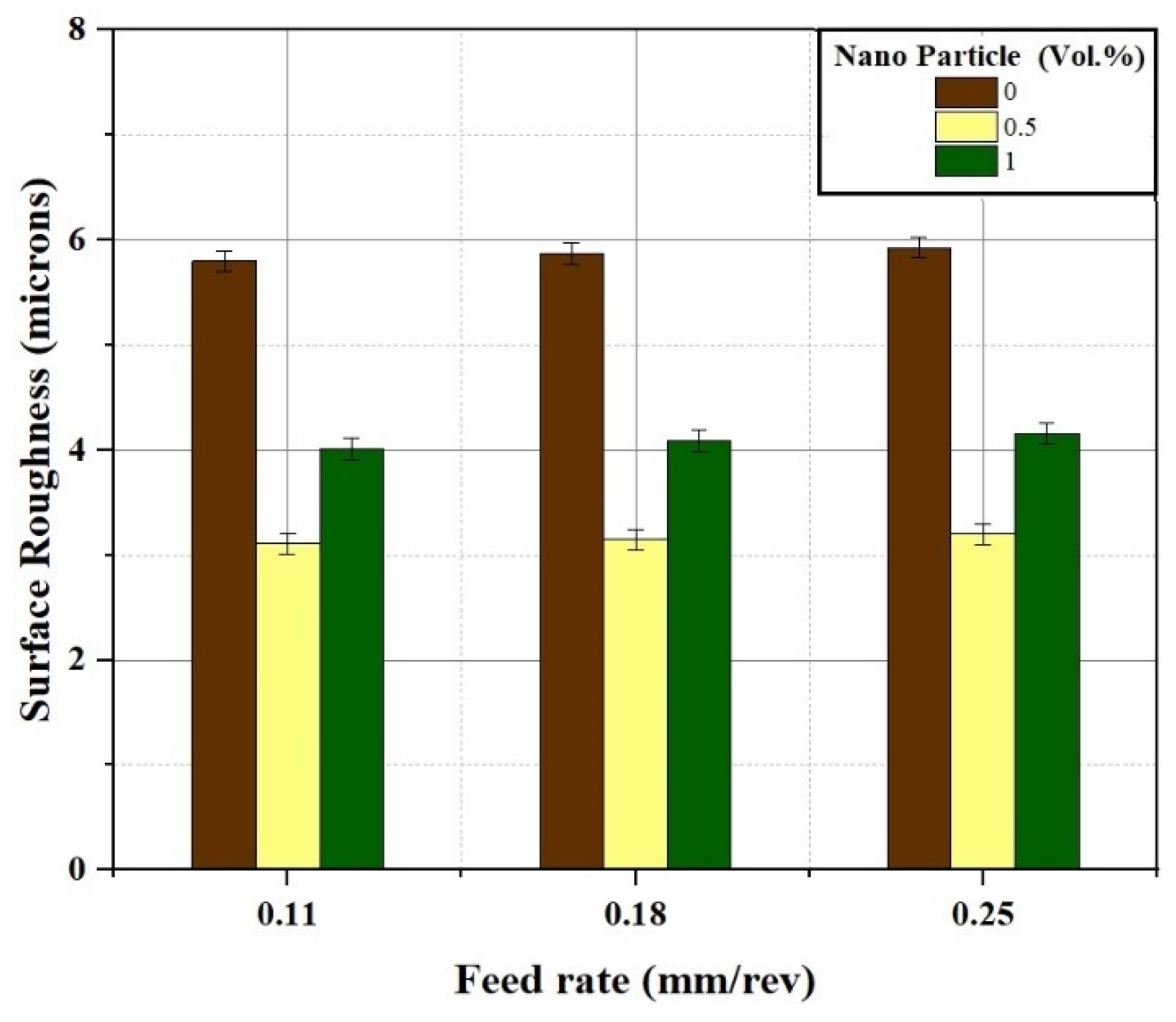
Figure 4 reprents the influence of nanoparticle concentration (Vol.%) on surface roughness in machining of AISI 1040 steel under varying cutting speed and constant feed rate and depth of cut. The graph indicates that, at 0 (Vol.%) SiO2 nanoparticle concentration with Pongamia pinnata cutting fluid, the surface roughness exhibits the highest values across all cutting speeds. The introduction of 0.5 (Vol.%) SiO2 nanoparticles results in a pronounced reduction in surface roughness. This enhancement is mainly due to the development of a stable lubricating film at the tool and workpiece interface, along with the rolling and mending effects of the nanoparticles, which reduce asperity contact. Improved heat dissipation further lowers friction, leading to a better surface finish. At the optimal concentration, the nanoparticles are uniformly dispersed, which strengthens lubrication performance, limits built-up edge formation, reduces direct tool and workpiece interaction, and ultimately improves surface integrity. The combined effect of higher cutting speed and optimal nanoparticle concentration 0.5 (Vol.%) yields the best surface finish of 1.95 μm.
Figure 5 illustrates the effect of cutting speed on surface roughness during the machining process under varying nanoparticle concentration (Vol.%) while maintaining a constant feed rate and depth of cut. For all nanoparticle concentrations, surface roughness decreases with an increase in cutting speed from 45 to 101 m/min, which can be attributed to reduced built-up edge formation, improved chip flow characteristics, and more effective activation of nanoparticle-assisted lubrication mechanisms at higher cutting speeds. The synergistic effect of higher cutting speed and the optimum nanoparticle concentration of 0.5 (Vol.%) results in the best surface finish. Among all the tested machining conditions, a cutting speed of 101 m/min combined with 0.5 (Vol.%) nanoparticle addition yields the minimum surface roughness of 1.95 μm.
Figure 6 represents the influence of feed rate on surface roughness during machining under varying nanoparticle concentrations (Vol.%) at constant cutting speed and depth of cut. For all nanoparticle concentrations, surface roughness increases with an increase in feed rate. At higher feed rates, pronounced feed marks lead to greater surface irregularities, while the reduced tool workpiece contact time per unit length limits the effectiveness of nanoparticle-assisted lubrication. Additionally, increased chip thickness at elevated feed rates results in higher cutting forces and machining-induced vibrations, further deteriorating the surface finish. At the lower feed rate of 0.11 mm/rev, the improvement in surface roughness due to the addition of nanoparticles becomes more evident and noticeable. As the feed rate increases to 0.25 mm/rev, surface roughness increases under all machining conditions; however, nanoparticle-enriched cutting fluids consistently provide a better surface finish than the base oil. Importantly, a noticeable improvement over the 0 (Vol.%) nanoparticle condition is still maintained at higher feed rates, demonstrating the continued effectiveness of nanoparticle-assisted lubrication.
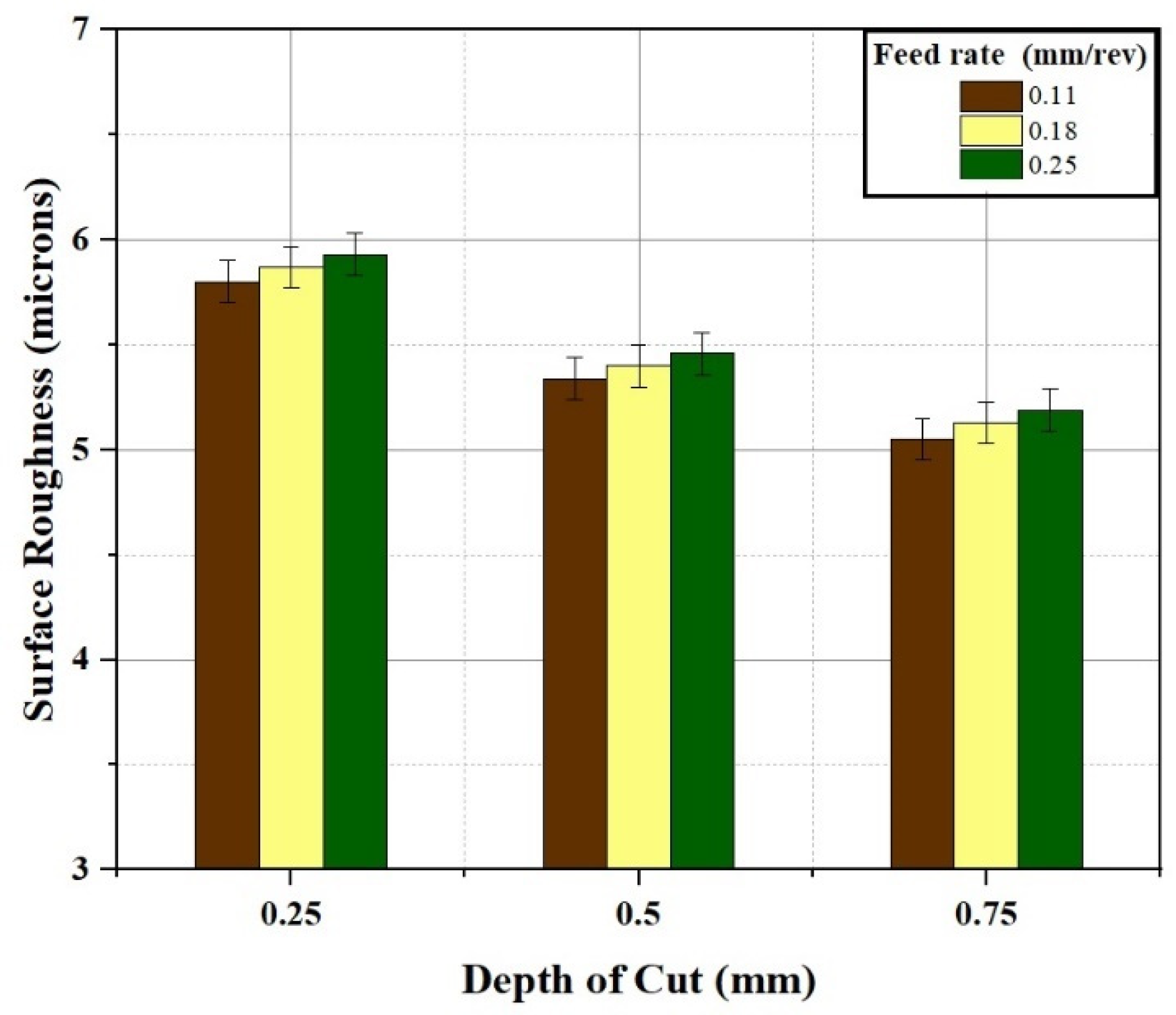
Figure 7 illustrates the variation of surface roughness (Ra) with depth of cut (0.25, 0.5, and 0.75 mm) on surface roughness during machining under varying feed rate, while maintaining constant cutting speed and nanoparticle concentration (Vol.%). For all feed rates, surface roughness decreases as the depth of cut increases from 0.25 to 0.75 mm. At lower depth of cuts, cutting is unstable with intermittent tool workpiece contact, pronounced tool edge and rubbing effects, and increased vibrations, whereas higher depths promote stable cutting, uniform chip formation, reduced rubbing and ploughing, and consequently an improved surface finish. At a given depth of cut, surface roughness increases with feed rate, with 0.11 mm/rev producing the lowest Ra and 0.25 mm/rev the highest. Higher feed rates result in larger feed marks, increased cutting forces and tool deflection, and a consequent deterioration in surface quality. The positive effect of increasing depth of cut on surface roughness is evident across all feed rates. However, the lowest surface roughness is achieved at a high depth of cut (0.75 mm) combined with a low feed rate (0.11 mm/rev), indicating that while depth of cut provides a stabilizing effect, feed rate remains the dominant factor controlling surface finish.
Table 4 demonstrates the ANOVA for the SN ratio of surface roughness. From this ANOVA table, it is evident that nanoparticle concentration (Vol.%) was the most dominant factor of surface roughness, contributing 85.348% to the total variance with a p-value of 0.00, indicating a highly significant effect, followed by cutting speed at 11.631%. Depth of cut has a minor effect on surface roughness (p = 1.3656%), whereas feed rate exhibits a negligible influence on surface roughness (p = 0.1613%).
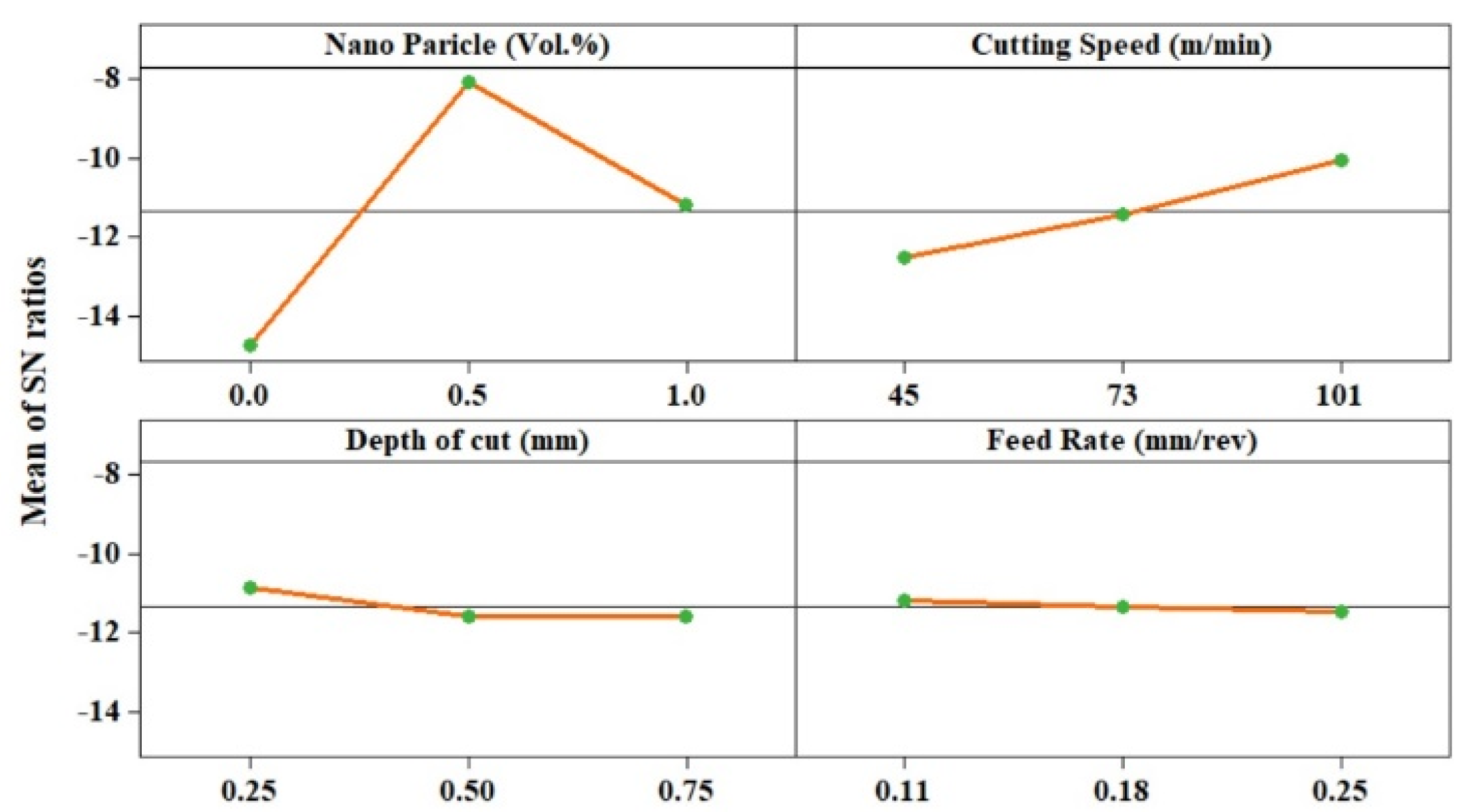
Additionally, from the main effect plot of signal-to-noise ratios (Figure 8), it was found that nanoparticle concentration (Vol.%) and cutting speed were the major contributors to surface roughness, while cutting speed helped to mitigate it. Surface roughness is most significantly influenced by nanoparticle concentration, with an optimum value of 0.5 (Vol.%) yielding the smoothest finish. Increasing cutting speed slightly increases surface finish, whereas feed rate and depth of cut have a negligible impact on surface roughness. The observed trends in surface roughness are consistent with ANOVA results, confirming nanoparticle concentration (Vol.%) as the dominant factor.
Table 5 shows the regression coefficients used to formulate a second-order polynomial equation (Equation (4)) for predicting surface roughness. The proposed polynomial model incorporates both linear and interaction effects of the input parameters, allowing reliable prediction of surface roughness. The model’s validity was verified using ANOVA at a 5% significance level (95% confidence interval). As presented in Table 6, the computed F-value is higher than the critical F-value of 13.71 (F0.05, 14, 12), indicating a statistically significant difference. The higher observed F-value suggests that the derived second-order response function is statistically significant and capable of accurately describing the relationship between input parameters and surface roughness.
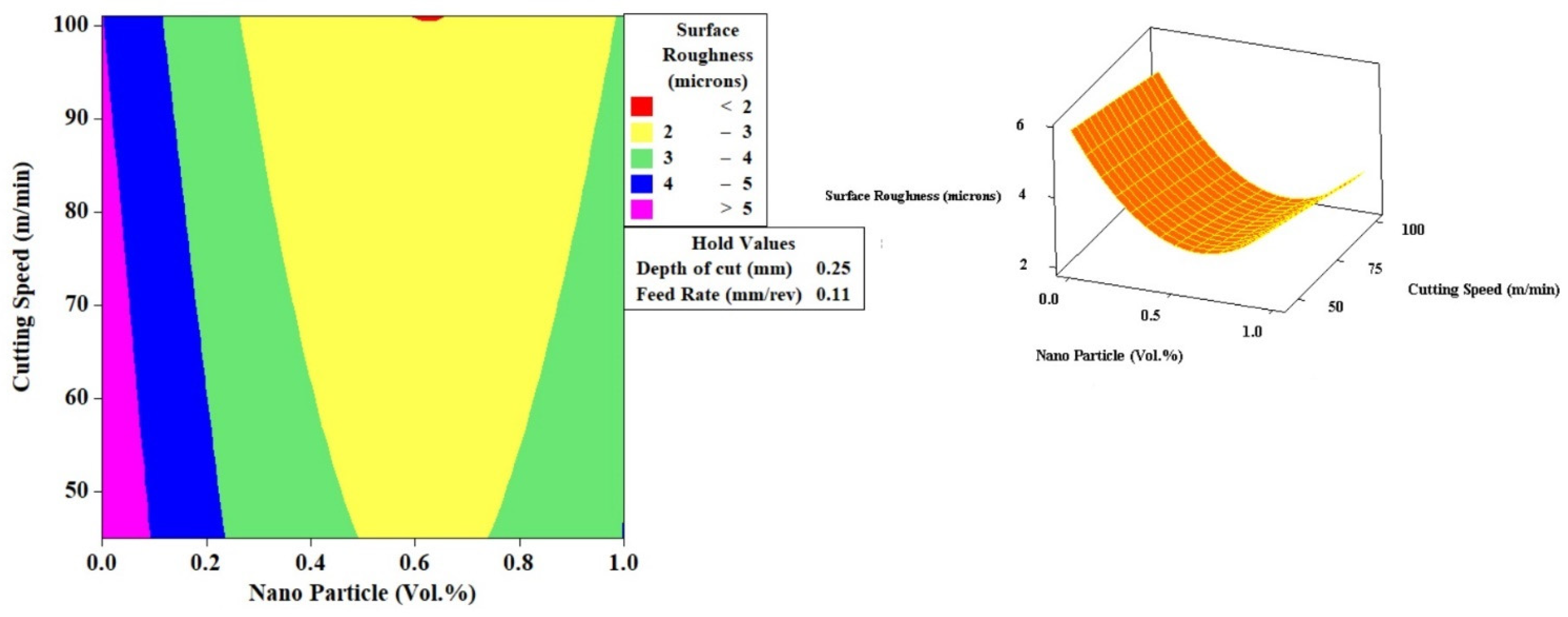
Figure 9 illustrates the contour and surface plots of surface roughness. This indicates that the optimal combination of cutting speed and nanoparticle concentration for minimizing surface roughness of AISI 1040 steel during machining is a 101 m/min cutting speed with 0.5 (Vol.%) SiO2 nanoparticle-infused Pongamia pinnata oil cutting fluid. Further, the plots indicate that an optimum surface finish is achieved within a nanoparticle concentration (Vol.%) range of 0.5 to 0.7 (Vol.%) and cutting speed range of 95 to 101 m/min.
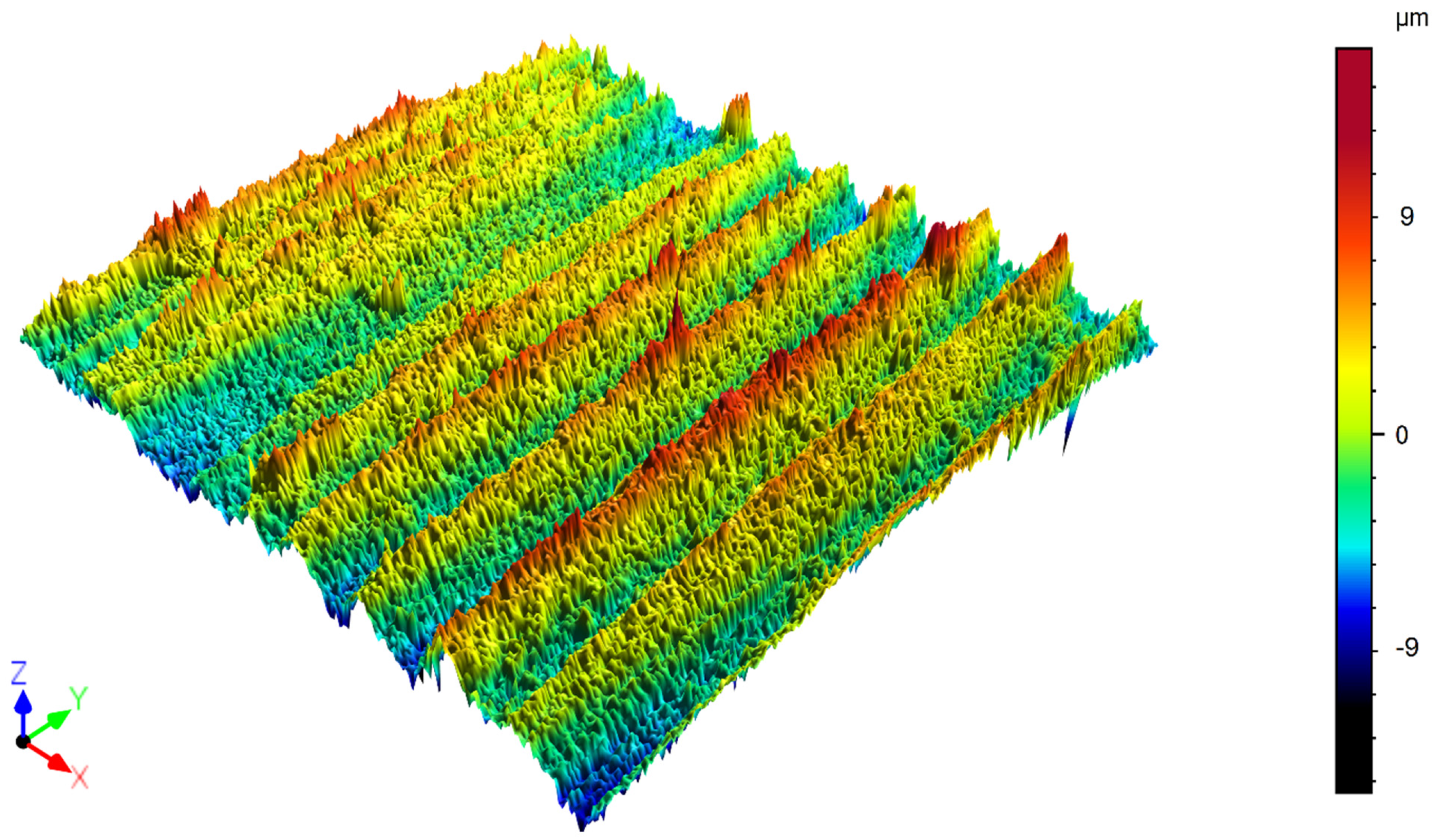
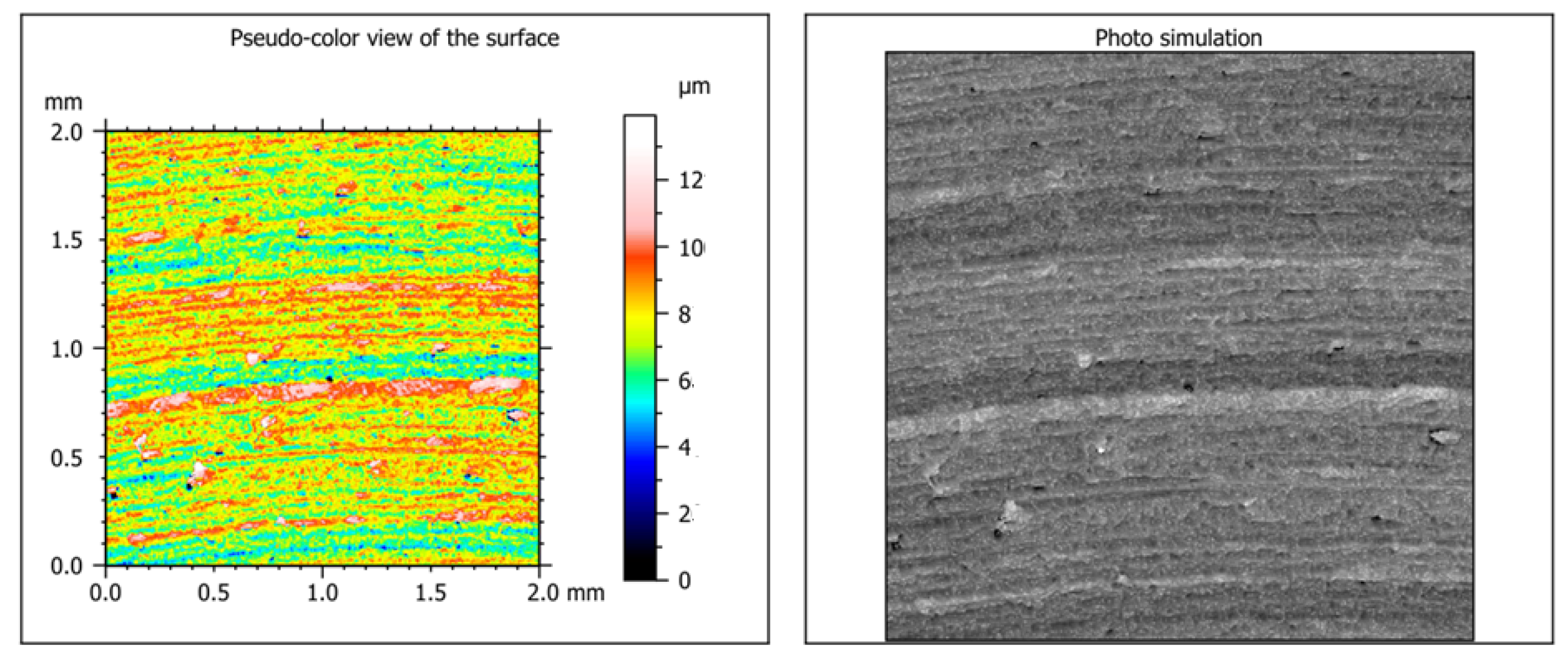
Figure 10 represents the three-dimensional surface topography of the machined AISI 1040 steel, illustrating the surface peaks and valleys after the machining operation. The color scale (in µm) represents the height variation across the machined surface, where red regions indicate higher surface peaks and blue regions correspond to deeper valleys. The surface morphology reveals a non-uniform texture characterized by closely spaced asperities, which are typical of machining-induced tool marks. Overall, the 3D surface profile provides a comprehensive visualization of surface roughness characteristics, complementing the quantitative surface roughness measurements. Figure 11 represents a photo simulation of the AISI 1040 steel height-leveled pseudo-color view of the surface.
S u r f a c e r o u g h n e s s m i c r o n s = 6.53212 9.45589 A 0.01097 B 0.3493 C 1.77950 D + 7.76475 A 2 0.00002 B 2 + 0.41899 C 2 + 7.38503 D 2 0.00259 A B + 0.14286 A D + 0.00128 B D 0.21429 C D
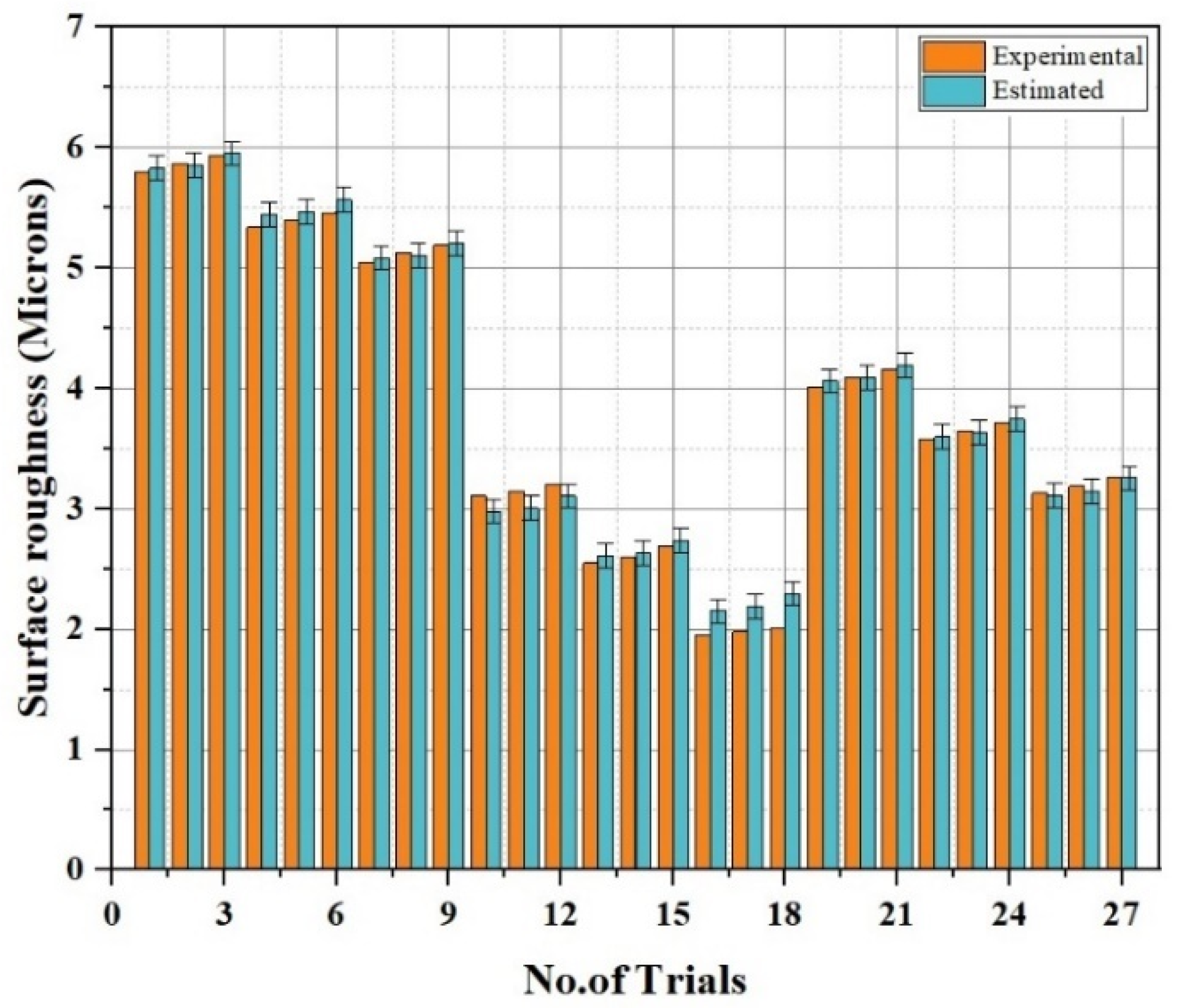
Figure 12 presents a numerical comparison between the surface roughness values predicted by the Response Surface Methodology (RSM) model and the corresponding experimental results. The RSM model demonstrated high accuracy in predicting the surface roughness of AISI 1040 steel during the machining process. The average error between the predicted and actual surface roughness remained consistently below 2.43%.
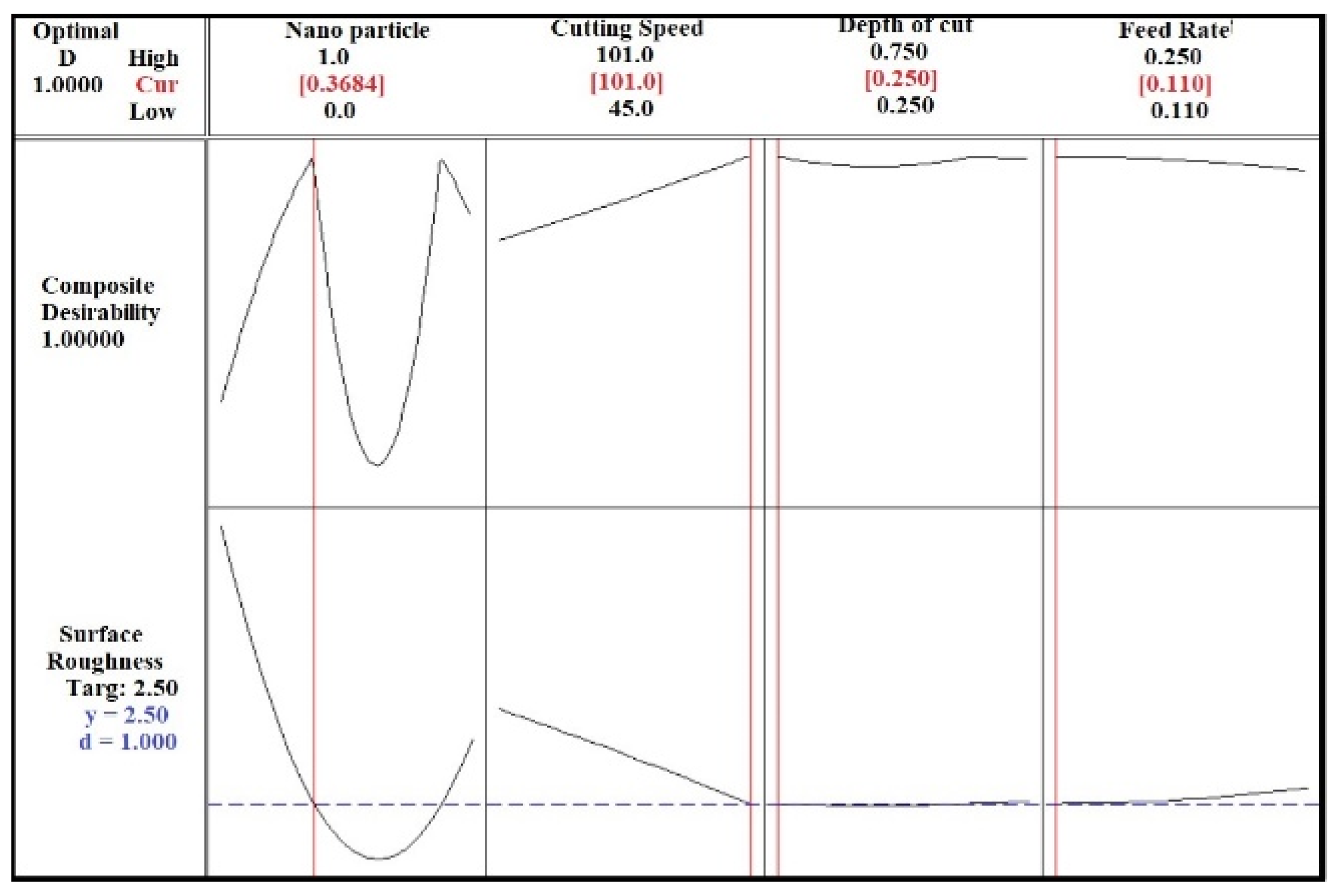
Figure 13 illustrates the delamination factor (DFM) associated with surface roughness by simultaneously considering the effects of nanoparticle concentration, cutting speed, depth of cut, and feed rate. The overall desirability value indicates that the selected combination of machining parameters perfectly satisfies the optimization objective, confirming that the process parameters are optimally tuned to achieve the target surface roughness. The desirability function analysis reveals the optimal nanoparticle concentration (Vol.%) is approximately 0.3684 (Vol.%), at which surface roughness is minimized due to enhanced lubrication and reduced tool workpiece friction. An optimum cutting speed of 101 m/min is identified, where stable machining conditions and reduced built-up edge formation contribute to an improved surface finish. The desirability function attains its maximum at a lower depth of cut of 0.25 mm, indicating that reduced material removal per pass minimizes surface damage and vibration. Similarly, the lowest feed rate of 0.11 mm/rev yields maximum desirability by limiting feed marks and improving surface quality. The surface roughness response plot shows that the predicted Ra value closely matches the target value of approximately 2.5 µm and remains within acceptable desirability limits, confirming the robustness of the developed model. Overall, the DFM successfully identifies the optimal machining conditions for minimizing surface roughness, thereby validating the reliability of the combined RSM and DFM approach for process optimization.
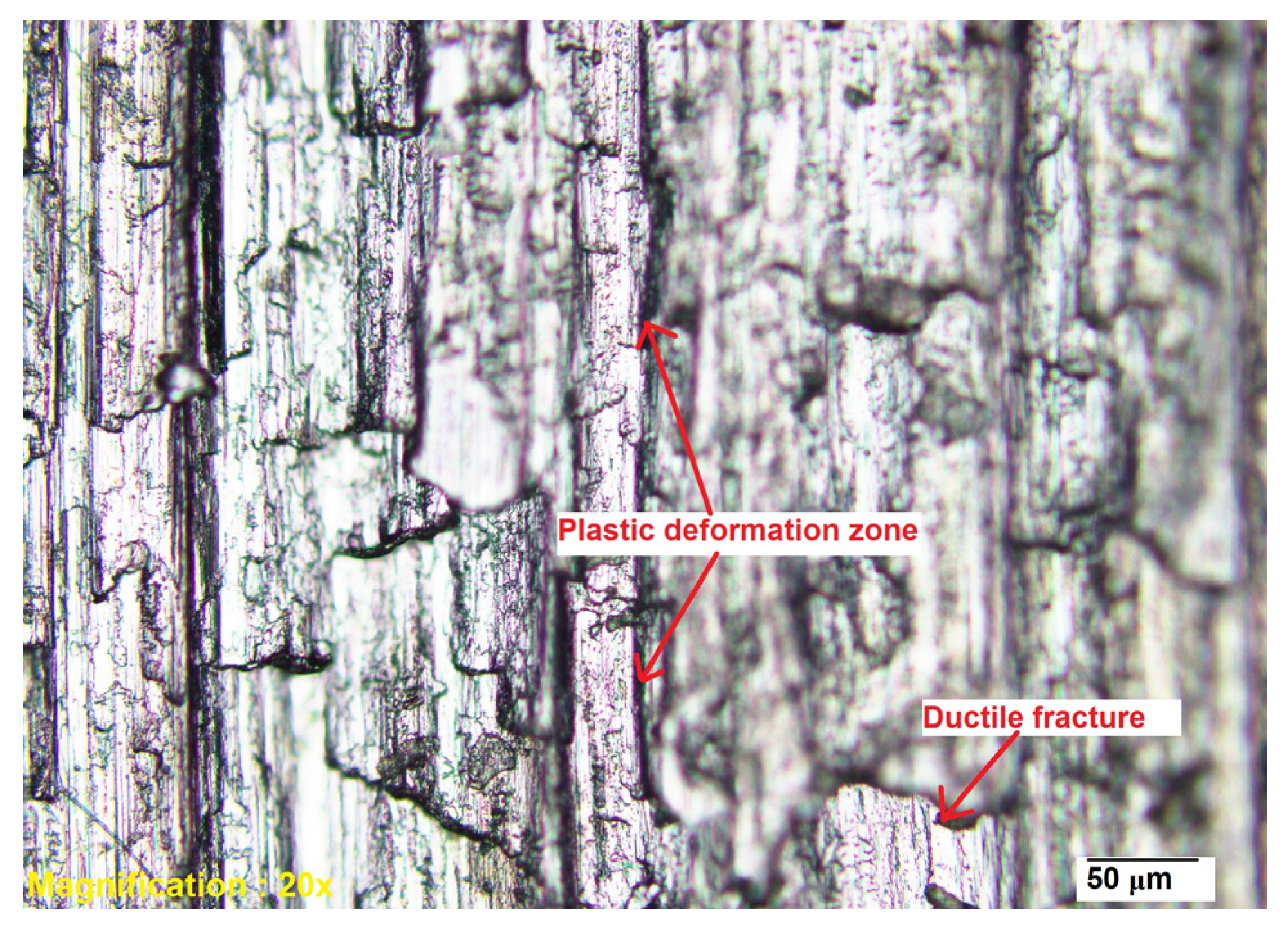
Figure 14 shows microstructure of AISI 1040 steel at a cutting speed of 101 m/min, feed rate of 0.11 mm/rev, depth of cut of 0.25 mm and 0.5 (Vol.%) SiO2 nanoparticle concentration. Elongated lamellar structures aligned along the cutting direction are clearly observed, indicating plastic deformation of the surface layer caused by the turning action of the cutting tool. The presence of parallel grooves and material flow lines reflects the tool and workpiece interaction during machining, which directly influences the resulting surface roughness. Notably, the absence of cracks suggests stable cutting conditions, indicative of effective cutting fluid utilization and well-controlled machining parameters. A thin plastically deformed surface layer can also be inferred, resulting from the combined effects of mechanical stresses and frictional heat generated during machining. Overall, the observed microstructure confirms that machining of AISI 1040 steel leads to directional plastic flow and surface layer deformation, which govern surface integrity and roughness, while optimized machining parameters effectively minimize severe deformation and enhance surface quality.
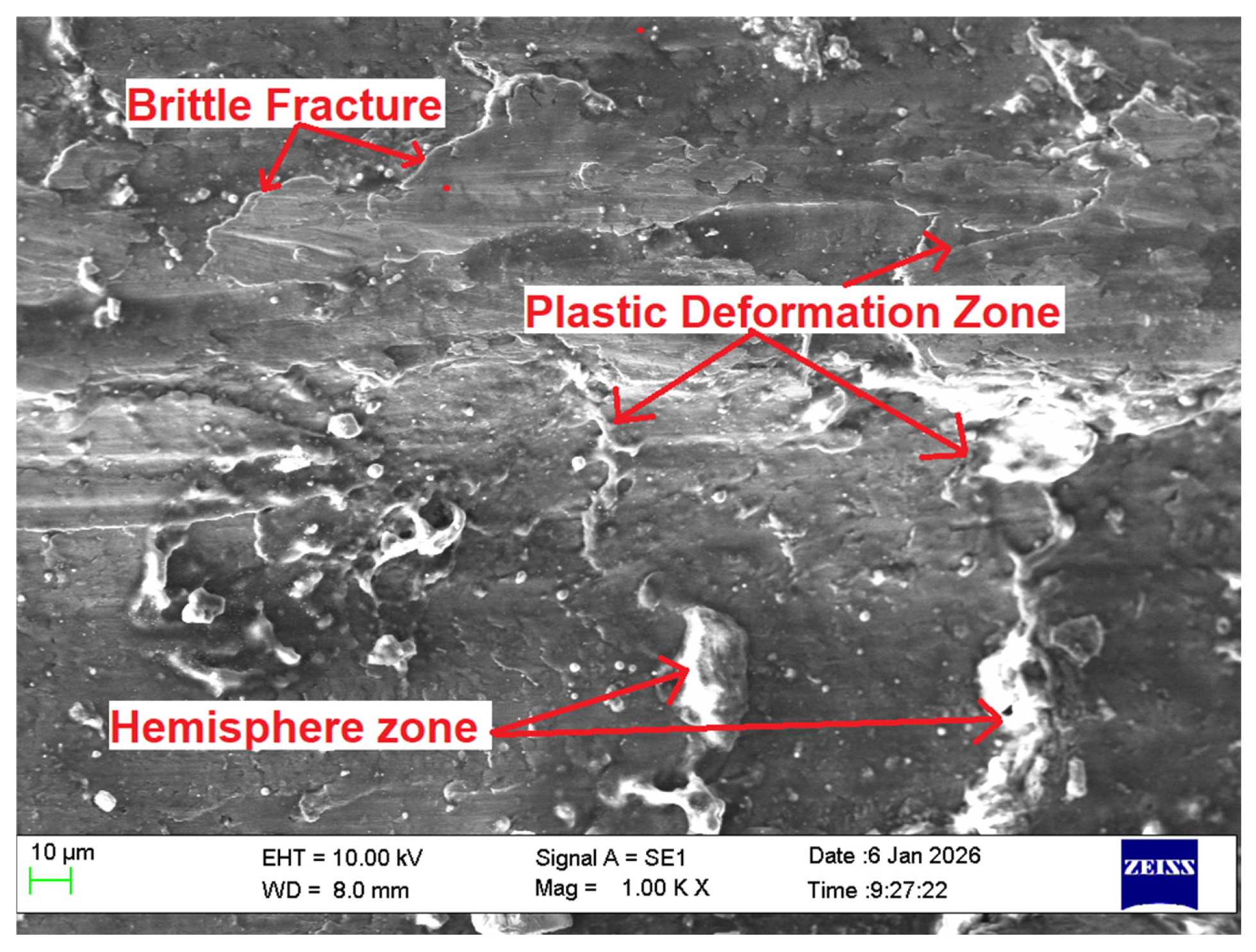
Figure 15 indicates the SEM micrograph of AISI 1040 steel at a cutting speed of 101 m/min, feed rate of 0.11 mm/rev, depth of cut of 0.25 mm and 0.5 (Vol.%) SiO2 nanoparticle concentration. This reveals classic machining-induced surface damage and deformation mechanisms. The brittle fracture region exhibits sharp microcracks formed due to high localized stresses and strain rates at the tool and workpiece interface; although AISI 1040 is a ductile medium carbon steel, severe cutting conditions such as high cutting speed, tool wear, or inadequate lubrication can induce brittle-like fracture near the surface, creating stress concentrators that adversely reduce fatigue life. The plastic deformation zone, which is the most prominent feature, is characterized by elongated flow lines, smeared material, and a highly distorted microstructure resulting from severe plastic shearing beneath the cutting edge; the associated grain deformation near the surface leads to work hardening and confirms that material removal occurs predominantly through a ductile mechanism, typical of AISI 1040 steel. The coexistence of extensive plastic deformation, dimpled features, and localized brittle fractures indicates a mixed-mode material removal mechanism during machining. Thermal softening of the workpiece material followed by rapid cooling likely contributes to the transition from ductile flow to brittle cracking. Such surface morphology is typically observed under conditions of high cutting forces, significant tool wear, and non-optimized cutting parameters.

3.2. Tool Wear

Investigating uncoated tungsten carbide cutting tool wear behavior during machining under different SiO2 nanoparticle-assisted lubrication conditions followed by different cutting speed, feed rate, and depth of cut provides valuable insights into wear mechanisms and tool performance.
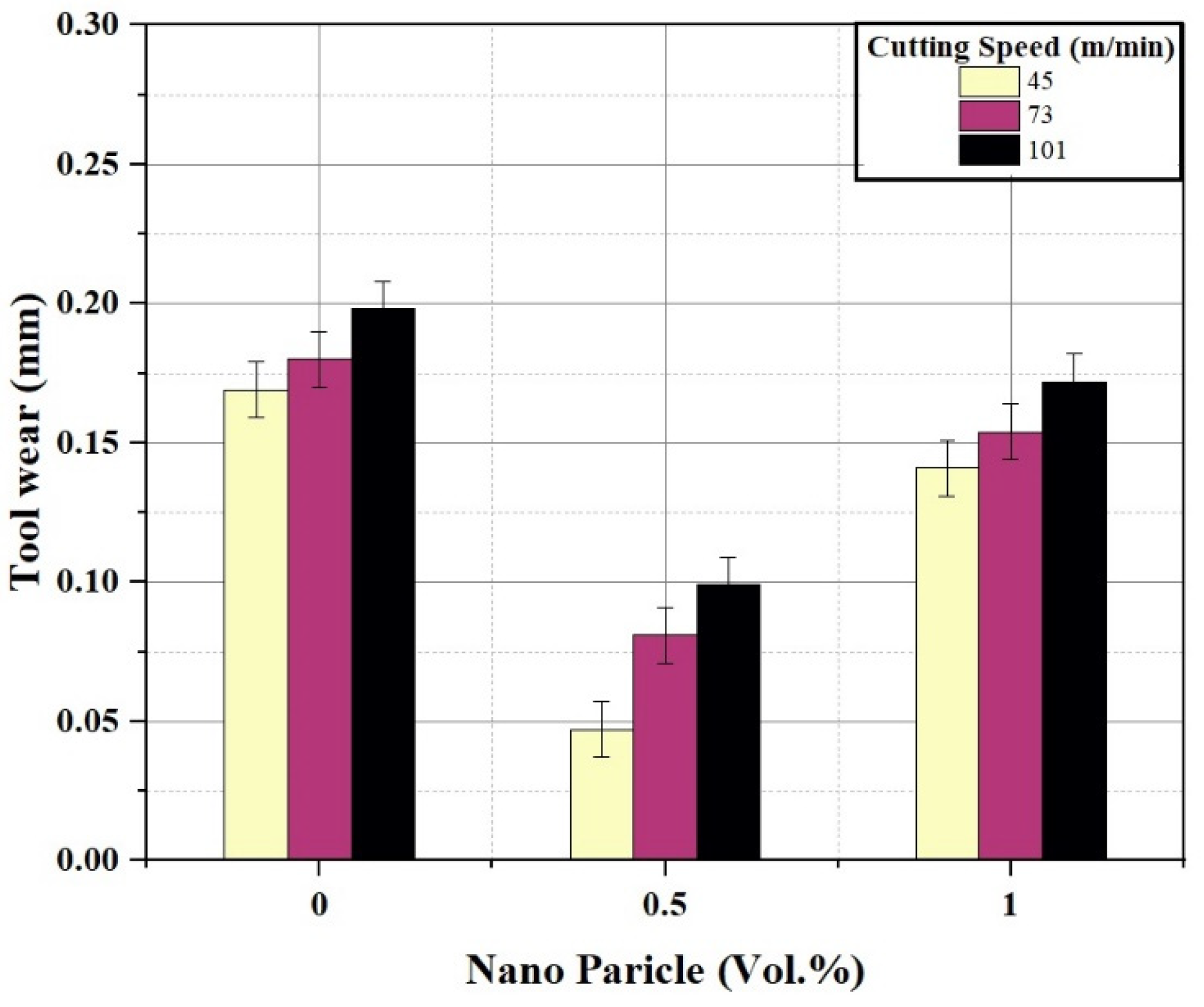
Figure 16 indicates the influence of nanoparticle concentration (Vol.%) on tool wear in machining under a varying cutting speed, and constant feed rate and depth of cut. The graph illustrates that 0.5 (Vol.%) SiO2-incorporated Pongamia pinnata oil cutting fluid provided minimum tool wear (mm) of 0.047 mm across all cutting speeds. This improvement is attributed to the effective tribological action of the nanoparticles, which promote the formation of a protective tribo-film, induce rolling/mending effects that minimize direct metal-to-metal contact, and enhance heat dissipation from the cutting zone. For all nanoparticle concentrations, tool wear (mm) increases with an increase in cutting speed. This trend is attributed to the intensified thermal and mechanical loads at higher speeds, which partially diminish the effectiveness of nanoparticle-assisted lubrication.
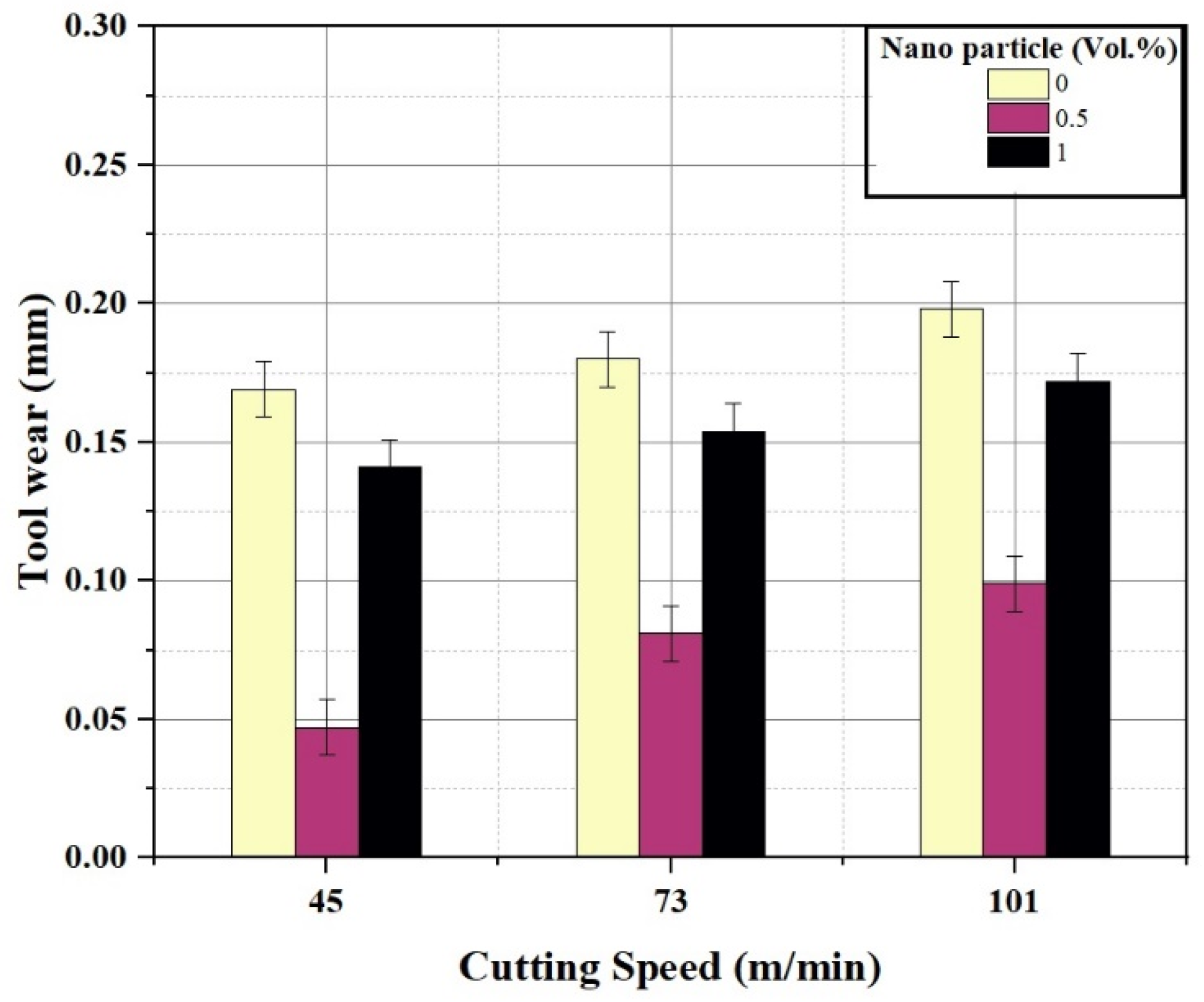
Figure 17 illustrates the influence of cutting speeds on tool wear (mm) during machining at different nanoparticle concentrations (Vol.%), while maintaining a constant feed rate and depth of cut. Tool wear (mm) remains the highest across all cutting speeds and increases markedly as the cutting speed rises from 45 to 101 m/min, primarily due to elevated cutting temperatures, intensified tool workpiece friction, and the accelerated onset of adhesive and abrasive wear mechanisms at higher speeds. At a higher nanoparticle content of 1 (Vol.%), tool wear (mm) increases compared to 0.5 (Vol.%) but remains lower than that with the base fluid of 0 (Vol.%). This increase is attributed to excessive nanoparticles causing particle agglomeration, intensified abrasive interactions at the tool–chip interface, and reduced lubricant flow stability, which together reduce lubrication effectiveness and slightly elevate wear.
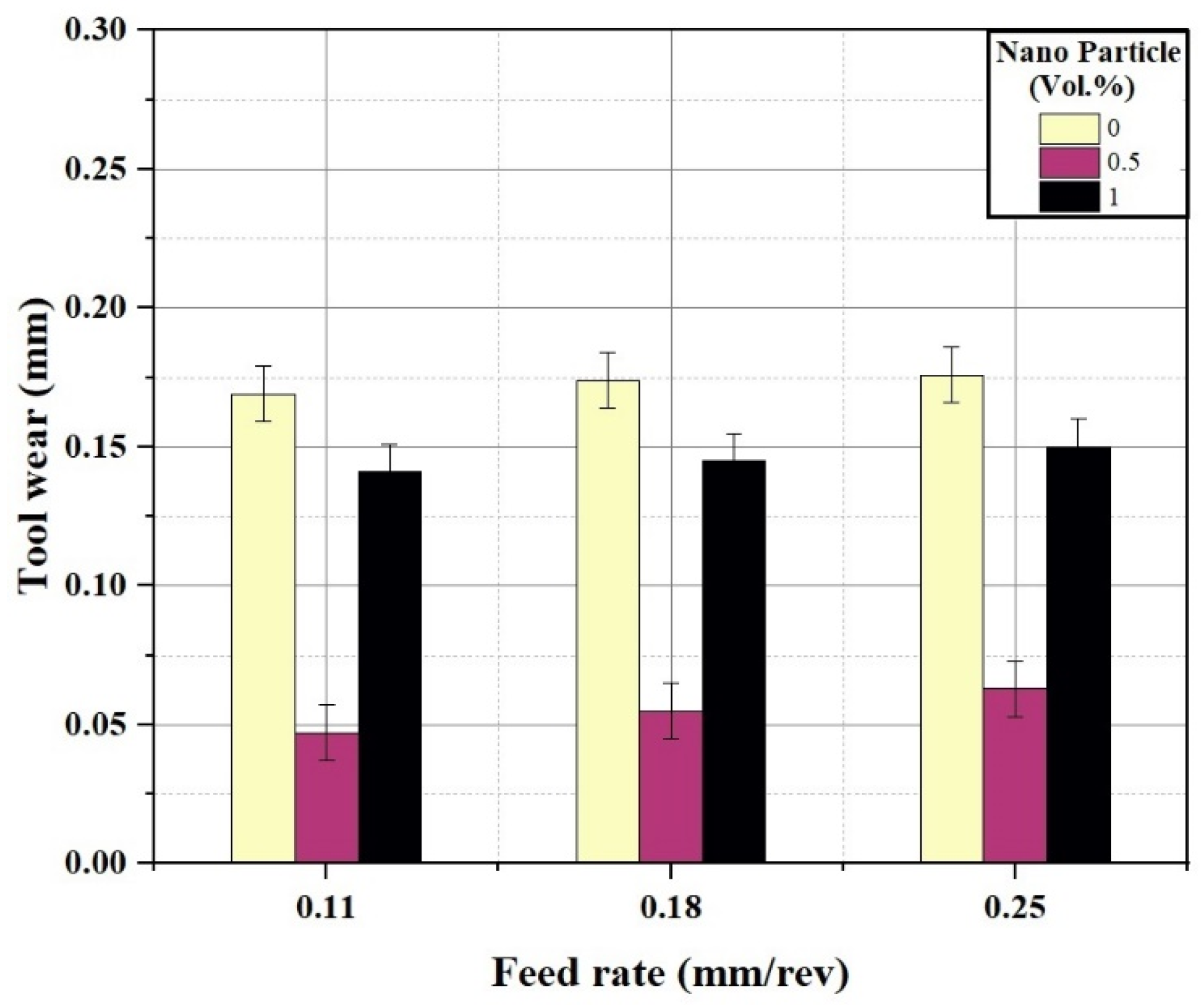
Figure 18 illustrates the influence of feed rate on tool wear (mm) during machining at different nanoparticle concentrations (Vol.%), while maintaining a constant cutting speed and depth of cut. Tool wear (mm) exhibits a noticeable increase as the feed rate increases from 0.11 to 0.25 mm/rev. This is attributed to the larger undeformed chip thickness and increased mechanical loads associated with higher feed rates, which accelerate abrasion on the tool flank. The nanoparticle-infused fluid at 0.5 (Vol.%) consistently maintains the lowest tool wear across all feed rates compared to the base fluid.
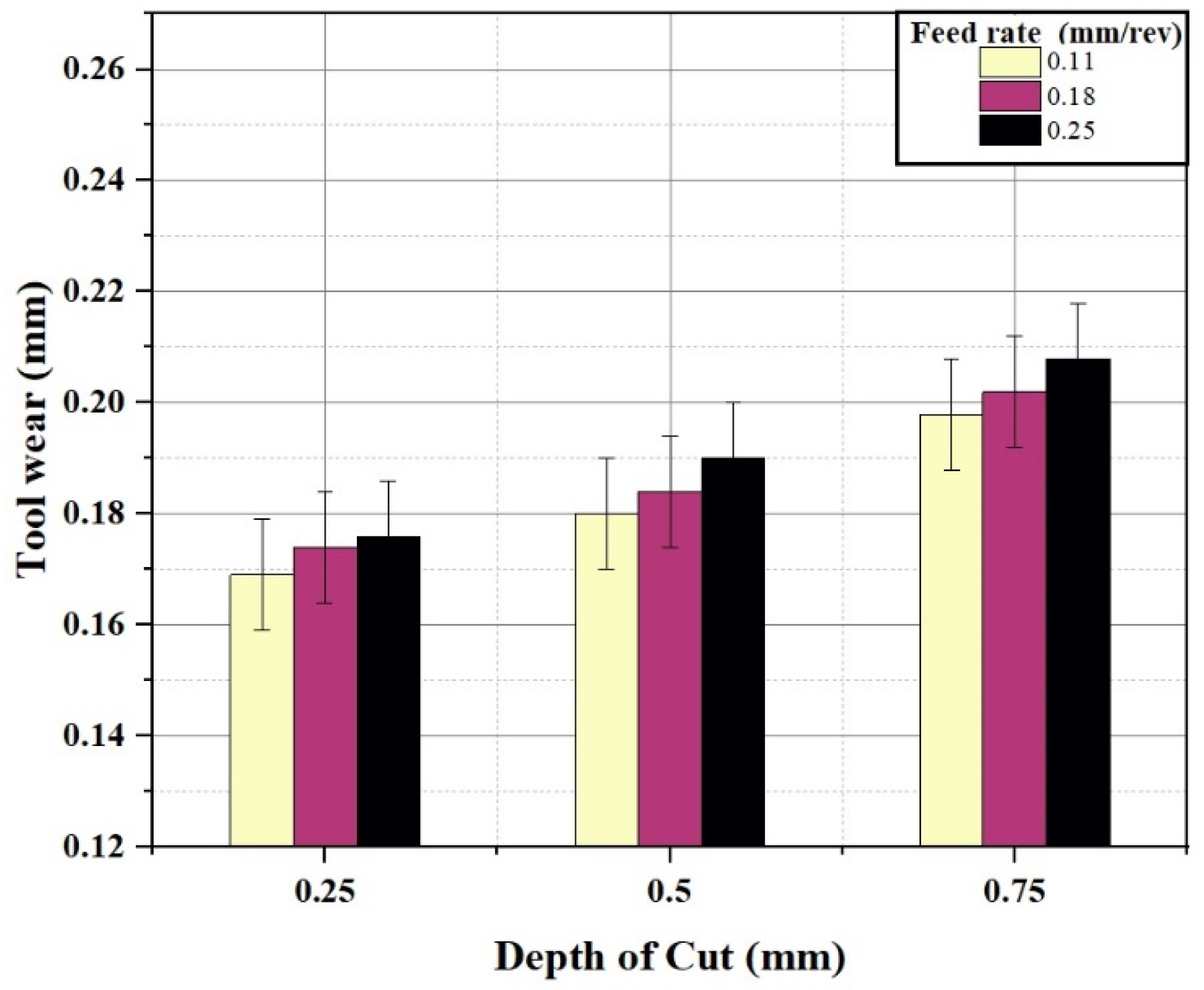
Figure 19 illustrates the variation of tool wear (mm) with depth of cut during machining under varying feed rates and constant cutting speed and constant nanoparticle concentration (Vol.%). Tool wear (mm) increases with increasing depth of cut due to the higher material removal rate, which elevates cutting forces and contact pressure at the tool–workpiece interface, resulting in increased frictional heat generation and accelerated flank wear. For a constant depth of cut, increasing the feed rate leads to higher tool wear (mm), with the maximum tool wear (mm) occurring at the highest feed rate of 0.25 mm/rev. This is attributed to the greater chip thickness and elevated cutting load, which intensify abrasive and adhesive wear mechanisms. The combined effect of depth of cut and feed rate shows that tool wear (mm) increases more rapidly at higher depths of cut when coupled with higher feed rates, indicating a significant interaction between these parameters that accelerates tool degradation.
Table 7 indicates ANOVA of tool wear (mm). This indicates that nanoparticle concentration (Vol.%) is the most significant factor affecting tool wear (mm), contributing 82.2% of the total variation and showing a highly significant effect (F = 85.56, p < 0.001). Cutting speed is the second most significant parameter, accounting for 11.07% of the variation in tool wear (mm), followed by depth of cut with a moderate contribution of 2.45%. In contrast, feed rate exhibits negligible influence on tool wear (mm), as evidenced by its low F-values and statistically insignificant p-values.
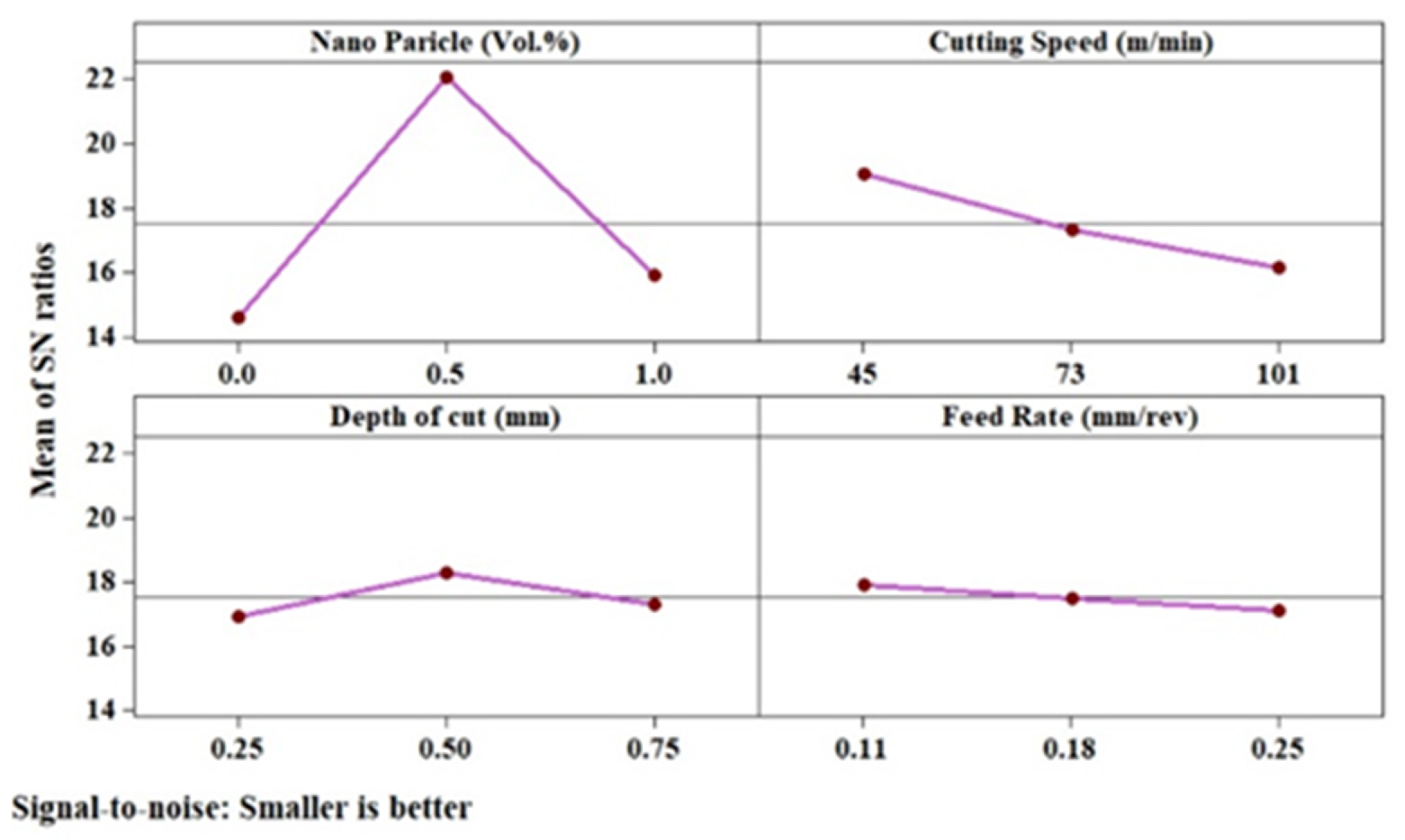
The main effect plot (Figure 20) illustrates the influence of key machining parameters on tool wear (mm). This indicates the nanoparticle concentration rises from 0 to 0.5 (Vol.%), indicating a significant reduction in tool wear (mm) due to the effective tribological action of nanoparticles through tribo-film formation, rolling/mending effects, and enhanced heat dissipation. However, beyond 0.5 (Vol.%), the S/N ratio decreases, suggesting increased tool wear (mm) caused by particle agglomeration and unstable lubricant flow, thereby identifying 0.5 (Vol.%) as the optimal nanoparticle concentration.
Table 8 indicates the RSM for tool wear (mm). RSM analysis reveals that nanoparticle concentration and cutting speed significantly influence tool wear (mm), with a pronounced quadratic effect of nanoparticles indicating an optimal nanoparticle concentration (Vol.%), while interaction effects are statistically insignificant. This presents the estimated regression coefficients used to develop the second-order regression model (Equation (5)) for predicting tool wear (mm) within the selected range of process parameters. In the present analysis, a 5% significance level corresponding to a 95% confidence interval was adopted. As shown in Table 9, the calculated F-value exceeds the critical F-value obtained from the F-distribution table (F0.05,9,8 = 3.338), indicating that the developed second-order response model is statistically significant and adequate for predicting tool wear (mm).
T o o l w e a r ( m m ) = 0.146228 0.382073 A + 0.00119 B 0.064067 C 0.176152 D + 0.351467 A 2 0.000005 B 2 + 0.061867 C 2 + 0.585034 D 2 0.000027 A B + 0.001 A C + 0.010714 A D + 0.000018 B C + 0.000319 B D 0.007143 C D
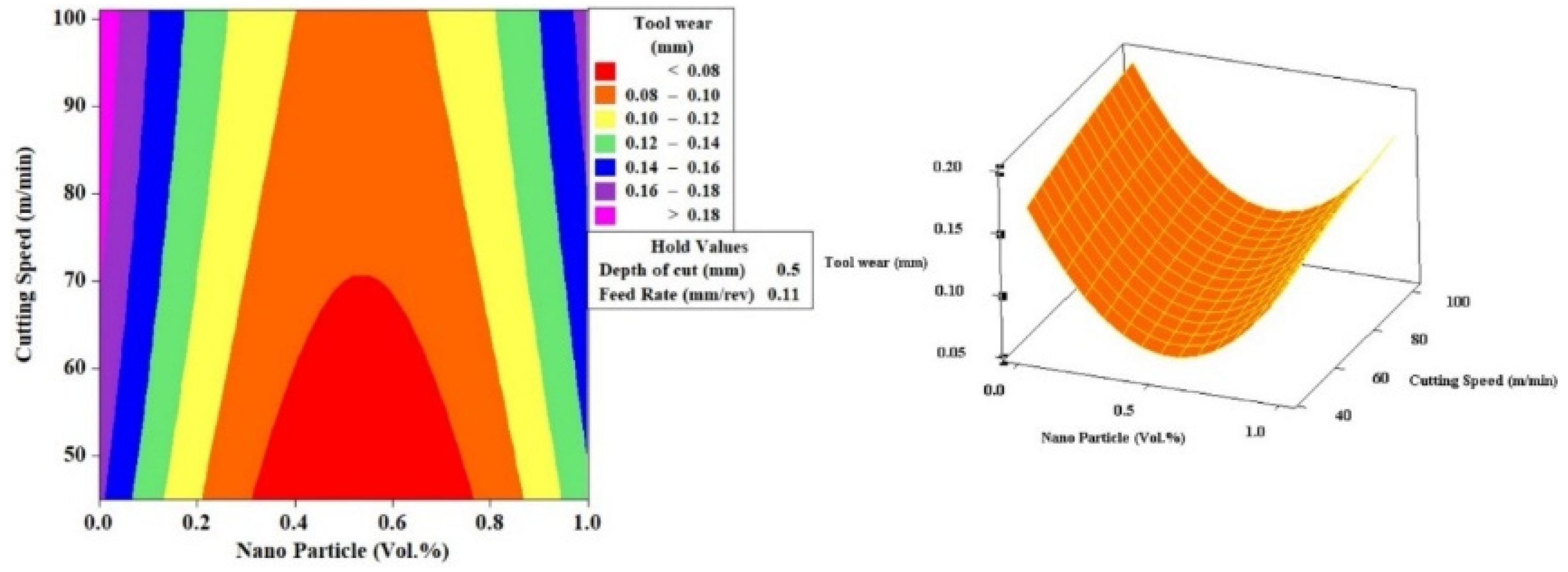
Figure 21 represents the contour and surface plots of tool wear (mm). The contour plot illustrates the combined effect of cutting speed and nanoparticle concentration (Vol.%) on tool wear (mm), while depth of cut (0.5 mm) and feed rate (0.11 mm/rev) are held constant. The reduction in tool wear (mm) at the optimal nanoparticle concentration (Vol.%) is mainly attributed to the formation of a protective tribo-film, the rolling and mending actions of nanoparticles that minimize direct metal-to-metal contact, and improved heat dissipation from the cutting zone. Further, the plots reveal that tool wear (mm) is strongly influenced by the interaction between cutting speed and nanoparticle concentration (Vol.%), highlighting the significant need for optimal process parameter selection. This plot shows the range of nanoparticle concentration (Vol.%) and cutting speed, indicating that tool wear (mm) is minimized when the nanoparticle concentration (Vol.%) is between 0.35 and 0.75 (Vol.%) and the cutting speed is between 45 and 70 m/min.
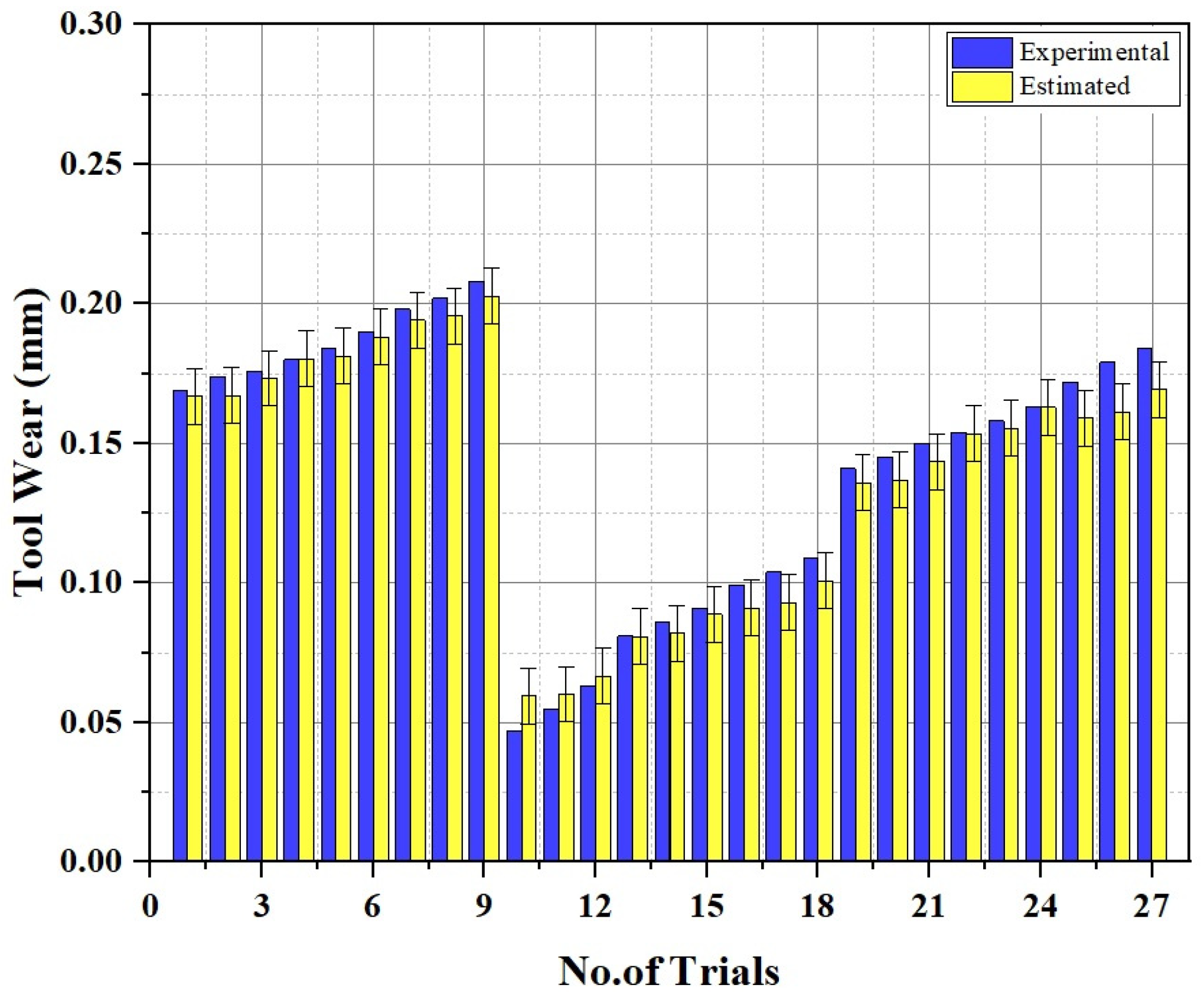
Figure 22 represents a graphical comparison between the experimentally measured tool wear (mm) values and that predicted by the Response Surface Methodology. The predicted tool wear (mm) results closely follow the experimental observations, with only small differences appearing under severe cutting conditions. These deviations can be attributed to nonlinear machining effects that are not entirely represented by the quadratic RSM model, as well as minor variations in lubrication effectiveness or nanoparticle dispersion. The RSM model predicts tool wear (mm) with good accuracy, showing only a small average deviation of 4.95%, which confirms its reliability for optimization and for selecting suitable process parameters in nanoparticle-assisted machining.
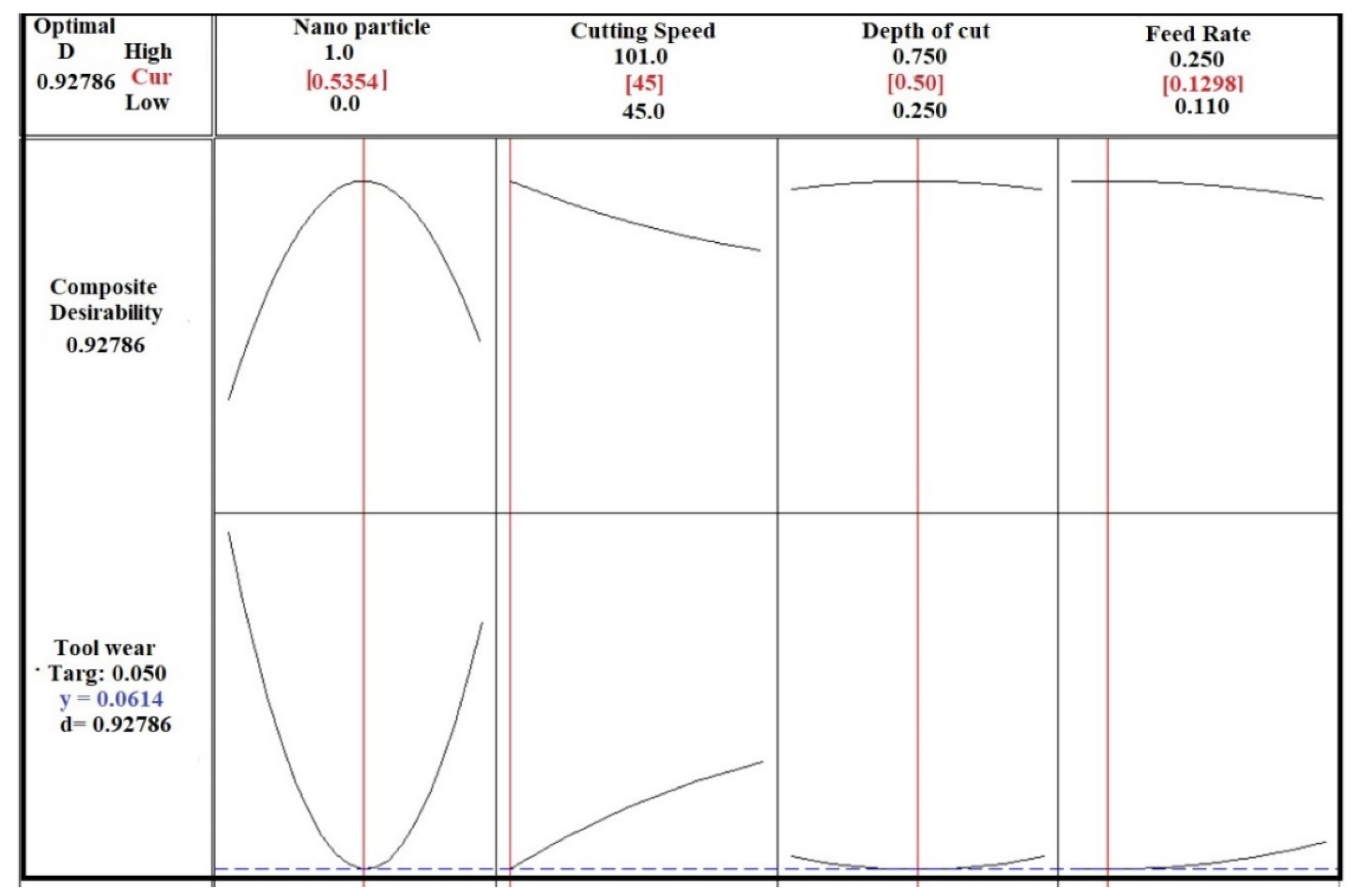
Figure 23 illustrates the DFM optimization for minimizing tool wear (mm) in the machining process. The optimal combination of parameters 0.5354 (Vol.%) nanoparticles, 45 m/min cutting speed, 0.50 mm depth of cut, and 0.1298 mm/rev feed rate yields a high composite desirability of 0.92786, indicating excellent alignment with the target. Nanoparticle concentration has the most significant effect on reducing tool wear (mm), while cutting speed, depth of cut, and feed rate have smaller impacts. The predicted tool wear (mm) at these optimal settings is 0.0614, very close to the target value of 0.050.
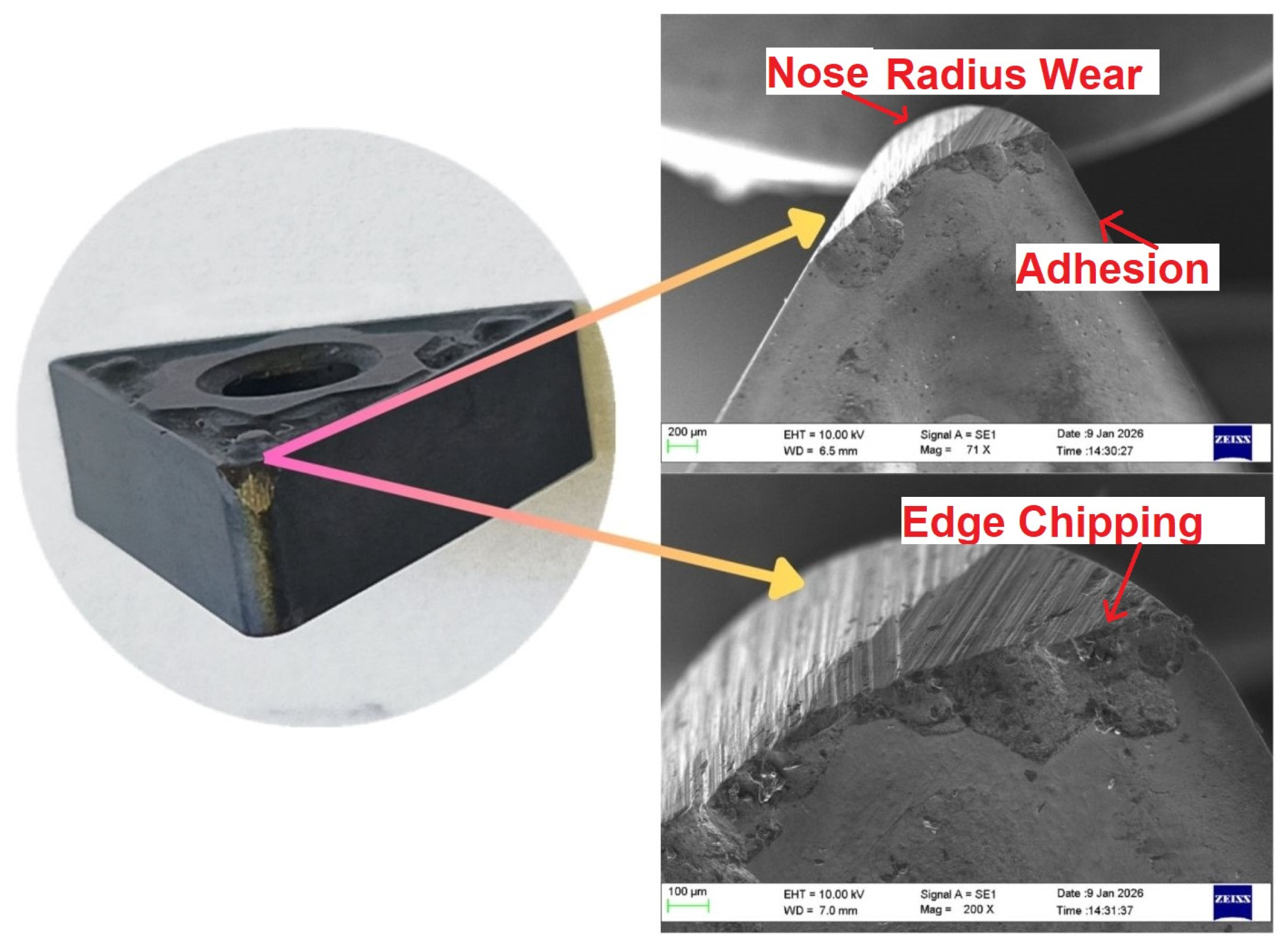
Figure 24 represents the SEM image of the uncoated tungsten carbide tool after machining of AISI 1040 steel at cutting speed of 45 m/min, feed rate of 0.11 mm/rev, depth of cut of 0.75 mm and 0.0 (Vol.%) SiO2 nanoparticle concentration. This SEM image illustrates significant tool wear characterized by edge chipping at the cutting edge, indicating brittle fracture under high cutting forces. A distinct flank wear land is observed below the cutting edge, caused by continuous abrasion and rubbing between the tool and the machined surface. Adhesive material transfer near the tool nose suggests strong tool and workpiece interaction at elevated temperatures, while the presence of micro-pits indicates abrasive wear and localized fatigue damage. Overall, the wear features confirm a combined abrasive adhesive wear mechanism, leading to degradation of the tool nose geometry and reduced cutting performance. The cutting edge exhibits irregular breakage and material loss, indicating brittle fracture of the tool edge caused by high cutting forces, intermittent mechanical loading, and the presence of hard reinforcements or nanoparticles in the workpiece. A distinct flank wear land is observed just below the cutting edge along the tool face, appearing as a relatively smooth worn band. This typical flank wear results from continuous rubbing between the tool and the machined surface, primarily due to abrasion and adhesion under elevated cutting temperatures. Such flank wear directly influences dimensional accuracy and the surface finish of the machined component. Adhesive material transfer, visible as dark and uneven patches near the cutting edge, indicates the adhesion of workpiece material onto the tool surface. This phenomenon is caused by high interface temperatures and strong chemical affinity between the tool and workpiece materials. The repeated adhesion and subsequent detachment of this material accelerate edge chipping, confirming the presence of adhesive wear in combination with abrasive wear.
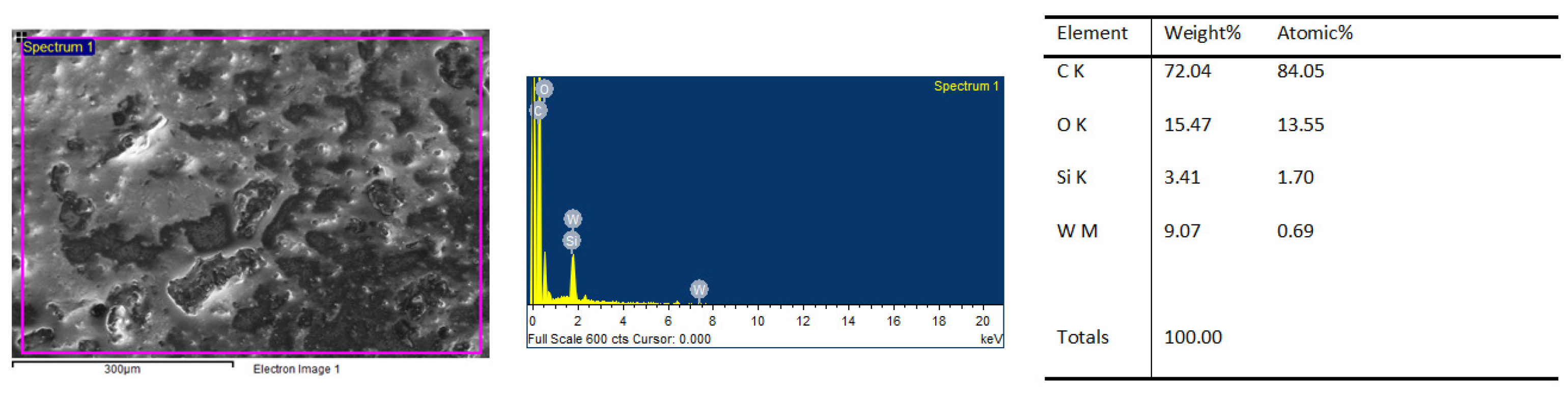
Figure 25 shows the EDS of the uncoated tungsten carbide tool after machining of AISI 1040 steel at cutting speed of 45 m/min, feed rate of 0.11 mm/rev, depth of cut of 0.75 mm and 0.0 (Vol.%) SiO2 nanoparticle concentration. The EDS analysis reveals a dominant carbon content (72.04 wt.%), confirming the presence of the WC phase, with additional carbon enrichment likely caused by graphitization and adhesion of carbon-rich debris at elevated cutting temperatures. The significant oxygen content (15.47 wt.%) indicates oxidation of the tool surface during machining, leading to the formation of tungsten oxides (WO3) and surface oxide layers, which are characteristic of oxidative wear mechanisms. The comparatively low tungsten content (9.07 wt.%) suggests preferential removal of WC and partial masking of tungsten by carbonaceous and oxide layers, indicating severe surface modification associated with flank and crater wear.

3.3. Artifical Neural Network Analysis of Surface Roughness and Tool Wear

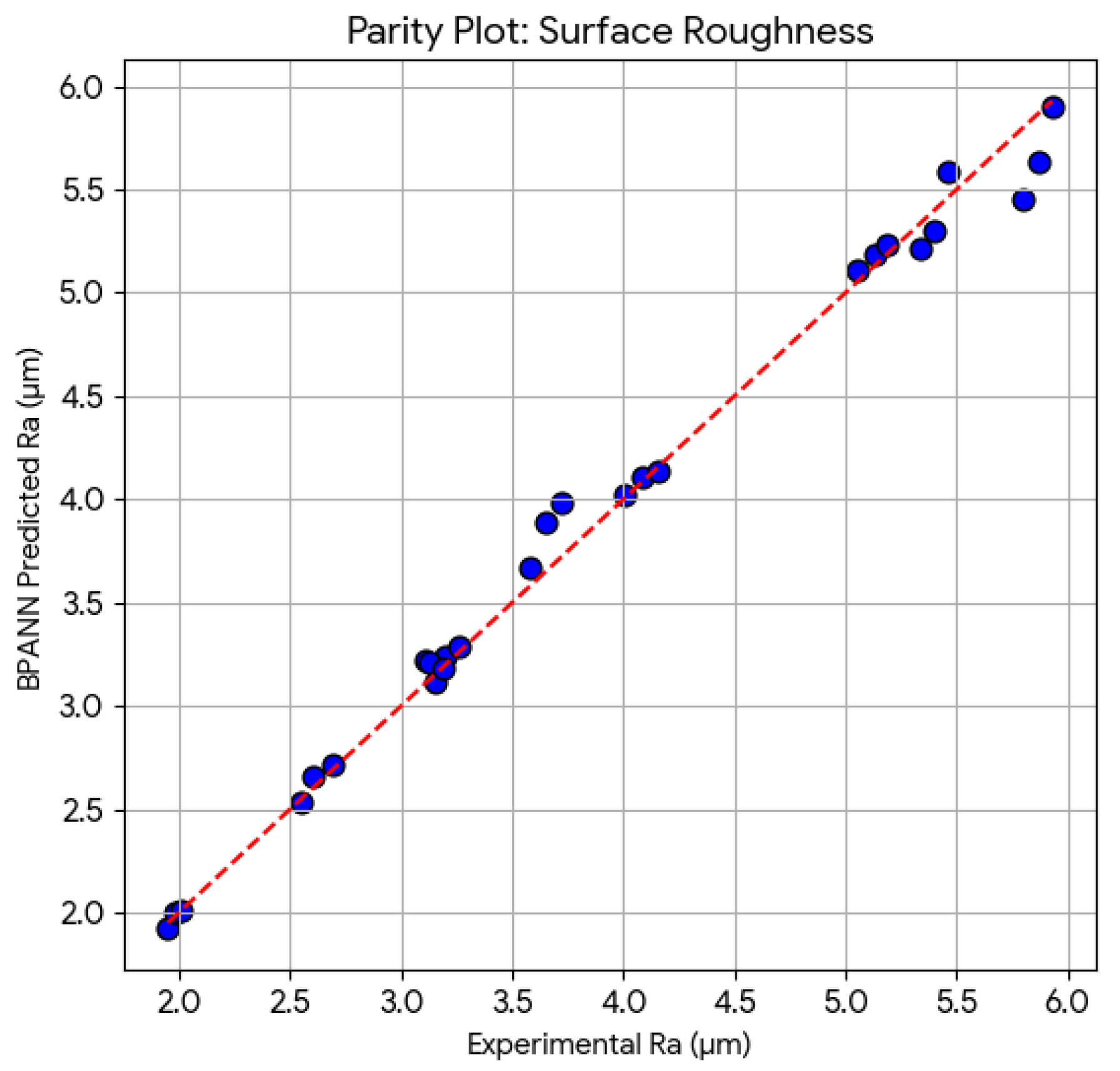
Figure 26 shows a parity plot for surface roughness (Ra), used to validate and evaluate a predictive model of ANN against experimental results. This plot confirms the reliability of the ANN model in predicting surface roughness. The close clustering of data points around the parity line confirms the strong agreement between experimental and predicted Ra values, demonstrating that the ANN model reliably captures the relationship between machining parameters and surface roughness, with minimal systematic error and good generalization capability, while the slight deviations observed at higher Ra values can be attributed to experimental uncertainties and nonlinear material removal behavior under high jet energy conditions.
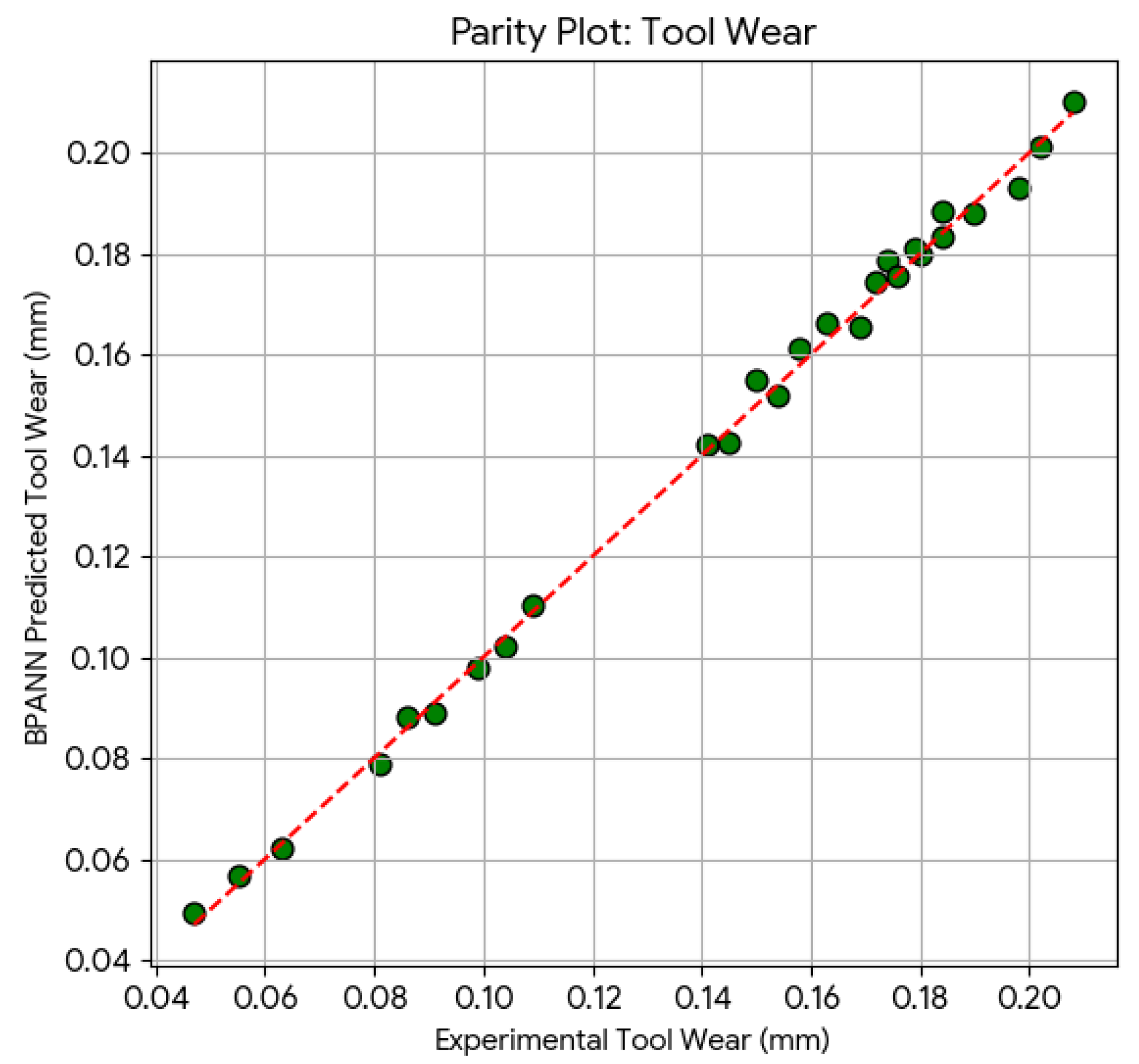
Figure 27 indicates a parity plot of tool wear (mm), employed to assess the accuracy and reliability of predictive models such as ANN, by comparing predicted values with experimental measurements. Most of the data points are closely distributed along the 45° parity line, indicating a strong agreement between experimental and predicted tool wear values. This close alignment confirms that the ANN model effectively captures the underlying relationship between the machining parameters and tool wear behavior. The limited and randomly distributed scatter around the parity line suggests minimal systematic error and demonstrates good generalization capability of the model across the investigated range. Minor deviations observed at higher tool wear values may be attributed to experimental uncertainties and the increased complexity of erosion and wear mechanisms under severe machining conditions, where nonlinear interactions between abrasive particles, jet energy, and tool material become more pronounced.
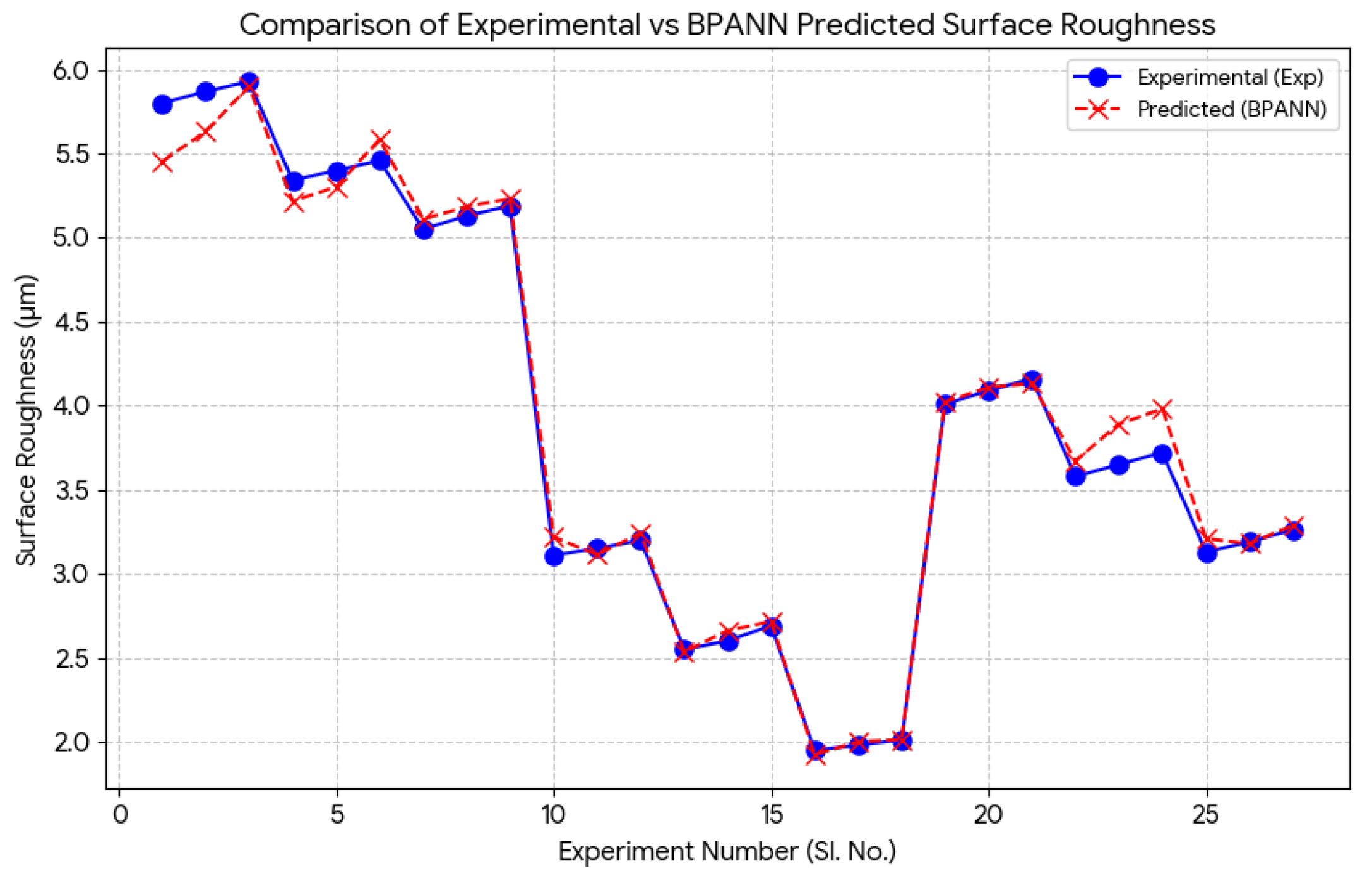
Figure 28 compares the experimentally measured surface roughness (Ra) with the corresponding values predicted by the BP-ANN model across all experimental runs. The predicted Ra values closely follow the experimental trend throughout the dataset, indicating a strong agreement between the model output and actual measurements. The ANN successfully captures both the gradual variations and the abrupt changes in surface roughness observed at different experimental conditions, demonstrating its capability to model the complex and nonlinear influence of machining parameters on surface quality. The small deviations between experimental and predicted values are random and limited in magnitude, suggesting minimal prediction bias and good generalization performance of the model. Slight discrepancies observed in regions of sharp Ra transition may be attributed to experimental uncertainties and nonlinear material removal mechanisms under varying jet energy and abrasive interaction conditions. Overall, the close overlap between the experimental and predicted curves confirms the reliability and robustness of the ANN model for surface roughness prediction.
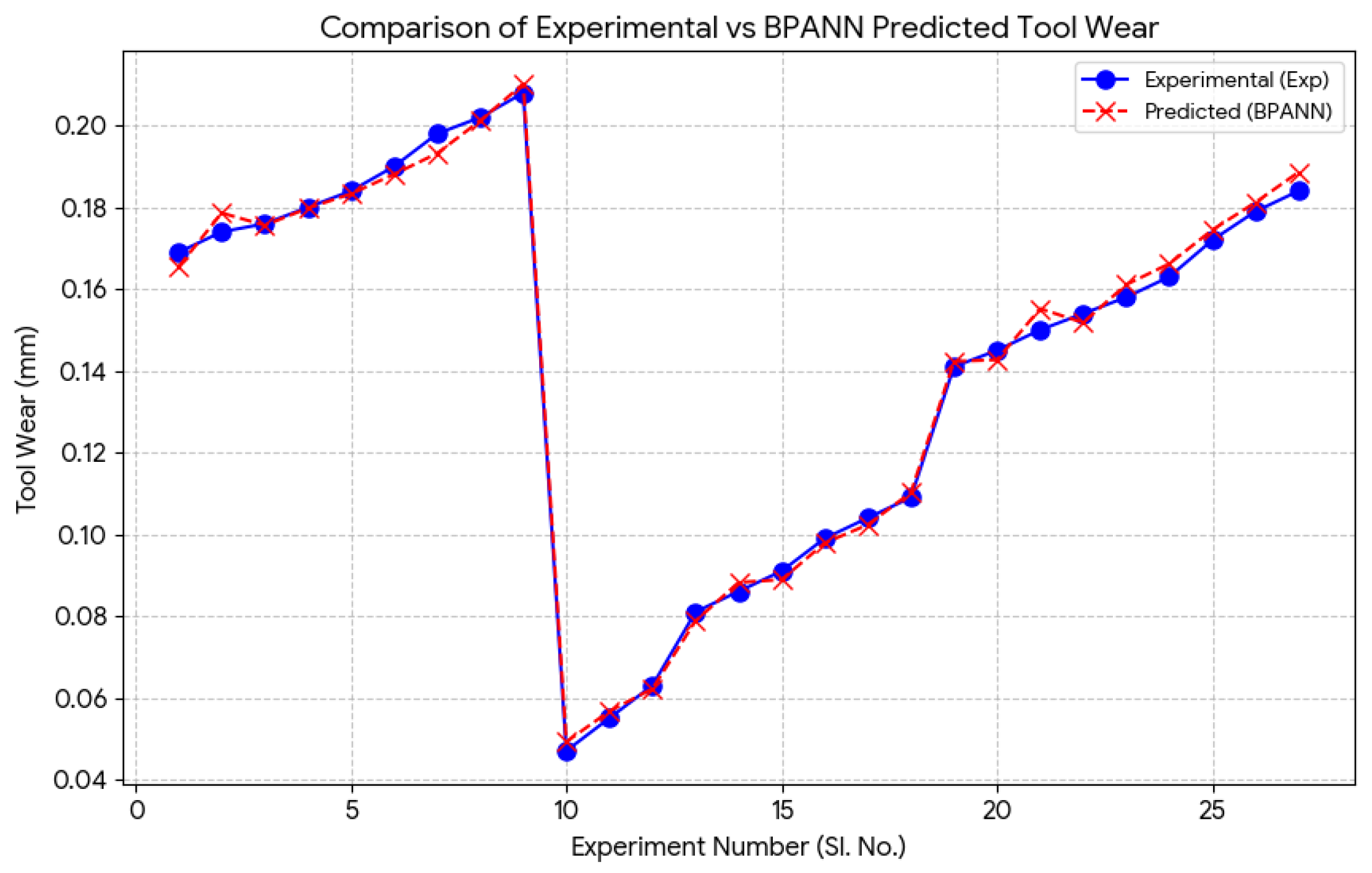
Figure 29 illustrates the comparison between experimentally measured tool wear and the corresponding values predicted by the BP-ANN model for all experimental runs. A strong consistency is observed between the predicted and experimental tool wear values across the full range of data. The ANN model successfully captures both the progressive increase in tool wear and the abrupt change observed under specific machining conditions, demonstrating its ability to represent the nonlinear relationship between machining process parameters and tool wear behavior. The minor and randomly distributed deviations between experimental and predicted values suggest minimal systematic error and good generalization capability of the model. Slight discrepancies at higher tool wear levels may be attributed to experimental uncertainties and intensified erosion mechanisms under severe jet impact conditions. Overall, the close correspondence between the experimental and ANN-predicted curves confirms the robustness and predictive reliability of the model for tool wear estimation.

4. Conclusions

Based on the investigation of surface roughness in AISI 1040 steel and tool wear of uncoated tungsten carbide tools during machining under varying cutting speed, feed rate, and depth of cut, using Pongamia pinnata oil infused with different SiO2 nanoparticle concentrations (Vol.%) as the cutting fluid, and employing a Taguchi L27 experimental design along with ANOVA, Response Surface Methodology (RSM), and back-propagation artificial neural network (BPANN) modeling, it is concluded that:
The experimental results clearly demonstrate that nanoparticle concentration (Vol.%) is the most influential parameter governing surface roughness during machining.
The lowest surface roughness (1.95 µm) was achieved at an optimal machining condition comprising 0.5 (Vol.%) SiO2 nanoparticles, cutting speed of 101 m/min, feed rate of 0.11 mm/rev, and depth of cut of 0.25 mm. Compared to the base oil condition (0 (Vol.%) SiO2 nanoparticles), where surface roughness values ranged between 5.05 and 5.93 µm, the incorporation of 0.5 (Vol.%) SiO2 nanoparticles in oil resulted in a reduction in surface roughness, highlighting the effectiveness of nanoparticle-infused cutting fluid.
The minimum tool wear (mm) (0.047 mm) was achieved at an optimal nanoparticle concentration of 0.5 (Vol.%), cutting speed of 45 m/min, feed rate of 0.11 mm/rev, and depth of cut of 0.5 mm.
ANOVA results revealed that nanoparticle concentration (Vol.%) is the most dominant factor influencing both surface roughness and tool wear. It contributed 85.35% of the total variation in surface roughness and 82.2% in tool wear, followed by cutting speed with contributions of 11.63% and 11.07%, respectively. In contrast, depth of cut (1.37% for surface roughness and 2.45% for tool wear) and feed rate (0.16% and 0.83%) exhibited relatively minor effects, while interaction effects were found to be statistically insignificant.
The developed second-order RSM model demonstrated excellent predictive capability for both surface roughness and tool wear, with average prediction errors below 2.43% and 4.95%, respectively, confirming the robustness and reliability of the proposed regression models.
Desirability Function Method analysis identified two optimal machining conditions depending on the response criteria. For surface roughness minimization, an overall desirability value of 1.000 was achieved at an optimal nanoparticle concentration of approximately 0.37 (Vol.%), a cutting speed of 101 m/min, a feed rate of 0.11 mm/rev, and a depth of cut of 0.25 mm. In contrast, desirability function optimization for tool wear minimization yielded an optimal condition at 0.5354 (Vol.%) nanoparticles, a cutting speed of 45 m/min, a depth of cut of 0.50 mm, and a feed rate of 0.1298 mm/rev, resulting in a predicted tool wear of 0.0614 mm and a high composite desirability value of 0.92786.
The close agreement between experimental measurements and ANN-predicted values demonstrates that the model accurately represents the complex and nonlinear influence of machining parameters on tool wear and surface roughness. The minimal and randomly distributed deviations indicate low systematic error and strong generalization capability across the investigated parameter range. Overall, the ANN model proves to be reliable and robust for predicting machining performance under varying and severe operating conditions.
Overall, the study conclusively demonstrates that 0.5 (Vol.%) SiO2 nanoparticle incorporation with Pongamia pinnata oil is highly effective in reducing the surface roughness of AISI 1040 steel and tool wear of uncoated tungsten carbide during machining, offering a sustainable alternative to conventional cutting fluids for precision machining applications.

Author Contributions

Conceptualization, V.S.P., R.S. and S.J.P.; methodology, V.S.P., V.K.M., R.P.B. and R.S.; software, A.H.; validation, V.K.M., R.P.B. and R.S.; formal analysis, V.S.P.; investigation, V.S.P., R.S., S.J.P. and A.H.; resources, V.S.P. and R.S.; data curation, V.S.P. and S.J.P.; writing—original draft preparation, V.S.P. and R.S.; writing—review and editing, V.S.P., S.J.P., R.S. and A.H.; visualization, R.S., A.H. and R.P.B.; supervision, R.P.B., S.S.H. and V.K.M.; project administration, V.K.M., R.P.B. and S.S.H.; funding acquisition, R.P.B., S.S.H., R.S. and V.K.M. All authors have read and agreed to the published version of the manuscript.

Funding

This research received no external funding.

Institutional Review Board Statement

Not applicable.

Informed Consent Statement

Not applicable.

Data Availability Statement

Data are available upon request.

Conflicts of Interest

The authors declare no conflicts of interest.

Abbreviations

The following abbreviations are used in this manuscript:
SiO2Silicon Dioxide
MQLMinimum Quantity Lubrication
RaSurface Roughness
TDOETaguchi’s Design of Experiments
ANOVAAnalysis of Variance 
RSMResponse Surface Methodology
DFMDesirability Function Method
SEMScanning Electron Microscope
EDSEnergy Dispersive X-ray Spectroscopy
BP-ANNBack Propagation—Artificial Neural Network
RMSERoot Mean Square Error
MAEMean Absolute Error
GPRGaussian Process Regression
MAPEMean Absolute Percentage Error
RBFradial basis function 
ReLURectified Linear Unit

References

  1. Girit, O. Determination of surface roughness through noise of cutting tool in milling of AISI 1040 steel. In Academic Studies in Engineering Sciences; Engineered Science: Knoxville, TN, USA, 2020; Volume 11. [Google Scholar]
  2. Vats, P.; Singh, T.; Dubey, V.; Sharma, A.K. Optimization of machining parameters in turning of AISI 1040 steel using hybrid MCDM technique. Mater. Today Proc. 2022, 50, 1758–1765. [Google Scholar] [CrossRef]
  3. Miriyala, V.; Patil, B.T.; Shaikh, V.A.; Sudhakar, D.S.S.; Deshmukh, S. Investigations of surface roughness and temperatures in vegetable oil-based n-MQL turning of AISI 4340 steel. J. Eng. Proj. Prod. Manag. 2024, 14, 1. [Google Scholar]
  4. Kanth, V.K.; Sreeramulu, D.; Srikiran, S.; Kumar, M.P.; Jagdeesh, K.E.; Govindh, B. Experimental investigation of cutting parameters using nano lubrication on turning AISI 1040 steel. Mater. Today Proc. 2019, 18, 2095–2101. [Google Scholar] [CrossRef]
  5. Haque, T.; Kumar, S.; Upadhaya, D.; Barman, M.; Mukhopadhyay, A. Optimization of multiple roughness characteristics for turning of AISI 1040 steel under different cutting conditions. Int. J. Eng. Technol. 2017, 10, 1–10. [Google Scholar] [CrossRef][Green Version]
  6. Özsoy, N.; Özsoy, M. Optimization of surface roughness of AISI 1040 stainless steel in milling process using Taguchi method. Sak. Univ. J. Sci. 2019, 23, 113–120. [Google Scholar] [CrossRef][Green Version]
  7. Gunay, M. Investigation of the interaction between the surface quality and rake angle in machining of AISI 1040 steel. Sigma J. Eng. Nat. Sci. 2008, 26, 105–111. [Google Scholar]
  8. Al-Shayea, A.; Abdullah, F.M.; Noman, M.A.; Kaid, H.; Abouel Nasr, E. Studying and optimizing the effect of process parameters on machining vibration in turning process of AISI 1040 steel. Adv. Mater. Sci. Eng. 2020, 2020, 5480614. [Google Scholar] [CrossRef]
  9. Şahinoğlu, A.; Güllü, A.; Çiftçi, İ. Analysis of surface roughness, sound level, vibration and current when machining AISI 1040 steel. Sigma J. Eng. Nat. Sci. 2019, 37, 423–437. [Google Scholar]
  10. Akkuş, H.; Yaka, H.; Uğur, L. Creating the mathematical model for the surface roughness values occurring during the turning of the AISI 1040 steel. Sigma J. Eng. Nat. Sci. 2017, 35, 303–310. [Google Scholar]
  11. Bm, G.; Hindi, J.; Hegde, A.; Sharma, S.; Kini, A. Effect of machining parameters on tool life and surface roughness of AISI 1040 dual phase steel. Mater. Res. 2022, 25, e20210351. [Google Scholar] [CrossRef]
  12. Swain, S.; Panigrahi, I.; Sahoo, A.K.; Panda, A.; Kumar, R. Effect of tool vibration on flank wear and surface roughness during high-speed machining of 1040 steel. J. Fail. Anal. Prev. 2020, 20, 976–994. [Google Scholar] [CrossRef]
  13. Lingesh, B.V.; Ravikumar, B.N.; Rudresh, B.M. Investigation on the effect of grit size on two body abrasive wear behavior of polyamide66/polypropylene (PA66/PP) blends. Mater. Today Proc. 2018, 5, 2444–2452. [Google Scholar] [CrossRef]
  14. Prakash, D.B.; Krishnaiah, D.G.; Shankar, N.V.S. Optimization of process parameters using Taguchi techniques when turning AISI 1040 steel with coated tools. Int. J. Mech. Eng. Technol. 2016, 7, 114–122. [Google Scholar]
  15. Srikiran, S.; Ramji, K.; Satyanarayana, B.; Ramana, S.V. Investigation on turning of AISI 1040 steel with the application of nano-crystalline graphite powder as lubricant. Proc. Inst. Mech. Eng. Part C J. Mech. Eng. Sci. 2014, 228, 1570–1580. [Google Scholar] [CrossRef]
  16. Natesh, C.P.; Shashidhara, Y.M.; Amarendra, H.J.; Shetty, R.; Harisha, S.R.; Shenoy, P.V.; Nayak, M.; Hegde, A.; Shetty, D.; Umesh, U. Tribological and morphological study of AISI 316L stainless steel during turning under different lubrication conditions. Lubricants 2023, 11, 52. [Google Scholar] [CrossRef]
  17. Sen, B.; Hussain, S.A.I.; Gupta, M.K.; Mia, M.; Mandal, U.K. Swarm intelligence based selection of optimal end-milling parameters under minimum quantity nano-green lubricating environment. Proc. Inst. Mech. Eng. Part C J. Mech. Eng. Sci. 2021, 235, 6969–6983. [Google Scholar] [CrossRef]
  18. Campatelli, G. Analysis of the environmental impact for a turning operation of AISI 1040 steel. In Proceedings of the IPROMS Conference; Whittles: Dunbeath, UK, 2009; pp. 6–17. [Google Scholar]
  19. Salur, E.; Kuntoğlu, M.; Aslan, A.; Pimenov, D.Y. The effects of MQL and dry environments on tool wear, cutting temperature, and power consumption during end milling of AISI 1040 steel. Metals 2021, 11, 1674. [Google Scholar] [CrossRef]
  20. Pavani, P.N.L.; Prasad, C.L.V.R.S.V.; Ramji, K. Experimental study and optimization of machining parameters in turning of AISI 1040 steel with micro-grooved WC cutting tools. Eng. J. 2017, 21, 155–169. [Google Scholar] [CrossRef]
Figure 1. Flowchart for processing of Pongamia pinnata oil with SiO2.
Lubricants 14 00223 g001
Figure 2. Experimental setup for AISI 1040 steel.
Lubricants 14 00223 g002
Figure 3. Artificial Neural Network Model applied in this study.
Lubricants 14 00223 g003
Figure 4. Effect of nanoparticle concentration (Vol.%) on surface roughness in machining under varying cutting speed and constant feed rate and depth of cut.
Lubricants 14 00223 g004
Figure 5. Effect of cutting speed on surface roughness in machining under varying nanoparticle concentration (Vol.%) and constant feed rate and depth of cut.
Lubricants 14 00223 g005
Figure 6. Effect of feed rate on surface roughness in machining under varying nanoparticle concentration (Vol.%) and constant cutting speed and depth of cut.
Lubricants 14 00223 g006
Figure 7. Effect of depth of cut on surface roughness in machining under varying feed rate and constant cutting speed and nanoparticle concentration (Vol.%).
Lubricants 14 00223 g007
Figure 8. Main effect plot of surface roughness (microns).
Lubricants 14 00223 g008
Figure 9. Contour plot and surface plot of surface roughness by varying nanoparticle concentration (Vol.%) and cutting speed (m/min).
Lubricants 14 00223 g009
Figure 10. Three-dimensional surface image of AISI 1040 steel machined with 0.5 (Vol.%) nanoparticle concentration, 101 (m/min) cutting speed, 0.11 (mm/rev) feed rate, and 0.25 (mm) depth of cut.
Lubricants 14 00223 g010
Figure 11. Photo simulation (for profilometer) of AISI 1040 steel (0.5 (Vol.%) nanoparticle concentration with cutting speed of 101m/min, feed rate of 0.11mm/rev and depth of cut of 0.25mm, and height-leveled pseudo-color view of the surface.
Lubricants 14 00223 g011
Figure 12. Comparison of RSM prediction values of surface roughness.
Lubricants 14 00223 g012
Figure 13. DFM of surface roughness.
Lubricants 14 00223 g013
Figure 14. Optical microscopic image of AISI 1040 steel at cutting speed of 101 m/min, feed rate of 0.11 mm/rev, depth of cut of 0.25 mm and 0.5 (Vol.%) SiO2 nanoparticle concentration.
Lubricants 14 00223 g014
Figure 15. SEM image of AISI 1040 steel at cutting speed of 101 m/min, feed rate of 0.11 mm/rev, depth of cut of 0.25 mm and 0.5 (Vol.%) SiO2 nanoparticle concentration.
Lubricants 14 00223 g015
Figure 16. Effect of nanoparticle concentration (Vol.%) on tool wear (mm) in machining under varying cutting speed and constant feed rate and depth of cut.
Lubricants 14 00223 g016
Figure 17. Effect of cutting speed on tool wear (mm) in machining under varying nanoparticle concentration (Vol.%) and constant feed rate and depth of cut.
Lubricants 14 00223 g017
Figure 18. Effect of feed rate on tool wear (mm) in machining under varying nanoparticle concentration (Vol.%) and constant cutting speed and depth of cut.
Lubricants 14 00223 g018
Figure 19. Effect of depth of cut on tool wear (mm) in machining under varying feed rate and constant nanoparticle concentration (Vol.%) and cutting speed.
Lubricants 14 00223 g019
Figure 20. Main effect plot for tool wear (mm).
Lubricants 14 00223 g020
Figure 21. Contour and surface plots of tool wear (mm).
Lubricants 14 00223 g021
Figure 22. Comparison of experimental tool wear (mm) with RSM-predicted values.
Lubricants 14 00223 g022
Figure 23. DFM of tool wear (mm).
Lubricants 14 00223 g023
Figure 24. SEM image of the uncoated tungsten carbide tool after machining at cutting speed of 45 m/min, feed rate of 0.11 mm/rev, depth of cut of 0.75 mm and 0.0 (Vol.%) SiO2 nanoparticle concentration.
Lubricants 14 00223 g024
Figure 25. EDS of the uncoated tungsten carbide tool after machining at cutting speed of 45 m/min, feed rate of 0.11 mm/rev, depth of cut of 0.75 mm and 0.0 (Vol.%) SiO2 nanoparticle concentration.
Lubricants 14 00223 g025
Figure 26. Parity plot of surface roughness.
Lubricants 14 00223 g026
Figure 27. Parity plot of tool wear.
Lubricants 14 00223 g027
Figure 28. Comparison of experimental surface roughness (μm) with ANN-predicted values.
Lubricants 14 00223 g028
Figure 29. Comparison of experimental tool wear (mm) with ANN-predicted values.
Lubricants 14 00223 g029
Table 1. Physico-chemical characteristics.
Appearance OdourSiO2
Appearance White, crystalline or amorphous
Density2.20–2.65 g/cm3
Melting Point1710 °C
Thermal Conductivity1.4–1.5 W/m·K 
Specific Heat Capacity703 J/kg·K
HardnessMohs 7
Electrical ConductivityExcellent insulator
Chemical StabilityHighly stable, inert, resistant to acids except HF
Table 2. Levels and parameters.
ParametersLevels
123
Nanoparticle Concentration (Vol.%)00.51
Cutting Speed (m/min)4573101
Feed (mm/rev)0.110.180.25
Depth of Cut (mm)0.250.500.75
Table 3. Taguchi L27 orthogonal array—results of surface roughness and tool wear.
Sl. No.Nanoparticle Concentration (Vol.%)Cutting Speed (m/min)Depth of Cut (mm)Feed Rate (mm/rev)Surface Roughness (Microns)Tool Wear (mm)
10450.250.115.80.169
20450.250.185.870.174
30450.250.255.930.176
40730.50.115.340.18
50730.50.185.40.184
60730.50.255.460.19
701010.750.115.050.198
801010.750.185.130.202
901010.750.255.190.208
100.5450.50.113.110.047
110.5450.50.183.150.055
120.5450.50.253.20.063
130.5730.750.112.550.081
140.5730.750.182.60.086
150.5730.750.252.690.091
160.51010.250.111.950.099
170.51010.250.181.980.104
180.51010.250.252.010.109
191450.750.114.010.141
201450.750.184.090.145
211450.750.254.160.15
221730.250.113.580.154
231730.250.183.650.158
241730.250.253.720.163
2511010.50.113.130.172
2611010.50.183.190.179
2711010.50.253.260.184
Table 4. ANOVA of surface roughness (microns).
Source DFSeq SSAdj SSAdj MSFPP%
A2199.4199.499.71172.80.0085.348
B227.1727.1713.5823.550.0011.631
C23.1913.1911.5952.770.141.3656
D20.3770.3770.1880.330.730.1613
A × D40.0160.0160.0040.011.000.0068
B × D40.0050.0050.0010.001.000.0021
C × D40.0060.0060.0010.001.000.0025
RSE63.4623.4620.576  1.4816
Total26233.6     
where A = Nanoparticle Concentration (Vol.%), B = Cutting Speed (m/min), C = Depth of Cut (mm), D = Feed Rate (mm/rev).
Table 5. Estimated regression coefficient for surface roughness.
Term Coef SE CoefTP
Constant 6.532120.2861622.8270.000
A−9.455890.19959−47.370.000
B−0.010970.00730−1.5030.152
C−0.34930.65011−0.5370.598
D−1.779502.883610.6170.546
A27.764750.1512251.3460.000
B2−0.000020.00005−0.4980.626
C20.418990.60490.6930.498
D 27.385037.715530.9570.353
A×B−0.002590.00109−2.3810.030
A×C0.0000.121810.0001.000
A×D0.142860.435030.3280747
B×C0.000.002180.0001.000
B×D0.001280.007770.1640.872
C×D−0.214290.87005−0.2460.809
where A = Nanoparticle Concentration (Vol.%), B = Cutting Speed (m/min), C = Depth of Cut (mm), D = Feed Rate (mm/rev).
Table 6. Analysis of variance for surface roughness.
SourceDFSeq SSAdj SSAdj MSFP
Regression1448.379048.37903.45564931.630.000
Residual Error120.05930.05930.00371  
Total2648.4384     
Table 7. ANOVA table for tool wear (mm).
Source DFSeq SSAdj SSAdj MSFPP%
A2287.4287.4143.785.560.0082.2
B238.7038.7019.3511.520.0011.07
C28.5908.5904.2952.560.012.45
D22.9282.9281.4640.870.460.83
A × D40.9860.9860.2460.150.950.28
B × D40.2630.2630.0660.040.990.07
C × D40.3590.3590.0900.050.990.10
RSE610.07710.071.680  2.88
Total26349.31     
where A = Nanoparticle Concentration (Vol.%), B = Cutting Speed (m/min), C = Depth of Cut (mm), D = Feed Rate (mm/rev).
Table 8. RSM model for tool wear (mm).
TermCoefSE CoefTP
Constant0.1462280.01418510.3080.000
A−0.3820730.009894−38.6170.000
B0.001190.0003623.2900.005
C−0.0640670.032227−1.9880.064
D−0.1761520.142943−1.2320.236
A × A0.3514670.00749646.8850.000
B × B−0.0000050.000002−1.9390.070
C × C0.0618670.0299852.0630.056
D × D0.5850340.3824641.5300.146
A × B0.0000270.0000540.4970.626
A × C0.0010.0060380.1660.871
A × D0.0107140.0215650.4970.626
B × C0.0000180.0001080.1660.871
B × D0.0003190.0003850.8280.420
C × D0.0071430.0431290.1660.871
where A = Nanoparticle Concentration (Vol.%), B = Cutting Speed (m/min), C = Depth of Cut (mm), D = Feed Rate (mm/rev).
Table 9. Analysis of variance for tool wear (mm).
SourceDFSeq SSAdj SSAdj MSFP
Regression140.0698920.0698920.004992547.720.000
Residual Error160.0001460.0001460.000009  
Total300.070038    
Disclaimer/Publisher’s Note: The statements, opinions and data contained in all publications are solely those of the individual author(s) and contributor(s) and not of MDPI and/or the editor(s). MDPI and/or the editor(s) disclaim responsibility for any injury to people or property resulting from any ideas, methods, instructions or products referred to in the content.