Article

Mechanical Size Effect and Friction Size Effect in Thin-Sheet Microforming of T2 Copper Foils

1
Department of Mechanical and Electrical Engineering, Hebei Vocational University of Technology and Engineering, Xingtai 054000, China
2
Department of Electrical Engineering, Hebei Vocational University of Technology and Engineering, Xingtai 054000, China
*
Authors to whom correspondence should be addressed.
Lubricants 2026, 14(4), 174; https://doi.org/10.3390/lubricants14040174
Submission received: 1 April 2026 / Revised: 15 April 2026 / Accepted: 16 April 2026 / Published: 18 April 2026

Abstract

The friction size effect in thin-sheet microforming constrains the attainable forming quality of microscale sheet components. In this study, T2 copper foils with thicknesses of 0.04, 0.08, 0.16, and 0.32 mm were investigated by comparative tensile testing, pin-on-disk testing, sliding-friction experiments, surface characterization, and reduced-order analysis under dry friction and three liquid-lubrication conditions. The results showed that, as the thickness decreased from 0.32 mm to 0.04 mm, elongation and tensile strength decreased by nearly 60% and 40%, respectively, whereas the direct contribution of the mechanical size effect to the friction coefficient remained limited. Under dry friction, the friction coefficient changed little with specimen size. Under soybean oil, castor oil, and Vaseline lubrication, however, the friction coefficient increased markedly as specimen size decreased and gradually approached the dry-friction value; the lowest-viscosity lubricant exhibited the greatest loss of effectiveness at small scales. This behavior was associated with the expansion of the edge non-lubricated region and the loss of closed lubricant pockets, both of which increased the real contact area. On this basis, a size-dependent friction model was established for the present material and surface conditions, and its prediction for the castor oil case was consistent with the experimental trend.

1. Introduction

Micro-deep drawing is one of the most widely used thin-sheet microforming technologies and can be employed to fabricate complex open, hollow, and thin-walled micro-components. Owing to its broad applications in electronics, microelectromechanical systems, new energy, and biomedical engineering, it has remained a major research focus in plastic microforming [1,2,3,4,5,6,7,8]. Although considerable progress has been made in recent years, process parameters for micro-deep drawing are still often estimated by analogy with conventional macro-scale deep drawing [1,5,6,9,10,11,12,13,14]. Such estimates frequently fail to reflect actual microforming conditions, leading to limited drawing ratios, poor dimensional accuracy, inferior surface quality, and defects such as wrinkling [6,9,10,11,12,13,14]. A systematic investigation of the parameters governing micro-deep drawing is therefore essential for the fabrication of high-quality micro-parts [1,6,12,13,14].
Friction plays a critical role in plastic forming, and its influence becomes even more pronounced under microforming conditions because tribological behavior is highly sensitive to contact scale, surface topography, lubrication state, and the evolution of real contact area [15,16,17,18,19,20,21,22]. In conventional sheet-metal forming, the friction coefficient is affected by many factors, including die and blank materials, surface roughness, forming speed, normal pressure, temperature, lubrication condition, and surface treatment [15,16,17,18,19,20,21,22,23,24,25,26,27,28,29,30]. Recent studies have examined the frictional behavior of thin sheets and deep-drawing materials under different lubricants, coatings, and surface conditions [17,20,21,22,23,24,25,26,27,28,29,30]. However, systematic studies on how these effects change as specimen size decreases in thin-sheet microforming remain limited [21,22]. It is therefore necessary to clarify the friction size effect and its underlying mechanism in thin-sheet microforming.
Surface engineering and solid-lubricating coatings have also attracted increasing attention in microforming because of their low friction coefficients, good wear resistance, and potential to improve forming quality [30,31,32,33,34]. Typical coatings such as TiN and DLC have been reported to improve tribological performance and reduce drawing force in sheet forming and related tribological applications [31,32,33]. Accordingly, in addition to liquid lubrication, the potential application of solid lubricating films in thin-sheet microforming also warrants consideration [30,31,32,33,34].
In this study, a sliding-friction test system suitable for thin-sheet microforming was developed to examine the friction size effect of T2 copper foils under dry friction and three liquid-lubrication conditions. Surface characterization and theoretical analysis were then used to clarify the underlying mechanism and to formulate a size-dependent friction model on the basis of Coulomb’s law. However, previous studies have commonly addressed either the mechanical size effect or tribological behavior separately, and a unified interpretation linking comparative mechanical response, lubrication-controlled friction evolution, and reduced-order friction modeling for ultra-thin copper foils remains limited. The present study addresses this gap by integrating comparative mechanical characterization of ultra-thin copper foils, controlled sliding-friction testing, and mechanism-based friction interpretation within a single experimental framework. Unlike broader modeling approaches, the proposed model is not presented as a universally predictive friction law; rather, it is intended as a physically guided description for a fixed material–surface–lubrication system.

2. Experimental Methods

2.1. Tensile Testing for Comparative Evaluation of the Mechanical Size Effect

Owing to its excellent electrical conductivity, thermal conductivity, plasticity, and corrosion resistance, pure copper has been increasingly used in microscale engineering applications [1,6,7]. T2 copper foils were therefore selected as the material of interest in this study. Hard-rolled sheets with thicknesses of 0.04, 0.08, 0.16, and 0.32 mm were used for tensile testing. Their chemical composition was as follows: Cu ≥ 99.90, Bi ≤ 0.002, Sb ≤ 0.002, Pb ≤ 0.005, As ≤ 0.002, S ≤ 0.005, and O ≤ 0.06.
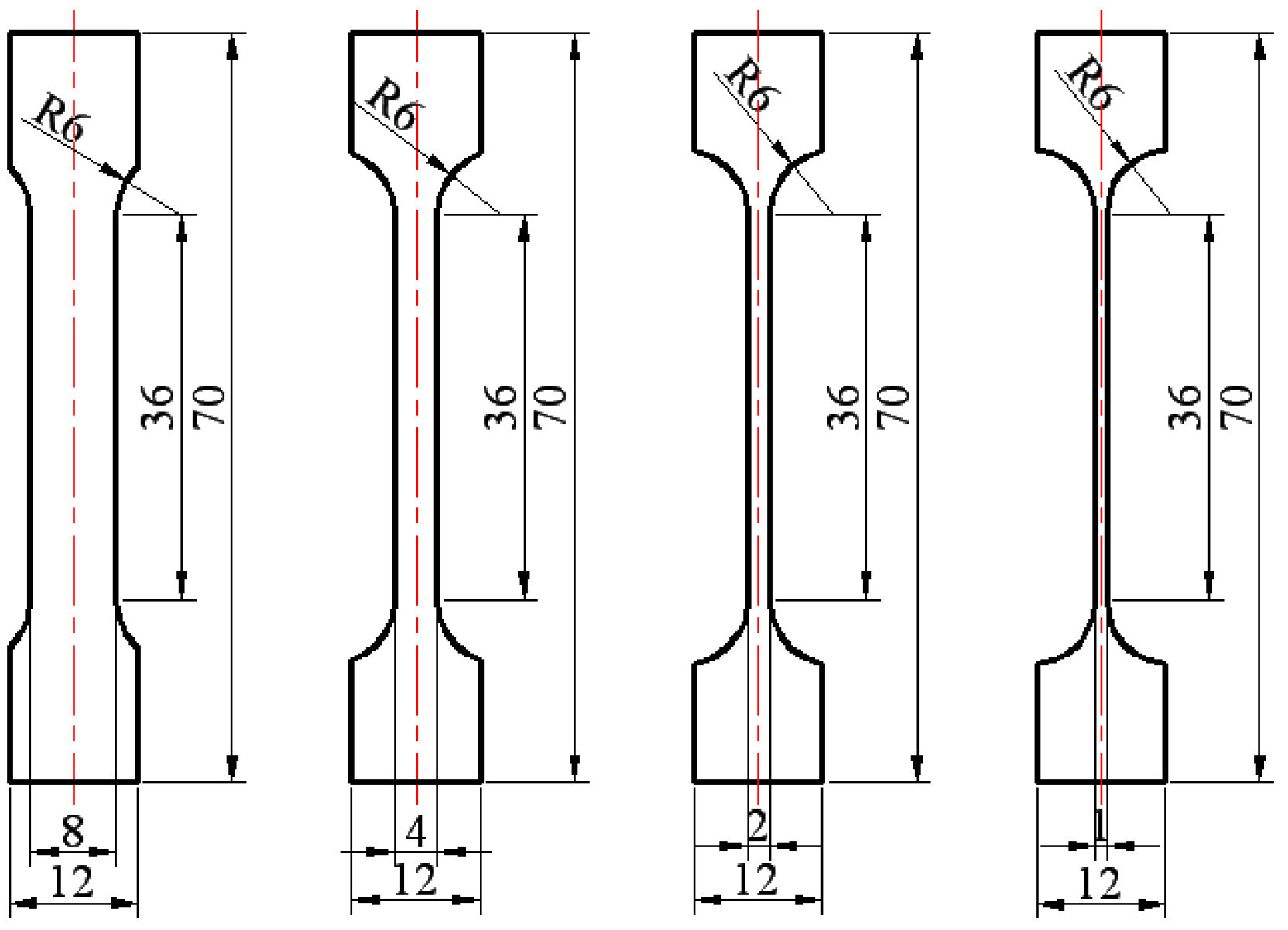
The as-received sheets exhibited poor plasticity and were therefore unsuitable for thin-sheet microforming. After annealing at 600 °C for 12 h in a nitrogen atmosphere, the T2 copper exhibited a typical single-phase microstructure. The grain sizes of sheets with different thicknesses were similar, with an average value of approximately 20 μm. To better represent thin-sheet microforming conditions, the gauge-section width of the 0.04 mm specimen was machined to 1 mm, while a constant width-to-thickness ratio was maintained in the gauge section for specimens of different thicknesses. The specimen dimensions are shown in Figure 1.
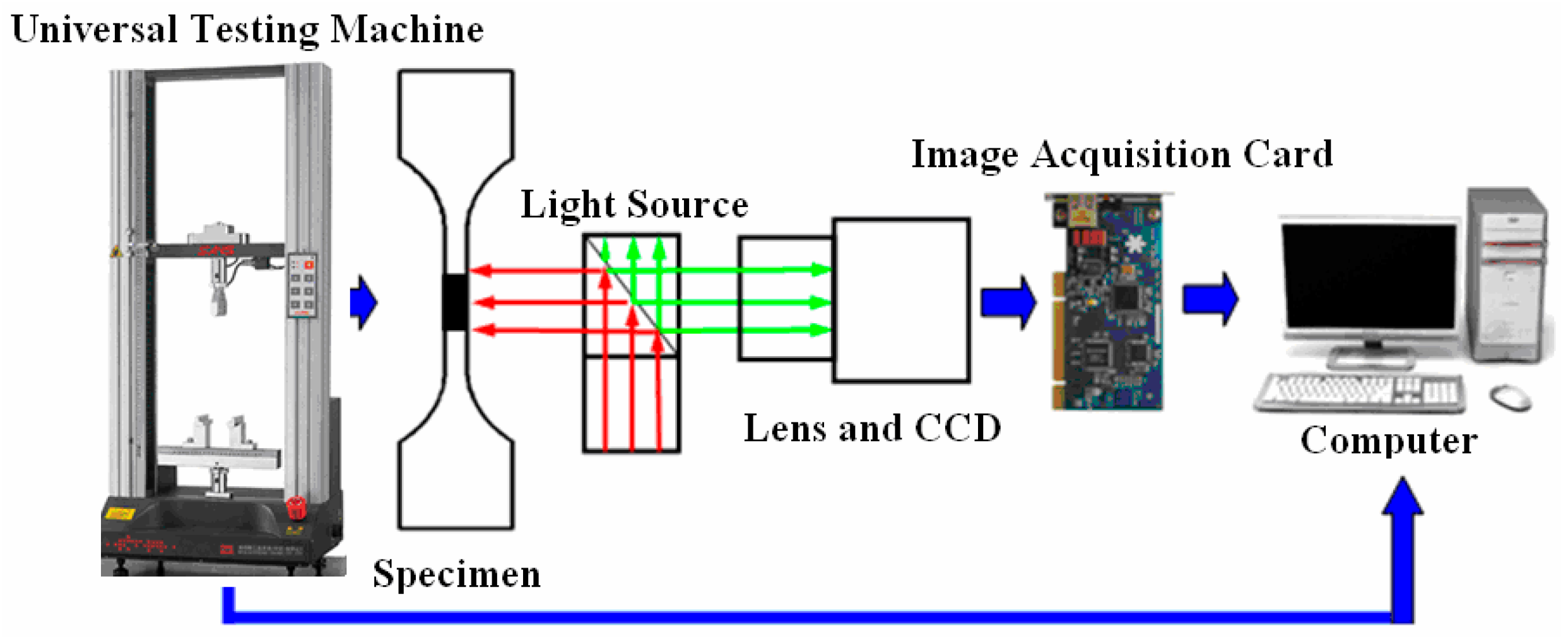
Uniaxial tensile testing was used to compare the mechanical response of T2 copper foils with different thicknesses. Because the foils used in thin-sheet microforming are only several tens to hundreds of micrometers thick, conventional contact extensometers may disturb specimen deformation. A CCD-based non-contact extensometry system was therefore mounted on an existing SANS CMT8502 electronic universal testing machine (Sanxishen (Shenzhen) Experimental Equipment Co., Ltd., Shenzhen, China). The purpose of this arrangement was not to introduce a new optical measurement principle, which is already well established, but to obtain reliable comparative strain data for ultra-thin foils without contact-induced interference. The basic arrangement is shown in Figure 2.
For the present study, this arrangement offers three practical advantages over conventional contact measurement for ultra-thin foils: it avoids contact-induced disturbance, maintains a consistent optical field of view across geometrically similar sub-size specimens, and allows tensile measurements to be carried out on the same machine platform used for the comparative mechanical evaluation. Accordingly, the value of the present setup lies in measurement consistency for the current foil-size range rather than in the introduction of a new optical principle.
Dark markers were placed in the middle section of each tensile specimen. A coaxial light source illuminated the specimen, and the CCD images were processed to determine the instantaneous gauge length from the number of pixels in the image. In Equations (1) and (2), l is the instantaneous gauge length, p is the measured size in the pixel direction, n is the number of pixels, ε is the true strain, and l0 is the original gauge length.
l = pn
ε = ln(l/l0)
The tensile specimens used in this study were geometrically similar sub-size strips rather than ASTM/ISO standard specimens. This choice allowed consistent comparative testing across the 0.04–0.32 mm thickness range within the same CCD field of view and measurement configuration for ultra-thin foils. Accordingly, the tensile results reported here are interpreted as relative size-dependent trends among the tested sheets rather than as ASTM/ISO-equivalent material constants. The present analysis therefore emphasizes comparative behavior within the available dataset, whereas replicate-level statistical descriptors are not reported separately. Unless otherwise stated, the longitudinal axis of the tensile and sliding specimens was parallel to the rolling direction, whereas the surface roughness profiles were measured perpendicular to the rolling direction.

2.2. Sliding Friction Test Used as a Controlled Tribological Analogue

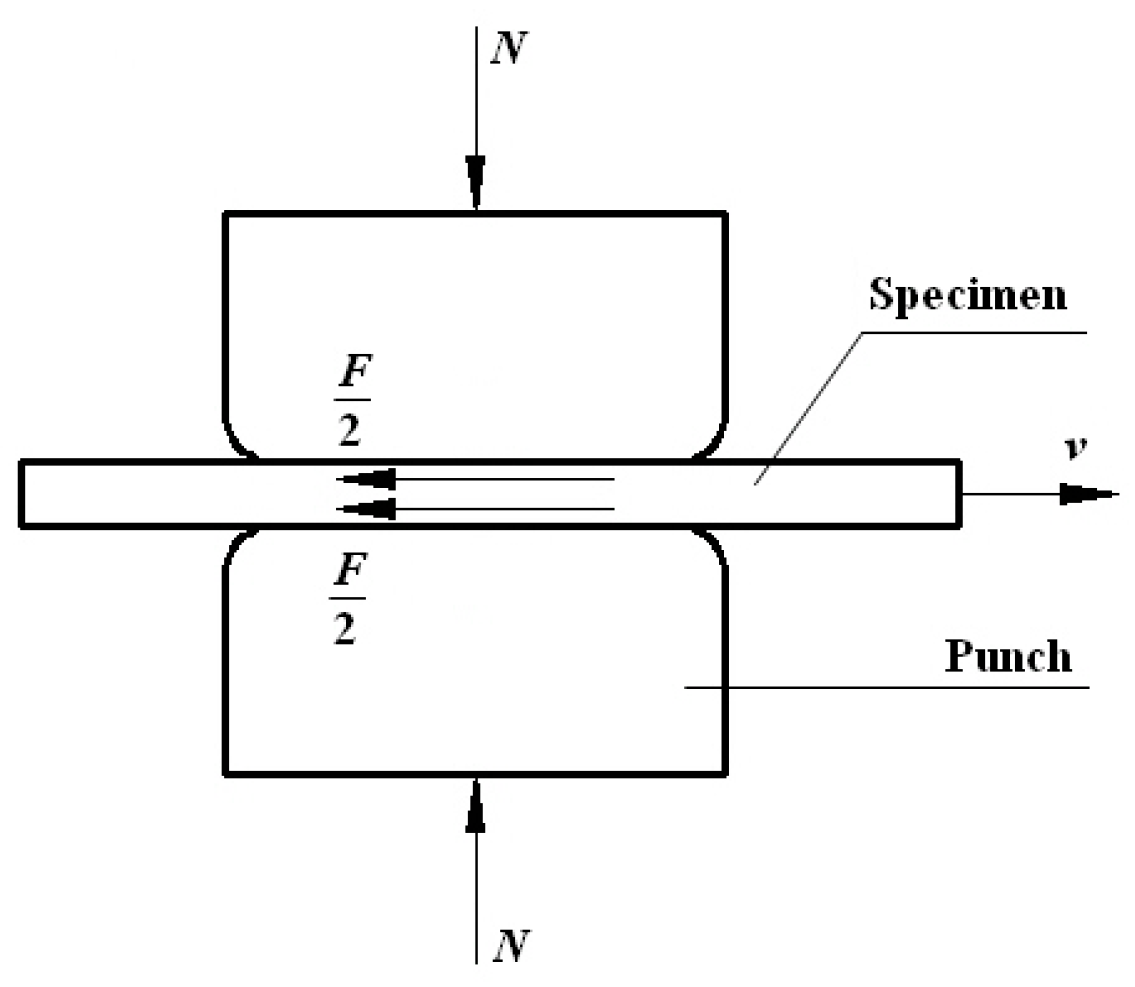
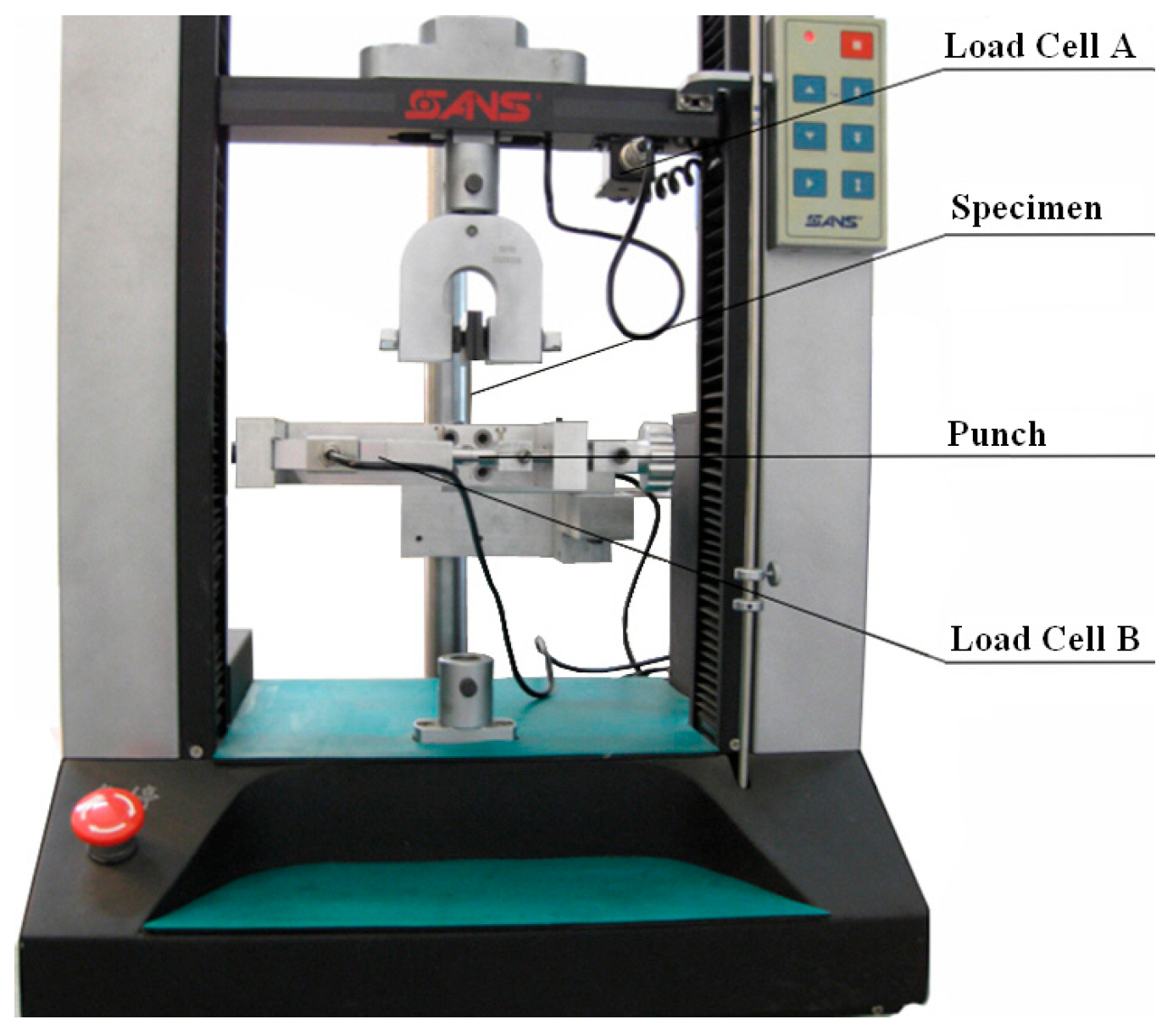
To investigate the influence of specimen size on the friction coefficient, the test method had to preserve the dominant sliding contact of thin-sheet microforming while keeping the experimental configuration simple and controllable. The basic configuration of the selected sliding test is shown in Figure 3. Bending-under-tension, bulging-under-tension, and probe-based tests were also considered, but they require very small rollers or probes, offer limited repeatability, and are costly for the present thickness range. The sliding test was therefore selected because it provides a stable and economical tribological configuration in which normal load, sliding speed, and lubrication can be varied independently. It should be emphasized, however, that this test does not reproduce the full stress–strain state of the flange in practical deep drawing, where plastic deformation and local thickening occur simultaneously. In the present work, the sliding test is used as a controlled tribological analogue to isolate the effects of specimen size and lubricant retention under prescribed normal loading and sliding conditions. The friction coefficients reported here should therefore be interpreted as comparative interface-response parameters for the present system rather than as direct in-process flange friction coefficients.
The experimental system consisted of an existing SANS CMT8502 microcomputer-controlled electronic universal testing machine and a sliding-test device developed by our research group, as shown in Figure 4. During the test, a normal load N was applied to the die to clamp the specimen, and one end of the specimen was pulled at a constant speed across a die surface wider than the specimen. The average friction coefficient at the contact interface between the thin sheet and the die was calculated from the measured tensile force F and normal load N using Equation (3). The sliding direction was kept parallel to the rolling direction for all strip specimens.
μ = F/(2N)

3. Experimental Results and Discussion

3.1. Mechanical Size Effect in Thin-Sheet Microforming

3.1.1. Tensile Response and Fracture Behavior

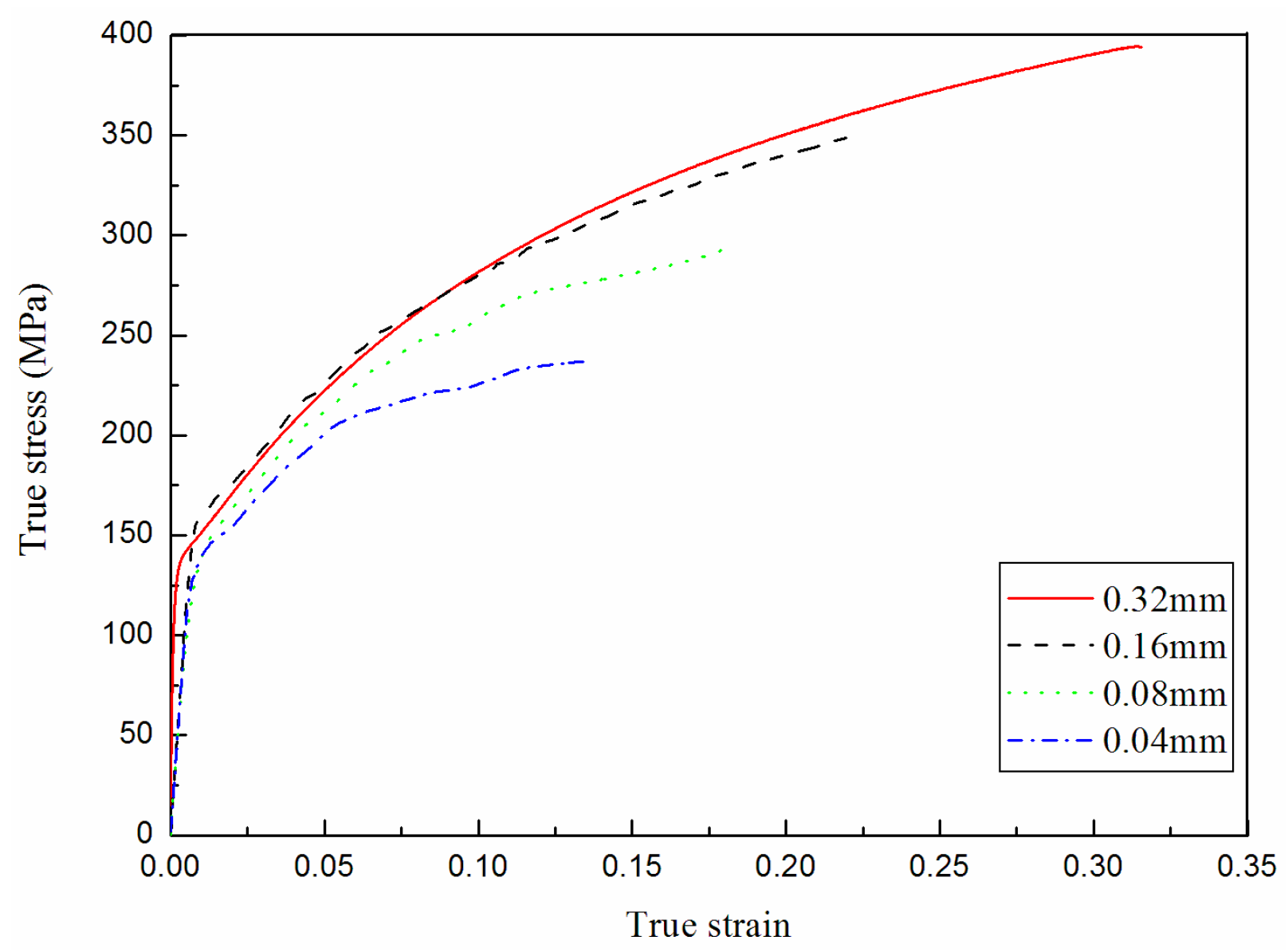
Figure 5 presents the true stress–strain curves of specimens with different sizes. The curves show a clear size-dependent change in both elongation and flow stress: the thinner the specimen, the lower the elongation and the lower the flow stress. When the specimen thickness decreased from 0.32 mm to 0.04 mm, elongation decreased by nearly 60%, and tensile strength decreased by nearly 40%. Because sub-size comparative specimens rather than ASTM/ISO-standard tensile specimens were used, these results are interpreted here as evidence of relative size-dependent mechanical trends within the present test configuration. The plotted curves should therefore be read as comparative response curves rather than as statistically exhaustive material-property datasets. The results in this subsection should therefore be interpreted as comparative trends within the current experimental dataset.
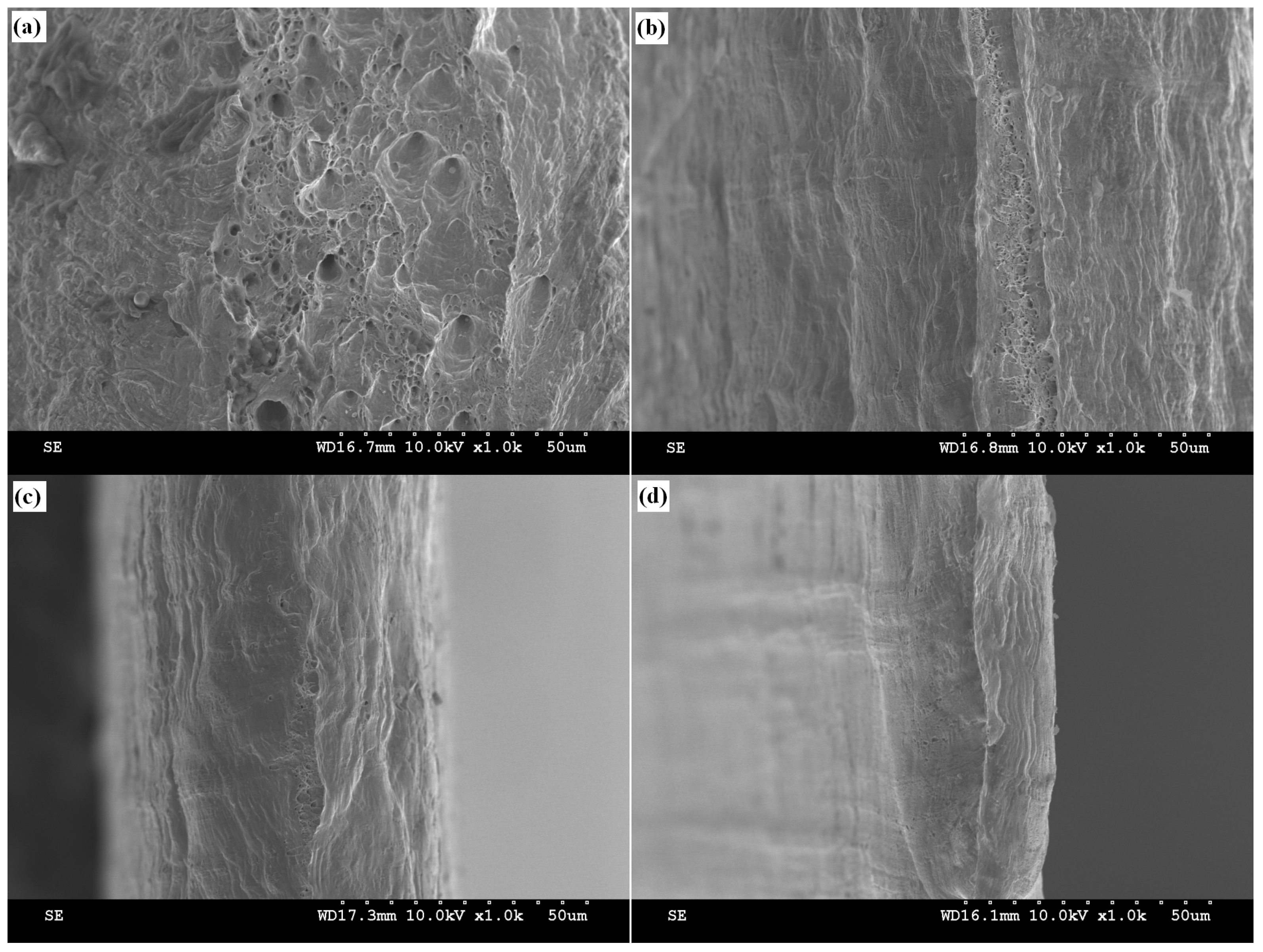
The reduction in flow stress with decreasing specimen size has been widely discussed in microforming research, whereas the decrease in elongation with decreasing specimen size has received much less attention [1,6,7]. To clarify the origin of this size effect in elongation, the tensile-fracture morphologies of specimens with different thicknesses were examined by scanning electron microscopy (SEM), as shown in Figure 6.
The fracture morphologies indicated that all specimens underwent ductile fracture, but the fracture mode varied with specimen thickness. For the 0.32 and 0.16 mm specimens, the central region of the fracture surface was characterized by a dimpled zone, while irregular slip-fragmentation patterns appeared on both sides. In contrast, for the 0.08 and 0.04 mm specimens, clear serpentine slip patterns were observed on both sides of the fracture surface, together with a sharp wedge-shaped feature in the middle, which is characteristic of slip-separation fracture. These observations indicate that the fracture mechanism shifted from mixed dimple rupture/slip separation to typical slip-separation fracture as specimen size decreased, thereby explaining the continuous reduction in elongation.
The fracture morphologies of specimens with different thicknesses also reveal clear differences in fracture mechanism. In the thicker sheets, necking developed through slip deformation; when the necked region became sufficiently narrow, voids formed there and gradually grew with increasing deformation until fracture occurred through coalescence. In contrast, the thinner sheets deformed mainly by slip throughout the process and ultimately separated to form a sharp wedge. These observations indicate that the fracture mechanism of metal thin sheets changes with specimen thickness and that the size and number of dimples decrease progressively as specimen thickness is reduced, eventually disappearing altogether. According to basic fracture theory, a dimple fracture generally exhibits higher elongation than a slip-type fracture. Therefore, elongation decreases continuously as specimen size decreases.
This interpretation is also consistent with the grain-size-to-thickness ratio of the present foils. With an average grain size of approximately 20 μm, the corresponding thickness-to-grain-size ratios are about 16, 8, 4, and 2 for the 0.32, 0.16, 0.08, and 0.04 mm sheets, respectively. As the sheet becomes thinner, fewer grains span the thickness, the relative contribution of surface grains becomes larger, and deformation becomes more sensitive to slip localization and reduced through-thickness constraint. This trend provides a microstructural basis for the observed decrease in flow stress and the earlier transition toward slip-dominated fracture in the thinnest foils.

3.1.2. Pin-on-Disk Assessment of the Direct Mechanical Contribution to Friction

To investigate the influence of the mechanical size effect on the friction coefficient, pin-on-disk tests were conducted on four specimens with different thicknesses using a micro-friction-and-wear testing machine. Prior to testing, the specimen surfaces were examined by SEM, and the surface profiles of both sides of the T2 copper sheets were characterized using a laser-scanning confocal microscope. The roughness traces were measured perpendicular to the rolling direction, whereas the specimen length and sliding direction were parallel to the rolling direction. The results showed that the surface morphologies of sheets with different thicknesses were generally similar and that the average surface roughness Ra on both sides of the four sheets was nearly the same, at approximately 0.2 μm. The pin material was SKD11 die steel, which was also used as the die material in the subsequent sliding-friction experiments. The test parameters were as follows: pin diameter, 3 mm; load, 0.1 kg; rotational speed, 200 r/min; and rotation radius, 2 mm. As in the tensile section, the present discussion focuses on comparative trends within the available dataset rather than on a full replicate-based statistical treatment.
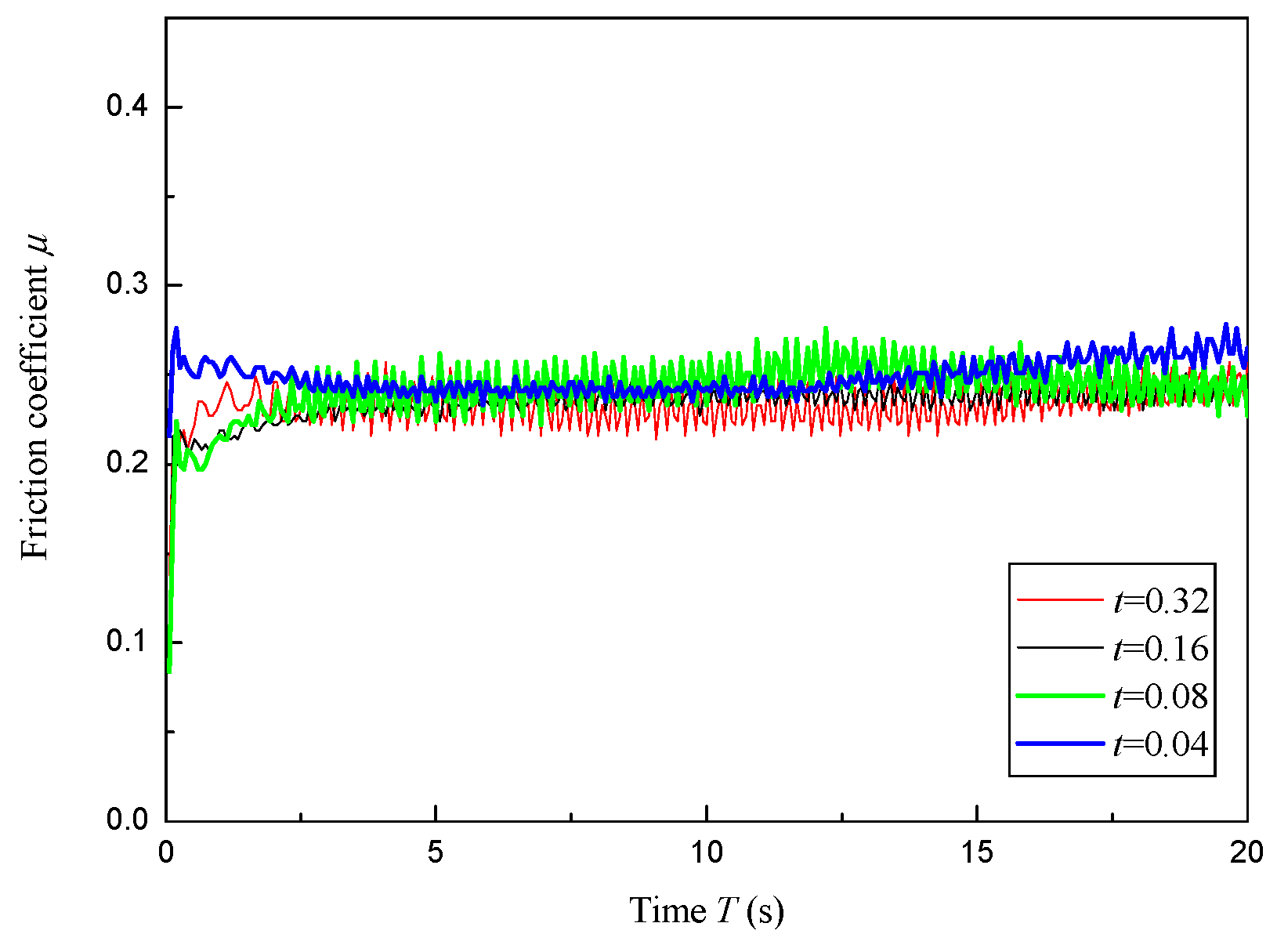
The friction-coefficient curves for the four sheets with different thicknesses are shown in Figure 7, with values of 0.233, 0.235, 0.242, and 0.249, respectively. The maximum difference was less than 7%. Considering the experimental uncertainty and the slight differences in sheet surface condition, the influence of the mechanical size effect on the friction coefficient can be regarded as negligible for the subsequent analysis.

3.2. Experimental Results of the Friction Size Effect

The sliding-friction experiments were carried out on the test system developed for thin-sheet microforming. The specimens were T2 copper foils annealed at 600 °C for 12 h, with thicknesses of 0.04, 0.08, 0.16, and 0.32 mm. SKD11 was used as the die material. The surface roughness of the specimens and the die was 0.2 μm and 0.8 μm, respectively, and the applied normal pressure was 0.4 MPa. For consistency across specimen sizes, the width-to-thickness ratio of all specimens was kept constant; specifically, the width of the 0.04 mm specimen was 1 mm. The test speeds were 0.05, 0.1, 0.2, and 0.4 mm/s. The experiments were conducted under four lubrication conditions: dry friction, soybean oil, castor oil, and Vaseline. The densities of the three lubricants were 0.92 × 10³, 0.93 × 10³, and 0.82 × 10³ kg/m3, respectively, and their viscosities were 0.05, 0.61, and 1.08 Pa·s. In all cases, the lubricant amount was 50 mL/m2. The curves reported below are presented as comparative responses under the tested conditions; replicate-level statistical descriptors are not reported separately in the current paper.
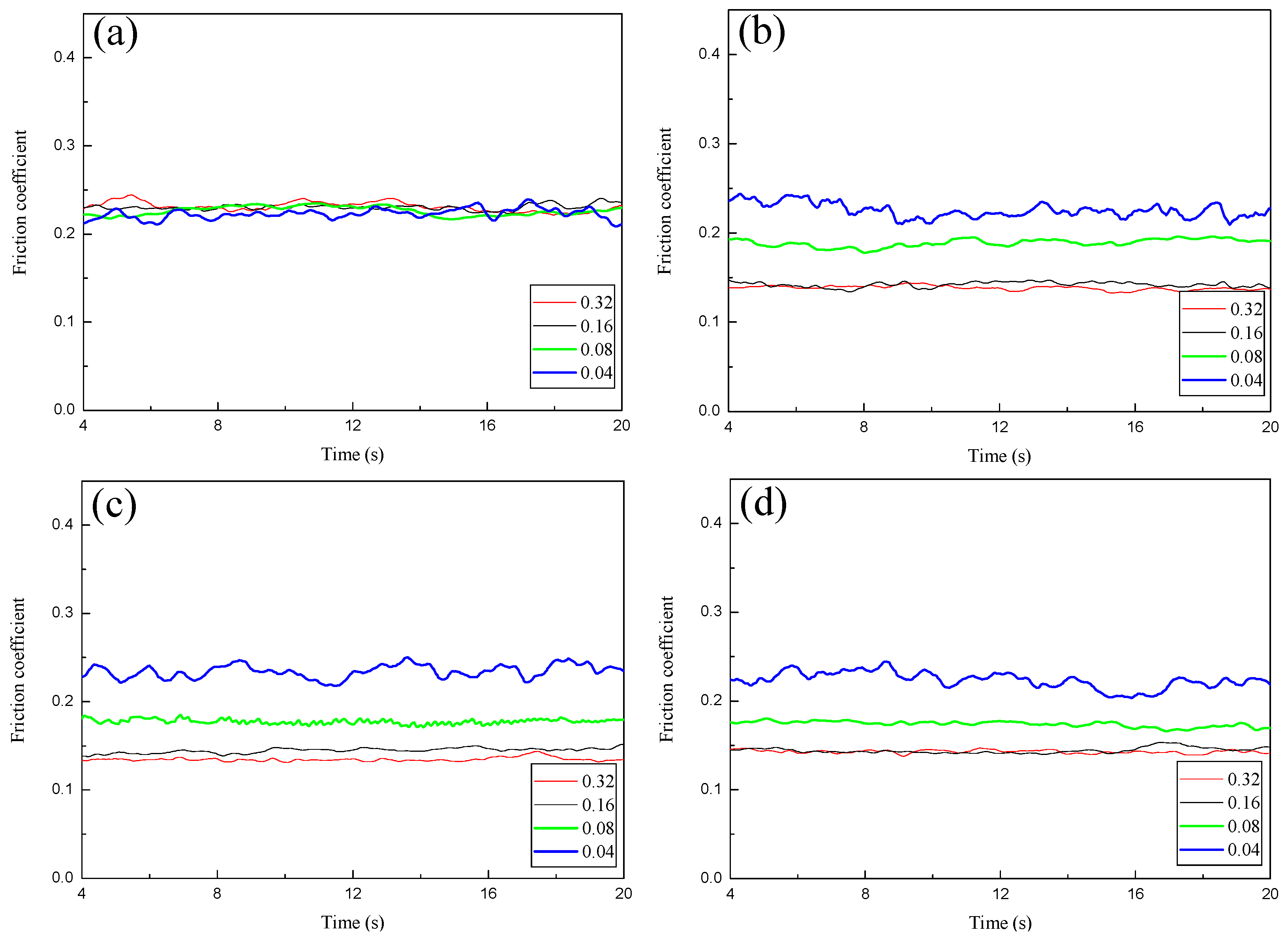
Figure 8 presents the friction coefficients of specimens with different sizes under different lubrication conditions. Under soybean oil, castor oil, and Vaseline lubrication, the friction coefficient increased markedly as specimen size decreased and gradually approached the value obtained under dry friction. For a specimen thickness of 0.32 mm, the average friction coefficients μ under soybean oil, castor oil, and Vaseline lubrication were 0.138, 0.135, and 0.153, respectively. For a thickness of 0.16 mm, the corresponding values were 0.142, 0.141, and 0.144, respectively. For a thickness of 0.08 mm, the values of μ increased to 0.179, 0.168, and 0.174, respectively. When the specimen thickness was further reduced to 0.04 mm, the corresponding μ values reached 0.224, 0.234, and 0.224, representing increases of 62%, 73%, and 46%, respectively. By contrast, under dry-friction conditions, the friction coefficient remained essentially unchanged with specimen size. When the specimen thicknesses were 0.32, 0.16, 0.08, and 0.04 mm, the corresponding friction coefficients were 0.231, 0.231, 0.227, and 0.223, respectively. These results should be interpreted as comparative trends within the present experimental dataset.
Within the tested sliding-speed range of 0.05–0.4 mm/s, the most prominent feature of the present dataset is the coupled effect of specimen size and lubrication state rather than an isolated speed effect. This observation is consistent with previous microforming tribology studies in which lubricant starvation, edge-controlled contact evolution, and the increase in real contact area dominate friction behavior as the characteristic specimen size decreases. The present results therefore support the view that, under the current conditions, lubricant retention and edge depletion govern the ranking of friction responses more strongly than the modest speed variation considered here. In particular, the stronger increase in friction coefficient observed for the low-viscosity lubricant is physically consistent with its lower resistance to squeeze-out from edge-connected regions.
Figure 8 also shows that, when the specimen thicknesses were 0.32 mm and 0.16 mm, the friction coefficients obtained with soybean oil, castor oil, and Vaseline were essentially the same. However, when the thickness decreased to 0.08 mm, the friction coefficient under soybean oil lubrication became higher than that under Vaseline lubrication. This suggests that, as the size factor decreases, the increase in friction coefficient is more pronounced for low-viscosity lubricants than for high-viscosity lubricants.

3.3. Mechanism of the Friction Size Effect in Thin-Sheet Microforming

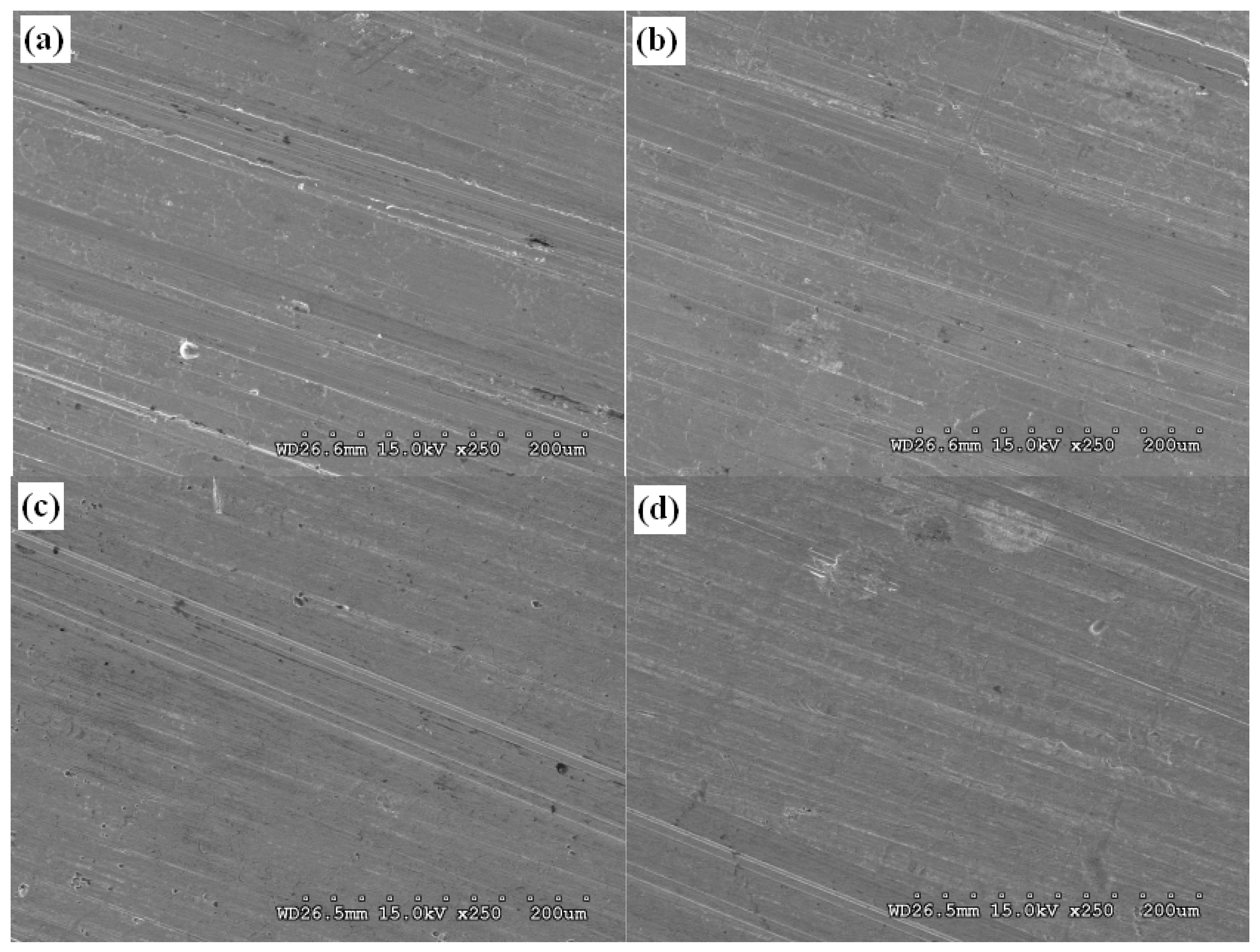
The specimens subjected to the sliding-friction tests were subsequently examined by SEM. The SEM observations in this section are used as qualitative evidence of the spatial distribution of contact damage. Because post-test profilometry or three-dimensional topography data were not acquired in the original experimental campaign, the discussion below is limited to qualitative edge-to-center differences and does not claim a full quantitative reconstruction of roughness evolution. Accordingly, the SEM observations are used here to support the proposed contact-state interpretation rather than to provide a quantitative measure of roughness evolution. A more rigorous analysis of roughness evolution based on profilometry or three-dimensional surface metrology should therefore be regarded as a priority for future work. Taking the 0.16 mm and 0.04 mm specimens as representative examples, Figure 9 presents SEM images of the specimens tested under dry-friction conditions. Severe scratching occurred in both the central and edge regions of the specimens.
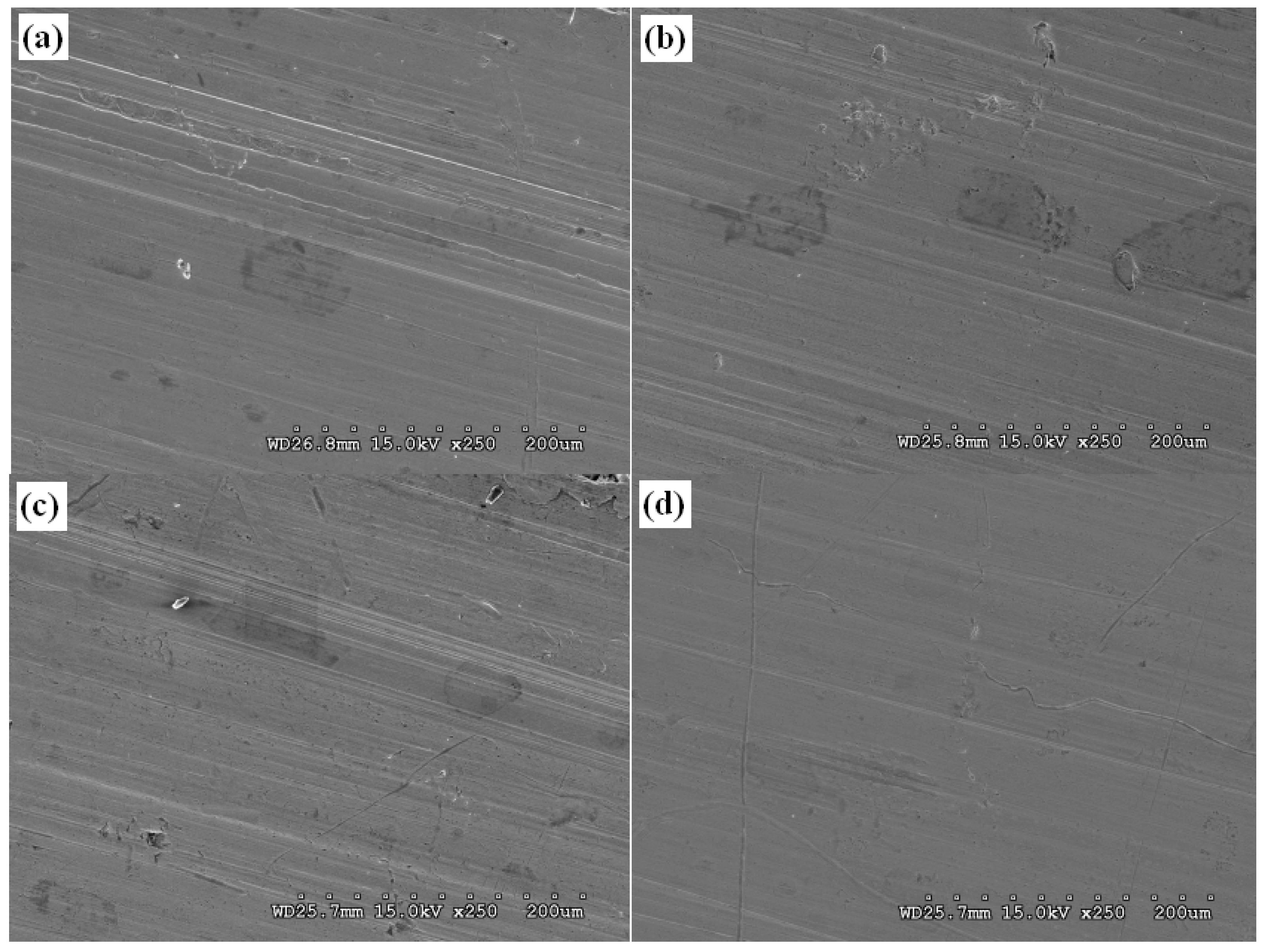
Figure 10 presents SEM images of the specimens tested under soybean-oil lubrication. Scratching in the edge regions was relatively severe, whereas that in the central region was clearly shallower. Similar surface features were also observed for the specimens lubricated with castor oil and Vaseline.
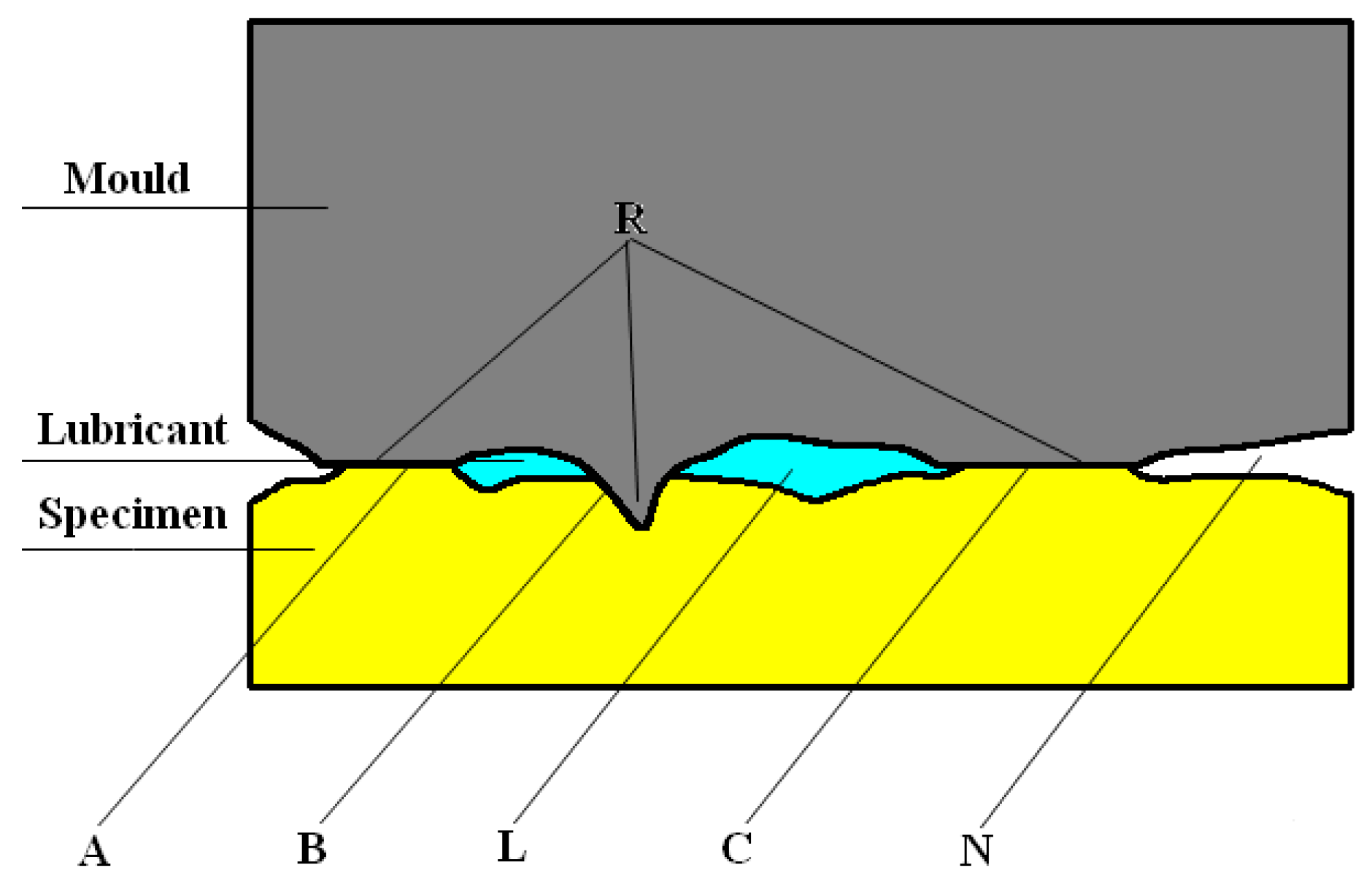
In sheet-metal forming, the die is generally regarded as a rigid body because of its high hardness and yield strength, and its surface morphology is assumed to remain unchanged. By contrast, the sheet material usually has relatively low hardness and yield strength. When an external load is applied to the lubricated sheet surface, deformation occurs both in the asperities on the sheet surface and in the regions indented by asperities on the die surface. Under the applied load, the deformation of the sheet surface can be approximately divided into five regions, as shown in Figure 11. Region A is the area where sheet asperities are flattened by the die; Region B is the area where the sheet is indented by die asperities; Region C is the area of rigid contact between the die and the sheet; Region L is the lubricant-filled area, namely the closed pocket; and Region N is the area where the die and sheet are not in contact and no lubricant is trapped, namely the open pocket. The sum of Regions A, B, and C constitutes the real contact area R.
If the areas of Regions A, B, C, L, and N are denoted by Sa, Sb, Sc, Sl, and Sn, respectively, and the corresponding external forces supported by these regions are Fa, Fb, Fc, Fl, and Fn, respectively, then the real contact area Sr between the sheet and the die, as well as the total external load F applied to the sheet, can be calculated from Equations (4) and (5), respectively:
Sr = Sa + Sb + Sc
F = Fa + Fb + Fc + Fl + Fn
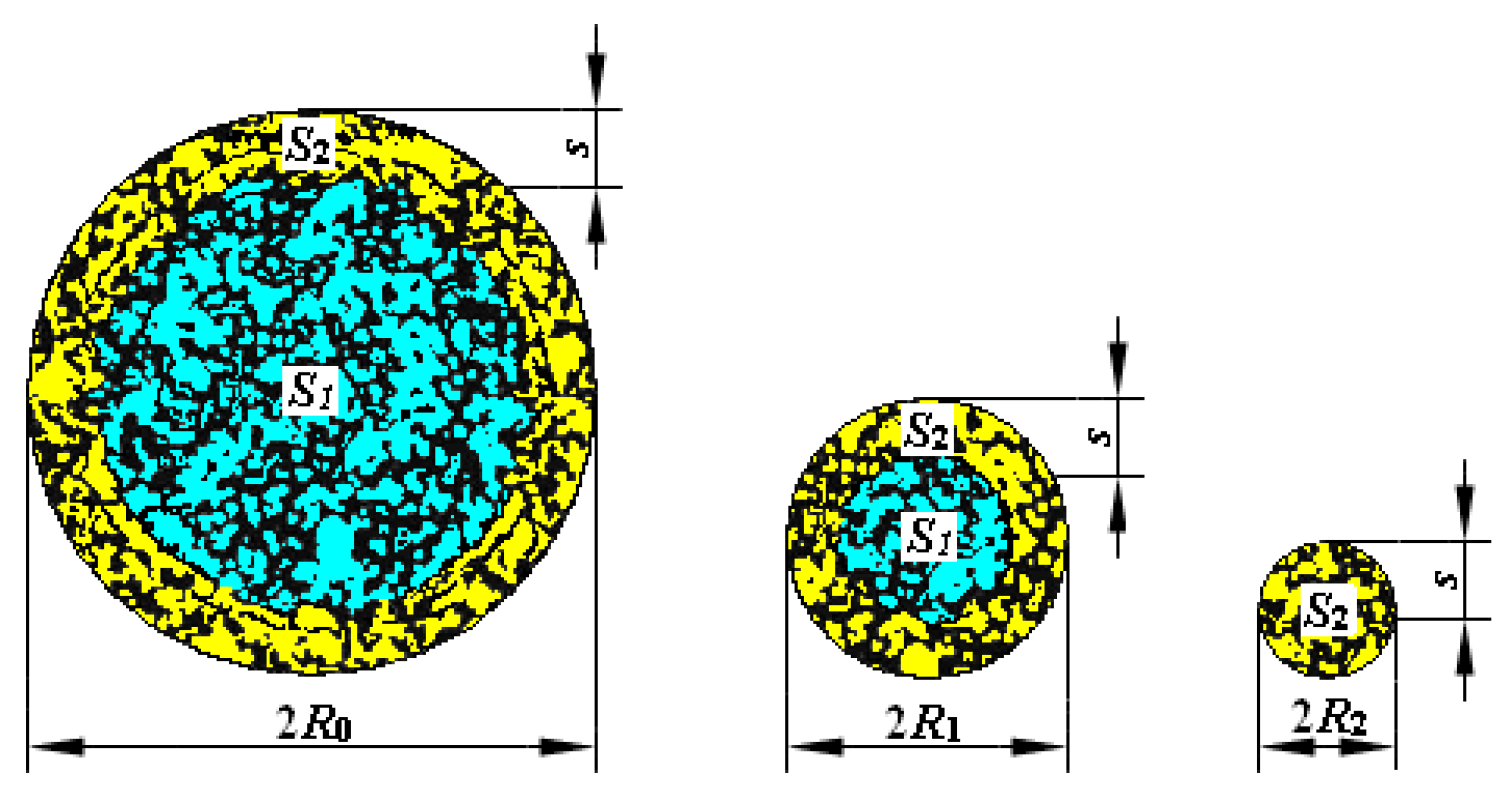
Under the applied external load, part of the lubricant trapped between the die and the blank is retained in surface pockets on the blank, while the remainder is squeezed out, as shown in Figure 12. The region located in the central part of the sheet, namely the lubricated region S1, is surrounded by closed contact boundaries, so the lubricant can be retained in the surface pockets of the blank. As the pressure increases, the lubricant is compressed and carries part of the load, thereby reducing the pressure acting on the real contact area R, decreasing the real contact area, and consequently lowering the friction coefficient.
By contrast, the region located at the edge of the blank, namely the non-lubricated region S2, is connected to the edge of the sheet, so the lubricant cannot be retained in the surface pockets. As the external pressure increases, the lubricant is squeezed out and therefore cannot transmit the forming load. This increases the pressure on both the real contact area and the closed lubricant pockets, enlarges the real contact area, and leads to a higher friction coefficient. For a given blank, the characteristic size s of the edge region is constant. As specimen size decreases, the proportion of the non-lubricated region in the total contact area becomes progressively larger; therefore, the friction coefficient increases continuously. When specimen size decreases beyond a certain point, the lubricated region disappears completely, as shown in Figure 12. Under this condition, the friction state becomes identical to that under dry friction, and the friction coefficient therefore approaches the dry-friction value.

3.4. Validation of the Size-Dependent Friction Model

Friction modeling has long been a central topic in metal-forming research, and a variety of models have been proposed for different forming conditions [15,16,17,29]. Among them, the Coulomb friction model, expressed by Equation (6); the constant-shear friction model, expressed by Equation (7); and the Wanheim/Bay generalized model, expressed by Equation (8), are among the most widely used [15,16,17,29]. The Coulomb friction model is generally applicable to sheet-metal forming, whereas the constant-shear friction model is more suitable for bulk metal forming [15,16]. The Wanheim/Bay model incorporates factors related to both material behavior and contact conditions and therefore offers relatively high accuracy, but its practical application is limited because the determination of the real contact area is rather complicated [15,16,29].
τ = μp
τ = mk
τ = fαk
In these equations, τ denotes the frictional stress, μ is the friction coefficient, p is the normal stress acting on the contact interface, m is the friction factor, k is the shear flow stress, f is a friction factor associated with the real contact area, and α is the ratio of the real contact area to the nominal contact area.
Under thin-sheet microforming conditions, the friction coefficient is influenced not only by material properties, die surface roughness, blank surface roughness, forming speed, normal pressure, and lubrication conditions, but also strongly by specimen size [15,16,17,18,21,22,29,30]. Because the three classical friction models are size-independent, they cannot directly describe the tribological behavior observed in the present experiments. It is therefore necessary to establish a friction model suitable for thin-sheet microforming that incorporates the observed size effect.
Based on the Coulomb friction model and assuming that the overall contact area is circular, a friction model suitable for thin-sheet microforming was established by incorporating the proportion of the non-lubricated region in the total contact area, as given in Equation (9). The proposed model is a reduced-order, physically guided description developed for the present experimental system. It captures the dominant edge-lubricant-depletion effect under fixed microstructural and surface conditions (average grain size of approximately 20 μm, sheet surface roughness Ra of approximately 0.2 μm, and die surface roughness Ra of approximately 0.8 μm). Grain size and surface topography are not treated as independent state variables; rather, their effects are embedded in the experimentally fixed contact system and in the real-contact-area factor α. The model should therefore be regarded as a system-specific formulation for the present conditions rather than as a universal friction law applicable to arbitrary materials and contact conditions.
μ m i c = k 2 k 2 + 2 ( k 1 ) 2 K α / p n μ 0
In this equation, μmic denotes the friction coefficient considering the size effect, k is a proportional factor used to represent the ratio of the nominal contact radius to the edge width, K is the bulk modulus, α is the fraction of the real contact region R in the nominal contact area, and μ 0 is the friction coefficient under dry friction conditions, and pn is the nominal contact stress.
In Equation (9), k , p n , and μ 0 are known parameters, whereas α is a function proportional to pn/σs. Therefore, once the value of k is specified, the friction coefficient μmic, which incorporates the proportional factor under thin-sheet microforming conditions, can be determined. When k = 1, namely, when the ratio of the nominal contact radius to the edge width equals 1, the entire contact area is regarded as a non-lubricated region, and the equation yields μ m i c = μ 0 . When k → ∞, namely, when the ratio of the nominal contact radius to the edge width approaches infinity, the entire contact area becomes fully lubricated, and the corresponding friction coefficient is equal to that under fully lubricated conditions.
According to the above analysis, the friction model under thin-sheet microforming conditions can be expressed as follows:
τ = μ m i c p n
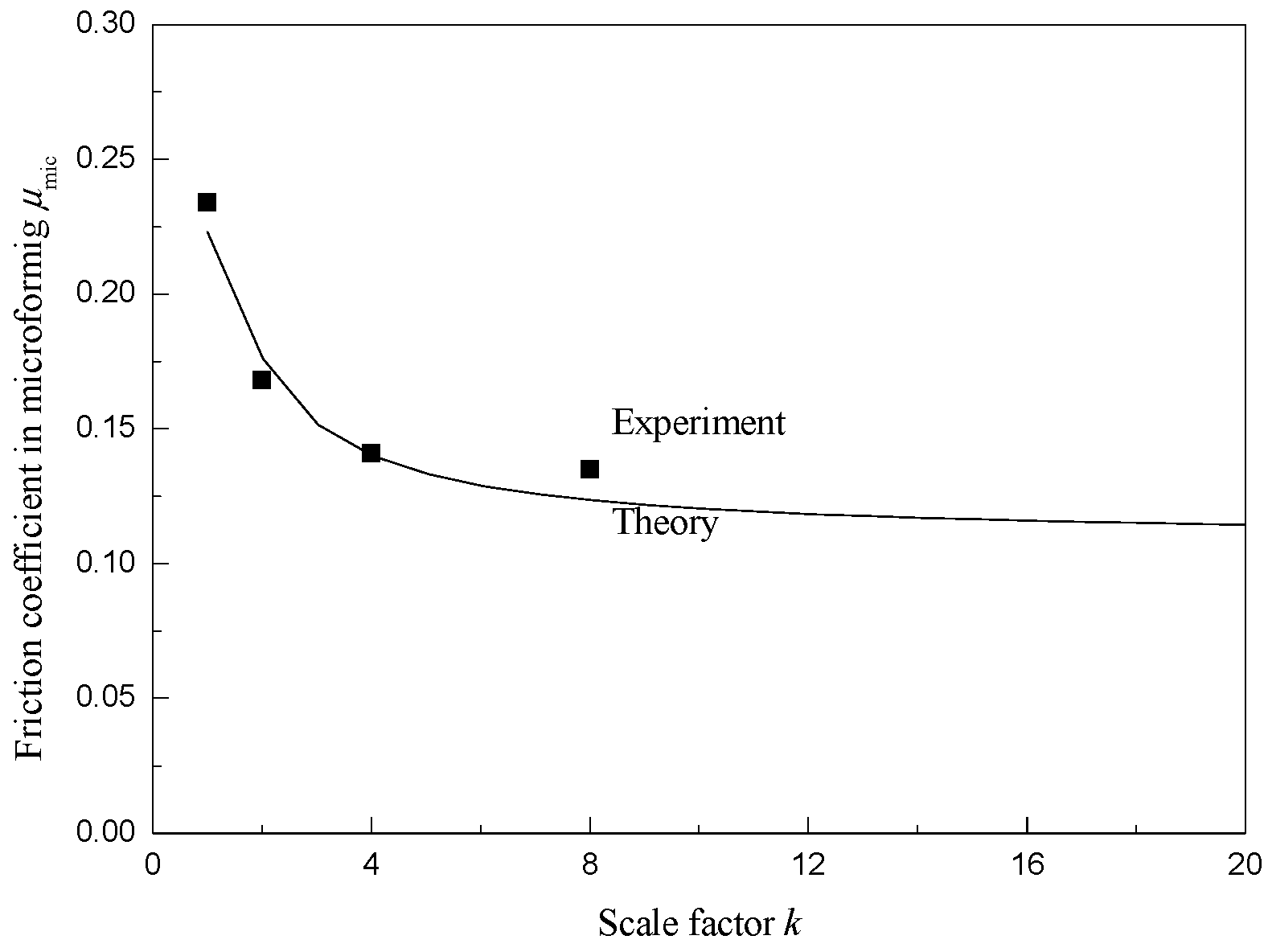
To assess the internal consistency of the proposed model, calculations were performed for the castor-oil lubrication condition shown in Figure 8, for which the parameter set required by the current formulation was available, and the measured response provided a stable intermediate-lubrication case between soybean oil and Vaseline. This validation should therefore be understood as a first check under one lubricant/material/surface condition, not as a comprehensive demonstration of predictive generality across arbitrary systems. Additional validation under different lubricants, materials, roughness levels, and process parameters will be required in future work. For the present case, the bulk modulus of castor oil was K = 2140 MPa, the yield stress of the T2 copper sheet was σs = 150 MPa, the nominal normal stress was pn = 0.4 MPa, and the friction coefficient under dry friction was μ0 = 0.223. With K/σs = 14.3 and α = 0.035 pn/σs, the friction coefficient μmic, considering the proportional factor under this condition, can be obtained as follows:
μ m i c = 0.223 k 2 k 2 + 1.05 ( k 1 ) 2
Figure 13 shows the friction-coefficient curve for castor oil lubrication calculated using the proposed model. The qualitative agreement between the experimental trend and the calculated curve indicates that the model captures the dominant behavior of the present dataset, although broader validation remains necessary. Because the present validation is intentionally limited to a trend-level consistency check for a reduced-order model, the current paper does not claim universal predictive accuracy, and a more extensive point-wise error analysis should be reserved for a broader validated dataset.

4. Conclusions

The mechanical size effect and friction size effect in thin-sheet microforming of T2 copper foils were investigated experimentally and theoretically. The principal conclusions are as follows:
(1) A significant size-dependent change in the measured mechanical response was observed in T2 copper foils within the present comparative tensile configuration. As the sheet thickness decreased from 0.32 mm to 0.04 mm, elongation decreased by nearly 60% and tensile strength by nearly 40%, while the fracture mode shifted from mixed dimple rupture/slip separation to typical slip-separation fracture.
(2) The direct contribution of the mechanical size effect to the friction coefficient was limited. Under comparable surface morphology and roughness conditions, the pin-on-disk friction coefficients for sheets with different thicknesses varied by less than 7%, indicating that the subsequent sliding-friction response was governed primarily by lubrication-controlled size effects.
(3) A pronounced friction size effect was observed under lubricated conditions. With soybean oil, castor oil, and Vaseline, the friction coefficient increased markedly as specimen size decreased and gradually approached the dry-friction value; the greatest deterioration in lubrication performance occurred for the lowest-viscosity lubricant.
(4) The dominant mechanism of the friction size effect was the enlargement of the edge non-lubricated region together with the reduction in closed lubricant pockets as the characteristic contact size decreased. This change increased the real contact area and thereby increased the friction coefficient.
(5) A size-dependent friction model was established by incorporating the non-lubricated-region fraction into a Coulomb-based framework. Under the present material and surface conditions, the model reproduced the dominant trend of the castor-oil dataset and should therefore be interpreted as a reduced-order, system-specific description rather than as a universally predictive friction law. These findings are directly relevant to lubricant selection and process-window definition in thin-sheet microforming of ultra-thin copper foils. Further work should address replicate-based statistics, quantitative surface metrology, and validation across other materials and lubricant systems.

Author Contributions

Investigation, data curation, S.S.; writing—original draft preparation, J.Z.; writing—review and editing, W.C. All authors have read and agreed to the published version of the manuscript.

Funding

S&T Program of Xingtai (No. 2022zz096).

Data Availability Statement

The data presented in this study are available on request from the corresponding author.

Conflicts of Interest

The authors declare no conflicts of interest.

References

  1. Úlfar, A.; Philipp, S.; Jonas, M.; Alexander, B.; Pete, G.; Chris, V. A review of methods and effects for improving production robustness in industrial micro-deep drawing. Int. J. Mater. Form. 2024, 17, 01832. [Google Scholar] [CrossRef]
  2. Pan, D.; Zhang, G.; Jia, F.; Li, L.; Zhang, T.; Lu, Y.; Wu, H.; Yang, M.; Jiang, Z. Analysis of TiO2 nanolubricant influence in micro deep drawing of stainless steel SUS301. Materials 2023, 16, 2196. [Google Scholar] [CrossRef]
  3. Pan, D.; Zhang, G.; Jia, F.; Lu, Y.; Wang, J.; Li, Z.; Li, L.; Yang, M.; Jiang, Z. Enhanced performance of micro deep drawing through the application of TiO2 nanolubricant and graphene lubricants on SUS301 stainless steel foil. Processes 2023, 11, 3042. [Google Scholar] [CrossRef]
  4. Pan, D.; Zhang, G.; Wu, H.; Jia, F.; Li, L.; Zhang, T.; Yang, M.; Jiang, Z. Tribological behaviour of ultra-thin stainless steel in micro deep drawing with graphene nanosheets. Wear 2023, 524–525, 204878. [Google Scholar] [CrossRef]
  5. Pan, D.; Zhang, G.; Jia, F.; Wu, H.; Lu, Y.; Zhang, T.; Li, L.; Lin, F.; Yang, M.; Jiang, Z. Exploring the use of graphene lubricant and TiO2 nanolubricants in micro deep drawing of stainless steel SUS301. Int. J. Adv. Manuf. Technol. 2024, 130, 5521–5532. [Google Scholar] [CrossRef]
  6. Zhao, J.; Zhang, K.; Ma, X.; Zhang, J. Study on the formability of copper foils during multi-step micro deep drawing. J. Mater. Res. Technol. 2024, 28, 2187–2198. [Google Scholar]
  7. Gau, T.; Zhang, K.; Zhu, J. An experimental and simulation study on the formability of commercial pure titanium foil. Micromachines 2024, 15, 1096. [Google Scholar] [CrossRef]
  8. Sadık, O.; Tolga, A. Design, construction, and demonstration of a novel die system for deep drawing applications with utilization of ultrasonic vibrations. J. Braz. Soc. Mech. Sci. Eng. 2024, 46, 124. [Google Scholar] [CrossRef]
  9. Olguner, S.; Bozdana, T.; Kütük, E. Experimental investigation on the combined effects of ultrasonic vibrations and servo press motion scenarios on drawability of low carbon steels. Int. J. Adv. Manuf. Technol. 2025, 137, 5699–5717. [Google Scholar] [CrossRef]
  10. Klaynil, C.; Janmanee, P.; Lawanwong, K. Improvement of limiting drawing ratio of a SPCC steel using sequential action forming with inclined blank holder. Discov. Mech. Eng. 2025, 4, 40. [Google Scholar] [CrossRef]
  11. Leelaseat, J.; Sunanta, A.; Suranuntchai, S. Formability assessment based on Q-value for optimizing the deep drawing process of automotive parts made from aluminum alloys sheet. Metals 2025, 15, 68. [Google Scholar] [CrossRef]
  12. Han, S.; Kim, H. Optimum multistage deep drawing process design using artificial neural network-based forming quality evaluation function. J. Mater. Process. Technol. 2025, 341, 118881. [Google Scholar] [CrossRef]
  13. Celik, I.; Şensoy, A.; Seven, G.; Cicek, D. Improving deep drawing quality of DD13 sheet metal: Optimization of process parameters using Box-Behnken design. Materials 2025, 18, 1424. [Google Scholar] [CrossRef]
  14. Parodo, G.; Sorrentino, L.; Turchetta, S.; Moffa, G. Experimental and numerical analysis of friction effects in the forming of thin EN AW 8006-O aluminum sheets. Metals 2025, 15, 695. [Google Scholar] [CrossRef]
  15. Joun, S.; Park, C.; Heo, Y.; Kim, D. A review of friction and lubricant in metal forming. Lubricants 2025, 13, 512. [Google Scholar] [CrossRef]
  16. Tiruneh, A.; Yeshiwas, T.; Nega, A.; Bekele, A.; Adamu, T. Friction in metal forming processes: A comprehensive review of experimental methods, influencing factors, and surface engineering approaches. J. Mater. Sci. Mater. Eng. 2026, 21, 31. [Google Scholar] [CrossRef]
  17. Gao, Y.; Li, H.; Zhao, D.; Fan, X. Advances in friction of aluminium alloy deep drawing. Friction 2024, 12, 396–427. [Google Scholar] [CrossRef]
  18. Monteiro, P.; Costa, H. A holistic review of surface texturing in sheet metal forming: From sheet rolling to final forming. Lubricants 2025, 13, 253. [Google Scholar] [CrossRef]
  19. Devenport, T.; Griffin, J.; Rolfe, B.; Pereira, M. Friction and wear in stages of galling for sheet metal forming applications. Lubricants 2023, 11, 288. [Google Scholar] [CrossRef]
  20. Trzepieciński, T. Experimental analysis of frictional performance of EN AW-2024-T3 Alclad aluminium alloy sheet metals in sheet metal forming. Lubricants 2023, 11, 28. [Google Scholar] [CrossRef]
  21. Xia, Y.; Hou, Z.; Tan, J.; Wang, W.; Guo, N.; Min, J. An experimental study on the frictional behavior of ultrathin metal sheets at elevated temperatures. Materials 2024, 17, 3009. [Google Scholar] [CrossRef]
  22. Wang, H.; Chen, G.; Zhu, Q.; Zhang, P.; Wang, C. Frictional behavior of pure titanium thin sheet in stamping process: Experiments and modeling. Tribol. Int. 2024, 191, 109131. [Google Scholar] [CrossRef]
  23. Tomáš, M.; Németh, S.; Evin, E.; Hollý, F.; Kundracik, V.; Kulya, J.; Buber, M. Comparison of friction properties of GI steel plates with various surface treatments. Lubricants 2024, 12, 198. [Google Scholar] [CrossRef]
  24. Trzepieciński, T.; Szwajka, K.; Szewczyk, M. Analysis of coefficient of friction of deep-drawing-quality steel sheets using multi-layer neural networks. Lubricants 2024, 12, 50. [Google Scholar] [CrossRef]
  25. Mohammed, S.; Tomasz, T.; Marek, K. Modelling and parameter identification of coefficient of friction for deep-drawing quality steel sheets using the CatBoost machine learning algorithm and neural networks. Int. J. Adv. Manuf. Technol. 2022, 124, 2229–2259. [Google Scholar]
  26. Mohammed, S.; Tomasz, T.; Maghawry, O.; Krzysztof, S.; Szewczyk Marek, S. Analysis of the friction performance of deep-drawing steel sheets using network models. Int. J. Adv. Manuf. Technol. 2024, 132, 3757–3769. [Google Scholar] [CrossRef]
  27. Trzepieciński, T.; Szwajka, K.; Szewczyk, M.; Szwajka, Z.; Slota, J.; Kaščák, L. The effect of the addition of silicon dioxide particles on the tribological performance of vegetable oils in HCT600X+Z/145Cr46 steel contacts in the deep-drawing process. Materials 2025, 18, 73. [Google Scholar] [CrossRef]
  28. Szwajka, K.; Trzepieciński, T.; Szewczyk, M. Effect of SiO2 and MoS2 particles as lubricant additives on lubrication performance in sheet metal forming. Materials 2025, 18, 4605. [Google Scholar] [CrossRef]
  29. Yang, X.; Liu, H.; Wu, V.; Politis, D.; Wang, L. Interactive friction modelling and digitally enhanced evaluation of lubricant performance during aluminium hot stamping. Lubricants 2024, 12, 417. [Google Scholar] [CrossRef]
  30. Trzepieciński, T.; Szwajka, K.; Szewczyk, M.; Szwajka, J.; Barlak, M.; Langier, K.; Okrasa, S. Analysis of influence of coating type on friction behaviour and surface topography of DC04/1.0338 steel sheet in bending under tension friction test. Materials 2024, 17, 5650. [Google Scholar] [CrossRef]
  31. Djordjević, M.; Aleksandrović, S.; Arsić, D.; Nikolić Ružica, N.; Janusz, S.; Aleksandar, T.; Dragan, Č.; Robert, U. Influence of TiN coating on the drawing force and friction coefficient in the deep drawing process of AlMg4.5Mn0.7 thin sheets. Materials 2023, 16, 3968. [Google Scholar] [CrossRef] [PubMed]
  32. Soranansri, P.; Dubois, A.; Moreau, P.; Funazuka, T.; Dohda, K.; Dubar, L. Tribological performance of AlCrN, TiAlN, and arc-DLC coatings in hot forming of aluminum alloy. Lubricants 2025, 13, 430. [Google Scholar] [CrossRef]
  33. Huang, Y.; Li, J.; Wang, X.; Liu, X.; Li, H.; Ren, P.; Sun, C. Tribological properties and corrosion resistance of multilayer a-C:H:Ti films at different target currents. Metals 2023, 13, 1274. [Google Scholar] [CrossRef]
  34. Schumann, P.; Arne, V.; Groche, P. Improved tribological properties of blanking punches for copper alloys utilizing deterministic surface texturing by machine hammer peening. Coatings 2025, 15, 136. [Google Scholar] [CrossRef]
Figure 1. Dimensions of the tensile specimens.
Lubricants 14 00174 g001
Figure 2. Schematic illustration of the CCD-based non-contact strain measurement system.
Lubricants 14 00174 g002
Figure 3. Schematic illustration of the sliding friction test system for thin-sheet microforming.
Lubricants 14 00174 g003
Figure 4. Thin-sheet microforming sliding test friction testing system.
Lubricants 14 00174 g004
Figure 5. True stress–strain curves of tensile specimens with different sizes.
Lubricants 14 00174 g005
Figure 6. SEM fracture morphologies of tensile specimens with different thicknesses: (a) 0.32 mm; (b) 0.16 mm; (c) 0.08 mm; (d) 0.04 mm.
Lubricants 14 00174 g006
Figure 7. Friction coefficient curves of thin sheets with different thicknesses.
Lubricants 14 00174 g007
Figure 8. Friction coefficients of specimens with different sizes under different lubrication conditions: (a) dry friction; (b) soybean oil; (c) castor oil; (d) vaseline.
Lubricants 14 00174 g008
Figure 9. SEM images of specimen surfaces under dry friction conditions: (a) edge region of 0.04 mm specimen; (b) central region of 0.04 mm specimen; (c) edge region of 0.16 mm specimen; (d) central region of 0.16 mm specimen.
Lubricants 14 00174 g009
Figure 10. SEM images of specimen surfaces under soybean oil lubrication: (a) edge region of 0.04 mm specimen; (b) central region of 0.04 mm specimen; (c) edge region of 0.16 mm specimen; (d) central region of 0.16 mm specimen.
Lubricants 14 00174 g010
Figure 11. Schematic illustration of sheet surface deformation under external loading.
Lubricants 14 00174 g011
Figure 12. Lubricated and non-lubricated regions under different size conditions.
Lubricants 14 00174 g012
Figure 13. Friction coefficient curve under castor oil lubrication.
Lubricants 14 00174 g013
Disclaimer/Publisher’s Note: The statements, opinions and data contained in all publications are solely those of the individual author(s) and contributor(s) and not of MDPI and/or the editor(s). MDPI and/or the editor(s) disclaim responsibility for any injury to people or property resulting from any ideas, methods, instructions or products referred to in the content.