
miR-155: A Potential Biomarker for Predicting Mortality in COVID-19 Patients

Abstract
1. Introduction
2. Materials and Methods
2.1. Ethics Statement
2.2. Patients
2.3. Data Collection
2.4. Sample Preparation, RNA Extraction, and cDNA Preparation and Quantification
2.5. Statistical Analysis
3. Results
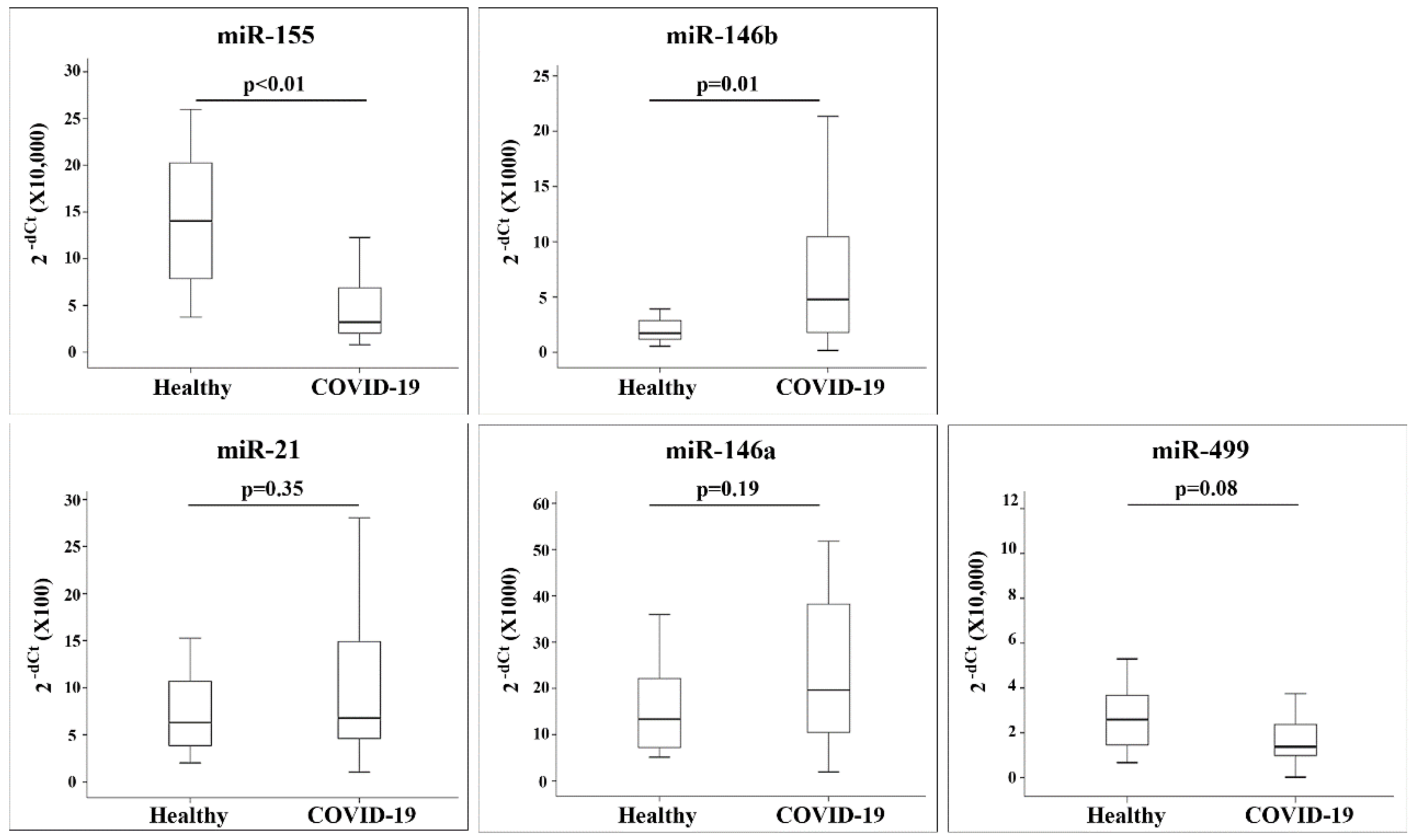
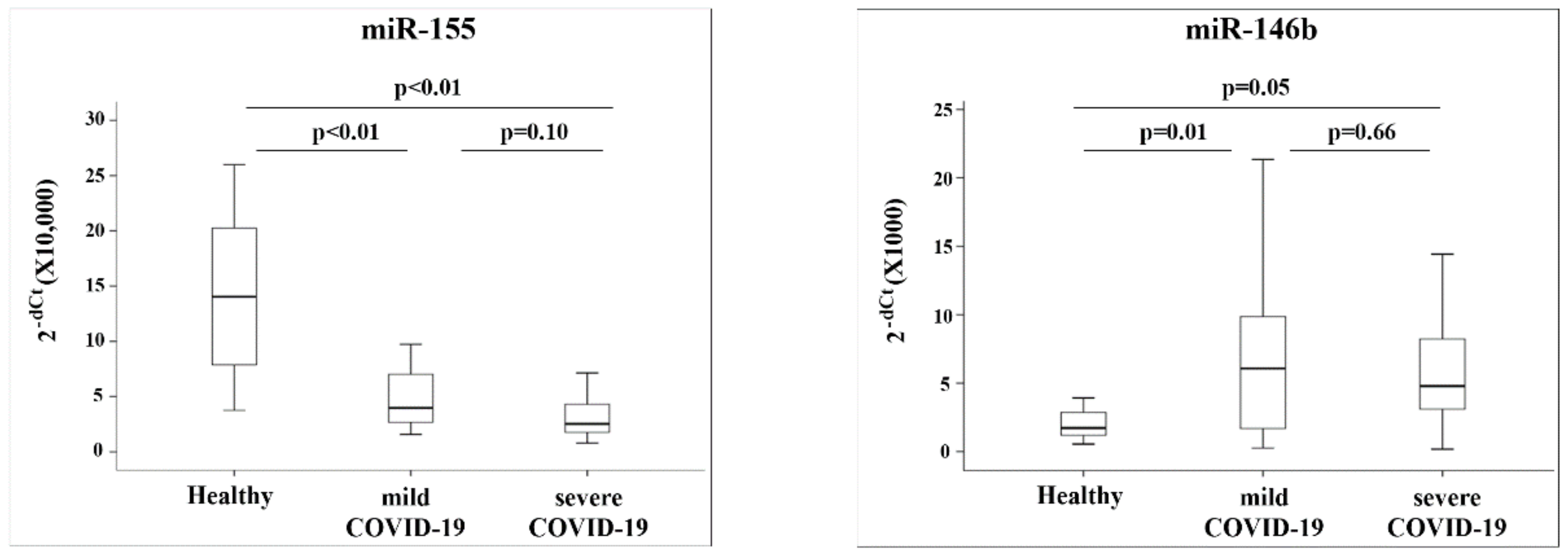
3.1. miR-155 and miR-146b Are Differently Expressed in COVID-19 Patients
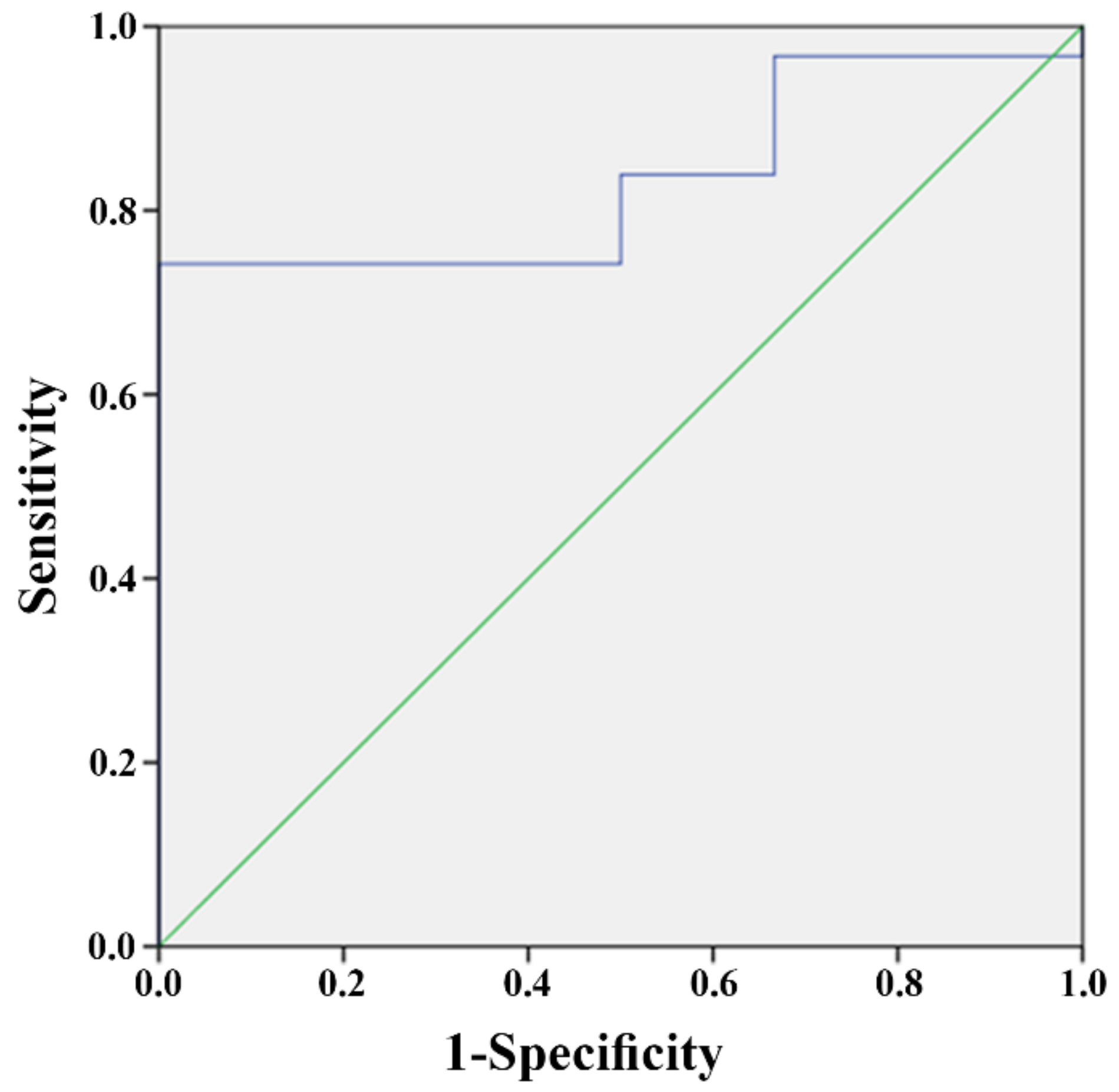
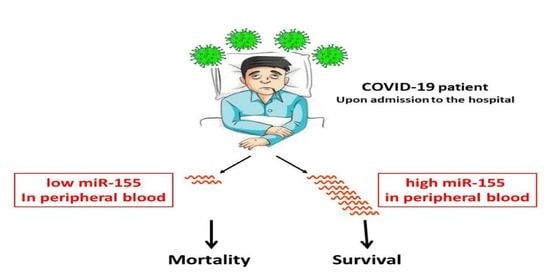
3.2. miR-155 Predicts Patient Outcome
4. Discussion
5. Conclusions
Supplementary Materials
Author Contributions
Funding
Institutional Review Board Statement
Informed Consent Statement
Data Availability Statement
Acknowledgments
Conflicts of Interest
References
- Grasselli, G.; Greco, M.; Zanella, A.; Albano, G.; Antonelli, M.; Bellani, G.; Bonanomi, E.; Cabrini, L.; Carlesso, E.; Castelli, G.; et al. Risk Factors Associated With Mortality Among Patients With COVID-19 in Intensive Care Units in Lombardy, Italy. JAMA Intern. Med. 2020, 180, 1345–1355. [Google Scholar] [CrossRef] [Scilit] [PubMed]
- Ponti, G.; Maccaferri, M.; Ruini, C.; Tomasi, A.; Ozben, T. Biomarkers associated with COVID-19 disease progression. Crit. Rev. Clin. Lab. Sci. 2020, 57, 389–399. [Google Scholar] [CrossRef] [Scilit] [PubMed]
- O’Brien, J.; Hayder, H.; Zayed, Y.; Peng, C. Overview of MicroRNA Biogenesis, Mechanisms of Actions, and Circulation. Front. Endocrinol. 2018, 9, 402. [Google Scholar] [CrossRef] [Scilit] [PubMed]
- Mori, M.A.; Ludwig, R.G.; Garcia-Martin, R.; Brandao, B.B.; Kahn, C.R. Extracellular miRNAs: From Biomarkers to Mediators of Physiology and Disease. Cell Metab. 2019, 30, 656–673. [Google Scholar] [CrossRef] [Scilit] [PubMed]
- Rice, T.W.; Wheeler, A.P.; Bernard, G.R.; Hayden, D.L.; Schoenfeld, D.A.; Ware, L.B. National Institutes of Health, N.H.L.; Blood Institute, A.N., Comparison of the SpO2/FIO2 ratio and the PaO2/FIO2 ratio in patients with acute lung injury or ARDS. Chest 2007, 132, 410–417. [Google Scholar] [CrossRef] [Scilit]
- Lakens, D. Calculating and reporting effect sizes to facilitate cumulative science: A practical primer for t-tests and ANOVAs. Front. Psychol. 2013, 4, 863. [Google Scholar] [CrossRef] [Scilit]
- Wong, R.S.Y. Inflammation in COVID-19: From pathogenesis to treatment. Int. J. Clin. Exp. Pathol. 2021, 14, 831–844. [Google Scholar]
- Mann, M.; Mehta, A.; Zhao, J.L.; Lee, K.; Marinov, G.K.; Garcia-Flores, Y.; Lu, L.F.; Rudensky, A.Y.; Baltimore, D. Author Correction: An NF-kappaB-microRNA regulatory network tunes macrophage inflammatory responses. Nat. Commun. 2018, 9, 3338. [Google Scholar] [CrossRef] [Scilit]
- Comer, B.S.; Camoretti-Mercado, B.; Kogut, P.C.; Halayko, A.J.; Solway, J.; Gerthoffer, W.T. MicroRNA-146a and microRNA-146b expression and anti-inflammatory function in human airway smooth muscle. Am. J. Physiol. Lung Cell. Mol. Physiol. 2014, 307, L727–L734. [Google Scholar] [CrossRef] [Scilit]
- Lu, T.X.; Munitz, A.; Rothenberg, M.E. MicroRNA-21 is up-regulated in allergic airway inflammation and regulates IL-12p35 expression. J. Immunol. 2009, 182, 4994–5002. [Google Scholar] [CrossRef] [Scilit]
- Zhang, W.; Li, J.; Yao, H.; Li, T. Restoring microRNA-499-5p Protects Sepsis-Induced Lung Injury Mice Via Targeting Sox6. Nanoscale Res. Lett. 2021, 16, 89. [Google Scholar] [CrossRef] [Scilit] [PubMed]
- Li, L.; Chen, X.P.; Li, Y.J. MicroRNA-146a and human disease. Scand. J. Immunol. 2010, 71, 227–231. [Google Scholar] [CrossRef] [Scilit] [PubMed]
- Zhang, C.; Wang, H.; Yang, B. miR-146a regulates inflammation and development in patients with abdominal aortic aneurysms by targeting CARD10. Int. Angiol. A J. Int. Union Angiol. 2020, 39, 314–322. [Google Scholar] [CrossRef] [Scilit] [PubMed]
- Wu, X.; Wu, C.; Gu, W.; Ji, H.; Zhu, L. Serum Exosomal MicroRNAs Predict Acute Respiratory Distress Syndrome Events in Patients with Severe Community-Acquired Pneumonia. BioMed Res. Int. 2019, 2019, 3612020. [Google Scholar] [CrossRef] [Scilit] [PubMed]
- Lu, L.F.; Gasteiger, G.; Yu, I.S.; Chaudhry, A.; Hsin, J.P.; Lu, Y.; Bos, P.D.; Lin, L.L.; Zawislak, C.L.; Cho, S.; et al. A Single miRNA-mRNA Interaction Affects the Immune Response in a Context- and Cell-Type-Specific Manner. Immunity 2015, 43, 52–64. [Google Scholar] [CrossRef] [Scilit]
- Backes, S.; Shapiro, J.S.; Sabin, L.R.; Pham, A.M.; Reyes, I.; Moss, B.; Cherry, S.; tenOever, B.R. Degradation of host microRNAs by poxvirus poly(A) polymerase reveals terminal RNA methylation as a protective antiviral mechanism. Cell Host Microbe 2012, 12, 200–210. [Google Scholar] [CrossRef] [Scilit]
- Mittelbrunn, M.; Gutierrez-Vazquez, C.; Villarroya-Beltri, C.; Gonzalez, S.; Sanchez-Cabo, F.; Gonzalez, M.A.; Bernad, A.; Sanchez-Madrid, F. Unidirectional transfer of microRNA-loaded exosomes from T cells to antigen-presenting cells. Nat. Commun. 2011, 2, 282. [Google Scholar] [CrossRef] [Scilit]
- Bala, S.; Csak, T.; Momen-Heravi, F.; Lippai, D.; Kodys, K.; Catalano, D.; Satishchandran, A.; Ambros, V.; Szabo, G. Biodistribution and function of extracellular miRNA-155 in mice. Sci. Rep. 2015, 5, 10721. [Google Scholar] [CrossRef] [Scilit]
- Zheng, Z.; Sun, R.; Zhao, H.J.; Fu, D.; Zhong, H.J.; Weng, X.Q.; Qu, B.; Zhao, Y.; Wang, L.; Zhao, W.L. MiR155 sensitized B-lymphoma cells to anti-PD-L1 antibody via PD-1/PD-L1-mediated lymphoma cell interaction with CD8+T cells. Mol. Cancer 2019, 18, 54. [Google Scholar] [CrossRef] [Scilit]
- Faccini, J.; Ruidavets, J.B.; Cordelier, P.; Martins, F.; Maoret, J.J.; Bongard, V.; Ferrieres, J.; Roncalli, J.; Elbaz, M.; Vindis, C. Circulating miR-155, miR-145 and let-7c as diagnostic biomarkers of the coronary artery disease. Sci. Rep. 2017, 7, 42916. [Google Scholar] [CrossRef] [Scilit]
- Garg, A.; Seeliger, B.; Derda, A.A.; Xiao, K.; Gietz, A.; Scherf, K.; Sonnenschein, K.; Pink, I.; Hoeper, M.M.; Welte, T.; et al. Circulating cardiovascular microRNAs in critically ill COVID-19 patients. Eur. J. Heart Fail. 2021, 23, 468–475. [Google Scholar] [CrossRef] [Scilit] [PubMed]
- Kirschner, M.B.; Edelman, J.J.; Kao, S.C.; Vallely, M.P.; van Zandwijk, N.; Reid, G. The Impact of Hemolysis on Cell-Free microRNA Biomarkers. Front. Genet. 2013, 4, 94. [Google Scholar] [CrossRef] [Scilit] [PubMed]
- Pontecorvi, G.; Bellenghi, M.; Ortona, E.; Care, A. microRNAs as new possible actors in gender disparities of COVID-19 pandemic. Acta Physiol. 2020, 230, e13538. [Google Scholar] [CrossRef] [Scilit] [PubMed]
- Tacke, F.; Spehlmann, M.E.; Vucur, M.; Benz, F.; Luedde, M.; Cardenas, D.V.; Roy, S.; Loosen, S.; Hippe, H.J.; Frey, N.; et al. miR-155 Predicts Long-Term Mortality in Critically Ill Patients Younger than 65 Years. Mediat. Inflamm. 2019, 2019, 6714080. [Google Scholar] [CrossRef] [Scilit] [PubMed]
- Ong, J.; Woldhuis, R.R.; Boudewijn, I.M.; van den Berg, A.; Kluiver, J.; Kok, K.; Terpstra, M.M.; Guryev, V.; de Vries, M.; Vermeulen, C.J.; et al. Age-related gene and miRNA expression changes in airways of healthy individuals. Sci. Rep. 2019, 9, 3765. [Google Scholar] [CrossRef] [Scilit]
- Malik, P.; Patel, U.; Mehta, D.; Patel, N.; Kelkar, R.; Akrmah, M.; Gabrilove, J.L.; Sacks, H. Biomarkers and outcomes of COVID-19 hospitalisations: Systematic review and meta-analysis. BMJ Evid.-Based Med. 2021, 26, 107–108. [Google Scholar] [CrossRef] [Scilit]
- Loomba, R.S.; Villarreal, E.G.; Farias, J.S.; Aggarwal, G.; Aggarwal, S.; Flores, S. Serum biomarkers for prediction of mortality in patients with COVID-19. Ann. Clin. Biochem. 2021, 59, 15–22. [Google Scholar] [CrossRef] [Scilit]
- Farr, R.J.; Rootes, C.L.; Rowntree, L.C.; Nguyen, T.H.O.; Hensen, L.; Kedzierski, L.; Cheng, A.C.; Kedzierska, K.; Au, G.G.; Marsh, G.A.; et al. Altered microRNA expression in COVID-19 patients enables identification of SARS-CoV-2 infection. PLoS Pathog. 2021, 17, e1009759. [Google Scholar] [CrossRef] [Scilit]
- Li, C.; Hu, X.; Li, L.; Li, J.H. Differential microRNA expression in the peripheral blood from human patients with COVID-19. J. Clin. Lab. Anal. 2020, 34, e23590. [Google Scholar] [CrossRef] [Scilit]
- de Gonzalo-Calvo, D.; Benitez, I.D.; Pinilla, L.; Carratala, A.; Moncusi-Moix, A.; Gort-Paniello, C.; Molinero, M.; Gonzalez, J.; Torres, G.; Bernal, M.; et al. Circulating microRNA profiles predict the severity of COVID-19 in hospitalized patients. Transl. Res. J. Lab. Clin. Med. 2021, 236, 147–159. [Google Scholar] [CrossRef] [Scilit]
- Condrat, C.E.; Thompson, D.C.; Barbu, M.G.; Bugnar, O.L.; Boboc, A.; Cretoiu, D.; Suciu, N.; Cretoiu, S.M.; Voinea, S.C. miRNAs as Biomarkers in Disease: Latest Findings Regarding Their Role in Diagnosis and Prognosis. Cells 2020, 9, 276. [Google Scholar] [CrossRef] [Scilit] [PubMed]
- Sharma, A.; Hijazi, Z.; Andersson, U.; Al-Khatib, S.M.; Lopes, R.D.; Alexander, J.H.; Held, C.; Hylek, E.M.; Leonardi, S.; Hanna, M.; et al. Use of Biomarkers to Predict Specific Causes of Death in Patients With Atrial Fibrillation. Circulation 2018, 138, 1666–1676. [Google Scholar] [CrossRef] [Scilit] [PubMed]
- Pregernig, A.; Muller, M.; Held, U.; Beck-Schimmer, B. Prediction of mortality in adult patients with sepsis using six biomarkers: A systematic review and meta-analysis. Ann. Intensive Care 2019, 9, 125. [Google Scholar] [CrossRef] [Scilit] [PubMed]



| Parameter | Healthy (n = 15) | COVID-19-Mild (n = 22) | COVID-19-Severe (n = 15) | p Value |
|---|---|---|---|---|
| Age (years) (Median (IQR)) | 46 (42–57) | 77.5 (62.25–88) | 55 (48–66) | <0.001 |
| Gender (male) | 4 (27%) | 14 (63.63%) | 12 (80%) | 0.003 |
| BMI | 25.0 (21.6–26.8) | 26 (25.1–29.33) | 31.5 (28.05–38.5) | 0.005 |
| Blood type n (%) | A+ 7 (47%) B+ 3 (20%) O+ 2 (13%) O− 2 (13%) N/A 1 (7%) | A+ 7 (31%) B+ 1 (4.5%) AB+ 3 (14%) O+ 2 (9%) N/A 9 (41%) | A+ 6 (40%) B+ 3 (20%) AB+ 1 (7%) O+ 3 (20%) N/A 2 (13%) | 0.35 |
| Diabetes | 1 (6.7%) | 8 (36.36%) | 1 (6.66%) | 0.25 |
| IHD | 0 (0) | 3 (13.63%) | 0 (0%) | 0.09 |
| CVE | 0 (0) | 2 (9.09%) | 1 (6.66%) | 0.63 |
| Malignancy | 0 (0) | 1 (4.54%) | 1 (6.66%) | 0.14 |
| HTN | 1 (6.7%) | 14 (63.63%) | 3 (20%) | 0.002 |
| Dyslipidemia | 1 (6.7%) | 9 (40.9%) | 3 (20%) | 0.046 |
| CRF | 0 (0) | 3 (13.63%) | 1 (6.66%) | 0.43 |
| COPD/CLD | 0 (0) | 3 (13.63%) | 0 (0%) | 0.38 |
| Thyroid disease | 0 (0) | 2 (9.09%) | 1 (6.66%) | 0.43 |
| Parameter | Mild (n = 22) | Severe (n = 15) | p Value |
|---|---|---|---|
| WBC peak (K/ μL) | 12.5 (10.06–16.27) | 17.4 (14.69–24.24) | 0.009 |
| HGB nadir (g/dL) | 11.84 (8.75–12.48) | 7.79 (7.09–10.89) | 0.004 |
| D-dimer peak (ng/mL) | 1262.5 (650.25–6469) | 16,724 (1158–28,955) | 0.01 |
| INR peak | 1.21 (1.03–1.35) | 1.39 (1.24–1.66) | 0.005 |
| Fibrinogen peak (mg/dL) | 541 (418–760.5) | 704 (601–886) | 0.04 |
| Creatinine peak (mg/dL) | 0.98 (0.78–1.48) | 1.18 (1.12–2.89) | 0.02 |
| Bilirubin peak (mg/dL) | 0.67 (0.51–0.74) | 1.28 (1.01–2.68) | 0.001 |
| AST-peak (IU/L) | 68.41 ± 45.62 | 810.6 ± 2544.42 | 0.17 |
| ALT-peak (IU/L) | 45.5 (25.5–99.75) | 161 (76–231) | <0.001 |
| LDH-peak (IU/L) | 445 (333.25–609.75) | 540 (515–1038) | 0.009 |
| Troponin-peak (ng/L) | 17.9 (8.4–28.77) | 38.2 (12.9–108) | 0.05 |
| CRP-peak (mg/L) | 146.5 (65.96–260.25) | 300 (234–356) | 0.004 |
| IL6 (pg/mL) (n = 16) | 53 (30.5–218.25) | 147.5 (20.75–336) | 0.38 |
| IL1B (pg/mL) (n = 16) | 1 (0.75–1) | 0 (0–1) | 0.20 |
| IL8 (pg/mL) (n = 16) | 110 (55.5–255) | 66 (44.25–118.25) | 0.27 |
| TNFα (pg/mL) (n = 16) | 32 (23–63) | 28.5 (16–42.5) | 0.55 |
| s/f ratio upon admission median (IQR) | 442.85 (328.68–447.61) | 146.66 (108.88–192) | <0.001 |
| Intubated (Yes) n (%) | 6 (27.27%) | 12 (80%) | 0.003 |
| Ventilation days n (%) | 0 (0–11.25) | 16 (3–33) | 0.006 |
| LOS-Hospitalized days n (IQR) | 14 (6–28) | 32 (21–50) | 0.01 |
| Mortality | 3 (13.63%) | 3 (20%) | 0.13 |
| ECMO | 0 (0%) | 4 (26.67%) | <0.001 |
Publisher’s Note: MDPI stays neutral with regard to jurisdictional claims in published maps and institutional affiliations. |
© 2022 by the authors. Licensee MDPI, Basel, Switzerland. This article is an open access article distributed under the terms and conditions of the Creative Commons Attribution (CC BY) license (https://creativecommons.org/licenses/by/4.0/).
Share and Cite
Kassif-Lerner, R.; Zloto, K.; Rubin, N.; Asraf, K.; Doolman, R.; Paret, G.; Nevo-Caspi, Y. miR-155: A Potential Biomarker for Predicting Mortality in COVID-19 Patients. J. Pers. Med. 2022, 12, 324. https://doi.org/10.3390/jpm12020324
Kassif-Lerner R, Zloto K, Rubin N, Asraf K, Doolman R, Paret G, Nevo-Caspi Y. miR-155: A Potential Biomarker for Predicting Mortality in COVID-19 Patients. Journal of Personalized Medicine. 2022; 12(2):324. https://doi.org/10.3390/jpm12020324
Chicago/Turabian StyleKassif-Lerner, Reut, Keren Zloto, Nadav Rubin, Keren Asraf, Ram Doolman, Gidi Paret, and Yael Nevo-Caspi. 2022. "miR-155: A Potential Biomarker for Predicting Mortality in COVID-19 Patients" Journal of Personalized Medicine 12, no. 2: 324. https://doi.org/10.3390/jpm12020324
APA StyleKassif-Lerner, R., Zloto, K., Rubin, N., Asraf, K., Doolman, R., Paret, G., & Nevo-Caspi, Y. (2022). miR-155: A Potential Biomarker for Predicting Mortality in COVID-19 Patients. Journal of Personalized Medicine, 12(2), 324. https://doi.org/10.3390/jpm12020324