Real-Life Challenges in Assessing Nutritional Status and Quality of Life in Patients with Cirrhosis
 , , ,
, , ,
Abstract
1. Introduction
2. Materials and Methods
2.1. Study Design and Eligibility Criteria
- (1)
- hepatocellular carcinoma (HCC) or other malignancy,
- (2)
- septicemia,
- (3)
- respiratory insufficiency,
- (4)
- hepatorenal syndrome,
- (5)
- coexisting Human Immunodeficiency Virus or tuberculosis,
- (6)
- inflammatory bowel disease or other malabsorptive disorders,
- (7)
- patients receiving glucocorticoid or immunosuppressive drugs, and
- (8)
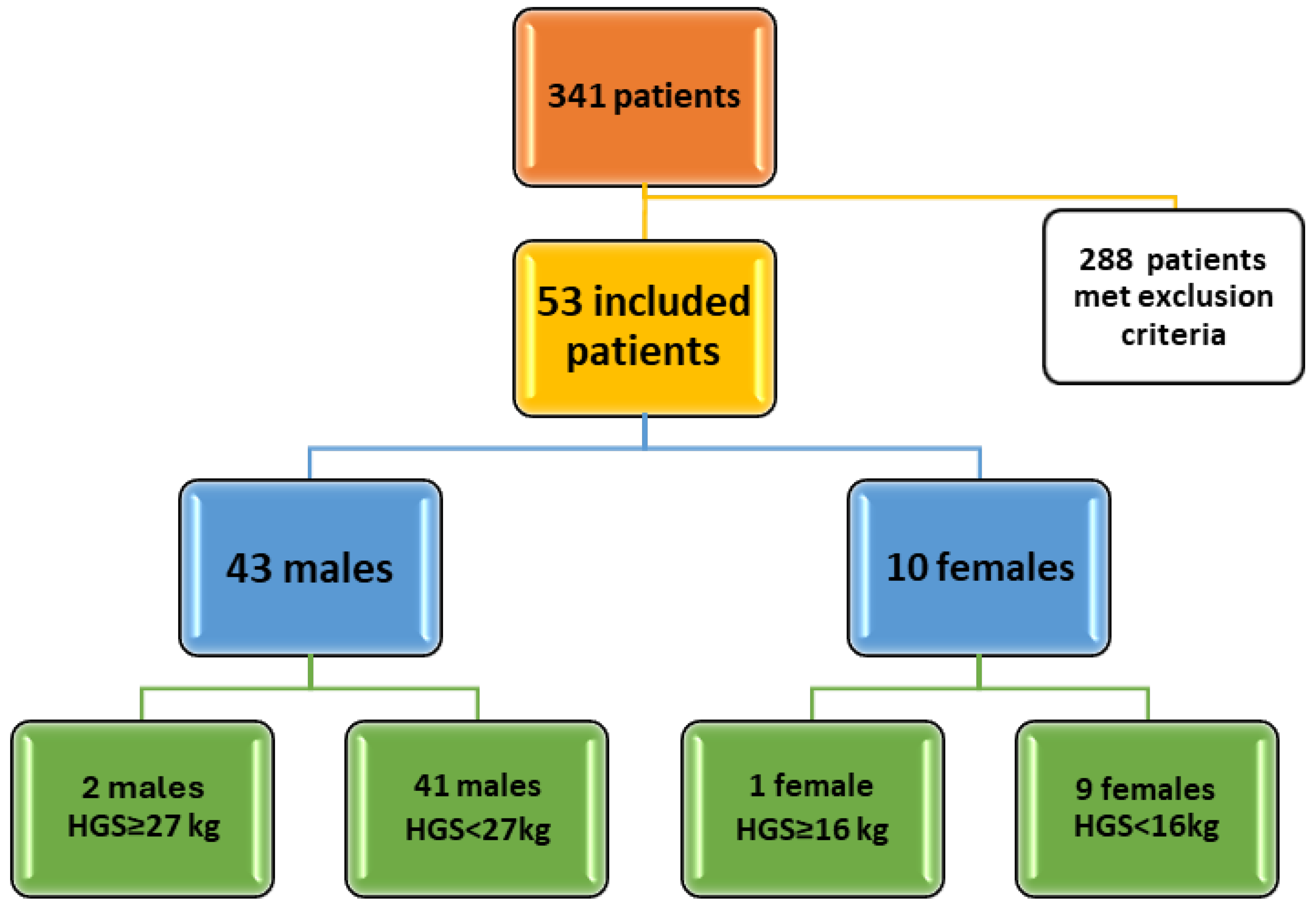
- patients who were unable to sign the informed consent or complete the questionnaires.
2.2. Clinical and Paraclinical Characteristics
2.3. Questionnaires and Other Tests
2.4. Statistical Analysis
3. Results
3.1. Baseline Characteristics
3.2. The Quality of Life of Cirrhotic Patients
3.3. Malnutrition and Sarcopenia Evaluation
4. Discussion
5. Conclusions
Author Contributions
Funding
Institutional Review Board Statement
Informed Consent Statement
Data Availability Statement
Conflicts of Interest
Abbreviations
| QoL | Quality of life |
| BMI | Body mass index |
| EWGSOP 2 | The revised European Working Group on Sarcopenia in Older People guidelines |
| GLIM | The Global Leadership Initiative on Malnutrition |
| CT | Computer tomography |
| DEXA | Dual-energy X-ray absorptiometry |
| 6MWT | 6 min walk test |
| CLDQ | The Chronic Liver Disease Questionnaire |
| SGA | The subjective global assessment |
| HGS | Handgrip strength test |
| HDL | High-density lipoprotein |
| HE | Hepatic encephalopathy |
| DM | Diabetes mellitus |
| CKD | Chronic kidney disease |
| ALT | Alanine transaminase |
| AST | Aspartate aminotransferase |
| GGT | Gamma-glutamyl transferase |
| HINT | Home-based intensive nutrition therapy |
| HCHP | High-calorie high-protein diet |
| SBP | Spontaneous bacterial peritonitis |
| RFH-NPT | The Royal Free Hospital-Nutritional Prioritizing Tool |
| HCC | Hepatocellular carcinoma |
| SMI | Skeletal muscle index |
References
- Pimpin, L.; Cortez-Pinto, H.; Negro, F.; Corbould, E.; Lazarus, J.V.; Webber, L.; Sheron, N. Burden of liver disease in Europe: Epidemiology and analysis of risk factors to identify prevention policies. J. Hepatol. 2018, 69, 718–735. [Google Scholar] [CrossRef] [Scilit]
- Zamani, M.; Alizadeh-Tabari, S.; Ajmera, V.; Singh, S.; Murad, M.H.; Loomba, R. Global Prevalence of Advanced Liver Fibrosis and Cirrhosis in the General Population: A Systematic Review and Meta-analysis. Clin. Gastroenterol. Hepatol. 2025, 23, 1123–1134. [Google Scholar] [CrossRef] [Scilit]
- Rajpurohit, S.; Musunuri, B.; Mohan, P.B.; Bhat, G.; Shetty, S. Factors Affecting and Promoting Health-related Quality of Life in Patients With Liver Cirrhosis: An Underestimated Domain in Patient Care. J. Clin. Exp. Hepatol. 2024, 14, 101264. [Google Scholar] [CrossRef] [Scilit] [PubMed]
- Rabiee, A.; Ximenes, R.O.; Nikayin, S.; Hickner, A.; Juthani, P.; Rosen, R.H.; Garcia-Tsao, G. Factors associated with health-related quality of life in patients with cirrhosis: A systematic review. Liver Int. 2021, 41, 6–15. [Google Scholar] [CrossRef] [Scilit] [PubMed]
- Saunders, J.; Smith, T. Malnutrition: Causes and consequences. Clin. Med. 2010, 10, 624–627. [Google Scholar] [CrossRef] [Scilit]
- Cederholm, T.; Jensen, G.L.; Correia, M.I.T.D.; Gonzalez, M.C.; Fukushima, R.; Higashiguchi, T.; Baptista, G.; Barazzoni, R.; Blaauw, R.; Coats, A.; et al. GLIM criteria for the diagnosis of malnutrition—A consensus report from the global clinical nutrition community. Clin. Nutr. 2019, 38, 1–9. [Google Scholar] [CrossRef] [Scilit]
- Merli, M.; Berzigotti, A.; Zelber-Sagi, S.; Dasarathy, S.; Montagnese, S.; Genton, L.; Plauth, M.; Parés, A. EASL Clinical Practice Guidelines on nutrition in chronic liver disease. J. Hepatol. 2019, 70, 172–193. [Google Scholar] [CrossRef] [Scilit]
- Traub, J.; Reiss, L.; Aliwa, B.; Stadlbauer, V. Malnutrition in Patients with Liver Cirrhosis. Nutrients 2021, 13, 540. [Google Scholar] [CrossRef] [Scilit]
- Puri, P.; Dhiman, R.K.; Taneja, S.; Tandon, P.; Merli, M.; Anand, A.C.; Arora, A.; Acharya, S.K.; Benjamin, J.; Chawla, Y.K.; et al. Nutrition in Chronic Liver Disease: Consensus Statement of the Indian National Association for Study of the Liver. J. Clin. Exp. Hepatol. 2021, 11, 97–143. [Google Scholar] [CrossRef] [Scilit] [PubMed]
- He, Y.; Wang, Z.; Wu, S.; Li, L.; Li, J.; Zhang, Y.; Chen, B.; Sun, X.; Sun, C.; Wu, L. Screening and assessment of malnutrition in patients with liver cirrhosis. Front. Nutr. 2024, 11, 1398690. [Google Scholar] [CrossRef] [Scilit]
- Palmer, L.B.; Kuftinec, G.; Pearlman, M.; Green, C.H. Nutrition in Cirrhosis. Curr. Gastroenterol. Rep. 2019, 21, 38. [Google Scholar] [CrossRef] [Scilit]
- WHO. Physical Status: The Use and Interpretation of Anthropometry: Report of a WHO Expert Committee; WHO Technical Report Series; WHO: Geneva, Switzerland, 1995; Volume 854, pp. 1–452. [Google Scholar]
- Cruz-Jentoft, A.J.; Bahat, G.; Bauer, J.; Boirie, Y.; Bruyère, O.; Cederholm, T.; Cooper, C.; Landi, F.; Rolland, Y.; Sayer, A.A.; et al. Sarcopenia: Revised European consensus on definition and diagnosis. Age Ageing 2019, 48, 16–31. [Google Scholar] [CrossRef] [Scilit]
- Hanai, T.; Shiraki, M.; Watanabe, S.; Kochi, T.; Imai, K.; Suetsugu, A.; Takai, K.; Moriwaki, H.; Shimizu, M. Sarcopenia predicts minimal hepatic encephalopathy in patients with liver cirrhosis. Hepatol. Res. 2017, 47, 1359–1367. [Google Scholar] [CrossRef] [Scilit]
- Saeki, C.; Takano, K.; Oikawa, T.; Aoki, Y.; Kanai, T.; Takakura, K.; Nakano, M.; Torisu, Y.; Sasaki, N.; Abo, M.; et al. Comparative assessment of sarcopenia using the JSH, AWGS, and EWGSOP2 criteria and the relationship between sarcopenia, osteoporosis, and osteosarcopenia in patients with liver cirrhosis. BMC Musculoskelet. Disord. 2019, 20, 615. [Google Scholar] [CrossRef] [Scilit]
- Wongtrakul, W.; Bandidniyamanon, W.; Charatcharoenwitthaya, P. Relationship between Sarcopenia and minimal hepatic encephalopathy in patients with cirrhosis: A prospective observational study. BMC Gastroenterol. 2025, 25, 88. [Google Scholar] [CrossRef] [Scilit] [PubMed]
- Van Vugt, J.L.A.; Buettner, S.; Alferink, L.J.M.; Bossche, N.; De Bruin, R.W.F.; Darwish Murad, S.; Polak, W.G.; Metselaar, H.J.; IJzermans, J.N.M. Low skeletal muscle mass is associated with increased hospital costs in patients with cirrhosis listed for liver transplantation-a retrospective study. Transpl. Int. 2018, 31, 165–174. [Google Scholar] [CrossRef] [Scilit] [PubMed]
- Xiao, L.; Dai, M.; Zhao, F.; Shen, Y.; Kwan, R.Y.C.; Salvador, J.T.; Zhang, L.; Luo, Y.; Liu, Q.; Yang, P. Assessing the risk factors associated with sarcopenia in patients with liver cirrhosis: A case–control study. Sci. Rep. 2023, 13, 21845. [Google Scholar] [CrossRef] [Scilit]
- Prakash, S.S.; Priyadarshi, R.N.; Surya, H.; Kumar, S.; Anand, U.; Kumar, R. Bedside assessment of sarcopenia in hospitalized patients with liver cirrhosis: Magnitude and clinical implications. Indian. J. Gastroenterol. 2024, 43, 821–831. [Google Scholar] [CrossRef] [Scilit]
- Dwyer, J.T.; Melanson, K.J.; Sriprachy-anunt, U.; Cross, P.; Wilson, M. Dietary Treatment of Obesity. In Endotext; Feingold, K.R., Ahmed, S.F., Anawalt, B., Blackman, M.R., Boyce, A., Chrousos, G., Corpas, E., de Herder, W.W., Dhatariya, K., Dungan, K., et al., Eds.; MDText.com, Inc.: South Dartmouth, MA, USA, 2000. [Google Scholar]
- Reitan, R.M. Validity of the Trail Making Test as an Indicator of Organic Brain Damage. Percept. Mot. Skills 1958, 8, 271–276. [Google Scholar] [CrossRef] [Scilit]
- Brodersen, C.; Koen, E.; Ponte, A.; Sánchez, S.; Segal, E.; Chiapella, A.; Fernández, M.; Torres, M.; Tripodi, V.; Lemberg, A. Cognitive Function in Patients with Alcoholic and Nonalcoholic Chronic Liver Disease. J. Neuropsychiatry Clin. Neurosci. 2014, 26, 241–248. [Google Scholar] [CrossRef] [Scilit]
- Younossi, Z.M.; Guyatt, G.; Kiwi, M.; Boparai, N.; King, D. Development of a disease specific questionnaire to measure health related quality of life in patients with chronic liver disease. Gut 1999, 45, 295–300. [Google Scholar] [CrossRef] [Scilit]
- Schulz, K.-H.; Kroencke, S.; Ewers, H.; Schulz, H.; Younossi, Z.M. The factorial structure of the Chronic Liver Disease Questionnaire (CLDQ). Qual. Life Res. 2008, 17, 575–584. [Google Scholar] [CrossRef] [Scilit]
- Detsky, A.; Mc Laughlin; Baker, J.; Johnston, N.; Whittaker, S.; Mendelson, R.; Jeejeebhoy, K. What is subjective global assessment of nutritional status? J. Parenter. Enter. Nutr. 1987, 11, 8–13. [Google Scholar] [CrossRef] [Scilit]
- Duerksen, D.R.; Laporte, M.; Jeejeebhoy, K. Evaluation of Nutrition Status Using the Subjective Global Assessment: Malnutrition, Cachexia, and Sarcopenia. Nutr. Clin. Pract. 2021, 36, 942–956. [Google Scholar] [CrossRef] [Scilit]
- Miwa, T.; Hanai, T.; Nishimura, K.; Hirata, S.; Unome, S.; Nakahata, Y.; Imai, K.; Suetsugu, A.; Takai, K.; Shimizu, M. Nutritional assessment using subjective global assessment identifies energy malnutrition and predicts mortality in patients with liver cirrhosis. Sci. Rep. 2025, 15, 4831. [Google Scholar] [CrossRef] [Scilit] [PubMed]
- Plauth, M.; Bernal, W.; Dasarathy, S.; Merli, M.; Plank, L.D.; Schütz, T.; Bischoff, S.C. ESPEN guideline on clinical nutrition in liver disease. Clin. Nutr. 2019, 38, 485–521. [Google Scholar] [CrossRef] [Scilit]
- Wu, Y.; Zhu, Y.; Feng, Y.; Wang, R.; Yao, N.; Zhang, M.; Liu, X.; Liu, H.; Shi, L.; Zhu, L.; et al. Royal Free Hospital-Nutritional Prioritizing Tool improves the prediction of malnutrition risk outcomes in liver cirrhosis patients compared with Nutritional Risk Screening 2002. Br. J. Nutr. 2020, 124, 1293–1302. [Google Scholar] [CrossRef] [Scilit]
- Henrique, D.M.N.; Malaguti, C.; Limonge, T.M.; Siqueira, M.R.; Paticcie, T.M.F.; Mira, P.A.C.; Laterza, M.C.; Mourão-Junior, C.A.; Pacce, F.H.D.L.; Chebli, J.M.F. Six-Minute Walking Test as a Predictor of Clinical Decompensation in Patients with Cirrhosis. J. Gastrointest. Liver Dis. 2021, 30, 103–109. [Google Scholar] [CrossRef] [Scilit]
- Yang, W.; Guo, G.; Cui, B.; Li, Y.; Sun, M.; Li, C.; Wang, X.; Mao, L.; Hui, Y.; Fan, X.; et al. Malnutrition according to the Global Leadership Initiative on Malnutrition criteria is associated with in-hospital mortality and prolonged length of stay in patients with cirrhosis. Nutrition 2023, 105, 111860. [Google Scholar] [CrossRef] [Scilit] [PubMed]
- Zhang, P.; Wang, Q.; Zhu, M.; Li, P.; Wang, Y. Differences in nutritional risk assessment between NRS2002, RFH-NPT and LDUST in cirrhotic patients. Sci. Rep. 2023, 13, 3306. [Google Scholar] [CrossRef] [Scilit] [PubMed]
- Mendez-Guerrero, O.; Carranza-Carrasco, A.; Chi-Cervera, L.A.; Torre, A.; Navarro-Alvarez, N. Optimizing nutrition in hepatic cirrhosis: A comprehensive assessment and care approach. World J. Gastroenterol. 2024, 30, 1313–1328. [Google Scholar] [CrossRef] [Scilit]
- Singal, A.K.; Charlton, M.R. Nutrition in Alcoholic Liver Disease. Clin. Liver Dis. 2012, 16, 805–826. [Google Scholar] [CrossRef] [Scilit]
- Bhanji, R.A.; Narayanan, P.; Moynagh, M.R.; Takahashi, N.; Angirekula, M.; Kennedy, C.C.; Mara, K.C.; Dierkhising, R.A.; Watt, K.D. Differing Impact of Sarcopenia and Frailty in Nonalcoholic Steatohepatitis and Alcoholic Liver Disease. Liver Transpl. 2019, 25, 14–24. [Google Scholar] [CrossRef] [Scilit]
- Kamran, U.; Towey, J.; Khanna, A.; Chauhan, A.; Rajoriya, N.; Holt, A. Nutrition in alcohol-related liver disease: Physiopathology and management. World J. Gastroenterol. 2020, 26, 2916–2930. [Google Scholar] [CrossRef] [Scilit]
- Espina, S.; Casas-Deza, D.; Bernal-Monterde, V.; Domper-Arnal, M.J.; García-Mateo, S.; Lué, A. Evaluation and Management of Nutritional Consequences of Chronic Liver Diseases. Nutrients 2023, 15, 3487. [Google Scholar] [CrossRef] [Scilit] [PubMed]
- Khan, S.; Sansoni, S.; Di Cola, S.; Lapenna, L.; Merli, M. A Comparative Study of Dietary Intake, Nutritional Status, and Frailty in Outpatients and Inpatients with Liver Cirrhosis. Nutrients 2025, 17, 580. [Google Scholar] [CrossRef] [Scilit]
- Abedin, N.; Hein, M.; Queck, A.; Mücke, M.M.; Weiler, N.; Pathil, A.; Mihm, U.; Welsch, C.; Bojunga, J.; Zeuzem, S.; et al. Falls and malnutrition are associated with in-hospital mortality in patients with cirrhosis. Hepatol. Commun. 2024, 8, e0535. [Google Scholar] [CrossRef] [Scilit]
- Ji, Y.; Ding, Q.; Bu, T.; Wang, K.; Zhang, J.; Wang, X. Assessing the risk factors associated with nutritional status in patients with liver cirrhosis: A case-control study. Technol. Health Care 2025, 33, 509–518. [Google Scholar] [CrossRef] [Scilit] [PubMed]
- Topan, M.-M.; Sporea, I.; Dănilă, M.; Popescu, A.; Ghiuchici, A.-M.; Lupușoru, R.; Șirli, R. Comparison of Different Nutritional Assessment Tools in Detecting Malnutrition and Sarcopenia among Cirrhotic Patients. Diagnostics 2022, 12, 893. [Google Scholar] [CrossRef] [Scilit]
- Aller De La Fuente, R. Nutrition and Chronic Liver Disease. Clin. Drug Investig. 2022, 42, 55–61. [Google Scholar] [CrossRef] [Scilit]
- Melaku, M.D.; Yigzaw, A.A.; Kassie, Y.G.; Kedimu, M.W.; Wodajeneh, H.B.; Getahun, B.M.; Anley, D.T.; Agidew, M.M.; Zewde, E.A. Malnutrition and Associated Factors Among Patients With Cirrhosis at a Tertiary Care Center in Addis Ababa Ethiopia: An Ordinal Logistic Regression Analysis. JGH Open 2025, 9, e70107. [Google Scholar] [CrossRef] [Scilit] [PubMed]
- Filip, P.V.; Cuciureanu, D.; Pop, C.S.; Marinescu, A.N.; Furtunescu, F.; Diaconu, L.S. Frailty and Sarcopenia Assessment in Patients with Advanced Chronic Liver Disease in a Tertiary Center in Romania. Diagnostics 2024, 15, 16. [Google Scholar] [CrossRef] [Scilit]
- Hassan, M.; Abdel Rehim, A.S.E.; Khalil, M.; Mahmoud Osman, Y. Nutritional assessment of cirrhotic patients with variable severity. J. Curr. Med. Res. Pract. 2019, 4, 144. [Google Scholar] [CrossRef] [Scilit]
- Łapiński, T.W.; Łapińska, M. Nutritional status in patients with liver cirrhosis. Clin. Exp. Hepatol. 2019, 5, 30–34. [Google Scholar] [CrossRef] [Scilit]
- Lai, J.C.; Sonnenday, C.J.; Tapper, E.B.; Duarte-Rojo, A.; Dunn, M.A.; Bernal, W.; Carey, E.J.; Dasarathy, S.; Kamath, B.M.; Kappus, M.R.; et al. Frailty in liver transplantation: An expert opinion statement from the American Society of Transplantation Liver and Intestinal Community of Practice. Am. J. Transplant. 2019, 19, 1896–1906. [Google Scholar] [CrossRef] [Scilit]
- Faustini Pereira, J.L.; Galant, L.H.; Rossi, D.; Telles Da Rosa, L.H.; Garcia, E.; De Mello Brandão, A.B.; Marroni, C.A. Functional Capacity, Respiratory Muscle Strength, and Oxygen Consumption Predict Mortality in Patients with Cirrhosis. Can. J. Gastroenterol. Hepatol. 2016, 2016, 1–6. [Google Scholar] [CrossRef] [Scilit]
- Obradovic, M.; Gluvic, Z.; Petrovic, N.; Obradovic, M.; Tomasevic, R.; Dugalic, P.; Isenovic, E.R. A quality of life assessment and the correlation between generic and disease-specific questionnaires scores in outpatients with chronic liver disease-pilot study. Rom. J. Intern. Med. 2017, 55, 129–137. [Google Scholar] [CrossRef] [Scilit]
- Khairullah, S.; Mahadeva, S. Translation, adaptation and validation of two versions of the Chronic Liver Disease Questionnaire in Malaysian patients for speakers of both English and Malay languages: A cross-sectional study. BMJ Open 2017, 7, e013873. [Google Scholar] [CrossRef] [Scilit]
- Fishman, J.; Higgins, V.; Piercy, J.; Pike, J. Cross-walk of the Chronic Liver Disease Questionnaire for Nonalcoholic Steatohepatitis (CLDQ-NASH) and the EuroQol EQ-5D-5L in patients with NASH. Health Qual. Life Outcomes 2023, 21, 113. [Google Scholar] [CrossRef] [Scilit]
- ÇeliK, F.; Bektaş, H. Psychometric Properties of the Chronic Liver Disease Questionnaire in Patients with Chronic Liver Disease. J. Basic Clin. Health Sci. 2023, 7, 671–683. [Google Scholar] [CrossRef] [Scilit]
- Taru, V.; Indre, M.G.; Ignat, M.D.; Forgione, A.; Racs, T.; Olar, B.A.; Farcau, O.; Chereches, R.; Stefanescu, H.; Procopet, B. Validation and Performance of Chronic Liver Disease Questionnaire (CLDQ-RO) in the Romanian Population. JGLD 2021, 30, 240–246. [Google Scholar] [CrossRef] [Scilit]
- Popovic, D.D. Validation of the chronic liver disease questionnaire in Serbian patients. World J. Gastroenterol. 2013, 19, 4950. [Google Scholar] [CrossRef] [Scilit]
- Boulhosa, R.S.S.B.; Lourenço, R.P.; Côrtes, D.M.; Oliveira, L.P.M.; Lyra, A.C.; De Jesus, R.P. Comparison between criteria for diagnosing malnutrition in patients with advanced chronic liver disease: GLIM group proposal versus different nutritional screening tools. J. Hum. Nutr. Diet. 2020, 33, 862–868. [Google Scholar] [CrossRef] [Scilit] [PubMed]
- Yang, W.; Guo, G.; Mao, L.; Hui, Y.; Wang, X.; Yu, Z.; Sun, M.; Li, Y.; Fan, X.; Cui, B.; et al. Comparison of the GLIM criteria with specific screening tool for diagnosing malnutrition in hospitalized patients with cirrhosis: A descriptive cross-sectional study. J. Parenter. Enter. Nutr. 2023, 47, 310–321. [Google Scholar] [CrossRef] [Scilit] [PubMed]
- Zhu, C.; Wu, Y.; Zhao, F.; Wang, R.; Zang, Q.; Jiao, Z.; Zhu, Y.; Yan, T.; Du, J.; Zhu, L.; et al. An RFH-NPT-based nomogram for predicting the long-term survival of liver cirrhosis patients: A multicenter study. Eur. J. Clin. Nutr. 2025. [Google Scholar] [CrossRef] [Scilit]
- Borhofen, S.M.; Gerner, C.; Lehmann, J.; Fimmers, R.; Görtzen, J.; Hey, B.; Geiser, F.; Strassburg, C.P.; Trebicka, J. The Royal Free Hospital-Nutritional Prioritizing Tool Is an Independent Predictor of Deterioration of Liver Function and Survival in Cirrhosis. Dig. Dis. Sci. 2016, 61, 1735–1743. [Google Scholar] [CrossRef] [Scilit]
- Hui, Y.; Cui, B.; Wang, X.; Mao, L.; Li, Y.; Sun, M.; Yang, W.; Guo, G.; Fan, X.; Sun, C. The relationship between patient-reported health-related quality of life and malnutrition risk in cirrhosis: An observational cohort study. Br. J. Nutr. 2023, 130, 860–867. [Google Scholar] [CrossRef] [Scilit]
- Pérez-Reyes, E.; Rivera-Sánchez, J.; Servín-Caamaño, A.I.; Pérez-Torres, E.; Abdo-Francis, J.M.; Higuera-de La Tijera, F. Malnutrition is related to a higher frequency of serious complications in patients with cirrhosis. Rev. Médica Hosp. General. México 2016, 79, 11–16. [Google Scholar] [CrossRef] [Scilit]
- Ciocîrlan, M.; Cazan, A.R.; Barbu, M.; Mănuc, M.; Diculescu, M.; Ciocîrlan, M. Subjective Global Assessment and Handgrip Strength as Predictive Factors in Patients with Liver Cirrhosis. Gastroenterol. Res. Pract. 2017, 2017, 1–5. [Google Scholar] [CrossRef] [Scilit]
- Hamid, S.B.A.; Roslan, N.A. The Nutritional Profile and Quality of Life of Cirrhosis Patients without Encephalopathy at Hospital Selayang. Health Scope 2019, 2, 398–404. [Google Scholar]
- Chiu, E.; Marr, K.; Taylor, L.; Lam, L.; Stapleton, M.; Tandon, P.; Raman, M. Malnutrition Impacts Health-Related Quality of Life in Cirrhosis: A Cross-Sectional Study. Nutr. Clin. Prac. 2020, 35, 119–125. [Google Scholar] [CrossRef] [Scilit]
- Tinkilic, S.; Turker, P.F.; Yilmaz, C.S.; Akdogan Kayhan, M.; Ari, D.; Turan Gökce, D. The Effect of Nutritional Education on Nutritional Status and Quality of Life in Patients with Liver Cirrhosis. Healthcare 2025, 13, 1905. [Google Scholar] [CrossRef] [Scilit]
- Moctezuma-Velazquez, C.; Ebadi, M.; Bhanji, R.A.; Stirnimann, G.; Tandon, P.; Montano-Loza, A.J. Limited performance of subjective global assessment compared to computed tomography-determined sarcopenia in predicting adverse clinical outcomes in patients with cirrhosis. Clin. Nutr. 2019, 38, 2696–2703. [Google Scholar] [CrossRef] [Scilit] [PubMed]
- Georgiou, A.; Papatheodoridis, G.V.; Alexopoulou, A.; Deutsch, M.; Vlachogiannakos, I.; Ioannidou, P.; Papageorgiou, M.-V.; Papadopoulos, N.; Tsibouris, P.; Prapa, A.; et al. Evaluation of the effectiveness of eight screening tools in detecting risk of malnutrition in cirrhotic patients: The KIRRHOS study. Br. J. Nutr. 2019, 122, 1368–1376. [Google Scholar] [CrossRef] [Scilit]
- Díaz-Ruíz, R.; Poca, M.; Román, E.; Cuyàs, B.; Bañares, I.; Morales, Á.; Hernández Martínez-Esparza, E.; Panadero, R.; Velasco, C.; Rapado-Castro, M.; et al. Treatment of Vitamin D Deficiency in Decompensated Patients with Cirrhosis Is Associated with Improvement in Frailty. Med. Sci. 2025, 13, 30. [Google Scholar] [CrossRef] [Scilit] [PubMed]
- Diaz-Ruiz, R.; Poca, M.; Roman, E.; Panadero-Gomez, R.; Cuyàs, B.; Bañares, I.; Morales, A.; Puerto, M.; Lopez-Esteban, R.; Blazquez, E.; et al. Vitamin D Supplementation Is Associated with Inflammation Amelioration and Cognitive Improvement in Decompensated Patients with Cirrhosis. Nutrients 2025, 17, 226. [Google Scholar] [CrossRef] [Scilit]
- Johnson, C.D.; Stevens, C.M.; Bennett, M.R.; Litch, A.B.; Rodrigue, E.M.; Quintanilla, M.D.; Wallace, E.; Allahyari, M. The Role of Vitamin D Deficiency in Hepatic Encephalopathy: A Review of Pathophysiology, Clinical Outcomes, and Therapeutic Potential. Nutrients 2024, 16, 4007. [Google Scholar] [CrossRef] [Scilit] [PubMed]
- Medici, V.; Halsted, C.H. Folate, alcohol, and liver disease. Mol. Nutr. Food Res. 2013, 57, 596–606. [Google Scholar] [CrossRef] [Scilit]
- Yang, M.; Wang, D.; Wang, X.; Mei, J.; Gong, Q. Role of Folate in Liver Diseases. Nutrients 2024, 16, 1872. [Google Scholar] [CrossRef] [Scilit]
- da Silva, R.P.; Kelly, K.B.; Al Rajabi, A.; Jacobs, R.L. Novel insights on interactions between folate and lipid metabolism. Biofactors 2014, 40, 277–283. [Google Scholar] [CrossRef] [Scilit]
- Li, J.-T.; Yang, H.; Lei, M.-Z.; Zhu, W.-P.; Su, Y.; Li, K.-Y.; Zhu, W.-Y.; Wang, J.; Zhang, L.; Qu, J.; et al. Dietary folate drives methionine metabolism to promote cancer development by stabilizing MAT IIA. Sig. Transduct. Target. Ther. 2022, 7, 192. [Google Scholar] [CrossRef] [Scilit] [PubMed]
- Buttler, L.; Tiede, A.; Griemsmann, M.; Rieland, H.; Mauz, J.; Kahlhöfer, J.; Wedemeyer, H.; Cornberg, M.; Tergast, T.L.; Maasoumy, B.; et al. Folic acid supplementation is associated with a decreased mortality and reduced hospital readmission in patients with decompensated alcohol-related liver cirrhosis. Clin. Nutr. 2024, 43, 1719–1727. [Google Scholar] [CrossRef] [Scilit]
- Tao, M.-H.; Fulda, K.G. Association of Magnesium Intake with Liver Fibrosis among Adults in the United States. Nutrients 2021, 13, 142. [Google Scholar] [CrossRef] [Scilit] [PubMed]
- El-Tantawy, W.H.; Sabry, D.; Abd Al Haleem, E.N. Comparative study of antifibrotic activity of some magnesium-containing supplements on experimental liver toxicity. Molecular study. Drug Chem. Toxicol. 2017, 40, 47–56. [Google Scholar] [CrossRef] [Scilit]
- Peng, X.; Xiang, R.; Li, X.; Tian, H.; Li, C.; Peng, Z.; Xiang, M. Magnesium deficiency in liver cirrhosis: A retrospective study. Scand. J. Gastroenterol. 2021, 56, 463–468. [Google Scholar] [CrossRef] [Scilit]
- Yang, Z.; Li, J.; Zhang, J.; Sun, C. Magnesium Deficiency: The Insidious Executor of the Liver Disease. J. Am. Nutr. Assoc. 2025, 44, 439–453. [Google Scholar] [CrossRef] [Scilit] [PubMed]
- Sobhrakhshankhah, E.; Farahmand, M.; Hasan Rashedi, M.; Shahinfar, H.; Shab-bidar, S.; Dinari, S.; Doustmohammadian, A. Efficacy of different nutrition interventions on sarcopenia in patients with cirrhosis: A systematic review and network meta-analysis. BMC Nutr. 2025, 11, 39. [Google Scholar] [CrossRef] [Scilit]
- Berzigotti, A.; Albillos, A.; Villanueva, C.; Genescá, J.; Ardevol, A.; Augustín, S.; Calleja, J.L.; Bañares, R.; García-Pagán, J.C.; Mesonero, F.; et al. Effects of an intensive lifestyle intervention program on portal hypertension in patients with cirrhosis and obesity: The SportDiet study. Hepatology 2017, 65, 1293–1305. [Google Scholar] [CrossRef] [Scilit]
- Chapman, B.; Wong, D.; Sinclair, M.; Hey, P.; Terbah, R.; Gow, P.; Majumdar, A.; Testro, A. Reversing malnutrition and low muscle strength with targeted enteral feeding in patients awaiting liver transplant: A randomized controlled trial. Hepatology 2024, 80, 1134–1146. [Google Scholar] [CrossRef] [Scilit]


| Phenotypic criteria | Weight loss (%) | >5% within the past 6 months >10% beyond 6 months. |
| Low BMI (kg/m2) | <20 for <70 years <22 for >70 years | |
| Reduced muscle mass | Evaluated with body composition measuring techniques | |
| Etiologic criteria | Reduced food intake/assimilation | ≤50% > 1 week or any reduction for >2 weeks or any chronic GI condition that alters food assimilation/absorption |
| Inflammation | Acute disease/injury or chronic disease-related |
| Diagnostic Criteria According to EWGSOP2 | Diagnostic Indicators | Male | Female |
|---|---|---|---|
| Low muscle strength | Handgrip strength test | <27 kg | <16 kg |
| Low muscle quantity or quality | Skeletal muscle index (SMI) | <7 kg/m2 | <5.5 kg/m2 |
| Low physical performance | Gait speed | <0.8 m/s | |
| Parameter | Total | |||
|---|---|---|---|---|
| Age mean (STD) | 62.36 ± 9.28 | |||
| Cigarette smoking | 33.96% (n = 18) | |||
| Etiology % (n) | Alcohol use | 75.47% (n = 40) | ||
| HBV | 3.77% (n = 2) | |||
| HBC | 7.55% (n = 4) | |||
| Mixt | 7.55% (n = 4) | |||
| Other | 3.77% (n = 2) | |||
| MASLD | 1.89% (n = 1) | |||
| Child–Pugh score % (n) | A | 30.20% (n = 16) | ||
| B | 43.44% (n = 23) | |||
| C | 26.40% (n = 14) | |||
| Child–Pugh score (points) | 8.57 ± 2.26 | |||
| MELD (mean ± SD) | 15.67 ± 7.068 | |||
| MELD-Na (mean ± SD) | 18.02 ± 7.86 | |||
| MELD 3.0 | 18.30 ± 8.01 | |||
| Grade of ascites % (n) | 0 | 37.74% (n = 20) | ||
| 1 | 20.75% (n = 11) | |||
| 2 | 13.21% (n = 7) | |||
| 3 | 28.03% (n = 15) | |||
| Peripheric edema | 50.94% (n = 27) | |||
| Hepatic encephalopathy | 5.7% (n = 3) | |||
| DM | 24.53% (n = 13) | |||
| CRD | without | 92.45% (n = 49) | ||
| with | 7.55% (n = 4) | |||
| Antisecretory drugs | 37.7% (n = 20) | |||
| Antibiotherapy | 62.30% (n = 33) | |||
| Diuretics use | 67.92% (n = 36) | |||
| Beta blockers | Propranolol | 43.39% (n = 23) | ||
| Carvedilol | 37.7% (n = 20) | |||
| Weight (kg) mean ± SD | 81.49 ± 17.85 | |||
| Height (m) mean ± SD | 1.73 ± 0.17 | |||
| BMI (kg/m2) mean ± SD | 27.61 ± 4.73 | |||
| BMI correction 1 (kg/m2) mean ± SD: | 25.06 ± 5.63 | |||
| 11.32% (n = 6) | |||
| 35.84% (n = 19) | |||
| 52.83% (n = 28) | |||
| Laboratory (median, percentile 25; 75) | ||||
| Leukocytes | 6.14 (5.15; 9.17) | |||
| Hemoglobin (g/dL) | 11.70 (9.95; 13.05) | |||
| Platelets | 116,000 (77,250; 156,500) | |||
| ALT (U/L) | 29.00 (15.00; 52.00) | |||
| AST (U/L) | 51.00 (33.00; 85.00) | |||
| GGT (U/L) | 82.00 (31.50; 191.00) | |||
| Total bilirubin (mg/dL) | 1.70 (0.93; 3.55) | |||
| Urea (mg/dL) | 33.10 (26.50; 48.15) | |||
| Creatinine (mg/dL) | 0.74 (0.53; 1.32) | |||
| PCR | 14.70 (6.55; 25.23) | |||
| INR | 1.36 (1.24; 1.75) | |||
| Albumin (g/dL) | 3.00 (2.55; 3.80) | |||
| Cholesterol (mg/dL) | 122.00 (90.50; 159.00) | |||
| Triglycerides (mg/dL) | 78.50 (90.50; 159.00) | |||
| Sodium | 136.00 (132.50; 138.00) | |||
| Potassium | 4.02 (3.80; 4.34) | |||
| Magnesium | 1.73 (1.57; 1.87) | |||
| Iron | 83.45 (51.25; 132.10) | |||
| Folic acid | 5.80 (3.78; 7.83) | |||
| B12 levels | 570.00 (344.50; 1137.50) | |||
| Vitamin D | 11.90 (9.05; 18.90) | |||
| Ammonia | 84.70 (65.55; 109.22) | |||
| Questionnaires and tests | ||||
| HGS (mean ± SD) | 15.96 ± 6.82 | |||
| 6MWT (%) mean ± SD | 50.48% ± 31.48 | |||
| 6MWT (m) mean ± SD | 246.41 ± 155.77 | |||
| Gait speed (m/s) mean ± SD | 0.68 ± 0.43 | |||
| RFH-NPT | Low | 15.09%(n = 8) | ||
| Medium | 35.84%(n = 19) | |||
| High | 49.05% (n = 26) | |||
| SGA | A | 66.03% (n = 35) | ||
| B | 20.75% (n = 11) | |||
| C | 13.20% (n = 7) | |||
| CLDQ Domains | Mean ± SD | Cronbach’s Alpha | Child–Pugh Score Value-Pearson | p Value | MELD Pearson Correlation Coefficient | p Value | MELD-Na Pearson Correlation Coefficient | p Value | MELD 3.0 | p Value |
|---|---|---|---|---|---|---|---|---|---|---|
| Abdominal symptoms | 4.70 ± 1.66 | 0.844 | −0.266 | 0.054 | −0.007 | 0.959 | −0.054 | 0.701 | −0.090 | 0.521 |
| Fatigue | 4.26 ± 1.63 | 0.795 | −0.420 | 0.02 * | −0.324 | 0.018 * | −0.334 | 0.014 * | −0.341 | 0.013 * |
| Systemic symptoms | 4.95 ± 1.19 | 0.820 | −0.371 | 0.006 * | −0.272 | 0.049 * | −0.296 | 0.031 * | −0.322 | 0.019 * |
| Activity | 4.79 ± 1.54 | 0.842 | −0.333 | 0.015 * | −0.156 | 0.265 | −0.209 | 0.133 | −0.238 | 0.087 |
| Emotional function | 4.74 ± 1.37 | 0.829 | −0.123 | 0.379 | −0.166 | 0.235 | −0.165 | 0.239 | −0.195 | 0.162 |
| Worry | 4.61 ± 2.02 | 0.847 | −0.347 | 0.011 * | −0.133 | 0.344 | −0.157 | 0.261 | −0.197 | 0.158 |
| Overall CLDQ | 4.67 ± 1.24 | 0.854 | −0.372 | 0.006 * | −0.228 | 0.101 | −0.254 | 0.066 | −0.289 | 0.036 * |
| Child–Pugh Score | Abdominal Symptoms | Fatigue | Systemic Symptoms | Activity | Emotional Function | Worry | Average CLDQ |
|---|---|---|---|---|---|---|---|
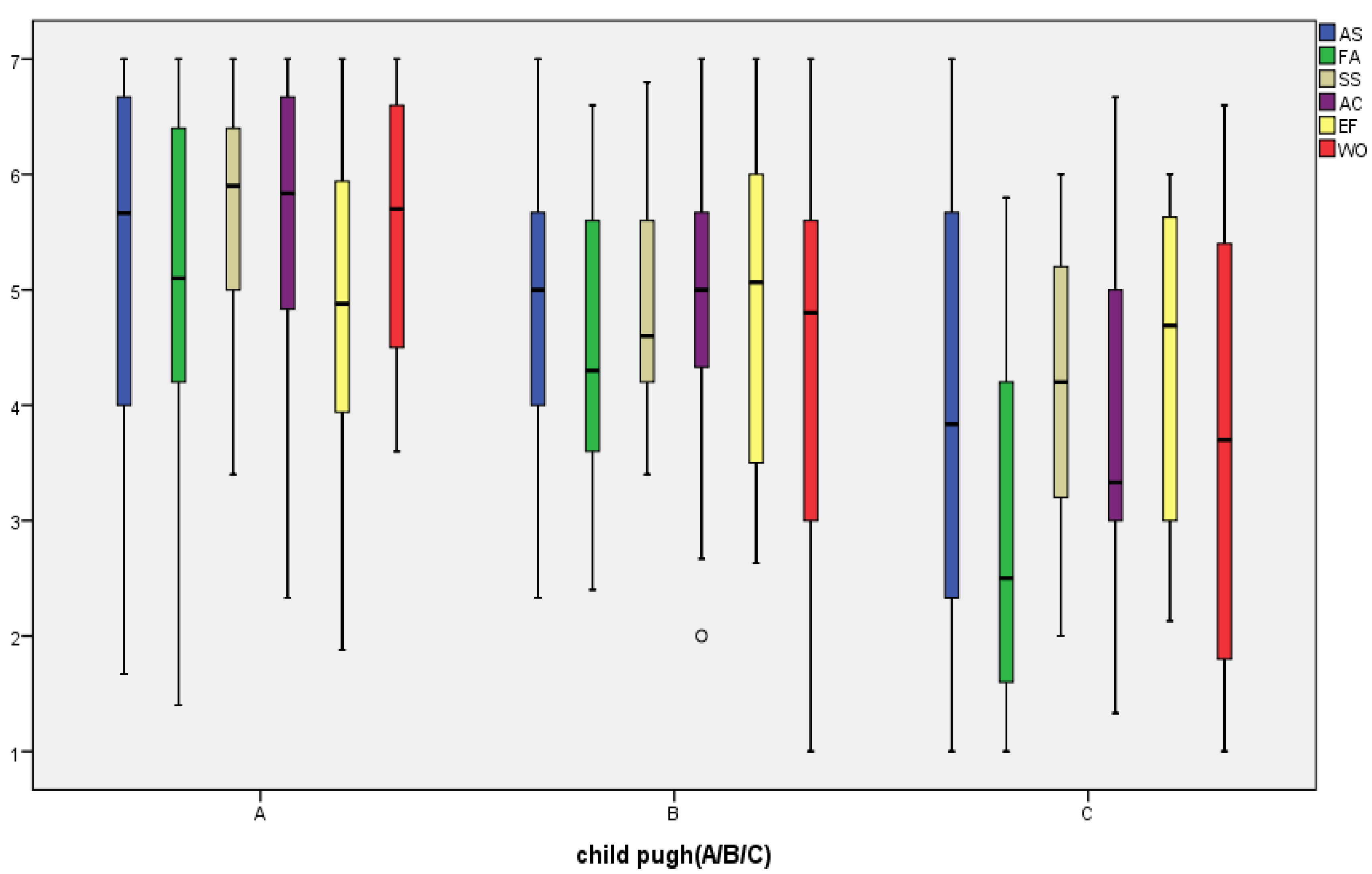
| A | 5.20 ± 1.66 | 5.06 ± 1.56 | 5.60 ± 1.07 | 5.43 ± 1.49 | 4.86 ± 1.38 | 5.50 ± 1.25 | 5.27 ± 1.11 |
| B | 4.85 ± 1.27 | 4.47 ± 1.27 | 4.95 ± 1.01 | 4.94 ± 1.26 | 4.88 ± 1.33 | 4.54 ± 2.28 | 4.77 ± 0.96 |
| C | 3.85 ± 2.00 | 3.00 ± 1.57 | 4.21 ± 1.20 | 3.78 ± 1.60 | 4.34 ± 1.45 | 3.68 ± 1.93 | 3.81 ± 1.38 |
| p value | 0.069 | 0.001 * | 0.004 * | 0.009 * | 0.464 | 0.045 * | 0.003 * |
| Test | Child–Pugh Score | MELD (Mean ± SD) | MELD-Na (Mean ± SD) | MELD 3.0 (Mean ± SD) | |||
|---|---|---|---|---|---|---|---|
| A | B | C | |||||
| RFH-NPT | Low | 22.64% (n = 12) | 9.43% (n = 5) | 3.77% (n = 2) | 12.79 ± 5.56 | 14.05 ± 6.74 | 13.74 ± 6.58 |
| Moderate | 7.54% (n = 4) | 5.66% (n = 3) | 1.88% (n = 1) | 15.63 ± 7.62 | 17.63 ± 7.96 | 19.00 ± 7.38 | |
| High | 0% (n = 0) | 28.30% (n = 15) | 20.75% (n = 11) | 17.81 ± 7.37 | 21.04 ± 7.52 | 21.42 ± 7.80 | |
| SGA | A | 28.30% (n = 15) | 26.41% (n = 14) | 11.32% (n = 6) | 14.71 ± 7.26 | 16.74 ± 8.17 | 17.06 ± 8.38 |
| B | 1.88% (n = 1) | 7.54% (n = 4) | 11.32% (n = 6) | 17.91 ± 7.12 | 20.27 ± 7.03 | 20.82 ± 6.75 | |
| C | 0% (n = 0) | 9.43% (n = 5) | 3.77% (n = 2) | 17.00 ± 5.77 | 20.86 ± 6.82 | 20.57 ± 7.46 | |
Disclaimer/Publisher’s Note: The statements, opinions and data contained in all publications are solely those of the individual author(s) and contributor(s) and not of MDPI and/or the editor(s). MDPI and/or the editor(s) disclaim responsibility for any injury to people or property resulting from any ideas, methods, instructions or products referred to in the content. |
© 2025 by the authors. Licensee MDPI, Basel, Switzerland. This article is an open access article distributed under the terms and conditions of the Creative Commons Attribution (CC BY) license (https://creativecommons.org/licenses/by/4.0/).
Share and Cite
Parola, I.; Savulescu-Fiedler, I.; Bucurica, S.; Maniu, I.; Cheaib, B.; Jinga, M. Real-Life Challenges in Assessing Nutritional Status and Quality of Life in Patients with Cirrhosis. Diagnostics 2025, 15, 3206. https://doi.org/10.3390/diagnostics15243206
Parola I, Savulescu-Fiedler I, Bucurica S, Maniu I, Cheaib B, Jinga M. Real-Life Challenges in Assessing Nutritional Status and Quality of Life in Patients with Cirrhosis. Diagnostics. 2025; 15(24):3206. https://doi.org/10.3390/diagnostics15243206
Chicago/Turabian StyleParola, Ioana, Ilinca Savulescu-Fiedler, Sandica Bucurica, Ionela Maniu, Bianca Cheaib, and Mariana Jinga. 2025. "Real-Life Challenges in Assessing Nutritional Status and Quality of Life in Patients with Cirrhosis" Diagnostics 15, no. 24: 3206. https://doi.org/10.3390/diagnostics15243206
APA StyleParola, I., Savulescu-Fiedler, I., Bucurica, S., Maniu, I., Cheaib, B., & Jinga, M. (2025). Real-Life Challenges in Assessing Nutritional Status and Quality of Life in Patients with Cirrhosis. Diagnostics, 15(24), 3206. https://doi.org/10.3390/diagnostics15243206