4.1. Muscle Function and Body Composition Findings
Sarcopenia is a key determinant of clinical outcomes in CD, influencing disease progression, treatment response, and overall prognosis. A recent meta-analysis indicated that 52% of patients with CD and 37% with UC have sarcopenia [
1]. The higher incidence could be attributed to the involvement of the upper gastrointestinal tract, particularly the small bowel, which represents the primary site of macronutrient, vitamin, and mineral absorption [
3,
13,
20]. Additionally, the chronic nature of CD contributes to disease-related complications including stricturing disease, fistula formation and surgical resections resulting in short bowel syndrome. The heterogeneity observed in previously published results is primarily explained by different methods used for assessing sarcopenia, mainly due to the lack of a standardized algorithm. Additionally, these results are influenced by the diversity of the studied populations (European, Asian), disease phenotype and remission status, as well as different therapeutic approaches [
1,
2,
3].
While most previous studies focused predominantly on muscle mass when describing sarcopenia and reporting its prevalence [
3], more recent research tries to address both anatomical and functional muscle components. A recent systematic review reported that the prevalence of probable sarcopenia (low muscle strength) was approximately 34% in patients with IBD (35% in CD and 32% in UC), while the prevalence of sarcopenia (defined as combined low muscle mass and strength) was lower and reported as 17% [
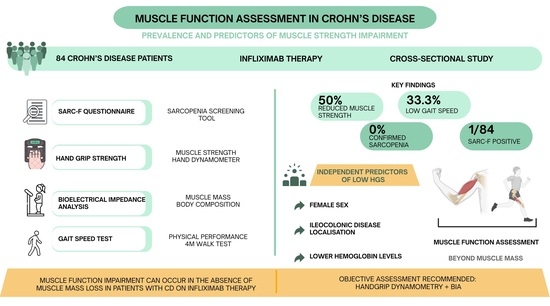
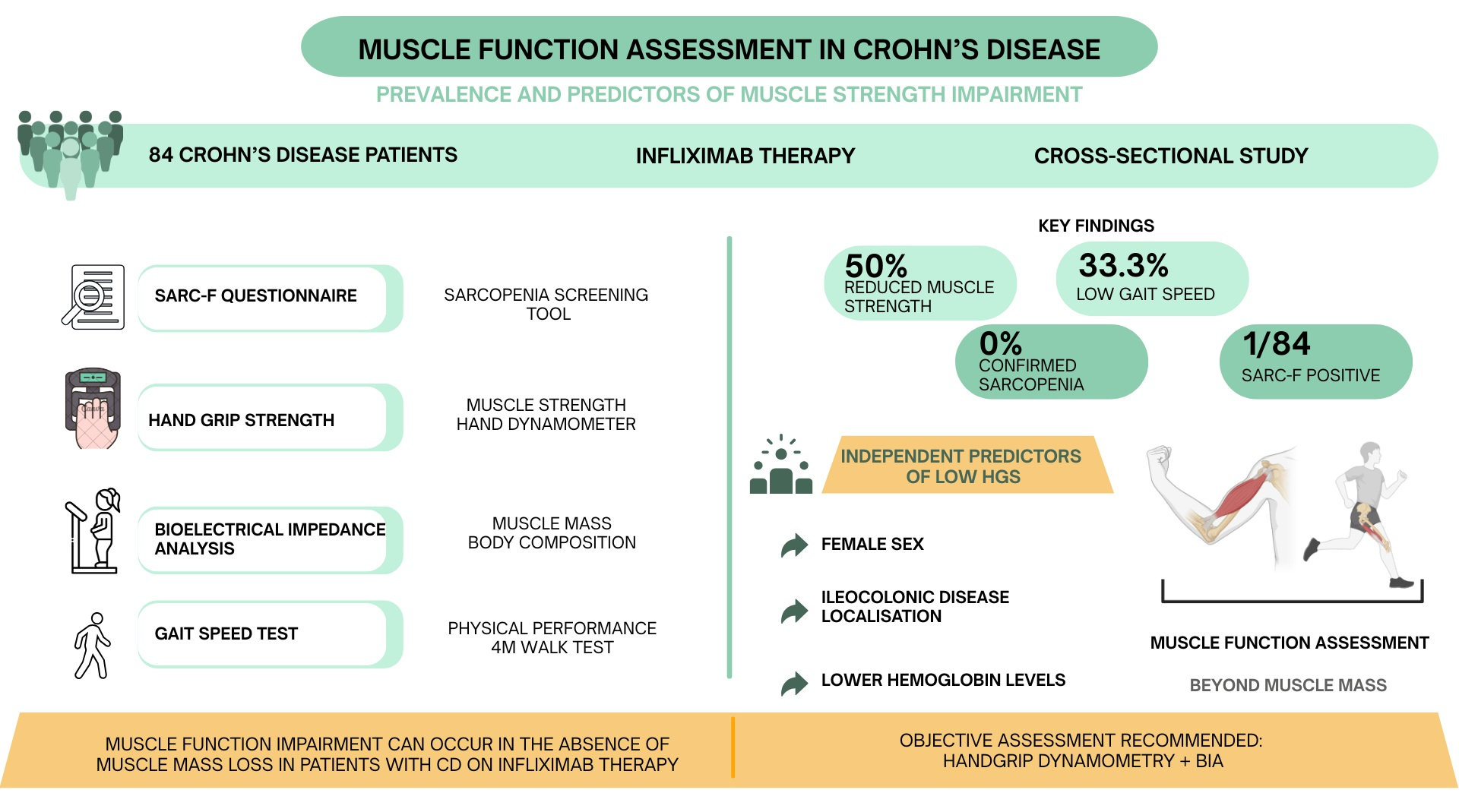
21]. In our study, none of the patients had low SMI based on European population reference values, and consequently none met the criteria for sarcopenia. This finding should be interpreted in the context of our cohort, which consisted of a male-predominant group of patients with CD treated with infliximab at a tertiary center. The majority of patients were in remission, with a median infliximab therapy duration of 3.1 years (range 0.1–8.1), which may also reflect a relatively well-controlled disease state. All of these factors represent characteristics that may have influenced muscle mass parameters. On the other hand, 50% of our cohort had low HGS in reference to a healthy European population.
Our findings are also consistent with those reported by Ergenc I et al. [
18] in an outpatient cohort of 129 patients with IBD (63 CD and 66 UC) evaluated at a tertiary center, where disease activity was present in 27% of patients with CD and 29% of those with UC. Using EWGSOP2 criteria with ethnicity-based population thresholds, the authors reported that 34.9% of patients with IBD had probable sarcopenia (defined as low muscle strength), while the prevalence of confirmed sarcopenia remained low (approximately 2%). These findings align with our own, reinforcing the concept that, in younger adult IBD populations, reduced muscle strength is considerably more prevalent than overt loss of muscle mass, and that probable sarcopenia may represent the predominant functional phenotype in this setting. Forty percent of these patients were treated with biologics. This supports the value of objective strength assessment as a more sensitive indicator of early functional impairment in this population.
Similarly, in one of the few prospective studies, Dermine et al. [
22] evaluated 60 outpatients with IBD, predominantly treated with biologic therapy (97%) and with longer disease durations, and reported a prevalence of probable sarcopenia and sarcopenia of 18% and 10%, respectively. Our findings are in line with these results, as the prevalence of probable sarcopenia remains higher than that of confirmed sarcopenia.
Muscle function is a critical prognostic factor in these patients, as it is shown that it declines more rapidly than muscle mass and may serve as an early indicator for the assessment and prevention of sarcopenia [
23]. Moreover, muscle strength is now considered a better predictor of adverse outcomes [
24]. Reduced muscle function has been reported in patients with CD even during clinical remission. Van Langenberg et al. evaluated 41 patients with CD in clinical remission and found significantly lower strength performance compared to age-matched healthy controls, despite no significant differences in weight, BMI, fat mass, or fat-free mass. This further supports our observation that reduced muscle strength may occur independently of preserved muscle mass and aligns with our finding that 50% of our cohort exhibited low HGS, despite the fact that majority of patients were in disease remission [
25].
The SARC-F questionnaire was originally designed and validated in elderly populations, where it demonstrated adequate correlation with grip strength and predictive validity for adverse functional outcomes [
26]. In our cohort, with a mean age of 35 years, only one patient screened positive on SARC-F, while 50% had reduced handgrip strength. This clinically significant discordance highlights the limited sensitivity of SARC-F in younger populations with CD and suggests that objective measure of muscle strength, such as handgrip dynamometry, may be more appropriate screening tool in this group of patients. This is also consistent with recent evidence demonstrating poor diagnostic accuracy of SARC-F in populations with IBD [
18,
27]. Furthermore, even in older adult populations for which SARC-F was originally developed, the conventional cut-off of ≥4 has demonstrated insufficient sensitivity, with lower thresholds proposed to improve early detection [
28].
Another finding of our study was that one third of patients had low gait speed, despite a relatively young mean age and preserved muscle mass which further supports the presence of functional impairment in this cohort. Gait speed is a powerful predictor of adverse outcomes including falls, hospitalization, and mortality in elderly populations [
29], but its prognostic significance in younger cohorts with IBD remains unclear. According to the EWGSOP2 guidelines, physical performance measures such as gait speed are used to assess the severity of established sarcopenia [
30]. However, physical performance is a multidimensional concept that reflects whole-body function related to movement, encompassing not only muscle function but also the function of the central and peripheral nervous system and balance [
31]. Our findings suggests that impaired physical performance may occur in patients with CD receiving biologic therapy independently of sarcopenia, even in the setting of well-controlled disease and preserved muscle mass, and warrants further investigation.
4.2. Clinical Predictors of Muscle Function and Body Composition
Existing evidence indicates that HGS is associated with age showing a decline with advancing years [
32]. In our cohort, however, the mean age was significantly higher in the normal HGS group (
p = 0.001), whereas patients classified as having low HGS were younger than those with normal HGS. This finding should be interpreted while bearing in mind our HGS classification—handgrip strength categories in our study were defined using age-specific reference values. Therefore, the finding that the normal HGS group was older indicates that older patients more often had grip strength within the expected range for their age, whereas younger patients more often had grip strength below the expected range for age-matched healthy individuals. This finding may point to early functional impairment in complicated CD phenotypes that are usually treated with infliximab, potentially related to cumulative disease burden, inflammation-related catabolism, nutritional deficits, or treatment effects. The results should be interpreted with caution, taking into account both the age-specific definition of HGS categories and the difference in age distribution between groups.
Cigarette smoking is a well-recognized risk factor in patients with CD and has been associated with a more aggressive disease course leading to increased therapeutic needs and higher relapse rates in patients who continue smoking after diagnosis [
33]. Beyond its role in CD, smoking has also been proposed as a potential contributor to sarcopenia in the general population. A recent systematic review and meta-analysis reported an association between smoking and sarcopenia. However, the overall certainty of evidence was judged as very low due to the observational nature of available studies, substantial heterogeneity, and inconsistent definitions of smoking exposure [
34]. Interestingly, in our cohort, the low HGS group had a significantly higher proportion of non-smokers compared with the normal HGS group. Also, current smokers had a significantly higher median HGS compared to non-smokers. This result should not be interpreted as a protective effect of smoking on muscle strength. A more likely explanation is that the distribution of smoking status is not independent of sex in this cohort. Given the male predominance and the substantially higher HGS in male patients, subgroups with a higher proportion of male patients will naturally demonstrate higher raw HGS values regardless of the clinical characteristic under examination. Finally, because the statistical significance was borderline (
p = 0.048), this finding warrants cautious interpretation and should ideally be confirmed in larger samples with age-adjusted analyses.
Previous studies suggest that HGS is more useful than BMI for identifying low lean mass and reduced muscle mass, since BMI is strongly influenced by fat mass and can therefore mask muscle mass loss [
30,
35]. In our cohort, SMI was higher in the normal HGS group (
p = 0.044), which is consistent with the close link between muscle mass and muscle function [
36]. BMI was also higher in the normal HGS group (
p = 0.034).
In addition, in our multivariable analyses, BMI emerged as a significant independent predictor of higher SMI, FFMI, PBF, and FMI, confirming its role as a comprehensive marker reflecting both lean and fat body compartments [
5]. This is in line with previous reports indicating that BMI is associated with multiple body composition parameters in IBD population [
37].
However, BMI should be interpreted as a non-specific, crude indicator of body composition [
5] since BMI-based anthropometric assessment in IBD patients may misrepresent body composition, meaning that an excess of fat mass can mask lean mass deficits.
This consideration is particularly relevant in our cohort, as anti-TNFα therapy has been shown to improve BCP in patients with CD [
38,
39] which may result in apparent BMI normalization while subtle functional impairments in muscle strength persist. In their study on correlation of BCP and long-term outcomes in patients with CD after anti-TNFα treatment, Ando K. et al. reported that an early application of anti-TNFα therapy significantly affected skeletal muscle mass, fat mass and bone mineral content, supporting patients’ long-term nutritional status and reducing the probability of malnutrition [
38]. This supports the use of more specific measures such as bioelectrical impedance analysis and handgrip strength alongside BMI, particularly in patients with CD receiving biologic therapy, where altered body composition may not be adequately reflected in BMI alone.
Among laboratory parameters, total cholesterol was the only variable that differed significantly between groups, with higher values in the normal HGS group (4.62 ± 1.07 vs. 4.09 ± 0.86 mmol/L;
p = 0.014), although mean values in both groups were within the laboratory reference range (<5.2 mmol/L). Lower cholesterol can be seen in the context of chronic inflammation or undernutrition, which may coexist with reduced muscle strength in patients with CD [
40]. Since CRP, albumin, and fecal calprotectin were comparable between groups, this difference is unlikely to reflect higher inflammatory activity. It may instead relate to differences in nutritional status between groups, as the normal HGS group also had higher BMI and SMI. Although statistically significant, this difference is likely of marginal clinical significance.
Handgrip strength was significantly associated with several clinical and biological factors.
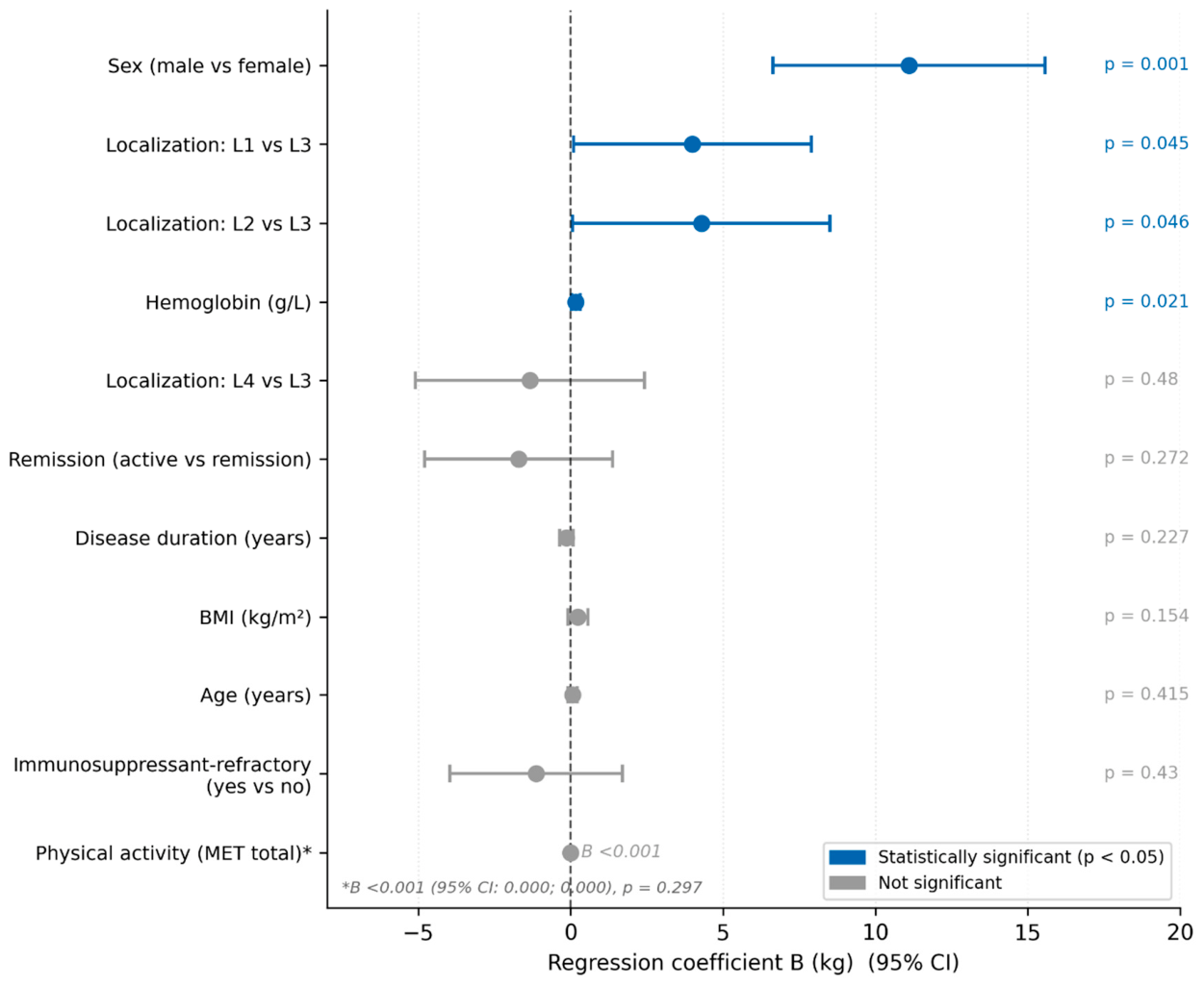
In our male-predominant cohort (76.2% male), male sex emerged as the strongest independent predictor of higher HGS in the multivariable model, consistent with well-established sex differences in muscle strength observed across populations [
41]. Observed difference in absolute HGS values between sexes, underscores the necessity of using sex-specific reference values when classifying patients as having low or normal HGS. Notably, despite male predominance typically associated with higher muscle strength, half of our cohort still exhibited reduced HGS, highlighting the burden of muscle function impairment in patients with CD on biologic therapy. Similarly, male sex was an independent predictor of higher SMI and FFMI, while female sex was associated with higher PBF and FMI in our multivariable analyses, supporting previous evidence on sex-based differences in body composition [
42].
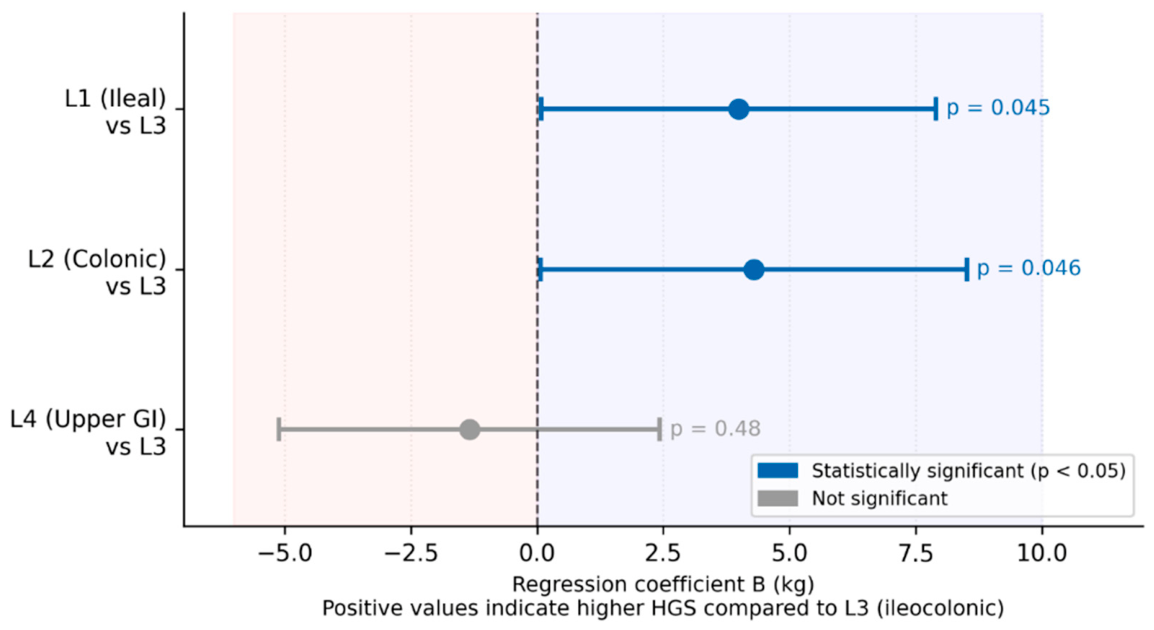
Secondly, disease localization showed a clinically relevant association with HGS after adjustment for age, sex, BMI, disease duration, remission status, and physical activity level. Ileocolonic involvement was associated with lower HGS values compared to isolated ileal and colonic disease. This finding indicates that ileocolonic CD represents the phenotype most vulnerable to impaired muscle strength, independent of other confounders. The more extensive inflammatory burden of ileocolonic disease, combined with the compromised function of both the ileum as the primary site of nutrient absorption [
13] and the colon, which contributes to metabolic homeostasis through short-chain fatty acid production, water and electrolyte absorption [
20], may collectively drive this muscle strength impairment. In addition, the ileocolonic form of CD often necessitates more aggressive medical treatment, including corticosteroids, which are known to accelerate muscle breakdown [
14,
43].
The association of ileocolonic disease with lower HGS values appears to be contradicted by the raw medians where patients with ileocolonic localization had the highest raw median HGS and colonic localization the lowest. However, this discrepancy is a direct consequence of the uneven sex distribution across disease localization subgroups. In our cohort, ileocolonic disease is the most common phenotype (n = 37), and given the 76.2% overall male prevalence, this group is likely to contain the highest absolute number of male patients, whose substantially higher HGS inflates the raw median for L3. After adjustment for sex, BMI, and other confounders in the multivariable model, the relationship reverses.
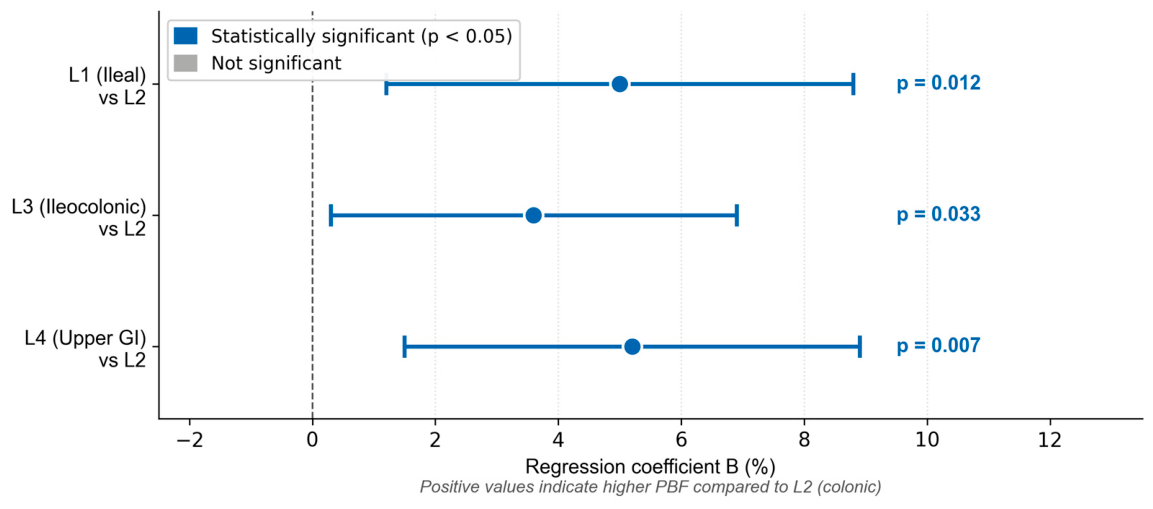
Regarding disease localization, different patterns of involvement emerged as independent predictors of BCP in our multivariable analyses.
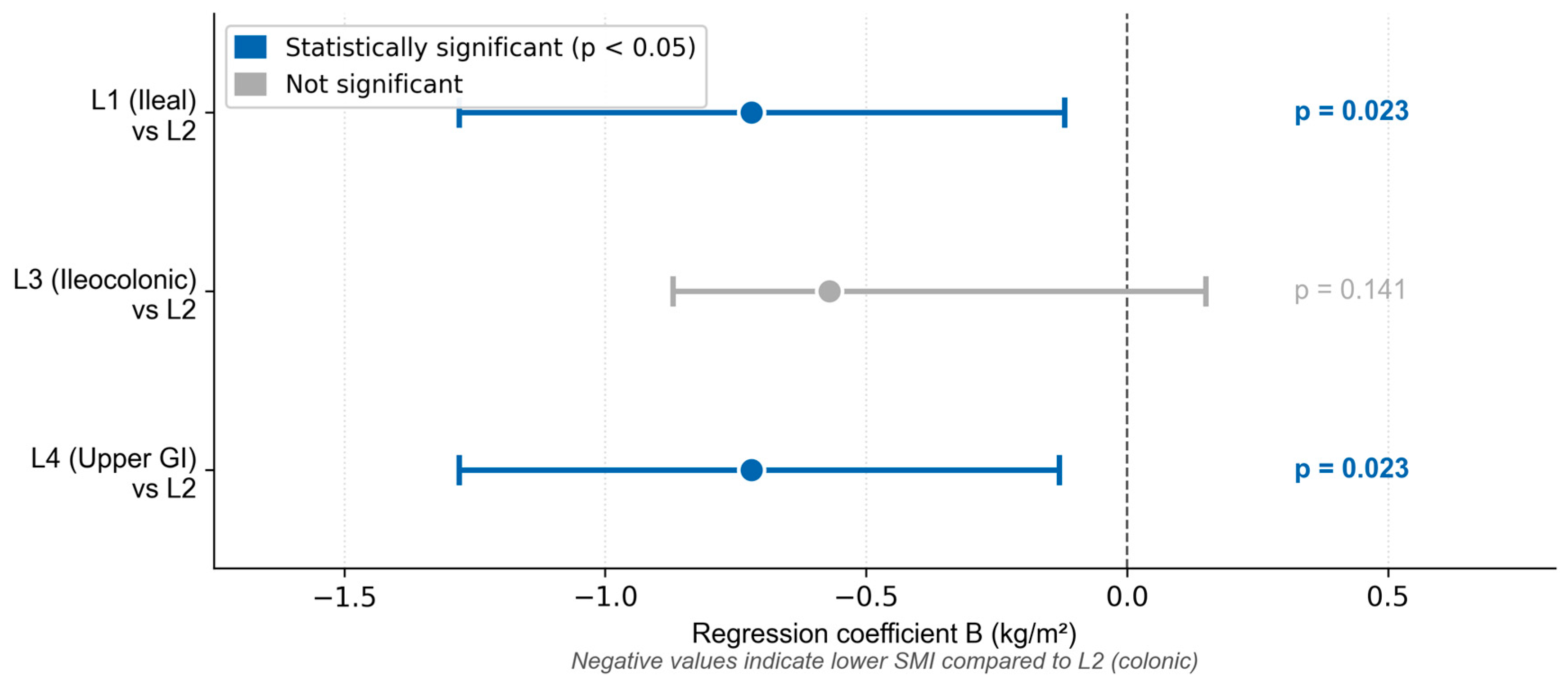
An interesting and clinically relevant observation emerged when comparing predictors of muscle strength and muscle mass across different CD localizations. In multivariable analysis ileal and proximal disease were independently associated with relatively lower SMI values compared to colonic localization. This is consistent with the absorptive role of the small bowel and with previous reports showing that small bowel involvement predisposes patients with CD to greater nutritional depletion and subsequent muscle mass reduction [
2,
44]. Since no patient in our cohort met the criteria for low SMI these findings should be interpreted as subtle shifts in body composition within the normal range rather than clinically overt muscle mass deficits. In that sense, small bowel involvement appeared to primarily affect muscle mass, whereas combined small and large bowel involvement had the greatest impact on muscle strength, relative to isolated ileal or colonic disease. This apparent dissociation between muscle mass and muscle strength across disease phenotypes supports the concept of dynapenia, in which muscle quality and functional capacity may be compromised independently of quantitative muscle mass [
29,
45]. These findings may reflect distinct mechanisms underlying muscle impairment across CD localizations where ileocolonic involvement may primarily affect muscle quality and function through systemic inflammation [
46] while small bowel involvement may primarily affect muscle mass through impaired nutrient absorption [
13]. This underscores the value of assessing both muscle mass and function in CD, as neither alone fully captures the spectrum of muscle impairment.
For gait speed, proximal disease involvement was associated with higher walking speed compared to ileal localization, although this finding should be interpreted with caution given the heterogeneity within the L4 category and the relatively small subgroup sizes.
In a recent systematic review Ding NS et al. [
47] identified only two studies that examined the relationship between CD localization and BCP [
44,
48]. They reported that ileal and ileo-colonic disease were associated with decreased fat mass compared to other distributions. Our results are in contrast with these, suggesting ileal, ileocolonic, and proximal disease to be associated with higher PBF compared to colonic localization. Our cohort consisted of patients with CD on established infliximab therapy, which has been shown to improve nutritional status and body composition, potentially modifying fat distribution over time [
49]. Therefore, our study is one of the few contemporary investigations that associated disease localization with BCP.
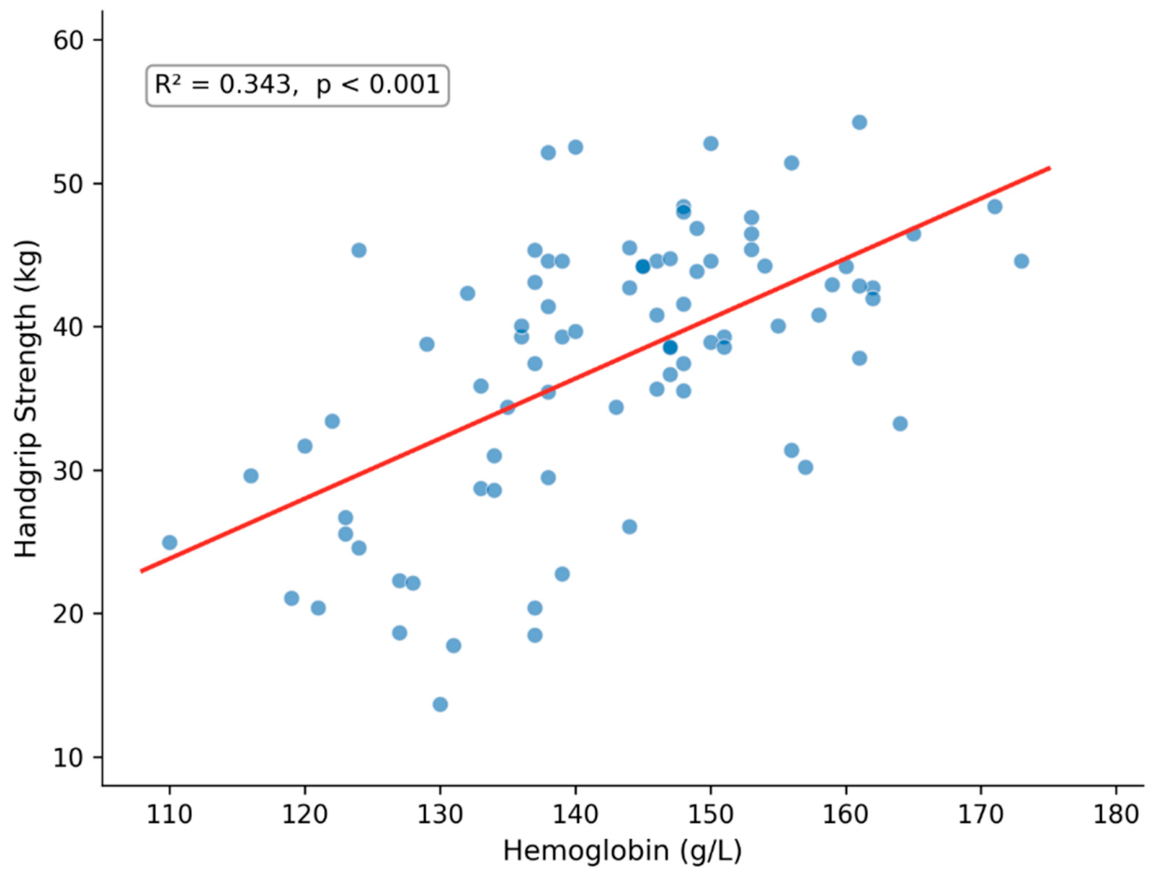
Hemoglobin was also an independent predictor of HGS in the adjusted model supporting the concept that anemia, frequently observed in patients with CD due to chronic inflammation, iron deficiency, or malabsorption, may contribute to reduced oxygen delivery and impaired muscle function [
6,
50].
Disease duration emerged as a significant independent predictor in the multivariable analyses, with an opposing effect on lean and fat compartments. In line with previous findings, longer disease duration was associated with lower FFMI, but higher FMI [
51]. This pattern suggests a progressive shift in body composition over the course of treated CD, characterized by gradual loss of lean mass and concomitant accumulation of fat mass. Such changes may reflect the cumulative impact of chronic inflammation, nutritional depletion, reduced physical activity, and the long-term effects of corticosteroid exposure as well as effects of anti-TNFα therapy on body composition [
5,
39,
40]. Schneider et al. observed, negative correlation between disease duration and fat-free body mass in patients with CD in remission [
9,
36].
In line with this, another predictor of lower FFMI values was FC as a marker of active intestinal inflammation, supporting the role of ongoing chronic inflammatory activity in driving lean tissue depletion [
46]. Together, these findings indicate that both cumulative disease exposure (disease duration) and current inflammatory burden expressed through FC may be related to reduced FFMI values in our cohort. Importantly, disease duration was not an independent predictor of SMI, which may indicate that these gradual changes first become detectable in the broader FFMI measure, reflecting overall lean tissue including both skeletal and smooth muscle, organs, and body water. Also, in our cohort of patients with CD on infliximab therapy, disease control and biologic treatment may partially mitigate the loss of skeletal muscle mass while more subtle changes in overall lean tissue composition persist. This finding underscores the importance of longitudinal body composition monitoring in CD patients, particularly those with long-standing disease, even when overall muscle mass appears preserved.
Although previously reported findings suggested that both early and late disease onset may predispose patients to reduced muscle performance through distinct biological and behavioral pathways [
52,
53,
54], our findings were not fully in accordance with them. In our multivariable analyses patients diagnosed with CD between 16 and 40 years of age had significantly lower gait speed compared to those diagnosed after the age of 40, an association that remained significant in linear regression model, after adjustment for confounders. One possible explanation is that this age group experiences the longest cumulative exposure to active disease during a physiologically demanding period of life, when occupational, academic, and social responsibilities may limit opportunities for recovery and physical activity [
55]. Older adults may present with more stable disease course or lower functional expectations [
56]. However, these findings should be interpreted with caution. The overall linear regression model for gait speed did not reach statistical significance (
p = 0.084), but this finding needs confirmation in larger cohorts.
Early use of anti-TNFα therapy is known to play a pivotal role in improving the long-term outcomes of Crohn’s disease. Our results show that patients who were started on biologic therapy in a step-up approach due to the immunosuppressive-refractory disease have lower FFMI and HGS, compared to those who were treated with infliximab as part of a top-down approach. However, these results, implying the benefits of early anti-TNFα therapy initiation on muscle mass and function parameters, did not retain statistical significance in multivariate linear models. Additional research involving larger cohorts is warranted to clarify and confirm these observations.
Our findings did not support a significant association between clinical remission status and muscle function or BCP, as remission did not emerge as an independent predictor in our multivariable analyses. This contrasts with previous reports linking disease activity to impaired body composition and muscle function in IBD patients [
36,
57]. However, this discrepancy may be explained by the predominance of patients in clinical remission within our cohort, which limited the variability of this variable and may have reduced the ability to detect significant associations.




 ,
,