Preserved Ratio Impaired Spirometry in Low- and Middle-Income Countries: An Emerging Cardiopulmonary Phenotype and Cardiovascular Risk—A Narrative Review

 ,
,  , ,
, ,  ,
,
Abstract
1. Introduction
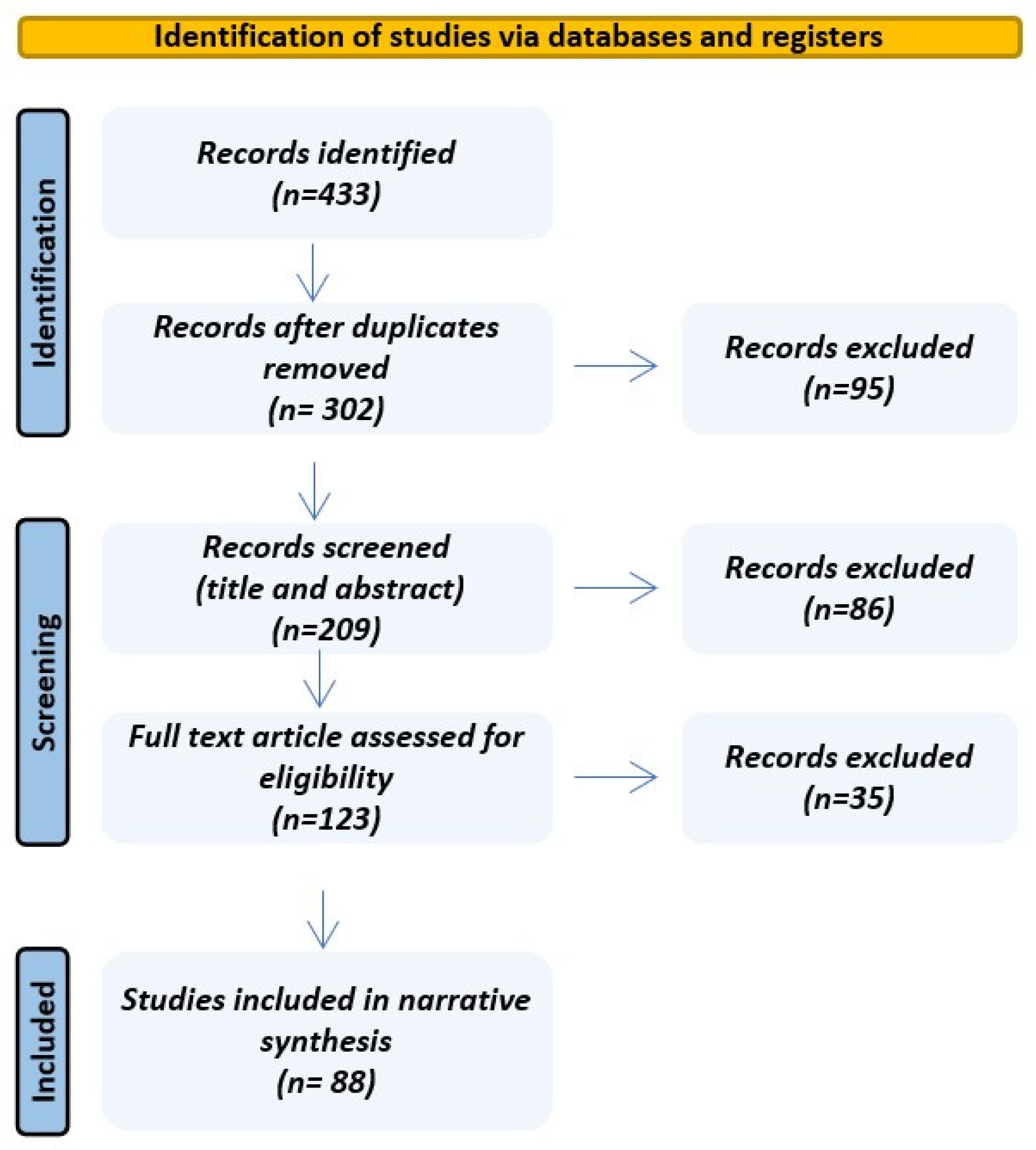
2. Search Strategy
3. PRISm and COPD: Overlap, Divergence, and Transition
4. PRISm as a Cardiovascular Risk Phenotype: The Short Recap
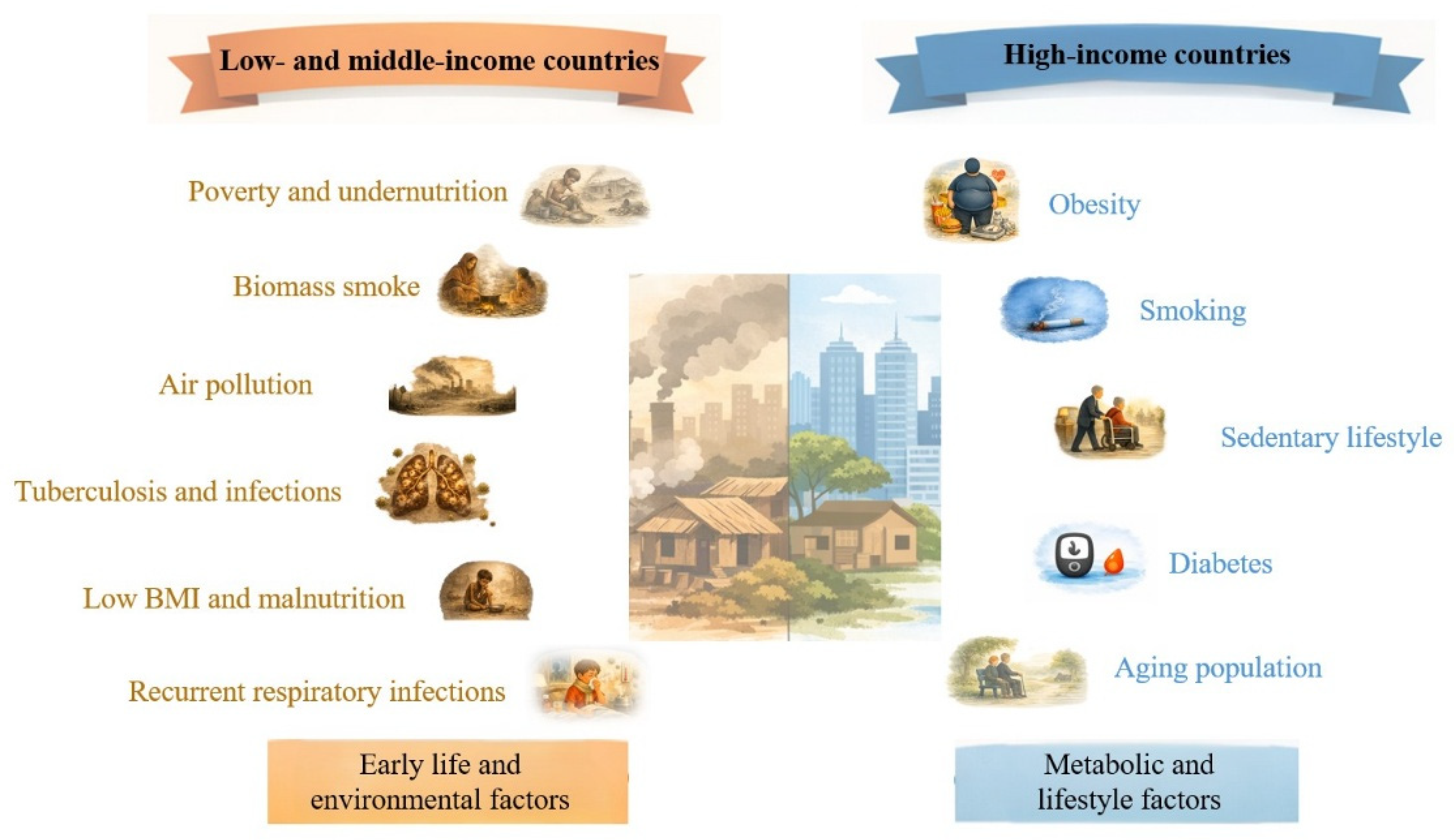
5. Why the LMIC Context Changes the PRISm Story
5.1. Tuberculosis and Post-Tuberculosis Lung Disease as Plausible Contributors to PRISm-Related Cardiovascular Risk
5.2. Household Air Pollution, Biomass Smoke, and Ambient Particulate Matter
5.2.1. Household Air Pollution and Biomass Smoke
5.2.2. Ambient Particulate Pollution
5.2.3. Shared Cardiometabolic Mechanisms
5.3. Poverty, Undernutrition, Impaired Lung Growth, and the Low-BMI PRISm Phenotype
6. PRISm as a Cardiovascular Risk Phenotype in LMICs: Beyond the Obesity–Smoking Model
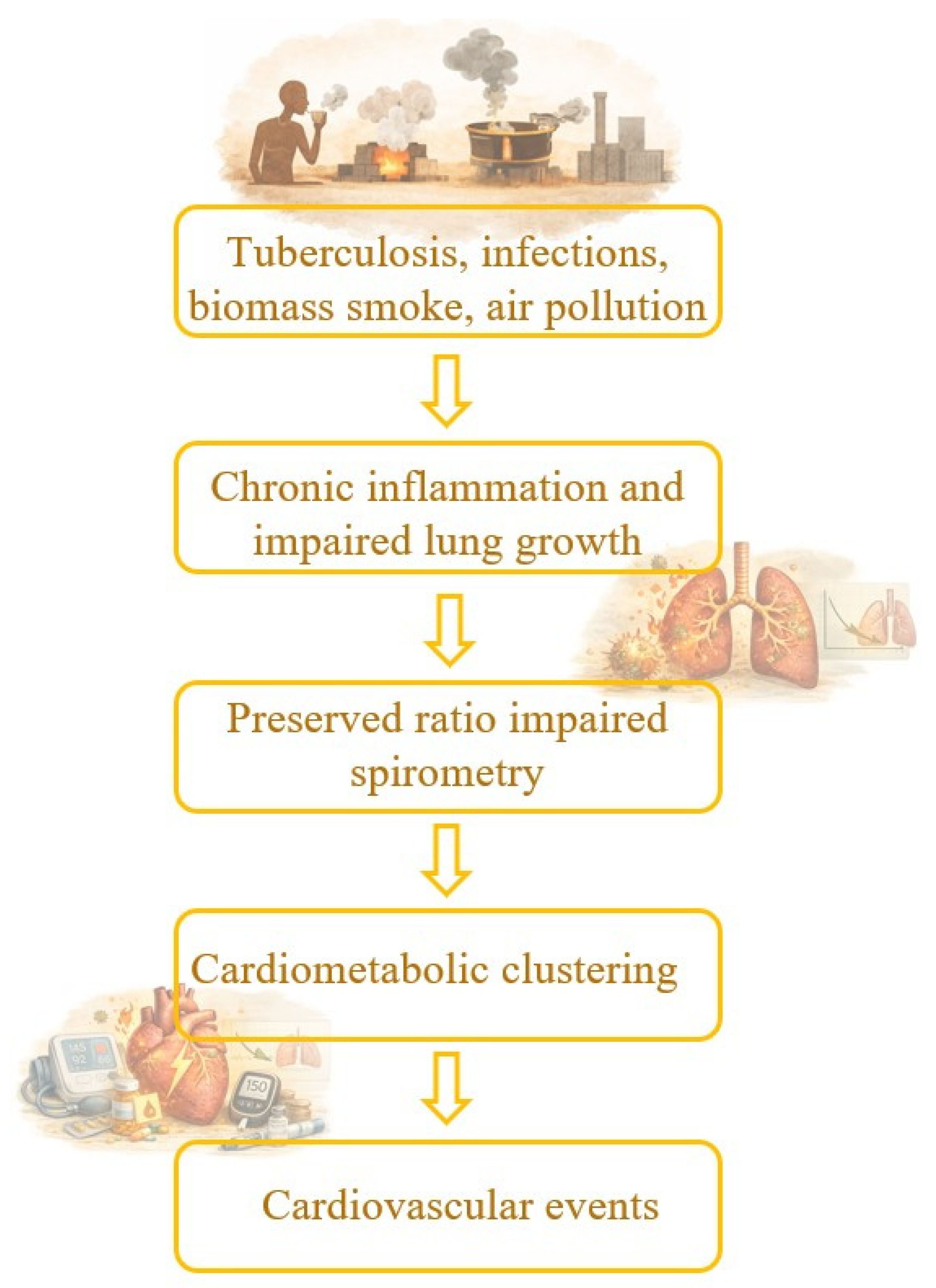
7. Inflammation as the Mechanistic Bridge
8. Clinical Implications for LMIC Practice
9. Research and Policy Agenda
10. Limitations
11. Conclusions
Author Contributions
Funding
Institutional Review Board Statement
Informed Consent Statement
Data Availability Statement
Conflicts of Interest
References
- Li, Y.; Tang, X.; Zhang, R.; Lei, Y.; Wang, D.; Wang, Z.; Li, W. Research Progress in Early States of Chronic Obstructive Pulmonary Disease: A Narrative Review on PRISm, Pre-COPD, Young COPD and Mild COPD. Expert Rev. Respir. Med. 2025, 19, 1063–1079. [Google Scholar] [CrossRef]
- 2025 GOLD Report—Global Initiative for Chronic Obstructive Lung Disease—GOLD. Available online: https://goldcopd.org/2025-gold-report/ (accessed on 4 February 2025).
- 2026 GOLD Report and Pocket Guide—Global Initiative for Chronic Obstructive Lung Disease—GOLD. Available online: https://goldcopd.org/2026-gold-report-and-pocket-guide/ (accessed on 15 April 2026).
- Knox-Brown, B.; Amaral, A.F.; Burney, P. Concerns about PRISm. Lancet Respir. Med. 2022, 10, e51–e52. [Google Scholar] [CrossRef] [PubMed]
- Han, M.L.K.; Agusti, A.; Celli, B.R.; Criner, G.J.; Halpin, D.M.G.; Roche, N.; Papi, A.; Stockley, R.A.; Wedzicha, J.; Vogelmeier, C.F. From GOLD 0 to Pre-COPD. Am. J. Respir. Crit. Care Med. 2021, 203, 414–423. [Google Scholar] [CrossRef] [PubMed]
- Robertson, N.M.; Centner, C.S.; Tejwani, V.; Hossen, S.; Karmali, D.; Liu, S.; Siddharthan, T. Preserved Ratio Impaired Spirometry (PRISm) Prevalence, Risk Factors, and Outcomes: A Systematic Review and Meta-Analysis. Chest 2025, 167, 1591–1614. [Google Scholar] [CrossRef]
- Yang, S.; Liao, G.; Tse, L.A. Association of Preserved Ratio Impaired Spirometry with Mortality: A Systematic Review and Meta-Analysis. Eur. Respir. Rev. 2023, 32, 230135. [Google Scholar] [CrossRef]
- Xu, H.; Jiang, X.; Zeng, Q.; Li, R. Associated Factors and Pulmonary Function Outcomes of Preserved Ratio Impaired Spirometry: A Scoping Review. Int. J. Chron. Obstruct. Pulmon. Dis. 2025, 20, 767–784. [Google Scholar] [CrossRef]
- Siddharthan, T.; Grealis, K.; Robertson, N.M.; Lu, M.; Liu, S.; Pollard, S.L.; Hossen, S.; Jackson, P.; Rykiel, N.A.; Wosu, A.C.; et al. Assessing the Prevalence and Impact of Preserved Ratio Impaired Spirometry in Low-Income and Middle-Income Countries: A Post-Hoc Cross-Sectional Analysis. Lancet Glob. Health 2024, 12, E1498–E1505. [Google Scholar] [CrossRef] [PubMed]
- Wijnant, S.R.A.; Lahousse, L.; Brusselle, G.G. The Global Significance of PRISm: How Data from Low- and Middle-Income Countries Link Physiology to Inflammation. Eur. Respir. J. 2020, 55, 2000184. [Google Scholar] [CrossRef]
- Perez-Padilla, R.; Montes de Oca, M.; Thirion-Romero, I.; Wehrmeister, F.C.; Lopez, M.V.; Valdivia, G.; Jardim, J.R.; Muino, A.; Menezes, A.M.B. Trajectories of Spirometric Patterns, Obstructive and PRISm, in a Population-Based Cohort in Latin America. Int. J. Chron. Obstruct. Pulmon. Dis. 2023, 18, 1277–1285. [Google Scholar] [CrossRef]
- Cadham, C.J.; Oh, H.; Han, M.L.K.; Mannino, D.; Cook, S.; Meza, R.; Levy, D.T.; Sánchez-Romero, L.M. The Prevalence and Mortality Risks of PRISm and COPD in the United States from NHANES 2007–2012. Respir. Res. 2024, 25, 208. [Google Scholar] [CrossRef]
- Kanetake, R.; Takamatsu, K.; Park, K.; Yokoyama, A. Prevalence and Risk Factors for COPD in Subjects with Preserved Ratio Impaired Spirometry. BMJ Open Respir. Res. 2022, 9, e001298. [Google Scholar] [CrossRef]
- Zhang, X.; Chen, T.; Zhang, G.; Du, X.; Xu, R. Causal Association between Cigarette Smoking and the Prevalence of Preserved Ratio Impaired Spirometry (PRISm), and the Progression Risk Factors of PRISm: A Study Based on Mendelian Randomization and Meta-Analysis. Tob. Induc. Dis. 2025, 23, 179. [Google Scholar] [CrossRef]
- Huang, J.; Li, W.; Sun, Y.; Huang, Z.; Cong, R.; Yu, C.; Tao, H. Preserved Ratio Impaired Spirometry (PRISm): A Global Epidemiological Overview, Radiographic Characteristics, Comorbid Associations, and Differentiation from Chronic Obstructive Pulmonary Disease. Int. J. Chron. Obstruct. Pulmon. Dis. 2024, 19, 753–764. [Google Scholar] [CrossRef] [PubMed]
- Wijnant, S.R.A.; de Roos, E.; Kavousi, M.; Stricker, B.H.; Terzikhan, N.; Lahousse, L.; Brusselle, G.G. Trajectory and Mortality of Preserved Ratio Impaired Spirometry: The Rotterdam Study. Eur. Respir. J. 2020, 55, 1901217. [Google Scholar] [CrossRef]
- Higbee, D.H.; Granell, R.; Davey Smith, G.; Dodd, J.W. Prevalence, Risk Factors, and Clinical Implications of Preserved Ratio Impaired Spirometry: A UK Biobank Cohort Analysis. Lancet Respir. Med. 2022, 10, 149–157. [Google Scholar] [CrossRef]
- Jo, Y.S.; Rhee, C.K.; Kim, S.H.; Lee, H.; Choi, J.Y. Spirometric Transition of at Risk Individuals and Risks for Progression to Chronic Obstructive Pulmonary Disease in General Population. Arch. Bronconeumol. 2024, 60, 634–642. [Google Scholar] [CrossRef]
- Backman, H.; Myrberg, T.; Hedman, L.; Stridsman, C.; Rönmark, E.; Lindberg, A. Importance of Preserved Ratio Impaired Spirometry as a Risk Factor for Development of COPD, Also in Those Who Do Not Smoke. Chest 2025, 168, 83–94. [Google Scholar] [CrossRef] [PubMed]
- Fortis, S.; Comellas, A.; Kim, V.; Casaburi, R.; Hokanson, J.E.; Crapo, J.D.; Silverman, E.K.; Wan, E.S. Low FVC/TLC in Preserved Ratio Impaired Spirometry (PRISm) Is Associated with Features of and Progression to Obstructive Lung Disease. Sci. Rep. 2020, 10, 5169. [Google Scholar] [CrossRef] [PubMed]
- He, D.; Sun, Y.; Gao, M.; Wu, Q.; Cheng, Z.; Li, J.; Zhou, Y.; Ying, K.; Zhu, Y. Different Risks of Mortality and Longitudinal Transition Trajectories in New Potential Subtypes of the Preserved Ratio Impaired Spirometry: Evidence From the English Longitudinal Study of Aging. Front. Med. 2021, 8, 755855. [Google Scholar] [CrossRef]
- Zheng, J.; Zhou, R.; Zhang, Y.; Su, K.; Chen, H.; Li, F.; Hukportie, D.N.; Niu, F.; Yiu, K.H.; Wu, X. Preserved Ratio Impaired Spirometry in Relation to Cardiovascular Outcomes: A Large Prospective Cohort Study. Chest 2023, 163, 610–623. [Google Scholar] [CrossRef]
- Wan, E.S.; Balte, P.; Schwartz, J.E.; Bhatt, S.P.; Cassano, P.A.; Couper, D.; Daviglus, M.L.; Dransfield, M.T.; Gharib, S.A.; Jacobs, D.R.; et al. Association Between Preserved Ratio Impaired Spirometry and Clinical Outcomes in US Adults. JAMA 2021, 326, 2287–2298. [Google Scholar] [CrossRef]
- Higbee, D.H.; Lirio, A.; Hamilton, F.; Granell, R.; Wyss, A.B.; London, S.J.; Bartz, T.M.; Gharib, S.A.; Cho, M.H.; Wan, E.; et al. Genome-Wide Association Study of Preserved Ratio Impaired Spirometry (PRISm). Eur. Respir. J. 2024, 63, 2300337. [Google Scholar] [CrossRef]
- Li, M.; Chen, M.; Li, Y.; Liu, Z.; Li, X.; Lang, X.; Hu, B.; Li, W. Association of Preserved Ratio Impaired Spirometry with Mortality and Cardiovascular Diseases: A Systematic Review and Meta-Analysis. Syst. Rev. 2024, 13, 171. [Google Scholar] [CrossRef] [PubMed]
- Wan, E.S.; Fortis, S.; Regan, E.A.; Hokanson, J.; Han, M.L.K.; Casaburi, R.; Make, B.J.; Crapo, J.D.; DeMeo, D.L.; Silverman, E.K.; et al. Longitudinal Phenotypes and Mortality in Preserved Ratio Impaired Spirometry in the COPDGene Study. Am. J. Respir. Crit. Care Med. 2018, 198, 1397–1405. [Google Scholar] [CrossRef] [PubMed]
- Doiron, D.; de Hoogh, K.; Probst-Hensch, N.; Fortier, I.; Cai, Y.; de Matteis, S.; Hansell, A.L. Air Pollution, Lung Function and COPD: Results from the Population-Based UK Biobank Study. Eur. Respir. J. 2019, 54, 1802140. [Google Scholar] [CrossRef]
- Wain, L.V.; Shrine, N.; Miller, S.; Jackson, V.E.; Ntalla, I.; Artigas, M.S.; Billington, C.K.; Kheirallah, A.K.; Allen, R.; Cook, J.P.; et al. Novel Insights into the Genetics of Smoking Behaviour, Lung Function, and Chronic Obstructive Pulmonary Disease (UK BiLEVE): A Genetic Association Study in UK Biobank. Lancet Respir. Med. 2015, 3, 769–781. [Google Scholar] [CrossRef] [PubMed]
- Wafula, S.T.; Nalugya, A.; Mendoza, H.; Kansiime, W.K.; Ssekamatte, T.; Walekhwa, A.W.; Mugambe, R.K.; Walter, F.; Ssempebwa, J.C.; Musoke, D. Indoor Air Pollutants and Respiratory Symptoms among Residents of an Informal Urban Settlement in Uganda: A Cross-Sectional Study. PLoS ONE 2023, 18, e0290170. [Google Scholar] [CrossRef]
- Aigbokhaode, A.Q.; Isara, A.R. Household Air Pollution and Respiratory Symptoms of Women and Children in a Suburban Community in Nigeria. Turk. Thorac. J. 2021, 22, 466–472. [Google Scholar] [CrossRef]
- Abelman, R.A.; Fitzpatrick, J.; Byanova, K.L.; Zawedde, J.; Sanyu, I.; Byanyima, P.; Musisi, E.; Hsieh, J.; Zhang, M.; Branchini, J.; et al. Sex and HIV Differences in Preserved Ratio Impaired Spirometry (PRISm) Among Ugandans Postpneumonia. Open Forum Infect. Dis. 2024, 11, ofae033. [Google Scholar] [CrossRef]
- Meghji, J.; Nadeau, G.; Davis, K.J.; Wang, D.; Nyirenda, M.J.; Gordon, S.B.; Mortimer, K. Noncommunicable Lung Disease in Sub-Saharan Africa. A Community-Based Cross-Sectional Study of Adults in Urban Malawi. Am. J. Respir. Crit. Care Med. 2016, 194, 67–76. [Google Scholar] [CrossRef]
- Rylance, S.; Jewell, C.; Naunje, A.; Mbalume, F.; Chetwood, J.D.; Nightingale, R.; Zurba, L.; Flitz, G.; Gordon, S.B.; Lesosky, M.; et al. Non-Communicable Respiratory Disease and Air Pollution Exposure in Malawi: A Prospective Cohort Study. Thorax 2020, 75, 220–226. [Google Scholar] [CrossRef]
- Attia, E.F.; Maleche-Obimbo, E.; West, T.E.; Ndukwe-Wambutsi, L.; Kiptinness, C.; Cagle, A.; McGrath, C.J.; Mugambi, C.K.; El Antouny, N.G.; Eskander, S.; et al. Adolescent Age Is an Independent Risk Factor for Abnormal Spirometry among People Living with HIV in Kenya. AIDS 2018, 32, 1353–1359. [Google Scholar] [CrossRef]
- Patel, J.; Amaral, A.F.S.; Minelli, C.; Elfadaly, F.G.; Burney, P. Poverty and Chronic Airflow Obstruction in the Multinational Burden of Obstructive Lung Disease (BOLD) Study: An Update. Eur. Respir. J. 2021, 58, PA3519. [Google Scholar] [CrossRef]
- Townend, J.; Minelli, C.; Mortimer, K.; Obaseki, D.O.; Al Ghobain, M.; Cherkaski, H.; Denguezli, M.; Gunesekera, K.; Hafizi, H.; Koul, P.A.; et al. The Association between Chronic Airflow Obstruction and Poverty in 12 Sites of the Multinational BOLD Study. Eur. Respir. J. 2017, 49, 1601880. [Google Scholar] [CrossRef] [PubMed]
- Cioboata, R.; Olteanu, M.; Mitroi, D.M.; Roșu, S.-M.; Tieranu, M.-L.; Vlasceanu, S.G.; Neamtu, S.D.; Tieranu, E.N.; Padureanu, R.; Balteanu, M.A. Beyond the Lungs: Cardiovascular Risk in COPD Patients with a History of Tuberculosis-A Narrative Review. J. Clin. Med. 2026, 15, 661. [Google Scholar] [CrossRef]
- Huaman, M.A.; Henson, D.; Ticona, E.; Sterling, T.R.; Garvy, B.A. Tuberculosis and Cardiovascular Disease: Linking the Epidemics. Trop. Dis. Travel Med. Vaccines 2015, 1, 10. [Google Scholar] [CrossRef]
- Huaman, M.A.; Ticona, E.; Miranda, G.; Kryscio, R.J.; Mugruza, R.; Aranda, E.; Rondan, P.L.; Henson, D.; Ticona, C.; Sterling, T.R.; et al. The Relationship Between Latent Tuberculosis Infection and Acute Myocardial Infarction. Clin. Infect. Dis. 2018, 66, 886–892. [Google Scholar] [CrossRef] [PubMed]
- Djaharuddin, I.; Amir, M.; Qanitha, A. Exploring the Link between Cardiovascular Risk Factors and Manifestations in Latent Tuberculosis Infection: A Comprehensive Literature Review. Egypt. Heart J. 2023, 75, 43. [Google Scholar] [CrossRef]
- Cioboata, R.; Balteanu, M.A.; Mitroi, D.M.; Vrabie, S.C.; Vlasceanu, S.G.; Andrei, G.M.; Riza, A.L.; Streata, I.; Zlatian, O.M.; Olteanu, M. Beyond Smoking: Emerging Drivers of COPD and Their Clinical Implications in Low- and Middle-Income Countries: A Narrative Review. J. Clin. Med. 2025, 14, 4633. [Google Scholar] [CrossRef]
- Mitroi, D.M.; Vlasceanu, S.G.; Zlatian, O.M.; Olteanu, M.; Catană, O.M.; Mititelu, R.R.; Riza, A.L.; Camen, G.; Biciușcă, V.; Cioboată, R. Hypercoagulability in Pulmonary Tuberculosis: Reduced Protein C and Free Protein S Predict Pulmonary Embolism—Evidence from a Prospective Romanian Cohort. J. Clin. Med. 2026, 15, 1903. [Google Scholar] [CrossRef] [PubMed]
- Cioboata, R.; Vlasceanu, S.G.; Mitroi, D.M.; Zlatian, O.M.; Balteanu, M.A.; Andrei, G.M.; Biciusca, V.; Olteanu, M. History of Pulmonary Tuberculosis Accelerates Early Onset and Severity of COPD: Evidence from a Multicenter Study in Romania. J. Clin. Med. 2025, 14, 5980. [Google Scholar] [CrossRef]
- Maleche-Obimbo, E.; Odhiambo, M.A.; Njeri, L.; Mburu, M.; Jaoko, W.; Were, F.; Graham, S.M. Magnitude and Factors Associated with Post-Tuberculosis Lung Disease in Low- and Middle-Income Countries: A Systematic Review and Meta-Analysis. PLoS Glob. Public Health 2022, 2, e0000805. [Google Scholar] [CrossRef]
- Ivanova, O.; Hoffmann, V.S.; Lange, C.; Hoelscher, M.; Rachow, A. Post-Tuberculosis Lung Impairment: Systematic Review and Meta-Analysis of Spirometry Data from 14 621 People. Eur. Respir. Rev. 2023, 32, 220221. [Google Scholar] [CrossRef] [PubMed]
- Meghji, J.; Simpson, H.; Squire, S.B.; Mortimer, K. A Systematic Review of the Prevalence and Pattern of Imaging Defined Post-TB Lung Disease. PLoS ONE 2016, 11, e0161176. [Google Scholar] [CrossRef]
- Cestelli, L.; Johannessen, A.; Gulsvik, A.; Stavem, K.; Nielsen, R. Risk Factors, Morbidity and Mortality in Association with Preserved Ratio Impaired Spirometry (PRISm) and Restrictive Spirometric Pattern (RSP). Chest 2025, 167, 548–560. [Google Scholar] [CrossRef] [PubMed]
- Miura, S.; Iwamoto, H.; Omori, K.; Yamaguchi, K.; Sakamoto, S.; Horimasu, Y.; Masuda, T.; Miyamoto, S.; Nakashima, T.; Fujitaka, K.; et al. Preserved Ratio Impaired Spirometry with or without Restrictive Spirometric Abnormality. Sci. Rep. 2023, 13, 2988. [Google Scholar] [CrossRef]
- Yang, J.; Kim, S.H.; Sim, J.K.; Gu, S.; Seok, J.W.; Bae, D.H.; Cho, J.Y.; Lee, K.M.; Choe, K.H.; Lee, H.; et al. Tuberculosis Survivors and the Risk of Cardiovascular Disease: Analysis Using a Nationwide Survey in Korea. Front. Cardiovasc. Med. 2024, 11, 1364337. [Google Scholar] [CrossRef]
- Basham, C.A.; Smit, S.J.; Romanowski, K.; Johnsto, J.C. Cardiovascular Morbidity and Mortality among Persons Diagnosed with Tuberculosis: A Systematic Review and Meta-Analysis. PLoS ONE 2020, 15, e0235821. [Google Scholar] [CrossRef]
- Critchley, J.A.; Limb, E.S.; Khakharia, A.; Carey, I.M.; Auld, S.C.; De Wilde, S.; Harris, T.; Phillips, L.S.; Cook, D.G.; Rhee, M.K.; et al. Tuberculosis and Increased Incidence of Cardiovascular Disease: Cohort Study Using United States and United Kingdom Health Records. Clin. Infect. Dis. 2025, 80, 271–279. [Google Scholar] [CrossRef]
- Zhu, J.; Katz, R.J.; Quyyumi, A.A.; Canos, D.A.; Rott, D.; Csako, G.; Zalles-Ganley, A.; Ogunmakinwa, J.; Wasserman, A.G.; Epstein, S.E. Association of Serum Antibodies to Heat-Shock Protein 65 with Coronary Calcification Levels: Suggestion of Pathogen-Triggered Autoimmunity in Early Atherosclerosis. Circ. J. Am. Heart Assoc. 2004, 109, 36–41. [Google Scholar] [CrossRef] [PubMed]
- Grundtman, C.; Kreutmayer, S.B.; Almanzar, G.; Wick, M.C.; Wick, G. Heat Shock Protein 60 and Immune Inflammatory Responses in Atherosclerosis. Arterioscler. Thromb. Vasc. Biol. 2011, 31, 960–968. [Google Scholar] [CrossRef]
- Marcu, D.T.M.; Adam, C.A.; Mitu, F.; Cumpat, C.; Aursulesei Onofrei, V.; Zabara, M.L.; Burlacu, A.; Crisan Dabija, R. Cardiovascular Involvement in Tuberculosis: From Pathophysiology to Diagnosis and Complications—A Narrative Review. Diagnostics 2023, 13, 432. [Google Scholar] [CrossRef]
- Liang, F.; Liu, F.; Huang, K.; Yang, X.; Li, J.; Xiao, Q.; Chen, J.; Liu, X.; Cao, J.; Shen, C.; et al. Long-Term Exposure to Fine Particulate Matter and Cardiovascular Disease in China. J. Am. Coll. Cardiol. 2020, 75, 707–717. [Google Scholar] [CrossRef] [PubMed]
- Bhatnagar, A. Cardiovascular Effects of Particulate Air Pollution. Annu. Rev. Med. 2022, 73, 393–406. [Google Scholar] [CrossRef]
- Zhou, H.; Liang, X.; Zhang, X.; Wu, J.; Jiang, Y.; Guo, B.; Wang, J.; Meng, Q.; Ding, X.; Baima, Y.; et al. Associations of Long-Term Exposure to Fine Particulate Constituents with Cardiovascular Diseases and Underlying Metabolic Mediations: A Prospective Population-Based Cohort in Southwest China. J. Am. Heart Assoc. Cardiovasc. Cerebrovasc. Dis. 2024, 13, e033455. [Google Scholar] [CrossRef]
- Lee, K.K.; Bing, R.; Kiang, J.; Bashir, S.; Spath, N.; Stelzle, D.; Mortimer, K.; Bularga, A.; Doudesis, D.; Joshi, S.S.; et al. Adverse Health Effects Associated with Household Air Pollution: A Systematic Review, Meta-Analysis, and Burden Estimation Study. Lancet Glob. Health 2020, 8, 1427–1434. [Google Scholar] [CrossRef]
- Ortiz-Quintero, B.; Martínez-Espinosa, I.; Pérez-Padilla, R. Mechanisms of Lung Damage and Development of COPD Due to Household Biomass-Smoke Exposure: Inflammation, Oxidative Stress, MicroRNAs, and Gene Polymorphisms. Cells 2023, 12, 67. [Google Scholar] [CrossRef] [PubMed]
- Gyaase, S.; Asante, K.P.; Nyame, S.; Downward, G.S.; Klipstein-Grobusch, K. Climate, Air Quality and Their Contribution to Cardiovascular Disease Morbidity and Mortality in Low- and Middle-Income Countries: A Systematic Review and Meta-Analysis. Glob. Heart 2025, 20, 35. [Google Scholar] [CrossRef]
- Guo, J.; Chai, G.; Song, X.; Hui, X.; Li, Z.; Feng, X.; Yang, K. Long-Term Exposure to Particulate Matter on Cardiovascular and Respiratory Diseases in Low- and Middle-Income Countries: A Systematic Review and Meta-Analysis. Front. Public Health 2023, 11, 1134341. [Google Scholar] [CrossRef] [PubMed]
- Lim, E.Y.; Kim, G.D. Particulate Matter-Induced Emerging Health Effects Associated with Oxidative Stress and Inflammation. Antioxidants 2024, 13, 1256. [Google Scholar] [CrossRef] [PubMed]
- Rao, X.; Zhong, J.; Brook, R.D.; Rajagopalan, S. Effect of Particulate Matter Air Pollution on Cardiovascular Oxidative Stress Pathways. Antioxid. Redox Signal. 2018, 28, 797–818. [Google Scholar] [CrossRef]
- Lim, S.; Bassey, E.; Bos, B.; Makacha, L.; Varaden, D.; Arku, R.E.; Baumgartner, J.; Brauer, M.; Ezzati, M.; Kelly, F.J.; et al. Comparing Human Exposure to Fine Particulate Matter in Low and High-Income Countries: A Systematic Review of Studies Measuring Personal PM2.5 Exposure. Sci. Total Environ. 2022, 833, 155207. [Google Scholar] [CrossRef]
- Voraphani, N.; Stern, D.A.; Zhai, J.; Wright, A.L.; Halonen, M.; Sherrill, D.L.; Hallberg, J.; Kull, I.; Bergström, A.; Murray, C.S.; et al. The Role of Growth and Nutrition in the Early Origins of Spirometric Restriction in Adult Life: A Longitudinal, Multicohort, Population-Based Study. Lancet Respir. Med. 2022, 10, 59–71. [Google Scholar] [CrossRef]
- Tharumakunarajah, R.; Lee, A.; Hawcutt, D.B.; Harman, N.L.; Sinha, I.P. The Impact of Malnutrition on the Developing Lung and Long-Term Lung Health: A Narrative Review of Global Literature. Pulm. Ther. 2024, 10, 155–170. [Google Scholar] [CrossRef] [PubMed]
- Grey, K.; Gonzales, G.B.; Abera, M.; Lelijveld, N.; Thompson, D.; Berhane, M.; Abdissa, A.; Girma, T.; Kerac, M. Severe Malnutrition or Famine Exposure in Childhood and Cardiometabolic Non-Communicable Disease Later in Life: A Systematic Review. BMJ Glob. Health 2021, 6, e003161. [Google Scholar] [CrossRef] [PubMed]
- Chapman, R.; Cheng, D.; Azimbagirad, M.; Wang, S.; Yamada, D.; Gupta, R.K.; Hurst, J.R.; Jacob, J. Associations of Preserved Ratio Impaired Spirometry with Cardiometabolic Comorbidities: A Systematic Review and Meta-Analysis. ERJ Open Res. 2025, 11, 00396-2025. [Google Scholar] [CrossRef]
- Baumgartner, J.; Brauer, M.; Ezzati, M. The Role of Cities in Reducing the Cardiovascular Impacts of Environmental Pollution in Low- and Middle-Income Countries. BMC Med. 2020, 18, 39. [Google Scholar] [CrossRef] [PubMed]
- Newell, K.; Kartsonaki, C.; Lam, K.B.H.; Kurmi, O.P. Cardiorespiratory Health Effects of Particulate Ambient Air Pollution Exposure in Low-Income and Middle-Income Countries: A Systematic Review and Meta-Analysis. Lancet Planet. Health 2017, 1, 368–380. [Google Scholar] [CrossRef]
- Cheng, W.; Du, Z.; Lu, B. Chronic Low-Grade Inflammation Associated with Higher Risk and Earlier Onset of Cardiometabolic Multimorbidity in Middle-Aged and Older Adults: A Population-Based Cohort Study. Sci. Rep. 2024, 14, 22635. [Google Scholar] [CrossRef]
- Tejada, B.; Joehanes, R.; Hwang, S.J.; Huan, T.; Yao, C.; Ho, J.E.; Levy, D. Systemic Inflammation Is Associated with Cardiometabolic Risk Factors and Clinical Outcomes. J. Inflamm. Res. 2022, 15, 6891–6903. [Google Scholar] [CrossRef]
- Khoufi, E.A. Al Association between Latent Tuberculosis and Ischemic Heart Disease: A Hospital-Based Cross-Sectional Study from Saudi Arabia. Pan Afr. Med. J. 2021, 38, 362. [Google Scholar] [PubMed]
- Mandieka, E.; Saleh, D.; Chokshi, A.K.; Rivera, A.S.; Feinstein, M.J. Latent Tuberculosis Infection and Elevated Incidence of Hypertension. J. Am. Heart Assoc. Cardiovasc. Cerebrovasc. Dis. 2020, 9, 19144. [Google Scholar] [CrossRef]
- Mainous, A.G.; Sharma, P.; Jo, A. Systemic Inflammation among Adults with Diagnosed and Undiagnosed Cardiometabolic Conditions: A Potential Missed Opportunity for Cardiovascular Disease Prevention. Front. Med. 2023, 10, 1327205. [Google Scholar] [CrossRef]
- Sando, D.; Kintu, A.; Okello, S.; Kawungezi, P.C.; Guwatudde, D.; Mutungi, G.; Muyindike, W.; Menzies, N.A.; Danaei, G.; Verguet, S. Cost-effectiveness Analysis of Integrating Screening and Treatment of Selected Non-communicable Diseases into HIV/AIDS Treatment in Uganda. J. Int. AIDS Soc. 2020, 23, e25507. [Google Scholar] [CrossRef]
- Mocumbi, A.O. Inequalities in Risk Stratification and Management of Non-Communicable Diseases. Lancet Glob. Health 2023, 11, 1315–1316. [Google Scholar] [CrossRef] [PubMed]
- Geng, Y.; Ding, Y.; Lu, X.; Pei, Y.; Jankowich, M.D.; Ke, C. Life’s Essential 8 and Risks of Mortality and Cardiovascular Morbidity in Individuals with PRISm and Its Associations with Transition Trajectories of PRISm. Thorax 2025, 80, 227–235. [Google Scholar] [CrossRef]
- Lee, E.S.; Vedanthan, R.; Jeemon, P.; Kamano, J.H.; Kudesia, P.; Rajan, V.; Engelgau, M.; Moran, A.E. Quality Improvement for Cardiovascular Disease Care in Low- and Middle-Income Countries: A Systematic Review. PLoS ONE 2016, 11, e0157036. [Google Scholar] [CrossRef]
- Boutros, P.; Kassem, N.; Boudo, V.; Sié, A.; Munga, S.; Maggioni, M.A.; Golec, M.; Simion, R.; Bärnighausen, T.; Winkler, V.; et al. Understanding the Risk Factors, Burden, and Interventions for Chronic Respiratory Diseases in Low- and Middle-Income Countries: A Scoping Review. Public Health Rev. 2024, 45, 1607339. [Google Scholar] [CrossRef]
- Robertson, N.M.; Porterfield, J.Z.; Kayongo, A.; Kirenga, B.; Kalyesubula, R.; Checkley, W.; Thornton, A.; Siddharthan, T. 1661. The Association of Spirometric Impairment and History of TB: A Population Based Study in Uganda. Open Forum Infect. Dis. 2020, 7, S818–S819. [Google Scholar] [CrossRef]



| Construct | Short Definition | Spirometric Basis | Key Distinction |
|---|---|---|---|
| Pre-COPD | Respiratory symptoms, structural abnormalities, or physiological abnormalities suggestive of early COPD, but without persistent airflow obstruction | FEV1/FVC not obstructed; abnormalities may include symptoms, imaging changes, reduced diffusion, small-airway dysfunction, or accelerated decline [4] | A broader clinical construct; not defined by one spirometric pattern alone |
| PRISm | Preserved FEV1/FVC ratio with reduced FEV1 | FEV1/FVC ≥ 0.70 or ≥LLN, with FEV1 < 80% predicted or <LLN [5] | A distinct spirometric phenotype associated with heterogeneous mechanisms and outcomes |
| Restrictive spirometric pattern | Preserved FEV1/FVC ratio with reduced FVC | FEV1/FVC preserved, with FVC < 80% predicted or <LLN [6] | Overlaps partly with PRISm but is centered on low FVC rather than low FEV1 |
| COPD | Persistent airflow limitation, usually associated with chronic respiratory symptoms and exposure history | Post-bronchodilator FEV1/FVC < 0.70 or below LLN, depending on framework used [7,8] | Defined by obstruction, unlike PRISm and restrictive spirometric pattern |
| Phenotype | Core Spirometric Pattern | Relation to PRISm | Relation to COPD | Cardiovascular Relevance | LMIC Relevance |
|---|---|---|---|---|---|
| Pre-COPD | No persistent airflow obstruction; may include symptoms, imaging abnormalities, reduced diffusion, or small-airway dysfunction [5] | May overlap with PRISm, but is broader and not defined by a single spirometric pattern | Represents an at-risk state for later airflow obstruction | Cardiovascular risk is not defined by spirometry alone, but may coexist through shared inflammatory and exposure-related pathways | Particularly relevant where symptoms, prior infection, and exposure burden are high but obstruction is absent |
| PRISm | Preserved FEV1/FVC with reduced FEV1 | Primary phenotype of interest | Distinct from COPD, but may transition to COPD, persist, or revert to normal spirometry [4] | Strongly associated with increased all-cause, respiratory, and cardiovascular mortality, as well as cardiometabolic multimorbidity | Common in LMICs; may reflect tuberculosis, particulate exposure, poverty-related undernutrition, impaired lung growth, and other life-course insults |
| Restrictive spirometric pattern | Preserved FEV1/FVC with reduced FVC | Partly overlaps with PRISm, especially in low-volume phenotypes [1,11] | Not COPD because obstruction is absent | Associated with adverse outcomes, including increased mortality, but cardiovascular relevance may differ from PRISm | Important in LMICs because low BMI, malnutrition, post-infectious lung damage, and impaired peak lung growth may produce low-FVC patterns [21,22] |
| COPD | Persistent post-bronchodilator airflow obstruction | May arise from a subset of PRISm trajectories, but is not interchangeable with PRISm [26] | Established obstructive lung disease | Associated with substantial cardiovascular comorbidity and mortality | In LMICs, COPD is shaped not only by smoking but also by biomass smoke, household air pollution, occupational dusts, and prior tuberculosis |
| Non-obstructive low-volume spirometric phenotypes | Preserved ratio with reduced FEV1 and/or FVC, often without classic obstruction | Umbrella category that may include PRISm-like and restrictive-like patterns | Distinct from COPD, although some individuals may later progress to obstruction | Likely relevant to cardiovascular risk through shared inflammatory, developmental, and exposure-related mechanisms [25] | Particularly useful as a descriptive umbrella term in LMICs, where post-TB damage, undernutrition, impaired lung growth, and mixed low-volume patterns may overlap |
| Pathway/Exposure | Established Association | Plausible Mechanism | Direct PRISm-Specific Evidence | Key Evidence Gap | Overall Strength of Evidence |
|---|---|---|---|---|---|
| Tuberculosis/post-TB lung disease | Prior or active TB is associated with increased ASCVD risk, incident cardiovascular disease, myocardial infarction, stroke, and cardiovascular mortality; post-TB lung impairment is common and often includes restrictive or mixed ventilatory defects [55,61] | Chronic immune activation, endothelial injury, metabolic perturbation, residual fibrosis/bronchiectasis/volume loss, and overlap with low-volume non-obstructive spirometric patterns | Low | Few studies classify post-TB survivors specifically as PRISm versus other non-obstructive phenotypes; longitudinal TB–PRISm–CVD pathways remain largely inferential | Moderate |
| LTBI and immune activation | LTBI has been associated with coronary artery disease, myocardial infarction, subclinical coronary atherosclerosis, hypertension, and cardiometabolic risk [73,74] | Persistent low-grade inflammation, monocyte/macrophage activation, cytokine signaling, endothelial dysfunction, and possible molecular mimicry involving mycobacterial heat shock proteins | Low | Direct evidence linking LTBI to PRISm is sparse; most data relate LTBI to cardiovascular outcomes rather than spirometric phenotypes | Moderate |
| Household biomass exposure | Biomass smoke is associated with chronic respiratory symptoms, COPD, chronic bronchitis, and abnormal lung-function patterns in LMICs; household air pollution is also linked to cardiovascular morbidity and mortality [58,59] | Chronic inhalational injury, oxidative stress, pulmonary and systemic inflammation, endothelial dysfunction, autonomic imbalance, and promotion of low-volume airway-predominant lung injury | Low to moderate | PRISm has not been systematically characterized in most biomass-exposed cohorts; uncertainty remains regarding phenotype specificity | Moderate |
| Ambient particulate pollution | Long-term PM exposure is strongly associated with cardiovascular morbidity and mortality in LMICs, including stroke, heart failure, hypertension, and ischemic heart disease [60,61] | Oxidative stress, systemic inflammation, endothelial dysfunction, autonomic dysregulation, insulin resistance, dyslipidemia, atherosclerosis, and thrombosis | Low | Direct LMIC studies linking ambient PM specifically to PRISm are limited; most evidence supports CVD risk more strongly than PRISm classification | Moderate to high |
| Poverty/undernutrition/impaired lung growth | Low BMI, poverty, and low-FVC or restrictive-like phenotypes are common in LMIC cohorts; early-life undernutrition is linked to smaller adult lung volumes and later cardiometabolic disease [9,10] | Impaired peak lung growth, reduced alveolarization, reduced lean mass, chronic low-grade inflammation, developmental programming of later cardiometabolic vulnerability | Moderate | Need clearer distinction between low-BMI PRISm, restrictive spirometric pattern, and other non-obstructive low-volume phenotypes in LMIC cohorts | Moderate |
| PRISm and cardiovascular outcomes | PRISm is consistently associated with higher all-cause, respiratory, and cardiovascular mortality, as well as diabetes, hypertension, ischemic heart disease, and heart failure [22,24] | Shared inflammatory and cardiometabolic pathways, small-airway dysfunction, low-volume phenotypes, and systemic vascular vulnerability | High for general populations; low to moderate for LMIC-specific cohorts | Most outcome data come from high-income populations; LMIC-specific longitudinal CVD analyses remain limited | High overall; Moderate in LMICs |
Disclaimer/Publisher’s Note: The statements, opinions and data contained in all publications are solely those of the individual author(s) and contributor(s) and not of MDPI and/or the editor(s). MDPI and/or the editor(s) disclaim responsibility for any injury to people or property resulting from any ideas, methods, instructions or products referred to in the content. |
© 2026 by the authors. Licensee MDPI, Basel, Switzerland. This article is an open access article distributed under the terms and conditions of the Creative Commons Attribution (CC BY) license.
Share and Cite
Cioboata, R.; Vlasceanu, S.G.; Tieranu, M.-L.; Mitroi, D.M.; Tieranu, E.N.; Andrei, G.M.; Balteanu, M.A.; Riza, A.L.; Olteanu, M. Preserved Ratio Impaired Spirometry in Low- and Middle-Income Countries: An Emerging Cardiopulmonary Phenotype and Cardiovascular Risk—A Narrative Review. Life 2026, 16, 735. https://doi.org/10.3390/life16050735
Cioboata R, Vlasceanu SG, Tieranu M-L, Mitroi DM, Tieranu EN, Andrei GM, Balteanu MA, Riza AL, Olteanu M. Preserved Ratio Impaired Spirometry in Low- and Middle-Income Countries: An Emerging Cardiopulmonary Phenotype and Cardiovascular Risk—A Narrative Review. Life. 2026; 16(5):735. https://doi.org/10.3390/life16050735
Chicago/Turabian StyleCioboata, Ramona, Silviu Gabriel Vlasceanu, Maria-Loredana Tieranu, Denisa Maria Mitroi, Eugen Nicolae Tieranu, Gabriela Marina Andrei, Mara Amalia Balteanu, Anca Lelia Riza, and Mihai Olteanu. 2026. "Preserved Ratio Impaired Spirometry in Low- and Middle-Income Countries: An Emerging Cardiopulmonary Phenotype and Cardiovascular Risk—A Narrative Review" Life 16, no. 5: 735. https://doi.org/10.3390/life16050735
APA StyleCioboata, R., Vlasceanu, S. G., Tieranu, M.-L., Mitroi, D. M., Tieranu, E. N., Andrei, G. M., Balteanu, M. A., Riza, A. L., & Olteanu, M. (2026). Preserved Ratio Impaired Spirometry in Low- and Middle-Income Countries: An Emerging Cardiopulmonary Phenotype and Cardiovascular Risk—A Narrative Review. Life, 16(5), 735. https://doi.org/10.3390/life16050735