The Promise of 3D Biomaterial Bioprinting for Wound-Healing and Skin Tissue Restoration

Abstract
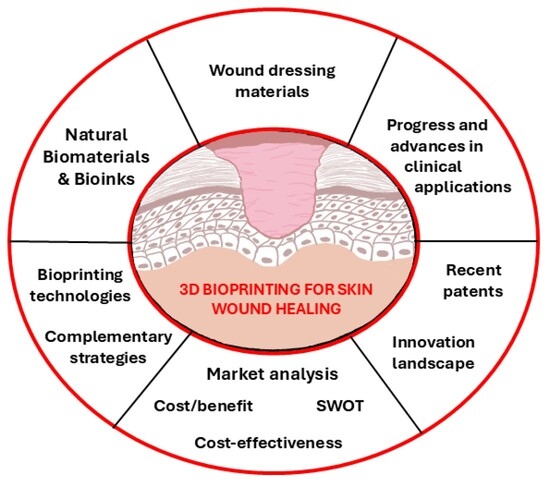
1. Introduction
2. Evolution of 3D Bioprinting Techniques
2.1. Evolution of Material Printing Technology and Different Categories
2.1.1. Early Limitations and Material Challenges
2.1.2. Innovations in Cell-Laden Hydrogels and Composite Bioinks
2.1.3. Current Advances: Smart Biomaterials and 4D Bioprinting
2.1.4. Overview and Progression of 3D Printing Technologies
2.2. Three-Dimensional Bioprinting of Biomaterials and Development of Various Bioinks for Wound-Healing
2.2.1. Characteristics of Biomaterials Utilized for the Development of Bioinks
2.2.2. Advances in Bioinks Used in 3D Bioprinting Applications for Wound-Healing
Smart Bioinks
3. Natural Biomaterials as Bioinks for 3D Bioprinting of Skin Substitutes and Wound-Healing Promoters
3.1. Natural Biomaterials
3.1.1. Carbohydrate- and Polysaccharide-Based Biomaterials
3.1.2. Protein-Based Biomaterials
3.1.3. ECM-Derived Biomaterials
Eggshell Membrane: An Emerging Bioink for Wound-Healing?
3.2. Synthetic Biomaterials
3.3. Hybrid Biomaterials
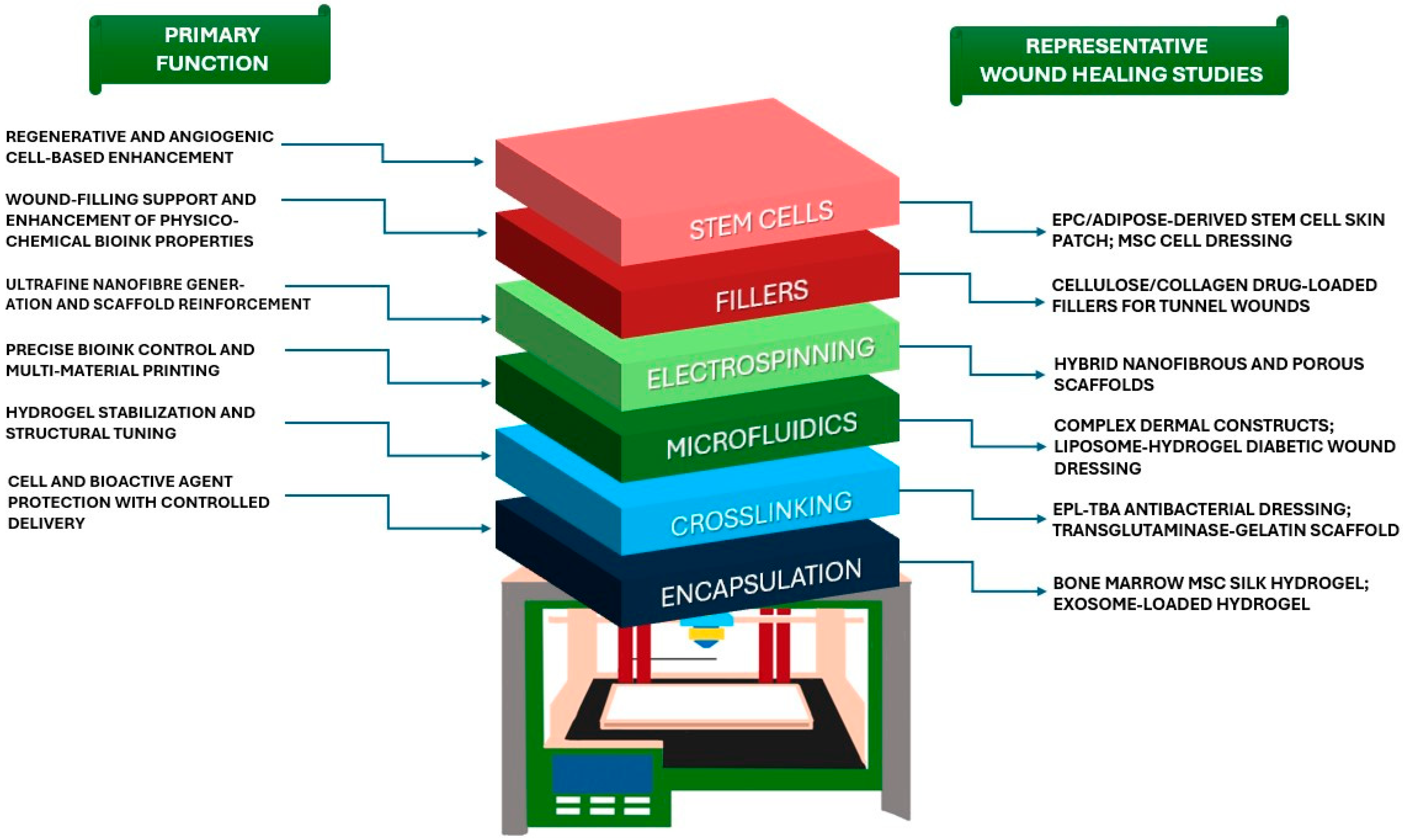
4. Complementary Strategies Used in Tandem with Bioprinting of Skin Substitutes for Wound-Healing
4.1. Electrospinning
4.2. Microfluidics
4.3. Crosslinking
4.4. Encapsulation
4.5. Fillers

4.6. Stem Cells
5. Future Directions in 3D Bioprinting for Skin Tissue Engineering and Wound-Healing
6. Market Analysis of 3D Bioprinting and Bioinks for Skin Wound-Healing
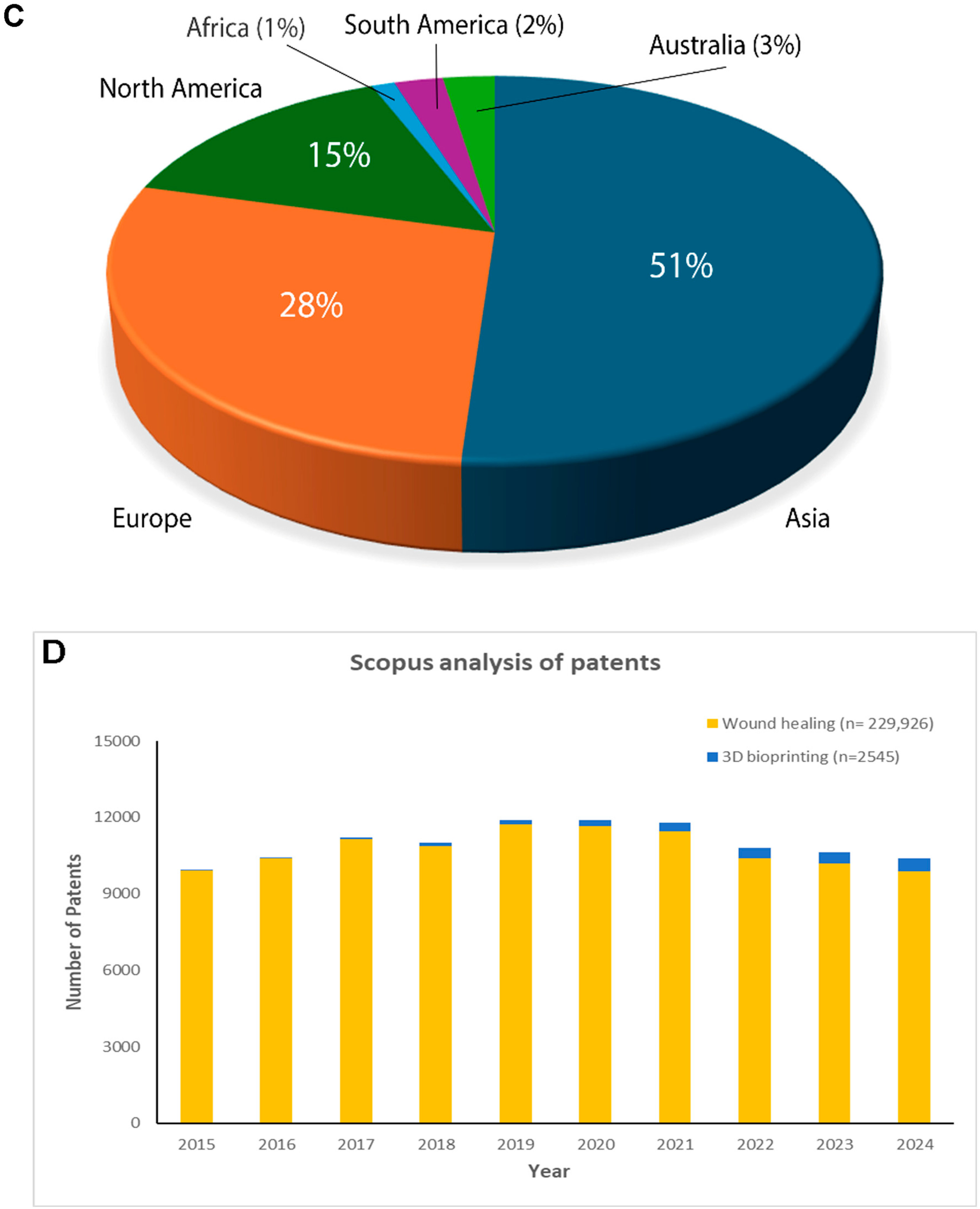
6.1. Recent Patent and Innovation Landscape of 3D Bioprinting with Natural Biomaterials for Wound-Healing Products
6.2. Market Growth and Technological Advancements in Wound-Healing
Market Growth by Geographic Region
6.3. Cost/Benefit Analysis for the Clinical Adoption of 3D Bioprinting-Enabled Wound Healing Products
6.4. Cost-Effectiveness Analysis of Wound-Healing Interventions
6.5. Functionality and Clinical Trial Outcomes for 3D-Bioprinted Wound Care Products
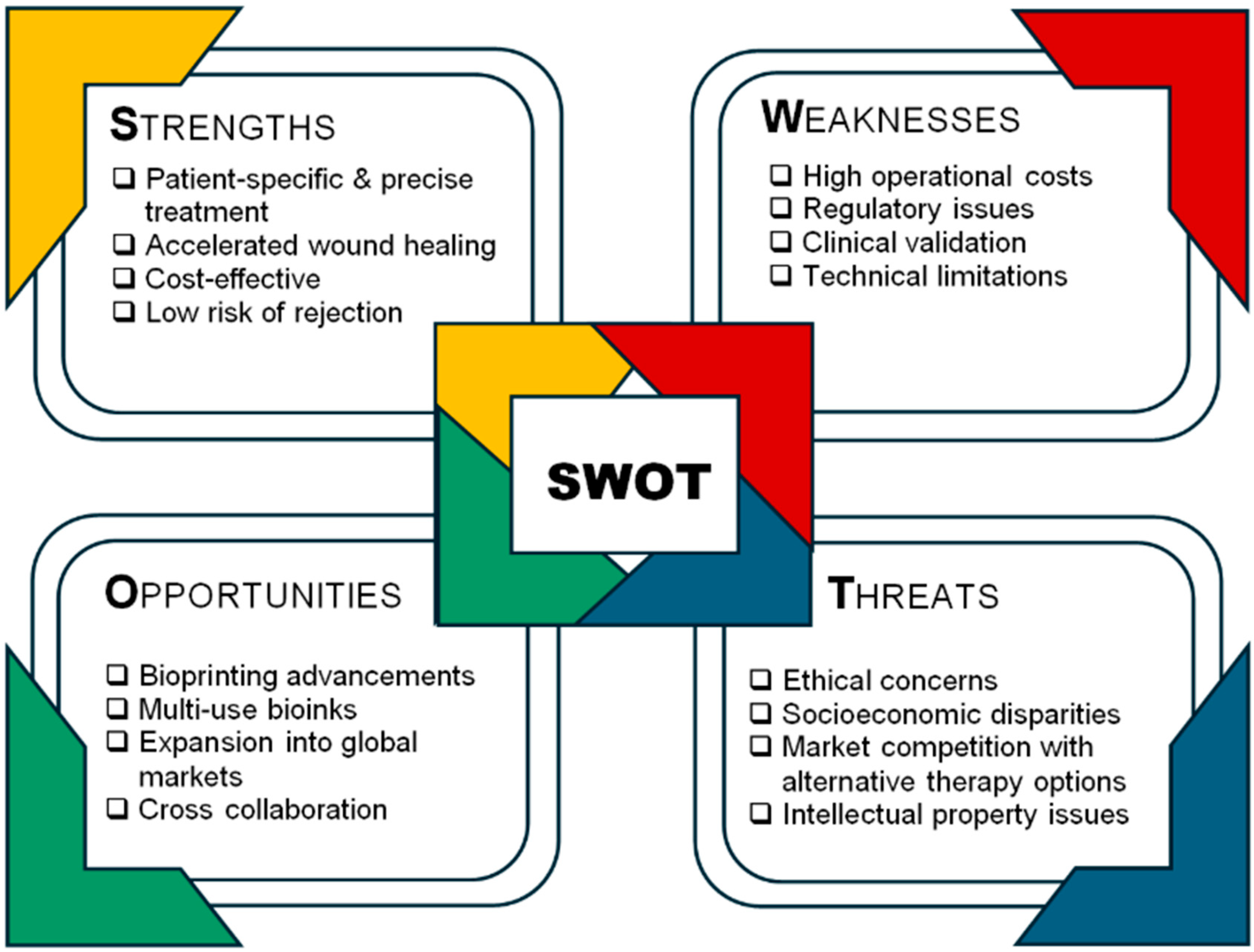
6.6. SWOT Analysis of Technical, Clinical, and Regulatory Factors Influencing 3D Bioprinting and Bioink Development for Wound-Healing
6.7. Limitations and Challenges
7. Recommendations/Future Perspectives
8. Conclusions
Author Contributions
Funding
Institutional Review Board Statement
Informed Consent Statement
Data Availability Statement
Conflicts of Interest
References
- Hashim, P.W.; Ferneini, A.M. Wound-Healing. In Complications in Max-Illofacial Cosmetic Surgery; Ferneini, E., Castiglione, C., Banki, M., Eds.; Springer: Cham, Switzerland, 2018. [Google Scholar] [CrossRef]
- Yousef, H.; Alhajj, M.; Fakoya, A.O.; Sharma, S. Anatomy, Skin (Integument), Epidermis. Available online: https://www.ncbi.nlm.nih.gov/books/NBK470464/ (accessed on 18 January 2025).
- Javaid, M.; Haleem, A. 3D Bioprinting applications for printing of skin: A brief study. Sens. Int. 2021, 2, 100123. [Google Scholar] [CrossRef]
- Weng, T.; Zhang, W.; Xia, Y.; Wu, P.; Yang, M.; Jin, R.; Xia, S.; Wang, J.; You, C.; Han, C.; et al. 3D bioprinting for skin tissue engineering: Current status and perspectives. J. Tissue Eng. 2021, 12, 20417314211028574. [Google Scholar] [CrossRef] [PubMed]
- Farahani, M.; Shafiee, A. Wound Healing: From Passive to Smart Dressings. Adv. Healthc. Mater. 2021, 10, e2100477. [Google Scholar] [CrossRef]
- Nussbaum, S.R.; Carter, M.J.; Fife, C.E.; DaVanzo, J.; Haught, R.; Nusgart, M.; Cartwright, D. An economic evaluation of the impact, cost, and Medicare policy implications of chronic nonhealing wounds. Value Health 2018, 21, 27–32. [Google Scholar] [CrossRef] [PubMed]
- Monash University. Wound Healing Is a Billion Dollar Drain on the Health System—This Discovery Hopes to Plug It. Available online: https://www.monash.edu/news/articles/wound-healing-is-a-billion-dollar-drain-on-the-health-system-this-discovery-hopes-to-plug-it (accessed on 26 February 2026).
- Ortega, M.A.; De Leon-Oliva, D.; Liviu Boaru, D.; Fraile-Martinez, O.; García-Montero, C.; Casanova, C.; García-Honduvilla, N.; Bujan, J.; Saez, M.A.; Álvarez-Mon, M.; et al. Advances in 3D bioprinting to enhance translational applications in bone tissue engineering and regenerative medicine. Histol. Histopathol. 2025, 40, 147–156. [Google Scholar] [CrossRef]
- Britto, E.J.; Nezwek, T.A.; Popowicz, P.; Robins, M. Wound Dressings. Available online: https://www.ncbi.nlm.nih.gov/books/NBK470199/ (accessed on 2 December 2025).
- Bhoyar, S.D.; Malhotra, K.; Madke, B. Dressing materials: A comprehensive review. J. Cutan. Aesthet. Surg. 2023, 16, 81–89. [Google Scholar] [CrossRef]
- Albanna, M.; Binder, K.W.; Murphy, S.V.; Kim, J.; Qasem, S.A.; Zhao, W.; Tan, J.; El-Amin, I.B.; Dice, D.D.; Marco, J.; et al. In Situ Bioprinting of Autologous Skin Cells Accelerates Wound Healing of Extensive Excisional Full-Thickness Wounds. Sci. Rep. 2019, 9, 1856. [Google Scholar] [CrossRef]
- Chan, Y.L.; Widodo, R.T.; Ming, L.C.; Khan, A.; Abbas, S.A.; Ping, N.Y.; Sofian, Z.M.; Kanakal, M.M. Review on 3D Printing Filaments Used in Fused Deposition Modeling Method for Dermatological Preparations. Molecules 2025, 30, 2411. [Google Scholar] [CrossRef]
- Zimmerman, A.; Bai, L.; Ginty, D.D. The gentle touch receptors of mammalian skin. Science 2014, 346, 950–954. [Google Scholar] [CrossRef]
- Ganesan, O.; Kiwanuka, H.; Hamaguchi, R.; Orgill, D.P. A review of regenerative medicine and tissue engineering with a focus on wound healing and anti-aging. Front. Surg. 2025, 12, 1504563. [Google Scholar] [CrossRef]
- Persaud, A.; Maus, A.; Strait, L.; Zhu, D. 3D bioprinting with live cells. Eng. Regen. 2022, 3, 292–309. [Google Scholar] [CrossRef]
- Yang, H.; Yang, K.H.; Narayan, R.J.; Ma, S. Laser-based bioprinting for multilayer cell patterning in tissue engineering and cancer research. Essays Biochem. 2021, 65, 409–416. [Google Scholar] [CrossRef] [PubMed]
- Tripathi, S.; Mandal, S.S.; Bauri, S.; Maiti, P. 3D bioprinting and its innovative approach for biomedical applications. MedComm 2022, 4, e194. [Google Scholar] [CrossRef]
- Ramadan, Q.; Zourob, M. 3D Bioprinting at the Frontier of Regenerative Medicine, Pharmaceutical, and Food Industries. Front. Med. Technol. 2021, 2, 607648. [Google Scholar] [CrossRef]
- Sufaru, I.G.; Macovei, G.; Stoleriu, S.; Martu, M.A.; Luchian, I.; Kappenberg-Nitescu, D.C.; Solomon, S.M. 3D Printed and Bioprinted Membranes and Scaffolds for the Periodontal Tissue Regeneration: A Narrative Review. Membranes 2022, 12, 902. [Google Scholar] [CrossRef]
- Sekar, M.P.; Budharaju, H.; Zennifer, A.; Sethuraman, S.; Vermuelen, N.; Sundaramurthi, D.; Kalaskar, D.M. Current standards and ethical landscape of engineered tissues-3D bioprinting perspective. J. Tissue Eng. 2021, 12, 20417314211027677. [Google Scholar] [CrossRef]
- Gu, Z.; Fu, J.; Lin, H.; He, Y. Development of 3D bioprinting: From printing methods to biomedical applications. Asian J. Pharm. Sci. 2020, 15, 529–557. [Google Scholar] [CrossRef] [PubMed]
- Huang, G.; Zhao, Y.; Chen, D.; Hu, Z.; Li, J.; Zhou, X.; Yang, B.; Chen, Z. Applications, advancements, and challenges of 3D bioprinting in organ transplantation. Biomater. Sci. 2024, 12, 1425–1448. [Google Scholar] [CrossRef]
- Homaeigohar, S.; Boccaccini, A.R. Nature-Derived and Synthetic Additives to poly(ε-Caprolactone) Nanofibrous Systems for Biomedicine; an Updated Overview. Front. Chem. 2022, 9, 809676. [Google Scholar] [CrossRef]
- Aftab, M.; Ikram, S.; Ullah, M.; Khan, N.; Naeem, M.; Khan, M.A.; Bakhtiy Oróǵli, R.B.; Qizi, K.S.S.; Erkinjon Ugli, O.O.; Abdurasulovna, B.M.; et al. Recent Trends and Future Directions in 3D Printing of Biocompatible Polymers. J. Manuf. Mater. Process. 2025, 9, 129. [Google Scholar] [CrossRef]
- Xu, K.; Han, Y.; Huang, Y.; Wei, P.; Yin, J.; Jiang, J. The application of 3D bioprinting in urological diseases. Mater. Today Bio 2022, 16, 100388. [Google Scholar] [CrossRef]
- Sun, Y.; Huo, Y.; Ran, X.; Chen, H.; Pan, Q.; Chen, Y.; Zhang, Y.; Ren, W.; Wang, X.; Zhou, G.; et al. Instant trachea reconstruction using 3D-bioprinted C-shape biomimetic trachea based on tissue-specific matrix hydrogels. Bioact. Mater. 2023, 32, 52–65. [Google Scholar] [CrossRef]
- Velasco-Rodriguez, B.; Diaz-Vidal, T.; Rosales-Rivera, L.C.; García-González, C.A.; Alvarez-Lorenzo, C.; Al-Modlej, A.; Domínguez-Arca, V.; Prieto, G.; Barbosa, S.; Soltero Martinez, J.F.A.; et al. Hybrid Methacrylated Gelatin and Hyaluronic Acid Hydrogel Scaffolds. Preparation and Systematic Characterization for Prospective Tissue Engineering Applications. Int. J. Mol. Sci. 2021, 22, 6758. [Google Scholar] [CrossRef]
- Ma, J.; Wu, C. Bioactive inorganic particles-based biomaterials for skin tissue engineering. Exploration 2022, 2, 20210083. [Google Scholar] [CrossRef]
- Kargozar, S.; Singh, R.K.; Kim, H.W.; Baino, F. “Hard” ceramics for “Soft” tissue engineering: Paradox or opportunity? Acta Biomater. 2020, 115, 1–28. [Google Scholar] [CrossRef]
- Nickels, L. World’s first patient-specific jaw implant. Met. Powder Rep. 2012, 67, 12–14. [Google Scholar] [CrossRef]
- Klak, M.; Kosowska, K.; Bryniarski, T.; Łojszczyk, I.; Dobrzański, T.; Tymicki, G.; Filip, A.; Szczepankiewicz, A.A.; Olkowski, R.; Kosowska, A.; et al. Bioink based on the DECM for 3D bioprinting of bionic tissue, the first results obtained on murine model. Bioprinting 2022, 28, e00233. [Google Scholar] [CrossRef]
- Li, G.; Zhang, H. Editorial: Functional and Smart Biomaterials: Development and Application in Regenerative Medicine. Front. Bioeng. Biotechnol. 2022, 10, 920730. [Google Scholar] [CrossRef] [PubMed]
- Bhandari, A.; Ghosh, R.N.; Namboothiri, P.K.; Peter, M. A review of stimuli-responsive materials in 4D bioprinting for biomedical applications. Mater. Adv. 2025, 7, 17–39. [Google Scholar] [CrossRef]
- Saleh Alghamdi, S.; John, S.; Roy Choudhury, N.; Dutta, N.K. Additive Manufacturing of Polymer Materials: Progress, Promise and Challenges. Polymers 2021, 13, 753. [Google Scholar] [CrossRef]
- Chhabra, D. Comparison and analysis of different 3d printing techniques. Int. J. Latest Trends Eng. Technol. 2017, 10, 264–272. [Google Scholar] [CrossRef]
- Tran, K.; Nguyen, T. Lithography-based methods to manufacture biomaterials at small scales. J. Sci. Adv. Mater. Devices 2016, 2, 1–14. [Google Scholar] [CrossRef]
- Kristiawan, R.; Imaduddin, F.; Ariawan, D.; Sabino, U.; Arifin, Z. A review on the fused deposition modeling (FDM) 3D printing: Filament processing, materials, and printing parameters. Open Eng. 2021, 11, 639–649. [Google Scholar] [CrossRef]
- Kumar, L.P.J.; Loganathan, T.G.; Sevvel, P. A Review on Selective Laser Sintering Process. La Pensée 2020, 20, 1615–1622. [Google Scholar]
- Gao, B.; Zhao, H.; Peng, L.; Sun, Z. A Review of Research Progress in Selective Laser Melting (SLM). Micromachines 2022, 14, 57. [Google Scholar] [CrossRef] [PubMed]
- Ziaee, M.; Crane, N. Binder Jetting: A Review of Process, Materials, and Methods. Addit. Manuf. 2019, 28, 781–801. [Google Scholar] [CrossRef]
- Boularaoui, S.; Alhussein, G.; Khan, K.; Christoforou, N.; Stefanini, C. An overview of extrusion-based bioprinting with a focus on induced shear stress and its effect on cell viability. Bioprinting 2020, 20, e00093. [Google Scholar] [CrossRef]
- Karvinen, J.; Kellomäki, M. Design aspects and characterization of hydrogel-based bioinks for extrusion-based bioprinting. Bioprinting 2023, 32, e00274. [Google Scholar] [CrossRef]
- Deo, K.A.; Singh, K.A.; Peak, C.W.; Alge, D.L.; Gaharwar, A.K. Bioprinting 101: Design, Fabrication, and Evaluation of Cell-Laden 3D Bioprinted Scaffolds. Tissue Eng. Part A 2020, 26, 318–338. [Google Scholar] [CrossRef]
- Kumar, P.; Ebbens, S.; Zhao, X. Inkjet printing of mammalian cells—Theory and applications. Bioprinting 2021, 23, e00157. [Google Scholar] [CrossRef]
- Jana, S.; Lerman, A. Bioprinting a cardiac valve. Biotechnol. Adv. 2015, 33, 1503–1521. [Google Scholar] [CrossRef]
- Chang, J.; Sun, X. Laser-induced forward transfer based laser bioprinting in biomedical applications. Front. Bioeng. Biotechnol. 2023, 11, 1255782. [Google Scholar] [CrossRef]
- Li, W.; Wang, M.; Ma, H.; Chapa-Villarreal, F.A.; Lobo, A.O.; Zhang, Y.S. Stereolithography apparatus and Digital Light Processing-based 3D bioprinting for tissue fabrication. iScience 2023, 26, 106039. [Google Scholar] [CrossRef] [PubMed]
- Zhou, X.; Luo, Y.; Gao, Y.; Ma, J.; Lin, C.; Zhou, X.; Li, Q.; Yang, H.; Zhang, B. Development and application of a mechanical arm-based in situ 3D bioprinting method for the repair of skin wounds. Discov. Appl. Sci. 2024, 6, 438. [Google Scholar] [CrossRef]
- Li, H.; Cheng, F.; Orgill, D.P.; Yao, J.; Zhang, Y.S. Handheld bioprinting strategies for in situ wound dressing. Essays Biochem. 2021, 65, 533–543. [Google Scholar] [CrossRef] [PubMed]
- Moharamzadeh, K. Processing and preservation of biomaterials and regulatory issues. In Biomaterials for Oral and Dental Tissue Engineering; Woodhead Publishing: Cambridge, UK, 2017; pp. 141–153. [Google Scholar] [CrossRef]
- Tran, H.Q.; Shahriar, S.M.S.; Yan, Z.; Xie, J. Recent Advances in Functional Wound Dressings. Adv. Wound Care 2023, 12, 399–427. [Google Scholar] [CrossRef]
- Murphy, S.; Atala, A. 3D bioprinting of tissues and organs. Nat. Biotechnol. 2014, 32, 773–785. [Google Scholar] [CrossRef]
- Xu, C.; Chai, W.; Huang, Y.; Markwald, R.R. Scaffold-free inkjet printing of three-dimensional zigzag cellular tubes. Biotechnol. Bioeng. 2012, 109, 3152–3160. [Google Scholar] [CrossRef]
- Wang, Z.; Wang, L.; Li, T.; Liu, S.; Guo, B.; Huang, W.; Wu, Y. 3D bioprinting in cardiac tissue engineering. Theranostics 2021, 11, 7948–7969. [Google Scholar] [CrossRef]
- Hurt, C.; Brandt, M.; Priya, S.; Patel, J.; Bhatelia, T.; Selvakannan, P.R.; Bhargava, S. Combining Additive Manufacturing and Catalysis: A Review. Catal. Sci. Technol. 2017, 7, 3421–3439. [Google Scholar] [CrossRef]
- Ghosh, E.; Rego, G.P.; Ghosh, R.N.; Sahithi, V.B.; Poojary, D.P.; Namboothiri, P.K.; Peter, M. Advances in In Situ Bioprinting: A Focus on Extrusion and Inkjet-Based Bioprinting Techniques. Regen. Eng. Transl. Med. 2025. [Google Scholar] [CrossRef]
- Agarwal, T.; Fortunato, G.M.; Hann, S.Y.; Ayan, B.; Vajanthri, K.Y.; Presutti, D.; Cui, H.; Chan, A.H.; Costantini, M.; Onesto, V.; et al. Recent advances in bioprinting technologies for engineering cardiac tissue. Mater. Sci. Eng. C 2021, 124, 112057. [Google Scholar] [CrossRef] [PubMed]
- Ventura, R.D. An overview of laser-assisted bioprinting (LAB) in tissue engineering applications. Med. Lasers 2021, 10, 76–81. [Google Scholar] [CrossRef]
- Barbeck, M.; Jung, O.; Smeets, R.; Koržinskas, T. (Eds.) Biomaterial-Supported Tissue Reconstruction or Regeneration; IntechOpen: London, UK, 2019. [Google Scholar] [CrossRef]
- Awasthi, P.; Banerjee, S.S. Fused deposition modeling of thermoplastic elastomeric materials: Challenges and opportunities. Addit. Manuf. 2021, 46, 102177. [Google Scholar] [CrossRef]
- Müller, M.; Urban, J.; Svobodová, J.; Mishra, R.K. Modification of the Mechanical Properties of Photosensitive Resin by Using Biobased Fillers During Stereolithography (SLA) 3D Printing. Materials 2025, 18, 2699. [Google Scholar] [CrossRef] [PubMed]
- Gungor-Ozkerim, P.S.; Inci, I.; Zhang, Y.S.; Khademhosseini, A.; Dokmeci, M.R. Bioinks for 3D bioprinting: An overview. Biomater. Sci. 2018, 6, 915–946. [Google Scholar] [CrossRef]
- Agarwalla, A.; Ahmed, W.; Al-Marzouqi, A.H.; Zaneldin, E.; Rizvi, T.A.; Khan, M. Advancements in synthetic polymers for 3D bioprinting materials, applications, and future prospects. Int. J. Polym. Mater. Polym. Biomater. 2026, 75, 404–442. [Google Scholar] [CrossRef]
- Tappa, K.; Jammalamadaka, U. Novel Biomaterials Used in Medical 3D Printing Techniques. J. Funct. Biomater. 2018, 9, 17. [Google Scholar] [CrossRef]
- Ahmed, T.A.E.; Dare, E.V.; Hincke, M. Fibrin: A Versatile Scaffold for Tissue Engineering Applications. Tissue Eng. Part B Rev. 2008, 14, 199–215. [Google Scholar] [CrossRef]
- Usala, E.; Gonzalez, Z.; Campillo, N.; Baena, J.; Ferrari, B.; Rodríguez, A.; Espinosa, E. Impact of steam sterilization on the rheological characteristics, printability, and bioactivity of nanocellulose/alginate hydrogels for 3D bioprinting. Carbohydr. Polym. Technol. Appl. 2025, 11, 100970. [Google Scholar] [CrossRef]
- Hölzl, K.; Lin, S.; Tytgat, L.; Van Vlierberghe, S.; Gu, L.; Ovsianikov, A. Bioink properties before, during and after 3D bioprinting. Biofabrication 2016, 8, 032002. [Google Scholar] [CrossRef]
- Benwood, C.; Chrenek, J.; Kirsch, R.L.; Masri, N.Z.; Richards, H.; Teetzen, K.; Willerth, S.M. Natural Biomaterials and Their Use as Bioinks for Printing Tissues. Bioengineering 2021, 8, 27. [Google Scholar] [CrossRef]
- Trucillo, P. Biomaterials for Drug Delivery and Human Applications. Materials 2024, 17, 456. [Google Scholar] [CrossRef] [PubMed]
- Wang, W.; Huang, Y.; Pan, Y.; Dabbour, M.; Dai, C.; Zhou, M.; He, R. Sodium Alginate Modifications: A Critical Review of Current Strategies and Emerging Applications. Foods 2025, 14, 3931. [Google Scholar] [CrossRef]
- Ramos, P.E.; Silva, P.; Alario, M.M.; Pastrana, L.M.; Teixeira, J.A.; Cerqueira, M.A.; Vicente, A.A. Effect of alginate molecular weight and M/g ratio in beads properties foreseeing the protection of probiotics. Food Hydrocoll. 2018, 77, 8–16. [Google Scholar] [CrossRef]
- Khanna, O.; Moya, M.L.; Opara, E.C.; Brey, E.M. Synthesis of multilayered alginate microcapsules for the sustained release of fibroblast growth factor-1. J. Biomed. Mater. Res. A 2010, 95, 632–640. [Google Scholar] [CrossRef] [PubMed]
- Gorroñogoitia, I.; Urtaza, U.; Zubiarrain-Laserna, A.; Alonso-Varona, A.; Zaldua, A.M. A Study of the Printability of Alginate-Based Bioinks by 3D Bioprinting for Articular Cartilage Tissue Engineering. Polymers 2022, 14, 354. [Google Scholar] [CrossRef] [PubMed]
- Rastogi, P.; Kandasubramanian, B. Review of alginate-based hydrogel bioprinting for application in tissue engineering. Biofabrication 2019, 11, 042001. [Google Scholar] [CrossRef]
- Bidarra, S.J.; Barrias, C.C.; Granja, P.L. Injectable alginate hydrogels for cell delivery in tissue engineering. Acta Biomater. 2014, 10, 1646–1662. [Google Scholar] [CrossRef]
- Pires Figueiredo, M.; Rodríguez-Fernández, S.; Copes, F.; Mantovani, D. Review of collagen type I-based hydrogels: Focus on composition-structure-properties relationships. npj Biomed. Innov. 2025, 2, 16. [Google Scholar] [CrossRef]
- Slyker, L.; Diamantides, N.; Kim, J.; Bonassar, L.J. Mechanical performance of collagen gels is dependent on purity, α1/α2 ratio, and telopeptides. J. Biomed. Mater. Res. A 2022, 110, 11–20. [Google Scholar] [CrossRef] [PubMed]
- Xu, C.; Zhang, Z.; Jin, Q.; Cao, G.; Liu, Z.; Wan, J.; Ji, P.; Xu, L.; Ju, J.; Le, Y.; et al. Bilayer tissue-engineered skin loaded with confining forces enhances epidermal proliferation to promote full-thickness wound healing. Mater. Today Commun. 2025, 47, 113049. [Google Scholar] [CrossRef]
- Elomaa, L.; Almalla, A.; Keshi, E.; Hillebrandt, K.H.; Sauer, I.M.; Weinhart, M. Rise of tissue- and species-specific 3D bioprinting based on decellularized extracellular matrix-derived bioinks and bioresins. Biomater. Biosyst. 2023, 12, 100084. [Google Scholar] [CrossRef]
- Won, J.Y.; Lee, M.H.; Kim, M.J.; Min, K.; Ahn, G.; Han, J.; Jin, S.; Yun, W.; Shim, J. A potential dermal substitute using decellularized dermis extracellular matrix derived bioink. Artif. Cells Nanomed. Biotechnol. 2019, 47, 644–649. [Google Scholar] [CrossRef] [PubMed]
- Huang, D.; Du, J.; Luo, F.; He, G.; Zou, M.; Wang, Y.; Lin, Z.; Wu, D.; Weng, Z. Injectable Hydrogels with Integrated pH Probes and Ultrasound-Responsive Microcapsules as Smart Wound Dressings for Visual Monitoring and On-Demand Treatment of Chronic Wounds. Adv. Healthc. Mater. 2024, 13, e2303379. [Google Scholar] [CrossRef]
- Sangboonruang, S.; Semakul, N.; Manokruang, K.; Khammata, N.; Jantakee, K.; Mai-Ngam, K.; Charoenla, S.; Khamnoi, P.; Saengsawang, K.; Wattananandkul, U.; et al. Multifunctional poloxamer-based thermo-responsive hydrogel loaded with human lactoferricin niosomes: In vitro study on anti-bacterial activity, accelerate wound healing, and anti-inflammation. Int. J. Pharm. X 2024, 8, 100291. [Google Scholar] [CrossRef]
- Jorgensen, A.M.; Gorkun, A.; Mahajan, N.; Willson, K.; Clouse, C.; Jeong, C.G.; Varkey, M.; Wu, M.; Walker, S.J.; Molnar, J.A.; et al. Multicellular bioprinted skin facilitates human-like skin architecture in vivo. Sci. Transl. Med. 2023, 15, eadf7547. [Google Scholar] [CrossRef]
- Kamdem Tamo, A.; Doench, I.; Walter, L.; Montembault, A.; Sudre, G.; David, L.; Morales-Helguera, A.; Selig, M.; Rolauffs, B.; Bernstein, A.; et al. Development of Bioinspired Functional Chitosan/Cellulose Nanofiber 3D Hydrogel Constructs by 3D Printing for Application in the Engineering of Mechanically Demanding Tissues. Polymers 2021, 13, 1663. [Google Scholar] [CrossRef]
- Pintilei, P.S.; Binaymotlagh, R.; Chronopoulou, L.; Palocci, C. The Role of Natural Hydrogels in Enhancing Wound Healing: From Biomaterials to Bioactive Therapies. Pharmaceutics 2025, 17, 1243. [Google Scholar] [CrossRef]
- Lu, P.; Ruan, D.; Huang, M.; Tian, M.; Zhu, K.; Gan, Z.; Xiao, Z. Harnessing the potential of hydrogels for advanced therapeutic applications: Current achievements and future directions. Sig. Transduct. Target. Ther. 2024, 9, 166. [Google Scholar] [CrossRef]
- Kaur, H.; Gogoi, B.; Sharma, I.; Das, D.K.; Azad, M.A.; Pramanik, D.D.; Pramanik, A. Hydrogels as a Potential Biomaterial for Multimodal Therapeutic Applications. Mol. Pharm. 2024, 21, 4827–4848. [Google Scholar] [CrossRef]
- Li, X.; Sun, Q.; Li, Q.; Kawazoe, N.; Chen, G. Functional Hydrogels With Tunable Structures and Properties for Tissue Engineering Applications. Front. Chem. 2018, 6, 499. [Google Scholar] [CrossRef] [PubMed]
- Somasekhar, L.; Huynh, N.D.; Vecheck, A.; Kishore, V.; Bashur, C.A.; Mitra, K. Three-dimensional printing of cell-laden microporous constructs using blended bioinks. J. Biomed. Mater. Res. A 2022, 110, 535–546. [Google Scholar] [CrossRef]
- Wang, X.; Qi, J.; Zhang, W.; Pu, Y.; Yang, R.; Wang, P.; Liu, S.; Tan, X.; Chi, B. 3D-printed antioxidant antibacterial carboxymethyl cellulose/ε-polylysine hydrogel promoted skin wound repair. Int. J. Biol. Macromol. 2021, 187, 91–104. [Google Scholar] [CrossRef]
- Dobaj Štiglic, A.; Lackner, F.; Nagaraj, C.; Beaumont, M.; Bračič, M.; Duarte, I.; Kononenko, V.; Drobne, D.; Madhan, B.; Finšgar, M.; et al. 3D-Printed Collagen-Nanocellulose Hybrid Bioscaffolds with Tailored Properties for Tissue Engineering Applications. ACS Appl. Bio Mater. 2023, 6, 5596–5608. [Google Scholar] [CrossRef]
- Rijal, G. Bioinks of Natural Biomaterials for Printing Tissues. Bioengineering 2023, 10, 705. [Google Scholar] [CrossRef] [PubMed]
- Borro, B.C.; Malmsten, M. Complexation between antimicrobial peptides and polyelectrolytes. Adv. Colloid Interface Sci. 2019, 270, 251–260. [Google Scholar] [CrossRef]
- Wu, P.; Xi, X.; Li, R.; Sun, G. Engineering Polysaccharides for Tissue Repair and Regeneration. Macromol. Biosci. 2021, 21, e2100141. [Google Scholar] [CrossRef]
- Kasula, N.; Dhokare, P.; Bhattacharyya, A.; Noh, I. Recent Advances in 3D Bioprinting of Polysaccharide-based Bioinks for Fabrication of Bioengineered Tissues. Mol. Syst. Des. Eng. 2024, 9, 977–999. [Google Scholar] [CrossRef]
- Damiri, F.; Fatimi, A.; Liu, Y.; Musuc, A.M.; Fajardo, A.R.; Gowda, B.H.J.; Vara, L.K.; Shavandi, A.; Okoro, O.V. Recent advances in 3D bioprinted polysaccharide hydrogels for biomedical applications: A comprehensive review. Carbohydr. Polym. 2025, 348, 122845. [Google Scholar] [CrossRef] [PubMed]
- Wu, D.; Zhu, L.; Li, Y.; Zhang, X.; Xu, S.; Yang, G.; Delair, T. Chitosan-based Colloidal Polyelectrolyte Complexes for Drug Delivery: A Review. Carbohydr. Polym. 2020, 238, 116126. [Google Scholar] [CrossRef] [PubMed]
- Zidarič, T.; Milojević, M.; Gradišnik, L.; Stana Kleinschek, K.; Maver, U.; Maver, T. Polysaccharide-Based Bioink Formulation for 3D Bioprinting of an In Vitro Model of the Human Dermis. Nanomaterials 2020, 10, 733. [Google Scholar] [CrossRef]
- Martínez Ávila, H.; Schwarz, S.; Rotter, N.; Gatenholm, P. 3D bioprinting of human chondrocyte-laden nanocellulose hydrogels for patient-specific auricular cartilage regeneration. Bioprinting 2016, 1–2, 22–35. [Google Scholar] [CrossRef]
- Mirzaei, M.; Okoro, O.V.; Nie, L.; Petri, D.F.S.; Shavandi, A. Protein-Based 3D Biofabrication of Biomaterials. Bioengineering 2021, 8, 48. [Google Scholar] [CrossRef] [PubMed]
- Veiga, A.; Silva, I.V.; Duarte, M.M.; Oliveira, A.L. Current Trends on Protein Driven Bioinks for 3D Printing. Pharmaceutics 2021, 13, 1444. [Google Scholar] [CrossRef]
- Chen, X.; Zhou, Z.; Yang, M.; Zhu, S.; Zhu, W.; Sun, J.; Yu, M.; He, J.; Zuo, Y.; Wang, W.; et al. A biocompatible pea protein isolate-derived bioink for 3D bioprinting and tissue engineering. J. Mater. Chem. B 2024, 12, 6716–6723. [Google Scholar] [CrossRef]
- Cramer, M.C.; Badylak, S.F. Extracellular Matrix-Based Biomaterials and Their Influence Upon Cell Behavior. Ann. Biomed. Eng. 2020, 48, 2132–2153. [Google Scholar] [CrossRef]
- Smandri, A.; Al-Masawa, M.E.; Ng, M.H.; Fauzi, M.B. ECM-derived biomaterials for regulating tissue multicellularity and maturation. iScience 2024, 27, 109141. [Google Scholar] [CrossRef]
- Noro, J.; Vilaça-Faria, H.; Reis, R.L.; Pirraco, R.P. Extracellular matrix-derived materials for tissue engineering and regenerative medicine: A journey from isolation to characterization and application. Bioact. Mater. 2024, 34, 494–519. [Google Scholar] [CrossRef]
- Xing, H.; Lee, H.; Luo, L.; Kyriakides, T.R. Extracellular matrix-derived biomaterials in engineering cell function. Biotechnol. Adv. 2020, 42, 107421. [Google Scholar] [CrossRef]
- Hodde, J.P.; Badylak, S.F.; Brightman, A.O.; Voytik-Harbin, S.L. Glycosaminoglycan content of small intestinal submucosa: A bioscaffold for tissue replacement. Tissue Eng. 1996, 2, 209–217. [Google Scholar] [CrossRef] [PubMed]
- Liang, R.; Pan, R.; He, L.; Dai, Y.; Jiang, Y.; He, S.; Li, B.; Li, Y. Decellularized Extracellular Matrices for Skin Wound Treatment. Materials 2025, 18, 2752. [Google Scholar] [CrossRef]
- Ohto-Fujita, E.; Shimizu, M.; Sano, S.; Kurimoto, M.; Yamazawa, K.; Atomi, T.; Sakurai, T.; Murakami, Y.; Takami, T.; Murakami, T.; et al. Solubilized eggshell membrane supplies a type III collagen-rich elastic dermal papilla. Cell Tissue Res. 2019, 376, 123–135. [Google Scholar] [CrossRef]
- Guarderas, F.; Leavell, Y.; Sengupta, T.; Zhukova, M.; Megraw, T.L. Assessment of Chicken-Egg Membrane as a Dressing for Wound Healing. Adv. Skin Wound Care 2016, 29, 131–134. [Google Scholar] [CrossRef]
- Vinayak, M.N.; Jana, S.; Datta, P.; Das, H.; Chakraborty, B.; Mukherjee, P.; Mondal, S.; Kundu, B.; Nandi, S. Accelerating Full-Thickness Skin Wound Healing Using Zinc and Cobalt Doped-Bioactive Glass Coated Eggshell Membrane. SSRN Electron. J. 2022, 81, 104273. [Google Scholar] [CrossRef]
- Mensah, R.A.; Trotta, F.; Briggs, E.; Sharifulden, N.S.; Silva, L.V.B.; Keskin-Erdogan, Z.; Diop, S.; Kureshi, A.K.; Chau, D.Y.S. A Sustainable, Green-Processed, Ag-Nanoparticle-Incorporated Eggshell-Derived Biomaterial for Wound-Healing Applications. J. Funct. Biomater. 2023, 14, 450. [Google Scholar] [CrossRef]
- Ruff, K. Eggshell membrane: A possible new natural therapeutic for joint and connective tissue disorders. Results from two open-label human clinical studies. Clin. Interv. Aging 2009, 4, 235–240. [Google Scholar] [CrossRef]
- Park, S.; Gwon, Y.; Kim, W.; Kim, J. Rebirth of the Eggshell Membrane as a Bioactive Nanoscaffold for Tissue Engineering. ACS Biomater. Sci. Eng. 2021, 7, 2219–2224. [Google Scholar] [CrossRef]
- Girard, P.P.; Cavalcanti-Adam, E.A.; Kemkemer, R.; Spatz, J.P. Cellular chemomechanics at interfaces: Sensing, integration and response. Soft Matter 2007, 3, 307–326. [Google Scholar] [CrossRef] [PubMed]
- Khademhosseini, A.; Langer, R.; Borenstein, J.; Vacanti, J.P. Microscale technologies for tissue engineering and biology. Proc. Natl. Acad. Sci. USA 2006, 103, 2480–2487. [Google Scholar] [CrossRef] [PubMed]
- Motealleh, A.; Çelebi-Saltik, B.; Ermis, N.; Nowak, S.; Khademhosseini, A.; Kehr, N.S. 3D printing of step-gradient nanocomposite hydrogels for controlled cell migration. Biofabrication 2019, 11, 045015. [Google Scholar] [CrossRef]
- Moreau, T.; Gautron, J.; Hincke, M.T.; Monget, P.; Réhault-Godbert, S.; Guyot, N. Antimicrobial Proteins and Peptides in Avian Eggshell: Structural Diversity and Potential Roles in Biomineralization. Front. Immunol. 2022, 13, 946428. [Google Scholar] [CrossRef]
- Ahmed, T.A.; Suso, H.P.; Hincke, M.T. In-depth comparative analysis of the chicken eggshell membrane proteome. J. Proteom. 2017, 155, 49–62. [Google Scholar] [CrossRef] [PubMed]
- Ohto-Fujita, E.; Konno, T.; Shimizu, M.; Ishihara, K.; Sugitate, T.; Miyake, J.; Yoshimura, K.; Taniwaki, K.; Sakurai, T.; Hasebe, Y.; et al. Hydrolyzed eggshell membrane immobilized on phosphorylcholine polymer supplies extracellular matrix environment for human dermal fibroblasts. Cell Tissue Res. 2011, 345, 177–190. [Google Scholar] [CrossRef] [PubMed]
- Kulshreshtha, G.; Ahmed, T.A.E.; Wu, L.; Diep, T.; Hincke, M.T. A novel eco-friendly green approach to produce particalized eggshell membrane (PEM) for skin health applications. Biomater. Sci. 2020, 8, 5346–5361. [Google Scholar] [CrossRef]
- Ahmed, T.A.E.; Suso, H.-P.; Maqbool, A.; Hincke, M.T. Processed eggshell membrane powder: Bioinspiration for an innovative wound healing product. Mater. Sci. Eng. C 2019, 95, 192–203. [Google Scholar] [CrossRef] [PubMed]
- Vuong, T.T.; Rønning, S.B.; Ahmed, T.A.E.; Brathagen, K.; Høst, V.; Hincke, M.T.; Suso, H.P.; Pedersen, M.E. Processed eggshell membrane powder regulates cellular functions and increase MMP-activity important in early wound healing processes. PLoS ONE 2018, 13, e0201975. [Google Scholar] [CrossRef]
- Antezana, P.E.; Municoy, S.; Orive, G.; Desimone, M.F. Design of a New 3D Gelatin-Alginate Scaffold Loaded with Cannabis sativa Oil. Polymers 2022, 14, 4506. [Google Scholar] [CrossRef]
- Zhang, J.; Song, C.; Han, Y.; Xi, Z.; Zhao, L.; Cen, L.; Yang, Y. Regulation of Inflammatory Response to Polyglycolic Acid Scaffolds through Incorporation of Sodium Tripolyphosphate. Eur. Polym. J. 2019, 122, 109349. [Google Scholar] [CrossRef]
- Satchanska, G.; Davidova, S.; Petrov, P.D. Natural and Synthetic Polymers for Biomedical and Environmental Applications. Polymers 2024, 16, 1159. [Google Scholar] [CrossRef]
- van Hest, J.C.M. Biosynthetic-Synthetic Polymer Conjugates. Polym. Rev. 2007, 47, 63–92. [Google Scholar] [CrossRef]
- Mobaraki, M.; Ghaffari, M.; Yazdanpanah, A.; Luo, Y.; Mills, D. Bioinks and Bioprinting: A Focused Review. Bioprinting 2020, 18, e00080. [Google Scholar] [CrossRef]
- Gao, F.; Ruan, C.; Liu, W. High-strength hydrogel-based bioinks. Mater. Chem. Front. 2019, 3, 1736–1746. [Google Scholar] [CrossRef]
- Thostenson, E.; Ren, Z.; Chou, T.-W. Advances in the Science and Technology of Carbon Nanotubes and Their Composites: A Review. Compos. Sci. Technol. 2001, 61, 1899–1912. [Google Scholar] [CrossRef]
- Cui, C.; Sun, S.; Wu, S.; Chen, S.; Ma, J.; Zhou, F. Electrospun Chitosan nanofibers for Wound Healing Application. Eng. Regen. 2021, 2, 82–90. [Google Scholar] [CrossRef]
- Khan, M.U.A.; Stojanović, G.M.; Hassan, R.; Anand, T.J.S.; Al-Ejji, M.; Hasan, A. Role of Graphene Oxide in Bacterial Cellulose-Gelatin Hydrogels for Wound Dressing Applications. ACS Omega 2023, 8, 15909–15919. [Google Scholar] [CrossRef] [PubMed]
- Talukdar, S.; Medhi, J.; Barbhuiya, P.A.; Chakrabarti, S. Complementary approaches and advanced technologies in ameliorating rate of wound healing. Int. J. Pharm. 2025, 682, 125910. [Google Scholar] [CrossRef]
- Perez-Barreto, A.; Moscalu, R.; Tremolada, C.; Domingos, M.; Reid, A.; Wong, J. 3D bioprinting of skin equivalents: Towards functional wound healing models. J. Tissue Eng. 2026, 17, 20417314251407023. [Google Scholar] [CrossRef] [PubMed]
- Xue, J.; Wu, T.; Dai, Y.; Xia, Y. Electrospinning and Electrospun Nanofibers: Methods, Materials, and Applications. Chem. Rev. 2019, 119, 5298–5415. [Google Scholar] [CrossRef]
- Jain, R.; Shetty, S.; Yadav, K.S. Unfolding the Electrospinning Potential of Biopolymers for Preparation of Nanofibers. J. Drug Deliv. Sci. Technol. 2020, 57, 101604. [Google Scholar] [CrossRef]
- Smith, J.A.; Mele, E. Electrospinning and Additive Manufacturing: Adding Three-Dimensionality to Electrospun Scaffolds for Tissue Engineering. Front. Bioeng. Biotechnol. 2021, 9, 674738. [Google Scholar] [CrossRef] [PubMed]
- Thangadurai, M.; Ajith, A.; Budharaju, H.; Sethuraman, S.; Sundaramurthi, D. Advances in electrospinning and 3D bioprinting strategies to enhance functional regeneration of skeletal muscle tissue. Biomater. Adv. 2022, 142, 213135. [Google Scholar] [CrossRef]
- He, H.; Molnar, K. Fabrication of 3D printed nanocomposites interleaved with electrospun nanofibers. Addit. Manuf. 2021, 46, 102030. [Google Scholar] [CrossRef]
- Yin, Y.; Vázquez-Rosado, E.J.; Wu, D.; Viswananthan, V.; Farach, A.; Farach-Carson, M.C.; Harrington, D.A. Microfluidic coaxial 3D bioprinting of cell-laden microfibers and microtubes for salivary gland tissue engineering. Biomater. Adv. 2023, 154, 213588. [Google Scholar] [CrossRef]
- Zhang, P.; Liu, C.; Modavi, C.; Abate, A.; Chen, H. Printhead on a chip: Empowering droplet-based bioprinting with microfluidics. Trends Biotechnol. 2024, 42, 353–368. [Google Scholar] [CrossRef] [PubMed]
- Fratini, C.; Weaver, E.; Moroni, S.; Irwin, R.; Bashi, Y.H.D.; Uddin, S.; Casettari, L.; Wylie, M.P.; Lamprou, D.A. Combining microfluidics and coaxial 3D-bioprinting for the manufacturing of diabetic wound healing dressings. Biomater. Adv. 2023, 153, 213557. [Google Scholar] [CrossRef]
- Guo, W.; Wang, X.; Yang, C.; Huang, R.; Wang, H.; Zhao, Y. Microfluidic 3D printing polyhydroxyalkanoates-based bionic skin for wound healing. Mater. Futures 2022, 1, 015401. [Google Scholar] [CrossRef]
- Deptuła, M.; Zawrzykraj, M.; Sawicka, J.; Banach-Kopeć, A.; Tylingo, R.; Pikuła, M. Application of 3D-printed hydrogels in wound healing and regenerative medicine. Biomed. Pharmacother. 2023, 167, 115416. [Google Scholar] [CrossRef]
- Zhang, X.; Li, W.; Wei, G.; Yan, Y.; He, R.; Wang, Y.; Chen, D.; Qin, X. A rapid-crosslinking antimicrobial hydrogel with enhanced antibacterial capabilities for improving wound healing. Front. Physiol. 2023, 14, 1206211. [Google Scholar] [CrossRef]
- Ermis Sen, M.; Calamak, S.; Calibasi Kocal, G.; Guven, S.; Durmus, N.; Rizvi, I.; Hasan, T.; Hasirci, N.; Hasirci, V.; Demirci, U. Hydrogels as a New Platform to Recapitulate the Tumor Microenvironment. In Handbook of Nanomaterials for Cancer Theranostics; Elsevier: Amsterdam, The Netherlands, 2018. [Google Scholar] [CrossRef]
- Saarai, V.; Kasparkova, T.; Sedlacek, T.; Saha, P. A comparative study of crosslinked sodium alginate/gelatin hydrogels for wound dressing. In Proceedings of the 4th WSEAS International Conference on Energy and Development—Environment—Biomedicine (GEMESED’11); World Scientific and Engineering Academy and Society (WSEAS): Stevens Point, WI, USA, 2011; pp. 384–389. [Google Scholar]
- Sperinde, J.J.; Griffith, L.G. Synthesis and Characterization of Enzymatically-Cross-Linked Poly(ethylene glycol) Hydrogels. Macromolecules 1997, 30, 5255–5264. [Google Scholar] [CrossRef]
- Decante, G.; Reis, R.L.; Silva-Correia, J.; Oliveira, J.M. Enzymatic crosslinked hydrogels. In Hydrogels for Tissue Engineering and Regenerative Medicine; Academic Press: Cambridge, MA, USA, 2024; pp. 199–212. [Google Scholar] [CrossRef]
- Rusu, A.G.; Nita, L.E.; Simionescu, N.; Ghilan, A.; Chiriac, A.P.; Mititelu-Tartau, L. Enzymatically-Crosslinked Gelatin Hydrogels with Nanostructured Architecture and Self-Healing Performance for Potential Use as Wound Dressings. Polymers 2023, 15, 780. [Google Scholar] [CrossRef]
- Li, J.; Ding, Z.; Zheng, X.; Lu, G.; Lu, Q.; Kaplan, D.L. Injectable silk nanofiber hydrogels as stem cell carriers to accelerate wound healing. J. Mater. Chem. B 2021, 9, 7771–7781. [Google Scholar] [CrossRef] [PubMed]
- Li, Q.; Gong, S.; Yao, W.; Yang, Z.; Wang, R.; Yu, Z.; Wei, M. Exosome loaded genipin crosslinked hydrogel facilitates full thickness cutaneous wound healing in rat animal model. Drug Deliv. 2021, 28, 884–893. [Google Scholar] [CrossRef]
- Means, A.K.; Grunlan, M.A. Modern Strategies To Achieve Tissue-Mimetic, Mechanically Robust Hydrogels. ACS Macro Lett. 2019, 8, 705–713. [Google Scholar] [CrossRef]
- Govindharaj, M.; Al Hashimi, N.; Soman, S.S.; Zhou, J.; AlAwadhi, S.; Vijayavenkataraman, S. 3D-bioprinted tri-layered cellulose/collagen-based drug-eluting fillers for the treatment of deep tunneling wounds. Bio-Des. Manuf. 2024, 7, 938–954. [Google Scholar] [CrossRef]
- 3M™ Tegaderm™ Hydrogel Wound Filler. Available online: https://www.byramhealthcare.com/product-and-services/catalog/wound-care/family/65332-3mt-tegadermt-hydrogel-wound-filler (accessed on 7 March 2025).
- Kim, B.S.; Kwon, Y.W.; Kong, J.S.; Park, G.T.; Gao, G.; Han, W.; Kim, M.B.; Lee, H.; Kim, J.H.; Cho, D.W. 3D cell printing of in vitro stabilized skin model and in vivo pre-vascularized skin patch using tissue-specific extracellular matrix bioink: A step towards advanced skin tissue engineering. Biomaterials 2018, 168, 38–53. [Google Scholar] [CrossRef]
- Turner, P.R.; McConnell, M.; Young, S.L.; Cabral, J.D. 3D Living Dressing Improves Healing and Modulates Immune Response in a Thermal Injury Model. Tissue Eng. Part C Methods 2022, 28, 431–439. [Google Scholar] [CrossRef] [PubMed]
- Antony Jose, S.; Evtimow, A.; Menezes, P.L. Advances in 3D bioprinting: Materials, processes, and emerging applications. Micromachines 2026, 17, 282. [Google Scholar] [CrossRef] [PubMed]
- Yaneva, A.; Shopova, D.; Bakova, D.; Mihaylova, A.; Kasnakova, P.; Hristozova, M.; Semerdjieva, M. The Progress in Bioprinting and Its Potential Impact on Health-Related Quality of Life. Bioengineering 2023, 10, 910. [Google Scholar] [CrossRef]
- Chen, H.; Zhang, Y.; Zhou, D.; Ma, X.; Yang, S.; Xu, T. Mechanical engineering of hair follicle regeneration by in situ bioprinting. Biomater. Adv. 2022, 142, 213127. [Google Scholar] [CrossRef]
- Pazhouhnia, Z.; Beheshtizadeh, N.; Namini, M.S.; Lotfibakhshaiesh, N. Portable hand-held bioprinters promote in situ tissue regeneration. Bioeng. Transl. Med. 2022, 7, e10307. [Google Scholar] [CrossRef]
- Baltazar, T.; Merola, J.; Catarino, C.; Xie, C.B.; Kirkiles-Smith, N.C.; Lee, V.; Hotta, S.; Dai, G.; Xu, X.; Ferreira, F.C.; et al. Three Dimensional Bioprinting of a Vascularized and Perfusable Skin Graft Using Human Keratinocytes, Fibroblasts, Pericytes, and Endothelial Cells. Tissue Eng. Part A 2020, 26, 227–238. [Google Scholar] [CrossRef]
- Scheiner, Z.S.; Talib, S.; Feigal, E.G. The potential for immunogenicity of autologous induced pluripotent stem cell-derived therapies. J. Biol. Chem. 2014, 289, 4571–4577. [Google Scholar] [CrossRef]
- GhavamiNejad, A.; Ashammakhi, N.; Wu, X.Y.; Khademhosseini, A. Crosslinking Strategies for 3D Bioprinting of Polymeric Hydrogels. Small 2020, 16, e2002931. [Google Scholar] [CrossRef] [PubMed]
- Gatenholm, P. Preparation and Application of Fibrin-Containing or Non-Containing RGD-Conjugated Polysaccharide Bioinks for 3D Bioprinting of Human Skin Using Novel Printing Heads for Use as Models for Cosmetic Testing and Implantation. U.S. Patent US20190160203A1, 30 May 2019. [Google Scholar]
- Hakimi, N.; Cheng, R.Y.; Sotoudehfar, M.H.; Ba, Q.; Amini-Nik, S.; Jeschke, M.G.; Guenther, A. Tissue Printer. U.S. Patent US11168295B2, 9 November 2021. [Google Scholar]
- Aguilar, M. Skin Printer. U.S. Patent US11564790B2, 31 January 2023. [Google Scholar]
- Indian Institute of Technology Delhi. 3D-Bioprinted In Vitro Scar Tissue Model Using Fibroblast-Laden Bioinks. U.S. Patent US11786633B2, 17 October 2023. [Google Scholar]
- Yoo, J.J.; Atala, A.; Binder, K.W.; Albanna, M.Z.; Zhao, W.; Dice, D.; Xu, T. Multi-Layered Bioprinted Skin Substitute for Wound Healing. U.S. Patent US11806445B2, 7 November 2023. [Google Scholar]
- Nadaf, J.; Patel, V.; Reddy, M. Collagen-Based 3D Bioprinted Skin Substitutes for Accelerated Wound Repair. U.S. Patent US12115276B2, 15 October 2024. [Google Scholar]
- Advanced Wound Care Market Size, Share, Growth, Trends 2032. Available online: https://www.fortunebusinessinsights.com/industry-reports/advanced-wound-care-market-100060 (accessed on 13 June 2025).
- Advanced Wound Care Market to Reach $17.8bn by 2033. Available online: https://www.grandviewresearch.com/industry-analysis/advanced-wound-care-market (accessed on 12 January 2026).
- Chiticaru, E.; Ionita, M. Commercially available bioinks and state-of-the-art lab-made formulations for bone tissue engineering: A comprehensive review. Mater. Today Bio 2024, 29, 101341. [Google Scholar] [CrossRef] [PubMed]
- Bioink Market Size & Share: Growth Forecast Report—2032. Bioink Market Size & Share|Growth Forecast Report—2032. Available online: https://www.gminsights.com/industry-analysis/bioink-market (accessed on 16 January 2026).
- VivoSim Labs, Inc. (VIVS) Stock Price, News, Quote & History. Available online: https://finance.yahoo.com/quote/VIVS/ (accessed on 2 February 2026).
- Bico Group AB (publ) (BICO.ST) Stock Price, News, Quote & History—Yahoo Finance. Available online: https://ca.finance.yahoo.com/quote/BICO.ST/ (accessed on 2 February 2026).
- 3D Bioprinting Market Size, Competitors, Trends & Forecast. Available online: https://www.researchandmarkets.com/report/3d-bioprinting?srsltid=AfmBOopo2bIhFmq1TSiyh-8keII0sCtZelHvx8YWEHcfKAFWQPvTKKIx (accessed on 16 June 2025).
- Bioink Market Size, Share, Trends, Industry Analysis & Forecast Report (2025-2032). Available online: https://www.maximizemarketresearch.com/market-report/bioink-market/163173/ (accessed on 16 June 2025).
- Abuhamad, A.Y.; Masri, S.; Fadilah, N.I.M.; Alamassi, M.N.; Maarof, M.; Fauzi, M.B. Application of 3D-Printed Bioinks in Chronic Wound Healing: A Scoping Review. Polymers 2024, 16, 2456. [Google Scholar] [CrossRef]
- Umur, E.; Bayrak, E.; Arslan, F.; Bulut, S.B.; Baysoy, E.; Kaleli-Can, G.; Ayan, B. Advances in Three Dimensional Bioprinting for Wound Healing: A Comprehensive Review. Appl. Sci. 2023, 13, 10269. [Google Scholar] [CrossRef]
- 3D Bioprinting Market Drivers Report 2025–2034. Available online: https://www.thebusinessresearchcompany.com/report/3d-bioprinting-global-market-report (accessed on 4 July 2025).
- 3D Bioprinting Market Innovations & Size 2025 to 2035. Available online: https://www.futuremarketinsights.com/reports/3d-bio-printing-market (accessed on 13 January 2026).
- Srivastava, G.K.; Martinez-Rodriguez, S.; Md Fadilah, N.I.; Qi Hao, D.L.; Markey, G.; Shukla, P.; Fauzi, M.B.; Panetsos, F. Progress in Wound-Healing Products Based on Natural Compounds, Stem Cells, and MicroRNA-Based Biopolymers in the European, USA, and Asian Markets: Opportunities, Barriers, and Regulatory Issues. Polymers 2024, 16, 1280. [Google Scholar] [CrossRef] [PubMed]
- Cross, K.; Harding, K. Risk profiling in the prevention and treatment of chronic wounds using artificial intelligence. Int. Wound J. 2022, 19, 1283–1285. [Google Scholar] [CrossRef]
- Europe 3D Bioprinting Market. Available online: https://www.marketdataforecast.com/market-reports/europe-3d-bioprinting-market (accessed on 14 July 2025).
- Guest, J.F.; Fuller, G.W.; Vowden, P. Cohort study evaluating the burden of wounds to the UK’s National Health Service in 2017/2018: Update from 2012/2013. BMJ Open 2020, 10, e045253. [Google Scholar] [CrossRef]
- Germany 3D Bioprinted Human Tissue Market Size 2025–2035 Future Market Insights Inc. Available online: https://www.futuremarketinsights.com/reports/germany-3d-bioprinted-human-tissue-market (accessed on 6 January 2026).
- Pokorná, A.; Leaper, D. Assessment and documentation of non-healing, chronic wounds in inpatient health care facilities in the Czech Republic: An evaluation study. Int. Wound J. 2015, 12, 224–231. [Google Scholar] [CrossRef] [PubMed]
- Asia Pacific Wound Care Market Size: Industry Report. 2030. Available online: https://www.grandviewresearch.com/industry-analysis/asia-pacific-wound-care-market-report#:~:text=The%20Asia%20Pacific%20wound%20care,4.8%25%20from%202024%20to%202030 (accessed on 13 January 2026).
- Pragadheeswaran, M.; Sankar Lingam, P.; Balan, Y.; Pyati, A.K. A Comparative Study Between Vacuum Dressing and Normal Saline Dressing for Chronic Non-Healing Ulcers. Cureus 2022, 14, e23870. [Google Scholar] [CrossRef] [PubMed]
- South East Asia Advanced Wound Care Market Report, 2030. Available online: https://www.grandviewresearch.com/industry-analysis/south-east-asia-advanced-wound-care-market-report (accessed on 13 January 2026).
- Fang, H.; Xu, J.; Ma, H.; Liu, J.; Xing, E.; Cheng, Y.Y.; Wang, H.; Nie, Y.; Pan, B.; Song, K. Functional materials of 3D bioprinting for wound dressings and skin tissue engineering applications: A review. Int. J. Bioprint. 2023, 9, 757. [Google Scholar] [CrossRef]
- Yayehrad, A.T.; Siraj, E.A.; Matsabisa, M.; Birhanu, G. 3D printed drug loaded nanomaterials for wound healing applications. Regen. Ther. 2023, 24, 361–376. [Google Scholar] [CrossRef] [PubMed]
- Shafiee, A.; Cavalcanti, A.S.; Saidy, N.T.; Schneidereit, D.; Friedrich, O.; Ravichandran, A.; De-Juan-Pardo, E.M.; Hutmacher, D.W. Convergence of 3D printed biomimetic wound dressings and adult stem cell therapy. Biomaterials 2021, 268, 120558. [Google Scholar] [CrossRef]
- Zhou, X.; Yu, X.; You, T.; Zhao, B.; Dong, L.; Huang, C.; Zhou, X.; Xing, M.; Qian, W.; Luo, G. 3D Printing-Based Hydrogel Dressings for Wound Healing. Adv. Sci. 2024, 11, e2404580. [Google Scholar] [CrossRef]
- Jovic, T.H.; Combellack, E.J.; Jessop, Z.M.; Whitaker, I.S. 3D Bioprinting and the Future of Surgery. Front. Surg. 2020, 7, 609836. [Google Scholar] [CrossRef]
- Shukla, A.K.; Gao, G.; Kim, B.S. Applications of 3D Bioprinting Technology in Induced Pluripotent Stem Cells-Based Tissue Engineering. Micromachines 2022, 13, 155. [Google Scholar] [CrossRef]
- Stone, R.C.; Stojadinovic, O.; Rosa, A.M.; Ramirez, H.A.; Badiavas, E.; Blumenberg, M.; Tomic-Canic, M. A bioengineered living cell construct activates an acute wound healing response in venous leg ulcers. Sci. Transl. Med. 2017, 9, eaaf8611. [Google Scholar] [CrossRef]
- Hannen, R.; Connelly, J.; Myers, S.; Ojeh, N. Skin tissue engineering and keratinocyte stem cell therapy. In Tissue Engineering; Academic Press: Cambridge, MA, USA, 2023. [Google Scholar] [CrossRef]
- Pham, H.T.; Rich, J.; Veves, A. Wound healing in diabetic foot ulceration. A review and commentary. Wounds 2000, 12, 79–82. [Google Scholar]
- Ontario Health (Quality). Skin Substitutes for Adults with Diabetic Foot Ulcers and Venous Leg Ulcers: A Health Technology Assessment. Ont. Health Technol. Assess. Ser. 2021, 21, 1–165. [Google Scholar]
- Two New Technologies to Manage Chronic Wound Biofilms and Skin Folds. Available online: https://www.woundscanada.ca/doclink/wcc-winter-2023-v21n2-final-p-66-68-medline-presentation-digest/eyJ0eXAiOiJKV1QiLCJhbGciOiJIUzI1NiJ9.eyJzdWIiOiJ3Y2Mtd2ludGVyLTIwMjMtdjIxbjItZmluYWwtcC02Ni02OC1tZWRsaW5lLXByZXNlbnRhdGlvbi1kaWdlc3QiLCJpYXQiOjE3MDE3MDI0MjYsImV4cCI6MTcwMTc4ODgyNn0.7UqWqHR7bgQzxUuLtrarZkHuM0Ac6YzfiGs7pUJWJ5w (accessed on 22 January 2026).
- Fahimirad, S.; Ajalloueian, F. Naturally-derived electrospun wound dressings for target delivery of bio-active agents. Int. J. Pharm. 2019, 566, 307–328. [Google Scholar] [CrossRef] [PubMed]
- Felgueiras, H.P.; Amorim, M.T.P. Functionalization of electrospun polymeric wound dressings with antimicrobial peptides. Colloids Surf. B Biointerfaces 2017, 156, 133–148. [Google Scholar] [CrossRef] [PubMed]
- Kirchner, G.; Kim, A.; Dunleavy, M.; Webb, M.; Kerbel, Y.; Moretti, V. The Cost-Effectiveness of Wound Dressings for Infection Prophylaxis in Total Joint Arthroplasty: An Economic Evaluation. J. Orthop. Exp. Innov. 2023, 4. [Google Scholar] [CrossRef]
- Oasis Wound Matrix Fenestrated, 3 cm × 7 cm (Non-Returnable)—Box of 10. Available online: https://medicalwarehouse.ca/products/snu-8213601037?variant=44764634120392&country=CA¤cy=CAD&utm_medium=product_sync&utm_source=google&utm_content=sag_organic&utm_campaign=sag_organic&srsltid=AfmBOoorshZ49F0cJASU0_NpOYjpijBKvZA1zKJ37LTHlF9aZCqtP-lE9Lo (accessed on 13 January 2026).
- OASIS® Extracellular Matrix—Slotted Design for Advanced Wound Healing. Available online: https://www.3zdental.ca/products/oasis%C2%AE-extracellular-matrix-slotted?variant=44138371776750&country=CA¤cy=CAD&utm_medium=product_sync&utm_source=google&utm_content=sag_organic&utm_campaign=sag_organic&srsltid=AfmBOorFB-akNe6JZMdJLb-vFFphtwq-pLBOnM59nJgTYNoAtQGfoWqEQ5c (accessed on 13 January 2026).
- Mostow, E.N.; Haraway, G.D.; Dalsing, M.; Hodde, J.P.; King, D. Effectiveness of an extracellular matrix graft (OASIS wound matrix) in the treatment of chronic leg ulcers: A randomized clinical trial. J. Vasc. Surg. 2005, 41, 837–843. [Google Scholar] [CrossRef] [PubMed]
- Romanelli, M.; Dini, V.; Bertone, M.S. Randomized comparison of OASIS wound matrix versus moist wound dressing in the treatment of difficult-to-heal wounds of mixed arterial/venous etiology. Adv. Skin Wound Care 2010, 23, 34–38. [Google Scholar] [CrossRef]
- Weller, C.; Kleer, R.; Piller, F. Economic Implications of 3D printing: Market structure models in light of additive manufacturing revisited. Int. J. Prod. Econ. 2015, 164, 43–56. [Google Scholar] [CrossRef]
- Almeida, I.B.; Teixeira, L.G.B.; de Carvalho, F.O.; Silva, É.R.; Nunes, P.S.; Dos Santos, M.R.V.; de Souza Araújo, A.A. Smart Dressings for Wound Healing: A Review. Adv. Skin Wound Care 2021, 34, 1–8. [Google Scholar] [CrossRef]
- Lian, Q.; Jiao, T.; Zhao, T.; Wang, H.; Yang, S.; Li, D. 3D Bioprinted Skin Substitutes for Accelerated Wound Healing and Reduced Scar. J. Bionic Eng. 2021, 18, 900–914. [Google Scholar] [CrossRef]
- Hart, C.E.; Loewen-Rodriguez, A.; Lessem, J. Dermagraft: Use in the Treatment of Chronic Wounds. Adv. Wound Care 2012, 1, 138–141. [Google Scholar] [CrossRef]
- Marston, W.A.; Hanft, J.; Norwood, P.; Pollak, R. The efficacy and safety of Dermagraft in improving the healing of chronic diabetic foot ulcers: Results of a prospective randomized trial. Diabetes Care 2003, 26, 1701. [Google Scholar] [CrossRef]
- Dermagraft® for the Treatment of Patients with Diabetic Foot Ulcers. Available online: https://clinicaltrials.gov/study/NCT01181440#more-information (accessed on 22 January 2026).
- Eudy, M.; Eudy, C.L.; Roy, S. Apligraf as an Alternative to Skin Grafting in the Pediatric Population. Cureus 2021, 13, e16226. [Google Scholar] [CrossRef] [PubMed]
- Apligraf®. Organogenesis Inc.: Canton, MA, USA. Available online: https://www.apligraf.com/pdf/apligraf-pi-300-111-12.pdf (accessed on 22 January 2026).
- Pierce, G.F.; Vande Berg, J.; Rudolph, R.; Tarpley, J.; Mustoe, T.A. Platelet-derived growth factor-BB and transforming growth factor beta 1 selectively modulate glycosaminoglycans, collagen, and myofibroblasts in excisional wounds. Am. J. Pathol. 1991, 138, 629–646. [Google Scholar] [PubMed]
- Demidova-Rice, T.N.; Hamblin, M.R.; Herman, I.M. Acute and impaired wound healing: Pathophysiology and current methods for drug delivery, part 2: Role of growth factors in normal and pathological wound healing: Therapeutic potential and methods of delivery. Adv. Skin Wound Care 2012, 25, 349–370. [Google Scholar] [CrossRef]
- Bajuri, M.Y.; Kim, J.; Yu, Y.; Hameed, M. New Paradigm in Diabetic Foot Ulcer Grafting Techniques Using 3D-Bioprinted Autologous Minimally Manipulated Homologous Adipose Tissue (3D-AMHAT) with Fibrin Gel Acting as a Biodegradable Scaffold. Gels 2023, 9, 66. [Google Scholar] [CrossRef] [PubMed]
- Shahriari-Khalaji, M.; Sattar, M.; Cao, R.; Zhu, M. Angiogenesis, hemocompatibility and bactericidal effect of bioactive natural polymer-based bilayer adhesive skin substitute for infected burned wound healing. Bioact. Mater. 2023, 29, 177–195. [Google Scholar] [CrossRef]
- Tashman, J.W.; Shiwarski, D.J.; Feinberg, A.W. Development of a high-performance open-source 3D bioprinter. Sci. Rep. 2022, 12, 22652. [Google Scholar] [CrossRef]
- Vijayavenkataraman, S. 3D Bioprinting: Challenges in Commercialization and Clinical Translation. J. 3D Print. Med. 2023, 7, 3DP8. [Google Scholar] [CrossRef]
- Mladenovska, T.; Choong, P.F.; Wallace, G.G.; O’Connell, C.D. The Regulatory Challenge of 3D Bioprinting. Regen. Med. 2023, 18, 659–674. [Google Scholar] [CrossRef]
- Banach-Kopeć, A.; Mania, S.; Tylingo, R. Marine polymers in tissue bioprinting: Current achievements and challenges. Rev. Adv. Mater. Sci. 2024, 63, 20230180. [Google Scholar] [CrossRef]
- Agarwal, P.; Mathur, V.; Kasturi, M.; Srinivasan, V.; Seetharam, R.N.; Vasanthan, K.S. A Futuristic Development in 3D Printing Technique Using Nanomaterials with a Step Toward 4D Printing. ACS Omega 2024, 9, 37445–37458. [Google Scholar] [CrossRef]
- Kirillova, A.; Bushev, S.; Abubakirov, A.; Sukikh, G. Bioethical and Legal Issues in 3D Bioprinting. Int. J. Bioprint. 2020, 6, 272. [Google Scholar] [CrossRef]
- Gilbert, F.; O’Connell, C.D.; Mladenovska, T.; Dodds, S. Print Me an Organ? Ethical and Regulatory Issues Emerging from 3D Bioprinting in Medicine. Sci. Eng. Ethics 2018, 24, 73–91. [Google Scholar] [CrossRef]





| Printing Technique | Principle | Advantages | Limitations | Strategies to Overcome Limitations | Applications | References |
|---|---|---|---|---|---|---|
| Droplet-Based Printing | Controlled formation of droplets over substrate, often cell-laden | High resolution, limited material use. | Limited mechanical strength and nozzle clogging compromise construct stability and printing outcomes. | Optimized nozzle design, substrate interactions, and viscosity tuning to reduce clogging and improve droplet formation. | Microscale skin patterning, growth factor printing | [53,54] |
| Inkjet Printing | Droplet-based technology using thermal, electrostatic, or piezoelectric pulses to eject droplets of bioink | High speed, low cost, precise control of droplets | Limitation to low-viscosity bioinks limits material selection and shape fidelity, and thermal stress damages cells. | Use low-viscosity and cell-compatible bioinks with controlled temperature and piezoelectric systems. | Skin patterning, gradient biomolecule delivery, epidermal layer deposition | [54,55,56] |
| Laser-Assisted Printing | Droplet-based technology using laser energy to propel droplets of bioink onto a substrate. | High resolution, nozzle-free, minimal shear stress | Complex workflow, expensive parts, time-consuming, and limited scalability and clinical translation | Improve automation, simplify system configuration and optimize laser-transfer parameters for reproducibility and wider adoption | Cell patterning, co-cultures, high-precision skin models | [57,58] |
| Extrusion-Based Printing | Pneumatic, piston, or screw force extrudes bioink through a nozzle | Encapsulated cells, multi-material usage | Lower resolution limits structural patterning, and high shear stress damages cells and reduces viability. | Shear-thinning bioinks; wider nozzle tips, and adjusted pressure and speed parameters | Full-thickness skin constructs, dermal–epidermal scaffolds, wound dressings | [59] |
| Fused Deposition Modeling (FDM) | Thermoplastic filament is melted and deposited layer-by-layer | High mechanical strength, customized scaffolds | Not cell-compatible during printing due to the high temperature from filament melting | Print acellular support frameworks, followed by secondary cell seeding | Outer support structures, hybrid skin constructs with hydrogel core | [60] |
| SLA-Based Printing (Stereolithography) | Photo-polymerization of liquid resin or bioink | High resolution, fast printing | Limited to photo-cross-linkable materials and utilizes photo initiators that may induce cytotoxic effects | Development of biocompatible, photo-crosslinkable bioinks with optimized light exposure for reduced cytotoxicity | Vascularized skin scaffolds, microchannel constructs, and ECM-mimicking geometries | [60,61] |
| Biomaterial Type | Examples | Biocompatibility | Printability | Mechanical Strength | Degradability | Cell Adhesion | Special Features | Preferred Wound Context/Key Issues |
|---|---|---|---|---|---|---|---|---|
| Carbohydrate | Alginate, Agarose, Cellulose, Chitosan, Hyaluronic acid, pectin | High | Good to moderate (depends on blend and crosslinking) | Low to Moderate | Biodegradable (varies with formulation) | Low (often modified) | Resembles ECM; thermo-reversible; antimicrobial and immunoregulatory; chemical modifications improve adhesion and strength. | Preferred for exudative or irregular wounds due to high water absorption, gelation, and ability to conform. Key issues include weak intrinsic cell adhesion and mechanical strength. |
| Protein | Collagen, Gelatin, Fibrin, Keratin, silk fibroin | High | Good | Moderate | Biodegradable (slow) | Excellent | Highly bioactive and low immunogenicity support cell growth, making it a stable, cell-compatible option. | Preferred for regenerative wounds requiring strong cell attachment, migration, and ECM replication. Key issues include weak structural stability, rapid contraction or degradation, and batch-to-batch variability. |
| ECM-derived | Decellularized dermis, small intestinal submucosa, placental ECM, adipose ECM, fibronectin, entactin, laminin, eggshell membrane | High | Good | Low to Moderate | Biodegradable (variable) | High | Naturally mimics ECM; promotes cell adhesion and survival; mitigates foreign body response. | Preferred for chronic or full-thickness wounds where biomimicry is required. Key issues include poor standardization and donor/source variability. |
| Hybrid | Nanocellulose–collagen, polymeric composites | High | Excellent (tunable) | High (enhanced) | Customizable | Customizable | Combines the benefits of different biomaterials, enhanced strength, and performance. | Preferred for complex wounds requiring a balance between printability and mechanical strength. Key issues include formulation complexity, difficulty in optimizing component ratios, and limited information on the best combined materials. |
| Bioceramic | Hydroxyapatite, Calcium phosphate, Bioactive glass | High | Low (as pure ink) | High | Slow | Limited (needs support) | Osteoconductive, antibacterial; often used as fillers in composites due to printing limits | Preferred for wounds involving deeper tissue support or composite scaffolds for added mechanical support. Key issues include poor printability, brittle materials, and a lack of compatibility with soft tissues. |
| Patent Number | Title/Scope | Key Innovation | Application to Wound Healing |
|---|---|---|---|
| US20190160203A1 (2019) | Preparation and application of fibrin-containing or non-containing RGD-conjugated polysaccharide bioinks for the 3D bioprinting of human skin using novel printing heads [165]. | A fibrin-RDG-alginate-nanocellulose bioink, used with coaxial printing nozzles to enhance fibroblast adhesion and collagen production. | High-fidelity 3D bioprinting of functional dermal skin constructs for testing and transplantation. |
| US11168295B2 (2021) | Tissue printer [166]. | Controlled in situ deposition of cell-laden biopolymers and engineered tissues onto wound sites. | Allows for direct printing of biomaterials and cells onto wound beds to create structured planar tissues. |
| US11564790B2 (2023) | Skin printer [167]. | Method for 3D bioprinting biological tissue structures and skin graft products based on wound imaging. | On-demand fabrication of patient-specific skin grafts or tissue layers to be applied to wounds for re-epithelialization and skin regeneration. |
| US11786633B2 (2023) | 3D-bioprinted scar tissue model [168]. | Utilizes cell-laden bioinks with polypeptides and cytokines to print stratified scar-like tissue models. | Enables in vitro screening of scar treatments and drug testing, with potential applications in regenerative wound therapies. |
| US11806445B2 (2023) | Multi-layer skin substitute products and methods for making and using them [169]. | Live, artificial, skin substitute products and methods for wound treatment and compound testing of drug candidates. | Enables tailored grafts for full-thickness skin wounds with rapid coverage and healing. |
| US12115276B2 (2024) | Additive manufacturing using recombinant collagen-containing formulations [170]. | Presents a 3D-bioprinting method that uses a collagen-based bioink for cell viability and structural integrity. | Production of collagen-based 3D-bioprinted skin substitutes to be applied as grafts to promote wound closure and tissue regeneration. |
| Factor | Costs | Benefits |
|---|---|---|
| Economical |
|
|
| Technological |
|
|
| Societal |
|
|
| Regulatory/ Logistical |
|
|
| Clinical Outcomes |
|
|
| Intervention | Estimated Cost | Clinical Benefit | Economic Impact | References |
|---|---|---|---|---|
| Conventional dressings | $10–$50 per application | Suited for superficial, acute wounds | Accessible and low initial cost; however, frequent changes, extended healing times, and increased hospital visits drive long-term expenditures and economic burdens on health systems. | [202,203,204,205] |
| Oasis (acellular skin substitute) | $360–$640 per sheet | Intended for partial and full-thickness wounds, venous ulcers, diabetic ulcers, surgical wounds, etc. | Lower cost alternative for simple, acute wounds. | [206,207,208,209] |
| Experimental 3D-bioprinted skin substitutes or dressings | Estimated $500–$1000 per application | Customizable and bioactive constructs for irregular, deep wounds; accelerated wound-healing with antibacterial effects | High initial costs: However, there is potential to increase production efficiency and reduce healthcare costs through improved outcomes and fewer interventions. | [210,211,212] |
| Dermagraft | $1200–$1800 per application | Human fibroblast-derived dermal skin substitute to stimulate healing in full-thickness diabetic foot ulcers (DFUs), re-epithelialization and tissue regeneration | Although the initial cost is high, patient quality of life is significantly improved in severe cases. | [199,213,214,215] |
| Apligraf (cellular skin substitute) | $1500–$2000 per graft | Enhanced wound-healing (e.g., DFUs and venous leg ulcers); limited need for secondary treatment | Cost-effective for long-term care of acute and chronic wounds. | [198,199,216,217] |
Disclaimer/Publisher’s Note: The statements, opinions and data contained in all publications are solely those of the individual author(s) and contributor(s) and not of MDPI and/or the editor(s). MDPI and/or the editor(s) disclaim responsibility for any injury to people or property resulting from any ideas, methods, instructions or products referred to in the content. |
© 2026 by the authors. Licensee MDPI, Basel, Switzerland. This article is an open access article distributed under the terms and conditions of the Creative Commons Attribution (CC BY) license.
Share and Cite
Syed, M.B.; Ahmed, T.A.E.; Hincke, M.T. The Promise of 3D Biomaterial Bioprinting for Wound-Healing and Skin Tissue Restoration. Life 2026, 16, 718. https://doi.org/10.3390/life16050718
Syed MB, Ahmed TAE, Hincke MT. The Promise of 3D Biomaterial Bioprinting for Wound-Healing and Skin Tissue Restoration. Life. 2026; 16(5):718. https://doi.org/10.3390/life16050718
Chicago/Turabian StyleSyed, Moatter B., Tamer A. E. Ahmed, and Maxwell T. Hincke. 2026. "The Promise of 3D Biomaterial Bioprinting for Wound-Healing and Skin Tissue Restoration" Life 16, no. 5: 718. https://doi.org/10.3390/life16050718
APA StyleSyed, M. B., Ahmed, T. A. E., & Hincke, M. T. (2026). The Promise of 3D Biomaterial Bioprinting for Wound-Healing and Skin Tissue Restoration. Life, 16(5), 718. https://doi.org/10.3390/life16050718