Rigid-Body Dynamics Modeling and Core Functional Component Selection for Heavy-Duty Industrial Robots



Abstract
1. Introduction
2. Inverse Rigid-Body Dynamics Modeling of n-DOF Serial Kinematic Chains
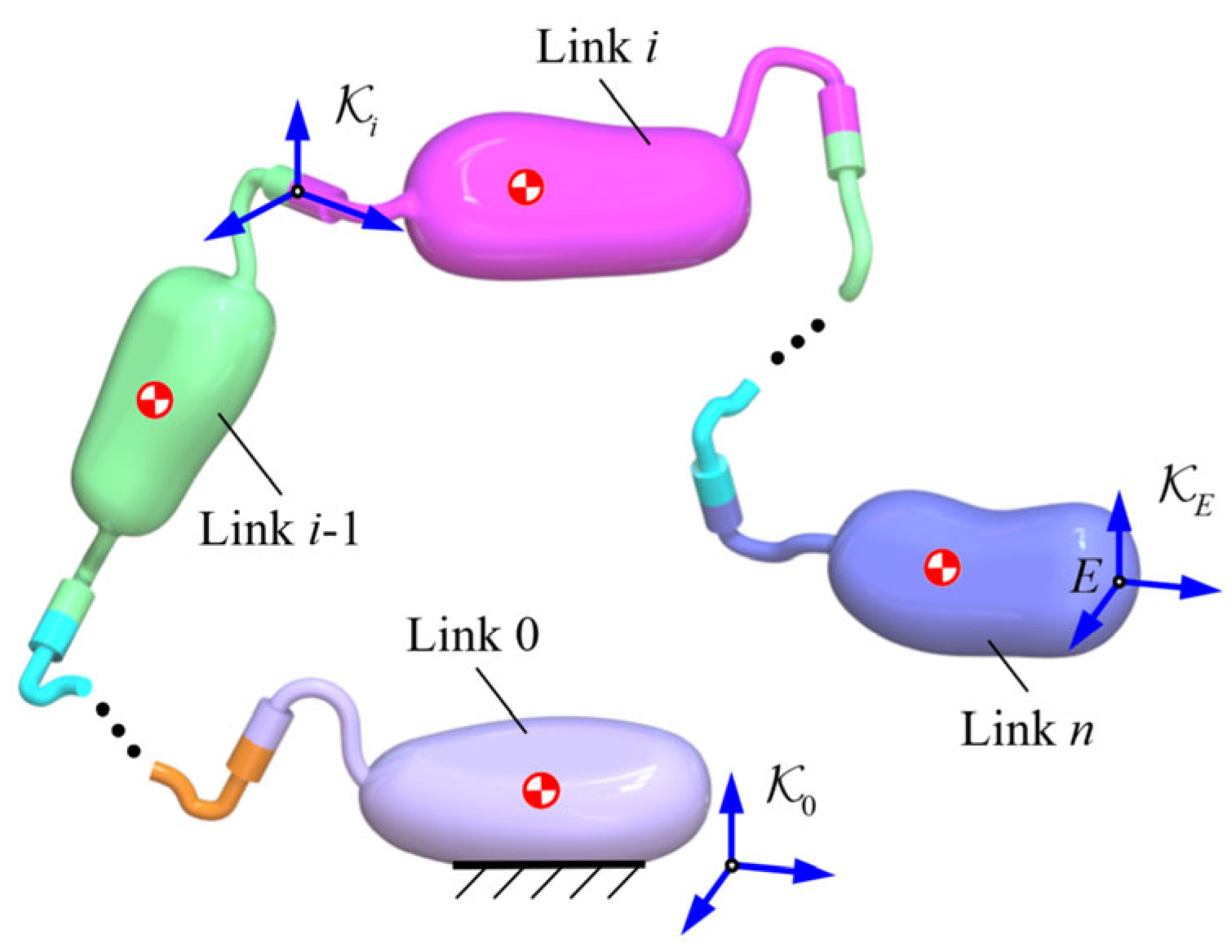
2.1. System Description
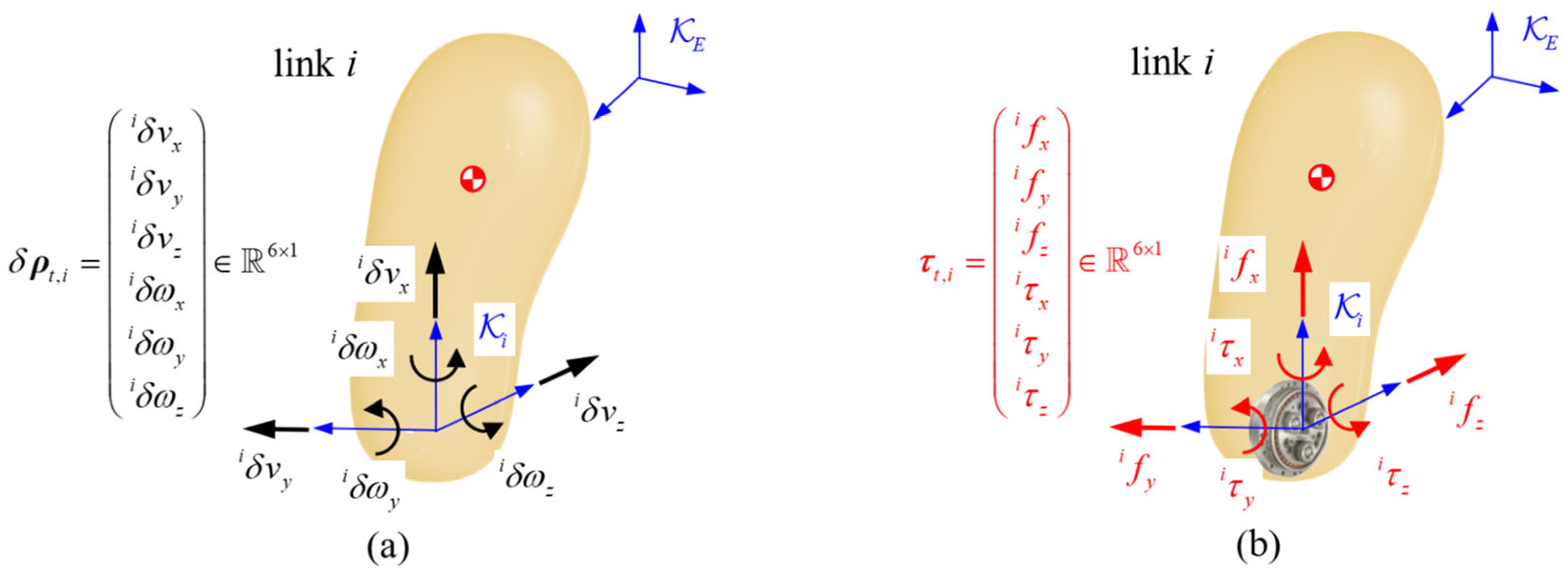
2.2. Inverse Rigid-Body Dynamics Modeling Incorporating Joint Constraint Forces and Torques
3. Inverse Rigid-Body Dynamic Modeling of Heavy-Duty Industrial Robots
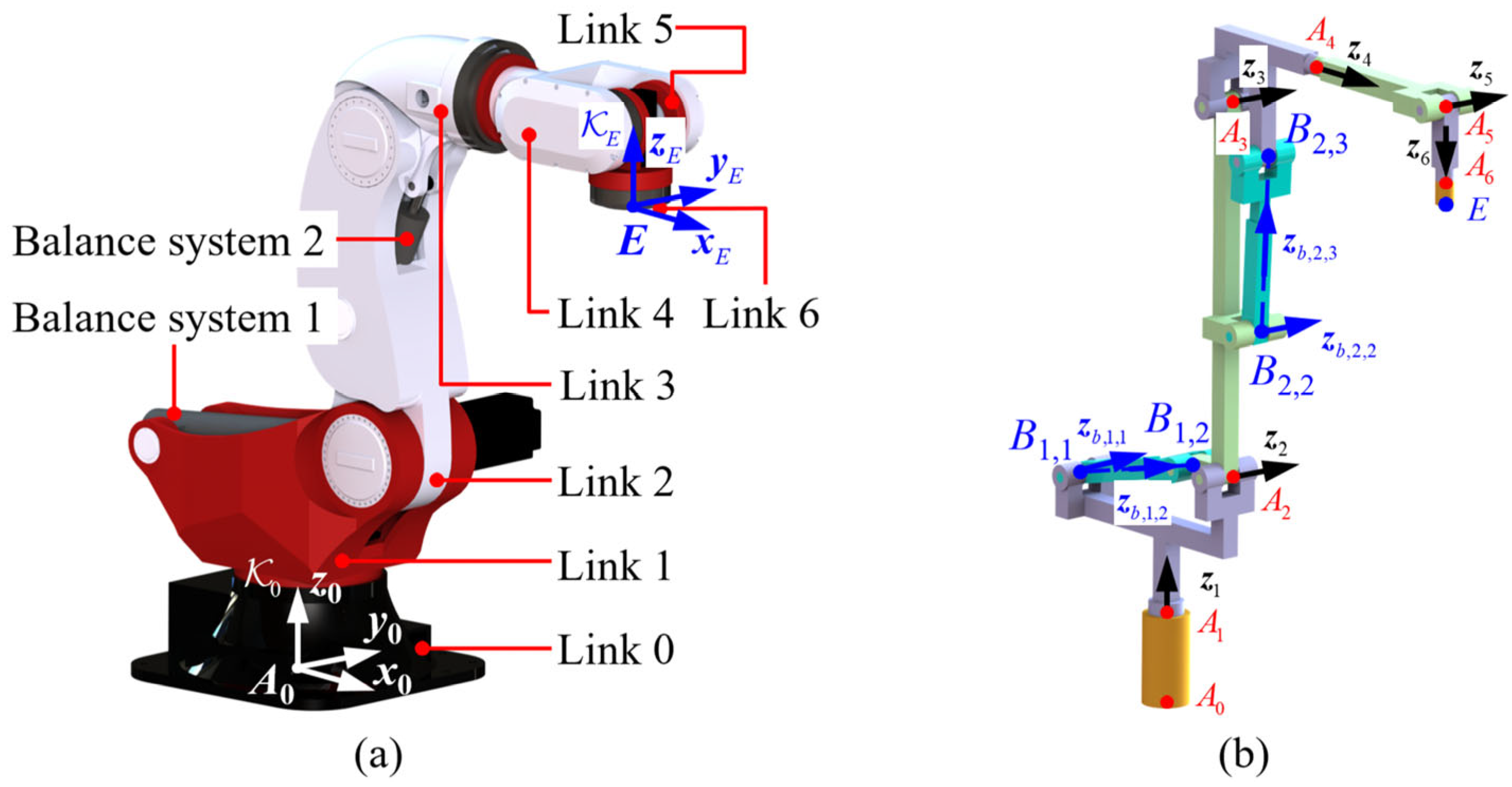
3.1. System Description
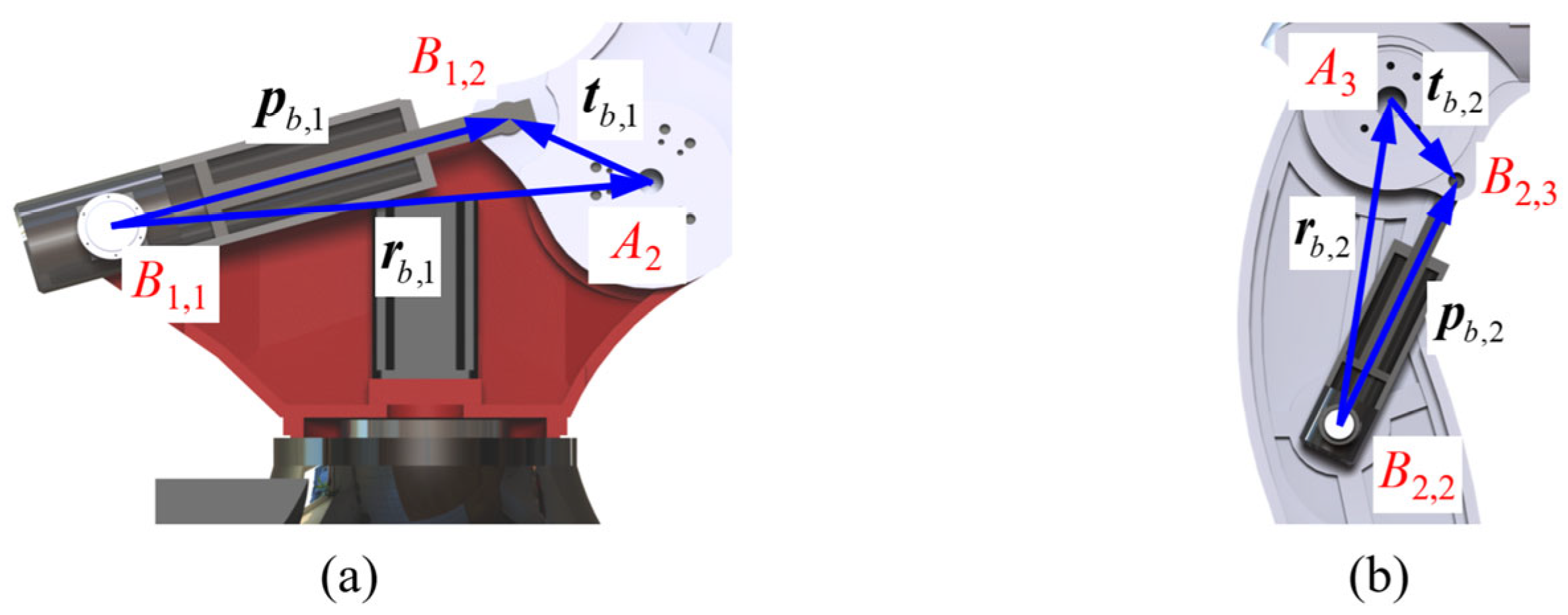
3.2. Inverse Rigid-Body Dynamic Modeling Incorporating the Effects of the Balance System
3.2.1. Velocity Modeling
3.2.2. Acceleration Modeling
3.2.3. Inverse Rigid-Body Dynamic Modeling
4. Formulation of Selection Criteria for Core Functional Components
4.1. Selection Criteria for Servo Motors and Reducers
4.2. Parameter Design Criteria for the Balance System
5. Verification and Analysis
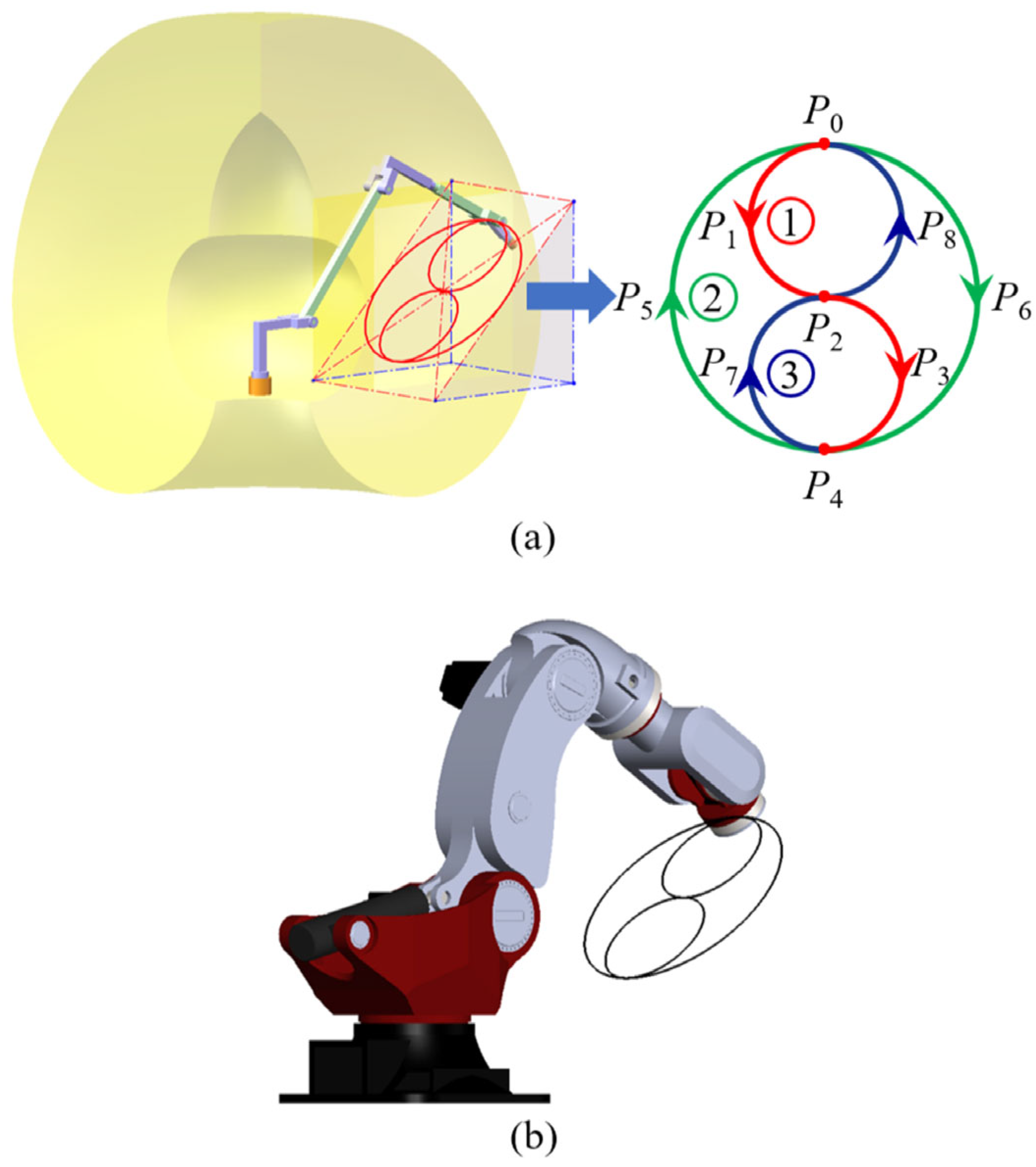
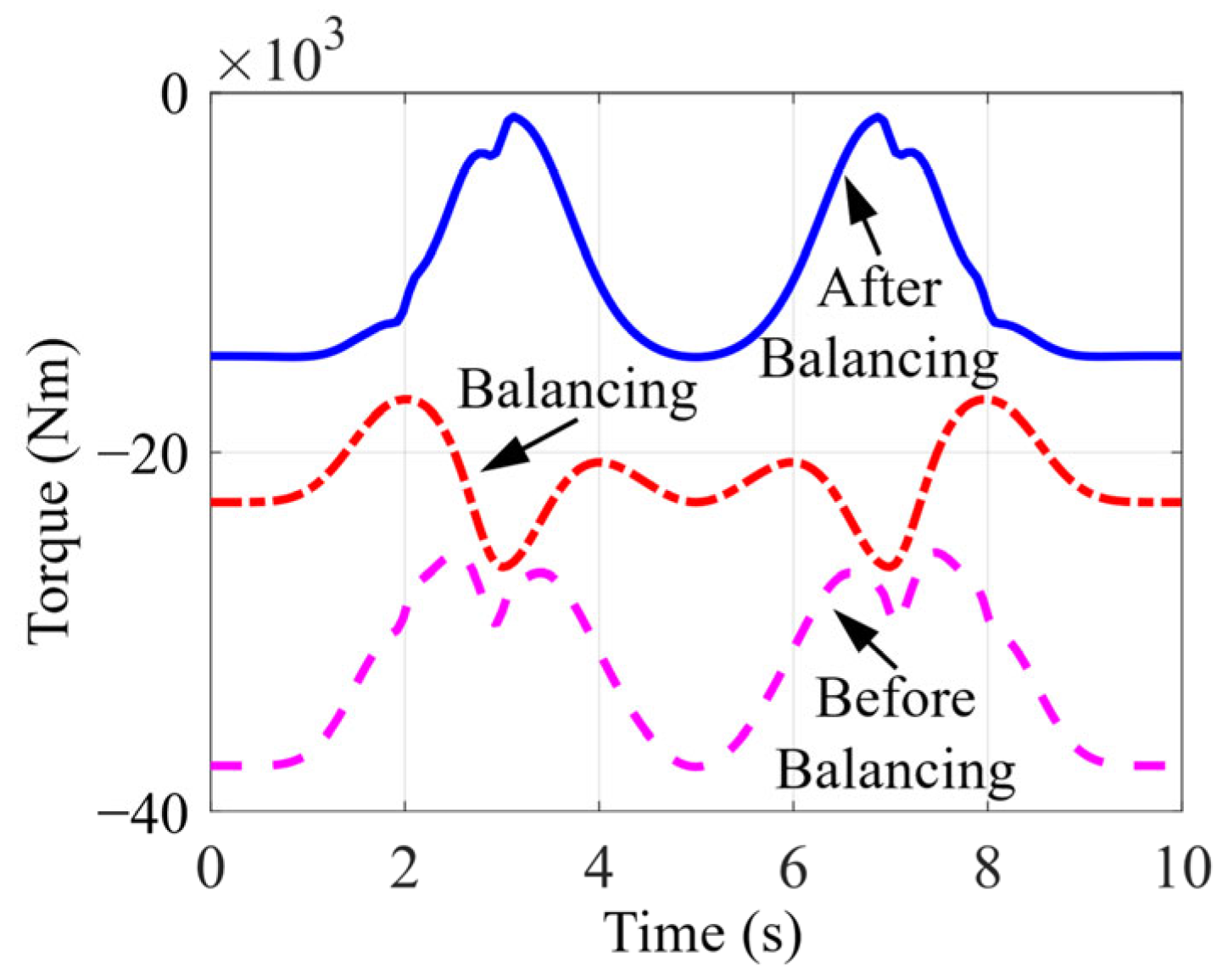
5.1. Rigid-Body Dynamic Simulation and Verification
5.2. Optimal Selection Results of Functional Components
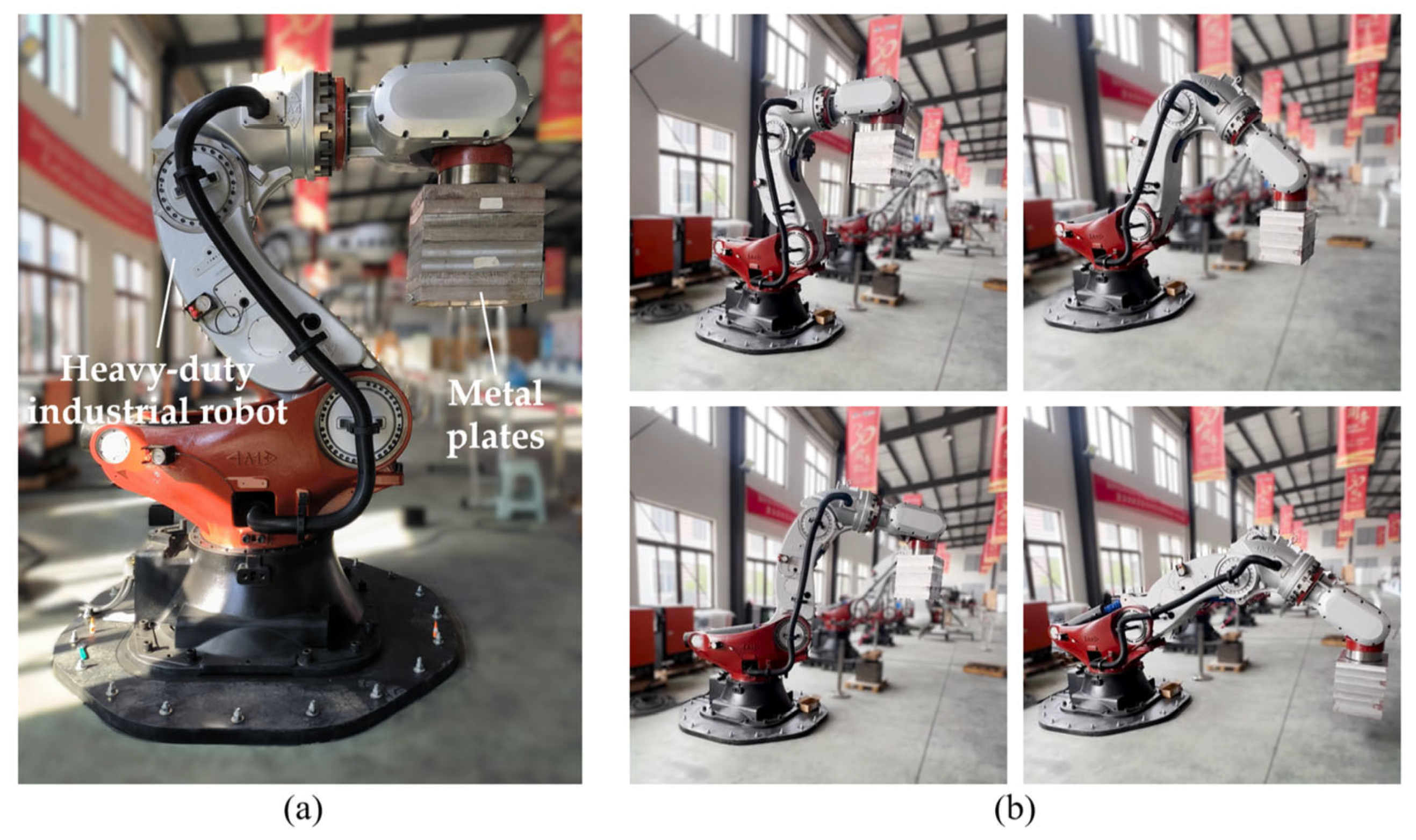
5.3. Experimental Testing
6. Conclusions
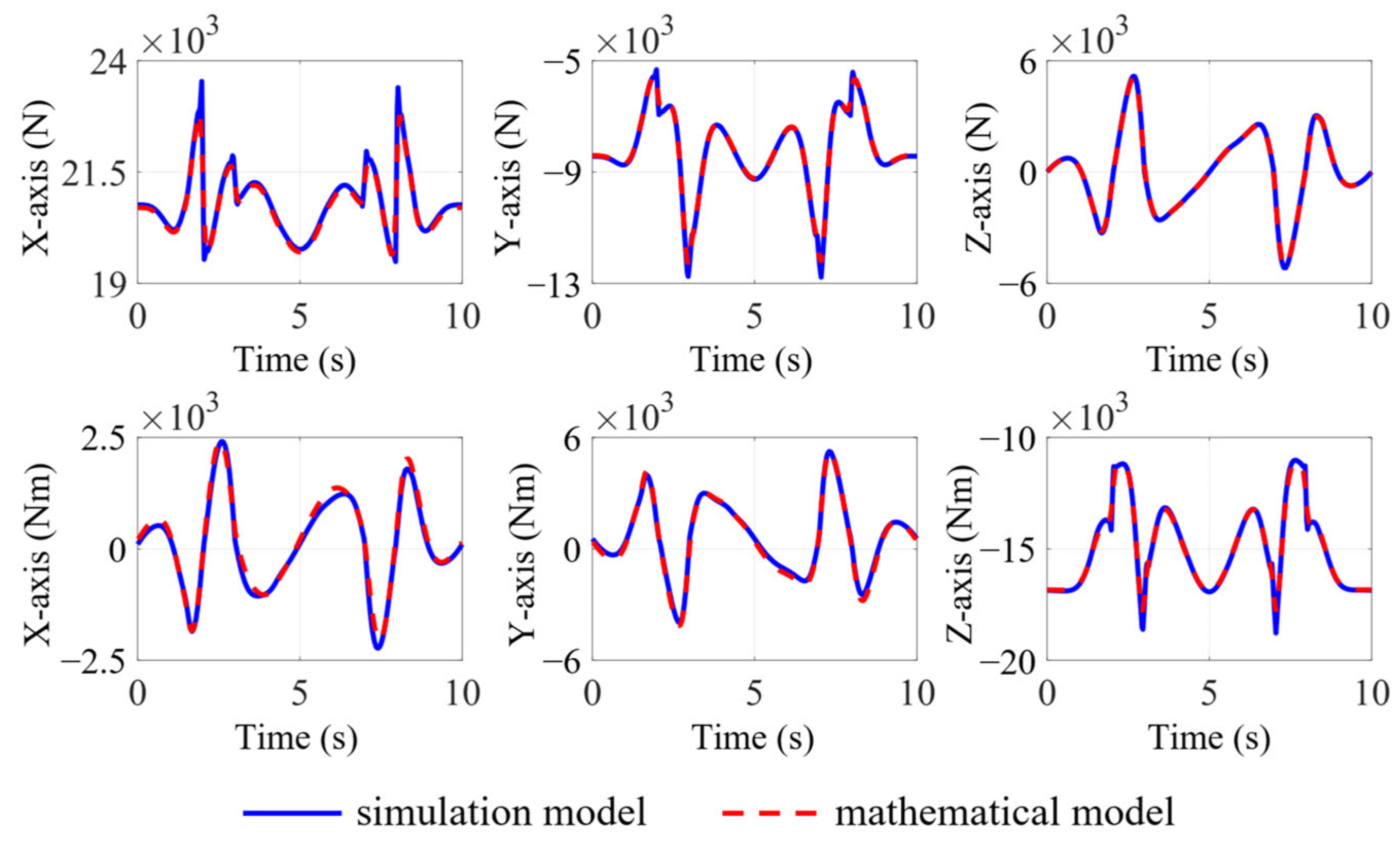
- A novel inverse rigid-body dynamics modeling method for serial kinematic chains incorporating joint constraint forces and moments is proposed. By introducing multi-dimensional virtual displacements along the joint constraint directions and based on the principle of virtual work, the virtual work in the joint driving directions is extended to the non-driving directions, and a general rigid-body dynamics model capable of accurately characterizing all forces and moments at any joint in an n-DOF serial kinematic chain is constructed.
- The rigid-body dynamics model of the heavy-duty industrial robot is established. In view of the structural characteristics of heavy-duty industrial robots, the influences of the inertia, gravity and balancing forces of the balance system on the corresponding joint forces and moments are analyzed in focus, and the analysis results can provide a necessary theoretical basis for the selection/design of core functional components of such industrial robots.
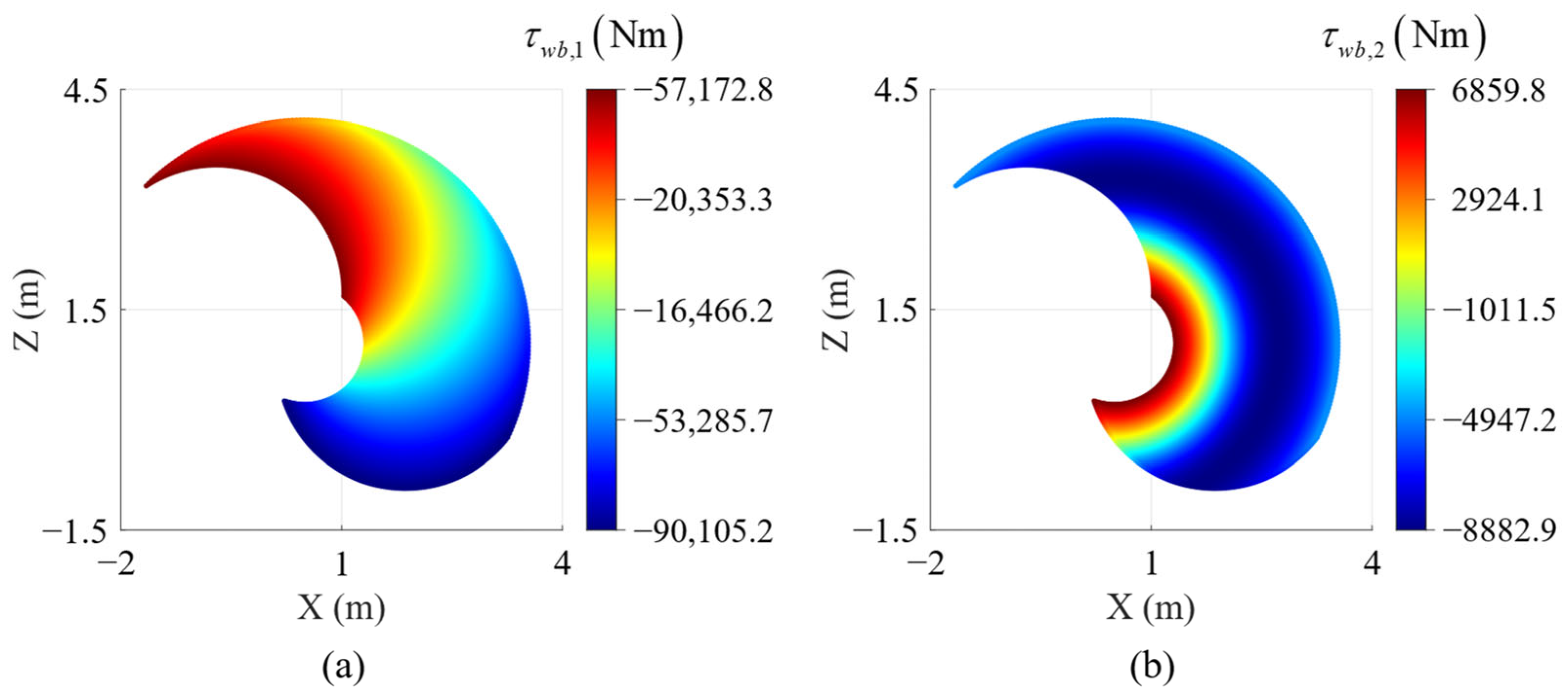
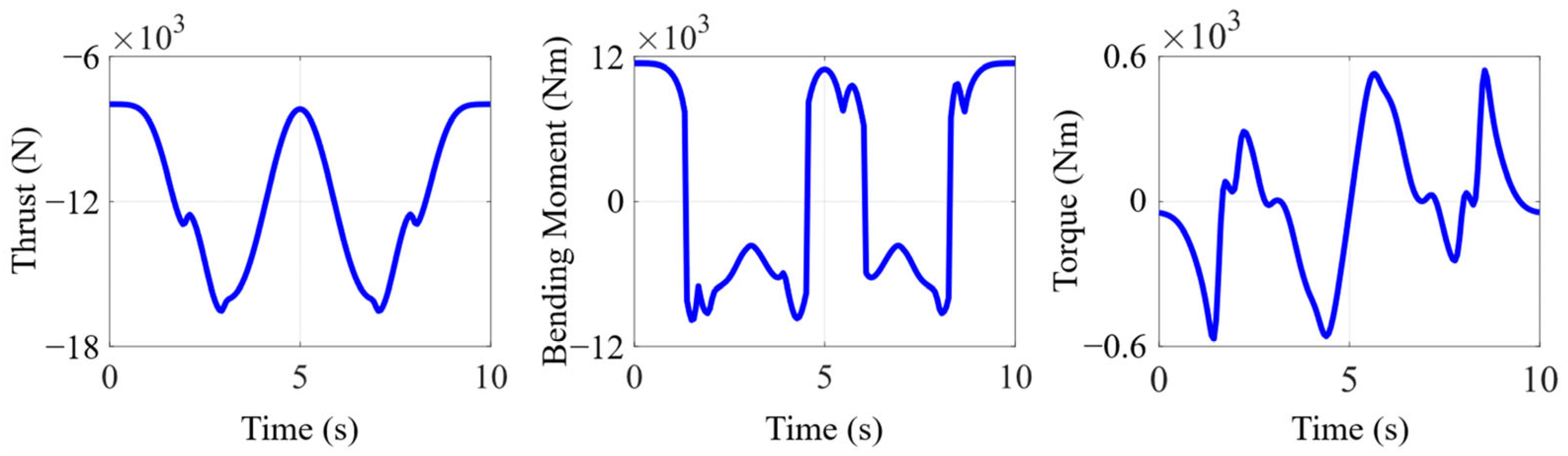
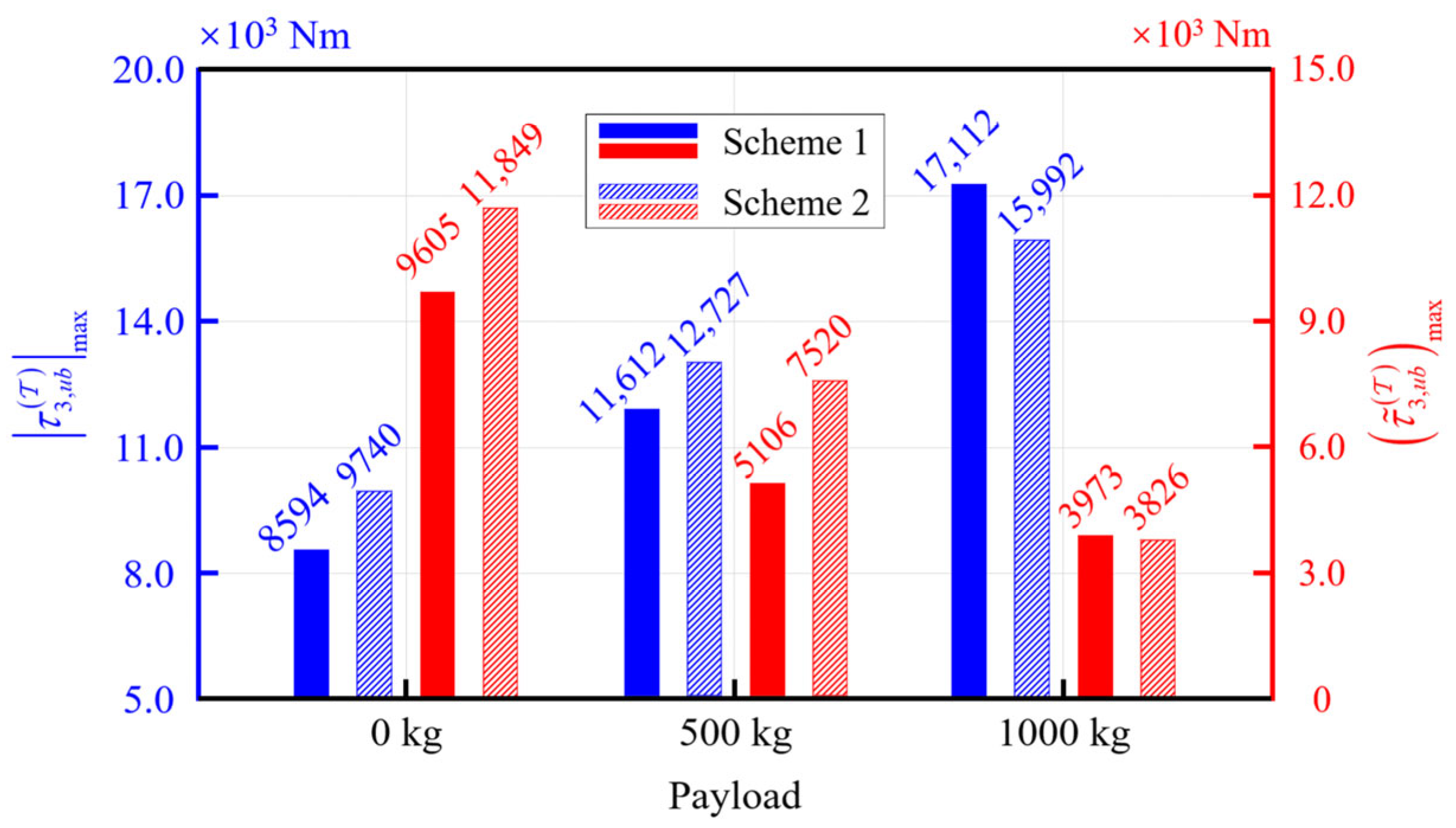
- A series of selection/design criteria for core functional components suitable for heavy-duty industrial robots is formulated. Among them, indicators related to joint constraint forces and moments are taken into account in the selection of joint reducers, and the influence of variations in the robot’s end-effector load on the design parameters of the balance system is considered in the design of the balance system. Furthermore, based on the above criteria, an engineering prototype of a heavy-duty industrial robot with a 1000 kg load capacity is developed, and load capacity experimental tests are carried out on it. The test results show that the developed robot meets the design requirements for a 1000 kg load.
Author Contributions
Funding
Data Availability Statement
Conflicts of Interest
References
- Li, Z.; Shen, Q.; Wu, W.; Fan, H. Research progress in the dynamics of heavy-duty robots from the perspective of machining process. Robot. Comput. Integr. Manuf. 2026, 100, 103250. [Google Scholar] [CrossRef]
- Chen, L.; Cao, J.; Wu, K.; Zhang, Z. Application of generalized frequency response functions and improved convolutional neural network to fault diagnosis of heavy-duty industrial robot. Robot. Comput. Integr. Manuf. 2022, 73, 102228. [Google Scholar] [CrossRef]
- Tchasse, P.; Liewald, M.; Deliktas, T. Development of an intelligent metal forming robot and application to multi-stage cold forging. Prod. Eng.-Res. Dev. 2025, 19, 731–749. [Google Scholar] [CrossRef]
- Dasgupta, B.; Mruthyunjaya, T.S. Closed-form dynamic equations of the general Stewart platform through the Newton–Euler approach. Mech. Mach. Theory 1998, 33, 993–1012. [Google Scholar] [CrossRef]
- D’Antuono, G.; Pettersen, K.Y.; Buonocore, L.R.; Gravdahl, J.T.; Castro, M.D. Dynamic model of a tendon-actuated snake robot using the Newton-Euler formulation. In Proceedings of the 22nd World Congress of the International Federation of Automatic Control (IFAC), Yokohama, Japan, 9–14 July 2023; pp. 11639–11644. [Google Scholar]
- Diaz, M.; Ferrer, M.A.; Gil, J.M.; Rodriguez, R.; Zhang, P.; Jin, L. Online signature verification based on the Lagrange formulation with 2D and 3D robotic models. Pattern Recognit. 2025, 164, 111581. [Google Scholar] [CrossRef]
- Zhang, C.D.; Song, S.M. An efficient method for inverse dynamics of manipulators based on the virtual work principle. J. Robot. Syst. 1993, 10, 605–627. [Google Scholar] [CrossRef]
- Shao, B.; Yuan, E.T. An united recursive robot dynamics based on screws. AASRI Procedia 2012, 3, 54–59. [Google Scholar] [CrossRef]
- Müller, A. Screw and Lie group theory in multibody dynamics. Multibody Syst. Dyn. 2018, 42, 219–248. [Google Scholar] [CrossRef]
- Lu, Y.; Yue, B. Dynamic modeling of liquid-filled free-floating space robot and joint trajectory planning with considering liquid positioning. Aerosp. Sci. Technol. 2025, 161, 110133. [Google Scholar] [CrossRef]
- Wang, H.; Wang, C.; Li, Y. Dynamic modeling and analysis of underwater glider in the ocean environment. Ocean Eng. 2025, 332, 121312. [Google Scholar] [CrossRef]
- Zhang, S.; Xie, X.; Sui, Y.; Qu, Y.; Zheng, G.; Deng, Z. Dynamic modeling and stiffness optimization for a manta ray-inspired robot. Int. J. Mech. Sci. 2026, 316, 111417. [Google Scholar] [CrossRef]
- Yang, J.; Harsono, E.; Yu, H. Dynamic modeling and validation of a hybrid-driven continuum robot with antagonistic mechanisms. Mech. Mach. Theory 2024, 197, 105635. [Google Scholar] [CrossRef]
- Zhou, Z.; Yang, X.; Wang, H.; Zhang, X. Coupled dynamic modeling and experimental validation of a collaborative industrial mobile manipulator with human-robot interaction. Mech. Mach. Theory 2022, 176, 105025. [Google Scholar] [CrossRef]
- Xin, G.; Deng, H.; Zhong, G. Closed-form dynamics of a 3-DOF spatial parallel manipulator by combining the Lagrangian formulation with the virtual work principle. Nonlinear Dyn. 2016, 86, 1329–1347. [Google Scholar] [CrossRef]
- Mo, S.; Hu, Y.; Huang, T.; Yao, B.; Chen, S.; Huang, Y.; Peng, N.; Houioh, H.; Zhang, W. Dynamic modeling and performance analysis of a new friction stir welding parallel robot. Mech. Mach. Theory 2025, 210, 106030. [Google Scholar] [CrossRef]
- Wang, X.; Wu, J.; Zhou, Y. Dynamic modeling and performance evaluation of a 5-DOF hybrid robot for composite material machining. Machines 2023, 11, 652–670. [Google Scholar] [CrossRef]
- Zhou, L.; Bai, S.; Hansen, M.R. Integrated dimensional and drive-train design optimization of a light-weight anthropomorphic arm. Robot. Auton. Syst. 2012, 60, 113–122. [Google Scholar] [CrossRef]
- Jeon, Y.J.; Lee, H.Y.; Hong, D.S. Selection of major components of a four-axis transfer robot through dynamic analysis. In IEEE International Conference on Mechatronics and Automation (ICMA); IEEE: Piscataway, NJ, USA, 2017; pp. 590–595. [Google Scholar]
- Huang, H.; Zhou, Y.; Chen, F.; Zhu, H.; Guan, Y. Parameterized design of heavy-duty serial industrial robots. In IEEE International Conference on Mechatronics and Automation (ICMA); IEEE: Piscataway, NJ, USA, 2024; pp. 1099–1104. [Google Scholar]
- Seo, J.M.; Rhyu, S.H.; Seo, J.H.; Jung, H.K. Selection and design of drive modules for robot joint based on dynamic load characteristics. Int. J. Control Autom. Syst. 2017, 15, 790–801. [Google Scholar] [CrossRef]
- Kim, H.S.; Park, J.; Bae, M.; Park, D.; Park, D.; Do, H.M.; Choi, T.; Kim, D.H.; Kyung, J. Advanced 2-DOF counterbalance mechanism based on gear units and springs to minimize required torques of robot arm. IEEE Robot. Autom. Lett. 2022, 7, 6320–6326. [Google Scholar] [CrossRef]
- Dresscher, D.; de Vries, T.J.A.; Stramigioli, S. Motor-gearbox selection for energy efficiency. In IEEE International Conference on Advanced Intelligent Mechatronics (AIM); IEEE: Piscataway, NJ, USA, 2016; pp. 669–675. [Google Scholar]
- Padilla-Garcia, E.A.; Rodriguez-Angeles, A.; Reséndiz, J.R.; Cruz-Villar, C.A. Concurrent optimization for selection and control of AC servomotors on the powertrain of industrial robots. IEEE Access 2018, 6, 27923–27938. [Google Scholar] [CrossRef]
- Park, I.H.; Hong, D.S. Selection of motors and gear reducers for four-axis palletizing robots considering the motion characteristics and dynamic coupling effect. Int. J. Precis. Eng. Manuf. 2023, 24, 2269–2278. [Google Scholar] [CrossRef]
- Hill, R.B.; Briot, S.; Chriette, A.; Martinet, P. Performing energy-efficient pick-and-place motions for high-speed robots by using variable stiffness springs. J. Mech. Robot 2022, 14, 051004. [Google Scholar] [CrossRef]
- Sensinger, J.W. Selecting motors for robots using biomimetic trajectories: Optimum benchmarks, windings, and other considerations. In IEEE International Conference on Robotics and Automation; IEEE: Piscataway, NJ, USA, 2010; pp. 4175–4181. [Google Scholar]
- Han, G.; Xie, F.G.; Liu, X.J. Optimal selection of servo motor and reduction ratio for high-speed parallel robots. In Intelligent Robotics and Applications (ICIRA); IEEE: Piscataway, NJ, USA, 2015; pp. 109–120. [Google Scholar]
- Liu, H.T.; Mei, J.P.; Zhao, X.M.; Huang, T.; Chetwynd, D.G. Inverse dynamics and servomotor parameter estimation of a 2-DOF spherical parallel mechanism. Sci. China Ser. E-Technol. Sci. 2008, 51, 288–301. [Google Scholar] [CrossRef]
- Aftab, Z.; Shafi, F.; Zhad, R.; Inzimam-ul-Haq, R.; Saeed, K. Systematic method for selection of motor-reducer units to power a lower-body robotic exoskeleton. J. Appl. Sci. Eng. 2021, 24, 457–465. [Google Scholar]





| Parameter | Joint 1 | Joint 2 | Joint 3 | Joint 4 | Joint 5 | Joint 6 | |
|---|---|---|---|---|---|---|---|
| Motors | Model Number | Low-Inertia Motor ZLS | Medium-Inertia Motor ZMS | ||||
| 3003 | 3004 | 2653 | 2152 | 1654 | 1652 | ||
| Power (kW) | 21.2 | 23.3 | 15.6 | 6.0 | 7.5 | 5.4 | |
| Mass (kg) | 90 | 95 | 75 | 36 | 28 | 20 | |
| Reducers | Model Number | 700C | 700N | 500N | 320C | 380N | 200C |
| Mass (kg) | 140 | 102 | 57.2 | 79.5 | 44 | 55.6 | |
| Allowable Thrust Force (N) | 37,000 | 44,000 | 32,000 | 29,400 | 25,000 | 19,600 | |
| Allowable Bending Moment (Nm) | 29,400 | 15,000 | 11,000 | 20,580 | 7050 | 8820 | |
| Parameter | (m) | (m) | (×106 Pa) | (×106 Pa) | (m) | (m) |
| Value | 0.196 | 0.060 | 4.094 | 12.000 | 1.000 | 0.300 |
Disclaimer/Publisher’s Note: The statements, opinions and data contained in all publications are solely those of the individual author(s) and contributor(s) and not of MDPI and/or the editor(s). MDPI and/or the editor(s) disclaim responsibility for any injury to people or property resulting from any ideas, methods, instructions or products referred to in the content. |
© 2026 by the authors. Licensee MDPI, Basel, Switzerland. This article is an open access article distributed under the terms and conditions of the Creative Commons Attribution (CC BY) license.
Share and Cite
Han, W.; Shan, X.; Tong, T.; Liu, H.; Xiao, J. Rigid-Body Dynamics Modeling and Core Functional Component Selection for Heavy-Duty Industrial Robots. Machines 2026, 14, 528. https://doi.org/10.3390/machines14050528
Han W, Shan X, Tong T, Liu H, Xiao J. Rigid-Body Dynamics Modeling and Core Functional Component Selection for Heavy-Duty Industrial Robots. Machines. 2026; 14(5):528. https://doi.org/10.3390/machines14050528
Chicago/Turabian StyleHan, Wei, Xianlei Shan, Tong Tong, Haitao Liu, and Juliang Xiao. 2026. "Rigid-Body Dynamics Modeling and Core Functional Component Selection for Heavy-Duty Industrial Robots" Machines 14, no. 5: 528. https://doi.org/10.3390/machines14050528
APA StyleHan, W., Shan, X., Tong, T., Liu, H., & Xiao, J. (2026). Rigid-Body Dynamics Modeling and Core Functional Component Selection for Heavy-Duty Industrial Robots. Machines, 14(5), 528. https://doi.org/10.3390/machines14050528