Review

Sound Field Reproduction Research and Its Applications in Cabin Noise Reproduction of Vehicles: A Review


1
College of Energy Engineering, Zhejiang University, Hangzhou 310027, China
2
Key Laboratory of Human Factors and Intelligent Reduction of Vibration & Noise, Ministry of Education (MOE), Hangzhou 310027, China
3
Longquan Industrial Innovation Research Institute, Lishui 323700, China
4
School of Vehicles and Intelligent Transportation, Fuyao University of Science and Technology, Fuzhou 350300, China
*
Author to whom correspondence should be addressed.
Machines 2026, 14(5), 493; https://doi.org/10.3390/machines14050493
Submission received: 2 April 2026 / Revised: 24 April 2026 / Accepted: 25 April 2026 / Published: 28 April 2026

Abstract

Sound field reproduction (SFR) is vital for noise simulation and acoustic comfort optimization in vehicle cabins. This paper reviews three core SFR techniques: Wave Field Synthesis (WFS), Higher-Order Ambisonics (HOA), and Pressure Matching (PM). Their theoretical fundamentals, engineering optimizations, and adaptability to narrow enclosed cabins are analyzed. We compare the three methods in terms of reproduction accuracy, system complexity, and cost. Key challenges in vehicular applications are summarized, including strong reverberation, multi-source coupling, and the mismatch between physical reproduction and subjective perception. Future directions are proposed, such as physics-data hybrid optimization, low-cost lightweight design, and personalized acoustic comfort. This review offers a practical reference for the engineering application of SFR in vehicle cabin acoustic optimization.

1. Introduction

With the advancement of modern industrial technologies and the escalation of consumer demands for comfort and health, acoustic environment evaluation and optimization have evolved into a core requirement for transportation vehicles including automobiles, high-speed trains, and aircrafts. As a critical factor influencing in-cabin comfort, product competitiveness, and human health, noise has attracted increasing attention for its precise simulation, scientific evaluation, and effective control [1]. Multiple scenarios in the transportation sector are confronted with two common problems: the mismatch between subjective auditory experience and objective acoustic parameters, and challenges in reproducing complex sound fields. Sound field reproduction (SFR) technology, which integrates technical approaches such as Wave Field Synthesis (WFS), Higher-Order Ambisonics (HOA), and Pressure Matching (PM) [2], enables the accurate reproduction of the target spatial sound field via controllable sound sources [3]. As an efficient experimental tool, SFR can replicate the realistic noise fields of vehicle cabins in laboratory environments, replacing costly and variable real-vehicle tests with standardized and repeatable conditions. By reconstructing the spatial characteristics of road noise, wind noise and cabin reverberation, it builds a critical bridge between physical sound field reconstruction and subjective perceptual evaluation of acoustic comfort. This capability makes SFR an indispensable supporting technique for optimizing the acoustic performance of transportation vehicles.
The research of SFR technology has been progressively advanced around three core objectives: improving reproduction accuracy, reducing costs, and adapting to complex scenarios. Early studies focused on the establishment of theoretical frameworks, establishing mathematical descriptions and physical modeling for different reproduction pathways through core theories such as integral equations, spherical harmonic decomposition, and least squares solutions [4,5]. With the upgrading of application requirements, the research focus has shifted towards breaking through bottlenecks in practical scenarios. Targeting key issues including reverberation interference, multi-source coupling, and spatial aliasing, technical innovations such as reflection compensation, anti-aliasing design, and adaptive parameter adjustment have been adopted to enhance the practicality and stability of SFR technology [6,7]. Meanwhile, the development of this technology has increasingly emphasized the unification of subjective auditory experience and objective physical parameters. By integrating psychoacoustic models such as loudness and interaural time difference (ITD) [8,9], it has achieved progress from physical sound field reproduction to accurate subjective auditory restoration, providing solid methodological support for subsequent engineering applications in multiple fields [10,11].
SFR technology has been increasingly widely applied in various transportation vehicles such as automobiles, aircraft, and high-speed trains. By accurately reproducing complex cabin noise fields, it provides a standardized and repeatable basis for testing acoustic optimization. Addressing the problems of the disconnect between aircraft cabin noise evaluation and subjective perception, as well as the high cost of actual flight tests [8,11], SFR technology can reconstruct the real cabin sound field in a laboratory environment, offering a controllable testing benchmark for acoustic design optimization [5,10,12]. For wind noise and road noise in electric vehicles that are exacerbated by the absence of engine noise masking [4,7,13] and low- to mid-frequency noise in high-speed trains that is easily underestimated by traditional A-weighted sound pressure level (SPL) evaluation [12,14], this technology provides quantitative support for precise noise control and sound quality improvement by fully preserving the spatial physical information of the target noise [9,15]. In the process of application evolution, SFR technology has continuously adapted to scenario-specific characteristics of transportation vehicles, such as narrow and long cabins and non-uniform loudspeaker configurations, and derived scenario-oriented solutions, including vehicle-mounted full-frequency auralization and cabin-adaptive reproduction [6,12,16], successfully achieving the engineering implementation from laboratory sound field reproduction to real-vehicle acoustic optimization [17].
As the optimization of vehicle comfort evaluation shifts from physical to virtual dimensions, the integration of SFR technology with in-vehicle acoustic comfort evaluation has become increasingly crucial. Unlike existing reviews that focus on general spatial audio or architectural acoustics, this review fills a critical research gap by being the first to systematically summarize sound field reproduction (SFR) technologies dedicated to transportation vehicle cabins. It uniquely clarifies the application scenarios, technical differences, and engineering adaptability of WFS, HOA, and PM under the constrained conditions of narrow, enclosed vehicle cabins and establishes a clear comparative framework for balancing reproduction accuracy, cost, complexity, and perceptual consistency. This work thus provides a targeted practical reference for SFR-based acoustic optimization and comfort evaluation in modern vehicle cabin acoustics.

2. Wave Field Synthesis (WFS)

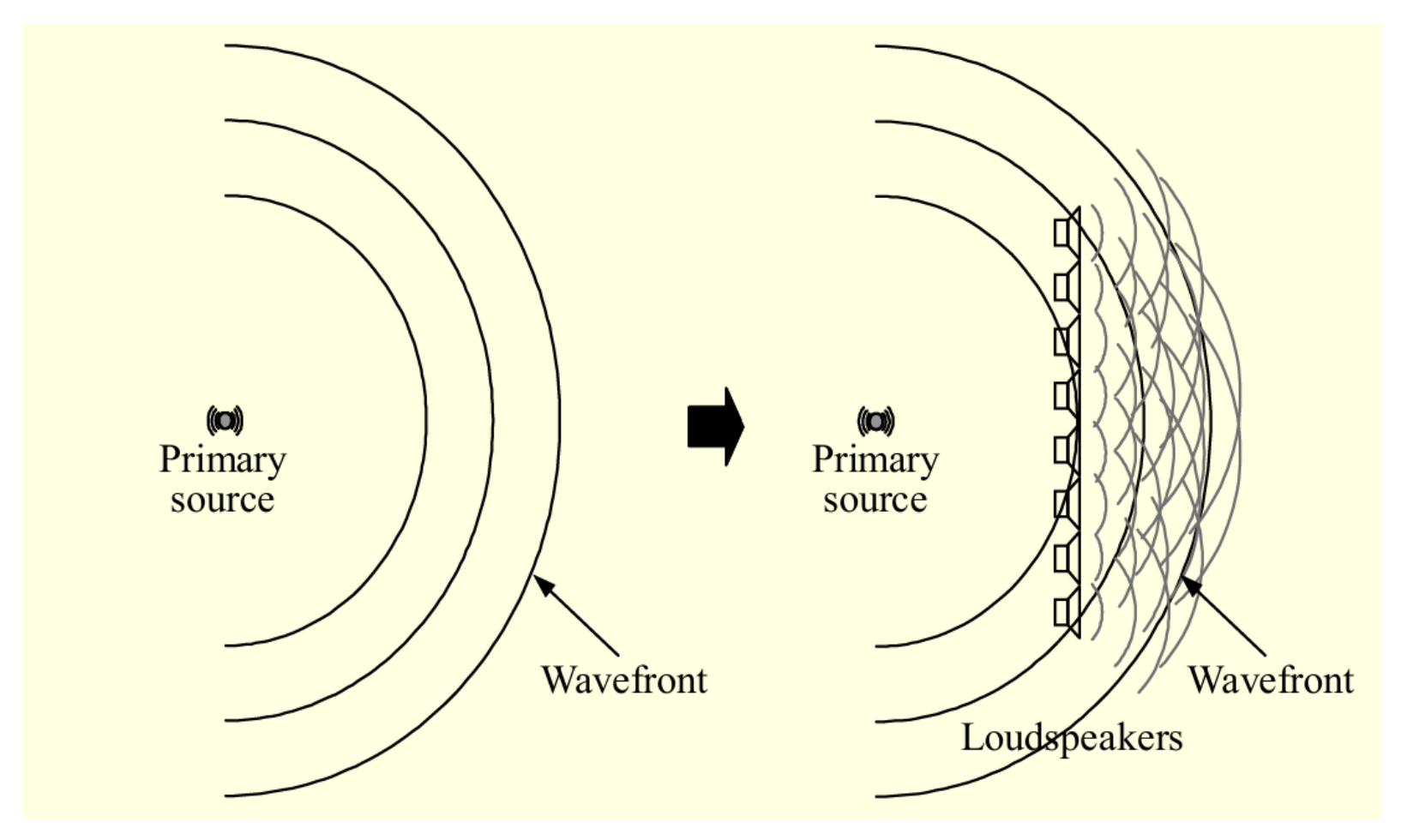
As a key technology in the field of spatial sound reproduction, Wave Field Synthesis (WFS) is rooted in the Kirchhoff–Helmholtz integral equation derived from the Huygens–Fresnel principle. Its core mathematical expression is shown in Equation (1), and the theoretical model is illustrated in Figure 1 [18]:
P ( x , ω ) = V G x x 0 , ω n P ( x 0 , ω ) P ( x 0 , ω ) n G x x 0 , ω d S 0
where x denotes the position of a point in the target region V , x 0 is the position of the sound source on the boundary of the target region, P ( x , ω ) represents the sound pressure signal at x , G x x 0 , ω is the Green’s function, V refers to the boundary of V , and n stands for the outward-pointing normal vector to the boundary V . The technical core of WFS lies in reproducing the sound field features of arbitrary virtual sound sources via a controllable array of monopole secondary sources arranged around the listening region, offering high physical reconstruction accuracy and extensive spatial sound field coverage.

2.1. Theoretical Foundation

The early theoretical framework of WFS mathematically proved the feasibility of reproducing arbitrary virtual sound source fields via a continuous monopole secondary source array [19], laying the fundamental mathematical and physical foundation for WFS development. However, the theoretical assumption of continuous secondary sources conflicts with the discrete arrays applied in practice, which inevitably introduces spatial aliasing and truncation errors and thus forms the primary bottleneck restricting the engineering implementation of WFS.

2.2. Bottleneck Breakthrough: Anti-Aliasing and Room Reflection Compensation

Quantitative anti-aliasing constraints have been developed for discrete arrays to mitigate spatial aliasing and truncation errors [20], which helps overcome engineering flaws in the early theoretical framework. This work enabled the first experimental validation of WFS sound field reproduction performance in a non-anechoic environment, advancing WFS from theoretical analysis to prototype testing and providing important support for later engineering applications.
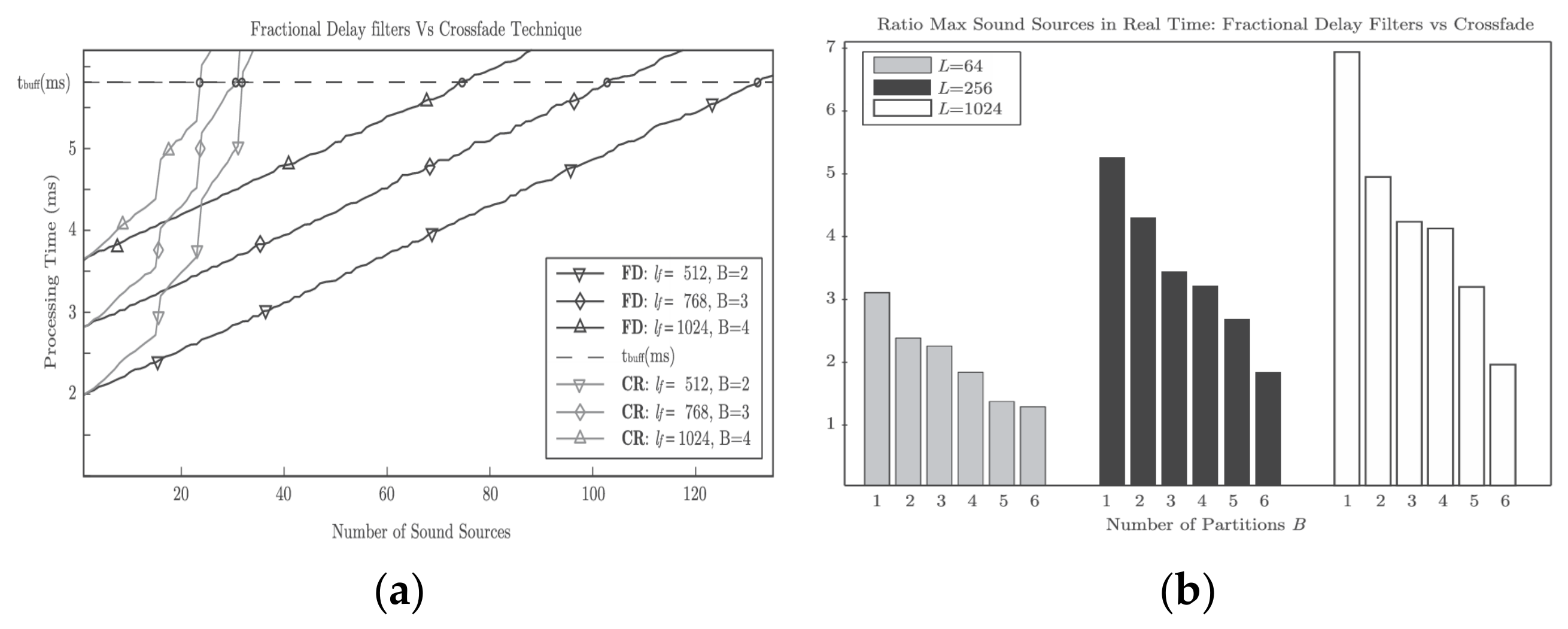
Building on anti-aliasing improvements for discrete arrays, researchers have proposed targeted methods to reduce room reflection interference in real-world applications. A plane wave decomposition-based listening room compensation scheme is adopted to suppress room reflections, which decreases the overall error power of the reproduced sound field by 12.9 dB over all directions and achieves a maximum error suppression gain of 18 dB in the main reflection direction [21], while other optimized solutions can further restrict the error along the main incident direction to below 5 dB [22]. The Wave Domain Adaptive Filtering (WDAF) algorithm has also been introduced to strengthen early reflection suppression for circular arrays and extend the effective compensation region, which improves WFS performance in complex acoustic environments [23,24]. With reflection suppression and accuracy optimization achieved at the algorithm level, real-time computation efficiency has turned into a new key bottleneck for deploying large-scale loudspeaker systems. A GPU-accelerated dynamic WFS scheme has been designed that combines fractional delay filters with room compensation methods. In Figure 2, FD denotes fractional delay filtering, CR denotes crossfade technique, and tbuff represents the system buffer time for real-time performance. Figure 2a shows the relation between buffer time and sound source quantity under different filter configurations, while Figure 2b compares the maximum real-time sound source ratio between FD and CR. This approach supports real-time reproduction of 94 moving sources using a 96 loudspeaker array and shows clear performance gains over traditional methods [25].

2.3. Adaptive Optimization: Reducing Sensor Dependence and Improving Local Reproduction Accuracy

Though the WDAF algorithm mitigated reflection interference, its reliance on dense sensor arrays resulted in high hardware costs and poor application flexibility, leading to the proposal of Adaptive Wave Field Synthesis (AWFS) [26]. Algorithmically, AWFS is established as an adaptive optimization of the conventional WFS framework, with its core cost function defined as Equation (2):
J A W F S = p p d e s 2 + λ q q W F S 2
where p denotes the actual reproduced sound pressure, p d e s the desired target pressure, q the optimized loudspeaker driving signal, and q W F S the driving solution obtained by traditional WFS.
By this adaptive error compensation scheme, AWFS reduced the normalized residual error (ELS) by up to two orders of magnitude compared with conventional WFS in the core vehicle cabin noise band (100 Hz–1 kHz), notably enhancing local sound field control precision. Systematically, Singular Value Decomposition (SVD) was adopted to decouple the multi-channel sound field reproduction system, enabling a configuration with only four error sensors to maintain high-fidelity reproduction for 24 loudspeakers and thus drastically cutting the demand for dense sensor arrays [27].
On the basis of AWFS, intensive studies have been carried out toward time-domain optimization for Local Wave Field Synthesis (LWFS). Different from the global-field reproduction of WFS, LWFS focuses on local high-precision reconstruction, whose core model is expressed as Equation (3):
p l o c a l x , t = S l o c a l G p n p G n d S
where S l o c a l denotes the local target region instead of the global integral surface in WFS.
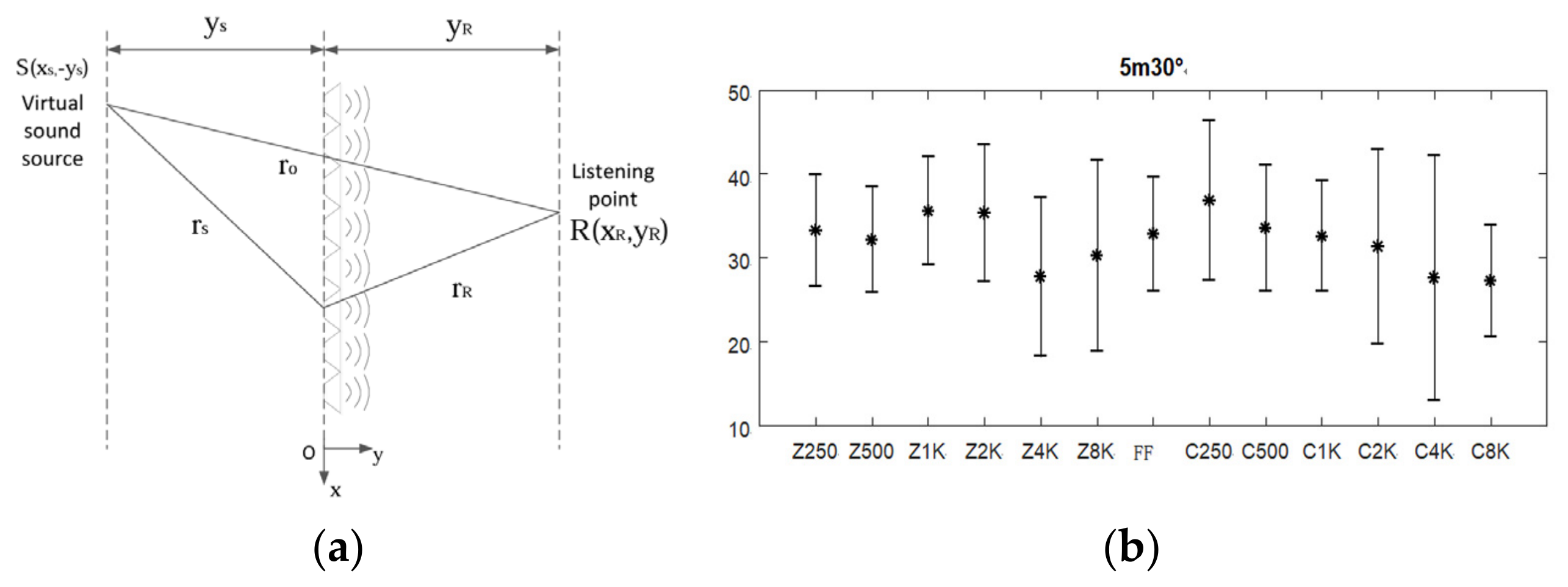
Experiments validate that the optimized LWFS approach yields a flatter response within the filtered frequency band and improves the stability of sound field reproduction. LWFS has also been expanded from conventional plane wave reproduction to virtual point source scenarios, which compensates for the weakness of WFS in local fine sound field control and substantially raises the overall reproduction accuracy of WFS systems [28,29]. To further enhance reproduction accuracy of AWFS in reverberant environments, an effort variation regularization method is introduced that matches the phase of source driving signals with the target sound field. This method outperforms traditional regularization in both large and small spaces, with especially strong improvement in low direct-to-reverberant ratio environments such as vehicle cabins [30]. The 2.5D WFS operator provides the theoretical foundation for sound field reproduction in enclosed narrow spaces (Figure 3a). Subjective localization experiments show that, at 5 m distance and 30° azimuth, the localization perception angle is slightly larger than the actual angle, and the error mainly comes from spatial aliasing of the discrete loudspeaker array (Figure 3b). As shown in the figure, ‘*’ is the average of the results, and the line range is the standard deviation of the results. FF denotes full frequency pink noise. Z denotes narrow-band noise and C denotes pure tone [31].

2.4. Vehicle-Oriented Engineering Adaptation: Simplification and Perceptual Distortion Improvement

Vehicle-oriented applied studies on WFS have closely aligned with engineering requirements in transportation and other vehicle scenarios, with emphasis placed on algorithm simplification for engineering implementation and reduction in perceptual distortion, leading to application-oriented outcomes. A regularization optimization strategy has been employed to build an active listening room compensation system combining WFS and wave field analysis. This system suppresses plane wave reflection interference in real environments effectively and simplifies the engineering deployment of WFS without compromising reproduction accuracy [32]. Research has also clarified the time-domain delay mechanism of WFS and identified such distortion as a major limiting factor for its application in large spaces, including large vehicle cabins, thus providing a clear target for further WFS optimization in transportation scenarios [33].

2.5. Engineering Application: Multi-Scenario Expansion with Vehicle Cabin as the Core

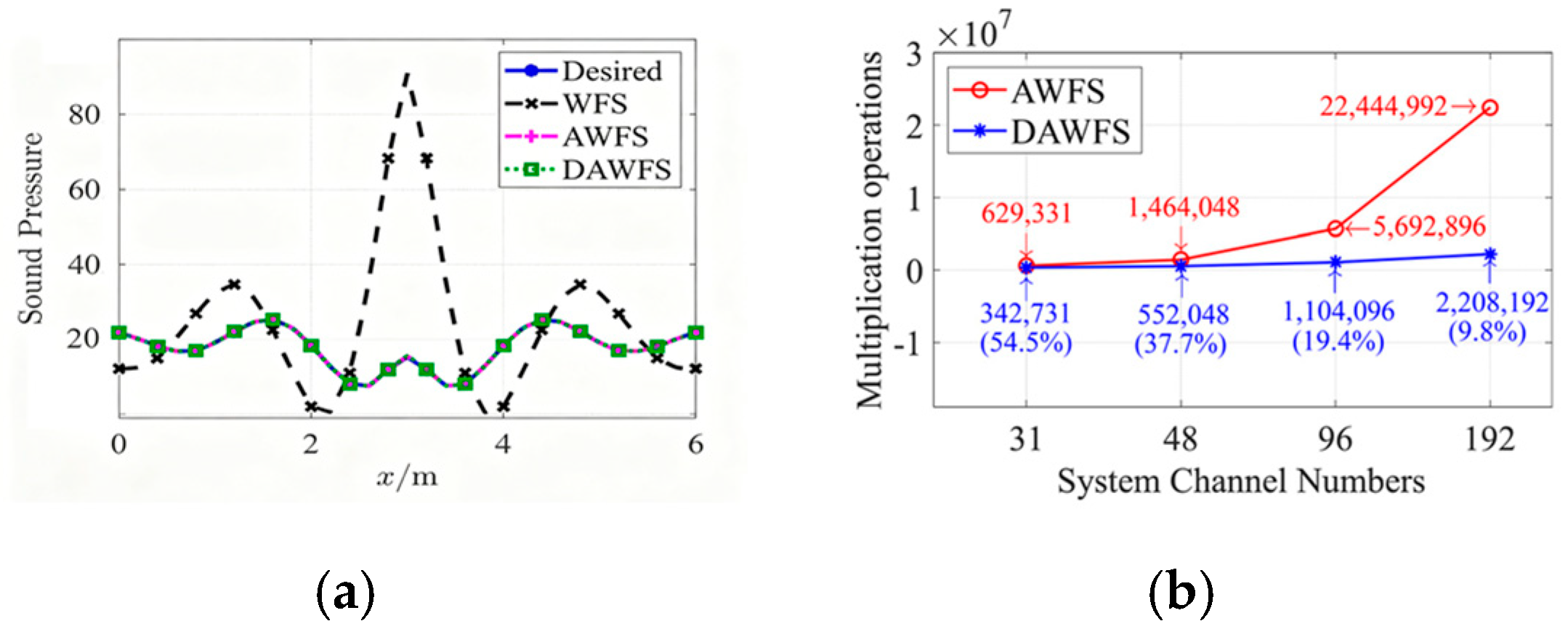
For the core application scenario of transportation vehicle cabin noise reproduction and acoustic optimization, WFS technology has undergone in-depth scenario adaptation and technical optimization, with a series of vehicle-specific technical solutions developed. A Distributed Adaptive Wave Field Synthesis (DAWFS) scheme was proposed to generate Room Impulse Responses (RIR) via the image method and convert them into real-time control signals in a rectangular reverberation chamber simulating a vehicle cabin [34]. Experimental results show the scheme’s reproduced sound field has a significantly better peak-trough matching degree than traditional WFS, with much lower global computational complexity than AWFS, effectively mitigating cabin reverberation interference, as shown in Figure 4.
In in-vehicle immersive audio development, a WFS-based automotive virtual loudspeaker projection scheme was verified in real vehicle cabins and low-reverberation rooms [35], which can accurately construct in-vehicle virtual point sound sources and provide technical support for the R&D of vehicle-mounted voice interaction and immersive audio systems. For automotive NVH subjective evaluation, spatial parameters (e.g., interaural time difference, level difference and correlation coefficient) extracted from automotive binaural signals are combined with WFS to construct virtual sound fields [36], effectively overcoming the perceptual deviation of traditional noise simulation methods.
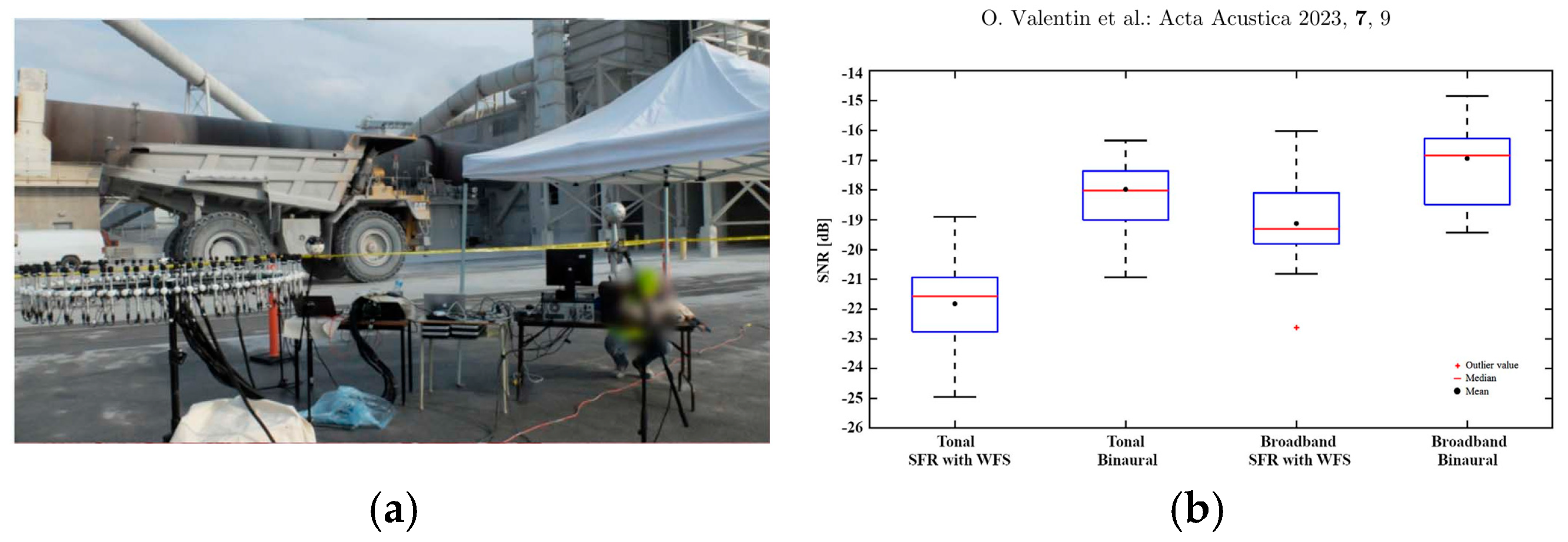
Targeting electric vehicle characteristic noise, WFS is applied to reproduce the dynamic propagation process of outdoor electric vehicle noise and develop a corresponding noise evaluation scheme [37]. A purely auditory in-vehicle traffic scenario is also constructed based on WFS, with tests showing the deviation between the estimated time-to-collision and real-vehicle results is ≤0.5 s, which provides effective technical support for the optimization of vehicle-mounted Acoustic Vehicle Alerting Systems (AVAS) and pedestrian collision risk assessment [38]. Based on these AVAS-related applications, experimental validation has confirmed that WFS-based immersive sound field reproduction outperforms binaural reproduction in vehicle alert detection by a significant margin, with the performance difference being particularly pronounced for tonal vehicle alerts, as shown in Figure 5 [39].

2.6. Summary

WFS originates from the theoretical framework of continuous secondary source arrays and has evolved into advanced forms such as AWFS and LWFS through optimizations in anti-aliasing, reflection suppression and hardware dependency reduction. It offers high physical accuracy and uniform coverage in large-scale sound field reproduction, and delivers strong robustness in complex acoustic environments when combined with reflection compensation and anti-aliasing improvements. This makes the technology well suited for scenarios that demand extensive coverage and high physical precision, including architectural acoustics optimization, laboratory-scale cabin noise simulation and outdoor noise dynamic propagation reproduction.
However, WFS inherently requires the deployment of dense discrete loudspeaker arrays, which leads to high hardware costs, complex system calibration, large space occupation and high computational complexity in real-time control. These drawbacks restrict its large-scale commercial deployment in space- and cost-constrained environments such as passenger vehicle cabins. Currently, WFS is primarily adopted in customized acoustic testing, professional audiovisual systems and laboratory investigations, where high reproduction accuracy takes priority over spatial and cost limitations.

3. High Order Ambisonics (HOA)

Higher-Order Ambisonics (HOA) is a pivotal technology for three-dimensional spatial sound field reproduction, with its core mathematical foundation rooted in spherical harmonic decomposition. The sound pressure at any spatial position can be expressed as the core formula of HOA (Equation (4)):
p r , θ , φ , ω = n = 0 m = n n j n ω c r P n m ω Y n m θ , φ
where r is the radial distance, θ and φ are the polar and azimuth angles, ω is the angular frequency, c is the speed of sound, j n · is the spherical Bessel function, Y n m θ , φ is the spherical harmonic function, and P n m ω is the spherical harmonic coefficient. The reproduction order n determines the spatial resolution of the reconstructed sound field.
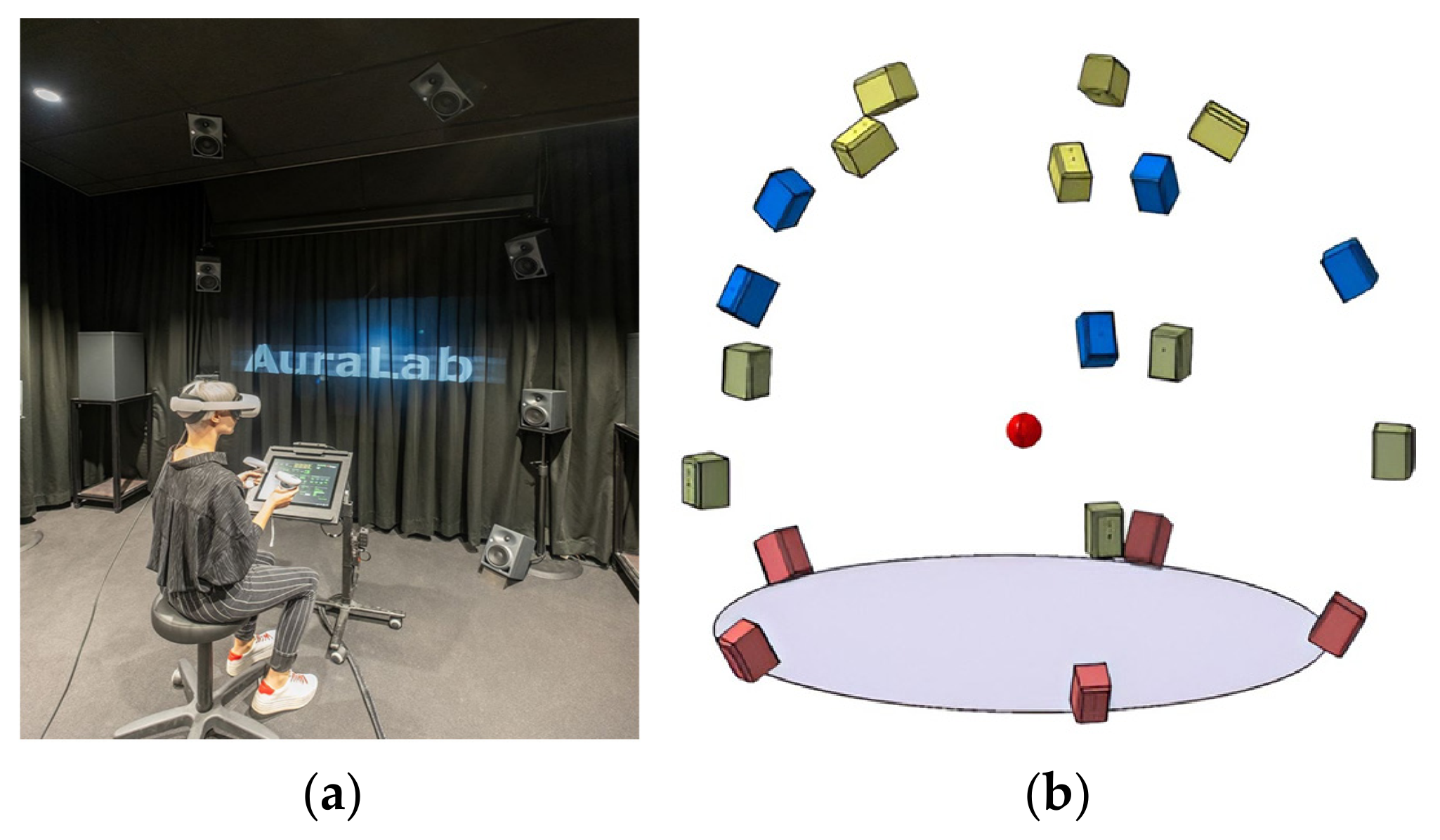
By modeling the omnidirectional sound field and regulating the order of spherical harmonics, HOA achieves adjustable reproduction accuracy, and its principle and experimental setup are shown in Figure 6 [40]. Distinguished from Wave Field Synthesis (WFS), which relies on integral equations for large-scale sound field coverage, HOA features flexible array layout and scalable technical performance, making it naturally suitable for compact acoustic spaces such as the cabins of transportation vehicles.

3.1. Theoretical Proposal

The theoretical origin of HOA dates to the 1970s, when spherical harmonic theory was first systematically applied to spatial sound field reproduction [41]. This work defined the orthogonality of zero-order, first-order and high-order spherical harmonics and proposed the initial four-level ambisonics signal format system, the precursor of HOA [42], resolving signal compatibility across spatial reproduction systems. However, early research remained at the qualitative conceptual level, failing to establish quantitative correlations between spherical harmonic decomposition and loudspeaker array layouts, thus lacking direct engineering design guidance.
To bridge theory and practice, subsequent research explored the psychoacoustic foundation of HOA [43], establishing quantitative relationships between phase difference, speaker spacing, and sound localization deviation. This work linked HOA’s physical principles with auditory perception, laying a preliminary basis for perceptual optimization, yet the core lack of engineering-oriented quantitative design criteria persisted, becoming the primary bottleneck for HOA’s engineering implementation.

3.2. Quantitative Design Criterions

To address the lack of engineering guidance in early HOA theories, quantitative design criteria were established [44], which derived the mathematical correlations between reproduction order, loudspeaker quantity, reproduction error and listening area radius. The core rule is that higher frequency or larger listening area demands higher reproduction order for accuracy. To solve the key problem of high-order harmonic coefficient extraction, the design theory of high-order sound field microphones was developed, with extraction formulas derived based on spherical harmonic decomposition. This extraction formula (Equation (5)) is the inverse operation of the fundamental HOA reproduction formula, expressed as [45]:
γ n m ω = 1 j n ω R c q = 1 Q S R x ^ q ; ω Y n m * x ^ q ω q
where γ n m ω is the extracted high-order spherical harmonic coefficient, R is the radius of the spherical microphone array, S · is the measured sound pressure of the microphone, Y n m * is the conjugate spherical harmonic function, and ω q is the sampling weight.
Subsequent research realized the adaptation of HOA to reverberant environments through modal coefficient matching [46], verifying its feasibility in non-anechoic scenarios. However, the 3D expansion of this method leads to a sharp increase in loudspeaker quantity, resulting in surging hardware costs and calibration complexity, which restricts its large-scale 3D engineering application.

3.3. Cost Reduction and Optimization

Balancing reproduction performance and engineering cost became the core direction of subsequent HOA research, with the focus on loudspeaker array optimization to reduce device quantity while ensuring 3D reproduction accuracy. A high-order directional loudspeaker array was proposed to raise the Nyquist frequency and effectively cut down the number of loudspeakers needed for 2D sound field reproduction [47], yet this technology was only applicable to 2D scenarios and failed to meet the 3D reproduction requirements of cabin acoustic spaces.
To break through the dimensional limitation, the high-order directional loudspeaker array was further extended to the 3D domain [48], achieving equivalent 3D sound field reproduction performance with far fewer high-order loudspeakers than traditional omnidirectional ones. Reflected sound attenuation was significantly improved after external field cancellation processing, reducing the hardware cost of 3D HOA effectively. Nevertheless, the complex layout of 3D high-order loudspeaker arrays led to a sharp rise in calibration complexity, forming a new trade-off between performance optimization and engineering implementability. In addition, the periphony-lattice mixed-order ambisonics (MOA) scheme was proposed [49]. As a selective optimization derived from the fundamental HOA formula (Equation (4)), MOA does not change the physical propagation model, including spherical Bessel functions and spherical harmonic functions, but only optimizes the summation range of harmonic components. The core expression of MOA is given by Equation (6):
P ^ M O A = n = 0 N P m = n n j n P n m Y n m + n = N p + 1 N L m = 0 n j n P n 2 m n Y n 2 m n
where N p is the periphonic basic order and N L is the maximum lattice order of horizontal dominant components.
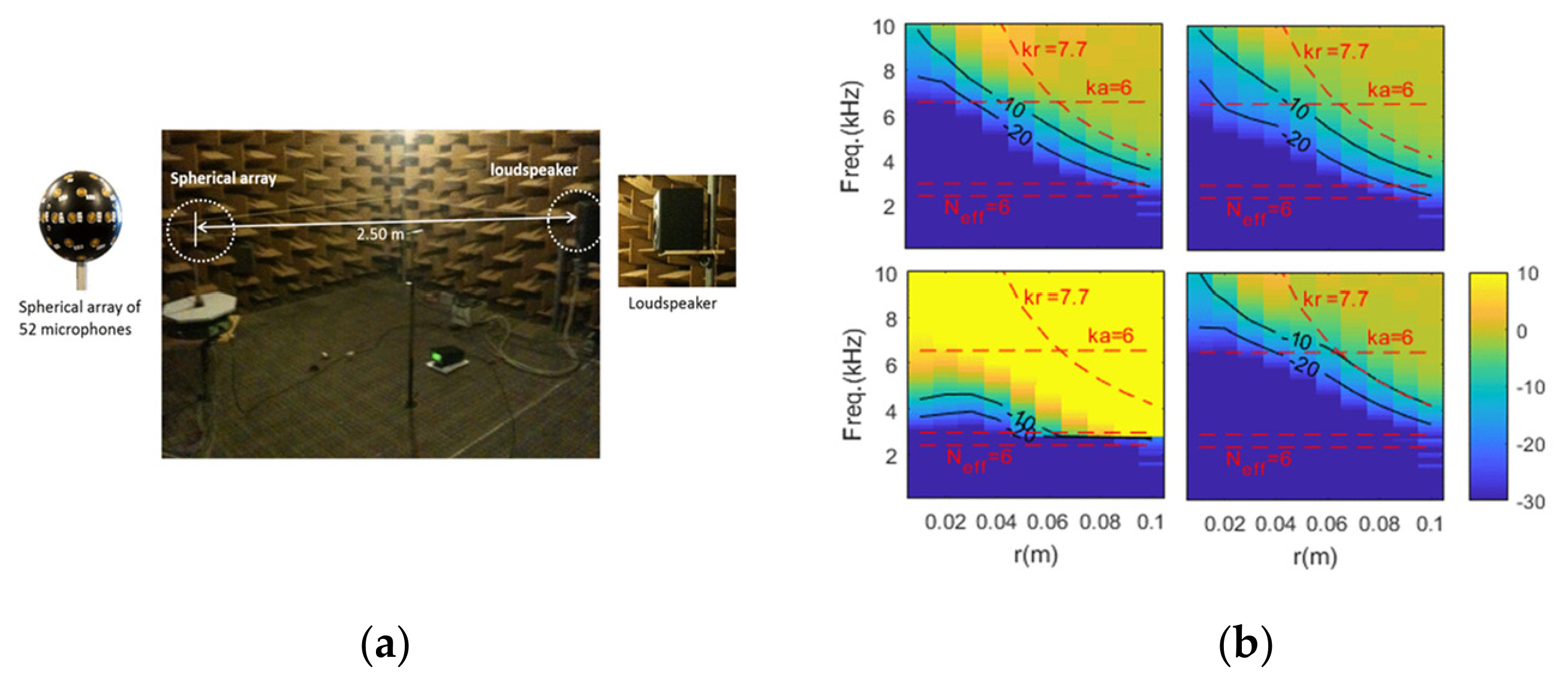
By retaining only the spherical harmonic subsets effective for horizontal sound sources, this scheme reduces the required microphone quantity while notably improving the horizontal sound source reconstruction accuracy, outperforming traditional HOA and other MOA schemes (as shown in Figure 7), which further enriches the technical paths for balancing HOA’s reproduction accuracy and engineering complexity.
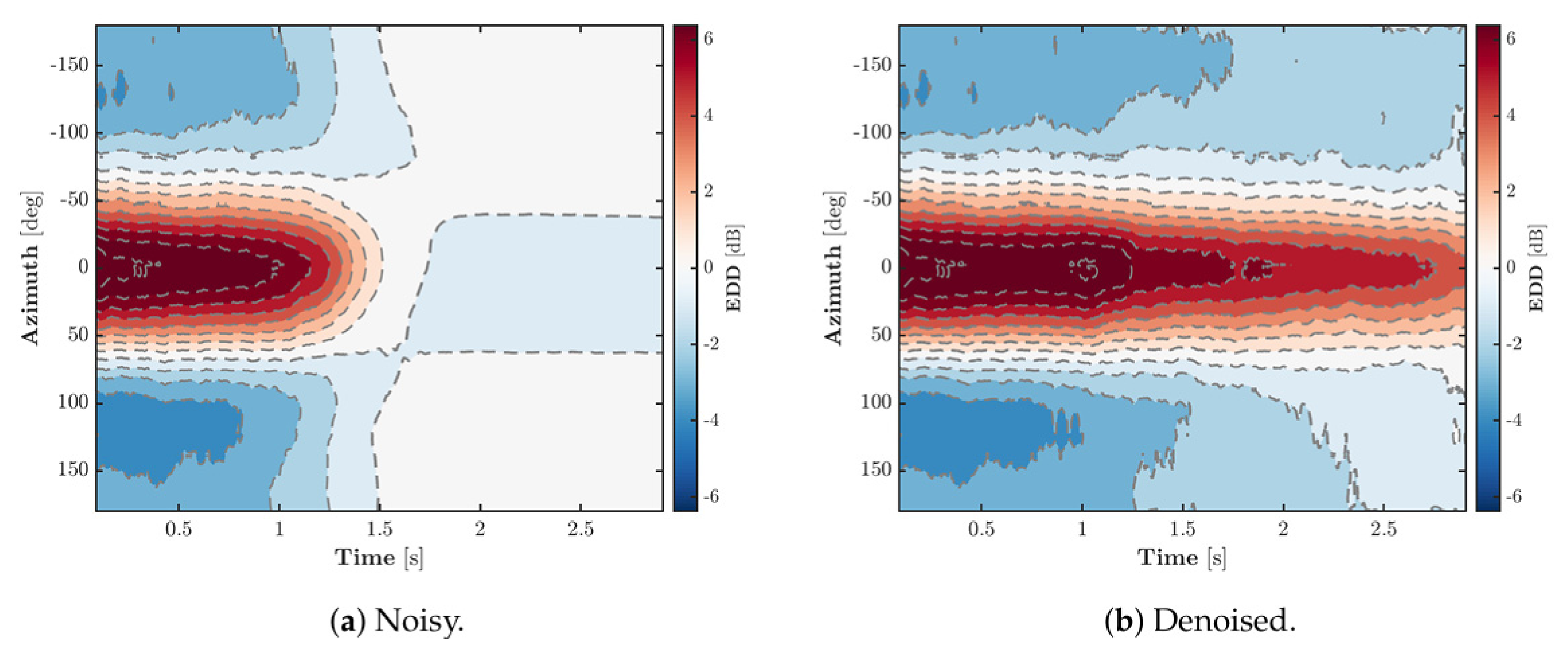
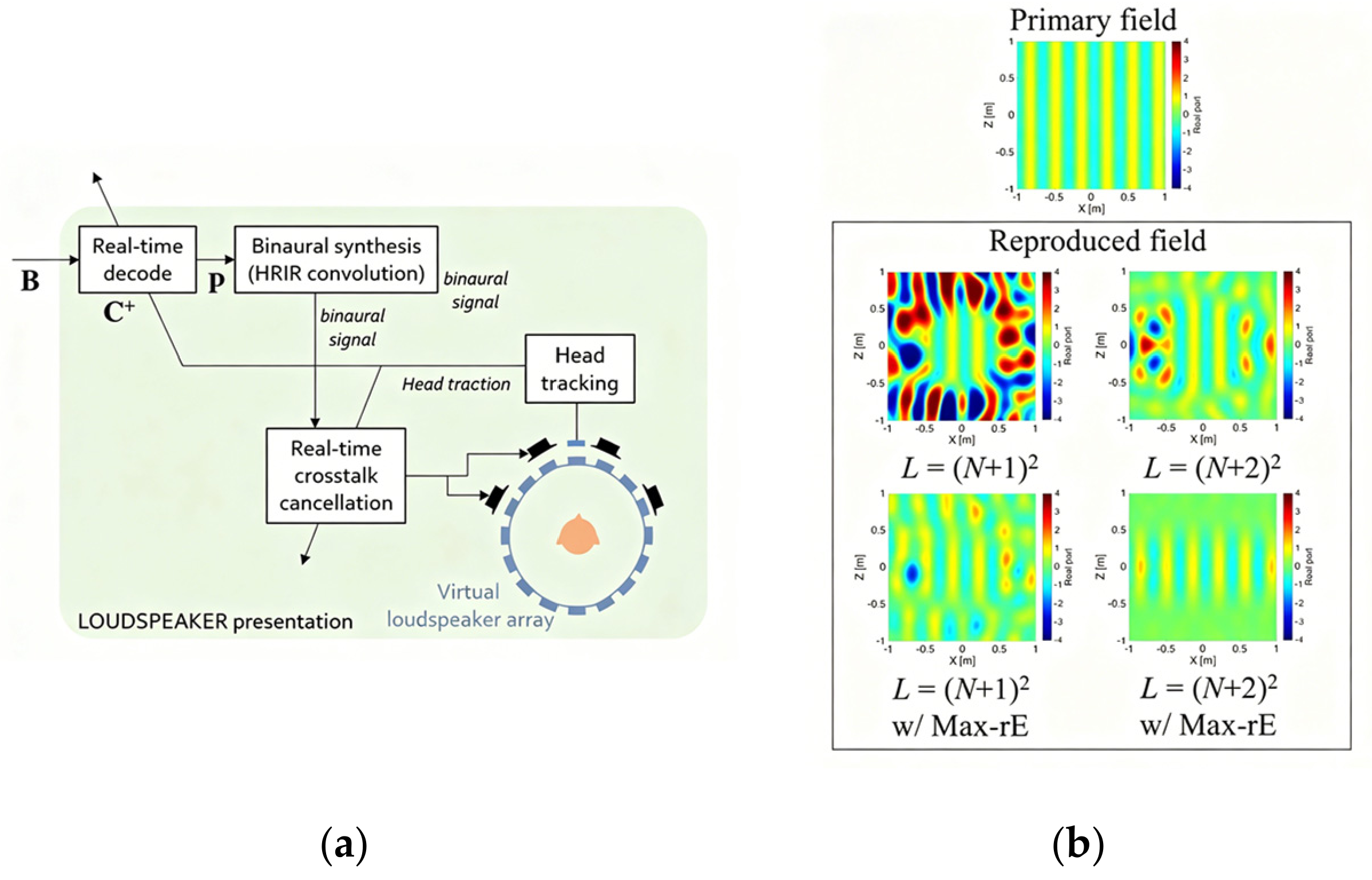
Beyond cost optimization, international HOA research has also made key progress in perceptual experience enhancement and complex acoustic environment adaptability. A solution combining Max-rE decoding with minimum-norm solutions was developed to expand the narrow listening sweet spot of binaural ambisonics, effectively improving the spatial auditory perception accuracy of HOA in binaural synthesis modes (Figure 8) [50]. For the noise interference of directional room impulse responses (DRIR) in HOA reproduction, a plane wave decomposition (PWD)-based denoising method was put forward [51], which eliminates non-decaying noise floors while preserving the spatial characteristics of anisotropic reverberation (Figure 9). These advances have further enhanced the practical applicability of HOA in real-world scenarios.

3.4. Cabin-Adapted Research on Perceptual Improvement and Complexity Reduction

Unlike the international focus on array optimization, perceptual enhancement, and noise suppression, cabin-adapted HOA research closely aligns with the practical demands of transportation vehicle cabin acoustic optimization, focusing on two core directions, subjective perceptual consistency improvement and engineering complexity reduction, forming scenario-adaptable localized technical solutions.
In terms of perceptual improvement, a scientific HOA perceptual evaluation system has been established by integrating psychoacoustic models. A timbre evaluation method based on the modified Moore binaural loudness model was proposed, achieving 90% consistency between subjective auditory judgment and objective physical data to address gaps in HOA timbre perceptual research [52]. Further work used interaural time difference (ITD) as the key index to quantify the optimal listening area of ambisonics systems with different orders, refining the evaluation system and providing a basis for HOA order selection in limited-space cabin scenarios [53].
For complexity reduction, two targeted solutions were proposed to address high application complexity and non-uniform layout-induced timbre distortion in cabins, the Mixed-Order Ambisonics (MOA) framework [54], which extends the horizontal reproduction upper frequency limit while reducing target source amplitude error, balancing HOA performance and algorithm complexity, and the Approximate Constant Power Equalization (APP.EQ) method [55]. By introducing higher-order spatial harmonics for approximate constant power equalization, APP.EQ effectively resolves timbre distortion in narrow cabins.

3.5. Engineering Applications

With HOA technology maturity, it has been widely applied in immersive audio scenarios, with vehicle cabin acoustic optimization as its core application direction—distinct from WFS, which is more suited for large-scale scenarios like architectural acoustics and outdoor noise simulation. WFS remains largely limited to laboratory-level customized acoustic testing due to high hardware costs and complex calibration, while HOA has achieved industrial mass production in vehicle audio systems thanks to scalable order and flexible layout.
For automotive cabin environments, researchers have proposed a full-frequency HOA sound field auralization scheme [56,57], which has been validated in real vehicles. Specifically, 17th-order HOA achieves an RMS N5 loudness error of 0.38 sone (equivalent to approximately 1.6 dB sound pressure level error) at driver and passenger ear positions, enabling high-precision full-frequency sound field auralization in actual automotive cabins [58]. In enclosed aircraft cabins, an HOA reconstruction formula based on acoustic mode characteristics has been derived [59], achieving high-precision low-frequency sound field reconstruction in cylindrical cavities with lower relative error than traditional methods and offering a new technical approach for aircraft cabin acoustic optimization.
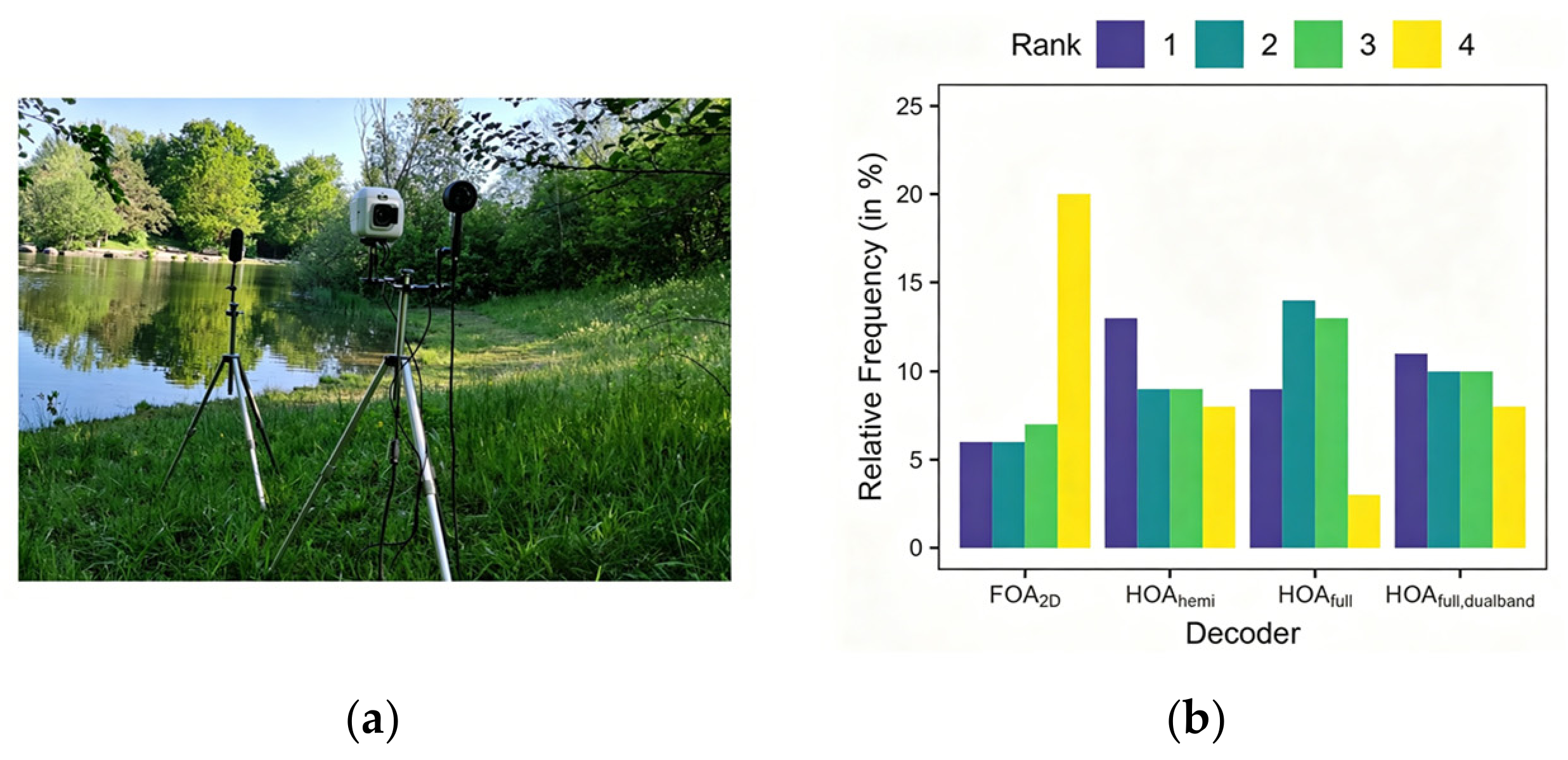
Benefiting from its advantages of 3D sound field reproduction and adjustable order, HOA has become the mainstream technology for mass production of high-end vehicle audio systems and has been applied in mass-produced models of well-known automobile enterprises [60]. It realizes the rational distribution of direct, reflected and reverberant sound in the cabin to form a balanced 3D sound field, marking the first industrial mass production of HOA in the automotive field. HOA technology has also been further expanded in vehicle applications; it is integrated with relevant acoustic diffusion technologies to solve the problem of vertical sound localization blur in slender cabins [61], and traditional stereo spatial information is mapped to 3D sound fields through HOA to lower the application threshold for civilian vehicles [62]. HOA has achieved a breakthrough in virtual acoustic scenarios. A study proposed a VR reproduction scheme combining 360° audio–visual content with third-order HOA decoders; outdoor soundscapes are captured via a standardized layout (Figure 10a) and, after calibration and equalization, the subjective realism of third-order HOA decoders is significantly superior to that of 2-Dimensional First-Order Ambisonics (2D FOA) decoders (Figure 10b), providing a full-process high-fidelity solution for vehicle acoustic testing and cabin soundscape simulation [40].

3.6. Summary

HOA began with qualitative conceptual research on spherical harmonic decomposition. Through continuous theoretical and engineering improvements, it has evolved into a mature technical system, featuring quantitative design criteria, optimized array schemes and localized engineering solutions. HOA is inherently suited for 3D sound field reproduction and performs well in compact spaces; its scalable reproduction order flexibly balances accuracy and cost, while its flexible loudspeaker layout reduces hardware expenses. These advantages make it highly compatible with the narrow, elongated acoustic spaces of transportation vehicles, and it has become the first SFR technology to achieve industrial mass production in the automotive field. HOA is well adapted to scenarios requiring flexible layout and cost control in limited spaces, such as acoustic optimization of automotive and aircraft cabins, as well as the development of in-vehicle immersive audio systems. Nevertheless, expanding HOA to high-order 3D applications leads to a sharp increase in hardware costs and calibration complexity; additionally, sound localization ambiguity exists in complex cabin environments. These issues restrict its large-scale, high-precision 3D application in high-demand complex acoustic scenarios. Currently, HOA is mainly applied in the industrialization of transportation vehicle cabins with low- to medium-order schemes, which adequately meet the demand for local precise sound field reproduction in limited cabin spaces.

4. Pressure Matching (PM)

Pressure Matching (PM) is a core SFR technology dedicated to high-precision local sound pressure control. Its core mathematical principle lies in solving least-squares problems to minimize the error between the reproduced and target sound pressure in the control region, and its core solution for loudspeaker driving signals is shown in Equation (7):
s = G H G + λ 2 I 1 G H p
where s is the loudspeaker driving signal vector, G is the sound transfer function matrix, p is the target sound pressure vector, λ is the regularization parameter, I is the identity matrix, and ( · ) H denotes the conjugate transpose. The regularization term effectively suppresses the ill-conditioned problem in reverberant vehicle cabins.
Rather than pursuing uniform coverage of the global sound field, PM concentrates on the precise matching of local acoustic parameters. This characteristic brings the benefits of low hardware requirements, simple calibration and high adaptability to non-free-field environments.

4.1. Theoretical Framework

PM’s core logic lies in adjusting loudspeaker driving signals to achieve local sound pressure matching, and its integrated control framework combining PM with active noise control (ANC) is illustrated in Figure 11 [63]. Early studies established a least-squares framework for PM, enabling the reproduction of plane waves using discrete monopole sources. This work effectively translated “sound pressure matching” into a quantifiable mathematical problem, laying the theoretical groundwork for PM [64]. However, this initial framework had significant engineering limitations; it lacked clear design criteria for inverse filters and exhibited low efficiency in multi-channel scenarios. These shortcomings made it ill-suited for cabin environments, which are characterized by multi-source coupling and non-uniform layouts, ultimately impeding the translation of SFR technologies from theoretical research to practical engineering applications.

4.2. Inverse Filter/Regularization Basic Optimization

To address the ambiguity of inverse filters and low efficiency in multi-channel scenarios, researchers have focused on optimizing inverse filter parameters and introducing regularization. Related studies clarified parameter selection criteria and derived coefficient quantity formulas, resolving the blind design problem in multi-channel PM [65]. Subsequent work proposed an FFT-based frequency-by-frequency solution for optimal inverse filters and introduced regularization parameters for fast deconvolution, which significantly improved algorithm speed [66]. However, these regularization parameters still relied on manual tuning. This approach worked well in anechoic laboratories (error < 1 dB) but proved ineffective in dynamic cabin environments, leading to a sharp increase in errors.
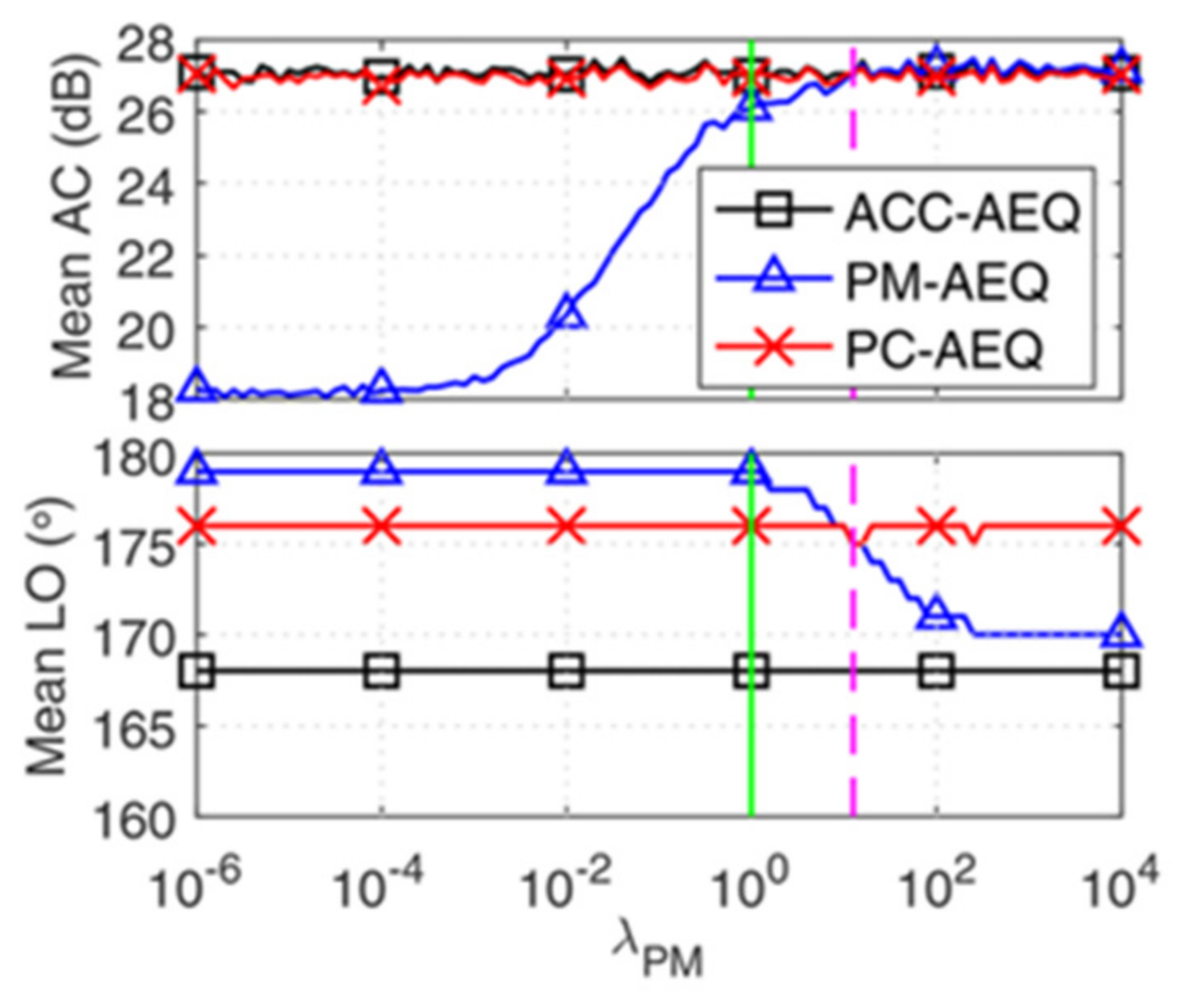
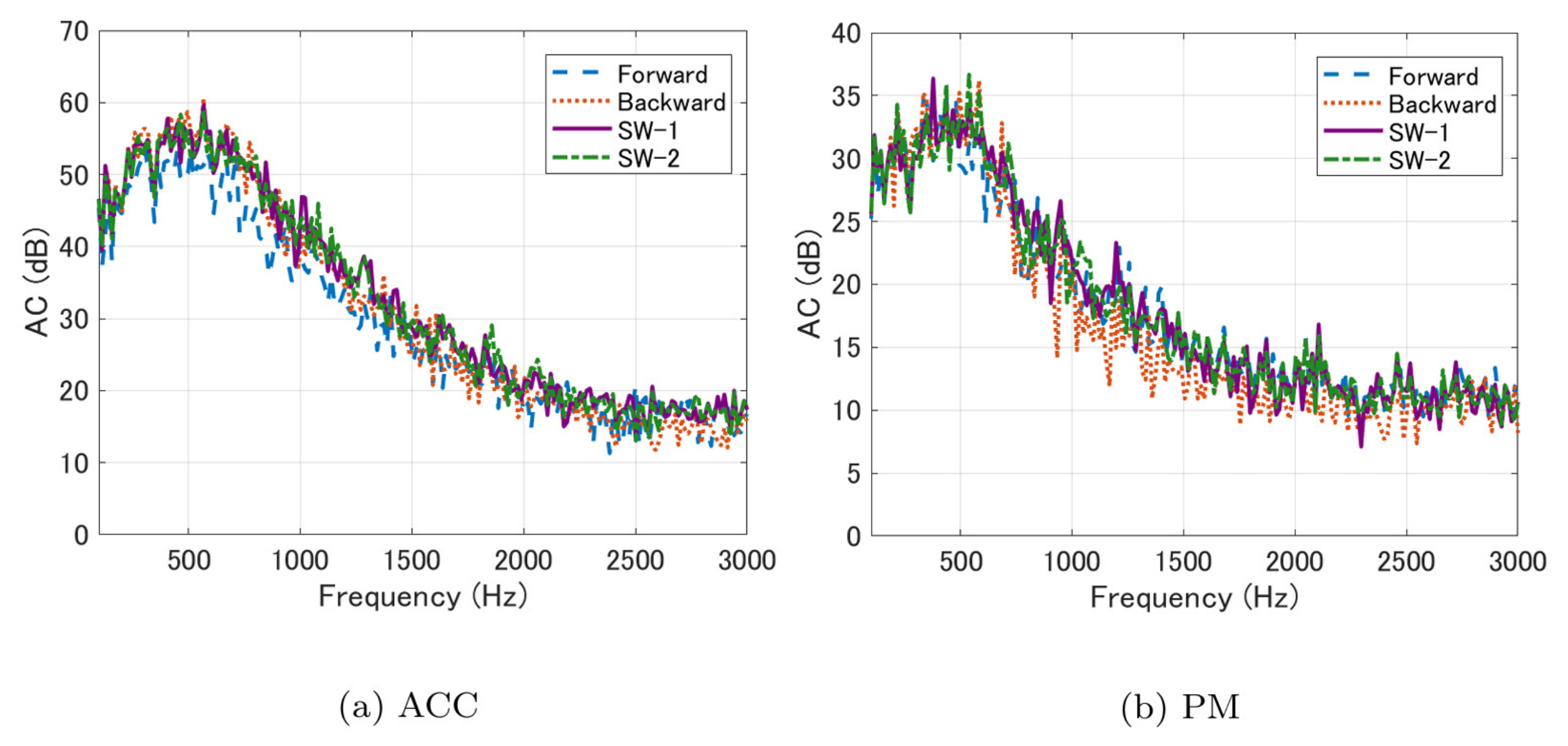
Unlike HOA, which balances performance and cost through order scaling, PM’s manually tuned parameters lacked scenario adaptation rules, and this deficiency became a key direction for further optimization. To address this and boost regularized PM’s robustness in non-ideal sound fields, research integrated coarse error estimation into regularization design, proposing the Pressure Matching–Amplitude Equalization (PM-AEQ) method. It adaptively determines diagonal loads via error amplitude estimation, enabling flexible trade-offs between acoustic contrast (AC) and local sound orientation (LO) in cabin multi-zone sound fields, with tuned performance matching the more robust Point Control–Amplitude Equalization (PC-AEQ) (Figure 12) [67].

4.3. Adaptive/Multi-Dimensional Control Optimization

To overcome the drawbacks of subjective manual tuning and single-dimensional control, recent studies on PM have trended toward adaptive parameter selection and multi-dimensional control expansion. To realize automatic regularization parameter selection, Ordinary Cross-Validation (OCV) and Generalized Cross-Validation (GCV) methods are introduced, which take Equation (PM) as the core and construct an adaptive optimization function to obtain the optimal λ without manual intervention [68], as shown in Equation (8):
V λ = 1 M I G G H G + λ 2 I 1 G H p 2 2 1 M T r I G G H G + λ 2 I 1 G H 2
where M is the number of microphones, T r · denotes the matrix trace, and the optimal λ is obtained by minimizing V λ , which improves the objectivity of parameter determination.
Further work established the first spatial resolution index for PM and clarified its relationships with system parameters, sensor configurations and noise levels. Nevertheless, a unified and optimal regularization strategy has not yet been developed, and manual parameter switching remains necessary in practical implementations [69].
For the expansion of control dimensions, Velocity Matching has been introduced to add the normal velocity control of medium particles, which alleviates the performance degradation caused by non-uniform loudspeaker layouts [70]. Unlike WFS, which depends on dense sensor arrays for adaptive compensation, and HOA, which centers on high-order array optimization, PM realizes adaptive optimization mainly through parameter adjustment without additional hardware. As a result, it maintains the lowest hardware cost among the three sound field reproduction techniques.

4.4. Vehicle Cabin Scenario-Oriented Optimization

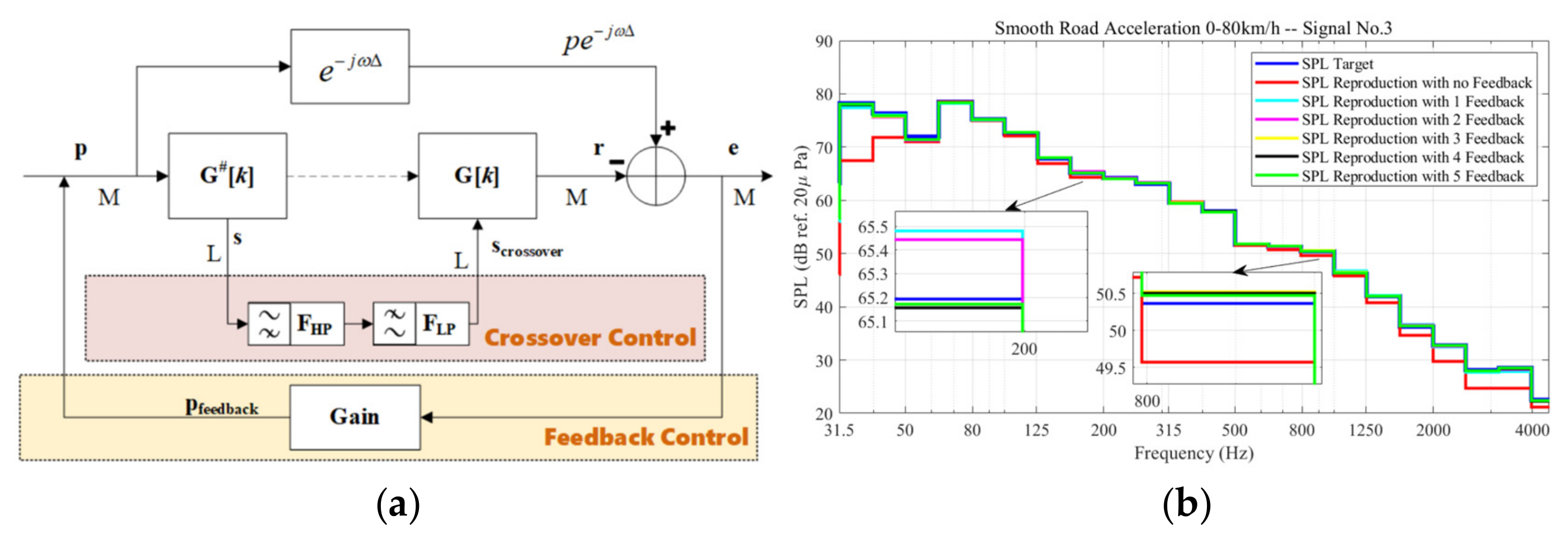
Vehicle cabin scenario-specific research on PM has centered on the local acoustic requirements of transportation vehicle cabins rather than general theoretical innovation, leading to the development of scenario-specific engineering solutions. A PM system combining multi-channel least-squares equalization, feedback control and crossover control is proposed, which optimizes Equation (7) by introducing closed-loop feedback correction and frequency division filtering, as shown in Equation (9):
s f i n a l = F H P F L P G H G + λ 2 I 1 G H p f e e d b a c k e j ω
where p f e e d b a c k is the feedback-corrected target sound pressure, F H P and F L P are high-pass and low-pass filter banks, denotes the Hadamard product, and e j ω is the system delay compensation term.
As illustrated in Figure 13, this integrated control framework significantly improves reproduction performance: Figure 13a shows the framework of the improved multi-channel equalization system, and Figure 13b compares the 1/3-octave spectra between the target sound and reproduced sound under different feedback iterations. The results confirm that the method limits the reproduction error in the passenger head region to within 1.5 dB and effectively suppresses strong reverberation in cabin environments [71]. Another study introduced an energy threshold method and an energy–error balance regularization method. The latter yields smaller reconstruction errors with lower energy consumption, making it the preferred scheme for cabin applications [72].

4.5. Engineering Application

With the technical maturation of PM and its scenario-based optimization for in-vehicle engineering applications, the method has been widely adopted for local acoustic testing and optimization in vehicle and aircraft cabins. In contrast to WFS, which remains largely confined to laboratory environments, and HOA, which is primarily used for full-cabin mass-production audio systems, PM provides good continuity between laboratory simulation and on-site testing. It is particularly suited for local noise reproduction, subjective evaluation and abnormal noise suppression.
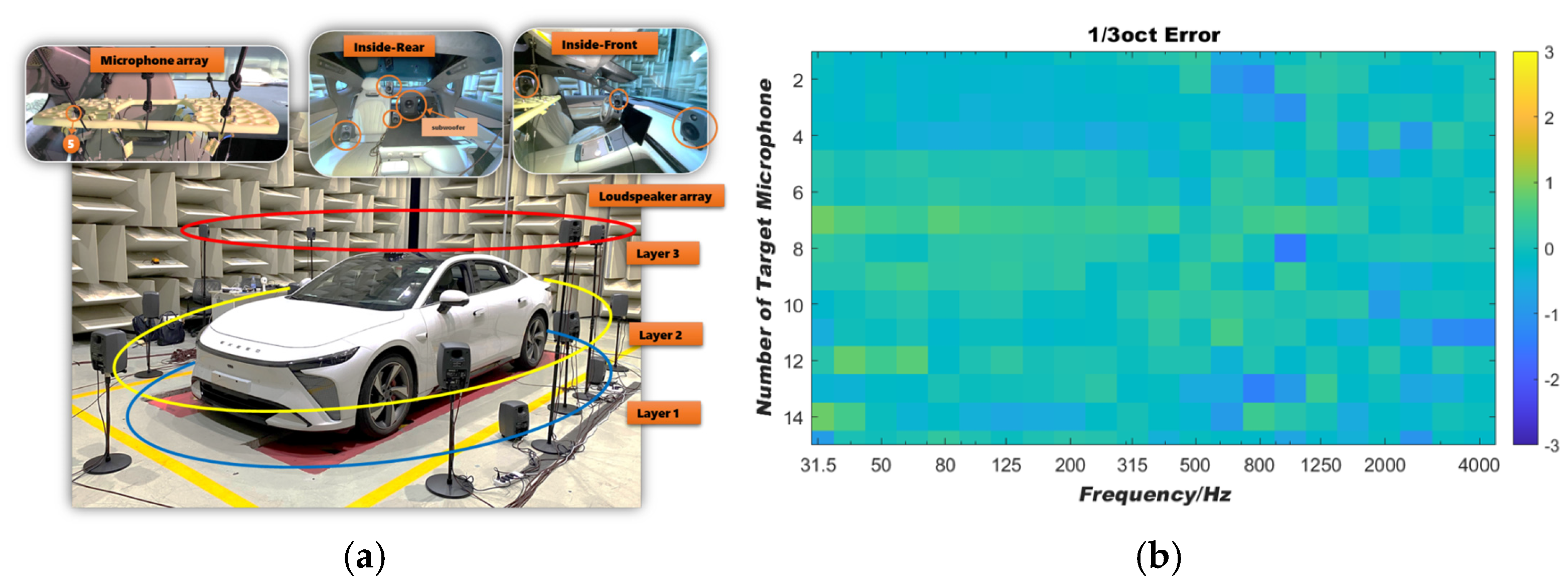
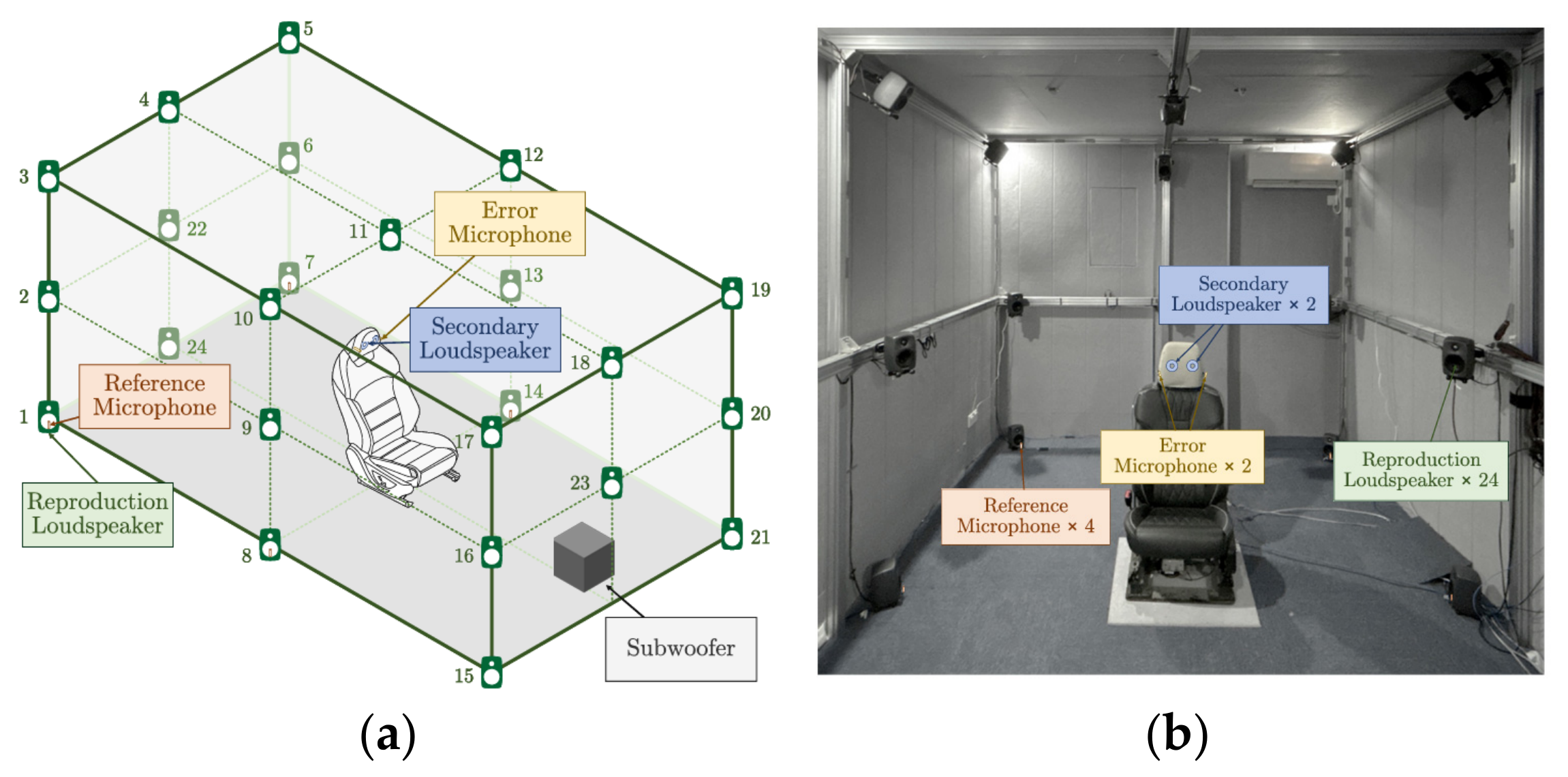
Relevant studies verified PM’s robustness in real vehicles using 16 external and 7 internal loudspeakers, achieving high-precision reproduction of rough road noise with controlled frequency-band errors. Figure 14a illustrates the three-layer layout of loudspeakers and microphone arrays inside the vehicle, while Figure 14b depicts the 1/3-octave SPL error distribution under rough road driving conditions. The error map demonstrates that the system maintains controlled, low-magnitude errors across the frequency band [71]. To address poor reproducibility and low efficiency of Active Noise Control (ANC) systems in variable real-world environments, an integrated Sound Field Reproduction and Active Noise Control (SFR-ANC) system was proposed. The arrangement of the electroacoustic system in the acoustic laboratory is shown in Figure 15 [63].
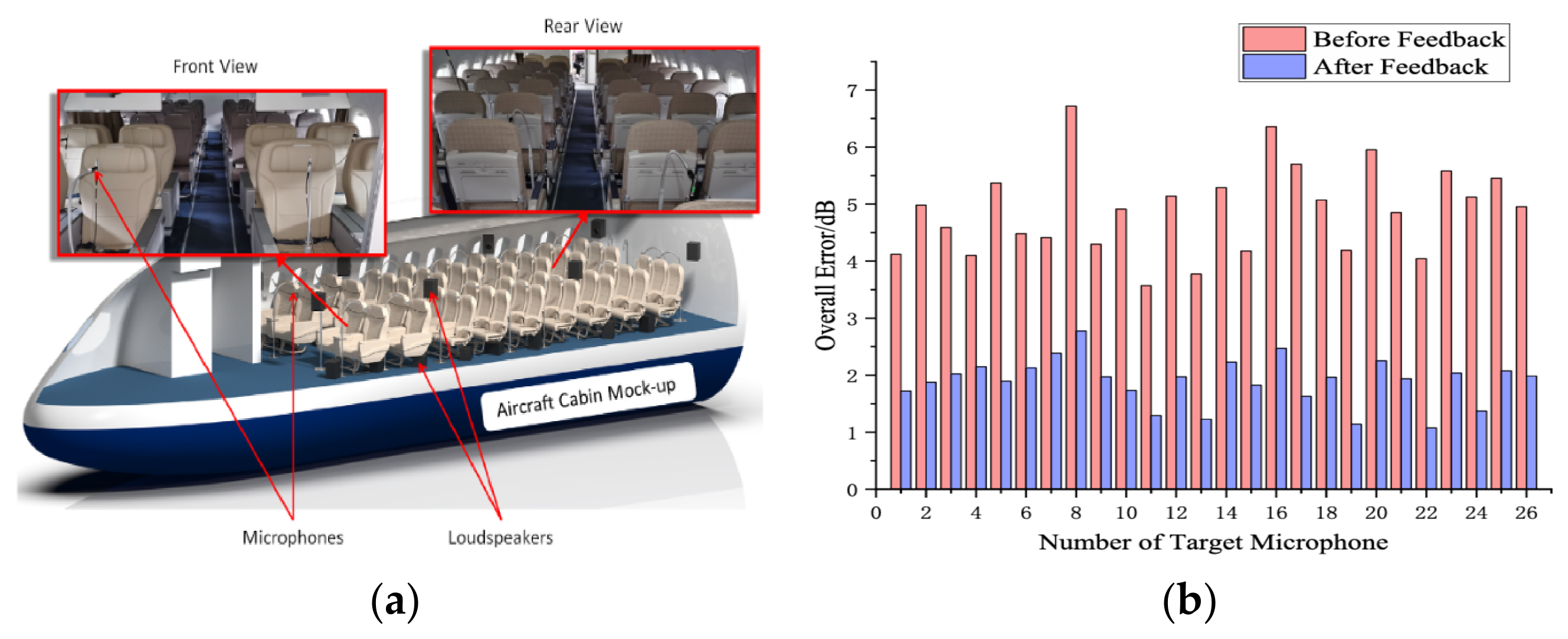
For closed and narrow aircraft cabins, a stable PM system incorporating regularization and adaptive feedback has been constructed to reproduce low-frequency cabin noise [73]. Another work combined feedback control and multi-channel equalization, reducing frequency-band errors to within 3 dB and solving multi-source coupling instability (Figure 16) [74]. For multi-zone sound field reproduction scenarios, a bidirectional stepwise optimization approach has been developed for loudspeaker array configuration. This method uses only a small number of loudspeakers to achieve superior acoustic contrast over the full frequency range in compact cabin-like environments, while greatly improving array optimization efficiency. It thus provides new algorithmic support for the application of PM in multi-zone cabin acoustic control, as illustrated in Figure 17 [75].

4.6. Summary

Pressure Matching originates from least-squares theory. With continuous theoretical refinement and engineering progress, it has developed into a practical technical system equipped with scenario-adaptive optimization schemes, including frequency-division reproduction and feedback-integrated control. It exhibits exceptional local acoustic control performance and high cost-effectiveness, enabling high-precision sound pressure matching within target regions while maintaining strong adaptability to non-free-field environments such as reverberant cabins. As the sound field reproduction technology with the lowest hardware cost among the three major approaches, PM requires neither dense loudspeaker arrays nor high-order expansion and employs simplified calibration procedures. These characteristics make it well suited for local acoustic optimization scenarios that prioritize precise regional control and cost constraints. Nevertheless, PM suffers from insufficient stability under multi-source coupling conditions and lacks a unified optimal regularization strategy. These limitations restrict its large-scale high-precision application in complex cabin acoustic environments, preventing it from replacing WFS and HOA in global sound field control tasks. At present, PM has been widely applied in local acoustic optimization of transportation cabins and related integrated systems. Future research will focus on introducing artificial intelligence and machine learning to realize automatic wide-band parameter tuning and improve anti-interference performance against multi-source coupling, so as to further expand its engineering application value.

5. Challenges and Outlook

This paper reviews the research, development and engineering applications of sound field reproduction (SFR) technology and analyzes the theoretical development, technological breakthroughs and engineering applications of its three core technologies. Combined with the spatial and acoustic characteristics of vehicle cabins, this section summarizes the core challenges of the technology and prospects its future development directions centering on the demand for optimizing the acoustic comfort of vehicle cabins. A comprehensive comparison of the advantages, current challenges and future development directions of the three core SFR technologies (WFS, HOA and PM) is summarized in Table 1.

5.1. Technical Challenges

Despite the progress made by SFR technology in vehicle cabin noise reproduction and acoustic optimization, the special working conditions of vehicle application scenarios still bring key technical challenges, restricting its large-scale implementation and application effect improvement:
  • Vehicle cabins are narrow, closed and long in structure, with prominent internal multi-source coupling and strong reverberation reflection [19,22]. Combined with interferences such as wind noise, road noise and low-frequency continuous noise, WFS exhibits insufficient low-frequency reverberation suppression, while PM suffers from poor stability under multi-source coupling. These issues directly degrade the accuracy of cabin noise reproduction and acoustic optimization [28,68,69].
  • Vehicle mass production has strict requirements on cost and space. The dense loudspeaker arrays required for high-precision reproduction of WFS increase hardware costs and calibration difficulty; the high-order 3D expansion of HOA also leads to a sharp rise in cost and calibration complexity [18,47]. Existing optimization schemes are difficult to balance reproduction accuracy and engineering feasibility in cabin scenarios.
  • PM lacks a unified optimal regularization scheme adapted to different vehicle cabins, and the parameter tuning of broadband noise reproduction relies on manual operation [65,67]. In addition, the quantitative correlation between subjective perceptions such as noise annoyance and audio immersion of occupants and objective acoustic parameters has not been improved [48,49], failing to achieve accurate matching between physical reproduction and subjective comfort evaluation.

5.2. Future Outlook

Against the core demand of acoustic comfort optimization in vehicle cabins, future development of sound field reproduction technology will prioritize in-depth scenario adaptation, with the integration of physics-driven modeling and data-driven learning as the core technical path to break through existing bottlenecks.
To tackle the stability and accuracy degradation caused by strong reverberation and multi-source coupling in narrow and enclosed cabins, future research will establish a hybrid optimization framework that takes the physical principles of WFS, HOA and PM as fundamental constraints and uses machine learning trained with measured in-cabin acoustic data to realize adaptive environmental compensation. Recent advances in differentiable physics-based sound field reconstruction [76] have demonstrated that integrating acoustic physical models with data-driven neural networks can effectively overcome undersampling and robustness challenges in vehicle cabins, providing a state-of-the-art technical path for adaptive environmental compensation. This hybrid framework retains the rigorous physical interpretability of traditional SFR methods while improving the robustness against complex interference, thus stabilizing the reproduction performance in full-frequency bands under real vehicle working conditions [23,25,27]. By learning the spatial acoustic characteristics of different cabins via data-driven approaches, the layout of loudspeaker and sensor arrays can be further optimized to better match the elongated structure of vehicle cabins [19,22,28].
For the large-scale industrial application of vehicles, the lightweight and low-cost design of SFR systems will still be an important direction. Under the guidance of physics-driven sound field reproduction theory, data-driven algorithms can be adopted to optimize sparse array configuration, so as to reduce the dependence on dense hardware and lower the difficulty of system calibration without sacrificing reproduction effectiveness [75]. Combined with the structural characteristics of limited cabin space, the simplification of multi-channel debugging and modular design for different vehicle models will be promoted, which helps to lower the application threshold and facilitate the popularization of SFR in medium- and low-end vehicles [32,52].
In terms of matching physical reproduction with subjective comfort, future studies will integrate psychoacoustic physical models with data-driven perception learning to build a more complete quantitative mapping relationship between objective acoustic parameters and occupants’ subjective perceptions such as noise annoyance and audio immersion [48,49]. On this basis, personalized sound field adjustment strategies can be formed according to different passengers and usage scenarios. By deeply integrating with on-board active noise control and acoustic alert systems, a more systematic and intelligent cabin acoustic optimization solution can be constructed.
As a key supporting technology for cabin acoustic improvement [31,52], SFR will continue to promote the technological advancement of vehicle noise control and sound quality optimization, while providing a solid foundation for in-vehicle immersive audio and intelligent acoustic interaction. With the deeper integration of physics-based theoretical constraints and data-driven adaptive learning, as well as the continuous enhancement of vehicle-oriented scenario adaptation, SFR technology will further improve the acoustic comfort and competitiveness of vehicles and better protect the auditory health of occupants [70,72].

6. Conclusions

This paper presents a comprehensive review of SFR technology and its applications in vehicle cabin sound reproduction. We first clarify the core value of SFR systems and elaborate the physical mechanisms and mathematical foundations of the three typical technical approaches: WFS, HOA and PM.
We then summarize the developmental evolution of SFR from theoretical modeling to engineering practice, including major international progress in anti-aliasing design, adaptive regularization, adaptive filtering and local sound field control, as well as engineering-oriented achievements in scenario adaptation, algorithm simplification and cabin-oriented sound field reproduction.
In view of the key challenges faced by in-vehicle applications, such as degraded reproduction accuracy in complex acoustic environments, high hardware expenses and difficult calibration, as well as insufficient quantitative modeling between physical parameters and subjective perception, this paper proposes clear future research paths for SFR. These paths focus on adaptive optimization for real cabin conditions, low-cost and lightweight engineering design, and accurate modeling of occupant subjective acoustic perception.
This review also emphasizes the critical supporting role of SFR in upgrading vehicle noise control and sound quality optimization, as well as its technical value for emerging fields including in-vehicle immersive audio and intelligent acoustic interaction. To provide actionable guidance for engineering practice, WFS is recommended for high-precision laboratory acoustic testing, HOA is preferred for mass-produced in-vehicle immersive audio systems, and PM is most suitable for low-cost local noise reproduction and SFR-ANC integrated applications. The goal of this work is to improve the practical framework of SFR and enhance its engineering performance, so as to promote wider and more effective application of the technology in vehicle cabin acoustic optimization.

Author Contributions

Conceptualization, X.Z. and P.Z.; methodology, P.Z.; software, P.Z.; validation, P.Z., X.Z. and Y.Q.; formal analysis, P.Z.; investigation, P.Z.; resources, X.Z. and Y.Q.; data curation, P.Z.; writing—original draft preparation, P.Z.; writing—review and editing, P.Z., X.Z. and Y.Q.; visualization, P.Z.; supervision, X.Z. and Y.Q.; project administration, X.Z.; funding acquisition, X.Z. and Y.Q. All authors have read and agreed to the published version of the manuscript.

Funding

Supported by the National Natural Science Foundation of China: T2192931.

Data Availability Statement

Data sharing is not applicable to this article as no new data were created or analyzed in this study.

Acknowledgments

The authors gratefully acknowledge all copyright holders for permission to reproduce the figures included in this review. Most figures are reproduced from open-access publications licensed under Creative Commons (CC) agreements, which permit non-commercial reproduction with proper citation. For the few non-open-access figures, necessary reproduction permissions have been obtained from the respective publishers. Detailed source and copyright information for each figure are listed as follows: Figure 1: Reproduced from [18], an open-access article licensed under CC BY 3.0, Copyright 2011, ETRI Journal. Figure 2: Reproduced from [25], an open-access article licensed under CC BY 4.0, Copyright 2017, IEEE. Figure 3: Reproduced from [31], an open-access article licensed under CC BY 3.0, Copyright 2021, IOP Publishing. Figure 4: Reproduced from [34], an open-access article licensed under CC BY 4.0, Copyright 2025, Acoustical Society of America. Figure 5: Reproduced from [39], an open-access article licensed under CC BY 4.0, Copyright 2023, EDP Sciences. Figure 6 and Figure 10: Reproduced from [40], an open-access article licensed under CC BY 4.0, Copyright 2024, Springer. Figure 7: Reproduced from [49], an open-access article licensed under CC BY 4.0, Copyright 2018, IEEE. Figure 8: Reproduced from [50], an open-access article licensed under CC BY 4.0, Copyright 2020, The Acoustical Society of Japan. Figure 9: Reproduced from [51], an open-access article licensed under CC BY 4.0, Copyright 2020, MDPI. Figure 11 and Figure 15: Reproduced with permission from [62], Copyright 2025, IEEE. Figure 12: Reproduced from [66], an open-access article licensed under CC BY 4.0, Copyright 2017, Acoustical Society of America. Figure 13 and Figure 14: Reproduced with permission from [70], Copyright 2025, Elsevier. Figure 16: Reproduced with permission from [73], Copyright 2023, Elsevier. Figure 17: Reproduced from [74], an open-access article licensed under CC BY-ND 4.0, Copyright 2024, The Acoustical Society of Japan.

Conflicts of Interest

The authors declare no conflict of interest.

References

  1. Valentin, O.; Gauthier, P.-A.; Camier, C.; Verron, C.; Guastavino, C.; Berry, A. Perceptual Validation of Sound Environment Reproduction inside an Aircraft Mock-Up. Appl. Ergon. 2022, 98, 103603. [Google Scholar] [CrossRef] [PubMed]
  2. Mylonas, D.; Erspamer, A.; Yiakopoulos, C.; Antoniadis, I. Global Control of Propeller-Induced Aircraft Cabin Noise Using Active Sound Absorbers. J. Sound Vib. 2024, 573, 118213. [Google Scholar] [CrossRef]
  3. Jia, S.; Pan, D.; Ruan, P.; Zheng, X. Prediction of sound quality of high-speed train using convolutional network. J. Appl. Acoust. 2022, 41, 646–653. [Google Scholar]
  4. Lee, H.M.; Garg, S.; Lim, K.M.; Srinivasan, N.; Ong, B. Comparison of Cabin Noise of Turboprop and Turbofan Aircrafts. J. Appl. Acoust. 2023, 214, 109651. [Google Scholar] [CrossRef]
  5. Liao, X.; Zheng, S.; Chen, X.; Zhang, L. Vehicle Sound Quality Evaluation by Using Three Dimensional Sound-field Reproduction System. Automot. Eng. 2016, 38, 767–771. [Google Scholar]
  6. Xu, X.; Lu, Y.; Shao, M. Noise Attenuation of Frequency-Modulated Multi-Rotor Using Sound Field Reproduction. Chin. J. Aeronaut. 2023, 36, 185–203. [Google Scholar] [CrossRef]
  7. Wang, W.; Miao, Z.; Huang, Y. The Nonlinear Psychoacoustic Annoyance Modeling of Interior Noise of the Electric Vehicle Cabins. Noise Vib. Control 2024, 44, 170–176. [Google Scholar]
  8. Orikpete, O.F.; Dennis, N.M.; Kikanme, K.N.; Ewim, D.R.E. Advancing Noise Management in Aviation: Strategic Approaches for Preventing Noise-Induced Hearing Loss. J. Environ. Manag. 2024, 363, 121413. [Google Scholar] [CrossRef]
  9. Wei, Y.; Dai, Z. An Efficient Strategy Based on Proper Orthogonal Decomposition for Rapid Determination of the Location and Rate of Water Vapor Humidification in Aircraft Cabins. Appl. Therm. Eng. 2025, 258, 124698. [Google Scholar] [CrossRef]
  10. Palma, G.; Burghignoli, L.; Poggi, C.; Licitra, G. Multipolar Expansion for Aircraft Noise Equivalent Sources. Aerosp. Sci. Technol. 2024, 155, 109629. [Google Scholar] [CrossRef]
  11. Wang, J.; Xiang, Z.-R.; Zhi, J.-Y.; Chen, J.-P.; He, S.-J.; Du, Y. Assessment Method for Civil Aircraft Cabin Comfort: Contributing Factors, Dissatisfaction Indicators, and Degrees of Influence. Int. J. Ind. Ergon. 2021, 81, 103045. [Google Scholar] [CrossRef]
  12. Liu, G.; Liu, M.; Jing, J.F.; Cheng, W.Y. A Study of Aircraft Cockpit Thermal Environment Design Standards. Aeronaut. Stand. Qual. 2023, 6, 23–28. [Google Scholar]
  13. André, C.R.; Corteel, É.; Embrechts, J.; Verly, J.G.; Katz, B.F.G. Subjective evaluation of the audiovisual spatial congruence in the case of stereoscopic-3D video and Wave Field Synthesis. Int. J. Hum.-Comput. Stud. 2014, 72, 23–32. [Google Scholar] [CrossRef]
  14. Betlehem, T.; Poletti, M.A. Two dimensional sound field reproduction using higher order sources to exploit room reflections. J. Acoust. Soc. Am. 2014, 135, 1820–1833. [Google Scholar] [CrossRef]
  15. Betlehem, T.; Abhayapala, T.D. Theory and design of sound field reproduction in reverberant rooms. J. Acoust. Soc. Am. 2005, 117, 2100–2111. [Google Scholar] [CrossRef]
  16. Wang, T.; Xia, B.; Du, C.; Ding, Y. Prediction Method of Turboprop Aircraft Aeroacoustic Noise. Sci. Technol. Eng. 2023, 23, 11870–11877. [Google Scholar]
  17. Xie, B.S. Principles of Spatial Sound; Science Press: Beijing, China, 2019. [Google Scholar]
  18. Yoo, J.; Seo, J.; Shim, H.; Chung, H.; Sung, K.-M.; Kang, K. Subjective Listening Experiments on a Front and Rear Array-Based WFS System. ETRI J. 2011, 33, 977–980. [Google Scholar] [CrossRef][Green Version]
  19. Berkhout, A.J.; De Vries, D.; Vogel, P. Acoustic Control by Wave Field Synthesis. J. Acoust. Soc. Am. 1993, 93, 2764–2778. [Google Scholar] [CrossRef]
  20. Verheijen, E.N.G. Sound Reproduction by Wave Field Synthesis. Ph.D. Thesis, Delft University of Technology, Delft, The Netherlands, 1997. [Google Scholar]
  21. Spors, S.; Kuntz, A.; Rabenstein, R. Listening Room Compensation for Wave Field Synthesis. In Proceedings of the 2003 International Conference on Multimedia and Expo. ICME’ 03. Proceedings, Baltimore, MD, USA, 6–9 July 2003; IEEE: New York, NY, USA, 2003; ISBN 0-7803-7965-9. [Google Scholar]
  22. Spors, S. Spatial Aliasing Artifacts Produced by Linear Loudspeaker Arrays used for Wave Field Synthesis. In Audio Engineering Society—120th Convention Spring Preprints 2006; Audio Engineering Society: New York, NY, USA, 2006; pp. 1418–1431. [Google Scholar]
  23. Spors, S. Active Listening Room Compensation for Spatial Sound Reproduction Systems. Ph.D. Thesis, University of Rostock, Rostock, Germany, 2006. [Google Scholar]
  24. Spors, S.; Rabenstein, R.; Ahrens, J. The Theory of Wave Field Synthesis Revisited. In Proceedings of the AES 124th Convention, Amsterdam, The Netherlands, 17–20 May 2008. [Google Scholar]
  25. Belloch, J.A.; Gonzalez, A.; Lefebvre, O. GPU-Based Dynamic Wave Field Synthesis Using Fractional Delay Filters and Room Compensation. IEEE/ACM Trans. Audio Speech Lang. Process. 2017, 25, 435–447. [Google Scholar] [CrossRef]
  26. Gauthier, P.-A.; Berry, A. Adaptive wave field synthesis with independent radiation mode control for active sound field reproduction: Theory. J. Acoust. Soc. Am. 2006, 119, 2721–2737. [Google Scholar] [CrossRef]
  27. Berry, A.; Gauthier, P.-A. Adaptive wave field synthesis for active sound field reproduction: Experimental results. J. Audio Eng. Soc. 2007, 55, 11071124. [Google Scholar]
  28. Hahn, N.; Schultz, F.; Spors, S. Cylindrical Radial Filter Design With Application to Local Wave Field Synthesis. J. Audio Eng. Soc. 2022, 70, 510–525. [Google Scholar] [CrossRef]
  29. Hahn, N.; Schultz, F.; Spors, S. Time-Domain Local Wave Field Synthesis of Virtual Point Sources. In Proceedings of the 2023 Immersive and 3D Audio: From Architecture to Automotive (I3DA), Bologna, Italy, 5–7 September 2023; IEEE: New York, NY, USA, 2023; pp. 1–10. [Google Scholar]
  30. Nick, S.; Finn, J.; John, S. Effort variation regularization in sound field reproduction. J. Acoust. Soc. Am. 2010, 128, 740–750. [Google Scholar] [CrossRef]
  31. Zhao, X.; Meng, Z. Perception of sound source localization in wave field synthesis. J. Phys. Conf. Ser. 2021, 1739, 012011. [Google Scholar] [CrossRef]
  32. Li, J.; Fu, Q.; Yan, Y. Active listening room compensation based on wave field synthesis and wave field analysis. Acta Acust. 2014, 39, 137–144. [Google Scholar]
  33. Wang, D.; Liu, H. Time-domain time delay analysis of wave field synthesis. Tech. Acoust. 2018, 477–478. [Google Scholar]
  34. Li, T.; Zhao, S.; Gauthier, P.-A.; Berry, A. A distributed adaptive wave field synthesis system. J. Acoust. Soc. Am. 2025, 157, 2221–2235. [Google Scholar] [CrossRef] [PubMed]
  35. Yamamura, T.; Kawai, C.; Schäffer, B. Projection of a virtual speaker into a vehicle using sound field control. J. Acoust. Soc. Am. 2016, 140, 3063. [Google Scholar] [CrossRef]
  36. Kuhn, C.; Pellegrini, R.S. Interior Car Sound Simulation using Binaural Processing for Wave Field Synthesis Reproduction. In Proceedings of the 2nd ISCA/DEGA Tutorial and Research Workshop on Perceptual Quality of Systems, Berlin, Germany, 4–6 September 2006. [Google Scholar]
  37. Müller, L.; Vorländer, M. Loudspeaker Array-Based Auralization of Electric Vehicle Noise in Living Environments. In Proceedings of the 11th Convention of the European Acoustics Association, Malaga, Spain, 23–26 June 2025. [Google Scholar]
  38. Krautwurm, J.; Altinsoy, E. Comparing Time To Collision estimates: Experiments in a Wave Field Synthesis Laboratory and the Real World Environment. In Proceedings of the 54th International Congress and Exposition on Noise Control Engineering, São Paulo, Brazil, 24–27 August 2025. [Google Scholar]
  39. Valentin, O.; Grandjean, P.; Girin, C.; Gauthier, P.-A.; Berry, A.; Parizet, É. Influence of sound spatial reproduction method on the detectability of reversing alarms in laboratory conditions. Acta Acust. 2023, 7, 9. [Google Scholar] [CrossRef]
  40. Georgiou, F.; Kawai, C.; Schäffer, B.; Pieren, R. Replicating outdoor environments using VR and ambisonics: A methodology for accurate audio-visual recording, processing and reproduction. Virtual Real. 2024, 28, 111. [Google Scholar] [CrossRef]
  41. Gerzon, M. Periphony: With-Height Sound Reproduction. J. Audio Eng. Soc. 1973, 21, 2–10. [Google Scholar]
  42. Gerzon, M. Surround-Sound Psychoacoustics. Wirel. World 1974, 804, 483–486. [Google Scholar]
  43. Gerzon, M. General Metatheory of Auditory Localisation. J. Audio Eng. Soc. 1992, 3306, 1–64. [Google Scholar]
  44. Ward, D.B.; Abhayapala, T.D. Reproduction of a Plane-Wave Sound Field Using an Array of Loudspeakers. IEEE Trans. Speech Audio Process. 2001, 9, 697–707. [Google Scholar] [CrossRef]
  45. Abhayapala, T.D.; Ward, D.B. Theory and Design of High Order Sound Field Microphones Using Spherical Microphone Array. In Proceedings of the IEEE International Conference on Acoustics Speech and Signal Processing, Orlando, FL, USA, 13–17 May 2002; IEEE: New York, NY, USA, 2002. [Google Scholar]
  46. Betlehem, T.; Abhayapala, T.D. A Modal Space Approach to Soundfield Reproduction in Reverberant Rooms. In Proceedings of the Proceedings. (ICASSP’05). IEEE International Conference on Acoustics, Speech, and Signal Processing, 2005, Philadelphia, PA, USA, 23 March 2005; IEEE: New York, NY, USA, 2005; pp. 289–292. [Google Scholar]
  47. Poletti, M.A.; Abhayapala, T.D. Spatial Sound Reproduction Systems Using Higher Order Loudspeakers. In Proceedings of the 2011 IEEE International Conference on Acoustics, Speech and Signal Processing (ICASSP), Prague, Czech Republic, 22–27 May 2011; IEEE: New York, NY, USA, 2011; pp. 57–60. [Google Scholar]
  48. Samarasinghe, P.N.; Poletti, M.A.; Salehin, S.M.A.; Abhayapala, T.D.; Fazi, F.M. 3D Soundfield Reproduction Using Higher Order Loudspeakers. In Proceedings of the 2013 IEEE International Conference on Acoustics, Speech and Signal Processing, Vancouver, BC, Canada, 26–31 May 2013; IEEE: New York, NY, USA, 2013; pp. 306–310. [Google Scholar]
  49. Chang, J.; Marschall, M. Periphony-Lattice Mixed-Order Ambisonic Scheme for Spherical Microphone Arrays. IEEE/ACM Trans. Audio Speech Lang. Process. 2018, 26, 924–936. [Google Scholar] [CrossRef]
  50. Otani, M.; Shigetani, H.; Mitsuishi, M.; Matsuda, R. Binaural Ambisonics: Its optimization and applications for auralization. Acoust. Sci. Technol. 2020, 41, 142–150. [Google Scholar] [CrossRef]
  51. Massé, P.; Carpentier, T.; Warusfel, O.; Noisternig, M. Denoising Directional Room Impulse Responses with Spatially Anisotropic Late Reverberation Tails. Appl. Sci. 2020, 10, 1033. [Google Scholar] [CrossRef]
  52. Liu, Y.; Xie, B. Analysis using binaural auditory model and experiment on the timbre of Ambisonics recording and reproduction. Acta Acust. 2015, 40, 717–729. [Google Scholar]
  53. Zhu, T.; Lu, J. Evaluation of Ambisonics reproduction system with object metric based on interaural time difference. J. Nanjing Univ. (Nat. Sci.) 2017, 53, 1153–1160. [Google Scholar]
  54. Mai, H.; Xie, B.; Jiang, J. Analysis and Experimental Validation of the Mixed-Order Ambisonics Reproduction. J. South China Univ. Technol. (Nat. Sci. Ed.) 2018, 46, 108–118. [Google Scholar]
  55. Du, S.; Xie, B.; Liu, D. A timbre equalization method for horizontal Ambisonics signal mixing with nonuniform loudspeaker configuration. Acta Acust. 2024, 50, 346–361. [Google Scholar]
  56. Pinardi, D.; Farina, A.; Park, J.-S. Low Frequency Simulations for Ambisonics Auralization of a Car Sound System. In Proceedings of the 2021 Immersive and 3D Audio: From Architecture to Automotive (I3DA), Bologna, Italy, 8–10 September 2021. [Google Scholar] [CrossRef]
  57. Pinardi, D.; Farina, A.; Park, J.-S. Geometrical Acoustics Simulations for Ambisonics Auralization of a Car Sound System at High Frequency. In Proceedings of the 2021 Immersive and 3D Audio: From Architecture to Automotive (I3DA), Bologna, Italy, 8–10 September 2021. [Google Scholar] [CrossRef]
  58. Kuntz, M.; Müller, G.-J.; Kalinke, P.; Seeber, B.U. Loudspeaker-based sound reproduction for evaluating noise transmission into the car cabin. In Proceedings of the INTER-NOISE 2021, Washington, DC, USA, 1–4 August 2021; pp. 1–12. [Google Scholar]
  59. Chen, K.; Wang, Y.; Xu, J. HOA-based Low-Frequency Sound Field Reconstruction in Cylindrical Cavities. J. Northwest. Polytech. Univ. 2018, 36, 1000–2758. [Google Scholar]
  60. Fraunhofer Institute for Integrated Circuits IIS. Sonamic Panorama Music Brought to Life. Available online: https://www.iis.fraunhofer.de/en/ff/amm/automotive/sonamic.html (accessed on 8 February 2026).
  61. Sina Auto Frontline. Research on Automotive Audio Systems: Over-Engineering Intensifies, Hardware Competes in Quantity, Software Focuses on Sound Tuning. 2025. Available online: https://k.sina.com.cn/article_7880068201_1d5b04c6901901oxvw.html (accessed on 8 February 2026).
  62. Geng, C. Great Wall Motors Clinches Four Top Industry Awards, Demonstrating the New Era of Intelligence with Technological Strength. 2025. Available online: http://m.pcauto.com.cn/x/4930/49300268.html (accessed on 8 February 2026).
  63. Li, R.; Lu, L.; Zheng, X.; Qiu, Y. A study on active noise control in reproduced in-vehicle sound environment. IEEE Trans. Instrum. Meas. 2025, 75, 1–16. [Google Scholar] [CrossRef]
  64. Kirkeby, O.; Nelson, P.A. Reproduction of Plane Wave Sound Fields. J. Acoust. Soc. Am. 1993, 94, 2992–3000. [Google Scholar] [CrossRef]
  65. Nelson, P.A.; Orduna-Bustamante, F.; Hamada, H. Inverse Filter Design and Equalization Zones in Multichannel Sound Reproduction. IEEE Trans. Speech Audio Process. 1995, 3, 185–192. [Google Scholar] [CrossRef]
  66. Kirkeby, O.; Nelson, P.A.; Hamada, H.; Orduna-Bustamante, F. Fast Deconvolution of Multichannel Systems Using Regularization. IEEE Trans. Speech Audio Process. 1998, 6, 189–194. [Google Scholar] [CrossRef]
  67. Zhu, Q.; Coleman, P.; Wu, M.; Yang, J. Robust reproduction of sound zones with local sound orientation. J. Acoust. Soc. Am. 2017, 142, EL118–EL122. [Google Scholar] [CrossRef]
  68. Yoon, S.H.; Nelson, P.A. Estimation of Acoustic Source Strength by Inverse Methods: Part II, Experimental Investigation of Methods for Choosing Regularization Parameters. J. Sound Vib. 2000, 233, 665–701. [Google Scholar] [CrossRef]
  69. Kim, Y.; Nelson, P.A. Spatial Resolution Limits for the Reconstruction of Acoustic Source Strength by Inverse Methods. J. Sound Vib. 2003, 265, 583–608. [Google Scholar] [CrossRef]
  70. Shin, M.; Nelson, P.A.; Fazi, F.M.; Hirono, F. Velocity Controlled Sound Field Reproduction by Non-Uniformly Spaced Loudspeakers. J. Sound Vib. 2016, 370, 444–464. [Google Scholar] [CrossRef]
  71. Liu, C.; Lu, L.; Yu, Y.; Zheng, X. Sound field reproduction of vehicle interior noise using multi-channel least-square equalization with feedback and crossover control. Measurement 2025, 254, 117825. [Google Scholar] [CrossRef]
  72. Yu, Y. Research on Sound Field Reproduction in Aircraft Cabins Based on Optimal Regularization and Balanced Feedback Control. Ph.D. Thesis, Zhejiang University, Hangzhou, China, 2025. [Google Scholar]
  73. Wang, H.; Chen, K.; Zeng, X.; Zhang, X. Cabin sound field reproduction based on pressure matching method combining regularization technique. Aeronaut. Sci. Technol. 2024, 35, 14–20. [Google Scholar]
  74. Yu, Y.; Lu, L.; Liu, C.; Zheng, X. Auditory performance of reproduced sound field in aircraft cabin mock-up by feedback controlled multichannel least-square equalization method. Build. Environ. 2023, 231, 110036. [Google Scholar] [CrossRef]
  75. Zhou, T.; Yasueda, K.; Bouattour, G.; Georgiadis, A.; Kataoka, A. Stepwise-based optimizing approaches for arrangements of loudspeaker in multi-zone sound field reproduction. Acoust. Sci. Technol. 2025, 46, 11–21. [Google Scholar] [CrossRef]
  76. Verburg, S.A.; Fernandez-Grande, E.; Gerstoft, P. Differentiable physics for sound field reconstruction. J. Acoust. Soc. Am. 2026, 158, 4059–4069. [Google Scholar] [CrossRef] [PubMed]
Figure 1. Schematic diagram of Wave Field Synthesis (WFS) theoretical model [18].
Machines 14 00493 g001
Figure 2. GPU-accelerated WFS system performance: (a) processing time vs. number of sound sources (different room compensation filter lengths); (b) real-time sound source ratio: fractional delay filtering vs. crossfade [25].
Machines 14 00493 g002
Figure 3. 2.5D WFS principle and sound source localization performance in enclosed spaces: (a) geometric derivation diagram of the 2.5D WFS operator; (b) subjective localization results of virtual sound sources at 5 m distance and 30° azimuth angle [31].
Machines 14 00493 g003
Figure 4. (a) Sound pressure results of SFR; (b) computational complexity of SFR [34].
Machines 14 00493 g004
Figure 5. (a) Sound field capture in an open-air lime mine; (b) influence of sound reproduction method on reversing alarm detectability [39].
Machines 14 00493 g005
Figure 6. Schematic diagram of the principle and experimental setup of HOA: (a) Schematic of the spherical loudspeaker array layout; (b) Graphical representation of the loudspeaker (the same color indicate the same height above ground) around the listening position (red dot) [40].
Machines 14 00493 g006
Figure 7. (a) Experimental setup for spherical microphone array measurements; (b) sound field reconstruction error of different ambisonic schemes [49].
Machines 14 00493 g007
Figure 8. (a) Dummy head computer model for simulation; (b) sweet-spot expansion with different HOA decoding methods [50].
Machines 14 00493 g008
Figure 9. Energy decay deviations (EDD) of noisy DRIR and denoised DRIR with preserved anisotropic reverberation [51].
Machines 14 00493 g009
Figure 10. (a) Audio–visual synchronous recording setup; (b) realism ratings of different ambisonic decoders (both simulating cabin soundscape virtual scenarios) [40].
Machines 14 00493 g010
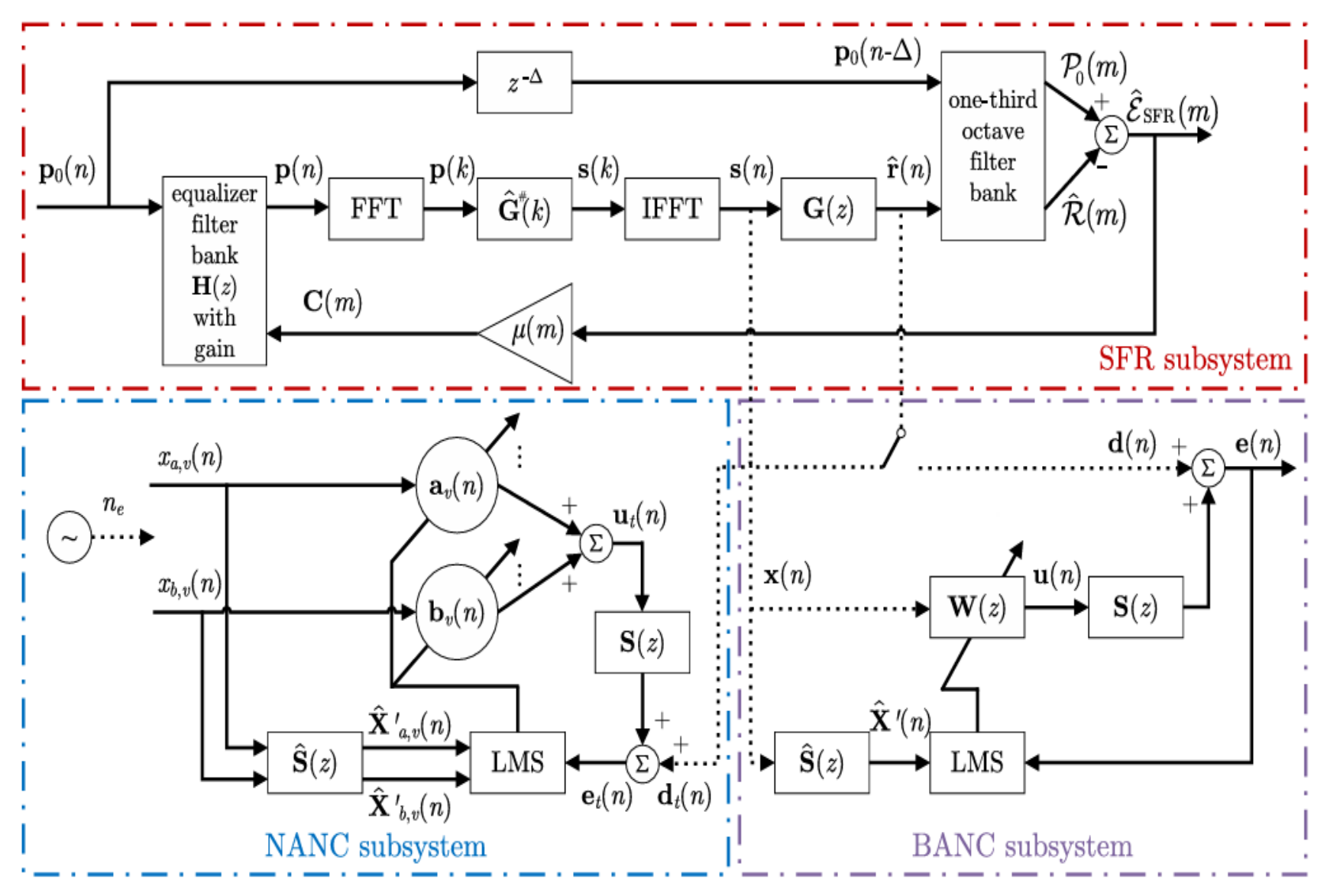
Figure 11. Block diagram of SFR-ANC integrated control algorithm based on PM [63]. Copyright © 2025, IEEE.
Machines 14 00493 g011
Figure 12. The mean AC and mean LO of PM-AEQ for varying λ P M , alongside PC-AEQ and ACC-AEQ. Green solid line: initial values; magenta dashed line: λ P M = 10 1 [67].
Machines 14 00493 g012
Figure 13. (a) Modified multi-channel least-square equalization system; (b) 1/3 octave spectrum of target and reproduced sound with and without feedback [71]. Copyright © 2025, Elsevier.
Machines 14 00493 g013
Figure 14. (a) Layout of microphones and loudspeakers with car, where orange circles in the insets mark the positions of in-vehicle loudspeakers; (b) SPL error map on the rough road surface [71]. Copyright © 2025, Elsevier.
Machines 14 00493 g014
Figure 15. Arrangement of the electroacoustic system in the acoustic laboratory: (a) overall schematic diagram, (b) actual view [63]. Copyright © 2025, IEEE.
Machines 14 00493 g015
Figure 16. (a) The aircraft cabin mock-up; (b) comparison of overall SPL errors before and after feedback [74]. Copyright © 2023, Elsevier.
Machines 14 00493 g016
Figure 17. Acoustic contrast level comparison of different optimization algorithms with 16 loudspeakers in a small meeting room across the frequency range [75].
Machines 14 00493 g017
Table 1. Comparison of advantages, current challenges and future development directions of three core SFR technologies (WFS, HOA, and PM).
WFSHOAPM
Method Advantages1. High physical reproduction accuracy1. Natural 3D sound field adaptability1. Precise local sound field control
2. Uniform large-scale sound field coverage2. Scalable order balancing accuracy and complexity2. Low-cost, easy engineering deployment
Current Challenges1. Poor low-frequency reverberation suppression in cabins1. High-order 3D expansion: sharp cost/complexity rise1. Instability under multi-source coupling
2. Dense loudspeaker array: high cost and complex calibration2. Difficult modeling in narrow vehicle cabins2. No unified optimal regularization scheme
Future Development1. Adaptive low-frequency reverberation control1. Lightweight 3D expansion for compact cabins1. Automatic wide-band parameter tuning
2. Sparse array design for cost reduction2. Personalized occupant acoustic adaptation2. Enhanced multi-source coupling stability
Disclaimer/Publisher’s Note: The statements, opinions and data contained in all publications are solely those of the individual author(s) and contributor(s) and not of MDPI and/or the editor(s). MDPI and/or the editor(s) disclaim responsibility for any injury to people or property resulting from any ideas, methods, instructions or products referred to in the content.