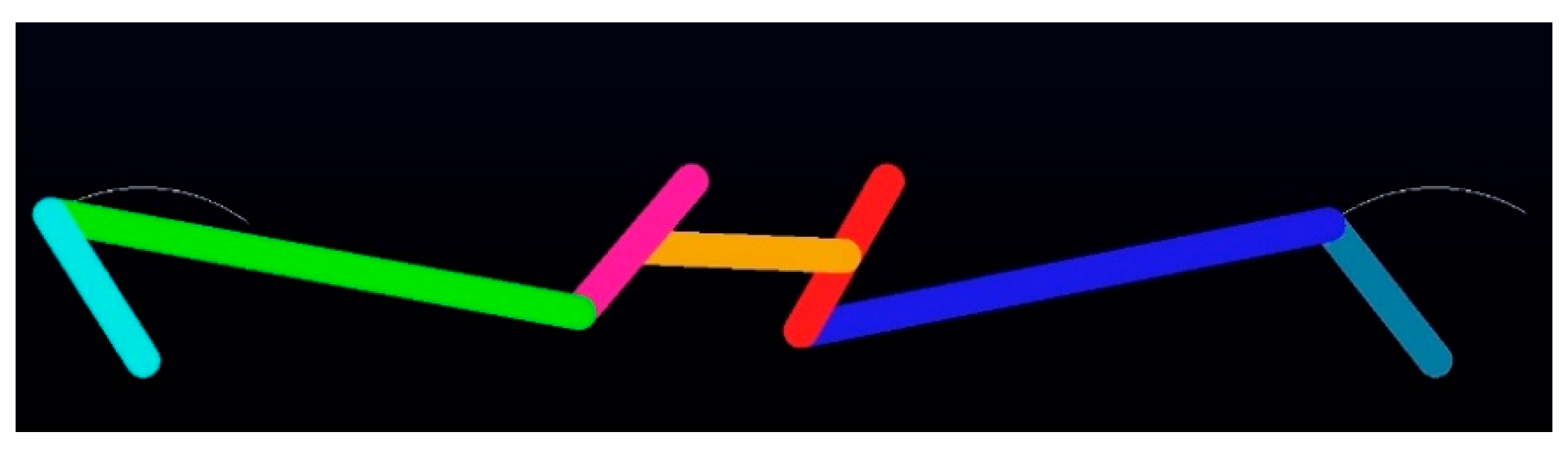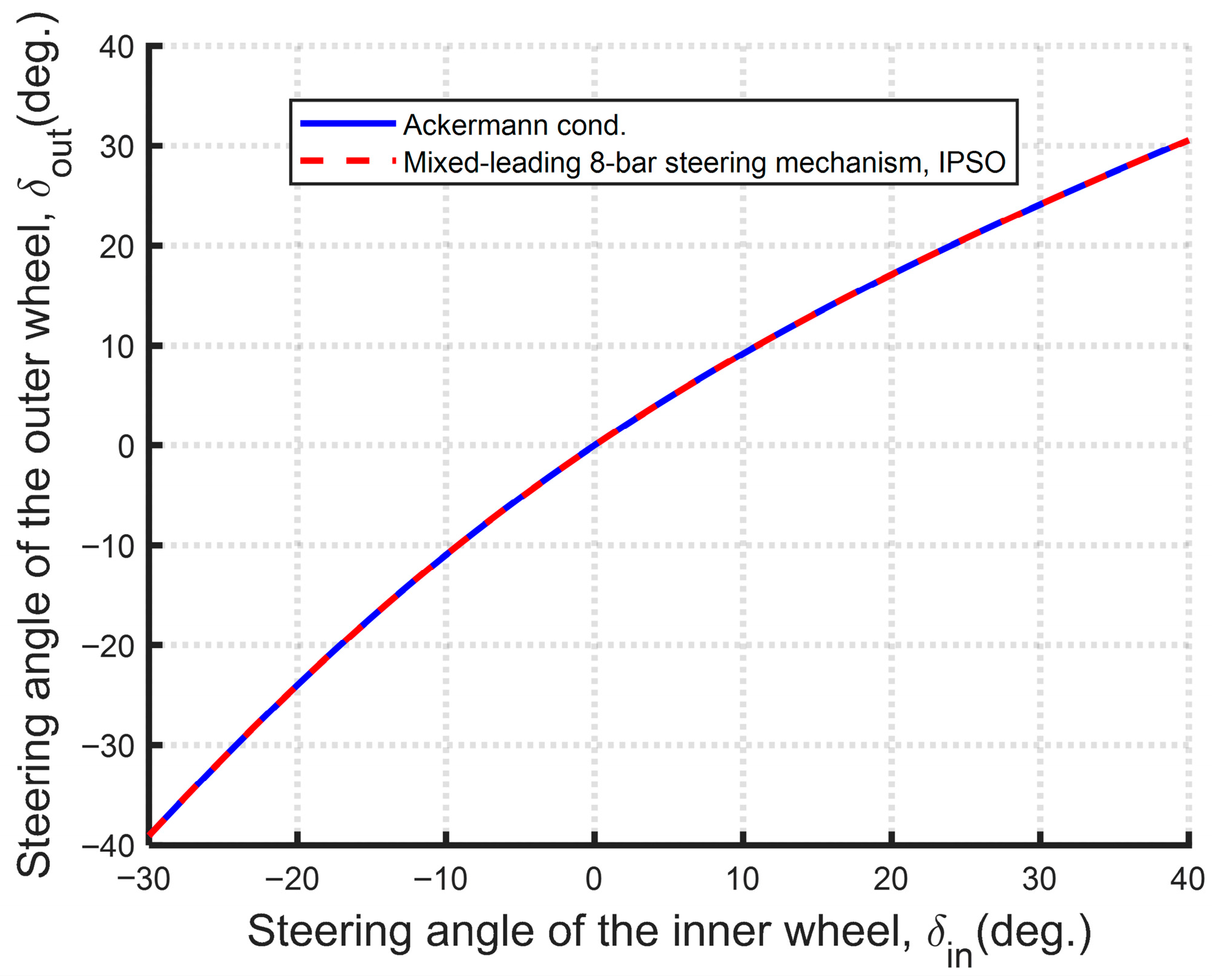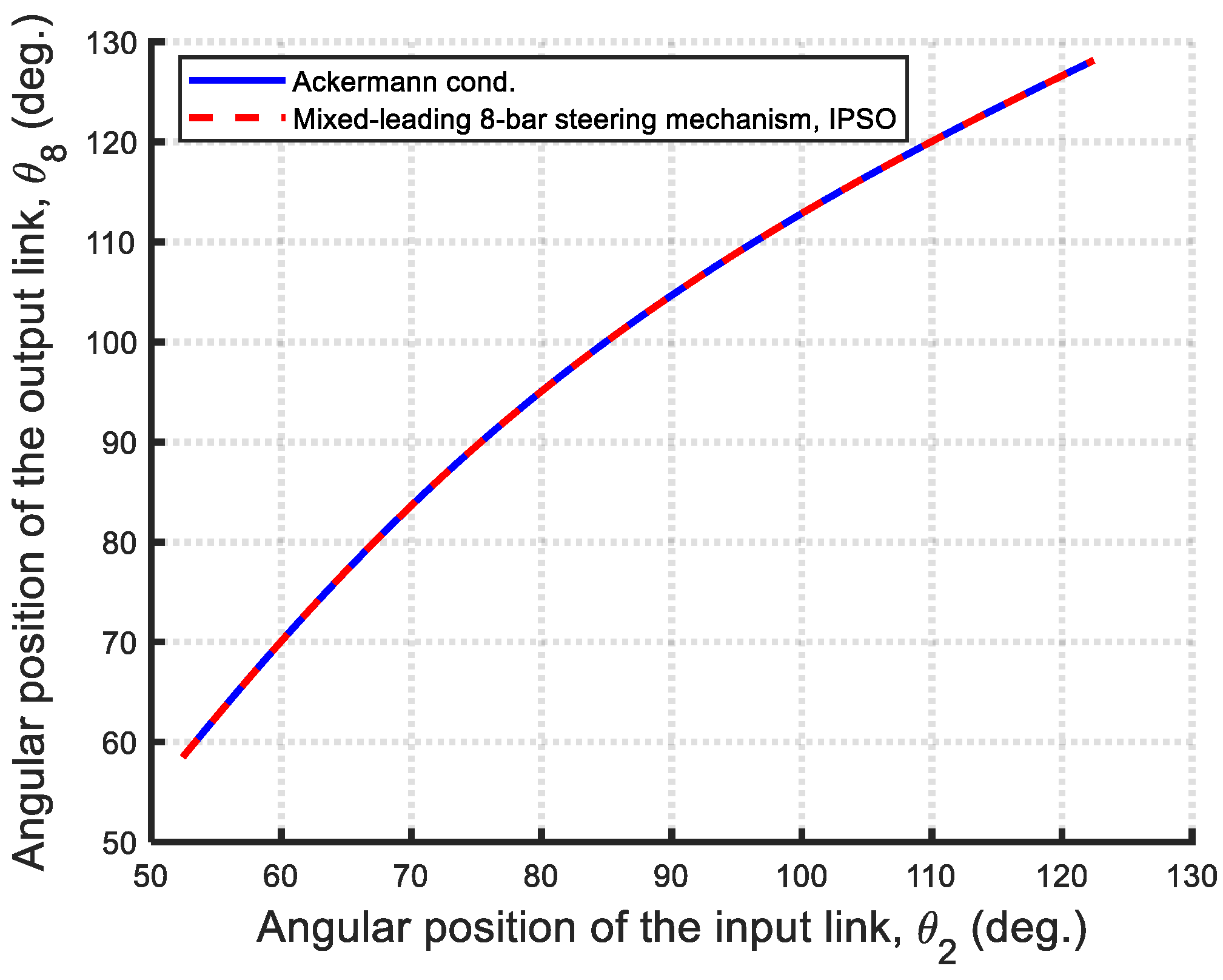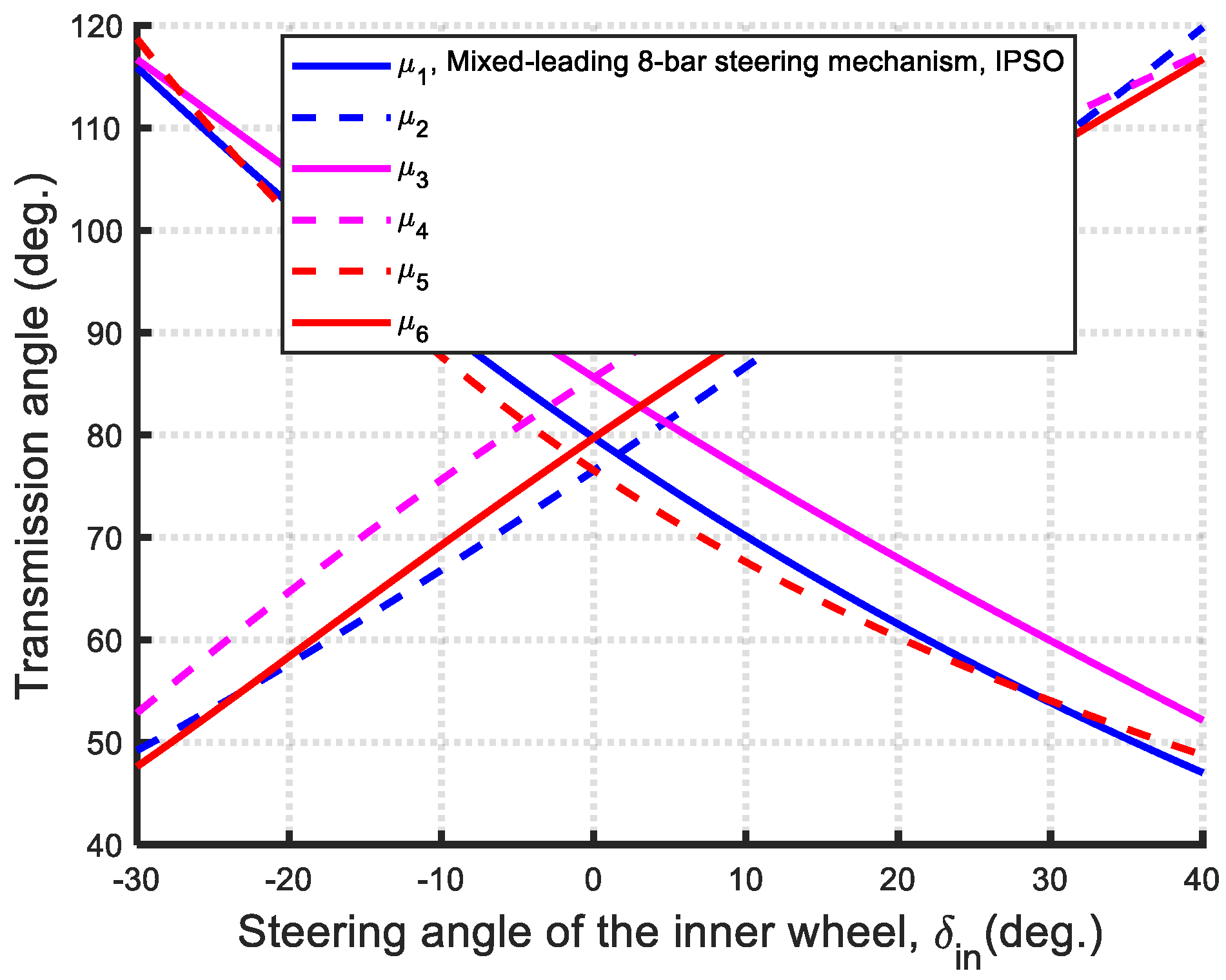


Dimensional Synthesis and Optimization of Leading and Mixed-Leading Double Four-Bar Steering Mechanisms: A Comparative Metaheuristic Approach


Abstract
1. Introduction
2. Planar Double Four-Bar Steering Mechanisms
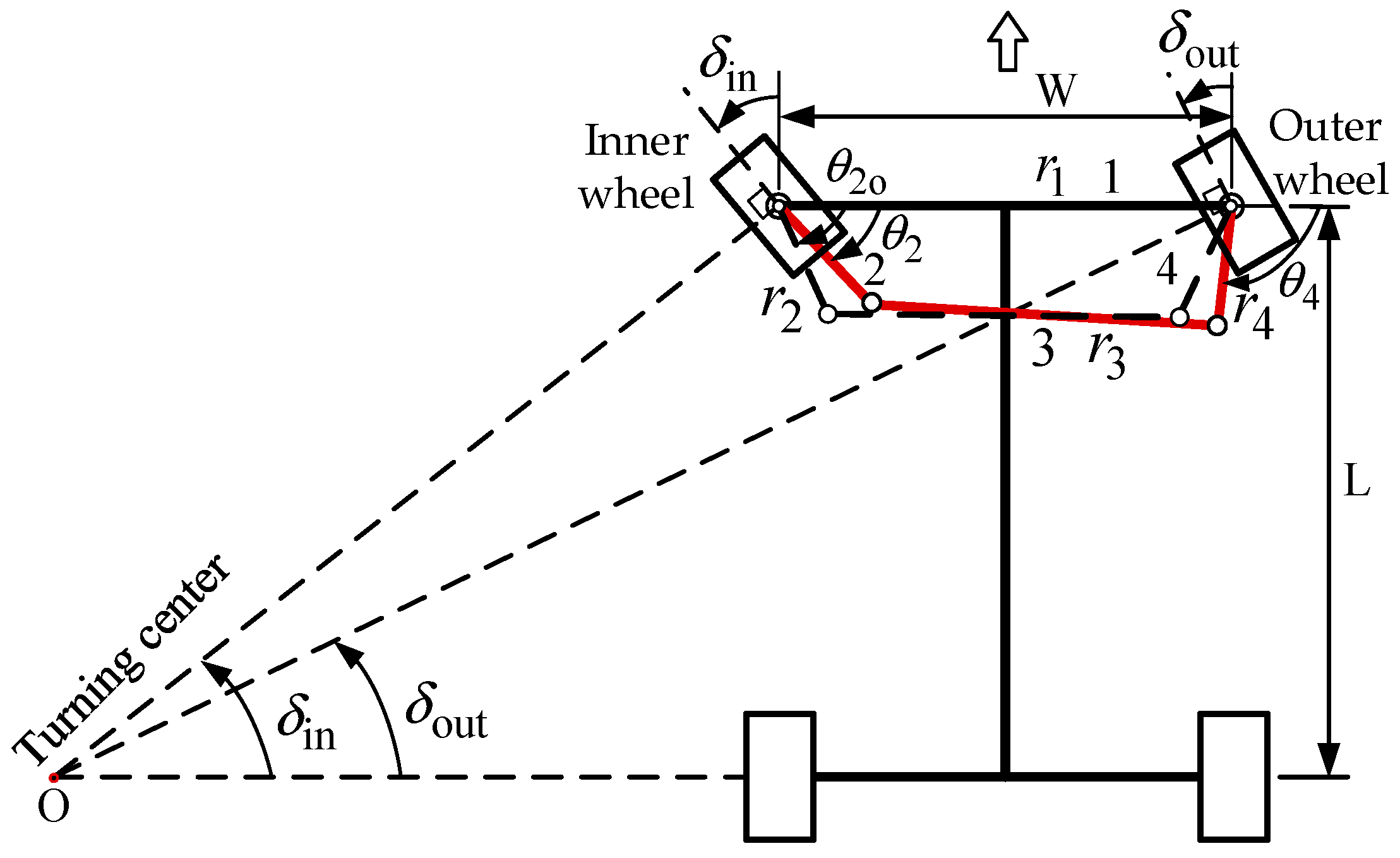
2.1. Ackermann Steering Principle
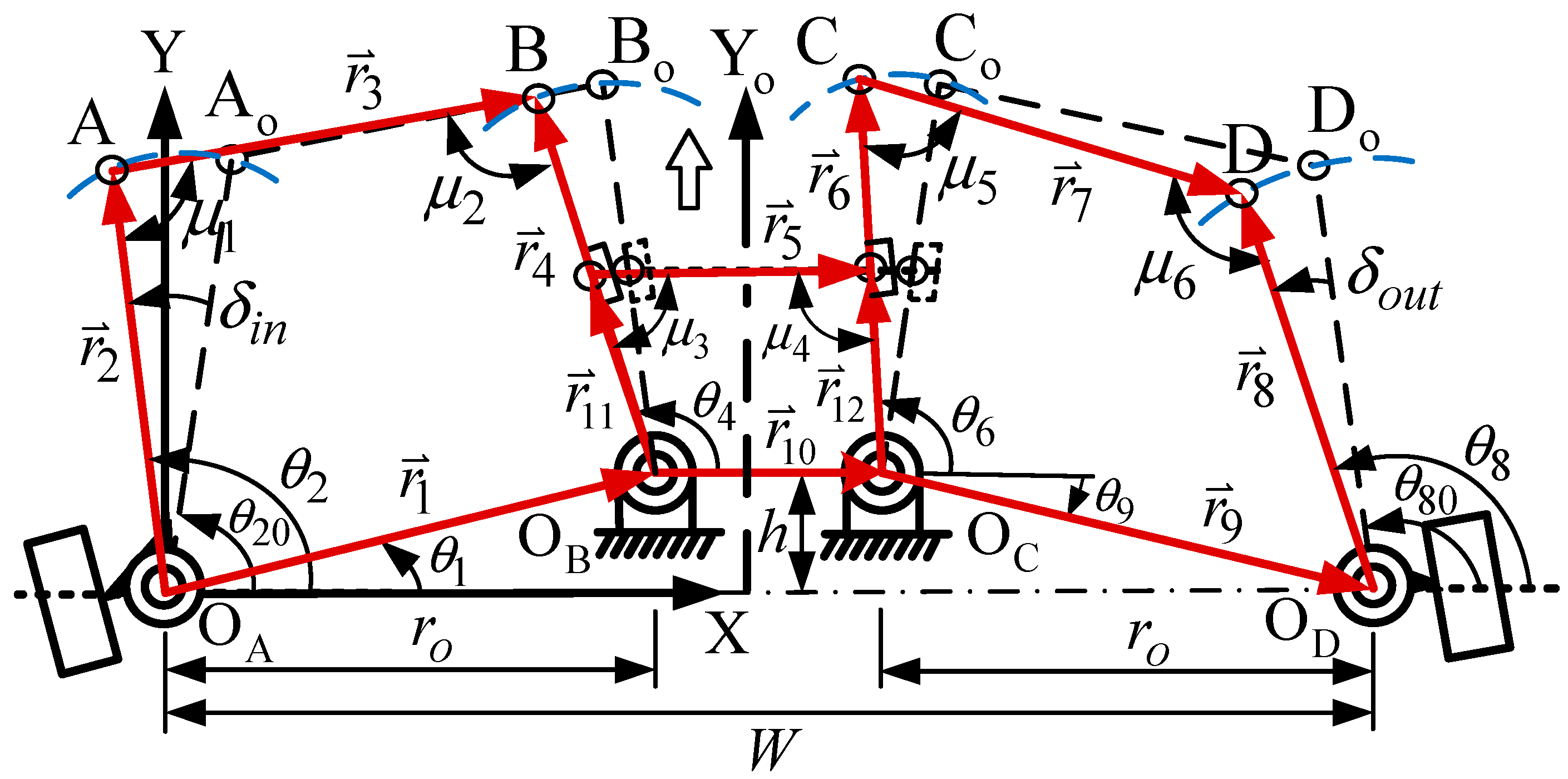
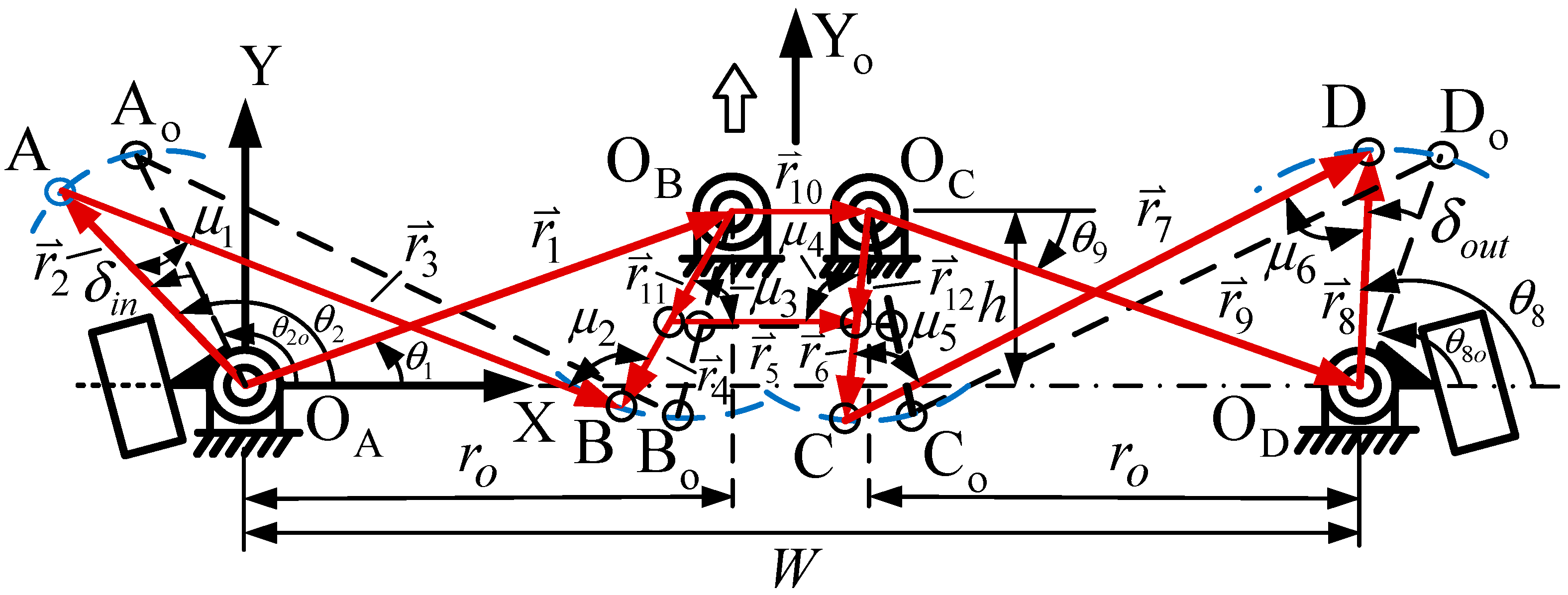
2.2. Position Analysis of Double Four-Bar Steering Mechanisms
2.3. Transmission Angle
2.4. Mechanical Advantage
3. Metaheuristic Optimization Algorithms
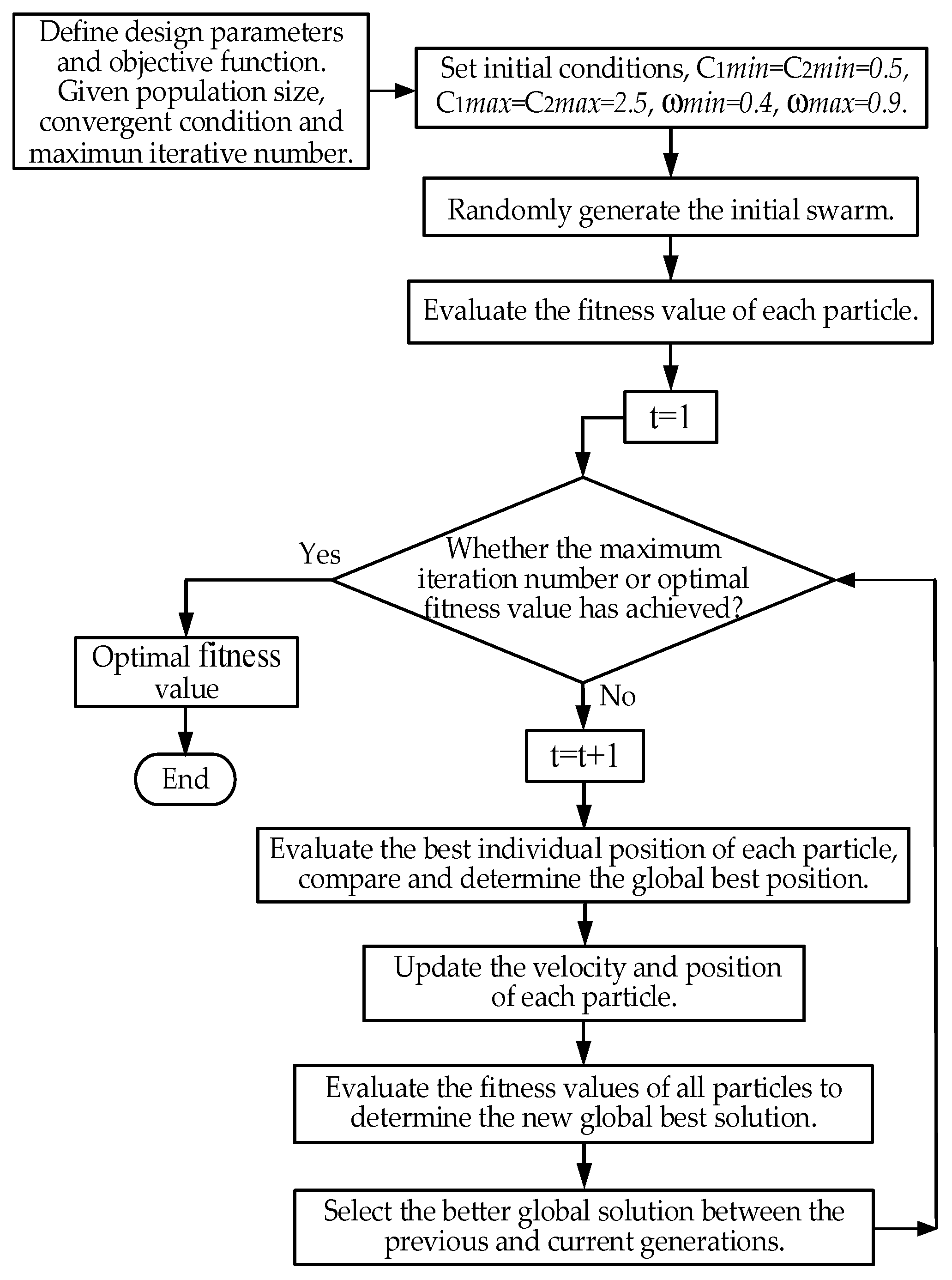
3.1. Improved Swarm-Based Optimization Algorithm
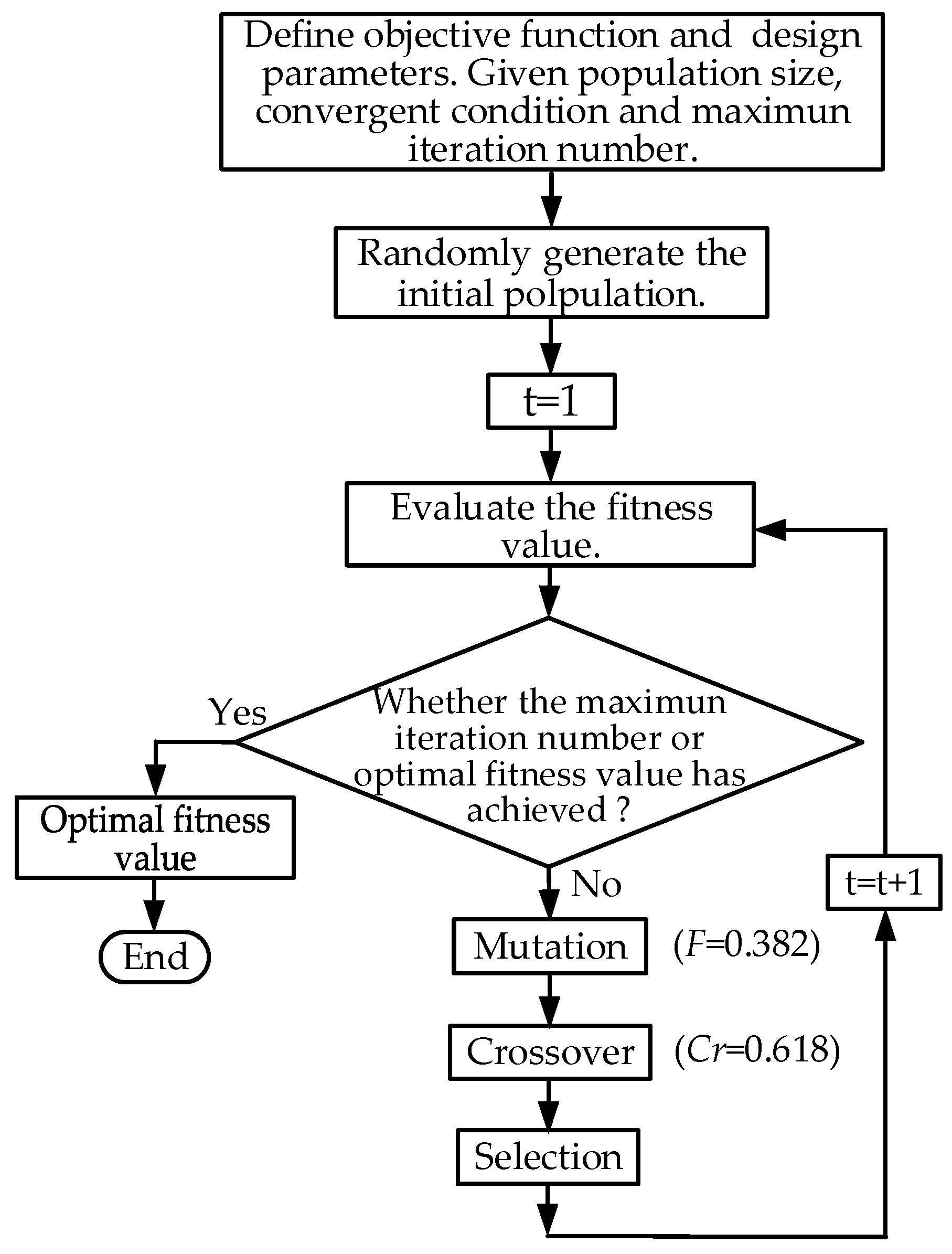
3.2. Evolutionary-Based Optimization Algorithm
- DE/best/1:
- DE/best/2:
4. Optimal Synthesis of the Double Four-Bar Steering Mechanisms
4.1. Formulation of the Objective Function
4.2. Design Parameters and Constraint Conditions
4.3. Optimization Parameters
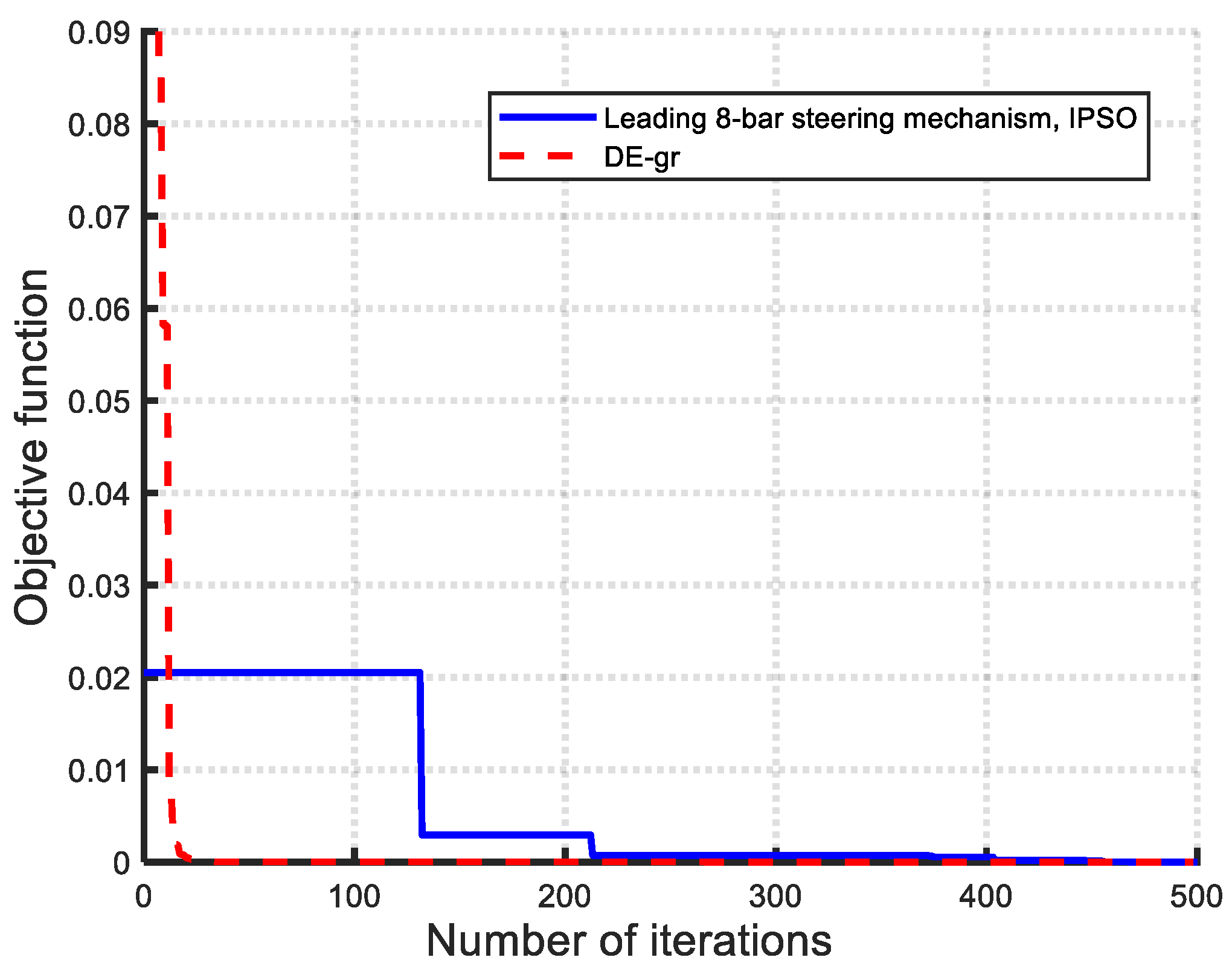
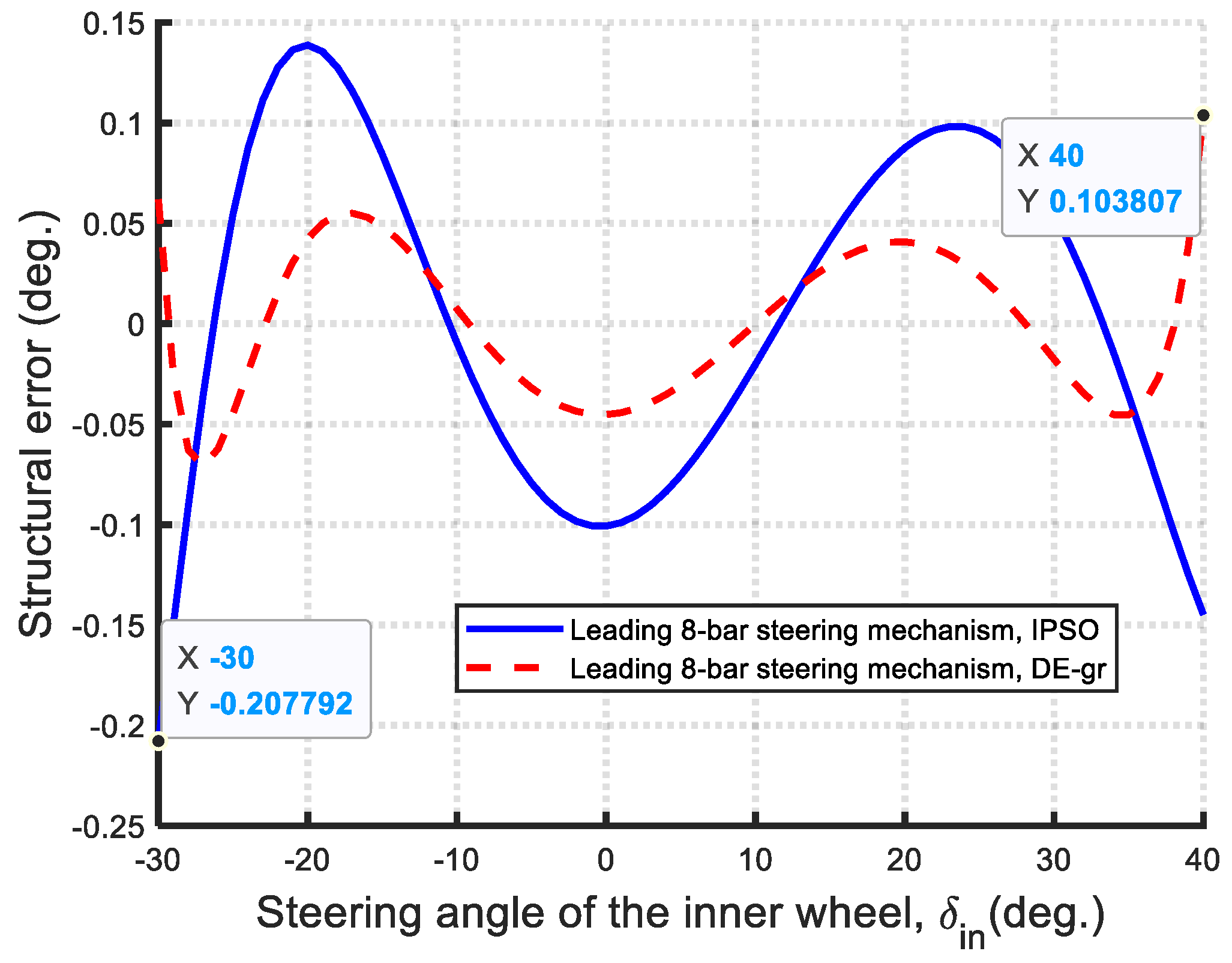
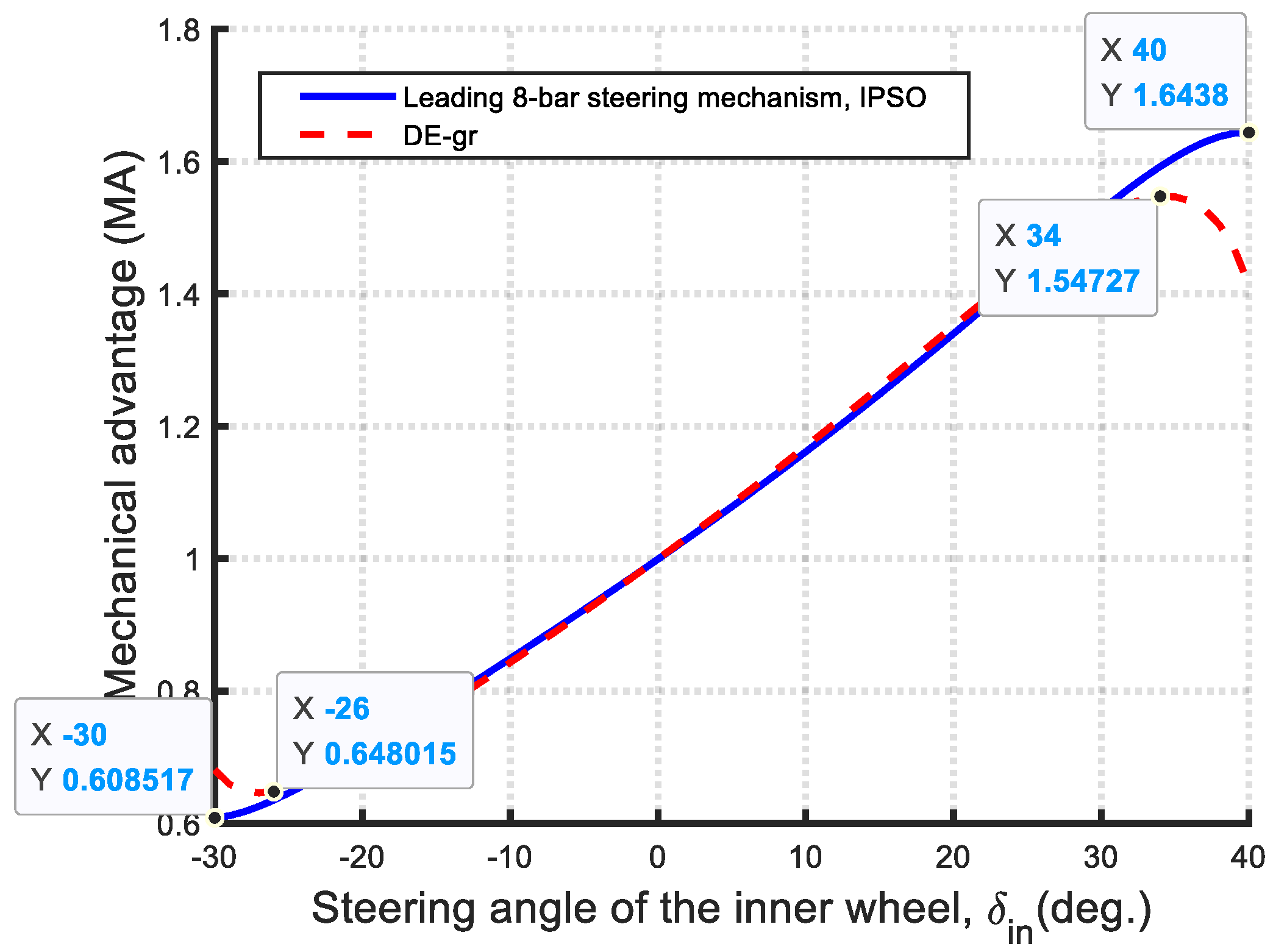
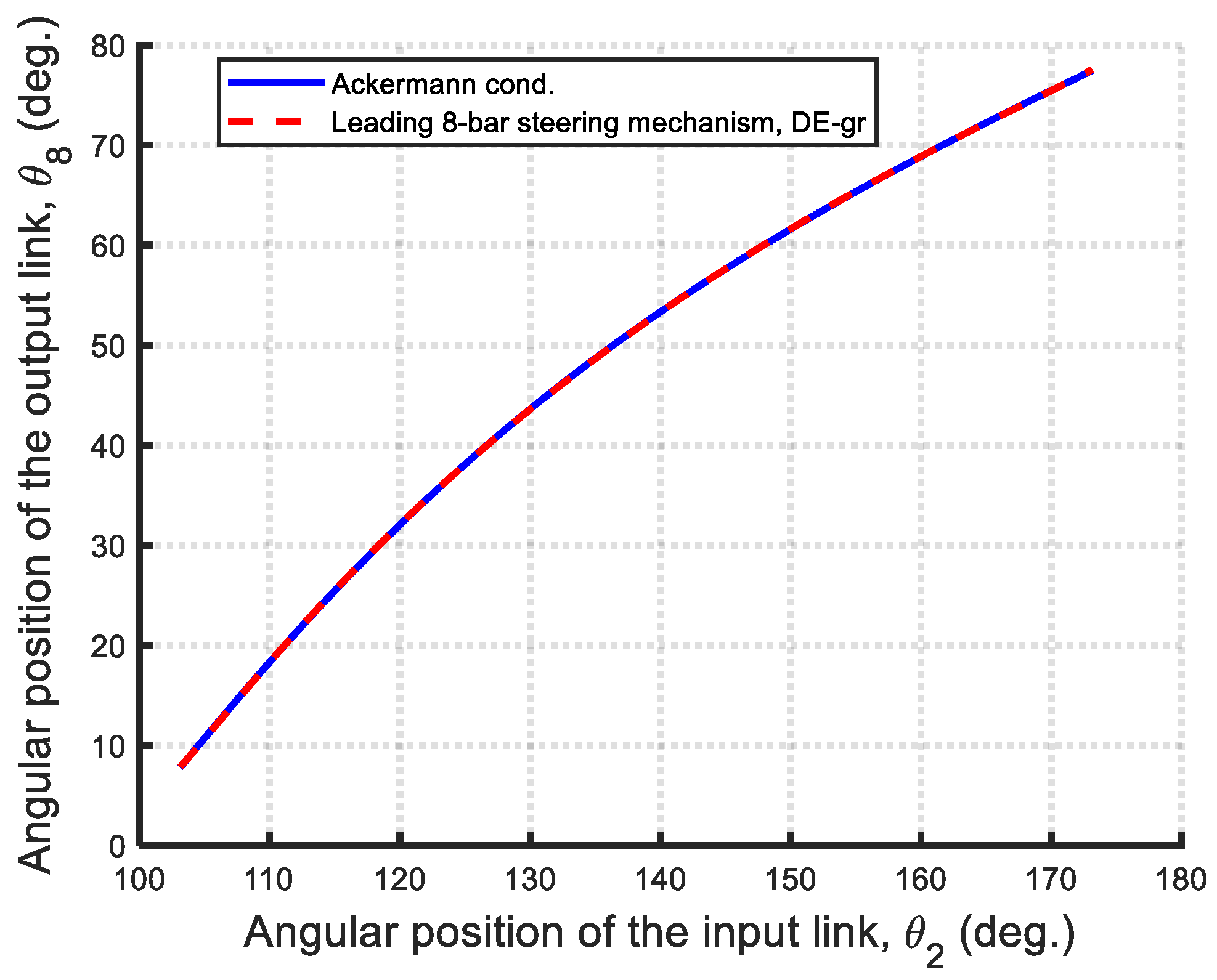
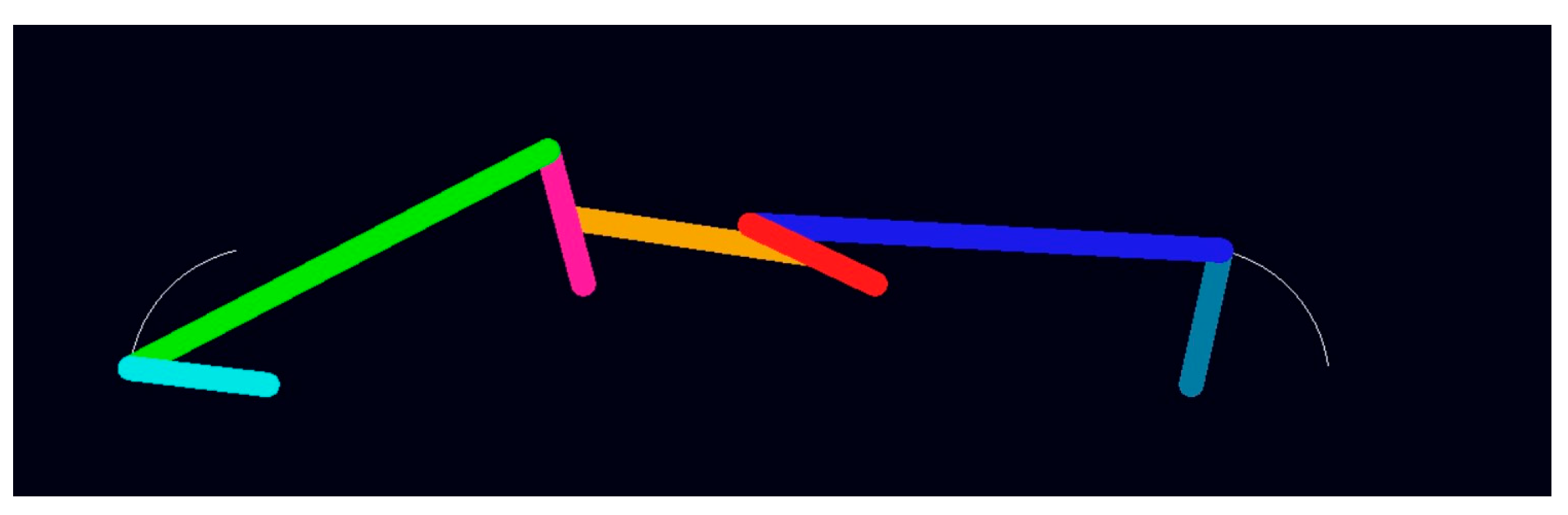
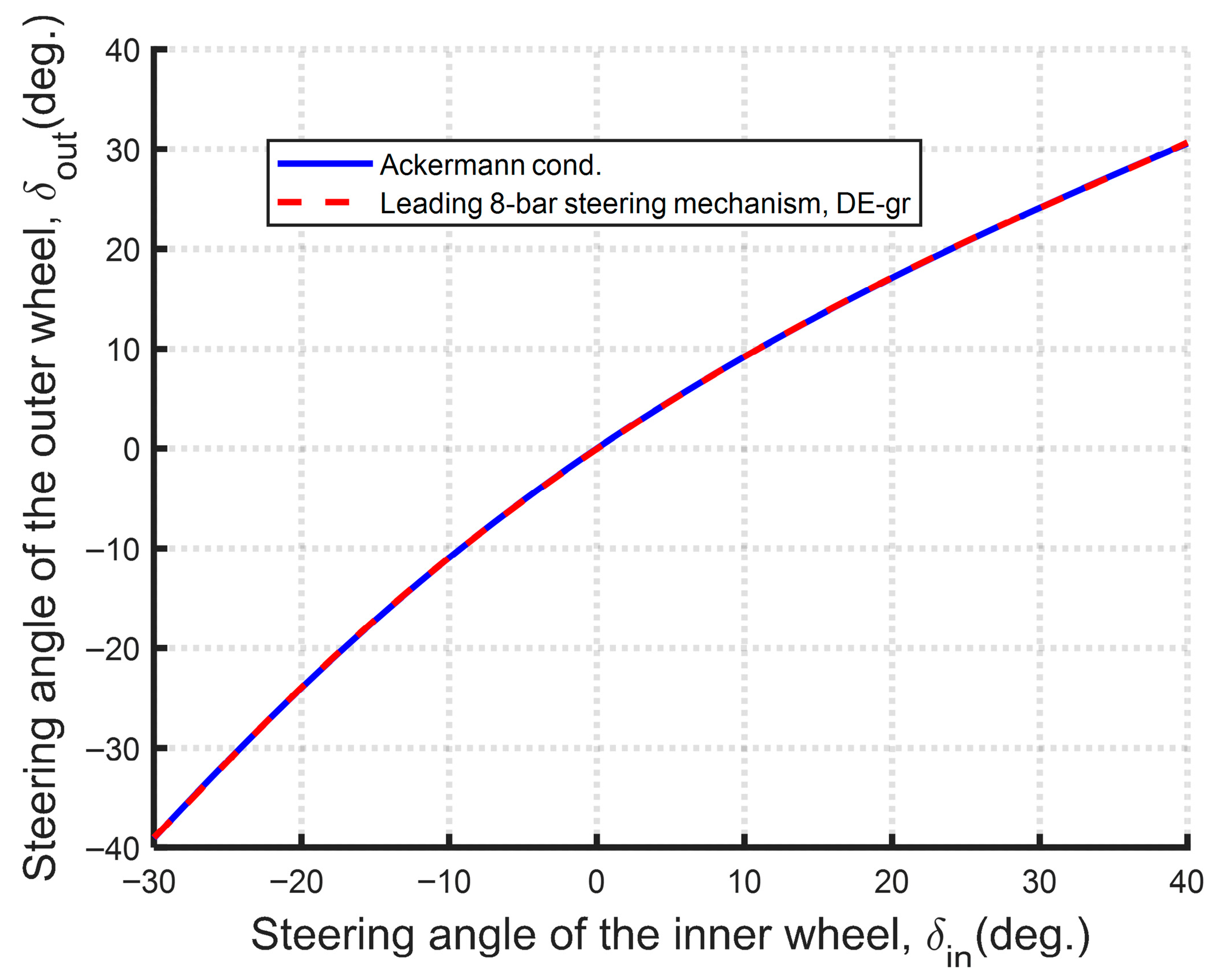
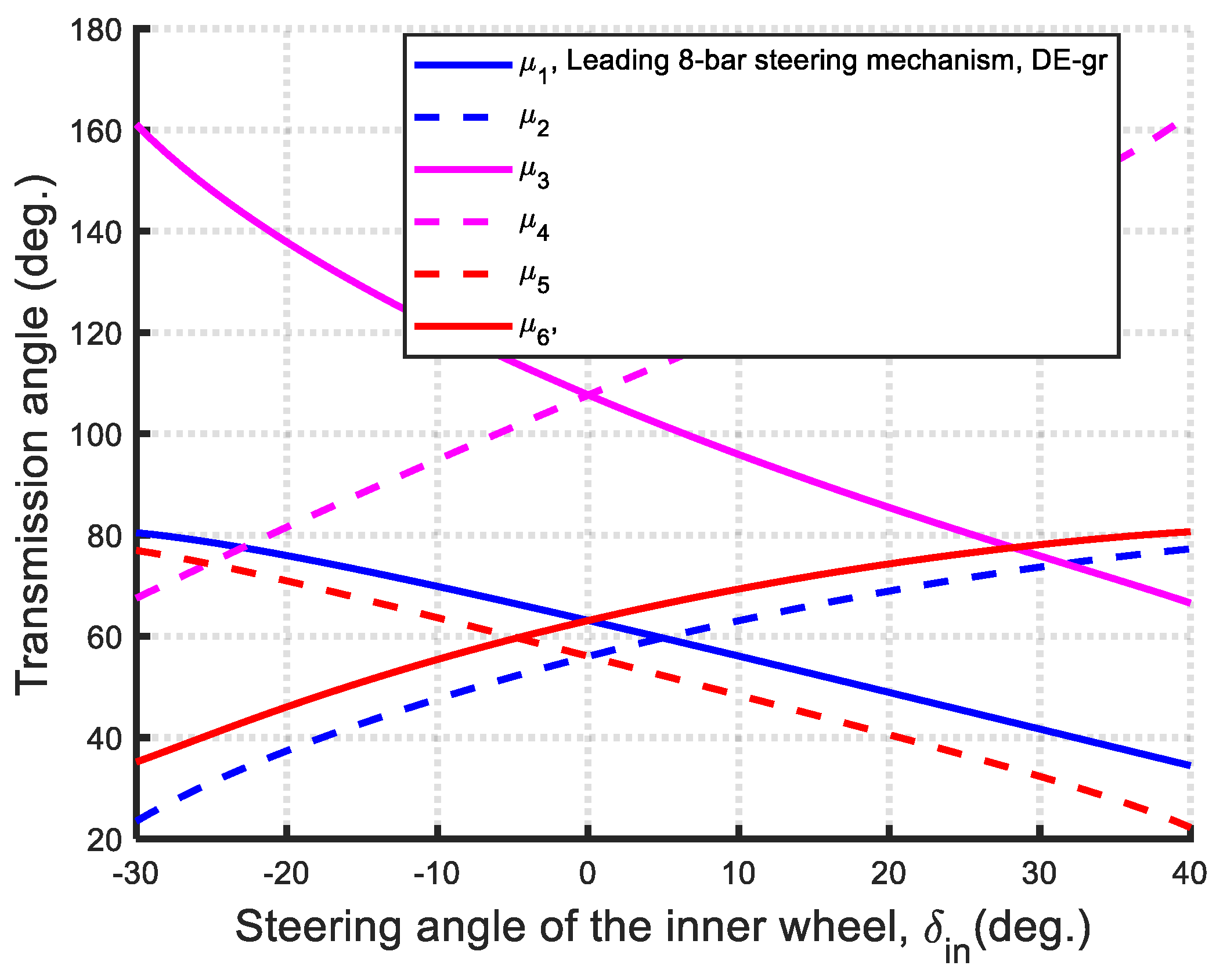
4.4. Optimal Design of the Leading Type Steering Mechanisms
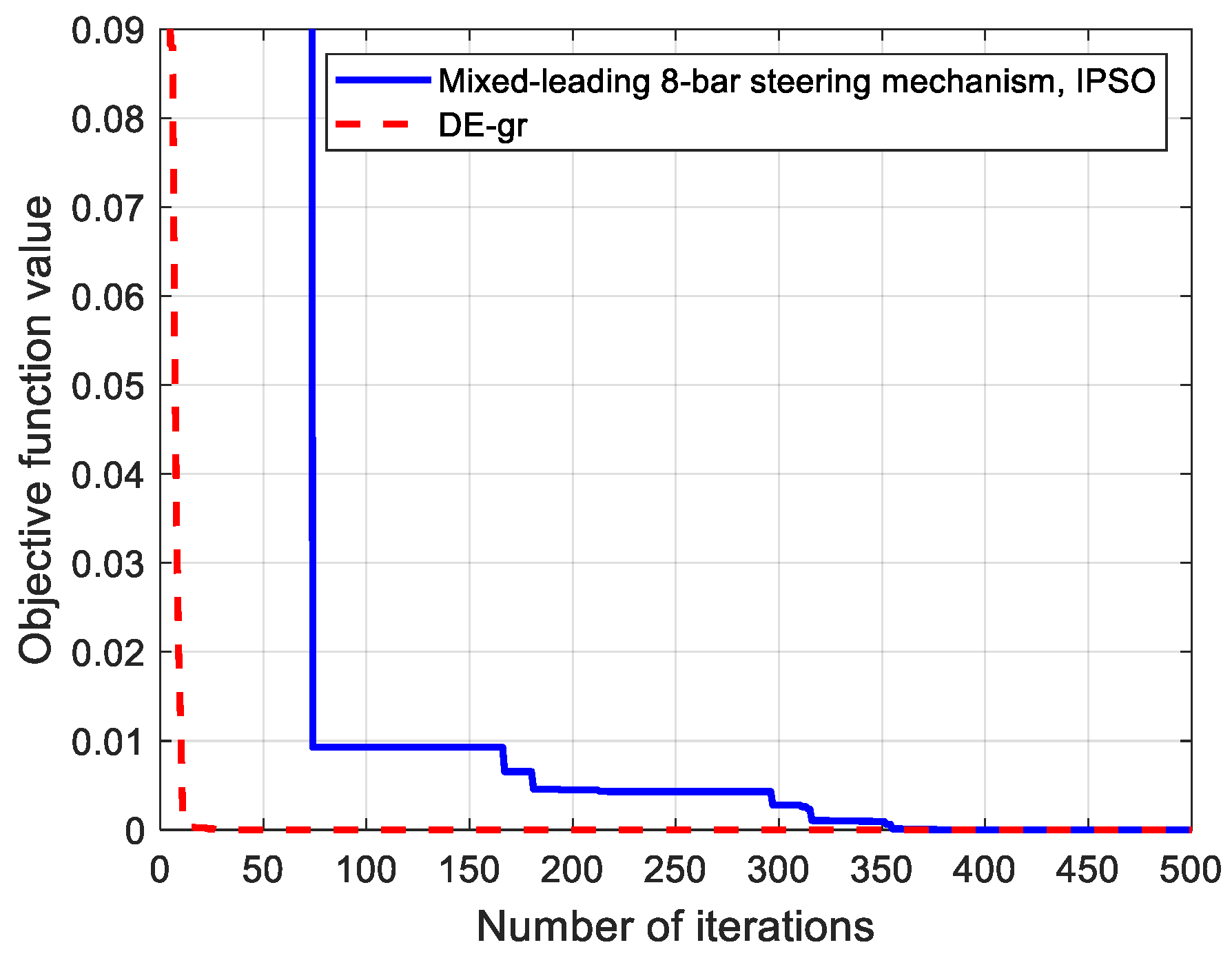
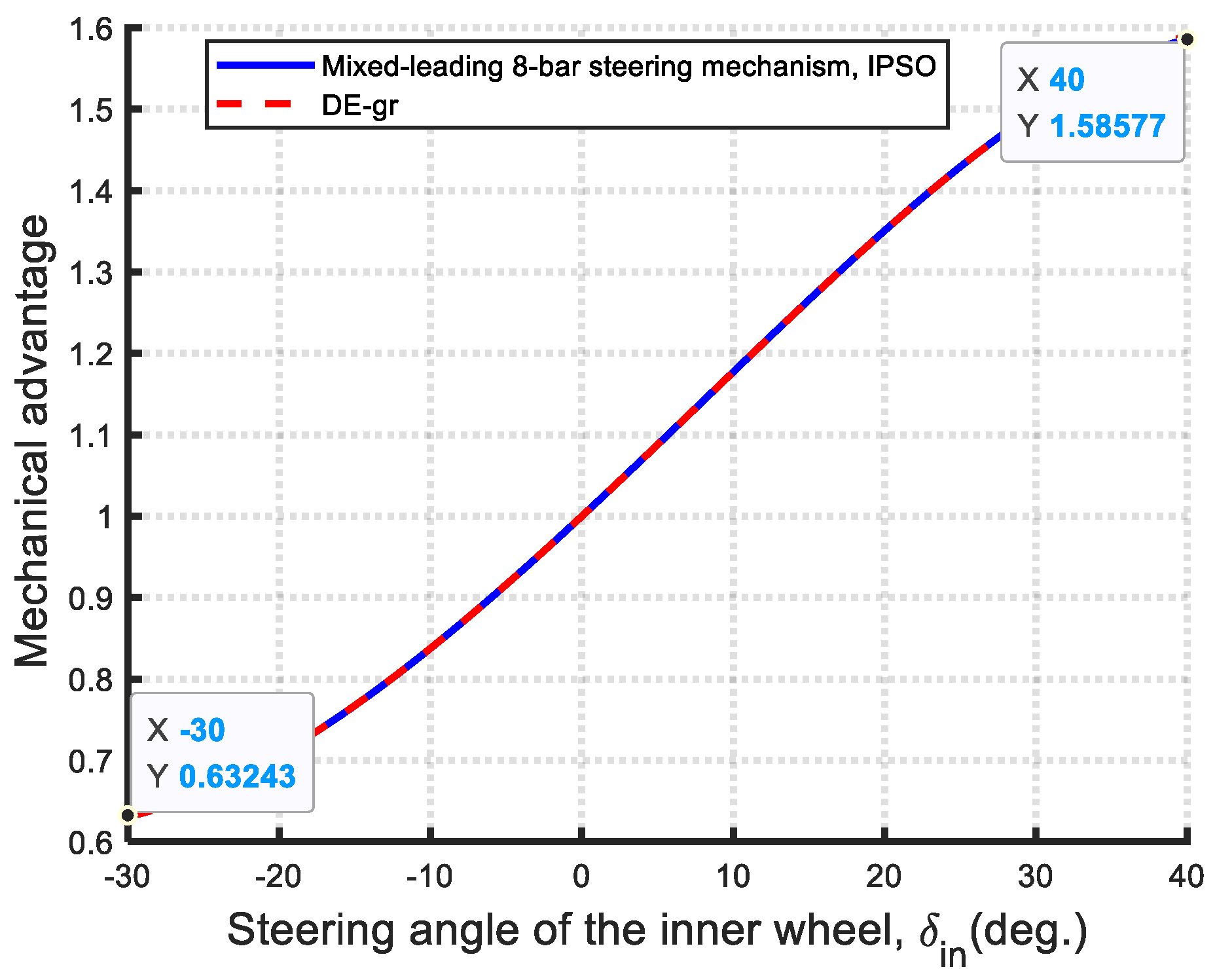
4.5. Optimal Design of the Mixed-Leading Type Steering Mechanisms
5. Comparative Analysis of the Two Optimal Steering Variants
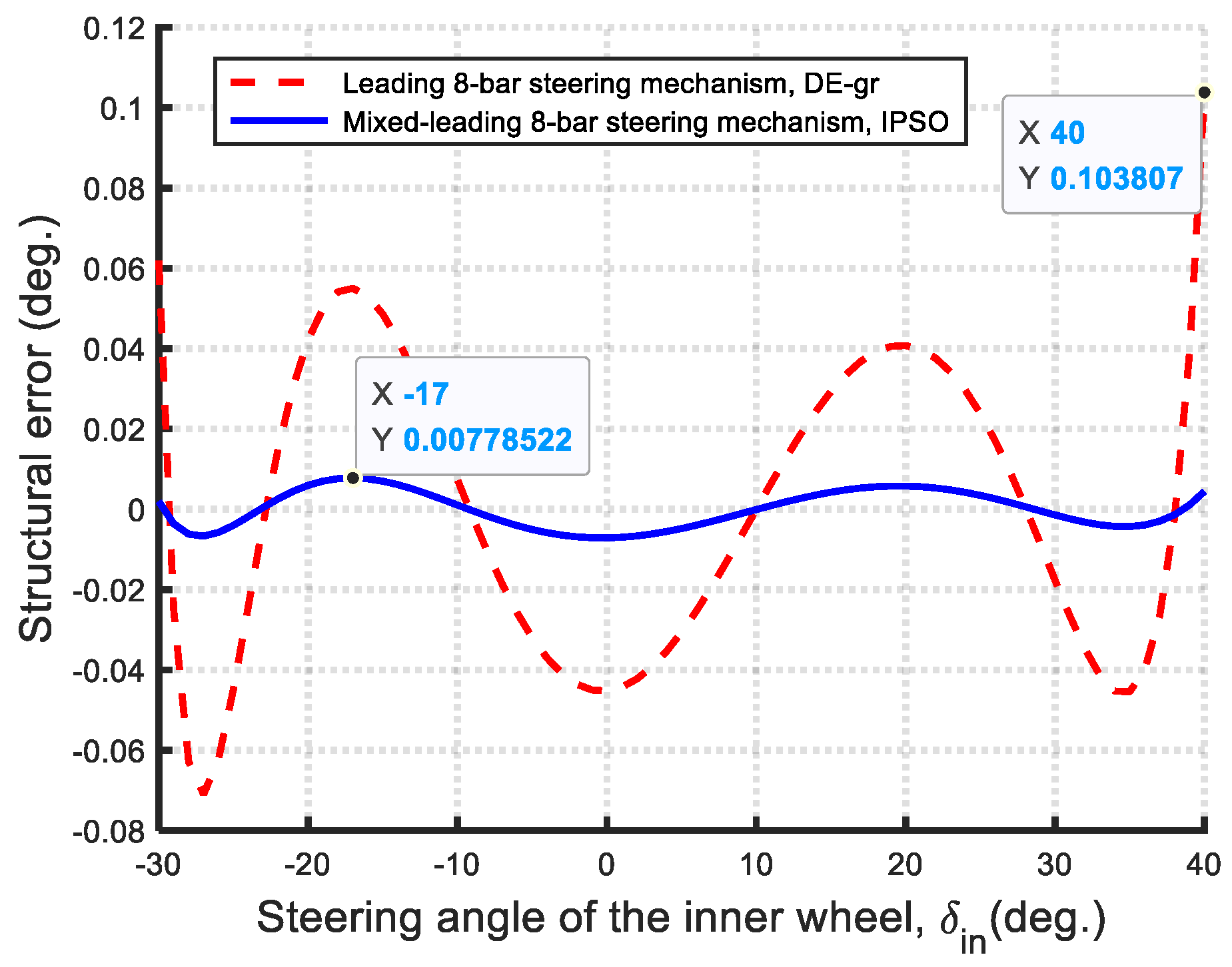
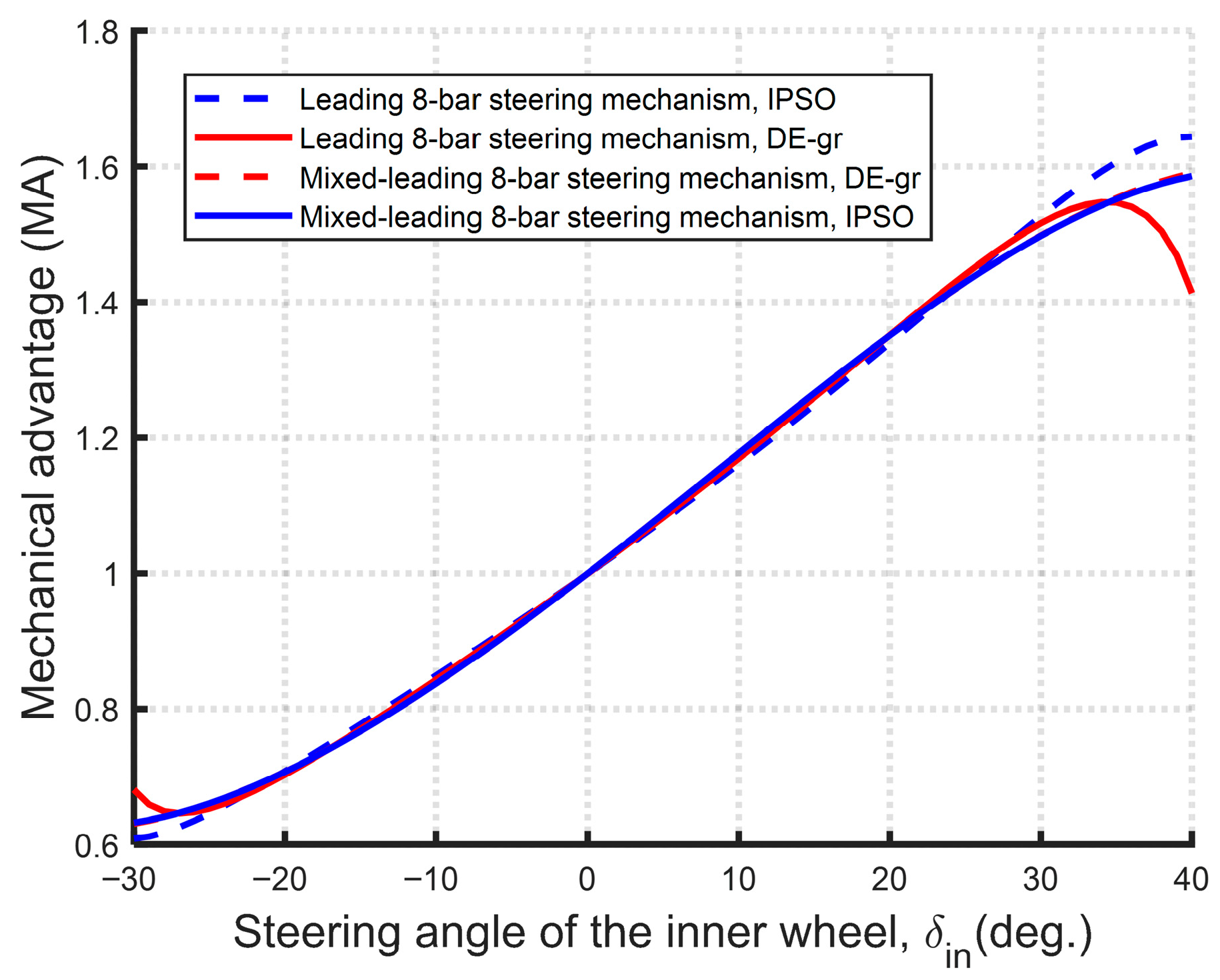
5.1. Comparative Performance Analysis
5.2. Discussion
6. Conclusions
- (a)
- Mixed-leading type (Assembly II, crossed): Recommended for applications prioritizing steering accuracy and mass reduction. This configuration offers significantly higher Ackermann compliance and utilizes shorter, lighter links (specifically reducing total length by 530.35 mm), resulting in improved space and weight efficiency.
- (b)
- Leading type (Assembly I, uncrossed): Recommended for applications where force transmission consistency is paramount, as it provides more stable and linear mechanical advantage (MA) characteristics compared to the mixed-leading variant.
- (1)
- Algorithm Refinement: Implementing a newly developed hybrid metaheuristic that has already demonstrated superior performance compared with DE-gr and IPSO in preliminary testing.
- (2)
- Constraint Variation: Investigating the impact of varying track-to-wheelbase ratios and spatial packaging constraints on linkage performance.
- (3)
- Topology Expansion and Multi-Objective Optimization: Extending the proposed framework to trailing and mixed-trailing configurations, and/or evolving the optimization toward multi-objective functions to simultaneously minimize turning radii and maximize transmission efficiency. This will allow for a more comprehensive evaluation of steering performance across a broader range of vehicle architectures.
Supplementary Materials
Author Contributions
Funding
Data Availability Statement
Conflicts of Interest
References
- Reimpell, J.; Stoll, H.; Betzler, J. The Automotive Chassis: Engineering Principles; Elsevier: Amsterdam, The Netherlands, 2001. [Google Scholar]
- Zarak, C.E.; Townsend, M.A. Optimal design of rack-and-pinion steering linkages. J. Mech. Transm. Autom. Des. 1983, 105, 220–226. [Google Scholar] [CrossRef]
- Simionescu, P.A.; Smith, M.R.; Tempea, I. Synthesis and analysis of the two loop translational input steering mechanism. Mech. Mach. Theory 2000, 35, 927–943. [Google Scholar] [CrossRef]
- Simionescu, P.A.; Smith, M.R. Initial estimates in the design of rack-and-pinion steering linkages. J. Mech. Des. 2000, 122, 194–200. [Google Scholar] [CrossRef]
- Simionescu, P.A.; Smith, M.R. Applications of Watt II function generator cognates. Mech. Mach. Theory 2000, 35, 1535–1549. [Google Scholar] [CrossRef]
- Hanzaki, A.R.; Rao, P.V.M.; Saha, S.K. Kinematic and sensitivity analysis and optimization of planar rack-and-pinion steering linkages. Mech. Mach. Theory 2009, 44, 42–56. [Google Scholar] [CrossRef]
- De-Juan, A.; Sancibrian, R.; Viadero, F. Optimal synthesis of function generation in steering linkages. Int. J. Automot. Technol. 2012, 13, 1033–1046. [Google Scholar] [CrossRef]
- Sleesongsom, S.; Bureerat, S. Multiobjective optimization of a steering linkage. J. Mech. Sci. Technol. 2016, 30, 3681–3691. [Google Scholar] [CrossRef]
- Nuñez, N.N.R.; Florez, A.R.; Vieira, R.S.; Martins, D. Dimensional synthesis of rack-and-pinion steering mechanism using a novel synthesis equation. J. Braz. Soc. Mech. Sci. Eng. 2023, 45, 411. [Google Scholar] [CrossRef]
- Kiper, G. Two novel formulations for the optimum design of rack-and-pinion steering mechanisms. In IFToMM Asian Conference on Mechanism and Machine Science; Springer Nature: Cham, Switzerland, 2024; Volume 167, pp. 209–216. [Google Scholar]
- Pramanik, S. Kinematic synthesis of a six-member mechanism for automotive steering. ASME J. Mech. Des. 2002, 124, 642–645. [Google Scholar] [CrossRef]
- Pramanik, S. Kinematic synthesis of a trailing six-member mechanism for automotive steering. Int. J. Automot. Eng. 2013, 3, 577–581. [Google Scholar]
- Pramanik, S.; Thipse, S.S. Kinematic synthesis of central-lever steering mechanism for four wheel vehicles. Acta Polytech. 2020, 60, 252–258. [Google Scholar] [CrossRef]
- Kang, Y.-H.; Pang, D.-C.; Zheng, D.-H. Optimal dimensional synthesis of Ackermann and Watt-I six-bar steering mechanisms for two-axle four-wheeled vehicles. Machines 2025, 13, 589. [Google Scholar] [CrossRef]
- Fahey, S.O.F.; Huston, D.R. A novel automotive steering linkage. ASME J. Mech. Des. 1997, 119, 481–484. [Google Scholar] [CrossRef]
- Chicurel, E. A 180 Steering interval mechanism. Mech. Mach. Theory 1999, 34, 421–436. [Google Scholar] [CrossRef]
- Dooner, D.B. Function generation utilizing an eight-link mechanism and optimized non-circular gear elements with application to automotive steering. Proc. Inst. Mech. Eng. Part C J. Mech. Eng. Sci. 2001, 215, 847–857. [Google Scholar] [CrossRef]
- Topaç, M.M.; Karaca, M.; Deryal, U.; Atak, M. Optimal kinematic design of a multi-link steering system for a bus independent suspension by using response surface methodology. Mechanika 2015, 21, 404–413. [Google Scholar] [CrossRef][Green Version]
- Romero, N.; Flórez, E.; Mendoza, L. Optimization of a multi-link steering mechanism using a continuous genetic algorithm. J. Mech. Sci. Technol. 2017, 31, 3183–3188. [Google Scholar] [CrossRef]
- Topaç, M.M.; Deryal, U.; Bahar, E.; Yavuz, G. Design and optimization of a bus steering linkage by using response surface methodology. In Vehicle and Automotive Engineering 2. VAE 2018; Jármai, K., Bolló, B., Eds.; Lecture Notes in Mechanical Engineering; Springer: Cham, Switzerland, 2018. [Google Scholar]
- Ağakişi, G.; Öztürk, F. Kinematics & compliance validation of a vehicle suspension and steering kinematics optimization using neural networks. Mechanika 2023, 29, 243–251. [Google Scholar] [CrossRef]
- Kang, Y.-H.; Lin, J.-W.; You, W.-C. Comparative study on the synthesis of path-generating four-bar linkages using metaheuristic optimization algorithms. Appl. Sci. 2022, 12, 7368. [Google Scholar] [CrossRef]
- Kang, Y.-H.; Huang, H.-C.; Yang, B.-Y. Optimal design and dynamic analysis of a spring-actuated cam-linkage mechanism in a vacuum circuit breaker. Machines 2023, 11, 150. [Google Scholar] [CrossRef]
- Kang, Y.-H.; Pang, D.-C.; Zeng, Y.-C. Optimal dimensional synthesis of Ackermann steering mechanisms for three-axle, six-wheeled vehicles. Appl. Sci. 2025, 15, 800. [Google Scholar] [CrossRef]
- Ratnaweera, A.; Halgamuge, S.K.; Watson, H.C. Self-organizing hierarchical particle swarm optimizer with time-varying acceleration coefficients. IEEE Trans. Evol. Comput. 2004, 8, 240–255. [Google Scholar] [CrossRef]
- Storn, R.; Price, K. Differential evolution- a simple and efficient heuristic for global optimization over continuous spaces. J. Glob. Optim. 1997, 11, 341–359. [Google Scholar] [CrossRef]
- Yan, H.-S. Mechanisms: Theory and Applications; McGraw-Hill Education: New York, NY, USA, 2015. [Google Scholar]
- Kennedy, J.; Eberhart, R.C. Particle swarm optimization. In Proceedings of the International Conference on Neural Networks, Perth, WA, Australia, 27 November–1 December 1995; Volume 4, pp. 1942–1948. [Google Scholar]
- Shi, Y.; Eberhart, R.C. A modified particle swarm optimizer. In Proceedings of the IEEE Intelligence Congress on Evolutionary Computation; IEEE: New York, NY, USA, 1998; pp. 69–73. [Google Scholar]
- Shi, Y.; Eberhart, R.C. Empirical study of particle swarm optimization. In Proceedings of the IEEE Intelligence Congress on Evolutionary Computation; IEEE: New York, NY, USA, 1999; Volume 3, pp. 101–106. [Google Scholar]
- Das, S.; Suganthan, P.N. Differential evolution: A survey of the state-of-the-art. IEEE Trans. Evol. Comput. 2011, 15, 4–11. [Google Scholar] [CrossRef]
- Wang, S.H.; Li, Y.Z.; Yang, H.Y.; Liu, H. Self-adaptive differential evolution algorithm with improved mutation strategy. Soft Comput. 2018, 22, 3433–3447. [Google Scholar] [CrossRef]
- Yu, L.Q.; Meng, Z.Y.; Kong, L.P.; Snasel, V.; Pan, J.S. Surrogate-assisted differential evolution: A survey. Swarm Evol. Comput. 2025, 94, 101879. [Google Scholar] [CrossRef]
- Reyes-Davila, E.; Haro, E.H.; Casas-Ordaz, A.; Oliva, D. Differential Evolution: A Survey on their operators and variants. Arch. Comput. Methods Eng. 2025, 32, 83–112. [Google Scholar] [CrossRef]
- Storn, R. On the usage of differential evolution for function optimization. In Proceedings of the North American Fuzzy Information Processing Society (NAFIPS1996); IEEE: New York, NY, USA, 1996; pp. 519–523. [Google Scholar]
- Mezura-Montes, E.; Velázquez-Reyes, J.; Coello Coello, C.A. A comparative study of differential evolution variants for global optimization. In Proceedings GECCO; Association for Computing Machinery: New York, NY, USA, 2006; pp. 485–492. [Google Scholar]










| Algorithm | IPSO | DE-gr |
|---|---|---|
| Population size (Np) | 20 | 20 |
| Iteration times (Niter) | 500 | 500 |
| Experimental times | 100 | 100 |
| Mutation method | -- | DE/best/1, DE/best/2 |
| Mutation factor (F) | -- | 0.382 |
| Crossover method | -- | Exponential crossover |
| Crossover rate (Cr) | -- | 0.618 |
| Selection method | -- | Greedy selection |
| Learning factors (, ) | 0.5 | -- |
| Inertia weighting (w) | 0.4 | -- |
| Obj. Fun | Min-Max. Error | ||||||||||
|---|---|---|---|---|---|---|---|---|---|---|---|
| IPSO | 2.170 × 10⁻⁶ | 535.4769 | 555.2749 | 225.0147 | 759.4518 | 225.0147 | 351.6916 | 409.0462 | 146.9513 | 129.2072 | 0.2078 |
| DE-gr | 4.220 × 10⁻⁷ | 506.4085 | 531.7829 | 221.4417 | 755.3782 | 221.4417 | 399.9879 | 467.1830 | 162.3066 | 133.1390 | 0.1038 |
| Obj. Fun | Min-Max. Error | ||||||||||
|---|---|---|---|---|---|---|---|---|---|---|---|
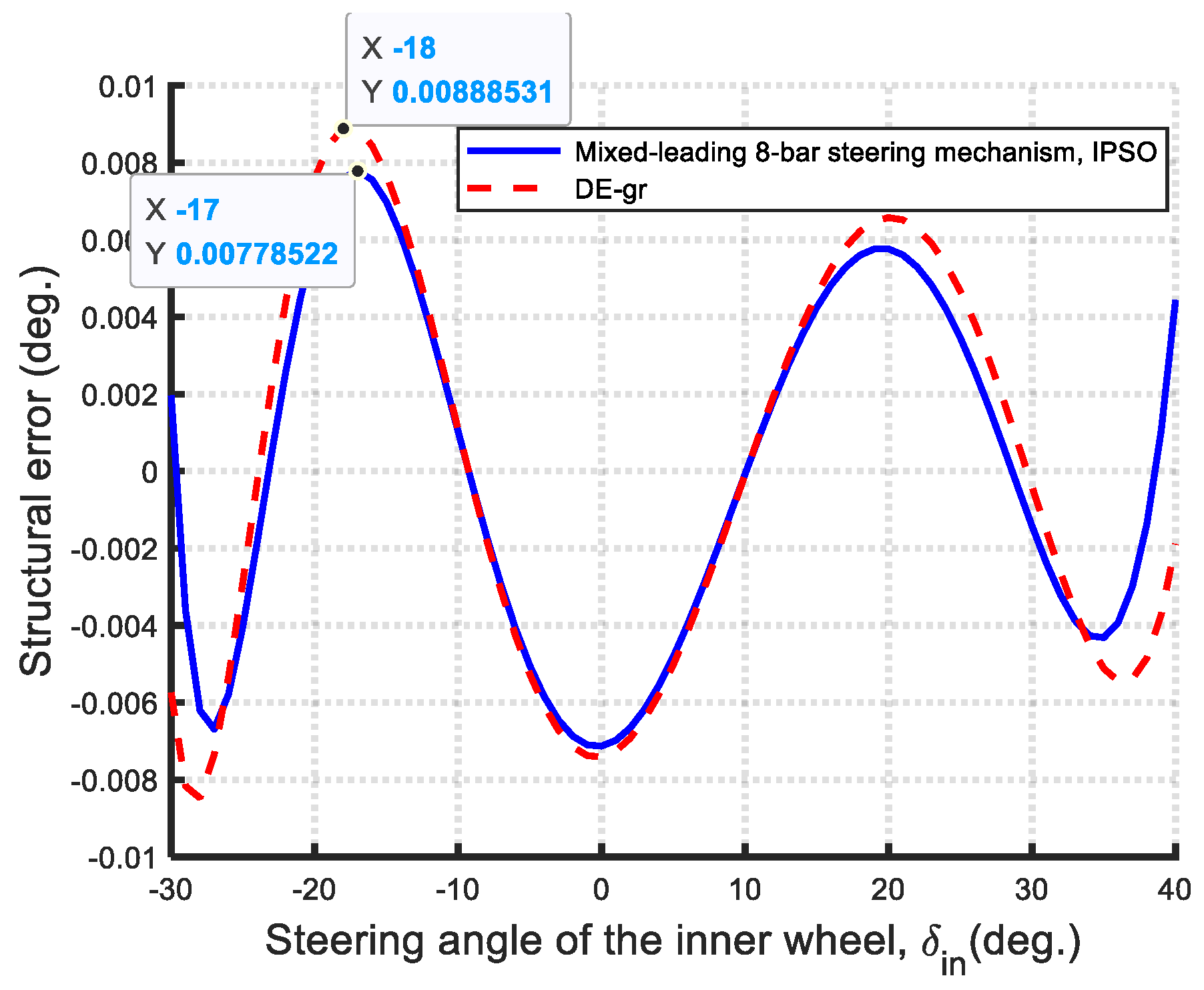
| IPSO | 6.427 × 10 −9 | 627.8516 | 660.8471 | 198.5956 | 616.1729 | 198.5956 | 239.4342 | 224.2968 | 206.2067 | 82.43298 | 7.785 × 10 −3 |
| DE-gr | 8.470 × 10 −9 | 662.7090 | 684.4976 | 204.9646 | 658.1268 | 204.9646 | 151.3256 | 154.5819 | 171.3292 | 75.8162 | 8.885 × 10 −3 |
| Feature | Leading Configuration (Assembly I) | Mixed-Leading Configuration (Assembly II) |
|---|---|---|
| Metric | DE-gr | IPSO |
| Total link lengths (excluding fixed link) | 2796.511 mm Longer (standard) | 2266.162 mm Shorter (optimized) |
| Weight/mass | Higher | Lower (lighter) |
| Maximum steering error/steering accuracy | 0.1038° Good (highest with DE-gr) | 0.007785° Excellent (highest with IPSO) |
| Mech. advantage | Highly linear and stable | Moderate |
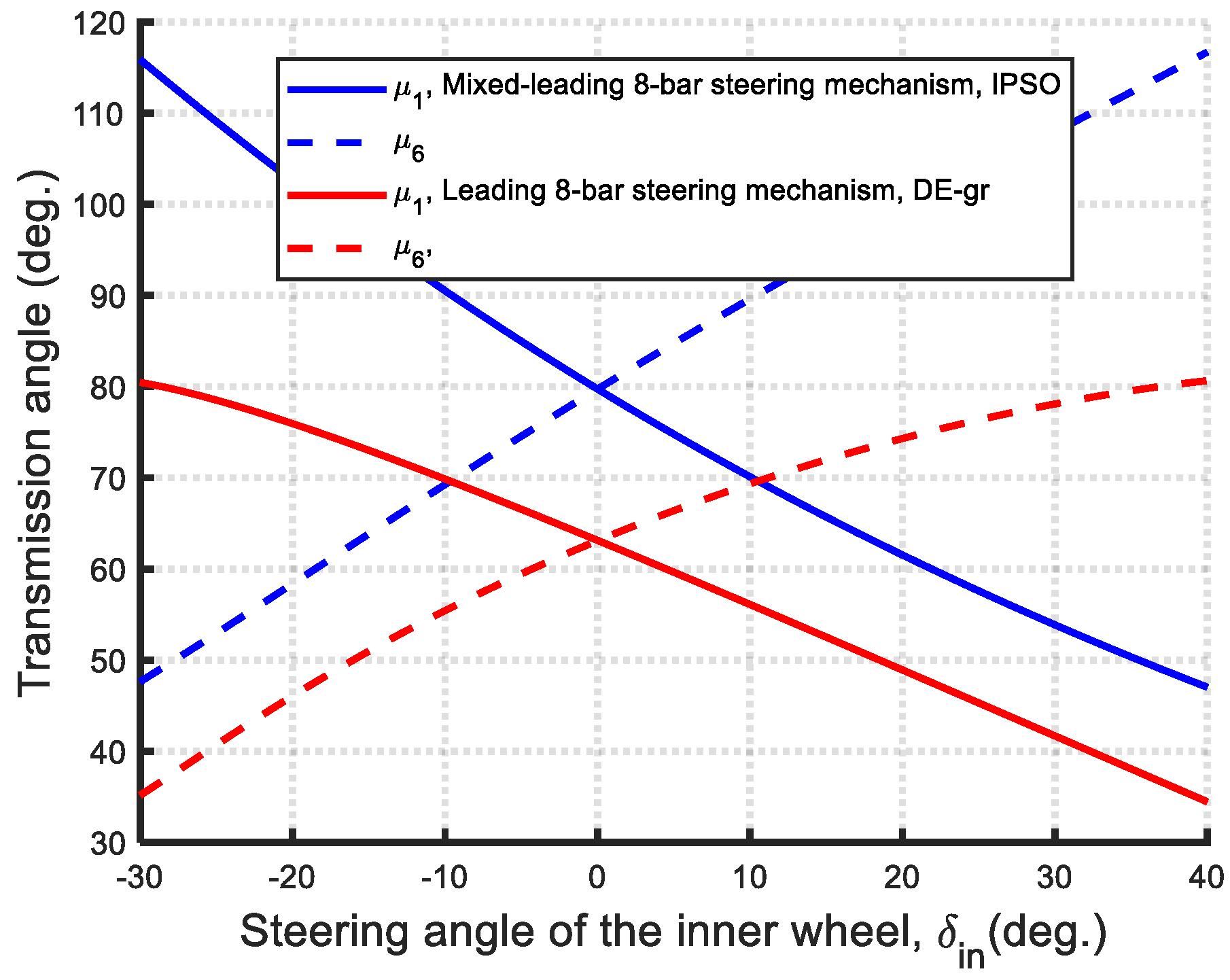
| Primary transmission angles (μ1, μ6) | Best at near extremes | Best in main range (−20° to 25°) |
| Design priority | Precision focused | Precision and mass optimized |
Disclaimer/Publisher’s Note: The statements, opinions and data contained in all publications are solely those of the individual author(s) and contributor(s) and not of MDPI and/or the editor(s). MDPI and/or the editor(s) disclaim responsibility for any injury to people or property resulting from any ideas, methods, instructions or products referred to in the content. |
© 2026 by the authors. Licensee MDPI, Basel, Switzerland. This article is an open access article distributed under the terms and conditions of the Creative Commons Attribution (CC BY) license.
Share and Cite
Kang, Y.-H.; Pang, D.-C. Dimensional Synthesis and Optimization of Leading and Mixed-Leading Double Four-Bar Steering Mechanisms: A Comparative Metaheuristic Approach. Machines 2026, 14, 445. https://doi.org/10.3390/machines14040445
Kang Y-H, Pang D-C. Dimensional Synthesis and Optimization of Leading and Mixed-Leading Double Four-Bar Steering Mechanisms: A Comparative Metaheuristic Approach. Machines. 2026; 14(4):445. https://doi.org/10.3390/machines14040445
Chicago/Turabian StyleKang, Yaw-Hong, and Da-Chen Pang. 2026. "Dimensional Synthesis and Optimization of Leading and Mixed-Leading Double Four-Bar Steering Mechanisms: A Comparative Metaheuristic Approach" Machines 14, no. 4: 445. https://doi.org/10.3390/machines14040445
APA StyleKang, Y.-H., & Pang, D.-C. (2026). Dimensional Synthesis and Optimization of Leading and Mixed-Leading Double Four-Bar Steering Mechanisms: A Comparative Metaheuristic Approach. Machines, 14(4), 445. https://doi.org/10.3390/machines14040445