1. Introduction
Autonomous mobile robots have become a core technology for modern automation, particularly in intralogistics, industrial inspection, and indoor service applications. Advances in sensing, embedded computation, and control have accelerated the deployment of such systems, while wheeled mobile robots remain a preferred solution due to their mechanical simplicity, cost-effectiveness, and favorable energy efficiency in structured environments [
1,
2,
3,
4,
5].
Within this class, omnidirectional locomotion architectures are attractive because they enable holonomic motion, i.e., independent control of longitudinal and lateral translations as well as yaw rotation. This capability improves maneuverability in constrained spaces and supports precise alignment and docking operations while reducing the need for turning maneuvers typical of differential-drive platforms. Omnidirectional motion is commonly achieved using specialized wheels, such as omni wheels or mecanum wheels, arranged in three-wheel or four-wheel configurations. Each architecture exhibits specific trade-offs related to kinematic conditioning, stability, vibration, slip sensitivity, and overall energetic performance [
6,
7,
8,
9,
10,
11,
12,
13,
14,
15,
16,
17,
18,
19,
20].
The recent literature on mobile robots and omnidirectional locomotion can be viewed in chronological progression. Earlier review-type studies established the broader context of mobile-robot navigation, motion planning, and energy-aware trajectory analysis for wheeled platforms [
1,
2,
3,
4,
5]. Subsequent studies further clarified the relevance of omnidirectional mechanisms and architecture-dependent locomotion trade-offs, while also expanding research on autonomous mobile robots, sensor integration, and general platform design [
10,
11,
12,
13,
14,
15,
20]. These studies provided an important conceptual basis for understanding the advantages and limitations of omni-wheel and mecanum-wheel locomotion systems.
Subsequent research increasingly focused on energy consumption, power estimation, and experimentally relevant performance indicators for mobile robots [
21,
22,
23,
24,
25,
26]. During this period, several studies also addressed benchmarking repeatability through kinematic calibration, odometry refinement, and sensor-based monitoring approaches [
13,
27,
28,
29]. In parallel, our previous work experimentally validated a Hall-sensor-based current-monitoring method integrated into a powered wheel module, demonstrating its suitability for drive-level current and power assessment [
30]. In addition, related studies developed decision-support and dynamic-model-based approaches for locomotion and actuation selection within the same modular robotic framework [
31,
32]. These previous contributions provide the methodological basis for extending the present power benchmarking study to additional omnidirectional configurations within the same modular platform.
Recent studies further extended the field toward higher-fidelity omnidirectional modeling, control, and power-oriented analysis [
12,
13,
14,
15,
20,
33,
34]. These include contributions on nonlinear and sliding-mode control of omnidirectional platforms, recent analyses of wheel–ground interaction and rolling resistance, and generalized kinematic modeling approaches for wheeled mobile robots [
12,
13,
14,
15,
20,
33,
34,
35]. Despite these advances, relatively few studies report experimentally validated benchmarking between three-omni-wheel and four-omni-wheel architectures implemented on the same modular platform and evaluated under comparable conditions. In addition, the present study includes a four-omni-wheel baseline configuration evaluated under comparable benchmark conditions in order to support a direct architecture-level comparison. This gap motivates the present study, which combines a constrained multibody dynamic model, current-based experimental power estimation, and a non-redundant comparison against a four-omni-wheel baseline dataset obtained on the same modular platform.
In this study, the three-omni-wheel configuration is fully presented and experimentally benchmarked on the same modular robot platform under comparable test conditions. The four-omni-wheel configuration is used strictly as a reference baseline dataset and is reported only in summary tables in order to avoid unnecessary duplication and to maintain the focus of the paper on the proposed three-omni-wheel architecture. Power benchmarking is performed by estimating electrical power from measured motor currents and the supply voltage, enabling direct comparison between simulation-based predictions and experimental measurements over a standardized motion scenario.
Contributions of this work: This paper presents the design and integration of a three-omni-wheel (90° roller) locomotion configuration within a modular mobile robot platform. A dedicated kinematic and dynamic model is developed for the proposed three-wheel architecture and used for power analysis. Experimental benchmarking is performed using current measurement and electrical-power estimation, consistent with our previously validated drive-module monitoring approach [
30]. The work reports and discusses key power indicators obtained from both simulation and experiments, including model-to-experiment discrepancies. A non-redundant, table-based comparison is then provided against a four-omni-wheel configuration employed as a baseline, using the same benchmark logic and current-based power-estimation framework adopted for the proposed three-omni-wheel architecture. Finally, the paper discusses design trade-offs between the two omnidirectional architectures in terms of power demand, modeling accuracy, and platform mass, supporting architecture selection for modular mobile robots.
Paper organization: The remainder of this paper is structured as follows.
Section 2 presents the modular robot platform, the proposed three-omni-wheel configuration, the modeling framework, and the experimental methodology adopted for benchmarking.
Section 3 reports the simulation and experimental results obtained for the proposed configuration, including the current and power analysis.
Section 4 discusses the agreement between the simulation and experiment and provides the comparison with the four-omni-wheel baseline. Finally,
Section 5 summarizes the main conclusions and outlines future research directions.
2. Materials and Methods
This section presents the modular mobile robot platform used as the experimental testbed (materials) and the methodological description of the considered locomotion configurations (methods). The focus is placed on the new three-omni-wheel configuration (90° rollers). The four-omni-wheel configuration is introduced strictly as a baseline reference, and its numerical results are used only for comparative tables in
Section 4; therefore, no baseline figures or plots are reproduced in this section.
2.1. Platform Architecture
The platform investigated in this work is a reconfigurable modular mobile robot assembled from mechanically and electrically connectable modules. The central element is a hexagonal main module that simultaneously acts as a structural hub and as an integration node for secondary modules. Around this hub, locomotion modules (drive-wheel modules) and, when needed, auxiliary modules can be attached, enabling multiple robot structures without redesigning the entire chassis. This approach is essential for fair comparisons between locomotion architectures because the mechatronic foundation can remain unchanged, while the dominant variable is the locomotion configuration.
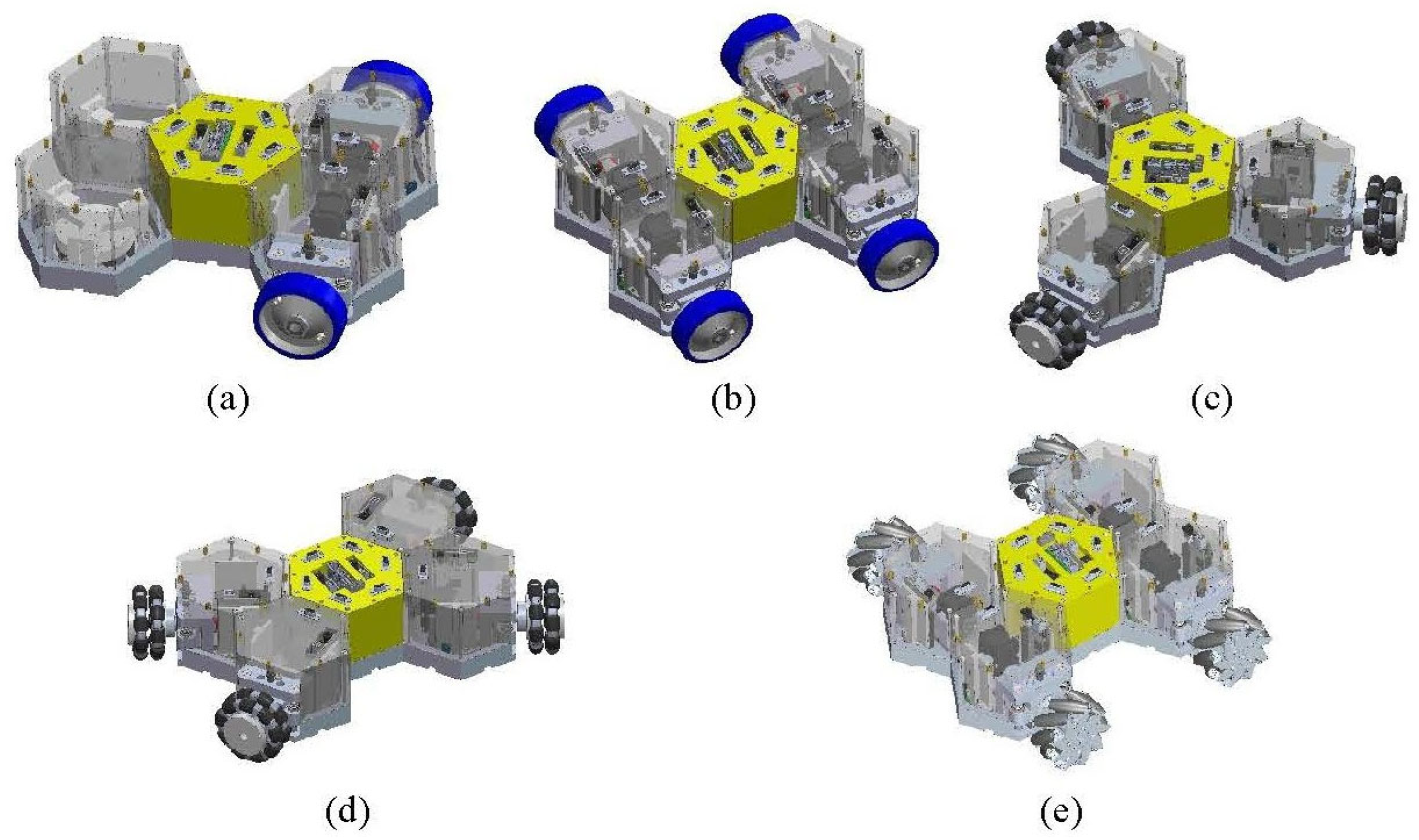
The flexibility of the modular concept is illustrated in
Figure 1, which shows the possible configurations of the same modular platform (including the three-omni-wheel and the four-omni-wheel variants, as well as conventional and mecanum alternatives).
From a mechanical perspective, the platform is designed so that each module is as independent as possible (structurally and functionally), can be connected repeatedly and reliably, and results in modular structures with reduced mass and inertia at the module level. These design principles support rapid reconfiguration and reduce unwanted variability across experiments when only the locomotion architecture is changed.
The actuation system is implemented at the level of the drive-wheel modules. Each wheel module integrates a motor–transmission–wheel assembly, enabling the same platform to be configured with different numbers and placements of drive modules while preserving a common integration approach. This modular actuation architecture also supports energy-related assessments because it naturally enables interpreting results at the actuator level (per wheel) and then aggregating them at the platform level.
Table 1 summarizes the platform architecture at a conceptual level, highlighting the key subsystems and their role in enabling consistent experimental configurations.
2.2. Three-Omni-Wheel Locomotion Configuration
The proposed configuration employs three omnidirectional wheels with rollers arranged at 90°, mounted radially with 120° spacing around the platform. This geometry leads to a holonomic architecture in which planar translation and yaw rotation can be generated by appropriately combining the three wheel angular velocities. Such a solution is particularly suitable when high maneuverability is required, including operation in confined environments, because the translation direction does not require prior alignment of the platform orientation.
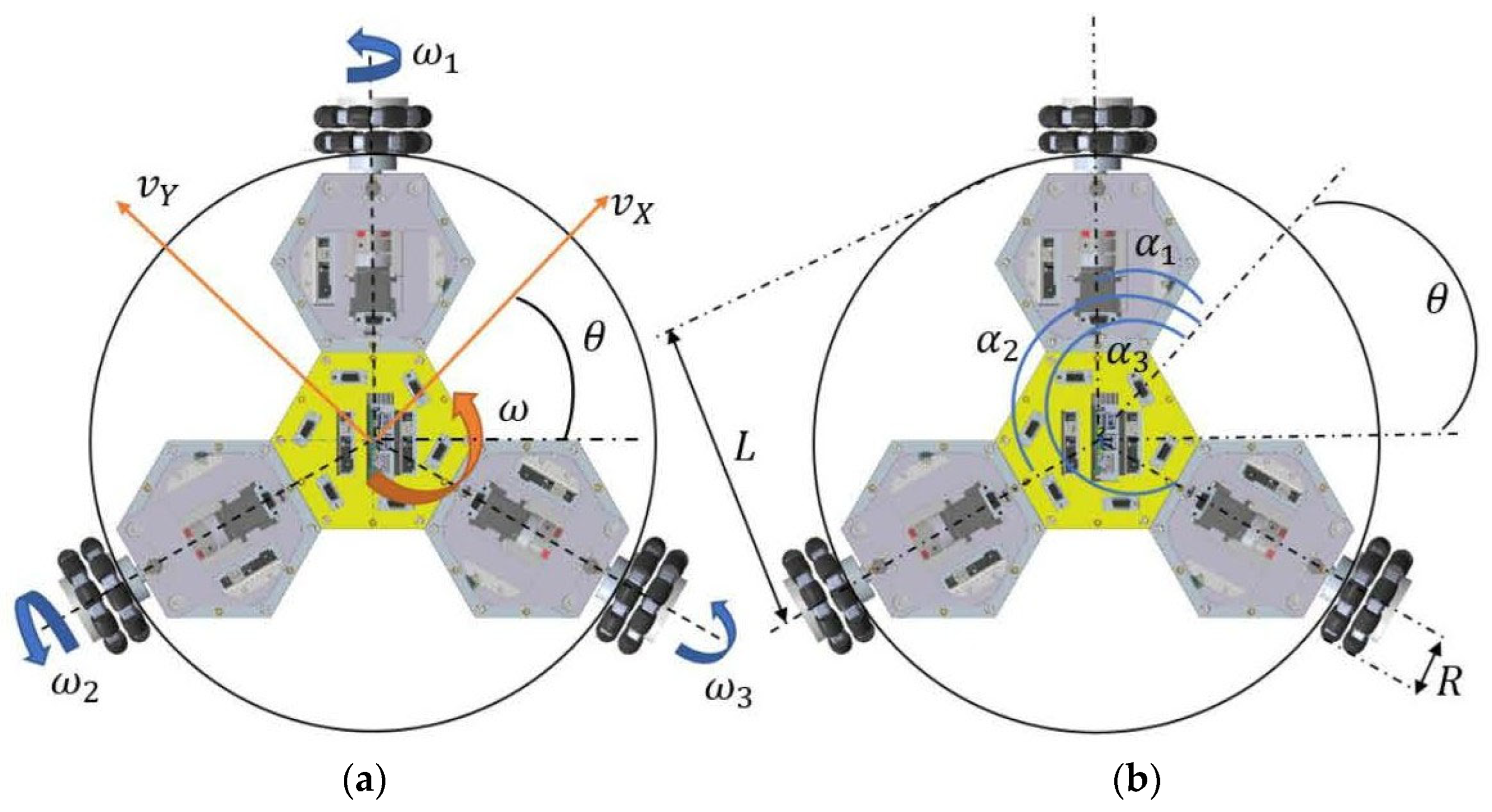
The wheel placement, reference frames, and the definition of the wheel and body angles used in the kinematic model are shown in
Figure 2.
To fully define the geometry and motion variables, the model uses: and (planar linear velocities); (platform yaw rate); (wheel angular velocities); (a characteristic dimension between the platform center and the wheel axis in the model); (wheel radius); (platform orientation); and (wheel orientation/placement angles).
Table 2 defines the notation adopted in this paper to ensure consistency between modeling and implementation.
The kinematic model is expressed through forward kinematics (mapping wheel velocities to platform velocity) and inverse kinematics (mapping platform velocity to wheel velocities). The forward kinematics is given by:
The inverse kinematics is:
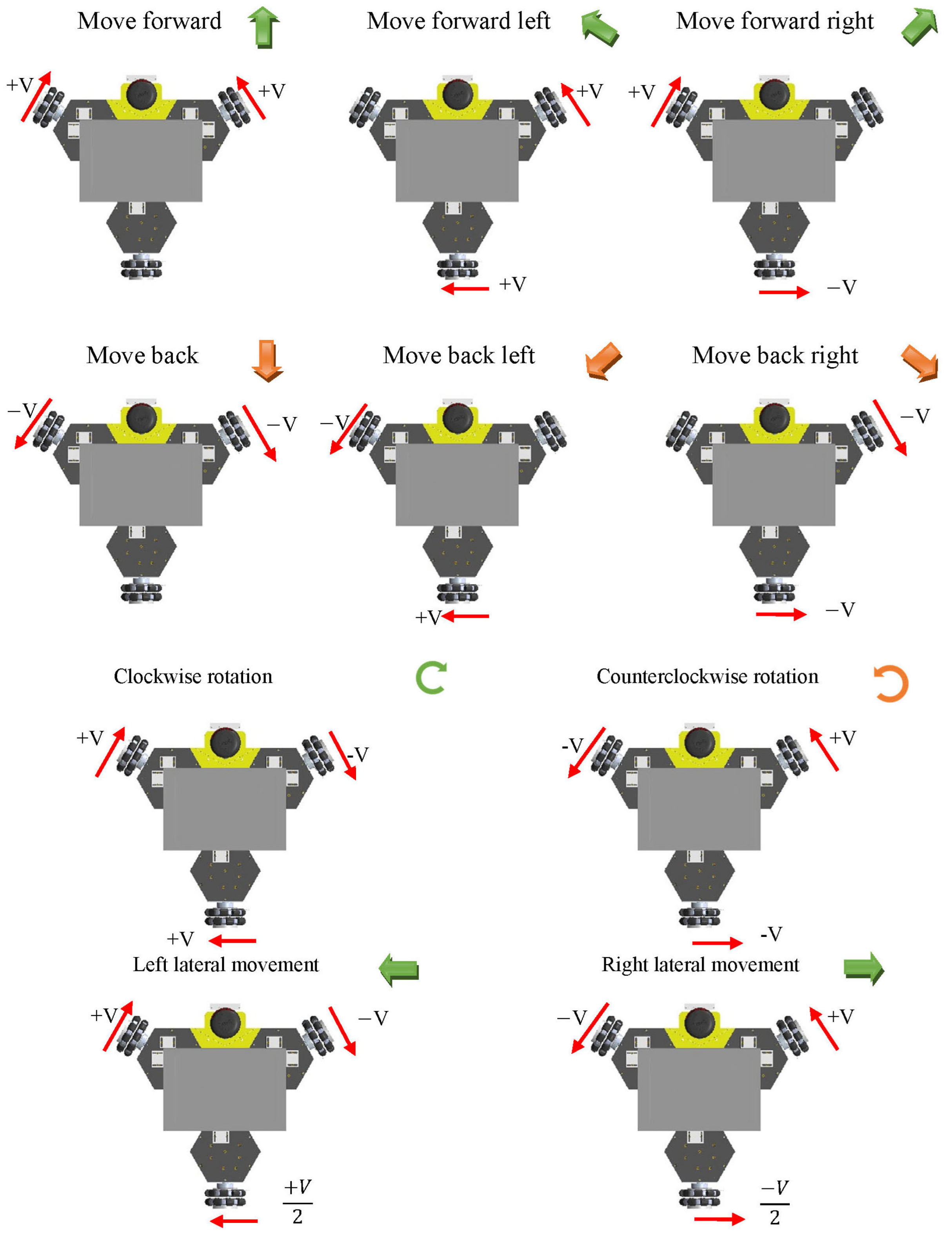
Equations (1) and (2) represent the kinematic Jacobian relationships of the three-omni-wheel platform, and are derived from the ideal rolling constraints at the wheel–ground contact. For each omnidirectional wheel, the rolling condition is imposed along the driven wheel direction, while the passive rollers allow relative motion in the transverse direction. Therefore, the contact model is formulated through velocity-level constraints, which define the admissible relationship between the platform twist and the wheel angular velocities. Under the symmetric 120° arrangement adopted in this work, these constraints lead to a nonsingular mapping between body velocities and wheel speeds, which enables both forward- and inverse-kinematic transformations. In the present study, Equations (1) and (2) are used to define the motion command (desired platform velocities) and to compute the wheel-velocity references required both in simulation and in experiments; however, they do not by themselves represent the full dynamic model of the robot. The motion capabilities enabled by the proposed configuration are illustrated in
Figure 3.
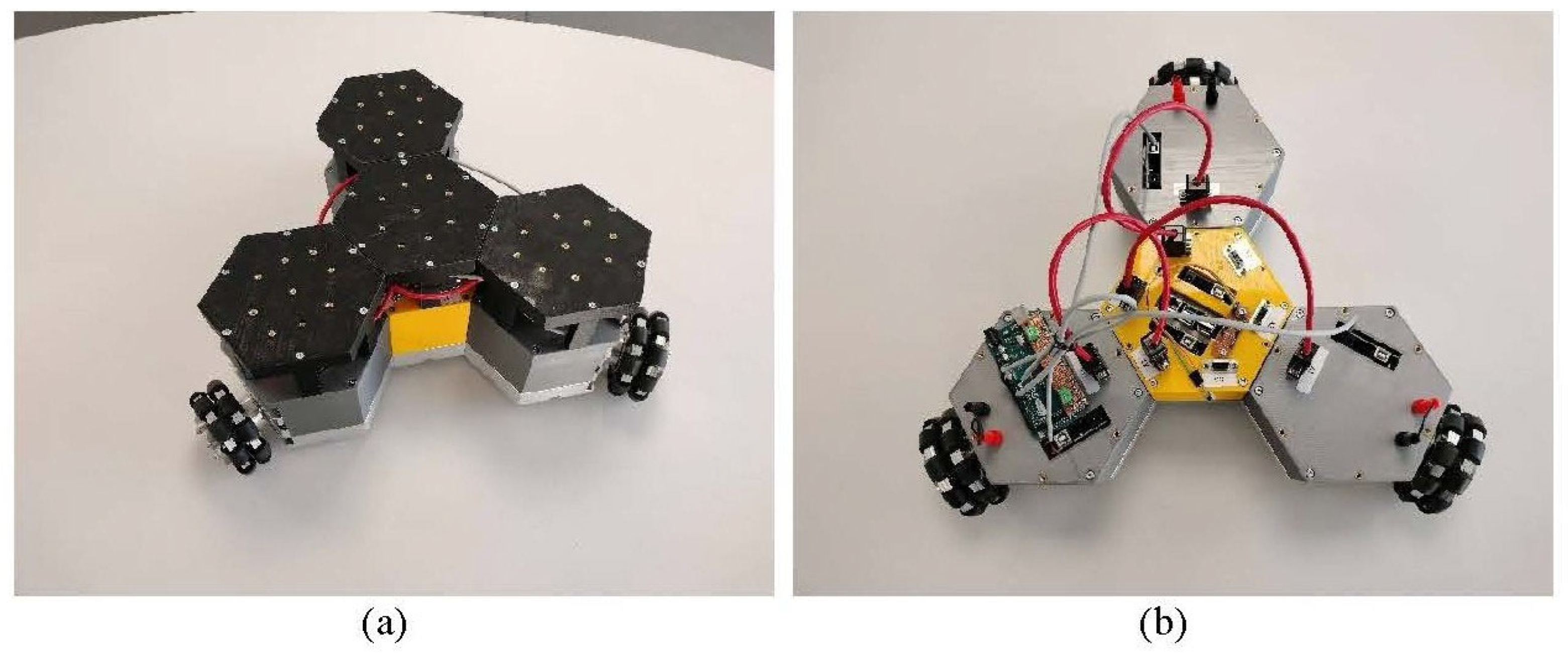
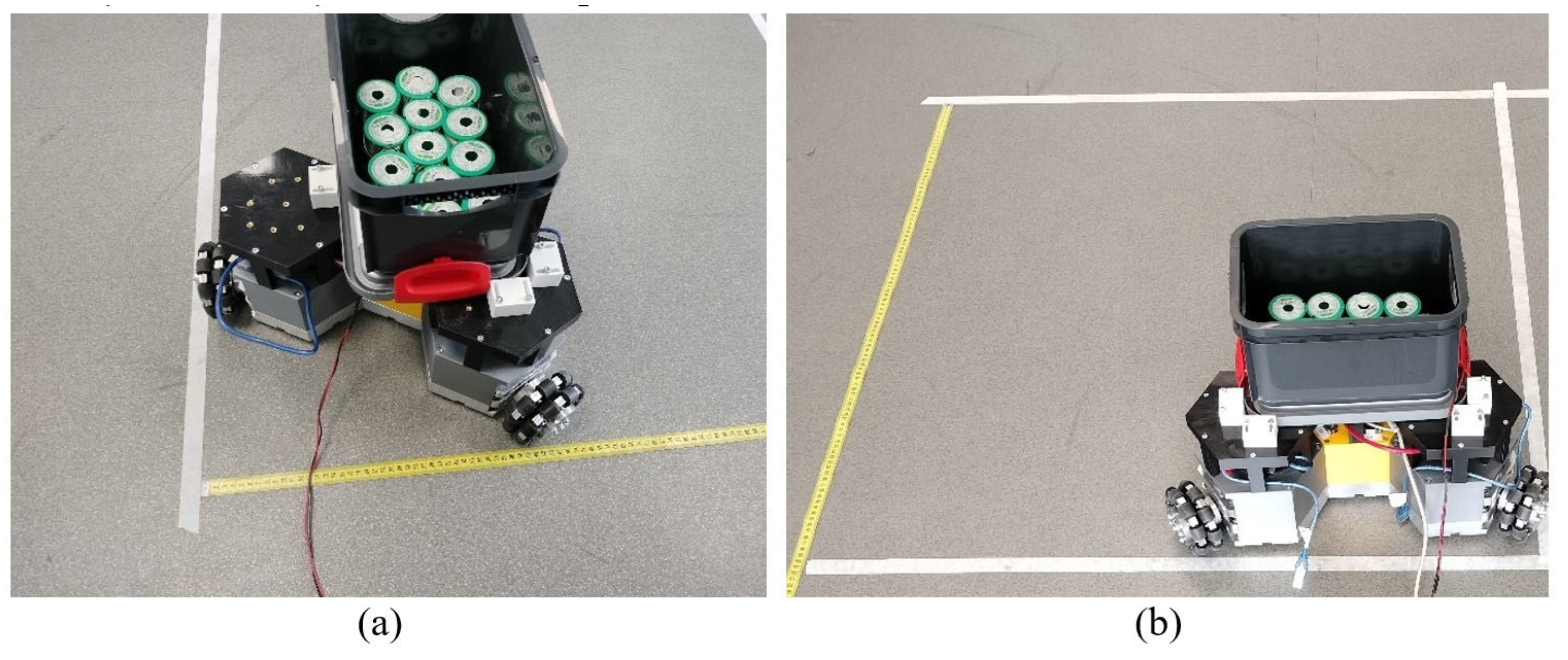
To anchor the configuration description in the physical implementation, the experimental prototype used for validation is shown in
Figure 4, where the modular structure and the integration of the three drive-wheel modules around the main module can be observed.
For reproducibility,
Table 3 summarizes a minimal set of technical characteristics of the three-omni-wheel prototype that are relevant for interpreting the model and aligning experimental results (e.g., wheel type, supply voltage, and key dimensions).
2.3. Four-Omni-Wheel Baseline Configuration
The four-omni-wheel configuration (90° rollers) is considered in this paper strictly as a baseline reference for comparison. This variant represents an alternative locomotion architecture of the same modular platform, obtained by using four drive-wheel modules instead of three. Within the present study, the baseline serves as a quantitative reference point for interpreting the power-related and motion-related behavior of the new three-omni-wheel configuration under standardized motion conditions. In this way, the comparison is performed at the robot level under a common benchmark logic, which supports a clearer interpretation of the differences in current and power demand.
To avoid redundancy, this section does not include baseline figures and does not reproduce baseline plots. The numerical data associated with the four-omni-wheel baseline (parameters and outcomes) are reported only in
Section 4, where they are directly contrasted with the results obtained for the proposed three-omni-wheel configuration. This choice keeps the methodological presentation focused on the new architecture while preserving the essential quantitative information required for comparison.
Table 4 clarifies the baseline role in this paper and indicates where the comparative numerical values are reported.
3. Results
This section reports the results for the proposed three-omni-wheel configuration (90° rollers) implemented on the modular platform: (i) dynamic modeling in a MATLAB/Simulink–Simscape Multibody R2024a (MathWorks, Natick, MA, USA) environment (ii) simulation on a standardized benchmark (1 m square path); (iii) experimental validation on the physical prototype with motor-current acquisition; and (iv) electrical-power-consumption estimation and simulation-to-measurement comparison. The four-omni-wheel configuration is treated strictly as a baseline reference and will be used for comparison in
Section 4 using tables only (no baseline figures/plots in this section).
3.1. Dynamic Modeling (Simulink–Simscape Multibody Environment)
To clarify the relationship between the kinematic model and the dynamic simulation framework, the robot dynamics are represented in this work as a constrained multibody system. The kinematic relationships given in Equations (1) and (2) are used to generate the wheel–speed references, while the dynamic response is obtained from the numerical solution of the equations of motion of the full multibody model implemented in MATLAB/Simulink–Simscape Multibody R2024a (MathWorks, Natick, MA, USA).
In compact form, the constrained dynamics of the robot can be written as:
Subject to the velocity-level rolling constraints:
where q is the vector of generalized coordinates; M(q) is the mass matrix; C(q, q̇) contains Coriolis and centrifugal effects; g(q) is the gravity vector; τf represents frictional and dissipative effects; τm denotes the actuator torques; S is the actuation selection matrix; A(q) is the constraint matrix associated with the wheel–ground rolling conditions; and λ is the vector of constraint reactions.
In the present study, these equations are not expanded analytically for each rigid body because the robot is modeled as a CAD-consistent multibody system imported into the MATLAB/Simulink–Simscape Multibody R2024a (MathWorks, Natick, MA, USA) environment. The simulation framework numerically resolves the coupled rigid-body dynamics, joint constraints, and actuation effects during trajectory execution. The resulting torque and load quantities are then used in the actuation/current-estimation layer to predict motor currents and electrical-power demand during the benchmark motion.
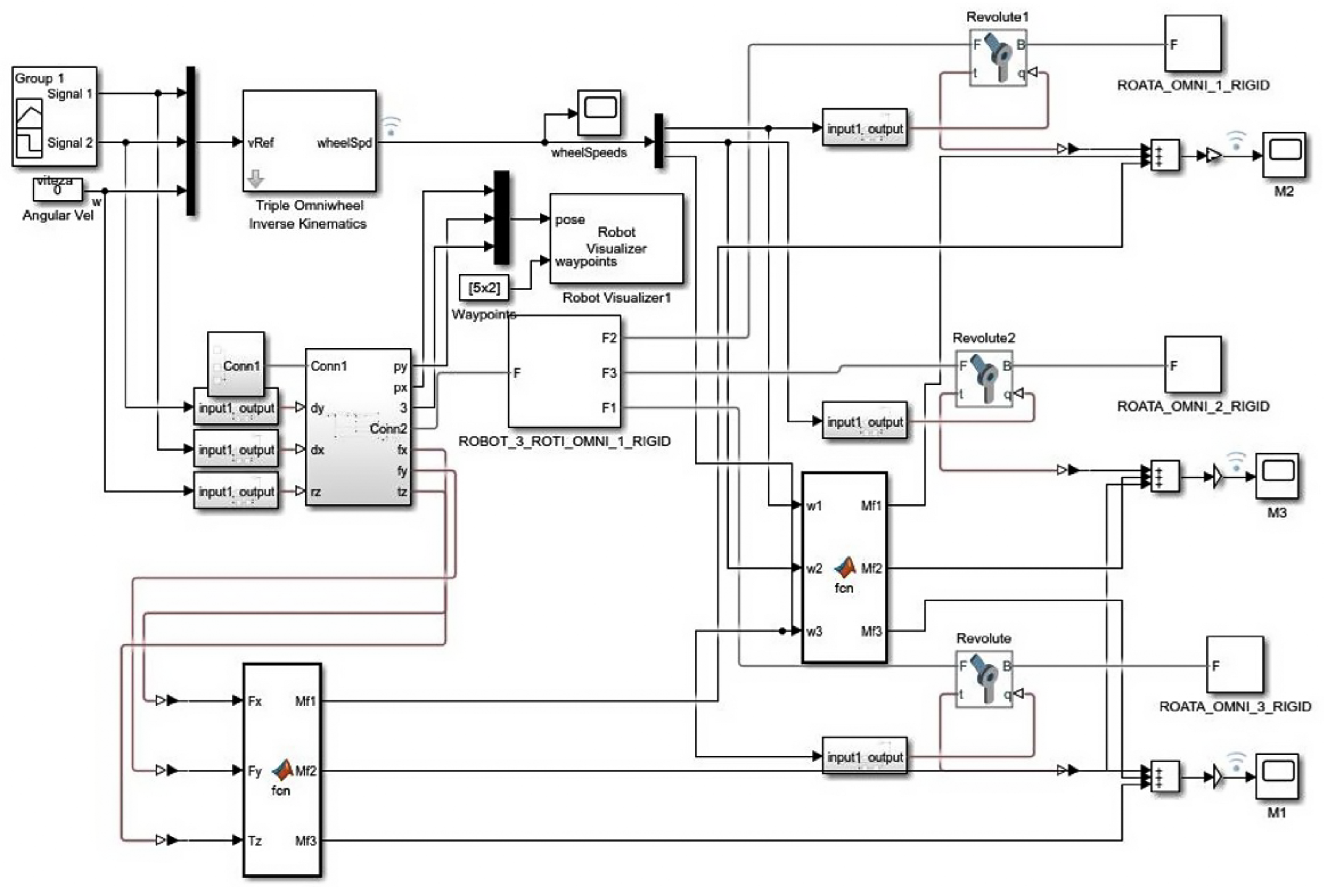
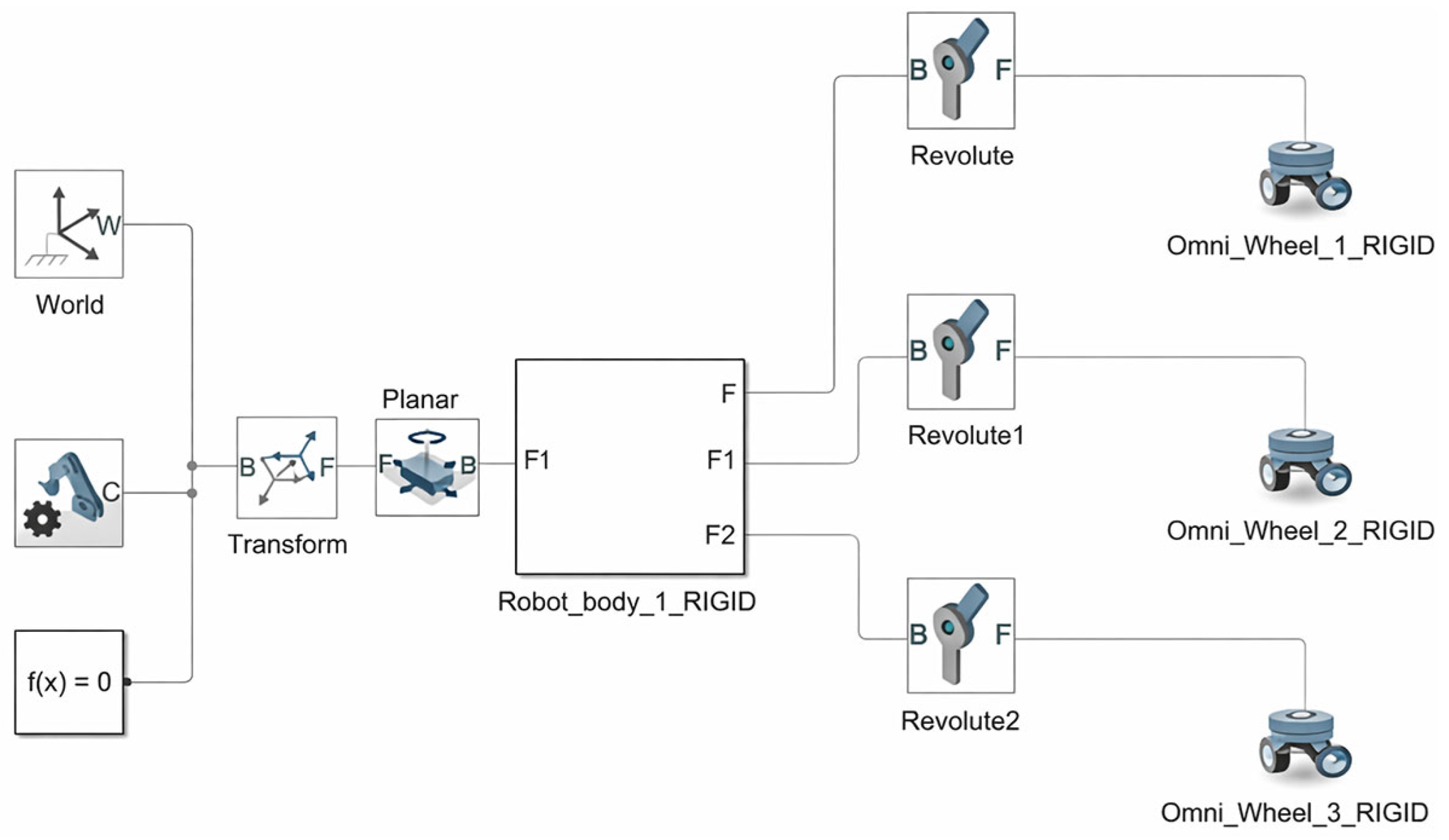
The complete dynamic multibody model of the modular mobile robot with three omnidirectional wheels is shown in
Figure 5.
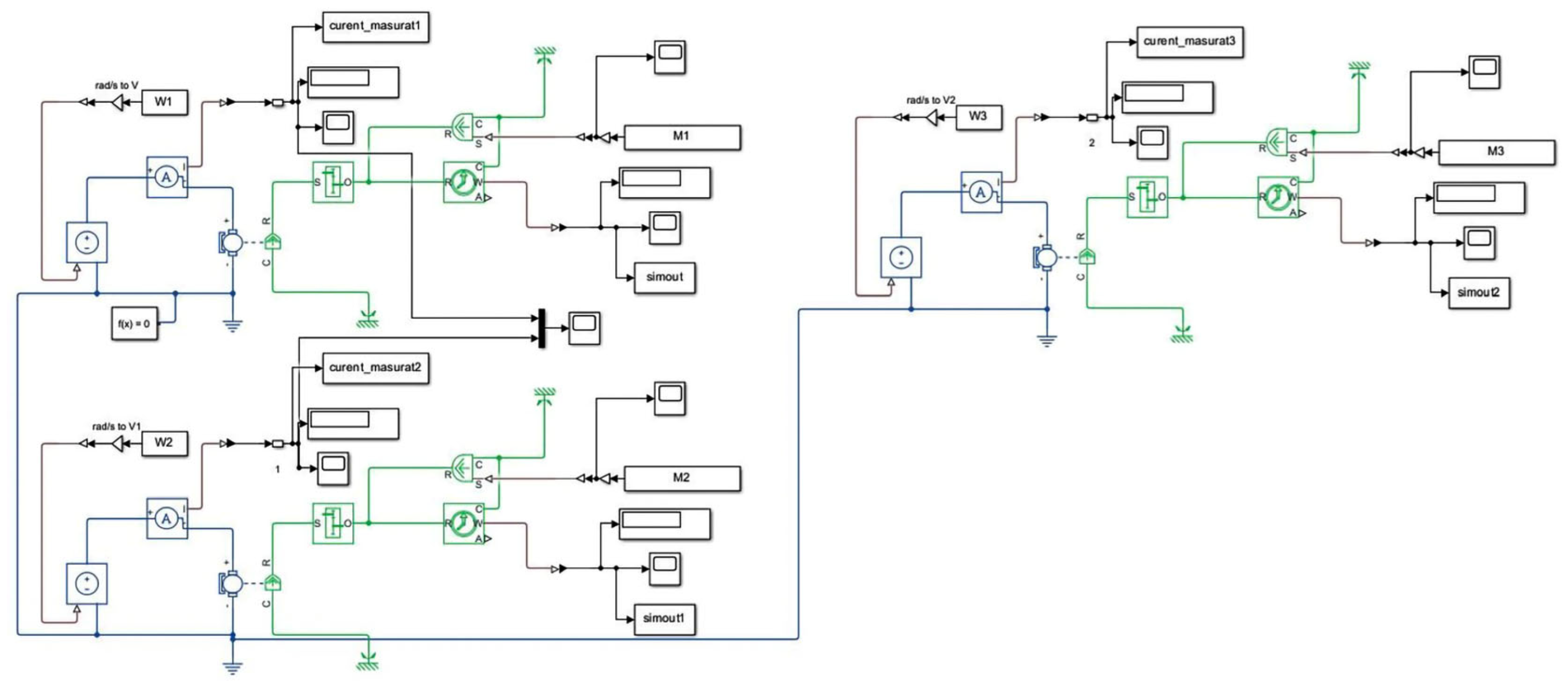
The dynamic model provides the mechanical quantities required for benchmarking, such as the motion-dependent load and torque demands during trajectory execution. These quantities are further used within a digital actuation representation in order to estimate the motor-current variation during robot motion.
The block diagram describing the actuation and current-estimation workflow used for the three-omni-wheel configuration is presented in
Figure 6.
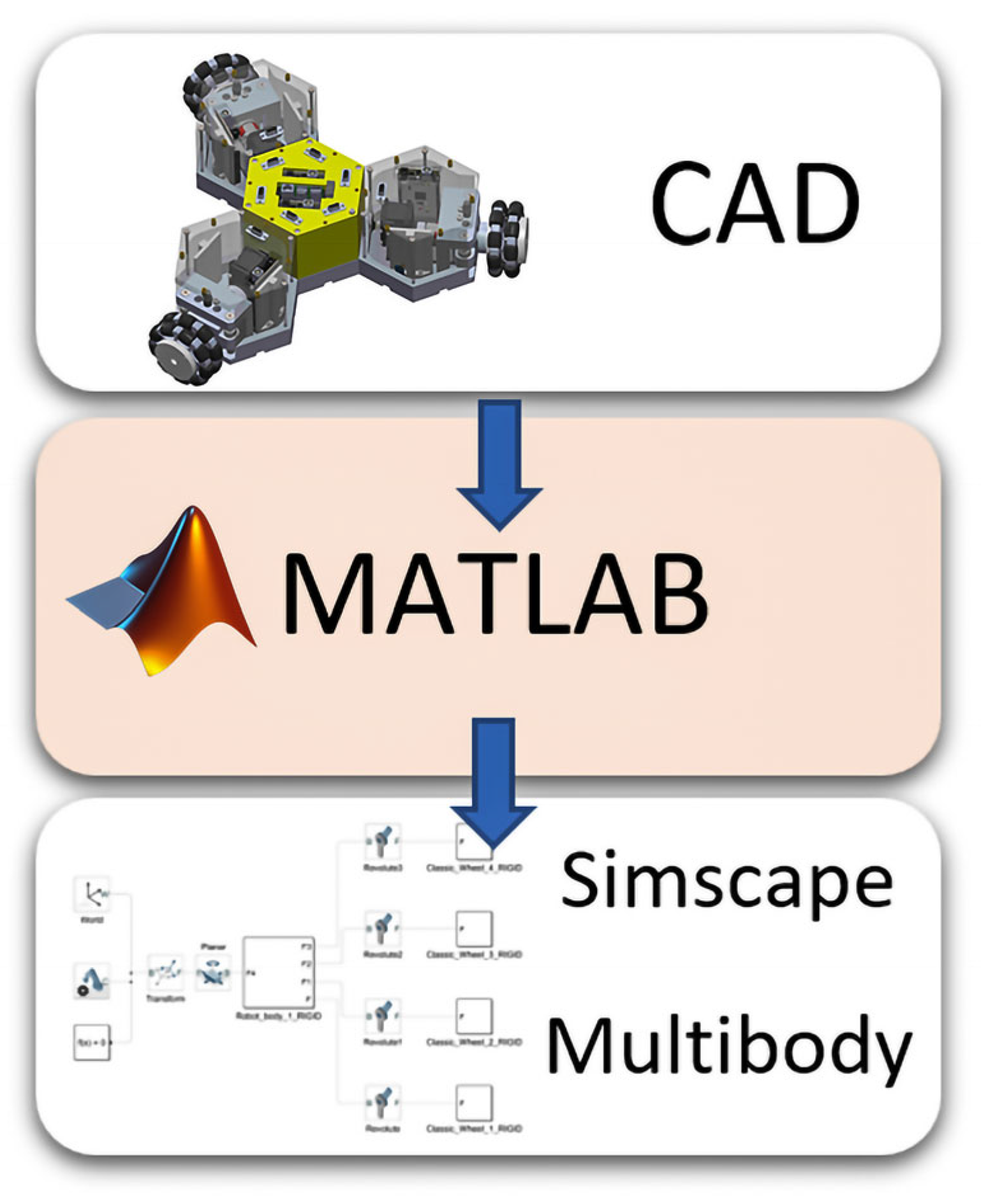
The multibody model was generated by importing the robot 3D CAD assembly into the Simscape Multibody environment. This approach ensures a consistent representation of the robot structure in simulation, including mass distribution, joint constraints, and coordinate frames.
The integration process between the CAD model and the simulation environment is illustrated in
Figure 7, and the resulting imported multibody model is shown in
Figure 8.
3.2. Simulation Results on the Standardized Benchmark
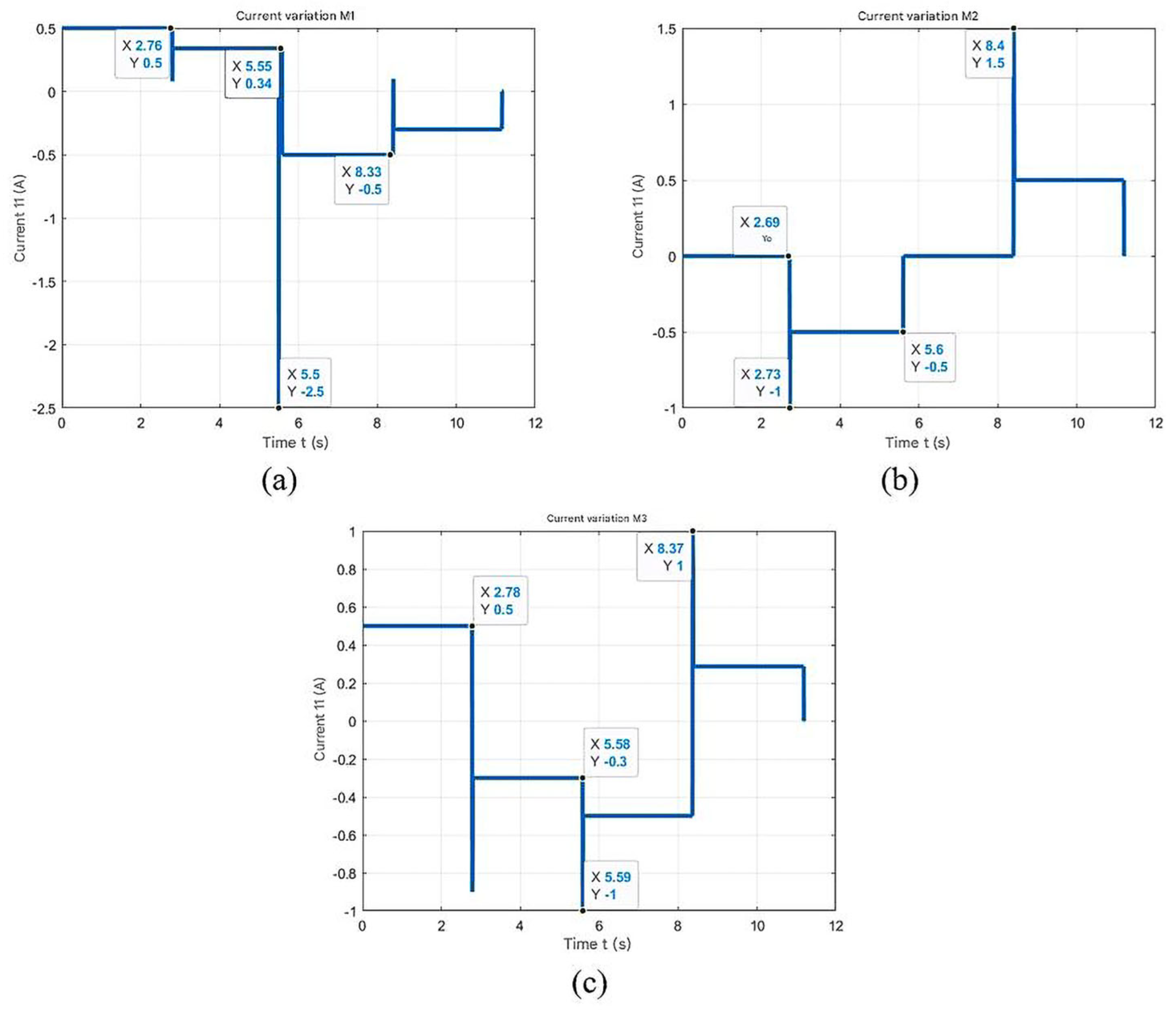
The dynamic model was simulated on a standardized benchmark trajectory consisting of a square path with a side length of 1 m, including straight segments and 90° turns. The simulated motor-current profiles for the three wheels are presented in
Figure 9.
The simulated current signals show distinct regimes associated with straight-path motion (where one wheel may remain inactive depending on the commanded direction) and transient maneuvers (direction changes/turns) where current peaks appear. To support consistency between the simulation and experiment, the benchmark duration difference is summarized in
Table 5; for the three-omni-wheel configuration, the time deviation is 1.58%.
3.3. Experimental Validation: Measured Currents and Comparison to Simulation
Experimental tests were carried out on the physical prototype of the modular mobile robot configured with three omnidirectional wheels equipped with 90° rollers, with the aim of validating the proposed dynamic model under real operating conditions. To ensure a consistent comparison between the simulation and experiment, the robot was commanded to follow the same predefined square-path benchmark adopted in the numerical study. During test execution, the current absorbed by each of the three drive motors (M1, M2, and M3) was monitored continuously using Hall-effect current sensors integrated into the motor supply lines. This approach enabled the acquisition of time-dependent current profiles associated with the different motion phases of the benchmark, including straight segments, directional transitions, and cornering maneuvers. The experimental procedure was designed to reproduce, as closely as possible, the operating assumptions considered in the simulation environment, particularly in terms of path geometry, control sequence, and supply conditions. Care was also taken to maintain stable test conditions throughout the measurements in order to reduce the influence of external disturbances, such as uneven floor contact, wheel slip, or unintended mechanical interactions. The acquired current signals were then used to estimate the instantaneous electrical-power demand of the robot and to derive global power indicators over the full benchmark cycle. These measurements provided the experimental basis for assessing the predictive capability of the dynamic model, and for quantifying the agreement between simulated and measured current and power behavior. The experimental setup and the physical prototype positioned on the benchmark path are illustrated in
Figure 10.
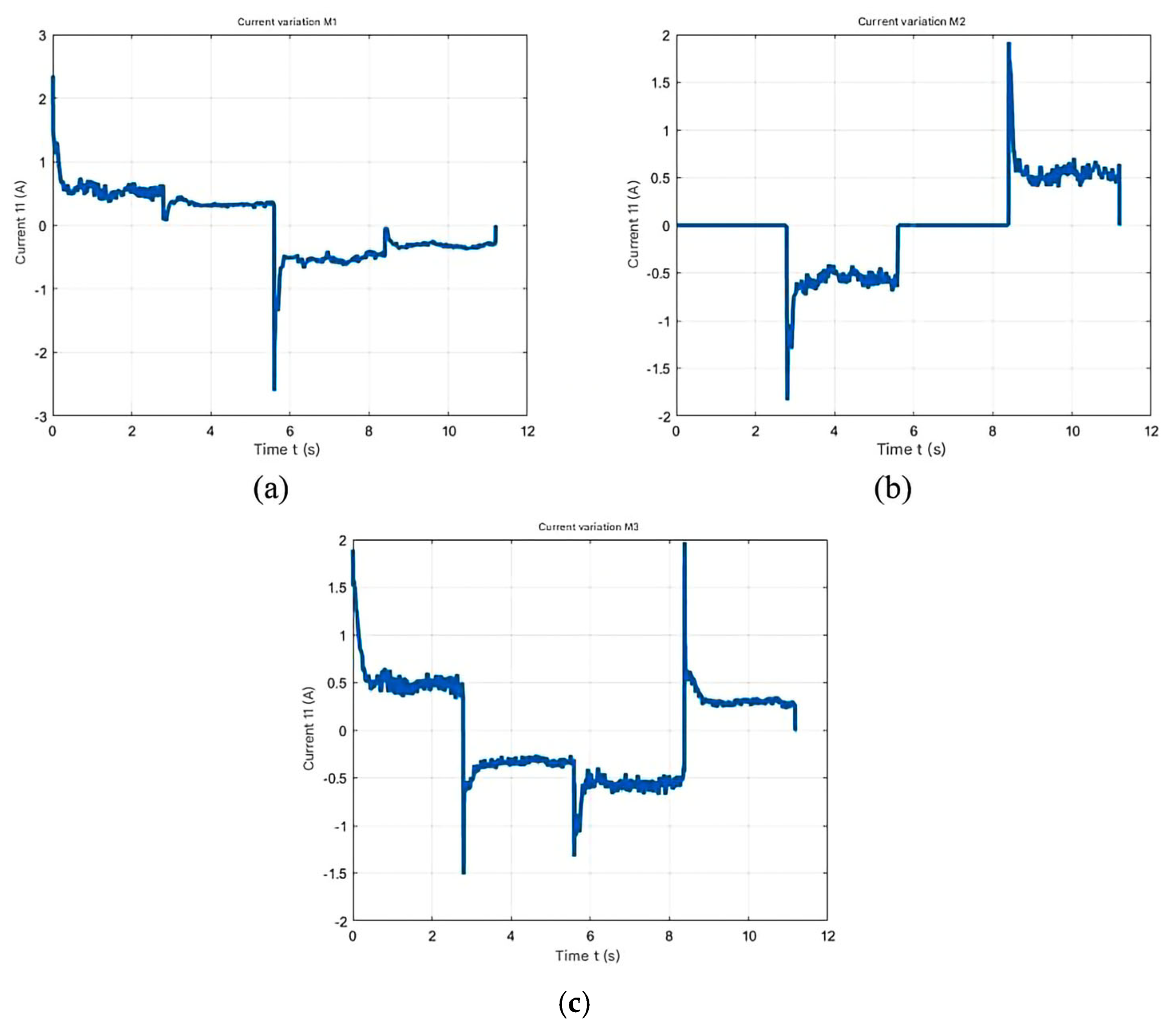
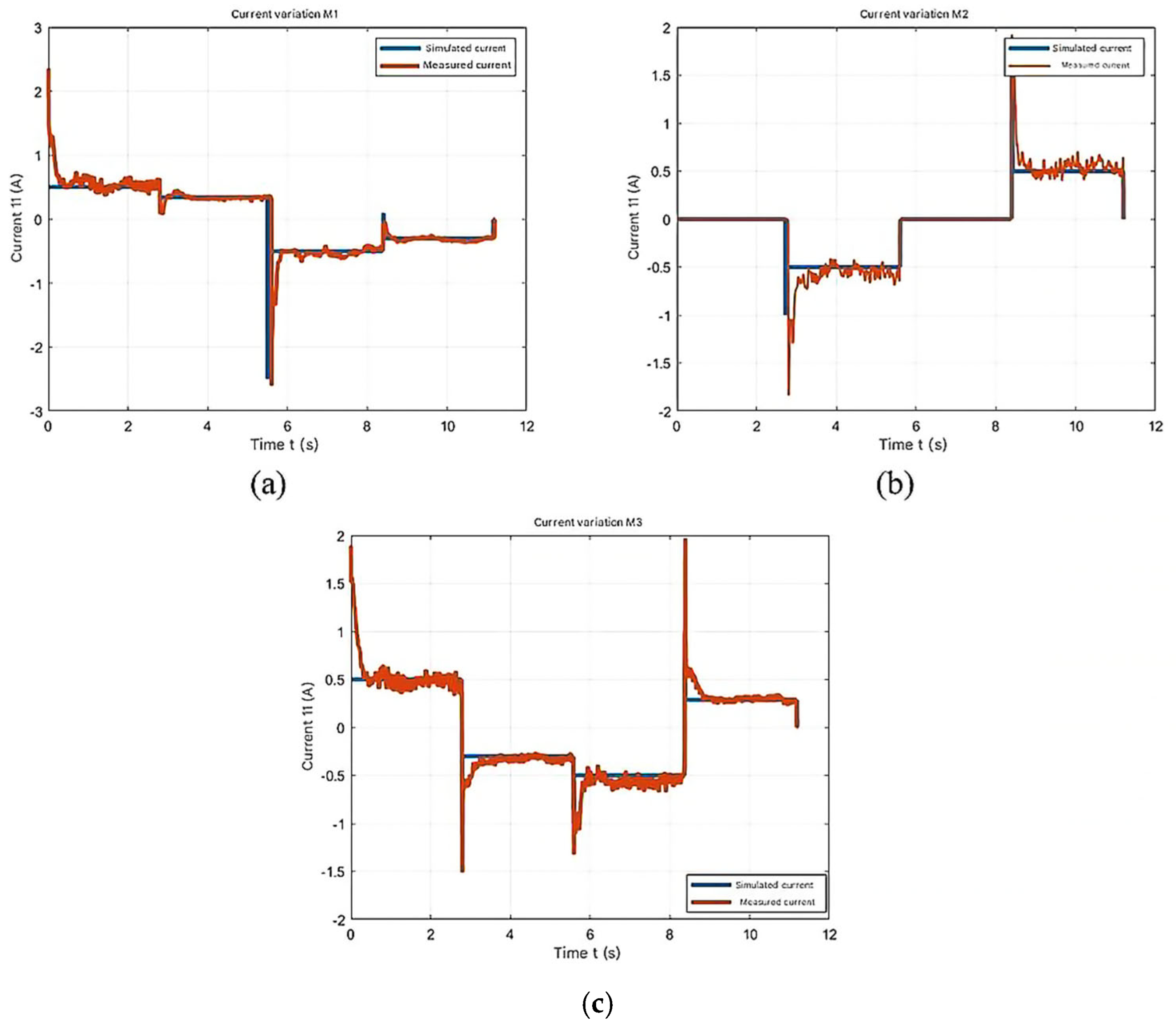
The measured motor-current profiles during the benchmark execution are presented in
Figure 11.
For a compact quantitative assessment of the discrepancies observed in
Figure 12,
Table 6 summarizes the maximum, mean, and minimum current values for each motor, together with the reported relative percentage errors.
3.4. Electrical-Power Consumption: Estimation and Simulation-to-Measurement Balance
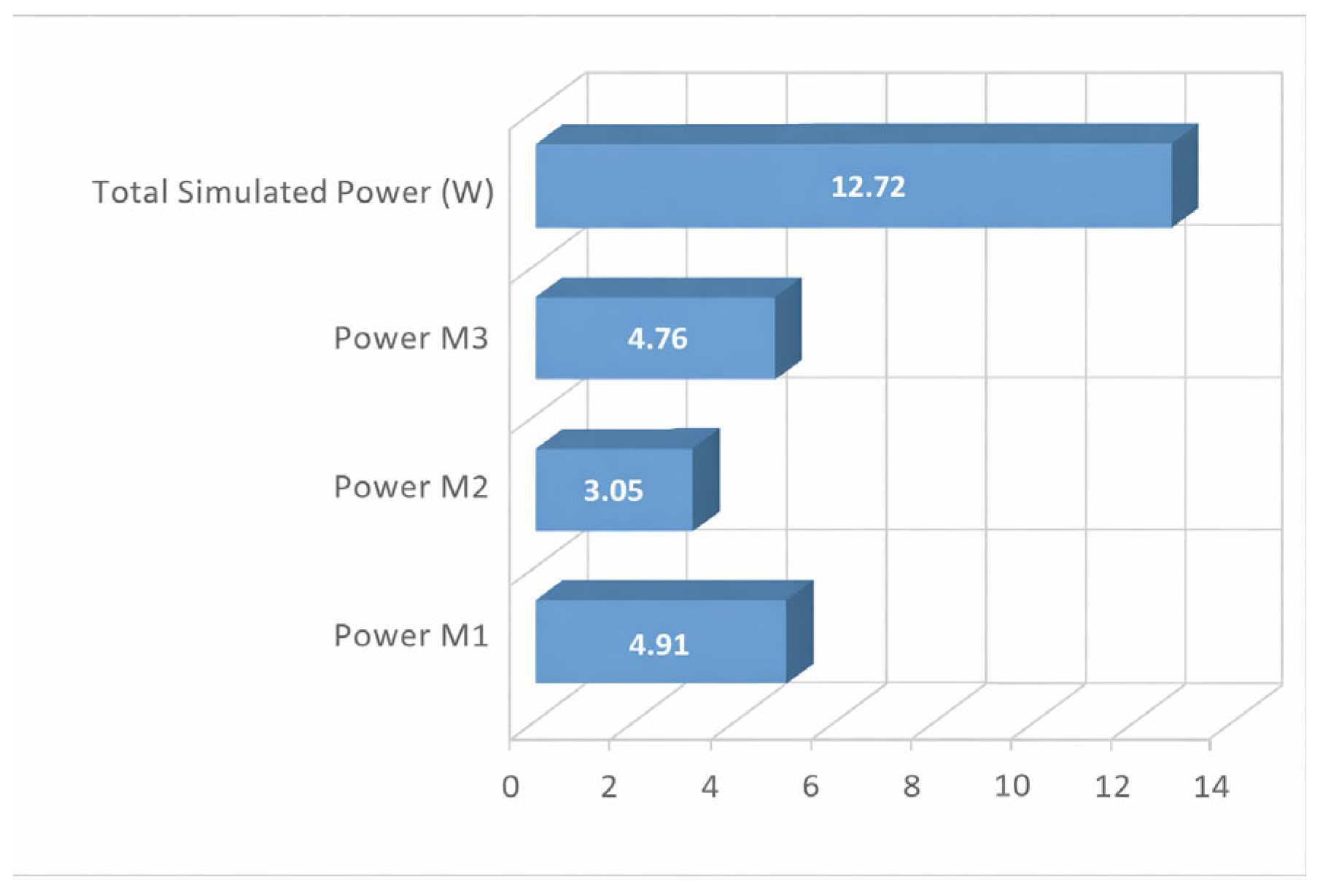
Electrical-power consumption was estimated based on the simulated and measured motor currents and the DC supply voltage of the actuation system. The simulated electrical-power consumption during the benchmark trajectory is illustrated in
Figure 13, while the measured electrical-power consumption is shown in
Figure 14.
The current and electrical-power balance (simulation vs. measurement), reported at the motor level and at the robot level, is summarized in
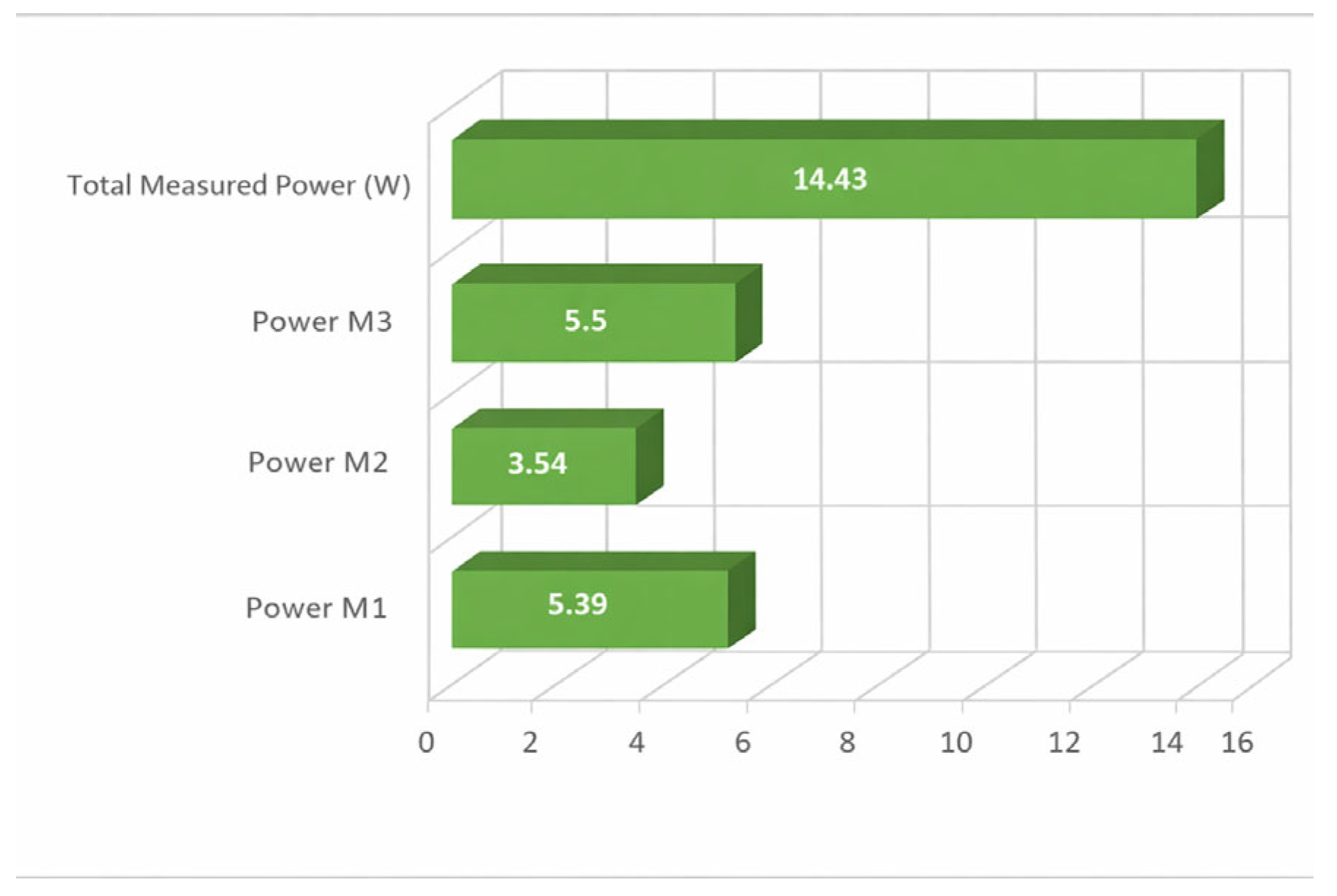
Table 7. For this configuration, the relative error of the total electrical power predicted by simulation is 11.85%.
Overall, the results indicate that the developed dynamic modeling and current-based power-benchmarking pipeline provides a satisfactory prediction of the aggregated electrical-power demand for the standardized benchmark, while localized discrepancies in current—especially at extrema—reflect the sensitivity of transient regimes to practical effects (e.g., contact conditions, friction variability, and real-trajectory tracking limitations).
4. Discussion
This section interprets the results obtained for the proposed three-omni-wheel configuration (90° rollers) and relates them to the four-omni-wheel baseline considered in the present paper under a comparable benchmarking methodology. The discussion focuses on two main aspects: the fidelity of the dynamic model with respect to the experimental measurements, and the significance of the robot-level power comparison between the proposed configuration and the baseline.
4.1. Agreement Between the Dynamic Model and the Experimental Results for the Three-Omni-Wheel Configuration
The results reported in
Section 3 show that the dynamic model developed in the MATLAB/Simulink–Simscape Multibody R2024a (MathWorks, Natick, MA, USA) environment reproduces the global behavior of the three-omni-wheel platform in a satisfactory manner on the 1 m square benchmark. At the robot level, the total power predicted by simulation is 12.72 W, whereas the experimentally measured value is 14.43 W, leading to a total relative error of 11.85%. This deviation can be considered acceptable for a multibody model intended for comparative assessment and power benchmarking, especially because the current signals include both steady-state regimes and transient regimes associated with direction changes.
The comparison between simulated and measured currents indicates that the model captures the general trend of the signals correctly, although the discrepancies increase around the extrema. This behavior is particularly visible for motor M1, where the error associated with the maximum current is considerably larger than the error associated with the mean or minimum value. Such a result suggests that the model reproduces the overall operating behavior better than the local transient response. In practice, these discrepancies may be associated with effects that are difficult to represent fully in an idealized model, such as micro-slip, local variations in wheel–ground friction, non-uniform load distribution among wheels, or small deviations between the commanded and the actual trajectory.
Another important aspect is that the three-omni-wheel platform is inherently more sensitive to contact asymmetries than a four-wheel configuration. In a three-contact architecture, any variation in roller–ground interaction or load distribution may have a more visible influence on the current drawn by an individual actuator. Therefore, although the dynamic model is suitable for comparative power assessment, improving signal-level fidelity would require, in future work, a more refined identification of friction parameters and possibly the inclusion of additional contact-related effects.
4.2. Significance of the Power Results for the Proposed Configuration
From the perspective of power demand, the three-omni-wheel configuration demonstrated a comparatively low total power requirement on the benchmark trajectory. At a 12 V supply, the measured total power was 14.43 W, while the simulated total power was 12.72 W. These values confirm that the proposed platform can execute the standardized maneuver with a relatively low power demand, even though the benchmark includes not only straight segments but also successive changes in direction.
The interpretation of these values must be linked to the architecture itself. Compared with a four-wheel configuration, the three-omni-wheel solution reduces the number of active drive modules and, consequently, the number of roller–ground contact interfaces involved in generating the motion. This reduction may lead to lower contact-related losses and, therefore, to a lower total current demand during the benchmark. At the same time, the reduced number of wheels is not neutral from a modeling perspective: a three-wheel platform may become more sensitive to local load variations and transition effects, which partly explains the higher simulation-to-measurement error compared with the baseline.
It is important to emphasize that lower power should not automatically be interpreted as higher dynamic efficiency under all working conditions. In the absence of an additional trajectory-tracking indicator, reduced power may reflect either a genuine architectural advantage or a difference in how contact forces are distributed during the maneuver. For this reason, the reported power results should be interpreted as a robust comparative indicator for the considered benchmark, but not as the sole measure of overall robot performance.
4.3. Comparison with the Four-Omni-Wheel Baseline Configuration
The essential comparison of this article is the one between the proposed three-omni-wheel configuration and the four-omni-wheel baseline, both based on 90° rollers. For the four-omni-wheel baseline considered in this study, the total measured power is 25.75 W and the total simulated power is 24.92 W, with a robot-level simulation-to-measurement error of 3.70%. In order to ensure comparability, the baseline values were obtained using the same benchmark logic, supply voltage, and current-based power-estimation framework adopted for the proposed three-omni-wheel configuration. In contrast, for the proposed three-omni-wheel configuration, the total measured power is 14.43 W and the total simulated power is 12.72 W, with a total error of 11.85%.
For clarity, these results are summarized in
Table 8.
The values in
Table 8 show that, for the considered benchmark, the three-omni-wheel configuration requires substantially lower total measured power than the four-omni-wheel baseline. Relative to the baseline, the reduction in measured power is approximately 43.96%, while the reduction in simulated power is approximately 48.96%. Therefore, from a strictly power-oriented perspective, the proposed configuration is more advantageous on the analyzed trajectory.
At the same time, the comparison also highlights an important difference in model fidelity. The four-omni-wheel baseline exhibits a smaller simulation error, indicating that the four-contact architecture is easier to represent under the current set of assumptions and parameters. By contrast, the three-omni-wheel configuration, although more advantageous in terms of power demand on the benchmark, is more sensitive to effects that are not explicitly represented in the model, resulting in a higher prediction error. This observation is highly relevant for modular robot design: reducing power demand may come at the expense of greater sensitivity to contact parametrization and, consequently, a greater calibration effort.
4.4. Implications for Modular Mobile Robot Design
The reported results support the idea that the locomotion architecture influences two important design dimensions simultaneously: power demand and dynamic-model predictability. From the power-consumption perspective, the three-omni-wheel configuration appears to be an attractive solution for applications in which reduced power demand is a primary requirement. From the viewpoint of predictability and ease of validation, however, the four-omni-wheel configuration provides a response closer to the simulated model, which may represent an advantage during model-based design, parameter tuning, and virtual testing.
This duality is especially important in the context of a modular platform. If the main application target is extended energetic autonomy or reduced power demand during short and repetitive maneuvers, then the three-wheel configuration may be preferable; however, if the main target is a robust predictive model for rapid controller development and virtual prototyping, then the four-wheel configuration may offer additional benefits. In this sense, the main contribution of the paper is not only the presentation of a new locomotion configuration, but also the demonstration that locomotion architecture selection should be based on the trade-off between power demand and model fidelity.
4.5. Limitations and Immediate Directions for Improvement
The results discussed here should be interpreted in the context of several acknowledged limitations: First, the comparison was conducted on a single, standardized square-path benchmark, which highlights translational and turning regimes well but does not cover the full variety of omnidirectional maneuvers. Second, power was estimated from current measurements assuming a constant supply voltage, which is adequate for benchmarking but may not capture real voltage fluctuations during dynamic operation. Third, the analysis is centered on power as the main metric, without simultaneously introducing an objective trajectory-tracking performance indicator.
As immediate extensions, it would be useful to broaden the benchmarking methodology to additional representative trajectories, such as pure lateral motion, in-place rotations, or combined translation–rotation maneuvers. Moreover, direct voltage measurement during experiments and the inclusion of a trajectory-tracking error metric would allow a more complete interpretation of the relationship between power demand and motion quality. Finally, for the three-omni-wheel configuration, a more refined identification of wheel–ground interaction parameters could reduce the model-to-experiment gap and improve the predictive value of the dynamic model.
5. Conclusions and Future Research Directions
The main objective of this study was to develop and evaluate a new omnidirectional locomotion architecture based on three omni wheels with 90° rollers, implemented on a modular mobile robot platform and analyzed through a unified methodology combining dynamic modeling, experimental validation, and power benchmarking. At the same time, the proposed architecture was assessed against a four-omni-wheel baseline, used strictly as a comparative reference for interpreting the power results.
The obtained results confirm that the modular platform enables coherent investigation of different locomotion architectures while preserving the same mechatronic core and the same evaluation principle. For the proposed three-omni-wheel configuration, the dynamic model developed in the MATLAB/Simulink–Simscape Multibody R2024a (MathWorks, Natick, MA, USA) environment reproduced the global behavior of the robot satisfactorily on the 1 m square benchmark, yielding a total power prediction error of 11.85% relative to the experimental measurements. This level of agreement supports the usefulness of the model for comparative analyses and preliminary power-demand assessments during the design stage.
The comparison with the four-omni-wheel baseline highlighted the principal outcome of the paper: For the standardized benchmark considered here, the three-omni-wheel configuration exhibited a substantially lower total measured power demand than the four-omni-wheel configuration. At the robot level, the measured power was 14.43 W for the proposed architecture, compared with 25.75 W for the baseline, corresponding to an approximate reduction of 43.96%. From the simulation results, the corresponding reduction is approximately 48.96%. This finding shows that the three-omni-wheel architecture can represent an attractive alternative for applications in which power demand is an important locomotion-selection criterion.
At the same time, the study also revealed an important trade-off between power demand and dynamic-model fidelity. Although the three-omni-wheel configuration required lower power on the considered benchmark, the four-omni-wheel baseline exhibited a smaller simulation-to-measurement deviation. This suggests that reducing the number of wheels and contact points may lower the total absorbed power, but may also increase sensitivity to contact effects that are difficult to capture completely in the current model, such as micro-slip, local friction variations, or non-uniform load distribution among wheels.
Therefore, the contribution of the paper is not limited to introducing a new locomotion architecture. It also demonstrates that the selection of a locomotion architecture for a modular platform should depend on the dominant application objective. If the priority is to reduce total absorbed power during standardized maneuvers, the three-omni-wheel configuration appears to be competitive; however, if the priority is to obtain a more robust predictive model with closer agreement between the simulation and experiment, the four-omni-wheel architecture remains a strong reference under the current modeling assumptions.
Regarding future research directions, a first natural extension is to broaden the benchmarking methodology to additional representative trajectories, beyond the square path considered in this work. Pure lateral motion, in-place rotation, and combined translation–rotation trajectories would enable a more complete assessment of the advantages and limitations of the three-omni-wheel architecture under a wider range of dynamic conditions.
A second important direction is to improve the model through more refined wheel–ground interaction parametrization, especially for the three-omni-wheel configuration. Introducing more realistic representations of friction, rolling resistance, and slip could reduce the observed discrepancies between simulated and measured current signals, particularly in transient regimes where current peaks appear.
A third development path is to complement the power benchmarking methodology with a kinematic-performance indicator, such as trajectory-tracking error or orientation error. Such an extension would make it possible to distinguish more clearly between cases in which lower power reflects a genuine locomotion advantage and cases in which it may be influenced by differences in traction or micro-slip.
In addition, direct voltage measurement during experiments would further strengthen the power-estimation framework by accounting not only for current variation but also for real supply-voltage fluctuations during dynamic operation. This would improve the accuracy of the comparison between the simulation and experiment.
Finally, the developed modular platform provides a valuable basis for future studies on locomotion-architecture selection under multiple criteria, including power demand, mobility, modularity, integrability, and model fidelity. In this respect, the present work opens the way toward future multicriteria optimization studies in which consumed power is analyzed jointly with motion performance and model robustness, leading to more informed design choices for modular mobile robots intended for industrial and service applications.




 ,
,