Article

Spacecraft Health Status Monitoring Method Based on Multidimensional Data Fusion

1
National Key Laboratory of Space Intelligent Control, Beijing Institute of Control Engineering, Beijing 100094, China
2
College of Automation Engineering, Nanjing University of Aeronautics and Astronautics, Nanjing 211106, China
*
Author to whom correspondence should be addressed.
Machines 2025, 13(12), 1136; https://doi.org/10.3390/machines13121136

Submission received: 20 October 2025 / Revised: 5 December 2025 / Accepted: 10 December 2025 / Published: 12 December 2025

Abstract

To address the difficulty of detecting on-orbit faults of spacecraft under complex operating conditions in time, rational monitoring and assessment of spacecraft health status are essential for ensuring its safe, stable, and reliable operation. Considering the complexity, coupling, and multidimensionality of telemetry data, this paper proposes a method for monitoring the health status of spacecraft based on multidimensional data fusion for a key electromechanical component of a spacecraft control system. The method first extracts the explicit and implicit features of the multidimensional coupled telemetry parameters via physical feature formulas and a stacked autoencoder. Then, the extracted features are fused and filtered to obtain the health factor—a performance degradation trend described the evolution law of key component health status over runtime. Moreover, the different degradation stages are identified via an unsupervised clustering algorithm. Finally, a Bidirectional Long Short-Term Memory (Bi-LSTM) is used to construct a health status prediction model in stages. By taking Control Moment Gyroscopes (CMGs) as experimental verification subjects, the proposed method demonstrates significantly superior performance compared to other methods across prediction accuracy metrics including MSE, RMSE, and R 2 . This study provides robust technical support for health status monitoring of key spacecraft electromechanical components under specific fault modes.

1. Introduction

With the development of modern space technology, in the traditional low Earth orbit (LEO), LEO megaconstellations have gradually been formed. LEO megaconstellations, such as Starlink and OneWeb, which have the advantages of low costs and high launch rates, have great development potential in the fields of communication, as well as in meteorological and disaster monitoring, and have gradually attracted the attention of the world’s major spacefaring nations [1]. Therefore, conducting reasonable and effective health monitoring for each spacecraft is a prerequisite for ensuring the safe, reliable, and stable operation of the entire constellation and for fully exploiting its advantages of cooperative entities.
Current spacecraft health monitoring technology is based mainly on the “safety mode & expert support” mode. This mode relies heavily on manual interpretation on the ground, which is time-consuming and labor-intensive and prone to misdiagnosis, which has difficulty meeting the growing needs of constellation satellite health status monitoring. In addition, spacecraft operates in harsh environment with numerous random interferences, making them highly susceptible to equipment degradation and component failures—potentially leading to spacecraft failure and mission termination [2,3,4]. The existing anomaly detection methods are dominated by the single threshold method. This method is highly sensitive to abnormal points deviating from normal data in a critical parameter, enabling timely identification of abnormal behavior in key components after failure, which is a single-point detection. However, due to amplitude differences among parameters and mechanical variations between components, the single-threshold method requires setting specific thresholds for each critical parameter of every component, resulting in poor transferability. For multidimensional telemetry parameters of complex components, the single-threshold method struggles to effectively extract inherent coupled correlation characteristics and slow degradation features of the multidimensional parameters before failure. It remains insensitive to the slow degradation of key component health status, resulting in delayed warnings and an inability to implement effective countermeasures before failures occur. Therefore, to overcome the deficiencies of current technology, there is an urgent need to improve the intelligence level and timely early warning capabilities of spacecraft health status monitoring technology [5,6], which would in turn alleviate the measurement and control pressure on the ground.

2. Related Work

Recently, corresponding research has been carried out in the aerospace field for intelligent health monitoring of spacecraft. In [7], Liu et al. proposed a model and data hybrid-driven spacecraft health monitoring system architecture to achieve full-time, continuous, and reliable status monitoring and status prediction of the spacecraft. To improve flight safety, an electromechanical actuator health management method was studied in [8], which involves the integration of electromechanical actuator mathematical model methods, optimal space filling, and machine learning, and the validity of the proposed method was verified by taking gear failure as an example. In [9], Deng et al. proposed an intelligent hybrid deep learning model for achieving accurate RUL prediction of rolling bearings, which effectively extracts bearing fault features and enables quantitative health assessment of bearings. In [10], Shao et al. proposed an improved deep forest model, sgic-Forest, which was specifically designed for fault diagnosis of small sample gearboxes in noisy environments. In ref. [11], You et al. proposed a rolling bearing fault diagnosis model that utilizes a time-series fusion transformer with interpretability analysis to enhance global pattern detection in time-series data by combining multiscale feature adaptive fusion and an autoencoder. In [12], Yang et al. designed a health assessment method of lithium-ion battery for on-orbit spacecraft based on multi-feature fusion to realize the quantitative assessment of on-orbit battery health based on the fusion of degradation features. To address the increase in failure rate caused by the complex operating environments of spacecraft, Zhang et al. [13] proposed a new health condition degradation monitoring model called ADF-GMM for spacecraft equipment operation and applied it to the prognostics and health management (PHM) of momentum wheel bearing (MWB) degradation to verify its feasibility and effectiveness. In [14], Pang et al. proposed the temporal dependence Mahalanobis distance (TDMD) based on multifactor prediction, which considers the high dimension, strong-dependent, and pseudo-periodic series characteristics of telemetry data, and verified its effectiveness and applicability on simulated and real telemetry series. In [15], Tang et al. studied a spacecraft fault monitoring and health assessment method based on multivariable time series to solve the problem that it is difficult for spacecraft to obtain tagged hitch data, established a complete hitch monitoring and health evaluation system, and verified on the data for three fault degrees. In [16], Yash et al. presented a simple yet powerful model for early anomaly detection for spacecraft health monitoring, called MEND, which provides strong alerts for impending anomalies as much as 10–15 min before the onset of each anomaly to provide early advance failure warning. In [17], Cuéllar et al. presented an approach for anomaly detection using machine learning techniques for spacecraft telemetry and validated the anomaly types on two real telemetry datasets from NASA, achieving 95.3% precision and 100% recall. The above methods are based mostly on single-parameter or physical–mathematical models, which are slightly insufficient for the intelligent mining of complex coupled data correlation relationships in spacecraft. In this context, this study fully integrates the multidimensional telemetry data of key spacecraft components to realize reasonable monitoring of the health status of spacecraft components.
To address the characteristics of complex and coupled telemetry data of key spacecraft components and the variable performance degradation process, this paper proposes a method for monitoring the health status of a spacecraft based on multidimensional data fusion. First, the explicit and implicit features of the multidimensional coupled telemetry parameters of the spacecraft key component are extracted using the physical formulas and a stacked autoencoder, respectively. The extracted high-dimensional features are subsequently fused by dimensionality reduction and smoothed by Gaussian filtering to obtain a health factor curve that describes the health status of the component. After that, an unsupervised clustering algorithm is adopted to automatically identify different performance degradation stages. Finally, a health status prediction model is constructed by using a Bi-LSTM network in stages to monitor the health status of the spacecraft component.

3. Feature Extraction on the Basis of Multidimensional Spacecraft Telemetry Data

3.1. Spacecraft Telemetry Data Characterization and Analysis

In engineering, multiple measurement points are generally established on key components to monitor the on-orbit operation status of spacecraft, and the measurement data are transmitted to the ground through telemetry [18]. The telemetry data are usually based on time-series data, primarily exhibiting a non-stationary trend characterized by superimposed periodic fluctuations and random events. Its characteristics are as follows:
  • Complexity
Key components often have complex compositions and structures. To monitor the operation status comprehensively and detect abnormalities timely, a variety of measurement points are generally established to monitor their different parts. Therefore, the telemetry data present the characteristics of high dimensionality, large data volume, and strong coupling.
  • Slow change
During the operation of the spacecraft, the key components slowly decline in performance with the aging as well as wear and tear of the equipment, which causes slow changes in the telemetry data. However, these changes do not immediately reflect the phenomena of faults and aging; thus, they are not easy to detect and address. Eventually, they affect the long-term stable operation of key components.
  • Susceptibility to interference
Spacecraft operates in outer space. Onboard sensors are susceptible to space radiation interference. Moreover, in the transmission process, telemetry signals are also affected by uneven ionosphere scintillation interference and other effects [19]. Therefore, telemetry data often contain interference data and wild values.
Owing to the complexity of the on-orbit data of key components, the abnormal states of key components are often implied by the signal features; hence, it is necessary to perform feature extraction on the on-orbit data to obtain the key features that can reflect the operation status.
In this work, we consider two main types of abnormal features that reflect performance degradation. The features of the first type are explicit feature quantities with physical significance, which include mainly time-domain features and frequency-domain features [20]. The physical significance of features of this type is obvious, and it is easy to establish mapping relationships between performance degradation and abnormal features. However, the information contained in these feature quantities is limited, and they cannot reflect the degradation characteristics of the products in a comprehensive way; in particular, they cannot extract the correlation information from the multisource and high-dimensional data. The features of the other type are implicit features extracted from the data by intelligent methods, which have no obvious physical significance. It is difficult to establish mapping relationships between performance degradation and abnormal features. However, they contain rich information, and they can effectively extract the coupling and correlation information from multisource and high-dimensional data. Extracting the implicit feature correlations from spacecraft multidimensional telemetry data through feature extraction can provide a feature basis for subsequent health status monitoring methods.

3.2. Explicit Physical Characteristics

Since the on-orbit data of key components are susceptible to interference, it is necessary to process them first to improve the data quality. For the interference terms caused in the process of telemetry data acquisition and transmission, interpolation compensation and data smoothing are adopted to eliminate the systematic and random errors of the on-orbit data to ensure the performance of data processing. In addition, on the basis of engineering experience and practical applications, this study also adopts Wright’s criterion [21] (the 3 σ criterion) for the elimination of on-orbit data with wild values.
This study employs the explicit physical feature extraction formulas shown in Table A1 and Table A2 to extract 10-dimensional time-domain features and 5-dimensional frequency-domain features from the multidimensional telemetry data of spacecraft components, respectively. Those features can reflect the operation state of key components. Time-domain characteristics describe the performance evolution process of multidimensional telemetry data in the time dimension, capturing transient effects of abnormal failures. Frequency-domain characteristics, meanwhile, portray the degradation process of telemetry data in the frequency dimension, expressing signal performance characteristics and the partial energy changes at different frequencies, making it easier to identify oscillatory characteristics caused by wear. For spacecraft health monitoring, both time-domain and frequency-domain features provide complementary perspectives, reflecting critical evolutionary information of key components and thus improve the correctness of detection and warning.

3.3. Implicit Association Characteristics

Autoencoders (AEs) can automatically encode and decode multidimensional data, essentially imitating the processes of data compression and reconstruction, respectively [22]. They can be applied to unsupervised learning tasks such as dimensionality reduction, denoising, and feature extraction. However, a single-layer AE struggles to adapt to high-dimensional complex spacecraft data. In this work, a stacked autoencoder is used to address the high-dimensional coupling characteristics of the key spacecraft component mentioned above.
A stacked autoencoder (SAE) forms a deep neural network structure by cascading multiple layers of AEs together to further mine the deep compression features of complex data. Compared to the linear projection limitations of PCA and the spatial feature bias of CNNs, SAEs can more effectively learn the nonlinear correlations in spacecraft coupling telemetry data and capture global coupling characteristics in parameter vectors without spatial structure.
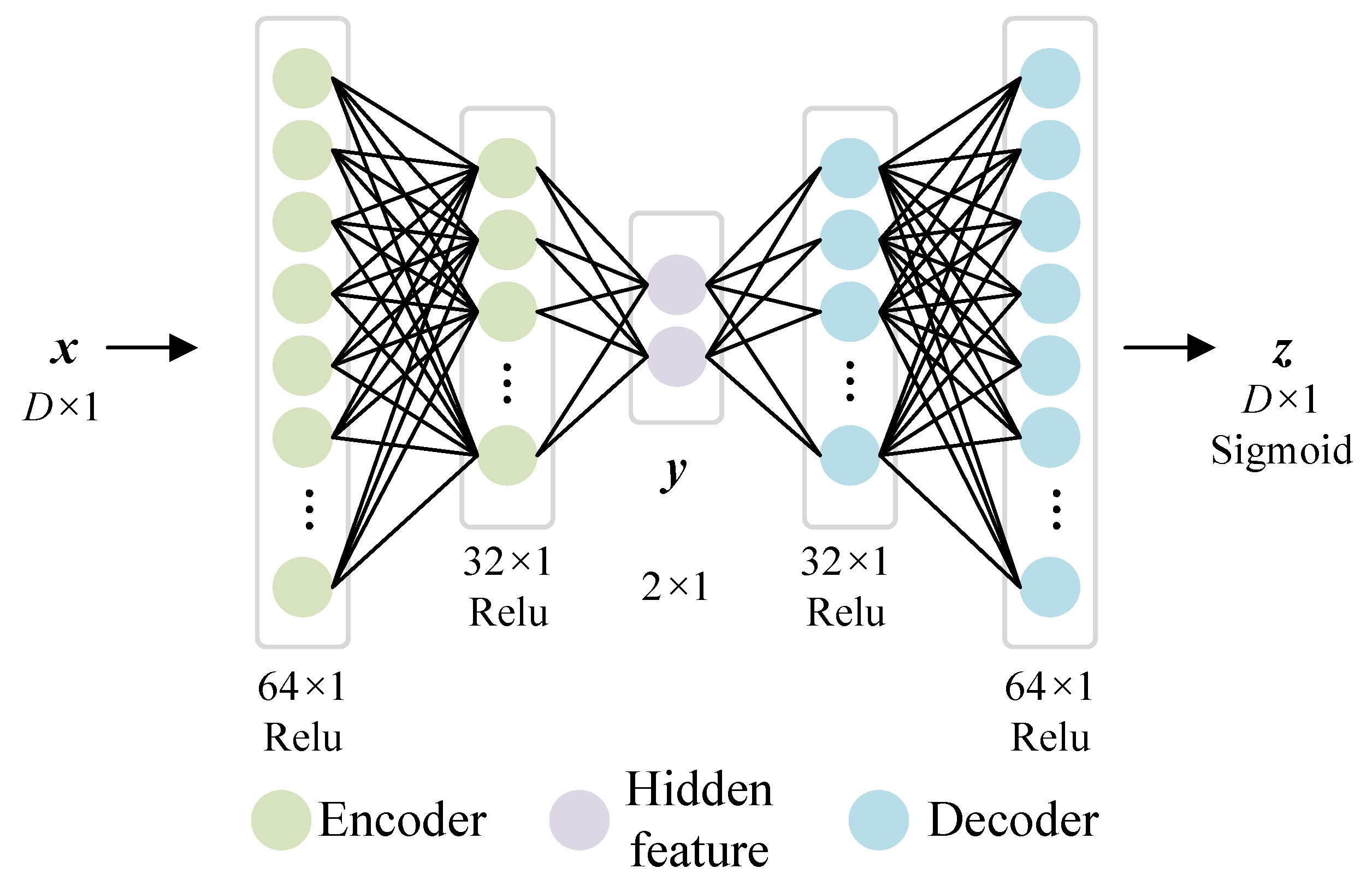
The output vectors of a SAE are of the same dimensions as the input vectors. Its network structure can be divided into an encoder and decoder (as shown in Figure 1). The high-dimensional coupling data of spacecraft components are used as the input sequence x, which is mapped to the intermediate hidden layer through the encoder to obtain the hidden features y that can contain complex coupling associations; then, the hidden features y are reconstructed into the output sequence z, which is exactly the same as the input sequence of the decoder, to realize self-learning of the features of multidimensional telemetry data.
Considering the data volume and high-dimensional data characteristics of key spacecraft components, the SAE network configuration used in this study is as shown in Table 1, where D is the dimension of the spacecraft multidimensional sequential data input and reconstruction sequence output.

4. Health Factor Estimation and Performance Degradation Identification

Health status evolution laws can directly reflect the whole evolution processes of key spacecraft components from normal to degradation or even failure, which is the key to realizing intelligent status identification. The health status evolution laws of different key components are different, and their evolution processes are reflected in the telemetry data, so it is necessary to construct a health status evolution model on the basis of the on-orbit telemetry data.

4.1. Health Factor Estimation

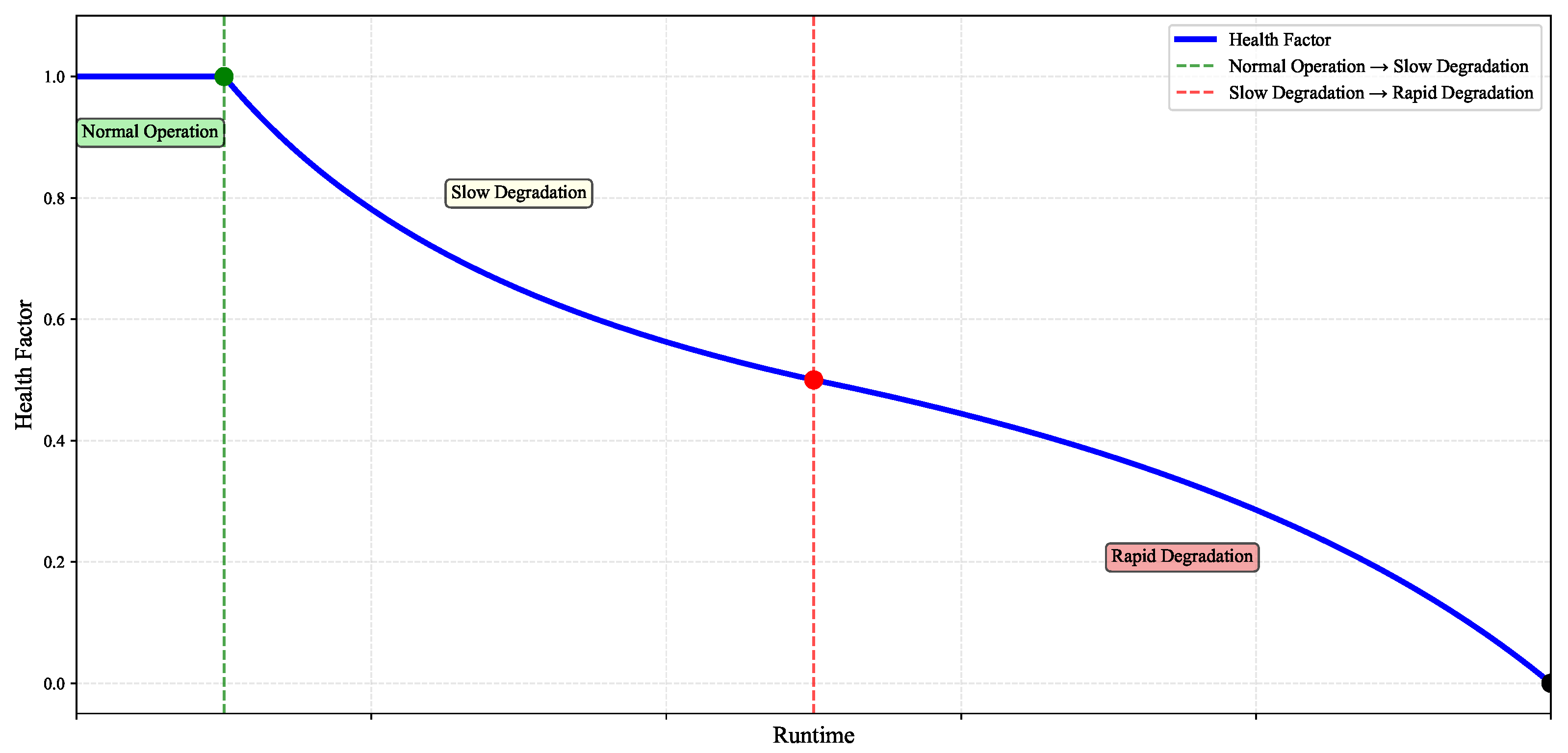
Considering the coupling of multidimensional spacecraft data, relying on only one single measured parameter or one single feature of parameters of a space component is not sufficient. Therefore, it is necessary to synthesize the explicit and implicit features of the multidimensional parameters to extract the degradation features of the key component evolution comprehensively. It enables the construction of a health factor curve model that tracks the evolution of component performance over time (as shown in Figure 2) to ensure the accuracy of the performance degradation derivation for the space component. In this regard, this study adopts principal component analysis (PCA) to fuse the high-dimensional features of the key components, extracting the evolution law of their health status. PCA transforms a set of random variables with correlations into new random variables that are linearly independent through orthogonal transformation. The transformed variables are known as principal components. Each principal component reflects most of the information of the original variables and is linearly independent. Compared to the independent component analysis (ICA), which emphasizes independent statistical characteristics, the PCA is more suitable for processing high-dimensional telemetry data from spacecraft components containing Gaussian noise, which cannot be eliminated completely by feature extraction. It can extract global dominant features from coupled features that better reflect the overall performance evolution trends of the components.
Owing to the existence of random errors and other disturbing factors in the telemetry data, the fused health factor curves inevitably contain noise. However, the traditional curve fitting method or Kalman filters rely on manual modeling. For complex components evolution laws that do not change smoothly, it is challenging to set an appropriate curve type or precise system state equations in advance artificially. In this study, Gaussian filtering is applied to the health factor curve after PCA fusion. Through the denoising characteristics of the Gaussian filter, the sensor noise and random disturbances of the fused health factor curve is autonomously eliminated. A smoothed health status evolution model is constructed to provide high-quality training data for the subsequent spacecraft health status monitoring model. The Gaussian filter is a linear smoothing filter that selects weights according to the shape of a Gaussian function. Its smoothing effect is remarkable, and it can effectively remove Gaussian noise during spacecraft telemetry processes, especially to suppress noise that obeys a normal distribution. The Gaussian filter retains the edge information of the data without producing obvious blurring effects. Under the assumption that the health factor curve after PCA fusion is HI = [ H I 1 , H I 2 , , H I n ] T ,
HI = 1 2 π σ e H I 2 2 σ 2
where HI is the health status evolution model of the spacecraft components that is established after filtering. The Gaussian distribution parameter σ determines the width of the Gaussian function, which indicates the degree of smoothing. The larger σ is, the wider the bandwidth of the Gaussian filter is, and the higher the degree of smoothing is. Based on the noise impact observed in spacecraft telemetry data and drawing upon engineering experience, this study will select σ = 20 .

4.2. Performance Degradation Identification

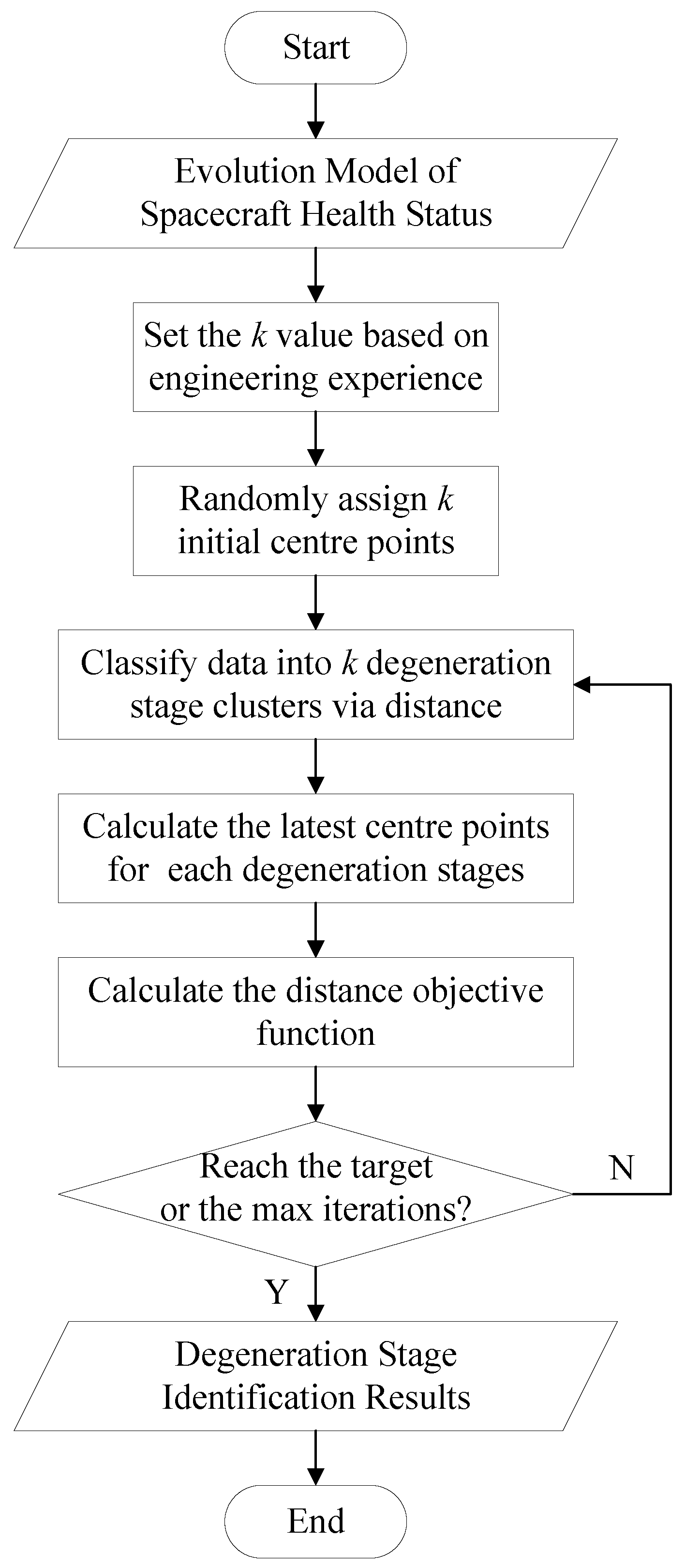
During operation, the performance degradation of a spacecraft will go through many different stages, such as the break-in stage, normal operation stage, slow degradation stage, and rapid degradation stage. The evolution mechanism of each degradation stage is different, and the degradation processes experienced by the same components on different spacecraft may not be exactly the same owing to the influence of multiple factors, such as the operating environment and mission. Therefore, artificially determining a uniform division standard for the degradation stages of spacecraft components is unlikely to be appropriate. To improve the efficiency of ground monitoring, intelligent performance degradation stage identification is necessary for the spacecraft status monitoring model. In this work, considering the complexity and effectiveness of algorithms, the K-means clustering algorithm (K-means) is selected as the automatic identification method for the performance degradation stage in the spacecraft status monitoring model, which is simple, feasible, and easy to understand. The specific process is shown in Figure 3.
The working principle of K-means is to calculate the distance from each data point in the dataset to the center of a specified cluster and use this distance as the objective function value for iterative optimization to identify the optimal state [23]. K-means is simple in principle and easy to implement, with fast convergence speed and strong interpretability. Its specific algorithm is as follows:
Step 1: Based on engineering experience and expert reasoning, the number of degradation stages centers k is set. The algorithm randomly assigns k initial cluster centers first.
Step 2: For each data point in the multidimensional dataset X = { x 1 , x 2 , x 3 , , x n } , the distances to the k centers are calculated via the following Euclidean distance formula:
d i s t X , Y = n i = 1 ( x i y i ) 2
where X , Y are two multidimensional vectors and where x i and y i are the values of the corresponding dimensions of the two multidimensional vectors. They are assigned to the clusters with the closest centers as the result of this clustering.
Step 3: The center of each cluster is recalculated on the basis of the objects assigned to each cluster to obtain new clustering centers:
μ j = 1 n j n j i = 1 x i c j x i
where μ j is the clustering center of object x i c j .
Step 4: The sum of the squared distances between each data point and the center of the cluster to which it belongs is calculated. The objective function is as follows:
J Y = k j = 1 x i c j x i μ j 2
Step 5: If the objective function reaches the target value or reaches the maximum number of iterations, the algorithm is terminated, and the final result of degeneration stage identification is output; otherwise, steps 2–4 are repeated.

5. Health Status Monitoring Method Based on Deep Neural Network

On the basis of the above algorithmic process, the health factor curve describing the performance degradation of the spacecraft component can be obtained. Then, it is necessary to further establish a mapping relationship between the multidimensional data of the key component and the health factor to realize real-time monitoring and prediction of the health status of the spacecraft component. In this regard, considering the performance degradation identification results in the previous section, this study adopts multiple deep long short-term memory networks to model and predict the health status of spacecraft at different stages.

5.1. Health Status Monitoring Model Based on Bi-LSTM

Health monitoring of spacecraft key components represents a typical sequential prediction problem involving long-range dependencies. The health factor curves exhibit characteristics of long-term persistence, nonlinearity, and state continuity: First, performance degradation is a slow, gradual process driven by material aging and cumulative wear, spanning extended time periods. Second, the degradation models are often nonlinear, with characteristic changes intensifying as failure thresholds approach. Finally, the health status of key components is tightly dependent on its entire historical state, with factors influencing its evolution exhibiting prolonged persistence.
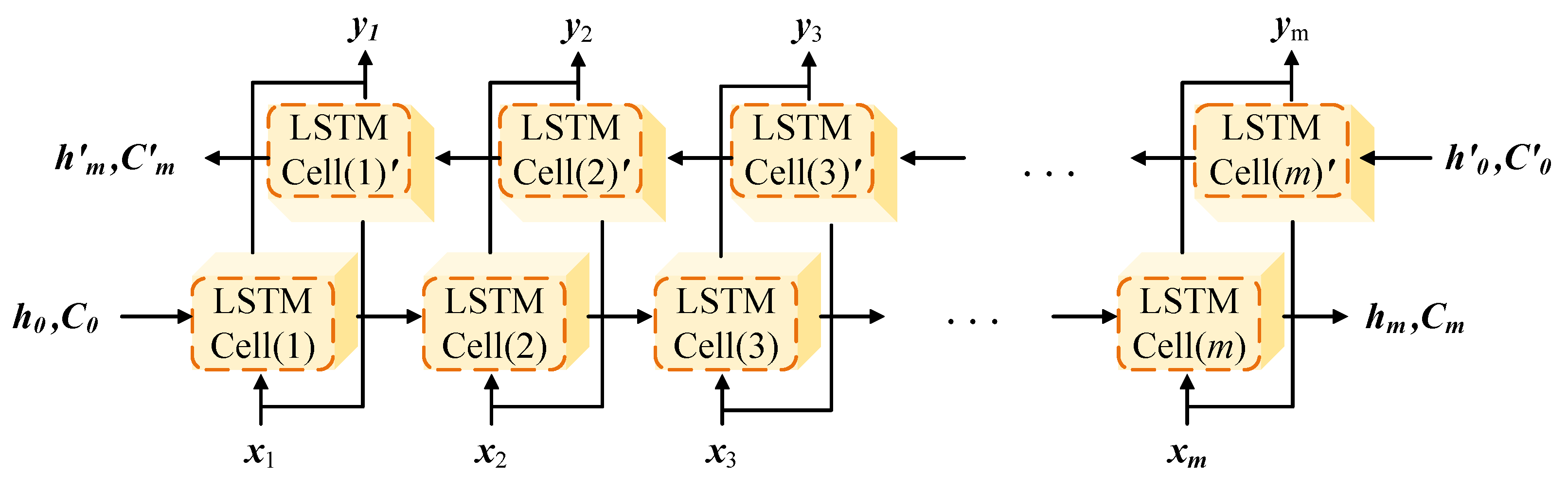
However, traditional time series models (such as ARIMA) struggle to portray such complex nonlinear relationships, while static machine learning models (such as SVM) disrupt the inherent temporal structure of the time-series data. Recurrent neural networks (RNNs) are well-suited for modeling temporal dependencies due to their cyclical architecture. However, fundamental RNNs suffer from gradient vanishing and explosion issues, rendering them incapable of effectively learning distant causal relationships within long sequences. Long Short-Term Memory (LSTM) networks introduce gating mechanisms and cell states [24,25]. Through “forget gates” and “input gates,” the model selectively remembers long-term degradation trends while filtering short-term noise. Combined with cell states that persist across time, it ensures stable gradient flow, which addresses the slow accumulation effects in spacecraft key component health monitoring and establishes causal links between early signs and end-stage failures. Furthermore, considering that spacecraft performance may undergo abrupt, rapid changes during later operational stages, forward-only learning may fail to fully capture certain fault evolution laws that become clearer when inferred from subsequent states. Therefore, this study adopts a Bi-LSTM (shown in Figure 4) to extend the basic LSTM. By processing sequences simultaneously in both forward and backward directions, it comprehensively integrates contextual information. This approach particularly enhances the robustness and accuracy of health status monitoring during periods of abrupt performance changes, improving the prediction performance of the spacecraft component health status monitoring model.
A Bi-LSTM network considers both past and future information of the input time-series data in each time step [26]. Each information-processing unit contains two independent LSTM units: one processes the input time-series data in forwards order, and the other processes the input time-series data in reverse order. The two units exchange information; thus, bidirectional information is obtained from the input time series data. Each LSTM unit consists of three parts: an input gate, a forget gate, and an output gate. This study briefly explains the working principle of forwards LSTM as an example:
Firstly, the input gate consists of the input information x t of the current LSTM unit and the state h t 1 of the unit at the previous moment, which is used to decide whether to update the neuron’s memory state or not. The input gate output i t (Equation (5)) and the candidate information for updating C ˜ t (Equation (6)) are obtained at the same time:
i t = σ ( W t · [ h t 1 , x t ] + b t )
C ˜ t = tanh ( W C · [ h t 1 , x t ] + b C )
Secondly, the forget gate outputs a [0, 1] vector f t on the basis of h t 1 and x t to determine the information retained by the neuron:
f t = σ ( W f · [ h t 1 , x t ] + b f )
Subsequently, the input gate output i t and the forget gate output f t are then used to jointly update the LSTM state C t 1 of the previous moment, which means that a part of the information f t from the previous moment is forgotten. The new neuron state information C t is obtained by selecting and adding a part of the candidate information C ˜ t through the input gate output i t :
C t = f t C t 1 + i t C ˜ t
Finally, the output gate o t (Equation (9)) and the unit state output h t of that moment (Equation (10)) determine the output information on the basis of h t 1 and x t .
o t = σ ( W o · [ h t 1 , x t ] + b o )
h t = o t tanh ( C t )
where σ ( · ) denotes the sigmoid activation function, W * and b * are the weights and bias of each gating unit, respectively, and ⊙ is elementwise multiplication.
The principle of the reverse LSTM unit is the same as above, except the input time series is reversed. By combining the results of the forwards and reverse LSTM units, the learning result H t of the Bi-LSTM can be obtained:
h t = LSTM ( i t , C ˜ t , f t , C t , o t ) h t = LSTM ( i t , C ˜ t , f t , C t , o t ) H t = [ h t , h t ]
Based on the aforementioned Bi-LSTM principle and Figure 4, the LSTM Cell(m) represents the forwards LSTM neuron at time step m, while LSTM Cell(m)’ denotes its corresponding backwards LSTM neuron. h 0 , C 0 , h 0 , and C 0 , respectively, denote the initial cell states and initial candidate information for the forwards and backwards LSTMs. When the network receives input data for m time steps, the forwards LSTM unit processes the sequence from x 1 to x m , while the backwards LSTM unit processes it from x m to x 1 . Both LSTM units update their respective h m , C m , h m , and C m . Ultimately, the output y i at time step i ( i = 1 , 2 , 3 , , m ) is obtained by concatenating the outputs from both the forwards and backwards LSTM units at that time step. A fully connected layer is used to linearize the network output, obtaining the final spacecraft health status prediction y i at time step i.
For the spacecraft health status monitoring problem considered in this study, the accuracy metric selected for the above network is the mean square error (MSE):
M S E = 1 N N i = 1 H I i * H I i 2
where N is the number of data samples, H I i * is the predicted value of the health factor for sample i, and H I i is the actual value of the fused health factors after Gaussian filtering and normalization for sample i.

5.2. The Proposed Intelligent Health Status Monitoring Framework

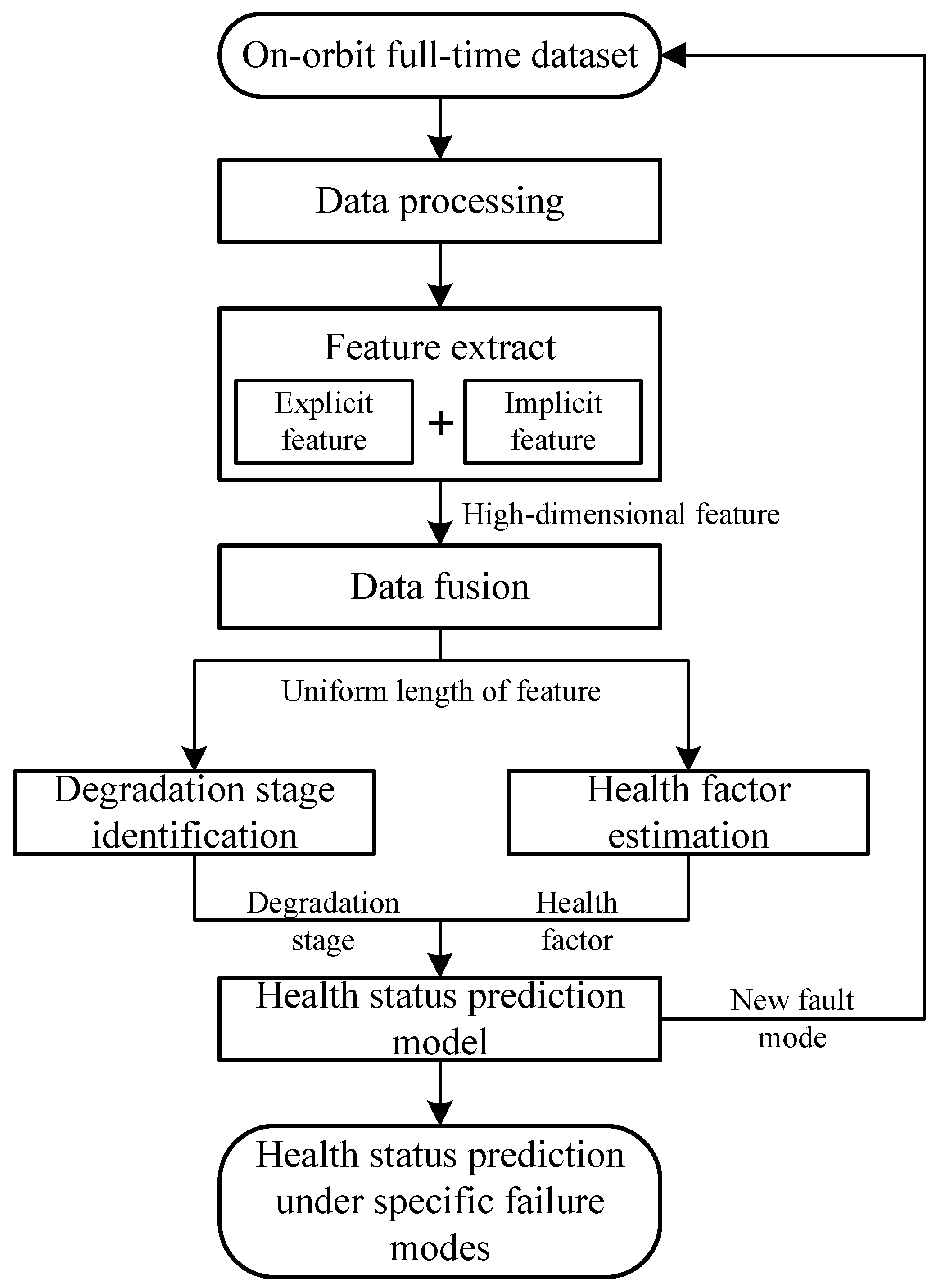
By synthesizing the above algorithms, this paper proposes a spacecraft health status monitoring method based on multidimensional data fusion for key spacecraft components. The specific flow is shown in Figure 5. First, the multidimensional on-orbit telemetry data of a single spacecraft component under a specific fault mode are selected as input, and the complete lifecycle multidimensional telemetry dataset of the component before shutdown is obtained through data preprocessing, such as interpolation compensation and wild value rejection. Second, the explicit and implicit features are extracted from the multidimensional coupled dataset of the space component by using physical formulas and SAE, respectively. The extracted high-dimensional features are subsequently reduced and fused by PCA to obtain the fused feature data. Building upon this, Gaussian filtering is applied to denoise the implicit features, which matches the length and evolutionary characteristics of the fused features, to obtain a high-quality health status evolution model. Moreover, the fused feature data are subjected to unsupervised performance degradation stage identification, and different degradation stages and modeling demarcation points are automatically obtained. Finally, a health status prediction model based on multistage Bi-LSTM is constructed by combining the results of the degradation stage identification to monitor the health status and predict spacecraft key components.

6. Experiment and Results

6.1. Subject (Of an Experiment)

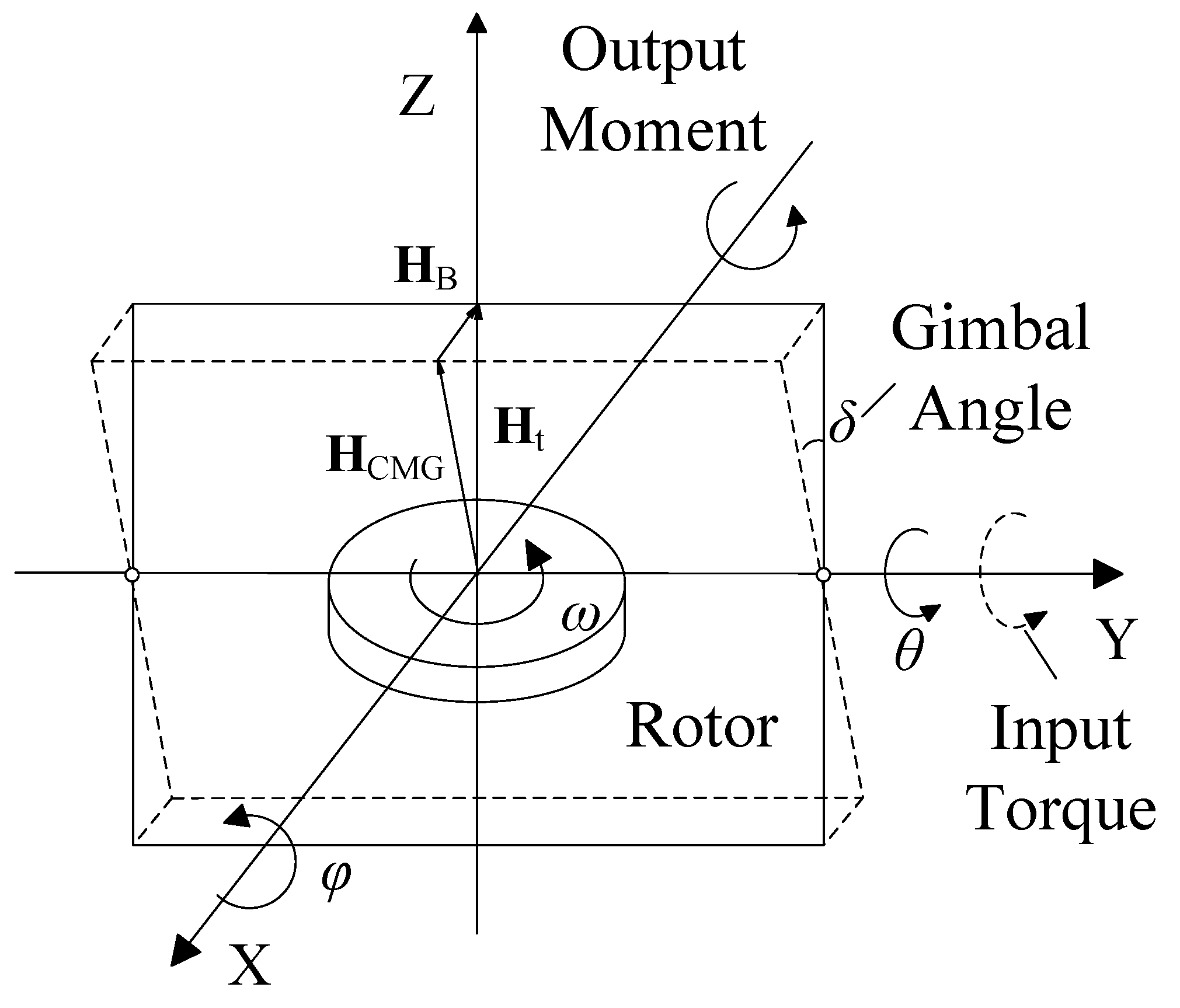
In a spacecraft attitude and orbit control system, a control moment gyroscope (CMG), which is an important actuator for long-life spacecraft, can output a continuous smooth control moment by consuming only electric energy. CMGs have fast dynamic response capabilities and high control efficiency and have been widely used in remote sensing satellites, space stations, and other spacecraft [27]. A CMG consists of three parts: a high-speed component (high-speed rotor), a low-speed component, and a connecting bracket (gimbal). Its working principle is that the high-speed rotor, where its RPM is ω , always generates angular momentum H C M G in a certain direction to maintain the total angular momentum H t of the spacecraft. When it is necessary to output the control torque H B , the low-speed frame rotates to drive the rotation of the high-speed component on the connecting bracket; then, the control torque is output by changing the direction of the angular momentum H C M G of the high-speed component (as shown in Figure 6). Since the key components of the CMG maintain high-speed operation for a long period of time and are prone to failure [28], it is highly important to monitor and predict the health status reasonably on the basis of its on-orbit operation data for safe and stable operation of the spacecraft.
In this context, a CMG that was retired from a certain satellite due to abnormal failure is taken as an example, and its actual on-orbit data are utilized to verify the above method.

6.2. Data Presentation and Preprocessing

The data used in the experiment of this study are the real on-orbit telemetry data of the retired CMG in a certain type of satellite. The CMG was officially put into use in 2015, and was restarted on 2 December 2020 due to an abnormal decrease in the high-speed rotor speed. However, after restarting, the speed increased slowly and could not reach the nominal speed, which did not meet the conditions for system use. Therefore, on 3 December 2020, it was judged that the CMG was invalidated and formally ceased to be used.
This study organizes the on-orbit data of the retired CMG since 24 December 2017, covering the whole process of this CMG from normal to degradation and then to failure. This dataset contains 9 measurement points of the key parts of the CMG. There are high-speed rotor speed, low-speed gimbal speed, low-speed gimbal position, gimbal angular velocity command, low-speed motor temperature, low-speed bearing temperature, high-speed bearing temperature, low-speed motor current, and high-speed motor current. The average sampling interval of each measurement point of this CMG is about 2 s, and the average sampling frequency is 0.5 Hz. Due to the special telemetry method of monitoring data from on-orbit spacecraft, data transmission with the ground is possible only when the spacecraft enters the measurement and control area. In addition, the limited onboard data storage capacity is unable to carry the storage of a large amount of monitoring data, thus causing the CMG to lose monitoring data in some time periods. In this regard, during the three years of on-orbit operation of this CMG from December 2017 to its final expiry in December 2020, a total of more than 2.82 million valid data were organized in this paper.
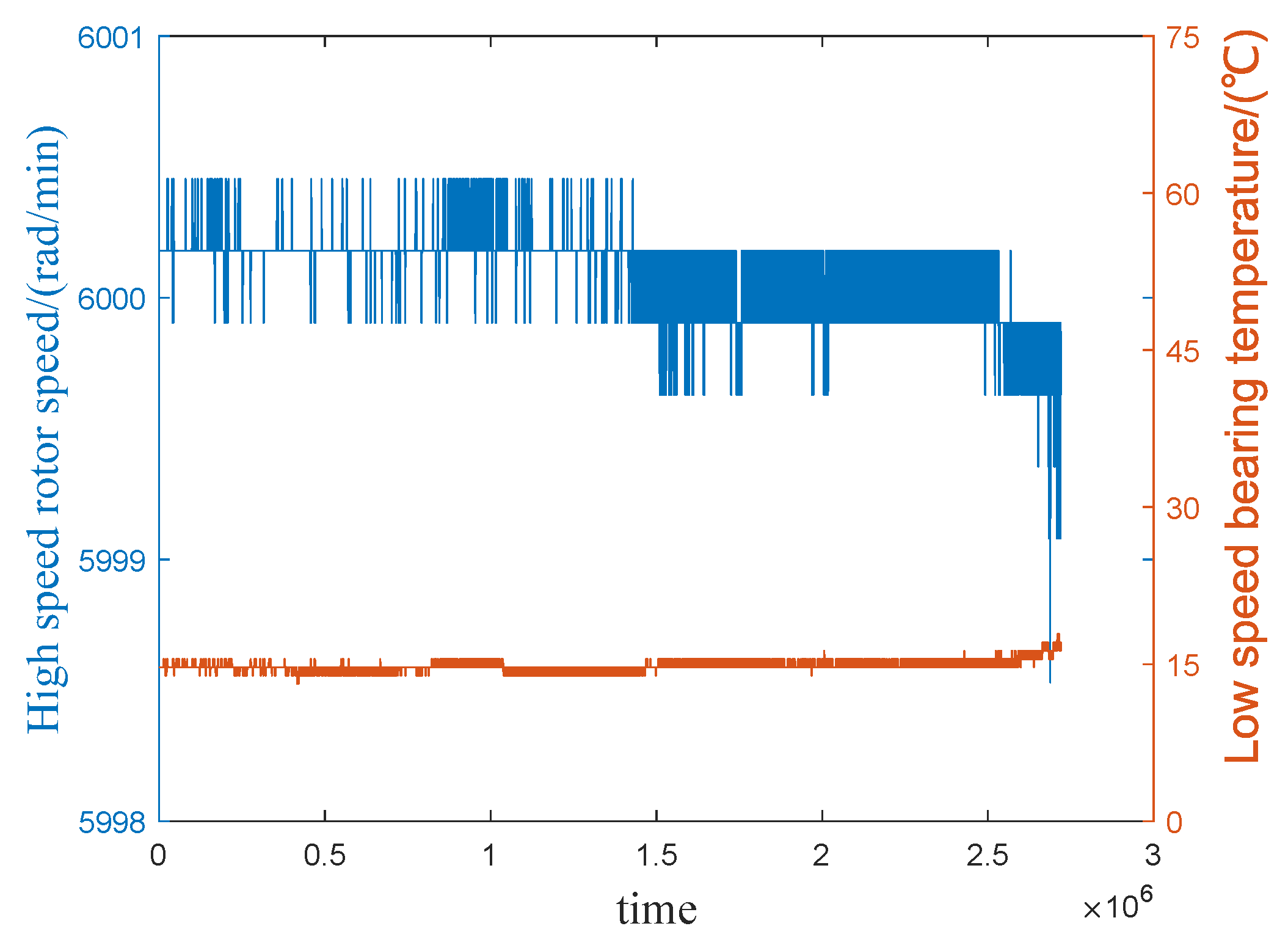
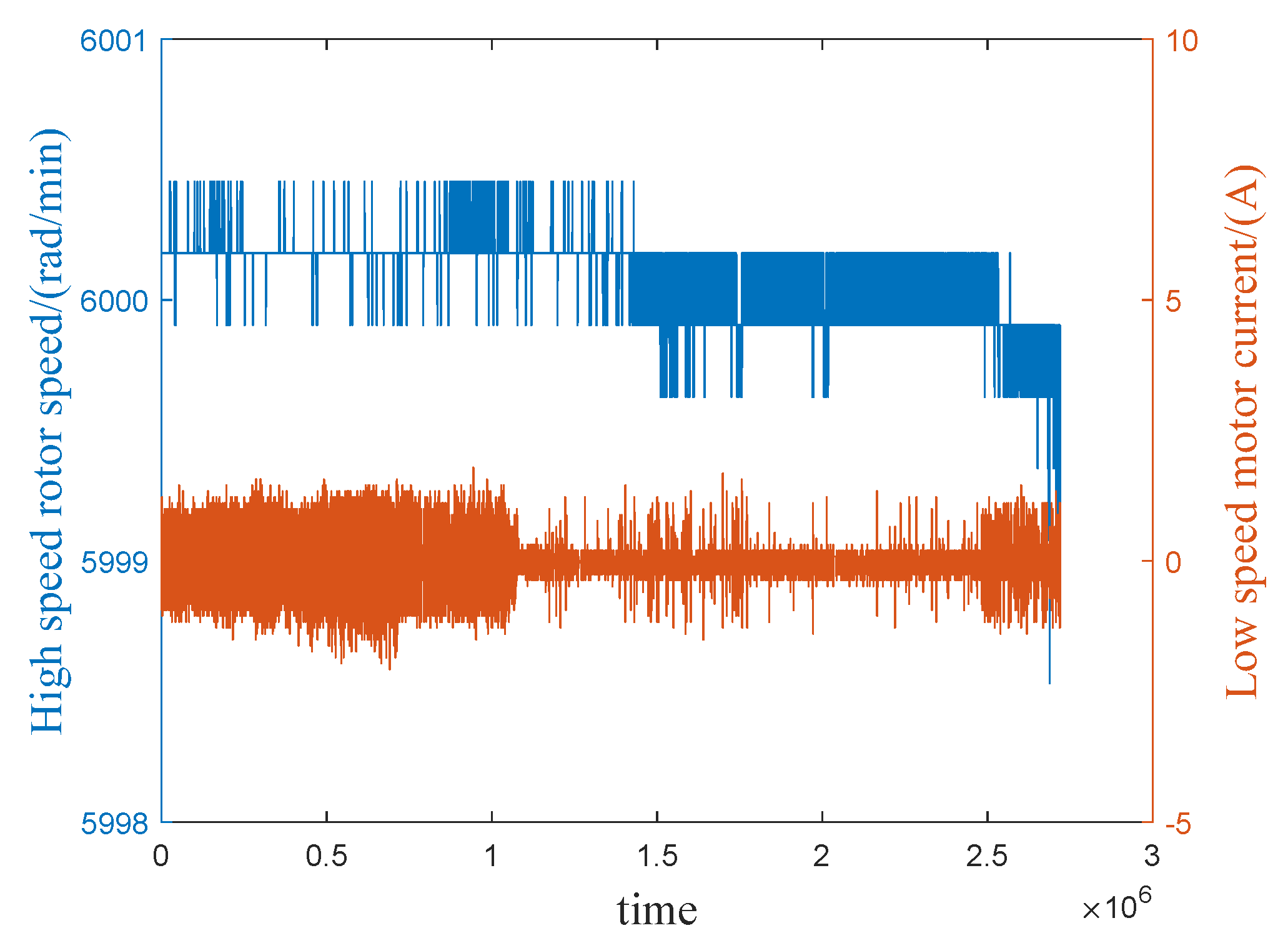
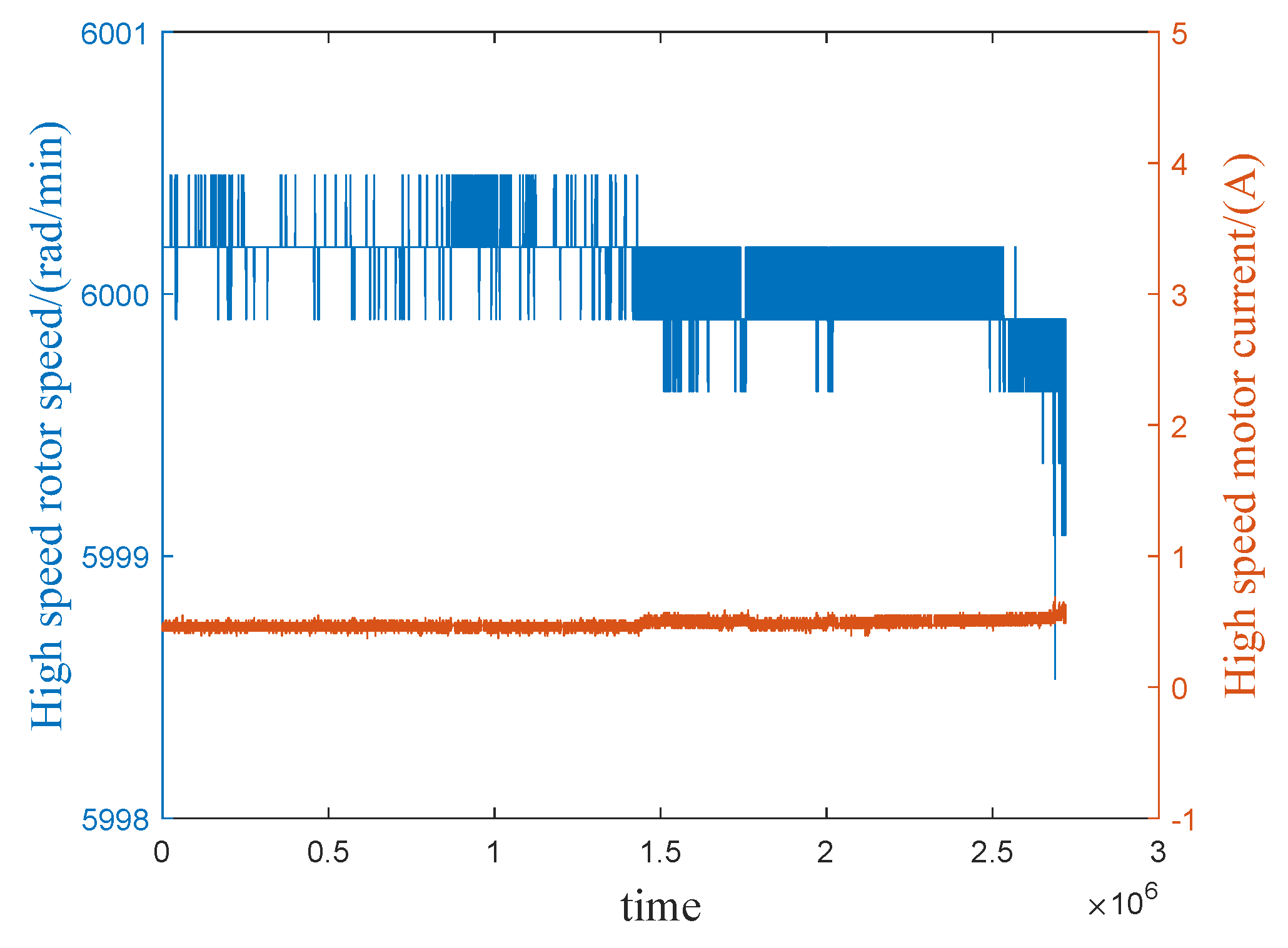
First of all, to ensure the robustness of the subsequent health status monitoring model, the preprocessing method in Section 3.2 is used to interpolate the data for compensation and wild value rejection to improve the data quality. Secondly, the research content of this study considers mainly the performance degradation evolution process during the CMG operation phase. Therefore, the irrelevant data after the CMG shutdown are excised, which means the data after CMG failure are excised with the effective speed of CMG high-speed rotor (the speed is not 0) as the benchmark. Only all the process data before complete failure are retained. After the above data preprocessing, a total of more than 2,720,000 datasets (approximately 161 MB) are finally obtained. Figure 7, Figure 8 and Figure 9 show the operating full-cycle data of the high-speed rotor speed, high-speed motor current, low-speed bearing temperature and low-speed motor current after the above processing.
As shown in Figure 7, Figure 8 and Figure 9, during the CMG operation phase, although there are some periods of missing telemetry data, the information contained in this dataset is complete, including all the process data of the nominal speed of the CMG high-speed rotor as well as before and after the reduction in speed, which indicates that it contains all the characteristics of the moderating data of its normal operating state as well as its degradation state. Thus, the dataset does meet the data requirements needed for the proposed method in this study. In addition, the amplitudes of the low-speed bearing temperature, low-speed motor current, and high-speed motor current clearly started to exhibit abnormal trends from 1,000,000 to 1,500,000 during on-orbit operation before CMG failure (the high-speed rotor speed is reduced to 0). This phenomenon was caused by increased bearing friction resulting from cage wear and changes in the distribution and morphology of lubricant within the bearing. Consequently, bearing temperature rose, current overload occurred, and rotor speed decreased in result. It indicates that the system was already trending towards degradation of the moderating performance before the complete failure of the CMG. This changing trend is what this study needs to focus on.

6.3. Experimental Procedure and Analysis of Results

The equipment used for the experiments in this study is shown below: the program runtime environment is Python 3.8.19, the software used is Pytorch 2.2.2, and the CPU is Intel(R) Core(TM) i5-1235U 1.30 GHz.
Owing to the intensive sampling of the spacecraft, the data size exceeds one million, and the temporal span is extensive. The onboard computer’s memory is insufficient to support the storage and computation of such massive data. Therefore, the method proposed in this study is more suitable for implementation at ground measurement and control stations. In addition, such massive data size is extremely unfavorable for subsequent trend analysis. Therefore, in the feature extraction stage, the above data are processed with a sliding window of size 5000 [29], considering the telemetry data acquisition duration and the training and prediction complexity of the subsequent network. It reduces the effective data to approximately one data point every two days, preserving the CMG performance degradation trend while enhancing the data length usability for the subsequent network. It is worth noting that future work could explore integrating the sliding window processing method described herein with advanced satellite data compression techniques. This approach may achieve preliminary, efficient satellite data reduction, enhancing the overall processing efficiency and practicality of the system.
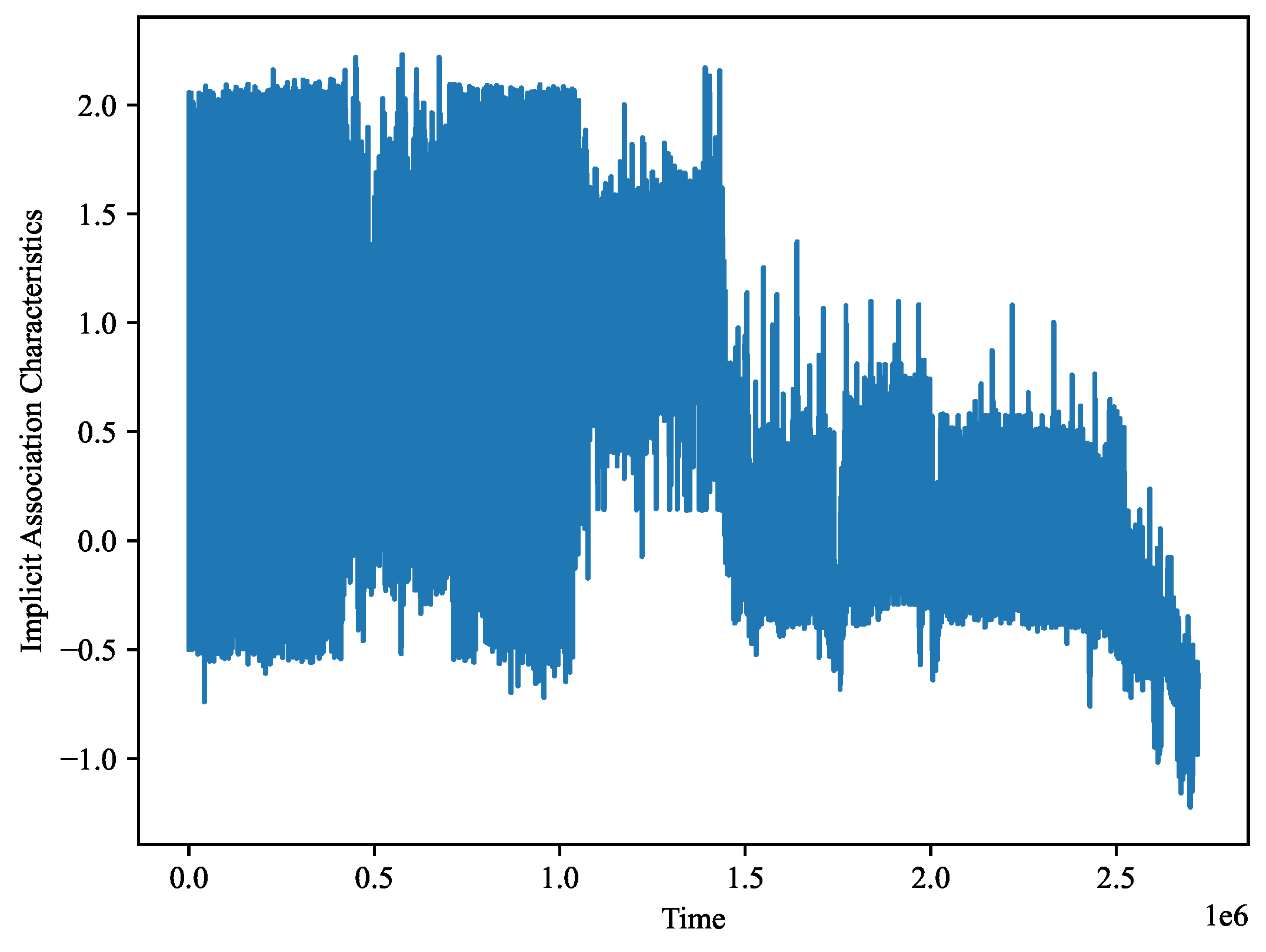
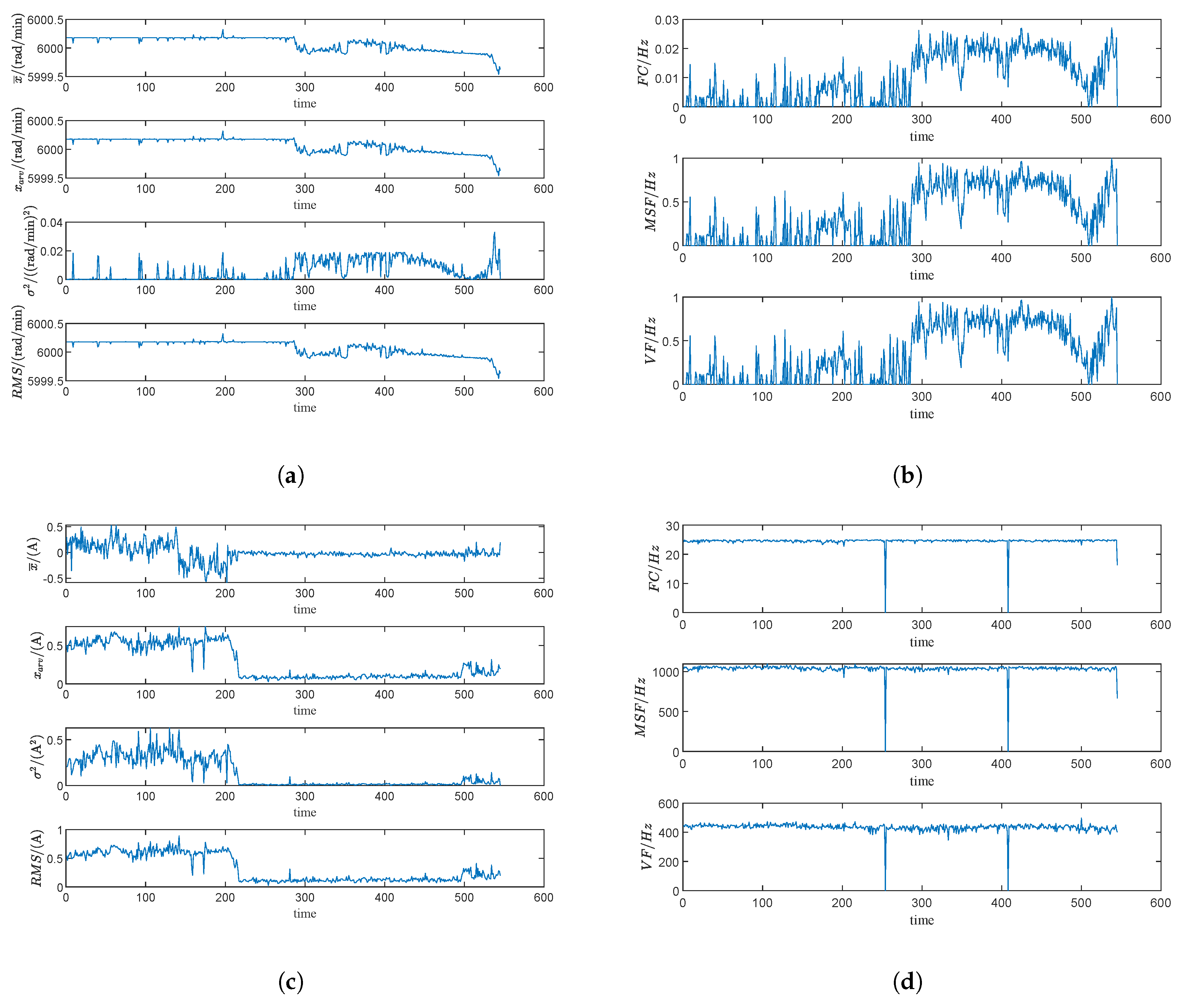
Then, 10 time-domain features and 5 frequency-domain features are extracted from the 9 measurement parameters according to the explicit feature extraction method described in Section 3.2 (selected results of the explicit feature extraction are shown in Figure 10). Moreover, the implicit features are extracted from the 9-dimensional telemetry parameters by using the SAE described in Section 3.3 (the results are shown in Figure 11). A high-dimensional feature matrix of 9-dimensional telemetry parameters is obtained, which has a total of 136 dimensions. To ensure data length alignment, the same sliding window processing is applied to the implicit features. The mean value within each sliding window of the implicit features is used as the implicit feature curve after data compression. Finally, a high-dimensional anomaly feature matrix of 136 × 545 is obtained.
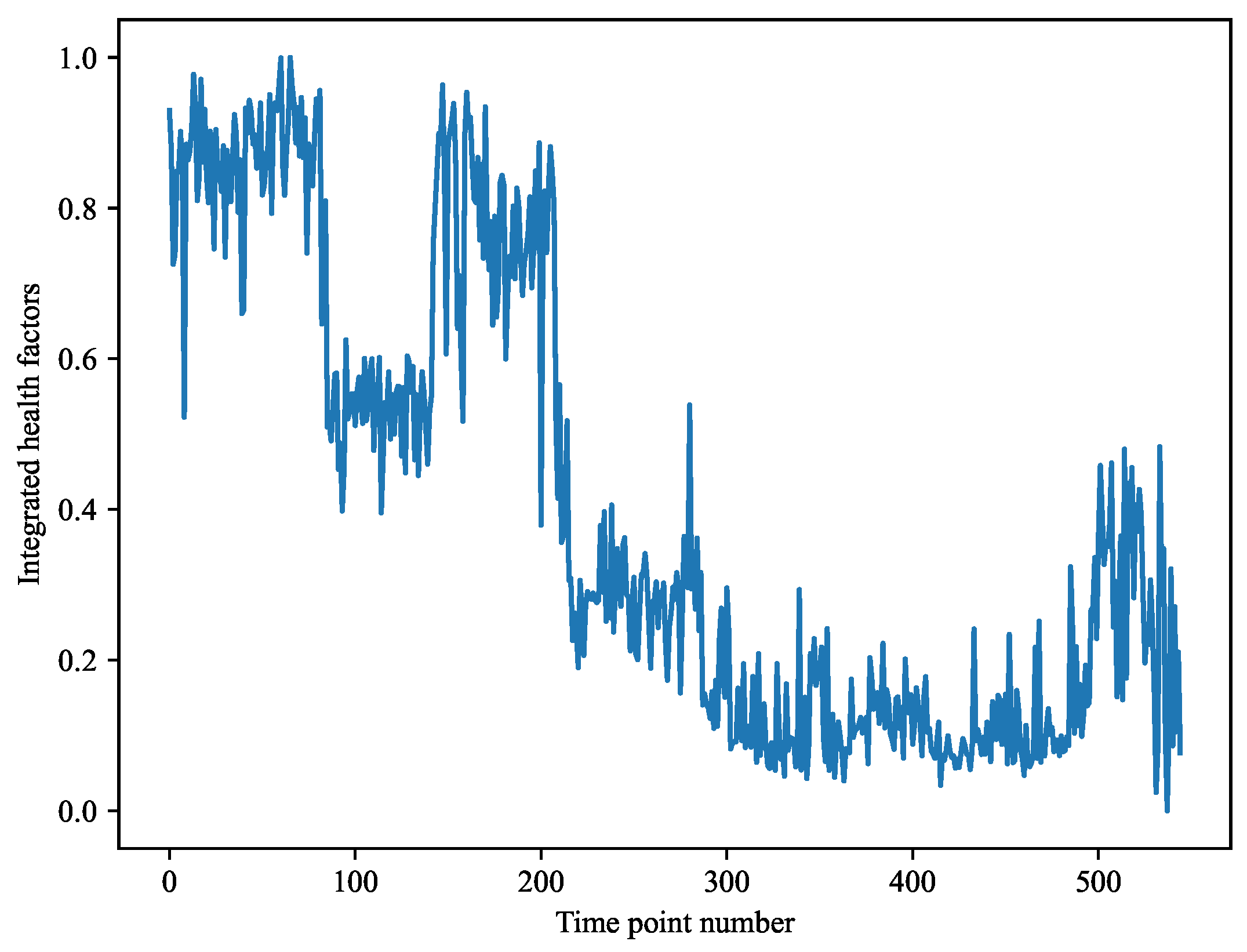
After that, the PCA is used to fuse the 136-dimensional feature matrix into a one-dimensional health factor, which is normalized to be within the interval of 0 to 1, as shown in Figure 12. The health factor shows a decreasing trend overall. There are slight fluctuations in the first half, indicating that there were also performance changes (lubricating performance reduced) during normal operation. After disposal measures were taken, the system adjusted back to its normal operating performance. The rapid decline in the second half indicates that the CMG cage has experienced accelerated wear. Due to internal wear debris or localized accumulation of lubricating oil, lubrication performance cannot be restored. The CMG performance entered the end of its life and was gradually failing. The change in the curve trend is in line with the actual situation of CMG performance degradation.
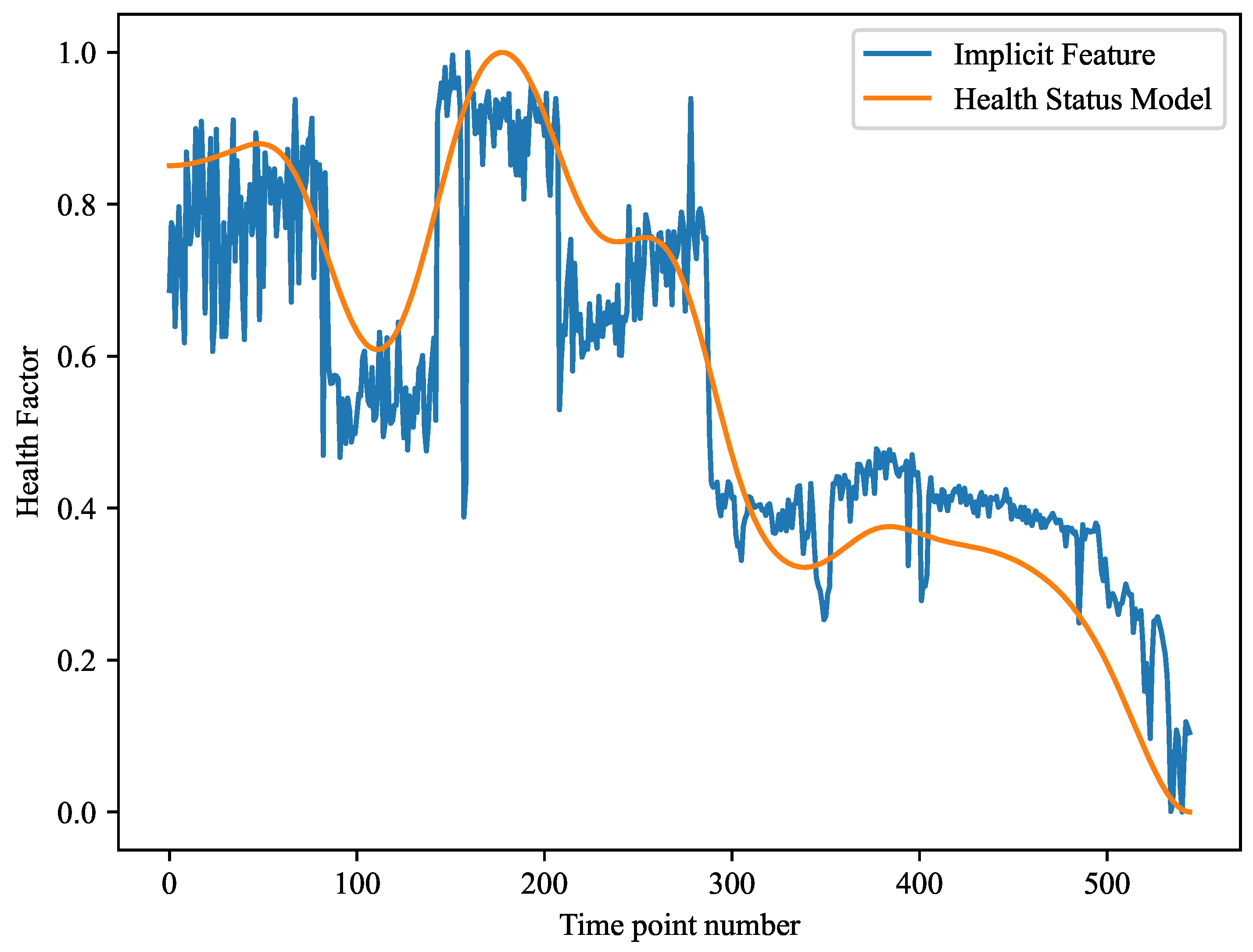
Considering the practical engineering and the simplicity of information acquisition, this study takes the implicit features extracted via SAE as the final health status evolution results of this CMG, and learns to fit the fused health factor curves as the input samples. Owing to the complexity and burly nature of the health evolution, it is difficult to pre-determine the fitting functions artificially. Therefore, they need to be modeled by filtering them directly. This study uses the Gaussian filter in Section 4.1 to process the implicit feature which is shown in Figure 11, as shown in Figure 13.
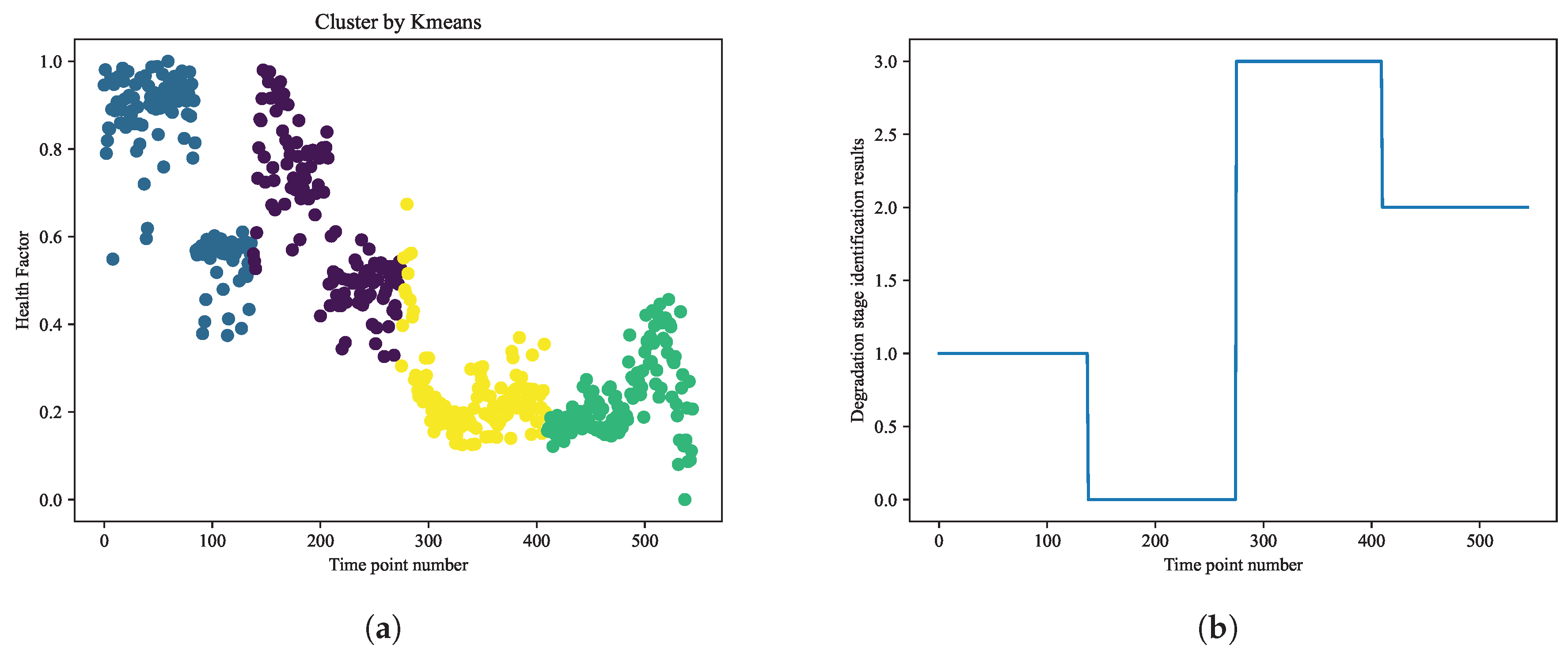
Moreover, considering the performance degradation characteristics of the CMG, its stage needs to be recognized. This study adopts the K-means algorithm introduced in Section 4.2. Based on expert reasoning and engineering experience, the operational lifecycle of CMG typically progresses through 3 to 5 distinct stages—for example, initial break-in, stable operation, gradual degradation, and eventual failure—depending on the criteria used to define degradation stages. In this regard, preliminary analysis of the results shown in Figure 13 suggests setting the k value to 4 in the K-means method, and selects the Euclidean distance as the distance evaluation index. The performance degradation stage identification results are shown in Figure 14. The identification results indicate that the CMG was adjusted by several disposal measures and went through four stages: normal operation, slow degradation, rapid degradation, and rapid failure. Considering the modeling difficulty in subsequent health status monitoring, this study merges the two stages with similar performance changes before and after, combined with the stage identification results of the algorithm, and selects demarcation point 273, which is between the slow degradation stage and the rapid degradation stage, as the degradation stage cut-off point of the CMG in this fault mode for the subsequent health status evolution prediction process.
Considering the specificity of spacecraft operating conditions, it is necessary to construct a prediction model for universal performance over time to obtain a mapping from the health factor fused with the features of the measured parameters of the components to the health status evolution. The Bi-LSTM prediction network introduced in Section 5.1 is constructed for the health status monitoring models of the slow degradation stage and the rapid degradation stage. The output of the fully connected layer is used as the prediction result for the health factor of the corresponding stage. The parameter settings of the Bi-LSTM for each stage, as shown in Table 2, were selected according to the optimal number of neurons obtained via a Monte Carlo search. As shown in Table 2, the network architecture can adaptively adjust to match the intrinsic complexity of different degradation stages: a more compact network is adopted to learn the relatively stable trends during gradual degradation phases, enhancing overall efficiency and preventing overfitting; whereas larger networks are utilized to capture the complex variations of highly nonlinear characteristics during rapid degradation stages.
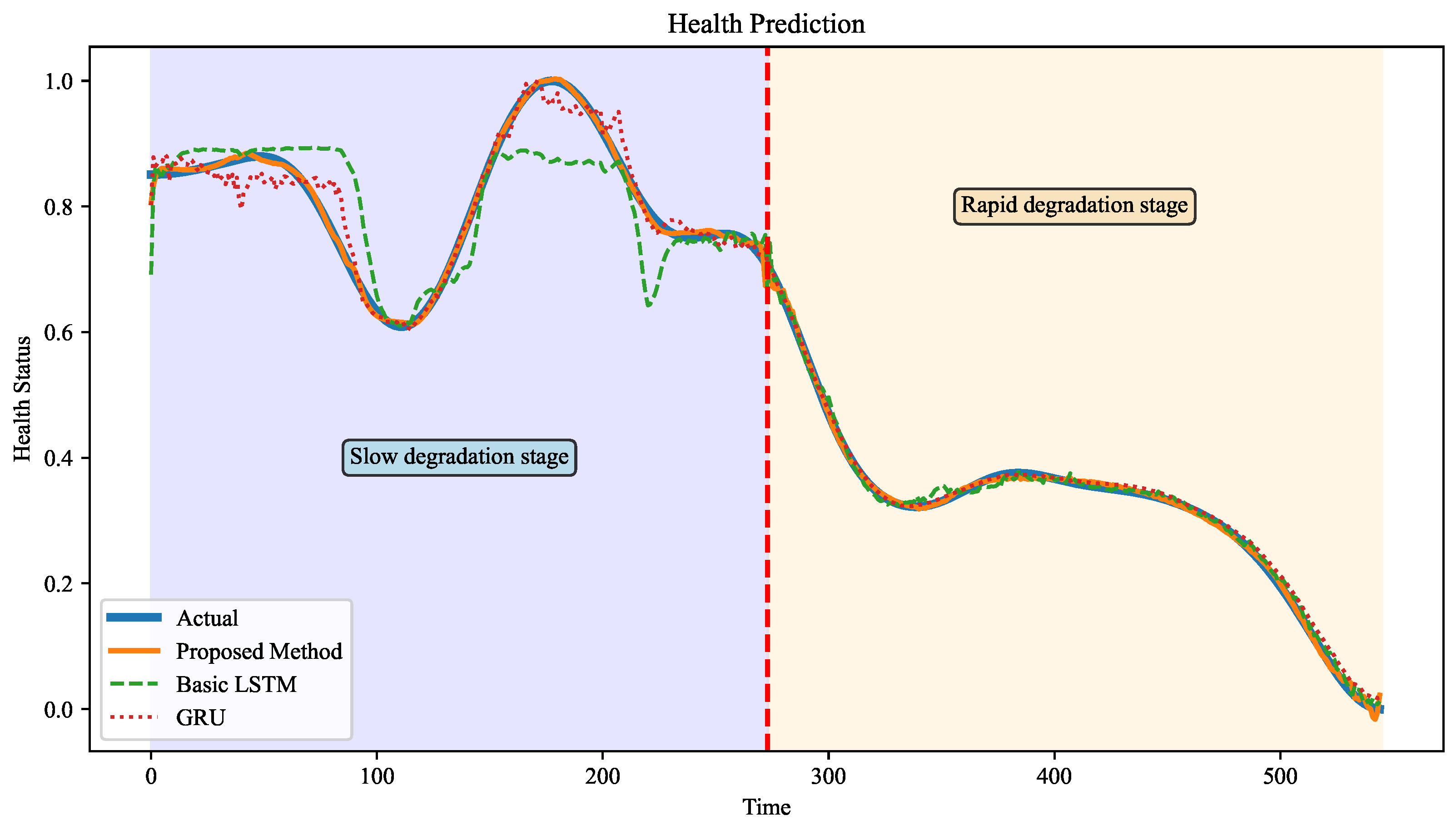
To validate the effectiveness of the proposed method, cross-validation was conducted using basic unidirectional LSTM and GRU networks while maintaining the parameter settings in Table 2. The results are shown in Figure 15 and Table 3.
According to the above experimental results, although the performance degradation of the whole lifecycle of this CMG was complex, the prediction models constructed by the proposed method in both stages are able to follow the trends effectively. Furthermore, under consistent network parameter settings, the proposed method significantly outperforms the comparison methods across all metrics, demonstrating its ability to effectively learn different types of trend changes. Compared to GRU, MSE decreased by 92.18% and RMSE by 71.80%. Compared to LSTM, MSE decreased by 98.68% and RMSE by 88.42%. The proposed method achieved an R 2 value of 0.9996, which is sufficient to meet the health status monitoring needs of actual projects.

7. Conclusions

In this paper, oriented to spacecraft health status monitoring requirements, a spacecraft health status monitoring method based on multidimensional data fusion is proposed. This study validated the above method by taking a satellite CMG that was retired due to failure as an example. The results show the following:
(1)
In view of the problems of intensive sampling and the large amount of telemetry data of spacecraft in orbit, the method developed in this study can effectively integrate and utilize the massive amount of operation data, fully extract and integrate the explicit and implicit features of the operation data of spacecraft components throughout their whole lifecycle, and synthesize multicharacteristic factors to realize the comprehensive monitoring and assessment of their health status.
(2)
To address the difficulty of determining the evolution law of spacecraft performance, the method proposed in this paper can automatically identify the performance degradation stage according to the on-orbit telemetry data, fully consider the evolution mechanism of different degradation stages, greatly simplify the analysis work on the ground, and effectively assist in the intelligent analysis of the on-orbit telemetry data and the identification of performance degradation stages.
(3)
Aiming at overcoming the inadequacy of existing spacecraft health monitoring technologies, which are limited to a single threshold, the proposed model fully combines the multidimensional telemetry data and their implied characteristics, reasonably predicts the evolution process of spacecraft component performance degradation, and follows the trend of the health status curve on the basis of the telemetry data to realize effective monitoring and prediction of the health status of the spacecraft components. The validity of the proposed method was verified.
(4)
The proposed method has a certain degree of generality and is applicable to key spacecraft electromechanical components such as flywheels and CMGs. However, owing to the differences in the compositions, operating environments, and degradation modes of different components, it is necessary to collect full-lifecycle data and analyze the degradation stages and construct prediction models for different electromechanical components, working conditions, and failure modes using the proposed method to form a single-component health status monitoring model of a spacecraft under specific failure modes, enabling effective ground operations and control management. It should be noted that the current limitations of this study lie in its primary focus on single component prediction for specific failure modes, with room for improvement in transferability and generalization capabilities. Future research may explore integrating physical mechanism models with data-driven methods to establish a hybrid neural network framework. It may hold promise for incorporating domain knowledge and enhancing adaptability to unseen operating conditions or similar components, enabling efficient, transferable health status prediction for a broader range of spacecraft components.

Author Contributions

Conceptualization, H.L.; methodology, H.L.; software, H.L.; validation, H.L.; formal analysis, H.L.; investigation, H.L. and Y.Z.; resources, C.L., W.L. (Wenjing Liu) and W.L. (Wenbo Li); data curation, H.L. and C.L.; writing—original draft preparation, H.L.; writing—review and editing, H.L., C.L. and W.L. (Wenjing Liu); visualization, H.L.; supervision, C.L. and W.L. (Wenjing Liu); project administration, H.L. and C.L.; funding acquisition, H.L., C.L. and W.L. (Wenbo Li). All authors have read and agreed to the published version of the manuscript.

Funding

This research received no external funding.

Data Availability Statement

The original contributions presented in this study are included in the article. Further inquiries can be directed to the corresponding author.

Acknowledgments

The authors are grateful for the data support provided by the China Space Station Team, as well as for the guidance and assistance provided by experts in the field during the research process.

Conflicts of Interest

The authors declare no conflicts of interest.

Appendix A

This appendix contains the time-domain and frequency-domain characteristic formulas used in this study.
Table A1. On-orbit data time-domain feature extraction.
NumberFeature NameFormulaThe Physical Significance of the Features
1Mean Value x ¯ = 1 m i = 1 m x i Reflect the stable component of the signal
2Rectified Mean Value x a r v = 1 m i = 1 m | x i | Provide some indication of early-stage failures
3Variance σ 2 = 1 m i = 1 m x i x ¯ 2 Sensitive to any fault that causes signal changes
4Root Mean Square R M S = 1 m i = 1 m x i 2 Reflect the overall noise level of the mechanical system
5Root Amplitude x r = 1 m i = 1 m x i 2 Used to distinguish between steady-state faults and transient faults
6Kurtosis K = 1 m i = 1 m x i x ¯ 4 1 m i = 1 m x i x ¯ 2 4 Sensitive to early impact failure characteristics in vibration signals
7Skewness S = 1 m i = 1 m x i x ¯ 3 1 m i = 1 m x i x ¯ 2 3 Sensitive to faults caused by asymmetric impacts such as friction and collisions
8Waveform Factor waveform F = 1 m i = 1 m x i 2 1 m i = 1 m | x i | Indicate whether mechanical components have experienced wear-related failures
9Peak Factor peak F = max ( x i ) 1 m i = 1 m x i 2 Detect impulse components in signals
10Impulse Factor impulse F = max ( x i ) 1 m i = 1 m | x i | Sensitive to transient impacts and early failures
Table A2. On-orbit data frequency-domain feature extraction.
NumberFeature NameFormulaThe Physical Significance of the Features
1Centre of Gravity Frequency F C = 0 + f k y ( k ) d f 0 + y ( k ) d f Sensitive to frequency structure changes caused by faults
2Mean Square Frequency M S F = 0 + f k 2 y ( k ) d f 0 + y ( k ) d f Highly sensitive to faults triggered by high-frequency resonance or impact
3Root Mean Square Frequency R M S F = M S F Same as MSF
4Frequency Variance V F = 0 + ( f k F C ) 2 y ( k ) d f 0 + y ( k ) d f Extremely sensitive to impact faults
5Frequency Standard Deviation R V F = V F Same as VF

References

  1. Curzi, G.; Modenini, D.; Tortora, P. Large Constellations of Small Satellites: A Survey of Near Future Challenges and Missions. Aerospace 2020, 7, 133. [Google Scholar] [CrossRef]
  2. Fang, Z.; Li, W.; Su, L.; Feng, J.K. Prognostics and Health Management Based on Next-Generation Technologies: A Literature Review. Appl. Sci. 2024, 14, 6120. [Google Scholar] [CrossRef]
  3. Liu, Q. Prediction of the Remaining Life of Satellite Key Components. Master’s Thesis, Xi’an University of Technology, Xi’an, China, 2020. [Google Scholar]
  4. Tang, Y.F.; Dou, L.Q.; Ji, C.H.; Liu, W.J.; Zong, Q. Deep transfer learning-based fault diagnosis of spacecraft attitude system. Aerosp. Control Appl. 2021, 47, 57–63. [Google Scholar]
  5. Kosova, F.; Altay, Ö.; Ünver, H.Ö. Structural health monitoring in aviation: A comprehensive review and future directions for machine learning. Nondestruct. Test. Eval. 2024, 40, 1–60. [Google Scholar] [CrossRef]
  6. Ruan, D.W.; Wang, Y.; Qian, Y.L.; Yan, J.P.; Li, Z.R. Deep stacked state-observer based neural network (DSSO-NN): A new network for system dynamics modeling and application in bearing. Adv. Eng. Inform. 2025, 65, 103357. [Google Scholar] [CrossRef]
  7. Liu, C.; Chen, L.P.; Qu, Y.; Jiang, X.P. Spacecraft health monitoring technology driven by model-data hybrid. Aerosp. Control Appl. 2023, 49, 121–129. [Google Scholar]
  8. Veresnikov, G.S.; Bazhenov, S.G.; Bashkirov, I.G.; Chernyshev, S.L.; Goncharenko, V.I.; Skryabin, A.V.; Petrov, D.A. Machine learning-based synthesis of diagnostic algorithms for electromechanical actuators to improve the aerospace flight safety. Acta Astronaut. 2025, 226, 239–247. [Google Scholar] [CrossRef]
  9. Deng, L.F.; Li, W.; Yan, X.H. An intelligent hybrid deep learning model for rolling bearing remaining useful life prediction. Nondestruct. Test. Eval. 2024, 40, 2670–2697. [Google Scholar] [CrossRef]
  10. Shao, H.D.; Ming, Y.H.; Liu, Y.Y.; Liu, B. Small sample gearbox fault diagnosis based on improved deep forest in noisy environments. Nondestruct. Test. Eval. 2024, 40, 3935–3956. [Google Scholar] [CrossRef]
  11. You, K.S.; Lian, Z.W.; Chen, R.H.; Gu, Y.K. A novel rolling bearing fault diagnosis method based on time-series fusion transformer with interpretability analysis. Nondestruct. Test. Eval. 2024, 1–27. [Google Scholar] [CrossRef]
  12. Yang, T.Z.; Dang, J.C.; Zhong, L.; Liu, Y.; Liu, Y.Y. Health assessment technology of lithium-ion battery for spacecraft based on multi-feature fusion. Chin. Space Sci. Technol. 2021, 41, 79–84. [Google Scholar]
  13. Zhang, F.S.; Zhao, Y.; Zhang, S.M.; Wu, W.T.; Tan, C. Spacecraft Equipment Health Condition Monitoring Based on Augmented Dickey-Fuller Test and Gaussian Mixture Model. In Proceedings of the 2021 IEEE International Conference on Mechatronics and Automation (ICMA), Takamatsu, Japan, 8–11 August 2021; pp. 1379–1384. [Google Scholar]
  14. Pang, J.Y.; Liu, D.T.; Peng, Y.; Peng, X.Y. Temporal dependence Mahalanobis distance for anomaly detection in multivariate spacecraft telemetry series. ISA Trans. 2023, 140, 354–367. [Google Scholar] [CrossRef]
  15. Tang, X.Y.; Jiang, D.Z.; Guo, B.T. Spacecraft hitch detection and health evaluation based on Multivariable Time Series. In Proceedings of the 2022 2nd International Conference on Measurement Control and Instrumentation (MCAI 2022), Guangzhou, China, 22–24 July 2022; p. 2366. [Google Scholar]
  16. Yash, P.; Gundawar, S.; Kumar, N.; Rajasekaraiah, U.B.; Ganesan, K.P.; Kar, P. Multiforecast-based Early Anomaly Detection for Spacecraft Health Monitoring. In Proceedings of the 7th Joint International Conference on Data Science & Management of Data (11th ACM IKDD CODS and 29th COMAD), New York, NY, USA, 4–7 January 2024; pp. 275–283. [Google Scholar]
  17. Cuéllar, S.; Santos, M.; Alonso, F.; Fabregas, E.; Farias, G. Explainable anomaly detection in spacecraft telemetry. Eng. Appl. Artif. Intell. 2024, 133, 108083. [Google Scholar] [CrossRef]
  18. Gu, X.Y. Research on Satellite Telemetry Data Prediction Based on ARIMA-SVR Combination Model. Master’s Thesis, University of Chinese Academy of Sciences, Beijing, China, 2021. [Google Scholar]
  19. Kumar, P.S.; Oruganti, S.K. Review of GNSS Scintillation Detection Methods with Emphasis on Low-Latitude and Indian Region Challenges. SGS-Eng. Sci. 2025, 1. Available online: https://spast.org/techrep/article/view/5657 (accessed on 19 October 2025).
  20. Ruan, D.W.; Ma, L.; Yang, Y.Y.; Yan, J.P.; Gühmann, C. Improvement by Monte Carlo for Trajectory Similarity-Based RUL Prediction. IEEE Trans. Instrum. Meas. 2024, 73, 3509811. [Google Scholar] [CrossRef]
  21. Hou, B.W.; Wang, J.Q.; Zhou, X.Y.; Li, D.; He, Z.M. Analysis on Performance of Ballistic Tracking Data Outlier Elimination Methods. Aerosp. Shanghai 2018, 35, 10. [Google Scholar]
  22. Berahmand, K.; Daneshfar, F.; Salehi, E.S.; Li, Y.F.; Xu, Y. Autoencoders and their applications in machine learning: A survey. Artif. Intell. Rev. 2024, 57, 28. [Google Scholar] [CrossRef]
  23. Kumar, A.; Kumar, A.; Mallipeddi, R.; Lee, D.G. High-density cluster core-based k-means clustering with an unknown number of clusters. Appl. Soft Comput. 2024, 155, 111419. [Google Scholar] [CrossRef]
  24. Gao, D.W.; Zhu, Y.S.; Ren, Z.J.; Yan, K.; Kang, W. A novel weak fault diagnosis method for rolling bearings based on LSTM considering quasi-periodicity. Knowl.-Based Syst. 2021, 231, 107413. [Google Scholar] [CrossRef]
  25. Shi, J.C.; Peng, D.K.; Peng, Z.X.; Zhang, Z.Y.; Goebel, K.; Wu, D.Z. Planetary gearbox fault diagnosis using bidirectional-convolutional LSTM networks. Mech. Syst. Signal Process. 2022, 162, 107996. [Google Scholar] [CrossRef]
  26. Peng, Y.; Jia, S.Z.; Xie, L.Z.; Shang, J. Accurate Satellite Operation Predictions Using Attention-BiLSTM Model with Telemetry Correlation. Aerospace 2024, 11, 398. [Google Scholar] [CrossRef]
  27. Zhang, K.; Ma, Z. Prediction of performance degradation of high-speed rotor shafting of control moment gyro based on support vector regression mechanism. Satell. Netw. 2021, 8, 70–74. [Google Scholar]
  28. Farahani, H.V.; Rahimi, A. Fault Diagnosis of Control Moment Gyroscope Using Optimized Support Vector Machine. In Proceedings of the 2020 IEEE International Conference on Systems, Man, and Cybernetics (SMC), Toronto, ON, Canada, 11–14 October 2020; pp. 3111–3116. [Google Scholar]
  29. Rakhmanov, A.; Wiseman, Y. Compression of GNSS data with the aim of speeding up communication to autonomous vehicles. Remote Sens. 2023, 15, 2165. [Google Scholar] [CrossRef]
Figure 1. Structure of a SAE.
Machines 13 01136 g001
Figure 2. Schematic diagram of health factor curve.
Machines 13 01136 g002
Figure 3. Flowchart for Identifying the performance degradation phase via K-means algorithm.
Machines 13 01136 g003
Figure 4. Structure of a Bi-LSTM network.
Machines 13 01136 g004
Figure 5. Flow chart of health status monitoring of a single component in a spacecraft.
Machines 13 01136 g005
Figure 6. Flow chart of health status monitoring of a single component in a spacecraft.
Machines 13 01136 g006
Figure 7. Degradation data for the high-speed rotor speed, and low-speed bearing temperature.
Machines 13 01136 g007
Figure 8. Degradation data for the high-speed rotor speed and low-speed motor current.
Machines 13 01136 g008
Figure 9. Degradation data for the high-speed rotor speed and high-speed motor current.
Machines 13 01136 g009
Figure 10. Partial explicit feature images for several parameters. (a) Examples of time-domain characterization of the high-speed rotor speed. (b) Examples of frequency-domain characterization of the high-speed rotor speed. (c) Examples of time-domain characterization of the low-speed motor current. (d) Examples of frequency-domain characterization of the low-speed motor current.
Machines 13 01136 g010
Figure 11. Implicit feature image of the CMG telemetry data.
Machines 13 01136 g011
Figure 12. Health factor curve.
Machines 13 01136 g012
Figure 13. Health status model.
Machines 13 01136 g013
Figure 14. Unsupervised identification results for the degradation stage. (a) Clustering image. (b) Cluster classification.
Machines 13 01136 g014
Figure 15. Prediction results of cross-validation.
Machines 13 01136 g015
Table 1. SAE network configuration.
Number of LayersInput Data DimensionOutput Data DimensionActivation Function
Encoder layer 1D64ReLU
Encoder layer 26432ReLU
Encoder layer 3322/
Decoder layer 1232ReLU
Decoder layer 23264ReLU
Decoder layer 364DSigmoid
Table 2. Network parameter settings of the Bi-LSTM for each stage.
Prediction StageNumber of LSTM CellsNumber of LayersPredicted Data SizeEpochLearning Rate
Slow degradation stage92273 × 110000.005
Rapid degradation stage981272 × 110000.01
Table 3. Comparison of health status prediction results.
Prediction MethodMSERMSE R 2
GRU0.0003710.0192500.995110
LSTM0.0021970.0468710.971011
The Proposed Method0.0000290.0054280.999611
Disclaimer/Publisher’s Note: The statements, opinions and data contained in all publications are solely those of the individual author(s) and contributor(s) and not of MDPI and/or the editor(s). MDPI and/or the editor(s) disclaim responsibility for any injury to people or property resulting from any ideas, methods, instructions or products referred to in the content.