Article

Contrasting Geological Conditions Controlling the Formation of Organic-Rich Shale in the Sanzhao and Qijia–Gulong Sags, Songliao Basin, China


1
School of Energy Resources, China University of Geosciences (Beijing), Beijing 100083, China
2
Beijing Key Laboratory of Unconventional Natural Gas Geological Evaluation and Development Engineering, Beijing 100083, China
3
Research Institute of Petroleum Exploration and Development, PetroChina, Beijing 100083, China
4
Research Institute of Exploration and Development, PetroChina Changqing Oilfield Company, Xi’an 710018, China
*
Author to whom correspondence should be addressed.
Minerals 2026, 16(5), 528; https://doi.org/10.3390/min16050528
Submission received: 2 April 2026 / Revised: 2 May 2026 / Accepted: 12 May 2026 / Published: 15 May 2026
(This article belongs to the Section Mineral Exploration Methods and Applications)

Abstract

The Qingshankou Formation (K2qn) represents a key interval for lacustrine shale oil accumulation in the Songliao Basin. However, the spatial heterogeneity of organic-rich shales and their controlling mechanisms remain poorly constrained. Here, we investigate the Qijia–Gulong and Sanzhao sags by integrating drilling, well-log, geochemical, and mineralogical data to systematically evaluate source rock characteristics and their dominant controls. Based on well-log data from 442 wells, total organic carbon (TOC) was continuously predicted using an improved ΔlogR method. In addition, mineral compositions and lithofacies distributions were quantitatively characterized for representative wells in the eastern and western sags by combining X-ray diffraction (XRD) data with a deep residual shrinkage network (DRSN) model. The results reveal a dual depocenter pattern within K2qn across the study area. The Qijia–Gulong Sag is characterized by thicker mudstone successions (30–600 m), higher sedimentation rates, and stronger stratigraphic continuity, whereas the Sanzhao Sag exhibits comparatively thinner deposits (30–300 m). Significant differences are also observed in organic matter type and thermal maturity: the Qijia–Gulong Sag is dominated by Type II1 kerogen with higher maturity (Ro = 1.0%–1.5%), while the Sanzhao Sag mainly contains Type I kerogen with relatively lower maturity (Ro = 0.8%–1.3%). Despite this, TOC values in the Sanzhao Sag are markedly higher than those in the Qijia–Gulong Sag, with average values of 3.34% and 2.19%, respectively. These differences reflect the coupled control of palaeoenvironmental conditions and terrigenous input on organic matter enrichment. Elevated salinity and enhanced water-column stratification in the Sanzhao Sag promoted the development of reducing conditions favorable for organic matter preservation, resulting in higher TOC contents. In contrast, although the Qijia–Gulong Sag experienced high sedimentation rates and developed thick shale sequences, strong terrigenous input and dilution effects limited organic matter enrichment, while simultaneously leading to higher thermal maturity. Consequently, two distinct enrichment modes are identified in the study area: a “high-salinity stratification–efficient preservation” mode and a “high maturity–thick shale development” mode, which together govern the spatial heterogeneity of shale oil resources.

1. Introduction

Shale oil, as a key component of unconventional hydrocarbon resources, has become a major focus of petroleum exploration and development in recent years [1,2]. Organic-rich shales not only act as high-quality source rocks but also constitute primary reservoirs for shale oil, and their development characteristics and spatial distribution directly control the formation and accumulation of shale oil resources [3]. The geological setting of shale oil and gas in China is distinctive: in addition to marine systems, organic-rich shales are widely developed in transitional and lacustrine environments. Notably, approximately two-thirds of China’s recoverable shale gas resources are hosted in non-marine strata, in sharp contrast to the dominance of marine systems in North America [4,5]. However, lacustrine shale successions are typically characterized by frequent interbedding, high clay mineral content, and strong reservoir heterogeneity, making it essential to identify the controlling factors governing shale development variability in order to better understand shale oil enrichment mechanisms.
Sedimentary environments exert a fundamental control on stratigraphic architecture, mineral composition, organic matter type, and the spatial distribution of organic-rich shales. Evaluation of shale resource potential therefore requires an integrated assessment of both source rock and reservoir properties. As source rocks, organic matter abundance, type, and thermal maturity are key parameters controlling hydrocarbon generation potential, commonly characterized by TOC, hydrogen index (HI), oxygen index (OI), and vitrinite reflectance (Ro) [6,7]. As reservoirs, shale storage capacity is primarily governed by mineral composition, pore structure, and lithofacies assemblages. In particular, mineral composition not only determines reservoir brittleness but also directly influences pore development and fluid occurrence [8,9]. For instance, a high content of rigid quartzo-feldspathic minerals can enhance the preservation of primary intergranular pores by resisting mechanical compaction. Conversely, the presence of phyllosilicates may facilitate sediment deformation and compaction, potentially contributing to the development of abnormal overpressure in rapidly buried lacustrine settings [10]. Although laboratory-based methods for characterizing shale properties are well established, their application at the basin scale remains limited by sampling constraints and cost. However, conventional well-log evaluation methods still involve considerable uncertainty in complex lacustrine systems, resulting in insufficient characterization of the spatial distribution and heterogeneity of organic-rich shales.
Shale development and organic matter enrichment are controlled by multiple geological factors acting in combination. Previous studies have demonstrated that tectonic activity, sedimentation rate, water depth, water-column properties, and terrigenous input play key roles in shale formation. These tectono-sedimentary factors collectively influence both sediment supply and depositional conditions, leading to significant spatial variability in shale thickness, lithofacies assemblages, and organic matter characteristics [11,12]. In recent years, increasing attention has been paid to the roles of water-column stratification, salinity variation, and terrigenous input in controlling organic matter enrichment [13,14]. However, most existing studies have focused on individual factors, with limited consideration of their coupled effects. In particular, within a single basin, differences in organic-rich shale development between adjacent sags often reflect the integrated influence of multiple controls, yet the underlying mechanisms remain poorly understood.
The Songliao Basin, a typical large continental petroliferous basin, contains extensively developed organic-rich shales within the Upper Cretaceous Qingshankou Formation (K2qn). Notably, the Qijia–Gulong Sag and the Sanzhao Sag exhibit marked differences in shale development characteristics [15]. In this study, these two sags are selected as representative cases. By integrating drilling, well-log, geochemical, and mineralogical data, we systematically investigate the development characteristics and spatial heterogeneity of shales in the first member of the Qingshankou Formation (K2qn1). Continuous TOC profiles are predicted using the ΔlogR method [16], and mineral composition and lithofacies distributions are quantitatively characterized by combining XRD data with a DRSN model. On this basis, we explore the coupled controls of palaeogeomorphology, palaeosalinity, and terrigenous input on shale development, providing new insights into the prediction of favorable zones for lacustrine shale oil.

2. Geological Setting

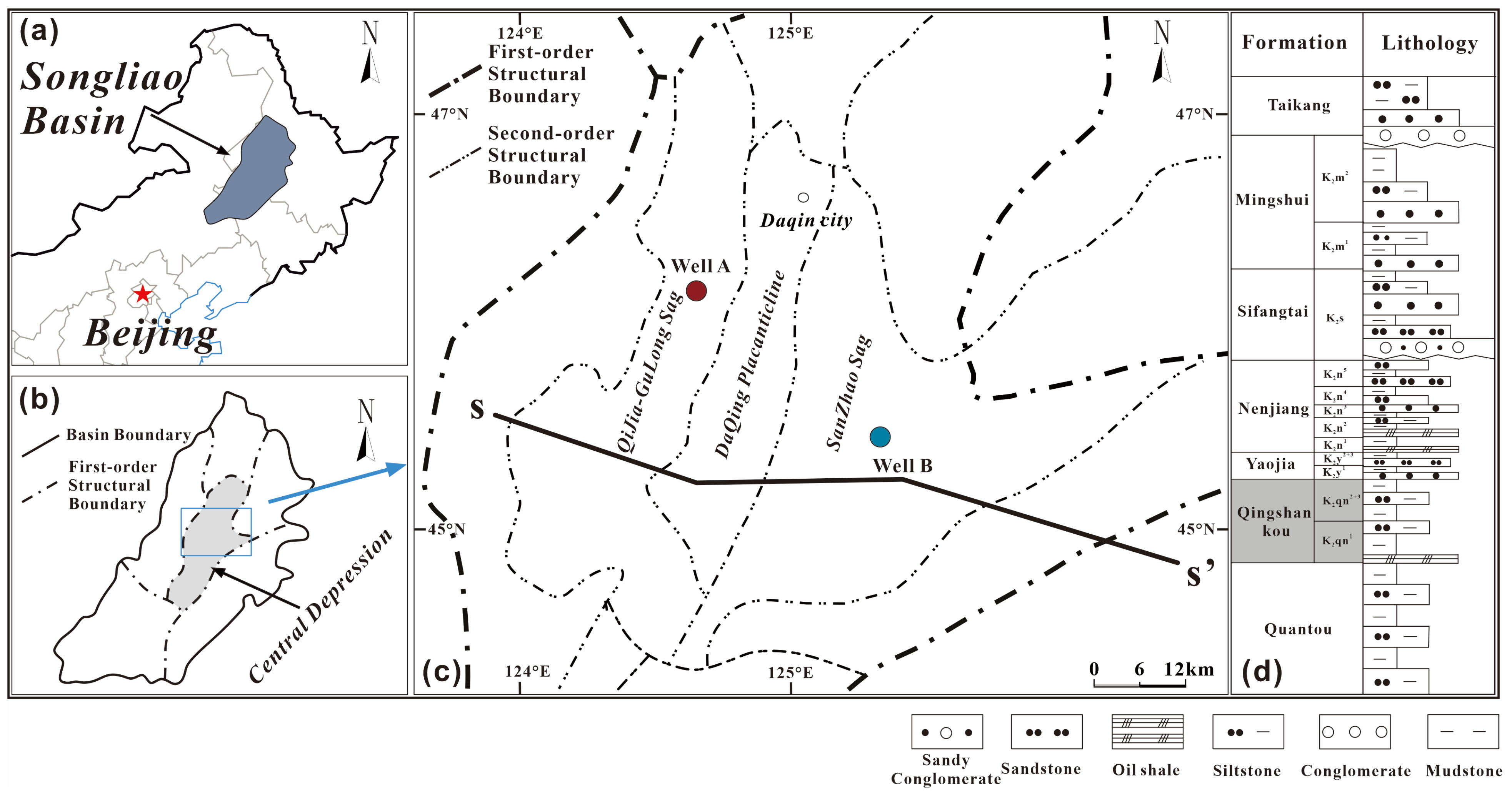
The Songliao Basin is located in northeastern China and represents one of the most important Mesozoic continental sedimentary basins in East Asia, covering an area of approximately 2.6 × 10⁵ km2 (Figure 1). The basin plays a significant role in China’s petroleum industry. Since the 1950s, continuous oil and gas exploration and development have been conducted, making it one of the most important crude oil production bases in China [17,18]. In recent years, with the advancement of unconventional hydrocarbon exploration, shale oil within the K2qn has gradually become an important new exploration target in the basin and is considered to have considerable resource potential. From a structural perspective, the Songliao Basin is characterized as a large intracontinental depression basin. It can be subdivided into several first-order tectonic units, including the central depression, the northern plunge belt, the western slope, and the northeastern, southeastern, and southwestern uplifts [19]. Among these units, the central depression contains the thickest sedimentary successions and represents the area where lacustrine subsidence and sedimentation were most concentrated. It is also the region where source rocks and shale oil are most extensively developed.
The formation and evolution of the Songliao Basin experienced several distinct stages [20]. The early stage of basin development was dominated by rifting, followed by a post-rift thermal subsidence stage during which the subsidence rate gradually decreased and the lake basin expanded significantly [19]. During this period, the lacustrine depositional environment remained relatively stable, which was favorable for the continuous accumulation of fine-grained sediments and organic matter. Subsequently, the basin entered a stage of structural inversion, during which some areas experienced uplift and structural modification.
The K2qn was mainly deposited during the post-rift thermal subsidence stage and represents one of the most important intervals for the development of organic-rich shale in the basin. During this period, the lake basin was characterized by a relatively stable deep-lacustrine depositional environment, in which dark mudstones and shales were widely deposited, providing favorable conditions for organic matter enrichment. With the continued evolution of sedimentation, the lacustrine depositional system gradually changed, and delta systems began to prograde toward the lake center, significantly influencing the lake extent and depositional patterns [21,22]. The Sanzhao Sag and the Qijia–Gulong Sag, which constitute the study area, are both located within the central depression and represent key areas for the development of organic-rich shale in the K2qn. Differences in structural position and subsidence characteristics between these two sags have resulted in variations in depositional environments and the development of organic-rich shale. Therefore, a comparative study of the geological conditions controlling shale oil formation within the K2qn in these two sags is of great significance for understanding the enrichment patterns of shale oil in the Songliao Basin.

3. Samples and Methods

3.1. Data Sources

This study integrates drilling, well-log, and geochemical data from the Sanzhao and Qijia–Gulong sags within the K2qn1 of the Songliao Basin. To ensure the acquisition of the most complete sedimentary records, two representative wells, Well A (Sanzhao Sag) and Well B (Qijia–Gulong Sag), were selected from their respective depocenters. A systematic analytical program was conducted on these two wells. A total of 330 core samples (244 from Well A and 86 from Well B) underwent X-ray diffraction (XRD) mineralogical quantification using an X-ray diffractometer (Ultima IV, Rigaku Corp., Tokyo, Japan) at the Research Institute of Petroleum Exploration and Development (RIPED), PetroChina. Additionally, 230 samples were utilized for Total Organic Carbon (TOC) measurements via a carbon/sulfur analyzer at the RIPED; all TOC results are reported as weight percentages (wt. %). Based on these datasets, a subset of 268 samples (244 from Well A and 24 from Well B) was selected for trace element (B and Ga) analysis via inductively coupled plasma mass spectrometry (ICP-MS) at the China University of Geosciences, Beijing. The well-log data primarily consist of conventional suites, including gamma ray (GR), acoustic transit time (AC), density (DEN), and resistivity (RT), which served as the basis for TOC prediction and mineral content estimation.
Organic matter type was determined using HIOI cross-plots derived from Rock–Eval pyrolysis data, and kerogen types were classified accordingly [7]. Thermal maturity was assessed using Ro. The Ro data were obtained from laboratory measurements of core and cutting samples and were used to determine the thermal evolution stage of organic matter in the K2qn1.
Trace elements boron (B) and gallium (Ga) were measured using ICP–MS. Prior to analysis, core samples were ground to <200 mesh and fully digested using a mixed acid system of hydrofluoric acid, nitric acid, and perchloric acid. Certified reference materials were employed for quality control to ensure analytical accuracy and reproducibility. Boron and gallium are widely used for quantitative reconstruction of palaeosalinity, and the B/Ga ratio serves as a key geochemical proxy for assessing the salinity of palaeowater [23].

3.2. TOC Prediction Using the ΔlogR Method

In this study, a total of 230 core samples were systematically collected from Well A and Well B for direct geochemical analysis. These discrete measurement data were utilized to calibrate and validate the well-log-based TOC prediction model, ensuring the accuracy of the organic enrichment characterization. To further determine the regional TOC signatures of the two sags, an extensive statistical dataset was also incorporated. This dataset includes 584 core samples from 52 wells in the Qijia–Gulong Sag and 544 core samples from 28 wells in the Sanzhao Sag, all targeting the K2qn1.
TOC was predicted using the ΔlogR method proposed by Passey et al. (1990) [16]. This method is based on the overlay relationship between acoustic transit time and resistivity logs, and estimates TOC by identifying anomalous log responses associated with organic-rich intervals. It remains one of the most widely applied approaches for TOC prediction in source rocks.
The conventional ΔlogR method was originally developed for low-maturity, normally compacted marine sediments and may introduce uncertainties when applied to deeply buried, high-maturity lacustrine source rocks. This is primarily because lacustrine sediments commonly contain higher proportions of conductive minerals, while strong compaction at depth reduces the amplitude of acoustic log variations, leading to systematically lower ΔlogR values. To address this limitation, previous studies have introduced calibration coefficients into the original ΔlogR formulation to reduce the influence of thermal maturity on TOC estimation [24].
In this study, a modified ΔlogR method was applied for TOC prediction, and the calculation is given as follows:
Δ L o g R = log R R baseline + 0.02 d t d t baseline
T O C = a × Δ L o g R + b
where ΔlogR represents the log separation; R is the measured resistivity (Ω·m); dt is the acoustic transit time (μs/ft); and Rbaseline and dtbaseline denote the baseline values of resistivity and acoustic logs in non-source rock intervals. The coefficients a and b are calibration parameters derived from measured TOC data. The ΔlogR method was applied to well-log data from 442 wells in the study area to generate continuous TOC profiles for each well. Based on these results, TOC values corresponding to the K2qn1 were extracted, and average TOC values for this interval were calculated for each well. The spatial distribution of TOC was estimated using geostatistical interpolation of well-based average TOC values, enabling the construction of TOC distribution maps and well correlation sections for the K2qn1.

3.3. Lithofacies Classification and Mineral Composition Prediction

3.3.1. Mineral Composition and Lithofacies Classification

To characterize the mineral composition of shales in the study area, selected core samples were analyzed using XRD. Prior to analysis, samples were crushed to <200 mesh and prepared as powder specimens. XRD measurements were then conducted to identify major mineral phases based on diffraction patterns, and the relative proportions of each mineral component were quantitatively determined. The results primarily include quartz and feldspar, clay minerals, and carbonate minerals.
Mineral composition plays a critical role in controlling reservoir properties and pore development in shale systems. Based on mineralogical characteristics, shale minerals can generally be grouped into three major components: clay minerals (e.g., illite, chlorite, and kaolinite), quartz-feldspatic minerals, and carbonate minerals (e.g., calcite and dolomite) [10,25,26,27,28]. A ternary diagram based on the relative proportions of these three components can be used to classify shale lithofacies. In this study, a threshold of 50% for the dominant mineral component was adopted to define four basic lithofacies types: argillaceous shale, siliceous shale, calcareous shale, and mixed shale. This classification scheme provides a basis for lithofacies identification and subsequent spatial prediction across the study area.

3.3.2. Mineral Content Prediction Using the DRSN Model

To obtain continuous mineral composition profiles, a log-based mineral prediction model was established using XRD data as training data [29,30]. In this study, a DRSN was employed to predict mineral contents [31]. The DRSN is an improved deep learning model based on residual networks (ResNet), in which a soft-thresholding mechanism is introduced into the residual structure to suppress noise and enhance prediction accuracy. This framework is particularly suitable for processing noisy well-log data [32].
Following the approach proposed by Wu et al., a DRSN model was constructed based on the characteristics of the well-log data [33]. Mineral content data obtained from XRD analyses were used as target outputs, while well-log curves sensitive to mineral composition were selected as input features, including gamma ray (GR), acoustic transit time (AC), density (DEN), and resistivity (RT) [34,35,36]. The DRSN model extracts features from the input log data and captures the nonlinear relationships between log responses and mineral contents through a multi-layer residual architecture.
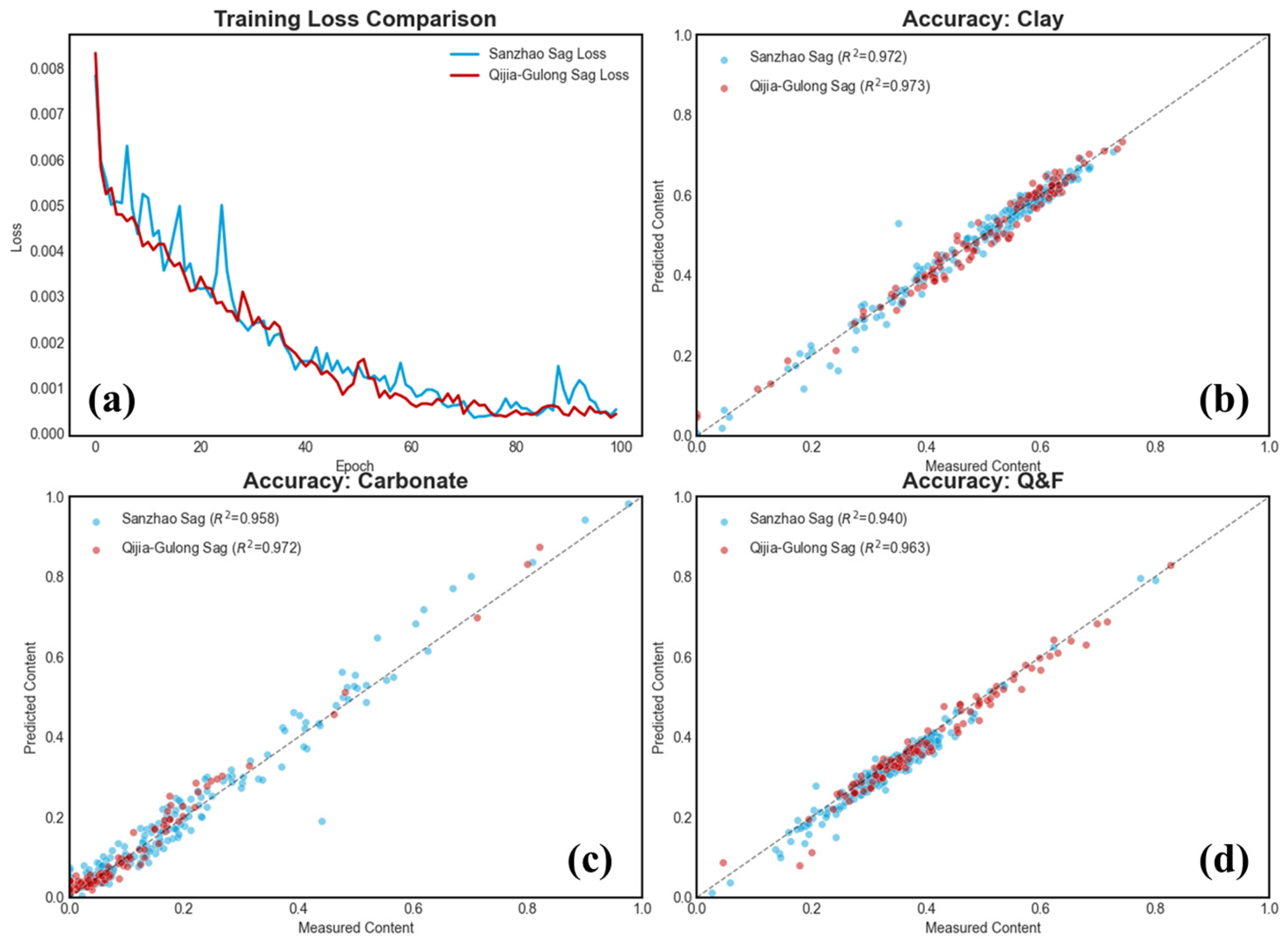
The specific hyperparameter settings of the DRSN model were optimized to ensure robust convergence and high prediction accuracy. A sliding window of 32 samples was used to capture local depth-sequence features. The network was trained using the Adam optimizer with a fixed learning rate of 0.001 and a batch size of 16. To minimize the influence of potential outliers in the well-log data (e.g., spikes caused by borehole enlargement), the Huber Loss function (δ = 0.1) was adopted as the objective function due to its robustness against anomalous data points. Furthermore, a Softmax activation layer was implemented at the output stage, mathematically ensuring that the sum of predicted quartz–feldspar, clay, and carbonate fractions remains equal to 1.0, thereby honoring the physical volumetric constraint of rock composition. The prediction performance and convergence stability of the model in different study areas were quantitatively validated, as illustrated in Figure 2, where high R2 values demonstrate the reliability of the calibrated model.
After model training, the calibrated DRSN model was applied to well-log data from Well A and Well B to generate continuous mineral content profiles, including quartz and feldspar, clay minerals, and carbonate minerals. Based on the predicted mineral compositions of the K2qn1 shale were identified according to the established mineral-based classification scheme, and their spatial distribution characteristics were further analyzed.

4. Results

4.1. Differences in Source Rock Characteristics

4.1.1. Thickness of Mudstone

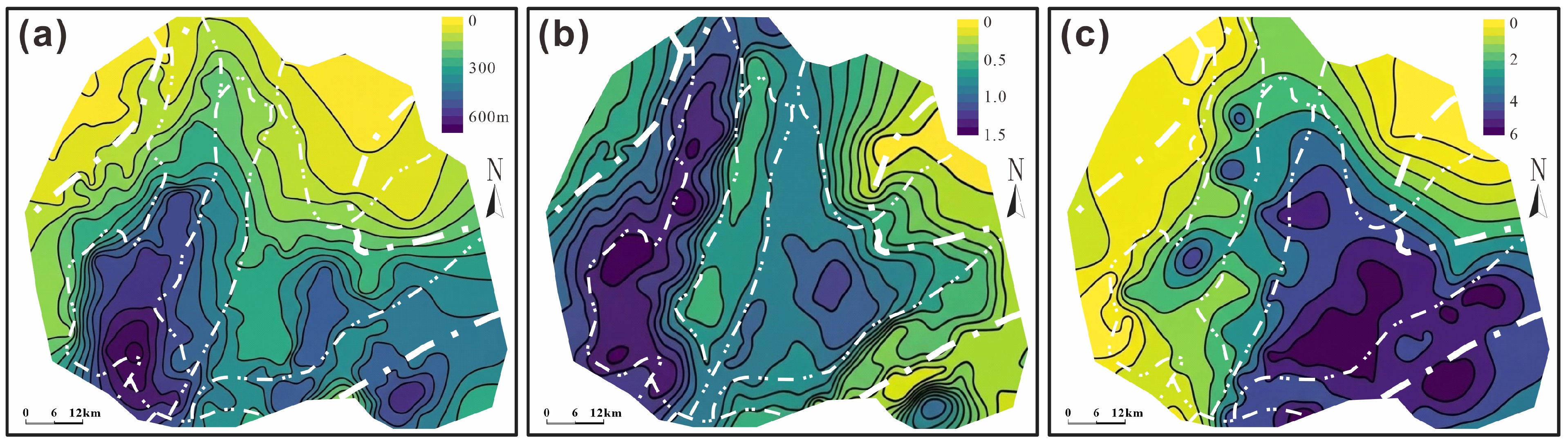
Mudstone development within the K2qn1 exhibits a pronounced dual-depocenter pattern across the study area. Integrated analysis of drilling data indicates that the Qijia–Gulong Sag and the Sanzhao Sag constituted the two principal depocenters during K2qn1 deposition, although they differ markedly in depositional scale and degree of development. The Qijia–Gulong Sag represents the primary depocenter, where mudstones are most extensively developed, with thicknesses ranging from 30 to 600 m and with high-thickness zones showing good lateral continuity. In contrast, the Sanzhao Sag is characterized by a smaller depositional scale and relatively thinner mudstone intervals, generally ranging from 30 to 300 m (Figure 3a). This pronounced thickness variation suggests a higher subsidence rate in the Qijia–Gulong Sag during K2qn1 deposition and implies deposition under deeper and more stable lacustrine conditions at the basin center.

4.1.2. Organic Matter Type and Thermal Maturity

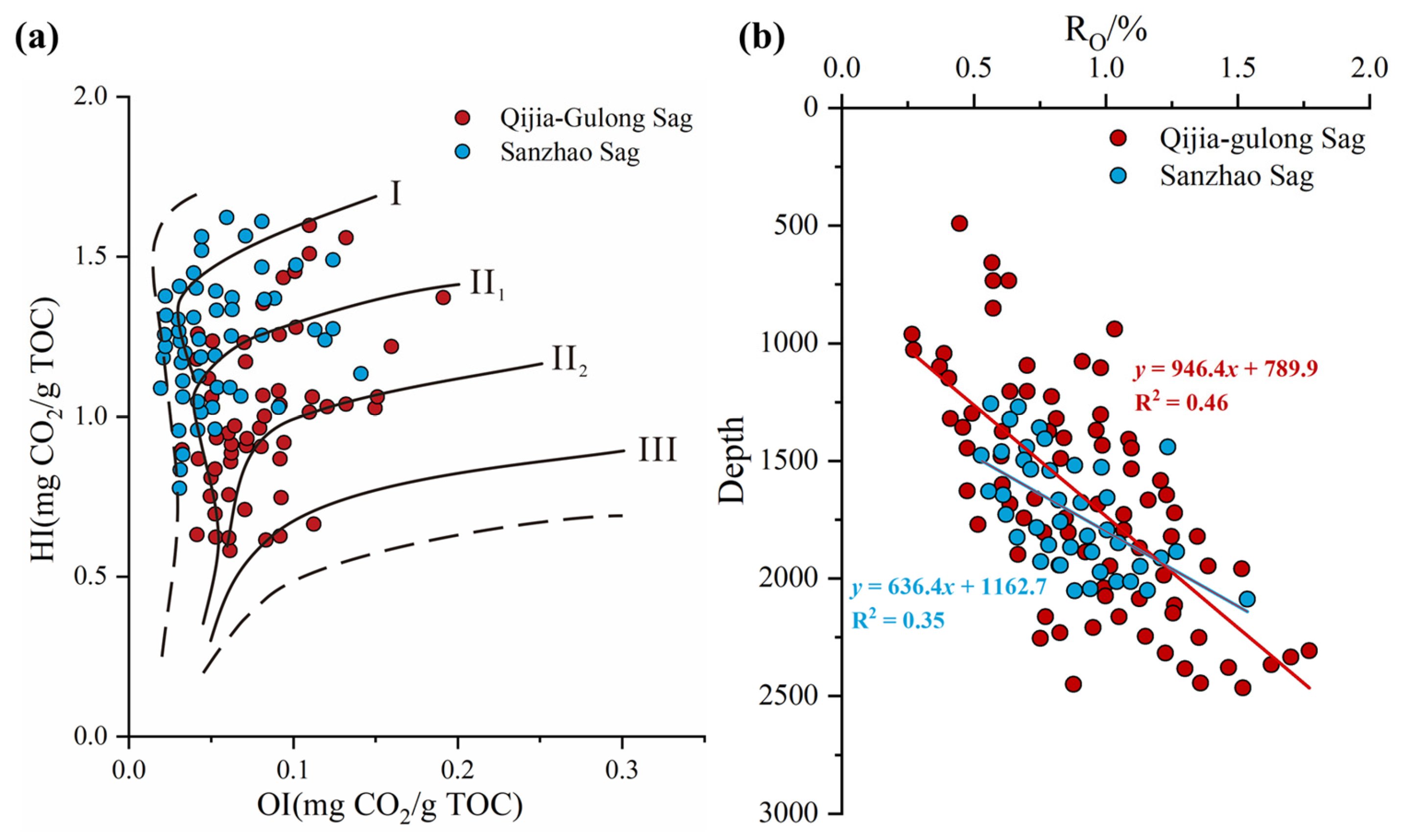
Organic matter type and thermal maturity are key factors controlling hydrocarbon generation potential in source rocks. Rock–Eval pyrolysis results for the K2qn1 reveal a clear spatial differentiation in kerogen types, as indicated by the relationship between the hydrogen index (HI) and oxygen index (OI). The Sanzhao Sag is dominated by Type I kerogen, characterized by exceptionally high hydrocarbon generation potential, whereas the Qijia–Gulong Sag is dominated by Type II1 kerogen. This difference reflects subtle variations in depositional environments and the relative contribution of aquatic organic matter between the two sags. In terms of thermal maturity, which is controlled by burial depth, the Qijia–Gulong Sag is buried significantly deeper than the Sanzhao Sag, resulting in more advanced thermal evolution. Ro values in the Qijia–Gulong Sag range from 1.0% to 1.5%, corresponding to the mature to highly mature stage and indicating significant hydrocarbon generation potential. In contrast, the Sanzhao Sag shows relatively lower maturity, with Ro values ranging from 0.8% to 1.3%, corresponding to the mature stage (Figure 3b and Figure 4b). Overall, the combination of high-quality organic matter and appropriate thermal maturity in both sags provides a strong basis for shale oil accumulation in the study area.

4.1.3. Organic Matter Abundance

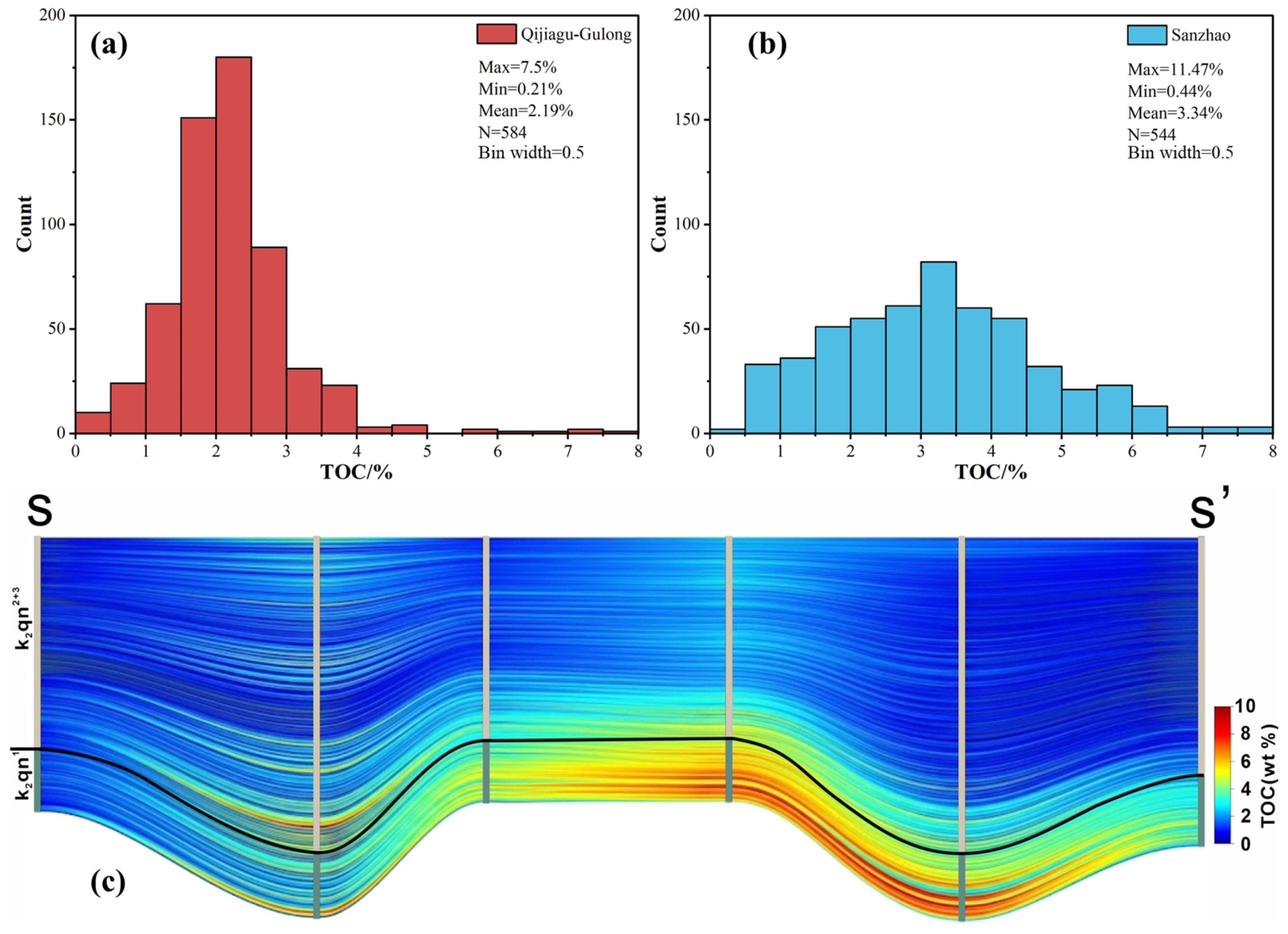
TOC is a key parameter for evaluating the hydrocarbon generation potential of source rocks. Geochemical analyses indicate that source rocks within the K2qn1 exhibit overall high organic matter abundance, but display a pronounced east–west differentiation in their spatial distribution. TOC values in the eastern Sanzhao Sag are markedly higher than those in the western Qijia–Gulong Sag (Figure 3c). The average TOC of mudstones in the Qijia–Gulong Sag is ~2.19% (Figure 5a), whereas significantly higher values are observed in the Sanzhao Sag, with an average TOC of 3.34% (Figure 5b). TOC prediction and well-to-well correlation based on five representative wells further reveal strong vertical heterogeneity in organic matter distribution within the K2qn1. Organic matter enrichment is most pronounced within the K2qn1, where TOC values are significantly higher than those in the second and third members, with high-TOC intervals predominantly concentrated at the base of the K2qn1 (Figure 5c). Integrating these observations with previous results, although the Qijia–Gulong Sag exhibits advantages in mudstone thickness and thermal maturity (Ro = 1.0%–1.5%), the Sanzhao Sag shows higher organic matter abundance and quality, as reflected by higher TOC values and the dominance of Type I kerogen. Overall, both sags provide favorable conditions for hydrocarbon generation and together constitute the principal hydrocarbon source centers controlling shale oil accumulation in the study area.

4.2. Differences in Lithofacies Characteristics

4.2.1. Mineral Composition

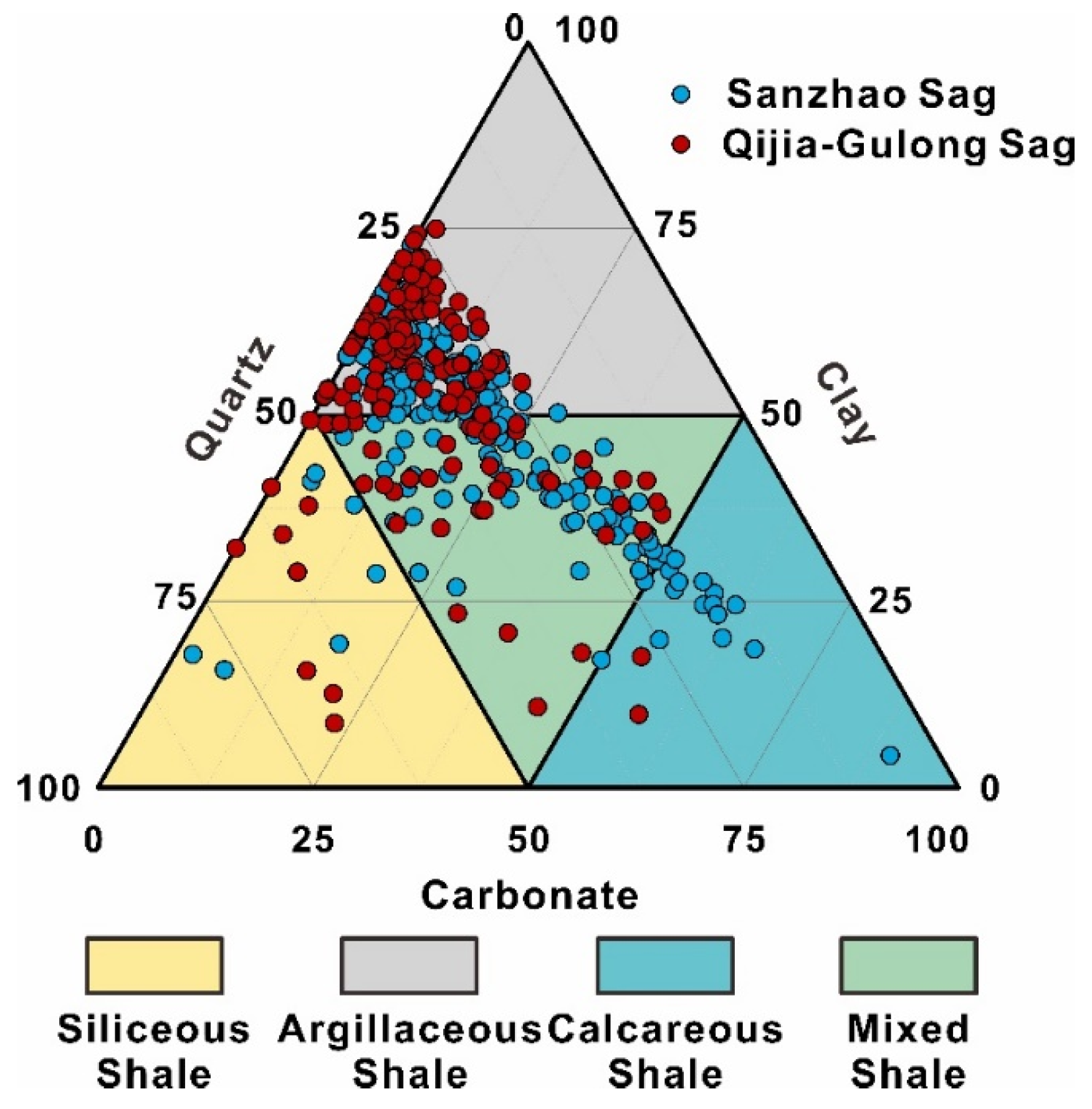
Mineral composition is a key factor controlling the physical properties and brittleness of shale reservoirs, and also provides the basis for lithofacies classification. Shales within the K2qn1 in the Songliao Basin exhibit pronounced vertical heterogeneity, with mineral assemblages composed of clay minerals, quartz, feldspar, and carbonate minerals [9]. Whole-rock X-ray diffraction (XRD) analyses indicate that clay minerals dominate, with contents ranging from 4.3% to 75.0% and an average of 48.1%. Quartz is the second most abundant component, varying from 4.7% to 56.8% (average 22.6%), whereas feldspar content is relatively low, averaging 8.9%. Carbonate minerals mainly include dolomite and calcite, with average contents of 19.4% and 9.0%, respectively (Figure 6). In addition, pyrite is commonly observed, with an average content of 3.6%, indicating overall reducing depositional conditions. To compensate for the limited spatial representativeness of discrete core samples from individual wells, this study utilized mineralogical contents derived from a well-log-based prediction model for statistical analysis. Within the studied interval, the average content of felsic minerals (quartz and feldspar) is approximately 32% in the Qijia–Gulong Sag, whereas it is lower in the Sanzhao Sag at approximately 27%.
Spatially, the Qijia–Gulong Sag and the Sanzhao Sag exhibit markedly different mineral composition patterns. The Qijia–Gulong Sag, located closer to the provenance area, shows relatively stable proportions of detrital minerals (quartz and feldspar) and clay minerals. In contrast, the Sanzhao Sag is characterized by a significant increase in carbonate minerals, with more extensive development of calcareous and mixed shales. This spatial differentiation in mineral composition not only suggests higher palaeosalinity or distinct chemical precipitation conditions in the Sanzhao Sag during deposition, but also directly controls the contrasting lithofacies distributions between the two sags.

4.2.2. Lithofacies Characteristics

To systematically evaluate the heterogeneity of shales in the K2qn1, a ternary mineral classification scheme was adopted based on clay minerals, detrital minerals (quartz and feldspar), and carbonate minerals (calcite and dolomite), using a 50% threshold to define the dominant mineral component. Accordingly, four major lithofacies were defined: argillaceous shale, siliceous shale, calcareous shale, and mixed shale. Lithofacies analysis reveals pronounced spatial heterogeneity between the two sags. The Qijia–Gulong Sag is characterized by a relatively simple lithofacies composition dominated by argillaceous shale, with only minor occurrences of siliceous and mixed shales. This pattern reflects a stable depositional environment primarily controlled by terrigenous input of fine-grained sediments. In contrast, the Sanzhao Sag exhibits a more complex lithofacies assemblage, with significantly increased proportions of calcareous and mixed shales. In the ternary diagram, samples from this sag show a clear shift toward the carbonate end-member (Figure 6), indicating a stronger influence of chemical precipitation and biogenic activity during deposition.
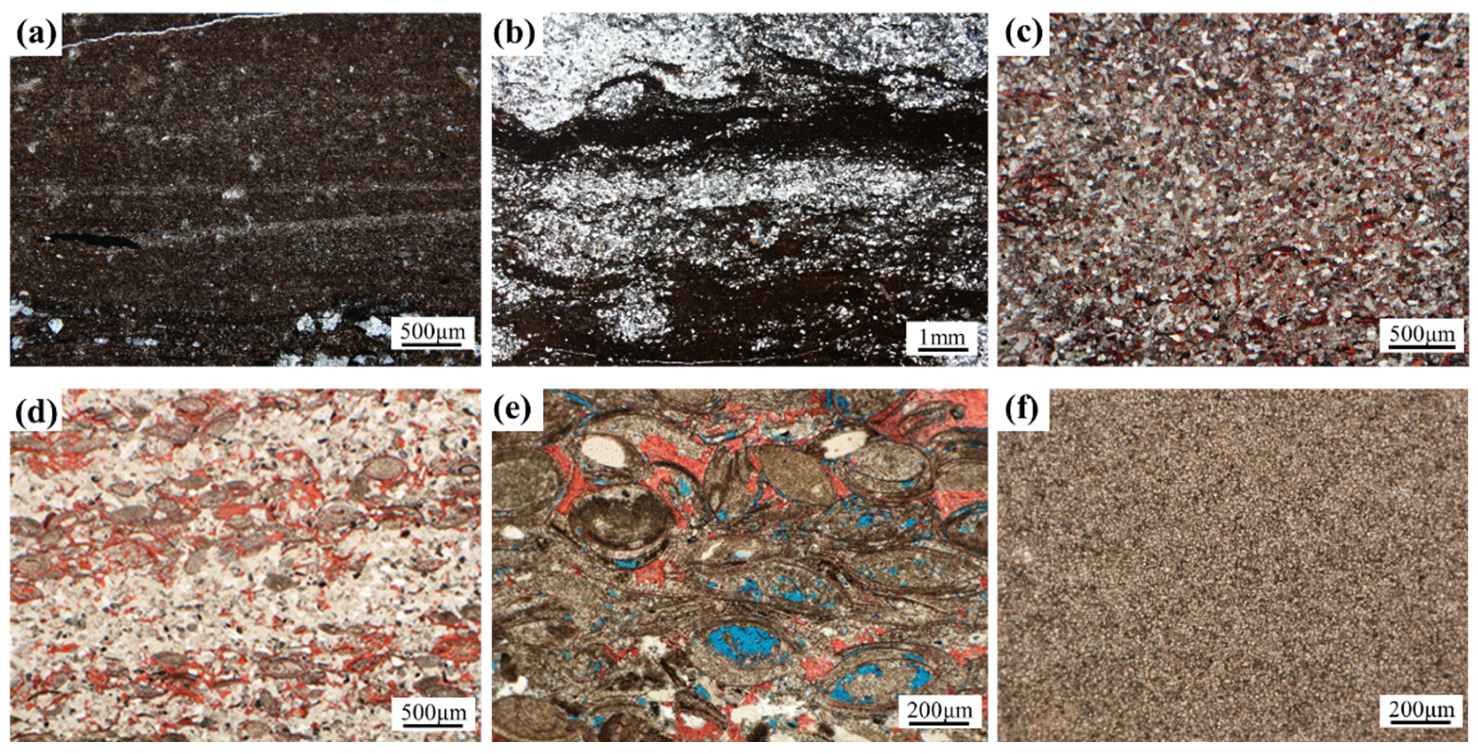
Microscopic observations further reveal substantial differences in texture and composition among lithofacies. Argillaceous shale is characterized by high clay mineral content and well-developed parallel lamination, with organic matter distributed as continuous laminae or filamentous aggregates parallel to bedding, occasionally accompanied by dispersed detrital microcrystals (Figure 7a). Siliceous shale shows a higher proportion of detrital grains, with sub-angular quartz and feldspar particles dispersed within the matrix, relatively well sorted and interbedded with clay laminae, forming predominantly line contacts between grains (Figure 7c). Carbonate-rich shales can be divided into two types: laminated calcareous shale, characterized by abundant ostracod fragments, calcite cementation, and typical laminated or lenticular structures indicative of strong biogenic influence on carbonate precipitation; and dolomitic shale, in which micro- to fine-crystalline ferroan dolomite is uniformly dispersed within the matrix (Figure 7e,f). Mixed shale displays a heterogeneous mixture of multiple components with weak preferred orientation of minerals, reflecting frequent fluctuations in sediment supply and water-column conditions during deposition (Figure 7b,d).
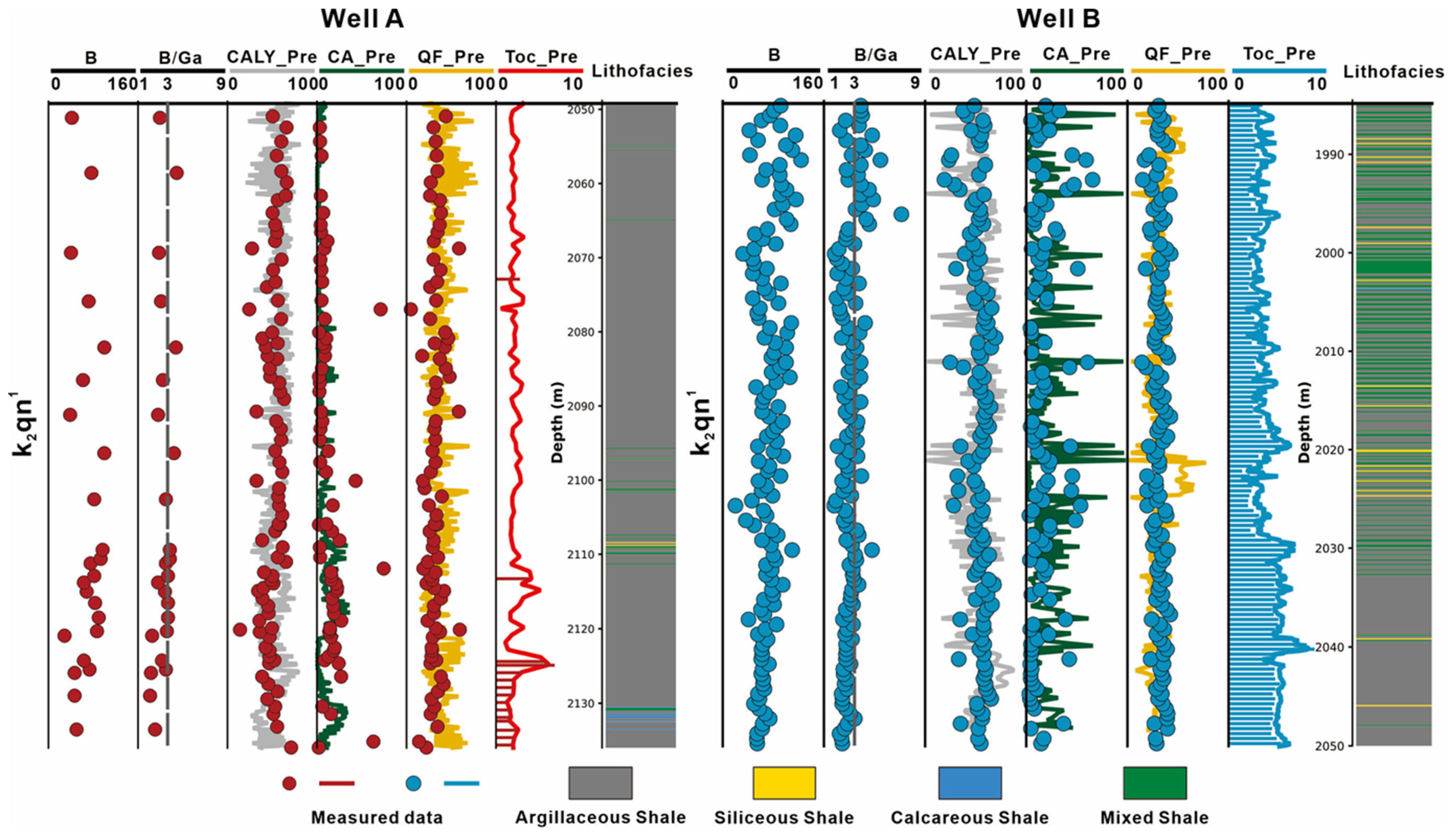
By integrating XRD data from core samples with well-log responses, lithofacies distributions in Well A and Well B were predicted using the DRSN model. The results (Figure 8) show distinctly different lithofacies distributions between the eastern and western sags. In the Qijia–Gulong Sag (Well A), argillaceous shale forms thick and vertically continuous intervals, with occasional interbeds of siliceous and calcareous shales, indicating stable and continuous deposition in the central part of the lacustrine basin. In contrast, the Sanzhao Sag exhibits strong vertical variability: argillaceous shale dominates the lower part of the interval, whereas the upper part is characterized by high-frequency interbedding of calcareous and mixed shales. This log-based distribution pattern confirms that the Qijia–Gulong Sag is dominated by thick, continuous argillaceous shale successions, whereas the Sanzhao Sag is characterized by highly heterogeneous and complex lithofacies assemblages. Such spatial differentiation plays a key role in controlling the variability in reservoir intervals and petrophysical properties of shale oil systems between the two sags.

5. Discussion

5.1. Palaeogeomorphic Control on Organic-Rich Shale Development

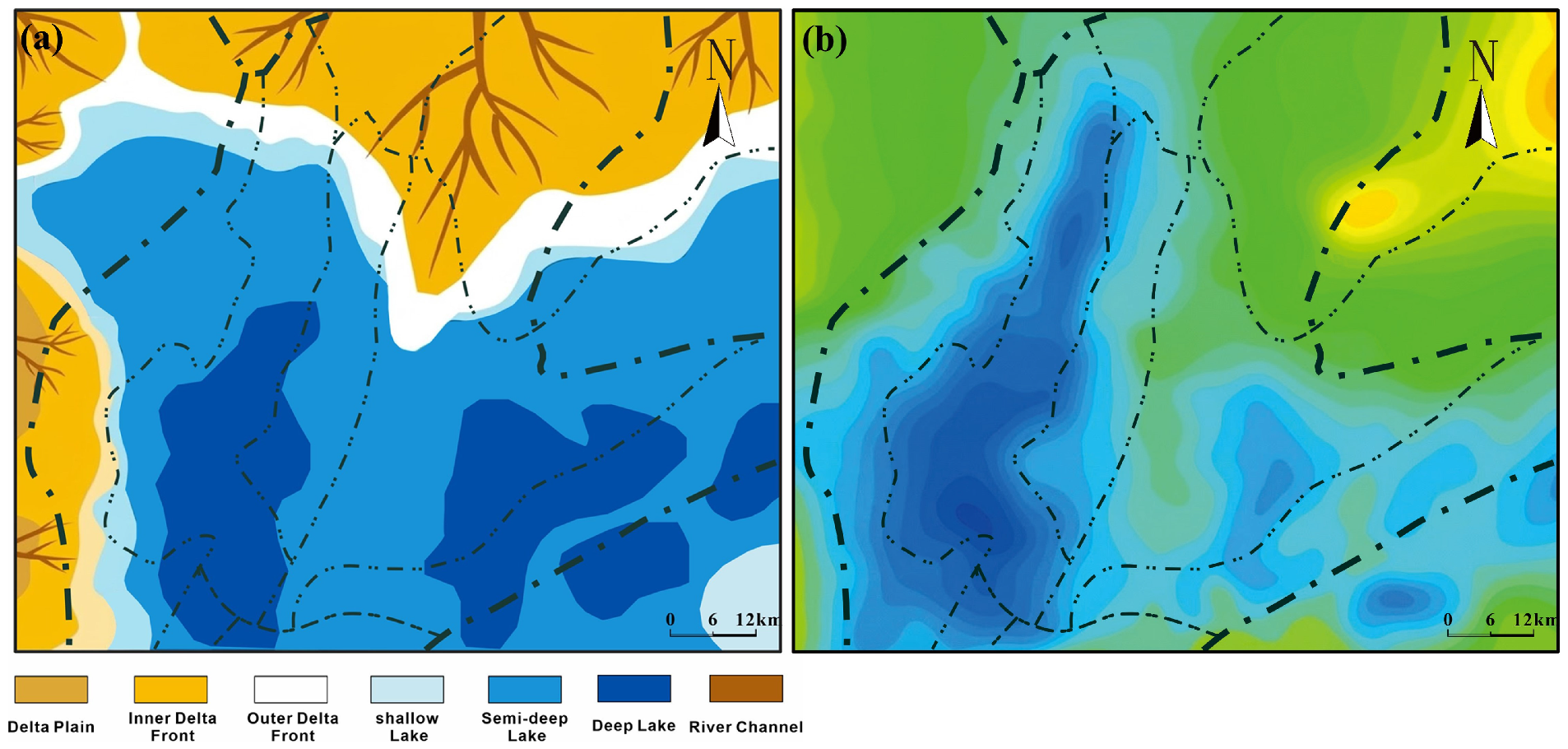
During K2qn deposition, pronounced palaeogeomorphic differentiation between the eastern and western parts of the Songliao Basin exerted a primary control on the development of organic-rich shales. The Qijia–Gulong Sag in the western basin was characterized by a deeper palaeogeomorphic setting (Figure 9), which provided substantial accommodation space and directly governed the development of thick mudstone successions, with cumulative thicknesses of 30–600 m. In contrast, the Sanzhao Sag in the east occupied a relatively shallow palaeogeomorphic position, where limited accommodation space constrained mudstone development, resulting in thinner successions of 30–300 m. This difference in accommodation further controlled spatial variations in sedimentation rates [37,38,39]. Benefiting from its deep-basin setting, the Qijia–Gulong Sag experienced higher sedimentation rates while receiving abundant terrigenous input. Moreover, present-day burial depth amplifies the initial palaeogeomorphic contrast: the K2qn in the western sag is generally buried 100–400 m deeper than in the eastern sag, leading to earlier and deeper burial of organic-rich shales within the thermal regime and higher thermal maturity (Ro = 1.0%–1.5%) compared with the Sanzhao Sag.
This palaeogeomorphic framework fundamentally influenced depositional environments and, consequently, the composition of organic matter precursors and kerogen types. Greater water depth and more stable depositional conditions in the Qijia–Gulong Sag favored the development of relatively stratified and restricted water columns. Continuous subsidence and high sedimentation rates promoted persistent bottom-water anoxia, suppressing oxidation. Under such low-energy, reducing conditions, nutrients were retained within the water column, stimulating the proliferation of algae and plankton [40,41]. This sustained input of autochthonous organic matter led to the dominance of Type I kerogen. In contrast, the Sanzhao Sag, characterized by a shallower palaeogeomorphic setting with greater variability, was more sensitive to lake-level fluctuations and external disturbances. Enhanced hydrodynamic activity and water-column mixing inhibited the maintenance of stable stratification, weakening persistent reducing conditions [42]. At the same time, increased terrigenous and organic detrital input from the northern provenance introduced a higher proportion of higher-plant-derived material, although aquatic organic matter remained dominant, resulting in the prevalence of Type II1 kerogen.
These contrasting palaeogeomorphic conditions are directly reflected in lithofacies distribution. In the Qijia–Gulong Sag, the stable deep-lake setting promoted highly continuous deposition, resulting in thick, laterally persistent argillaceous shale successions. Lithofacies assemblages are relatively uniform, with limited vertical variability, consistent with a low-energy and continuous depositional regime. By contrast, the Sanzhao Sag records frequent shifts in depositional microenvironments under shallow to semi-deep lacustrine conditions. This is manifested by thin, high-frequency interbedding, abundant interlayers, rapid vertical facies transitions, and poor lateral continuity, collectively indicating strong lithofacies heterogeneity (Figure 8).

5.2. Palaeoenvironmental Control on Organic-Rich Shale Development

Organic-rich shales within the K2qn1 exhibit a pronounced east–west TOC gradient, characterized by higher values in the Sanzhao Sag (average 3.34%) and lower values in the Qijia–Gulong Sag (mean TOC = 2.19%). This contrast not only reflects spatial heterogeneity in depositional conditions, but is also closely linked to variations in the palaeowater geochemistry. The widespread occurrence of mixed and calcareous lithofacies in the eastern Sanzhao Sag indicates a strong influence of elevated salinity during deposition. Palaeosalinity, by regulating water-column stratification, plays a critical role in controlling organic matter preservation. In lacustrine systems, B/Ga ratios greater than 3 are commonly interpreted as indicative of saline conditions [43]. Geochemical data show that although samples from both sags exceed this threshold, boron concentrations and B/Ga ratios are consistently higher in the Sanzhao Sag, suggesting a relatively more saline depositional environment during K2qn1 deposition.
Under such conditions, salinity-induced density gradients promote the development of stable water-column stratification, effectively suppressing oxygen exchange between bottom waters and the atmosphere. This leads to persistent reducing conditions, significantly enhancing the preservation efficiency of organic matter and enabling high TOC accumulation within relatively limited accommodation space in the Sanzhao Sag. In addition, elevated salinity promotes the chemical precipitation of carbonate minerals (e.g., micritic calcite and ferroan dolomite), facilitating the development of calcareous and mixed lithofacies. These processes further reinforce stratification, creating positive feedback that stabilizes the depositional environment [44].
In contrast, organic matter enrichment in the western Qijia–Gulong Sag is strongly modulated by terrigenous input. Mineralogical data indicate that this sag, being closer to the western provenance, experienced a higher flux of detrital material. Although argillaceous shale dominates in individual wells, the average content of felsic minerals reaches ~32%, higher than the ~27% observed in the Sanzhao Sag (Figure 8), reflecting enhanced clastic input. Increased influx of felsic detrital material not only dilutes organic matter but also intensifies hydrodynamic disturbance and oxygenation, thereby reducing preservation efficiency. As a result, under the coupled influence of high input, strong dilution, and weakened preservation, TOC values in the Qijia–Gulong Sag are systematically lower than those in the eastern sag.
Overall, two distinct organic matter enrichment modes can be identified across the basin. In the eastern Sanzhao Sag, a “high-salinity stratification–efficient preservation” mode dominates, leading to the formation of high-TOC enrichment centers. In contrast, the western Qijia–Gulong Sag is characterized by a “high subsidence–thick shale development” mode, where continuous subsidence and high sedimentation rates result in thick and laterally extensive argillaceous shale successions, but with relatively lower TOC due to strong terrigenous dilution and oxidation effects, alongside higher thermal maturity. These contrasting palaeoenvironmental configurations define an “abundance-dominated” system in the east and a “thickness-dominated system” in the west, together governing the spatial heterogeneity of organic-rich shale development across the study area.
Figure 9. Depositional facies and palaeogeography of the K2qn1 (modified after Zhou et al. [45]). (a) Depositional facies; (b) Palaeogeomorphic reconstruction, where the intensity of the blue color represents the depth of the palaeogeomorphology. The thick and thin dashed lines represent the first-order and second-order structural boundaries, respectively.
Minerals 16 00528 g009

6. Conclusions

K2qn1 exhibits a clear dual-depocenter pattern across the study area, with the Qijia–Gulong Sag and the Sanzhao Sag representing the principal sedimentary centers. However, these two sags differ markedly in depositional scale and degree of development. The Qijia–Gulong Sag is characterized by thick mudstone successions (30–600 m), high sedimentation rates, and the development of laterally continuous shale sequences, whereas the Sanzhao Sag shows relatively thinner mudstone successions (30–300 m), reflecting deposition in a comparatively shallower lacustrine setting. This contrasting depositional framework provides the basis for subsequent variations in organic matter enrichment and lithofacies distribution.
In terms of organic matter characteristics, the two sags display pronounced differences in kerogen type and thermal maturity. The Qijia–Gulong Sag is dominated by Type II1 kerogen with higher maturity (Ro = 1.0%–1.5%), indicating strong hydrocarbon generation potential, whereas the Sanzhao Sag is characterized by Type I kerogen with relatively lower maturity (Ro = 0.8%–1.3%). Lithofacies distributions also differ significantly: the Qijia–Gulong Sag is dominated by thick, continuous argillaceous shale with relatively homogeneous characteristics, whereas the Sanzhao Sag exhibits well-developed calcareous and mixed shales, characterized by high-frequency thin interbedding and strong heterogeneity. These differences collectively reflect variations in depositional stability and hydrodynamic conditions between the two sags.
Overall, organic matter enrichment is governed by the coupled effects of palaeoenvironmental conditions and terrigenous input. In the Sanzhao Sag, elevated salinity and enhanced water-column stratification promote the development of reducing conditions favorable for organic matter preservation, resulting in higher TOC values. In contrast, although the Qijia–Gulong Sag benefits from high sedimentation rates and the development of thick shale sequences, strong terrigenous input and dilution effects limit organic matter enrichment and are associated with higher thermal maturity. Consequently, two distinct enrichment modes are identified: a “high-salinity stratification–efficient preservation” mode in the east and a “high maturity–thick shale development” mode in the west. Together, these modes govern the spatial heterogeneity of shale oil resources in the study area.

Author Contributions

Conceptualization, P.J. and H.X.; methodology, P.J.; software, P.J. and D.L.; validation, H.X. and P.J.; formal analysis, P.J. and H.W.; investigation, X.W. and Y.D.; resources, H.Z.; data curation, P.J.; writing—original draft preparation, P.J.; writing—review and editing, H.X.; visualization, P.J.; supervision, H.X.; project administration, H.Z.; funding acquisition, H.X., H.Z. and L.W. All authors have read and agreed to the published version of the manuscript.

Funding

This research was funded by the 14th Five-Year Plan Basic Major Science and Technology Project of China National Petroleum Corporation (2021DJ18), and the Science and Technology Project of China National Petroleum Exploration and Production Branch (KT20210601).

Data Availability Statement

Data are contained within the article.

Conflicts of Interest

Haiyan Zhou and Lan Wang are employed by Research Institute of Petroleum Exploration and Development, PetroChina, Beijing, China. Heng Wu is employed by Research Institute of Exploration and Development, PetroChina Changqing Oilfield Company, Xi’an, China. The authors declare that the research was conducted in the absence of any commercial or financial relationships that could be construed as a potential conflict of interest.

References

  1. Zou, C.; Dong, D.; Wang, S.; Li, J.; Li, X.; Wang, Y.; Li, D.; Cheng, K. Geological Characteristics and Resource Potential of Shale Gas in China. Pet. Explor. Dev. 2010, 37, 641–653. [Google Scholar] [CrossRef]
  2. Chengzao, J.; Yongfeng, Z.; Xia, Z. Prospects of and Challenges to Natural Gas Industry Development in China. Nat. Gas Ind. B 2014, 1, 1–13. [Google Scholar] [CrossRef]
  3. Loucks, R.G.; Reed, R.M.; Ruppel, S.C.; Jarvie, D.M. Morphology, Genesis, and Distribution of Nanometer-Scale Pores in Siliceous Mudstones of the Mississippian Barnett Shale. J. Sediment. Res. 2009, 79, 848–861. [Google Scholar] [CrossRef]
  4. Ju, Y.; Wang, G.; Bu, H.; Li, Q.; Yan, Z. China Organic-Rich Shale Geologic Features and Special Shale Gas Production Issues. J. Rock Mech. Geotech. Eng. 2014, 6, 196–207. [Google Scholar] [CrossRef]
  5. Jarvie, D.M.; Hill, R.J.; Ruble, T.E.; Pollastro, R.M. Unconventional Shale-Gas Systems: The Mississippian Barnett Shale of North-Central Texas as One Model for Thermogenic Shale-Gas Assessment. AAPG Bull. 2007, 91, 475–499. [Google Scholar] [CrossRef]
  6. Peters, K.E.; Cassa, M.R. Applied Source Rock Geochemistry. In The Petroleum System—From Source to Trap; AAPG: Tulsa, OK, USA, 1994. [Google Scholar]
  7. Tissot, B.P.; Welte, D.H. Petroleum Formation and Occurrence; Springer Science & Business Media: Berlin/Heidelberg, Germany, 2013. [Google Scholar]
  8. Loucks, R.G.; Ruppel, S.C. Mississippian Barnett Shale: Lithofacies and Depositional Setting of a Deep-Water Shale-Gas Succession in the Fort Worth Basin, Texas. AAPG Bull. 2007, 91, 579–601. [Google Scholar] [CrossRef]
  9. Aplin, A.C.; Macquaker, J.H.S. Mudstone Diversity: Origin and Implications for Source, Seal, and Reservoir Properties in Petroleum Systems. AAPG Bull. 2011, 95, 2031–2059. [Google Scholar] [CrossRef]
  10. Milliken, K. A Compositional Classification for Grain Assemblages in Fine-Grained Sediments and Sedimentary Rocks. J. Sediment. Res. 2014, 84, 1185–1199. [Google Scholar] [CrossRef]
  11. Tyson, R.V. Sedimentary Organic Matter: Organic Facies and Palynofacies; Springer Science & Business Media: Berlin/Heidelberg, Germany, 2012. [Google Scholar]
  12. Sanità, E.; Di Rosa, M.; Della Porta, G.; Catanzariti, R.; Pandolfi, L.; Marroni, M. Trench Sediment Heterogeneity Controls Accretion Mechanisms in Subduction Zone. Sci. Rep. 2025, 15, 34793. [Google Scholar] [CrossRef]
  13. Demaison, G.J.; Moore, G.T. Anoxic Environments and Oil Source Bed Genesis. Org. Geochem. 1980, 2, 9–31. [Google Scholar] [CrossRef]
  14. Meyers, P.A.; Lallier-Vergès, E. Lacustrine Sedimentary Organic Matter Records of Late Quaternary Paleoclimates. J. Paleolimnol. 1999, 21, 345–372. [Google Scholar] [CrossRef]
  15. Sun, L.; Liu, H.; He, W.; Li, G.; Zhang, S.; Zhu, R.; Jin, X.; Meng, S.; Jiang, H. An Analysis of Major Scientific Problems and Research Paths of Gulong Shale Oil in Daqing Oilfield, NE China. Pet. Explor. Dev. 2021, 48, 527–540. [Google Scholar] [CrossRef]
  16. Passey, Q.R.; Creaney, S.; Kulla, J.B.; Moretti, F.J.; Stroud, J.D. A Practical Model for Organic Richness from Porosity and Resistivity Logs. AAPG Bull. 1990, 74, 1777–1794. [Google Scholar] [CrossRef]
  17. Hua, L.; Xiaoyan, C.; Wei, L. Tectono-Paleogeographic Study of the Early Cretaceous in the Songliao Basin. Min. Sci. Technol. 2011, 21, 93–98. [Google Scholar] [CrossRef]
  18. Jin, Z.; Liang, X.; Bai, Z. Exploration Breakthrough and Its Significance of Gulong Lacustrine Shale Oil in the Songliao Basin, Northeastern China. Energy Geosci. 2022, 3, 120–125. [Google Scholar] [CrossRef]
  19. Zhi-qiang, F.; Cheng-zao, J.; Xi-nong, X.; Shun, Z.; Zi-hui, F.; Cross, T.A. Tectonostratigraphic Units and Stratigraphic Sequences of the Nonmarine Songliao Basin, Northeast China. Basin Res. 2010, 22, 79–95. [Google Scholar] [CrossRef]
  20. Wang, P.-J.; Mattern, F.; Didenko, N.A.; Zhu, D.-F.; Singer, B.; Sun, X.-M. Tectonics and Cycle System of the Cretaceous Songliao Basin: An Inverted Active Continental Margin Basin. Earth-Sci. Rev. 2016, 159, 82–102. [Google Scholar] [CrossRef]
  21. Wang, C.; Scott, R.W.; Wan, X.; Graham, S.A.; Huang, Y.; Wang, P.; Wu, H.; Dean, W.E.; Zhang, L. Late Cretaceous Climate Changes Recorded in Eastern Asian Lacustrine Deposits and North American Epieric Sea Strata. Earth-Sci. Rev. 2013, 126, 275–299. [Google Scholar] [CrossRef]
  22. Wei, H.-H.; Liu, J.-L.; Meng, Q.-R. Structural and Sedimentary Evolution of the Southern Songliao Basin, Northeast China, and Implications for Hydrocarbon Prospectivity. AAPG Bull. 2010, 94, 533–566. [Google Scholar] [CrossRef]
  23. Degens, E.T.; Williams, E.G.; Keith, M.L. Environmental Studies of Carboniferous Sediments Part I: Geochemical Criteria for Differentiating Marine from Fresh-Water Shales. AAPG Bull. 1957, 41, 2427–2455. [Google Scholar] [CrossRef]
  24. Liu, C.; Lu, S.; Xue, H. Variable-Coefficient ΔlogR Model and Its Application in Shale Organic Evaluation. Prog. Geophys. 2014, 29, 312–317. [Google Scholar] [CrossRef]
  25. Bhattacharya, S.; Carr, T.R. Integrated Data-Driven 3D Shale Lithofacies Modeling of the Bakken Formation in the Williston Basin, North Dakota, United States. J. Pet. Sci. Eng. 2019, 177, 1072–1086. [Google Scholar] [CrossRef]
  26. Wang, G.; Carr, T.R. Organic-Rich Marcellus Shale Lithofacies Modeling and Distribution Pattern Analysis in the Appalachian Basin. AAPG Bull. 2013, 97, 2173–2205. [Google Scholar] [CrossRef]
  27. Battaglia, S.; Leoni, L.; Sartori, F. Mineralogical and Grain Size Composition of Clays Developing Calanchi and Biancane Erosional Landforms. Geomorphology 2003, 49, 153–170. [Google Scholar] [CrossRef]
  28. Sanità, E.; Di Rosa, M.; Lardeaux, J.M.; Marroni, M.; Tamponi, M.; Lezzerini, M.; Pandolfi, L. Deciphering the Pressure—Temperature Path in Low-Grade Metamorphic Rocks by Combining Crystal Chemistry, Thermobarometry and Thermodynamic Modelling: An Example in the Marguareis Massif, Western Ligurian Alps, Italy. Mineral. Mag. 2024, 89, 203–224. [Google Scholar] [CrossRef]
  29. Hou, M.; Xiao, Y.; Lei, Z.; Yang, Z.; Lou, Y.; Liu, Y. Machine Learning Algorithms for Lithofacies Classification of the Gulong Shale from the Songliao Basin, China. Energies 2023, 16, 2581. [Google Scholar] [CrossRef]
  30. Dunham, M.W.; Malcolm, A.; Kim Welford, J. Improved Well-Log Classification Using Semisupervised Label Propagation and Self-Training, with Comparisons to Popular Supervised Algorithms. Geophysics 2020, 85, O1–O15. [Google Scholar] [CrossRef]
  31. Zhao, M.; Zhong, S.; Fu, X.; Tang, B.; Pecht, M. Deep Residual Shrinkage Networks for Fault Diagnosis. IEEE Trans. Ind. Inform. 2020, 16, 4681–4690. [Google Scholar] [CrossRef]
  32. Leibe, B.; Matas, J.; Sebe, N.; Welling, M. Computer Vision–ECCV 2016: 14th European Conference, Amsterdam, The Netherlands, 11–14 October 2016, Proceedings, Part IV; Springer: Berlin/Heidelberg, Germany, 2016; Volume 9908. [Google Scholar]
  33. Wu, X.; Xu, H.; Zhou, H.; Wang, L.; Jiang, P.; Wu, H. Improving Lithofacies Prediction in Lacustrine Shale by Combining Deep Learning and Well Log Curve Morphology in Sanzhao Sag, Songliao Basin, China. Comput. Geosci. 2024, 193, 105735. [Google Scholar] [CrossRef]
  34. Li, N.; Xu, B.; Wu, H.; Feng, Z.; Li, Y.; Wang, K.; Liu, P. Application Status and Prospects of Artificial Intelligence in Well Logging and Formation Evaluation. Acta Pet. Sin. 2021, 42, 508–522. [Google Scholar] [CrossRef]
  35. Parra, J.O.; Hackert, C.L.; Gorody, A.W.; Korneev, V. Detection of Guided Waves between Gas Wells for Reservoir Characterization. Geophysics 2002, 67, 38–49. [Google Scholar] [CrossRef]
  36. Mishra, A.; Sharma, A.; Patidar, A.K. Evaluation and Development of a Predictive Model for Geophysical Well Log Data Analysis and Reservoir Characterization: Machine Learning Applications to Lithology Prediction. Nat. Resour. Res. 2022, 31, 3195–3222. [Google Scholar] [CrossRef]
  37. Zhang, T.; Zhu, R.; Cai, Y.; Wang, H.; Lv, D.; Zhou, H.; Fu, X.; Liu, C.; Cui, K.; Zhang, S. Distribution of Organic Matter in the Qingshankou Formation Shale, Gulong Sag, Songliao Basin Observed within an Isochronous Sequence Stratigraphic Framework. Oil Gas Geol. 2023, 44, 869–886. [Google Scholar] [CrossRef]
  38. Jervey, M.T. Quantitative Geological Modeling of Siliciclastic Rock Sequences and Their Seismic Expression. In Sea-Level Changes: An Integrated Approach; SEPM Special Publication: Broken Arrow, OK, USA, 1988. [Google Scholar]
  39. Catuneanu, O. Principles of Sequence Stratigraphy; Newnes: London, UK, 2022. [Google Scholar]
  40. Thomas, J.B.; Marshall, J.; Mann, A.L.; Summons, R.E. Dinosteranes (4,23,24-Trimethylsteranes) and Other Biological Markers in Dinoflagellate-Rich Marine Sediments of Rhaetian Age. Org. Geochem. 1993, 20, 91–104. [Google Scholar] [CrossRef]
  41. Zhang, S.; Zhang, B.; Wang, X.; Feng, Z.; He, K.; Wang, H.; Fu, X.; Liu, Y.; Yang, C. Gulong Shale Oil Enrichment Mechanism and Orderly Distribution of Conventional– Unconventional Oils in the Cretaceous Qingshankou Formation, Songliao Basin, NE China. Pet. Explor. Dev. 2023, 50, 1045–1059. [Google Scholar] [CrossRef]
  42. Meyers, P.A. Organic Geochemical Proxies of Paleoceanographic, Paleolimnologic, and Paleoclimatic Processes. Org. Geochem. 1997, 27, 213–250. [Google Scholar] [CrossRef]
  43. Wei, W.; Algeo, T.J.; Lu, Y.; Lu, Y.; Liu, H.; Zhang, S.; Peng, L.; Zhang, J.; Chen, L. Identifying Marine Incursions into the Paleogene Bohai Bay Basin Lake System in Northeastern China. Int. J. Coal Geol. 2018, 200, 1–17. [Google Scholar] [CrossRef]
  44. Warren, J.K. Evaporites through Time: Tectonic, Climatic and Eustatic Controls in Marine and Nonmarine Deposits. Earth-Sci. Rev. 2010, 98, 217–268. [Google Scholar] [CrossRef]
  45. Zhou, H.; Wang, L.; Yang, Z.; Shang, F.; Chen, D.; Bi, H. Geological Conditions for Shale Oil Enrichment in Qingshankou Formation and Exploration Potential in Sanzhao Sag, Northern Songliao Basin. China Pet. Explor. 2025, 30, 101–119. [Google Scholar] [CrossRef]
Figure 1. Structural units, stratigraphic column, and location of study wells in the Songliao Basin. (a) Regional location of the Songliao Basin in China; (b) First-order structural units of the Songliao Basin. The boundaries (dashed lines) represent major tectonic divides separating the Central Depression from surrounding first-order units, which are primarily defined by regional basement involved faults. (c) Second-order structural units and distribution of study wells in the Qijia–Gulong and Sanzhao sags; (d) Cretaceous stratigraphic column of the Songliao Basin and sampling horizons in the K2qn1. The section line S–S’ indicates the location of the TOC-based well-log cross-section.
Minerals 16 00528 g001
Figure 2. Performance evaluation of the DRSN model across the study areas. (a) Training loss convergence curves for the Sanzhao Sag (light blue) and Qijia–Gulong Sag (dark red) over 100 epochs, indicating stable model convergence. (bd) Cross-plots of measured versus predicted contents for (b) Clay, (c) Carbonate, and (d) Q&F (Quartz & Feldspar). The black dashed lines represent the 1:1 ideal correlation, and the R2 values denote the correlation between the XRD data and model predictions for each region.
Minerals 16 00528 g002
Figure 3. Spatial distribution of organic-rich shale characteristics in the K2qn, Northern Songliao Basin. The thick and thin white dashed lines represent the first-order and second-order structural boundaries, respectively. (a) Distribution map of cumulative mudstone thickness in the K2qn; (b) Spatial distribution of Ro in the K2qn1; (c) Spatial distribution of TOC content in the K2qn1.
Minerals 16 00528 g003
Figure 4. Organic matter type and thermal maturity in the K2qn1. (a) Relationship between hydrogen index (HI) and oxygen index (OI), revealing the distribution of kerogen types in different sags. The kerogen types are classified into four categories: Type I (sapropelic), Type II1 (humic–sapropelic), Type II2 (sapropelic–humic), and Type III (humic), based on their different hydrocarbon-generating potentials and evolution pathways. (b) Relationship between Ro and burial depth, showing thermal maturity variation with burial depth.
Minerals 16 00528 g004
Figure 5. Statistical distribution of measured TOC and inter-well TOC prediction profiles for the K2qn1. (a) Frequency distribution histogram of measured TOC for the K2qn1 mudstones in the Qijia–Gulong Sag (mean 2.19%); (b) Frequency distribution histogram of measured TOC for the K2qn1 mudstones in the Sanzhao Sag (mean 3.34%); (c) Vertical inter-well correlation section of predicted TOC profiles (see Figure 1 for the section location). The black lines represent the stratigraphic boundaries.
Minerals 16 00528 g005
Figure 6. Ternary diagram for lithofacies classification of organic-rich shales in the K2qn1, based on clay minerals, felsic minerals (quartz and feldspar), and carbonate minerals (calcite and dolomite) (based on measured XRD data).
Minerals 16 00528 g006
Figure 7. Petrographic characteristics of different lithofacies in the K2qn1. (a) Argillaceous shale, showing well-developed parallel lamination and clay minerals distributed parallel to bedding; (b) Mixed shale, exhibiting a mixture of various mineral components; (c) Siliceous shale, with sub-angular quartz and feldspar grains dispersed within the matrix; (d) Mixed shale, showing preferred orientation of shell fragments and felsic grains; (e) Calcareous shale, characterized by abundant ostracod fossil fragments and calcite cement; (f) Calcareous shale, showing ferroan dolomite (ankerite).
Minerals 16 00528 g007
Figure 8. Comparison of paleosalinity, mineral content, and predicted lithofacies in the K2qn1 of the eastern and western sags. Points represent measured data, and solid lines represent predicted results. The dashed lines for B/Ga ratios indicate the thresholds of 3.
Minerals 16 00528 g008
Disclaimer/Publisher’s Note: The statements, opinions and data contained in all publications are solely those of the individual author(s) and contributor(s) and not of MDPI and/or the editor(s). MDPI and/or the editor(s) disclaim responsibility for any injury to people or property resulting from any ideas, methods, instructions or products referred to in the content.