Article

Assessment of Soil Contaminants and Human Health Risks in the Petaquilla Mine (Panama): Implications for Site Restoration


by
Ana C. Gonzalez-Valoys
1,2,3,*,
Felipe Segundo
1,
Johanna L. Zambrano-Anchundia
4,
Samantha Jiménez-Oyola
4,
José R. Gallego
5,
Efrén García-Ordiales
6,
Jonatha Arrocha
7,
Javier Lloyd
7,
Francisco Jesús García-Navarro
8,9 and
Pablo Higueras
9
1
Facultad de Ingeniería Civil, Universidad Tecnológica de Panama, Avenida Ricardo J. Alfaro, Campus Universitario Dr. Víctor Levi Sasso, Panama City 0819-07289, Panama
2
SNI-SENACYT Sistema Nacional de Investigación, Secretaría Nacional de Ciencia, Tecnología e Innovación, Clayton, Ciudad del Saber Edif. 205, Panama City 0816-02852, Panama
3
Centro de Estudios Multidisciplinarios en Ciencias, Ingeniería y Tecnología, Avenida Ricardo J. Alfaro, Campus Universitario Dr. Víctor Levi Sasso, Panama City 0819-07289, Panama
4
Faculty of Engineering in Earth Sciences, Escuela Superior Politécnica del Litoral (ESPOL), Campus Gustavo Galindo, Km. 30.5 Via Perimetral, Guayaquil 090902, Ecuador
5
INDUROT and Environmental Biogeochemistry and Raw Materials Group, University of Oviedo, 33600 Mieres, Spain
6
INDUROT and ISYMA Research Group, University of Oviedo, 33600 Mieres, Spain
7
Centro Experimental de Ingeniería, Universidad Tecnológica de Panama, Vía Tocumen, Panama City 0819-07289, Panama
8
Escuela Técnica Superior de Ingenieros Agrónomos de Ciudad Real, Castilla-La Mancha University, 13071 Ciudad Real, Spain
9
Instituto de Geología Aplicada, Universidad de Castilla-La Mancha, 13400 Ciudad Real, Spain
*
Author to whom correspondence should be addressed.
Minerals 2026, 16(5), 522; https://doi.org/10.3390/min16050522
Submission received: 8 April 2026 / Revised: 9 May 2026 / Accepted: 12 May 2026 / Published: 14 May 2026
(This article belongs to the Section Environmental Mineralogy and Biogeochemistry)

Abstract

The Petaquilla gold mine in Panama was abruptly closed without restoring the site. The objective of this study is to assess mine soils from a geochemical perspective, identify potential contaminants, and conduct a human health risk assessment (HHRA). Soil samples were analysed to determine pH, EC, OM, texture, hydrocarbons (TPHs), enzymatic activity (DHA), and the following potentially toxic elements (PTEs): As, Ba, Cd, Cu, Hg, Sb, Pb and Zn. The Igeo, PLI and HHRA indexes were evaluated. The Igeo indicates that the processing zone has atypical values of Cu (1.47), indicating moderate pollution (1 < Igeo ≤ 2), Zn (3.80), indicating strong pollution (3 < Igeo ≤ 4), and Pb (7.62), indicating extreme pollution (Igeo > 5), with enrichment due to mining activity. The PLI map shows that the affected areas are surrounding the Molejon River (1.62) and the processing zone (1.21), which are slightly contaminated (1 ≤ PLI < 2), and one site in the processing zone with moderate to considerable contamination (PLI ≥ 3) at the warehouse (6.07). Regarding TPHs, the processing area in front of transformer (54,844.47 mg kg−1) and the workshop entrance (2045.26 mg kg−1) have values above industrial use (620 mg kg−1) due to visible hydrocarbon spills. In terms of HHRA, the non-carcinogenic risk associated with exposure to PTEs exceeds the reference threshold for both children and adults under a residential exposure scenario, whereas the non-carcinogenic risk for TPHs remains below the acceptable limit. Regarding carcinogenic risk, exposure to Pb and As remains within acceptable limits for both receptors. With a view to restoring the mine’s soil, the processing area and the workshop entrance are the first areas that need to be addressed.

1. Introduction

Mining is considered one of the first industrial activities practiced since prehistoric times. It consists of a complex engineering system that allows the extraction of minerals from the earth to satisfy essential human practices and desires [1,2]. These minerals are extracted, transformed, distributed, in some cases, recycled, and finally returned to the environment in the form of waste or emissions [2].
Although mining activities account for the majority of gross domestic product (GDP) revenue in developing Latin American countries such as Chile, Peru, and Bolivia [3], this activity poses environmental challenges, mainly due to inadequate waste management, leading to environmental incidents. Mining activity can result in exposure to PTEs [4,5,6], along with the chemicals used in mining [6], and industrial activity that can cause soil contamination with hydrocarbons [7]. Therefore, it is necessary to characterize the site after the cessation of mining activity to identify possible contaminants that may pose an ecological and environmental risk [8,9,10,11,12].
Mine closure without proper procedures could lead to environmental problems, especially in developing countries that lack the capacity to address these environmental liabilities [13]. This is the case with the abrupt closure of the Petaquilla gold mine in Panama in 2014, due to a supposed lack of liquidity of the property, without adequate restoration measures; these sites must be geochemically characterized with a view to proposing environmental restoration.
This soil characterization involved the analysis of PTEs (As, Ba, Cd, Cu, Hg, Pb, and Zn), key soil parameters such as pH, organic matter (OM), electrical conductivity (EC), texture, and dehydrogenase activity (DHA), as a biological indicator of soil health [12], as well as the analysis of total petroleum hydrocarbons (TPHs) [7,14] present in certain areas due to industrial activity and the abandonment of heavy-duty equipment.
The assessment of the Pollution Load Index (PLI) and human health risk assessment (HHRA) are very important to developing future restoration strategies [9,15,16], particularly given the proximity of residents to the mine.
The novelty of this study lies not only in a local application to an abandoned mining site, but in the development of an integrated multi-proxy framework that boosts the conceptual basis of contamination and risk assessment. By combining geochemical characterization, GC–MS hydrocarbon fingerprinting, soil biological indicators (DHA), spatial analysis, and human health risk assessment, the study links molecular-level hydrocarbon weathering with fraction-based toxicological behaviour, demonstrating that heavier weathered fractions (C13+)—rather than total TPHs—control residual risk. This approach reveals a decoupling between bulk contamination levels and actual human health risk, challenging conventional threshold-based assessments. Furthermore, the observed interactions among TPHs, organic matter, enzymatic activity, and tropical climatic conditions provide insight into biodegradation dynamics and microbial adaptation, supporting a more robust and transferable framework for risk-informed remediation.
The objective of this study is to geochemically assess the soils of the abandoned Petaquilla mine to identify the presence of potential contaminants that may pose a risk to human health, with a view to future restoration of the site. This study is aligned with Sustainable Development Goal (SDG) 15 ‘Life on land’ [17], such that by studying the soil, measures for the restoration of terrestrial ecosystems can be proposed.

2. Materials and Methods

2.1. Study Area

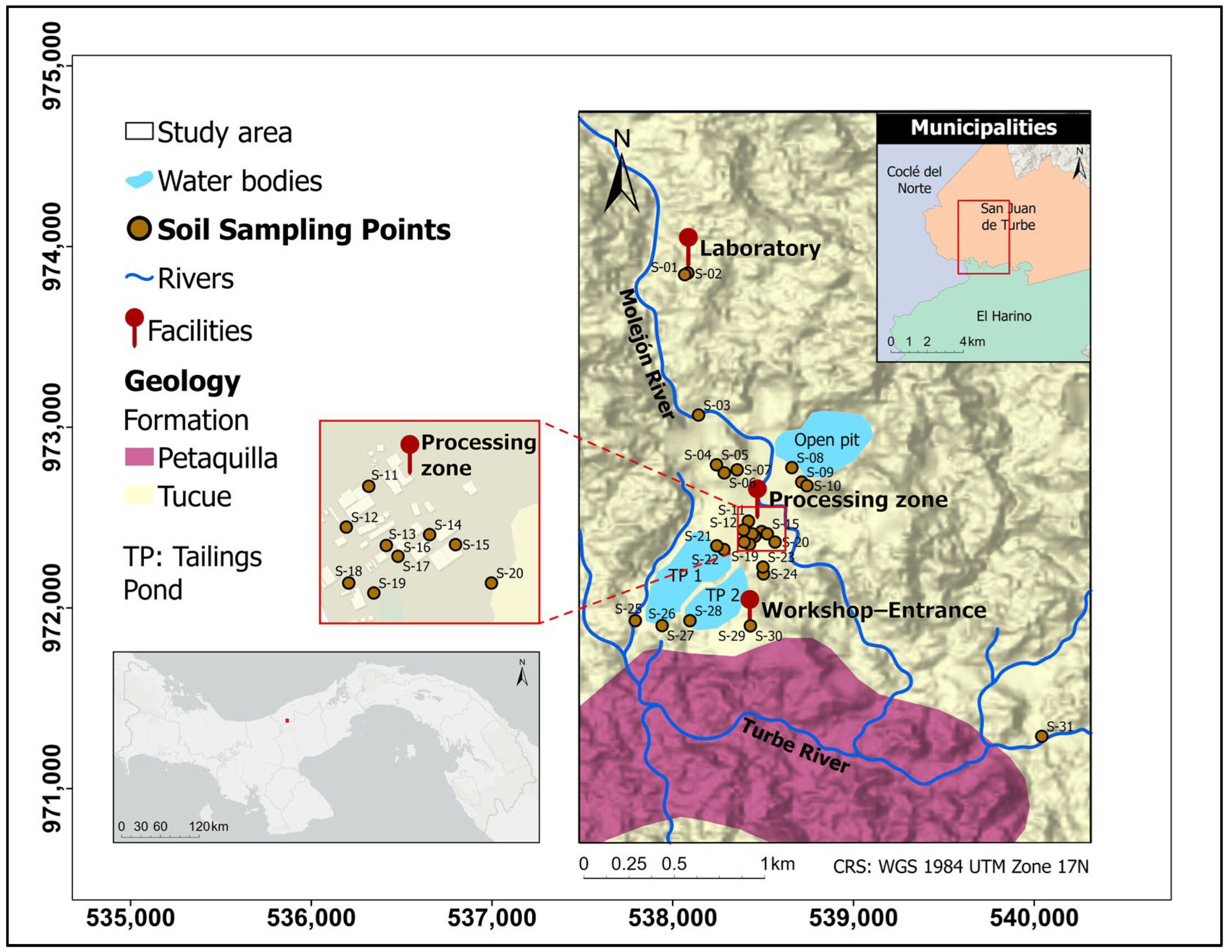
The Molejón project at the Petaquilla mine is located 120 km west of Panama City and 10 km from the Caribbean coast, in the municipality of San Juan de Turbe, Omar Torrijos Herrera District, Colon Province, Republic of Panama (Figure 1). It has a tropical oceanic climate with average annual temperatures of 25–27 °C. The area is characterised by a rainy season that lasts throughout the year and the absence of a dry season, with precipitation levels ranging from 3600 to 3700 mm of rainfall per year. The land use and forest cover within the study area consists mainly of mixed broadleaf forest, grassland, shrub vegetation and very scattered mining areas [18].
The project is in the Cocle del Norte River watershed (No. 105, Panama). The Cocle del Norte River watershed originates in the Cordillera Central mountain range, covering the provinces of Cocle and Colon, and flows into the Caribbean Sea [19]. The Molejón River flows through the study area, running alongside the laboratory and processing area.
The geology of the study area consists of two formations from the Tertiary period: the Petaquilla Formation and the Tocue Formation. The Petaquilla formation is composed of plutonic rocks such as granodiorites, quartz monzonites, diorites, and dacites. In contrast, Tucue is part of the volcano-sedimentary Cañazas group, composed of volcanic rocks such as andesites, basalts, lavas, breccias, tuffs, and plugs [18].
The exploration and exploitation rights for the Molejón mining project were granted to Petaquilla Minerals Ltd. through a contract-law agreement enacted by the Panamanian government known as the ’Petaquilla Law’ or Law No. 9 of 26 February 1997; the project finally began production on 8 January 2010 [20,21]. Petaquilla had the infrastructure capable of operating an active cyanide leaching processing plant with a capacity of 2200 tonnes per day. From its earliest days, and after the information provided by the mining company, the Molejón project produced approximately 6000 ounces of gold per month [22]. The mine was operated as an open-cast mine, using cyanide leaching. The gold separation process resulted in the emission of approximately 20 tonnes of toxic liquid waste for every ounce of gold, which was stored in tailings ponds [23]. The Molejón Project ceased extraction in 2014, transferring ownership rights to the State and leaving reserves of unknown volume and Au contents unexploited and without proper environmental closure, due to low gold market prices, financial insolvency, and rising oil prices. Currently, the project is inactive; nevertheless, the area still presents both structural and mining waste in their tailing ponds [23].
The Molejón project, within its processing area, had structures such as leaching tanks, a refinery, ball mills, power generators, water tanks, Clean–in–Place (CIP) tanks, crushers, and thickeners; now, only rubble and rusted metal remain. The project has an open pit where the material was extracted that is now filled with water, due to the region’s climatic characteristics, and two tailing ponds (TPs) dedicated to storing the waste from cyanide leaching. In addition, it had a laboratory for material analysis and quality control, located remotely from the main processing area; and a workshop, located at the entrance to the project, for the maintenance and repair of the equipment and machinery used, as shown in Figure 1. Near the mine, local inhabitants can be seen living and animals grazing.

2.2. Sample Collection and Preparation

The samples were collected in March and April 2025 and were taken using small plastic shovels and hand augers at a depth of 0–20 cm, ensuring that 0.5–1.0 kg of soil was extracted and stored in airtight plastic bags [12]. A total of 31 soil samples were collected, duly identified and georeferenced for eventual spatial analysis.
The samples were prepared for analysis at the Ecology and Biogeochemistry Laboratory of the Technological University of Panama. This consisted of quartering the homogenised samples and working with a representative fraction of each of them, which were then oven-dried at 40 °C for three days. Once drying was complete, aggregates in the samples were broken down using a wooden roller and processed through a 2 mm light beam sieve; this process is essential because the tests require the <2 mm fraction [12].

2.3. Laboratory Analysis

The edaphic parameters (pH and EC) of the sieved soil samples were determined at the Ecology and Biogeochemistry Laboratory of the Technological University of Panama using an RCYAGO multiparameter device, in accordance with ASTM standard D4972-19 [24]. Moisture content was determined according to ASTM D2974 [25]. Texture tests on the soil samples were performed using the Bouyoucos densimeter method [26] and OM was determined using a Hobersal DH150 furnace, according to ASTM-D2974 [25]. Both tests, texture and OM, were performed at the Geotechnical Laboratory of the Experimental Engineering Centre at the Technological University of Panama.
The following tests were carried out at the Heavy Metal Biogeochemistry Laboratory of the Institute of Applied Geology at the University of Castilla-La Mancha in Spain: the concentrations of As, Ba, Cd, Cu, Pb, Sb and Zn using energy dispersive X-ray fluorescence spectroscopy (ED-XRF) with an Epsilon 1 equipment (Panalytical, Malvern, UK) device [12]: the determination of enzymatic (dehydrogenase) activity (DHA) was assessed, according to the triphenyltetrazolium chloride (TTC) method [27,28,29], and total Hg concentrations were analysed by a Lumex RA-915 M equipment (Lumex Instruments, Mission, BC, Canada) with a pyrolytic attachment (PYRO-915+), according to Zeeman atomic spectrometry and using high frequency modulated light polarization [30]. Certified reference material (CRM) was used to check both precision and accuracy, NIST 2710A (Montana soil), with recovery percentages between 91.0% and 100%. In terms of precision, the relative standard deviation (RSD) for all replicates was <10.0%.
From the 31 samples, 12 were sent to the University of Oviedo laboratories to carry out TPH analysis by gas chromatography–mass spectrometry (GC-MS) [31]; samples for TPH analytics were selected based on visual assessment of areas with the highest apparent presence of hydrocarbons, and two distant areas with no apparent spill of TPHs (the laboratory and the Turbe River). Representative 10 g subsamples were extracted with hexane:dichloromethane (1:1, v/v) using a Soxtherm system (Gerhardt, Königswinter, Germany). Semivolatile TPHs (C10–C40) were quantified using a 7890 A GC System coupled to a 5975 C Inert XL MSD (Agilent Technologies, Santa Clara, CA, USA), with a DB-5 ms capillary column and He as the carrier. Chromatograms were acquired in full-scan mode (45–500 m/z) under EI conditions (70 eV), with daily calibration; solvent blanks were periodically injected for quality control [32].
In addition to TPH quantification, qualitative GC–MS screening was performed to identify diagnostic compound ratios and determine the origin and type of spilled hydrocarbons. Selected ion monitoring (SIM) chromatograms were integrated using MSD Chemstation software 6.0 (Agilent, Santa Clara, CA, USA), with analytical and integration uncertainties showing RSD values below 10%. Compound identification was carried out using the W8N08, NIST27 and NIST47 spectral libraries [32]. CRM Supelco SQC026 (95–100% recovery).
The limits of detection (LDs) for the different tests were pH = 1.00 × 10⁻², EC = 1.00 × 10⁻³ dS m−1, OM = 1.00 × 10⁻²%, DHA = 0.1 ug TPF g−1 d−1, TPHs = 4.5 × 10⁻³ mg kg−1, As = 1.00 mg kg−1, Ba = 1.00 mg kg−1, Cd = 1.00 mg kg−1, Cu = 1.00 mg kg−1, Hg = 1.00 ng g−1, Pb = 0.10 mg kg−1 and Zn = 1.00 mg kg−1. Uncertainties were estimated by combining identifiable and quantifiable sources of uncertainty according to the Eurachem Guide [33], applying the bottom-up approach with a 95% confidence interval and k = 2. The expanded uncertainties (U exp) were as follows: pH = ±1.00 × 10⁻², EC = ±3.50 × 10⁻⁴ dS m−1, OM = ±1.50 × 10⁻²%, DHA = ±0.7 ug TPF g−1 d−1, TPHs = ± 7.7 × 10⁻⁵ mg kg−1, As = ±1.00 × 10⁻¹ mg kg−1, Ba = ±1.00 × 10⁻¹ mg kg−1, Cd = ±1.00 × 10⁻¹ mg kg−1, Cu = ±1.00 × 10⁻¹ mg kg−1, Hg = ±1.39%, Pb = ±1.00 × 10⁻¹ mg kg−1 and Zn = ±1.00 × 10⁻¹ mg kg−1.

2.4. Data Treatment

2.4.1. Geoaccumulation Index (Igeo)

Soil contamination at a site can be assessed using different methods. In particular, the Igeo is a commonly used method for determining soil contamination levels considering geochemical background values. It was proposed by Müller [1] and is described by Equation (1).
I g e o = log 2 C n 1.5   G B
where Cn is the concentration of each parameter in mg kg−1; GB refers to the geochemical background value for each parameter; and 1.5 is a compensation coefficient for lithogenic and anthropogenic fluctuations [34]. For this study, the geochemical background values were As = <1 mg kg−1, Ba = 535.69 mg kg−1, Cd = 0.82 mg kg−1, Cu = 132.95 mg kg−1, Hg = 47.8 ng g−1, Sb = 18.02 mg kg−1, Pb = 23.91 mg kg−1 and Zn = 128.72. These values correspond to the sample taken from the Turbe River, south of the project entrance. This sample is in a remote site with geological characteristics representative of the region.

2.4.2. Pollution Index and Pollution Load Index

The pollution index (PI) developed by Tomlinson (1980) [35] is another commonly used parameter in this context, reflecting the contamination contributed by each heavy metal individually, as shown in Equation (2). The PLI allows the contamination caused by the accumulation of heavy metals at a site to be determined [36], represented by Equation (3).
P I = C n G B
P L I = P I 1 × P I 2 × P I 3 × P I n n
where Cn represents the concentration of each parameter in mg kg−1 and GB is the geochemistry background value for each parameter.
The Igeo and PLI are efficient and simple methods for assessing soil quality, allowing geological anomalies to be categorized based on the original conditions of a site by interpreting different levels of contamination [12], as shown in Table 1.

2.4.3. Human Health Risk Assessment

In the study area, exposure to PTEs and TPHs may occur both through accidental soil ingestion and dermal contact. Although no formal industrial activities have been reported, artisanal settlements are located near the study area. Therefore, the human health risk assessment was conducted under a residential exposure scenario, considering both adults and children as potential receptors.
The average daily dose (ADD: mg kg−1 day−1) by ingestion (ADDingestion) and dermal contact (ADDderm) was estimated using Equations (4) and (5), following the USEPA methodology [37,38].
A D D i n g e s t i o n   = C s o i l × E F × I R × E D A T × B W
A D D d e r m = C s o i l × S A × A F × E F × E D × A B S A T × B W
where Csoil is the concentration of PTEs or TPHs (the specific concentration of each fraction is defined by carbon number range, Table S1) in the soil samples (mg kg−1), EF is the annual frequency of exposure (day year−1), IR is the rate of accidental soil ingestion (mg day−1), ED is the lifetime exposure duration (year), BW is body weight (kg), SA is the area of skin exposed to contact (cm2), AF is the fraction of soil adhering to the skin (mg cm−2), ABS is the dermal absorption factor, and AT is the average exposure time (day). The exposure parameters used to calculate the ADDingestion and ADDderm [39,40,41,42,43] are reported in Table S2.
The potential risk to human health from non-carcinogenic effects was calculated in terms of Hazard Quotients (HQs), using the ratio of ADD to the reference dose (RfD). If the HQ value is greater than 1, the safe exposure threshold is considered exceeded and systemic effects associated with that exposure may occur [37]. The carcinogenic risk (CR) was quantified by the product of ADD and the slope factor (SF). If the CR is greater than 1.0 × 10⁻⁴, the safe exposure limit is considered exceeded [37,38]. The hazard index (HI) was computed by adding the individual HQs and the total carcinogenic risk (TCR) was estimated by the sum of the CRs.
The non-carcinogenic risk assessment was estimated considering exposure to all PTEs (As, Ba, Cd, Cu, Hg, Sb, Pb, and Zn), while the carcinogenic risk was assessed only for exposure to As and Pb, as these elements have a carcinogenic SF reported [44].
About the risk arising from exposure to TPHs, the risk assessment was carried out following the fractionation-based approach proposed by the Massachusetts Department of Environmental Protection (MADEP) [45], which is widely accepted for the assessment of complex petroleum hydrocarbon mixtures. This approach considers concentrations by carbon range as toxicologically assessable units, rather than using TPHs as a single mass. For the toxicological estimate, a surrogate compound approach was adopted, assigning a representative compound to each carbon range (n-nonane for C9–C12, naphthalene for C13–C18, and eicosane/white mineral oil for C19+), in accordance with operational fractionation schemes previously applied in TPH risk assessments [45,46].
It should be noted that the C5–C8 fraction was not included in the assessment because it was not detected in the samples analysed, which is consistent with its high volatility and low persistence in environmental matrices [47,48]. Given that the selected surrogate compounds do not have a slope factor (SF) for carcinogenicity, the assessment was restricted to the analysis of non-carcinogenic effects, by calculating hazard quotients (HQs) and cumulative HI, assuming additivity of effects between fractions.
The toxicological values (RfD and SF) for both PTEs and TPHs were obtained from the Risk Assessment Information System (RAIS) website [39] and the Massachusetts Department of Environmental Protection [45] and are shown in Table S3.

2.5. Inverse Distance Weighted (IDW) for Spatial Variability

In this study, the IDW interpolation method was selected to analyse the spatial variability of PTEs in the study area to determine the sources of contamination and the possible routes of contaminant mobility at the site. Using a power parameter of 3 and a search radius of 15, this interpolation method is characterised by its operational simplicity, computational performance and conventional statistical analysis [49]. The IDW method estimates that each point is influenced inversely proportional to distance, maintaining a local correlation. In addition, the method proposes that the interpolation at each point is given by the weighted average of the values measured at nearby points [50]. ArcGIS Pro 3.6.0 software was used for geostatistical analysis and map production, using IDW interpolation tool to represent the spatial variability of contaminants in the study area. Cross-validation of the models was verified using a Root Mean Square Standardization (RMSS) within the range of 0.02 to 0.93 and a Root Mean Square (RMS) Error approximating the standard deviations.

2.6. Analytical Framework

Statistical analyses, data processing, geochemical accumulation analysis (Igeo), cluster dendrogram analysis and principal component analysis (PCA), as well as their representations, were performed using Microsoft Excel 390 (Version 2510 Build 16.0.19328.20244) and R v2025.09.1+401. Hierarchical analysis was performed using Ward’s method and the correlation coefficient distance.

3. Results and Discussion

3.1. Concentration Characteristics Analysis in the Soils

The average values for edaphic parameters, DHA, TPH and PTE concentrations for the soils of the Molejón Project at the Petaquilla mine are shown in Table 2, and the complete data is shown in Table S4. The mean pH of the site is 6.83, with variability of 5.08 to 8.20, which is considered neutral, according to the Natural Resources Conservation Service of the United States Department of Agriculture [51]; soils with the stronger acidic reactivity are those near the tailing ponds. The EC varies from 10.67 µS cm−1 to 591.00 µS cm−1, with a mean of 177.82 µS cm−1, classifying all soils at the site as non-saline [51]. The mean OM of the site is 7.03%, with a variability of 0.50 to 22.85% and the highest values being recorded at the transformer in the processing zone, reflecting considerable organic inputs that enable the accumulation of organic residues [52]. The mean DHA value is 32.44 µgTPFg−1d−1, with a variability of 0.40 to 79.62 µgTPFg−1d−1 and the highest values found in the area near the open pit, the workshop entrance, and in front of the electricity transformer in the processing zone. The TPH concentrations ranged from 42.37 mg kg−1 to 54,844 mg kg−1, with the highest concentration found near electrical transformers in the processing area, and 129 mg kg−1 in the Río Turbe area. Barium had concentrations ranging from 374.85 mg kg−1 to 1898 mg kg−1, with the highest concentration found in soils adjacent to TP 2 and the lowest in soils in the open pit. The highest Zn concentration was recorded in the warehouse within the processing zone (2684 mg kg−1) and the lowest in the open pit (47.29 mg kg−1). For Pb, concentrations ranged from 8.50 mg kg−1 to 7088 mg kg−1, recorded in the storage pile and warehouse, respectively. Cu, as the last predominant element, showed variations in concentration from 56.80 mg kg−1 to 554 mg kg−1, with the lowest concentration in the laboratory and the highest in the warehouse. The warehouse in the processing area, a storage facility with barrels, was the site that recorded the highest concentrations of PTEs (Zn, Pb, and Cu).
The results of the PTEs showed a distribution pattern defined by the following order: Ba > Zn > Pb > Cu > Sb > As > Cd > Hg, with average concentrations of 837 mg kg−1 > 375 mg kg−1 > 265 mg kg−1 > 156 mg kg−1 > 16.96 mg kg−1 > 3.31 mg kg−1 > 1.00 mg kg−1> 34.15 ng g−1, respectively.
Table 3 provides an overview of soil sample textures, classified as sandy loam soils, with a mean composition of 63.95% sand, 24.03% silt and 12.02% clay. These sandy loam soils have high organic matter content in areas where the total petroleum hydrocarbon concentration was high (such as the workshop and the processing zone); consequently, the high OM content is linked to the hydrocarbon spill [52].
The values presented in Table S5 show the maximum permissible limits for parameter concentrations in Panamanian soils [53] and the intervention values in Costa Rican soils [54]. TPHs exceed the permissible limit values in Panamanian standards [53], with an average concentration of 6182 mg kg−1. The average value of Ba (837 mg kg−1) exceeds the limits for residential use by Panamanian standards [53] and exceeds all intervention limits for soil use by Costa Rican standards [54], as does Cu (155.85 mg kg−1). Zn has an average concentration (375.19 mg kg−1) that exceeds the permissible limits in Panama [53] but is below the intervention limits by Costa Rican standards [54]. The average values for Pb (264.84 mg kg−1) and Sb (16.96 mg kg−1) exceed the limits for agricultural and residential use, respectively, by Costa Rican standards [54]. The average value for Cd (1.00 mg kg−1) exceeds the limit for agricultural use by Panama’s standard [53]. Meanwhile, the average values for As and Hg (3.31 mg kg−1 and 34.15 ng g−1, respectively) are below the permissible and intervention limits by both Panamanian [53] and Costa Rican standards [54].
Table S6 shows PTE values for abandoned mines in various countries. The mean values for As (3.31 mg kg−1) and Hg (0.034 mg kg−1) in this study are lower than those reported at the abandoned Remance gold mine in Panama (56.4 mg kg−1 As, 0.11 mg kg−1 Hg) [12], the Iberian pyrite belt in Spain (621 mg kg−1 As, 34 mg kg−1 Hg) [55] and the former mining areas of Derbyshire and Shipham in the United Kingdom (28.9 mg kg−1 As, 0.50 mg kg−1 Hg) [56]. The mean values for this study of Ba (837.01 mg kg−1), Cu (155.85 mg kg−1), Sb (16.96 mg kg−1) and Zn (375.19 mg kg−1) are higher than those reported at the abandoned Remance gold mine in Panama (200.6 mg kg−1 Ba, 61.3 mg kg−1 Cu, 13.7 mg kg−1 Sb and 46.9 mg kg−1 Zn) [12], and lower for Cu and Zn than in the Iberian pyrite belt in Spain (726 mg kg−1 Cu, 621 mg kg−1 Zn) [55], the abandoned San Quíntin mine in Spain (185.1 mg kg−1 Cu, 3388.0 mg kg−1 Zn) [57] and the Blackbird Ram mine in the US (820 mg kg−1 Cu) [58].
The mean value of Cd (1.00 mg kg−1) for this study is higher than that reported at the abandoned Kettara mine in Morocco (0.32 mg kg−1 Cd) [59], and lower than those reported in the Iberian pyrite belt in Spain (1.9 mg kg−1 Cd) [55] and the former mining areas of Derbyshire and Shipham in the United Kingdom (19.8 mg kg−1 Cd) [56]. The mean Pb concentration (264.84 mg kg−1) in this study is higher than that reported at the abandoned San Felipe de Jesús mine in Mexico (95.9 mg kg−1 Pb) [60] and lower than that reported at the abandoned Valle Imperina mine in Italy (8256 mg kg−1 Pb) [61].
Consistent with the quantitative TPH results, GC-MS fingerprinting [62] enabled the classification of samples exceeding legal hydrocarbon limits into two groups.
The first group (Type A) corresponds to the highest contamination levels in the entrance workshop, warehouse, transformer area and auxiliary lagoon (S-15, S-17, S-19 and S-29). As shown in Figure S1, chromatographic profiles indicate a mixture of hydrocarbons ranging from diesel to heavier products such as fuel oils and lubricants [63]. The C5–C8 and C9–C12 fractions are absent, while C13–C18 account for 4.3%. These samples show advanced biodegradation, evidenced by a pronounced unresolved complex mixture (UCM) and the absence of linear alkanes. Isoprenoids and hopanes dominate, the latter being highly recalcitrant and indicative of petroleum products [64]. The presence of fatty acids (e.g., palmitic and oleic acids) suggests lubricant additives. Overall, these samples reflect complex, aged spills, with significant microbial degradation.
The second group (Type B), associated with lower TPH levels, is in the surroundings of tanks and near the cyanide storage area (S-12, S-13 and S-20). In contrast to Type A, the hydrocarbon profile corresponds mainly to diesel fuel. The C5–C8 fraction is absent, C9–C12 is negligible (0.2%), and C13–C18 represent 31.0%. Biodegradation is also evident, with a well-developed UCM and dominance of isoprenoids, although hopanes are absent. These results indicate aged and biodegraded spills, but with a simpler composition linked to diesel use.
Overall, both spill types show clear weathering and biodegradation, likely related to the cessation of mining activities (12 years ago), along with soil organic matter, enzymatic activity and the region’s rainy climate, which favour degradation processes.

3.2. Spatial Distribution Characteristics Analysis

The maps generated for this study using the IDW methodology allow the identification of areas of geochemical accumulation of PTEs in the soils of the Petaquilla mine. The interpolation used an interval method according to the standard deviation of the samples.
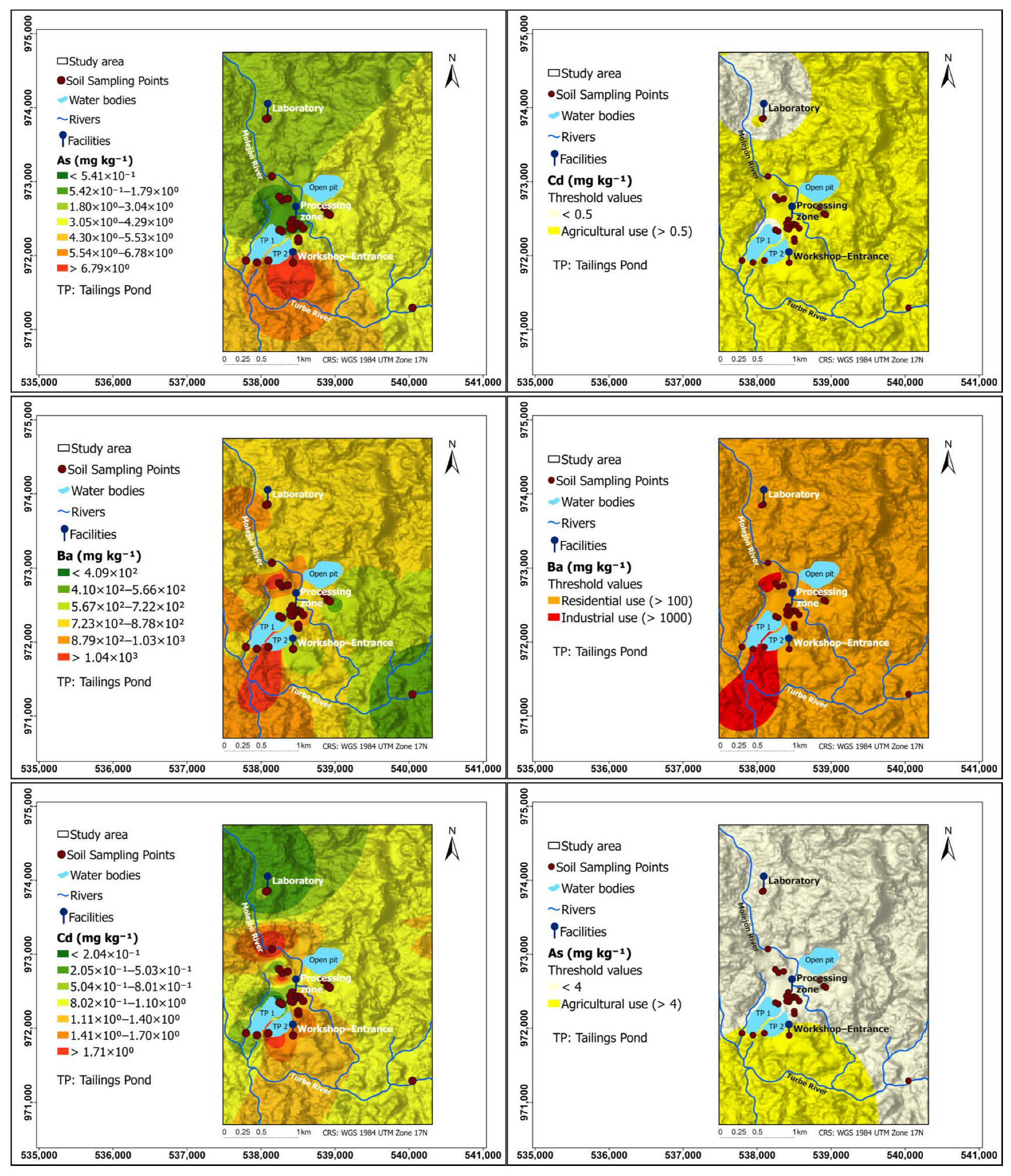
Figure 2 shows the IDW interpolation maps for PTEs in the soil, such as As, Ba and Cd. The maps on the left represent the interpolated results for each element and those on the right refer to the regulated standards for each element. The spatial distribution for As shows that the area with the highest concentration for this element is in the workshop located at the entrance to the project (>6.79 × 100 mg kg−1), exceeding the permissible limit for agricultural use; while the processing areas and the laboratory have concentrations of As < 5.41 × 10⁻¹ mg kg−1 to 3.04 × 100 mg kg−1, which are areas that do not exceed the regulatory threshold limit for it. Ba shows a distribution with concentrations between 7.23 × 10² mg kg−1 and 8.78 × 10² mg kg−1 in most of the territory, associated with regional geochemical values, which classifies it above the limit for residential use in soils; however, the highest abundance of Ba (>1.04 × 10³ mg kg−1) is found near the TP areas. The special distribution of Cd shows a characteristic distribution, with high concentrations (>1.71 × 100 mg kg−1) in the Molejón River and TP 2 areas but with low concentrations (<2.04 × 10⁻¹ mg kg−1) in the laboratory area and TP 1, which comply with regulations for agricultural, residential, and industrial use, with the exception of the rest of the study area, which exceeds the limit for residential use.
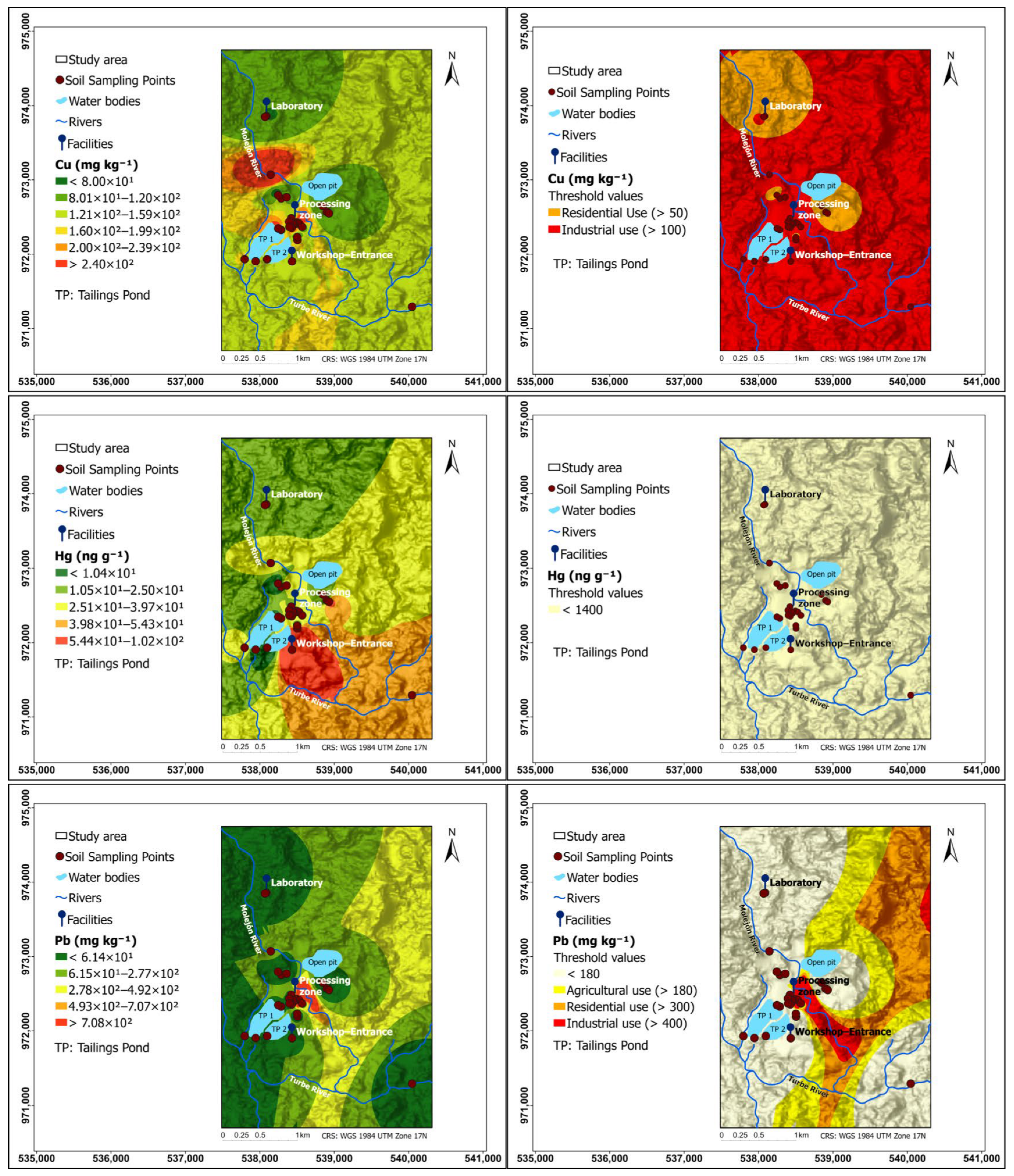
Figure 3 shows the spatial distribution of Cu, Hg, and Pb in the mining soils of Petaquilla; the maps on the left show the spatial variability of the PTEs, and the maps on the right represent the land use regulations for each element. Cu shows concentrations ranging from 8.01 × 101 mg kg−1 to 1.59 × 101 mg kg−1 in areas of the workshop, open pit and laboratory, while showing the highest concentrations (>2.40 × 10² mg kg−1) in part of the processing area and the Molejón River; according to regulations for this element, the study area exceeds the permissible limit for industrial use, with the exception of the laboratory and the quarry, which exceed only for residential use. Hg is abundant in the workshop area, with concentrations between 5.44 × 101 ng g−1 and 1.02 × 10² ng g−1; however, the entire area complies with land use regulations concerning this element. Spatial variability of Pb shows maximum values (>7.08 × 10² mg kg−1) in the processing area due to a possible point source of contamination, which exceeds the limit for industrial use in soils; the rest of the area complies with the permissible values of the regulations for Pb.
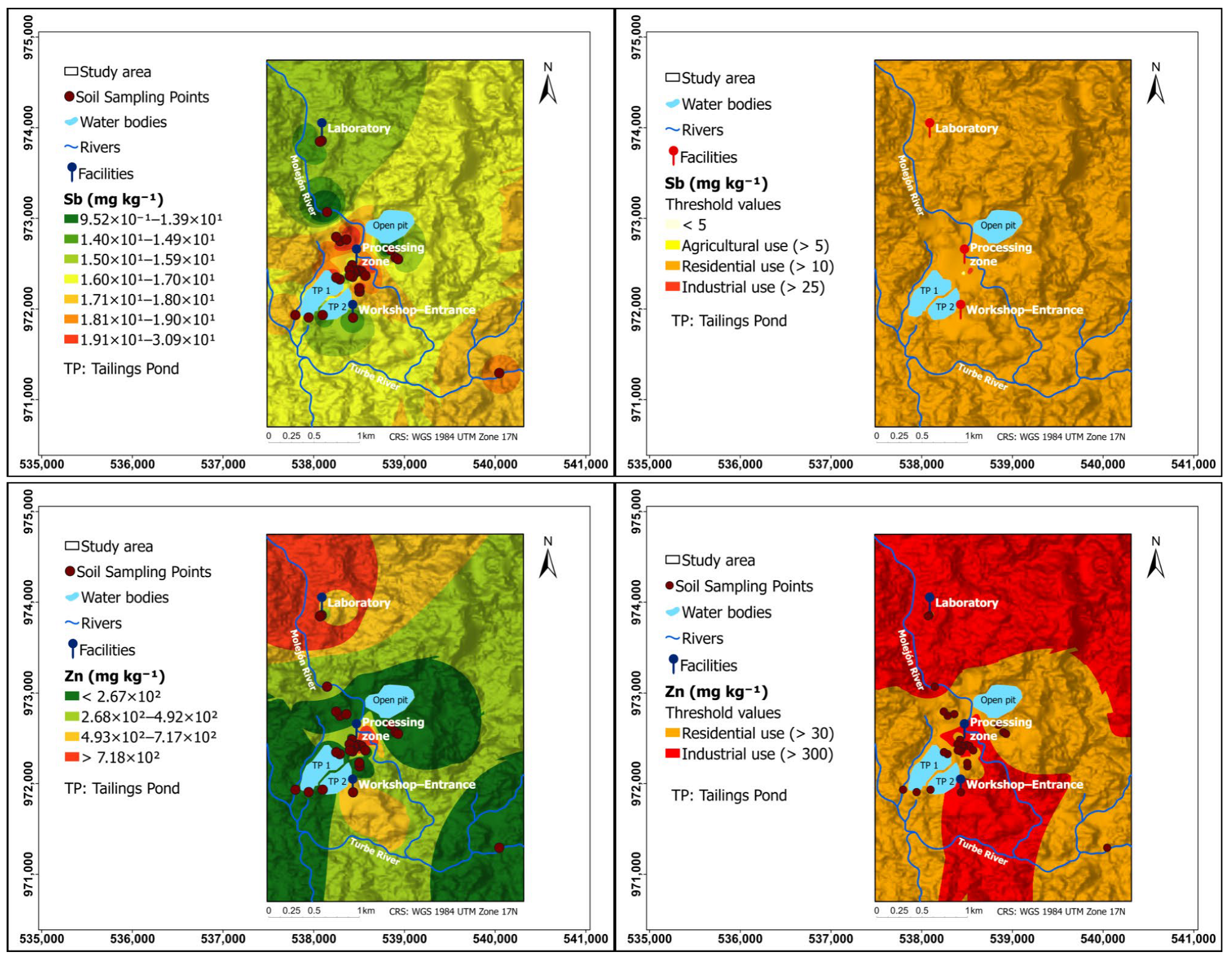
Figure 4 shows spatial variability for Sb and Zn. In particular, Sb displayed a non-uniform spatial distribution in the processing area, with values ranging between 9.52 × 10⁻¹ mg kg−1 to 1.39 × 101 mg kg−1 and 1.91 × 101 mg kg−1 to 3.09 × 101 mg kg−1, while in the workshop and laboratory areas it showed low concentrations between 9.52 × 10⁻¹ mg kg−1 to 1.39 × 101 mg kg−1, and in the TP discharge stream, there were concentration values ranging from 1.81 × 101 mg kg−1 to 1.90 × 101 mg kg−1. These results indicated that the area exceeds the permissible values in this element for residential use in its entirety, except for two sites that exceeded the industrial limit and the agricultural limit in the processing area. For Zn, there are areas showing high values, such as the laboratory and workshop (4.93 × 10² mg kg−1 to 7.17 × 10² mg kg−1), and the processing area (>7.18 × 10² mg kg−1), thus exceeding the threshold for industrial use, and the open pit and TP areas exceed the permissible limit for residential use.
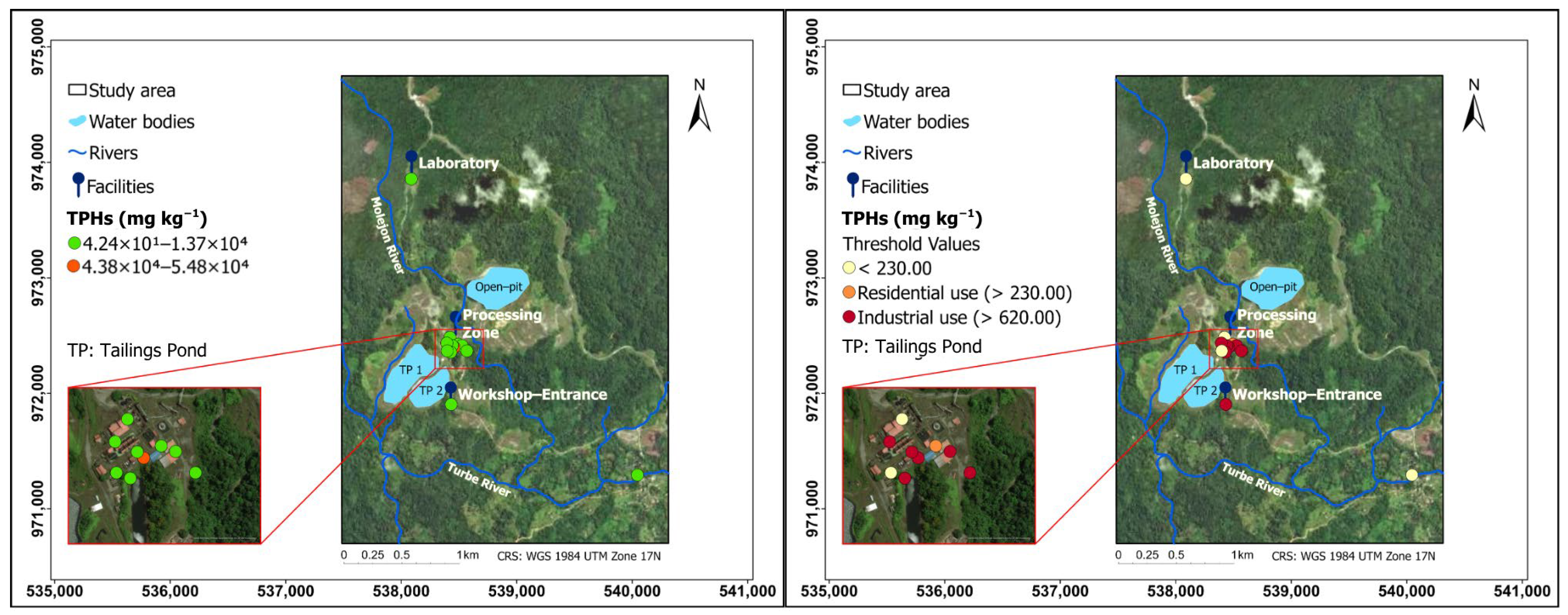
The spatial variability of the spots for TPH results in soil are shown in Figure 5. TPHs showed a distribution in areas of the laboratory, workshop, processing, and the control point in the Turbe River with concentrations found between 4.24 × 101 mg kg−1 and 1.37 × 10⁴ mg kg−1, with the exception of a site located near the transformers in the processing area, which had TPH values between 4.38 × 10⁴ mg kg−1 and 5.48 × 10⁴ mg kg−1, identifying it as the site with the highest presence of hydrocarbons. Within the permissible limit values, the laboratory and the control point on the Turbe River did not pose a problem, but the processing area and workshop entrance exhibited values that exceeded the permissible limits for both residential and industrial land use. These are sites where oil spills were clearly visible.

3.3. Evaluation Results Analysis

3.3.1. Multivariate Analysis

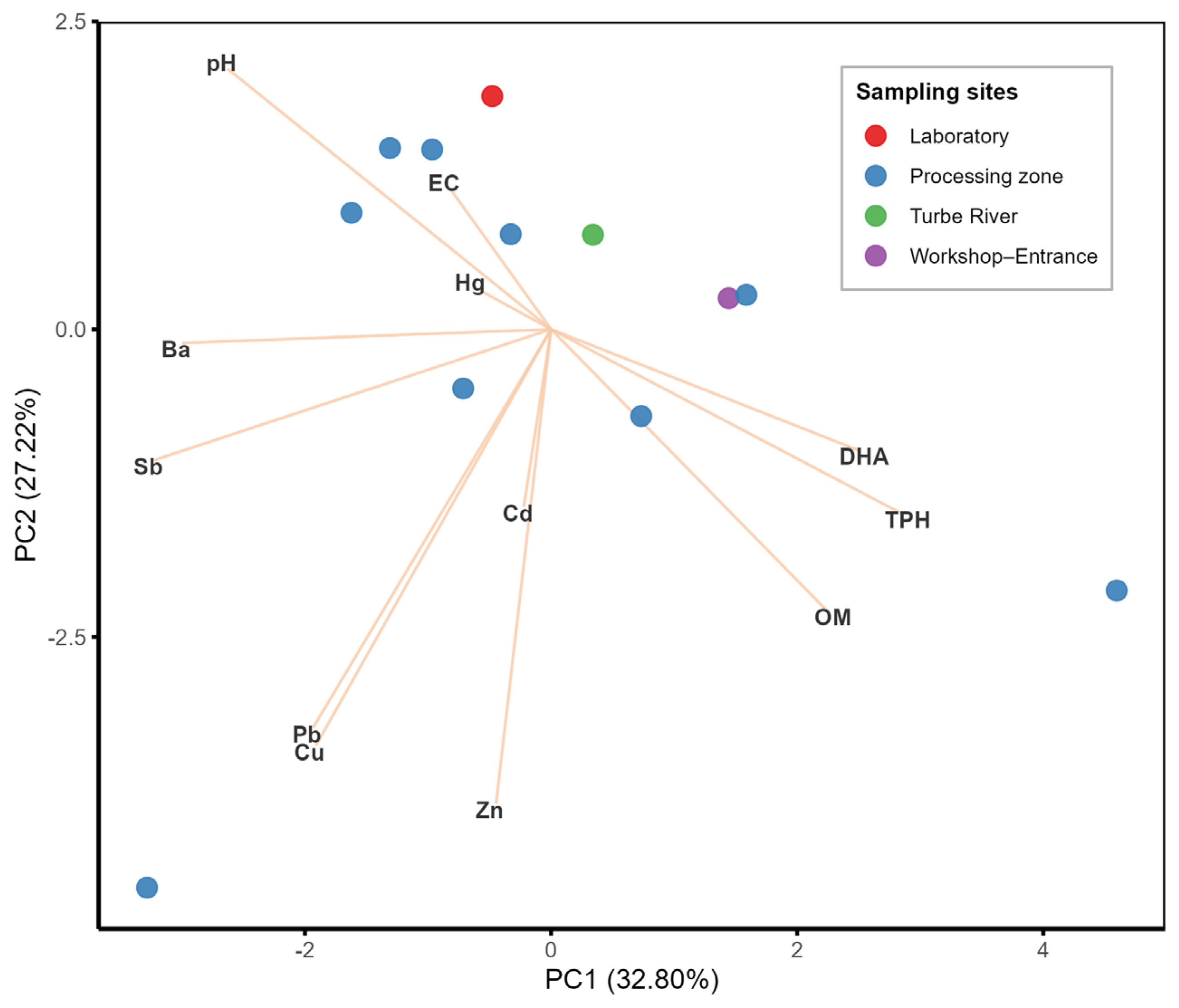
The multivariate analysis for principal components is shown in Figure 6 and Table 4, associated with the edaphic parameters, PTEs, and TPHs in the soils of the study site. The first principal component (PC1) explains the greatest variability in the data, accounting for 32.80%, followed by the second principal component (PC2) at 27.22% and the third principal component (PC3) at 13.97%, giving a cumulative loading of 73.99%. In PC1, the parameters that were significantly positively related included DHA (0.338), TPHs (0.387) and OM (0.304); while those negatively related were pH (−0.356), Ba (−0.407) and Sb (−0.437). For PC2 there were significant negative relationships with Cu (−0.459) and Pb (−0.439). In PC3, pH (−0.128), EC (−0.101), OM (−0.124) and TPHs (−0.155) are negatively correlated, whilst Zn (0.131) is positively correlated.
Multivariate analysis highlights the positive relationship between TPHs, DHA, and OM in soil samples with high TPH content (in the workshop entrance and the processing area, especially in front of the transformer), contrary to the findings of Alrumman et al. (2014) [65], who found that enzymatic activity was inhibited in soils contaminated with hydrocarbons. Slightly acidic pH levels in soils near the tailing ponds favoured Ba mobility, where the same behaviour was reported in soils by Cappuyns (2018) [66]. Distinguishing between two types of contamination: one caused by an oil spill in the processing area and at the workshop entrance, and another caused by mineral processing, which released PTEs in the tailings pond area.
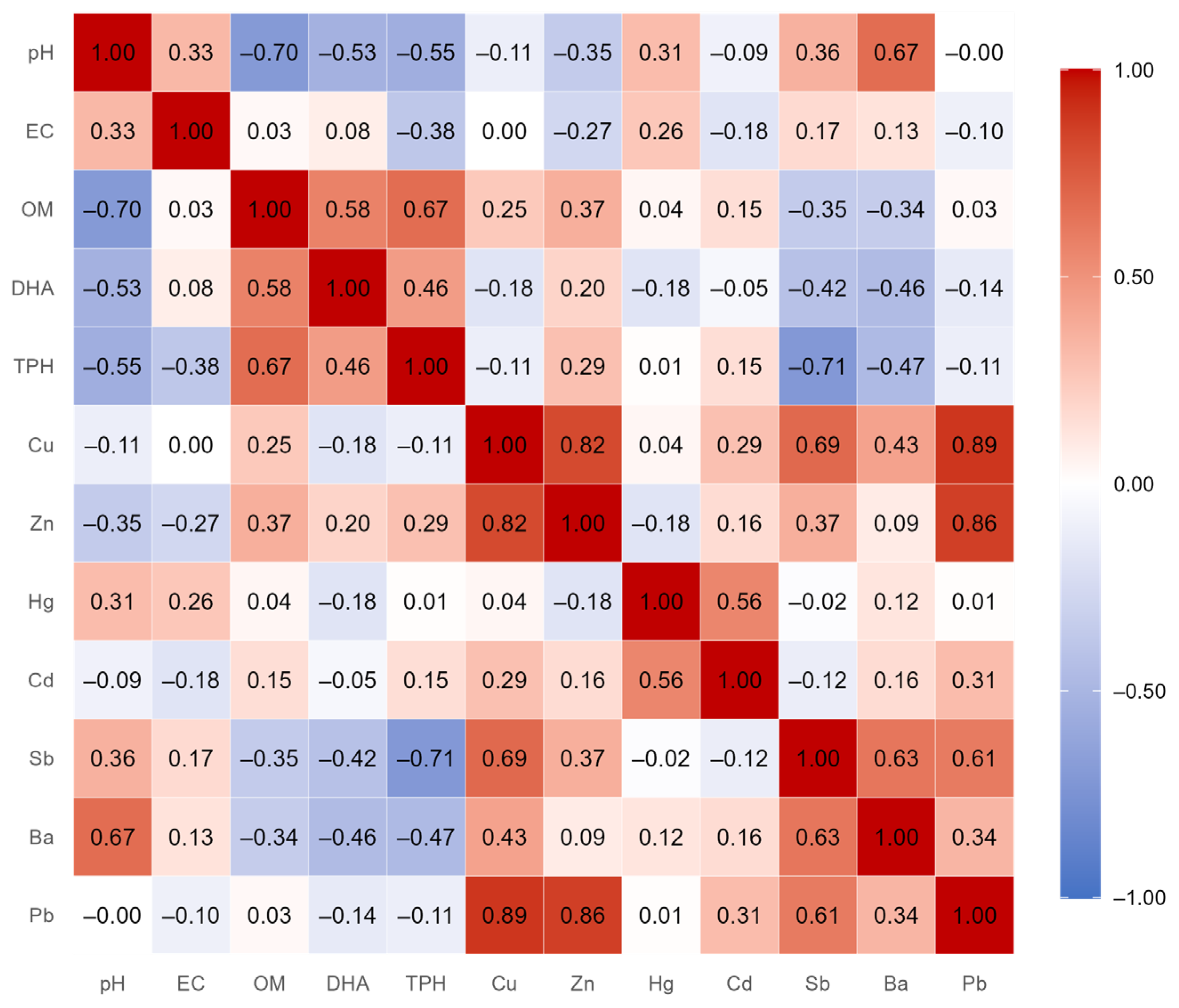
The correlation matrix between edaphic parameters, DHA, PTEs and TPHs in the soil samples is shown in Figure 7. Pearson’s correlation analysis revealed a strong geochemical association between Pb and Cu and Zn (r > 0.86), suggesting a common anthropogenic origin linked to industrial processes at the warehouse site in the processing area. This signature is complemented by the significant correlation between Pb and Sb (r = 0.61) at the same point, reinforcing the hypothesis of shared industrial emission sources.
Furthermore, there is a moderate positive correlation between TPHs and OM (r = 0.67) and DHA (r = 0.46), suggesting that in areas where oil spills are observed (in front of the transformer, in front of the tank, the warehouse in the processing area, and the workshop entrance), this organic contaminant is being degraded by bacteria that use it as an energy source, and the tropical climate has facilitated its degradation, indicating that the spill dates back several years. Regarding soil properties, the inversely proportional relationship between pH and OM (r = −0.70) indicates a process of substrate acidification mediated by the release of organic acids.
Finally, there is a moderate positive correlation between Ba and Sb (r = 0.63) and pH (r = 0.67), indicating that these elements have been released into the tailing ponds because of mining processing and that the slightly acidic pH of these ponds promotes their mobility in the soil.
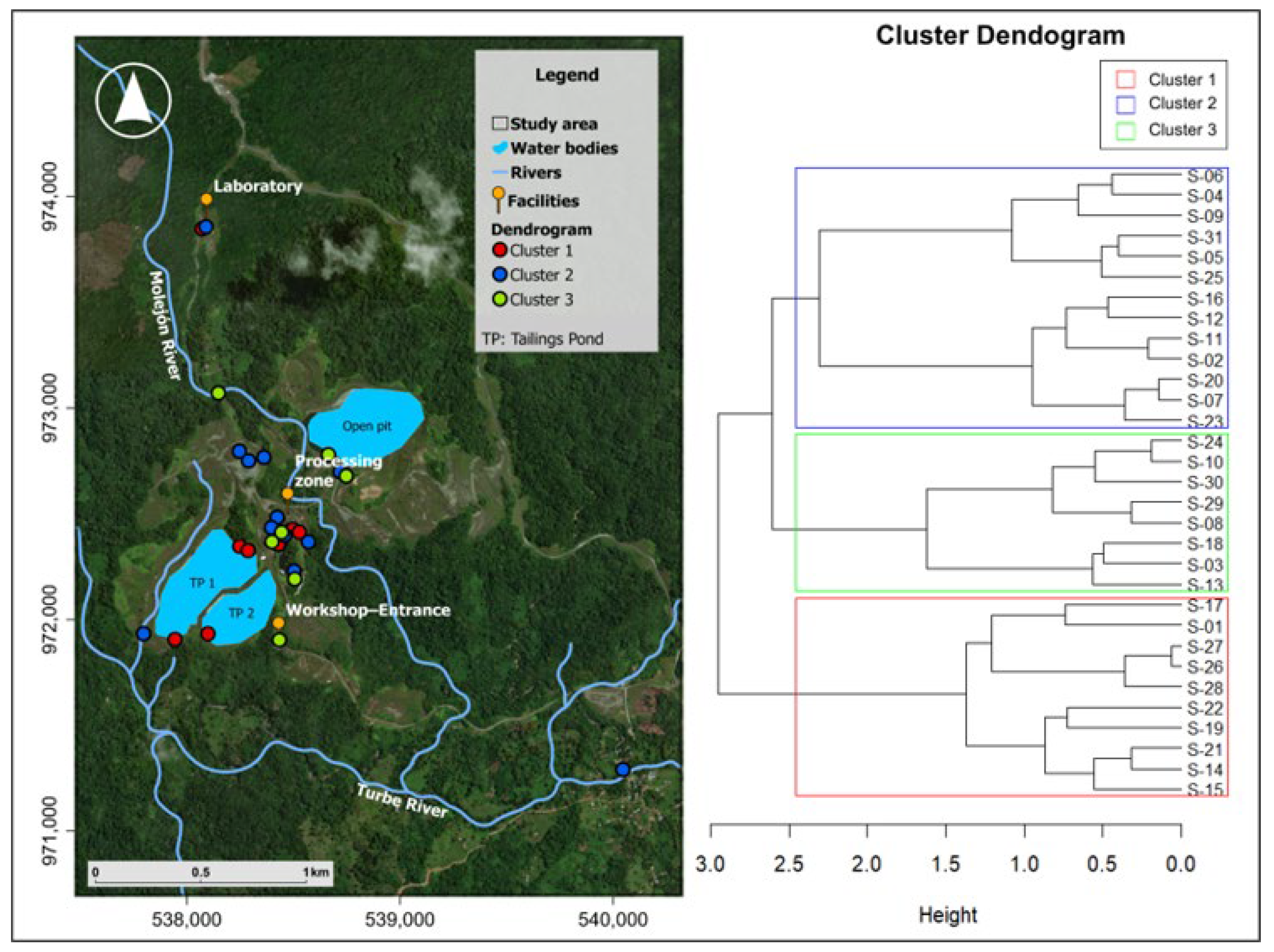
The hierarchical cluster analysis of the PTEs (Figure 8) provides information for the spatial geochemical interpretation of the Petaquilla mine. This analysis identified three domains based on the activities carried out at the mine and the natural variability of the geological substrate. The first blue domain corresponds to samples with the lowest PTE concentrations; these values reflect the site’s mineralisation and lithological variation, with the lowest anthropogenic impact; samples from distant locations, such as the Turbe River and the laboratory, as well as those from the perimeter of the processing area, are found within this region. The second green domain corresponds to mean PTEs values, grouping samples with moderate impact from mining activity, such as the Molejón River, the open pit and the workshop entrance. The third red domain comprises the samples with the highest PTEs values, those most affected by mining activities, such as the soils around the tailing ponds, the reagent store, and the area in front of the transformer in the processing zone. This integration of geospatial statistics makes it possible to identify areas of geological influence and areas of anthropogenic mining activity.

3.3.2. Geoaccumulation Index (Igeo)

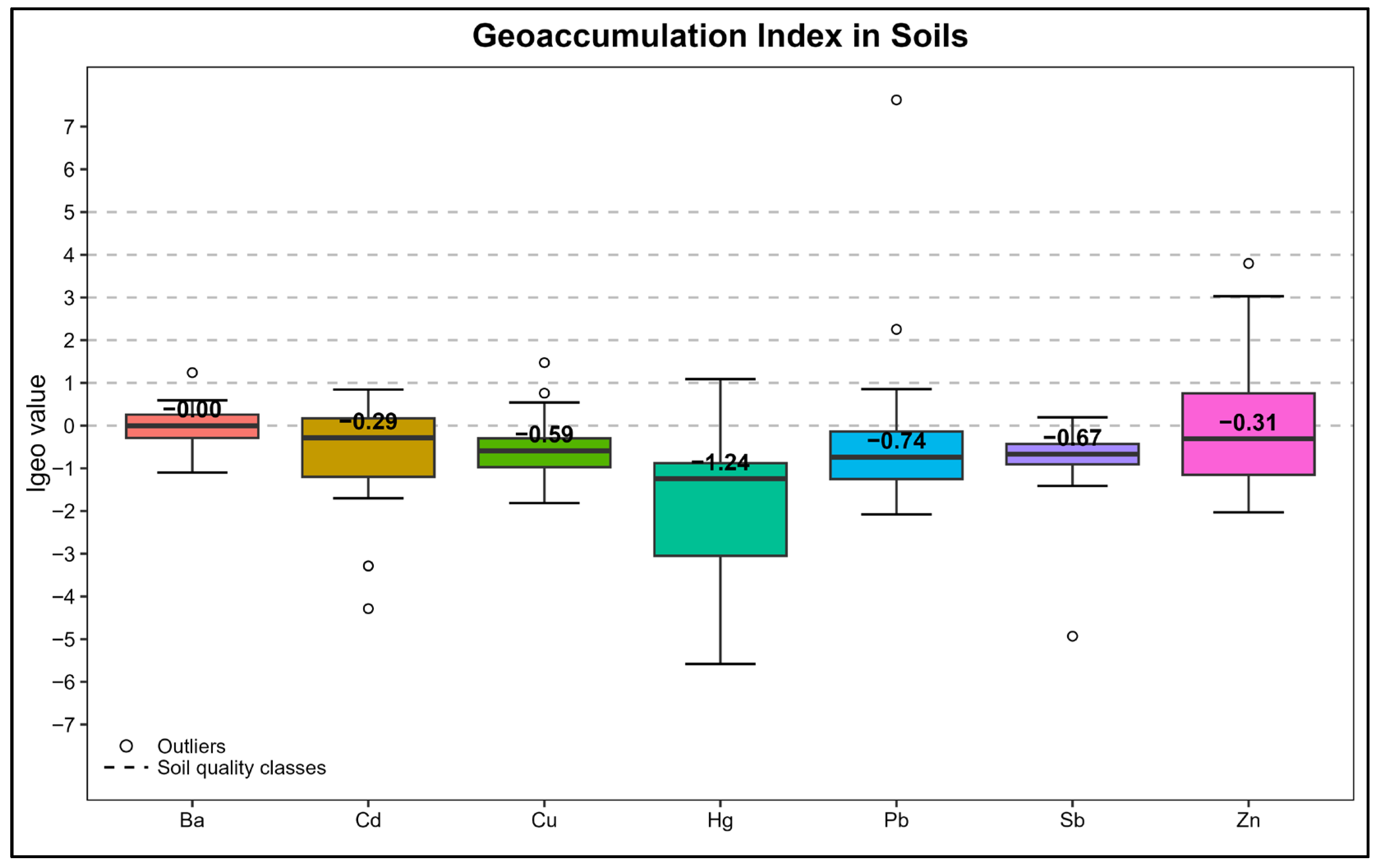
The Igeo shown in the box plot (Figure 9) presents the enrichment or abundance analysis of metals in the study area to assess their relationship with the industrial processes at the Petaquilla mine.
The geoaccumulation results for the selected elements at each sampling site in this study showed that all metals had a mean Igeo < 0. PTEs such as Ba, Cd, Cu, Pb, and Sb showed narrow interquartile ranges and maximum values (whiskers) close to the interquartile range, demonstrating homogeneity among the samples and little or no geochemical accumulation of metals in relation to the background concentrations at the sampling site. On the other hand, Cu, Pb, Sb and Zn showed high outliers, indicating the existence of specific sites with notable enrichment in the processing zone, which can be attributed to mining activities. The distribution of Ba values showed outliers of Igeo > 1, indicating sites with moderate geoaccumulation in the area near the tailing ponds.
It is worth noting the limitations of this study, as it relies on a single sample as a reference value, which is subject to spatial [67] and geological variability [68]. However, the sample taken outside the mining area shows relatively high background levels (Ba = 535.69 mg kg−1, Cd = 0.82 mg kg−1, Cu = 132.95 mg kg−1, Hg = 47.8 ng g−1, Sb = 18.02 mg kg−1, Pb = 23.91 mg kg−1 and Zn = 128.72) compared to other areas of Panama, such as the soils of the upper Santa María River basin (34.22 mg kg−1 Cu, 3.17 mg kg−1 Pb and 101.28 mg kg−1 Zn) [69], the mean values for agricultural soils in Herrera, West Panama (125 mg kg−1 Cu, 85 mg kg−1 Zn) [70] and the mean values of the abandoned gold mine at Remance in Panama (200.6 mg kg−1 Ba, 61.3 mg kg−1 Cu, 46.9 mg kg−1 Zn) [12], reflecting the high levels attributable to the site’s geology for Ba, Cu and Zn.

3.3.3. Pollution Index (PI) and Pollution Load Index (PLI)

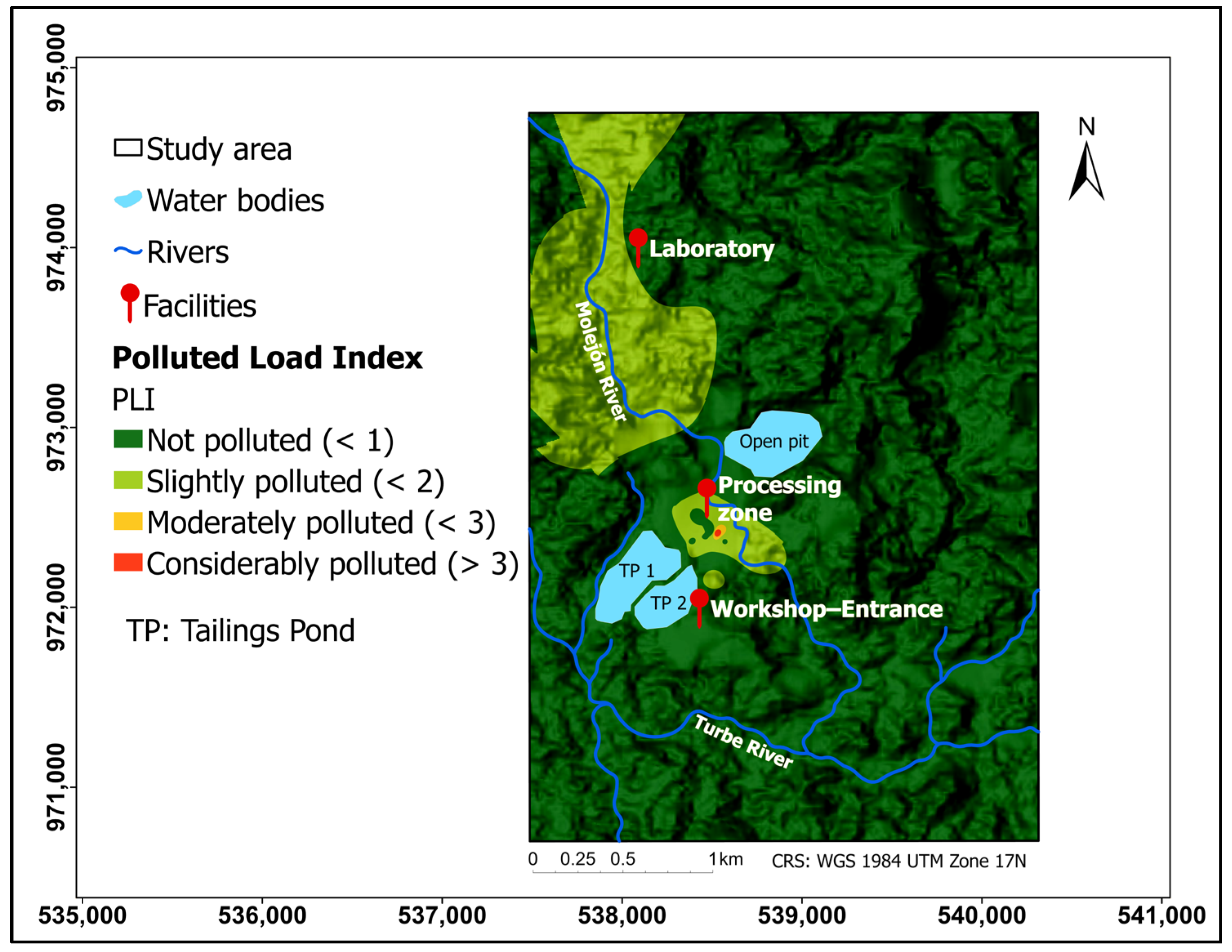
The Table 5 shows the statistical summary of the PI and PLI analyses for Cd, Cu, Hg, Sb, Pb, and Zn. PTEs with a PLI of less than 1 are Cd (0.940), Hg (0.648), and Sb (0.941); in addition, Cu (1.172) shows slight pollution. On the other hand, metals such as Zn (2.975) and Pb (11.075) showed moderate and considerable pollution, respectively. Figure 10 shows the distribution of the PLI analysis for the study area. The sites that are significatively contaminated are the Molejón River and the processing area, which still show slight contamination (PLI < 2). Within the processing area, there is one specific site (near a warehouse) with moderate (PLI < 3) to considerable contamination (PLI > 3), due to high levels of Pb (7088 mg kg−1), Zn (2648 mg kg−1) and Cu (554 mg kg−1).

3.3.4. Human Health Risk Assessment in the Soils at the Petaquilla Mine

  • Risk to human health from exposure to PTEs
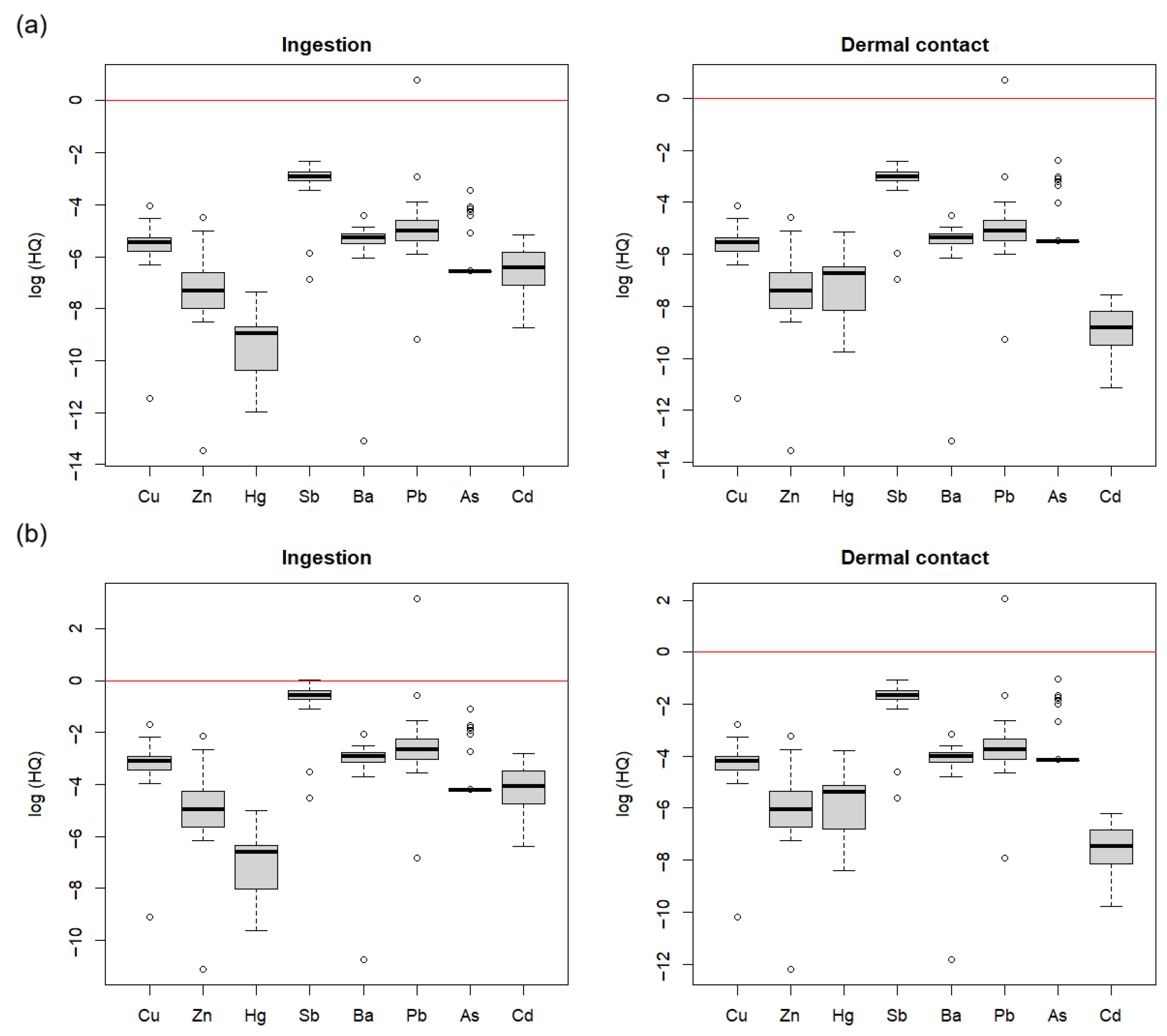
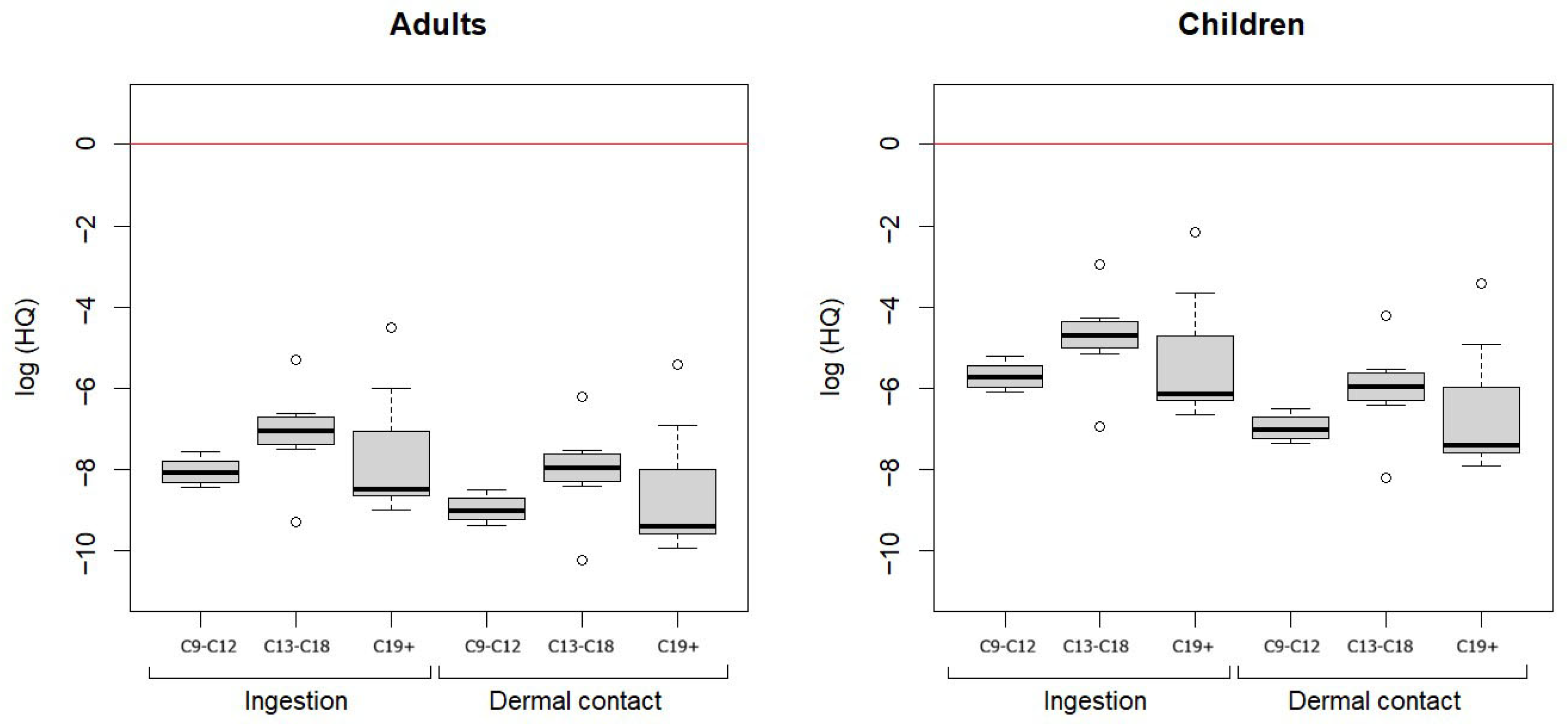
The assessment of non-carcinogenic and carcinogenic risks to human health associated with PTEs, considering simultaneously the routes of accidental ingestion and dermal contact, shows clearly differentiated patterns between both exposure routes and between the receptors analysed. In general terms, the results indicate that dermal contact does not represent a significant exposure pathway for most of the evaluated PTEs in either adults or children. However, Pb constitutes an exception, exceeding the risk threshold via dermal contact at one sampling point (warehouse). The lower contribution of the dermal pathway compared to ingestion may be associated with the limited absorption efficiency of many metals through the skin under environmental exposure conditions [71,72]. Consequently, ingestion was identified as the dominant route of exposure to PTEs in the study area.
In the adult population, HI values ranged from 1.27 × 10⁻² to 4.57, exceeding the threshold of concern (HI = 1) in 3.0% of the analysed points. In the case of children, HI values ranged from 7.43 × 10⁻² to 3.35 × 10+1, exceeding the reference threshold at 77.0% of the points evaluated. This pattern highlights the vulnerability of this group of receptors, for whom moderate increases in the dose of different PTEs can translate into a significantly higher cumulative risk. For both receptors, Pb was identified as the main contributor to systemic risk, accounting for more than 94% of the total HI, followed by Sb with a minor contribution, while the cumulative input of the remaining PTEs is negligible (Figure 11).
Several studies have shown that children are the most vulnerable population group to the risks associated with PTE exposure in different environments. For example, in school and residential settings in areas of Armenia and China, respectively, the presence of contaminated soil has led to non-carcinogenic risk assessments that exceed the established safety threshold (HI = 1), highlighting the high susceptibility of children to this type of contaminant [73,74].
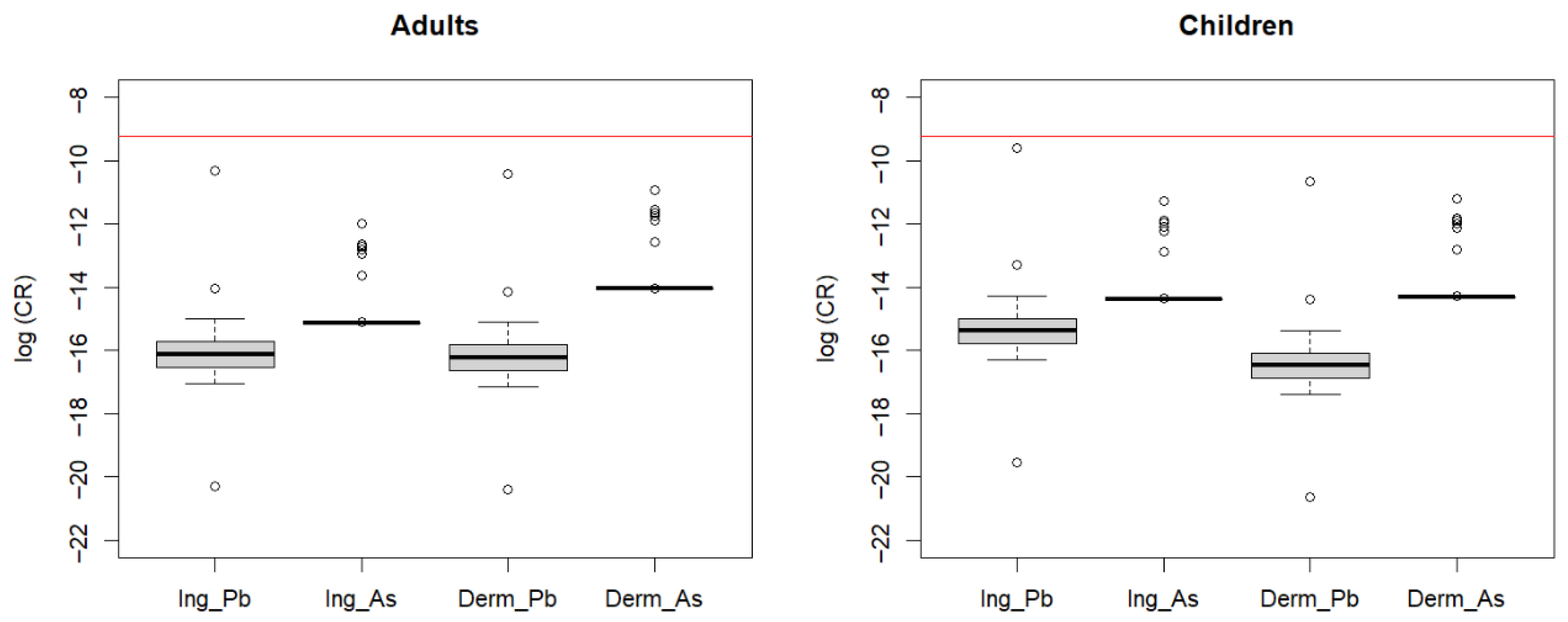
Regarding carcinogenic risk, estimated for As and Pb (Figure 12), CR values in adults ranged from 2.69 × 10⁻⁷ to 1.78 × 10⁻⁵ and 1.39 × 10⁻⁹ to 3.28 × 10⁻⁵, respectively, while TCR ranged from 1.06 × 10⁻⁶ to 6.38 × 10⁻⁵, therefore not exceeding the safe exposure threshold for adult recipients.
In the paediatric population, the carcinogenic risk (CR) values were higher than those estimated for adults. For Pb, the CR for dermal contact ranged from 1.08 × 10⁻⁹ to 2.31 × 10⁻⁵, while for ingestion, the values ranged from 3.21 × 10⁻⁹ to 6.89 × 10⁻⁵. In the case of As, the CR in children ranged from 6.08 × 10⁻⁷ to 1.38 × 10⁻⁵ and from 5.66 × 10⁻⁷ to 1.28 × 10⁻⁵ for dermal exposure and ingestion, respectively.
When integrating the different exposure routes, the total carcinogenic risk (TCR) in children was found to be between 1.18 × 10⁻⁵ and 9.32 × 10⁻⁵, which is approximately 1.2 times higher than the estimated TCR for the adult population. However, although the values in children are relatively higher, none of the scenarios evaluated exceed the acceptable carcinogenic risk threshold (1.0 × 10⁻⁴), suggesting that, under the exposure conditions considered, there are no unacceptable carcinogenic risks for the child population.
The statistical summary of the non-carcinogenic and carcinogenic risk results for each PTE, and the integrated HI and TCR values are presented Table S7 and Table S8, respectively.
The results obtained in this study are consistent with those reported in an abandoned gold mine in Remance, Panama, where it was found that the risk, under a residential exposure scenario for both adults and children, exceeded acceptable risk thresholds. In that study, González-Valoys et al. [12] identified As and Cu as the contaminants of greatest concern due to their significant contribution to the estimated risk. Furthermore, the results obtained in this study are consistent with assessments carried out in urban and mining soils, where accidental ingestion is identified as the dominant route of exposure, especially in the child population [8,75].
  • Risk to human health from exposure to TPHs
The non-carcinogenic risk assessment for the operational ranges of TPHs defined by carbon number showed a consistent pattern between the two population groups evaluated (adults and children) and the exposure pathways considered. In all scenarios evaluated, the maximum HQ values remained below the threshold of concern (HQ = 1), indicating that, under the exposure conditions considered, there is no evidence of unacceptable non-carcinogenic risks associated with the presence of TPHs in the study area.
In the adult population, HQ values showed consistent trends across the different TPH fractions and exposure routes, with consistently low values for both ingestion and dermal contact. Similarly, the same pattern was observed in the child population, although with relatively higher values compared to adults. This general trend is summarized in Figure 13, which illustrates the distribution of risk across different TPH fractions and population groups. For further quantitative details, the HQ values by TPH fraction and exposure pathway are provided in Table S9.
In terms of contribution by carbon range, the highest HQ values were consistently associated with C13–C18 and C19+ in both adults and children. This result is consistent with the molecular profile determined by GC-MS (Figure S1), which showed marked biodegradation characterized by the absence of linear n-alkanes and the dominant presence of an unresolved complex mixture (UCM), isoprenoids, and hopanes [76,77]. In this context, the results indicate that the relative contribution to non-carcinogenic risk is mainly associated with the heavier TPH fractions, whereas the lighter fractions do not make a significant contribution under the conditions evaluated. Nevertheless, despite this predominance of heavier fractions, the overall HQ values remained below the threshold of concern for all exposure scenarios and receptors evaluated.
This coupling between chemical evidence (weathered fingerprint) and toxicological behaviour reinforces the interpretation that the sites evaluated correspond to old or highly biodegraded spills, in which the potential risk is governed mainly by heavy fractions and not by recently released light hydrocarbons [62,64].

3.4. The Present the Implications for Site Restoration

The results obtained in this study provide a useful basis for establishing restoration priorities and selecting appropriate remediation strategies for the abandoned Petaquilla mine site. The processing zone and the workshop entrance should be considered the highest-priority intervention areas, due to the combined presence of elevated TPH concentrations, localized enrichment of Pb, Zn, Cu and Sb, and visible evidence of hydrocarbon spills. In contrast, most of the remaining areas showed contaminant concentrations close to regional geochemical background values and relatively low human health risks, suggesting that extensive large-scale soil removal would not be necessary across the entire site. Instead, a risk-based restoration strategy focused on hotspot management would be more environmentally and economically appropriate.
The strong weathering and biodegradation patterns identified by GC-MS, together with the relatively high DHA values, indicate that natural attenuation processes are already active at the site, particularly for hydrocarbons. Therefore, remediation approaches combining monitored natural attenuation with targeted interventions could be suitable for the most affected areas. In hydrocarbon hotspots, removal or stabilization of severely contaminated soils near transformers, workshops and fuel storage areas should be prioritized, while in areas affected by PTEs, phytostabilization and the use of amendments to reduce metal mobility could represent feasible long-term restoration options under tropical conditions. Furthermore, the spatial distribution maps generated in this study provide a practical framework for defining priority intervention zones, optimizing remediation costs and minimizing unnecessary disturbance of soils with low residual risk.

4. Conclusions

After this study, the soil at the Petaquilla mine exceeds Panamanian standards for Cd for agricultural use; Ba, Sb, and Zn for residential use; and Cu throughout the area and Pb in the processing area for industrial use. According to Igeo, these are regional background values, except for Cu, Pb, Sb, and Zn in the processing zone and Ba near the tailing ponds.
The PLI (Cd, Cu, Hg, Pb, Sb, and Zn) indicates that the areas affected by slight contamination are surrounding the Molejón River and the processing zone, the latter even having specific sites with moderate to considerable contamination, mainly due to Pb, Zn, and Cu due to industrial activity.
The workshop entrance and processing zone show high TPH values above the limit set by Panama’s soil standards for industrial use, evidence of hydrocarbon spillage due to the onsite abandonment of machinery and fuels. Type A contamination corresponds to fuel oils and lubricants and is found in the workshop entrance, warehouse, in front of the transformers and auxiliary lagoon. Type B contamination corresponds to spills of diesel fuel and is found in the tanks and in front of the cyanide storage facility. Both type A and B show a high degree of weathering and biodegradation due to the time since the spill, as well as a higher-than-average enzymatic activity of the soil, and the rainy climate, which have contributed to their advanced degradation.
The human health risk assessment identified accidental soil ingestion as the primary exposure pathway for both PTEs and TPHs under the evaluated residential scenario. For PTEs, non-carcinogenic risk was higher in children than in adults, mainly driven by Pb exposure. However, the carcinogenic risk associated with Pb and As remained below the acceptable threshold (1.0 × 10⁻⁴) for both receptors. Regarding TPH fractions, all HQ values remained below the threshold of concern (HQ = 1), indicating the absence of non-carcinogenic risk under the evaluated exposure conditions.
As for the implications for site restoration the processing zone and the workshop entrance should be considered the highest-priority intervention areas, due to the combined presence of elevated TPH concentrations, localized enrichment of Pb, Zn, Cu and Sb, and visible evidence of hydrocarbon spills. In hydrocarbon hotspots, removal or stabilization of severely contaminated soils near transformers, workshops and fuel storage areas should be prioritized, while in areas affected by PTEs, phytostabilization and the use of amendments to reduce metal mobility could represent feasible long-term restoration options under tropical conditions.
It is recommended that this study be extended to other environmental matrices, as well as to other possible risks associated with abandoning the Petaquilla mine without restoring it.

Supplementary Materials

The following supporting information can be downloaded at: https://www.mdpi.com/article/10.3390/min16050522/s1, Table S1: Distribution of Total Petroleum Hydrocarbons (TPHs) in the soil, according to the carbon fraction; Table S2: Exposure parameters used in human health risk assessment; Table S3: Toxicity values used in the risk assessment; Table S4: Measurement of analytical data for edaphic parameters and PTEs at the Petaquilla mine; Table S5: Maximum permissible values (Panama) and intervention values (Costa Rica) for PTEs and TPHs in soils, according to their use. Table S6: Concentrations of potentially toxic elements (average or range from minimum to maximum) found in abandoned mines, in mg kg−1; Table S7: Non-carcinogenic (HQ) and carcinogenic (CR) risk indices for PTEs for adults and children through ingestion and dermal exposure; Table S8: Aggregate Hazard Index (HI) and Total Cancer Risk (TCR) for PTE exposure through dermal contact and ingestion pathways; Table S9: Non-carcinogenic risk estimates (HQ) for TPH fractions by exposure pathway and population group; and Figure S1. Representative TIC (total ion chromatogram) and SIM (selected ion monitoring) chromatograms of S-29, workshop–entrance, corresponding to a Type A fingerprint.

Author Contributions

Conceptualization, A.C.G.-V., E.G.-O., P.H., F.J.G.-N., J.R.G. and S.J.-O.; methodology, E.G.-O., P.H., A.C.G.-V., F.J.G.-N., J.R.G. and S.J.-O.; software, A.C.G.-V., F.S., J.R.G., E.G.-O., S.J.-O., J.L.Z.-A., P.H., J.A. and J.L.; validation, A.C.G.-V., J.R.G. and S.J.-O.; formal analysis, A.C.G.-V., J.A., J.L., F.S., J.R.G., S.J.-O. and J.L.Z.-A.; investigation, A.C.G.-V., E.G.-O., P.H., F.J.G.-N., J.R.G., S.J.-O., F.S., J.L.Z.-A., F.S., J.A. and J.L.; resources, A.C.G.-V., P.H., E.G.-O., F.J.G.-N., J.R.G. and S.J.-O.; data curation, A.C.G.-V., J.R.G., P.H., F.J.G.-N. and S.J.-O.; writing—original draft preparation, A.C.G.-V., F.S., J.R.G., E.G.-O., S.J.-O., J.L.Z.-A., J.A., J.L., P.H. and F.J.G.-N.; writing—review and editing, A.C.G.-V., S.J.-O., J.R.G., P.H., E.G.-O. and F.J.G.-N.; visualization, A.C.G.-V., S.J.-O., P.H., E.G.-O., F.J.G.-N., J.R.G. and J.L.Z.-A.; supervision, A.C.G.-V., P.H., E.G.-O., F.J.G.-N., S.J.-O. and J.R.G.; project administration, A.C.G.-V.; and funding acquisition, A.C.G.-V., P.H., E.G.-O. and F.J.G.-N. All authors have read and agreed to the published version of the manuscript.

Funding

This research was funded by the Secretaría Nacional de Ciencia, Tecnología e Innovacion (SENACYT) of Panama, Project MOV-2024-14, Training Panamanian human resources in the restoration of abandoned mining sites, grant number ID No. 118-2024; the Sistema Nacional de Investigación (SNI) de Panama, SENACYT, grant number SNI economic incentive contract No. 010-2023; and UCLM funds for Research Groups (2025-GRIN-38345).

Institutional Review Board Statement

Not applicable.

Informed Consent Statement

Not applicable.

Data Availability Statement

The original contributions presented in this study are included in the article. Further inquiries can be directed to the corresponding author.

Acknowledgments

We thank the Universidad Tecnológica de Panama (UTP) for their research support and the Centro de Estudios Multidisciplinarios en Ciencias, Ingenieria y Tecnología (CEMCIT AIP) for administering the project funds. We thank the Ministry of Trade and Industry (MICI) for granting us access to the Petaquilla Mine, and the Ministry of the Environment for their support during the sampling campaign. UCLM Vicerrectorate of Scientific Policy is also acknowledged for partial financial support, INDUROT at the University of Oviedo and ESPOL. The authors acknowledge the assistance of Google Gemini (Gemini 3 Flash) and Canva Pro (https://www.canva.com/pro/) in the design of graphical components and final layout of the Graphical Abstract.

Conflicts of Interest

The authors declare no conflicts of interest.

Abbreviations

The following abbreviations are used in this manuscript:
DHAdehydrogenase activity
Igeoindex of geoaccumulation
PLIpollution load index
TPHstotal petroleum hydrocarbons

References

  1. Hartman, H.; Mutmansky, J. Introductory Mining Engineering, 2nd ed.; Wiley: Hoboken, NJ, USA, 2002. [Google Scholar]
  2. Spitz, K.; Trudinger, J. Mining and the Environment: From Ore to Metal, 2nd ed.; CRC Press: Boca Raton, FL, USA, 2008. [Google Scholar]
  3. Aguilar-Pesantes, A.; Peña Carpio, E.; Vitvar, T.; Koepke, R.; Menéndez-Aguado, J.M. A Comparative Study of Mining Control in Latin America. Mining 2021, 1, 6–18. [Google Scholar] [CrossRef]
  4. Haghighizadeh, A.; Rajabi, O.; Nezarat, A.; Hajyani, Z.; Haghmohammadi, M.; Hedayatikhah, S.; Asl, S.D.; Aghababai Beni, A. Comprehensive Analysis of Heavy Metal Soil Contamination in Mining Environments: Impacts, Monitoring Techniques, and Remediation Strategies. Arab. J. Chem. 2024, 17, 105777. [Google Scholar] [CrossRef]
  5. Palansooriya, K.N.; Shaheen, S.M.; Chen, S.S.; Tsang, D.C.W.; Hashimoto, Y.; Hou, D.; Bolan, N.S.; Rinklebe, J.; Ok, Y.S. Soil Amendments for Immobilization of Potentially Toxic Elements in Contaminated Soils: A Critical Review. Environ. Int. 2020, 134, 105046. [Google Scholar] [CrossRef]
  6. Zheng, J.; Noller, B.; Huynh, T.; Ng, J.; Taga, R.; Diacomanolis, V.; Harris, H. How the Population in Mount Isa Is Living with Lead Exposure from Mining Activities. Extr. Ind. Soc. 2021, 8, 123–134. [Google Scholar] [CrossRef]
  7. Ndzana, C.E.; Emmanuel Mvondo, V.Y.; Tchouta, K.D.; Ngatcha, B.N. Assessment of the Impact of Small-Scale Mining on Soil Contamination by Mercury and Hydrocarbons in the Kadey Catchment (East Cameroon). Heliyon 2023, 9, e18786. [Google Scholar] [CrossRef] [PubMed]
  8. Romero-Crespo, P.; Jiménez-Oyola, S.; Salgado-Almeida, B.; Zambrano-Anchundia, J.; Goyburo-Chávez, C.; González-Valoys, A.; Higueras, P. Trace Elements in Farmland Soils and Crops, and Probabilistic Health Risk Assessment in Areas Influenced by Mining Activity in Ecuador. Environ. Geochem. Health 2023, 45, 4549–4563. [Google Scholar] [CrossRef]
  9. González-Valoys, A.C.; Jiménez-Oyola, S.; Patinha, C.; García-Noguero, E.M.; Peco, J.; Segundo, F.; Barquero, J.I.; Vargas-Lombardo, M.; María Esbrí, J.; Higueras, P. Oral Bioaccessibility and Probabilistic Human Health Risk Assessment of Potentially Toxic Elements in Stream Sediments from an Abandoned Gold Mine in Panama. Environ. Geochem. Health 2025, 47, 224. [Google Scholar] [CrossRef] [PubMed]
  10. González-Valoys, A.C.; Arrocha, J.; Monteza-Destro, T.; Vargas-Lombardo, M.; Esbrí, J.M.; Garcia-Ordiales, E.; Jiménez-Ballesta, R.; García-Navarro, F.J.; Higueras, P. Environmental Challenges Related to Cyanidation in Central American Gold Mining; the Remance Mine (Panama). J. Environ. Manag. 2022, 302, 113979. [Google Scholar] [CrossRef] [PubMed]
  11. González-Valoys, A.C.; Jiménez Salgado, J.U.; Rodríguez, R.; Monteza-Destro, T.; Vargas-Lombardo, M.; García-Noguero, E.M.; Esbrí, J.M.; Jiménez-Ballesta, R.; García-Navarro, F.J.; Higueras, P. An Approach for Evaluating the Bioavailability and Risk Assessment of Potentially Toxic Elements Using Edible and Inedible Plants—The Remance (Panama) Mining Area as a Model. Environ. Geochem. Health 2023, 45, 151–170. [Google Scholar] [CrossRef]
  12. González-Valoys, A.C.; Esbrí, J.M.; Campos, J.A.; Arrocha, J.; García-Noguero, E.M.; Monteza-Destro, T.; Martínez, E.; Jiménez-Ballesta, R.; Gutiérrez, E.; Vargas-Lombardo, M.; et al. Ecological and Health Risk Assessments of an Abandoned Gold Mine (Remance, Panama): Complex Scenarios Need a Combination of Indices. Int. J. Environ. Res. Public Health 2021, 18, 9369. [Google Scholar] [CrossRef]
  13. Santos, P.; Espinha Marques, J.; Ribeiro, J.; Mansilha, C.; Melo, A.; Fonseca, R.; Sant’Ovaia, H.; Flores, D. Geochemistry of Soils from the Surrounding Area of a Coal Mine Waste Pile Affected by Self-Burning (Northern Portugal). Minerals 2022, 13, 28. [Google Scholar] [CrossRef]
  14. Bahar, M.M.; Samarasinghe, S.V.A.C.; Bekele, D.; Naidu, R. Residual Hydrocarbons in Long-Term Contaminated Soils: Implications to Risk-Based Management. Environ. Sci. Pollut. Res. 2024, 31, 22759–22773. [Google Scholar] [CrossRef] [PubMed]
  15. Weissmannová, H.D.; Mihočová, S.; Chovanec, P.; Pavlovský, J. Potential Ecological Risk and Human Health Risk Assessment of Heavy Metal Pollution in Industrial Affected Soils by Coal Mining and Metallurgy in Ostrava, Czech Republic. Int. J. Environ. Res. Public Health 2019, 16, 4495. [Google Scholar] [CrossRef]
  16. Yu, F.; Zhang, J.; Li, Z.; Liu, S. Ecological and Health Risk Assessment of Heavy Metals in Soils from Recycled Lead Smelting Sites. Water 2022, 14, 1445. [Google Scholar] [CrossRef]
  17. UN Sustainable Develpment Goals. Available online: https://sdgs.un.org/goals (accessed on 23 November 2025).
  18. Autoridad Nacional de Ambiente Atlas Ambiental de La República de Panamá. Available online: http://bdigital.binal.ac.pa/bdp/AtlasAmbiental%202010.pdf (accessed on 2 October 2025).
  19. IMHPA. Cuencas Hidrográficas de Panamá. Available online: https://www.imhpa.gob.pa/es/cuencas-hidrograficas-panama (accessed on 16 November 2025).
  20. CEPSA. Estudio de Impacto Ambiental Categoría III; Proyecto Minero Molejón: Colón, Panama, 2007. [Google Scholar]
  21. Mining Watch Canada. Petaquilla Background; Mining Watch Canada: Ottawa, ON, Canada, 2008. [Google Scholar]
  22. Petaquilla Minerals, Lts. Molejon Project Ni 43-101 Technical Report; Petaquilla Minerals, Lts.: Vancouver, BC, Canada, 2011. [Google Scholar]
  23. Lauría, S. Petaquilla: Las Evidencias de Los Daños de La Minería a Cielo Abierto En Panamá. Available online: https://www.elclip.org/petaquilla-evidencias-danos-mineria-cielo-abierto-panama/ (accessed on 1 October 2025).
  24. ASTM D4972–19; Test Methods for PH of Soils. ASTM International: West Conshohocken, PA, USA, 2019.
  25. ASTM D2974; Standard Test Methods for Determining the Water (Moisture) Content, Ash Content, and Organic Material of Peat and Other Organic Soils. ASTM International: West Conshohocken, PA, USA, 2020.
  26. ASTM D7928; Standard Test Method for Particle-Size Distribution (Gradation) of Fine-Grained Soils Using the Sedimentation (Hydrometer) Analysis. ASTM International: West Conshohocken, PA, USA, 2021.
  27. Casida, L.E.; Klein, D.A.; Santoro, T. Soil Dehydrogenase Activity. Soil Sci. 1964, 98, 371–376. [Google Scholar] [CrossRef]
  28. Tan, X.; Liu, Y.; Yan, K.; Wang, Z.; Lu, G.; He, Y.; He, W. Differences in the Response of Soil Dehydrogenase Activity to Cd Contamination Are Determined by the Different Substrates Used for Its Determination. Chemosphere 2017, 169, 324–332. [Google Scholar] [CrossRef]
  29. Campos, J.A.; Esbrí, J.M.; Madrid, M.M.; Naharro, R.; Peco, J.; García-Noguero, E.M.; Amorós, J.A.; Moreno, M.M.; Higueras, P. Does Mercury Presence in Soils Promote Their Microbial Activity? The Almadenejos Case (Almadén Mercury Mining District, Spain). Chemosphere 2018, 201, 799–806. [Google Scholar] [CrossRef] [PubMed]
  30. Sholupov, S.E.; Ganeyev, A.A. Zeeman Atomic Absorption Spectrometry Using High Frequency Modulated Light Polarization. Spectrochim. Acta Part B At. Spectrosc. 1995, 50, 1227–1236. [Google Scholar] [CrossRef]
  31. Harvey, D.J. Gas Chromatography|Mass Spectrometry. In Encyclopedia of Analytical Science; Elsevier: Amsterdam, The Netherlands, 2005; pp. 106–116. [Google Scholar]
  32. Gallego, J.L.R.; Peña-Álvarez, V.; Lara, L.M.; Baragaño, D.; Forján, R.; Colina, A.; Prosenkov, A.; Peláez, A.I. Effective Bioremediation of Soil from the Burgan Oil Field (Kuwait) Using Compost: A Comprehensive Hydrocarbon and DNA Fingerprinting Study. Ecotoxicol. Environ. Saf. 2022, 247, 114267. [Google Scholar] [CrossRef]
  33. Stephen, E.; Williams, A. Quantifying Measurement Uncertainty in Analytical Measurement, 3rd ed.; Eurachem/CITAC Guide CG4; Eurachem: Bucharest, Romania, 2012. [Google Scholar]
  34. Fernández-Martínez, R.; Corrochano, N.; Álvarez-Quintana, J.; Ordóñez, A.; Álvarez, R.; Rucandio, I. Assessment of the Ecological Risk and Mobility of Arsenic and Heavy Metals in Soils and Mine Tailings from the Carmina Mine Site (Asturias, NW Spain). Environ. Geochem. Health 2024, 46, 90. [Google Scholar] [CrossRef]
  35. Tomlinson, D.L.; Wilson, J.G.; Harris, C.R.; Jeffrey, D.W. Problems in the Assessment of Heavy-Metal Levels in Estuaries and the Formation of a Pollution Index. Helgoländer Meeresunters. 1980, 33, 566–575. [Google Scholar] [CrossRef]
  36. Soltani-Gerdefaramarzi, S.; Ghasemi, M.; Gheysouri, M. Pollution, Human Health Risk Assessment and Spatial Distribution of Toxic Metals in Urban Soil of Yazd City, Iran. Environ. Geochem. Health 2021, 43, 3469–3484. [Google Scholar] [CrossRef]
  37. USEPA. Risk Assessment Guidance for Superfund (RAGS) Volume III (Part A); Process for Conducting Probabilistic Risk Assessment; USEPA: Washington, DC, USA, 2001.
  38. USEPA. Risk Assessment Guidance for Superfund Volume I: Human Health Evaluation Manual (Part E); Supplemental Guidance for Dermal Risk Assessment; USEPA: Washington, DC, USA, 2004.
  39. RAIS. Risk Assessment Information System. Available online: https://rais.ornl.gov (accessed on 3 December 2025).
  40. USEPA (United States Enviromental Protection Agency). Exposure Factors Handbook, 2011st ed.; United States Enviromental Protection Agency: Washington, DC, USA, 2011.
  41. USEPA. Assessing Dermal Exposure from Soil. Available online: https://19january2021snapshot.epa.gov/risk/assessing-dermal-exposure-soil_.html (accessed on 6 December 2025).
  42. ATSDR Agency for Toxic Substances and Disease Registry. Exposure Dose Guidance for Soil/Sediment Dermal Absorption; Department of Health and Human Services, Public Health Service: Atlanta, GA, USA, 2023.
  43. OEHHA (Office of Environmental Health Hazard Assessment). Technical Support Document for Exposure Assessment and Stochastic Analysis; Office of Environmental Health Hazard Assessment: Sacramento, CA, USA, 2000.
  44. International Agency for Research on Cancer (IARC). Arsenic, Metals, Fibres, and Dusts; International Agency for Research on Cancer: Lyon, France, 2012; Volume 100, ISBN 978-92-832-1320-8. [Google Scholar]
  45. MADEP. Interim Final Petroleum Report: Development of Health-Based Alternative to the Total Petroleum Hydrocarbon (TPH) Parameter; Massachusetts Department of Environmental Protection, Bureau of Waste Site Cleanup: Boston, MA, USA, 1994.
  46. MADEP. Characterizing Risks Posed by Petroleum Contaminated Sites: Implementation of MADEP VPH/EPH Approach, Public Comment Draft; Massachusetts Department of Environmental Protection, Bureau of Waste Site Cleanup: Boston, MA, USA, 1997.
  47. Lahvis, M.A. Vertical Screening Distances for Total Petroleum Hydrocarbon for Vapour Intrusion Risk Assessment at Petroleum Underground Storage Tank Sites. Q. J. Eng. Geol. Hydrogeol. 2018, 51, 3–12. [Google Scholar] [CrossRef]
  48. Sun, Y.; Cao, J.; Wang, M.; Yang, Z.; Wu, H.; Shang, J.; Ma, J. Chemical Composition of Headspace Vapor from Volatilization of Ten Petroleum Samples. Fuel 2025, 396, 135299. [Google Scholar] [CrossRef]
  49. Qiao, P.; Li, P.; Cheng, Y.; Wei, W.; Yang, S.; Lei, M.; Chen, T. Comparison of Common Spatial Interpolation Methods for Analyzing Pollutant Spatial Distributions at Contaminated Sites. Environ. Geochem. Health 2019, 41, 2709–2730. [Google Scholar] [CrossRef]
  50. Chen, W.; Cai, Y.; Zhu, K.; Wei, J.; Lu, Y. Spatial Heterogeneity Analysis and Source Identification of Heavy Metals in Soil: A Case Study of Chongqing, Southwest China. Chem. Biol. Technol. Agric. 2022, 9, 50. [Google Scholar] [CrossRef]
  51. USDA. Soil Quality Indicatiors; USDA: Washington, DC, USA, 2011.
  52. Riches, D.; Porter, I.J.; Oliver, D.P.; Bramley, R.G.V.; Rawnsley, B.; Edwards, J.; White, R.E. Review: Soil Biological Properties as Indicators of Soil Quality in Australian Viticulture. Aust. J. Grape Wine Res. 2013, 19, 311–323. [Google Scholar] [CrossRef]
  53. Gaceta Oficial. Por El Cual Se Establece La Norma Ambiental de Calidad de Suelos Para Diversos Usos; MEF Decreto Ejecutivo No.2; Gaceta Oficial: Panamá City, Panama, 2009. [Google Scholar]
  54. Government of Costa Rica. Gobierno de Costa Rica Decreto N°37.757/S–Reglamento Sobre Valores Guía En Suelos Para Descontaminación de Sitios Afectados Por Emergencias Ambientales y Derrames; Government of Costa Rica: San Jose, Costa Rica, 2013.
  55. Fernández-Caliani, J.C.; Barba-Brioso, C.; González, I.; Galán, E. Heavy Metal Pollution in Soils Around the Abandoned Mine Sites of the Iberian Pyrite Belt (Southwest Spain). Water Air Soil Pollut. 2008, 200, 211–226. [Google Scholar] [CrossRef]
  56. Li, X.; Thornton, I. Multi-Element Contamination of Soils and Plants in Old Mining Areas, U.K. Appl. Geochem. 1993, 8, 51–56. [Google Scholar] [CrossRef]
  57. Barquero, J.I.; Peco, J.; Villena, J.; Campos, J.A.; Amorós, J.A.; Esbrí, J.M.; García-Navarro, F.J.; Moreno, M.M.; Higueras, P. Transference of Potentially Toxic Elements from Soils to Plants in a Derelict Pb–Zn Mining Area (San Quintín Mine, South-Central Spain). Appl. Geochem. 2026, 196, 106637. [Google Scholar] [CrossRef]
  58. Gray, J.E.; Eppinger, R.G. Distribution of Cu, Co, As, and Fe in Mine Waste, Sediment, Soil, and Water in and around Mineral Deposits and Mines of the Idaho Cobalt Belt, USA. Appl. Geochem. 2012, 27, 1053–1062. [Google Scholar] [CrossRef]
  59. Khalil, A.; Hanich, L.; Bannari, A.; Zouhri, L.; Pourret, O.; Hakkou, R. Assessment of Soil Contamination around an Abandoned Mine in a Semi-Arid Environment Using Geochemistry and Geostatistics: Pre-Work of Geochemical Process Modeling with Numerical Models. J. Geochem. Explor. 2013, 125, 117–129. [Google Scholar] [CrossRef]
  60. González-Méndez, B.; Webster, R.; Loredo-Portales, R.; Molina-Freaner, F.; Djellouli, R. Distribution of Heavy Metals Polluting the Soil near an Abandoned Mine in Northwestern Mexico. Environ. Earth Sci. 2022, 81, 176. [Google Scholar] [CrossRef]
  61. Wahsha, M.; Nadimi-Goki, M.; Bini, C. Land Contamination by Toxic Elements in Abandoned Mine Areas in Italy. J. Soils Sediments 2015, 16, 1300–1305. [Google Scholar] [CrossRef]
  62. Stout, S.A.; Wang, Z. Chemical Fingerprinting of Spilled or Discharged Petroleum—Methods and Factors Affecting Petroleum Fingerprints in the Environment. In Oil Spill Environmental Forensics; Elsevier: Amsterdam, The Netherlands, 2007; pp. 1–53. [Google Scholar] [CrossRef]
  63. Kruge, M.A.; Gallego, J.L.R.; Lara-Gonzalo, A.; Esquinas, N. Environmental Forensics Study of Crude Oil and Petroleum Product Spills in Coastal and Oilfield Settings: Combined Insights from Conventional GC–MS, Thermodesorption–GC–MS, and Pyrolysis–GC–MS. In Oil Spill Environmental Forensics Case Studies; Butterworth-Heinemann: Oxford, UK, 2018; pp. 131–155. [Google Scholar] [CrossRef]
  64. Gallego, J.R.; Sierra, C.; Villa, R.; Peláez, A.I.; Sánchez, J. Weathering Processes Only Partially Limit the Potential for Bioremediation of Hydrocarbon-Contaminated Soils. Org. Geochem. 2010, 41, 896–900. [Google Scholar] [CrossRef]
  65. Alrumman, S.A.; Standing, D.B.; Paton, G.I.; Alrumman, S.A.; Standing, D.B.; Paton, G.I. Effects of Hydrocarbon Contamination on Soil Microbial Community and Enzyme Activity. J. King Saud Univ. Sci. 2015, 27, 31–41. [Google Scholar] [CrossRef]
  66. Cappuyns, V. Barium (Ba) Leaching from Soils and Certified Reference Materials. Appl. Geochem. 2018, 88, 68–84. [Google Scholar] [CrossRef]
  67. Van der Perk, M.; de Zorzi, P.; Barbizzi, S.; Belli, M.; Fajgelj, A.; Sansone, U.; Jeran, Z.; Jaćimović, R. The Effect of Short-Range Spatial Variability on Soil Sampling Uncertainty. Appl. Radiat. Isot. 2008, 66, 1582–1587. [Google Scholar] [CrossRef]
  68. Tapia-Gatica, J.; Selles, I.; Bravo, M.A.; Tessini, C.; Barros-Parada, W.; Novoselov, A.; Neaman, A. Global Issues in Setting Legal Limits on Soil Metal Contamination: A Case Study of Chile. Chemosphere 2022, 290, 133404. [Google Scholar] [CrossRef]
  69. Oses, E.; Navarro, X.; Villarreal, J. Evaluación de La Concentración de Metales Pesados En La Cuenca Del Río Santa María. Rev. Investig. Agropecu. 2023, 5, 98–112. [Google Scholar]
  70. González-Valoys, A.C.; Chong, T.; Arrocha, J.; Lloyd, J.; Olmos, J.; Vergara, F.; Denvers, M.; Jaén, J.; Jiménez-Oyola, S.; García-Navarro, F.J. Geochemical Characterization of Soil and Water in an Agricultural Area for the Sustainable Use of Natural Resources. Agriculture 2025, 15, 702. [Google Scholar] [CrossRef]
  71. USEPA. IRIS Regional Screening Level (RSL); United States Enviromental Protection Agency: Washington, DC, USA, 2026.
  72. Luo, X.S.; Ding, J.; Xu, B.; Wang, Y.J.; Li, H.B.; Yu, S. Incorporating Bioaccessibility into Human Health Risk Assessments of Heavy Metals in Urban Park Soils. Sci. Total Environ. 2012, 424, 88–96. [Google Scholar] [CrossRef] [PubMed]
  73. Tepanosyan, G.; Maghakyan, N.; Sahakyan, L.; Saghatelyan, A. Heavy Metals Pollution Levels and Children Health Risk Assessment of Yerevan Kindergartens Soils. Ecotoxicol. Environ. Saf. 2017, 142, 257–265. [Google Scholar] [CrossRef] [PubMed]
  74. Li, F. Heavy Metal in Urban Soil: Health Risk Assessment and Management. In Heavy Metals; IntechOpen: London, UK, 2018. [Google Scholar] [CrossRef]
  75. Goyburo-Chávez, C.; Villamar-Marazita, K.; Aguilar-Aguilar, C.; Gonzalez-Valoys, A.; Jiménez-Oyola, S. Spatial and Temporal Distribution of Potentially Toxic Elements and Human Health Risk Assessment in the Gold Mining Area of Santa Rosa, Southern Ecuador. Discov. Appl. Sci. 2025, 7, 941. [Google Scholar] [CrossRef]
  76. Wang, Z.; Fingas, M.; Page, D.S. Oil Spill Identification. J. Chromatogr. A 1999, 843, 369–411. [Google Scholar] [CrossRef]
  77. Peters, K.E.; Walters, C.C.; Moldowan, J.M. The Biomarker Guide; Cambridge University Press: Cambridge, UK, 2004; ISBN 9780521781589. [Google Scholar]
Figure 1. Study area and soil sampling points.
Minerals 16 00522 g001
Figure 2. Spatial distribution of PTEs for As, Ba, and Cd in the soils of the Petaquilla mine. (Left) maps generated with IDW interpolation and (right) maps of the corresponding regulations.
Minerals 16 00522 g002
Figure 3. Spatial distribution of PTEs for Cu, Hg and Pb in the soils of the Petaquilla mine. (Left) maps generated with IDW interpolation and (right) maps of the corresponding regulations.
Minerals 16 00522 g003
Figure 4. Spatial distribution of PTEs for Sb and Zn in the soils of the Petaquilla mine. (Left) maps generated with IDW interpolation and (right) maps of the corresponding regulations.
Minerals 16 00522 g004
Figure 5. Spatial distribution of TPHs in the soils of the Petaquilla mine. (Left) Map of selected sites and (right) map of the applicable regulations.
Minerals 16 00522 g005
Figure 6. Elemental relationship between edaphic parameters, DHA, PTEs and TPHs in the soil samples.
Minerals 16 00522 g006
Figure 7. Correlation matrix between edaphic parameters, DHA, PTEs and TPHs in the soil samples.
Minerals 16 00522 g007
Figure 8. Scheme showing the location of the samples based on the dendrogram of geochemical similarities between soil samples for PTEs.
Minerals 16 00522 g008
Figure 9. Boxplot of Igeo values of the soil samples for the PTEs selected in this study.
Minerals 16 00522 g009
Figure 10. Spatial variability of PLI concentrations of Cd, Cu, Hg, Sb, Pb, and Zn in the soil samples. Map generated using IDW interpolation.
Minerals 16 00522 g010
Figure 11. Boxplot of the hazard quotient (HQ) related to PTE exposure for (a) adults and (b) children. HQ values are given on a logarithmic scale. The red line is the safe exposure threshold (1.0 × 10⁻⁴).
Minerals 16 00522 g011
Figure 12. Boxplot of carcinogenic risk (CR) for adults and children. CR values are given on a logarithmic scale. The red line is the safe exposure threshold.
Minerals 16 00522 g012
Figure 13. Distribution of the non-carcinogenic risk (HQ) of the TPH fractions by exposure pathway and population group.
Minerals 16 00522 g013
Table 1. Classification guidelines for the soil quality assessment methods.
Assessment MethodsLevelDescription
Igeo0 ≥ IgeoNot polluted
0 < Igeo ≤ 1Not polluted to moderately polluted
1 < Igeo ≤ 2Moderately polluted
2 < Igeo ≤ 3Moderately to strongly polluted
3 < Igeo ≤ 4Strongly polluted
4 < Igeo ≤ 5Strongly polluted to extremely polluted
Igeo > 5Extremely polluted
PLI1 > PLINot Polluted
1 ≤ PLI < 2Slightly Polluted
2 ≤ PLI < 3Moderately Polluted
PLI ≥ 3Considerably Polluted
Table 2. Statistical summary of the concentrations of edaphic parameters, DHA and PTEs present in the soil samples.
pHECOMDHATPHsAsBaCdCuHgSbPbZn
µS cm−1%µgTPFg−1d−1mg kg−1ng g−1mg kg−1
n31313115123131313131313131
Min5.0810.670.500.4042.370.36374.850.0656.801.500.898.5047.29
Mean6.83177.827.0332.4461823.31837.011.00155.8534.1516.96264.84375.19
p958.11354.8318.6665.1731,4086.441174.721.96316.4399.0122.72123.301448.83
Max8.20591.0022.8579.6254,8447.471898.272.23553.97152.5030.907088.272684.06
SD0.85125.115.2823.1215,6902.25284.420.6299.5733.795.171289.10577.95
Table 3. Overview of the soil sample textures.
Clay (%)Silt (%)Sand (%)
Min3.087.9324.56
Mean12.0224.0363.95
p9531.3737.9382.34
Max37.6644.5886.63
SD8.509.5916.24
Table 4. Main component analysis results for the elemental relationship between soil parameters, DHA, PTEs (Cu, Zn, Hg, Cd, Sb, Ba and Pb), and TPHs in soil samples. The most significant relationships are in bold type.
VariablePC1PC2PC3
pH0.3560.2870.128
EC−0.1110.1550.101
OM0.304−0.310.124
DHA0.338−0.1330.074
TPHs0.387−0.2030.155
Cu−0.2590.459−0.009
Zn−0.061−0.5230.131
Hg−0.0830.045−0.692
Cd−0.03−0.196−0.618
Sb0.437−0.1440.202
Ba0.407−0.015−0.092
Pb−0.2620.4390.013
Eigenvalues3.943.271.68
Loadings32.8027.2213.97
Cumulative loadings32.8060.0273.99
Table 5. Statistical summary of the PI and PLI values of the soil samples from the study site.
PI CdPI CuPI HgPI SbPI PbPI ZnPLI
Min0.0380.4270.0010.0490.3560.3670.262
Mean0.9401.1720.6480.94111.0752.9150.980
p952.3152.3801.7781.2615.15611.2551.651
Max2.6924.1673.1901.715296.42920.8516.077
SD0.8230.7490.6760.28753.9104.4901.036
Disclaimer/Publisher’s Note: The statements, opinions and data contained in all publications are solely those of the individual author(s) and contributor(s) and not of MDPI and/or the editor(s). MDPI and/or the editor(s) disclaim responsibility for any injury to people or property resulting from any ideas, methods, instructions or products referred to in the content.