Hydrodynamic and Mass-Transfer Modeling of Uranium Recovery in a Packed Ion-Exchange Column with a Conical Flow Distributor


Abstract
1. Introduction
2. Materials and Methods
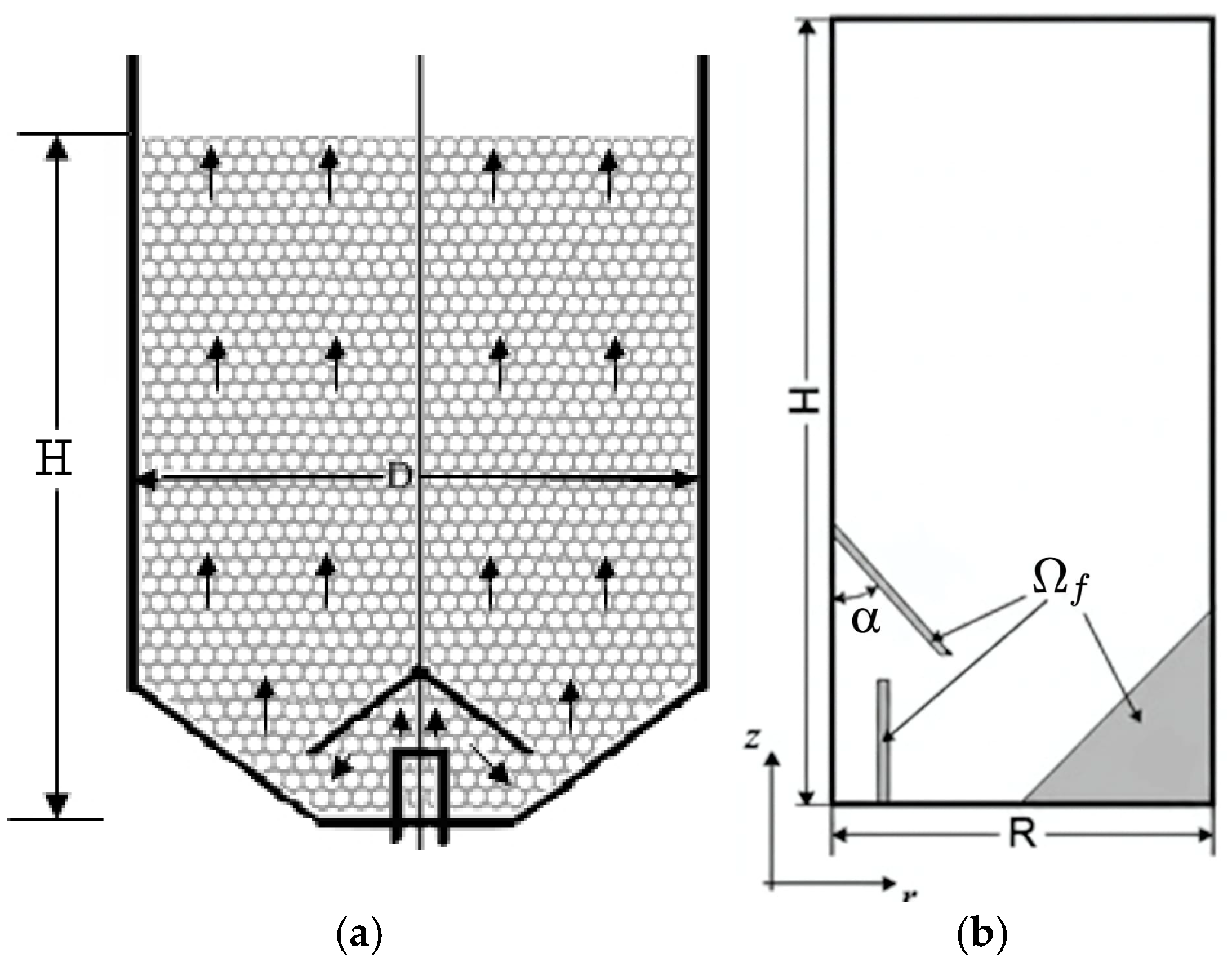
2.1. Description of the Sorption Column
2.2. Mathematical Model
- (i)
- The pregnant leach solution containing dissolved uranium species consists predominantly of water and, under the considered conditions, can be approximated as an incompressible Newtonian fluid with density and viscosity close to those of water.
- (ii)
- Because the characteristic size of the resin particles is much smaller than the column diameter, the sorbent bed is densely packed and immobile, and the flow velocities are relatively low, the flow of the solution through the sorbent layer is considered as filtration flow in a porous medium.
- (iii)
- Due to the narrow particle size distribution and nearly spherical shape of the ion-exchange resin granules, and assuming uniform packing of the column, the sorbent bed can be treated in a macroscopic approximation as a homogeneous and isotropic porous medium characterized by effective filtration properties.
- (iv)
- Because the sorption column and the inlet pipe are axisymmetric, the fluid flow and the sorption process are also assumed to be axisymmetric. Consequently, the three-dimensional transport of the pregnant solution and the mass-transfer process in the column can be reduced in cylindrical coordinates (r, , and z) to an axisymmetric two-dimensional problem (Figure 1b).
- (v)
- Resin swelling, structural deformation of the bed, and physicochemical aging of the sorbent are neglected.
- (vi)
- The analysis is restricted to the first sorption cycle with initially fresh sorbent.
2.3. Numerical Method and Implementation
- In the absence of a conical flow distributor, with volumetric flow rate Q0 = 0.35 m3/h;
- In a fixed apex position of the conical distributor, with opening angles α = 45° and 60°, Q0 = 0.35 m3/h;
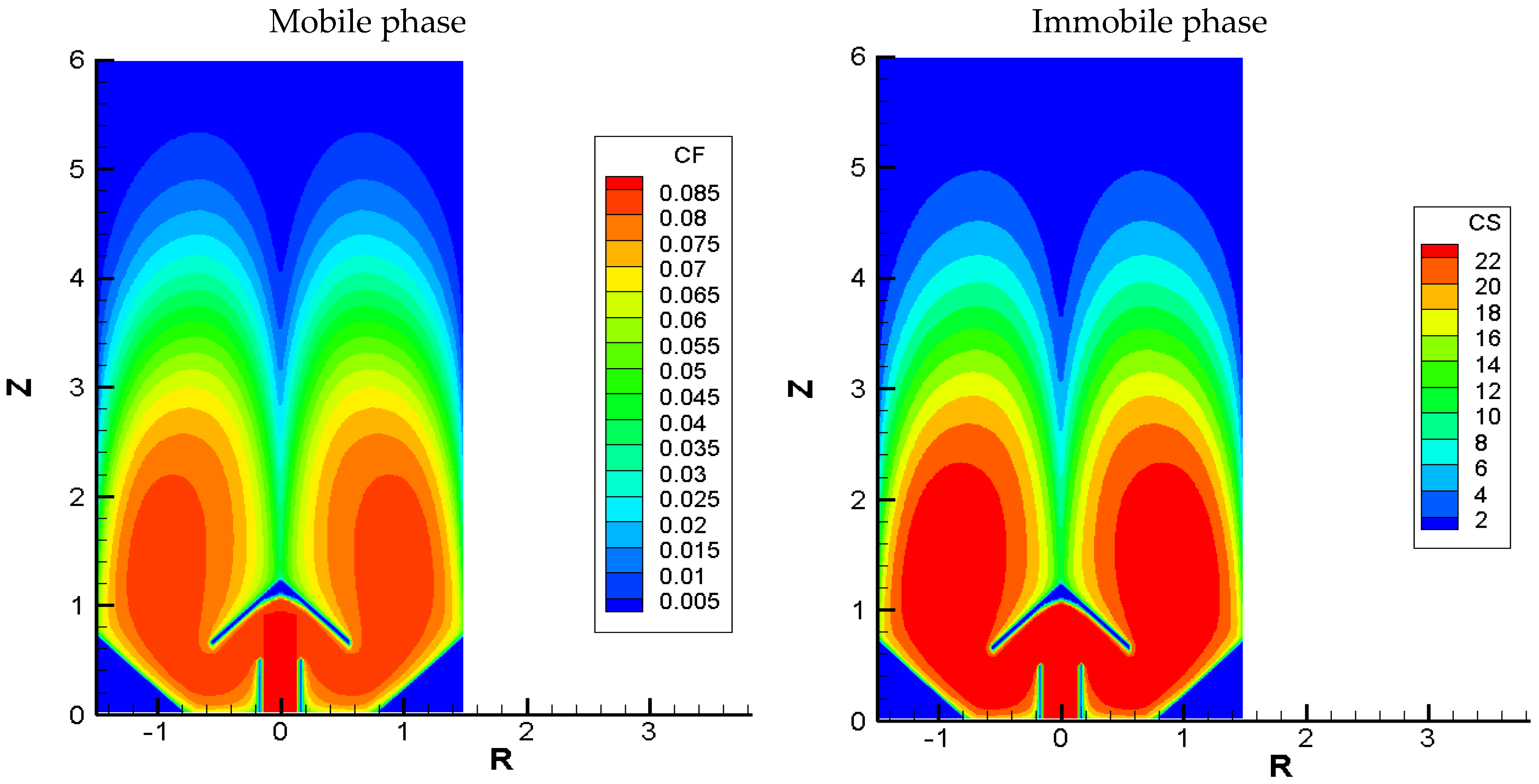
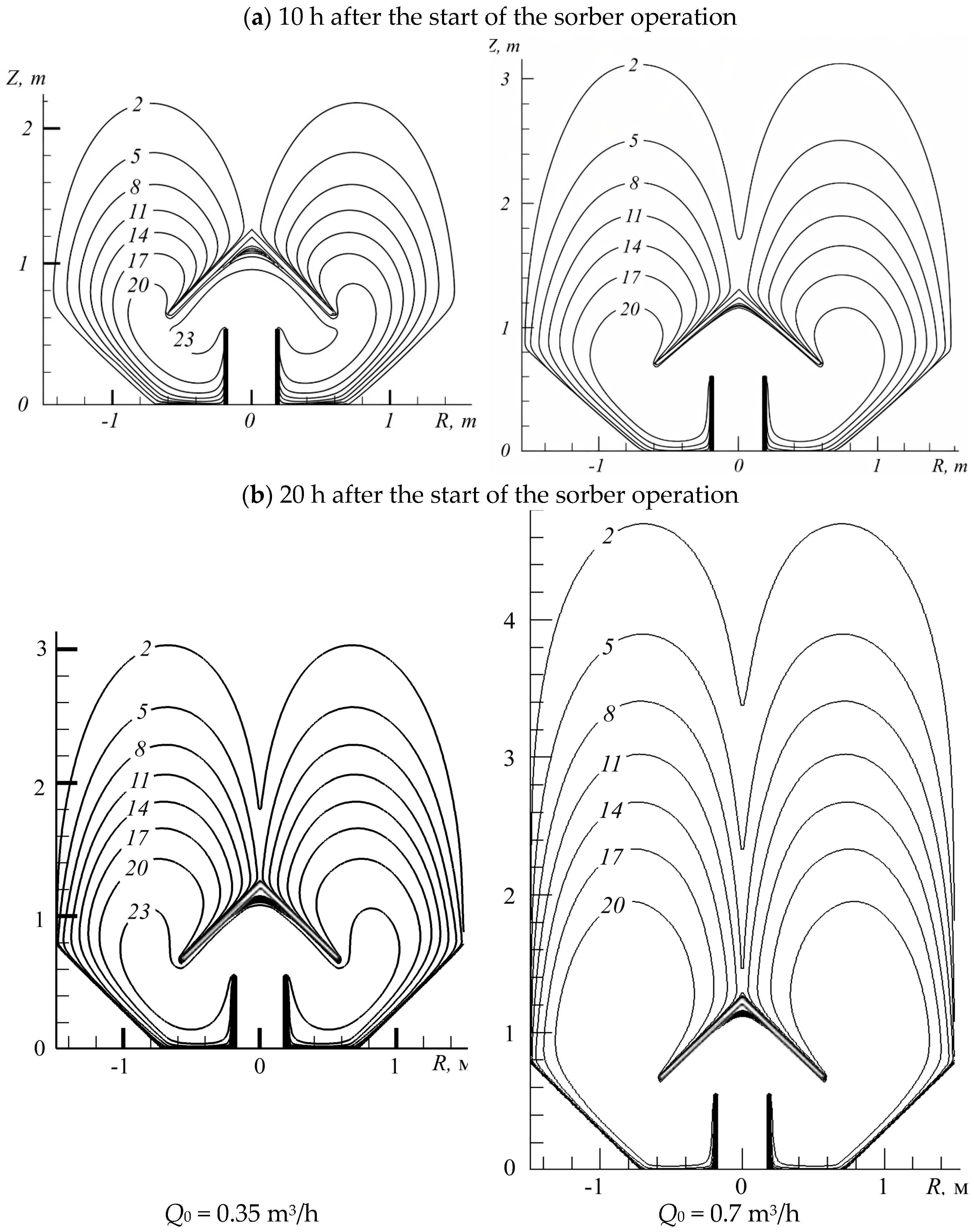
- At different flow rates of the solution, Q0 = 0.35 m3/h and Q0 = 0.7 m3/h, with the same distributor angle α = 45°.
3. Results
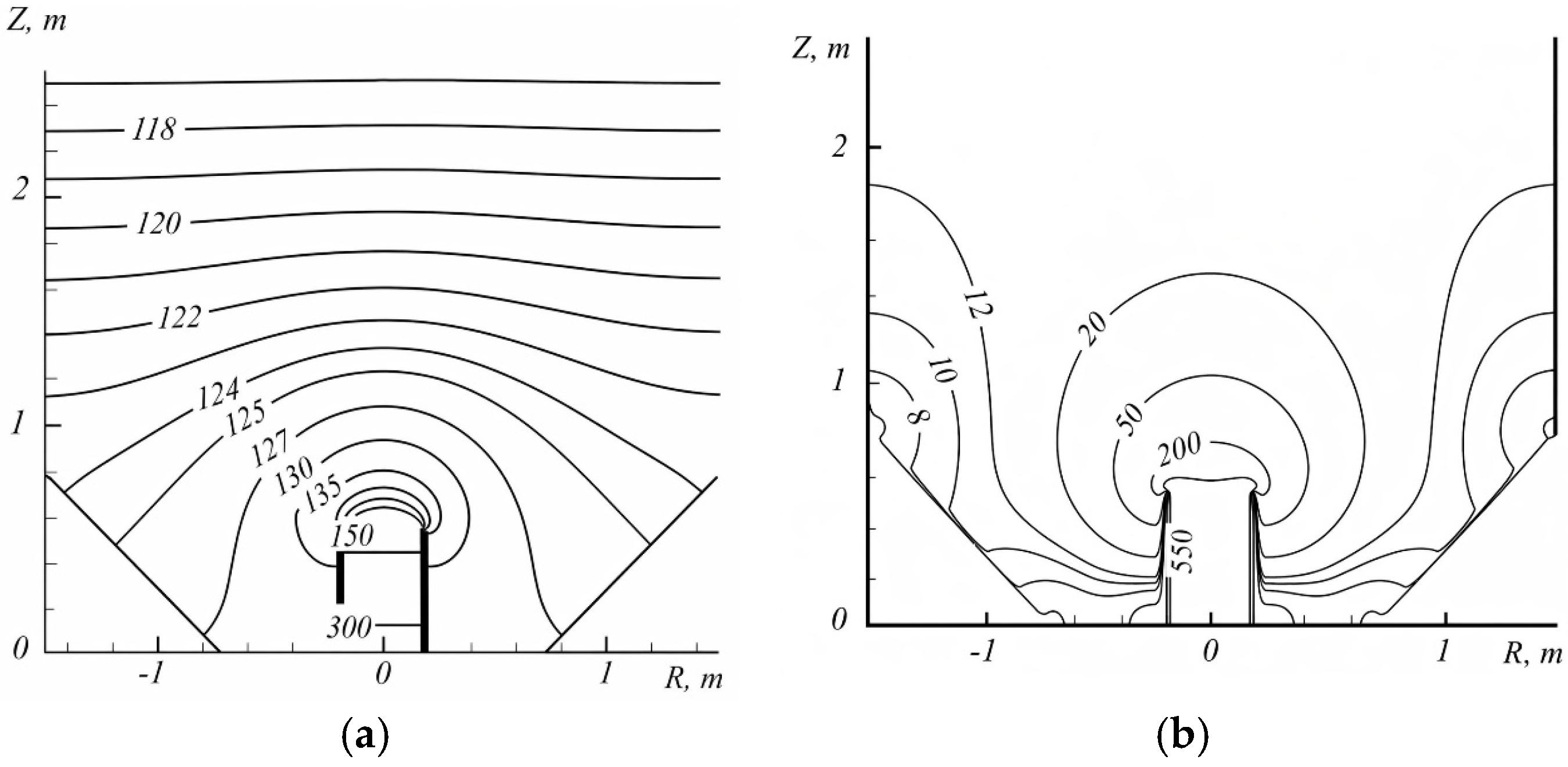
3.1. Flow Structure Without a Conical Distributor
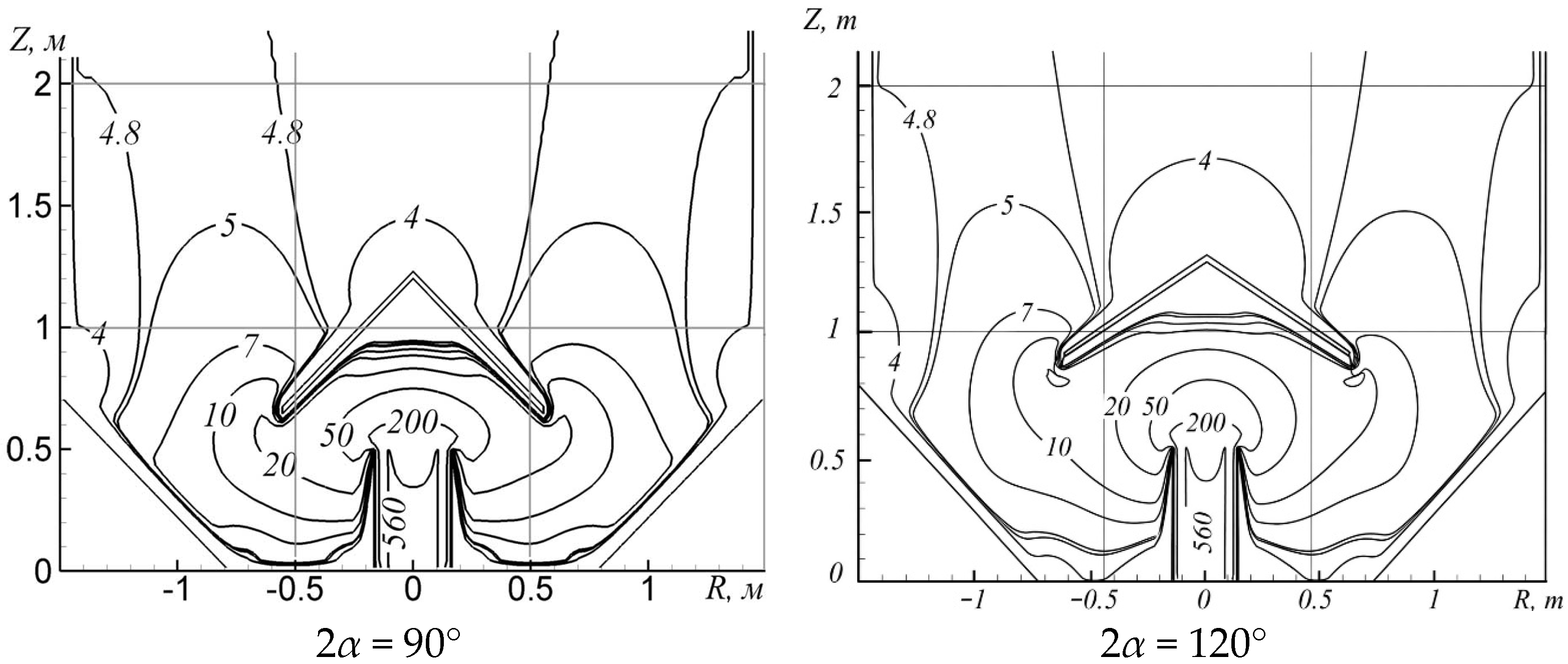
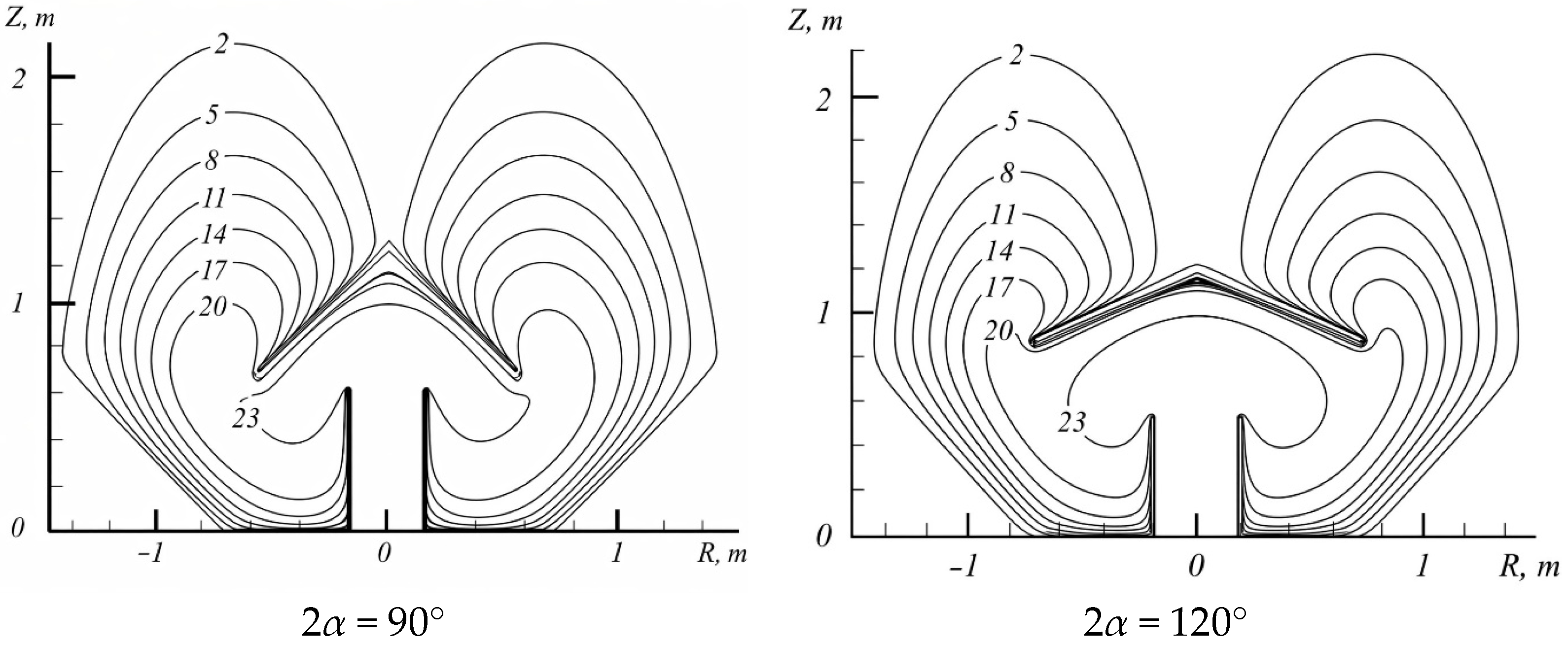
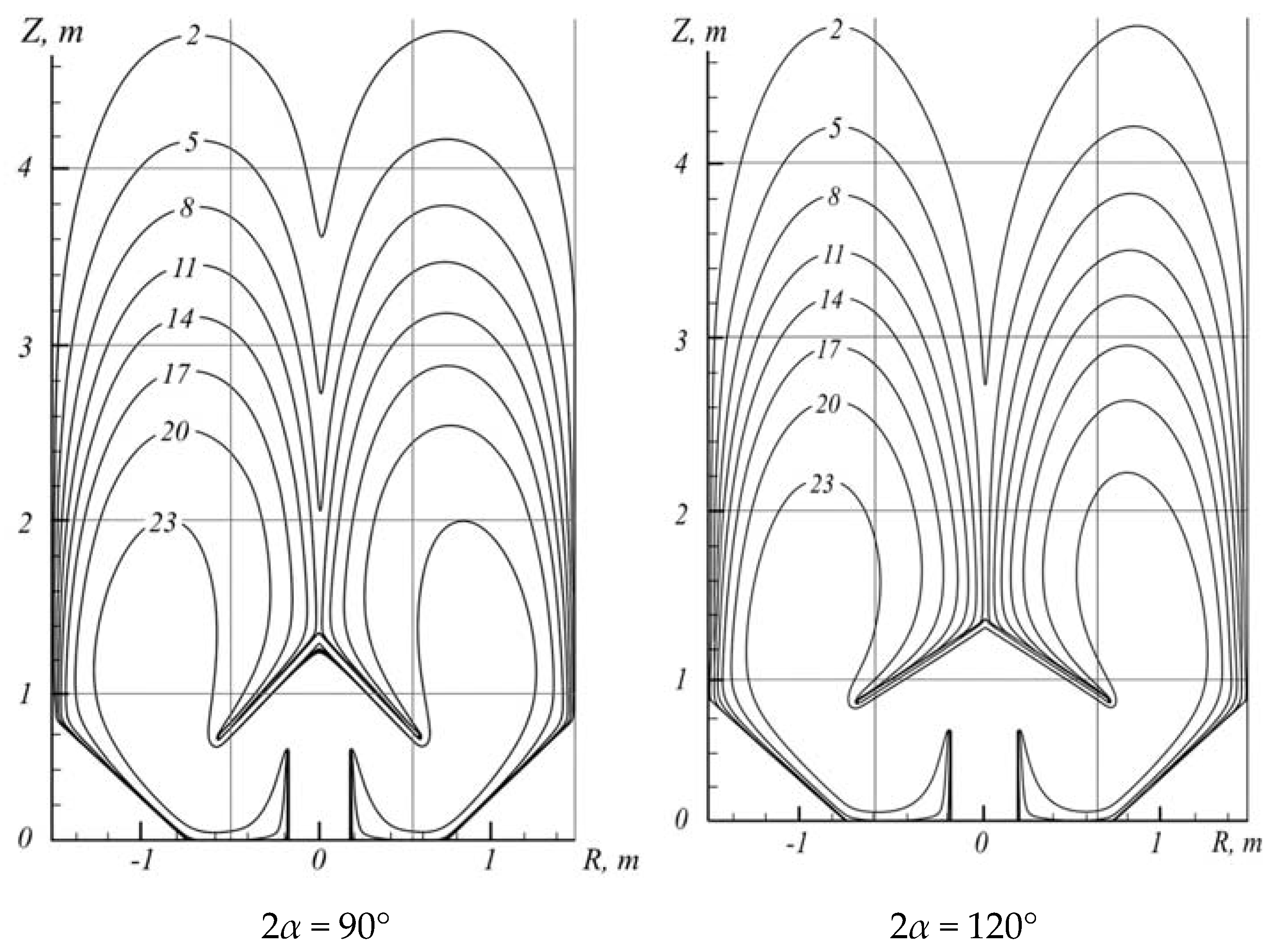
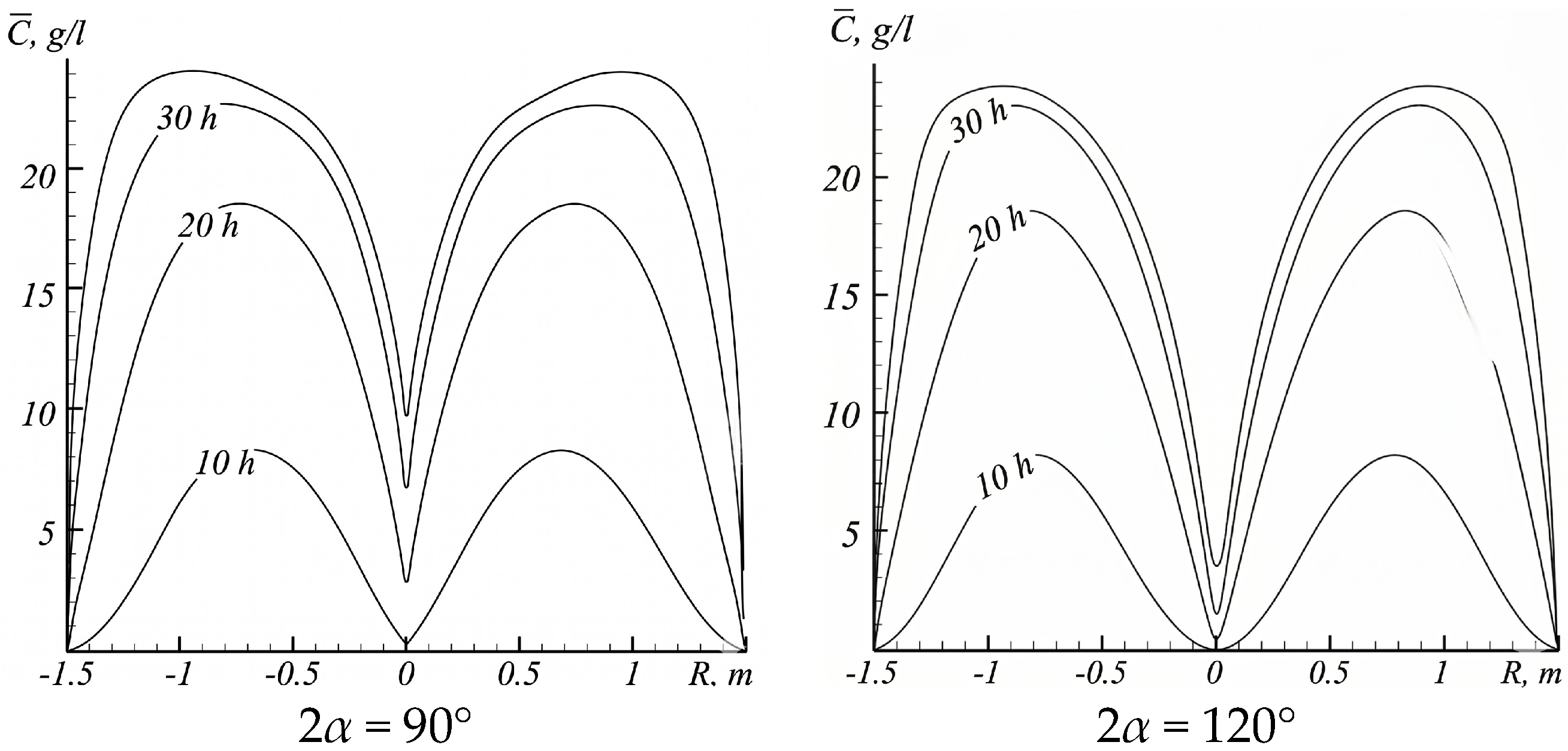
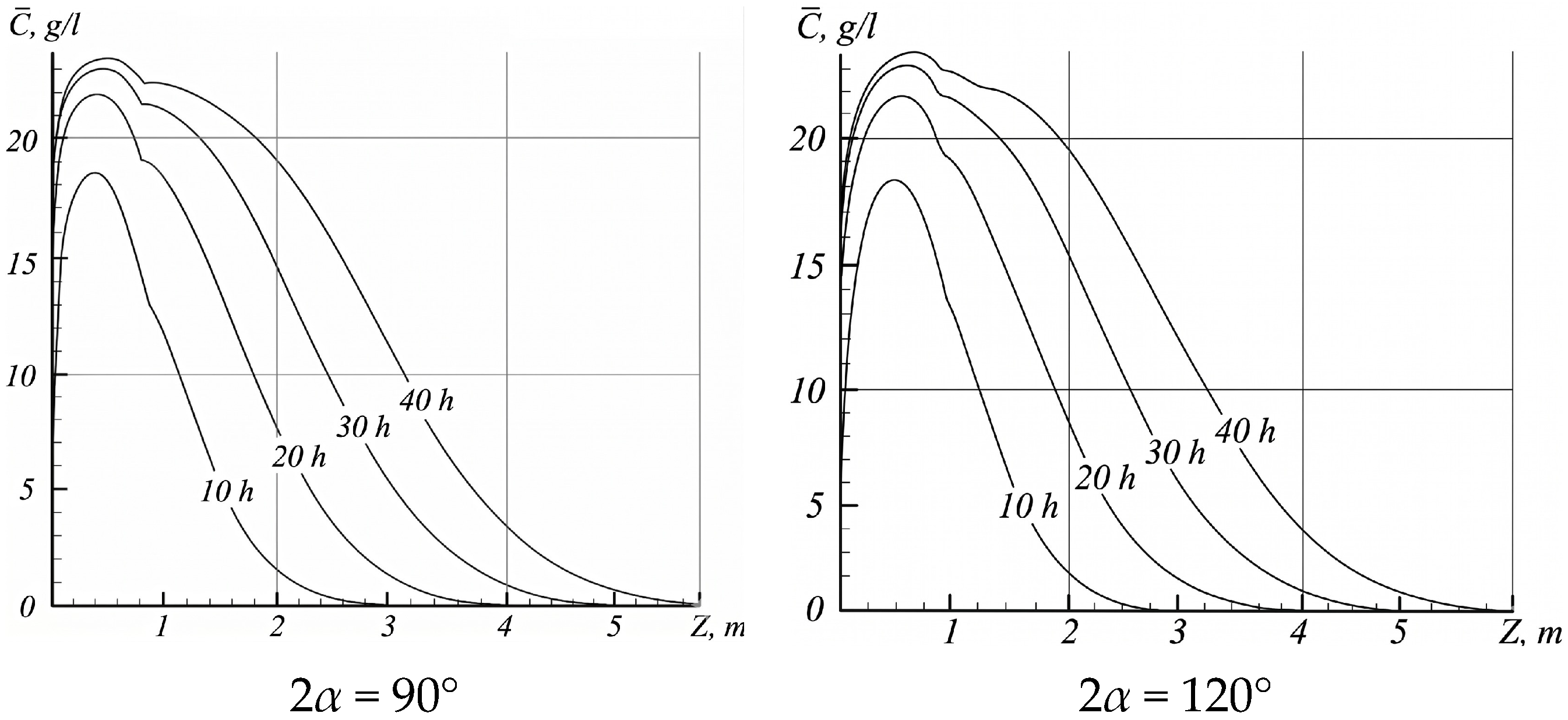
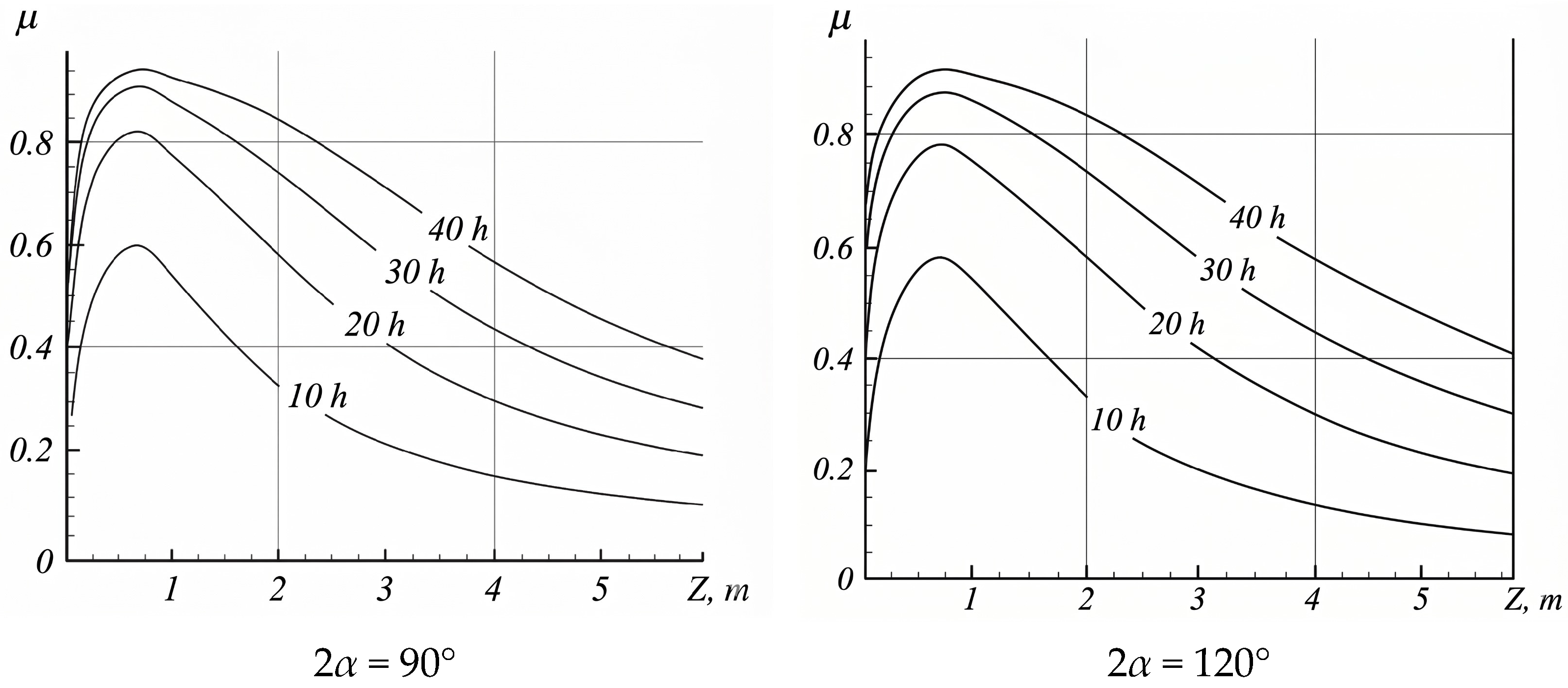
3.2. Influence of the Conical Distributor
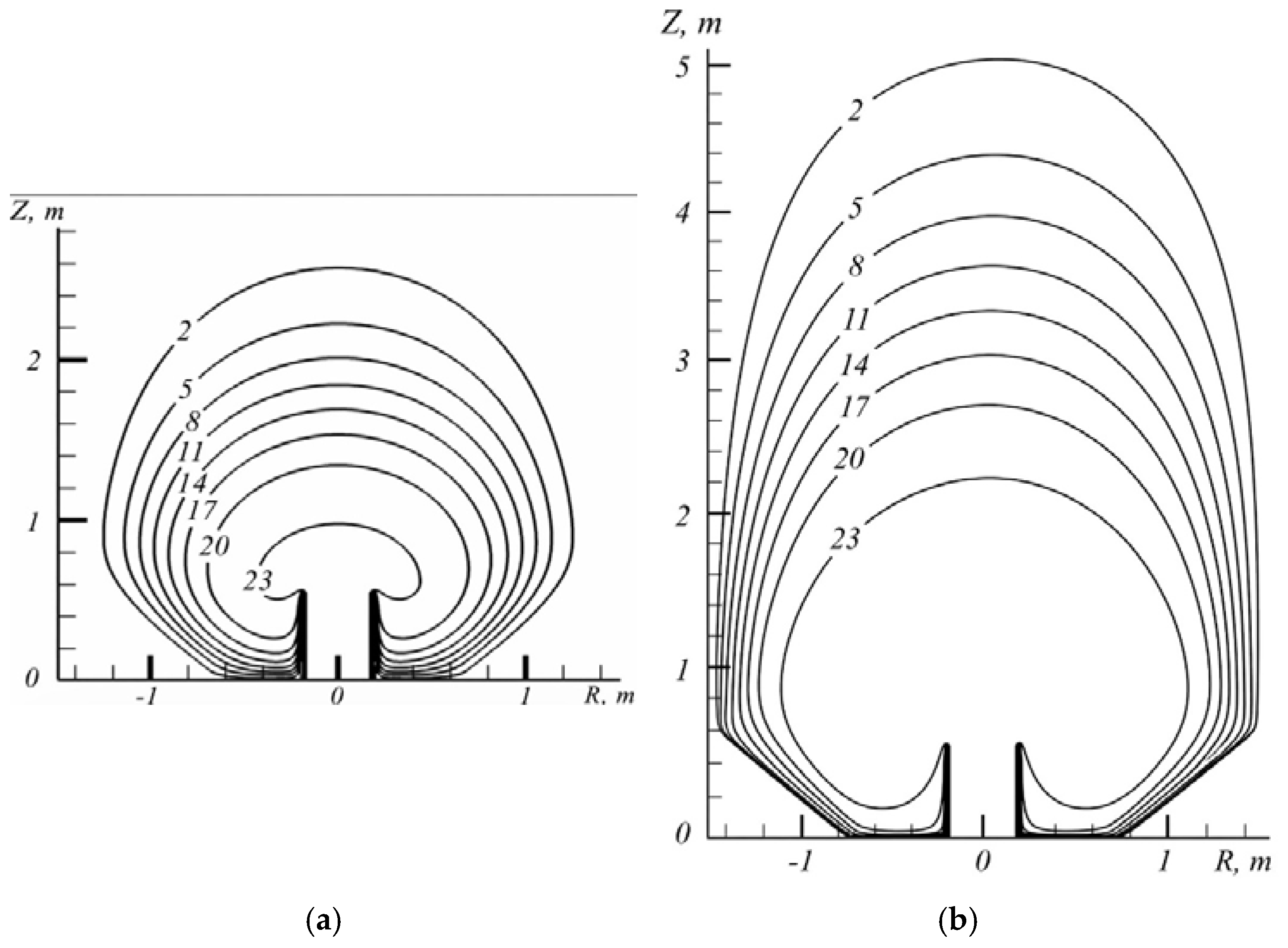
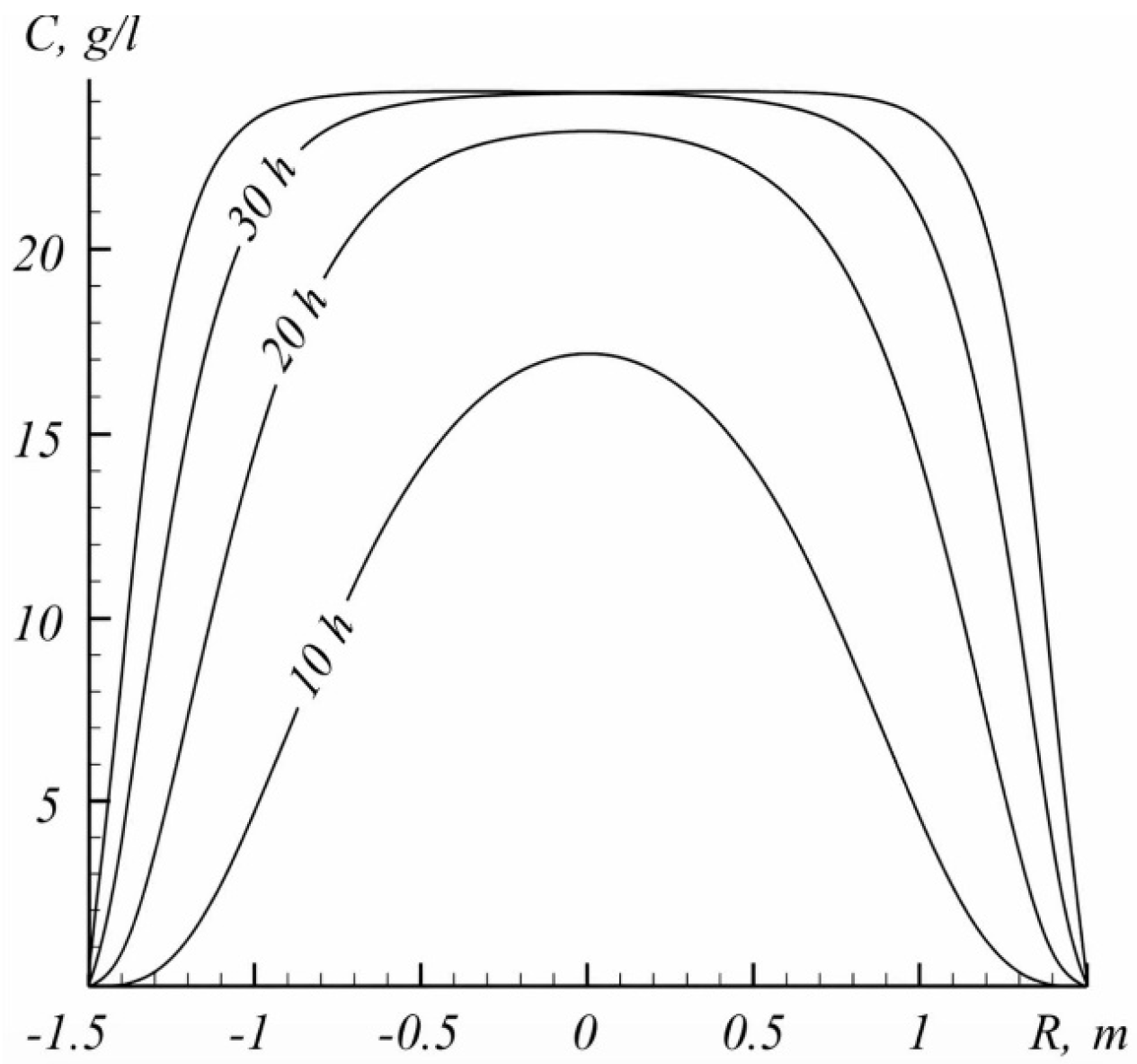
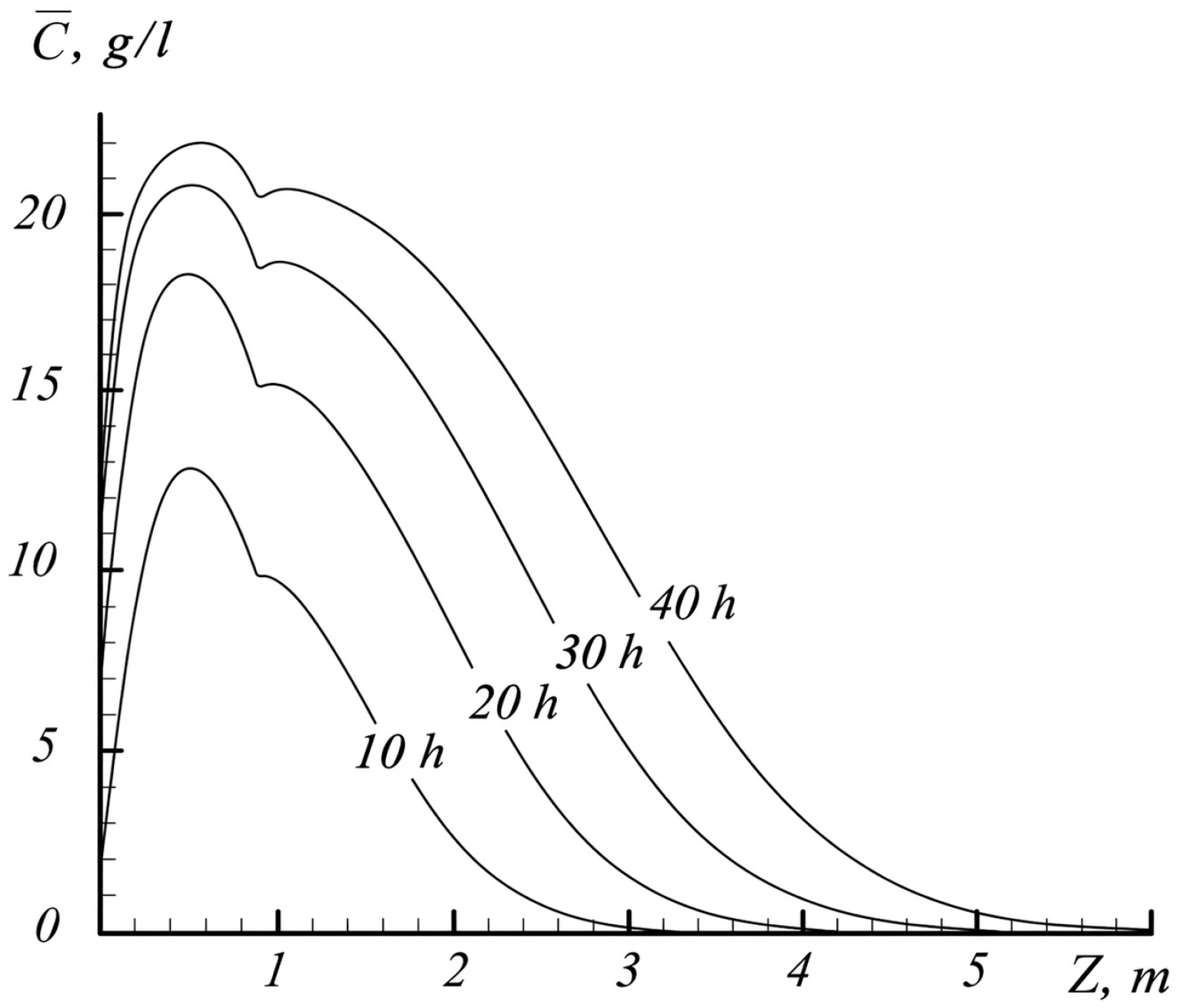
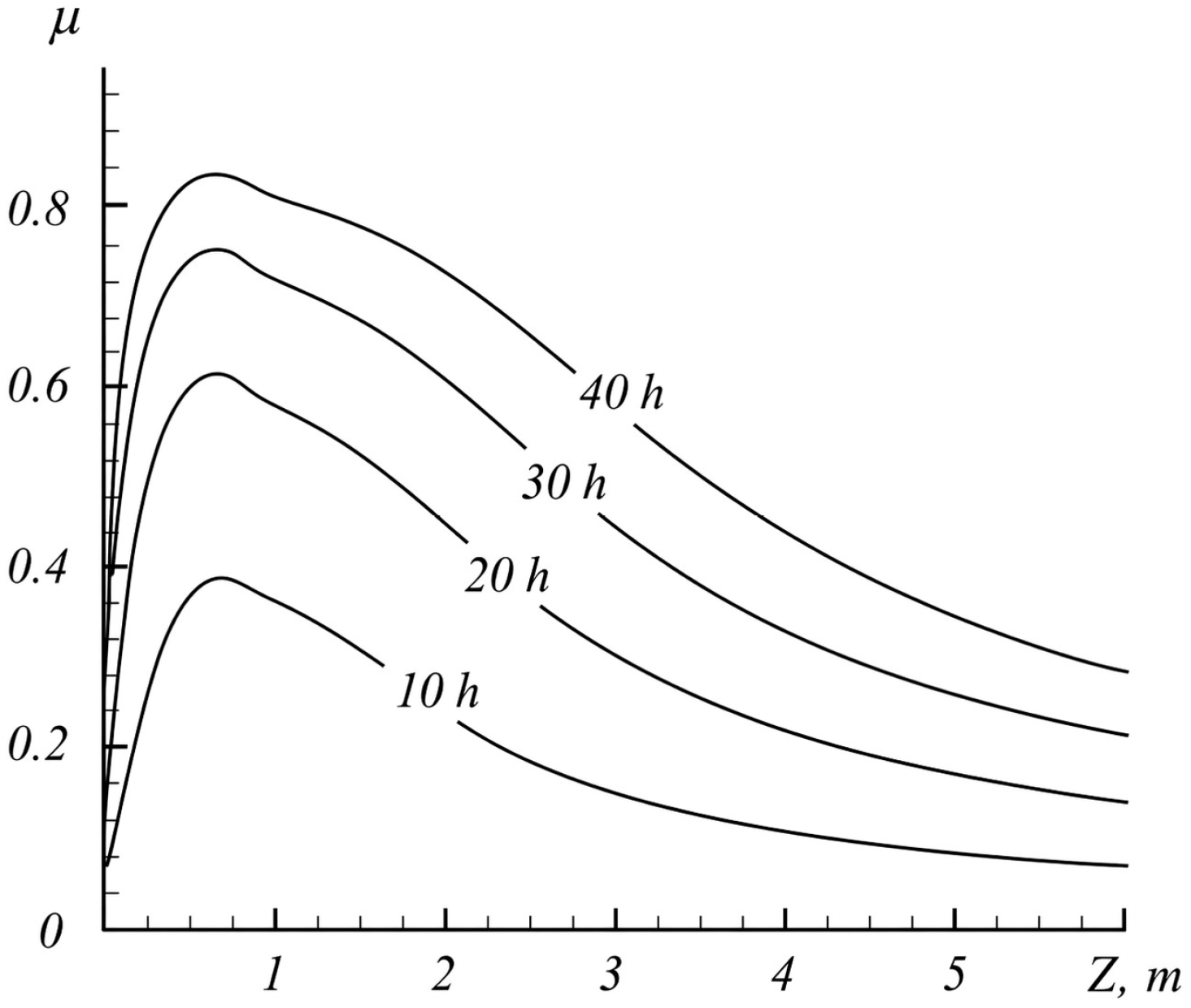
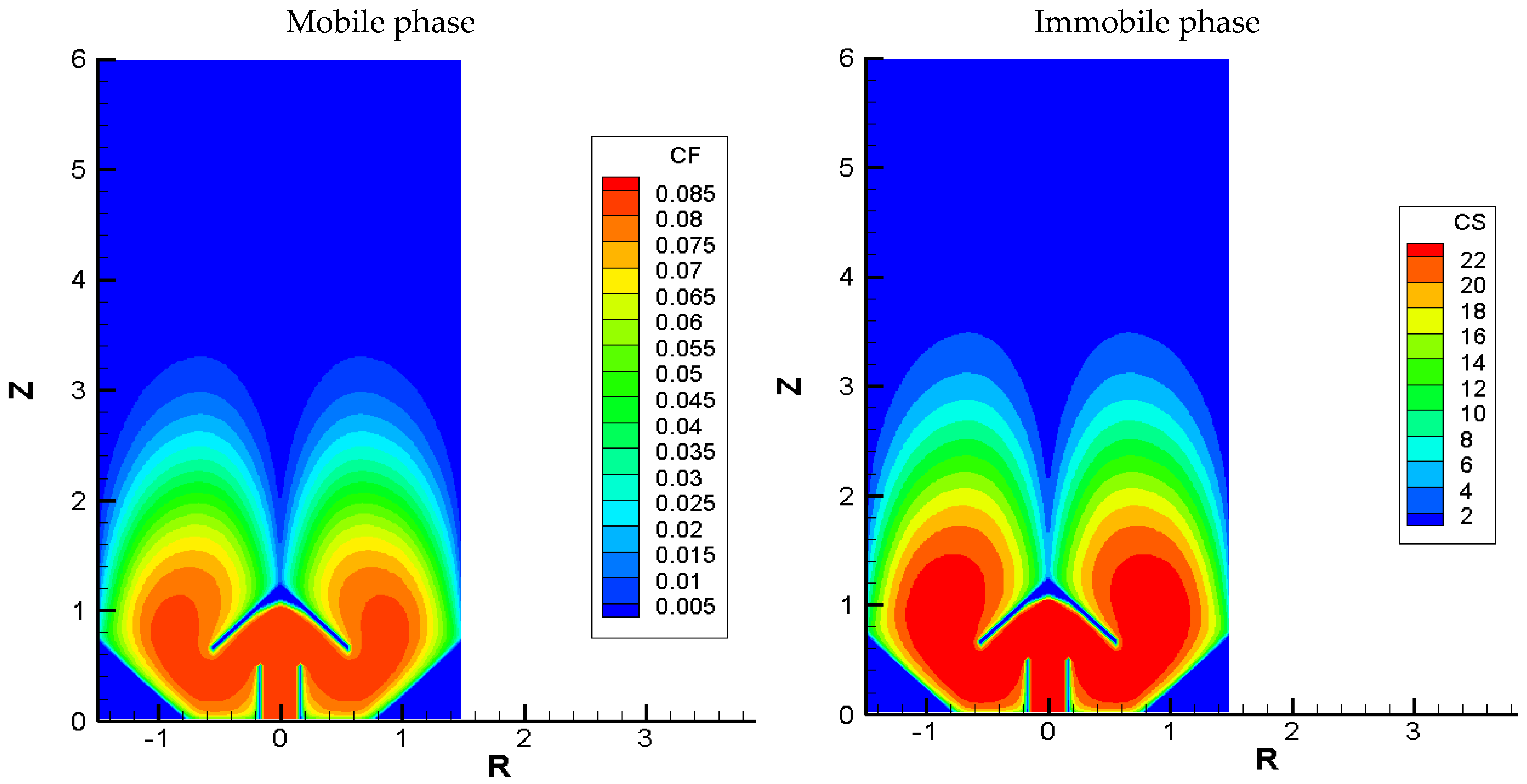
- The main volume of uranium in both the mobile and immobile phases forms a ring-shaped cylindrical region whose thickness is approximately two times smaller than the column radius;
- The mass concentration of uranium in the central part of the column in both phases is significantly lower than the equilibrium saturation concentration of the sorbent;
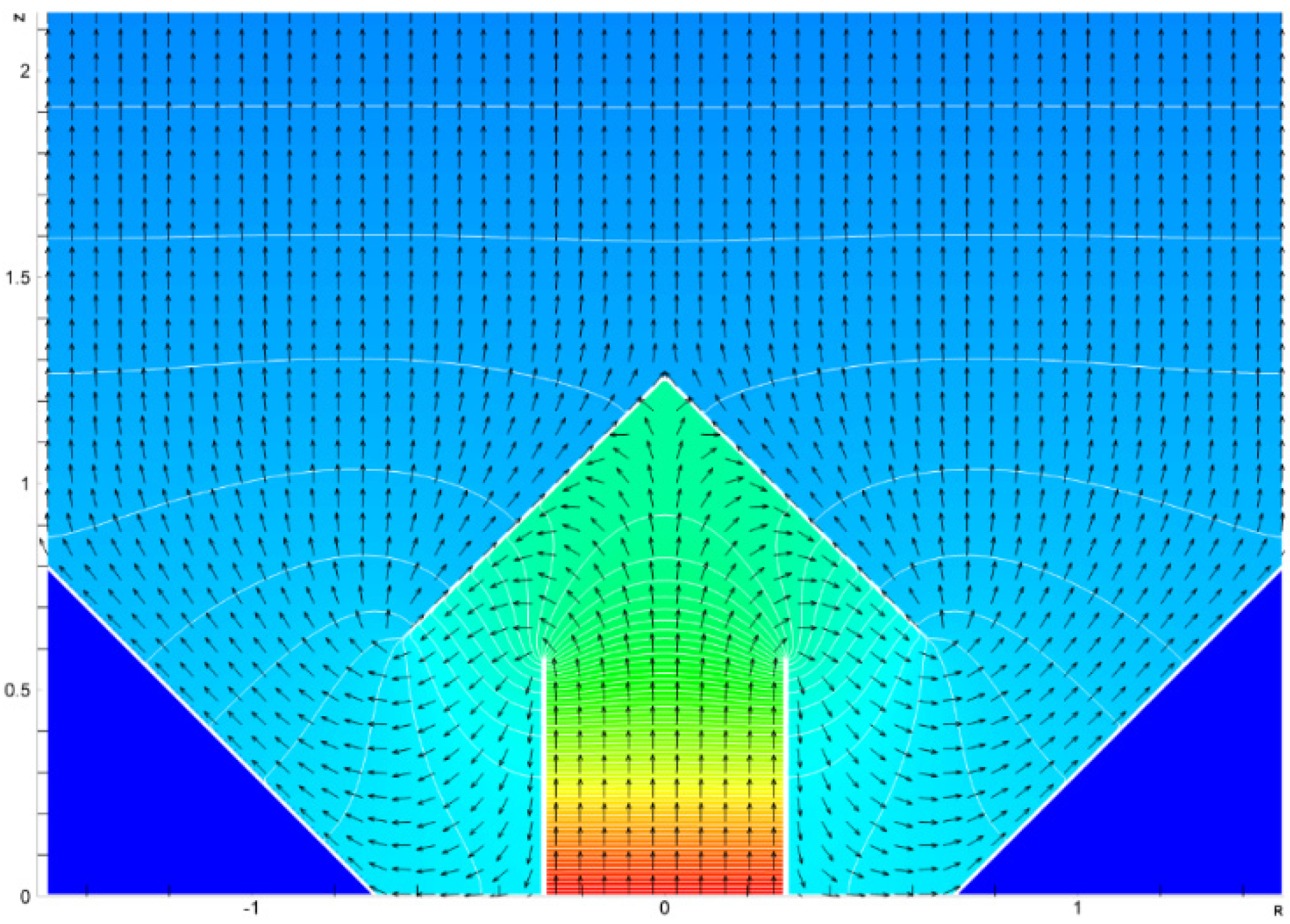
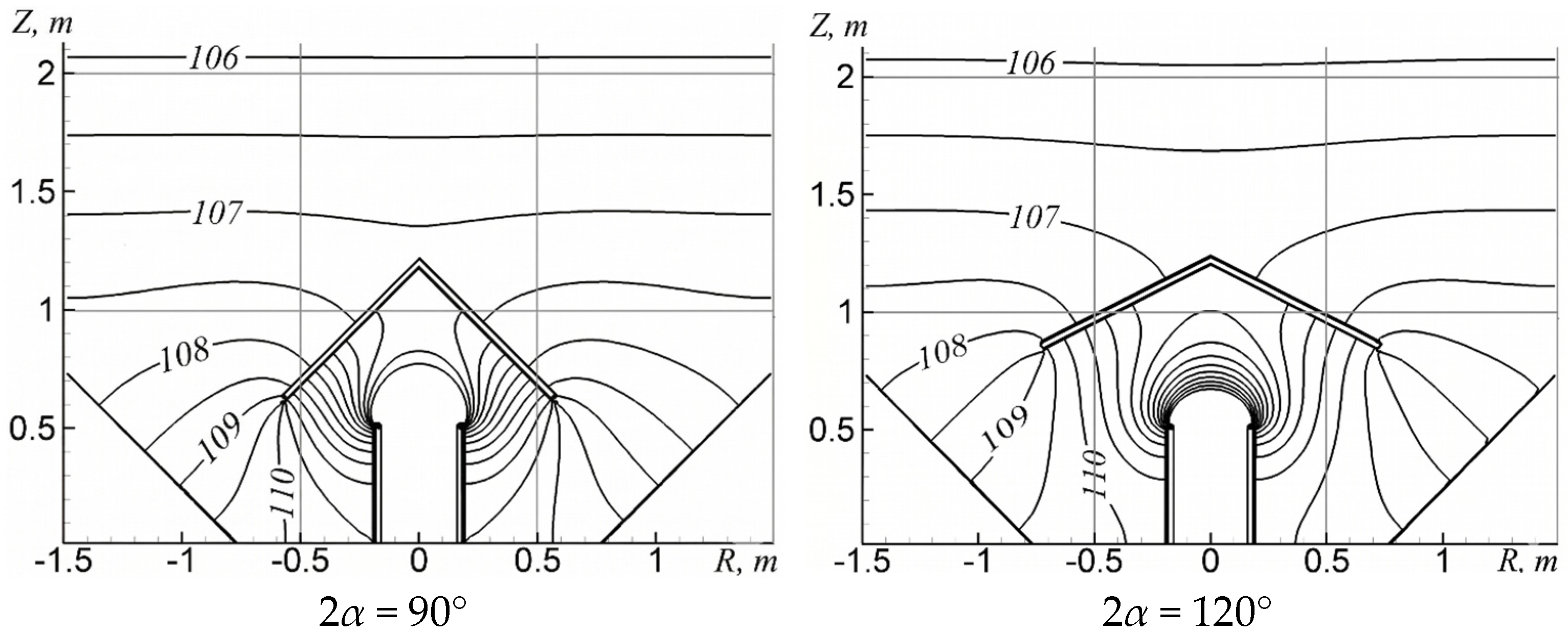
- The conical flow distributor installed at the inlet of the column does not ensure a sufficiently uniform distribution of the solution across the column cross-section.
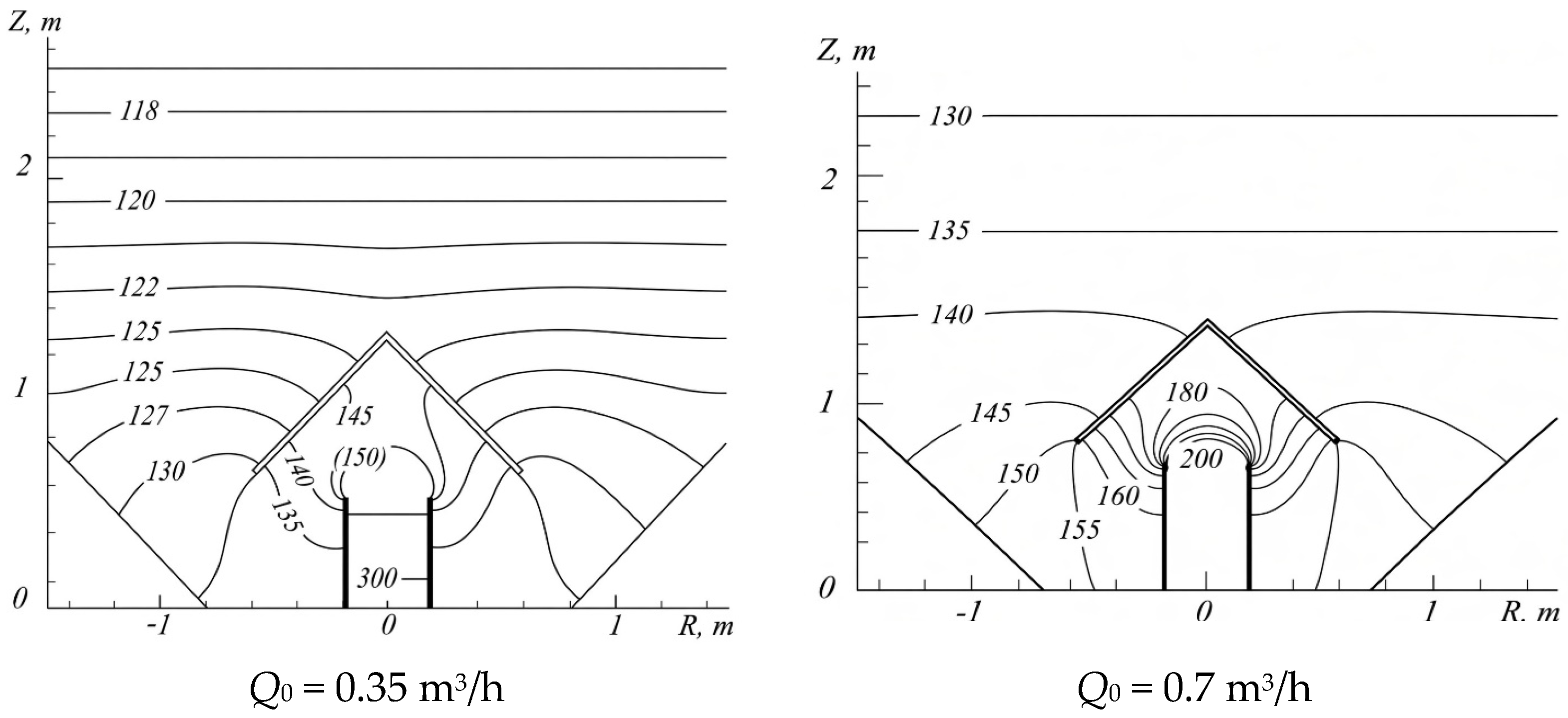
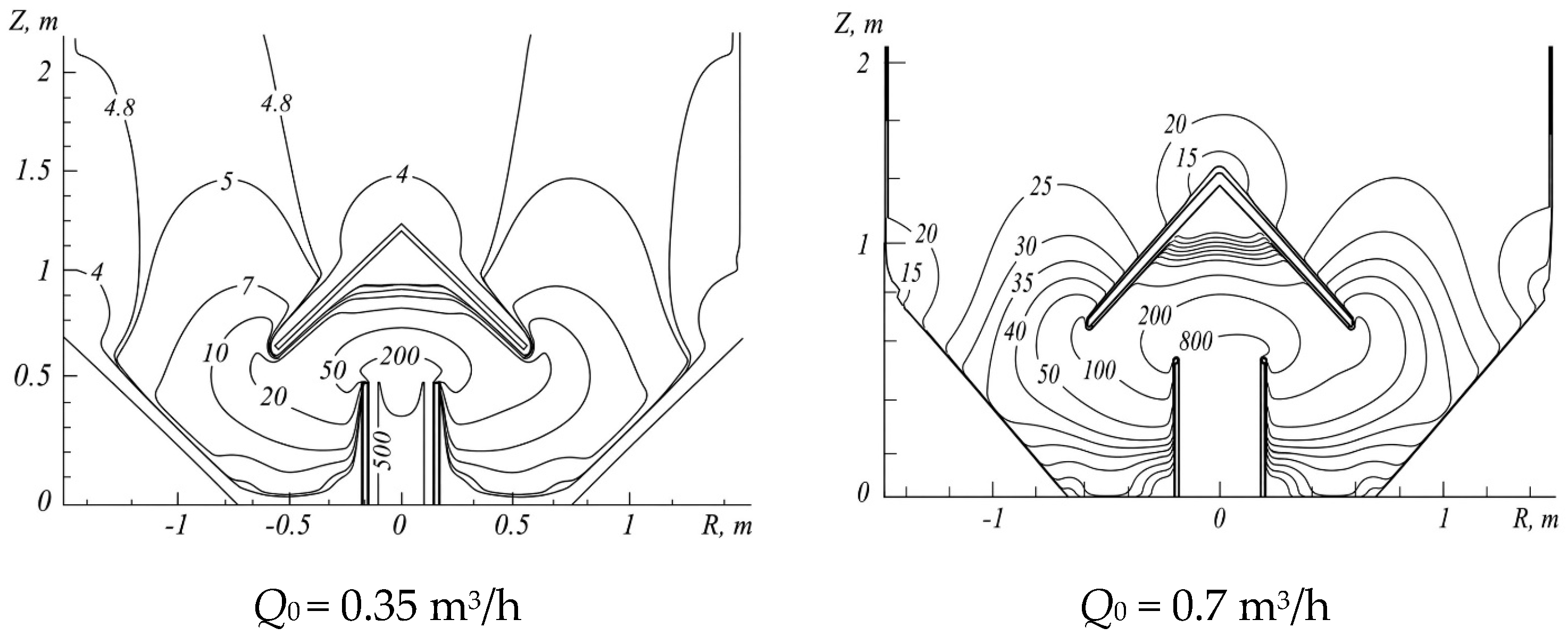
3.3. Influence of Flow Rate
4. Discussion
5. Conclusions
- Flow maldistribution significantly affects sorption performance. In the absence of a distributor, the main solution flow concentrates in the central region of the column, while the near-wall sorbent layer remains underutilized.
- A conical distributor improves but does not fully eliminate radial non-uniformity. The distributor substantially redistributes the incoming flow; however, complete radial equalization is not achieved under the investigated conditions.
- Mass-transfer dynamics are governed primarily by hydrodynamics rather than kinetics. For the considered operating conditions, the Damköhler number is significantly greater than unity, indicating that sorption kinetics are much faster than convective transport.
- Increasing the flow rate broadens the mass-transfer zone and increases hydraulic resistance. Doubling the solution flow rate increases the width of the sorption front by approximately 1.5 times due to enhanced longitudinal dispersion, while simultaneously increasing pressure losses.
Author Contributions
Funding
Data Availability Statement
Conflicts of Interest
Abbreviations
| SC | Sorption column |
| ISL | In situ leaching |
| FDM | Fictitious domain method |
Appendix A

- The pressure field is obtained numerically from Equation (A2) with boundary conditions (7)–(9) and (A3). The nonlinear elliptic equation for pressure is solved using the Ritz method [33].
- After determining the pressure field, the velocity field is calculated using the relation:
- The concentration of the mineral in the liquid phase is then determined from the transport equation described by Equation (A4) with boundary and initial conditions (8)–(10). The equation is solved numerically using the Crank–Nicolson scheme [22].
- Finally, the time step is completed by solving the ordinary differential equation describing the sorption kinetics (6) with the initial condition (10). Since the concentration of the mineral in the liquid phase Cn+1 is known at each time step, the kinetic equation of sorption is solved analytically.
References
- Mamilov, M.A. (Ed.) Dobycha Urana Metodom Podzemnogo Vyshchelachivaniya [Uranium Mining by In-Situ Leaching]; Atomizdat: Moscow, Russia, 1980. (In Russian) [Google Scholar]
- Wang, B.; Luo, Y.; Liu, J.-H.; Li, X.; Zheng, Z.-H.; Chen, Q.-Q.; Li, L.-Y.; Wu, H.; Fan, Q.-R. Ion migration in in-situ leaching (ISL) of uranium: Field trial and reactive transport modelling. J. Hydrol. 2022, 615, 128634. [Google Scholar] [CrossRef]
- Collet, A.; Regnault, O.; Ozhogin, A.; Imantayeva, A.; Garnier, L. Three-dimensional reactive transport simulation of uranium in situ recovery: Large-scale well field applications in Shu Saryssu Basin, Tortkuduk deposit (Kazakhstan). Hydrometallurgy 2022, 211, 105873. [Google Scholar] [CrossRef]
- Kurmanseiit, M.B.; Tungatarova, M.S.; Kaltayev, A.; Royer, J.-J. Reactive transport modeling during uranium in situ leaching (ISL): The effects of ore composition on mining recovery. Minerals 2022, 12, 1340. [Google Scholar] [CrossRef]
- Kurmanseiit, M.B.; Tungatarova, M.S.; Royer, J.-J.; Aizhulov, D.Y.; Shayakhmetov, N.M.; Kaltayev, A. Streamline-based reactive transport modeling of uranium mining during in-situ leaching: Advantages and drawbacks. Hydrometallurgy 2023, 220, 106107. [Google Scholar] [CrossRef]
- Li, Y.; Zhang, C.; Tang, Z.; Li, C.; Liu, Z.; Tan, K.; Liu, L. Hydrodynamics control for the well field of in-situ leaching of uranium. Nucl. Eng. Technol. 2024, 56, 4176–4183. [Google Scholar] [CrossRef]
- Couper, J.R.; Penney, W.R.; Fair, J.R.; Walas, S.M. Chemical Process Equipment: Selection and Design; Elsevier: Amsterdam, The Netherlands, 2012. [Google Scholar]
- Orrego, P.; Hernández, J.; Reyes, A. Uranium and molybdenum recovery from copper leaching solutions using ion exchange. Hydrometallurgy 2019, 184, 116–122. [Google Scholar] [CrossRef]
- Quinn, J.E.; Sedger, D.S.; Brennan, A.T.; Ring, R.; Soldenhoff, K. Recovery of uranium from carbonate solutions using Lewatit TP 107 resin. Hydrometallurgy 2020, 194, 105360. [Google Scholar] [CrossRef]
- Zhang, F.; Luo, W.; Parker, J.; Brooks, S.; Watson, D.; Jardine, P.; Gu, B. Modeling uranium transport in acidic contaminated groundwater with base addition. J. Hazard. Mater. 2011, 190, 863–868. [Google Scholar] [CrossRef] [PubMed]
- Mahmoud, M. Kinetics studies of uranium sorption by powdered corn cob in batch and fixed bed systems. J. Adv. Res. 2015, 6, 487–495. [Google Scholar] [CrossRef] [PubMed]
- Patel, H. Fixed-bed column adsorption study: A comprehensive review. Appl. Water Sci. 2019, 9, 45. [Google Scholar] [CrossRef]
- Baqer, Y.; Thornton, S.; Stewart, D.; Norris, S.; Chen, X. Analysis of uranium sorption in a laboratory column experiment using a reactive transport and surface complexation model. Transp. Porous Media 2023, 149, 423–452. [Google Scholar] [CrossRef]
- Bear, J.; Zaslavsky, D.; Irmay, S. Physical Principles of Water Percolation and Seepage; Elsevier: New York, NY, USA, 1972. [Google Scholar]
- Collins, R.E. Flow of Fluids Through Porous Materials; Reinhold: New York, NY, USA, 1961. [Google Scholar]
- Goldshtik, M.A. Transport Processes in Granular Media; Institute of Thermophysics SB RAS: Novosibirsk, Russia, 1984. [Google Scholar]
- Shestakov, V.M. Hydrogeodynamics; Moscow State University Press: Moscow, Russia, 1995. [Google Scholar]
- Ruthven, D.M. Principles of Adsorption and Adsorption Processes; Wiley: New York, NY, USA, 1984. [Google Scholar]
- Bird, R.B.; Stewart, W.E.; Lightfoot, E.N. Transport Phenomena, 2nd ed.; Wiley: New York, NY, USA, 2002. [Google Scholar]
- Helfferich, F. Ion Exchange; Dover Publications: New York, NY, USA, 1995. [Google Scholar]
- Simonin, J.-P. On the comparison of pseudo-first-order and pseudo-second-order rate laws in the modeling of adsorption kinetics. Chem. Eng. J. 2016, 300, 254–263. [Google Scholar] [CrossRef]
- Fletcher, C.A.J. Computational Techniques for Fluid Dynamics; Springer: Berlin/Heidelberg, Germany, 1991; Volume 2. [Google Scholar]
- Morianou, G.; Kourgialas, N.N.; Karatzas, G.P. A review of HYDRUS-2D/3D applications for simulations of water dynamics, root uptake and solute transport. Water 2023, 15, 741. [Google Scholar] [CrossRef]
- Šimůnek, J.; Brunetti, G.; Jacques, D.; van Genuchten, M.T.; Šejna, M. Development and applications of the HYDRUS software packages since 2016. Vadose Zone J. 2024, 23, e20310. [Google Scholar] [CrossRef]
- Vabishchevich, P.N. The Fictitious Domain Method in Problems of Mathematical Physics, 2nd ed.; Fizmatlit: Moscow, Russia, 2017. [Google Scholar]
- Thirumalaisamy, R.; Patankar, N.A.; Bhalla, A.P. Treatment of Neumann and Robin boundary conditions in fictitious domain methods. J. Comput. Phys. 2022, 448, 110726. [Google Scholar] [CrossRef]
- Corti, D.C.; Delay, G.; Fernández, M.A.; Vergnet, F.; Vidrascu, M. A low-order fictitious domain method with enhanced mass conservation for the Stokes interface problem. ESAIM Math. Model. Numer. Anal. 2024, 58, 303–333. [Google Scholar] [CrossRef]
- Kale, S.; Pradhan, D.; Kumar, S. Analysis of H1-penalized fictitious domain method for parabolic problems. Comput. Math. Appl. 2025, 196, 183–200. [Google Scholar] [CrossRef]
- Dixon, A.G. Fixed bed catalytic reactor modelling—The radial dimension. Chem. Eng. Sci. 2012, 82, 1–19. [Google Scholar]
- Levenspiel, O. Chemical Reaction Engineering, 3rd ed.; Wiley: New York, NY, USA, 1999. [Google Scholar]
- Wakao, N.; Funazkri, T. Effect of fluid dispersion coefficients in packed beds. Chem. Eng. Sci. 1978, 33, 1375–1384. [Google Scholar] [CrossRef]
- Kaltayev, A.; Ualiev, Z.h. Simulation of flame propagation in a closed vessel with obstacles. In Notes on Numerical Fluid Mechanics and Multidisciplinary Design; Springer: Berlin/Heidelberg, Germany, 2005; Volume 93, pp. 113–125. [Google Scholar] [CrossRef]
- Zhivotenko, N. Ritz Method. 2021. Available online: https://www.researchgate.net/publication/363882082_Ritz_Method?channel=doi&linkId=6333150f13096c2907d42bb1&showFulltext=true (accessed on 17 March 2026).





| Symbol | Parameter | Dimension, Value |
|---|---|---|
| Darcy’s velocity | m/h | |
| p | Fluid pressure | (kPa) |
| Water density | kg/m3 | |
| Dynamic viscosity of the water | g/(cm × sec) | |
| Molecular diffusion coefficient in the liquid phase | l2/h | |
| D | Hydrodynamic dispersion tensor | l2/h |
| C | Concentration of dissolved uranium species in the solution | g/L |
| Concentration of uranium species adsorbed by the sorbent | g/L | |
| Bed porosity | ||
| Inlet uranium concentration | ||
| H | Column height | 6 m |
| R | Column radius | 1.5 m |
| d | Inlet pipe diameter | 0.4 m |
| Resin particle diameter | 0.4 mm | |
| 2α | Distributor angle | 90°, 120° |
| Sorption kinetic coefficient | 120 h−1 | |
| Kd | Equilibrium distribution coefficient | 286 |
| Q0 | Inlet flow rate | 0.35 m3/h, 0.7 m3/h |
| Nr × Nz | Computational grid | 150 × 600 |
Disclaimer/Publisher’s Note: The statements, opinions and data contained in all publications are solely those of the individual author(s) and contributor(s) and not of MDPI and/or the editor(s). MDPI and/or the editor(s) disclaim responsibility for any injury to people or property resulting from any ideas, methods, instructions or products referred to in the content. |
© 2026 by the authors. Licensee MDPI, Basel, Switzerland. This article is an open access article distributed under the terms and conditions of the Creative Commons Attribution (CC BY) license.
Share and Cite
Kaltayev, A.; Ualiev, Z.; Bibossinov, A. Hydrodynamic and Mass-Transfer Modeling of Uranium Recovery in a Packed Ion-Exchange Column with a Conical Flow Distributor. Minerals 2026, 16, 463. https://doi.org/10.3390/min16050463
Kaltayev A, Ualiev Z, Bibossinov A. Hydrodynamic and Mass-Transfer Modeling of Uranium Recovery in a Packed Ion-Exchange Column with a Conical Flow Distributor. Minerals. 2026; 16(5):463. https://doi.org/10.3390/min16050463
Chicago/Turabian StyleKaltayev, Aidarkhan, Zhomart Ualiev, and Asylkhan Bibossinov. 2026. "Hydrodynamic and Mass-Transfer Modeling of Uranium Recovery in a Packed Ion-Exchange Column with a Conical Flow Distributor" Minerals 16, no. 5: 463. https://doi.org/10.3390/min16050463
APA StyleKaltayev, A., Ualiev, Z., & Bibossinov, A. (2026). Hydrodynamic and Mass-Transfer Modeling of Uranium Recovery in a Packed Ion-Exchange Column with a Conical Flow Distributor. Minerals, 16(5), 463. https://doi.org/10.3390/min16050463