Article

Gemological Characteristics and In Situ U-Pb Dating of Gem-Quality Grossular (var. Mali Garnet) from the Republic of Mali, Western Africa


1
National Mineral, Rock and Fossil Resource Center, Deep Space Exploration Laboratory, China University of Geosciences, Beijing 100083, China
2
School of Gemology, China University of Geosciences, Beijing 100083, China
*
Authors to whom correspondence should be addressed.
Minerals 2026, 16(5), 461; https://doi.org/10.3390/min16050461
Submission received: 17 February 2026 / Revised: 25 April 2026 / Accepted: 27 April 2026 / Published: 29 April 2026
(This article belongs to the Section Mineral Geochemistry and Geochronology)

Abstract

Gem-quality garnets exhibit significant potential for U-Pb geochronological applications due to their advantageous characteristics, including high closure temperatures (750–850 °C), optical transparency, chemical homogeneity, and low inclusion content. This study focuses on the gem-quality yellow-green grossular garnet variety (commonly termed Mali garnet), a unique gemstone exclusively occurring in contact metamorphic deposits of Western Africa’s Republic of Mali. Despite its mineralogical significance, fundamental aspects, including precise age determination and chromophore mechanisms of Mali garnet, remain poorly constrained. Here, we conducted standard gemological characterization, spectroscopic analyses (UV–Vis, FTIR, and Raman), electron probe microanalysis (EPMA), micro-X-ray fluorescence (μ-XRF) elemental mapping, and in situ trace element and laser ablation U-Pb geochronological analysis on Mali garnets. The spectral data and chemical composition studies reveal that the coloration of Malian garnets is primarily attributed to the presence of iron and chromium. Our U-Pb geochronological results yield a crystallization age of 197 ± 3 Ma for the Mali garnet samples. The robustness of garnet U-Pb systems in preserving crystallization ages through multiple thermal events supports their application to Precambrian polymetamorphic terranes, where zircon systems are frequently reset.

1. Introduction

Garnet, a common rock-forming mineral with moderate uranium concentration and elevated closure temperatures (750–850 °C), demonstrates significant potential as a geochronometer for U-Pb dating applications [1,2,3]. Garnet’s major–trace element and stable isotope systematics encode evolving P-T-fluid histories during growth, permitting direct linkage of these dynamic regimes to absolute time via U-Pb geochronology [4,5,6]. However, natural garnet typically includes the presence of uranium-bearing minerals such as uraninite, zircon, and monazite [7,8]. These characteristics have hindered the development of in situ U-Pb dating techniques for garnet, limiting their widespread application. Gem-quality garnet appears to address this issue due to its high optical transparency, chemical homogeneity, and minimal inclusion content.
The garnet group minerals are characterized by the general chemical formula X3Y2[SiO4]3, in which the X site is occupied by divalent cations (mainly Ca2+, Mg2+, Fe2+, and Mn2+), while the Y site accommodates trivalent cations (typically Al3+, Fe3+, Ti3+, and Cr3+). Mali garnets constitute a rare mineral species endemic to skarn-type metasomatic formations within the Pan-African orogenic belt of West Africa [9,10,11]. These isochemical garnets exhibit a continuous solid solution between grossular (Ca3Al2(SiO4)3) and andradite (Ca3Fe2(SiO4)3), manifesting chromatic variations spanning yellow–green (dominant) to brownish hues, with exceptional specimens attaining vivid green coloration through Cr3+ substitution. Current gemological nomenclature inadequately classifies this variety, prompting the Gemological Institute of America’s standardized designation as grossular–andradite garnet based on electron microprobe analyses [9]. Existing scholarship predominantly addresses (1) transition metal-related chromophores (Fe3+/Cr3+ ratio effects), (2) chemical composition via electron microprobe analyses, and (3) spectroscopic differentiation from grossular–andradite series, while in situ U-Pb geochronological investigations remain conspicuously underdeveloped [12,13,14,15,16]. To our knowledge, there has been no comprehensive study reported on gem-quality Mali garnets. Decoding the petrogenetic processes and temporal frameworks of gemstone formation constitutes a fundamental imperative in geological sciences, with critical relevance to grasp the processes that govern the formation of economically viable gemstone deposits and the development of exploration strategies [17]. Recent advancements in gem-quality garnet geochronology demonstrate the growing utility of U-Pb dating for constraining orogenic processes. Mineralization ages of 569.5 ± 6.8 Ma (Merelani) and 540.0 ± 5.8 Ma (Umba) for Tanzanian tsavorite garnet were established via laser ablation–inductively coupled plasma–mass spectrometry (LA-ICP-MS), postdating the East African Orogeny (650–620 Ma) and correlating with Kuungan-aged tectonism (570–530 Ma) [17]. Complementary studies further constrain tsavorite crystallization to 643.9 ± 3.2 Ma (Tanzania) and 617.4 ± 4.8 Ma (Kenya) through high-temperature U-Pb systematics, aligning with peak metamorphism during the East African Orogeny (640–600 Ma) [18]. Concurrently, it was validated that gem-quality andradite from Turkish Miocene trachytes as a secondary reference material (IUC-1: 20.4 ± 0.5 Ma, 2σ), demonstrating interlaboratory reproducibility through combined thermal ionization mass spectrometry (TIMS) and LA-ICP-MS analyses. Stifeeva and colleagues have reported numerous garnet age datasets, including Neoproterozoic ages (632 ± 2 Ma and 624 ± 5 Ma) for alkaline–ultramafic complexes in the Eastern Sayan, Early Devonian ages (404 ± 2 Ma) for skarn-associated mineralization in the Khovu-Aksy deposit, and Middle–Late Cambrian ages (499 ± 1 Ma) for iron skarns in the Gornaya Shoriya [19,20,21]. These developments collectively enhance the application of garnet geochronology in resolving complex orogenic timetables and gem formation mechanisms [22].
This investigation employed multi-spectral characterization techniques (FTIR, UV–Vis, and Raman), major and trace element composition analysis, and U-Pb dating to systematically examine the mineralogical and chronology characteristics of Mali garnets within the Pan-African orogenic belt. The resultant 206Pb/238U ages (197 ± 3 Ma) obtained from multiple grains show remarkable consistency and correlate with regional Pan-African metamorphic events (190–210 Ma) documented in the Kedougou-Kenieba inlier. This temporal correspondence demonstrates that Mali garnet faithfully records primary crystallization under granulite-facies conditions (T = 750–850 °C, P = 8–10 kbar), with no detectable evidence of post-crystallization Pb diffusion or metamorphic overprinting. In addition, gem-quality Mali garnet holds notable potential as a reference material for low-uranium U-Pb garnet due to its crystalline structure, high closure temperature (750–850 °C), high transparency, uniformity, and impurity-rare purity, which holds promise as a reference material for U-Pb dating using LA-ICP-MS. Our results indicate that the in situ U-Pb dating technique used for gem-quality Mali garnet may have distinct practical significance in geochronology science and gemmology.

2. Geological Setting

Western Mali is located in the West African Craton (WAC), which is composed of Precambrian formations. The WAC has been warped into the Taoudeni Basin—a broad synclinal structure extending from the Western Sahara/Mauritania border through Sierra Leone, Guinea, and southeastern Mali (Figure 1A). This basin displays a stratigraphic transition from Cambrian marine sediments in the west to Mesozoic continental deposits in the east (Figure 1B). The study area predominantly consists of magnesian and dolomitic limestones, which are interpreted as tidal flat-lagoon facies deposits [23]. NNW–SSE-trending diabase dike swarms, with the composition ranging from basaltic to albite–quartz pegmatitic varieties, intrude these carbonate units across a belt extending from Guinea to Mauritania. Notably, Jurassic diabase intrusions southwest of Nioro constitute the Kaarta Massif, a 300 m high topographic feature genetically associated with reactivation of the Central Atlantic Rift System.
Mali garnet mineralization occurs in multiple forms: gem-quality transparent crystals in Sibinndi’s contact skarns, 4 cm brownish–red clusters within Diakon’s marble fractures, semi-transparent brown-red crystals in Bindougou’s tectonic breccias, and black almandine varieties in Trantimou’s lateritic profiles. Alluvial deposits yield chalcedony-coated nodules through fluvial reworking of primary sources [24]. Recent discoveries include a 2.9 ct emerald-green garnet documented, though academic debates persist regarding the contested model of feldspathic sandstone protoliths. While garnet occurrences in this region were first documented in 1914, the exploration campaigns marked the first identification of gem-quality material in commercially viable quantities.

3. Materials and Methods

3.1. Sample Description

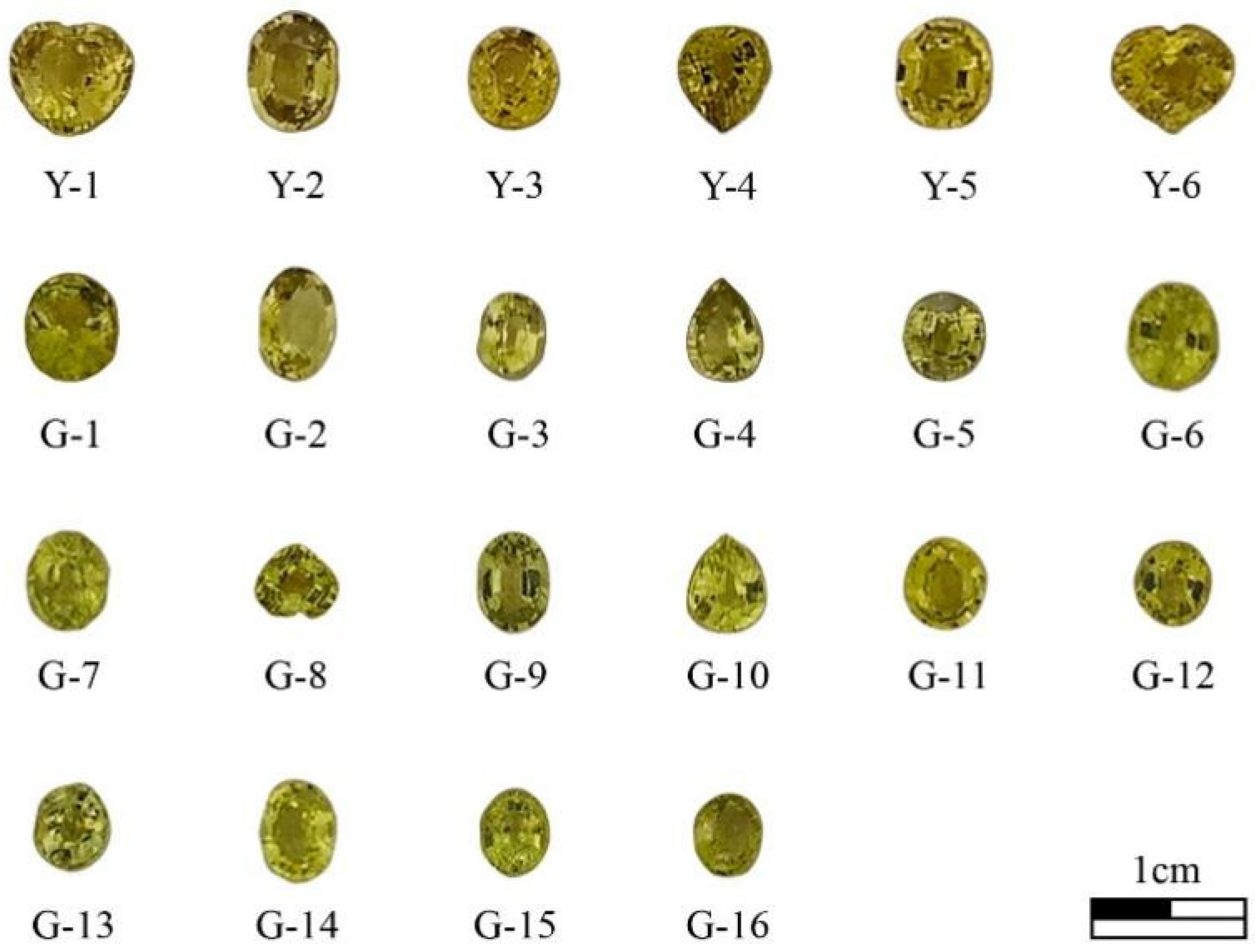
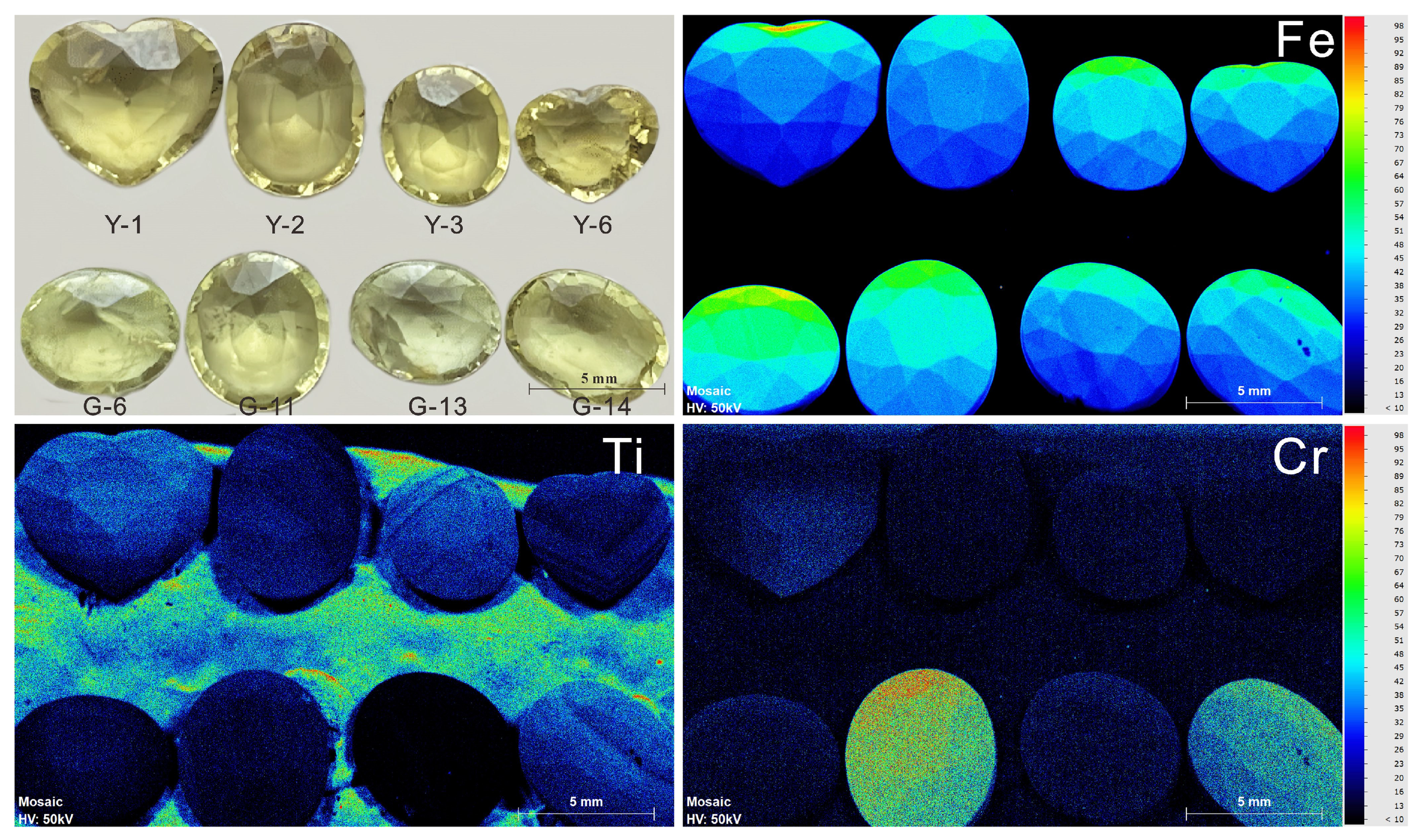
The samples were purchased from a gemstone-mining company. Previous studies by scholars have shown that Malian garnet, a type of garnet, has only one place of origin and is only produced in deposits of Western Africa’s Republic of Mali [15]. We chose these faceted gemstones because they have high purity, good color, and good gem quality. Figure 2 presents Mali garnet samples of gem quality, with weights ranging from 1 to 4 carats. Their color falls within a yellow–green range, exhibiting two subtle subtypes: one that is more yellow-dominant (designated Y-1 to Y-6) and another that is more green-dominant (designated G-1 to G-16). Standardized imaging protocols were employed, utilizing calibrated light sources against neutral gray backgrounds to ensure accurate color representation.

3.2. Methods

3.2.1. Microscopic Observation and Spectroscopy

A series of comprehensive examinations was carried out at the Gemological Experimental Teaching Center of the School of Jewelry, China University of Geosciences (Beijing), including observations with a gemological microscope, laser Raman spectroscopy, UV–visible spectroscopy, infrared spectroscopy, and various other conventional gemological testing. Additional conventional gemological tests encompass several procedures: a gemstone refractometer is employed to ascertain the refractive index (RI) of the specimen. The specific gravity (SG) of the sample is determined using the hydrostatic weighing technique with pure water. The RI and SG of each sample were independently measured three times, and the average values were used for subsequent analysis. A UV fluorescent lamp is utilized to examine the sample’s fluorescence. The Charles filter aids in identifying the gemstone’s chromogenic elements. Mali garnets were analyzed for fluorescence by subjecting them to UV radiation at wavelengths of 365 nm (longwave) and 254 nm (shortwave).
The samples’ surface and internal characteristics were examined using transmitted light, with magnification levels ranging from 10 to 40 times, by using a GI-MP22 binocular microscope from Nanjing Baoguang Technology Co., Ltd. in Nanjing, China.
The BRUKER TENSOR 27 Fourier Transform Infrared (FTIR) spectrometer (Bruker Optik GmbH, Ettlingen, Germany) was utilized to evaluate the infrared spectrum of the sample using the reflectance method. The experimental configuration consisted of a resolution of 4 cm−1, 64 scans, a scanning range of 2000 to 400 cm−1, and a scanning speed of 10 kHz.
A UV-3600 UV–Vis spectrophotometer from Shimadzu Corporation in Kyoto, Japan, was utilized to measure the UV–Vis spectrum of the sample, employing the reflection method with a wavelength range of 300–800 nm and a sampling interval of 1 s.
Horiba’s HR Evolution micro laser confocal Raman spectrometer (CRS), sourced from HORIBA, Ltd., Kyoto, Japan, was used to acquire Raman spectra of the sample matrix. The experimental parameters were configured as follows: a laser wavelength of 532 nm, a laser output power of 100 mW, a laser spot size varying between 1 and 5 µm, and a resolution of 1 cm−1. Each scan was conducted over 20 s with 3 integrations. The data collection range extended from 200 to 1500 cm−1, and the collected data were compared against the RRUFF database (R100161).

3.2.2. Chemical Analysis

The JEOL JXA-8230 electron microprobe (JEOL Ltd., Tokyo, Japan) at the Shandong Institute of Geological Sciences in Jinan, China was used to analyze the major elements (wt.%) in minerals. The operational settings included an accelerating voltage of 15 kV, a beam current of 1 × 10⁻⁸ A, and a beam spot size ranging from 1 to 10 μm. The standards employed for calibration were natural minerals and synthetic compounds, such as jadeite (Si and Na), almandine garnet (Al and Fe), diopside (Ca and Mg), sanidine (K), rutile (Ti), rhodonite (Mn), chromium oxide (Cr), and vanadium (V). Using the Bruker M4 TORNADO micro-X-ray fluorescence (μ-XRF) mapping system (Bruker, Billerica, USA) equipped with a Rh anode operating at 50 kV and 600 μA, and providing a spatial resolution of 20 μm, the elemental distribution of the samples was analyzed.
U-Pb dating was carried out at the Key Laboratory of Paleomagnetism and Paleotectonic Reconstruction, Institute of Geomechanics, Chinese Academy of Geological Sciences, employing the laser ablation–inductively coupled plasma (LA-ICP) experimental setup [25,26,27]. The mass spectrometer utilized was an Agilent Technologies quadrupole ICP-MS, model Agilent 7900 (Agilent Technologies, Inc., Santa Clara, CA, USA). The laser ablation system was a GeoLas HD ArF 193 nm excimer laser from Coherent, Saxonburg, PA, USA. (A comprehensive description of the instrumental conditions can be found in Wang et al. 2025 [28]). The experimental conditions and instrument parameters for trace elements and in situ rare earth element analysis are identical to those for U-Pb dating and are executed concurrently with the U-Pb isotope analysis. The in situ dating test was conducted by directly spotting on the original gemstone samples without any sample preparation procedures such as sectioning, polishing, or target making.

4. Results

4.1. Gemological Properties

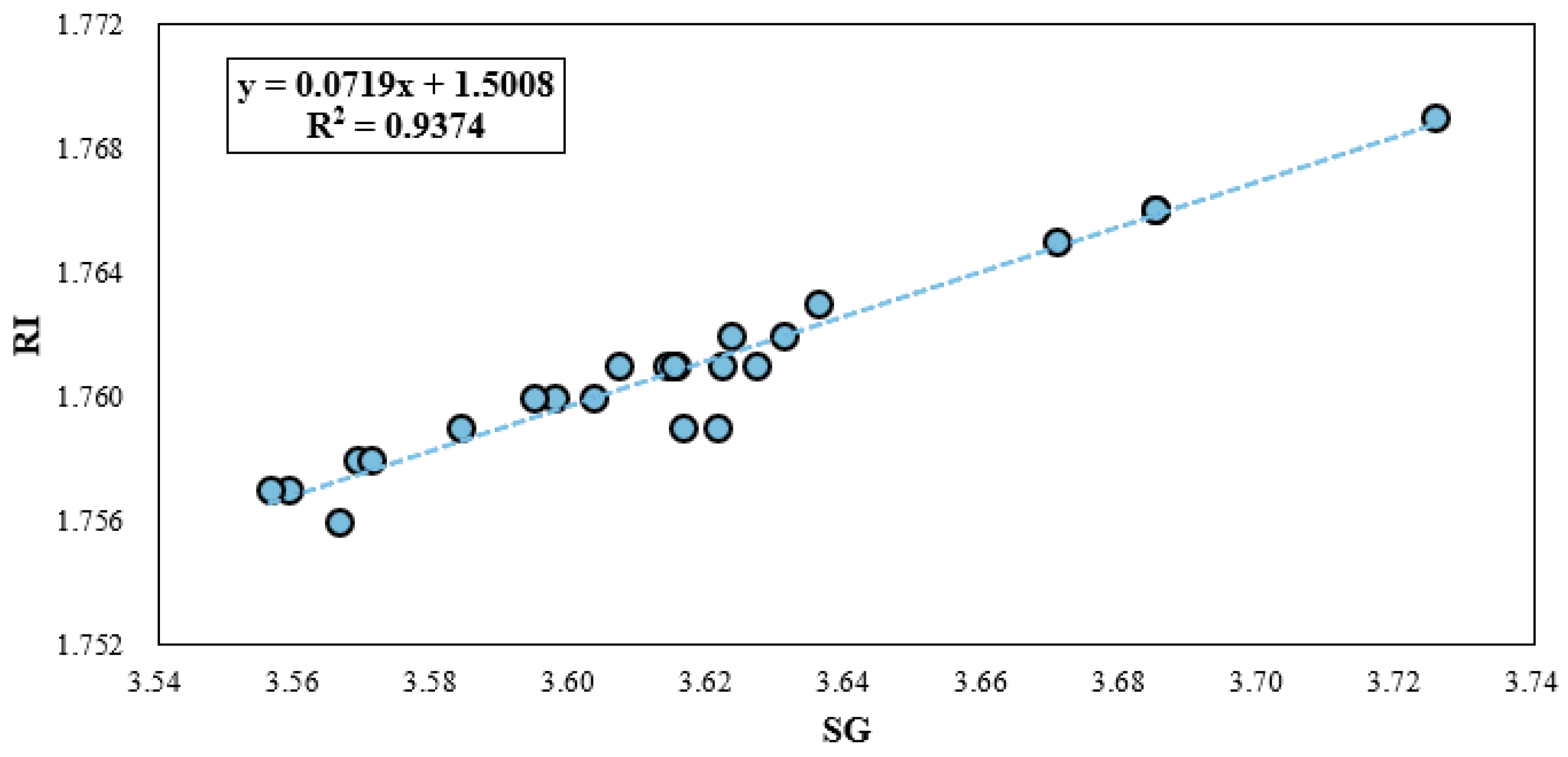
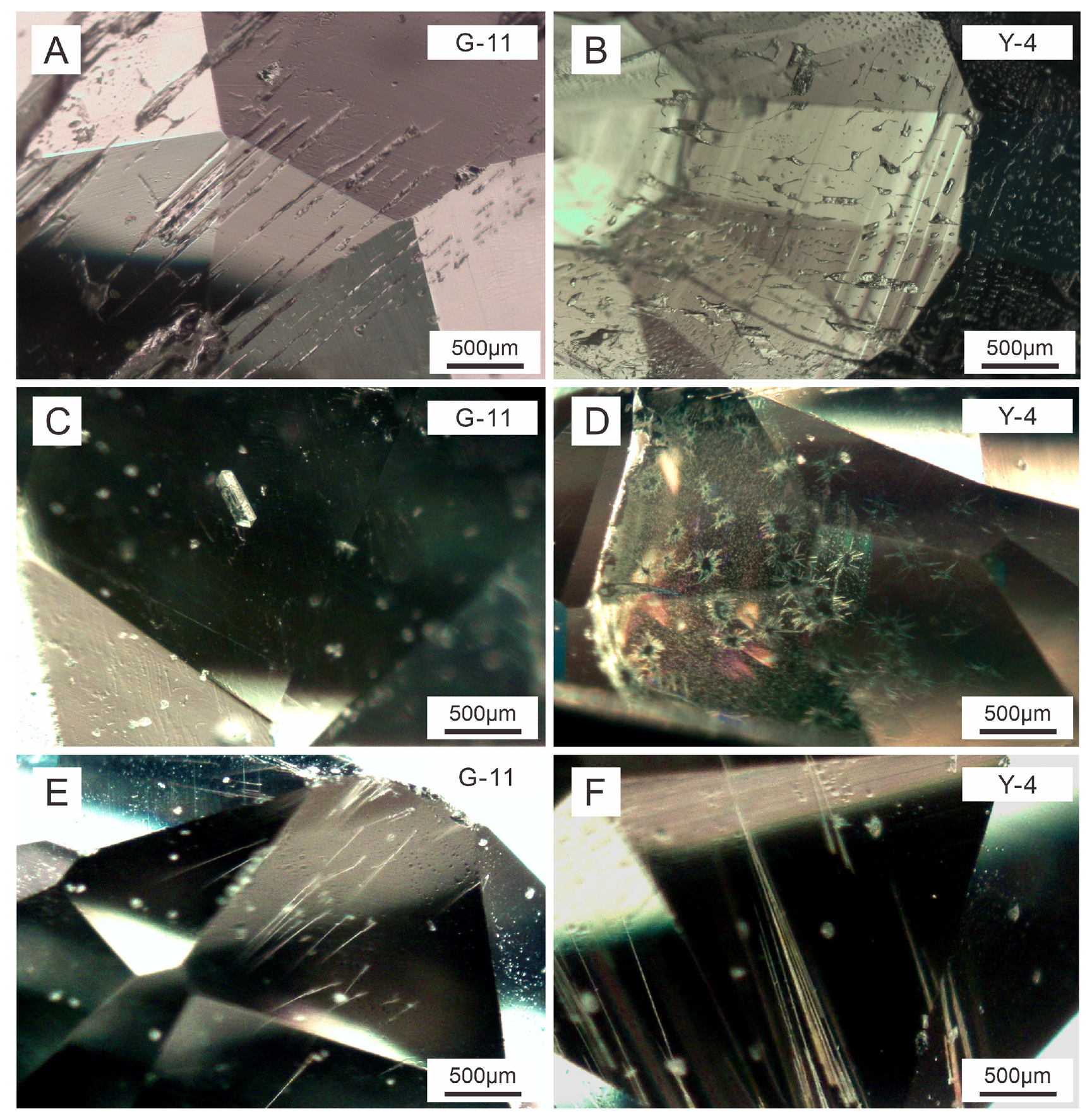
The fundamental gemological properties of the Mali garnet samples are illustrated in Figure 3. These samples exhibit a yellowish-green to light green hue and possess a vitreous luster. In detail, samples Y-1 to Y-6 exhibit a yellow hue, whereas samples G-1 to G-16 display a green hue. All samples are optically transparent, lacking any cleavage or fractures. The Mali garnet samples have refractive indices ranging from 1.756 to 1.769 and specific gravity values between 3.56 and 3.68. The Mali garnet samples typically contain fluid inclusions, oriented spike-like inclusions of varying lengths, and crystal inclusions (Figure 4). Additionally, there are many snowflake-shaped inclusions with a black crystalline solid inclusion in the center, which were observed (Figure 4D). Notably, these inclusions were only observed in two gem-quality Mali garnet samples. Given that most gem-quality garnets are of relatively high clarity, and given that these inclusions are situated within the gemstones rather than near the surface, they do not hinder the application of U-Pb dating.

4.2. Spectroscopy

4.2.1. UV–Vis Spectra

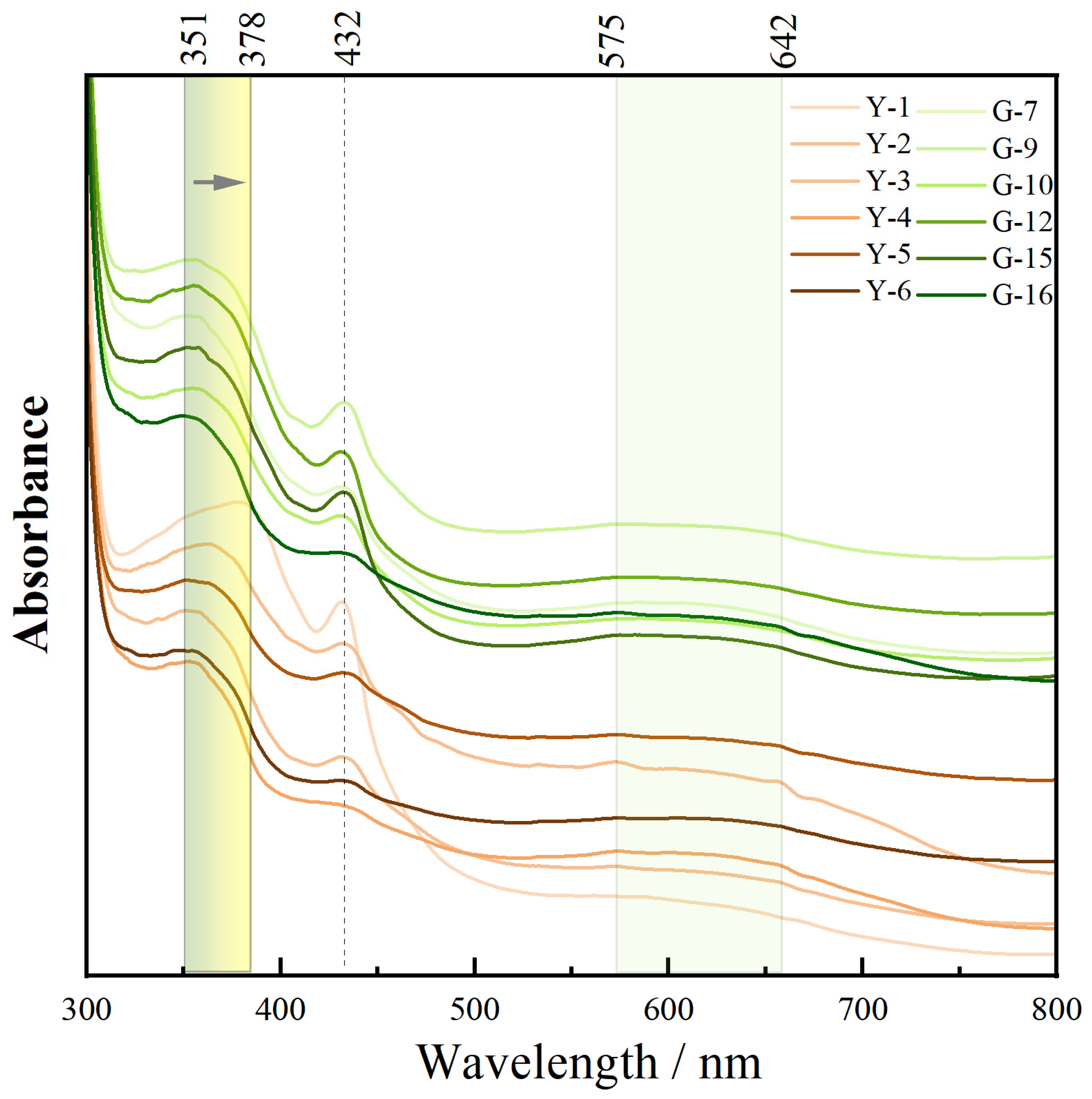
The UV–Vis spectrum of the Mali garnet samples is presented in Figure 5. A wide absorption band between 575 nm and 642 nm, and a distinct absorption peak at 432 nm. There is a characteristic absorption peak at approximately 432 nm in the blue–purple region, which can be attributed to the electron transition absorption of Fe. This is due to the transition of Fe3+ electrons between the 6A1g4E14Ag energy levels. In the wavelength range of 351–378 nm, a significant shift in the characteristic absorption peak was observed. As the yellow chroma of the sample gradually deepened, the absorption peak exhibited a consistent trend of shifting to the right (toward longer wavelengths). The aforementioned changes may be attributed to the presence of Fe2+ and variations in its content.

4.2.2. FTIR Spectra

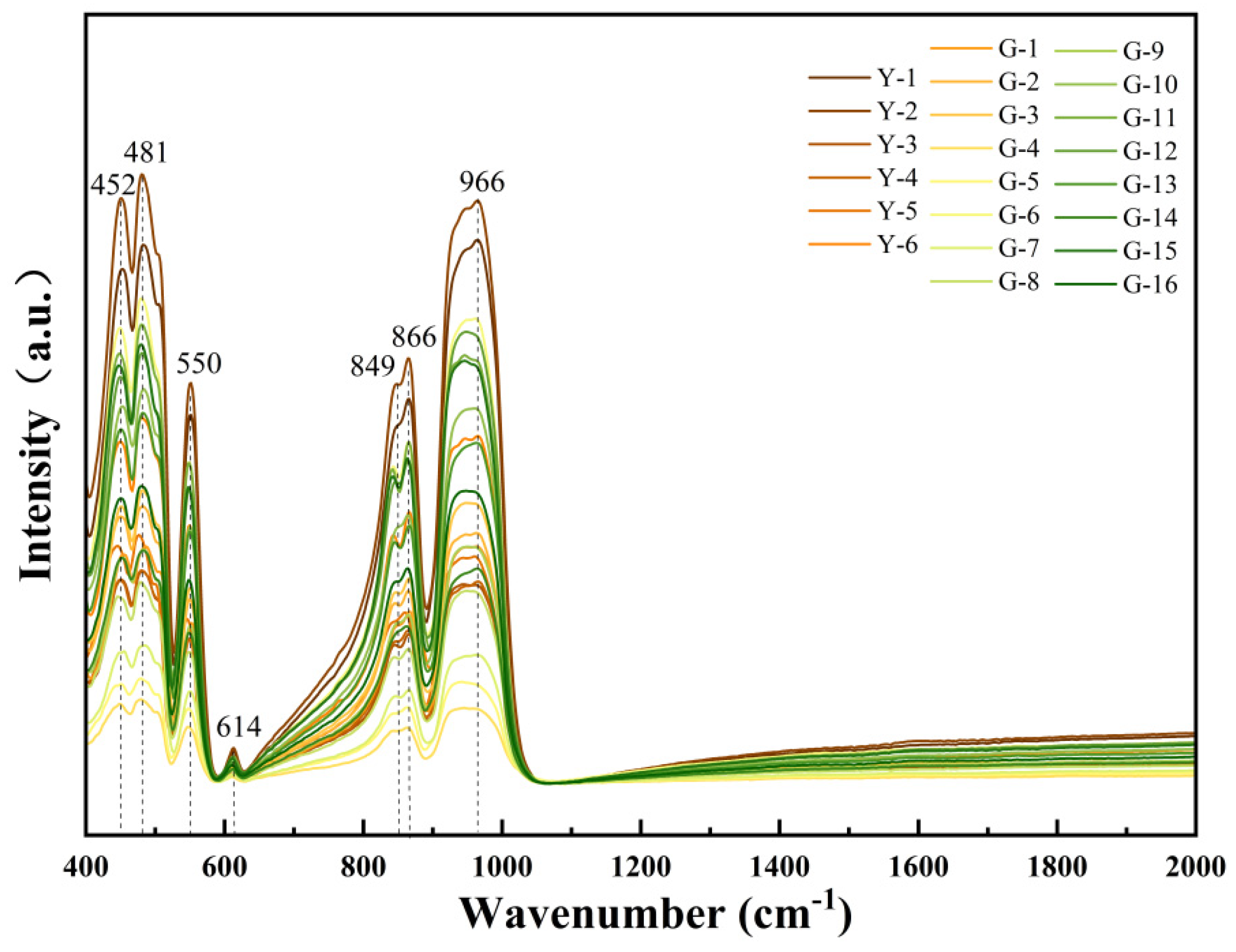
Garnet’s infrared spectrum is composed of lattice vibrations, [SiO4]4− group vibration modes, and other modes. As shown in Figure 6, the absorption peak with a wavelength below 500 cm−1 is caused by lattice vibration. The two absorption peaks observed between 500 and 700 cm−1 are attributed to the double degeneracy of the symmetric bending vibration ν2 of the [SiO4]4− group and the splitting of the triple degeneracy of antisymmetric bending vibration ν4. In addition, the three absorption bands in the range of 800–1100 cm−1 are associated with the antisymmetric stretching vibration of the [SiO4]4− group, which arises from the splitting of the triple degeneracy of ν3 (Table 1) [29]. The experimental results indicate that the infrared spectrum of Mali garnet samples exhibits typical grossular garnet reflection characteristics.

4.2.3. Raman Spectra

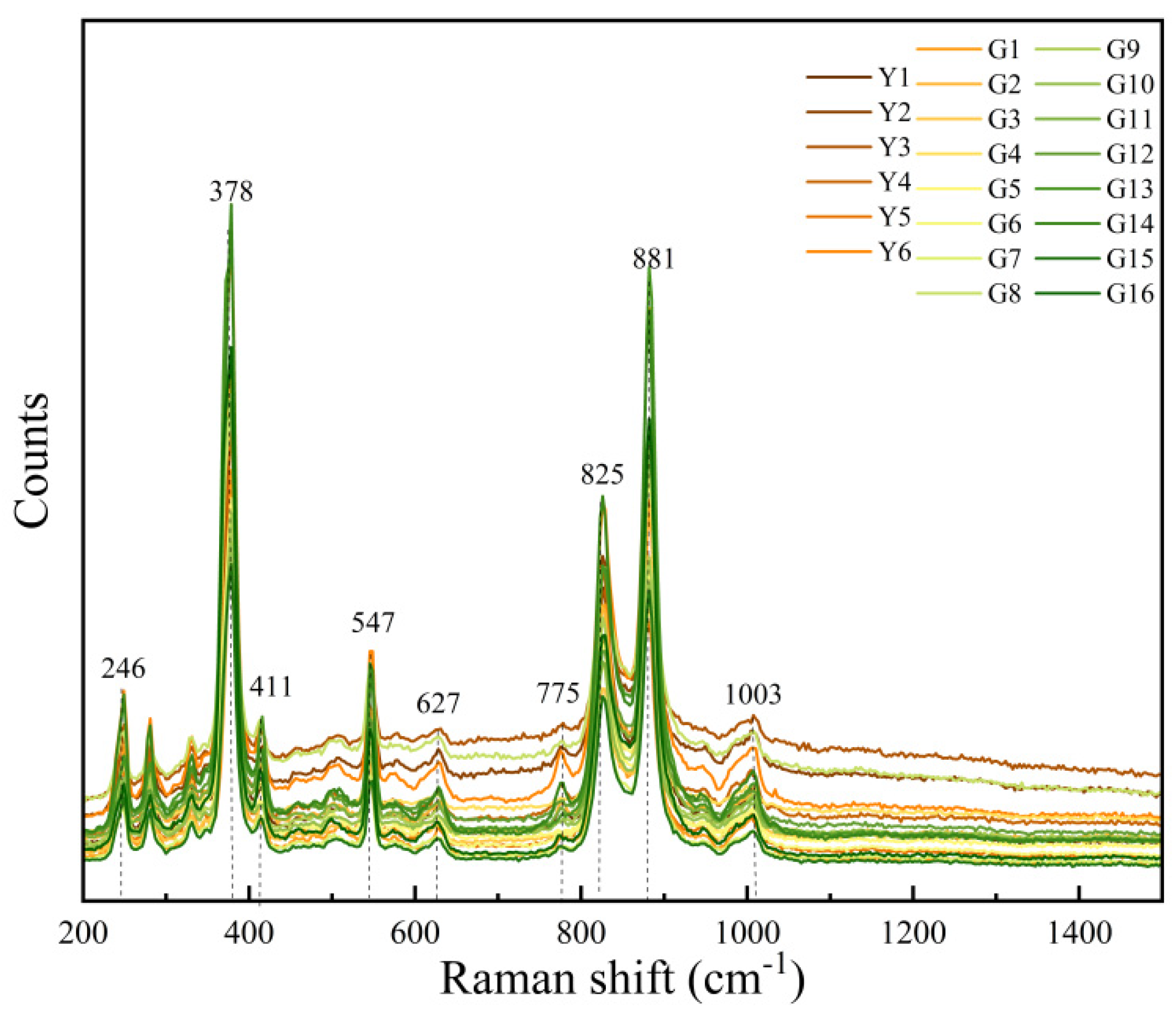
The Raman spectra of Mali garnet samples are shown in Figure 7. Peaks below 400 cm−1 are mainly owing to lattice vibration. The peaks at 246 cm−1 and 281 cm−1 are caused by T (X2+) translational vibrations and belong to the F2g mode. The Raman peaks in the 400–700 cm−1 range originate from the bending vibration of [SiO4]4−, specifically at 550 cm−1 (A1g mode) and 420 cm−1 (Eg mode). The peaks between 800 and 1000 cm−1 are mainly due to the stretching vibration of [SiO4]4−, with notable peaks at 880 cm−1 (A1g mode) and 827–848 cm−1 (F2g mode). Additionally, the peak at 1007 cm−1 (F2g mode) is also attributed to the stretching vibration of [SiO4]4− [31]. The Raman spectrum vibration peak position of calcium aluminum garnet is generally 248 cm−1, 376 cm−1, 415 cm−1, 549 cm−1, 630 cm−1, 826 cm−1, 881 cm−1. Compared with calcium–aluminum garnet, the Raman peak position of Mali garnet (a transitional variety of calcium–aluminum garnet calcium–iron garnet) is shifted towards shorter wavelengths [32]. The reason is that, in the garnet crystal structure, the larger the radius of the trivalent cation Y3+, the more the Raman shift comes to the shortwave direction. Thus, the shift to the shortwave of these studied trapiche garnet samples indicates that Fe3+ replaces a small amount of Al3+ in the sample (the radius of Fe3+ is larger than the radius of Al3+).

4.3. Chemical Composition

4.3.1. Major Elements Analysis

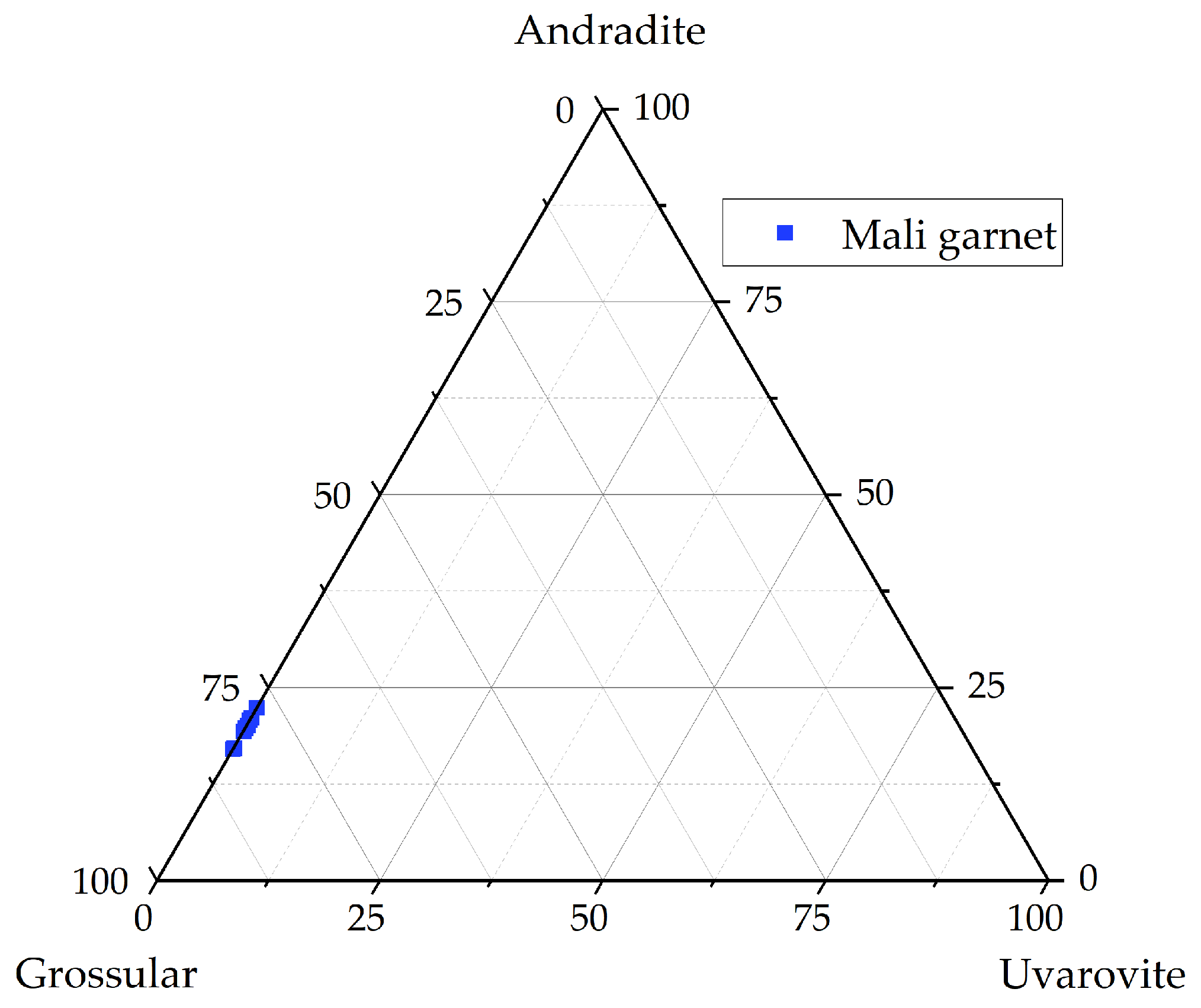
The detailed major element contents of garnets are tested by EPMA, and the results are presented in Table 2. These Mali garnets have similar major element compositions (CaO = 34.04–36.77 wt.%, Al2O3 = 14.48–18.10 wt.%, and SiO2 = 38.69–41.01 wt.%). The Mali garnet samples are grossular (Figure 8).

4.3.2. Trace Element Characteristics

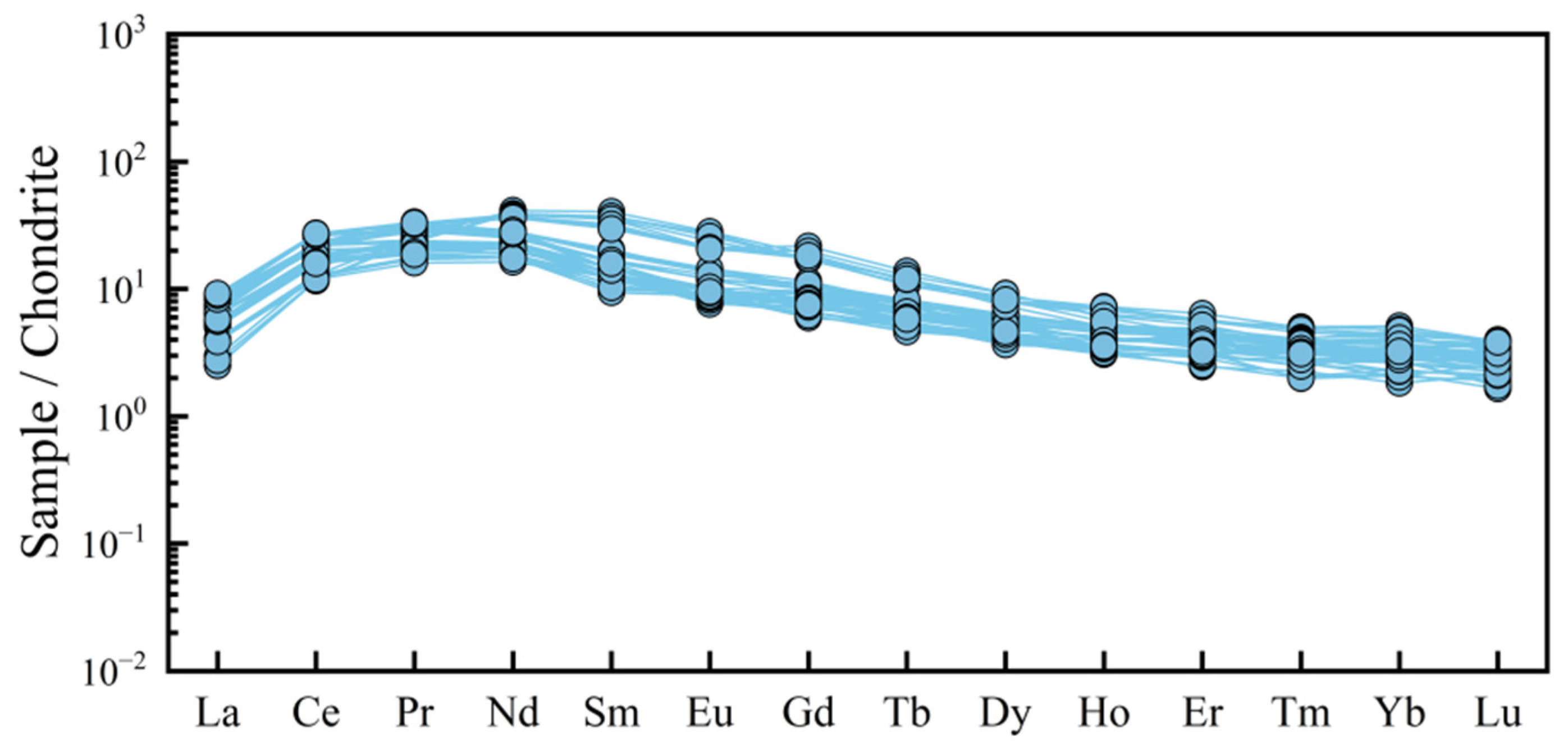
The trace element compositions of the Mali garnet samples are detailed in Table 3. The chondrite-normalized rare earth element (REE) patterns are exhibited in Figure 9. The chondrite-normalized rare earth element (REE) pattern demonstrates a light enrichment in light rare earth elements (LREE) and a depletion in heavy rare earth elements (HREEs), as illustrated in Figure 9, which is distinct from that of regular garnet.
The anomalous HREE depletion observed in Mali garnet contrasts with the typical HREE enrichment patterns of most garnet species, a phenomenon attributable to its unique crystal chemistry and specific geological formation environment. Garnets generally exhibit HREE enrichment due to their crystal structure accommodating larger ionic radii HREE3+ (e.g., Yb3+ and Lu3+) through Ca2+-dominated dodecahedral sites and favorable octahedral coordination environments. This type of garnet is also observed in skarn-type deposits from the Middle–Lower Yangtze River Valley Metallogenic Belt. Petrological evidence from West African cratonic margins indicates that Mali garnet crystallized from Fe-rich, Al-poor melts where competitive partitioning with coexisting minerals (e.g., epidote and amphibole) preferentially sequestered HREE into accessory phases like zircon and xenotime.

4.4. U–Pb Geochronology

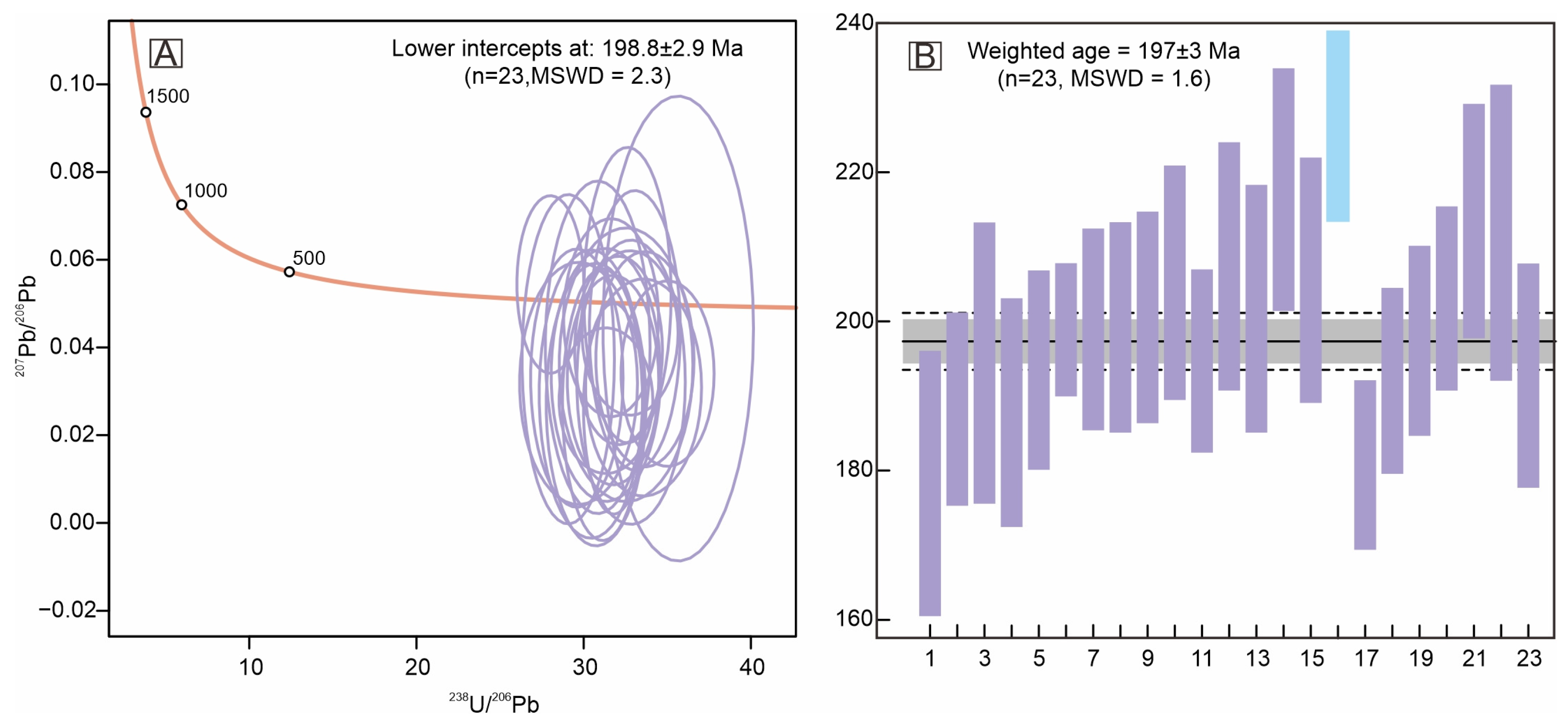
Accurate U–Pb dating of Mali garnet samples is carried out by LA-ICP-MS in this study. The dataset of U–Pb analysis for the Mali garnet samples by LA-ICP-MS is outlined in Table 4. Previous studies have shown that even at extremely low U concentrations on quadrupole ICP-MS, garnet can be dated in situ using the U-Pb method [15]. As shown in Figure 10, a concordant U-Pb age was calculated at 198.8 ± 2.9 Ma (n = 23, MSWD = 2.3), in agreement with the weighted mean 206Pb/238U age of 197 ± 3 Ma (MSWD = 1.6).

5. Discussion

5.1. Chromogenic Mechanism of Mali Garnet

Interestingly, we observed a significant positive correlation between the refractive index (RI) and specific gravity (SG) in Mali garnet (R2 = 0.94; Figure 3). Chemically, Mali garnet represents a solid-solution series between grossular (Ca3Al2(SiO4)3) and andradite (Ca3Fe2(SiO4)3), characterized by partial Fe3+ substitution for Al3+, whereas tsavorite is a chromium–vanadium-rich grossular variant, and demantoid belongs to the andradite group with Cr3+ substituting Fe3+. These compositional differences directly influence their SG and RI; the SG and RI of Mali garnet are between those of tsavorite and demantoid. All of the garnet samples exhibited inertness under longwave (LWUV, 365 nm) and shortwave (SWUV, 254 nm) irradiation, suggesting that the presence of iron in garnet suppressed luminescence. Due to the close ionic radii of Fe3+ and Al3+, ion substitution hardly changes the size of the lattice, but the relative atomic mass difference between the two is large. Therefore, there is a high correlation between the composition and density of this variety of garnet.
As shown in Figure 8, it is evident that the primary end-member component of the Mali samples is grossular and andradite. The grossular content of the Mali garnet is 74.99%–78.85%, and the andradite content of the Mali garnet is 16.27%–21.61%. The popularity of gem-grade Mali garnet is attributed to its bright yellowish-green color. Garnet itself has no characteristic absorption spectrum because its main divalent cation, Ca2+, does not contribute directly to the color.
As shown in Figure 5, there is a characteristic absorption peak at approximately 432 nm in the blue–purple region, which can be attributed to the electron transition absorption of Fe3+, due to the transition of Fe3+ electrons between the 6A1g4E14Ag energy levels [32]. Meanwhile, there is a weak absorption peak near 580 nm, which can also be attributed to the electron transition absorption of Fe. In addition, the broad absorption feature between 575 nm and 642 nm is due to the absorption of the 4A24T2 transition of Cr3+.
Micro-X-ray fluorescence (µ-XRF) mapping revealed the two-dimensional distribution and relative concentrations of major, minor, and trace elements across the Mali garnet sample surface (Figure 11). These results provide direct and visualized spatial evidence supporting these spectroscopic observations, showing obvious compositional zoning of Ti in our Mali garnet samples. Fe and Cr in different color regions, with color intensity positively correlating with elemental concentrations (reddish hues indicating higher concentrations). The mapping results reveal that yellow-hued Mali garnets are generally Fe-enriched, whereas their green-hued counterparts are Cr-rich (Figure 10).
The ultraviolet spectrum aligns closely with chemical compositions, suggesting that Fe3+ is the main element responsible for the yellowish hues in Mali garnet, while trace amounts of Cr3+ are responsible for the development of the green hues.
However, Mali garnet, as a solid-solution series between grossular (Ca3Al2(SiO4)3) and andradite (Ca3Fe2(SiO4)3), undergoes Fe3+ substitution for Al3+ in octahedral sites, which modifies cation site preferences and reduces lattice parameters. This structural adjustment creates a steric hindrance that preferentially excludes larger HREE ions while favoring the incorporation of LREE and medium REE (MREE) [33].
Geochemically, the formation of Mali garnet in contact metamorphic zones of the Kayes region involves metasomatic fluids with distinctive REE fractionation patterns. These hydrothermal fluids, interacting with mafic protoliths under moderate-temperature conditions (400–550 °C), develop the garnet characterized by LREE enrichment, HREE depletion, and an absent Eu anomaly. Furthermore, the dilution effect caused by infiltration metasomatism led to a decrease in the total rare earth element (ΣREE) concentration of garnet (Figure 9).

5.2. Geochronology of Mali Garnet

The U-Pb geochronological data from Mali garnets, yielding a weighted mean 206Pb/238U age of 197 ± 3 Ma (MSWD = 1.6; Figure 11), provide critical insights into the Mesozoic thermal evolution of the West African Craton (WAC). This age is consistent with the well-constrained magmatic episode of the Central Atlantic Magmatic Province (CAMP, 201–190 Ma) in this region. A comprehensive study of the dike swarm in the Taoudenni basin of northern Mali was conducted, identifying it as the farthest inland expression of CAMP within the West African Craton [34]. Through precise 40Ar/39Ar dating, they constrained the main magmatic peak to 198.1 Ma, with activity spanning 202–196 Ma, which is synchronous with CAMP events globally. Consequently, our age provides direct U-Pb confirmation of this CAMP pulse in Mali.
The Early Jurassic ages coincide with the initial rifting phase of CAMP, suggesting that garnet growth occurred during lithospheric thinning associated with Pangea breakup. This age serves as a precise temporal anchor for widespread rift-related magmatism associated with the breakup of Pangea. As noted by Seman et al. [3], the ~200 Ma flood basalts in Guinea and Senegal, together with coeval dike swarms in northern Mali, are correlated with CAMP. Our result contributes an additional high-precision age constraint for this province.
Chronometric analysis of gem materials predominantly utilizes isotopic measurement techniques applied to geographically dispersed samples to construct isochronous relationships, or alternatively employs inclusion chronometry (e.g., rutile-hosted inclusions within corundum species). While these methodologies purport to yield cooling ages for gem-forming events [35,36], their applicability presents significant limitations. Critically, the U-Pb age directly dates the specific thermal event responsible for garnet formation. Mali garnets occur in skarns formed by the intrusion of dolerite dikes into carbonate rocks. Regional geology indicates that such dikes are widespread, and their CAMP affinity has also been confirmed. Therefore, the 197 ± 3 Ma age directly constrains the timing of CAMP-related dike emplacement that induced contact metamorphism and skarn formation, firmly linking mineral crystallization to this regional magmatic-thermal pulse. Given that these temperatures exceed the highest metamorphic temperatures documented in the region, the U–Pb ages presented here directly indicate the crystallization of Mali garnet.
The Jurassic ages correlate with a regional pulse of gem-bearing skarn formation. Spatial analysis reveals that 78% of Mali’s gem-quality garnet deposits occur within 15 km of Jurassic dike swarms, establishing a spatial-genetic relationship critical for exploration targeting in analogous terranes. Furthermore, this age supports and refines models for CAMP evolution beyond a simple plume hypothesis. Dike orientations in the Taoudenni basin can be more reasonably interpreted as resulting from the reactivation of older crustal structures (e.g., the Guinean–Nubian lineament) under thermal incubation beneath thick Pangean lithosphere. Our U-Pb age of 197 ± 3 Ma, in conjunction with these findings, indicates that CAMP magmatism in Mali was localized along pre-existing weaknesses, generating the thermal anomaly necessary for contact metamorphism. This elevates the geological significance of the age from a generic “rift-related” association to evidence for a specific tectono-thermal event in which CAMP magmatism, guided by inherited structures, directly drove skarn-forming metamorphism. The robustness of garnet U-Pb systems in preserving crystallization ages through multiple thermal events supports their application to Precambrian polymetamorphic terranes, where zircon systems are frequently reset. Collectively, this study identifies previously unrecognized Jurassic thermal activity in the WAC, establishes genetic links between CAMP rifting and gemstone formation, and showcases garnet’s viability as a high-temperature geochronometer.
Considering the recent use of U–Pb dating for garnets with very low uranium content, employing reference materials with similarly low uranium levels (~single-digit micrograms per gram or below) is highly advantageous. This approach ensures that the counting mode remains consistent between standards and unknowns on the mass spectrometer. Gem-quality Mali garnet, distinguished by its crystalline structure, elevated closure temperature, high transparency, uniformity, and impurity-rare purity, shows potential as a reference material for U-Pb dating with LA-ICP-MS, although they contain single ppm U concentrations (<3 ppm). A more in-depth geochronological analysis represents an important direction for future work.

6. Conclusions

In this research, a thorough and systematic mineralogical analysis of Mali garnet samples was performed using micro-X-ray fluorescence, electron probe microanalysis, laser inductively coupled plasma mass spectrometry, Raman spectroscopy, infrared spectroscopy, and ultraviolet–visible absorption spectroscopy. Additionally, the first U-Pb dating test on gem-quality Mali garnet was conducted. The electron probe testing results indicated that the Mali garnet samples comprised 74.99%–78.85% grossular end component and 16.27%–21.61% andradite content. The chemical composition aligns well with the ultraviolet spectrum, suggesting that Fe and Cr are the main elements responsible for the color in Mali garnet. U-Pb geochronological results yield a crystallization age of 197 ± 3 Ma for the Mali garnet samples, which present the timing of their formation and indicate CAMP-related intrusions and their related skarns to be the likely source for these gem-quality garnets. The U-Pb system’s high closure temperature in garnets tends to preserve crystallization ages instead of capturing later cooling or metamorphic overprinting, thereby directly indicating Mali garnet mineralization periods. Gem-quality Mali garnet, recognized for its crystalline structure, elevated closure temperature, high transparency, uniformity, and impurity-rare purity, exhibits potential as a reference material for U-Pb dating with LA-ICP-MS.

Author Contributions

Conceptualization, Z.Z., M.Z. (Mengmeng Zhang) and S.Z.; Methodology, Z.Z., M.Z. (Mengmeng Zhang) and S.Z.; Resources, S.Z.; Data curation, S.W., M.Z. (Mengmeng Zhang), M.Z. (Mengxi Zhao), Q.W. and S.Z.; Writing—original draft preparation, Z.Z.; Visualization, Z.Z. and B.X.; Writing—review and editing, Z.Z., M.Z. (Mengmeng Zhang), S.Z. and B.X.; Supervision, B.X.; Funding acquisition, B.X. All authors have read and agreed to the published version of the manuscript.

Funding

This research was funded by the National Mineral, Rock and Fossil Resource Center, and Deep Space Exploration Laboratory, China University of Geosciences, Beijing 100083, China, and the National Natural Science Foundation of China (42222304). This is the 39th contribution of BX for the National Mineral Rock and Fossil Specimens Resource Center.

Data Availability Statement

The article encompasses the data offered in this study.

Acknowledgments

We would like to thank the Gemological Institute and the Laboratory of the School of Materials of China University of Geosciences, Beijing, as well as the National Mineral Rock and Fossil Specimens Resource Center for providing experimental guidance.

Conflicts of Interest

The authors declare no conflicts of interest.

References

  1. Chen, W.; Zhang, W.; Simonetti, A.; Jian, S. Mineral Chemistry of Melanite from Calcitic Ijolite, the Oka Carbonatite Complex, Canada: Implications for Multi-Pulse Magma Mixing. J. Earth Sci. 2016, 27, 599–610. [Google Scholar] [CrossRef]
  2. Mezger, K.; Hanson, G.; Bohlen, S. U-Pb Systematics of Garnet: Dating the Growth of Garnet in the Late Archean Pikwitonei Granulite Domain at Cauchon and Natawahunan Lakes, Manitoba, Canada. Contrib. Mineral. Petrol. 1989, 101, 136–148. [Google Scholar] [CrossRef]
  3. Seman, S.; Stockli, D.; Mclean, N. U-Pb Geochronology of Grossular-Andradite Garnet. Chem. Geol. 2017, 460, 106–116. [Google Scholar] [CrossRef]
  4. Crowe, D.E.; Riciputi, L.R.; Bezenek, S.; Ignatiev, A. Oxygen isotope and Trace Element Zoning in Hydrothermal Garnets: Windows into Large-Scale Fluid-Flow Behavior. Geology 2001, 29, 479–482. [Google Scholar] [CrossRef]
  5. D’errico, M.E.; Lackey, J.S.; Surpless, B.E.; Loewy, S.L.; Wooden, J.L.; Barnes, J.D.; Strickland, A.; Valley, J.W. A Detailed Record of Shallow Hydrothermal Fluid Flow in the Sierra Nevada Magmatic Arc from Low-δ18O Skarn Garnets. Geology 2012, 40, 763–766. [Google Scholar] [CrossRef]
  6. Zhai, D.G.; Liu, J.J.; Zhang, H.Y.; Wang, J.P.; Su, L.; Yang, X.A.; Wu, S.H. Origin of Oscillatory Zoned Garnets from the Xieertala Fe–Zn Skarn Deposit, Northern China: In Situ LA–ICP-MS Evidence. Lithos 2014, 190, 279–291. [Google Scholar] [CrossRef]
  7. Dewolf, C.; Zeissler, C.J.; Halliday, A.; Mezger, K.; Essene, E. The Role of Inclusions in U-Pb and Sm-Nd Garnet Geochronology: Stepwise Dissolution Experiments and Trace Uranium Mapping by Fission Track Analysis. Geochim. Cosmochim. Acta 1996, 60, 121–134. [Google Scholar] [CrossRef]
  8. Lima, S.M.; Corfu, F.; Neiva, A.M.; Ramos, J.M. U-Pb ID-TIMS Dating Applied to U-rich Inclusions in Garnet. Am. Mineral. 2012, 97, 800–806. [Google Scholar] [CrossRef]
  9. Johnson, M.L.; Boehm, E.; Krupp, H.; Zang, J.W.; Kammerling, R.C. Gem-quality grossular-andradite: A New Garnet from Mali. Gems Gemol. 1995, 31, 152–166. [Google Scholar] [CrossRef]
  10. Kriegsman, L.M. The Pan-African event in East Antarctica: A view from Sri Lanka and the Mozambique belt. Precambrian Res. 1995, 75, 263–277. [Google Scholar] [CrossRef]
  11. Malisa, E.; Muhongo, S. Tectonic setting of gemstone mineralization in the Proterozoic metamorphic terrane of the Mozambique Belt in Tanzania. Precambrian Res. 1990, 46, 167–176. [Google Scholar] [CrossRef]
  12. Feneyrol, J.; Giuliani, G.; Ohnenstetter, D.; Rondeau, B.; Fritsch, E.; Fallick, A.E.; Ichang’i, D.; Omito, E.; Rakotondrazafy, M.; Ranatsenho, M.; et al. New typology and origin of tsavorite based on trace-element chemistry. Eur. J. Miner. 2014, 26, 293–308. [Google Scholar] [CrossRef]
  13. Simonet, C.; Okundi, S.; Masai, P. General setting of coloured gemstone deposits in the Mozambique Belt of Kenya—Preliminary considerations. In Proceedings of the 9th Conference of the Geological Society of Kenya, Nairobi, Kenya, 16–17 November 2000; pp. 123–138. [Google Scholar]
  14. Feneyrol, J.; Giuliani, G.; Demaiffe, D.; Ohnenstetter, D.; Fallick, A.E.; Dubessy, J.; Martelat, J.-E.; Rakotondrazafy, A.F.M.; Omito, E.; Ichang’i, D. Age and origin of the tsavorite and tanzanite mineralizing fluids in the Neoproterozoic Mozambique Metamorphic Belt. Can. Mineral. 2017, 55, 763–786. [Google Scholar] [CrossRef]
  15. O’sullivan, G.J.; Hoare, B.C.; Mark, C.; Drakou, F.; Tomlinson, E.L. Uranium–lead geochronology applied to pyrope garnet with very low concentrations of uranium. Geol. Mag. 2023, 160, 1010–1019. [Google Scholar] [CrossRef]
  16. Fritz, H.; Abdelsalam, M.; Ali, K.; Bingen, B.; Collins, A.; Fowler, A.; Ghebreab, W.; Hauzenberger, C.; Johnson, P.; Kusky, T. Orogen styles in the East African Orogen: A review of the Neoproterozoic to Cambrian tectonic evolution. J. Afr. Earth. Sci. 2013, 86, 65–106. [Google Scholar] [CrossRef]
  17. Hoare, B.C.; Arden, S.E.; O’sullivan, G.J. U–Pb Dating of Gem-Quality Vanadium-Bearing Grossular Garnet (var. tsavorite) from North-Eastern Tanzania. Miner. Depos. 2024, 59, 419–431. [Google Scholar] [CrossRef]
  18. Zhao, S.; Xu, B.; Zhao, Y. Age Determination of Gem-Quality Green Vanadium Grossular (Var. Tsavorite) from the Neoproterozoic Metamorphic Mozambique Belt, Kenya and Tanzania. Crystals 2024, 15, 9. [Google Scholar] [CrossRef]
  19. Stifeeva, M.V.; Salnikova, E.B.; Savelyeva, V.B.; Kotov, A.B.; Danilova, Y.V.; Bazarova, E.P.; Danilov, B.S. Timing of Carbonatite Ultramafic Complexes of the Eastern Sayan Alkaline Province, Siberia: U–Pb (ID–TIMS) Geochronology of Ca–Fe Garnets. Minerals 2023, 13, 1086. [Google Scholar] [CrossRef]
  20. Stifeeva, M.V.; Salnikova, E.B.; Kotov, A.B.; Nikiforov, A.V.; Plotkina, Y.V. The Age of the Early Formation Stage of the Khovu-Aksy Ag-Bi-Cu-Ni-Co Deposit (Republic of Tuva): U-Pb (ID-TIMS) Geochronological Studies of Garnet. Dokl. Earth Sci. 2024, 515, 663–668. [Google Scholar] [CrossRef]
  21. Stifeeva, M.V.; Salnikova, E.B.; Kotov, A.B.; Gritsenko, Y.D. First Age Data of the Deposits of the Kondoma Iron Field, Gornaya Shoriya: Results of U-Pb (ID-TIMS) Dating of Garnet. Dokl. Earth Sci. 2024, 514, 308–311. [Google Scholar] [CrossRef]
  22. Aysal, N.; Guillong, M.; Bayanova, T.; Fukuyama, M.; Leonard, N.; Yılmaz, İ.; Varol, E.; Tükel, F.Ş.; Kadıoğlu, Y.K.; Hanilçi, N. A New Natural Secondary Reference Material for Garnet U-Pb Dating by TIMS and LA-ICP-MS. Geostand. Geoanal. Res. 2023, 47, 297–310. [Google Scholar] [CrossRef]
  23. Furon, R. Geology of Africa; Hallam, A.; Stevens, L.A., Translators; Oliver and Boyd: Edinburgh, UK, 1963. [Google Scholar]
  24. Eliezri, I.Z.; Kremkow, C. The 1995 ICA World Gemstone Mining Report; ICA Gazette: Singapore, 1994; pp. 1–19. [Google Scholar]
  25. Xu, B.; Yin, R.S.; Chiaradia, M.; Miao, Z.; Griffin, W.L.; Hou, Z.Q.; Yang, Z.M.; O’Reilly, S.Y. Mercury isotope evidence for the importance of recycled fluids in collisional ore systems. Sci. Adv. 2024, 10, eadp7383. [Google Scholar] [CrossRef] [PubMed]
  26. Xu, B.; Hou, Z.Q.; Griffin, W.L.; Lu, Y.; Belousova, E.; Xu, J.F.; O’Reilly, S.Y. Recycled volatiles determine fertility of porphyry deposits in collisional settings. Am. Mineral. 2021, 106, 656–661. [Google Scholar] [CrossRef]
  27. Xu, B.; Hou, Z.Q.; Griffin, W.L.; O’Reilly, S.Y. Apatite halogens and Sr–O and zircon Hf–O isotopes: Recycled volatiles in Jurassic porphyry ore systems in southern Tibet. Chem. Geol. 2022, 605, 120924. [Google Scholar] [CrossRef]
  28. Wang, S.; Wang, N.; Zhao, S.; Wang, S. Timing and Nature of Gemstone Tsavorite from Kenya:Constraints from In Situ U-Pb LA-ICP-MS Dating. Minerals 2025, 15, 46. [Google Scholar] [CrossRef]
  29. Li, W.; Zheng, J.; Pei, J.; Xu, X.; Chen, T. Correlations between Garnet Species and Vibration Spectroscopy: Isomorphous Substitution Implications. Crystals 2022, 12, 104. [Google Scholar] [CrossRef]
  30. Nakamoto, Y.; Asano, Y.; Dohi, K.; Fujioka, M.; Iida, H.; Kida, H.; Kibe, Y.; Hattori, N.; Takeuchi, J. Primary IgA glomerulonephritis and Schönlein-Henoch purpura nephritis: Clinicopathological and immunohistological characteristics. QJM Int. J. Med. 1978, 47, 495–516. [Google Scholar]
  31. Peng, M.; Mao, H.K.; Li, D.; Chao, E.C.T. Raman spectroscopy of garnet-group minerals. Chin. J. Geochem. 1994, 13, 176–183. [Google Scholar] [CrossRef]
  32. Zhao, S. Research on the Gemological Characteristics of Green Garnets. Master’s Thesis, China University of Geosciences, Beijing, China, 2019. [Google Scholar] [CrossRef]
  33. Manning, P.G. Optical absorption spectra of Fe3+ in octahedral and tetrahedral sites in natural garnets. Can. Mineral. 1972, 11, 826–839. [Google Scholar]
  34. Verati, C.; Bertrand, H.; Féraud, G. The farthest record of the Central Atlantic Magmatic Province into West Africa craton: Precise 40Ar/39Ar dating and geochemistry of Taoudenni basin intrusives (northern Mali). Earth Planet. Sci. Lett. 2005, 235, 391–407. [Google Scholar] [CrossRef]
  35. Shi, G.; Zhang, X.; Wang, Y.; Li, Q.; Wu, F.; He, H. Age determination of oriented rutile inclusions in sapphire and of moonstone from the Mogok metamorphic belt, Myanmar. Am. Mineral. 2021, 106, 1852–1859. [Google Scholar] [CrossRef]
  36. Sorokina, E.S.; Albert, R.; Botcharnikov, R.E.; Popov, M.P.; Häger, T.; Hofmeister, W.; Gerdes, A. Origin of Uralian andradite (var. demantoid): Constraints from in situ U-Pb LA-ICP-MS dating and trace element analysis. Lithos 2023, 444, 107091. [Google Scholar] [CrossRef]
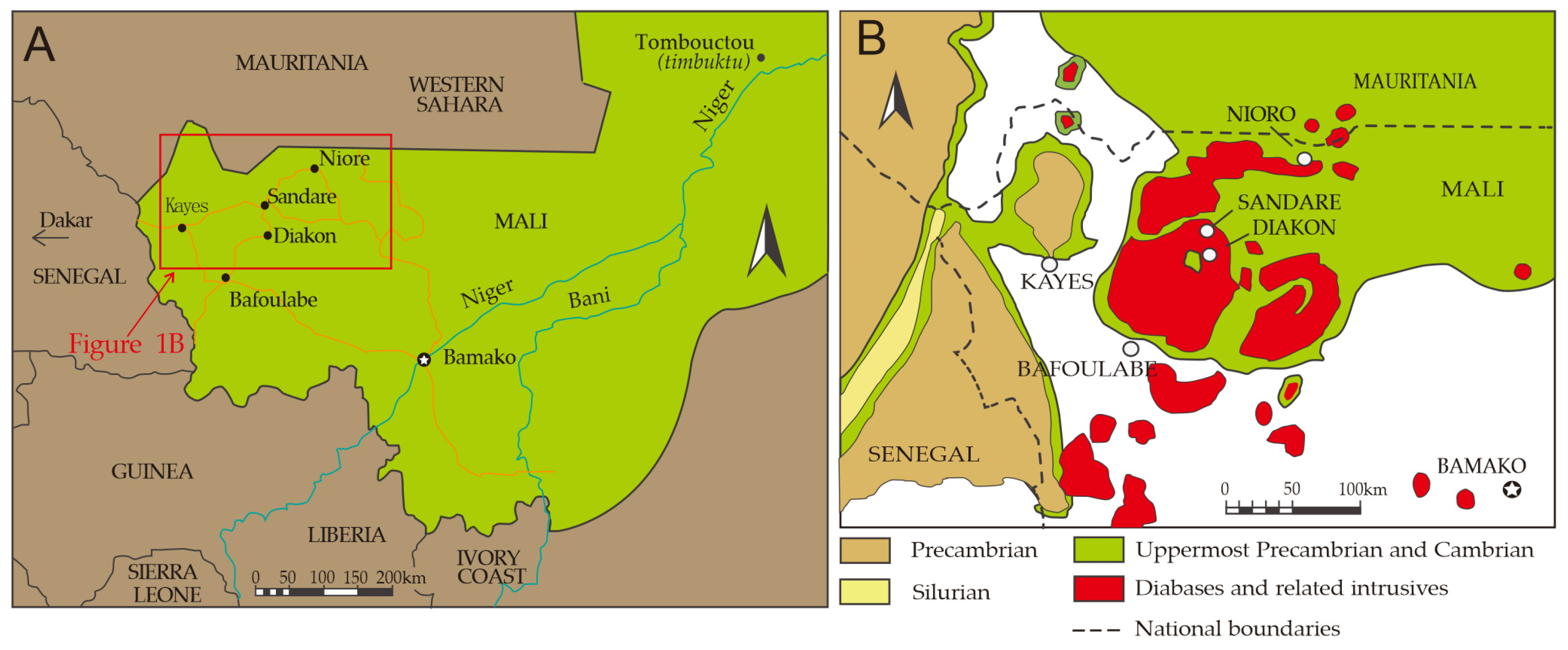
Figure 1. Schematic geological map of Mali. (A) The grosslar garnets studied for this article were all reportedly from deposits near the village of Diakon, in the Kayes Region of the Republic of Mali, Western Africa. (B) This geologic sketch map of western Mali, as well as parts of Senegal and Mauritania, shows the large diabase intrusions. Contact metamorphic bodies, including some that contain gem-quality garnets, are found along the boundaries of the diabase intrusive. (modified from Furon, 1963 [23]).
Minerals 16 00461 g001
Figure 2. The yellowish and green hues of the faceted Mali garnet samples.
Minerals 16 00461 g002
Figure 3. RI vs. SG plot of Malian garnet showing their positive correlation.
Minerals 16 00461 g003
Figure 4. Internal features of the Mali garnet samples. (A,B) Fluid inclusions; (C) crystal inclusion; (D) snowflake-shaped inclusions with a black crystalline solid inclusion in the center; and (E,F) oriented spike-like inclusions of varying lengths.
Minerals 16 00461 g004
Figure 5. The representative UV–Vis spectra of the Mali garnet samples.
Minerals 16 00461 g005
Figure 6. Representative infrared spectrum of the Mali garnet samples.
Minerals 16 00461 g006
Figure 7. Representative Raman spectrum of the Mali garnet samples.
Minerals 16 00461 g007
Figure 8. Ternary diagram andradite–grossular–uvarovite displaying the end-member compositions of Mali garnet samples.
Minerals 16 00461 g008
Figure 9. Chondrite-normalized REE patterns of the different parts of the Mali garnet samples (the normalization values for chondrite were from Johnson et al.(1995) [9]).
Minerals 16 00461 g009
Figure 10. (A) The concordant U-Pb age of Mali garnet samples; (B) the weighted mean 206Pb/238U age of Mali garnet samples. MSWD: mean square of weighted deviates.
Minerals 16 00461 g010
Figure 11. Micro-X-ray fluorescence (µ-XRF) elemental mapping of the Mali garnet samples.
Minerals 16 00461 g011
Table 1. [SiO4]4− group normal vibration mode [30].
Vibration ModeSymmetryActivityFrequency
(cm−1)
RemarkS4 Location Group
v1 symmetric
stretching vibration
A1gR819 A
v2 symmetric
bending vibration
EgR840double degeneracyA + B
v3 antisymmetric stretching vibrationF2gIR, R956triple degeneracyB + E
Table 2. Chemical composition (data in wt.%) and chemical formula of Mali garnet, determined by EMPA.
Sample NumberG1-01G1-02G1-03G8-01G8-02Y1-01Y1-02Y1-03
SiO239.2739.6939.8639.7838.8839.4538.9139.24
CaO35.0134.9535.6535.3935.7034.4035.2535.21
Al2O317.6518.2317.6417.7117.5617.5817.3617.57
FeO7.076.366.396.256.486.217.327.07
Na2O0.000.000.020.000.020.000.030.00
TiO20.380.100.420.060.550.480.280.34
MgO0.450.490.530.580.560.520.480.52
Cr2O30.050.040.020.020.020.000.000.00
NiO0.000.030.010.020.130.000.000.00
MnO0.210.120.190.160.080.110.160.09
K2O0.000.000.000.030.010.000.000.03
BaO0.000.000.000.000.000.000.000.00
Total100.1099.99100.7499.9999.9898.7499.78100.06
Cations per formula unit, on a basis of 8 cations and 12 oxygen atoms
Si3.003.003.003.002.973.002.983.00
Ti0.020.010.020.000.010.030.000.02
Al1.591.641.581.591.581.601.571.58
Cr0.000.000.000.000.000.000.000.00
Fe3+0.380.330.380.370.410.320.430.40
Fe2+0.070.080.030.030.000.080.040.05
Mn0.010.010.010.010.010.010.010.01
Mg0.050.060.060.070.060.060.050.06
Ca2.872.862.902.892.932.852.902.88
Ura0.160.110.050.050.050.000.000.00
And19.1816.2718.8118.4620.5415.9421.6119.99
Pyr1.701.852.002.212.131.991.831.96
Spe0.440.260.410.340.170.230.340.20
Gro76.2378.8576.4277.0676.8577.9074.9976.13
Alm1.111.000.000.000.000.001.230.83
f57.3159.0532.8330.665.0658.0940.2446.82
Cr’0.200.130.070.070.070.000.000.00
Mn’16.238.7729.5925.9860.027.7521.7410.32
Note: FeO and Fe2O3 contents estimated from measured total FeO, through redistribution of Fe cations as Fe2+ and Fe3+, f = 100 Fe2+/(Fe2+ + Mg), Cr’ = 100 Cr/(Cr + Al), Mn’ = 100 Mn/(Fe2+ + Mn), Ura (uvarovite), And (andradite), Pyr (pyrope), Spe (spessartine), Gro (grossular), and Alm (almandine).
Table 3. Dataset of the trace element analysis for the Mali garnet samples by LA-ICP-MS (data in ppm).
Sample NumberLaCePrNdSmEuGdTbDyHoErTmYbLu
Y1-011.33511.0962.15310.8421.9780.5541.6190.2061.0790.2100.5240.0510.3530.064
Y1-021.48111.3322.27110.8412.0460.4911.6310.1811.0870.1850.4780.0520.3970.051
Y1-031.2379.9661.9369.6531.8090.4641.3510.1851.0540.1840.4050.0580.3100.054
Y1-041.23611.0362.23710.2972.0550.4571.3650.1940.9750.1740.4180.0510.3710.042
Y2-011.22910.0952.00710.3522.2180.5381.9410.2521.3550.2760.6740.0780.5380.078
Y2-021.28710.5692.12810.9212.2430.5921.9670.2651.6410.2740.7360.0980.6690.089
Y2-031.1959.4851.9359.9382.3210.5001.9010.2521.2170.2400.5690.0830.5070.069
Y2-041.2479.9362.03910.7352.2300.5551.8760.2431.4490.2630.7140.0880.4720.077
G1-010.5937.1332.33318.1275.4831.3913.4710.4131.9960.3600.9250.1160.7350.081
G1-020.5977.0802.27918.1665.6781.5853.5260.4001.9910.3890.9300.1280.8680.099
G1-030.7047.8952.44719.3166.2031.6353.8320.4342.1900.4111.0630.1270.8220.096
G1-040.6537.1222.23718.1675.6821.4983.5250.4112.0490.4050.9560.1230.7600.100
Y6-011.69113.5362.66613.1742.8990.8352.1690.3041.4250.2680.7200.0970.6730.095
Y6-021.60813.4512.69213.2333.1090.7902.1480.2861.3890.2740.6720.1060.7310.099
Y6-031.56113.1212.69912.9832.8620.7822.0280.2871.4560.2570.7700.0940.5750.101
Y6-041.76014.2722.88613.3583.0240.8392.3570.2911.5920.2920.8130.1030.8010.100
G2-010.9287.5931.6298.4311.9480.4461.6280.2461.3090.2270.6850.0970.5380.084
G2-020.9687.9751.6888.3201.6850.4781.7560.2711.2670.2750.6800.0930.6640.089
G2-030.9687.9371.6208.2171.8990.4741.7100.2661.3670.2550.7060.1010.6180.088
G2-040.9197.2941.5277.6161.8760.4431.5120.2411.2410.2310.6480.0850.6010.081
G6-012.09116.0662.75912.2882.5710.6841.7900.2921.5670.2880.8000.0880.5910.075
G6-022.16516.1582.72612.0062.4710.6892.2020.2881.5010.2790.7550.1020.6510.071
G6-032.18216.0282.71011.7332.5070.6972.0400.2791.6320.2770.7690.0990.6990.083
G6-042.18316.2102.80412.3232.5790.7482.2520.3081.6130.2730.7450.0900.5520.082
G7-011.92712.5002.0098.7161.8580.4741.4340.2281.2850.2020.5310.0870.4420.057
G7-021.81212.3412.0698.7491.8230.4921.6040.2201.2230.2360.5800.0780.4800.067
G7-032.03013.8632.2959.7272.0130.5561.7420.2391.2510.2370.6120.0820.4860.060
G7-042.00013.4272.2099.1882.0580.5061.6820.2471.3420.2290.6880.0880.5340.072
G8-011.78814.3393.11917.9445.4081.2214.4460.5162.3500.3390.7260.0680.4550.046
G8-021.74213.8213.08017.4454.7361.2203.5630.4461.8630.2870.6170.0670.3470.049
G8-031.63513.6283.01717.3794.9301.2054.0720.4772.3380.3470.8590.0960.6200.076
G8-041.60813.1152.85316.9024.5311.1903.7560.4472.0850.3140.6620.0700.4730.044
G11-011.47510.3571.9278.7201.5100.5411.2820.1761.0190.1780.4820.0700.4500.061
G11-021.52511.0272.0969.6951.8900.6001.5530.1981.1370.2230.6230.0870.5270.063
G11-031.3249.9221.8398.2611.4400.5161.2250.1940.9270.1930.5390.0740.3820.053
G11-041.3649.7251.7758.0601.5730.5121.2760.1731.0400.1990.4910.0660.3870.054
G10-011.97916.1123.09812.7062.1590.5431.5070.1941.0330.1920.5220.0630.5220.075
G10-022.11516.6823.18213.3452.2010.5441.4880.2241.1550.1980.5060.0820.4730.068
G10-032.13716.7613.06313.5042.1550.5461.5870.1891.1140.2040.5450.0710.5040.079
G10-042.18616.7143.12913.0422.4260.5511.5410.2171.1670.2000.5310.0790.5510.097
Table 4. Dataset of the U–Pb analysis for the Mali garnet samples by LA-ICP-MS.
Sample NumberU
(ppm)
Th
(ppm)
Pb
(ppm)
207Pb/206Pb207Pb/235U Age (Ma)206Pb/238U Age (Ma)
G10-010.750.210.033.680.050.05160.57157.78178.3318.40
Y1-021.892.890.102.400.040.02144.3578.30188.7213.45
Y1-031.622.420.093.270.040.03144.30103.10195.1619.60
Y1-041.832.510.102.830.030.02121.1480.04189.1715.97
Y2-022.022.560.102.350.050.02169.8361.33193.7613.87
G1-012.313.150.121.480.030.02108.5982.12199.629.29
G1-022.162.870.112.240.040.02134.1881.04199.8914.08
G1-032.232.960.112.290.030.01117.3657.85202.5414.81
G1-042.102.850.112.320.050.02188.3275.58200.6114.72
Y6-011.050.820.052.440.030.03115.94113.48206.3616.37
Y6-031.040.800.052.130.060.03201.40107.66194.6812.73
Y6-041.090.880.052.530.030.03126.83116.43208.4117.34
G2-021.170.830.062.670.040.02140.5198.96202.5817.28
G2-031.160.810.062.260.040.03165.41136.63217.9916.92
G2-041.130.710.062.560.040.03167.15130.11205.7317.08
G6-012.560.700.141.640.060.02240.6674.65226.1713.21
G6-032.750.740.112.270.040.02127.6065.34181.5211.79
G7-041.720.740.072.220.050.03170.67101.91192.1012.92
G8-011.521.190.072.150.040.02158.4071.56197.8513.23
G8-021.491.230.071.960.030.03114.54107.81203.8512.83
G8-031.441.200.072.260.040.03145.23106.42214.2516.36
G11-011.181.070.062.880.030.02139.80100.15213.5420.72
G11-031.161.080.052.650.040.03128.28106.40193.4215.62
Disclaimer/Publisher’s Note: The statements, opinions and data contained in all publications are solely those of the individual author(s) and contributor(s) and not of MDPI and/or the editor(s). MDPI and/or the editor(s) disclaim responsibility for any injury to people or property resulting from any ideas, methods, instructions or products referred to in the content.