Study on Oxidation-Roasting Performance and Consolidation Mechanism of Phosphate Ore Pellets

Abstract
1. Introduction
2. Materials and Methods
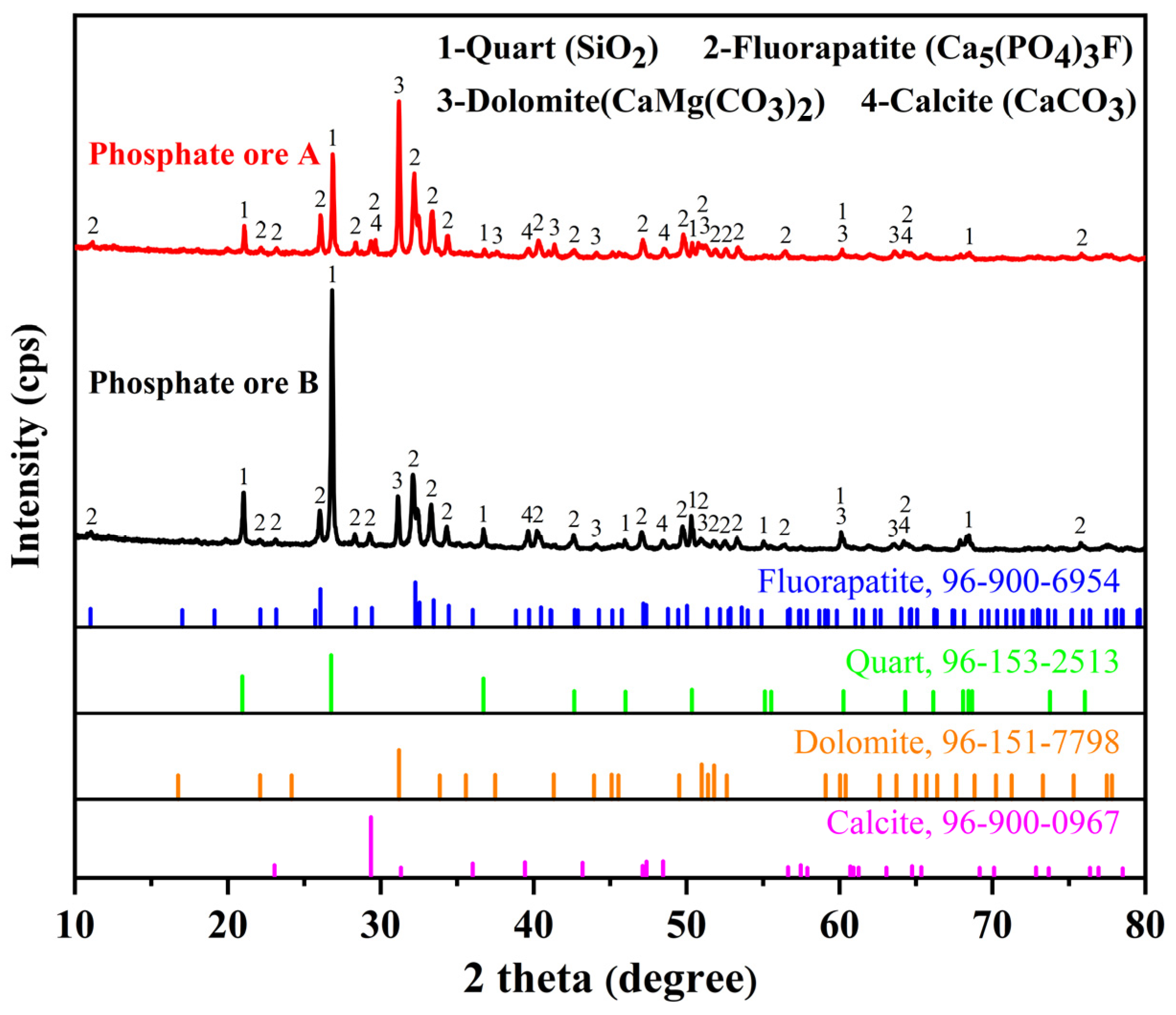
2.1. Raw Materials
2.2. Experimental Methods
2.2.1. Green-Pellet Preparation
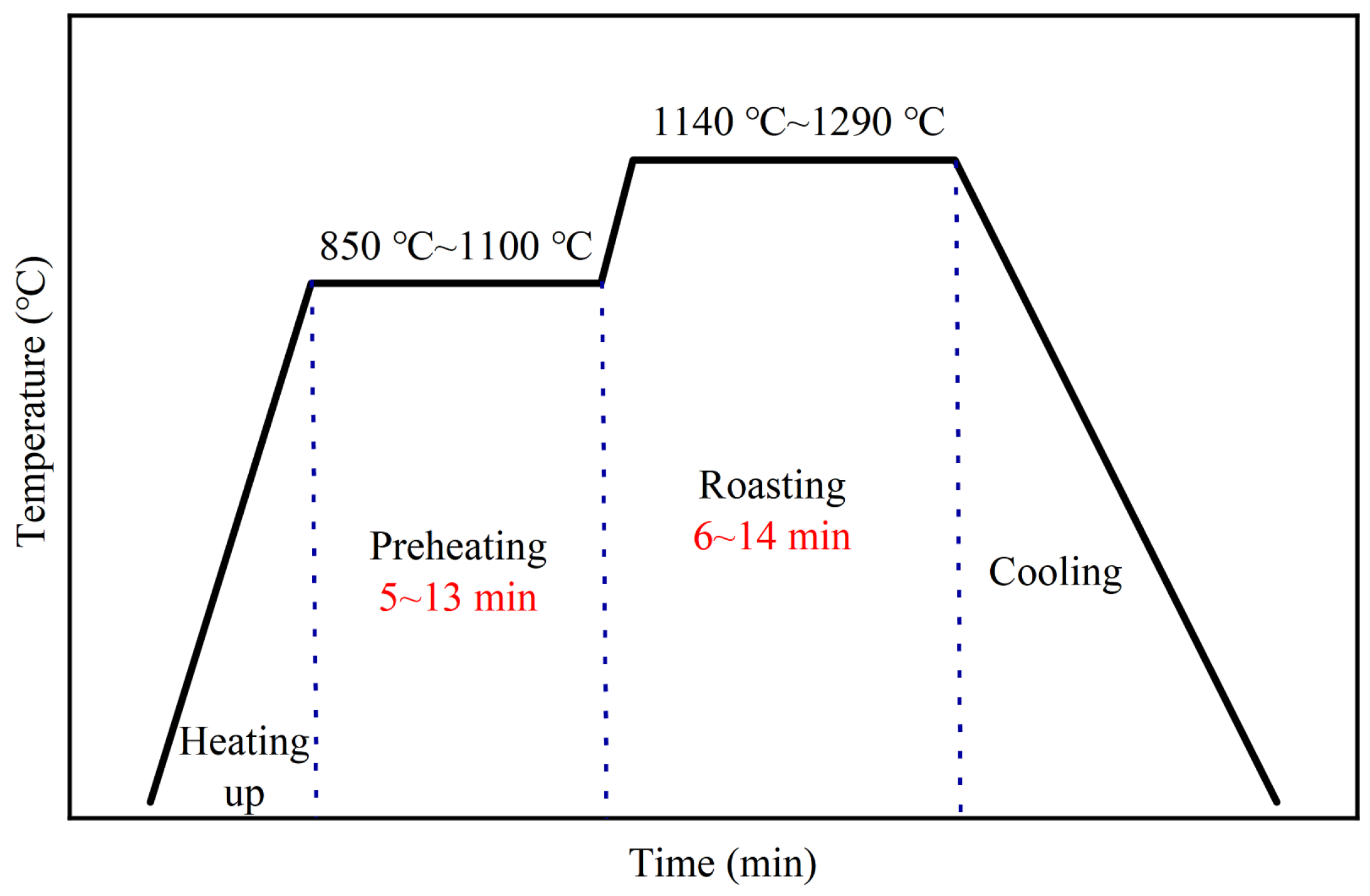
2.2.2. Experimental Procedure: Oxidation Roasting of Pellets
2.2.3. Microstructure Observations
3. Results
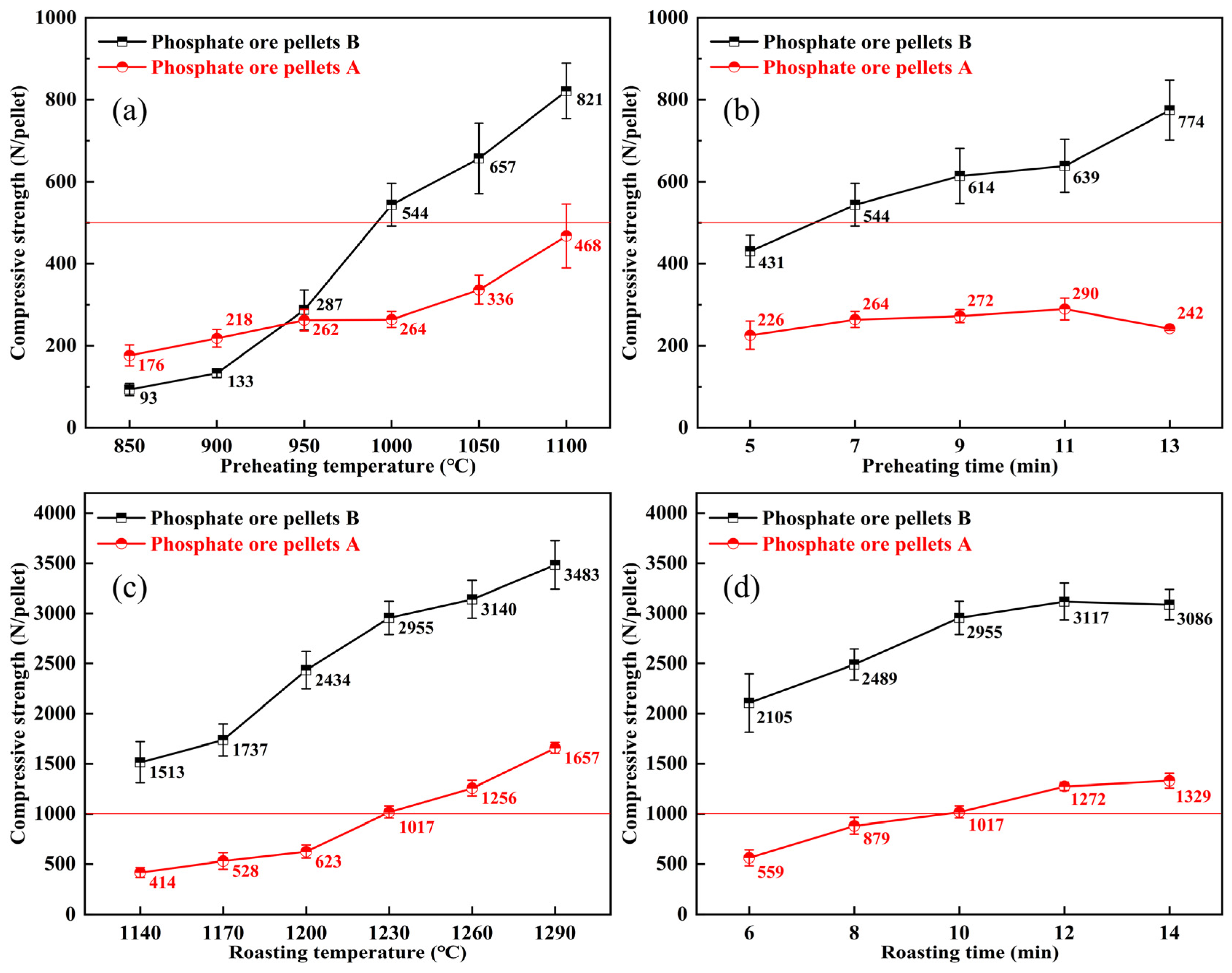
3.1. Oxidation-Roasting Performance of Phosphate Ore Pellets
3.2. Consolidation Mechanism of Oxidized Phosphate Ore Pellets
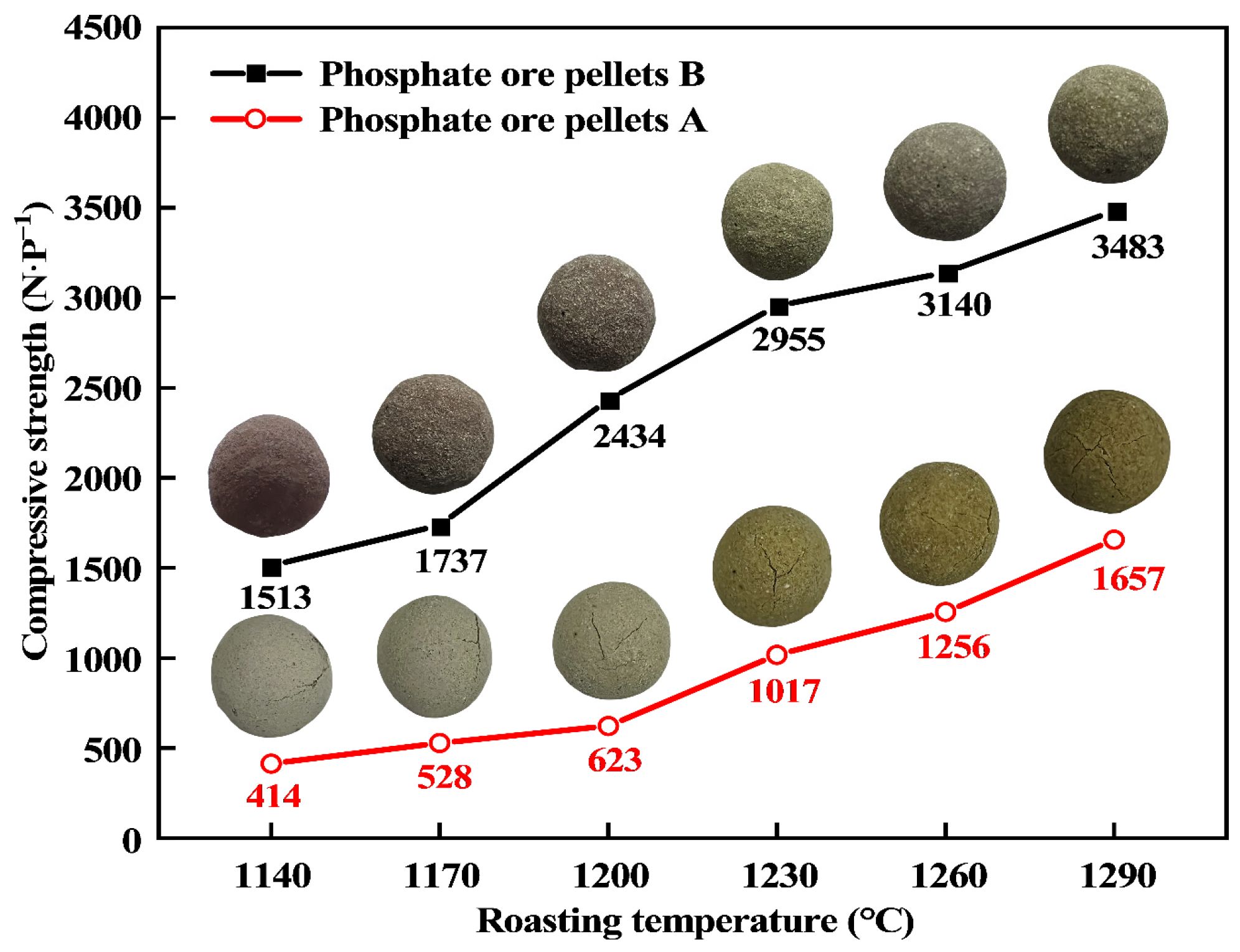
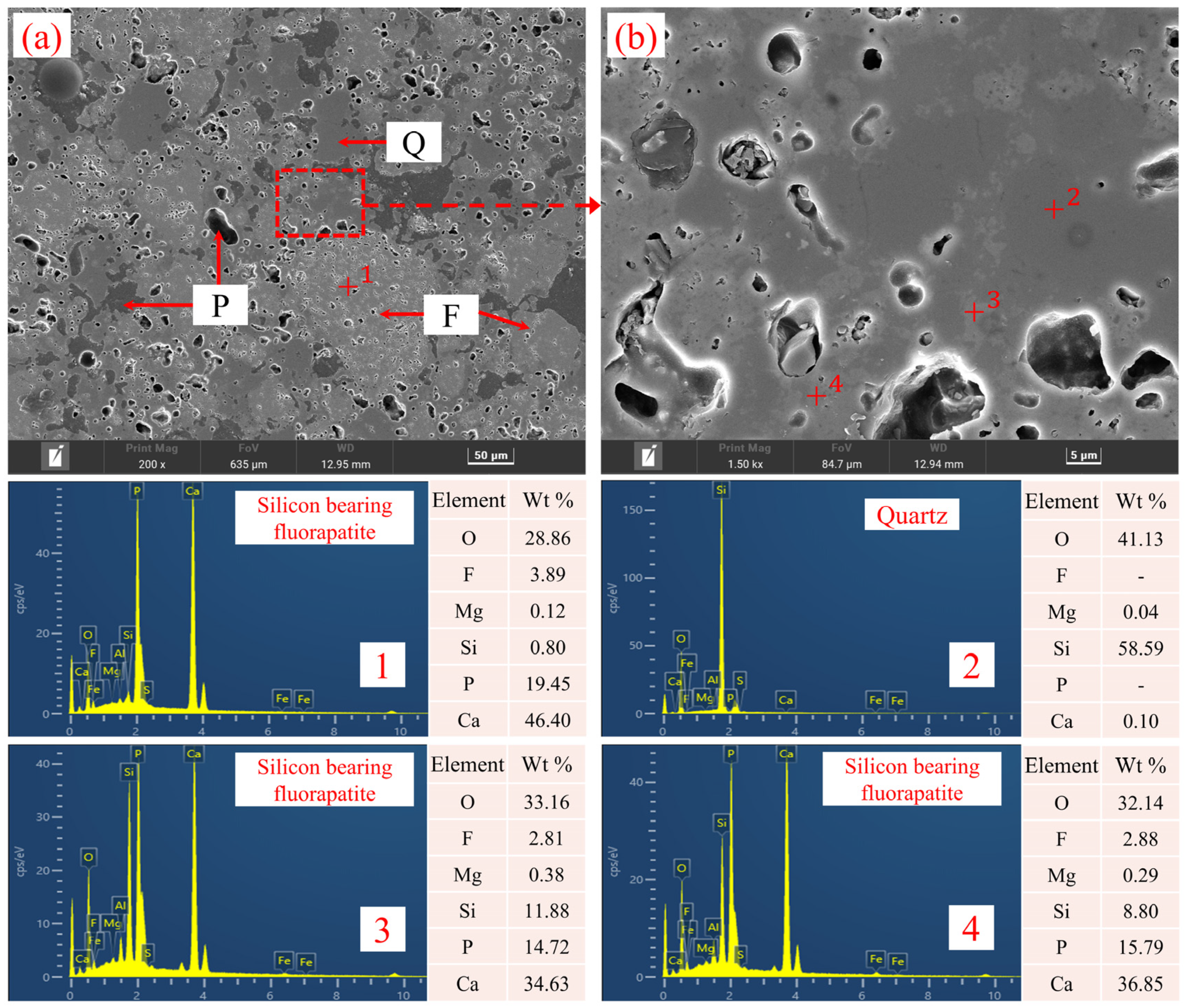
3.2.1. Macroscopic Appearance and Microstructure of Oxidized Phosphate Ore Pellets
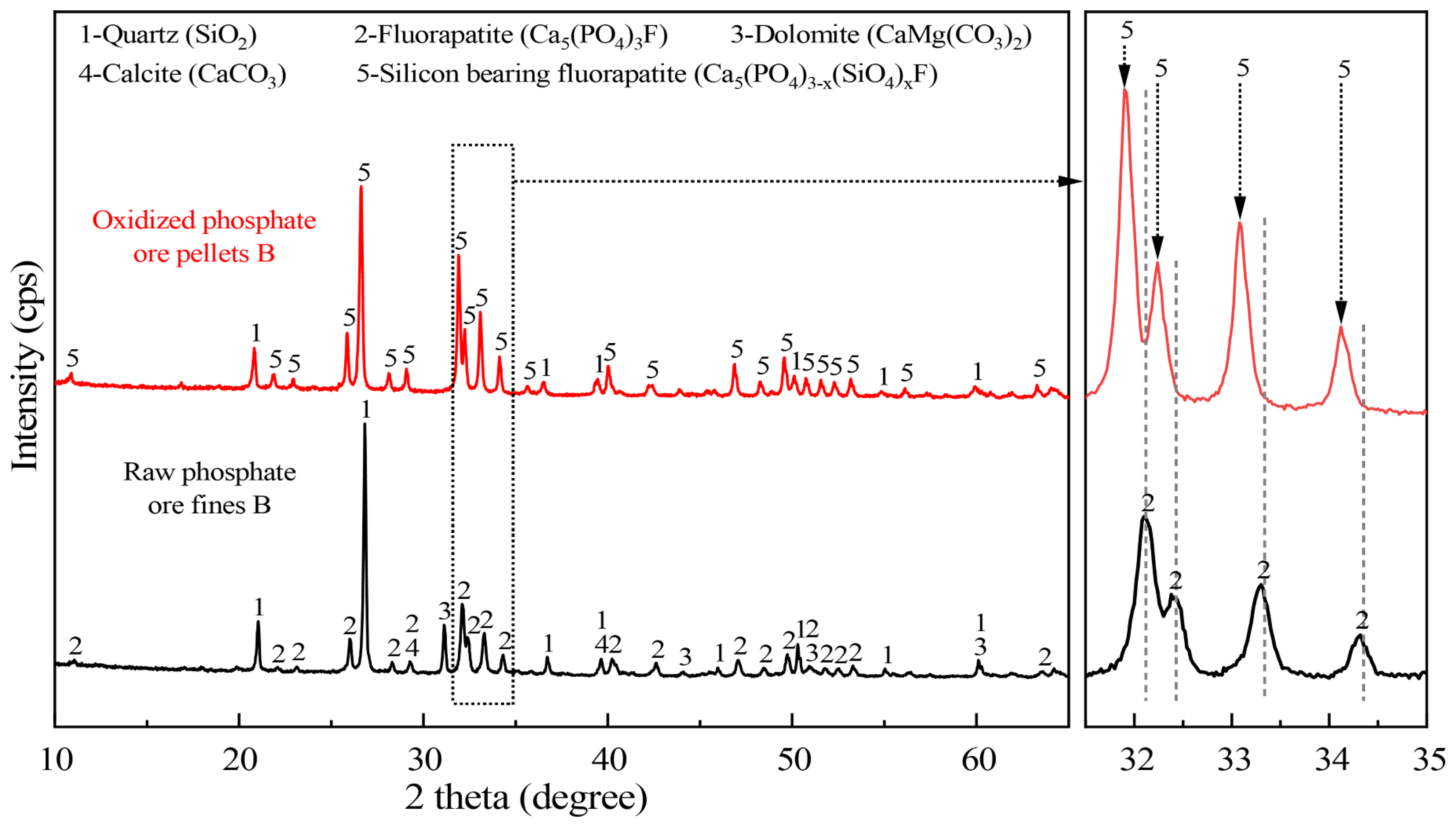
3.2.2. Mineralogy of Oxidized Phosphate Ore Pellets
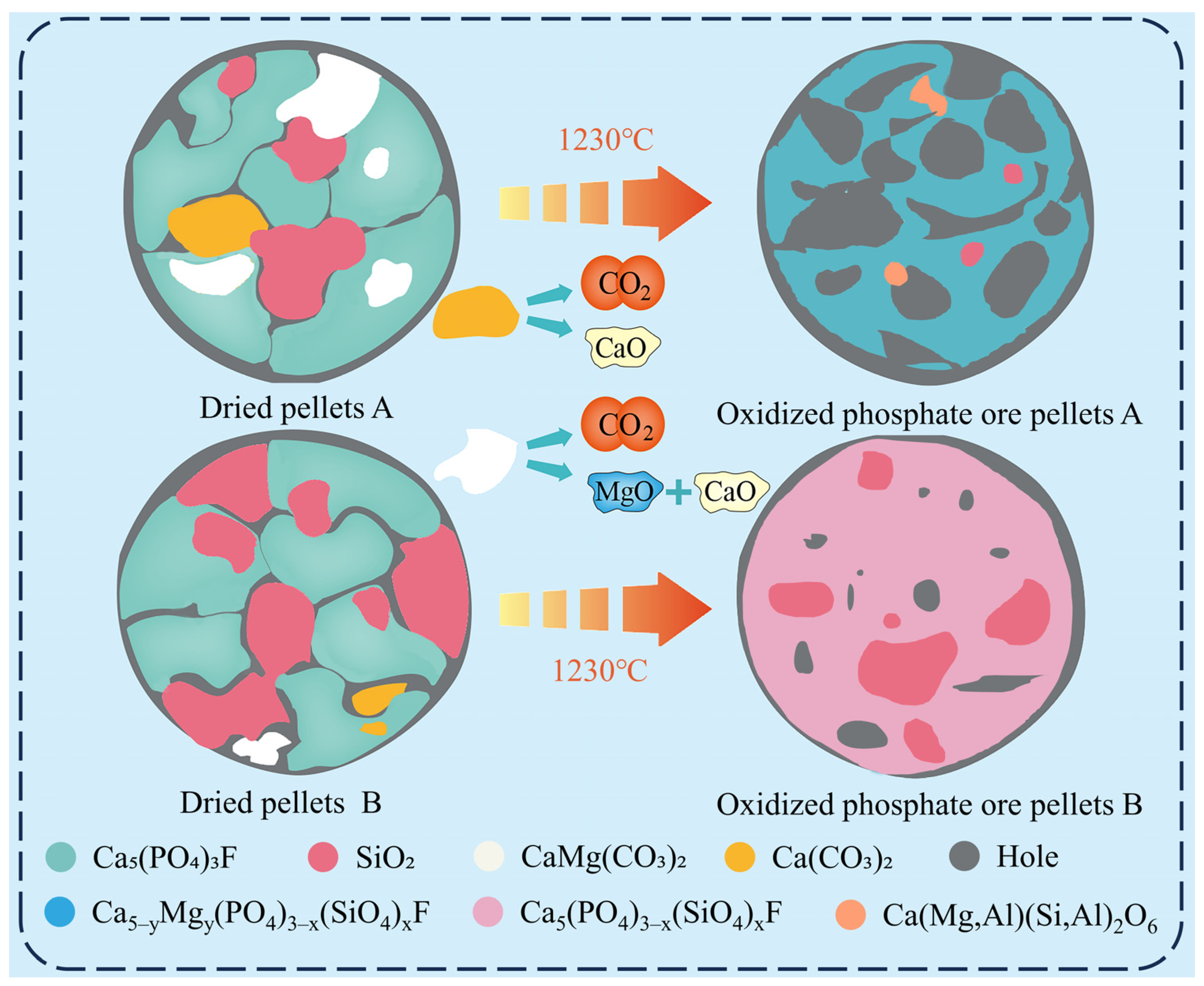
3.2.3. Analysis of the Consolidation Mechanism of Oxidized Phosphate Ore Pellets
4. Conclusions
- Compared with siliceous–calcareous phosphate ore pellets, siliceous phosphate ore pellets showed superior oxidation-roasting performance, as reflected by the higher compressive strengths of the preheated and oxidized pellets under lower roasting temperatures, together with a denser roasted structure. For siliceous phosphate ore pellets, the optimal parameters within the experimental range investigated in this study were preheating at 1000 °C for 7 min and roasting at 1140 °C for 10 min, yielding compressive strengths of 544 N/pellet (preheated pellets) and 1513 N/pellet (oxidized pellets). For siliceous–calcareous phosphate ore pellets, the optimal parameters within the experimental range investigated were preheating at 1000 °C for 7 min and roasting at 1230 °C for 10 min, resulting in compressive strengths of 264 N/pellet (preheated pellets) and 1017 N/pellet (oxidized pellets). Notably, the preheated strength of siliceous–calcareous pellets remained relatively low even under intensified preheating conditions.
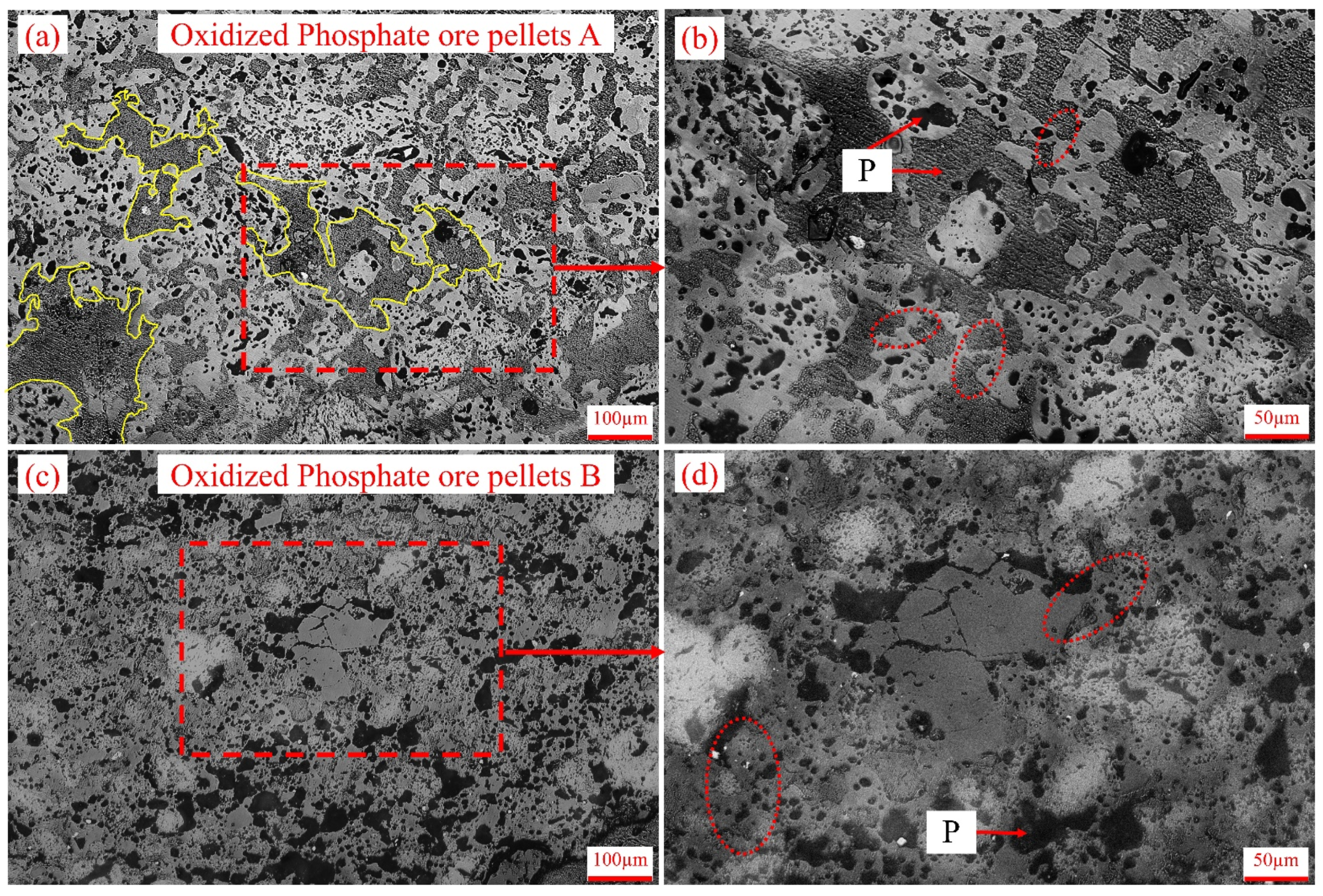
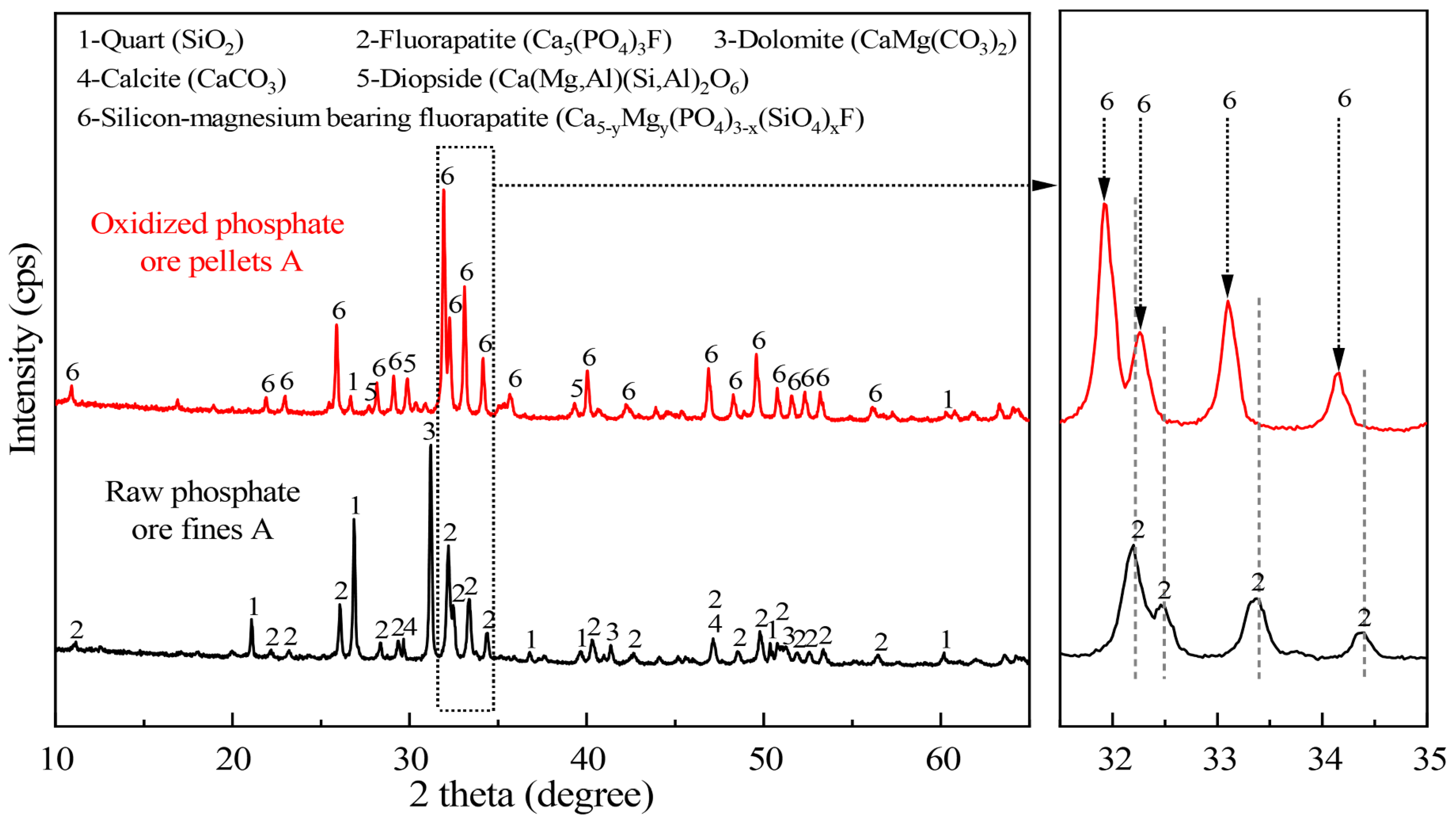
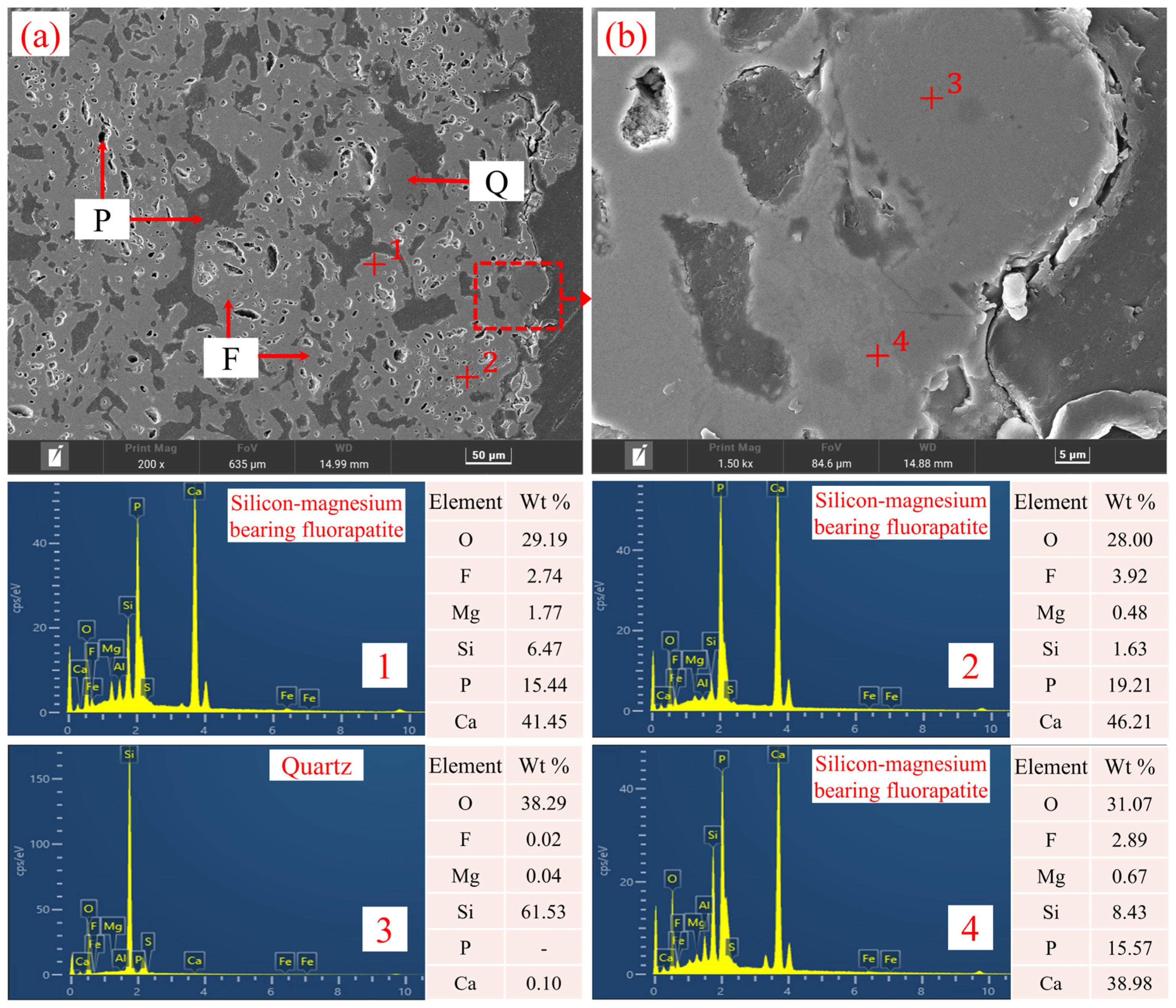
- Oxidized siliceous–calcareous phosphate ore pellets showed a porous microstructure with large pores, thin pore walls, and visible surface cracking. The predominant phases in these pellets were silicon–magnesium-bearing fluorapatite, together with minor amounts of quartz and diopside. In contrast, oxidized siliceous phosphate ore pellets exhibited lower porosity and a denser framework, and their main phases were silicon-bearing fluorapatite and quartz. These microstructural differences help explain why siliceous phosphate ore pellets are more favorable for subsequent high-temperature utilization, as they provide higher strength and a more stable pellet framework after oxidation roasting.
- The consolidation of the siliceous–calcareous pellets was mainly characterized by the recrystallization bonding of silicon–magnesium-bearing fluorapatite, whereas siliceous pellets were mainly characterized by the recrystallization bonding of silicon-bearing fluorapatite and the solid-state bonding between silicon-bearing fluorapatite particles and quartz particles.
- Carbonate decomposition had a detrimental impact on densification and strength development. CO2 release during oxidation roasting promotes pore formation and can introduce surface defects, which reduces effective particle–particle bonding and limits the compressive strength of the oxidized pellets.
Author Contributions
Funding
Data Availability Statement
Conflicts of Interest
References
- Ge, R.; Yang, B.; Martin, R.; Luo, H.; He, D.; Arroyo, M.A.C. The application of poly (sodium 4–styrene sulfonate) as an efficient dolomite depressant in the direct flotation of apatite from dolomite. Powder Technol. 2023, 425, 118583. [Google Scholar] [CrossRef]
- Cui, R.; Zhang, Y.; Guo, J.; Guo, Z.; Xiao, Y. Development Strategy of Phosphate Rock in China Under Global Allocation of Resources. Chin. J. Eng. Sci. 2019, 21, 128. [Google Scholar] [CrossRef]
- Hou, D.; Xu, M.; Li, X.; Wang, J.; Wang, M.; Li, S. Optimization of mining methods for deep orebody of large phosphate mines. Front. Built Environ. 2023, 9, 1282684. [Google Scholar] [CrossRef]
- Geeson, M.B.; Cummins, C.C. Phosphoric acid as a precursor to chemicals traditionally synthesized from white phosphorus. Science 2018, 359, 1383–1385. [Google Scholar] [CrossRef]
- Geeson, M.B.; Cummins, C.C. Let’s Make White Phosphorus Obsolete. ACS Cent. Sci. 2020, 6, 848–860. [Google Scholar] [CrossRef]
- Ji, G.; Gao, X.; Sohn, I.; Ueda, S.; Wang, W. In–situ observation of dissolution behavior and kinetics of fluorapatite particles in high–phosphorus iron ores. Sep. Purif. Technol. 2025, 358, 130301. [Google Scholar] [CrossRef]
- Tian, H.; Wang, J.; Lai, G.; Dou, Y.; Gao, J.; Duan, Z.; Feng, X.; Wu, Q.; He, X.; Yao, L.; et al. Renaissance of elemental phosphorus materials: Properties, synthesis, and applications in sustainable energy and environment. Chem. Soc. Rev. 2023, 52, 5388–5484. [Google Scholar] [CrossRef]
- Jupp, A.R.; Beijer, S.; Narain, G.C.; Schipper, W.; Slootweg, J.C. Phosphorus recovery and recycling—Closing the loop. Chem. Soc. Rev. 2021, 50, 87–101. [Google Scholar] [CrossRef]
- Jing, H.; Shi, Y.; Yuan, Y.; Liu, B.; Wang, Y.; Guan, H.; Gu, S.; Wang, M.; Hou, C. Interface migration and alloying mechanism of Fe and P for ferrophosphorus alloy production during the carbothermic reduction of phosphorite. J. Solid State Chem. 2024, 338, 124907. [Google Scholar] [CrossRef]
- Slootweg, J.C. Sustainable Phosphorus Chemistry: A Silylphosphide Synthon for the Generation of Value–Added Phosphorus Chemicals. Angew. Chem. Int. Ed. 2018, 57, 6386–6388. [Google Scholar] [CrossRef]
- El–Jallad, I.S.; Abouzeid, A.–Z.M.; El–Sinbawy, H.A. Calcination of phosphates: Reactivity of calcined phosphate. Powder Technol. 1980, 26, 187–197. [Google Scholar] [CrossRef]
- China Petroleum and Chemical Industry Federation. Production Technical Regulation for Yellow Phosphorus. 2016. Available online: https://openstd.samr.gov.cn/bzgk/std/newGbInfo?hcno=CA17D64425F35DE11CD53F4FEBBE89B5 (accessed on 16 April 2026).
- Sun, Z.L.; Niu, R.J.; Wen, L.N.; Li, J.T. Study and analysis on the influence of water content of feed material on electrothermal phosphorous production process. Fertil. Health 2021, 48, 11–14. [Google Scholar]
- Mew, M.C. Phosphate rock costs, prices and resources interaction. Sci. Total Environ. 2016, 542, 1008–1012. [Google Scholar] [CrossRef] [PubMed]
- Boucif, R.; Filippov, L.O.; Maza, M.; Benabdeslam, N.; Foucaud, Y.; Marin, J.; Korbel, C.; Demeusy, B.; Diot, F.; Bouzidi, N. Optimizing liberation of phosphate ore through high voltage pulse fragmentation. Powder Technol. 2024, 437, 119549. [Google Scholar] [CrossRef]
- Jiang, Z.; He, D.; Wei, P.; Deng, D.; Huang, J. Research Progress on Using Fine–grained Phosphate Ore in Yellow Phosphorus Enterprises. Mater. Rep. 2023, 37, 303–307. [Google Scholar]
- U.S. Geological Survey. Mineral Commodity Summaries 2024; U.S. Geological Survey: Reston, VA, USA, 2024. [CrossRef]
- Ye, Y.; Ngo, H.H.; Guo, W.; Liu, Y.; Li, J.; Liu, Y.; Zhang, X.; Jia, H. Insight into chemical phosphate recovery from municipal wastewater. Sci. Total Environ. 2017, 576, 159–171. [Google Scholar] [CrossRef]
- Taha, Y.; Elghali, A.; Hakkou, R.; Benzaazoua, M. Towards Zero Solid Waste in the Sedimentary Phosphate Industry: Challenges and Opportunities. Minerals 2021, 11, 1250. [Google Scholar] [CrossRef]
- Koppelaar, R.H.E.M.; Weikard, H.P. Assessing phosphate rock depletion and phosphorus recycling options. Glob. Environ. Change 2013, 23, 1454–1466. [Google Scholar] [CrossRef]
- Chlahbi, S.; Belem, T.; Elghali, A.; Rochdane, S.; Zerouali, E.; Inabi, O.; Benzaazoua, M. Geological and Geomechanical Characterization of Phosphate Mine Waste Rock in View of Their Potential Civil Applications: A Case Study of the Benguerir Mine Site, Morocco. Minerals 2023, 13, 1291. [Google Scholar] [CrossRef]
- Zhantasov, K.T.; Altybayev, Z.M.; Zhantasov, M.K.; Yeskendirova, M.M.; Lavrov, B.A.; Frangulidi, L.H. The research of fluxed sinter production with sufficiently high strength and improved technological properties. Eurasian Chem.–Technol. J. 2012, 14, 351. [Google Scholar] [CrossRef]
- Singh, V.; Singh, A. Briquetting Technologies for Minerals and Metallurgical Applications: A Review. Miner. Process. Extr. Metall. Rev. 2025, 47, 406–425. [Google Scholar] [CrossRef]
- Yu, W.; Sun, T.; Liu, Z.; Kou, J.; Xu, C. Study on the strength of cold–bonded high–phosphorus oolitic hematite–coal composite briquettes. Int. J. Miner. Metall. Mater. 2014, 21, 423–430. [Google Scholar] [CrossRef]
- He, D.; Zhang, Y.; Fu, Y.; Cao, Y.; Tang, Y.; Li, Z.; Yang, Q. Influence and Mechanism on the Preparation of Pellets Using Phosphate Ore Powder. JOM 2025, 77, 6637–6649. [Google Scholar] [CrossRef]
- Shi, B.; Zhang, F.; Liu, Z.; Dai, Y.; Wang, Z.; Ye, H. Experimental research on balling characteristics and preparation for pellets of phosphate rock powder. Eco–Ind. Sci. Phosphorus Fluor. Eng. 2024, 39, 23–28, 74. [Google Scholar] [CrossRef]
- Wei, S.F.; Ma, B.; Ren, G.X. Preliminary study on high–temperature consolidation conditions for carbon–bearing phosphate ore pellets. Min. Metall. Eng. 2024, 44, 92–95. [Google Scholar] [CrossRef]
- Panchenko, S.V. Automated analysis of the energy–saving potential in a thermal engineering system for phosphorus production. Theor. Found. Chem. Eng. 2004, 38, 538–544. [Google Scholar] [CrossRef]
- Bobkov, V.I.; Fedulov, A.S.; Dli, M.I.; Meshalkin, V.P. Studying the chemical and energy engineering process of the strengthening calcination of phosphorite pellets containing free carbon. Theor. Found. Chem. Eng. 2018, 52, 525–532. [Google Scholar] [CrossRef]
- Wang, C.; Shi, B.; Zhang, F.; Cen, Y.; Jiang, X.; Lei, Z. Experimental research of ballability of phosphate ore fines. Eco–Ind. Sci. Phosphorus Fluor. Eng. 2025, 40, 24–31. [Google Scholar]
- Wu, Y. Study on Pellets Process for Preparation of Yellow Phosphorous from Phosphate Rock. Master’s Thesis, Wuhan Institute of Technology, Wuhan, China, 2019. [Google Scholar]
- Xie, W.; He, D.; Wu, Y.; Xie, Z.; Chi, R.; Hu, Y. Study on the pelletizing process of medium– and low–grade phosphate rock powders. Kuwait J. Sci. 2020, 47, 50–58. [Google Scholar]
- Abouzeid, A.–Z.M. Physical and thermal treatment of phosphate ores—An overview. Int. J. Miner. Process. 2008, 85, 59–84. [Google Scholar] [CrossRef]
- Shi, H.; Zhong, H.; Liu, Y.; Wang, S.; Wei, Y. Component differentiation of mid–low grade phosphate rocks in grinding. J. Wuhan Inst. Technol. 2011, 33, 87–91. [Google Scholar] [CrossRef]
- Guo, F.; Li, J.; Li, W.; Yao, Q. Physicochemical Characteristics and Mineral Separation of A Phosphate Rock with Siliceous and Carbonates Gangues. J. Sichuan Univ. Eng. Sci. Ed. 2010, 42, 170–175. [Google Scholar] [CrossRef]
- Liu, Y. Mineralogical Spectroscopy of Apatites. Ph.D. Thesis, Sun Yat-Sen University, Guangzhou, China, 2003. [Google Scholar]
- Bazhirova, K.; Zhantasov, K.; Bazhirov, T.; Kolesnikov, A.; Toltebaeva, Z.; Bazhirov, N. Acid–Free Processing of Phosphorite Ore Fines into Composite Fertilizers using the Mechanochemical Activation Method. J. Compos. Sci. 2024, 8, 165. [Google Scholar] [CrossRef]
- Yu, Z. Properties and Classification of Phosphatic Minerals and Phosphate Rocks. Sulphur Phosphorus Bulk Mater. Handl. Relat. Eng. 1998, 29–37. Available online: https://kns.cnki.net/KCMS/detail/detail.aspx?dbcode=CJFQ&dbname=CJFD9899&filename=LLFT199802008 (accessed on 15 April 2026).
- GB/T 8074-2008; Testing Method for Specific Surface of Cement—Blaine Method. Standards Press of China: Beijing, China, 2008.
- ISO 4700:2015; Iron Ore Pellets for Blast Furnace and Direct Reduction Feedstocks—Determination of the Crushing Strength. International Organization for Standardization: Geneva, Switzerland, 2015.
- Cao, Y.Y. Preparation of Pellets from Phosphate Rock Powder and Its Performance Evaluation. Master’s Thesis, Wuhan Institute of Technology, Wuhan, China, 2023. [Google Scholar] [CrossRef]
- Loutou, M.; Taha, Y.; Benzaazoua, M.; Daafi, Y.; Hakkou, R. Valorization of clay by–product from moroccan phosphate mines for the production of fired bricks. J. Clean. Prod. 2019, 229, 169–179. [Google Scholar] [CrossRef]
- Elgharbi, S.; Horchani–Naifer, K.; Férid, M. Investigation of the structural and mineralogical changes of Tunisian phosphorite during calcinations. J. Therm. Anal. Calorim. 2015, 119, 265–271. [Google Scholar] [CrossRef]
- Wang, J.; Xue, C.; Zhu, P. Hydrothermal synthesis and structure characterization of flower–like self assembly of silicon–doped hydroxyapatite. Mater. Lett. 2017, 196, 400–402. [Google Scholar] [CrossRef]
- Betkowski, W.B.; Harlov, D.E.; Rakovan, J.F. Hydrothermal mineral replacement reactions for an apatite–monazite assemblage in alkali–rich fluids at 300–600 °C and 100 MPa. Am. Mineral. 2016, 101, 2620–2637. [Google Scholar] [CrossRef]
- Knubovets, R.; Nathan, Y.; Shoval, S.; Rabinowitz, J. Thermal transformations in phosphorites. J. Therm. Anal. 1997, 50, 229–239. [Google Scholar] [CrossRef]



| Composition | P2O5 | SiO2 | CaO | MgO | Al2O3 | Fe2O3 | F | LOI |
|---|---|---|---|---|---|---|---|---|
| Phosphate ore A | 26.98 | 12.04 | 42.98 | 2.19 | 3.09 | 1.52 | 1.95 | 8.52 |
| Phosphate ore B | 21.93 | 39.43 | 30.12 | 0.31 | 2.16 | 2.10 | 1.68 | 2.26 |
| Sample | Specific Surface Area (cm2/g) | Particle Size Distribution (%) | ||
|---|---|---|---|---|
| ≥0.075 mm | 0.045–0.075 mm | ≤0.045 mm | ||
| Phosphate ore A | 1568 | 36.57 | 15.31 | 48.12 |
| Phosphate ore B | 1194 | 33.05 | 17.65 | 49.30 |
| Sample | Quartz (SiO2)/% | Fluorapatite [Ca5(PO4)3F]/% | Dolomite [CaMg(CO3)2]/% | Calcite (CaCO3)/% |
|---|---|---|---|---|
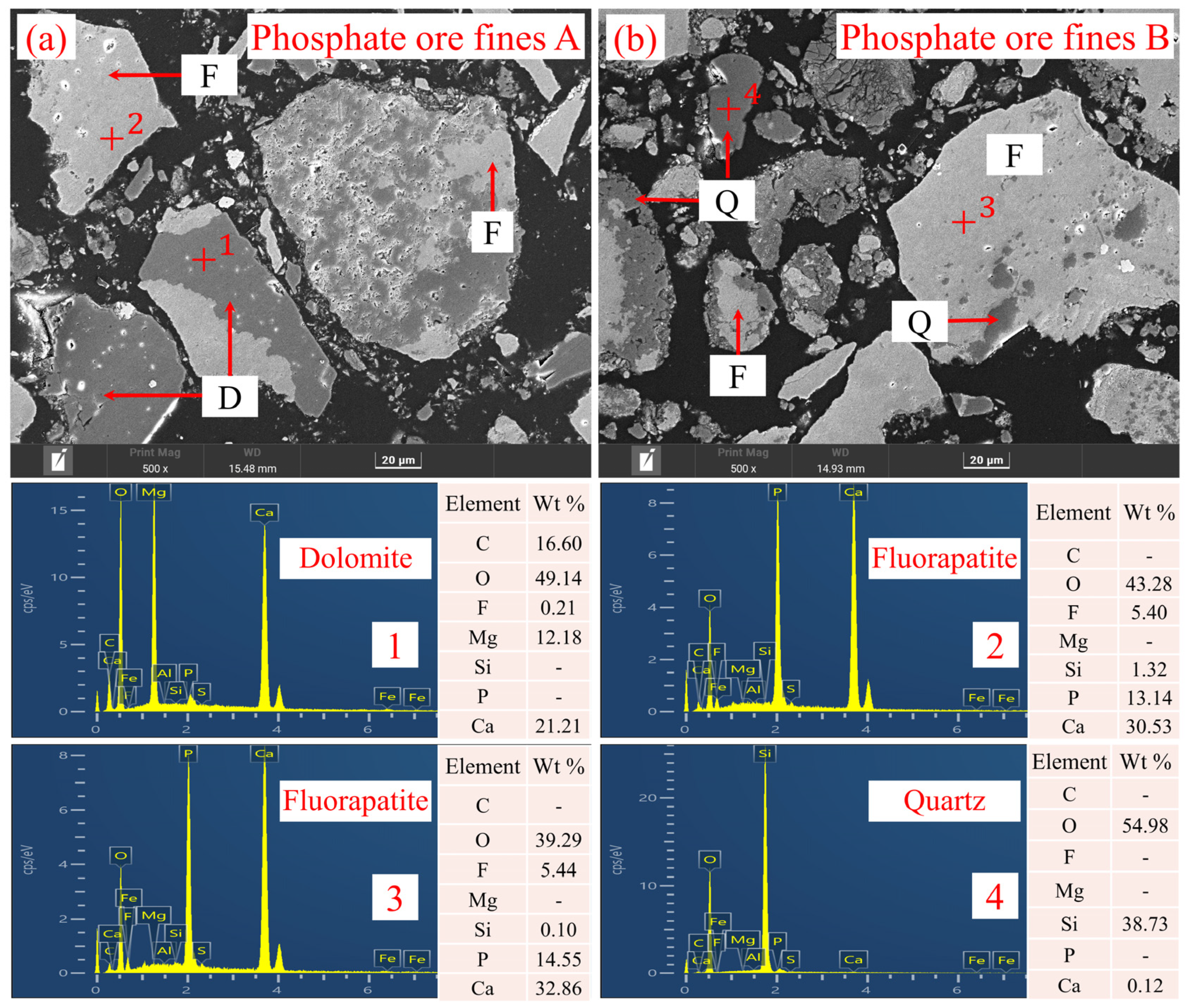
| Phosphate ore A | 13.1 | 39.1 | 47.6 | 0.2 |
| Phosphate ore B | 40.2 | 42.1 | 17.7 | – |
| Sample | Quartz/% | Fluorapatite/% | Dolomite/% | Calcite/% | Diopside/% |
|---|---|---|---|---|---|
| Phosphate ore A | 13.1 | 39.1 | 47.6 | 0.2 | – |
| Oxidized type A phosphate ore pellets | 1.8 | 93.7 | 3.2 | – | 1.4 |
| Sample | Quartz/% | Fluorapatite/% | Dolomite/% |
|---|---|---|---|
| Phosphate ore B | 40.2 | 42.1 | 17.7 |
| Oxidized type B phosphate ore pellets | 37.1 | 62.2 | 0.1 |
Disclaimer/Publisher’s Note: The statements, opinions and data contained in all publications are solely those of the individual author(s) and contributor(s) and not of MDPI and/or the editor(s). MDPI and/or the editor(s) disclaim responsibility for any injury to people or property resulting from any ideas, methods, instructions or products referred to in the content. |
© 2026 by the authors. Licensee MDPI, Basel, Switzerland. This article is an open access article distributed under the terms and conditions of the Creative Commons Attribution (CC BY) license.
Share and Cite
Cen, Y.; Zhang, F.; Jiang, X.; Lei, Z.; Chen, Z. Study on Oxidation-Roasting Performance and Consolidation Mechanism of Phosphate Ore Pellets. Minerals 2026, 16, 433. https://doi.org/10.3390/min16050433
Cen Y, Zhang F, Jiang X, Lei Z, Chen Z. Study on Oxidation-Roasting Performance and Consolidation Mechanism of Phosphate Ore Pellets. Minerals. 2026; 16(5):433. https://doi.org/10.3390/min16050433
Chicago/Turabian StyleCen, Yulong, Feng Zhang, Xianghong Jiang, Zhuowei Lei, and Zichun Chen. 2026. "Study on Oxidation-Roasting Performance and Consolidation Mechanism of Phosphate Ore Pellets" Minerals 16, no. 5: 433. https://doi.org/10.3390/min16050433
APA StyleCen, Y., Zhang, F., Jiang, X., Lei, Z., & Chen, Z. (2026). Study on Oxidation-Roasting Performance and Consolidation Mechanism of Phosphate Ore Pellets. Minerals, 16(5), 433. https://doi.org/10.3390/min16050433