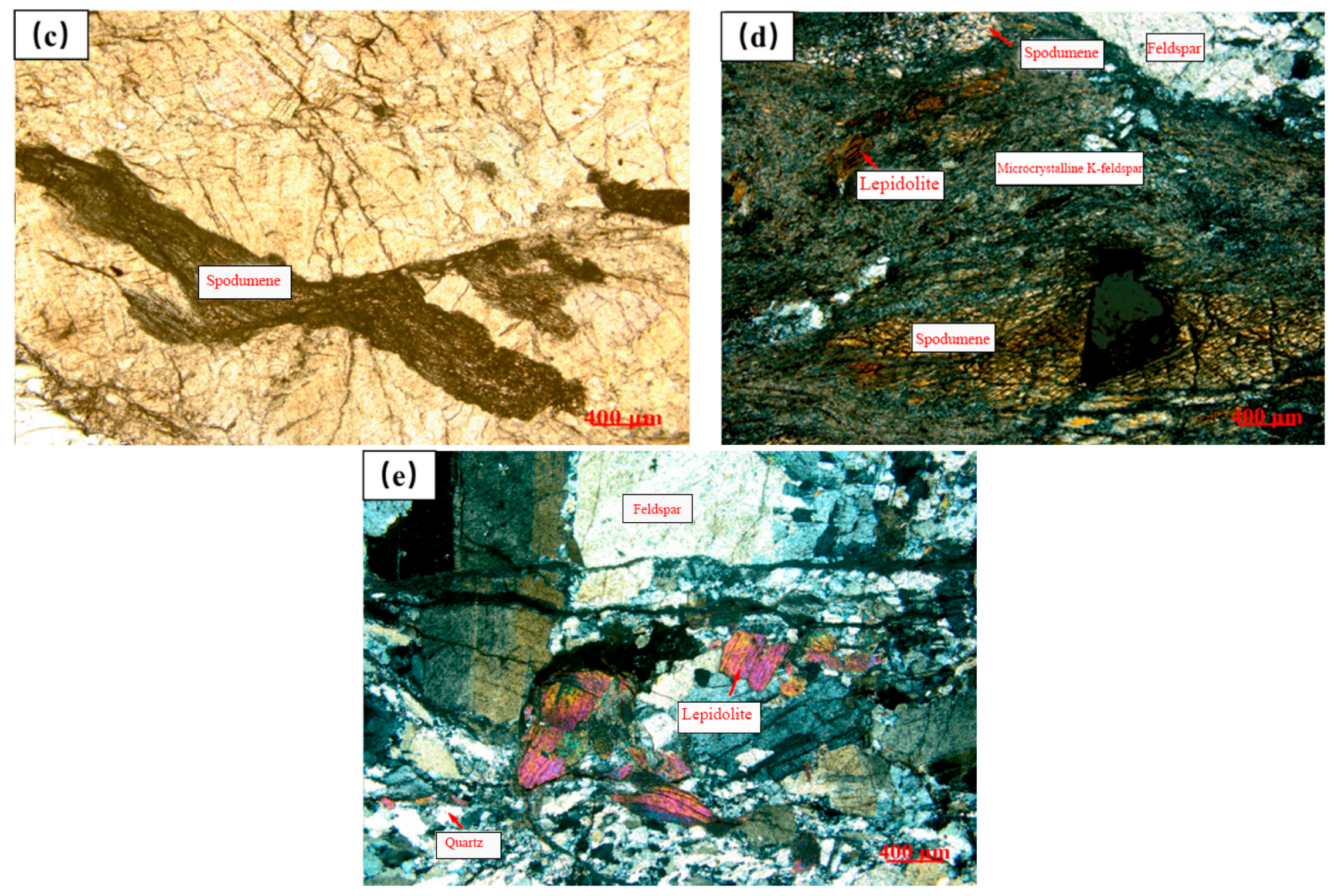
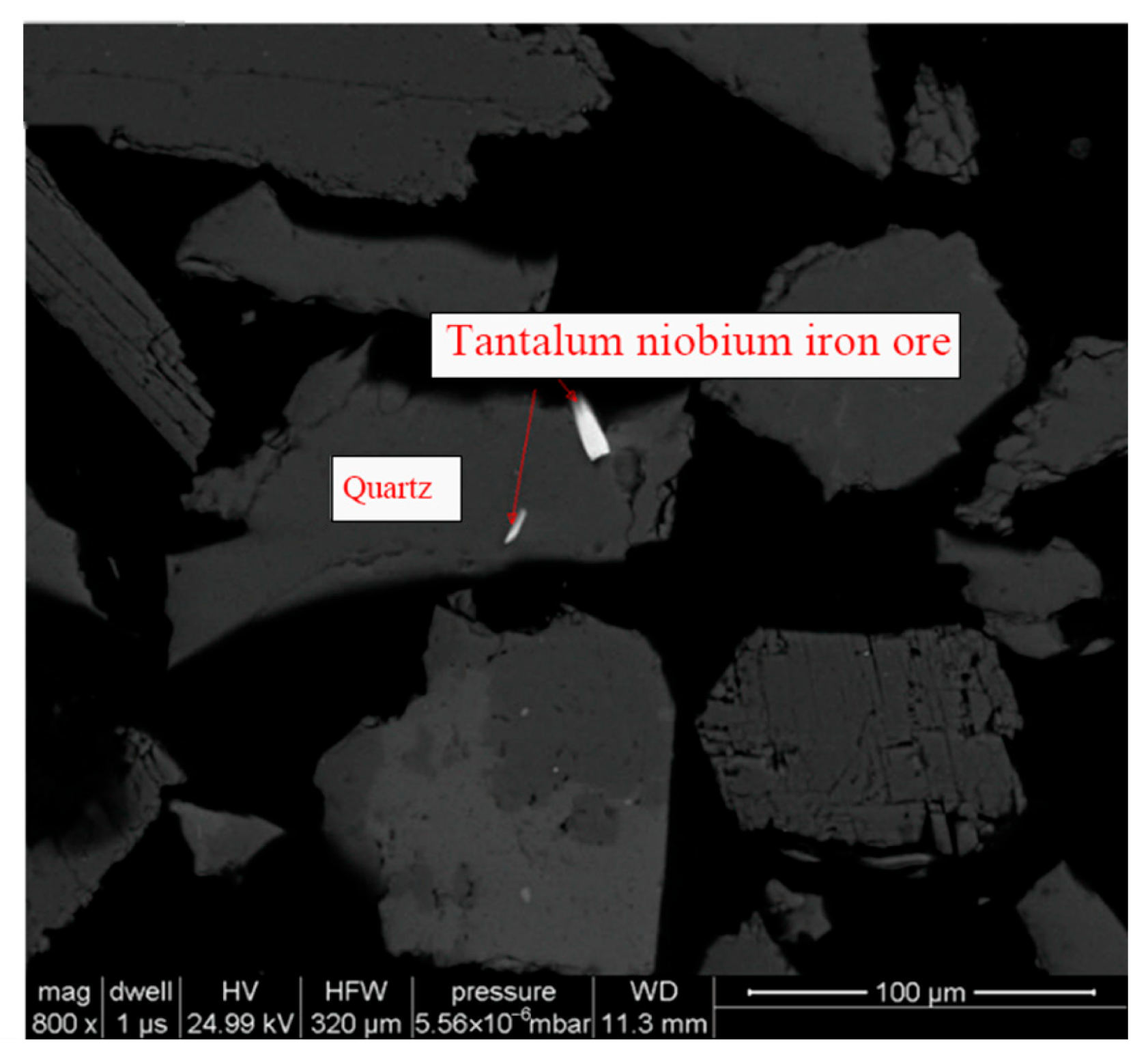
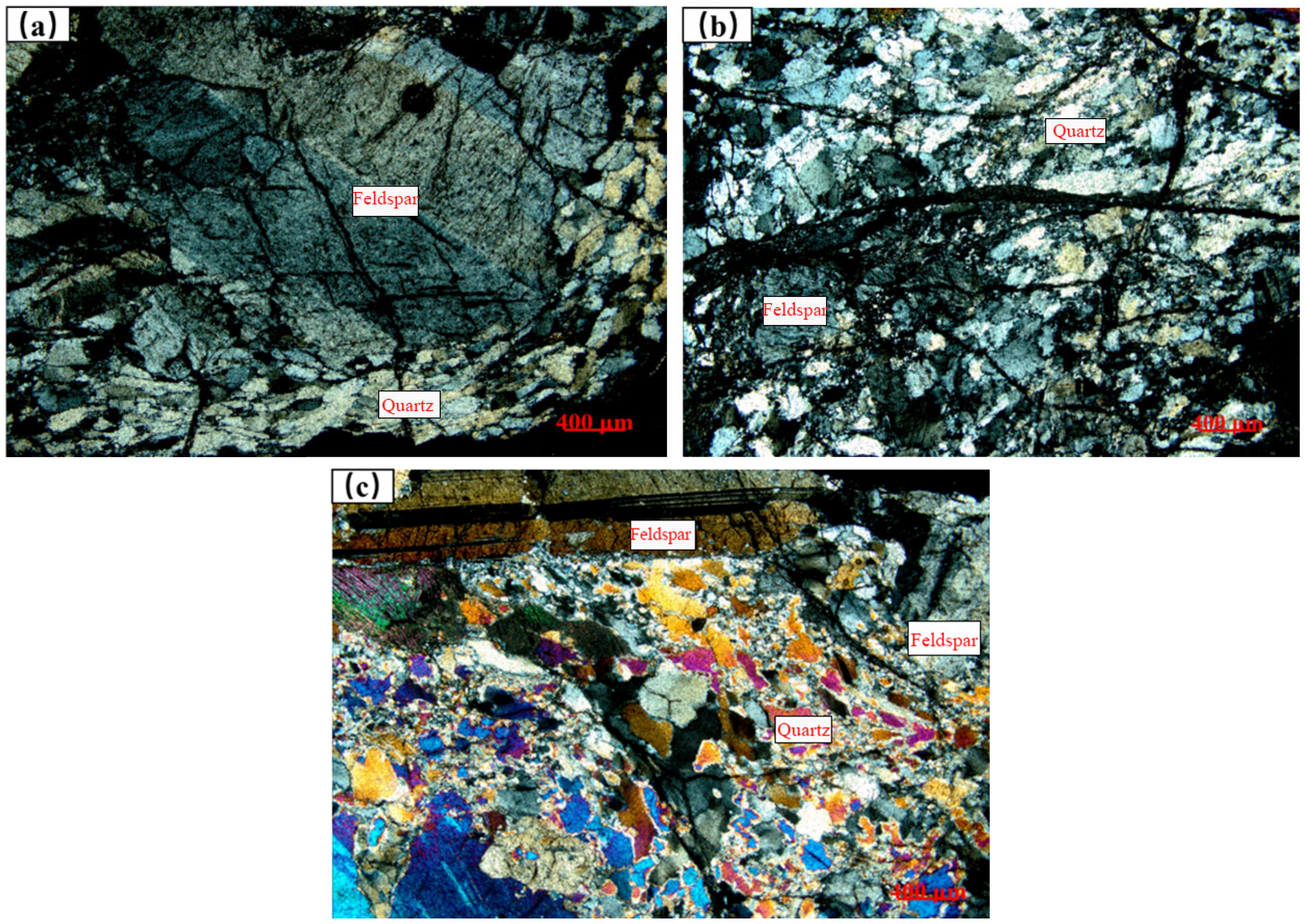
Based on the above process mineralogy analysis, the ore has three core mineralogical characteristics that are highly compatible with dense-medium separation. First, there is a distinct density difference between spodumene and gangue minerals, providing the physical basis for density separation. Second, the ore exhibits coarse crystal size and a uniform particle size distribution, ensuring its suitability for coarse-grained, dense-medium separation. Third, a high natural degree of liberation forms well-defined density units and reduces interference from intergrowth during dense-medium separation. In this section, using mineralogical characteristics as the core control factor, we systematically study the mineralogically controlled separation laws for particle size (dominated by the degree of monomer liberation) and medium density (matching the mineral density difference) to reveal the mineralogically controlled density-based separation mechanism of coarse-grained pegmatite spodumene ore.
3.2.1. Influence of Particle Size on the Results of Dense-Medium Separation
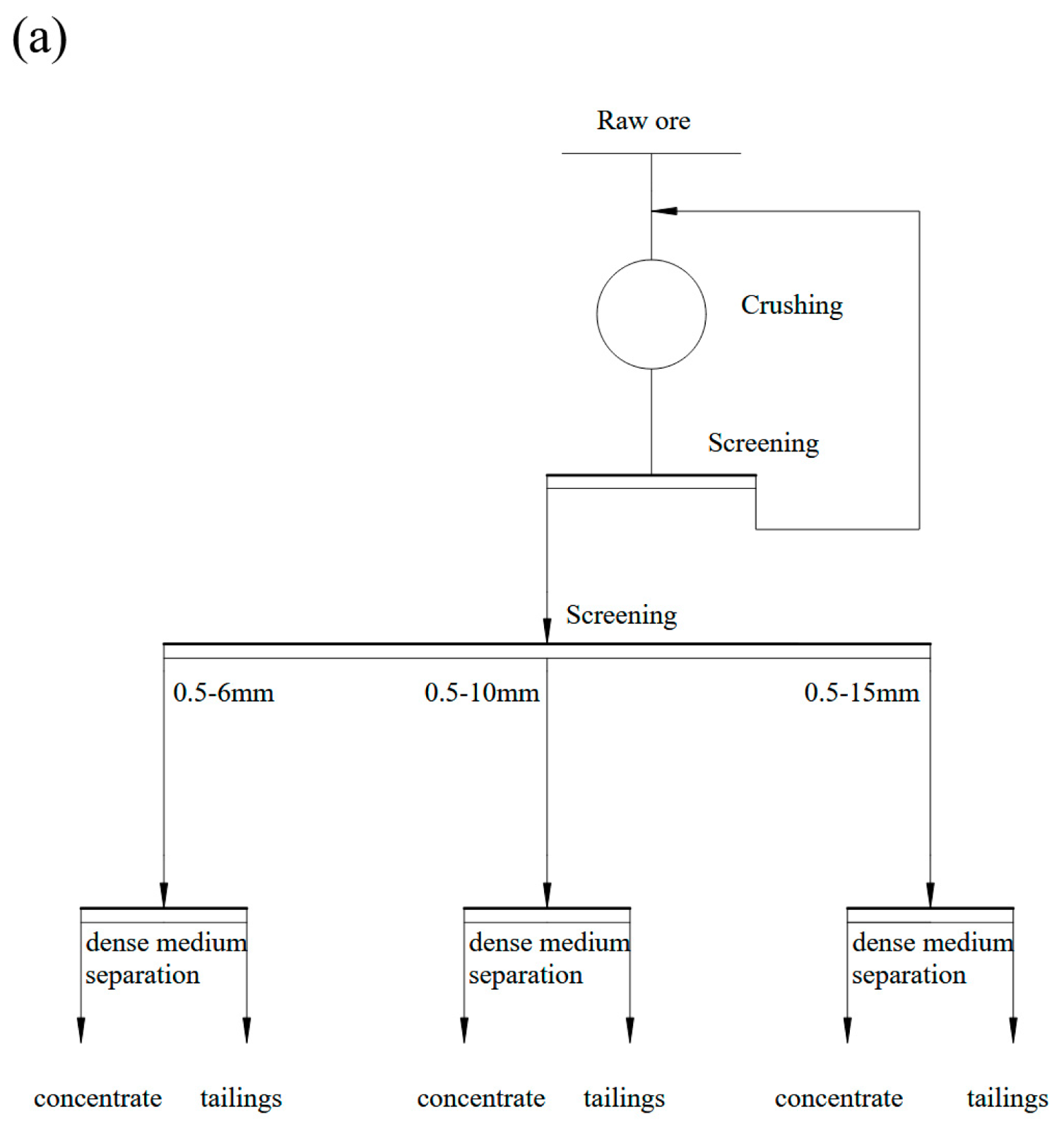
After crushing the raw ore into three particle-size ranges of 0~6 mm, 0~10 mm, and 0~15 mm, the particle-size compositions of each feed material are shown in
Table 9.
According to
Table 9, as the upper particle-size limit increases, the grade of the +0.5 mm size fraction decreases, indicating that after crushing, a large proportion of gangue minerals becomes dissociated and enters the −0.5 mm fine size range. The optimal degree of mineral dissociation occurs when the maximum particle size is 6 mm.
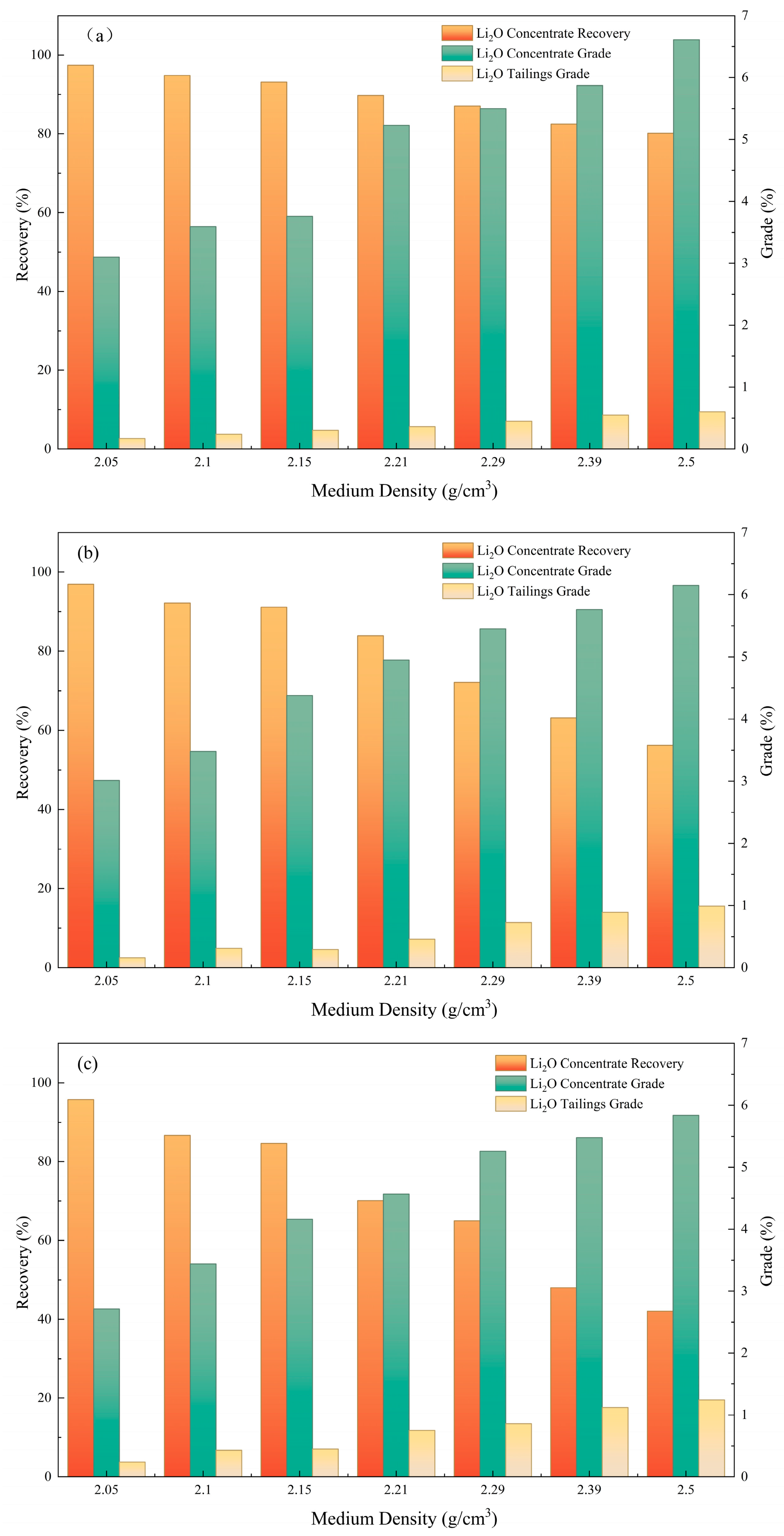
In addition, a two-product dense-medium separation test was conducted by varying the intermediate density, and the results are shown in
Figure 6.
As illustrated in
Figure 6, considering both grade and recovery, when the selected particle-size range is 0.5~6 mm, and the intermediate density is 2.29 g/cm
3, a lithium concentrate with a yield of 35.55%, a grade of 5.50%, and a recovery of 87.08% can be obtained, with a tailings grade of 0.45%. When the selected particle-size range was 0.5–10 mm, and the medium density was 2.29 g/cm
3, a lithium concentrate with a yield of 25.71%, a grade of 5.45%, and a recovery of 72.09% was obtained, while the tailings grade was 0.73%. When the selected particle-size range is 0.5~15 mm, and the intermediate density is 2.39 g/cm
3, a lithium concentrate with a yield of 15.88%, a grade of 5.48%, and a recovery of 48.01% can be obtained, and the tailings grade is 1.12%.
The separation performance shows a significant negative correlation with the upper limit particle size of the ore, and the 0.5~6 mm size fraction achieves the optimal indexes. This phenomenon is essentially controlled by the monomer dissociation degree of spodumene in different size fractions. As shown in
Table 8, when the particle size upper limit changed from 0.5~15 mm to 0.5~6 mm, the spodumene monomer dissociation degree increased further, which increased the proportion of pure spodumene density units, thus effectively improving the concentrate grade and recovery.
In addition, as shown in
Table 9, the decrease in spodumene grade in the +0.5 mm fraction with the increase in particle size upper limit is due to the uneven dissociation of coarse-grained gangue minerals. The large particle size ore is insufficiently crushed, and the gangue minerals are easy to form coarse-grain aggregates, leading to the dilution of spodumene grade in the coarse-grain fraction. The 0.5~6 mm size fraction achieves the optimal balance between ore crushing dissociation and a coarse-grained structure. This balance is the core mineralogical reason why the 0.5~6 mm size fraction is the optimal particle size range for DMS.
3.2.2. Influence of Dense Medium Beneficiation Process on the Separation Results
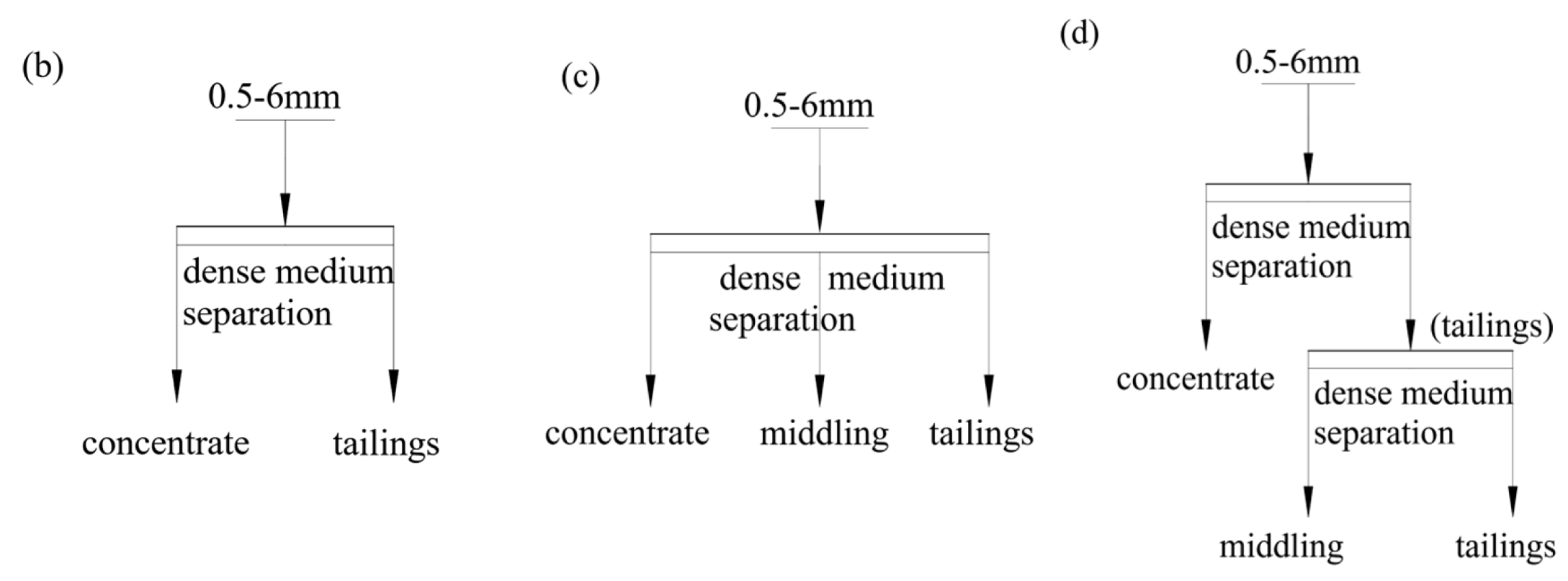
In order to identify a suitable dense-medium separation process for this ore, we compared three approaches: a two-product DMS process, a pressureless three-product DMS process, and a two-stage, two-product DMS process.
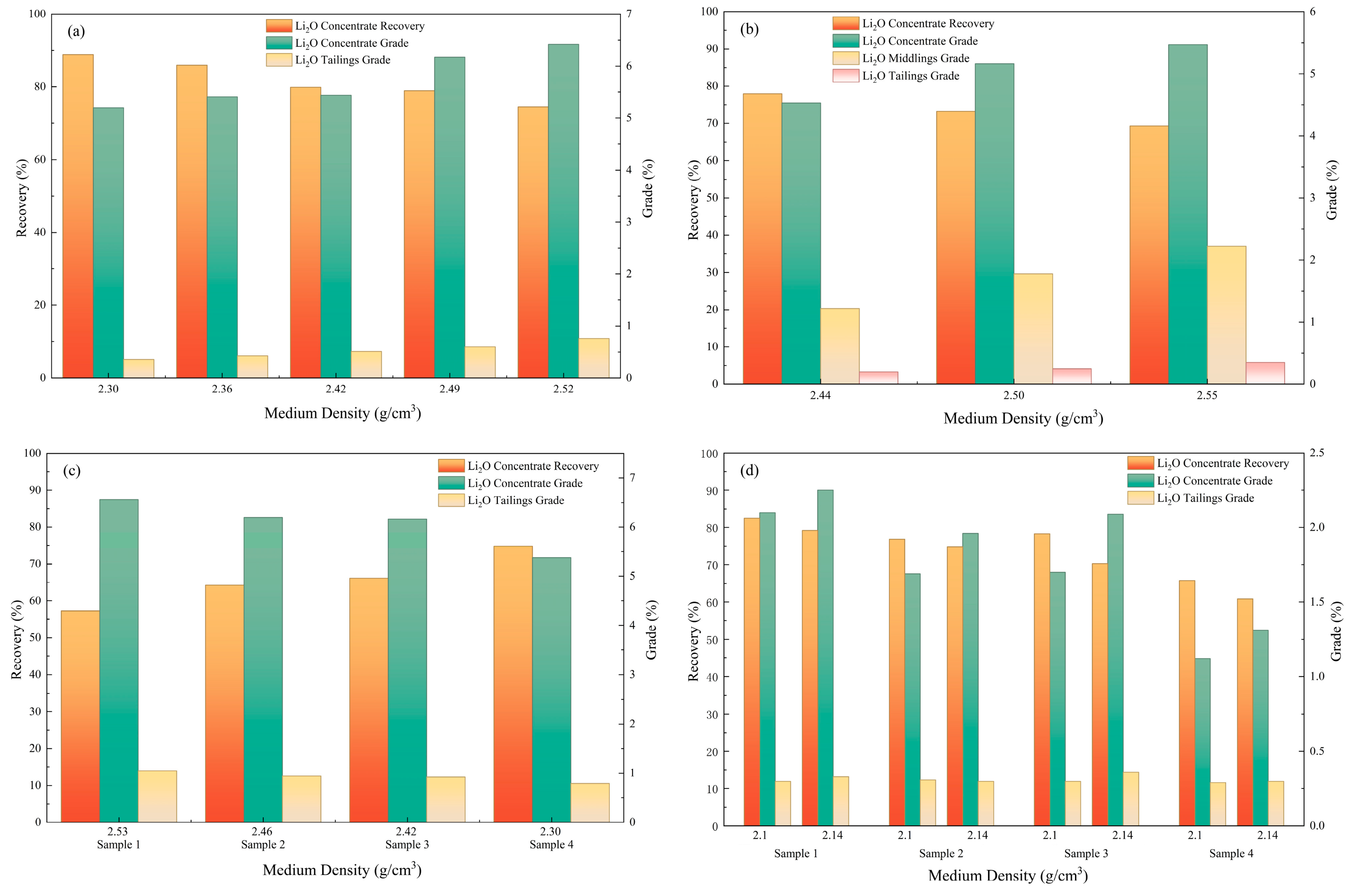
Figure 7 shows the lithium recovery and grade obtained at different medium densities during the separation of spodumene using different dense-medium separation processes. According to
Figure 7a, when the two-product DMS process is used, the concentrate yields are in the range of 26.68%~32.75%, and grades are in the range of 5.41%~6.17%, the recoveries are in the range of 78.91%~85.97%, and the tailings grades are in the range of 0.43%~0.60%. Overall, the separation performance under these conditions appears fairly good. When the intermediate density is adjusted to 2.49 g/cm
3, the lithium concentrate shows a yield of 26.68%, a grade of 6.17%, and a recovery of 78.91%, while the tailings grade is 0.60%. Since the grade of the concentrates is qualified, only the ore with a size fraction of −0.5 mm or both the ore with a size fraction of −0.5 mm and tailings require further grinding. When the requirements for tailings grade are relatively low, only the ore with a size fraction of −0.5 mm is fed into the grinding process, which accounts for 14.34% based on
Table 9. The estimated grinding energy consumption is approximately 10 kWh/t. Therefore, 8.57 kWh can be saved per ton of raw ore. The energy conservation rate is 85.67%. When the requirements for tailings grade are relatively high, both the ore with a size fraction of −0.5 mm and tailings need to be further ground, which accounts for 77.14%. Therefore, 2.29 kWh can be saved per ton of raw ore. The energy conservation rate is 22.9%.
Figure 7b summarizes the results from the pressureless three-product DMS process. Under this configuration, the concentrate yields are 25.84%~33.99%, grades are 4.53%~5.47%, the recoveries are 69.28%~77.93%, the middling grades are 1.22%~2.22%, and the tailings grades are 0.20%~0.35%. This process is capable of separating concentrates, intermediate ore, and tailings more distinctly. However, the intermediate product still requires additional treatment, which increases the overall complexity of the flowsheet. When the intermediate density is 2.55 g/cm
3, a lithium concentrate with a yield of 25.84%, a grade of 5.47%, and a recovery of 69.28% can be obtained, along with middling with a yield of 19.64%, a grade of 2.22%, and a recovery of 21.37%, and tailings with a grade of 0.35%. The grade of the concentrate and tailings is qualified; thus, only the middling and the ore with a size fraction of −0.5 mm need to be further ground, which together account for 31.17%. The estimated grinding energy consumption is approximately 10 kWh/t. Therefore, 6.88 kWh can be saved per ton of raw ore. The energy conservation rate is 68.8%.
Figure 7c,d show the results of the two-stage, two-product DMS process.
Figure 7c shows the results of a single-stage dense-medium separation experiment using a two-stage two-product dense-medium separation process. As shown in
Figure 7c, as the intermediate density decreases, the lithium grade in the first-stage concentrate gradually decreases, and the recovery rate gradually increases, while the lithium grade and recovery rate in the first-stage tailings gradually decrease.
Figure 7d shows the results of secondary dense medium sorting and waste disposal experiments on a section of tailings at different intermediate densities. The tailings are experimental products from the one-stage two-product DMS process. It can be seen from
Figure 7d that when the intermediate density of the first section is 2.3 g/cm
3, the sorting effect is best, yielding a concentrate with a grade of 5.38% and a recovery rate of 74.82%. At this time, the middling grade is 1.12%~1.31%, and the tailings grade is 0.29%~0.30%. The grade of the concentrate and tailings is qualified; thus, only the middling and the ore with a size fraction of −0.5 mm require further grinding. which total accounts for approximately 29.98%. Therefore, 7 kWh can be saved for each ton of raw ore. The energy conservation rate is 70%.
This process also achieves the separation of three products: concentrate, middling, and tailings. The tailings have a lower grade but still produce about 20% of the intermediate ore that needs further processing.
From the above results, it can be seen that the dense-medium separation process is simple and can effectively reduce grinding energy. Compared with flotation results reported in the literature, the grade of the concentrate of dense-medium separation is close to or even higher than that of flotation, which confirms the advantages of dense-medium separation for the pre-concentration of spodumene ore. For example, when (E)-octadec-9-enoylglycine was used as the collector, the Li
2O grade was 5.03%, and the Li
2O recovery was 65.95% [
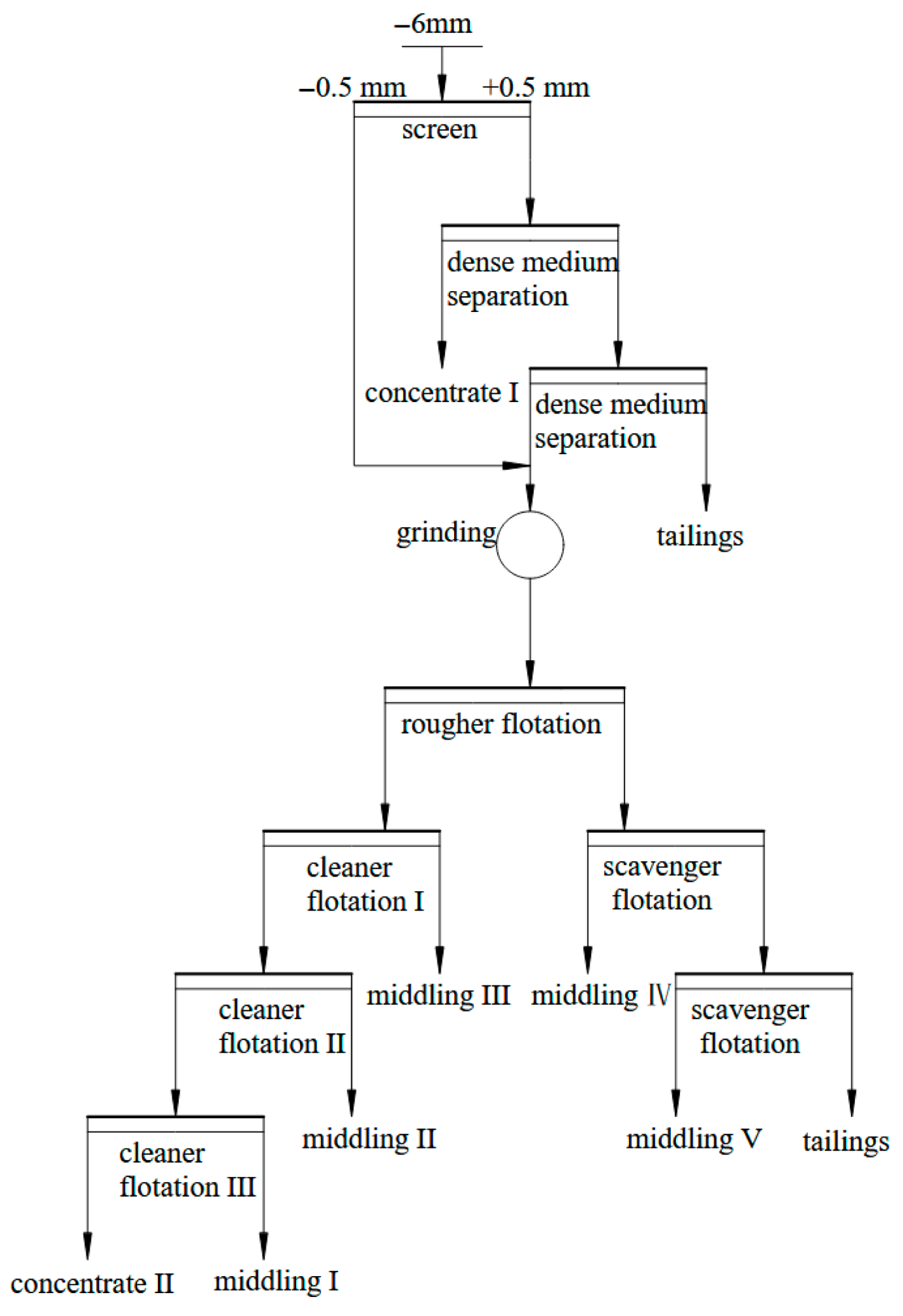
32]. The above three processes each have their own advantages. The two-product dense-medium separation process is simple and has stable separation indicators, but the tailings grade is relatively high. The results of the three-product dense-medium separation process and the two-stage, two-product dense-medium separation process are similar. Both can produce three products: Concentrates, tailings, and middling. Both of them can effectively control the grade of the concentrates and tailings, and the grade of the tailings is relatively low. But the middling produced needs further processing, and the process is relatively complex. Compared with the pressureless three-product dense-medium separation process and the two-stage, two-product dense-medium separation process, the two-stage, two-product dense-medium separation process is easier to control and has more stable separation indicators. Considering the grade of the concentrate, recovery, the grade of the tailings, and grinding energy consumption, it is recommended to adopt the combined process of two-stage, two-product dense-medium separation and flotation. The flow chart is shown in
Figure 8.