Article

Identification of Deep Iron-Rich Intrusions from Gravity and Magnetic Data and Their Natural Hydrogen Responses in the Liaohe Basin, China


1
Research Institute of Petroleum Exploration and Development-Northwest (NWGI), PetroChina, Lanzhou 730020, China
2
Key Laboratory of Mineral Resources in Western China (Gansu Province), School of Earth Sciences, Lanzhou University, Lanzhou 730000, China
*
Author to whom correspondence should be addressed.
Minerals 2026, 16(4), 393; https://doi.org/10.3390/min16040393
Submission received: 30 March 2026 / Revised: 7 April 2026 / Accepted: 8 April 2026 / Published: 10 April 2026

Abstract

Natural hydrogen is regarded as a potential resource for the global energy transition, and its accumulation is closely linked to water–rock reactions involving Fe2+ bearing minerals and effective sealing conditions. The Liaohe Basin, located on the northeastern margin of the North China Craton within a key metallogenic belt, is surrounded by sedimentary-metamorphic iron deposits and is a potential area for natural hydrogen accumulation. In this study, aeromagnetic and satellite gravity data were integrated to estimate basement depth through gravity interface inversion, followed by three-dimensional magnetic susceptibility and density inversion and structural–mineralization correlation analysis. The results reveal strong basement heterogeneity. Iron-rich anomalous bodies show clustered and belt-like to dome-like distributions, mainly along the transitional zone between deep depressions and basement uplifts. Combined density–magnetic zonation suggests that high-density, high-magnetic units may correspond to iron-rich bodies, whereas high-magnetic, low-density units likely indicate fractured and altered fluid pathways. Based on the measured results of surface hydrogen concentration, it is inferred that the high magnetic anomaly in the uplift transition zone at the edge of the depression might be the coupling area of iron-rich rock bodies and channel zones, which is the priority response area of natural hydrogen in the Liaohe Basin, China.

1. Introduction

The global energy system is undergoing a transition driven by the dual imperatives of decarbonization and energy security. Compared with anthropogenic hydrogen production, naturally occurring subsurface hydrogen generated by geological processes is increasingly regarded as a potentially important complement to low-carbon hydrogen supply. Its resource potential depends on the systematic coupling of generation, migration, accumulation, and preservation processes [1,2]. The U.S. Geological Survey (USGS) has proposed the concept of a hydrogen system, in which the hydrogen source, reservoir, and seal are considered the fundamental elements for prospect evaluation, while emphasizing that lateral migration may result in a spatial mismatch between surface degassing anomalies and source regions. Basin-scale assessments therefore need to integrate both structural framework and lithological zonation [3].
Previous studies have shown that the principal mechanisms for natural hydrogen generation in the continental crust include water–rock reactions involving Fe2+-bearing minerals, radiolysis of water induced by radioactive elements, and deep fluid–rock interactions. Among these, the efficiency of hydrogen production through water–rock reactions is controlled by parent-rock mineralogy, temperature, redox conditions, and fluid flux, whereas tectonic fracture zones exert first-order control on water supply and upward gas migration [2,4]. Representative examples include the discovery of the multilayer hydrogen reservoir at Bourakebougou, Mali, and its dynamic recharge behavior [5,6], the spatial association between natural hydrogen seepage and structural systems in the North Perth Basin, Australia [7,8], and hydrogen-rich wells and long-term monitoring in cratonic interiors such as Kansas, USA [9,10].
Research on natural hydrogen in China has accelerated markedly in recent years, with increasing evidence of hydrogen-bearing gas occurrences in eastern rift basins and along cratonic margins. In the Songliao Basin, the SK-2 continental scientific drilling well revealed multilayer hydrogen-enriched intervals characterized by the coexistence of adsorbed and free hydrogen, with hydrogen occurrence closely related to pore structure and fault connectivity [11,12]. Systematic assessment in the Bohai Bay Basin further indicated that natural hydrogen exhibits strong heterogeneity within active basin systems, whereas certain local depressions may have higher accumulation potential where reservoir–seal assemblages and structural conditions are more favorable [3,13]. These advances suggest that, in rift basins overlain by thick sedimentary cover, geophysical methods capable of constraining deep iron-rich reactive reservoirs and associated fluid pathways can provide an important basis for delineating favorable natural hydrogen targets.
The Liaohe Basin is situated on the northeastern margin of the North China Craton, within Paleoproterozoic tectono-metallogenic domain, and is adjacent to the Anshan–Benxi sedimentary-metamorphic banded iron formation (BIF) province. Regional BIFs and their high-grade ores have commonly undergone superimposed metamorphic–hydrothermal modification, and desilicification together with iron mobilization and reprecipitation are considered critical processes in the formation of high-grade magnetite-rich ores [14,15]. Meanwhile, the Precambrian basement of the eastern Liaoning Peninsula is characterized by dome-and-basin structures and gneiss dome clusters, where dome-bounding shear zones and annular fracture networks have provided a long-lived structural framework for fluid activity [16,17]. Since the Cenozoic, basin evolution has been controlled by the Tan-Lu Fault Zone and by extension–strike-slip transformation, with marked inherited activity along fault segments and transfer zones [18,19]. Both observational and experimental evidence indicate that magnetite-rich BIFs can continuously generate hydrogen under low-temperature water–rock reaction conditions and may therefore act as potential hydrogen source rocks [20,21]. In this context, under the superimposed setting of an ancient iron-rich basement and a younger rift basin, deep iron-rich bodies in the Liaohe Basin are not only key targets for iron ore exploration but may also constitute critical source domains within a natural hydrogen system. However, compared with petroleum exploration, no systematic discussion has yet been undertaken regarding deep iron-rich bodies and natural hydrogen systems in the Liaohe Basin, and a testable geophysical framework for identifying accumulation responses remains lacking.
To address this issue, this study integrates airborne magnetic and satellite gravity data with field separation, gravity interface inversion, and three-dimensional inversion results to investigate the three-dimensional geometry and physical-property zonation of iron-rich bodies and their coupling relationships with dome–annular structures and fault systems. Within the framework of hydrogen system analysis, we further propose potential-field criteria for identifying priority response zones for natural hydrogen in the Liaohe Basin, thereby providing a geophysical basis for subsequent target optimization.

2. Geological Setting

The Liaohe Basin is an important component of the Bohai Bay Basin system, located in eastern North China and strongly influenced by the Tan–Lu Fault Zone. Seismic interpretation and stress-field simulations indicate that, since the middle to late Eocene, the Liaodong Bay sub-basin has been dominated by dextral strike-slip extension. The extension direction evolved from WNW–ESE to NW–SE and then to nearly N–S, reflecting the combined effects of Pacific plate kinematic reorganization and the India–Asia collision. During this process, the basin evolved from simple extension to a strike-slip extensional regime and developed segmented transfer-zone structures [18,19]. Three-dimensional seismic studies further suggest that the tectonic transition from rifting to strike-slip deformation occurred from the middle Eocene to the early Oligocene, and that periods of strike-slip weakening were more favorable for the development of strike-slip faults and trap belts, thereby controlling the migration of depocenters and the formation of structural traps [18].
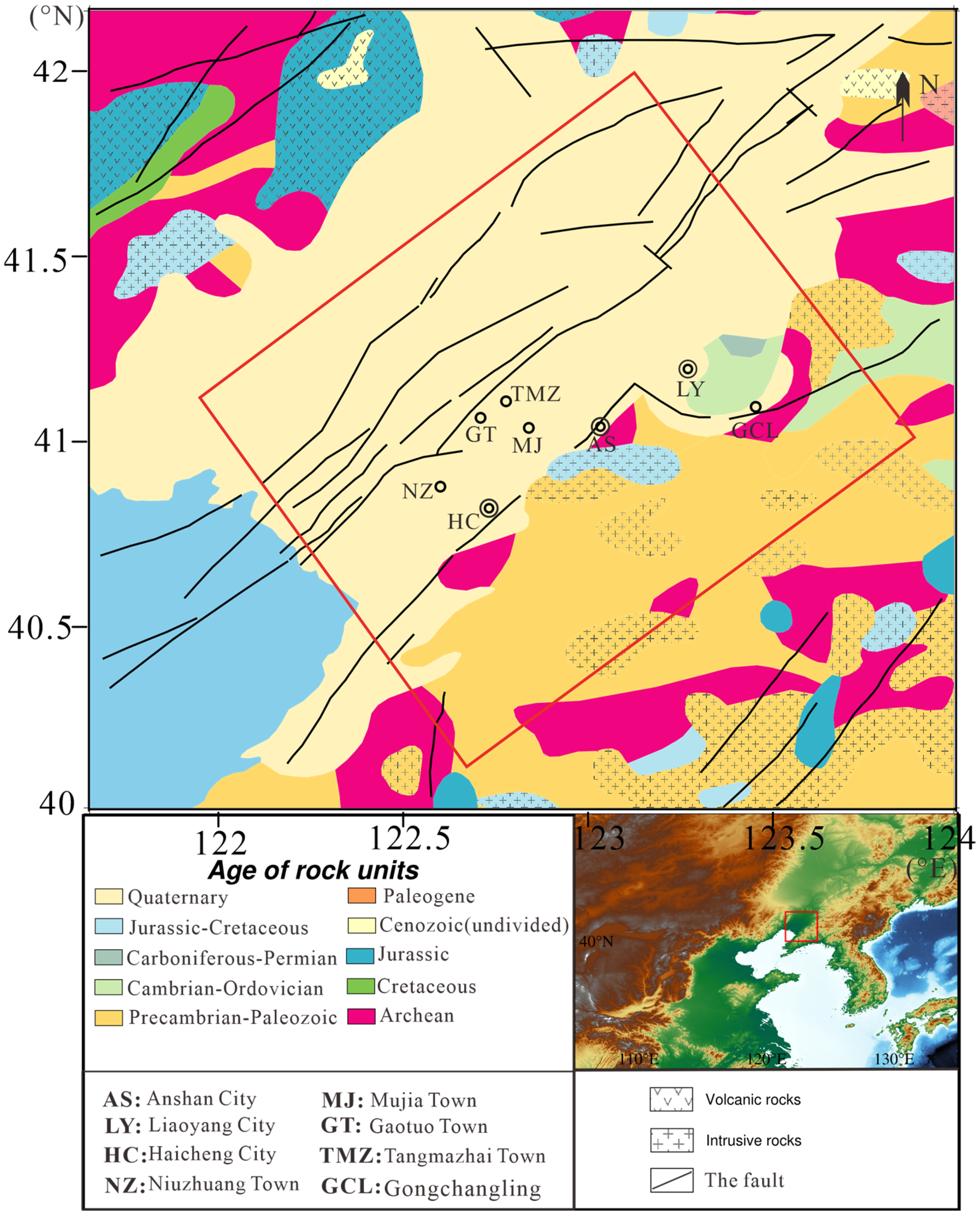
As shown in Figure 1, the basement of the Liaodong Peninsula and its adjacent areas consists of Archean–Paleoproterozoic high-grade metamorphic rocks and Paleoproterozoic volcano-sedimentary assemblages, and is closely related to the formation and reworking of the Jiao–Liao–Ji orogenic belt [16,22]. A prominent structural feature of the regional basement is the dome-and-basin architecture, in which granitoid–gneiss domes are surrounded by greenstone belts and banded iron formations (BIFs), while shear zones and annular fracture networks are well developed along dome boundaries [16,17]. Structural and geochronological studies of several gneiss domes within the Jiao–Liao–Ji belt indicate that dome formation was related to the coupling of mid- to lower-crustal flow, diapiric upwelling, and near-horizontal shearing, and that the boundary shear zones experienced multiple phases of inherited reactivation [17,23].
With respect to sedimentary-metamorphic iron deposits, China’s BIF resources are mainly distributed within the North China Craton. Owing to intense metamorphism and deformation, iron oxides were commonly transformed into coarse-grained magnetite, resulting in pronounced contrasts in both magnetic susceptibility and density [14,22]. The Anshan–Benxi area is a representative BIF iron ore province in China, where the depositional and tectonic settings of BIFs, as well as the formation mechanisms of high-grade ores, have been systematically investigated. Studies of deposits such as Gongchangling show that high-grade iron ores are generally reconstructed products derived from primary BIF ores through metamorphic–hydrothermal modification. In different ore segments, desilicification and iron mobilization-reprecipitation may each dominate, producing a geometric pattern characterized by stacked lenticular bodies and segmented lateral extensions [15,24]. Geochemical and genetic studies of the Dagushan BIF likewise support a general model involving primary BIF deposition followed by later enrichment through modification [14,25].
At the basin scale, tectonic models for the Bohai Sea Basin and its surrounding fault systems indicate that bidirectional extension, both trench-parallel and trench-normal, exerted superimposed effects on basin formation. The Tan–Lu Fault Zone underwent multi-stage evolution and experienced segmented reorganization during the development of the Bohai Sea Basin [19,26]. In regional airborne magnetic interpretations, the NE-trending high-amplitude magnetic anomaly belt in Liaodong Bay has been attributed to Archean basement uplifts, whereas local circular magnetic anomalies have been used to discuss the potential influence of deep thermal events on the structural framework, thereby providing gravity and magnetic references for identifying annular structures and deep geological processes [16].
Overall, the Liaohe Basin is characterized by an ancient iron-rich basement, dome structures with annular boundaries, and the superposition of Cenozoic fault segmentation and transfer zones across multiple structural scales. These features provide a favorable regional geological framework for identifying deep iron-rich bodies and for discussing their potential coupling with a natural hydrogen system.

3. Data and Methods

3.1. Gravity Data

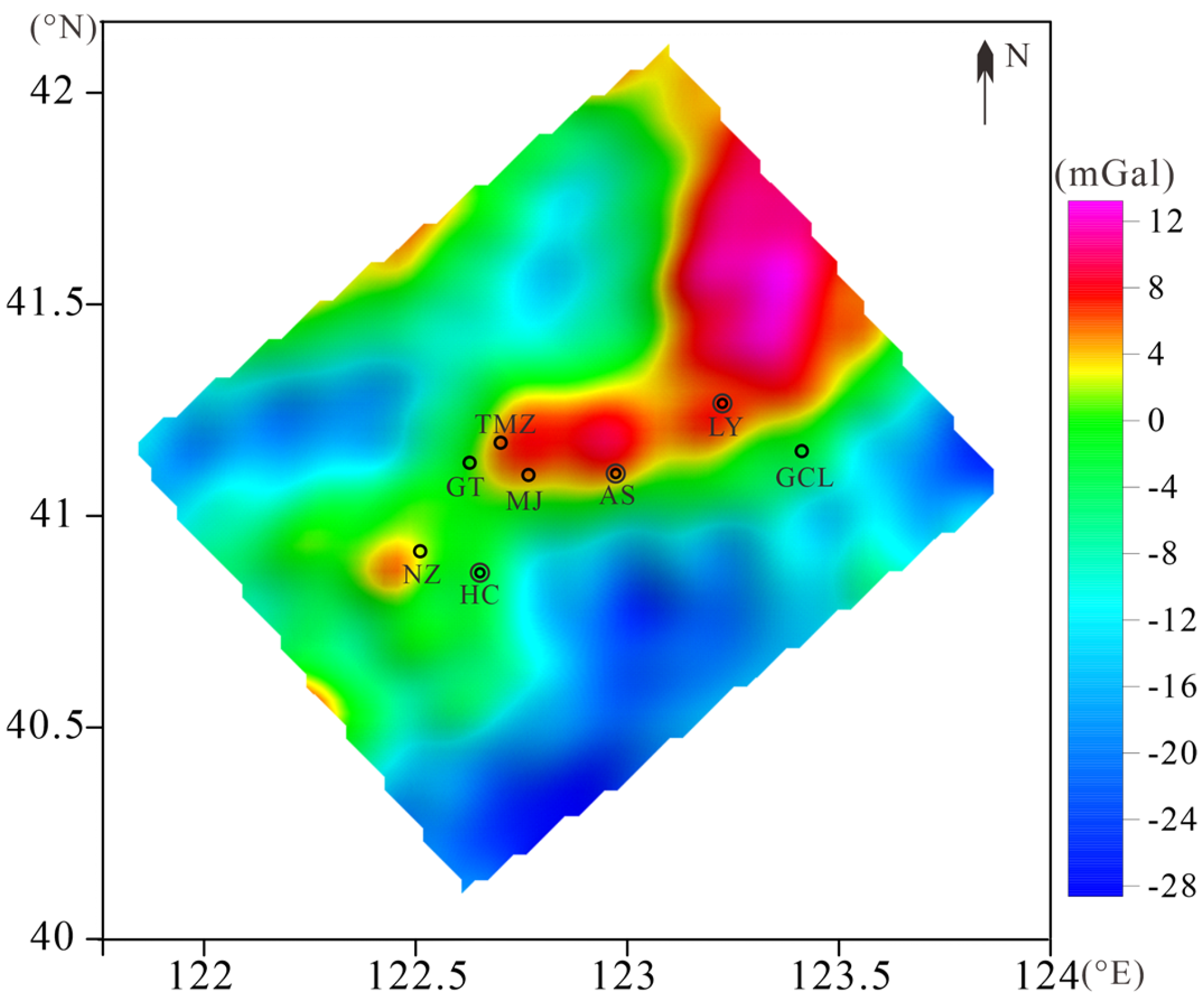
The gravity data used in this study are from the EIGEN-6C4 satellite gravity model (Figure 2). The dataset covers a longitude range of 121.5° E–124° E and a latitude range of 40° N–42.5° N. The EIGEN-6C4 model was transformed into planar Cartesian coordinates using the Gauss-Krüger projection. Kriging interpolation was applied to grid the data with a grid spacing of 2 km.

3.2. Magnetic Data

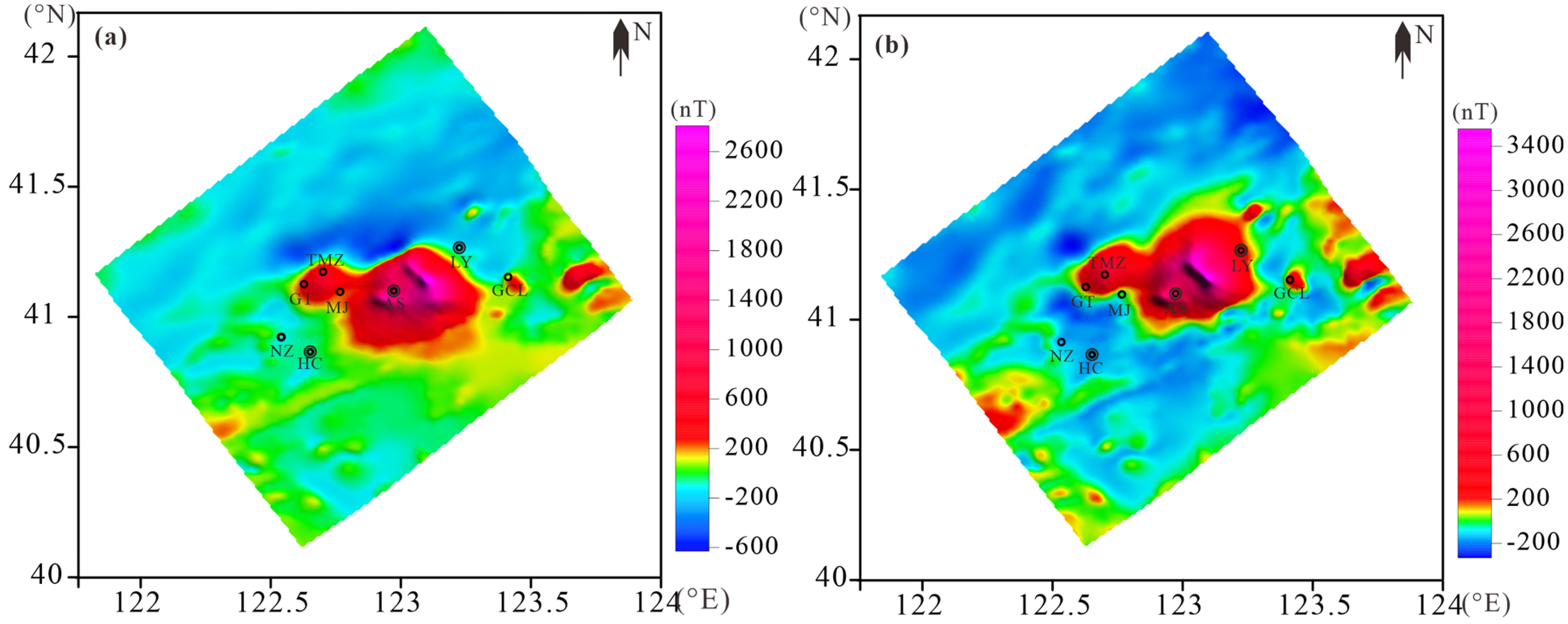
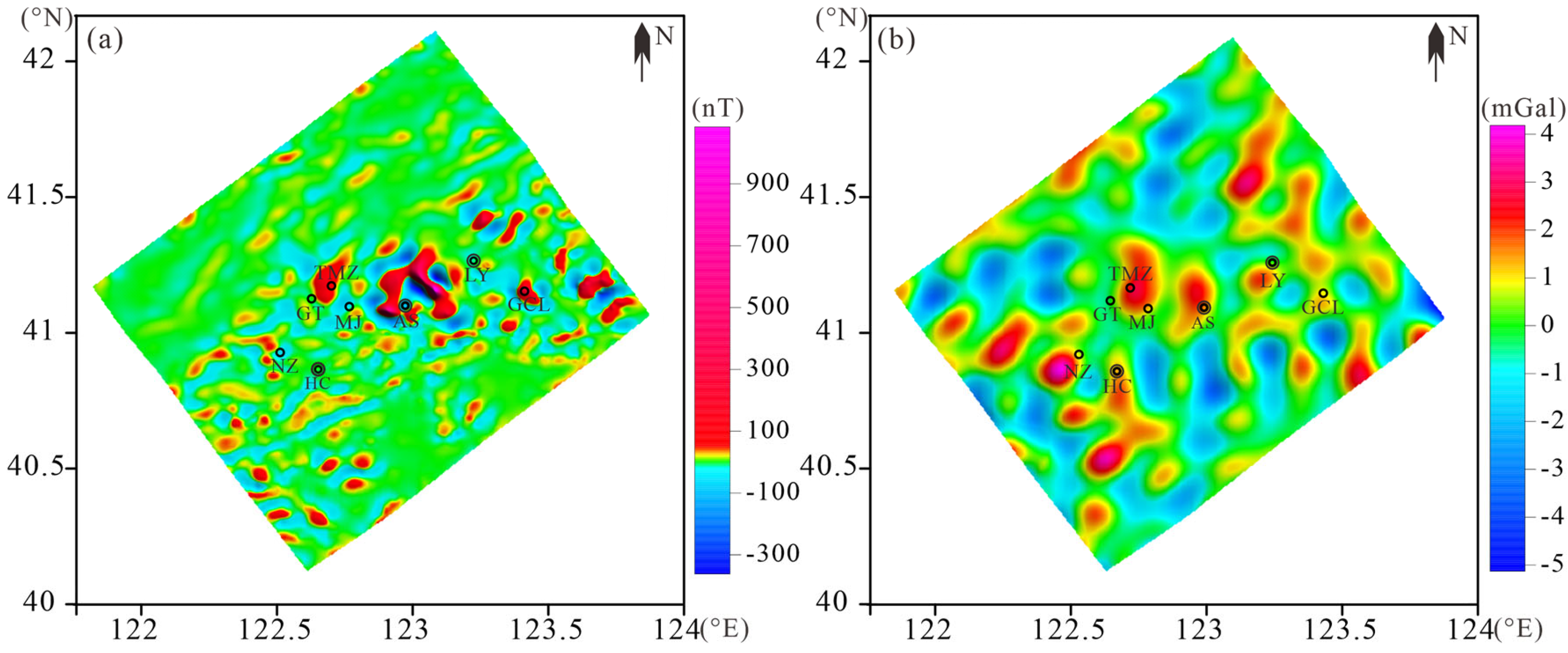
The magnetic data used in this study are the 1 km × 1 km gridded aeromagnetic dataset of the Chinese mainland compiled by the China Geological Survey (Figure 3a). The data cover the same spatial extent as the gravity data. Prior to inversion, the magnetic anomalies of the Liaohe region were reduced to the pole (RTP) using the regional magnetic inclination (59.5°) and declination (−9.5°) (Figure 3b), so that the anomaly patterns more closely represent the true responses of vertically magnetized bodies.

3.3. Anomaly Separation

Regional-residual separation is used to separate basin-scale background and local anomaly information. We adopt a preferential filtering algorithm for anomaly separation, which is based on the Green’s equivalent-layer concept and the Wiener filter. By constructing a ratio operator between the power spectra of the target layers and the other layers, it achieves effective separation of anomalies with different wavelengths without requiring a continuation height, thereby obtaining more accurate separation results [27,28]. The residual anomaly of magnetic and gravity are shown in Figure 4a and Figure 4b, respectively. Its correspondence with distinct magnetic anomalies in areas known for iron deposits, such as AS and GCL, demonstrates the reliability of the field separation effect.

3.4. Basement Depth Inversion

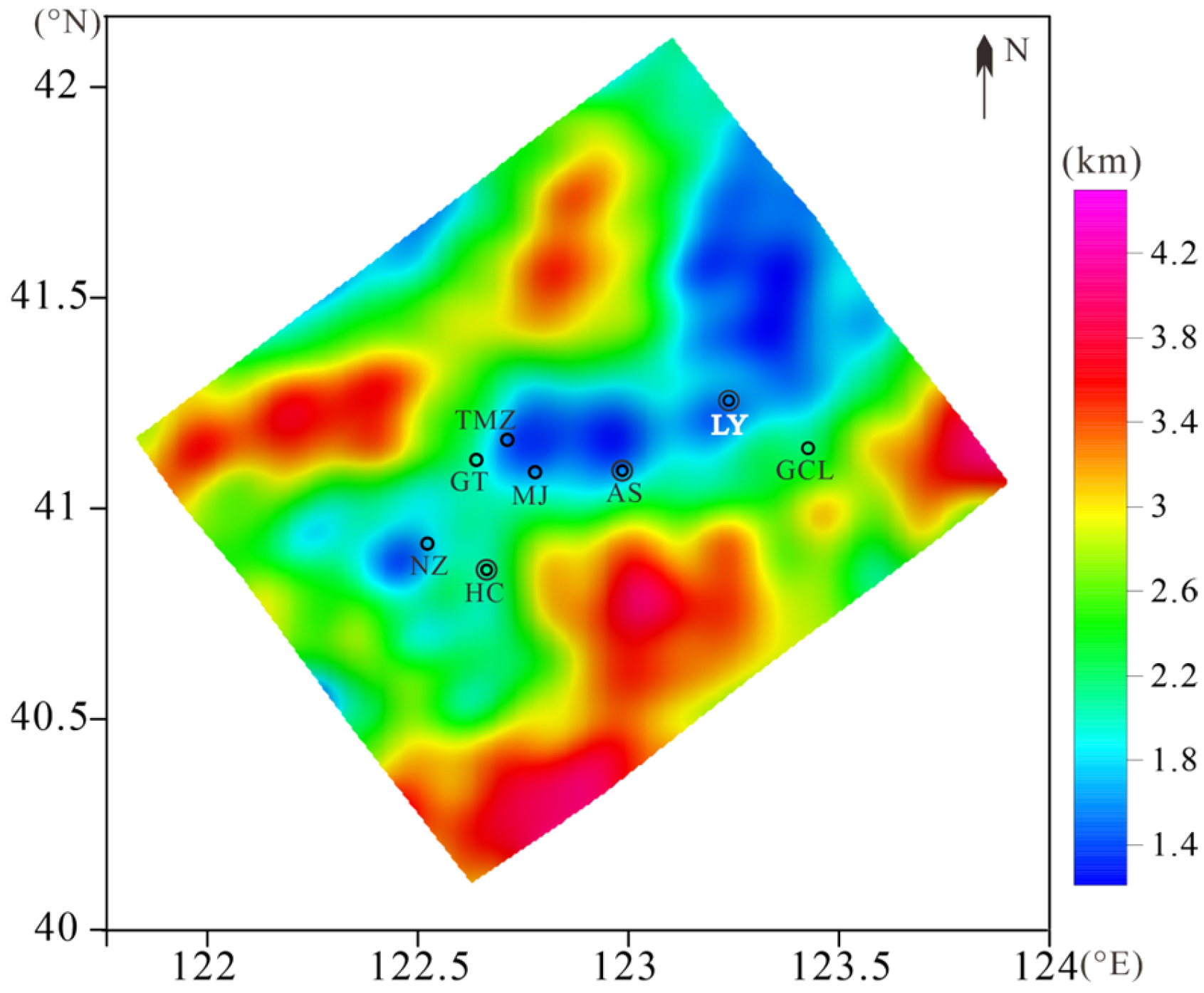
In gravity interface inversion, basement depth inversion is performed using the Parker–Oldenburg interface inversion method, which iteratively solves for the density interface relief based on forward modeling in the frequency domain, thereby obtaining the basin basement depth (Figure 5) [29,30]. The inversion uses the average basement depth of 2 km in the study area as the initial interface and iterates until the residual converges. On this basis, the regional gravity field can be further utilized to perform interface inversion, enhancing the accuracy of the recovered basement morphology.

3.5. Three-Dimensional Inversion and Physical-Property Classification

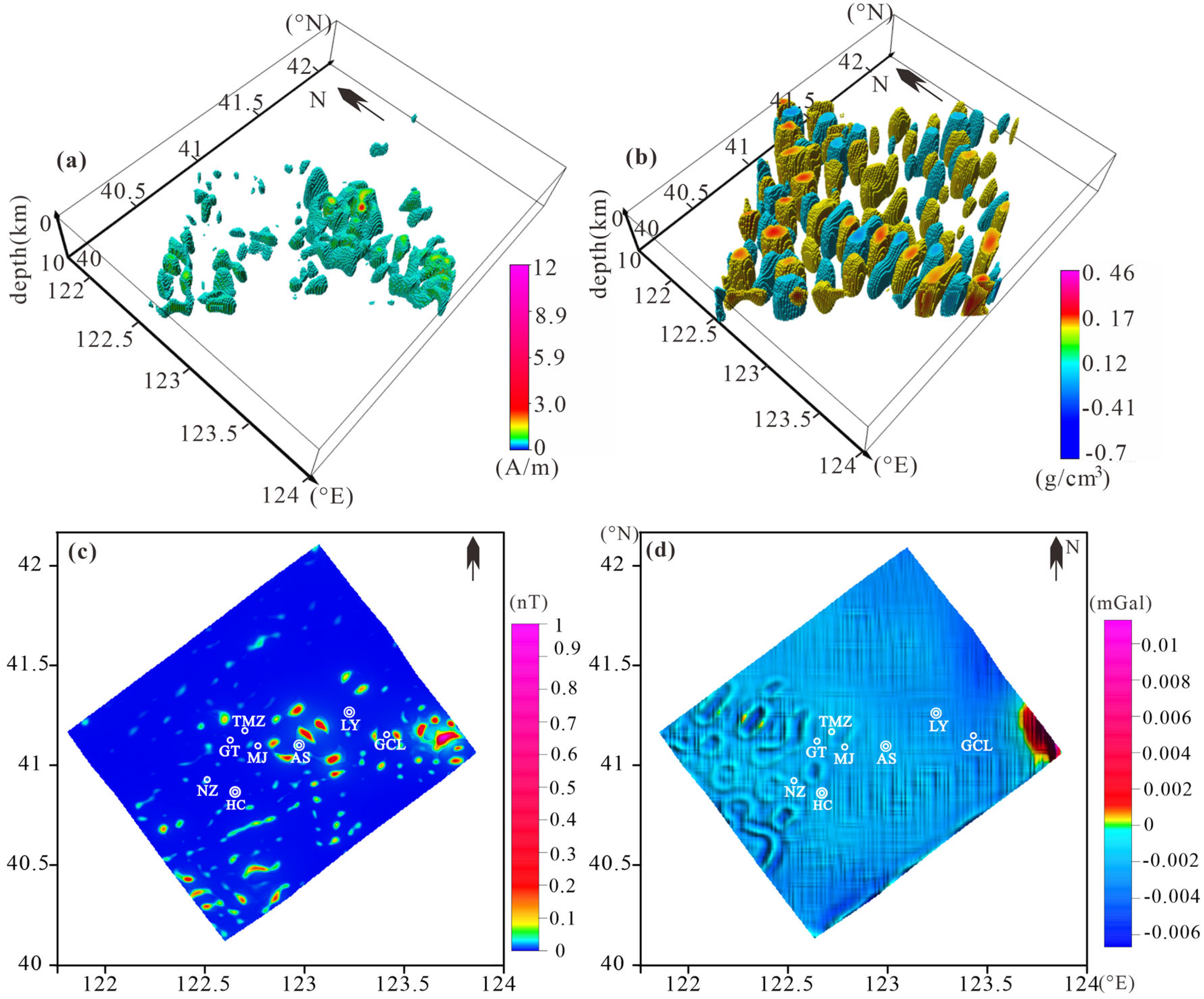
This paper adopts an iterative imaging method based on Tikhonov regularized downward continuation (ITRDC) for inversion [31]. The algorithm calculates field values at different depths through downward continuation and converts them into the distribution of magnetic susceptibility and density. Through iterative focusing, it obtains compact magnetic susceptibility and density results, effectively enhancing deep and weak anomaly information and achieving higher-resolution inversion results. Based on available petrophysical test results and considering the conventional constraints required for density and magnetic susceptibility in the inversion methods, we set upper and lower bounds as soft constraints in our calculations. For the gravity data inversion, the density bounds are set as −1.5 g/cm3 and 2 g/cm3. We calculated from 0 m to 10 km with a depth interval of 0.5 km using α = 0.05. For the magnetic data, the source magnetization bounds are set as 0 and 20 A/m. During the calculation, the depth is set from 0 m to 10 km with a depth interval of 0.5 km using α = 0.1. The α is the regularization parameter, which is selected based on the stability of the downward extension method. Both the calculation iteration times are 20. Figure 6 shown the results of 3D inversion. In order to facilitate the display and make the results clearer to present, the results with density between ±0.1 g/cm3 being removed and magnetization less than 0.5 A/m being removed. From the residual maps of the observed anomalies and the inversion results, the residual values are very small indicate high inversion accuracy.
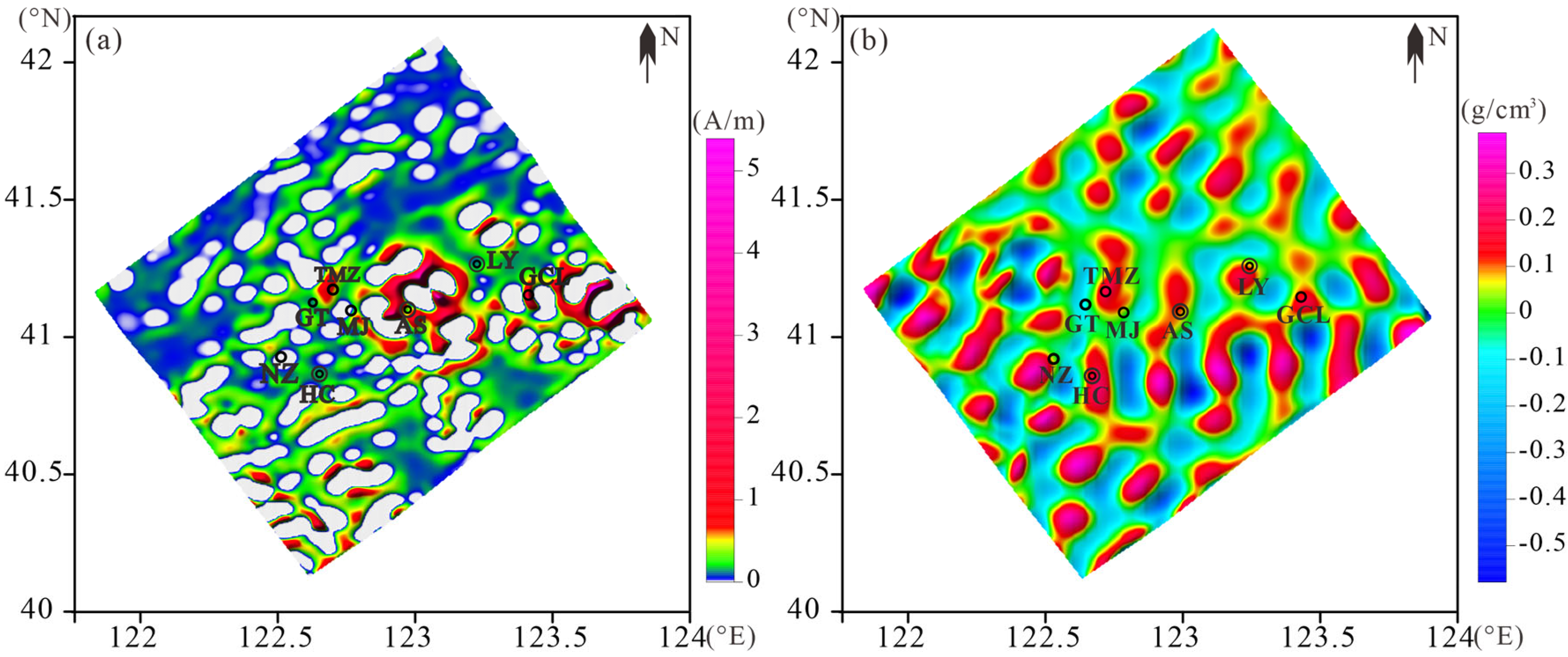
To facilitate display and analysis, slices were extracted at a depth of 4 km, as shown in Figure 7. The overall results accurately reflect the distribution characteristics of the sources, particularly in the magnetic inversion results, which correspond well to the known BIF, providing a basis for our predictions in unknown areas. Meanwhile, the density results from the gravity inversion reveal the correlation between the transition zone and the known iron ore deposits.

4. Results

The aeromagnetic anomalies in the study area are generally characterized by the superposition of strong block-like and belt-like anomalies, with their principal trends consistent with the regional structural framework. After reduction to the pole, anomaly peaks are positioned closer to the horizontal projections of their source bodies, and the continuity of belt-like structures is significantly enhanced [32,33]. Spatially, the strongest positive anomaly core occurs in the AS–MJ area, extending northeastward to the southern side of LY and southeastward to the vicinity of the GCL, where it forms a continuous NE-trending high-magnetic belt. South of TMZ, dense bead-like high-magnetic anomalies are also clearly developed. In contrast, the areas around NZ and HC are dominated by weak, patchy anomalies, indicating either scattered shallow magnetic bodies or relatively weak magnetization.
The field-separation results highlight local gradient zones and small bead-like anomalies, with structural texture becoming denser along the transitional zone between depression margins and uplifts. The residual gravity anomaly shows local positive anomalies in the NZ–HC area, suggesting the presence of relatively high-density units, whereas a broad negative anomaly belt is developed near AS–MJ, corresponding to a basement depression. Interface inversion indicates that the basement depth in the study area ranges from approximately 1.4 to 4.2 km. The area north of LY and the northeastern corner of the study area constitute shallow-basement zones, where depths are mostly less than 2.0 km. The deepest basement depression extends from south of AS to the southern margin of the study area, where the local depth approaches 4 km. Secondary depressions also occur northwest of TMZ and along the western margin of the study area. The basement-depth transition zones and gravity-gradient belts are spatially adjacent to NE- and NW-trending fault segments, reflecting the coupling between density-structure boundaries and tectonic segmentation [19].
The 3D inversion results show that iron-rich anomalous bodies occur as clustered concentrations linked in belts along structural trends. They are mainly distributed within the transitional zone between deep depression margins and basement uplifts, under the combined control of NE- and NW-trending faults. Among these, the anomaly bodies are most densely concentrated along the line extending from south of TMZ through MJ to AS, where they are linked in strip-like patterns in the horizontal slice. Eastward, they extend to the GCL and farther east, while northeastward they connect with the high-magnetic belt south of LY, together forming a regional-scale high-magnetic corridor. Typical profiles show lens-shaped bodies extending downward and locally transforming into columnar forms. Steep boundaries commonly correspond to faults or shear zones, indicating that structures exert strong control on the lateral confinement and segmentation of these anomalous bodies [24,34].
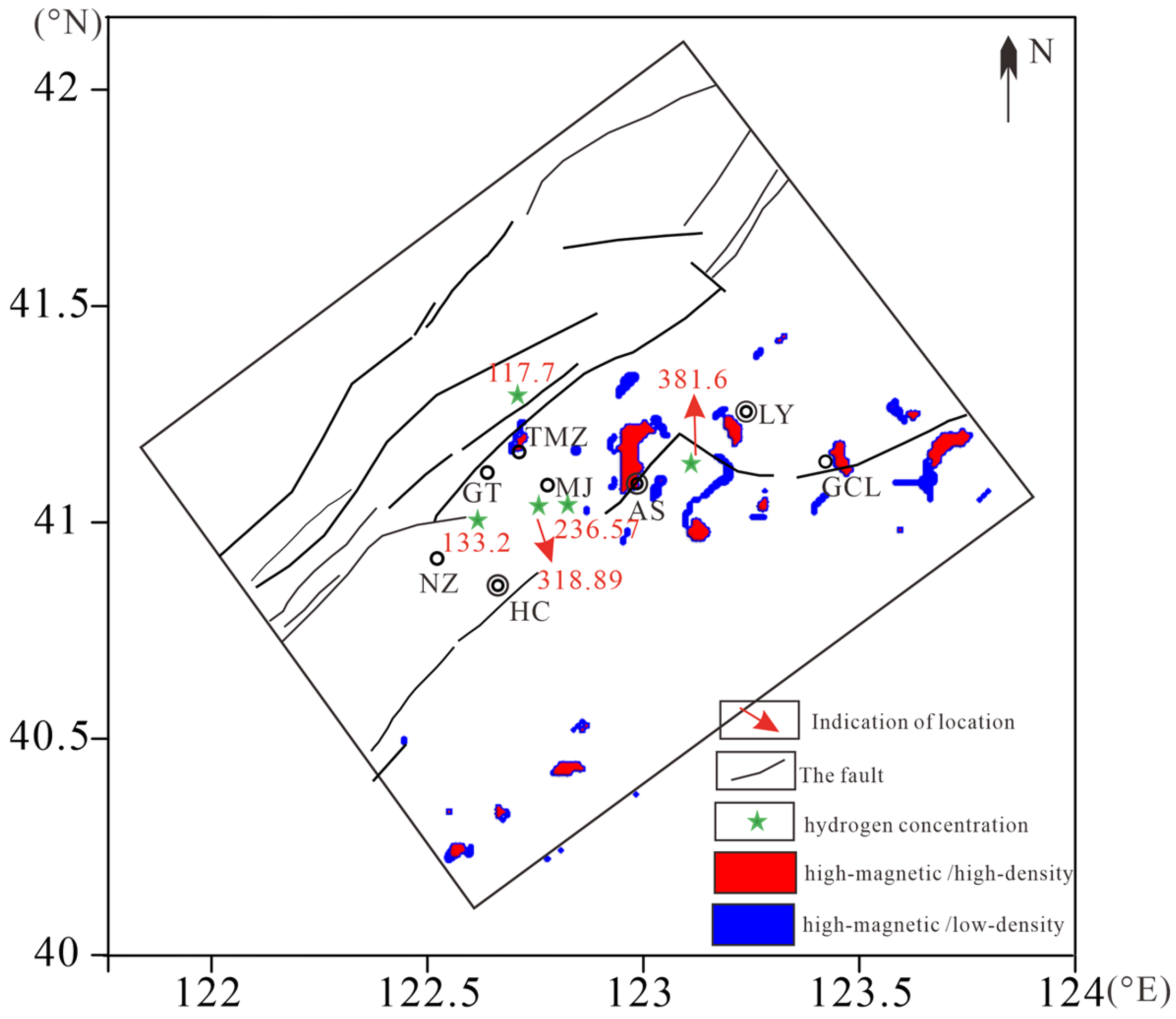
Based on the integrated comparison of density and magnetic inversion results, the study area can be classified into several petrophysical zones. Considering that the airborne magnetic data in the study area have higher resolution and accuracy, whereas the satellite gravity data have relatively lower resolution, the localization of iron-rich bodies is based primarily on the magnetic results, with gravity results used as supporting constraints. Therefore, as shown in Figure 8, We classified areas with magnetic susceptibility greater than 0.6 and density between 0 and 0.05 as zones of high magnetism and relatively low density (blue areas in the figure); areas with magnetization greater than 0.8 and density greater than 0.08 were classified as zones of high magnetism and high density (red areas in the figure). These two zones are the key areas of interest.
Particular attention is given to the spatial distribution of the high-magnetic/high-density units, the high-magnetic/low-density units, and the density transition zones. The high-magnetic/high-density units occur mainly as clusters along the AS–MJ–GCL belt and form belt-like connections south of LY, suggesting the principal distribution of magnetite-rich iron bodies. In contrast, the high-magnetic/low-density units are mostly distributed along the gradient belt around GT–TMZ. These locations correspond exactly to the areas where high hydrogen concentrations were measured on the surface, as indicated by the five-pointed star symbols in the figure. The highest value (381.6 ppm) is located between AS and LY, within the inner ring transition zone of the dome structure. Another high value, reaching 318.97 ppm, lies to the south of MJ, also within the transition zone.

5. Discussion

5.1. Rock Physical Properties and Zonation Results

Under conditions of thick sedimentary cover, the density and magnetic bodies derived from three-dimensional inversion primarily reflect subsurface physical-property variations. When combined with the known petrophysical characteristics of iron-rich formations and their surrounding rocks, these results provide a basis for zonation and classification. Magnetite-enriched bodies are characterized by both high density and high magnetic susceptibility, whereas hematite exhibits markedly weaker magnetism but still retains high density. Accordingly, these two ore types tend to correspond, respectively, to high-magnetic/high-density and low-magnetic/high-density combinations in potential-field responses. This relationship makes magnetic methods more sensitive to magnetite-rich high-grade iron ores, whereas gravity methods may be effective for both ore types [35,36]. Most BIFs in China have undergone strong metamorphism and deformation, during which iron oxides were commonly transformed into coarse-grained magnetite, further enhancing magnetic contrasts and geophysical detectability [14,22].
The magnetic response of BIFs is commonly influenced by magnetic susceptibility anisotropy and remanent magnetization. Studies from the Hamersley Basin have shown that magnetite-rich BIFs display significant anisotropy, with effective magnetic susceptibility parallel to bedding generally greater than that normal to bedding. In addition, the direction and timing of remanence acquisition may alter anomaly morphology and the interpretation of dip angle [37,38]. In this context, the belt-like linked anomalies, segmented bead-like patterns, and annular high-gradient boundaries recognized in the study area not only reflect the distribution of iron-rich bodies, but may also record the modification of magnetization architecture by stratigraphic control, hinge-zone thickening during folding, and shear-related segmentation.
The joint zonation results indicate that high-magnetic/high-density zones most closely correspond to the magnetite-enriched core of iron-rich bodies and may therefore serve as an equivalent indicator for locating deep iron-rich reactive reservoirs. By contrast, high-magnetic/low-density zones occur within a high-magnetic background but are characterized by relatively lower equivalent density, which is more consistent with the integrated response of fractured, altered, and porous zones. Magnetic enhancement in such zones may result from the neoformation or relative enrichment of magnetite, whereas density reduction is commonly associated with fracture development and porosity increase caused by desilicification [15,25]. Petrophysical models of serpentinization systems further suggest a statistical negative correlation between density and magnetic susceptibility: magnetite formation enhances magnetism, whereas hydration and volumetric effects reduce density. This provides an independent petrophysical analogue for interpreting high-magnetic/low-density zones as reaction zones and fluid pathways [4].
Low-magnetic/high-density zones may correspond to scenarios involving enhanced hematitization, demagnetization related to later alteration, or high-density metamorphic rock units in which magnetism is not dominant; such zones therefore require integrated interpretation in conjunction with gravity-gradient belts and structural boundaries [35,36]. Low-magnetic/low-density and background-source zones generally correspond to the cores of gneiss domes or to the sedimentary cover background, although their boundaries may still carry important structural significance. The basement of the Liaodong Peninsula is widely characterized by dome-and-basin architecture, and the shear zones and annular fracture networks developed along dome boundaries may produce annular high-gradient anomalies and transitional petrophysical belts in potential-field data [16,17].

5.2. Structural Control of Iron-Rich Bodies and Implications of Dome–Annular Structures

The clustered concentration and belt-like linkage of iron-rich anomalous bodies along the transitional zone between depression margins and basement uplifts indicate that structural controls exert segmented regulation on both the enrichment and the intensity of modification of iron-rich bodies. In the horizontal slice, the area extending from south of TMZ through MJ to AS corresponds to a continuous high-magnetic belt and a dense concentration of anomalous bodies; eastward, this belt remains laterally linked near the GCL. To the south, it closely borders a basement-deepening zone, whereas to the north it gradually transitions into the shallow-basement domain near LY, showing a typical slope-break boundary effect. Studies of BIF iron deposits in the Anshan–Benxi region have shown that high-magnetic anomaly belts are consistent with the trend of ore belts and exhibit strong segmentation, with ductile shearing and folding jointly controlling ore-body thickening, discontinuity, and deep extension [34]. Further ore-deposit studies indicate that high-grade iron ores are reconstructed products of primary BIF ores modified by metamorphic–hydrothermal fluids, in which desilicification and iron mobilization-reprecipitation can produce stacked lenticular bodies and segmented lateral extensions [15,24]. The downward continuation and coupled body-belt geometry revealed by the present inversion results are geometrically consistent with these ore-controlling mechanisms.
Dome and annular structures provide deeper constraints on the regional structural framework. The Precambrian basement of the Liaodong Peninsula commonly records a dome-and-basin structural style, in which the boundaries between dome cores and surrounding rocks are typically defined by shear zones accompanied by annular fracture networks [16,22]. Structural and geochronological studies of several gneiss domes within the Jiao-Liao-Ji belt show that dome formation involved multi-stage deformation, with diapiric upwelling and near-horizontal shearing jointly controlling the doming process, accompanied by both vertical and lateral flow in the middle to lower crust [17,23]. In the potential-field results of the present study, high-magnetic/low-density belts occur segmentally along annular gradient boundaries, particularly in the area from GT to TMZ and southeastward toward the western margin of the GCL. This pattern is more consistent with the petrophysical response expected from dome-boundary shear zones and concentrated fracture networks.
Cenozoic tectonic evolution further strengthened the inherited segmentation and annular boundary characteristics. During the Paleogene, the Liaodong Bay sub-basin underwent a tectonic transition from rifting to strike-slip deformation, and periods of strike-slip weakening were more favorable for the development of strike-slip faults and trap belts, thereby controlling the migration of depocenters and the intensity of fault activity [18,19]. Meanwhile, airborne magnetic data from the Bohai Sea Basin and its surrounding areas reveal an NE-trending high-amplitude magnetic belt in Liaodong Bay that can be used to trace major fault systems, whereas circular magnetic anomalies in the Bohai Bay region have been used to discuss the potential influence of deep thermal events on the structural framework [26]. Within the present study area, the iron-rich anomalous clusters and their belt-like linked bodies are distributed along NE-trending structural belts, with segmented strengthening occurring north of NZ and east of AS. This suggests that the superposition of dome-boundary shear zones and Cenozoic fault segmentation may have jointly controlled the spatial distribution and modification intensity of the iron-rich bodies.

5.3. Response of the Natural Hydrogen System and Coupling Mechanism with Iron-Rich Bodies

Natural hydrogen occurs widely in diverse geological environments, and its resource potential depends on the coordinated configuration of four key elements: generation, migration, accumulation, and preservation [1]. In the continental crust, the principal generation mechanisms are water–rock reactions involving Fe2+-bearing minerals and radiolysis of water, whereas fracture-controlled seepage and tectonic rupture zones exert first-order control on water supply, reactive interfaces, and upward gas migration [2]. The hydrogen-system framework emphasizes that hydrogen source, reservoir, and seal collectively determine prospective zones, and that lateral migration may cause spatial offsets between surface expressions and source regions.
The significance of iron-rich bodies as hydrogen sources has recently gained new experimental and field-based support. Weathering and oxidation of BIFs may generate H2 through Fe2+ oxidation coupled with water reduction, and spatial indicators related to hydrogen seepage have been documented around several BIF mining districts [39]. More importantly, magnetite itself can participate in hydrogen-generating reactions during low-temperature, anoxic water–rock interaction. Experimental studies show that, under temperatures of 80–200 °C, magnetite can undergo partial oxidation and produce appreciable amounts of H2 while being transformed into Fe3+ oxides such as maghemite, indicating that magnetite-rich rock assemblages may retain sustained hydrogen-generation potential even under relatively shallow thermal conditions [21]. Studies in the Waterberg Basin of Namibia further suggest that H2 seepage is structurally associated with underlying BIFs, and that magnetite is widely developed along both bedding planes and fracture systems, providing a field analogue for the coupling between deep reaction zones and migration pathways [20].
The potential-field results from the Liaohe Basin provide regional-scale petrophysical evidence for such coupling. High-magnetic/high-density anomalous bodies correspond to magnetite-rich iron bodies or BIF-enriched units and may represent the spatial location of Fe2+-rich reactive reservoirs. High-magnetic/low-density anomalous belts, distributed along faults, dome boundaries, and annular high-gradient zones, are more consistent with the equivalent petrophysical combination of fractured, altered, and porous zones and may therefore represent channel and reaction-zone environments characterized by higher seepage flux and enhanced reaction potential [37,40]. In terms of spatial association, the juxtaposition of the high-magnetic belt and the high-magnetic/low-density boundary belt from south of TMZ to the northern margin of AS is consistent with the convergence of reactive reservoirs and migration pathways. Similarly, the pattern west of the GCL, where high-magnetic/high-density cores are accompanied by belt-like high-gradient boundaries, further supports this interpretation along slope-break zones. Examples from Chinese sedimentary basins further highlight the importance of reservoir and seal conditions for hydrogen occurrence. Studies of the SK-2 well in the Songliao Basin indicate that hydrogen mainly occurs in adsorbed form within different pore structures but can also transition into free gas, with fault connectivity and lithology-controlled porosity and permeability jointly controlling the occurrence of hydrogen-enriched intervals [11,12]. Assessments in the Bohai Bay Basin likewise suggest higher prospectivity for natural hydrogen and helium resources in local depressions, emphasizing the combined control of reservoir–seal assemblages and structural conditions [13]. In the present study area, the thick sedimentary cover and fault-controlled structural traps developed near basement slope-break zones provide a geological background favorable for local preservation. Therefore, coupling zones between high-magnetic/high-density cores and high-magnetic/low-density channel belts along the transitional zone between depression margins and basement uplifts are of particular exploration significance.

5.4. Target Optimization and Exploration Implications

By integrating the three-dimensional inversion geometry, density–magnetic zonation, and the dome–fault structural framework, the deep iron-rich target zones and priority response areas for natural hydrogen in the Liaohe Basin can be refined into specific structural belt segments. In the central part of the study area, the segment extending from south of TMZ through MJ to the eastern margin of AS corresponds to a continuous high-magnetic belt and a clustered anomalous zone, and lies immediately adjacent to a slope-break belt where basement depth changes from shallow to deep. This is the most typical segment in which iron-rich reactive reservoirs and migration pathways are juxtaposed. In the eastern part of the study area, the area around GCL and its western flank also exhibits high-magnetic/high-density cores accompanied by annular gradient boundaries, indicating the superposition of segmented extension of iron-rich bodies and boundary-controlled channels. In the southwestern part of the study area, the NZ–HC sector is characterized by the coexistence of local positive gravity anomalies and spotted magnetic anomalies, suggesting that high-density units may occur in discontinuous form; this area is therefore more suitable for segmented tracing in combination with known structural trends.
Structurally controlled channel systems have repeatedly been shown to be critical for natural hydrogen responses. In the North Perth Basin, natural hydrogen seepage is associated with faults and shallow annular geomorphic features, indicating the controlling role of channel geometry on gas ascent pathways [7,8]. The Bourakebougou hydrogen field in Mali exhibits multilayer reservoirs and dynamic recharge over production timescales, highlighting the need to understand hydrogen systems under the joint constraints of channel connectivity and effective sealing [5,6]. The common feature shared by these analogue cases and the potential-field zonation in the present study is that responses are commonly concentrated not within a single anomaly core, but within fractured zones or transfer zones adjacent to reactive reservoirs.
Accordingly, the preferred target areas in the study region can be summarized into three structural–petrophysical coupling scenarios. The first comprises the clustered high-magnetic/high-density anomalous bodies and their marginal high-magnetic/low-density channel belts from south of TMZ to the AS area. This setting represents the juxtaposition of reactive reservoirs and migration pathways and should be regarded as a first-order priority belt for both deep iron exploration and natural hydrogen response. The second comprises the belt-like anomalous segment west of the GCL and its eastward continuation, which reflects the superposition of segmented extension of iron-rich bodies and annular gradient boundaries and is favorable for identifying potential deep iron-rich bodies and their associated pathways. The third comprises the gradient belts and density transition zones from north of NZ to the periphery of GT, which reflect enhanced fracturing, alteration, and seepage environments and are therefore suitable for channel-oriented evaluation of natural hydrogen response. These target types unify deep iron exploration and natural hydrogen prospectivity within the same potential-field framework and provide clear spatial boundaries for subsequent geochemical profiling and multiphysics verification [2,3,13].

6. Conclusions

This study integrates field separation, Parker–Oldenburg interface inversion, and three-dimensional inversion to improve the characterization of basement relief and deep iron-rich anomalous bodies beneath thick sedimentary cover. The interface inversion indicates that basement depth in the study area generally ranges from approximately 1.4 to 4.2 km, with a shallow-basement domain north of LY and a deep depression extending from south of AS to the southern margin of the study area. The iron-rich anomalous bodies corresponding to strong magnetic anomalies within the basin show clustered distributions in three dimensions and are linked in belts along structural trends. They are mainly concentrated in the transitional zone between deep depression margins and basement uplifts and are jointly controlled by NE- and NW-trending faults. The most densely distributed anomalous bodies occur from south of TMZ through MJ to the eastern margin of AS, as well as in the vicinity of the GCL. Joint density–magnetic zonation reveals a preferential coupling between high-magnetic/high-density cores and high-magnetic/low-density channel belts. The latter are distributed along dome boundaries and annular high-gradient boundaries, providing petrophysical indicators of fractured, altered, and seepage-favorable environments. Under the constraints of the hydrogen-system framework, the spatial coupling of iron-rich bodies and channel belts in the transitional zones between depression margins and uplifts, as well as at fault intersections, together with low-temperature hydrogen-generation experiments on magnetite and documented BIF-related hydrogen seepage, identifies priority response zones and target directions for natural hydrogen exploration in the Liaohe Basin.

Author Contributions

Methodology, W.Z., Y.C. and B.X.; validation, X.L., B.L. and H.M.; formal analysis, H.M., B.L., S.A. and G.T.; investigation, H.M. and B.L.; data curation, B.L., G.T., Y.C., B.X. and S.A.; writing—original draft preparation, X.L. and W.Z.; writing—review and editing, X.L., W.Z., H.M., Y.C., B.X. and S.A.; funding acquisition, X.L. and W.Z. All authors have read and agreed to the published version of the manuscript.

Funding

This research was funded by Science and technology Project of China National Petroleum Corporation (Research on Geophysical Exploration and Identification Evaluation Technology of Natural Hydrogen, grant number 2024DJ9302), and the Science and Technology Plan of Gansu Province, grant number 23JRRA1063.

Data Availability Statement

EIGEN-6C4 satellite gravity.

Acknowledgments

We would like to express our gratitude to the reviewers for their insightful and constructive feedback, which significantly improved the quality of this paper.

Conflicts of Interest

Authors Xingfu Le, Hui Ma, Bo Li and Gang Tao were employed by the PetroChina. The remaining authors declare that the research was conducted in the absence of any commercial or financial relationships that could be construed as a potential conflict of interest.

Abbreviations

The following abbreviations are used in this manuscript:
ASAnshan City
MJMujia Town
TMZTangmazhai Town
GCLGongchangling area
LYLiaoyang City
HCHaicheng City
GTGaotuo Town
NZNiuzhuang Town

References

  1. Zgonnik, V. The occurrence and geoscience of natural hydrogen: A comprehensive review. Earth-Sci. Rev. 2020, 203, 103140. [Google Scholar] [CrossRef]
  2. Ballentine, C.J.; Karolyte, R.; Cheng, A.; Sherwood Lollar, B.; Gluyas, J.G.; Daly, M.C. Natural hydrogen resource accumulation in the continental crust. Nat. Rev. Earth Environ. 2025, 6, 342–356. [Google Scholar] [CrossRef]
  3. Gelman, S.E.; Hearon, J.S.; Ellis, G.S. Prospectivity Mapping for Geologic Hydrogen; Professional Paper 1900; U.S. Geological Survey: Reston, VA, USA, 2025; 43p.
  4. Deville, E.; Prinzhofer, A. The origin of N2-H2-CH4-rich natural gas seepages in ophiolitic context: A major and noble gases study of fluid seepages in New Caledonia. Chem. Geol. 2016, 440, 139–147. [Google Scholar] [CrossRef]
  5. Prinzhofer, A.; Tahara Cisse, C.S.; Diallo, A.B. Discovery of a large accumulation of natural hydrogen in Bourakebougou (Mali). Int. J. Hydrogen Energy 2018, 43, 19315–19326. [Google Scholar] [CrossRef]
  6. Maiga, O.; Deville, E.; Laval, J.; Prinzhofer, A.; Diallo, A.B. Characterization of the spontaneously recharging natural hydrogen reservoirs of Bourakebougou in Mali. Sci. Rep. 2023, 13, 11876. [Google Scholar] [CrossRef] [PubMed]
  7. Frery, E.; Langhi, L.; Maison, M.; Moretti, I. Natural hydrogen seeps identified in the North Perth Basin, Western Australia. Int. J. Hydrogen Energy 2021, 46, 31158–31173. [Google Scholar] [CrossRef]
  8. Gaucher, E.C. New perspectives in the industrial exploration for native hydrogen. Elements 2020, 16, 8–9. [Google Scholar] [CrossRef]
  9. Guelard, J.; Beaumont, V.; Rouchon, V.; Guyot, F.; Pillot, D.; Jezequel, D.; Ader, M.; Newell, K.D.; Deville, E. Natural H2 in Kansas: Deep or shallow origin? Geochem. Geophys. Geosystems 2017, 18, 1841–1865. [Google Scholar] [CrossRef]
  10. HyTerra. HyTerra Lays Foundation for Hydrogen Testing at the Nemaha Project in Kansas; HyTerra: Subiaco, Australia, 2025. [Google Scholar]
  11. Wang, L.; Jin, Z.; Liu, Q.; Liu, K.; Meng, Q.; Huang, X.; Su, Y.; Zhang, Q. The occurrence pattern of natural hydrogen in the Songliao Basin, P.R. China: Insights on natural hydrogen exploration. Int. J. Hydrogen Energy 2024, 50, 261–275. [Google Scholar] [CrossRef]
  12. Han, S.-B.; Xiang, C.-H.; Du, X.; Xie, L.-F.; Huang, J.; Wang, C.-S. Geochemistry and origins of hydrogen-containing natural gases in deep Songliao Basin, China: Insights from continental scientific drilling. Pet. Sci. 2024, 21, 741–751. [Google Scholar] [CrossRef]
  13. Wei, Y.; Liu, Q.; Zhu, D.; Meng, Q.; Xu, H.; Zhang, W.; Wu, X.; Li, P.; Huang, X.; Mou, Y.; et al. Helium and natural hydrogen in the Bohai Bay Basin, China: Occurrence, resources, and exploration prospects. Appl. Energy 2025, 383, 125398. [Google Scholar] [CrossRef]
  14. Li, H.M.; Zhang, Z.J.; Li, L.X.; Zhang, Z.C.; Chen, J.; Yao, T. Types and general characteristics of the BIF-related iron deposits in China. Ore Geol. Rev. 2014, 57, 264–287. [Google Scholar] [CrossRef]
  15. Li, H.M.; Yang, X.Q.; Li, L.X.; Zhang, Z.C.; Liu, M.J.; Yao, T.; Chen, J. Desilicification and iron activation-reprecipitation in the high-grade magnetite ores in BIFs of the Anshan-Benxi area, China: Evidence from geology, geochemistry and stable isotopic characteristics. J. Asian Earth Sci. 2015, 113, 998–1016. [Google Scholar] [CrossRef]
  16. Li, Z.; Chen, B. Lithotectonic elements of Archean basement on the Liaodong Peninsula. Front. Earth Sci. 2019, 13, 209–228. [Google Scholar] [CrossRef]
  17. Feng, J.; Liu, J.; Hao, G.; Chen, X.; Sha, D.; Zhang, C.; Zhang, J.; Lu, T.; Yang, H. Formation of the Hengshanli granitic gneiss dome in the Paleoproterozoic Jiao-Liao-Ji Belt, North China Craton. Precambrian Res. 2022, 372, 106571. [Google Scholar] [CrossRef]
  18. Chen, X.; Li, W.; Wu, Z.; Yang, H.; Zhang, Q.; Meng, M.; Wang, G.; Jia, H. The tectonic transition from rifting to strike-slip in the Liaodong Bay Depression, offshore China. Mar. Pet. Geol. 2022, 139, 105598. [Google Scholar] [CrossRef]
  19. Hu, P.; Yang, F.; Zhang, R.; Wang, W.; Dong, R. Cenozoic extension to strike-slip transition in the Liaodong Bay Subbasin along the Tan-Lu Fault Zone, Bohai Bay Basin: New insights from stress field modelling. Tectonophysics 2022, 822, 229163. [Google Scholar] [CrossRef]
  20. Roche, V.; Geymond, U.; Boka-Mene, M.; Delcourt, N.; Portier, E.; Revillon, S.; Moretti, I. A new continental hydrogen play in Damara Belt (Namibia). Sci. Rep. 2024, 14, 11655. [Google Scholar] [CrossRef]
  21. Geymond, U.; Briolet, T.; Combaudon, V.; Sissmann, O.; Martinez, I.; Duttine, M.; Moretti, I. Reassessing the role of magnetite during natural hydrogen generation. Front. Earth Sci. 2023, 11, 1169356. [Google Scholar] [CrossRef]
  22. Zhai, M.G. Multi-stage crustal growth and cratonization of the North China Craton. Geosci. Front. 2014, 5, 485–497. [Google Scholar] [CrossRef]
  23. Zhao, L.; Zhang, J.; Yang, C.; Chen, X.; Liu, J. Structural elements and evolution of the Yangmuchuan dome: Constraints on the tectonics of the Paleoproterozoic Jiao-Liao-Ji belt in the Eastern Block of the North China Craton. Precambrian Res. 2022, 372, 106581. [Google Scholar] [CrossRef]
  24. Sun, X.-H.; Tang, H.-S.; Luan, Y.; Chen, J.-H. Geochronological constraints on the genesis of high-grade iron ore in the Gongchangling BIFs from the Anshan-Benxi area, North China Craton. Ore Geol. Rev. 2020, 122, 103504. [Google Scholar] [CrossRef]
  25. Dai, Y.; Zhang, L.; Zhu, M.; Wang, C.; Liu, L.; Xiang, P. The composition and genesis of the Mesoarchean Dagushan banded iron formation (BIF) in the Anshan area of the North China Craton. Ore Geol. Rev. 2014, 63, 353–373. [Google Scholar] [CrossRef]
  26. Chen, A.L.; Chen, X.H. Origin of the Bohai Sea Basin and implications for bidirectional back-arc extension. Solid Earth 2025, 16, 63–80. [Google Scholar] [CrossRef]
  27. Guo, L.; Meng, X.; Chen, Z.; Li, S.; Zheng, Y. Preferential filtering for gravity anomaly separation. Comput. Geosci. 2013, 51, 247–254. [Google Scholar] [CrossRef]
  28. Pawlowski, R.S. Preferential continuation for potential-field anomaly enhancement. Geophysics 1995, 60, 390–398. [Google Scholar] [CrossRef]
  29. Parker, R.L. The rapid calculation of potential anomalies. Geophys. J. R. Astron. Soc. 1973, 31, 447–455. [Google Scholar] [CrossRef]
  30. Oldenburg, D.W. The inversion and interpretation of gravity anomalies. Geophysics 1974, 39, 526–536. [Google Scholar] [CrossRef]
  31. Zhou, W.; Zhang, C.; Tang, H.; Li, Q.; Tang, S. Iterative imaging method based on Tikhonov regularized downward continuation and its unmanned aerial vehicle aeromagnetic application: A case study from a Sijiaying iron deposit in eastern Hebei Province, China. Geophysics 2023, 88, B343–B354. [Google Scholar] [CrossRef]
  32. Silva, J.B.C. Reduction to the pole as an inverse problem and its application to low-latitude anomalies. Geophysics 1986, 51, 369–382. [Google Scholar] [CrossRef]
  33. Rajagopalan, S. Analytic signal vs. reduction to pole: Solutions for low magnetic latitudes. Explor. Geophys. 2003, 34, 257–262. [Google Scholar] [CrossRef]
  34. Xue, L.-F.; Dai, C.-Q.; Zhu, M.; Santosh, M.; Liu, Z.-Y. Anatomy of the Archean Anshan iron ore belt in the North China Craton: A geophysical approach. Precambrian Res. 2017, 295, 1–11. [Google Scholar] [CrossRef]
  35. Dentith, M.; Mudge, S.T. Geophysics for the Mineral Exploration Geoscientist; Cambridge University Press: Cambridge, UK, 2014. [Google Scholar]
  36. Henkel, H. Standard diagrams of magnetic properties and density-a tool for understanding magnetic petrology. J. Appl. Geophys. 1994, 32, 43–53. [Google Scholar] [CrossRef]
  37. Clark, D.A.; Schmidt, P.W. IRON: Magnetic properties and magnetic signatures of BlFs of the Hamersley Basin and Yilgarn Block, Western Australia. ASEG Ext. Abstr. 1994, 1994, 341–354. [Google Scholar] [CrossRef]
  38. Nabighian, M.N.; Grauch, V.J.S.; Hansen, R.O.; LaFehr, T.R.; Li, Y.; Peirce, J.W.; Phillips, J.D.; Ruder, M.E. The historical development of the magnetic method in exploration. Geophysics 2005, 70, 3361. [Google Scholar] [CrossRef]
  39. Geymond, U.; Ramanaidou, E.; Levy, D.; Ouaya, A.; Moretti, I. Can weathering of banded iron formations generate natural hydrogen? Evidence from Australia, Brazil and South Africa. Minerals 2022, 12, 163. [Google Scholar] [CrossRef]
  40. Toft, P.B.; Arkani-Hamed, J.; Haggerty, S.E. The effects of serpentinization on density and magnetic susceptibility: A petrophysical model. Phys. Earth Planet. Inter. 1990, 65, 137–157. [Google Scholar] [CrossRef]
Figure 1. Geological map of the Liaohe Basin and surrounding area; the red rectangle indicates the study area.
Minerals 16 00393 g001
Figure 2. Gravity anomaly of the Liaohe Basin region. Abbreviations are the same as those in Figure 1.
Minerals 16 00393 g002
Figure 3. (a) Magnetic anomaly of the Liaohe Basin region; (b) RTP magnetic anomaly of the Liaohe Basin region. Abbreviations are the same as those in Figure 1.
Minerals 16 00393 g003
Figure 4. (a) Magnetic residual anomaly of the Liaohe Basin region; (b) gravity residual anomaly of the Liaohe Basin region. Abbreviations are the same as those in Figure 1.
Minerals 16 00393 g004
Figure 5. The inversion results of Basement depth of the Liaohe Basin region. Abbreviations are the same as those in Figure 1.
Minerals 16 00393 g005
Figure 6. Three-dimensional inversion results of deep anomalous bodies in the Liaohe Basin: (a) magnetic susceptibility-related distribution; (b) density-related distribution; (c) the residual magnetic map of the observed anomaly and the inversion result; (d) the residual gravity map of the observed anomaly and the inversion result. Abbreviations are the same as those in Figure 1.
Minerals 16 00393 g006
Figure 7. Planar distribution of the inversion results at a depth of 4 km. (a) magnetic slice; (b) gravity slice. Abbreviations are the same as those in Figure 1.
Minerals 16 00393 g007
Figure 8. Physical-property classification results based on the integrated magnetic and density inversion. The blank lines are faults. The red rectangle is high-magnetic/high-density regions, and the blue rectangle is high-magnetic/low density regions. Abbreviations are the same as those in Figure 1. The green stars are the locations of surface hydrogen concentration, and black line is the faults.
Minerals 16 00393 g008
Disclaimer/Publisher’s Note: The statements, opinions and data contained in all publications are solely those of the individual author(s) and contributor(s) and not of MDPI and/or the editor(s). MDPI and/or the editor(s) disclaim responsibility for any injury to people or property resulting from any ideas, methods, instructions or products referred to in the content.