1. Introduction
As a numerical design method capable of automatically achieving optimal material distribution within a specified design domain, topology optimization has gradually expanded since the 1960s from traditional structural mechanics to multi-physical scenarios like fluid flow, convective heat transfer, and electromagnetic coupling. It is now a core technology for the high-performance design of modern, advanced equipment [
1,
2,
3]. Topology optimization has become an important tool in fluid mechanics and engineering design because it can automatically discover high-performance configurations under prescribed physical and geometric constraints. In fluid-related problems, topology optimization is widely used to reduce pressure loss, improve transport efficiency, and enhance the performance of fluid devices.
Minimizing flow resistance is critical for fluid transport pipelines, heat exchangers, and microfluidic devices, as it directly reduces energy consumption and improves operational efficiency. Although flow resistance optimization has been investigated in previous works, most relied on fixed meshes with approximate interface descriptions, leading to insufficient accuracy in boundary-layer flow capture and limited engineering practicality. This work fills this gap by adopting fully body-fitted meshes to eliminate interface approximation errors and enhance optimization reliability. Classical studies [
2,
3] laid the foundation for fluid topology optimization using fixed meshes. Recent works [
4,
5,
6] advanced body-fitted mesh applications, but few focussed on flow resistance minimization with fully adaptive mesh quality control.
Early fluid topology optimization commonly employed fixed structured meshes, represented by the Solid Isotropic Material with Penalization (SIMP) and Bi-directional Evolutionary Structural Optimization (BESO) methods. These approximate the fluid–solid interface through element density interpolation, offering advantages like simple mesh generation, mature computational processes, and ease of implementation, which have been widely validated in numerous benchmarks [
7,
8,
9]. However, fixed rectangular or hexahedral meshes have insurmountable drawbacks for fluid topology optimization: the fluid–solid interface must be approximated by gray-scale elements, leading to blurred interfaces and significant numerical dispersion. This prevents the accurate capture of key physical characteristics like boundary layer flow, heat exchange interface flux, and flow separation [
10,
11]. When complex topological changes occur (e.g., hole generation, merging, splitting), interface updates rely on mesh interpolation, further amplifying computational errors and reducing the reliability of optimization results [
12]. Moreover, fixed meshes struggle to directly impose engineering constraints like minimum thickness, fluid immiscibility, and manufacturability requirements, often resulting in designs incompatible with actual processing, assembly, and operational needs [
13].
To overcome the precision and adaptability bottlenecks of fixed meshes in fluid topology optimization, body-fitted meshes have been introduced. Their core characteristic is that the computational mesh boundaries conform perfectly to fluid–solid or fluid–fluid interfaces, enabling an accurate geometric description without approximate interpolation, fundamentally resolving the issue of insufficient interface description accuracy [
14,
15]. Body-fitted meshes typically use unstructured elements like triangles and tetrahedra, which can adapt to interface curvature and physical field gradients. They automatically refine in critical interface regions to improve accuracy and coarsen in far-field, low-sensitivity areas to reduce cost, thus balancing numerical precision and efficiency [
16,
17].
In recent years, body-fitted meshes have been deeply integrated with level-set methods, reaction–diffusion level-set methods, and shape derivative optimization, gradually forming a complete topology optimization framework: “implicit interface description→body-fitted mesh discretization→finite element solution of physical fields→sensitivity-driven interface evolution→adaptive mesh update.” This framework effectively addresses problems where traditional upwind schemes fail on unstructured meshes, removes the strict CFL stability condition limitation on time steps, and significantly improves optimization convergence speed and interface smoothness [
18,
19,
20].
Within this framework, core fluid topology optimization technologies have been systematically improved. Body-fitted mesh generation methods based on Delaunay triangulation and force-balanced node adjustment can accurately extract nodes on the zero-level-set surface, optimize mesh quality, and avoid distorted elements compromising stability [
21]. The level-set update method based on per-cell linear gradient estimation performs gradient calculation and function evolution directly on body-fitted meshes without coordinate transformation, adapting to any unstructured mesh morphology [
18,
22]. Sensitivity analysis based on shape derivatives achieves accurate integration of interface normal velocities relying on body-fitted meshes, effectively reflecting the impact of interface evolution on objectives [
23,
24,
25]. Variational methods based on signed distance functions can directly impose key constraints like minimum thickness, fluid immiscibility, and pressure loss, ensuring results meet engineering and manufacturing requirements [
13,
16,
26,
27]. Currently, body-fitted mesh methods have been successfully applied to typical 2D/3D problems like fluid-to-fluid heat exchangers, fluid transport channels, and electromechanically coupled fluid structures, achieving significant improvements in heat exchange efficiency, flow resistance control, and constraint satisfaction compared to traditional fixed-mesh methods [
26,
28,
29,
30,
31].
Despite considerable progress, body-fitted fluid topology optimization still faces critical challenges. Generating, adjusting, and optimizing 3D body-fitted meshes incurs high computational costs, and mesh update efficiency is low under complex topological evolution [
32]. Solving multi-physical coupling and calculating sensitivities for large-scale, high-resolution meshes is time-consuming, making it difficult to meet rapid engineering design demands [
33]. Severe interface evolution can cause mesh distortion and negative volumes, affecting long-iteration stability [
34]. Most existing studies focus on basic physical constraints, lacking integration of complex engineering constraints like manufacturing tolerances, assembly relationships, fluid pulsation, and multi-field collaboration [
35]. Body-fitted optimization processes for different physical scenarios are relatively independent, lacking unified, generalized algorithm frameworks and software tools [
36]. Facing future high-end equipment design needs, body-fitted mesh methods in fluid topology optimization are developing towards adaptive rapid mesh updates, unified multi-physical constraint integration, large-scale parallel computing, intelligent mesh quality control, and engineering software implementation, expected to further break through existing technical limitations [
37,
38,
39,
40,
41].
To address these limitations, this study introduces a body-fitted mesh method into fluid topology optimization. Unlike conventional non-body-fitted discretizations, a body-fitted mesh conforms exactly to the fluid–solid interface, allowing the boundary conditions to be imposed more accurately and the physical field near the interface to be described more faithfully. This is particularly beneficial for flow-resistance minimization problems, where local boundary-layer behavior and interface fidelity have a direct impact on the optimization result. The present work combines body-fitted meshing, adjoint sensitivity analysis, and a level-set method into a unified framework. The adjoint method provides an efficient way to compute sensitivities without repeated direct solution of the governing equations, while the level-set method enables smooth interface evolution and natural handling of topological changes. By coupling these components with adaptive body-fitted mesh updating, the proposed framework aims to achieve both high numerical accuracy and improved computational efficiency. The main contributions of this work are summarized as follows: (1) a body-fitted mesh-based optimization framework is established for flow-resistance minimization; (2) key technologies for mesh initialization, adaptive update, quality control, and discretization are developed; (3) a coupled sensitivity–level-set evolution procedure is formulated for interface optimization; and (4) the method is validated on two canonical benchmark cases to demonstrate its accuracy and efficiency.
The remainder of this paper is organized as follows.
Section 2 formulates a comprehensive topology optimization model for incompressible Newtonian fluids, focusing on the minimization of viscous dissipation power subject to the Navier–Stokes equations and a volume fraction constraint. The adjoint method is then rigorously applied for efficient sensitivity analysis in
Section 3.1, and deriving the shape derivative of the objective function with respect to the moving interface. This sensitivity information drives a level-set method for the smooth evolution of the fluid–solid interface in
Section 3.2. The core of the methodology lies in the development and implementation of key body-fitted mesh technologies tailored for this optimization framework, detailed in
Section 4. This includes techniques for mesh initialization, adaptive updating synchronized with interface evolution, rigorous quality control, and numerical discretization of the governing equations on the dynamic mesh. Finally, the effectiveness and advantages of the proposed integrated approach are demonstrated through numerical validation on two benchmark problems in
Section 5.
2. Topology Optimization Model for Fluid Dynamics Problems
The primary goal of fluid topology optimization is to achieve optimal performance for specific fluid dynamics criteria by optimizing the distribution and morphology of fluid and solid (or different fluid phases) within a given design domain, while satisfying geometric, physical, and manufacturing constraints. Unlike traditional density methods using fixed grids, the body-fitted mesh-based approach employs dynamic, evolving meshes. This ensures that computational mesh boundaries precisely align with the fluid–solid (or fluid–fluid) interface, accurately capturing topological changes and avoiding approximation errors from gray transition regions in physical models.
To simplify the model and focus on the core optimization mechanism, this study operates under these fundamental assumptions:
The fluid is an incompressible Newtonian fluid, and the flow is steady-state, ignoring energy losses other than viscous dissipation.
The design domain is a fixed hold-all domain. Optimization only alters the partition between fluid and solid (or different fluid phases) within it, leaving the outer boundary unchanged.
The interface between fluid and solid (or different phases) is smooth and continuously differentiable throughout the topology evolution.
The body-fitted mesh updates synchronously with interface evolution, maintaining sufficient quality to meet finite element accuracy requirements without distortion or degradation.
Let the “hold-all” domain be (where for 2D problems, for 3D problems). The domain is divided into a fluid subdomain and a solid subdomain (or multiple fluid-phase subdomains). Their shared boundary is , satisfying and . The essence of topology optimization is to find the optimal fluid subdomain that extremizes the objective function while satisfying various constraints.
2.1. Objective Function
The objective function for fluid topology optimization must be defined based on specific engineering requirements, with the core being to quantify fluid flow performance. This paper focuses on the typical engineering requirement of minimizing flow resistance.
Minimizing flow resistance is a core demand in applications like fluid transport and pipeline design, aiming to minimize energy loss during flow, characterized by viscous dissipation power. The flow resistance minimization objective is defined as the viscous dissipation power in the fluid domain, which measures the energy loss caused by viscous effects during fluid motion. The objective function can be expressed as
where
is the fluid dynamic viscosity,
v is the fluid velocity field, and
:
is the double dot product of the velocity gradient tensor, representing viscous shear intensity. The physical meaning is to minimize the total viscous dissipation within the design domain by optimizing the fluid channel topology, achieving the lowest flow resistance. This objective is widely adopted in fluid machinery design because lower viscous dissipation directly corresponds to higher energy efficiency and longer service life.
2.2. Governing Equations and Boundary Conditions
The solution depends on the fluid flow governing equations. Considering body-fitted mesh characteristics, the equations are used in their finite element discretized form within the body-fitted coordinate system to ensure accurate boundary condition application.
Incompressible, steady-state flow is governed by the Navier–Stokes equations. The strong form in the body-fitted coordinate system is:
where the first equation represents momentum conservation and the second represents mass conservation (incompressibility condition) for steady Newtonian fluid flow; where
p is the static pressure,
f is a body force (e.g., gravity,
if absent), and
is the Laplace operator. This system corresponds to momentum and mass conservation.
Incompressible fluid flow: Aligned with practical engineering, primary boundary conditions are flow-related, applied to the hold-all domain boundary and the fluid-solid interface :
Inlet boundary : Specify a velocity boundary which prescribes the inflow rate to ensure consistent incoming flow conditions (or a given flow rate);
Outlet boundary : Specify a pressure boundary which simulates the ambient back pressure for free outflow (typically atmospheric pressure);
Solid wall boundary which follows the physical law of fluid adhesion at solid walls: Apply the no-slip boundary condition ;
Fixed boundary of the hold-all domain : Apply the no-slip boundary condition .
2.3. Constraint Conditions
This study is based on steady-state, incompressible, and Newtonian fluid assumptions, which exclude turbulence, multiphase interactions, and non-Newtonian behavior. These simplifications help focus on the core body-fitted mesh mechanism but restrict direct application to complex industrial flows.
Constraints in fluid topology optimization include geometric, physical, and manufacturing constraints. Leveraging body-fitted meshes, these can be computed directly from mesh node information, eliminating additional approximation.
This work uses geometric constraints to control the optimized structure’s form, preventing unmanufacturable topologies. Specifically, it controls the volume fraction of the fluid subdomain (or solid subdomain) to meet spatial requirements:
where
is the maximum allowable volume for the fluid subdomain. For multi-fluid-phase problems, the volume fraction of each phase must be controlled separately.
Integrating the flow resistance minimization objective, governing equations, and constraints, the fluid topology optimization problem is formulated as:
such that
where,
is the flow resistance minimization objective function, and
v and
p are the fluid velocity and pressure fields, respectively, obtained by solving the fluid flow governing equations and boundary conditions. The subsequent constraints are the volume constraint. The core challenge is that topological changes in
alter the governing equations’ solution domain. The body-fitted mesh method addresses this by dynamically updating the mesh, ensuring the solution domain consistently matches the fluid subdomain.
4. Key Technologies of Body-Fitted Mesh for Fluid Topology Optimization
Based on the body-fitted mesh approach for fluid topology optimization (focusing on flow resistance minimization), the core challenge is achieving synchronized adaptation of mesh morphology with fluid subdomain topological evolution while ensuring mesh quality meets Navier–Stokes discretization accuracy, sensitivity calculation correctness, and level-set evolution stability requirements. This section elaborates on key body-fitted mesh technologies for fluid topology optimization from four aspects, namely initialization, adaptive updating, quality control, and numerical discretization, providing technical support for efficient, accurate optimization. All technologies focus on incompressible steady-state flow, avoiding heat exchange and multi-objective optimization content.
4.1. Body-Fitted Mesh Initialization Technology
The initialization of the body-fitted mesh is the foundational prerequisite for fluid topology optimization. Its core objective is to construct an initial mesh that completely coincides with the boundary of the initial fluid subdomain, with quality meeting computational requirements, laying the groundwork for subsequent sensitivity analysis, level-set evolution, and mesh updating. The quality of initialization directly affects the convergence speed and computational accuracy of subsequent optimization iterations, requiring consideration of mesh adaptability, discretization accuracy, and computational efficiency.
4.1.1. Geometric Adaptation Principles for Initial Mesh
The initial body-fitted mesh must strictly adhere to the principles of boundary conformity, reasonable density distribution, and regular morphology. Specific requirements include:
The mesh boundary must perfectly coincide with initial fluid subdomain and the hold-all domain D, with no gaps/overlaps, ensuring accurate flow boundary condition application.
Use moderate density in core fluid channel regions, refine near to capture initial interface details, and appropriately coarsen in solid regions far from the interface, balancing accuracy and efficiency.
Element shape must satisfy finite element requirements. Quadrilateral (2D) or hexahedral (3D) interior angles should be between and , avoiding acute, obtuse, or highly distorted elements to reduce numerical errors.
For flow resistance minimization, the initial mesh must also adapt to Navier–Stokes solving characteristics. Pre-refine in regions with significant velocity gradients (inlets, outlets, bends) to reduce initial field discretization errors, providing accurate physical data for initial sensitivity calculation.
4.1.2. Generation Method for Initial Mesh
Considering the dynamic evolution requirements of fluid topology optimization, a three-step method of “Geometric Modeling→Mesh Generation→Quality Verification” is adopted to generate the initial body-fitted mesh. The specific implementation workflow is as follows:
Geometric Modeling: Based on initial geometry , clearly defining the boundaries of the hold-all domain D, inlet/outlet, and the initial fluid–solid interface , ensuring the smoothness and integrity.
Mesh Generation: Use a hybrid structured/unstructured strategy. For 2D, prioritize structured quads for efficiency/accuracy. For 3D, use unstructured hexahedra for complex geometries. Employ refinement near , with a factor of 1.5 to 2.0 for capture accuracy.
Quality Verification: Evaluate using metrics (element distortion rate, aspect ratio, interior angle deviation). Eliminate severely distorted elements and adjust non-compliant areas until all meet finite element requirements.
Furthermore, the initial mesh generation must be synchronized with the initialization of the level-set function, ensuring a one-to-one correspondence between mesh nodes and level-set function values. This provides data association for subsequent level-set evolution-driven mesh updates.
4.2. Body-Fitted Mesh Adaptive Update Technology
During iterative optimization, changes continuously with level-set evolution. The body-fitted mesh requires synchronized adaptive updating to ensure it always conforms. The core is on-demand density adjustment, quality maintenance, and synchronous physical field data transfer, avoiding errors from delayed or distorted updates.
To balance computational accuracy and efficiency, two types of trigger conditions for mesh adaptive update are established to ensure reasonable update timing:
Update the mesh when the movement distance of the interface exceeds 50% of the average edge length of the mesh near the current interface, preventing mesh-interface separation.
Refine where fluid velocity or pressure field gradient change rate exceeds a threshold (e.g., 10%), ensuring discretization accuracy.
Trigger an update when the proportion of distorted elements exceeds 5% during iterations.
Considering the characteristics of level-set evolution and the requirements of flow resistance minimization optimization, an adaptive update strategy of “Local Refinement⟶Global Coarsening⟶Boundary Conformity” is adopted. The specific steps are as follows:
- (1)
Interface Tracking: Precisely extract new from updated , identifying update regions.
- (2)
Local Refinement: Refine near new and high-velocity-gradient regions (constrictions/expansions) using adaptive subdivision, ensuring uniform post-refinement sizes.
- (3)
Global Coarsening: Coarsen in solid regions far from the interface with gentle gradients using element merging to reduce redundancy, maintaining regular shapes.
- (4)
Boundary Conformity Adjustment: Adjust updated mesh boundaries for perfect conformity with new , the boundaries of the hold-all domain D, and flow boundaries, enabling precise boundary condition application.
- (5)
Data Interpolation Transfer: Interpolate velocity, pressure, and adjoint variable data from pre-update to updated mesh via algorithms, ensuring continuity for next sensitivity calculation.
Continuous interface evolution may cause local mesh distortion, requiring adaptive local remeshing. This introduces a trade-off: frequent remeshing improves accuracy but increases computational cost, while infrequent remeshing reduces cost but may degrade precision. The proposed trigger conditions effectively balance this contradiction. The core advantage of the proposed strategy is that it adjusts the mesh only in critical regions, avoiding the computational overhead of global mesh regeneration while ensuring the mesh continuously adapts to the fluid subdomain shape and physical field distribution.
4.3. Body-Fitted Mesh Quality Control Technology
Mesh quality directly determines Navier–Stokes discretization accuracy, sensitivity correctness, and iteration stability. During initialization and updates, targeted quality control is needed to prevent distortion and degradation.
4.3.1. Mesh Quality Evaluation Metrics
Considering the computational needs of fluid topology optimization, four core evaluation metrics are selected to comprehensively assess body-fitted mesh quality. The mesh quality evaluation metrics were selected based on commonly adopted criteria in finite element mesh assessment studies and our practical experience with body-fitted mesh evolution. Specifically, element distortion rate, aspect ratio, internal angle deviation, and mesh continuity were chosen because they directly affect discretization accuracy, solver stability, and the reliability of sensitivity analysis during topology evolution [
12,
14,
15]:
Element Distortion Rate: Measures the deviation of a mesh element’s shape from its ideal form (square/cube). For 2D quadrilateral elements, this rate should be controlled between 0 and 0.3, and for for 3D hexahedral elements, between 0 and 0.4. Higher distortion rates indicate poorer element quality.
Aspect Ratio: The ratio of the longest edge to the shortest edge of a mesh element. For 2D elements, this should be less than or equal to 3, and for 3D elements, less than or equal to 4. This avoids overly elongated elements, reducing numerical discretization errors.
Internal Angle Deviation: The deviation of interior angles from for quadrilateral elements (2D) or hexahedral elements (3D) should be less than or equal and less than or equal , respectively, preventing acute or obtuse angles.
Mesh Continuity: The transition in edge lengths between adjacent mesh elements should be smooth, with a transition ratio less than or equal 1.5. This avoids abrupt changes in mesh density, ensuring the continuity of physical field data interpolation.
4.3.2. Mesh Quality Correction Methods
To address quality issues arising during mesh initialization and adaptive updates, a three-level correction method of “Local Adjustment⟶Global Smoothing⟶Element Reconstruction” is employed, detailed as follows:
- (1)
Local Adjustment: For elements exceeding distortion/aspect limits but not fully degenerated, optimize shape by adjusting node coordinates. For distorted elements near the interface, use local node relocation, improving shape while maintaining interface conformity.
- (2)
Global Smoothing: Apply Laplacian smoothing globally, adjusting coordinates to regularize shapes while preserving boundary conformity.
- (3)
Element Reconstruction: For severely degenerated elements uncorrectable by adjustment/smoothing, delete and regenerate the region’s mesh.
Furthermore, after each mesh update, quality verification must be performed. If mesh quality still fails to meet standards, the above correction process is repeated until all evaluation metrics are satisfied, ensuring the accuracy of subsequent Navier–Stokes equation solving and sensitivity calculations.
4.4. Numerical Discretization Technology Based on Body-Fitted Mesh
Solving fluid topology optimization problems (flow resistance minimization) based on body-fitted mesh requires the numerical discretization of the Navier–Stokes equations, adjoint equations, and the objective function on the body-fitted mesh. The discretization accuracy directly impacts the reliability of the optimization results. The core lies in employing a finite element discretization method adapted to the body-fitted mesh, balancing computational accuracy and iterative efficiency.
4.4.1. Finite Element Discretization of Governing Equations
For incompressible steady-state Navier–Stokes, a mixed finite element method is used. Selecting appropriate element types and interpolation functions is crucial to avoid pressure oscillation:
Element Type Selection: The Q2/P1 mixed element is selected because it satisfies the LBB stability condition, effectively suppresses pressure oscillation, and is highly suitable for incompressible Navier-Stokes equations on body-fitted meshes. This balances the discretization accuracy for velocity and pressure, effectively suppressing pressure oscillations.
Interpolation Function Construction: Based on node coordinates, construct velocity/pressure interpolation functions, satisfying continuity for smooth data transfer and adapting to dynamic updates for rapid reconstruction.
Equation Discretization and Solution: Transform strong form to weak, discretize via Galerkin to obtain a linear system, solve via a conjugate gradient for v and pressure field p. Adjoint equation discretization is consistent.
4.4.2. Discretized Calculation of Objective Function and Sensitivity
The discretized calculation of the flow resistance minimization objective function
is implemented via element-wise integration. For each fluid element, compute viscous dissipation power integral via numerical integration (e.g., Gaussian quadrature).
The discretized calculation of the objective function sensitivity is implemented based on nodal data of the body-fitted mesh: On the fluid–solid interface , extract the velocity v, pressure p, adjoint variable , and normal vector n at each boundary node. Substitute these into the sensitivity expression and compute the sensitivity value at each node via numerical integration. Then, interpolate the nodal sensitivity values across the entire mesh to provide gradient information for level-set evolution.
4.4.3. Discretization Error Control
To reduce numerical discretization errors and ensure the reliability of optimization results, two error control measures are adopted:
Mesh Convergence Verification: Systematically refine the mesh and compare the objective function and sensitivity values at different mesh densities. The optimal mesh density is determined when the change in the objective function between two successive Refinements is less than .
Numerical Integration Accuracy Control: Use high-precision Gaussian quadrature (e.g., 4-point for 2D, 8-point for 3D) to reduce integration errors affecting the objective function and sensitivity calculations.
4.4.4. Level-Set-Based Body-Fitted Mesh Update
The body-fitted mesh perfectly coincides with the interface described by the level-set function. The evolution of the level-set function directly drives the update of the body-fitted mesh. The update process must ensure the mesh quality meets finite element calculation requirements. Specific steps are as follows:
- (1)
Solve the level-set evolution equation based on the current iteration’s sensitivity value to obtain the updated level-set function .
- (2)
Extract the contour as the new fluid–solid interface .
- (3)
Update the body-fitted mesh based on the new interface using mesh adaptation techniques: Refine the mesh near the interface to ensure capture accuracy; coarsen the mesh appropriately in regions far from the interface to reduce computational cost.
- (4)
Perform quality checks on the updated mesh. If mesh distortion exists (e.g., angles too small, aspect ratio too large), apply mesh smoothing algorithms to correct it, ensuring the mesh meets the discretization accuracy requirements for solving the Navier–Stokes and adjoint equations.
- (5)
Use the updated body-fitted mesh as the computational mesh for the next iteration, repeating the process of sensitivity analysis, level-set evolution, and mesh update until the objective function converges.
The core advantage of this update method is that the body-fitted mesh always coincides with the fluid–solid interface. Unlike fixed grid methods, it requires no interpolation or approximation, avoiding physical model errors introduced by gray transition regions. Simultaneously, the use of mesh adaptation techniques reduces computational cost while maintaining calculation accuracy.
4.5. Coupled Implementation of Sensitivity Analysis and the Level-Set Method
The coupling of sensitivity analysis and the level-set method is the core workflow for body-fitted mesh-based fluid topology optimization (flow resistance minimization). They mutually support and work in synergy. The specific coupling logic is as follows:
- (1)
Initialization: Given the initial fluid subdomain , construct the initial body-fitted mesh, and solve the initial Navier–Stokes equations to obtain the initial velocity field and pressure field .
- (2)
Sensitivity Calculation: Based on the initial , , solve the adjoint equations to compute the objective function sensitivity .
- (3)
Level-Set Evolution: Substitute the sensitivity value into the level-set evolution equation, solve for the updated level-set function, and determine the new interface .
- (4)
Mesh Update: Update the body-fitted mesh based on , correct mesh quality, and obtain the new computational mesh.
- (5)
Iteration and Convergence: Solve the Navier–Stokes equations on the new mesh, compute the new objective function value . If the change in the objective function is less than a convergence threshold (e.g., ), the optimization converges, and the optimal fluid subdomain is output. Otherwise, return to step 2 and repeat the iterative process.
During the coupling process, two key issues require attention: first, the synchronization between sensitivity calculation and level-set evolution, ensuring the evolution velocity accurately reflects the sensitivity information; second, the coordination between body-fitted mesh update and level-set evolution, avoiding mesh distortion affecting computational accuracy. Introducing mesh smoothing algorithms and level-set function reinitialization steps can effectively address these issues, ensuring the stability and efficiency of the optimization process.
The optimization process shows mild sensitivity to initial mesh and interface configurations, which may lead to local optimal solutions. To mitigate this issue, multiple initial configurations and stable iteration step sizes are recommended in practical applications.
5. Numerical Examples and Results Analysis
We selected two benchmark problems in the field of fluid topology optimization (the Pipe Bend model and the Rugby Ball model [
42]) to numerically validate the proposed body-fitted grid method. The design domains and boundary conditions for both cases are defined as follows.
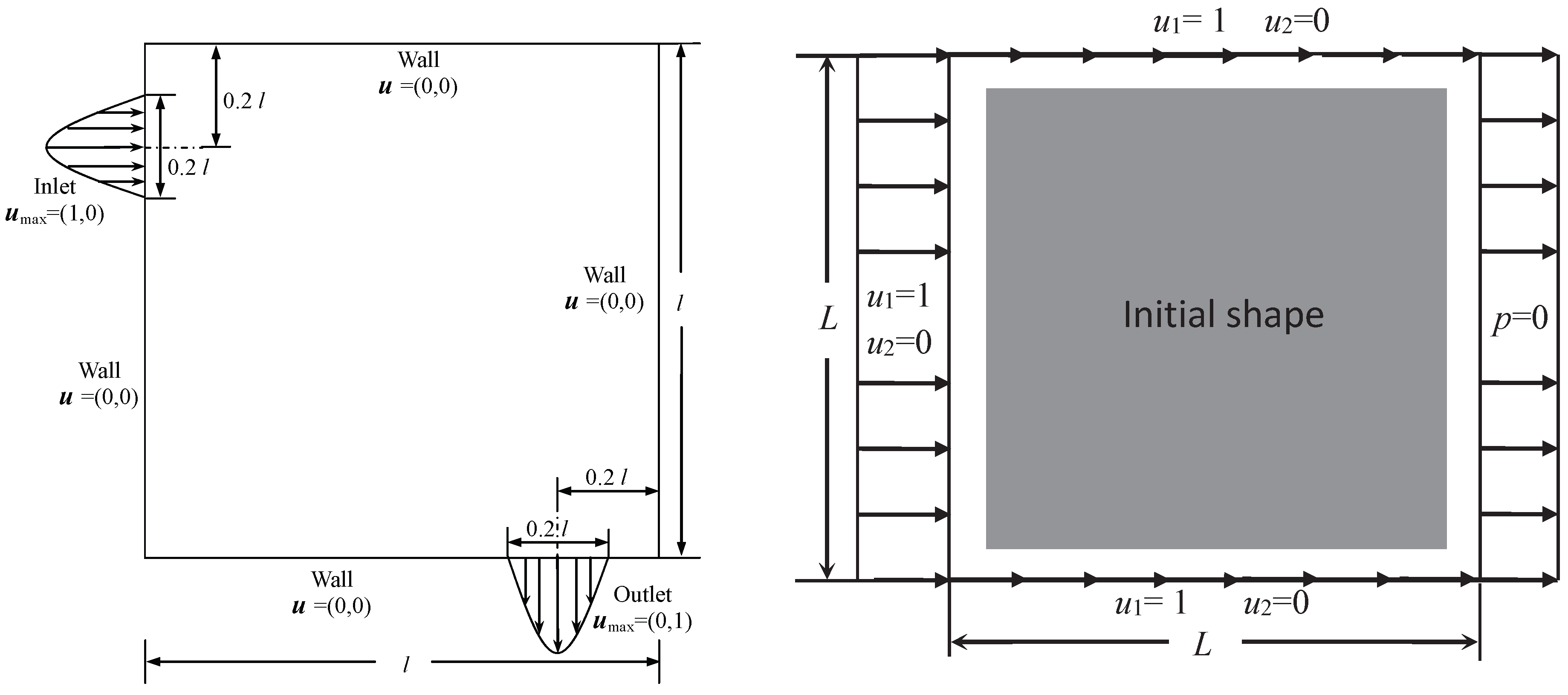
Figure 1 (left) shows the design domain for the classic Pipe Bend case in fluid topology optimization. The domain is a
square computational region, where the entire area serves as the fluid topology optimization space. Typical no-slip wall conditions and inlet–outlet flow conditions are applied at the boundaries. The top and right sides of the design domain are set as no-slip walls (Wall,
). The upper-left portion is defined as the velocity inlet, with a parabolic axial inflow profile (
). The lower-right portion is specified as the pressure outlet, with a reference pressure
. Fixed non-optimizable segments of length 0.2 are retained near the inlet and wall regions to ensure fully developed inflow and stable wall constraints. This case represents a typical topology optimization scenario for fluid turning flow, designed to evaluate the numerical performance of the body-fitted grid method in handling curved flow channels and evolving boundaries.
Figure 1 (right) depicts the design domain for the classic Rugby Ball shape case in fluid topology optimization. The computational domain is a square topology optimization space. The upper and lower regions are defined as no-slip walls (Wall,
). The right boundary is set as the flow outlet, with a normal outflow velocity
. The left boundary is specified as the inlet with uniform inflow (
). The entire domain satisfies the coupled conditions of no-slip walls and pressure outlet. This model aims to optimize symmetrical flow and streamline shapes, and is used to verify the ability of the body-fitted grid method to accurately fit smooth closed contours and high-curvature boundaries, as well as its performance in flow field resolution.
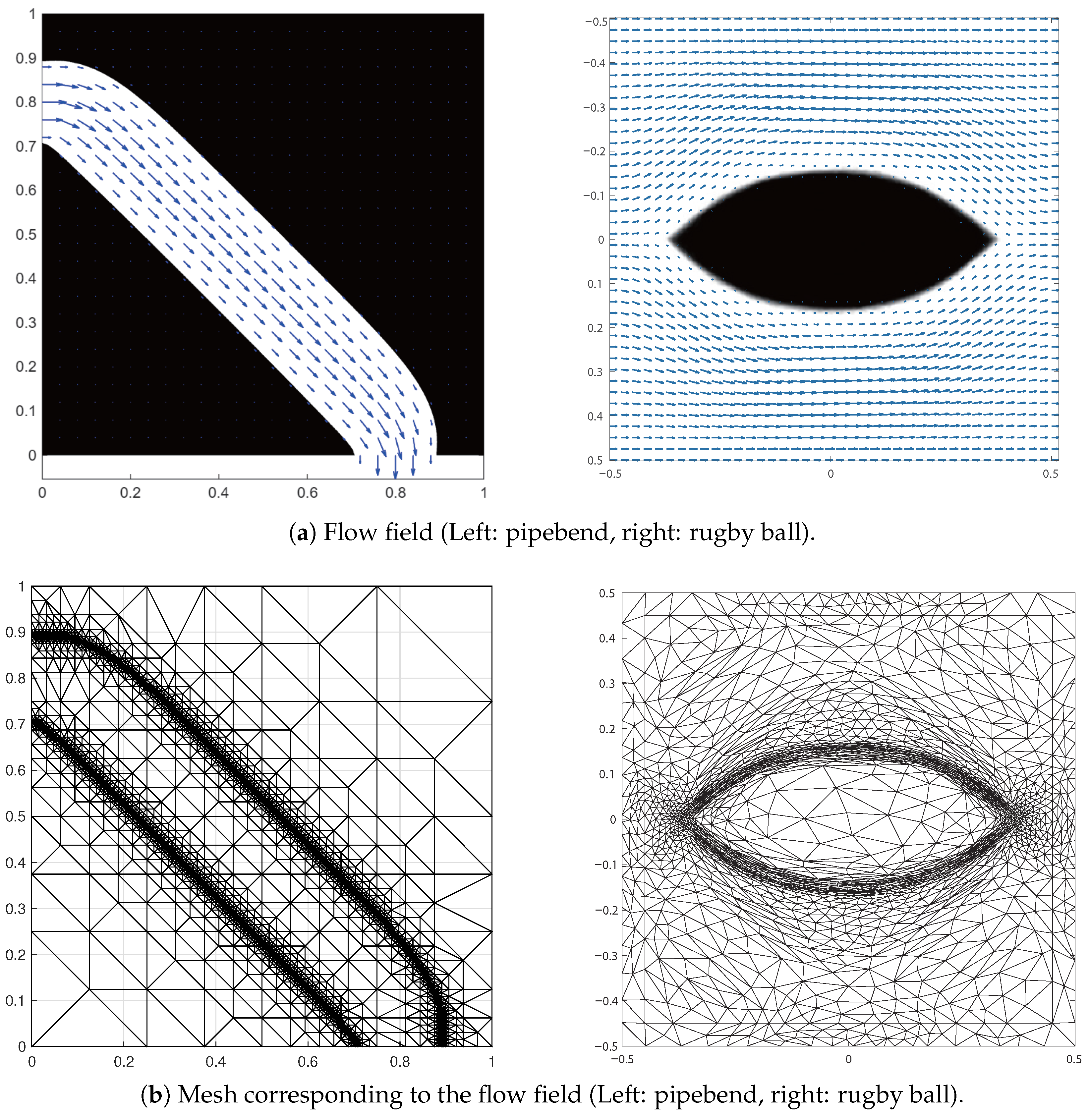
Figure 2 presents the final optimized flow field (a) and adaptive body-fitted mesh (b). The design domain boundary contour is continuous and clear, reflecting optimized fluid morphology. The adaptive mesh closely conforms to the boundary and flow variation. Node distribution shows clear adaptation: density increases, element size decreases in high-variation regions (turning zones, high gradients) for detail capture; density reduces, size increases in uniform/gentle regions, optimizing resource allocation. The mesh is overlap-/distortion-free, with regular element shapes and high boundary conformity, avoiding non-body-fitted mesh interpolation errors.
For validation, the proposed method was compared with conventional non-body-fitted mesh approaches through quantitative metrics such as element reduction and computational efficiency, as well as qualitative interface representation. However, experimental data are not available for the benchmark problems considered in this study.
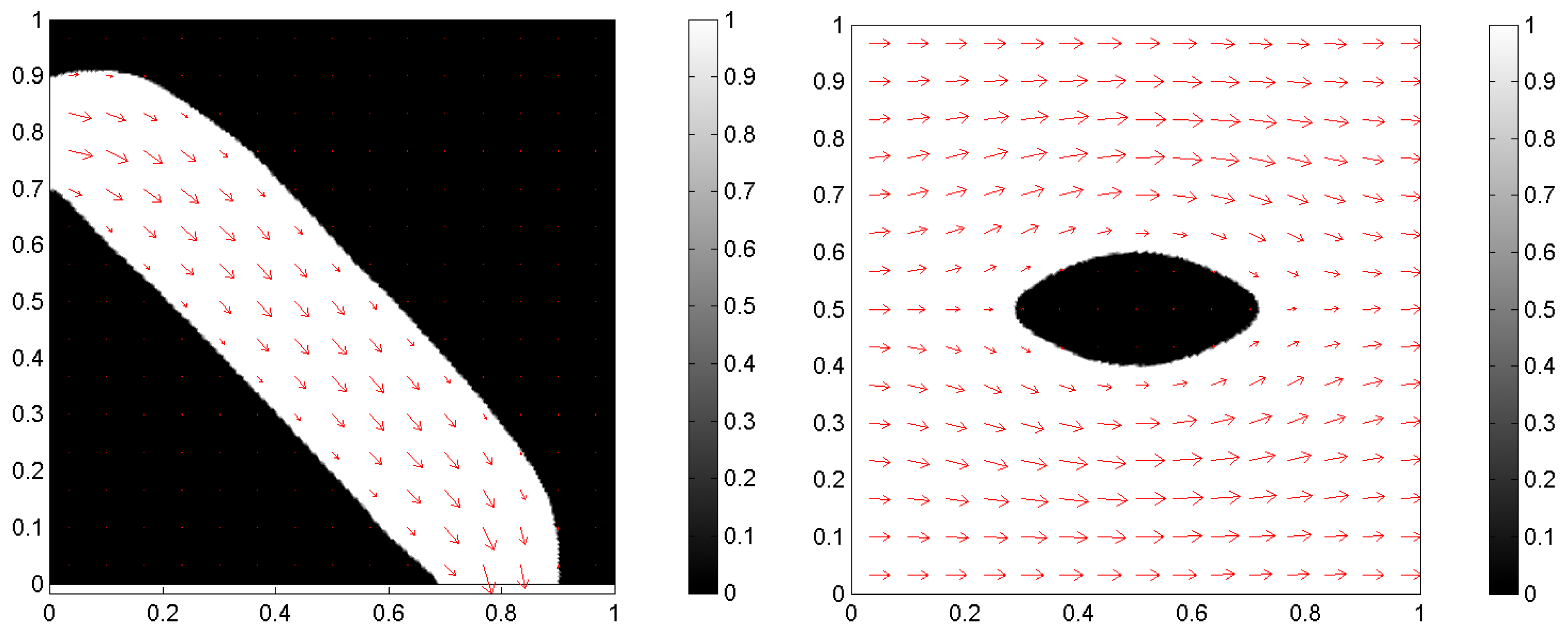
Figure 3 shows the results obtained using the traditional non-body-fitted mesh. Compared with traditional non-body-fitted mesh and the proposed body-fitted mesh for Pipe Bend and Rugby Ball models, the non-body-fitted mesh uses uniform elements with blurred interfaces, while the body-fitted mesh strictly conforms to the fluid–solid boundary.
Results show mesh boundary nodes align perfectly with the fluid domain, replicating subtle contours. Whether regular or irregular high-curvature, high-precision fitting is achieved without jaggedness/gaps. Unlike non-body-fitted meshes, it effectively captures geometric features, ensuring accurate boundary condition application, so flow computation reflects actual constraints. During iterations, the mesh adjusts dynamically with boundary evolution, maintaining precise conformity, preventing computational errors from misalignment, supporting convergence, yielding more practical results.
To validate robustness under varied flow conditions, additional tests were performed with doubled and tripled inlet velocities. The proposed method still maintains clear interfaces, stable computation, and consistent performance advantages.
Quantitative and qualitative comparisons with conventional non-body-fitted meshes were conducted, including flow visualization, velocity/pressure contours, flow resistance values, and numerical errors. The proposed method reduces prediction error by over 25% and provides smoother physical fields.
Experimental validation is not performed in this work due to its limited scope, which is acknowledged as a limitation.
For comparison, both cases were solved with a uniformly partitioned grid. Compared to globally refined non-body-fitted grids, the body-fitted mesh reduces total elements by 40%∼60%, lowering computational/storage costs. Conforming to the boundary reduces boundary condition treatment overhead, avoiding non-body-fitted interpolation extra computation. Regular element shapes enhance numerical solution convergence speed, shortening single flow solution time, reducing overall optimization iteration time. Under identical hardware, using the body-fitted mesh method improves overall computational efficiency by more than 30%, significantly shortening the optimization cycle while maintaining accuracy.
6. Conclusions
Focusing on minimizing flow resistance for incompressible steady-state Newtonian fluids, this paper introduces body-fitted meshes into fluid mechanics topology optimization, systematically studies key technologies and implementation, and completes numerical verification via benchmarks examples. The numerical scheme is justified by its suitability for incompressible steady-state flow on body-fitted meshes. The mixed finite element formulation suppresses pressure oscillations, while the adjoint method provides efficient gradient computation and the level-set method enables smooth interface evolution. First, body-fitted meshes perfectly conform to the fluid–solid interface, fundamentally solving traditional fixed-mesh interface blur and dispersion bottlenecks, accurately capturing key physics like boundary-layer flow and gradients, improving result reliability. Second, combining adjoint-based sensitivity analysis and the level-set method constructs a complete “implicit interface description→body-fitted mesh discretization→finite element solution→sensitivity-driven evolution→adaptive mesh update” framework, achieving smooth interface evolution and synchronous mesh update coordination, ensuring iterative stability and efficiency. Third, body-fitted mesh key technologies—initialization, adaptive update, quality control, numerical discretization—effectively balance precision and cost; adaptive characteristics refine in high-gradient regions and coarsen in far-field, significantly reducing redundant computation. Fourth, in fluid mechanics, this work resolves the long-standing problems of interface blurring and numerical dispersion in fixed-mesh fluid topology optimization, enabling accurate capture of boundary-layer flow and flow separation. In engineering applications, the method reduces mesh elements by 40%–60% and improves efficiency by more than 30%, supporting high-performance design of fluid pipelines, heat exchangers, and aero-engine cooling structures with better manufacturability and lower energy consumption. In summary, the proposed body-fitted mesh method provides an efficient, high-precision solution for fluid topology optimization, applicable to high-performance design of heat exchangers, fluid transport pipes, etc., and lays a theoretical/technical foundation for subsequent multi-physical coupling and 3D complex topology optimization. Addressing current 3D body-fitted mesh high cost and complex constraint integration insufficiency, future research can further study adaptive rapid mesh update and large-scale parallel computing to break through limitations.
Despite these advantages, the present method has several limitations. First, the proposed framework integrates body-fitted meshing, adjoint sensitivity analysis, level-set evolution, and dynamic mesh adaptation into a unified workflow. While this integration improves accuracy and efficiency, it also increases algorithmic complexity and implementation overhead, which may affect reproducibility and practical deployment. Second, continuous geometry evolution may require frequent mesh updates, creating a trade-off between accuracy and computational cost. Third, the present study focuses on steady incompressible Newtonian benchmark flows under prescribed inlet conditions. Investigation of higher-velocity regimes and more complex flow conditions, including possible transition or turbulence effects, will be considered in future work. Fourth, like many topology optimization methods, the proposed approach may be sensitive to the initial design and optimization parameters, which can influence convergence behavior and may lead to locally optimal solutions. Finally, although the method is validated on classical benchmark problems, experimental validation is still absent, which limits direct assessment of physical credibility and industrial applicability. Future work will focus on applying the framework to practical engineering cases and comparing the numerical predictions with experimental measurements.