Article

Cooperative Trajectory Planning for Air–Ground Systems in Unstructured Mountainous Environments
School of Electric and Information Engineering, Jiangsu University of Science and Technology, Suzhou 215600, China
*
Author to whom correspondence should be addressed.
Symmetry 2026, 18(4), 672; https://doi.org/10.3390/sym18040672
Submission received: 26 January 2026 / Revised: 25 March 2026 / Accepted: 15 April 2026 / Published: 17 April 2026
(This article belongs to the Section Computer)

Abstract

Air–ground collaborative systems leverage the complementary strengths of unmanned aerial vehicles (UAVs) and unmanned ground vehicles (UGVs) and hold significant potential for logistics in complex, unstructured environments. However, trajectory planning in infrastructure-free mountainous regions remains challenging owing to the need for continuous tight coupling, obstacle avoidance, and reliable communication-link maintenance. To address these challenges, this study proposes a cooperative trajectory planning framework that enforces strict inter-vehicle distance constraints to maintain communication connectivity. By formulating the coordination problem in terms of relative configurations between air and ground vehicles, the proposed framework exhibits translational invariance, reflecting an underlying symmetry with respect to global position shifts. This symmetry-aware formulation reduces reliance on absolute coordinates and promotes consistent cooperative behavior under environmental variability. The trajectory planning problem is mathematically formulated as a constrained multi-objective nonlinear programming (MONLP) model that balances energy consumption and trajectory smoothness. An adaptive inertia weight particle swarm optimization (AIWPSO) algorithm is developed to efficiently solve the resulting optimization problem. Simulation results demonstrate that the proposed approach generates smooth, collision-free trajectories while maintaining stable air–ground coordination, demonstrating improved feasibility and robustness over conventional planning methods in unstructured mountainous environments.

1. Introduction

In recent years, the emerging low-altitude economy has received significant attention, with aerial robotics serving as a key enabling technology for diverse missions. Driven by advancements in robotics, this domain has expanded to include heterogeneous robotic systems [1]. Specifically, UAVs and UGVs, distinguished by their unique functional attributes, are now extensively deployed across industrial and civilian applications.
UAVs are characterized by high mobility, extensive fields of view, and operation in unobstructed aerial environments, making them well suited for cargo logistics, target tracking, and reconnaissance [2]. In contrast, UGVs offer superior payload capacity and locomotion stability, enabling the transport of heavy cargo, energy supplies, and precision instrumentation [3,4]. Despite these advantages, individual platforms are subject to inherent limitations. UAVs are restricted by limited payload capacity and battery endurance, which reduces logistical efficiency and operational range. Likewise, UGVs are hampered by limited mobility and restricted perception, which impede navigation in complex terrain. Therefore, integrating UAVs and UGVs is essential to overcome these individual limitations. In such a collaborative framework, the UGV functions as a mobile charging station to extend the UAV’s endurance, while the UAV relays aerial perception data to the UGV, effectively extending the UGV’s sensing range beyond its line of sight. These air-ground collaborative systems have demonstrated significant efficacy in domains including search and rescue, hazardous environment exploration, and military operations [5].
Despite the demonstrated benefits of such collaborative frameworks, existing research is predominantly tailored to urban environments with robust infrastructure [6,7,8], leaving logistics in remote mountainous terrain as a critical yet under-addressed challenge. Logistics in these regions currently relies on manual labor; however, economic constraints and safety risks on treacherous terrain necessitate a transition toward autonomous delivery systems. Deploying standalone UGVs in such environments is impractical; the absence of network infrastructure and GNSS signals severely degrades situational awareness, while complex topography frequently impedes ground vehicle navigation. Similarly, relying solely on UAVs is impractical due to payload and endurance limitations.
To overcome these limitations, this study proposes a tightly coupled air-ground collaborative system specifically engineered for mountainous logistics. The system operates in a dual-mode configuration: on traversable terrain, the UGV carries the UAV and a power supply, charging the UAV en route; upon encountering complex terrain, the UAV takes off to fly in formation with the UGV. During this coupled movement, the UAV transmits aerial perception data to the UGV at 50 ms intervals, enabling real-time detection of dynamic obstacles and immediate re-routing. Given the lack of communication infrastructure, Cellular Vehicle-to-Everything (C-V2X) technology is employed to establish a robust wireless link [9,10]. To maintain connectivity, the system imposes a strict proximity constraint, ensuring the relative distance remains within the effective communication range. Upon traversing the complex terrain, the agents decouple, and the UAV lands to recharge. The efficacy of this collaboration depends critically on optimal trajectory generation. This study formulates the problem as a multi-objective nonlinear programming model and utilizes an adaptive inertia weight particle swarm optimization algorithm to minimize energy consumption and maximize trajectory smoothness while strictly satisfying coupling constraints. The main contributions of this work can be summarized as follows.
  • We propose a tightly coupled air-ground collaborative system specifically engineered for remote, GNSS-denied environments. This framework exploits the complementary capabilities of UAVs and UGVs to address the challenges posed by complex terrain and the absence of communication infrastructure.
  • We formulate the collaborative trajectory planning problem as a multi-objective nonlinear programming model. An adaptive inertia weight particle swarm optimization algorithm is introduced to solve this model, generating optimal trajectories that balance energy efficiency, smoothness, and coupling constraints.
The rest of this study is organized as follows. Section 2 provides an overview of related works focusing on air-ground collaborative systems, summarizing and classifying existing approaches. Section 3 introduces the kinematic equations and develops a trajectory planning model. Section 4 describes the solution algorithm. Section 5 reports the results of this study and compares the proposed method with the state-of-the-art approach. Section 6 concludes this study.

2. Related Works

This section analyzes the existing literature along two key aspects: the classification of air-ground cooperation systems and the practical applications of coupled systems.

2.1. Classification of Air-Ground Collaborative Systems

In recent years, air-ground collaborative systems have undergone remarkable development. For instance, Hao et al. [11] provided a comprehensive taxonomy of existing air-ground collaborative systems, categorizing them based on operational nature (complementary vs. cooperative; centralized vs. distributed) and the autonomy levels (ranging from non-autonomous to fully autonomous). However, their taxonomy emphasizes functional complementarity and autonomy levels while largely overlooking platform dominance (i.e., whether the system is UAV-centric, UGV-centric, or balanced). More importantly, their framework largely neglects the degree of coupling between the heterogeneous platforms. Accordingly, this paper introduces a new classification framework for air-ground collaborative systems, organized around the degree of inter-platform coupling.
Existing works can be categorized into three modes: UAV-dominant, UGV-dominant, and balanced collaboration. This taxonomy more clearly illuminates the primary functional roles in decoupled operations.
In UAV-dominant systems, the UGV primarily serves as a mobile recharging platform. Given the inherent endurance limitations of aerial platforms, UGVs are often deployed at designated locations to facilitate landing and provide static recharging services. For instance, Lin et al. [12] employed a UAV for aerial monitoring; to mitigate energy limitations, the UAV periodically lands on the UGV for recharging and is subsequently transported to the next monitoring waypoint. Additionally, significant effort has been devoted to improving aerial tracking robustness, with Wang et al. [13] employing deep reinforcement learning to enhance the reliability of UAVs tracking ground vehicles.
Conversely, in UGV-dominant systems, the UAV typically functions as an aerial data relay or communication relay, facilitating information exchange among ground units. Several studies, including [14,15,16,17], have deployed UAVs as intermediate relays to maintain connectivity between high-speed UGVs. UAVs can also exploit their elevated vantage point to support global path planning for the UGV prior to mission execution. Miller et al. [18] employed UAV-generated maps to enable the UGV to compute its optimal trajectory. Similarly, Niu et al. [19] and Zhang et al. [20] focused on onboard aerial image processing, followed by the transmission of processed data to ground units. In these systems, the UAV primarily acts as an elevated sensor, substantially improving the situational awareness and operational efficiency of the ground system.
In balanced systems, UAVs and UGVs perform complementary yet equally critical tasks. These architectures have found widespread application in precision agriculture, infrastructure inspection, disaster response, and logistics. Tokekar et al. [21] exemplified this by assigning soil sampling duties to UGVs and aerial data collection to UAVs, with each platform operating in its respective domain. Li et al. [22] applied this balanced synergy to monitoring of illegal structures, with the UGV optimizing UAV launch sites while the UAV conducted high-altitude surveillance. Addressing last-mile delivery, Xu et al. [8] proposed a sequential transport model where UAVs shuttle cargo to a transfer point for final delivery by the UGV. Jang et al. [23] emphasized pre-mission route optimization to enable flexible cargo handover—either to the UGV or directly to the customer. Furthermore, Hou et al. [24] leveraged UAV assistance to overcome road network limitations encountered by UGVs, while Pasini et al. [25] employed UAVs for fire-front reconnaissance to guide subsequent UGV exploration.

2.2. Practical Application of Coupled Systems

Despite the notable achievements of these decoupled approaches, most fail to explicitly define what truly constitutes “collaboration.” The nature of decoupled operation implies independence; while intermittent coupling may occur, the platforms predominantly operate in isolation. Consequently, these systems do not fully realize synergistic collaboration. This paper contends that authentic air–ground collaboration necessitates tight coupling, with simultaneous, coordinated operation being indispensable for mission success. However, existing cargo delivery studies predominantly target urban settings where UGVs can rely on network-based perception. In contrast, in communication-denied mountainous environments, UGVs lose autonomous perception capability and must rely entirely on real-time aerial visual data from the UAV for obstacle detection. Consequently, tightly coupled collaboration becomes not merely advantageous but essential. The framework proposed in this paper directly addresses this critical gap by enforcing robust, continuous coupling to enable genuine air-ground collaboration.
For tightly coupled air-ground systems, existing works can be categorized by primary functional objective: formation control, environmental exploration, cooperative localization, path planning, target tracking, communication relay, and cooperative obstacle avoidance. Xiao et al. [26], Wang et al. [27], and Vasconcelos et al. [28] enhanced mission performance by optimizing formation strategies for heterogeneous air-ground swarms. For exploration in hazardous or unknown environments, Ginting et al. [29], Niroui et al. [30], and Gao [31] demonstrated tightly coupled collaboration paradigms. Fan et al. [32] and Minaeian et al. [33] improved localization accuracy by fusing UAV visual data with UGV GPS measurements. Zhang et al. [34] and Sun et al. [35] addressed cooperative path planning, while Su et al. [36] leveraged UAVs for real-time target geolocation to enable precise UGV tracking. Additionally, Ying et al. [37] employed the system for emergency communication network reconstruction in disaster areas, while Zhang et al. [38] harnessed reinforcement learning to improve cooperative obstacle avoidance. A closer examination reveals that the aforementioned tightly coupled systems each address only a narrow subset of operational challenges. Formation control studies [26,27,28] and cooperative localization approaches [32,33] enforce persistent coupling but rely entirely on GNSS availability and structured environments. Moreover, none of these works formulates explicit trajectory optimization objectives. Exploration frameworks [29,30,31] confront environmental uncertainty yet adopt intermittent coupling strategies and lack explicit distance constraints. Path planning studies [34,35] bear the closest methodological resemblance to the present work; however, neither enforces real time communication proximity constraints nor jointly optimizes energy consumption, smoothness, and path length within a unified multi-objective model. The remaining works on target tracking [36], communication relay [37], and obstacle avoidance [38] each focus on a single functional objective without incorporating holistic trajectory optimization or GNSS denied operation.
Beyond heterogeneous air-ground systems, communication-constrained cooperative planning has also been investigated in homogeneous UAV swarm contexts, offering insights that are transferable to tightly coupled multi-agent coordination. Xu et al. [39] proposed a communication-aware hierarchical UAV swarm surveillance architecture that explicitly embeds a wireless channel model into path planning; by comparing centralized and decentralized control schemes, they demonstrated that a decentralized optimal-gain strategy achieves superior waypoint tracking accuracy and network stability under communication link constraints. Bakirci [40] presented a comprehensive swarm UAV system that integrates autonomous flight, real-time object detection, and coordinated intelligence within bandwidth-limited ad hoc networks, systematically evaluating multiple network topologies and routing protocols to sustain cooperative performance under constrained operational conditions. These studies underscore the critical role of communication awareness and energy-efficient networking in multi-UAV coordination, a concern that extends naturally to the heterogeneous air–ground domain addressed in this paper.
Although tightly coupled air–ground collaboration has attracted considerable research attention, existing methods have been predominantly validated in controlled laboratory settings or infrastructure-rich environments with reliable GNSS and continuous high-bandwidth communication. Critically, none of these works simultaneously addresses the unique confluence of challenges posed by long-duration mountainous logistics in infrastructure-denied terrain: persistent tight coupling under intermittent C-V2X communication only, complete GNSS denial, joint multi-objective optimization of energy consumption, trajectory smoothness, and strict inter-agent proximity constraints. This precise combination of real-world constraints renders prior formulations either inapplicable or severely suboptimal in remote mountainous regions. Addressing this critical gap constitutes the central contribution of the present work.

3. Modeling of the Air-Ground Collaborative System

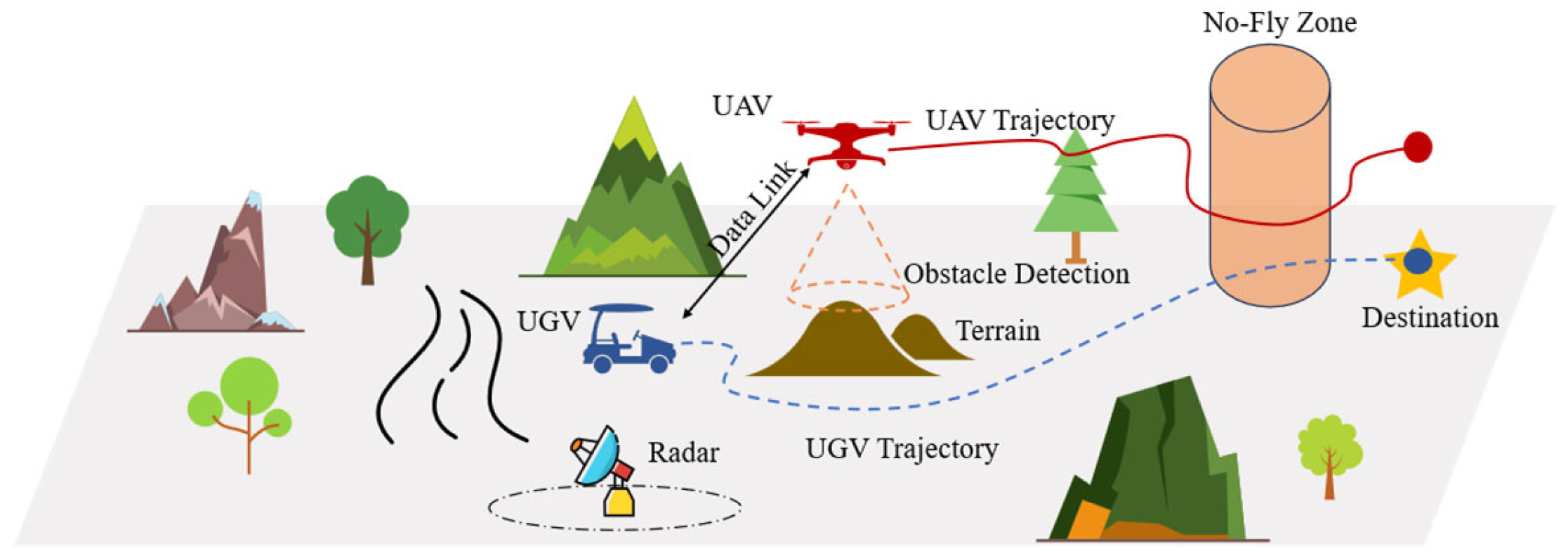
This section presents a trajectory planning model for air-ground collaborative systems, aimed at addressing the challenges of cargo transportation in signal-deprived remote mountainous regions. The model rigorously accounts for the kinematic constraints of both the UAV and the UGV. To ensure effective communication between the UAV and UGV, distance constraints are introduced. The objective function of the model incorporates energy consumption, trajectory smoothness, and trajectory length for both vehicles. A schematic diagram of cooperative trajectory planning for the UAV–UGV system is depicted in Figure 1.

3.1. Kinematic Models

This section outlines the kinematic equations for both the UAV and UGV. The trajectory planning for the air-ground collaborative system is rigorously based on these kinematic models, ensuring that the resulting trajectories are dynamically feasible for both the UAV and UGV.
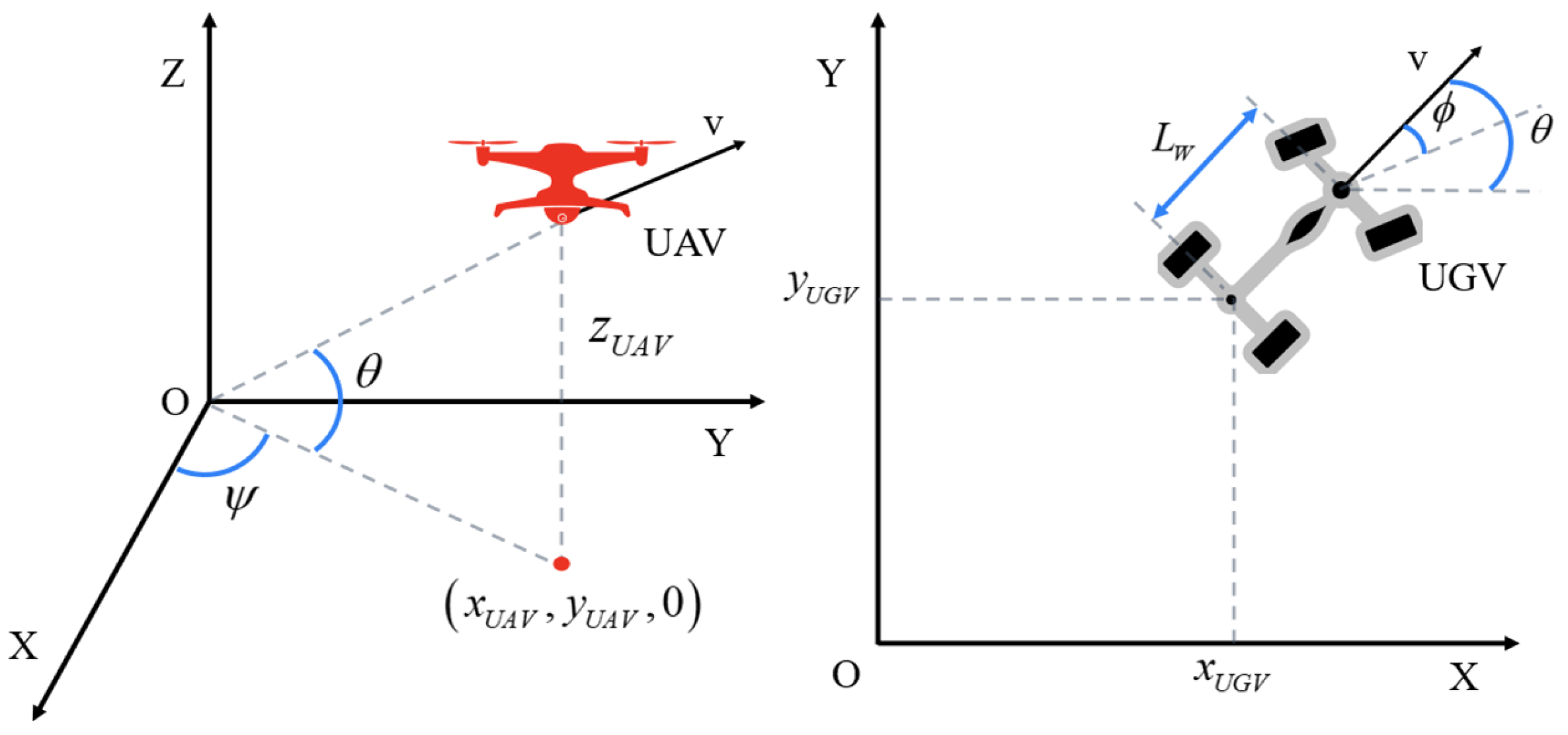
Figure 2 provides a visual representation of the motion of the UAV and UGV. The kinematic equations governing the UAV and UGV dynamics will be discussed in detail in Section 3.1.1 and Section 3.1.2.

3.1.1. The Kinematic Equations of the UAV

The kinematics of the multirotor UAV is described by the following differential equations:
v ˙ UAV = a UAV x ˙ UAV = v UAV cos θ UAV cos ψ UAV y ˙ UAV = v UAV cos θ UAV sin ψ UAV z ˙ UAV = v UAV sin θ UAV ϕ ˙ UAV = p + q sin ϕ UAV tan θ UAV + r cos ϕ UAV tan θ UAV θ ˙ UAV = q cos ϕ UAV r sin ϕ UAV ψ ˙ UAV = q sin ϕ UAV sec θ UAV + r cos ϕ UAV sec θ UAV
The UAV state in the 3D inertial frame is defined by its position x UAV , y UAV , z UAV , as well as its velocity and acceleration magnitudes, denoted by v UAV and a UAV , respectively. The attitude is described by the yaw, pitch, and roll angles ψ UAV , θ UAV and ϕ UAV . The corresponding angular rates p , q and r represent the roll, pitch, and yaw rates, respectively. Equation (1) constitutes the complete kinematic model of the UAV. The first four equations describe the translational motion, mapping the velocity and acceleration to the 3D position in the inertial frame. The remaining three equations define the attitude kinematics, establishing the nonlinear transformation from the body-fixed angular rates p , q , r to the time derivatives of the Euler angles ϕ , θ , ψ .

3.1.2. The Kinematic Equations of the UGV

The UGV is modeled using an Ackermann steering geometry with the following kinematic equations:
v ˙ UGV = a UGV x ˙ UGV = v UGV cos θ UGV y ˙ UGV = v UGV sin θ UGV ϕ ˙ UGV = ω θ ˙ UGV = v UGV tan ϕ UGV L W
The UGV state includes its position x UGV , y UGV on the ground plane. The variables v UGV and a UGV denote the UGV’s velocity and acceleration, respectively. The heading angle is represented by θ UGV , while ϕ UGV denotes the front-wheel steering angle. The symbol ω represents the steering angular velocity of the front wheel. The wheelbase of the UGV is denoted by L W .
The kinematic models in Section 3.1.1 and Section 3.1.2 assume that sufficiently accurate position and attitude estimates are available at each time step. In other words, the trajectory planning framework developed in this study operates under the assumption that a reliable localization module is in place. This assumption is grounded in two considerations. First, the present work focuses specifically on the cooperative trajectory optimization problem, which is logically decoupled from the state estimation problem in a modular robotic system architecture. Second, the tightly coupled system design described in Section 1, in which the UAV transmits aerial perception data to the UGV at 50 ms intervals via C-V2X, naturally provides the sensory input required by visual odometry or SLAM-based localization pipelines. Several existing studies [32,33] have demonstrated that fusing UAV aerial imagery with ground-level measurements can yield accurate pose estimates even in GNSS-denied environments, confirming the practical feasibility of this assumption.

3.2. Air-Ground Collaborative Trajectory Planning Model

The model comprises a single UAV and a single UGV, with the objective of planning a trajectory that minimizes energy consumption, maximizes smoothness, and minimizes trajectory length for both the UAV and UGV. This study targets remote mountainous regions, where the model incorporates no-fly zones over wildlife-dense areas to prevent the UAV from disturbing local fauna. Given the absence of signal coverage in remote mountainous areas, the UAV and UGV rely on the C-V2X wireless communication protocol, with a constraint on the maximum communication range between them. Due to the complex terrain of the mountainous environment, the model imposes a constraint that the distances from both the UAV and the UGV to the terrain must each exceed a defined safety threshold.

3.2.1. The Objective Function

The overall objective function is defined as:
F = min F UAV + F UGV
In (3), F represents the objective function of the air-ground collaborative system, which combines the UAV sub-objective F UAV and the UGV sub-objective F UGV .
The specific form of F UAV is outlined below:
F UAV = β 1 F UAV . H + β 2 F UAV . E + β 3 F UAV . D + P u n i s h UAV
In (4), F UAV . H penalizes deviations of the UAV flight altitude from the prescribed bounds. F UAV . E accounts for the penalty associated with the UAV’s energy expenditure. F UAV . D quantifies the penalty related to the total length of the UAV’s flight trajectory. P u n i s h UAV denotes the penalty incurred if the UAV fails to reach the designated target point at the end of its flight. The coefficients β 1 , β 2 and β 3 serve as weighting factors for the three penalty components.
The formulation of F UAV . H is given below:
F UAV . H = i = 0 N 1 z U A V . i ( h max h min ) 2 2
To facilitate a more intuitive and simplified search for the trajectory of the air–ground cooperative system, the trajectories of both the UAV and UGV are discretized into N segments from start to goal, each with a defined time interval Δ t .
The UAV’s flight altitude is constrained within a range, where the maximum allowable height is h max and the minimum permissible height is h min . If the UAV flies at an excessively high altitude, its separation from the UGV becomes too large, leading to degraded communication quality. Conversely, when its altitude is too low, the UAV’s visual coverage becomes restricted, significantly weakening its monitoring capability. Accordingly, the objective term F UAV . H is introduced to optimize the UAV’s altitude, encouraging it to operate within the designated bounds between h max and h min .
The formulation of F UAV . E is presented as follows:
F UAV . E = i = 0 N 1 a U A V . i 2 + ϕ ˙ U A V . i 2 + θ ˙ U A V . i 2 + ψ ˙ U A V . i 2
A UAV consumes considerably less energy along a smooth, constant-velocity trajectory than along one involving frequent speed and attitude changes. Accordingly, Equation (6) encourages the UAV to maintain uniform motion and minimize abrupt trajectory variations so as to reduce overall energy consumption. An additional benefit of this term is that it enhances the smoothness of the generated trajectory.
A widely adopted realistic energy model for UAVs is formulated as below:
P V = P 0 1 + 3 V 2 U t i p 2 + P i 1 + V 4 4 v 0 2 V 2 2 v 0 2 1 2 + 1 2 d 0 ρ s A V 3
Equation (7) formulates the total propulsion power consumption, denoted as P V , for a rotary-wing UAV operating at a steady forward flight speed V . This analytical model decomposes the total required power into three fundamental aerodynamic constituents: profile power, induced power, and parasite power. In the first term, which characterizes the profile power, P 0 represents the blade profile power required in a hovering state, and U t i p designates the tip speed of the rotor blade. The second term captures the induced power required to generate thrust, where P i and v 0 correspond to the hovering induced power and the mean rotor induced velocity in hover, respectively. Finally, the third term accounts for the parasite power—the energy expended to overcome the aerodynamic drag of the UAV airframe. Within this term, d 0 denotes the fuselage drag ratio, ρ signifies the ambient air density, s indicates the rotor solidity, and A represents the total rotor disc area.
The formulation of F UAV . D is given below:
F UAV . D = i = 0 N 1 ( x target x U A V . i ) 2 + ( y target y U A V . i ) 2 + ( z target z U A V . i ) 2
The coordinates x target , y target , z target represent the target coordinates of the UAV trajectory. Equation (8) calculates the distance between the UAV’s coordinates at each time step and the goal. By minimizing this term, the overall trajectory length is reduced.
The expression for P u n i s h UAV is given by:
P u n i s h UAV = 10 7 x U A V . N 1 x target 2 + y U A V . N 1 y target 2 + z U A V . N 1 z target 2
In Equation (9), x U A V . N - 1 , y U A V . N - 1 , z U A V . N - 1 denotes the final coordinates of the UAV trajectory. A large penalty factor of 10 7 is applied to ensure that the UAV’s final position coincides precisely with the target.
The expression for F UGV is given below:
F UGV = β 4 F UGV . E + β 5 F UGV . D + P u n i s h UGV
Here, F UGV . E represents the penalty associated with UGV energy consumption, while F UGV . D refers to the penalty for the length of the UGV trajectory. P u n i s h UGV represents the penalty imposed when the UGV’s final position does not coincide with the target.
The formula for F UGV . E is given by:
F UGV . E = i = 0 N 1 a U G V . i 2 + ω i 2
When the UGV frequently alters its speed and steering angle, energy consumption increases significantly. Therefore, Equation (11) seeks to minimize the magnitudes of acceleration and steering angle velocity at each stage, thereby reducing the UGV’s energy consumption.
In accordance with established literature, a realistic energy consumption model for UGVs is typically formulated as:
v = r w R + w L / 2 w = r w R w L / 2 b E K = 1 2 m v t 2 + I w t 2 d t
The vehicle’s linear velocity v and angular velocity w are governed by the angular velocities of its right ( w R ) and left ( w L ) wheels, where r denotes the wheel radius and 2 b signifies the track width between the wheels. Ultimately, the total kinetic energy consumption E K over a given trajectory is formulated as the integral of the UGV’s translational and rotational kinetic energies over time, with m and I representing the vehicle’s mass and moment of inertia, respectively.
The realistic energy models in (7) and (12) are introduced to establish the physical basis underlying the energy-related objectives adopted in the MONLP. The UAV propulsion model (7) decomposes power consumption into profile, induced, and parasite components, each driven by flight speed; the UGV model (12) formulates kinetic energy expenditure as a function of translational and rotational velocities governed by wheel angular rates. In both cases, the dominant energy drivers are velocity variations induced by acceleration and angular rate changes—precisely the quantities penalized by the objective terms F UAV . E in (6) and F UGV . E in (11). The present study adopts these control-input-based formulations as the working energy objectives in the optimization for two reasons. First, they express energy cost directly as functions of the per-segment decision variables a U A V . i , θ ˙ UAV . i , ψ ˙ UAV . i , a U G V . i , ω i , avoiding the need to evaluate coupled aerodynamic or drivetrain state models within each of the n × K fitness evaluations. Second, the platform-specific physical parameters appearing in (7) and (12)—such as rotor disc area, blade tip speed, wheel radius, and vehicle mass—remain constant throughout the planning horizon and across all candidate solutions; they therefore scale every trajectory uniformly and do not alter the relative ranking of competing solutions during optimization. The realistic models thus serve to confirm that the simplified objectives faithfully capture the energy-relevant control effort, while the latter provide the computational tractability required by the population-based AIWPSO solver operating over a 5 N -dimensional search space.
The expression for F UGV . D is given below:
F UGV . D = i = 0 N 1 ( x target x U G V . i ) 2 + ( y target y U G V . i ) 2
Analogous to Equation (8), this term encourages the UGV to approach the goal at each time step, thereby reducing the overall trajectory length.
The expression for P u n i s h U G V is given below:
P u n i s h UGV = 10 7 x U G V , N 1 x target 2 + y U G V , N 1 y target 2
In (14), x U G V . N - 1 , y U G V . N - 1 denotes the final coordinates of the UGV trajectory, while x target , y target represents the target location. This term employs a large penalty factor of 10 7 to ensure that the UGV’s final position coincides with the target location.

3.2.2. The Constraints

The preceding subsection outlines the specific components and meaning of the objective function F for the air-ground collaborative system. In this study, the constraints of the proposed model are classified into six categories: UAV control input constraints, UGV control input constraints, UAV-UGV state variable constraints, weight constraints, obstacle avoidance constraints, and air–ground cooperative communication distance constraints.
The UAV control inputs are bounded as:
a UAV . min a U A V . i a UAV . max ϕ ˙ UAV . min ϕ ˙ U A V . i ϕ ˙ UAV . max θ ˙ UAV . min θ ˙ U A V . i θ ˙ UAV . max ψ ˙ UAV . min ψ ˙ U A V . i ψ ˙ UAV . max
The UGV control input constraints are as follows:
a U G V . min a U G V . i a U G V . max ω min ω i ω max
The state variable constraints of both the UAV and UGV are as follows:
v UAV . min v U A V . i v UAV . max h min z U A V . i h max v UGV . min v U G V . i v UGV . max
The weight constraints are as follows:
β 1 + β 2 + β 3 + β 4 + β 5 = 1
The obstacle avoidance constraints for both the UAV and UGV are as follows:
x U A V . i x t e r r a i n . j 2 + y U A V . i y t e r r a i n . j 2 + z U A V . i z t e r r a i n . j 2 d UAV . safe x U G V . i x t e r r a i n . j 2 + y U G V . i y t e r r a i n . j 2 d UGV . safe
The mountain terrain is represented as a discrete point set S = p t e r r a i n .1 , p t e r r a i n .2 , , p t e r r a i n . j , with each point p t e r r a i n . j = x t e r r a i n . j , y t e r r a i n . j , z t e r r a i n . j representing the coordinates of a specific terrain point. Here, d UGV . safe denotes the safe distance from the UGV’s coordinate point to the mountain, while d UAV . safe indicates the safe distance from the UAV’s coordinate point to the mountain.
The topographic map used in this study was constructed by overlaying elevation data onto a two-dimensional grid. Consequently, each set of 2D coordinates on the map corresponds to a specific terrain height value. For collision detection between the UGV and mountainous terrain, a 5   m × 5   m local region centered on the vehicle is defined. The algorithm determines whether any terrain data points exist within this area and evaluates if the distance to the nearest topographic point exceeds d UGV . safe . For UAV-terrain collision detection, the algorithm specifically evaluates whether the altitude differential between the UAV’s current flight level and the corresponding terrain elevation exceeds d UAV . safe .
Consequently, this study achieves an optimal balance between modeling accuracy and computational feasibility.
The air–ground cooperative communication distance constraints for both the UAV and UGV are as follows:
x U A V . i x U G V . i 2 + y U A V . i y U G V . i 2 + z U A V . i 2 d cooperate . max
d cooperate . max represents the maximum allowable distance between the UAV and UGV at any given moment.
Notably, the cooperative formulation exhibits translational invariance: if both vehicles undergo an identical rigid translation, all coupling constraints and energy-related objectives remain unchanged. Specifically, the communication distance constraint depends solely on the relative displacement between the UAV and UGV, while the energy objectives F UAV . E and F UGV . E are functions of accelerations and angular rates, which are inherently translation-invariant. This symmetry property is particularly relevant to the GNSS-denied scenario considered herein, as it ensures that the optimized cooperative behavior depends only on the relative geometry between the vehicles and the local terrain rather than on absolute coordinate values. The robustness of this property is empirically validated through Experiments 1–4 in Section 5.

3.2.3. Symmetry Properties of the Cooperative Formulation

To formalize the symmetry structure described above, we define the relevant group and its action on the system configuration. Let G = 2 , + denote the two-dimensional Euclidean translation group. At each discrete time step i , the joint configuration of the air–ground system is represented by the tuple q i = x U A V . i , y U A V . i , z U A V . i , x U G V . i , y U G V . i . For any translation vector τ = τ 1 , τ 2 G , the group action Φ τ on q i is defined as:
Φ τ q i = x U A V . i + τ 1 , y U A V . i + τ 2 , z U A V . i , x U G V . i + τ 1 , y U G V . i + τ 2
The action Φ τ simultaneously translates the horizontal coordinates of both vehicles by the same displacement while leaving the UAV altitude, all velocity states, attitude angles, and control inputs unchanged. This group action captures the intuitive notion that a uniform horizontal shift of the entire cooperative system should not alter the coordination behavior between the two vehicles.
To verify this claim, consider an arbitrary horizontal translation τ = τ 1 , τ 2 G applied simultaneously to both vehicles. Under such a translation, Equation (18) becomes:
x U A V . i + τ 1 x U G V . i + τ 1 2 + y U A V . i + τ 2 y U G V . i + τ 2 2 + z U A V . i 2 d cooperate . max
It reduces identically to the original expression because τ 1 and τ 2 cancel in the coordinate differences. The communication constraint is therefore satisfied by the translated configuration if and only if it is satisfied by the original one. A similar cancellation holds for the altitude penalty F UAV . H in (5), which depends solely on z U A V . i and is therefore unaffected by any horizontal shift. The energy terms F UAV . E and F UGV . E , defined in (6) and (11), respectively, depend exclusively on the control inputs a U A V . i , θ ˙ UAV . i , ϕ ˙ UAV . i , ψ ˙ UAV . i , a U G V . i , and ω i , none of which involves horizontal position coordinates. These terms are therefore trivially invariant under Φ τ . The same holds for the control input bounds (15) and (16) and the velocity and altitude limits in (17), as they impose constraints only on control magnitudes and state variables that are independent of horizontal position.
The remaining terms in the MONLP do not share this invariance. The goal-directed objective F UAV . D contains the squared distance x target x U A V . i 2 ; under Φ τ the vehicle coordinate shifts to x U A V . i + τ 1 while x target remains fixed, so the objective value changes. The same argument applies to F UGV . D , P u n i s h UAV , P u n i s h UGV , and the terrain-dependent obstacle constraints, all of which reference absolute positions relative to fixed environmental features. The translational symmetry of the cooperative formulation is thus partial: the inter-vehicle coupling structure and the energy-related objectives are fully invariant, whereas the environment-anchored and goal-directed terms necessarily break this invariance.

3.2.4. Invariant Structure and Partial Model Reduction

Section 3.2.3 established that the coupling constraint and energy-related objectives are invariant under horizontal translations, whereas the goal-directed and terrain-dependent terms are not. This section examines the structural consequences of this partial invariance for the MONLP formulation, specifically addressing whether the optimization model admits dimensionality reduction through symmetry exploitation.
Define the relative horizontal displacement at each discrete time step i as Δ x i = x U A V . i x U G V . i , Δ y i = y U A V . i y U G V . i , and let r i = Δ x i , Δ y i , z U A V . i denote the relative configuration vector. Under the group action τ defined in (21), Δ x i x U A V . i + τ 1 x U G V . i + τ 1 = Δ x i , and similarly for Δ y i , confirming that r i is invariant under arbitrary horizontal translations. The communication-distance constraint can accordingly be rewritten in terms of r i as:
Δ x i 2 + Δ y i 2 + z U A V . i 2 d cooperate . max 2
Equation (23) defines, at each time step, a closed ball B d 3 in the relative configuration space. The Cartesian product M coop = i = 0 N 1 B d constitutes an invariant set under the translation group in the full N -step configuration space: for any trajectory satisfying the coupling constraint, every translated trajectory under τ remains in M coop . Within this invariant set, cooperative feasibility is governed by 3 N relative-state variables r i i = 0 N 1 rather than the 5 N absolute position variables q i , yielding a dimensionality reduction from 5 N to 3 N in the coupling constraint subspace.
The invariant portion of the objective function admits an analogous reduction. The energy objectives F UAV . E and F UGV . E depend exclusively on control inputs, and the altitude penalty F UAV . H depends solely on z U A V . i , which is already a component of r i . Consequently, the subset of the MONLP comprising the coupling constrain, the energy objectives (6) and (11), and the altitude objective can be formulated entirely in terms of r i , u i , where u i = a U A V . i , θ ˙ UAV . i , ψ ˙ UAV . i , a U G V . i , ω i denotes the control input vector. This invariant subproblem is self-contained and fully determined without reference to absolute horizontal positions. The complete MONLP, however, cannot be globally reduced to the quotient space, because the goal-directed objectives (8) and (13), the terminal penalties (9) and (14), and the terrain-dependent constraints (19) all reference absolute positions relative to fixed environmental features, thereby breaking the translational invariance.
This partial reduction nonetheless carries a concrete structural implication. The cooperative feasibility of any candidate trajectory can be verified entirely in the 3 N -dimensional relative configuration space, independent of the trajectory’s absolute placement. In the AIWPSO implementation, this property is exploited implicitly: the algorithm searches over control inputs u i , which are inherently translation-invariant, and evaluates coupling feasibility through relative displacements computed from forward kinematic simulation, while the environment-anchored terms are evaluated separately in absolute coordinates. This decomposition mirrors the partial symmetry structure of the MONLP and confirms that the invariant substructure is effectively leveraged without requiring explicit coordinate transformations.

4. Methods

This section discusses the principles of Particle Swarm Optimization (PSO), the improvements made to the PSO algorithm, and how the improved PSO is applied to solve the air-ground collaborative trajectory planning model developed in the previous section.

4.1. Motivation

The collaborative trajectory planning problem for UAVs and UGVs involves a high-dimensional search space, multiple constraints, and the uncertainty of dynamic environments. Finding the optimal path requires significant computational resources, posing challenges for achieving efficient execution in practical scenarios. Heuristic algorithms, by simulating natural evolution or collective intelligence mechanisms, can explore vast solution spaces within limited time, avoid getting trapped in local optima, and quickly converge to high-quality near-optimal solutions. Heuristic algorithms are therefore well suited to the computational demands of trajectory planning for air-ground collaborative systems.

4.2. PSO Algorithm Principles

PSO is a swarm intelligence optimization algorithm inspired by the foraging behavior of birds. It simulates particles flying through the search space, adjusting their positions based on individual and collective experiences to converge to an optimal solution. In the PSO algorithm, the basic unit is the particle, with each particle representing a solution in the search space. Each particle is characterized by its position, velocity, and fitness. The position represents the current solution’s coordinates, denoted as the vector X i = x i 1 , x i 2 , , x i D where D refers to the problem’s dimensionality. Velocity represents the direction and step size of the particle’s movement, denoted as V i = v i 1 , v i 2 , , v i D . Fitness refers to the value calculated by substituting the particle’s position into the objective function. The particle swarm is a group made up of multiple particles. Each particle records its best position in history as p i , while the best position in the entire swarm’s history is denoted as g . Particles traverse the continuous search space, exploring and exploiting it by updating their velocity and position.
The velocity update formula for PSO is given below:
V i t + 1 = w V i t + c 1 r 1 ( p i ( t + 1 ) X i ( t + 1 ) ) + c 2 r 2 ( g ( t + 1 ) X i ( t + 1 ) )
In this algorithm, t denotes the current iteration step. The inertia weight w reflects the particle’s tendency to retain its previous velocity. The learning factors c 1 and c 2 control the particle’s movement towards its personal best position and the group’s best historical position, respectively. Random numbers r 1 and r 2 , uniformly distributed in the range 0 , 1 , are introduced to prevent the search process from getting trapped in local optima.
The PSO position update formula is as follows:
X i t + 1 = X i t + V i t
The PSO search terminates once the iteration count t reaches the specified limit.

4.3. AIWPSO Algorithm Principles

The inertia weight w determines the degree to which a particle maintains its current direction and velocity, thus preventing it from being fully dominated by the personal best and global best positions. The value of w controls the search range: a larger w increases the particle’s global search capability, while a smaller w encourages more localized search behavior. In traditional PSO, the inertia weight w is typically fixed at 0.9, implying that the particle’s search range remains constant throughout the entire search process. This fixed setting does not align with the natural foraging behavior of birds, where the search range typically evolves over time. Thus, this study introduces an adaptive scheme for w defined as follows:
w i t = w min + w max w min f X i t f min t f average t f min t , f X i t f average t w max , f X i t > f average t
The values w min and w max correspond to the minimum and maximum limits of the inertia weight, respectively. f X i t represents the fitness of particle i at the iteration t . The term f min t denotes the minimum fitness value among all particles during the iteration t . f average t indicates the mean fitness of all particles at the iteration t .
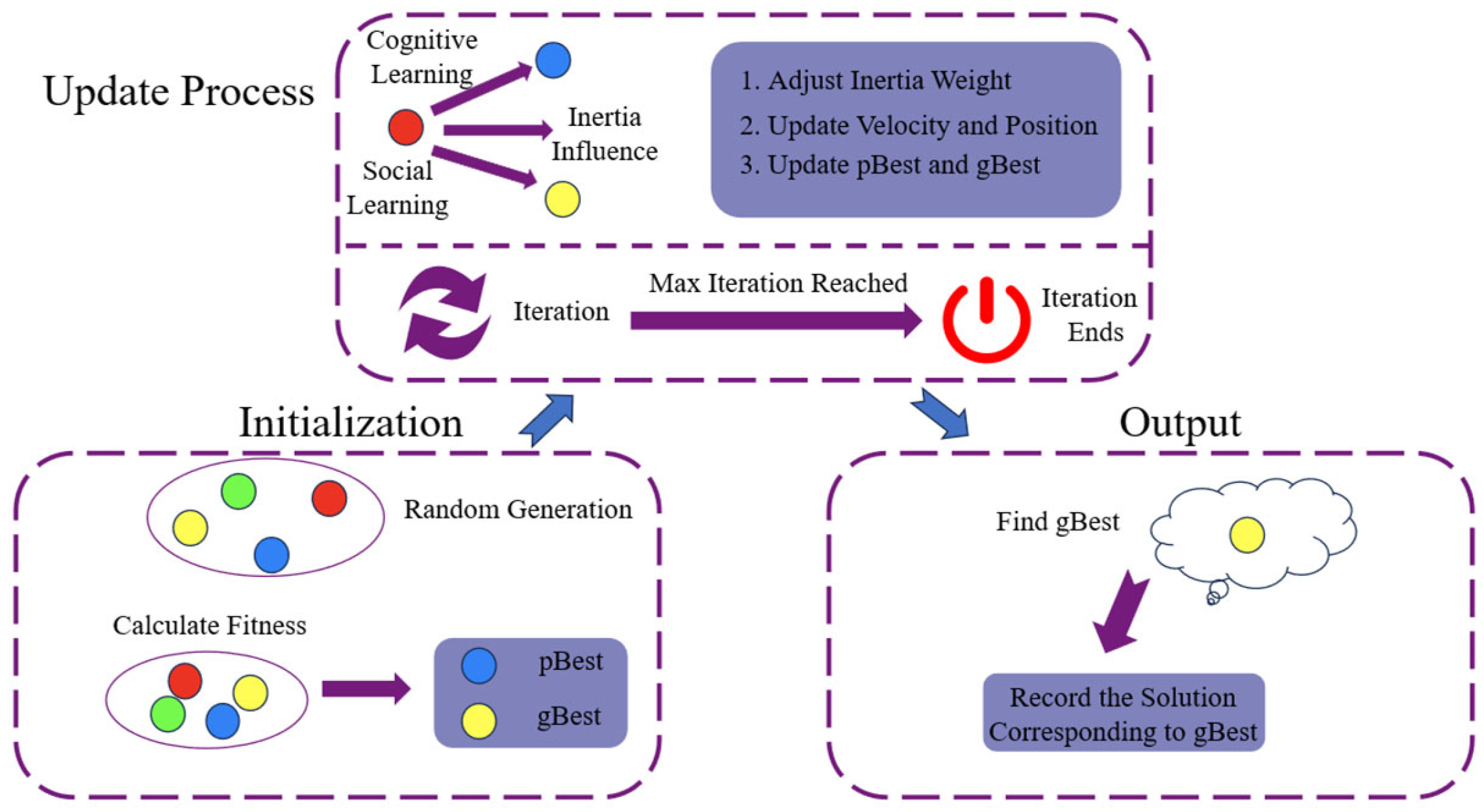
In contrast to traditional PSO, the inertia weight in the improved PSO is dynamically adjusted based on both the iteration count and the particle’s fitness. In the context of the minimization optimization problem addressed in this study, a fitness value below the swarm average indicates proximity to the optimum. As the particle’s fitness decreases, the inertia weight also decreases, thereby enhancing the particle’s local search capability. When a particle’s fitness exceeds the average fitness of all particles, it implies that the particle is far from the optimal position. In such cases, the inertia weight is set to its maximum value, expanding the particle’s search range and improving its global search capability. In this study, we denote the improved PSO as the Adaptive Inertia Weight Particle Swarm Optimization (AIWPSO) algorithm; the detailed working principle is presented in Figure 3.

4.4. Trajectory Smoothing via PCHIP

A well-known limitation of heuristic trajectory planners is that the resulting trajectories tend to exhibit poor smoothness. To overcome this issue, this study applies the Piecewise Cubic Hermite Interpolating Polynomial (PCHIP) method to improve trajectory smoothness.
The basic principle of PCHIP involves using a cubic polynomial for interpolation between adjacent data points. This method ensures the continuity of the first derivative at each data point, thereby preventing unnatural fluctuations in the interpolation curve. Given the discrete data points x 1 , y 1 , x 2 , y 2 , , x i , y i , the next step is to compute the differences between adjacent points:
m i = y i + 1 y i x i + 1 x i
PCHIP is employed to interpolate between each pair of adjacent data points. The general form of the polynomial is as follows:
p i ( x ) = h i ( x ) y i + 1 h i ( x ) y i + 1 + h i ( x ) 1 h i ( x ) m i 1 h i ( x ) + m i + 1 h i ( x )
In (28), h i x represents the linear weight function used for interpolation within the interval, which governs the smooth transition of the polynomial between adjacent data points. To ensure constraint compliance after smoothing, an initial set of M point control points is randomly sampled and subjected to the smoothing procedure, followed by constraint feasibility checking. Upon detection of any violation, the number of control points is incrementally augmented by N point in each iteration, up to a maximum of T max . If all constraints remain satisfied, the trajectory is deemed successfully smoothed.
When a constraint violation is detected, targeted projection corrections are applied before augmenting the control point count. Specifically, the UAV altitude is projected upward to restore terrain clearance, and the UAV position is progressively repositioned toward the UGV to restore the communication bound. If violations persist after all T max iterations, the algorithm reverts to the original AIWPSO trajectory, guaranteeing that the final output is always constraint feasible. Following successful smoothing, the control input sequences are reconstructed from the smoothed state trajectories via finite differencing and clipped to their prescribed bounds.
By enforcing first derivative continuity, PCHIP eliminates the high-frequency oscillations inherent to heuristic optimization, directly reducing the acceleration and angular rate magnitudes and thereby lowering the energy related objectives F UAV . E and F UGV . E . Meanwhile, the trajectory length related terms F UAV . D and F UGV . D are largely preserved, as PCHIP modifies only local curvature while maintaining the global geometric shape. Consequently, PCHIP serves as a feasibility-preserving post-processor that enhances energy efficiency and kinematic smoothness without degrading the global optimality achieved by AIWPSO.

4.5. AIWPSO Algorithm Implementation

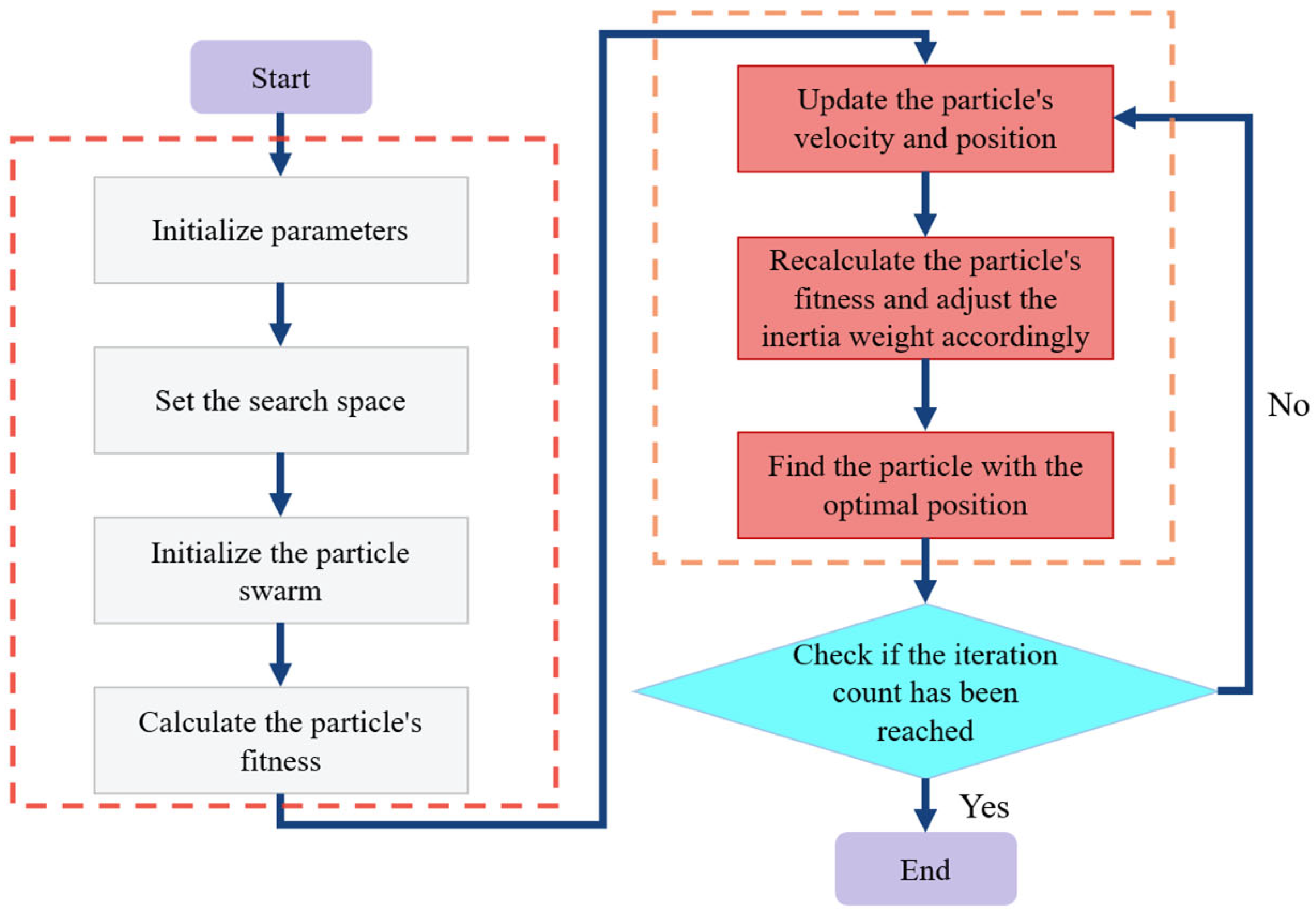
This section details the solution procedure of the proposed AIWPSO algorithm for the MONLP formulation of the tightly coupled trajectory optimization problem. The algorithm is illustrated in the flowchart depicted in Figure 4. In addition, the pseudo-code is presented in Algorithm 1.
Algorithm 1. The AIWPSO Algorithm
1 : Initialize:
Maximum iterations K
Number of particles n
Initial parameters c 1 ,   c 2 ,   w min ,   w max
Initial bounds of decision variables a UGV , ω ,   a UAV ,   ϕ ˙ UAV ,   θ ˙ UAV ,   ψ ˙ UAV
Initialize population P = X 1 , X 2 , , X i
2 : Discretize the trajectory into N segments with time step Δ t
3 : Evaluate the fitness value of each particle
4 : Evaluate and record personal best position p i ( 0 ) and global best position g ( 0 )
5 : Set iteration number t = 0
6 : while t < K  do
7 :   for each particle X i P do
8 :    Generate random number r 1 , r 2 0 , 1
9 :    Evaluate the fitness value of each particle
10 :   Evaluate the mean fitness of all particles f average t
11 :   if f X i t f average t  then
12 :    Adjust w i t according to (21)
13 :   else
14 :     w i t = w max
15 :   Update the velocity of the particle
16 :   Update the position of the particle
17 :  end for
18 : t = t + 1
19 : end while
20 : Find the global best position with the minimum fitness value
21 : Return best solution in population P
The search space dimensionality D of the proposed algorithm equals 5 N , where N denotes the number of discrete trajectory segments. The five control variables per segment correspond to: a UAV , ψ UAV , θ UAV , a UGV , and ω .
In each iteration, the algorithm initially performs a fitness evaluation for all n particles, which entails O n × N operations to compute the objective terms in Equations (3)–(14) through summation over N segments. Subsequently, the adaptive inertia weight is computed via Equation (26), requiring O n comparisons against the mean fitness of the swarm. Finally, the velocity and position of all particles are updated according to Equations (24) and (25), with each update requiring O n × D = O n × N operations. Consequently, the overall time complexity of AIWPSO is O K × n × N , where K denotes the maximum number of iterations. The space complexity is O n × N , primarily dominated by the storage of particle positions, velocities, and personal best records.
The runtime of the proposed framework is dominated by the PSO main loop, whose per-iteration cost scales linearly with the number of trajectory segments N . Each fitness evaluation requires sequential forward simulation of both the UAV and UGV kinematic models over N discrete steps, with per-step operations—state update, constraint projection, and terrain clearance query—each executed in constant time. The Euclidean distance transform precomputed via the Euclidean Distance Transform reduces UGV–terrain proximity checks from neighborhood enumeration to O 1 table lookups, ensuring that the per-evaluation cost remains O N rather than growing with the collision detection radius. The PCHIP post-processing stage contributes negligibly, as its O N cost per smoothing attempt is incurred at most a fixed number of times after optimization terminates. For fixed swarm size n and iteration count K , the aggregate complexity thus grows as O K × n × N , consistent with the analysis in Section 4.5. However, increasing N simultaneously raises the search-space dimensionality D = 5 N , which can degrade PSO convergence efficiency and may in practice necessitate larger n or K to maintain solution quality. The practical runtime growth with N is therefore expected to be moderately super-linear. In the present configuration ( N = 500 , n = 600 , K = 1000 ), Experiment 1 completes in 275.08 s, representing a pragmatic balance between trajectory fidelity and computational cost.

5. Results

The preceding sections have presented the formulated MONLP model and the proposed AIWPSO algorithm. This section aims to validate the effectiveness of both the model and the algorithm through a comprehensive set of experiments.

5.1. Experimental Setup

All experiments were conducted using MATLAB R2024a. A total of seven experiments are designed to comprehensively evaluate the performance of the proposed trajectory planning framework for the air-ground collaborative system and the effectiveness of the AIWPSO algorithm. All experiments assume known start and goal positions for the air-ground collaborative system, which comprises a single UAV and a single UGV. The operational environment is set in a GNSS-denied remote mountainous region.
The first experiment employs the proposed AIWPSO to generate the joint trajectory from the designated start to the goal. The resulting trajectory visualization demonstrates the algorithm’s effectiveness in identifying high-quality solutions for the air-ground collaborative system.
Experiments 2–4 repeat the trajectory planning process using the proposed AIWPSO with different start and goal configurations. These experiments are conducted to evaluate the robustness and generalization capability of the algorithm across diverse mission scenarios.
In Experiment 5, the start and goal positions are identical to those in Experiment 1, but the standard PSO algorithm is employed instead. A direct comparison between Experiments 1 and 5 highlights the performance gains achieved by the proposed AIWPSO over its conventional counterpart.
Experiment 6 is an ablation study that compares the raw trajectory produced by AIWPSO with the post-processed version after PCHIP smoothing, thereby validating the contribution of PCHIP to trajectory smoothness and kinematic feasibility.
Experiment 7 is designed to compare the trajectory planning results of the AIWPSO and APSO algorithms under the same experimental conditions as this study.

5.2. Performance of the Proposed Method

In Experiment 1, the UAV starts at (515, 75, 15) m and ends at (875, 1092, 18) m, whereas the UGV begins at (515, 75) m and terminates at (875, 1092) m. All remaining simulation parameters are listed in Table 1.
The hyperparameters specific to the proposed adaptive inertia weight particle swarm optimization (AIWPSO) algorithm are provided in Table 2.
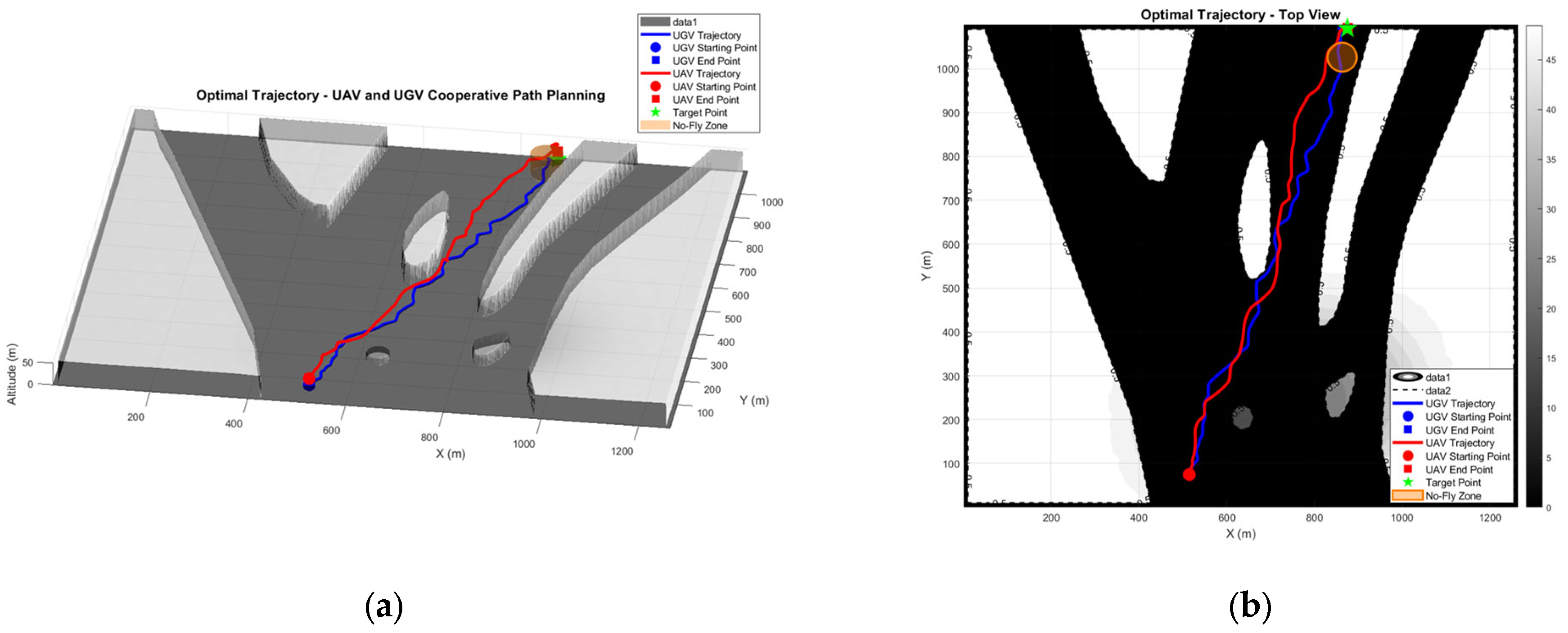
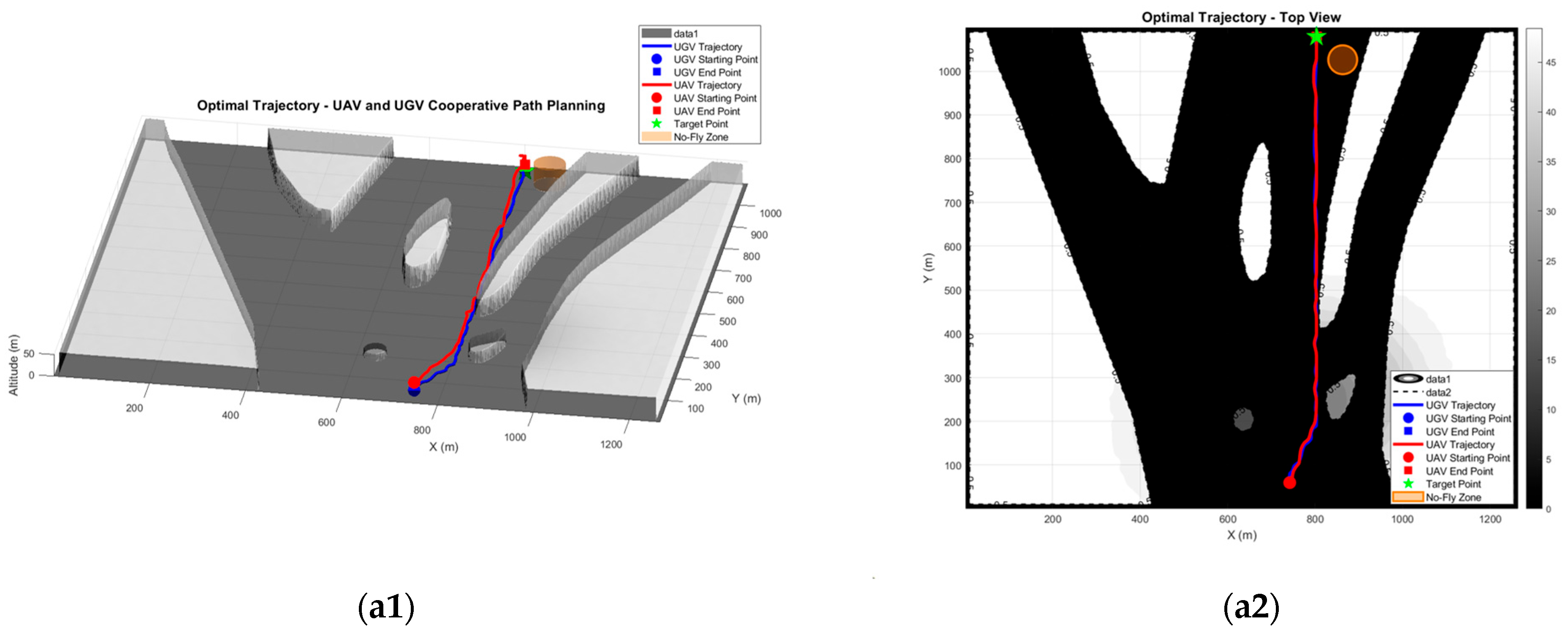
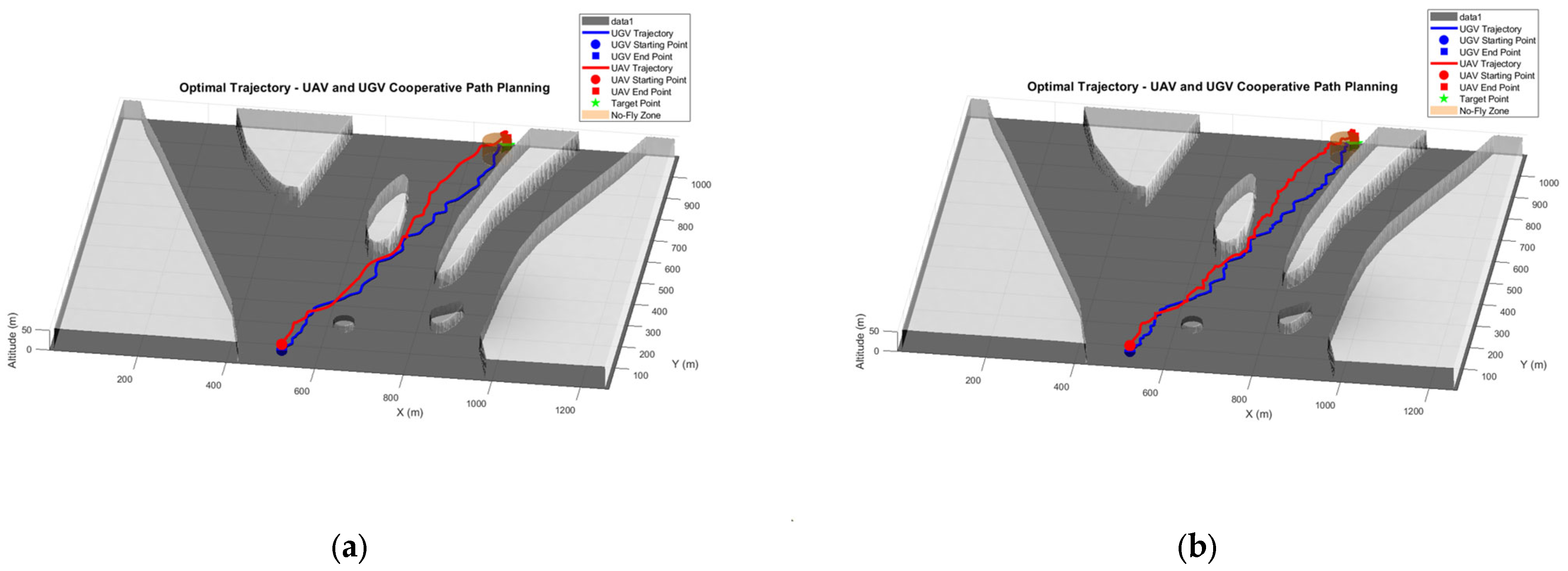
Using these settings, the AIWPSO algorithm generates the collaborative trajectories illustrated in Figure 5.
In Figure 5, the UAV trajectory is depicted in red, and the UGV trajectory in blue. Orange regions denote no-fly zones, which are strictly inaccessible to the UAV but permissible for the UGV. In Figure 5a, elevated regions correspond to mountainous terrain, whereas gray flat areas indicate traversable mountain roads. In the top view of Figure 5b, black and white regions represent mountain roads and mountainous terrain, respectively. A green star marker denotes the common goal, a circle denotes the shared start point, and a square indicates the common endpoint of the air-ground collaborative system. As clearly evidenced in Figure 5, the proposed AIWPSO generates collision-free collaborative trajectories that safely navigate the complex mountainous environment.
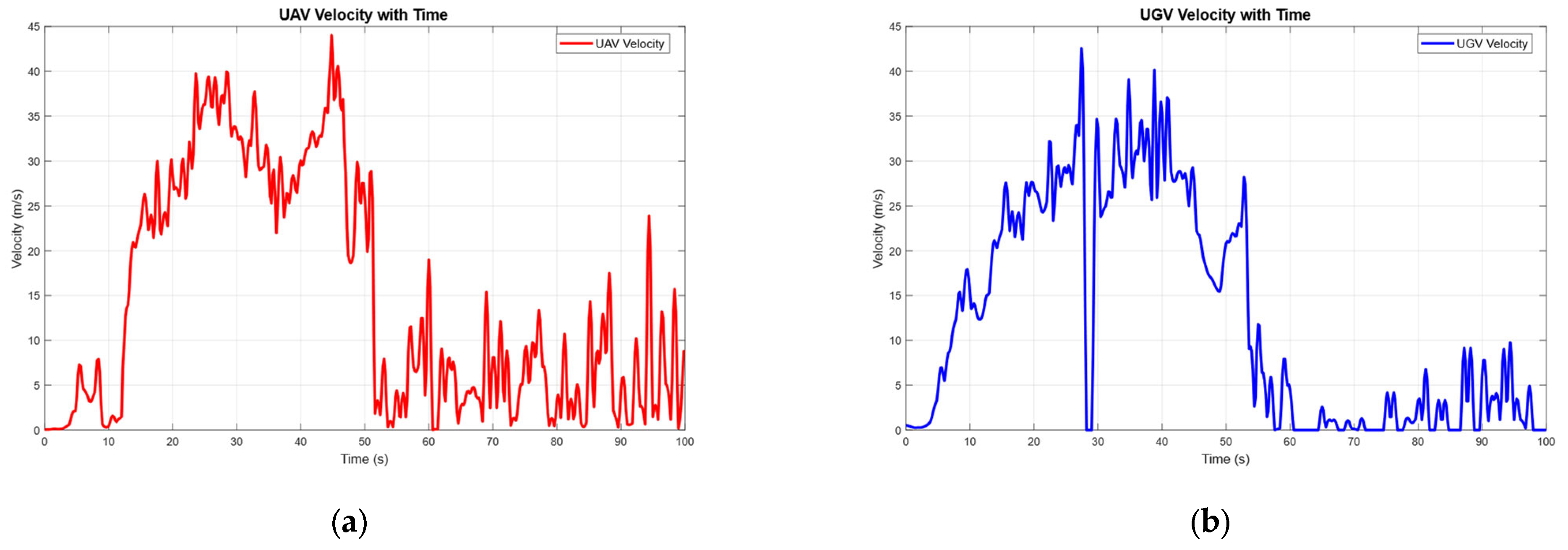
The instantaneous velocities of the UAV and UGV are presented in Figure 6, with Figure 6a showing the UAV velocity profile and Figure 6b depicting that of the UGV.
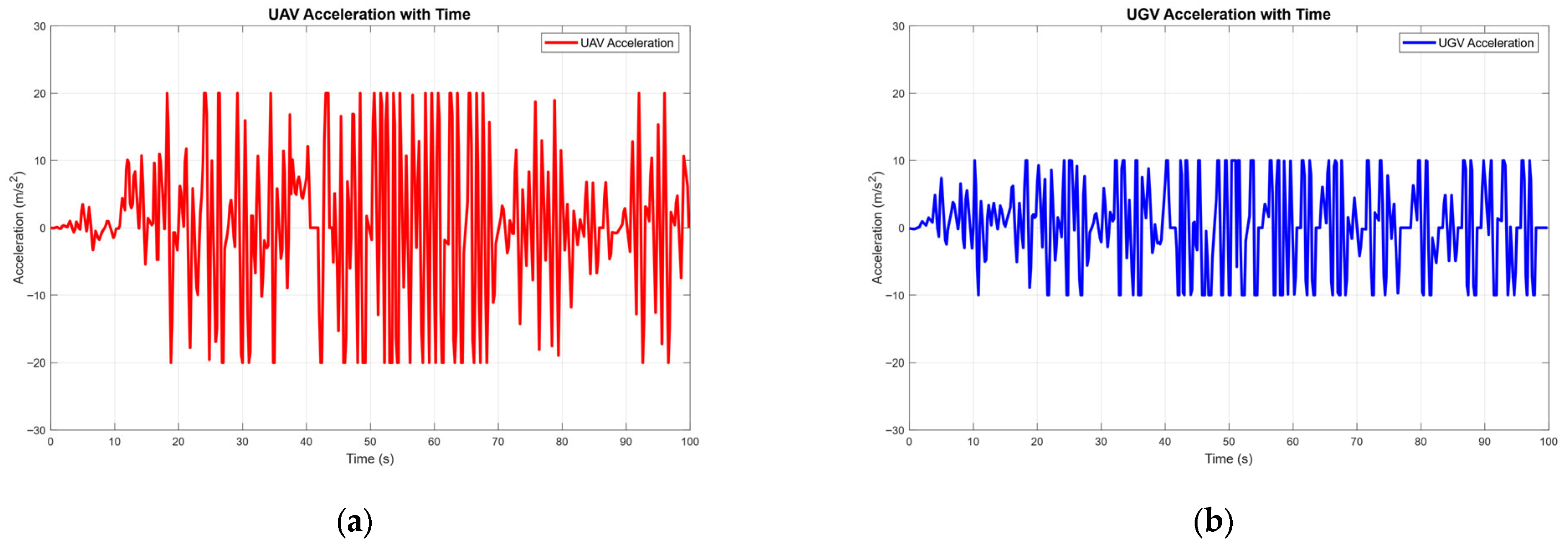
Figure 7 illustrates the variations in acceleration for both the UAV and UGV over time.
As illustrated in Figure 7, the acceleration of the UAV is bounded between 20   m / s 2 and 20   m / s 2 , whereas the UGV exhibits a narrower range of 10   m / s 2 to 10   m / s 2 . This wider acceleration bound for the UAV reflects the need for rapid acceleration and emergency braking at high speeds.
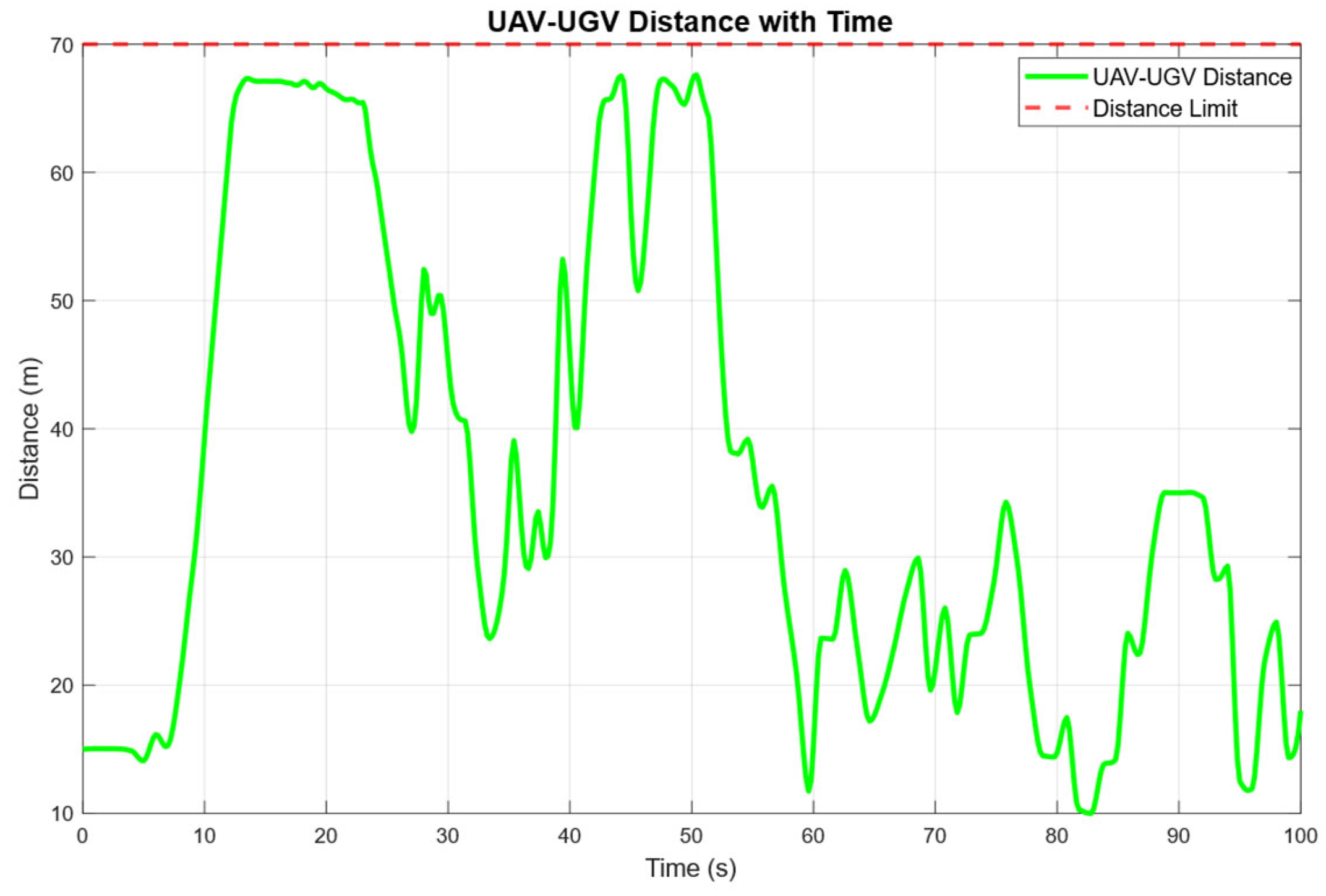
Figure 8 illustrates the time-varying distance between the UAV and UGV throughout the mission. As shown, the inter-vehicle distance remains below 70 m at all times, thereby ensuring reliable C-V2X communication during the entire cargo delivery operation.
The resulting trajectory achieves a composite objective value of 119,117.8, with the individual sub-objective values listed as follows: F UGV . E = 2866.7; F UGV . D = 50,988.3; F UAV . H = 3146; F UAV . E = 9711.3 and F UAV . D = 85,499.2. The runtime of Experiment 1 is 275.08 s.
Regarding Experiment 1, a sensitivity analysis was also conducted. The specific weight distributions for each experimental group in this analysis are presented in Table 3.
Based on the weight settings specified in Table 3, the results of the sensitivity analysis are presented in Table 4.
The seven weight configurations in Table 3 are systematically designed as a one-dimensional sweep over the energy-to-distance emphasis ratio. Specifically, β 1 = β 2 increases from 0.04 to 0.16, β 4 = 2 β 1 increases from 0.08 to 0.32, and β 3 = β 5 decreases correspondingly from 0.42 to 0.18, while strictly satisfying the unity constraint imposed by (18). This design progressively shifts the optimization priority from trajectory length minimization toward energy consumption minimization, with Group 4 representing the balanced baseline configuration adopted in Experiments 1–5.
As reported in Table 4, the trajectory-length-related terms exhibit moderate sensitivity to weight variations. F UGV . D ranges from 39,513.7 to 92,448.4, yielding a variation factor of 2.34, while F UAV . D ranges from 41,160.8 to 94,426.1, yielding a factor of 2.29. This moderate variability confirms that the AIWPSO algorithm consistently produces geometrically reasonable collaborative trajectories regardless of the specific weight setting.
In contrast, the energy-related and altitude-related terms demonstrate substantially higher sensitivity. F UAV . H exhibits the largest variation, spanning from 1067.3 to 7818.67—a factor of 7.33. Similarly, F UAV . E varies by a factor of 6.52 (from 2416.8 to 15,770.9), and F UGV . E by a factor of 4.14 (from 1178.4 to 4875.5). These results indicate that energy-related objectives are significantly more responsive to weight adjustments, suggesting that practitioners should carefully calibrate β 1 , β 2 , and β 4 according to the endurance requirements of specific missions.
A notable trade-off pattern emerges from the results. As the weight emphasis shifts from trajectory length toward energy, F UGV . D and F UAV . D generally decrease, whereas F UGV . E and F UAV . E generally increase. This behavior can be attributed to the fact that higher energy weights encourage smoother control strategies, which naturally yield more direct trajectories; conversely, excessive distance weights tend to induce aggressive maneuvering that, after hard-constraint enforcement, paradoxically increases the overall path length.
The baseline configuration adopted in this study (Group 4: β 1 = 0.1, β 2 = 0.1, β 3 = 0.3, β 4 = 0.2, β 5 = 0.3) achieves well-balanced performance across all five sub-objective terms. Under this configuration, no individual term reaches either its maximum or minimum value among the seven groups, confirming that the selected weights effectively balance energy consumption, trajectory length, and altitude regulation. This balanced characteristic validates the weight selection employed throughout the main experiments presented in Section 5.2, Section 5.3, Section 5.4 and Section 5.5.
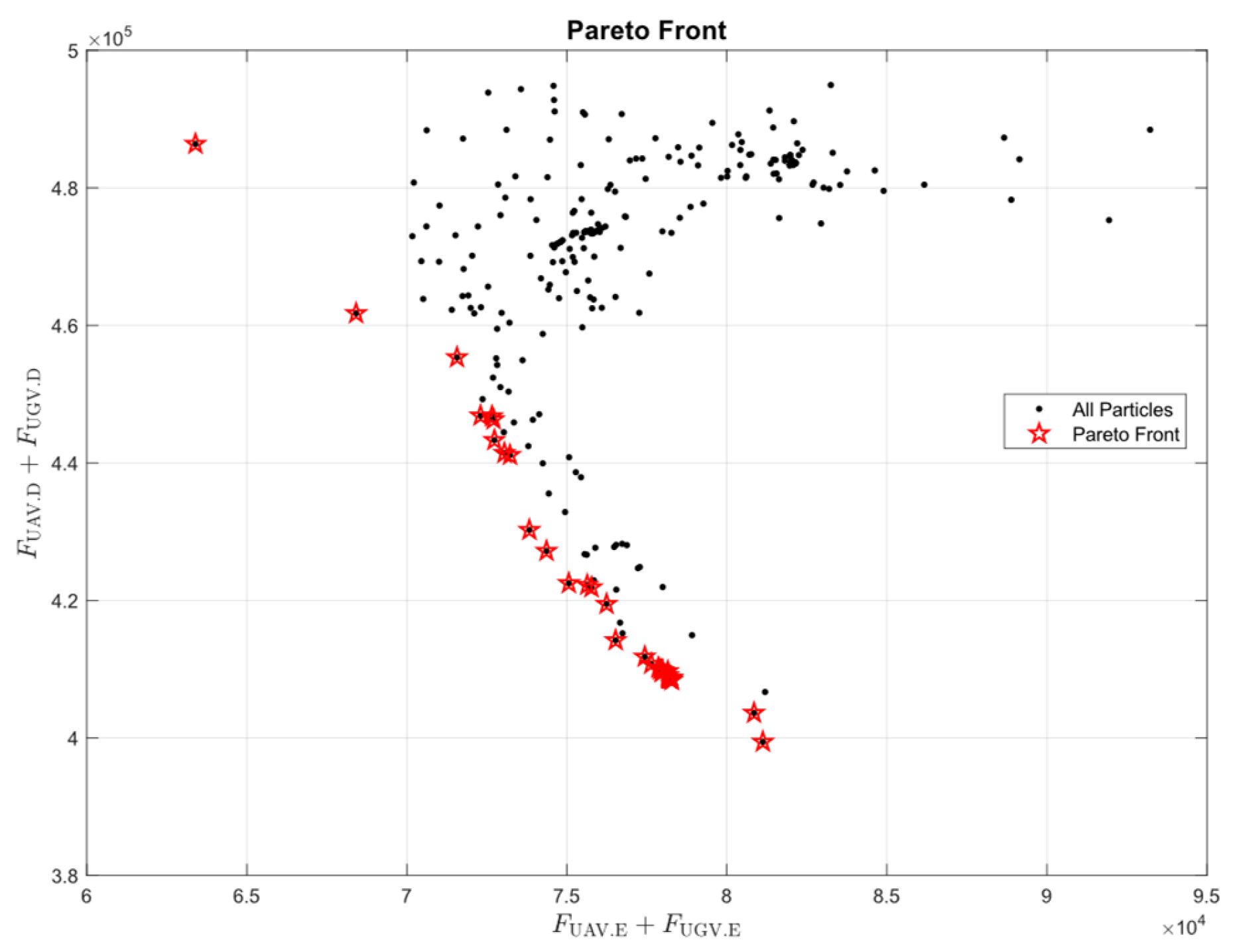
To further elucidate the inherent trade-off between the two primary optimization objectives, Figure 9 presents the Pareto front extracted from the final particle population of Experiment 1. The horizontal axis represents the aggregate energy cost F UAV . E + F UGV . E , while the vertical axis corresponds to the aggregate trajectory length cost F UAV . D + F UGV . D . Each black dot indicates the objective-space projection of an individual particle, and red star markers denote particles belonging to the first non-dominated front. As illustrated in Figure 9, the Pareto front exhibits a clear inverse relationship between the two objectives: particles achieving lower total energy consumption tend to incur higher trajectory length costs, and vice versa. This observation is consistent with the sensitivity analysis reported in Table 4, where shifting the weight emphasis toward energy-related terms reduces the energy sub-objectives at the expense of increased trajectory length terms. Notably, the majority of Pareto-optimal solutions concentrate in a region where both objectives attain moderate values, rather than distributing uniformly along the entire front. This clustering pattern suggests that the AIWPSO algorithm effectively guides the swarm toward a well-balanced solution region, corroborating the effectiveness of the baseline weight configuration adopted in this study.
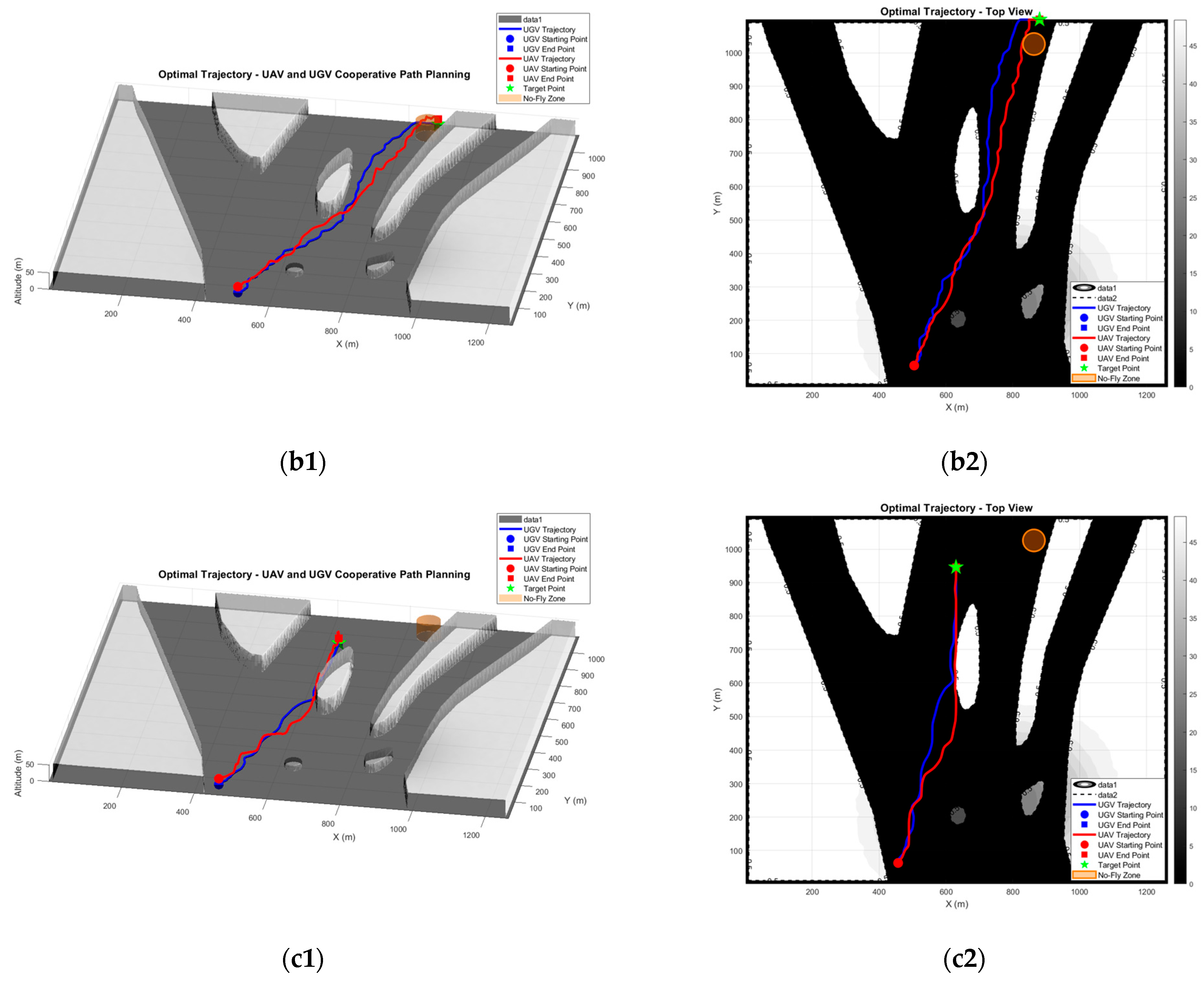
To evaluate the robustness and generalization capability of the proposed AIWPSO algorithm, three additional experiments (Experiments 2–4) are conducted with distinct start and goal configurations. The corresponding start and goal coordinates for Experiments 2–4 are summarized in Table 5.
The values of each objective function corresponding to the optimal trajectories planned by AIWPSO in Experiments 2–4 are presented in Table 6.
The resulting collaborative trajectories for these scenarios are presented in Figure 10.
As illustrated in Figure 10, the AIWPSO algorithm successfully generates trajectory plans across diverse scenarios, demonstrating its exceptional versatility and robustness.

5.3. Comparative Analysis Between AIWPSO and Standard PSO

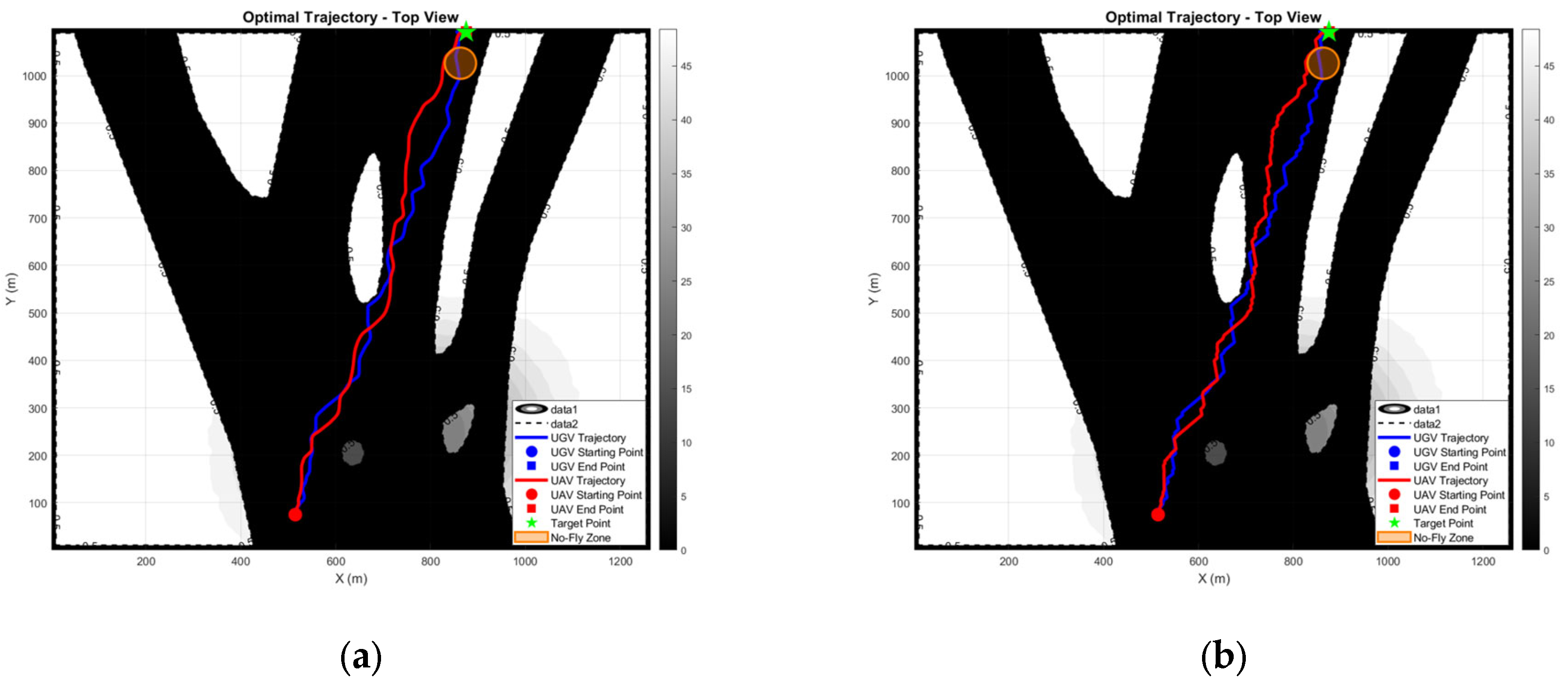
To demonstrate the superiority of the proposed AIWPSO algorithm over the standard particle swarm optimization (PSO), a dedicated comparative experiment is conducted. All simulation settings—including start and goal positions as well as environmental and algorithmic parameters—are identical to those used in Experiment 1, except that the standard PSO is employed instead of AIWPSO. The trajectories generated by the standard PSO are illustrated in Figure 11.
As clearly observed in Figure 11, the trajectories produced by the standard PSO are noticeably less smooth than those generated by AIWPSO. The standard PSO yields a composite objective value of 124,701.4, which is 4.48% higher than relative to the 119,117.8 achieved by AIWPSO. Specifically, F UGV . E decreases from 3624.5 (standard PSO) to 2866.7 (AIWPSO), corresponding to a 20.91% reduction. Similarly, F UAV . E decreases from 13,346.2 to 9711.3, achieving a 27.24% improvement. These results indicate that the proposed adaptive inertia weight mechanism substantially reduces the overall energy consumption of the air-ground collaborative system while significantly enhancing trajectory smoothness.

5.4. Ablation Study

This ablation study adopts the same initial and terminal points of the trajectory, as well as all other parameters, from Experiment 1, while omitting any trajectory smoothing procedure. Figure 12 and Figure 13 present a side-by-side comparison of the resulting trajectories.
Figure 12 and Figure 13 demonstrate that PCHIP substantially improves trajectory smoothness by mitigating the oscillatory profiles typical of heuristic-based planning. In this study, the total cumulative changes in the heading angles of the UGV Δ θ UGV and UAV Δ Ψ UAV are employed to quantify the smoothness of their respective trajectories. A smaller cumulative heading angle change indicates a smoother trajectory for both the UAV and UGV. The specific calculation formulas for Δ θ UGV and Δ Ψ UAV are presented in Equation (24).
Δ θ UGV = i = 0 N 2 θ U G V . i + 1 θ U G V . i Δ Ψ UAV = i = 0 N 2 Ψ U A V . i + 1 Ψ U A V . i
Without PCHIP smoothing, Δ θ UGV and Δ Ψ UAV are 143.7114 rad and 178.1869 rad, respectively. In contrast, following the PCHIP smoothing treatment, these values significantly decrease to 53.3178 rad for the UGV and 43.8707 rad for the UAV. The application of PCHIP smoothing yields an improvement of 62.9% in trajectory smoothness for the UGV and 75.38% for the UAV. These experimental results demonstrate that PCHIP significantly enhances the smoothness of both UGV and UAV trajectories.

5.5. Comparisons with State-of-the-Art Methods

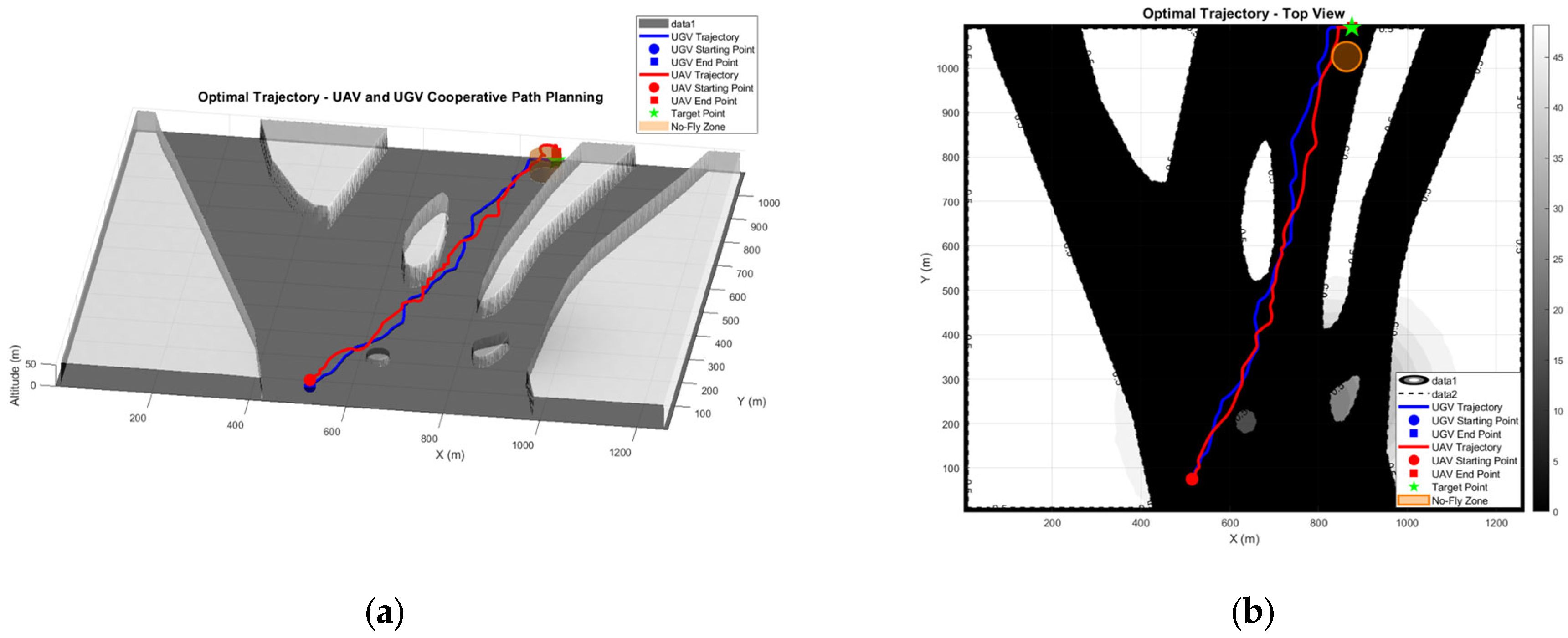
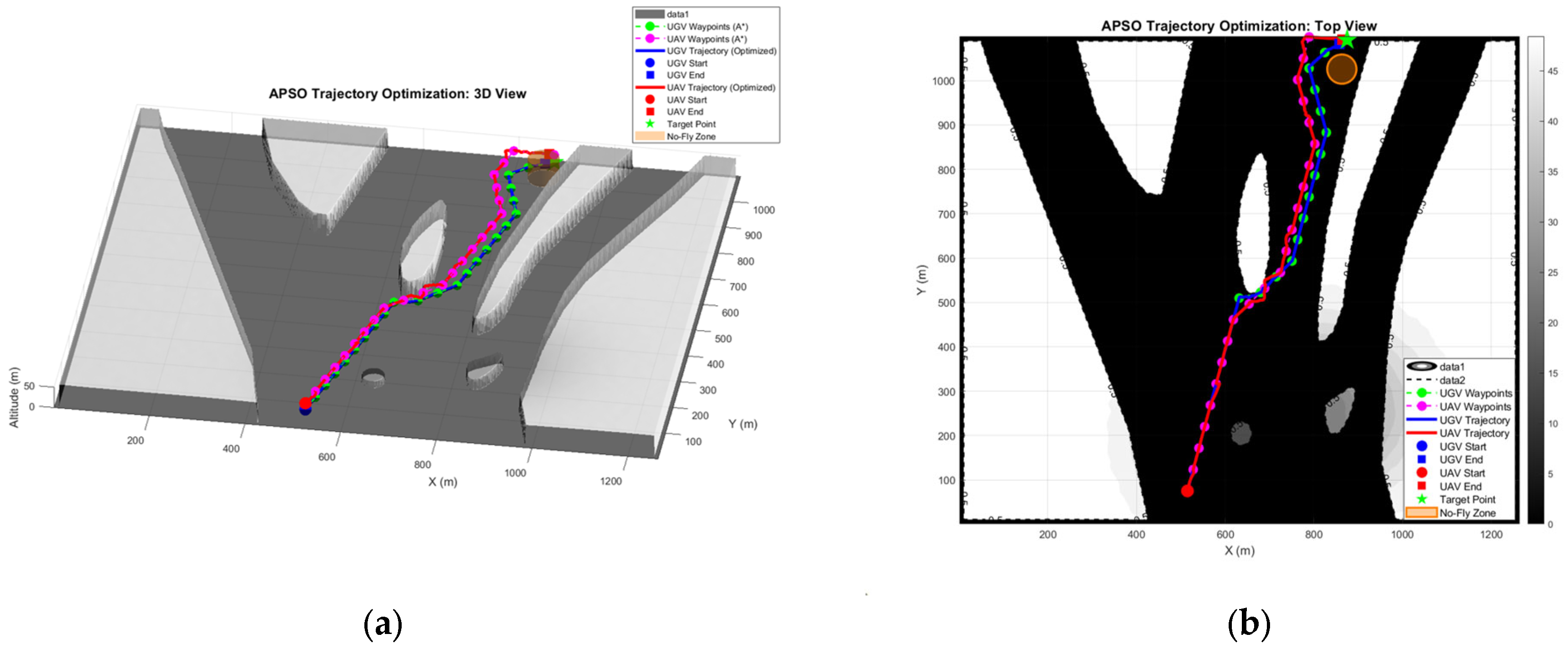
Among various methods for agent path planning, the A* algorithm is widely employed, largely owing to its computational efficiency and robustness in practice. Nevertheless, the standalone A* algorithm may produce an excessive number of turning points, node redundancy, and suboptimal path precision. Accordingly, Huang et al. [41] combined A* with PSO and developed an enhanced method referred to as APSO. In their framework, A* is first employed to generate an initial path, and PSO is subsequently applied to refine and optimize the resulting trajectory. In this section, an experiment is conducted to evaluate and compare the performance of AIWPSO with APSO. It should be noted that the original APSO was designed for single agent path planning. To ensure a fair comparison, the APSO implementation used in this experiment has been extended to operate on the joint UAV–UGV state space. Specifically, the A* phase generates cooperative waypoints for both vehicles simultaneously, and the subsequent PSO phase incorporates the same kinematic models, the same terrain collision avoidance constraints, and the same cooperative communication distance constraint of 70 m as the proposed AIWPSO. All five sub-objective terms are computed identically for both algorithms. Therefore, this comparison evaluates two distinct algorithmic paradigms, specifically decomposed two-phase optimization versus global single-phase optimization, both applied to the identical problem formulation. The results of the APSO algorithm applied to the air-ground collaborative trajectory planning model constructed in this study are presented in Figure 14.
In Figure 14a,b, the points labeled on the trajectory correspond to the key trajectory points generated by the A* algorithm within the APSO framework. The trajectory between each pair of adjacent key points is then optimized using PSO.
For the trajectory planned using APSO, the UGV’s endpoint deviates from the goal by 19.38 m, and the UAV’s endpoint shows a deviation of 10.61 m. However, the trajectory generated by AIWPSO reaches the goal with negligible deviation.
For the trajectory solved by APSO, F UGV . D of the UGV trajectory is 80,533.27, whereas in AIWPSO, it is reduced to 50,988.3, reflecting a 36.7% improvement in F UGV . D for the UGV trajectory. For the trajectory solved by APSO, F UAV . D of the UAV trajectory is 78,862.71, whereas in AIWPSO, it is reduced to 52,363.7, reflecting a 33.6% improvement in F UAV . D of the UAV trajectory.
For the trajectory solved by APSO, F UGV . E of the UGV trajectory is 4988.29, whereas in AIWPSO, it is reduced to 2866.7, reflecting a 42.5% improvement in F UGV . E for the UGV trajectory. For the trajectory solved by APSO, F UAV . E of the UAV trajectory is 15,662.25, whereas in AIWPSO, it is reduced to 9711.3, reflecting a 38% improvement in F UAV . E of the UAV trajectory.
For the trajectory solved by APSO, Δ θ UGV of the UGV trajectory is 39.3228 rad, whereas in AIWPSO, it is decreased to 53.3178 rad. However, for the trajectory solved by APSO, Δ Ψ UAV of the UAV trajectory is 109.7808 rad, whereas in AIWPSO, it is reduced to 43.8707 rad, reflecting a 60.04% improvement in Δ Ψ UAV of the UAV trajectory.
These results demonstrate that AIWPSO substantially decreases the trajectory deviation in comparison to APSO, enabling the air-ground collaborative system to accurately reach the goal. Moreover, relative to APSO, AIWPSO significantly decreases the energy consumption of both the UAV and the UGV, thereby enhancing the endurance of the air–ground cooperative system.
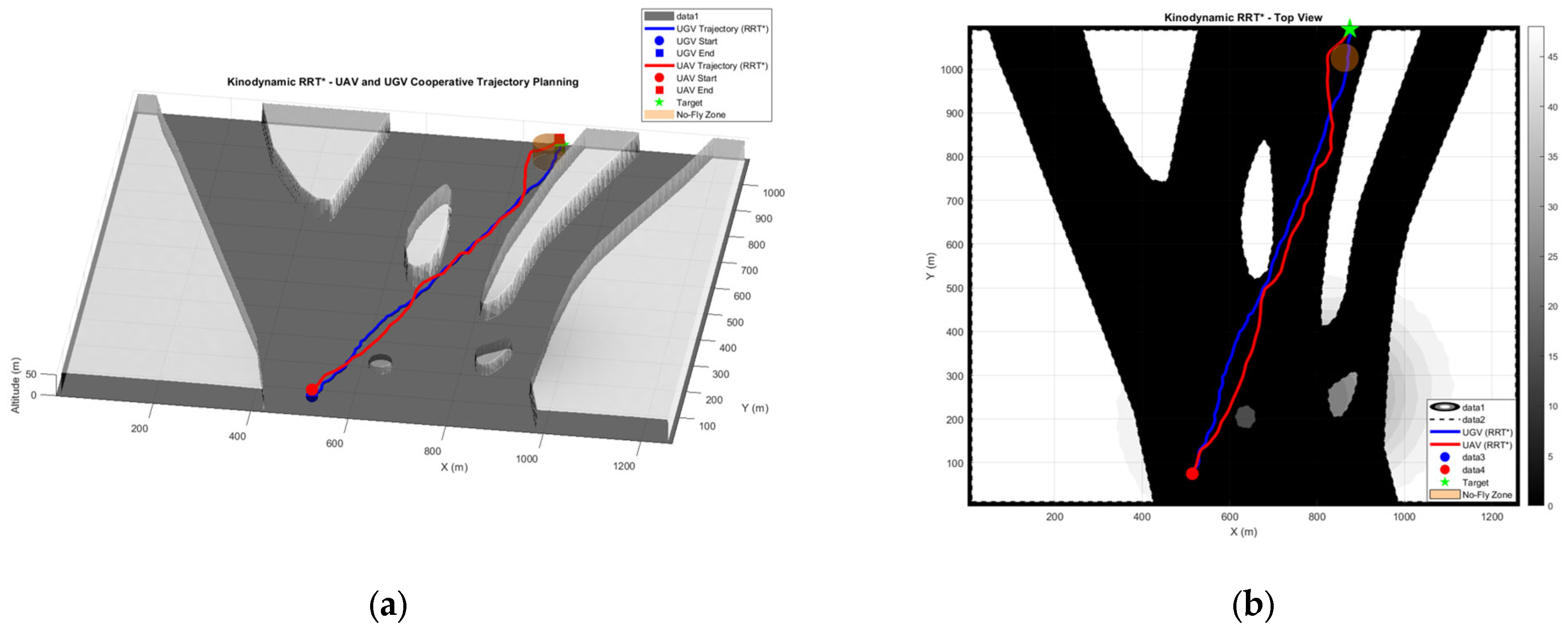
To broaden the comparative scope beyond PSO-family algorithms, an additional experiment was conducted using RRT*, a sampling-based method that generates dynamically feasible trajectories by propagating states through kinematic models rather than connecting geometric waypoints. The implementation directly employs the UAV and UGV kinematic models defined in Equations (1) and (2), and adopts a two-stage sequential strategy: the UGV trajectory is first planned independently, after which the UAV trajectory is generated subject to the 70 m communication-distance constraint. During tree expansion, each candidate edge is produced by applying a proportional controller to steer the vehicle toward a sampled target position over 10 time steps (2 s), while enforcing kinematic bounds, terrain collision avoidance, and no-fly zone constraints at every step. The RRT* rewiring mechanism is retained to progressively reduce the cumulative path-length cost. After planning, the raw trajectories are resampled to 501 equi-arc-length points and smoothed using PCHIP interpolation with constraint projection. All environmental settings, start and goal positions, and constraint parameters are identical to those of Experiment 1.
Figure 15 presents the resulting trajectories, with Figure 15a showing the three-dimensional view and Figure 15b the top-down projection. Both the UAV and UGV trajectories exhibit near-linear profiles that closely follow the shortest geometric corridor between the start and goal. Compared with the AIWPSO trajectories in Figure 5, which display adaptive curvature adjustments in response to mountainous terrain, the RRT* results show notably less terrain-aware maneuvering. This behavior is consistent with the path-length-only cost function, which does not incentivize energy-efficient or smooth detours around terrain features.
Quantitatively, RRT* yields F UGV . D = 81 , 103.04 and F UAV . H = 6934.9 , representing increases of 59.1% and 120.4%, respectively, relative to the AIWPSO values reported for Experiment 1 ( F UGV . D = 50 , 988.3 ; F UAV . H = 3146 ). The degradation in F UGV . D reflects the limitation of the sequential planning strategy: the UGV trajectory is determined without awareness of the subsequent UAV plan, precluding global cooperative optimization. The substantially higher F UAV . H indicates that the UAV altitude deviates more markedly from the target midpoint, attributable to the absence of an explicit altitude term in the RRT* cost function. In contrast, F UAV . D = 80 , 097.94 is 6.3% lower than the AIWPSO counterpart ( F UAV . D = 85 , 499.2 ), suggesting that the UAV benefits from being planned after the UGV, with full knowledge of the ground trajectory. Nevertheless, this marginal advantage in a single sub-objective is achieved at the cost of substantially degraded UGV path quality and altitude regulation. These results demonstrate that, while sampling-based methods can generate feasible cooperative trajectories, the joint multi-objective optimization performed by AIWPSO yields a more balanced solution across all performance dimensions.

6. Conclusions

This study addressed cooperative trajectory planning for tightly coupled air–ground systems operating in GNSS-denied mountainous environments. Due to the limitations of a signal-denied environment, the study employs C-V2X wireless communication to facilitate data exchange between the UAV and UGV. To ensure stable and efficient data transmission, real-time distance constraints between the UAV and UGV are imposed. The air–ground collaborative system trajectory planning problem is formulated as a multi-objective nonlinear optimization problem, and a mathematical model was developed to address this optimization challenge. To efficiently obtain the optimal trajectory, the AIWPSO algorithm is employed, and the trajectory is subsequently smoothed using PCHIP to obtain the final trajectory. Additionally, ablation and comparative experiments are conducted to evaluate the proposed model and algorithm. The experimental results demonstrate that the model and algorithm exhibit excellent robustness and versatility, outperforming conventional and state-of-the-art baselines in terms of energy efficiency, trajectory smoothness, and goal accuracy.
Future work will extend this framework to multi-UAV and multi-UGV coordination for enhanced cargo logistics in remote mountainous terrains. Key technical challenges in this extension include the combinatorial growth of pairwise communication constraints and the substantial expansion of the search space dimensionality as the number of agents increases. To address these challenges, decentralized or hierarchical optimization strategies will be investigated in conjunction with hybrid approaches that integrate heuristic methods with reinforcement learning. Furthermore, field studies in remote mountainous regions will be conducted to acquire high-fidelity terrain data, facilitating the development of more accurate environmental models for rigorous experimental validation.

Author Contributions

Conceptualization, Z.H., J.Q. and Y.Z.; methodology, Y.Z.; software, Z.H.; validation, Z.H. and J.Q.; formal analysis, Z.H.; investigation, J.Q.; resources, Y.Z.; data curation, Z.H.; writing—original draft preparation, Z.H.; writing—review and editing, Y.Z.; visualization, Z.H.; supervision, J.Q.; project administration, Z.H., J.Q. and Y.Z. All authors have read and agreed to the published version of the manuscript.

Funding

This research received no external funding.

Data Availability Statement

Data are contained within the article.

Conflicts of Interest

The authors declare no conflicts of interest.

References

  1. Song, L.; Channa, I.A.; Wang, Z.; Sun, G. Dynamic Heterogeneous Multi-Agent Inverse Reinforcement Learning Based on Graph Attention Mean Field. Symmetry 2025, 17, 1951. [Google Scholar] [CrossRef]
  2. Šćuric, A.; Krznar, N.; Penđer, A.; Štedul, I.; Kotarski, D. Autonomous Multirotor UAV Docking and Charging: A Comprehensive Review of Systems, Mechanisms, and Emerging Technologies. Symmetry 2025, 17, 1988. [Google Scholar] [CrossRef]
  3. Zhao, Y.; Zhang, Y.; Xie, Z. Allocation of radiation shielding boards to protect the urban search and rescue robots from malfunctioning in the radioactive environments arising from decommissioning of the nuclear facility. Symmetry 2020, 12, 1297. [Google Scholar] [CrossRef]
  4. La Regina, R.; Genel, Ö.E.; Pappalardo, C.M.; Guida, D. A Comprehensive Review of Theoretical Advances, Practical Developments, and Modern Challenges of Autonomous Unmanned Ground Vehicles. Machines 2025, 13, 1071. [Google Scholar] [CrossRef]
  5. Munasinghe, I.; Perera, A.; Deo, R.C. A Comprehensive Review of UAV-UGV Collaboration: Advancements and Challenges. J. Sens. Actuator Netw. 2024, 13, 81. [Google Scholar] [CrossRef]
  6. Fagundes-Júnior, L.A.; Barcelos, C.O.; Silvatti, A.P.; Brandão, A.S. UAV–UGV Formation for Delivery Missions: A Practical Case Study. Drones 2025, 9, 48. [Google Scholar] [CrossRef]
  7. Guo, J.; Song, R.; He, S. Vehicle and Onboard UAV Collaborative Delivery Route Planning: Considering Energy Function with Wind and Payload. J. Syst. Eng. Electron. 2025, 36, 194–208. [Google Scholar] [CrossRef]
  8. Xu, J.; Liu, X.; Jin, J.; Pan, W.; Li, X.; Yang, Y. Holistic Service Provisioning in a UAV-UGV Integrated Network for Last-Mile Delivery. IEEE Trans. Netw. Serv. Manag. 2025, 22, 380–393. [Google Scholar] [CrossRef]
  9. Zucchelli, M.; Marx, M.; Hörmann, M.; Kargl, F.; Segata, M. Challenges and Initial Measurements on Communication and Localization for Mountain Bike Safety Applications. In Proceedings of the 2025 20th Wireless On-Demand Network Systems and Services Conference (WONS), Hintertux, Austria, 27–29 January 2025; IEEE: Piscataway, NJ, USA, 2025; pp. 1–8. [Google Scholar]
  10. Gupta, A.; Fernando, X.N. Latency Analysis of Drone-Assisted C-V2X Communications for Basic Safety and Co-Operative Perception Messages. Drones 2024, 8, 600. [Google Scholar] [CrossRef]
  11. Hao, Z.; Guo, B.; Zhao, K.; Wu, L.; Ding, Y.; Li, Z.; Liu, S.; Yu, Z. From Rule-Driven to Swarm Intelligence Emergence: A Survey on Multi-Robot Air-Ground Coordination. Acta Autom. Sin. 2024, 50, 1877–1905. (In Chinese) [Google Scholar]
  12. Lin, X.; Yazıcıoğlu, Y.; Aksaray, D. Robust Planning for Persistent Surveillance with Energy-Constrained UAVs and Mobile Charging Stations. IEEE Robot. Autom. Lett. 2022, 7, 4157–4164. [Google Scholar] [CrossRef]
  13. Wang, J.; Zeng, B.; Deng, L.; Ji, Z.; Wei, C.; Zeng, Z. Cognitive UAV Tracking: Leveraging DRL and Hybrid Curriculum Learning for Target Reacquisition. IEEE Trans. Autom. Sci. Eng. 2025, 22, 16547–16559. [Google Scholar] [CrossRef]
  14. Zhang, Z.; Chen, C.; Wang, L.; Ding, Y.; Deng, F. A Two-phase Planner for Messenger Routing Problem in UAV-UGV Coordination Systems. IEEE Trans. Autom. Sci. Eng. 2025, 22, 16948–16963. [Google Scholar] [CrossRef]
  15. Wang, Y.; Xin, B.; Ding, Y.; He, B.; Chen, J. Online Path Planning of Messenger UAV in Air-Ground Coordination Over Urban Areas. IEEE Trans. Veh. Technol. 2024, 74, 7135–7151. [Google Scholar] [CrossRef]
  16. Ding, Y.; Xin, B.; Dou, L.; Chen, J.; Chen, B.M. A memetic algorithm for curvature-constrained path planning of messenger UAV in air-ground coordination. IEEE Trans. Autom. Sci. Eng. 2021, 19, 3735–3749. [Google Scholar] [CrossRef]
  17. Wang, Y.; Xin, B.; Ding, Y.; Yin, Z.; He, B. A Robust Path Planning of Messenger UAV for Air-Ground Coordination Under Road Network Constraints. In Proceedings of the 2024 IEEE International Conference on Robotics and Biomimetics (ROBIO), Bangkok, Thailand, 10–14 December 2024; IEEE: Piscataway, NJ, USA, 2024; pp. 1621–1628. [Google Scholar] [CrossRef]
  18. Miller, I.D.; Cladera, F.; Smith, T.; Taylor, C.J.; Kumar, V. Stronger Together: Air-Ground Robotic Collaboration Using Semantics. IEEE Robot. Autom. Lett. 2022, 7, 9643–9650. [Google Scholar] [CrossRef]
  19. Niu, G.; Wu, L.; Gao, Y.; Pun, M.O. Unmanned Aerial Vehicle (UAV)-Assisted Path Planning for Unmanned Ground Vehicles (UGVs) via Disciplined Convex-Concave Programming. IEEE Trans. Veh. Technol. 2022, 71, 6996–7007. [Google Scholar] [CrossRef]
  20. Zhang, X.; Wang, P.; Han, Y. A Path Planning Method for Unmanned Rescue Collaboration System. In Proceedings of the 2024 IEEE 19th Conference on Industrial Electronics and Applications (ICIEA), Kristiansand, Norway, 5–8 August 2024; pp. 1–6. [Google Scholar] [CrossRef]
  21. Tokekar, P.; Vander Hook, J.; Mulla, D.; Isler, V. Sensor Planning for a Symbiotic UAV and UGV System for Precision Agriculture. IEEE Trans. Robot. 2016, 32, 1498–1511. [Google Scholar] [CrossRef]
  22. Li, J.; Sun, T.; Huang, X.; Ma, L.; Lin, Q.; Chen, J.; Leung, V.C. A Memetic Path Planning Algorithm for Unmanned Air/Ground Vehicle Cooperative Detection Systems. IEEE Trans. Autom. Sci. Eng. 2021, 19, 2724–2737. [Google Scholar] [CrossRef]
  23. Jang, G.; Lee, K. Joint Optimization of Path Planning and Cooperative Strategy for UAV–UGV Delivery. IEEE Trans. Intell. Transp. Syst. 2025, 26, 20176–20186. [Google Scholar] [CrossRef]
  24. Hou, S.; Chen, Z.; He, X.; Yan, X.; Wang, Z.; Zheng, X. Path Planning for Heterogeneous Robotic Delivery Systems Considering Road Network Constraints. In Proceedings of the 2024 14th Asian Control Conference (ASCC), Dalian, China, 5–8 July 2024; IEEE: Piscataway, NJ, USA, 2024; pp. 31–36. [Google Scholar]
  25. Pasini, D.; Jiang, C.; Jolly, M.-P. UAV and UGV Autonomous Cooperation for Wildfire Hotspot Surveillance. In Proceedings of the 2022 IEEE MIT Undergraduate Research Technology Conference (URTC), Cambridge, MA, USA, 30 September–2 October 2022; IEEE: Piscataway, NJ, USA, 2022; pp. 1–5. [Google Scholar] [CrossRef]
  26. Xiao, R.; Wang, S.; Xie, Y.; Zhang, Y.; Xie, S.Q. Safety-aware UAV Formation Scheme for Guiding UGVs through Obstacle-Laden Environments. IEEE Robot. Autom. Lett. 2025, 10, 6999–7006. [Google Scholar] [CrossRef]
  27. Wang, Y.; Qi, R.; He, C. Trajectory and Attitude Cooperative Formation Control for Air-Ground Collaborative Systems under Communication Faults. In Proceedings of the 2023 6th International Symposium on Autonomous Systems (ISAS), Nanjing, China, 23–25 June 2023; IEEE: Piscataway, NJ, USA, 2023; pp. 1–6. [Google Scholar] [CrossRef]
  28. Vasconcelos, J.V.R.; Villa, D.K.; Caldeira, A.G.; Sarcinelli-Filho, M.; Brandão, A.S. Agent Fault-Tolerant Strategy in a Heterogeneous Triangular Formation. In Proceedings of the 2020 International Conference on Unmanned Aircraft Systems (ICUAS), Athens, Greece, 1–4 September 2020; IEEE: Piscataway, NJ, USA, 2020; pp. 1040–1047. [Google Scholar] [CrossRef]
  29. Ginting, M.F.; Otsu, K.; Edlund, J.A.; Gao, J.; Agha-Mohammadi, A.-A. CHORD: Distributed Data-Sharing via Hybrid ROS 1 and 2 for Multi-Robot Exploration of Large-Scale Complex Environments. IEEE Robot. Autom. Lett. 2021, 6, 5064–5071. [Google Scholar] [CrossRef]
  30. Niroui, F.; Zhang, K.; Kashino, Z.; Nejat, G. Deep Reinforcement Learning Robot for Search and Rescue Applications: Exploration in Unknown Cluttered Environments. IEEE Robot. Autom. Lett. 2019, 4, 610–617. [Google Scholar] [CrossRef]
  31. Gao, Y.; Wang, Y.; Zhong, X.; Yang, T.; Wang, M.; Xu, Z.; Wang, Y.; Lin, Y.; Xu, C.; Gao, F. Meeting-Merging-Mission: A Multi-robot Coordinate Framework for Large-Scale Communication-Limited Exploration. In Proceedings of the 2022 IEEE/RSJ International Conference on Intelligent Robots and Systems (IROS), Kyoto, Japan, 23–27 October 2022; IEEE: Piscataway, NJ, USA, 2022; pp. 13700–13707. [Google Scholar] [CrossRef]
  32. Fan, Y.; Liu, W.; Liao, M.; Zheng, W.; Hu, B.; Bai, C. Algorithm of Air-Ground Localizing and Orienting Based on Semantic Information of Road Marking. In Proceedings of the 2023 IEEE International Conference on Unmanned Systems (ICUS), Hefei, China, 13–15 October 2023; IEEE: Piscataway, NJ, USA, 2023; pp. 1562–1568. [Google Scholar] [CrossRef]
  33. Minaeian, S.; Liu, J.; Son, Y.-J. Vision-Based Target Detection and Localization via a Team of Cooperative UAV and UGVs. IEEE Trans. Syst. Man Cybern. Syst. 2016, 46, 1005–1016. [Google Scholar] [CrossRef]
  34. Zhang, Z.; Jiang, J.; Ling, K.V. A Hybrid Bio-Inspired Optimization Algorithm for UAV-UGV Cooperative Path Planning. In Proceedings of the 2024 9th International Conference on Control, Robotics and Cybernetics (CRC), Penang, Malaysia, 21–23 November 2024; pp. 1–5. [Google Scholar] [CrossRef]
  35. Sun, C.; Yang, Y.; Chen, Y. Heterogeneous Robot Persistent Path Planning in Adversarial Monitoring Application. In Proceedings of the 2023 42nd Chinese Control Conference (CCC), Tianjin, China, 24–26 July 2023; IEEE: Piscataway, NJ, USA, 2023; pp. 4400–4406. [Google Scholar] [CrossRef]
  36. Su, Z.; Wang, C.; Wu, X.; Dong, Y.; Ni, J.; He, B. A Framework of Cooperative UAV-UGV System for Target Tracking. In Proceedings of the 2021 IEEE International Conference on Real-Time Computing and Robotics (RCAR), Xining, China, 15–19 July 2021; IEEE: Piscataway, NJ, USA, 2021; pp. 1260–1265. [Google Scholar] [CrossRef]
  37. Ying, B.; Su, Z.; Xu, Q.; Ma, X. Game Theoretical Bandwidth Allocation in UAV-UGV Collaborative Disaster Relief Networks. In Proceedings of the 2021 IEEE 23rd International Conference on High Performance Computing & Communications; 7th International Conference on Data Science & Systems; 19th International Conference on Smart City; 7th International Conference on Dependability in Sensor, Cloud & Big Data Systems & Application (HPCC/DSS/SmartCity/DependSys), Haikou, China, 20–22 December 2021; IEEE: Piscataway, NJ, USA, 2021; pp. 1498–1504. [Google Scholar] [CrossRef]
  38. Zhang, X.; Zong, H.; Wu, W. Cooperative Obstacle Avoidance of Unmanned System Swarm via Reinforcement Learning Under Unknown Environments. IEEE Trans. Instrum. Meas. 2025, 74, 7500615. [Google Scholar] [CrossRef]
  39. Xu, C.T.; Zhang, K.; Jiang, Y.; Niu, S.; Yang, T.; Song, H. Communication aware UAV swarm surveillance based on hierarchical architecture. Drones 2021, 5, 33. [Google Scholar] [CrossRef]
  40. Bakirci, M. A Novel Swarm Unmanned Aerial Vehicle System: Incorporating Autonomous Flight, Real-Time Object Detection, and Coordinated Intelligence for Enhanced Performance. Trait. Signal 2023, 40, 2063. [Google Scholar] [CrossRef]
  41. Huang, C.; Zhao, Y.; Zhang, M.; Yang, H. APSO: An A*-PSO hybrid algorithm for mobile robot path planning. IEEE Access 2023, 11, 43238–43256. [Google Scholar] [CrossRef]
Figure 1. A schematic diagram of cooperative trajectory planning for the UAV-UGV system.
Symmetry 18 00672 g001
Figure 2. Kinematic illustration of the UAV and UGV.
Symmetry 18 00672 g002
Figure 3. A schematic diagram of the AIWPSO algorithm.
Symmetry 18 00672 g003
Figure 4. AIWPSO algorithm flowchart.
Symmetry 18 00672 g004
Figure 5. Trajectory planning results of Experiment 1. (a) The three-dimensional trajectories of the air-ground system; (b) The corresponding top-down view of the three-dimensional trajectories.
Symmetry 18 00672 g005
Figure 6. Velocity variations of the UAV and UGV in Experiment 1. (a) UAV velocity varies with time; (b) UGV velocity varies with time.
Symmetry 18 00672 g006
Figure 7. Acceleration variations of the UAV and UGV in Experiment 1. (a) UAV acceleration varies with time; (b) UGV acceleration varies with time.
Symmetry 18 00672 g007
Figure 8. Distance variations between the UAV and UGV in Experiment 1.
Symmetry 18 00672 g008
Figure 9. Pareto front visualization of Experiment 1.
Symmetry 18 00672 g009
Figure 10. Trajectory planning results of Experiment 2–4. (a1) 3D trajectory of Experiment 2. (a2) Top view of Experiment 2. (b1) 3D trajectory of Experiment 3. (b2) Top view of Experiment 3. (c1) 3D trajectory of Experiment 4. (c2) Top view of Experiment 4.
Symmetry 18 00672 g010aSymmetry 18 00672 g010b
Figure 11. Trajectory planning results of standard PSO. (a) 3D trajectory of standard PSO. (b) Top view of standard PSO.
Symmetry 18 00672 g011
Figure 12. Comparative visualization of 3D trajectories pre- and post-PCHIP interpolation. (a) The 3D trajectory post-PCHIP interpolation. (b) The raw 3D trajectory prior to PCHIP interpolation.
Symmetry 18 00672 g012
Figure 13. Comparison of top views pre- and post-PCHIP interpolation. (a) The top view post-PCHIP interpolation. (b) The raw top view prior to PCHIP interpolation.
Symmetry 18 00672 g013
Figure 14. Trajectory planning results of APSO. (a) 3D trajectory of APSO. (b) Top view of APSO.
Symmetry 18 00672 g014
Figure 15. Trajectory planning results of RRT*. (a) 3D trajectory of RRT*. (b) Top view of RRT*.
Symmetry 18 00672 g015
Table 1. Parameters of the Air-ground Collaborative Trajectory Planning Model.
ParametersMeaningValues
v UAV The velocity of the UAV[0, 45]
v UGV The velocity of the UGV[0, 45]
a UAV The acceleration of the UAV[−20, 20]
a UGV The acceleration of the UGV[−10, 10]
z UAV The height of the UAV[10, 35]
d UAV . safe Safety distance between the UAV and the terrain2
d UGV . safe Safety distance between the UGV and the terrain5
d cooperate . max The maximum distance between the UAV and the UGV70
N The number of discrete segments500
Δ t The time duration of each segment0.2
Table 2. Parameters of the AIWPSO.
ParametersMeaningValues
n The number of particles600
c 1 The cognitive learning factor2
c 2 The social learning factor2
w max The maximum inertia weight0.9
w min The minimum inertia weight0.4
K The number of iterations1000
Table 3. Weight Configurations for the Sensitivity Analysis.
Experiment Number β 1 β 2 β 3 β 4 β 5
10.040.040.420.080.42
20.060.060.380.120.38
30.080.080.340.160.34
40.10.10.30.20.3
50.120.120.260.240.26
60.140.140.220.280.22
70.160.160.180.320.18
Table 4. Objective Values for the Optimal Trajectories in the Sensitivity Analysis.
Experiment Number F UGV . E F UGV . D F UAV . H F UAV . E F UAV . D
11178.481,995.91067.32416.883,592.1
21959.192,448.41830.99712.494,426.1
32287.565,538.33427.57261.564,007.9
42866.750,988.33146.09711.385,499.2
52870.265,430.32934.37104.566,199.4
64875.551,288.97818.6714,336.951,504.4
74250.139,513.74073.115,770.941,160.8
Table 5. Start and goal locations of UAV and UGV in Experiments 2–4.
Experiment NumberUAV Starting LocationUAV Goal
Location
UGV Starting LocationUGV Goal
Location
2(742, 60, 18)(803, 1079, 15)(742, 60)(803, 1079)
3(505, 65, 15)(880, 1099, 18)(505, 65)(880, 1099)
4(457, 63, 15)(630, 946, 18)(457, 63)(630, 946)
Table 6. Objective values for the optimal trajectories in Experiments 2–4.
Experiment Number F F UGV . E F UGV . D F UAV . H F UAV . E F UAV . D
2129,388.22989.155,691.52689.911,343.456,661.2
3172,614.71694.077,500.82502.95753.282,495.2
474,174.84266.125,579.83683.314,202.626,444.4
Disclaimer/Publisher’s Note: The statements, opinions and data contained in all publications are solely those of the individual author(s) and contributor(s) and not of MDPI and/or the editor(s). MDPI and/or the editor(s) disclaim responsibility for any injury to people or property resulting from any ideas, methods, instructions or products referred to in the content.